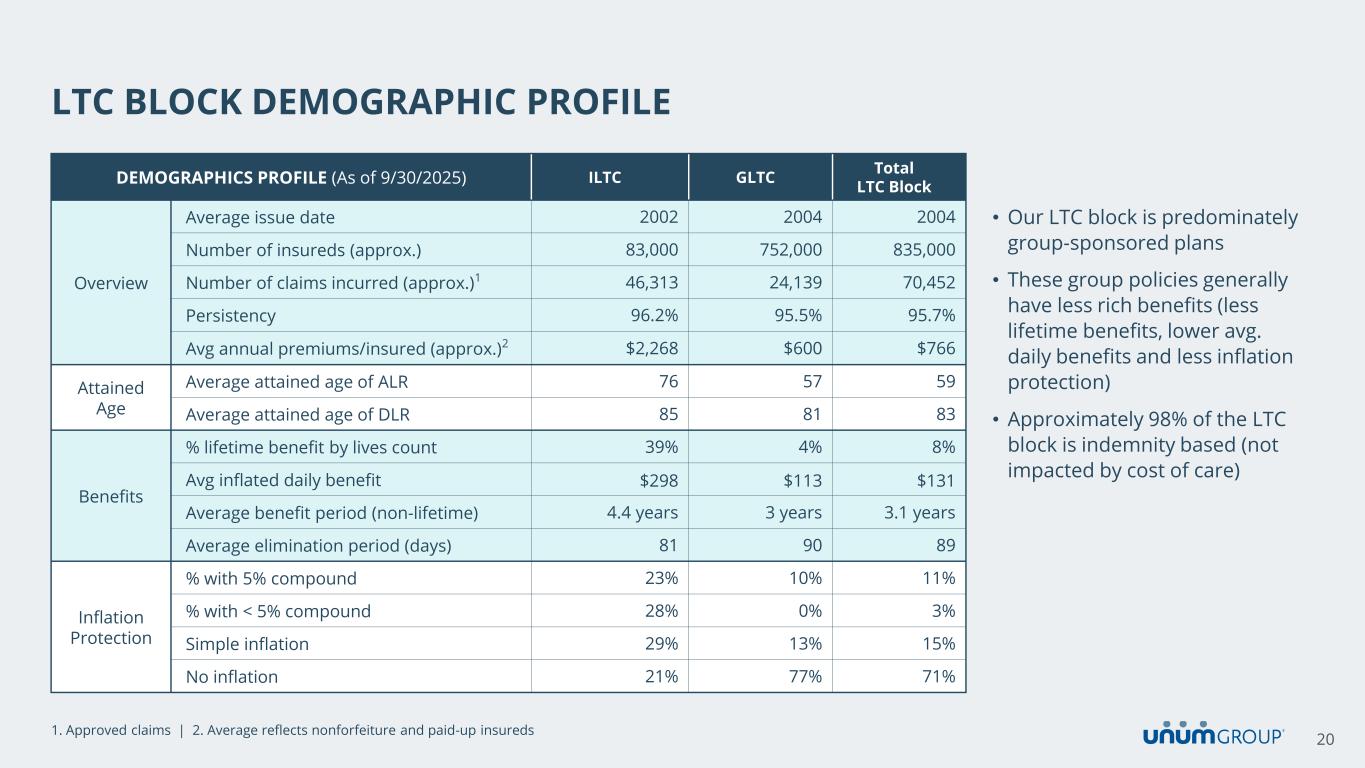
Operator
Hello and welcome to the Unum Group 4Q 2025 results and 2026 outlook. All lines have been placed on mute to prevent any background noise. After the speaker's remarks, there will be a question and answer session. If you would like to ask a question during this time, sit there for a star followed by the number 1 on your telephone keypad. If you would like to withdraw your question, press star 1 again. And please limit to one question and one follow-up. I will now turn the call over to Mark Royal. Investor relations, you may begin.
Thank you and good morning. Welcome to UNEM Group's fourth quarter 2025 earnings call. Today, we'll be discussing full year 2025 results along with highlights from the fourth quarter. We'll also use the time to discuss our outlook for 2026. As such, we have extended our time today to allow for the additional presentation and discussion. Please note today's call may include forward-looking statements and actual results may differ materially, and we are not obligated to update any of these statements. Please refer to our earnings release and our periodic filings with the SEC for a description of factors that could cause actual results to differ from expected results. Yesterday afternoon, Unum released our earnings press release, financial supplement, and webcast presentation for today's call. All of those materials may also be found on the Investors section of our website. Also, please note, references made today to core operations sales and premium, including Unum International are presented on a constant currency basis for comparability period-to-period. Participating in this morning's conference call are Unum's President and CEO, Rick McKinney and Chief Financial Officer, Steve Zabel. Following the remarks from Rick and Steve, additional members of management will participate in Q&A, including Mark Hill, who heads our Unum International business, Tim Arnold, who heads our Colonial Life and Voluntary Benefits Lines, and Chris Pine for Group Benefits. Now, I'll turn the call over to Rick.
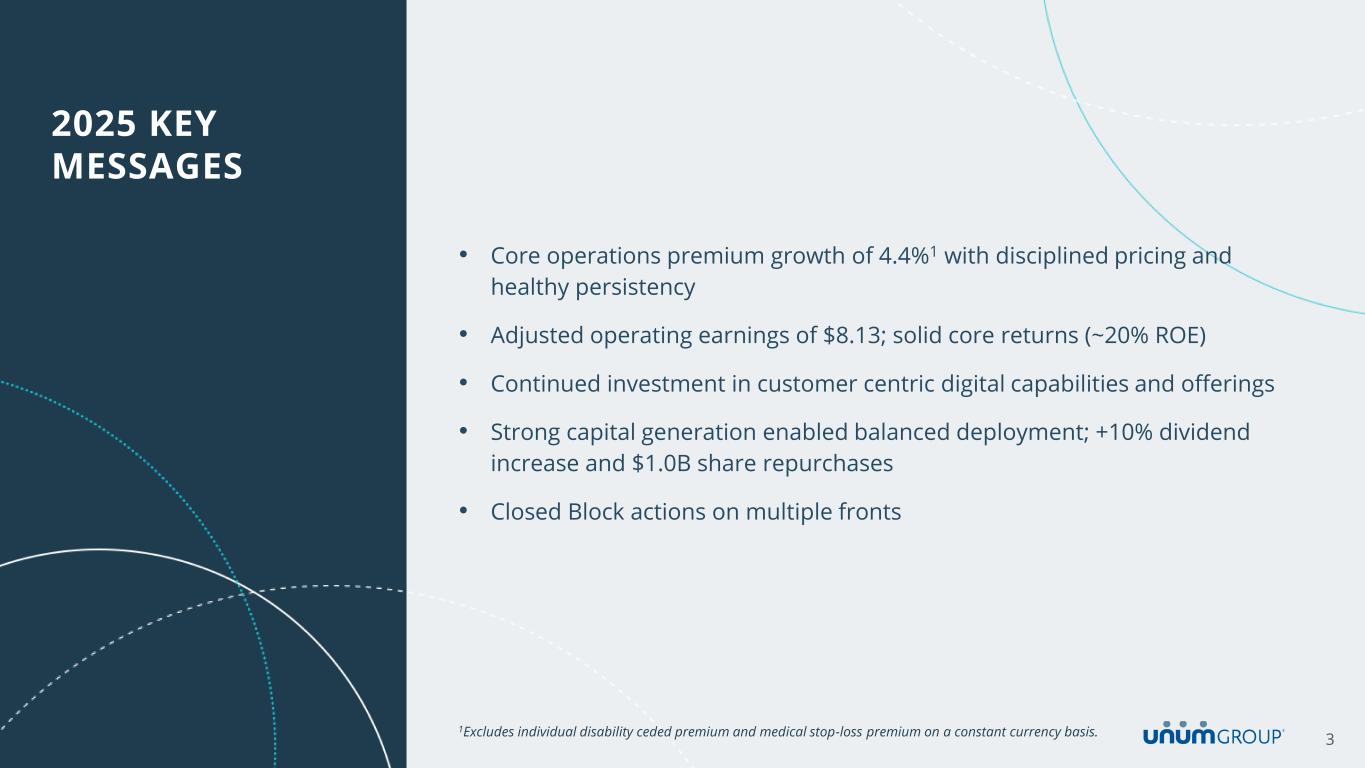
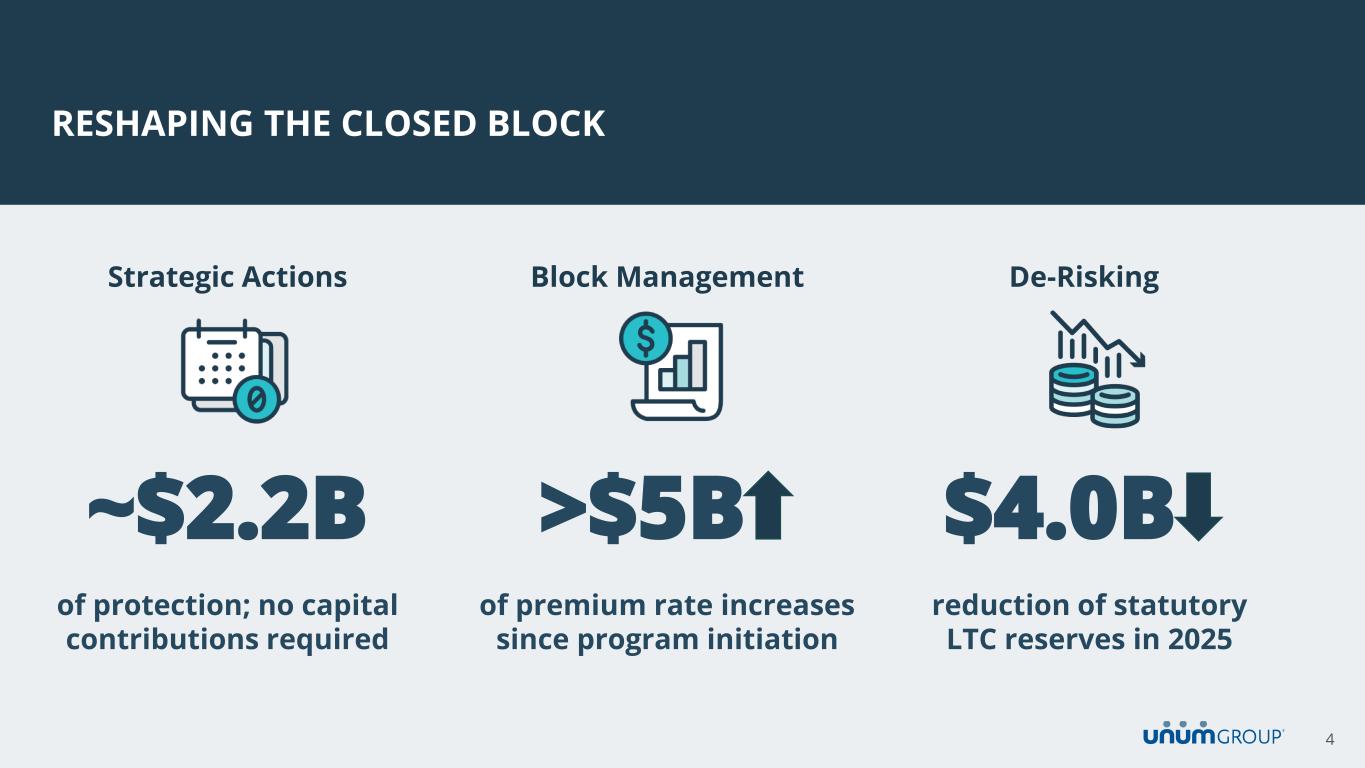
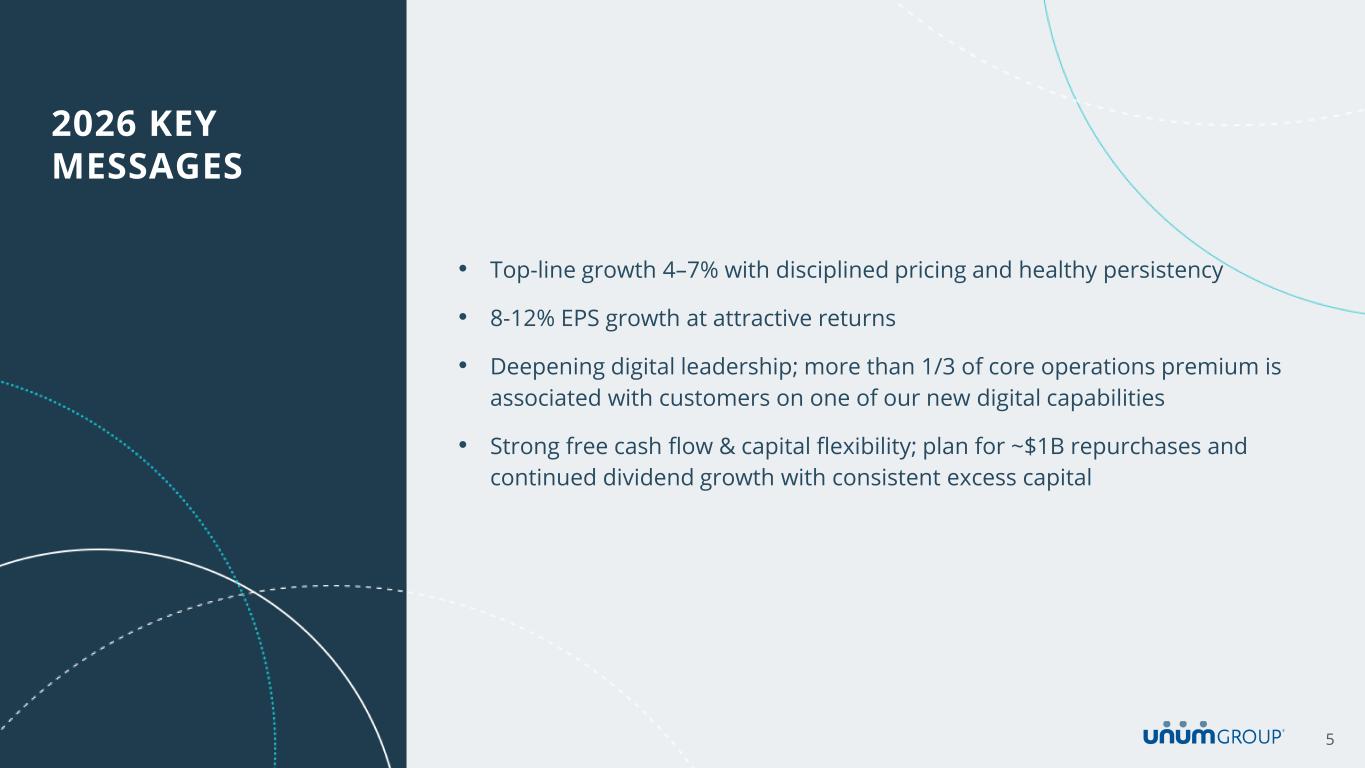
Good morning, everyone, and thank you for joining us. 2025 was a year of disciplined operational performance across our core businesses, sustained investment and digital capabilities that create differentiation for Unum, and decisive progress in the closed block, materially improving its risk profile. We delivered for customers, advanced our strategy, and closed the year with strong capital and liquidity. On the earnings front, for full year 2025, adjusted EPS was $8.13. This was down year over year and below our expectations going into the year. The primary driver of the softer outcome for both the quarter and the year was higher than expected benefits experience. That experience varied in total and by line throughout the year. We'll dig into our benefits experience more, but throughout the call today, you'll hear more about our leading franchise and group benefits that has grown notably over time as we serve employers and their employees. As we have grown, we have done so profitably, as our core operations delivered approximately 20% return on equity. This reflects durable earnings power supported by disciplined underwriting, solid persistency, a focused product mix, and a sales force that appreciates building relationships with clients. Those fundamentals have been true for many years, and combined with strong risk management and capital management, we remain excited about the opportunity moving into 2026. As we look at the top line, this opportunity is demonstrated by a growing premium base and customer relationships. Core operations premium grew within our expected range at nearly four and a half percent, excluding transaction impacts, and included 3.1 percent premium growth at Colonial Life and 10 percent in international. Given our healthy persistency and the ongoing demand from employers who value integrated benefits we are well positioned to deliver premium growth within our long-term target range of four to seven percent in 2026. A key enabler of that performance is the progress we're making in digital. Today over one-third of our core premium base is associated with customers experiencing one of our leading digital capabilities. The idea is simple, connect our benefits to the HR platforms employers already to use, and wrap those connections with an experience of service, expertise, and empathy. The execution, particularly when building at scale, is complex, but our teams are up to the challenge. HRConnect, BrokerConnect, and TotalEve strengthen the employer link. MyUnum, Gather, and the UK's Help at Hand make enrollment and administration easier while adding value-added services. And AI-enabled tools help our teams respond faster and with higher quality. Where these capabilities are adopted, we see stronger engagement and persistency, and we pair that digital momentum with paying attention to the fundamentals across the enterprise. In group disability and group life in the U.S., we maintain strong pricing discipline and risk selection, and returns remain attractive and industry-leading. In Colonial Life, we continue to strengthen our independent distribution model, improving agent productivity through better digital tools and workflow. This supported steady premium growth, strong returns, and sales that finished the year at a multi-year high, which included double-digit growth in the fourth quarter. In International, we also delivered double-digit premium growth, reflecting a sharper broker experience in the UK and continued progress in Poland. So while 2025 had some variability in reported benefits experience, the underlying earnings power remains resilient. And our strategy continues to translate into durable growth and meaningful long-term value creation. This growth also flows through to our capital generation, conversion to free cash flow and deployment. Consistent with our deployment philosophy, 2025 was a year in which we grew the company organically and made two small acquisitions. At the same time, with our continued strong statutory earnings, we were able to increase our dividend 10% and buy back $1 billion of our shares. That combination effectively returned to shareholders what we generated in the year. We ended the year with robust capital levels of 440% risk-based capital and $2.3 billion of cash at the holding company. 2025 will also be remembered as a year where we reach some pivotal moments in addressing the closed block. It dates back many years, but in 2023, we provided additional funding to our Fairwind entity and stated at that time that no further contributions would be necessary. Three years later, our position remains unchanged. Today, we have $2.2 billion of protection between reserves and capital to guard against any future adverse development as you've heard before a consistent part of our block management has been to seek price increases over time where appropriate with our steady and mature approach we have crossed the five billion dollar mark in cumulative premium rate increases since initiating our program finally in 2025 we completed an external reinsurance transaction that seeded roughly 20 percent of long-term care reserves coupled with of an internal reinsurance action that reduced potential capital volatility. Combined, we reduced LTC reserves by more than $4 billion in total through these transactions. Our progress in 2025 has meaningfully strengthened our risk profile while maintaining strong capital protections and we remain focused on further reducing legacy exposures to drive the focus to our leading employee benefits franchise. We're excited about how we're positioned entering 2026. We are starting the year in a real position of strength. That is true in our market position and reputation, the depth and expertise of our team, and of course the financial flexibility to capitalize on opportunities when they present themselves. Our performance is grounded in purpose, helping the working world thrive throughout life's moments, delivered through the right balance of digital connection and human empathy. With our continued investment in technology, we expect a good year of growth in 2026. Across the company, we see top-line growth in the range of 4% to 7% with meaningful contributions from each part of the enterprise. This stems from both new sales and persistency, driven by the connections we have developed over the years. With discipline focused on our margins, our EPS will return to growth of 8% to 12%, driven by our high ROE businesses. And finally, we will continue to return value to our shareholders in a consistent manner, as we have done over the last several years with an increasing dividend and share repurchases of approximately $1 billion. Steve will now take you through the quarter details, and then we'll cover our 2026 outlook.
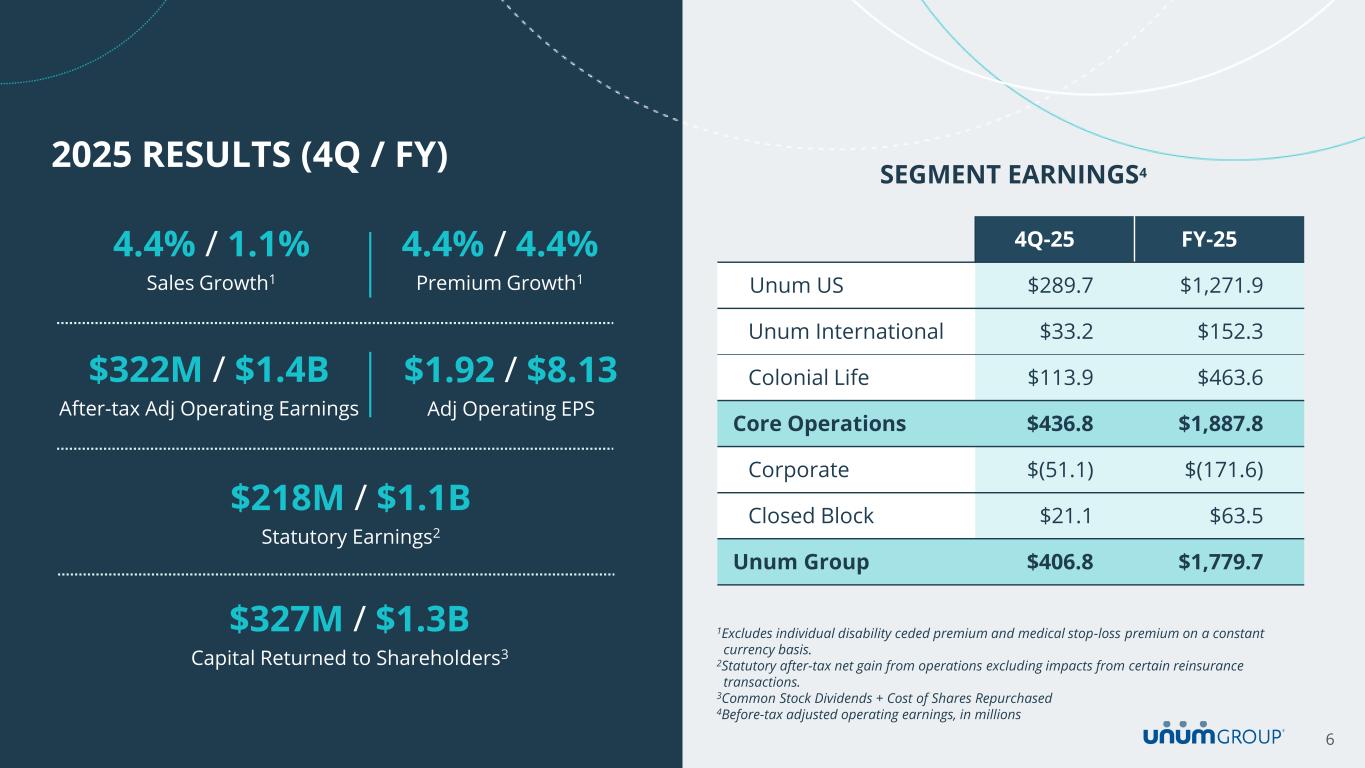
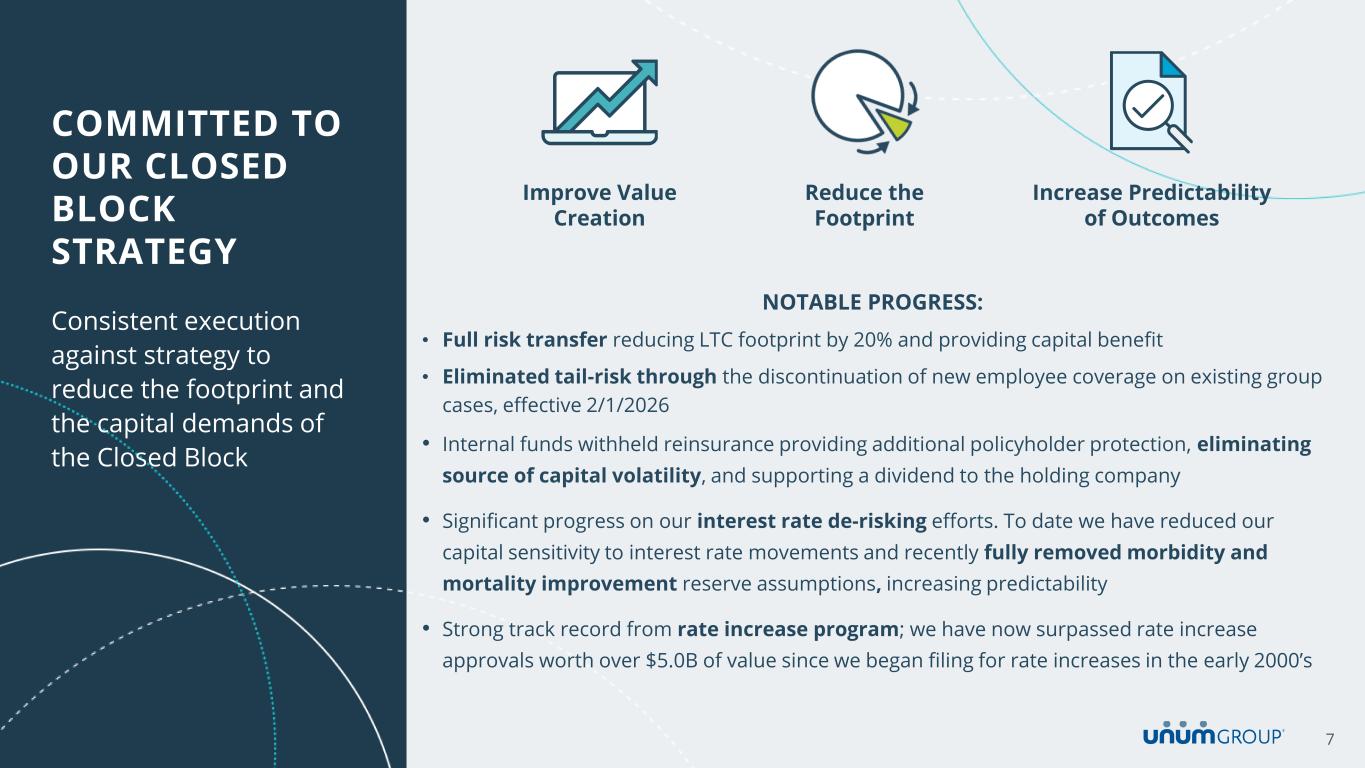
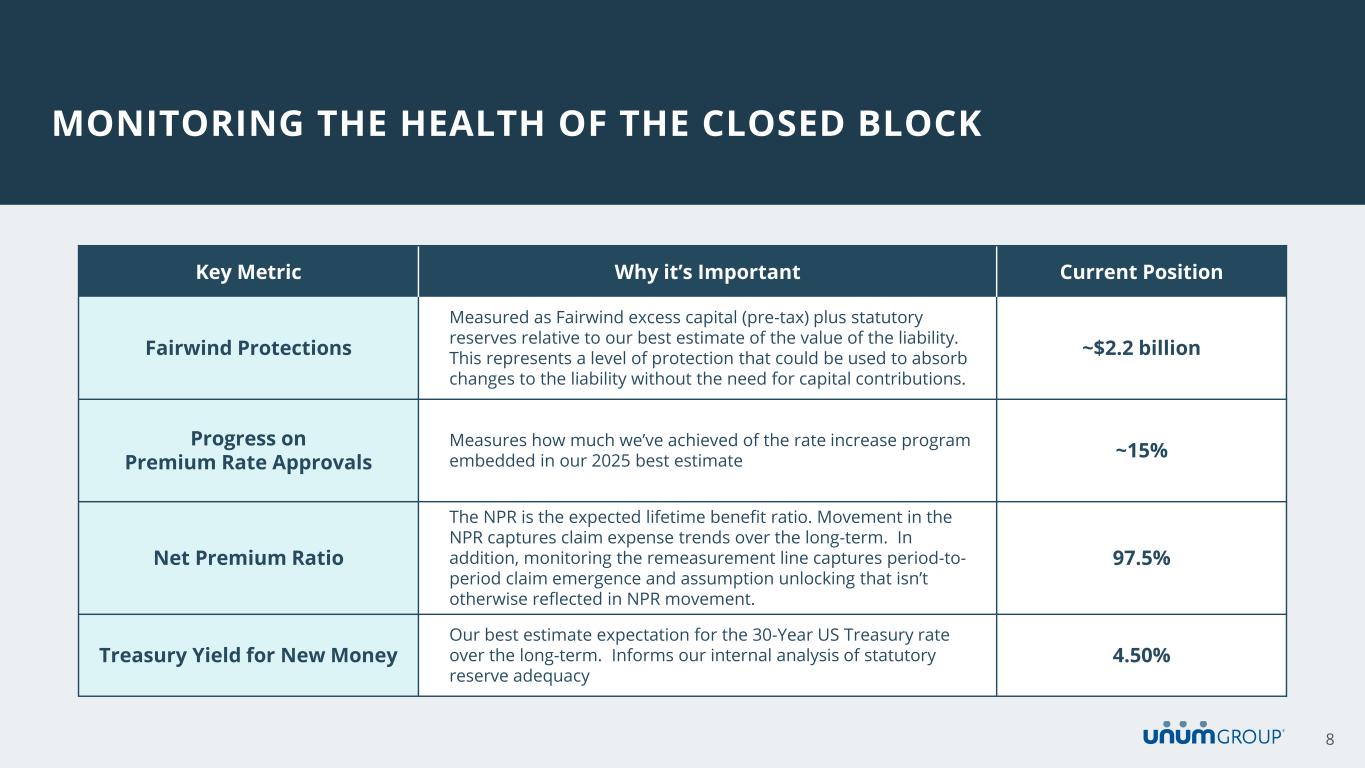
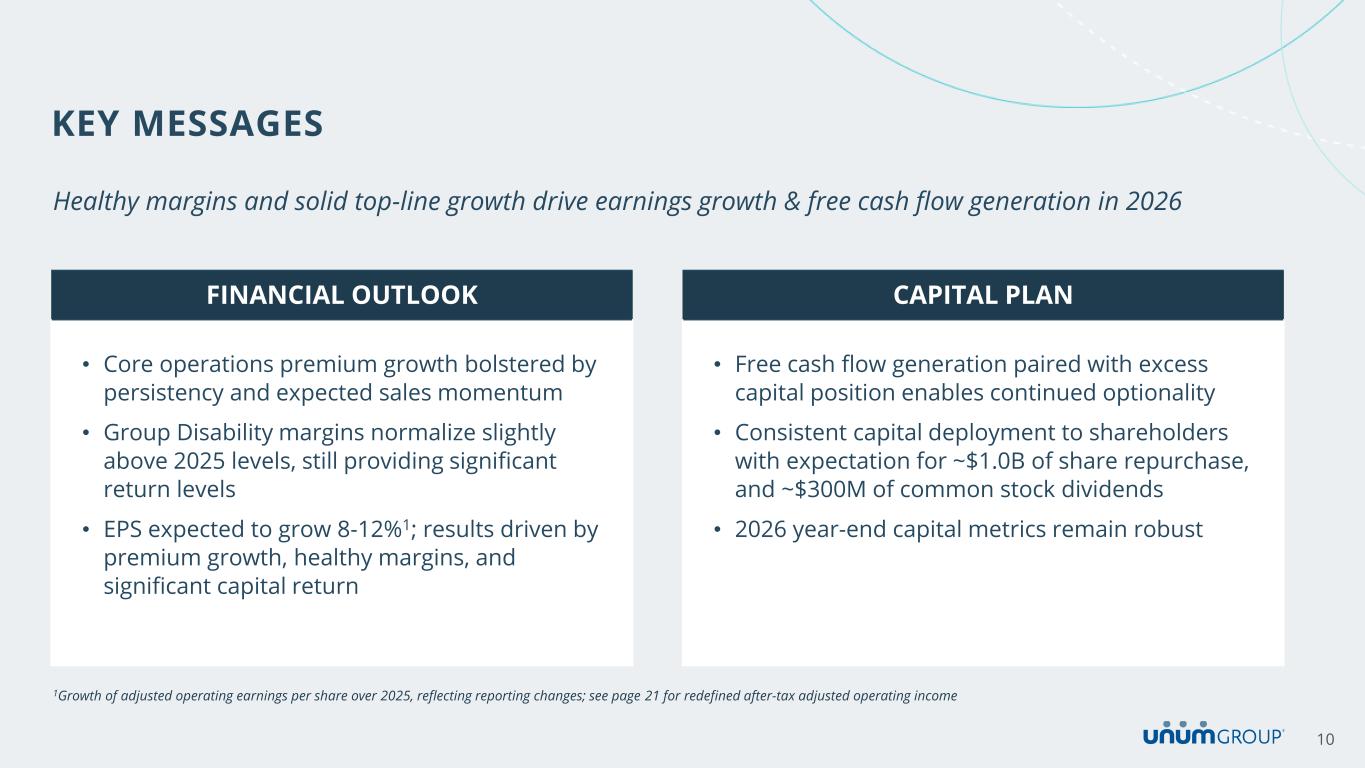
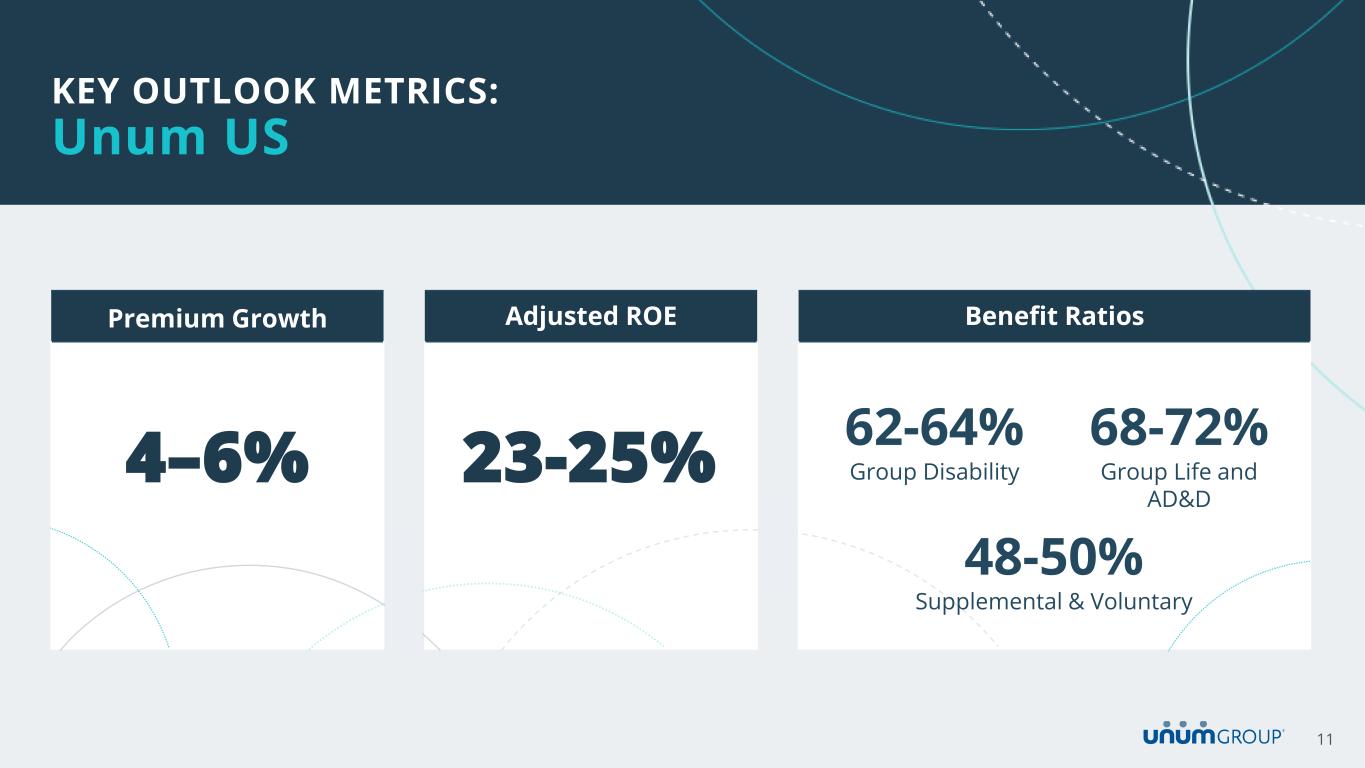
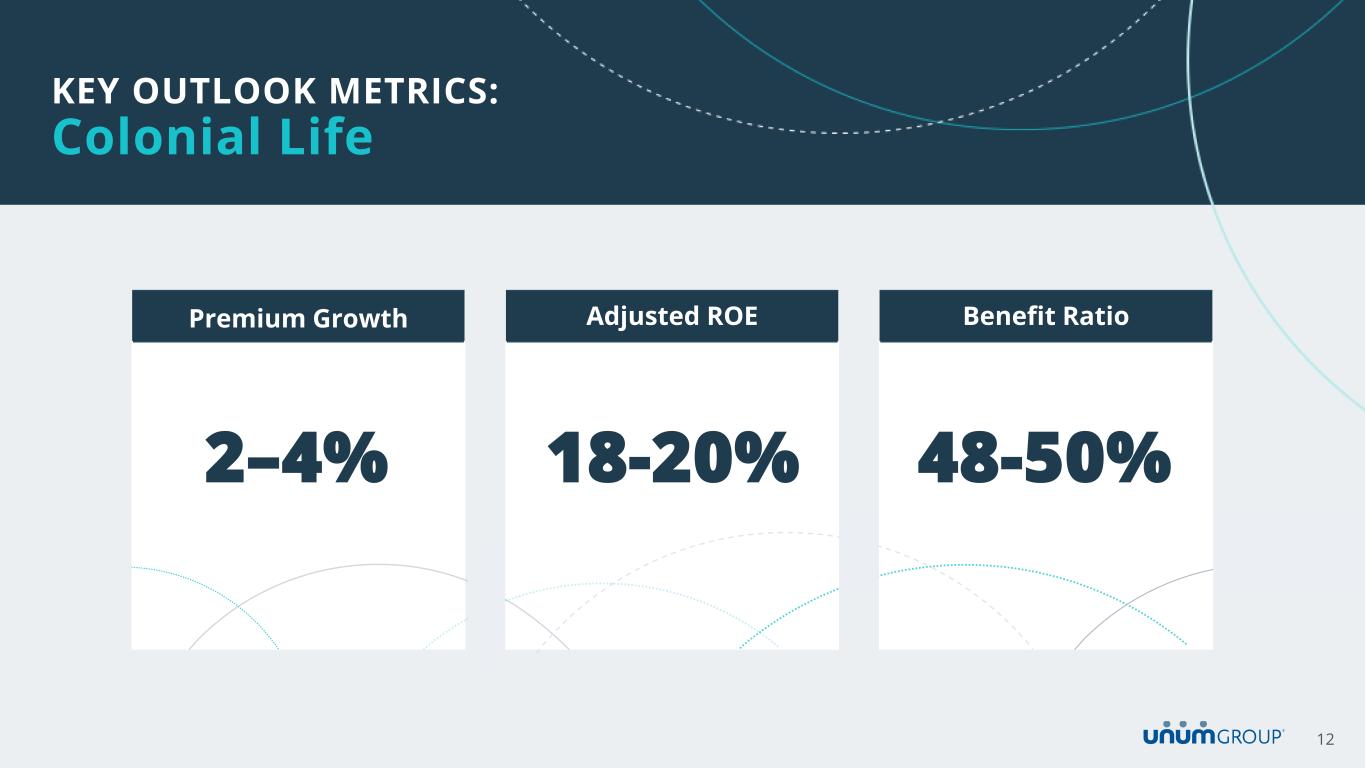
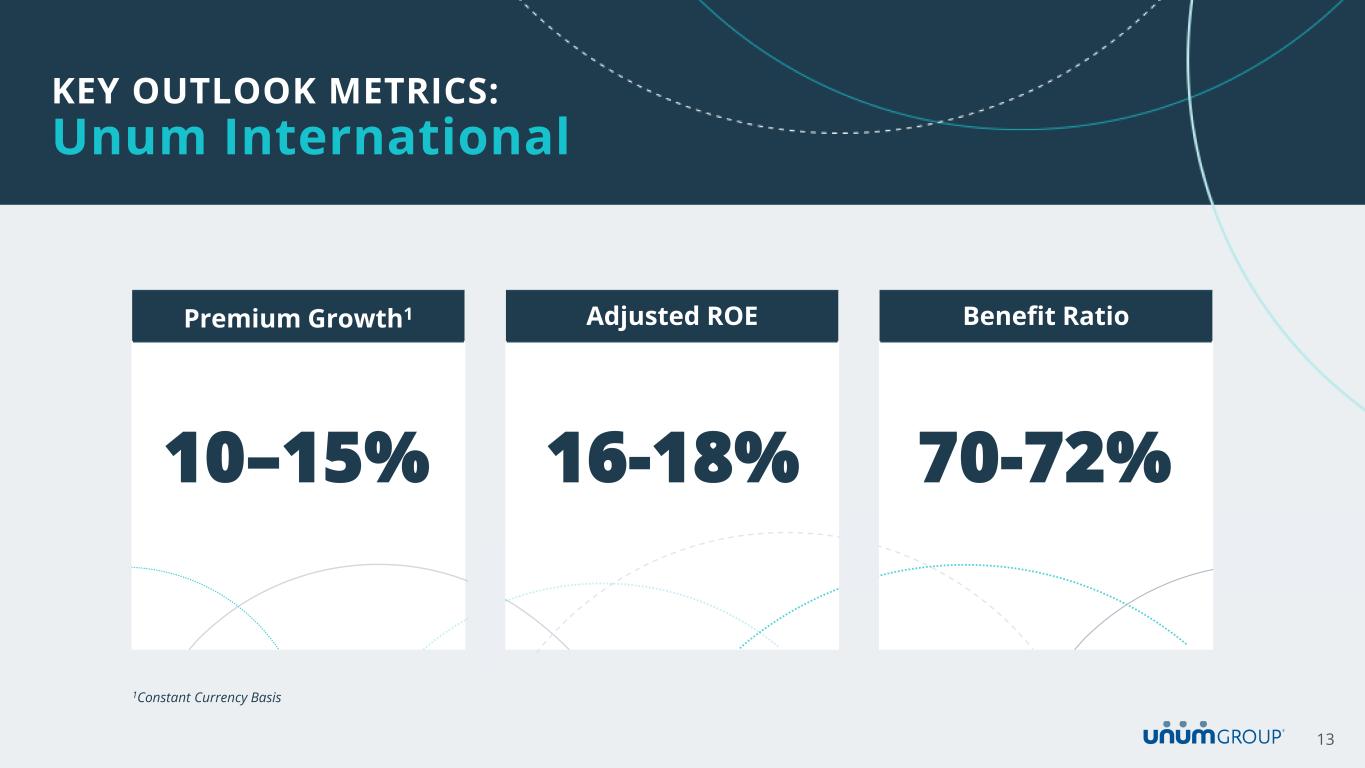
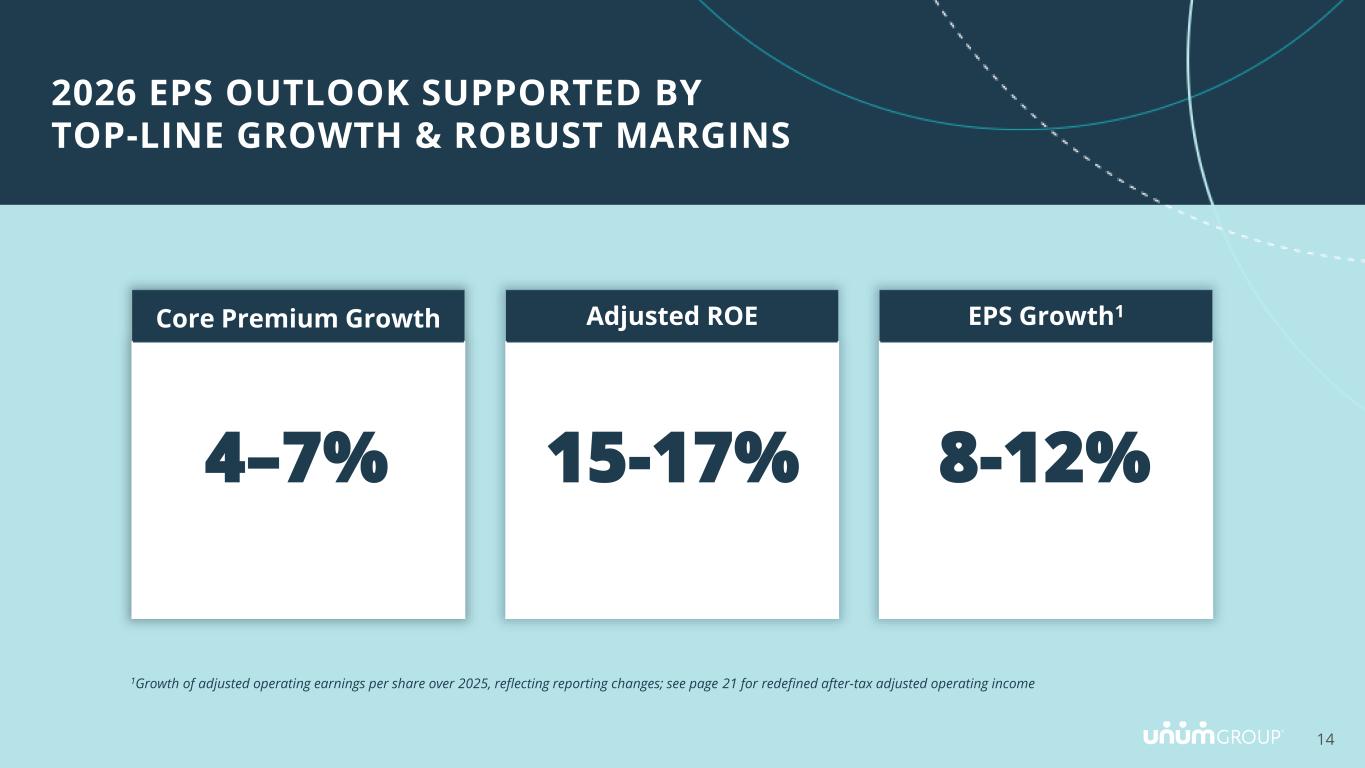
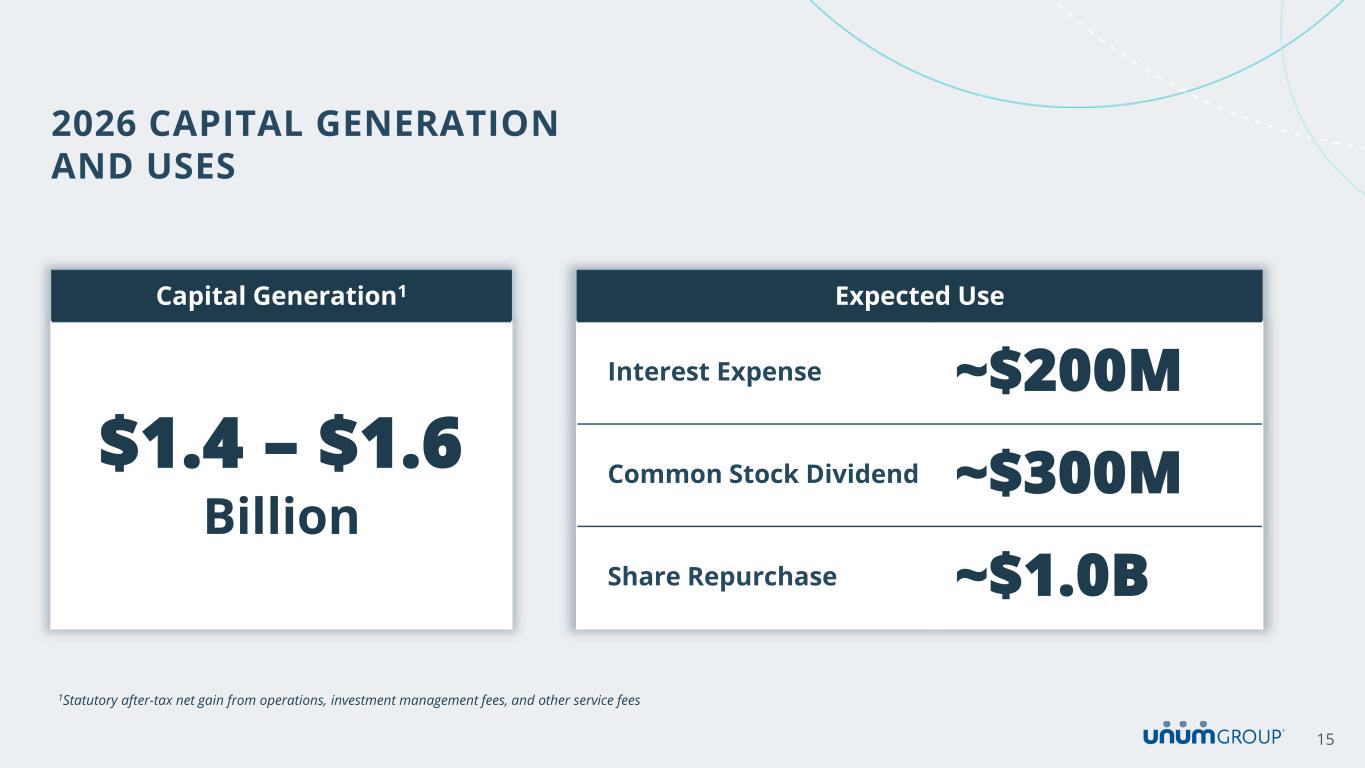
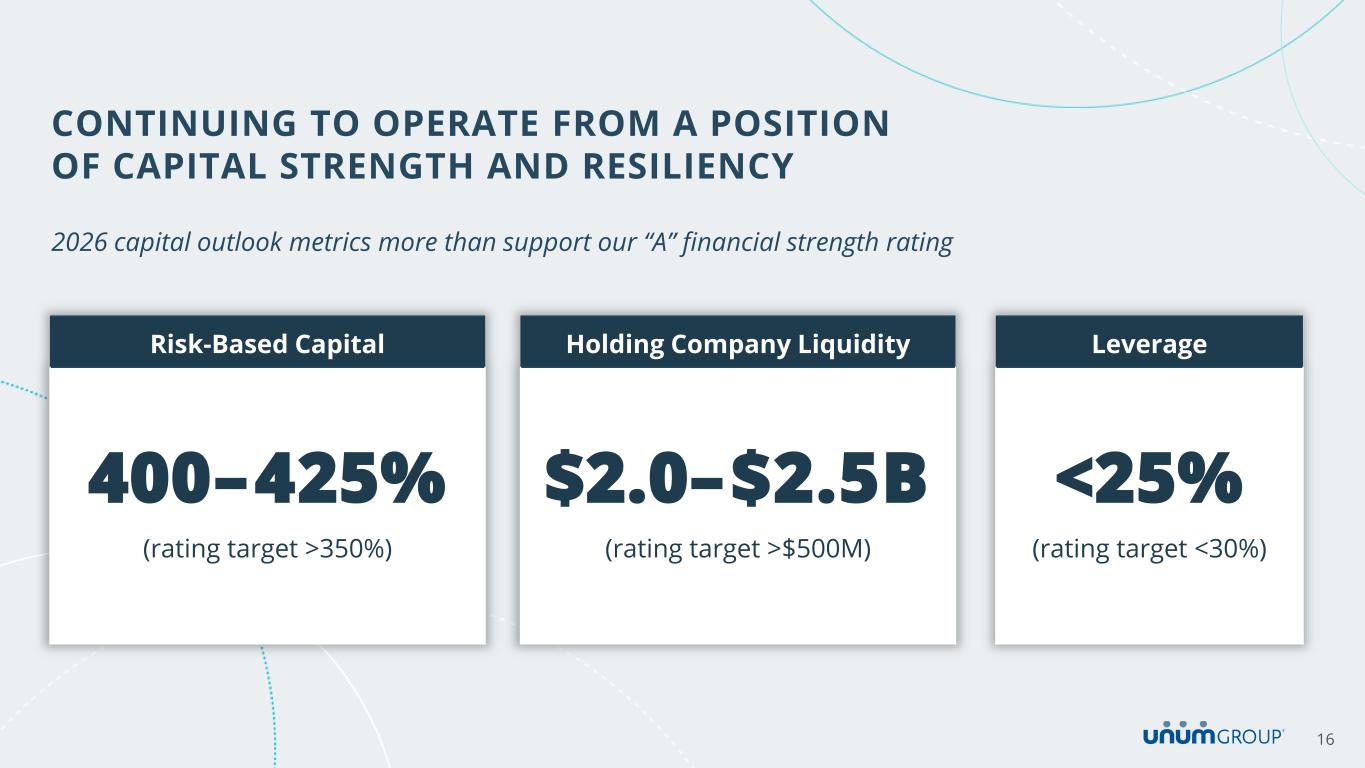
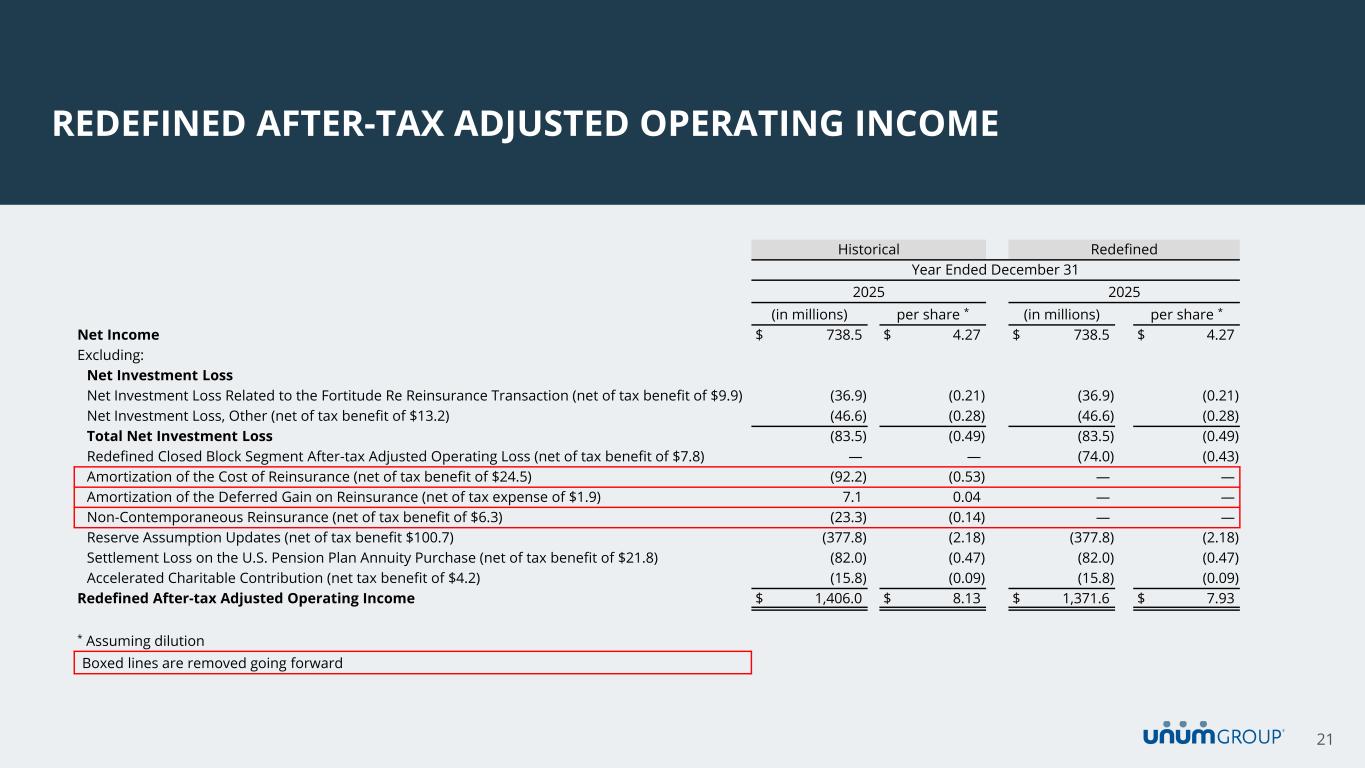
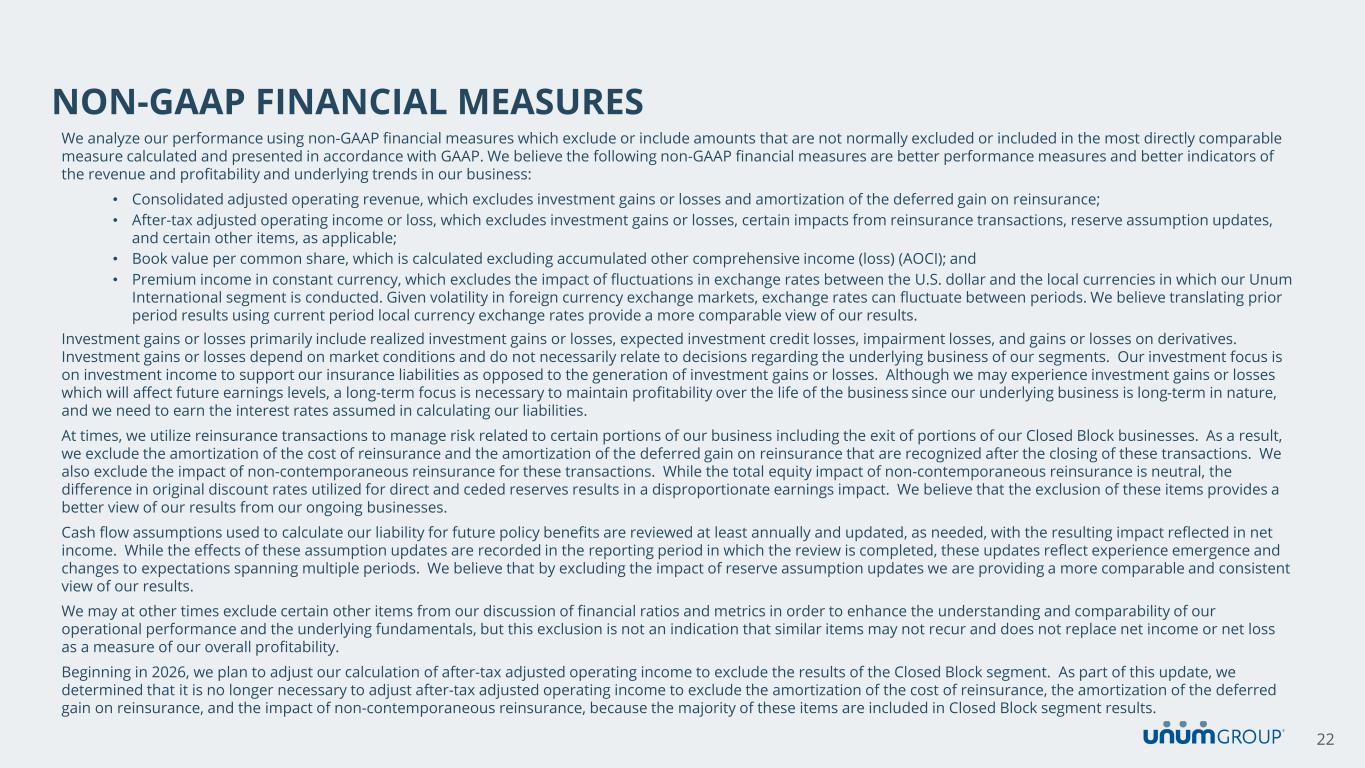
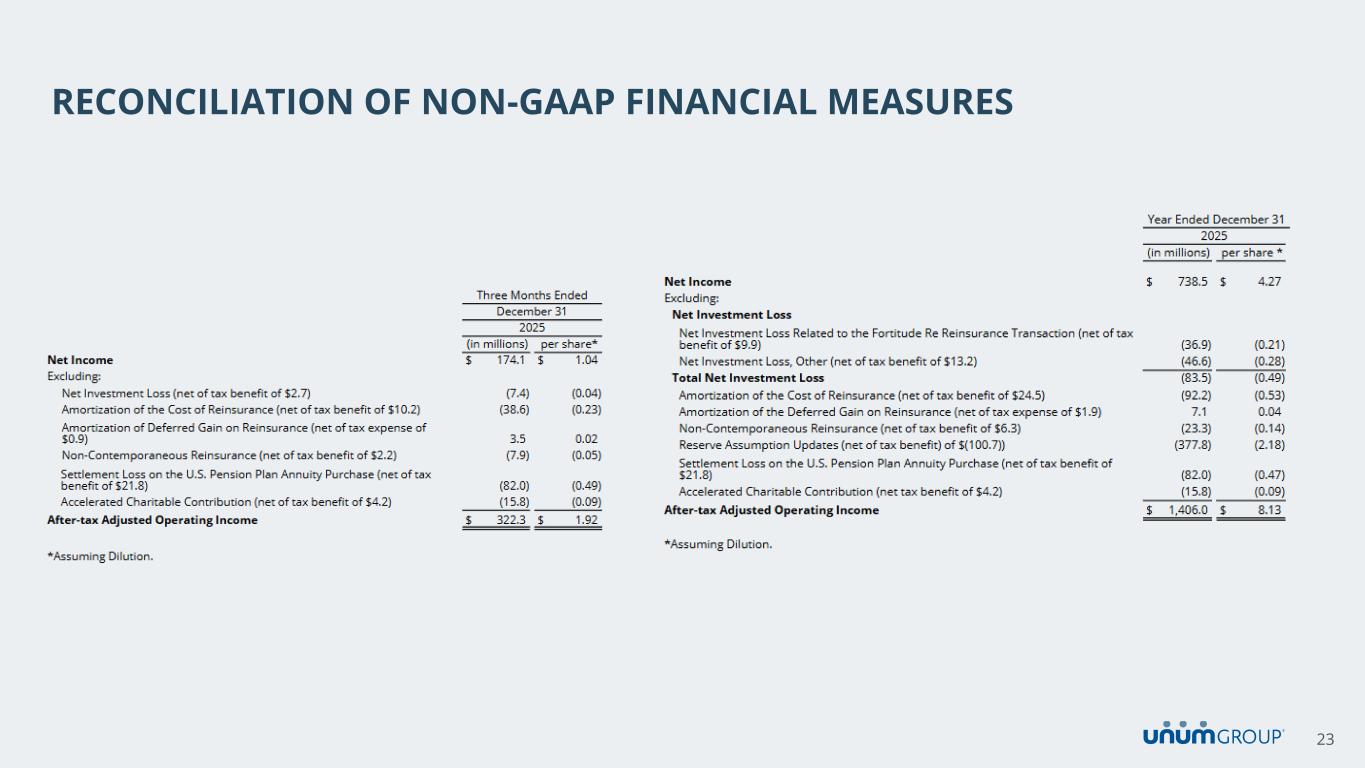
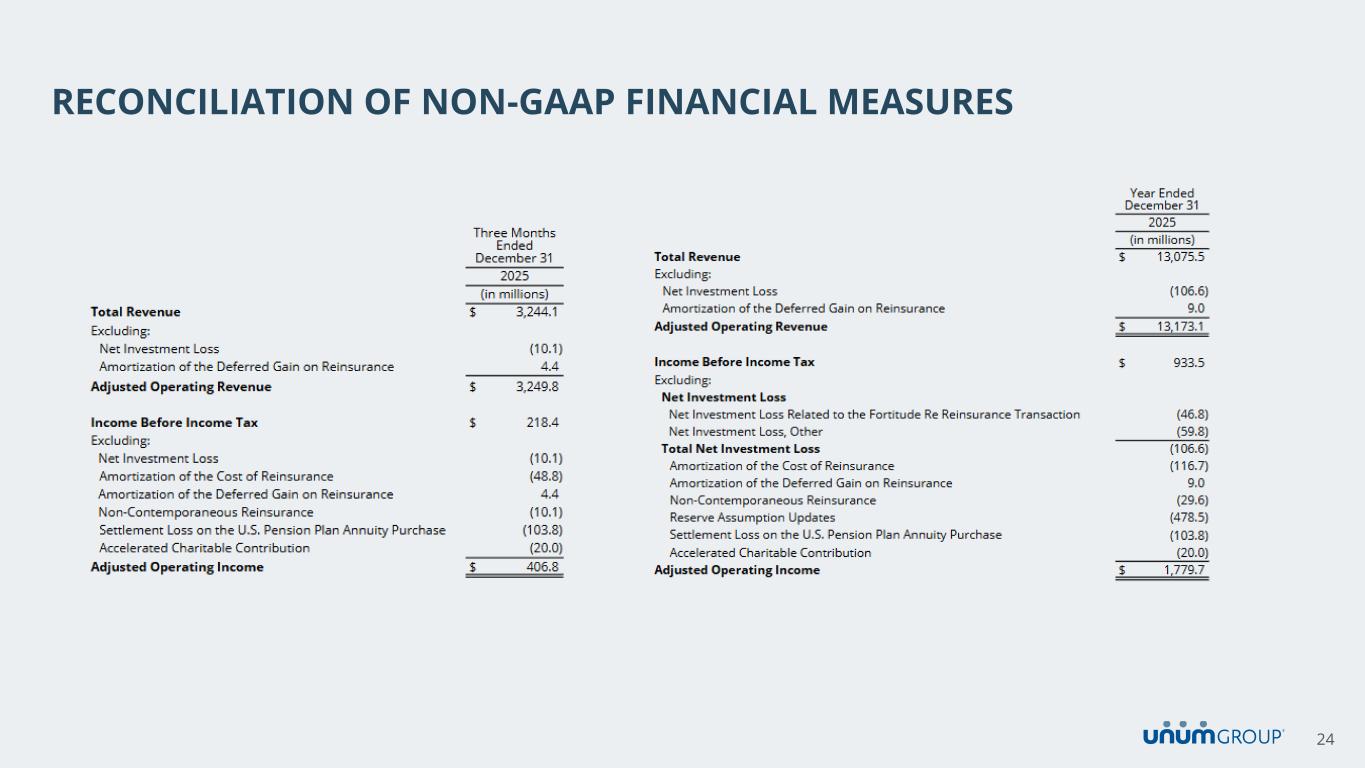
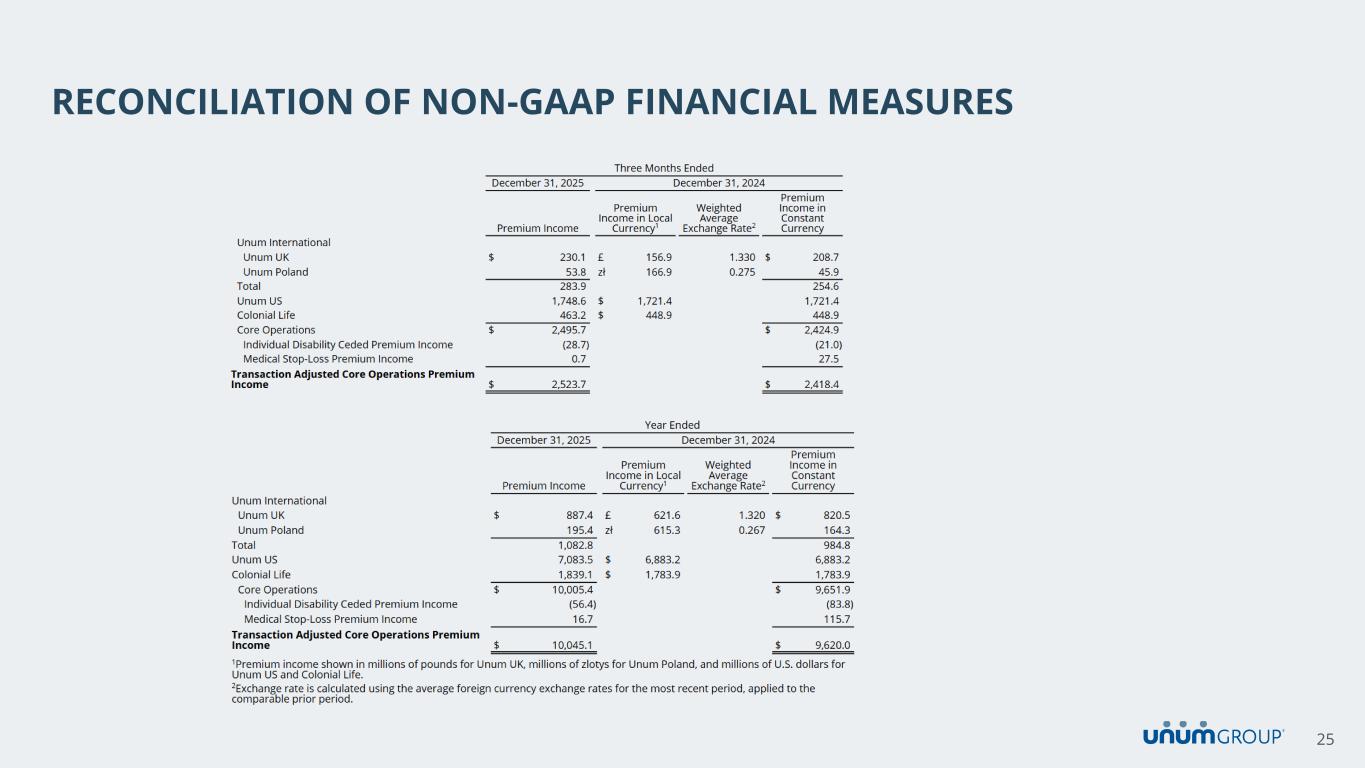
Great. Thanks, Rick, and good morning, everyone. While earnings in the fourth quarter were below our expectations, our top line continues to grow, and the franchise remains strong. core operation sales finished the fourth quarter on firm footing after a slower than expected first half and we're up 1.1% in 2025 over the prior year this included colonial sales increasing 10% in the quarter over a year ago and 5.3% for the full year we were also pleased with our persistency results and we continue to see high levels across our businesses including US group persistency of 90.2%. Considering all this, core operations premium in the fourth quarter increased 2.9% compared to a year ago and finished up 3.7% for the full year. When we adjust for the runoff stop-loss business and the seeded IDI business from the LTC transaction, core premium grew approximately 4.5%. This growth is consistent with our outlook from last February and within our long-term expectation of 4% to 7% annual premium growth. So then turning to margins in the quarter, results across the franchise generally performed lower than our expectations. This was reflected in Unum-US group disability with a 64.2% benefit ratio in the fourth quarter, which was above our expectations, driven by lower average size of recoveries and lower than expected mortality on our claimant block. Despite this, we continue to be pleased with the high returns our business generates. In both the quarter and for the full year, adjusted ROE for our core operations was approximately 20%, a good reminder of the underlying earnings power of our business, even when margins show volatility and are pressured in certain quarters. Altogether, these factors produced after-tax adjusted operating earnings of $322.3 million dollars for the quarter, or $1.92 per share, and $1.4 billion, or $8.13 per share for the These gap earnings translated to full-year after-tax statutory earnings of $1.1 billion, which exclude the impact of reinsurance transactions. This result was below our expectation of $1.3 to $1.6 billion coming into the year and largely largely reflects the lower-than-expected margins experienced in our GAAP results. However, our overall capital generation model still provided immense levels of capital optionality, enabling us to execute against our capital deployment priorities. Consistent with our priority of continued organic investment and capabilities, the full-year adjusted operating expense ratio finished in line with expectations. Outside of organic investments, we executed two small transactions for our core business, closed our first long-term care risk transfer transaction, and returned approximately $1.3 billion to shareholders through share repurchases and dividends. Our capital generation and strong excess position enabled this high-level capital flexibility in 2025, allowing for a wide range of capital uses, which will continue into 2026. I'll now briefly review our 2025 results by segment, provide updates on the closed block strategy, and then shift to our 2026 outlook. In UNAM U.S., before-tax adjusted operating income was $289.7 million in the fourth quarter, 13.1% less than the prior year quarter, and full-year adjusted operating income decreased at least 11.6% from 2024 to $1.3 billion. In group disability, adjusted operating income was $102.3 million in the fourth quarter and $479.8 million for the full year, a decline of 22.8% from 2024. This year-over-year decline represents the normalization of our group disability benefit ratio after a historically low benefit ratio of 59% in 2024. This normalization, paired with volatility throughout the year, led to a group disability benefit ratio of 64.2% in the fourth quarter and 62.4% for the full year. Reported full-year premium of $3.1 billion was nearly flat, and adjusting for the runoff of our stop-loss business, premium increased nearly 3%. For group life and AD&D, fourth quarter adjusted operating income increased 11.1% to $91.9 million, and full-year adjusted operating income decreased 7.3% to $319.4 million. Favorable levels of mortality counts led to a benefit ratio of 64.8% in the fourth quarter and 67.5% for the full year. Full-year premium increased 4.9% to $2.1 billion due to favorable sales, while persistency remained strong. In our supplemental and voluntary lines, adjusted operating income declined 8.2% to $95.5 million in the fourth quarter and were flat at $472.7 million for the full year. Fourth-quarter results were impacted by higher benefits experience across all product lines. Excluding the impact of reinsurance, premium growth was strong, growing approximately 5.5% for the full year. Moving to UNAM International, underlying earnings in the fourth quarter declined 11.7% to $33.2 million from the prior year and declined 3.5% to $152.3 million for the full year, driven mainly by unfavorable claims experience in U.K. group disability. Healthy sales and persistency bolstered double-digit top-line growth as fourth-quarter premiums grew 11.5% to $283.9 million, and full-year premium increased 10% to $1.1 billion. In Colonial, adjusted operating earnings declined 7.2% in the fourth quarter to $113.9 million and for the full year declined 0.7% to $463.6 million. Like claim count volatility and higher expenses due to sales growth led to lower margins in the fourth quarter. The benefit ratio of 48.3% in the quarter and 48.1% for the full year were elevated over 2024, but in line with our outlook. Fourth quarter sales increased 10% to $203.9 million, the largest amount of quarterly sales since 2019. And full year sales increased 5.3% to $560.3 million, one of our largest years ever. Additionally, favorable persistency also benefited to top-line growth, with full-year premium increasing 3.1% to $1.8 billion. The corporate segment produced a loss of $51.1 million in the quarter as staffing and IT costs were elevated. For the full year, the segment produced a loss of $171.6 million compared to the full-year loss of $191.2 million in 2024. So then moving now to the closed block segment, adjusted operating income was $21.1 million in the fourth quarter and $63.5 million for the full year, in line with the guidance provided in the third quarter. Regarding LTC fourth quarter performance, claim counts were in line with our expectations and the net premium ratio decreased slightly to 97.5% from 97.6% sequentially. And then finally, our alternative investment portfolio, which largely backs the long-term care block, generated $25.9 million in income, translating to an annualized return of 7.6%. This marked the strongest yield achieved in 2025 and reflects positive momentum compared to the full-year yield of 6.4%. Since inception, our diversified alternative portfolio has produced returns in line, with our long-term expectation of 8% to 10%. I'll now move to our closed block strategy. As Rick mentioned, we've made significant progress over time, reshaping our closed block. On this journey, we've established a track record for executing on prudent risk management actions, such as seeking actuarially justified premium rate increases and maturing our interest rate hedging program. On top of these successes, we further advanced our strategy in 2025 through three notable achievements. First, the reduction of $4 billion of LTC reserves through the execution of our risk transfer transaction with Fortitude Re and our internal funds withheld reinsurance transactions. Second, the removal of our morbidity and mortality improvement assumptions, de-risking our assumption set and increasing predictability of the block. And then lastly, the discontinuation of new employee coverage on existing group long-term care cases, which was effective February 1st of this year, resulting in the entirety of the block being in full runoff. To conclude, we're pleased with our actions in 2025 to de-risk the block and continue to work toward our stated objective of fully mitigating this risk. These actions continue to reinforce our expectation that we will no longer need to contribute capital to support LTC reserves, a view first established in 2023. So then before moving on from the closed block and diving into the outlook, one change I want to call out as we enter 2026 is a change in our go-forward presentation of adjusted operating income. Beginning with first quarter results in 2026, we will exclude closed block earnings from our adjusted operating earnings measurements. Going forward in our disclosure, you will see a special item that encompasses the entirety of closed block earnings. As such, adjusted operating earnings will now be presented as the combination of our core businesses and our corporate segment. This change aligns with the actions we took in 2025 to reduce the footprint of our legacy closed blocks and provide sharper focus on the core business. As we continue to shriek the footprint of the closed block, we view the potential for increased earnings volatility that would otherwise distort our reported results. One recent example of this increased volatility in recent years is when we experienced GLTC case terminations, which drove gap losses. While this outcome is positive for the block longer term, the gap earnings impacts may present a different result. In conjunction with this change, we also took the opportunity to holistically consider and adjust for two related impacts. First, we will no longer present non-contemporaneous reinsurance and the cost or gain of reinsurance as a special separate item. The related non-closed-block amortized reinsurance gain and impact of non-contemporaneous reinsurance will move to segment operating results above the line, which impacts our individual disability line of business. Then second, as part of this broader evaluation, we considered our methodology for allocating gap excess equity across our reporting segments. The result of this was a decrease in the allocated closed-block equity and a corresponding increase in the ongoing operations. A function of our view that adjusted operating results are no longer supported by the closed-block, and therefore the corporate-owned excess should be represented in our reported results. Ultimately, this will drive higher investment income across our other reporting segments starting in the first quarter. So, putting this all together, our 2026 adjusted EPS growth will be presented off of a redefined 2025 base of $7.93, which excludes closed-block results and related items. For additional detail, we have added a slide in the appendix that illustrates the bridge from historically reported to our newly defined basis. Okay, turning to the ongoing monitoring of the closed block, we've refreshed our disclosure, as you can see here. We introduced these metrics during our fourth quarter 2023 earnings call to highlight the most relevant indicators of closed block health and performance. Given a change in presentation of closed block earnings, which was formally used to help assess claim trends in the period, we would note that the NPR paired with the remeasurement line better capturer's near-term claims experience. When considering our view of no additional capital required for the block, our protection metric serves as a way to assess loss absorption capacity. This quarter, we took the opportunity to revise presentation of this metric to fully be on a pre-tax basis, aligning the treatment of both excess capital and reserve margins. Ultimately, these four metrics provide a comprehensive outlook of the block. As such, going forward, we will continue to provide details on a periodic basis. I will close by affirming that none of these reporting changes impacts our commitment to our strategy of reducing the footprint and capital demands of the closed block. So moving to the outlook for our core operations, I will start with our view of business growth and earnings power and discuss how that translates to capital generation. The key themes of our 2026 outlook are strong top-line growth, stabilizing margins, and robust capital return levels. Top-line results are expected to grow more in line with our long-term expectations and above what we achieved in 2025. While core sales in 2025 were lighter than anticipated, persistency was better than expected. As we enter 2026, we believe we can benefit from both strong sales growth and persistency in our core businesses. From a margin perspective, group disability was a main part of our story in 2025 as it normalized from the historically high levels of margins in 2024. While volatile in 2025, we believe that we will still see a stabilizing benefit ratio of 62 to 64 percent in 2026, which still provides a very strong return on equity of greater than 25 percent. Combining these trends with our capital position and plans to repurchase approximately $1 billion of shares in 2026, we expect adjusted after-tax operating earnings per share in the range of of $8.60 to $8.90 for full year 2026, representing growth of approximately 8 to 12% over our redefined 2025 result of $7.93 per share. I will now turn to our expectations for top line growth, returns and underwriting margins across our core businesses. Starting with UnumUS, we expect premium growth to be between four and 6%. As Rick mentioned, we will see continued tailwinds to our premium growth as a result of the success of our digital platforms. So to quantify the impacts, I note that for customers that utilize our HR Connect platform, we see close ratios that are roughly double when HR Connect is part of the experience and persistency at levels 2% to 4% higher than non-HR Connect customers. The benefit ratio outlook is relatively consistent from what we achieved in 2025 for group life and AD&D, but grading up slightly for group disability, which we expect to be in a range of 62 to 64 percent. I'll say preliminary first quarter indicators are broadly consistent with our assumptions and supportive of this outlook. Notably, through our financial planning process, clarity on the long-term benefit ratio outlook has emerged. As a result, we do not expect the group disability benefit ratio ultimately to be greater than 65% when considering normal volatility. This result translates to a robust ROE in the mid-20s. Underlying this future steady state is the expectation that our underlying claim trends are sustainable and that the move to a longer-term target is primarily influenced by expected pricing dynamics, which contributed a little under 1% point to the ratio increase in 2025. Lastly, with the change I mentioned earlier to individual disabilities amortization of the deferred gain, we now expect supplemental and voluntary earnings to be in the $120 to $130 million range per quarter, including an expected benefit ratio range of 48 to 50%. So, all together for UnumUS, these results drive healthy expected ROEs this year, in line with the 22.6% we experienced in 2025. So, I'll shift now to Colonial, where our outlook for top-line growth and underwriting margins is quite consistent with 2025 results. Strong persistency and our building sales momentum will enable top-line growth to continue in the 2.2% to 4% range. When paired with consistently strong margins, ROEs will continue in the high teens range, reflecting our benefit ratio expectation of 48% to 50%. Then in international, high levels of top line growth continues after 10% growth in 2025. While the second half of 2025 saw margins contract below our expectations, we do expect the benefit ratio to return to a range range of 70 to 72% in 2026. This will result in earnings power for the international segment in the low $40 million range quarterly, delivering high teens ROEs. So, adding it all up for the total company, this translates to healthy premium growth in the 4 to 7% range, in line with our long-term expectations, attractive ROEs, and after-tax adjusted operating earnings per share in the range of $8.60 to $8.90, representing growth of approximately 8% to 12% with momentum building throughout the year. Consideration for the quarterly patterns of earnings reflects the realities of the seasonality of higher expenses in the first quarter, along with the growth of our in-force block and impact of capital management throughout the year. Finally, included in this outlook is our expectation that the corporate segment will reduce quarterly losses consistent with the fourth quarter's result of approximately $50 million. And then our adjusted operating expense ratio for full year will be approximately 22%. Executing against this outlook will position the company very strongly in 2026. So now turning to capital, the strong returns our business provides enables high levels of free cash flow conversion. Capital generation in 2026 is expected to be in the $1.4 to $1.6 billion range when considering our statutory earnings of $1.2 to $1.4 billion, international dividends of $100 to $125 million, and other service fees of $75 to $100 million. After considering debt service of approximately $200 million, this leads to free cash flow generation of $1.2 to $1.4 billion. For deployment back to our shareholders, our 2026 plans remain consistent with 2025. We expect to repurchase approximately $1 billion of stock and grow our common dividend per share by 10%, deploying approximately $300 million. combined this brings expected capital deployment to shareholders to approximately 100% of the free cash flow we generate a target we now expect to achieve for a second straight year finally I will finish with our expectations capital flexibility at the end of 2026 we expect capital levels to continue to be robust and well above levels needed to support our current ratings. As such, our outlook includes a risk-based capital in our traditional subsidiaries to be 400 to 425 percent, holding company liquidity to be two to two and a half billion dollars, and ample leverage capacity under 25 percent. While current metrics are well above these requirements to remain an A-rated company with our rating agencies, we will ensure a prudent approach to capital management. As such, we do not plan for immediate changes to our capital position, but rather will gradually manage metrics down over time. So to wrap up my prepared remarks, we are happy with the progress we made in 2025. While earnings ended the year below expectations, there were plenty of bright spots to be encouraged by, including strong top-line growth in our core business, significant capital return to our shareholders, and many actions taken to reduce our LTC risk and exposure, including our first external long-term care reinsurance transaction. All these items position as well as we enter 2026. We remain optimistic for the year and ready to execute against our plans to continue to deliver on our promises to our customers, create a desired workplace for our employees, and deliver industry-leading margins for our shareholders. So I'll now turn it over to Rick for his closing comments before we go to your questions.
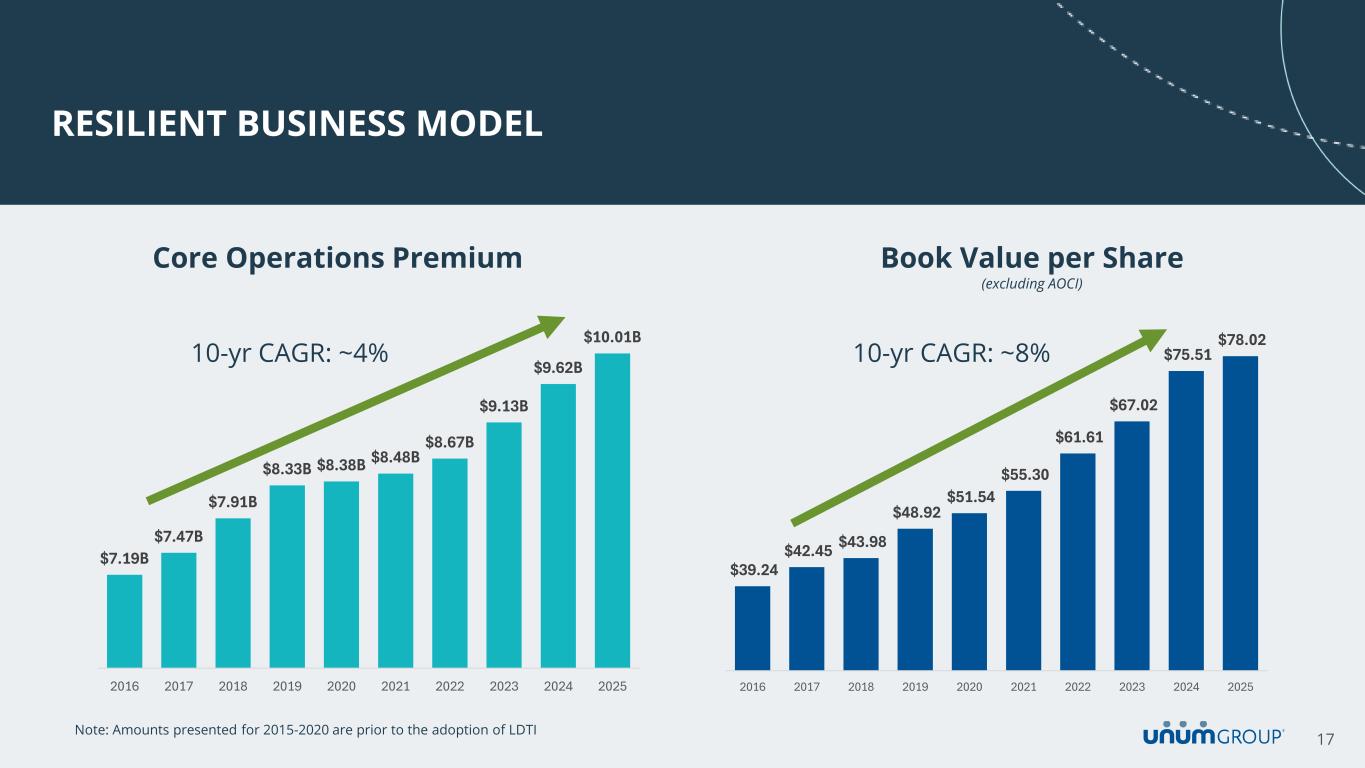
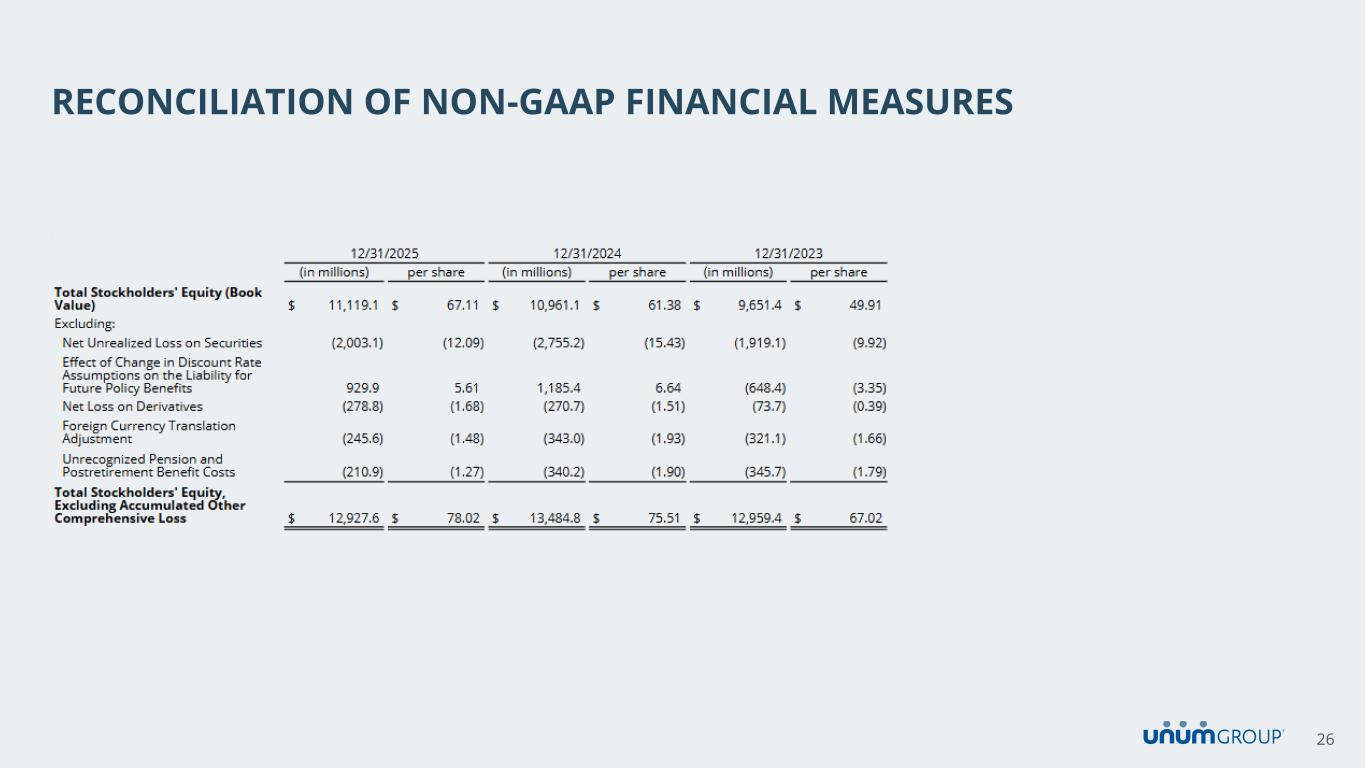
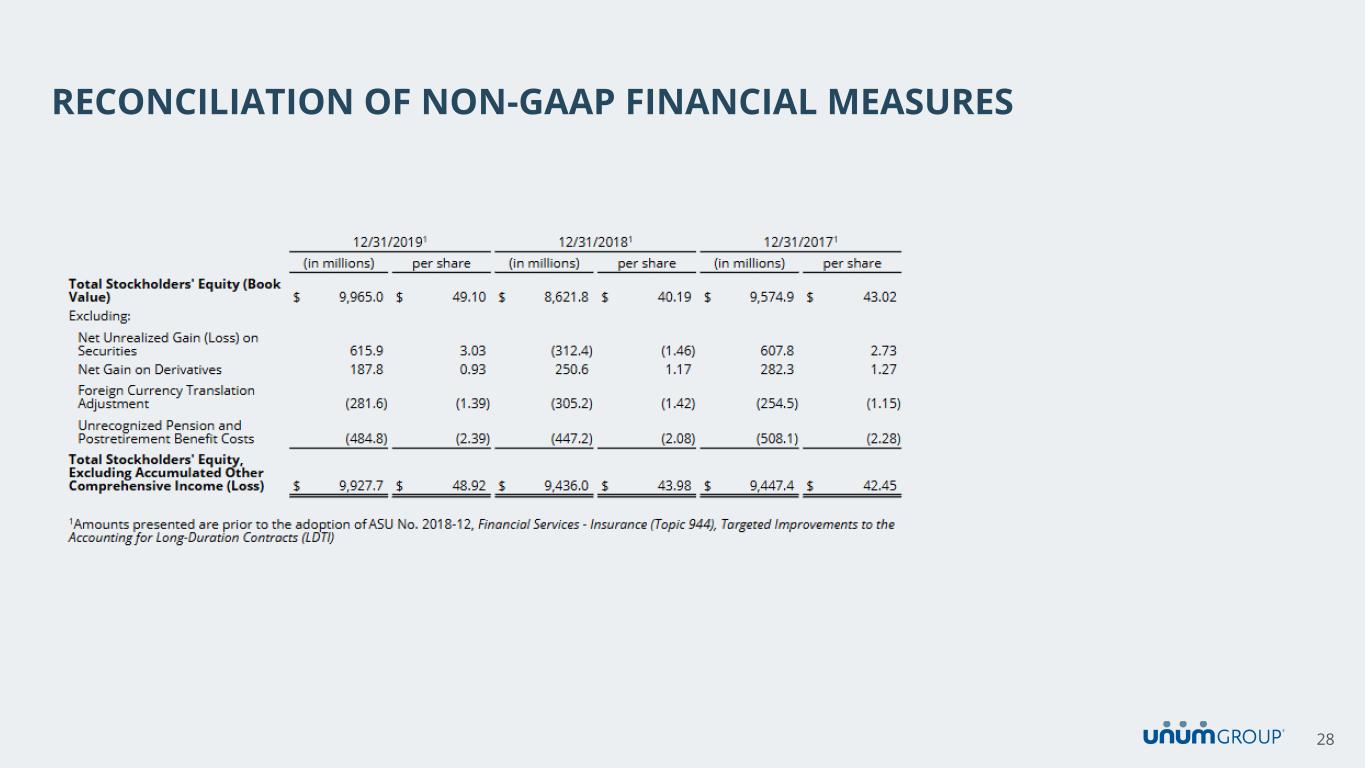
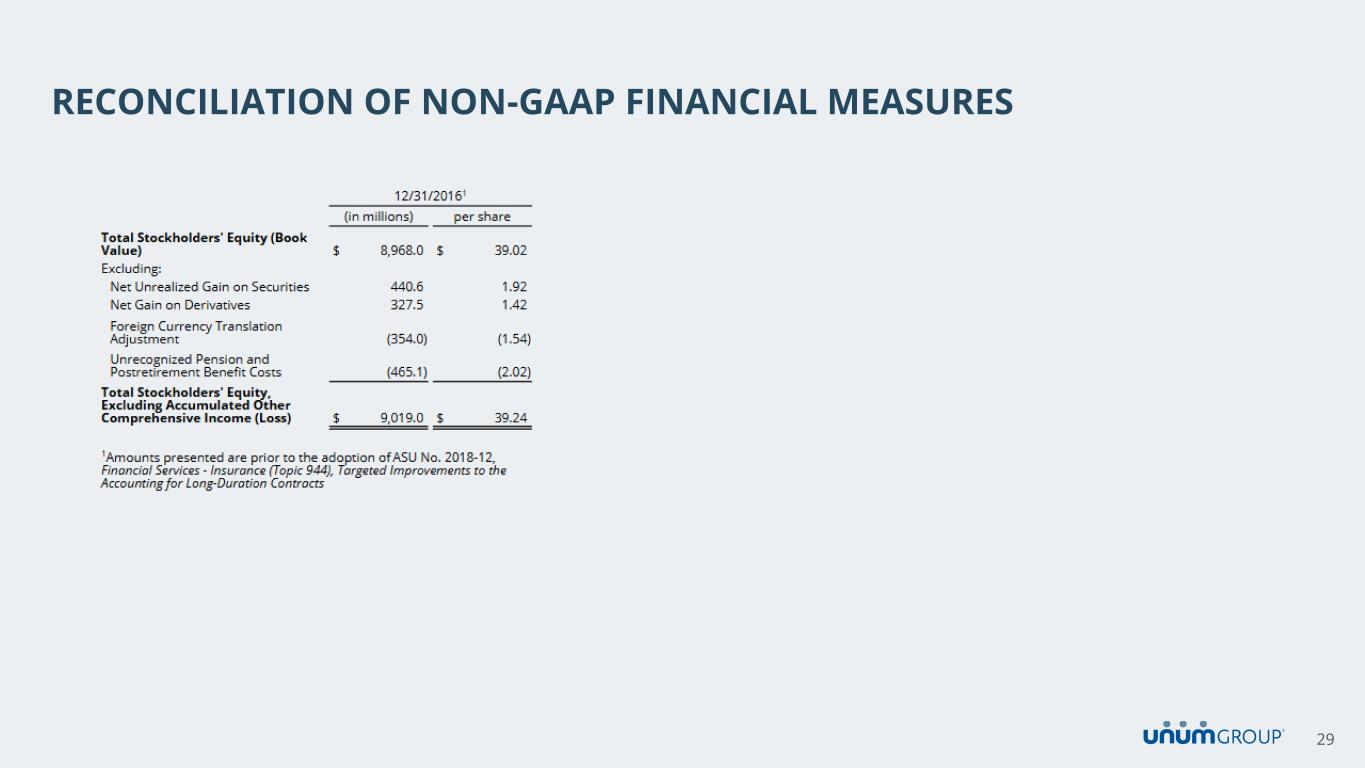
Thank you, Steve. I would like to wrap up today's comments by stepping back and reflecting on what our company has delivered over the last decade. Strong and consistent top-line growth has translated into value creation. This has been possible with a very resilient business model and a team that has bought into our purpose. Core operations premium has grown at a 4% compound annual growth rate to $10 billion, even through the disruption of the pandemic. Additionally, book value per share, excluding AOCI, compounded at 8% to over $78 per share, doubling where it was 10 years ago. These through-the-cycle results demonstrate the impact of disciplined growth, strong risk management, and consistent execution across time. And it reflects the essence of our purpose-driven strategy.
Operator
Serve more employees, deepen our relationships with employers and brokers, and consistently convert that growth into premiums earnings and long-term value creation we now like to take time to take your question so I'll turn it back to mark for the Q&A session in the question and answer session if you would like to ask a question at this time simply press star followed by the number one on your telephone keypad and again please limit to one question and one follow-up so we'll pause for a brief moment to compare the Q&A roster and our first question comes from the line of Wilma Verdes with Raymond James MoMA please go ahead okay good morning could you know there's a little more detail on the
drivers of the group's disability loss ratio and the outlook in the 26 what gives you the confidence for the result to stay strong this year thanks yeah Wilma thanks for the question I think Chris will start let's talk a little bit about the market and what we're what we're seeing out there as we think about this year how we executed next year and then maybe back to Steve to some of the underlying dynamics getting a little deeper than what he had in his prepared remarks. Chris?
Yeah, thanks, Rick. Thanks, Wilma, for the question. You know, right now, we continue to experience a marketplace that's so receptive to the type of problems that we've made investments in around lead management, connecting to the human capital management platforms of choice, and the conversations are really centered around, you know, what we can do to help HR teams run more effectively, more efficiently, help their companies thrive. Obviously, price, you know, across the bundle, whether it's, you know, group insurance, supplemental health, whatever it might be, there is discussion around, like, striking good deals, but we feel it's a very favorable environment to go at, you know, with our pricing discipline, talk about capabilities, talk about the problems we're solving, understand that prospect really well, and again, that could be a prospect on the new side or, you know, one of our current customers, and really show them how we can be a key partner going So it gives us a lot of confidence in the discussion around price, and that's why we think we can drive those loss ratios into the future.
Yeah, and then Wilman, I'll talk a little bit about just what we saw in the quarter and how we're thinking about the outlook and just the projections over more of a multi-year And so first of all, I just start. It's normal to see some quarter-to-quarter volatility. We were actually really pleased with how the full year turned out. We had an overall annual loss ratio of just over 62% for the year. So for the year, we feel pretty good. It was pretty coming into the year. In the quarter, what we did see, though, were a couple things. First of all, I'd start with the recovery rates that we saw were still consistent with really what we've seen throughout the year and what our expectations would be. So that's really been consistent as the entire year plays out. It's just the number of people that we can get back to work has been in our expectations. What happened specifically, I'd say, in the fourth quarter, one, the size of recoveries of those recoveries were about 5% lower than maybe what our expectations would have been. And so it was really just the mix of those people that did recover and go back to work. But then the other thing that was very different, and this is similar to our group life block, where we saw very low mortality in the working world, we saw lower mortality counts for our LTD claimant block. And just to kind of size that up, they were a little over 10 percent lower than what we would have expected for the quarter and what we've seen really for the year. So that was a bit of an anomaly that we think is just quarterly volatility. And so then we step back and we think about going forward. We're obviously getting a question a lot just around our thoughts on the longer-term benefit ratio and group disability. And our thinking here is for the near term, including 2026, we think that benefit ratio will operate in the 62% to 64% range. And then we do think that it will gradually, over the next few cycles, glide up to that 65% range. We think that'll probably be kind of the maximum. We still have quarter-to-quarter volatility there. What I'll tell you is the confidence in that path is really that we feel great about claims performance. We do continue to think that that's very sustainable. We're going to have quarter-to-quarter volatility, but we do think that that underlying risk management is going to be consistent. We also think, though, that there is an active pricing dynamic, and Chris did mention that, whether it's new pricing coming in on new cases or just how we manage the enforced block, that, you know, it is going to continue to impact how we think about benefit ratios going forward. And so we're trying to give a little bit more guidance. And so what I tell you is that's what our planning assumptions would indicate as we just run the planning process going forward. We'll have to see ultimately how pricing strategy does play out. But Chris said it, what we're seeing in the market, it hasn't really changed our thinking generally on the performance of this block. But we do know that there will be price adjustments as we go through the next few years. So I just kind of step back and say longer term, the economics are great on this block. We still are going to have margins in the mid-teens supporting a 25% plus ROE on this block of business. So I'm very happy about it. I knew the market was looking for maybe a little bit more clarity about the longer term trajectory. And so, I wanted to give a little bit more on that as part of the earnings call.
Thank you. Absolutely loved the decision to move closed block below the line and looking forward to not discussing those quarterly fluctuations with you in the future, but could you give us a little bit of color on how you view the 26 EPS outlook on an apples-to-apples basis? It looked favorable compared to my prior expectations, but it's a little bit tough to compare given the reporting change.
Yeah, I think generally it comes down to a few things. One is we do think we're going to be able to start growing top-line growth at a higher rate, and you'll see that with our expectation. We grew about 4.5% in 25. We do think that will pick up as we're going into 26 across all of our core businesses. So we do think we're just going to generate more core business premium margin. And then we're also looking at just benefit ratio levels, And by and large, other than some of the dynamics that I discussed, we think those will be pretty consistent as we go into next year. We're going to continue to have very disciplined expense management and really think about what kind of technical capabilities and innovation we can bring to make sure that we're doing the right thing around expense management. And then there's obviously a fair amount of capital deployment that builds into that outlook. And so, when you bring all those things in, we feel good about an 8% to 12% EPS growth rate given the new definition of how we're thinking about adjusted operating earnings.
Operator
Thanks, Wilma. And our next question comes from the line of Alex Cutt with Barclays. Alex, please go ahead.
I just wanted to follow up on the decision to move the definition of operating earnings. And, you know, it doesn't change anything economically, and we'll still be able to analyze some of the LTCs a little on. But what I thought was interesting about it is it does seem to be, you know, an extension of this being prepared for life after LTC. And, you know, you took the charge, aligned it more hopefully with where reinsurers are at. But you've closed the block. Now you've made a decision to move it into, you know, below the line or whatever. So it would potentially make a deal look a lot cleaner as you complete it. And so I'm just wondering, you know, is that the right read on this? What are you seeing in the reinsurance market that's maybe motivating you to do some of these things? And, you know, do you potentially have the opportunity to do a bigger piece of the block? or will need to just continue to be bite-sized.
Yeah, thanks, Alec. Just to take it through, I think you captured it well, as we've been actively working on this block of business for many years, but certainly over the last several it's been a steady drumbeat of things that we're doing to really put LTC behind us. Many things you talked about in terms of improving the profitability around that block with the rate increases, the work that we did to put capital behind it to make the statement that we are not putting any more capital into this business. And then, as you talk about, 2025 was a pivotal year in terms of doing our first reinsurance transaction, doing an internal reinsurance transaction, and all the things that we talked about coming out of the third quarter with the group life, I'm sorry, with the group LTC, et cetera. So a very steady thing that we're doing, and this move is, I think, part of that. And then the last piece to talk about is what's next. and it's something we've been talking about pretty consistently is we want to continue to take the opportunity to get out of this block of business to do so through reinsurance and be active in the markets around that and so you asked does this make us do anything different not really I think that we are still on the same path of how we're going to look at different parts of the block of business that we want to look at reinsurance to use we are still in active discussions we have been in active discussions for a period of time And we'll continually be talking to counterparties about what are the ways to take this out. And so you asked about the sizing of a transaction. You know, those are all on the table in terms of things that we can look at to continue to work through this. But I think you captured it well. This is something we haven't stopped on because we've changed reporting. How does reporting looks does not mean we are changing anything about our activity around the strategic management of the block, including all the things we've done previously. And we're going to stay on that. So that's a key part of our overall strategy is continue to put LTC behind us.
The next one I wanted to ask was on artificial intelligence. We're getting a lot of questions from investors around this and, you know, related to group benefits. A lot of it's around, you know, your client base and if they have layoffs and so forth. And so I'd be interested if you could comment at all about, like, the types of industries you're exposed to, if you've done any work or put any thought behind how, you know, relatively more or less exposed you are, and maybe even just broader thoughts on risks and opportunities related to AI.
Yeah, no, thanks, Alex. You know, we are continually monitoring what's happening in the macroeconomic conditions when you think about it. I think we've also talked about our book of business and what we see from a natural growth, which is the increase that we see in payrolls and wages and how that fits into our overall block of business. And I think this is part of that question that we look at. And the awareness that we have and the balance that we have across the portfolio of different types of industries that we're actually covering, different types of workers that we're covering, I think is very well balanced across the piece. And so when we think about the potential labor impacts that AI can bring to the markets, When we look at that business mix that we have today, we think it's early. So our performance has remained consistent across the industries. Our book is well diversified. And so that helps mitigate localized or specific sector shifts that you might see over time. And I think that, you know, this is kind of a common phraseology, but history does suggest that these advancements will reshape the nature of work rather than reduce it or eliminate it. And so certain roles may diminish. New functions will emerge. all those pieces, and we'll be there to take care of those individuals at that time and what we look at. So I think it's very early on that front. And the last thing I'd say, too, is, you know, our mix, you know, by type of worker, one of the things that we talk about is protecting people isn't for any one particular level in the organization. Our mix is probably 60-40, white-collar, blue-collar. And so, you know, we're going to make sure we're taking care of different people at different times. And so it's a fair question, but I think it's very early, and it's one we're definitely on top of.
Operator
And our next question comes from the line of Sunit Kamarath with Jeffrey Sunit. Please go ahead.
Yeah, thanks. Just wanted to follow up on the LTC. You kind of answered the question, Rick, in terms of what you guys are doing, but what are you seeing in the marketplace? Are there more counterparties that are looking for this type of exposure? I mean, we've seen a couple of deals. But I'm just trying to figure out, like, how much interest is there in these type of liabilities.
Yeah, and I take you back to some of the commentary we made coming out of the transaction. Clearly back when we did this transaction early last year, we saw more interest coming up from different types of counterparties. That could be people that are interested in the morbidity aspects of the book, people that are very interested in the asset side of the book of business. And so that definitely picked up over that period of time, and we see an ebb and flow continually, but there still is a lot of interest out there continually, and we just watch the And so we're, as I say, having active conversation with multiple people, and we'll continue to do that. It does tend to ebb and flow or manage this over the longer term. I don't want people to think that there's anything imminent on that front, but there still is interest, certainly on the asset side, but on the morbidity risk side as well.
Okay. And then I guess on the capital, I fully appreciate the 100% capital return based on what you're generating. But to your point, it still leaves you with a sizable excess holding company cash position and, you know, RBC well above target. So I know you want to manage this down over time, but I guess what's the timeframe that we should be thinking about in terms of, you know, kind of getting to those target RBC and hold co-liquidity levels? Thanks.
Yeah, sure, Sonia. I think when you think about the – you have to go back to what our uses are and our potential uses of deployment. First of all, grow the business. And so if we can put more capital into growing the core franchise, that's what we're going to do first and foremost. Acquisitions, which we'll do so on a – certainly a disciplined basis, thinking about how we put capital to work there. And so those are two things that we'd like to put it to work on. As you've seen over time, our capital has been in a very strong position, and so I wouldn't put a timeframe around it. We're going to address this as we look at plans every year. We kind of gave you our 2026 plan that we have today, and as we look at future years, we'll do the same. But we feel very good about the position that we're in today, about how much we're deploying back to shareholders and at the same time sitting on a very robust capital base.
Operator
And our next question comes from the line of Jimmy Vollard with J.B. Morgan. Jimmy, please go ahead.
Good morning. So maybe first, if you could just comment on what you're seeing in terms of competition in the market. And it seems like everybody's had very good margins in disability, and recently some of the companies have mentioned that they're seeing some price reductions with 1-126 renewals. So just talk about what you've seen.
Yeah, Jimmy, thanks, Chris. Chris, I would start with the traditional competitive market continues. There's no question there is, you know, real interest in this business. It's a great business, as Rick and Steve have described. And we really feel great about the strategy that we've deployed to, you know, operate well in that market. I don't think it's abnormal competition, and, you know, I don't see, you know, abnormal kind of drops in the market that cause you to change your approach. We're going to go back to our disciplined pricing approach, understanding risk. We know that with the capabilities we've built, we can be much more intentional about the companies that we promote our products to because they'll respond really well and they're ready to take advantage of things like, you know, modern lead management on a modern system, you know, where they've made an investment in a platform that's important to them. We can show them how we can make that decision even smarter. And then, you know, wrap it with a bundle of, you know, the best financial protection products out there that do really well for their employees. And that's a nice kind of combination. Our team has been running this play for several years. We get better at it. The investment in capabilities gets deeper, and it just de-emphasizes that price part of the conversation. To your point, we're aware that people have healthy businesses, and we stand prepared to compete both on new business and on renewals, and we're seeing success. I might point out the second half of the year was really our strongest, you know, from a sales and persisting perspective, so we feel really good going into 2026.
Okay, and then on your comments on margins sustaining, I guess, in the 60s, I think if you look longer-term disabilities, generally been a pretty good business even prior to COVID, and in those days it used to be a 70% plus loss benefits ratio business for most companies, with still very good returns. And I think you and most other companies were surprised as post-COVID the margins improved as much as they have. Now they're starting to somewhat normalize. But what's different about the business now versus before that wouldn't cause margins to maybe go back to what they used to be? Like, why does it just settled in the mid-60s? Why shouldn't it go in the 70s?
Because that still is a fairly good return in the context of this industry. yeah yeah this is steve i what i would tell you is it wasn't covid that necessarily created a step change you know in the the margins that we have in this business i mean the biggest driver improvement in our book of business is around the rate that we can get people back to work and and recover and so we did specific things we increased our capabilities over that period of time in several areas, that we think that that improvement is sustainable and isn't something that just happened, you know, during kind of an unusual time during COVID. So we've seen that stabilize over the last couple years, and we definitely think that that is achievable going forward. We continue to have very steady incidence rates. And as Chris mentioned, I mean, the pricing continues to be very reasonable out there. And so we'll run kind of our normal process that we do every year as we go through our new pricing or renewal process, but that's something that we've been doing for years. So I don't view there as being pressure that we revert back to something that was, you know, pre-COVID because we've actually taken actions during that time and feel that we have very sustainable performance within our operational areas to maintain it. And so that's why we feel confident that kind of the new norm for us will be somewhere in that mid-60s range and what we see right now in our projections that that benefit ratio would not go above 65% other than, you know, maybe some quarter to quarter volatility.
And Jimmy, it's Chris. I might add, you know, having been doing this a long time, you know, I remember the days when, you know, the table stakes to get in on a RFP were, geez, can you meet the provisions of the contract? And whether you were a high-quality carrier or something new or entrant, that was the mark you had to achieve. And it was a little bit easier to make sure you had filed the right provisions and then could enter the RFP and, you know, sometimes turn into more of a price competition. The world's changed a lot. We went through COVID. That was just, you know, what was going on in the world. But as a business, all the elements that Steve mentioned are foundationally changed, you know, the way we can execute for sure. And then you layer in, you know, almost a new set of table stakes around, you know, are you welcome to come into this RFP? Can you do the leave services that are required? Do you have the tech connections to make it work? Are you, you know, able to run the enrollment solutions that are required by the customer? So that sophisticated customer who knows what they're looking for, that's who we're targeting, and we're able to provide a more modern set of solutions that make it much more difficult to just enter and make it a commodity sale.
Yeah, and I think you and some of the peers, not all of them, they're generally ahead in terms of lead management and capabilities, but it just seems like everybody else is investing in that too. So the question is whether it gets competed way down the road or not. But I guess we'll see.
Well said. We look forward to that challenge because these things are, you know, they're real. And when you're thinking about, you know, lead for sure is very definable, But technological connections, if they don't show up the way they're promised, that gets realized pretty quickly. And we feel good about what our customers are experiencing. I'll leave it at that.
Operator
And your next question comes from the line of John Barnage with Viper Sandler. John, please go ahead.
Thank you for the opportunity and good morning. My first question is on the investment portfolio. Can you talk about exposure to software in the investment portfolio? that exists after moving maybe the closed block below the line, because I know there's some alternatives that go through that.
Yeah, this is Steve. Yeah, we feel really good about our position. I'll size it up a little bit and then kind of let you know how we're feeling. We have less than a percent in our bond portfolio. What I tell you, it's in our investment-grade bond portfolio, very well managed. They're integrated software providers, and so they tend to have a more stable credit profile and business profile, really no leverage loan types of structures in our portfolio. So we have pretty vanilla investments in some of the really large integrated software providers. And then if you look at our alternative asset portfolio, that's right around a half a percent maybe in that portfolio. And, again, the types of investments we're making there, we feel really good about it. Obviously, we're going to monitor this. It obviously is on our watch list. But what I'll tell you is we feel good about how we're positioned and kind of the part of the allocation where we really play.
Thank you. My follow-up question is on the international business. It looks like there was some unfavorable claims resolutions and higher incidence in the group long-term disability product line. Can you maybe talk about that?
That sounds like maybe some sort of frequency and I don't know, severity, but love to hear Yeah, John, maybe we'll turn to Mark Till and just talk about the market of what we're seeing in the UK and then back to Steve to talk about the specifics that you asked. Mark?
Yeah, thank you, Rick. Yeah, the UK market at the moment is generally pretty buoyant as a place to do business. As you can see that in our top line growth in the business, premium income up 8% for the year. There has been a little bit more volatility in the claims incidents at the moment, which Steve can talk a bit about. We've got several government initiatives at the moment that are designed to try and improve the general health of the workforce. So we've got something called Keep Britain Working that's coming. And so these things should be positive for our business more generally. But maybe, Steve, you want to talk about the claims?
Yeah, sure. Yeah, absolutely, John. The current quarter was one of the more challenging quarters that we've seen for a while in the international segment. It's performing actually very strong over the last, you know, few years, I would say. So it's been a very good business, great top-line growth with very stable margins. This quarter we saw a couple things. One, we saw a higher number of just new disability claims and really no concentration from a geography or industry or anything like that, but we did see a tick up in just the counts of our disability claims. And then we also saw something similar to what we saw in the U.S. where some unfavorable volatility and just the size of the claims we terminated. We were pretty happy with the counts of those that recovered and got people back to work. It was just lower size than maybe what we would have expected. I just kind of pull back, you know, over the longer term and across really all the product lines in international, we do expect the U.K. to contribute to the international benefit ratio being in the low 70s. So feel great about the business, very cash generative, and, you know, we had kind of a tough quarter. We'll just have to see how that plays out as we get into 2026.
Operator
Thank you. Thanks, John. And our next question comes from the line of Tom Gallagher with Evercore ISI. Tom, please go ahead.
Thanks. First question is, how much of your alternatives portfolio will be put into discontinued operations after the earnings change, and how much is going to remain in the open block and still reported as operating earnings? And then I guess a related question, would another risk transfer deal, Rick, be an event that may cause you to reevaluate your excess capital deployment plans or no? Is that not something that you think would be on the table?
Yeah, Tom, it's Steve. I'll take the easy one. It's pretty straightforward. The vast – well, first of all, let me clarify. We're not putting the closed block in the discontinued operations. That's kind of a specific accounting designation. We're, in essence, taking those operations and just excluding them from our definition of adjusted operating earnings. It's subtle, but it's a difference. But, yeah, basically the entire portfolio backs the long-term care block. We have some other legacy, but it's de minimis. So that is the way to think about it is the earnings that come off of our alternative investment portfolio will now be below the line.
The second part of your question, Tom, is around the excess capital that we have and LTC transactions. It's hard to tell until you have a transaction in front of you. We were very happy about the really little capital impact that the first transaction had to us. So we're going to have to see when we get closer to the finish line on that. But we're not holding back capital specifically for that type of event. I think we're managing our capital way. And the thing that Steve mentioned in the comments, we still have a lot of leverage capacity as well. So we've got firepower to do both. But I would say we also want to be clear that as we remove this legacy exposure, We want to ensure that these transactions that we're focused on, that our shareholders will also view them that being in the best interest of the company. We want to make sure we're doing things that are smart overall for the long term. We clearly have a bias to removing this legacy, but we're going to do so in a shareholder-friendly way. And so I want to make sure people understand that, you know, we're going to be very thoughtful about any transactions we might do in the future.
Thanks for that. And then just my follow-up is, I guess one of the big concerns that I hear from investors is they see every other day you get a big layoff announcement from another company. And, you know, at least the perception is that this is going to translate into disability claims, that there's a strong correlation. I guess – so my related question is, when you look at the broad or number of corporate announcements for layoffs, have you seen any increasing claims in those clients that you have? Is that something that you've looked into? And then maybe could you also comment on whether there actually is a real correlation when you've looked at your own claims experience in periods of higher unemployment? it?
Yeah, I think it's a good question, Tom. We talked with Alex's question a little bit about just the overall employment base. When you think of disability particularly, I understand that these are for people that have a condition where they can't work. And so, when we look at it, sometimes in a recessionary environment, you'll see an increase in submitted claims. People are, you know, out of work and they're looking for it, but we only pay on that are truly valid claims. So, So we might see higher submitted, but we generally see maybe very, very different, very, very small change you see in the paid claims. And so we would expect to see that in this type of environment. We might see a little bit higher submitted. We haven't to date. So a lot of these announcements are just coming out, and they are announcements. We haven't seen that come through our book at all to date. But over time, you know, we're going to be very good about paying claims of people that are truly valid. And so we just don't expect necessarily to see that come up.
Operator
And our next question comes from the line of Joel Horwitz with Dowling. Joel, please go ahead.
Hey, good morning. Wanted to start on group life. The experience has been very favorable for you and others. I guess what are the drivers of you assuming a reversion back to the 68% to 72% target in 26?
Is it pricing or are you assuming a normalization in mortality trends from what you've experienced recently? yeah this is steve um i would say it's more of the latter the latter if we step back a little bit we are going to continue to guide at the 70 benefit ratio it doesn't appear as though there's anything structural kind of in the mortality market post-covid you know we continue to be very happy with the group life performance we've had another good quarter in the second quarter coming off of a pretty good year generally definitely just driven by lower counts of mortality that the average size of the mortality in our block is really consistent period of periods that's usually not a driver what I'll tell you is in the fourth quarter specifically that lower mortality was very consistent with what we saw in the group disability line so just generally it seemed like that was a fourth quarter trend that kind of working you know life type of mortality was just lower than what the normal expectation that you would see so this benefit ratio can bounce around quite a bit from quarter to quarter our full year benefit ratio at 68 percent for the year and so we feel good about i guess the assumption that we put out there 70 percent and we'll just have to see how the year actually plays out got it uh then then shifting to colonial sales up 10 is a real positive in the quarter you've been
talking for a few quarters now about actions that you've been taking but wanted to see if you could provide more color on the sales this quarter uh the outlook for 26 sales and and i guess if if If sales are improving, is there potential upside to that top-line growth outlook? I mean, you did 3% premium growth in 25 off of a lower sales base. So if sales improved, can we see something above, you know, the top end of that 4% range?
Yeah, thanks for the question. This is Tim Arnold. Really appreciate you pointing it out. The strong quarter that we have at 20 Life from a sales perspective, as Steve mentioned, the sales overall up 10%. As we think about leading indicators, we're also very pleased that new agents who joined us in the fourth quarter were up 14%. Sales from those agents were up 14% in the quarter. For the year, we were up 22% in new agents, and sales from those new agents were up 25%. The success was really broad-based as well. You look at public sector, which I've commented before, is our most profitable sector. Sales there were up 13.5% in the quarter. sales through the broker channel, up 12% in the quarter. Large case, value profit continues to resonate across all market segments. Large case was up almost 20% in the quarter. We're also encouraged by the success of the agents who've joined us over the last three years, that the agents who joined us in 2024 had sales increase of 20% in the fourth quarter and 11% for the year. And the agents who joined us in 23 had sales up 11% in the quarter and 10.5% for the year. So really like where we are from a footprint perspective. We like the leading indicators that we have. All of our regional areas hit their plan in the fourth quarter, so we like the success we're seeing there. We're having real strong success with the products that we've introduced over the last few years, so we're pleased with that. And as Chris pointed out earlier, relative to UMUS, plenty of life is having a lot of success with our technology platform partnerships as well. We talked about Agent Assist in the past, which is our agent productivity tool, making a lot of progress there on agent adoption. In fact, all of the cases that were new clients written in the fourth quarter were submitted through the Agent Assist app, which not only helps our agents with their productivity, but also improves productivity in our home office areas as well. So as we look at 26, you know, we're pleased with the momentum that we built, especially with the back half of 25. We're pleased with the staffing we have. We're pleased with the number of new people we've been able to add and the number of agents we've been able to retain and the success they're having. So is it possible, I think I was asked at the second quarter earnings call last year, is it possible to get in the range, Tim, because you're in three and you need to get to five, and thankfully the sales team's delivered and we did get into that 5% range of sales growth of the year. So I would say that we're optimistic about the year, but we need to see how things play Okay, thank you.
Operator
And our next question comes from the line of Tracy Benkeke with Wolf Research. Tracy, please go ahead.
Tracy Benkeke, Good morning. You entered the year with $1.1 billion of statutory earnings. I believe last quarter you talked about a billion for the first nine months of the year. So that implies about $100 million in the fourth quarter. I'm thinking like group disability trends are normalizing. So what is driving the improvement in the statutory earnings to $1.2 to $1.4 billion in 2026?
Yeah, this is Steve. Yeah, there were a couple things that kind of impacted, I'd say, you know, as we were closing out the year, a little bit about cleanup on some of our reinsurance transactions that probably caused, you know, a little bit of volatility in that, and frankly, just kind of how we round some of the numbers. So, we still felt good about fourth quarter generation. I will tell you, though, it was a little bit short of what our expectations would have been given. A lot of what we saw in the GAAP results really flowed through from, you know, challenges in some of the margins, really flowed through to what we saw in the statutory results as well. So, it was a little challenge, was a little bit short of our expectations. And for the full year, we also came up a little bit short from our cash generation. But what was good is, I mean, we've stuck to the capital deployment expectations that we set for the year and really converted 100% of that generation into deployment. As we look towards 2026, the outlook that we put out there for statutory earnings and related cash generations, again, is anchored upon how we think about the margins that we've generated in our GAAP income projections as well and the outlook that we gave there. So, you know, we do think that there's going to be some places that we are going to generate more earnings. Again, it kind of gets back to through the top-line growth of our core businesses as we think about, you know, driving productivity within the organization and then some stabilization and some of the benefit ratios. So it's really just a flow-through as well going into 26.
Thank you. And I just wanted to be sure the net investment income allocation to other segments, that begins in the first quarter of 26, in your exercise of redefining the 2025 EPS to $7.93 just for comparison purposes, did that include that exercise as well, reallocating investment income, and if you could size that for us?
Yeah, it did not. That change is really just being made prospectively. And so the only thing that we really recast the 2025 EPS for was the redefinition of just adjusted operating earnings and what we did with the closed loss generally. And then just from sizing it up, that changes about $5 million a quarter probably in that range. And it's going to be very distributed throughout the core businesses as we think about just allocating excess assets assets that are in the corporate kind of portfolio amongst the businesses so it's going to be you know when you look at individual lines it's going to be probably not even really negligible but when you add it up it's going to be about five million dollars a quarter thank you thanks Tracy and our next question comes from the line of mark Hughes we true is mark please go ahead yeah thanks good morning on the Persistency, it sounds like you're seeing improvement.
You mentioned the HR Connect gives you a higher persistency. I think you also talked about AI-enabled tools. How much improvement are you expecting in 2026, and what is driving the persistency when we look at those or consider those different factors?
Yeah, Mark, thanks. Yeah, persistency, we hit it in the opening comments from Rick, and really you were right on target when you talked about, you know, the new investments we've been making for years that really do tie us into customers differently. That would naturally show up in two ways. One is new prospects close ratio. The other is when people are experiencing it, they, you know, feel really great about how we can help them run their businesses better, and, you know, that shows up by them sticking around longer. Maybe just a tiny bit of history on persistency in general. 24 was a remarkably high persistency year. 25 we knew was going to revert back to a little bit of normalization. We exceeded target, and 25 felt good about that. And then the outlook for 26, which is in our plans, we really feel good about. And that is foundationally based in the fact that we continue to attract more customers, put them into the block where they are coming for the right reasons around, you know, capabilities that we can deliver, solving big problems like leave management, you know, going deep on technology. I talked a little bit about it before with Jimmy's question around, you know, when you're actually making their lives easier because information flow and, you know, things they need to run their business from staffing and return to work perspectives are showing up in, you know, modern kind of ways that fit their environment. They want to stay, and then we take our normal, traditional, disciplined approach around the full benefit package that we offer them. We're transparent around loss ratios that we need to achieve. We talk about stable pricing for them and their employees over the long term, and again, you just end up in a very logical and thoughtful discussion with long-term clients, which is showing up, as Rick said before, in higher persistency when tied to investments.
Appreciate that. And then the lower average size of recoveries on the disability business, have you seen that in the past? Is that tied to any government policy, perhaps? What do you think is driving that?
Yeah, I don't think it's any one thing other than just it just depends on who actually recovers and goes back to work and the size of the claim reserve we have up on them. We've seen it in the past bounce around a little bit, but, you know, I think this quarter it was low enough that we wanted to call it out. It was a little bit out of the norm. I don't think it's tied to anything structural. We don't see it being tied to anything kind of programmatic. It's just something that, you know, period to period you'll see fluctuations in size of new claims. You'll see fluctuations in size of recoveries. And it just so happened in the fourth quarter the size of recoveries was lower than we'd expect. then also just the level of mortality in our claimant block was lower than we would have expected as well.
Appreciate it. Thank you.
Operator
And our next question comes from the line of Jack Martin with BMO Capital Markets. Jack, please go ahead.
Hey, good morning. Just a follow-up on the strong persistency trends and group benefits. I guess in an environment with strong persistency but maybe less growth and new sales, is that something that nets out to a near-term kind of margin benefit for Unum? I guess in other words, has there historically been a new business penalty that's less of a headwind in the current environment?
Yeah, Jack, it's Chris. You know, first, I'd like to, you know, kind of look ahead toward what we are really excited about, a strong sales outlook for the coming year. You know, in any given quarter, you have, you know, put some takes away. We were really strong in 2024. We saw some nice sales in the third quarter of this year, which, you know, So both combined contribute to a strong second half. We have lots of new logos coming through. And then tied to persistency, we think the block growth that we've put out there north of 5% is a really strong outlook, and it comes with great margins, as Steve's been talking about. So I just step back and appreciate your question, but really feel good about the combination of ways we're going to grow this business and doing it in a really healthy way. And, again, we know it's foundationally, you know, tied to a long-term strategy based on investment in technology and other services.
Thank you. And then maybe on the supplemental and voluntary business, can you just unpack this quarter or what you saw this quarter on the claim side and maybe just talk about what gives you confidence in the stronger earnings run rate outlook for next year? Yeah, voluntary benefit is kind of interesting.
You know, it's actually several business kind of embedded within that one product line. There's life business in there. There's other types of critical illness, accident health. I would say it was not really any maybe one line, the drive of the loss ratio. It was a little bit up, obviously, from what we saw last year, which was very, very strong. We also had a really good quarter in the third quarter. So it was elevated a little bit from those two. But still, I think it came in about 48.5%, something in that range. That's pretty consistent with what our expectations would be. And, you know, it's going to bounce around within a percent or two as you go quarter to quarter. So there's probably nothing specific that I would spike out on that one.
Operator
Thank you. And our next question comes from the line of Josh Shanker. And our next question comes from the line of Josh Shanker with Bank of America. Josh, please go ahead.
Well, thank you all for letting the call run so long and giving me an opportunity. I appreciate it. There's a couple of companies that have had some issues in medical stop loss. And one of them said that they've seen a rise in cancer among young people that's caused some of those issues. Are you seeing anything in that sort of cohort and experience that's causing you to make any changes in how you price disability or group life business?
Yeah, Josh, that's right. Let me try that. So we are familiar with the stop loss business. We exited that business going back a couple years ago. And so, well, we've heard similar things. You know, we monitor across the board in terms of what we're seeing in the working lifetime. And I'd say that particularly with that diagnosis in the U.S., you know, we have not seen a big change in terms of younger mortality coming from specifically cancer diagnosis. I understand ours is mortality within the working lifetime. So as you see trends within that, you're not expecting much in the way of mortality over that working lifetime, particularly at younger ages. So it's something we would watch, but nothing has really stuck out to us that would be coming through in our group life block. As you saw, we've got very good group life results really over the course of the year.
And it doesn't exist in disability either that someone gets a diagnosis, doesn't kill them, but it takes them out of the workplace for a certain period of time. I'm not asking about your numbers. I'm trying to discover whether it's true, the trend, and it's an issue at all.
Yeah, I think we just haven't seen it coming into our book of business. And so, you know, that is a real diagnosis. Cancer is a large component of what we see from a long-term disability perspective. It's an important thing that we can help people through and get them back to work. But what you're talking about on the more acute younger ages, certainly there's news about it, but we have not seen that come in specifically into our books. And you just see that our submitted levels on the LTD side, our group life mortality levels both still you know LTD in line and on the group life side have been favorable.
Thank you very much for the information.
Operator
And our next question comes from the line of Wes Carmichael with Wells Fargo. Wes please go ahead.
Hey good morning thanks I had a question on group disability but maybe from a little bit of a different angle I know everybody focuses on the benefit ratio but if I go back a couple years to the outlook from 2023 I remember there was a slide on efficiency and investments you were making that I think you showed the expense ratio peaking in 2023 and declining post that so I know you continue to invest in this business and lead management etc but just curious if as we go forward is there a point where you think expenses can kind of inflect and we can get some operating leverage in the segment yeah I appreciate the question was you know it's something that you've heard throughout the conversation today about the amount of investment that we're making and so but we've continued to see great opportunities.
So we've continued to invest. And we did, 2023, as you talked about that, we saw that inflection point, you know, somewhere in that range. I think it's moved out a little bit, but what we're expecting as we look into 2026 is you will see our operating expense ratio come down. And that's inclusive of a lot of investment, but also good productivity that we're going to see coming out of our teams and across the business. So we do think there is operating expense leverage that we will see in the coming years, but you're right, it's because of the investment that we've been making that has delayed that a little bit.
Yeah, and what I would add is, you know, we always are driving productivity within the organization, and there's times that we decide to invest back in, either within, you know, back into our people to support our operations or also our technology, and yeah, we would expect going forward, maybe not, you know, immediately in 26, but over time, we would see that stabilize and then go down over time as I think we'll see that productivity really overwhelm some of the investments that we're making back into the organization.
Great. That's helpful. Thank you. And just maybe a follow-up on LTC and premium rate increases. I just wanted to see if there's any real update on how the program's progressing.
I know there was a pretty sizable, you know, request that was put in for 2023, but just wanted to see how that was performing and any other updates on that. yeah we feel really good about that program um really coming in closing out the year we just expanded the program back in the latter half of last year when we made our assumption update around our best estimate assumptions and so we've launched that additional expansion along the way we're at about 15 achievement approval for kind of the the expanded program And so we feel good about it. I'd say the regulatory environment continues to be very open to this discussion. Similar to what I've kind of commented on in the past, it's turned into kind of an administrative process, just working with the states and getting them what they need to support the requests that we put in. But I would say, generally speaking, that's been a pretty stable environment for us, and we continue to make really good strides. And I think Rick mentioned it. We top $5 billion of value as far as what we've been able to achieve really over a decade plus with those programs and have a really good team that's working with regulators to be able to get those approved. Thank you.
Operator
And our next question comes from the line of Tom Gallagher with Evercore ISI. Tom, please go ahead.
Thanks for the follow-up, guys. I promise I'm not trying to make this a two-hour call, so I'll make it quick. The paid family leave, is that a real opportunity for you guys? Like, how big of a business is that? I see that, you know, new states are rolling out paid family leave. How big of an opportunity is that? I think I view that as sort of just a separate market. So what do you think on that?
Yeah, Thomas, Chris, paid family medical leave, it is a very, you know, kind of an important and interesting topic that we've been very active in, you know, I do think of it as, you know, part of two things that we are really expert in, you know, leave and short-term disability. So when you think about, you know, leave management, which is really important for our employers and the capabilities we bring, and you think about, you know, their intention to help cover not just when an employee has a sickness or an accident and needs to be away from work, but maybe when a family member needs additional support and that employee needs to be, you know, paid and have job protection away from work, paid family medical leave is a real thing, and it does expand the number of events that we covered. So where you've seen states take specific action to put in, you know, programs that, you know, are very specific, you know, we're a player there. And a lot of those states, you know, this past quarter, Minnesota and Delaware put in programs that allowed for a private insurance option. And, again, we are thrilled to be able to offer that to current clients, maybe their current STD clients, where the relationship gets bigger on that line because we're covering more events, but also the other lines that go with it. We sell bundles and we keep that customer, but also new customers who are looking for the PFML solution, and we're able to step in and show them we're expert at that, but also write other lines of business. So, you know, state by state, and we've seen it, you know, over, you know, about 10 plus a dozen states so far, you know, there has been opportunity. What I would say, though, is the opportunity going forward is not equal with each state. You know, if a state is not going to put in some sort of a regulated mandate, PFML will not look the same as it has where, you know, You've seen Minnesota, Delaware, soon to be Maine, put in programs. It doesn't mean it's not an important topic. It doesn't mean we don't, you know, work with larger employers for corporate leads and things that they want to put into place for, you know, protecting their employees and their workforce, but it is part of the disability business, it's part of the lead You've seen us kind of think about it more as absorbing it into the normal business flow that we've got. We've done that successfully. We will continue to manage the business like other insurance products where we'll look at utilization, we'll look at loss ratios, and we'll manage it over time, and focus the employer and the employee on having that great experience so that we can handle that bundle, you know, again, with paid film, medical leave, other services, and, you know, you've seen the states where that has been in play, and then going forward, you know, not every state is equal, and it won't be, you know, quite the robust addition of new states as we look out over the years.
And can you provide any numbers, like what percent of your total disability business this is and what kind of growth rate you're seeing?
Yeah. You know, I think that it's probably best to just look at our, you know, very large book of disability business and say, you know, the way it has slowed in, and again, we've seen, you know, all the way back to New York and Massachusetts through the most recent quarter, you know, there are quarters where it is in the numbers. it does flow through and you know we'd like to think about it as just something we can manage by absorbing it into the business thank you that concludes our question and answer session I will now turn the call back over to Rick McKinney for closing remarks correct great thank you we do thank everybody for taking the time today this morning we will be out in a series of events we'll be able to
answer more questions any follow-up certainly the team will be here to do that and we'll be out as as early as Monday actually to talk to you so we do appreciate you joining us today and that does conclude the call that includes today's call you may now disconnect