Operator
Good day, and thank you for standing by. Welcome to the Q3 2025 Upbound Group, Inc. Earnings Conference Call. At this time, all participants are in a listen-only mode. After the speaker's presentation, there will be a question and answer session. To ask a question during this session, you will need to press star 11 on your telephone. You will then hear an automated message advising your hand is raised. To withdraw your question, please press star 11 again. Please be advised that today's conference is being recorded. I would now like to hand the conference over to your first speaker today, Jeff Chestnut, Head of IR.
Operator
Please go ahead.
And thank you all for joining us to discuss Upbound Group's performance for the third quarter of 2025. We issued our earnings release this morning before the market opened, and the release and all related materials, including a link to the live webcast, are available on our website at investor.upbound.com. On the call today, we have Fanny Cutham, our CEO. go. As a reminder, some of the statements provided on this call are forward-looking and are subject to factors that could cause actual results to differ materially and adversely from our expectations. These factors are described in our earnings release as well as in the company's SEC filings. Upbound Group undertakes no obligation to publicly update or revise any forward-looking statements except as required by law. This call will also include references to non-GAAP financial measures. Please refer to today's earnings release, which can be found on our website for a description of the non-GAAP financial measures and the reconciliations to the most comparable GAAP financial measures. Finally, Upbound Group is not responsible for and does not edit or guarantee the accuracy of our earnings teleconference transcripts provided by third parties. Please refer to our website for the only authorized webcasts. With that, I'll turn the call over to Fanny.
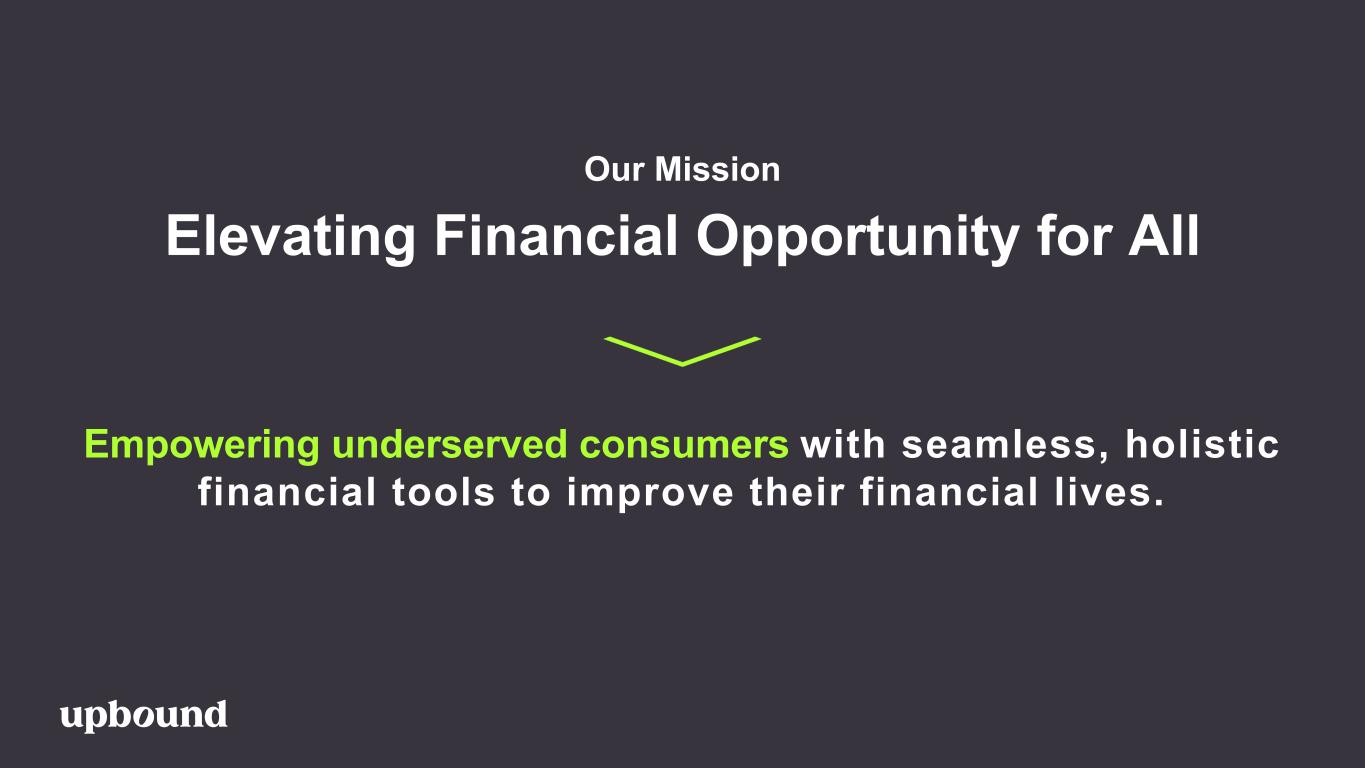
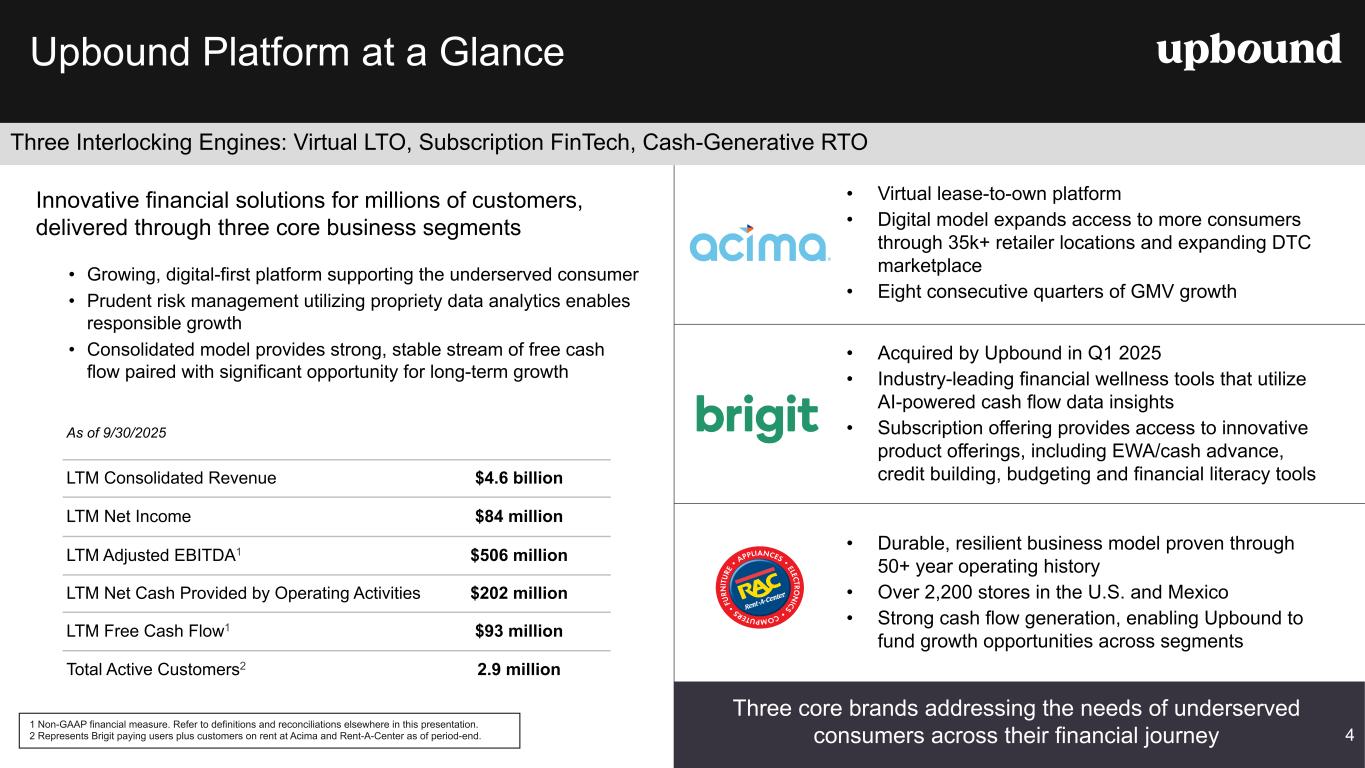
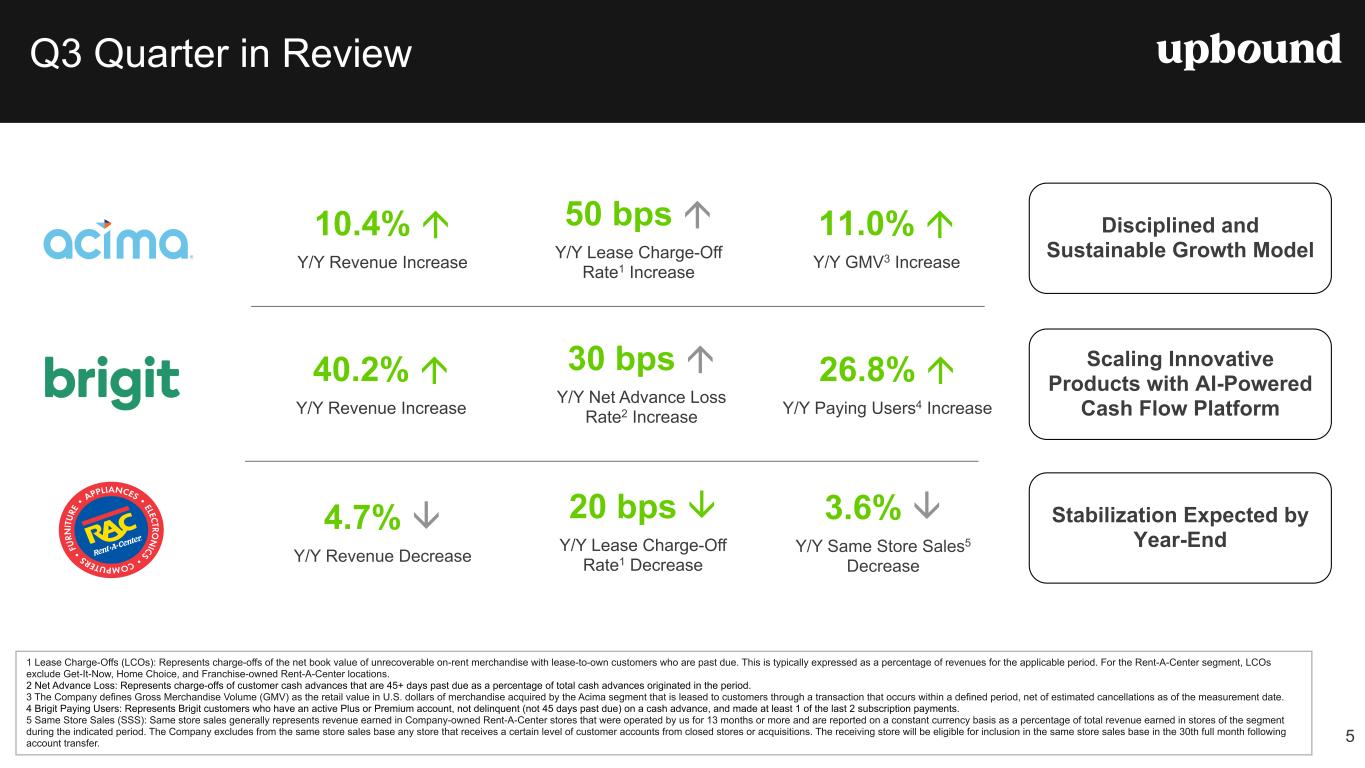
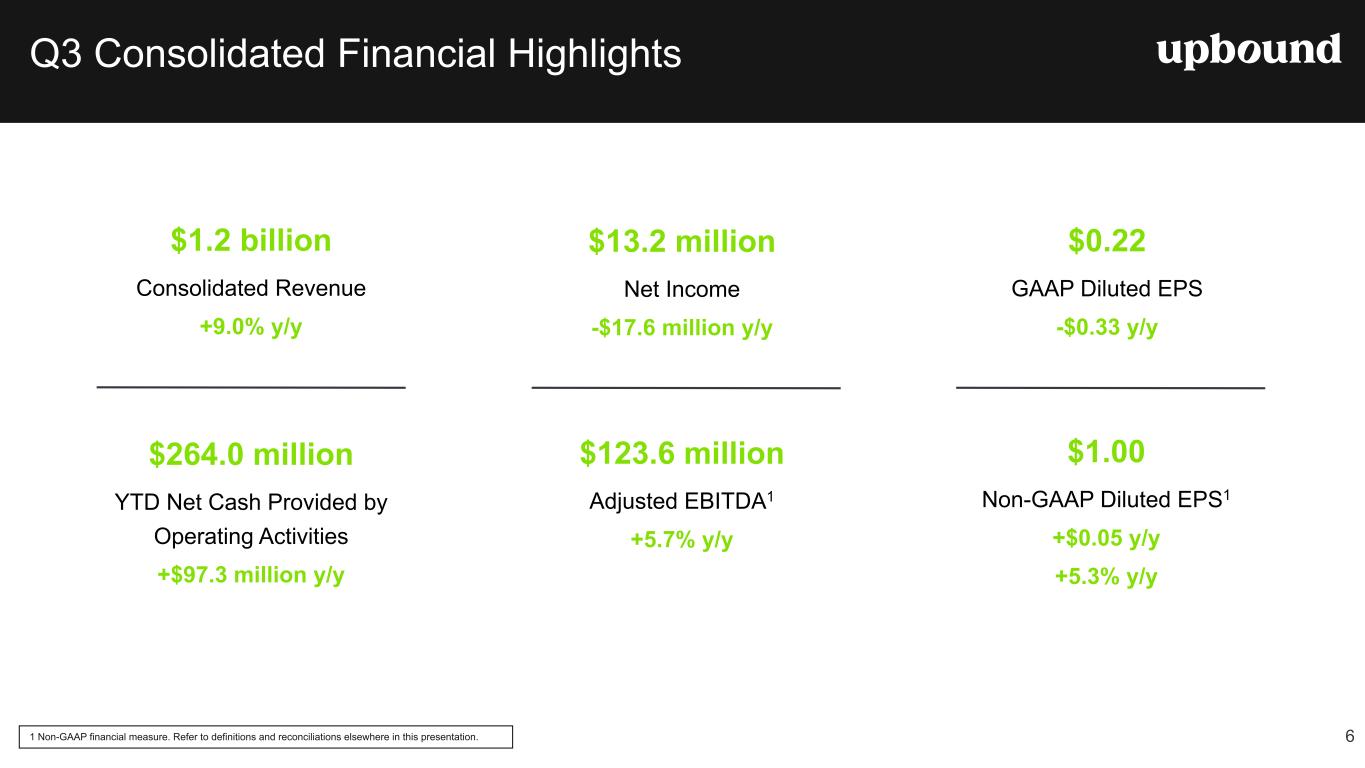
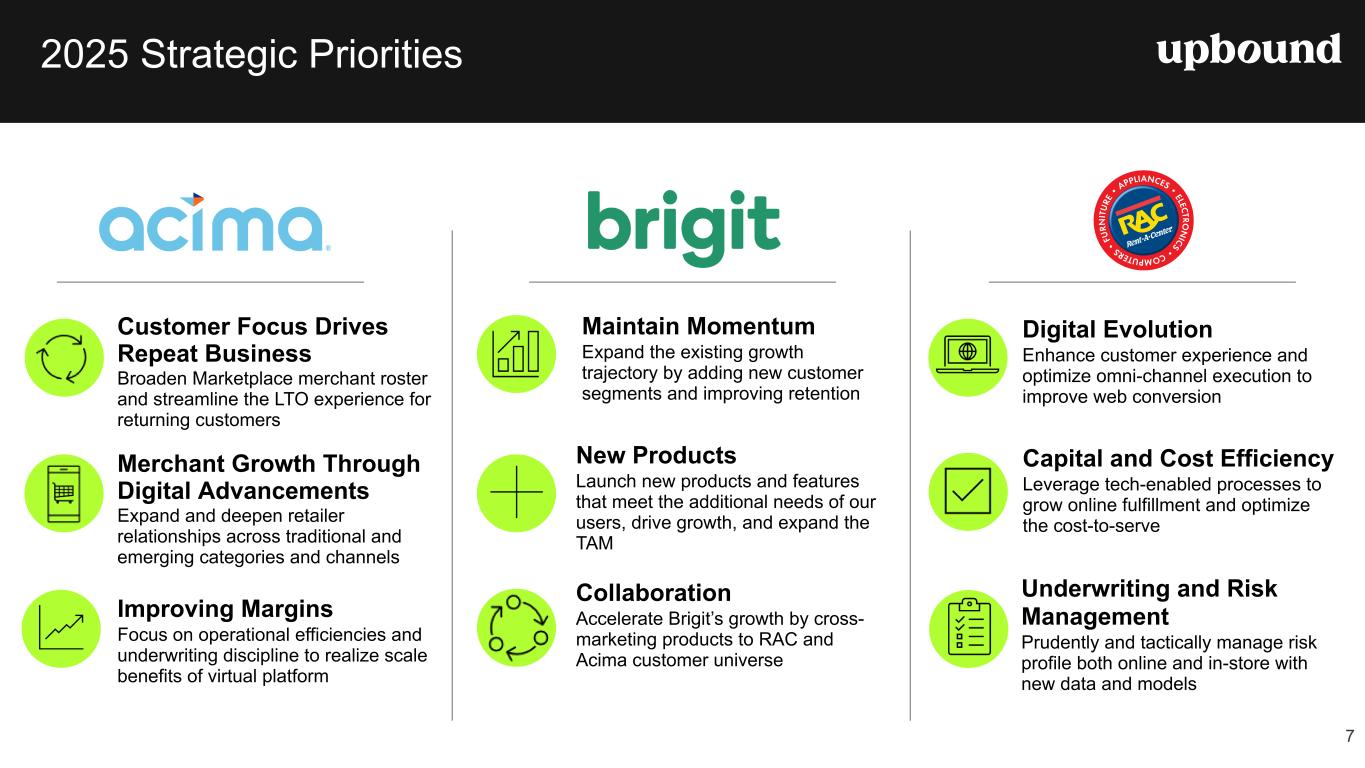
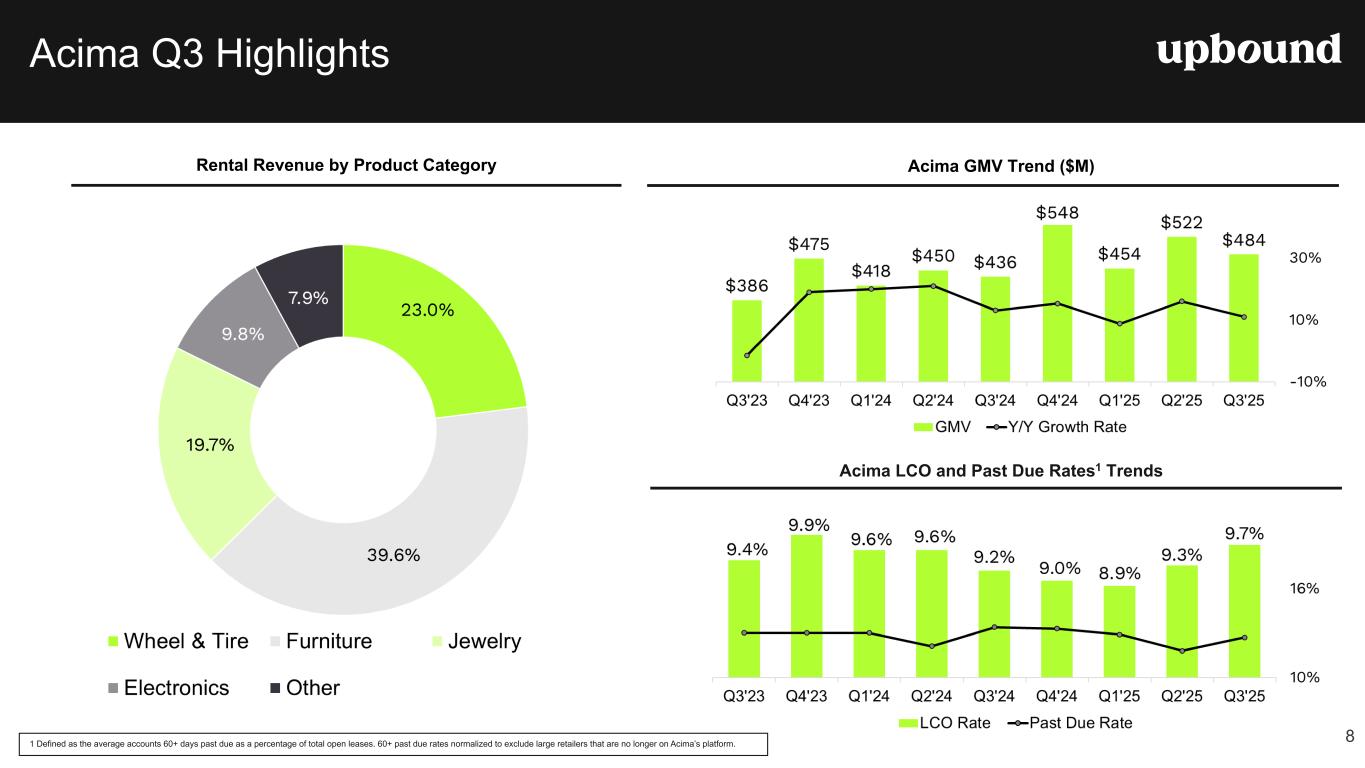
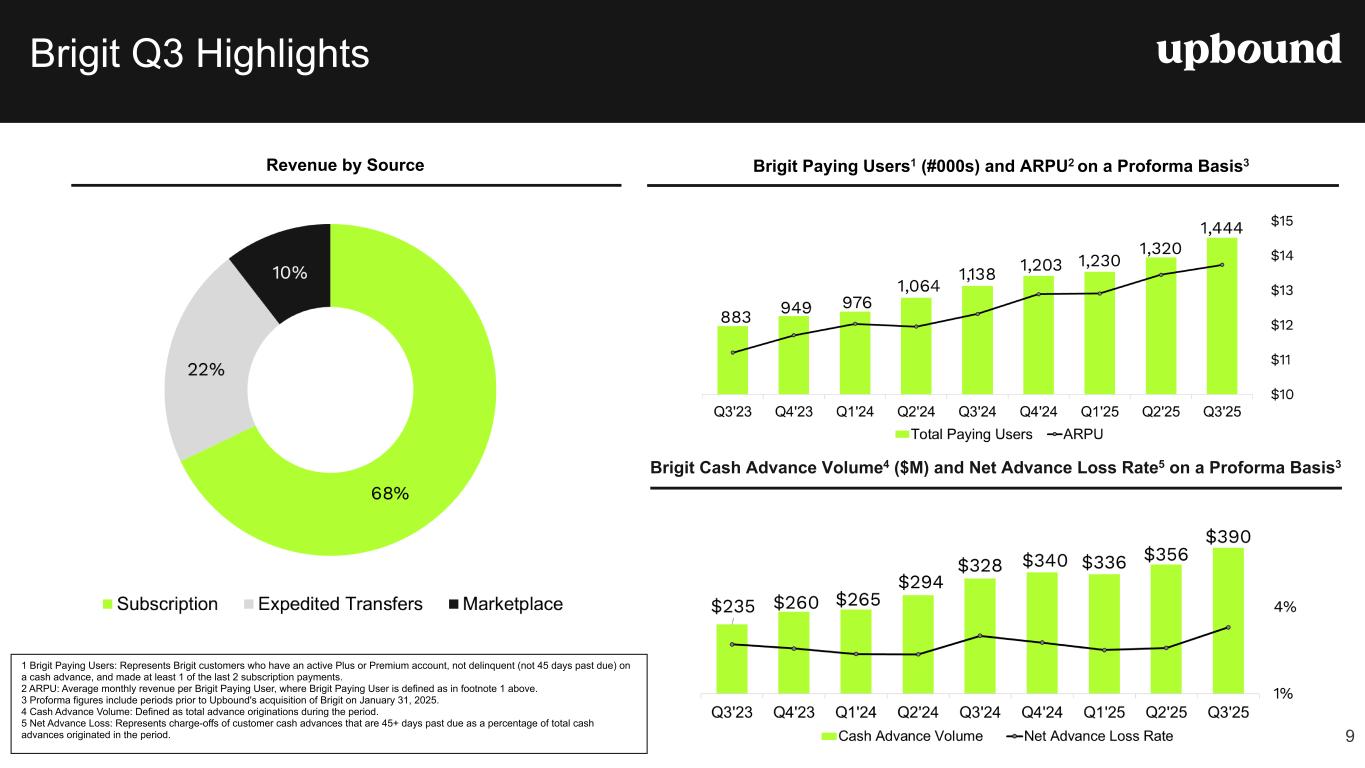
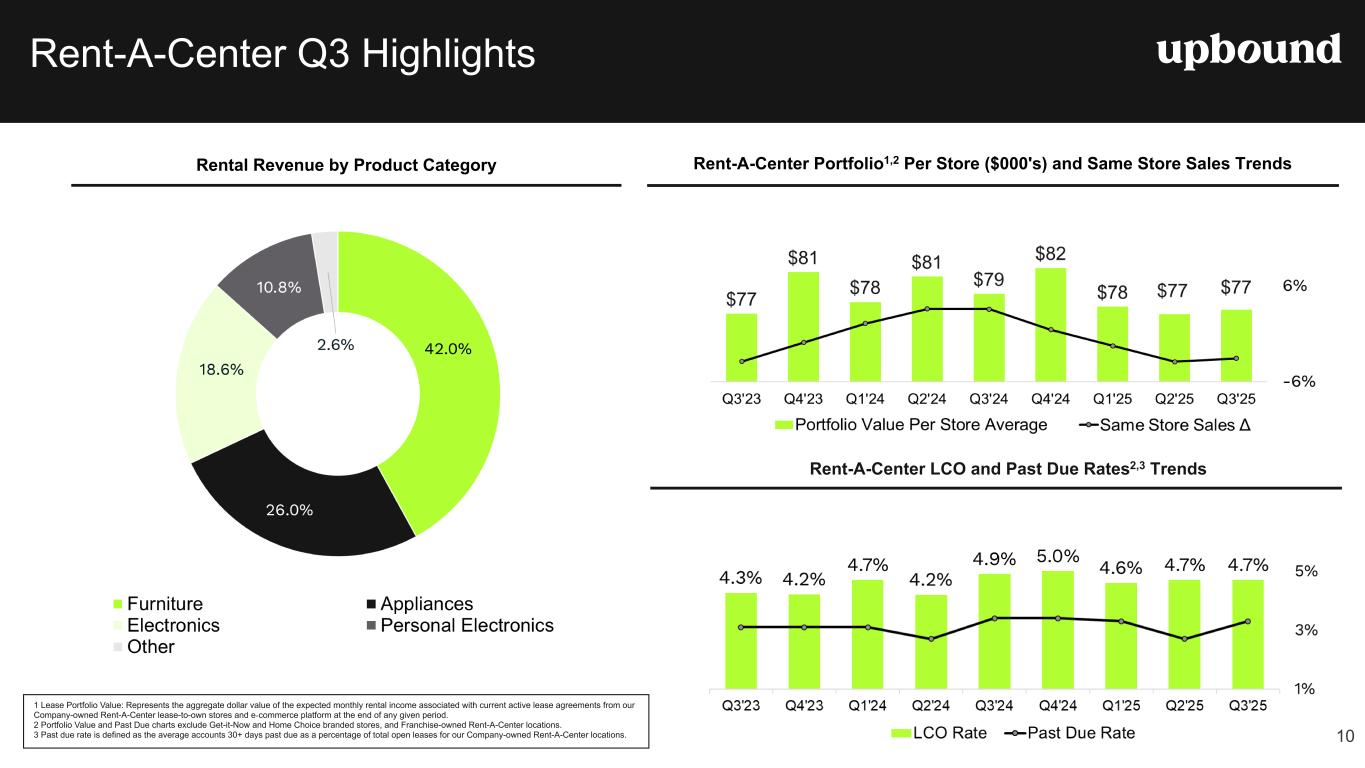
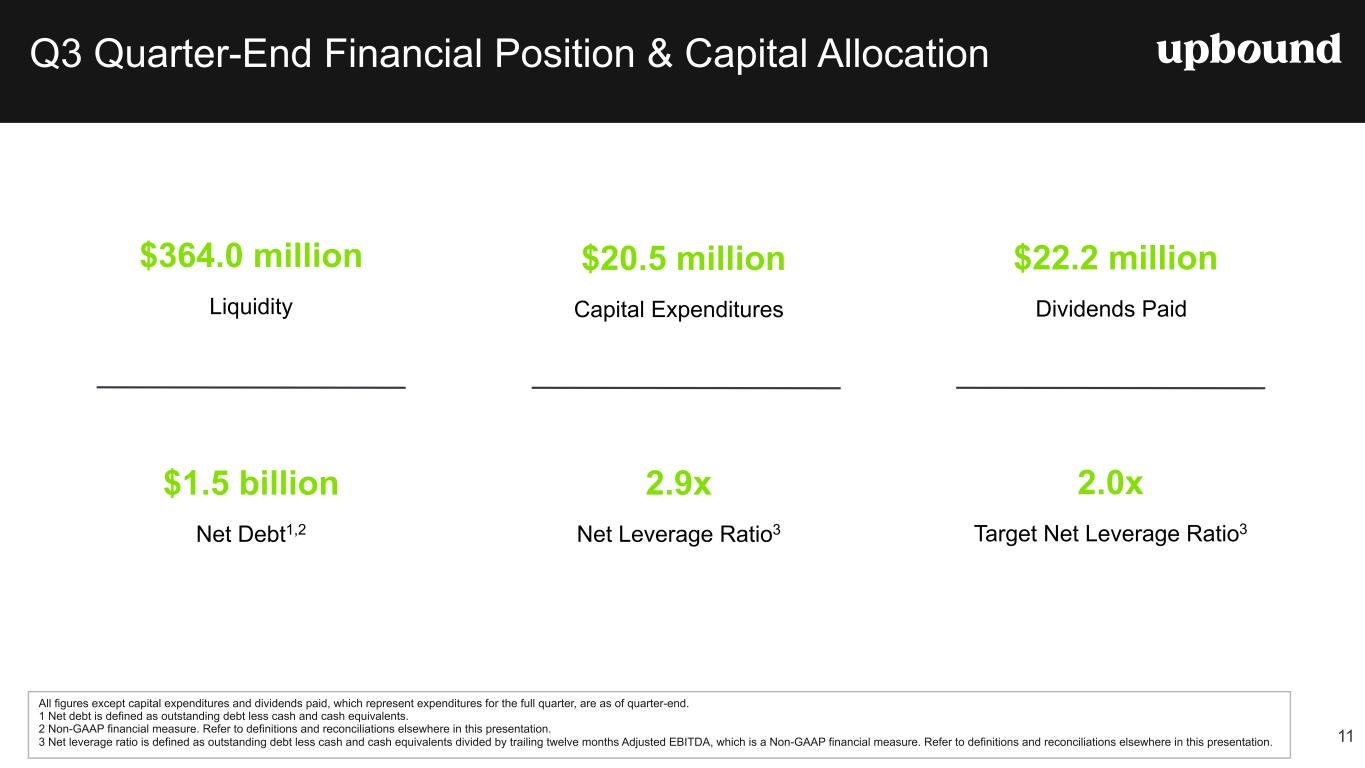
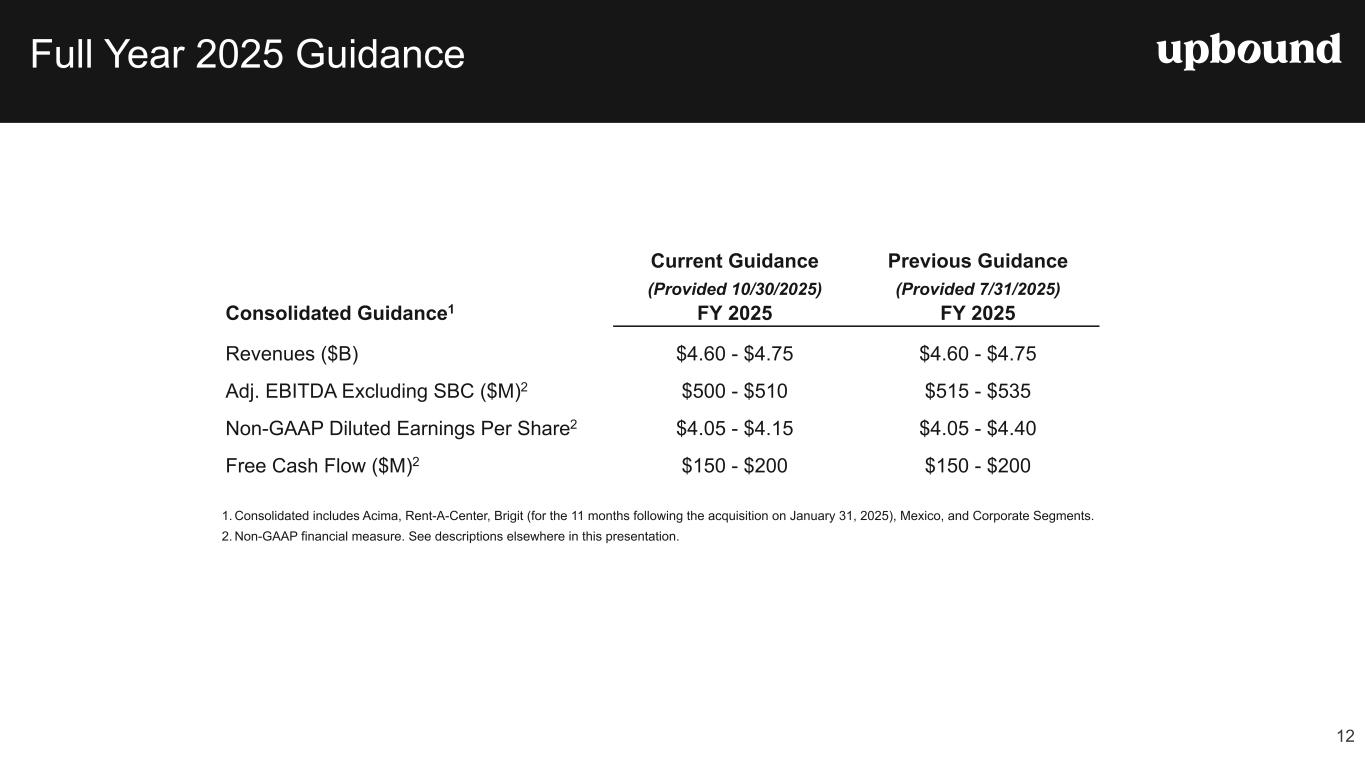
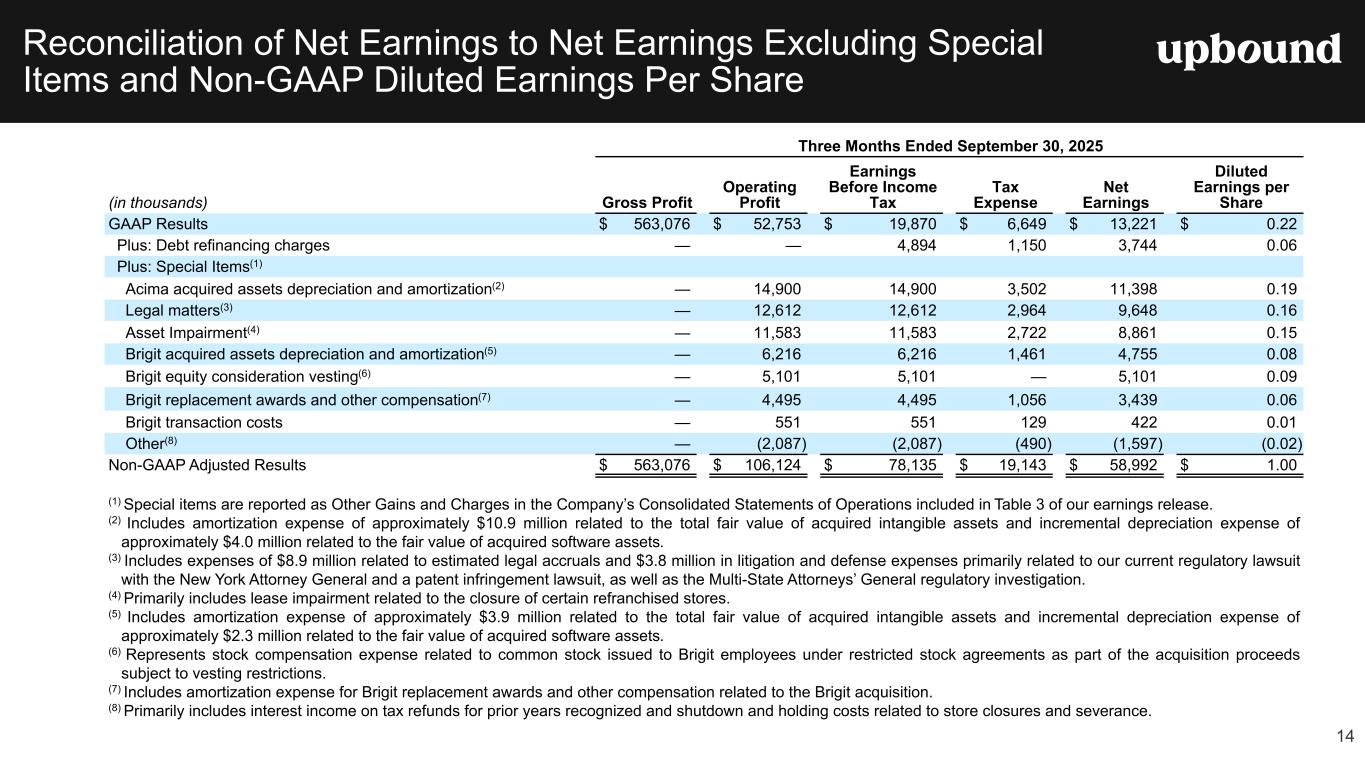
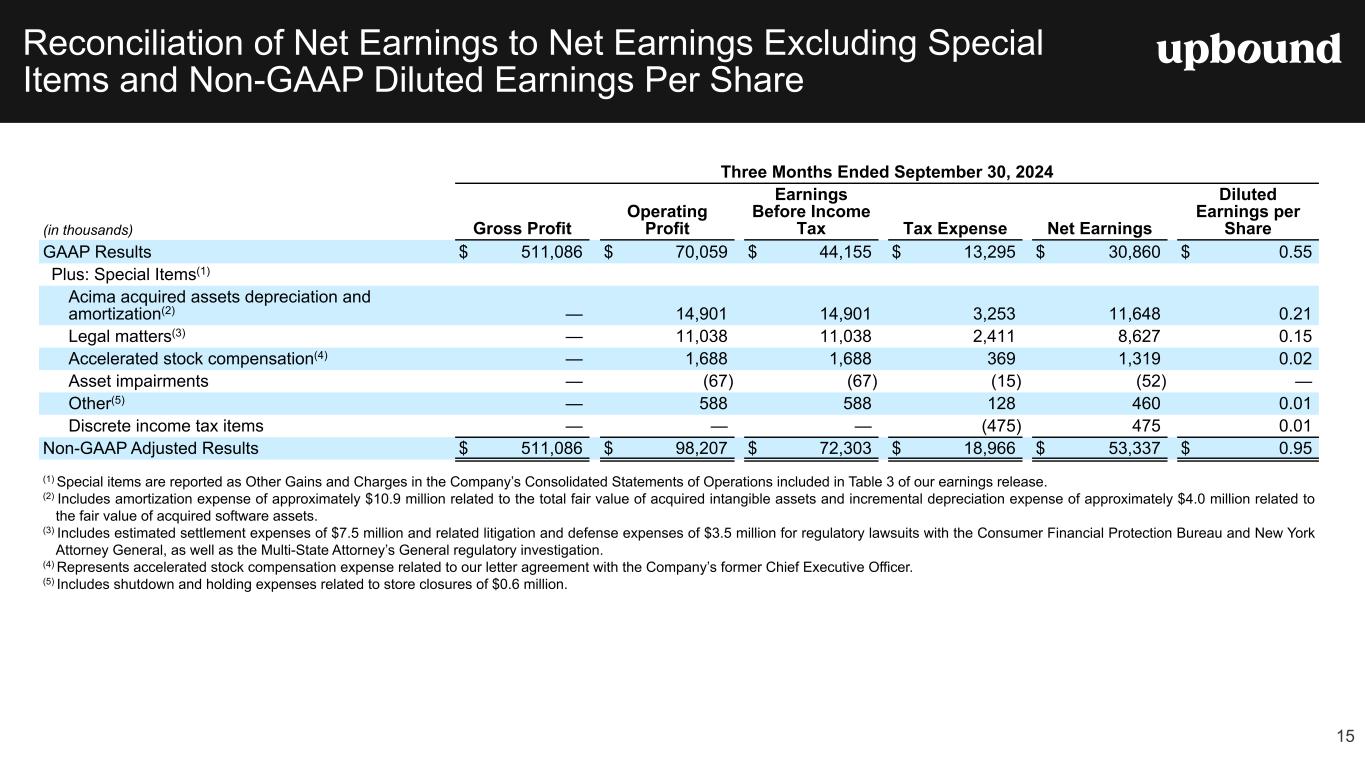
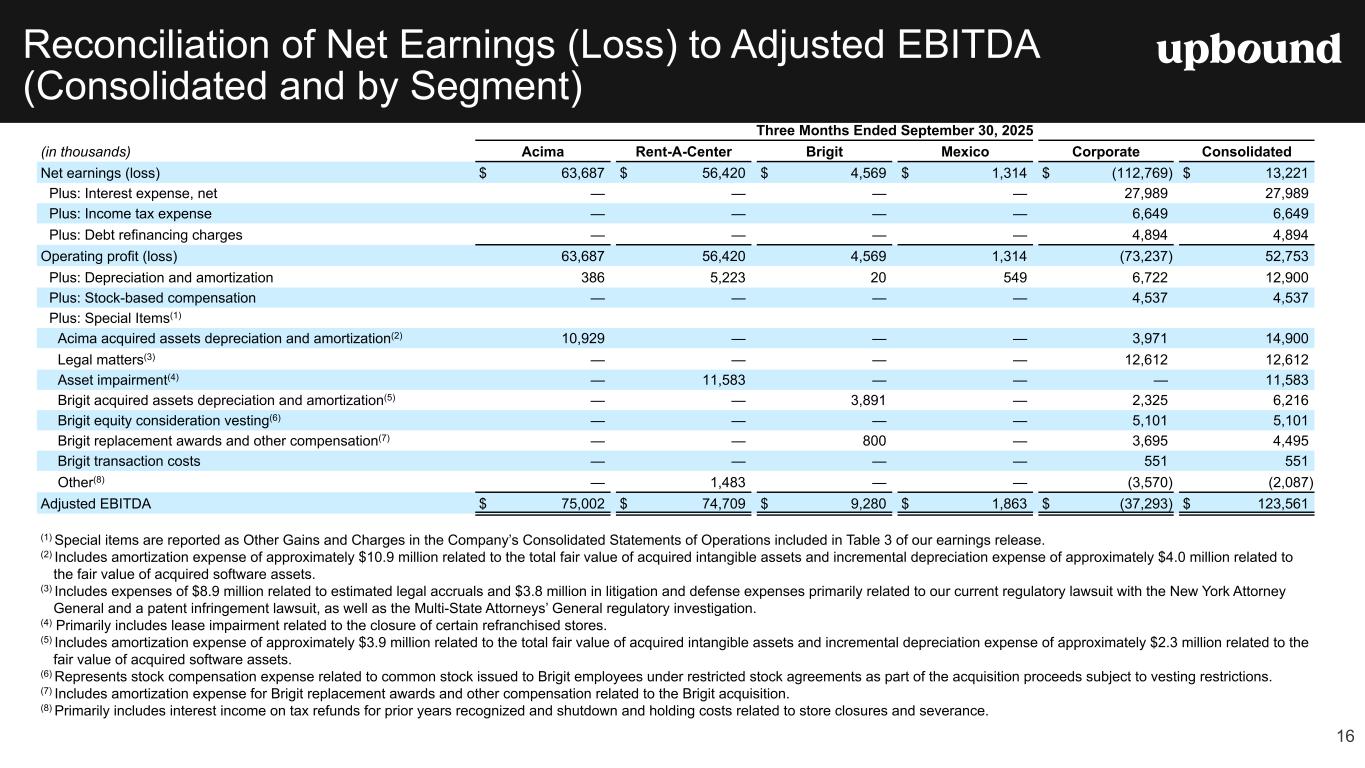
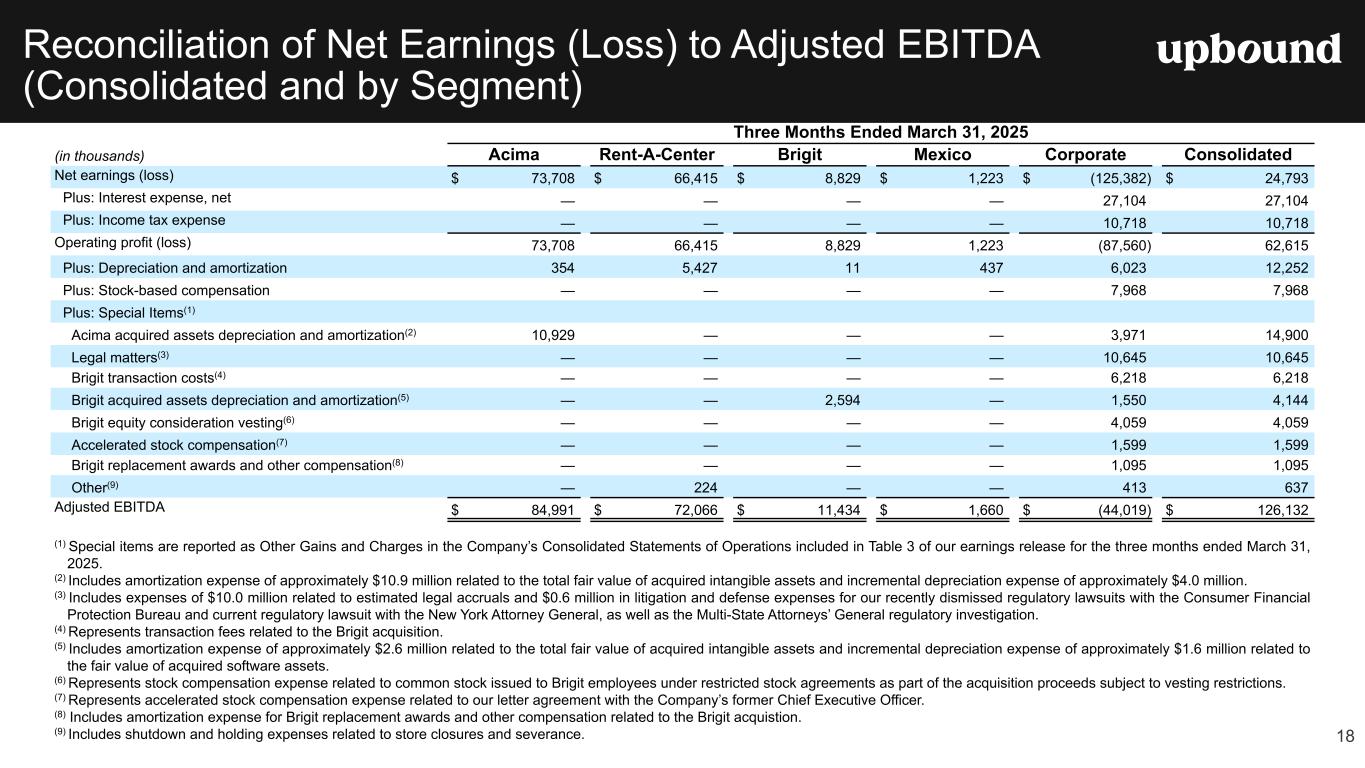
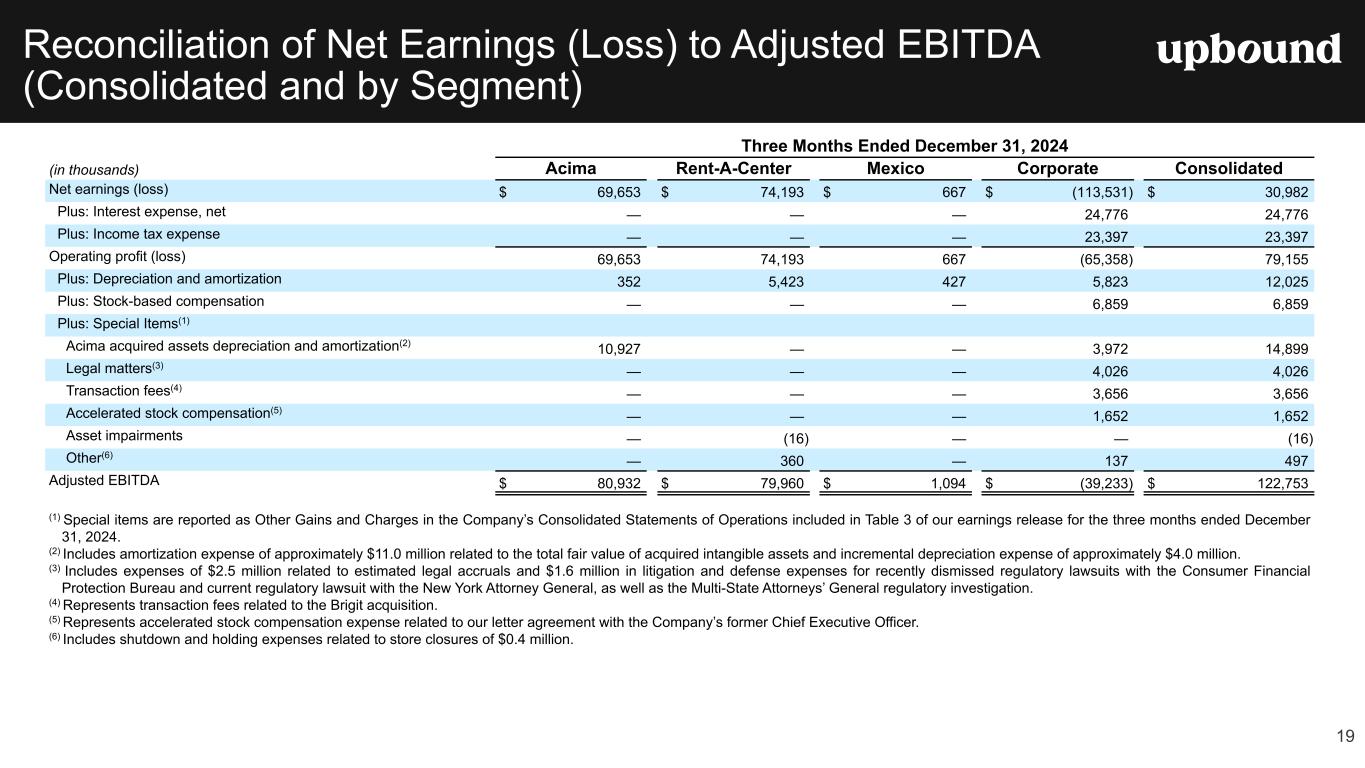
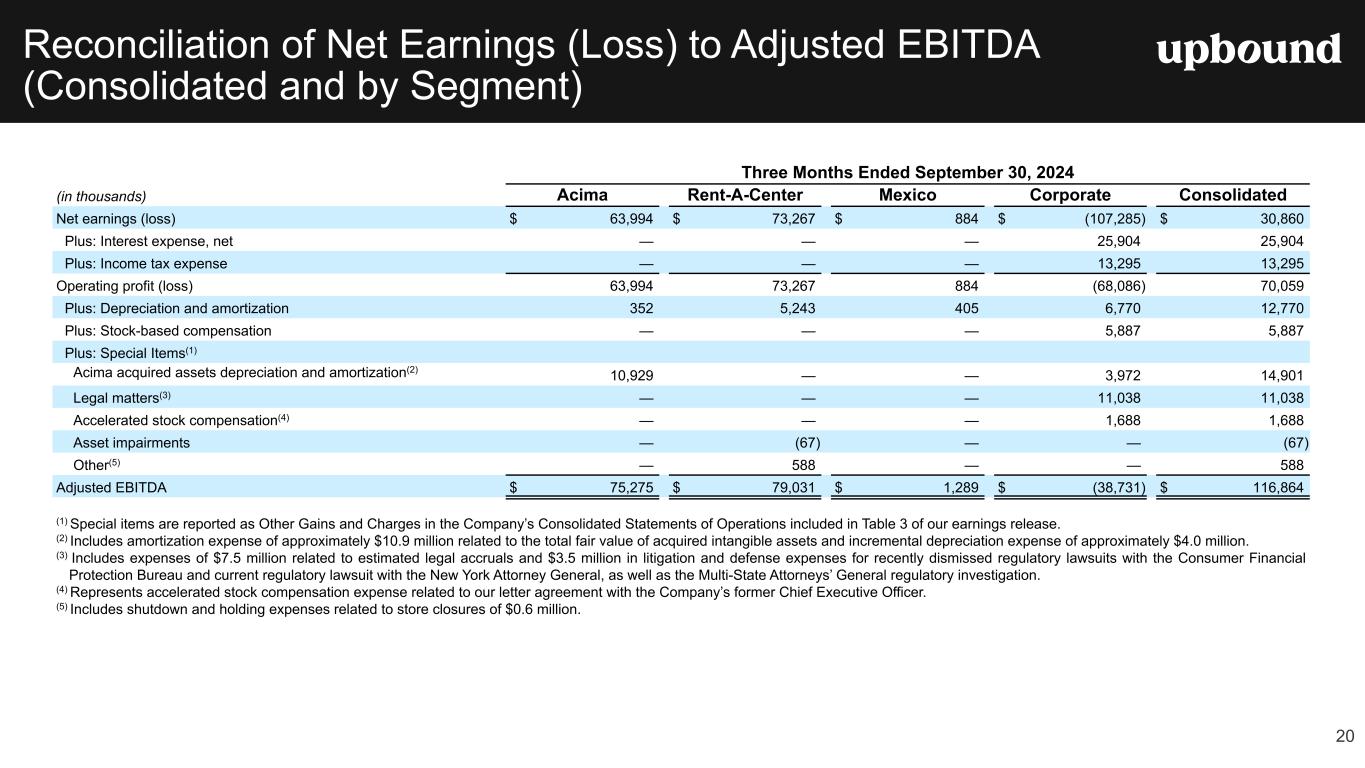
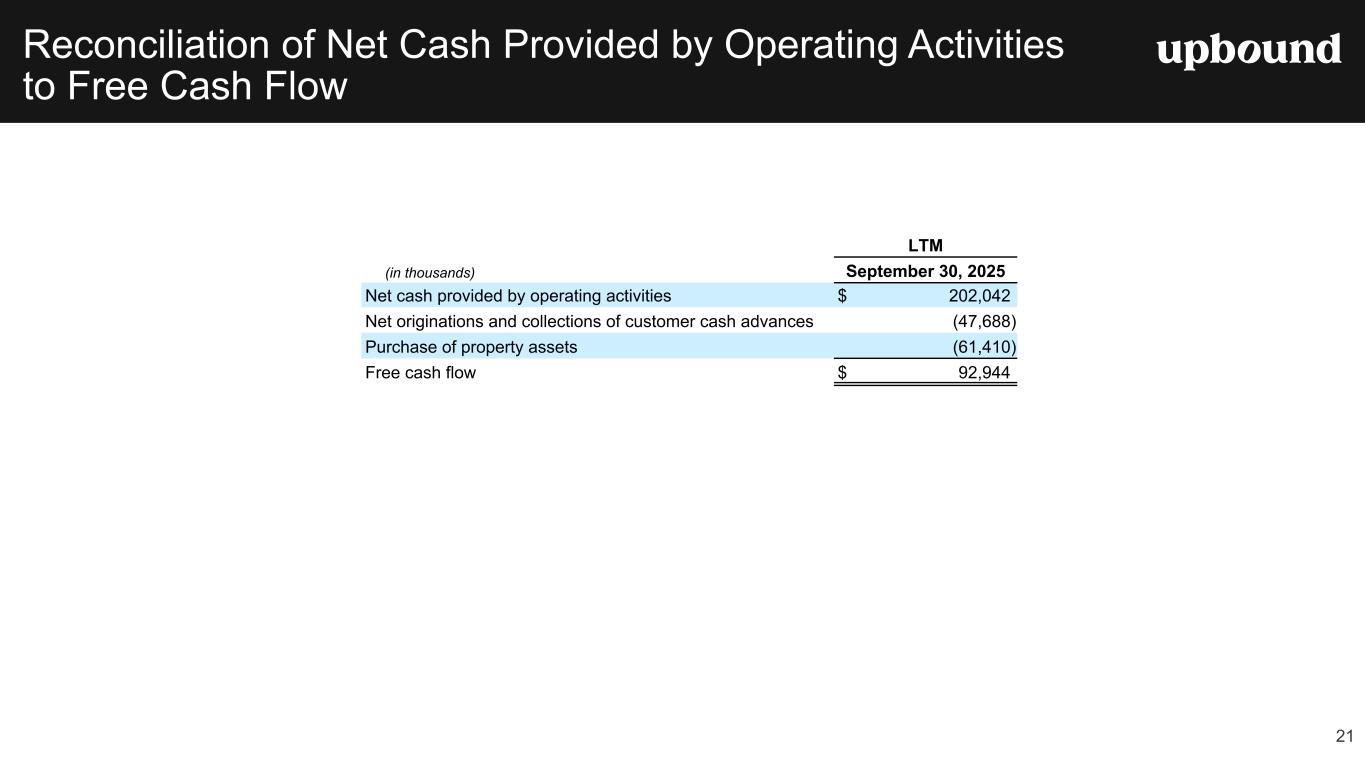
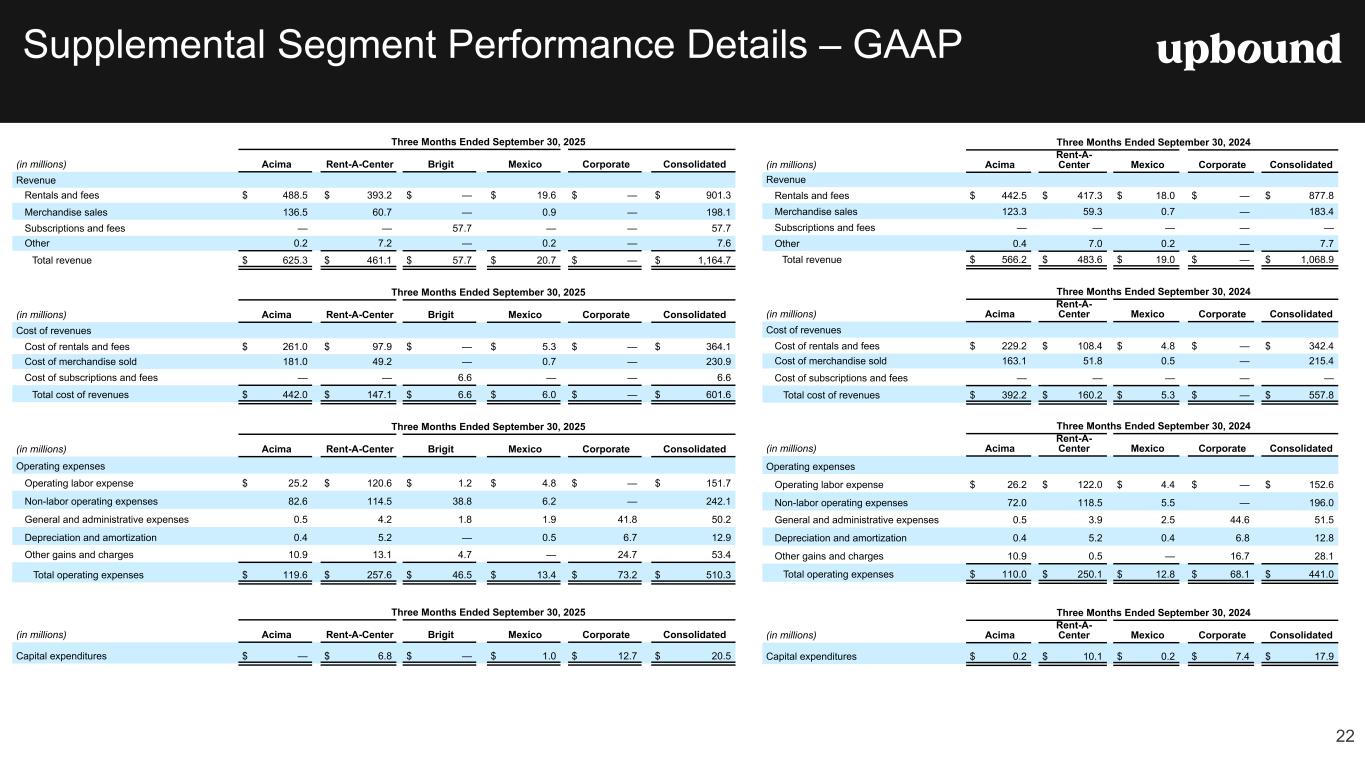
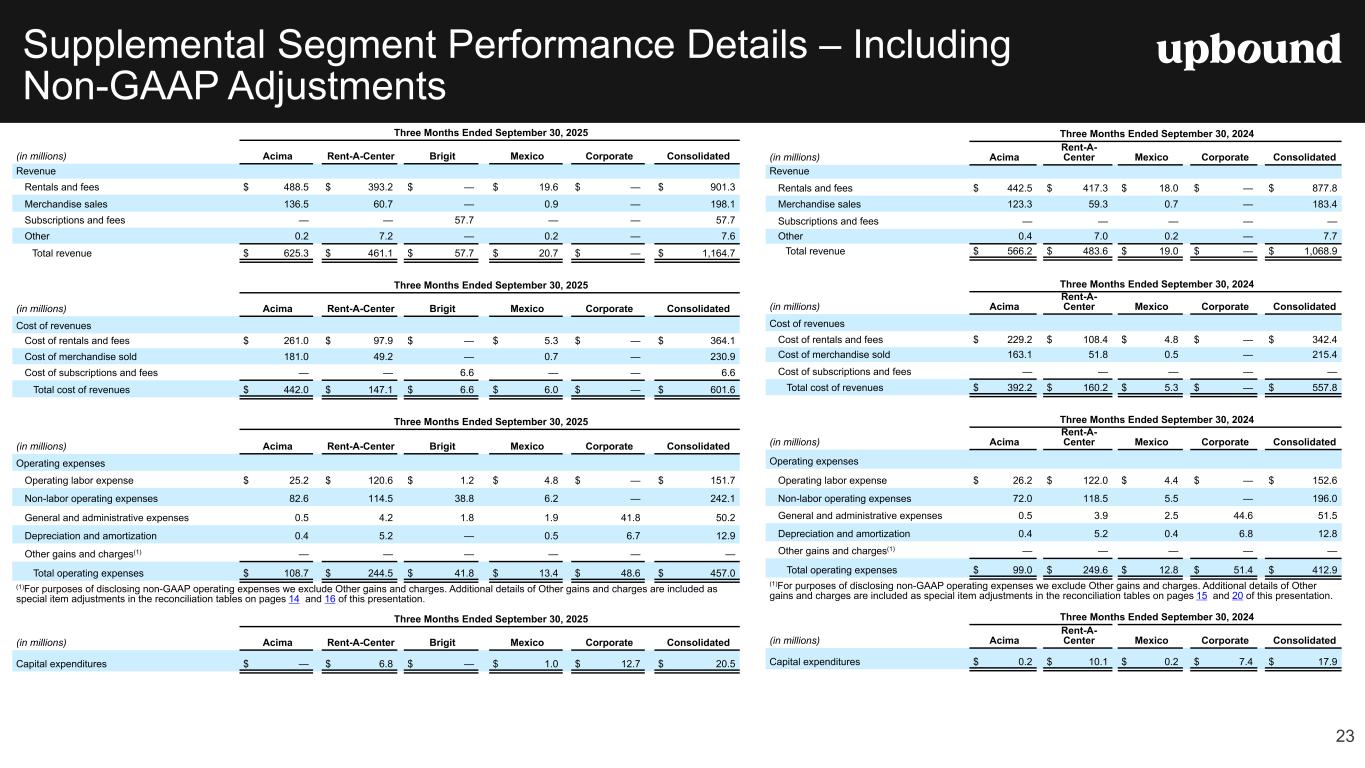
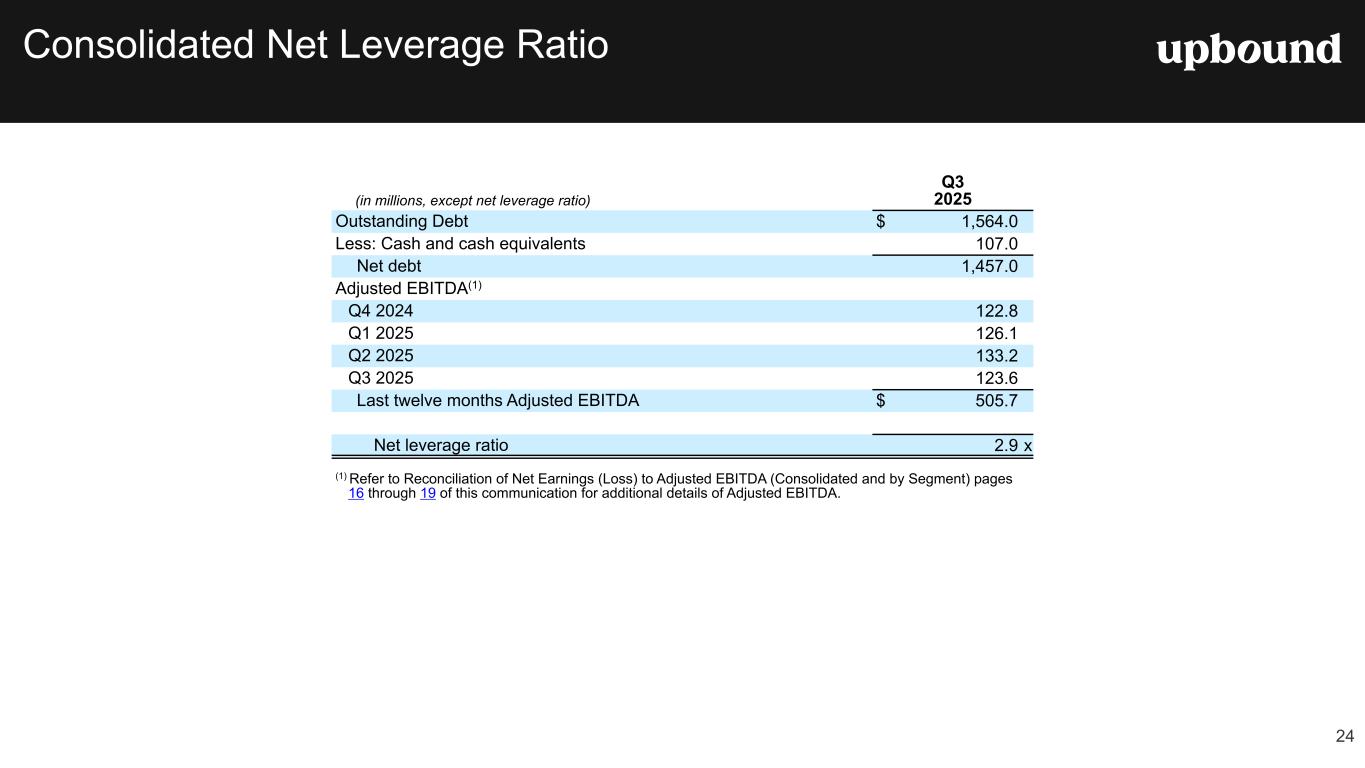
Thank you, Jeff, and good morning, everyone. Our business is organized around a simple but powerful statement, which is to elevate financial opportunity for all. As the consumer environment changes, our customers' needs evolve as well, and our business is constantly adapting in response. As we accelerate the pace of innovation and capitalize on our differentiated strengths, it's critical that we have the right people to help us deliver on our mission. That's why I'm excited to share that we've strengthened our executive team by adding two proven leaders with a deep knowledge of our consumers and a track record of building new capabilities, transforming businesses, and ultimately creating value. I am pleased to welcome our new Chief Financial Officer, Hal Khoury, who we announced today, and our new Chief Growth Officer, Rebecca Wooters, who we announced a few weeks ago. Hal was most recently the CFO at GoEasy, a leading non-prime focused lender in Canada with relevant experience in point-of-sale financing, as well as a lease-to-own retail platform. Prior to joining GoEasy, Hal was the CFO for Walmart Canada Bank and JPMorgan Chase Canada Bank. And Rebecca, our new Chief Growth Officer, was previously the Chief Digital Officer for Signet Jewelers, where she transformed the business into a digital, omni-channel retailer across several brands. Before her role at Cignet, Rebecca held several growth leadership positions at Citibank, including Chief Customer Experience Officer for the North America Consumer Group. With the experience existing team, these new business leaders will help us elevate the customer experience, bringing data-driven, targeted offerings to market for our customers and retailers while accelerating our growth. I'm thrilled to welcome them both to Upbound, and our whole team looks forward to working with them to drive our business forward. Moving on to the quarter, Upbound delivered another quarter of strong results with revenue up 9% year-over-year to $1.16 billion and adjusted EBITDA up 5.7% year-over-year to $123.6 million. At Rent-A-Center, we're seeing encouraging sequential improvement in same-source sales while maintaining robust 16.2% adjusted EBITDA margins through operational efficiencies and digital enhancements. We're now expecting same-source sales to approach flat to positive comps in the fourth quarter based on these promising trends. At Bridget, we maintained impressive momentum with revenue growth of 40% and subscriber growth of 27% year-over-year, while successfully expanding the product suite. And at Acema, despite recent further tightening of our underwriting in targeted areas, we delivered the eighth consecutive quarter of GMV growth, which was 11% in the third quarter, while surpassing a milestone achievement of working with more than 100,000 merchant locations across its history. Let's move to slide four to discuss our market and our consumers. As we noted in the past, our customers are accustomed to economic uncertainty, and they are attuned to key signals in the macro backdrop that will eventually translate into their spending priorities. Those signals are generally tied to demand in the labor market, where recent reports suggest job growth is slowing, and price levels, where the cumulative effect of inflation and the potential for tariff-related price adjustments is pressuring our consumers' collective confidence. These dynamics impact demand from our core customers, putting top-line pressure on our lease businesses, as well as affecting payment behavior, both of which influence the quarterly results. Although there are near-term effects, these conditions should add more and more consumers looking for low weekly payments for quality, durable goods at Rent-A-Center and ASEMA, as well as Bridget's liquidity solutions and financial wellness tools. Before getting into the details of the quarter, I want to address the lower margin and higher loss performance at ASEMA. While we have maintained a conservative risk posture company-wide in response to a choppy macro backdrop, recent monthly vintage yields at ASEMA have been under pressure, resulting in slightly higher losses and lower overall margins. ASEMA moved to an incrementally more conservative risk stance across the third quarter. While these vintages will impact losses in the fourth quarter, and the underwriting changes will impact the fourth quarter's GMV growth, it is important to note that we believe our tailored responses are already proving to be effective in positively impacting outcomes in the August and September vintages based on early performance indicators. Unless the macro environment sees meaningful changes, we do not expect further mitigation will be warranted to achieve ACIMA's targeted growth and margin profile in 2026. Moving to slide five, let's review the key themes for each segment for the third quarter. As mentioned, ACIMA delivered its eighth consecutive quarter of GMV growth, up 11% year-over-year, and is on track to deliver high single digits to low double-digit GMV growth for the year. Revenue growth was 10.4%, and the EBITDA margin was 12%, a decline from the year-ago period related to the 50 basis point uptick in this quarter's lease charge-off rate and lower gross margins. Gross margins and losses were impacted by softness in recent businesses that I'd already mentioned. Despite continuously lowering approval rates throughout the year, Asima booked a cohort of leases in the second quarter with elevated early defaults, mainly to new customers in our e-commerce channels at select retailers. In response, Asima implemented a targeted tightening strategy through the second and third quarters and added additional identity validation tools starting in July to drive performance improvements. Those efforts have been effective, with the August Vintage now performing within our acceptable yield and loss ratio ranges. We are confident Asima has successfully optimized its decisioning for the evolving macro backdrop, and observed trends through October have reinforced that view. In addition, gross margins were affected by the jewelry category's growth as a portion of total GMV, especially at the expense of the furniture category, which hasn't fully rebounded from the pandemic-related pull forward. Asima's focus on the jewelry vertical has been intentional, as it has enabled both GMV growth and diversification from the furniture category. But relative to furniture, jewelry sees a higher proportion of customers electing the first early purchase option, which is a lower margin outcome for ASEMA. Even so, the category is profitable and ASEMA values the acquisition of new customers through this channel, as ASEMA can subsequently introduce those customers to the direct-to-consumer marketplace for future leases in jewelry or other products. Importantly, neither the shift in ASEMA's portfolio performance in the second quarter vintages nor the gross margin impact from jewelry's expansion was related to loosening underwriting standards. In fact, the SEMA has received 14% more lease applications year-to-date relative to the prior year period, while reducing corresponding approval rate by approximately 200 basis points. As the SEMA recognized the early performance behavior, we repositioned our underwriting strategy and lowered approval rates each month to maintain the long-term lease charge-off rate inside the upper boundary of our target range. SEMA's loss rate for this quarter and the fourth quarter will be impacted by these vintages, as the tightening will limit GMV and revenue growth, creating a denominator effect that will result in higher lease charge-off rates as the final leases from these vintages run through the portfolio. Underwriting and risk-managed teams are laser-focused on monitoring the health of our customers and the health of our portfolio, and we're confident that the actions already taken will help preserve a balanced and sustainable growth algorithm in the years to come. Moving on to Bridget. Bridget continues to move fast while building for scale. This quarter's results featured year-over-year revenue growth of 40% and active subscriber growth of nearly 27%. Bridget also tested new products to further meet the needs of our customers, such as line of credit. In parallel, Bridget has experimented with new marketing strategies to drive even more efficiency in marketing spend, all while maintaining a net advance loss rate in the 3% range. Just as important, Bridget contributed to Upbound's bottom line by generating $9.3 million of adjusted EBITDA at a margin of more than 16% while achieving impressive top-line growth. The takeaway is the steady progress the team has made towards recapturing the volume that was impacted in the fourth quarter last year when we strategically exited a product category and leveraged a broad tightening strategy to maintain our optimal risk profile. Same-store sales for the quarter improved 40 basis points sequentially from a negative 4% to 3.6% below last year, while delivering an EBITDA margin over 16%, an at least charge-off rate that was 20 basis points improved from the third quarter of 2024. Between the current trend line and the upcoming holiday season, we believe same-store sales growth should approach flat to positive in the fourth quarter. As we've said before, Rent-A-Center will continue to focus on improving efficiencies and generating strong free cash flow until broader macro conditions either improve for our core customers or create more trade-down opportunities to spur top-line growth. Let's cover the consolidated financial results for Q3 on slide 6. Third quarter revenue of $1.16 billion was a 9% increase from the year-ago period, mainly powered by growth at Asima plus the addition of Bridget. The business generated $123.6 million of adjusted EBITDA, which was up 5.7% against Q3 2024, an adjusted EBITDA margin of 10.6%, which was down 30 basis points year over year, driven by lower margins at the ESEMA segment. Non-GAAP diluted EPS was $1, which is 5.3% higher than the year-ago quarter. The top-line, adjusted EBITDA, and non-GAAP diluted EPS results were each within or above the target ranges provided on last quarter's earnings call. Upbound generated more than $50 million of free cash flow in the third quarter, resulting in a year-to-date free cash flow total of $167 million. Non-GAAP tax rate this quarter was 24.5%. That was lower than our recent run rate in the 26% area due to a discrete one-time item related to provision to return adjustments. Essentially, an estimate from January was refined in September and flowed through the tax rate in the third quarter. The strategic priorities for 2025 that we outlined earlier this year. SEMA's initiatives this quarter focus on its merchant portfolio and the customer experience. One of Asima's growth drivers has been its consistent ability to add new merchants, whether on the SMB side or even a top 25 furniture retailer like Living Spaces, which went live earlier this month. In Q3, we recognized a major milestone on that front as Asima activated its 100,000th merchant location. While continuing to enroll new retailers through both integrated and light-touch options, Asima is also working to energize existing accounts that we believe have the potential to generate a higher volume of profitable leases. By reinforcing our relationships and optimizing our value proposition, Asima has re-engaged hundreds of merchants so far, with more to come. For our customers, Asima rolled out upgrades to the account management tool to enable more self-service options, while also adding a refer-a-friend program. Prior calls this year, I've described how our AI-powered leasability engine unlocks the ability for consumers to shop for durable goods in-store and online. And now, ASEMA has added the in-store tap-to-lease capability for our virtual lease cards. This means a customer can use the ASEMA app to shop in any store for any approved durable good within their approved limit and check out by tapping the virtual lease card. There's no retailer setup or involvement, and the consumer can shop with confidence. While traditional retailer integrations will remain an important acquisition channel for Asima, we're excited about serving our returning customers in a way that maximizes their privacy, convenience, and confidence. Across the third quarter, Bridget's momentum grew as the team accelerated testing of innovative new financial solutions and trialed new customer acquisition channels. For example, Bridget's new line of credit product, which is in beta testing, offering consumers access to credit of up to $500 to provide liquidity for recent or upcoming purchases. The amount bridges the gap between smaller ticket BNPL offerings and the larger ticket leased to own solutions like those offered by SEMA and Rent-A-Center. In light of these new products, Bridget is evolving its marketing strategy toward a more holistic mix diversifying both the channels we invest in and the creative content we produce our always-on creative pipeline has become a key differentiator that enables faster iteration richer insights and more scalable growth Bridget is expanding marketing channels beyond digital and social media platforms including highlighting its capability in real world locations where the use case is immediate and relevant this is incremental to the in-store marketing collaboration between Bridget and Rena Center which one scales can reach its nearly 1700 stores plus a SEMA's hundreds of staff locations and turn thousands of up-bounds customer facing co-workers into Bridget brand ambassadors record yielded a number of operational improvements as the business focuses on streamlining the customer experience improving account management and reducing the expense base by implementing efficiencies the quarter we upgraded the supporting infrastructure of the RennaCenter.com website to elevate its scalability and reliability for high-volume events like Black Friday and Cyber Monday while enhancing the mobile-friendly interface. We put it to an early test with a major promotion in September, which had more volume than last year's Black Friday, and it performed flawlessly. And for the customers where an online transaction isn't approved, the site now invites them to their nearest store to complete the application process, which boosted Rent-A-Center's top line in the period. We also launched a Refer-A-Friend campaign and revamped our Loyalty Reward Program, which should drive deliveries entering the holiday season. Rent-A-Center team has executed extremely well in a tough environment. Same-store sales have improved sequentially, and our guide is to work towards being flat to positive in the fourth quarter. Coworkers are fully engaged and excited for the holiday push as the stores are primed with great products. Relative to historical levels, our stores have a higher percentage of new inventory, which has been proven to increase conversion rates and deliveries. In addition to our great value proposition, having the right inventory at the right store offers the right customer positions us well for the fourth quarter and heading into 2026. All of these are separate initiatives across each of our largest segments, but they share a common set of guiding principles. which is to introduce our brands to new consumers, optimize our product suite, elevate the shopping experience, and deliver value to our customers and retailers in each interaction they have with us. We'll turn into the segment results and then discuss our outlook for the balance of 2025, after which I'll take some questions. Asima's GMV grew by $48 million in the third quarter compared to the year-ago period, which is 11% GMV growth for the third quarter of 2024. To deliver that growth, ACIMA continued to add new merchants of all sizes and across product categories, and this quarter received nearly 13% more lease applications than the year-ago period. ACIMA's approval rate on those applications declined 280 basis points from last year's third quarter. Evidence of ACIMA's focus on delivering top-line growth balanced with prudent underwriting that evolves with a macro backdrop. From an operational standpoint, Furniture continues to represent our largest product category at approximately 40% of GMB in the quarter. That category is still working through the demand pull forward from the pandemic era, and more recently with new tariffs. So the industry expectations for a more normalized level of demand are looking into the back half of 2026 at the earliest. Even so, we can grow GMB in that category by adding new merchants and by becoming a bigger share of our existing merchants business of retailer relationships it continues to maintain a broad and diverse lineup of merchants with the top 10 representing less than one-third of the quarter's gmv several of those top retailers appear only on the asima marketplace where our returning customers can start their next leasing journey gmv from the marketplace was up 150 percent year-over-year in the third quarter and over 10 percent sequentially more than 10 percent year over year, which was the seventh consecutive quarter of double-digit growth. Adjusted EBITDA was down 40 basis points against the third quarter of 2024, and adjusted EBITDA margins were 12%, a decline from 13.3% in a year ago period, driven by the gross margin impact from the expansion of the jewelry segment combined with the increase in lease charge-off The LCO rate of 9.7% compared to 9.2% in the third quarter of 2024, and finished 20 basis points above our high end of our target range of 9.5%. As I noted earlier, we believe our swift and tactical actions across the quarter will maintain the loss rate within our targeted range in the medium term. Let's move to slide 9 and review Bridget's results for the third quarter. Bridget finished Q3 with more than 1.4 million paid subscribers, which was a 27% increase from the year-ago period and a 9.4% increase sequentially. Revenue per user was $13.74 on a monthly basis, an 11.4% increase from the third quarter of 2024, and a 2.2% lift sequentially. Blue's continued expansion represents the strength of marketplace performance, higher expedited transfer revenue, and a mixed shift to the premium subscription tier. Bridget originated approximately $390 million in cash advances this quarter. That's up 19% year-over-year and nearly 10% sequentially, reflecting the value that our customers are discovering with not only the product offerings, but also the transparent subscription-based pricing model. For the third quarter, Bridget's cash advance loss rate was 3.3%, which was up 30 basis points from the year-ago period, due primarily to Bridget's testing into new marketing channels and new custom segments who are overall profitable. The sequential increase was in line with the seasonal trends and reflected a similar increase in 2024 from the second quarter to the third quarter. As we test out new products and gain traction with more consumers, the loss rate will fluctuate seasonally and should remain in the low single-digit range. Bridget recorded $57.7 million of revenue for the third quarter, which represents an increase of 40% from the year-ago quarter. Subscriptions were nearly 70% of Bridget's third-quarter revenue, with expedited transfer fees and marketplace income representing the balance. Bridget realized adjusted EBITDA of $9.3 million for the third quarter, representing an adjusted EBITDA margin of 16.1%, which was an expected decrease from last quarter's results as Bridget's marketing and customer acquisition spend ramped up across the quarter. When we announced the Bridget acquisition in last December, we got into a full-year 2025 results of $215 million to $230 million of revenue and $25 million to $30 million of adjusted EBITDA before reclassification of administrative costs to up-back. I'm pleased to share that after adjusting for the January 31st closing date, Bridget is tracking to achieve or exceed the midpoint of the ranges we provided. In the third quarter, the Rent-A-Center segment reported $461 million of revenue, down 4.7% from a year-ago quarter, due in part to a higher store count in the third quarter of 2024, as we sold 55 stores to a franchisee last September. This outcome was consistent with expectations we highlighted on our last call. Same-source sales were down 3.6% year-over-year, mostly stemming from certain underwriting adjustments we implemented in the fourth quarter of last year. Renna Center's third quarter same-source sales improved sequentially from the second quarter, as the team's revenue enablement initiatives are showing promising early returns. For example, on deliveries, which are a leading indicator of near-term future revenues, they were up 3.8% in the third quarter compared to a year-ago period. Rent-a-Center's adjusted EBITDA was $74.7 million, down 5.5% from the third quarter of 2024, due primarily to less rental income off a smaller lease portfolio value. The loss rate for the third quarter finished at 4.7%, which improved 20 basis points from the year-ago period while holding flat sequentially, in line with the guidance given on our prior call. Menace Center's adjusted EBITDA margin was 16.2%, which was down 10 basis points from the year-ago period, but up 160 basis points sequentially thanks to the team's effort to realize operational efficiencies, focus on account management, while also beginning to compile allocation priorities on slide 11. We finished the third quarter with over $350 million in liquidity between cash on hand and our revolver availability. Our net leverage ratio was approximately 2.9 times on September 30th, generally consistent with Q1 and Q2. We capitalized on favorable market conditions to refinance our term loan B, which now matures in 2032. In the same transaction, we offered $75 million and used the incremental $75 million to reduce our revolver balance and enhance liquidity. Our business has generated approximately $167 million of free cash flow year-to-date, up notably from approximately $122 million in the prior year. Due to recent changes in tax policy, Upbound's near-term liquidity should be supplemented by about $150 million in savings from cash. Disappreciation provisions in the new tax legislation will help drive a tax benefit of $50 million in 2025 and approximately $100 million in 2026 compared to the company's previous forecasts. Cashflow supports our capital allocation priorities, which are designed to position the company for sustainable growth by investing in our business, strengthening our balance sheet through deleveraging, and supporting our shareholder return program, which currently focuses on our regular dividend of $1.56 per share, as well as opportunistic buybacks. We are confident that our disciplined capital allocation strategy will fund responsible and profitable growth while creating long-term shareholder value. We'll move to slide 12 and review our financial outlook, starting with a quick update on the economic backdrop. As we signaled on our last call, Center's segment would respond to broader macroeconomic factors with price changes, which we recently received. Although Rent-A-Center's inventory costs will be modestly increasing, we are modeling corresponding refinements to the weekly payment rate and the lease term to deliver affordability to our customers and stability to our market. ACIMA will use similar levers as appropriate based on observed price changes at its merchants. Across the year, our customers have shown both resilience and prudence in their decision-making. We remain aware that market dynamics and consumer sentiment can shift rapidly, remain nimble and flexible as we navigate the balance of the year. With that background and in light of ACIMA's underwriting tightening mentioned earlier, we are adjusting the updated full-year guidance we provided last quarter. Revenue should be in the range of $4.6 billion to $4.75 billion, adjusted EBITDA in the $500 million to $510 million range, and non-GAAP EPS in the range of $4.05 to $4.15. With level for the fourth quarter, we expect our recent tightening actions at ASEMA to yield GMB growth in the mid-single-digit area, while still delivering full-year GMB growth in the high single digits to the low double-digit area that we guided to earlier. Asima's top line should be up low double digits, with EBITDA margins slightly lower than a year ago period as the underperforming vintages flow through the P&L. Loss rates should be slightly worse sequentially and peak in the fourth quarter in the 10% area before improving in the first quarter of 2026 as the softer second quarter and early third quarter 2025 vintages work their way through the portfolio. The owner should see a low to mid-single-digit decline year-over-year on the top line, while the lease charge-off rate will be better than last year and relatively flat sequentially. At Bridget, we expect revenue to be up high single digits sequentially, with low double-digit adjusted EBITDA margins, driven by the ramp-up in marketing and customer acquisition spend that I mentioned earlier. We expect the impact of adjusted EBITDA in Q4 to be consistent with the year-ago period. Also at the corporate level, our net interest expense in Q4 should be in line with Q3. We expect the tax rate to be approximately 26%, with an average diluted share count for the year of approximately 58.8 million shares. We'll provide a more in-depth update on our 2026 outlook on our next call, but I'd like to share our early look for a SEMA. Absolute dollar growth will depend on what season is in the fourth quarter, and obviously the macro backdrop entering the year. So assuming a stable macro environment, we're projecting to achieve the growth and margin profile for SEMA that we've targeted in the past, including annual GMB and revenue up in the high single-digit to low double-digit territory, losses in the 9% to 9.5% area for the year, with adjusted EBITDA margins in the low to mid-teens range. Let's wrap up with a few key takeaways. Updance progress this quarter underscores that our digital transformation is moving at pace, with new technologies and AI-powered solutions already enhancing customer experiences and operational efficiency. Innovation remains at the heart of our strategy as we continue to launch new products, refine our platforms, and explore fresh approaches to serve our customers better. Importantly, our rich consumer data set, built from millions of interactions, provides unique insights that drive smarter decision-making and unlock new opportunities for growth. The management team is coming together with the addition of Hal and Rebecca, two seasoned leaders who will help us capitalize on new opportunities for growth. These strengths, combined with our talented team's commitment and dedication, position a balance to deliver value to our customers, merchants, and shareholders across all market cycles. Thank you all for your time this morning. Operator, you may now open the line for questions.
Operator
At this time, we will conduct the question and answer session. As a reminder, to ask a question, you will need to press star 11 on your telephone and wait for your name to be announced. To withdraw your question, please press star 11 again. Please stand by while we compile the Q&A roster.
Operator
Our first question comes from Kyle Joseph from Stevens.
Operator
The floor is yours.
Hey, good morning, guys. Thanks for taking my questions. I just want to get a sense for the underwriting changes at SEMA. Obviously, you guys talked about GMV in, I think, the mid-single digits in the fourth quarter. But, you know, how do we think about growth in that segment, given the underwriting changes? Should we think about that being a little bit suppressed, call it, for the next 12 months until we lap those underwriting changes?
GMV, very pleased with the quarter up 11%, especially when you think about it comping over last year's percentage. The underwriting changes will impact GMV in the fourth quarter, or guide for the fourth quarter is up mid-single digits. Keep in mind also that we also had a 15% growth in the fourth quarter last year, so you are comping off a decent number. Long term, I think we will get back into the high single digits, low double digits throughout 2026, as we stated in our prepared remarks. You know, the environment, we are very aware in the macro backdrop, especially when you think about our core consumer. So we are very mindful of the environment we're in. Despite that, our ability to continue to add new merchants into the mix and continue to add both small, medium-sized businesses, as well as the regional win that we announced today and onboarded earlier this month, that's what gives us confidence that we can continue to grow in that high single-digit, low double-digit area really throughout 2026.
Yeah, that's helpful. And, yeah, kind of on the macro uncertainty, kind of seeing different loss trends across your segments. So, I mean, yeah, I would love to get kind of how you're thinking about the consumer and is it so specific that the SEMA consumer is seeing different trends than the RAC consumer or just want to get your sense for how the consumer is doing given all the uncertainty?
To be the case, you have the impact of a person that takes a toll on a consumer that is generally cash-strapped. And if you think about our credit center side, making somewhere between $25,000 and $30,000 of annual income. A SEMA may be a little bit higher than that in the $50,000 to $60,000 range and bridges somewhere in between. That cumulative effect of inflation definitely hurts disposable income, and it has an impact on both demand and payment behavior. Of course, it also helps us from a standpoint of trade down, which we saw ending last year and into the beginning of ... Generally speaking, consumer confidence is pretty low. You've got the job market seeming to slow down a bit, round of layoffs being announced this week and last week. You have the tariff inflation potential, and I have the government shutdown. So you've got a lot of things that are kind of pointing to a lot of uncertainty in the market, which is really why we decided to go ahead and take an even more conservative stance from an underwriting standpoint. And you mentioned the difference between Rent-A-Center and SEMA. I think there is a difference between the consumers, as I just mentioned. There is obviously some overlap, but there is a difference between the consumers, and, you know, from an underwriting standpoint, you know, with Rent-A-Center, you're thinking about, you know, consumer, whether it's new or returning, whether it comes through our store or online, whereas SEMA, you also have the retailer component in there, and you have a more diversified, you throw in kind of what we're seeing this year, you know, Rent-A-Center, we had a broad-based cuts last year, and so it's benefiting from that this year and our loss rates have been relatively stable uh sequentially and down year over year and with the semo you know we started seeing it in the second quarter and we had to adjust center so there is some overlap but there are some differences and obviously depending on what when we actually tightened uh you start seeing that through the yeah really helpful uh One last one from me.
On the RAC segment, it seems like some positive developments there going towards, you know, trending towards flat or positive. You know, what's driving that? Is it a function of lapping underwriting? Is it e-com growth? Just, you know, what was the reason for the outlook for improvement there?
Yeah, Rent-A-Center had a really nice quarter in a pretty tiny thing about, you know, kind of being our seasonally low quarter in the summer months and sort of see the improvement in same-source sales, still negative, but an improvement of 40 basis points from the last quarter. And, you know, as you said, our guide is now to be approaching flat to hopefully slightly positive in the fourth quarter. And I think, you know, what we can point to is a lot of great execution by the team. We've also done some strategic initiatives around refer a friend. We've also revamped our loyalty program. And we're trying to push folks from online into the store. And that's had a positive impact on our results. It's had a positive impact on conversion rates as well as our loss performance. And I mentioned in our prepared remarks that we feel really good about our inventory position going into the holiday season. So all that plus comping some of the changes that we made last year, really we'll start comping those in the fourth quarter. That's what gives us the confidence that we're going to continue to improve. Rent-A-Center is definitely stabilized and hopefully inflecting towards positive in the fourth quarter.
Operator
Thanks for taking my questions.
Operator
Thank you for your question. Our next question comes from John Hecht of Jefferies.
Operator
The floor is yours.
Morning, guys. Thanks very much for taking my questions. Really focusing on Bridget, good ARPU growth year-over-year and quarter-to-quarter. I mean, I guess what are you learning about that customer, the customer acquisition opportunities, the cross-sell opportunities? Maybe you did provide some detail on this in the prepared remarks, but I'm wondering if you can give us a little bit more about what you're learning and the opportunity that presents.
Morning, John. Thanks for the question. Yeah, Bridget continues to outperform our expectations really across the board. We mentioned it on the last couple calls around their ability to really adapt and listen to their customer base and develop products that really address people's concerns and address people's worries. And that's what we're seeing. You asked what are we seeing that's, you know, working. And I think the answer to that is the cash flow underwriting piece. I think that level of transparency, that insight into the customer and getting to know them, that's something that we think we can leverage across our platform, whether it's through their new product offerings or eventually into the SEMA and Rent-A-Center business. You know, and as far as other things that we're picking up on, you know, As we said, we are testing out new marketing channels, just trying to broaden our base and really drive subscriber growth. We've had two consecutive quarters now of over 25% subscriber growth. We look to continue to push more and more subscribers, and then once we come in, have them stick around. and the retention rates have definitely improved as we've gotten more and more content into the bundle, as well as developing that line of credit product that we've talked about now that goes up to $500 of advance at a time. So very happy with where Bridget is, both from a top-line growth and a subscriber growth. We've leaned into some of the marketing channels and marketing expense, but pleased that they're still able to generate mid-teens EBITDA margins. and really ready for a big holiday push where we hope to have even more subscribers join the platform.
Okay, that's helpful. And then, you know, the appointment of the chief revenue officer with the focus on AI endeavors, maybe can you give us an update of, you know, what you're learning in terms of the application of AI and how that can benefit the business in the intermediate term.
Sure. As Chief Growth Officer, we're going to give her a new title, John, with the Chief Revenue Officer. But no, having Rebecca join has been fantastic. She's been in the building now for a month. And what she brings is a whole new perspective on data analytics, driving a lot of the decisions we're going to make, and really hopefully pushing the ball forward on the AI front and pushing our roadmap on the AI front even further and faster. So we've developed a set of, you know, hopefully high-impact use cases that we want to roll out from an AI standpoint while also, you know, being very mindful of cost, but know that's going to really push our growth forward and really enhance our capabilities. So, you know, we're focused on enhancing the customer experience and then also giving our coworkers the tools to better serve our customers and our partners, and hopefully along the way getting some efficiencies across the organization. So she's done it before. She has very relevant experience in this area, a proven track record of transformation, and especially digital transformation. So we're excited to have her as part of the team.
Great. Thank you very much.
Operator
Thank you for your question. Our next question comes from Vincent Kananik from BTIG.
Operator
The floor is yours.
Hey, good morning. Thanks for taking my questions. Thanks for all the detail this morning, particularly in a bonus depreciation that's very interesting. If I could switch back to SEMA and then another credit question. So, first off, maybe a bit of a broader one. looking back through that June or July impact or when there was perhaps a negative inflection, if you could talk in more detail about maybe what you were seeing at that time was it particular customers or particular categories that you had to tighten during that time and then in terms of the GMV growth so it's nice to see that you still had 11% GMV growth and still having mid-single digits for fourth quarter maybe if you could break How much of that growth is coming from new merchants versus maybe some pressure in some of the existing customers and existing merchants, if you could break out where the continued growth is coming from?
Good morning, Vincent. Thanks for the question. I'll start with your first one around the SEMA and credit really throughout the second quarter and into the third quarter. And, you know, as we said in our prepared remarks, you know, we've been lowering our approval rates pretty consistently this year. We've been down 200 or 300 basis points year over year. What we saw was a combination of things. I think the biggest driver is overall softness in performance and overall softness in yields. And so, as I said, when we saw that through our early performance indicators, we reacted relatively quickly and tried to tackle those in certain pockets, including the e-com business that we called out during the prepared remarks. But, you know, picking off those pieces wasn't enough. We started seeing worse and worse performance into June and into July. And so we had to take, I would say, more drastic underwriting tightening in the summer months. And we really saw the impact of that in August, which, again, this is a pretty short-lived asset. You can start seeing the results pretty quickly when you make some of these changes, and we saw that. So, again, it's a combination of just overall macro tightening as well as certain pockets in our portfolio. And the good news is we reacted very quickly. We've already had a conservative kind of posture in underwriting. So, again, we're only about 20 basis points above our high end of our target range. We think we'll peak in the fourth quarter in the 10% area, and then it will start coming down into the first part of 2026 and then improve. As far as the GMB goes, yeah, I think, as you said, very nice to see, despite all the tightening that we've done this year, to still grow 11% in the quarter, coming off of, again, a strong comp last year as well. As far as where the growth is coming from, the bucketed, I think about 90% is coming from. new merchants. And about 10% is coming from productivity of existing merchants. And really that 10% of productivity is coming from our staff locations as we continue there that transition from the legacy ANOW to the ASEMA platform and ramping up the larger accounts from a staff. And then direct-to-consumer. You've heard us talk a little bit about direct-to-consumer over the last few quarters that grew over a hundred and fifty percent this quarter is getting close to about seven our story and the GMV so more power to the consumer using our using so we definitely had to take a little bit of a step back and it's gonna hurt a little bit of growth but we think that's the right thing to do given all the uncertainty that I mentioned and you know focus on making sure that our losses stick within our target range and then we're able to generate the right profitability for the leases that we book.
Okay, great. That's super helpful detail. Thank you. Switching to Bridget, but kind of a similar question, since it's a new business for us, so if you could help us on how to think about this environment and how the business operates in this environment, you know, of maybe some macro uncertainty, would, you know, a SEMA headwinds be similar for Bridget, or conversely, is this actually a time for Bridget to be leaning in and be growing when perhaps the consumer is stressed. Thank you.
I think more the latter, Vincent. I think it's a time for us to lean in and help our consumers. Obviously, we have a lot of tools and financial literacy tools, budgeting tools, but also the liquidity tools become more and more in demand. And we've talked a little bit about that new product that we're very proud of, and it's still in early days and still in testing mode, but the adoption of that product has surpassed them. So, no, I think this environment lends itself really across all of our brands. I mentioned it during our prepared remarks that some of these things will have some short-term and near-term impacts to our P&L, but the environment is very conducive for consumers looking for low weekly payments, looking for deals, looking for access to either durable goods on the Rent-A-Center and the SEMA side, or just general liquidity for everyday needs on the Bridget side. So, no, I think this is a time for us to make sure we're there for our consumers, especially as things potentially could get worse from here. I do think it lends itself very well for all of our brands, including Bridget.
Operator
Okay, great. Very helpful. Thank you. Thank you for your question.
Operator
Our next question comes from Hong Nguyen of TD Cowan. The floor is yours.
Thank you, and thanks for including me. I want to touch a little bit on Renascender. It looks like it's a very opposite performance versus SEMA this quarter, infecting to the positive side. I guess my question is, I mean, is this it? Is there any other headwinds in the coming quarters for Ren & Center that, you know, that we may want to take note? And, you know, what gives you the confidence from here that maybe Ren & Center is now faster hum and, you know, should return to somewhat, you know, the growth level that you indicated back in your investor day?
Thanks, Hong. Good morning. Yeah, no, outside of just the general macro that we've mentioned and we've touched on on the call, you know, as I said, you know, Renna Center really performed well this quarter, coming off a tough second quarter and a tough first quarter after the underwriting changes we made last year and tried to recapture some of that volume. But, you know, as I said in our prepared remarks, you know, the team is very energized here around some of the promotions and some of the inventory we have on hand for the fourth quarter. So nothing major from a headwind standpoint. Great to see the trends improve in Q3. And really now we're gearing up for a big holiday season with a lot of great products in there. Losses are stable to down year over year. When you look at our delinquencies, they're also down year over year. So I feel like from an underwriting standpoint, we got that kind of locked in, and now we just need to go push on deliveries, and I know the team is ready to do that. So I wouldn't point to anything from a headwind standpoint. I think the takeaway from the Rent-A-Center business is very positive coming out of a rough first half of the year and starting to comp over some of the changes we made in 2024.
And maybe another question on the SEMA side. I think in the second half of last year, you also mentioned some sort of softening in, I guess, the lower end of your consumers there. I guess, and then you tightened a little bit. I guess versus last year, I mean, how should we think about the degree of tightening that you guys are doing this time or have done this time versus last time? and how serious a problem it is this time versus last year.
Yeah, I think the deterioration that we saw in the second and third quarter definitely was worse than last year, Hong. But I think, as I said, our risk posture has been relatively conservative now for quite some time, even last year and into this year. And we've had to adjust even further. You know, I think the cuts that we've made over the summer are a little bit more broad-based than what we did last year. And maybe to a certain degree, we may be over-tightened at this point. But I'd rather take that position with all the uncertainty in the market, get our metrics back down and our losses back down into kind of the high end of that range and see how this plays out over the next few months. Maybe some of the things that I mentioned as far as the macro solve themselves, and maybe we'll feel like we can then get back to where we were pre-Q2 of this year. But generally speaking, the team is very focused on our portfolio, the health of the consumer, and feel like we've corrected what we've seen earlier this year and positioned now to grow from this point going forward.
Operator
Thank you for your question.
Operator
Our next question comes from Bobby Griffin of Raymond James. The floor is yours.
Operator
Good morning, guys. Thanks for taking the questions.
Okay, Mike, I guess first, can you maybe talk about the pathway for semen return back to kind of that growth algo in 26 with the current credit environment? And I guess what I'm asking is, is the GMV growth picking up next year that you guys are kind of flagging that you think is a possibility, Is that predicated on credit conditions changing? And it's more just on the function that we are going to, you know, you are tightening. So you're seeing that come down here in 4Q. So I would think that GMV growth would carry forward unless you see some opportunities for, like, new customer wins or further trade down or something. So maybe just help us connect those dots.
Yeah, Bobby, thanks for the question. I definitely think it will be harder for us to achieve those. And I think if you think about the cadence for 2026, we may start off a little bit slow, but then ramp up in the second half of the year as we start comping some of these changes that we've been talking about this morning. But you said it. I mean, what gives us confidence in hitting the high single digits and low double digits is our ability to grow our merchant count, continue to focus on our existing merchants and increasing productivity there, whether it's through smarter and more personalized marketing efforts across the board. And then our direct-to-consumer channel, all those things, but really adding the merchants piece of it is going to be the key for us to continue the growth at Asima, including some of the more pronounced wins that we mentioned on the call earlier this morning. So, yes, there are going to be some headwinds from a credit standpoint, but I think just our ability, again, to add merchants into our network and some of the tools that we're building for our returning customers, I think that's what gives us the confidence to get back into that high single-digit, low double-digit range for GMB into 2026.
Okay, and then maybe on just the tax benefits and the tax changes, I mean, I know you guys talked about your standard capital allocation policy, But, you know, leverage is still close to a turn above the target. You know, you mentioned some more uncertainty out there today. So is the right way to think of that is first call really is plowed back into de-leverage? Or is there capital calls on the business outside of growth that you need from an investment in systems or something as we go into 26? Is trying to understand near-term capital needs and uses of cash a little bit better?
Yeah, you know, I don't think our priorities change, Bobby. I think, you know, we're always looking for ways to reinvest in the business to spur growth and sustainable growth. So I don't think that changes, you know, the $150 million or so that we mentioned on the call based on the new tax policy definitely gives us a little bit more flexibility around that growth, but also gives us a little bit more flexibility to pay down debt a little bit faster, while also leaving us some dry powder for optionality, whether it's, you know, tack on M&A or opportunistic share buybacks, but, you know, our mode right now, just given everything that we've talked about this morning, is probably going to be on the conservative side and using that excess cash to either invest in the business or pay down. But a really nice tailwind for us from a free cash flow standpoint, being able to, you know, improve free cash flow this year and then obviously over $100 million next year from a cash tax standpoint. It's a It's a big benefit.
Yeah. Appreciate the details. Best of luck here on the holiday quarter.
Operator
Thanks for your question. Our next question comes from Bill Ritter from Bank of America.
Good morning. I just have two. You previously just mentioned opportunistic M&A. I would think given all the uncertainty, the profitability of potential businesses may be difficult to get a good handle on, and it might lead to a little more caution. However, you do have the $150 million coming in, as you just mentioned, or lower tax payments. Can you talk a little bit about how you're viewing M&I at this point?
Morning, Bill. Yeah, I think building off what I just mentioned on Bobby's question, I think we're always looking to expedite our strategic plan, whether it's you know, through technology or some of the AI fronts or just doing a little tack on acquisitions that, you know, improve our product offering to our core customer. But as I mentioned, I think in our last call, you know, we also have a lot of opportunity with the three big brands that we have now to reinvest in those. And we have plenty of growth opportunities with what we have. And we're still in the early days of integrating the Bridget offerings. So, you know, we like being in the mix. We like taking looks. Nothing imminent at this point. As I mentioned, our stance is going to be more conservative and probably paying down debt. But we also like to be actively looking on ways to, you know, add on to our product mix and our product offerings, looking to serve our customers in different ways. So I never rule it out. But at this point in time, you know, we are focused on delevering.
Got it. And then just secondarily, you mentioned new merchant growth being probably a core part of trying to get to that low double-digit growth of a seam in the next year. Have there been, I guess, how does the pipeline look for new potential customers versus maybe where that pipeline was a year ago? And that's all for me.
Sure. Yeah, look, I think the pipeline is strong. And then we've talked about before, you know, the lead time to winning, at least on the bigger names. There's a long lead time, and it takes effort both from an RFP standpoint as well as trying to be less reliant on integration with retailers and developing tools where we can operate, grow volumes, you know, either through returning customers or through technology. So the pipeline is good. We're not waiting around for integrations. We are doing things either direct to consumers, as I mentioned, or through our returning customer base to help grow GFV, and that's going to be and continue to be an important acquisition channel for us. And so our sales team is hyper-focused on growing merchant count, and the pipeline remains strong.
Operator
Thanks a lot. Thanks for your question. This does conclude the Q&A portion of this session. I would now like to turn it over to Fami Kudum, CEO, for closing remarks.
Thank you, Operator, and thank you to everyone who joined us today for an update on our Q3 performance and our outlook for the balance of 2025. Before we conclude, I'd like to again welcome our two new senior leaders to the organization and extend my sincere gratitude to all of my colleagues at Upbound. Thank you for your unwavering contributions in support of our mission, our values, and our customers. Thanks, everyone. Have a great day.
Operator
Thank you for your participation in today's conference. This does conclude the program. You may now disconnect.