Speaker 0
Hello, everyone. Thank you for joining us and welcome to WSFS Financial Corporation Second Quarter Earnings Call. After today's prepared remarks, we will host a question and answer session. If you would like to ask a question, press star one to raise your hand. To withdraw your question, press star one again. I'd now like to turn the call over to your host for today, Mr. David Berg, Chief Financial Officer. Sir, please go ahead.
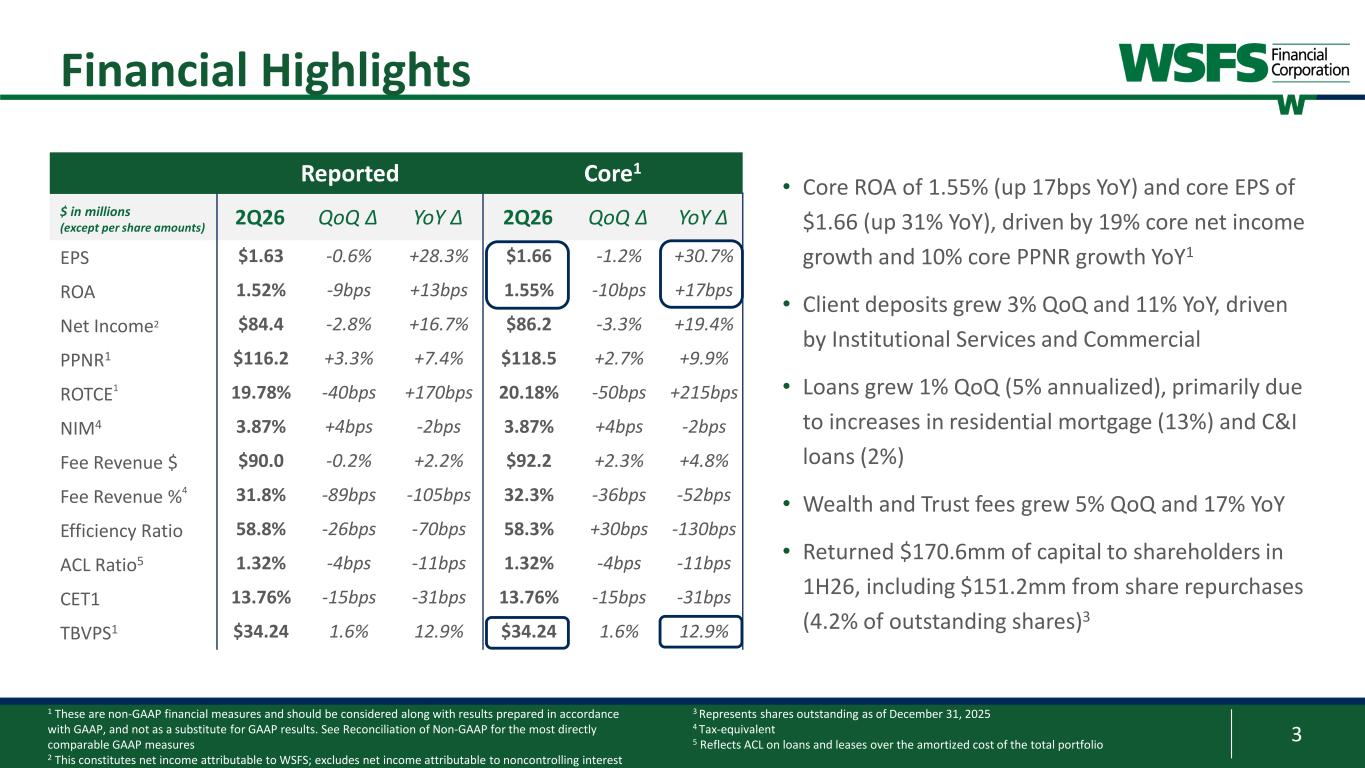
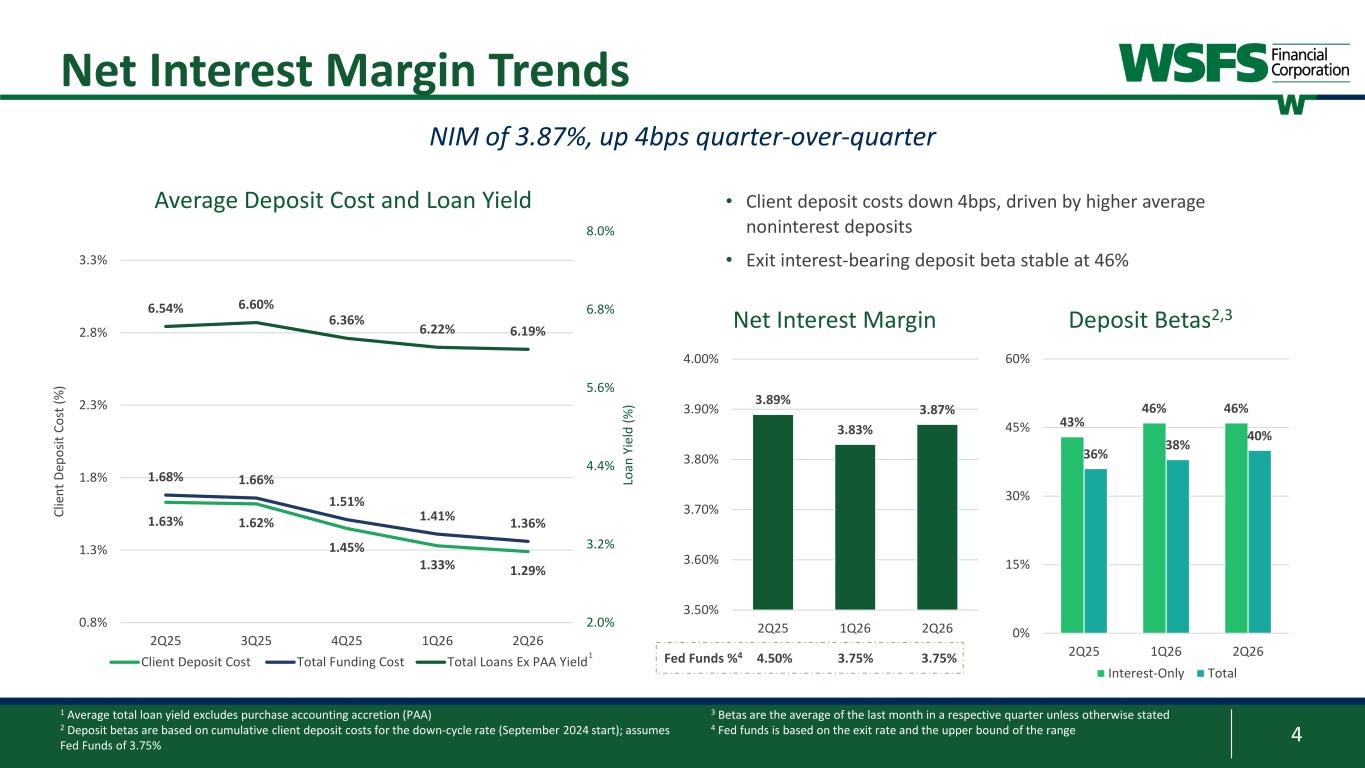
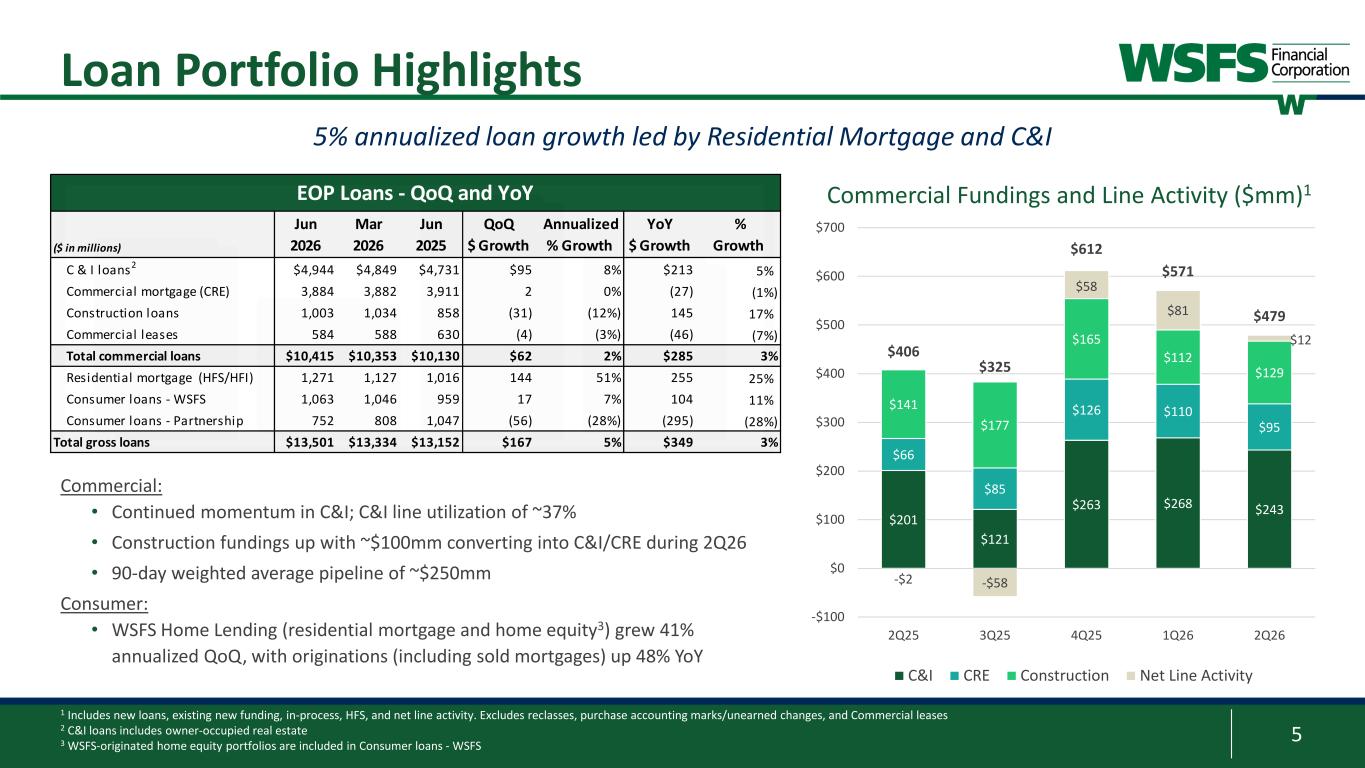
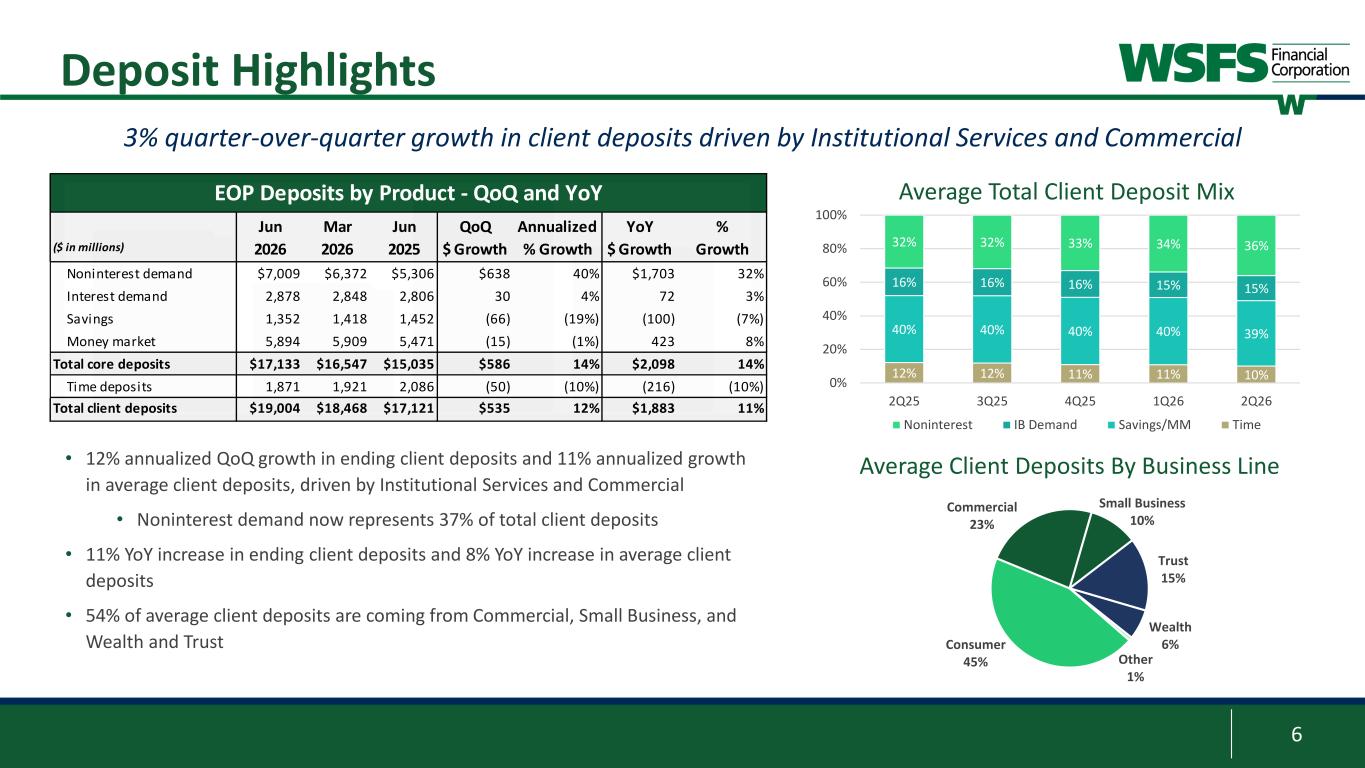
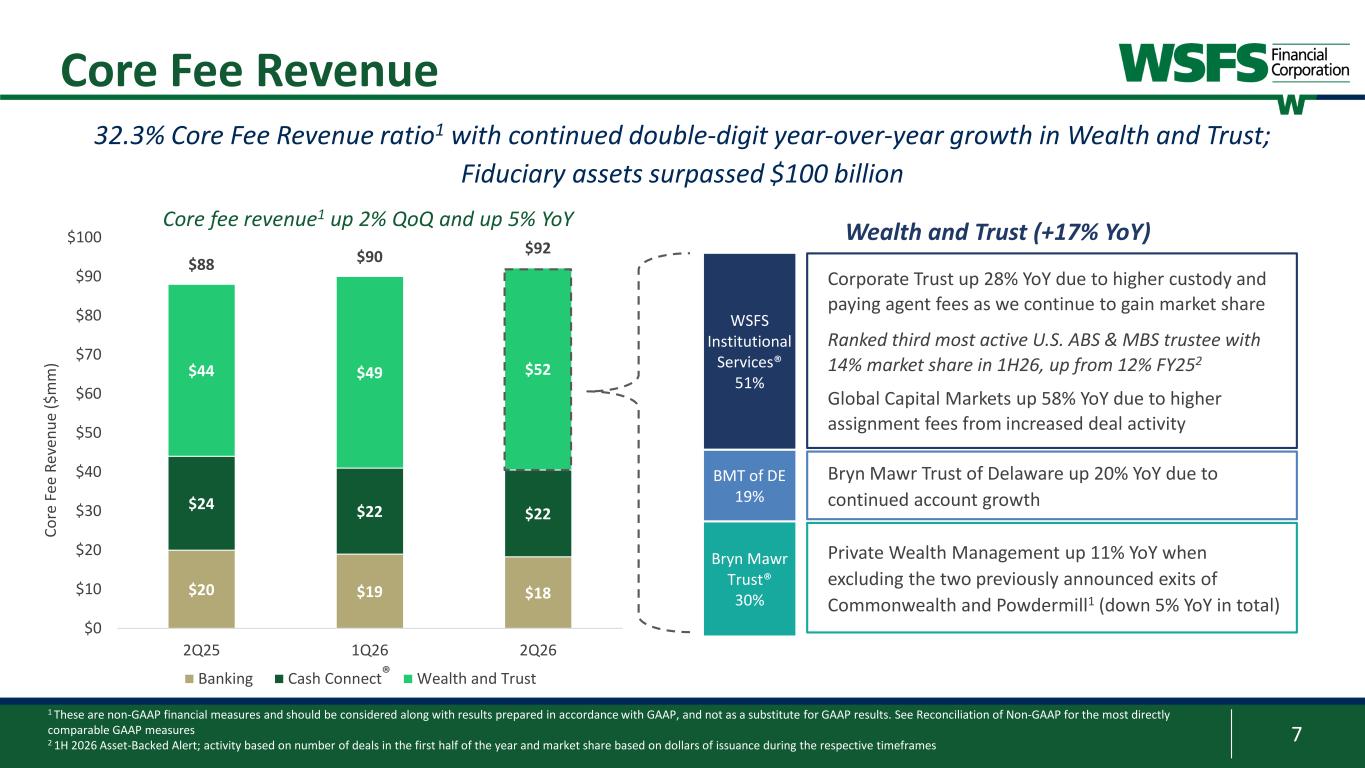
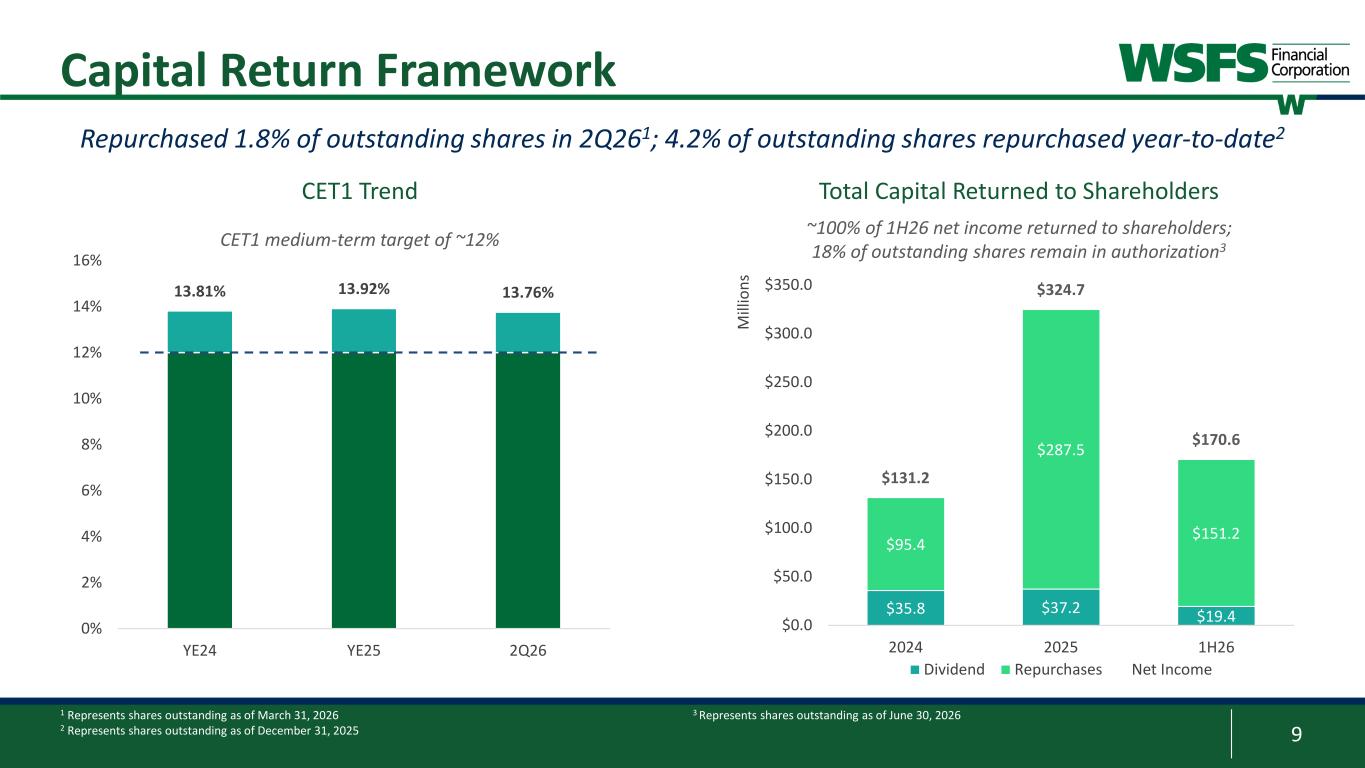
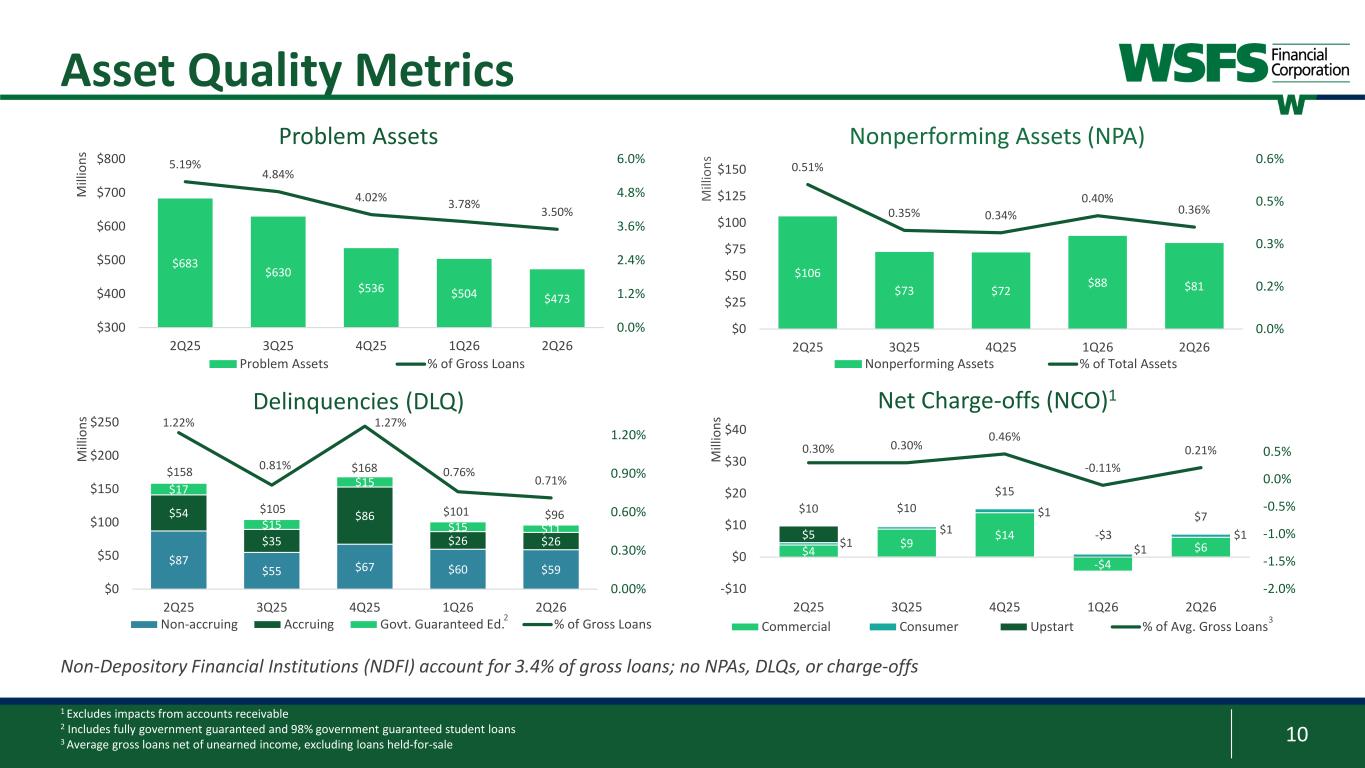
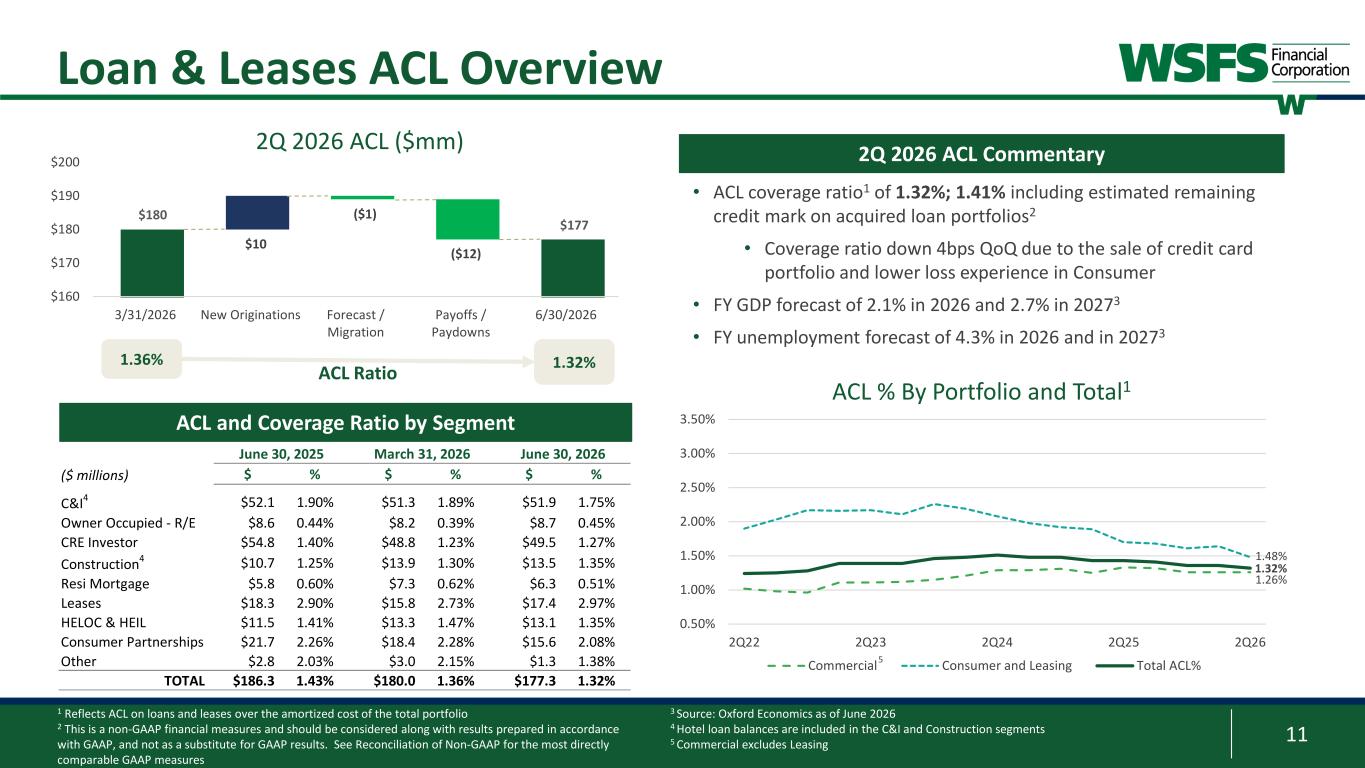
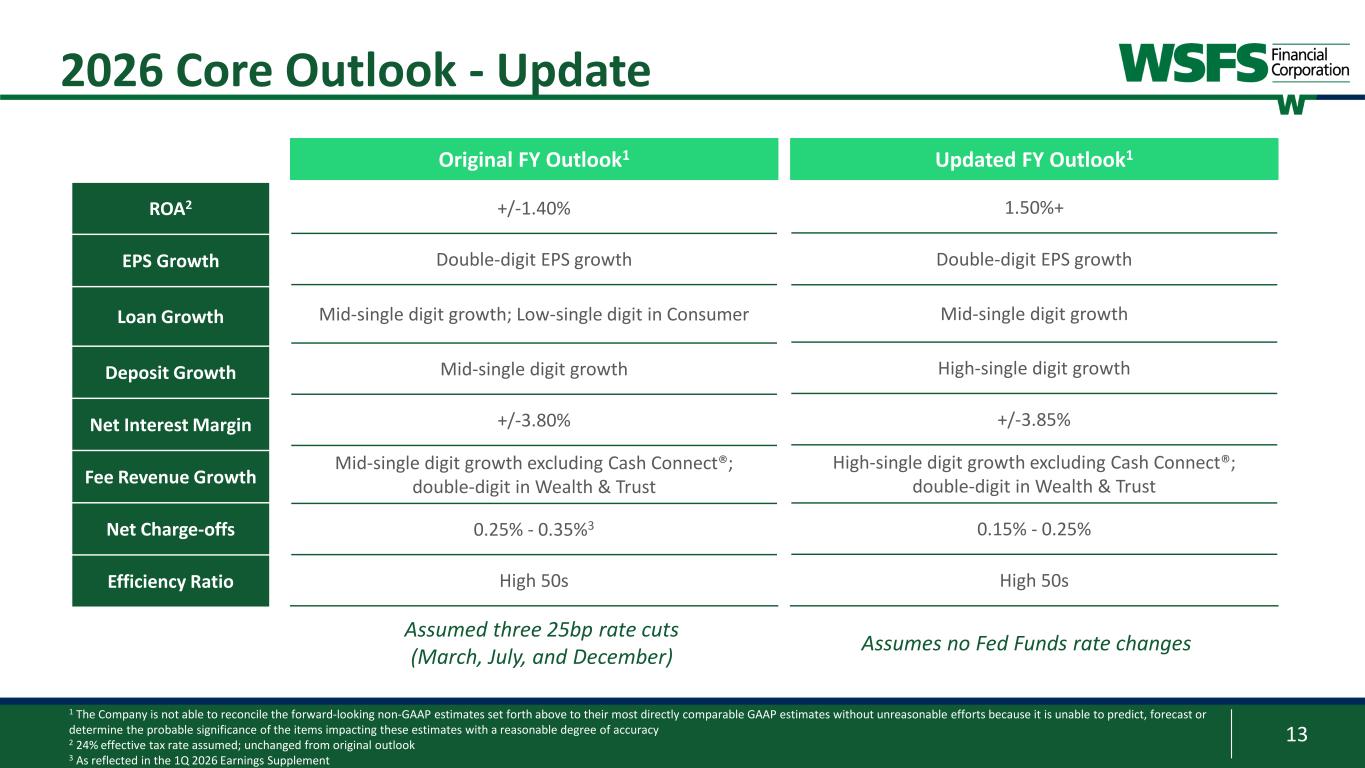
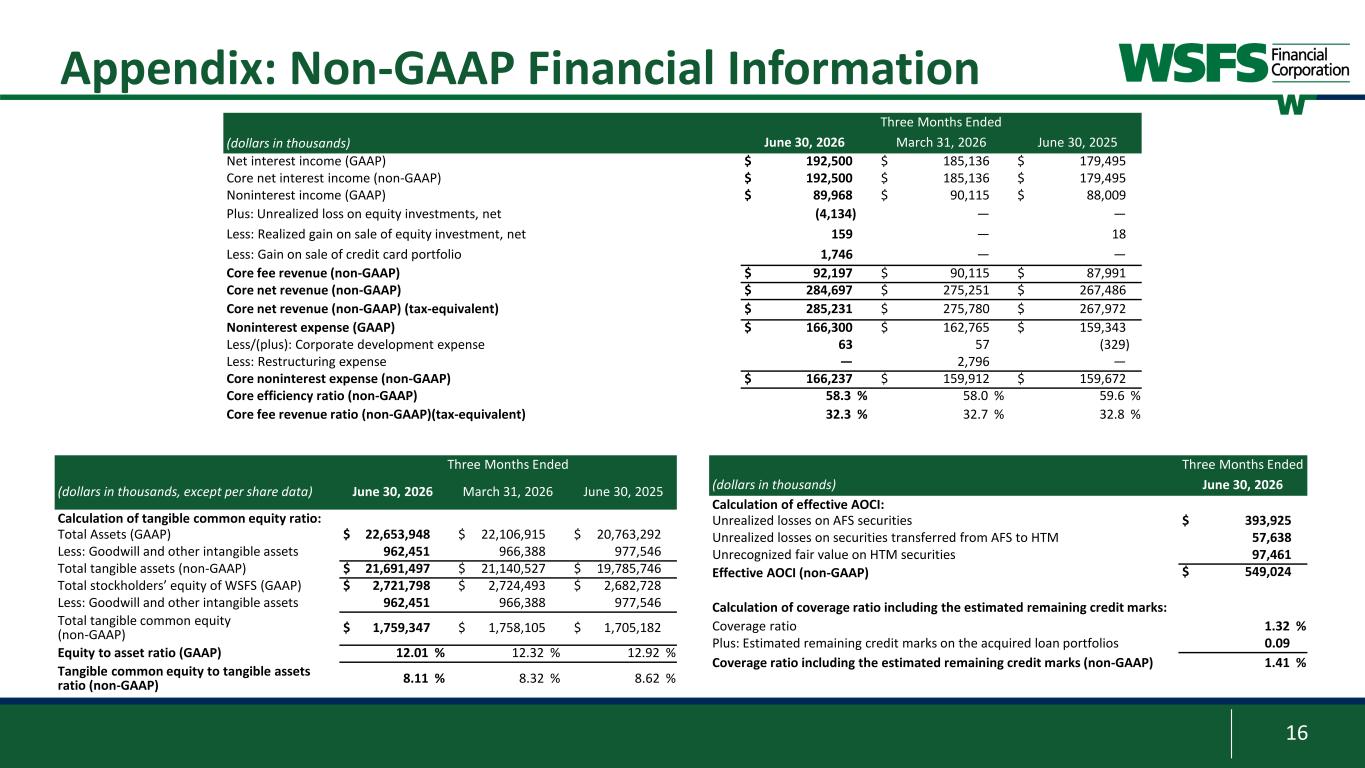
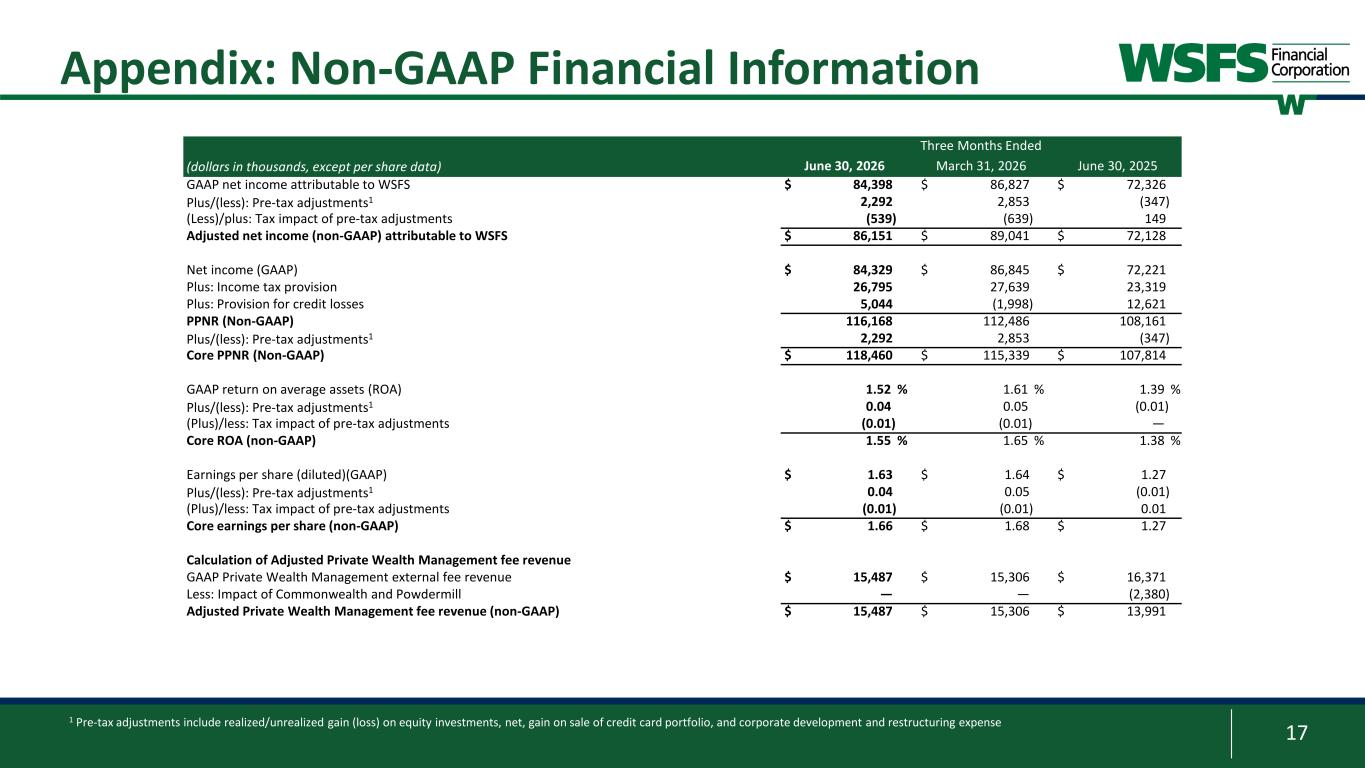
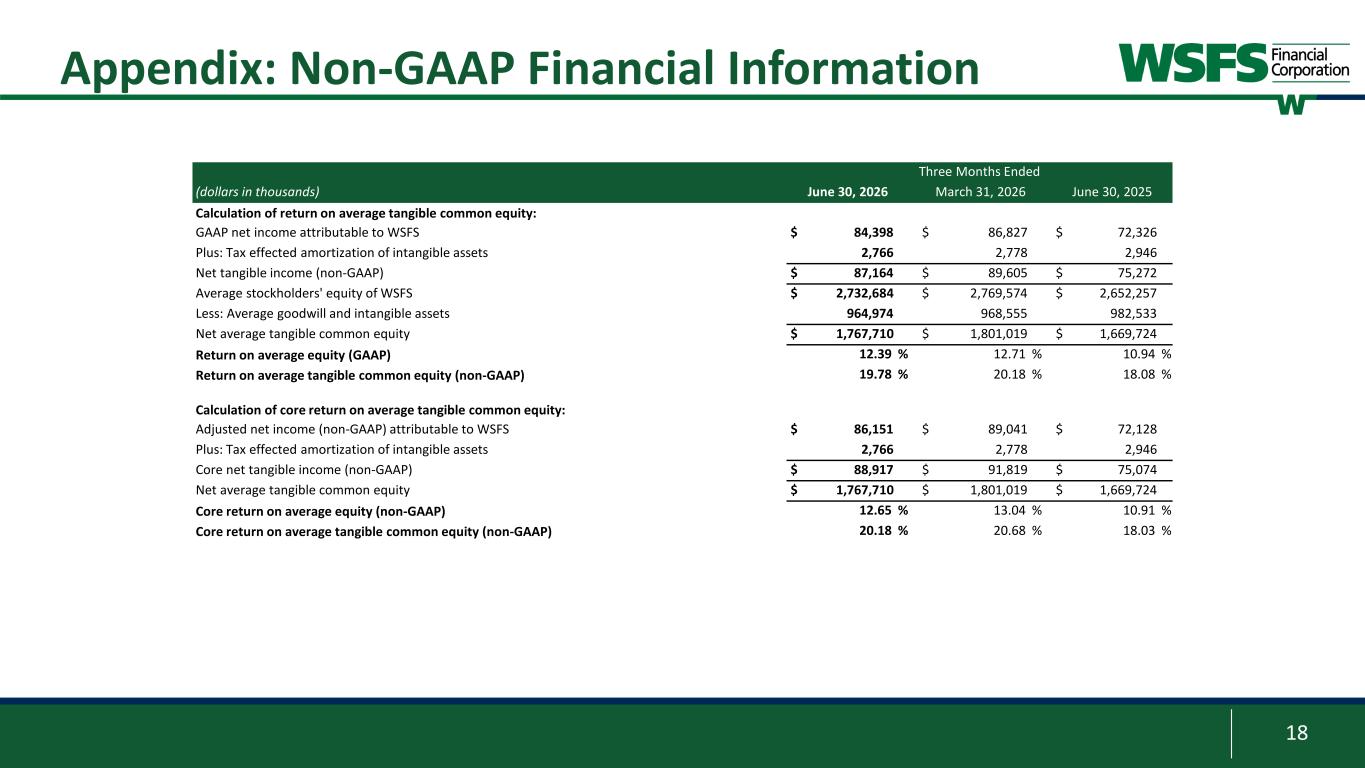
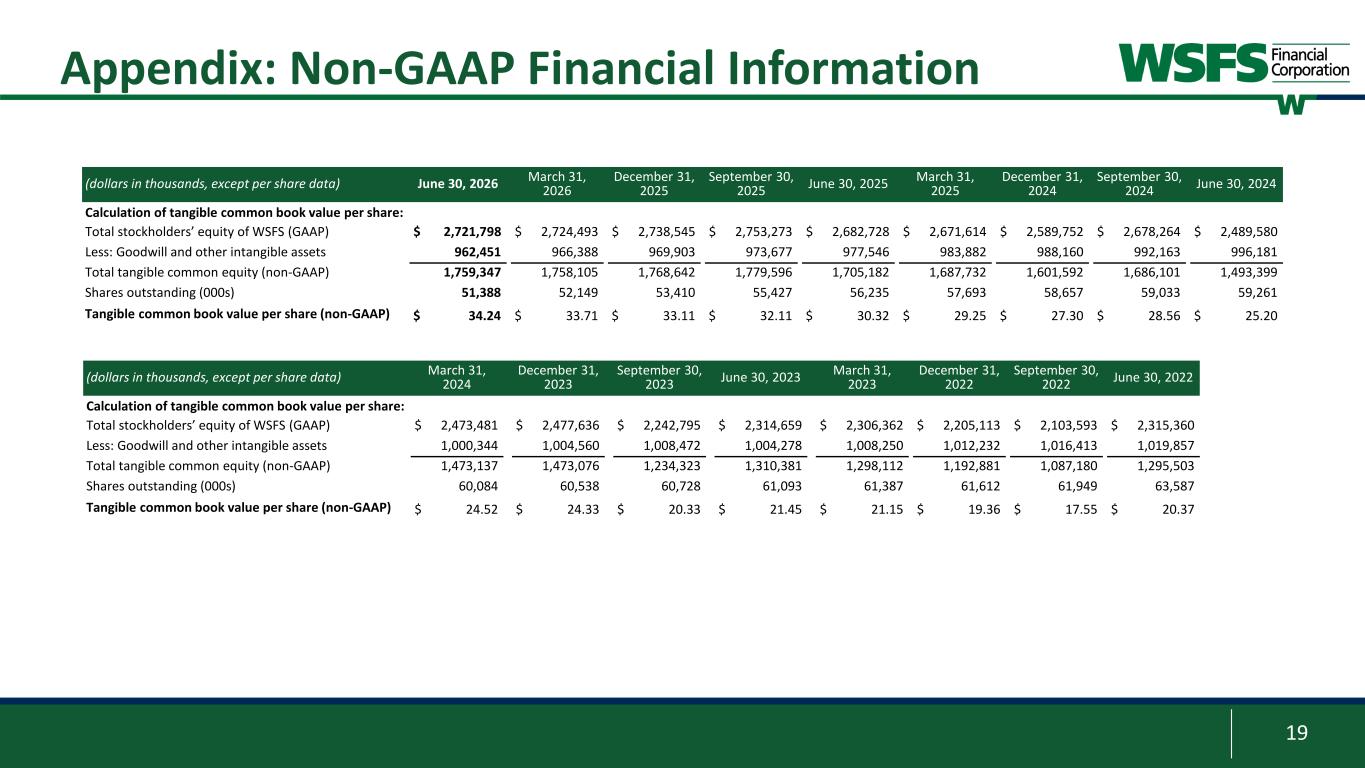
Thank you very much and good afternoon, everyone. Thank you for joining our second quarter 2026 earnings call. Our earnings release and earnings release supplement, which we'll refer to on today's call, can be found in the Investor Relations section of our company website. With me on this call is Roger Levinson, Chairman, President, and CEO. Prior to reviewing our financial results, I would like to read our safe harbor statement our discussion today will include information of our management's view over future expectations plans and prospects that constitute forward-looking statements actual results may differ materially from historical results or those indicated by these forward-looking statements due to risks and uncertainties including but not limited to the risk factors in an annual report of form 10k and our most recent quarterly reports of Form 10-Q, as well as other documents we may periodically follow within Securities and Exchange Commission. All comments made during today's call are subject to the Safe Harbor statement. I will now turn to our financial results. During the second quarter, WSFIS's performance continued to demonstrate the strength of our franchise and diverse business model. Results included a core earnings per share of $1.66, core ROA of 1.55%, and core return on tangible common equity of 20.2%, which are all above the first quarter levels when you exclude the previously disclosed loan recovery. On a year-over-year basis, core net income increased 19% and core PPNR increased 10%, resulting in core earnings per share growth of 31% and tangible book value per share growth of 13%. Core results for the quarter exclude a $1.8 million decreased in net income and a 3-cent reduction to EPS, primarily related to the write-down of an equity investment, as well as the previously disclosed gain from the sale of our credit card portfolio. Net interest margin expanded four basis points link order to 3.87%, driven by a four basis point reduction in our client deposit costs, as well as higher investment securities in yields. Our interest-bearing deposit data remained at 46%. Core fee revenue, which represents nearly a third of total revenue, grew 2% link quarter and 5% year-over-year. The growth across our fee businesses was led by wealth and trust, which grew 17% year-over-year. Within institutional services, corporate trust and global capital markets were up 28% and 58% year-over-year, respectively, as we continue to win new mandates and capture market share. For the first half of 26, WSFISP was ranked as the third most active ABS and MBS trustee based on deal count, increasing our market share to 14% from 11.7% in 2025. Our personal trust business, the Brimmore Trust Company of Delaware, also delivered strong year-over-year growth of 20%, driven by continued new account growth. Outside of wealth, our capital markets business within the commercial division also delivered strong double-digit growth both link quarter and year-over-year. Cash connect fees declined year-over-year due to the impact of interest rate cuts and lower volumes, but the business delivered a higher profit margin of 15% for the second quarter in a row. Client deposits increased 3% link quarter, driven by growth in institutional services and commercial. On a year-over-year basis, our client deposits are up 11%. Importantly, non-interest deposits were up 10% when in quarter and now represent 37% of total client deposits, up from 31% a year ago. While we continue to see some elevated quarter-end activity by clients, we are seeing strong deposit growth momentum as evidenced by increases in both end-of-period and average deposits, which also grew 3% when in quarter and 8% year-over-year. Gross loans were up 1% link quarter or 5% annualized. In commercial, we continued to see strong momentum in CNI which grew 2% link quarter or 8% annualized. And in consumer, home lending generated strong growth with residential mortgage and WSFIS home equity loans up 10% link quarter and 23% year-over-year. Turning to asset quality, we continued the recent trend of improvements across our key metrics, including leading indicators. Problem assets decreased 6% link quarter due to several commercial payoffs and are now down 31% year-over-year. Delinquencies are down 5% link quarter and nearly 40% year-over-year, with accruing delinquencies of $26 million as of quarter-end. Non-performing assets are down 8% link quarter and nearly 25% year-over-year. In addition, net charge-offs were 7.1 million or 21 basis points of average loans for the quarter. When you exclude the impact of the prior quarter loan recovery, net charge-offs decreased 5.1 million quarter-over-quarter, driven by lower commercial charge-offs. During the quarter, we continue to execute on our capital return framework, returning $77 million of capital, including $66 million of buybacks. Year-to-date, we repurchased over 4% of our outstanding shares and returned approximately 100% of net income to shareholders. On the last page of the earnings supplement, we provided our updated 2026 outlook, which now assumes no Fed funds rate changes for the rest of the year. Our updated full-year outlook reflects improvements across most metrics. Notably, we're increasing our ROA outlook for the year to 1.50% with potential upside from there as we continue to drive high performance and growth. We also raised our deposit growth rate from mid to high single digits. While our results reflect some elevated quarter-end transactional activity, we continue to see strong deposit growth momentum across institutional services and commercial. Our NAM outlook has improved to approximately 3.85%, reflecting the updated rate forecast and momentum across deposits and loans. We continue to see elevated deposit competition, which may impact deposit pricing going forward. We raised our outlook for fee revenue, excluding Cash Connect, for mid to high single digits, as we continue to see strong momentum and future growth opportunities in our fee businesses, and particularly Wealth and Trusts, where we continue to capture market share within institutional services and BMT of Delaware. Net charge-offs are now expected to be between 15 to 25 basis points of average loans for the year, a decrease from our previous outlook, which reflects the strong asset quality results we saw in the quarter and recent momentum across key leading indicators. Consistent with our first quarter update, this outlook includes the previously disclosed recovery in one queue. Our commercial portfolio continues to perform well, but losses may be uneven. Our outlook for efficiency remains unchanged. We plan to maintain strong expense discipline, but will continue to leverage opportunities to invest in the franchise, which coupled with normal seasonality may result in some variances quarter to quarter. We're pleased with these results and remain committed to delivering high performance. It will now open the line for questions.
Speaker 0
We will now begin the question and answer session. If you would like to ask a question, please press star one to raise your hand. To withdraw your question, press star one again. We ask that you pick up your handset when asking a question to allow for optimum sound quality. If you are muted locally, please remember to unmute your device. Please stand by while we compiled the Q&A roster. Your first question comes from the line of Russell Gunther with Stevens. Your line is open. Please go ahead.
Yes, thank you. Good afternoon. I wanted to begin on the revised margin guide. So it looks like it implies relative stability in the back half of the year. We're getting towards the end of earnings this week, and a lot of the commentary so far is focused on margin headwinds for the industry, tighter spread, higher deposit costs. But when I look at your guys' liquidity profile in terms of the below peer loan to deposit ratio, a lot of securities cash flow, you can get reinvested better than peer non-interest sparing mix that's growing. I think you guys would be better able to defend against competitive pressures, at least on the liability side. But David, how are you guys thinking about the trajectory of deposit costs from here as what's reflected in the margin guide and as we think about 20-7.
Yeah, yeah, happy to address that. So I think you're right. I think we've obviously had success in bringing down our deposit costs so far. We have a good liquidity profile. And in fact, you know, we've let some of our higher cost deposits run off in the first half of the year, as you can see, in some of our CD runoff. So because of our liquidity position, we were able to do that. At the same time, I think there are two factors to consider. One is we've been seeing it really throughout the first half of the year. There's definitely more deposit competition out in the market, and we've seen that really build up over the last six months. And to give you one example, our largest CD product was a six-month 3% CD, and we found ourselves to be really on the low end of market pricing. And if you go out, it's very easy to get over 4% for 12 months. And so we want to make sure that we remain competitive, even though we don't necessarily need the liquidity today. We obviously want to continue to grow our clients. We want to defend our market share and capture more share. We want to remain competitive. So I think we may need to increase in order to grow in some areas and be competitive, and so that does put some pressure on our deposit costs going out. But expect the NIMP to be stable, and we expect to be able to manage that, but there could be some upward pressure on deposit costs. Okay.
Thank you for your thoughts there. And then switching gears to expenses, you know, appreciate the reiterated high 50s efficiency guide as it relates to just kind of dollar, not interest expense, you referenced, you know, seasonal dynamics. So could you level set us in terms of how 2Q may compare to where 3Q is headed? And then within that kind of high 50s target, I mean, what does that mean to you? Is there a plus or minus to that? You guys were at like 59.3, I think, last year. is that a result you might be able to outperform?
Yeah, so in terms of expenses, you know, this quarter, when you look at our expenses year over year are up about 4%, so I think it's a reasonable growth rate. When you look at this particular quarter, you know, the majority of our quarter over quarter expense was really driven by variable and revenue-driven expenses, so it's really a direct result of the outperformance on the top line, although we did have some items, some non-recurring items hit like we've outlined in our press release. Generally, I think our expenses could be at this level, around this level, maybe a little bit lower going forward. But the important thing is a big part of that is revenue driven. So to the extent that we continue to outperform on the fee side, on the top line side, that will drive additional expenses. So we do think of it as a result. You can't disassociate the revenue from the expenses. And so we do think of it in terms of efficiency. As you said, we were over 59% last year. We want to continue to take that down. We've been 58 for the last two quarters. And we're comfortable in the range that we're at. And over time, our goal is to continue to take that down. And we've got a number of expense initiatives that are ongoing. We think about it a lot. Part of our strategy, by the way, around expenses is, you know, as you know, we've been exiting some non-businesses that are not central to our strategy, and that's been an important driver as well. And so overall, I think we'll continue to invest in the business. That's really the number one priority while maintaining discipline. And so, you know, I think around this efficiency level is where we would expect to be.
Okay. Nope, that makes a ton of sense. Thank you, David. And then I guess just last one for me, the 150 plus, that plus sign there in the ROA target, what are the biggest deltas to achieving that?
Yeah, so, you know, I think we put the plus there because we'd like to come in a little bit better than that, not materially better. but obviously continued outperformance in fees if we continue to get some of the deposit growth. But again, it's a competitive environment. It's not the deposit growth we've seen, I think, is hard to continue at this level. And so that's where some of the pluses and minuses come in.
Wonderful. Thank you guys for taking all my questions.
Thanks, Russell. your next question from the line of kelly moda with kbw your line is open please go ahead hi this is megan lynch on for kelly moda thanks for taking my question um so loan growth is very solid this quarter um and you're expecting it this growth to sort of continue so can you speak a bit to how pricing is coming in especially with competition and if this competition is pressuring um your prices at all sure sure happy to uh to talk about that and i'll i'll maybe split the
discussion between uh commercial and consumer um on the commercial side uh you know as you know are really our core strategies to grow our cni business that that's the business that drives our relationship. It's a very important contributor to our deposits and our non-interest-bearing deposits. And so that's really kind of a flagship product. CNI has always been very, very competitive and continues to get very competitive as others try to penetrate the space. We're not the low-cost provider in the market. We really separate ourselves based on our service model. Obviously, we need to be competitive, but we separate ourselves based on service, based on our responsiveness, and in our relationships. And so, we want to make sure we grow in a reasonable, accretive way, and that's what we've been doing. And so, expect our goal is to continue to grow at kind of mid-single digits through the cycle. On the consumer side, our loan strategy, what we've really done is try to focus in areas where we have a differentiated value proposition. And so you've seen us get out of, we sold the Upstart portfolio last year, we sold our credit card portfolio this year, and we really focused on residential lending. In residential lending, we really have a differentiated product there with our service model and our ability to work with different types of clients. But the pricing there, because of the move in rates that we've seen, the pricing, obviously, on the residential real estate side has gotten more challenging. So I think that's a market dynamic overall.
Thank you. That was very helpful. And then just switching sort of to credit, you saw some improvement this quarter and the trends seem very solid. What are you seeing more broadly? And is there any place that you're watching in your portfolio? Dale?
Yeah. As you mentioned, we've had good credit performance. We take a very proactive approach to credit. We spend a lot of time on it where we try to get out early in front of any issues that may appear and work with our clients to resolve any potential issues. If you look at the portfolio, there's nothing that – there are always individual challenges with particular clients in particular situations, but there's not a kind of a big red flag when we look across or a theme or pattern. Office continues to be a challenging market and challenging prices, and we try to be very selective there, but generally nothing new in terms of any red flags where we can connect the dots across different types of asset classes.
Awesome, thank you. That's it from me.
Speaker 0
Your next question from the line of Manuel Navas with Piper Sandler. Your line is open. Please go ahead.
Hey, good afternoon. Could you add a little more color on the OpEx discussion? You said there could be some potential variability, and in the prior conversation it sounded like there could be a downward trajectory, but what are some of the projects and things that you need to add that kind of variability within OpEx, or is it just variable comp, you know, supporting revenues?
So, you know, a part of our cost base, Manuel, is variable. So, whenever we have revenue outperformance, we're going to see some additional expenses. Some of that is IC, and that was a meaningful part this quarter. We also have transaction expenses, for example, in Cash Connect. We have transaction expenses in our trust businesses. And so a portion of that revenue is definitely going to result in higher expenses. And at the same time, we continue to, if you look at our core expense base and our base expense level, we continue to try to work that down and continue to try to have initiatives to offset general rising costs, inflation and medical expenses and those type of things. And we have a number of ongoing initiatives. Like I mentioned, some of that has been getting out of businesses that were not central to our strategy, that had expenses associated with them, that were not highly profitable businesses. We've really optimized our real estate portfolio. We have a successful initiative going on around vendor costs. So we've got a number of different initiatives that are offsetting some of the natural increases, which is how we get to a 4% year-over-year growth, but the revenue is going to drive some expense with it.
Yeah, Manuel, I just would add to what David said. I think where the variability could come into play is, as David said, medical costs, health care costs are a big topic. I think it will continue to be a big topic, although we're doing, I think, a very good job of managing that. And like many others, you know, we continue to periodically see fraud spike from different events. So I think while we're in a good place, there's always some opportunity that we may see a little bit elevated costs in those two areas. And to me, that's really where some of the pressure on driving it down that we can't point a finger on right now could occur. are.
I appreciate that. Shifting over to loan growth, a little bit more that guide here in the back half of the year, mid-single digits, can you just talk about the main drivers there and what you're seeing in the marketplace from your borrowers in terms of sentiment pipelines and things like that?
So I'll talk about sentiment. I've been out a fair bit over the last several weeks. And I would characterize client sentiment as very good. I think they're definitely dealing with some headwinds on the cost side, but all of the, what I would say, the uncertainty, geopolitical events, energy, volatility, you know, those kinds of things, I think they've kind of either come to accept there's going to be a certain amount of uncertainty or an ability to adjust their businesses based on what they dealt with last year if there's a sudden spike in you know one cost you know here there so i think that's translating into businesses feeling pretty good and investing um you know which should be really good for us uh you know on the cni side um and people um you know are seeing the benefits of you know an overall uh you know stable economy And so that's the, you know, environment where businesses like to grow and invest and, you know, we should benefit from that. And so that's a big driver of our pipeline and where we're seeing opportunities. And as you know very well, in our marketplace, particularly as you move up the curve in terms of medium-sized businesses, lower end of middle market, really competing against much larger competition. And we find that, as David has said, our service proposition plays very well into those kinds of clients. And so growing with our clients as well as taking market share are really the two drivers of where we see loan growth for the rest of the year.
And I would just add that on the consumer side, a large part of our growth this quarter came from our home lending business. We had really a strong pipeline at the end of the first quarter into the spring selling season, also some of the lower rates that happened earlier. But now we're reaching a little bit of a slower part of the season and rates have ticked up. So, you know, the pipeline has come down a bit. So wouldn't expect the kind of growth that we've seen in home lending necessarily to continue, but still expect to be able to do well there.
I appreciate that. Switching over to deposits, so really strong first half of the year. I think that's a big part of the higher guide. And if some of the discussion points around NIMS and around competitive pressures on deposits, is it because some of the non-interest bearing could flow out? Could you kind of talk about the non-interest bearing growth, which is great? Institutional services are kicking butt, but I'm just wondering how much of that is sticky? How much is that, are you kind of preparing for it to flow out, if any? Just talk about the non-interest bearing side a little bit and how it impacts your deposit. Sure, sure.
So, yeah, happy to do that, Manuel. So, yeah, I think when you think about our non-interest bearing, really the important thing to understand is that those deposits are really spread across a few businesses. They're spread across commercial, consumer, and institutional services. And within institutional services, there are actually two businesses that are important contributors there. Our corporate trust business, which focuses on the ABS and MBS markets, as well as our global capital markets business, which focuses on bankruptcy, distressed debt, high-yield debt, corporate issuance. Both of those, all four of those businesses are important drivers. And when you think about this quarter, probably about 80% of the NIB growth was within institutional services, split across both of those businesses, and 20% was in commercial. So all of them are important drivers. The competition that we're seeing is there are different drivers for each of those businesses in terms of deposit expectations. The competition that we talked about that we're seeing is really in the consumer space and in the commercial space, we're definitely seeing more deposit competition in the market, and that may impact both NIB growth as well as pricing going forward. And on the trust side, we've benefited from a very strong market and we've been able to capture share, But again, you know, those are transactional activities and, you know, would not expect the kind of growth that we've seen to necessarily continue.
I appreciate that. Let me just add one more on kind of capital return, really strong buyback activity. Is there a point where you become more price sensitive or you still have so much capital return? And where does buyback stack up with other opportunities you have to deploy across organic growth, M&A, just kind of some updated thoughts here.
Yeah, so generally, as you've shared, I say before, our first priority is always to invest in the business. And we think that that's the best return for shareholders. And so investing at the right return level in the business is our first priority. We've obviously given you a capital target. We think we have excess capital at the moment. We look at a number of different metrics there. And since we've rolled out the enhanced capital return framework kind of the beginning of last year, we've been returning about 100% net income. And we've bought back about 14% of our shares going back to the beginning of last year. So I generally expect that trend to continue in any given quarter we may deviate from that depending on what the opportunities are that we have internally depending on the environment we look at interest rate volatility we look at our securities portfolio so we look at it from multiple different perspectives and that's why in any given quarter you know we may deviate from that but but when you think about it over over a multi-quarter period we'd like to be in that 100% capital return so I'm not necessarily going to throw out a price target at which we stop or go. I think it depends on all of those factors and what else we have as opportunities internally.
And outside opportunities?
So you're referring to like M&A and those kinds of things, Emmanuel?
Yeah. So I think, as we've said, I think if anything that we find could be additive and accretive to our current strategic plan we would absolutely look at those opportunities across the franchise so whether it's in the fee businesses particularly the wealth side would absolutely look at those kinds of opportunities and I'd say the same thing on the banking side I think the challenge on the banking side as we look at our footprint in our region we feel like there's a lot of opportunity here and so the bar would be pretty high for us to take some portion of our organizational bandwidth and pivot away from the organic opportunity that's right in front of us. If it's there, we will absolutely go for it. And as David said, we always want to take the opportunity to accretively invest in the business. I think it's important that it's accretive to what we've already got going from an organic standpoint.
I really appreciate the commentary. Thank you so much.
Speaker 0
Your next question from the line of Christopher Maranek with Breen Capital LLC. Your line is open. Please go ahead.
Good afternoon. I wanted to ask about the percentage of fee income to the overall business. Would you see this rising further into 27 and 28? And then does that give you even more flexibility on loan growth in terms of being even more selective than you have been?
So generally, we've been able to grow both. And that's why that ratio has been generally consistent, because we've been able to grow both. Our wealth and trust business, as you know, has been a fast grower, but that's been offset a bit by our cash connect business because of the interest rate impact on the top line there. In a steady state environment, generally would expect that our fees will probably go slightly faster, all else being equal. But, you know, we don't necessarily manage to a particular number there. We're trying to grow both. And so we have a positive growth on the top line altogether.
Got it. And then I guess, you know, back to the concept of being selective in terms of who you're doing business with and particularly not having to grow extremely fast on loans. Is that helping you on deposits and is the deposit gathering that you are seeing that success kind of a function of just really being focused on the best customers who have funding?
Yeah, I think certainly when we look at when we look at lending opportunities, we we the relationship is really important to us. and the deposits that those clients bring in are really important to us. So we try to invest our management bandwidth into those types of opportunities. So it's not the only thing we do. And as you know, for example, the commercial real estate business tends to be a bit more transactional, and we have great clients there. We continue to invest and continue to grow that business. But ideally, we have those opportunities to bring a broader relationship, which is not just deposits, but also across wealth, across treasury services, and that's what we think one of our big value propositions is, to bring the full firm.
Yeah, Chris, I don't think we look at it as sort of managing to find where there's the highest level of deposits in a C&I relationship. We take a relationship return view on all commercial relationships. So we look at all the business we can get. As David said, typically in the CNI business, you're getting all the operating accounts, which could bring significant deposits, and the other business that we do. And as long as it crosses our threshold with the loan pricing that we have, that's accretive to what we're doing. And that's really the way we're selective on clients. We can be super aggressive on credit pricing for the right opportunity as long as we get the full relationship. So we really look at it much more that way than trying to think about, you know, how much in deposits we may or may not get from a client.
Okay, that's great. Thank you for clarifying that. I appreciate it. And back to the capital, you know, goals, is there a timeframe on when you want to get that towards 12, or are we still just going to be multi-quarters ahead?
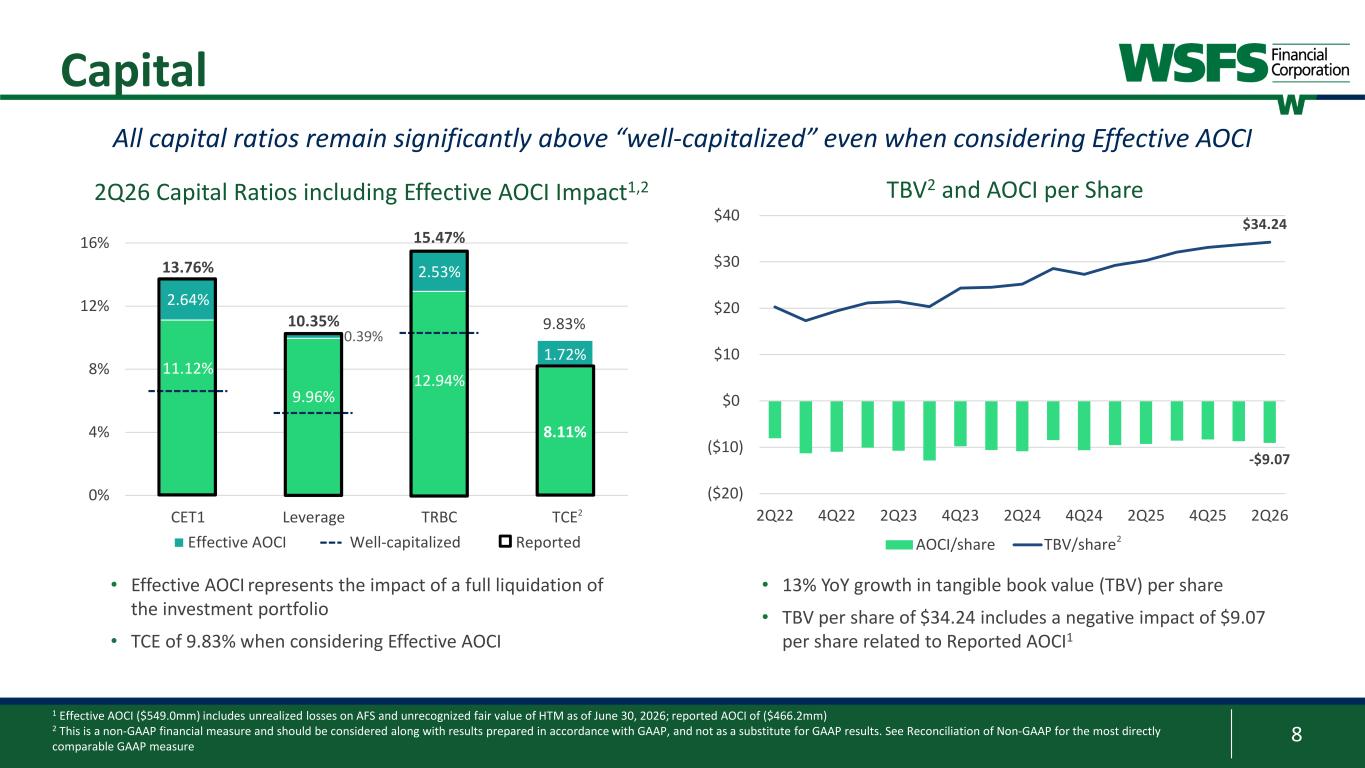
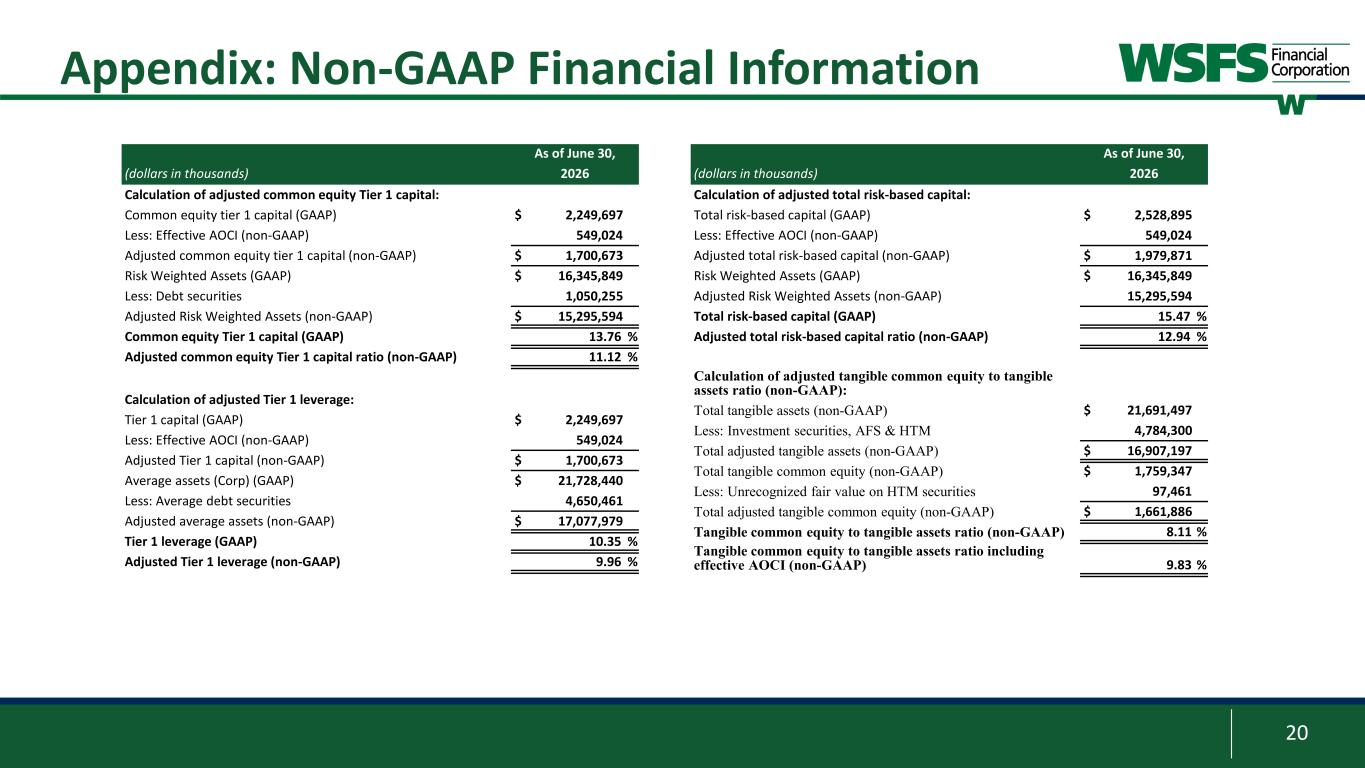
Yeah, no particular timeframe, Chris. You know, for example, when you look at this quarter, if you just look at this quarter, I think we're down 15 BIPs. And if you just do the math on the CT1, if you just do the math on that, you know, you're talking about kind of two and a half to three years. So I think it's a multi-year trajectory. But we also look at TCE is really important. Our security portfolio is really important and the impact on capital. So we look at a number of different factors there. So, no, no particular timeline. We want to continue with the measured approach at about 100 percent. But again, we may deviate from that quarter to quarter.
Okay. And I guess to that point, does the AOCI return, is any of that lumpy in the next year or two in terms of some pre-planned return?
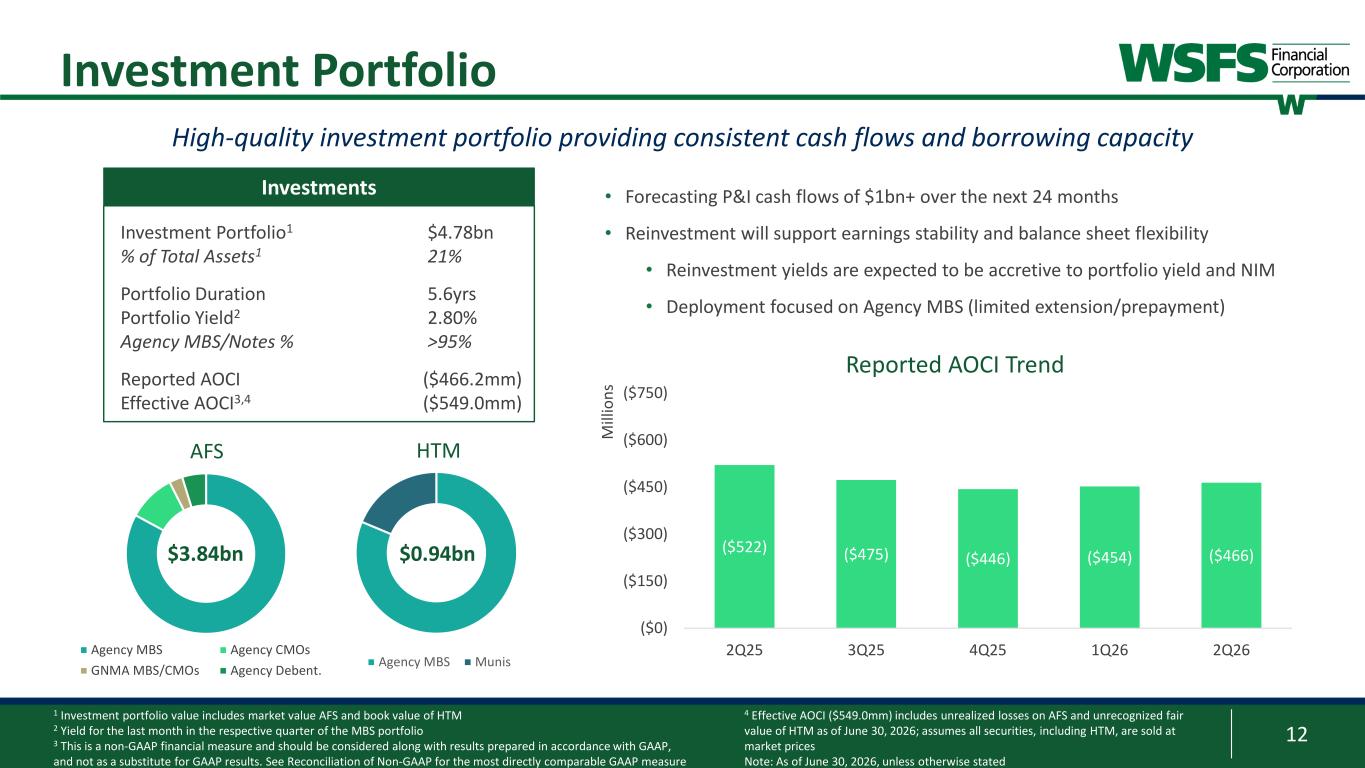
I wouldn't say so. I think it's been pretty consistent. Most, probably 95% of our portfolio is invested in MBS, and so there's no credit risk there. It's been pretty consistent with the way that AOCI has been coming off. We've had it moved the other way in the last couple of quarters, and that's really been a function of rate. But, you know, it's down materially from where we were post-COVID, and we'll continue to tick down kind of gradually. Got it.
Okay. Very well. Thank you for taking the questions today. Thank you, Chris. Appreciate it.
Speaker 0
Your next question from the line of Janet Leigh with TD Cowan. Your line is open. Please go ahead. Good afternoon.
On institutional services, I know that there's a big portion of that growth is coming from the market share gains, specifically on the corporate trust side, but you've also been benefiting from the secular tailwinds from the private capital securitization. I just want to see if you could provide some context around whether the strength there industry-wide is persisting or if there's any change there and whether that's an important factor in when we forecast your investment management or wealth and trust revenues. yeah yeah so um uh jan let me back up a little bit and just talk about i think it's important when you think about institutional services to consider both businesses there both corporate trust and global capital markets when you look at for example our our nib growth this quarter
both were important contributors as i mentioned in my opening remarks both were also important contributors on the fee side. To your direct question around the growth of that ABS and MBS market, it has continued to grow. And the first half of 26 rankings just came out. We increased share, but the market also grew. And that market's been growing, you know, 20 to 30 percent. And we've been growing on top of that. So I think generally, when you have, whenever you can obviously take share in a market that's growing that quickly, it's very accretive to results, and that's what's been happening. But I think it's important to also recognize what the differentiating factors are for us, and there are a number of them. But, you know, in general, we have, I can summarize it by saying that, you know, we have the balance sheet strengths of some of the larger players, but are much more nimble and are much more, and have a much better service model. And so when you think about our ability to move quickly, our ability to innovate with clients, that has allowed us to take share. And that market is a market where reputation matters a lot. And the better we do, the more we win. And so those have been some of the dynamics that have been at play here and what has allowed us to take share on top of the strong growth. I think that market has been a good growing market for a number of years. I don't think this pace of growth is something I would necessarily extrapolate, but we continue to believe in our ability to win share and play in different asset classes and play different roles there.
Thank you. And going back to non-interest sparing deposit, obviously very impressive growth again this quarter, and I appreciate the comment around how sustaining this level of growth may not be...it's not an easy feat. In terms of your 385 net interest margin guidance, are you contemplating any further growth in non-interest-sparing deposits, or maybe what level of NIB as a percentage of total deposit is assumed in your guidance?
Yeah, so I think it's generally, you know, I think if we keep it at this level, it would be really great. I'm not sure we can sustain it at this level of 37%. You know, historically, we've kind of run in the low 30s, but I think low to mid 30s, mid 30s is, would be a good level to maintain. And in general, As we grow deposits, we want to maintain that level. I think this has been real outperformance. But, Janet, I think the other thing to consider is when you have non-interest-bearing deposit growth based on where rates are today, if those deposits are invested in cash, it's not necessarily accretive to net interest margin. So it's really a push, I would say, generally to where net interest margin is. So the upside to non-interest margin is really going to be driven by our ability to – loan growth, our ability to invest those non-interest-paying deposits at something that's higher than cash, because otherwise it would just be a push.
Makes sense. All right. Thank you.
Speaker 0
And with no further questions in the queue, I would like to turn the call back over to David Berg.
Okay. Thank you very much. We appreciate you joining the call today. If you have any specific follow-up questions, please reach out to Android Investor Relations Have a great day and a great weekend, everyone.
Speaker 0
This concludes today's call. Thank you for attending. You may now disconnect.