Operator
Good morning, and welcome to the Marist Bancorp second quarter conference call. All participants will be in listen-only mode. Should you need assistance, please signal a conference specialist by pressing the star key followed by zero. After today's presentation, there will be an opportunity to ask questions. To ask a question, you may press star, then one, on a touchstone phone. To withdraw your question, please press star, then two. Please note this event is being recorded. I would now like to turn the conference over to Nicole Stokes, CFO. So, please go ahead.
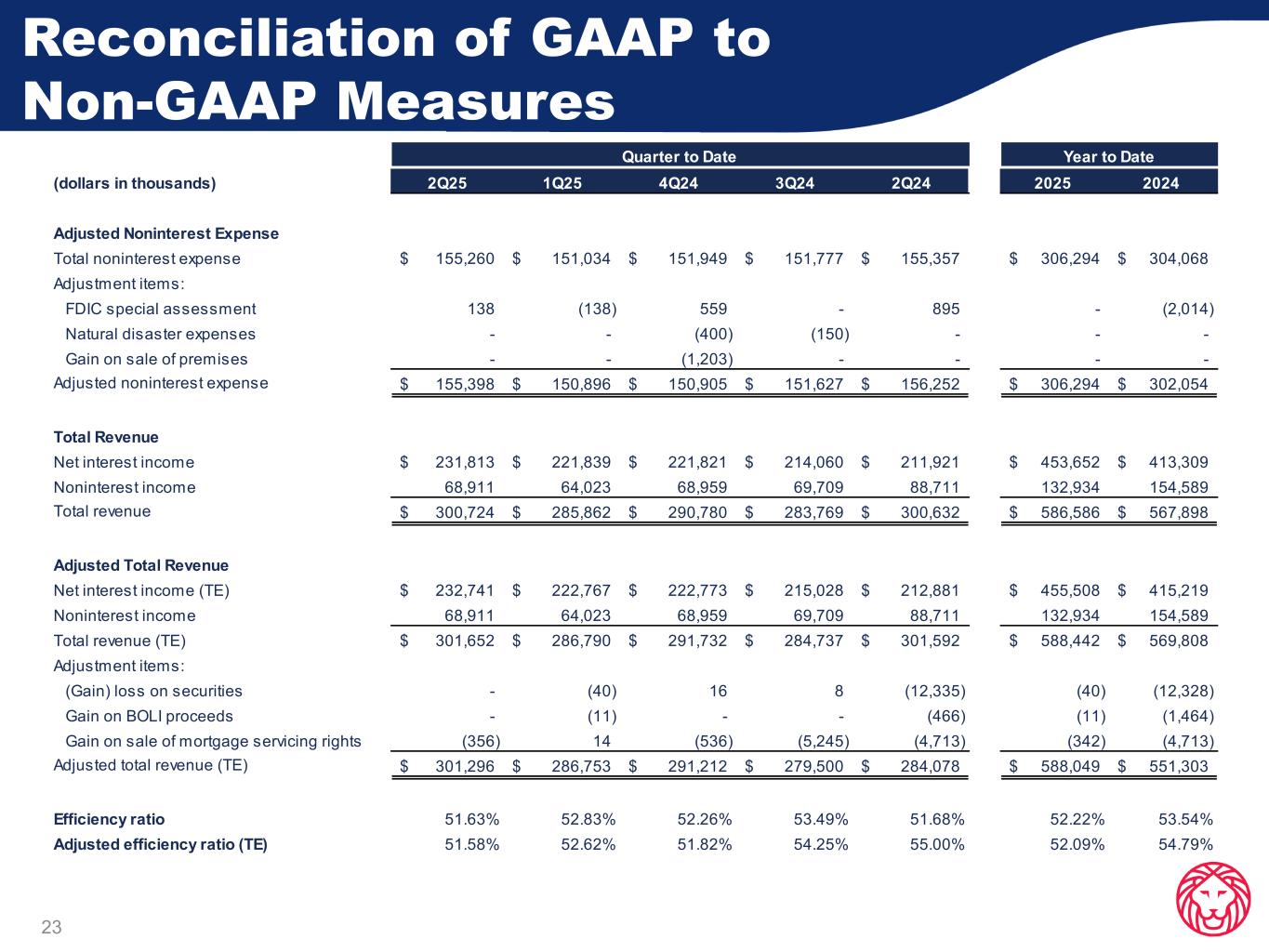
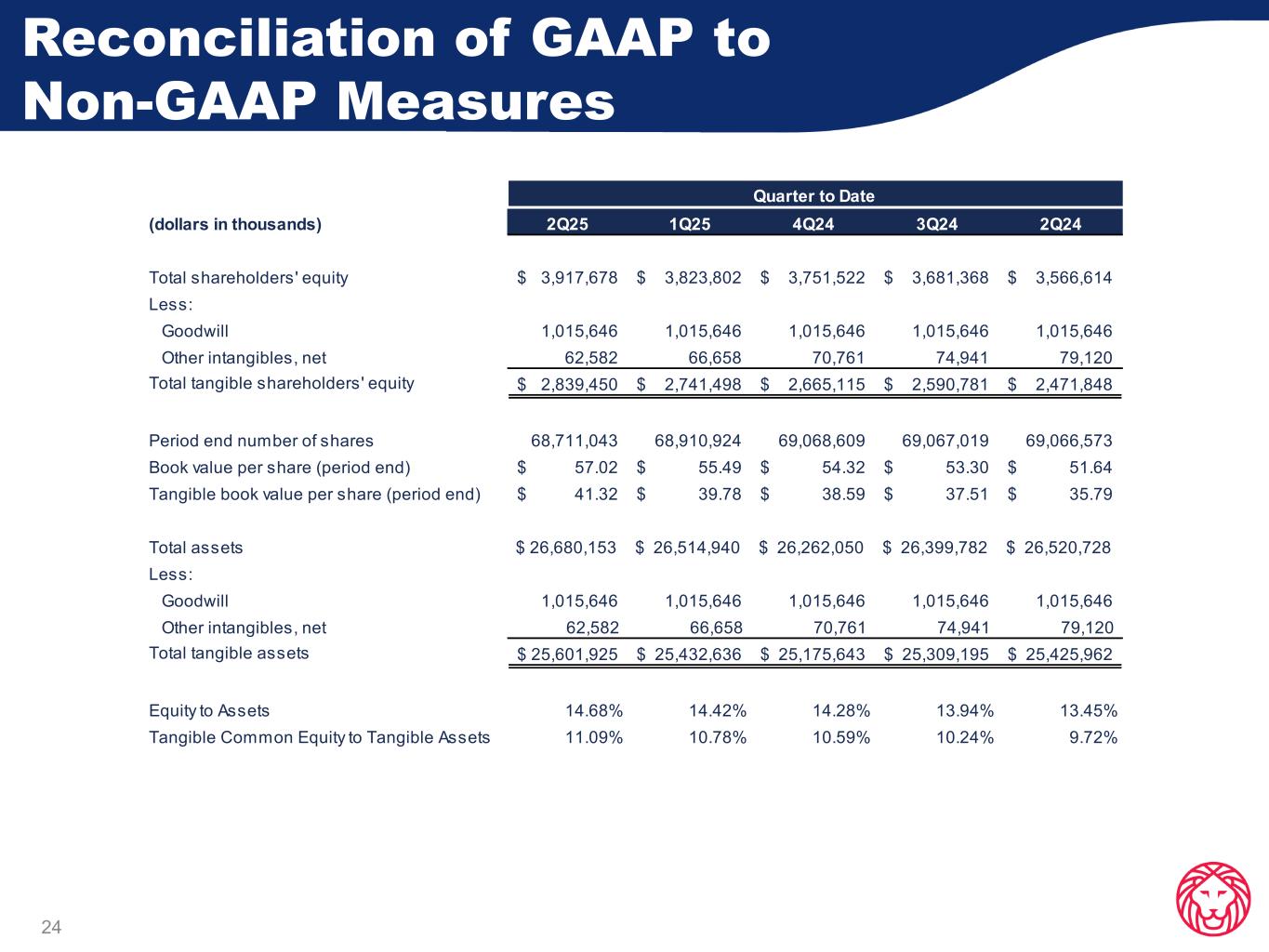
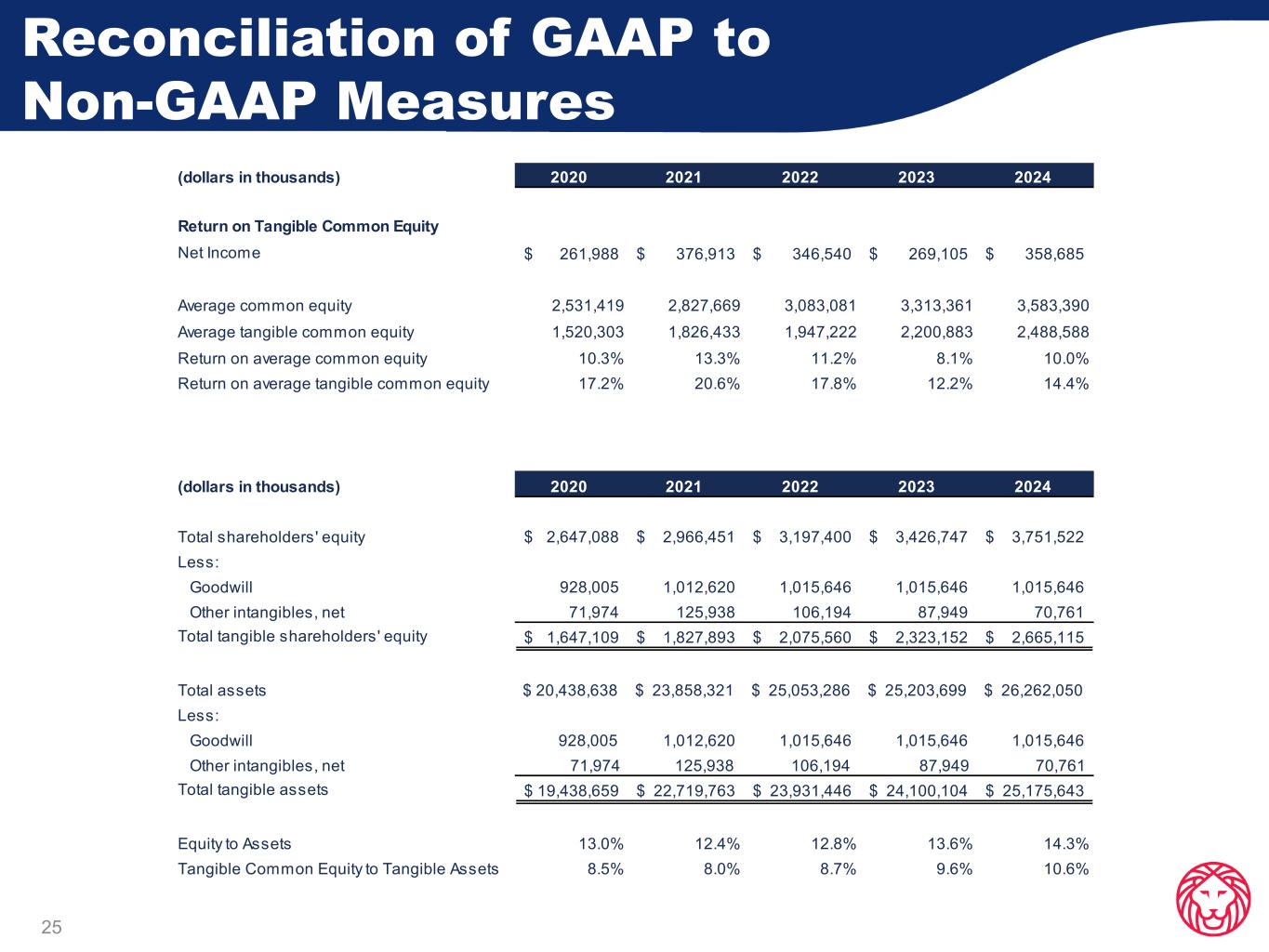
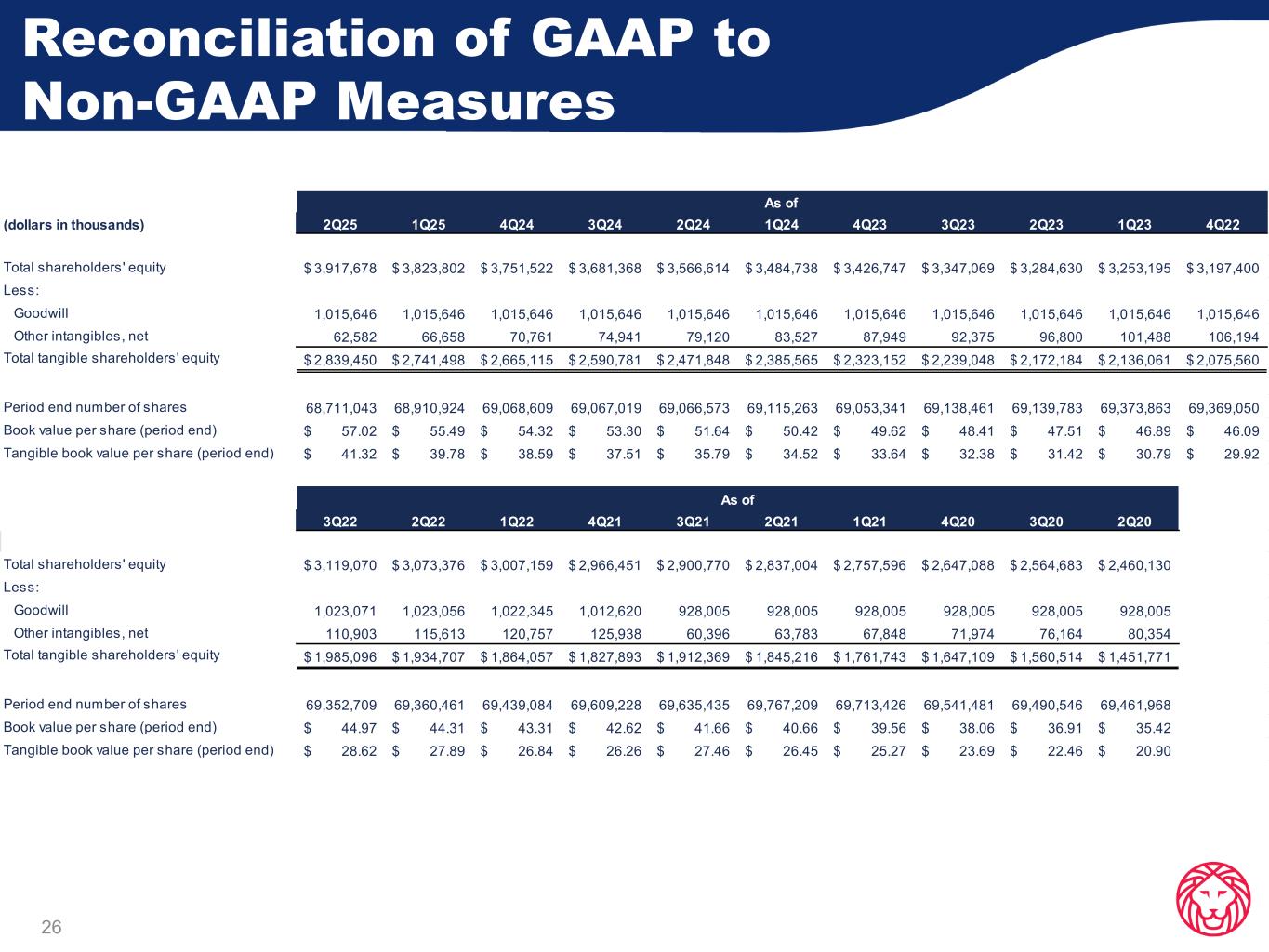
Thank you, Wyatt. And thank you to all who have joined our call today. During the call, we will be referencing the press release and the financial highlights that are available on the investor relations section of our website at AmerisBank.com. I'm joined today by Palmer Proctor, our CEO, and Doug Strange, our Chief Credit Officer. Palmer will begin with some opening comments, and then I will discuss the details of our financial results before we open up for Q&A. before we begin I'll remind you that our comments may include forward-looking statements these statements are subject to risks and uncertainties the actual results could vary materially we list some of the factors that might cause results to differ in our press release and in our SEC filings which are available on our website we do not assume any obligation to update any forward-looking statements as a result of new information early developments or otherwise, except as required by law. Also, during the call, we will discuss certain non-GAAP financial measures in reference to the company's performance. You can see our reconciliation of these measures and GAAP financial measures in the appendix to our presentation. And with that, I'll turn it over to Palmer.
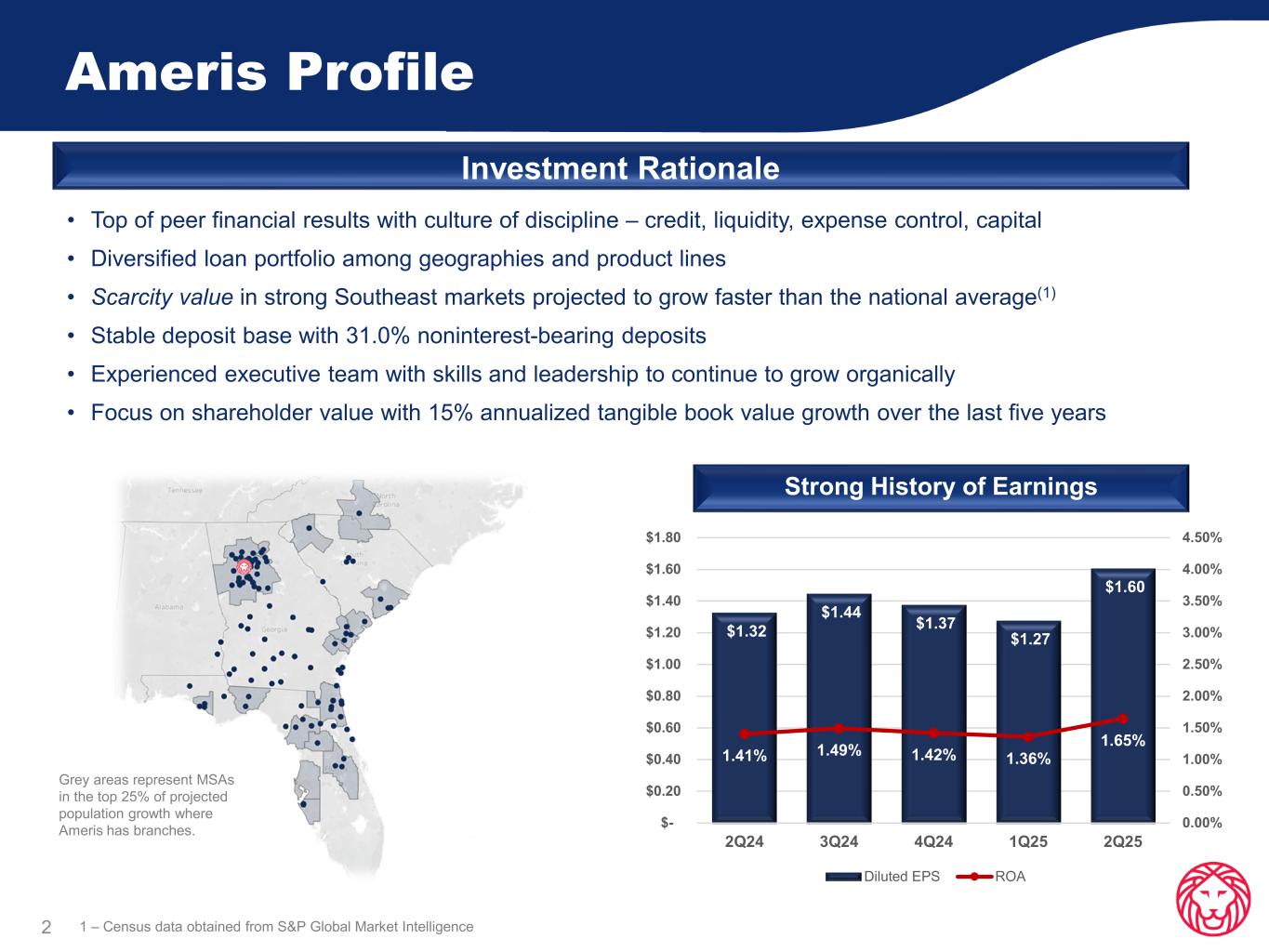
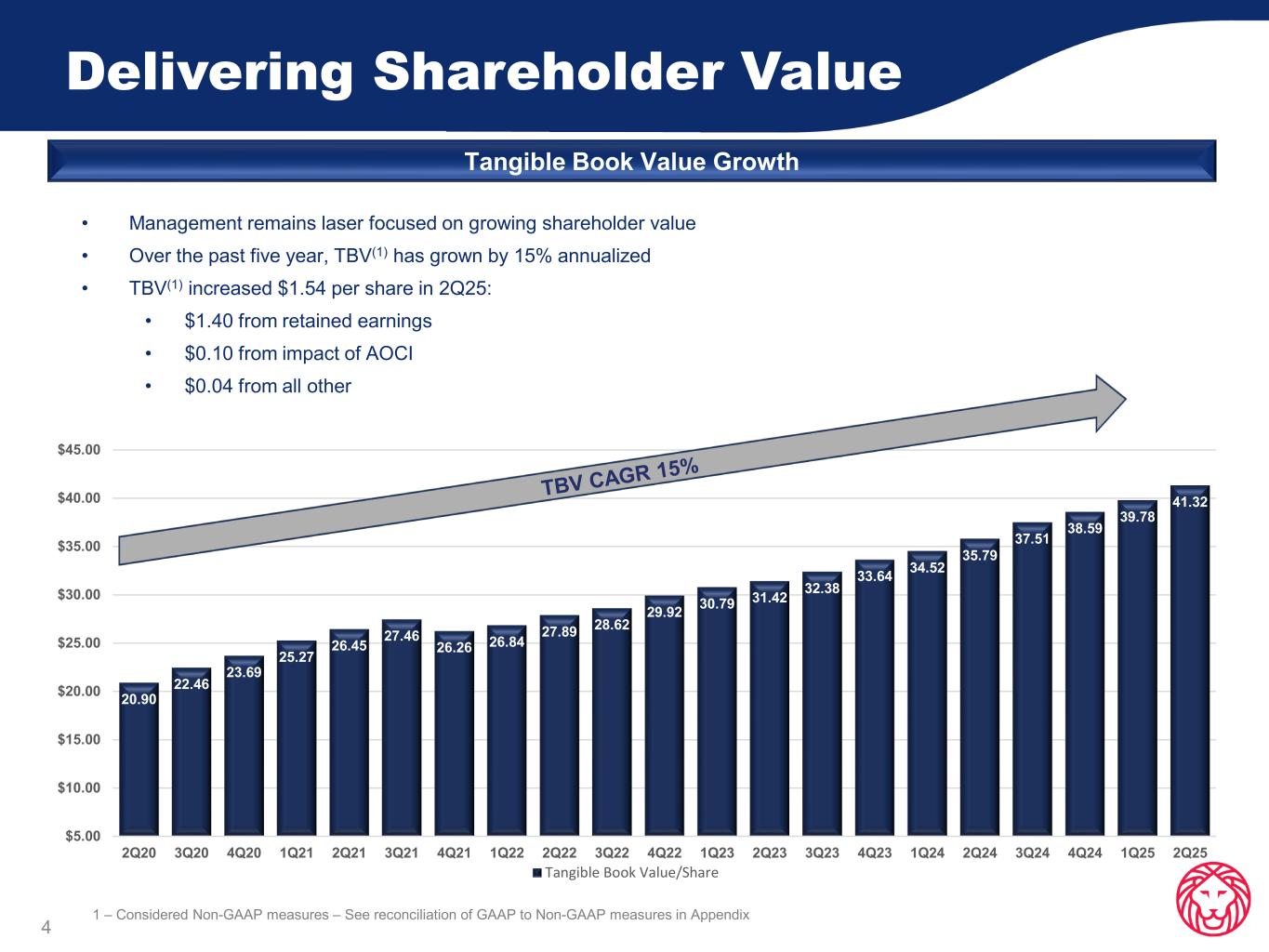
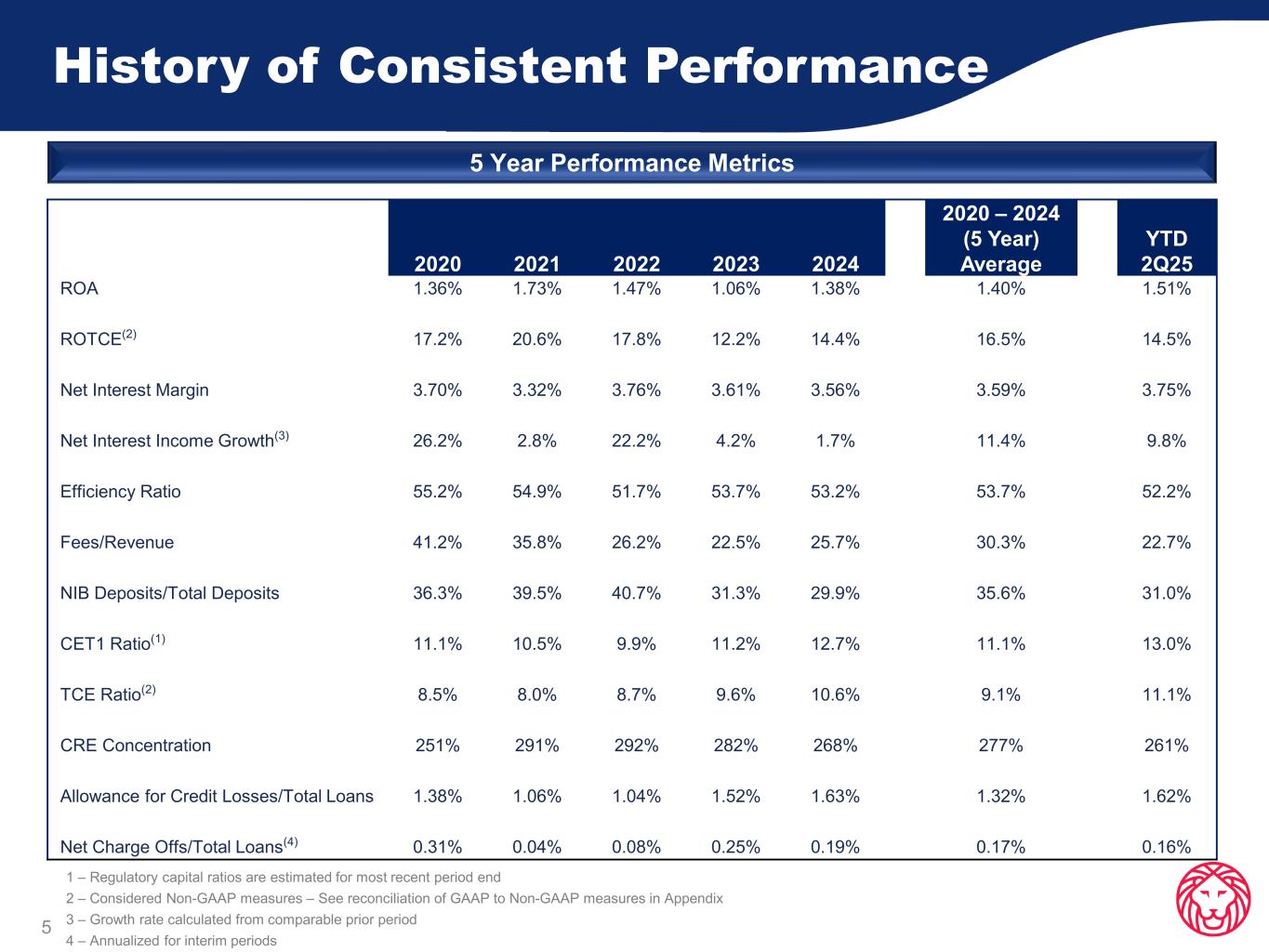
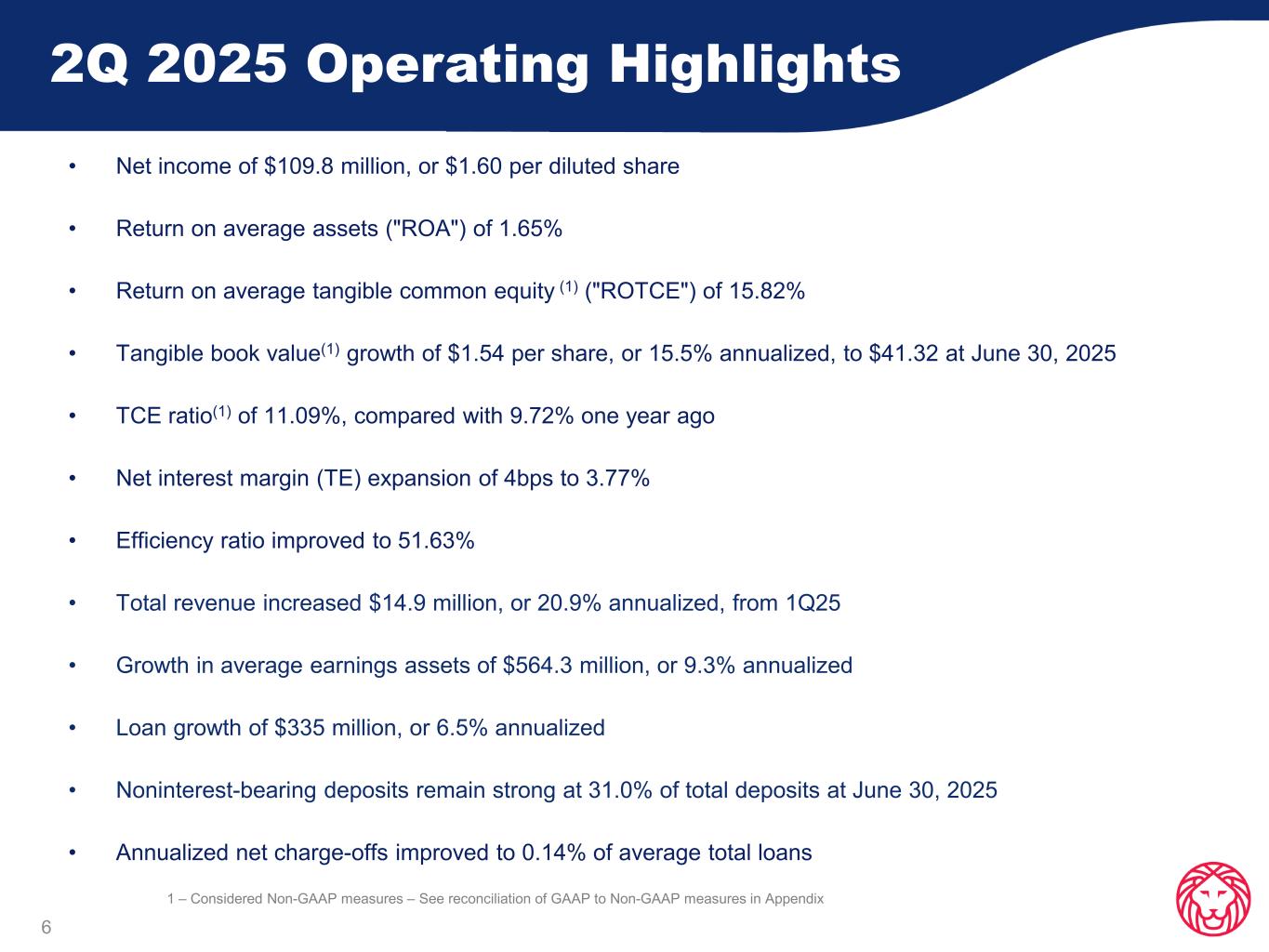
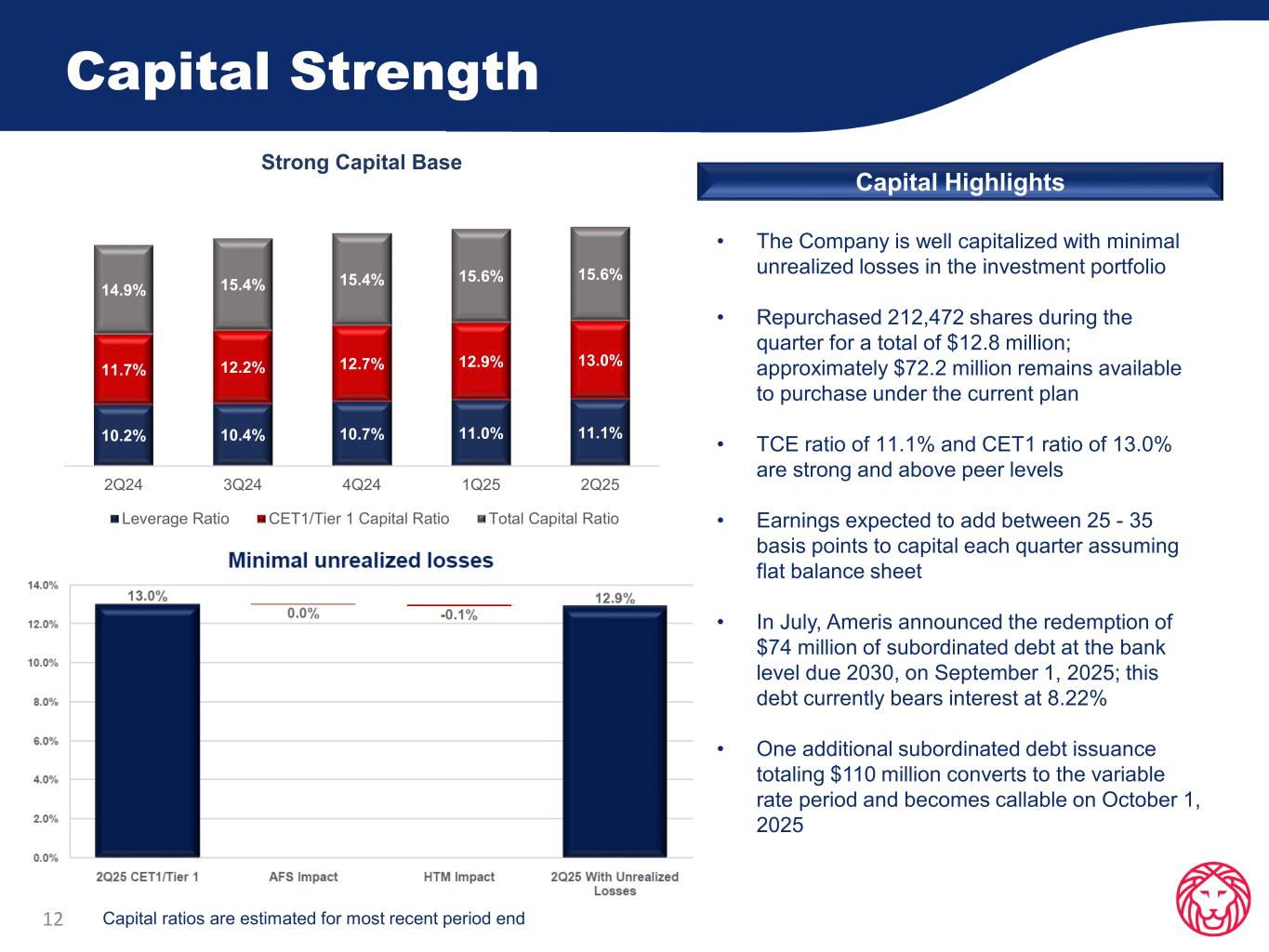
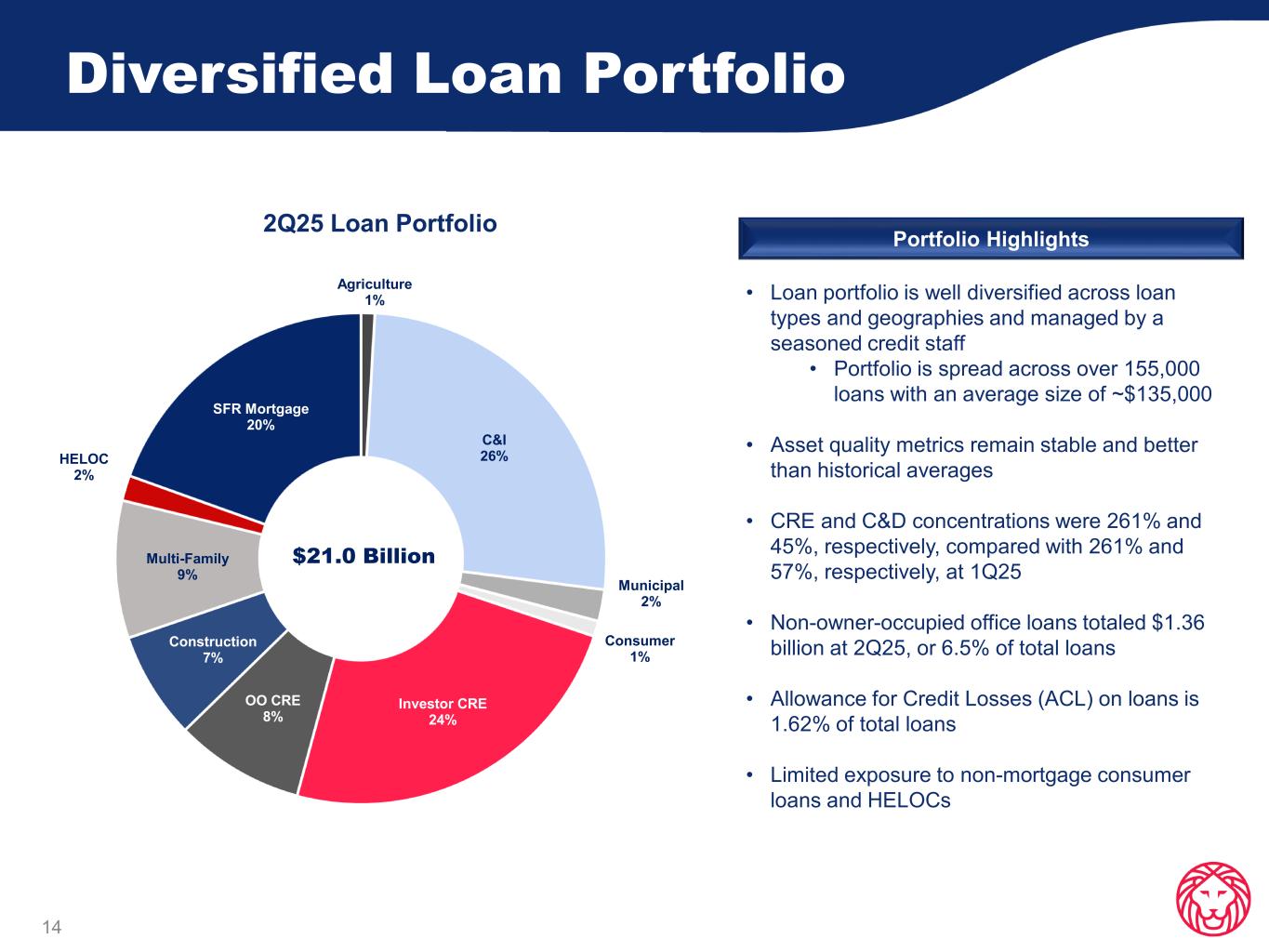
Thank you, Nicole. Good morning, everyone. We appreciate you joining our call today. I'm very proud of our second quarter results, which, again, beat expectations and resulted in an increase in our return on assets, PPNR, ROA, return on tangible common equity, and an improved efficiency ratio. As you can see, we remain focused on enhancing revenue generation and positive operating leverage. This is evidenced by our 20-plus percent annualized revenue growth in the quarter, which was almost double our expense growth, which pushed our efficiency ratio to below 52%. Our margin continued to expand during the quarter, while we grew loans 6.5% annualized, which is within our mid-single-digit guidance. Our 377 NIM remains well above most peer levels, particularly thanks to our strong 31% level of non-interest-bearing deposits. Capital ratios grew again in the quarter, which positions us well for future growth opportunities. Our strong second quarter earnings and capital generation increased our common equity tier one to 13% and TCE to over 11%. We also saw improvement across the board in all aspects of asset quality. We grew tangible book value this quarter by 15.5% annualized, passing through the $40 level for the first time to finish the quarter over $41 per share. We now have $50 of tangible book value in our sites. We were active in repurchasing stock, buying back $12.8 million in the quarter. Our CRE and construction concentrations remained low at 261 and 45% respectively. Our strong loan growth was driven mostly by C&I. Deposits grew as well, but at a smaller pace. Non-interest-bearing deposits remained our core focus, with those balances growing over 3% annualized. Our bankers are well positioned to take advantage of growth opportunities and disruption within our attractive southeastern markets. In fact, production increased 29% from the first quarter, with this quarter having the highest loan production since 2022. Overall, we continue to stay focused on what we can control. When I look out for the back half of 2025, I'm encouraged as we continue to benefit from a robust margin, a solid non-interest bearing deposit base, a diversified revenue stream, strong capital and liquidity, a healthy allowance and asset quality, a proven culture of expense control and positive operating leverage, experienced local bankers and top Southeast markets, and obviously notable scarcity value given our size and scale in those markets, which allows us to take advantage of the banking disruption the Southeast continues to experience. Overall, I'm extremely optimistic for the remainder of 2025 and into 2026. I'll stop there and turn over Nicole to discuss our financial results in more detail.
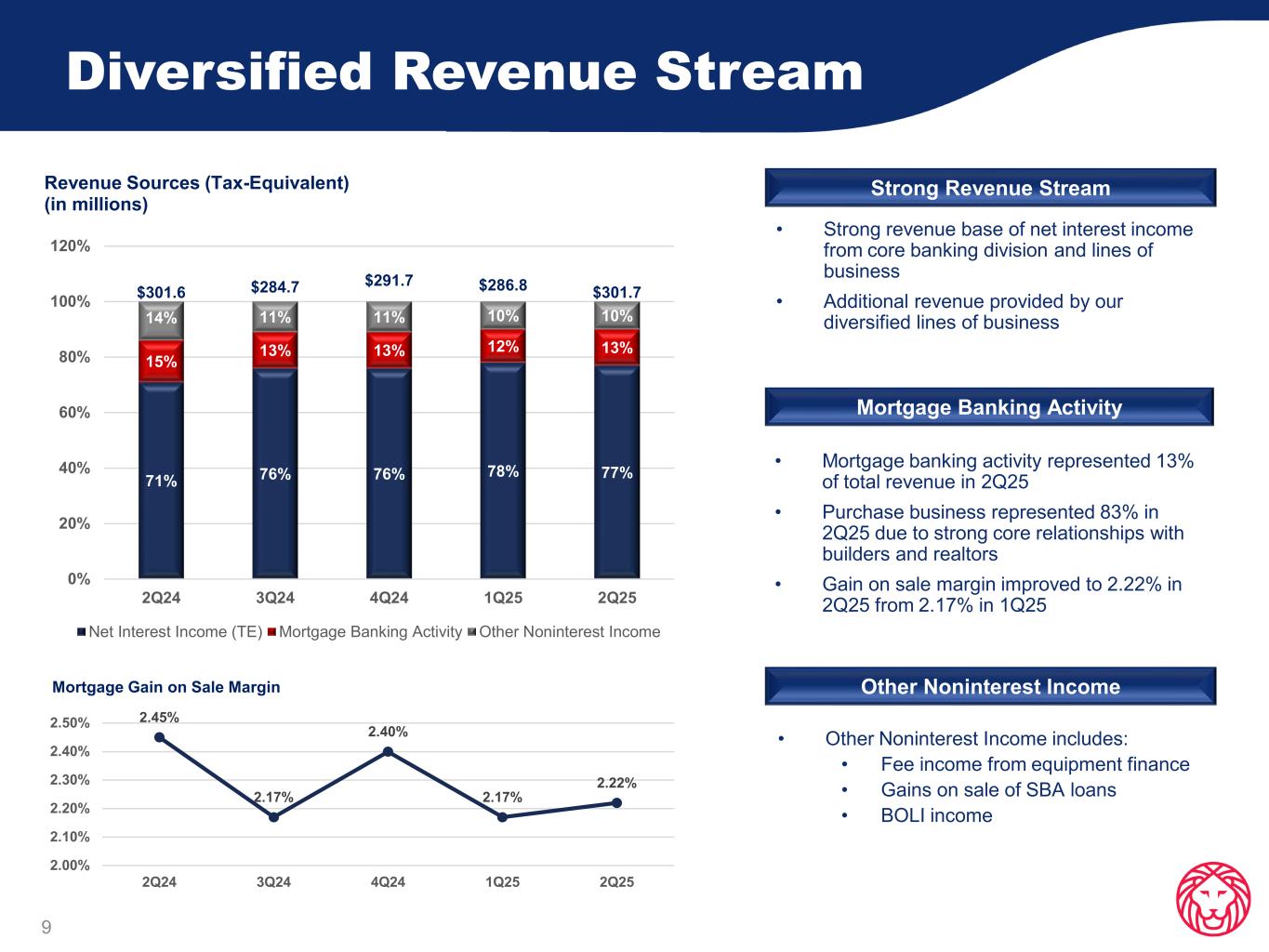
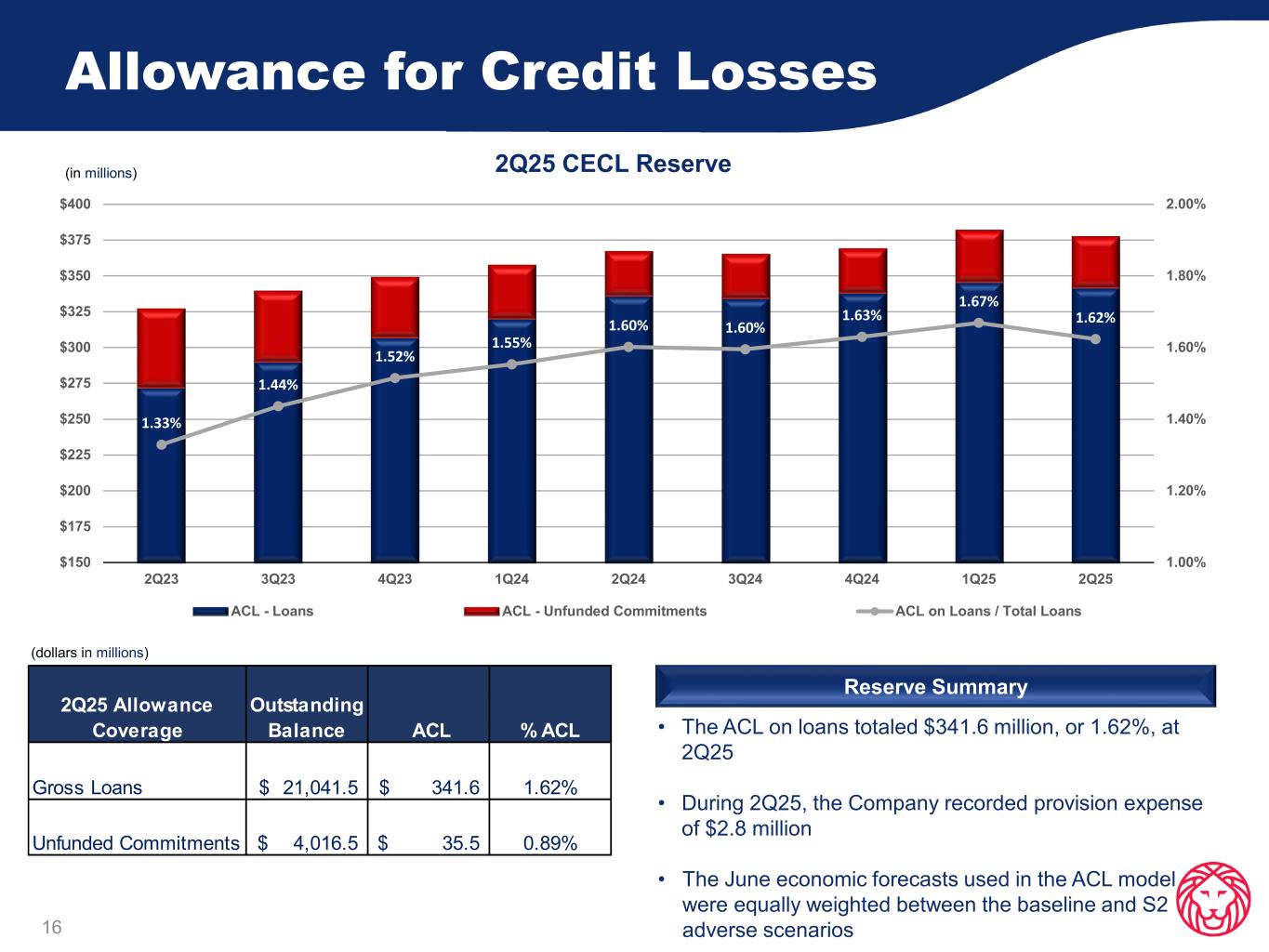
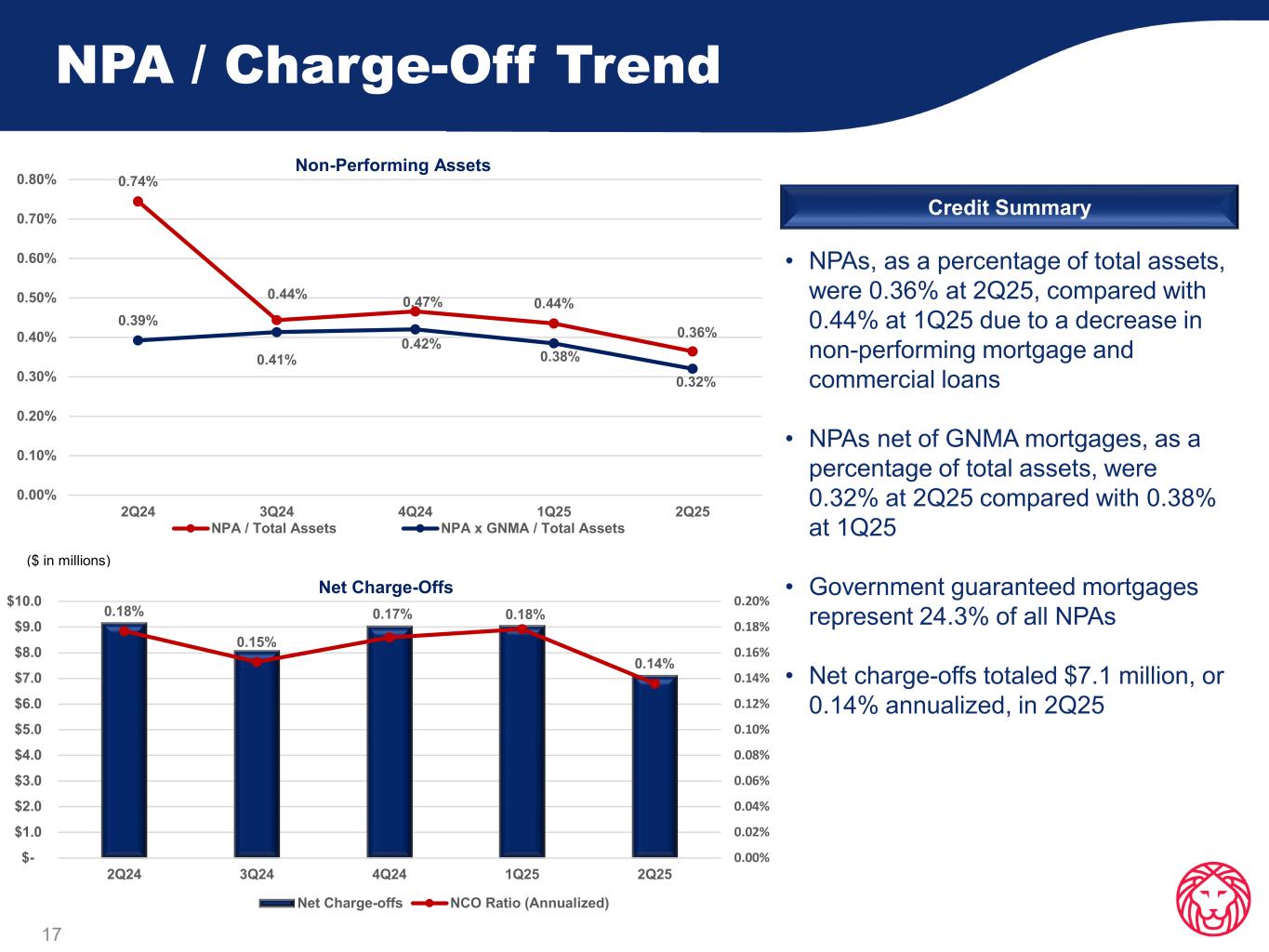
Great. Thank you, Palmer. We reported net income of $109.8 million, or $1.60 per diluted share, in the second quarter, which is a notable 21% increase over the year-ago quarter. As Palmer mentioned, our profitability improved to levels well ahead of our recent path, with an ROA and return on tangible common equity both moving higher. Our efficiency ratio improved 51.63% this quarter compared to 52.83% last quarter as we continue to focus on positive operating leverage, evidenced by our revenue growth of 20.9% annualized, well outpacing our expense growth. This quarter, our return on assets was robust at a 165. Our PP&R ROA was 218, and our return on tangible common equity was 15.8%. All of these profitability metrics remain top of class. Capital levels continue to strengthen, and tangible book value per share increased to 4132 per share, which was a strong 15.5% annualized growth, or $1.54 per share in the quarter. Our tangible common equity ratio increased to 11.09% at the end of the quarter, and we did repurchase about $12.8 million of common stock or about $212,000 shares during the second quarter. We've got about $72 million remaining through the end of October available to purchase. Our strong revenue growth was driven by increases in both net interest income and fee income. Our spread income grew by $10 million in the quarter or 18% annualized and I'll note here that our average earning assets increased $564 million or over 9% annualized this quarter. In addition to that, our net interest margin continued expanding up four basis points this quarter to a strong 377. And remember, this margin is a core margin. We have zero accretion in that margin. The modest margin expansion came mostly from the asset side with a three basis point positive impact in our loans and a one basis point from a higher bond yield. The previous benefit to our margin from the lower funding cost has been fully realized with our total cost of funds remaining flat during the quarter. We believe that we will see margin normalize above the $360 to $365 range over the next few quarters as we expect pressure on deposits as we see loan growth pick up the second half of the year. We continue to be close to neutral on asset sensitivity. Non-interest income increased about $4.9 million this quarter, mostly from better mortgage. Our mortgage production grew 36% in the quarter to approximately $1.3 billion, and our mortgage gain on sale climbed five basis points to 2.22%. Total non-interest expense increased $4.2 million in the second quarter, mostly driven by higher salaries and employee benefits, which related to the stronger mortgage production and our annual merit increases. As I previously mentioned, our efficiency ratio was strong at 51.63%. During the second quarter, our provision for credit losses was $2.8 million. Our reserve remained strong at 162% of loans, or 408% of our portfolio NPLs. Overall, asset quality trends were favorable, with non-performing assets, net charge-offs, and both classified and criticized all improving in the quarter. Our annualized net charge-offs improved to 14 basis points. Looking at our balance sheet, we ended the quarter with $26.7 billion of total assets compared to $26.5 billion last quarter. Loan growth returned with an increase of $335 million, or 6.5% annualized, in line with our loan growth guidance. Loan growth was mostly from C&I loans this quarter, particularly mortgage warehouse and premium finance. Total loan production in the quarter was $1.9 billion, up nicely from last quarter's $1.5 billion of production. And deposits increased $20 million with a continued seasonal decline in cyclical municipal deposits of $77 million, offset by an increase in brokered deposits of $82 million. We were able to grow non-interest-bearing deposits, increasing our percentage to 31% of total deposits from $30.8 last quarter. and our brokered CDs represent only 5% of total deposits. We continue to anticipate loan and deposit growth going forward in the mid-single-digit range and expect that longer-term deposit growth will continue to be the governor of loan growth. With that, I'll wrap it up and turn the call back over to Wyatt for any questions from the group.
Operator
Thank you. We will now begin the question and answer session. To ask a question, you may press star, then 1 on your touchstone phone. If you're using a speakerphone, please pick up your handset before pressing the keys. If at any time your question has been addressed and you would like to withdraw your question, please press star, then two. Our first question will come from Stephen Skoden with Piper Sandler. Please go ahead.
Yeah, good morning. Thanks, everyone. Good morning. I guess maybe my first question would be around kind of loan growth trends, what you're seeing from your customers, Maybe any sort of color into the existing pipelines and maybe within that, the mortgage warehouse lending, if this should be kind of the seasonal peak for that component of the loan book and how we should think about maybe the composition moving forward a little bit.
Yeah, I'll answer that question. This is Palmer in reverse order, but the mortgage warehouse, certainly there's seasonality to that. This was a very strong quarter for that. That being said, as it pertains to the other lines and pipelines and production, I think it's probably very reflective of what we're seeing in the market. There is a, I would call a resurgence of activity, much better than what we saw in the first quarter, and I think that we're hopeful that that will continue throughout the remainder of the year and into 2026. At the same time, I think there's a bit of caution that still remains out there, but But our bankers are seeing more opportunities, certainly becoming more competitive, which is always a good sign of that increased competition in terms of activity. So I would expect that third quarter would end up being very similar to second quarter in terms of activities that we're seeing unless there's some unforeseen event that takes place.
Okay, great. And then maybe thinking about, you know, kind of future growth opportunities, capital continues to build rapidly. I think you've said in the past kind of a measured approach to kind of how you would deploy that excess capital. But any kind of change in terms of maybe preferences, order of operations there, whether that's new hires, potential M&A, additional balance sheet, kind of remixing and the like?
Sure. Sure, and I don't want to sound like a broken record, but as we've said all along, you know, when I look at our bankers and how we're positioned in the growth markets we're in, we have got the right talent in the right place to execute on our plan in terms of what we have. That doesn't mean we're not actively looking or won't look for new talent that comes in. We're, as you know, very consequential with talent, and we expect it to produce. And, you know, year-to-date, when you look at our revenue generators, we've brought in about 64 new revenue generators. At the same time, we're very consequential in moving out those that aren't generating revenue. But what I see now is the opportunity to really accelerate because of how we're already positioned, not something we need to do to get positioned, but how we're already positioned in the key southeastern growth market. So I think when you look at the opportunities that are out there as it pertains to capital, our first and foremost is growing organically. And then after that, there's certainly, especially where we're trading today, I wouldn't tell you that stock buybacks aren't off the table because relative to where we trade today and the value we're creating, the stock is cheap, in my opinion. And then also we've got the dividend. We increased the dividend before, so I don't see a whole lot of changes there. and then, you know, the proverbial M&A question, it would take a lot to distract us. It would have to be something very, very special because right now we're firing on all cylinders, and so to distract us from something like that, as well positioned as we are on a go-forward basis, I think we will remain focused as we have been for the last five and a half years on organic growth.
Great. And maybe just one follow-up to that question is on the new hire activity, I mean, that seems to be the going trend at an accelerating pace. I mean, I feel like relative to five years ago, six years ago, everyone now is talking about team liftouts or, you know, new hires versus maybe M&A in the past. How do you differentiate yourself, and how do you convince people to come to Ameris versus, you know, XYZ Bank that might also be trying to bring that banker in?
Yeah, I think what sells people on our model is, you know, we're focused on market share, not just having a pin on a map. So when you look at the density we have in a lot of our key growth markets, what bankers like is a presence and a commitment to a market, which we certainly make in every one that we're in. They also like to see that we've got some stability in those markets. They like to see that we've got an organic engine that can grow. And in today's world, they like an environment that's not as volatile in terms of the work environment that they're in. Our plans are very clear in terms, especially for the revenue generators on the core banking side, it's very heavy on the deposit side focus relative to a lot of peer plans. And so they come in with clear expectations. But those expectations also allow them to understand that they need to deliver. And if they deliver, they're well compensated for. If they don't, we try to do what we can to coach them up. But I think it all comes down to accountability here. But I think, you know, to be able to work for a company that's been around for 50 years, it's got a clear business model, there's not any noise out there, and you can go ahead and focus on what you need to focus on and not get distracted by a lot of changes, that's probably the biggest selling point we have in today's market.
Thanks, Brother Keller. Congrats on a fantastic quarter.
Operator
Thank you. Our next question will come from Catherine Mueller with KVW. Please go ahead.
Good morning. I'm going to talk about the margin and maybe the balance sheet. I know you just to circle back first on the balance sheet size. I noticed that you added some securities this quarter. And so curious, you know, you've talked about mid-single-digit growth in loans, and that was so great to see this quarter, better than I expected. But in terms of the bond book, do you expect to continue to build that through the back half of the year, or as loan growth improves, does that kind of pare back a little bit?
Catherine, you know, we like the optionality that we have there, and this is kind of what I would call the tail end of that strategy of, you know, going back and not getting into the bond book and having the AOCI issue several years ago. So we still, you know, historically we would be about 9% of earning assets pre-pandemic would be in our bond portfolio. So we could still add about another $200 million to the portfolio to get there. We could add another $400 million to get to about 10%. So we like that optionality that we have there, that we have both the loan book that we can grow and the bond book. So, you know, I would definitely say that we could go either place. What we do have also for the rest of the year, we have about $71 million that's going to mature out, and that's coming out at a $350 rate. And, you know, what we're putting on right now is coming in much higher than that, almost, you know, 475, 5%. So as we're circling that out, we like doing that in the bond book. And if we have some opportunities to put some 475, 5% bonds in there with a good duration, we'll capitalize on that opportunity when we see it.
That's super helpful. And then maybe then circling back to the margin, you had another margin being in your guidance for that to be, I think you said, normalize above the 360 to 365 range just because of deposit costs. So I guess I'm just kind of curious your view on deposit costs, maybe how we think about that in a stable rate environment. So maybe in the third quarter, if we don't see rate cuts this quarter, you know, it seems like you still think that will increase a little bit this quarter, and then how you're thinking about deposit costs as we start to see So assuming the Fed stays flat and we don't see any cuts, I just feel like there's going to be some pressure on that deposit cost.
You know, everybody is talking about loan growth in the second half of the year. So I think as we start to see that loan growth demand pick up, we're going to see just as much demand because everybody's going to be competing on the deposit side. So, you know, when you look at the second quarter, we brought in our interest bearing came in at a 299 kind of spot production for the quarter, and that's compared to a book of 283. So we already see that new production coming on a little bit higher than the current mix. And I just think that that's going to get more aggressive and more pressure as we see the loan growth demand come in. And then assuming that the Fed did cut, we think that we would be just as aggressive as we have been in the past on reducing those. So if the Fed were to cut, I think we could maybe see a little bit of bump in the margin just from getting ahead of the curve there on the deposit side, knowing that the loan side would eventually catch up, but we could see a small little pop on the deposit side if the Fed cuts.
Okay, great. Very helpful. Great quarter, guys. Appreciate it. Thank you.
Operator
Our next question will come from David Feaster with Raymond James. Please go ahead. Good morning, everybody. Good morning, David.
I just wanted to follow up maybe on the commentary on the growth side. It sounds like the increase in your origination activity that you saw in this course is really more of a function of your bankers being increasingly productive and gaining share versus, you know, real improvement in demand. Is that a fair characterization? And then I was hoping you could elaborate too on your commentary on the competitive landscape. Are there any segments or markets that are notably challenging and whether competition is primarily centered on pricing or have you seen competition shift towards more underwriting structure and standards too?
Yeah, I think it depends on the business line. I would say across the board we're seeing more activity, and I don't know if it's – I think it's more of a reflection of customers and prospects becoming more active. Our bankers have been out actively calling, so it's not like anybody was sitting on the sidelines. I think people are just now moving forward with whatever initiatives they've got, especially in that middle market space. And along those same lines, the middle market type lending, You know, the nice thing about our company is we've got the scale and the size to do what we need to do in terms of accommodating borrowing needs, treasury management needs. So we focus heavily, especially on treasury management calling. That's been very helpful on our deposit growth. But I would tell you there is a lot of competition out there, and it's starting to go beyond pricing now. There is some structural changes that we're starting to see out there with people getting aggressive. Nothing crazy, but it is different. And so I think that's a sign just that more people are needing that growth, wanting that growth, and fortunately, hopefully it will continue to come as we look out and look at the pipelines that we see. You know, if you break ours down by vertical, clearly the equipment finance and the premium finance mortgage warehouse has done well, retail mortgage volume just due to rates has been a little bit subdued. But if we see some rate improvement towards the end of the year there or next year, that's certainly something that we can ramp up very quickly and capitalize on. I think the most encouraging thing for us, though, is the continued growth we're seeing in our focus on deposits and leading with deposits instead of just leading with loans and pricing.
So I would kind of give it an overall more positive outlook for going into third quarter than what we had seen obviously in the first quarter does that answer your question yep no that's super helpful um and then maybe nicole as you talk about that 360 to 365 margin guy is that purely a function of of higher marginal funding costs to support the growth or does that incorporate any any fed cuts in in that and just kind of how do you think about the timeline of hitting that range um is that kind of a step change that you would expect here in in you know know, the third or fourth quarter. Just kind of curious some of your thoughts on that.
Yep. So that assumes no rate cuts. That kind of is a flat environment. And like I said, if the Fed did cut, we could actually see a little bit of bump because we feel like we would be aggressive on the deposit repricing side. And then, you know, eventually the loans would catch up to us. That $360,000, $365,000 guide is over the longer term. So I don't think that's a sudden drop in the third or fourth quarter. I think that's just a longer term margin guide looking out, you know, 18 months or so to say that we feel like there's going to be some deposit pressure as we see the loan growth come back. And there's going to be, again, that competitive pressure. So I think we're going to see some pressure on the deposit side paying up. We might see a little bit on the loan side as well if people get competitive for that. So I just, I think that we're going to get it squeezed a little bit and that we're in a spot to compete with a margin as strong as we have if we give up a little bit for the growth. You know, we continue to focus on the growth in net interest income and then the growth in earning assets.
Okay. And then maybe just last one, just touching on the mortgage segment, you know, you know, nice to see the seasonal increase still primarily purchase driven. Just kind of curious, maybe some of the underlying trends you're seeing there, and how your capacity is today. I know you've made a lot of efficiency improvements, but how's your capacity today if we do get a refi wave as rates potentially decline? We've seen how quickly that can move. And then just any thoughts on the gain on sale side as we look forward.
Sure. So for mortgage, I would say that the third quarter, I would see it being consistent with the second quarter, maybe down a little bit, just some of the trends that we're seeing. But when I say a little bit, you know, 5%, 10% down on production. We've seen the gate on sale pick up from that 217 to the 222. I think kind of we've seen that kind of hold. I mean, we're only, you know, three weeks in. But assuming that that kind of holds in that 215 to 225 range and then as far, so I think third quarter will be consistent with second quarter. As far as what we could do if we saw a refi boom, our team's ready to go. So, you know, we don't need to add people, and we've got the resources that if a refi boom were to happen, rates come down, and we see that opportunity, our folks are ready to go with it.
And, David, you know, as we've said, the nice thing about mortgage, when you look at the profitability of it as it stands today relative to peers, it's really phenomenal how well they've done. And this is kind of a baseline, so any improvement we get in rates from here would just be icing on the cake.
Operator
That's helpful. Thanks, everybody. Our next question will come from Russell Gunzer with Stevens. Please go ahead.
Hey, good morning, guys. I have a margin follow-up question to start, please. Nicole, it would be helpful to get a sense for the cadence of the NIM over the course of the quarter from that kind of 369 March start to where we ended up at 377, and if possible, any commentary on where the June NIM shook out?
Yes. Yes. So the margin was kind of growing throughout the quarter. It was just a steady growth month over month. And then for the month of June, there were some anomalies. So I hate to give this number out because it was higher than the 377, but there were some anomalies in that margin. So kind of bringing me back to saying kind of that flat 377 margin, maybe a few basis points up or down in the third quarter, but eventually over the long term, being willing to give up a little bit of our margin to get the growth.
Okay. That's very helpful. I appreciate the color. And then switching gears back to sort of the loan growth side, you guys mentioned strength and equipment finance. It would be helpful to get a sense for kind of where those related loan balances are this quarter versus last, similarly on the charge-off front, and then just what your related balance sheet growth versus gain-on-sale expectations are there.
On Balboa, we ended at about a billion – or, I'm sorry, equipment finance, about 7.2% of our loans. The charge-offs overall for the company, you know, which equipment finance has contributed to, you know, once we retooled their credit box in 2023, it's performed as we expected, and for the last rolling four quarters, we now have that in the target range that we were seeking for equipment finance, those charge-offs.
Okay, got it. Thank you for that. And then just last one for me, great expense result, both this quarter and on a year-over-year basis, efficiency ratio lower on both those data points. Nicole, it would be helpful to just get a sense for how you're thinking 3Q looks from a non-interest expense perspective?
Yeah, I think 3Q, when you think about what, you know, the bump in second quarter compared to first quarter was really related to that increased production in mortgage. And so, if we see that production, you know, come in consistent, those expenses should be consistent. And then we also have the merit increases that we go into effect April 1 for us. We had a full quarter of merit increases. So, I see the third quarter being consistent with the second quarter. I think consensus has it bumping up just a little bit, and I think that kind of makes sense. That's reasonable to me. So I would say somewhere, you know, in that 156 to 158, which is right kind of where consensus is and consistent with the second quarter.
Very good. Thank you guys for taking my questions.
Operator
Our next question will come from Christopher Maranek with Jenny Montgomery Scott. Please go ahead.
Hey, thanks. good morning. Nicole and Palmer, I wanted to dig into the deposits. I think it's slide 11 in terms of just the numbers of accounts as well as sort of the average. What's the right way to think about that over time? Not just quarter to quarter, but thinking of it from last year and the prior year, you've been giving us this data for a while.
Yeah, no, we have been very consistent. I think that's one of the things that we probably don't brag on ourselves enough about is our very, very granular deposit base, and that that, you know, if you don't get this kind of deposit base overnight, that this is a 50-year history franchise of growing our deposits. And when you look back at our deposits, we did a kind of back look of how many have been, you know, since the Fidelity acquisition, how many came in from Fidelity, and then how many prior to that. And we have a really, really strong core deposit base that have been here for a long, long time. Even through our acquisitions, you know, they've had a long history, and we've been able to retain those deposits. So I think this is very, very consistent, the very granular deposit base that we've had. This is not a new thing.
And do you think that the pace of deposits will look different the next couple of quarters? I know part of the margin guide kind of implies that. So just trying to think about if we should see an acceleration in the next few quarters.
You know, we continue to look and lead with deposits. And I'm so proud of our bankers for that, that we don't just have loan officers, we have bankers, and that they're asking for the deposits and growing deposits. So I think the big question there for us is we know that we can grow deposits, but it's at what rate can we grow deposits? And then really we've been so focused on the non-interest bearing. And to have 31% of our franchise in non-interest bearing, the question is can 31% of our growth be in non-interest bearing? So while we continue to focus on that growth and non-interest bearing, the percentage to the total may change a little bit. And then obviously coming in kind of the end of the third quarter into the fourth quarter, we have all those cyclical municipal funds that flow back in. So that always kind of makes us, you know, look a little bloated on deposits at the end of the year. But, again, we remain focused on growing deposits. And, you know, we have some runway with FHLB advances or brokered CDs. You know, their brokerage CDs are only 5% of our funding, but we've really focused on growing those core deposits, and that's definitely the goal is to continue to grow that. Hence why my guidance is that we are willing to maybe pay up for that growth if we need to.
Okay, great. Thank you for that background. That's great. And I had a question on the reserve. Just curious on if there's any qualitative changes to some of the factors behind the scenes this quarter or some of those possibilities as drivers of your reserve the next several quarters.
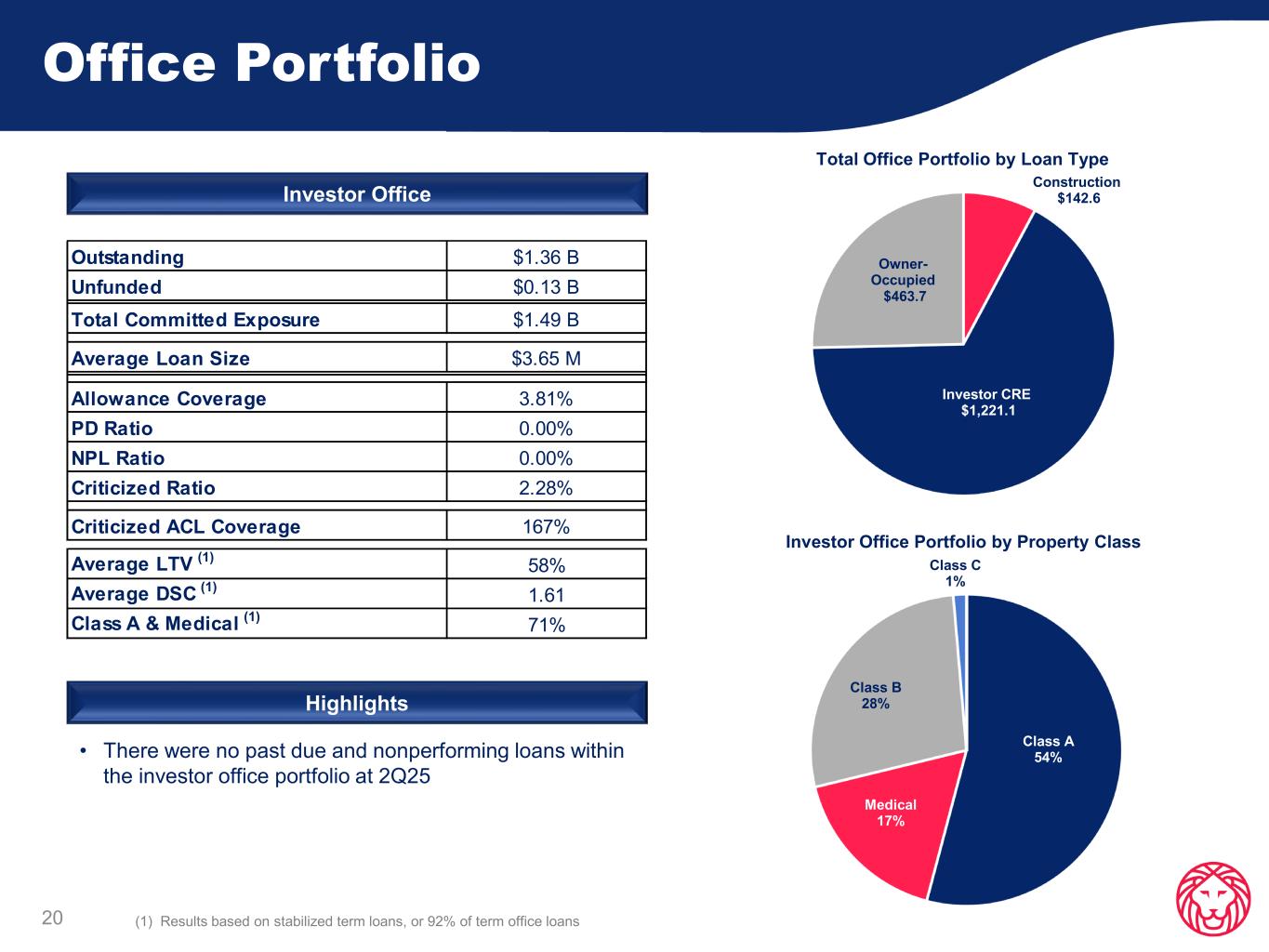
Yeah, Chris, we did add a little bit of a key factor as it relates to investor office. And the office slide, we now have that reserve at about 3.8% for that sector now.
And then in general, given just the low level of charge-offs and overall low level of criticized, does that give you flexibility to simply grow into the reserve, or do you think of it any differently?
No, we do. I mean, having a robust reserve, which we do at the 162, we consider that among top of class, amongst our peer. And you look at it through two different lenses. One, the offensive strategy and that we grow into it, which is what we want to do. But if you turn into a credit cycle, is there as a defensive position as well.
Great. Thanks for taking all of our questions this morning.
Operator
Thank you, Chris. Our next question will come from Manuel Navas with D.A. Davidson. Please go ahead.
Hey, getting back to that kind of long-term NIM range of 360 to 365, you're going to sit above it for some time. What could bring that range higher? Is this just like a steeper yield curve, success on deposits, just kind of some of the drivers there?
I'll go with D, all of the above. So yes, I think that success on the deposit side would absolutely drive it higher. If the Fed cuts and we are able to reduce the deposit side as we typically would or historically would, that would give us a little margin pop. And then also right now, all of our growth is margin accretive right now. When you look at the second quarter, what our loan coming on rate, loan production rate versus our deposit production rate, all of our growth is margin accretive. But I'll tell you for this quarter, if you look at our loan rate of 676, kind of all in production, and our interest bearing deposits were at 299. So that's right at a 377. So what really is going to drive that is that growth in non-interest bearing deposits. So if we get the growth in non-interest bearing deposits that brings down our total production of deposits. That's really what could also kind of help the margin there. But we are still proud to say that our growth is margin accretive at this point.
I was going to ask you about loan yields. I appreciate that kind of description of the marginal NIM. How are non-interest-bearing pipelines right now? I know they're lumpy. It's hard to project, but just kind of some thoughts on that side of the deposit base.
Yeah, I would tell you that they're accelerating. It's very similar kind of mirrors our loan production. And a lot of that, as I mentioned earlier, is a tribute to our treasury management efforts. In addition, obviously, to the bankers. But we're seeing more and more opportunities. And, you know, leading with deposits has really been helpful in our approach there. And I think that's really what's driving the opportunities that we're seeing as of recent. So I would tell you that we're encouraged by what we're seeing as we move into the second half of the year.
I appreciate that. The securities yield increase, was there a one-time adjustment in anything in securities, or is that just you're adding those higher-yielding securities this quarter?
That is adding our securities. So during the quarter, we bought about $200 million that came on at a $488, and we matured out about $260 million. That was at a $277.
Perfect, perfect. I appreciate that. Thank you for the commentary.
Operator
This will conclude our question and answer session.
I would like to turn the conference back over to Palmer Proctor for any closing remarks. Great. Thank you, Wyatt. I want to thank all of our teammates for another outstanding quarter. We remain focused on producing top-of-class results, growing our tangible book value per share, and maintaining our strong core deposit base. We are very well positioned to take advantage of future growth opportunities in our attractive southeastern markets, and we certainly appreciate your interest in Ameris Bank. The conference is now concluded.
Operator
Thank you for attending today's presentation. You may now disconnect.