Operator
Good afternoon, and thank you for standing by. Welcome to Allison's second quarter 2026 earnings conference call. My name is Sherry, and I will be your conference call operator today. At this time, all participants are in a listen-only mode. After the prepared remarks, Allison's executives will conduct a question-and-answer session, and conference call participants will be given instructions at that time. As a reminder, this conference call is being recorded. If anyone should require operator assistance during the conference, please press star zero on your telephone keypad. I would now like to turn the conference over to Jackie Bowles, Executive Director of Treasury and Investor Relations. Please go ahead, Jackie.
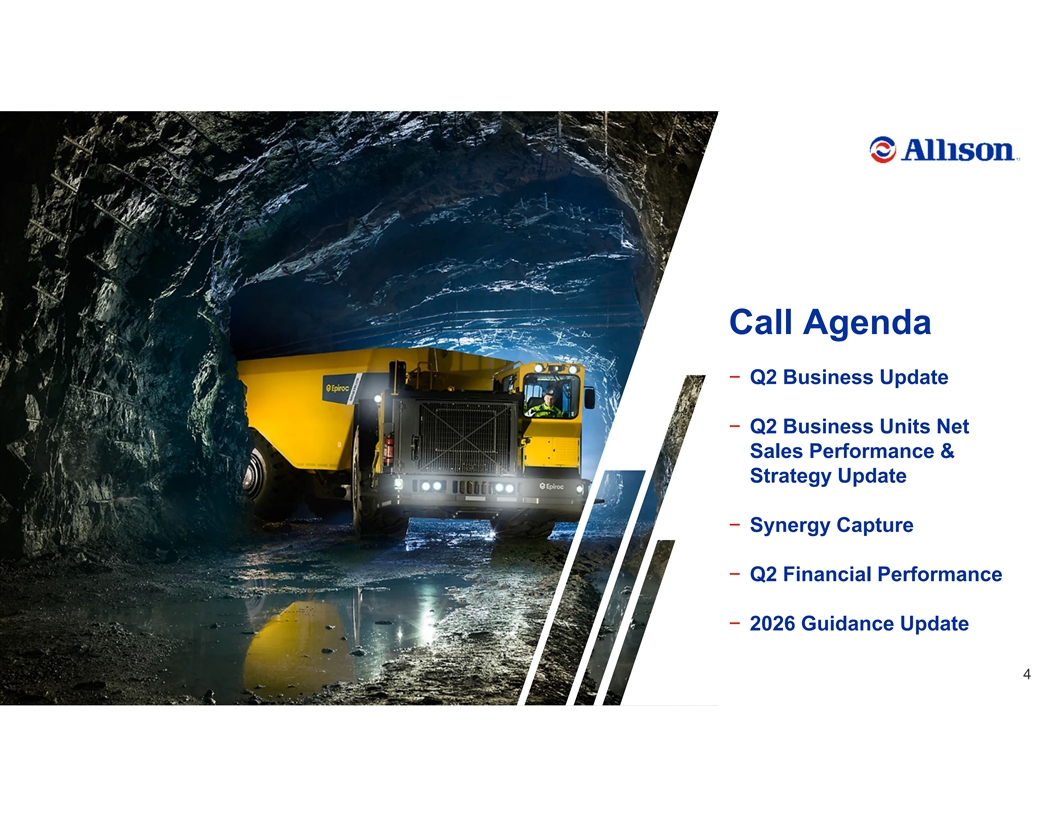
Thank you, Sherry. Good afternoon, and thank you for joining us for our second quarter 2026 earnings conference call. With me this afternoon are Dave Graziosi, our Chair, President, and Chief Executive Officer, Scott Mell, our Chief Financial Officer and Treasurer, Fred Bowley, Allison's Chief Operating Officer and Allison Transmission's Business Unit Leader, and Craig Price, Allison Off-Highway's Business Unit Leader. As a reminder, this conference call webcast in this afternoon's presentation are available on the Investor Relations section of allisontransmission.com. A replay of this call will be available through August 17th. As noted on slide 2 of the presentation, many of our remarks today contain forward-looking statements based on current expectations. These forward-looking statements are subject to known and unknown risks, including those set forth in our annual report on Form 10-K for the year ended December 31, 2025. Should one or more of these risks or uncertainties materialize, or should underlying assumptions or estimates prove incorrect, actual results may vary materially from those that we expressed In addition, as noted on slide 3 of the presentation, some of our remarks today contain non-GAAP financial measures as defined by the SEC. You can find reconciliations of the non-GAAP financial measures to the most comparable GAAP measures attached as an appendix to the presentation and to our second quarter, 2026 earnings press release. Today's call is set to end at 5.45 p.m. Eastern Time. In order to maximize participation opportunities on the call, we'll take just one question from each analyst. Please turn to slide four of the presentation for the call agenda. During today's call, Dave Graziosi will provide a business update, including recent announcements across Allison, along with a synergy capture strategy update and a brief review of each business unit's net sales performance for the second quarter. Scott Mell will then review Allison's second quarter 2026 financial performance and our full-year guidance update prior to commencing the Q&A. Now, I'll turn the call over to Dave.
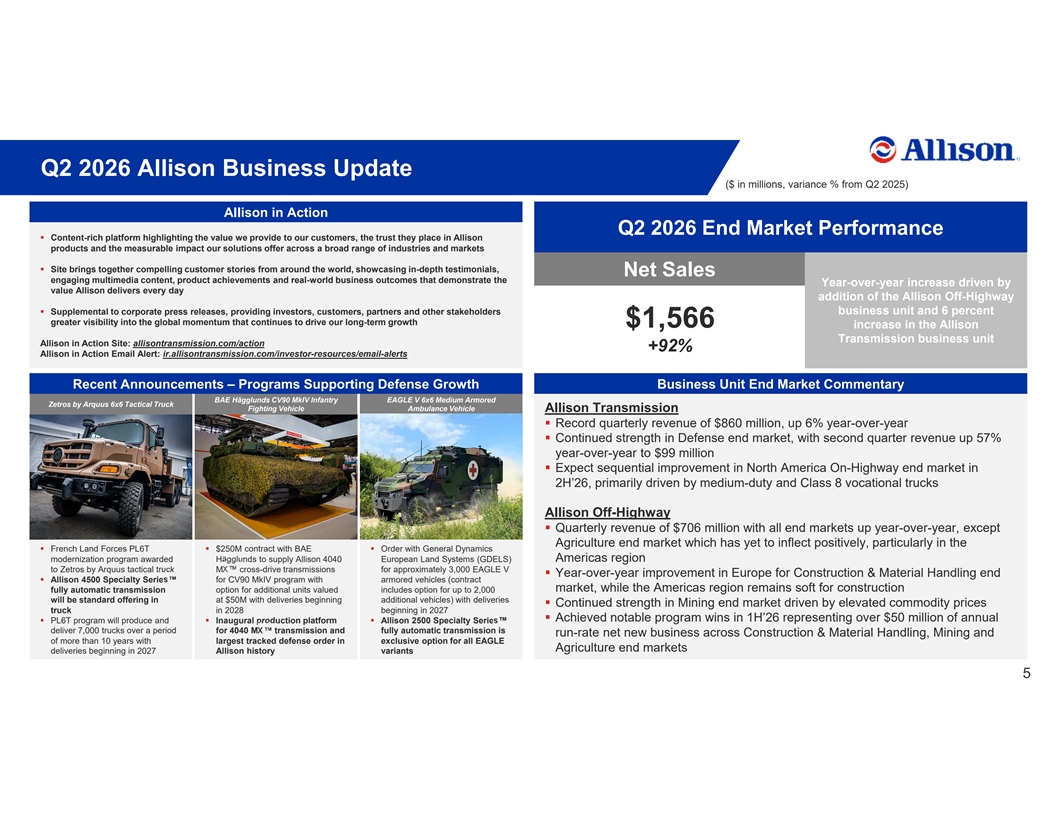
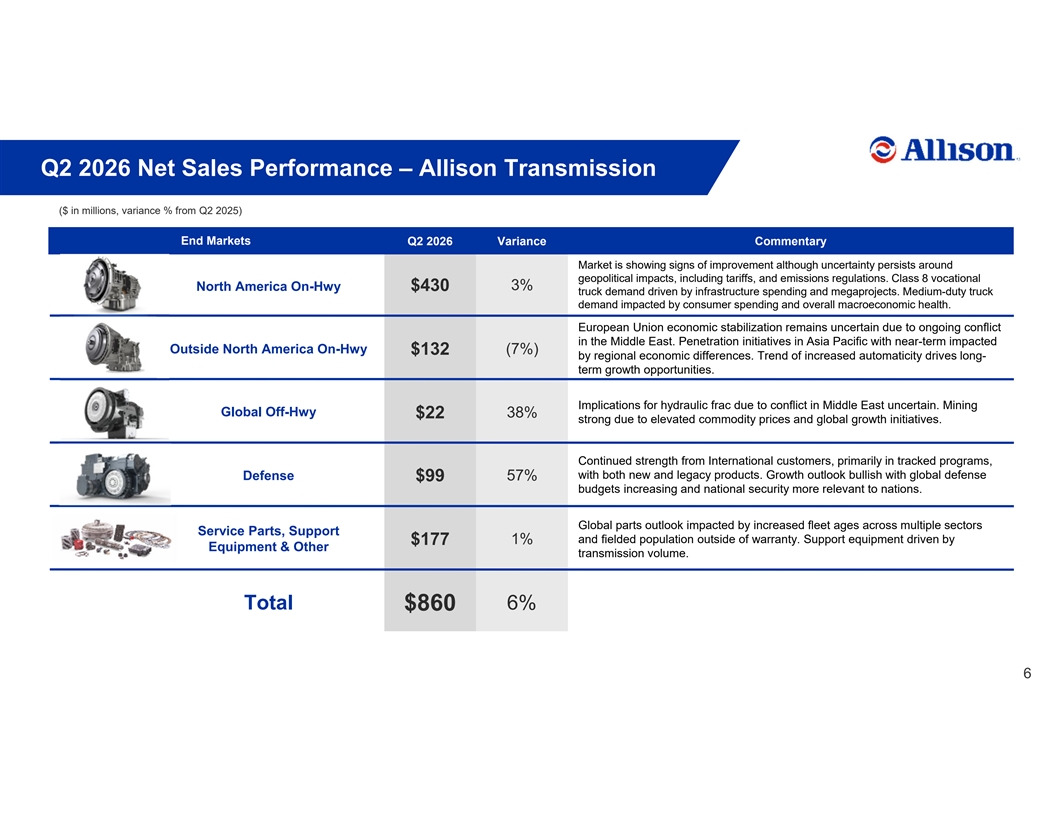
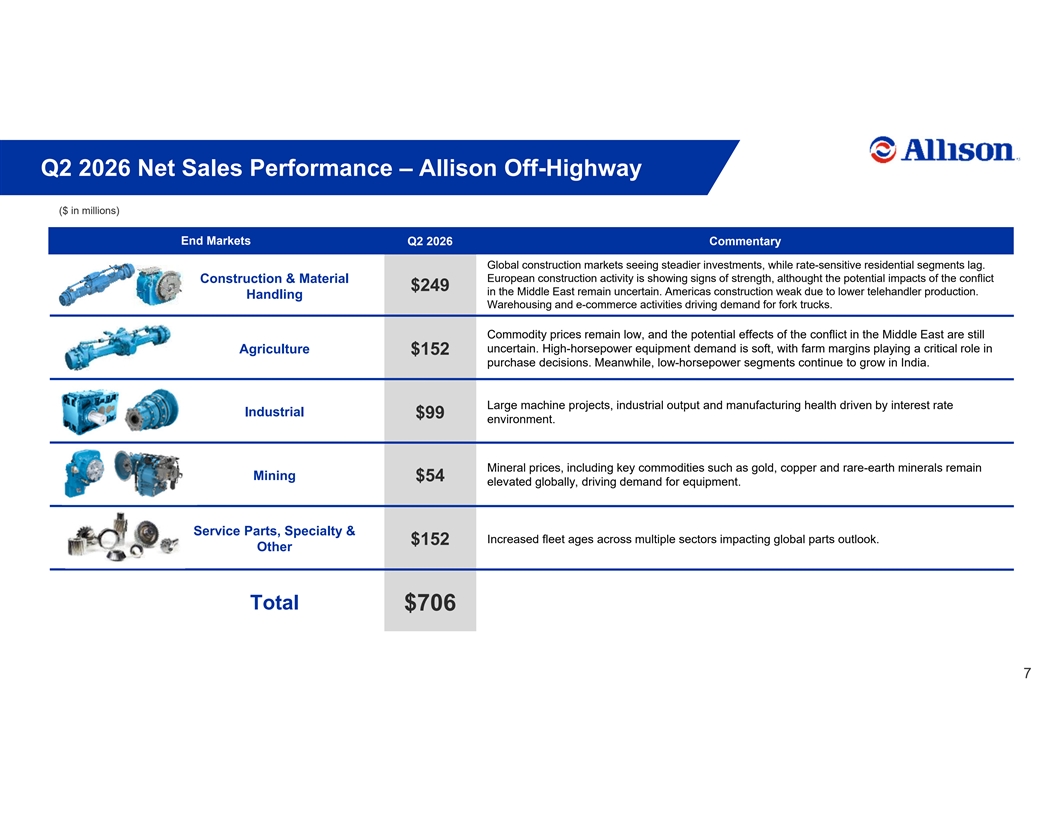
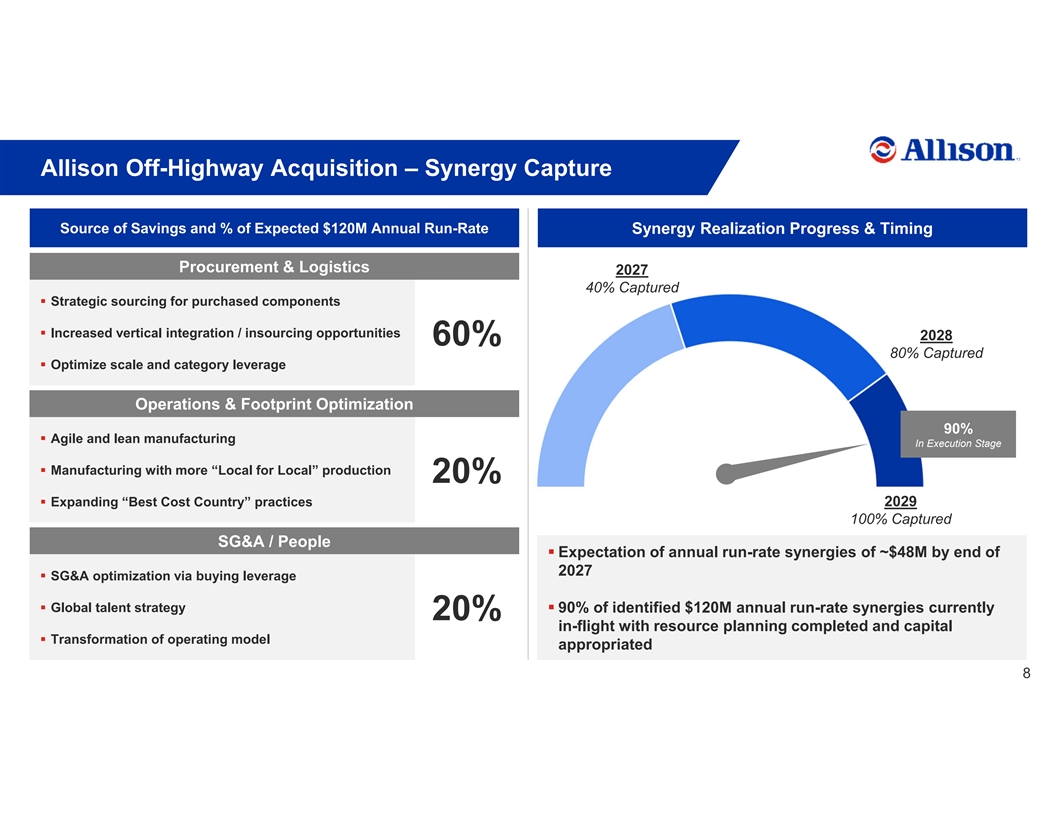
Thank you, Jackie. Good afternoon, and thank you for joining us. Please turn to slide five of the presentation for our second quarter business update. Before we begin, I would like to take a moment to introduce the new Allison in Action page on our corporate website. The creation of Allison in Action is an important development in our global communication strategy and serves as a new platform for engaging with our investors, customers, and partners. While we continue to use press releases to communicate significant company announcements and major milestones, Allison in Action serves as a content-rich platform to highlight the value we provide to our customers, the trust they place in our products, and the measurable impact our solutions offer across a broad range of industries and markets. This site brings together compelling customer stories from around the world, showcasing in-depth testimonials, engaging multimedia content, product achievements, and real-world business outcomes that demonstrate the value Allison delivers every day. By sharing these successes, we will provide greater visibility into the global momentum that continues to drive our long-term growth. To explore these stories, simply visit our corporate website, allisontransmission.com, click on Newsroom in the top menu, and select Allison in Action. If you would like to stay informed directly, we encourage you to subscribe to our Allison in Action email alerts. You can sign up by clicking the link at the top of the Allison in Action page. Going forward, we will reference Allison in Action stories alongside newly distributed press releases. We look forward to sharing the innovations, partnerships, and achievements that continue to shape Allison's growth and success. Moving on, we continue to build meaningful momentum with defense customers, securing three significant program wins that underscore both the strength of our existing product portfolio and the success of our new product development strategy. These program awards reinforce our position as a trusted propulsion partner for leading global defense OEMs at a time when rising defense budgets and heightened national security priorities are driving sustained investment in modernization programs. Importantly, these wins demonstrate growth across both our established and emerging product portfolio. First, Allison's proven 4500 Specialty Series fully automatic transmission was selected for the French Land Force's next generation PL6T tactical truck program, supporting more than 7,000 vehicles over the next decade. This award highlights the continued demand for our core propulsion solution in mission-critical wheel defense applications. At the same time, we are seeing strong customer adoption of our newest defense technologies. We secured a landmark $250 million contract with BAE Haglins to supply our all-new 4040MX cross-drive transmission for the CV90 Mark IV Infantry Fighting Vehicle, representing the largest track defense order in Allison's history and the inaugural production application for this next-generation product. This achievement validates our continued investment in innovation and expands our opportunity within the rapidly growing tracked combat vehicle market. Finally, we announced a significant order with General Dynamics European Land Systems to supply Allison's 2500 Specialty Series fully automatic transmissions for Eagle Series armored vehicles with deliveries expected to begin in 2027. This order covers approximately 3,000 vehicles with an option for up to an additional 2,000 units. The outlook for global defense market remains highly constructive, supported by multi-year increases in spending, particularly in Europe. There are robust NATO rearmament initiatives with elevated geopolitical tensions and government's renewed focus on defense readiness. Across the defense industry, companies are reporting record order backlogs, expanding manufacturing capacity, and increased investment in next-generation platforms to support sustained growth. These industry conditions have created a supportive backdrop for suppliers like Allison with differentiated technologies and long-standing customer relationships. As we look forward to providing further updates in this space, we continue to execute on our growth initiatives, illustrating how our strategy of leveraging our proven legacy products while investing in next-generation propulsion solutions is creating long-term profitable growth. Moving now to a brief update on second quarter sales performance and end markets outlooks for both our business units. Second quarter net sales of $1,566,000,000 was a year-over-year increase of 92%. In addition to $706,000,000 from the Allison Off-Highway Business Unit, revenue in the Allison Transmission Business Unit increased 6% year-over-year to a quarterly record of $860,000,000. Within the Allison Transmission Business Unit, the defense end market continues to drive top-line growth, increasing 57% year-over-year with second-quarter revenue of nearly $100 million. As I just mentioned, we hold a favorable outlook for the defense end market. Also a driver for year-over-year performance in the Allison Transmission Business Unit, revenue in the North America on-highway end market increased 3% year-over-year. Second-quarter volumes in this end market were only slightly higher on a year-over-year basis with the revenue increase driven primarily by favorable pricing. Although we continue to see end-user purchasing decisions influenced by geopolitical impacts, including tariffs and emissions regulations, we expect sequential improvement in volumes in the second half of 2026 for medium-duty and Class 8 vocational trucks. For the Allison off-highway business unit, second quarter revenue was $706 million. dollars. We saw a strong year-over-year growth in construction and material handling and mining end markets as demand continues to rebound from trough levels. The agriculture end market, although showing signs of recovery in certain segments and regions, has yet to inflect positively. Regionally, Europe is performing well on a year-over-year basis, particularly the construction and material handling end market. Asia, Pacific, and India also showed year-over-year growth across all end markets, while as a whole, the Americas region decreased year over year, driven primarily by the construction, material handling, and agriculture end markets. The mining end market continues to show year-over-year strength, driven by elevated commodity prices. The first half of 2026 reflected strong commercial execution by the Allison off-highway team, with notable program wins across the construction and material handling, mining, and agriculture end markets. These program awards, representing more than $50 million of annual run rate net new business, underscore the strength of our growth pipeline and its contribution to incremental revenue. They also reinforce our position as a leading partner in the end markets we serve, reflecting strong endorsements from major OEMs. You can find detailed breakdowns by end market for both business units on slides six and seven of the presentation. Before turning the call over to Scott for an overview of our second quarter financial performance, please turn to slide eight of the presentation for an update on our synergy capture strategy. On the left side of the slide, you'll note our expected synergy realization is built around three primary categories. The first category, procurement and logistics, holds the largest opportunity for value creation with 60% of our expected $120 million annual run rate synergies. Our key initiatives in this category include strategic sourcing efforts designed to consolidate supplier spend across the combined organization, thereby enabling more favorable pricing and commercial terms, as well as the establishment of long-term strategic partnerships with key suppliers. We are also evaluating opportunities to expand vertical integration and insourcing, improving supply security while reducing total costs. As we integrate our supply chains, we will simplify our bill of materials, optimizing scale and category leverage. This reduces complexity for both our manufacturing operations and our suppliers while allowing us to leverage higher purchasing volumes. At the same time, we will continue to strengthen supply chain resilience by qualifying multiple sources for critical materials and components, reducing the risk of supply disruptions while fostering competitive pricing. By integrating our procurement organizations, we expect to significantly improve our purchasing economics while enhancing supply continuity and reducing complexity across the enterprise. Our second category for Synergy Capture is optimizing how and where Allison manufactures its products. As we continue to combine our operations, we are positioned to leverage the strength of each business unit's manufacturing network to establish a more agile, lean, and efficient footprint. Allison's overarching objective is to ensure that we are producing the right products in the right locations while maintaining the flexibility to respond quickly to changing customer demand and market conditions. A key element of this strategy is our local-for-local approach, aligning manufacturing closer to the customers and markets we serve. Producing products closer to end markets helps reduce transportation costs, improve delivery performance, shorten lead times, and lessen exposure to geopolitical and trade-related risk. Allison will also expand its manufacturing capabilities in best-cost countries, ensuring we maintain the highest standards of quality while improving our overall cost competitiveness. Together, our initiatives surrounding operations and footprint optimization are expected to contribute approximately 20% of our $120 million annual run rate synergy target. The third category of our synergy capture plan focuses on building a more efficient organization that can support future growth. As we combine our operations, we will integrate Allison's corporate functions, eliminating redundancies and duplicative activities, aligning our organizational structure with the needs of the combined business. Our goal is to reduce complexity while ensuring we continue to invest in the capabilities that differentiate us in the marketplace. Finally, we also see significant opportunity to leverage our global talent more effectively. By aligning work with regional centers that offer the right combination of expertise, we can better serve our customers while creating additional opportunities for employee success across our organization. Collectively, our three-set synergy capital resilience, organizational agility, and position Allison to deliver sustained long-term value for our stakeholders. On the right side of the slide, you'll note the expected timing of synergy realization over the next few years. We expect to realize approximately 40% of our $120 million annual run rate synergy target by the end of 2027. Further, we expect to realize another 40% by the end of 2028 and full realization by the end of 2029. Importantly, the majority of our identified strategies are currently in various stages of execution. The underlying initiatives have been identified. Detail implementation plans have been developed, accountable owners have been assigned, and the necessary resource planning has been completed. Where capital investments are required to enable these initiatives, funding has already been appropriated, allowing execution to proceed without delay. This high level of execution provides a strong foundation for achieving our targeted timeline with a high degree of confidence. In addition, we continue to evaluate further opportunities that could provide incremental value beyond our current target as the integration teams work closely collaborating on identifying additional efficiencies. Now I'll turn the call over to Scott for a review of Allison's second quarter 2026 financial performance and full year 2026 guidance update. Scott?
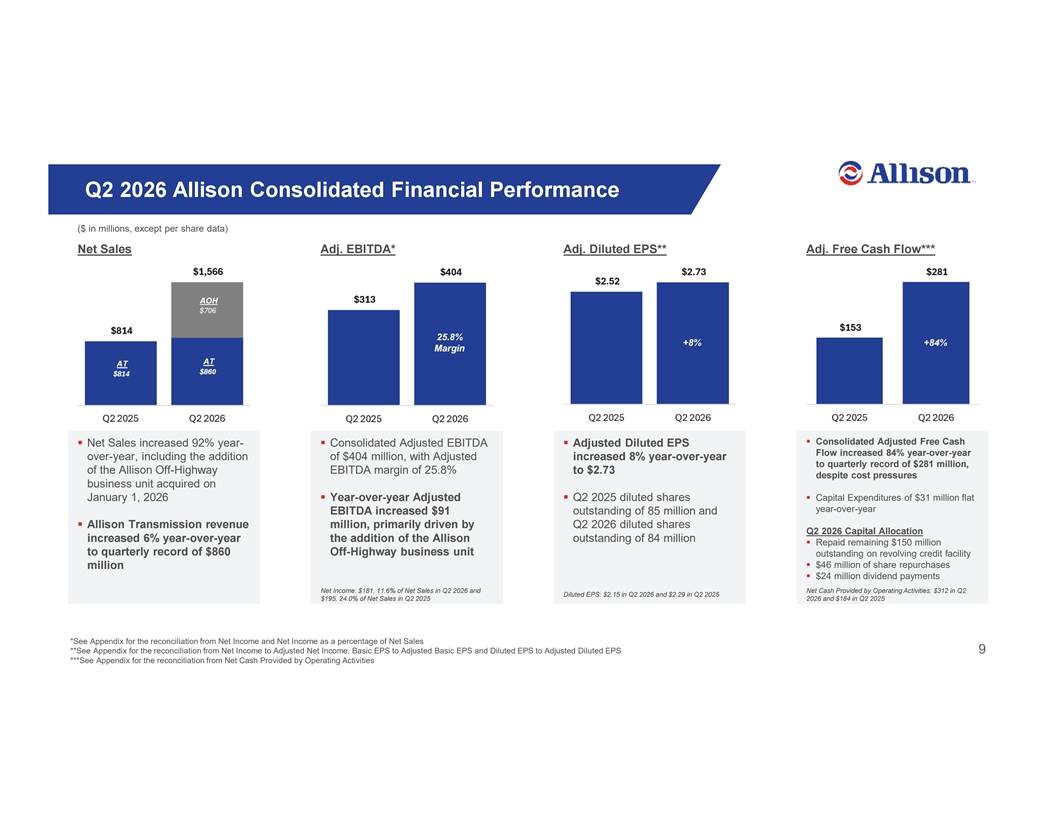
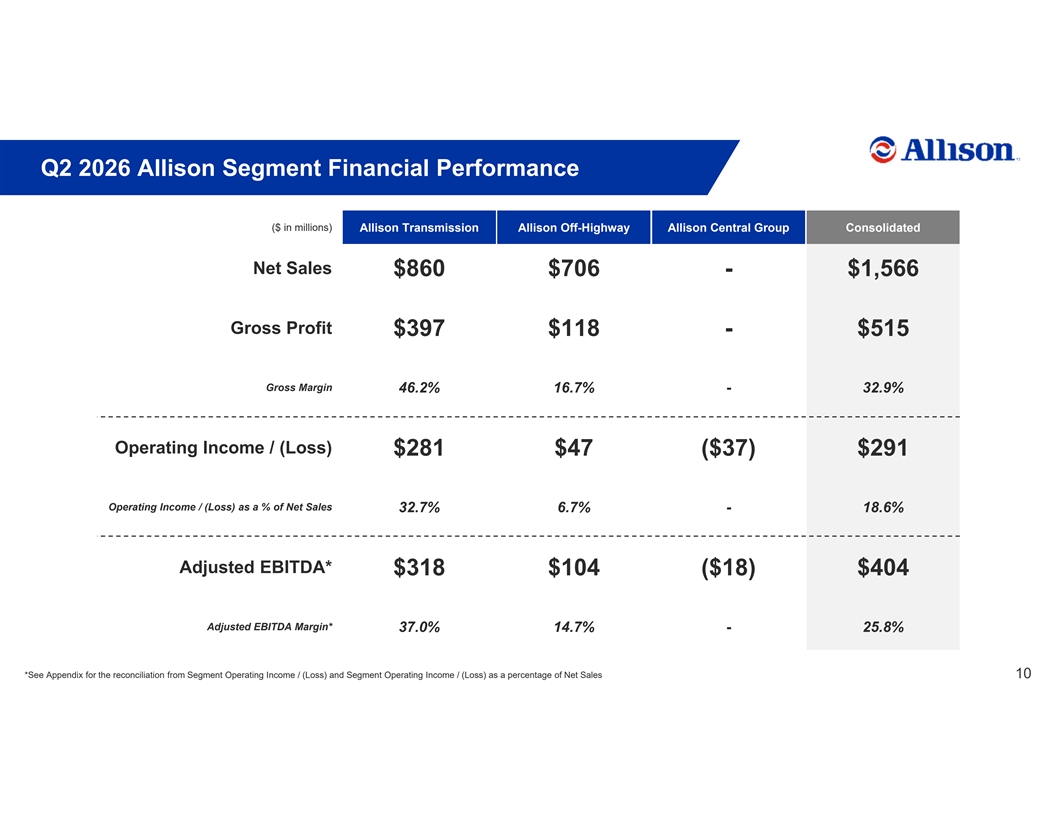
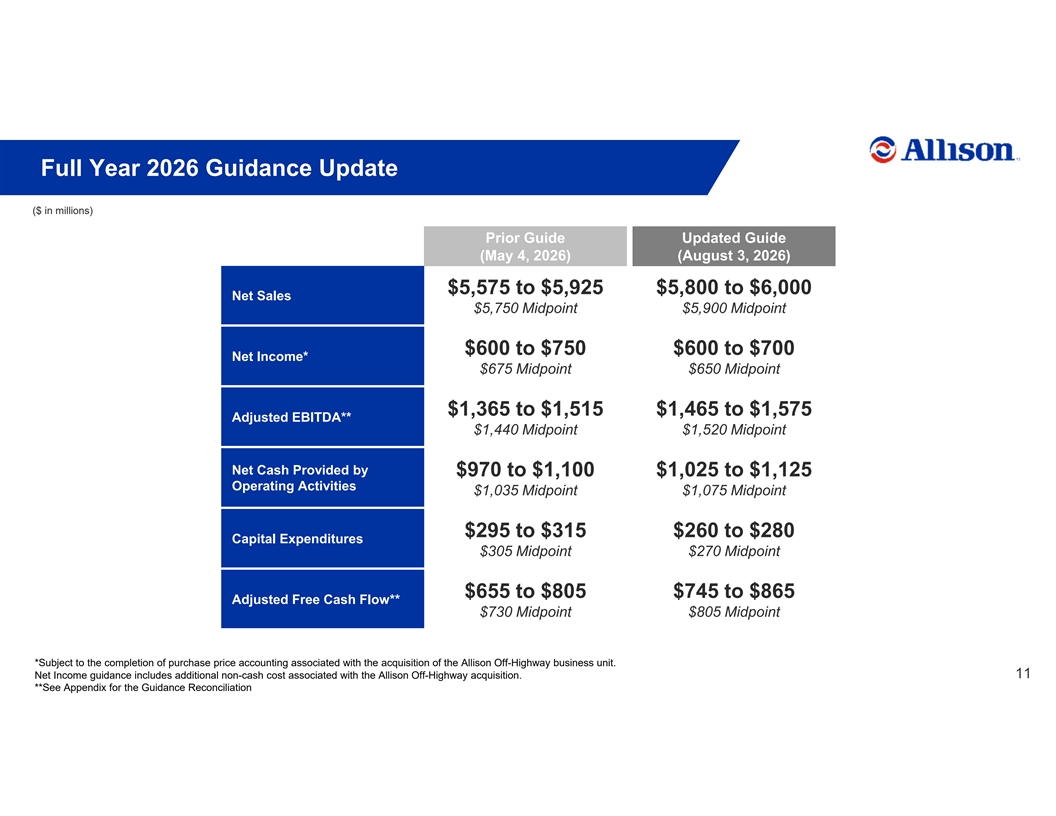
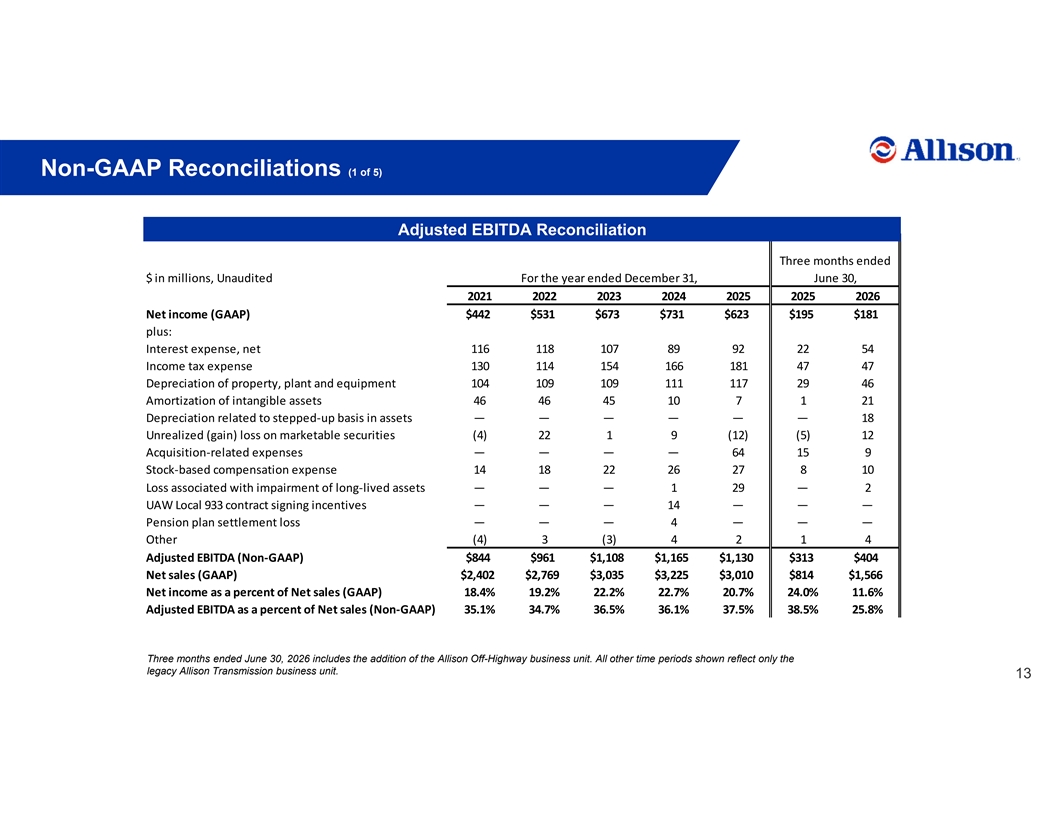
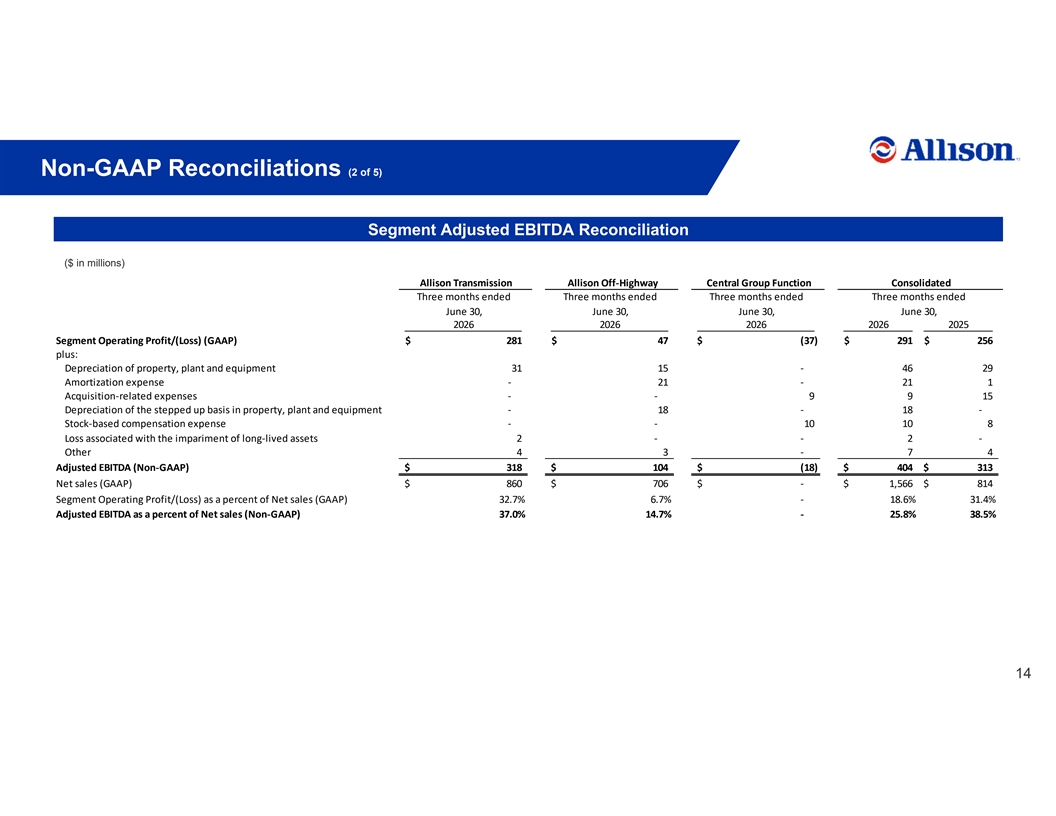
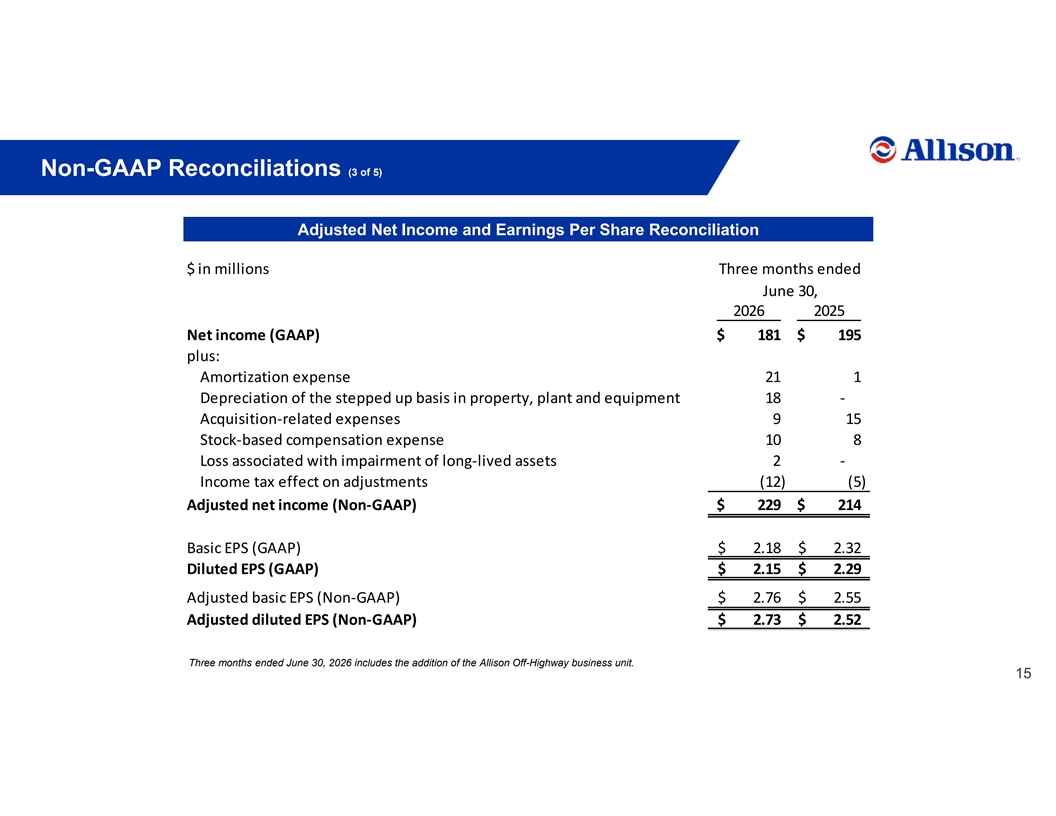
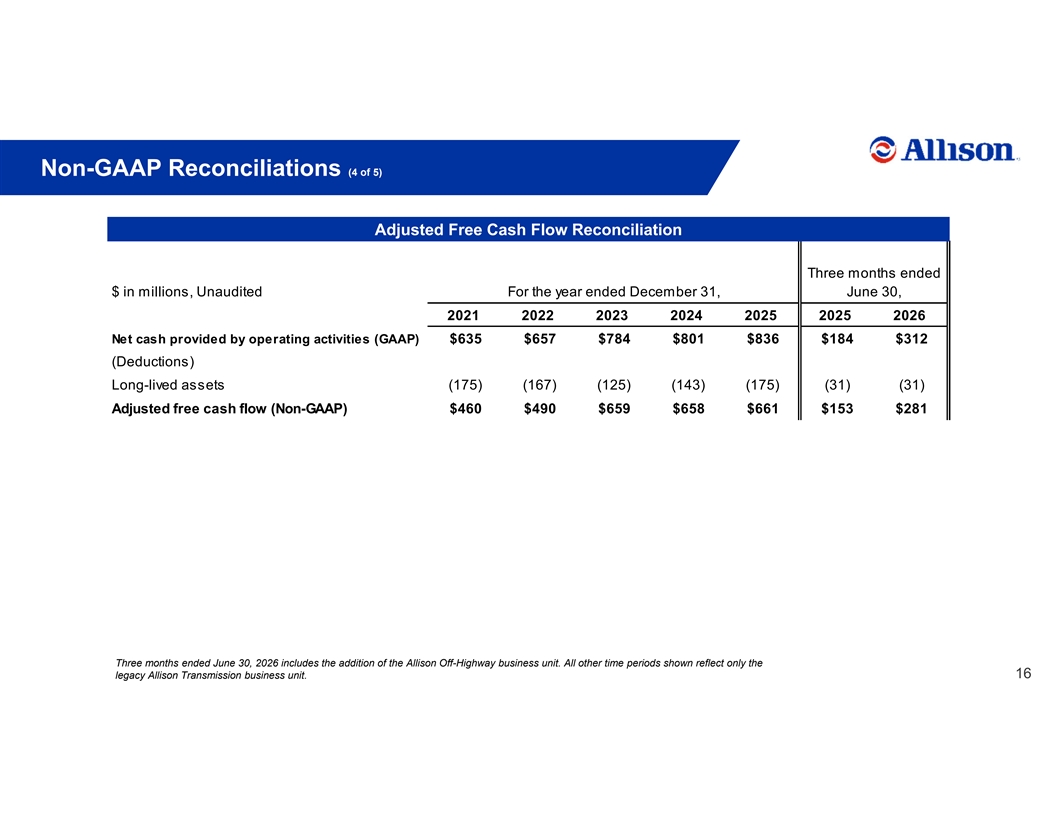
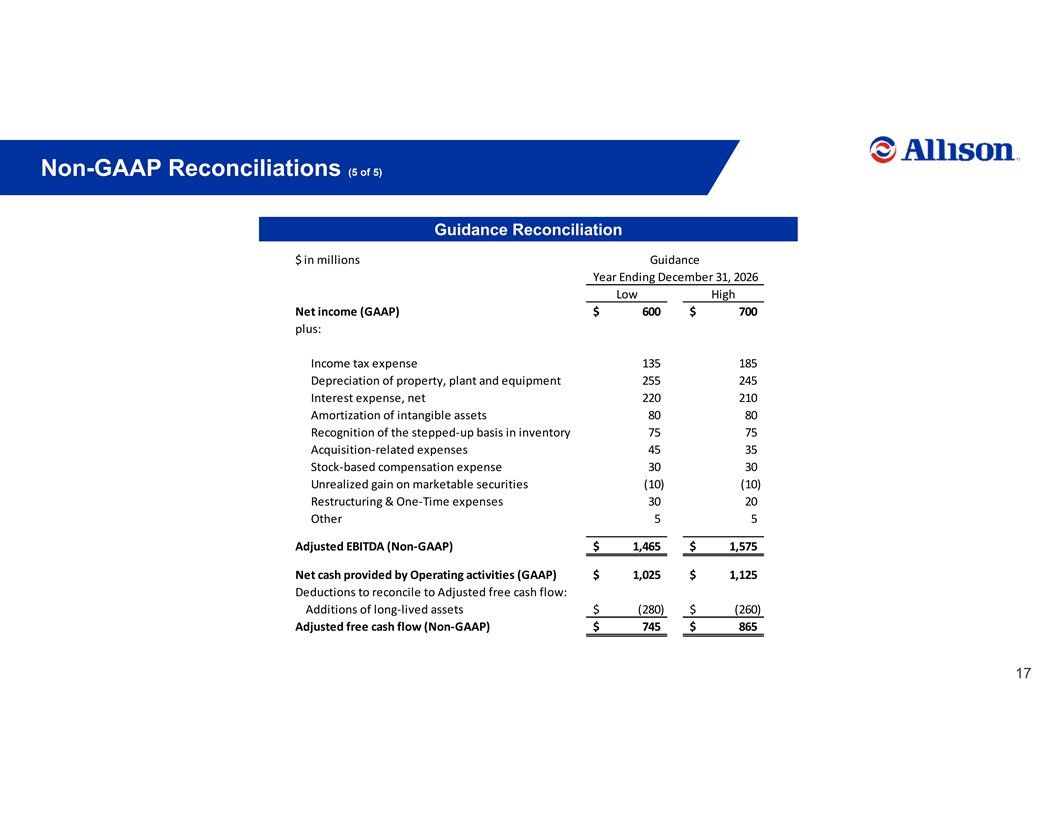
Thank you, Dave. And thanks to those of you joining us on the call. please flip to slide nine of the presentation. As Dave covered in his prepared remarks, net sales in the second quarter increased 92% year-over-year to $1,566,000,000. The year-over-year increase was driven by the addition of the Allison Off-Highway Business Unit, along with a 6% increase in the Allison Transmission Business Unit with record quarterly net sales of eight hundred and sixty million dollars solidated adjusted EBITDA for the quarter was four hundred and four million dollars a ninety one million dollar increase year-over-year representing a twenty five point eight percent margin second quarter adjusted diluted EPS was two dollars and seventy three cents increasing eight percent year-over-year cash generation remained exceptionally strong in the second quarter with record quarterly adjusted free cash flow of two hundred and eighty one million dollars an eighty four percent increase year-over-year enabled by a disciplined operational execution we delivered strong cash generation despite headwinds from higher steel and aluminum costs as well as broader inflationary pressures Importantly, while commodity cost inflation is creating a near-term margin headwind, we ultimately recover a substantial portion of these higher costs from customers on a 6- to 12-month lag. Regarding capital allocation, I will briefly reiterate our priorities. First and foremost, we intend to fund the business for growth. In the near term, we will also continue to reduce debt to reach our near-term leverage target of two times. During the second quarter, we remain committed to deleveraging by repaying the remaining $150 million of amounts outstanding under our revolving credit facility. Excess cash will continue to be returned to shareholders through our quarterly dividend and share repurchases. During the second quarter, we repurchased $46 million of our common stock and paid a quarterly dividend of $0.29 per share. Before moving on, as a reminder, reconciliations for non-GAAP financial measures can be found in the appendix of the second quarter earnings presentation and earnings press release. You can find further detail on financial performance by segment on slide 10 of the presentation. There will also be more detail provided in our Form 10-Q to be published later this week. Please turn to Slide 11 for our full-year guidance update for 2026. Given our second quarter results and improving conditions across our end markets, we are increasing our full-year 2026 guidance. For 2026 revenue, we expect consolidated net sales in the range of $5,800,000,000 to $6,000,000,000. For earnings, we expect consolidated net income in the range of $600,000,000 to $700,000,000,000, subject to the completion of purchase price accounting associated with the acquisition of the off-highway business unit. Our net income guidance for 2026 includes approximately $140 million of one-time pre-tax expenses associated with the separation, integration, and restructuring of the Allison Off-Highway business unit, including approximately $75 million of expenses related to the stepped-up basis in inventory. Despite these one-time costs, we expect the Allison Off-Highway acquisition to be accretive to net income and earnings per share in 2026. Further, we expect consolidated adjusted EBITDA in the range of $1,465,000,000 to $1,575,000,000. At the midpoint, this implies an approximate 26% adjusted EBITDA margin. For our 2026 cash flow guidance, we anticipate consolidated net cash provided by operating activities in the range of $1,025,000 to $1,125,000,000, consolidated capital expenditures in the range of $260,000 to $280,000,000, including one-time separation and integration spending of approximately $30 million and consolidated adjusted net, pardon me, consolidated adjusted pre-cash flow in the range of $745 to $865 million. Please note that our consolidated net cash provided by operating activities guidance includes approximately $55 million of one-time cash outlays associated with our acquisition of the Allison Off-Highway business unit. This concludes our prepared remarks. Sherry, please open the call for questions.
Operator
Thank you. If you would like to ask a question, please press star 1 on your telephone keypad. A confirmation tone will indicate your line is in the question queue. You may press star 2 if you would like to remove your question from the queue. And for participants using speaker equipment, it may be necessary to pick up your handset before pressing the star keys. As a reminder, please limit to one question. Our first question is from Rob Wertheimer with Melius Research. Please proceed.
Thanks, and good afternoon. My question is basically, I know we touched on this a bit last call, but on margin in the legacy business. Do you feel like there's more inflation out there, more materials costs? Do you need to take more pricing to cover, you know, kind of cost inflation and margin headwinds you've seen?
Yeah, hi, it's Scott. So certainly looking at the legacy business, the year-over-year margin was compressed. A number of factors contributed to that, primarily, to your point, material costs. You know, we had, I'll call it mid-teens, year-over-year headwinds from material costs, aluminum and steel. So, and you point out we do have recovery mechanisms in place, but as I mentioned on the call, there's a timing lag in those. So, you know, what you're seeing in the quarter is really a reflection of somewhat of the very quick increase primarily in aluminum costs. If you look quarter over quarter, they're up almost 25%. And so, you know, we will recover those costs. some of those costs vis-a-vis are indexing, but obviously that takes a bit of time. I don't know, Fred, if you have a question or a response on the pricing. Yeah, thanks. Thanks, Scott. Yeah, Rob, this is Fred.
You know, relative to pricing, you know, obviously, you know, we've secured, you know, meaningful pricing, you know, post-pandemic, and the cost of, you know, the vehicles we go in continue to inflate up the cost of the new emissions. So we feel we're delivering a tremendous amount of value and are in a position where we can continue to get price above kind of the pre-pandemic levels where we would average 50 to 75 basis points. We've got good visibility for obviously the balance of the year and a lot of the larger customers under long-term agreements going into 2027. So certainly maintaining, improving our margins is critical to us, and we feel like we're very well positioned to do that.
Operator
Our next question is from Tim Thien with Raymond James. Please proceed.
Good afternoon. The question is just on the revenue guide. Maybe we could dig into a bit in terms of what changed between the legacy Allison business versus off-highway. And as I think about just effectively the midpoint implies no change in terms of first half to second half. And if I look at current build rates, OEM build plans, rather, for Class 8 vocational and medium up, call it circa 10%, second half over first. And so I get that there's some seasonality in the off-highway business, but I guess I'm just trying to think through it and maybe some of the moving pieces, you know, relative to that midpoint, how we think about second half versus the first. Thank you.
Yeah, hi. Tim, that's a very good question. This is Scott. You're right. It's a bit of a tale of two cities. When you look at our full-year guide, we are expecting sequential improvement within the legacy transmission business, first half to second half, you know, getting driven by some of the macro factors that Dave mentioned in his comments. On the other side of that, you know, The second half of the year for the new off-highway business unit, as you pointed out, does have some seasonality associated with it, including the European business being shut down a bit next month, or I guess this month now, and then obviously the holidays. But I think Craig and Fred probably can speak a bit more in detail on their individual business units.
Yeah, so for the off-highway business, the third quarter is generally our weakest quarter in terms of revenue, as Scott alluded to, the European shutdown. You know, almost half of our business comes out of Europe. So, you know, that's impacting the third quarter. And then we step up a little bit in the fourth quarter, again, but still lower than the first half, you know, driven by the end-of-year holiday.
Yeah, Tim. Obviously, a strong Q2, a total revenue of 6%. Some of your questions were directed at North America on highway, where revenue was up 3% year over year, but probably more importantly, up 15% sequentially. In fact, all of our end markets in the ATBU were up over 10% sequentially, so certainly nice to see that inflection. Obviously, the first half of 26 was always going to have the more difficult comps compared to the first half of 2025. I mean, as we look at North America on highway specifically, for us, Class 8 straight truck has continued to be steady. In medium duty, we saw some pickup in the second quarter, which was encouraging. That's really the first time we've seen any sort of pickup there. And obviously, you have the emission changes going on. So, you know, we are, you know, confident that, you know, we'll see sequential improvement in the second half of 26 for our largest in-market, North America, on-highway.
Operator
Our next question is from Ian Sofino with Oppenheimer & Company. Please proceed.
Hey, good afternoon. This is Isaac Sofino. I'm Ian. Thanks for taking the question. I'm just wondering if you could provide some details on the off-highway business around price and volume performance in the quarter, and then maybe any additional commentary you can provide on the margins in the business, you know, as you capture synergies into 2027 and beyond.
So I would say from the pricing side, obviously, you know, we don't have the same luxury or bad position as the transmission side, But we have, I would say, price for us is not meaningful up or down year over year for our business. From the margin profile, I think you can align it to the revenue. You know, the first half being slightly higher than the second half. But as we continue to win new business, as we go forward, we will expect to increase that area.
Yeah, and I'll just add, Scott, I think the off-highway business, there's a lot less volatility relative to material costs just given the nature of that business's ability to pass those on on a more timely basis than what you have seen historically with the transmission business. And I'll just say, you know, I think we, you know, are pleased with the margin performance for the off-highway business now that we've had it for two quarters. And obviously, as we've talked about, we expect to realize synergies across the entirety of the enterprise. Some of those, you know, will impact and benefit the off-highway business, and we'll be talking more about that certainly as we get into next year and talking about expectations for 2027.
Operator
Our next question is from Jerry Erevich with Wells Fargo. Please proceed. Jerry, please check and see if your line is muted.
There it is. Thank you. Good afternoon, and congratulations. It was a nice quarter. I want to ask the sources of cost savings, pretty procurement-heavy. I'm wondering how has the source of the opportunity evolved versus maybe a year ago? And then, you know, can we just talk about just the pieces that you folks have highlighted over the course of the core calls if you think about what 27 might look like? So, Fred, you spoke about price costs in the core business, 50 to 75 basis points. We spoke about the synergy benefit, about 50 basis points. Anything else that we need to keep in mind, you know, market agnostic as we think about the business, 27 versus 26?
This is, Jerry, this is Fred. Let me hit on pricing. You know, historical pre-pandemic, the ATBU would get 50 to 75 basis points. We have very, very high level confidence that we'll secure more than that level in 2027.
And Jerry, it's Dave on the value capture questions you had there. So very briefly, in terms of the comments I provided, if you compare that to certainly our expectations going into the acquisition, diligence, or otherwise, I would say overall it's relatively consistent with what we've laid out here this afternoon in terms of contributions between the three categories. I would also offer, you know, the teams have been working together across the BUs as well as, you know, their group team as well. For us, it's also become clearer in terms of what our initial expectations were and overall capabilities of the organization. You know, I would tell you that our ability to react to issues, whether those are some of the geopolitical events, developments, expectations, uncertainties has really changed for us, you know, vis-a-vis the acquisition. And I think our expectations going in were certainly high, but I would tell you, you know, in terms of the teams working together, being able to react very quickly from a regional perspective with the footprint that we now have is frankly beyond what we're expecting. So, unfortunately, given some developments in the Middle East that everybody is familiar with, I think that's allowed us to have an opportunity to further test those capabilities. And I would say that, you know, the team has done a phenomenal job there. That being said, you know, the $120 million is our annual run rate target, as we've talked about many times, certainly as we're getting further into this. and it was in the prepared comments at the end, but, you know, it would not surprise us if there's more opportunity there. It's really a question of getting the teams together to get some things done. There's a number of activities that are very time-sensitive related to transition agreements, et cetera, getting all that done. It's a very heavy level of work this year for the team, So, in other words, I think we would be probably further along in some other areas, but trying to get some of this foundational work behind us is taking up a fair bit of time. So, thus, the timeline that I laid out, you know, the 40-40 balance and then the 20 is really our current view. But, again, I think we're certainly very pleased with where we've landed so far and look forward to providing further updates as we get towards the end of the year and certainly with our 2027 guidance at that point.
Operator
Our next question is from Tammy Zakaria with J.P. Morgan. Please proceed.
Hey, good afternoon. Thank you so much. I wanted to get some clarity on two things. One is the midpoint of your revenue guide is, I think, up $150 million. Could you clarify how much of that is driven by improvement in your outlook for on-highway versus off-highway in the back half of this year? And then the second point is, do you have any synergies baked into this new EBITDA guidance that you have.
Yeah, Tammy, it's Scott. I would tell you that the preponderance of the increase in the midpoint for the full year is driven by a more optimistic look on the Allison Transmission business unit, just given some of the first half performance we've seen and what we're seeing and hearing more recently from some of our customers, I would describe the outlook for the off-highway business unit to be the same more or less as what we guided to, the same that maybe slightly up to what we guided to in February, but the biggest component of it is coming out of the transmission business unit. With regards to the synergies for the full year, the short answer, there's no material or meaningful synergies built into the EBDA guide for the full year. What you're seeing there from the increase is really around incremental volume and then management of operating costs is driving that increase.
Operator
Our next question is from Angel Castillo with Morgan Stanley. Please proceed.
Hi, thanks for taking my question, and congrats on a strong quarter here. Just wanted to ask a little bit bigger picture on the EPA 27 proposal, just whether there's any implications where you're hearing anything in terms of, you know, underlying demand and how that will unfold kind of second half 26 versus 27, just as it pertains to customer demand for potential pre-buy versus just waiting and getting the current engine next year. Just anything that you're hearing from customers there. And then also we'd love to hear maybe a little bit more color on what you're seeing in your defense segment, which continues to be pretty strong in what you expect there.
Angel, it's Dave. Let me tackle your EPA question, and Fred can address your defense question. So, you know, as you referenced early last month, the EPA released their proposal that everybody was waiting for, frankly. You know, the outcome of that was largely, I think, as the market had expected. So with the, you know, I think the most relevant change in there really being the emissions warranty periods that was purported to be a pretty significant cost driver. So with that, in terms of your question, frankly, all of the OEMs are still assessing the EPA proposal, as well as, as you can imagine, their supply base, including us, in terms of expected reactions there. The OEMs are speaking with end users and fleets, et cetera, and so forth. So the short answer to all that is, you know, there will have to be some tradeoffs at the end user level between the noncompliance penalties, presumably, and what the expected cost is for the 2027 vehicles, if you will. So and that's really yet to be, I would say, fully understood by the OEMs in terms of market pricing for 2027 vehicles, et cetera. So having said all of that, as our team does, we're in constant contact with OEMs and fleets. Certainly look forward to providing an update here with the comment period, as you know, still open for the EPA proposal. A lot of things out there that may impact ultimately the balance of 2026 volumes as well as the overall outlook as we get into 27. But, you know, to Fred's earlier comments, we continue to see steady, regardless, frankly, of what the EPA has proposed, steady Class 8 vocational market and some improvement in medium duty. And I think overall, with the continued availability of 26 engines, if you will, that really is, I think, intended to mitigate, ultimately, the impact. Unlike some prior emissions changes that I'm sure you're familiar with, the magnitude of those versus what's being proposed ultimately here are very different. The other reality is that this late into year in terms of build schedules, it becomes, I think, relatively challenging for the industry players to make significant changes. And I think at least the public OEM comments for this quarter would certainly imply relatively full order books, which then also would tell us there's a limited amount of ability to change or, frankly, add significantly into what their 26 build plans are for the second half.
Yeah, Angel, and this is Fred. Relative to the defense end market, obviously very strong performance year to date on a year-over-year basis, up 60% from a revenue standpoint. We've announced numerous wins, most of those outside North America, including the three that we highlighted in our prepared remarks. Very good visibility for the balance of the year. Expect H2 to look a lot like H1, and really looking out into 2027, pretty much a full order board. These are long-lead products. We're launching new products into the space, our 3040MX or 4040MX. Very excited about those, and we've announced opportunities in Poland with the Berzov, Turkey with the core cut within India. Again, very good outlook. The investments that we've made are coming to fruition, and we're very, very bullish on the end market.
Operator
Our final question is from Kyle Menjes with Citigroup. Please proceed.
Thank you. I just wanted to follow up on the pricing discussion a little bit. But I understand the confidence in getting some price next year above the pre-pandemic level and just trying to understand how much of that is just pricing from pass-through mechanisms to offset quite elevated material costs versus, I guess, more real price increases. And I understand you usually pass on about 75% of raw material costs. So are you also confident you can get enough price to be price-cost positive and offset the other 25% of raw materials that's not automatically passed through?
Relative to pricing agreements that we have in place, definitely there will be the benefit of the commodity pass-throughs. Obviously, we're still looking to see how the full year shakes out from a raw material pricing standpoint and what the assumptions look like out into 2027. You know, Scott mentioned it. The bulk of this is on somewhere from a six-month to a 12-month lag. So, you know, back to the basis of your question, you know, from a price-cost standpoint, I mean, it's something we're very focused on and are really looking to continue to drive margins. If you think about the guide, you know, we came out at midpoint, I think, of 25% margins. We're up to 25.8. You know, we've got $120 million of synergies identified. That's another, you know, 200 basis points, you know, across the combined company. So there's numerous activities we're working on from a cost standpoint to offset what are, some pretty meaningful inflation pressures that we've seen.
Operator
We have reached the end of our question and answer session. I would like to turn the floor back over to Dave for closing remarks.
Thank you, Sherry, and thank you for your continued interest in Allison and for participating on today's call. Enjoy your evening.
Operator
Thank you. This will conclude today's conference. Thank you for your participation. You may now disconnect.