Operator
Thank you for standing by. My name is Jordan, and I'll be your conference operator today. At this time, I'd like to welcome everyone to the Enterprise Financial Services Corp. second quarter of 2025 earnings conference call. All lines have been placed on mute to prevent any background noise. After the speaker's remarks, there will be a question and answer session. If you'd like to ask a question during this time, simply press star, followed by the number one on your telephone keypad. If you'd like to withdraw your question, press star 1 again. Thank you. I would now like to turn the call over to Jim Lally, President and CEO. Please go ahead.
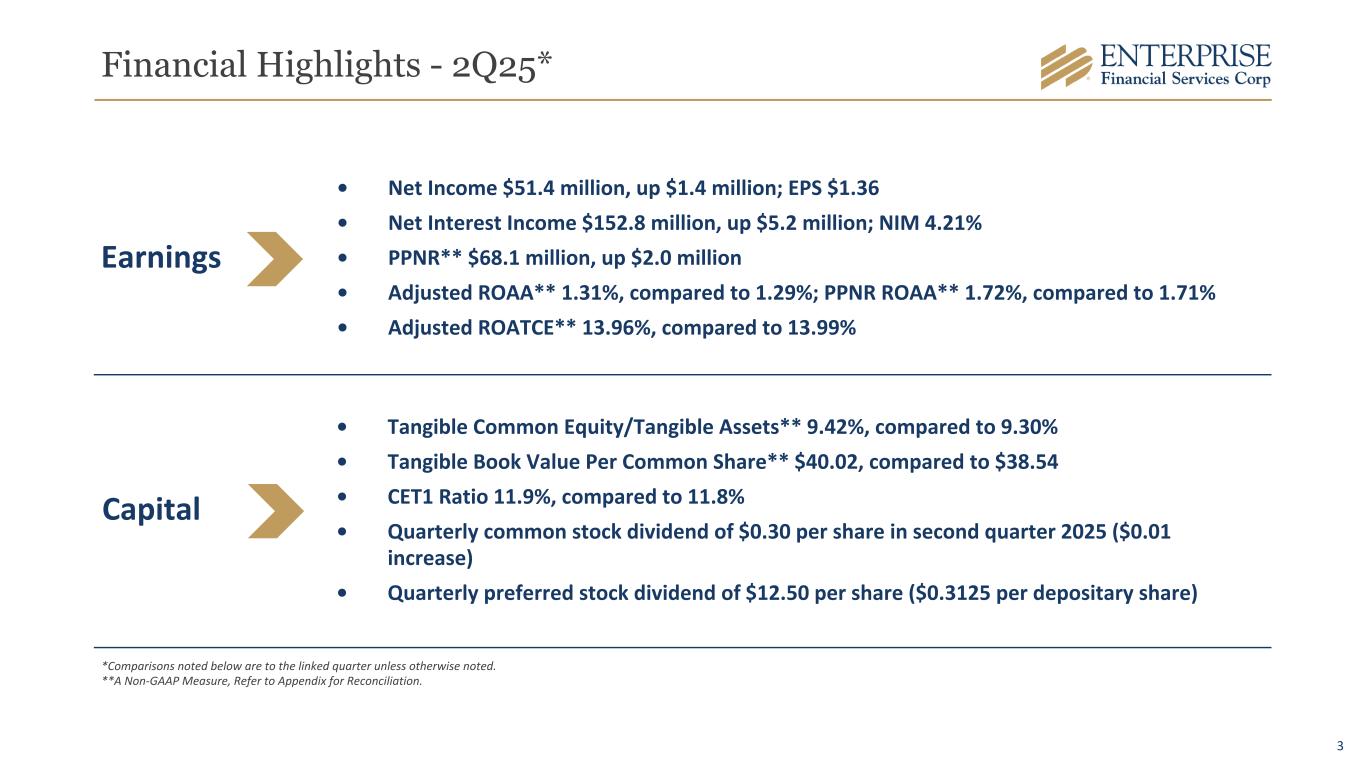
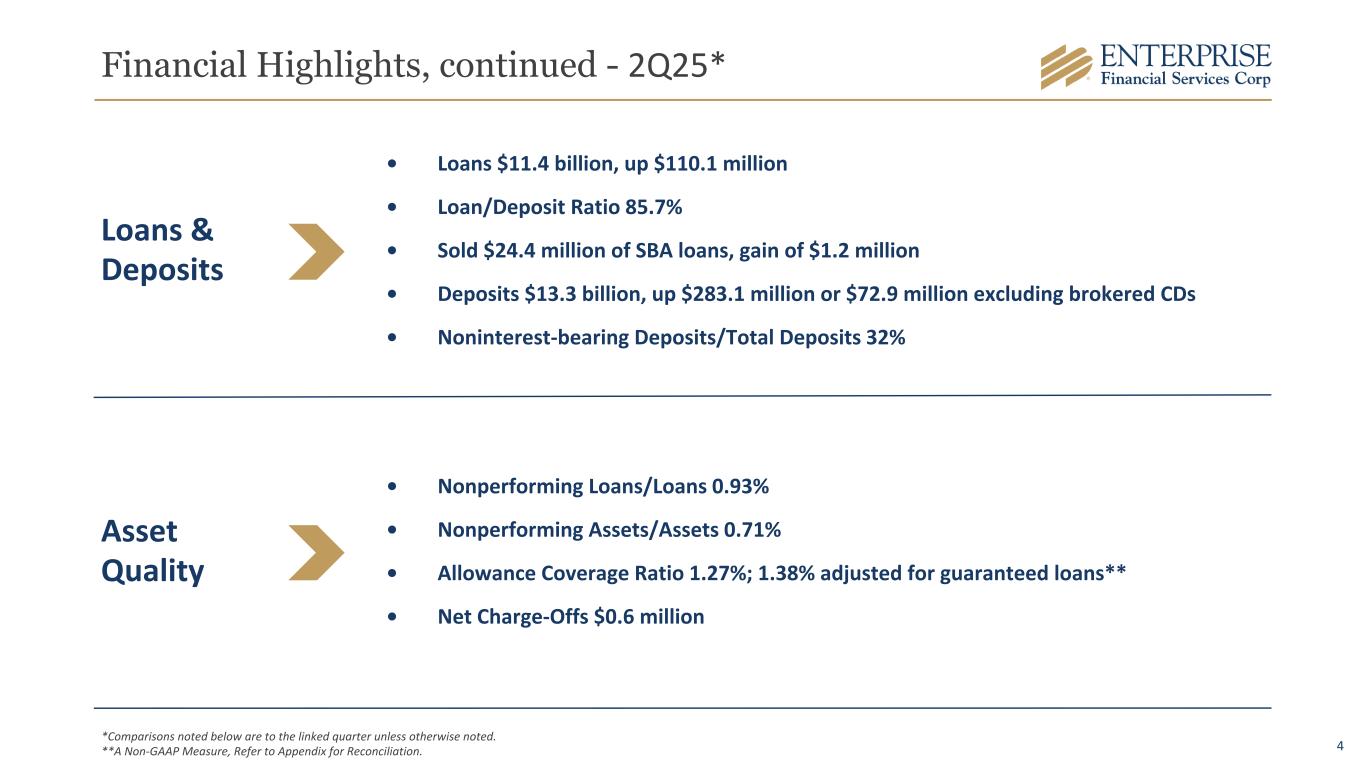
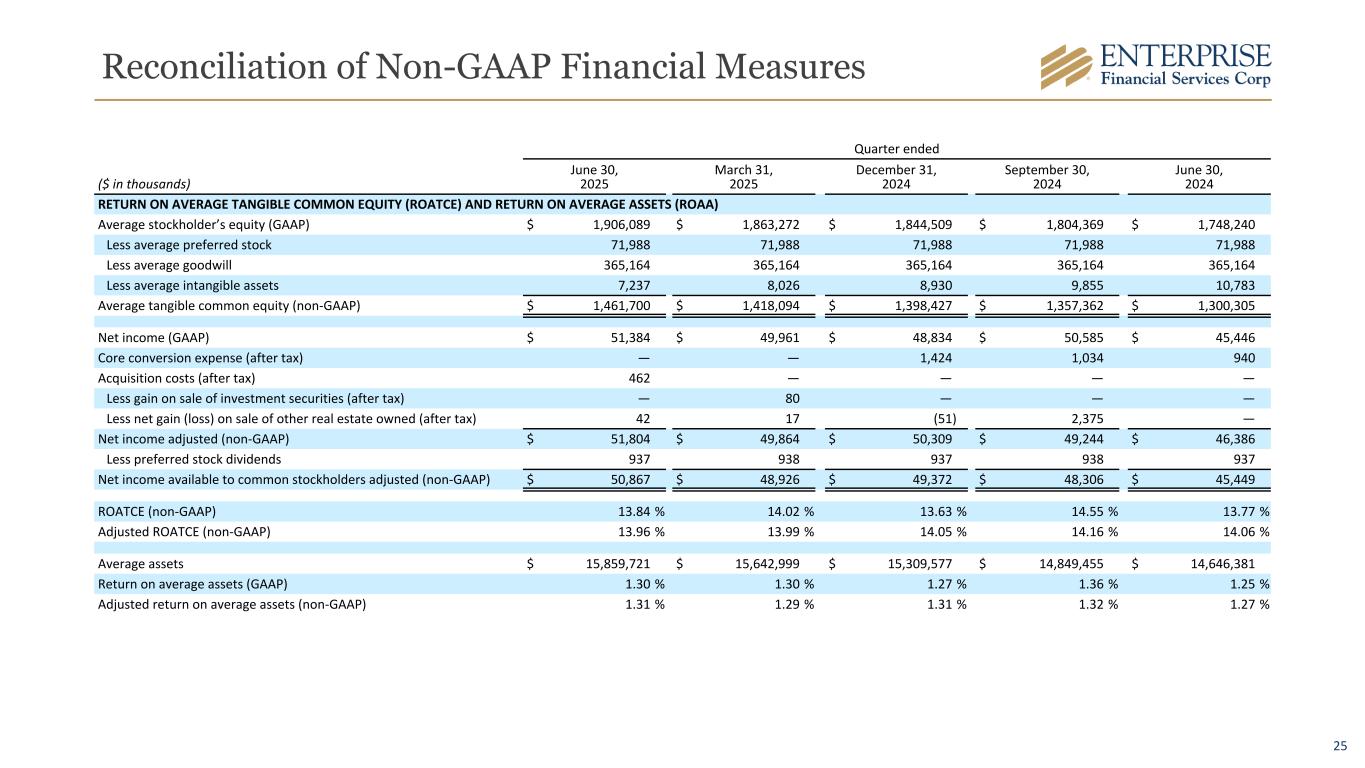
Good morning, and thank you all very much for joining us for our 2025 second quarter earnings call. Joining me this morning is King Turner, the FSC's Chief Financial Officer and Chief Operating Officer, and Doug Bauke, Chief Credit Officer. Before we begin, I would like to remind everybody on the call an accompanying presentation can be found on our website. The presentation and earnings release were furnished on SEC Form 8K yesterday. Please refer to Slide 2 of the presentation titled Forward-Looking Statements and our most recent 10K and 10Q for reasons why actual results may vary from any forward-looking statements. Our second quarter performance is a continuation of our multi-year trend, a very strong, consistent product of a very intentional strategy that leans into our diversified business model that capitalizes on a number of higher growth markets, complemented by several high-performing national loan and depository business, with a C&I bias of additional opportunities. and the tenure of these relationships somewhat mutes the payoff headwinds and a much higher CRE focus. For the quarter, we earned $1.36 per diluted share compared to $1.31 in the late quarter and $1.19 in the second quarter of 2024. This level of performance produced an adjusted return on assets of 1.31% and a pre-provisioned ROAA of 1.7%. Needless to say, income and net interest margin both saw expansion in the quarter, net interest income came in $5.2 million better than the previous quarter, and net interest margin expanded by six basis points to 4.21%. This was the fifth consecutive quarter that we saw net interest income growth. This reflects pricing discipline on both sides of the balance sheet combined with a client-centric relationship. Some of the uncertainties that our current economic times present reminds our clients who operate companies, develop projects, or seek sound financial advice are well worth. On an annualized basis, loan growth in the quarter, just about all diversified model, emphasizes finding the best growth. You will notice that all of our geographies, because of our confidence to continue to produce loans at a mid-single-digit growth rate, we decided to sell approximately $25 million of SBA loans in the quarter, which contributed 1.2 million other SBA loan sales will be evaluated on a quarterly and pending loan pipelines. deposits were stable to slightly higher in the quarter growing 73 million dollars net of brokered deposits year-over-year we have seen our core deposit base grow and our total loan to deposit ratio at 80 our deposit base continues to be a differentiator for us 100 million find ourselves in a very strong liquidity position balance sheet capital levels at quarter end remangeable common equity to tangible assets ratio of 9.4 despite having a tce level above nine percent we still delivered a 13.96% return on tangible common equity for the second quarter. Our strong return profile annualized quarterly increase of 15%. Given the strength of our earnings and our confidence in our continued execution, we increased the dividend by $0.01.25. The quality statistics remain stable when compared to the linked quarter. It should be noted that next hand, the call over to Scott.
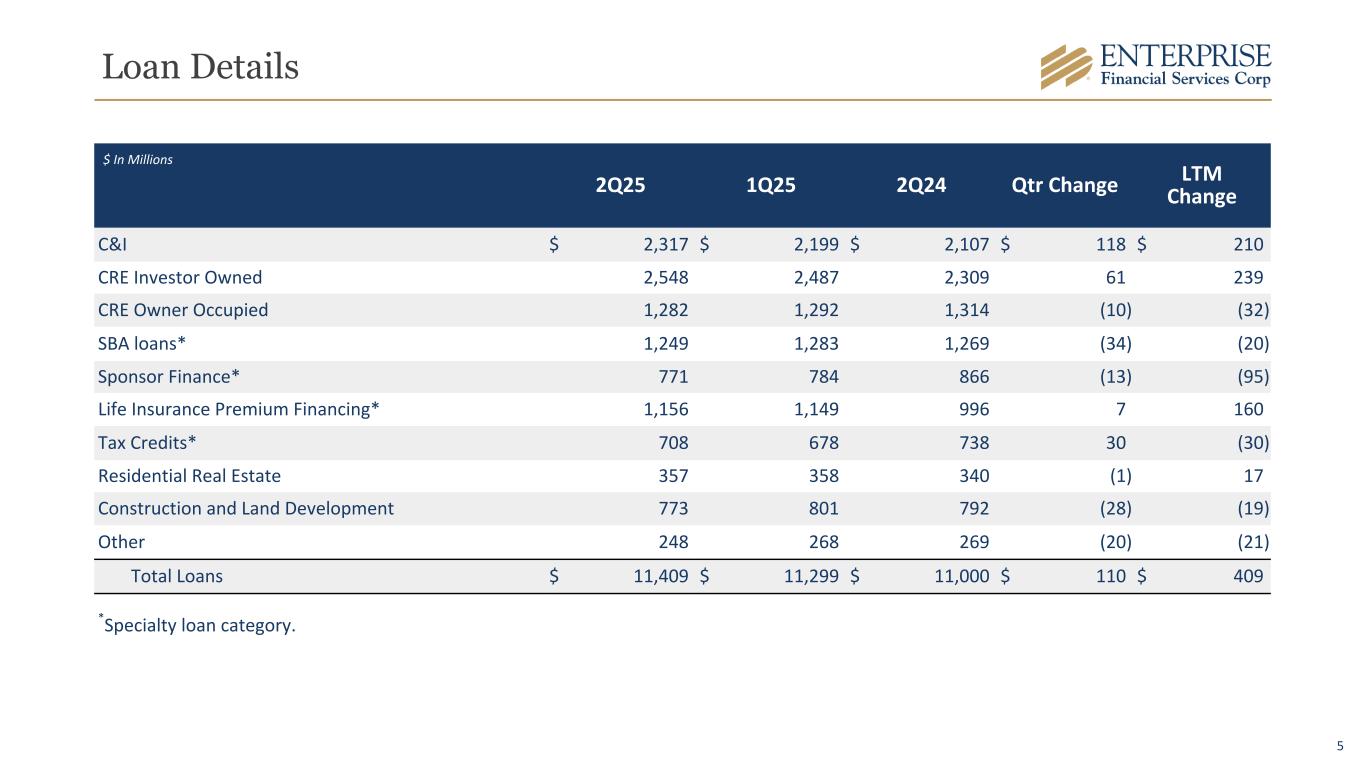
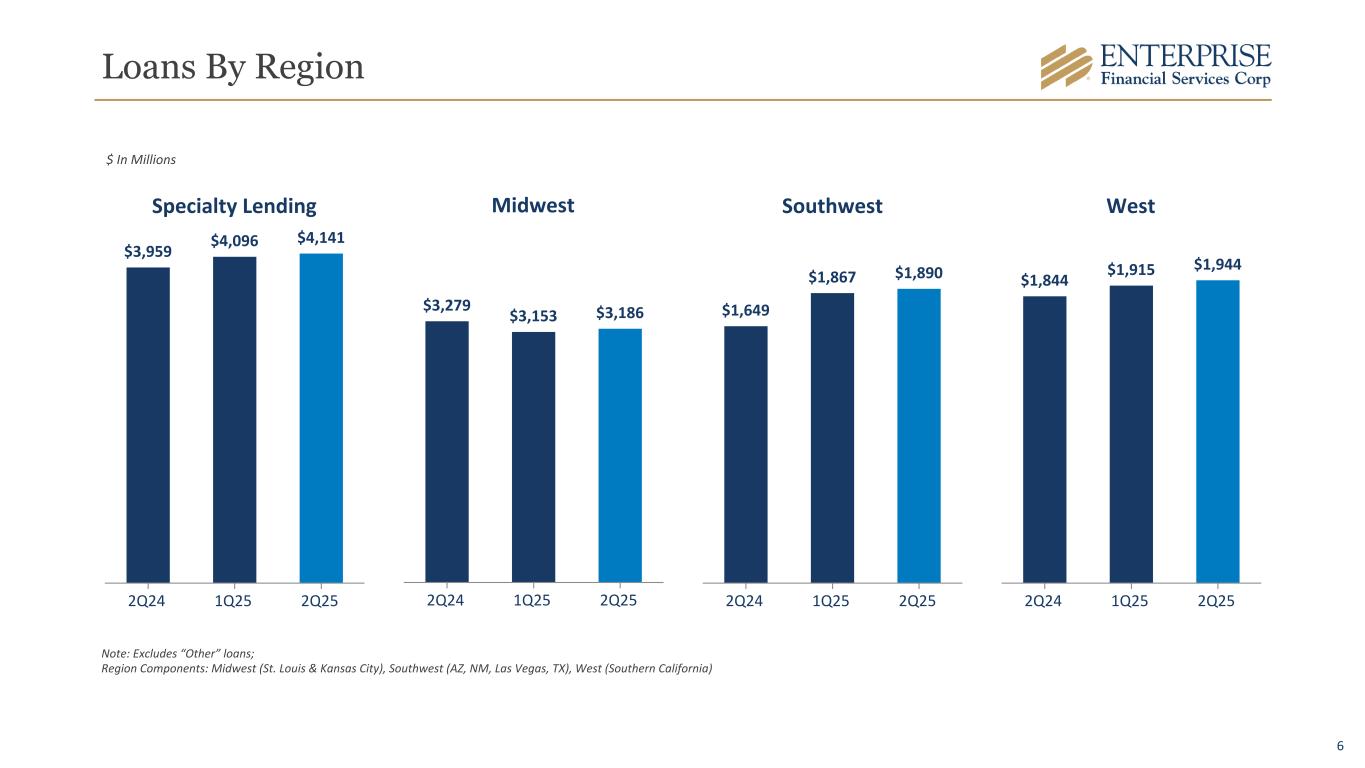
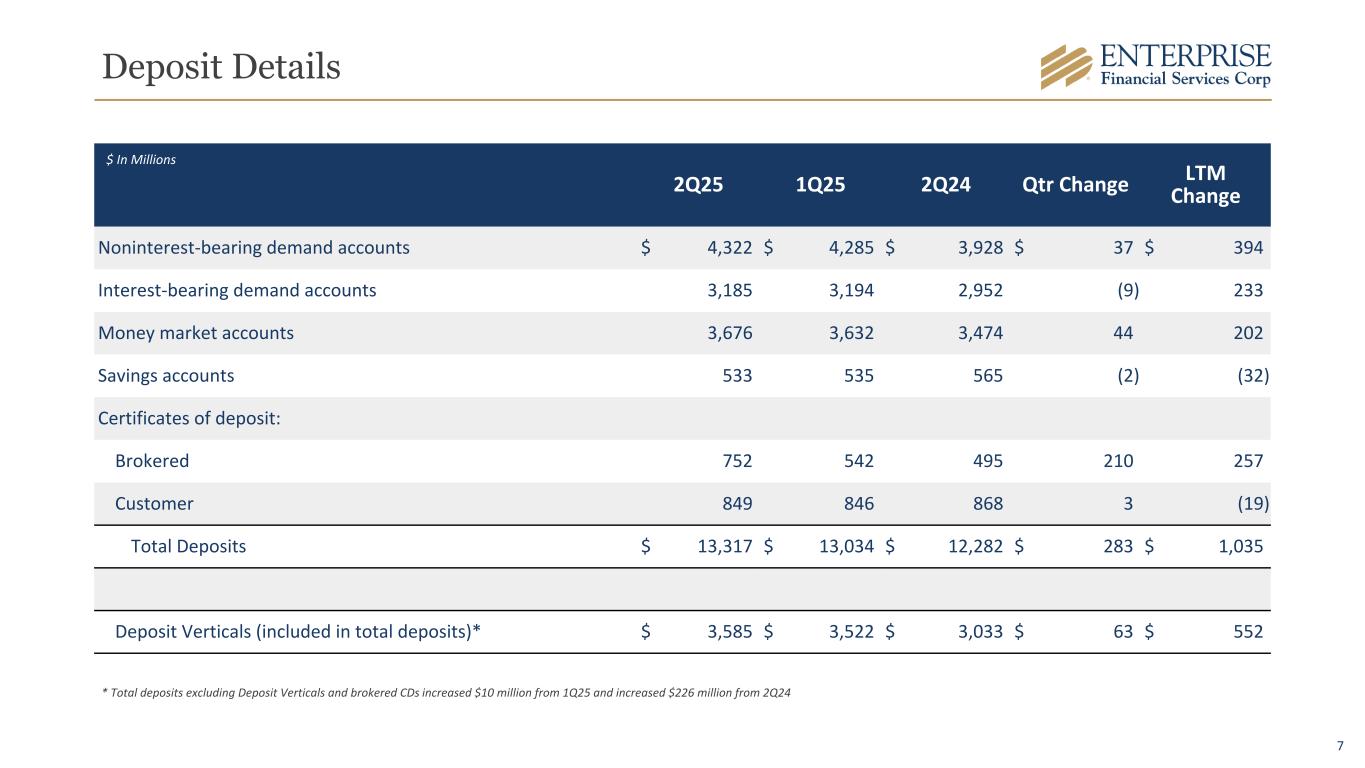
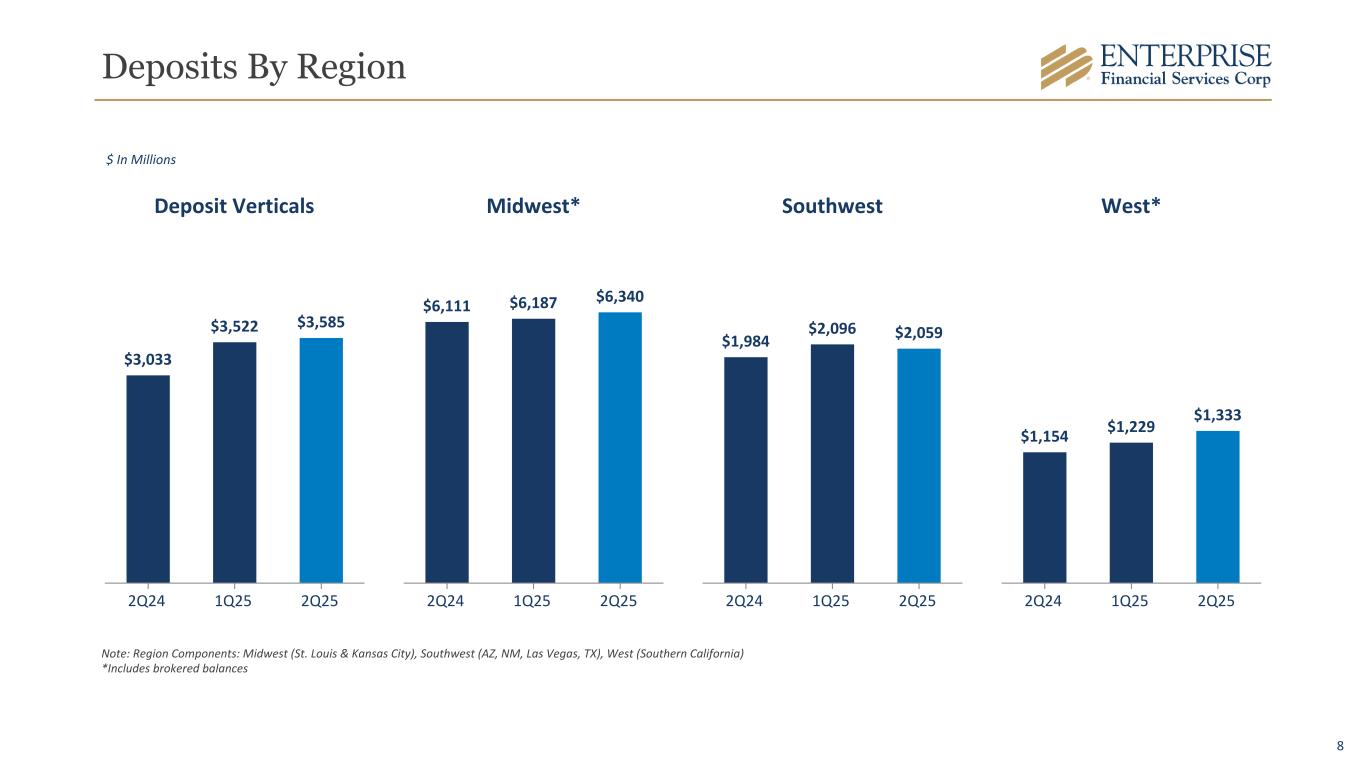
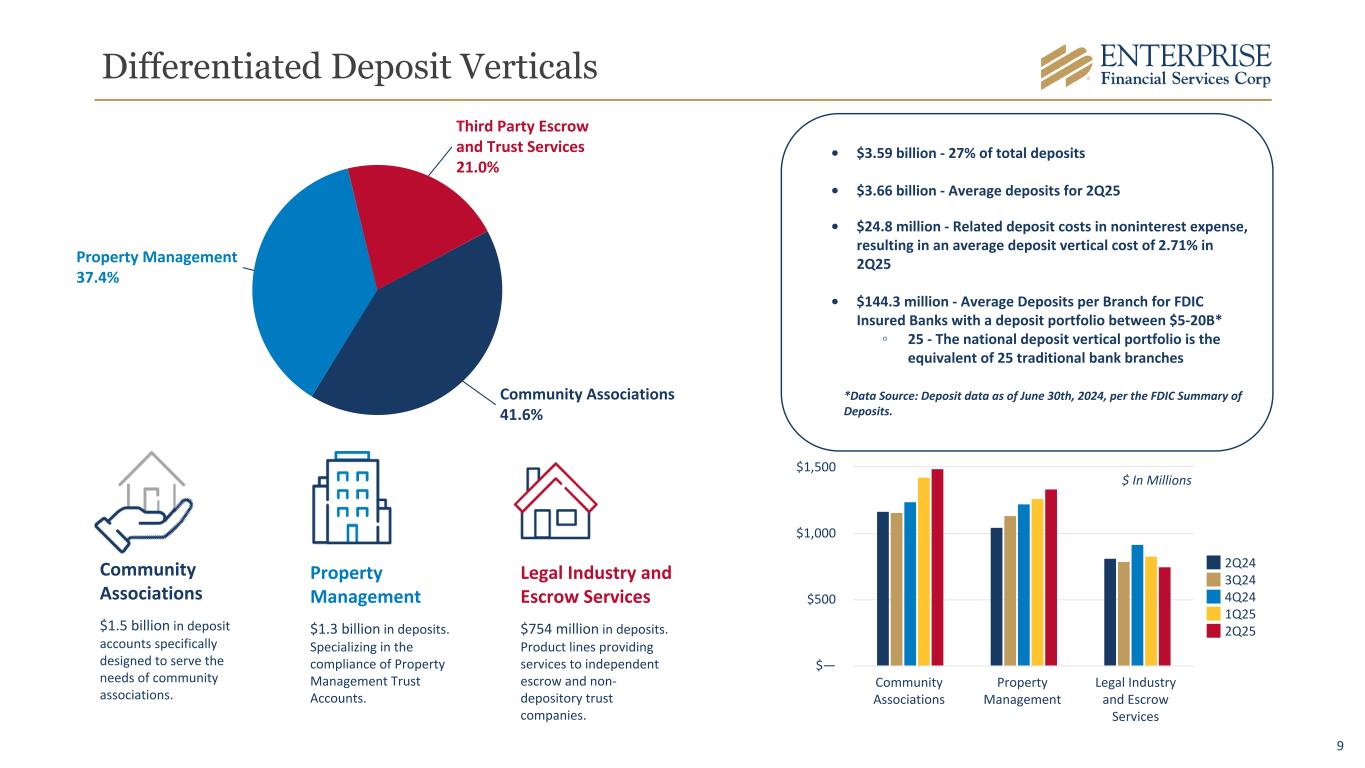
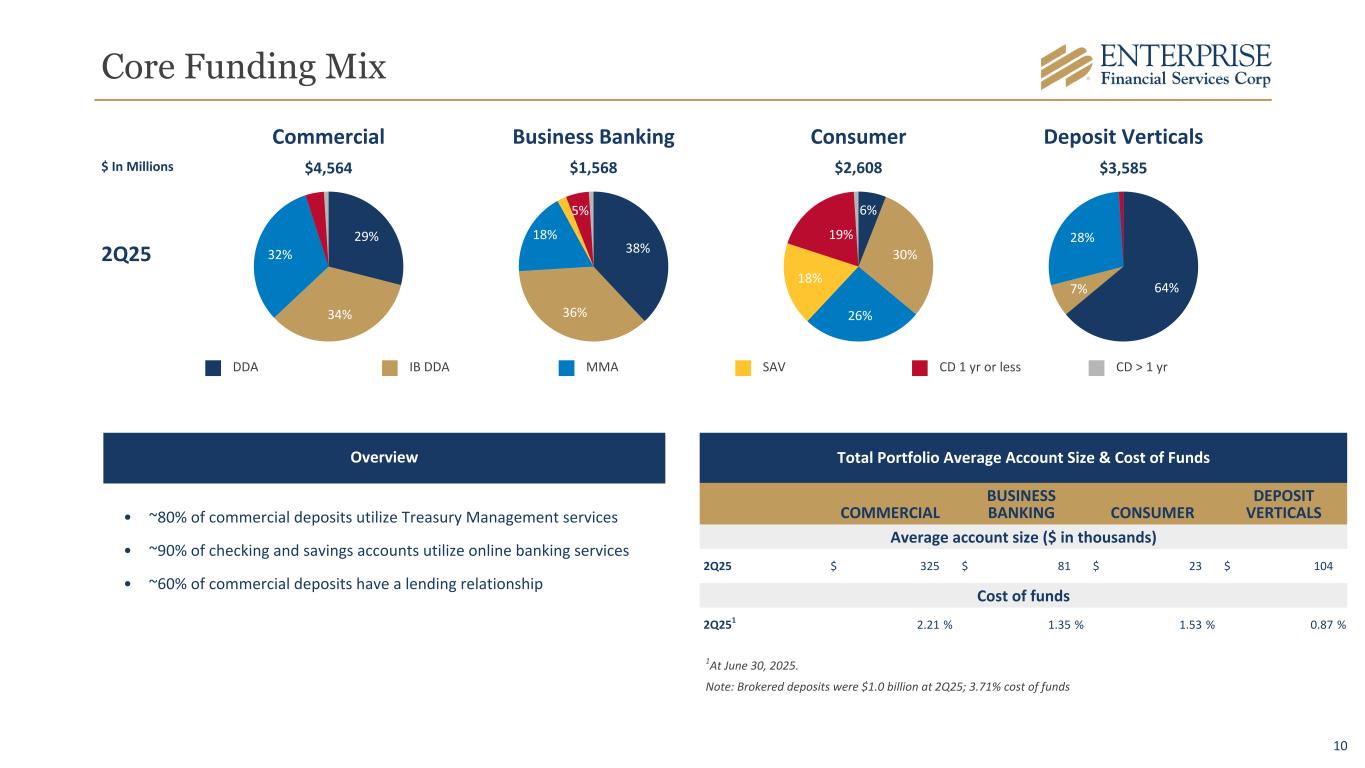
Thank you, Jim, and good morning, everyone. As Jim mentioned, and loans for the quarter grew by $110 million, which is broken down on slide five. The largest portion of this increase came from CNI loan types, further complemented by increases in investor-owned commercial real estate and the tax credit business. Year over year, loans have grown $409 million, or roughly 4%, with balanced contributions from CNI, investor CRE, and continued steady growth of the life insurance premium finance book. In general, client discussions and sales activity related to loan opportunities is solid, albeit with a slower pace of conversion due to some of the hesitancy Jim described. That said, loan production is steady and trending well, with new loan originations up 23% from the same quarter last year and 26% from the portion of the growth in investor CRE category and likewise the reduction in construction and land development loans represents the successful completion of various commercial projects. The flow of larger new construction projects has slowed somewhat with ongoing economic uncertainty, but we are seeing opportunities to retain the term debt on completed projects as well as refinance some real estate debt coming out of the secondary market structure. We also saw a slight uptick in usage on revolving lines of credit during the quarter with average balances over 3% higher than Q1. While some of this may relate to companies building inventories to front-run potential tariff increases, usage is trending up month over month with outstanding balances running closer to historical averages. Within the specialty lending business lines, SBA production was stable with the prior quarter and in line with seasonal expectations. The net decline in balances primarily relates to our decision to generate fee income from the sale of 25 million of loans in this quarter. Application activity is solid, particularly around industrial property types and refinance requests. Bank balances were down slightly in Q2, reflecting fewer originations of new loans this quarter as private equity sponsors are more cautious around companies that could be more materially impacted by tariffs or trade restrictions. We, too, are taking a fewer but better approach to this segment of our business, spending time with proven sponsors and staying particularly disciplined on structure. Life insurance premium finance balances were basically flat in a seasonally soft quarter for this business, but are up $160 million or 16% year over year. This business continues to perform well and grow at a steady clip, being a bit more insulated from general economic facts. Credit balances were up $30 million, reflecting continued fundings related to affordable housing projects in process. Moving to the geographic markets shown on slide 6, we posted growth across the footprint in all major regions. Within the Midwestern markets of St. Louis and Kansas City, some of the lift came from higher balances on lines of credit, given their higher mix of C&I clients, as well as several new commercial real estate loans with established developers for the acquisition and refinance of industrial and multifamily projects. within the southwest region growth highlights for the quarter included a number of new relationships including a large masonry contractor in Arizona as well as a major industrial utilities firm and a well-known commercial real estate investor in Dallas we were also able to onboard the lift out of an experienced commercial team from a competitor in the mid-cities area of Texas which is a growing region between Dallas and Fort Worth this team focuses on small to mid-sized C&I businesses and will provide a nice complement to our existing team in the Dallas market. In our western region of Southern California, growth is coming mainly from numerous new relationships originated by the talent we've recruited onto our platform over the past 24 months. Larger new relationships this quarter include several new private lender firms, a specialty machine shop, an IT services company, and a veteran-focused not-for-profit. Turning to deposits, which are detailed on slide 7, excluding the addition of $210 million of brokered CDs, client deposits grew by $73 million in the quarter and are up $778 million, or roughly 7% year-over-year. Within the geographic markets shown on slide eight, we're posting growth on a year-over-year basis across the footprint. Growth has mainly been a function of our holistic approach to new business development, which supports and incentivizes our bankers to hunt for full banking relationships rather than transactional lending or high-cost idle. Additionally, we've been proactive to monitor and communicate frequently with our existing clients, enabling us to retain or expand these balances, while also adjusting our cost of funds to protect. Specialty deposit verticals also continue to grow, up $63 million for the quarter, and $552 million are 18% year-over-year. These are broken out in more detail on slide 9, which provides an overview of the mix by line of business. A majority of these deposits reside within the community association and property management verticals, both of which shows solid quarterly legal industry and escrow is a bit more lumpy but continues to be a material source of low-cost non-interest bearing deposits these businesses provide a diverse growing and low-cost source of funding which complements our geographic base furthermore this enables our market-based teams to stay focused on the relationship strategy and remain disciplined and consistent in their approach to pricing this mix is broken out on slide 10. Our client deposit base remains steady and well-balanced across the primary banking channels. Commercial balances are stable, comprised of 32% DDA, with accounts generally anchored by lending relationships and treasury management services. Business banking and consumer channels both posted deposit growth for the quarter, while also lowering the overall average cost. Now, I'll turn the call over to Keane Turner for his comments.
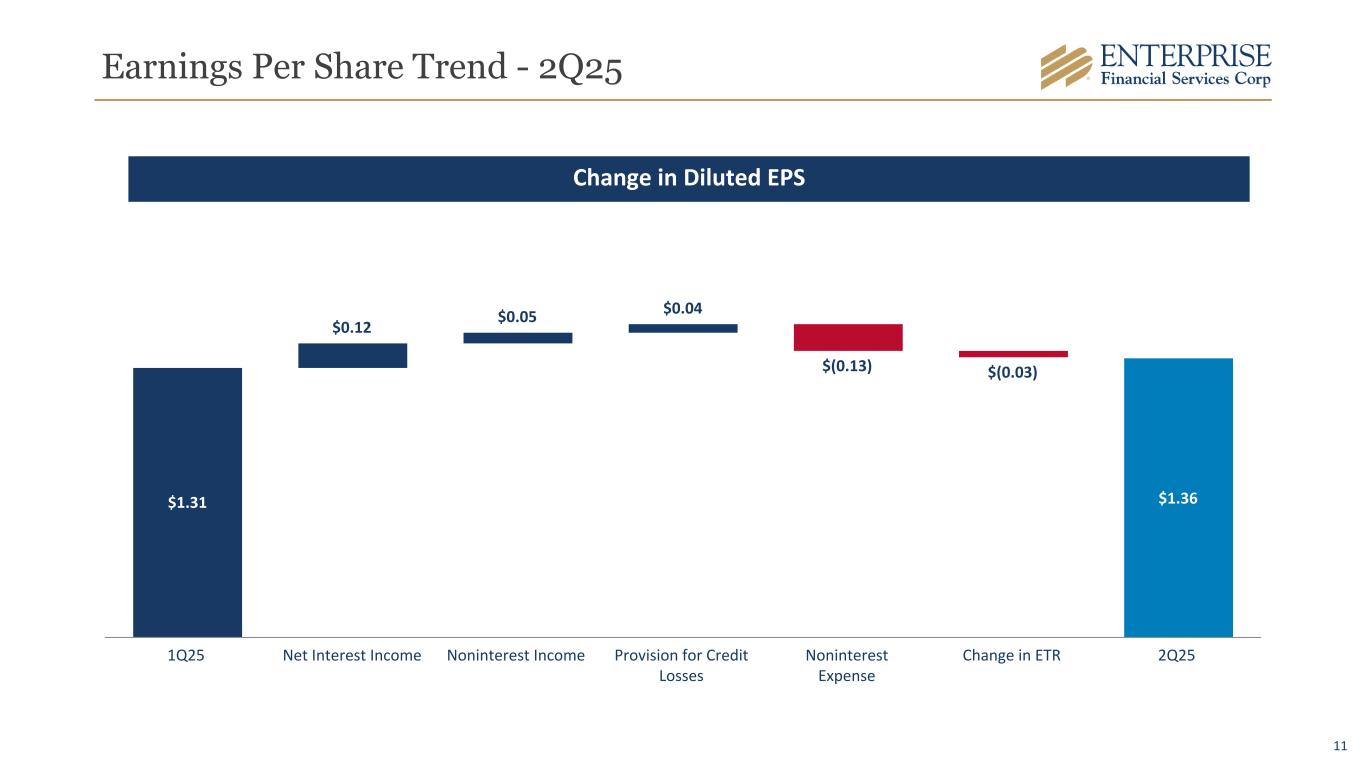
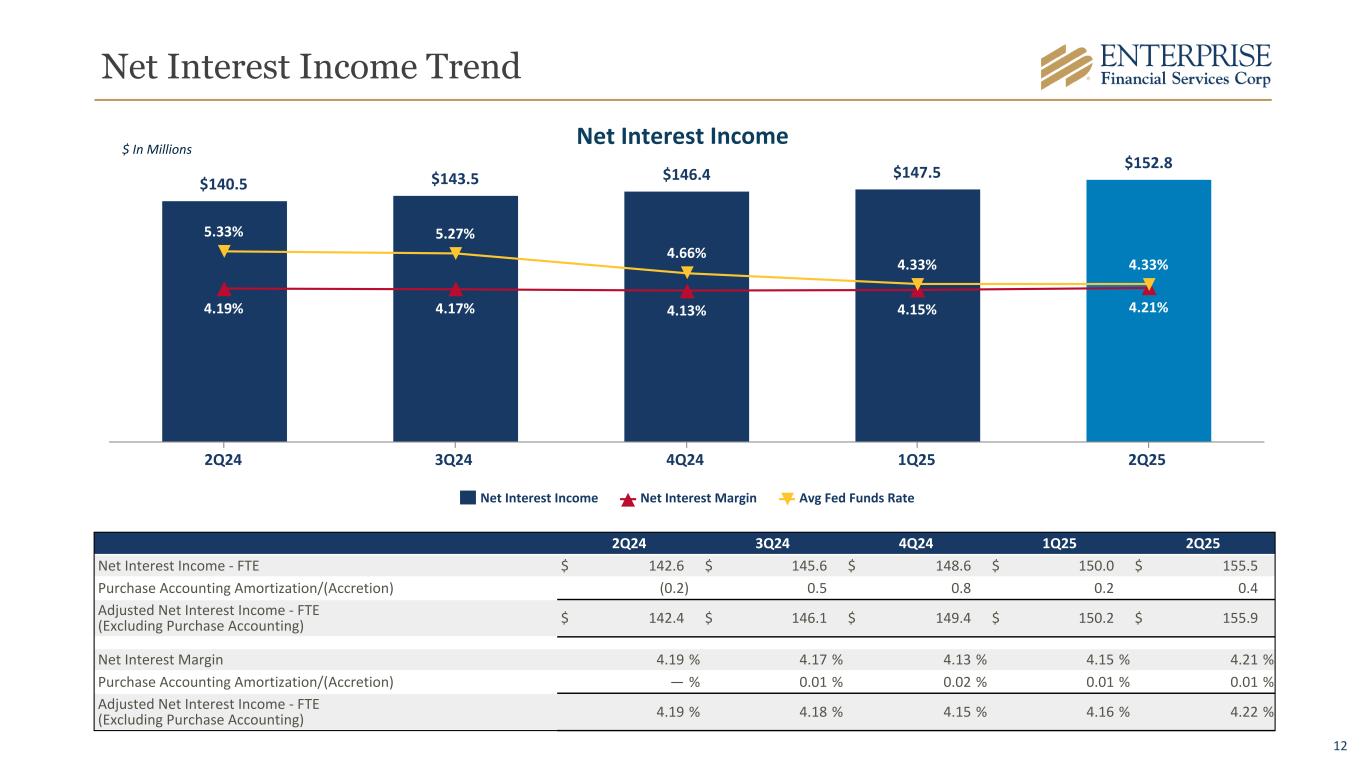
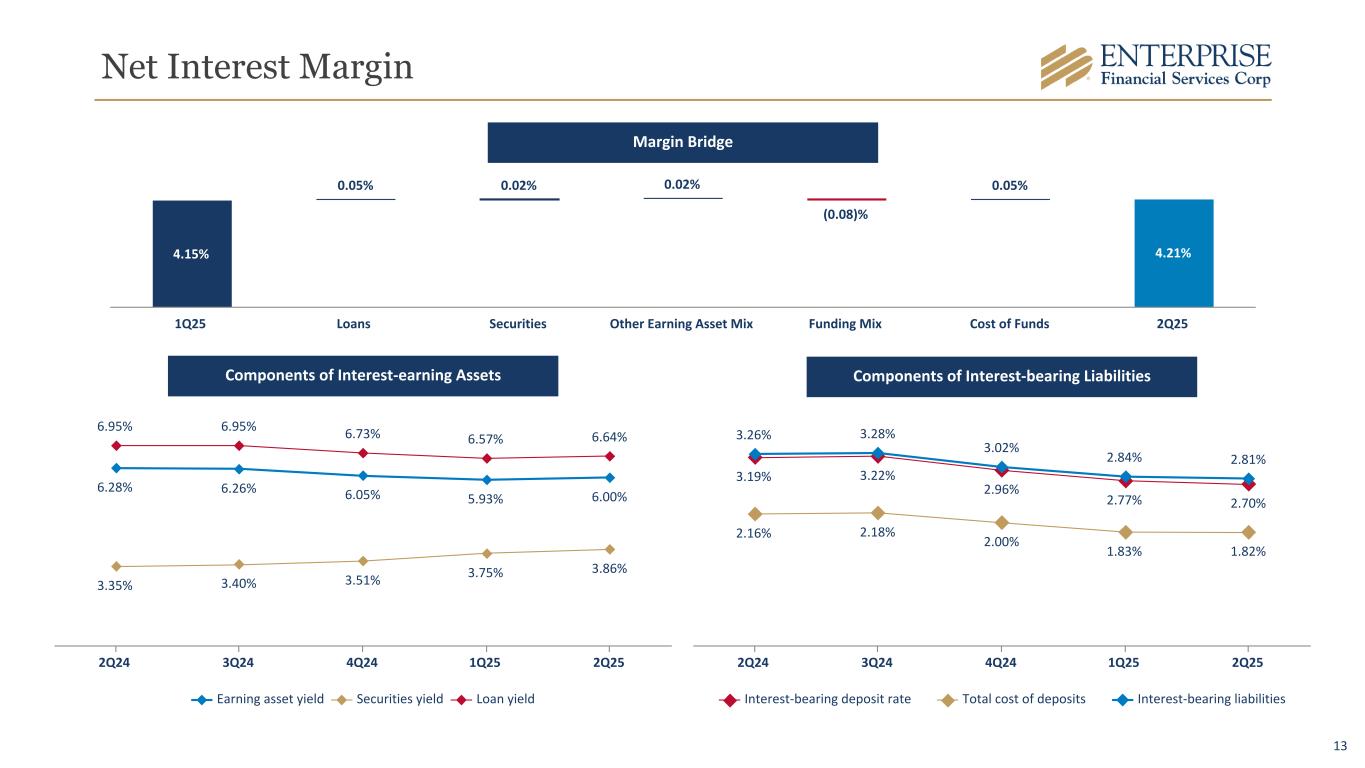
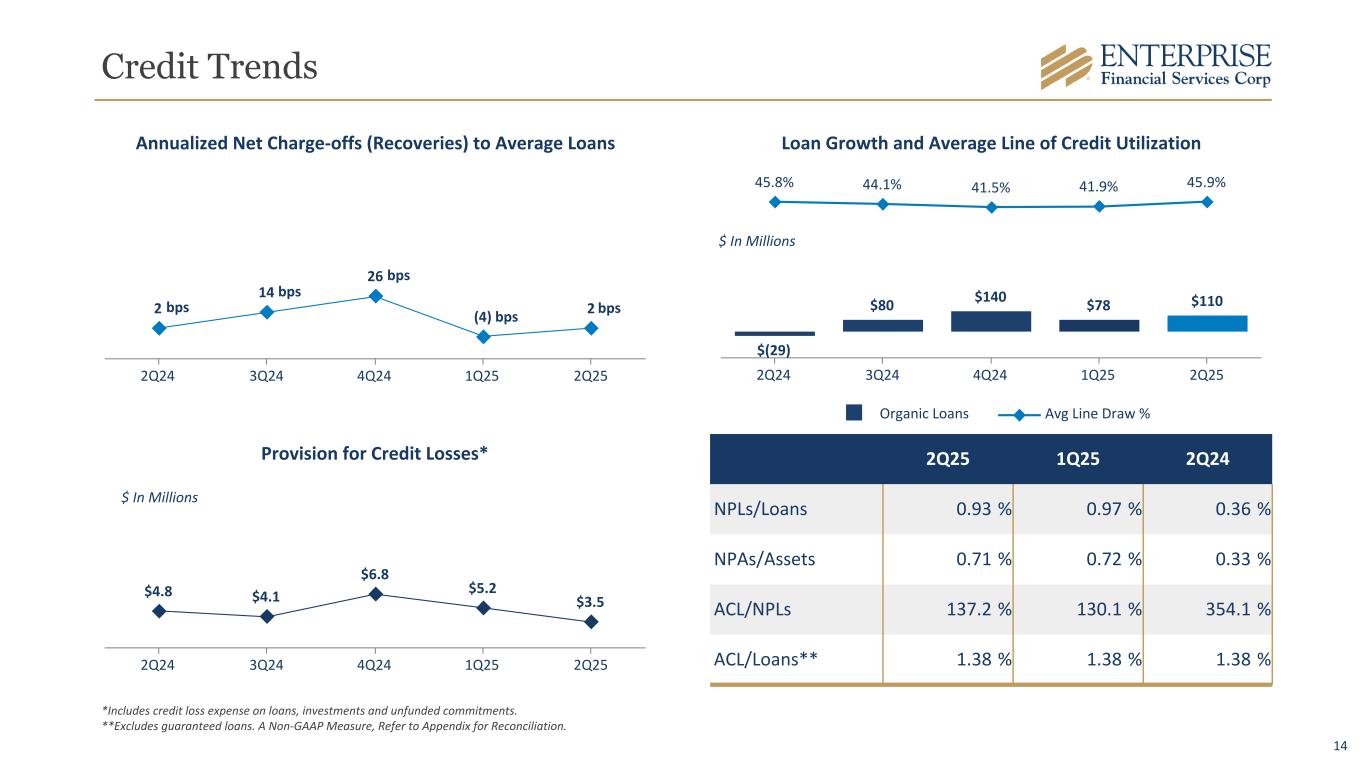
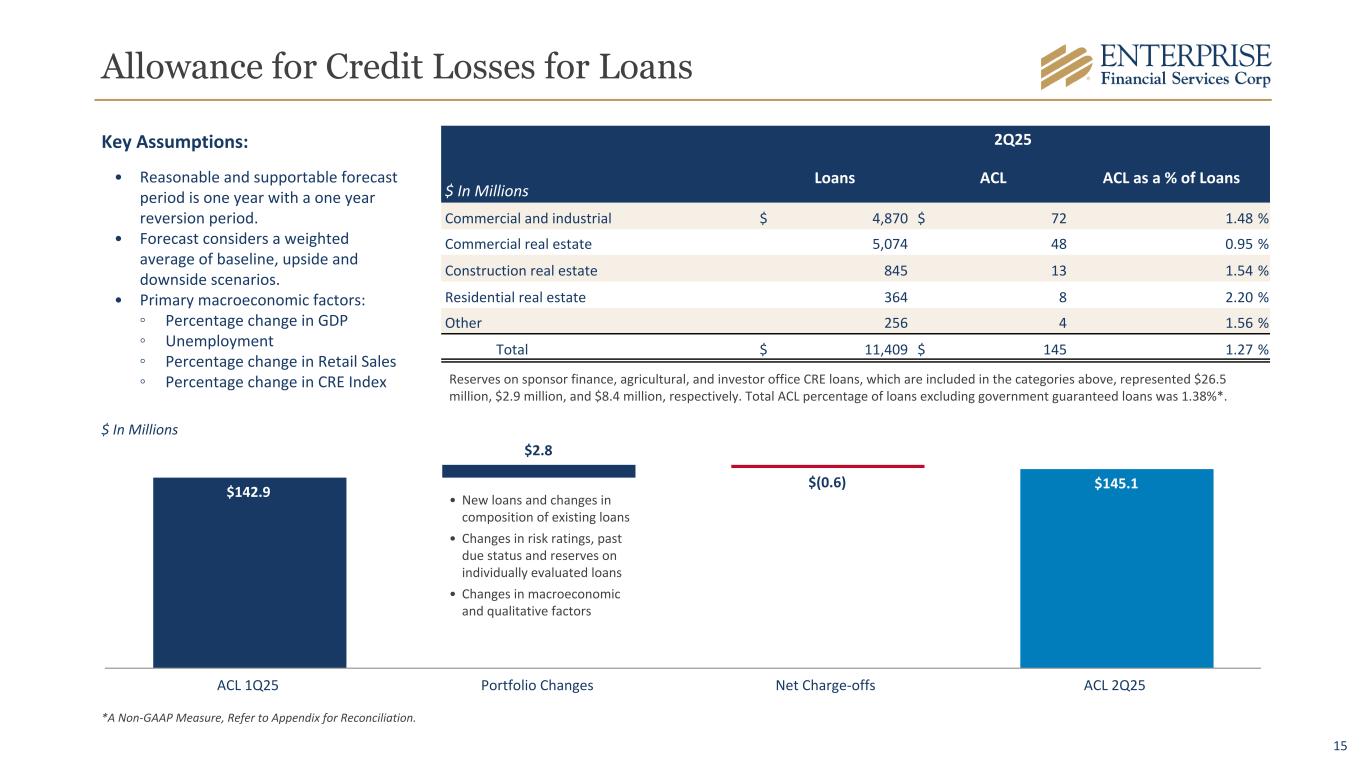
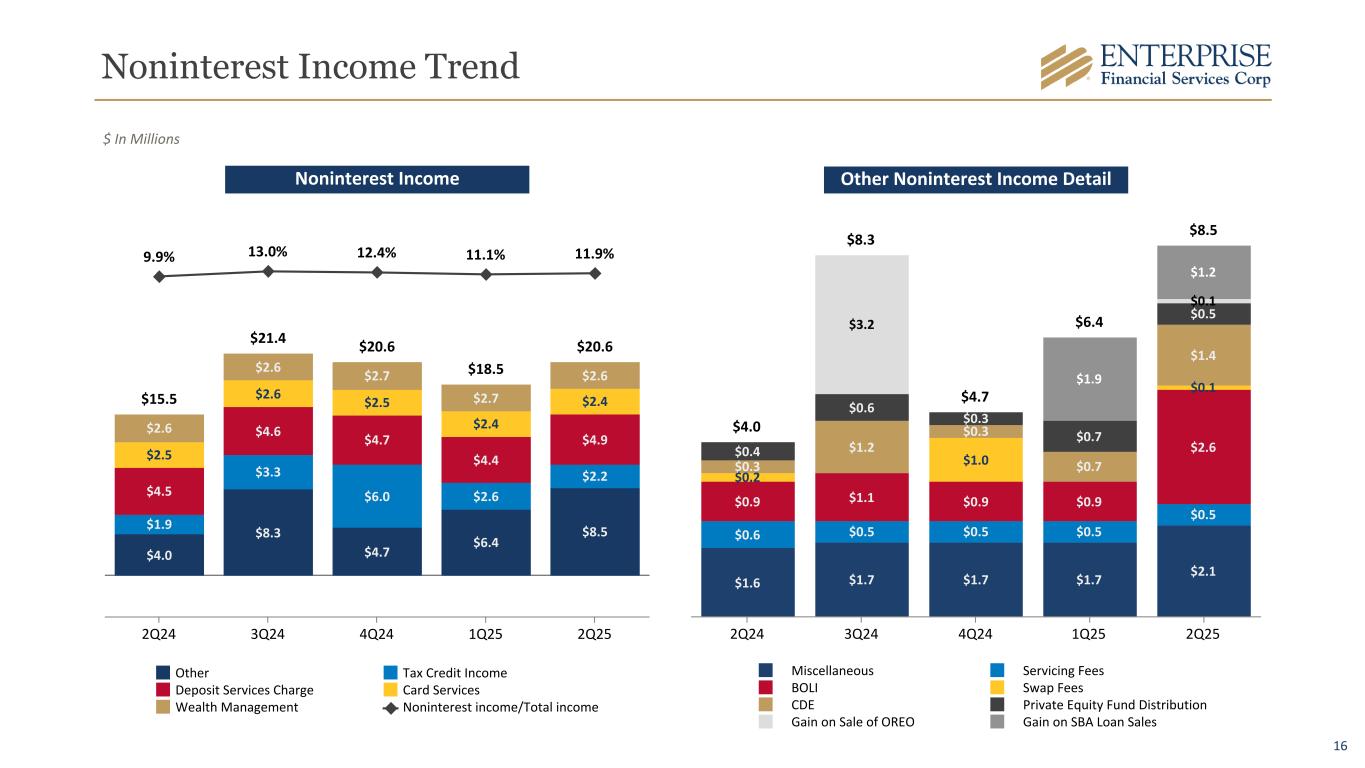
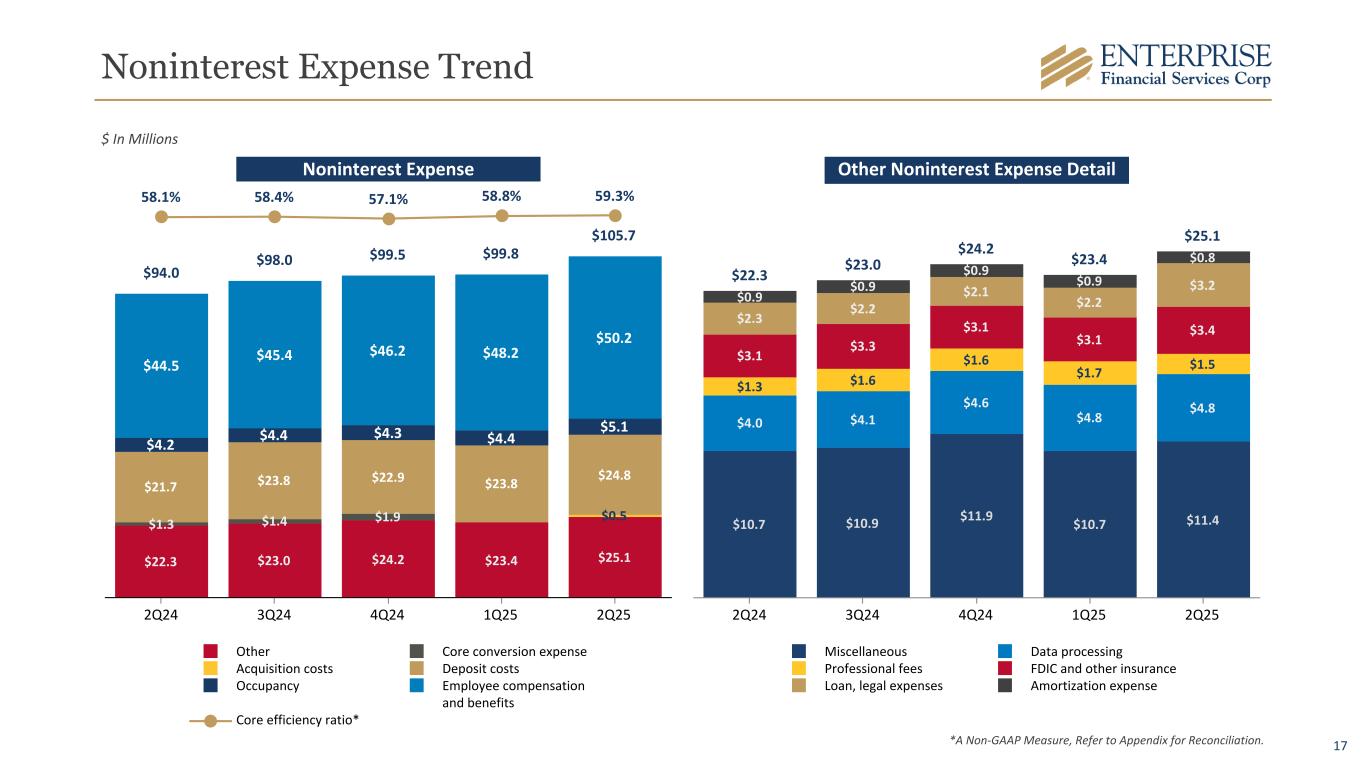
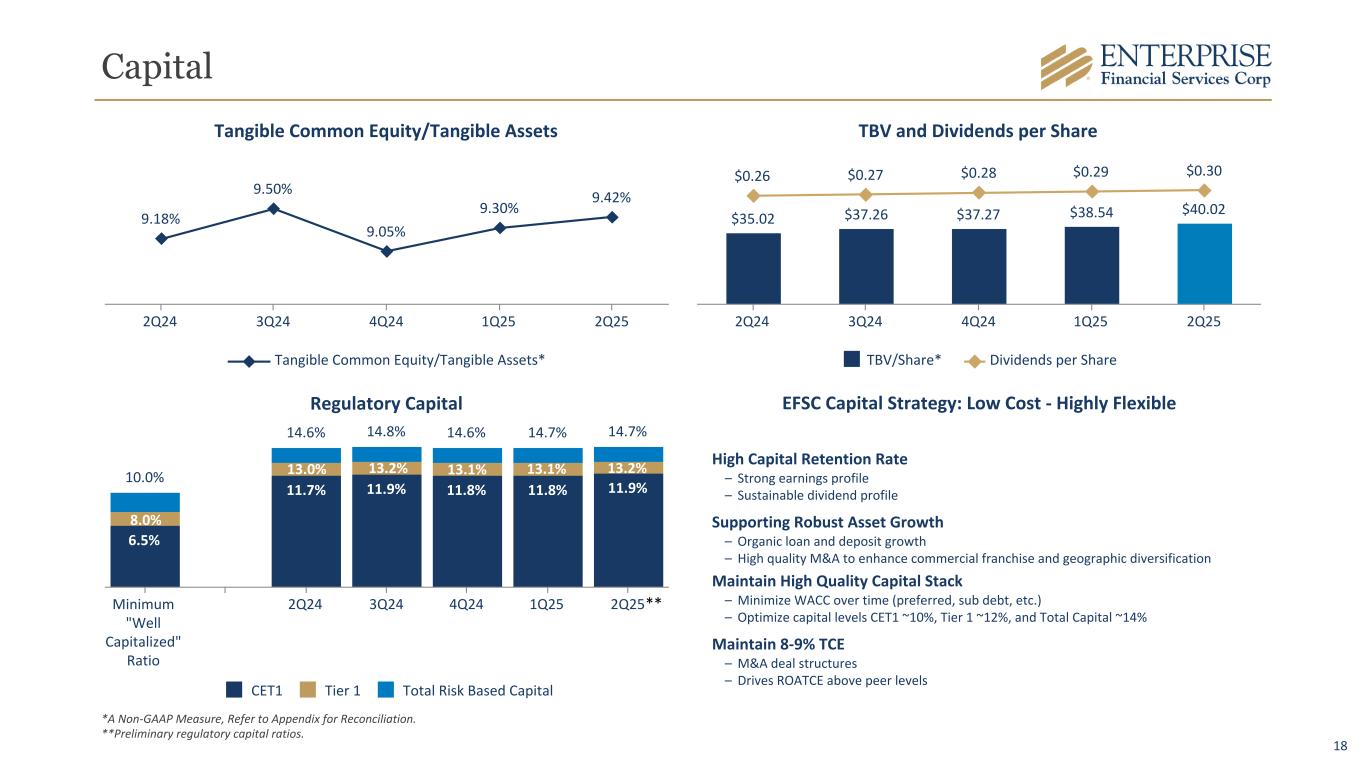
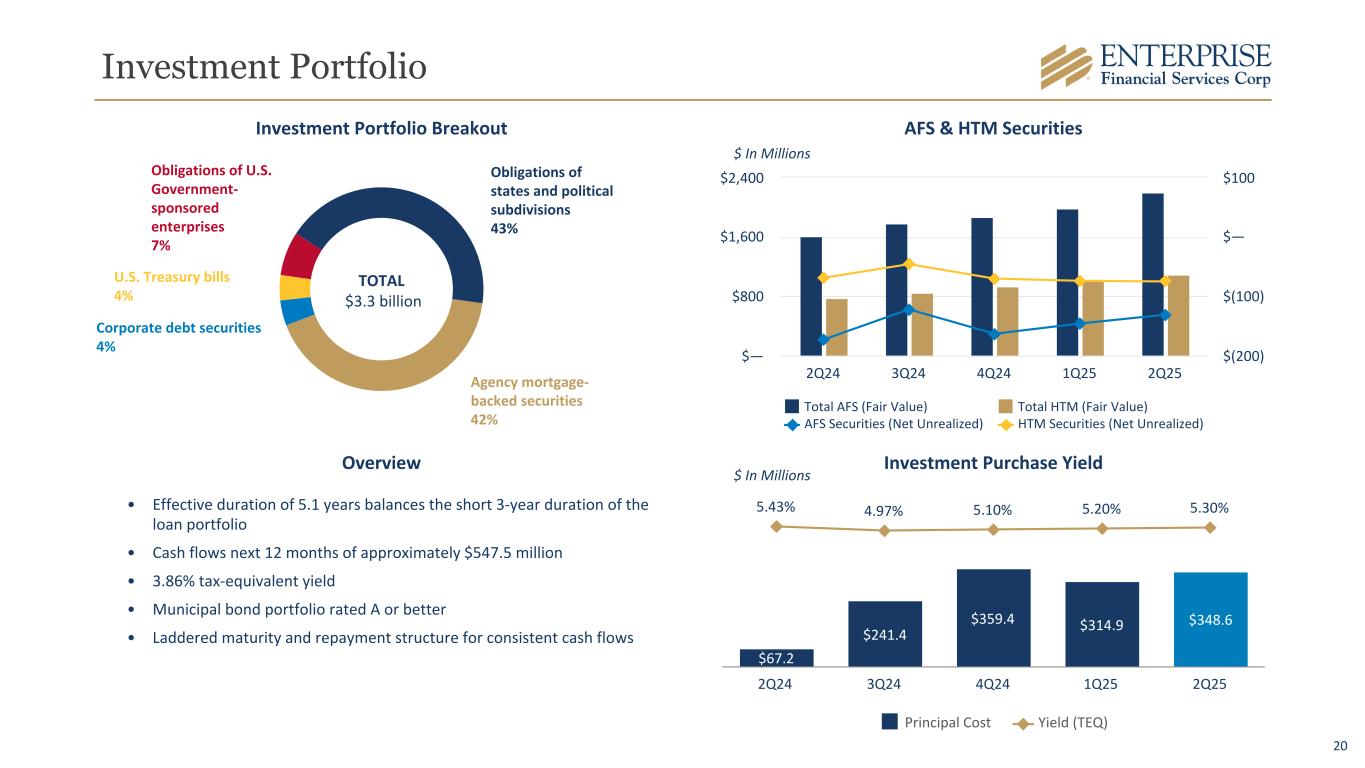
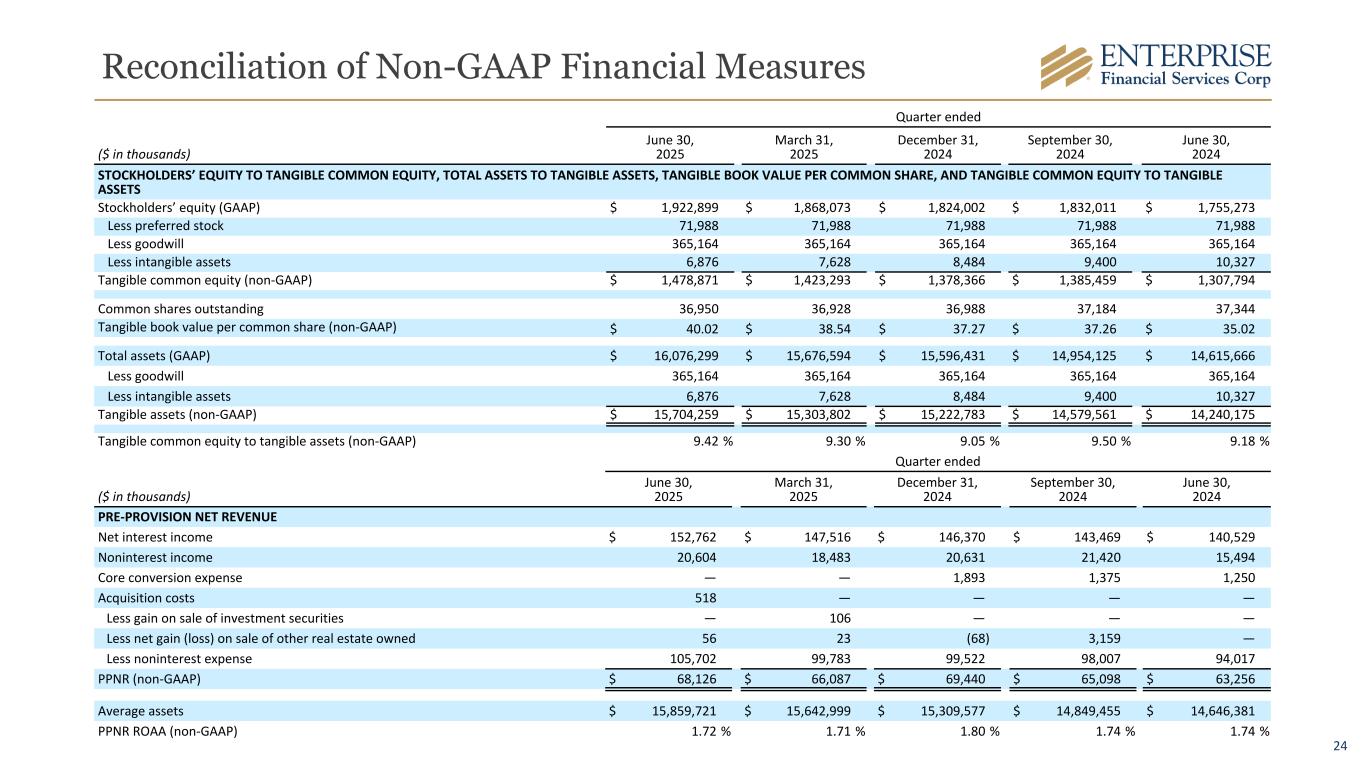
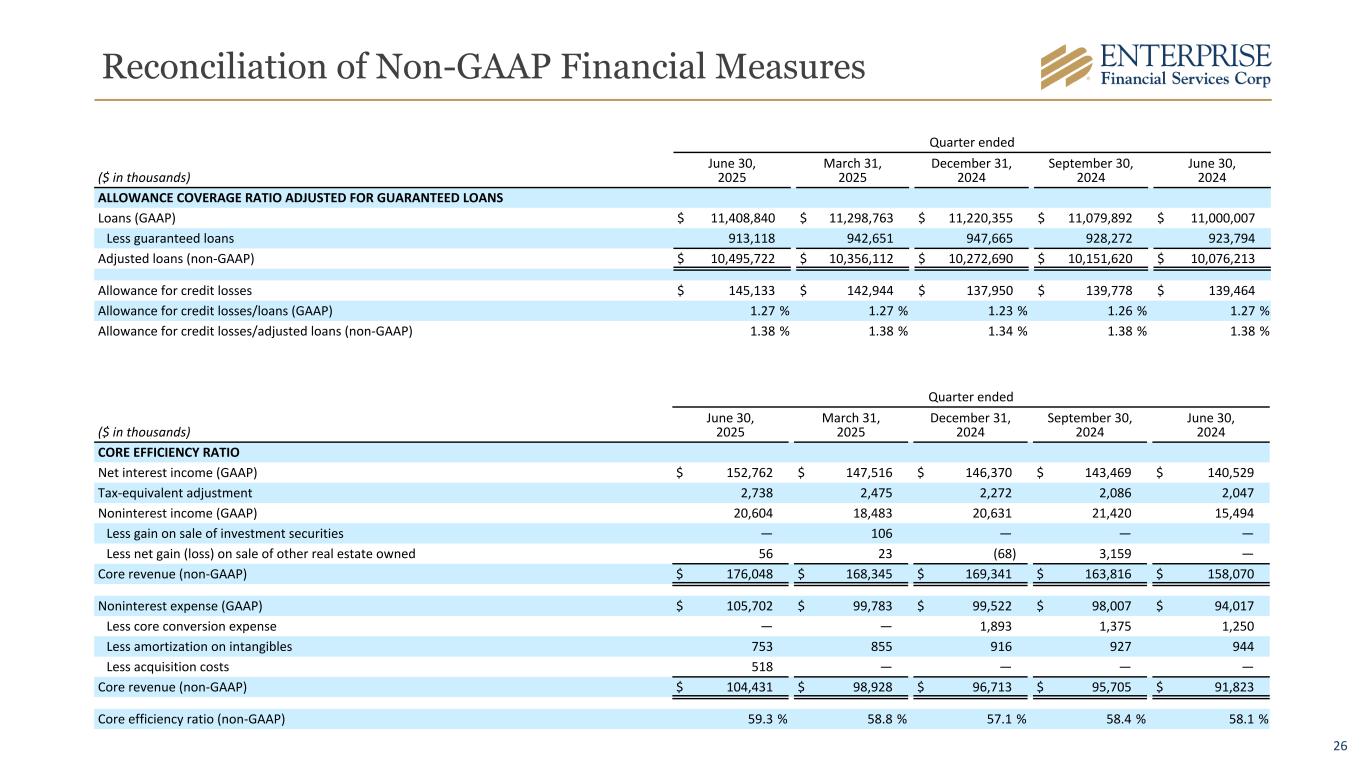
Thanks, Scott, and good morning. Turning to slide 11, we reported earnings per share of $1.36 in the second quarter on net income of $51 million. That's a 5 cent increase over the link quarter earnings per share of $1.31. On an adjusted basis, earnings per share was $1.37 in the current quarter. Adjusted earnings per share excludes the impact of acquisition costs and gains and losses on the sale of other real estate owned and securities. Our second quarter results were driven by the strength of our diversified business model. Net interest income and margin both showed strong expansion in the quarter and are a direct result of our active management of balance sheet growth along with our disciplined pricing of loans and deposits. Non-interest income increased over the link quarter and was aided by the additional bank-owned life insurance policies that were purchased at the end of the first quarter. The provision for credit losses decreased from the link quarter primarily due to a nearly $3 million recovery on a relationship that was charged off in 2018. Non-interest expense was higher in the quarter due to the full impact of merit increases that were effective at the beginning of March, an increase in deposit costs from continued growth in the deposit verticals, and acquisition costs related to the previously announced branch acquisition that we expect to close in the fourth quarter. Turning to slide 12, with more details to follow on 13, net interest income in the second quarter increased by $5.2 million to $153 million and reflected solid asset growth and pricing discipline on both sides of the balance sheet. Loan interest increased $6 million dollars on higher average balances and yields, including approximately 0.6 million dollars of interest recaptured in the tax credit portfolio on the refinancing of loans. Average balances were 117 million dollars higher in the quarter, while loan yields improved by seven basis points compared to the linked quarter. The average rate on loans booked in the second quarter was 7.26% and continued to move the average loan yield higher. Interest on investment securities grew by $2.8 million in the quarter, both on higher average balances and improved yields. The investment portfolio yield improved by 11 basis points over the link quarter, with the average tax equivalent purchase yield at 5.3%. Interest on cash and short-term investments declined $1.8 million on lower average balances. Interest expense increased $2 million compared to the linked quarter. Deposit expense increased by $0.7 million due to higher average balances and was partially offset by better average rates. Interest expense on borrowings increased $1.2 million with higher average balances on short-term FHLB advances. As a result, our net interest margin was 4.21% for the second quarter, an increase of six basis points over the length period. The earning asset yield improved by seven basis points, driven by enhanced yields on loans and investments. This included two basis points from the loan interest recapture previously mentioned that we do not expect to repeat. We also improved the earning asset mix by deploying excess cash and leveraging brokered deposits to support loan growth and fund additional investment portfolio purchases, both at attractive yields relative to the existing portfolio. Our cost of funds declined by three basis points, mainly as a result of a seven basis point decrease in deposit expense and partially offset by a less favorable funding mix. We believe our balance sheet is well positioned for the current rate environment and expect net interest margin to be relatively stable moving forward. Slide 14 reflects our credit trends. We had net charge-offs of under $1 million compared to a net recovery of $1.1 million in the linked quarter. Our consistent credit culture and management of non-performing loans is reflected in our net recoveries of one basis point of average loans so far this year. Provision for credit losses was $3.5 million in the period compared to $5.2 million in the linked quarter. The provision for credit losses benefited from $3.2 million in recoveries during the quarter, which partially offset the impact of loan growth and a worsening economic forecast. Non-performing assets were stable with the linked quarter at 71 basis points of total assets. As disclosed last quarter, the largest component of our non-performing assets is concentrated in two commercial banking relationships that went into bankruptcy due to a business dispute between the partners. These relationships represent 60 percent of our total non-performing asset balance. We believe we are well secured with collateral and individual guarantees and fully expect to collect each of the underlying loans. We continue to make progress on these relationships and we recently were granted relief from bankruptcy stay which will allow us to actively pursue enforcement of our rights and remedies. Slide 15 shows the allowance for credit losses. We continue to be well-reserved with an allowance for credit losses of 1.27% of total loans or 1.38% when adjusting for government guarantees. On slide 16, second quarter non-interest income of $21 million was a $2.1 million increase from the link quarter driven largely by bank-owned life insurance and community development income, partially offset by lower tax credit income and gains on the sale of SBA loans. The increase in BOLI income was primarily due to the purchase of additional policies in the first quarter and, to a lesser extent, the payout of a policy in the second quarter. Depending on levels of planned growth and activity in the SBA space, we may take the opportunity to sell more SBA loans as the year progresses. Turning to slide 17, non-interest expense of $105.7 million increased $5.9 million from the first quarter, including $500,000 of branch acquisition costs. Compensation and benefits increased $2 million, largely due to a full quarter of merit increases that went into effect March 1st, higher incentive compensation accruals, and an additional working day in the quarter. Deposit costs increased roughly $1 million from the linked quarter, primarily due to a $62 million increase in average deposit balances. Loan-related legal and other expenses increased $1.1 million during the quarter due to loan workouts and the foreclosure of certain properties related to non-performing loans. The core efficiency ratio was stable at 59% for the quarter. Our capital metrics are shown on slide 18. We grew tangible book value by 4% in the quarter and over 14% in the last year. Our tangible common equity ratio was 9.4%, up from 9.3% in the linked quarter. While our TCE ratio is higher than our targeted level of 8% to 9%, the branch acquisition that is expected to close in the fourth quarter will leverage our excess capital position. We also ended the quarter with a strong common equity Tier 1 ratio of 11.9%, and that has increased nearly 30 basis points over the last year. Our strong capital position and earnings profile allowed us to increase our quarterly dividends by $0.01 to $0.31 per share for the third quarter of 2025. We had a strong start to 2025 and believe the momentum will carry us to the latter part of the year. Our earnings profile and balance sheet are strong. The strategic branch acquisition that is expected to close in the fourth quarter will help us continue to deliver top-tier financial performance. I appreciate your attention today and will now open the line for questions.
Operator
At this time, I'd like to remind everyone, in order to ask a question, press star, then number one on the telephone keypad. We'll pause for just a moment to compile the Q&A roster. It comes from the line of Jeff Rulis from DA Davidson. The line is live. Thanks. Good morning.
Morning, Jeff. Just a couple questions. Maybe just some line item detail. You guys usually provide pretty good color, so I'm going to go granular. On the fee income end, I heard you on the bully, much of which is new policy. I guess there's a number of line items and kind of other that a little higher on a run rate. I'm hoping to maybe get a sense for outside of state tax credit activity. How are your expectations for fee income, kind of the second half of the year?
Yeah, Jeff, this is keen. I mean, I think when I look at it in total, you know, the first quarter overall is kind of a good proxy, maybe with some changes in the line items. I do think that SBA sales will be on the table again. You know, obviously about a million won of the bully, it will continue to recur each quarter. And then, you know, there's some line items like CDE and private equity that are difficult to predict, but we've had some contribution from them of a penny or two in each of the quarters. And so that's essentially what I would expect. And then we're optimistic or hopeful that the JV on the tax credit line item will be kind of neutral to third quarter earnings, and then we'll resume some seasonal strength in the fourth quarter. Obviously, fair value moves around in that line item, but I think that's sort of how we have it pegged in terms of what we're thinking.
Gotcha. No, helpful. That was exactly what I was looking for. And maybe the same question on the expense side. I felt like that merit increase was a little higher year-over-year than the jump 1Q to 2Q the prior year. I don't know if there was a change calendar-wise, but that's kind of part A of the question. And then the legal running a little high, I guess a similar question of, can we get closer to that $100 billion run rate? Or is this the new level we should grow off of?
Yeah, Jeff, I think the overall level grows off of where we are today. And I'll give you some color on why that is. So what you're seeing a little bit in the comp and benefits is some one-time bonuses for new hires in the second quarter. You know, you heard Scott mention that we added to the Texas market. So that's, you know, that's a little bit there. One more work day in the quarter, which is about a half a million dollars. And then, you know, our performance year to date has been really strong. And so we needed to add to incentives. So you're seeing a few things together that maybe just show up as merit. But I think there's a little bit of stacking on top on the the comp line item um and then you know the the deposit verticals continue to grow well and i think in the back half of our forecast you know as we started the year we had you know some more rate cuts and we're not getting those and so those are accruing to our benefit in the net interest income line item but as the deposit verticals grow we expect that that line item will step up another million one to million five sequentially as we get expansion there in the next quarter. And then on the loan legal, some of that's just a function of where we are with the large non-performers that we have. Obviously, we got some positive news there, but I don't know that we have any expectation that those fees will drop off. But they are an opportunity moving forward when we when we work our way past those those items oh okay that that last bit that was tied to the southern california credits um i mean yeah i don't i'm not sitting here looking at the detail of it but certainly that that has an impact um you know significantly that that's something that we've had to pay very close attention to um and and we've we've devoted a lot of time and resources too.
Got it. And I had one last one, if I could, either Jim or Keane, you know, on the capital levels, I think Keane, you mentioned the branch deal will kind of ease into the, you are higher on capital levels, kind of exceeding kind of your targets, but does the branch deal sort of normalize that, those capital levels? And just any update on that capital kind of priorities from here. Thanks.
Well, let me handle the priorities, Keenan. You can get into the details on the branch acquisition. Our priorities remain, Jeff, really just support our growth. And we think we're going to have some nice growth in the back half of the year. We'll continue evaluating our dividend policy going forward. And then obviously, you know, the branch acquisition is the next key there.
And Keenan, you want to talk about that a little bit? yeah jeff that's roughly 100 basis points of capital across the board gets leveraged there so you go you took nine and a half and you go down to eight and a half so it's right in the middle of our target um and then we do anticipate uh calling the sub debt in the second call period here so that would really affect the third quarter we've got liquidity lined up to replace that but obviously that's a capital instrument that comes out of the tier two stack so we're comfortable there running with a little bit higher TCE or CET1 as we evaluate options to modify the capital stack moving forward. But we're going to be patient with that latter activity.
Appreciate it. Thank you.
Operator
Your next question comes from the line of Damon Del Monte from KBW.
Your line is live. hey good morning guys thanks for uh taking my questions um keen can you just kind of talk a little bit more about the margin and the outlook it sounded like you were kind of hopeful you could kind of keep it pretty steady from this level kind of in the back half of the year is that a good way to characterize it yeah i would say the the most near-term pressure on margin we see damon is really here in the second quarter so we expanded the size of the securities portfolio in the second quarter to really make sure that we secure the economics from the excess liquidity of the branch transaction. So that was really funded with some of the brokered CDs and obviously incremental margin there was a little bit lower. And while most of that was largely absorbed and margin in July was in good shape, that may cause net interest margin just to have a little bit of pressure. And then the sub-debt that I mentioned moves the floating rate for the quarter. And that's a 5% essentially pickup in the rate there adverse to us. So those couple things are going to move it around a little bit. I think dollars are going to be in good shape with where we sit and with the balance sheet expansion that we've had. And then I think I'm more confident that margin, let's say without rate cuts, um, you know, is, is stable and potentially growing, you know, for the next four quarters, if we get rate cuts, um, you know, that'll pressure margin by, you know, a few basis points each time there's a cut. Um, it'll take us a little bit to, to get the deposit pricing out of it, but, you know, we're assuming a beta on cuts that's worse than, than our current performance from, from the last hundred basis points. So I think we're a little bit conservative there. And then we also we get a favorable offset from, you know, the non-interest expense line item for the deposit costs. But everything I'm looking at across my page is suggest growth in, you know, net interest income dollars for, you know, sort of the foreseeable four quarters on the existing balance sheet. And then the branch transaction obviously comes in and significantly improves the earnings level. And, you know, we expect at least in the initial year, you know, mid-single-digit EPS accretion, if not a little bit better.
Okay, great. Thanks. That's helpful. And then with regards to the outlook for loan growth, you know, I think the first two quarters were like 3% and 4% link quarter annualized basis, respectively. based on what you're seeing with pipelines and investor sentiment. Do you feel like you could kind of keep it at least at this pace, or do you expect it to maybe pick up a little bit in the back half?
Yeah, David, this is Jim. I would expect it to pick up for all the reasons I discussed in my comments that, you know, there's plenty of pent-up demand, plenty of discussions happening. Pipelines are good. And I think there's just need some certainty. I think the tax bill is the first piece of certainty. and then some of the news we're getting from the trade policy with the various countries and what have you. It's not the number per se. It's just that there is a number. There's clarity. They can now plan and move forward. And I think the least of the three really is interest rate cuts. If people are doing fine without rates moving, they do move all the better.
But I think those first two things really moved the needle for us such that if we're at 4% now, I'd see us ticking up to five six seven percent for the back half of the year that's great um that's all that i had thanks so much for my taking my questions you bet thank you your final question comes from the line of brian martin from chani your line is live hey good morning guys good morning brian good morning brian hey ken i was wondering could you give us where the ballpark of where the where the margin exited the quarter given kind of the securities purchases, and then maybe just can you put any fence around? It sounds like the margin, you know, potentially just a bit lower here in 3Q, and then, you know, maybe it's up thereafter, you know, absent, you know, the rate, potential rate cuts, but just trying to put a fence around how, you know, what's the delta that, you know, you expected could range from as far as being lower next quarter based on the sub debt and the securities you talked about?
Yeah, I mean, Brian, I think we've said this for the last couple of quarters. It's going to depend a little bit on where growth is. So, you know, as you heard from Jim, we're a little bit bullish on growth. I think that that means that we're down a few basis points on margin. You know, we're at 421. If you sort out some of the non-recurring stuff, you know, you're at 419 and, you know, maybe you're down slightly from there. And I I will always caveat that I'm talking about, you know, literally the basis points here. So I don't I think there's a couple of things that could affect it. But if you get the growth and you erode margin a little bit, we're still going to have, you know, good dollars performance sequentially. So, you know, I think it's still high teens, low 20s, you know, in that range that we're talking about here. We're not quite as pessimistic as we were 1Q to 2Q because we've been able to do such a good job in multiple successive quarters, you know, both on the deposit side, on the loan side, and then also securities deployment has been, you know, continued to be stronger than we planned. And so, you know, I think that playbook will continue here in the third quarter.
Gotcha. No, that's helpful, Ken. And then just the outlook after you kind of get through this quarter is if we don't see rate cuts, it's more of a modest upward bias or stable rather than, you know, lower is fair.
Yeah, we certainly feel, and what we show here is that there's an upward, you know, opportunity on the static balance sheet. And then, you know, the branches that we're acquiring, we expect will come in at a slightly better margin than, you know, where legacy margin is. um and and so that'll you know buoy it a little bit in you know fourth for most of the quarter and then first for full quarter so i think you know those are those are all positive attributes barring barring anything substantial on the interest rate side gotcha okay appreciate the color there and then maybe just on the the team that you brought on in in texas can you give any any color on that team in terms of size do they have non-competes or or should they begin to kind to hit the ground running right away hey Brian Scott how are you I can answer that one yeah
this is a team we've been really talking to from maybe over a year they're they're on board they've hit the ground they don't have restrictions regarding non-competes so we're already seeing new business we're already seeing a pipeline they really focus on what I'll call the low to midsize C&I businesses, which I think fits in well with what we're doing in Dallas, which is more of a CRE and larger C&I strategy. So, so far, so good with them. And it's a team of three, by the way, three that I've been together for quite some time and really are from that area. Gotcha.
Okay. And then I guess you guys talked about, someone mentioned earlier, just the, you know, that maybe you didn't grow loans quite as much as you, you know, could have this quarter are just kind of protecting the margin. Is that kind of the outlook going forward in terms of maybe a little bit less growth? I know, Jim, you talked about the optimism on the items you talked about, but just trying to understand the growth, the opportunities relative to kind of protecting that margin.
So I look at it this way, Brian, that the pie is going to expand a little bit in the back half of this year. And what we saw was, especially on transactional type of things, real estate and what have that we could have jumped in for a greater share of it, but we would have had to really compromise the discipline that we've had in place regarding price, and we just chose not to. And was it, you know, two percentage points? No, but it was, you know, decent numbers for sure. And so we want to make sure we're disciplined. I just think the pie is going to be bigger such that we can maintain our discipline, but also grow because there's going to be more opportunities in the back half of this year in the 26th.
And then just the last one for me, can you mention the SBA, just kind of your commentary about being opportunistic there? Is that more of a near-term event, or is it more consistent over time that maybe you think about selling more of the SBA where it's part of a regular, consistent approach?
Yeah, I would say we're dipping our toe in this year more than we have in the past, and we're going to see how that plays out. So I think to the extent that Jim's comments affect all of the businesses, including SBA, certainly elevated production would cause us to continue to look at loan sales. It's a liquid variable rate asset that, in theory, in small doses, we can use to trade and go buy securities that are fixed rate and further neutralize the balance sheet. So that's part of that strategy. um, it's, it's also a little bit reflective of, you know, having, having some balance sheet growth here with a, with an M&A transaction. So, um, you know, we're, we're experimenting this year. I think we, we like it to help, uh, you know, solidify the, the fee income line item. And, you know, when, when we're a little bit more defensive, um, you know, from a rate and growth perspective, it certainly helps us. So I think third quarter, I would anticipate having some level of SBA gain, albeit maybe at a diminishing level. And then fourth quarter, I think the tax credit line item would carry the day there.
Yeah. And then just one last thing, if I can ask you, is just the industry in general is seeing a bit of a pickup in M&A. Obviously, you guys have the branch deal and a lot on your plate with the team you brought on and the growth opportunities. Is, I guess, any different, or can you give any update on just how you're thinking about, you know, regular bank M&A in terms of, you know, it doesn't seem like it's a priority, but just trying to kind of confirm that.
Well, Brian, you hit the nail, the first priority really is to make sure that we onboard our new clients and associates well here in the back half of this year. Like many institutions, we have ongoing conversations with plenty of companies. and I think we can think about getting more serious but we really have to really look and make sure that it enhances the strategy. I mean you look at the growth that we have the compound of tangible book value and things of that nature that's going on we want to make sure that it doesn't slow down what we have going organically so it really has to enhance the strategy that that we're undertaking. The other thing too is just because we're not participating in the M&A is happening in our markets, we are benefiting from it. And that benefit occurs ongoing. It's just not immediate. It goes on and on and on. And think about what's happening in Dallas and Southern California, and certainly out in our Western markets. There's plenty of opportunity for us to participate in others M&A, and we're doing so very well.
Gotcha. I appreciate the update. Thanks for taking the questions, guys.
You bet. Have a good day.
Operator
There are no further questions I'll now turn the call back over to Jim Mali for closing remarks thank you Jordan and thank you all for joining us this morning and for your interest and support of our company I have a great day and we'll talk to you next quarter ladies and gentlemen that concludes today's call thank you all for joining you may now disconnect