Operator
Thank you for standing by. My name is Carly and I will be your conference operator today. At this time, I would like to welcome everyone to the Enterprise Financial Services Corp third quarter 2025 earnings conference call. All lines have been placed on mute to prevent any background noise. After the speaker's remarks, there will be a question and answer session. If you would like to ask a question during this time, simply press star followed by the number 1 on your telephone keypad. If you would like to withdraw your question, press star 1 again. I will now turn the call over to Jim Lally, President and CEO. Please go ahead.
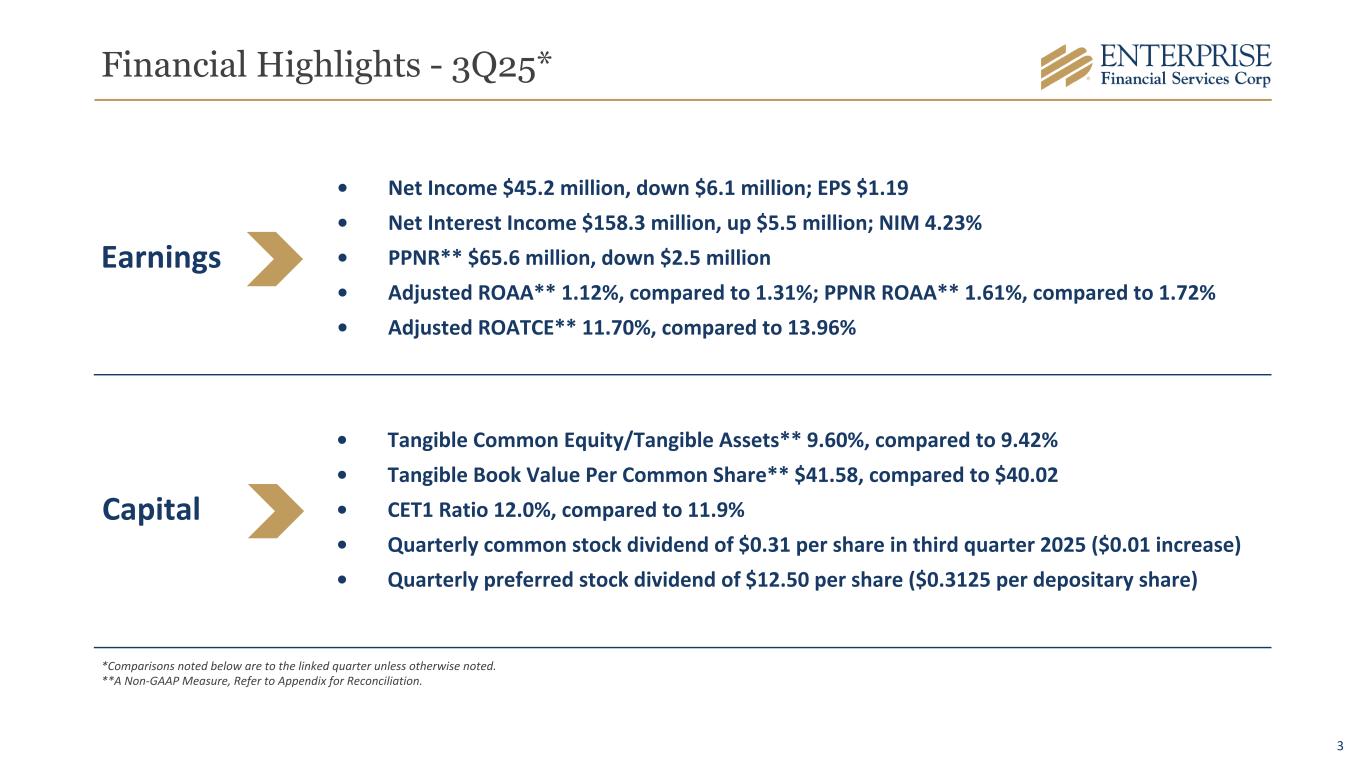
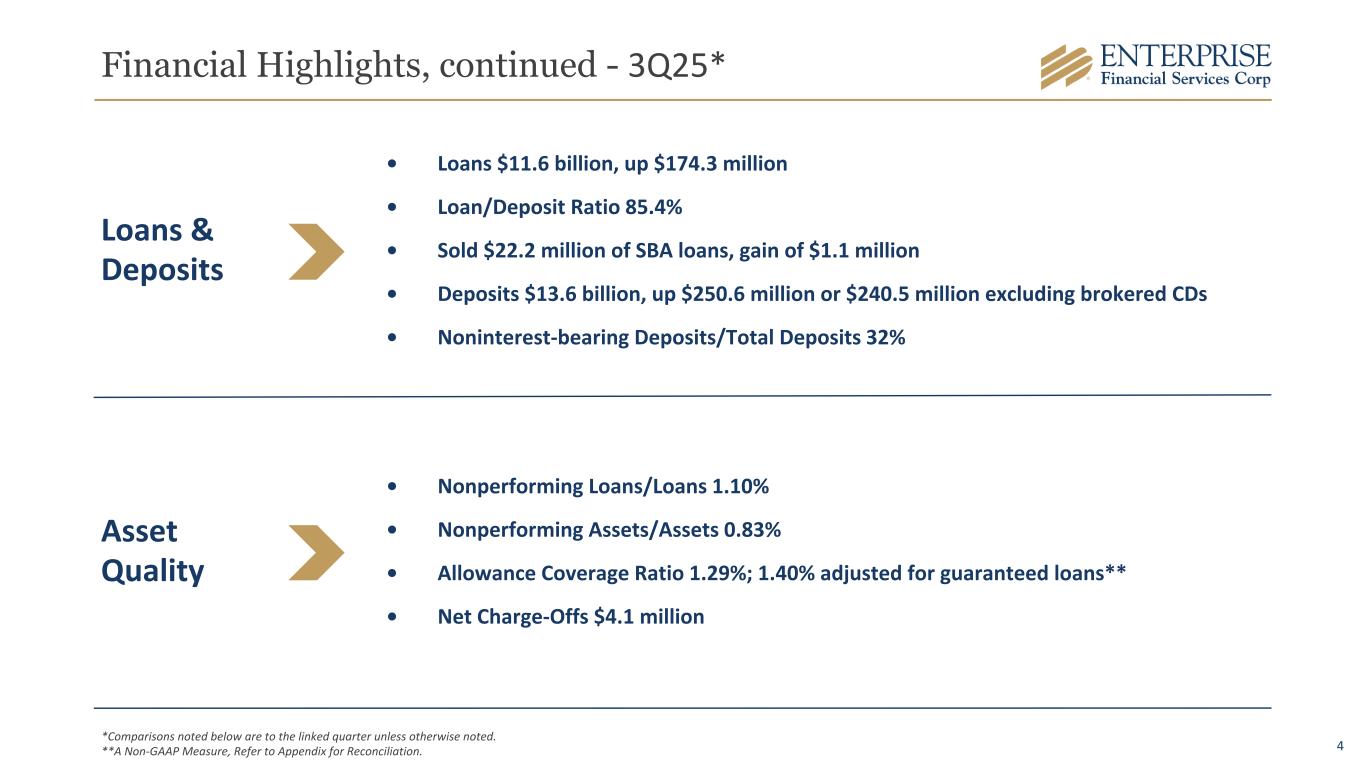
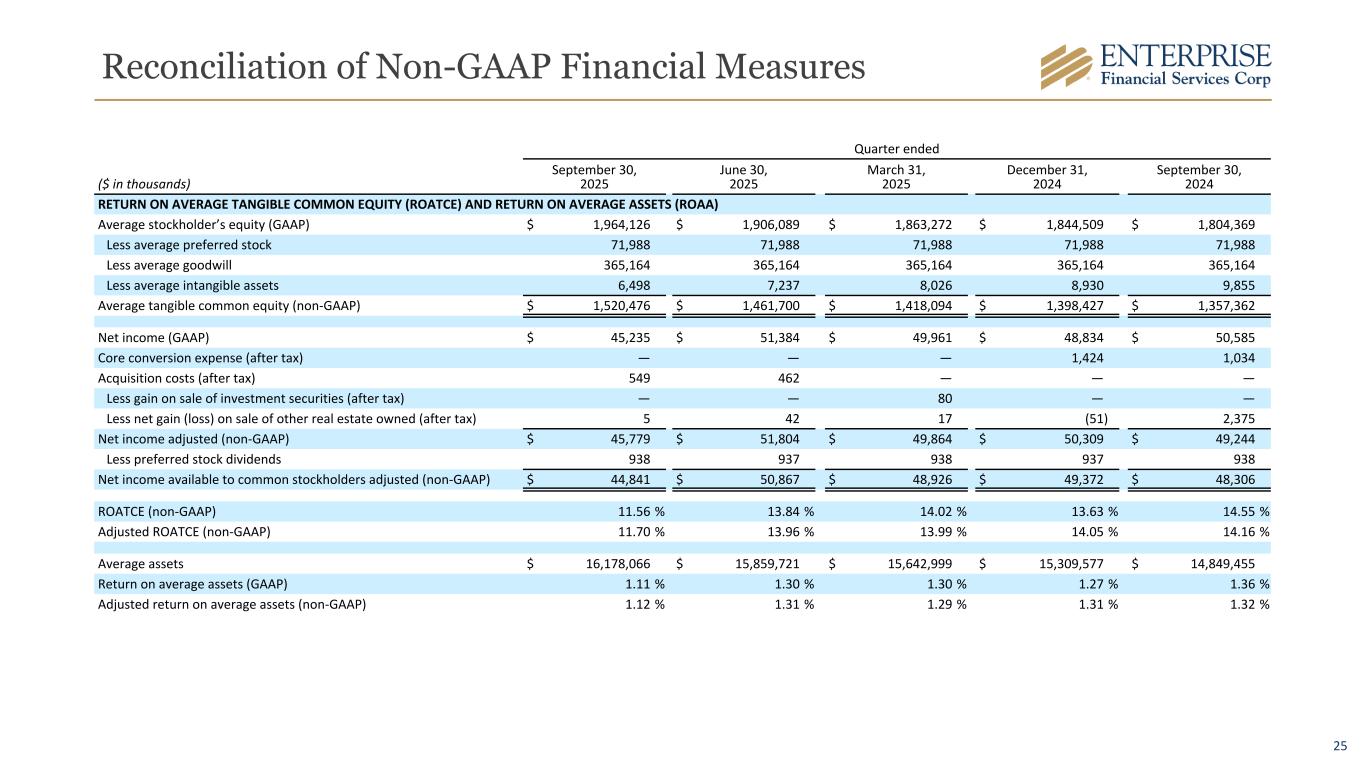
Good morning, and thank you all very much for joining us for our 2025 third quarter earnings call. Joining me this morning is King Turner, our company's Chief Financial Officer and Chief Operating Officer, and Doug Bauke, our company's Chief Banking Officer. Before we begin, I would to remind everybody on the call that a copy of the release and the company presentation can be found on our website the presentation and earnings release were furnished on scc form 8k yesterday please refer to slide two of the presentation titled forward looking statements and our most recent 10k and 10q for reasons why actual results may vary from any forward looking statements that we make today the third quarter was another very solid quarter for our company as we expected we saw loan growth return to an annualized level of 6% while deposit growth continued well above this level. This was a continuation of our intentional strategy to lean into our diversified geography and national businesses that allow us for our team to focus on the business that fits us the best versus settling for a transactional business that achieves certain growth targets. In addition to this, we spent considerable time on the recent closing and systems conversion for the acquisition of 10 branches in Arizona and two in the Kansas City area. As a reminder, this acquisition garnered us approximately $650 million of well-priced deposits and $300 million in loans, but more importantly, enhances an already strong presence in two strong markets for us. We did experience an increase in provision for loan losses in the quarter primarily due to a $22 million increase in non-performing assets and net charge-offs. Doug will provide much more detail in his comments, but I feel good about our ability to work through these issues and expect our NPAs to return to historical levels over the next few quarters. The recapture of transferable solar tax credits in the quarter caused some noise in our income statement. This investment was a component of our income tax mitigation strategy and is not related to our tax credit loan and fee businesses. Keane will provide details on this and walk you through the accounting treatment in his comments, but I want to reiterate that this project is covered by insurance. With that said, we earned $1.19 per diluted share in the quarter compared to $1.36 in the linked quarter and $1.32 in the third quarter of 2024. This level of performance produced a return on average assets of 1.11% in the current quarter and a pre-provisioned ROAA of 1.61%. Net interest income and net interest margin both saw expansion in the quarter. Net interest income improved by $5.5 million when compared to the previous quarter and net interest margin improved by two basis points, 4.23%. This was the sixth consecutive quarter that we saw net interest income growth. These results reflect our continued focus on pricing discipline on both sides of the balance sheet, combined with overall steady growth. We continue to improve on striking the correct balance of providing a strategic consultative experience for our clients with appropriate growth. I am confident that this model will continue to provide for our ability to grow NII on an annualized basis, loan growth in the quarter was 6% or $174 million, net of $22 million of guaranteed loans that were sold during the quarter resulting in a gain of $1.1 million. We continue to see really good progress in our Southwest markets with high quality growth coming from newer markets like Dallas and Las Vegas. Overall, we originated loans in the quarter at a rate of 6.98%, which continues to be accretive to the overall portfolio yield. Deposit growth in the quarter was exceptional. Net of brokered CDs, we were able to grow deposits by $240 million. As impressive was the fact that DDA remained at 32%. While our national verticals provided for much of this growth in the quarter, we have experienced deposit growth from all of our regions year over year and would expect to see our typical fourth quarter swell from these markets to finish the year strong. Our ability to continue to grow deposits gives us plenty of liquidity to fund future loan growth while keeping our loan-to-deposit ratio at an appropriate level for our company. Our well-positioned balance sheet continues to be a strength for our company. Capital levels at quarter end remain stable and strong with our tangible common equity to tangible assets ratio of 9.60%, yielding a return on tangible common equity of 11.56%. This return profile and continued expansion of our tangible book value per common share, which increased over 15% on an annualized quarterly basis. This level of compounding of tangible book value per share far exceeds our 10-year CAGR of just over 10%. Given the strength of our earnings and our confidence in our ability to continue to perform at a high level we increased the dividend by one cent per share for the fourth quarter of 2025 to 32 cents per share our asset quality statistics move slightly higher in the quarter when compared to the link quarter non-performing assets increased by 22 million with the largest component of this being a 12 million dollar life insurance premium loan that is adequately collateralized and just needs to work through the collection process to be resolved i do not expect any loss of principle on this loan when accounting for this and the previously disclosed seven commercial real estate loans in southern california these two issues both of which have high certainty of collection account for nearly 60 of our npas this is why i'm confident that we will see the ratio of npas to total assets return to more historical levels in the quarters to come i want to be clear that we have never had any exposure to the private lending business identified in regulatory filings by two other regional lenders and articles in various publications. As stated in our October 16th 8K, the seven real estate loans in Southern California are directly secured property and expect associates who recently joined through our branch acquisition along with our new clients acquired. I'm excited for help. With that, I would like to turn the call over to Doug Bauke.
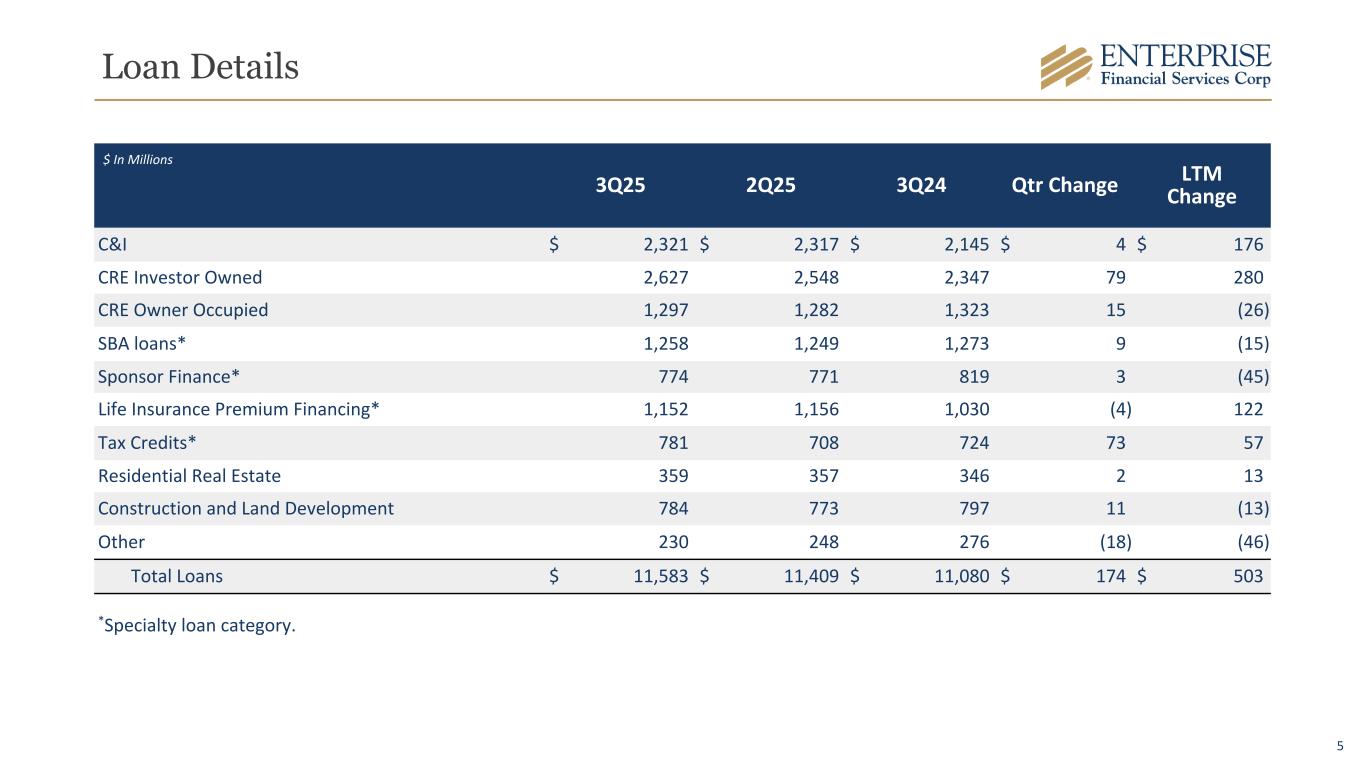
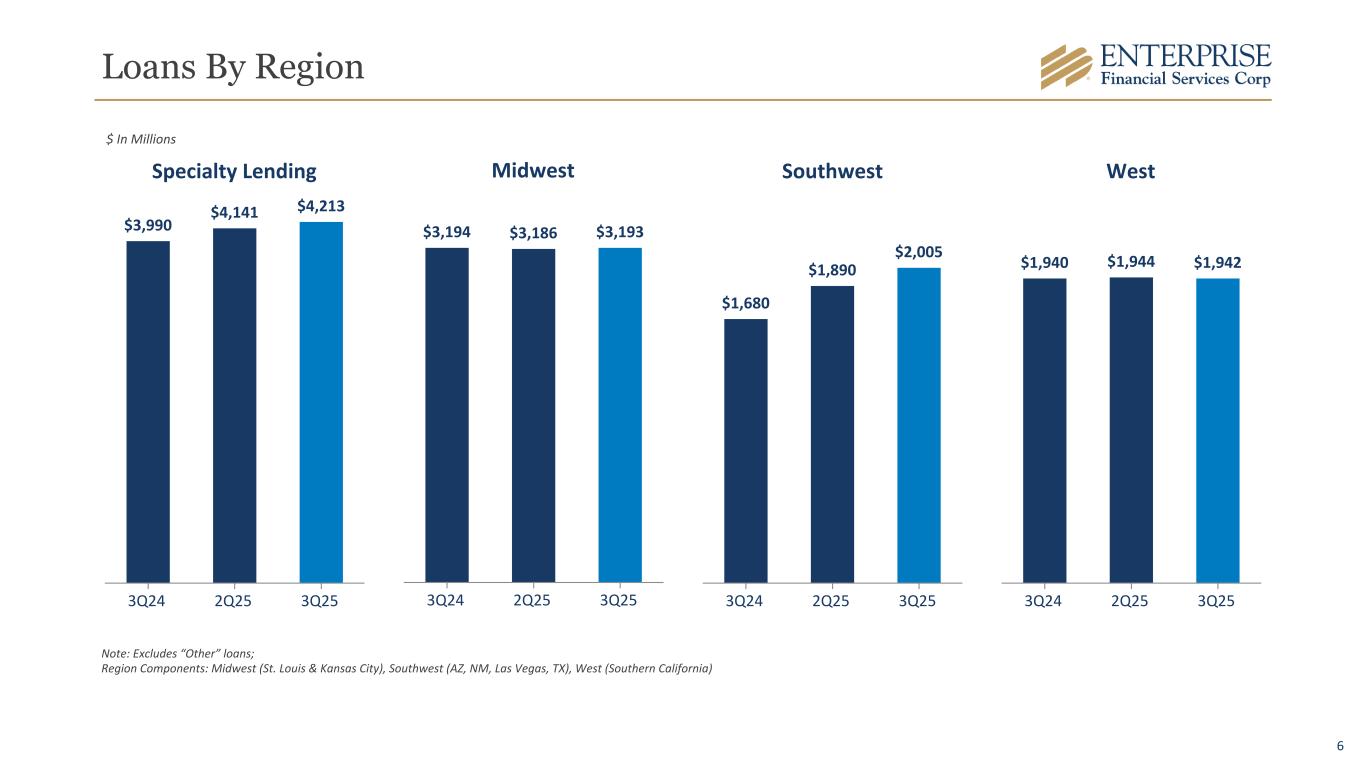
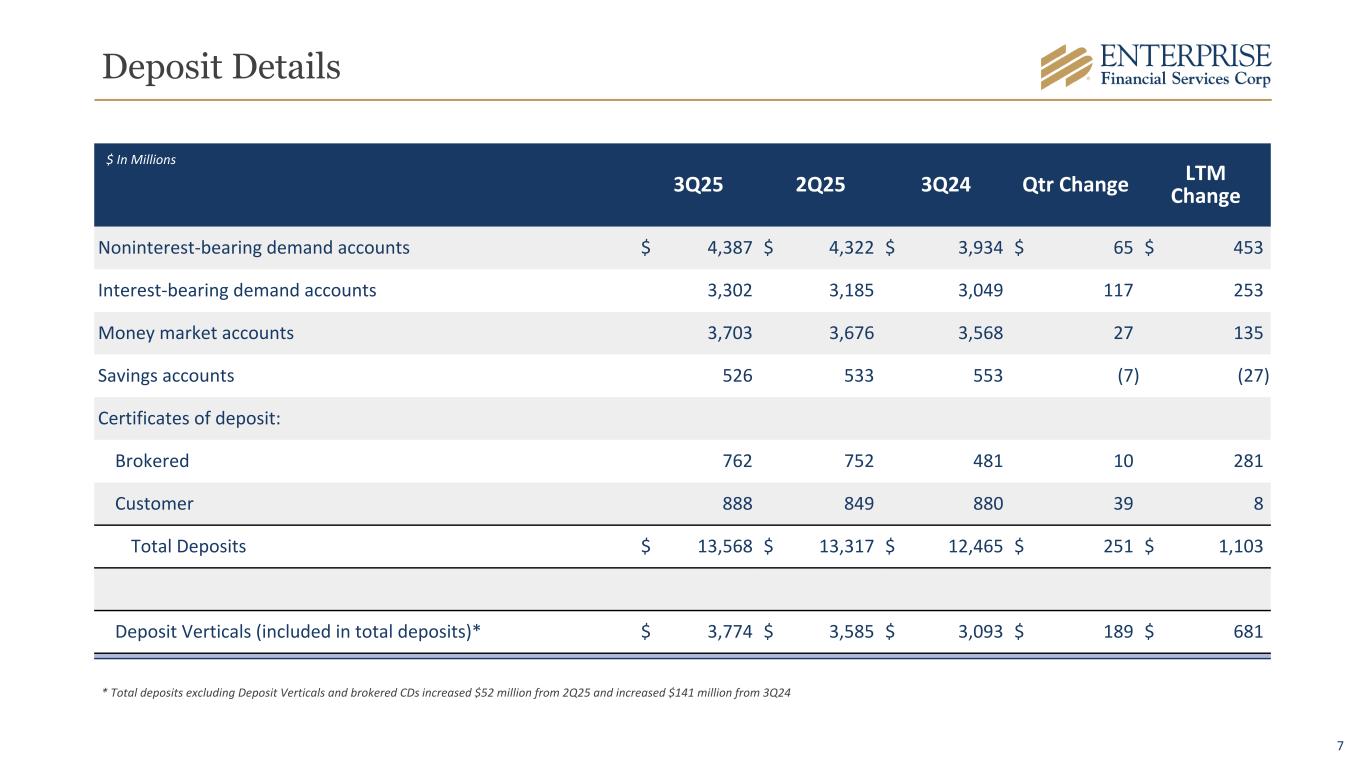
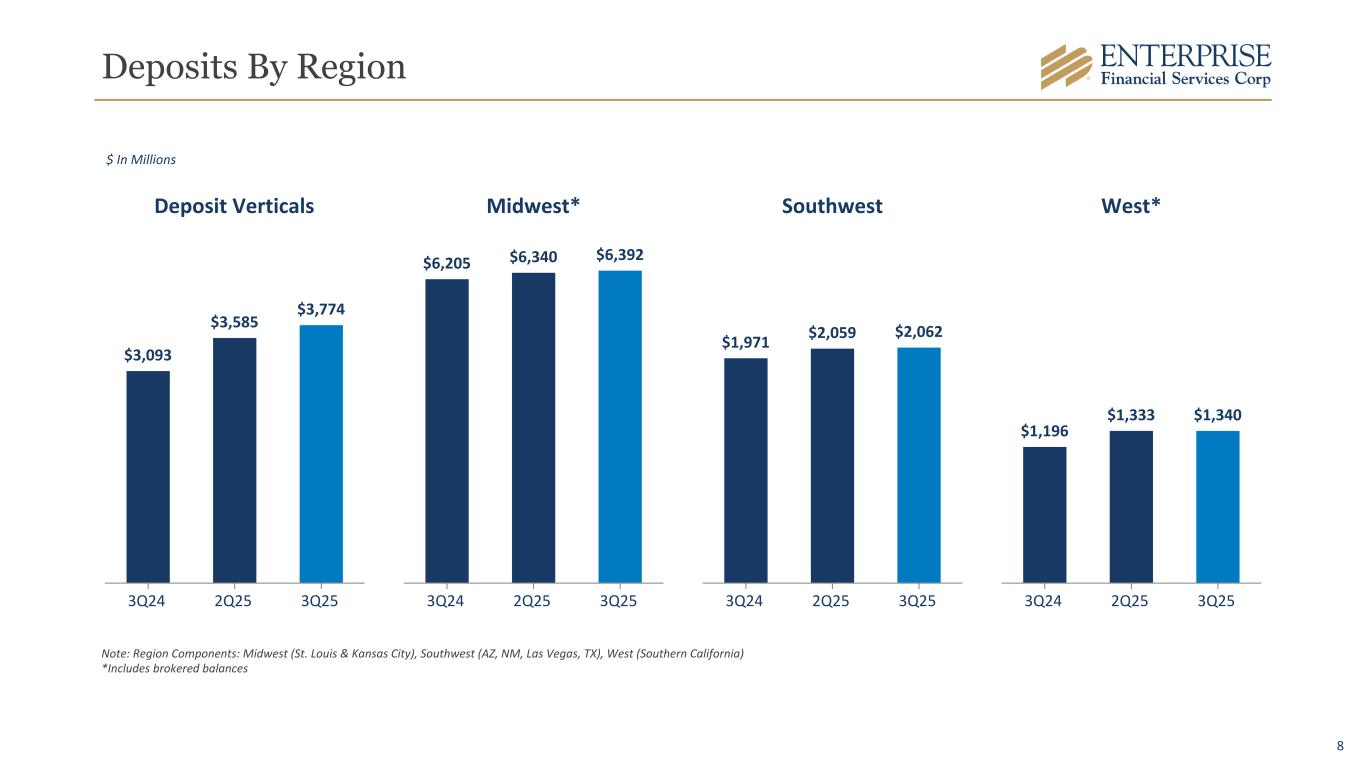
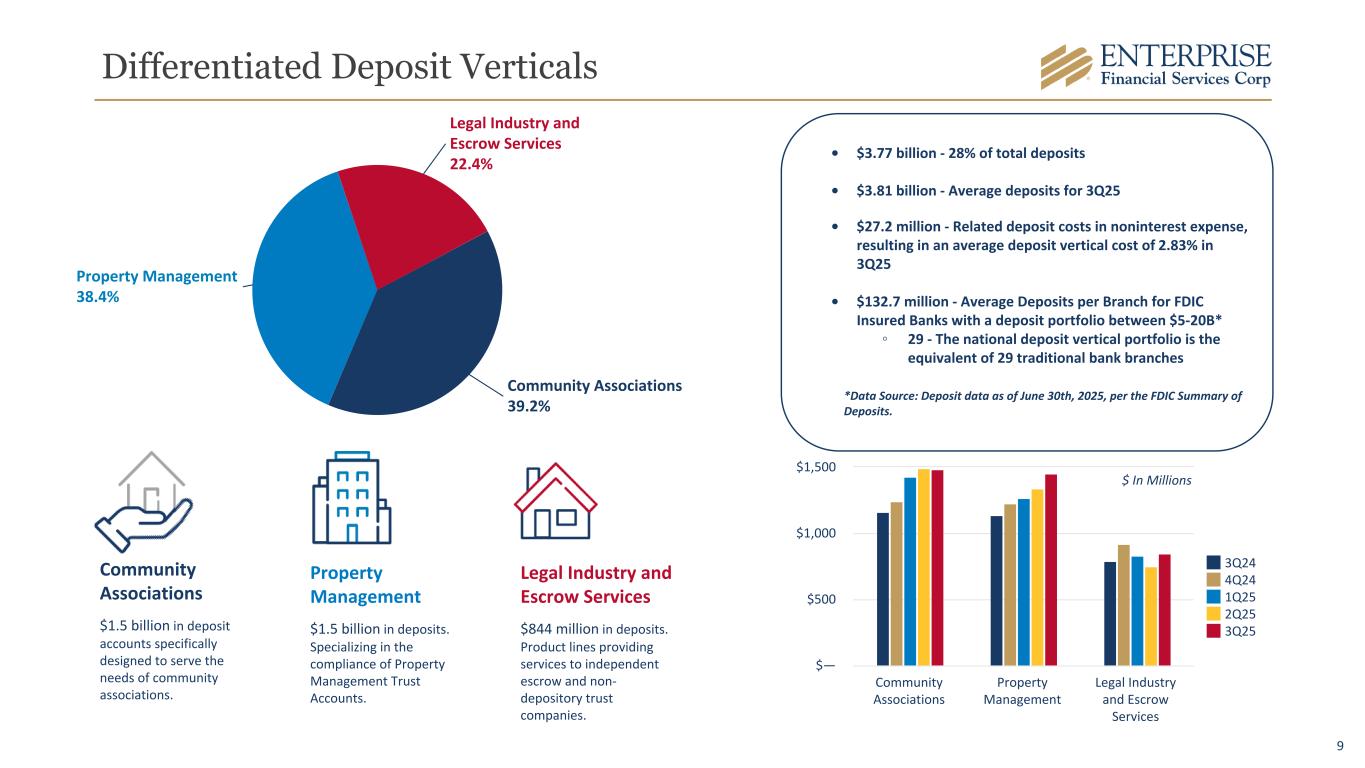
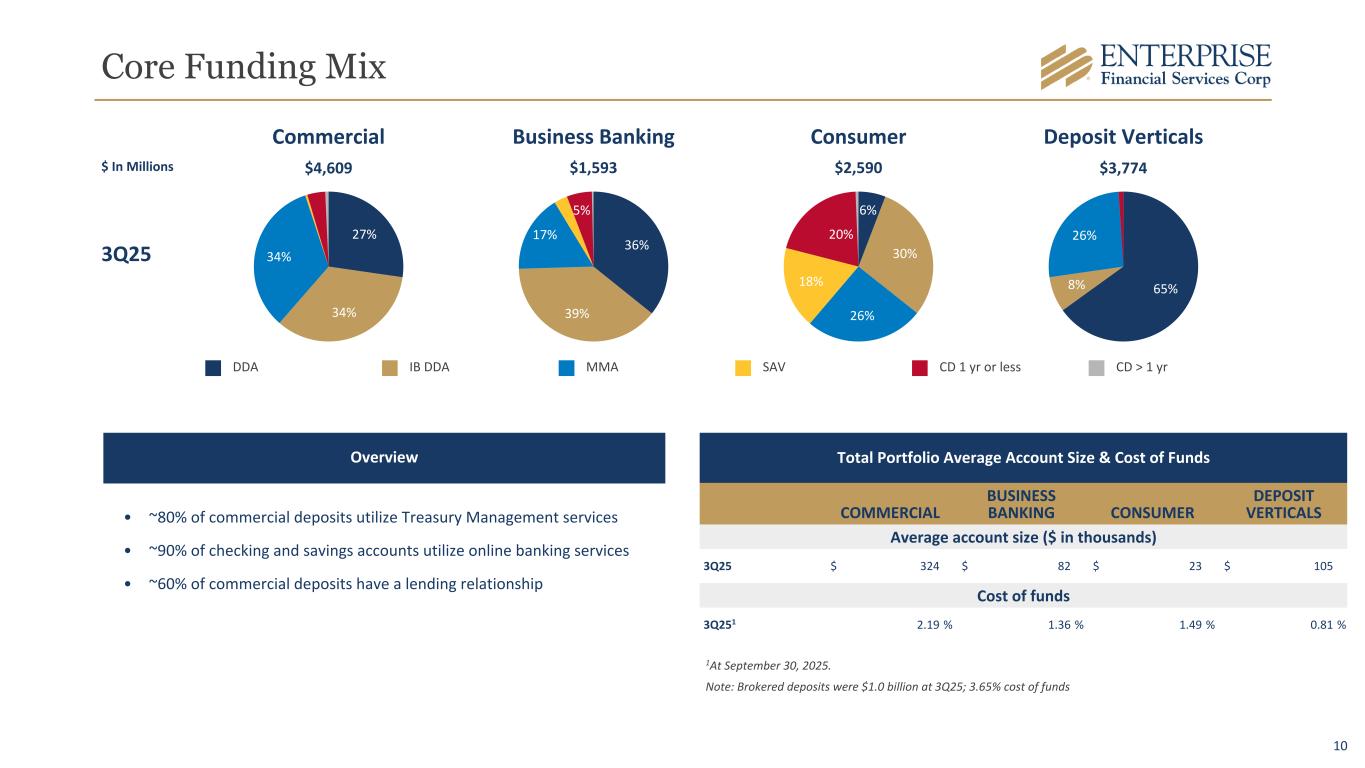
Thank you, Jim, and good morning, everyone. Over the past couple of months, I've spent considerable time in our major geographic markets, and I continue to be encouraged by both the quality and volume of new relationship opportunities we are seeing. Our brand continues to gain traction in our newer markets of North Texas and Southern Nevada, led by our bankers that are well entrenched and connected to those communities, and we continue to capitalize on the strong economic growth throughout our Southwest region. As Jim mentioned, the September rate reduction and further forecasted easing has seemed to spur some cautious optimism among business owners and real estate investors. Discussions with architects, contractors, and developers indicate that their new project pipelines are beginning to build momentum heading into 2026. While volatility continues around trade tariffs with China, our C&I clients have largely navigated this challenging period successfully by adjusting supply chains and pricing to maintain operating margins. On the lending side, loans increased in the quarter $174 million, net of $22 million in SBA loan sales. We continue to prioritize full relationship wins with discipline, structure, and pricing. Sector growth in the quarter is broken down on slide five and was well-balanced between investor-owned CRE of $79 million, CNI of $31 million, including SBA, owner-occupied commercial real estate and sponsored finance, and $73 million in our tax credit lending niche. Growth in the tax credit sector was largely related to scheduled fundings on existing affordable housing tax credit bridge loans. New C&I originations were solid and consistent with the linked quarter as we provided senior debt to both existing and new operating companies across our business lines. However, strong originations were somewhat muted by the exit of a quick service food franchise client in our Midwest region. $22 million in SBA loan sales, and a reduction in commercial line of credit usage between the end of June and September. As it appears, our clients are working through some of the excess inventory purchases they made in prior periods when tariff and supply chain concerns were more pronounced. Within the specialty lending business lines, SBA production was stable with the prior quarter and in line with expectations. Sponsor finance origination slowed in the quarter as we continue our fewer but better approach, while we remain disciplined and committed to this space. Originations in this segment were equally offset by payoffs, resulting from sponsors exiting portfolio company investments. LIPF originations were seasonally modest, with a strong pipeline of activity heading into the historically strong final quarter of the year. This sector continues to perform well on a risk-adjusted basis and has experienced a 12% year-over-year growth rate. Moving to the geographic markets shown on slide six, we posted growth in our Midwest and Southwest regions while we continued to hold serve in our California markets. Growth in our major geographies came from the funding of a market-leading employee-owned electrical contractor, a privately-held distributor of high-voltage electrical components, a manufacturer of high-precision metal parts, and several new commercial real estate loans with established developers for the acquisition or refinance of industrial and multifamily projects. Turning to deposits on slide seven, excluding the addition of $10 million of brokered CDs, client deposit balances grew by 10%. $241 million in the linked quarter and are up $822 million, or roughly 7% year-over-year. Non-interest-bearing accounts increased $65 million in the quarter and represent just over 32% of total deposits. Within the geographic market shown on slide 8, we are posting solid customer deposit growth on a year-over-year basis across all regions. Growth has continued to come from our holistic approach to new business development which rewards full banking relationships rather than transactional lending or high cost idle cash balances our specialty deposit verticals posted strong results up 189 million dollars for the quarter and 681 million dollars or 22 percent year over year our specialty deposits consisting of property management community associations and legal industry escrow and trust services are broken out on slide nine. Deposits in the community association and property management specialties totaled roughly $1.5 billion each, while deposits residing within the escrow division reached $844 million. These businesses provide a diverse, growing, and overall favorable cost-adjusted source of funding that continues to complement our geographic base. Turning to slide 10, you'll see that our deposit base is intentionally well-balanced across our core commercial, business and consumer banking, and specialty deposit channels at 37%, 33%, and 30% of total customer deposits, respectively. With deposit clients deeply rooted in treasury management and lending relationships, were encouraged by our ability to rationally adjust pricing in the current rate environment while continuing to grow balances across the channels. I'd also like to provide some commentary on asset quality. As Jim noted earlier, non-performing assets increased $22 million to 83 basis points from 71 basis points in the linked quarter. The increase in the quarter is largely centered around a $12 million life insurance premium finance loan that is 100% principal secured by Cash Value Life Insurance. We are in the process of liquidating the policy with a life insurance carrier, and we expect full principal collection. Other notable additions to nonaccrual in the quarter included a $6.2 million sponsored finance credit, which was charged down by $3.75 million in the quarter, with the remaining $2.5 million book balance expected to be satisfied via the sale of business assets, a $2 million single-family residential real estate loan in Santa Monica, and two smaller commercial real estate secured loans totaling $2.5 million in aggregate. On October 16th, we filed a Form 8K reiterating our position relative to the previously reported seven commercial real estate secured, non-performing loans totaling $68.4 million in the aggregate to seven special purpose entities in Southern California. Our recent foreclosure attempt on October 15th was temporarily stalled due to a second bankruptcy filing. However, we remain confident in our security position and ability to collect the balance of these loans in full. With the satisfaction of the $12 million life insurance premium finance loan and $68 million in aforementioned seven commercial real estate loans, we expect our non-performing assets to return to our favorable historical norms in the coming quarter. Now, I'll turn the call over to King Turner for his comments.
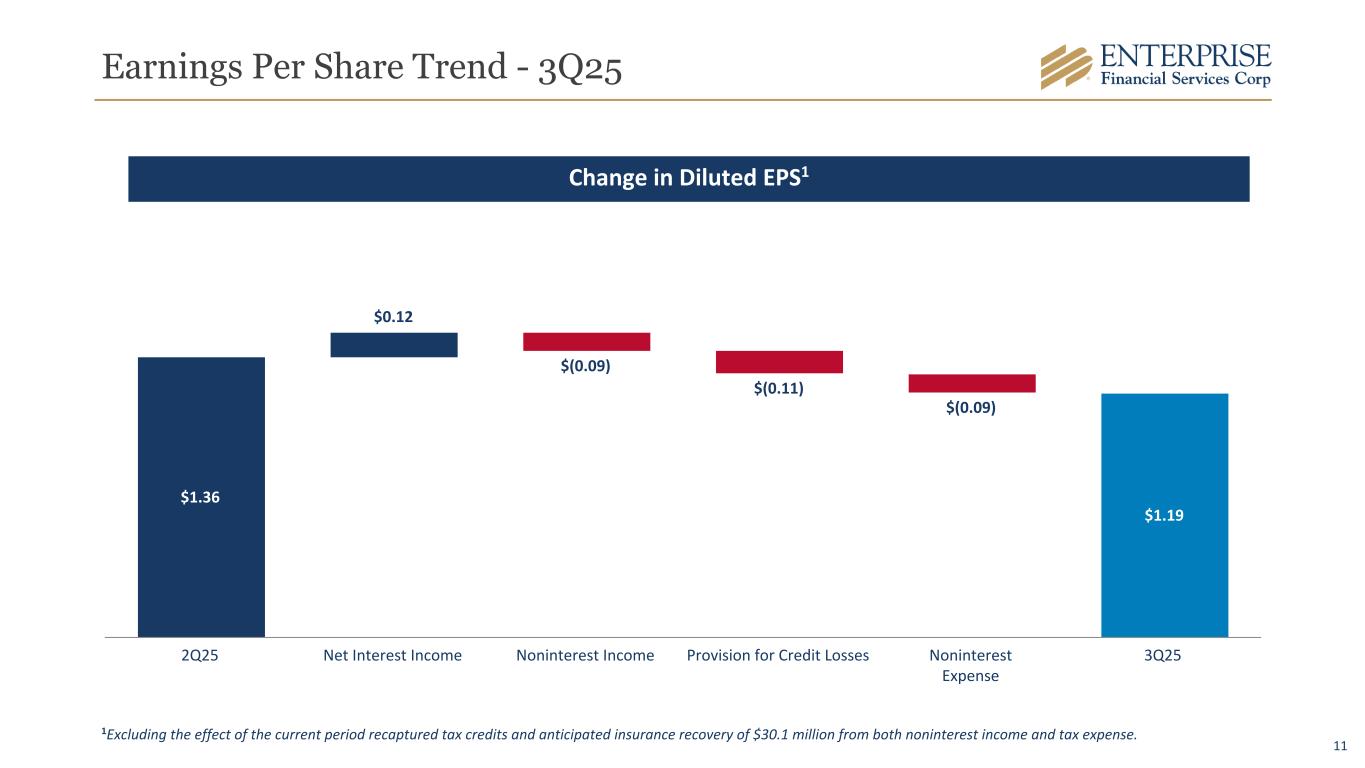
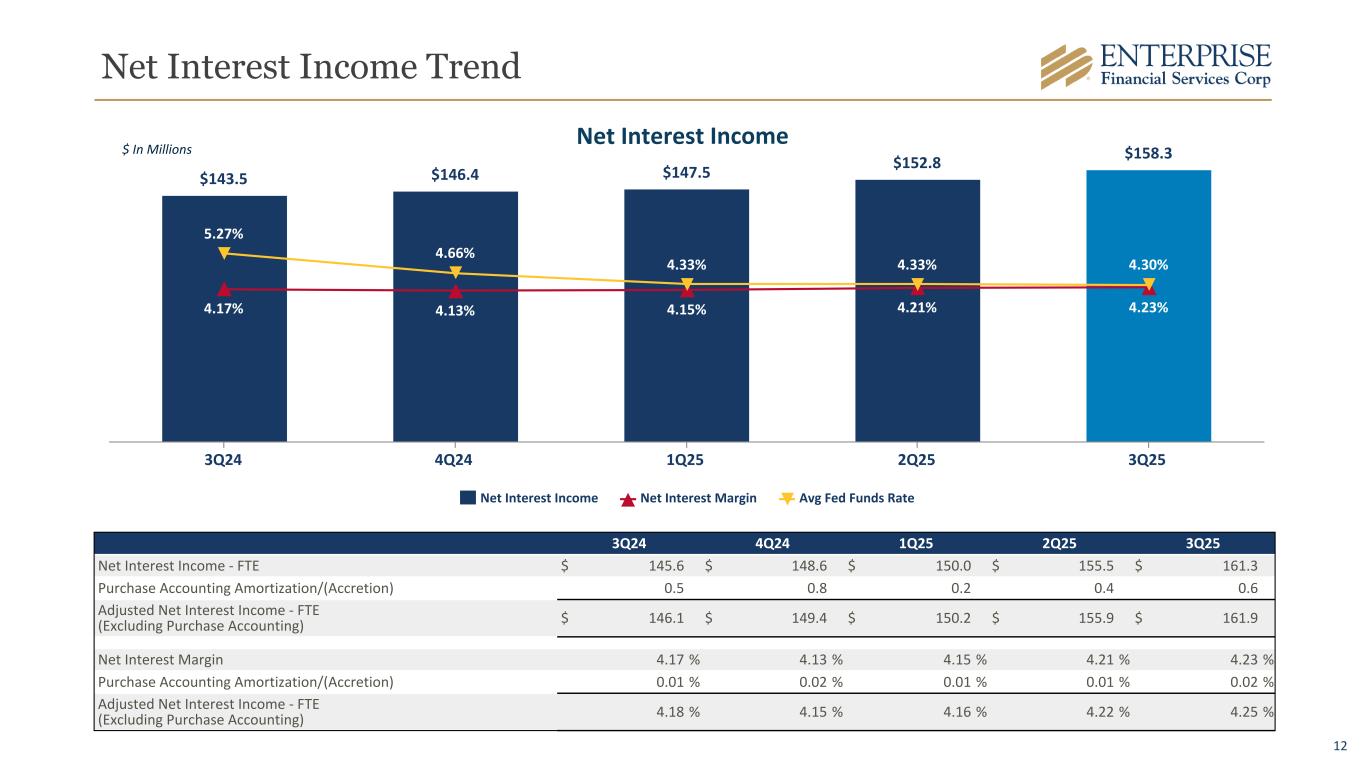
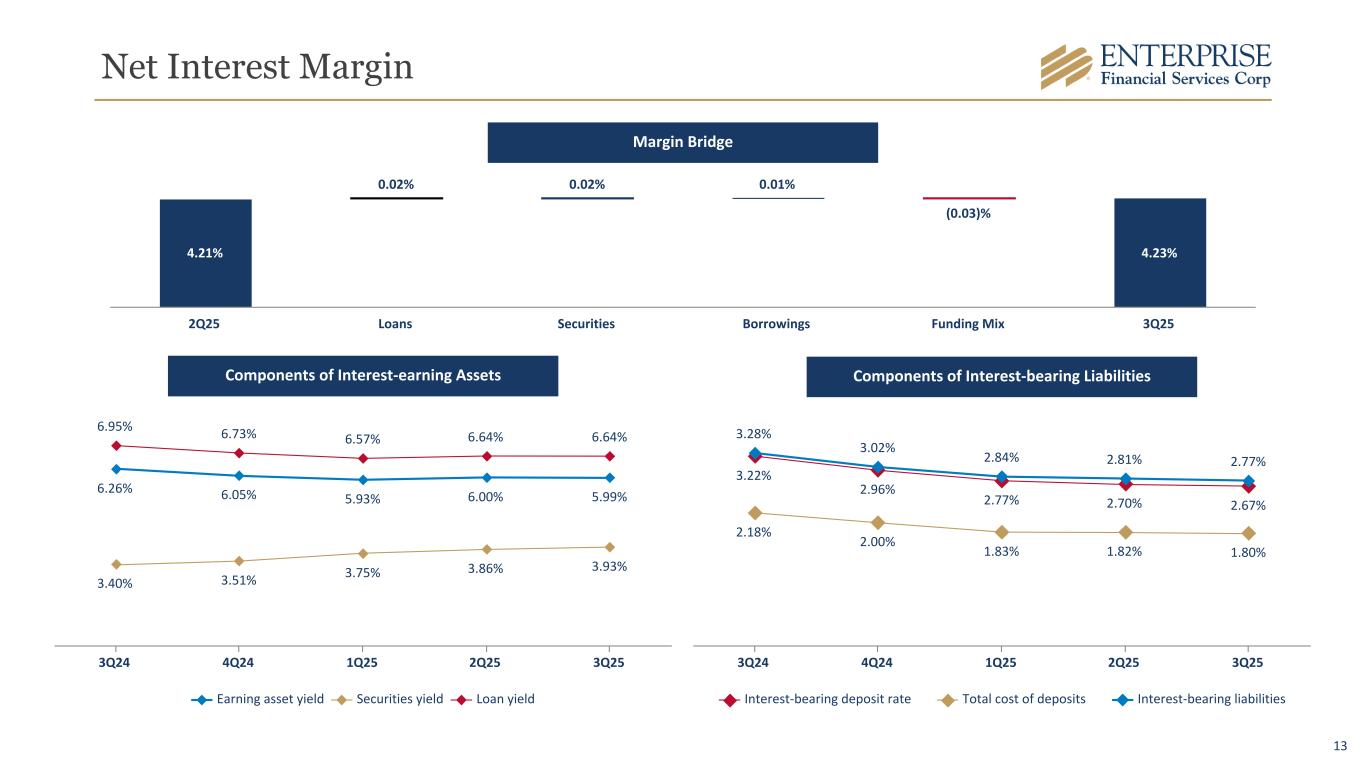
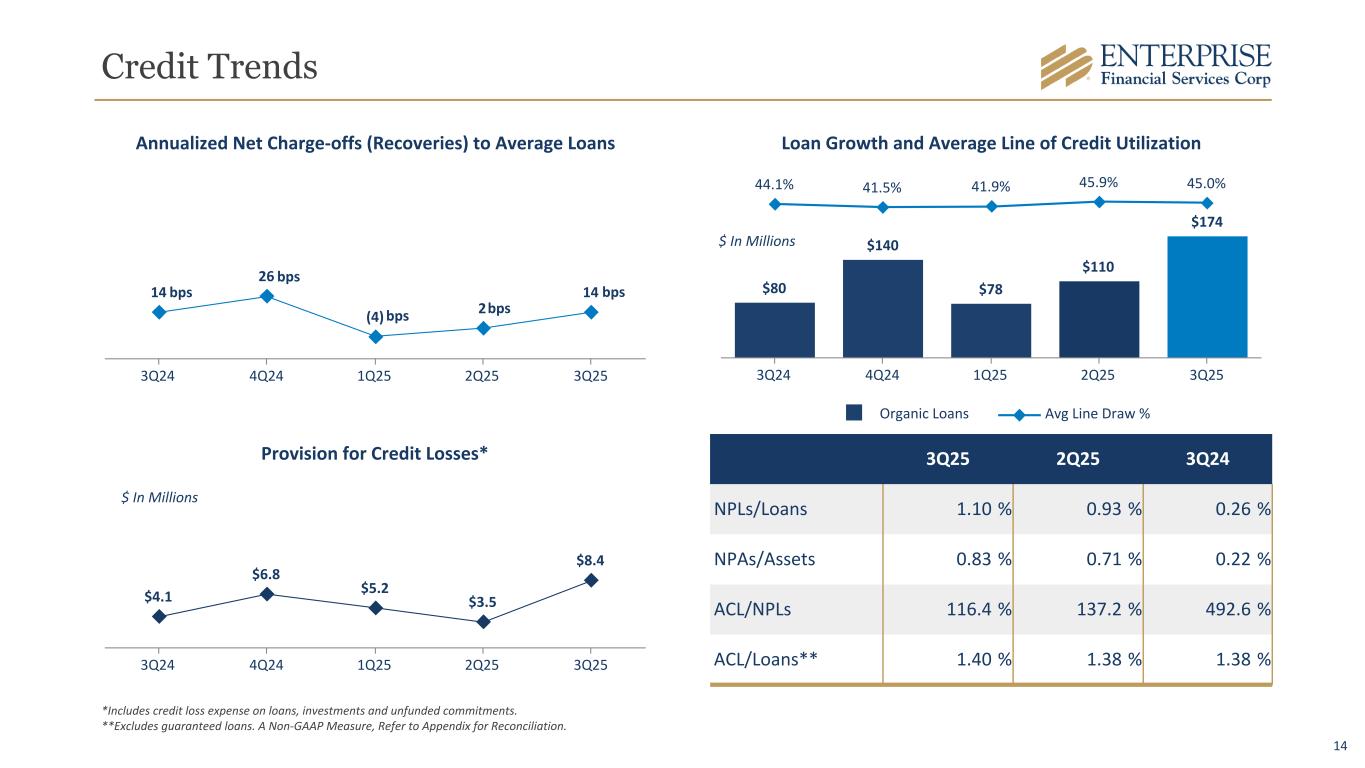
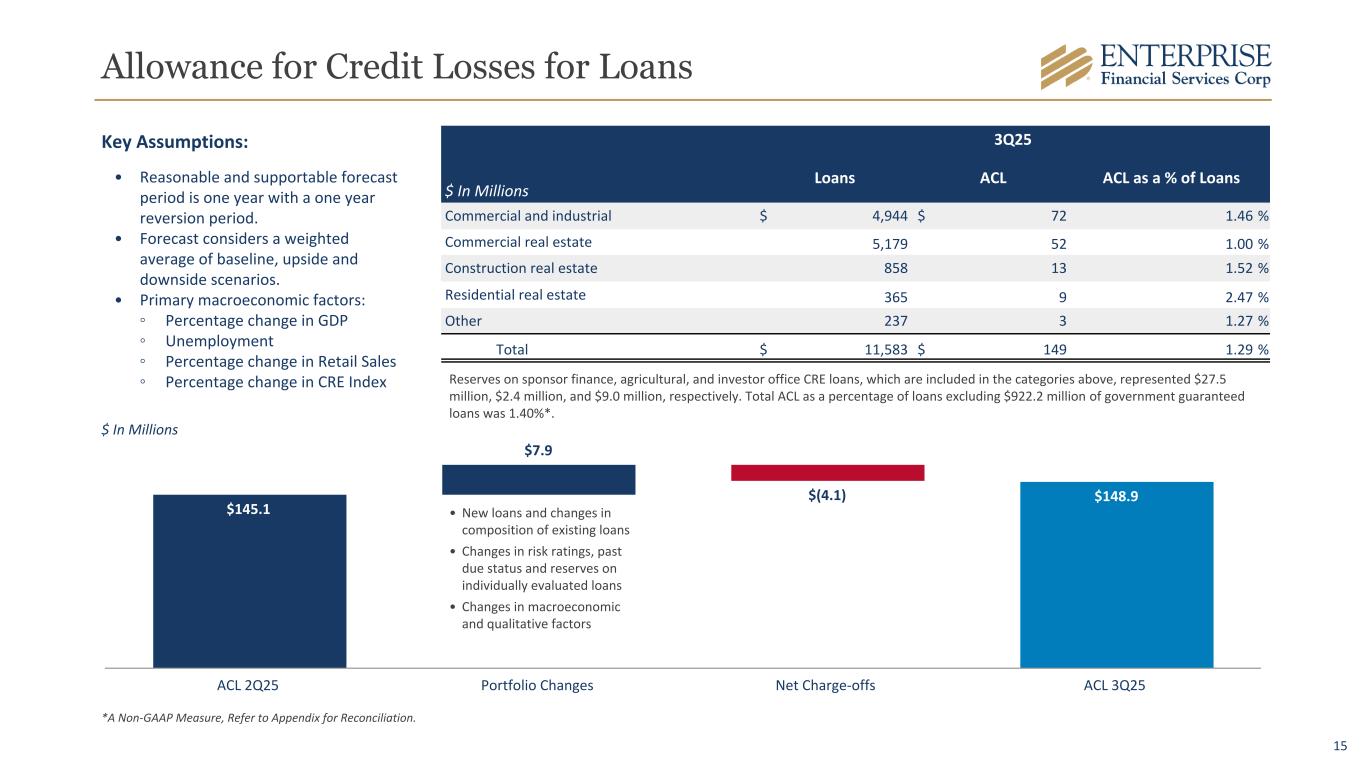
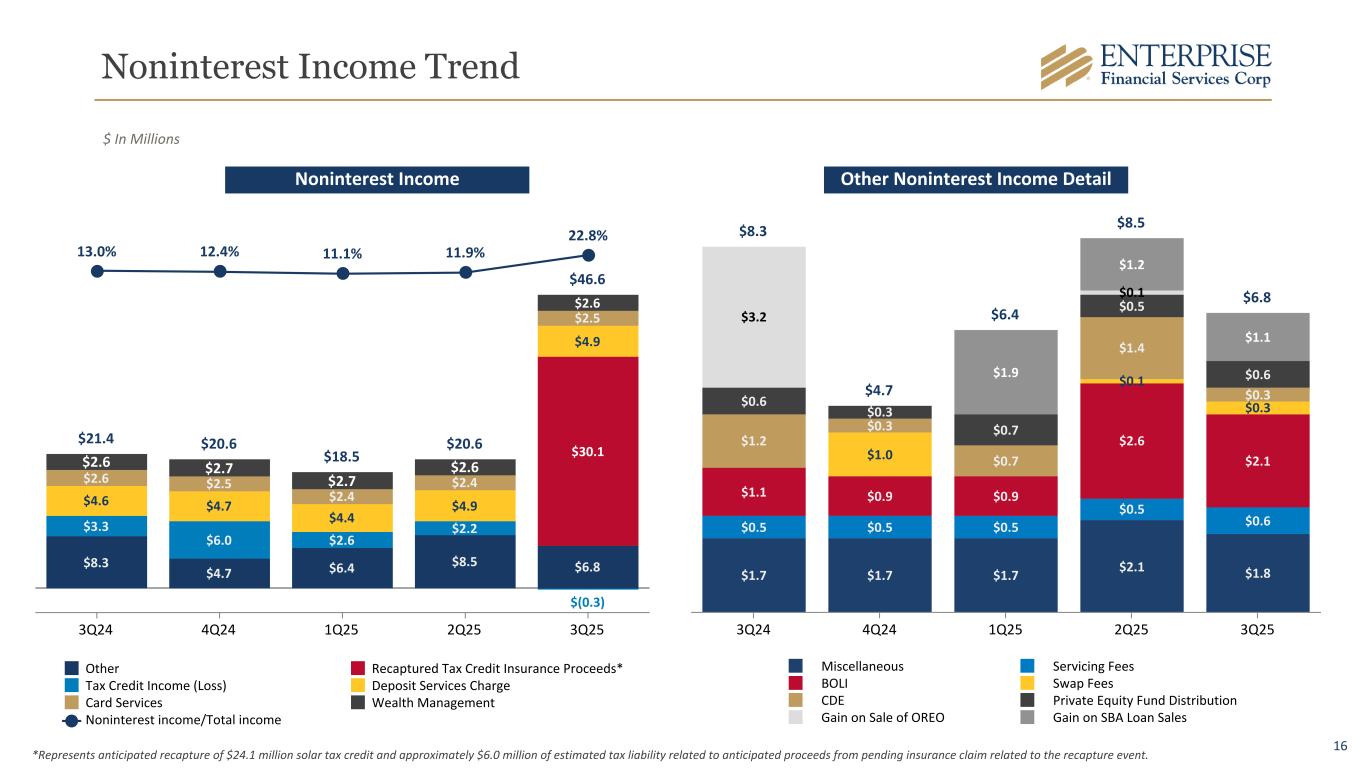
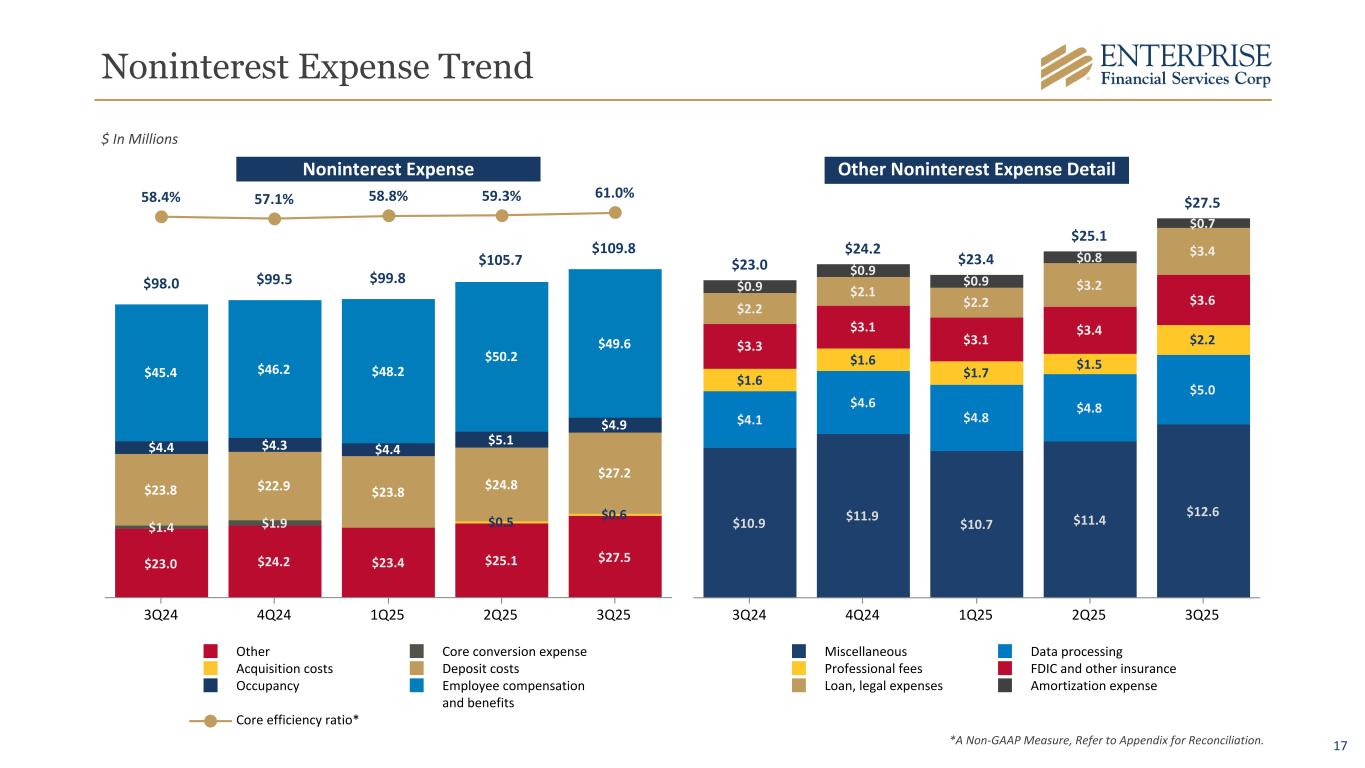
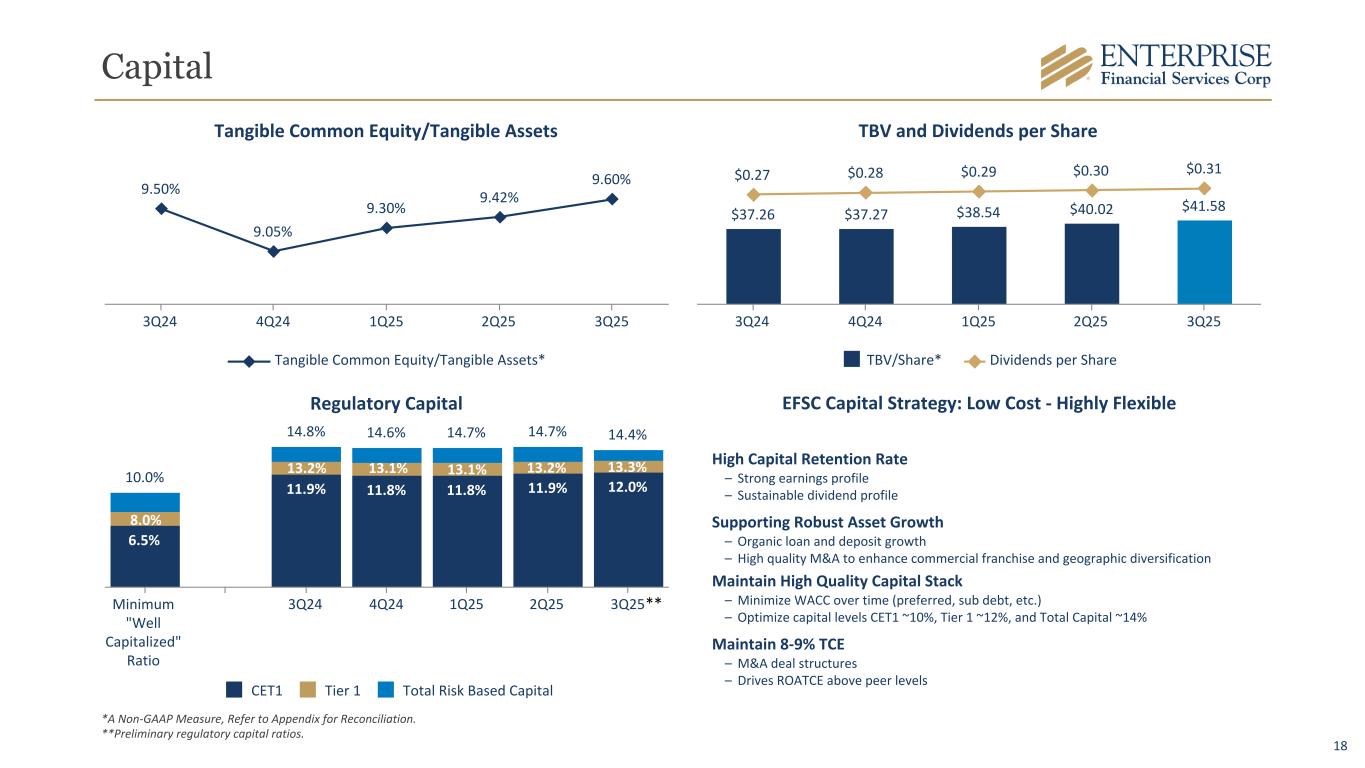
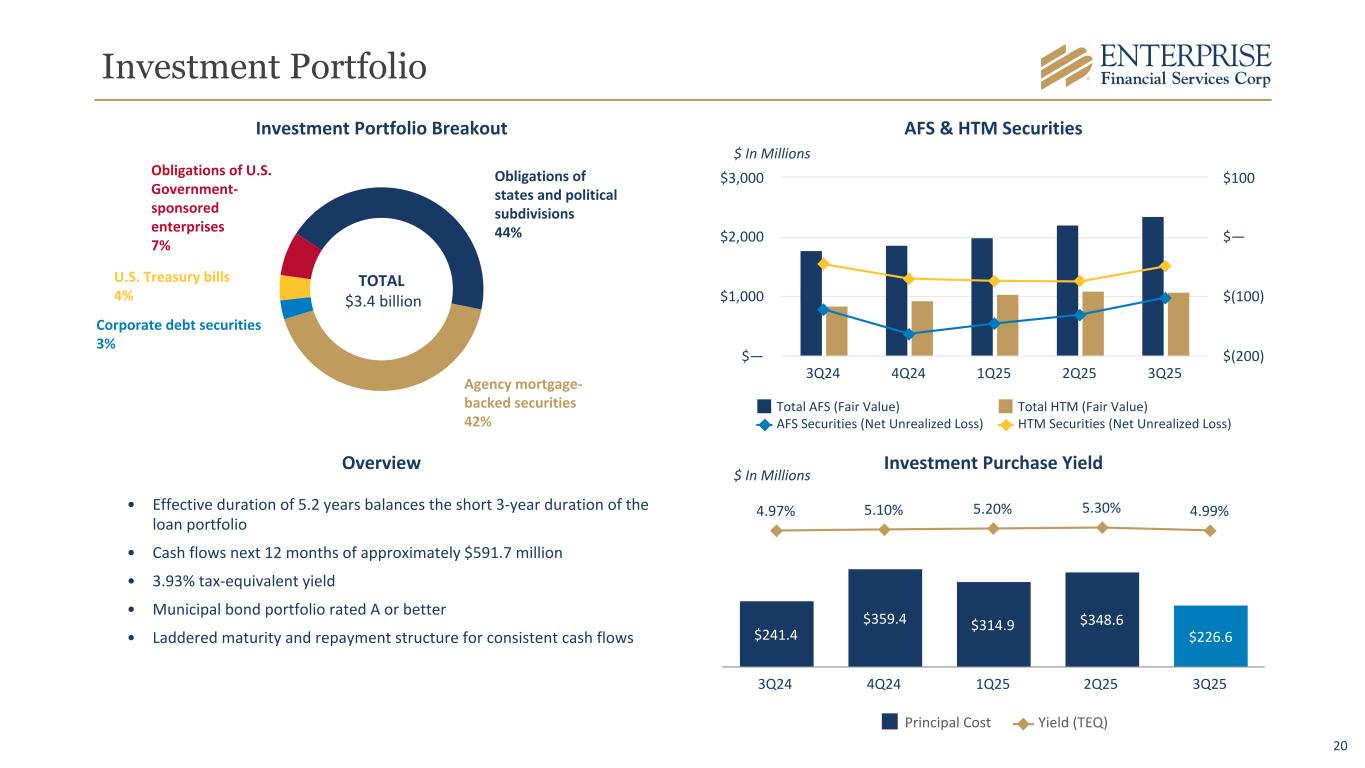
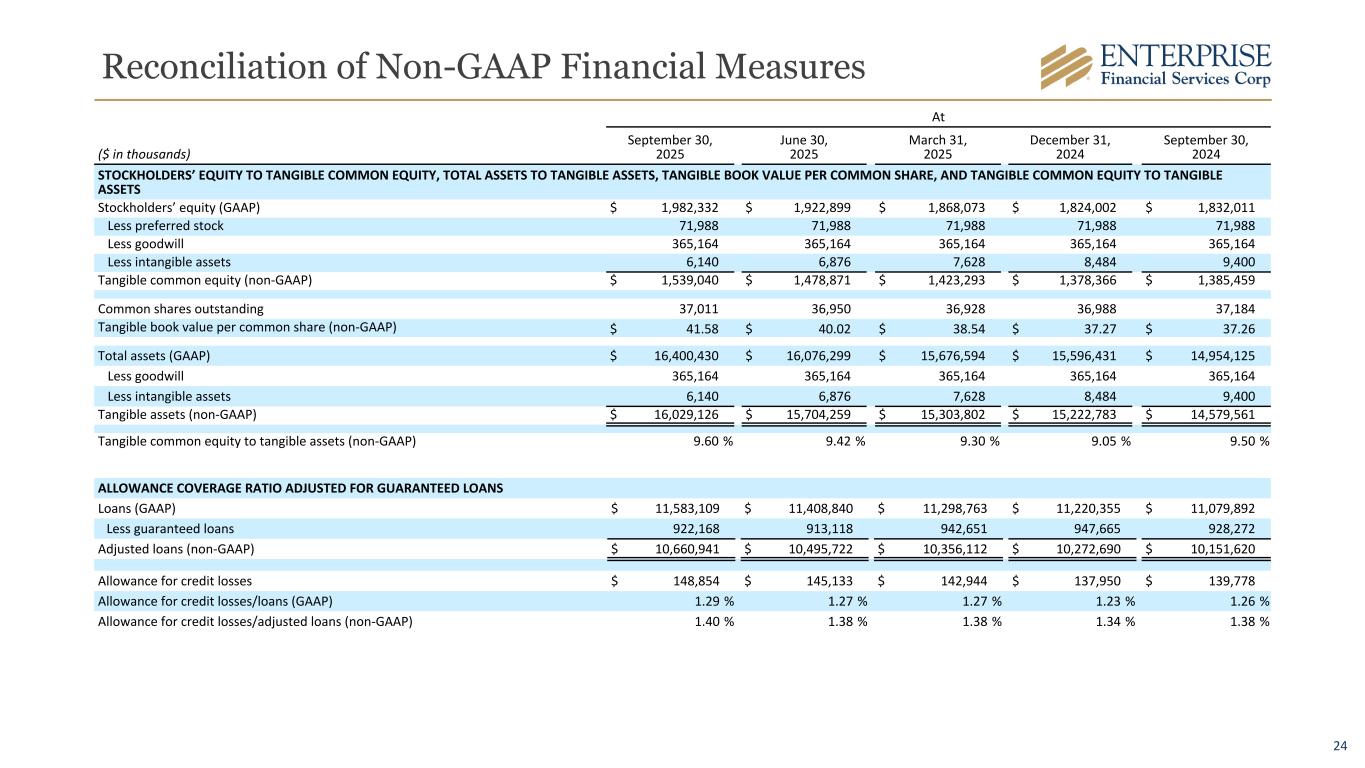
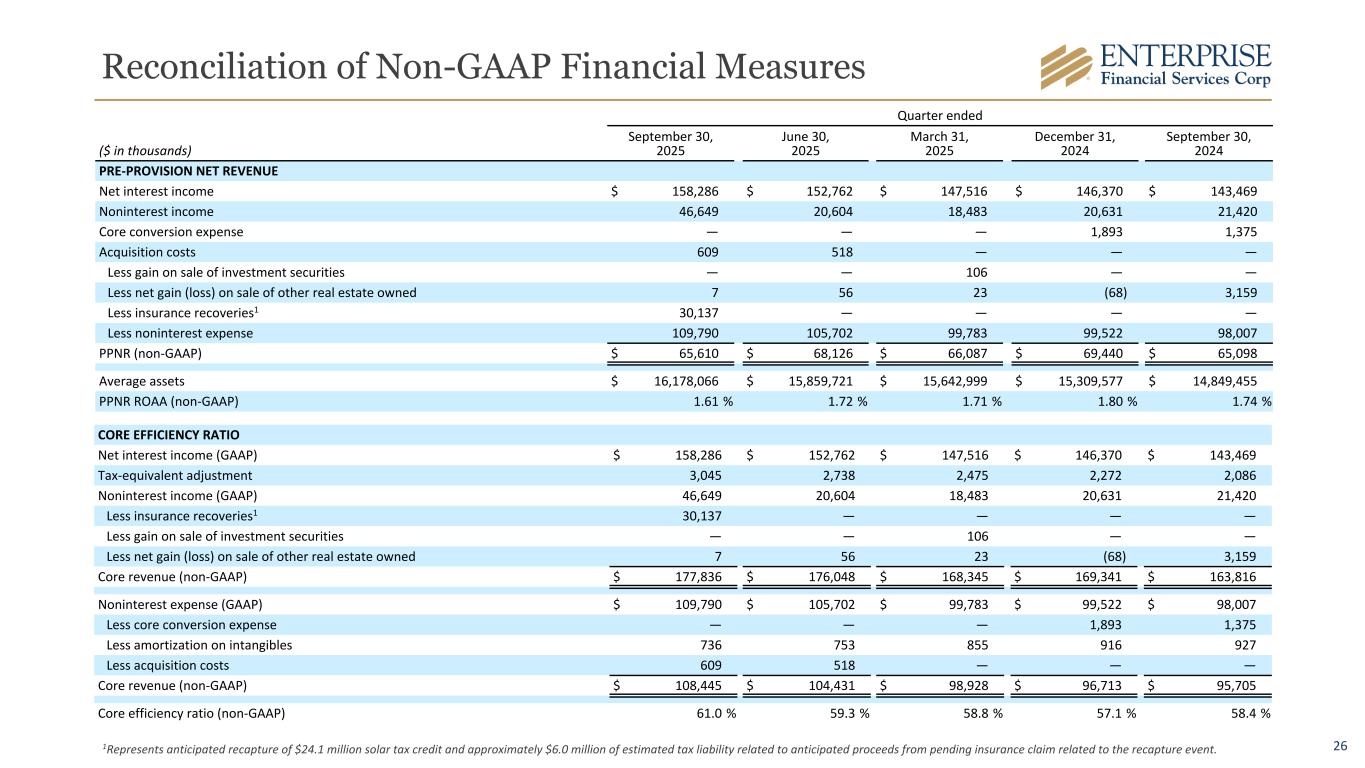
Thanks, Doug, and good morning, everyone. Turning to slide 11, we reported earnings per share of $1.19 in the third quarter on net income of $45 million. EPS on an adjusted basis was $1.20. As Jim noted, we had a recapture of $24 million on solar credits, like many other tax credit programs, are subject to recapture from the ICC. Unfortunately, the SAC and transfer the solar credit credit insurance policy to mitigate the risk of loss. The recognition of the tax has created some noise. The recapture is recorded in tax expense, while the insurance recovery is included in non-interest and count for the recapture, plus the taxes on the anticipated insurance recovery the gross up in non-interest income and it is 30.1 million dollars during the quarter since there is no impact on net income for the third quarter we've excluded these items from the earnings per share bridge on slide 11. net interest income and margin both showed strong expansion again in the quarter benefiting from the increase in anticipation of the liquidity from branch acquisition that closed in early october excluding the anticipated insurance recovery. Non-interest income decreased due to lower tax credit. The provision for credit losses increased from the linked quarter, primarily due to net charge-offs and an increase in non-performing loans, along with loan growth. Due to an increase in deposit, higher legal and other expenses associated with the increase in and level of problems. Slide 12, with more details to follow on 13, $158 million, an increase of 5.5, reflecting the trend of solid asset growth, supported by a growing deposit base. Loan interest increased by three. Average balances grew $96 million compared to support of the overall portfolio. Interest on investments was $2.7 million higher compared to the length period, with average balances increasing more than $200 million, and the portfolio yield was higher by seven basis points. The average tax equivalent purchase yield in the third quarter was 4.99%. Interest expense increased only. Deposit expense increased by $1.6 million due to higher average balances, partially offset by borrowing a decreased $0.7 million, mainly due to lower federal home loan bank advances and customer repo balances, along with lower rates on both. Interest expense also reflected the redemption of our subordinated debt in September that was replaced with a new senior note that a resulting net interest margin for the third quarter was 4.23%, an increase of two basis points until a decline by one basis point, mainly due to the change in the overall growth in the investment portfolio. The cost of funds declined by four basis points, home loan bank advances, quarters on creating an earnings profile that is less susceptible to changing interest rates, and we believe we have made significant strides. We are well positioned for the current rate environment to add profitable growth or slightly asset-sensitive to reduce net interest margins by three to five basis points. That being said, we anticipate that most of the recent rate cuts will largely be mitigated in the fourth quarter as the branch acquisition is expected to be five basis points and one last comment on margin. Despite the Fed reducing interest rates by over 100 basis points in the last year, we have managed to grow net interest margin over the last four quarters from 4.17% in the third quarter of 2024 to 4.23%. This speaks not only to a more favorable, but also to the quality of our business model and the discipline in pricing while achieving nearly. We had net charge-offs of $4.1 million compared to $1 million in the link. Net charge-offs of four basis points for the first nine months of this year continued to trend below our historical average with $8.4 million in the period compared to $3.5 million in the link quarter. The increase was mainly due to the increase in net charge-offs, a higher level of non-performing loans, and non-performing assets increased $22 million to 83 basis points compared to 71 basis points. Doug provided a lot of details of the movement within our non-performing assets, but it's worth reiterating that the largest part of our non-performing assets continues to be made up of two commercial banking relationships. We reaffirmed this expectation in Form 8K that we filed a little over a week ago, stating that we expect to collect the balance of these loans because of our senior secured position. 16 shows the allowance for credit losses. We continue to be well-reserved, or 1.4%, when adjusting for government guaranteed loans. On slide 16, third quarter non-interest income of $47 million includes the previously mentioned $30 million dollars of accrued insurance proceeds related to the recap excluding this non-interest income decreased 4.1 million dollars from the linked quarter to 17 million dollars primarily due to lower tax credit and community development income in addition to the non-reoccurrence of a bully policy payout received in the second quarter of sba guaranteed loans that generated a gain of approximately 1.1 million dollars in the current quarter depending on levels of plan growth and activity in the SBA space, we may take the opportunity to continue to sell SBA loans in the coming year. Turning to slide 17, $109.8 million increased $4.1 million from the SBA, increased roughly $2.4 million from the link quarter, primarily due to continued growth in the deposit. Legal and professional expenses increased as well. Legal and loan expenses grew slightly and remained at elevated levels as we worked through certain non-performing core efficiency was 61%. Our capital metrics are shown on slide 18. We grew tangible book value by 4% in the quarter and 12% in the past year. Our tangible common equity ratio was 9.6% while our strong CET1 ratio of 12% is at the highest level in our history. The strength of our capital position supported the branch acquisition that closed earlier this month and also allowed for redemption of our subordinated debt that was included in total risk. Quarterly dividend by one cent to 32 cents per share for the fourth quarter of 2000. This is another strong quarter of solid financial performance, and we expect to close out the year from a strategic branch acquisition that closed this month will help drive this performance as we expand our footprint. I appreciate your attention today, and we will now open the line.
Operator
At this time, I would like to remind everyone in order to ask a question, press star followed by the number one on your telephone keypad. We'll pause for just a moment to compile the Q&A roster. Your first question comes from Jeff Rulis with DA Davidson.
Good morning. Good morning.
Question on the – I guess to get a little more specific on these credit relationships, just the workout process. I understand you try to give visibility on the southern california uh credits uh but you know the resolution that the life insurance loan and these could you could you narrow that into i thought i heard uh resolution in the coming quarter and quarters it was sort of some mixed uh terms there could you just sort of outline that again how do you expect those to be resolved timeline wise yeah jeff it's doug good morning First of all, in relationship to the Southern California real estate loan, certainly with the secondary bankruptcy filing that has been made, the timing of that is a little bit difficult to ascertain.
You know, we do feel comfortable that we're going to get some fairly quick remediation from the bankruptcy courts on this. But as we maybe indicated in prior periods, we started down the path of both the nonjudicial and judicial foreclosure process in California in anticipation of a potential block like this. So we're moving down the path as quickly as we can, but I wouldn't necessarily say it's going to be in the fourth quarter. I think it's more in the coming quarters that we'll get resolution on the real estate loans. As it relates to the life insurance premium finance loan, I just reiterate, we've got a stellar 20-year track record lending in this space without principal loss. This is unfortunate timing, but a co-trustee of the $12 million life insurance policy filed suit against the insurance carrier, and the insurance carrier is simply delaying their recognition of our demand to honor the obligations to surrender the policy and send us proceeds to pay the loan off. So again, this looks like this may be heading through some litigation, and with that said, I think precise timing of the resolution of that case is a bit uncertain, but what is certain is full coverage of cash flow under value covering our principal balance and collectability.
Appreciate it. And Doug, do you have NDFI exposure in the portfolio, just a figure of percent of loans overall?
Yeah, let me say this, Jeff. So, as it relates to NDFIs, it's a very broad classification that includes credit exposure to bank holding companies, mortgage warehouse originators, capital call lines for private equity funds, and a lot of different types of businesses, including those engaged in our state and new market tax credit lending programs. But I think specifically what you might be referring to is more exposure to private lenders, and I would say this. We have for years maintained some very favorable relationship with private lending entities where we take assignments of their notes, security instruments, and that's our primary collateral. Today, that portfolio consists of approximately $260 or $70 million in balances across, I'll call it 18 to 20, 18 to 20 different relationships. So these private lenders specifically are largely engaged in providing first mortgage secured loans to investors in one to four family residential real estate. So, you know, our process here, Jeff, like everything else, right? These are deep relationships. They're highly experienced and quality leaders. We know them well, and we're very disciplined in our credit underwriting and monitoring process. So hopefully that captures what you're looking for there in terms of exposures to the private lenders.
Sure. That helps, Doug. keen on the margin. Sounds like you're largely going to offset this most recent rate cut. And then, you know, if we carry forward that three to five basis points pressure per 25 basis point cut, then you detailed the history of the last year plus of really defending margin when you screen asset sensitive, but the reality is you've done much better than that. Is that still the case if we think about a flat margin into the fourth quarter with those cut versus the branch accretion? And then the go forward, is it, would you say that the net of that is still some modest pressure and hope to do better than the three to five? Any commentary on go forward?
Yeah, maybe just as I always think about it, you know, when we take we talk about asset sensitivity, we're also talking about parallel shifts. And I don't think anybody's expecting a parallel shift. I think we're thinking the short end of the curve comes down. And in that case, that's been good for us. And we've been able to defend that fairly well. I think your comments are appropriate. I think that our view, you know, once we get the branches on here, you know, we're pretty neutral. And when I start looking at both net interest margin and then pre-tax income at risk, if we execute on our mid single digit loan and deposit growth for next year, you know, we're growing pre-tax income and, you know, essentially defending or growing net interest income because of the branch deal. So I think when you look at last year's year-to-date period, returns are roughly 125 basis points. We're on top of that in the current period with a little bit worse provision. And I think that our view is that if we assume that we rotate out of taking gains on SBA loans, that profile sort of remains the same. And with a bigger balance sheet, you're growing earnings per share. So I think we generally expect to defend an interest margin. It might drift a little bit, but you're still flirting with a 420-ish margin for most of 26, at least as we see it right now. And we're using Moody's baseline, so that has said funds go on to 3% in the third quarter of 26 and 50 basis points here in the fourth quarter.
So I feel like that environment or that forecast also doesn't assume that we get better than expected loan growth which i do think will occur uh if we start to get rates down to that degree that's great thanks kane your next question comes from damon del monte with kbw hey good morning guys hope everybody's doing well um keen just a question for you on on the expense outlook kind of here in the fourth quarter and how we think about going into 26. uh can you give a little bit of guidance on the expectation from the the branch um deal and the integration of that
yeah um so total reported expenses here in the quarter were 110 million um there's some run rate adjustment in there so let's let's call the the run rate here in the third quarter normalized without one-timers 107 million um and then i think in the fourth quarter you're gonna get roughly $4.5 million of expenses related to run rate on the branch acquisition. And then there's probably two and a half of one-timers in there. And then I think when you think about full year branch acquisition expenses on a run rate basis, it's just under $18 million. So I think when you normalize through all of that and you take the historical enterprise base and you annualize the the branch base i think we think expenses year to year will be up roughly three and a half percent um you know that's that's kind of what kind of what we're thinking and that's got that you know moody's uh interest rate reduction you know in in that plan where uh the deposit costs essentially you know are level kind of year to year got it okay all right that's helpful and And then on the fee income, I would see some volatility in the tax credit income line this quarter.
Fourth quarter typically is the strongest point of the year. So how do we kind of think about the rebound off of the modest loss this quarter? I mean, maybe look at it on a full year basis.
Yeah, I think that we kind of went from maybe the best case scenario of fee income in the second quarter to, I don't want to say worst case scenario, but certainly a baseline here in the third quarter. and I think the fourth quarter comes somewhere in between it. I will say that with the shutdown that's occurred right now, the SBA sale is maybe off the table as a lever here in the fourth quarter, but we do expect the CDE to have a little bit better quarter. Private equity should be in there, and if tax credit delivers any kind of profitability, I think that the fourth quarter should be somewhere between where the second and third quarter were, and you will get a little bit of impact from the branch acquisitions. There's roughly $2 million annually of fees that come in. Now, we get some fee income holidays around acquisitions, so you only maybe have like a month of that, but that'll also provide some benefit there. Okay, so somewhere in between the second and the third quarter, that's on a total non-interest experience basis not yeah yeah i think so and i think that that's you know we're it we're expecting 50 basis points of rate reductions that should help the tax credit line item in addition to activity um you know i just i don't know if there's going to be an opportunity to sell sba loans i think we're going to have a we would have otherwise had a strong quarter i'm just not sure if those can get funded and sold and all that stuff so got it okay um great i'll step back thank you thanks damon your next question comes from nathan race with piper sandler
hey guys good morning thanks for taking the questions um akeem just going back to your previous comments around um non-issue's expenses you should remind us what your deposit beta assumptions are just in terms of the ecr costs running through expenses yeah it's 40 and that's been pretty consistent.
So, you know, 25 is 10 and that's roughly a million dollars quarterly for every 25 basis points.
Okay, great. And then just turning to capital and would be curious to maybe get Jim's updated thoughts on management priorities. Obviously, you guys are in a good capital position and that should continue to build, you know, absent any material deployment. So, Jim, just curious to hear what you're thinking on the M&A front these days and, you know, just with the Appetite Share Repurchases as well?
Yeah, sure. Thanks, Nate. Our priority of capital really is to continue funding our growth and focused on that organic growth, given our markets and what have you. From an M&A perspective, as I talked about in my comments, it's about integration this time. Systems are working great now. It's a cultural and client integration that we're focused on with our new markets in Arizona or expansion of our markets in Arizona and Kansas. relative to other M&A, you know, certainly like a lot of businesses, we talk to a lot of companies and what have you, but we're looking for the fit, if you will, that allows us to continue to improve the right side of our balance sheet and certainly stay close to the markets that we're in. And to the extent that doesn't come to fruition, certainly buybacks are on the table for sure.
Okay, great. And maybe one last housekeeping question. And I don't believe you guys disclosed kind of the core deposit intangible and goodwill impact on the branch acquisition. I wonder if you could just update us on what we could be expecting there as we think about pro forma tangible book in the fourth quarter.
Yeah, I would just say high level, the dilution is 5%, Nate. And we expect that, you know, maybe that, depending on how Mark's work, it moves around a little bit from, you know, from where we estimated it. it's it's going to be roughly 70 million of intangibles okay great and that five percent dilution doesn't include kind of the retained earnings impact in fourth quarter i presume uh no that's just sort of hard line deal math i think we'll obviously make some profitability and depending on what happens with securities fair value may not even see a diminution of of tangible book value from the fourth quarter okay i appreciate all the color i'll step back thanks guys
Operator
Again, if you would like to ask a question, press star 1 on your telephone keypad. Your next question comes from Brian Martin with Jamie.
Hey, good morning, guys. Good morning, Brian. Hey, just key in one clarification on expenses. I think if the – is your suggestion on expenses at least kind of a run rate to think about for fourth quarter around 112-ish? Is that – I missed the part about – you said something about a non-recurring piece. i know you said it was the baseline might be 107 and then you had about four and a half of pickup from the branches um the kind of 112-ish level is how we think about you know where you start for 4q or is there something there no that's that's about right i mean i think you got you know sort of two and a half you know 114 minus two and a half of integration so you're in that ballpark like 111 and 113 is kind of where we're thinking gotcha okay that's helpful and then um Just in general, if we think about the fee income line, Keane, I guess I don't know that the tax line is one item, but just in terms of fee income, kind of where you think, if we just think bigger picture, because there's a lot of moving parts and there's some variable pieces, if we think about it as a percentage of revenue, how you think about where that shakes out as you get into maybe next year on an annual basis, is it kind of current level? Is that how we should think about it? Or I guess, is there a better way to think about it, given all the moving parts in there that, you know, swing around in a given quarter, but just, you know, bigger picture, you know, annually is the best way to think about it.
Yeah, I think, I'm not sure I think about it relative to percent of revenue necessarily, just, you know, it's 10, 11%, but we're going to expect to grow net interest income and, Maybe falling on my sword a little bit, we're going to outstrip the income growth because that's kind of a mid-single-digit grower. I think when I look year to year at the income levels, I think we expect generally that if you stripped out gain on sale of SBA loans, the level is consistent and maybe grows just slightly between 2025 and 2026. And then there's an opportunity to sell SBA loans, call it from, you know, two and a half to five million dollars, depending on what production is to to solve for some some greater profitability. So I think that's more likely if I look out and say we're going to get fed funds down to three percent, I think commercial loan growth is going to pick up. And I think SBA production is going to pick up. We've been on our heels a little bit there. we've been being disciplined on credit and other factors in all spaces, but especially SBA. And I think with rates down, that'll improve pricing on gain on sale, as well as just the approval rate for borrowers. And so that'll give us a greater opportunity both for production and for sales. So that's an opportunity, but we're not factoring that into what we're thinking. And it's not reflected in my comments about, you know, stable ROA and ROTC from, you know, 24 to 25 to 26.
Gotcha. Okay. And again, just big picture on the fees, would you expect fourth quarter to be a relatively, you know, typically it's an outsized quarter on that tax credit activity. I mean, not getting into the dollars, but still an outsized quarter in 4Q. Did you say that? if you didn't know.
I didn't say that. Your comment's right. Typically, it's outsized. I think the tax credit line item with rates moving around and also with how we've repositioned that business to be more of a loan business than a fee business, it's gotten a little bit more volatile and a little bit less aggressive. So look, we could come back and have, you know, five or six million dollars in that line item. That's not what we're planning. We're hoping we get, you know, million five to two million and so my comments i think earlier to to damon were that i thought the the fourth quarter total fee income would be somewhere between where the second was which was a high watermark and the third quarter which was sort of a baseline kind of clean quarter minimum for you know for for my uh perspective so somewhere in the middle of that i think the reasonable expectation for four q fee income gotcha okay sorry about that i missed that that comment to Damon so and then just one last one maybe just for Jim I guess did I hear it right Jim in terms of it sounded as though on the capital front that the you know M&A you know might be more of an interest than the buyback in the short term depending on then and if that was
the case let me ask that and I can ask a follow-up if I can Jim but did I miss that or is that some of your priorities yeah I'd say I'd say this that to me the prioritization is growth as I said then we would look at buybacks.
And if M&A came about and it was a good opportunity for us to improve the right side of the sheet, we'd certainly look at it. But we're certainly not chasing in that space right now.
Okay. So it's more organic and buyback rather than M&A. And if M&A is there, it seems like less of a priority in the short term. Okay. Gotcha. And then just the last thing for me was just the strong growth that you guys have put up in the specialty deposits. Can you just give a sense of what's driving that?
And just in terms of where that cost, where those deposit costs typically are it sounds like they're maybe on the lower side but kind of how do those costs shake out relative to the you know total cost of funds um and do you expect that rapid growth to continue so the answer to that brian is yes we do i think it's one of those things we've invested in people uh you know we invest in systems uh expertise and all three of those uh verticals as keeps driving it so we look at it that it's a variable cost model for us, very profitable, but yet we're garnering share from others just by virtue of being in the market like we are in other businesses and being present and being problem solvers. And we'll continue investing in that space with good producers.
Okay. I appreciate you guys taking the questions. Thank you.
You bet, Brian. Thank you.
Operator
There are no further questions at this time. I will now turn the call back over to Jim Lally for closing remarks.
Carly, thank you. Thank you all very much for joining us this morning and your interest in our company. And we look forward to speaking with you again in early 2026. Have a great day.
Operator
Ladies and gentlemen, that concludes today's call. Thank you all for joining. You may now disconnect.