Operator
Ladies and gentlemen, thank you for standing by and welcome to the First Citizens Bank Shares second quarter 2025 Earnings Conference School. At this time, all participants are in a listen-only mode. After the speaker's presentation, there will be a question and answer session. To ask a question during the session, you need to press star 1 on your telephone keypad. If you require operator assistance during the programme, please press star then zero. As a reminder, today's conference is being recorded. I would now like to introduce the host of this conference school, Ms. Deanna Hart, Head of Investor Relations. You may begin.
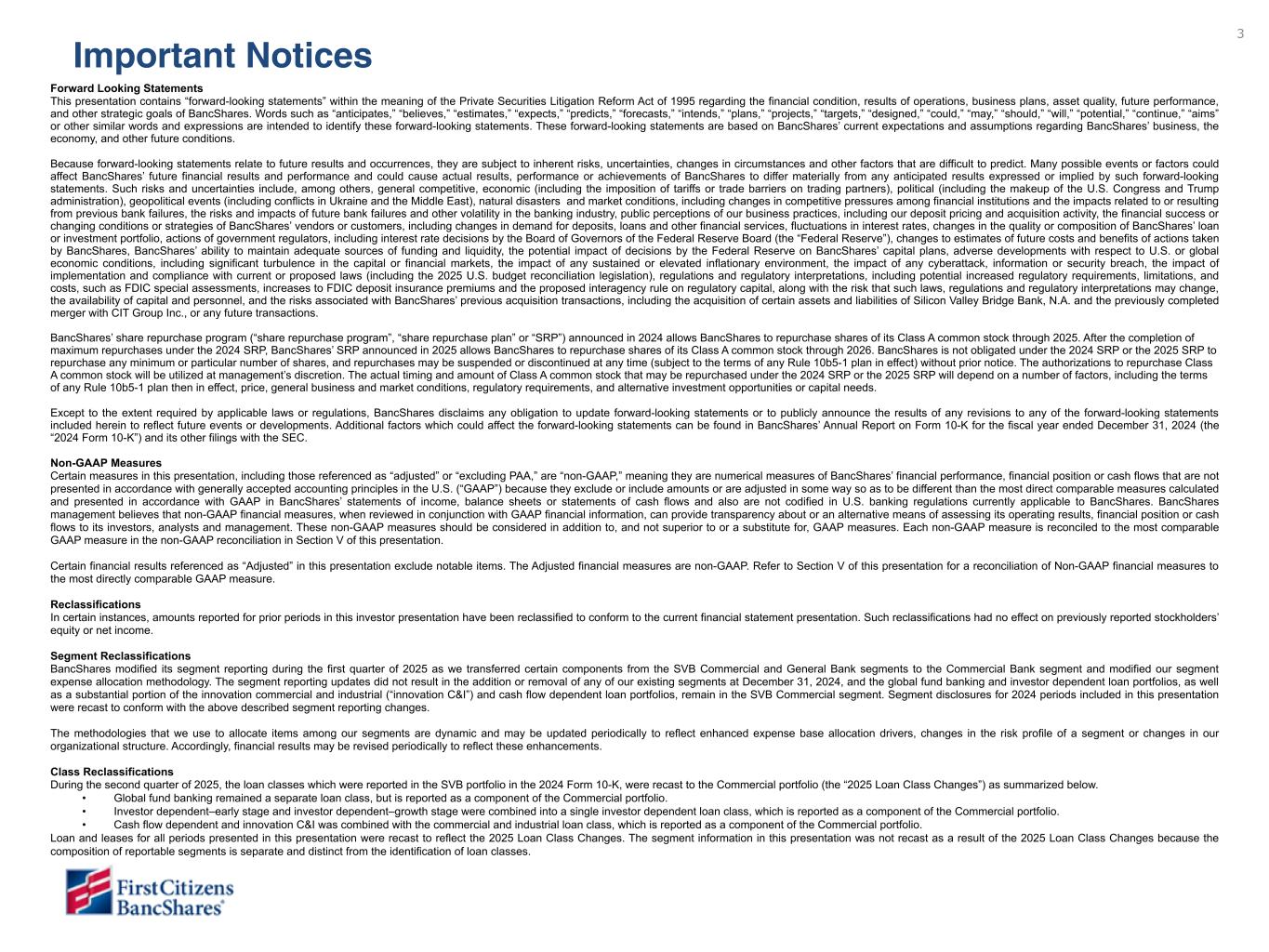
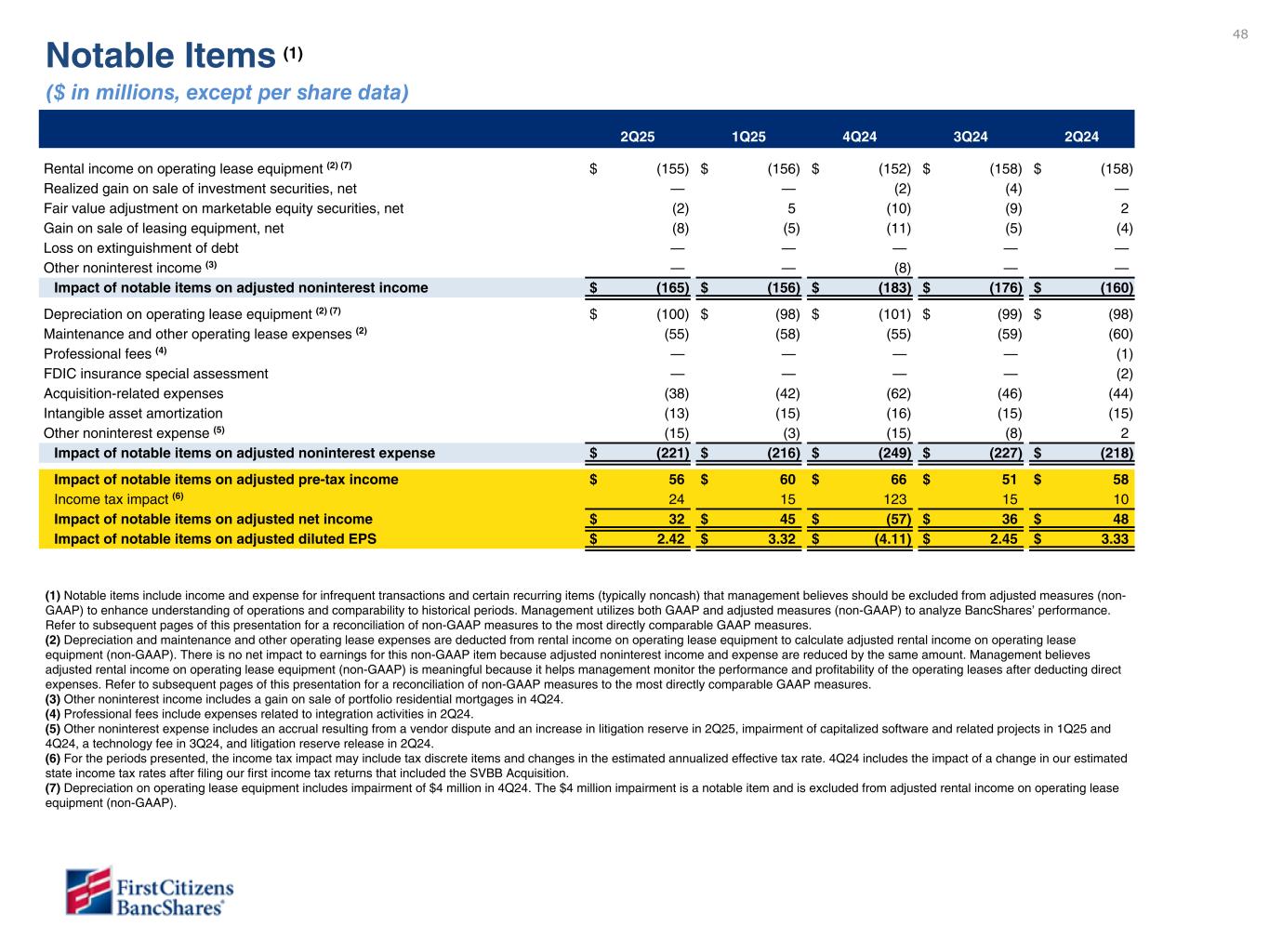
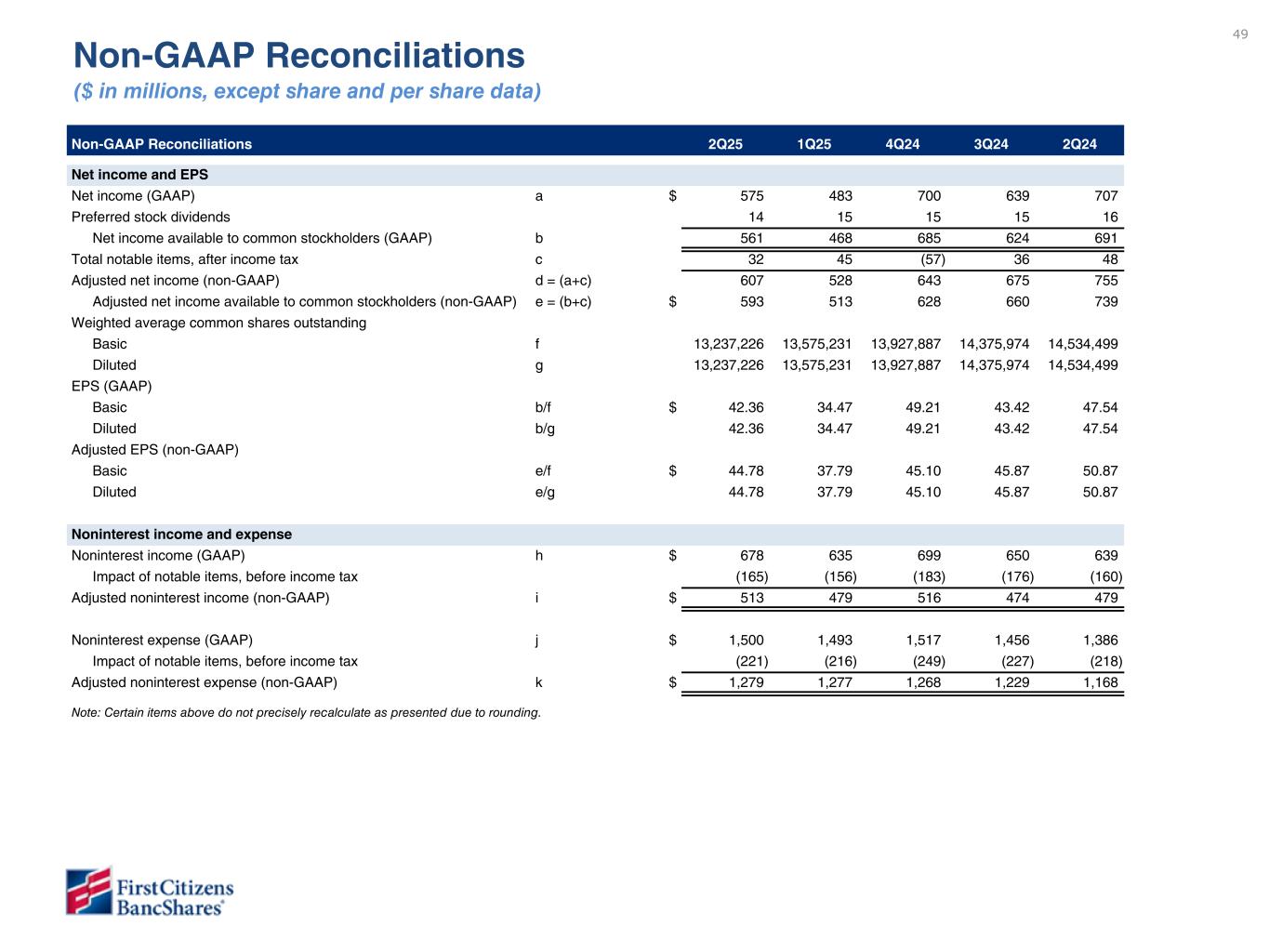
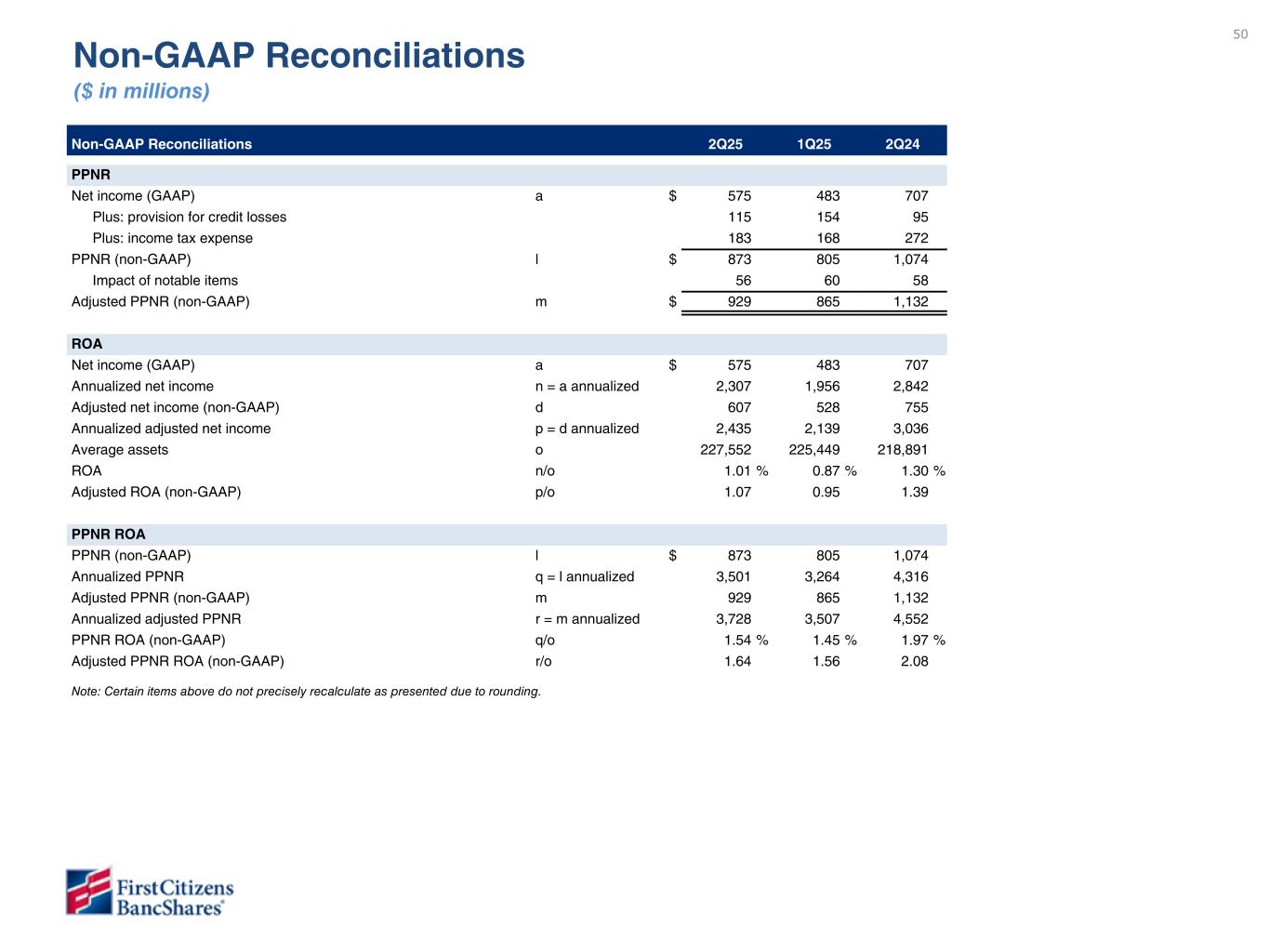
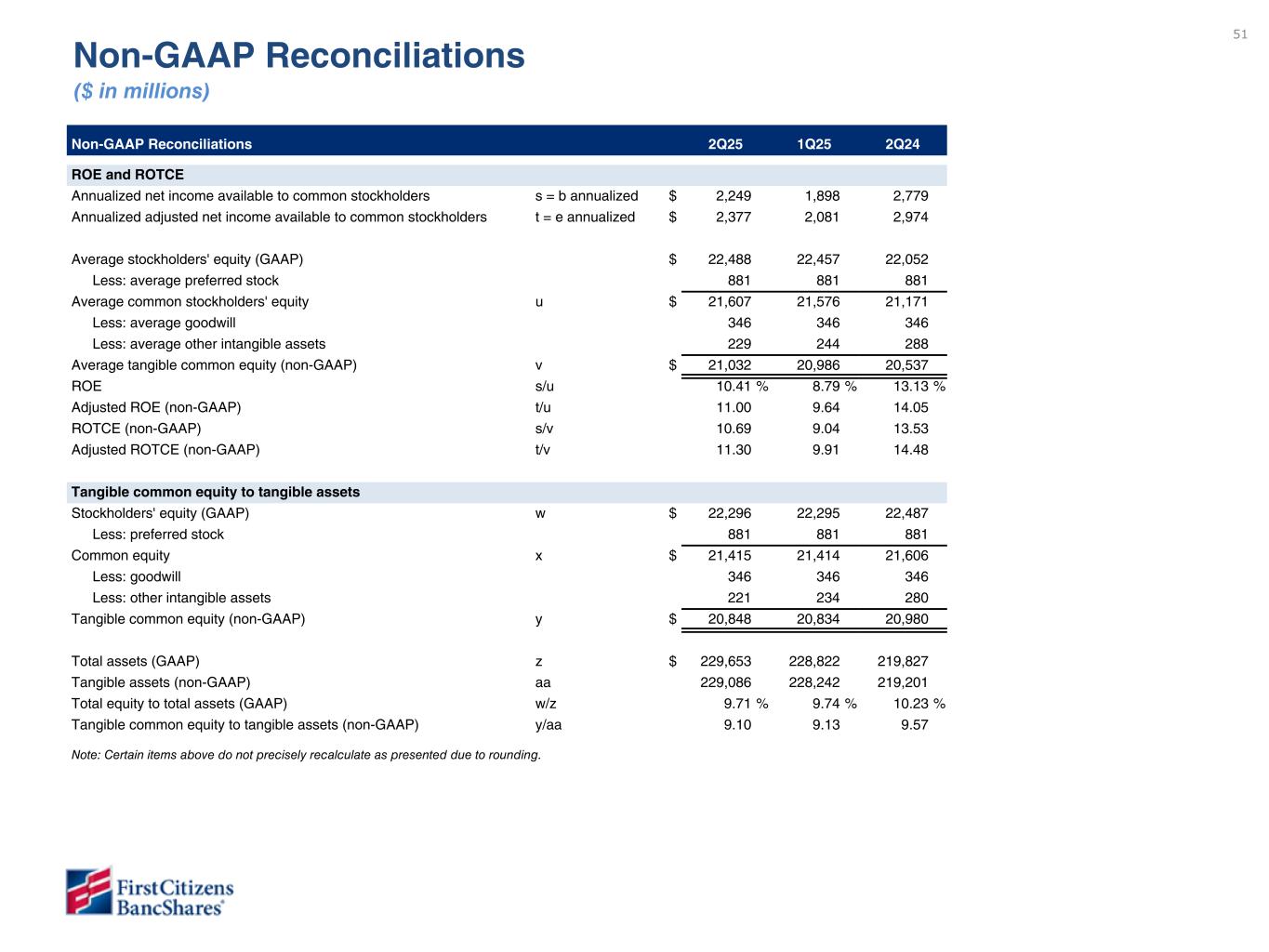
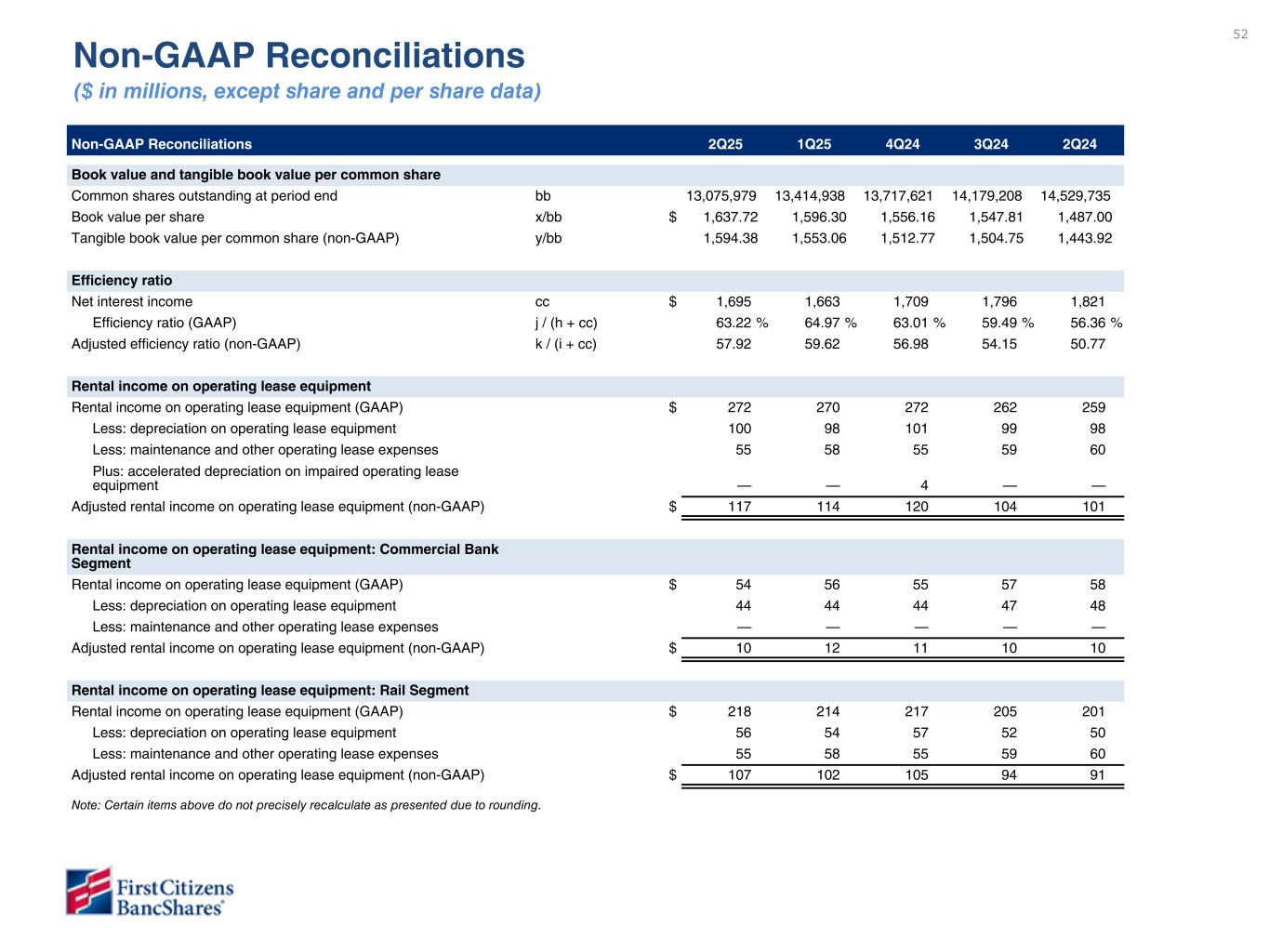
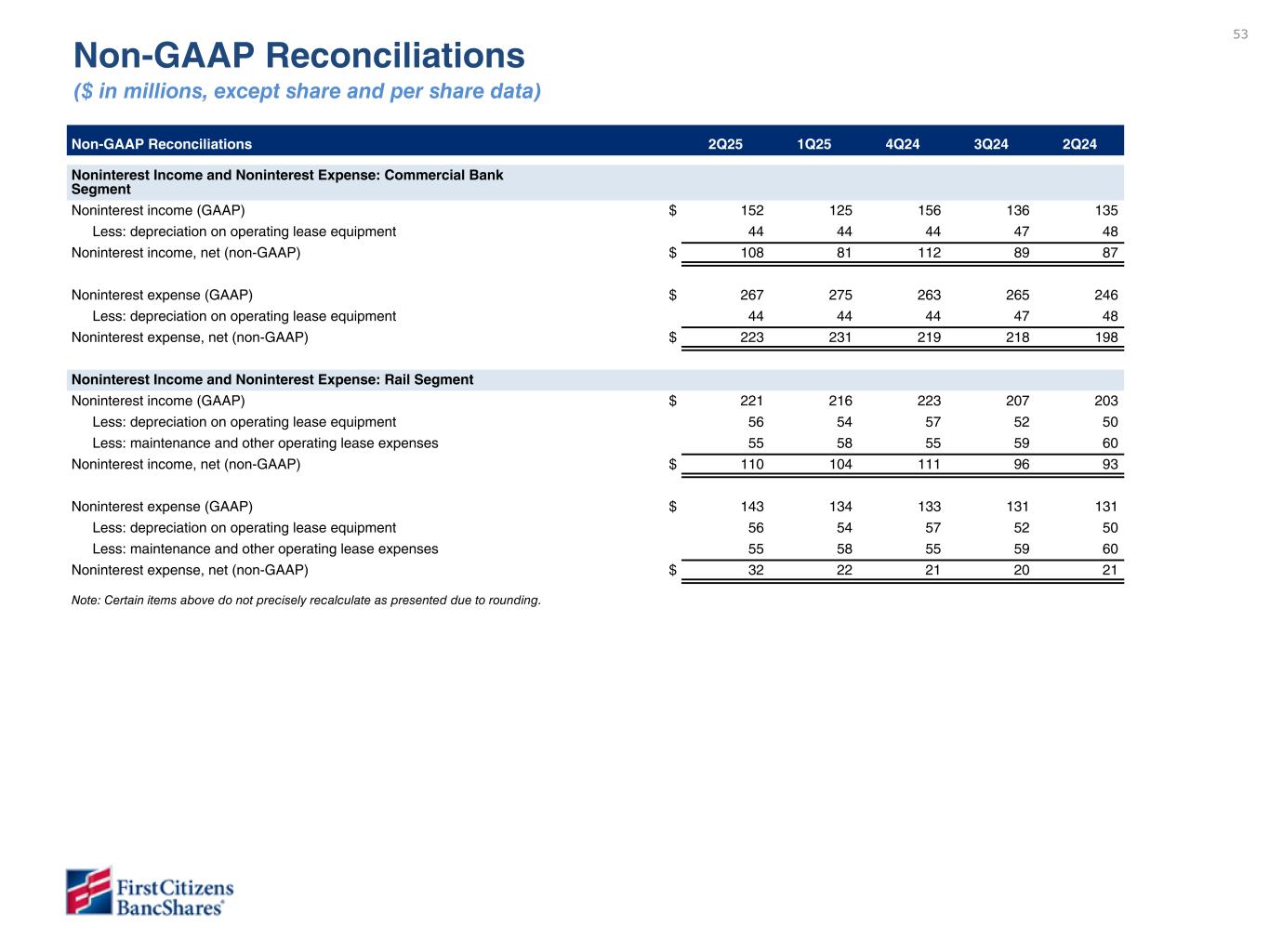
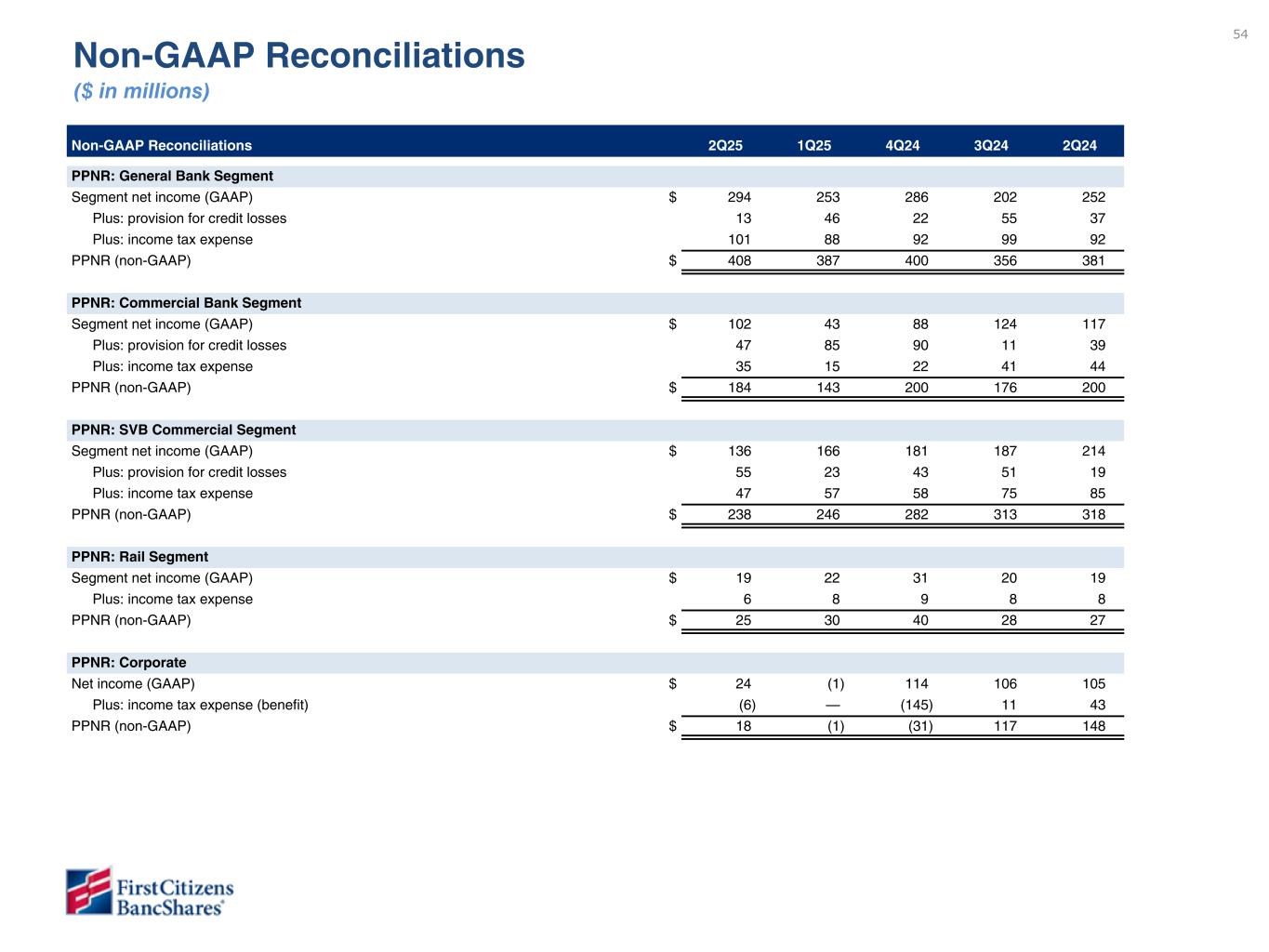
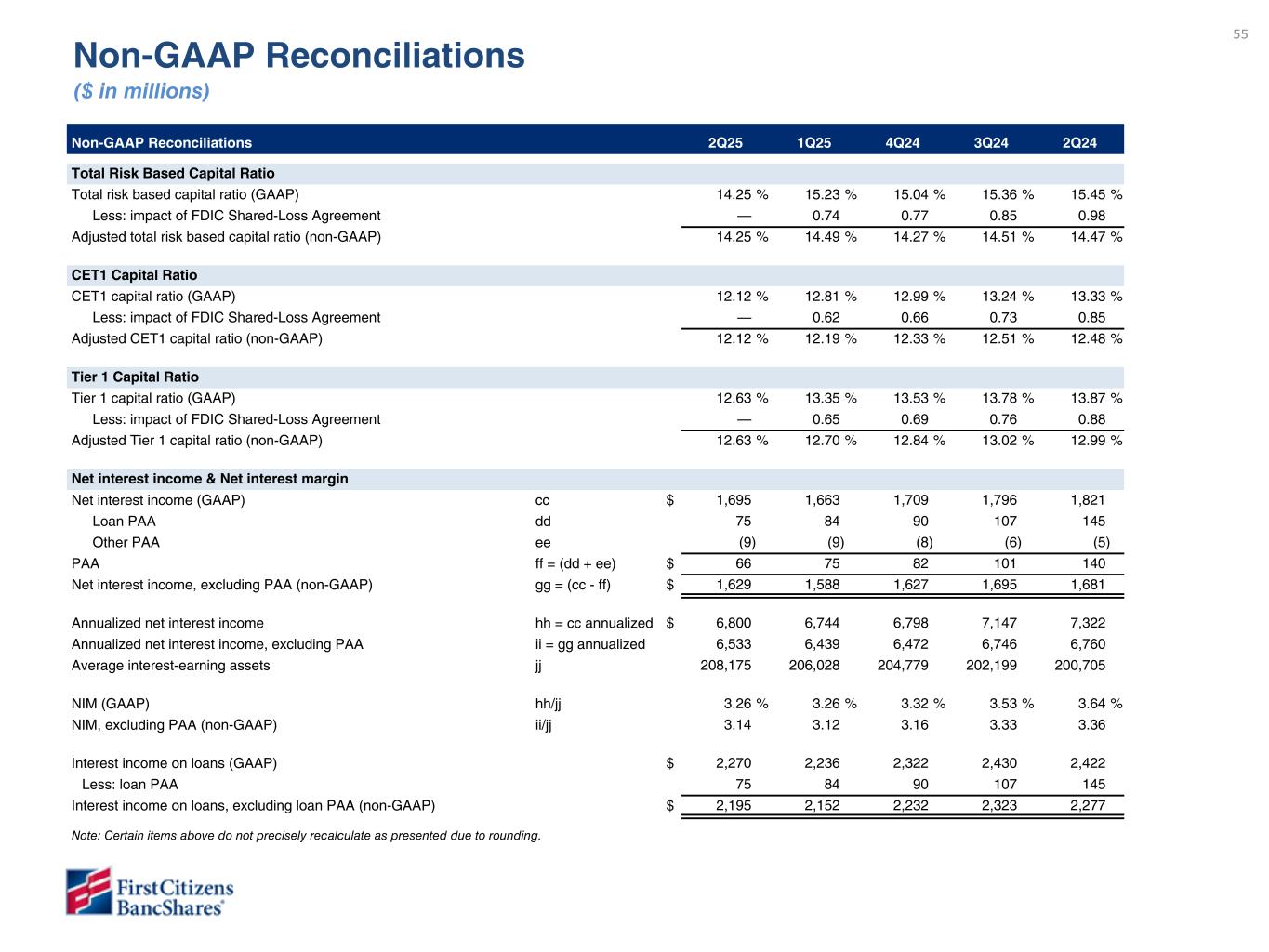
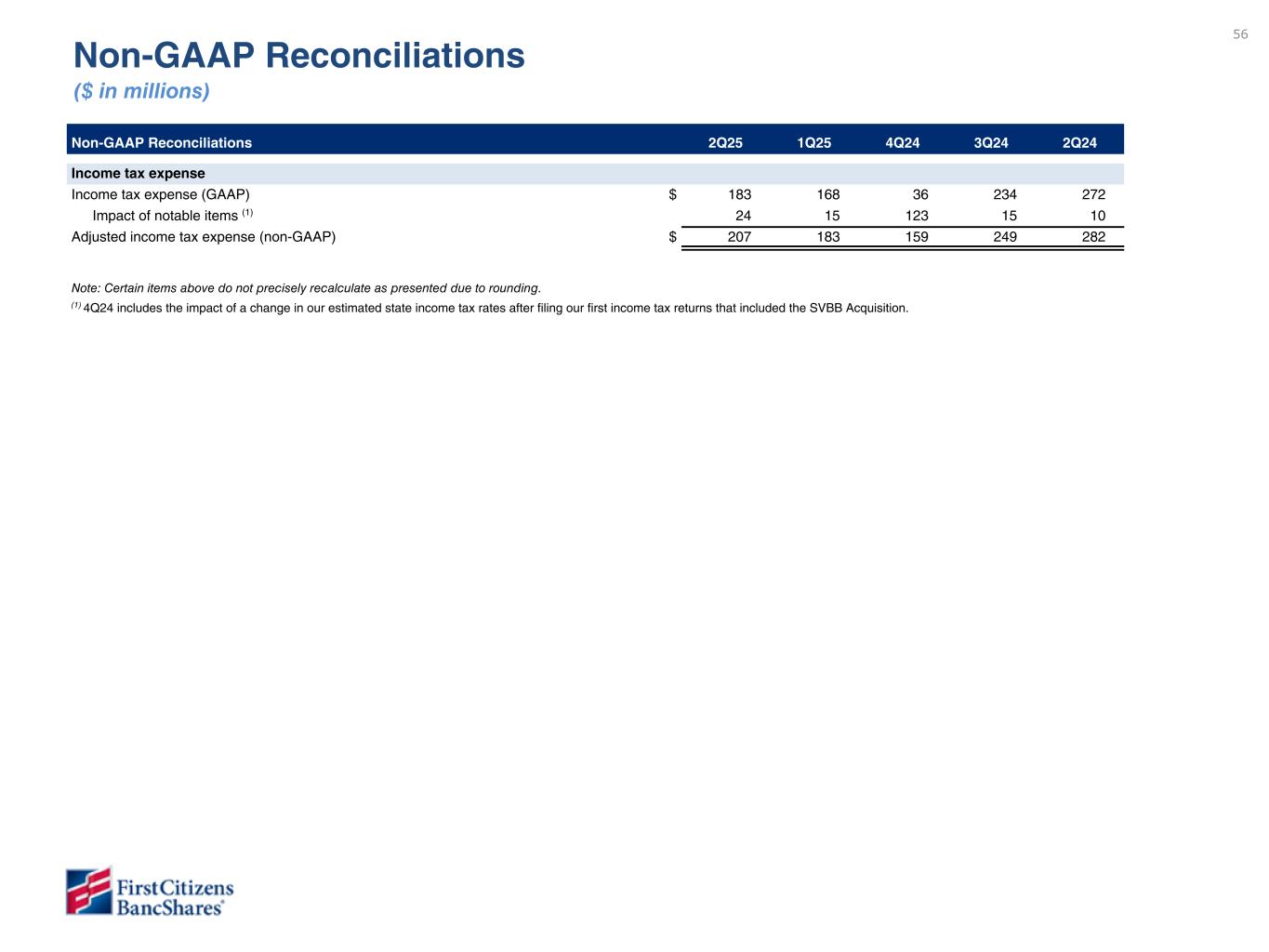
Thank you. Good morning and welcome to First Citizen's Second Quarter Earnings Call. Joining me on the call today are our Chairman and Chief Executive Officer Frank Holding and Chief Financial Officer Craig Nix. They will provide second quarter business and financial updates referencing our earnings call presentation, which you can find on our website. Our comments today will include forward-looking statements, which are subject to risks and uncertainties that may cause actual results to differ materially from expectations. We assume no obligation to update such statements. These risks are outlined on page three of the presentation. We will also reference non-GAAP financial measures. Reconciliations of these measures against the most directly comparable GAAP measures can be found in Section 5 of the presentation. Finally, First Citizens is not responsible for and does not edit nor guarantee the accuracy of earnings transcripts provided by third parties. I will now turn it over to Frank.
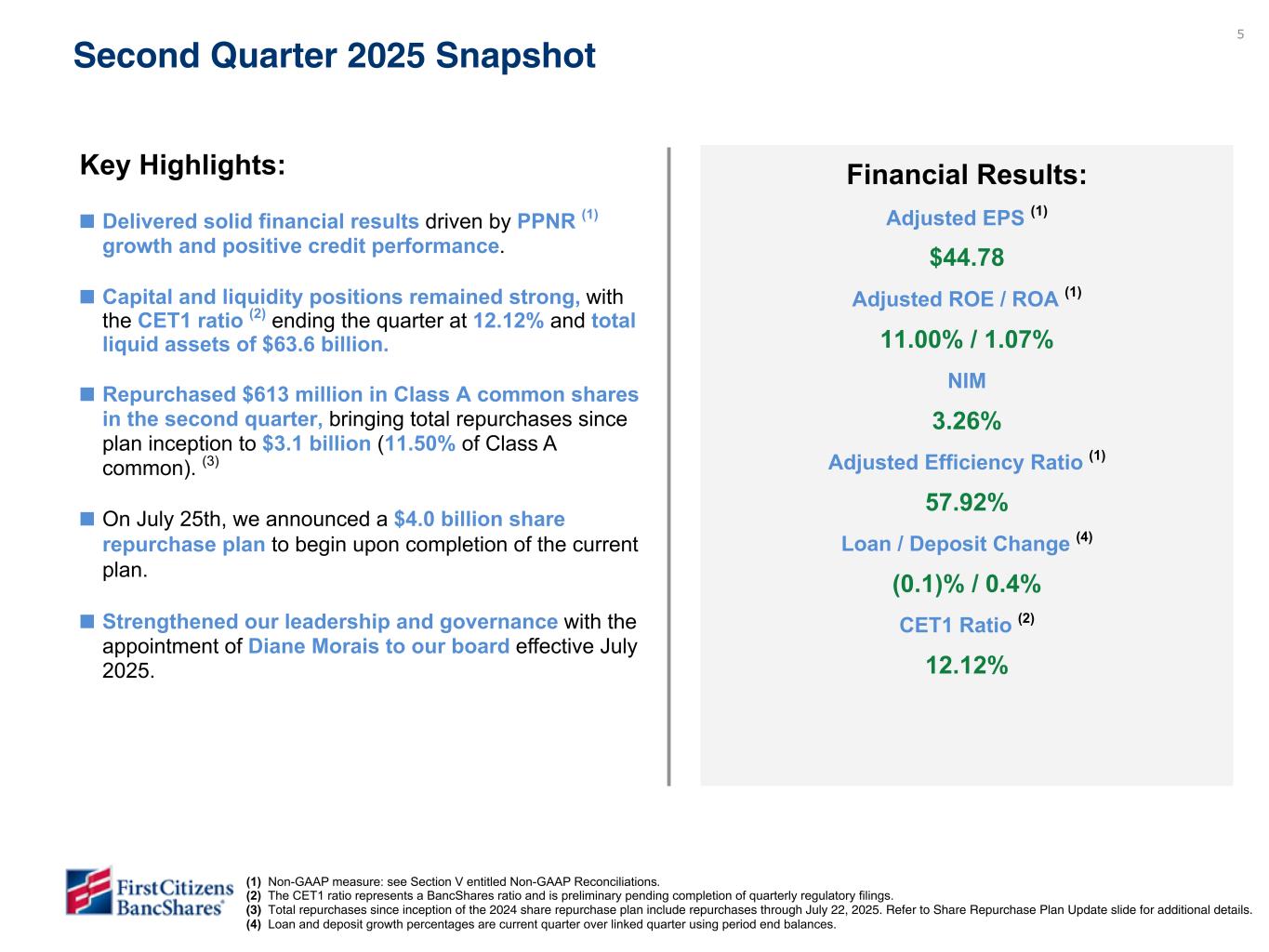
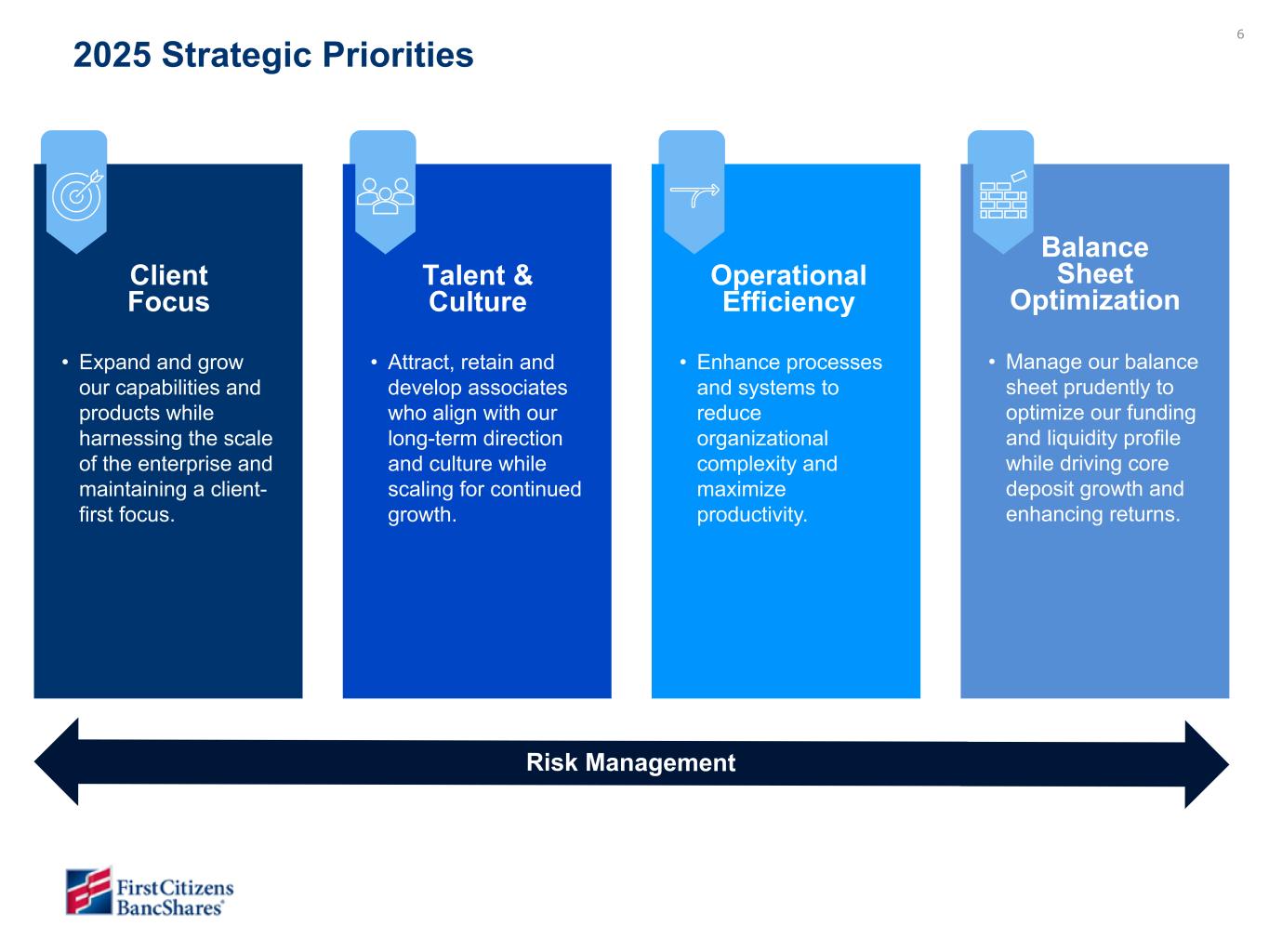
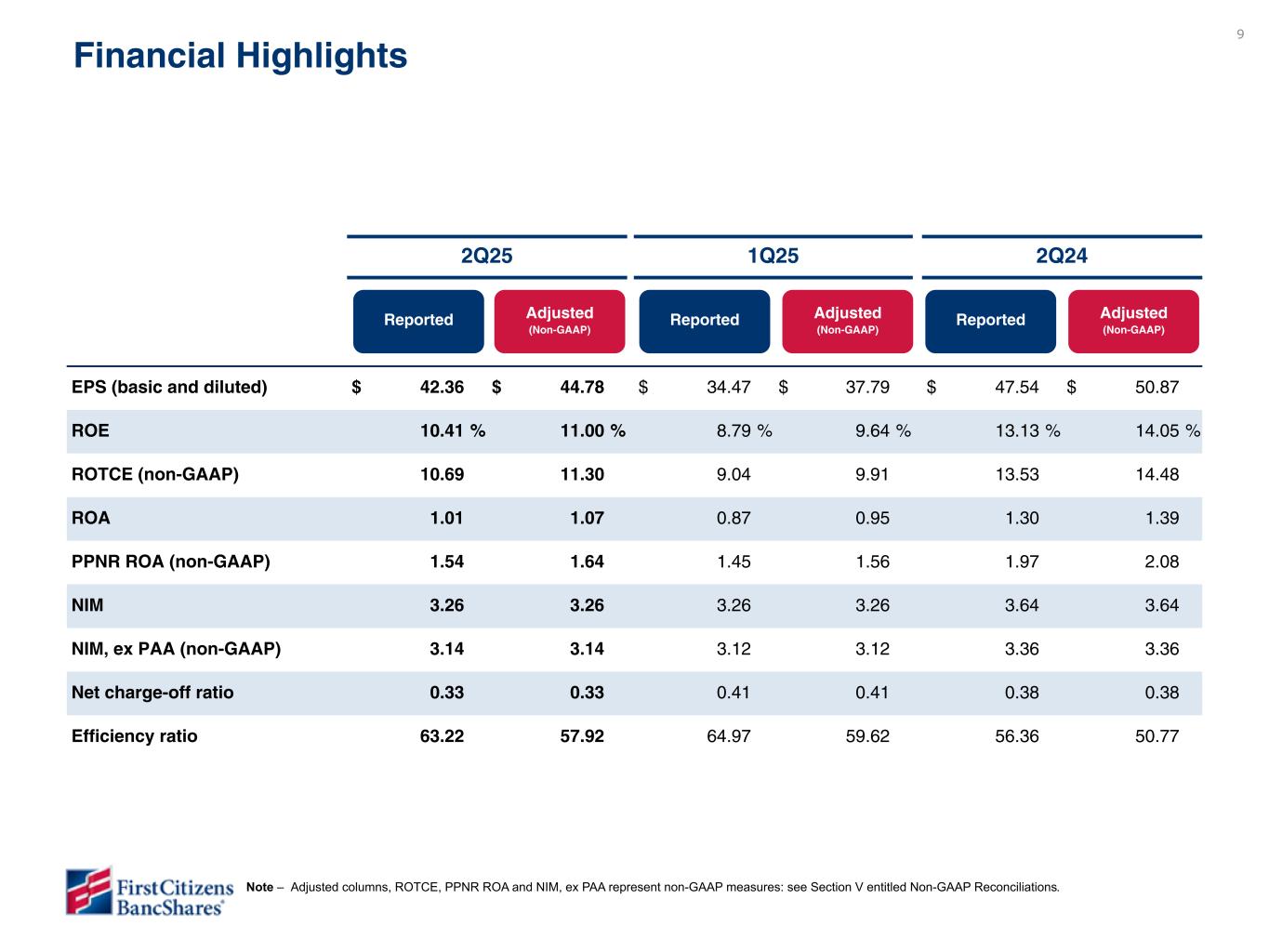
Thank you, Deanna. Good morning, everyone. Welcome to our quarterly earnings call, and thank you for joining us this morning. I will start by providing brief comments on our second quarter results before turning it over to Craig Nix to review our performance in more detail. Starting on page five, our key earnings metrics were solid, marked by net interest income growth, net charge-offs at their lowest level since the second quarter of 2024, and adjusted non-interest expense at the low end of our guidance range. We reported adjusted earnings per share of $44.78 or an adjusted ROE of 11.00% and an ROA of 1.07%. We maintain strong capital and liquidity positions supporting balance sheet growth and allowing us to return another 613 million dollars to our shareholders through share repurchases during the second quarter upon the successful completion of our annual capital planning activities this week our board approved a new four billion dollar share repurchase plan to commence upon completion of the current plan. Craig will address additional details regarding the new plan in his comments on the quarter, but first I'd like to take a moment to highlight progress on our 2025 strategic priorities and the positive results we are seeing in our business segments. During the quarter, we continued consolidating platforms and relationship teams to ensure a seamless client experience, and we're beginning to see positive momentum from these activities we're also seeing tangible benefits from the way our teams are working together resulting in new business and deepening existing relationships whether it's a middle market company needing capital markets expertise a high net worth client looking for integrated advice or a multinational company navigating complex treasury needs, we're not just delivering solutions, we're listening to our clients' needs and helping them succeed. We were recently excited to announce the appointment of Di Marais to our board of directors. Di is a distinguished leader and executive with more than 30 years financial services experience and most recently served as president of consumer and commercial banking at Ally Bank. Over the course of her distinguished career, Di has become known as a results-oriented executive with a customer-centric vision which aligns nicely with the relationship-based long-term focus at First Citizens. Her knowledge and experience complement our board and we're excited to have her on our team. Looking at page six, our strategic priorities are unchanged from the prior quarter and are outlined for you on this slide. We continue to demonstrate the strength of our diversified lines of business and remain dedicated to our client-first focus. I like our positioning to capitalize on growth opportunities while continuing to optimize our balance sheet and enhance our processes and systems to maximize efficiency and productivity. As always, we remain vigilant on the macro and geopolitical landscape, which remains somewhat uncertain due to tariff policy and negotiations, interest rates, and regulatory change. While we recognize some elements of the landscape could represent tailwinds while others contribute to headwinds, we are pleased that our capital and liquidity positions allow us to operate from a position of strength. To close, I'm very optimistic about our future as we remain committed to our customers and clients, investing for the long term, and delivering sustained shareholder value. With that, Craig, please take us through the financial results of the quarter and forward-looking guidance for the remainder of the year. Craig?
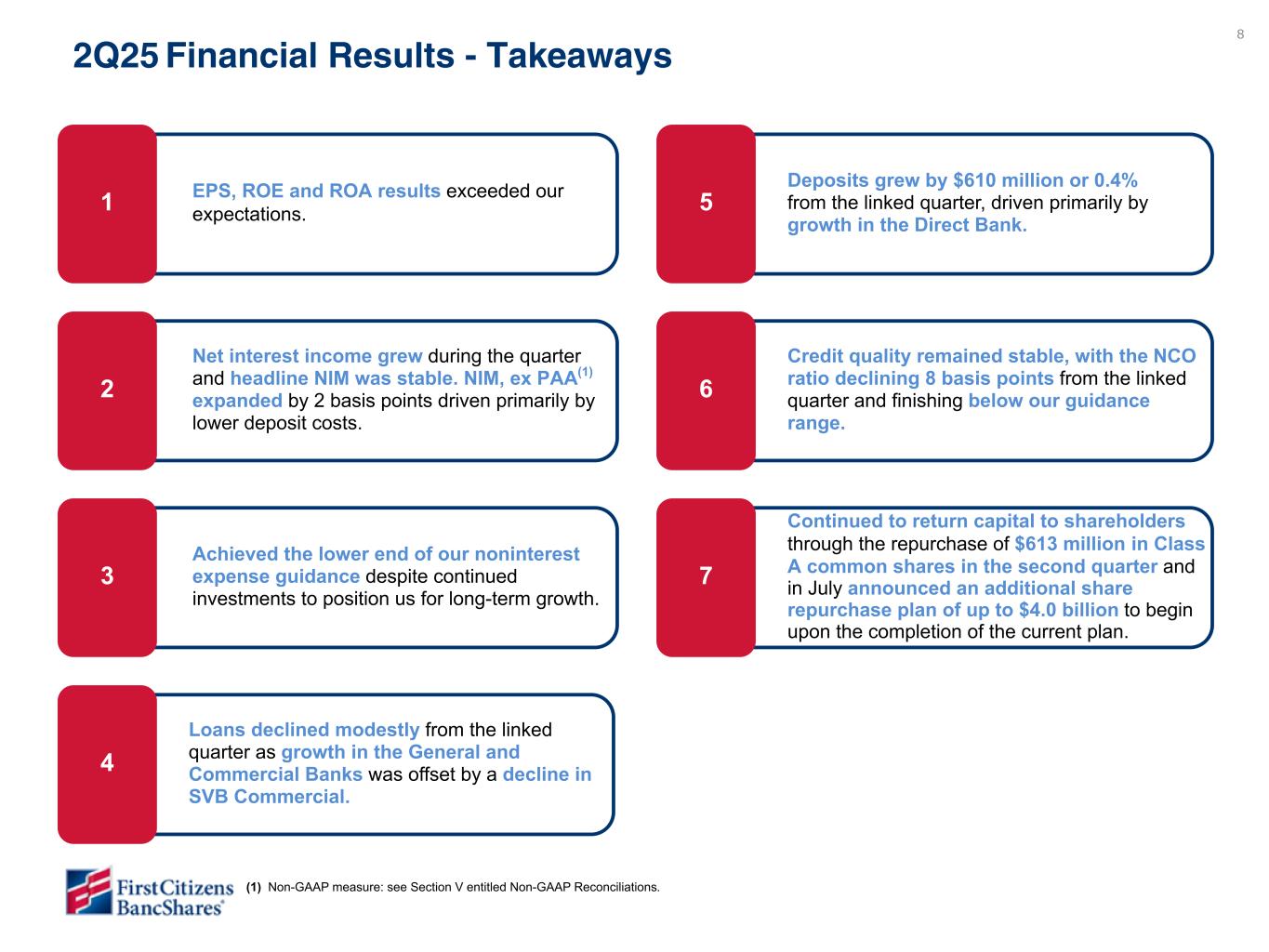
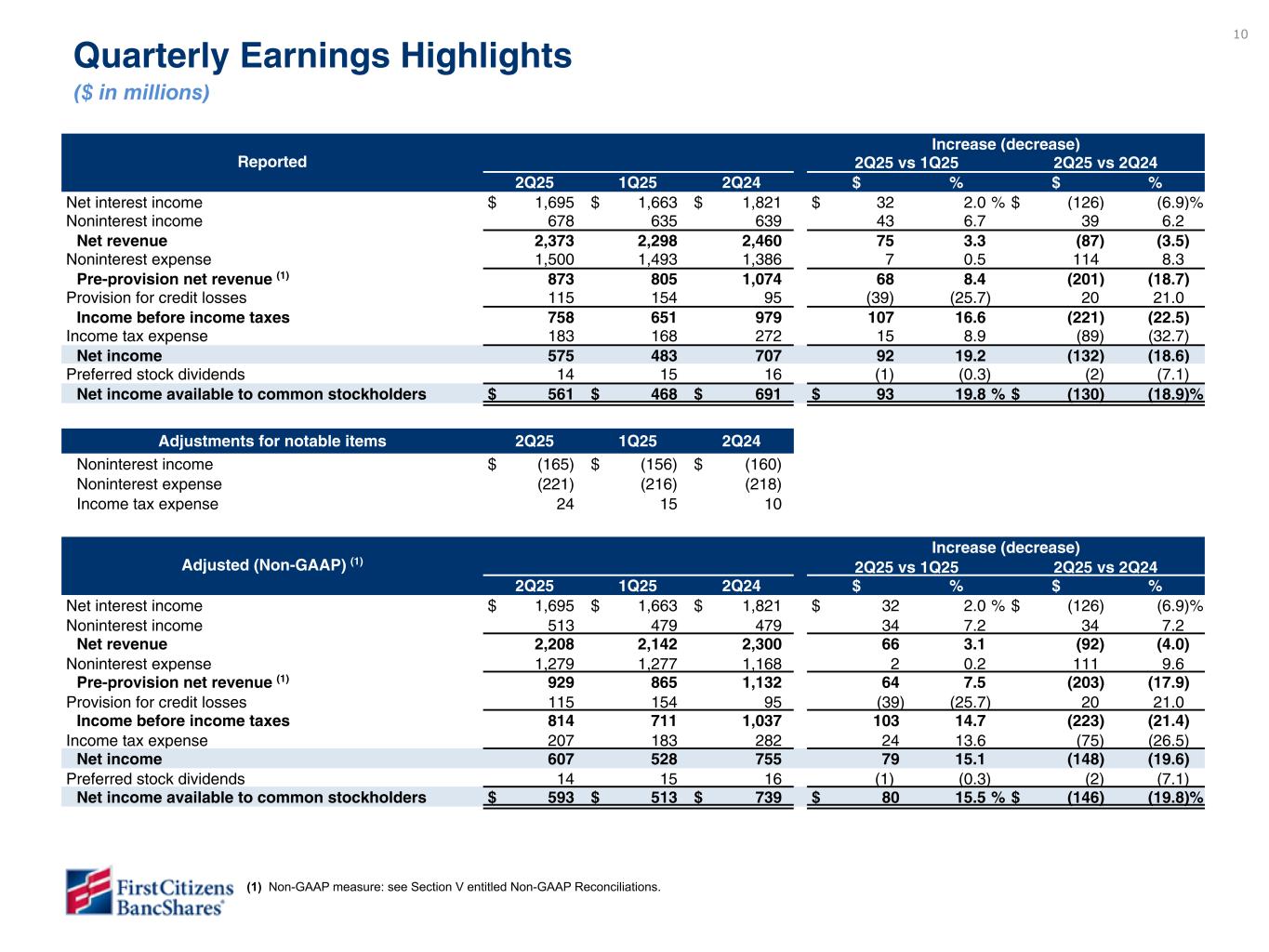
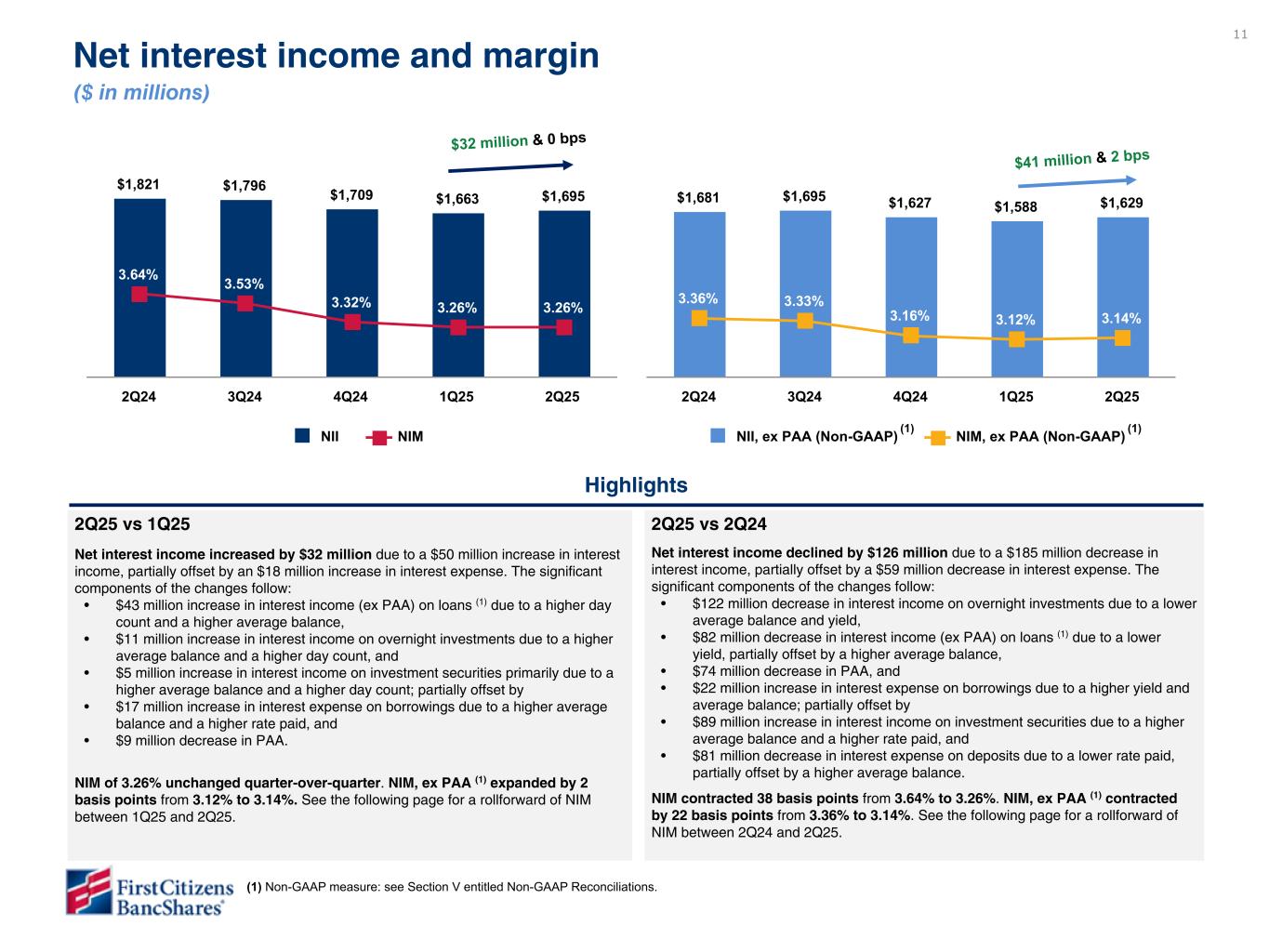
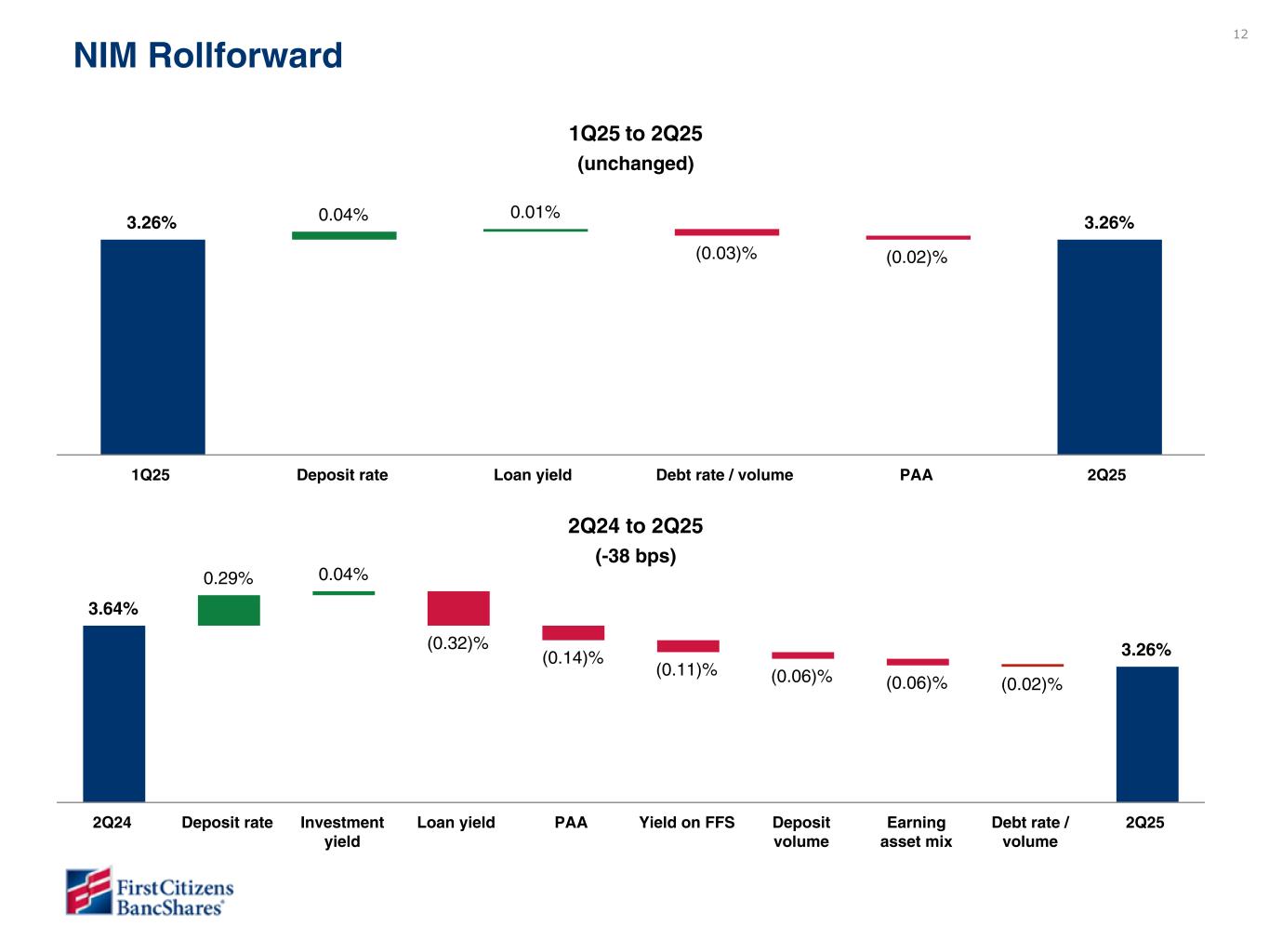
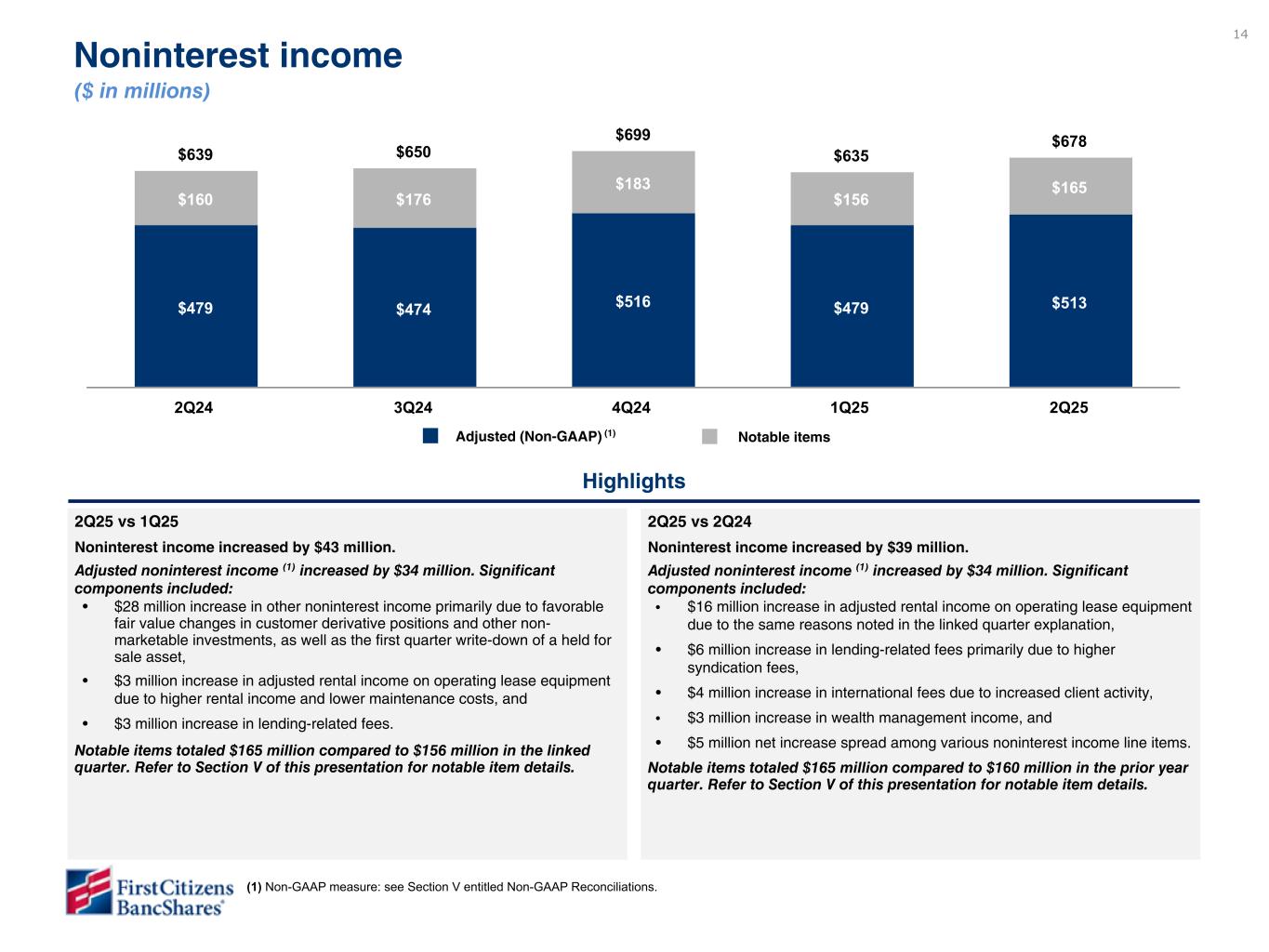
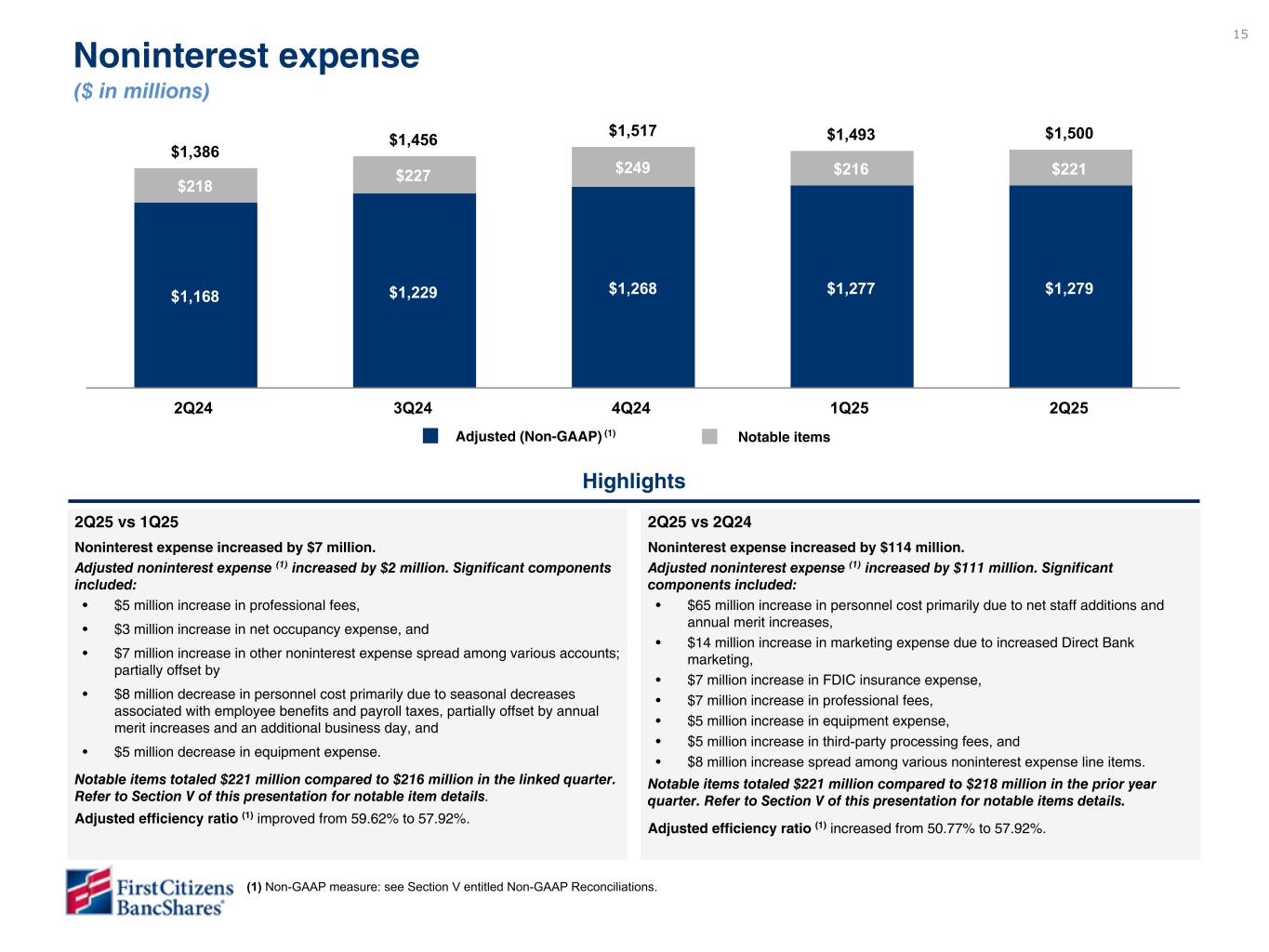
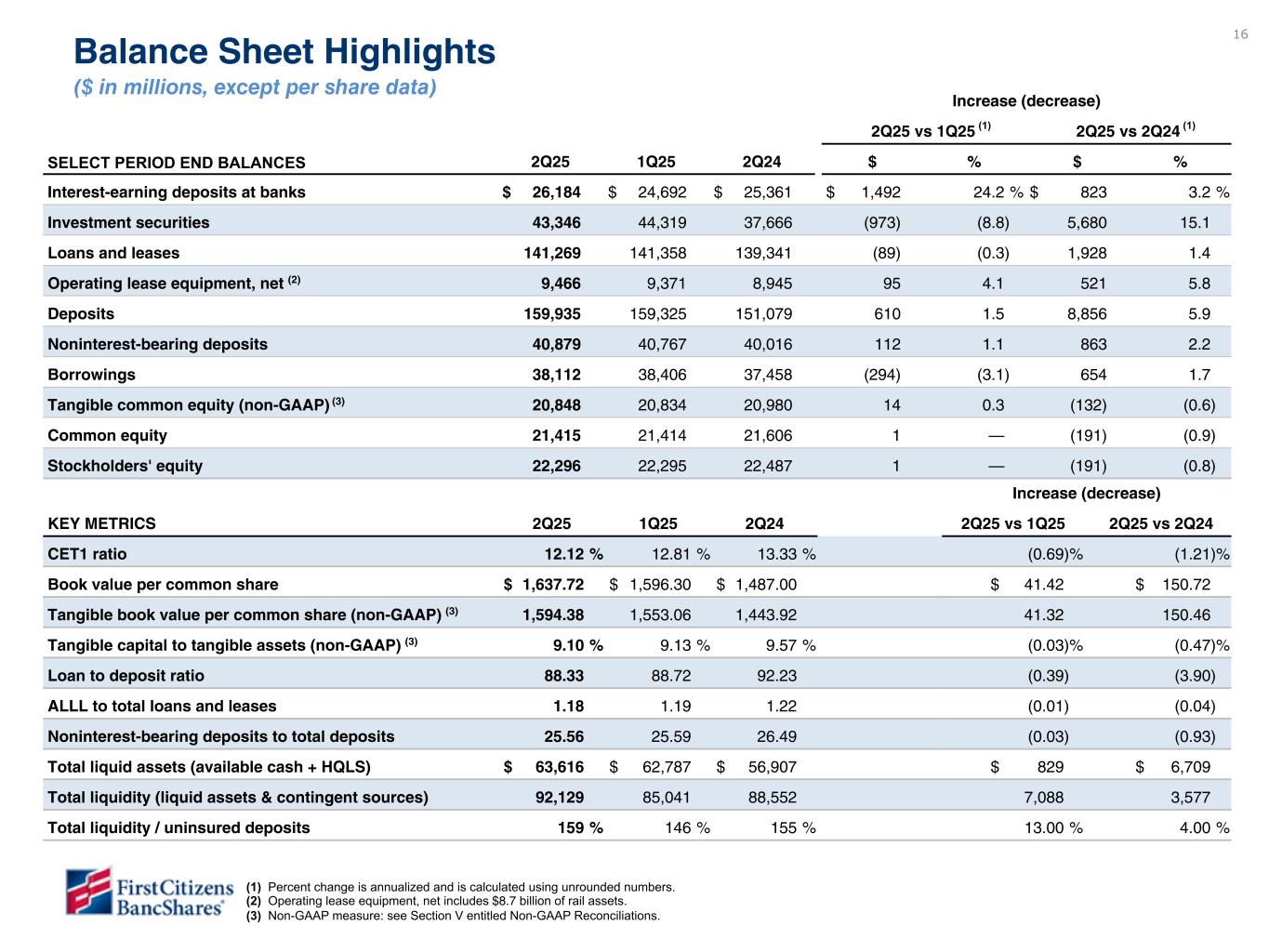
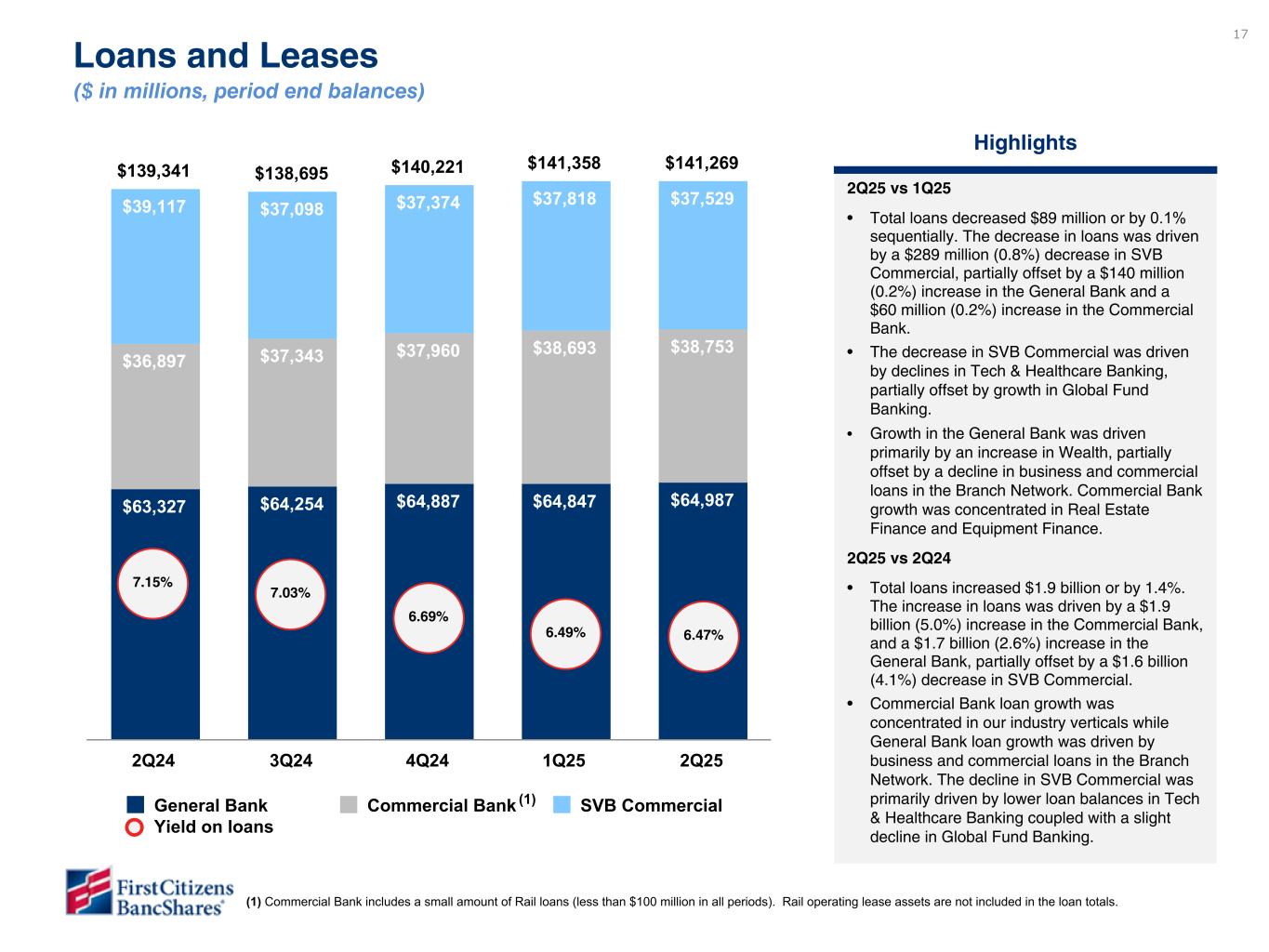
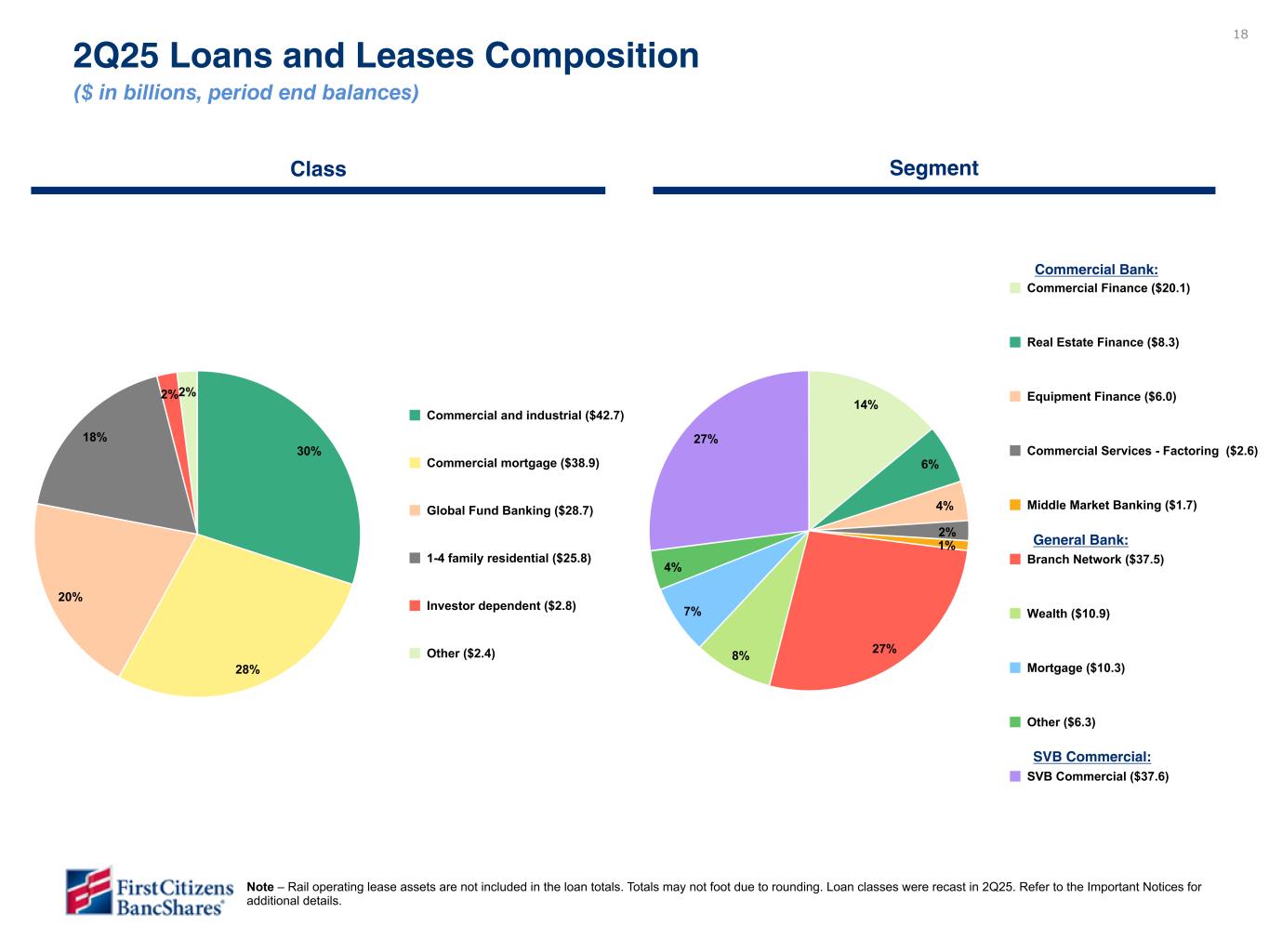
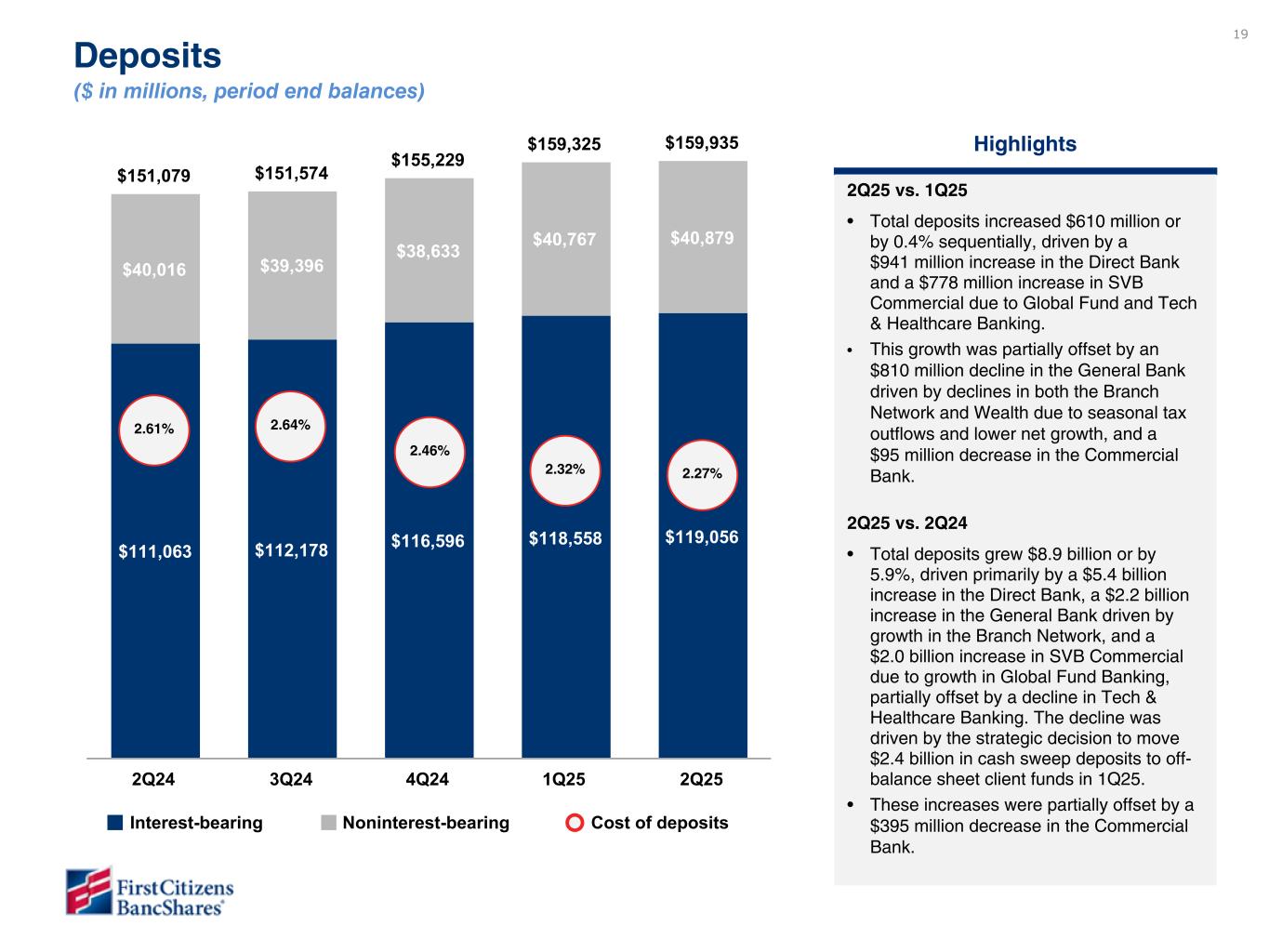
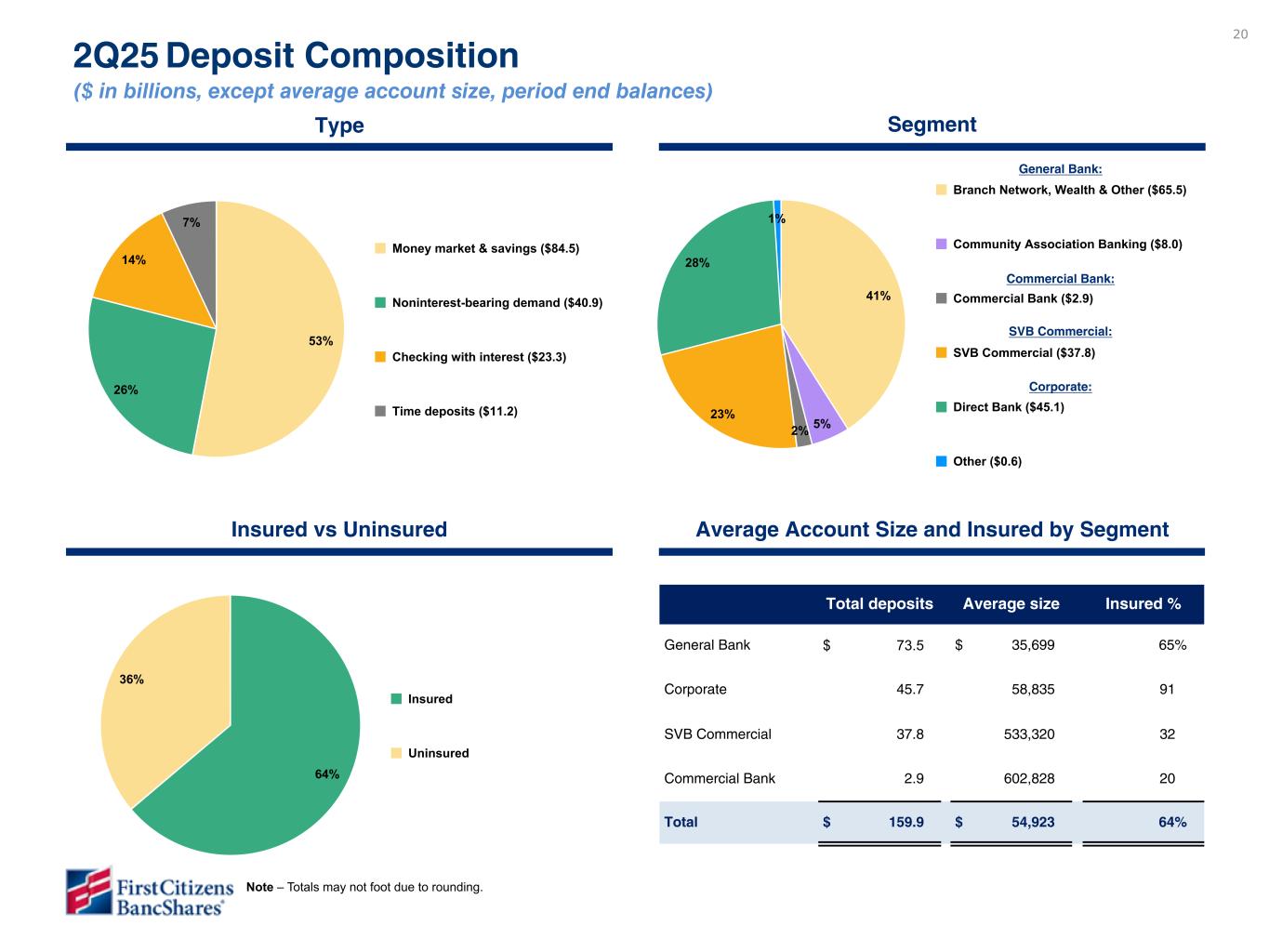
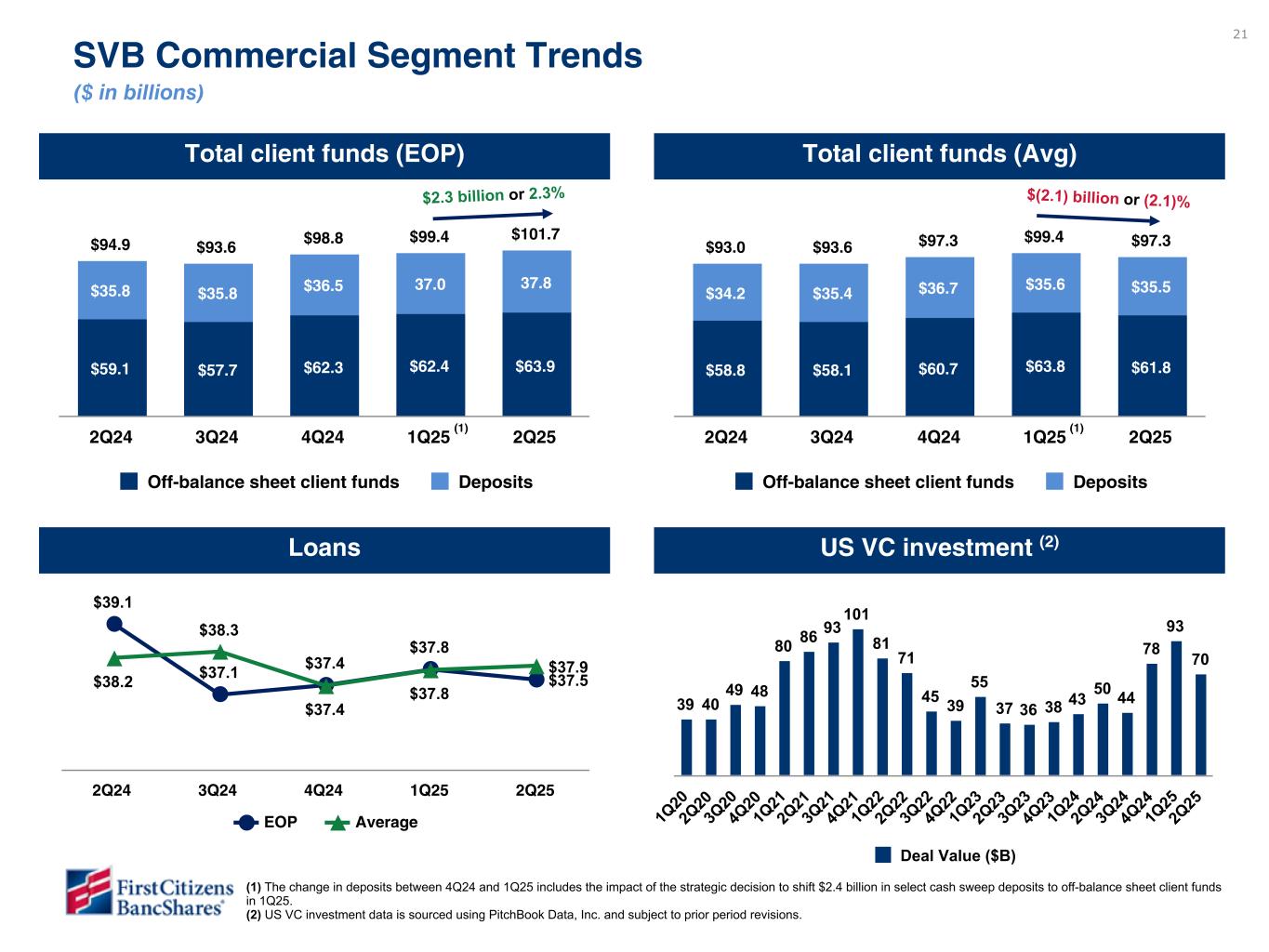
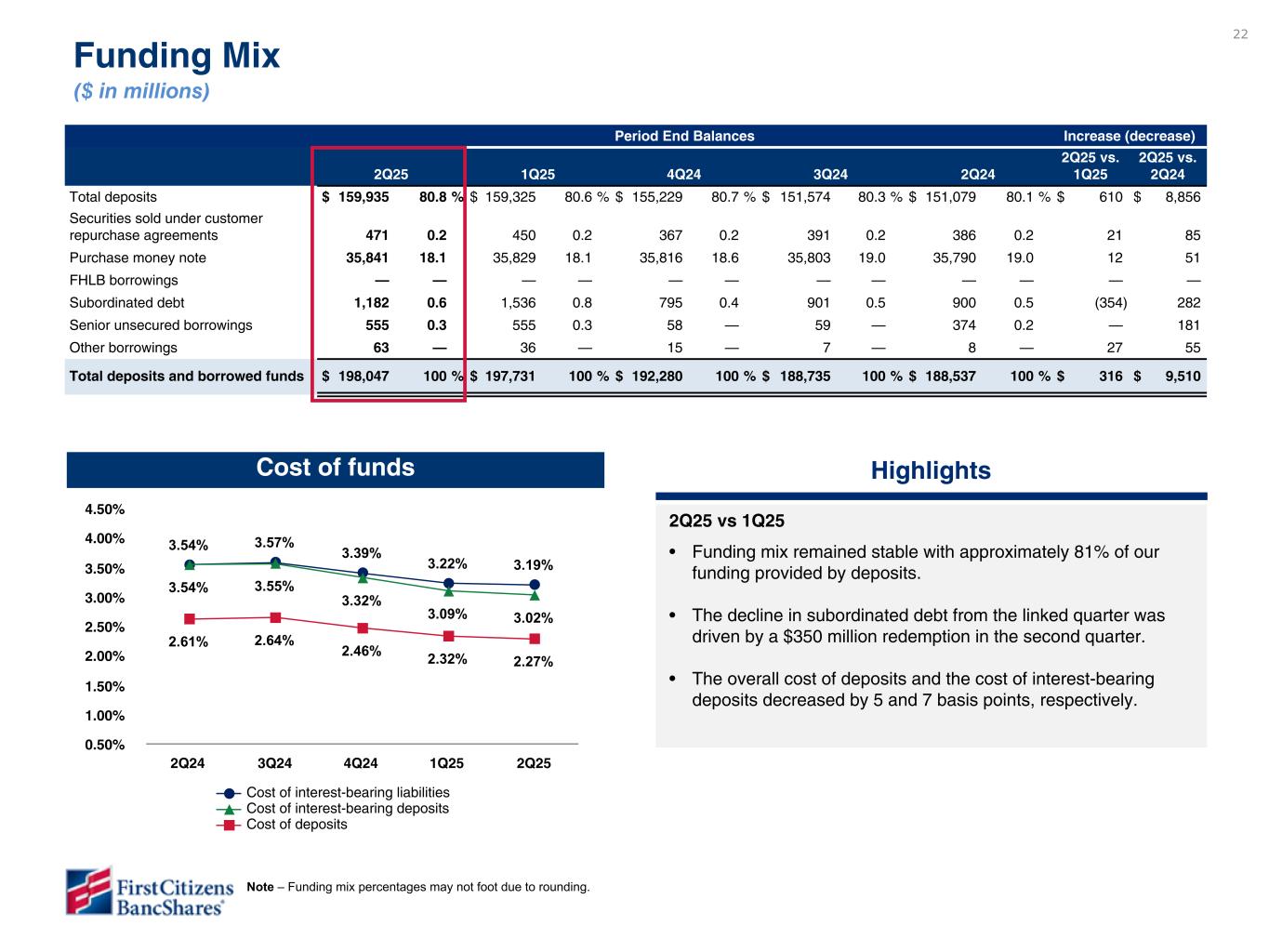
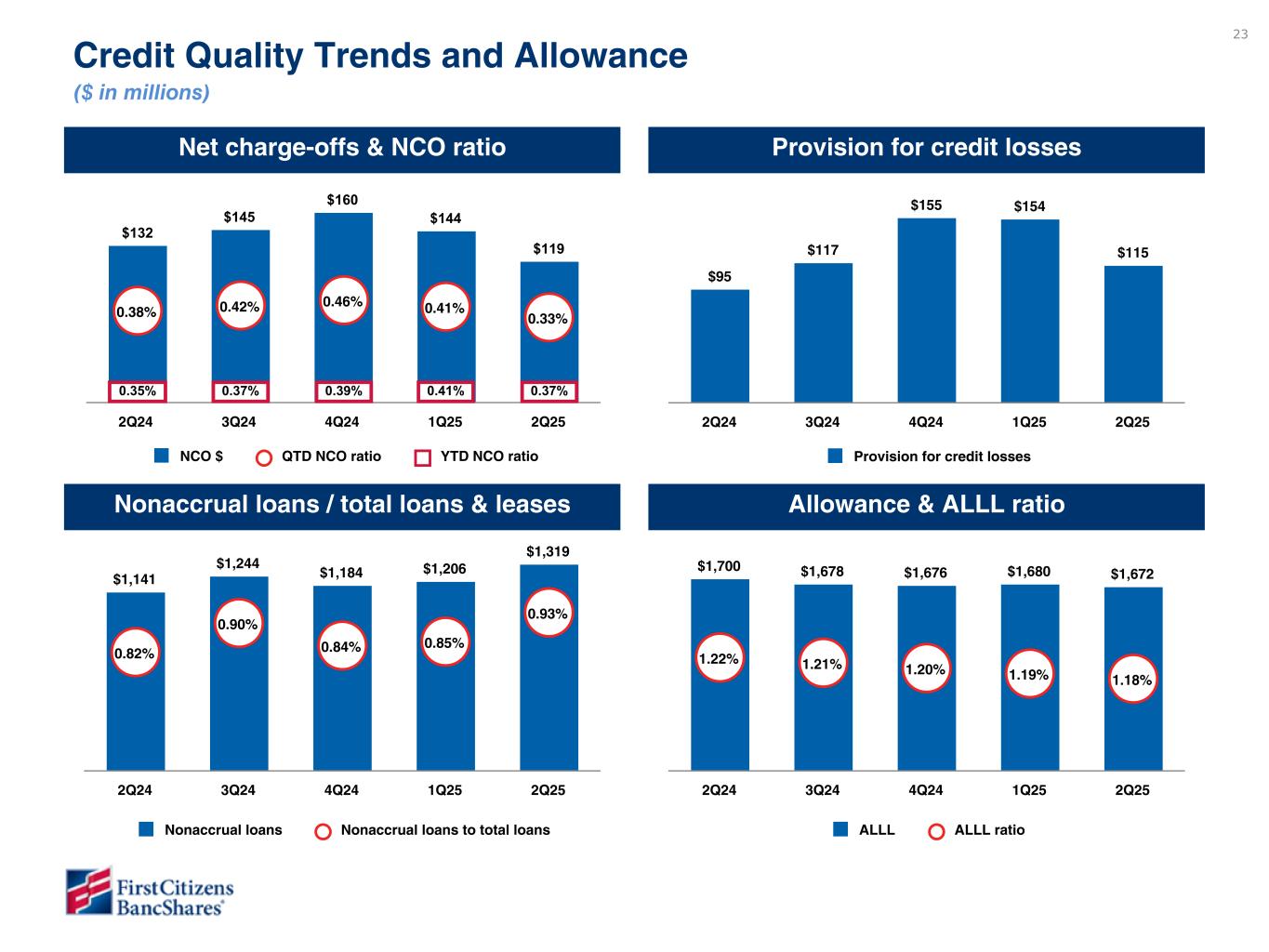
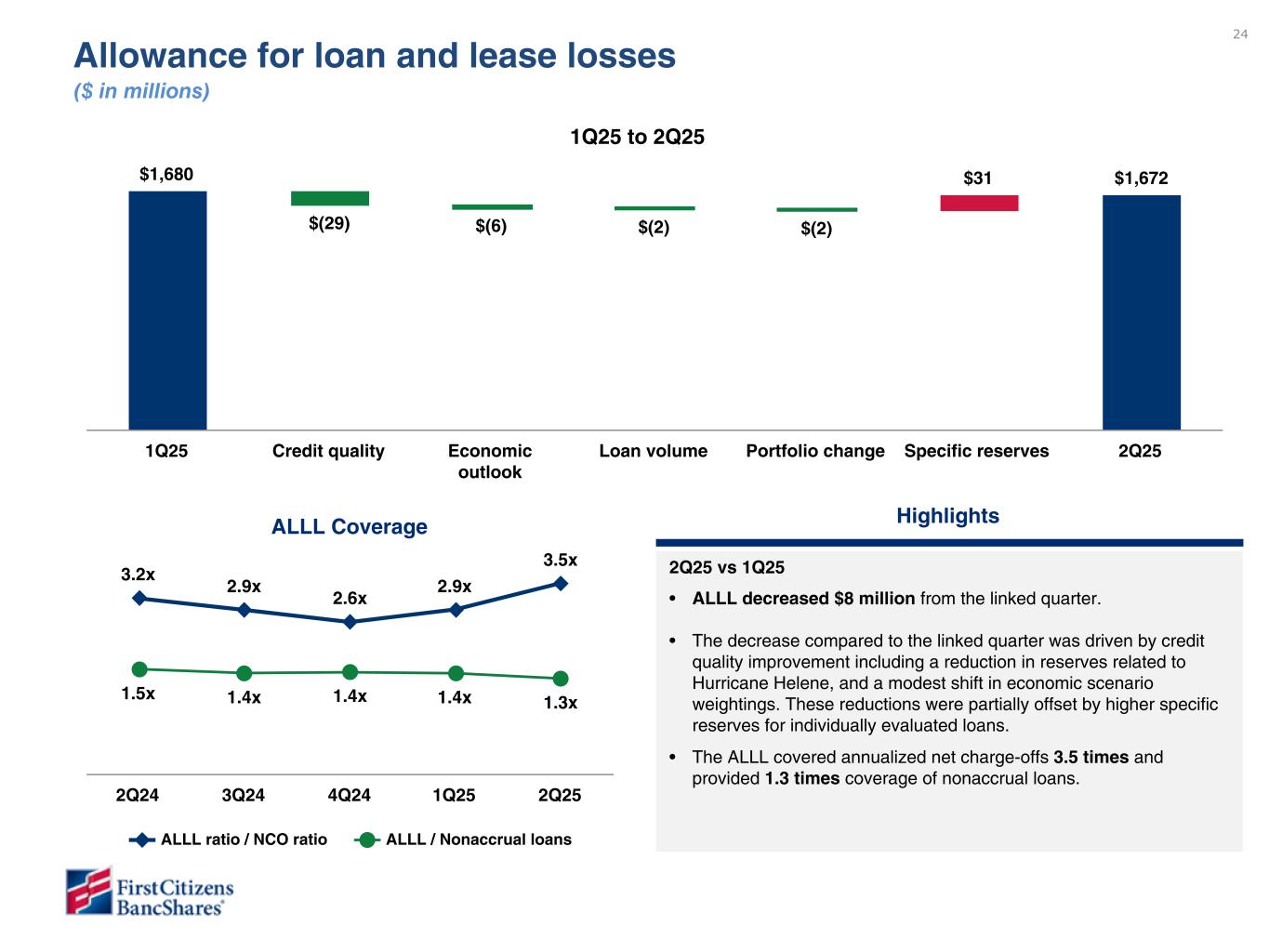
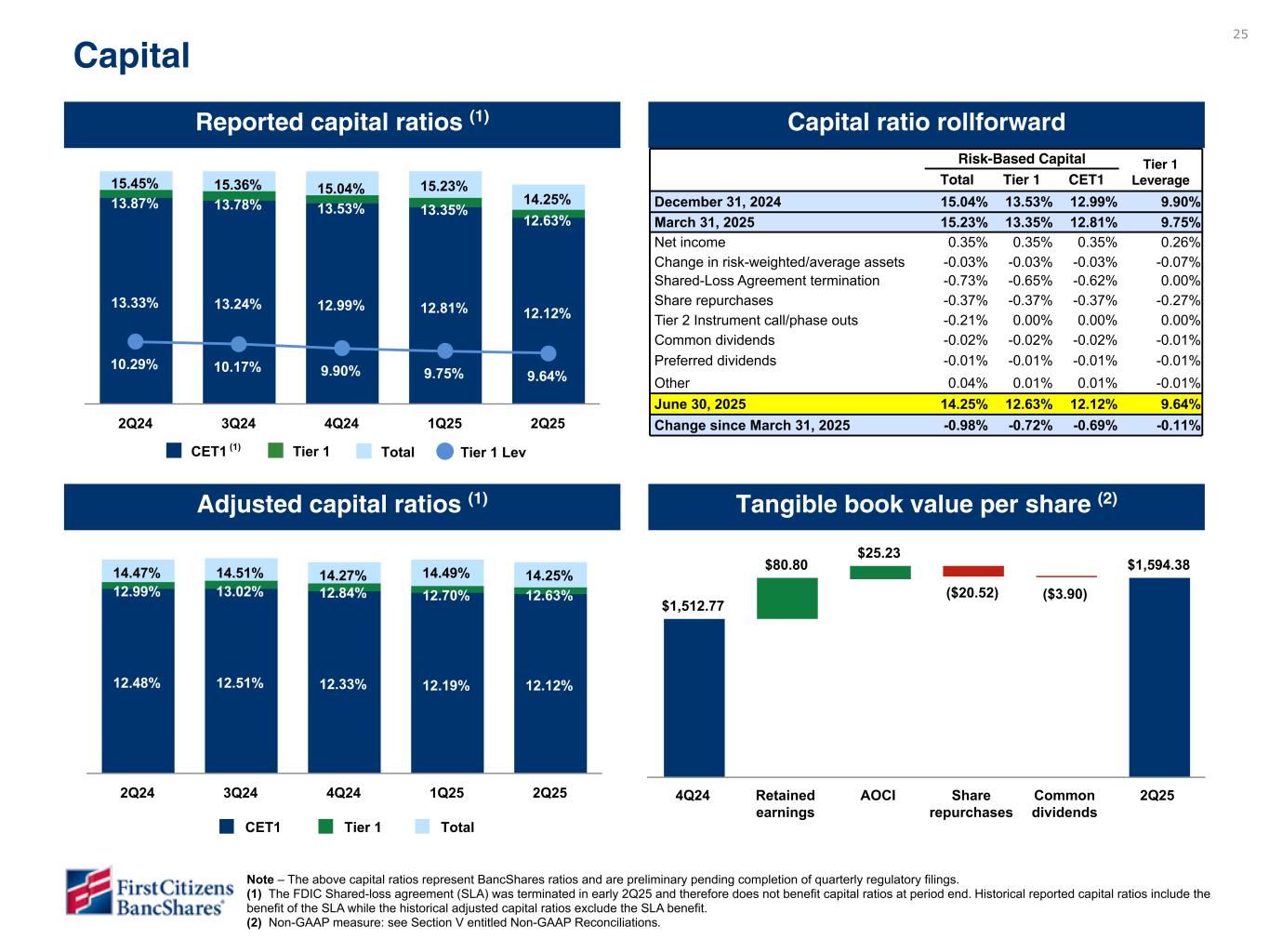
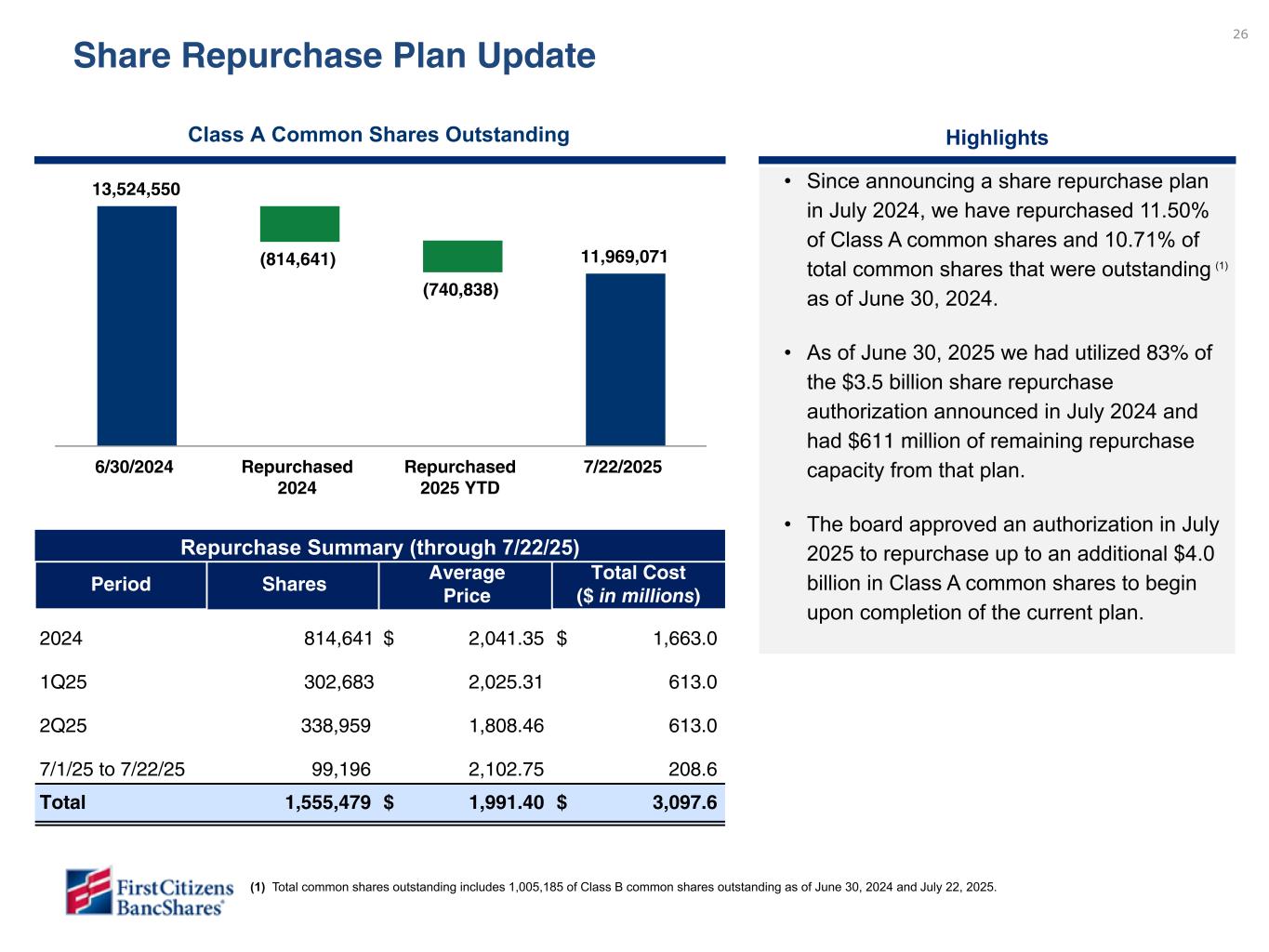
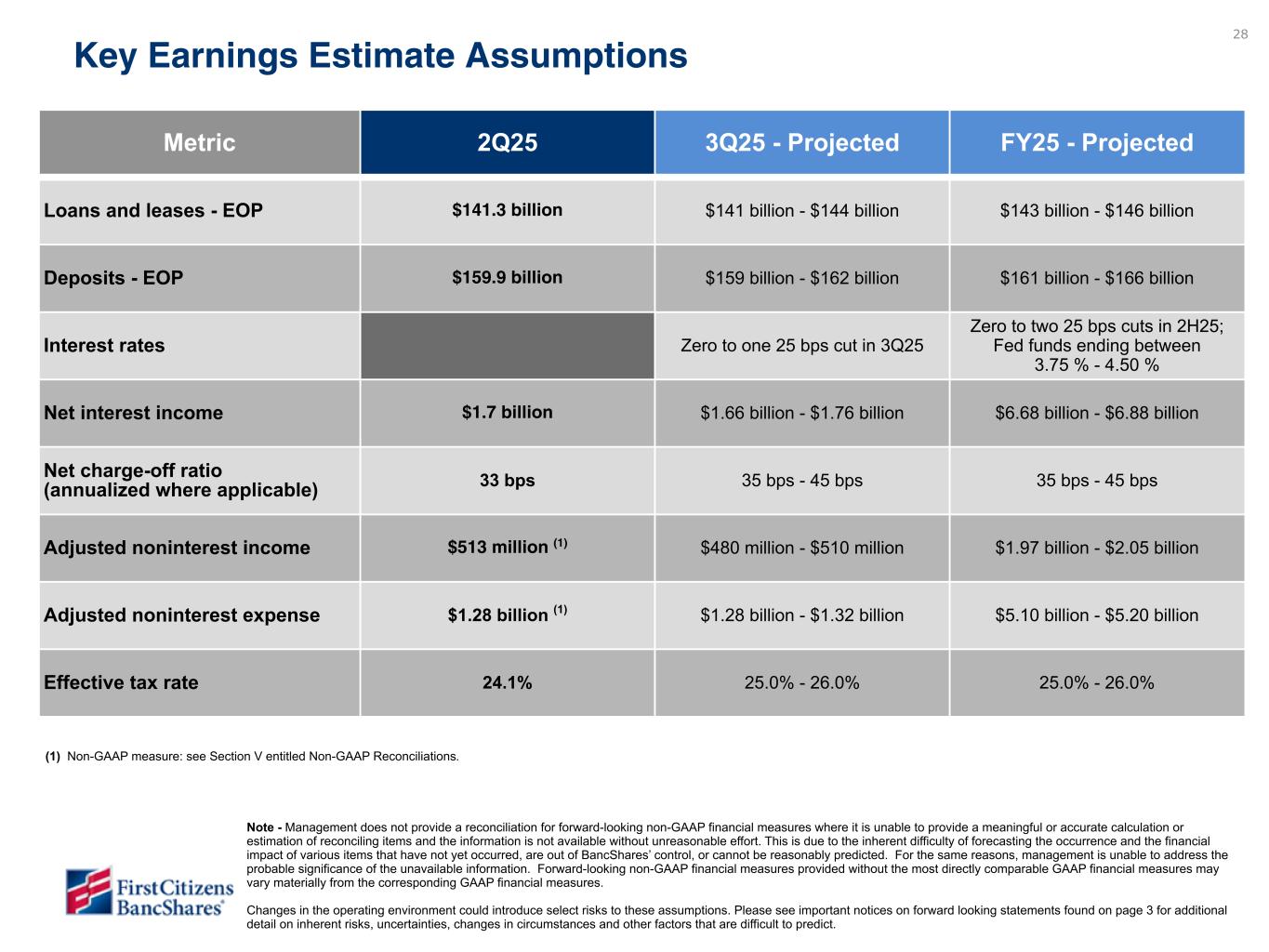
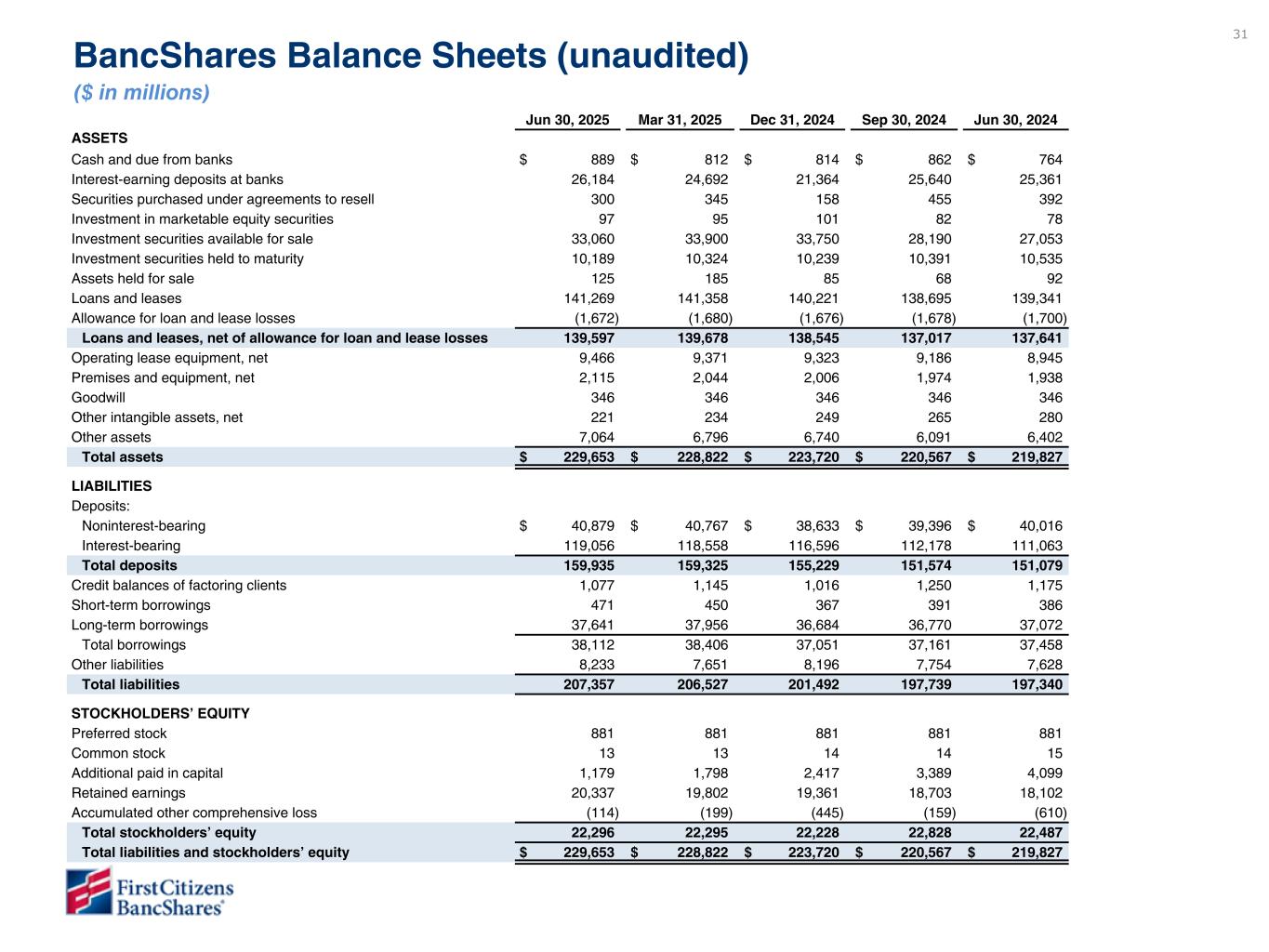
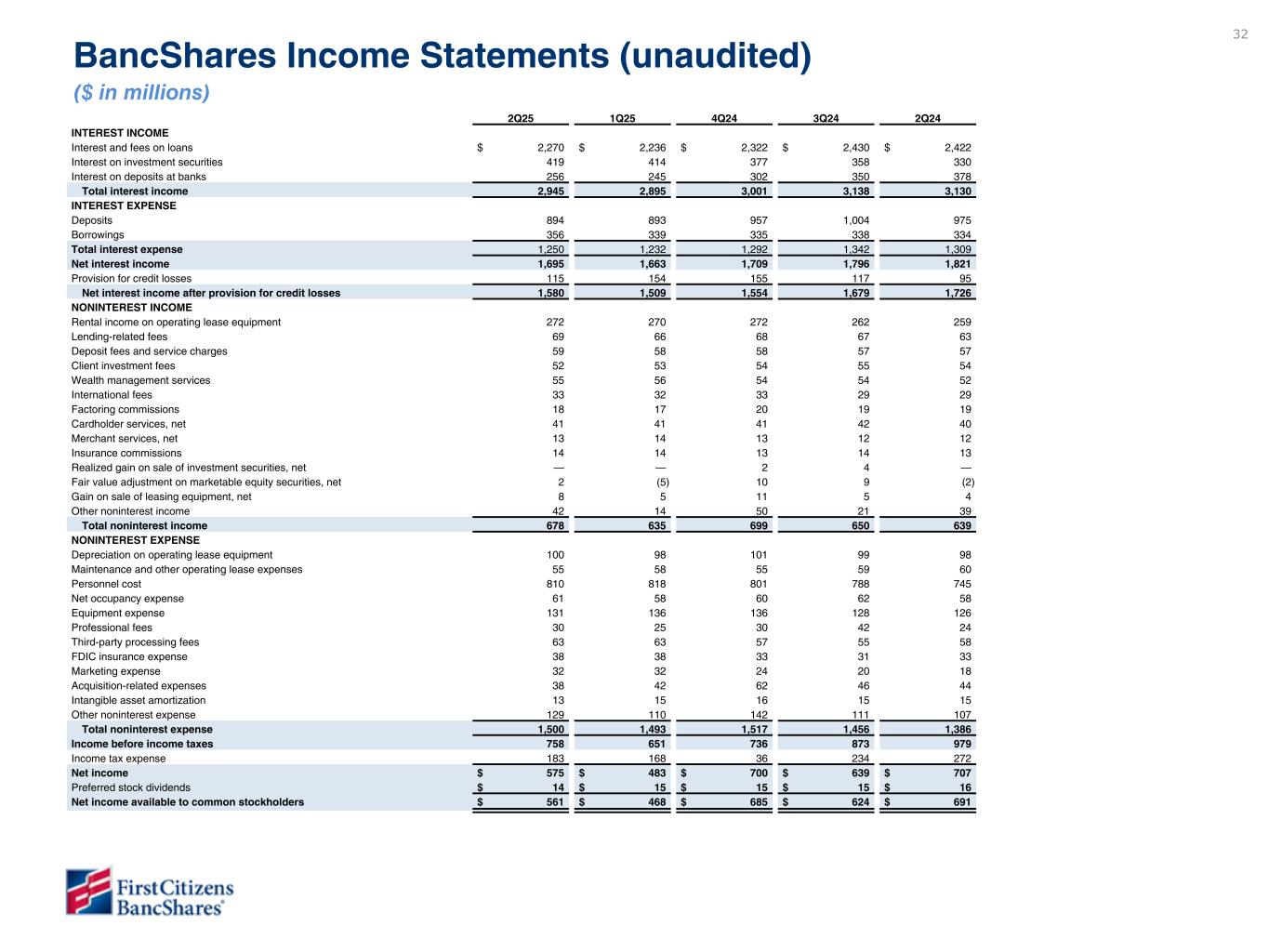
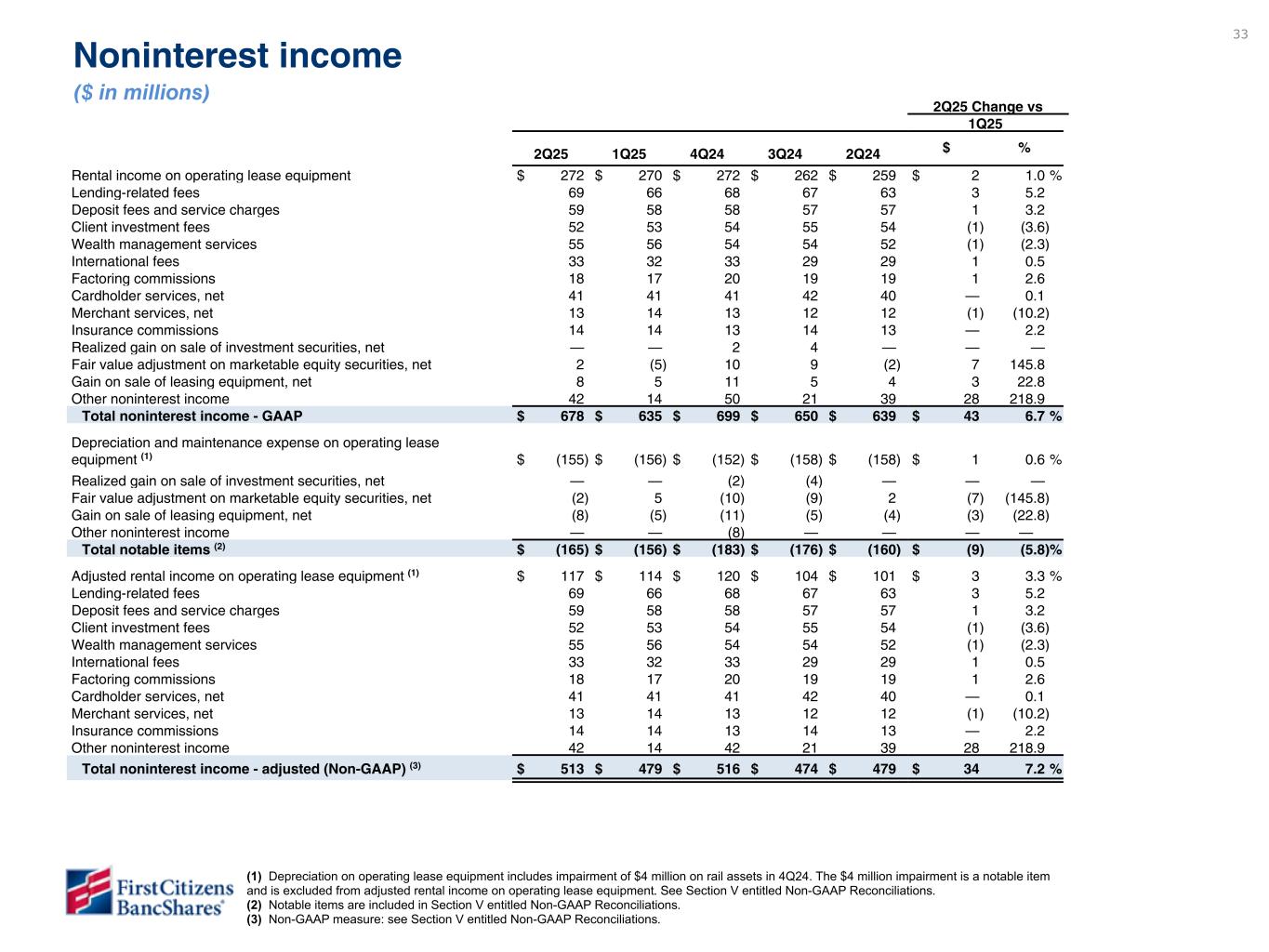
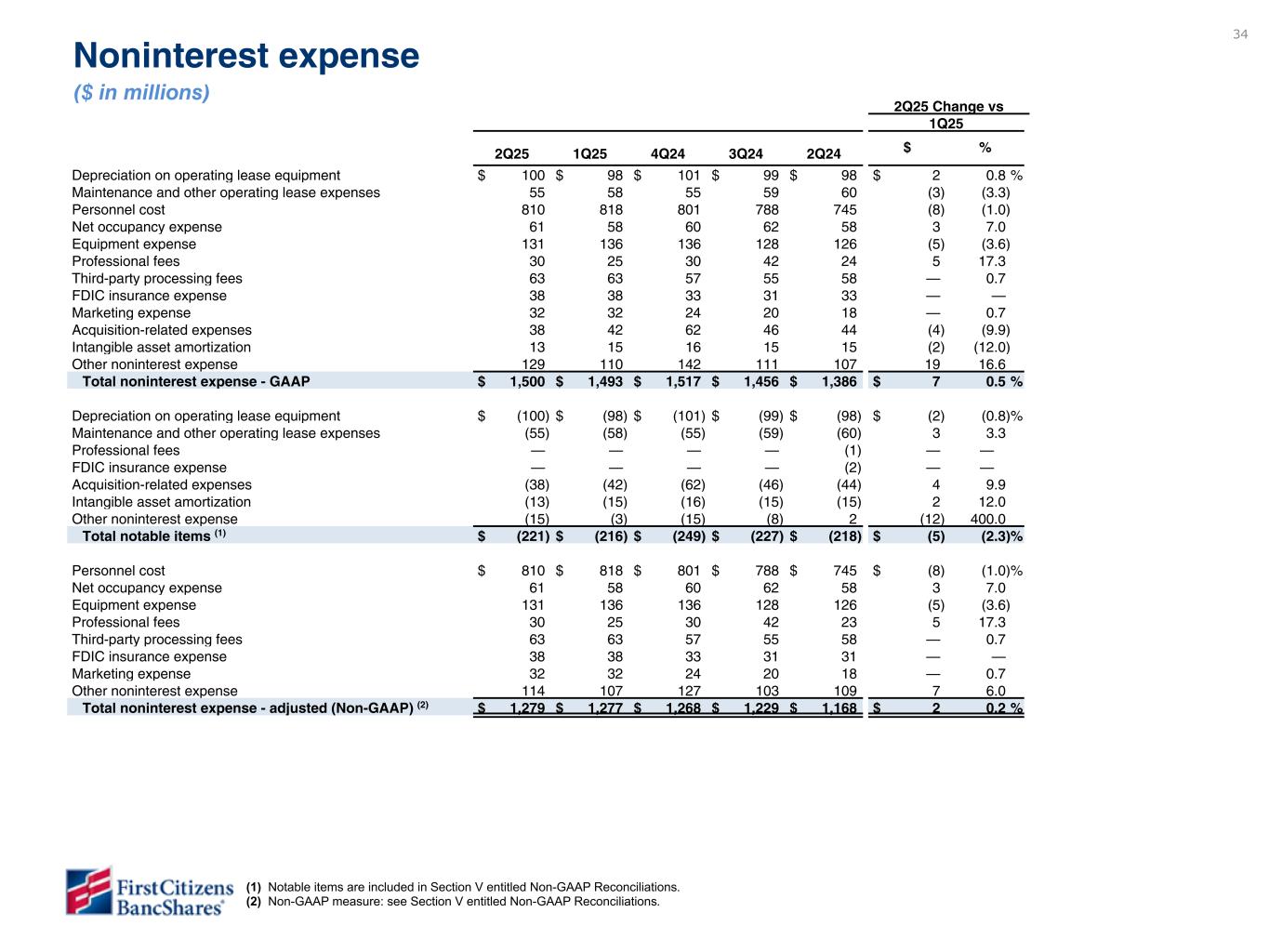
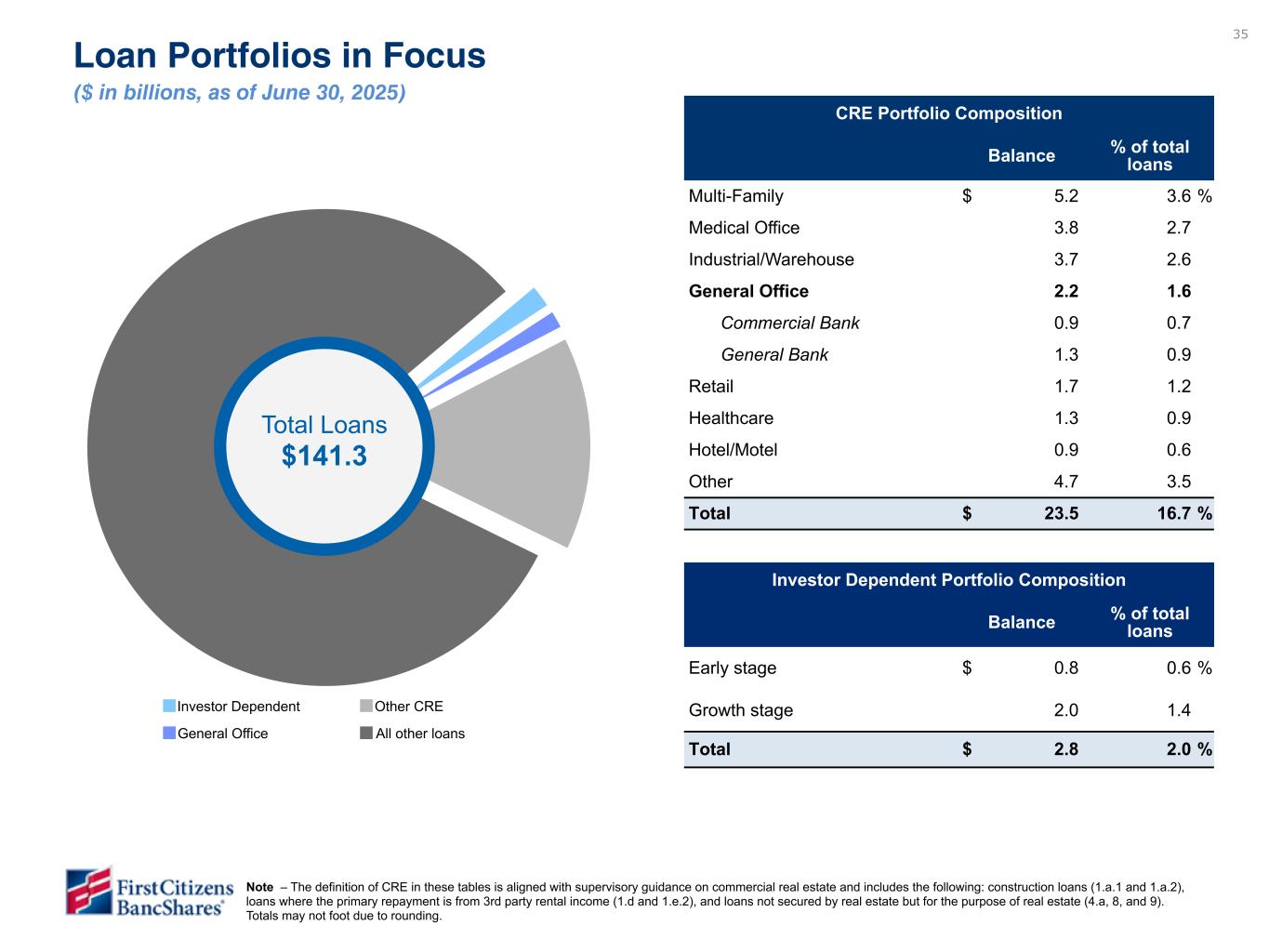
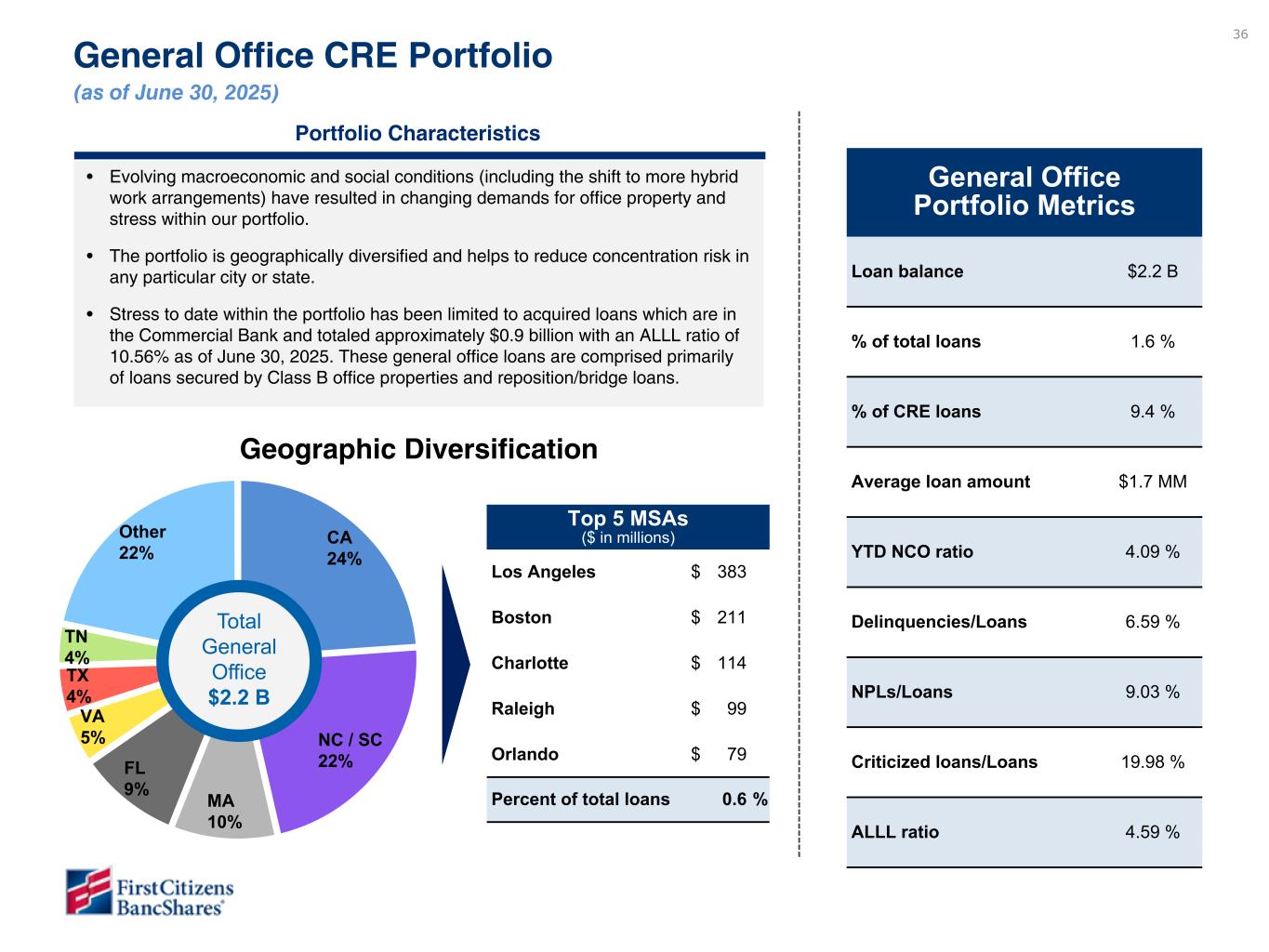
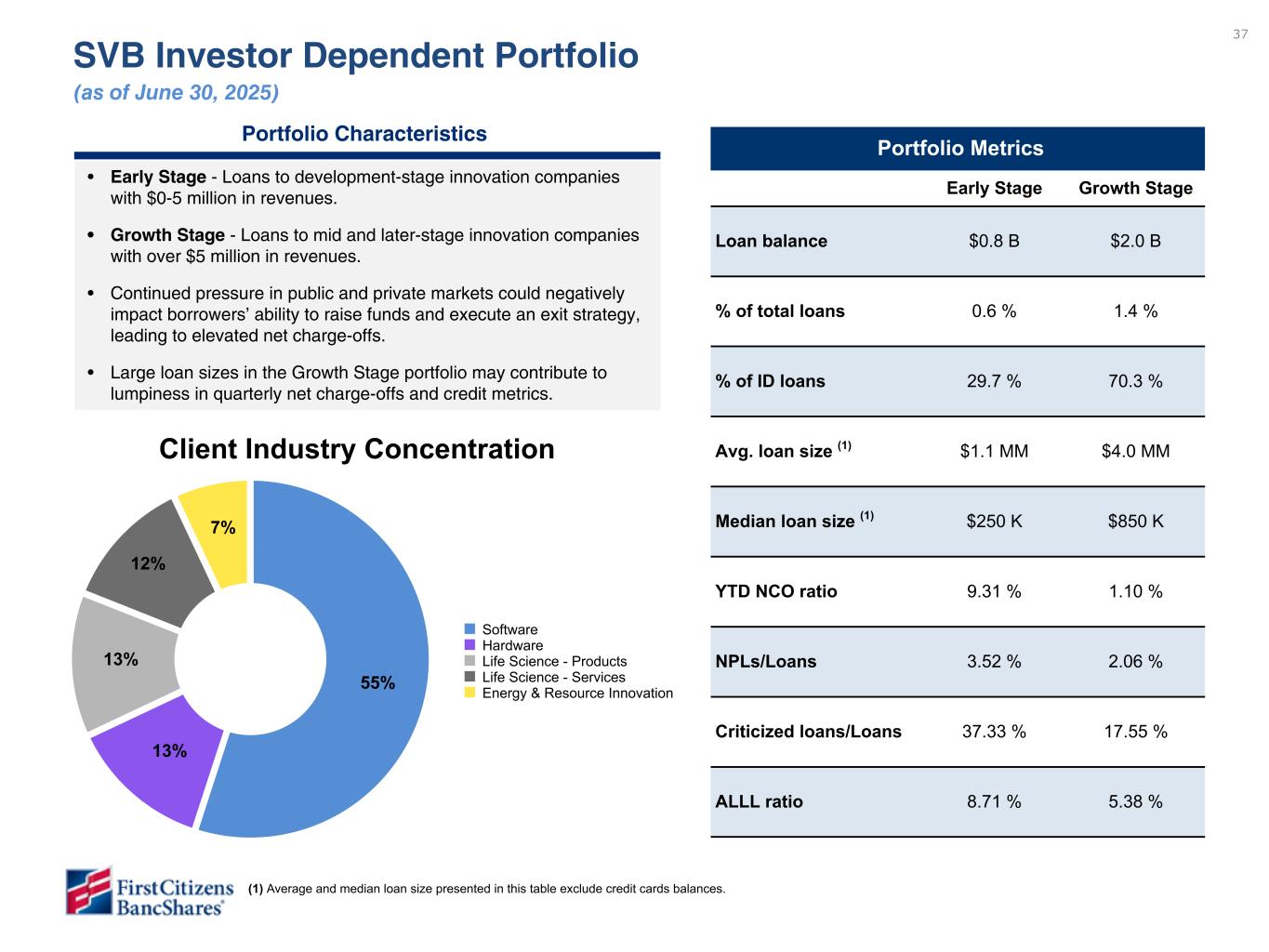
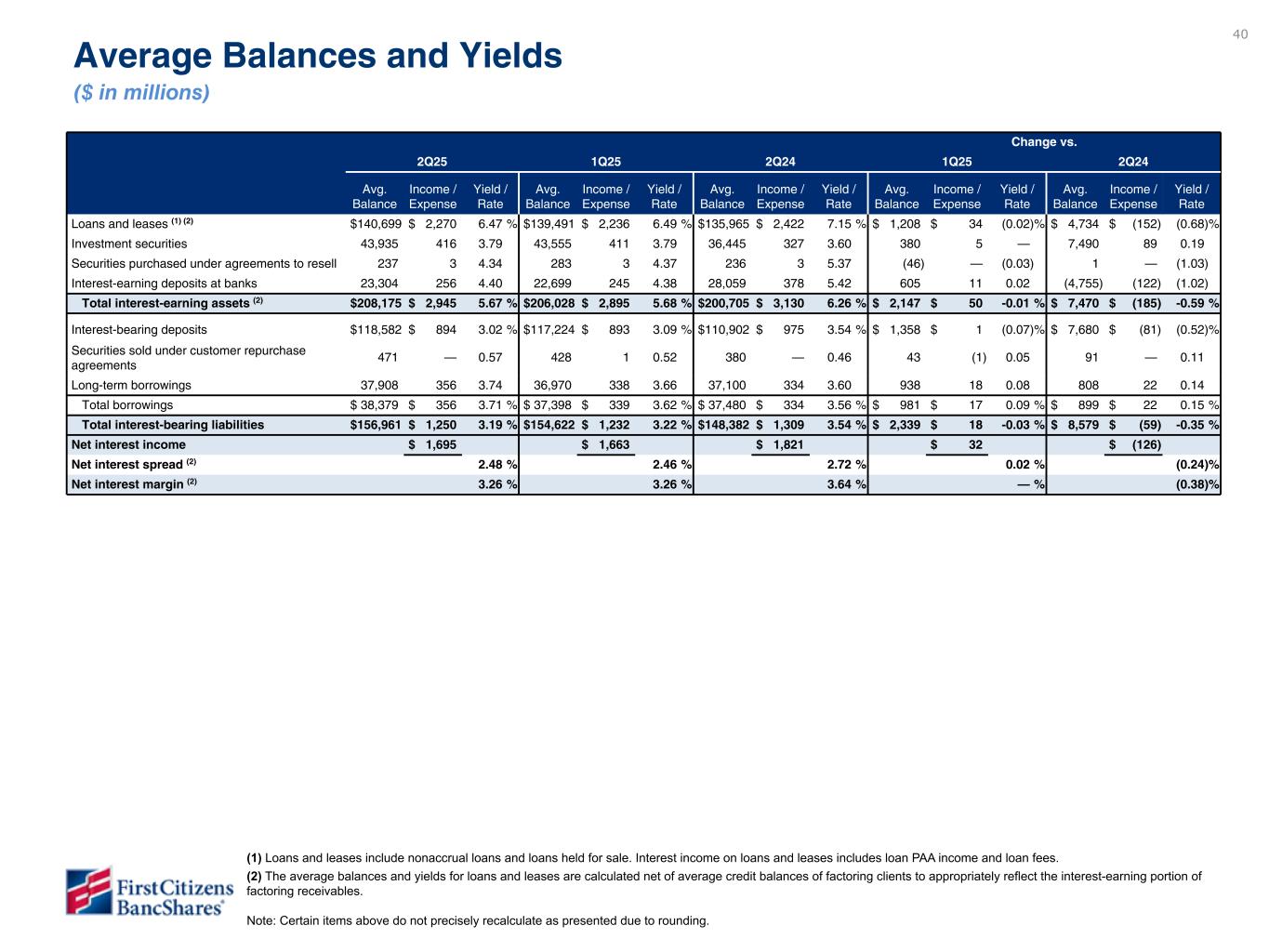
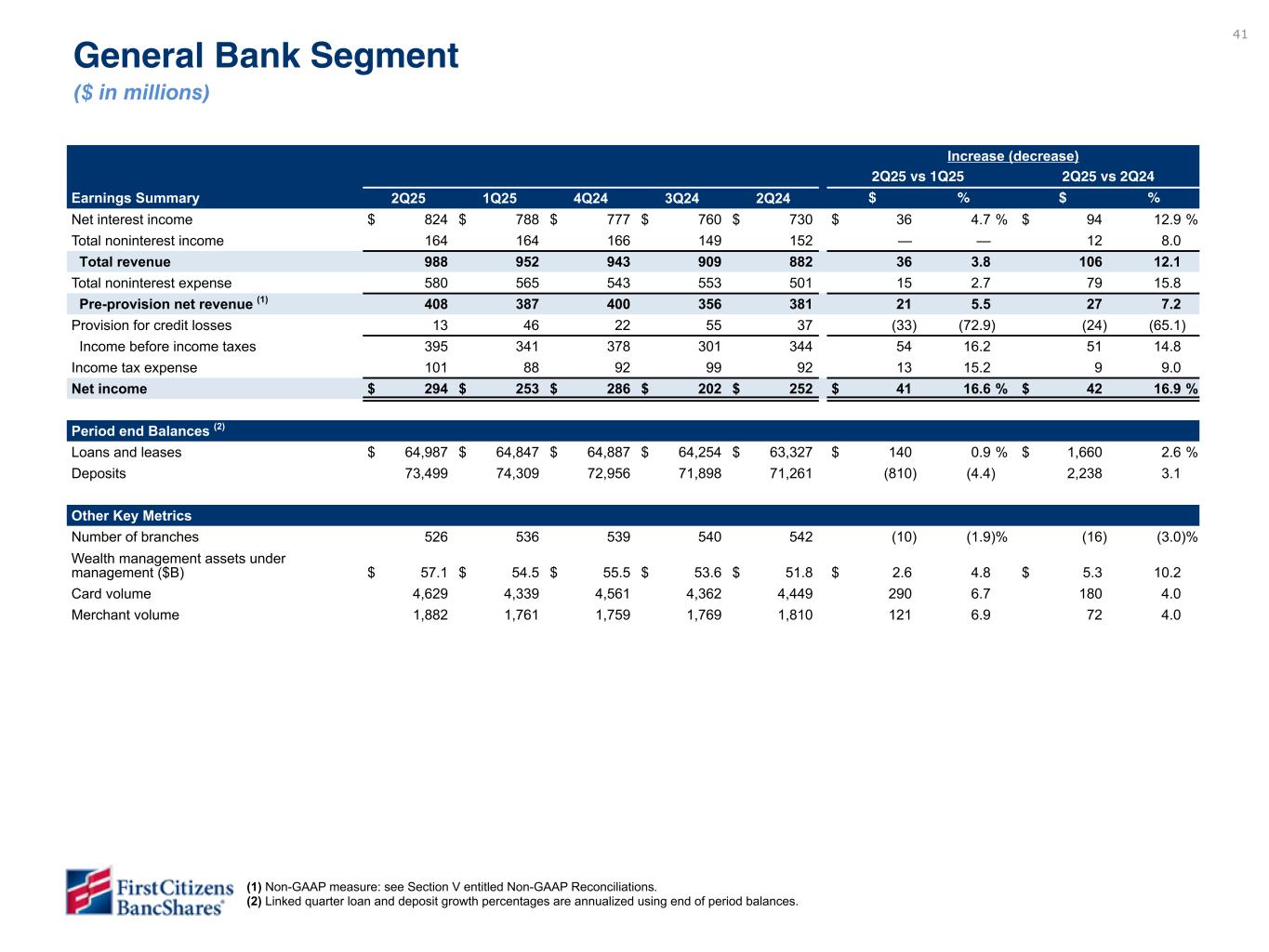
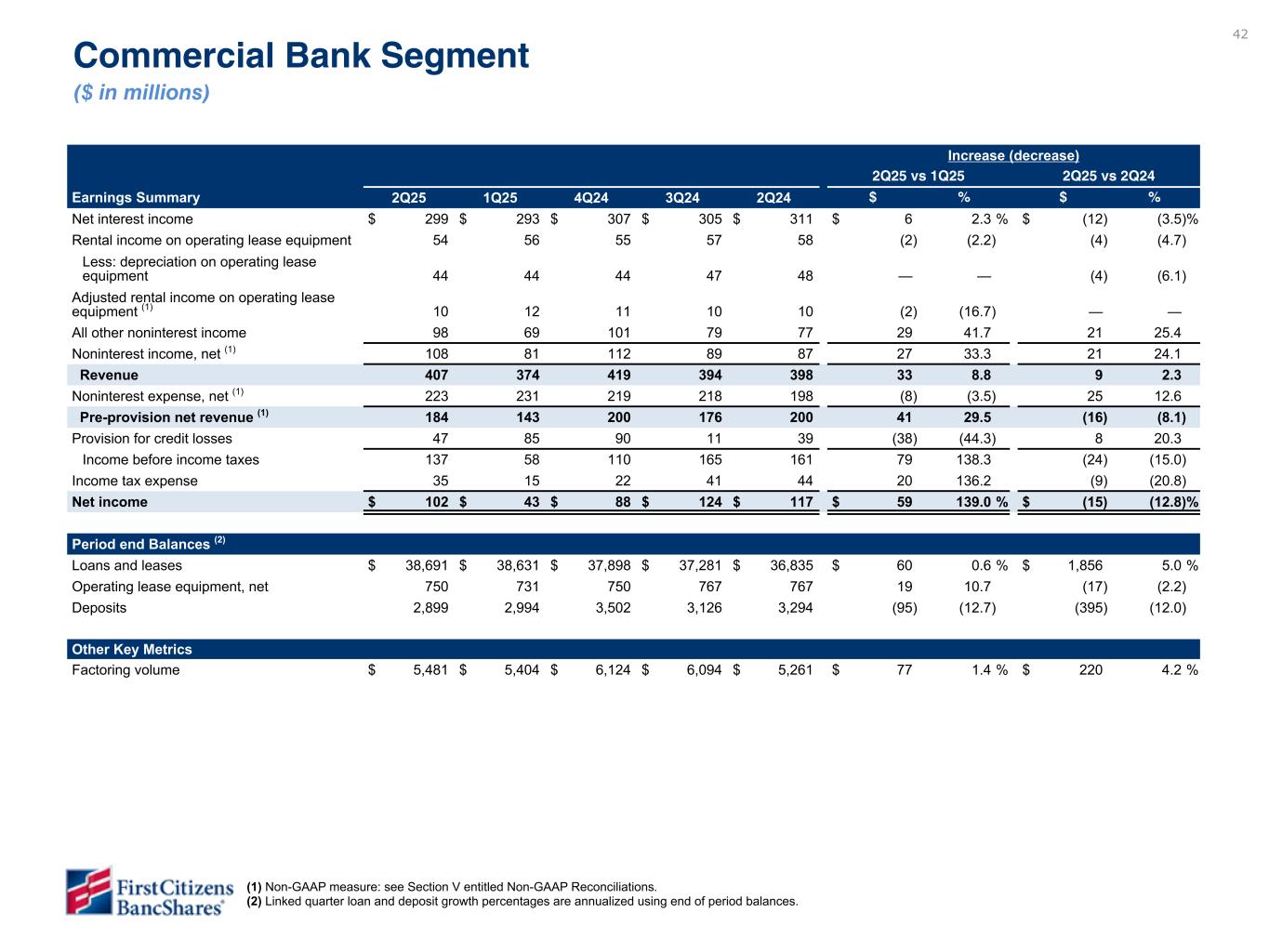
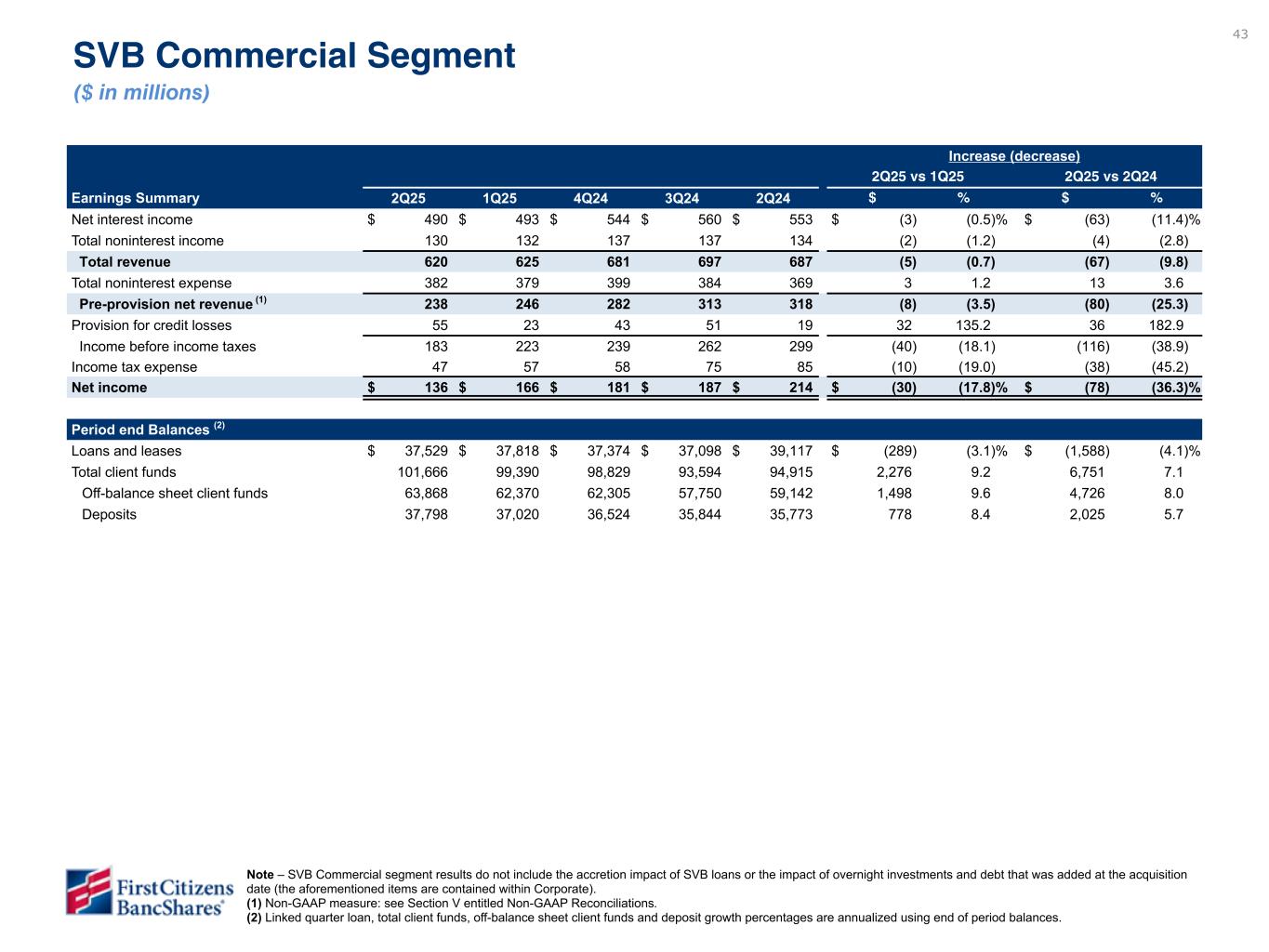
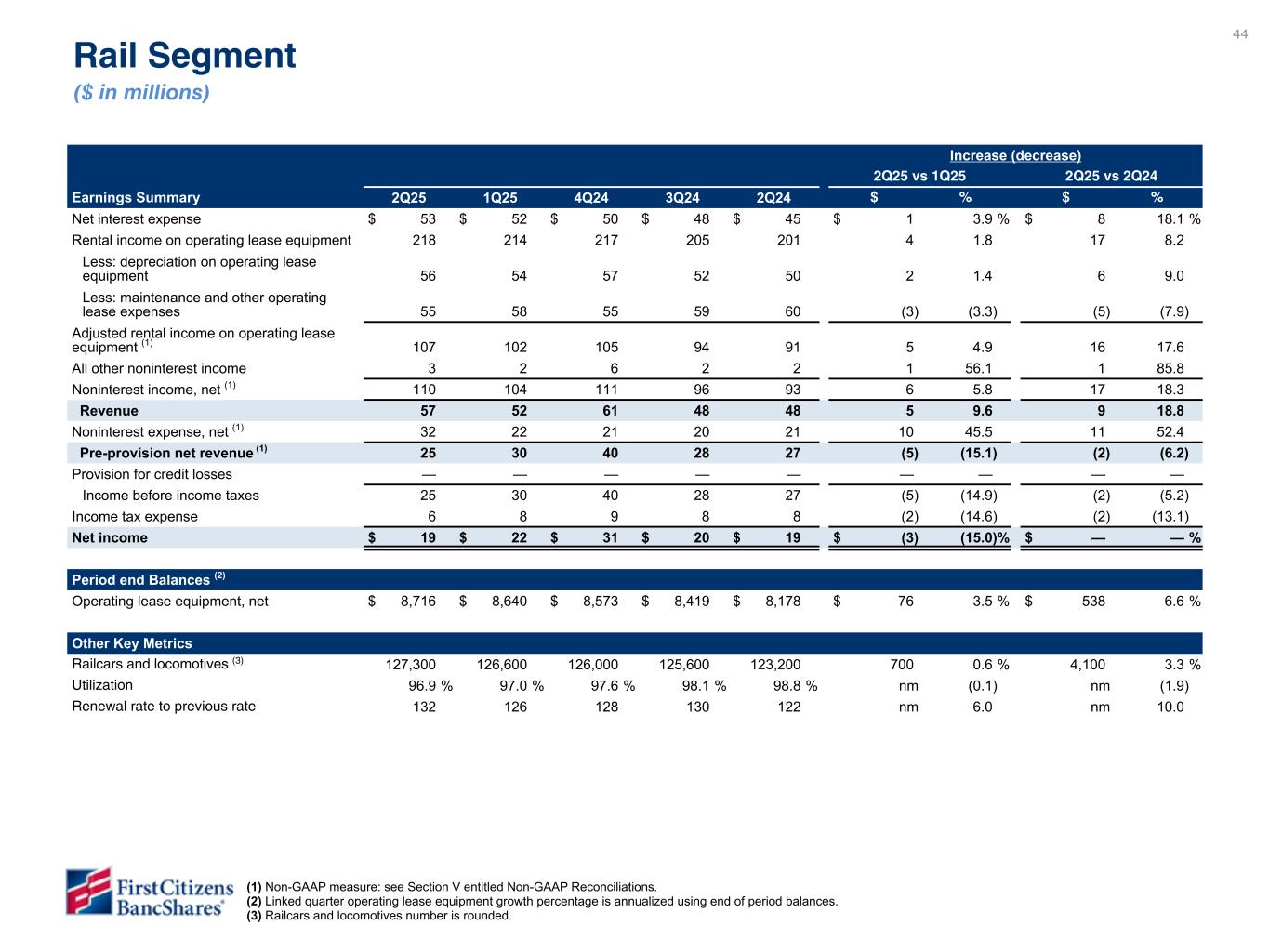
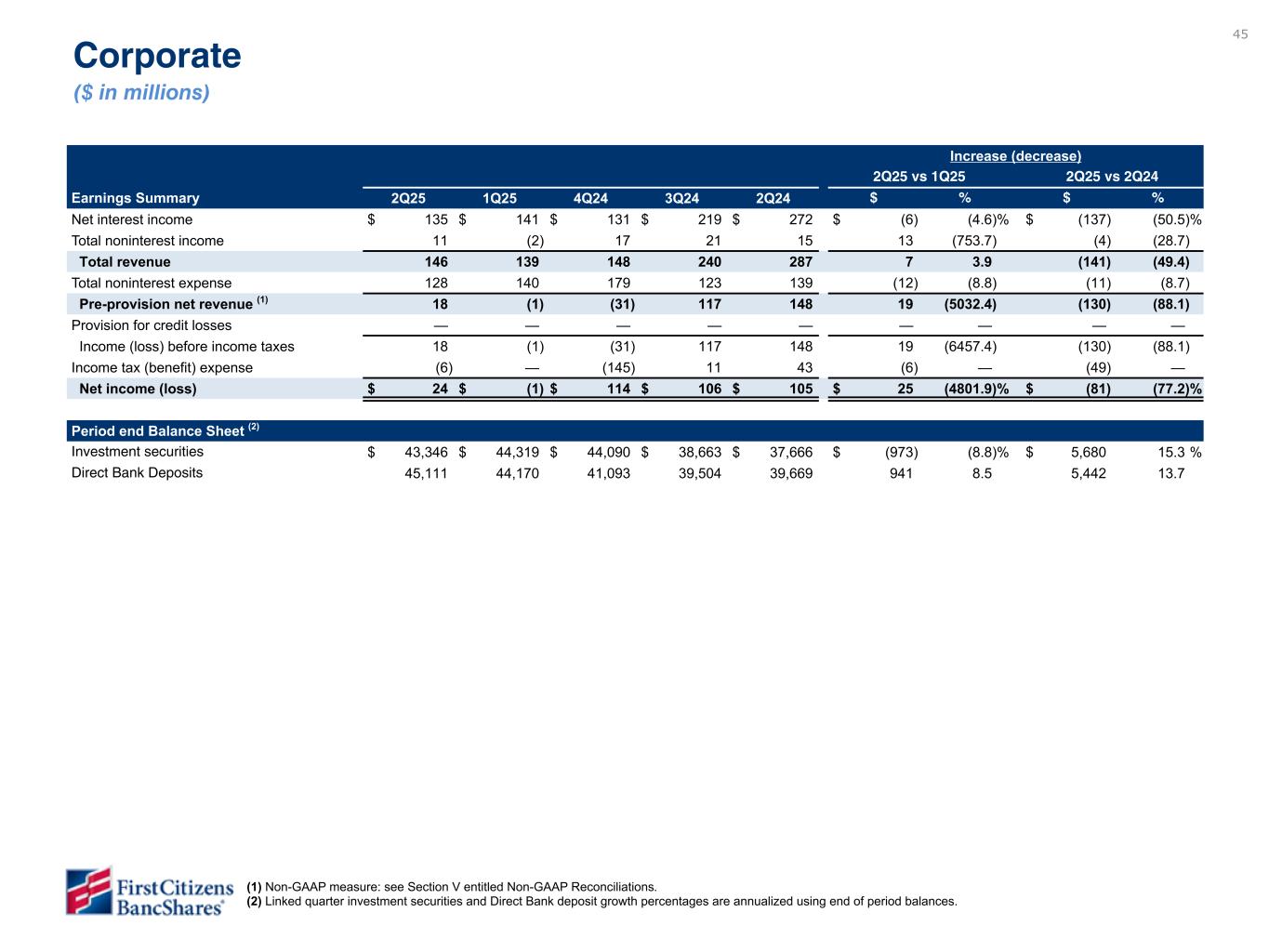
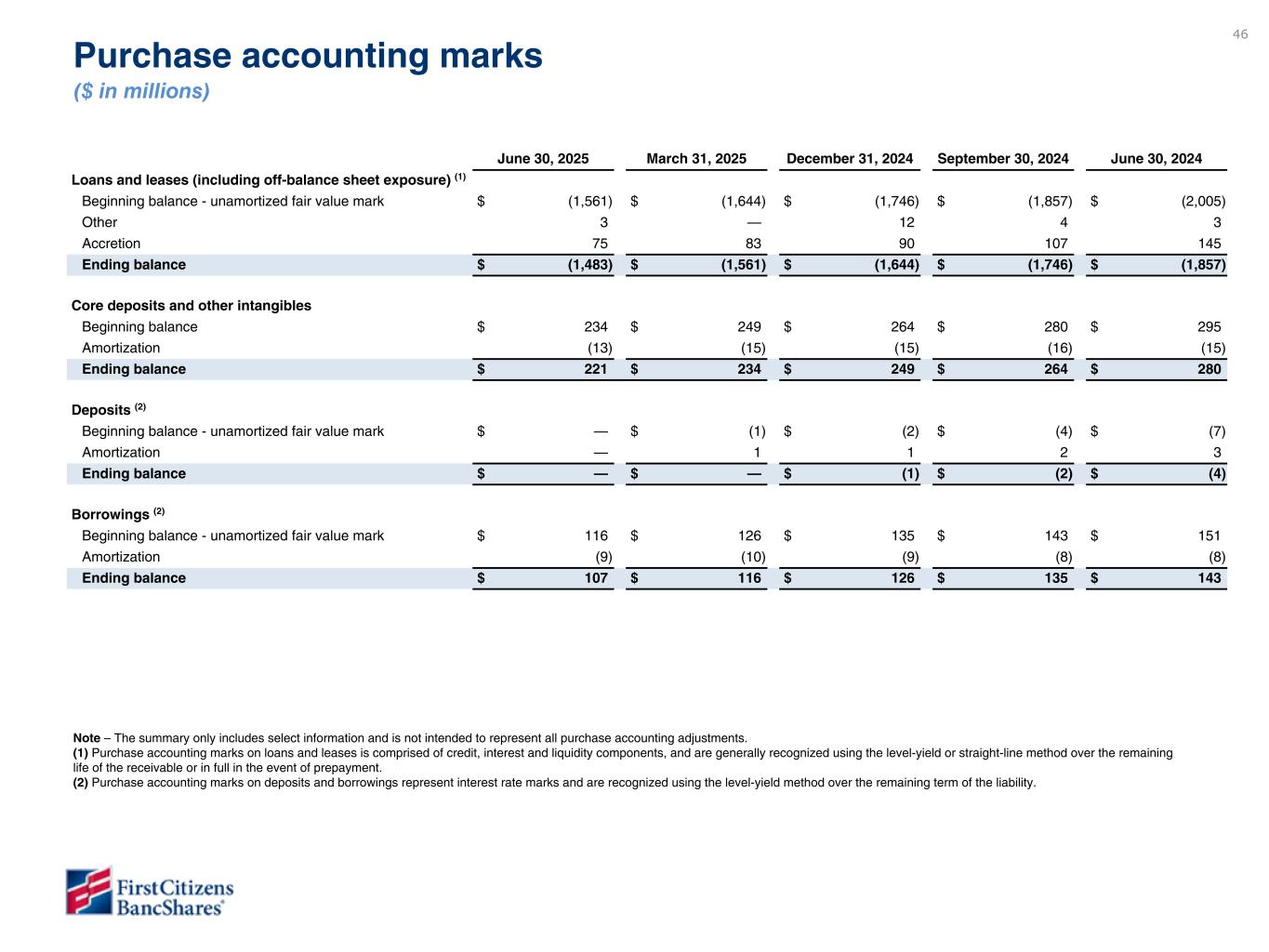
Thank you, Frank. I appreciate everyone joining us today. I will anchor my comments to the second quarter key takeaways outlined on page eight. Pages nine through 26 provide more details underlying our results and are there for your reference. As Frank mentioned, our second quarter return metrics were solid. Adjusted net income was $607 million, exceeding our expectations buoyed by better than expected net interest income growth, lower-than-expected credit costs and expenses in the low end of our guidance range. As a result of our financial performance, tangible book value per share increased by 10.4% over the prior year and 2.7% sequentially, despite sherry purchases totaling $2.9 billion over the last 12 months and $613 million in the second quarter. The unrealized loss on our AFS portfolio improved 27.1 percent sequentially, and if rates do move lower as the forward curve projects, we anticipate that the AOCI burndown will continue to benefit our tangible book value per share growth. After three quarters of sequential declines and declines in five of the last eight quarters, headline net interest income was up two percent sequentially and in the upper half of our guidance range. Net interest income execretion, which had also declined in five of the past eight quarters, also grew sequentially by 2.6 percent after three sequential quarters of declines. Growth in both headline and execretion net interest income was due to a higher day count and average earning asset base. Headline NIM was 3.26 percent, matching the linked quarter, while NIM execretion was 3.14% up two basis points sequentially as we were able to continue to manage deposit costs down while the earning asset yield remained relatively stable. While we were pleased to see an expansion of execretion NIM, should there be further monetary easing in the back half of 25 and into 26, our trough will be further out. adjusted non-interest income came in just above our guidance range increasing by 34 million or by 7.2 percent the primary drivers of the increase were favorable changes in the fair market the fair value of customer derivative positions and other non-marketable investments as well as the first quarter write-down on a held for sale asset which did not impact the current quarter Adjusted rental income in our rail business increased by $5 million sequentially, resulting from higher rental income and lower maintenance costs. The underlying fundamentals in the rail business continue to perform well as utilization remains high at 96.9%, and we achieve the 15th consecutive quarter of positive repricing trends. Given these trends, we believe there continues to be a solid runway throughout 2025 and beyond for continued growth, assuming performance is not impacted by significant changes in the macroeconomic environment. However, given that only around 30 percent of the portfolio expires in 25 and 26, there is some protection against near-term disruption. Adjusted non-interest expense came in at the lower end of our guidance, increasing sequentially by less than 1 percent. The low sequential growth rate was impacted by seasonal items in the first quarter related to incentive payments and the reset of payroll taxes and 401k contributions. These increases, adjusting for the impact of these seasonal items, the increase over the sequential quarter was primarily driven by an increase in salaries and wages due to merit increases and higher professional fees and net occupancy expenses. These increases were partially offset by a decline in equipment expense. However, we expect this trend will reverse in the back half of 25 as additional risk and technology projects are placed into service. I will discuss further in our outlook, but we expect quarterly expenses to remain in the $1.28 to $1.32 billion range in the third and fourth quarters. Moving to the balance sheet, loans declined modestly by $89 million or by 0.1% sequentially, with modest growth in global fund banking within the SVB commercial segment and in the general and commercial bank segments, all set by a decline in tech and healthcare portfolio within the SVB commercial segment. Tech and health care banking loan outstandings were down approximately $300 million from the link quarter. This was in line with our expectations as loan payoffs and paydowns continue to outpace new loan fundings in the current environment. Positively, loan commitments were flat over the first quarter, reversing recent trends, and new loan originations were at their highest level in the last 12 months, demonstrating our continued commitment to the innovation economy. Global fund banking experienced just over $100 million in growth despite lower utilization levels as we continue to see new loan originations. The pipeline remained strong, totaling $9.5 billion at the end of the quarter. While we remain guarded on overall asset growth levels in this business, we are seeing early signs that the second half of the year could spark additional activity, which could be a positive driver with respect to line utilization as VC and PE capital is deployed. General bank loans grew $140 million, driven primarily by our wealth business, which saw both increased originations and higher line utilization in the second quarter. These increases were partially offset by declines in our business and commercial portfolios within the branch network as competition for new business remains fierce and loan originations have been muted the past two quarters. While the decline was not ideal, we have been steadfast in our loan pricing approach and are not changing our credit standards despite increased competition and rate pressure from competitors. We believe that macroeconomic uncertainty is leading to decreased demand, which is helping to drive these competitive pressures. Our pricing discipline was reflected in our loan yield as the loan yield execution improved one basis point to 625 from the link quarter, despite the impacts of the declining yield curve. Within the general bank specifically, the loan yield was up five basis points from the link quarter. commercial bank growth was concentrated in real estate finance and equipment finance and was partially offset by a decline within our industry verticals driven by loan maturities and higher prepayments the growth in real estate finance was primarily due to slower paydowns turning to the right hand side of the balance sheet deposits were up 610 million dollars or by 4.4 percent sequentially as we experienced growth in both the direct bank and SVB commercial. The direct bank was the largest contributor to the increase, growing by $941 million as we continue to see solid elasticity in these deposits despite lowering rates. We were also encouraged by our ability to keep the non-interest-bearing deposit mix flat from the link quarter despite growth in the direct Bank channel. Since year-end, demand deposits were up $2.2 billion, representing an annualized growth rate of 11.6%. Growth was concentrated in SVB Commercial and the General Bank. In SVB Commercial, we experienced end-of-period growth of $778 million due to an increased deposit flow in the back half of the quarter. We were encouraged by growth in tech and healthcare banking, which was driven by a new client acquisition despite continued challenges in the overall fundraising environment. Average deposit balances and average total client funds, or TCF, were down from the sequential quarter due to larger outflows in April and May. Encouragingly, we did see higher levels of TCF inflows in June. These increases were partially offset by declines of $810 and $95 million in the general bank and commercial bank, respectively. The decline in the general bank was driven by lower balances in the branch network and CAB due to seasonal outflows and lower net growth. Within the general bank, we have implemented new deposit growth tactics to help identify both near- and long-term opportunities to accelerate growth through deepening relationships, encouraging more local decision-making, and improving digital capabilities. Moving to credit, net charge-offs declined by eight basis points sequentially and were below our guidance range as a few of the larger deals we anticipated would pull through this quarter were delayed as we continue to work through resolution with our clients. Consistent with prior quarters, net charge-offs were mostly concentrated in the general office, investor-dependent, and equipment finance portfolios. There were a couple of sizable charge-offs in the broader SVB innovation portfolio and within our commercial finance business, most of which were previously reserved for. As we have noted on past calls, net charge-offs can be lumpy quarter over quarter given the hold sizes of some of our larger credits. While we will continue to monitor these portfolios, we are not seeing any further trends that would signal wider credit quality concerns and believe we are well reserved. The allowance ratio was down one basis point to 1.18%. We feel good about our overall reserve coverage, as well as the coverage on the portfolios experiencing stress. Ultimately, our strong risk management framework, rigorous underwriting standards, and diversified portfolio help safeguard against losses. Moving to capital, Frank mentioned that we continue to make progress on our 2024 share repurchase plan. As a close of business on July 22nd, we had repurchased 10.96% of Class A common shares or 10.2% of total common shares outstanding for a total price of $2.9 billion. This represents approximately 63% of our board approved $3.5 billion repurchase plan from 2024. In July 2025, the board approved an incremental repurchase plan for up to $4 billion in Class A common shares through the end of 2026. We expect to complete the 2024 plan during the third quarter and immediately following its completion, begin repurchasing shares under the $4 billion plan. During the past year, repurchases have ranged from approximately $600 to $900 million per quarter. We expect that repurchases through the end of 2025 and into 2026 will be near the higher end of this range as we manage CET1 towards our target range. The pace will likely slow down when CET1 is closer to our target range, assuming earnings and RWA growth are in line with our forecasts. Share repurchases will continue to be a tool to support capital management activities, providing us with an opportunity to return capital to our shareholders and to be more capital efficient over time. Although we expect that CET1 will remain above our target range of 10.5% to 11% in 2025, given our current growth expectations and where our capital ratios were to start the year, We believe the new repurchase plan will enable us to methodically manage CET1 down to that level over time as we regularly assess our growth outlook, economic uncertainty, potential regulatory changes, and overall capital deployment. Given the termination of the FDIC Shared Loss Agreement, or SLA, early in the second quarter, our reported regulatory capital ratios are lower on an absolute basis. Recall that while the SLA benefited our capital ratio, we always managed capital without the benefit of the SLA, knowing that it only provided a temporary lift. As a result, determination does not impact our approach to capital management or related actions. The second quarter CET1 ratio was 12.12%, a decrease of seven basis points from the first quarter adjusted CET1 ratio, as the impact from share repurchases slightly outpaced earnings and the modest loan decline I discussed earlier. I will close on page 28 with our third quarter in full year 2025 outlook. We continue to monitor the overall macroeconomic environment, but acknowledge that the fluidity of changes makes it difficult to narrow the range of potential impacts on the broader economy and on our business lines and clients. Accordingly, we have not made significant changes to our guidance, but do continue to monitor the environment and how it can impact our performance. If we find that the impacts are likely to have a significant impact on our earnings or growth prospects, we will reflect that within our guidance in future quarters. Starting with the balance sheet, we anticipate loans in the $141 to $144 billion range in the third quarter, driven primarily by growth in the general and commercial banks and SVB commercial. In the general bank, we expect recent trends to abate and are projecting growth in business and commercial loans within the branch network as we move through the back half of 2025. We noted earlier that competition in this space has increased in recent quarters with competitors lowering spreads while overall demand continues to be soft. We continue to work through shifts in strategies to ensure we remain competitive in this space and anticipate higher balances over the next few quarters. We expect commercial bank growth will come from our industry verticals as we expect the idiosyncratic paydowns we saw in the second quarter to slow and project origination levels to remain strong. In the SVB commercial business, we believe we will continue to benefit from growth in the global fund banking business thanks to the strong pipeline it maintains. But we do remain cautious on the absolute level of growth driven in part to lower line utilization in recent quarters due to the market backdrop. For the full year, we pulled down our guidance range modestly and are projecting loans in the $143 to $146 billion range as we remain cautiously optimistic on absolute loan levels given lower growth in the first half of the year. We expect growth to be driven by the same factors I just mentioned, but we believe that we could see growth pick up in the fourth quarter if the Fed's monetary easing cycle begins to take effect and we see increased levels of VC investment and capital markets activity. We expect deposits to be in the $159 to $162 billion range in the third quarter, driven primarily by growth in the direct bank as we continue to leverage this channel to drive growth in insured core deposits. While the direct bank is a higher cost channel, we will benefit here from falling interest rates and believe it will provide us with the strategic agility to continue optimizing our deposit funding base. Encouragingly, we have continued to lower costs in the direct bank the past two quarters without a decline in total balances. We expect that this growth will be partially offset by a decline in SVB commercial as continued cash burn and muted public and private investment activity pressures absolute levels of growth. Additionally, we do anticipate some large outflows in the global fund banking business given known client activities, so this could contribute to muted balance growth. We also continue to look at strategies to reduce funding and liquidity costs within this channel by optimizing the mix of funds both on and off balance sheet, which could impact absolute deposit growth levels. Lastly, while we are encouraged by a few recent and successful IPOs, we would discourage drawing a line between these successes and an overall change in the industry. For the full year, we are revising our deposit guidance lower to the $161 to $166 billion range, given the lower jump-off point in the second quarter and our shift in loan growth expectations. We expect full-year growth to be driven by similar factors to what I just mentioned. Acknowledge we have a broad range of possible outcomes on deposit levels, which in part will be driven by overall earning asset growth. Our interest rate forecast covers a range of 0 to 225 basis points rate cuts in the second half of 2025, with the effective Fed funds rate range declining from 4.25 to 4.5 currently to as low as 3.75 to 4 by the end of the year. While our baseline forecast includes one rate cut, we believe there is a possibility that a broader economic slowdown could lead to additional cuts. However, given stubborn inflationary metrics and possible impacts of macroeconomic policy, we recognize these cuts may not occur. Therefore, we believe it is prudent to provide a range of expectations for the year. We expect third quarter headline net interest income to be relatively stable compared to the second quarter. Our guidance does include the planned impact of share repurchase activity for 2025 under our current share repurchase plan, as well as the incremental share repurchase plan that will begin upon its completion. For the full year, we are tightening our headline net interest income guidance to be in the range of $6.68 to $6.88 billion from $6.55 to $6.95 billion. The revision reflects the new interest rate curve as well as the jumping off point from the second quarter. In either case, as expected, we project that loan accretion will be down by over $200 million for the year compared to 2024. On credit losses, we anticipate third quarter net charge-offs in the range of 35 to 45 basis points, down modestly from the range we provided in the second quarter, but slightly above our second quarter results. While second quarter net charge-offs were lower than expected, we did not have one or two large charge-offs pull through, which would have pushed our net charge-off ratio higher. In commercial real estate, while rate cuts could ease some of the pressure on borrowers in the general office sector, we do believe losses will remain elevated in the second half of the year, even as market disruption may lessen as more companies begin to reinstate office attendance requirements. We also anticipate continued stress in the investor-dependent portfolio for the remainder of 2025. Overall, VC investment activity was down compared to the prior quarter, but if you remove deals greater than $1 billion, which we believe are outside of our service-addressable market, activity levels were relatively stable during the quarter. While additional rate cuts would be a welcome change for this business, and there have been a handful of large IPOs, we believe it is still too early to call a bottom in the cycle. The catalyst for buyers to become more acquisitive and for public investors to have an improved appetite for IPOs remain elusive, and continued macroeconomic uncertainty is weighing on activity. with respect to the full year range we are maintaining our guide of 35 to 45 basis points despite the lower jump off point this is because we continue to see some lumpiness and losses in the portfolio full of large deals swinging the ratio and timing wise they can easily fall into one quarter or another it's important to note that our net charge off guidance does not include an estimate for the long-term impact of tariffs, given the continued shifts in expectations and the difficulty in determining the full impact on our asset quality. While higher tariffs could drive economic stress in the form of inflation and or lower growth, we believe the credit risk is manageable. We will continually assess the potential impact on our portfolio, but we do believe its diversity is a strength in this environment. Moving to adjusted non-interest income. We expect to be in the $480 million to $510 million range in the third quarter, aligned with a typical quarter for us. Overall, we continue to see strength in many of our core lines of business, such as rail, merchant, card, and wealth. Given that we have two quarters behind us, we have tightened our full-year adjusted non-interest income range to $1.97 to $2.05 billion. Year-over-year growth continues to be driven by our rail outlook, which includes a balanced rail car portfolio and a strategic expiration ladder. We also expect continued solid growth in wealth and international fees thanks to new client acquisition and an increase in flow of funds. I do want to caution that given the changing rate environment, our client derivative positions can fluctuate between quarters, causing some lumpiness in our non-interest income results. Moving to adjusted non-interest expense, we expect the third quarter to be up modestly compared to the second quarter as some large projects are placed in service and we continue to invest in our risk and technology capabilities to ensure Category 3 readiness and to help simplify and optimize our platforms to allow us to scale efficiently in the future. Looking at the full year, we tightened our adjusted non-interest expense range to $5.1 to $5.2 billion, exercising disciplined expense management while making opportunistic investments through the cycle in technology, risk management, and our associates is a top priority for us given headwinds to net interest income. Our adjusted efficiency ratio is expected to remain in the upper 50% range in 2025 as the impact of the Fed rate cut cycle puts downward pressure on net interest margin, and we continue to make investments into areas that will help us scale to category three status when we cross that threshold. Longer term, our goal remains to operate in the mid-50s. Finally, both for the third quarter and the full year 2025, we expect our tax rate to be in the range of 25 to 26 percent, which is exclusive of any discrete items. To conclude, our second quarter results are reflective of the strength and resilience of our diversified business model. Thanks to our long-term focus, continued investments in our business and strong risk management framework, we're well positioned to continue delivering value to our clients, customers, communities, and shareholders. I will now turn it over to the operator for instructions for the Q&A portion of the call.
Operator
Thank you. Ladies and gentlemen, if you have a question or comment at this time, please press star and then the one key on your touchtone telephone. As a courtesy to others on the call, we ask that you limit yourself to one question and one follow-up, and then return to the call queue if you have additional questions. If your question has been answered and you wish to remove yourself from the queue, please press star followed by two. Our first question comes from Casey Hare from Autonomous Research. Casey, your line is open. Please go ahead.
Yeah, great. Thanks. So, just a question on the long growth outlook. If I heard you correctly, I think you said SVB pipelines are $9.5 billion, and yet you have, you know, loans running either flat or up modestly in the third quarter. Just a little more color on what's driving that, what seems to be a conservative outlook.
Yeah, on the $9.5 billion, that's related to global fund banking. So, that pipeline is actually up from what we saw in the first quarter. So, we're very optimistic on the development there. Yeah, I think utilization has pulled in slightly. And so, I think we're being, you know, a little bit um conservative on kind of what that growth might portend into but the underlying really fundamentals are really strong in that business yeah i think elsewhere you know we saw some elevated prepayments um kind of idiosyncratic in nature in industry verticals um but you know we feel really good on where we're positioned in tech media telecom energy and health care okay great Great.
And then can we get some updated thoughts on the FDIC purchase money note? I know Fed Cups kind of keep getting pushed out, but I mean, Ford Curve does have, you know, at that, you know, 100 bps by the end of next year. So just, you know, what is the, how do you guys envision this playing out? Like, and how much FHLB capacity do you intend to use in terms of retiring this funding source?
Okay, I'll take that one and we'll let Tom amplify here, but declining interest rates, especially to the extent that the forward curve is implying, would precipitate some pay down of the note in 2026. We don't really anticipate any of that in 2025. So once that arbitrage is alleviated, it would precipitate a pay down. And in terms of just order of preference, we would certainly like to first use excess liquidity generated by preferably core deposit growth as the first source of repayment. Then we would move down to broker deposits, and then we'd move to FHLB advances, and then finally long-term debt. But we feel really good about our positioning there, our liquidity and ability with contingent funding sources to pay that note off. Tom, would you like to add anything to that?
No, I would say to sort of amplify that, you know, since the acquisition of SVB, we paid off, you know, just under $10 billion worth of home loan bank advances.
As we took on the purchase money notes, obviously, we have capacity there.
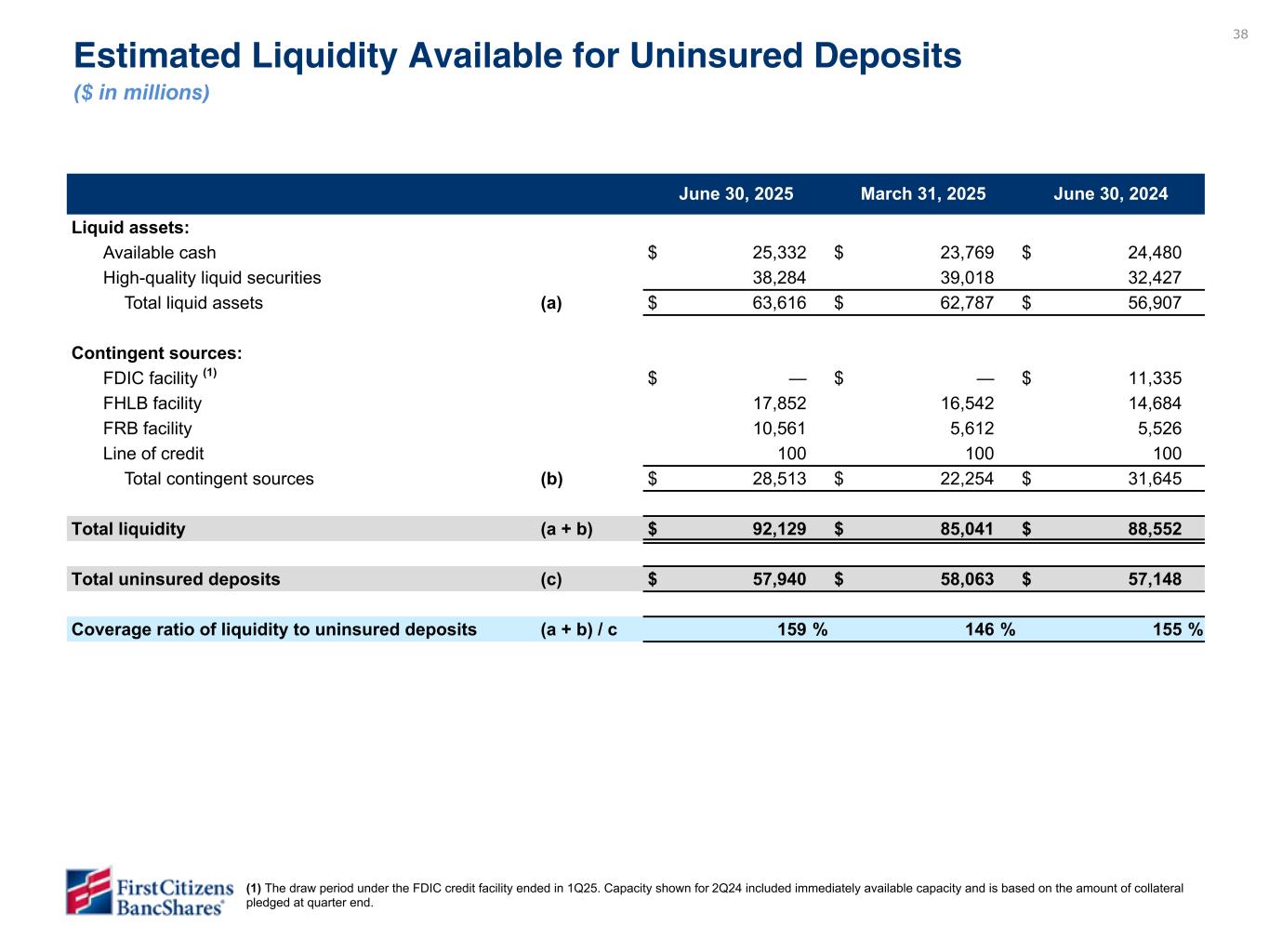
That being said, we'd prefer to use deposits. I think at this point, we've built excess liquidity in sort of the $11 billion range today. To Craig's point, we're still earning a positive arbitrage. We don't really see a purpose to pay the purchase money note early. But as we look at over time and rates change, that may change. I think over time, we'd like to keep the passes get that back up to funding sort of 90 to 95 percent versus the 81 percent that it is today as a percentage of total funding great thanks the next question comes from steven alexopolis from tv cowen steven your line is open please go ahead first start mark you want
to take that one craig would you like me to take that yeah go ahead mark happy to take that uh Good morning, Steve.
Great to hear from you. I appear to have put myself on mute accidentally. Getting back to your question, Steve, the activity in the second quarter, June was definitely, as noted by Craig, an encouraging uptick, particularly the IPO activity I think you reference there. At the same time, I think there's cautious optimism as to whether this is truly the beginning of something, and you see that caution, I think, reflected in our continued guidance and our comments today. The window for IPOs certainly seems to be partially open, but at the same time, the bar to go out remains pretty high. It's expensive to be public, and capital clearly as evidenced by venture investment in the second quarter, remains available for good later stage companies. And so, unclear whether this will really be the start of a, you know, more IPOs. I think it's reasonable to think that we could see as many in the second half as we saw in the first half, but not really expecting a lot there. And then to your point about term sheets, and again, as evidenced by the investment in the second quarter, there is activity in putting that dry powder to work but a most of that activity is very much skewed towards later stage deals and as mentioned earlier the mega one billion dollar plus financings that generally aren't really our target at the same time on the earlier stage end of the spectrum the pace remains muted as it has for going on three years now and so again i think there is hope, if you will, among the venture community and certainly ourselves that spring is springing and we're going to see gradual improvement from here. But there, again, are so many mixed signals, so much economic uncertainty hanging over everything that we remain on balance cautious, though somewhat encouraged to be deposits.
I'm going to let Elliot address that one. yeah steve i mean there you go you got it yeah steve i think on um you know kind of the suv guide for deposits really kind of want to reiterate what mark said i think we're cautiously optimistic um you know as we kind of landed in the second quarter just looking at you know some larger deals uh you know funded on the gfb side we do expect some outflows um and so i think that is reflected you know in some of the deposit guidance um yeah i'd say otherwise i mean client acquisition has been good uh we've actually seen an uptick over the past few quarters um so you know generally you know pretty flat ish uh for the rest of the year with a little bit of growth uh but i would color that as you know cautiously optimistic side of the guidance thank you next question comes from chris mccratti from kbw chris your line is open please go ahead oh great good morning um a lot of talk about deregulation in the markets i'm interested what that means uh for for your company over the near to medium term and craig i think you've
talked in the past about building the cost to be cat cat two compliant um but is that mid single digit still kind of expense growth about what you're thinking thanks i missed the last part of the question chris can you you mind repeating that the mid single digit expense outlook that you've talked about as you get ready for cat two yes i think i think you can expect uh year over year expenses to range in that year-over-year mid to high single-digit percent growth. I think we're maintaining that level of guidance. And really, the incremental expenses that we've incurred over the last year or so are directly related to improving our risk management and technology capabilities, commiserate with a category three firm. So we do expect, we don't expect that our expenses will be flat like they were in first and second quarters, that they would probably move up in that mid to high, mid to upper single digit range moving forward, annualized as we ready for category three.
Okay. And then there was obviously a large deal in your market overnight. Any thoughts on deposit opportunity? I know it's early, but any strategic thoughts you might have?
Well, I would just say, Chris, we do well picking our spots with deposits. We've exhibited over time that we can grow deposits on a consistent basis. So I don't really see that transaction as necessarily hindering our ability to do that. Although just generally with the M&A market, we're encouraged that there's an uptick in activity there. But we feel really good about our deposit growth prospects based on our ability to grow deposits on a sustained basis, regardless of competition.
Operator
The next question comes from Bernard Von Giske from Deutsche Bank. Bernard, your line is open. Please go ahead.
Hi, guys. Good morning. Good morning. Could you just talk to what the exit rate for the margin could be in 4Q if rates on the short end remain unchanged versus if we get two rate cuts by the end of the year or the one assumed in your baseline forecast?
Sure. And you're referring to NIM. so if from a range of zero to two rate for from a range of zero to two rate cuts in 2025 with a rate if there's two rate cuts we'd anticipate maybe one in september one in december uh the the fourth quarter exit margin uh range would uh would decline from 3.26 in the second quarter to the mid-310s to high-320s on headline NIM and NIM execretion from the mid-310s to mid-3s to high-310s. So we started at mid-310s second quarter. Execretion NIM would be a range of mid threes to mid three tens. Okay, great.
Just generally about, oh, sorry. Just to follow up, just on competitive pressures. You know, interestingly, during the quarter, a lot of regional bank peers noted seeing increased competitive pressure in deposit pricing, just, you know, given where we are in the rate cycle and, you know, pushing out of rate cuts. Obviously, your deposit data is continuing to creep higher. Your costs keep lower. I think you noted in the general bank, you're implementing some new deposit growth tactics for short and near-term and long-term opportunities. And then I know in the general bank, on the loan side, you also mentioned some competitive pressures increasing there. So I was wondering if you could just talk through some of the pressures that you might be saying on the deposit and the loan side?
Yes, I think that, and this is Tom here, I would say on the deposit side, I mean, as you mentioned, we've been able to continue to move our beta up. And that really, I think, speaks to what Craig mentioned earlier. We feel good about our competitive position in sort of the markets we're in there and we'll continue to do the best we can to manage those interest expense numbers, obviously. I think on the credit side, we've seen a little bit of an uptick, I think, just sort of across the board. Last year, I would say we were probably one of the few banks that were out there lending more broadly. And I think we're seeing a little more participants in there today. But again, we feel like we're well positioned. And as Elliot mentioned earlier, we had a couple of large payoffs in some of the verticals that we maybe didn't plan for.
And again, I think we're in good shape from an activity and sort of forward look there so great thanks for taking my question thanks manar the next question comes to apologies next question comes from nick haloko from ubs nick your line is open please go ahead hi good morning maybe uh one other question on competitive pressures so it seems like there's been a pickup in new applications for bank charters over the past couple of months, including some that seem to be aimed at serving some of the same ecosystem that SVB has traditionally served. So do you have any thoughts on the developments that we're seeing there? And of course, I know it's very early days, but are there any risks that you could foresee on the talent front, given some of the higher profile technology aims tied to some of these announcements?
Mark, do you have any thoughts on that as it impacts SVB competition?
Sure. I would be happy to take that. So starting just competition more broadly, and as we talked about in past calls, the SVB business continues to have lots of competition, both bank, non-bank, fintech, et cetera, across the segments of our business. And so one more competitor is in a lot ways nothing really new uh in this particular instance uh thinking about you know banks at the application stage uh will take a while uh to become additional competition for us is the first thing and then yeah thinking specifically about um maybe the charter you've got in mind i would just say here that svb has offered traditional banking services to web3 companies for many years through our national fintech practice and think we are very well positioned to expand those offerings over time to serve our clients' digital asset needs. And so I think we and everybody else focused on the innovation economy, focused on crypto and changing regulations there, I think is similarly enthusiastic about the opportunity there. And so, yeah, I think like we've always had, we'll continue to have competition, and we will continue to, I think, in the face of that, execute on our own game. And I think by extension, as comments already offered, we feel pretty good about our positioning and our ability to capture our fair share.
Very helpful. Thank you. And just as a follow-up, you mentioned and highlighted the traditional banking services you've gone in the Web3 ecosystem and some of the, You know, clearly a lot of the momentum here relates back to the crypto environment more broadly. You know, outside of like traditional banking services, are there any other aspirations that you have as you think about that space over the next couple of years? Thank you.
Well, I would just say. I'll start on that. Others may. Go ahead.
Go ahead, Mark. You go ahead, Mark, and I'll amplify anything that needs to be added.
Great. I would just say this is a fluid dialogue, and so I'm going to refrain from talking about specific services that we may elect to offer in the future, but again, would just end on the very well-positioned, hundreds of clients in the space. And so as we determine what makes the most sense and where we can best differentiate ourselves from other offerings, that's where I think you should expect to see us over time. I'll pass it to you, Craig.
I think you said it well, Mark.
Operator
Thank you, guys. Thank you. The next question comes from Chris Maranek from Jenny Montgomery Scott. Chris, your line is open. Please go ahead.
Craig, I want to ask about the direct bank and would the proportion of those deposits grow over time relative to the whole balance sheet?
Yes, I mean, they certainly have grown since we purchased CIT or acquired CIT. I would expect them to continue to do so, but we obviously would rather grow deposits in lower cost channels, although we're okay with the spreads, those deposits relative to our investment portfolio, loans, et cetera. So we do anticipate, if you look at our deposit outlook, we do anticipate double-digit percentage in growth in that channel going into 2026.
Okay, great. Thank you for that. And just a quick follow-up on the rail car business.
Do you see that business stable from here or is there still opportunities to grow it further uh yeah great question chris i mean i think uh we're very encouraged with where we are i mean i think the utilization um you know having stayed up we're still close to 97 percent we've had 15 quarters of repricing uh which craig mentioned so i think from you know really kind of a revenue expansion side we do see further opportunity there um in that runway to continue i mean then last i mean i think from an expansion standpoint you know we continue to invest in that business each year. I'd say generally $300 million to $500 million in added assets. So there is, I think, further runway from a revenue standpoint, but obviously we'll keep in tune with the economy and everything going there.
Great, Elliot. Thank you very much. Thank you, Craig, as well.
Thank you for your questions.
Operator
On a question today comes from Manuel Napas from DA Davidson. Manuel, your line is open. Please go ahead.
Hey, good morning. Can you update where you feel the NIM-NII trough could be next year and kind of what are the assumptions around it?
Yeah, it obviously depends on what zero, one, or two rate cuts in 2025. If we have zero rate cuts, we've pretty much already troughed it with the exception of NIM headline. that would be one Q26. One or two cuts just moves all the troughs, whether you're looking at net interest income headline or excretion or NIM headline excretion, out to the first quarter of 26.
I appreciate that. And what do you include in terms of debt issuance to satisfy TLAC in your kind of in your NII planning?
We have pretty modest expectations when it comes from pure, what would be LTD requirements for us, as we've not seen a final rule there yet. What we do include, though, obviously, and we've talked about it with the Sherry Purchase Plan, we're trying to optimize the capital stack over time, which will include us looking to potentially issue new instruments there to sort of get the slope between the CET1 and total capital ratios to look a little more efficient.
Also, subject to final...
So it's come down from last time. So it's come down a little bit in the assumptions from, you know, we were looking at maybe $10 billion in issuance. I know you did some earlier in the year, too.
Yeah, that assumes the LTD rule would come into play in its current form, which the 6% to RWA was our binding constraint in that. But obviously, pending a final rule, it's hard to estimate what our final issuance would have to be to meet those requirements.
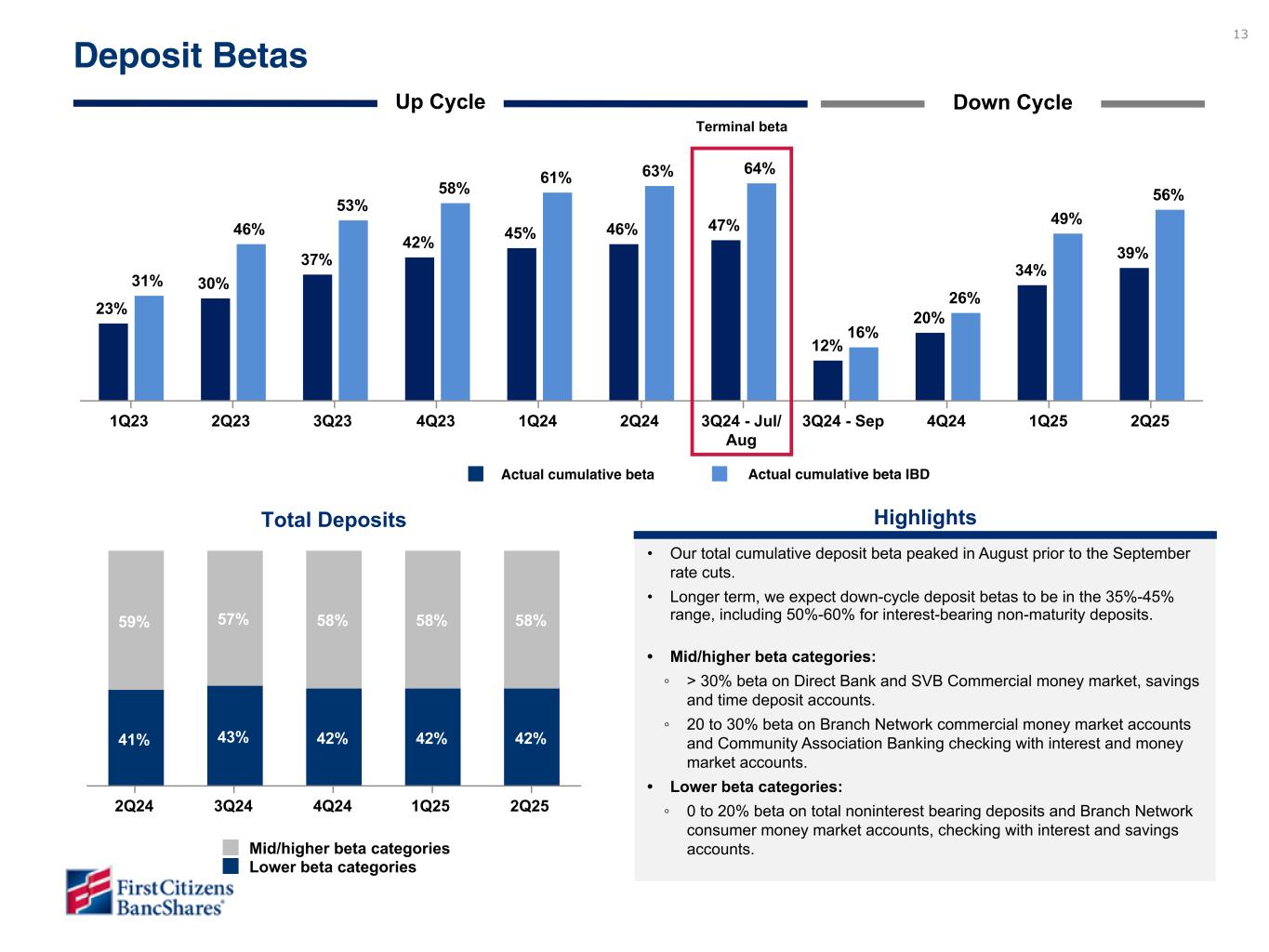
I appreciate that. Can I sneak in one more? Deposit betas have been really, really impressive. You have targets in your deck. Are you just going to keep pushing to raise them? Because it seems like you're already at the cycle levels, just kind of you have a lot of success in the direct bank. Where can let the bother betas go?
The most difficult part about answering that question is obviously depending on what rate forecasts do. I think what you've seen is we've, I mentioned earlier, we've done what we can to keep managing interest expense in this as rate cuts has not been done in recent time. And if we keep that for another couple of quarters, we'll continue to keep working that beta higher. Obviously, if the Fed starts cutting again, I would expect a similar behavior like you've seen in the past where we sort of lag a little bit going into it and then start catching up over time. So it's really more about when that cut cycle stops, but obviously looking for as much upside there as we can.
But, man, I think you're making a good point that the betas are approaching terminal betas that we saw in the uprate environment. So that's a good observation.
Thank you for the time. thank you I'm not showing any further questions at this time I'd like to turn the call back over to our host Ms. Deanna Hart for any closing remarks great thank you everyone for joining our earnings call today we appreciate your ongoing interest in our company and if you have any further questions or need additional information please feel free to reach out to the investor relations team we hope you have a great rest of your day ladies and gentlemen this concludes today's conference call you may now disconnect have a wonderful day