Operator
Greetings, ladies and gentlemen, and welcome to the Truist Financial Corporation second quarter 2026 earnings conference call. Currently, all participants are in listen-only mode. A brief question and answer session will follow the formal presentation. As a reminder, this event is being recorded. It is now my pleasure to introduce your host, Mr. Brad Millsaps.
Thank you, Rocco, and good morning, everyone. Welcome to Truist second quarter 2026 earnings call with us today our chairman and CEO Bill Rogers our CFO Mike McGuire our chief risk officer Brad vendor as well as other members of the true senior management team during this morning's call they will discuss true a second quarter 2026 results share their perspectives on current business conditions and provide an update on our outlook for 2026 the company presentation as well as our earnings release and supplemental financial information are available on the truest investor relations website Our presentation today will include forward-looking statements and certain non-GAAP financial Please review the disclosures on Slides 2 and 3 of the presentation regarding these statements and measures, as well as the appendix for required reconciliations to GAAP. With that, I will turn it over to Bill.
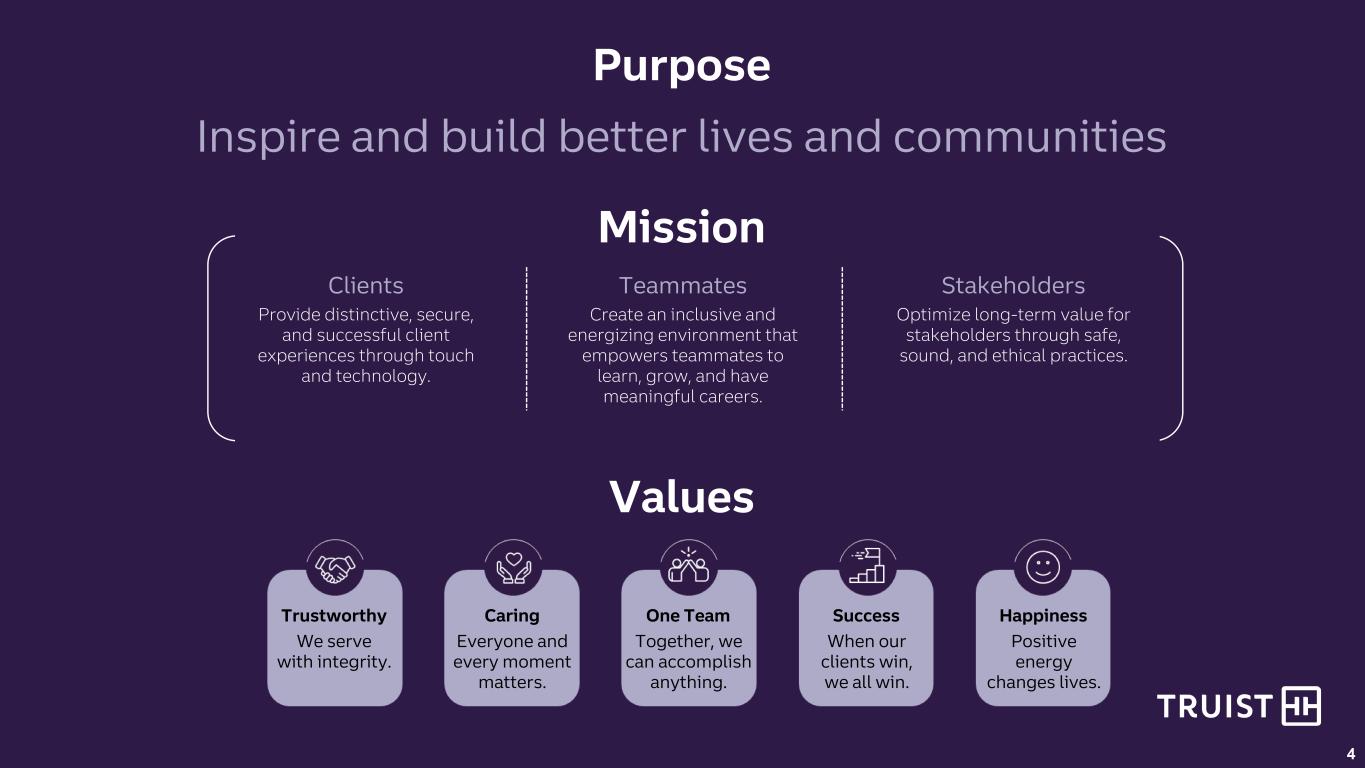
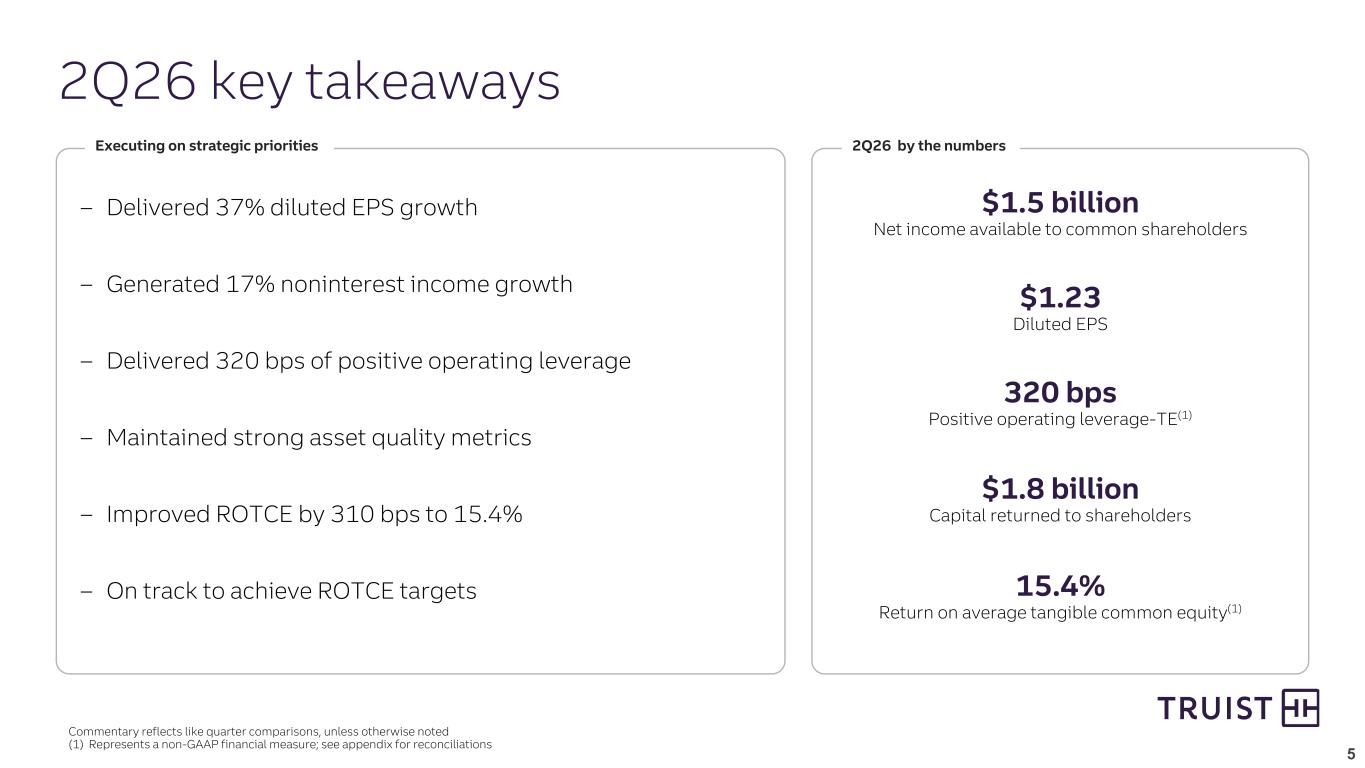
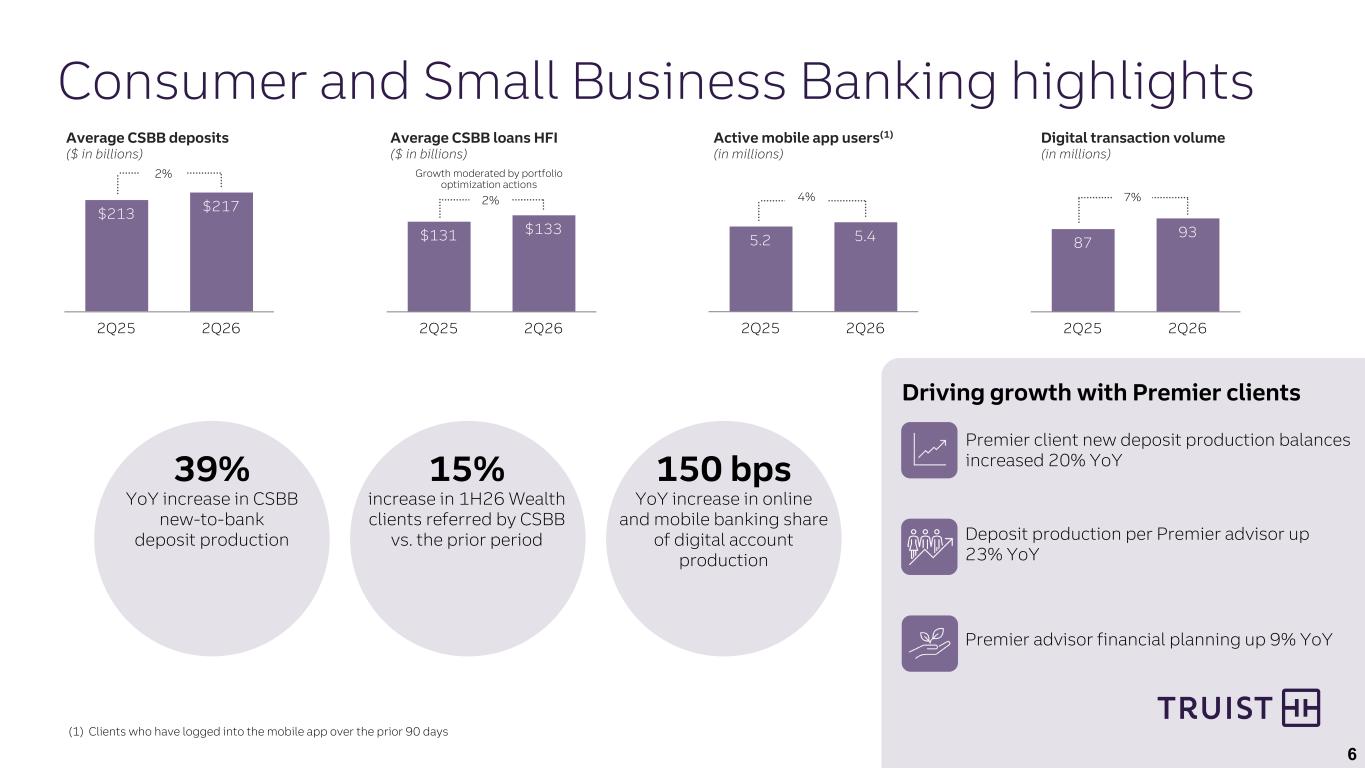
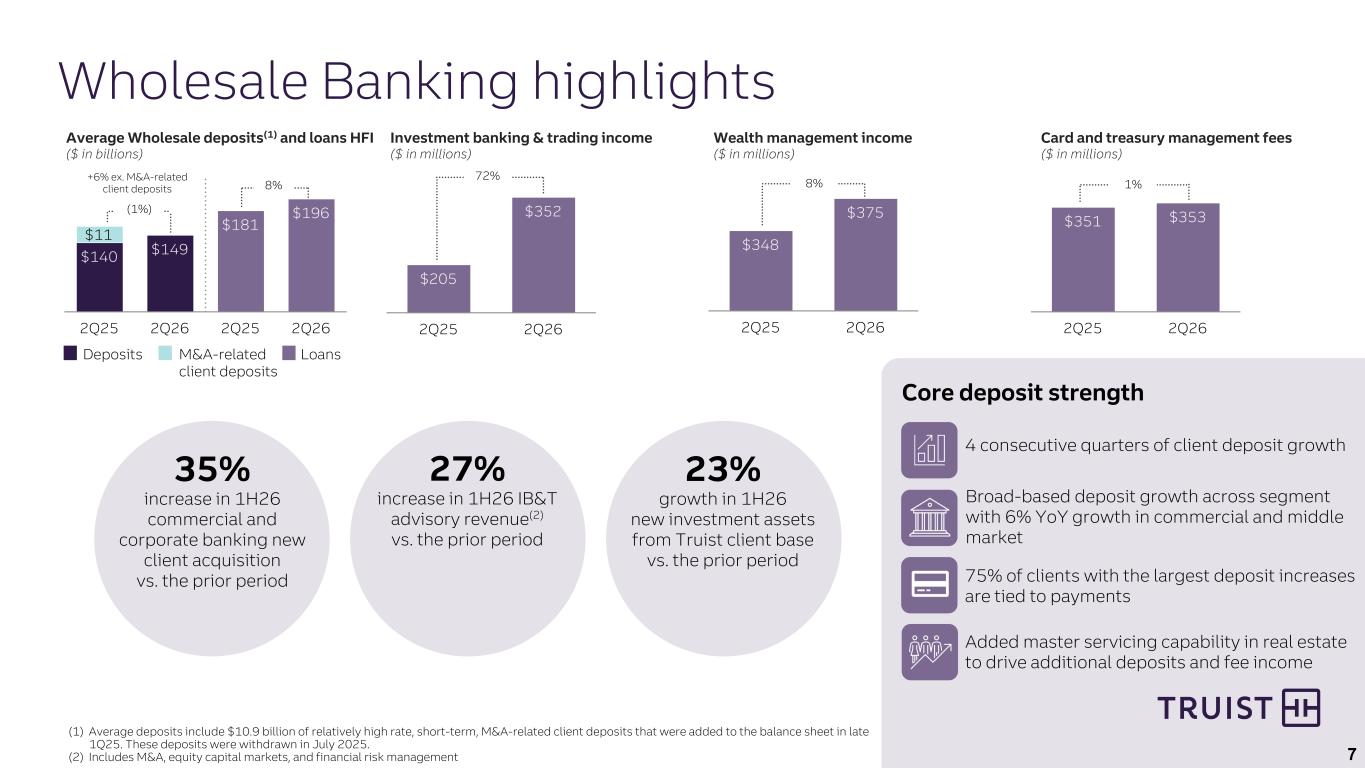
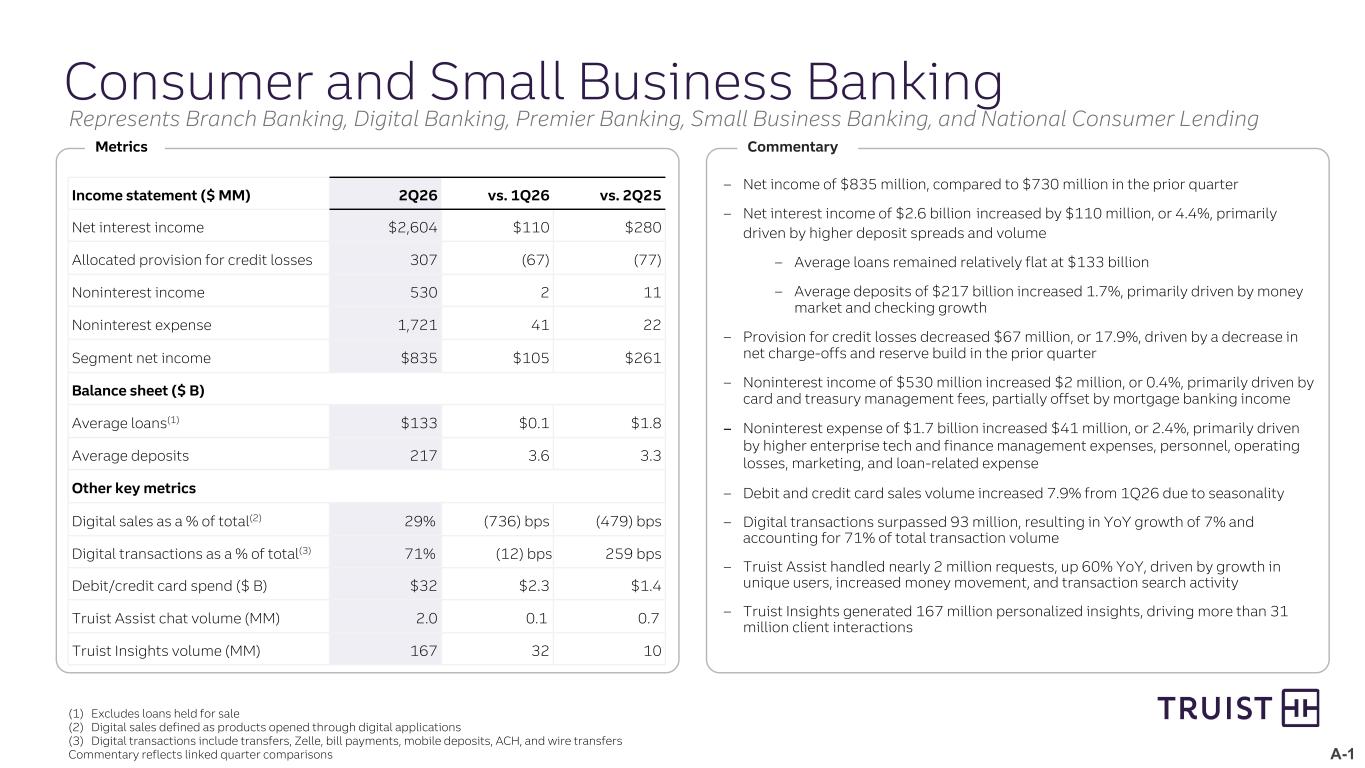
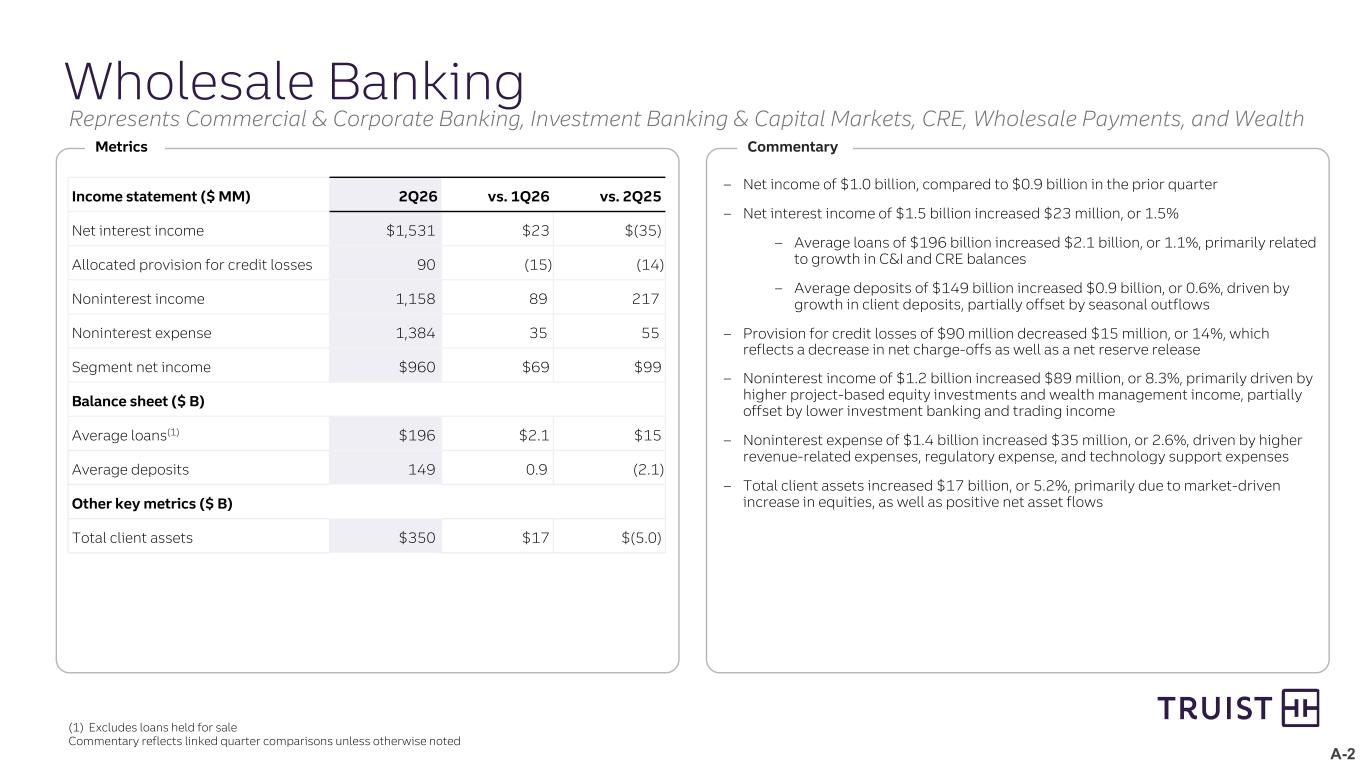
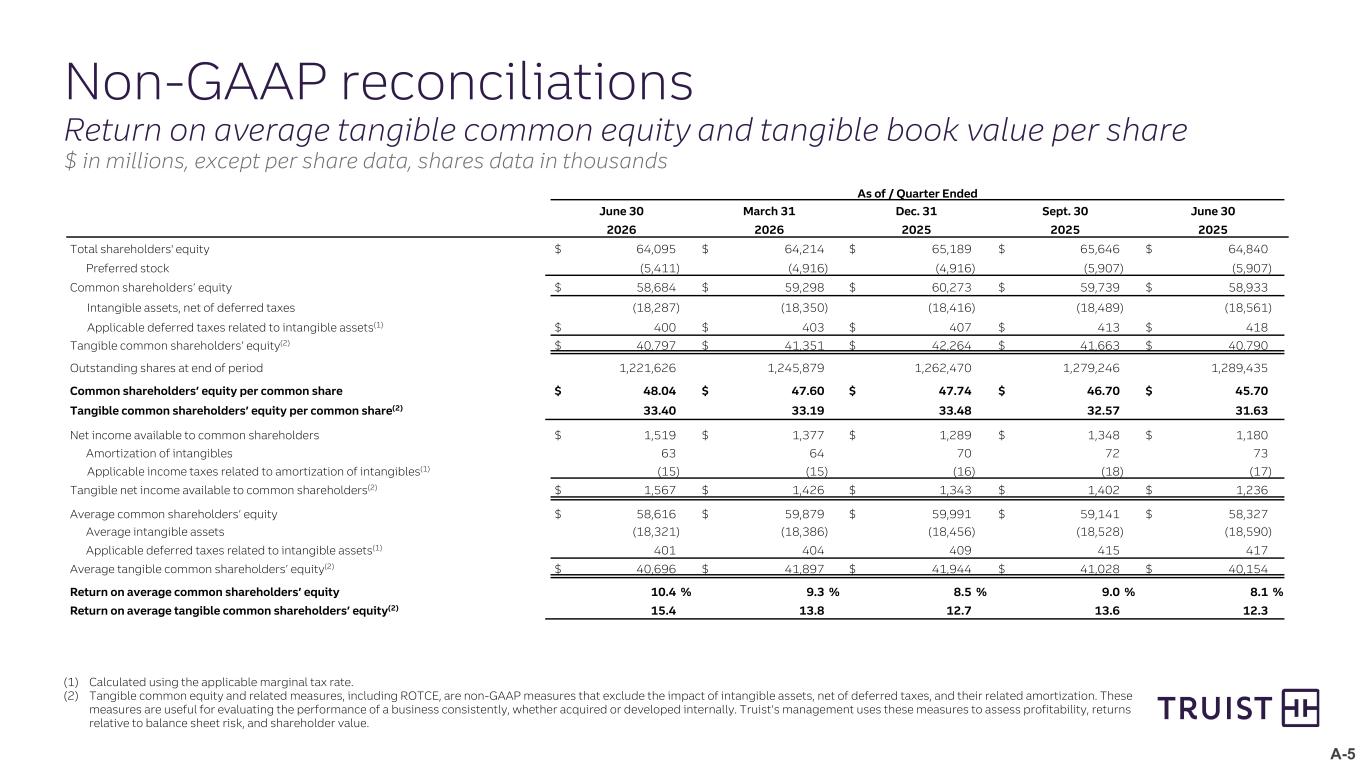
Thanks, Brad, and good morning, everyone, and thank you for joining our call today. Before we discuss our second quarter in 2026 results, let's begin as we always do with purpose on Slide 4. At Truist, our purpose is to inspire and build better lives and communities, and that purpose continues to guide how we serve our clients, support our teammates, and create value for our stakeholders. We also want to recognize that purpose is fueled by performance and committed leadership. During the second quarter, we announced that Mike Lyons will become Truist's next president and chief executive officer on September 1st. At that time, I'll transition to an executive chair role until my planned retirement in April of next year. As a founder of Truist, I am really excited about this important next chapter in our success journey. Mike's an accomplished and respected financial services leader with a proven ability to drive growth, improve performance, and create long-term shareholder value. Throughout the selection process, it was clear to our board that he's the right leader for Truist's future. He'll be leading a strong and experienced senior team that's helped build our momentum and position the company for continued success. Mike recognizes the strength of our franchise and the significant opportunities ahead. He shares our commitment to building a high-performing company by serving our clients and teammates, improving profitability and returns, and delivering superior outcomes for our shareholders. I look forward to supporting Mike and our leadership team over the coming months to ensure a smooth transition and build on our momentum. So, now, let's turn to the results on slide five. First, I want to step back and highlight what these results say about the progress we're making across Truist. Over the last several quarters, we've been clear about the actions we're taking to drive stronger returns, improve efficiency, and allocate capital to the highest value opportunities across the company. We continue to make deliberate choices about where we grow, where we invest, and how we optimize our balance sheet. While some of these choices may create near-term tradeoffs and individual growth metrics, They're producing the outcomes we intended and are driving stronger profitability and improved financial performance. Importantly, these results demonstrate that we're making meaningful progress in building a more earnings-efficient and more capital-efficient growth company. As you can see on slide five, our results show significant improvement in our profitability and returns. For the second quarter, we delivered net income available common shareholders of $1.5 billion or $1.23 per diluted share, representing a 37% increase over the second quarter of 2025. During the quarter, we added new clients, deepened existing relationships, and grew profitably in the businesses and products where we've chosen to focus. Along with our expense discipline, this contributed to more than 300 basis points of year-over-year positive operating leverage. In addition, combined with disciplined capital deployment, our return on tangible common equity improved 310 basis points year-over-year to 15.4%. These results reinforce that we remain on track to deliver our full-year profitability and return objectives and provide confidence in our ability to sustain this level of performance over time. So before I hand the call over to Mike, I'd like to highlight how our strategy is translating into tangible results across our business segments and our digital strategy, and we have that on slide six and seven. So let me start with consumer and small business banking. CSDB delivered another solid quarter that was consistent with our expectations and strategy to drive profitability improvement across the enterprise. Consumer behavior remained resilient during the quarter with stable liquidity, spending, and credit trends that remained within our expectations. Average consumer and small business loans were up 2% versus the second quarter of 2025 as we slowed production in certain less strategic and less profitable consumer categories, which Michael discussed in more detail later in the call. Average non-maturity consumer and small business deposits increased 2% versus the second quarter, driven by a 39% increase in new-to-bank deposit production. Average deposits per client were higher across all income segments, but we did see continued client demand for higher yielding deposit categories. Premier Banking, which serves clients with $100,000 to $1 million in combined deposits and investments and represents more than half of CSBB deposits, was again a source of strength. This business delivered a 20% year-over-year increase in new deposit production balances, a 23% increase in advisor productivity, and a 9% increase in financial planning activities. Our investments at Premier are also creating meaningful opportunities across the company, with referrals from CSPB to wealth management increasing 15% over the first half of 2025. As you can see on the slide, digital also continues to be a key growth engine. Active mobile users increased 4% year-over-year to 5.4 million, while digital transaction volume increased 7% to 93 million transactions. Approximately 85% of client logins now occur through mobile, underscoring the increasing central role our mobile capabilities play in serving clients. Increasing digital engagement is not only improving the client experience, but also strengthening client economics. Digital active clients generate more revenue and higher profitability than non-digital clients, while greater self-service adoption continues to improve efficiency across the franchise. During the quarter, clients engage with truest assist nearly 2 million times, up 60% year-over-year, reflecting growing adoption of self-service capabilities and our continued investment in the digital client experience. Taken together, these results demonstrate our strategy to improve profitability, strengthen returns, and allocate capital towards the highest value opportunities across consumer and small business banking. Now, turning to wholesale on slide seven. In wholesale, we also delivered another strong quarter with continued momentum across loans, deposits, and fees while maintaining a disciplined focus on relationship returns and capital efficiency. Over the past year, we've significantly expanded our client base and strengthened existing relationships across the wholesale franchise, driving broader adoption of our lending, deposit, payments, wealth management, and capital markets capabilities. This deeper engagement is translating into higher revenue per client, a more attractive revenue mix, and improved relationship profitability, driven by an increasing share of revenue coming from non-credit sources. Average wholesale deposits increased 6%, excluding the impact of certain large M&A-related deposits in the second quarter of last year, driven by broad-based deposit growth across client segments, heavily tied to our focus on driving payments and liquidity solutions. Middle market deposits, an area where we're invested heavily, grew 12% year over year, driven by 9% growth in our legacy markets and 27% growth in expansion markets, such as Texas, Pennsylvania, and Ohio. Average wholesale loans increased 8% compared with the second quarter of 2025, reflecting broad-based momentum across our industry banking, middle market, and commercial real estate teams as we continue to prioritize high-quality, relationship-driven growth. Wholesale fee income continues to outpace balance sheet growth, led by investment banking and trading and wealth management reflecting strong client activity, improved deal economics, and continued momentum in our wealth franchise. Advisory revenue increased 27% year-to-date, including strong growth across equity capital markets, M&A advisory, and financial risk management. Overall, we remain encouraged by the breadth of growth across the franchise and the continued progress in building a more profitable and capital-efficient wholesale business. With that, let me turn it over to Mike to discuss our financial results in more detail.
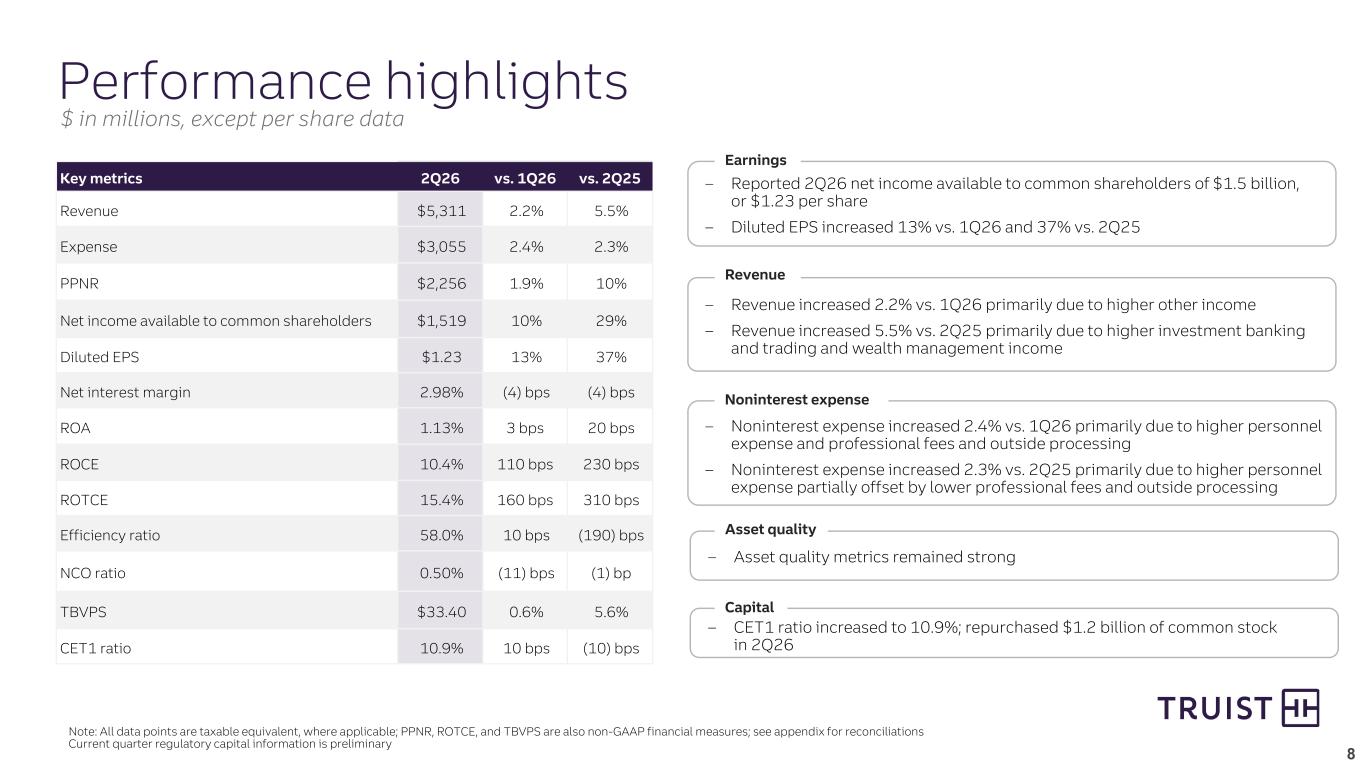
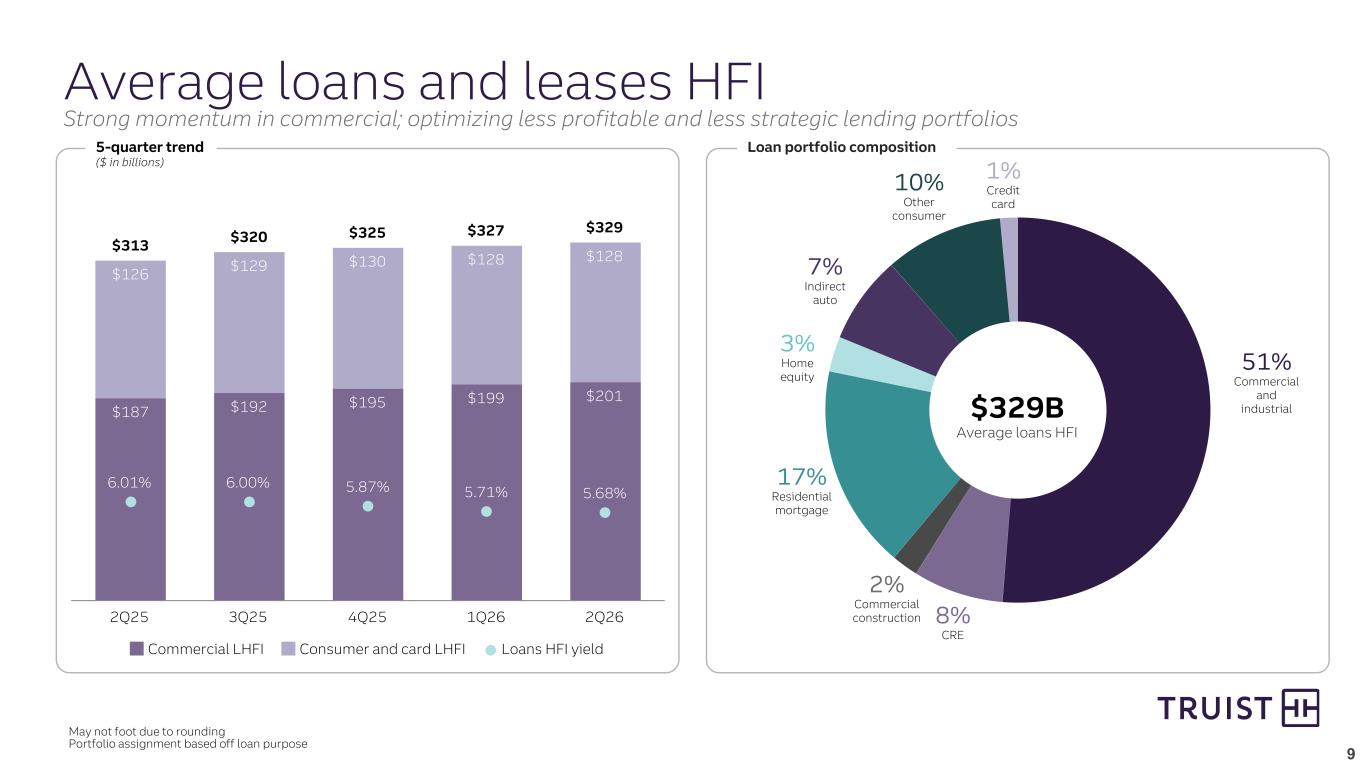
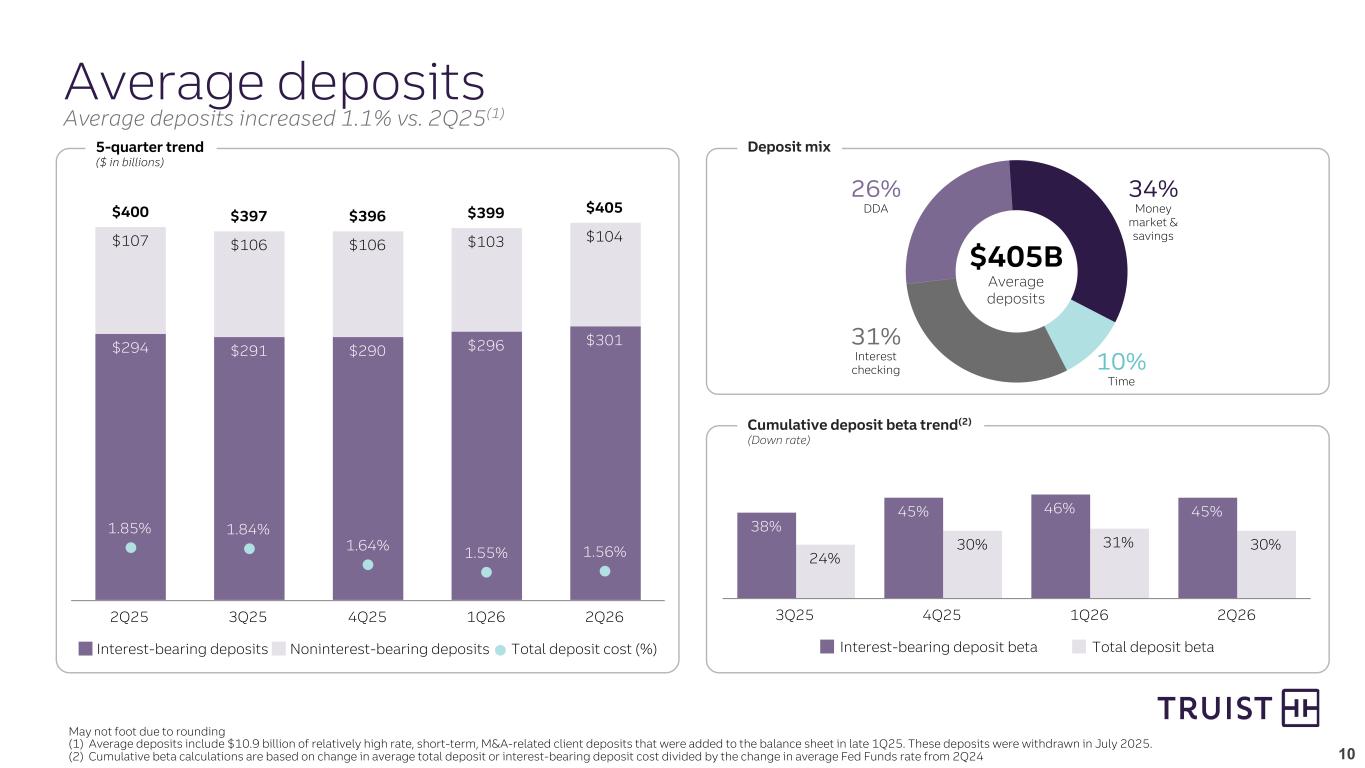
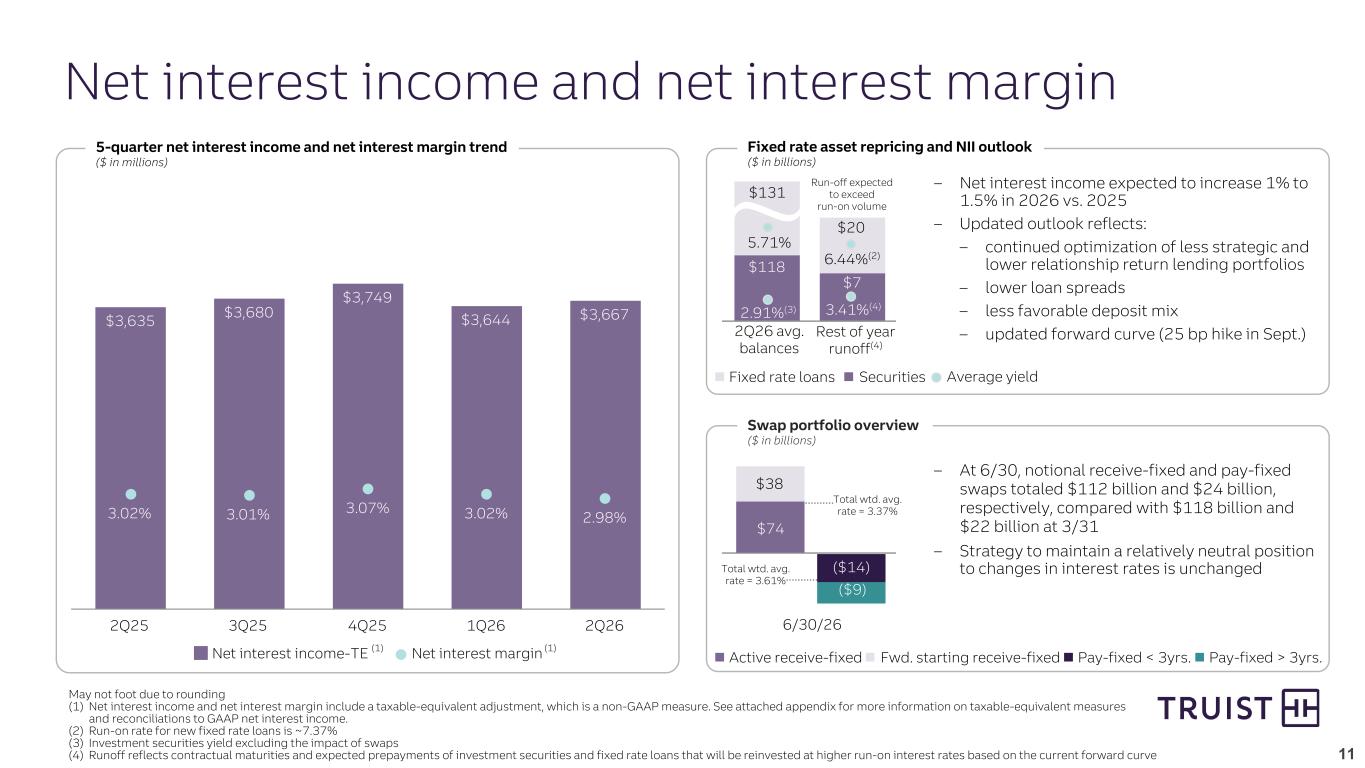
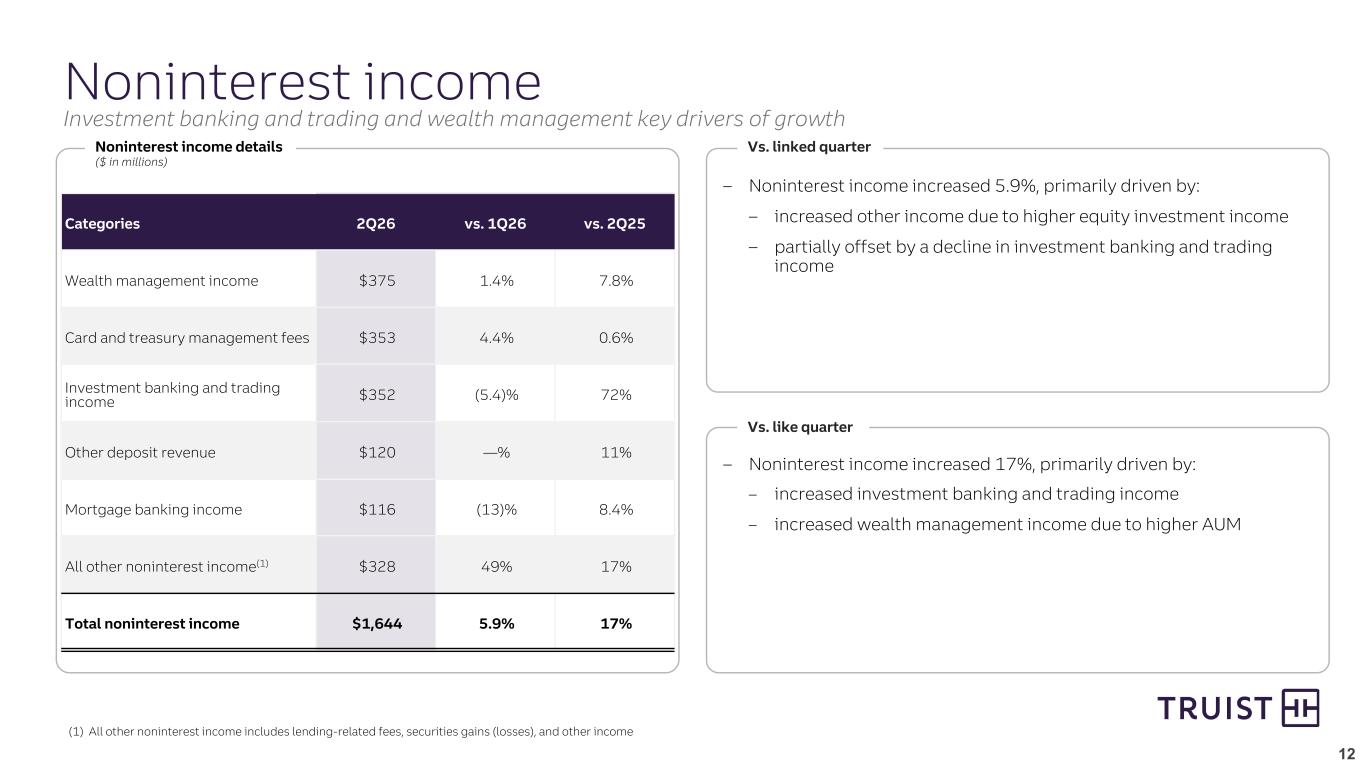
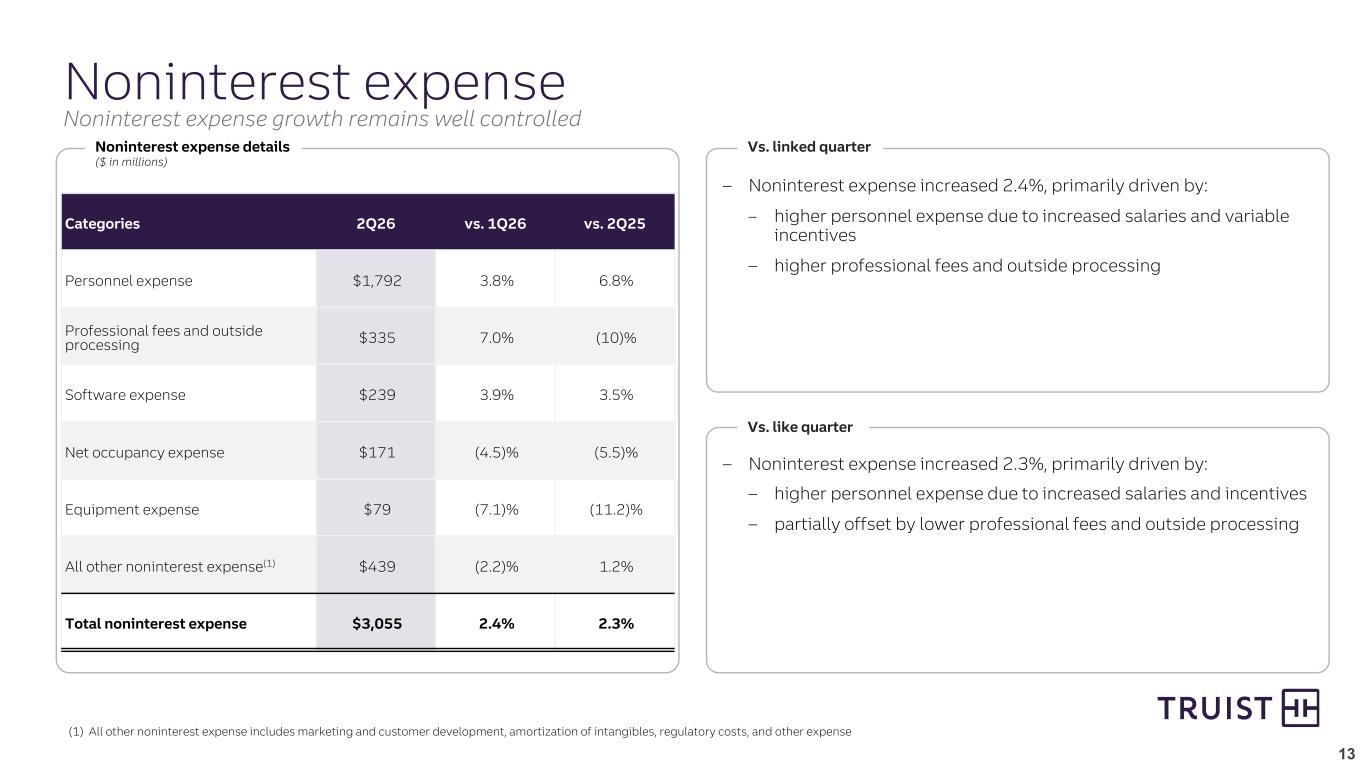
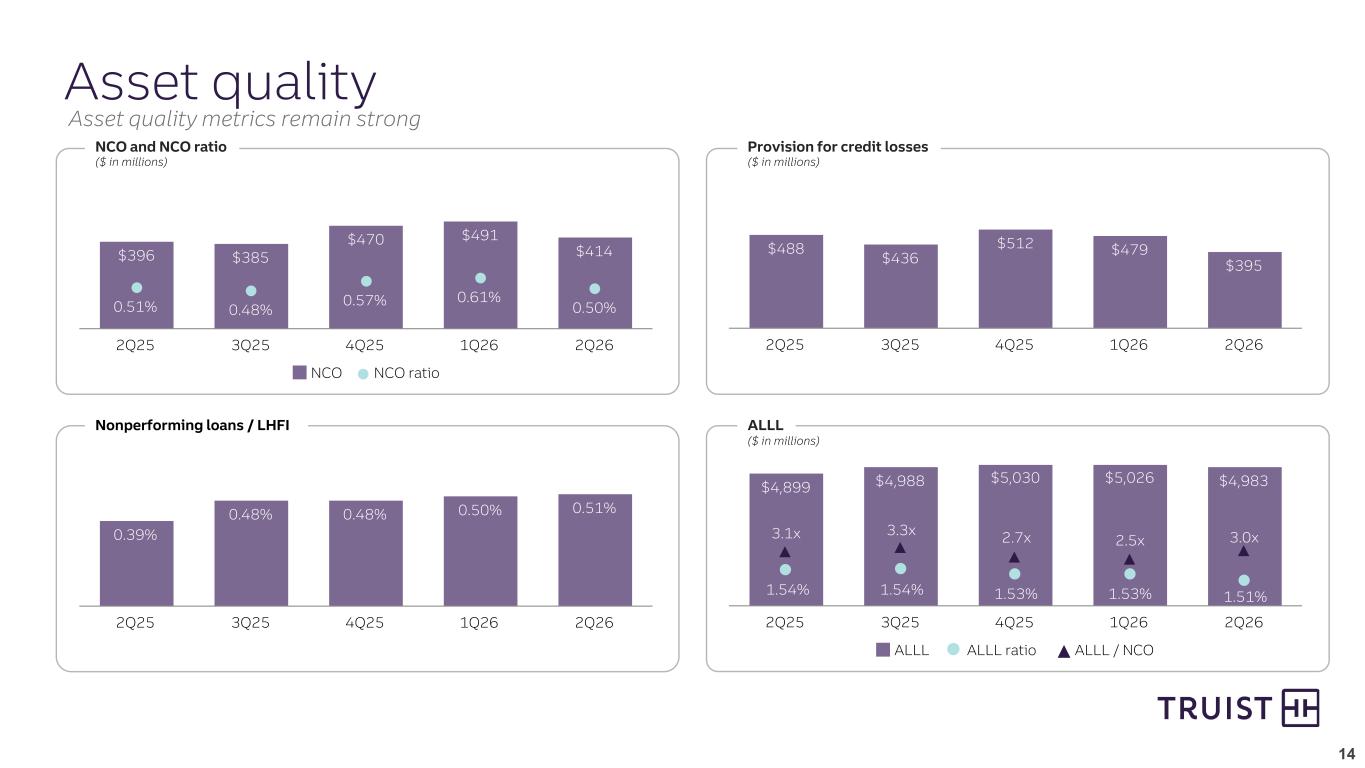
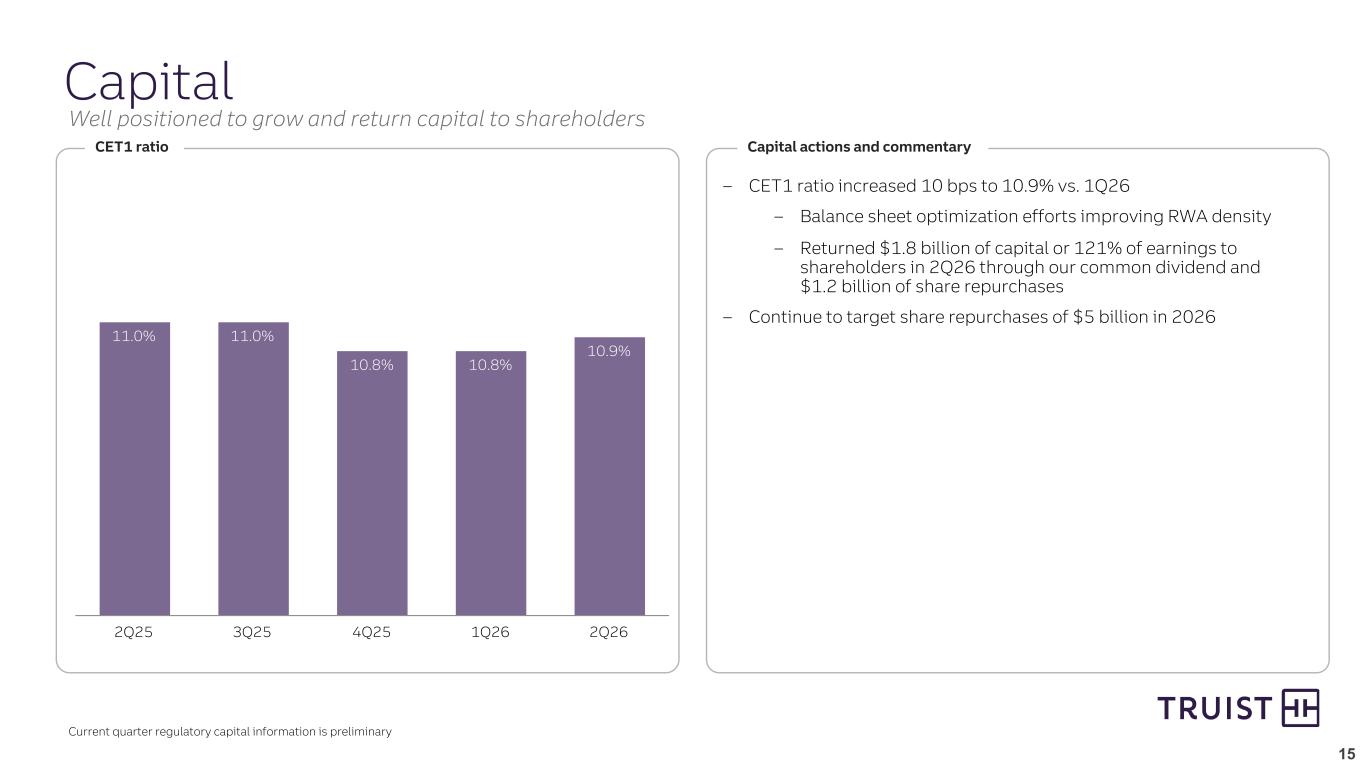
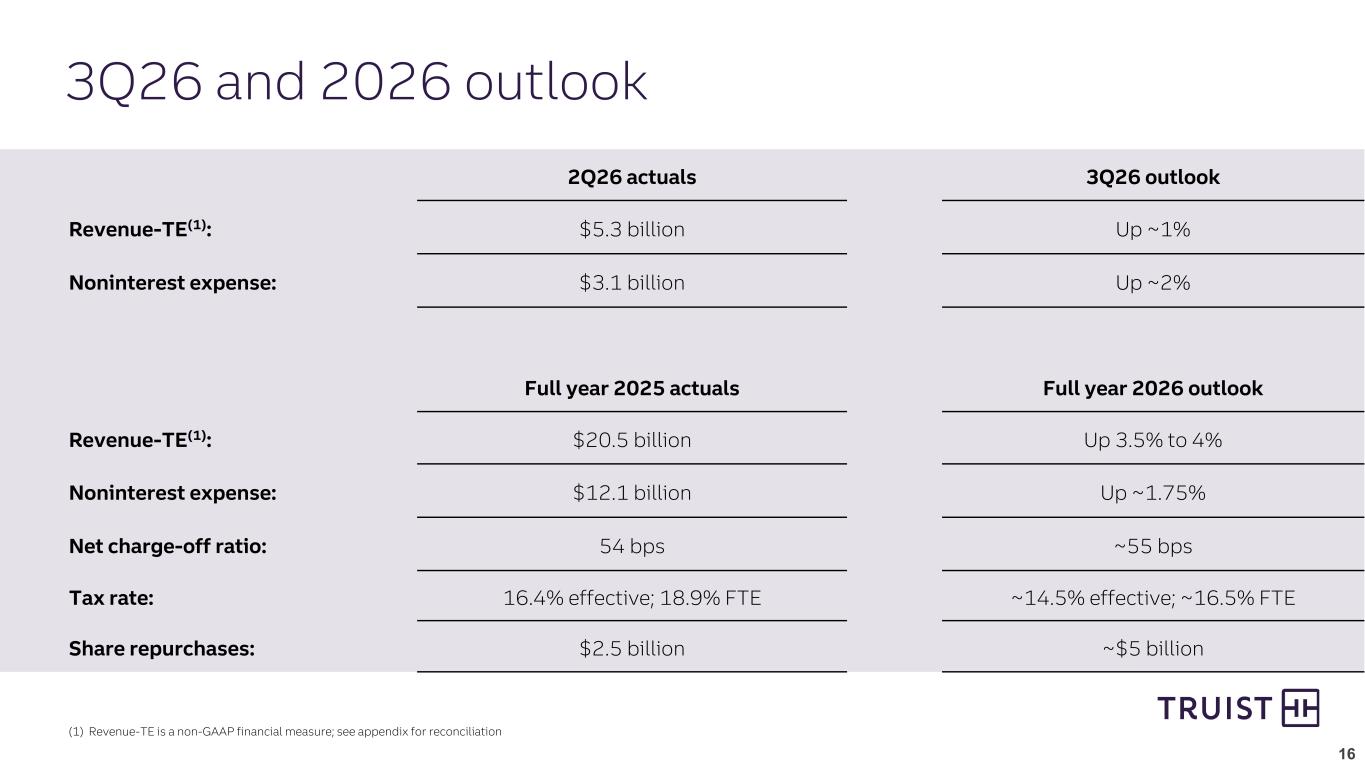
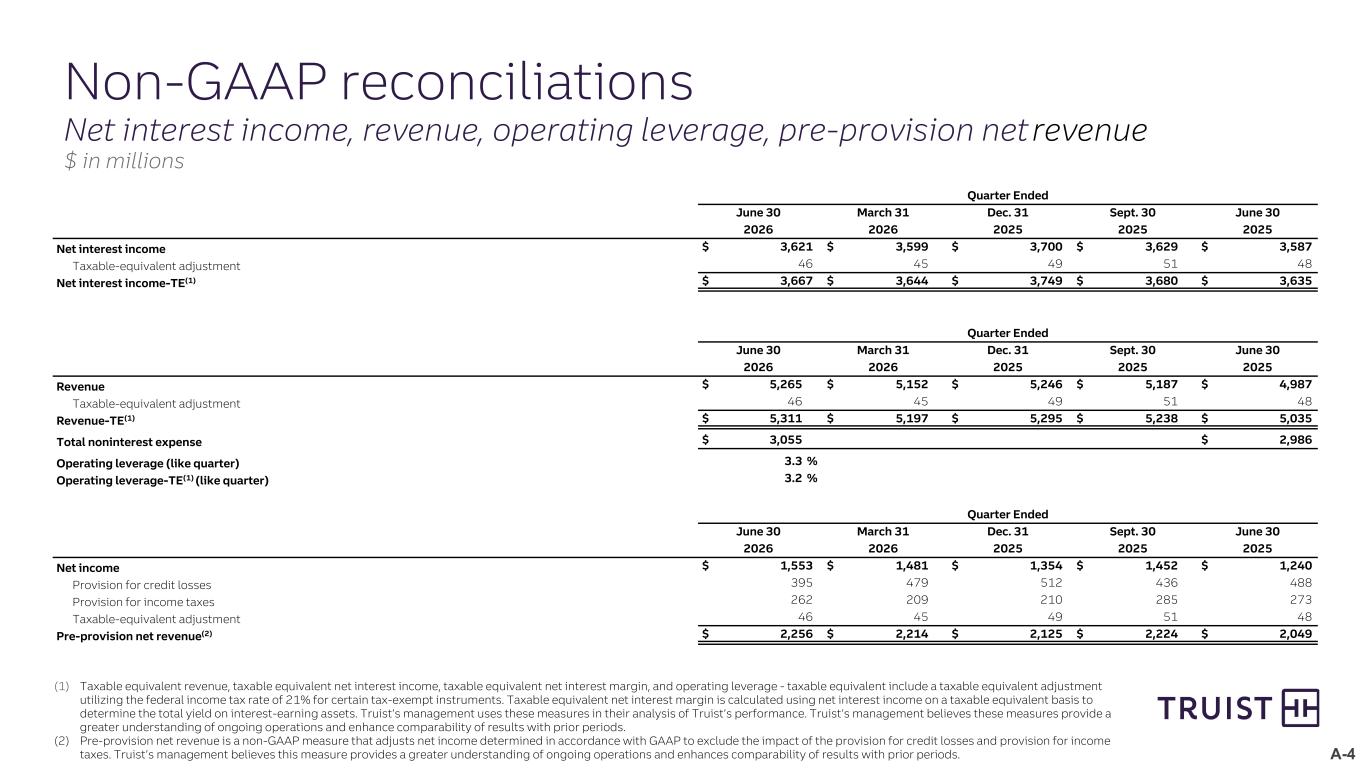
Thank you, Bill, and good morning, everyone. So, as Bill mentioned, we reported second quarter of 2026 gap net income available to common shareholders of $1.5 billion or $1.23 for diluted share. Earnings per share increased 37% versus the second quarter of 2025 and 13% versus the first quarter of 2026. Revenue increased 2.2% in late quarter, due primarily to higher non-interest income. Revenue increased by 5.5% versus the second quarter of 2025 due primarily to higher non-interest income led by growth in investment banking and trading and wealth management income. GAAP non-interest expense increased 2.4% versus the first quarter of 2026, primarily due to higher personnel expense and professional and outside processing expenses. Non-interest expense increased 2.3% versus the second quarter of 2025, which helped drive 320 basis points of year-over-year positive operating leverage. Asset quality metrics remain strong, and our CG-1 ratio increased by 10 basis points, linked quarter to 10.9%. Next, I'll cover loans and leases on slide 9. Increased $2.1 billion, or 0.7%, linked quarter to $329 billion, driven by 1.3% growth in average consumer loans, reflecting slight growth in both commercial and consumer. As a reminder, we expected 2026 loan growth to be driven primarily by commercial and other consumer categories, with slower loan growth in residential mortgage and indirect auto. Moving to deposit trends increased 1.5% in linked quarter, while year-over-year growth was 1.1%, driven primarily by growth. We continue to see healthy client deposit activity. However, deposit mix trends are being pressured by elevated rate-seeking behavior and migration into higher-rate products. Average interest-bearing deposit cost increased by one basis point linked quarter to 2.10%, and average total deposit cost increased one basis point to 1.56%. As shown in the chart on the bottom right hand-up side of the slide, our cumulative interest-bearing deposit beta decreased from 46% to 45%, and our total deposit beta decreased from 31% to 30% on a linked quarter basis. Moving to Net Interest Income and Net Interest Margin. Net Interest Income increased 0.6% linked quarter, or $23 million, primarily due to the impact of one additional day in the second quarter and higher earning assets, partially offset by our Net Interest Margin decreased four basis points linked quarter to 2.98%, driven by slightly higher deposit costs, lower loan spreads, and a slightly larger balance We now expect Net Interest Income to increase approximately one to Our updated outlook reflects actions we have taken to improve profitability, as well as certain market dynamics. We are continuing to optimize less strategic and lower-return lending portfolios that offer limited relationship potential, which has the effect of reducing NII and net interest margin, but improves ROD. We now expect lower loan spreads than we anticipated, based on two factors. One, we are going to higher-yielding consumer loans into higher-quality loans, where we expect to drive attractive relationship returns over time. And two, we're seeing continued broad-based market-driven compression of loan spreads. The third headwind is our outlook for a less favorable deposit mix and therefore higher rate paid than we previously expected. These headwinds are partially upset by the benefits we expect to get from a higher medium and long-term interest rates. To improve profitability and returns involve trade-offs across individual metrics. For example, during the second quarter, we discontinued the origination of marine and recreational vehicle loans, and we significantly reduced originations in several other less strategic and less profitable consumer lending units, such as prime and non-prime auto. These actions are expected to reduce 2026 loan production across these portfolios by approximately 40% relative to 2025 production levels. Many of these portfolios are accretive to net interest income and net interest margin, but significantly dilutive to our long-term ROTC objectives and less strategic to our client-focused business model. While these actions may reduce near-term net interest income growth, they improve the overall profitability and we'll continue to evaluate similar actions that will enhance returns and improve capital efficiency, including further optimization of lower return and less strategic portfolios. Finally, as you can see on the right-hand side of the slide, we did update our fixed asset repricing outlook and our swap disclosure. While expected runoff in our fixed-rate loan portfolio remains largely unchanged, we do expect lower replacement volume due to the actions I just described, which is reflected in our updated NII outlook. Turning now to non-interest income on slide 12. Non-interest income increased 5.9% compared with the first quarter, reflecting strong primarily driven by hiring. Compared with the second quarter of 2025, non-interest income increased 17%, driven by strong performance across several. Investment banking and trading revenue increased 72%, benefiting from stronger client activity, improved deal economics, and continued momentum across our capital. Wealth management income increased 8%, supported by continued growth in client assets, advisor productivity, and financial planning activity. While card and treasury management fees grew only modestly, underlying business trends remain encouraging, as we see healthy client pipelines and we continue to make investments in both products. Consistent with the trends Bill discussed earlier, fee income growth continues to outpace balance sheet growth, reflecting deeper client relationships and a more capital-efficient revenue mix across our company. Next, October 13. Expense discipline remained a key focus during the quarter as we continued balancing investment in the business with our commitment to improving profitability. On a linked quarter basis, non-interest expense increased 2.4%, primarily reflecting higher incentive compensation associated with stronger business performance. Compared with the second quarter of 2025, non-interest expense increased 2.3%, driven largely by higher personnel expense, professional fees, and outside processing costs. Importantly, year-over-year expense growth remained well below revenue growth, contributing to our positive efficiencies across the company that can be redeployed into growth initiatives and the highest return opportunities, such as growth in revenue-producing teammates, new products, and capabilities that can improve the client experience. In addition, AI is becoming an increasingly important contributor, helping improve productivity, enhance client experience, and create additional capacity that can be invested in high-value business opportunities across our franchise. Next, I'll discuss asset quality on slide 14. Quality remained a source in several key portfolios. Net charge-offs declined 11 basis points linked quarter to 50 basis points, reflecting lower losses across most portfolios. Compared with the second quarter of 2025, net charge-offs were relative. Our provision for credit losses totaled $395 million, modestly below net charge-offs of $414 million, resulting in a two-basis point linked quarter to 1.5. Production in our AAA was primarily driven by the resolution of several commercial and commercial real estate problems credits during the quarter, and continued improvement in sectors like loans held for investment increased one basis point linked quarter to 51 basis points entire indirect auto problem loans were partially offset by improvement in the commercial portfolio. The increase in indirect auto non-performing loans was primarily due to a change to the non-accrual criteria in our regional acceptance non-prime auto business, as we discussed last quarter. This does not reflect deterioration in underlying credit trends, as lifetime cash flows are not expected. As these loans move to non-accrual status, subsequent payments are applied to principal and no longer recognized as interest income. Turning to capital now on slide 15, increased 10 basis points linked quarter to 10.9 percent despite returning more than 100 percent of earnings to shareholders through share repurchases and through our common dividends. The increase in our CET1 ratio reflects strong capital generation and the benefits of balance sheet optimization efforts that are improving our RWA density. During the second quarter, we repurchased $1.2 billion of common stock compared with $1.1 billion in the prior quarter and $750 million in the second quarter of 2025. We continue to target approximately $5 billion of share buybacks in 2026. I'll now review our guidance for the third quarter and for full year 2026 revenue to increase 1% relative to second quarter revenue of $5.3 billion. to increase by approximately 1.5% in the third quarter, primarily driven by an additional day and higher client deposit balance. Non-interest income to remain relatively stable. Non-interest expense of $3.1 billion in the second quarter is expected to increase by about 2% linked quarter in the third quarter. Turning to our outlook for 2026, we now expect revenue to increase 3.5% to 4% compared with our previous outlook for 4%. This change primarily reflects the factors discussed earlier, which reduced our expected net interest income growth to 1% to 1.5% from our previous outlook of 2% to 3%, increasing our outlook for non-interest income growth to approximately 10% versus our previous estimate of high single digits, reflecting continued momentum across our fee businesses. We continue to expect GAAP non-interest expense growth of 1.75 percent, net charge-offs of 55 basis points, and an effective tax rate of 14.5 percent, as well as share buybacks of $5 billion for the year. But in the EPS trajectory that we expressed earlier this year, and our ability to drive ROTCE for 2026 above, we're dialing in it back to the bill for some final remarks.
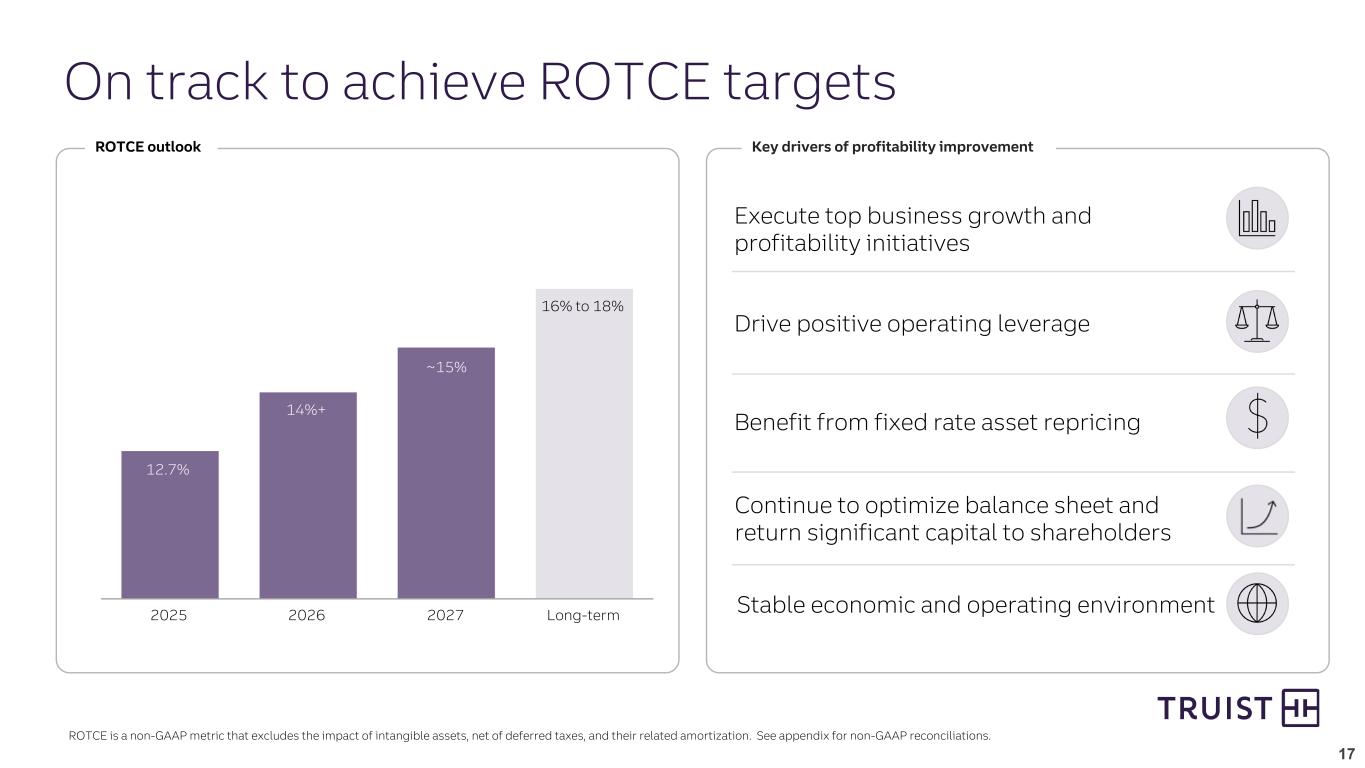
Thanks, Mike. Mike, as we close, I want to reiterate the message I shared at the beginning of today's call. Across our company, we're making strategic decisions about where we grow, where we invest, and how we allocate capital to improve performance and strengthen returns. The results reported today demonstrate that those decisions are producing the outcomes we intended. We're seeing stronger profitability and continued momentum across many of our key businesses. Just as importantly, the progress we're making reinforces our confidence in our ability to achieve and sustain the profitability trajectory outlined on slide 17. As Mike mentioned, reflecting on that progress and our confidence in the path ahead, we now expect to deliver ROTC of greater than 14% in 2026. While we remain focused on delivering the commitments we've made, we believe those objectives represent milestones along the longer-term path of continuously improving our performance. One of the things that gives me confidence in that path is the strong alignment between our board and incoming CEO of my clients about the opportunities ahead. Together, we share a common vision of building a company that consistently delivers stronger profitability, improved returns, and long-term value for our shareholders. I want to thank our teammates for their incredible, purposeful commitment, focus, and dedication to serving our clients. I want to thank our shareholders for their continued trust and support. Given this will be my last call as CEO, I want to thank all of you who follow us for your focus and professionalism. So with that, Brad, let me turn it back over to you for Q&A.
Thank you, Bill. Rocco, at this time, will you please explain how our listeners can participate in the Q&A session. As you do that, I'd like to ask the participants to please limit yourselves to one primary question and one short follow-up question in order to accommodate as many of you as possible on today's call.
Operator
Thank you. To ask a question, please press star than 1 on your telephone keypad. If your question has already been addressed and you'd like to remove yourself from queue, please press star than 2. And as a reminder, we do ask you to please limit yourself to one question and a single short follow-up. Our first question And today comes from Ryan Ness at Goldman Sachs. Please go ahead.
Good morning, everyone. Good morning. Bill, just wanted to say congrats on your retirement. It's been great, you know, working with you and, you know, learned a ton from you over the years, particularly on our trip, so you'll definitely be missed. Maybe to kick it off, you know, Bill, you talked about some of the tradeoffs that you're making right now to grow the business. And, you know, it's clear you could see commercial loan growth and the period balances are down. You know, on the flip side, you added a plus to the return target for the year. So can you maybe just expand on, you know, what's happening under the hood incrementally, maybe talk about each loan category. And how do you think about the focus of, you know, on returns versus actually growing the company at this point?
Ryan, thanks. Also miss working with you. You know, if you think about, like, let's start, if we break down the loan categories, you know, So CNI, if you want sort of year-on-year-on quarter, is up just under 8%. You know, so the places where we've continued to focus and, you know, have intentionality have good growth characteristics. And then if you break out consumer and you look at the areas like HELOC and then you look at other consumer areas like Sheffield and like service finance, those have also continued to grow. And we have good production in those capabilities. The other places, like Indirect Auto, you know, we're down actually quite significantly, and now down significantly in production. You know, our focus is on relationship-based things that also clear our profitability hurdles. So establishing these targets has really sort of come all the way through in the company. I mean, I'm really, really proud of the team, you know, that they've embraced where we want to go from a profitability standpoint, clarity around strategies, sort of, you know, full alignment in the things that are important to us. And then within those categories, you know, within the commercial book, highly diversified, really good focus, really good growth in the middle market area, for example, where we've had a focus, good production, good pipelines in those areas. So if we think about just the loan component of that, I think our team is doing a good job staying focused on the things that are accreted over time. And, you know, to your other question, I mean, it's also setting the stage and setting the platform for growth. So, you know, every incremental dollar, you know, that we add to the company on a growth platform, that just has a higher return and higher, you know, earnings efficiency and capital efficiency going forward. So I would say we're not conceding long-term growth in terms of repositioning, but I think we're setting the table for the efficient growth that comes forward. Does that help?
Yeah, no, that's great. And maybe if I can ask a follow-up from Mike. So, Mike, you know, you took down full-year NII expectations. You know, maybe just unpack a little bit what's including for loan growth, you know, the exit margin, and what are the updated thoughts on deposit costs from here?
Well, I mean, maybe just to reiterate some of what we said already in our prepared remarks is the good news is while we do, you know, see some pressure on NII for the year, we do feel quite good about, you know, fees, you know, being in sort of the 10 percent area year over year credit. This quarter looked great, and we feel good about, you know, from an expense perspective, feel good too, and so I think from a bottom line perspective, I feel like we've got really nice momentum, and obviously Bill just talked about some of the progress that we're we're proud of in terms of the ROTCE. The NII piece, you know, we mentioned there's sort of three main headwinds. You know, Bill mentioned, you know, and I mentioned the marine and rec vehicle, you know, business we actually exited during the quarter. Prime Auto's down. We mentioned, you know, across those portfolios and a few others, we're down on a production basis, call it 40% year over year. That's $7 to $8 billion of annual production that's come out of the business in 2026 versus 2025. And so, and from our perspective, not regrettable, right? I mean, those are trade-offs we're making to improve profitability. As you think about the sort of two components there as well, right? There's the piece that we're doing that's not necessarily happening to us. So, we have been remixing and reallocating capital. Less strategic, low, and I, that's going to result in a lower yield typically, but we believe a higher return, longer term, and be the right thing for the company over time. Even within wholesale, we're seeing some remixing into more high-grade, sort of investment-grade type credits. And so that's also having an effect. So loan spreads being pressured perhaps by some conscious choices we're making. And then we do see broad-based market compression. We came into the year with an expectation that we might see bounce off the bottom on credit spreads, You know, maybe to the tune of 10 to 15 basis points, which conservative relative to the discussed in the industry at the time, you know, if we hold spreads just constant from here, that would result in spreads for us at least, you know, year-over-year being down 5 to 10 versus, you know, the upside of 10 to 15. So that's been a pretty important headwind for us, and we've incorporated that into our outlook. And we do reprice, you know, quite a few loans, as you can imagine. and it's beyond the fixed-rate loans, but we repriced a pretty sizable portion of our floaters every quarter as well. So, that's been an important factor. And, of course, deposits. You know, we've been, you know, we learn a lot about every year. There's just seasonality around taxes and bonuses. You know, as we, you know, got deeper into the quarter and closed out June and looked forward, it's much more, you know, client preference, you know, inertia around higher-rate products. And so, we're seeing that remix. We've seen some of the year-to-date, and we have an expectation that that's going to continue. And so, we've incorporated that into our outlook as well. And of course, all those three factors are offset in part by a higher, you know, belly of the curve, which does help us on the fixed-rate asset repricing side. So, that's the headwind on NII. Again, maybe just to finish where I started, the good news is, is while the components have moved around a touch, we still feel quite good about the bottom line. I think you asked about margins. I'll touch that quickly. We did see a touch of pressure on that interest margin-linked quarter. About half of that was just sort of composition of the earning asset growth. We saw bonds and cash maybe $3 billion higher. That's obviously the interest margin. And then on the loan and sort of deposit-funded deposits and three basis points worse on loan yields, some of that's the SWAT impacting loan yields to modestly improve the year, modestly improve, you know, as we get the benefit of fixed rate asset repricing, maybe, you know, balances, you know, both in wholesale and consumer. We're seeing nice production. It's really just mixed. So we actually do think that NIM will improve in the third quarter in part based on, you know, higher client deposit balances, but not to the same degree that we would have expected a quarter ago or certainly back in January when we had a different, you know, rate environment and, you know, there's a lot of other factors.
Operator
And our next question today comes from John Pankhari at Evercore. Please go ahead.
Good morning. And, Bill, it's been a pleasure. First, on the balance sheet optimization and NII, in your lowered, how much of that that you cited is reflected in the guidance, in that guidance? Is there more that could impact next year's expectation as this continues to play out? And maybe also what other rationalization is possible? I know you mentioned in your prepared remarks that we are continuing to evaluate.
Yeah, good morning, John. The changes, the retrending that we've made around production balances that we mentioned, as well as the exit of marine and rec, are in our outlook for this year. You know, we haven't. But in terms of what else, I would just say it's a continuous, you know, search and opportunity to make sure that we're in the absolute most efficient way. And by the way, it's not entirely in consumer, right? There are things that we've done and will continue to do in wholesale around client selection, around pricing, you know, rebalancing that are all intended to create more profitability and efficiency. So, you know, there's, you know, nothing else to tell other than it's a really important initiative of ours to continue to deliver against this ROTC improvement. And we're going to look, we're going to make smart choices. We're going to be guided by, you know, hey, our strategic eye and our business model and then to profitability.
Okay. Thanks, Mike. Now, I know you talked about the ROTC improvement and you mentioned confidence and above the 14% level for 26. How do these actions and your updated thoughts and updated trends in general impact your 2027 15% expectation and the long term 16 to 18? And then just one other thing, kind of back to Ryan's question. If you could just update us on your loan growth and deposit growth expectations, your balance sheet assumptions underneath the NII outlook for this year, that would be helpful.
Yeah, I'll take the first part. Yeah, John. So, yeah, on the ROTC, you know, expectations for the future, you know, this quarter has some unique characteristics. And keep in mind, you know, this track's not linear, right? So, you know, quarter to quarter, it might change. Obviously, we have a lot more confidence in this year as we, you know, as we get to more than half a year through to say we'll be at 14 plus. I just don't think it's the time to change the established targets going forward. You know, that being said, I think we certainly feel more confident in our path to a higher performing company. So, you know, today, change the guidance for where we are for this year, but stay on that path to higher performance and want to retain the right level of flexibility to achieve those numbers.
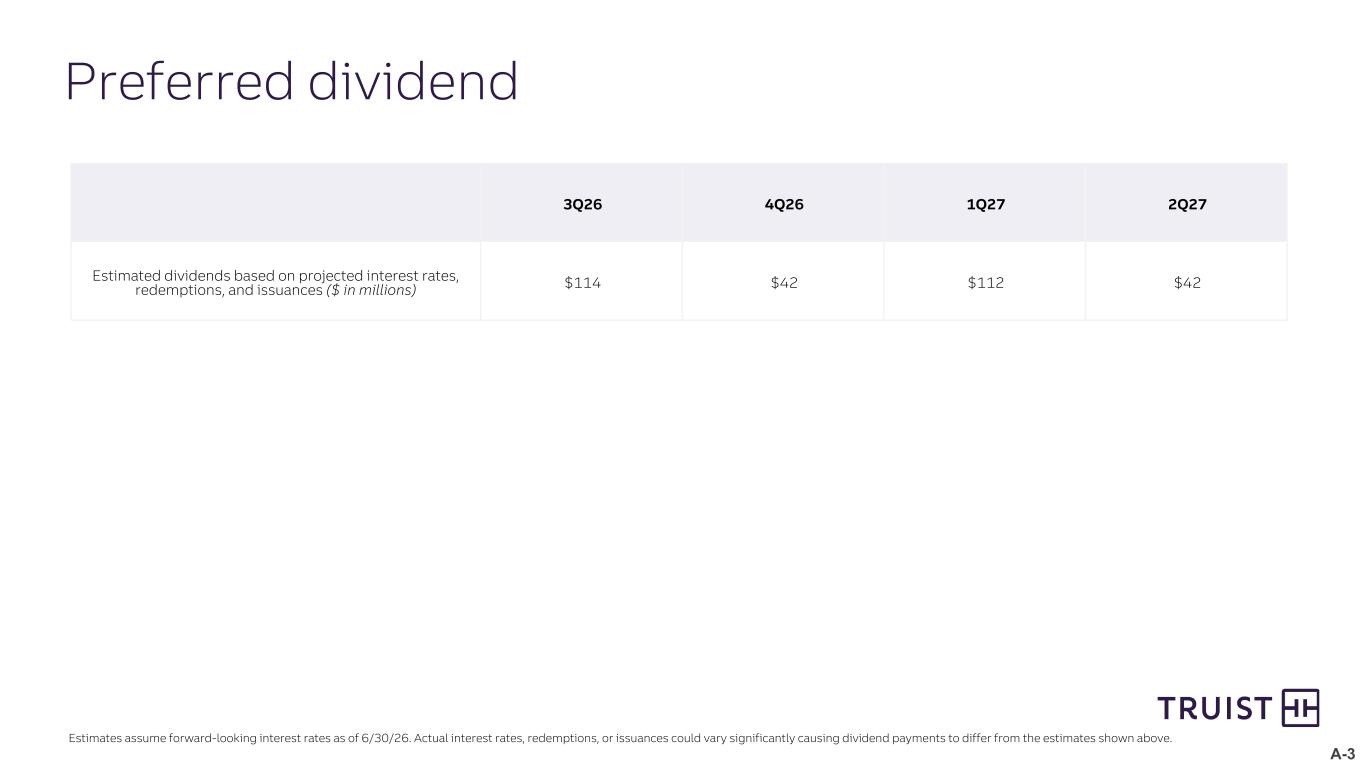
And I'll just add to that a little, John. I mean, obviously, we were really pleased to be in the 15% area for the quarter. You know, it's not a linear path. You know, we do have some factors, you know, as an example, you guys know this, you model it well. we have some preferreds that are semi versus quarter. You do have heavier preferred in two of the quarters and lighter in two others. So, that's not to say trajectory, but it's not going to be a linear path, and you guys know that. In terms of deposits and loans, you know, we still expect to see loan growth this year, obviously. We've delivered, or sorry, pardon me, deposit growth this year. You know, what we're seeing is, you know, low single digits this year. We're still on track for that, probably high side of that. But the bulk of that, and Bill mentioned that, is going to be on the C&I side, whereas consumer will be, you know, so that's within our outlook. John.
And then, Mike, I mean, Mike mentioned this. The production engines are working, you know, so the up-front side is working. On the consumer side, our premier production for advisors up 15% on the deposit side. I talked about the loan side on the service finance. The quality of the production is really, really high. So the, you know, the quality of the wholesale deposit production is relationship-based, you know, so it's not sort of just rate-based. So these are clients in which we've expanded our relationship with. We have payments-related discussions with those in terms of increasing for the future. So, you know, we do have a, you know, mixed opportunity, But the good news is the production's engine is working, and we're adding high-quality, relationship-oriented, sort of operating-type deposits.
Operator
Got it. Thanks so much, Bill.
Operator
Thank you. And our next question today comes from Ken Ustin with Autonomous Research. Please go ahead.
And, Bill, once again, best of luck to you in the future. I was wondering if you could touch a little bit more on the deposit competition and the rate chasing that you mentioned in your prepared remarks. Just can you talk about just, you know, where that's coming from? Is it any different than what we've seen, or is it just the burden of a little bit from the higher for longer environment?
Yeah, I mean, I think, you know, what we've seen in the deposit migration to higher yielding is more client behavior than competitive pressure, in fairness. I mean, I think this is a trend that we've seen that's continued. You know, we're in a rate cycle where I don't think that's particularly unusual. Competitive environment still is highly competitive, and we're the most competitive we've ever been, you know, in terms of product and capability. And that was my comment earlier is the production engines are working well and the client expansion and the opportunities that we see are working well. I think this is just a function of client behavior.
And maybe one for Mike. Mike, would you mind just walking us through just that lingering amount of swaps that has to come on in terms of the book that's not active and the timing of kind of when the rest of that should be, you know, in the run rate? Thanks.
Yeah, no problem, Ken. So maybe I'll take you back to the beginning of the year and swaps can change. You know, in the first quarter, we had – just I'll give you the receivers and maybe give you the pairs, too, for the offset. But we were $50 billion effective in Q1 with $24 billion of pairs, so we call it net receive, $26 billion. In this most recent quarter, we were $63 billion effective, so call it plus 13 from Q1 pairs, net effect in the loan yields. And that's the receive rate there. Call it $340.
And by the end of the year, we're kind of there. I know you'll continue to rework the portfolio just depending on where the dates go.
It wasn't a very active quarter for us in terms of any, you know, swap activity we did. Just like we did in the first quarter, we took a small handful and deferred the effective start dates. I think we peak in Q1 of 27, and that's, you know, call it high 90s. And then I think from there, it would begin to decline.
Operator
And our next question today comes from Erica with UBS. Please go ahead.
Hi. Good morning, and congratulations, Bill. I hope you enjoy your retirement. I still remember meeting you at SunTrust, and you've been great. So I hope you enjoy your retirement. Thanks, Erica. You're welcome. You know, you were our chairman of the board when you decided to name Mike Lyons as your successor. You know, obviously he was inside of PNC for some time and then had a brief spin at FISERV. You know, you mentioned, you know, what you found in him in terms of, like, his focus on growth. But what other characteristics did you particularly, you and the board, like about Mike in terms of taking, you know, this company to this future that you see, you know, and maybe speak a little bit about sort of how he – how you think he's going to frame the, you know, technology investments and potential challenges at the firm? And does he believe that this is a 16% to 18% ROTC company over the medium term?
Yeah, thanks, Erica. You know, I mean, succession planning is the most important work that a board does. You know, so put that in context. And we've been at this, you know, for well over a year, you know, thinking about, you know, my timeline, But more importantly, thinking about, like, what's the right time for the company? And are we hitting on cylinders and is this the right time for transition? And we spent a lot of time thinking about, you know, what is the future leader of this, not only company, but this industry look like? And we did a lot of profile work against that. And I think that future leader not only has a lot of understanding about, you know, sort of the core businesses and business that we're in, But, you know, even as you noted, much more knowledge about technology and payment systems and, you know, where the proverbial puck is going, or maybe where the ball is going now that we're at World Cup, you know, time. But so those were the criteria upon which we evaluated how we wanted to think about things. And I think Mike fits that, like, perfectly. You know, strong commitment to performance, you know, great track record, really strong knowledge of the payments business, probably, you know, PhD, you know, course in the technology side at Fiserv as well. So, you know, having a chance to look across a lot of spectrum and see what others are doing, experience as a CEO, and then being a purposeful leader. I mean, so remember, that's an important part of our context as well as someone who, you know, really cares about the communities we serve and cares about the teammates and, you know, focuses on our purpose. As it relates to the specific targets, you know, I can speak for Mike and the board, I think, as I did in my prepared comments. Our goal is to be a high-performing company, you know, so – and I think 16% to 18%, you know, reflects, you know, that journey. So Mike came in here to lead and run a high-performing company, and I don't think there will be any doubt about that. Relative to the investments that need to be made in the journey and the place that we go, he'll have the requisite flexibility to think about how to achieve efficiencies and how to invest. I think today we've got a really good platform of discovery. I do give a lot of credit to Mike McGuire of building a platform such that the dashboard will be very clear to Mike. It won't be confusing in terms of, you know, where the opportunities are and, you know, where to invest for the long term. But, look, he's got a lot of, you know, incredible strong qualities. But, look, also he's got a great team. You know, you can see the results and a team that's deep. So the succession planning is not only at the CEO level, but it runs all the way through the company. So we've got a deep team sort of ready to go, you know, fired up, and everyone's committed running a high-performing company and achieving what we all see as not only the potential but the opportunity for Truist.
And just as a follow-up, I think the other investors would agree with you, Bill, that you do have a deep team. What have the conversations been like sort of underneath the surface in terms of, you know, top producers, you know, the producers that we don't meet on the street? You know, obviously having an outsider CEO announcement could be a little bit jarring, but, you know, has there been sort of outreach? What are those conversations like with the top talent in terms of, you know, like reassuring them that they're going to be part of this C team going forward?
Eric, my philosophy and our leadership team philosophy is we re-recruit everyone every You know, so that's the mindset that we have in our company, and so we're, you know, we're on that journey. Look, I think they all, they see what we see, they feel the opportunity, they see the future, they see what we're building that allows them to not only be successful in their jobs but but to be successful in their careers, because we're building great opportunities. That's a key value for our teammates is build meaningful careers. So are we re-recruiting? But we recruit every day. Are people excited? Yes. They see the potential of where we're going in the future. So I think also, like, certainty helps, you know, and so probably a little uncertainty as to, you know, my timeline. And now we have a lot of certainty and people leaning in and leaning forward. And I think, you know, the best thing for, you know, top performers is an incredible platform, career opportunity, and a lot of certainty. And I think that's what we're delivering.
Thank you for your answers. And also just congratulations again. And I just want to give you a shout out, Bill, that not only do you have a good reputation as a leader, but a great reputation for being a top-notch human being. so. You will be missed.
Well, Erica, thank you for that.
Operator
Thank you. And our next question today comes from Manan Gazeria with Morgan Stanley. Please go ahead.
Hey, good morning. And Bill, I'll echo the best wishes for your retirement. Congratulations. For my question, I apologize that this is a little repetitive, but you spoke about pull your loan spread down 5 to 10 basis points year on year. If you keep spreads where they are today. You spoke about the mixed shift in loans, the mixed shift in DDA balances, yield-seeking behavior from deposit holders. Can you put it all together for us and go through the assumptions baked into the new NII guide on the incremental changes to each of these components from here? I'm just trying to test the comfort level on the new guide and what the risk will be.
Yeah, I want to say, maybe I'll give it, I think the most, we, again, opportunities, we're going to be growing clients, but the mix, or even last quarter. And so, you know, DDA is a good example. I think I mentioned we remixed closer to 25% by the end of the year. I think coming into the year and throughout, you know, we did have an expectation that we would see some widening. We did see it bounce around a little bit, but based on what we've seen so far and based on our new outlook, we do expect on a full-year basis to have spreads down, call it 5 to 10 basis points. We repriced about $30 billion of loans a quarter, you know, 10 of its fixed, 20 floating, if that gives you some sense for magnitude. That's probably the second most important factor. The reducing volume on the consumer stuff, it's important too, but it's not as important as those other two factors.
Got it. Thank you. And, you know, I guess on the capital side, just given some of the changes in loan mix and, you know, moving some loan production away from less profitable loans, I guess why not do more than $5 billion in buybacks in the year? I feel you have a lot of excess capital right now.
Yeah, we've talked about this a little bit in the past because this has been a question. Look, if you look at our buybacks, you know, at $5 billion, And, you know, we're pretty elevated, right? We've got a total, like, net payout ratio above 100%. By the way, we think that's appropriate, you know, given our capital position. But we think it's, I think, a prudent approach to be somewhat thoughtful in our glide path. So we've said we want to be at 10% by the end of 27. You know, if you take that literally, that implies that we're going to continue to return a significant amount of capital to shareholders, you know, throughout the rest of this year and next year, and that gets us to that 10%. And look, you know, we're conscious always of market factors. We're conscious, including, by the way, opportunities to grow. If we see outsized profitable growth opportunities, you know, that's our first priority.
Yeah, I think, you know, to your point, Mike, this just allows us to have a more durable capital plan, and I think that's, you know, so having really good capital, which has been and things that we've done, I think this gives us a more door.
Operator
Thank you. And due to time constraints, we do ask going forward that you please limit yourself to one question. Thank you. Our next question comes from Mike Mayo with Wells Fargo Securities. Please go ahead.
Hey, Bill. From the other comments, I do think you're a great human being, But as you know, I've been extremely disappointed about the results this decade where the stock has been kind of dead money when the stock banks are up almost half and the S&P is almost double. So I've been very frustrated over time. So we're not here to relitigate what happened in the last decade. But as you look going forward, what do you think can be done better? What's your advice? What have you learned about investing for better growth than you've seen, especially with population growth in your footprint, you know, almost, you know, as you've said, 50% better than average.
Yeah, Mike, look, we also, you know, want to have and are positioned to have a high-performing company. So we're aligned in terms of that objective. All the things that we've talked about here are the things that we're doing to position our company for growth. We've made a lot of significant investments in technology, a lot of significant investments in talent. But I think most importantly, we're strategically aligned. You know, so people have clear goals about what it means to be a high-performing company. We've established those with a lot of clarity. And quarter by quarter, we're making progress against those objectives. So, you know, what my advice would be is to stay on that track. And I think what Mike will be able to do is to provide some, you know, acceleration, some assurance, some fairness intensity against that long-term objective. And I think we're just really, really extremely well positioned. I feel really good about the baton passing, but I also feel really good about, if you think about the 400, you know, 4x100 relay, when we're passing the baton, it's something that can run the last lap with a lot of speed against a really common objective. So I think we're well positioned. I think the decisions we've made, particularly over the last year, providing a lot of clarity for shiner holders about the direction is the exact path. And now it's, you know, just more foot on the accelerator.
All right. Hopefully no one drops the baton.
Operator
Thank you. And our next question today comes from Ibrahim from the Walla with Bank of America. Please go ahead.
Good morning, Bill. Congratulations and all the best in retirement. just as a follow-up to your response in terms of what my clients would do the acceleration part just maybe spend a few minutes talking about that as shareholders we all think about but it might going to be a change agent do things differently should we expect him to lay out a plan maybe tied to the acceleration you mentioned. Just level set those expectations for us as you've gone about recruiting him and going through that process of what that acceleration means, what's not being done today that Mike will be able to do, or is thinking about Mike bringing a meaningful change misguided? Thanks.
Yeah, like I want to be careful about laying out Mike's plan, you know, in today's call, but if you think about the strengths that he brings to our organization, think about, you know, his operating performance, his knowledge of the payments business, you know, places where we're investing and want to grow our business, and a platform for which to operate. I mean, we want to set a fantastic table. I mean, back to the earlier comments with capital flexibility and, you know, capacity, you know, to invest and, you know, getting the platform in such a place that every incremental dollar has a more, you know, higher return profile from both an income and a capital standpoint. I think that's the setting the table, you know, component of this. But I think let's let Mike come in and talk about what he wants to do. Back to my earlier comment, Mike came here to lead a high-performing company. That was the direction from the board, and that's the clear mandate. And by the way, that's the mandate, you know, all the way through every teammate at Truist in terms of what we're trying to accomplish. So I don't think from a global, you know, where we're going perspective, we're going to have any misalignment. How Mike wants to accomplish that at what speed and where he's going to, you know, place particular emphasis, I think let's wait for Mike.
Operator
And our next question today comes from Matt O'Connor at Deutsche Max. Please go ahead.
Good morning. I was hoping you could just aggregate how much loan runoff there is from what you mentioned, the RV marine book and then the prime auto, you know, back on the zero. So I realize it will be over the course of a couple or a few years, but how much is going to run off in aggregate from those areas you've already identified? And then, I guess, why make the decision now to, you know, exit or run down those books?
You know, we've been talking perhaps to a lesser extent. You know, I gave you a sense for, you know, the year-over-year production, you know, change, call it $7, $8 billion across a few of those that we identified. You know, our indirect auto business prime is $20 billion business. You know, racks, you know, another four or five, we'll call it 25 of auto. Marine RV was a small event in B. It's generally pretty short, weighted average life, three years. So, I think you'll see us remix, you know, again, and Bill mentioned, by the way, there are parts of the consumer length portfolio that we are quite fond of, and you'll see continued production and growth there. But, you know, later on our updated outlook, you know, this is the smallest component in year, one that we, you know, again, no regrets, you know, profitability perspective.
And just to clarify, are you right-sizing auto or, you know, as of now, these plans have fully exited, it sounds like you're exiting all the RV millions?
I think it's right-sizing, and, you know, this is a market, you know, this is a business of the market and other factors, and something else that we've done, we didn't talk about it, Bill mentioned it, you know, and I mentioned it in prepared remarks, some of the work we're doing to improve our capital efficiency in some of these assets. We did complete two CLNs, and those were both in the Prime Auto portfolio. So I think we have about an $11 billion reference pool. That significantly improves some of the unexpected losses at a really low cost of capital. So a long list of things we've been doing to try to improve the – to get some of the drag off the wing, so to speak, and create capital also to return capital to shareholders. So it's a lot lot of ingredients for the rest.
Operator
Our next question comes from Gerard Cassidy at RBC. Please go ahead.
Good morning, Bill. Good morning, Mike. Good morning, Bill. Can you give us – obviously, you and I have been through a few cycles, and we remember the dot-com boom and the SPACs that we saw during the pandemic. Today with AI, and this is not directed specifically for investment banking, but AI is just so big in this economy today and it's hard to get our arms around the impact it's having other than it's positive on the economy. What are you guys looking at for the second derivatives that could impact Truist where at some point AI will lose, slow down in growth? And are you guys already starting to set in motion just protections about the second derivatives that could materialize over the next two, three, or four years?
Yeah, Gerard, great question. And, you know, we have been through a lot, you know, coming out of the last crisis. You know, I coined an acronym, which was DVD, which was diversity, velocity, and discipline. And that's what we're employing. You know, so we want to make sure that our portfolio has a ton of diversity. So don't over-concentrate in any one area. That's where we've seen the, you know, challenges are. And then velocity. Just make sure that we're trading loans and trading activity and know price discovery and know where things are because, you know, it can change fast and on the dime. And then the final is just have a lot of discipline. You know, so if you establish these targets and these limits, you have to live within them. And, you know, right now there's a siren song, you know, of wanting to do more and being able to expand different places, and, you know, you could certainly put on the accelerator and probably grow faster, but we're very conscious of, you know, the discipline nature of this. And as you point, I mean, we look at, you know, secondary and tertiary impacts in any particular market, particularly related to the investments in AI. Today, that's been a lot of opportunity, but we want to make sure that that's, you know, back to the DVD is very diverse. So I would say, you know, today as you pointed, probably more in the category of opportunity, but we're eyes wide open in terms of how we want to manage this and portfolio over time and think about the impacts that it can have on our business and be very, very conscious of the risk as well.
Very good, and like the others, good luck in your future endeavors. Thanks so much.
Operator
Thank you and that concludes the question and answer session. I'd like to turn the conference back over to Brad Millsaps for any closing remarks.
Okay thank you Rocco that completes our earnings call. If you have any additional questions please feel free or reach out to the investor relations team. Thank you for your interest in Truist and we hope you have a great day. Rocco you may now disconnect the call.
Operator
Yes sir thank you and once again that does conclude our conference call we thank you all for attending. You may now disconnect your lives and have a wonderful rest of the day.