Operator
Hello, everyone. Thank you for joining us and welcome to the 5th, 3rd, 2nd quarter earnings call. After today's prepared remarks, we will host a question and answer session. If you would like to ask a question, please press star 1 to raise your hand. To withdraw your question, press star 1 again. I will now hand the conference over to Matt Kiro, Director of Investor Relations. Please go ahead.
Good morning, everyone. Welcome to the 5th, 3rd, 2nd Quarter 2026 Earnings Call. This morning, our Chairman, CEO, and President, Tim Spence, and CFO, Brian Preston, will provide an overview of our 2nd Quarter results and outlook. Please review the cautionary statements in our materials, which can be found in our earnings release and presentation. These materials contain information regarding the use of non-GAAP measures and reconciliations to the GAAP results, as well as forward-looking statements about 5th Third's performance. These statements speak only as of July 17, 2026, and Fifth Third undertakes no obligations to update them. Following prepared remarks by Tim and Brian, we will open up the call for questions. With that, let me turn it over to Tim.
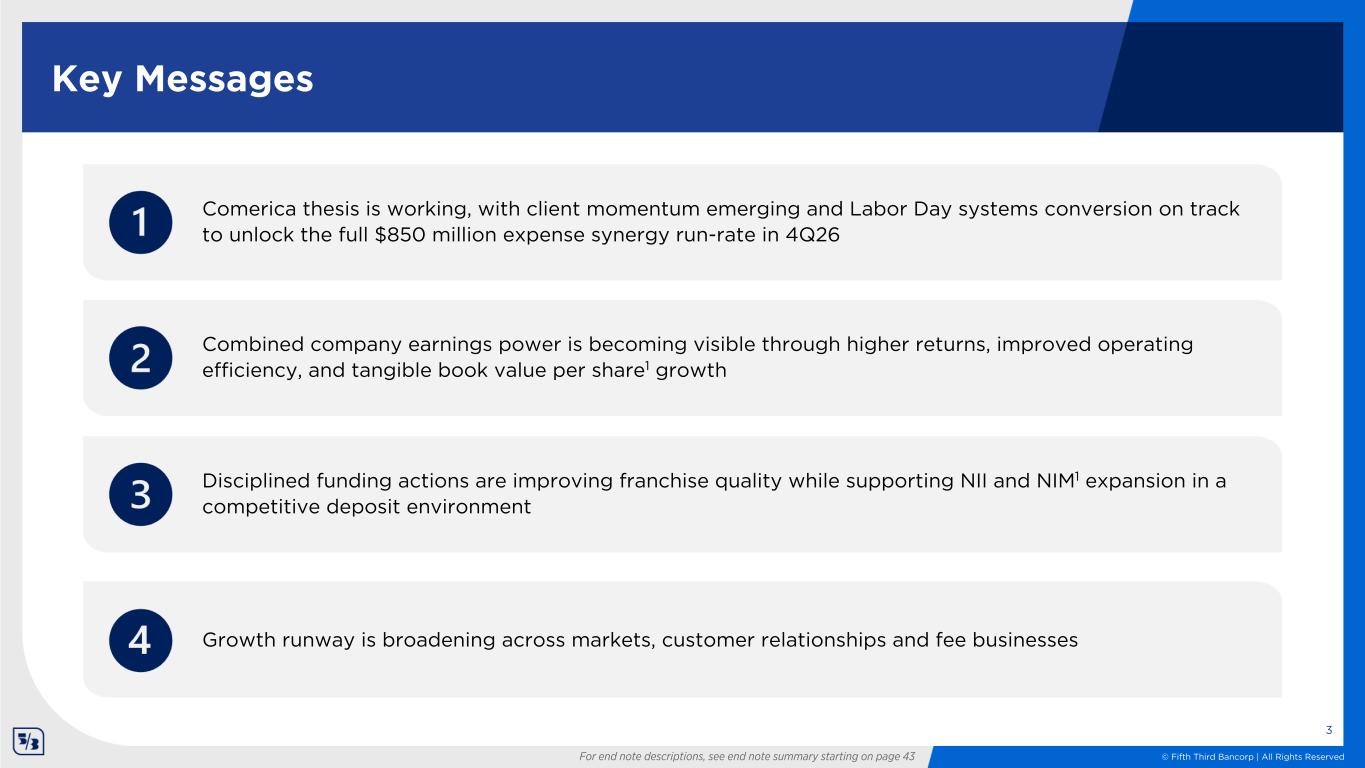
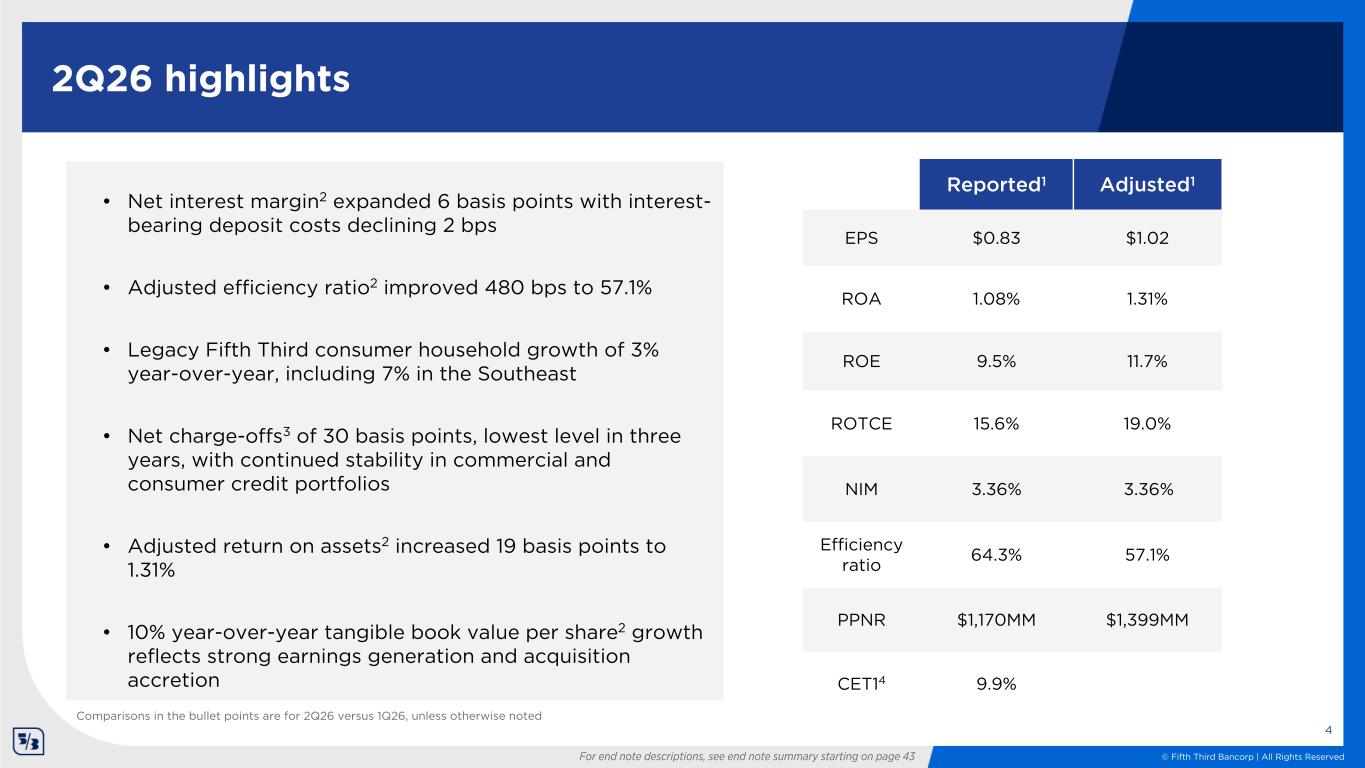
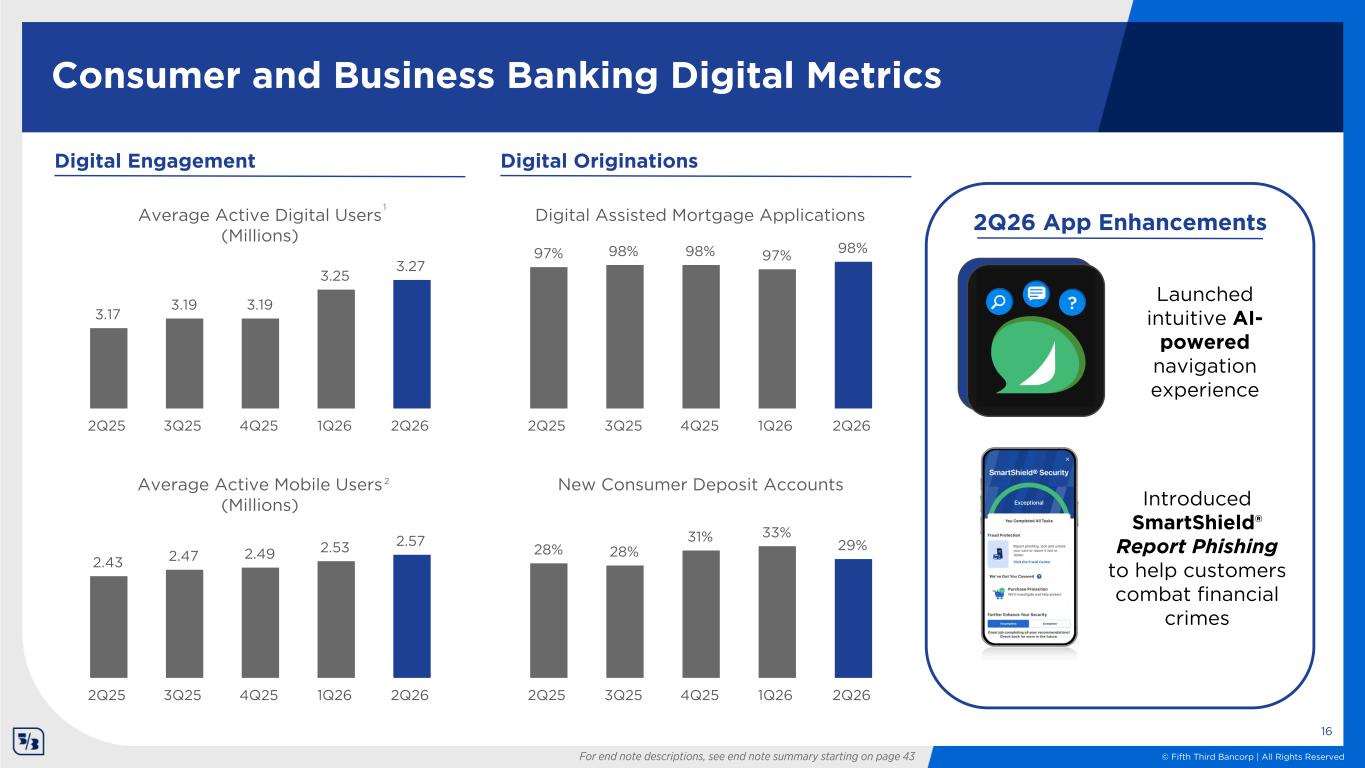
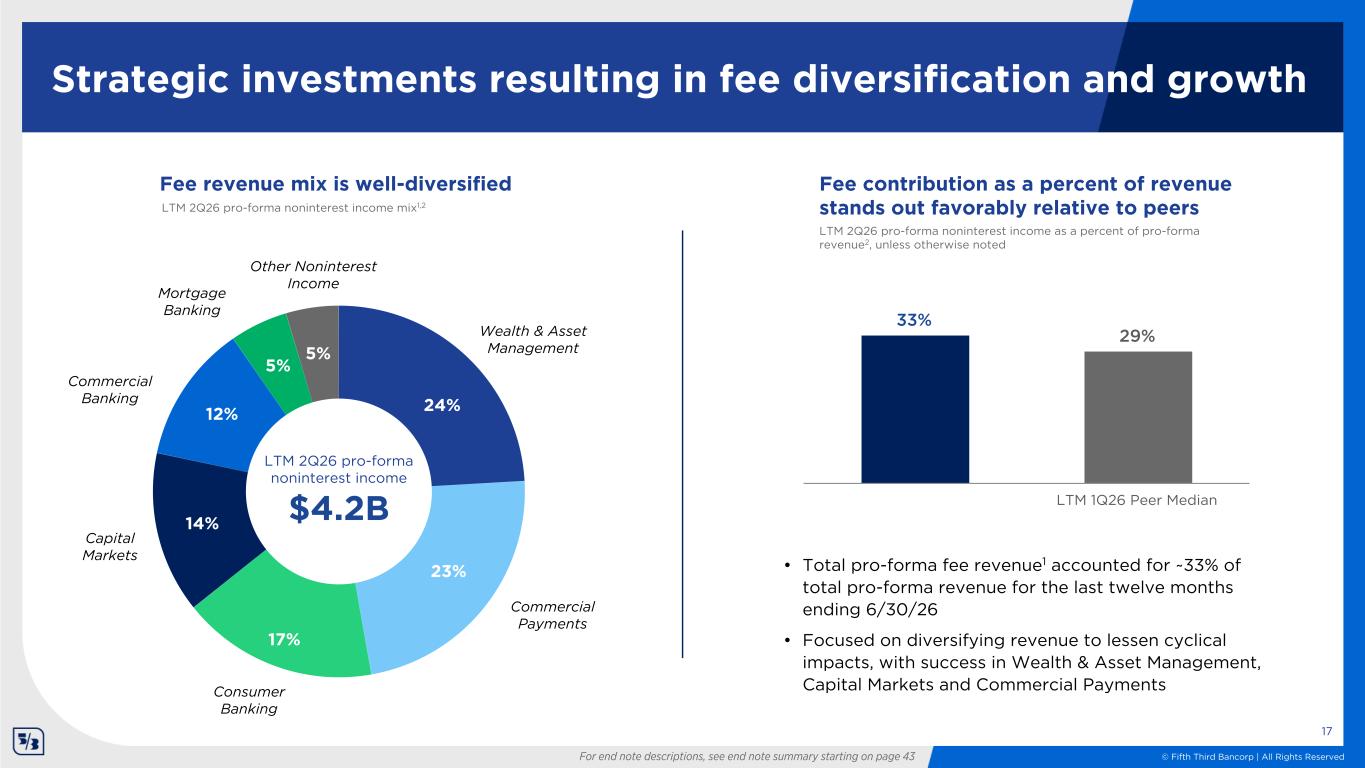
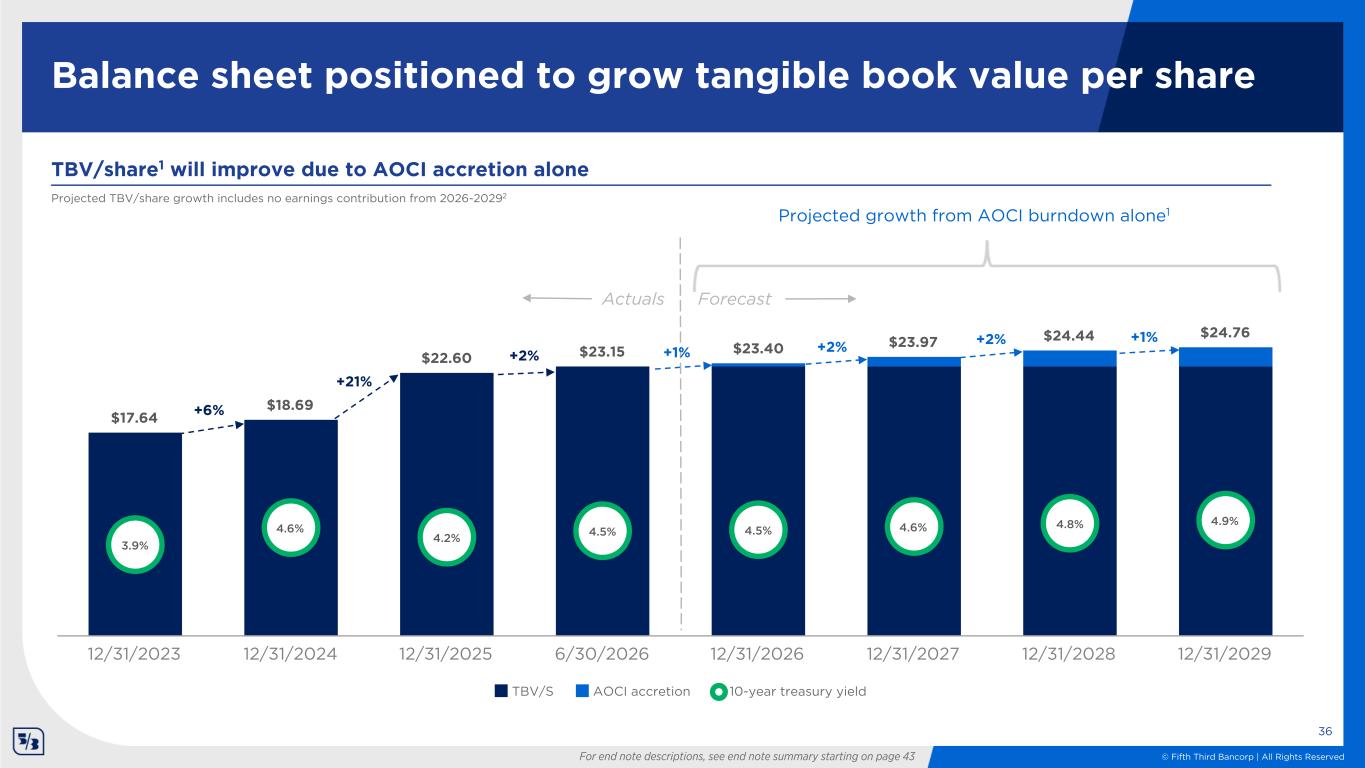
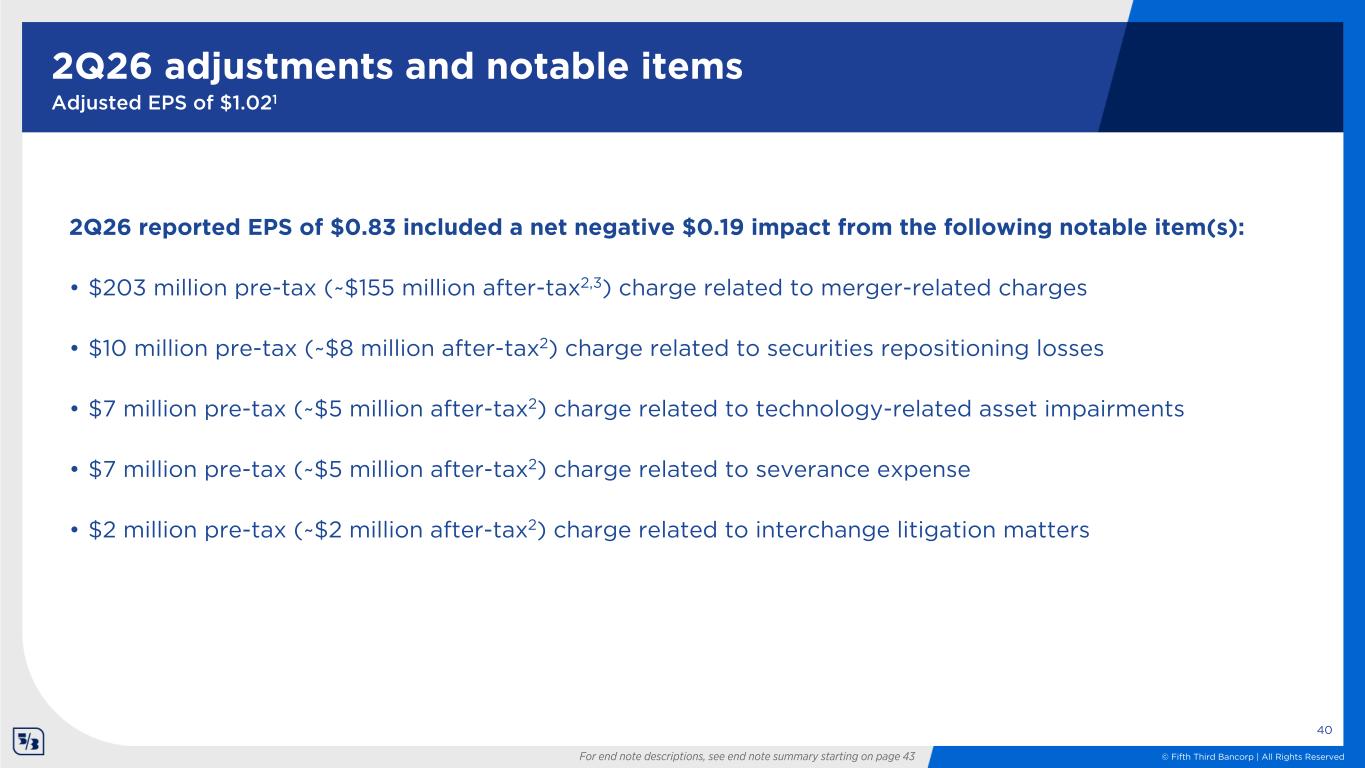
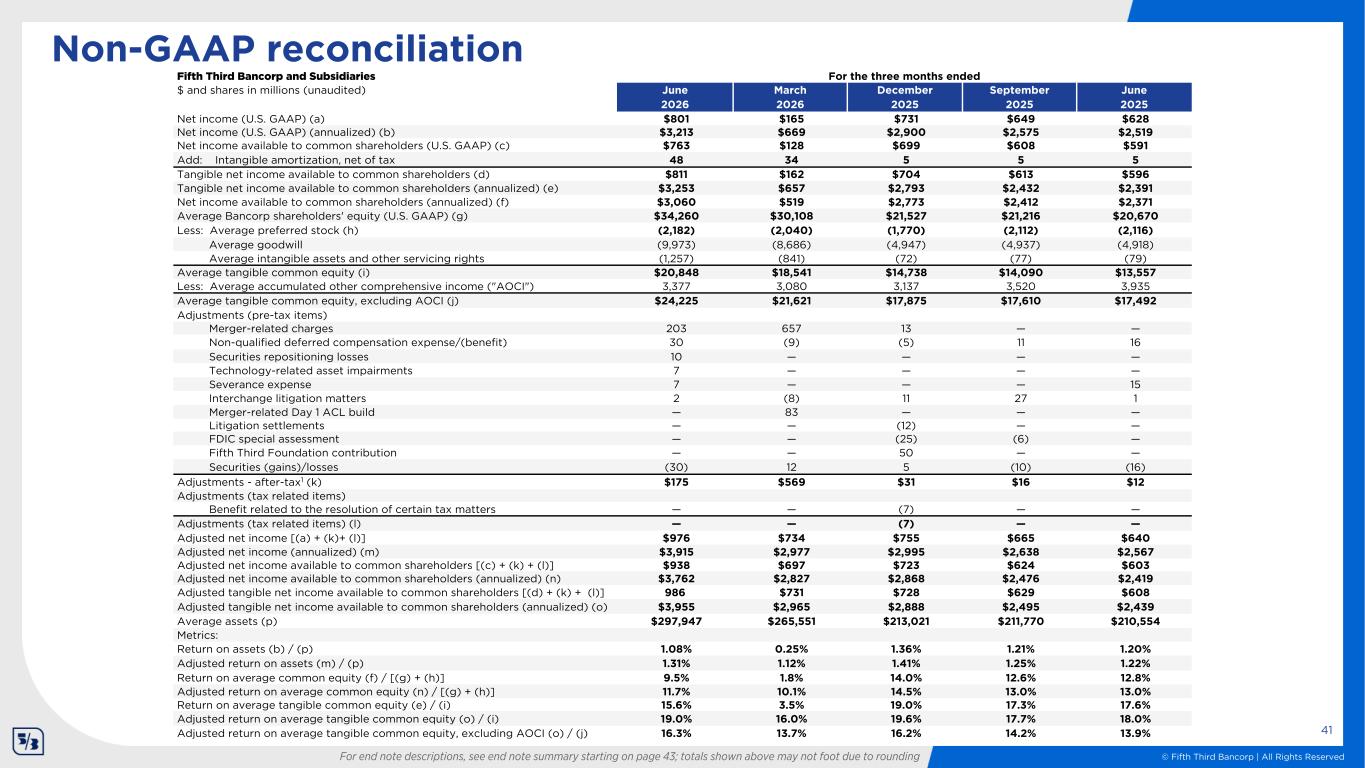
Good morning, everyone, and thank you for joining us. At Fifth Third, we believe great banks distinguish themselves not by how they perform in denying environments, but how they navigate uncertain ones. In a strong macro environment like this one, our job is to stay disciplined and to build durable franchise earnings, not simply to enjoy the typical boost. As we always say, it's stability, profitability, and growth in that order. Today, we reported earnings per share of $0.83 for a dollar to excluding certain outends outlined on page two of the release. When we announced our merger with Comerica nine months ago, we made three commitments. to produce no tangible book value per share dilution, to become an even more profitable company, and to create an even better platform for long-term growth. While we are still in the middle of integration, and not every metric is yet where it will be, our trajectory and long-term potential are visible in this quarter's results. Tangible book value per share increased 10% year over year, 1% sequentially, and 7% since the announcement of the transaction. Our adjusted return on tangible common equity improved to 19%. Our adjusted return on assets improved to 1.3%, and our adjusted efficiency ratio improved to 57%, even with most of the expense energies still yet to be captured. As importantly, our organic growth strategies continue to deliver on the broader footprint and opportunity set that Fithler and Comerica together possess. End-of-period consumer and small business deposits increased 4% sequentially, driven by a strong new customer acquisition. In the Southeast, consumer checking households grew by 7% year-over-year, approximately four times the rate of underlying market growth. We opened more than one branch per week during the quarter and remain on schedule to open 55 new branches in the Southeast for the full year. Encouragingly, Comerica's Texas, Arizona, and California markets grew checking households by 4%, the first net new household growth in several years, and added $2.5 billion in deposits, more than double the $1 billion expectation that we shared in our last earnings call. We also opened our first fifth-third branded branches in Texas and California during the quarter. Following conversion, we expect Southwest household growth to accelerate further as Comerica's existing branches see the full benefit of FitBird's products, digital channels, and the analytically driven direct marketing. We will also see the pace of new branch openings accelerate in Texas, having now secured 101 of the 150 additional locations we targeted to build by the end of 2029. Turning to commercial lending, end-of-period C&I loans grew 2% sequentially. Comerica's legacy markets and specialty verticals prove C&I loans with Texas, California, Michigan, environmental services, dealer services, and tech and life sciences all show and grow. Overall, we continue to see demand in sectors and markets benefiting from infrastructure investments as well as in aerospace and defense. Our largest fee businesses hit important milestones during the quarter, with commercial payments and wealth and asset management each achieving a $1 billion-plus annualized fee run rate and capital market fees reaching $600 million annualized pace. New Line continued to drive growth in commercial payments, with fee revenue increasing 35% year-over-year, and the technology behind it earned 2026 top financial innovation awards from both the American Banker and Global Finance. We also shipped the first direct express cards on our new platform during the quarter, with 66,000 new beneficiaries and all participating federal agencies now out. Behind the scenes, our products and technology teams had a strong quarter, both in terms of integration and innovation. On the integration front, we executed our second mock conversion in June with good outcomes. We remain on track to execute systems conversion on Labor Day weekend, the last step to unlock the $850 million of annualized run rate synergies we committed to deliver in the fourth quarter. On the innovation front, Newline extended its model context protocol server capabilities with skills, standardizing how AI models can use our tools and workflows. And our consumer team shipped a new AI-powered interface within our mobile app, designed to streamline navigation and task completion for our customers. We also launched Fifth Third for Business during the quarter, a banking experience designed to help small businesses manage working capital and get paid faster. This mission includes several differentiated tech-enabled elements, including crediting eligible payments such as merchant receivables and government payments up to two days early for free, enabling business customers to accept payments via Dell and PaciPay directly on their smartphones, and providing access to working capital through the same award-winning digital interface that Powers provides. Internally, Fifth Third College continued to make significant use of AI tools to boost quality and productivity, executing more than 1 million prompts in the month of June alone. In technology, the prompt accepted rate for new code was 45% during the quarter, and over 87% of unit testing was automated by AI. Well, it's early days, and we have much yet to learn about how best to harness the power of these tools and looking forward to what we will be able to do after our technical conversion is complete. Before I hand it over to Brian, I would like to take a moment to thank our team members. The work you do is detailed, demanding, and important, especially now as we serve existing customers and communities, along with executing the largest merger in our history. We are building a fifth third that is not just bigger, but better, more differentiated, and more resilient. That's why earlier this morning, Neuromoney recognized you as their best U.S. bank in 2026. Congratulations. With that, I'll turn it over to Brian.
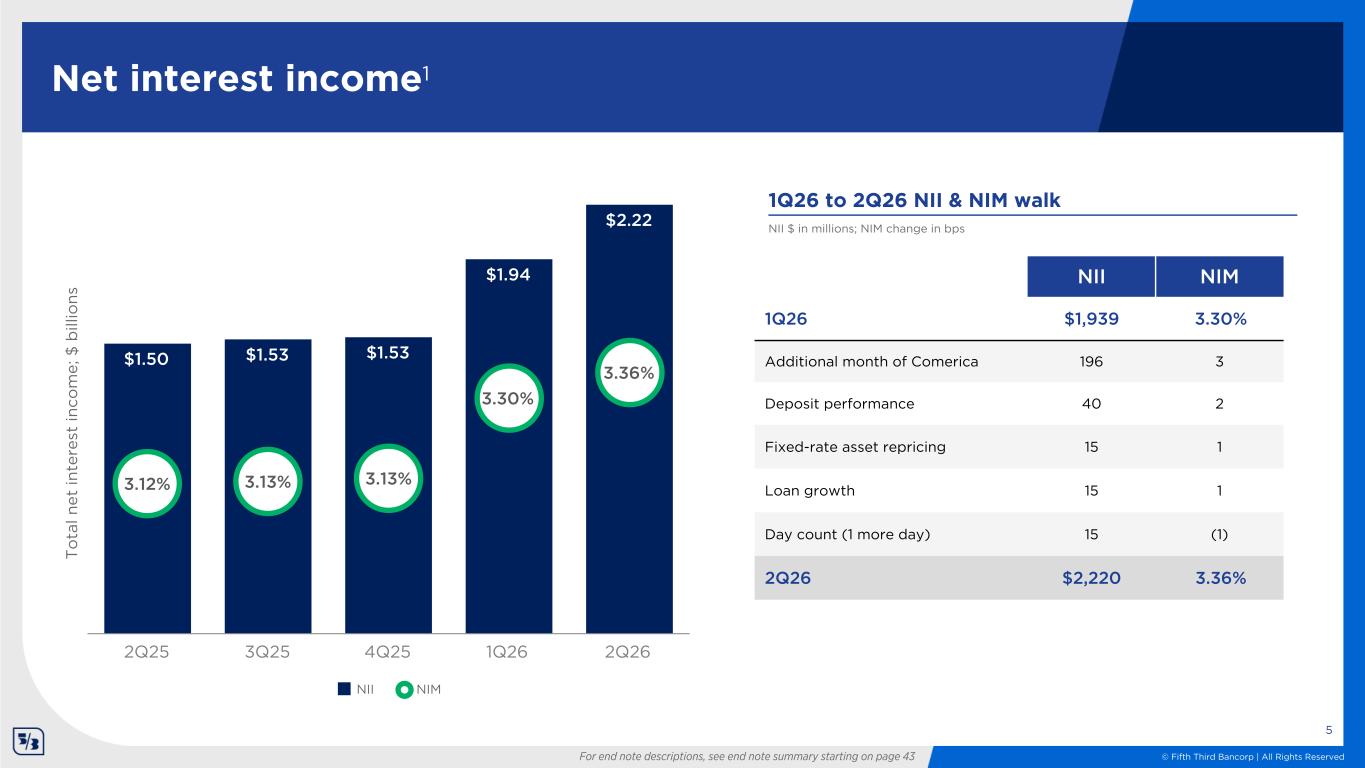
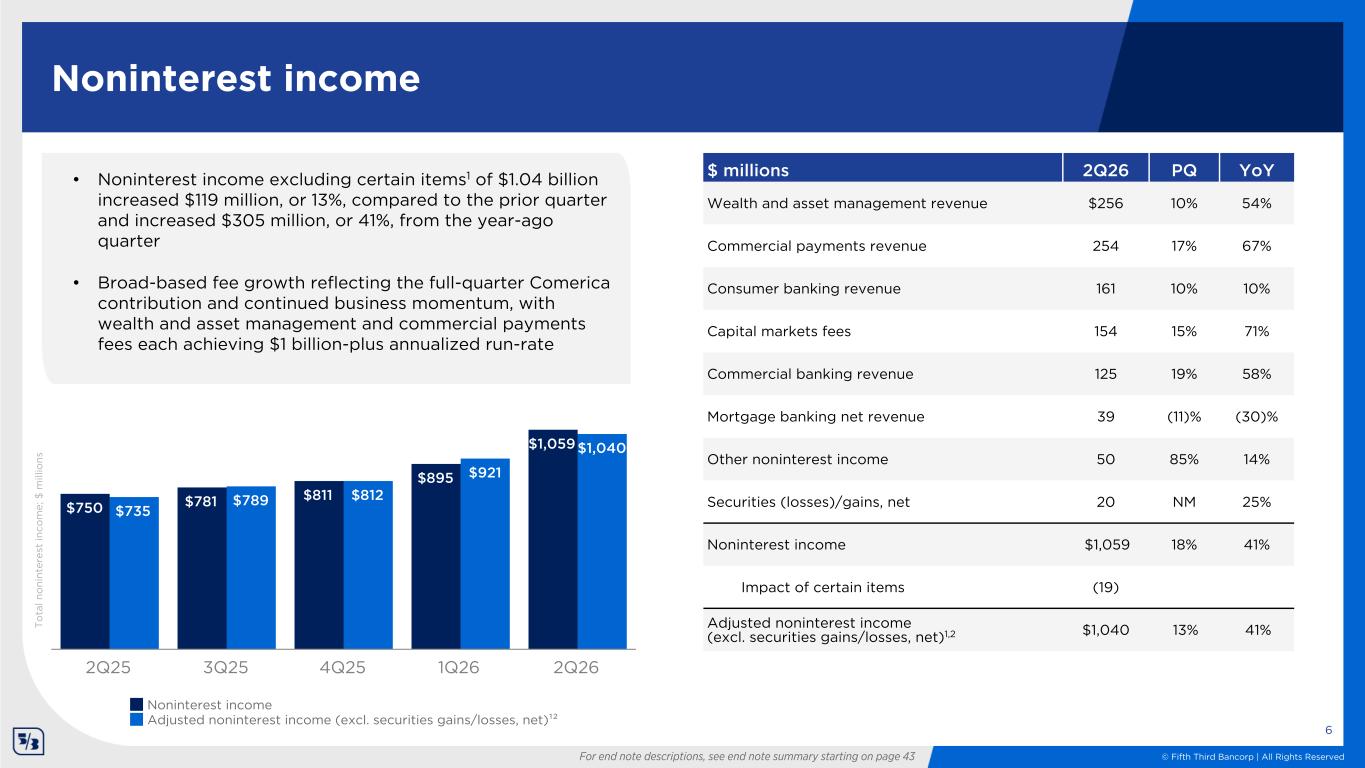
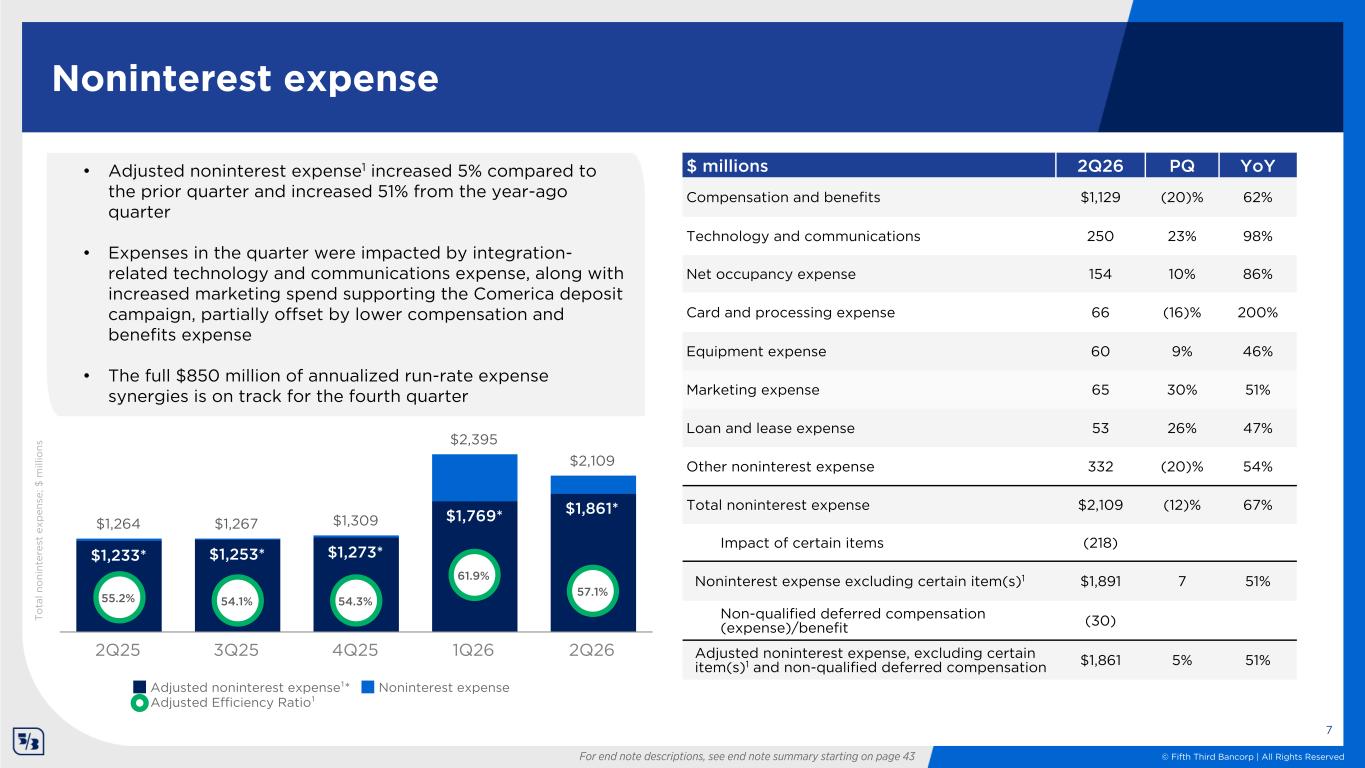
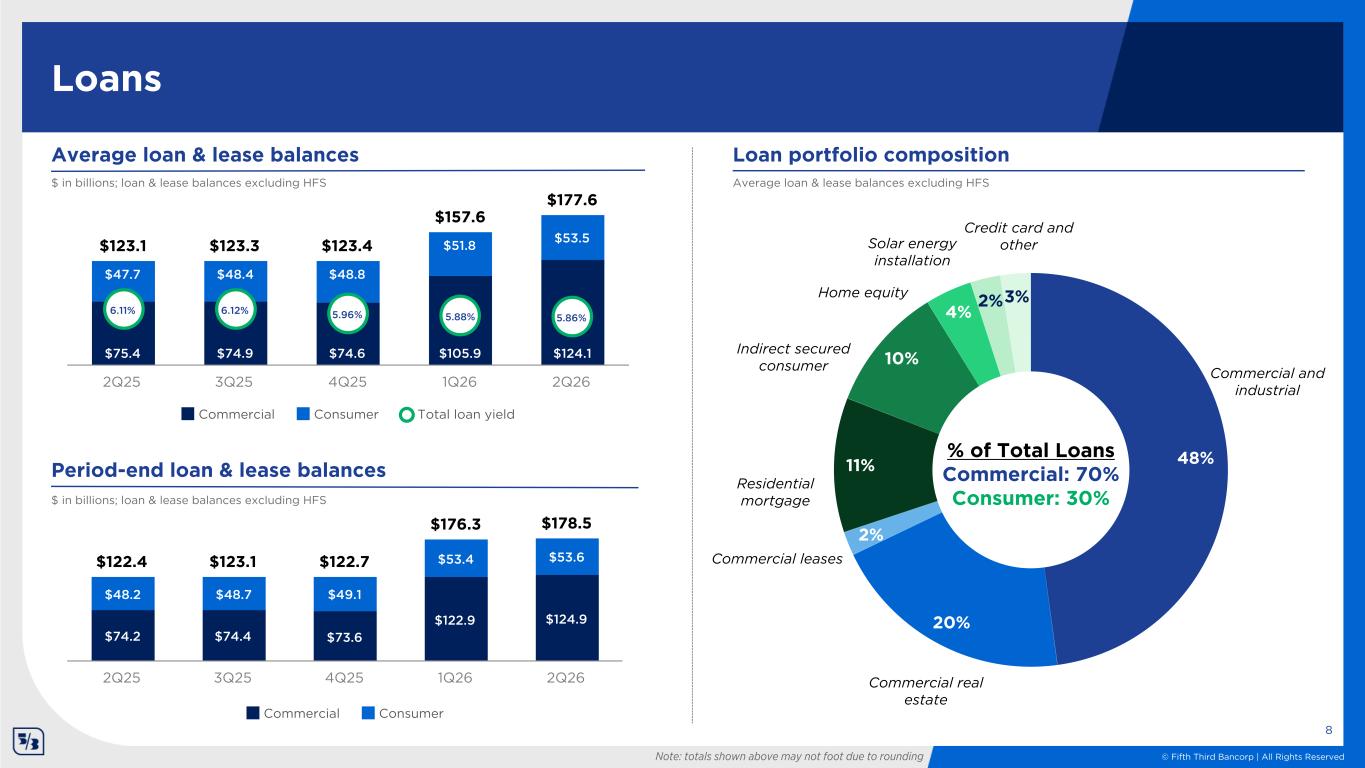
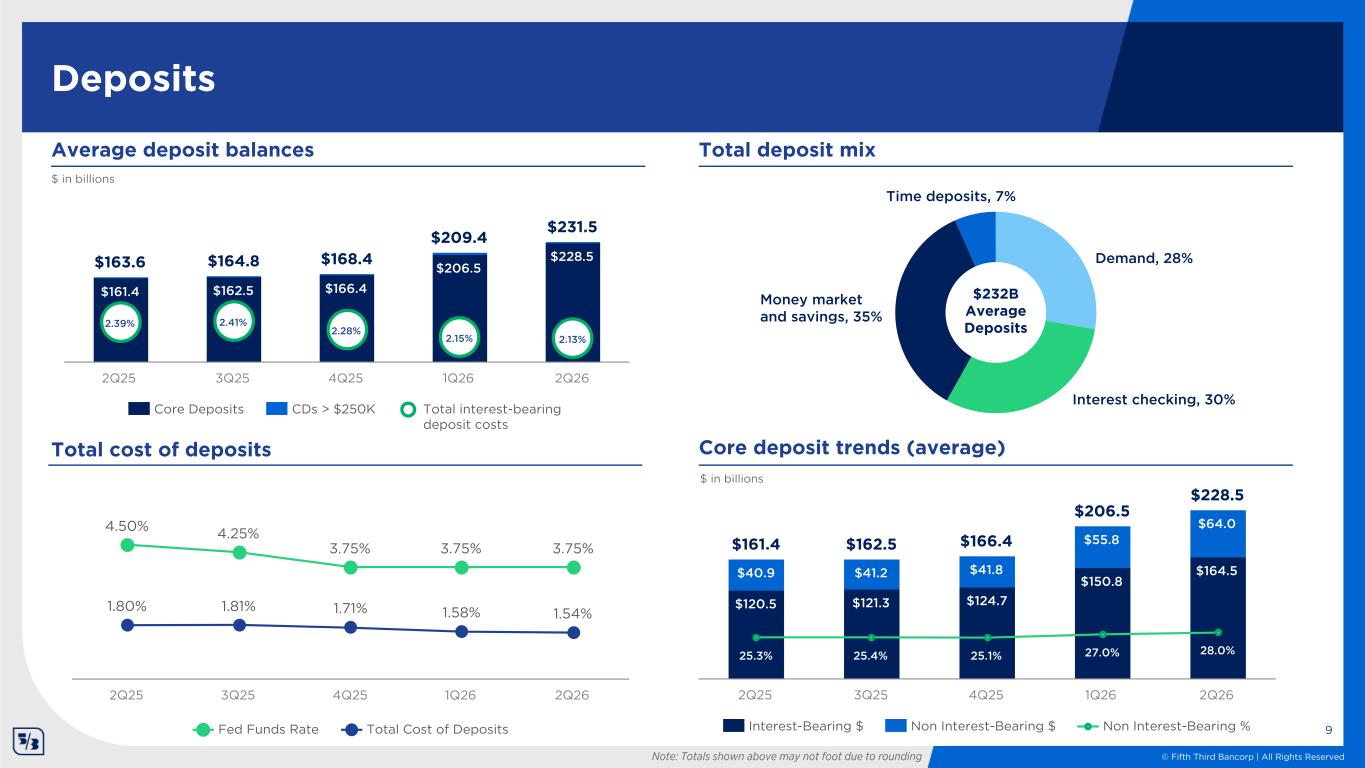
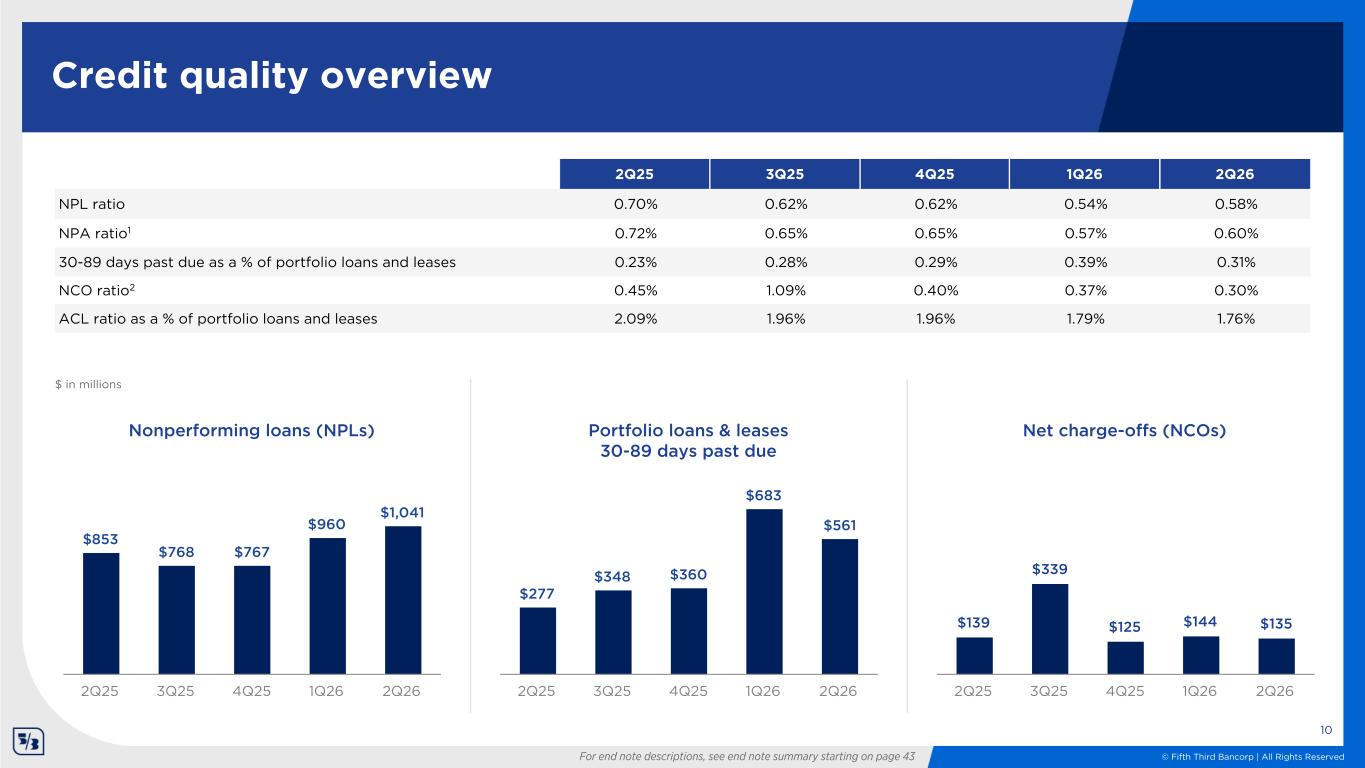
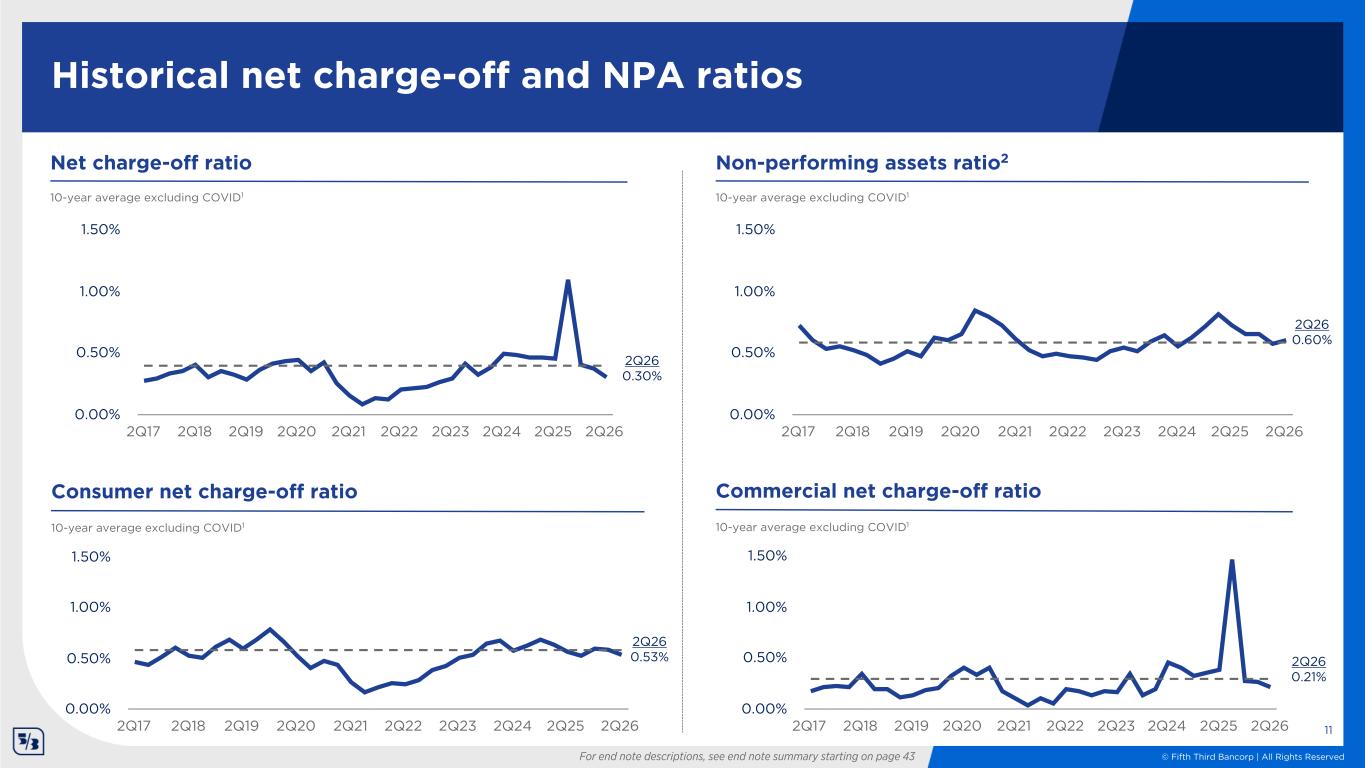
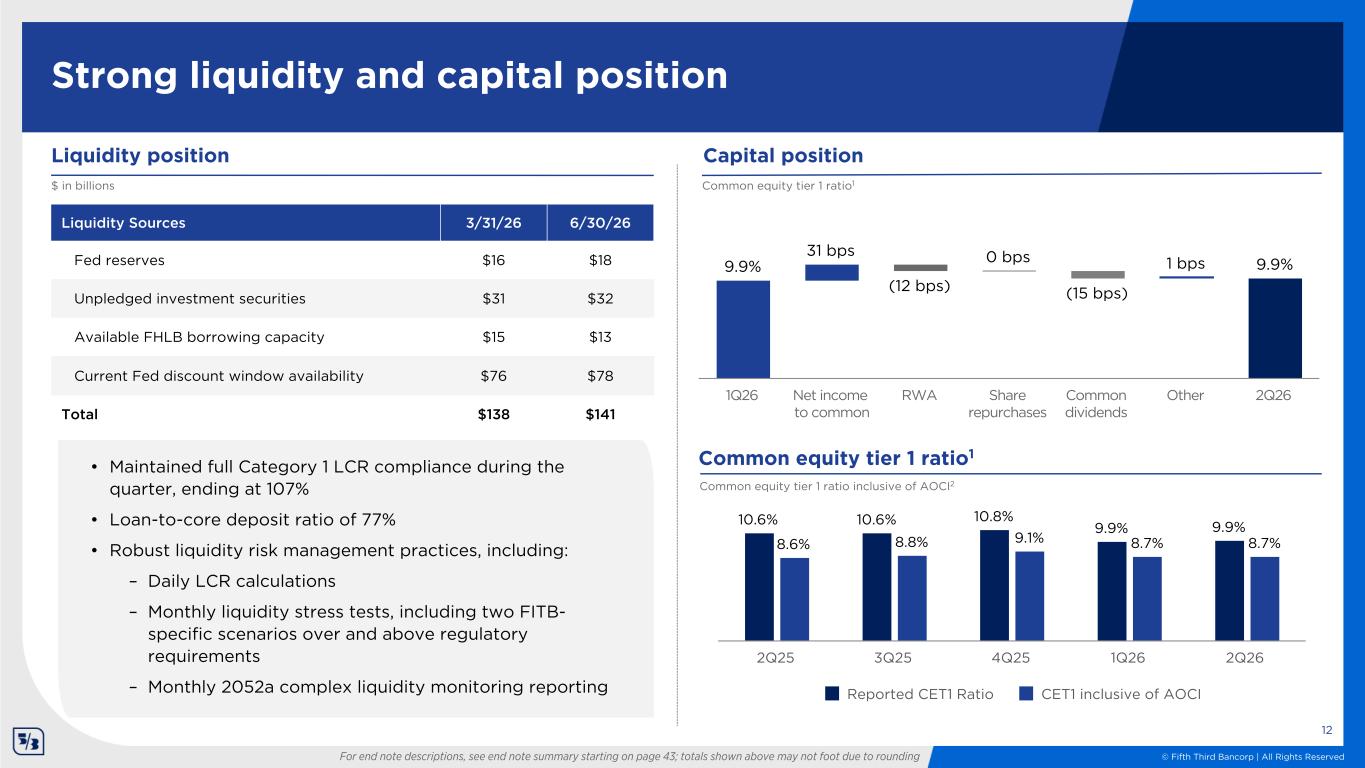
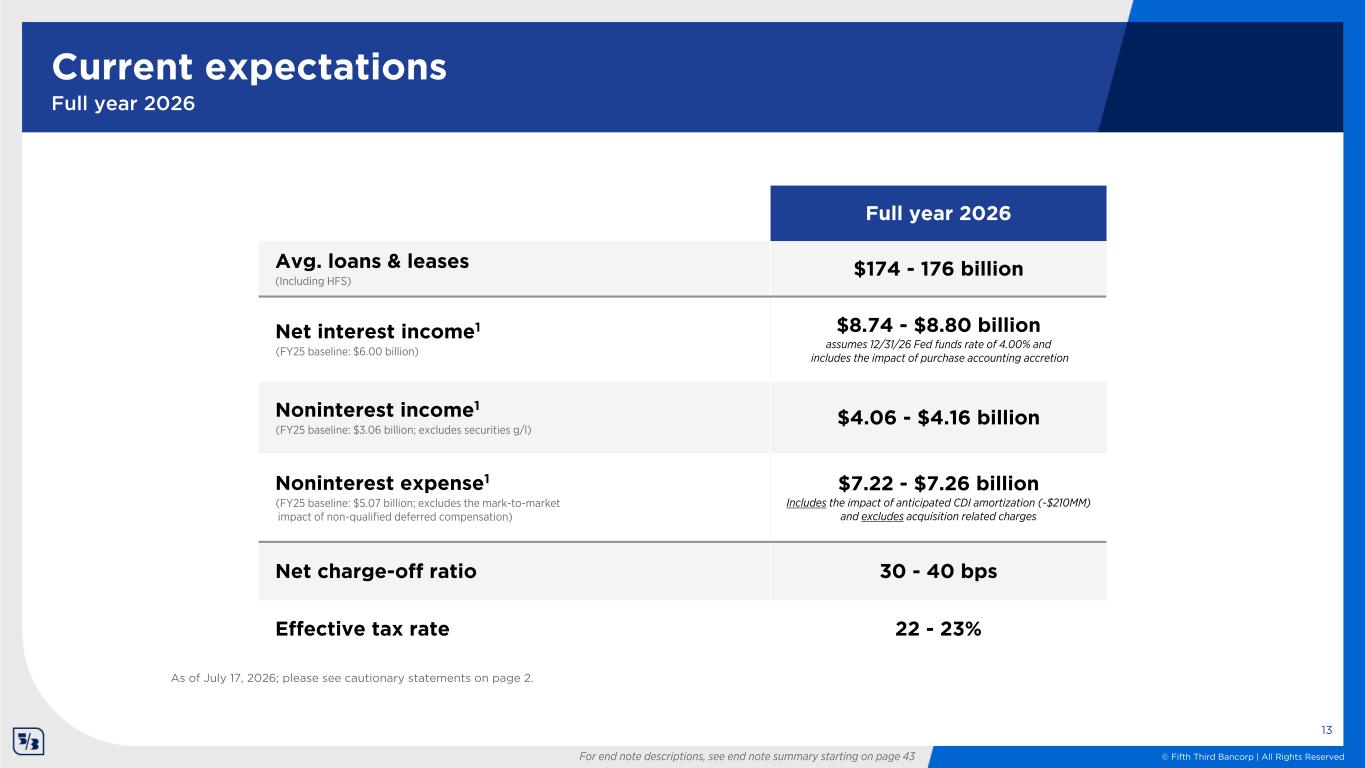
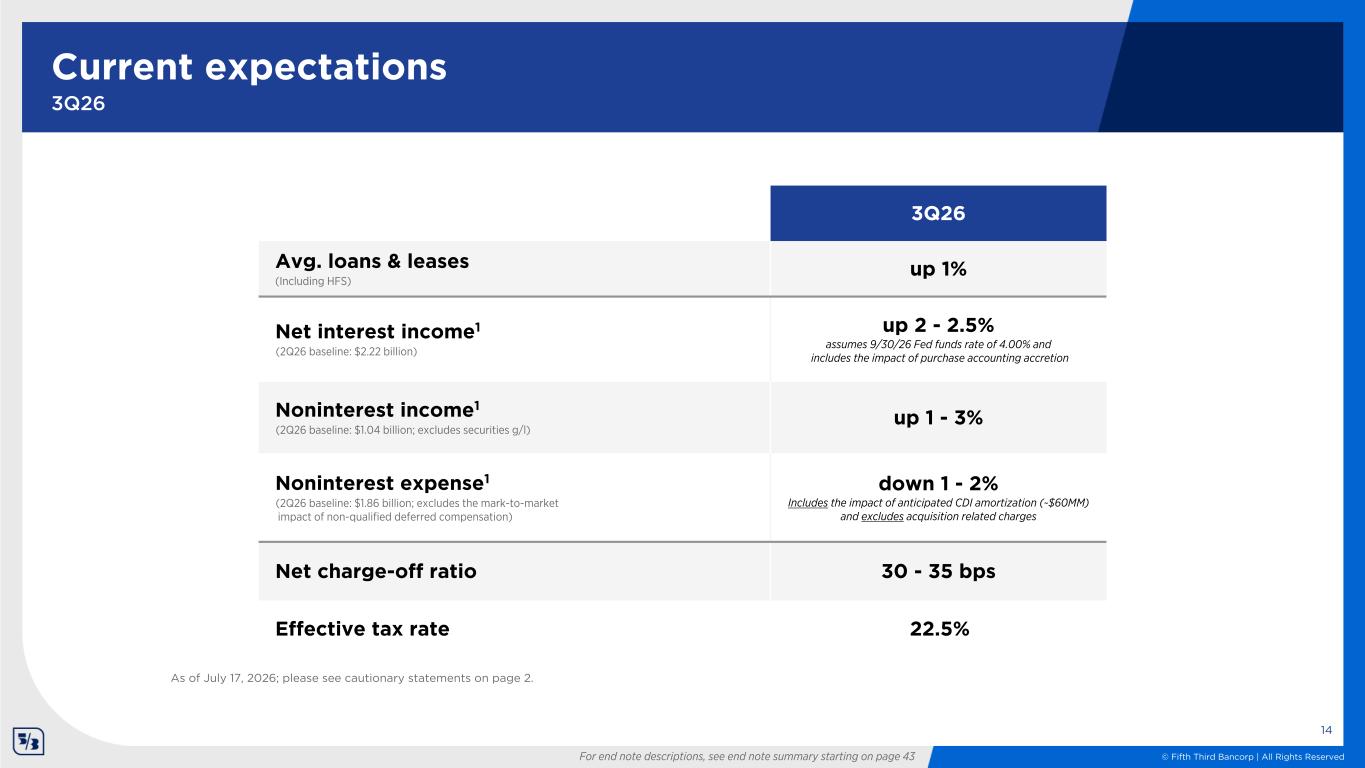
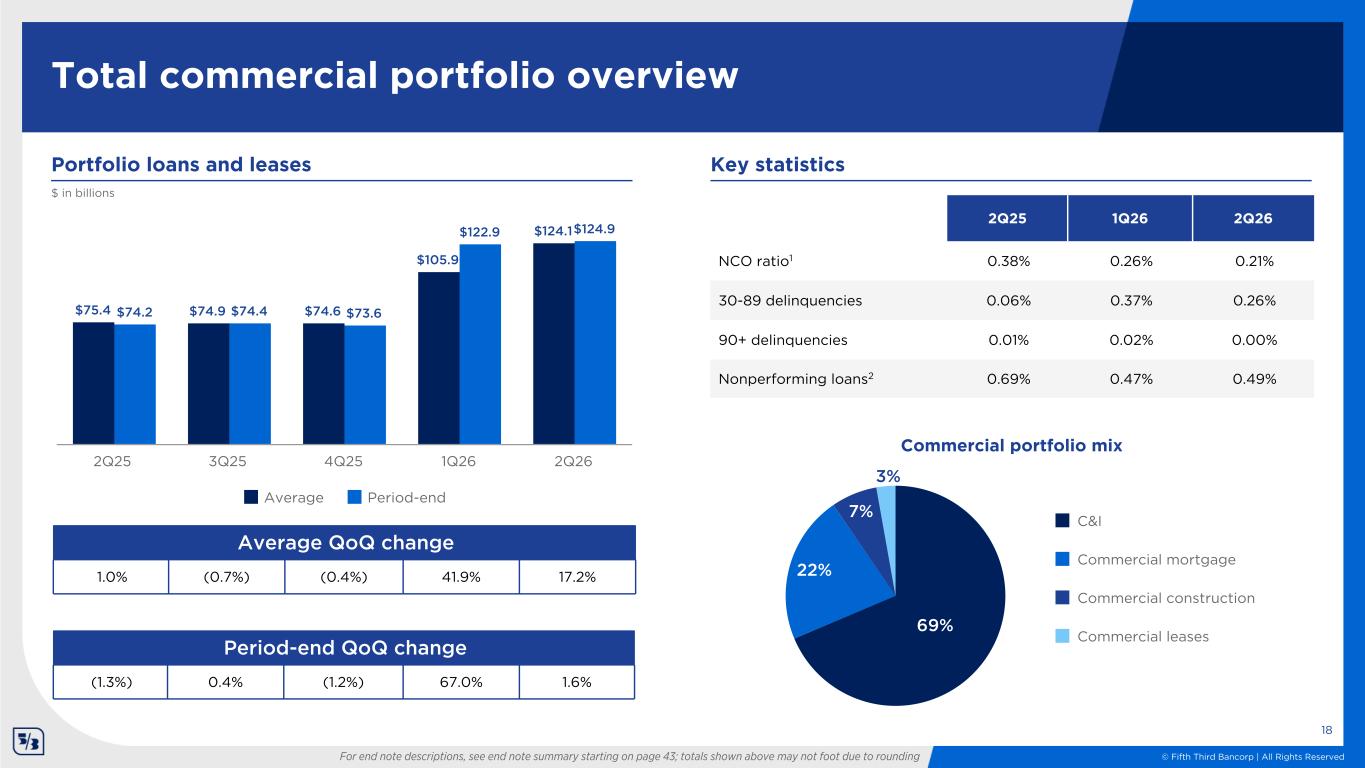
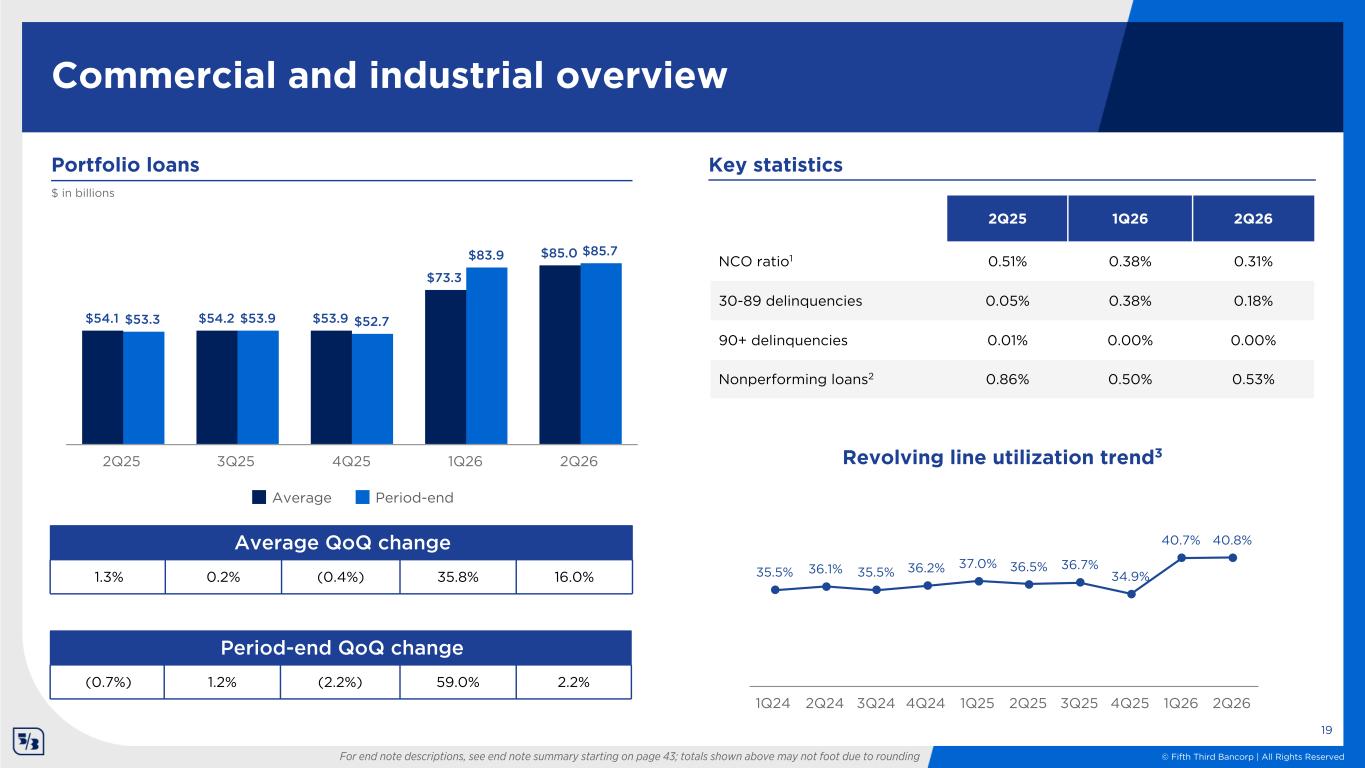
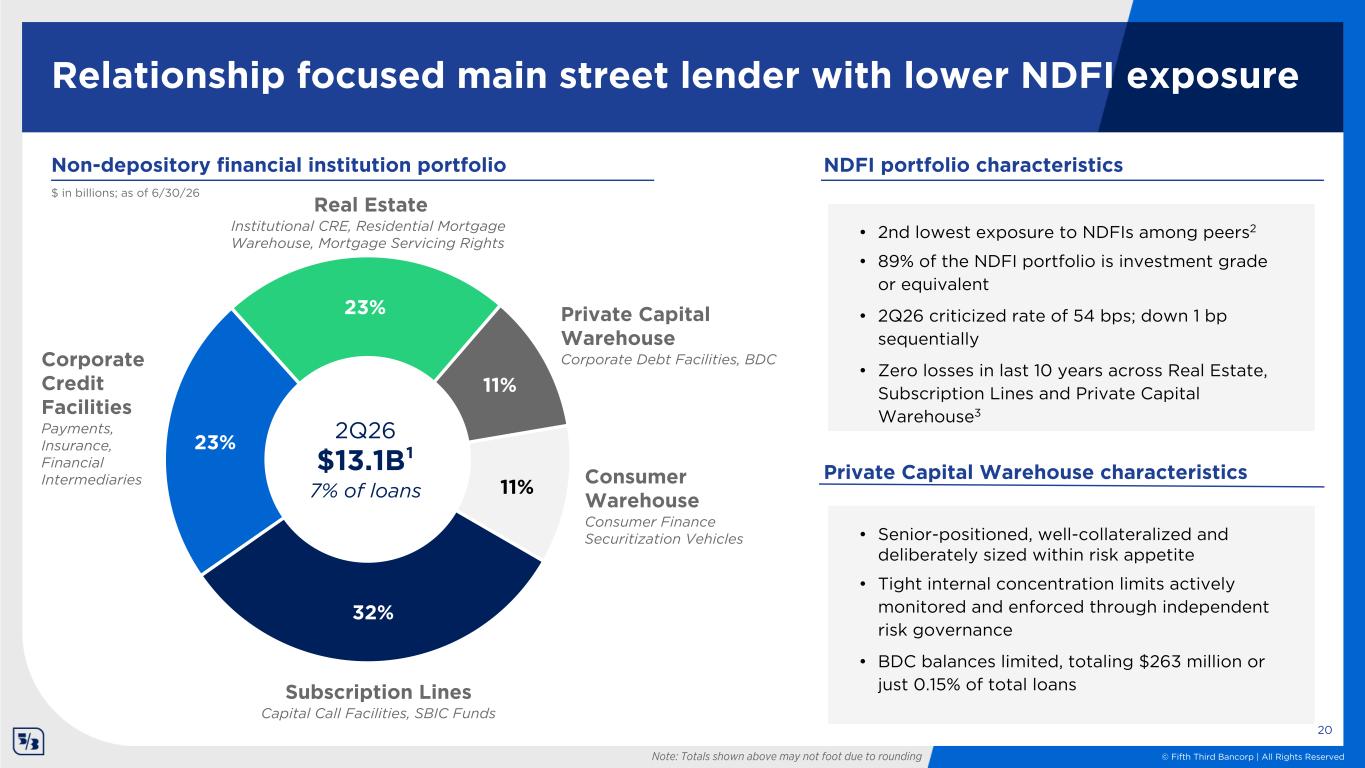
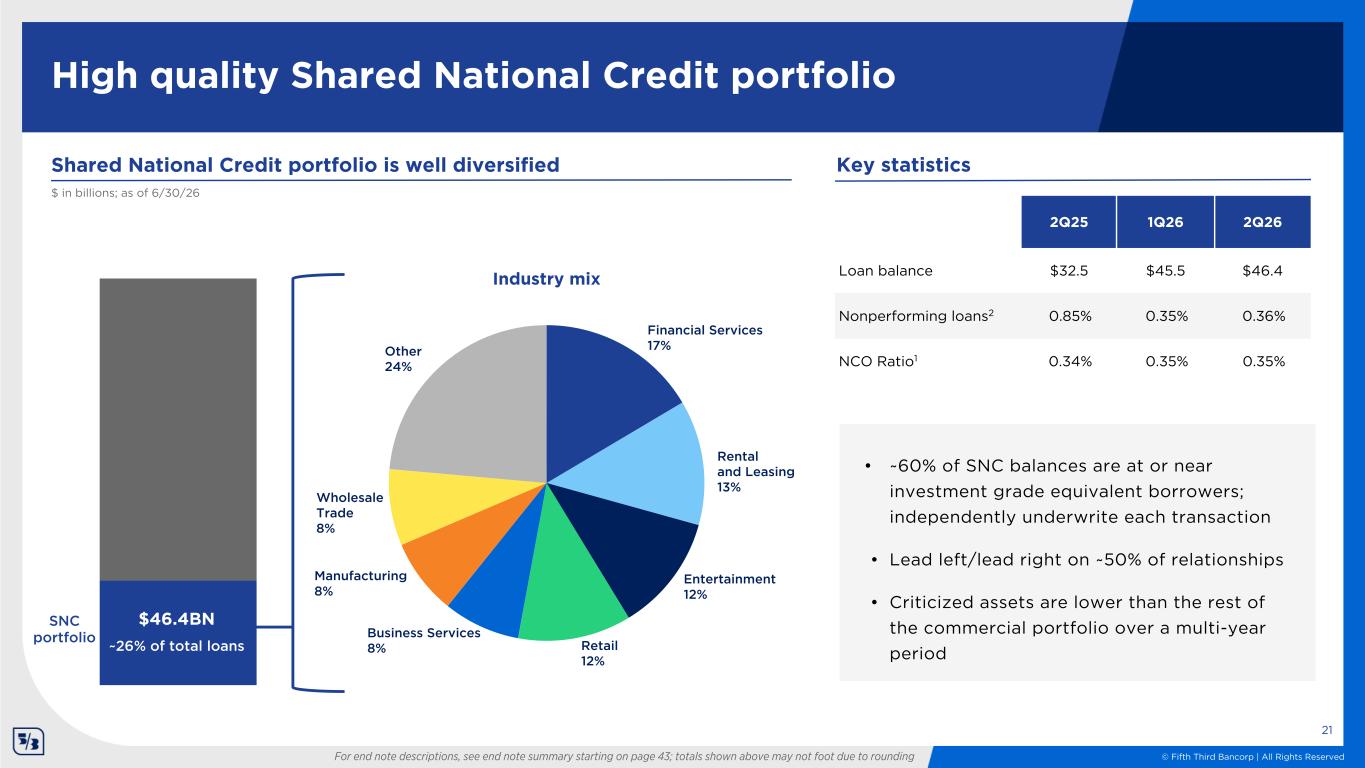
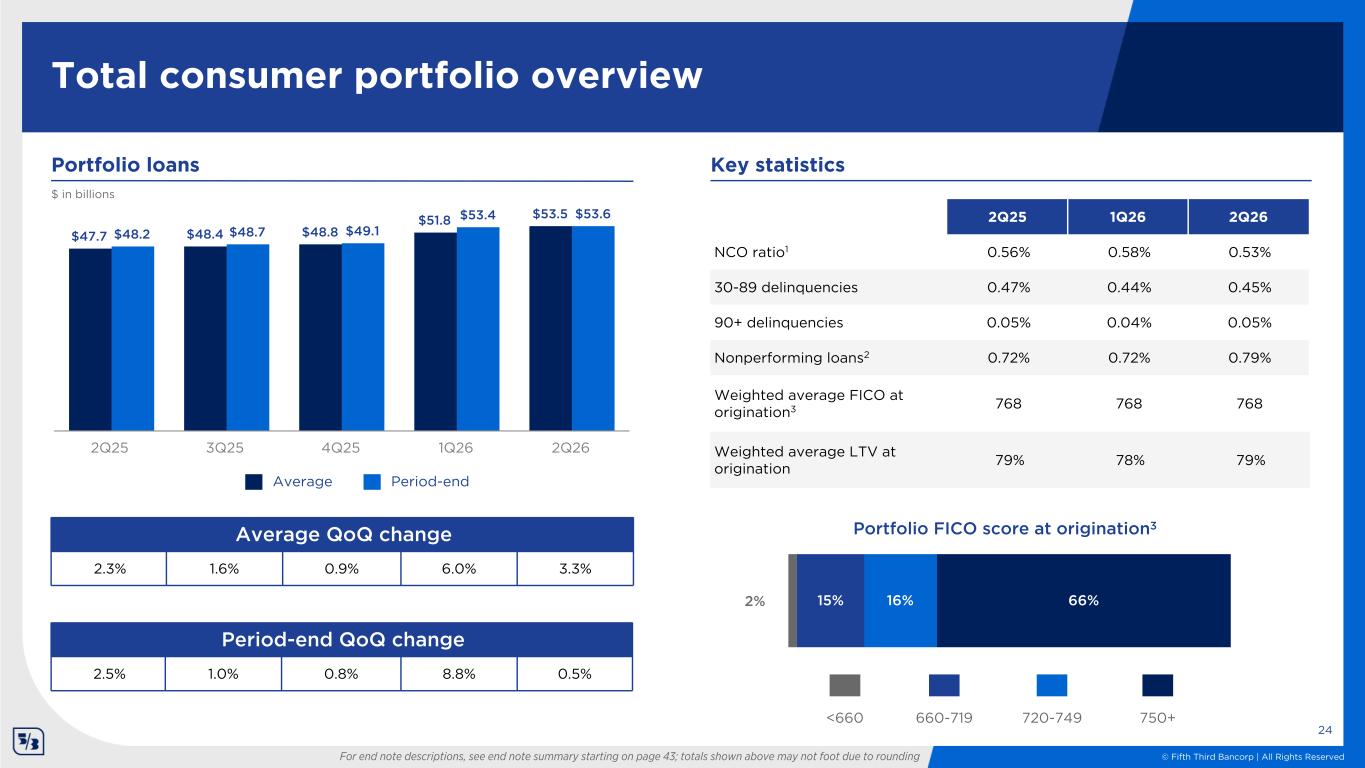
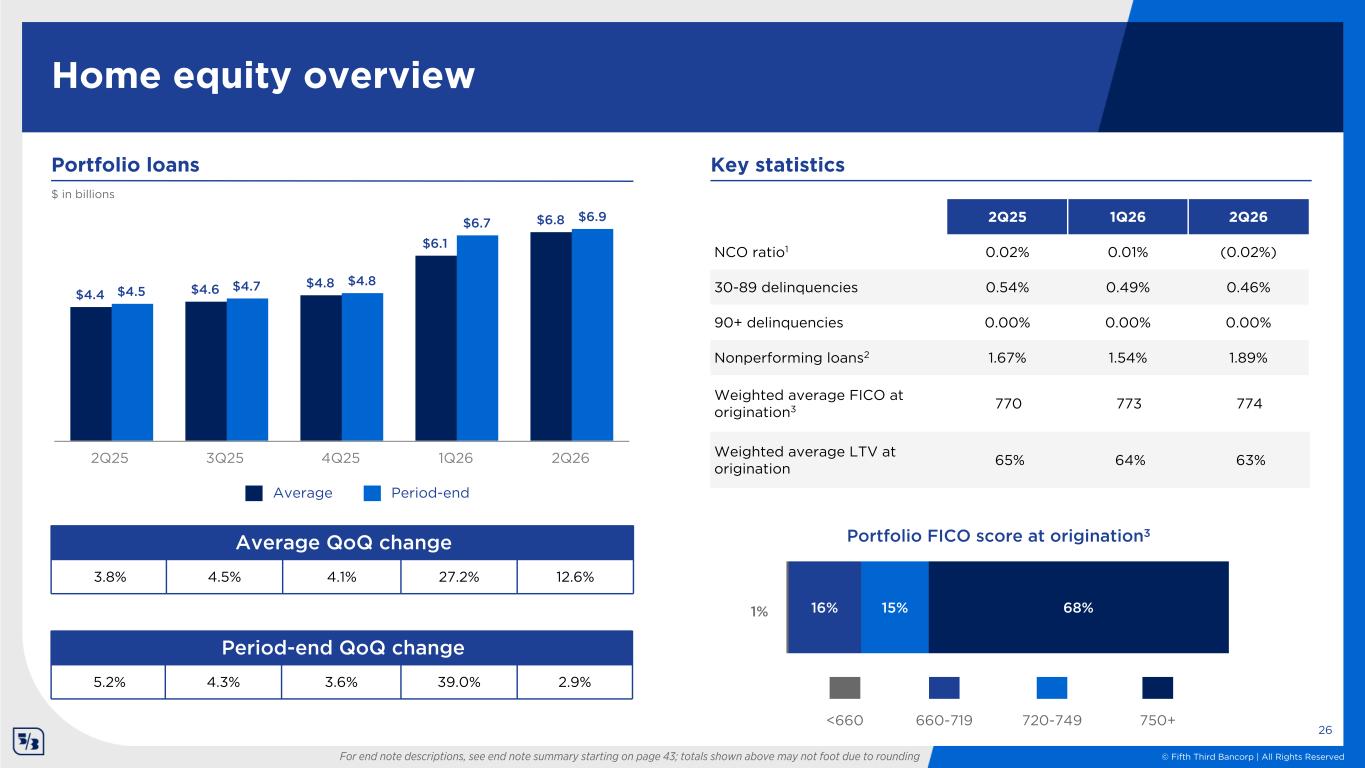
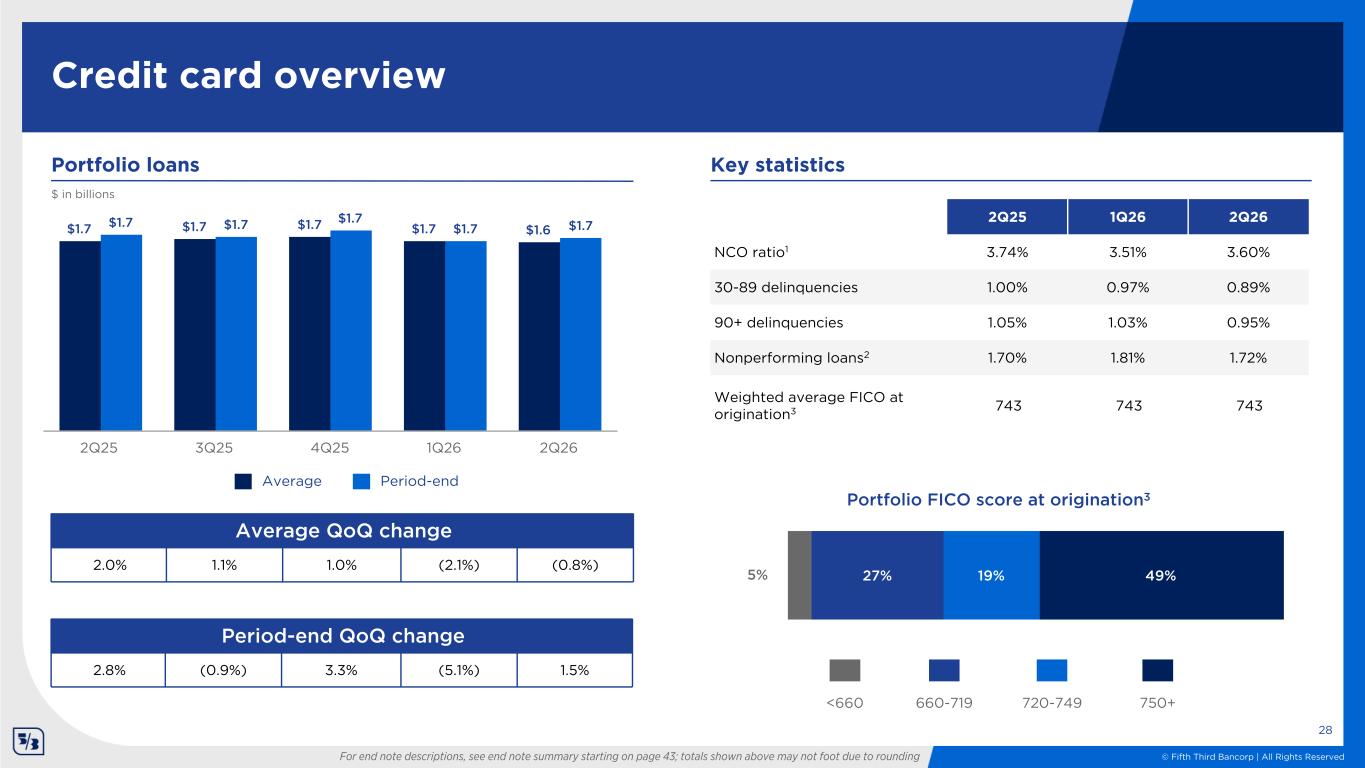
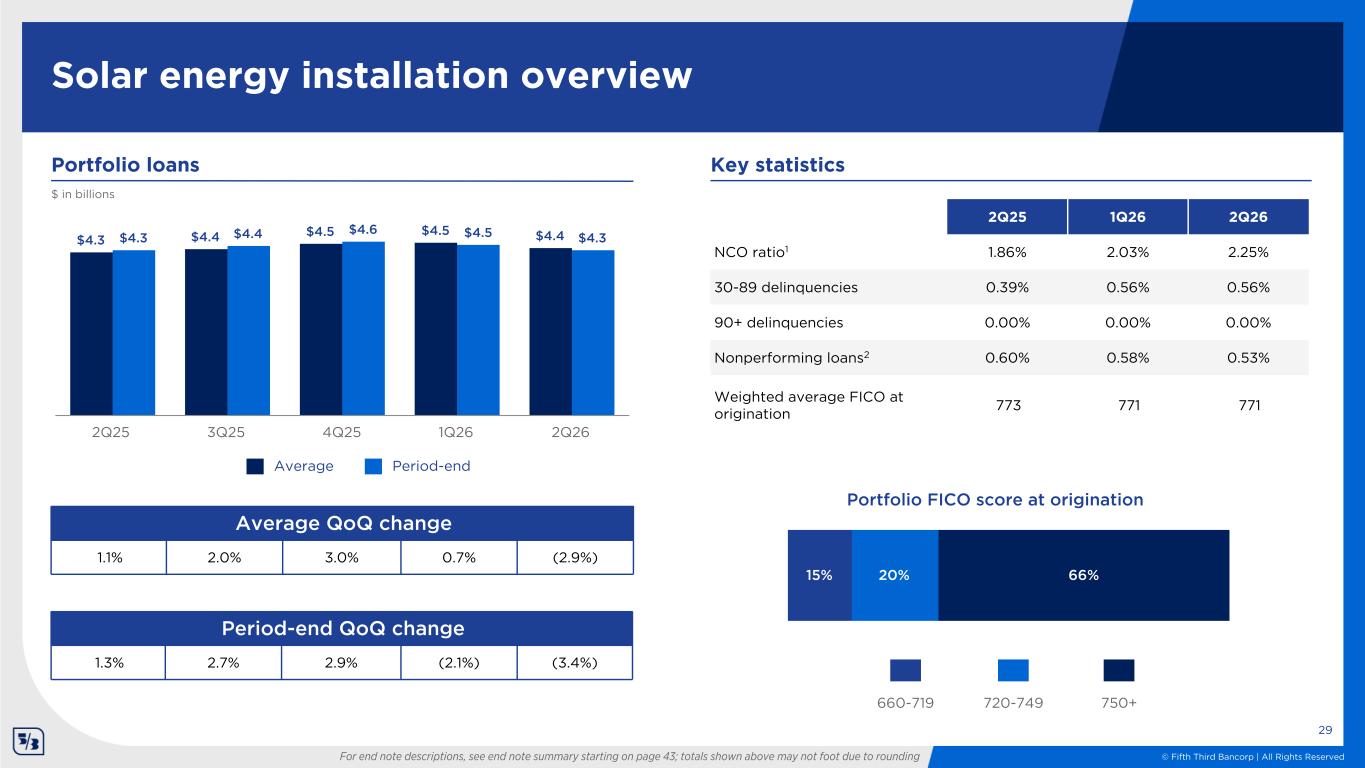
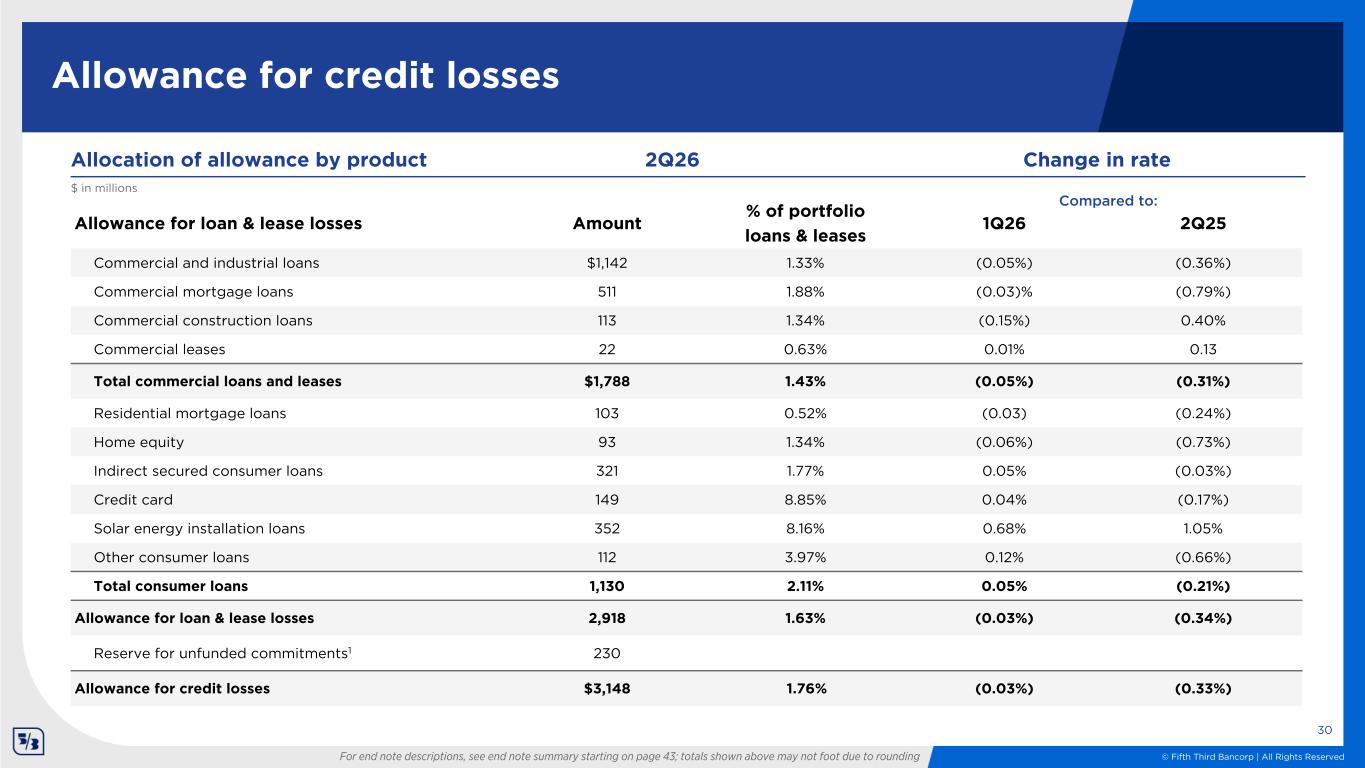
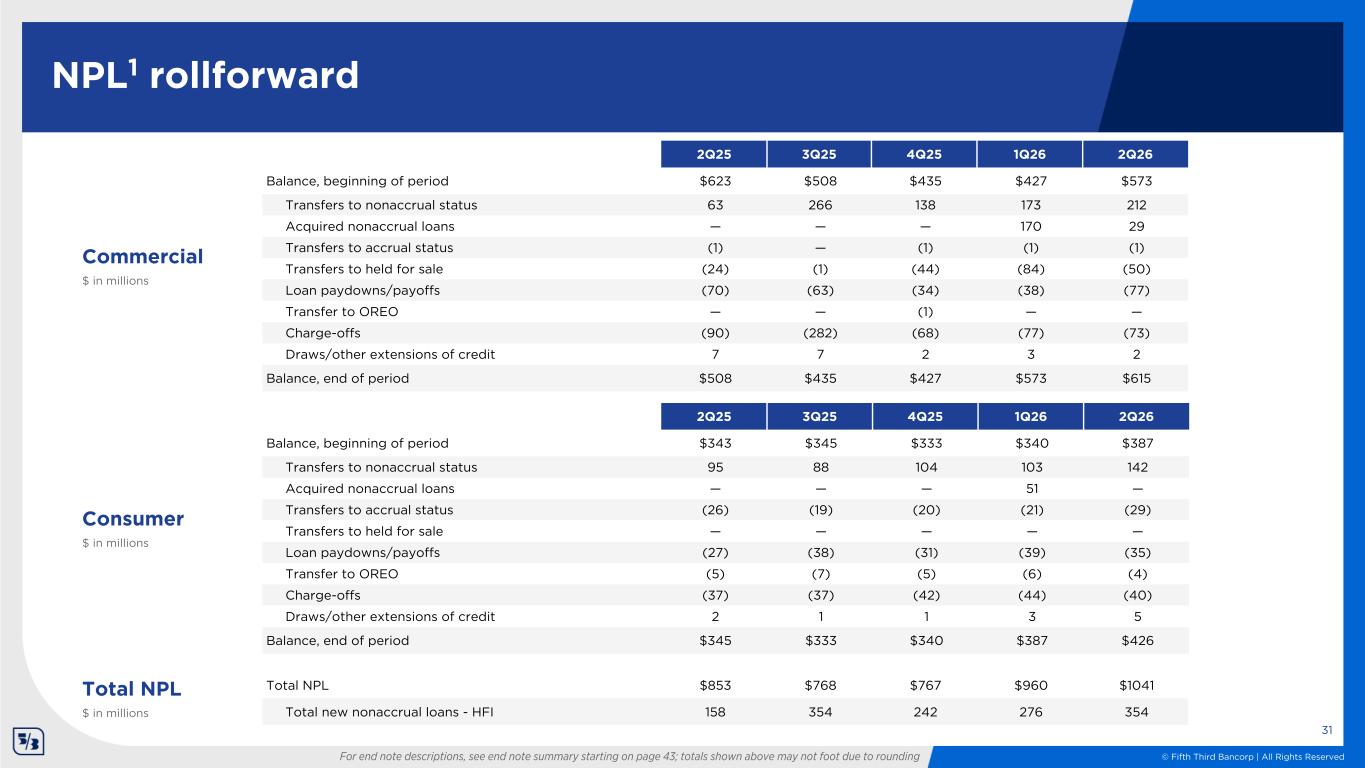
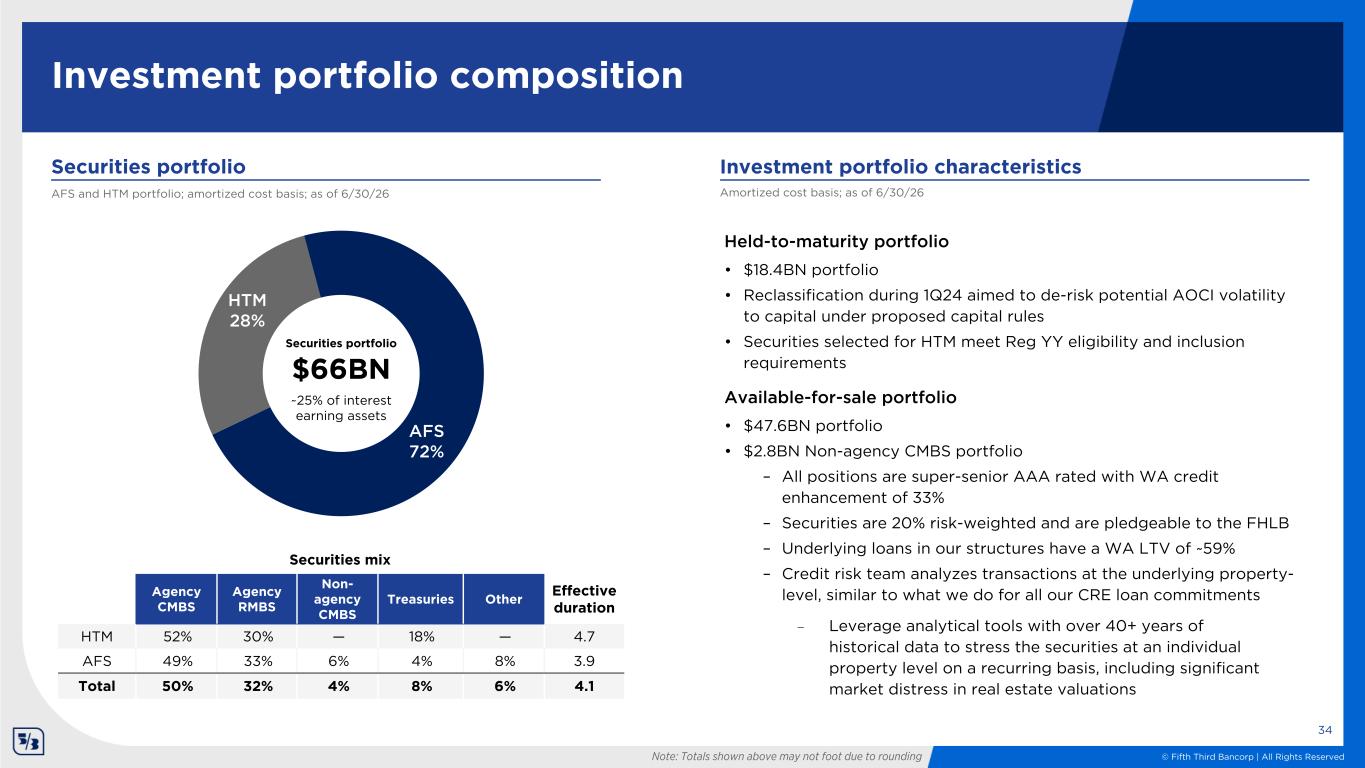
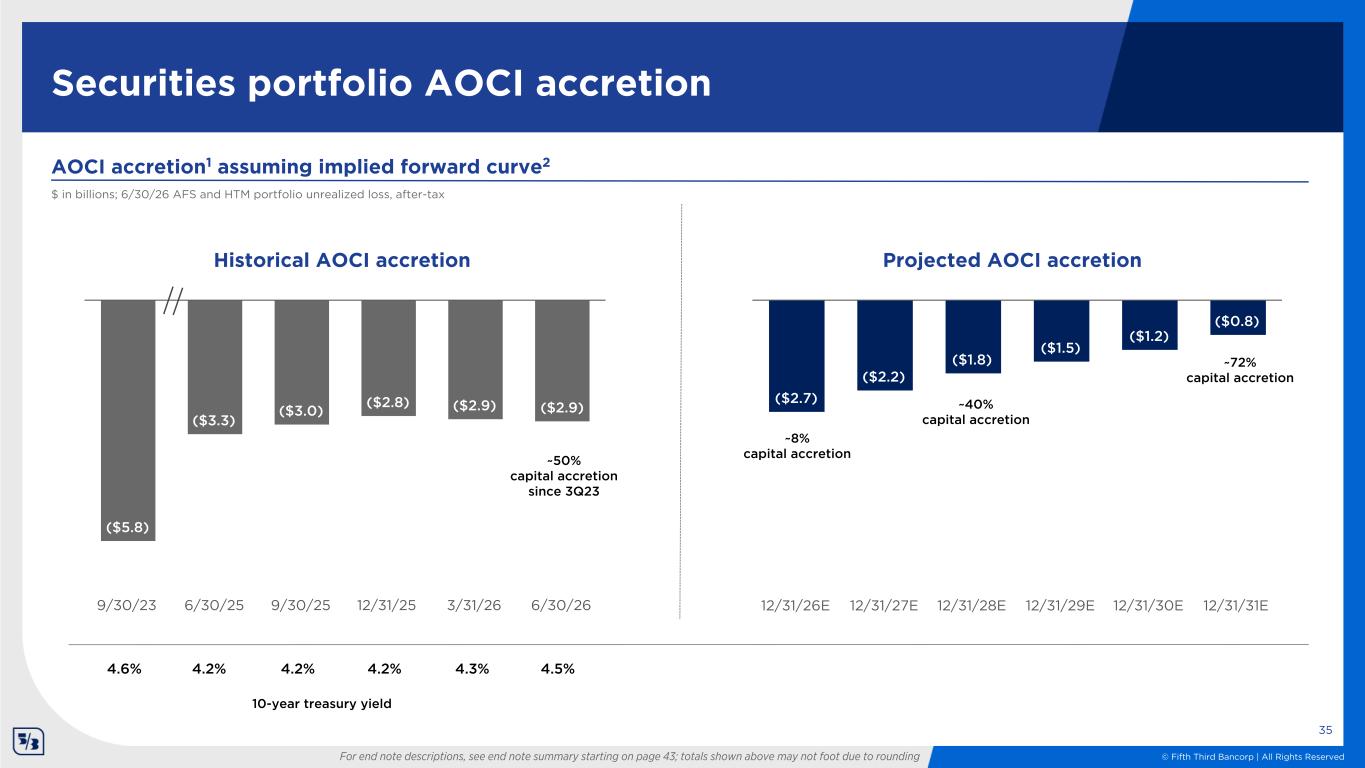
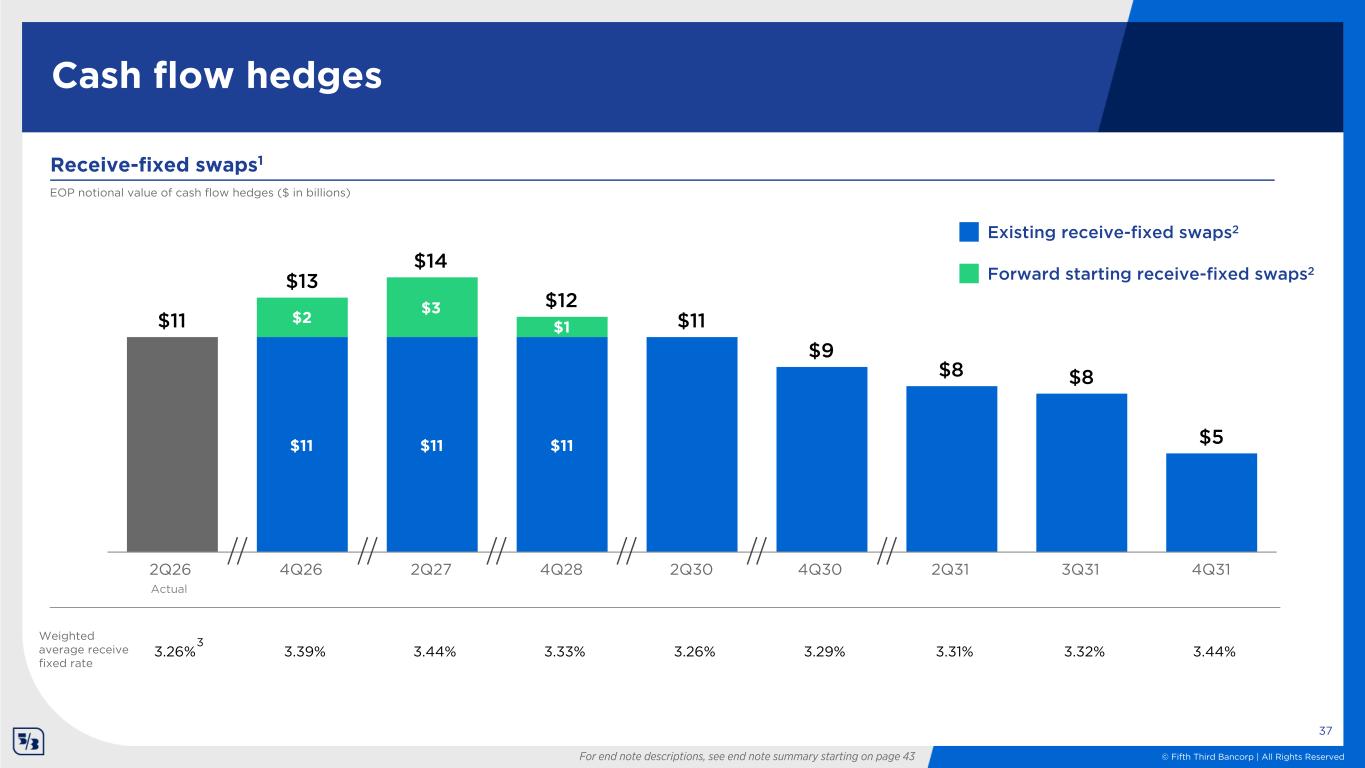
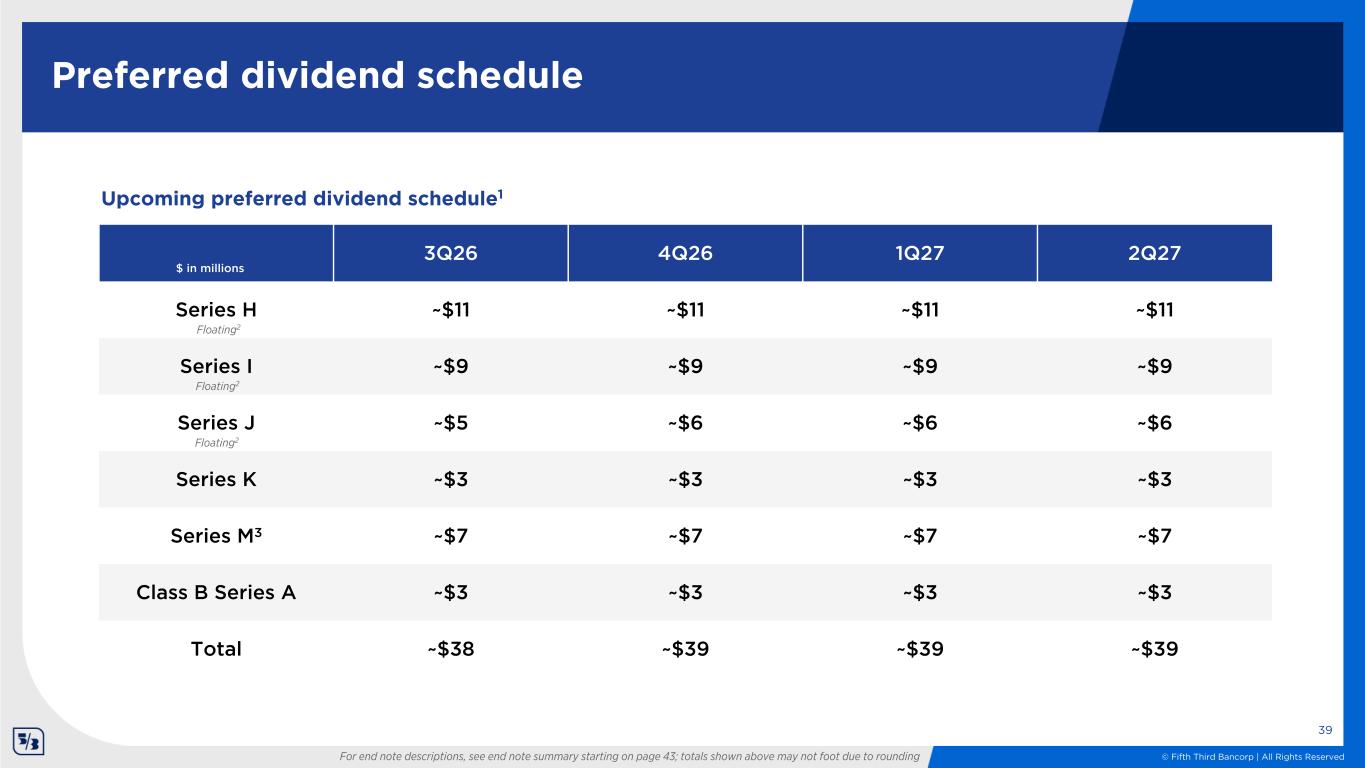
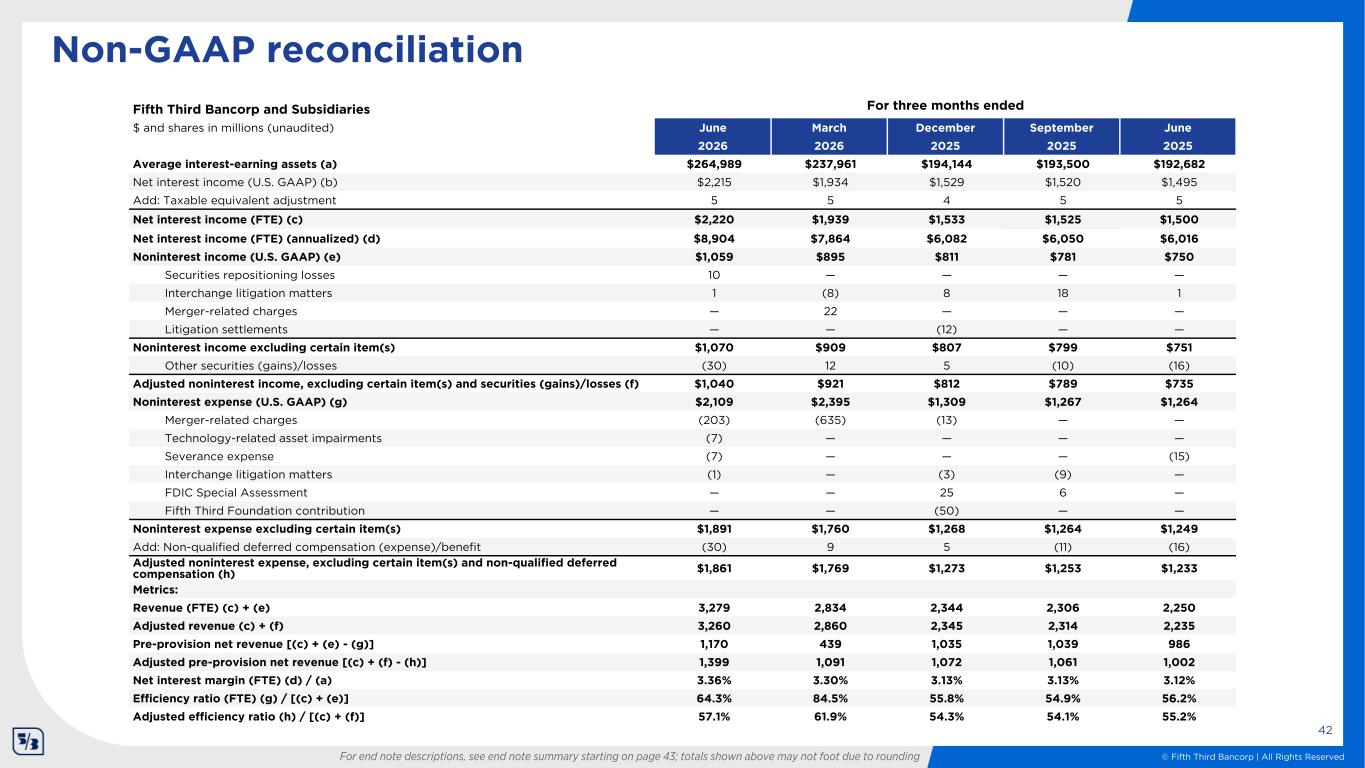
Thanks, Tim, and good morning. Our second quarter results reflect a core franchise that kept compounding and the earnings power of the combined company beginning to show through in the margin, the fee lines, and the expense discipline. The comparisons to the prior quarters remain distorted by the acquisition. So let me review the key themes in two parts. First, our organic engine kept executed. And second, America broadened the runway ahead of us. Starting with our organic performance, net interest income and margin show the benefits of the continued discipline execution in addition to the acquisition benefits. Net interest income was $2.22 billion, and net interest margin expanded six basis points sequentially at 3.36%. The margin move breaks down cleanly. The additional months of Comerica contributed three basis points, and the remaining expansion came from the continued benefit of fixed-rate asset repricing, loan growth, and deposit performance. Loan growth was broad-based and granular. Period-end portfolio loans of $179 billion grew 1% sequentially, with commercial loans up $2 billion, or 2%, on production across middle market and corporate banking. Line utilization was stable at 40.8%, flat with the first quarter. Clients remained active despite continued market volatility. Shared national credits remain a modest 26% of total loans, consistent with our focus on granularity. In addition, our Provide FinTech platform grew loans approximately 4% sequentially. We are realizing the benefits from expanding provides leading digital experience and practice finance into a broader small business lending platform, where we have moved from number 31 in SBA lending nationally a year ago to number 15 today. Period end consumer loans grew steadily, with the mix continuing to shift. Home equity balances increased 3% sequentially, and we were the number one originator of home equity lines across our legacy footprint. This growth maintains the same credit discipline, with an average FICO of 774 and a loan-to-value ratio of 63%. Given the rate outlook, we expect continued momentum in this product where we have been building share. Our funding discipline shows in the deposit book, where we saw granular deposit growth and well-controlled deposit costs. Average core deposits were $229 billion in the quarter, and period end core deposits were $231 billion. We remain focused on improving the composition of our deposit base towards our long-term goals, retail deposits, contributing 60% of our core deposits. During the second quarter, consumer deposits grew nearly $5 billion and offset the intentional reduction of higher-cost, non-relationship deposits and normal seasonality and commercial. The $2.5 billion of consumer deposit growth in the Southwest that Tim described was a meaningful driver of that growth and reflects early traction in our newer markets. Average non-interest-bearing balances were 28% of core deposits, up from 25% a year ago, reflecting Comerica's commercial DDA franchise and our own consumer DDA growth. On a legacy fifth-third basis, households grew 3% over the past year and, as Tim highlighted, even faster in the southeast markets, translating into 5% consumer DDA growth, reflecting relationship-based, not rate-driven growth. Total deposit costs fell four basis points sequentially to 1.54%, a favorable outcome relative to industry trends. Interest-bearing deposit costs also improved, down two basis points sequentially. Our balance sheet management posture is unchanged. We prioritize granular, insured deposit funding, and we continue to hold meaningful liquidity buffers. We maintain a Category 1 LCR ratio of 107% and a loan-to-core deposit ratio of 77%. We have and will continue to actively manage our overall funding costs through pricing and mix, a discipline that has allowed us to expand them this quarter while continuing to fund growth. The fee business performance carried the same breadth, with not one line but three delivering solid outcomes. The same three that we have invested in for years, and the returns are compounding. Adjusted non-interest income, excluding security gains and other items listed on page four of the release, was $1.04 billion. Wealth and asset management revenue was $256 million on higher personal asset management fees and favorable market performance. Total assets under management were $128 billion, and on a legacy Fifth Third basis, AUM was $85 billion, up 16% from the prior year. Within wealth, Fifth Third Securities continued its momentum, with retail brokerage revenue up 18% from the prior year. Commercial payments revenue was $254 million, led by strength in New Line and core treasury services. As Tim noted, new line fee revenue was up 35% compared to the prior year, and related deposits were $5.3 billion, an increase of $2.1 billion from the prior year. Direct Express contributed $22 million in fee income, with average deposits of $3.7 billion in the quarter. Capital markets fees were $154 million on client financial risk management and loan certification activity, an annual life pace in line with the $600 million run rate Tim described. Now to expenses, where the benefits from Comerica and the integration progress are already being realized. Total adjusted non-interest expense of $1.86 billion was better than our expectations as we continue to realize synergy benefits ahead of schedule. Page 5 of our release details the certain items that had the largest impact on non-interest expense this quarter. primarily $203 million in merger-related charges. The full $850 million of annualized run rate expense synergies is on track for the fourth quarter, with systems conversion over Labor Day weekend the next major step. Given that conversion timing, we expect to realize the majority of the remaining synergy benefits in the fourth quarter. The adjusted efficiency ratio was 57.1%, a strong improvement from the first quarter, and we remain confident in achieving a run rate efficiency target of 53%. On credit, trends were benign and improving. The net charge-off ratio improved seven basis points sequentially to 30 basis points at the bottom of our range and the lowest level since the second quarter of 2023. Commercial net charge-offs were 21 basis points, down five basis points sequentially, with stable trends across industries and geographies despite the continued market volatility. Consumer net charge-offs were 53 basis points, down five basis points sequentially, and consumer delinquency trends remained stable. Non-performing assets were relatively stable, up three basis points from the first quarter, and commercial criticized assets decreased during the quarter. Where we grow is a choice, and so is where we don't. Our exposure to non-depository financial institutions is approximately 7% of total loans, well below the industry average. We concentrate it in subscription and capital call facilities, corporate facilities to traditional financial institutions, and secured lending to mortgage-related entities. In each of these areas, we have deep underwriting history and structural protections that provide significant loss absorption before we would recognize the dollar of loss. On private credit, our loan growth does not rely on lending to private credit vehicles and business development companies, which together are less than 1% of total loans, a deliberate decision given the structural complexity that is harder to assess through a cycle. On software and data center lending, we believe in the long-term demand for AI infrastructure, but is state selective. At less than 1% of total loans, that exposure is intentionally limited and performing in line with expectations. The ACL ratio ended at 1.76% of portfolio loans, down three basis points sequentially, reflecting continued strength in the risk profile of our book, particularly in C&I lending. Provision of $129 million was down $98 million from the prior quarter, which included an $83 million day-one CECL bill for Comerica-acquired non-PCB and non-PSL loans. Our baseline and downside economic cases assume unemployment reaching 4.6% and 8.5% respectively in 2027, consistent with the prior quarter scenarios. We made no changes to our macroeconomic scenario weightings during the quarter. Moving to capital, CET1 ended the quarter at 9.93%, an increase of four basis points sequentially, despite strong period and long growth and absorbing $175 million of after-tax charges related to the merger and other items. Our CET1 ratio, including the AOCI impact of our securities portfolio, was 8.7%, and tangible common equity, including AOCI, improved to 7.3%. We expect continued improvement in the unrealized losses in our securities portfolio, given the bullet locked-out structure, as approximately 55% of the fixed-rate securities in our ASS portfolio have a defined principal repayment schedule. a portfolio construction choice that gives us a high degree of certainty around the timing of the AOCI accretion back into capital. Finally, there was no share repurchase activity in the first half of the year. Moving to our current outlook. Our outlook reflects the forward curve at the end of June, which assumes a 25 basis point rate hike in September. Given the updated rate outlook and actions we took during the quarter, we are increasing our full-year NII guidance to a range of $8.74 billion to $8.8 billion. Those actions, repositioning $4.5 billion of securities and adding $3 billion of forward-starting received fixed swaps as a cash flow hedge on our commercial loan portfolio, added to the NII outlook while beginning to reduce our asset sensitivity. We are refining our average loan guidance range to $174 billion to $176 billion. As a reminder, the average balance for the year will only include 11 months of Comerica. We are raising and narrowing our full-year non-interest income guidance to a range of $4.06 billion to $4.16 billion, reflecting continued growth in commercial payments, capital markets, and wealth and asset management. We are also lowering and narrowing our full-year non-interest expense guidance to a range of $7.22 billion to $7.26 billion. This outlook excludes acquisition-related charges. Taken together, our guidance implies full-year adjusted PPNR growth of more than 40% versus 2025, including the impact of CDI amortization. We remain on track to exit 2026 at profitability and efficiency levels consistent with our 2027 targets. For credit, we expect second half net charge-offs of 30 to 35 basis points, which replace our four-year performance in the bottom half of our 30 to 40 basis point range. Turning to capital, our CET1 operating target is 10 to 10.5%, and we are effectively there, with capital continuing to build through our earnings power. Our capital priorities remain unchanged, maintain a strong dividend, support organic growth, where we see the highest returns on deployed capital, and then return excess capital through share repurchases. Consistent with that approach, we expect to resume regular quarterly repurchase activity in the second half of this year. For the third quarter, we expect NII to grow 2% to 2.5% from the second quarter, driven by the continued benefit of fixed-rate asset repricing and day count. Average loans are expected to be up approximately 1%, led by growth in C&I, home equity, and auto. Adjusted non-interest income is expected to increase 1% to 3%, while adjusted non-interest expense is expected to decrease 1% to 2% as expense synergies continue to be realized. The second quarter turned the integration thesis into results. The earnings power of the combined company isn't a forecast anymore. You can see it in the margin, the fee lines, and the expense discipline. The core grew on its own, Comerica widened the runway, and with the Labor Day conversion just weeks away, the earnings power is landing on the schedule we set. With that, Let me turn it over to Matt to open the call for Q&A. Thanks, Brian. Before we start Q&A, given the time we have this morning, we ask that you limit yourself to one question and one follow-up, and then return to the queue if you have additional questions. Operator, please open the call for Q&A.
Operator
We will now begin the question and answer session. Please limit yourself to one question and one follow-up. If you would like to ask a question, please press star 1 to raise your hand. To withdraw your question, press star 1 again. We ask that you pick up your handset when asking a question to allow for optimum sound quality. If you are muted locally, please remember to unmute your device. Please stand by while we compile the Q&A roster. Your first question is from the line of Ibrahim Poonawalla with Bank of America. Your line is now open. Please go ahead.
Good morning. good morning I guess maybe talking about the upcoming systems conversion at Comerica just talk to us as we move forward we go between the expense synergies things kind of playing out in line if not better than expected as we think about what's next tied to the deal and the opportunities it has created for the bank maybe lay out if there's more to done to do on the efficiency frontal as we think about expenses becoming making that franchise more productive and then does it create idiosyncratic revenue growth runway for fifth third even as early as
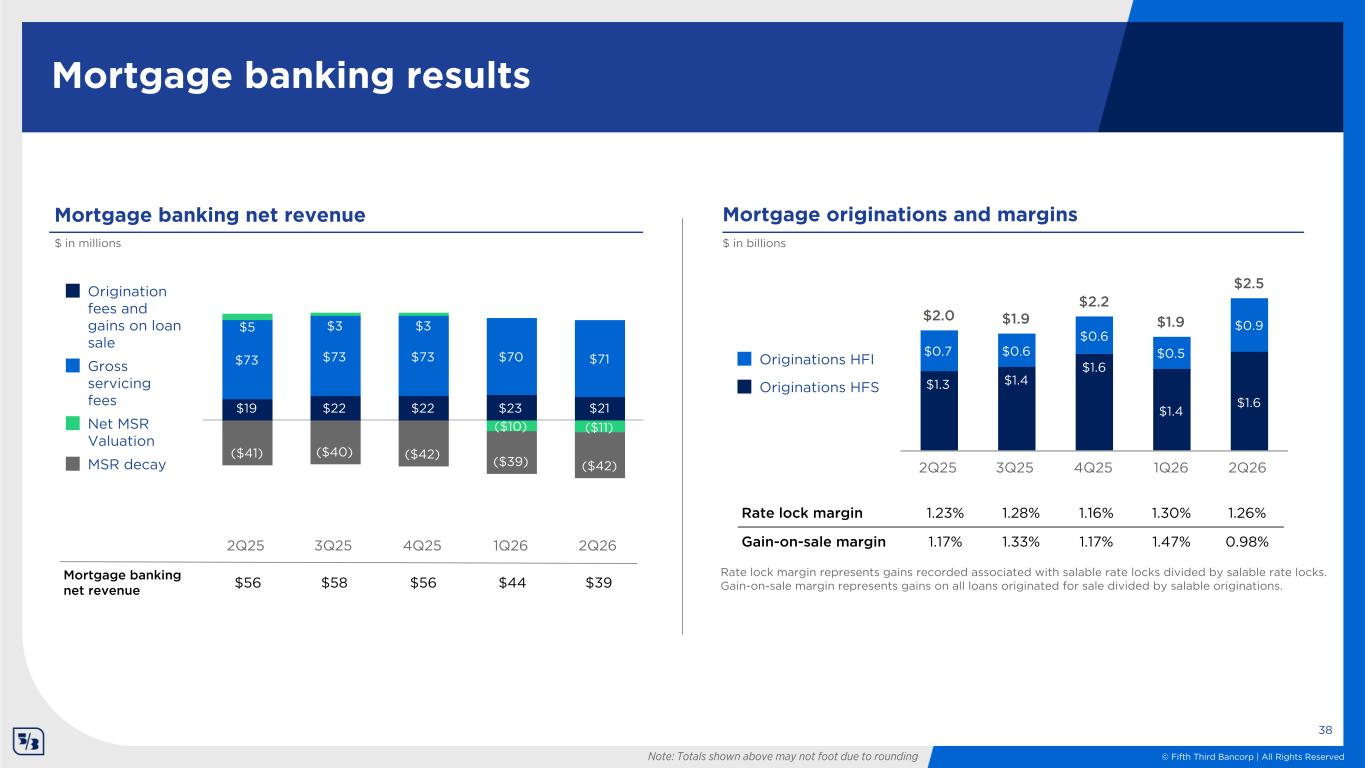
2027 thanks sure thank you thank in good question a lot there so yeah I think we feel very good going into the Labor Day systems conversion I think we've talked before about the fact that the mantra here on any sort of a big program, whether it's a thing like this or the organic expansion, is think slow, act fast. So, we elected to do three mocks as opposed to two, which I think is generally where people So, we got through the second mock in June, and that went very, very well. We actually have built some pretty cool tech tools for this conversion, effectively an intelligence layer that sits on top of the, like, the Microsoft Project Plan hard deck that is able to monitor the conversion in real time and then help the teams coordinate, including having AI essentially listening in to the Teams or Slack feeds and monitoring for any sort of sign that there may be a delay and then helping us to think through the contingencies and whatnot. So, we feel very good about being able to get the conversion done in Labor Day, which then, to your point, hearing unlocks the last large wave of synergies, both as it relates to real estate and to people, and then obviously to the elimination of the systems. We are, if you just look at it mathematically, running a good bit ahead of the $850 million in synergies. Our plan, assuming that the environment holds the way that it has, has been to redeploy anything above the 850 into supporting revenue growth unless we just don't have opportunities to be able to do that, to fall directly to the bottom line in the form of incremental efficiency. The profit campaigns, well, I think when we talked to you in January, we said we were able to get a half a billion, the three-quarters of a billion out of the Southwest market. So we did the earnings call and the programs we're tracking ahead of plan. We said we hope to get a billion. We're eager post-conversion to be able to turn on the checking household acquisition marketing, and we expect to do very well. Like the unannualized sequential check was 4% at prepared remarks. to calculate the compound rate. Just multiply that by four. It's 15% annualized growth in incredibly robust markets, in products, household marketing. I think the other area is we intend to turn on the jets and the product specialists and your sales force. We're ahead of the game on mortgage. We were able to move earlier there because Comerica really didn't have a large mortgage platform. We did the same amount in production in the Comerica footprint in two months, that Comerica did in 12 months. And so that is evidence of where I think we'll be able to see, you know, pick up commodities hedging relationships in metals and recycling come online, aligned to Comerica's verticals in the second quarter. About 10% of the Comerica payment sales force production with fifth-third products that Comerica didn't previously offer, I think that could be a lot more. That could be 50% by the time, you know, that we're done there. And the ABL product in particular, in addition to equipment leasing, continues to be quite successful. We had Comerica bankers win new quality relationships. So not just servicing existing relationships, but win new relationships with those products. So realizing today, pre-conversion, you know, when it's still a little bit kludgy to be trying to manage client relationships, that when we get through to this, we should be able to show a pickup in both loan production on the commercial side of the equation next year, and that there's no reason not to take the household growth rates for the Southwest, because we will invest in an environment where, you know, whatever deposits continue to be important, where the demand continues to be ample, what incremental we generate above and beyond the 850 in the bottom line drive up tangible value per share.
Got it. Thank you. And maybe, Brian, one quick one for you. As we think about it, I'm assuming you still expect the normalized margin to move into the 340s, I guess, sometime next year. Just talk to us on the deposit side, given the campaigns are running, in terms of just what are you observing both from a competitive standpoint, maybe by market or whichever way you think is helpful, but beyond competitive landscape, also from a customer behavior standpoint. point. Is the Fed not doing anything just leading to deposit pricing discussions ebbing or customers are still kind of mixing towards higher rate products? Thank you.
Thank you. Yeah, we would tell you the environment certainly is competitive and that's not unexpected in what is now really shifted into a long growth environment. You know, long growth obviously creates deposit growth for the industry as well, but there's a lot of sorting that has to occur. So, we are certainly seeing an outtick in the competitiveness across the footprint. I would tell you the consumer deposit franchise is probably the most competitive area right now across both the Midwest, Southeast, across all the Midwest, Southeast, and Southwest. We've tested a lot of different rate offers over the last six months in the first half of the year, and it certainly is getting more expensive to grow deposits. But what we feel really good about is our ability to manage overall deposit costs, which you see in our results this quarter. We've done and remain disciplined on our ability to recycle interest expense into new opportunities. I think one thing that is hard to see in the numbers is that we're still maintaining in the area of about $100 billion, what we would refer to as high beta balances, that we have the opportunity to recycle some of that cost through some cuts and into growth strategies. And that has been a real focus of us for quite some time on how we actually exceed that and what's helped us deliver that strong deposit growth and deposit cost discipline this quarter. And so we see that trend continuing, and what we're excited about is the opportunities in the southwest markets in particular. Because we have such low share in those markets, we have the ability to go to those markets and drive for some good growth opportunities that have really limited cannibalization costs for us from a book perspective. And that really helps us manage the overall marginal cost of those deposits, which has been a key part of the strategy. So we think, you know, it's going to continue to be competitive. On the commercial front, you know, I wouldn't say it's as competitive as what we've seen in the consumer book. It's still competitive. People are obviously trying to be positioned on the commercial front to be able to be in a position to take advantage of the rate hikes. Obviously, one of the ways we manage through that is making sure that our index portfolio is structured the right way, which we feel good about right now. But I don't think people are, at this point, overly focused on the hikes because I think people are kind of a coin toss if we're going to see something. But it is something we're keeping close to our end right now.
Yeah, if I just add one thing. I think environments like this one favor people who have some sort of differentiated strategy, right? If you're just in the commodity markets for deposits, the competition dictates your margins. When you have differentiated platforms, in particular ones that are operational in nature because they're just harder to build quickly, you have optionality that others don't. So you know well, like, a billion dollars is a yard in the bond lexicon. If you go through the numbers this past quarter, like, we got two yards year over year from New Line. We got three from Consumer, most of which from the Southwest and the Southeast, and then four yards for Direct Express. We get one more yard and we are at a first down, right? It's just – but those are things that not everybody can play. And in the case of Direct Express, it's a unique attribute. In the case of New Line, it's highly differentiated, and there's a lockout. And in the case of Consumer, you know, there are a lot of people who will build branches, but not a lot of people who have been building branches and therefore have the benefit of the 150 in the southeast that have been both over the last handful of years, you know, coupled with the fresh territory that we have in the southwest, to be able to just grind away. Three yards in the cloud of dust, that's right, and get your first down in four.
Operator
Your next question comes from the line of Manan Gosalia with Morgan Stanley. Your line is now open. Please go ahead.
Good morning, Manon. Hey, good morning, all. Tim, when you think about reinvesting those incremental expense energies from CoAmerica, you're also talking about several benefits in the top line that I'm guessing can come in relatively quick order next year. So as you think about the benefit of the revenue side as well, you think about the investments you're making on the AI side, how should we think about the medium-term efficiency ratio, you know, bearing in mind that you also want to keep reinvesting in the business?
Yeah, we feel very good about where we're going to end the year, right? And Brian reinforced it, you know, whatever, I did glide back. We are almost at on the ROTC, the original target we set for 2027, and then said we could get to in the fourth quarter, and we made a huge step from first quarter to second quarter toward the target efficiency ratio. I remind everybody seasonally the fourth quarter tends to be our most efficient quarter, so we should do better than the 19 and 53 that we had set for 2027 in the quarter, and then you take our guidance and work it through your model. I know it will show that. So our belief is that at the level of profitability we are running at today, that maintaining that level of profitability, which means showing enough operating leverage to continue to support this sort of 19% plus ROTCE, you know, through a little bit of additional operating leverage that essentially compensates for the roll-in of the ALCI into tangible common equity. And then driving tangible book value per share growth is the best way for us to generate long-term value for shareholders. So we do intend to accelerate the investments that we make in AI. I'm very proud of our tech and product teams for having shipped all the things that I mentioned earlier, because for all the obvious reasons, their principal focus is making sure that we deliver, you know, a flawless conversion. But there is a lot more we're going to be able to do when we can move out of an environment where the workflow applications here are effectively on a code freeze to drive more efficiency into the business. It's just we have a lot of proven strategies that generate low-cost deposit growth, the generate fee growth, that are a better, I think, path for us, given our position in the ecosystem, than focusing on trying to go from, you know, I'm going to make it up here, but 19% to 19.5% to 20%, you know.
Got it. And then maybe separately on Direct Express, you spoke about issuing new cards, adding the 66,000 new beneficiaries. I guess how quickly can that product scale relative to the $3.7 billion in deposits you just mentioned, and how are you thinking about the opportunity to expand that program in the years ahead?
Yeah, so the front book product slides, all new that go into the direct express program are going on that new platform, and that platform will effectively grow at the rate that new beneficiaries who elect not to have their benefits routed to a checking account are added. There then secondarily will be a back, essentially, of moving deposits off of the old platform that Comerica operated onto the offering. We are seeing pretty good, Brian, you may want to, you know, reference the sort of pace with which deposits are growing if you just look at the Direct Express portfolio in total. But in general, we're at the right point, like the retirees are a good place to be focused on, given the shape of the demographic pyramid in the U.S., and the byproduct of that is I actually think we're going to see pretty nice.
Yeah, and if you were to look back on a multi-year view of this, in 2024, $1 billion today, and when you think of the makeup of this program, which is obviously it's retirees, there are some good demographic trends here that should continue to spread.
Operator
Your next question comes from the line of Ryan Nash with Goldman Sachs. Ryan, your line is now open. Please go ahead.
So I guess given all the initiatives you have going on, can you maybe put a finer point on, you know, what is assumed for deposit growth and how you're thinking about deposit growth over the medium term as well as the key drivers of it?
Yeah, Ryan. You know, when we look at the numbers, and I do want to highlight it is hard to see the moving parts, just given that we're now comparing a full quarter impact of Comerica to two-thirds of a quarter impact, as well as now layering on top of that normal commercial seasonality. We saw, if you look at, and again, this is information that is a little harder to see, June average balances versus March average balances for the month, we saw 1% sequential growth, including a recovery of DDA balances from the normal seasonality that we see associated with tax seasons, with DDA balances being up. So when we think about a mid-single-digit kind of growth rate, we think that's the trajectory that the company can be on for some time, and we can accelerate faster than that, depending on the speed that we want to deploy marketing dollars to grow more balances. A mid-single-digit growth that supports what we talk about in terms of mid-single-digit growth in the loan portfolio, that really is the foundation of how we think about it coming together. And we think we have a long runway in front of us. We've talked for a bit now about the four $10 million deposit opportunities in front of us, the maturing of the Southeast Network, the growth associated with now the Southwest Network, the build-out of our small business product, getting it into the place where we should be from a market share perspective, and then the tech and life sciences growth from an innovation banking perspective. that's a $40 billion opportunity that we think we can achieve over the next, you know, better part five, six, seven years as the network matures out. So we think the tailwinds associated with the deposit franchise are there. And as Tim mentioned, what we're excited about is it's not just a single play. We have a very diversified franchise that gives us a lot of abilities to grow in different areas, both geographically and from a business perspective. And we've delivered, and hopefully you feel like you've seen it in our numbers, good outcomes. The consumer franchise continues to deliver, and the investments we've made from a branch perspective continue to pay off. When you look at our overall deposit cost, you know, it's a consumer core franchise, $116 billion of deposits that are at $125 total cost of deposits right now. We feel very good about the profitability that that franchise is kicking off. And what you see is, you know, the ability to attract new customers, and rate is often part of that. But when you can provide a customer with leading product, great service, and convenient locations, we're able to maintain those customers as we price them down over time. And so they're getting a great experience at the third, and we think that business model could continue for some time.
Got it. Tim, you guys put a finer point on loan growth expectations. You know, when I look in the quarter, you saw a solid C&I growth. Maybe just expand on what you're seeing in the market, any signs of irrationality or areas you're leaning into versus pulling back. And, you know, do you think we could sustain these types of loan growth rates going forward?
Yeah. I feel pretty good about our ability to sustain the loan growth pace going forward, barring the material change in the macro. Like, when you look at the commercial clients that we have, I think confidence is up on a pretty broad basis. Like, it really is not sector-focused. Now, that was based through the quarter on the belief that the situation in the Middle East was de-escalating, and also I think the fact that the tariff confusion has settled out. So, clearly, we have some retrenchment on the Middle Eastern front, but the tariff confusion has settled. like a simple example there, one of the metal stamping businesses that I had the opportunity to talk to in Michigan had stopped bidding at market rates, just given input cost uncertainty, and had to resume bidding during the quarter. And I think clients across the board indicate that demand's pretty stable, and in some cases actually had been improving. The sector is linked to infrastructure, capital investment and data centers, places where there is real, you know, evidence of reshoring activity like automotive where you have foreign OEMs building plants here in the U.S. is where the business is moving, I think, most strongly. The folks that are focused on more value-oriented consumers are probably the places where you've seen more hesitancy. But at least as it relates to us, like if you just disaggregate the CNI loan growth, legacy Fittler was up by more than 2%. The big driver there is the fact that new quality relationships are running about 20% ahead of where they were in the prior year. and that is informed by the fact that there are about 6% more middle market bankers on the streets than we had a year ago. The legacy Comerica business lines and markets grew CMI loans by about 1% sequentially after having been basically stable or flat for the past three or four years. So there's a nice step forward there. And the verticals in particular, the specialty verticals were the standout. So they grew 6%. And the energy and talent of the bankers there is really exciting. I think as we get through the conversion, there's no reason to believe that both teams won't converge, you know, around the same growth rate. So good underlying demand attached to secular things more than sort of on the street on the fifth, third side, and then the, you know, continued re-acceleration of the rate of growth that, you know, Comerica had demonstrated. It's pretty nice.
Operator
Your next question comes from the line of Erica Najarian with UBS. Erica, your line is now open. Please go ahead.
Good morning and thank you. So, just to make sure that we're taking away the right thing from those responses, Brian, should we assume a mid-single-digit rate of annualized growth for the second half of the year on the deposit side? And also, just hoping to put, to borrow Ryan's words, a finer point on your response to deposit costs to Ibrahim. You know, if, you know, obviously, as you pointed out, you did a great job of taking the deposit cost down in the quarter, you know, as you progress through the year, what should we expect for deposit cost, assuming no Fed hike? And if we do get that Fed hike, what kind of data would we see?
Yeah, I think a mid-single-digit growth rate is a fair growth rate for us from a long-term perspective, and given that's aligned with what we're trying to do from a long-growth perspective in keeping our balance sheet core deposit funded. From the second half of the year perspective, there's a little bit of deposit seasonality that you'll see. We typically have a little bit of a ramp in the end of the fourth quarter as commercial balances build heading into year end. That's the only thing I would caution you on, just to pay attention to normal seasonality on that front. But that is the right kind of core long-term growth rate to think about for us, and there's nothing that causes us to look at what's happening in the second half of the year to think that you should expect anything different. From a cost perspective, we do think that more of the balanced growth, just given where we are from a rate environment perspective, will come in as an interest-bearing product. So I do think that you're in a stable to maybe slightly up rate perspective for deposit costs from here on out, even if you were in a flat Fed funds world, but we're able to manage through that, obviously, with continued asset growth as well as the fixed-rate asset repracing that continues. And then we would benefit from a balance sheet perspective, given our asset sensitivity. If we were to see a hike, obviously, it would have an impact on deposit costs from here, but the repricing of the asset side of the balance sheet would outweigh that, which would be a benefit for us from a net high perspective.
Thank you. And my second question is some of your peers have started to put a little bit more detail as they've done more work on some of the deregulatory impacts. And I'm wondering if you could share with us any updated thoughts on Basel III endgame and electing either enhanced risk-based or revised standardize. Additionally, you know, you mentioned, Brian, you know, Category 1 compliance on LCR at 107%. Could you maybe help frame for us, you know, how bulked up your balance sheet is for LCR compliance and liquidity compliance and what it could mean for your natural margin if we do have LCR reform that would allow you to draw from the discount window at liquidity?
Yeah, we are exactly where we need to be from a balance sheet perspective, from an LCR requirement perspective. And so any LCR relief would create some value from a long-term margin perspective. And the concept there is that you could ultimately hold a smaller security portfolio, and in particular a smaller level one allocation, which would obviously be NEM accretive and a margin accretive. So, you know, we do feel good that that would be a good outcome. You know, it's tough to say at this point of what that would look like from a quantification perspective. There's a lot of speculation out there on allowing for credit from a discount window perspective in those calculations. But what we've not really seen at this point is sizing of, you know, what does it look like from a minimum security portfolio size perspective. You know, if you look at our disclosures, we keep a lot of collateral pledged at the discount window. well above what our security portfolio is. So we don't believe we could take our security portfolio to the near zero. So it's really going to come down to what those floors look like. From a capital perspective, obviously we feel very good about where we are from a Basel III endgame perspective. On a fully phased-in basis, we're above 9.5 from a TET1 perspective. Taking into account the phase-in on the AFCI, we would be north of 10 1⁄2 at this point, so capital is in really good shape. We're having conversations around whether we would adopt the expanded risk-based calculation approaches, which is about a 10 basis points difference between the standardized approach. So that is an option that we'll have in front of us. But we feel like we are in a good position from a capital perspective, and we've got some optionality.
Operator
Your next question comes from the line of Jared Cassidy with RBC Capitals. Jared, your line is now open. Please go ahead.
Morning, Gerard. Hi, Tim. Hi, Brian. Question for you, Tim. Obviously, you pointed out that the synergies are coming in ahead of the $850 million, a good bit ahead. So, obviously, Jamie is shaking out more expenses from the trees, which is great. The question I have for you, and we don't need the number today, but when can you tell us about what Darren King is doing to grow revenues? You laid out the expenses when the deal was announced, of course, and they're coming through. But revenue synergies, which you never priced into the numbers, which is great, Do you think a year from now you guys will be able to quantify or Darren, you know, can show us that, gosh, you know, because of the success, we have grown revenues X. Now, I know you touched on the mortgages already, residential mortgages, how much you've done. But when do you think you could quantify for us that not only do we get these expense savings, but look at this revenue growth?
No, great question. I think going into next year. I don't think we have to wait for next year. Like, we're tracking all of this stuff in a pretty detailed way, hence my point earlier about, like I said, I think I said roughly 10% of new production. It's exactly 8% of new TM production from Comerica TMOs, the fifth-third products that Comerica didn't offer previously. Like, it's down to the deal level that we're measuring all these things. What I would say is the focus will shift when we get past conversion from the sort of job one, which is protect what we have and get the expense synergies out, to job two, which is energize the combined team around the opportunities to drive growth. The, you know, the job one, we talked about the expense synergies. I think the other thing maybe that is worth mentioning that I didn't is 99.4% of the customers that Comerica had in commercial at the beginning of this year are still clients today. So we're actually running ahead of normalized client attrition. Like we're doing better from an attrition perspective than you normally would in this sort of equation. So the teams have done an incredible job of ensuring that the existing relationships understand why they're better off with the combined company than, you know, they would have been with either company being independent. But we've done the product innovation rollouts. We have added specialists in several of the markets. We'll continue to do more of that. And I think as we get into the fourth quarter this year and we're looking forward to next year, We'll give you a view of what we think, from a growth perspective, is coming from sort of legacy fifth-third strategies versus what's coming from the application of those strategies to new markets or leveraging Comerica capabilities across the broader fifth-third platform. And, you know, we'll just transparently let you see it.
Very good. I appreciate that, Keller. And then, as a follow-up, it's more of a macro question. It might be kind of difficult to get your arms around the answer, but we all know how important the growth of AI is to this country's economy, and it's been very powerful, not just with the data centers, and I'm not suggesting you guys are making construction loans to build out the data centers, but have you been able to do any work to find out the second derivative of, you know, know, some of your commercial customers that might be benefiting from the, you know, revolution here at AI. And then second, you know, we saw it during the dot-com era when all that fiber was built and it was so overbuilt, much of it went dark and caused problems. And I'm not suggesting we're overbuilding yet for AI, but how do you guys get your arms around the risks with this AI growth to this country? and eventually it slows down in some of the second derivative impacts to your bank.
Yeah, I mean, you know that we worry about that. Like, just given the time that I spend technology, like, one guaranteed rule is that we will misestimate the amount of capacity that's required here because you have a lot of different competitors. You have a nascent market, which means you don't have a normal market structure, which means you have more people trying to gain share than there is share to be gained, which by definition means there will be some overbuilding, you know. Now, my own view on this is that there's a possibility that that capacity gets absorbed just over a much longer time frame than people anticipate, but it makes being on the construction financing side of that equation a little bit dicey. That said, given the composition of the client portfolios that Fifth Third and Comerica have, which tend to be real economy businesses disproportionately, right, we have lots of relationships with people who are engaged in constructing data centers. Like I – the chance at one market visit I did out west to meet an HVAC contractor who mentioned that they have a five-year backlog equating, you know, to like $300 million in incremental backlog, you know, due to hyperscaler demand. We have clients that we bank that are in, you know, the exotic businesses of quarrying aggregate or mining lime that, you know, goes into concrete that gets poured into the foundations and other lines. I don't know that it would be possible for us to do a portfolio-level look at the sort of second derivative exposure, but we do that work every time we re-underwrite an individual client. Like, we look at the concentration risk that exists in their revenue composition. We look at the, you know, stress scenarios as it relates to sort of demand overall as well as idiosyncratic scenarios. And the benefit of banking the people constructing data centers as opposed to making the construction loan for data centers is, to the point you made earlier, there is an underlying business there, you know, that given the length of the relationships we have with these clients, was doing fine on a regular WIC basis prior to the data center booth.
Operator
Your next question comes from the line of Mike Mayo with Wells Fargo Securities. Mike, your line is now open. Please go ahead.
Hey, Mike. If I could just get a, hey, if I could just get a clarification, you've not changed your 850 million expense saving number. Is that correct?
No. No. $850 million or more will drop to the bottom line. The or more question will be a function of our ability to, whether we have the ability to drive better value for shareholders by reinvesting into revenue growth, or whether we think the environment is such that we're better off just continuing to run a more efficient company.
Okay and you said you have 99.4 percent retention of Comerica's commercial customers. Do you have a figure like that for the consumer customers?
The consumer franchise is up. It's net up. It's like what is 102 percent or something like that of what it was at the beginning of the year. Essentially, Latin, Michigan, and up 4% in the southwest markets.
Okay. And then as far as commercial loan growth, it's okay. Not great. And I know you're more inward focused than you'll be until after the Labor Day conversion. Any thoughts about just the relative growth? Because this which should be a sweet spot for the commercial lending, Comerica, and your commercial lending. So, I don't know. I mean, I got the sense that commercial loan growth was accelerating, and maybe it is, maybe it isn't. But just what's your take? I know you've talked some about this, but is it accelerating for the industry? Do you expect it to accelerate more for you after Labor Day?
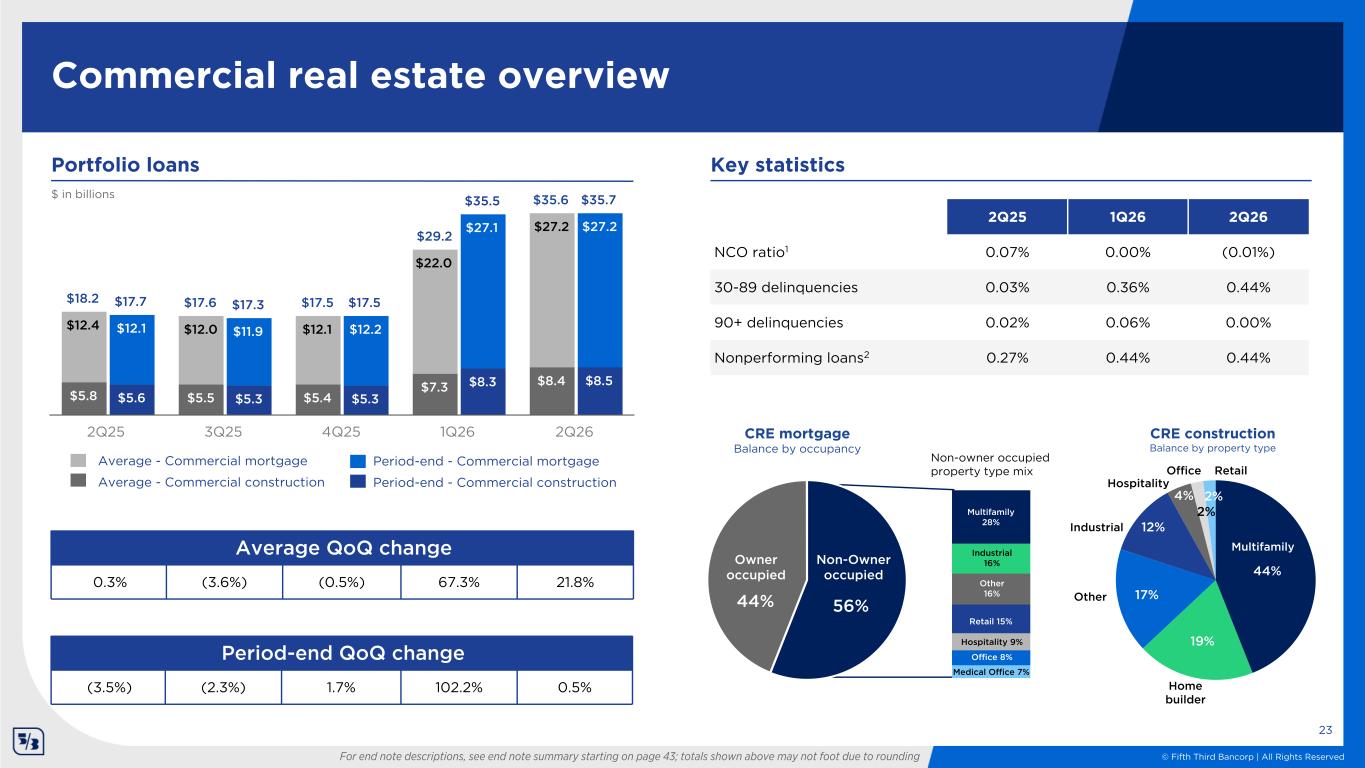
Yeah, sure. I mean, I think the loan growth accelerated, right? And my own view is that there's no reason to believe, barring a change in the environment, that it will decelerate from here, okay? I thought Legacy Fifth Third CNI up more than 2%. I think that compares pretty favorably. Comerica from flat the last three years to up 1% sequentially during a period of time where appropriately what we are asking our teammates to do is to make sure that we take care of existing customers and get them through the migration process. And that's all production. We didn't get a lift in utilization quarter to quarter. So there is a nice production trend there. Commercial real estate, we were softer than I think I have seen, at least thus far, from We were up half a percent. Many others are up a little bit more than that. You know, our general view there, as you know, is to live in a slightly more conservative place in the ecosystem. We have not been providing back leverage to a lot of the private credit funds that are out there in this market. I think that is the place where we've seen structure and pricing deteriorate, and CNI has actually remained pretty consistent. So we've elected not to chase some of the stuff that is either stretch recourse or on LTV or, you know, or otherwise. And then the other, I think, if you flip and look at the consumer side of the equation, which you didn't ask about, so I'll give it to you anyway, you know, home equity has been really strong for us. The indirect auto business has been a source of growth the last few years. The market there is, as you know, is very efficient. And pricing, we sort of reflected that in origination levels. But to the extent that pricing or the balance sheet needs changed, there's no reason why we couldn't continue to, you know, run at the levels that we were running previously. So I don't disagree with you. Like, I would like the whole company to be running at the 2%-plus level. We're going to get through the conversion and get everybody on the same page. I think at that point, you will continue to see an acceleration of the blended combined fifth-third Comerica season growth rate.
If I could just slip in one last one, I'm still digesting. So your customer retention on the consumer side is 102%. I'm not sure I've heard a figure like that before for a merger. What's the gross net of that, if you have it? But I appreciate just having that number.
My understanding is that the gross net is something like 94% or 95%. attrition of customers or I'm sorry retention of customers that were on the books at the beginning of the year plus call it you know whatever that is then six to five to six percent top line above it that gets you to the 102 overall great thank you it's normalized rate of attrition on the legacy book which would be you know ten to twelve percent on an annualized basis coupled with a real in production. And on the commercial side of the equation, it's 99.4%, meaning a half a point, 0.6% of attrition since the beginning of the year. And then the new production is a result of us being over 100% on a net basis there. So that would be the comparables to your point.
Operator
Yep. Your next question comes from the line of John Pencari with Evercore. John, your line is now open. Please go ahead.
Hey, John. Thanks for taking my question. Good morning. I'll be quick. Just on the capital side, I know you had indicated that you expect to resume buybacks in the second half. So I just wanted you to help us with the cadence there in terms of how we should think about the pace of buybacks in third and fourth quarter. And then just separately, on your market strategy, just remind us on the branch approach to the other markets, the Michigan and California markets. I know Michigan, you announced some consolidation, any change in that approach. And then in California, I believe you said you opened your first, fifth, third branch in California. What's the approach there? And that's it.
Yeah, I'll take the branches, and then Brian can hit the repurchases. So the unique thing about Michigan, considering the size of the branch network that both banks have, there is Comerica was heavy in the eastern part of the state, fifth, third, the western and northern part of the state. So, there are just over 70 consolidations that will happen in Michigan. They've all been announced. There are no others that are contemplated at this point in time. Many of those locations literally share the same parking lot and the same strip centers. So, we're not moving people very far. And the intent at this point in time is to execute those consolidations, get customers settled, And then we will look the way that we do across the rest of the Midwest on an ongoing basis at where growth pockets are, and we'll add next-gen financial centers there. We'll move branches down the road. But I would just, for all intents and purposes, I would say Comerica customers will have 60% more branches. Fifth-third customers will have 40% more branches, and that's sort of the plan of Stasis. California, there are de novos that we will add there. They are in the Central Valley and in places where we have commercial operations, where neither Comerica, and by definition, since Fifth Third Note, had no branches, nor Fifth Third, had any locations. Beyond that, there really isn't a plan to add or swing in time. We got 150 to build, I guess, 149 now, along with finishing off the southeast. And as we get, you know, call it into the end of 27 or 28, we're looking forward to what 2029 will build. That's the point in time where we'll reevaluate, you know, whether there's a difference.
And, John, on capital, from a pacing perspective, obviously with some more significant deal charges coming again in the third quarter associated with system conversion and the branch closures that Tim mentioned, That's probably a $50 million to $100 million range, but also dependent on what happens from a loan growth perspective. We saw some nice end-of-period loan growth in the second quarter. We're seeing some good activity, so we do think that, obviously, that could have an impact from a capital return perspective. And in the fourth quarter, we should be back to our more normalized $200 million to $300 million a quarter.
Operator
Your next question comes from the line of Brian Foran with Truist. Brian, your line is now open. Please go ahead.
Hey, good morning. I apologize in advance. This is going to be a little bit myopic on the questions, but any time you get to this point in the year, you know, some people do the game of the first half actuals, the 3Q guide, and an implied 4Q based on the full year. And if you took everything literally at the midpoint, you know, 3Q would be 1% or 2% below consensus, but then 4Q would be maybe 3% above, 2% or 3% above. But I'm also cognizant, like, all these things have ranges. I don't know that consensus really captures the seasonality of the business fully. So just kind of in your mind, is the message more like three Qs a little light but four Qs better, or is the message like, hey, all these things are plus or minus a percent, you know, the bigger picture is things are coming in in line?
Yeah, here I thought you were going to say that questions were myopic because your eyes are blurry after this many bank earnings releases in a single week. I think there's sort of a simpler explanation here, which is I am sympathetic to all of you who need to try to model the cadence of expense synergies in an environment where deals close mid-quarter and where conversions happen in the first week of the last month of a quarter. Sure. I honestly, when we looked at it just in the anticipation of the question on the call, I think it's a pacing of the expense synergies coming out, because while the conversion is happening in the third quarter, for all intents and purposes, you're not going to get any real benefit to it, because it's not like we're going to send, you know, people home the day after Labor Day weekend. We're going to make sure that things are stable, but it's not like we're going to decommission legacy platforms until we have a couple of weeks of water flowing through the pipes. And so that, as much as anything, changes the trajectory. I think the other element of it, just purely on the revenue front, up in regular company as opposed to regular late production and on a Fed, we are on customer communications. Like, we are, you know, pretty data-driven here. So, like, the PEM conversion, the payments conversion is always among the most complicated in any of these, and that's an important part of the Comerica franchise. So we have 290 of the 300 most complex commercial payments clients of Comerica already working through a pre-conversion date concierge conversion process, right, and two-thirds of the others already engaged and moving toward that date. That's not going to preserve the value, and then you've got to pick up an activity.
Although there is so much as it just is, it's hard for, and then converting in the first The message we'd like you to take away is that full-year PPNR, we're increasing our outlook. And this is the first time we've given you the split.
That's super helpful. If I could sneak in one other, just as we relate back to the kind of $4.89 in the deal presentation, you've been very helpful on where everything's tracking on all the PPNR inputs. Just as we think about credit, and I know there's always a macro component, that you look at credit outperforming out of the gate, would you kind of feel that's more a moment in time? Is the environment super benign? Or is there any feeling that like, hey, if you look at the new production opportunities or could this credit outperformance be a way forward?
But it's mixed driven, right? The Comerica portfolio where you had a lot of consumer assets. And even though we're a super prime lender, your loss rates on consumer assets are almost structurally higher in your commercial business lines. So, we lowered the range for the second half of the year, which obviously reflects a continuation in the immediate term. And my own view is that barring a more fundamental shift in the mix of the portfolio, you should expect that. There's nothing going on. There are, like, no outsized recoveries or things like that. There's no meaningful impact to purchase accounting or otherwise that's driving, you know, the outlook, hence the reason you see it here.
Operator
Your next question comes from the line of Ben Gerlinger with Citigroup. Ben, your line is now open. Please go ahead.
Good morning. Good morning, Ben. In terms of just the branches themselves, obviously the duplicative branches in Michigan, it makes sense that you reduce that and then clearly deploying and building branches in the southeast, but there's a lot of cross currents. And this isn't a 26 or 27 or even 28 question, but what would you point to in terms of the shareholders to see the successes of those branches other than just market share within the MSA you build them in? What would you point to considering there's a lot of moving parts to sort of deposit level?
Sure. So I think, like, we look at these things on a branch-to-branch, basis, right? So, that's the easiest way to say, you know, can you get paid? Jamie Dimon gave a talk that several of us watched, you know, not too many months ago now where he talked about the fact that the reason he loves the branches is because you scale them and they make $2 million a year to infinity. And that obviously is the goal, right, is you make a capital investment to build a building, you create operating expense and marketing and people to operate that building on an ongoing basis, and you build up the book, and you get an annuity out of it. So, like, take the southeast. So, in 2018, when we started the southeast expansion at Pace, we had, like, 278 branches and a rounding error to $10 billion in deposits. Today we have 420-plus branches, so like plus 150, right, up to 22 or 23, and a little over $20 billion, like maybe $21, $21.5 billion in deposits. So the branch count has gone up by 60%. Deposits have more than doubled, meaning average deposits per branch have obviously also increased. And even though you have a bunch of new branches there, right, So, which means you both have higher market share because you've got more branch count, more deposits across branches, but also better profitability per branch. The profitability in the southeast today is just under half what it is in the Midwest branches because of the dynamic on average deposits per branch and the fact that the southeast is continuing to grow. So you've got a tailwind that we are happy to provide detail on from just the continued maturation of what we've built in the southeast already, plus then the incremental 150 that are coming in the southeast and the incremental 150 that are coming in the southwest. Comerica's southwest network looks stunningly like Fifth Third Southeast network in 2018. There are about 200 branches there. It's about $6.1 billion in deposits, or at least it was at the time that we closed. So the average deposits per branch in Comerica's southwest markets, if you just run the math, are sort of in line with where they were in the southeast for fifth-third in 2018. Now, we learned a lot of lessons along the way. I don't think it's a seven-year journey to get Comerica's southwest markets to look like fifth-third southeast markets. We intend to do that much faster. But then you have the same dynamic of the branches that we'll layer on top. So we'll continue to give you data on de novo performance. But, you know, average deposits per branch are, as today, certainly the single best proxy, sort of hitting great even and then achieving that ideal Jamie Dimon $2 million to infinity and beyond sort of a run rate. Gotcha. Thank you.
Operator
Your next question comes from the line of Ken Euston with Autonomous Research. Ken, your line is now open. Please go ahead.
Hey, Ken. Thanks. Hey, guys. I know it's going long. Just one question for me. Just, Brian, maybe on the, you've talked about the incremental asset sensitivity given the transaction now that we've seen the full quarter and you're kind of getting a better feel for the balance sheet and the rates environment. Just where does that fit relative to your ideal position, I guess, and where do you sit in terms of either continuing to remix both the swap portfolio and the securities portfolio?
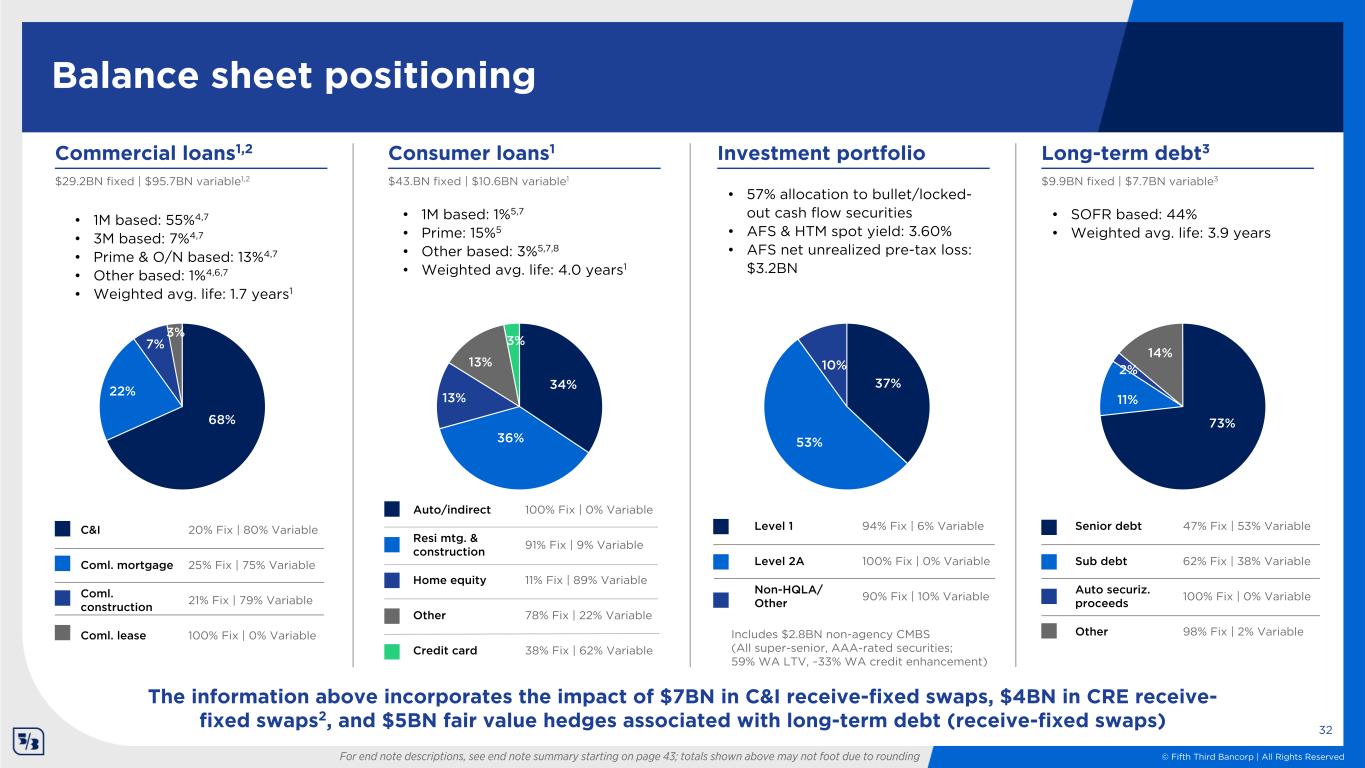
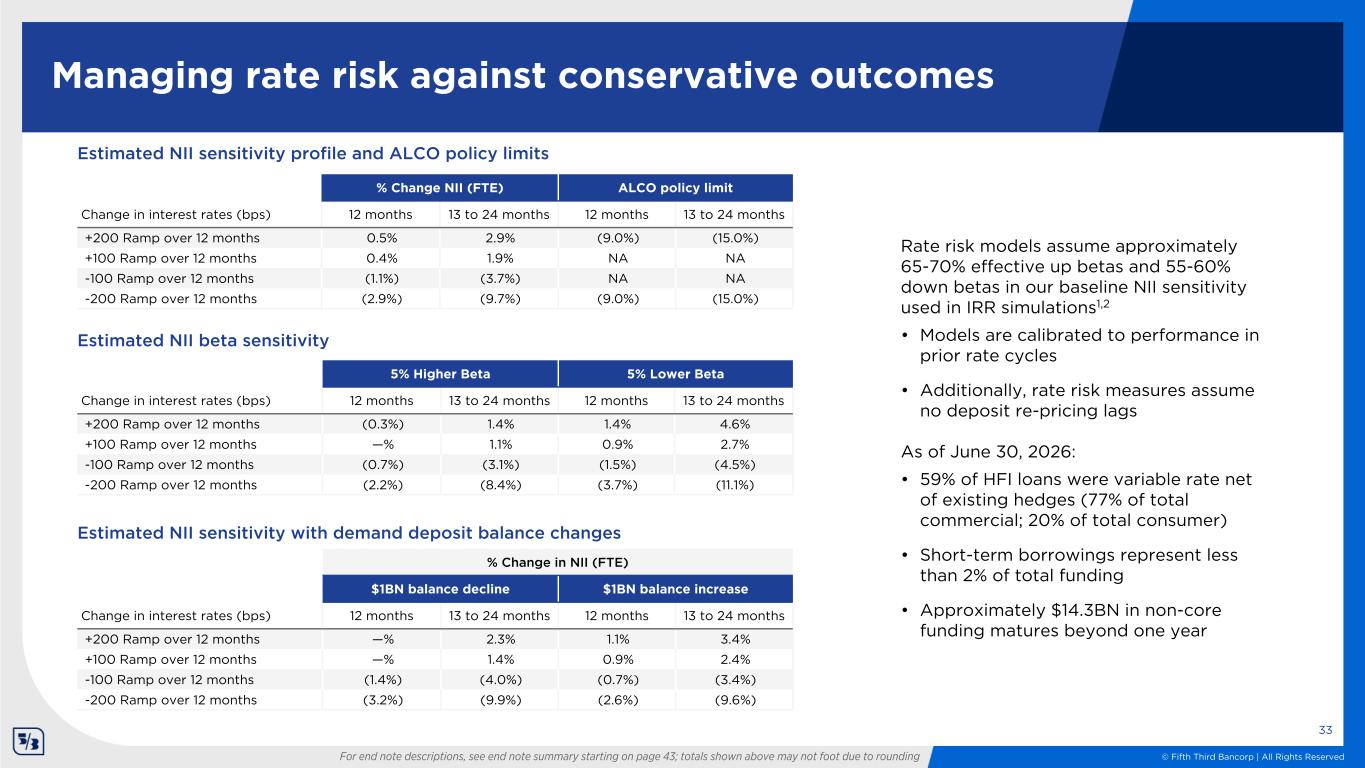
Yeah, we're certainly more asset sensitive than we've historically been, and you can see that in the disclosures in the back of our presentation. But we have done some work to take that down, and that included some actions that we took in the security portfolio, oil, which was repositioning about $4.5 billion during the quarter. There was some nice entry points that we felt like it made sense to go out and put on, moved some things from about a one-year duration to a four-year duration, so that was a nice trade, as well as the $3 billion of swaps that I mentioned. You can see the details on that in the presentation as well. And that took us just under 10% from an asset sensitivity perspective, if you look at our year to disclosure. We'd like to continue to make progress. That's something that over time we'd like to get into the mid-single-digit range, but we want to do it in a very measured way, just given the volatility that you're seeing in the market right now. We just know how impactful entry points are on some of these investments associated with duration. So, good progress on that front, but certainly still a little bit more asset-sensitive than we would normally be. And that is, in this environment, You know, we feel comfortable with that position, but it is something we'll work out over time.
Operator
Your next question comes from the line of Chris McCrady with KBW. Your line is now open. Please go ahead.
Just on the capital markets outlook, any comments?
Obviously, great momentum there. But, Kim, on the additional savings reinvested into the business, is that one of the areas where you might be putting more dollars to work?
And if so, I guess where do you think today you are versus potential?
The preponderance of the sort of investment into the business right now is focused on the consumer deposits. So it's the continued expansion of the branch network plus the direct marketing programs, digital and mail, that will support that sort of growth. the addition of Salesforce, and I think that has included in the past, you know, two, three, four years, specialists who are sector experts that support the build-out of the M&A advisory practice, as an example, in the capital markets business, but also payments and otherwise, and then into the technology. Like, we're big believers in the value of product differentiation in digital world, in particular what we're going to be able to do on the AI front. So, we are pleased with having the $2 billion fee income platforms. We were pleased to have capital markets crest above $600 million. The investment in the capital market side is really going to be in real estate capital markets next, right? I think it's appropriately so with as much focus as there's been on Comerica. People are looking past the fact that we closed on the acquisition of a, you know, home street mechanics DOS lender and we're very excited about what we're going to be able to do in turning that into a you know a multi-agency platform in and in generating real estate capital markets please on a go-forward basis so there will be some investment there too.
All right Chris thank you.
Operator
There are no further questions at this time I will now turn the call back to Matt Ciro for closing remarks.
Thank you Alexandra and thanks everyone for your interest at Fifth Third and Fifth Third. Please contact the Investor Relations Department if you have any questions. Operator, you may now disconnect the call.
Operator
This concludes today's call. Thank you for attending. You may now disconnect.