Operator
Good morning, ladies and gentlemen, and welcome to the Front View REIT Incorporated second quarter 2025 earnings conference call. At this time, all lines are in listen-only mode. Following the presentation, we will conduct a question and answer session. If at any time during this call you require needed assistance, please press story zero for the operator. This call is being recorded on Thursday, August 14th, 2025. I would now like to turn the conference over to Pierre Revol, CFO. Please go ahead, sir.
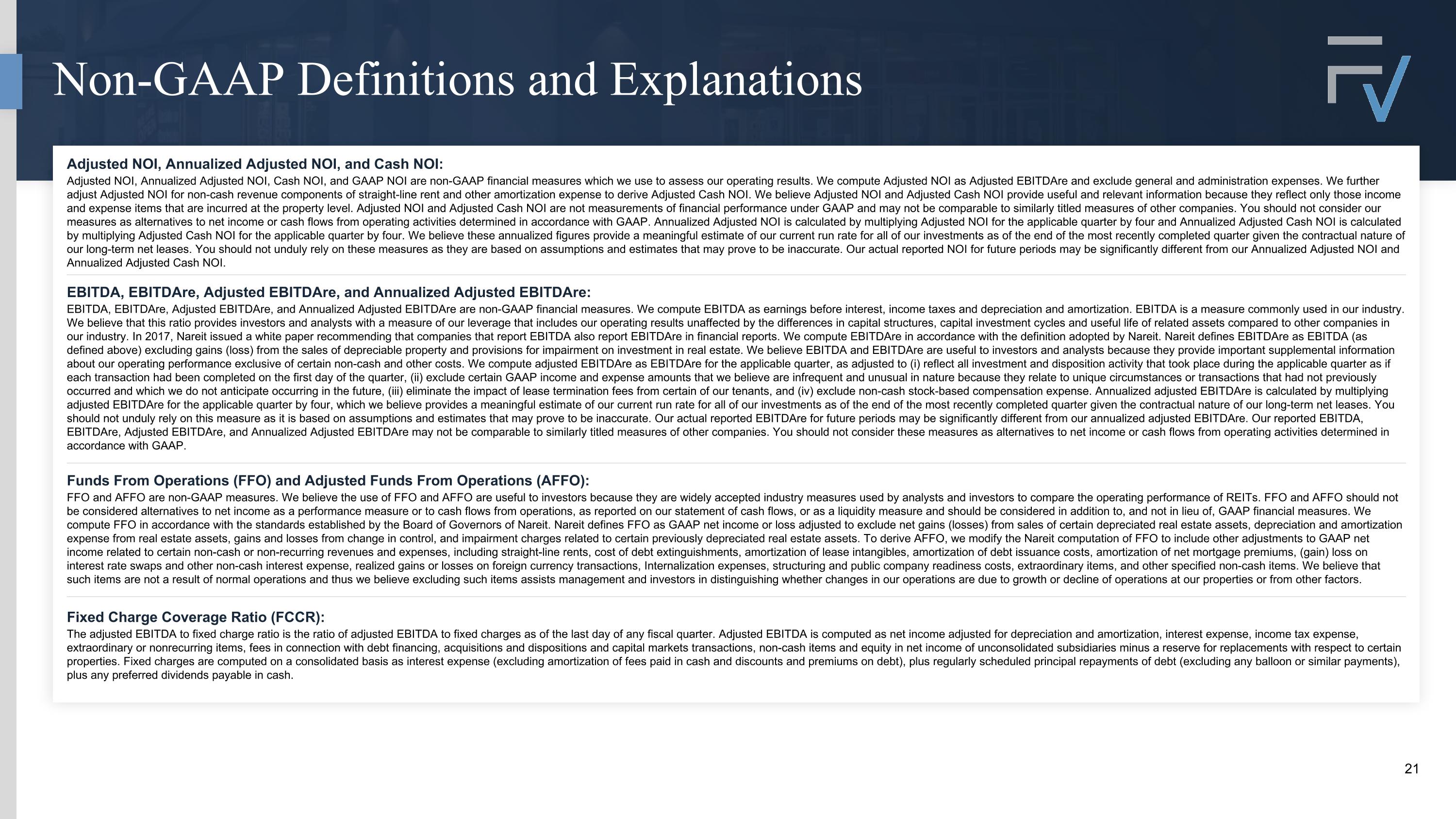
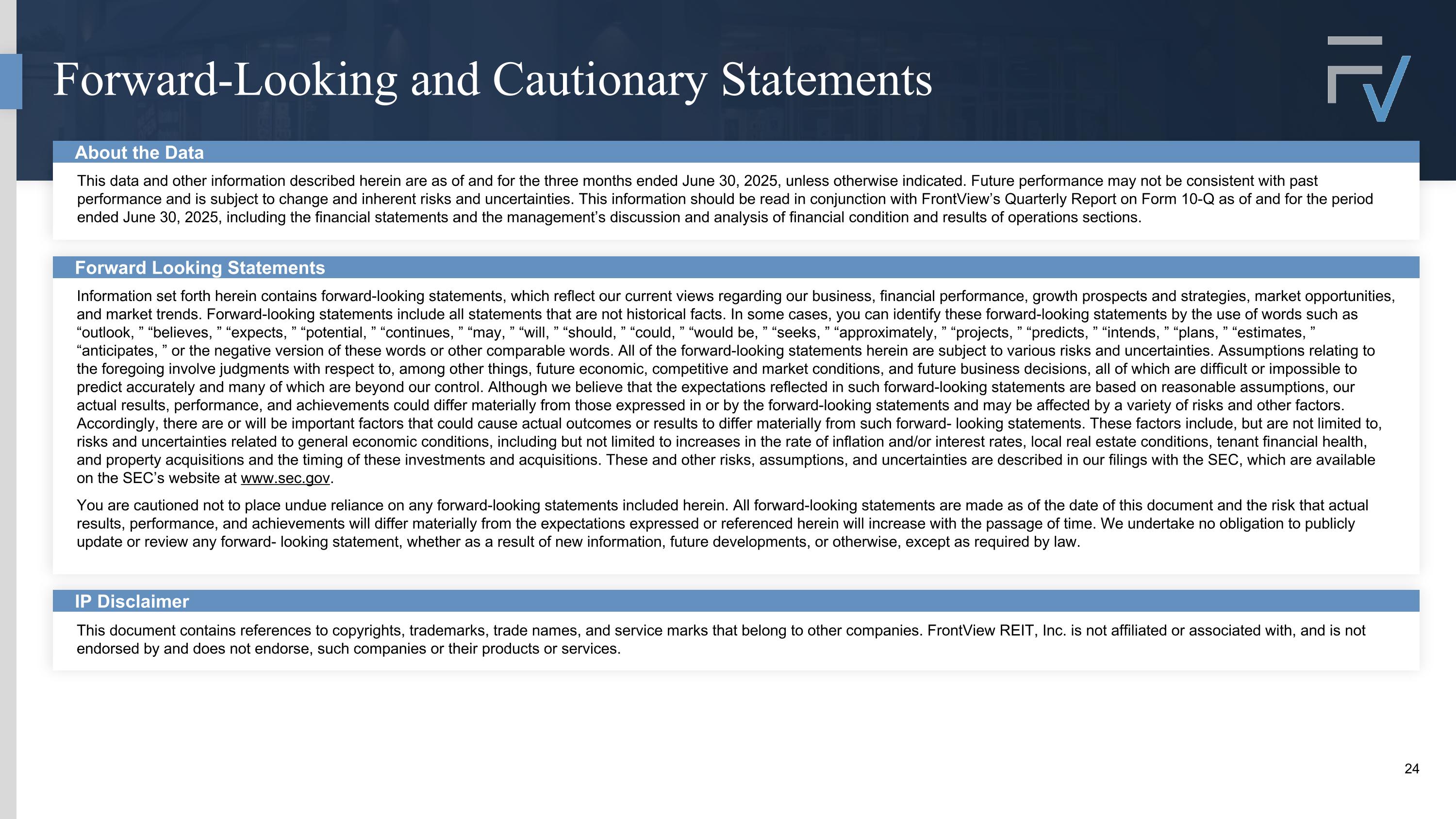
Thank you, operator, and thank you everyone for joining us for Front View's second quarter 2025 earnings call. I will be joined on the call by Steve Preston, Chairman and CEO. Through Ireland, our Chief Operating Officer will be available for Q&A. Before we get started, I would like to remind everyone that this presentation includes forward-looking statements. Although we believe these forward-looking statements are based on reasonable assumptions, we are subject to known and unknown risk and uncertainties that can cause actual results that differ materially from those currently anticipated due to a number of factors. I refer you to the Safe Harbor Statement and our most recent filings with the SEC, a detailed discussion of risk factors related to these forward-looking statements. This presentation also contains certain non-GAAP financial metrics. Reconciliation of non-GAAP financial metrics and most directly comparable GAAP metrics are included in the exhibits furnished to the SEC under Form 8-K, which include our earnings release and supplemental package. These materials are also available on the investor relations page of our company's website, along with our investor presentation. I'm now pleased to introduce Steve Preston.
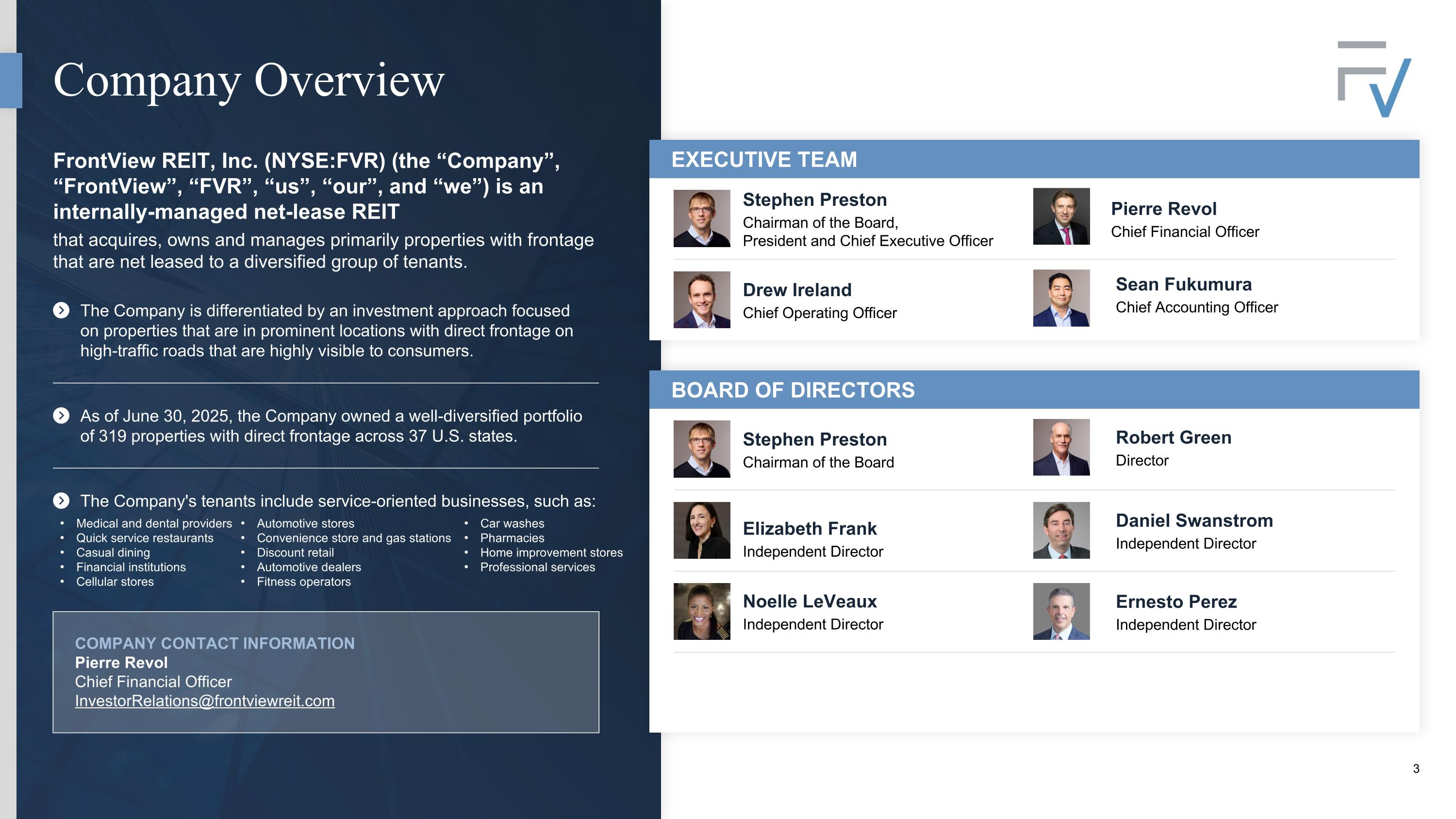
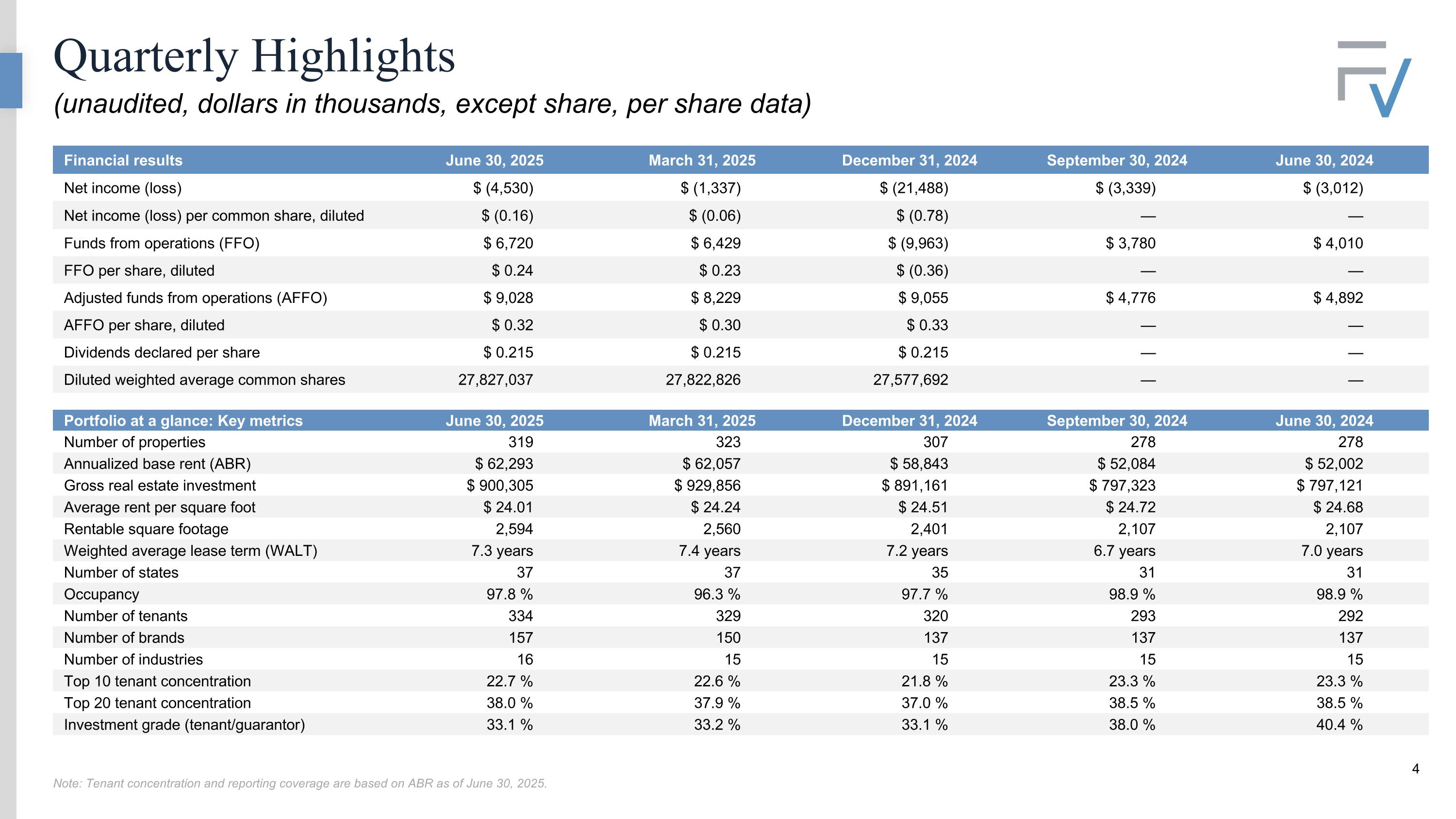
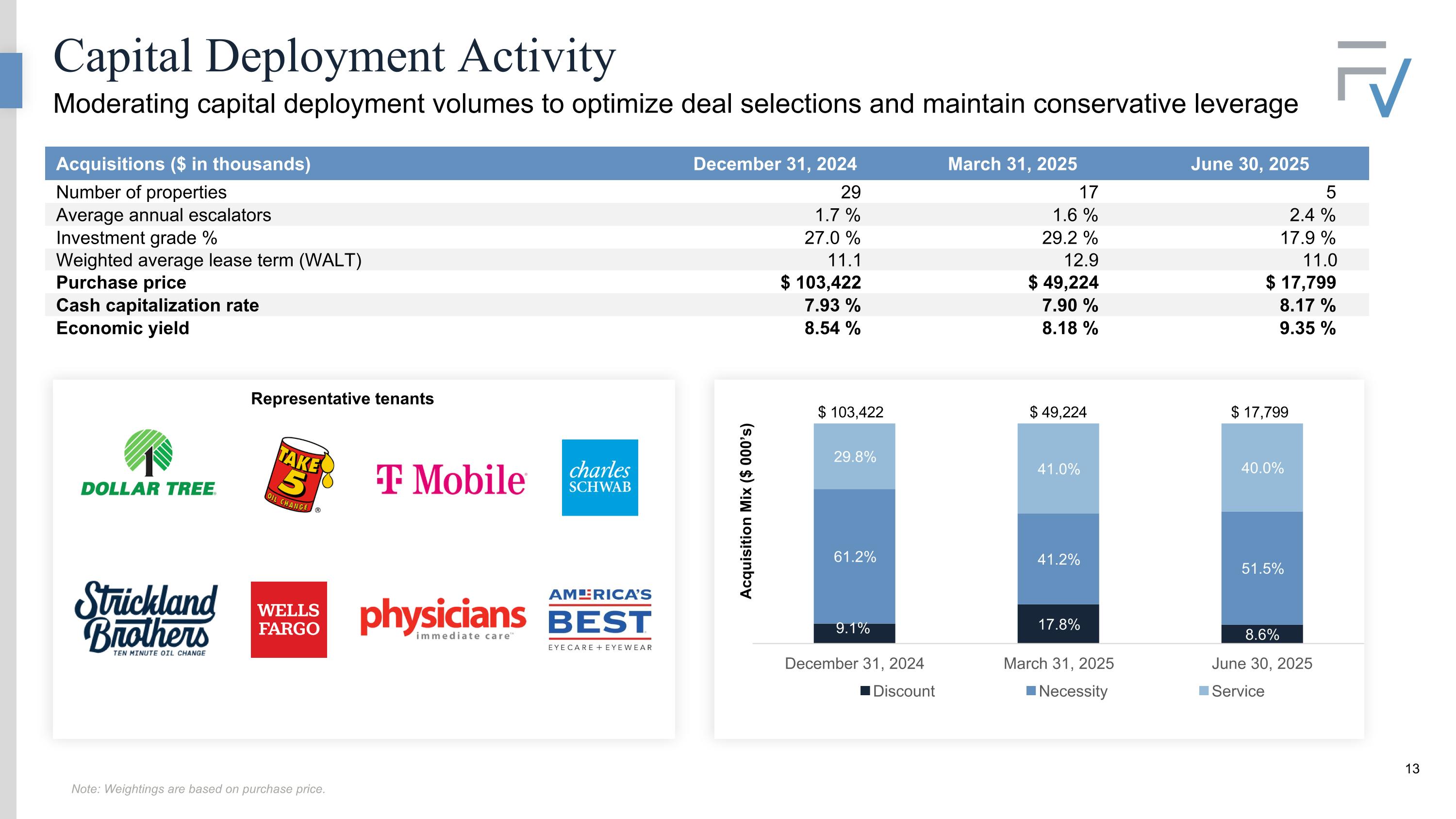
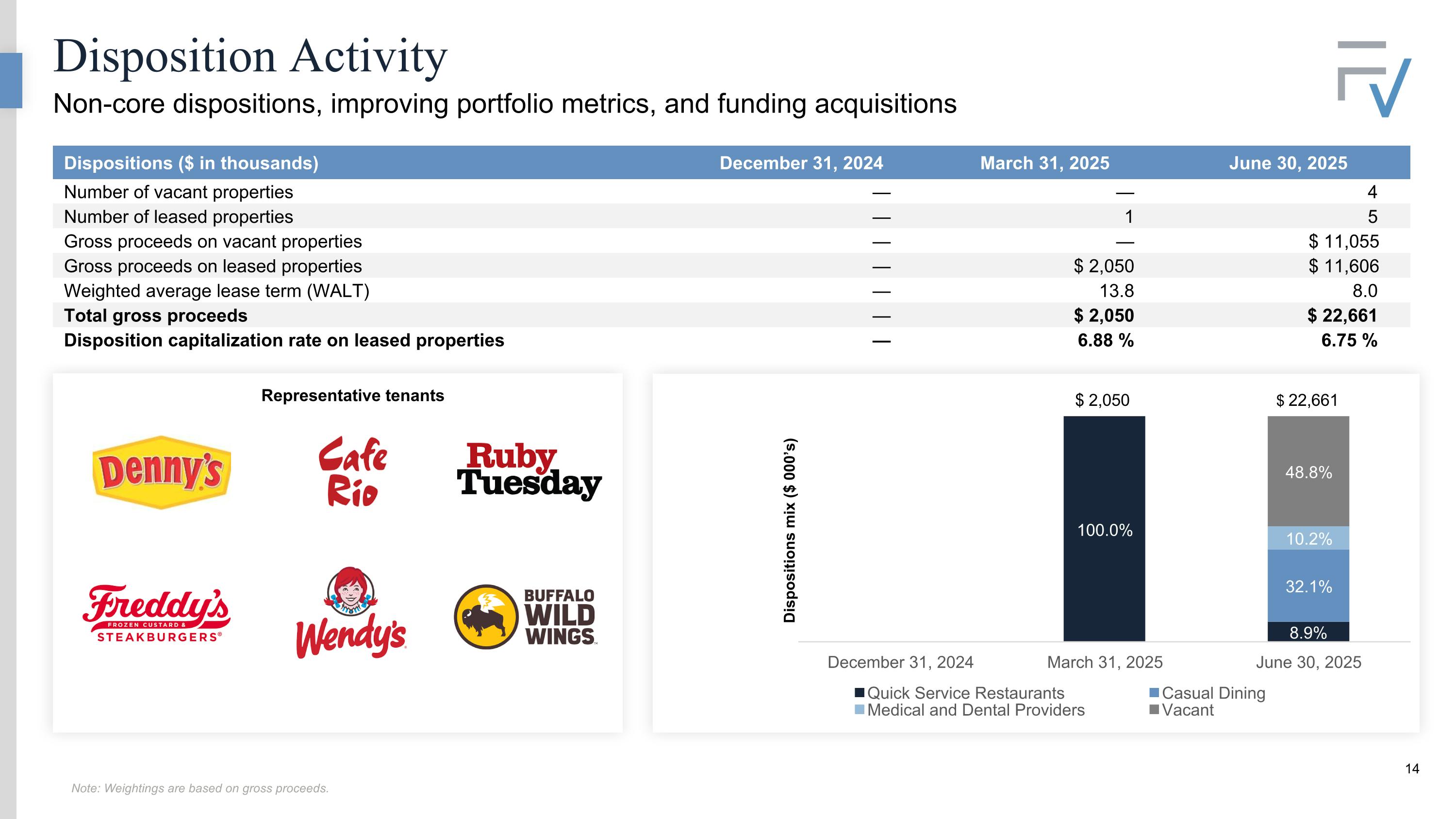
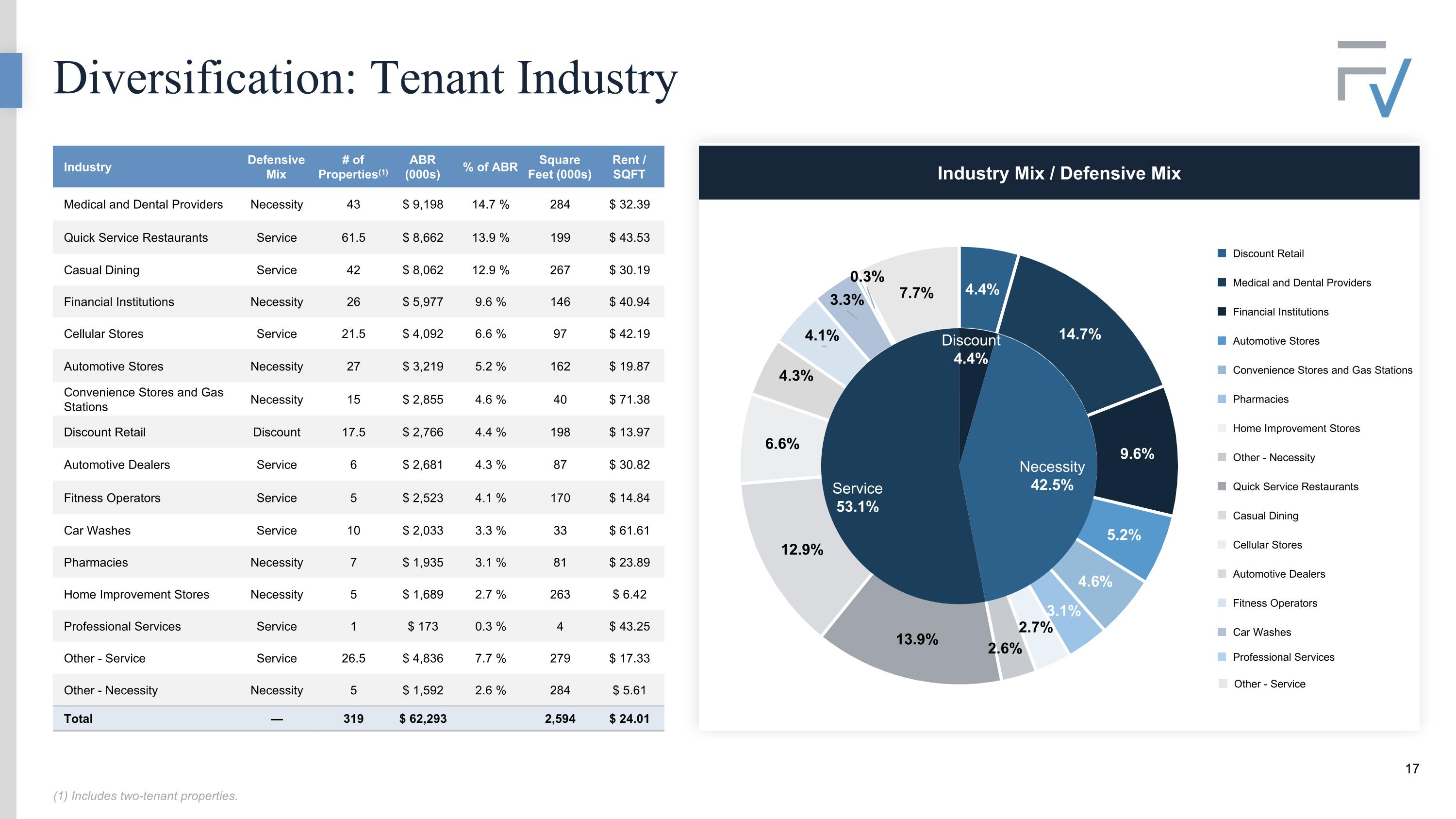
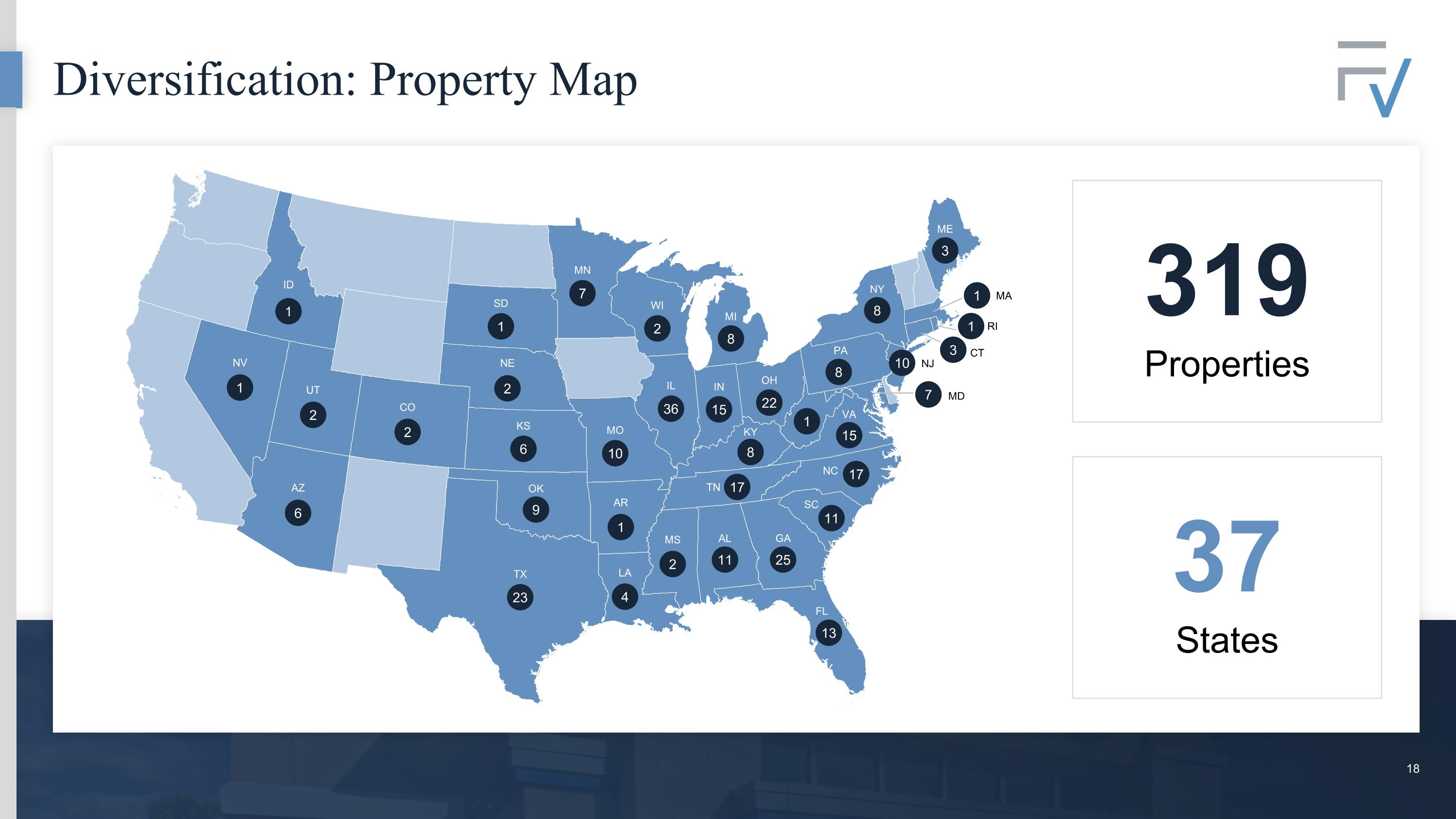
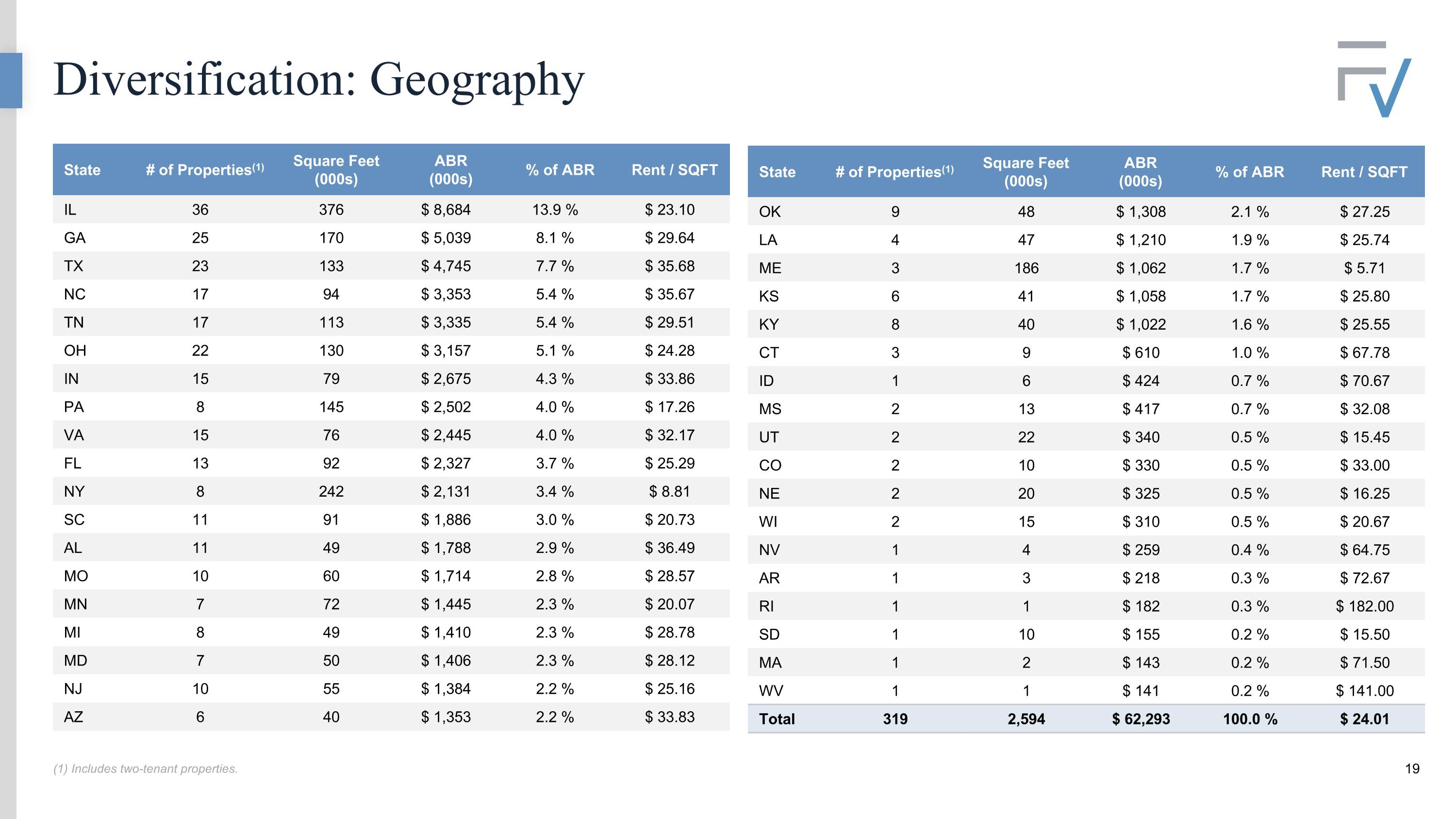
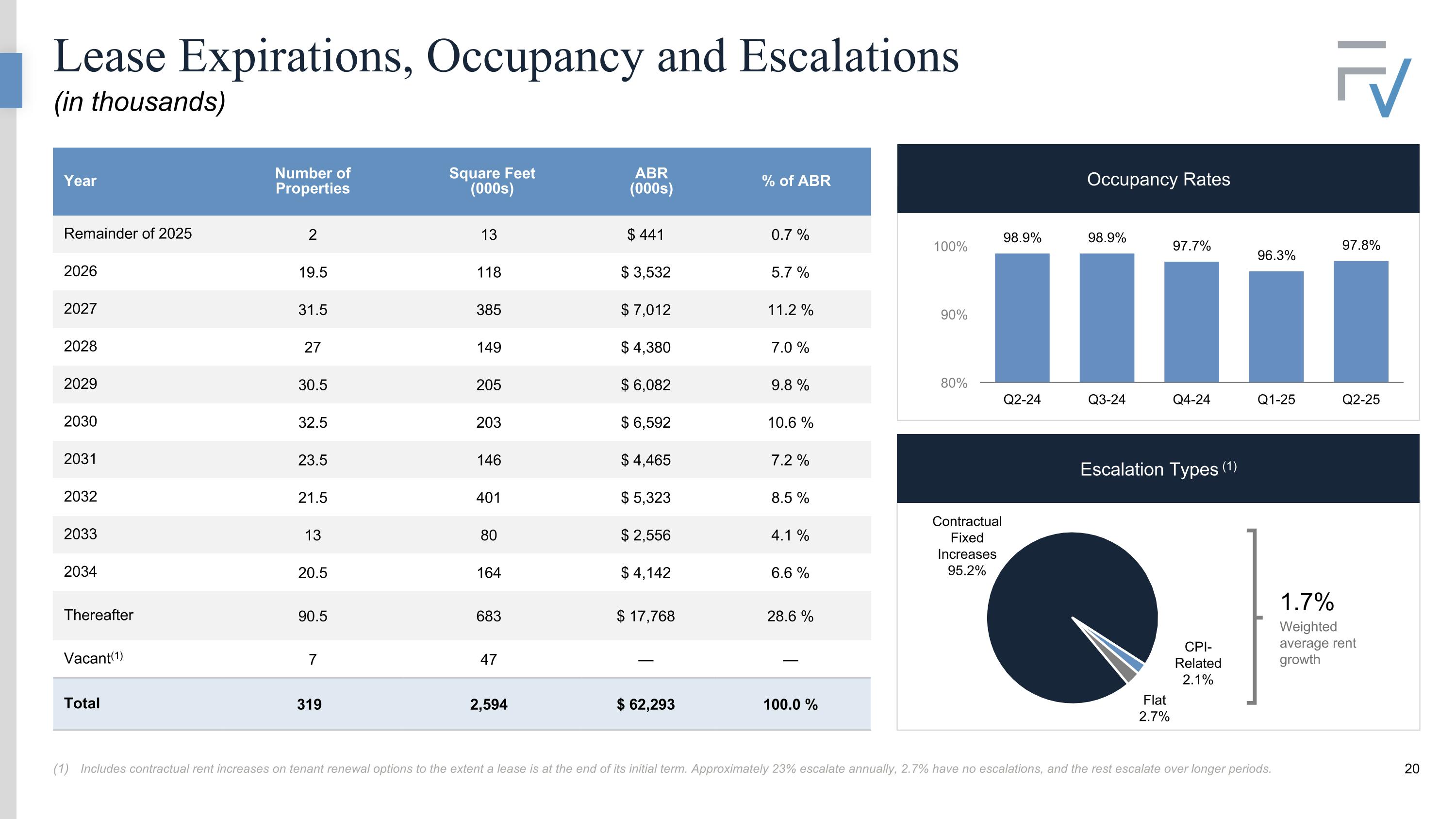
Thank you, Pierre, and good morning, everyone. As a reminder for our new investors, Frontview is a diversified net lease REIT that primarily focuses on high visibility frontage properties, typically with smaller box sizes, which are leased to household name tenants. As of June 30th, our portfolio consisted of 319 properties, leased to 334 tenants, operating across 16 industries. Our portfolio maintains excellent diversification, no tenant representing more than 3.3% of ABR. Before providing an update on our operations, I would like to formally welcome Pierre Revol as our Chief Financial Officer. Gare brings extensive experience within REITs, having led corporate finance, investor relations, and capital markets for both public and private REITs, as well as being a former buy-side REIT investor. Pierre's expertise will bolster Frontview's financial strategy, including capital markets execution, balance sheet management, communications, and operational excellence. I am thrilled to have him on the team. With his addition, our executive team is complete and optimized to operate and scale our business. Turning to the portfolio, we ended the quarter with occupancy of 97.8%, up from approximately 96% last quarter. We made exceptional progress in a remarkably short time frame on the 12 previously disclosed properties with troubled tenancies. This is now resolved and behind us. Of the 12 properties, we sold three during the quarter and one post-quarter for $11.8 million and over 89% recovery on the original purchase price. We released five properties for $687,000 in annualized base rent with a walt for 10.8 years. By combining the value of the new leases with the reinvestment of disposed properties, we have already recovered approximately 65 percent of the aggregate prior rent from just these nine assets. Only three assets remain, with one under contract to sell, one with buyer interest, and one with national tenant interest. The successful resolution highlights the strength of our underlying high-quality real estate, which is characterized by high-visibility frontage locations appealing to various users, allowing us to re-tenant, repurpose, or sell assets in order to maximize value for each location. Outside of these assets, the tenants in our portfolio are performing as expected with negligible credit loss and no material additions to our watch list. During the second quarter, we acquired five properties for approximately $17.8 million and an average cash cap rate of 8.17%. The weighted average remaining lease term for these properties was approximately 11 years, with average annual escalators of approximately 2.4% and an economic yield of 9.35%. From an industry perspective, we continue to add diversification, including adding financial, medical, discount retail, automotive, and logistics distribution. In terms of property dispositions, we sold nine properties for $22.7 million during the quarter. Five were occupied properties, generating proceeds of $11.6 million, and an average cash cap rate of approximately 6.75%. These properties had an average weighted lease term of eight years. Our current target dispositions are assets with lower walls or less optimal concepts. Additionally, we sold four vacant properties during the quarter, recovering approximately 90% of the original purchase price, with these funds being redeployed into income-producing properties. These asset sales demonstrate the continued desirability and liquidity of our real estate assets and highlights a meaningful spread between our implied cap rate of approximately 10% versus where our assets are transacting in the market. Looking at net investments, we were net sellers this quarter and our net debt to annualized adjusted EBITDA fell to 5.5 times with an LTV of less than 40% using consensus estimates for nets. As we look forward to the remainder of the year, we have adjusted our net capital deployment guidance. On the capital front, we are increasing our capital recycling by raising our disposition guidance to $60 million to $75 million and reducing our acquisition target to a range of between $110 million and $130 million. On the acquisition front, we will remain selective, pursuing high-visibility properties with strong credits and attractive valuations. Our pipeline of opportunities remains strong and we believe we will be able to accelerate acquisitions if supported by our capital recycling plan or an improved cost of capital. Going into the third quarter, we see cap rates trending around 7.5%. On the disposition front, we have an active pipeline of assets with less optimal concepts and or lower waltz, where we currently anticipate that the cap rates should be 50 to 75 basis points lower than those in our acquisitions, while improving key portfolio metrics, including waltz and industry composition. In summary, we have a strong team of real estate and capital markets professionals in place to lead us forward, a high-quality portfolio of liquid real estate assets, and a pipeline of investments and dispositions that will further enhance our portfolio. Finally, we are well-equipped with a strong balance sheet to execute on a pipeline of opportunities to accelerate external growth when there is an attractive spread to our cost of capital. With that, I'll turn the call to Pierre to go through the quarterly numbers and guidance.
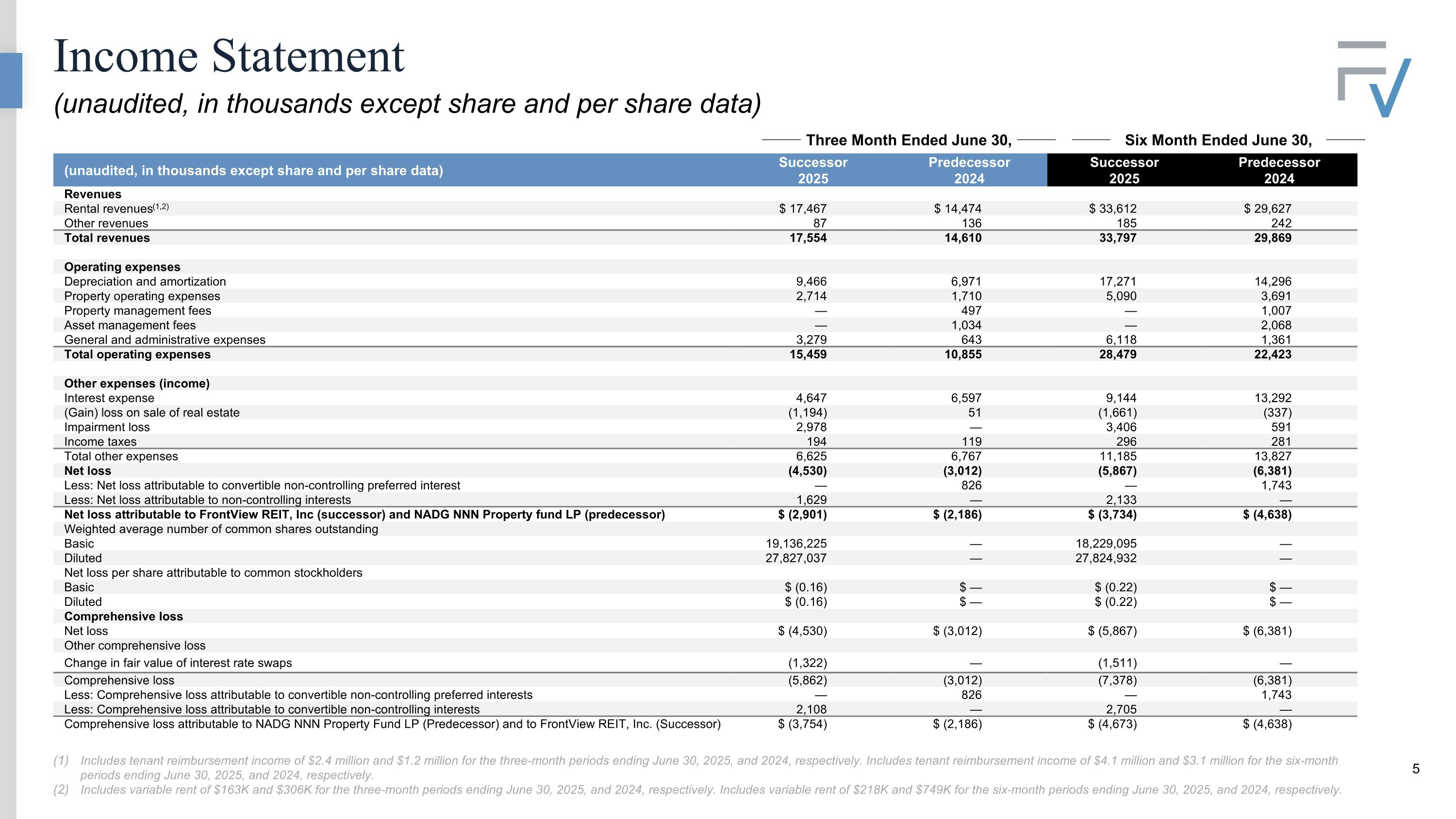
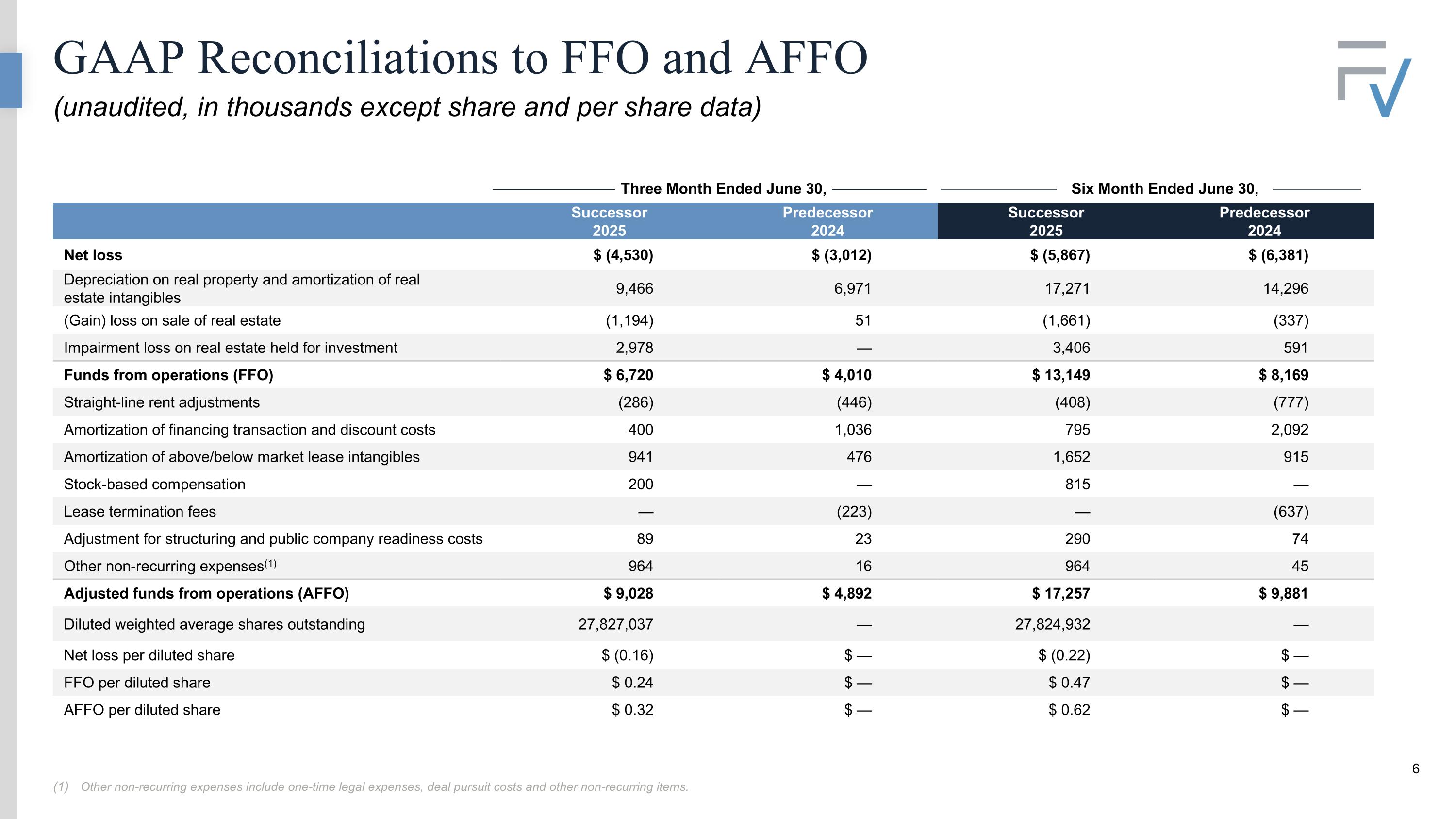
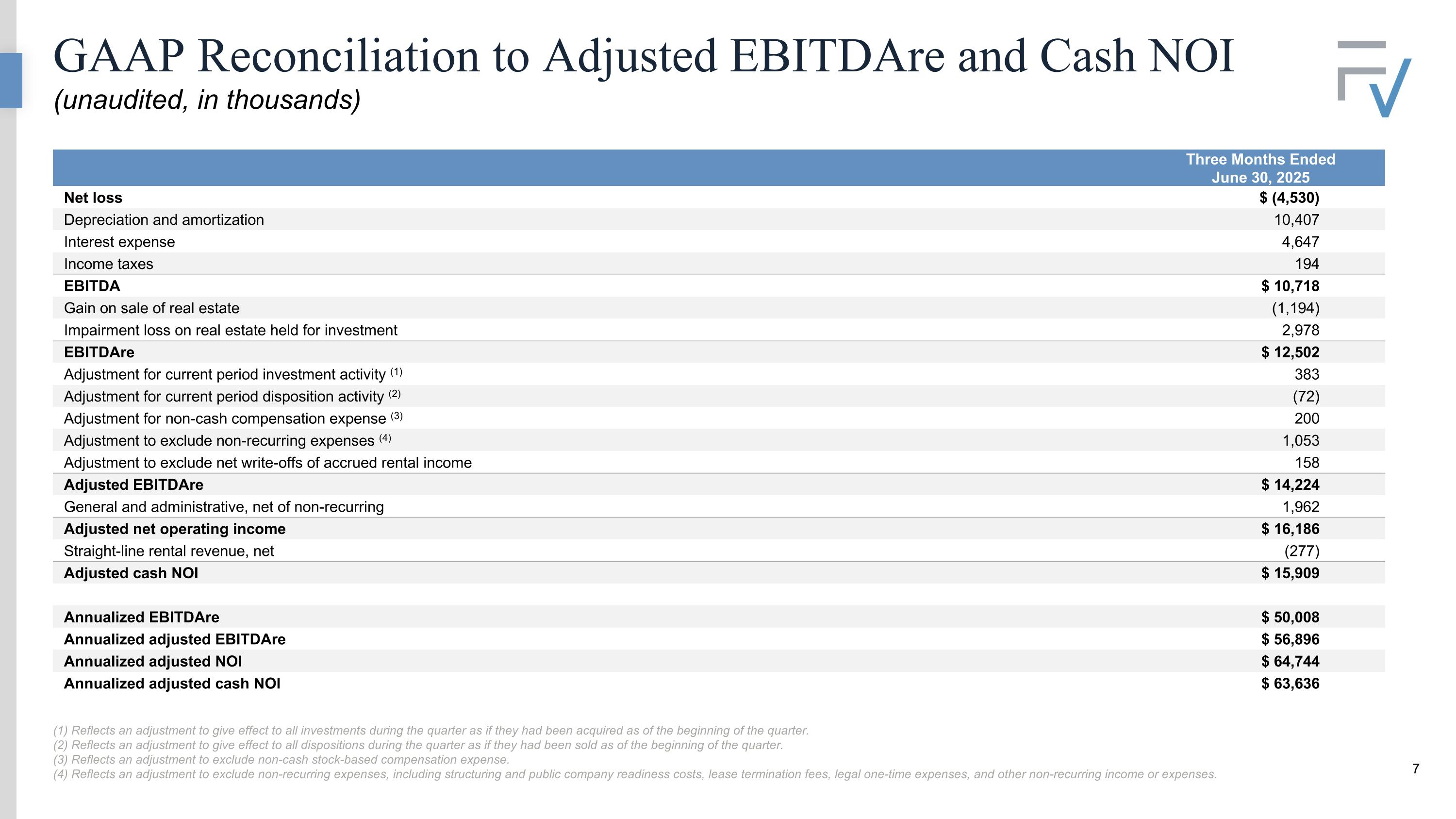
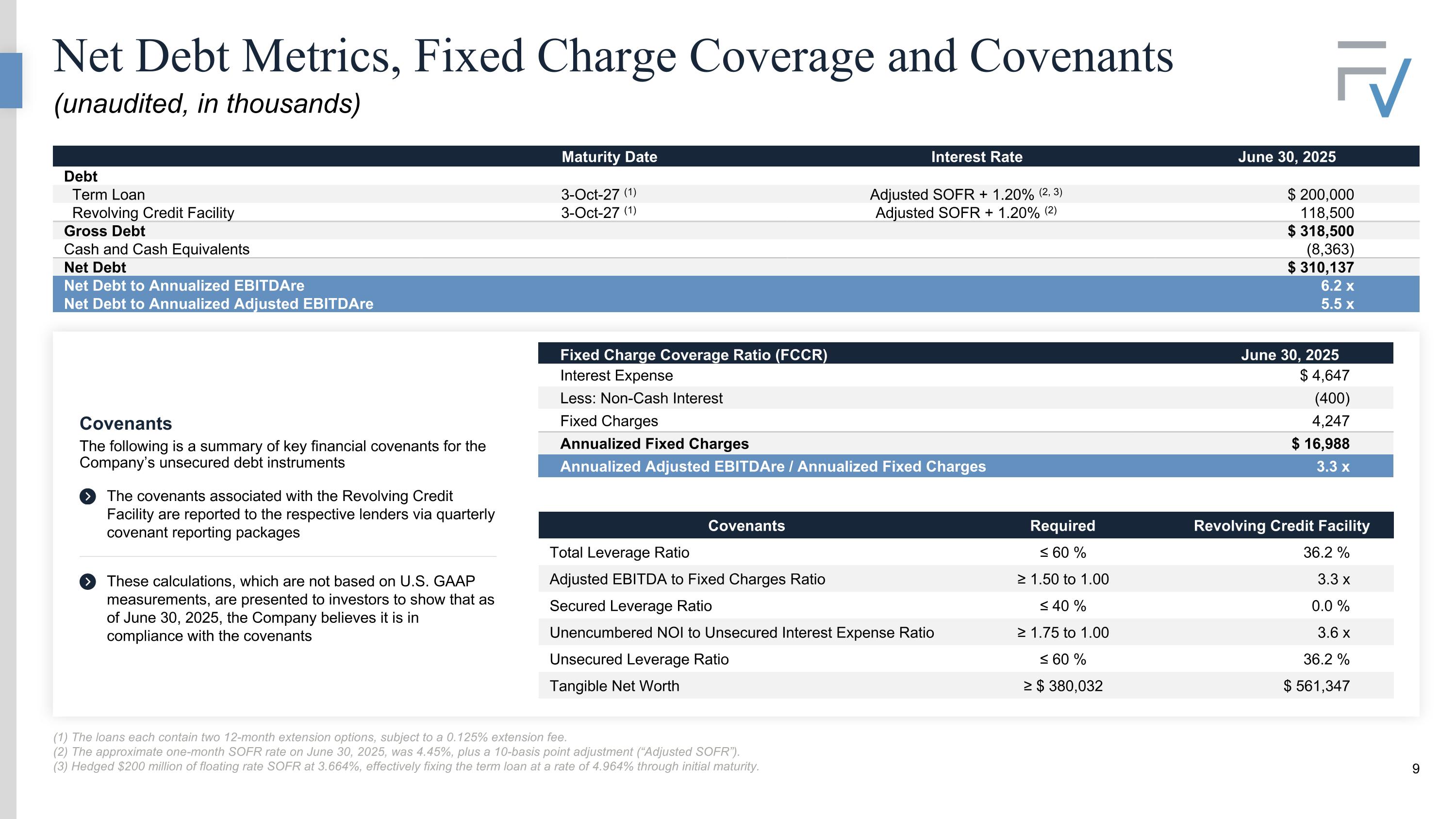
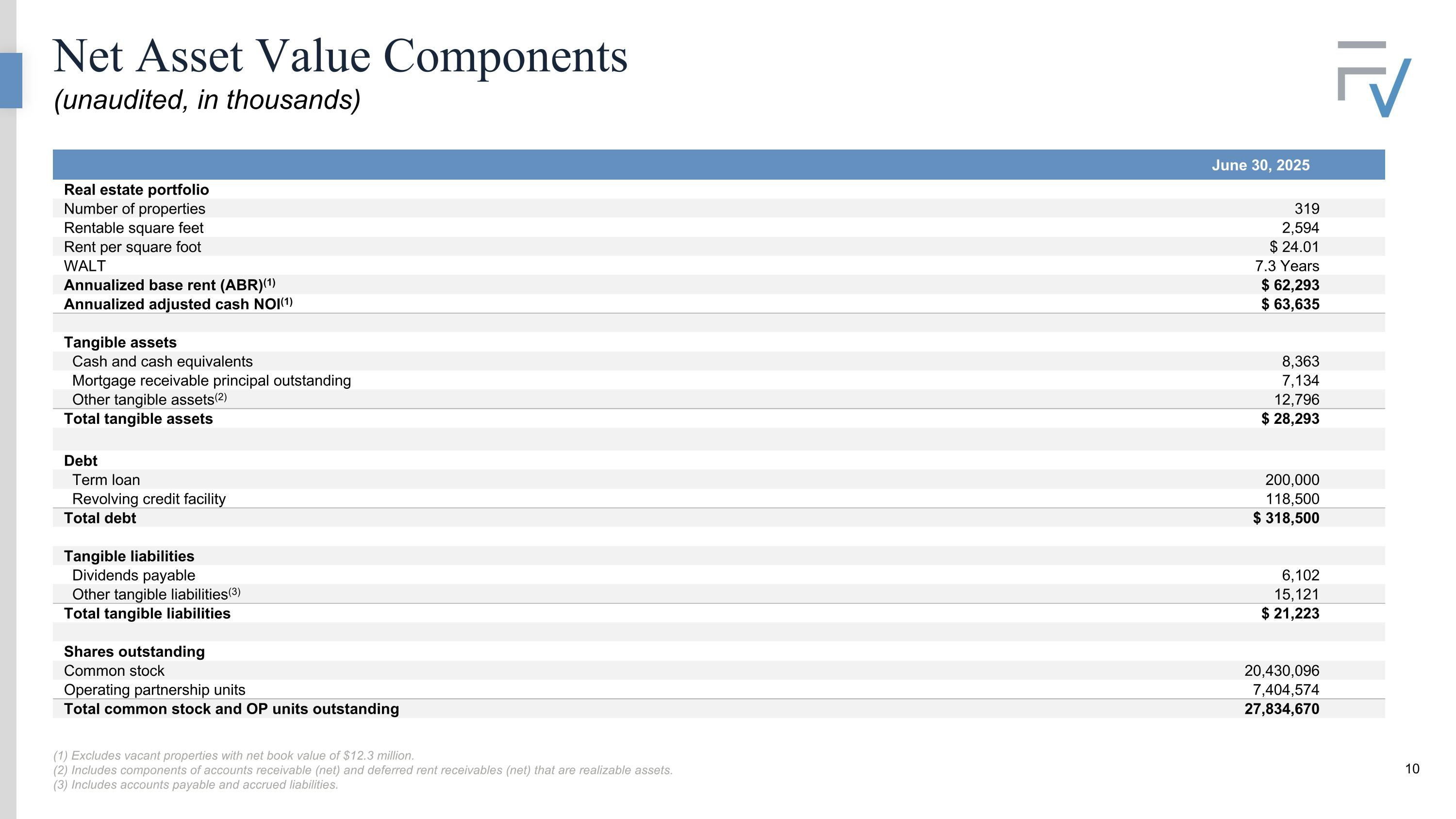
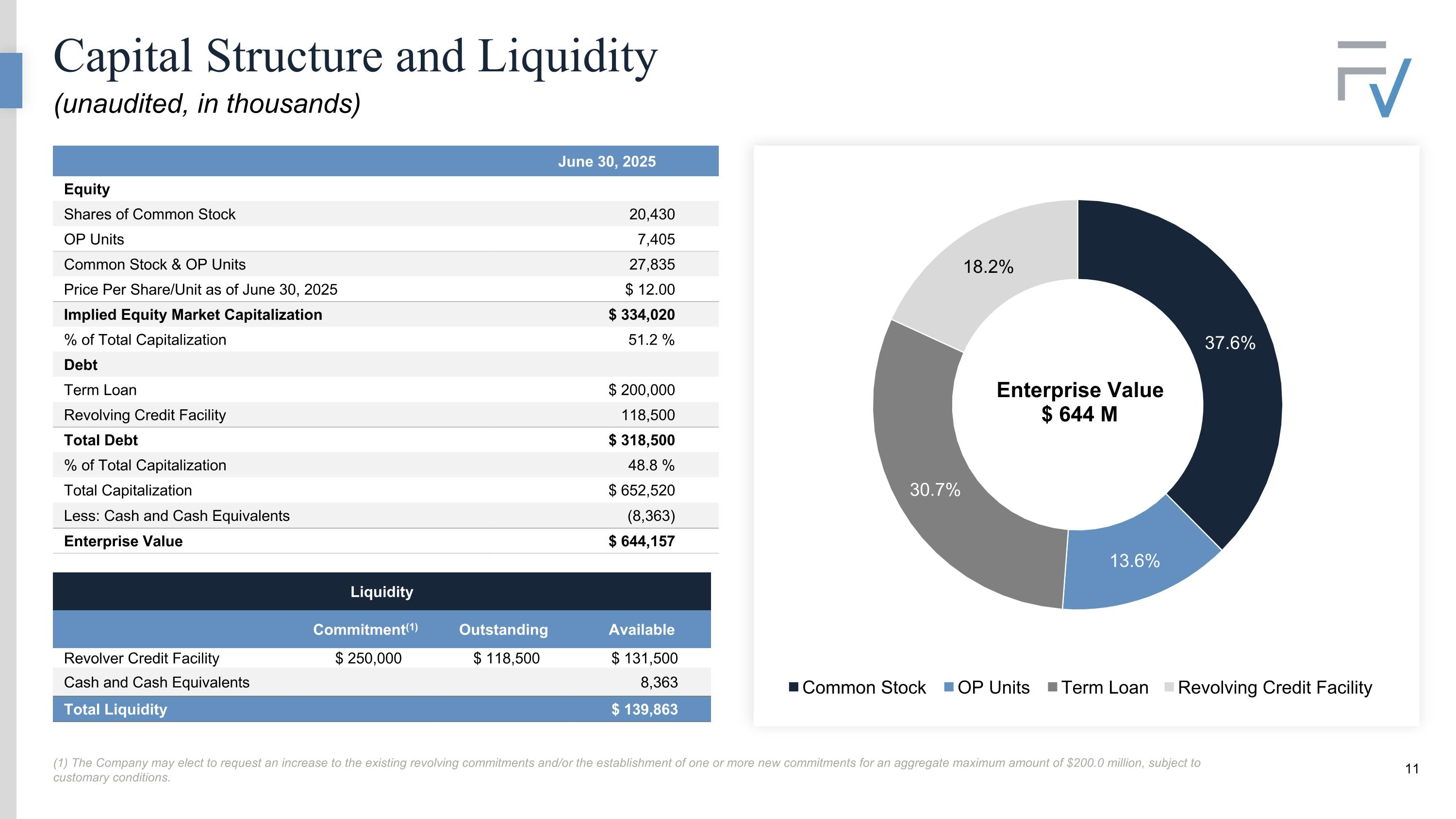
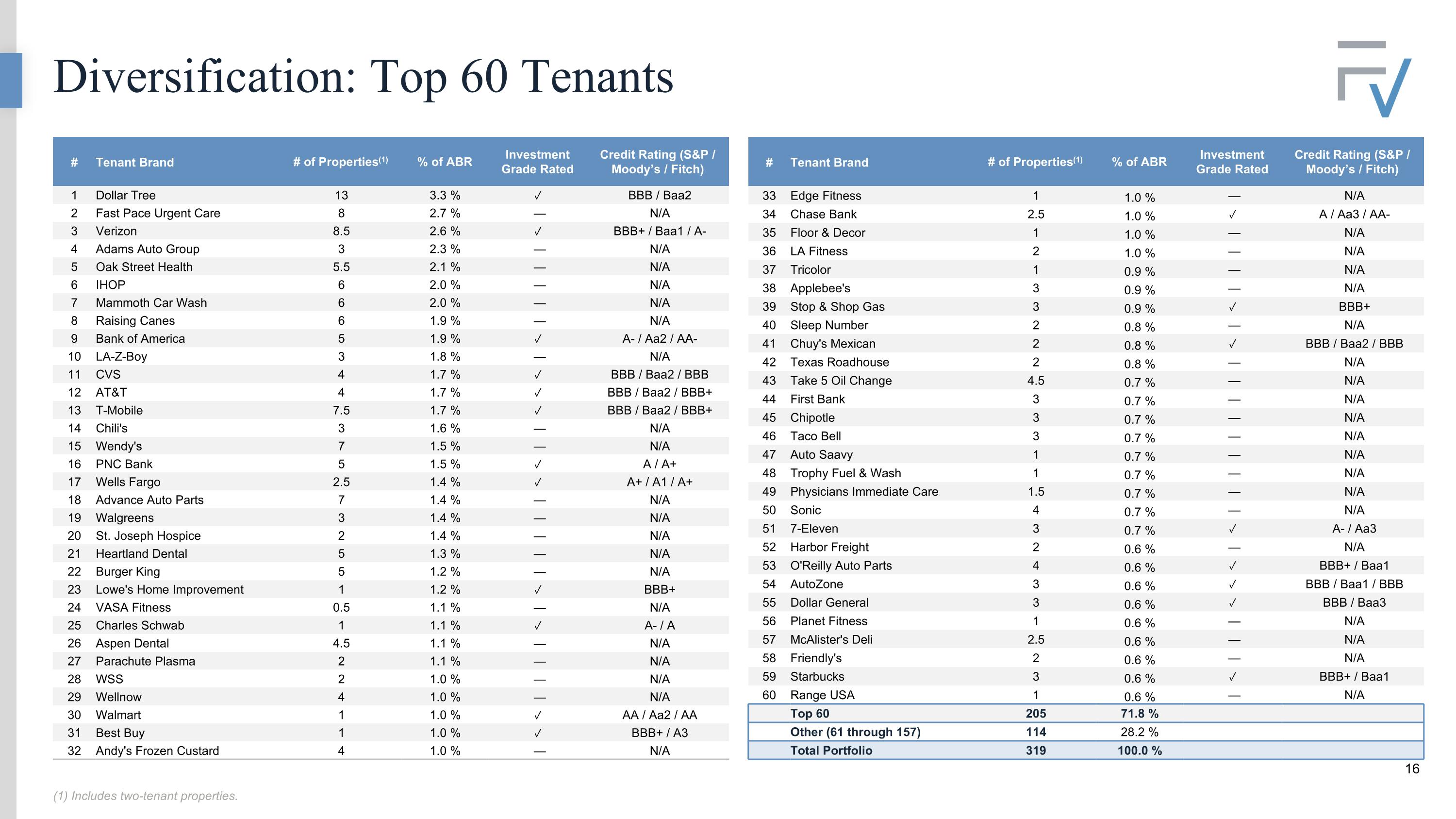
Pierre. Thank you, Steve. I appreciate the warm introduction. It's a privilege to join the Frontview team and contribute to enhancing the platform for long-term value creation. Before diving into the quarterly update and guidance, I want to highlight a few new disclosures that we believe will be beneficial to shareholders. In our supplemental materials, we are providing more detailed information for both our investments and dispositions, breakdown of our NAV components, and annualized adjusted cash NOI. Additionally, we have also expanded our tenant disclosures to include our top 60 tenants, offering greater insight into the portfolio. As Steve highlighted, it was a very positive quarter on several fronts, including accretive net capital deployment and portfolio performance. Our cash rents in the second quarter were $15.7 million, which includes $15.5 million in base rent and $163,000 in percentage rent, an increase of $600,000, or 4%, from last quarter, primarily driven by the acquisitions completed in the first quarter and increased percentage rents. Our total revenue increased $1.3 million sequentially to $17.6 million, which includes straight-line rent, other income, and other non-cash revenue. Our non-reimbursable property costs, or leakage, was $275,000, or approximately 1.8% of base rent. This includes some recoveries in expenses and would expect normal leakage to be closer to $500,000 on a quarterly basis. Turning to G&A, we reported $3.3 million in expenses this quarter, which included approximately $1.1 million in non-recurrent costs, primarily related to one-time legal expenses pertaining to the former CFO investigation, along with other non-recurring fees. Excluding non-recurring items, our GNA for the quarter was approximately $2.2 million compared to $2.8 million in Q1. Adjusted cash GNA for the quarter totaled $2 million, a reduction of roughly $200,000 from Q1. Looking ahead, we see full-year cash GNA, excluding non-recurring charges, would be approximately $8.8 million, collecting a $200,000 reduction from prior guidance from both the high and low end. Driven mostly by improved cash NOI, lower cash G&A, AFFO per share increased $0.02, or 6.7% quarter over quarter to $0.32. We declared a quarterly dividend of $0.21.5, cents, representing a 66% payout ratio on AFFO per share. Turning to the balance sheet, the end of the quarter with $118.5 million drawn on our revolving credit facility and $200 million on our terminal. We currently have approximately $140 million of liquidity, comprised of $131.5 million revolver capacity and $8.4 million of cash on hand. In addition, our revolving credit facility includes a $200 million accordion feature, which we may elect to exercise at our discretion, subject to customary conditions. Our $200 million term loan is fully hedged through initial maturity at a rate of 4.96%. The revolving credit facility bears interest at a floating rate of adjusted one-month SOFR plus 1.2%, with an effective rate of 5.63% as of June 30th. Both the revolver and the term loan include two 12-month extension options subject to customary conditions, which can extend final maturity to 2029. From a leverage standpoint, we ended the quarter at 5.5 times net debt to annualized adjusted EBITDA RE, a 0.2 turn reduction from Q1, primarily driven by increased disposition activity and lower operating costs. Our fixed charge coverage ratio remains strong at 3.3 times, and our balance sheet is conservatively positioned with LTV slightly below 35%, utilizing consensus applied cap rates of 7.1%. With our revised net capital deployment guidance, do not expect a meaningful increase in leverage, average, staying between 5 times and 6 times net debt to adjusted annualized EBITDA RE. Turning to guidance, as Steve highlighted, we are lowering acquisition range to $110 million to $130 million, the midpoint of $120 million, and raising our disposition range from $60 million to $75 million, the midpoint of $67.5 million. At the midpoint, this represents a $15 million reduction in acquisitions and a $37.5 million increase in dispositions. While we continue to maintain an active pipeline at both fronts, this shift reflects a deliberate capital recycling strategy, observing liquidity, managing leverage, and enhancing portfolio quality. Additionally, we are narrowing our AFFO per share guidance range to $1.22 to $1.24, driven primarily by the revised capital allocation plan. Looking ahead, we remain focused on continually enhancing the portfolio and maintaining balance sheet discipline. Steve, back to you for closing remarks.
Thanks, Pierre. As I mentioned earlier, we have the right team to execute, bringing both real estate and capital markets expertise. Our portfolio consists of high-quality, frontage real estate in strong demand, allowing us to proactively manage and maximize value. We've enhanced our disclosure with a refreshed supplemental and investor presentation, providing investors more relevant data.
Operator
As we move into the second half, we'll remain disciplined capital allocators, expanding our capital recycling program to deliver accretive financial and portfolio gains, while maintaining a strong and flexible balance sheet with that i'll turn the call back to the operator to begin q a operator thank you very much ladies and gentlemen we will now begin the question and answer session should you have a question please press star followed by the number one on your touchstone phone you will hear a prompt that your hand has been raised should you wish to decline from the polling process please press star followed by the number two if you are using speakerphone, please make sure to lift your handset before pressing any keys. Please be reminded that we will only be taking one question and one follow-up per participant for today's Q&A session. Your first question comes from the line of John Kieliszewski from Wealth Forgo. Please go ahead.
Cheryl
Analyst — WealthForge (on for John Kieliszewski)
Hi, I'm Cheryl, on for John. Good morning and thank you for taking my question. You narrowed the AFFO per share guidance range, but the midpoint remains unchanged despite right another reduction in net investment volume. Can you walk us through what gives you the confidence in holding the midpoint flat?
Sure, I'll take that one. Essentially in the quarter, as you saw that the operations were pretty strong at 32 cents. And so for the first half of the year, you know, we're at 62 cents. And when we look at the resolutions on the 12 properties discussed before, the performance of the existing tenants, We believe that for the back half of the year, we can probably do between $0.30 to $0.32 a quarter, and targeting $0.31 seems very reasonable given what we see on the existing portfolio.
Cheryl
Analyst — WealthForge (on for John Kieliszewski)
Okay, thank you. That's helpful. And one follow-up on the nine resolved properties of the 12. Should we expect any adjustments to bad debt guidance going forward, given the improved visibility on the leasing progress?
Sure, I'll take that as well. So on the bad debt guidance, we did not include it this quarter. It was essentially part of the original guide, which was reflecting those 12 properties. As Steve commented on his remark, the portfolio outside these 12 has had de minimis credit losses. So at this point, we're just not providing an update on bad debt guidance. We think that for the remainder of this year, what we see is a very healthy portfolio. We look forward to resolving the remaining three properties with the responses from Steve, and the portfolio is actually pretty healthy. And that's why, despite reducing our net capital deployment meaningfully, you can still produce a very strong quarter, third and fourth, and that's why we were able to increase the low end to $1.22.
Cheryl
Analyst — WealthForge (on for John Kieliszewski)
Very helpful.
Operator
Your next question comes from the line of Anthony Pallone from JP Morgan. Please go ahead.
Thanks. Welcome, Pierre, and appreciate the incremental disclosure as well. First question is, as we think about acquisitions and dispositions over the balance of the year, how should we think about just the spread and cap rates between the two? I mean, you're able to produce a positive spread in the quarter, and just wondering if that's something you think can continue and then also any um incremental color on the acquisitions in the quarter you know cap rates north of an eight and also bumps north of two which is you know higher than what we'll typically see in net lease so just wondering kind of how you're achieving those yeah sure i'll take that thank you yeah no we uh we expect uh to see as we mentioned uh you know earlier you know about a 50 to 75 basis point differential between where we're selling assets and then where we're transacting into the marketplace and we expect that hopefully to
continue throughout the year you know with respect to what we're buying you know we're continuing to buy great assets with frontage from you know very motivated sellers we achieve typically these outsized cap rates because you know we're not typically competing with institutions in the space and if you remember we've got that fragmented market where the buyers are typically small and they're unsophisticated you know we've got great credit on these assets as well they're solid corporate credit large operations with long-term operating businesses and just to you know to echo a couple of examples of a few of the assets so lazy boy you know we bought that roughly about a seven and a half cap with about 10 years left remaining about a strickland brothers as an example with 15 years left at about a seven and a half cap rate and a range usa with about 18 years left and eight cap rates so these are all great assets great corporate credits and uh it's just a testament to how we continue to be able to uh to buy in at the marketplace and with respect to the escalators you know those are uh those are just those are built into the leases and uh you know we typically average about one to two percent across the portfolio and it just so happened amongst this mix that the escalators you know came in a little bit higher there there were a couple assets that we acquired that had more than sort of that average one to two percent built into the lace okay got it thanks and then just one other one just maybe
more of a clarifying item in your nav build up in the supplemental the noi number is higher than the base rent number and i guess i would have just intuitively assumed that would be flipped given sort of some normalized leakage but just wondering like you know what I'm missing there.
Well yeah there's other income as well that's not part of the ABR. There's some interest income on loans that's also not part of the ABR and so that was it's essentially just some of the that that net other income that was that was picked up in Indiana. Why that's outside of it.
Operator
Your next question is from the line of Daniel Guglielmo from Capital One Securities. Please go ahead.
Hi, everyone. Thank you for taking my questions. So as mentioned in the commentary, you all are in an elevated recycling mode, but share prices change fast with the right strategy and execution. So is there a certain share price level where you all would feel comfortable kind of flipping the switch and starting to become a more meaningful acquirer. I'm just curious how you all think about that, Matt.
Sure. So there's actually a page in the investor presentation where we highlighted that if we were to get a positive spread on our acquisitions, I think that this platform could really grow. We have a robust pipeline for acquisitions and our assets are sought after by several investors. And I think that the opportunity to accelerate is certainly on the table, but we want to achieve an attractive spread. So if you're looking at a cap rate of roughly 7.5%, what Steve talked about in the call, you would want to make sure that whatever cost of capital is inside of that. And that really is what's driving where we'll start to pivot more towards acquisitions. At this point, though, just given where our applied cap rate is, you know, cost of capital, I think the most prudent way to manage a balance is to execute on this recycling plan. We've seen that work for some of our peers, and I think that it could work for us just given the quality of our portfolio and maintaining leverage on the level is important.
That's really helpful. Thank you. And then a big part of the IPO pitch was the strength of the team's broker relationships and how those connections really help funnel frontage properties to you all. I know Randy was focused there in the COCE roles. So can you just talk about how you all are continuing to foster those broker relationships with a slower acquisition cadence, and then who's taking on that kind of liaison role now?
Yeah, that's a good thing. Let's just start with, you know, this is behind us too with respect to Randy and the CFO, and with respect to the acquisitions and dispositions, I think as we've mentioned before, you know, our team has been in place since the IPO and was really handling a bulk, if not almost all of the acquisitions since the IPO. So they are in place and ready to meet our guidance.
Operator
The next question is from the line of Ronald Camden from Morgan Stanley. Please go ahead.
Hey, just staying on the investments a little bit.
I think you said seven and a half on the cap rates maybe just talk a little bit more about is that just cap rate compression is there a mix and then anytime we could sort of quantify the pipeline is it is it 50 million 100 million like when you're ready to ramp just how big do you think you can get thanks sure you bet um you know i would just say you know with respect to that state of the acquisition market uh you know the market is fluid you know and as we had mentioned that we do expect you cap rate sometime you know in q3 somewhere in that seven and a half percent range inside a little bit from where we've been acquiring and i think that's a little bit of a testament to leverage being a little bit easier for buyers to obtain now a little bit less noise in the marketplace so for some of these smaller properties from some of these smaller banks but there is uh there is still a unbelievable amount of opportunity for us we've got a strong pipeline and you know we can increase that pace of acquisition at any point in time i think we had originally guided to you know roughly about 200 million dollars for the year you know in q4 24 we did over or about 100 million dollars uh of acquisitions and if we give that cost of capital back we've got the team in place that i see no reason why we can't meet or exceed that prior guidance great helpful and then just going back on the tenant health conversation, obviously good progress on those 12 assets.
And, you know, I can appreciate that bad debt is sort of de minimis outside of those, but just on a long-term basis, when you're thinking about sort of the watch list and how things are trending, how should we think about what the long-term bad debt number we should be baking in?
Yeah. So what I would say is uh really no material changes or additions to the watch list uh you know we've you know as we mentioned before we've you know we watch pharmacy just like everybody else car wash like everybody else you know we prior mentioned that we had you know two applebees and a couple of burger kings that we're watching those are open and operating you know a pair of gas stations but overall everything uh you know is uh is very healthy you know as we as we look to see going forward you know what i would highlight is that you know since we founded this business in 2016 we have had 47 lease expirations and only seven have expired with 40 renewing to the same tenant, three renewing to a new tenant at 104% recovery rate, which is over a 90% renewal rate. So when we look forward, you know, we feel very good. And, you know, I'll just, you know, leave you with one other sort of tidbit here. You know, if the 12 were stabilized in 2025 that we've been talking about, bad debt expense, as Pierre mentioned, would be negligible. And we'd be looking at somewhere in the 25 basis point, maybe 50 on the high side. So I think we feel like this portfolio is humming. It's very strong right now. Performance is good. Collections are great. And we expect that that's going to be something that continues with this portfolio, more in line with the historicals and not that anomaly we were just dealing with. Thanks so much.
Operator
The last question comes from the line of Daniel again from Bank of America. Please go ahead.
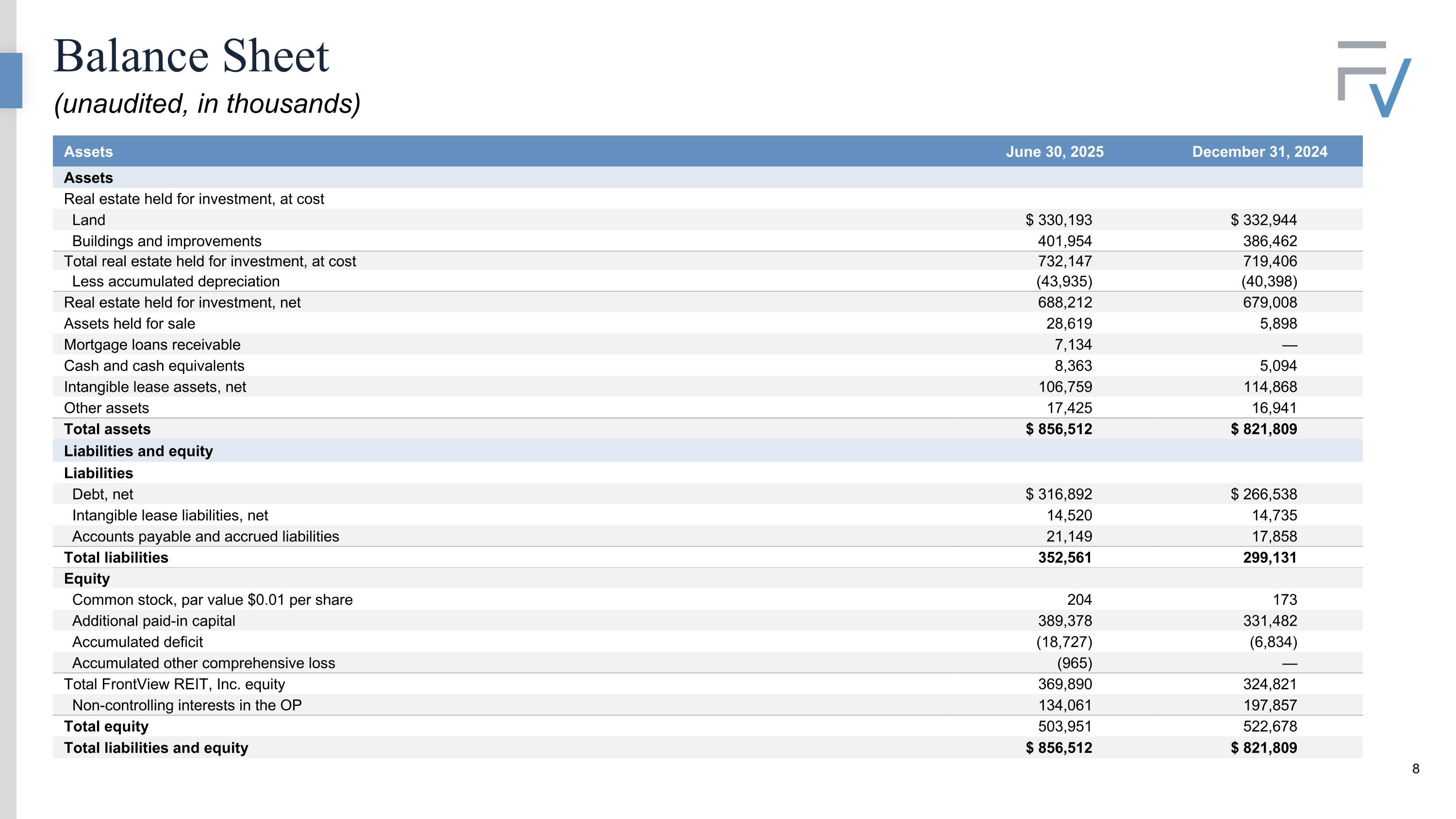
Thanks for taking my question. Could you provide a little bit more context behind the new mortgage loan receivable found in the balance sheet?
Yeah, sure. So what I would say is that that's not a business that we were in. we actually made two loans on two assets that we sold and it's a good way for us to achieve some good yield. We had about 8% interest rate baked into those and we actually of course know those properties pretty well. So it's a good way if something were to ever happen that we certainly don't expect it to that you get an asset back at a very good basis. So good way to get some extra income.
Got it. Thanks for the color. And then, do you also elaborate on your decision to expand your top tenant list by another 20 tenants to 60? Because I know it's going to be pretty difficult to take that back in the future if needed.
We've got nothing to hide, but Pierre will take it, and we love the extra disclosure.
I mean, look, I've noticed that for companies that have had issues with the cost of capital, transparency is helpful. And so I know that from history. and like my previous company used to disclose 100 tenants and this top 60, when you actually look at that list from 40 to 60, there's some really interesting tenants there. Like you have a Starbucks, you have a couple other IGs. There's this very high quality tenant roster. And I think that added disclosure, I hope will provide investors more confidence in terms of the quality of the tenant and they set support.
Got it. Thank you very much. Thank you.
Operator
Thank you very much. There are no further questions at this time. I'd like to turn the call back over to Mr. Steve Preston for closing comments. Sir, please go ahead.
Yes, thank you. Thank you, everyone, for joining. We look forward to continuing to build from here. We've got a great team and a great portfolio and a very conservative balance sheet. We will be at the Wells Fargo Conference coming up on September 8th and look forward to sitting down and visiting with anyone that would wish to do so. And that's in New York. Be well and be safe and healthy.
Operator
Ladies and gentlemen, this concludes today's conference call. thank you very much for your participation. You may now disconnect.