Operator
Good day, ladies and gentlemen. Thank you for standing by. Welcome to the VG Properties Second Quarter 2025 Earnings Conference Call. At this time, all participants are in listen-only mode. Please note that this conference call is being recorded today, July 31, 2025. I will now turn the call over to Samantha Gallagher, General Counsel with VG Properties. Thank you, Operator,
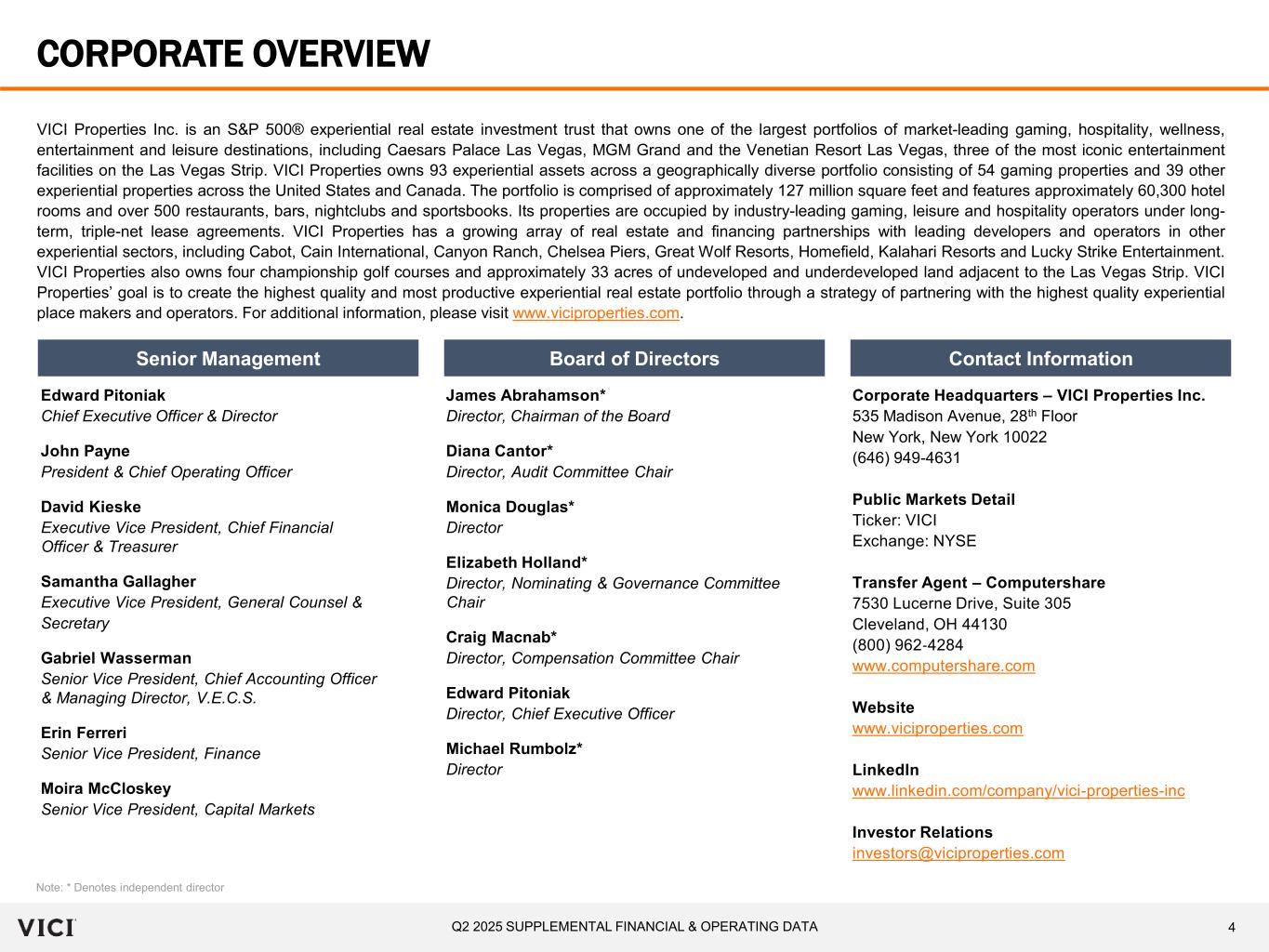
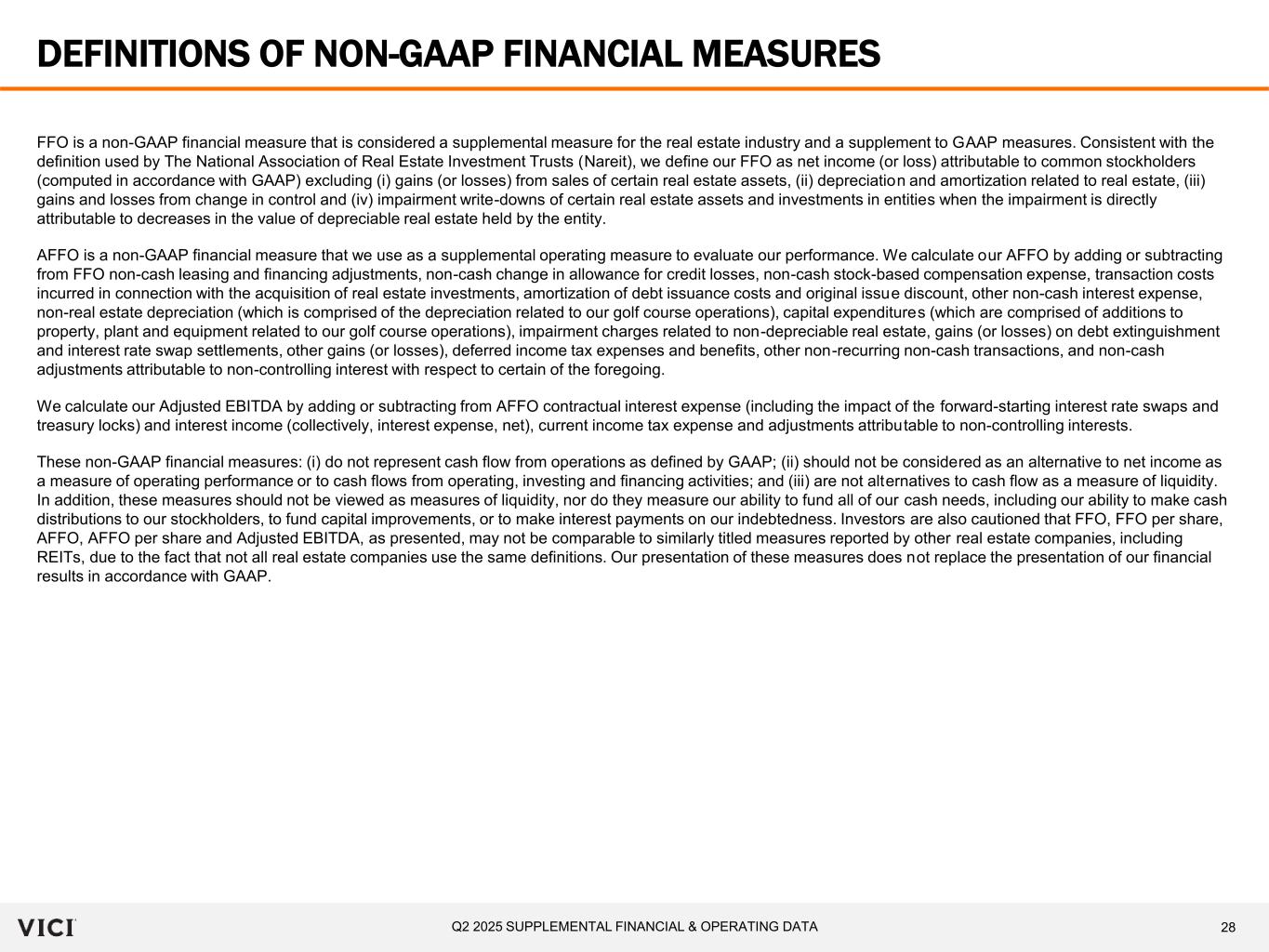
and good morning. Everyone should have access to the company's Second Quarter 2025 Earnings Release and Supplemental Information. The release and supplemental information can be found in the Investor sections of the VG Properties website at www.vgproperties.com. Some of our comments today will be forward-looking statements within the meaning of the federal securities laws. Forward-looking statements, which are usually identified by the use of words such as will, believe, expect, should, guidance, intends, outlook, projects, or other similar phrases, are subject to numerous risks and uncertainties that could cause actual results to differ materially from what we expect. Therefore, you should exercise caution in interpreting and relying on that. I refer you to the company's SEC filings for more detailed discussion of the risks that could impact future operating results and financial conditions. During the call, we will discuss certain non-GAAP measures, which we believe can be useful in evaluating the company's operating performance. These measures should not be considered in isolation or as a substitute for our financial results prepared in accordance with GAAP. A reconciliation of these measures for the most directly comparable GAAP measure is available on our website in our second quarter 2025 earnings release, our supplemental information and our filings with the SEC. For additional information with respect to non-GAAP measures of certain tenants and or counterparties discussed on this call, please refer to the respective companies' public filings with the SEC. Hosting the call today, we have Ed Petoniak, Chief Executive Officer, John Payne, President Chief Operating Officer, David Kieske, Chief Financial Officer, Gabe Wasserman, Chief Accounting Officer, and William McCluskey, Senior Vice President of Capital Markets. Ed and team will provide some opening remarks, and then we'll open the call to questions. With that, I'll turn the
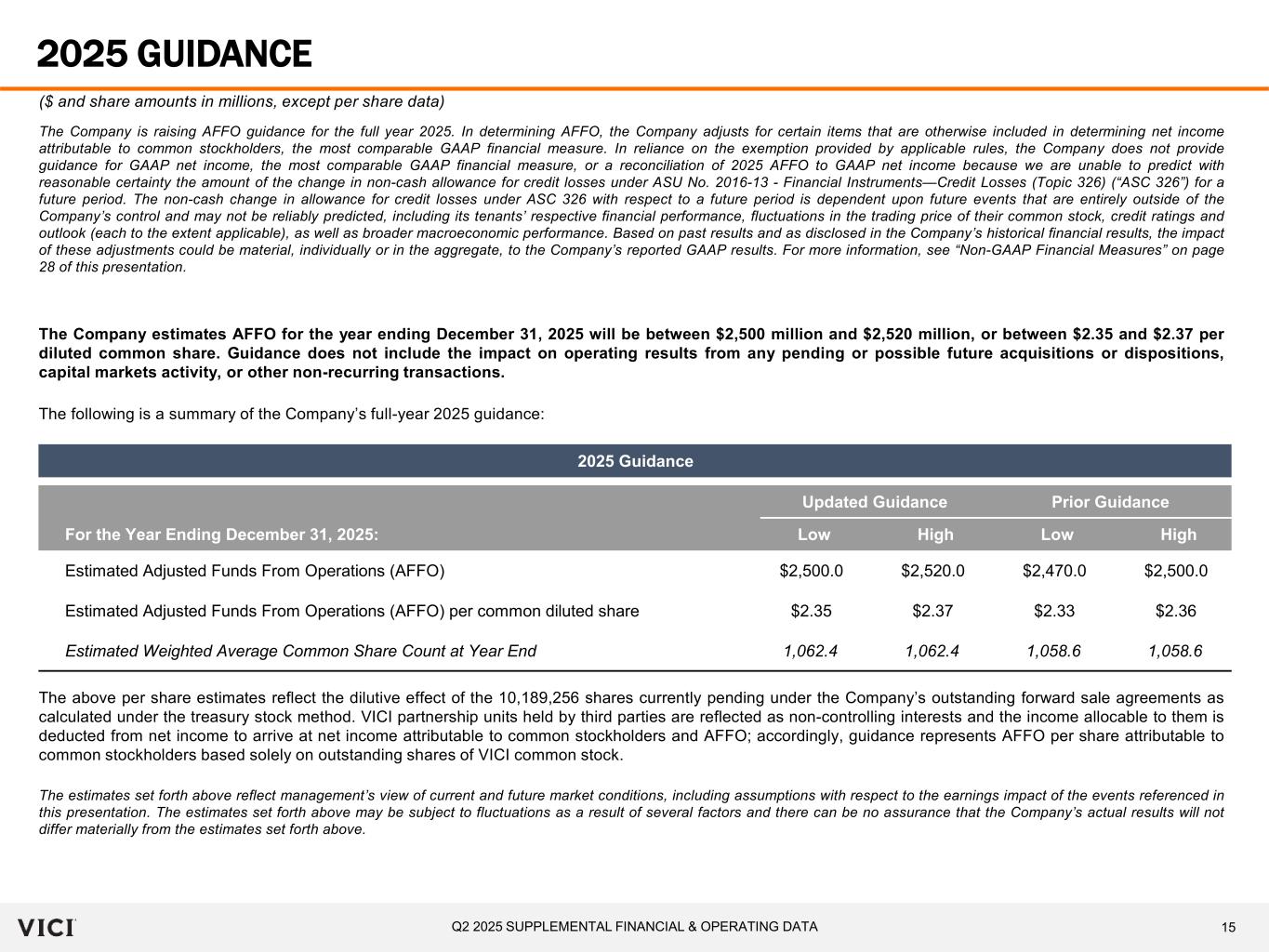
call over to Ed. Thank you, Samantha, and good morning, everyone. I'll begin today by going back to what I talked about in my opening remarks during our last earnings call in late April. In those remarks, I spoke of the paramount importance of the Vici dividend in creating value for Vici shareholders. Those remarks struck a chord for a lot of you, as the feedback we received from many of our active management owners was along the line of, the dividend is indeed important, and we're glad you're focused on it. Today, I want to build on those remarks by focusing on what the dividend critically contributes to, and that's total return. Total return is, of course, the function of dividend return plus, dependent on valuation, an increment of return generated by the capitalization of earnings growth. In a recent note, in early July, the B of A equity strategist, Savita Subramanian, wrote this headline, Welcome Back to a Total Return World. Savita goes on to say, and I quote, We expect a rising contribution to total return from dividends. Dividends contributed 40% of total returns from 1936 to 2021, but just over 16% over the past decade. From here, we think the contribution of dividends to returns could rise demonstrably. With aging demographics and sticky inflation risks, the supply-demand argument for inflation-protected income via stocks is, in our view, compelling and bullish, unquote. Savita was recently featured in a Wall Street Journal cover story on this topic of total return and the contribution of dividends to total return. In that article, as well as in a podcast with Meb Faber, Savita shares an analysis of nearly 100 years of total return from the Russell 1000. And in that analysis, she finds that the highest total returns over that period have been generated by stocks with higher dividends, specifically by stocks in the second and first quintiles of dividend yield in that order. While stocks with the lowest dividend yields, the fifth quintile, significantly lagged the returns of higher-yielding stocks, and not by a little, but by quite a lot, nearly four times higher return for the second quintile and about 2.5 times for the first quintile versus the fifth quintile, according to the Wall Street Journal. Again, what Savita stresses is that dividend return is a key driver of delivering superior total return, along with the capitalization of earnings growth. In the case of VG, we see our total return building blocks as having three key components. Dividend return, capitalization of same-store earnings growth, and capitalization of new-store growth, whether through new acquisitions of property or new loans on property. Our 2025 same-and-new-store growth expectations are embedded in the updated 2025 earnings guidance David will discuss in detail with you shortly. The midpoint of our revised 2025 guidance now calls for 4.4 percent growth in AFFO per share versus 2024. We believe this growth rate within the net lease REIT category will put us among the leaders in AFFO per share growth for 2025. To date in 2025, we are generating our earnings growth through a combination of same-store earnings growth and new store external growth. When it comes to same store earnings growth, VG's owners benefit from a same store NOI growth rate that, according to Green Street's latest published net lease research, is over five times higher than the average projected rate of same store NOI growth for net lease REITs. Our external or new store growth has been funded substantially through the deployment of our retained cash flow, meaning at this point, we are growing our 2025 earnings without significantly growing our share count and without significantly growing our net debt. What you are seeing through this internally funded growth are the advantages of VG having achieved our current level of scale with more than $600 million a year of retained cash flow available for investment. I will also note that we are converting our revenue growth to earnings growth at a high rate of flow-through, given our continuing discipline around our G&A costs, which as percentages of both revenues and assets, are among the lowest of large-cap REITs. We believe our current use of our internal funding capability, or what we call capital markets independence, together with exacting cost discipline, is a sound strategy for defending our dividend, growing our earnings, and creating the conditions that can potentially lead to compelling total return, no matter if external funding windows are open or closed. To be sure, we may in the quarters and years ahead develop investment opportunities to require and also incredibly support issuance of incremental equity and debt in greater size. But for the time being, we believe we are serving our stakeholders well by generating earnings growth and striving for compelling total return without significant equity and credit market reliance. Before I turn the call over to John. I'll finish by repeating what Savita said. Welcome back to a total return world. Here at Vici, we always live in a total return world, and that's because we always believe in the power of compounding. Total return is the power source of compounding. No matter what the market does, we never lose faith in that power. And now over to you, John. Thanks, Ed. Good morning to everyone.
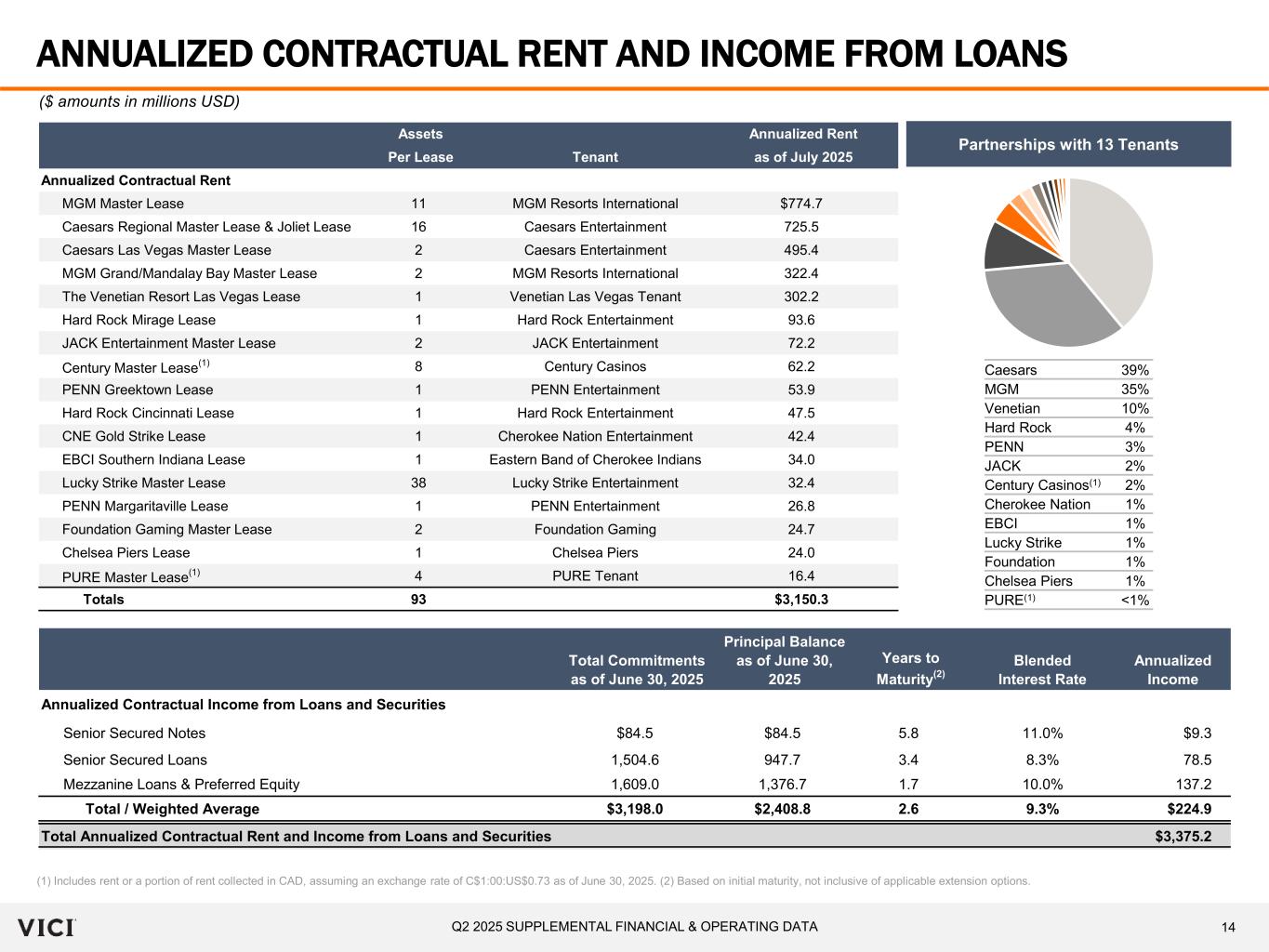
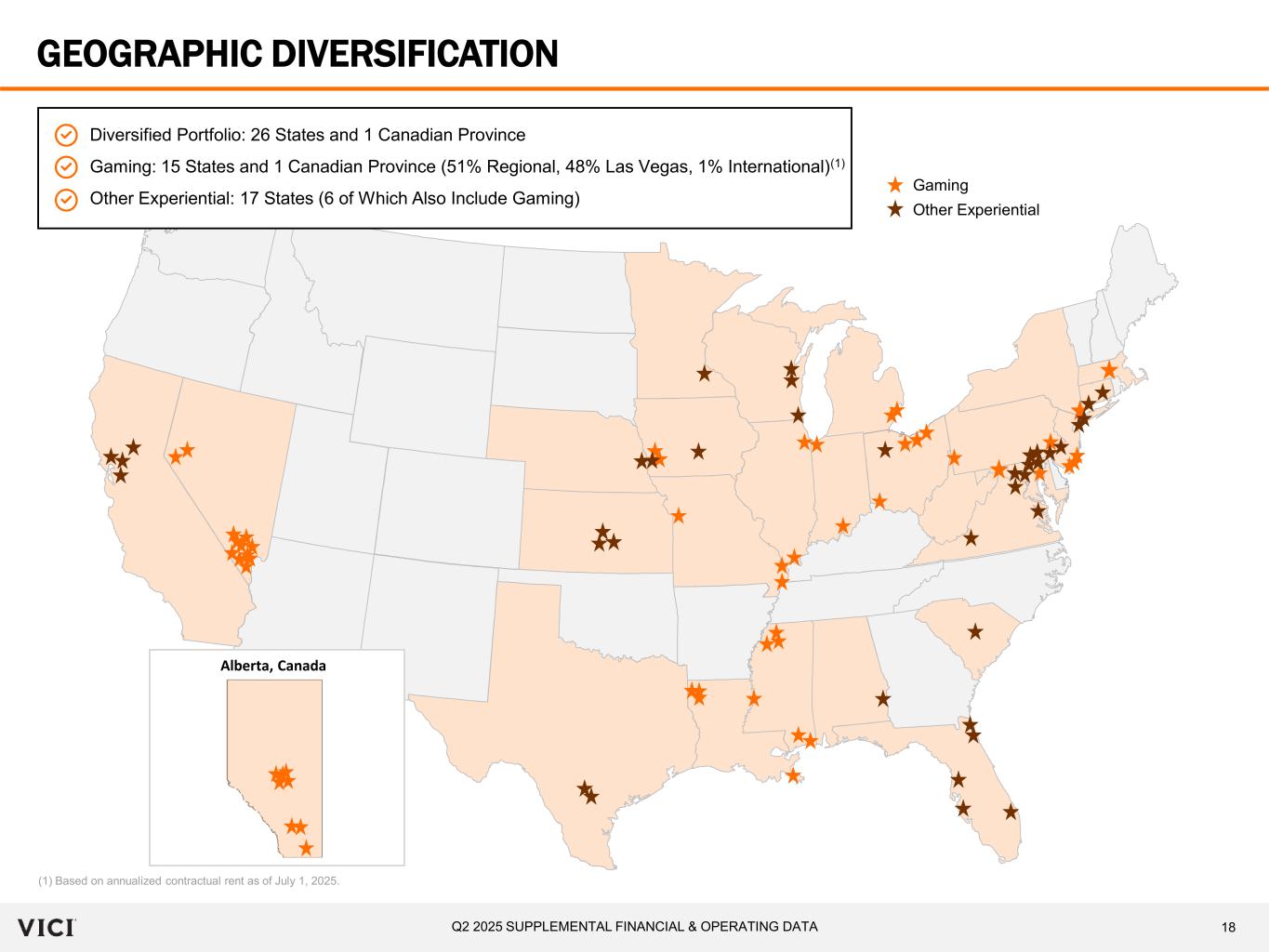
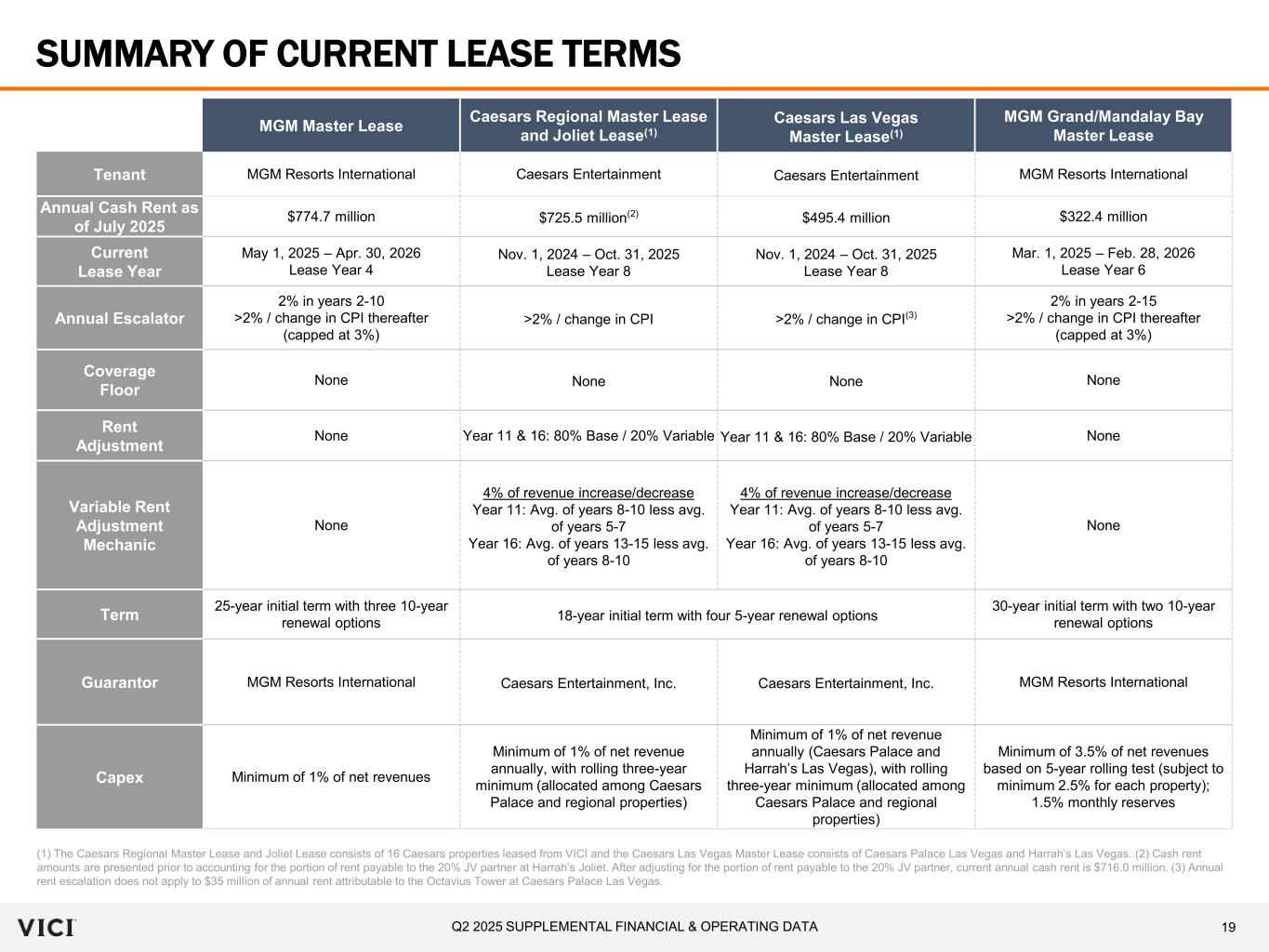
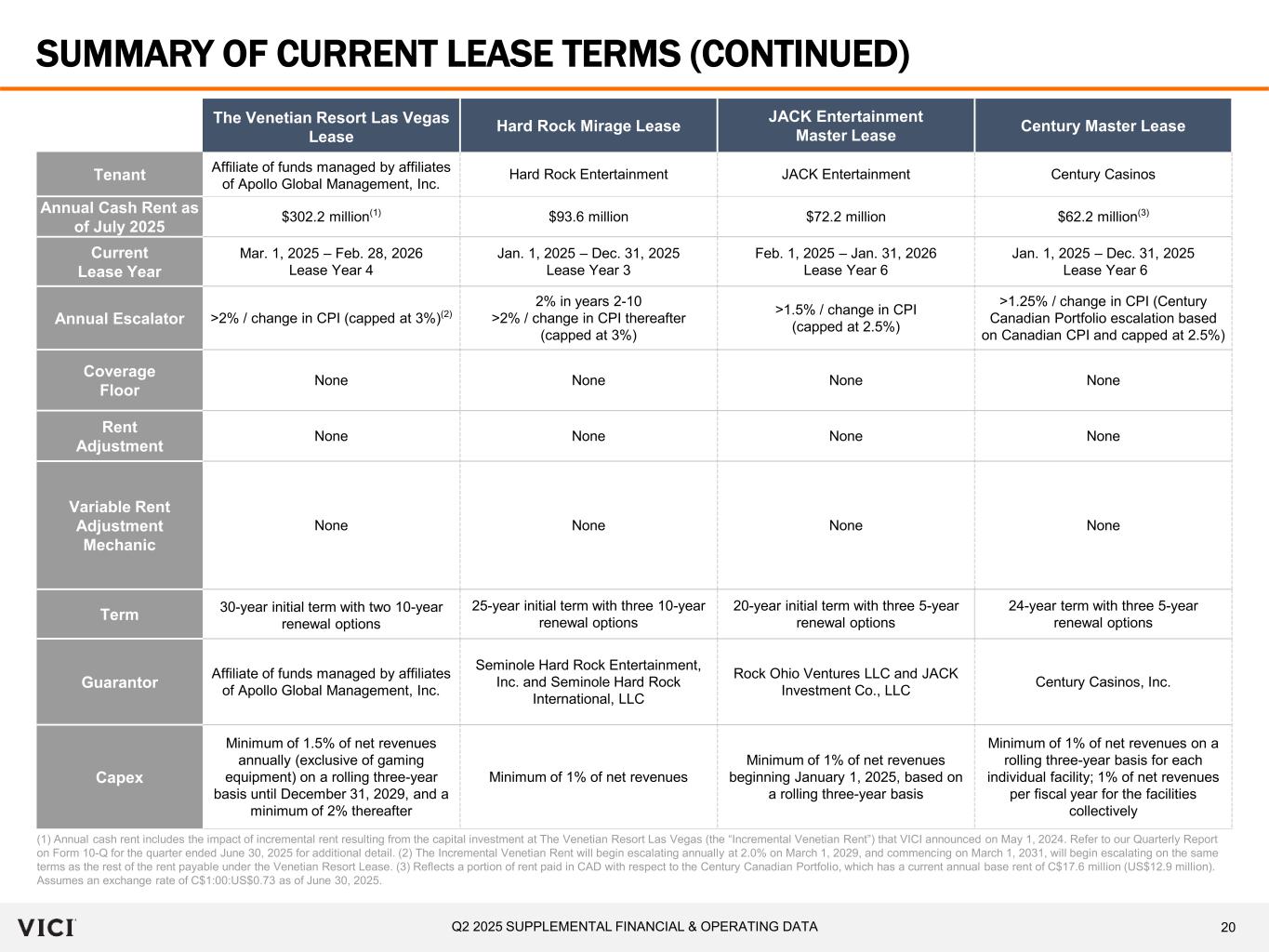
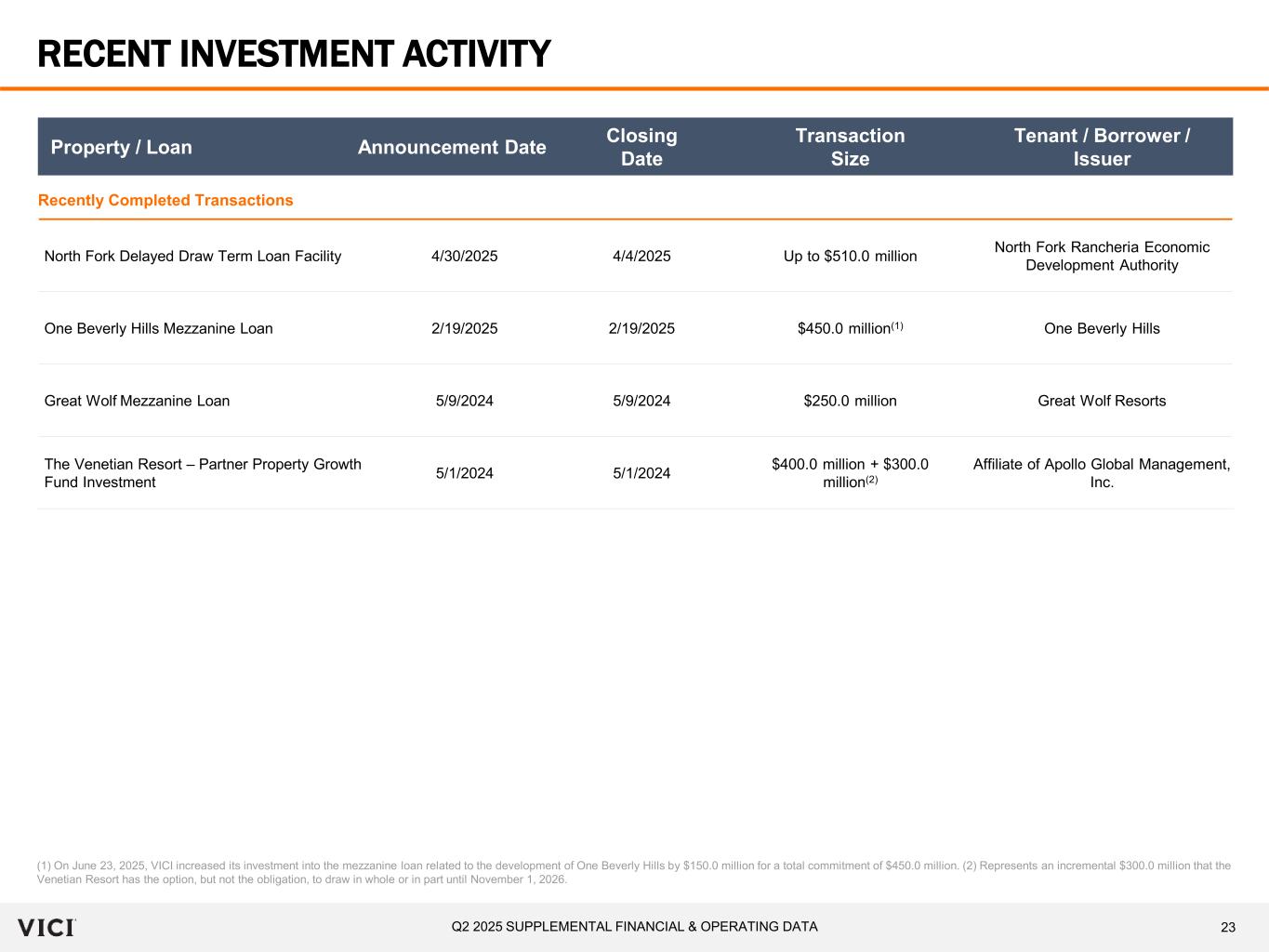
Vici's power source of compounding, our total return, is supported by our disciplined approach to building a high-quality portfolio and cultivating a network of best-in-class operating partners. The investments announced during the second quarter with Red Rock Resorts, as well as Kane International and Eldridge Industries exemplify the relationship-based nature of our capital and the dynamic operators with whom we seek to partner. As we shared on our first quarter earnings call, we entered into an agreement to provide up to $510 million for the development of the North Fork Mono Casino and Resort, which will be developed and managed by Red Rock Resorts. Red Rock Resorts is a best-in-class gaming developer and operator with decades of experience across commercial and tribal assets. We are thrilled to initiate our partnership through this project, as we have known and have wanted to work with the Red Rock team for years. During the second quarter, we also increased our investment in the mezzanine loan related to the development of the One Beverly Hills by $150 million for a total commitment of $450 million. dollars we initially launched our strategic relationship with kane international and eldridge industries through our investment in one beverly hills during the first quarter and our incremental investment is representative of the continued partnership we look forward to continue to support kane and international and eldridge industries on the one beverly hills development as they work on their next leg of financing for the project cultivating new relationships is a key for vici but the quality of our existing real estate portfolio and the quality of our operators behind it is the foundation of vici's sustained growth while recent headlines around las vegas have focused on slowing visitation dips in gross gaming revenue and a decrease in canadian travel we remain confident in the city's long-term trajectory as las vegas has experienced multiple years of record-breaking growth, so it is not unexpected to see a period of normalization, particularly as it laps a Super Bowl year amidst broader economic uncertainty. As Steve Hill, the CEO of the Las Vegas Convention and Visitors Authority, recently noted, the higher-end consumer remains resilient on the Las Vegas Strip, with higher-end properties still running at over 90 percent occupancy levels. The lower-end consumer who is budget-conscious is the consumer who has declined recently, and the operators of the lower-tailed properties are already making adjustments to attract that cohort. From Vici's perspective, our Las Vegas strip real estate portfolio continues to be well-positioned. Importantly, although these near-term dynamics may impact operator performance, Vici's rental income remains well-insulated from cyclical fluctuations in our tenants' financial. That is the value of our model. Long-term leases, 90% of which by rent roll, include corporate guarantees that serve as a powerful risk mitigant. Guaranteeing rent at the parent level adds cushion to Vici's overall lease coverage, allowing operators to pay rent from the total system, not just brick-and-mortar earnings, thus limiting the idiosyncratic risk of any one geography or asset. This structure has also supported VG's track record of 100 percent rent collection in cash on time since inception. Even as Las Vegas experiences what we believe to be temporary moderation, we have conviction in both the staying power of the city as a global entertainment epicenter and in the creativity of our operating partners. A recent article from the Las Vegas Weekly discusses how operators are focusing on attracting new generations as millennials overtake Gen X and visitor volume share. The article highlights millennial and Gen Z taste for experiences different than the traditional gambling enjoyed by their parents and grandparents, and experiential innovation is evident on the las vegas strip with the starting of day club concepts elevated food and beverage experiences increasing popularity of professional sports and more there are also long-term tailwinds for las vegas including the planned construction of the brightline west high speed rail line the extension of the f1 contract through 2027 and the forthcoming edition of the Ace Stadium. We feel very fortunate to be woven into the fabric of this iconic city and excited about the opportunity we believe continues to be offered in the years ahead. Now I will turn the call over to David who will discuss our financial results and guidance. David. Thanks
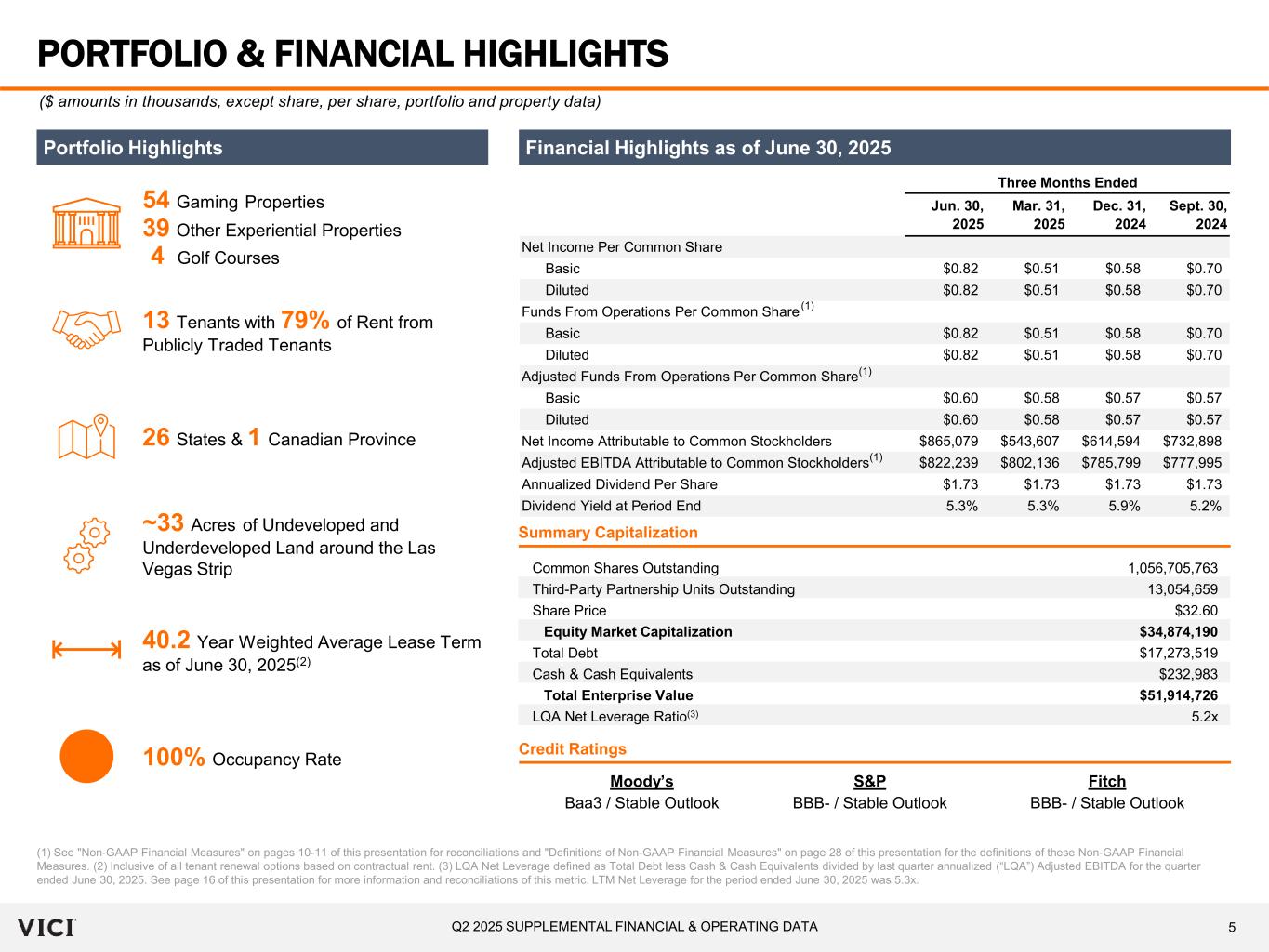
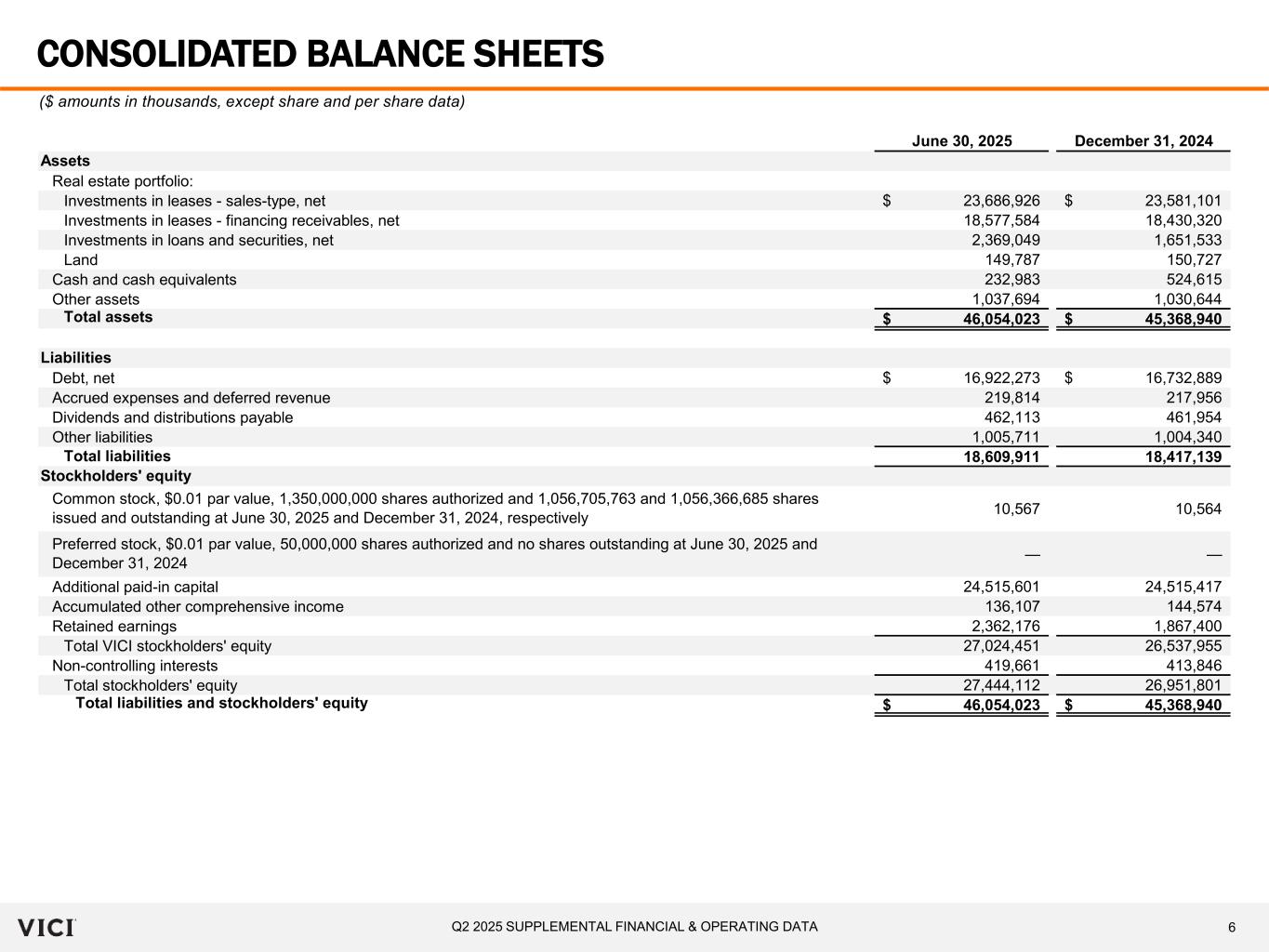
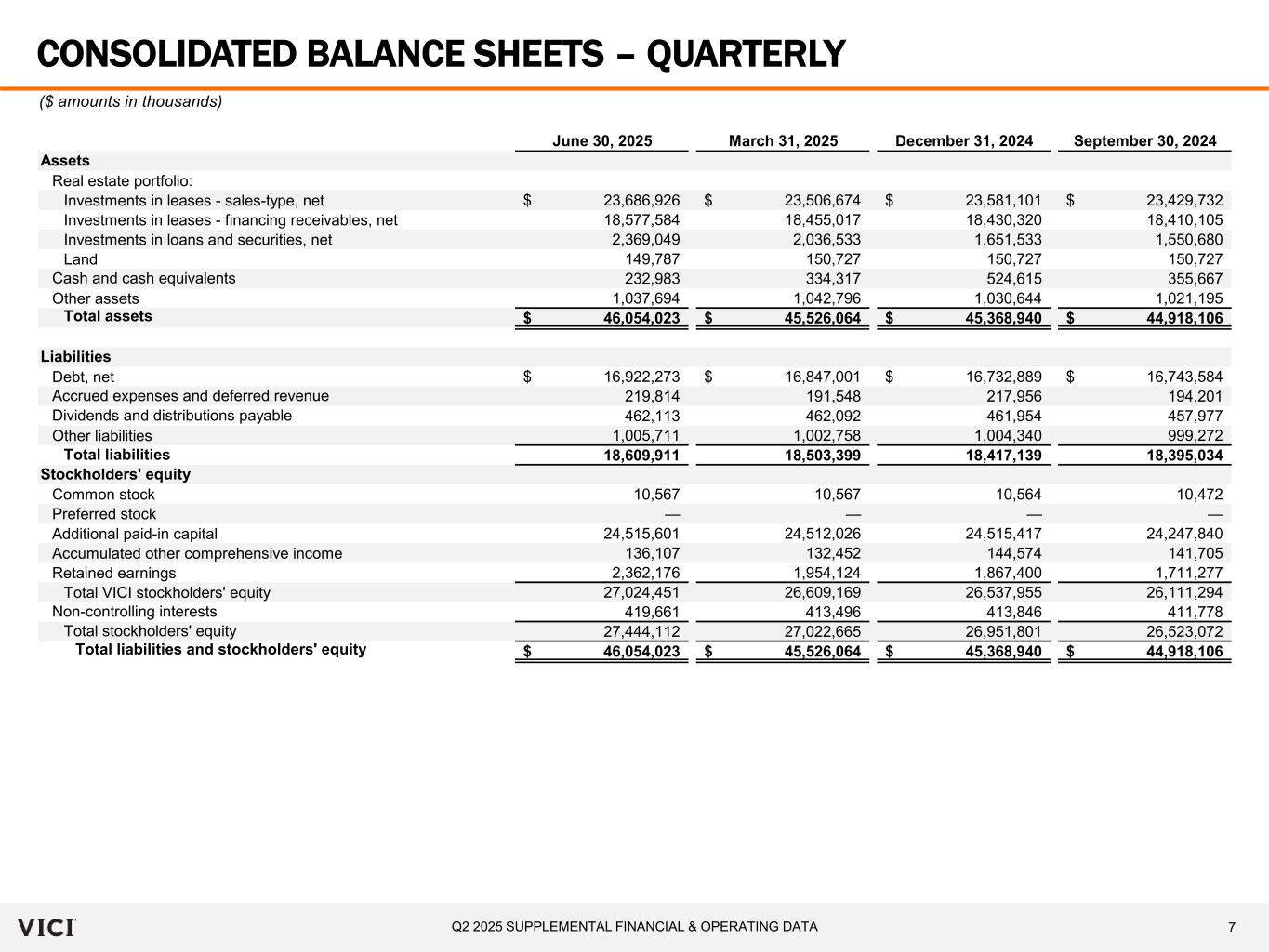
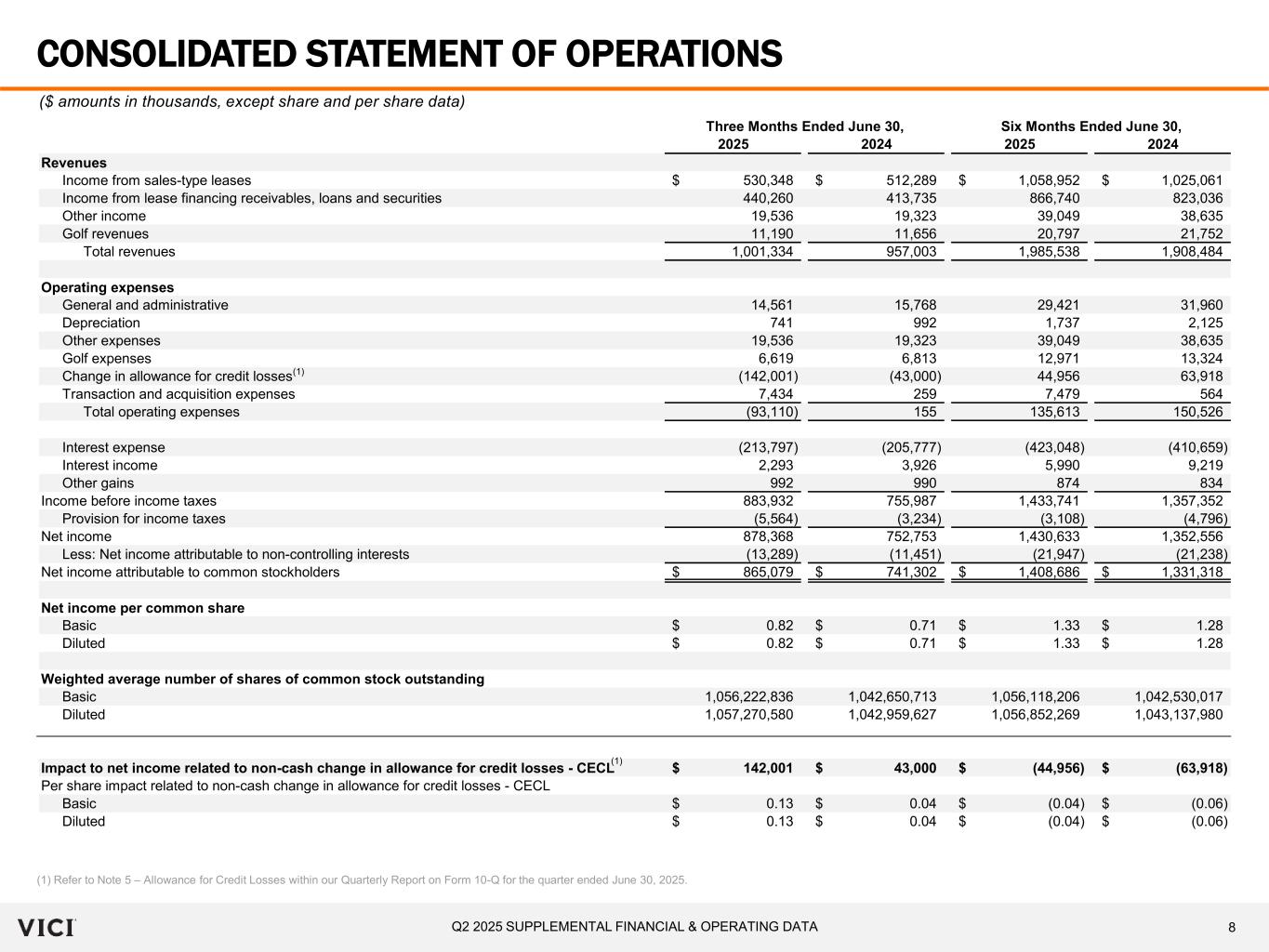
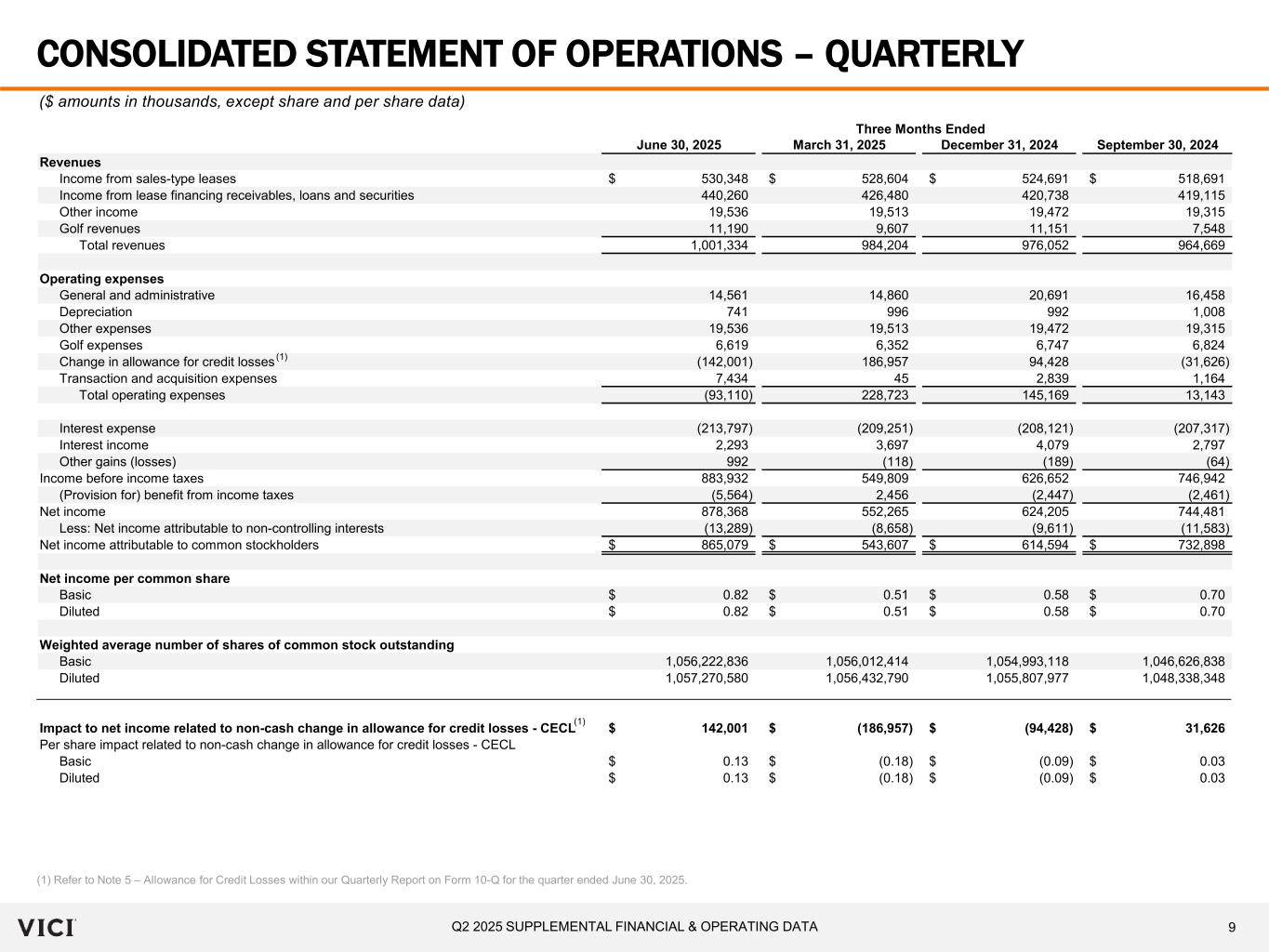
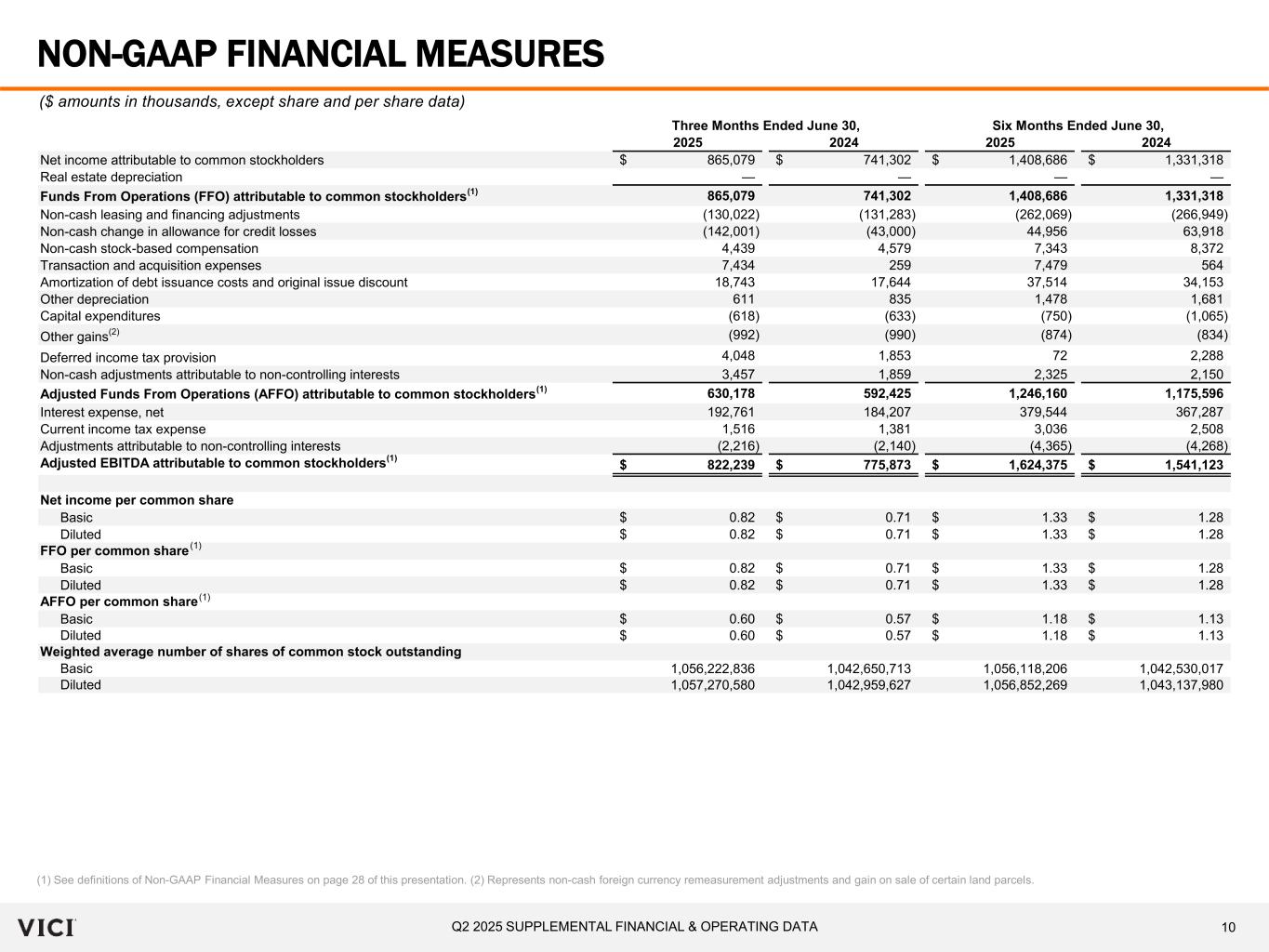
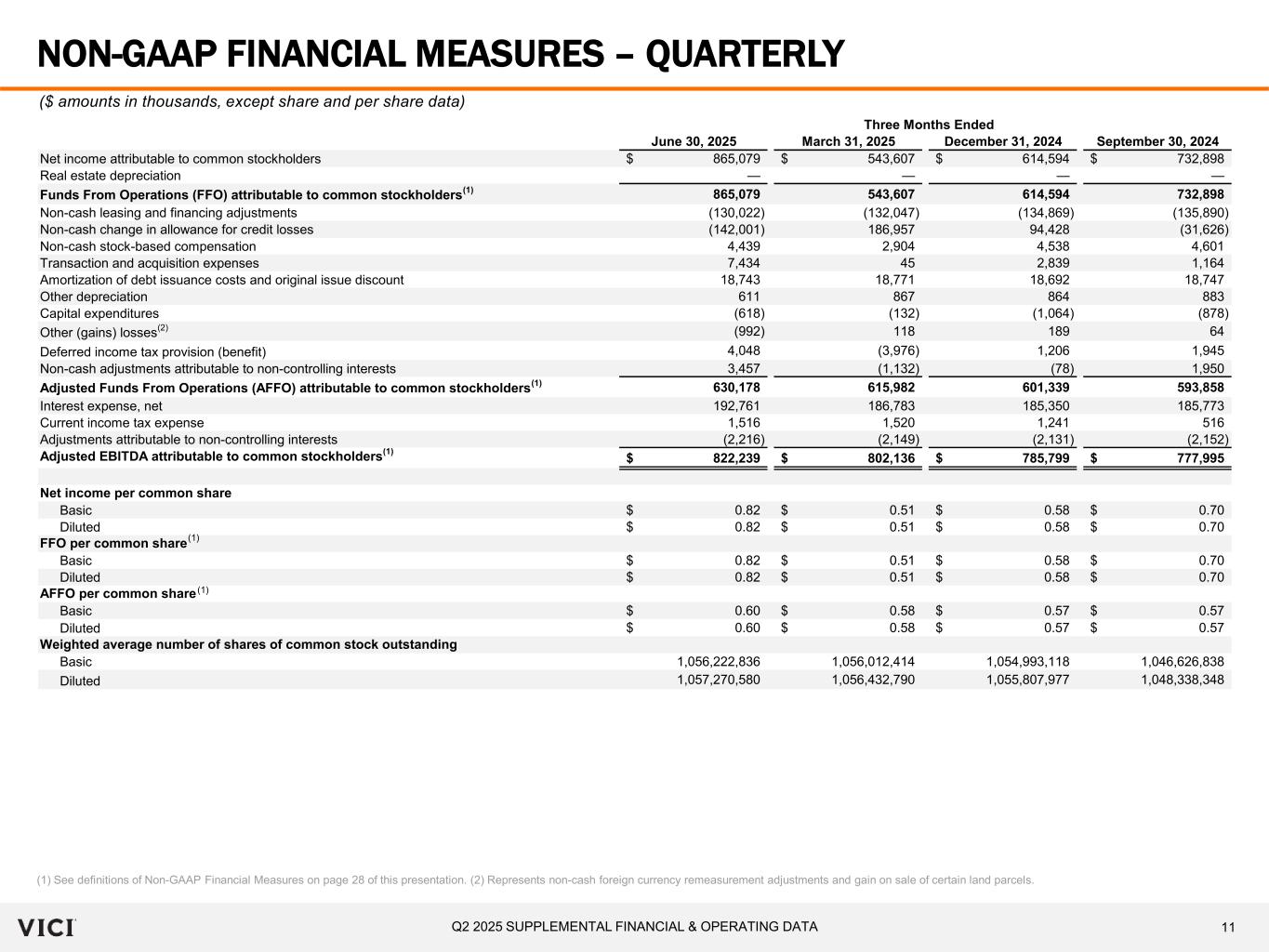
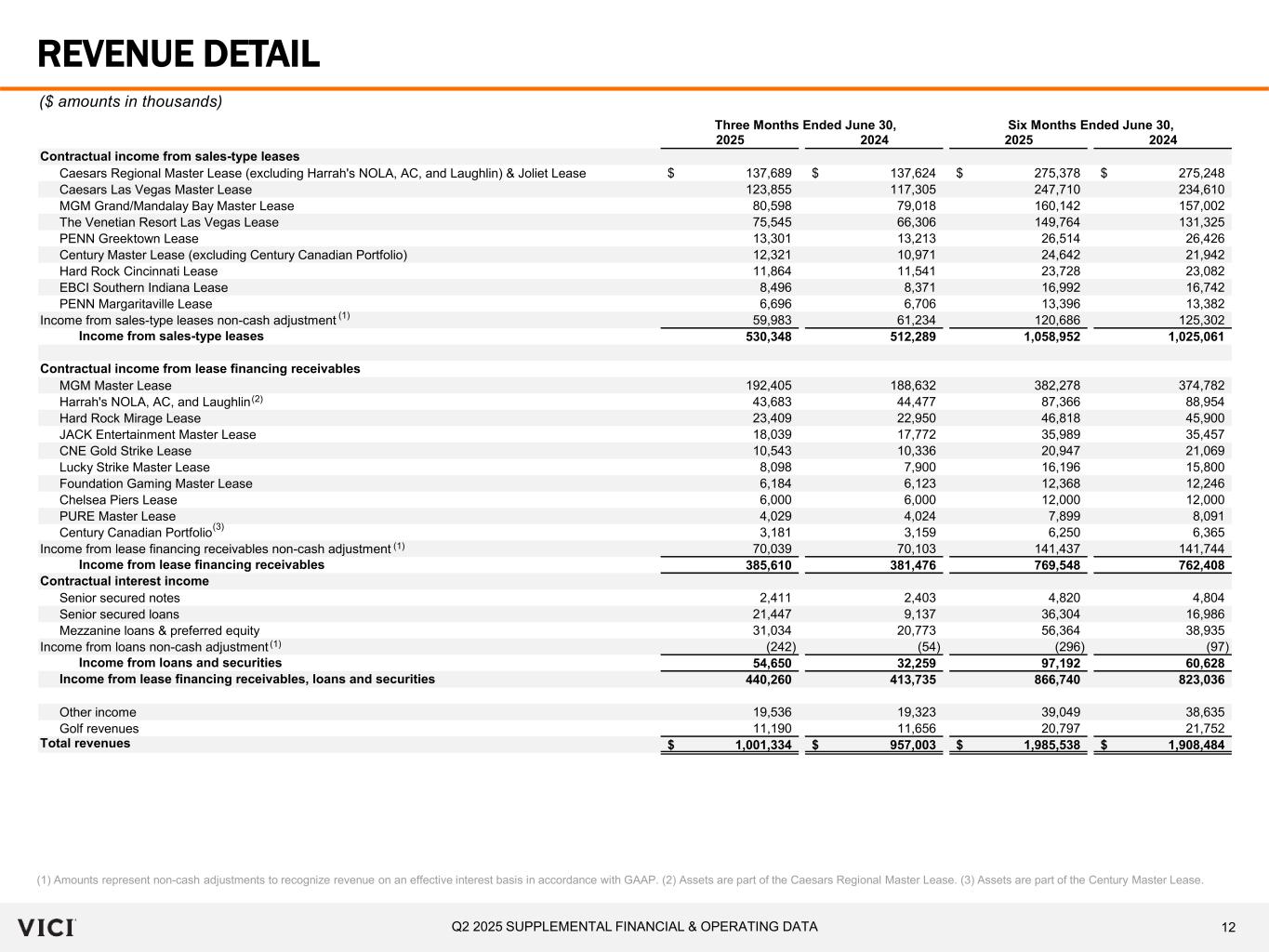
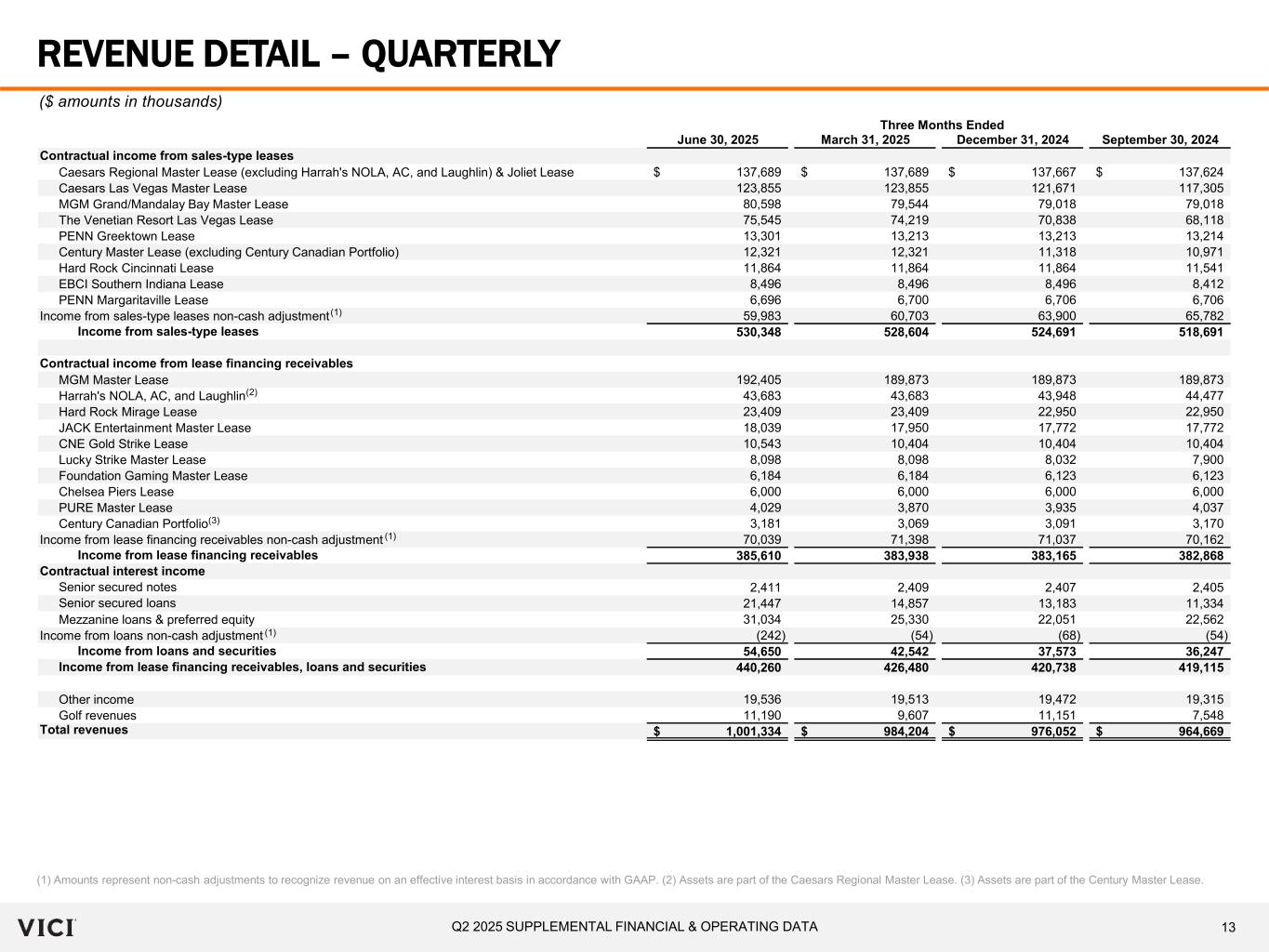
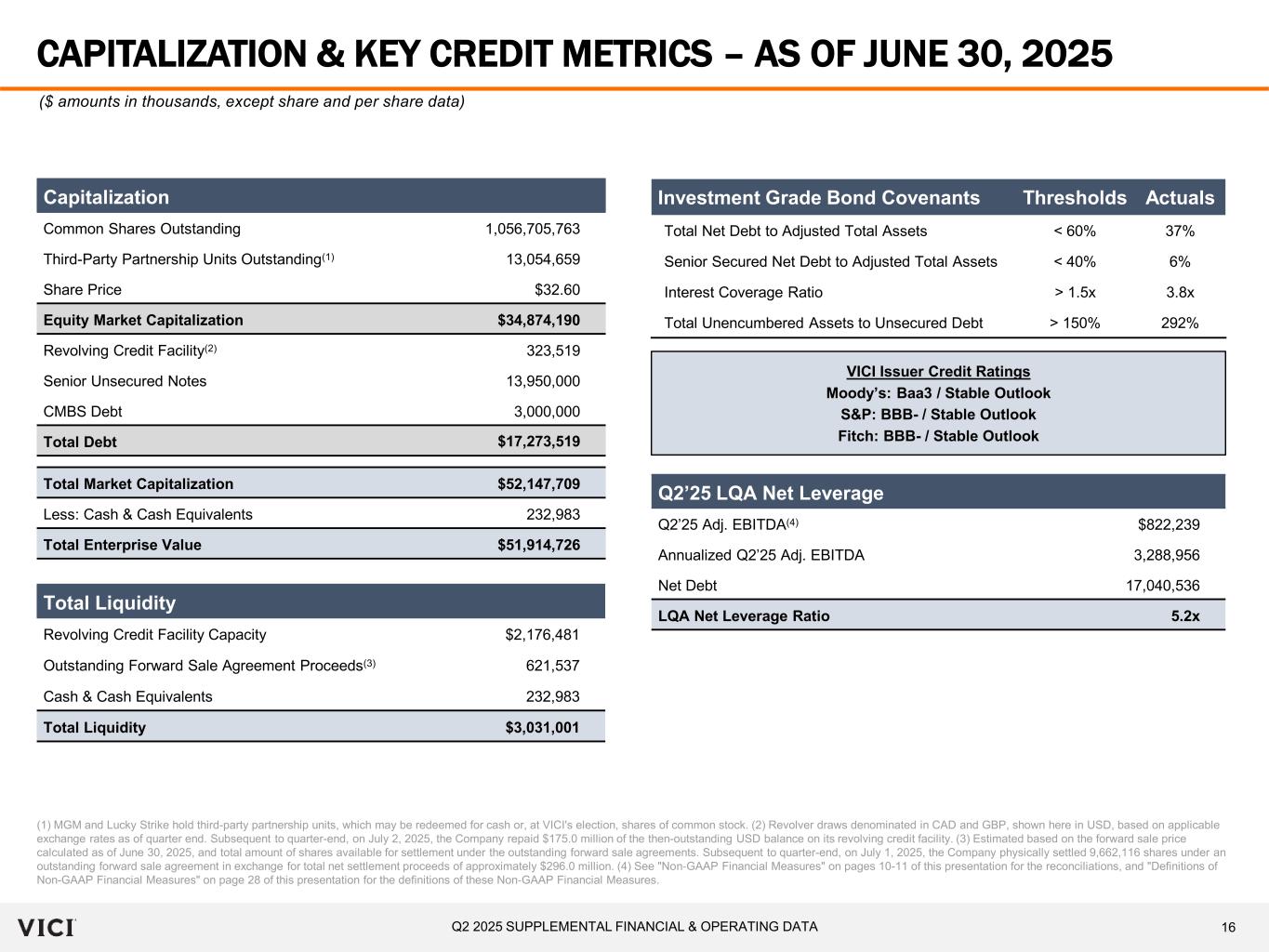
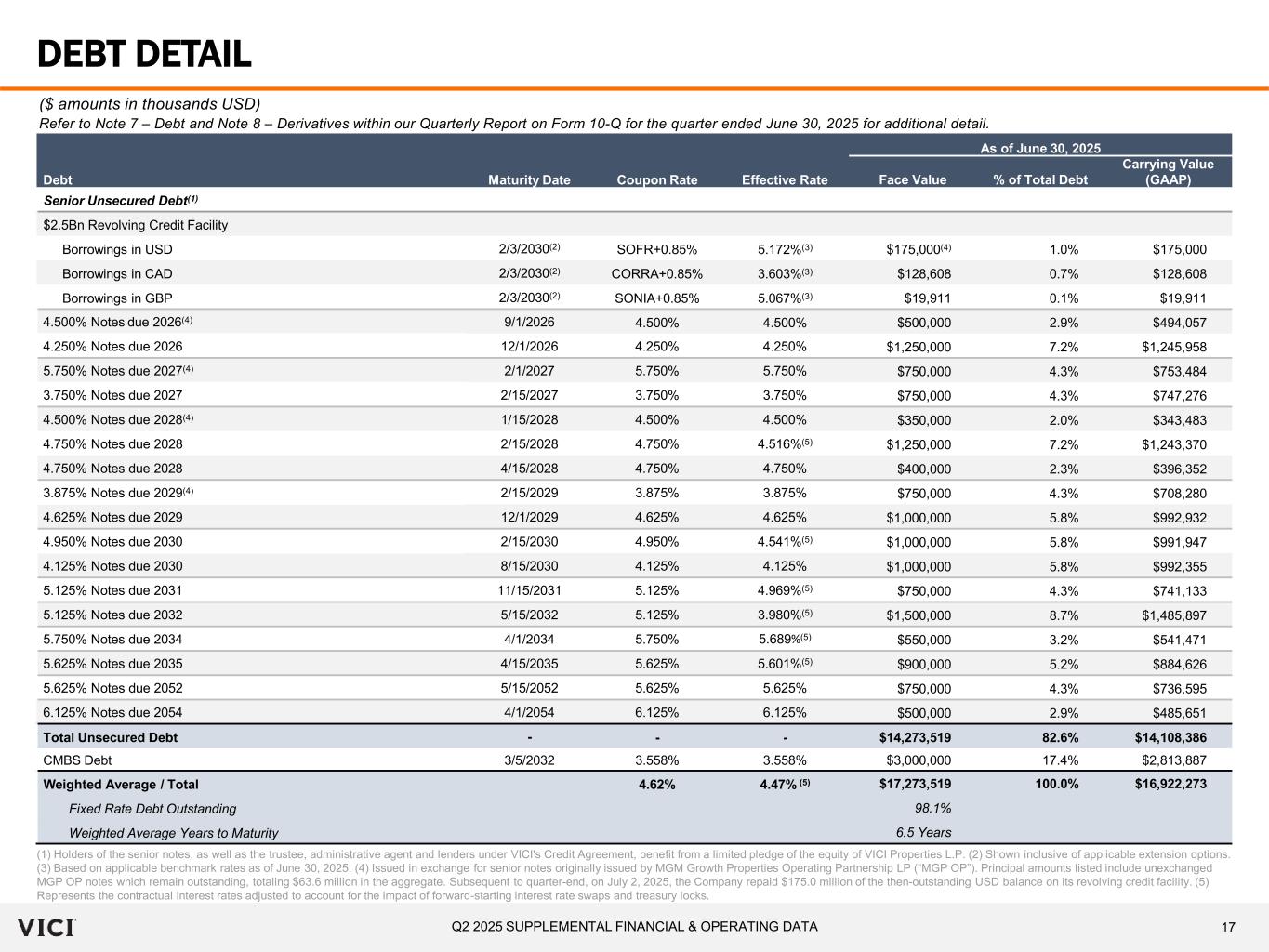
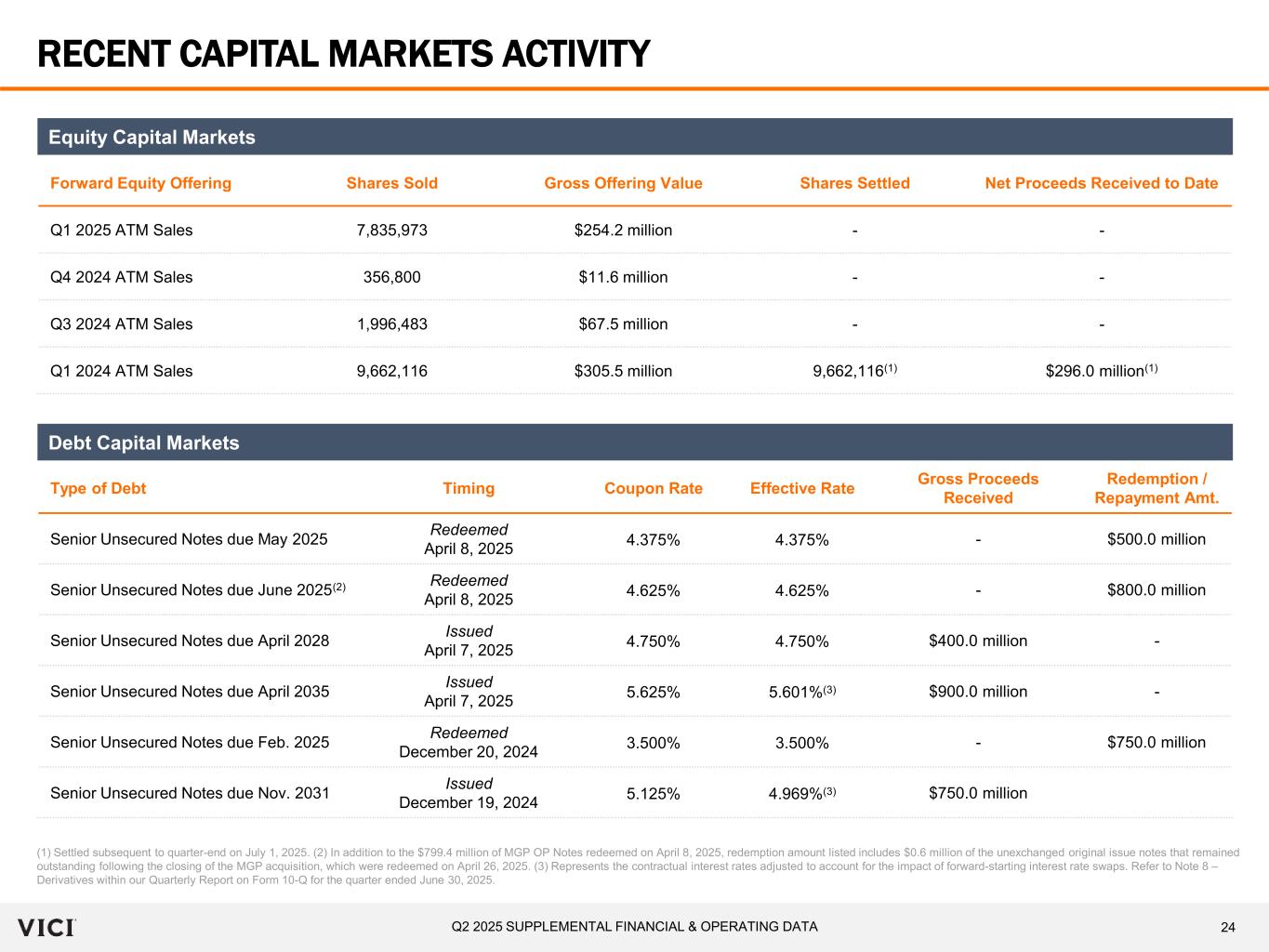
John. We greatly appreciate you all joining us today. Starting with the balance sheet and recent activity. In April we closed our bond offering where we issued 400 million of three-year notes at a coupon of 4.75% and $900 million of 10-year notes at a coupon of 5.625% for a blended coupon of 5.34%, including the impact of our hedging program. We now have no debt coming due until the second half of 2026, where we have September and December maturities, which we plan to address next year. Subsequent to quarter end, we settled approximately 9.7 million shares under our Forward equity ATM program for $296 million of net proceeds, which were partially used to repay $175 million that was outstanding on a revolving credit facility and to fund the incremental One Beverly Hills investment. Taking this activity into account, we have approximately $2.9 billion in total liquidity, comprised of $325.6 million of estimated proceeds now available under our outstanding forwards 2.4 billion of availability under our revolving credit facility and approximately 233 million in cash as of quarter in touching on leverage when we account for the revolver repayment our total debt is 17.1 billion and our net debt to annualize second quarter adjusted EBITDA is approximately 5.1 times well within our target leverage range of five to five and a half times. We have a weighted average interest rate of 4.47% as adjusted to account for our hedge activity and a weighted average 6.5 years to maturity. Our constant focus on managing our cost of capital, balance sheet, and liquidity profile through volatile markets allows our team to remain opportunistic in an effort to continue pursuing our sustained and sustainable return goals for our shareholders. In turning to the income statement, if FOE per share was 60 cents the quarter, an increase of 4.9% compared to 57 cents for the quarter ended June 30, 2024. And our results once again highlight our highly efficient triple net model given the increase in adjusted EBITDA as a proportion of the corresponding increase in revenue. Our margins continue to run strong in the high 90% range when eliminating non-cash items. Our GNA was 14.6 million for the quarter, and as Ed mentioned, as a percentage of total revenue was only 1.5%, which continues to be one of the lowest ratios in not only the triple net sector but across all REITs. And finally moving to guidance as we announced last night we are raising our AFFO guidance for 2025 in both absolute dollars as well as on a per share basis. AFFO for the year ending December 31, 2025 is now expected to be between 2.5 billion and 2.52 billion or between $2.35 and $2.37 per diluted common share. Compared to our prior AFFO per share guidance of $2.33 to $2.36, the raise represents an increase at both ends of the range by two pennies on the bottom and one penny on the top end. And based on the midpoint of our raise 2025 guidance, Vici now expects to deliver year-over-year AFFO per share growth of 4.4%. And just as a reminder, our guidance does not include the impact on operating results from any transactions that have not closed interest income from any loans that do not yet have final draw structures possible future acquisitions or dispositions capital markets activities or other non-recurring transactions or items with that operator please open the line for questions of course we will now
Operator
begin today's q a session if you'd like to ask a question on today's call please press star followed by one on your telephone keypad now when preparing to ask your question please ensure you you up unmuted locally and questioners are asked to limit themselves to one question and one follow up each. Our first question today comes from John Kilichowski from Wells Fargo. John your line is
Cheryl
Analyst — Wells Fargo (on for John Kilichowski)
open please go ahead. Hi this is Cheryl on for John. Good morning and thank you for taking my question. What drove the decision to increase your mezzanine loan investment on the one Beverly Hills
by 150 million dollars just curious to know your thoughts yeah David I can start as we talked about with the original announcement this is part of a bigger financing um that Kane and Eldridge are undertaking to develop what is you know upwards of a six seven eight billion dollar project in Beverly Hills and so our commitment to the to the project will likely increase over time as they work on uh implementing the um the construction financing to finish the project right now this is a combination of a bank financing and an SPL financing that we are entering into and this has a maturity in March of 2026 and Kane and again Eldridge are working on a broader
construction financing that will you know is in process and and be able to take the project to
Cheryl
Analyst — Wells Fargo (on for John Kilichowski)
completion um in 27. Gotcha thank you that's helpful and um we've seen a handful of loan and mezzanine opportunities recently are you seeing or expecting any fee simple opportunities to come
from these relationships yeah in certain cases yes um and it will it will take time for obviously those to realize themselves but certainly in the case of kane and eldridge as an example uh given the breadth and depth of their investments across the experiential spectrum we would we would very much anticipate uh participating with them in our acquisition of fee simple real estate and that was obviously at the heart of what todd boley and jonathan goldstein uh said in the release we put out back in was that february um about our forming a strategic alliance with kane and eldridge around
Operator
that very topic got it thank you that's helpful the next question comes from barry jonas from
trivist barry your line is open please go ahead hi guys good morning um you know maybe broadly speaking how have deal discussions been as of late for either sally's back or other loans any major differences in the last 90 days either gaming non-gaming existing tenants or potential new tenants just curious at a high level how trends have been yeah barry nice to hear from you uh no
no big difference between quarter to quarter. Obviously, if we've continued, we started the company eight years ago as a gaming REIT, and we're looking at that point only at gaming. Obviously, over the past six, seven years, we've continued to diversify to look at other sectors. So as you continue to expand the funnel, there's obviously more and more conversations that we have. As Ed just finished talking about, we've also used our credit book to build relationships, new relationships that at the time may not have wanted to sell their real estate. So Barry, the answer to your question is we're quite busy. We have a lot of different sectors that we're looking at, and there has not been any changes at all in the past 90 days.
Got it. Got it. That's helpful. And then your closest competitor has taken a stand perhaps a it against iGaming proliferation. Not sure if you've recently addressed your views on a public call. Just curious to hear what they may be at this time. Go ahead, John. No, I think you're
probably talking about our closest competitor. I assume you're saying your GLPI has taken a stance on iGaming. Obviously, it's something that we continue to monitor. It is important to many of our tenants to their overall credit. As I talked in my opening remarks, we look at our tenants across not only the bricks and mortar, but also their iGaming portfolio. And it's something that we will continue to monitor. Obviously, we're aware of what's going on around the United States
at this point. You know, Barry, I'll just add, so I live in a state, Rhode Island, where the motto is the lively experiment and i would say that american gaming is engaged right now in a lively experiment on how how the sector will continue to evolve uh both brick and mortar and digital uh and of course in the case of digital both uh online sports betting and i gaming and i you know i think that i think regulators states state legislatures and regulators have a lot of decisions to make on how they will manage the interactivity of those various categories of gaming in a way that, you know, does the best things for their economy and their state treasuries, but also, you know, for job growth and sustainment, because clearly brick and mortar casinos employ a lot more people within a given jurisdiction than either iGaming or online
sports betting do. Perfect. Thank you so much, guys. The next question,
Operator
comes from Anthony Powerline from JP Morgan. Anthony, please go ahead.
Thanks. Good morning. My first question relates to just making debt investments versus straight property investments. I know there's some sensitivity around the debt book because of the shorter duration, but if you wanted to bring it up to, say, 10% of the balance sheet or something, do you think there are good opportunities out there that you're seeing that you're just being sensitive to because of the size of the book, or do you feel like you're doing what you want to do there. Just wondering about the broader opportunity set
there. We'll really be very focused. We are very focused, I should say, Tony, on the cadence of capital as it goes out the door, and obviously very much the cadence of capital as it comes back in the door, and making sure that we are ready for not only, again, the allocation of capital out, but the return of capital to us and how we will manage earnings flow. We're in a time right now I think, Tony, given your coverage of real estate broadly and deeply, we're in a time right now when credit is definitely getting a lot of attention. And there does appear to generally be, not just for Vici, but generally appear to be more credit opportunity than real estate transaction opportunity. And again, that is not solely specific to Vici.
Okay, thanks. And my second question is, on the income statement in the quarter, I think you had about $7 million of transaction costs. It just seemed a bit high for a quarter that was fairly quiet. I was wondering if you can just elaborate on what drove that.
We're constantly active in looking at opportunities, evaluating opportunities. And sometimes things get to the goal line and sometimes things don't. and so we wrote off some costs that were pursuit costs from prior quarters that are no longer
Operator
pursuit costs. Okay, thank you. The next question is from John Decree from CBRE. John, please go
ahead. Hi, everyone. Good morning, and thank you for taking my questions. John, in your prepared remarks, you talked a little bit about your views on Las Vegas and some of the thoughts about the summer and then the long-term exciting stuff happening there. And we agree, but, you know, curious, you know, given your experience, the regional gaming markets have seen a nice uptick lately and we're hearing that as well. So I'm wondering if you could provide any kind of industry insights on how you're feeling about that, that market. I think it certainly highlights, you know, the value of the diversified portfolio of your tenants and your business, but, you know, curious if you think that's some real life that we're seeing in the regional markets and how
you're feeling about that industry overall. Yeah, well, John, good to talk to you. We continue to be very excited about the industry as a whole. As you know, we love to break it up as there's Las Vegas and everyone else, and we break the region. As you know, there's so many different regions. That's the beauty of our portfolio, right, that we've got all these different regional markets, and there's different reasons why we are seeing upticks in revenues and EBITDA out of the regional market. Overall, our statement is we still really like the gaming business. We obviously are heavily invested and have a diversified portfolio in both areas. We think we can grow in both areas and excited to see the operators continue to be creative to drive revenues in the regional markets. And like I said in my opening remarks, this is just a temporary issue in Las Vegas, when you look at the forward booking for group business in quarter four and the first two quarters of 2026, business is going to be strong. But it's just a credit to the operators that they, in regional gaming, that they have had some years where they're a little bit down, but they're being more creative and adding assets. A lot of capital deployment has been, I've been putting our assets in the regional markets, and it's exciting to see that those operators are getting some results.
Thanks, John. And maybe to switch gears, John or Ed, this one might be for you. The amount of volume and capital that your tenants are investing in your assets is kind of unique to the gaming industry and to your business. And we've heard that this week, whether it's New Orleans or MGM Grand, obviously Venetian has been a big one. But it seems like that kind of gets overlooked a lot, you know, in the value of your stock price. I know Venetian is a good growth opportunity for you, but you think about ways to highlight that value or crystallize it. I mean, is there opportunities to do, you know, more, you know, buying investments from your tenants that are committing significant capital like that? Just curious your thoughts on that opportunity.
yeah i'll start john but before i do i just want to apologize to those listening that we our responses are in some cases evidently cutting in and out we apologize for that and i i believe we are in the process of fixing that or have fixed that um it's a very good question john and from what we've been able to determine but i have to i have to qualify this i'm sitting next to our gc who always wants to make sure i qualify everything i say um we cannot identify another real estate commercial real estate category where tenants invest more into the building than ours do with possibly the exception of data centers where obviously the tenant invests a lot into the into the asset uh but it is obviously a different kind of investment um we we are very happy when our when our partners invest in our buildings and thereby de facto increase the value of our buildings. If there is the opportunity for us to contribute capital, we're obviously very excited and honored to do that in partnership with them. But there is simply no question that the capital invested in our buildings, which John now runs into the billions, does it not? Yeah. Is unlike any category we've been able to identify outside of data centers.
And I do, John, think longer term over the years, we'll have opportunities to continue to use our capital to help accelerate the growth of our tenant's business, particularly in the large boxes that we see in Las Vegas. It's why it's a market that's just so unique. There's nothing like it where, you know, one of our boxes, Venetian, is what, 17, 18 million square feet. So we hope that continues to be a pillar of growth for our company in years to come.
Thanks, John. Thank you. Appreciate your insights, as always.
Operator
Thank you. The next question is from David Katz from Jefferies. David, please go ahead.
Good morning, and thanks for taking my question. I do want to follow that up, and it's similar but a different angle. You know, some of your tenants and partners have begun talking to us about the effects of the new tax regulations, and if I'm, you know, getting the drift properly and I'll I'll ask for your confirmation of that. It appears to induce them to invest in the properties, either expand, renovate, you know, add amenities, et cetera. It also appears to induce them to continue doing that, you know, ongoing, to continue to capture the bonus depreciation and therefore the tax benefit. Have you looked at it? Am I reading that correctly? And, you know, given that I think this is part of the investment case that you've been making, you know, have you begun to talk to your tenants about it? And, you know, what kinds of conversations are you having?
Yeah. Yeah, David, you're absolutely right. There were a number of elements of the new tax bill that are beneficial. Obviously, we're very glad of the fact that the REIT dividend deduction was maintained along with a number of other features that are beneficial to REITs. But in the case you're talking about, the bonus depreciation, yes, it is a very powerful and positive factor for our operating partners when it comes to investing in their buildings. I would point out, David, and I know you cover hotels as well, bonus depreciation is a great thing, but you still need the capital in order to make the funding. And what the gaming business does is create economic headroom that allows for that incremental capital investment. And one of the things that I think will sustain, not only sustain, but continue to increase the competitiveness of Las Vegas over the coming years and even decades, is the ability to continually reinvest, especially on the group side. I think the U.S. Convention Center and Convention Hotel landscape is one that has seen significant underinvestment in the last 10, 15, 20 years, going back to even the GFC. And the fact that Vegas can continually invest in the main convention center, Mandalay Bay, Venetian, MGM Grand, all of the big boxes, is a real competitive advantage for Las Vegas. Now, we introduced our Property Partner Growth Fund a few years ago. Obviously, our Venetian investment is probably the hallmark example of us putting our capital into our buildings incrementally. And we will continue to make sure our tenants understand that our capital can be the cheapest source of capital they could find to continue to improve their buildings.
If I can just follow that up, I'm curious about the comment of convention facilities you feel are being underinvested. Could you elaborate on that, and why do you think that to be the case?
Well, I think, you know, David, going back to, you know, as far back as the GFC, you've seen especially that the urban hotel landscape be one that has generally not been invested in, whether it be by the hotel REITs or other owners of big box convention hotels. It doesn't give me any pleasure to say this, but there's a lot of tired, full-service, convention-serving hotel product across major American cities. And that combined with the fact that most of the big convention centers in the big cities have not seen anywhere near the kind of investment that Las Vegas has seen, whether, again, at the main convention center or, as an example, at Mandalay Bay, where MGM put $100 million into the Mandalay Bay meeting facilities to 2.2 or whatever million square feet it is. Was it last year, John?
Yeah, a couple of years ago. And David, the other thing that happened was during COVID, many cities cut their sales teams of selling conventions. Las Vegas did not do that. So there's been an uptick of visitation of groups to Las Vegas that then visit brand new facilities with brand new technology when they used to have their meetings in other cities with kind of rundown facilities. So that has really helped accelerate the growth of the group business in Las Vegas, which we're excited about because we own a lot of facilities with great meeting and convention space.
Thanks very much. Appreciate it.
Operator
Thank you, David. The next question comes from Smedes Rose from Citi. Your line is now open. Please go ahead.
Hi, thanks. I guess this is probably just a reminder, but as New York inches closer to issuing gaming licenses, I think at the end of the year, if MGM were to get one at the Yonkos facility, are they obligated to use you as a source of financing for their expansion there, or they would just have the option to do that?
It's the latter. They have the option to use our capital, and we're monitoring the situation. I don't think anyone knows at this time where the three licenses are going to go, but to answer your question, they have the option to use our financing. Okay, and then just presumably there
will be a third license issued. Would you guys be able to participate in that if you wanted to, or is there some sort of restriction on only working with MGM in the New York market?
There's no restriction in the New York license. Yeah, Smead, sorry, I might have been cut off. There's no restriction at all for us. Thank you. Thank you, Smead.
Operator
The next question comes from Daniel Guglielmo from Capital One. Daniel, your line is open.
Hi, everyone. Thank you for taking my questions. You all have the eight Canadian properties, and we've heard about declined visitation to Las Vegas from Canada. When you talk about – talk with those Canadian operators, are they seeing benefit from less of that outbound traffic to the U.S. this year?
That's a great question, Dan. We have been very pleased with the performance of the assets in Canada. I think it's still a little bit too early to say exactly why they're seeing uptick, but I think you're on to something that more Canadians are staying at home visiting the local assets there, and the performance out of those assets have been
quite good this year. I appreciate that, Tom. Thank you. And then as a follow-up to an earlier question, some of the loan investment maturities are coming up, and the principal balances will get paid down. Do you have that potential capital inflow kind of earmarked for certain investments or projects? And then if the investment environment isn't right at that time to deploy, what would you expect to do with that excess capital? Yeah, our apologies, folks.
Gabe had just begun to answer the question that Dan had asked about the use of regain proceeds.
Gabe? Yeah, and apologies if I repeat myself. Not sure when we got cut out, but, you know, we're actively working with all of our partners to understand when loans may be repaid and then working internally on evaluated alternative investment options when that capital comes back or alternatively talking with them about refinancing options. I think the Great Wolf Perryville loan is a great example. Last year, that loan matured, was part of a pool that the Blackstone and Great Wolf team securitized and refinanced, and we participated in that refinancing. So a lot of times there's opportunities to reinvest with our partners and keep that capital outstanding. So it's something we monitor very actively internally and always thinking about what we're going to do when that money comes back. Great. Thank you.
Operator
The next question comes from Chris Darling from Green Street. Chris, please go ahead.
Thanks. Good morning. Just circling back to the iGaming conversation, as you think about states where iGaming currently exists or may be legalized over time, to what extent does this impact how you underwrite either incremental capital deployment or maybe new casino sale leasebacks relative to, say, jurisdictions without, you know, any near-term sight line for iGaming?
Yeah, Chris, it's a great question. And when we started the company at that point, there actually wasn't any states that had iGaming. So some of our leases and some of our underwriting did not take that into effect. Obviously, now we have a few years of states that have online sports betting, they have bricks and mortar, and they have iGaming. And so we better understand what has been the impact to all of those three pillars. And it definitely is a factor in the way that we think about underwriting. The other thing we keep up with is what states may not have iGaming today, but are continuing to have discussions about iGaming and what could that impact have positively and negatively on the asset that we would be underwriting in that state. So it's an excellent question. It is top of mind, and we continue to learn as it goes. Yeah, and Chris, I'll just add
that obviously in any investment category, investors should always be selective in how and how and where and when investments are made, I would say, to reiterate, I think a point we made a call or two ago, I do believe that the regional gaming landscape is in particular a landscape right now where an investor needs to take care in investing selectively, not only given trends around eye gaming, but supply growth trends in certain jurisdictions. And so I think in that respect, we will continue to be very disciplined in how we invest capital generally. But in particular, we will be monitoring each and every regional gaming investment opportunity
with particular rigor. Got it. All helpful thoughts. Appreciate it. And then I just want to circle back as well to the conversation around Vegas, a little bit of a softer backdrop, which you're on record as saying you feel this is more of a temporary phenomenon. But, you know, given the soccer backdrop, I wonder if that's influencing how, whether your tenants or perhaps other owners are thinking about new capital investment opportunities that, you know, they're perhaps deciding whether or not to move forward with. Are you seeing any impact to any extent?
Not at all. I think everyone is aligned on this who are big operators in Las Vegas, that, you know, this happens at times. it's a it's a small blip again you look forward looking bookings of of group you look at the attendance that's expected in in the sports facilities that are built and are being built you look at the uh the tailwinds that uh this city has and and i we have not had one of our tenants talk about this short-term blip impacting long-term capital investment in fact just walk down the strip right now you see a a lot of capital investment happening at our assets and others so continues to be a city that uh we're very bullish on just having a little bit
of a slow summer yeah i you know i would just add chris um that our our las vegas operators benefit from longer term booking visibility thanks especially to the group segment uh that gives them greater confidence in investing capital. And I believe you cover Ryman. And I would point out the degree to which our Las Vegas operators, akin to Ryman, enjoy that same forward booking visibility that really significantly de-risks a business. I don't want to say it eliminates risk, but it definitely de-risks it versus a business that's entirely dependent on FIT.
Yeah, that's an interesting point, Ed. I appreciate the thoughts and the time. Thank you.
Operator
The next question comes from Ronald Campton from Morgan Stanley. Ronald, please go ahead. Your line
Jenny
Analyst — Morgan Stanley
is open. Hey, good morning. This is Jenny on for Ron. Thanks for taking my question. First, it's regarding the Caesars Forum Convention Center call option you have in September. I'm just curious about your latest thoughts on the deal and if you would like to exercise the call options.
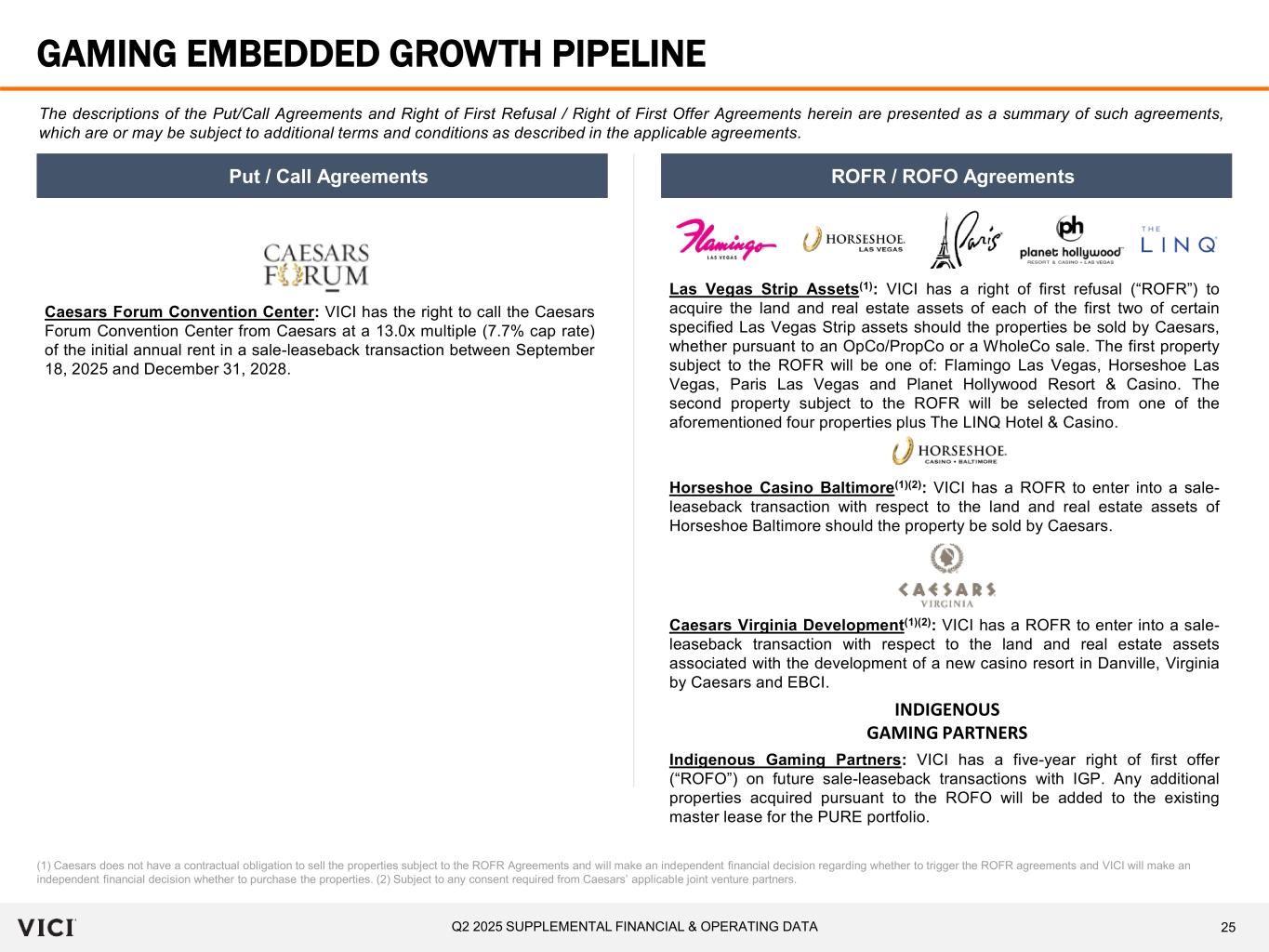
thank you yeah jenny it's david um thanks for the question as we've talked about with our other calls in the past well we like the optionality we have around that if we think about that asset in particular it sits next to a couple assets that we already own it sits right on some land that we already own so it's a very attractive asset we obviously just talked about the the conviction we have around las vegas and so we'll uh assess that opportunity it opens up here obviously in september and goes for a couple years so we got a little bit of time to
Jenny
Analyst — Morgan Stanley
figure out what we might do with that asset. Nice. Also, we know there are about like 33 acres of undeveloped or underdeveloped land around the Vegas Strip that seems like currently leads to Caesars. I'm just curious about your plans to potentially like monetize or develop those assets maybe together with Caesars. Just curious about your latest thoughts on that. Thank you.
yeah um i would say we we think of that as a land bank we have no current plans uh nor does caesars have any current plan as far as we know uh to develop that land uh but it it does definitely does have value as a land bank uh as we look ahead over the coming decades uh and as vegas continues to achieve what we think is an unrivaled position globally as a hospitality entertainment and increasingly a sports destination that land very much should increase in value over time
Operator
okay that's all for me thank you the next question comes from Greg McInnes from Scotiabank
Greg please go ahead hey just one question for me John I'm just going to dig in a bit more on the expanded funnel that you talked about so besides gaming which areas do you see right now with having maybe potentially the most investment opportunity for Vici or which industries are you more excited about today and for both that industry and gaming what do you think actually gets new operators interested in pursuing sale leaseback funding so we can see maybe some more
acquisitions in the future yeah great great question we've talked about many of the sectors that we've been spending time in theme parks indoor water parks ski resorts we are spending a lot of time in sports you've heard us talk about this on the professional level the collegiate level we've obviously made a good size investment in the youth sports area we're excited about about the growth there it's a little bit in many of these sectors of how our capital can work and how it can help accelerate the growth of a team or of a resort and so i can't tell you exactly which ones are going to pop what i can tell you is we are spending a lot of time in many of these educating folks about vici about how we think about partnership how we think we could do one transaction but most importantly how we can be a partner for longer term um so those are the sectors it still doesn't mean we we aren't continuing to look at gaming i always when we start talking about non-gaming i always like to bring up that we continue to look at the casino
business as well you know greg i'll just add that um i i our our ability to do uh to do sale lease backs and to generally get capital out the door um depends to a great degree on um serving the needs of growth-minded operators in particular uh operators who want to grow their store counts whether it be in gaming or in other experiential categories and you know we've come through a period here where the ambition levels to grow store count have not been necessarily what they have in the past but it's interesting to look particularly in gaming to see who's trading really well and we we i would say for example our partners at redrock who you know are are growing store count um they did it obviously in durango they're they're doing it north fork uh helped by our capital and uh you know i think over time you know more and more operators will realize you know if you really want to get you know anything resembling a premium valuation you
have to show the market how you're going to grow i appreciate that and i just want to go back to kind of youth sports there was recently an article in the new york times talking about private equity getting more involved um are you seeing opportunities to co-invest there are you speaking with with uh with some of these private equity funds about those investment opportunities
yeah greg uh you're you're you're reading good articles uh so you know absolutely there's there's there's ways to partner there's ways i'm sure at times they're looking at things that we're looking at and we're competing but that's exactly um the relationship building that we are doing in not not only in youth sports but in many other sectors where you are seeing other forms of financing and capital looking at the same uh sectors that we are and sometimes we will partner and sometimes we'll go it alone um but that that's the kind of the philosophy and of how we are going to grow in those sectors okay thank you the next question comes from caitlin burrows from
Jeremy Keel
Analyst — Goldman Sachs (on for Caitlin Burrows)
goldman sachs caitlin please go ahead hi this is jeremy keel on for caitlin circling back on a topic earlier in the call given supply in regional markets which regional markets are you most
interested in next again our apologies folks and we we greatly appreciate your patience if you're still there. We appear to be having some Wi-Fi issues. And we're now on Hayes' phone. Hayes, thanks for your phone. And just to repeat Jeremy's question, Jeremy asked which regional markets might be attractive to us. And I will now turn it back over to John. Yeah, we apologize. So if
I'm repeating myself a little bit here, I think the number one regional market we'd love to be end is in Las Vegas. It continues to be strong. There are world-class assets. There's markets like Reno that have some wonderful assets that were not in that market. There are new markets like Virginia, I would say, or other retail markets, just to name three that we'd be interested in being a part of. I'm sure there's another four or five that could go through, but you get the
Jeremy Keel
Analyst — Goldman Sachs (on for Caitlin Burrows)
idea great thanks um and then just one quick follow-up uh saw in the news that lucky strike tenant vici recently did a reverse like sales leaseback does that impact vici at all and are there any concerns that any other tenants could do something similar thanks yeah jeremy it's david
does that i mean answer your question directly does that impact vt we've got a great relationship with tom and bobby over at the lucky strike and you may have seen this morning they had some acquisitions or some outdoor water parks as well so they continue to grow their business and how they ultimately capitalize their business over the long term is up to them but i think there could be more opportunities to grow with them in the future and they're an example of what i just talked about the operator that's growing their store count so there could potentially be more to come with them over time the next question comes from
Ravi Fajar from Bizuho. Ravi, please go ahead. Hi there. I hope you guys are doing well. I wanted to ask about the Red Rock deal. Has any capital been drawn down for that deal thus far? Maybe can you describe broadly the opportunity going forward? You mentioned interest in the locals market in Las Vegas. I think Red Rock owns a little less than 500 acres in that area. Is that something that you'd be interested in partnering with and in a relationship you want
want to expand upon yeah robbie it's david i mean we put up just under 80 million on the initial drop when we announced that um not that loan development and just the way the the funding cadence works there's a little bit of pause from our capital uh and then the draw schedule will pick it back up later this year um and if you listen to red rock's call last quarter not just uh two days ago you know steve and frank and lorenzo talked about you know the long-term relationships they've had with VG and how nothing's off the table. There's no imminent opportunities to do sale effects. But as we talked about on this call, when you do good things with your partners, opportunities may come in the future. And you should listen to their most recent call from two days ago and just talked about growing their store count. Frank and Lorenzo speak specifically to their development capabilities and how good they are at expanding their portfolios. And so we're thrilled to partner with them out in Madera, California, and this will be a home run opportunity for everybody involved.
Operator
Our final question today comes from Jamie Feldman from Wells Fargo. Jamie, please go ahead.
Great. Thanks for taking the follow-up from our team. So I just want to go back to the bonus depreciation discussion. You know, it could be a pretty meaningful wave of spending here. Lots of projects that probably do have a meaningful amount of tenant CapEx, which, you know, based on your comments before, sounds like a formula for you. You know, how much time are you thinking about, you know, real shifts in your investment attention based on what we might be seeing coming down the pipeline in terms of just very large scale CapEx projects that need capital?
Yeah, I think, Jamie, that because obviously this bill just passed and with it this bonus depreciation component, I don't think everybody has a whole bunch of plans kind of sitting on the shelf waiting for this. So I do think what you are likely to see over the next year is a lot of planning based upon the benefits now of this bonus depreciation and with those plans getting executed in the next year, two and three years, and that capital being spent over that time. So I don't think you're going to see an immediate spending of capital, but it has certainly created an environment where over the next few years it should unleash a very strong wave of capital investment, hopefully with some of our money, but in any case, capital that will increase the value of our building.
But I guess my question is more, would you consider shifting away from your traditional focus, gaming, experiential, if there are major projects that look interesting?
Uh, not necessarily. No, not necessarily. If it was outside experiential, I would say right now it is out of scope for our investing. I don't know if you're sort of referring to data centers or something like that. But right now we continue to believe very much in the secular power and secular sustainability of experiential as an investment category.
Okay. And then going back to your initial comments about the dividend and, you know, as you think about the earnings and cash flow profile, I know Tony asked before about, you know, debt investments versus real estate equity investments. I think that you broke up a little bit on the answer. So do you have a sense of, you know, when you think about dividend composition, how much of the cash flow you'd want from debt investments versus, you know, fee simple equity investments?
Yeah, I wouldn't say we necessarily decompose the dividend in that way. What we certainly look at is how we are going to grow AFFO per share over time and the degree to which we can use both retained and regained capital to continue to grow our AFFO per share and thus grow our dividend. But I wouldn't say we necessarily decompose the AFFO in such a way that it then drives dividend policy.
Operator
This concludes today's Q&A session, so I'll hand the call back to Ed for some closing comments.
Yeah, I just want to again apologize to everybody for the technical difficulties today. Appreciate your patience and very much look forward to talking to you next time when we are very determined we will not have these issues. Thank you.
Operator
This concludes today's call. Thank you very much for your attendance. You may now disconnect your lines.