Operator
Good day, ladies and gentlemen. Thank you for standing by. Welcome to the Vichy Properties 3rd Quarter 2025 Earnings Conference Call. At this time, all participants are in listen-only mode. Please note that this conference call is being recorded today, October 31st, 2025. I will now turn the call over to Samantha Gallagher, General Counsel with Vichy Properties.
Thank you, Operator, and good morning. Everyone should have access to the company's 3rd Quarter 2025 Earnings Release and Supplemental Information. The release and supplemental information can can be found in the Investors section of the VG Properties website at www.vgproperties.com. Some of our comments today will be forward-looking statements within the meaning of the Federal Securities Laws. Forward-looking statements, which are usually identified by the use of words such as will, believe, expect, should, guidance, intends, outlook, projects, or other similar phrases, are subject to numerous risks and uncertainties that could cause actual results to differ materially from what we expect. Therefore, you should exercise caution in interpreting and relying on them. We refer you to the company's SEC filings for a more detailed discussion of the risks that could impact future operating results and financial condition. During the call, we will discuss certain non-GAAP measures, which we believe can be useful in evaluating the company's operating performance. These measures should not be considered in isolation or as a substitute for our financial results prepared in accordance with GAAP. A reconciliation of these measures to the most directly comparable GAAP measure is available on our website, in our third quarter 2025 earnings release, our supplemental information, and our filings with the SEC. For additional information with respect to non-GAAP measures of certain tenants and our counterparties discussed on this call, please refer to the respective companies' public filings with the SEC. Hosting the call today, we have Ed Petoniak, Chief Executive Officer, John Payne, President and Chief Operating Officer, David Kieske, Chief Financial Officer, Gabe Wasserman, Chief Accounting Officer, and Moira McCluskey, Senior Vice President of Capital Markets. Ed and team will provide some opening remarks, and then we'll open the call to questions. With that, I'll turn the call over to Ed.
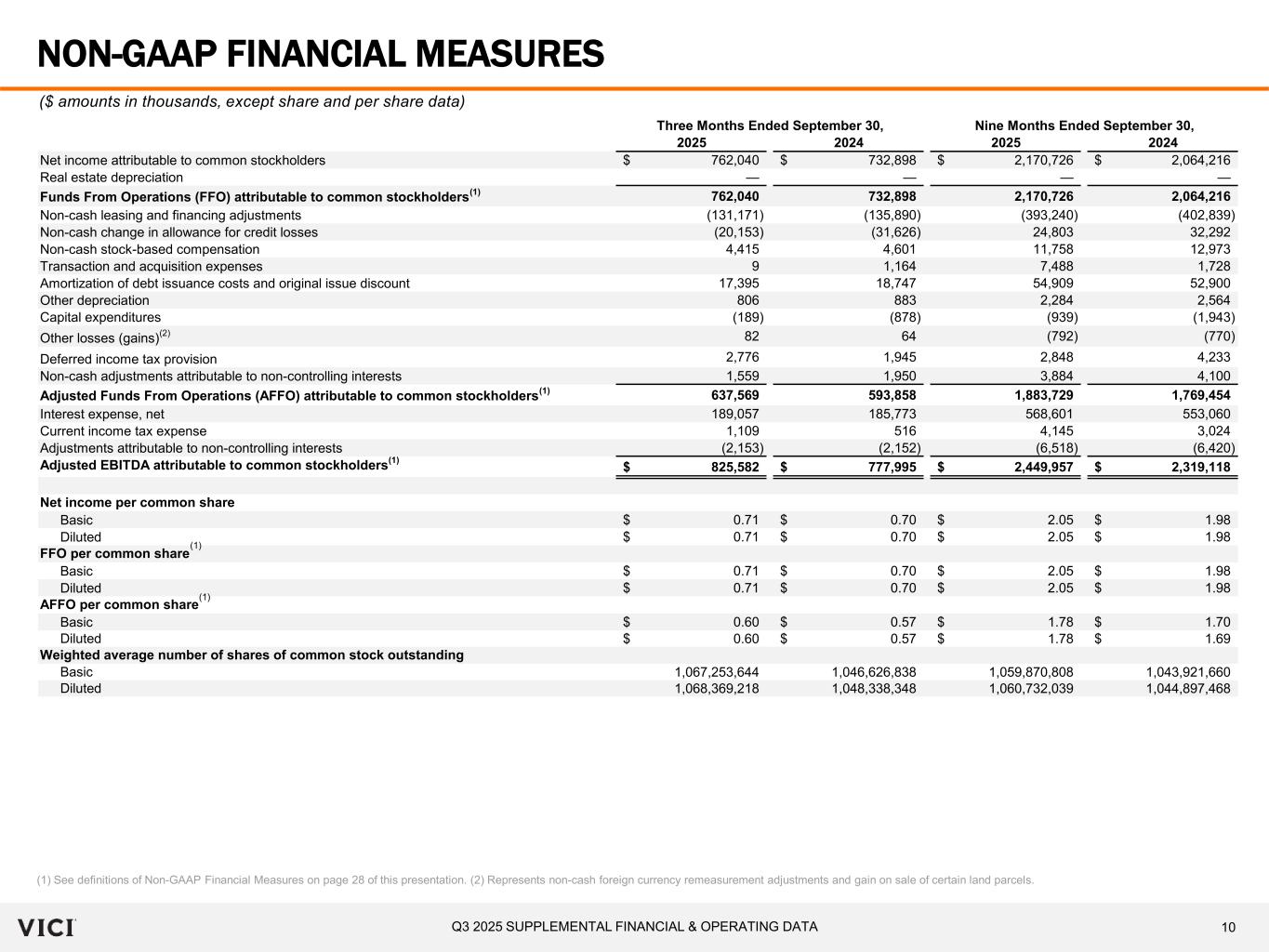
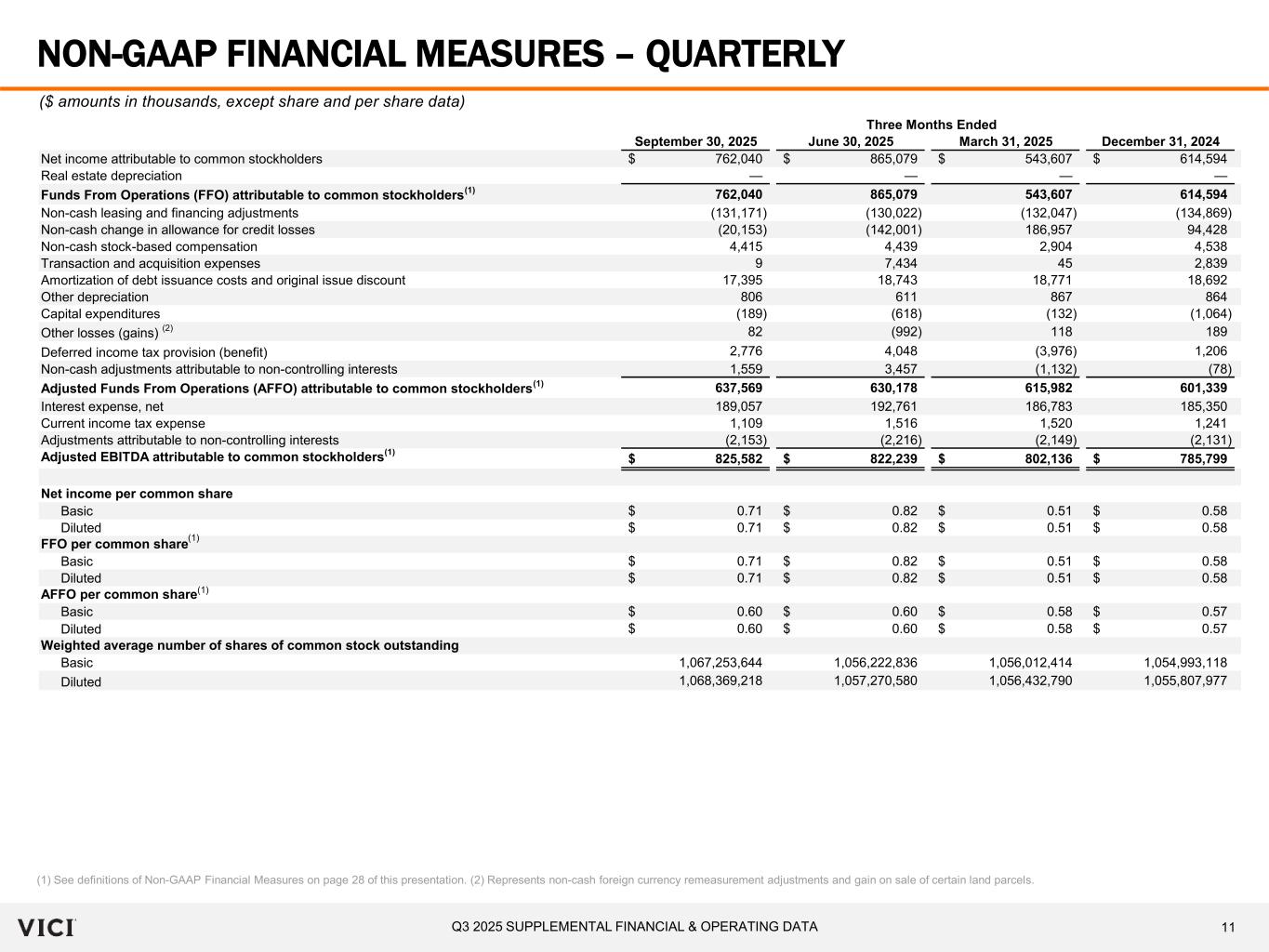
Thank you, Samantha, and good morning, everyone. I want to start by talking about something we probably won't get asked about much during the upcoming Q&A, and that's our Q3 earnings growth. For Q3 2025, we grew our AFFO per share earnings by 5.3% versus Q3 2024. I want to emphasize our Q3 2025 earnings growth rate because I want to emphasize the earnings growth that our model is capable of producing, even in periods of continuing uncertainty. With our Q3 2025 results, the Vichy team continues to demonstrate its resourcefulness and resilience in growing relationships that grow our revenues and profits without, in the case of 2025, significantly growing our capital base. You will hear more in a moment from John Payne about what the Vichy team is doing to continue to grow our portfolio and our income. And you will hear from David on our financial results, balance sheet, and updated 2025 earnings guidance. Before we turn to John and David, I want to talk about the wider strategic context in which we are producing our results. And by context, I do not mean the state of the market this week, this very week, which has obviously been a rough week for REITs and for gaming operators. If you wish, we can share our thoughts on this week's market reactions and ructions during the Q&A. By strategic context, I mean the larger context of the world we are living and, moreover, we'll be investing in in the years, not weeks, to come. As I've told you before, I do a lot of reading. Some days I do wonder if I do too much reading. Two weeks ago, I read a guest post in one of my favorite daily newsletters, Odd Lots. That particular day, the Odd Lots pulpit was given over to Victor Schwetz, head of Global Desk Strategy at Macquarie Capital. Victor starts by quoting Nobel Prize winner Niels Bohr, who is often quoted as having said, quote, prediction is very difficult, especially if it is about the future, unquote. Victor does acknowledge that Yogi Berra evidently said something similar. After summarizing the current weird state of our world, Victor states, quote, in line with many other prognosticators, I do believe that the next decade will be the most critical period in the transition from yesterday's capitalism toward a yet-to-be-defined alternative system. Everything is up for grabs in what is likely to be one of the most profound changes since the invention of agriculture, with far deeper consequences than even the industrial revolutions had, unquote. Victor goes on to ask, quote, then what are rational investment strategies in response to an irrational world caught in a violent transition. Victor's preferred answer is, quote, to have strong views rather than no views. This involves joining the revolution and backing, instead of fighting, secular themes, basing investment strategy on a new world and avoiding the waging of old battles, unquote. He states that for the last 10 years, his firm has valued building portfolios around sectors and companies that are, quote, supported by long-term structural forces rather than investing based on a heavily degraded reading of economic and capital market cycles, unquote. Quote, with portfolio construction based in part on rising returns on digital capital, he then continues, quote, included are several disruptive themes, such as the replacement and augmentation of humans, the flow on impact to social, political, and geopolitical arenas, and the corresponding need for balm, both metaphysical and real, unquote. quote. Okay, did you get all that? These days, it's hard, at least for me, to determine if Victor's view is on the outer or inner spectrum of potential outcomes. But a lot of what he says rings true to me. And in any case, I believe that in this period, real estate investors should be developing and executing return and risk management strategies that account for the possibility that victor will be proven right that we are in a prolonged period of significant change and that those changes could impact people's desire and need for what victor calls balm both metaphysical and real and just in case i'm not pronouncing it as clearly as i should he is saying b-a-l-m balm and not bomb b-o-m-b and i take balm to mean what people do to seek connection entertainment play based excitement both psychological and physical wellness and healing these are the experience experiential dimensions the various dimensions of bomb we at VG have been are and will continue to be examining evaluating and potentially investing in through our insight driven approach depending of course on our determination that these experiences have the investment attributes we rely on we are mindful very mindful that at a time like this it's more important than ever to identify as best we can the risks of oversupply obsolescence and the other factors that can lead to real estate capital destruction and through that identification process determine what we will and will not invest in it's an approach that has driven what we've done at vici the last few years an approach that has led to investments made and investments avoided. And as you can see from our Q3 2025 results, it's an approach that is delivering growth where it most counts, growth in AFFO per share. With that, I'll turn the call over to John.
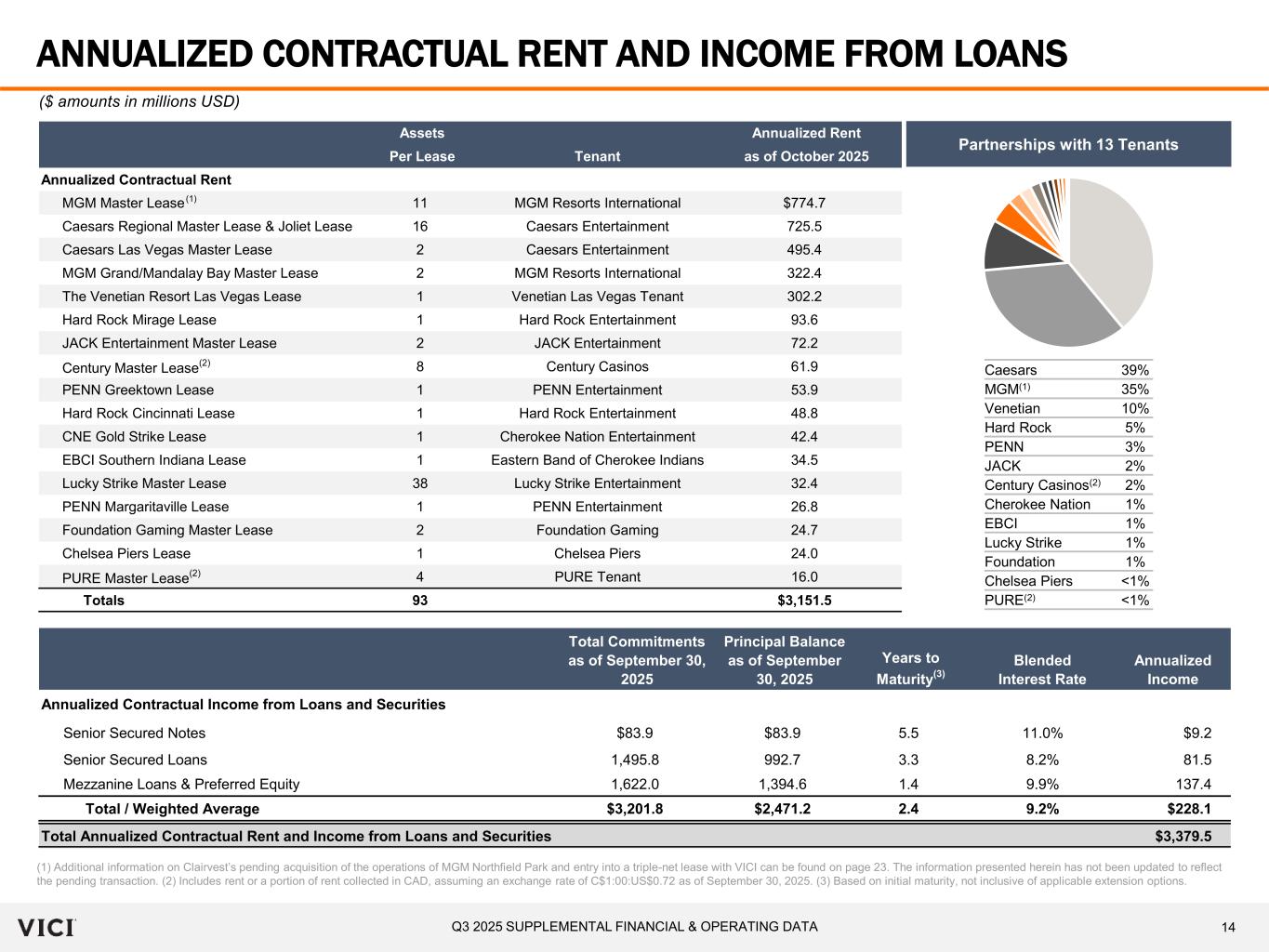
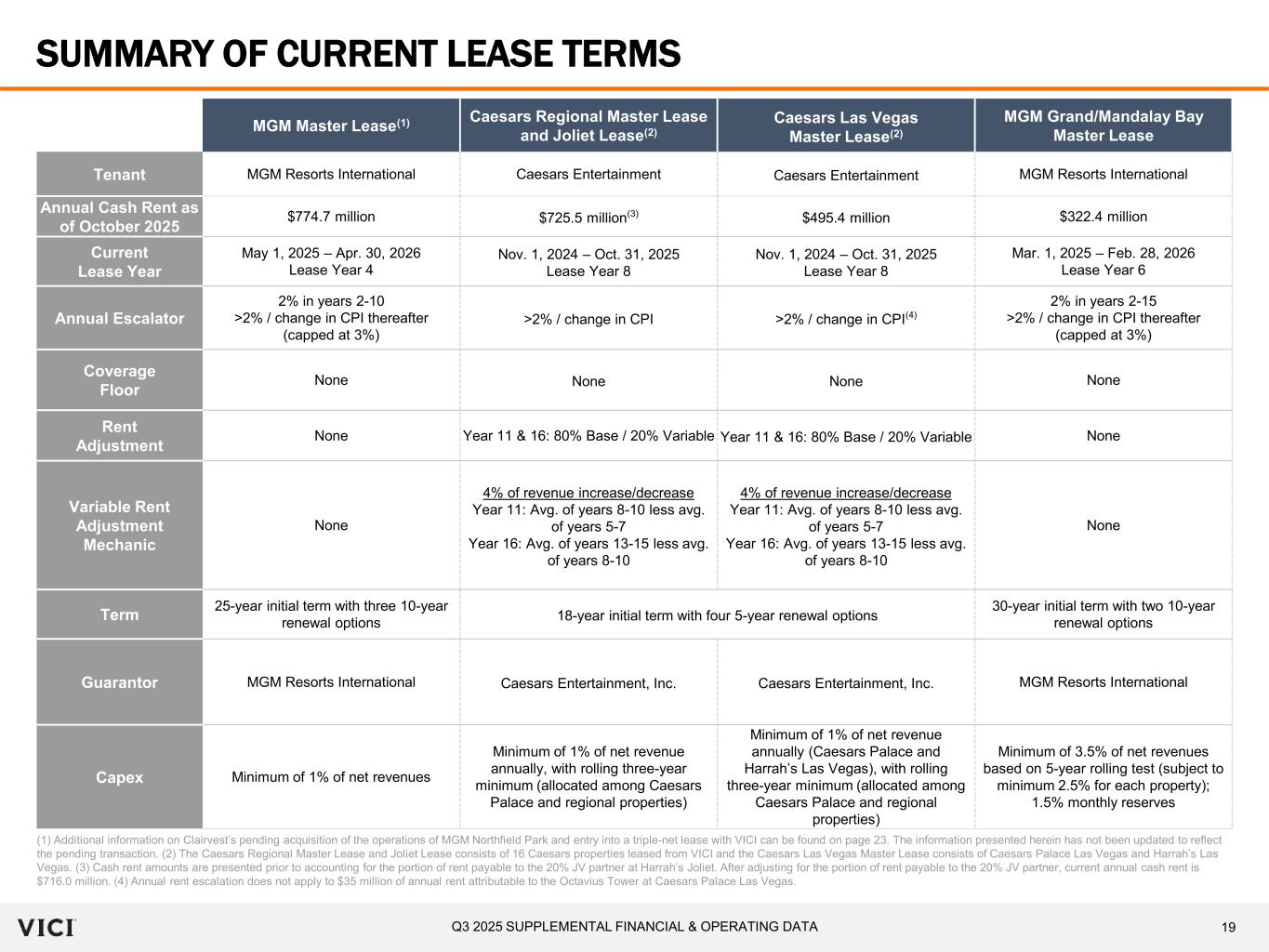
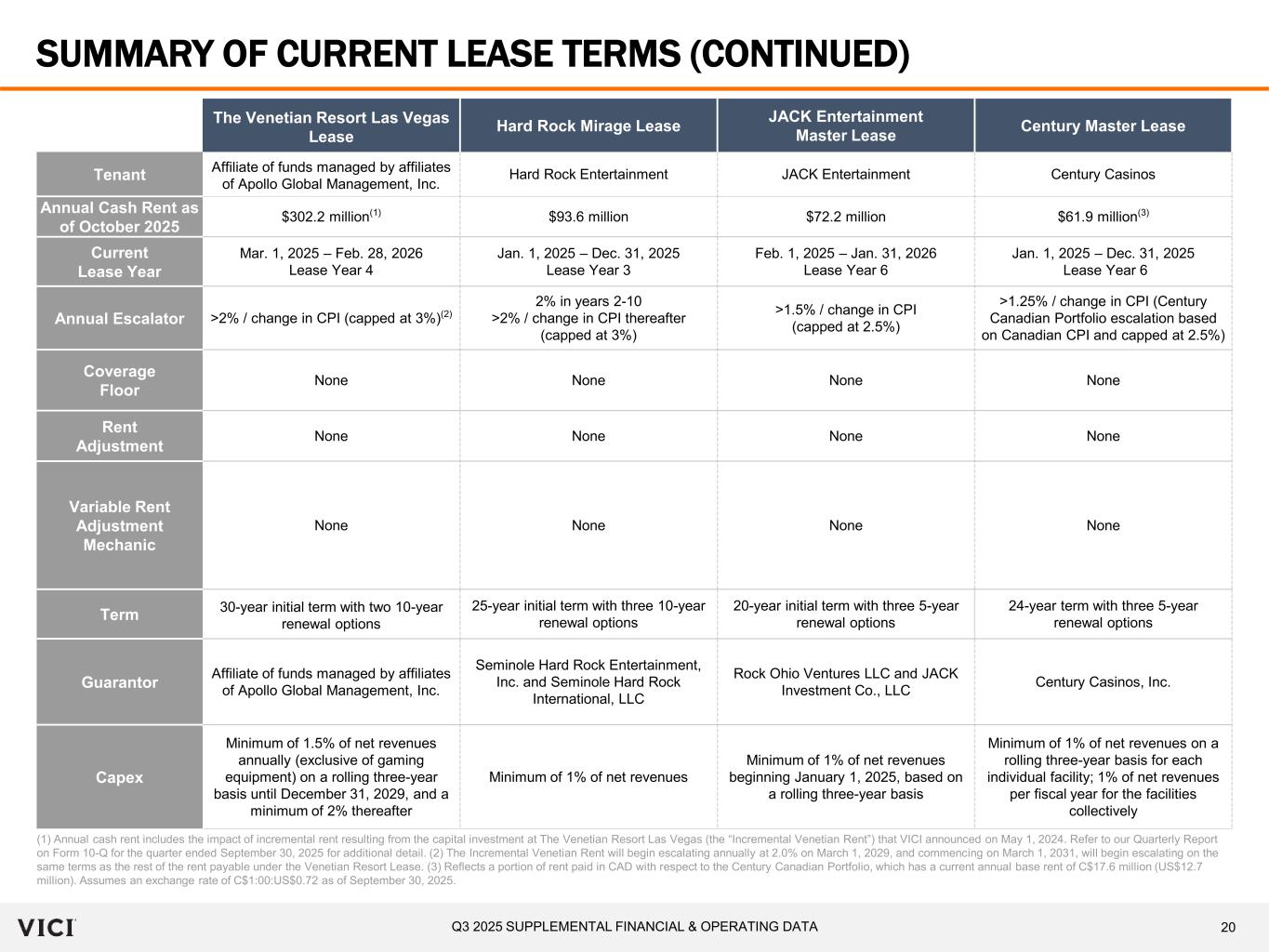
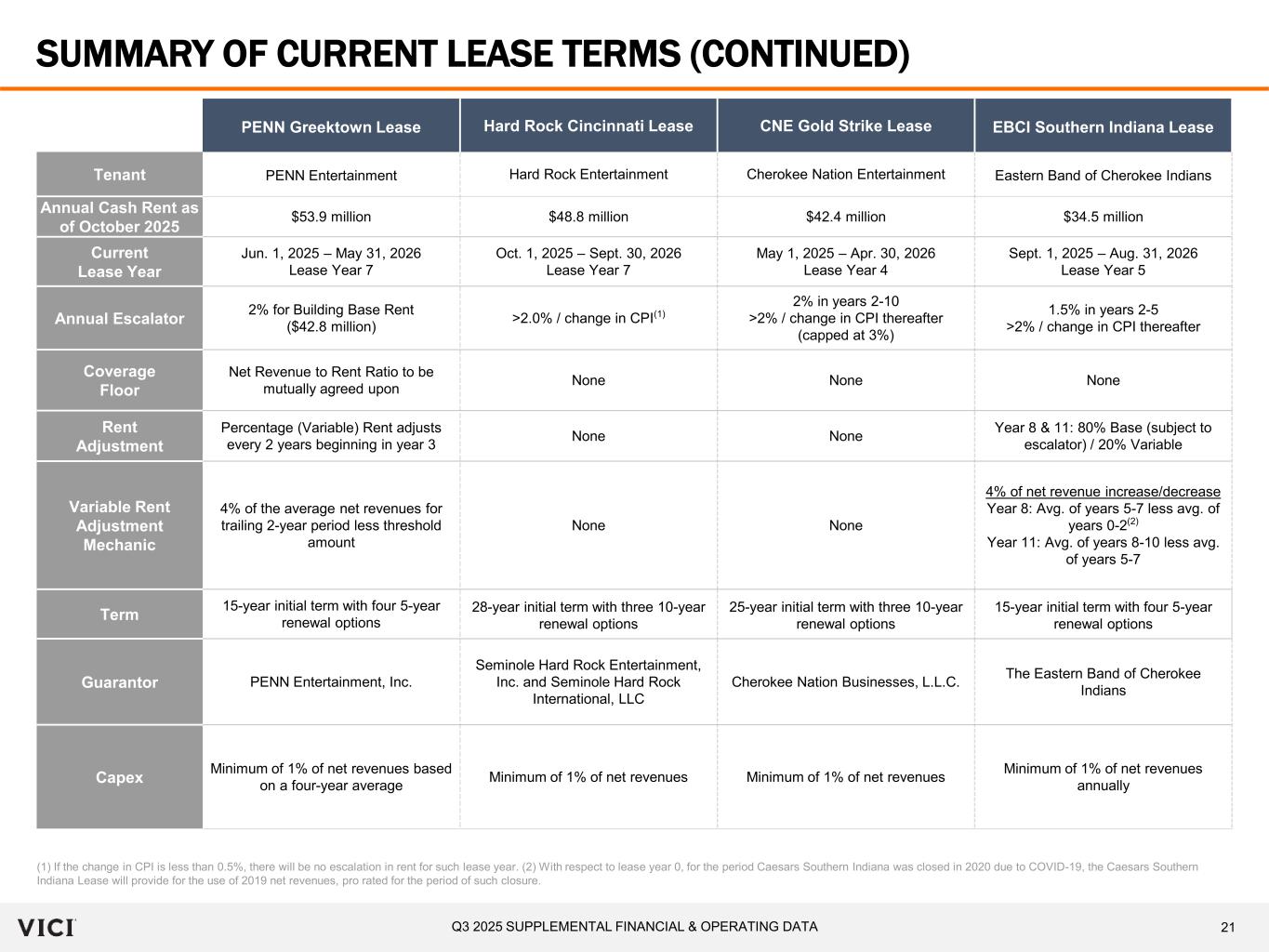
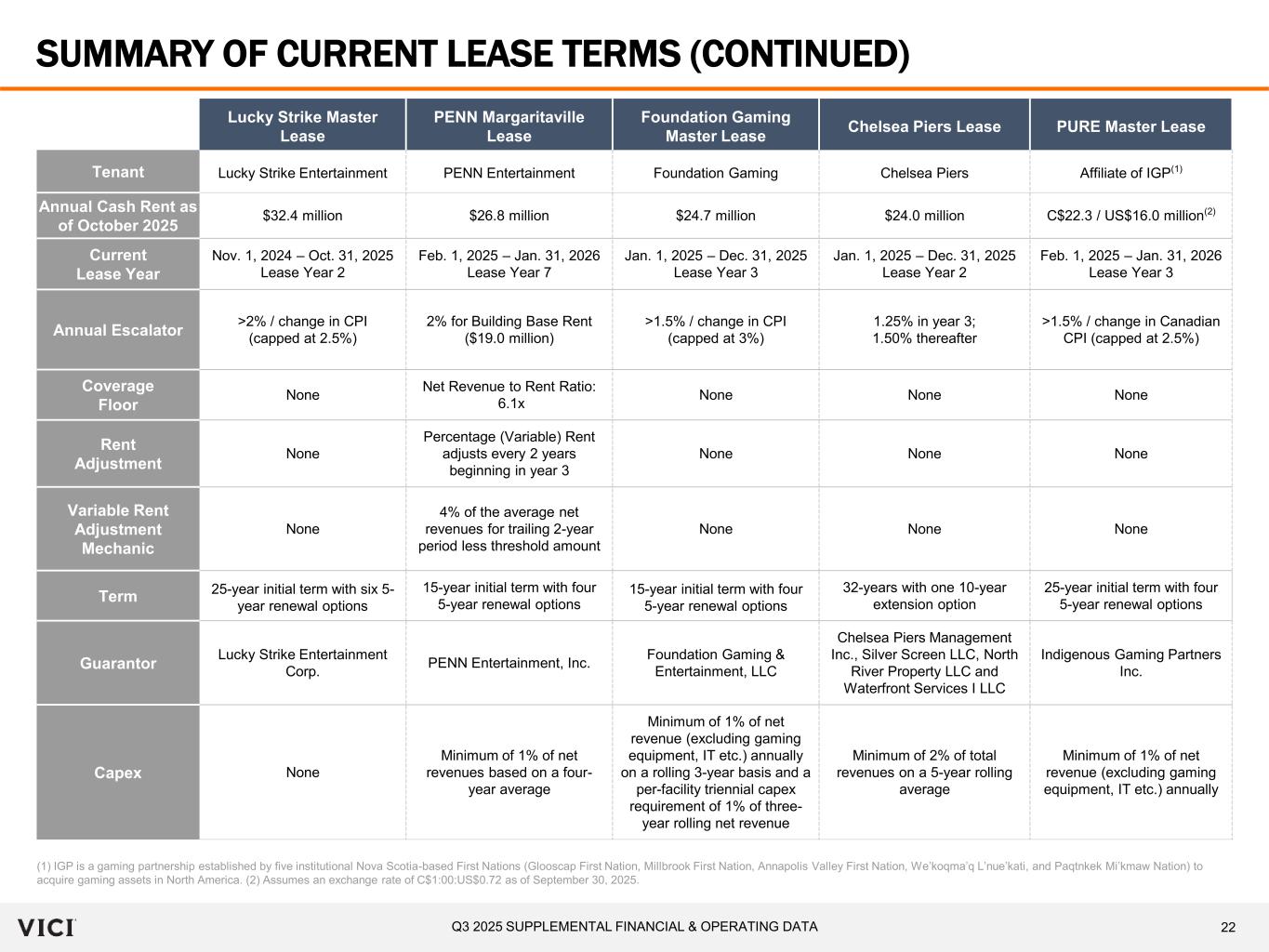
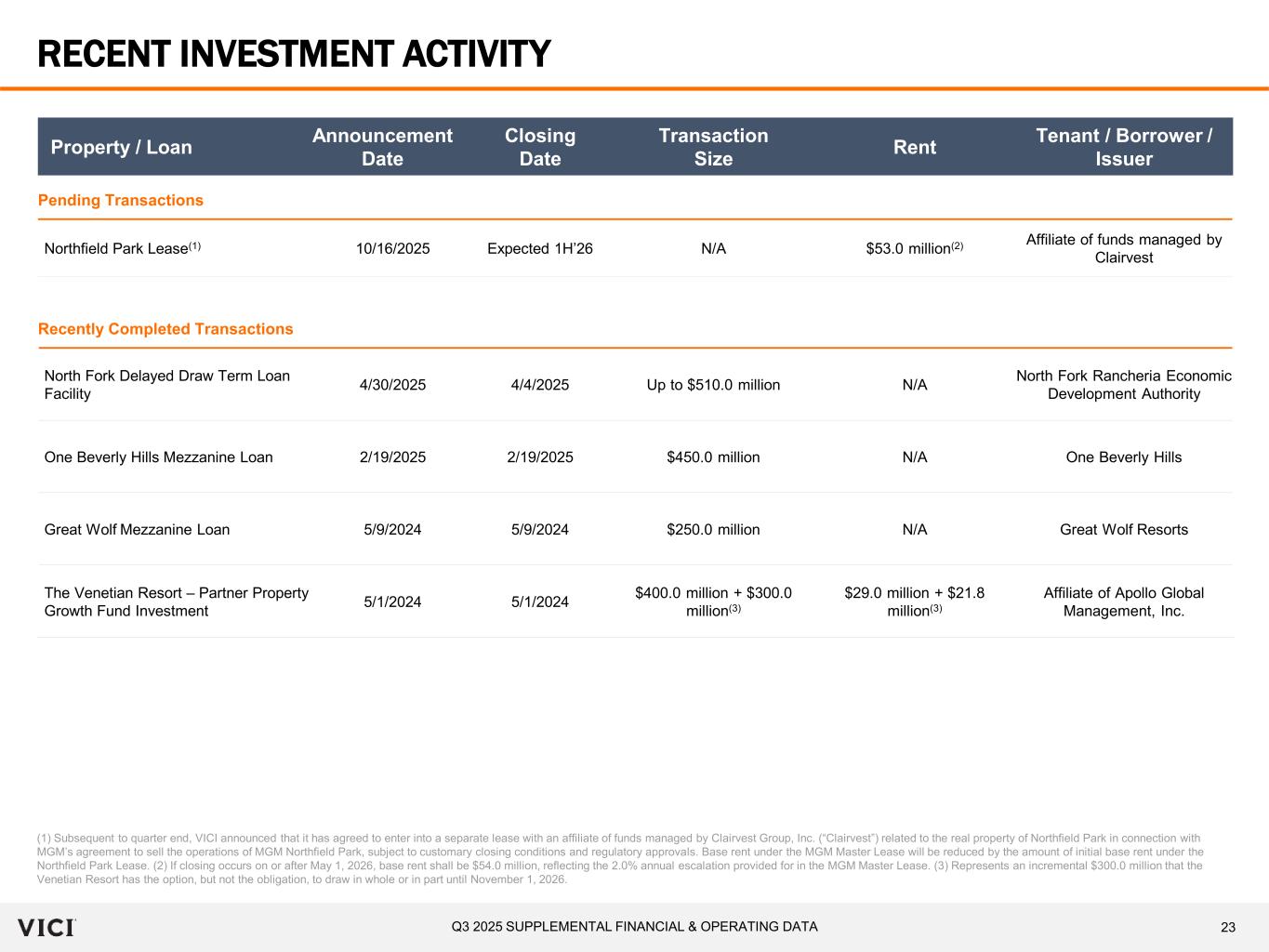
Thanks, Ed. Good morning to everyone who's on the call. As Ed laid out, we face a market environment that defies easy explanation. But at Vici, we have already faced multiple unprecedented events in our eight-year history. and through disciplined capital allocation, we have been able to strike the balance between investment quality and growth. Subsequent at quarter N, we announced that we'll be adding our 14th tenant, Clairvest, in connection with MGM Resorts Agreement to sell the operations of MGM Northfield Park. Upon closing of the transaction, Vici will enter into a new triple net lease with an affiliate of Clarefest, as well as an amendment to the master lease between Vici and MGM Resorts. The Northfield Park lease will have an initial annual base rent of $53 million or $54 million if the transaction closes on or after May 1st, 2026. And rent under the MGM master lease will decrease by the same amount simply put this transaction will not change the total amount of rent collected by vici clairevest is a top performing private equity firm out of toronto and they are recognized leader in the gaming sector clairevest is a sought after partner with gaming experience across regional casinos racetracks suppliers technology providers and online gaming globally having made 17 investments in 37 gaming assets over the last two decades vici looks forward to further diversifying our tenant roster with a well-respected counterpart in the sector now casino gaming remains a top focus for vici we continue to believe in the durability of the sector, despite recent noise around Las Vegas. John Decree at CBRE put it well in his research note earlier this week. Las Vegas has experienced the confluence of idiosyncratic headwinds. The slowdown in visitation this summer, influenced by decreased Canadian travel and reduced capacity from Spirit Airlines, is definitely something to monitor. But Las Vegas has endured cycles before, and operators are expecting trends to improve through quarter four and into 2026. Headlines emphasize short-term trends, but at Vici, we take the long view. We are still big believers in Las Vegas as one of the world's best destinations, with operators who are willing and able to adapt their business to meet consumer demand. With that said, some operators have experienced recent strength in Las Vegas. The Venetian, one of our tenants, for example, continues to perform remarkably well with record hotel revenues and gaming volumes this summer. Additionally, according to Venetian Management, 2026 is on track to be a great year for the Venetian's group business. Convention cycles in and out of cities each year. But Las Vegas continues to draw solid group demand that supports the segment as other conferences rotate locations. For example, ConExpo, ConAg, America's largest construction trade show that draws nearly 140,000 attendees, takes place every three years, is set to happen in Las Vegas in March of 2026. We believe the convention business in Las Vegas is an underappreciated mitigant to the cyclical nature of leisure-oriented business. In 2024, convention visitors spent $1,681 per trip. That is 33% higher than the average leisure visitor. And the strength of Las Vegas as a convention city has continued to gain momentum post-pandemic. Vici owns nearly 6 million square feet of conference, convention, and trade show space on the Las Vegas Strip, and representatives from several blue-chip, large-cap companies like Amazon, Google, Microsoft attend conferences in Las Vegas every year. Vici continues to believe in the strength and resiliency of Las Vegas. Over the last eight years, Vici has been deliberate with its portfolio construction, and we believe we've made the company better each time we grew bigger. Our multidimensional investment evaluation bolsters the quality of our decisions as real estate owners, and we conduct rigorous analysis with each opportunity that comes across our desk. At any given time, we consistently have multiple ongoing dialogues with gaming and other experiential operators, and what we want to continue to do, which is what has earned us credibility thus far, is maintain a disciplined capital allocation strategy that facilitates quality growth. We do not aim to grow for growth sakes. We do not seek to compromise creditworthiness to reach for return. We instead engage in selective, sustainable capital allocation that can provide long-term growth and withstand potential near-term macro shocks. We are long-term stewards of capital, and VG aims to make decisions that support sustained and sustainable growth that delivers value to our shareholders. Now I will turn the call over to David, who will discuss our financial results and guidance.
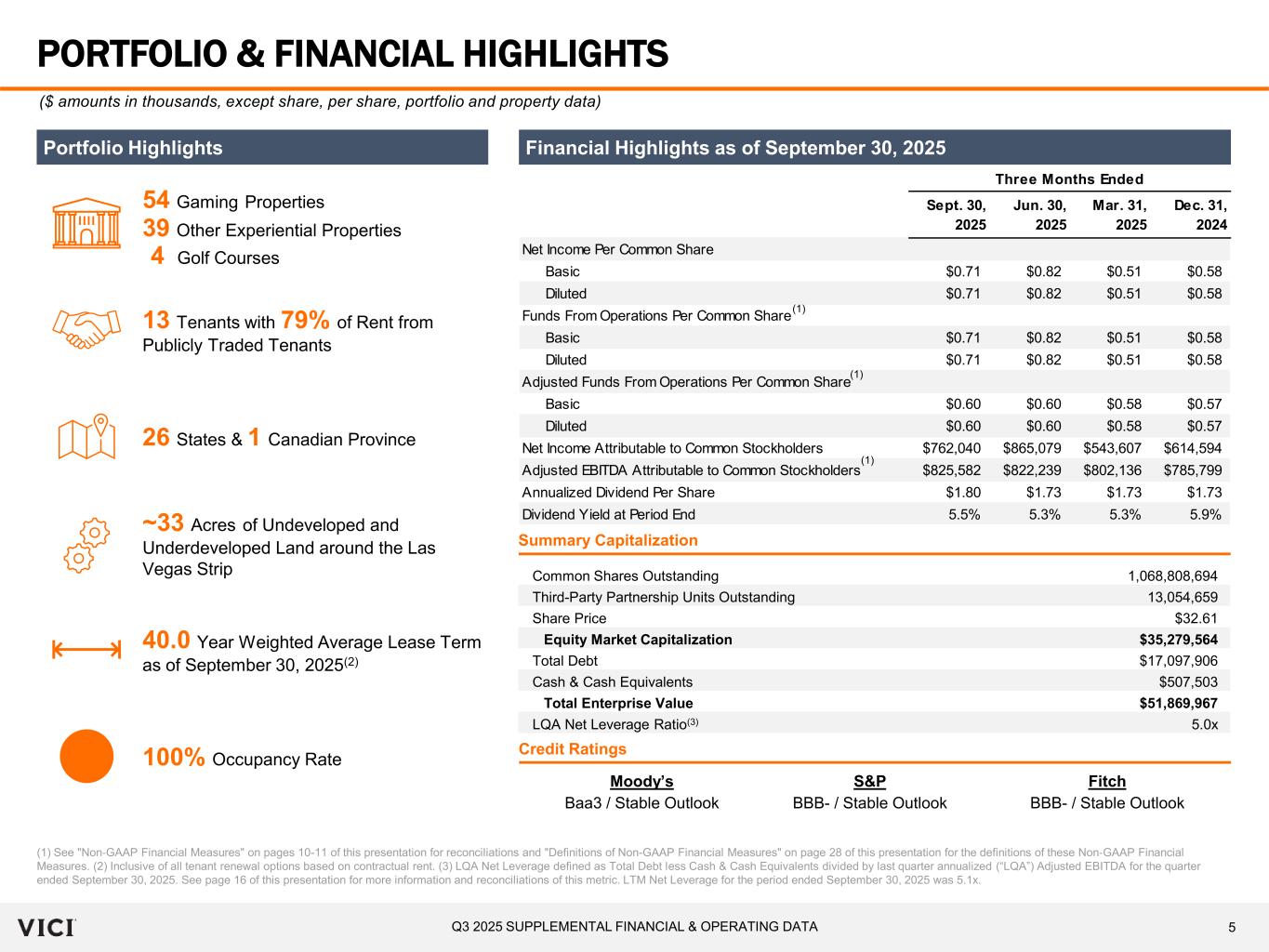
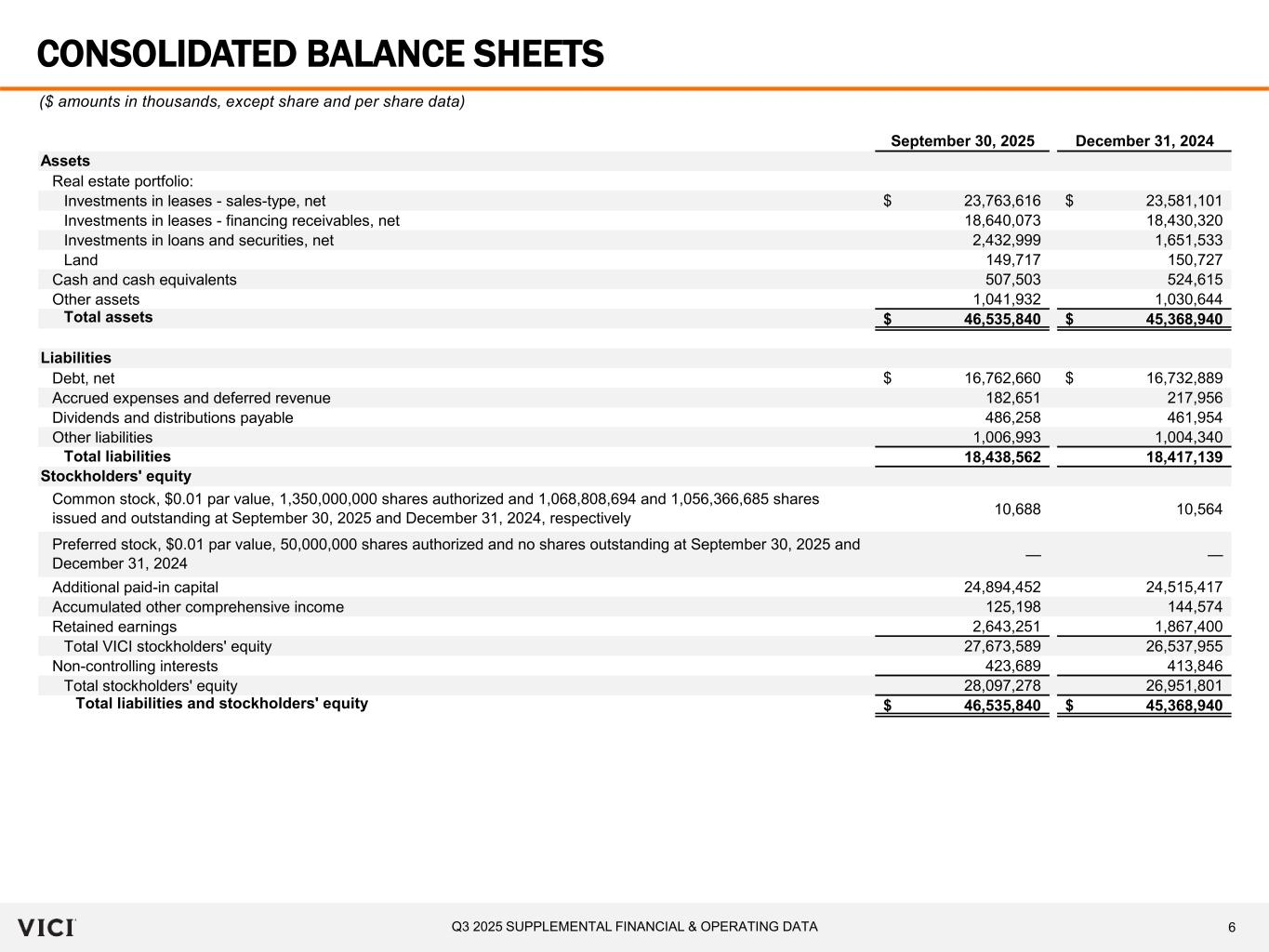
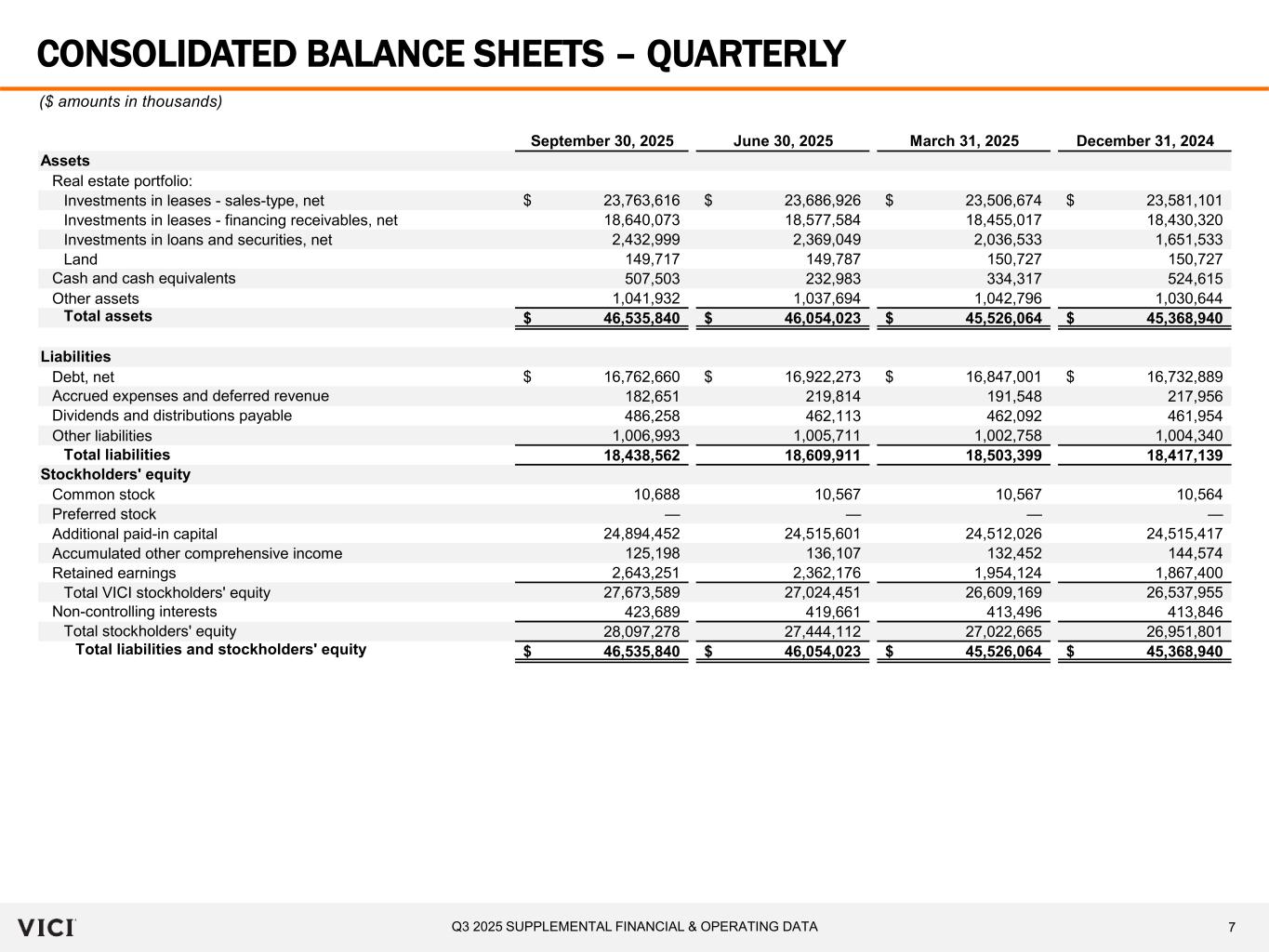
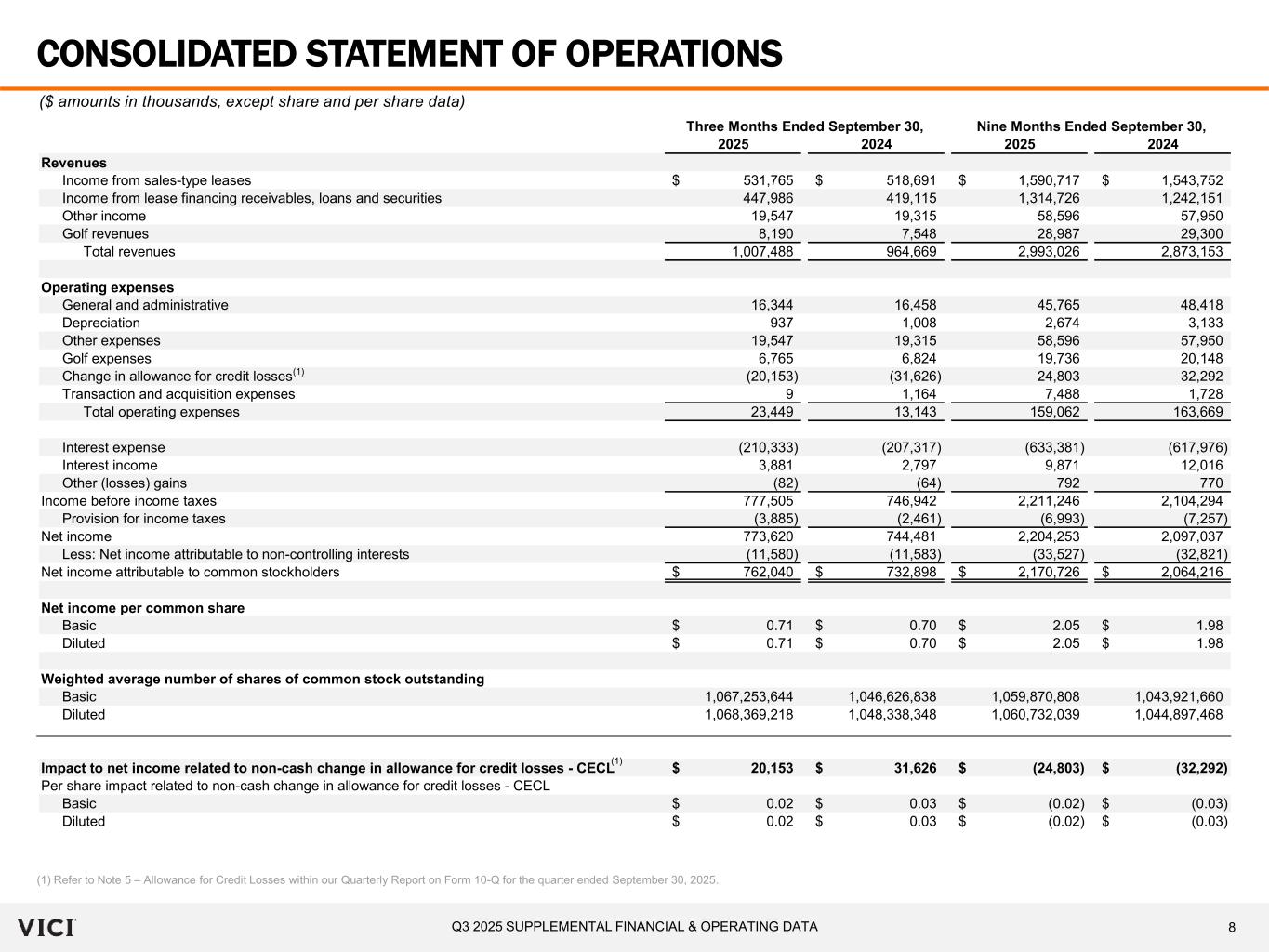
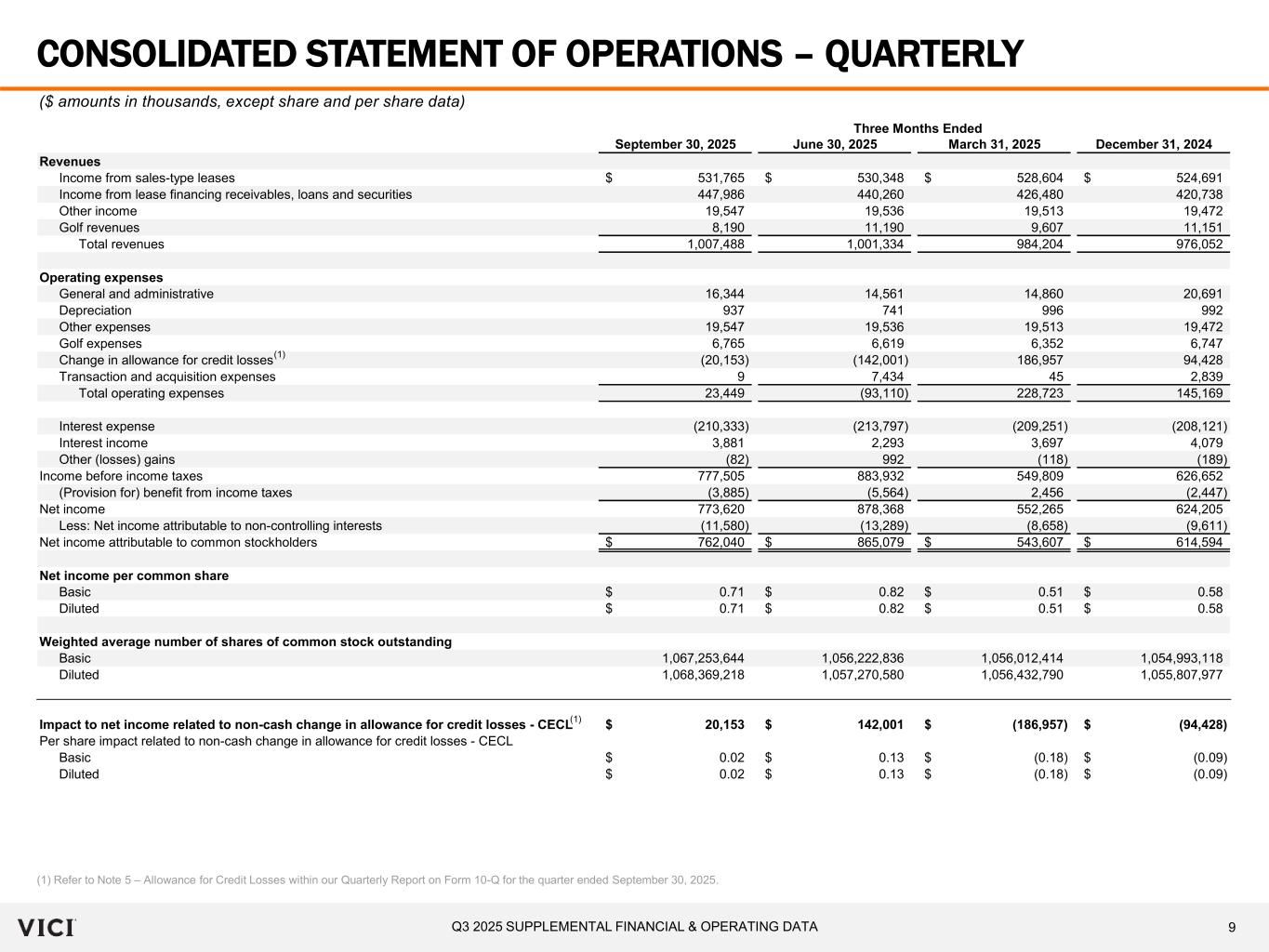
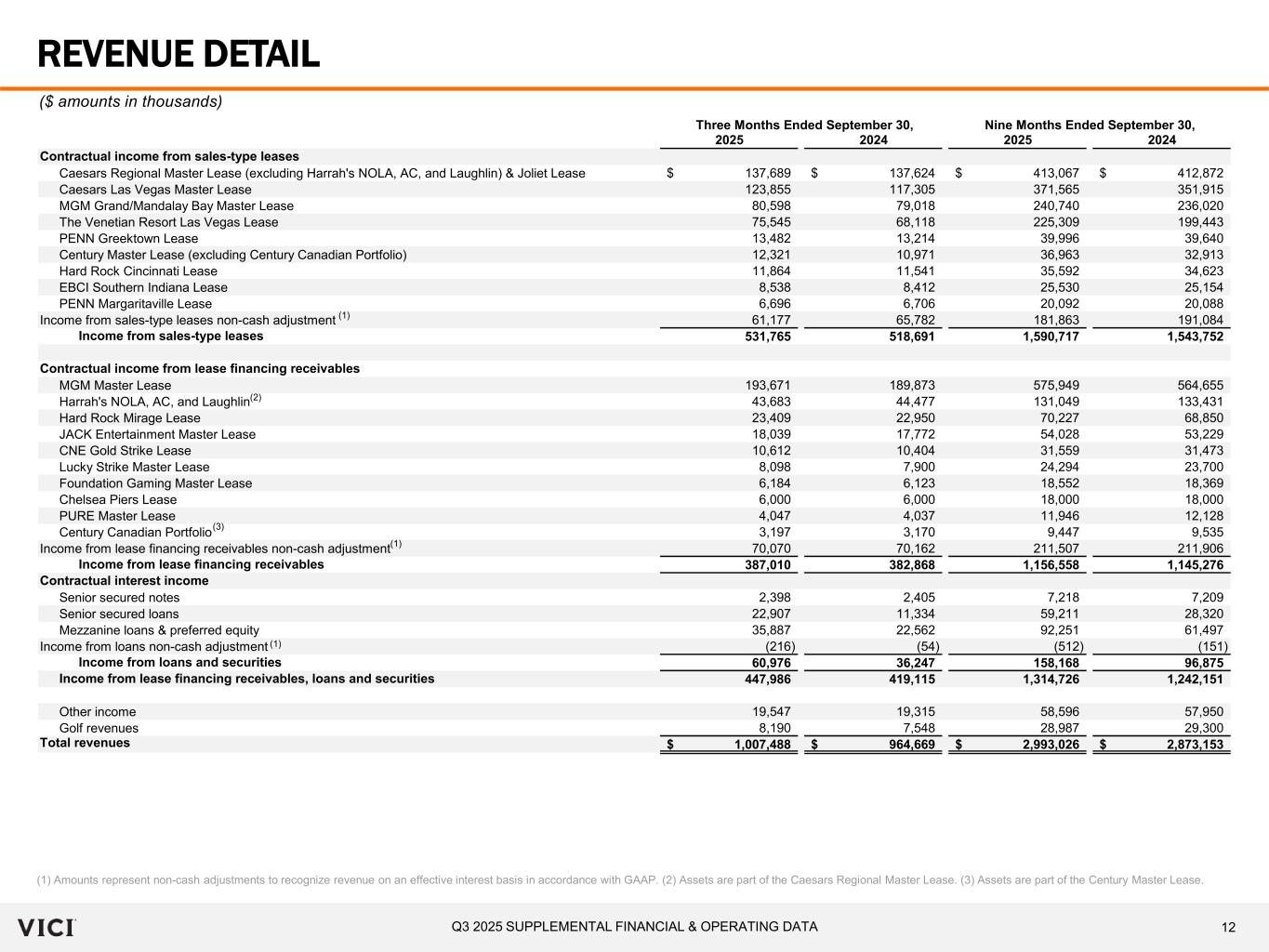
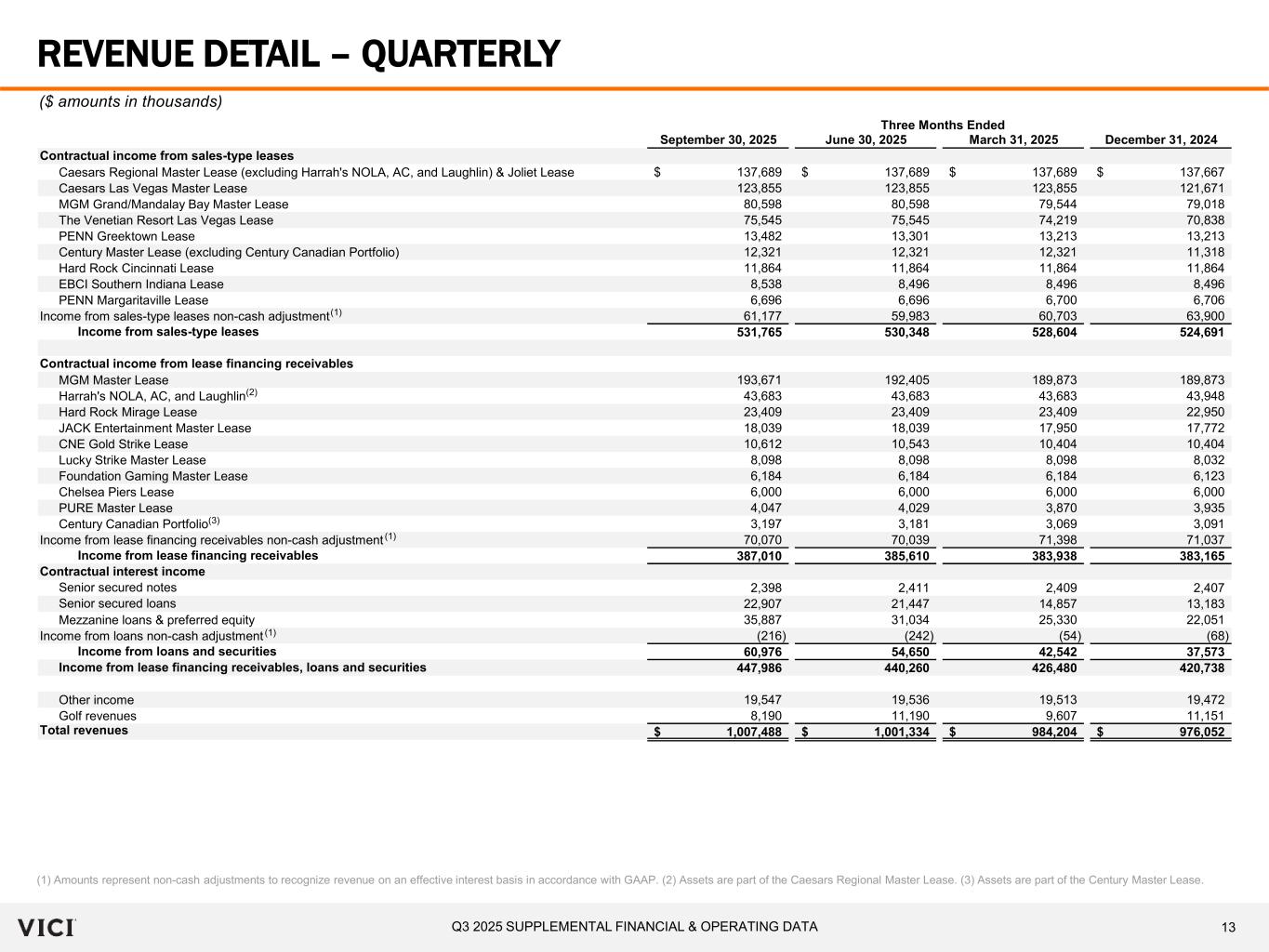
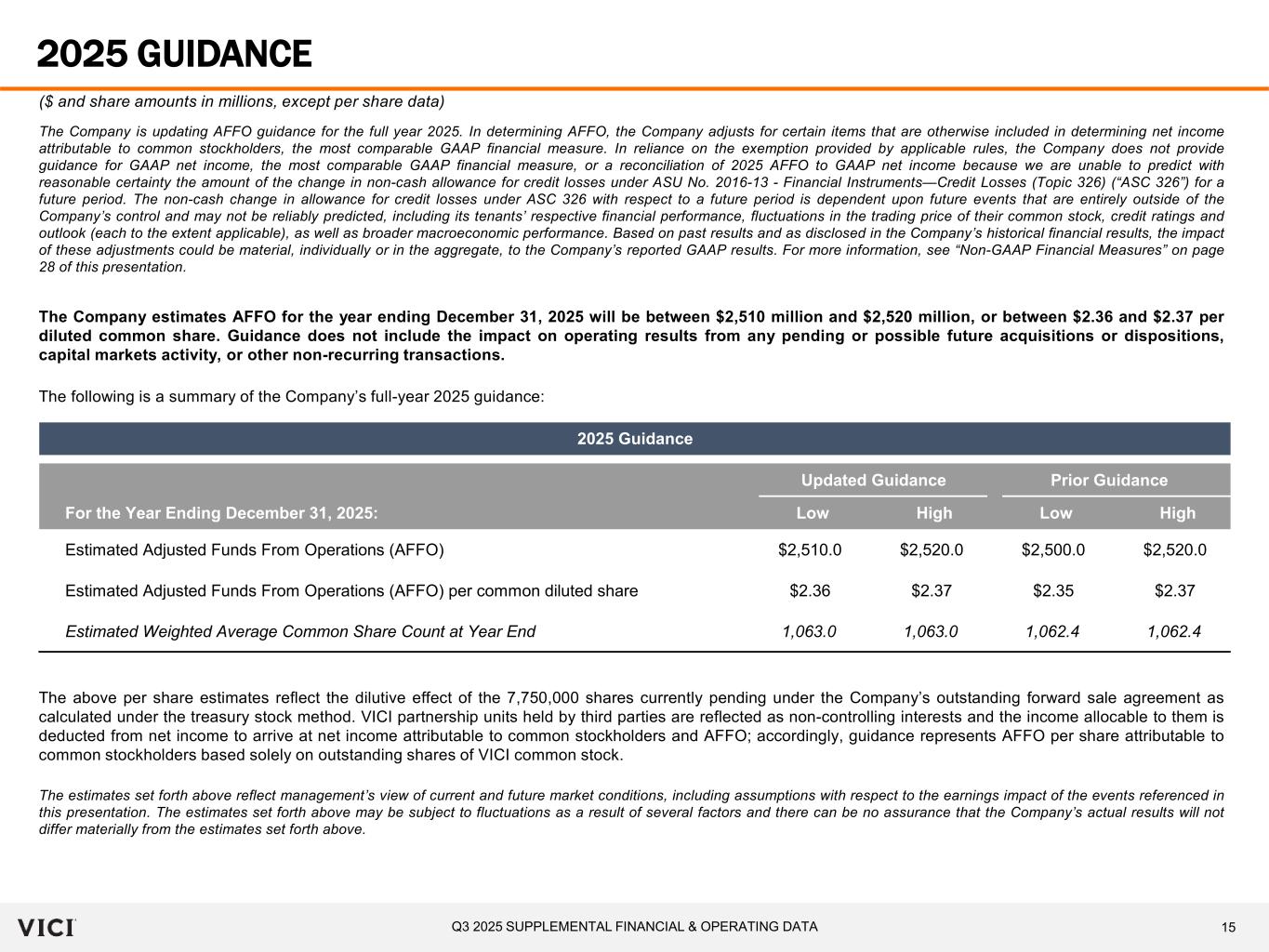
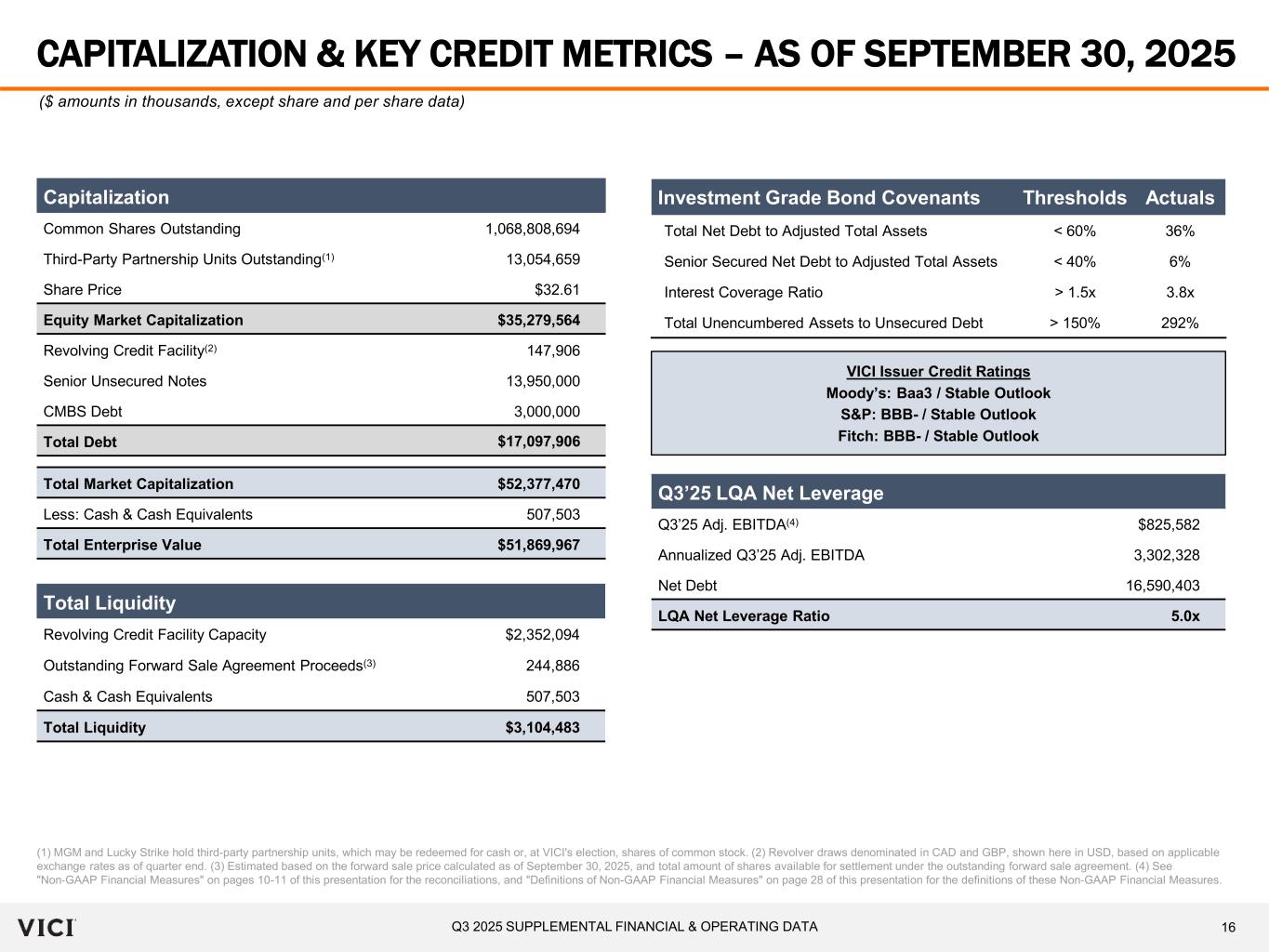
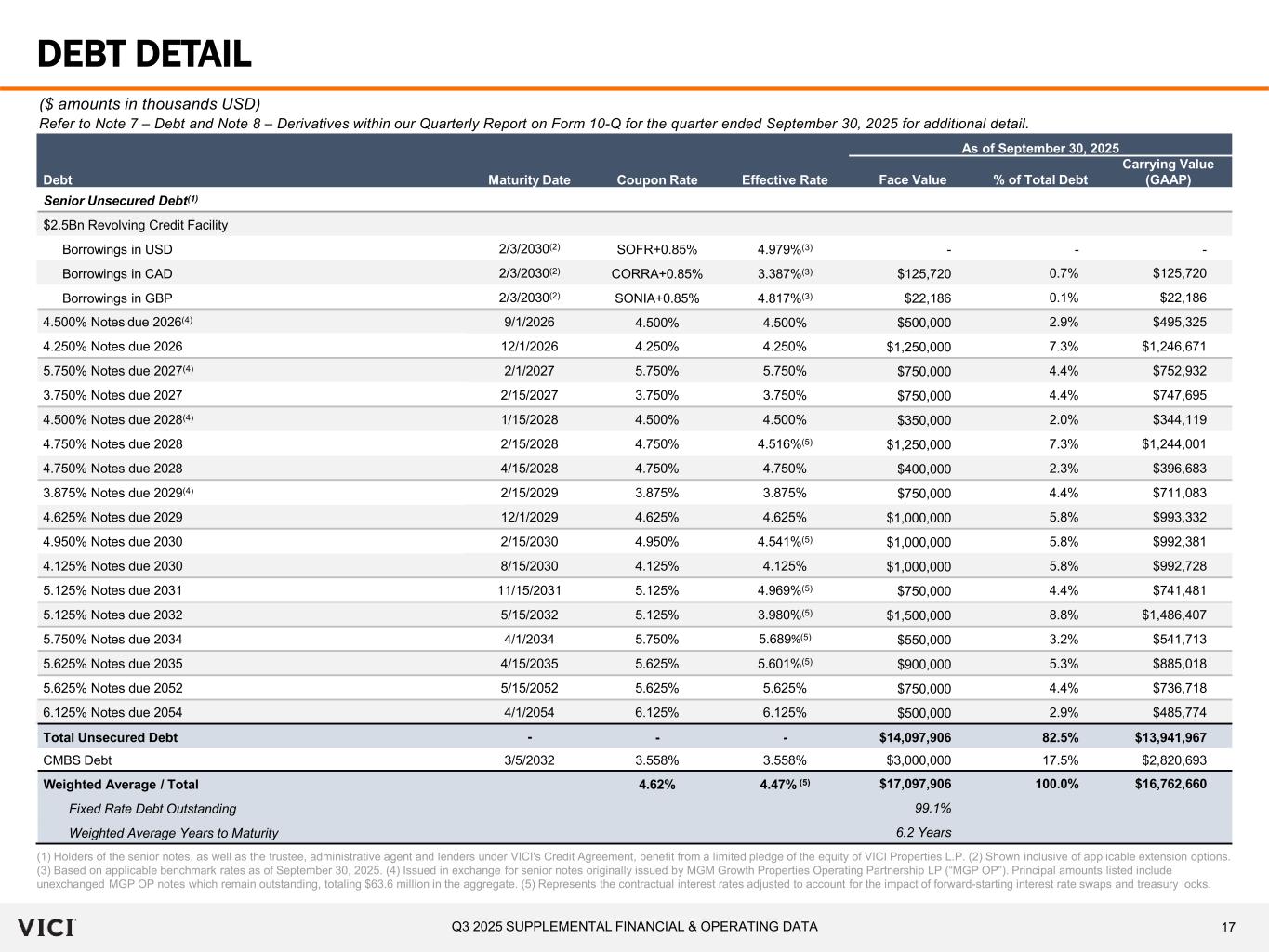
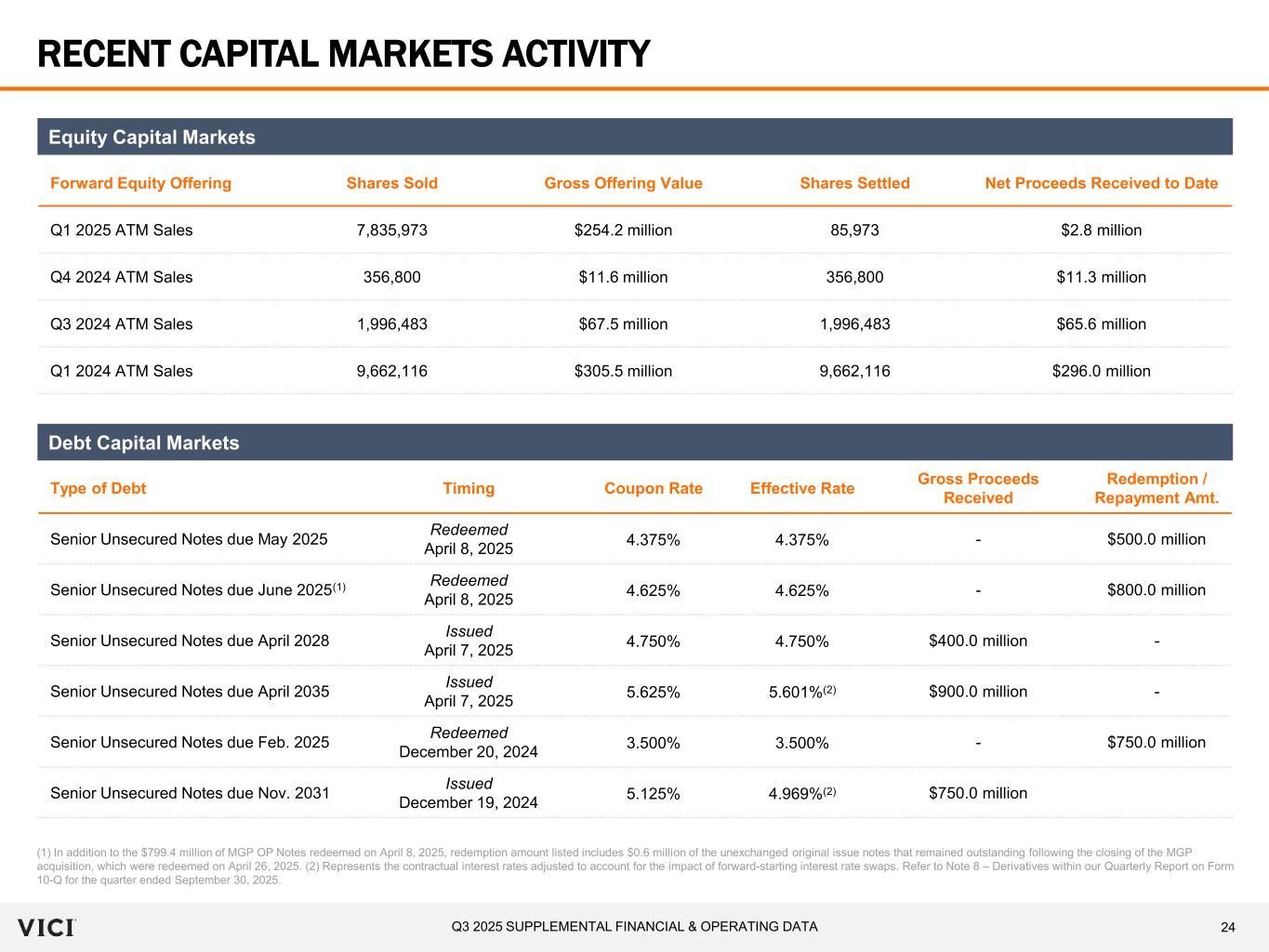
Thanks, John. Just touching on our financial results, AFFO per share was $0.60 for the quarter, an increase of 5.3% compared to $0.57 for the quarter ended September 30, 2024. These results, once again, highlight our highly efficient triple net model, given the increase in adjusted EBITDA as a proportion of the corresponding increase in revenue. Our margins run in the high 90% range when eliminating non-cash items. Our GNA was $16.3 million for the quarter, and as a percentage of total revenues was only 1.6%, which continues to be one of the lowest ratios in not only the triple net sector, but across all REITs. On September 4th, we declared a dividend of $0.45 per share, representing a 4% increase from the prior dividend amount and our eighth consecutive annual dividend increase since beachy's inception we are very proud to deliver this consistent increase to our owners touching on liquidity in the balance sheet during the quarter we settled a total of 12.1 million shares under our forward sale agreements and received approximately 376 million in net proceeds with a portion of these proceeds being used to repay 175 million of the outstanding balance on our credit facility our total debt is 17.1 billion and our net debt to annualize third quarter adjusted EBITDA is approximately five times at the low end of our target leverage range of five to five and a half times we have a weighted average interest rate of 4.47 percent as adjusted to account for our hedge activity and a weighted average 6.2 years to maturity turning to guidance we are updating our affo guidance for 2025 on a per share basis affo for the year ending december 31 2025 is now expected to be between 2.51 billion and 2.52 billion or between two compared to our prior af35 to 237 per share the raise represents an increase 2025 guidance vicini transactions that have not closed interest income from any loans that do not yet have final draw structures possible future acquisitions or dispositions capital markets activity or please open the line for questions of course if you'd like to ask a question on today's call please press star followed by one on your telephone keypad now to join the queue.
Operator
Participants are asked to limit themselves to one question and one follow-up per person so we can reach as many voices as possible. That's star followed by one to ask a question today. And our first question comes from Anthony Pallone from JPMorgan. Anthony, please go ahead. Your line is open.
Great. Thanks. Good morning. John, I think you mentioned you're at 14 tenants now, and so Vici is kind of unique compared to net lease peers, and that you've got a pretty narrow set, and you talk to them all the time. So can you talk about maybe, like, how often lease amendments come up, and if they do, how you approach those conversations?
Yeah. Hey, good morning, Tony. It's it. I'll start off and turn this over to John in just a moment. But where I want to start this morning is by reminding everyone of where we came from in how we started. At VG, we were born with challenges. And what we proved right out of the gate, and I believe improved ever since, is that when we face challenges, we get after them. We focus on making sure we understand the full dimensions of the challenge, and then we work as productively and expeditiously as possible to find the right solutions that deliver the right outcomes for us and our partners. And we've got, obviously, a track record of doing that through what we've done in selling assets that our partners wanted to get out of and we wanted to get out of as well. We have obviously helped tenants get out of assets that they, for strategic reasons, wanted to get out of, Northfield Park being the most recent example. But I'll turn it over to John because he can further elaborate on the approach we take with our partners and the degree to which we are always focused on making sure that any challenges that exist for them or for us get dealt with and we can all move on.
Yeah, just a little bit to add to what Ed talked about. I mean, we are very fortunate or blessed to now have 14 tenants. It allows us to get into greater detail of strategic growth, or if there tends to be a problem in the business, we can discuss about how we can be beneficial that which is very different than many other reads that you know tony that have 100 or 500 or a thousand tenants that i'm not that smart to be able to help a thousand different tenants to understand uh how we can how we can be beneficial to them so we are very fortunate to have a few and we can we can get into greater detailed discussion with them about about how to grow again and or how to handle a certain situation um thanks I mean, if I could ask more directly, like on Caesars, given the comments from them around the regional assets, like how might you approach a situation like that?
Or would you use a similar framework to what you've used in the past or just any context there?
Yeah, I think the frameworks we've used in the past, Tony, would be the same frameworks we would apply here. you know we would we would look across a portfolio on our own and with them determine where do they want to be where they want to continue to be where do we want to continue to be what are the various levers that we can work on our side on their side to make sure that we end up with an outcome that is a genuine win-win for both parties you know we've obviously got time to deal with this but we also don't want to let this continue to be a distraction. We've got a business to grow. They have a business to run. And we will work in the way we have worked in the past from our very beginnings to make sure that we find the solutions that work for everybody as quickly as we can. And again, I just want to reiterate our experience in our eight years of getting after it when a situation needs to be dealt with.
Operator
The next question comes from Greg McGinnis from Scotiabank. Greg, please go ahead. Your line is open.
John, I was hoping you could talk about some of the more non-gaming conversations you're having these days, you know, and your feelings on potential likelihood of getting deals done, and I'm especially interested if you could touch on collegiate or university level athletic facilities yeah good morning everyone's smiling around the room because i i uh i spend quite a bit of time uh in with experiential operators and been spending quite a bit of time uh as you mentioned in university sports i'll i'll touch on that one because it's very interesting and uh what i would describe university sports today is going through radical change and And I say that when we talk to athletic directors or CFOs or chancellors, and they tend to nod their head saying, yeah, John, it's good to know that we are going through radical change. But we've been talking a lot with them about sports infrastructure. There's a lot of different investment companies getting involved in professional and youth and collegiate sports. But Vici is a little bit different in our pitch to them about how we can accelerate their growth in infrastructure and building, whether it's arenas, stadiums, practice facilities, ice rinks, all of those things. So it's been a really good educational process for the universities and for Vici as well about how our capital can work in that environment. On the other side, in my remarks, gaming is still top of the pyramid for us. We're spending a lot of time with our current tenants and new tenants. And then there's other experiential operators in mixed use, in attractions, certain resort properties as well that our team has been out kicking the tires a little bit. But university sports, definitely a big opportunity. there isn't a university that we've met with that doesn't have projects that they need to get done and they're figuring out in this new environment how they're going to pay for it.
And I think maybe just touching on the gaming side a bit, is there any potential catalyst or some event that needs to occur to make some inroads into the downtown or local Vegas market? yeah this is a market we would love to be in as you're seeing the results come out every year i think i saw a stat the other day that the nevada locals market or the las vegas locals market is now the second biggest market in the united states which is a market that we sure would like like to be in and we love the regulations and the support from the state of Nevada, and making investments into bricks and mortars. So this is an area that we continue to look at. There are obviously some great operators in that space, Red Rock Resorts, Golden. There's some individual owners that own real estate there that we would love to be partners with over time.
Operator
Okay, thank you.
The next question comes from Barry Jonas from securities sorry please go ahead your line is open hey guys um a competitor just noted their expectations for more broadly marketed competitive bidding type gaming m&a processes is that your expectation as well and if yes do you see vg participating thanks hey very good to talk to you uh but we see we see a lot in gaming and if there's things out in the market i think there's a good chance that we're we're also getting a look um and to answer your question do we expect to participate it like it depends on a lot of factors gaming m&a is complicated and even if it's a single
asset it's kind of simply m&a given as you know three parties there's a seller there's a prop co and an opco buyer and they're complex long-term leases that take a lot of diligence a lot of work to get things done so we would hope to continue to be active and continue to grow as john just talked about there's there's always things we're looking at and pursuing and barry uh this is it i'll just add that uh you know a week like this for gaming operators there are the occasional public gaming operators who go how much more of this do i want to put up with um and and so i think there are a number of factors in play that that could could i want to emphasize could not necessarily, you know, lead to, to heightened activity.
Got it. Got it. And then just for a follow-up, you know, coverage on Northfield Park in the ClareVest transaction looked pretty good. Can you talk maybe how that compared to what 4Wall was in the MGM lease? I guess what I'm trying to get at is how do you think about the difference in value for a new lease with a smaller tenant versus the Preach transaction with, with a much larger lease and tenant? Thanks.
Yeah, it's a very good question, Barry. And I would generally say that, you know, for a single asset with a single tenant, yes. I think to your implicit point, you generally are going to look for higher coverage than you might have had within a master lease with a much bigger tenant. I think that that's pretty much the simple logic of it.
Makes sense. Thank you so much.
Operator
The next question comes from Smidus Rose from Citi. Your line is now open. Please come ahead.
I guess on that, with Claire Vest, and as you mentioned, they have a history of some gaming assets in the U.S. and in Canada. Would you expect to do more deals with them? Do you think that they're actively looking to expand their footprint in the U.S., or is this more of a one-off opportunity for them?
Good morning, Smidus. You know, I hope so. I mean, we've really enjoyed getting to know them in this process. They're very creative. They've hired a lot of very seasoned operators to work with them in the properties that they've owned, not only now but in the past. So we're excited to have them as one of our tenants, and we hope to continue to grow that portfolio with them over the coming years for sure. Okay.
And then I wanted to ask you, on the loan book, are there any of the borrowers having any short-term difficulties that you can speak to? Or is everyone current on payments, just given some of the softness we're seeing in a broader economy, particularly across certain kinds of venues?
Yeah. Hey, it's Gabe here. I can answer that. Yeah, everyone is current on all their obligations under their loans, and we continue to have active asset management and monitor all of our investments and work with our partners to understand that they're meeting their milestones and their business plans.
Operator
The next question comes from Handel St. Just from Mizuho. Handel, your line is open. Please go ahead.
Thank you. Good morning. My question, I guess, is on the MGM decision to withdraw from the New York City license bidding process. It seemed to surprise a lot of people, including us. Was it a surprise to you? And what do you see as the implications for your Yonkers asset? And then I guess as part of that, given their decision to withdraw MGM, does that free you up to perhaps partner with some of the other bids?
Yeah, Handel, good to talk to you. Well, it certainly didn't take us by surprise because we'd obviously been in conversation with them for a while. And, you know, what MGM did was look at the situation, the ever-evolving situation in the New York landscape and make what we agree is a very sound capital allocation decision or capital non-allocation decision based on, again, the changing circumstances. I think one of the key factors, Handel, that really became clear in the last few months, is that without a Manhattan-based casino, it was not clear that the remaining bidders would be able to create a casino experience that would become a truly national and international destination. And thus, if it was going to mainly be a competitive marketplace of three regional gaming assets competing geographically very close to each other for the same regional marketplace, it wasn't necessarily clear that the resulting economics of that very competitive marketplace would support the kind of capital required to enter the market with the tax regimes that are likely to be in place um and so again i think mgm took care and took a lot of thought and obviously consulted very closely with us in making that decision in terms of the aftermath of decision and what it means for us within this marketplace yes we have been uh in dialogue with various contestants in this process over the last couple years and certainly could be of service to them with capital if we believed that their opportunity was an opportunity that had very good capital fundamentals, that it had a legitimate shot to become what it would have to become, which is the most profitable regional casino in America. And I just want to emphasize that point, Hendel. The way this is evolving, whatever does get built in New York is going to have to be meaningfully, measurably more profitable than any other regional casino in America, and that includes the finest regional casinos in America, whether we're talking about MGM National Harbor, Encore, Boston, MGM Detroit, or the others. Each of which, I should emphasize, tends to have market dominance and a lack of competitive supply that will not necessarily exist here in New York.
Appreciate those comments. And if I could ask a follow-up or question on the, I guess there was an announcement earlier this week, Cordish is developing a new project down in Virginia, about an hour south of your D.C. national project. I guess I'm curious on the competitive dynamics there. I think Richmond's about an hour away with mild traffic. So I'm curious if you think the location, maybe the demographics relative to what your asset offers, offer you some, maybe some insulation. Thanks.
Yeah, it's a good, it's a good question. The distance may seem like an hour, but if you've been in DC, welcome, welcome to a little bit more, more traffic. And again, it's a pretty undersupplied market there. And I, they probably will target very different consumers. We'll have to see how the new asset that's built by Cordish, I'm sure it will be a wonderful asset as they do a good job in building their assets. But National Harbor is, as Ed just mentioned, if you're going to mention the best or one of the best regional casinos in the United States, MGM has done a fabulous job there, continues to do a fabulous job. The numbers continue to be quite successful, and we think they're going to continue to grow there. So we'll have to watch how that happens, but I do think they're probably a little bit – the customer base is going to be a little bit different.
I hate the color. Thank you.
Operator
The next question comes from David Katz at Jefferies. David, please go ahead. Your line is open.
Morning, everybody. Thanks for taking my question. I appreciate all the candor as usual. I wanted to just go back on the sports facilities commentary, John, And, you know, not have you negotiate something in this kind of forum, but just out of curiosity, are there any historical, you know, cap rate, you know, or any kinds of, you know, comps or anything like that? Just out of curiosity, how we would think about the opportunity if someone, you know, if people like us wanted to sit down and try and develop a TAM and think about, you know, what it all means for you.
Yeah, you know, I'll start out, David. And I would say that if you're going to look for historical precedent for the possible infusion of private capital into real estate on university land, the corollary would be the development of on-campus student housing by private capital, which has certainly taken place in the past. and the American campus communities is obviously an example of private capital, a REIT, in fact, at the time that did exactly that. And obviously, you know, had to make sure they were creating a positive spread between their weighted average cost capital at the time and whatever cap rate they went on to campus with. And so I do think that this landscape of sport infrastructure on college campuses is obviously rapidly evolving in an overall marketplace that is wildly volatile and everybody's trying to get as trying to get smart as fast as they can but i think what john and the team are finding and john you can elaborate on this is that the idea of conventional private equity coming onto campus with a five to seven year investment horizon just doesn't is john i I mean, it's just not that appealing.
Yeah, David, good to hear from you. I know you've asked about this sector before, and it is important to understand that this is what I think our company feels great about, is finding a space that we think there's a lot of opportunity to deploy capital, and we've been spending time getting educated on the space, who the decision makers are, what is the magnitude of opportunity, where at the same time hearing from the the universities about how they could take our type of capital and that what we're talking about today is we're right in the middle of those processes and obviously state schools uh run schools are different than private schools right and and so we are continuing to refine the way we think about uh the the opportunity we continue to talk about pricing And as Ed said, there's other forms of outside capital that are also spending time with universities. And so it's like I open up by saying there's a lot of change going on in collegiate sports right now. And it's just an opportunity we are spending some time because we think there is a magnitude of capital to be deployed.
Operator
Thank you. The next question comes from Rich Hightower at Barclays. Rich, please go ahead. Your line is open.
Good morning, guys. Thanks for taking the question. And, you know, as always, appreciate the candor on various topics. But, Ed, maybe just to ask you a metaphysical question, to use a word from earlier in the comments. You know, obviously, you know, we don't want to focus on short-term movements in the stock price or cost of capital. But in your conversations with investors, you know, what do you think are the major overhangs at this point? And does most of it revolve around some of the Caesars, you know, stuff you mentioned before? Is it other things?
Yeah, I mean, I think it's a combination, Rich. I think there's the idiosyncratic factor of that noise, combined, obviously, with what's been a fairly tough period for the RMC over the course of the year. And I think you put out a good note last night, you know, pointing out that, yeah, in recent weeks, we have declined more than the RMZ. But, Mara, I don't know if you want to jump in here about the degree to which we may also somewhat idiosyncratically be seeing a dynamic of first-half winners. Well, you can explain better than I can.
No, thanks, Rich. So, as I was saying, we do think it's a confluence of factors. between, yes, this Caesars focus, but also at the same time when there's been a positioning rotation out of some winners, out of some long positions, as the market has rotated into the end of the year. So the timing has been unfortunate, but we do think it's a combination of factors, not just the one particular overhang.
All right, that's all for me.
Operator
The next question comes from Chris Darling at Green Street. Chris, your line is open. Please go ahead.
Thank you. Good morning. So, with Six Flags in the news recently, I thought that presents a good opportunity to ask about your broad level of interest in theme park real estate ownership, the pros and cons that might come with those types of assets. And related to that, I'm curious if you've explored the theme park landscape internationally as well as domestically in the U.S.
Yeah, John, you want to take that? yeah chris good to hear from you um to be blunt yes it's a it's an area attractions in the united states are an area that we have spent a lot of time with we've not done a transaction um but we have spent quite a bit studying uh the landscape there the opportunities there the accounting treatment there um and and obviously have followed what is going on in the news uh with with six flags and um i think that's the way i can put it yeah and i'm gonna i'm gonna ask gabe to chime in here in a moment uh chris but one of the things we always do when we look at any particular
experiential category is work to determine the degree to which there's a meaningful amount of real property within the business that is readable and uh gabe you can opine if you wish on theme parks and other categories have looked at ski resorts and other things yeah so in regards to that chris obviously there's a lot of real property at these theme parks and a lot of personal property including the roller coasters and some of the attractions and we would just make sure any potential investments that we're owning real property and put it in a re-friendly structure but we're confident we could work with our partners to um to make it work okay i appreciate those thoughts um and then just maybe you know a point of clarification on the
northfield lease with clairevest and maybe a little nuanced here but you know as it relates to allocating rents between the new standalone lease and then the remaining you know master lease with ngm the resulting coverage ratios that you talked about i guess i'm interested to understand you know what are your contractual rights in that regard versus you know this perhaps being more so just a good faith discussion between all the parties involved yeah i don't know if i mean there are obviously contractual considerations, and I'm looking at Samantha to bail me out in case we need to explain any of those.
But I think the most fundamental starting point, Chris, is obviously the economic throw weight of the asset. What rent could it support at a coverage level we're all comfortable with? That's the starting point. What is the EBITDA before rent of the asset, and what thus would be a level of rent coverage both we and they would be comfortable with.
Yeah, and just from a contractual perspective, in any event, however we come to the determination of what rent might come out, we're always protected that we would never find ourselves in an economically disadvantaged position. So we're always going to have the same amount of rent when that transaction is completed between the, what we call a severance lease, the new lease with the standalone tenant, and then our MGM master lease. And that's contractually provided.
Okay, appreciate all the thoughts.
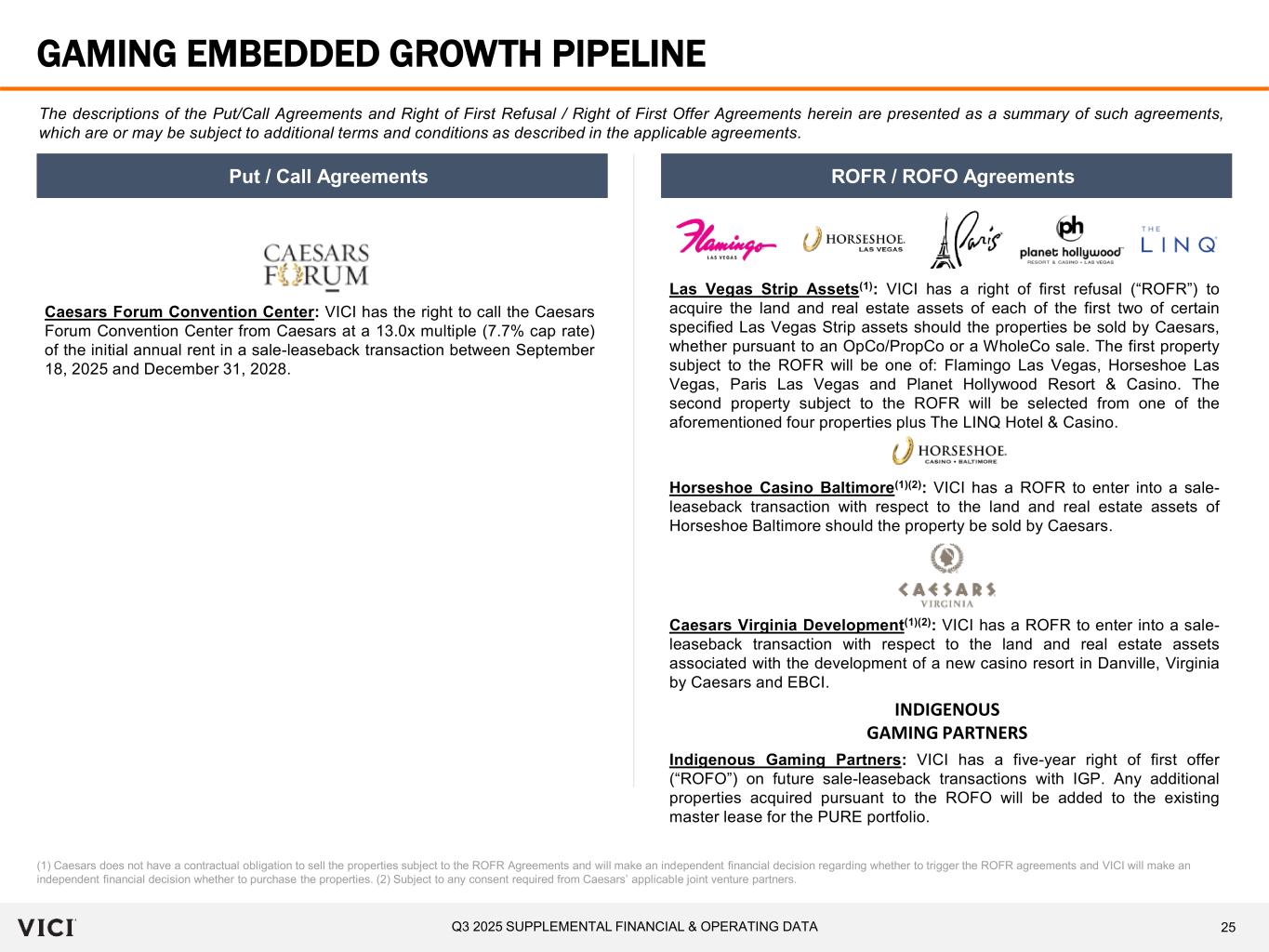
The next question comes from Chad Benin from Macquarie Chad please go ahead your line is open all right good morning thanks for taking my questions and um Ed thanks for the comment on on Victor's piece his reports are absolutely a must read and he's another person that probably reads multiples of uh most of us on the call here so um maybe just wanted to start with yeah just want to start with the um uh the call right on the caesars forum um convention center uh we've kind of um eclipsed that uh that time period where where that begins it seems like all the commentary from vegas operators is that conventions the group pace the outlook you know you talked about some of the city-wides is extremely positive it's obviously some of the leisure concerns uh that that have heard some of near-term results so with that opportunity for that call right how are you guys thinking about timing on that versus other deals thank you it's a very it's a very good question and i like your comments about las vegas because i think you said near-term concerns about leisure customers and i in my opening remarks i do think we're the world is so short-term add focused that
there's times that we don't think step back and think about what a great destination Las Vegas is and will continue to be we obviously have a variety of things that we evaluate you are correct that the the opportunity to buy the Caesar swarm convention center is live right now and we're fitting it into all the other things that we look at when is the right time is there the right time um and and las vegas as i said in my opening remarks uh we are big believers in and will continue to make investments over time so yeah hey i just want to jump in and um and emphasize
chad along the same line the degree to which vegas's competitive dominance across the american convention trade show and conference space has only increased in the last five to ten years If you look across the competitive landscape of the big American convention centers in the gateway cities, it's actually kind of a sad story. First of all, most of the full-service urban hotel product has seen tremendous underinvestment, and a lot of the convention facilities themselves are in need of substantial capital and or infrastructure. It would have been, for example, here in New York, it would have been a very positive thing for the Javits Center if the related wind project had gone ahead and created hotel inventory adjacent to Javits. But as we all know, that project ain't happening. And as a result, Javits is still this conference center, the convention center near pretty much nothing in terms of hospitality infrastructure. And that's just one example among many across the U.S. where Vegas, again, just shines because of the amount of capital put into both the conference convention and trade show facilities, 100 million into Mandalay Bay. And I can't remember exactly how much Venetians put in to the Expo Center. But at any rate, this competitive dominance is only going to grow in the years ahead.
Colin
Analyst — CBRE (on for John Decree)
Great.
Thank you. And Samantha is looking at me with anger because I used the word ain't. But anyway, go ahead, Jeff.
Thanks. And then moving over to the tribal lending landscape, I know we talked about before the North Fork loan is very different than a traditional loan to a tribe. But how has that evolved and how's your comfort level working with other tribes evolved here?
Yeah, Chad, it's David. Good to hear from you. i just to clarify that north fork is a it's a loan to a tribe there's it's it's a typical lending structure into a tribe that's unique about it there's no security in the real estate and that goes with anything around tribal gaming so you know we have a lot of relationships with tribes on commercial land we have a great relationship with red rock and the development of what will be a phenomenal asset of madera california opening in q3 2026. we do have dialogue with other tribes I mean, anything we would do around tribal has to be with a great team, a great asset, but ultimately it will be a credit investment, right? There's not a way to own gaming real estate that sits on tribal lands and actually have security in that asset. And so we have a very active credit book led by Gabe, who you've heard from on this call, and we will continue to look for ways to deploy smart capital with good tribes in the future as the opportunities arise.
Thank you. Appreciate it.
Operator
The next question comes from John Decree at CBRE. John, please go ahead. Your line is open.
Colin
Analyst — CBRE (on for John Decree)
Hey, everybody. It's Colin on for John. Thanks for taking our questions. Maybe going back to Northfield transaction, you know, I think a lot of us have been relatively excited to see some recent pickup in M&A.
So curious, you know, maybe how those negotiations went considering this, you know, became into a single lease, the NOPCO asset trading hands. you know do you guys expect or think we could start seeing some more opco uh you know trade hands um you know going forward well the your opening question was how did the negotiations go um and we're again my my opening remarks we're excited to have claire vest as one of our tenants and and we sure do hope that we continue to grow with them and they operate assets that that we own. If you're asking, has there been a pickup in opportunities that we're seeing? For us, because we're looking at so many sectors across the gaming and experiential landscapes, there are a lot of different deals that we're looking at. Do I think there'll be more deals in gaming? I hope so, and I think we'll be there and talking to operators and talking to potential sellers. Colin, I am disappointed that John's not on. I gave him some love with a quote, with the opening, so it's disappointing I didn't hear that, love. So you'll have to pass that along.
Colin
Analyst — CBRE (on for John Decree)
He's going to be very disappointed to hear that, but I definitely...
He's not going to get a repeat next quarter, so he's one and done. It's going to be your turn next time, Colin.
Colin
Analyst — CBRE (on for John Decree)
And I guess maybe the other question I wanted to double double click on is, you know, how comfortable are you guys sort of letting leverage maybe creep below, you know, sort of the low end of the range that you guys have five to five and a half times? You know, I think you have you guys about five right now. And, you know, obviously leverage, you guys had taken a pretty low going into the MGP acquisition, saving a lot of dry powder for what was quite a material, you know, transaction.
So just kind of curious how you're seeing leverage trend from here. obviously you have the escalators but you know how are you uh thinking about it potentially creeping below your low end um you know i would i would say uh as the spanish like to say with tranquility um you know if it goes lower uh that is just fine if it goes a little higher it's just fine but as you'll remember colin from that dinner we had together in boston as important for us as leverage is laddering. And what we like about the five times debt to EBITDA benchmark is that it means by definition, you have a dollar of debt for every 20 cents of EBITDA. And I'm not going to go through the whole English major math thing I did at that dinner. But as you and your clients gathered, we like the way in which laddering, in which roughly no more than 10% of debt comes due in any given year matches up with five times debt to EBITDA, such that the metrics are such that in the worst case scenario where the credit market window is closed, you could, if necessary, pay off expiring debt with available cash flow after debt service. So in and around the five times, plus or minus, you know, a tenth here, a tenth there, again, we don't tend to get highly precise about that it's more about building a ladder for the future and with that you know making the best use of the amount of retained cash flow we generate which as we've spoken about in the past is now in the 600 million dollar range and gives us firepower that enables the kind of year we're having this year we're growing once again afro per share in this quarter by 5.3 percent while growing our share count by barely more than 1%.
Colin
Analyst — CBRE (on for John Decree)
Great. Thanks for that. And yeah, and I still think that was one of the best articulated explanations of formulation of a leverage target, you know, that you gave, you know, when we had that dinner. So, appreciate it. Thanks, guys.
Operator
The next question comes from Daniel Guglielmo from Capital One. Daniel, your line is open. Please go ahead.
Hi, everyone. Thank you for taking my questions. You all own a lot of the prop a lot of properties on the las vegas strip but not all of them based on your experience what kind of macro or las vegas demand environment do properties typically come to market there and if the opportunity rose would you expand your ownership on the strip i'll answer the the last part of the question i i think for the the right property and right operator absolutely Absolutely.
We would continue to expand our presence not only on the Las Vegas Strip and not only in the locals market that I talked about, but I think all over Nevada. We're big fans of that as well. But as it pertains to when do they come to market, that's very hard to predict. And it depends on the company and how they're thinking about use of proceeds from the monetization of their real estate. But what I would tell you to Ed's comments, we will be prepared should there be an opportunity of an asset in Las Vegas on the strip that comes to market. But I can't tell you when they're going to come.
Yeah, I appreciate that. And then just to follow up, in the opening remarks, the 3Q earnings growth was mentioned. A big part of that is the competitive annual rent escalators that you all have. On the flip side, tenants do bear increased rent lines. So can you just talk about some of the risks that you all think through on the tenant side of things with those kind of rent lines increased for them?
Yeah. Well, first of all, Daniel, Q3 2025 wouldn't within itself have had any rent escalations quarter over quarter sequentially. And when we think about escalation, what we think about is, again, the supportability of the rent. And so, yeah, we do not want rent escalation that goes beyond what the tenant can afford to pay over the long term. And, you know, and so, again, I think we're in an environment right now where things have more or less reached equilibrium in terms of rates of inflation, rent escalation, and revenue and profit growth. But obviously, we monitor it closely. And, again, it doesn't benefit landlords when rent gets beyond what the tenant can pay.
Operator
The next question comes from Jim Kamat from Evercore ISI. Jim, please go ahead. Your line is open.
Thank you. Good morning. Team, if I were thinking about your competitive advantages, let's say, as the example on the university sports, what elements really would differentiate VG structuring-wise or other attributes? Because if I'm being snarky, I would say it's really just a cost of capital, right? I mean, the university is going to want to take the best deal for them. So how would VG differentiate itself from other potential providers of the capital?
Yeah. Hey, Jim, it's Gabe Wasserman. I can take that one. So I don't think we're just competing along cost of capital. It's not the only dimension. It's also on structure. So as a permanent capital vehicle that wants to own our real estate forever, I think our investment time horizon is very well aligned with our potential university and collegiate partners.
And as we compare and contrast our capital and opportunity with private equity folks we just think that our our long-term permanent horizon is just a really good match for potential universities and colleges and that's really resonated well in the conversations that we've been having yeah i would just add to jim that um while obviously you know universities both public and private can often tap you know the the tax-free bond market um most universities we're finding out run in the way that harvard famously speaks of which is every tub on its own bottom and athletic departments in particular and john and gabe can elaborate this athletic departments especially at this point are are being told you need to be self-funding and self-sustaining and no you're not necessarily going to get to use up you know whatever envelope we have in the in the tax-free bond market you want to add to that that's great and just one quick related question with most of those opportunities I know it's very premature but would they be leasehold interest because of you presume the university continue on the underlying land or is that not necessarily yeah I think it depends on on the university but we're open to both structurally and can make both of them work Jim it's a very good question and
and you opened by saying i know it's it's premature as we've talked about the university space and i've been very open that you know when you're when you're the first kind of week into this space educating athletic directors and cfos and chancellors and presidents on on our type of capital the structure then as gabe mentioned is a big factor in the discussions can can we own the real estate can't we own the real estate what is the duration of the lease How much capital of a project can you put in versus a donor? Does your name go on it? Does it don't? I mean, there is a wide variety of things that we are feeling out. And as Sam mentioned, you know, every university, you know, it's different. And state universities are different than private. And that's why we're taking the time in meeting and really crafting how our capital can work. Obviously, we have not gotten over the finish line with the university sports deal yet, but you can hear that we've been spending some time because we think there is a big opportunity in sports infrastructure and the amount of capital that needs to be put to work.
Fair enough. Thank you for your time collectively.
Operator
Our final question today will come from Alec Fagan from Baird. Alec, please go ahead.
Your line is open. hey thank you uh for taking my question kind of wanting to synthesize what we've talked about all the call from you know the mgm capital allocation decision or the caesar convention and also how you think about the balance sheet you know with vici taking the long view about capital deployment kind of what's the philosophy about how vici weighs deploying money in uncertain times for good opportunities versus waiting and preserving the balance sheet for a potential great opportunity that may or may not come yeah no it's it is a wonderful question and i wish we had more time
to do it full justice because it is something that that our investment committee is always always deliberating and i would tell you alec there's no perfect answers but i would say that because we invest what we believe to be perpetual capital, we really want to have confidence that 10, 15, and 20 years from now, we or our successors are going to be glad we made this investment, that we invested in the right geography, the right category, the right marketplace, and most importantly, the best operating partner we could find for that opportunity so that we can always be comfortable the credit is secure thank you for that thank you I will now hand the call back to Ed for any closing comments thank you Adam and I'll just thank everybody for their time today and look forward to continuing the conversation in the weeks and months to come and see you again in February this concludes today's call thank you very much for your attendance you may now disconnect your line