Operator
Welcome to the M&T Bank Second Quarter 2026 Conference Call. All lines have been placed on listen-only mode, and the floor will be open for your questions following the presentation. If you would like to ask a question at that time, please press star, then the number 1 on your telephone keypad. If at any point your question has been answered, you may remove yourself from the queue by pressing star 2. When posing your question, we ask that you please pick up your handset to allow for optimal sound quality. Lastly, if you should require operator assistance, please press star zero. Please be advised that today's conference is being recorded. I would now like to hand the conference over to Stephen Wendelboe, Senior Vice President of Investor Relations. Please go ahead.
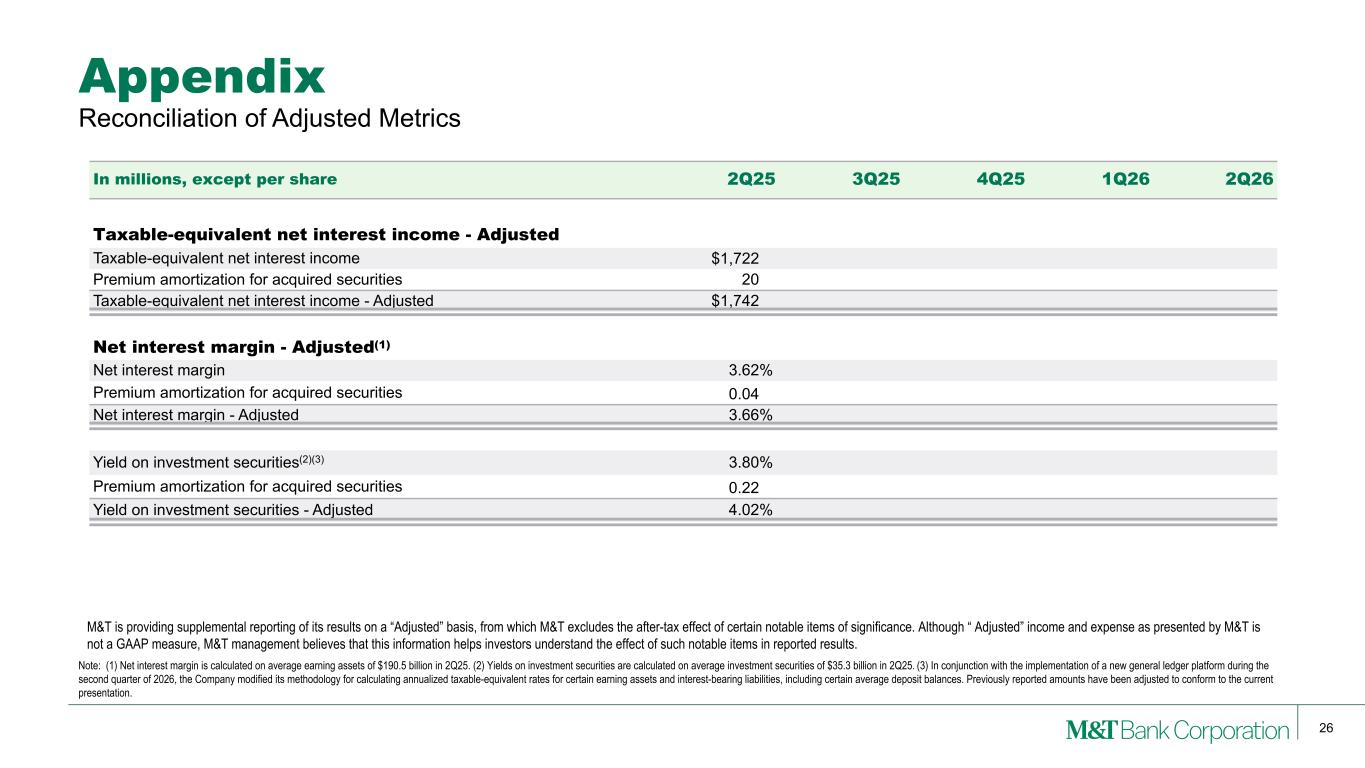
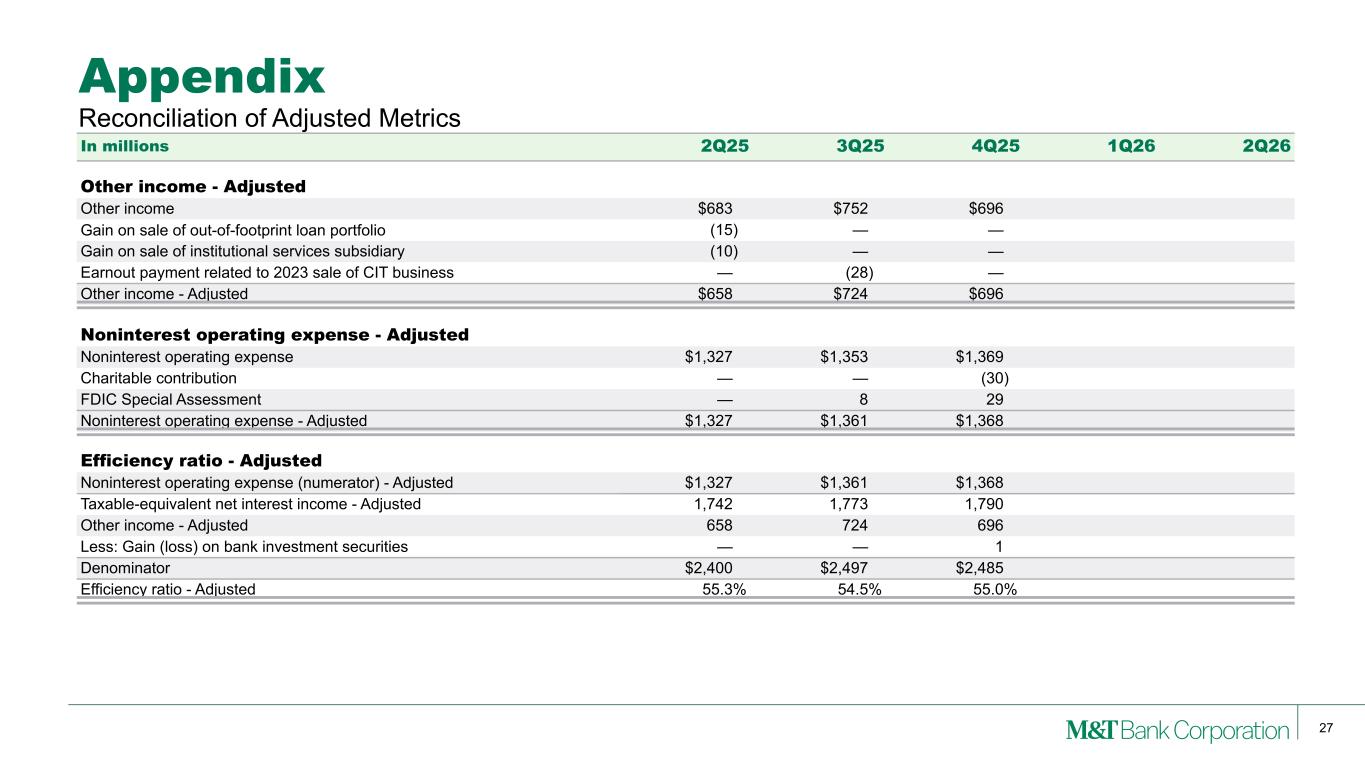
Thank you, Chelsea, and good morning. I'd like to thank everyone for participating in M&T's second quarter 2026 earnings conference If you have not read the earnings release we issued this morning, you may access it along with the financial tables and schedules by going to our investor relations website at ir.mtv.com. Also, before we start, I'd like to mention that today's presentation may contain forward-looking information. Cautionary statements about this information are included in today's earnings release materials and in the investor presentation, as well as our SEC filings and other investor materials. The presentation also includes non-GAAP financial measures as identified in the earnings release and investor presentation. The appropriate reconciliations to GAAP are included in the Appendix. Joining me on the call this morning is M&T's Senior Executive Vice President and CFO, Daryl Bible. Now I'd like to turn the call over to Daryl.
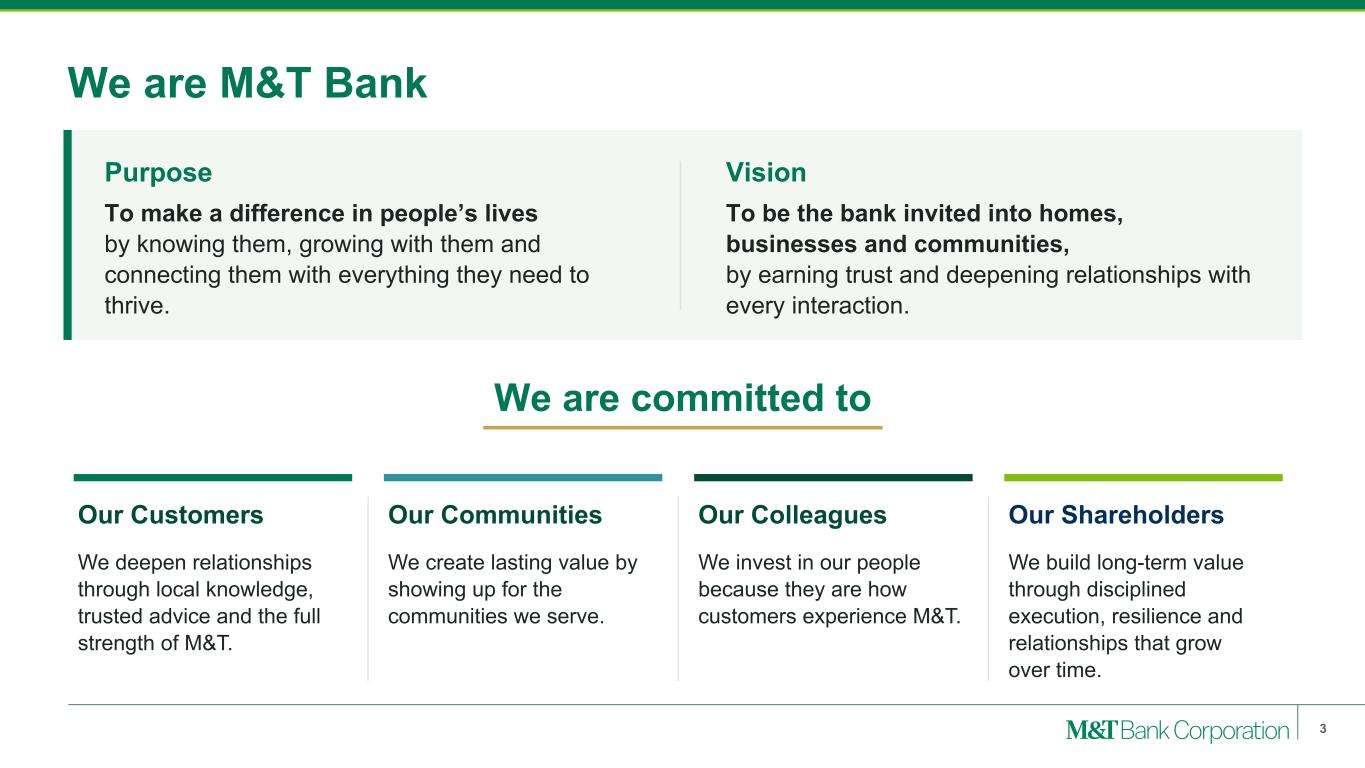
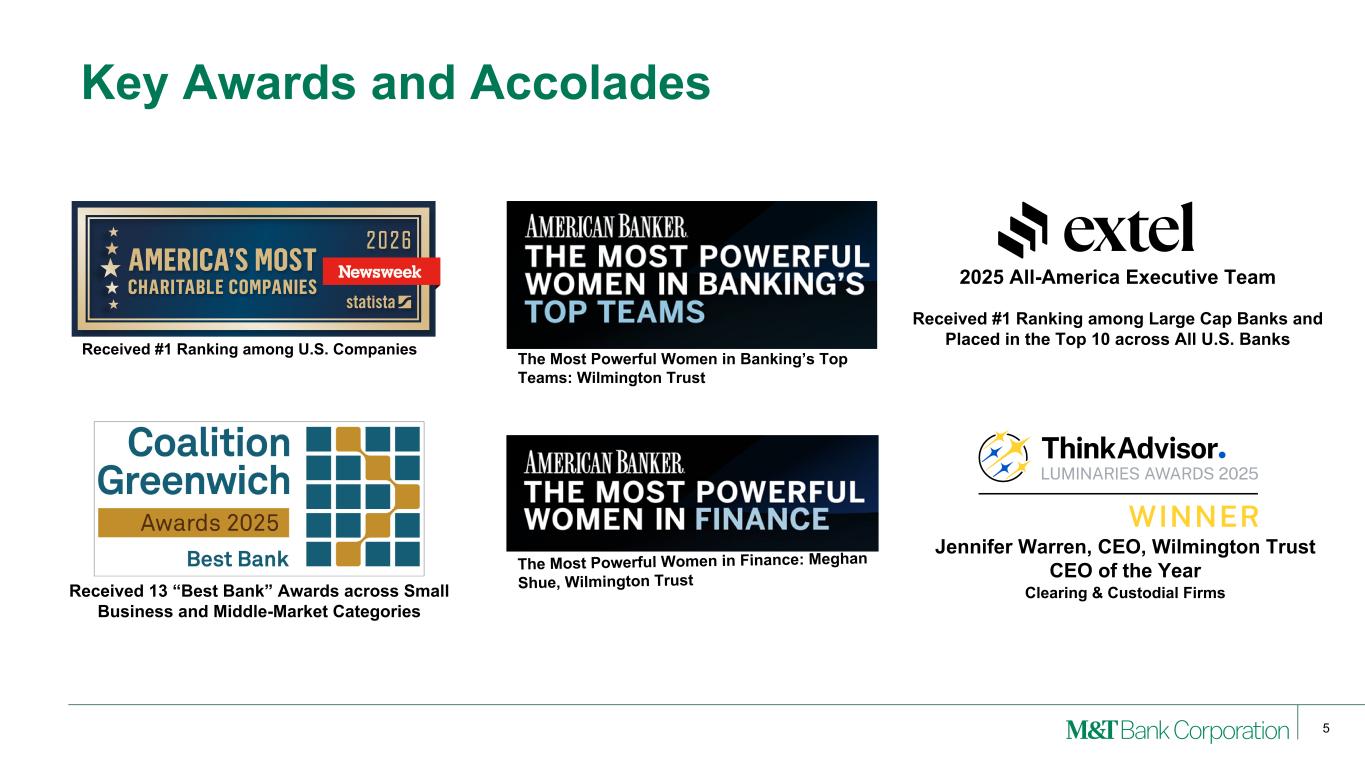
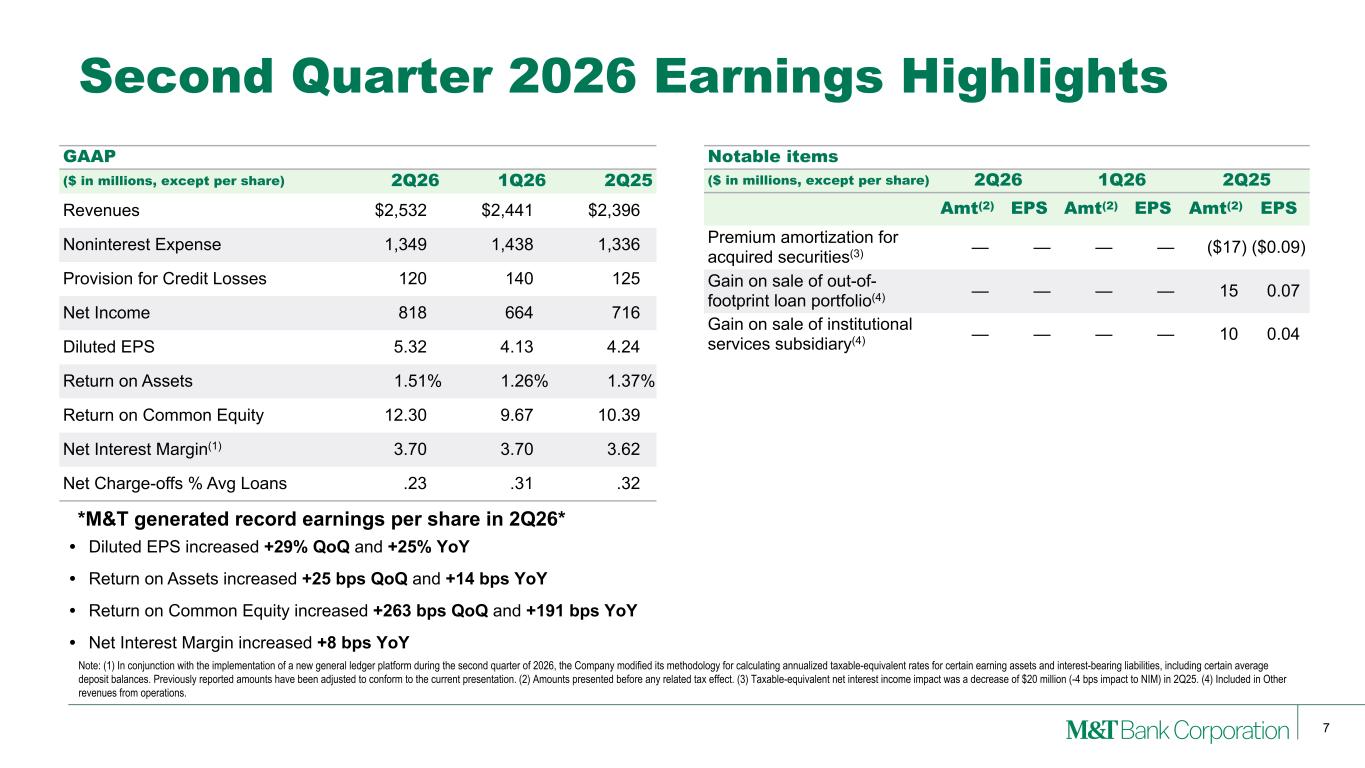
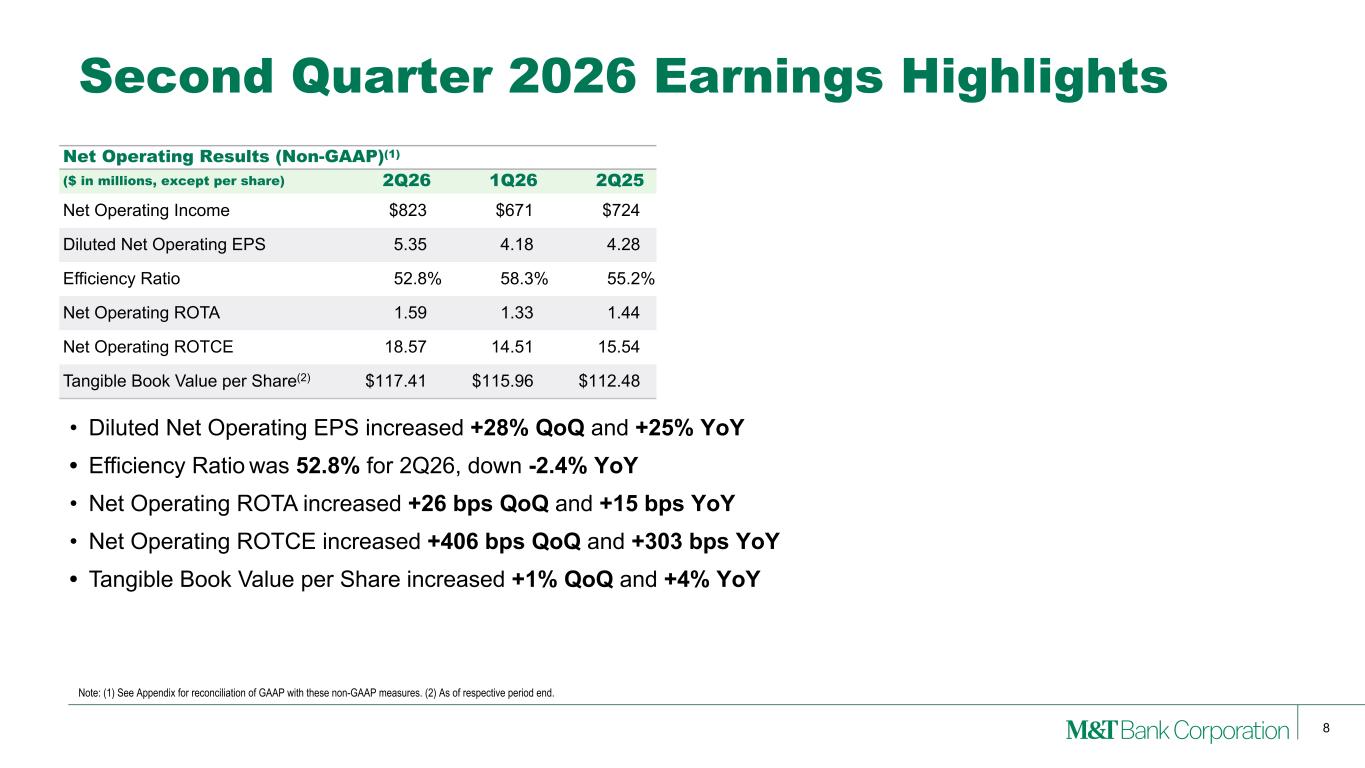
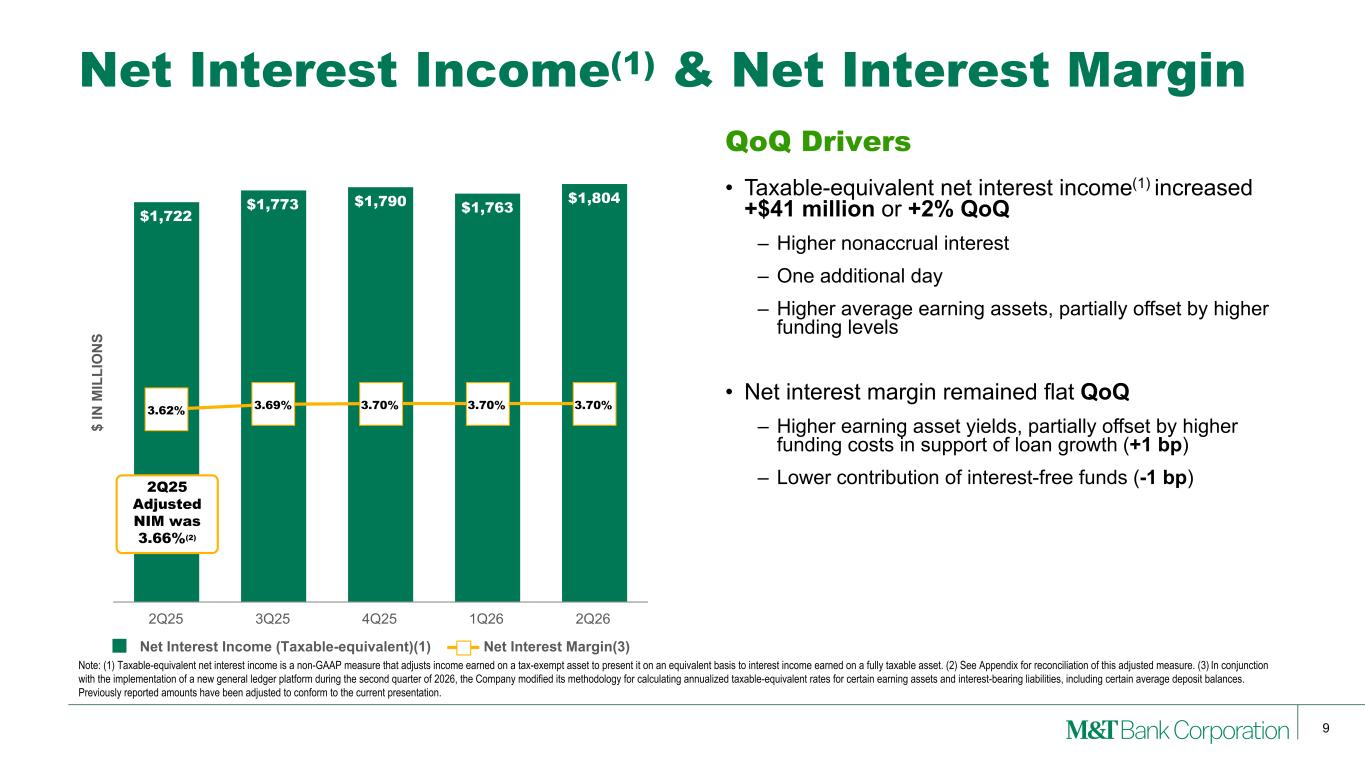
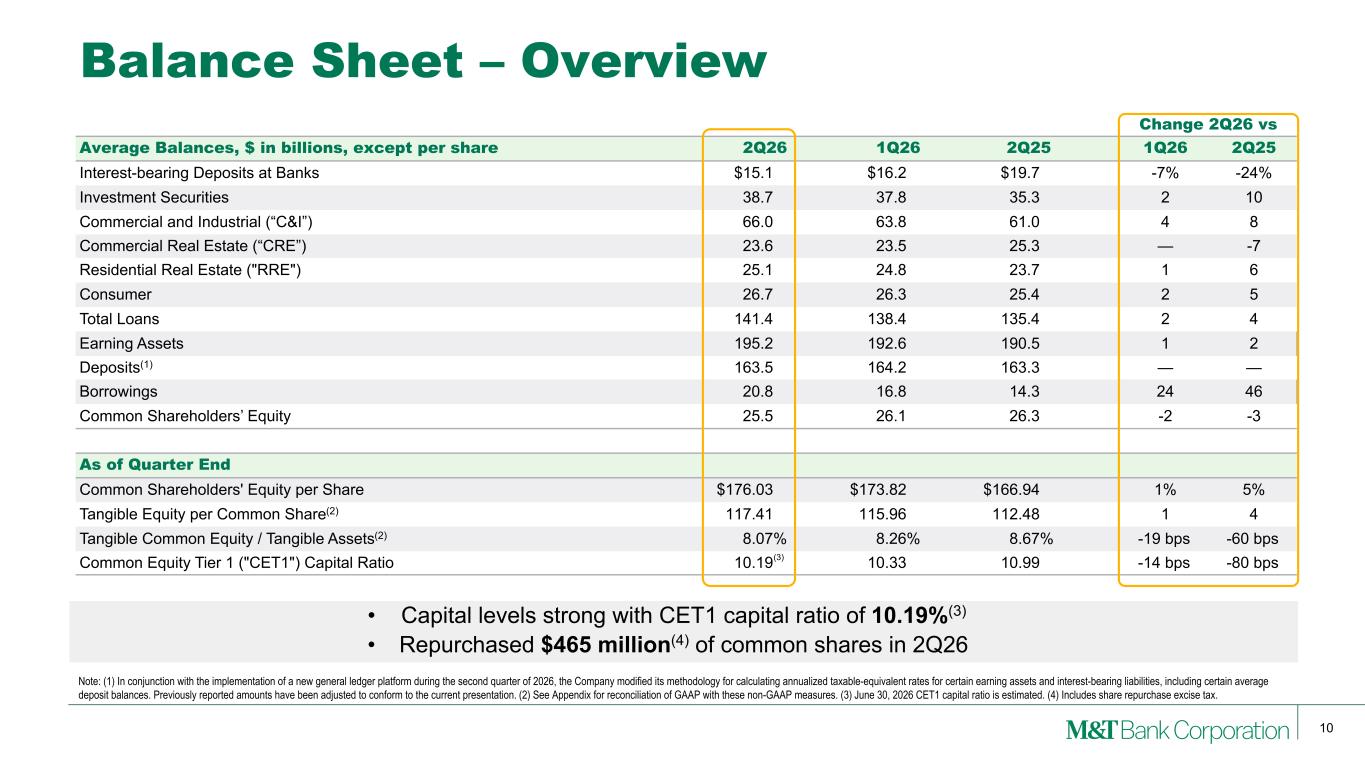
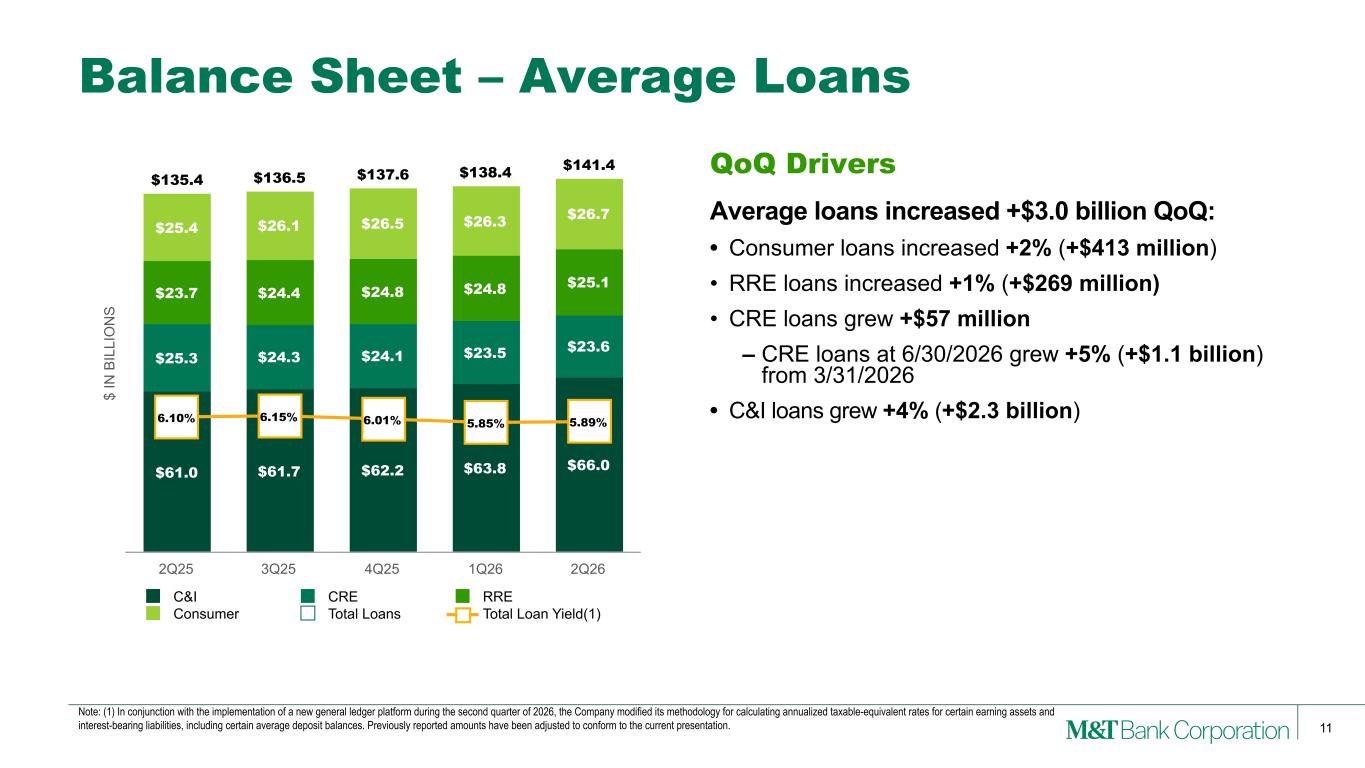
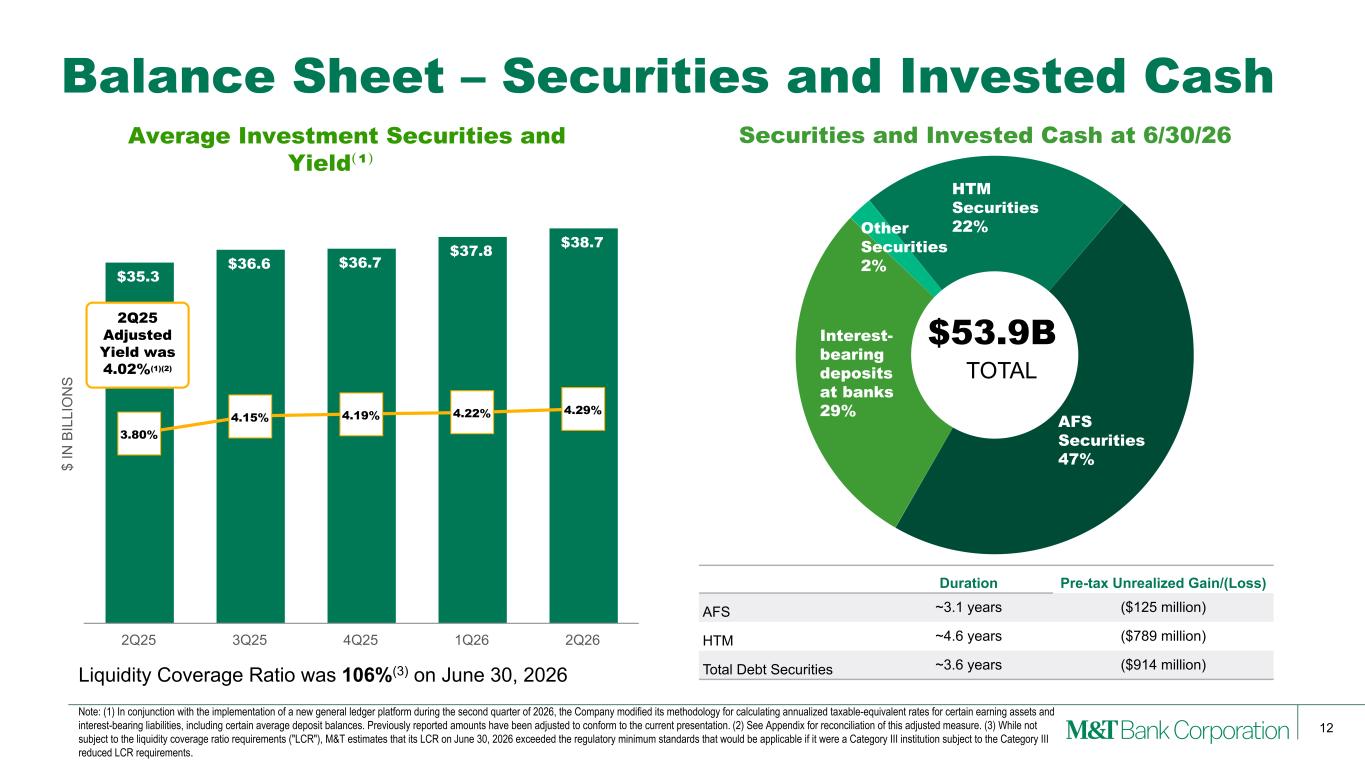
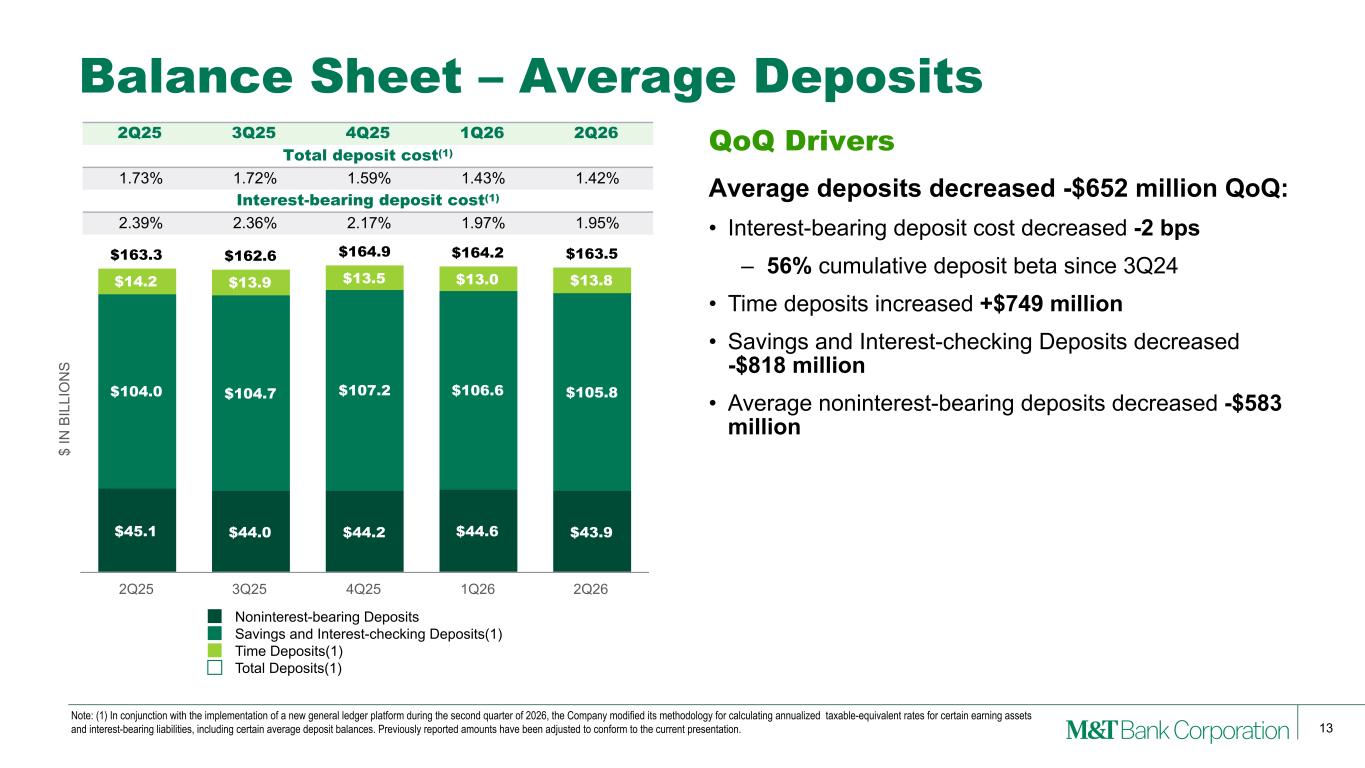
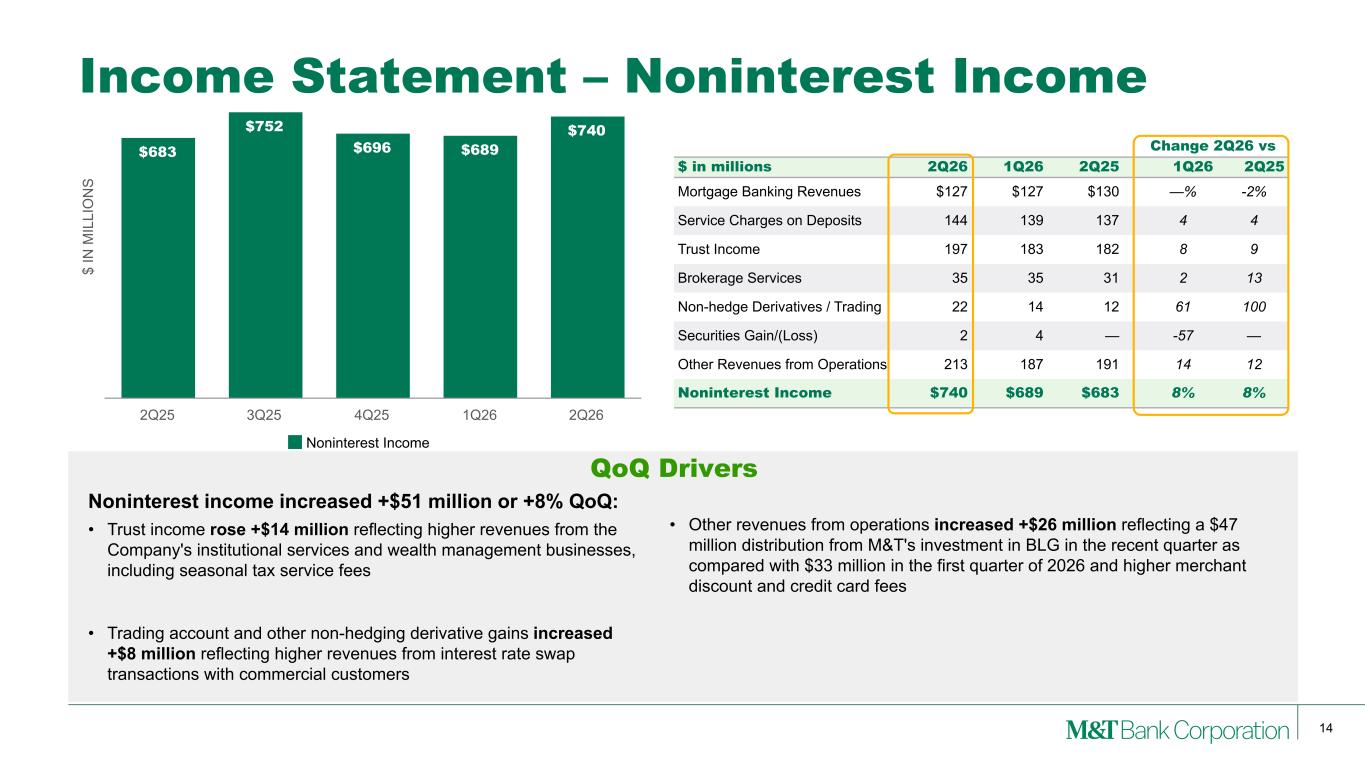
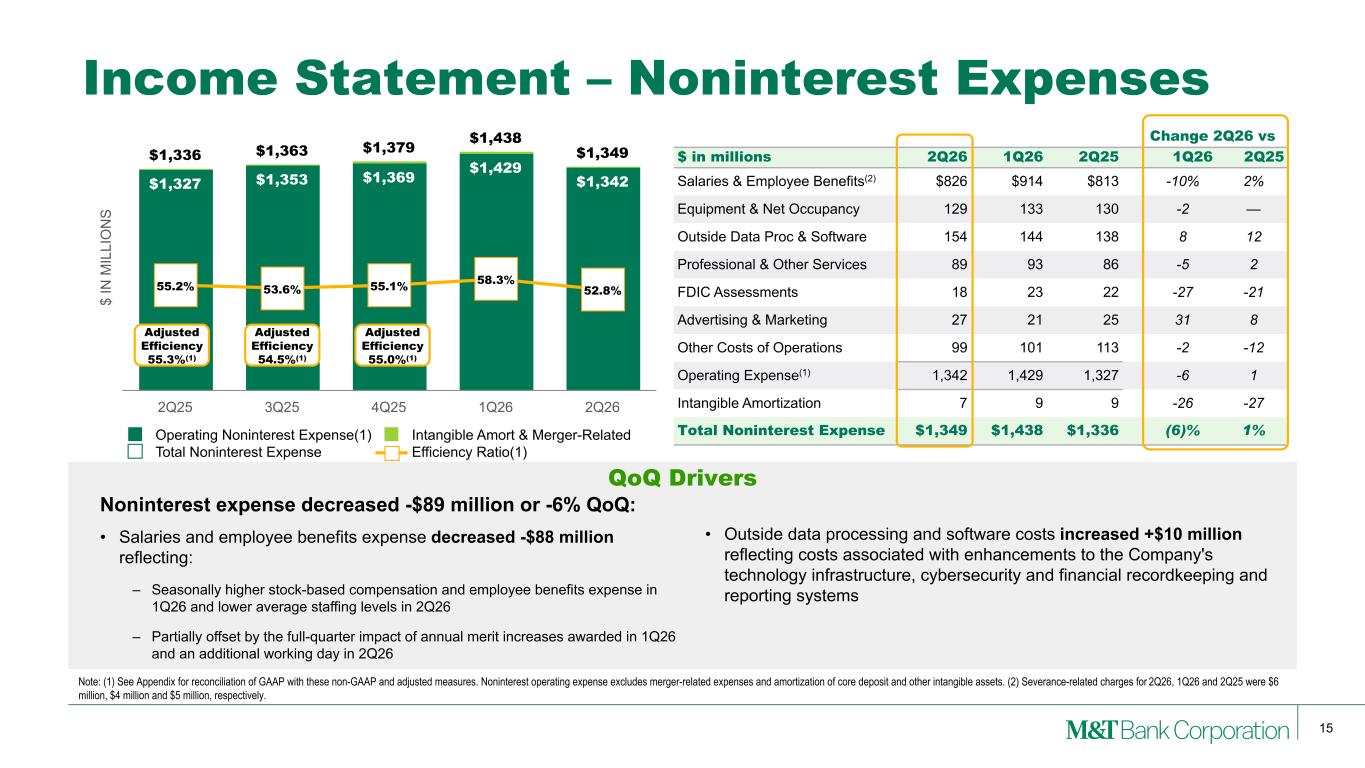
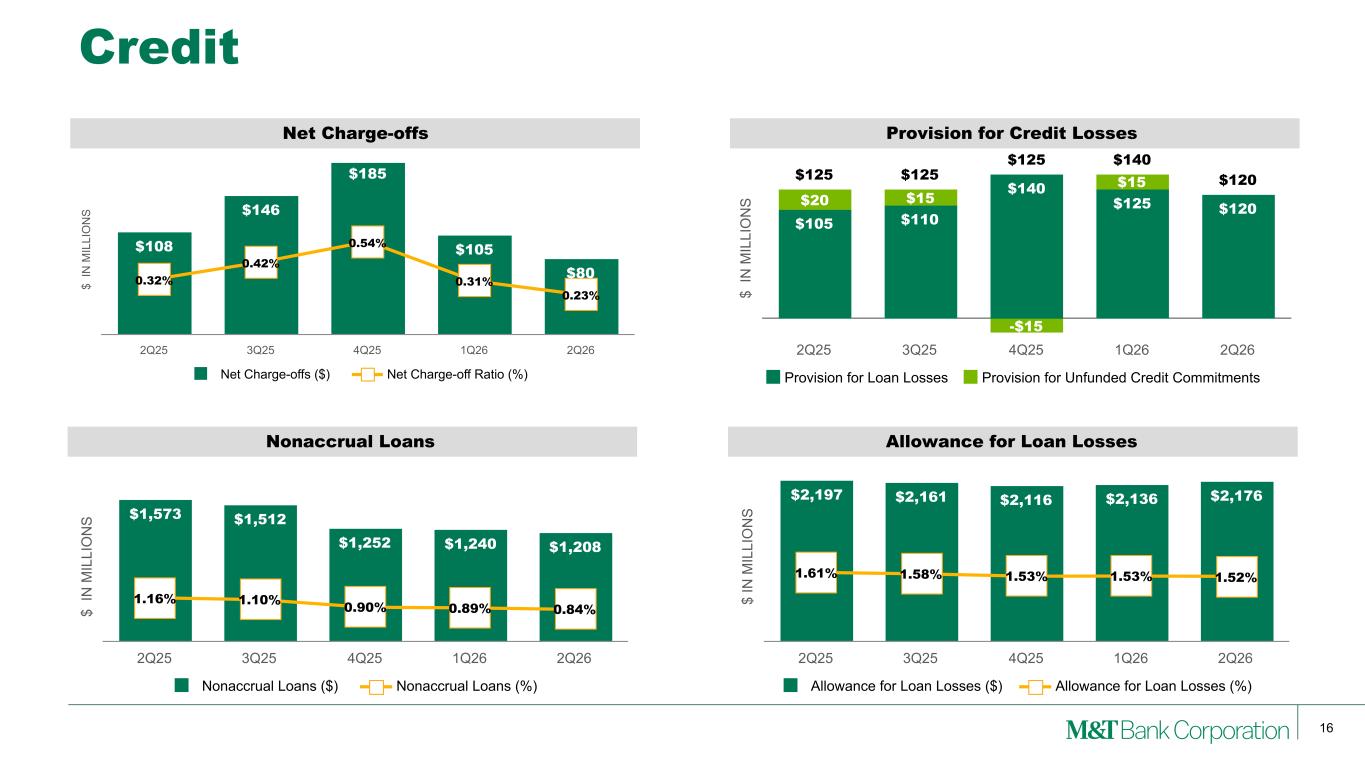
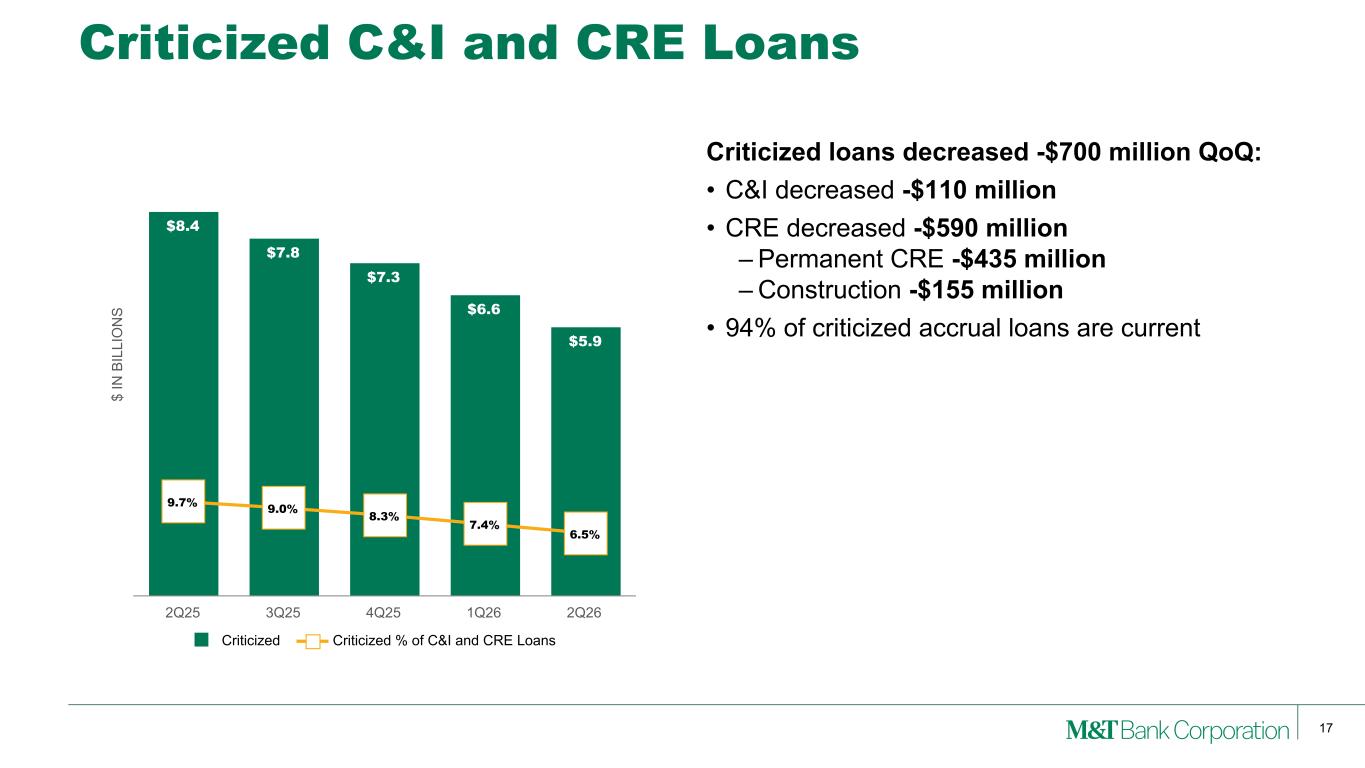
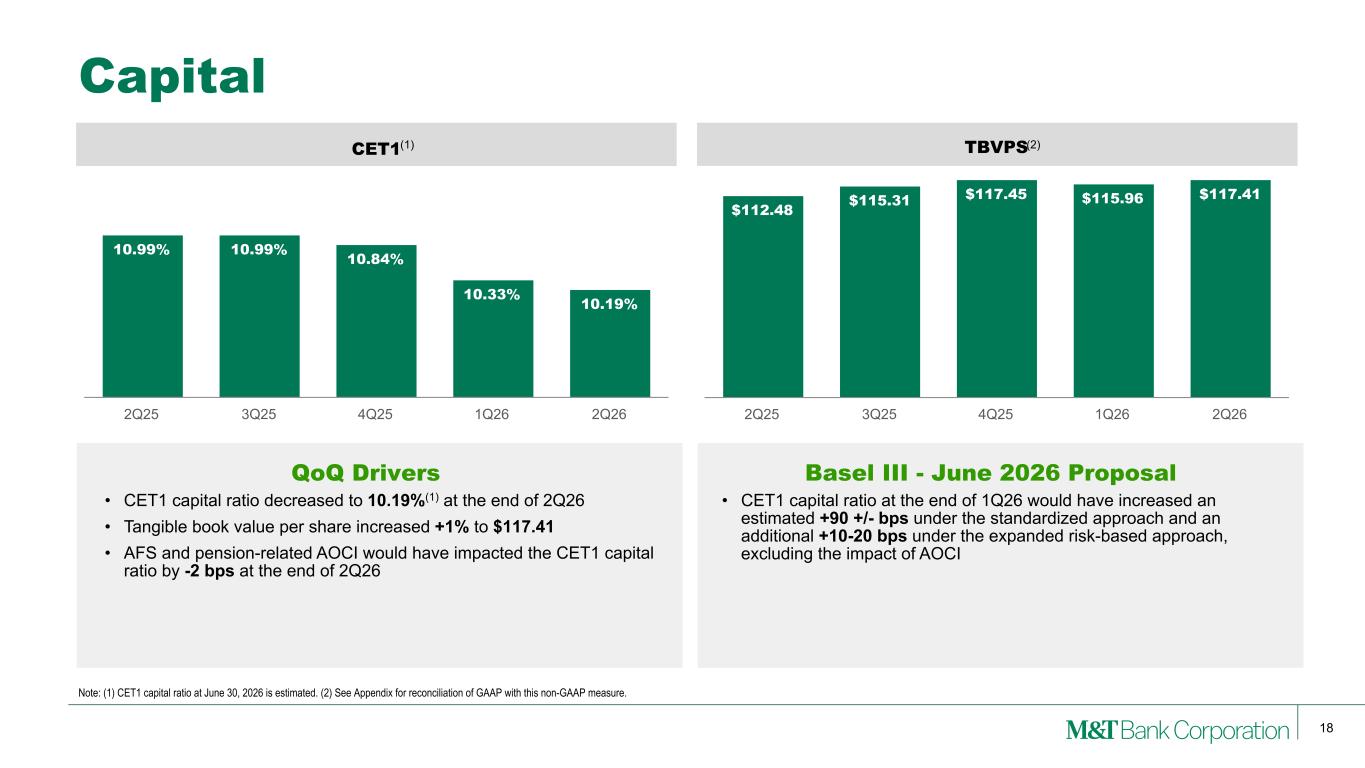
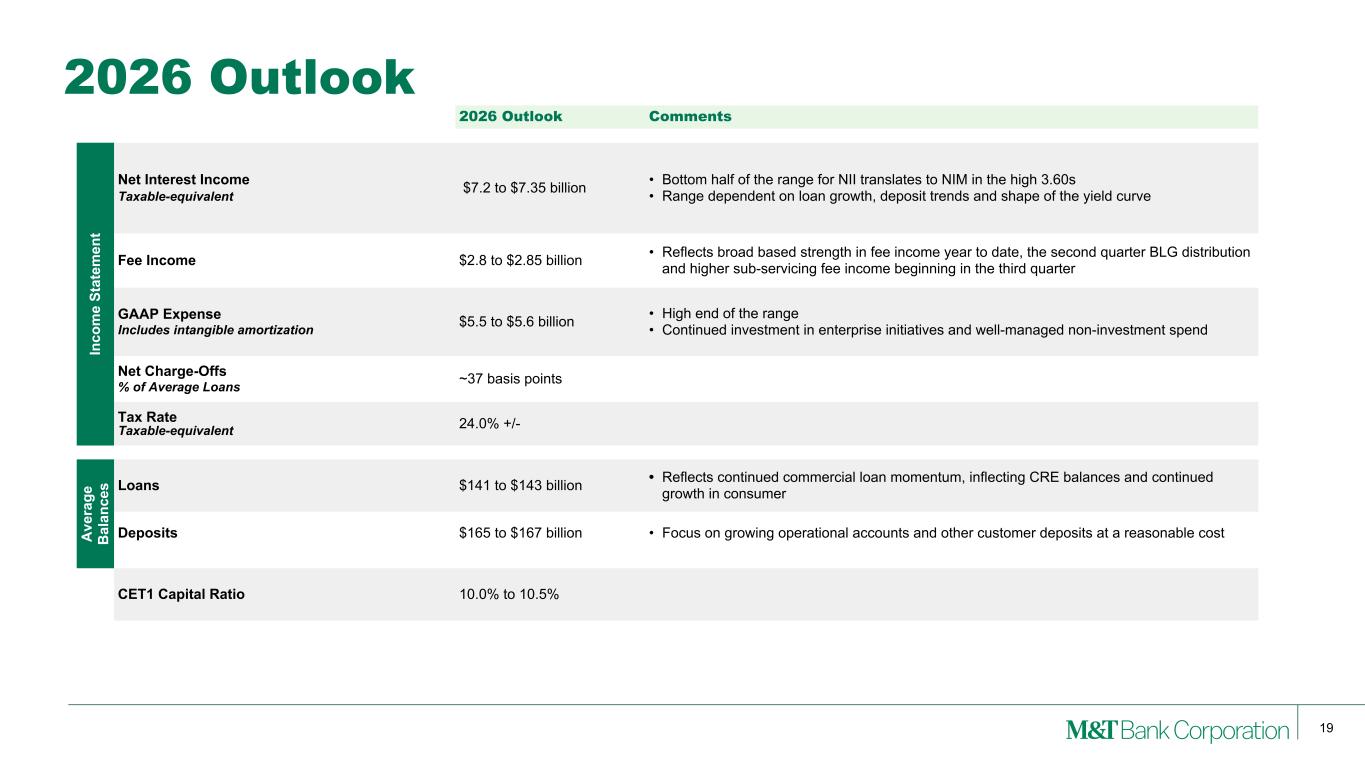
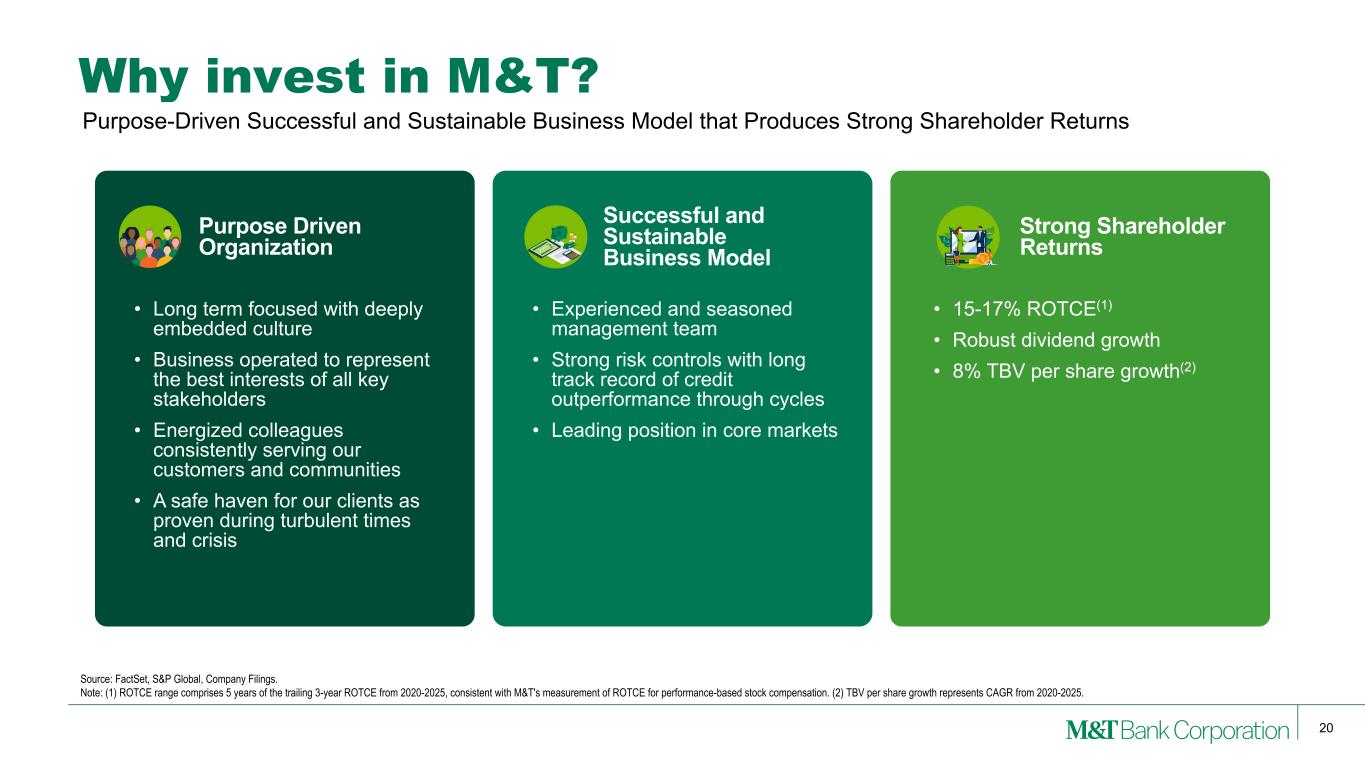
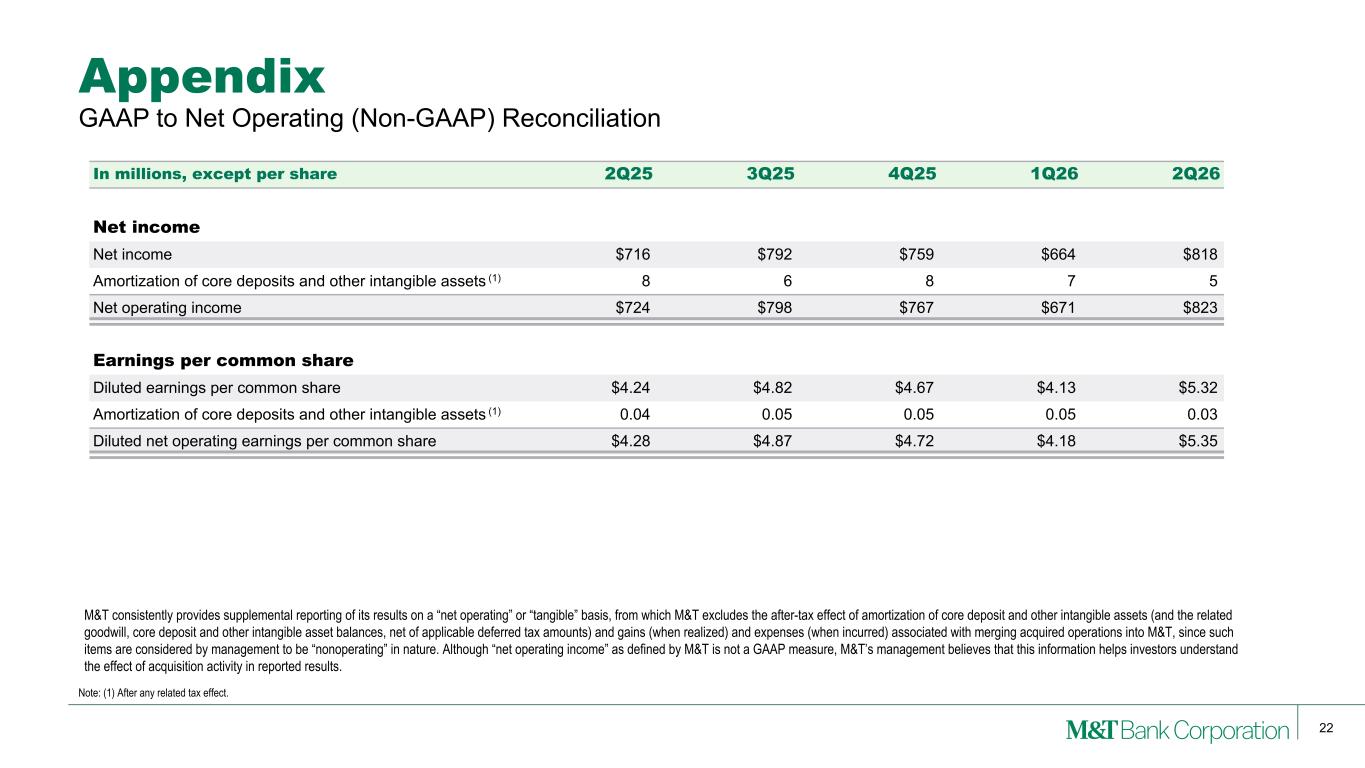
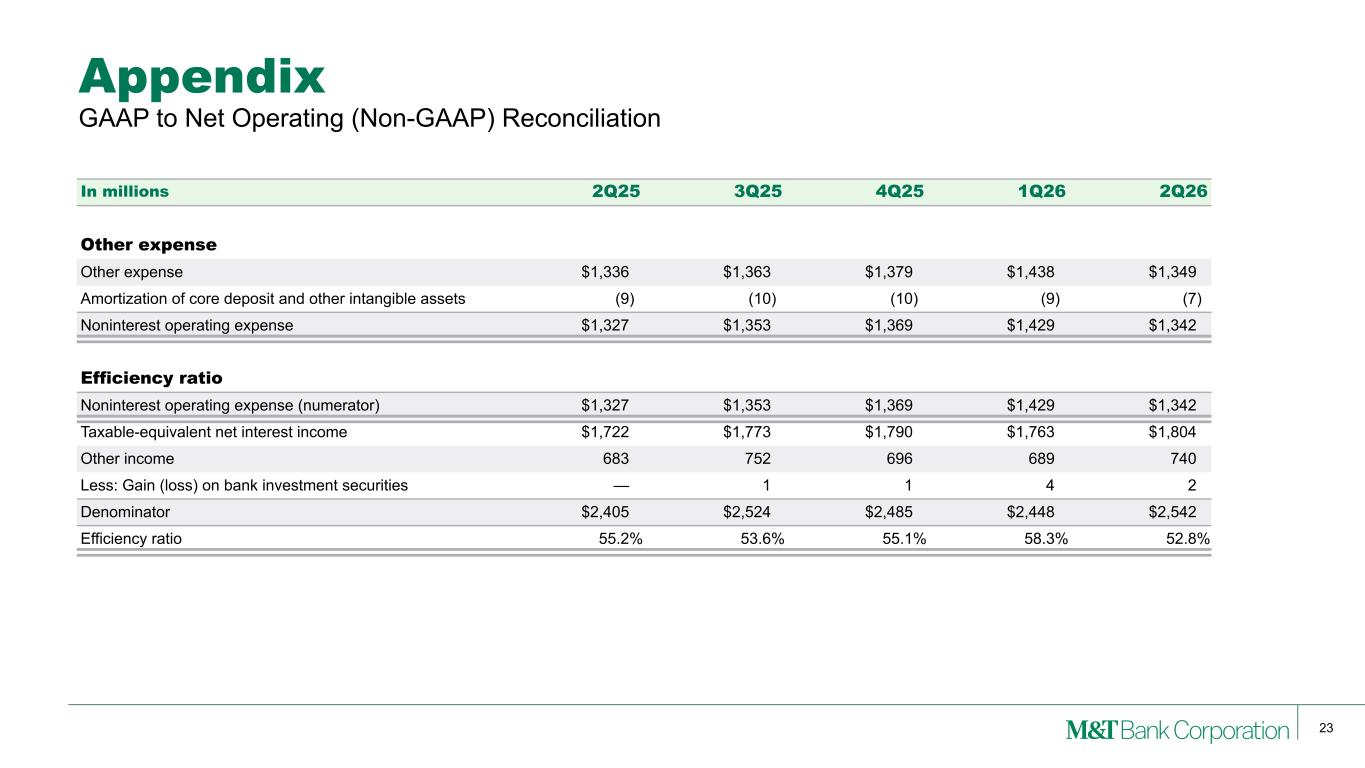
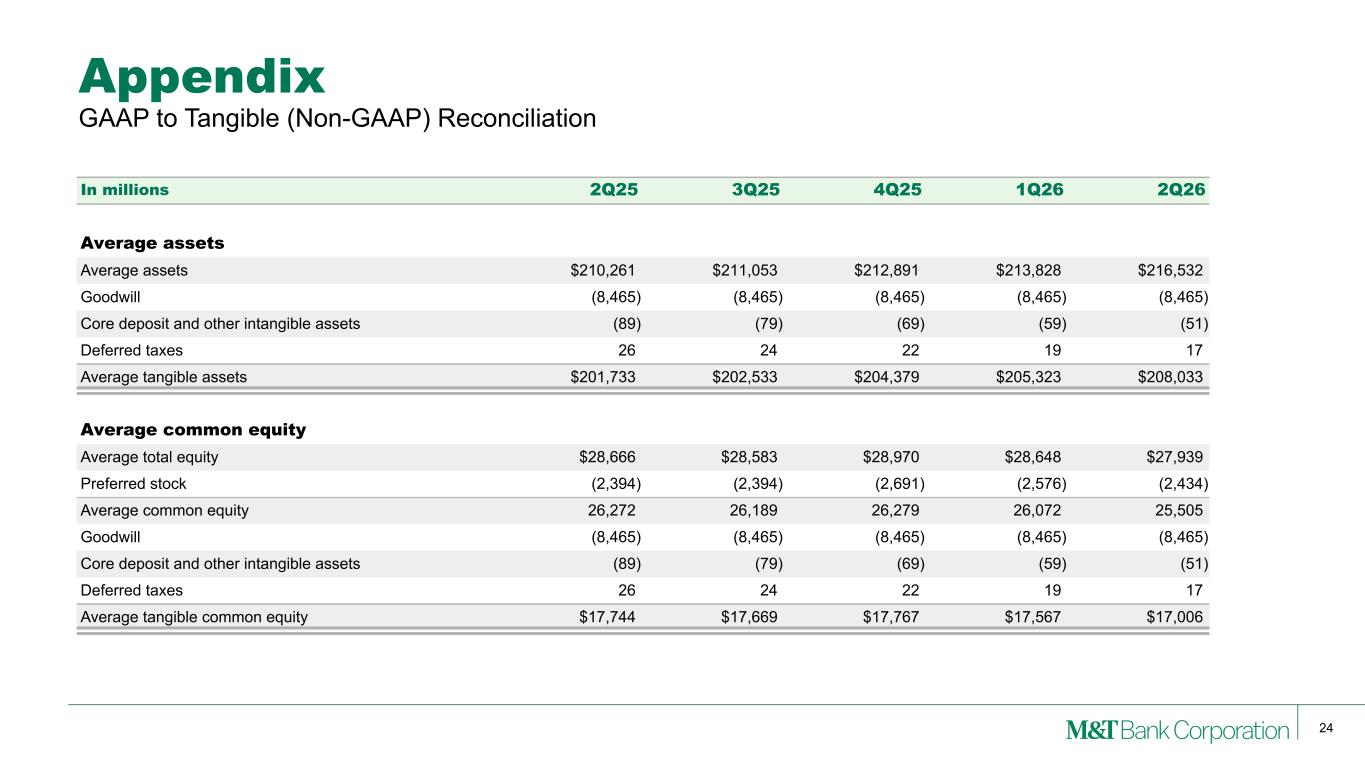
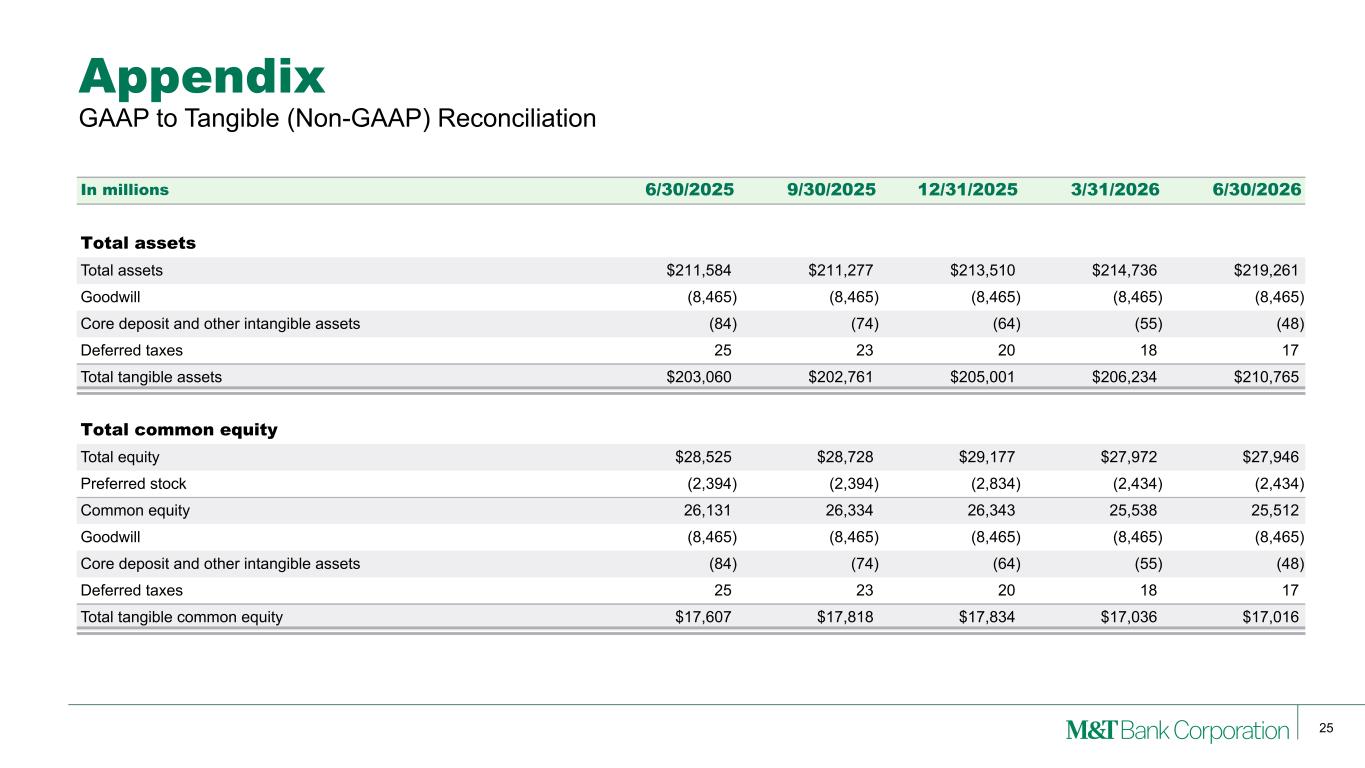
Thank you, Steve, and good morning, everyone. Before we discuss our results, I'd like to begin with what continues to define M&T, our purpose, to make a difference in people's lives by knowing them, growing with them, and connecting them with everything they need to thrive. That purpose continues to guide how we invest in our business and in the communities we serve. During the quarter, we helped launch new initiatives to strengthen Boston's position as a premier partner hub for innovation in the partnership with the city and the Boston Foundation as part of You Can't Beat Boston initiative. We also expanded our work with the Spanish government and the ICEX to help support and connect international life science companies with Boston's innovation ecosystem. Together, these efforts strengthen relationships among businesses, institutions, and communities while supporting long-term economic growth in one of the most dynamic markets we serve. We also celebrated the fifth anniversary of our tech hub at Seneca One in Buffalo. We started with an investment in technology talent that has become an important part of both Buffalo's innovation ecosystem and M&T's transformation. Today, the hub serves as a center for technologists, designers, business leaders working together to improve how we serve customers. And put simply, we are using technology to scale what has always differentiated M&T. Strong relationships, local knowledge, and discipline execution. We are pleased to receive continued recognition for our company and our people, reflecting the strength of our talent and the trust we have earned in the communities we serve. Now let's turn to slide seven and our second quarter results. Diluted gap earnings per share were $5.32, up from $4.13 in the prior quarter. Net income was $818 million compared to $664 million in the linked quarter. M&T's second quarter results produced an ROA and ROCE of 1.51% and 12.3% respectively. Our results reflect the highest quarterly diluted earnings per share in M&T's history. Our earnings strength was broad-based. We reported the highest quarterly NII since 2023 and record fee income, excluding the impact of notable items, acquisitions, and PPP during COVID. We also returned to CRE growth, with average balances increasing for the first time in 2021, excluding acquisitions. We remain disciplined in our profitability, maintaining our strong and stable net interest margin at $370,000, and in the backdrop, the asset quality continued to improve, net charge-offs were 23 basis points, and commercial criticized loans declined by $0.7 billion, making it the ninth consecutive quarterly decline. While the recent stress test results do not affect our required capital levels, we are pleased with the outcome, which reflected an implied stress capital buffer of less than 2.5% at 2.2%. Slide 8 includes supplemental reporting of M&T's results on a net operating or tangible basis. Net operating income was $823 million, up from $671 million in the linked quarter. Diluted operating earnings per share were $5.35 compared to $4.18 in the prior quarter. Net operating income yielded an ROTA and ROTCE of 1.59% and 18.57%. Next, we'll look a little deeper into the underlying trends that drove our second quarter results. Please turn to slide 9. Taxable equivalent net interest income was $1.8 billion, an increase of $41 million, or 2%, from the link quarter. Net interest margin was 3.7% unchanged from the prior quarter as the earning asset yield increase was offset by higher funding levels in support of loan growth. In conjunction with the recent implementation of our new general ledger, we refined our methodology for calculating annualized taxable equivalent rates for earning assets and interest bearing liabilities. Previously reported amounts have been adjusted to conform to the current presentation. This adjustment provides a more consistent way of annualizing balance sheet yields. Turning to slide 11 to talk about average loans. Average loans increased $3 billion to $141.4 billion. Growth was broad-based across each of our portfolios, led by our commercial lending. Commercial loans increased $2.3 billion to $66 billion, aided by growth in middle market, business banking, and several of our specialty businesses. Middle market balances benefited from higher utilization rates. Average CRE loans increased $57 million to $23.6 billion, reflecting strong origination volume. While not shown on the page, end-of-period CRE balances increased $1.1 billion since March to $24.5 billion, driven primarily by growth in multifamily and industrial. Reverage residential mortgage loans increased 1% to $25.1 billion. Consumer loans increased 2% to $26.7 billion, with growth in the recreational finance and HELOC portfolios. Loan yields increased four basis points to 5.89%, mostly reflecting higher CRE yields, including a benefit our earnings release was enhanced to include additional loan balance detail, including industry breakouts for CNI, property type for CRE, and additional detail on the consumer portfolios. These details can be found on page 16 of the earnings release. Turning to slide 12, our liquidity remains strong. At the end of the second quarter, investment securities and cash held at the Fed totaled $53.9 billion, representing 25% of total assets. Average investment securities increased $0.9 billion to $38.7 billion. The yield on investment securities increased seven basis points to 4.29%. In the second quarter, we purchased $1.1 billion in debt securities with a yield of 5.02%. At quarter end, the investment portfolio had a duration of 3.6 years, and the unrealized pre-tax loss on available for sale was $125 million. While not subject to the LCR requirements, M&T estimates that its LCR at quarter end was 106%, exceeding the regulatory minimum standards that would be applicable if M&T was a Category 3 bank. Turning to slide 13, average total deposits declined $0.7 billion to $163.5 billion. Non-interest-bearing deposits decreased $0.6 billion to $43.9 billion, with lower institutional services offset by growth in consumer and business banking deposits. interest bearing deposits were largely unchanged at 119.6 so we remixed the portfolio by shutting the highest cost money market deposits and replacing them with lower cost time deposits interest bearing deposits cost decreased two basis points to 1.95% but the deposit costs improving across most of our businesses. We remain disciplined in our deposit pricing with a 56% cumulative interest-bearing deposit beta since the start of the cutting cycle in 2024. We saw encouraging deposit trends later in the quarter with the end-of-period deposits increasing to $168.9 billion, driven by commercial, business banking, and trust demand deposits. Though end-of-period trust demand deposits can vary each quarter. We usually see more deposit growth in the second half of the year and expect the trend to continue. This focus on deposits should normalize borrowings in the coming year quarters. Continuing on slide 14, non-interest income was $740 million compared to $689 million in the link quarter. Mortgage banking revenues were unchanged at $127 million. Residential mortgage revenues increased $7 million to $96 million from higher servicing fee income. Commercial mortgage decreased $7 million to $31 million, primarily from lower origination volume in the first quarter. Service charges increased $5 million to $144 million, reflecting higher consumer service charges, mostly from higher transaction volume. Trust income increased $14 million to $197 million from a $4 million in seasonal tax prep fees and growth in institutional services and wealth fee income. Derivatives in trading increased $8 million to $22 million from revenues from the interest rate swap transactions with commercial customers. other revenues from operations increased 26 billion to 213 million reflecting a 47 million Bayview distribution compared to 33 in the prior quarter and the higher credit card and merchant discount while the timing of Bayview distributions can vary over the course of the year the investment remains a meaningful and recurring contributor to our annual earnings profile new this quarter on pages 17 and 18 of our earnings release include additional details on the underlying drivers of our residential and commercial mortgage and other fee income turning to slide 15 non-entry expense for the quarter was 1.35 billion a decrease of 89 million from the prior quarter salaries and benefits decreased 88 million to 826 million from lower seasonal compensation and staffing levels partially offset by one additional working day and a full quarter impact on the annual merit increases outside data processing and software costs increased 10 million reflecting continued investments in technology infrastructure and cyber security the efficiency ratio improved to 52.8% compared to 58.3% in the link quarter. Next, let's turn to slide 16 and 17 for credit. Asset quality remained strong in the quarter. The lower net charge-offs and continued improvement in non-accrual and credit size loans. Credit size commercial loans were $5.9 billion, down from $6.6 billion at the end of March. The improvement from the link quarter was driven by $590 million decline in CRE, primarily from upgrades in multifamily and office, and $110 million decline in CNI credit size. Non-accrual loans decreased 3% to $1.2 billion, and the non-accrual ratio decreased. Net charge-offs for the quarter totaled $80 million, or 23 basis points, decreasing from 31 basis points in the link quarter. Net charge-offs were granular with no single net charge-off greater than $10 million. In the second quarter, we reported a provision for credit losses of $120 million compared to net charge-offs of $80 million. The allowance for loan losses as a percent of total loans declined one basis point to $1.518 for capital. M&T's estimated CET1 ratio was 10.19%, decline of 14 basis points from the first quarter. The lower CET1 ratio reflected $465 million in share repurchases and higher risk-weighted assets associated with $3.3 billion of loan growth. These factors were partially offset by continued strong capital generation. If included in regulatory capital, AFS and pension-related AOCI would decrease CET1 ratio by two basis points. Tangible book value per year grew 1% from the first quarter. Now turning to slide 19 for outlook. First, let's begin with the economic backdrop. The U.S. economy has held up well thus far through the energy shock, though we remain cautious. The increase in gasoline prices has been challenging for households. We see them having the shock by reducing spending in other areas and aided by a boost in tax refunds this year. Although the geopolitical conflict has not been fully resolved, we are cautiously optimistic with an outlook of continued growth. U.S. and GDP has slowed, reflecting slowing consumer spending. We do not see evidence of an energy shock seeping into core inflation, and we expect overall inflation to deaccelerate going forward. Encouragingly, job growth accelerated again in the second quarter as it did in the first. We remain well positioned for a dynamic economic environment. Now turning to outlook. We expect NII in the lower half of $7.2 to $7.35 billion range in the full year NIM in the high 360s. We expect continued loan and deposit growth in the second half of the year with full average loans of $141 to $143 billion. This reflects the strength we've seen in the commercial loans inflecting CRE balances and continued growth in consumer. Our deposit outlook remains in the $165 to $167 billion range with a cumulative interest-bearing deposit beta in the low to mid 50% range. NII has continued to depend on the shape of the yield curve and loan and deposit balances remain neutral on the short end of the curve. At the same time, our naturally asset-sensitive balance sheet provides flexibility And we can adjust our sensitivity as warranted through maturities of cash flow swaps, shifts in cash and securities mix, and the addition of pay fixed swaps. We expect fee income to be $2.8 to $2.85 billion, reflecting broad-based strength in fee income year-to-date. The second quarter Bayview distribution and the higher subservicing fee income beginning in the third quarter. Expenses are expected to be at the high end of $5.5 to $5.6 billion range as we continue with our enterprise investments while maintaining overall expense discipline. Given the strong credit performance in the first half of the year and our favorable collateral positions, we now expect full-year net charge-offs of 37 basis points. We expect to operate the CET1 ratio in the lower part of the 10 to 10.5% range unless market conditions start to deteriorate. To conclude on slide 20, our results underscore an optimistic investment thesis. M&T has always been a purpose-driven organization with a successful business model that benefits all stakeholders, including shareholders. We have a long track record of credit outperforming through all economic cycles while growing within the markets we serve. We remain focused on shareholder returns and consistent dividend growth. Finally, we are a disciplined acquirer and prudent steward of shareholder capital. The strength and diversification of M&T's balance sheet, capital, asset quality, and revenue will continue to allow M&T to outperform consistently across cycles. As we close, I want to thank all of my M&T colleagues whose dedication and hard work make a difference every day for our customers, communities, and one another. Because of all of your commitment, M&T continues to create lasting value for everyone we serve. Now let's open the call up for questions for which Chelsea will briefly review instructions.
Operator
Thank you. At this time, if you would like to ask a question, please press star 1 on your keypad. To leave the queue at any time, press star 2. Once again, we ask that you please pick up your handset when posing your question to allow for optimal sound quality. We also ask that you please limit yourself to one question and one follow-up. Our first question will come from Monan Gosali with Morgan Stanley. Please go ahead.
Good morning. So, Daryl, in the NII guide, I guess you're still pointing to the low end of the range. You upped the loan growth guide. I think you're guiding to some limb compression here in the second half relative to the 370 or so in the first half. Can you talk about what's baked into that outlook in terms of, I guess, deposit pricing and loan pricing?
Yeah. We have a lot of momentum. If you look at the loan growth that we had, it was very robust. We had growth businesses. We had growth in a lot of our specialty businesses. Mortgage warehouse was up $350,000, institutional CRE $335,000, corporate institutional $309,000. Fund banking was also up, business banking, LEAF, lender finance, and health. We had a really strong finish in the quarter in CRE. If you look at it, you know, on an average basis, we eked out a little bit of growth average over average. But when you look at the June numbers and what we put on the books, we're set to have really strong average balance growth in CRE in June. And then our two consumer portfolios, mortgage and the consumer indirect and direct businesses, also grew nicely. We expect all those portfolios to continue to grow in the third and the fourth quarter. We maybe not have quite as much growth in the third and fourth as we had in the second, but we're pretty positive that these portfolios will continue to grow and have positive momentum. On the deposit side, we started the quarter off a little soft on deposit growth, but we've rebounded, and you can't really see it in averages. But if you look at the growth that we had at the end of the, you know, middle to the end of second quarter, our deposit growth was really robust and strong. And really, when you compare, like, June averages to second quarter averages, you know, we're up $3.4 billion. So we have a lot of deposit momentum going forward. And I know that, you know, we had a little bit elevated in short-term borrowings. that short-term borrowings number is going to come back down now. It's already down a couple billion dollars, and it continues to come down as we're starting to grow deposits. Pricing-wise, our deposit paid is still in the mid-50s. It may eke down to the low 50s, but it's the right thing to do to grow our loans with core funding, which is what we're doing.
Very thorough. Maybe as a follow-up on capital, one of the things that Renee spoke about recently is how M&T has historically not done as many risk transfer deals as some of your peers. Now that we have the new capital proposals, is there any way you can help us think through what that opportunity is, how to think about the capital that you can free up and over what timeframe?
Yeah, so the Basel III proposal, you know, limit the downside risk that was there before. It can't get to dollar-for-dollar capital in the worst-case situation. Only it gets to the worst case of what the asset would have been if you put it on individually, not in a secured-type transaction. So that kind of cuts the risk off of how much capital you would have to redeploy if things deteriorated. So we have some products that we have out there. We're launching new products in CRE that will take advantage of that. Growth will build slowly over time, but our CRE team is excited about that, and we'll have a little bit of growth this year, but that will grow more into the next couple years as we move forward. And then in just the normalcy and eye space, our focus is really making sure we know what asset qualities are in the deals, how we monitor these asset qualities, and make sure that we're very diversified. in these. So, you know, we will on occasion, you know, do some of these transactions. So growth will be more than we have. We have hardly anything on our books today. So we're coming from a very low level.
Operator
Thank you. Our next question will come from Erica Najarian with UBS. Please go ahead.
Hi. Good morning. Daryl, I heard you loud and clear in terms of anticipating seasonally stronger deposit growth in the second half of the year, and your, you know, wholesale balance sheet will come down on the liability side. In the case, though, that loan growth continues, obviously, at this pace, you've hit an inflection point in CRE. You know, maybe talk to us about sort of how much, you know, you're going to, you know, potentially just market core funding versus, you know, go to the wholesale market. You know, I'm looking at like an 18-month CD at 360 on your website, which is lower, obviously, than your borrowing yield. So, you know, as we think about loan growth continuing to outpace deposit growth, even with those seasonal factors, how should we think about, like, the mix of your liability growth from here, and maybe sort of double-click on your comments on deposit costs?
Yeah, yeah, that's a good question, Erica. You know, back early in the second quarter when we saw the loan growth starting to come through pretty strong in the pipelines building, we met with all of our businesses in the company and really had them focus. This is, I've only been at M&T for a little over three years, but I basically have, we have both oars in the water. Loans are growing nicely, and we had to get our deposit growth up to grow nicely as well. So we started with consumer and business banking. They have responded. They have promotions going on that are attractive and still at a reasonable cost that we think. So they're growing commercial and wealth are focused, corporate trust. And we continue to get more escrow deposits and mortgage. So all those businesses are really focused at trying to grow deposits as much as possible. If by chance it's not enough to support the loan growth that we have, we have other alternatives. You know, we've consciously been active in putting out securitizations, funding securitizations out there in auto and RV and small ticket leasing to make sure the investors know our collateral and all that. We could turn and dial that up if we had to. You know, we could issue more debt, more federal home loan bank advances. So we have a lot of options, but the most important thing is to really focus and serve our clients and communities and really try to do it with core deposits to meet the core loan demand.
Got it. And just to follow up, you know, if the Fed doesn't, you know, keeps rates where they are, do you expect deposit costs to drift higher given what you just said? And given what you said during prepared remarks about asset sensitivity, What does a 25 basis point rate hike do to that high three sixes NIM, you know, as we think about the go forward and the exit rate?
Yeah, so for the Fed, and, you know, if rates, they don't change, the way I look at it is you look at deposit growth, interest-bearing deposits are growing fat rates being down this year. so we aren't meeting our expectations on DDA growth right now. So for every marginal asset you put on the books is going to be at a lower margin than what we anticipate it to be. So that does put down a little bit of pressure on net interest margin. But we operate with one of the highest net interest margins in the industry. I think we're okay trading a few basis points away from that and getting more growth in NII. I think that's a fair trade. I don't think our NIA or an interest margin is going to collapse by any reason, but I think it's a good tradeoff from what we see. As far as the assets and rates going up, 25, we're really neutral, and our forecast already has the steepness in the curve that we have today factored in for the rest of the year. So I don't think you get much change either way with what we have. You know, if by chance the curve gets steeper, that would be a good guy. If it gets flatter, it would be a bad guy. But we have pretty much of that factored in our forecast today.
Operator
Thank you. Our next question will come from John Pancari with Evercore. Please go ahead.
Morning. Daryl, back to the loan growth topic, the loan growth trends are definitely encouraging. It's good to see the pipelines building and higher utilization. On the commercial real estate front, also good to see the inflection. What gives you confidence that that inflection is going to be sustained here? And how should we think about the pace of growth there? I mean, are you still, you know, selective in terms of your posture and that could impact your growth? How should we think about that trajectory? Maybe could you break it out on how we should think about the C&I side of it as well?
Let me start with CRE. That will definitely carry us strong into the third quarter. They still are very optimistic. You know, when I talked about, asked them, you know, where they're seeing growth. You know, we're originating in just about every segment that you can originate in, except often our strongest, obviously, are in multifamily and industrial. But we're doing retail. We're doing hotel. We're doing home building, construction. They're all adding to it. You know, we put on a lot of construction loans over the last year or two. Those are starting to fund. and now too. So that's another positive. So we're pretty optimistic on the CRE growth headed here now and feel good that it's going to be a good contributor to earning asset growth. On the C&I front, I probably honestly, they had the best quarter you could probably ever have. 90% of all the businesses grew. That just doesn't happen very often in my career. So hats off to Peter Darcy and his team there. They did an amazing job from that. You know, I think third quarter, you know, they're going to have to rebuild pipelines. I think we'll grow, but probably more modestly, third quarter. And hopefully we finish the year out strong in the fourth quarter and, you know, have momentum going into 2027. But, you know, Peter's got a lot of motivated people. We've got a lot of products and services out there to, you know, serve our customers. And we're doing that, and we're making a difference.
Got it. Okay, great. Thank you. So on the capital front, CET1 at 10.2 came down a bit, but you had bought back about $465 million in the quarter. How should we think about the pace of buybacks as you are now looking at a faster pace of loan growth in front of you as well as other capital considerations? How should we think about the pace of buybacks as we look out for the rest of the year?
Yeah, so we're going to target, you know, the 10.2 plus or minus range for capital. So buyback is going to be the tail on the dog. You know, depending on how much RWA growth we get through lending, we know we'll buy back what we need to to basically stay at that level that we're currently at today. It's kind of how I would forecast it. It's just where we want to operate now. And, you know, we'll see as we get into next year and BASIL 3 gets approved, you know, what changes we might consider. But right now, you know, we feel comfortable operating in the low 10% range, and it's going to how much we buy back is a factor of long growth.
Operator
Thank you. Our next question will come from Gerard Cassidy with RBC Capital Markets. Please go ahead.
Operator
Hey, how we doing?
Good. Thank you for the additional information on pages 17 and 18 that you cited. The question I have for you.
We got more information coming. This new general ledger we have, we're going to have more information next quarter and the next couple quarters. This is just the start of what we are able to do these days.
Oh, that's great. No, you're paving the way for others to follow. Question for you on the sub-servicing number that you disclosed in June 30th. I think it was $184 million, possibly, or $184 billion. I guess it's billion. It's up nicely from the prior quarter. What's the driver? Is that Bayview? And how should we look at that number going forward for the subservicing of residential mortgages?
We just closed on another 214,000 subservicing loans. Some of the subservicing comes from Bayview. Some of it comes from other customers. from that perspective. But what we just put on the books for the third and fourth quarter, probably second half of the year is about $35 million more in revenue is what you see. Costs are pretty much already there because we've been building and hiring folks for that, so that's already in the run rate. So it's really just the add of the revenue coming in. It's a really great business that we have. We specialize in the hard-to-service, more the FHA-type lending, And we do a really good job of that. And, you know, people come to us to service their loans because of that.
Very good. And then circling back to your answer about you in your career about the C&I loan growth you saw this quarter and all the different categories, is there any way that you guys can get your arms around the impact that the AI industry, I don't mean just the building of the data centers, but is there any way you can get your arms around the second derivatives of the AI industry impacting loan demand going forward, whether it's not just the plumbers and the HVAC and the cement companies, but just all the software companies? Have you guys been able to dive into the portfolio to see what kind of exposure you may have?
I'm sure, you know, given our diverse portfolio that we have, there is some impact to rebuilding, putting on new equipment. If you look at our leasing businesses, both small ticket leasing and our equipment leasing grew really nicely this past quarter. So there's really just good core demand out there. The other thing I think, Gerard, is I think, you know, private credit isn't as aggressive as it was, and I think we're running back market share back in the regions, which is really what's helping us.
Operator
Thank you. Our next question will come from Ken Usten with Autonomous Research. Please go ahead.
Good morning, Daryl. Hey, just one question on fees, one question on expenses. On the fee side, can you just remind us that the BLG won't repeat in the second half, but then you mentioned the servicing. I think you had previously quantified that, but can you just give us an update on, like, how much that servicing ad will be and then just how you expect some of the other fee lines to reject from here?
Yeah, so I just gave it on the last call with Gerard. So second half of the year in the new servicing is $35 million additional revenue in that line item. As far as BLG goes, you know, we aren't on his board or anything. We just get distributions when he distributes money out of his company. So we don't really know how much or when we're going to get distributions. So it's hard to say, you know, when it's going to happen and how much we're going to get there. But if you look at Bayview received from Bayview, it can really tell that his businesses are growing nicely. He has a lot of momentum and he's doing a great job. So his business is helping and more benefiting.
Sorry for that. I guess I was really then focused on what if there's you can expect continued momentum in some of the other lines. You've seen really good growth in like service charges, trust, notably have been really nice drivers.
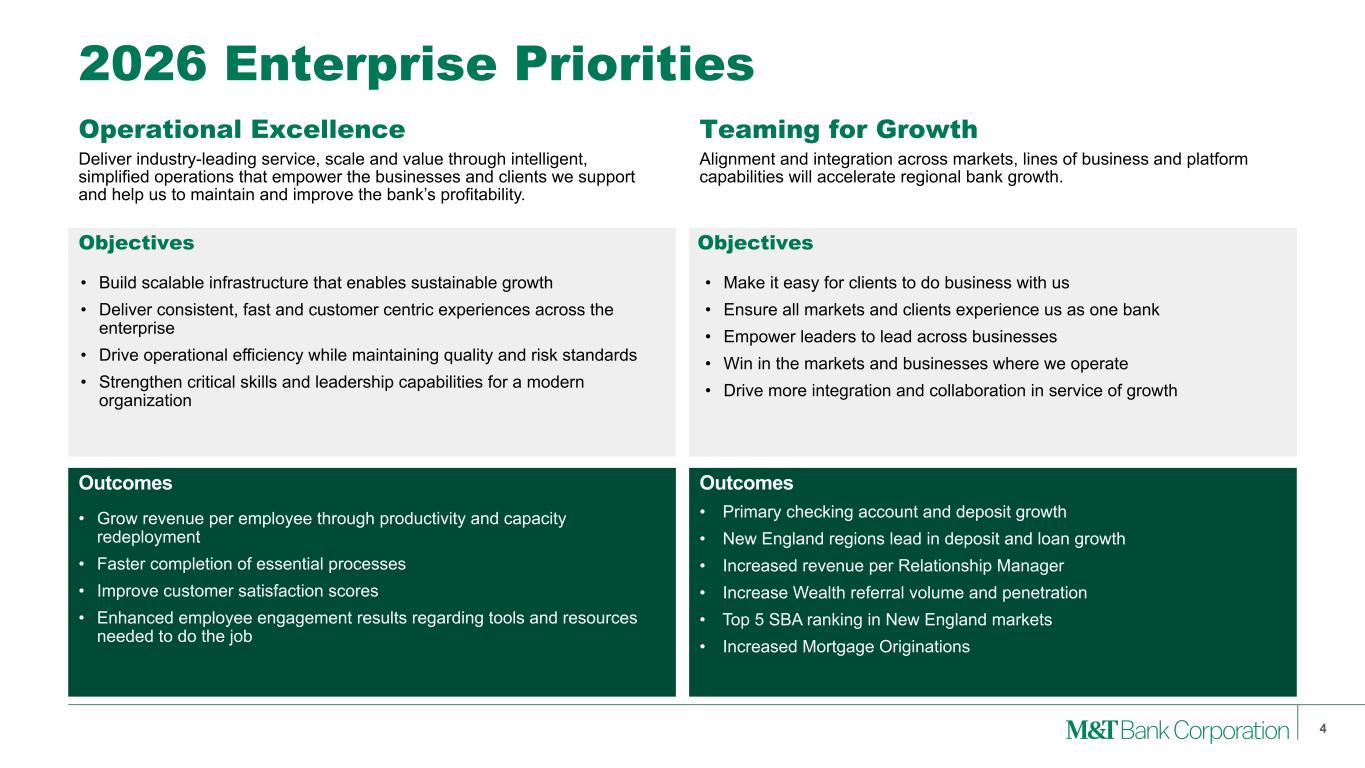
Yeah, I think some of the upsides that I saw was wealth. You know, one of our initiatives this year was to really focus on and really, you know, M&T commercial and business banking customers, you know, into our wealth area. And the referrals have picked up dramatically, more than double than what they were the past year. And we're getting more wins out there. And we're having really nice growth in asset management, positive flows. there in that area. So that's been really positive for us. Corporate trust, their global capital markets domestically and in Europe have really strong quarter and second quarters, really positive. They have a lot of momentum going on, which is really well. Treasury management's doing well, serving our customers. The other thing in capital markets, we had a big quarter in our derivative area that we sell to our commercial customers. That was nice growth. So, we really have strong, robust growth, and we're doing great there and feel very positive on the momentum we have on fees.
Operator
Thank you. Our next question will come from Ibrahim Bunwala with Bank of America. Please go ahead.
Hey, good morning. I just wanted to follow up in terms of, so you talked about expectations that the deposit betas could maybe drift lower. But talk to us a little bit around when we think about the strength on the CNI side on lending, the level of sort of deposit generation lending is doing today. Like, is that a thing or not? Like, my view of this was like when a bank makes a CNI loan, it does create deposits and that's a better negotiated rate on those deposits. but is that holding in the current environment or not?
Yeah, I mean, even when I would say private credit was more aggressive the last couple of years, you know, we still had the deposit treasury management revenue. So that really hasn't changed. If you look at our regional middle market businesses, you know, and the growth that we're seeing there, you know, we bring the whole relationship there. We have the loans, deposits, and the fees all coming together. That's probably some of the most profitable practice. So that's there and live and well. Aggressive to get, it's harder to get DDA. People are more educated, so you put money in sweeps. But that just means we get fee income and less DDA. And you're seeing that this year and with rates a little bit higher. But net net overall, it's still really good business to get deposits. And, you know, we kind of, when we go through the credit process, you know, if we don't get the deposit relationship right away for a new client you know we give our customer time to get it to us but over time if we can't get that we'll probably exit the relationship if it's hard to make it on an asset alone only from our total return got it that's helpful and just on the fee side means you talked about the momentum on the fee revenue but specifically when we think about MSR assets?
Just talk to us in terms of how you all are thinking about it in terms of adding more and what the pricing backdrop looks there.
So Ibrahim, so our MSRs that we have on our books are really what we originate and put on the books, and that's really, you know, our customers there. When we talk about growing subservicing, we don't really have an asset on the books. There's nothing the hedge. It's just a fee for service. And we have a lot of subservicing relationships that we have where they just pay us a fee to service those loans. It's not part of the asset that we...
Operator
Thank you. Our next question will come from Matt O'Connor with Deutsche Bank. Please go ahead.
Good morning. Obviously, positive to see the CRE loans reflecting here. And I remember a while back, you guys talked about kind of broadening out that business that's not just a balance sheet business. Some you'll hold, some you'll facilitate out to other funders. It just reminds us kind of what that opportunity might be, more broadly speaking, in CRE, you know, with the business just overall inflecting strongly like it has.
Yeah, when you see our CRE business, it's really transformed significantly over five years. CRE, a lender in that space. But when you look at our businesses now, we have a strong, it's called RCC, where we can originate and sell. And last year in 2025, we had the same number of originations in RCC as we did on the balance sheet. So it was a really strong year. Rates were a little bit lower last year, and we benefited from that. But to get permanent financing, you know, we were able to go to the agencies or insurance companies or others to serve our customers' needs from that. But we've been growing those. You know, I just talked about earlier in an earlier question, we have a new business called CRE Warehouse. CRE Warehouse is something that we're going to start up and start making now, so that's a growing business. We have our affordability businesses that are in there that are growing nicely, and then we have our institutional CRE business. So when you look at it, you know, Tim Gallagher, who runs that business, has these five businesses, and he has, you know, a whole portfolio there, some is on balance sheet, some is off balance sheet, some of its fees. And it's really just transformed how we do business with our customers. But the number of customers we're serving is much more than what we had, you know, many years ago and all that, and it continues to grow and prosper.
Okay, that's helpful. And then just separately, you know, good trends in credit. Would you say we fully have normalized here or still some kind of both opportunity for criticize to come down and potentially some lumpy items as you kind of, you know, work through some remaining credits?
There's two things I look at. So, we give you a non-accrual number, and that non-accrual number went down five basis points, basis points. That's probably bumping along the bottom. It's like a two-decade low number, so that's probably going to bounce around there and not go much lower or higher than what we see today. As far as a criticized portfolio goes, you know, we still have room for it to come down. Maybe not as fast as it's come down the last couple of quarters, but we still are projecting it to come down. You know, when you look at our office CRE portfolio, we still have about 24% that are in criticized there. But, you know, we had some office loans come off of criticized this past quarter, and we think that's going to continue to happen over the next year or two. So there's still room for it to come down. The C&I criticized, you know, has been coming down a lot slower. That will be more modest, we believe. But net-net overall, we still think we have trajectory and room for the commercial criticized to come down some.
Operator
Thank you. Our next question will come from David Ciamarini with Jefferies. Please go ahead.
Hi, thanks for taking the questions. The first one is housekeeping. On the NII front, how much did the nonaccrual recovery contribute to NII in the quarter?
Yeah, great question. So if you look at our average commercial nonaccrual, it averages about $15 million a quarter. this quarter we got 20 million so it was a little bit outsized but if you look at the first quarter it was we didn't get 15 i can't remember what it was some single day maybe six or seven so it was undersized but we average about 15 a quarter so it's probably worth maybe a basis point in net interest margin by this five million more that we got thanks for that and then on the net interest margin.
You alluded to the incremental margin being, you know, lower. Could you talk about a normalized NIM level over the medium term for M&T?
I would say we'll operate in the 460, 360, sorry about that. And in the 360s, it's probably, we don't have any guidance going down to the lower range, but you said over multiple years. So it's at 370, probably going down to the high to mid-360s right now, and, you know, probably it really depends on the shape of the curve, you know, and how our funding depends.
Operator
Thank you. We have one more question. This one from Chris McGrady with KBW. Please go ahead.
Daryl, just on the expenses, more dollars today. Thank you.
We have expense increases in technology, so that's real and happening, and, you know, So that's one of the risks. From a revenue perspective, you know, we've invested heavily in our mortgage area. You can see that by how much more subservicing businesses we're winning in that space. So that's a positive. You know, we're investing in our treasury management areas really well. In the commercial platforms, we came out with our new CRE warehouse business. So we're investing in all the businesses we can to help make a difference and help serve our customers as much as possible.
Operator
Okay, thank you. And at this time, there are no further questions in the queue, so I'd like to turn the call back over to our speakers for any additional or closing remarks.
Again, thank you all for participating today. And as always, if any clarification is needed, please contact our investor relations department at 716-842-513.
Operator
Thank you, ladies and gentlemen. This brings us to the end of today's meeting. We appreciate your time and participation. You may now disconnect.