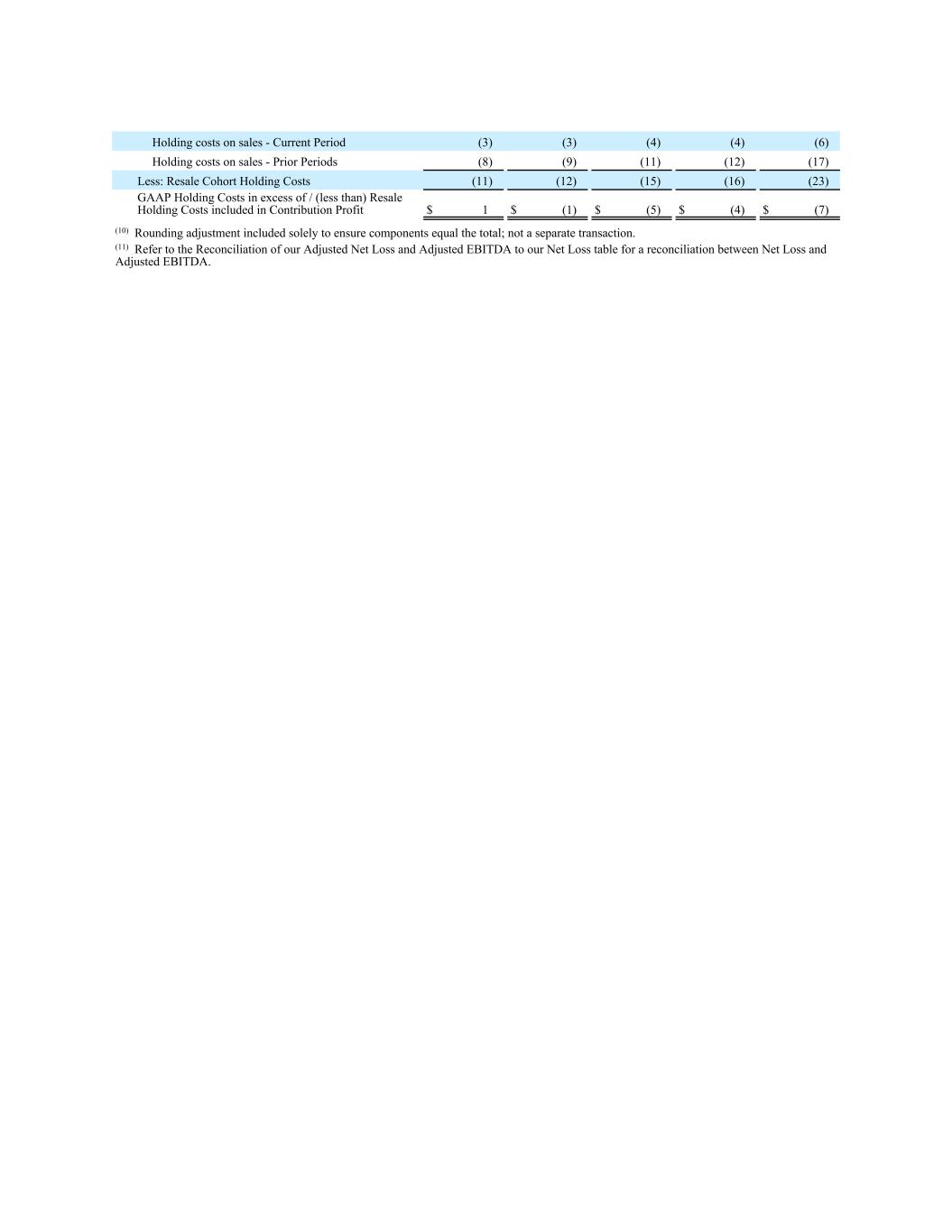
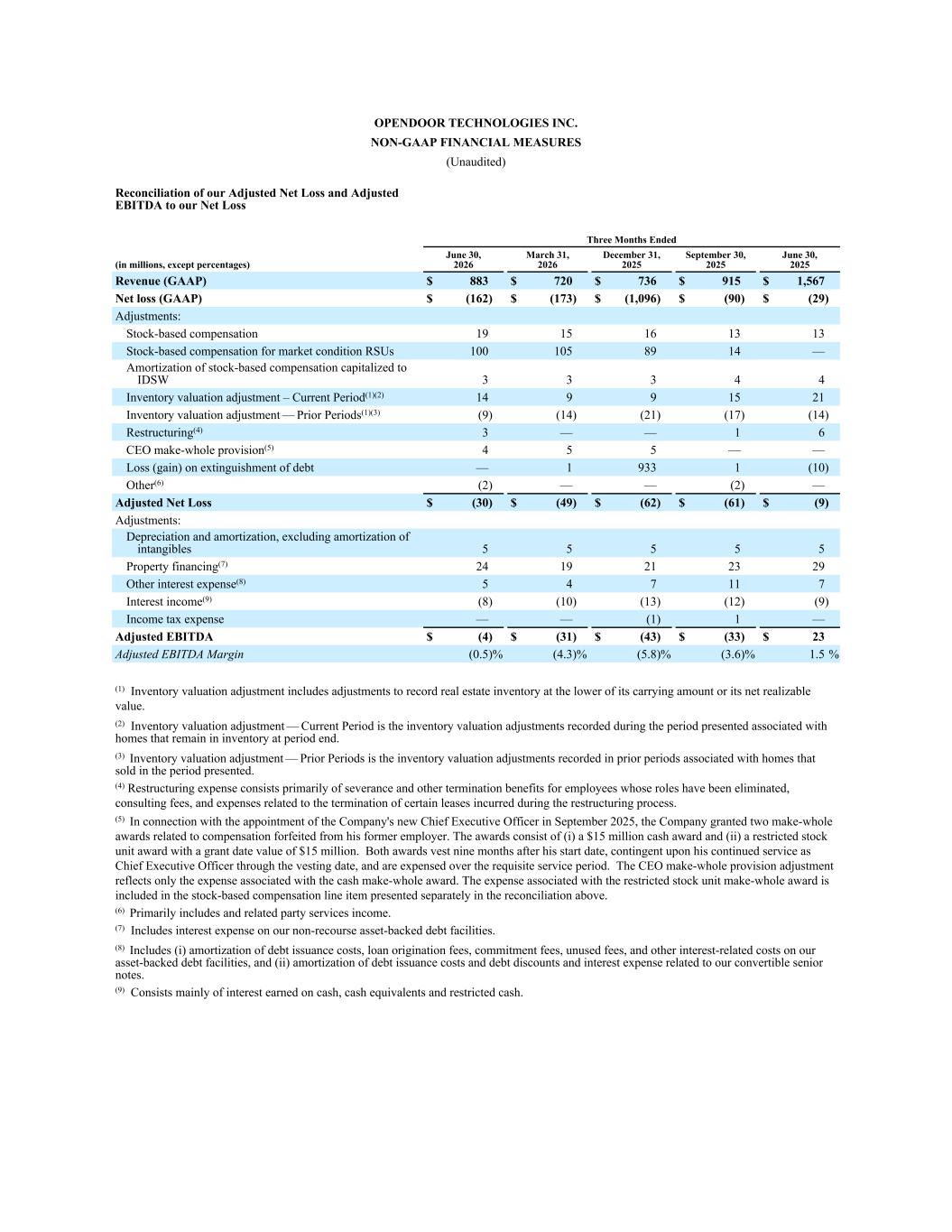
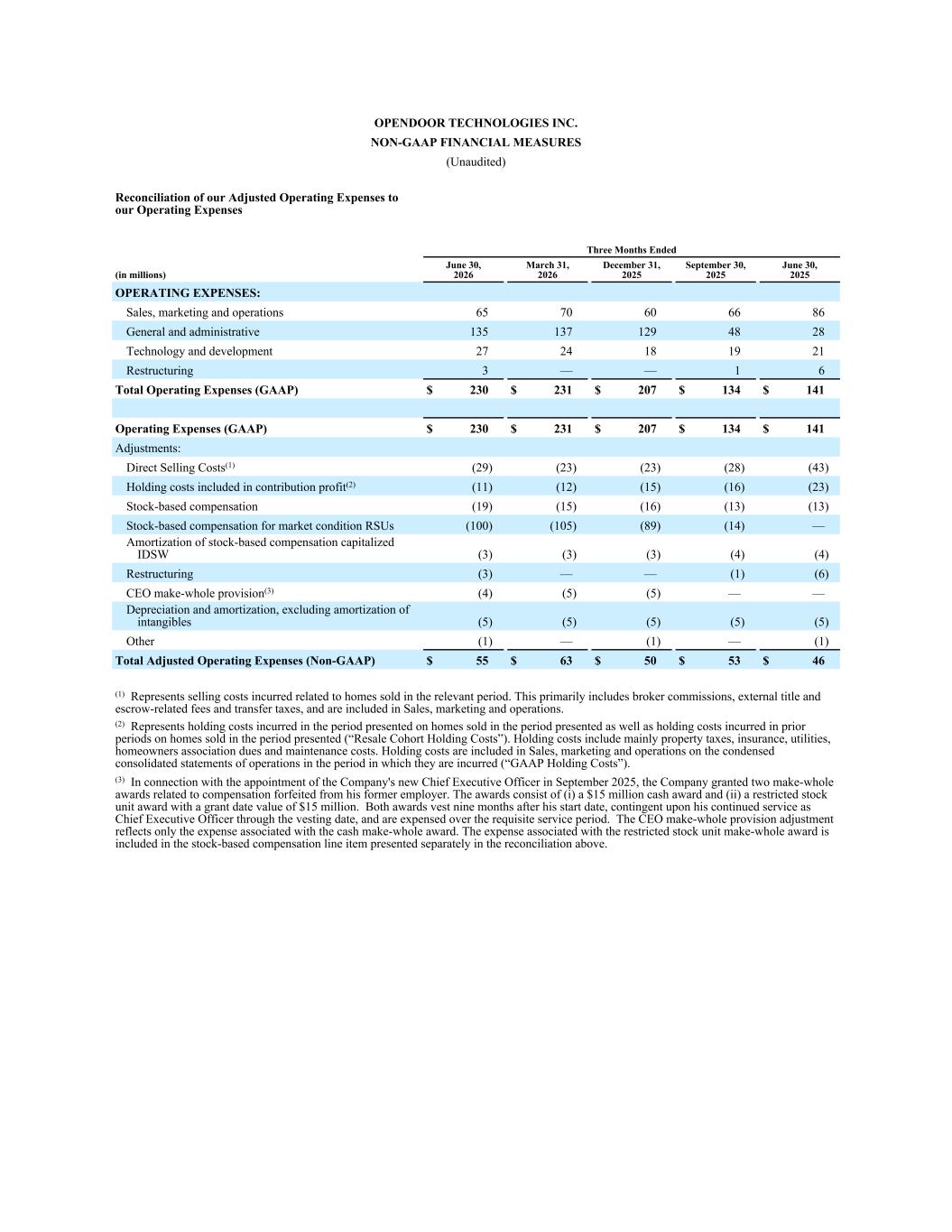
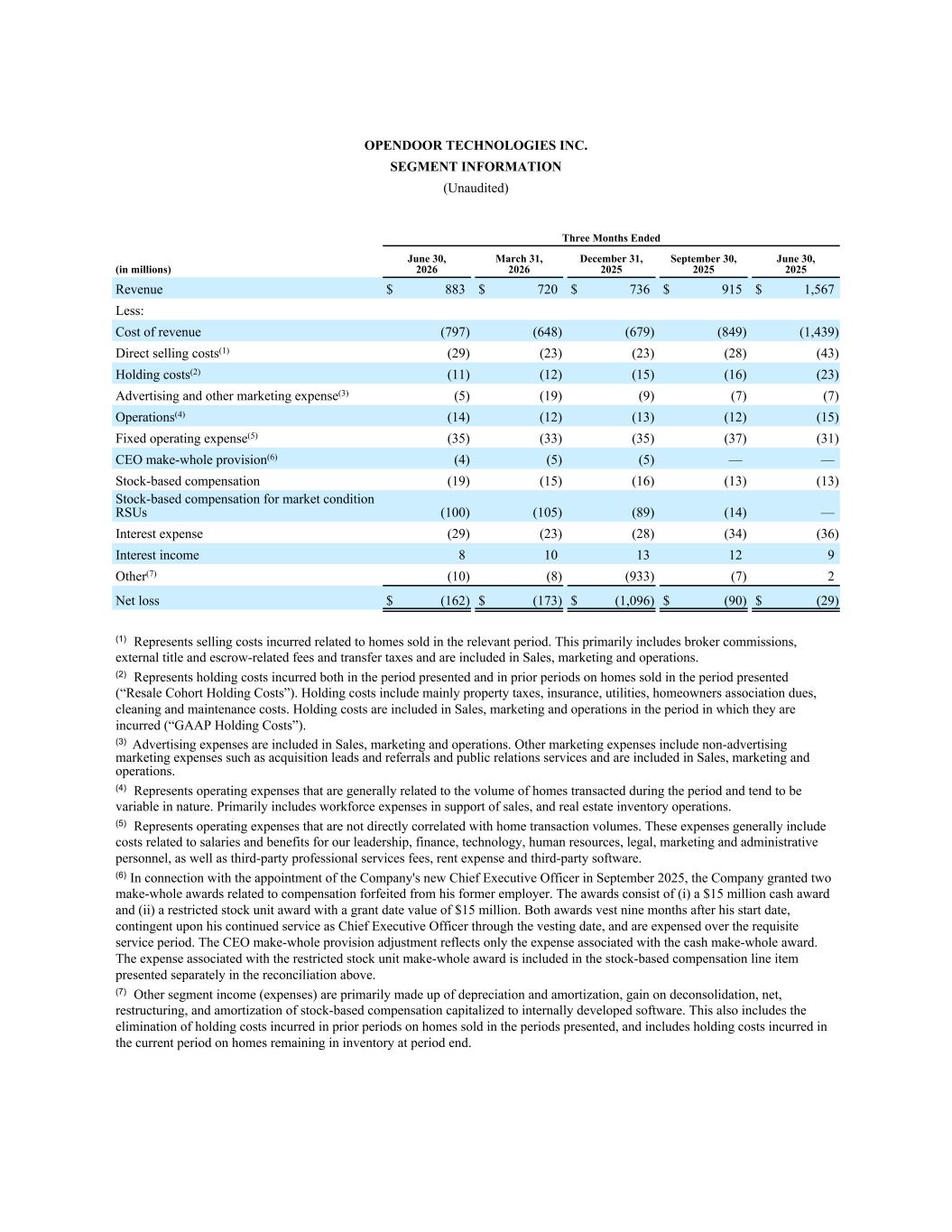
to Opendoor's second quarter 2026 financial open house earnings live stream. I'm Michael Judd, Opendoor's Head of Investor Relations. Now, a few housekeeping items before we get started. Like all things Opendoor, we're going to do this faster. Details of our results and additional management commentary are available in our earnings release, which can be found at investor.opendoor.com. The following discussion contains forward-looking statements within the meaning of the federal securities laws. All statements other than statements of historical fact are statements that could be deemed forward-looking, including, but not limited to, statements regarding Opendoor's financial condition, anticipated financial performance, business strategy and plans, market opportunity and expansion, and management objectives for future operations. These statements are neither promises nor guarantees and undue reliance should not be placed on them. Such forward-looking statements involve risks and uncertainties that may cause actual results to differ materially from those discussed here. Additional information that could cause actual results to differ from forward-looking statements can be found in the risk factors section of NOOR's most recent annual report on Form 10-K for the year ended December 31, 2025, as updated by our periodic reports and other filings with the SEC. Any forward-looking statements made on this webcast, including responses to your questions, are based on management's reasonable current expectations and assumptions as of today, and OpenOr assumes no obligation to update or revise them, whether as a result of new information, future events, or otherwise, except as required by law. The following discussion contains references to certain non-GAAP financial measures. The company believes these non-GAAP financial measures are useful to investors as supplemental operational measurements to evaluate the company's financial performance. For reconciliation of each of these non-GAAP financial measures to the most directly comparable GAAP metric, Please see our website at investor.openoorda.com. And with that, let's get into the open house with Kaz and Christy.
Speaker 4
Good afternoon, everyone. I usually start these calls by showing you a clip of what I told you during the last call. But this time, I'm going to tell you a story about what my wife told me. And I don't have a video clip because it'd be weird if my wife and I just recorded each other all the time. So you're just going to have to use your imagination. uh when i was leaving home to fly to san francisco before my first day at open door i told my wife that i'd be back home the following wednesday maybe thursday and she didn't miss a beat she said don't come back until there's a plan to break even look there's a lot of ways people describe the thing i'm about to tell you it just depends on which tribe they're a part of right paul graham has a famous essay about it finance people call it a glide path to profitability mostly because i think finance people are legally required to say things like glide path but basically the question is this if nothing changes and you keep doing what you're doing what happens let's see there's no magic here it's just math this next section it's going to take me a few minutes but it's incredibly important i want to give you all the same framework we use internally so you can see things the way we're seeing them right now. Opendoor's core business math is simple. It's how many homes we transact on times our contribution margin minus our opex and our financing costs. So let's go through each of these four numbers. First, volume. Right now we're signing more than 500 contracts every single week. last week we signed around 700 that's our highest contract week in years that's over 5x higher year over year and 5x higher since i joined the company and just think about when we're doing this we're doing this in the weakest housing market in a generation and in the worst season of the year for us the spring and summer seasons are basically the only times of the year where the traditional real state system still kind of actually works right but over 500 sellers are still saying yes to opendoor every single week if you've been following along on accountable.opendoor.com you've seen this right when we put up our ranges last quarter those numbers weren't sandbags those were numbers we thought we'd see to put us on the path we'd need to be at the end of this year the fact that we have been above the high end of the projections every single week for the last quarter is a reason that i'm so confident about what i'm about to say look our ani break even frameworks assumes 6 000 quarterly transactions at 375 000 each for around 9 billion dollars in revenue we're pacing well above that on a contract basis in q2 and look some of these won't close that's normal that hasn't changed that isn't the point the point is we've achieved this in a market and at the time of the year that is the worst for us i think it's super reasonable to expect that we're going to end up north of the 9 billion mark in revenue now it's important to take a second and describe a pattern that we're seeing as we ramp up for this revenue. Look, companies have kind of two ways to artificially increase growth in absence of actual improvement in the company, right? Those two levers are marketing and pricing. I'm going to get to marketing in a second, but I want to start by talking about pricing. If you've followed Opendoor for a while, when you see high acquisition volumes, you should be skeptical. You should be asking are we buying growth through more risk and lower spreads or using regular language of everyday people use are we paying more than fair prices for homes um open door did this during the covet era right to get volume it took lots of risks because it believed that price was the only lever it had at its discretion to increase conversion and if it couldn't reduce its overall cost structure it would lose money what I'm about to show you is probably the slide that has made me most excited about what we've gotten done so far this year this shows our true seller conversion at different spread levels so true sellers are the people who request an offer from open door and then either sell to open door or list on the open market so it's a conversion on people who actually want to sell their home what this chart shows is that we are converting dramatically more sellers at the same spread levels than we've had in the past we're on track to hit more than the volume we need and we're not doing it by paying above fair prices for homes. That should mean something for our contribution margin. So let's talk about that, right? Our contribution margins have been improving every single quarter this year and are now in the target range that we told you we would be in. There are about 100 or so homes left from the Open Door 1.0 era that are going to be a drag on our contribution margin, but they're going to be sold mostly this quarter and we're going to be done with them and i'm never going to talk about them again but on the new cohorts our margin is performing and cohort curves are doing what we want them to do now look it's for sure true that q3 is a seasonally worse contribution margin quarter for us than q2 so you should expect quarter over contribution margin to go down from q2 to q3 this year we also have the impact of the doma acquisition which is a temporary drag on contribution margin while we integrate doma into opendoor but we expect to break with opendoor's historical trend and have a q4 that is higher in contribution margin than q3 every year in open doors public company history q4 has had a worse margin than q3 and we're about to reverse that trend but going back to main point in q2 we got to contribution margin zone we told you would aim for and we have proven that we can run the company here okay so acquisition volume is tracking to where we want it to be and margin is within the range we told you would have to be in that leaves opex and financing let's talk about opex so open doors opex includes marketing variable operations which we call just operations in our financials and fixed operations so most of our costs happen when we buy and renovate homes so it's useful to look at these costs in relation to our acquisition numbers since that is the variable that scales them right so we have this idea called acquisition gmv which is roughly the revenue we expect to get from homes we've closed on our homes have been selling right around the 375 000 mark so let's use that assumption so i don't have to leak our internal model to the world it'll also make the math easier so acquisition gmv is acquisition times 375 000 with that in mind let's talk about the three parts of our apex first marketing marketing is our cost of customer acquisition per home we buy we do basically no marketing when we sell homes and the last time we signed more than 6 000 contracts in a quarter our marketing spend was over 80 million dollars this quarter it was five not five oh just five um i know that sounds crazy But yes, Morgan actually wrote the book on this. And yes, this is one part of Open Door where I think we're executing 10 out of 10. It took us a minute, but we have found our groove. Our marketing as a percentage of our acquisition GMB has gone from 1.6% under Open Door One to 0.3%. Let's say we'll not be that good forever. Let's assume we'll get a little worse. let's assume we'll have 0.5 percent of acquisition gmv on marketing just remember that okay next let's talk about variable operations uh variable operations are mostly the costs we incur when we're buying and renovating our houses right this is the human and system cost of underwriting buying and renovating a home so variable ops had declined from 2.7 percent of acquisition gmv to 0.9 percent of acquisition GMV. If you look at acquisition contract GMV, this number is already at 50 basis points. But look, don't give us the benefit of this doubt. There'll be some contracts that will fall through, so let's mark this up. Let's say it'll be 70 basis points on acquisition GMV. Why has this number gone down so much? The answer is simple, and Roo would tell you, We are among the best users of AI in tech. We have fundamentally re-engineered our business around AI automation across underwriting and operations. Look, in Q3 last year, the people who managed general renovations of our homes, our HPMs, they carried three renovations per person per month. Right now, they're carrying around 10. By the end of this year, they will carry around 20. In Q3 last year, our pricing underwriting team could handle around 20 underwrites per person per day. They can now do over 50. They'll be able to handle around 100 by the end of the years. A couple years ago, more than 80% of homes that we bought required an open-door employee to visit them before we even made an offer. Today, that percentage is below 20 percent and it'll go down to below 10 percent by the end of this year so 70 basis points just remember that the last component is our fixed operations uh these are the people that build the machine that runs opendoor last year there were a lot of consultants in gna now it's a lot of engineers and they are scientists writing code one of the beautiful things about code is that scales really well spinning up a server is easier in hiring a new consulting firm and you can see this in our numbers in Q3 last year this number was over 8% of our acquisition GMV and over 6% of our acquisition contract right in Q2 this was 2.1% of acquisition GMV and 1.4% of acquisition contract gmv let's say it'll be somewhere between those two numbers let's pick i don't know 1.7 so 50 basis points on marketing 70 basis points on variable operations and 1.7 percent on fixed opx add all those up and it's 2.9 percent on our acquisition gmv which doesn't give us the benefit of our increased acquisitions that we're making right now if you take the dollars spent and compare them to our nine billion dollar run rate that's 2.4 percent that's less than the low end of three to four percent range i told you we would need to get to to become ani profitable okay the last component here is interest look we finance the homes we buy so this scales with how many homes we buy and how long we own them at the speed that we turn inventory right now that's about three times a year. So net interest runs a little above 2% on our revenue. We're working on lots of things that will lower this, and I think there's a lot of upside here. But don't give us the benefit of doubt. Let's assume they just stay where they are. So what would happen if we just froze the company? Like if we pretend that we don't improve anything, no new products, no funnel improvements no pricing model updates no rate cuts no macro rescue no one has to be a hero we just keep doing exactly what we did last week in fact the math i just showed you assumes that we would get worse at marketing and operations which we for sure won't but what happens if that happens current volumes current margins worst cost structures current financing costs run those number forward, and this is the backroom app in math, right? At roughly 6,000 transactions per quarter, Opendoor reaches adjusted net income profitability on a run rate basis heading into next year. No new assumptions, just today's company carried forward. Look, I told you this on our very first call. I've said it on every call since then. Adjusted net income break-even on a 12-month-go-forward basis by the end of 2026. When I said this, there were more than a few things that needed to go right. But we moved fast, we shipped, we took charge of our own company every single week, and every quarter, the math became more and more obvious. Yang, our chief investment officer, he runs our pricing and meme teams at Opendoor. He has a simple way of putting these things. He likes it so much that he actually bought a t-shirt at a nerd convention and wears it to the office. The t-shirt says, it's just math. For years, one question has followed this company everywhere it went. Will Opendoor become profitable? As of today, that question is boring. As things stand right now, Opendoor will become A&I profitable. It's just math. sweetheart after this call i am coming home so the last few minutes have sounded like a confident ceo 10 months into a turnaround holding a napkin that says everything is working but let me tell you what's not a napkin here's the uncomfortable truth nothing about this has been easy turnarounds are really really hard and there's obviously a bit of a survivor bias here right everyone knows about the ones that worked in retrospect but why will this one work we're 10 months now into this process and I'm really proud of what we've done if we freeze the company I just told you we would become A&I profitable even if the macro keeps punching us in the face look we're going to become A&I profitable on the path to fulfilling our mission and becoming a meaningful company for this country. But there's something else that I need to tell you, right? The math works and we're going to become A&I profitable. We can very clearly see that right now. But what that does not mean that everything between here and there will be just perfectly smooth. Turnarounds are hard and they surprise you sometimes. Sometimes these surprises are good and I want to talk about two of them. First is seasonality. Opendoor's business has had a real seasonality to it. We've traditionally been a company that has had feast in Q2 and famine the rest of the year. In fact, every year since we've been public, other than 2023, our margin degradation between Q2 and Q3 has averaged almost 500 basis points look this year we haven't killed off seasonality entirely so it won't be zero but it'll be way way way less folks won't appreciate why this is a big deal and they won't appreciate it for a while but I think of everything we have done this quarter this compression may be the most important thing for the long-term health of the company that's the first thing the second one is the embedded impact of things that have already happened but don't look like they have when a seller signs a contract with us that home becomes revenue a few months later right we buy we fix we renovate we list we sell and we can't really skip a step in between right it just takes time. This means I always live a few months in the future, right? Every week, contracts turn into homes, which turn to listings, which turn to closings. What I see today in our acquisition contracts turns into gap revenue a few months from now based on our conversion rates. It's why we put our weekly contracts on accountable.opendoor.com so you can see what we see in real time a few months suitor c.s lewis has a famous metaphor about watching a horse grow wings as a father of daughters and a bit of an expert on this topic this is technically a pegasus not a unicorn the horse in transition for the first little while would look a little odd right this is a horse that was running fast and it's gonna run a little awkwardly right now because he's growing these bumps on his backs that are going to become wings but aren't quite yet. He doesn't take off until the wings grow. Silicon Valley has spent the last 20 years chasing unicorns and we're coining a new category, the Pegasus. Not a company that was magical from the beginning but a company that had to grow its wings in public. This is what transformations look like midstream. The changes are real before the financial statements catch up that awkwardness is part of process open doors really starting to feel that way to me awkward awkward awkward flight we still have some awkward growing pains but the wings are growing and it really really feels like this thing is taking off speaking of things uh that still look a little awkward but are starting to grow wings let's talk about mortgages look when you buy a home you're actually buying two separate things the house and the money two different work streams two different sets of people two timelines that need to kind of automatically merge and a hundred different ways that can kill the deal we're collapsing these two things into one integrated transaction but why does this matter it matters because friction. Friction destroys the process and getting rid of it expands our margin, reduces risk, and builds a real flywheel between our buying engine and our selling engine. The best place to sell a home becomes the best place to buy one. At our core, our job is simple. Remove friction from home ownership process. And there are two kinds of friction in residential real estate there's a friction that holds people in place right sellers are stuck they're stuck because of price uncertainty repair headaches and all the traditional pain that goes along with the timeline of selling a home we've solved that first with our offer product our core offer product gives you near instant certainty but unsticking the sellers is only half the trade once the buyer enters the friction there's a whole new type of friction this is like the rate shock that acts as drag that's already in motion right a seven percent mortgage rate slows the deal down or it kills it entirely that's exactly the friction that our mortgage product eliminates look our core product allows sellers to move on our mortgage products allows buyers to move in and this isn't theoretical look at the early numbers in colorado our first launch market more than half of our scheduled closes are going to be financed through open door home loans in texas just six weeks after launch we're already at nearly one in five and that's before rolling out fha va or adjustable rate products look to be clear each state we launch will have its own dynamics right like texas shows where a market can be in just six weeks and colorado is where a market can be with some seasoning neither of these are ceilings right and these numbers are going to bounce around as we scale and that's normal what matters is the direction and the underlying physics there's something big that i think people are missing here the frame of this has always kind been wrong right this is not an adjacent service this is not an attached play if you're evaluating the mortgage as an extra fee on the side sure it adds margin but you're missing the bigger picture mortgage is the other half of the coin our market maker needs both sides to clear right our offers create sellers our mortgages create buyers and you can look ask a fair question right we tried mortgages before and it didn't work why will this time be different i like this question that i just asked because it gives me a chance to be nerdy um you see i love studying the history of companies and i want to tell you a story that i tell our product managers i call it good seers and bad seers for years i've carried this metal card in my wallet like actually my wallet i love history of money i wrote a book about this so it's less odd for me to carry an old unusable charge card than almost anyone else but this is the sears revolving charge card this one was issued in 1951 to help fund customers buy stuff from sears sears eventually allowed other merchants to accept this card and that business inside sears went to become one of the most successful financial services products ever launched and eventually it became worth more than all of sears itself that business was eventually spun out and we now call it discover that was good sears financial infrastructure born inside a transaction a few decades later sears bought dean witter it's a brokerage firm and they put it inside their department stores so that a mother of three who came in for a new fridge could also leave with a mutual fund. The idea was just absurd. It was two products sharing a roof but not a purpose. Sears had no competitive advantage, nothing that would make this product special. A bunch of Narber Crunchers tried to create ROI through a patch. The whole thing failed. That was bad, Sears. Look, the main question is this. there is a difference between bolting something on and building something in during my time at Shopify we built Shopify Capital the good Sears way it didn't work because we cross sold merchants it worked because the platform already saw every merchant in real time we didn't need a loan application we already had the underlying data right financial product wasn't bolted on it was worn inside the transaction open door 1.0 is mortgage and honestly every mortgage product on the market is bad seers you buy a house and then someone awkwardly tries to sell you a loan it just adds friction and it fails because it deserves to fail these products that fail aren't about the customer they're about companies wanting margin the product we're building today it sits inside the process from day one built in not bolted on that changes both the customer experience and our economics and here's why people think mortgages are special they're really really not right the legacy mortgage industry carries 65 to 85 basis points of yield in every single loan just to feed the pork-barrel buffet of people taking margin. Their legacy mortgage industry pays thousands of dollars to acquire each buyer. And this chain exists only because it has always existed. Look, we didn't ask how we could make money on mortgage. We asked the following question. If our goal was to offer the lowest rate possible, what would be built? so we built our own point of sale and our own loan origination system and we offer only the most common loans no bells no whistles you can have any flavor of ice cream you want so long as it's vanilla if you want a fancy mortgage with lots of features please use a bank do not use open door home loans but if you want a regular mortgage or regular home we are going to be your best bet we have automated so much the process that our loan officers can handle 50 mortgages a month against about 10 in the industry oh and we've spent zero dollars on marketing we took all the money we saved and passed them to home buyers we're not new at this right home builders have figured this out decades ago a great mortgage is a more powerful force than a price cut and we have figured out the same thing but because we turn inventory a few times a year the math is even better for us for a market maker a lower mortgage rate is the thing that speeds everything else up it removes friction and means we get more turns a year it frees up capital so we can buy the next house and the next and the next we haven't invented new math here we have just bent it in a way that a standalone lender structurally can't. Look, I've spent most of my career building financial services products. I've seen this work. Shopping installments from not existing to being the largest installment product on the internet in a year. Standalone lenders are constantly fighting gravity on customer acquisition. For us, the mortgage is just a second wing. Once both wings are locked in place the physics switch from drag to lift and mortgage wasn't the only product that had lots of launches we also deprecated five bespoke tools and multiple microservices and unified them all into open doors internal god view ops hub a single piece of software that's our command and control center gives us end-to-end view of every home we opened open door up to agents we launched opendoor 2.0 for agents with a new structure that puts our offers directly inside the tools agents already use tools like real scout sold.com and movodo and our new partner api launched which means integrations into opendoor now take days not months we rebuild opendoor ios app right from the ground up we held it to one bar excellence against apps people use every day not good enough for a real estate app we launched a unified dashboard that serves as a user's home within opendoor whether you're selling to us buying from us or both there's now one place for your entire relationship with opendoor we put machine learning to work on underwriting our auto underwriter now handles roughly one in five valuations and we're testing models that value entire segments of homes with almost no manual review at all we turned chloe our ai assistant into a real part of our sales teams she converts three times what she did in january at a third of a cost she works 168 hours a week takes no vacations or bathroom breaks and is completely transparent about being a bot but people love using her because she is good We became faster under the hood. Seller dashboards now load three times faster. Contract changes went from four hours to 10 minutes, and we retired legacy systems that had been slowing us down for a better part of a decade. We launched a new set of alerts for our buyers, including nearby listing matches, price drop notifications, and recommended homes. And that's just a small sample of what we've shipped in the past quarters look in my first call i told you we would drive open door to ani profitability i said drive because we didn't know exactly how we would do it and we didn't really have any proof points today we do we've shown that if you ship great products every week and if you keep tilting the world toward homeowners the score just kind of takes share of itself. With that, I'll hand over to Christy to tell you about numbers. Christy.
Speaker 0
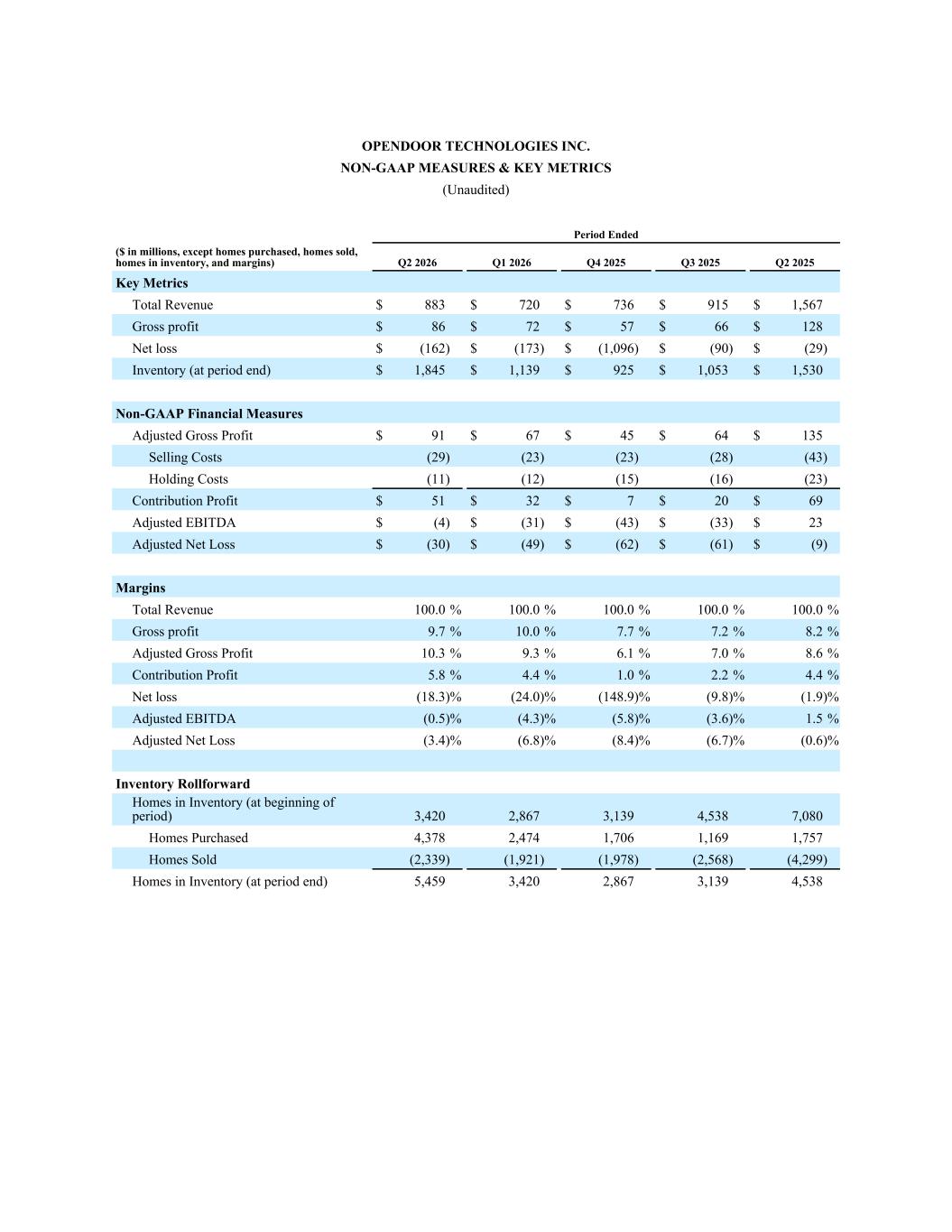
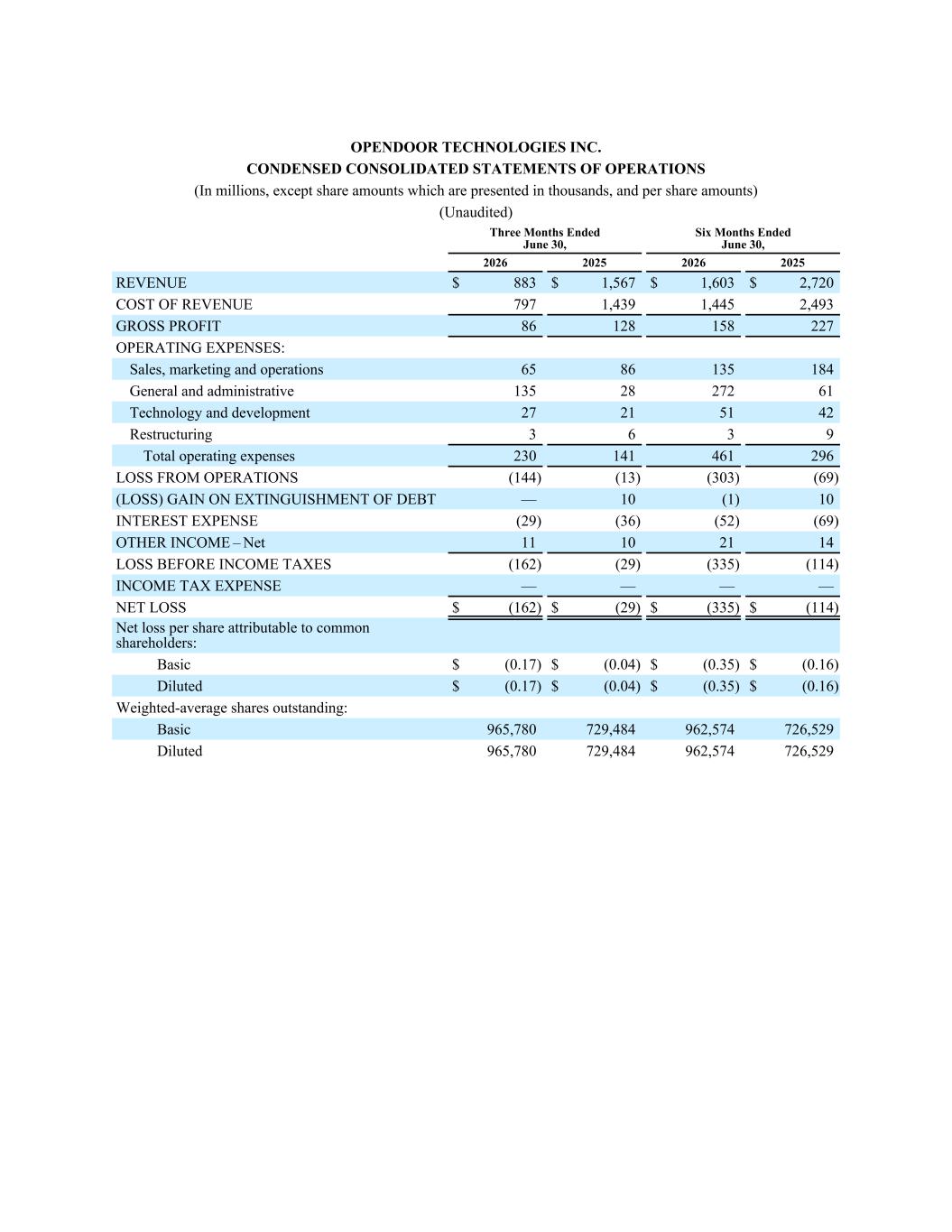
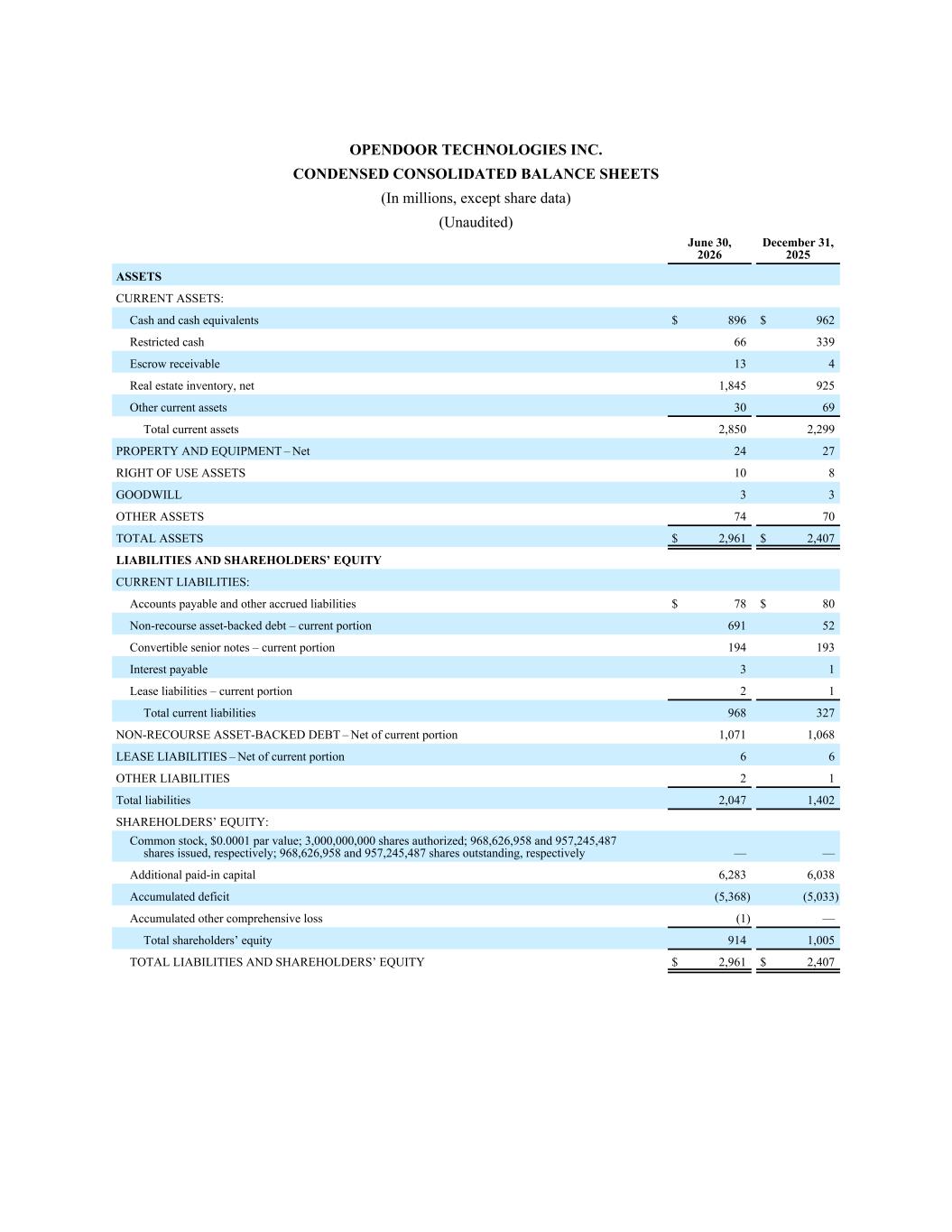
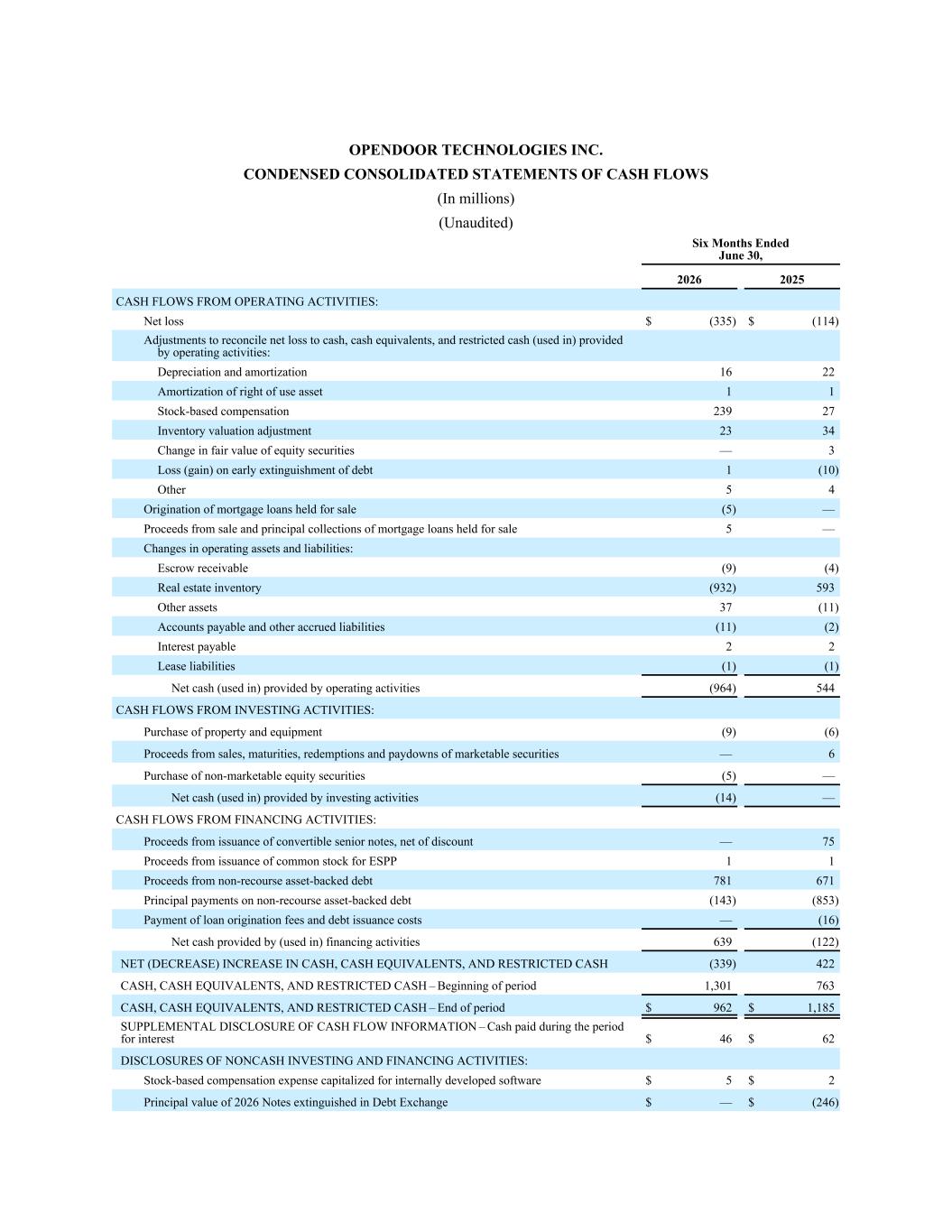
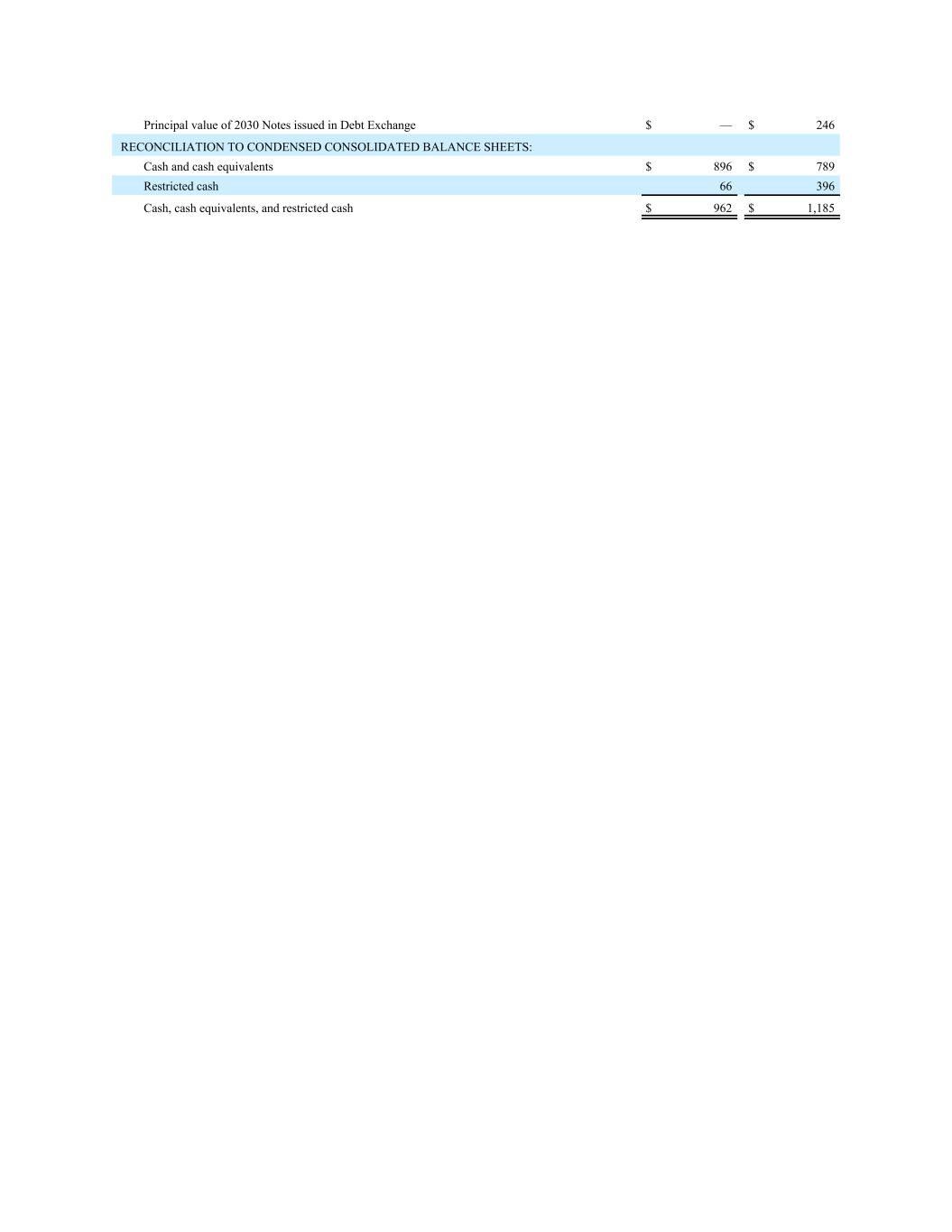
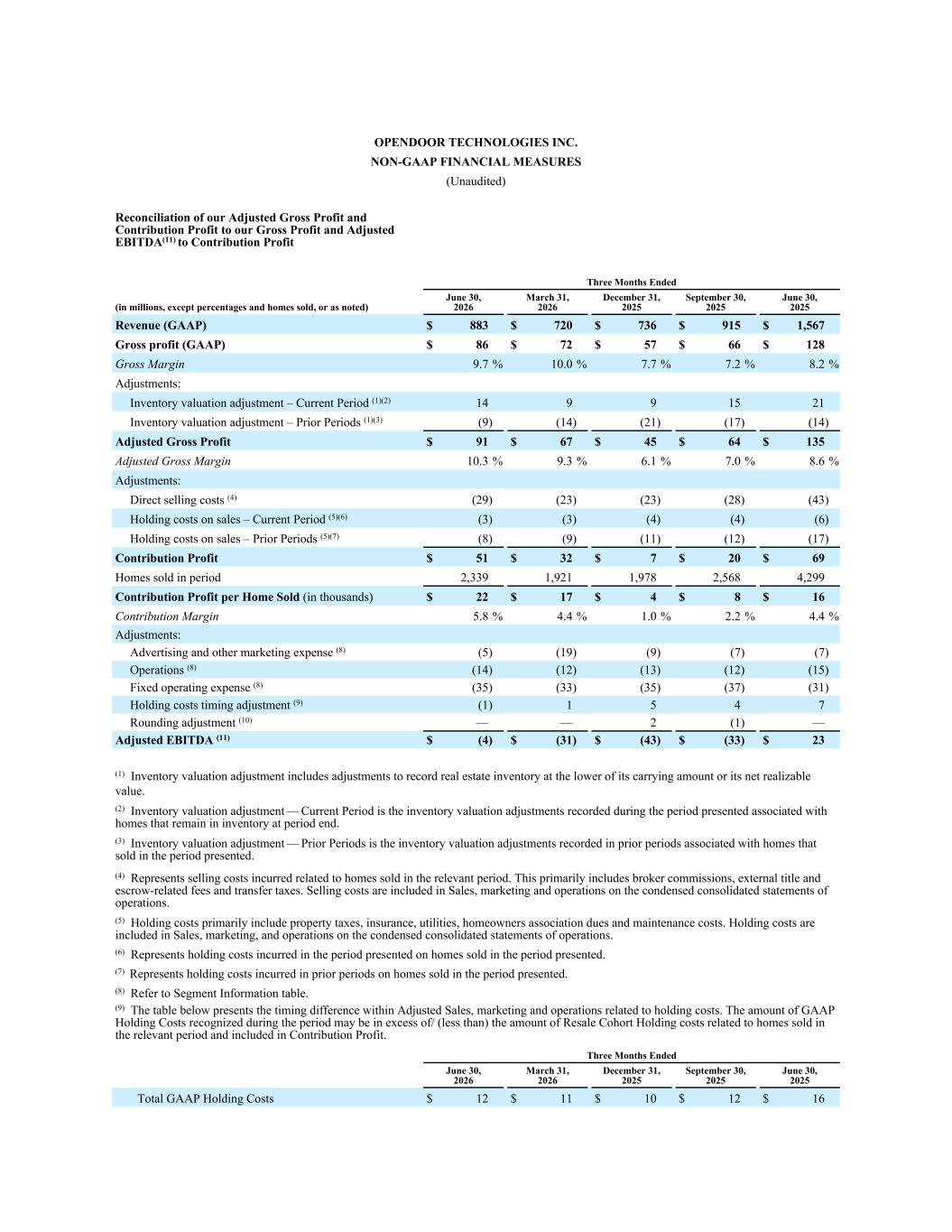
Thank you, Kaz. Three things to know about Q2 before we get into the details. We grew homes acquired by 77% quarter over quarter and 149% year over year. We also closed the quarter with another 2,310 homes under contract. A year ago, that number was 393. Contribution profit was $51 million, up 59% quarter over quarter, and 22% more homes sold. Contribution margin was the highest we've reported in two years. A year ago, we purchased 1,757 homes and spent $15 million on operations expense. This quarter, we purchased 4,378 homes and spent $14 million, two and a half times the volume on less variable cost. Volume, margin, operating leverage. These are the three management objectives on our path to profitability. The table in our earnings release shows where each one stands. Let's walk through them now. First, scale acquisitions. We purchased 4,378 homes in the quarter and saw revenue growth of 23% quarter over quarter to $883 million. Acquisition contracts reached 6,908, up from 5,136 in Q1. marketing spend moved in the opposite direction from 19 million to five million quarter over quarter second improve unit economics and resale velocity contribution margin has climbed from a low of 1% three years ago to 5.8 percent in Q2 landing in the middle of our 5 to 7 percent range we guided to aged inventory which we define as homes listed for greater than 120 days has fallen from 51 percent over that same span to nine percent now third build operating leverage trailing 12-month operations expense was 1.6 percent of revenue up from 1.3 percent in q1 that said operations expense actually declined from 52 million to 51 million the increase in the ratio reflects last year's higher revenue quarters rolling out of the trailing window not any change in our cost discipline on a per acquisition basis operations expense was three thousand dollars this quarter down from five thousand in q1 and eighty four hundred a year ago fixed operating expenses were thirty five million up two million from q1 funding our investments in ai and engineering turning to the balance sheet we ended the quarter with 896 million in cash and cash equivalents We deliberately put capital to work, rebuilding a larger, higher-quality book, growing our inventory by more than $700 million during the second quarter, funded largely by our non-recourse asset-backed facilities. We held 5,459 homes in inventory at quarter end, with another 2,310 homes already under contract to purchase. One point on capital. As our cash now, more later product scales, it provides a more efficient way to grow. It commits less capital per home than our core product, giving us a way to add acquisitions without growing our balance sheet at the same pace. Now the guidepost for Q3. Acquisitions. You can continue to track our contracts on accountable.opendoor.com. Revenue. We expect revenue to increase at least 20% year over year. Contribution profit. it. We expect contribution profit dollars to more than double year-over-year, and contribution margin to be around 4 to 4.5 percent, reflecting typical seasonal trends. Contribution margin has fallen from Q2 to Q3 in every year we have been public, by an average of 470 basis points, excluding 2023, when 2QCM was negative. We expect a decline well below that average, and the best Q2 to Q3 relative performance we have delivered outside of 2023. Adjusted EBITDA. We expect to be adjusted EBITDA profitable on a 12-month go-forward basis as of the second quarter of 2026. In Q3, we expect a modest increase in adjusted operating expense driven mostly by the holding costs that come with growing our inventory and a small increase in marketing. Our commitment has not changed. we expect to be adjusted net income positive by the end of this year, measured on a 12-month go-forward basis. A quarter ago, we told you exactly what this quarter would look like, and despite a real estate market that remains challenged, we did what we said we would do. With that, Michael, I'll turn it over to you for questions.
Thanks, Christy. Our first question comes to us via video submission from Lorraine Wang.
Hi, everyone. My name is Lorraine Wang, a long-term Open Door shareholder. Thank you for taking my question. When long-term shareholders look back two years from now, what would be the one or two changes inside the business you hope they will point to and say, that's when Open Door truly became a different company. Thank you.
Speaker 4
Lorraine, thanks, Brian. Look, thanks for being a long-term shareholder people like you are the reason this company survived so that we could get a chance to turn around i generally think of our everyday shareholders as my boss so i'm going to give you a same answer i would give if you were my boss i won't give you a number because it won't be a number or a feature launch it just won't uh it'll be this we stopped being a real estate company with a website and became a product company that happens to be in real estate let me tell you what i mean look for most of this company's uh life it seems like every decision we made got filtered through a spreadsheet mortgage rates hpa spreads conversion uh unieconomics and look i look at these things every single day they are very real But that's the business. It's not the company. The company is actually the product and the customers. When you run a company like a financial portfolio, every individual trade, like it makes sense on paper, but the end-to-end user experience, it just becomes completely broken. You end up with something that is barely functional, but a pain to use. You end up with a bank. Like, look, you don't build for a future that doesn't yet exist in spreadsheets. So the shift is this. Our primary goal, the reason we come to work every day, is to build something people want. Our unit economics are downstream from that, right? When people use our products, when we eliminate friction, when we help our users, conversion goes up, margin goes up, and everything follows. Our product is better today, but it's still not where it should be, right? This is the largest transaction of most folks' life. And for most of them, it's also the worst. There's like no reason why both of those facts have to be true. Two years from now, I hope to point back to this. We decided to build an excellent product. We took the parts of the product that were bad every single day and we fixed them. And then you'll wake up one day and you'll see that all the work we have done to fix our infrastructure, to build a better product, to build a mortgage system that is just awesome, will merge together and it'll make the process of buying and selling a home as easy as using ShopPay. But it will all, all of it will have started on this. We build products, not spreadsheets.
Our next question comes to us from SayQ&A. Matthew S. asks, are we still on track for profitability by the end of this year?
Speaker 4
Yes, yes, yes, yes. Look, every single quarter, we've done what we said we would do. We have come here, we've said what we're going to do, and then we've done it. We're going to become A&I profitable on a 12-month go-forward basis at the end of this year. I told you we were going to do it on our first earning calls. I sat here and I said we're going to become A&I profitable on a 12-month go-forward basis at the end of this year. And we've now given you a math to back this up. The answer is yes. Was that clear?
Clear to me. Next question, Angelo E. asks, You have described letting buyers and sellers transact directly on Opendoor without Opendoor owning the home. When could this launch, and what revenue and contribution profit per transaction are achievable?
Speaker 4
Angelo, thanks for the question, man. Look, let me address the economics of this up front by saying I'm not going to talk about revenue or contribution profit on a product that we haven't launched yet. This is the same answer I gave to Lorraine. Great products don't start with a margin target. We build for the mission and we build for the user and economics follow, right? Our mission is to tilt the world in favor of homeowners. Today, Americans pay 10% to 12% transacting on the biggest asset they own, and the process sucks. That's the problem that we need to fix. And we'll get there in three steps, right? I come from the e-commerce world, so I like using that language. I say 1P, 2P, 3P. Step one, 1P. We buy the homes ourselves, and we sell them. this is our regular core cash offer product step two 2p this is cash down more later we still buy your home but it's a different way of owning it it's capital late for us with less risk with alignment with the seller right step three is 3p that's what you're describing buyers and sellers transacting directly with each other using all of our services and tools without using any of our balance sheet. Your home, your transaction, our platform. We're on step two right now and we're not going to move to step three until we are very good at step two. Though look, for what it's worth, I think people overestimate how hard step three is and underestimate how important step one and two are on the way to step three. Just look at Amazon. What did Amazon do? First, they sold their own stuff in their own warehouses 1p right then they sold the things that they sold but it shipped from other people's warehouses 2p then other people's stuff out of other people's warehouses 3p then amazon launched other people's stuff from amazon's warehouses using amazon pay 3p with attached services offered by amazon those last two steps like launched the fastest because when you were excellent at the first two the other two aren't that much work and I have some conviction here because I came from the place where the entire business was 3P you know letting people
transact without owning the stuff it works really really really well but only once you've done the work required to earn it great our next question comes to us from Felix B hey Kaz could you update on mortgage product and how many states are using Open Door Mortgage?
Speaker 4
Yeah, thanks Felix. I spoke about this a bit already and I want to be a little careful because our lawyers are going to give me notes after this. But look, the mortgage licensing process seems to have been designed by the same people who designed the DMV. It's not built for speed and it's infuriating slow on purpose it's state by state slog and we're working our way through it and we're doing it faster than i think anyone expected but generally faster than people thought we could do it but slower than i want so we expect to be licensed in around 35 to 40 states by the end of this year but honestly like we'll get there on this front it's like we know we will So the real question is, how are we doing in states where we are now live? And the answer is, we're doing just excellent. Buyers are getting amazing mortgage rates, very fast, very little pain, end to end. And if they want it, they don't have to talk to a single human being. Look, I shared the numbers earlier. It's over half of our scheduled closes in Colorado are going to be on open-door home loans, nearly one in five in Texas. That's only six weeks after launch. And this is a completely unoptimized product right now. We don't offer FHA, which we will. We don't offer VA, which we will. We don't offer ARM, which we will, right? But the reason this is working is simple. There's a structural unfairness in the American home buying process. There's a pork barrel buffet of margin that takes money out of the hand of home buyers. It's 65 to 85 basis points baked into every single loan. We built a mortgage product without any of these costs, and our job is to pass the saving When the default option is the cheapest and the easiest option, it just works. Now, look, in the spirit of being very fully transparent, if you're buying a $10 million pedi-peri in Manhattan, I would like you to use someone else. Do not use us. We will do just vanilla. But I'm very confident we're going to do vanilla better than anyone else. It's going to be just excellent.
Our next question comes from Angelo E. He's curious, what could keep Opendoor below 2% of U.S. home sales? Is it seller adoption, home eligibility, offer competitiveness, or buyer's willingness to transact through Opendoor? And what must change to exceed 6%?
Speaker 4
Man, that's, Angela, two good questions in one quarter. It's the same, Angela, I think, right? um okay uh what can keep us below two percent honestly like these are things i think about a lot like every morning i look at our share uh as a percentage of all us but a lot of it's what we can control so let's talk about two percent first okay take offer competitiveness um there's two things that matter on this right how accurately we priced a home and how good we are at our operations so in the past our offers were bad because we were bad at both of these things and and we just use spread to cover our asses. This year, we've gotten much better. Like we're faster and more accurate with much more property level dispersion. So the price of each individual home reflects the merit of the home and its portfolio risk to us, not some random market average. And as a result, our offers are just genuinely better and we're converting better at the same spreads as we have at any point in our history. So seller adoption isn't really the constraint. And the demand's always been there. It's just that our offers have sucked and we couldn't convert. We fixed that. Home eligibility is another thing we fixed. Our buy box basically covers the entire lower 48 now, well over 90%. So that's not the constraint. And buyer willingness is really just a function of us doing our job and not screwing up. So I don't see 2% as a natural ceiling, I really don't. And our current trajectory will cross it, and if we don't, it'll be because we screwed something up. But to get above 6%, I think two things need to happen. I don't think I've talked about this before. But transparently, it's obvious, 3P needs to be working. Cash offers are generally constrained by our risk appetite and our balance sheet, right? A marketplace isn't. The second thing that needs to happen is more of the transaction needs to happen inside Opendoor. Let me give you like a real example, like insurance. Like today our closings get delayed constantly because the buyer's insurance isn't ready and we can't fund a mortgage. So that's the step we don't control yet. But I'm relatively confident that the same logic that applied for us to mortgage will apply to insurance we're not going to capture a key we're just going to make the friction disappear and we'll be very very good our next question comes to us from dai lee from jp morgan do you have any early thoughts on 2027 yeah i mean i'm incredibly bullish uh on 2027. I don't want to give guidance for 2027 out, but we're spending a lot of time doing very, very difficult work, setting ourselves up so we can have an excellent 2027. I generally think we're going to surprise people by how much of the U.S. housing market will flow through Open Door next year. Look, it's very obvious we're building a car that's designed to go 200 miles an hour and right now we're kind of testing it at 30 miles an hour so we know it won't fall apart as it turns but this thing really really wants to go faster another question from di how is ai specifically changing your ability to scale acquisition volume and improve margins and what changes are you expecting now that a chief ai officer has joined the team do you want to take this i am happy to take this because i personally love the leverage that you get from ai and the environment we've created here at open door to encourage all of us to use it last week while i
Speaker 0
was in a meeting i had an agent running a contribution margin analysis and another agent checking a tax filing that a colleague had prepared so i literally was like in three places at once and i think that kind of applies and extrapolates to the whole organization if you walk around our offices it looks more like a tech lab than a real estate company right like you see people with terminal up, cursor up, cloud desktop up, doing all sorts of things. People running into meetings with their laptops half open because they don't want to accidentally disrupt AI from its work in progress. Kaz walked through a few examples of how we're actually seeing this leverage in play. You have home project managers that used to manage three renos at a time that are now managing 10, and by the end of the year, we expect that to be 20. We used to, 80% of our homes, you had to have someone in your house before you could actually receive an offer we have that down to 20% aiming to be at 10% by the end of the year our chief AI officer was a fantastic addition and his primary objective aligns with our third management objective which is to build operating leverage so that our costs don't scale linearly with acquisitions that means making sure our AI spend is efficient and productive performance and cost vary a lot depending on which model you use, so we route work to make sure the right model handles the right task, instead of everyone defaulting to the last model they used. He is focused on consolidating tooling, building with fewer vendors to focus our tech stack, and using scale to negotiate better terms with vendors.
And then education and strategy, working with our teams to come up with elegant solutions to really challenging and unique problems, and giving each team the tools and training they need to operate at the level of our best individual users and engineers thank you for the question day awesome the next question comes to us from andrew from citizens could you talk about your progress with adjacent monetization i want to know mortgage specifically but can you grade your progress on product attached broadly and where you see a positive trajectory for adjacent revenue and gross profit to improve overall unit economics for transactions right this is a great Great question.
Speaker 4
Okay, well, this isn't Harvard, so I won't grade inflate. I'll just tell you the grade. I would tell the PM, leading the stuff, in the performance review. Fair? Okay. On mortgage, I'd give us a solid B minus. Like, what we've built is insanely hard to imagine building, and we've done it in a hard environment just obscenely quickly, and the product is just Just excellent, but you don't get participation prizes. Like we've done all the right stuff to set ourselves up, but we're now gonna have to go out and win. Good early results, but we have work to do. On title and escrow, I'd give us like a B plus. Like we're almost certainly, like, I'm not very certain about this. We have the best title and escrow product in the US. Like it's not even close. no company no company could acquire as many homes as we do and have capacity left over and i think we can just like do an order of magnitude more transactions with our existing capacity but it's not an a yet because we aren't yet doing a majority of tylenesco transactions in the us so b plus on insurance i'd give us an incomplete like we basically dropped out after a semester so we could study for mortgage. We'll pick this up next year. So like, I think things are going better than anyone could reasonably have expected they would go to just generally going excellently.
The report card, we're coming up on time. So I think this will be the last one we'll have also from Android citizens from x slash Twitter. It feels like Kaz is doing a good job of recruiting and bringing in high level talent. Can you talk about the investment intensity and expectations that the investment community should have around the cost structure of Opendoor as a team appears to still be being built out?
Speaker 0
Thank you for the question, Andrew, and thank you for the kind words on our team. It is truly incredible, the talent that we've been able to bring in. And they say players attract a talent, like the talent just keeps compounding. These are people who are uniquely skilled in their craft, like Vu and Morgan. They're deeply passionate about our mission and the problems that we're solving here Here's how I'd frame the investment. I talked about in the prepared remarks that Fixed operating expenses increased from 33 to 35 million in the quarter And that is primarily driven from our investments in talent and engineering and AI But the way to think about it is that we're spending small controlled amounts now to build software that scales instead of spending large amounts later ramping up headcount to address capacity constraints. We're streamlining and consolidating our SaaS tools and putting that spend into engineers and AI. Less time and money spent stitching together someone else's software and more time spent building our own, which we can shape to solve the challenges that are unique to our business. For example, turning on thousands of utilities, turning them off and on every single month as we cycle through homes. There's a cost tailwind underneath all of this. The cost of AI capability itself keeps getting more efficient. What used to take a large model and real spend now runs cheaper and often faster. So the same investment deployed effectively can buy more each quarter. The return on our investment will come through in both fixed and variable OpEx as we scale. So the last time acquisition contracts were above 6,000 and a quarter, fixed OpEx was double what it is today. And as we highlighted on the call, acquisition costs, sorry, acquisition closes more than doubled year over year and we spent a million dollars less in variable operations. These achievements are a reflection of our technical investments. So the expectation I'd leave you with, fixed OPEX may keep growing modestly in dollar terms as we invest, but the discipline we're holding ourselves to is that fixed OPEX stays relatively constrained and variable costs grow slower than our volumes do.
Speaker 4
Hey, let me just go for it. Thanks folks for joining us for our financial open house. Our job here is simple. our job is to come here and tell you we did what we said we would do. We've now done that three-quarters in a row and we'll come back next time and tell you again we did what we said we would do on our way to tilting the world toward homeowners. With that, we'll see you next time. Cheers.