Operator
Greetings, and welcome to the Collegium Pharmaceutical Second Quarter 2026 Earnings Conference Call. At this time, all participants are in a listen-only mode. A question and answer session will follow the formal presentation. If anyone should require operator assistance during this conference call, please press star zero on your telephone keypad. Please note that this conference call is being recorded. I will now like to turn the call over to Ian Karp, Head of Investor Relations. Thank you. You may begin.
Great. Thanks so much, and welcome to Collegium Pharmaceuticals' second quarter 2026 earnings conference call. I'm joined today by Vikram Karnani, our president and chief executive officer, and Colleen Tupper, our chief financial officer. Before we begin today's call, we want to remind participants that none of the information presented today is intended to be promotional and that any forward-looking statements made today are made pursuant to the safe harbor provision of the Private Securities Litigation Reform Act of 1995. We are cautioned that such forward-looking statements involve risks and uncertainties as detailed in the company's periodic reports filed with the Securities and Exchange Commission. Our future results may differ materially from our current expectations discussed today. Our earnings press release and this call will include discussion of certain non-GAAP information. You can find our earnings press release, including relevant non-GAAP reconciliations on our corporate website. And with that, I'll now turn the call over to our president and CEO, Vikram Karnani.
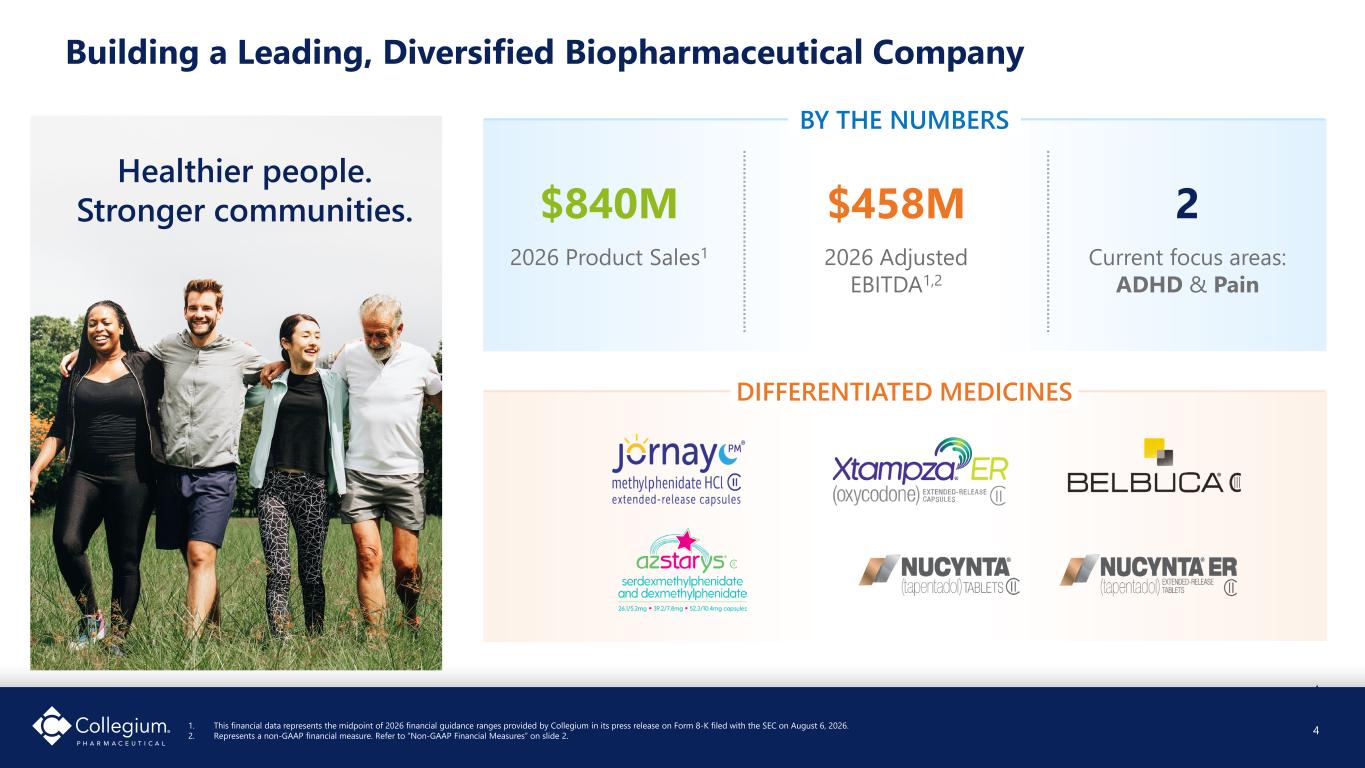
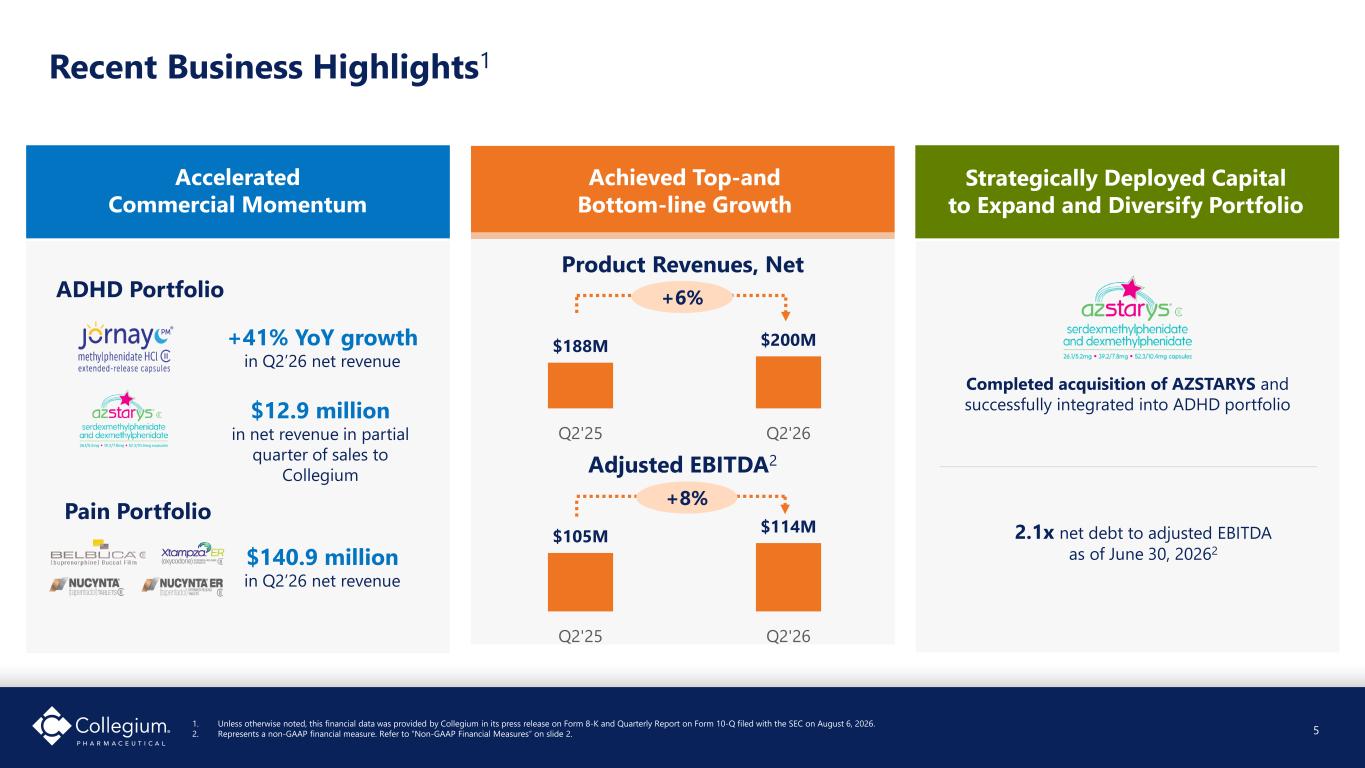
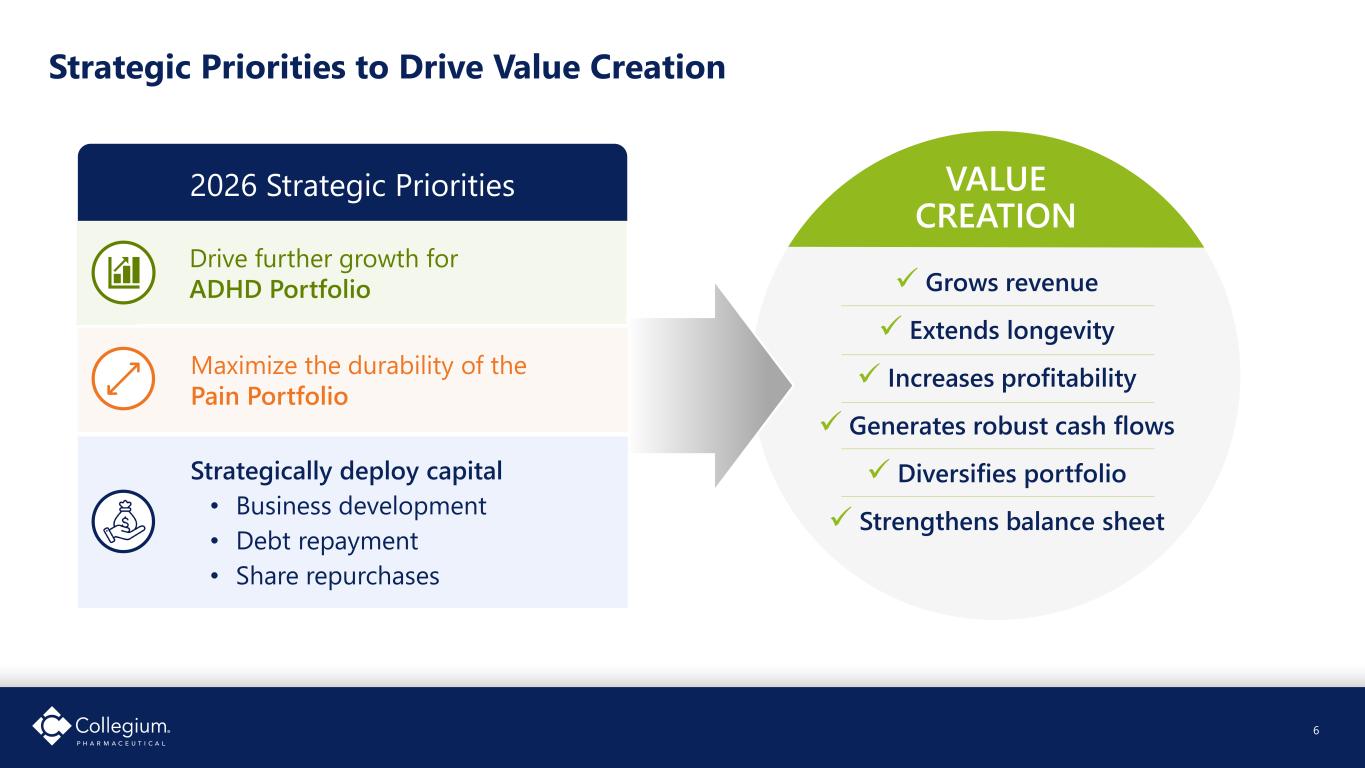
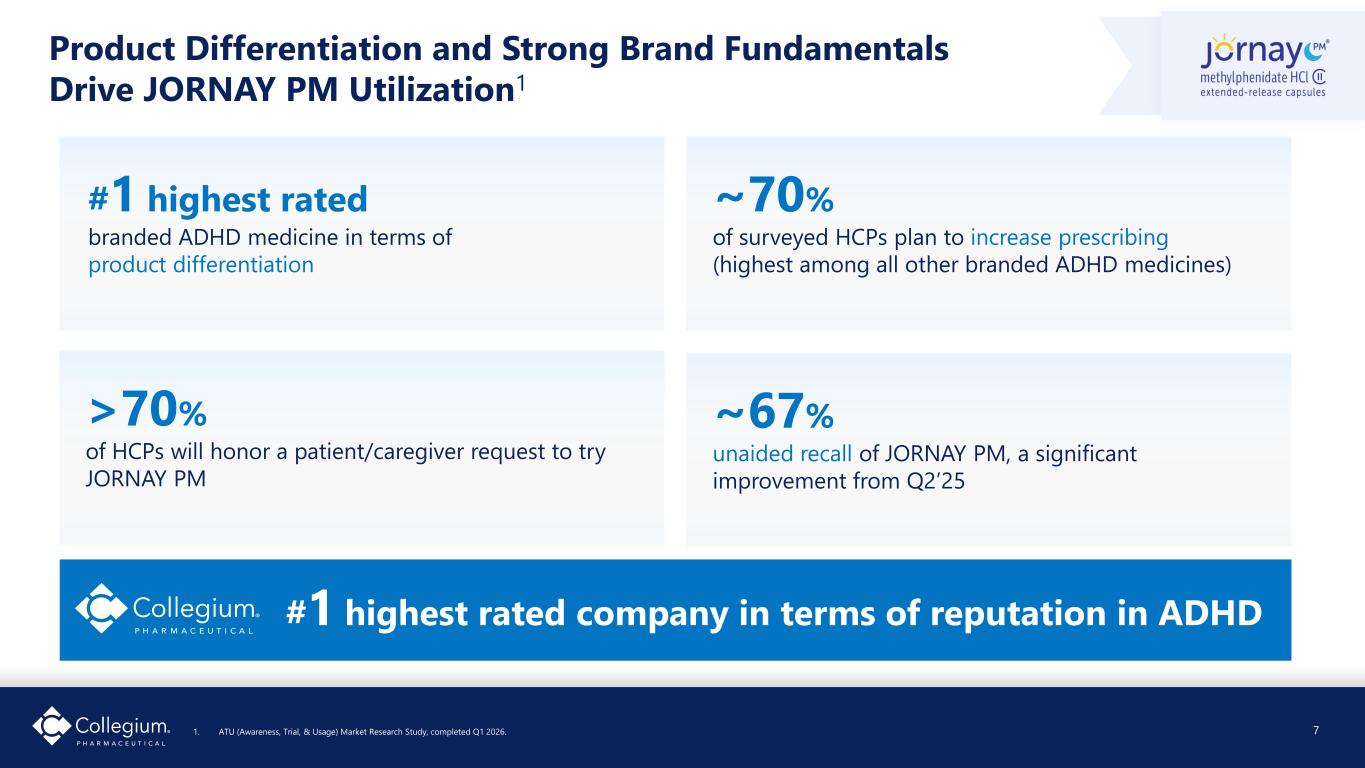
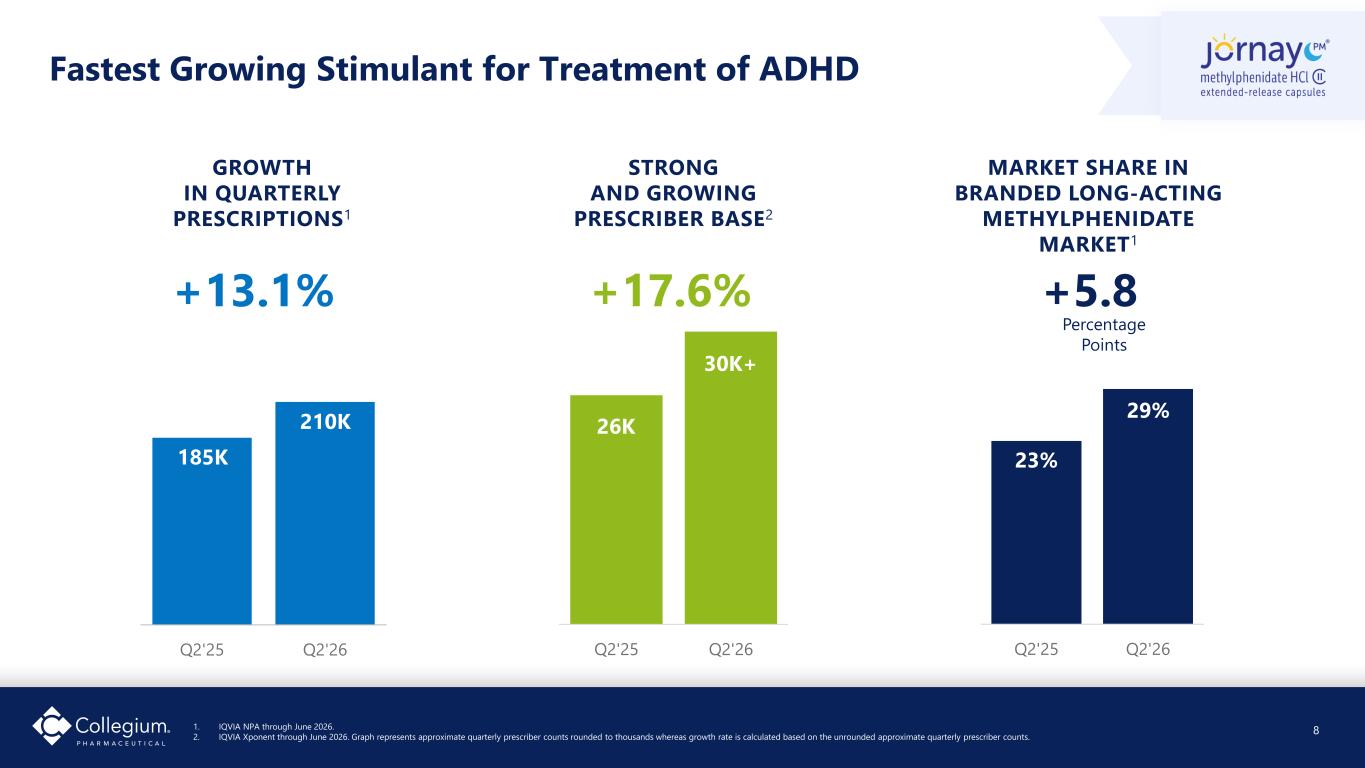
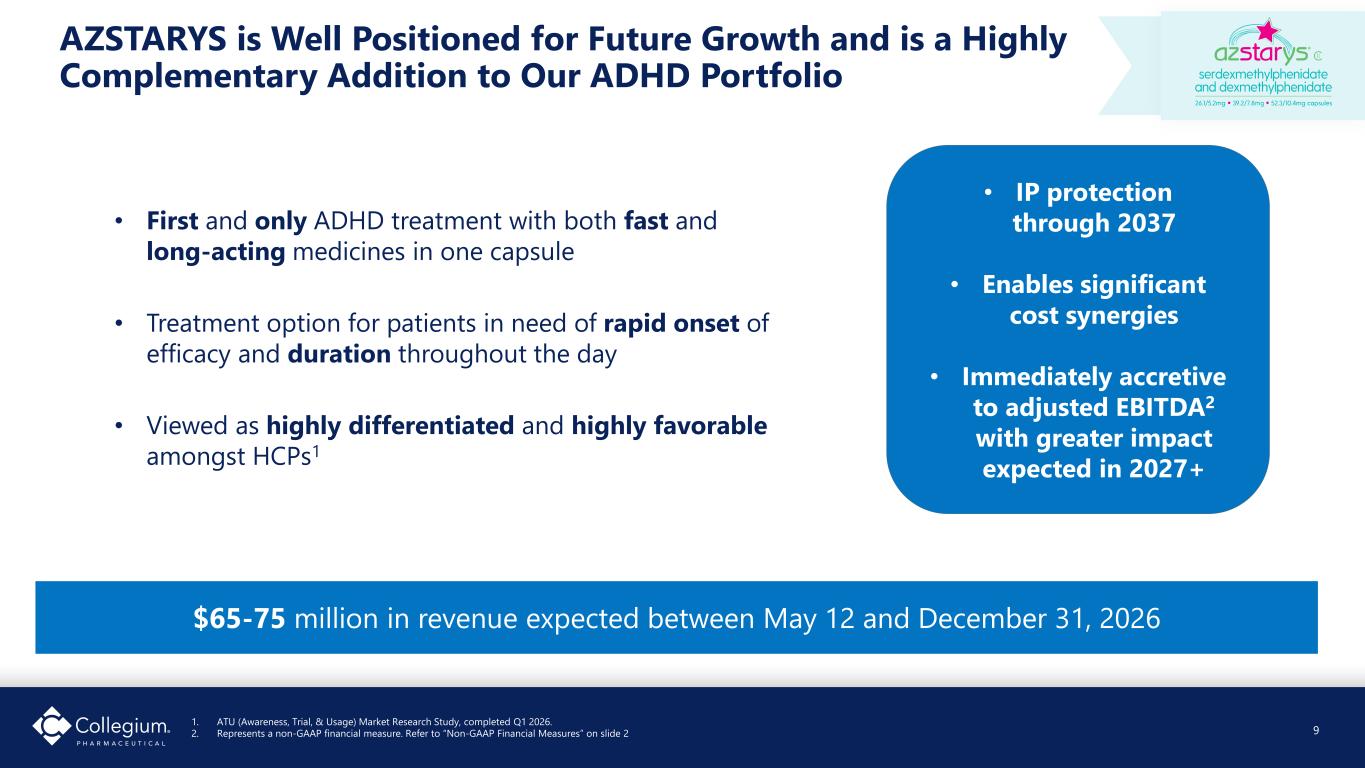
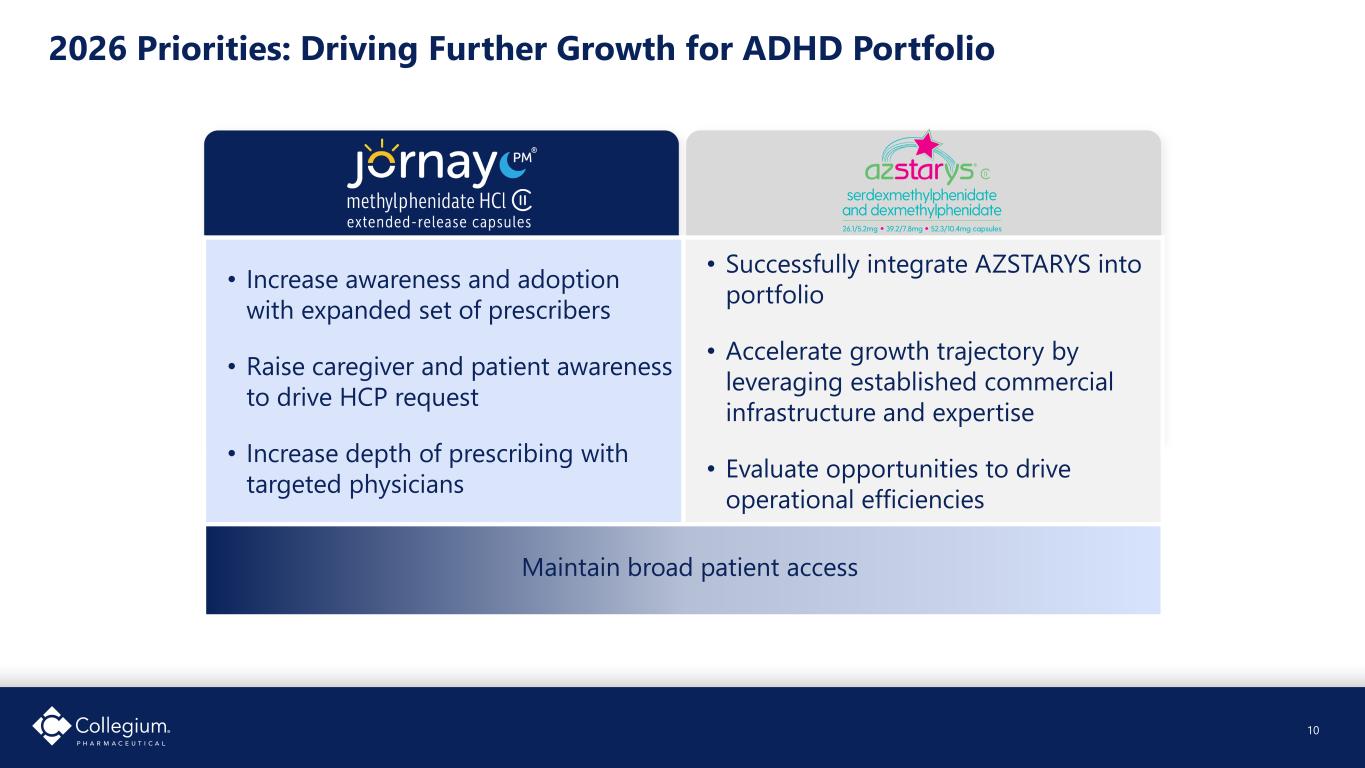
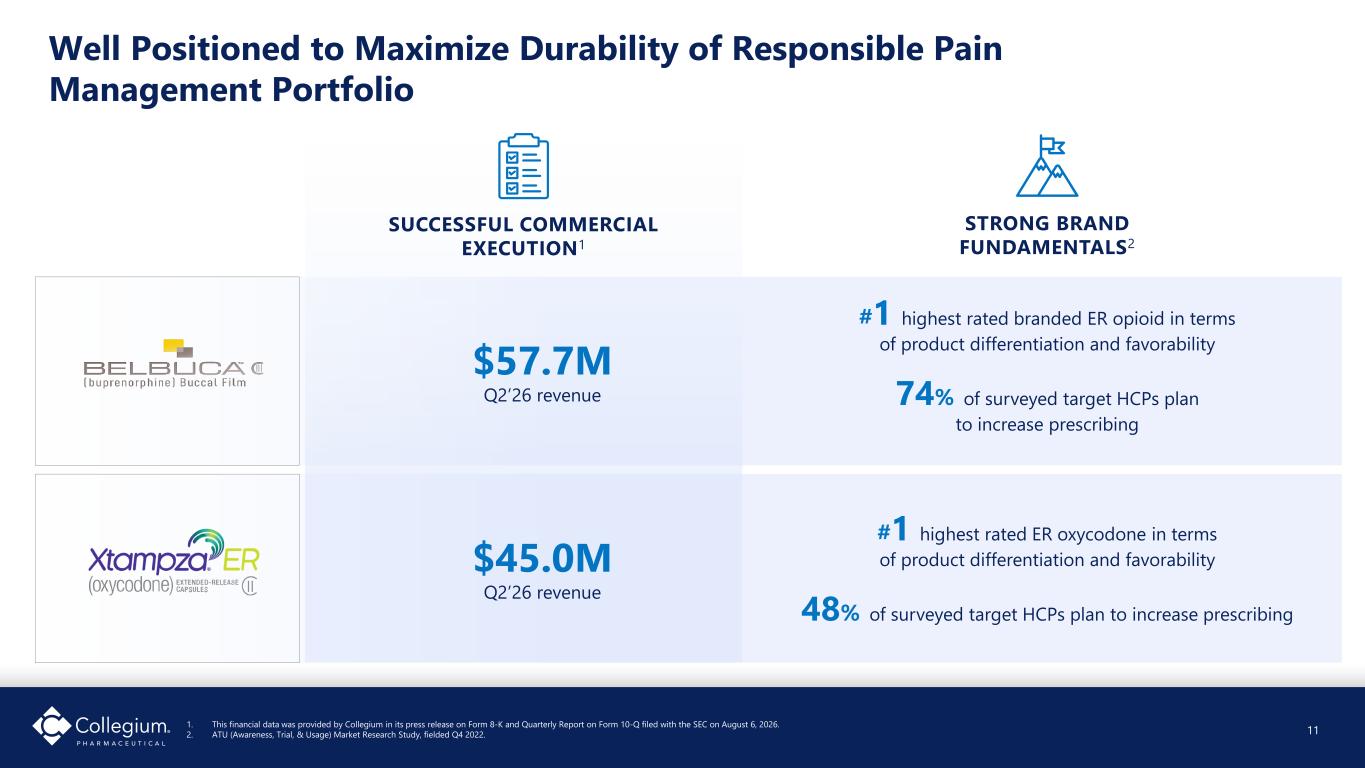
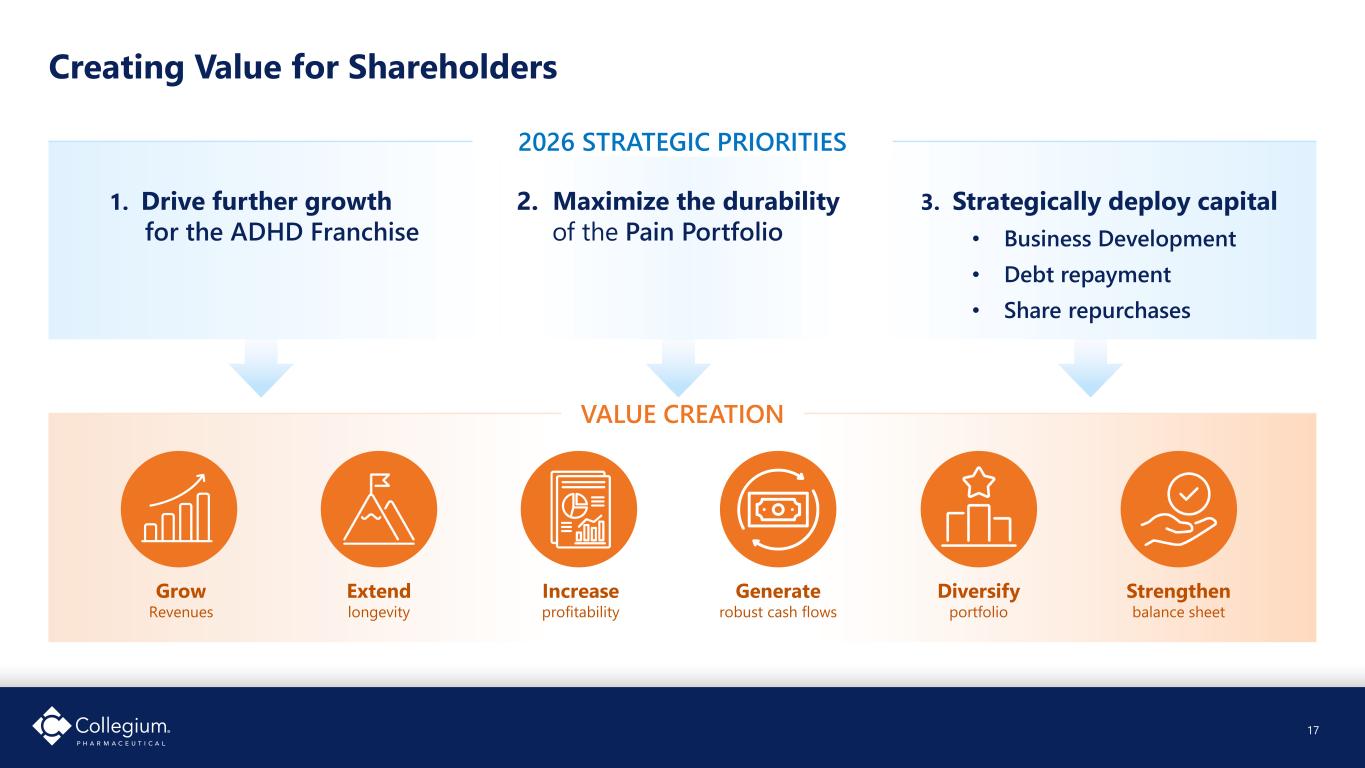
Thank you, Ian. Good morning, everyone, and thank you for joining our second quarter 2026 earnings call. Collegium is a dynamic biopharmaceutical company delivering medicines with formulation and delivery innovation for people living with complex CNS and pain conditions. Today, we have a diversified portfolio of six differentiated medicines, a growing ADHD franchise, and an established pain business that together provide a strong foundation for long-term value creation. We have a demonstrated ability to acquire, integrate, and grow differentiated assets while deploying capital in a disciplined manner. This quarter, we delivered strong results, highlighted by significant progress in our rapidly growing ADHD business. Key achievements included, Dornay prescriptions grew by 13.1%, generating 46.1 million in net revenue, up 41% year-over-year. Dornay prescribers reached an all-time high, with over 30,000 healthcare providers riding Dornay prescriptions in the quarter, up 17.6% over Q2 of last year. And importantly, we completed the acquisition of Astaris in May, which now provides us with a differentiated and highly complementary medicine to join APM. This latest acquisition further reinforces the strategy we initiated in 2024 to diversify our portfolio beyond responsible pain management and establish a strong presence in the growing ADHD market. The integration of Astaris and product training of our expanded sales force is now complete, and the team is well positioned to further accelerate growth for both medicines ahead of the back-to-school season, which begins later this month. Switching to our pain portfolio, we generated $140.9 million in revenue in this quarter. Delbuca performed particularly well, with revenues up 10% year-over-year. In addition, we recently secured formulary access to an additional 9 million lives, which goes into effect in the fourth quarter. Offsetting Balbuca's performance, revenue from the Nusinta franchise was lower than expected due to pricing for the authorized generic products. Colleen will discuss this financial impact in greater detail. Overall, we achieved both top and bottom line growth with total net product revenues up 6% and adjusted EBITDA up 8% year-over-year. Turning now to other recent corporate updates, during the quarter, we remained focused on our commitment to leading with science and generated additional clinical evidence supporting our portfolio through multiple medical presentations and publications. Once again, Collegium was recognized by the Boston Business Journal as one of the 2026 best places to work in Massachusetts and named a USA Today top workplace for 2026. I'm very proud of the entire team at Collegium for their continued hard work and dedication in support of the patient communities we serve. And finally, we recently announced plans to relocate our corporate headquarters to downtown Boston in the first quarter of 2027, further integrating Collegium into one of the world's leading healthcare and life sciences ecosystems. In the second half of 2026, we are focused on three key strategic priorities, growing our ADHD business, maximizing the value of our pain portfolio, and strategically deploying capital to create long-term shareholder value. Based on the ongoing progress across our ADHD business and the strategic investments we have made ahead of this year's back to school season, we remain confident in our full year expectations for $190 to $200 million in Jornay PM revenues and have increased our expectations to $65 to $75 million in partially our status revenues. For our paint portfolio, we continue to implement strategies to maximize the durability of these revenues, which provides a solid base to our business and allows us to invest in our key growth drivers and capital deployment strategy. And finally, executing our disciplined capital deployment strategy remains a core priority, as was evidenced by our recent acquisition of Astaris, designed to accelerate our growth opportunities. We are encouraged by our momentum heading into the second half of the year and remain confident in our ability to execute against these strategic priorities. Turning now to our commercial highlights. Starting off with our lead growth driver, Jornay PM, a highly differentiated medicine and the only ADHD stimulant that provides all-day symptom control that starts immediately upon awakening. Driven by our targeted investments and enhanced commercial efforts, HCP perceptions of Jornay are very positive, and we have seen that enthusiasm increase. Based on market research conducted in the first quarter of 2026, HCPs had a high favorability rating and again ranked Jornay as the number one branded ADHD medicine in terms of product differentiation, with a score significantly higher than all other medicines in the same category. In addition, 70% of HCP surveyed indicated a strong intent to increase prescribing, which was the highest among all other branded ADHD medicines. HCP awareness of Jornay has significantly improved in the last year. Unaided recall among target HCPs increased to 67%, up from 52%, approaching the awareness levels of established brands like Vyvanse and Concerta. Peligium is ranked number one in reputation among pharmaceutical companies specializing in ADHD, and market research indicates that we are focused on the right messages and that our sales force is viewed as highly effective in their delivery. Jornay continues to be the fastest-growing stimulant for the treatment of ADHD. In the second quarter, we saw strong Jornay growth trends in prescriptions, prescribers, and market share. Specifically, we saw Jornay PM prescriptions up 13.1% year-over-year. We also hit an all-time high for Jornay prescribers in the quarter, with over 30,000 healthcare providers writing Jornay prescriptions, up 17.6% year-over-year. We grew our share of the branded long-acting methylphenidates market to 29.2 percent, up 5.8 percentage points year-over-year. We saw solid growth across both the pediatric and adult segments. In the pediatric and adolescent segment, which represents about 80 percent of our business, total prescriptions grew 10.7 percent year-over-year. The adult segment, representing about 20 percent of our total prescriptions, grew 23% year-over-year. Overall, we expect Jornay's strong growth trajectory to continue in the second half of the year, further bolstered as we enter the back-to-school season. In addition to growing Jornay, we completed the acquisition of Astaris in May, bringing a second highly differentiated ADHD medicine into our portfolio. The acquisition strengthens our ADHD platform in several ways. Market research suggests that Astaris is the second most differentiated stimulant brand following Jornay PM and despite not benefiting from broader commercial investment under its prior owner. It has IP protection through 2037 extending the life cycle of our commercial portfolio. It enables significant cost synergies allowing us to leverage our existing commercial infrastructure. It is immediately accretive to adjusted EBITDA with a greater impact anticipated in 2027 and beyond. And most importantly, it provides significant potential benefits to patients. Astaris is the first and only ADHD treatment with both fast and long-acting medicines in one capsule. Jornapm and Astaris are highly complementary as they serve different patient types. Jornapm is for the patient who needs their all-day symptom control to start immediately upon awakening, while ASTARIS is for the patient who needs the flexibility of rapid-onset symptom control to last later into the evening. HCP perceptions of ASTARIS are also very positive. In market research, healthcare professionals rated ASTARIS highly in terms of product differentiation and brand favorability. We also continue to receive highly positive feedback from both KOLs and community-based physicians regarding the addition of ASTARIS into the Collegium portfolio, particularly regarding the opportunity to bring together two best-in-class methylphenidate treatments addressing distinct patient needs. KOLs also view this as an important signal of Collegium's long-term commitment to advancing care in ADHD. Since the close of the Astaris acquisition, we have been focused on rapidly integrating the product into our portfolio. This includes increasing our ADHD sales force to about 190 reps, up from 180 prior to the acquisition, and growing our target HCPs to about 27,000, up from 21,000 pre-expansion in 2025. All of our sales representatives are now fully trained and selling both products to all targets ahead of the back-to-school season, which begins later this month. In addition, over the past year, targeted patient and caregiver outreach, particularly through social media platforms, has successfully increased awareness and trial for JourneyPM. These commercial tactics will now be deployed for Astaris and represent an additional opportunity to support future growth. We have also been making incremental strategic investments to our medical affairs, market access, and regulatory teams to further support and maximize these two growing brands. Ultimately, our goal is to increase awareness and adoption for both products while optimally leveraging our infrastructure and commercial expertise. We are excited by the outlook of our ADHD portfolio and look forward to providing future updates later this year. Turning now to our pain portfolio, our responsible pain management business continues to provide a durable foundation for Collegium, generating strong cash flow that supports investment in our growth priorities. Balbuquer continued to perform well during the quarter, with revenues increasing 10% year-over-year, driven by stable prescription demand and improved profitability. Looking ahead, Belbuca also recently secured formulary access for an additional 9 million lives starting in Q4 of this year. Revenue from a Stamza decline year-over-year reflecting both pressure across the branded long-acting opioid market and an unfavorable comparison to the second quarter of 2025, which benefited from the timing of rebate settlements. Revenue for the Nusinta franchise was lower than expected due to net pricing for the authorized genetic versions of Nusinta and Nusinta ER. As a result, we have updated our full-year guidance, which Colleen will discuss in greater detail. Our pain business continues to serve as a strong cash-generating strategic asset, providing financial flexibility to invest in the growth of our ADHD business, execute disciplined business development opportunities, and return capital to our shareholders. I will now hand the call over to Colleen to discuss our financial highlights.
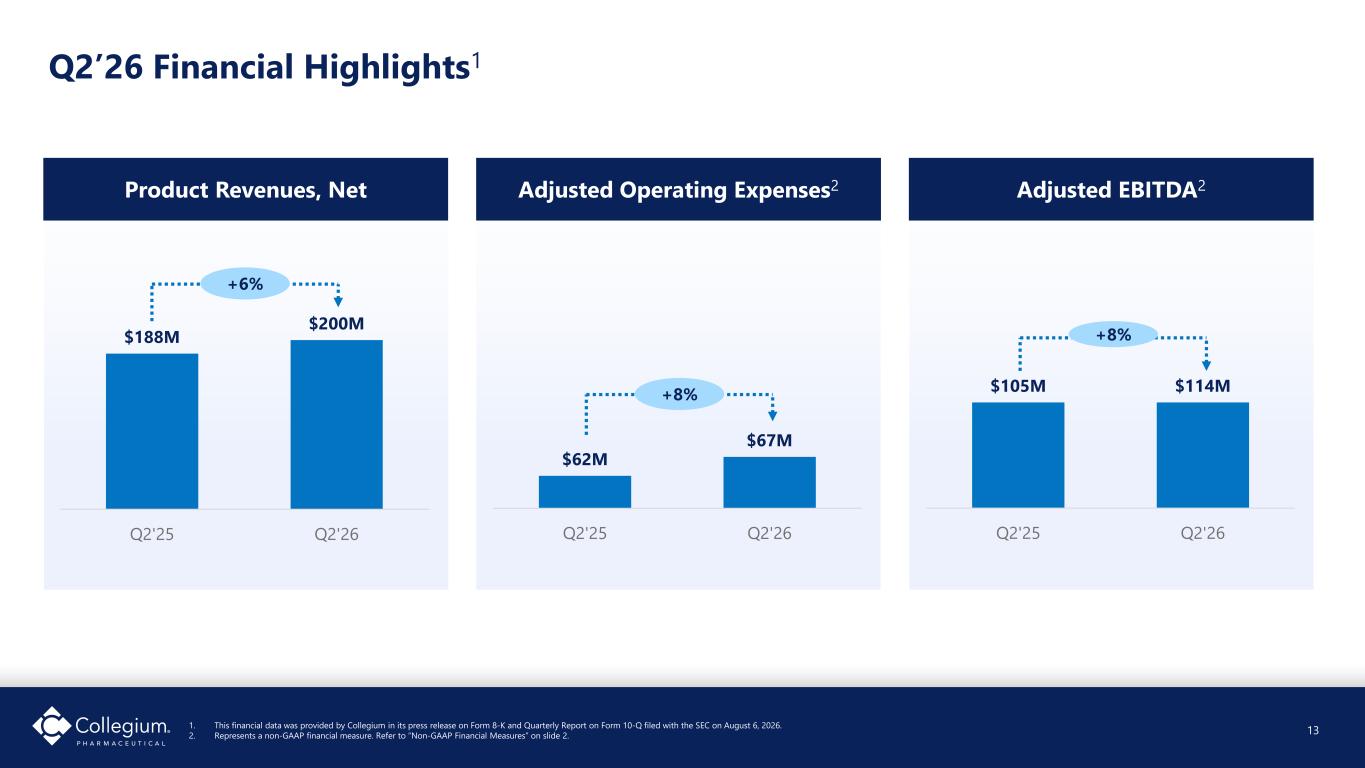
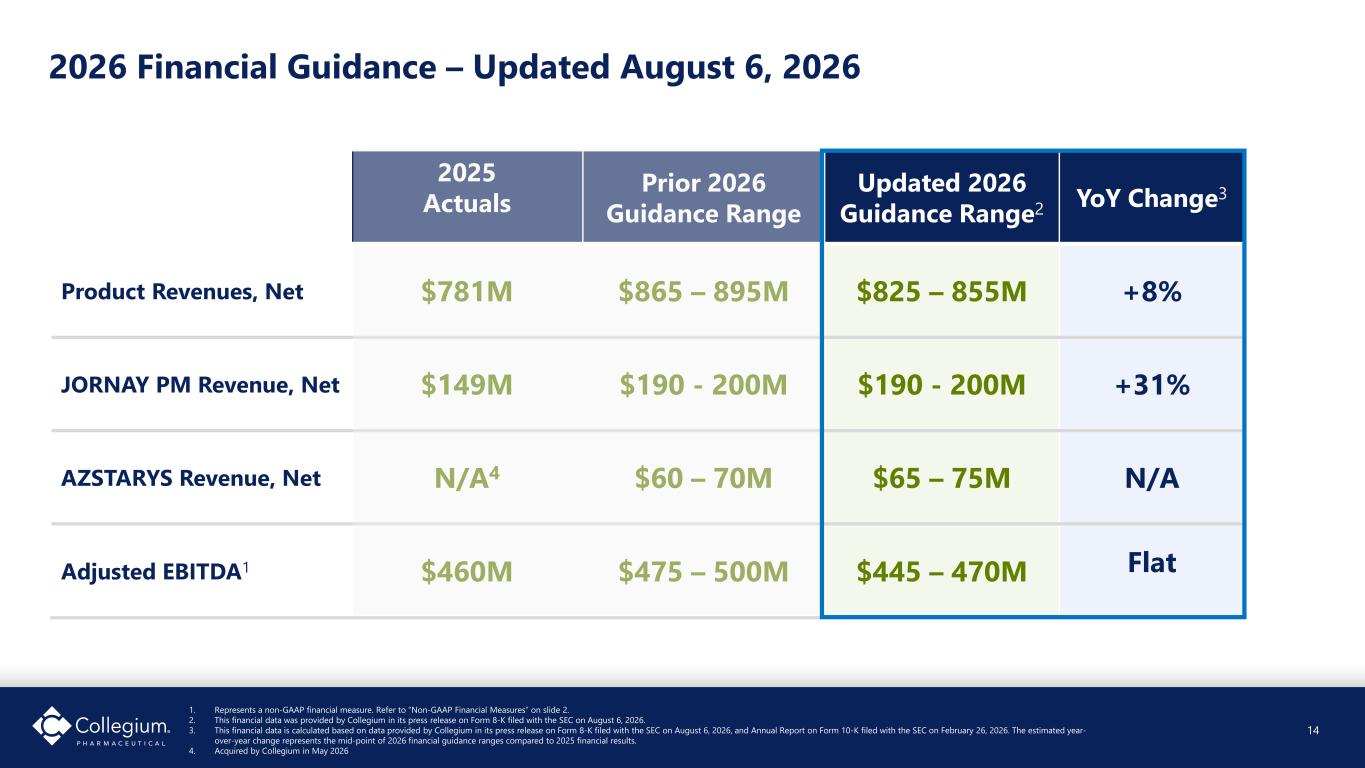
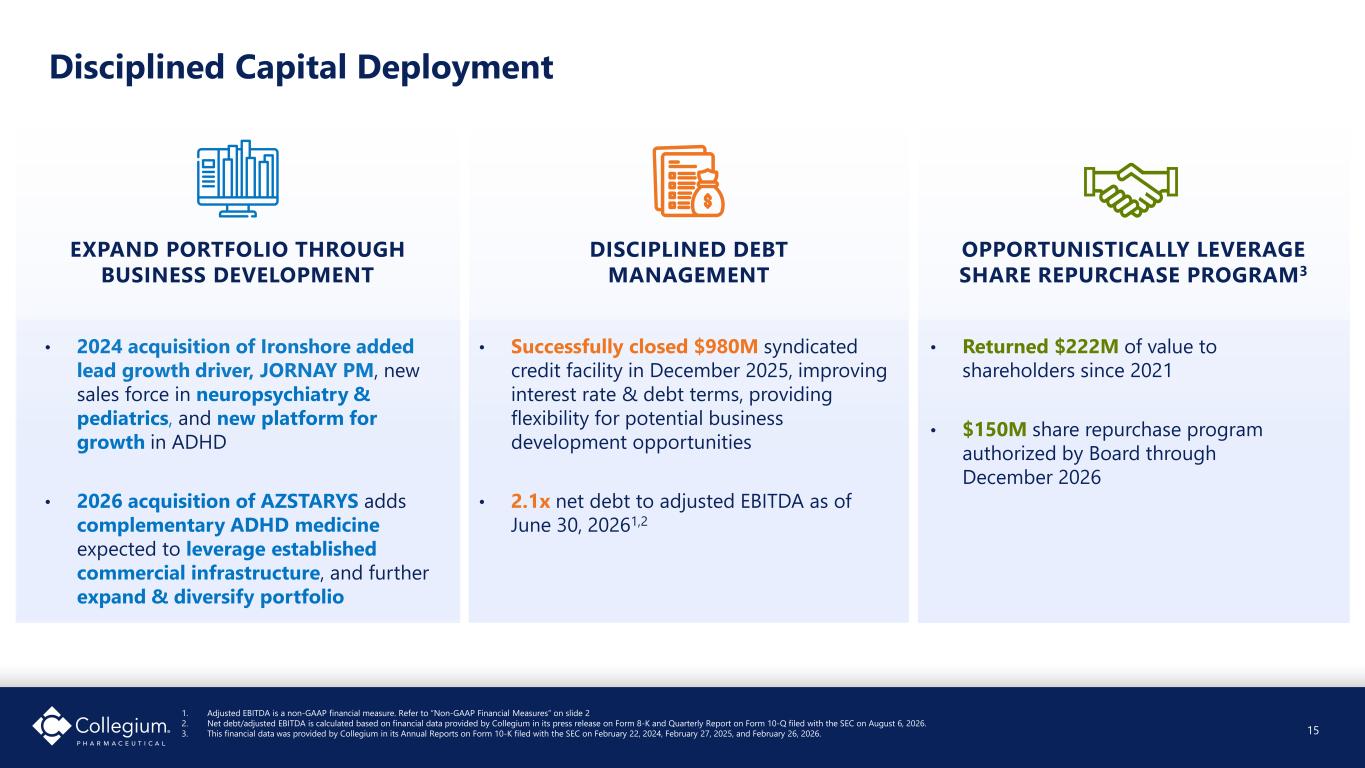
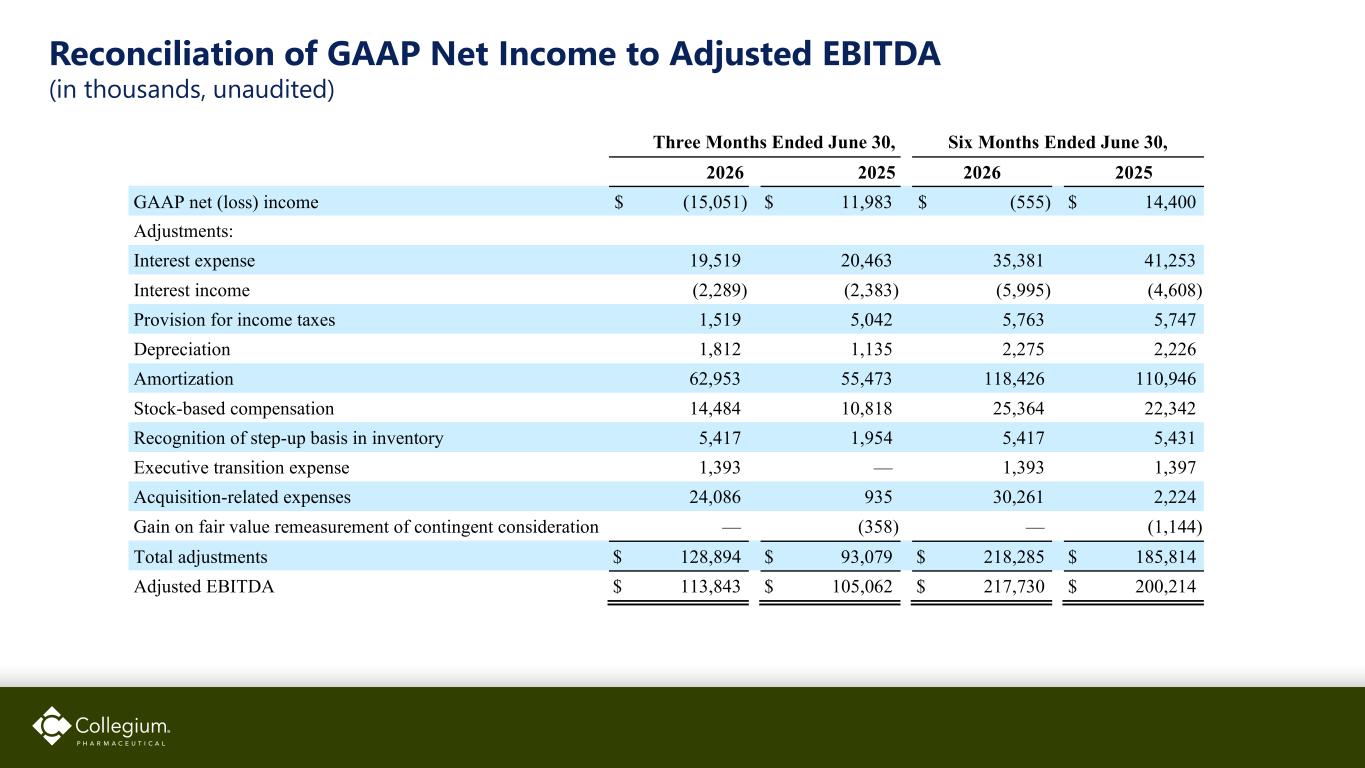
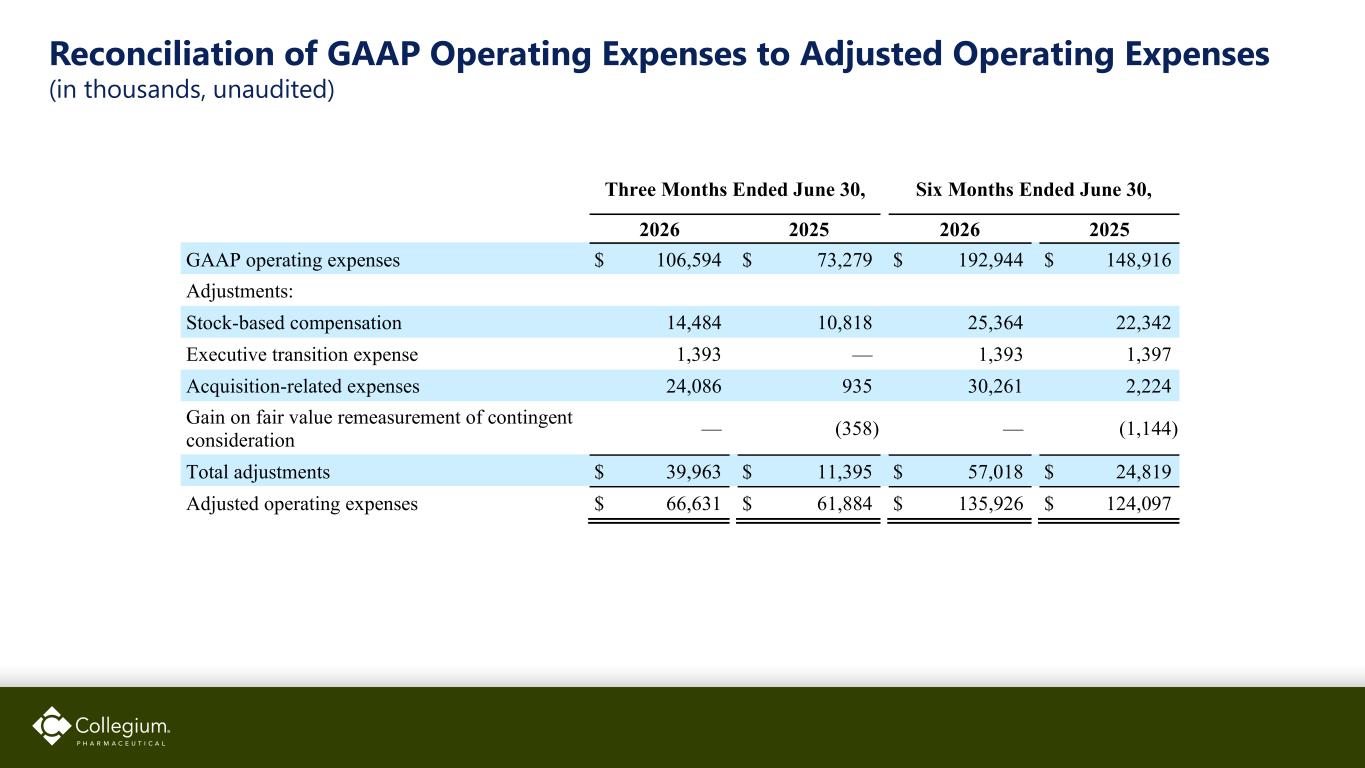
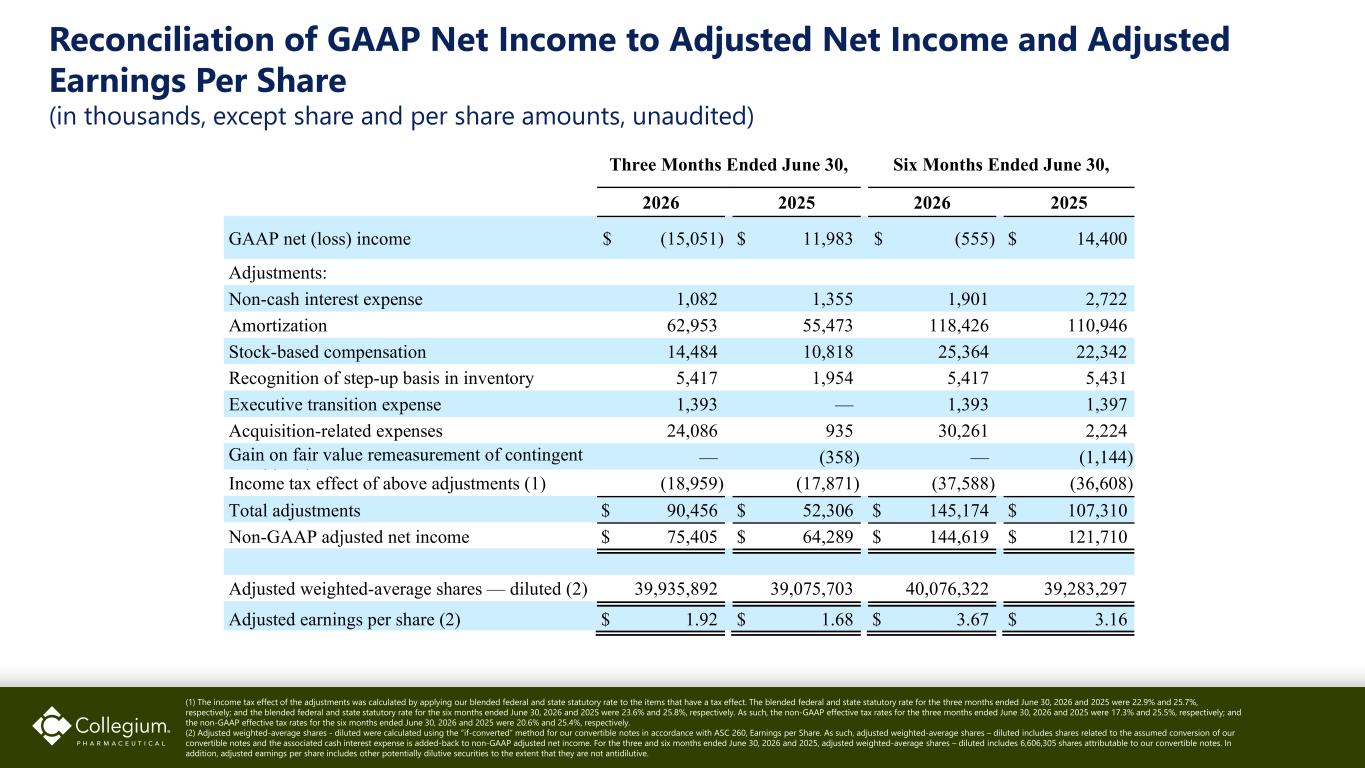
Thanks, Vikram. Good morning, everyone. In the second quarter, we again saw significant growth in Jornay, along with initial revenue from Astaris and meaningful revenues from our pain portfolio. Financial highlights for the second quarter include total net product revenues were $199.9 million in the quarter, up 6% year-over-year. Journet net revenue was $46.1 million in the quarter, up 41% year-over-year. Estaris revenues were $12.9 million, which reflect about a month and a half of commercial sales. Bellevueca net revenue was $57.7 million in the quarter, up 10% year-over-year. Extampsa ER net revenue was $45 million in the quarter, down 14% year-over-year. This quarter provided a challenging comparison to Q2 2025 when Extampsa benefited from the timing of rebate settlements totaling approximately $2.4 million. Total new franchise net revenue was $35.2 million in the quarter, down 24% year-over-year. This includes $5.1 million in revenue from the profit share on the authorized generic versions of Nucinta and Nucinta ER. Gap operating expenses were $106.6 million in the quarter, up 45% year-over-year. This quarter included $24.1 million in acquisition-related expenses associated with the Estaris acquisition. Adjusted operating expenses, which excludes stock-based compensation and acquisition-related expenses were $66.6 million, up 8% year-over-year. GAP net loss was $15.1 million in the quarter compared to net income of $12 million in Q2 2025. Non-GAAP adjusted EBITDA was $113.8 million in the quarter, up 8% year-over-year. GAP loss per share were $0.46 basic and diluted in the quarter compared to earnings of $0.38 basic and $0.34 diluted in the prior year quarter. Non-GAAP adjusted earnings per share was $1.92 in the quarter compared to $1.68 in the prior year quarter. Please see our press release issued earlier today for a reconciliation of GAAP to non-GAAP results. We generated operating cash flows of $71.3 million in the second quarter, and as of June 30th, we had $129.5 million in cash, cash equivalents, and marketable securities. As a reminder, we used approximately $356 million in cash on hand to fund the acquisition of a Staris that closed during the second quarter. We are updating our 2026 financial guidance primarily to reflect lower-than-expected full-year revenue for the Nucenta franchise due to lower net pricing for the authorized generics. Importantly, our revenue expectations for Jornay remain unchanged, with guidance of $190 to $200 million. We are also increasing our revenue outlook for Astaris, now expecting $65 to $75 million following successful integration and encouraging early performance. We now expect total product revenues in the range of $825 to $855 million. This represents an 8% increase year-over-year at the midpoint, driven by Jornay PM growth and contributions from Astaris, partially offset by lower-paying portfolio net revenue. We expect adjusted EBITDA in the range of $445 to $470 million, essentially flat compared to 2025. Finally, we expect Jornay gross to net to remain stable in 2026 in the mid-60% range. Our capital deployment strategy remains focused on creating long-term value for our shareholders by executing on business development, paying down debt, and opportunistically returning capital to shareholders. We successfully completed the Astaris acquisition this past quarter and are efficiently integrating it into our portfolio. We ended the quarter with net debt to adjusted EBITDA of approximately 2.1 times. I will now turn the call back to Vikram for some final remarks.
Thank you, Colleen. Following the close of the ASTARS acquisition, our ADHD portfolio is on an exciting trajectory. With the integration complete and our commercial organization fully trained, we are well positioned heading into the important back-to-school season. Our strategy to diversify our business beyond responsible pain management began in 2024 and has now been meaningfully strengthened by this recent acquisition. We are particularly encouraged by the long-term growth potential of the combined portfolio, as well as the cost synergies we are already beginning to realize. In the second half of the year, we remain committed to our three key strategic priorities, driving continued growth for our ADHD portfolio, maximizing the durability of our paid portfolio, and strategically deploying capital. The underlying fundamentals of our business remain strong. We continue to generate significant cash flows and strong profitability, giving us the financial flexibility to invest behind our growth drivers, strengthen our portfolio, and return capital to shareholders. I remain confident in our journey to building a leading diversified biopharmaceutical company. We have a clear strategy, a strong portfolio, and the financial discipline to continue creating long-term value. And I look forward to updating you on our continued progress. With that, we'll now open the call up for Q&A. Operator?
Operator
Thank you. We will now be conducting a question and answer session. If you would like to ask a question, please press star 1 on your telephone keypad. A confirmation tone will indicate that your line is in the question queue. You may press star 2 if you would like to remove your question from the queue. For participants using speaker equipment, it may be necessary to pick up your handset before pressing the star keys. One moment, please, while we poll for questions. Our first question comes from Serge Belender with Needham & Co. please proceed with your question.
Hi, good morning. Thanks for taking my question. I guess to start off with on Nucenta, has the net price from the authorized generic now stabilized or do you expect any additional erosion on the pricing level? And then secondly, since I think we're probably going to get questions on the IP duration of pain portfolio, can you just remind us your expectations for potential generic competition on Belbuca, since I believe some of the IP expires in 2027, and whether you have an authorized generic strategy for that product also.
Good morning, Serge. Thanks for the questions. On Nucenta, I would expect the net pricing to have stabilized at this point, and that is reflected in our full-year guidance. I would point you to Q1 and Q2 had timing dynamics with the initial supply to the authorized generic distributor. So I would look at first half of 2026 in totality. And then the second comment I would make about sort of the revenue recognition is keep in mind for this arrangement, as is typical, we book revenue at the time of supplying the authorized generic distributor. That revenue that is booked is a combination of the sale of the material, of the product, as well as an estimated profit share. So there is some lumpiness that could be in each quarter given that accounting, but we do believe the net price has stabilized at this point. On the second question for the pain, Eloise, I'll just start with extensa, one and a filer, fully settled for September of 2033. Belbuca, thus far, the event we are watching for, we've spoken to in the past, is that in January of 2027, TEVA, via a settlement agreement, does have the ability to launch a generic. We've spoken at length in the past. We do not believe that aligns with their strategy based on comments they have made, but we do watch for that. We do have an authorized generic agreement in place, and it has been in place for years. That agreement is your typical agreement where the launch of the authorized generic is triggered upon an external generic launching. So whether that be CEVA in early 2027 or one of the other parties that is filing and held off a bit further, Alvagen in particular has been litigated and currently is barred from the market until December of 2032.
Operator
Thank you. Our next question comes from Dennis Neng with Jeffries. Please proceed with your question.
Hi, good morning. I have two questions, if I may. Number one, just on ADHD, I mean, I'm glad to see beats across both Jornay and Asteris as you guys diversify away from pain. But can you comment how much of the Asteris beat came from a change in channel dynamics as the drug switch hands? And presumably your larger distribution network could have led to a little bit more stocking than anticipated. And also if you can comment on proscenity in the accounting, since that could also change depending on who owns it. So that's question number one. Question number two is around Nucenta. Net price was much lower than you expected. We're getting to around a 75% discount on the IR and 50% discount on the ER. Is that in the ballpark, or are we really off? And I believe it's also a volume-limited agreement with HICMA, correct? So maybe comment on the different thresholds in terms of the volume step-ups. Thanks so much.
Yeah, thanks, Dennis. I think just to start out on Astaris, that the update on the guidance is reflected or reflection of the expectations from performance, commercial performance, and has nothing to do with channel dynamics or any initial ordering of inventory or anything like that. And then, Colleen, you want to take the next one?
Yeah, let me just add on the Astaris comment, though, Dennis. I think you also mentioned a beat to consensus. I think that was predominantly that consensus, you know, it was a first quarter, it was a partial quarter, and I don't think there was full recognition on how much revenue there would be. I might point you to our proformas that were filed, which reflect in Q1, 2026, proforma revenue for a star is about $25 million. And gross to nets under our first quarter of ownership, again, it was partial quarter, about 50% of the quarter, was running at about 74%. And we do expect that that will improve over time, but not to the same degree of that step change that we achieved with Jornay. So I hope that covered your comment about the beat to consensus. On net price for Nucinta, Dennis, I think the easiest way to think about it, and again, with this stabilized now, is if you look at branded net price for Nucinta IR, the AG, we're netting about 10% to 15% of that. And if you look at branded net price for ER, we are netting between 20% and 25% for the AG volume. And so I think that math works for what you just referenced, but I wanted to give you those two anchor points.
Operator
Our next question comes from Brandon Fultz with HC Wainwright. Please proceed with your question.
Hi, thanks for taking my questions and congrats on the court. Maybe just two from me. you know granted it's early but can you provide any feedback that you're hearing from field reps and prescribers about the distinctions in selling both Astaris and Jornay you know are prescribers comfortable with the different differentiation at this time or does it take a bit of discussion and sort of education in terms of where you are with your targets and then any feedback from field reps that they are getting adequate time in front of those prescribers to detail both And then the second one, maybe just for Colleen, can you just talk about SG&A spend for the rest of the year? You know, granted, you do have updated guidance there, so maybe just any changes in your prior guidance, you know, obviously looks disciplined in 2Q post-Astaris acquisition. Thank you.
Thanks, Brandon. Yeah, so let me start out by providing some color on Astaris and Jornay now being part of the same portfolio. You know, I think we discussed this during the acquisition and certainly at the announcement of the deal. Our initial research during diligence had already suggested that physicians were pretty comfortable, you know, having had access to these two medicines over the past several years. physicians have already become comfortable knowing how to position these two medicines for appropriate patient types. And so, as I've said before, JORN APM is appropriate for the patient that needs symptom control upon awakening, and in fact, that lasts throughout the day. And then, of course, as we've discussed, Astaris provides more flexibility to the patient, especially those that are seeking rapid onset of action and then having, you know, extended controls throughout the day. And in our discussions with physicians after the acquisition, you know, with now the same rep positioning both medicines, that has continued to be validated. So I don't think that we have to, you know, provide any additional or different types of education, I think we continue to reinforce the same message and the same value proposition to individual medicines. And as far as your second question related to time, I mean, absolutely. We heard this right in the beginning, right after the deal closed, when our field force, the combined field force was out there, we started to get more physician time already, be it in the form of, more lunch appointments or other opportunities for discussing the value propositions of these two medicines. Certainly, we are now in a more advantaged position, especially as it relates to getting time, both with the physicians as well as with the physician offices. So that is certainly something that we heard right off the bat after the deal closed and has continued. And I expect will continue throughout this important back-to-school season. So before I turn the next question to Colleen, I think I just want to go back and reinforce the fact that having these two important medicines, which are complementary to each other in the portfolio, is going to certainly have an important impact through this back-to-school season when we expect rapid growth for both medicines. So, Colleen, would you take a second question?
Great, Brendan. Good morning. On SG&A phasing, I would say we will have the expenses associated with Astaris in the back half of the year. We modestly increased our territory footprint from 180 to 190 to support the addition of Astaris. As you think about SG&A level in totality, the second half of the year will be, I would say, mid to upper single digit higher than the first half of the year, accommodating the additional investment to support ASTARIS. And if I'm thinking about Q3 versus Q4, Q3 is a bit higher than Q4, given the back-to-school push and really the activities that support that. I hope that's helpful.
Very helpful. Thank you very much to you both.
Operator
Thank you. Our next question comes from David Anselm with Piper Sandler.
Please proceed with your questions. Hi, good morning. This is Alex von Reisman on for David. Thanks for taking our question. Regarding capital deployment post-Asteris, you've talked about rare disease in the past. You certainly have sizable infrastructure and ADHD. How are you thinking about the business and strategy now that you have a strong beachhead and ADHD? Is the goal to continue to leverage that infrastructure in psych, cast a wider net in psych, pivot to other therapeutic areas, or is it to, or is it a pivot to rare disease, maybe both, or taking an opportunistic approach?
Yep, thank you for the question. Look, we, as we have discussed before, we remain committed to executing on a disciplined capital deployment strategy, which has, which is a combination of continuing to look for differentiated assets to bring into our portfolio, as well as paying down our debt and and strengthening our balance sheet, as well as returning capital to our shareholders in the form of opportunistic share repurchases. And that remains our strategy going forward. Specifically, as it relates to business development, we have previously stated that diversifying beyond responsible pain management and having a beachhead in CNS through the build-out of our ADHD portfolio was an important strategy that was initiated back in 2024. We're well on our way executing on that strategy right now. And as we look ahead, we continue to look for other differentiated assets to bring into our portfolio. What we have previously stated as our criteria still remain the case. Now that we have a strong presence in ADHD, we look for other assets, either within ADHD or in adjacent areas within psychiatry or broader CNS. And then we have previously also said that outside of these areas, we are open to considering opportunities within rare disease, primarily because of the dynamics of that category. These are medicines that are mostly commercial or just about to be commercial. We look for assets that are in the 300 to 500 million peak net sales range, which is a sweet spot for us. Long IP, so long durability of revenues, and primarily in the U.S., given the existence of our commercial infrastructure and expertise. The other thing about rare disease is there's a significant amount of expertise within the management team here, and so that is an area where we will look opportunistically. So broadly speaking, our overall approach to business development remains the same and we look forward to continuing to keep you updated as we go.
Operator
We've reached the end of our question and answer session. I would now like to turn the floor back over to Vikram for closing comments.
Thank you everyone for joining the call this morning and for your continued interest in Collegium. We appreciate your time and we look forward to updating you on our progress. Enjoy the rest of your day. Thank you.
Operator
This concludes today's teleconference. You may disconnect your lines at this time. Thank you for your participation.