Operator
Good day and thank you for standing by. Welcome to Iron FY 2026 results call. At this time, all participants are in listen-only mode. After the speaker's presentation, there will be a question and answer session. To ask a question during the session, you will need to press star 11 on your telephone. You will then hear an automated message, advising your hand is raised. To withdraw your question, please press star 11 again. Please be advised that today's conference is being recorded. I'd now like to hand the conference over to your first speaker today, Mike Power, Vice President, Investor Relations. Please go ahead.
Hello, Operator. Good afternoon and welcome to IRON's FY2026 results presentation. I'm Mike Power, VP of Investor Relations, and with me on the call today are Daniel Roberts, co-founder and co-CEO, Anthony Lewis, CFO, and Kent Draper, Chief Commercial Officer. Before we begin, please note that this call is being webcast live with a presentation for those dialed in by phone. you can elect to ask a question through the moderator after our prepared remarks. I would like to remind everyone that certain statements made during this call may constitute forward-looking statements. Those statements are based on current expectations and assumptions and are subject to risks and uncertainties that could cause actual results to differ materially.
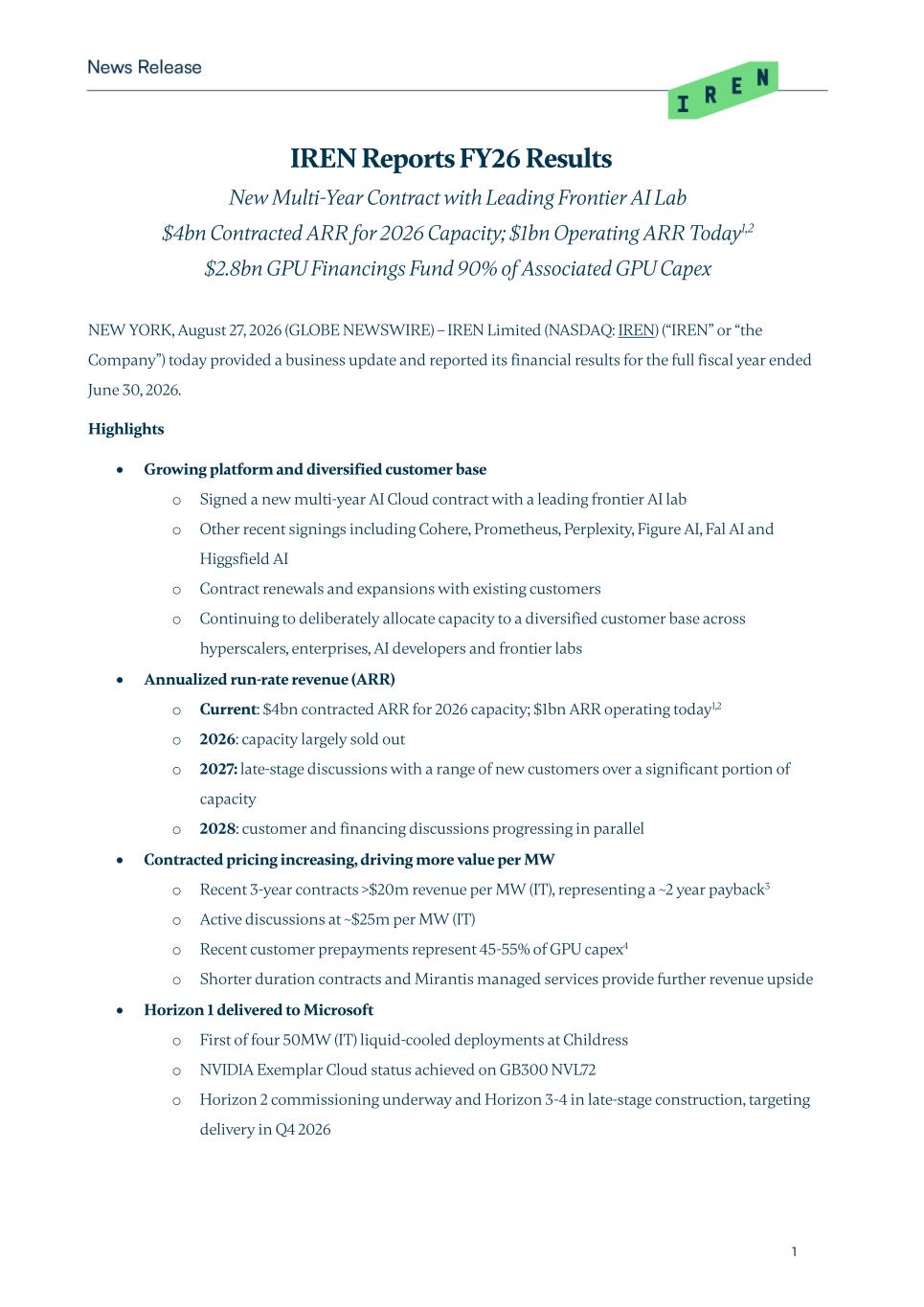
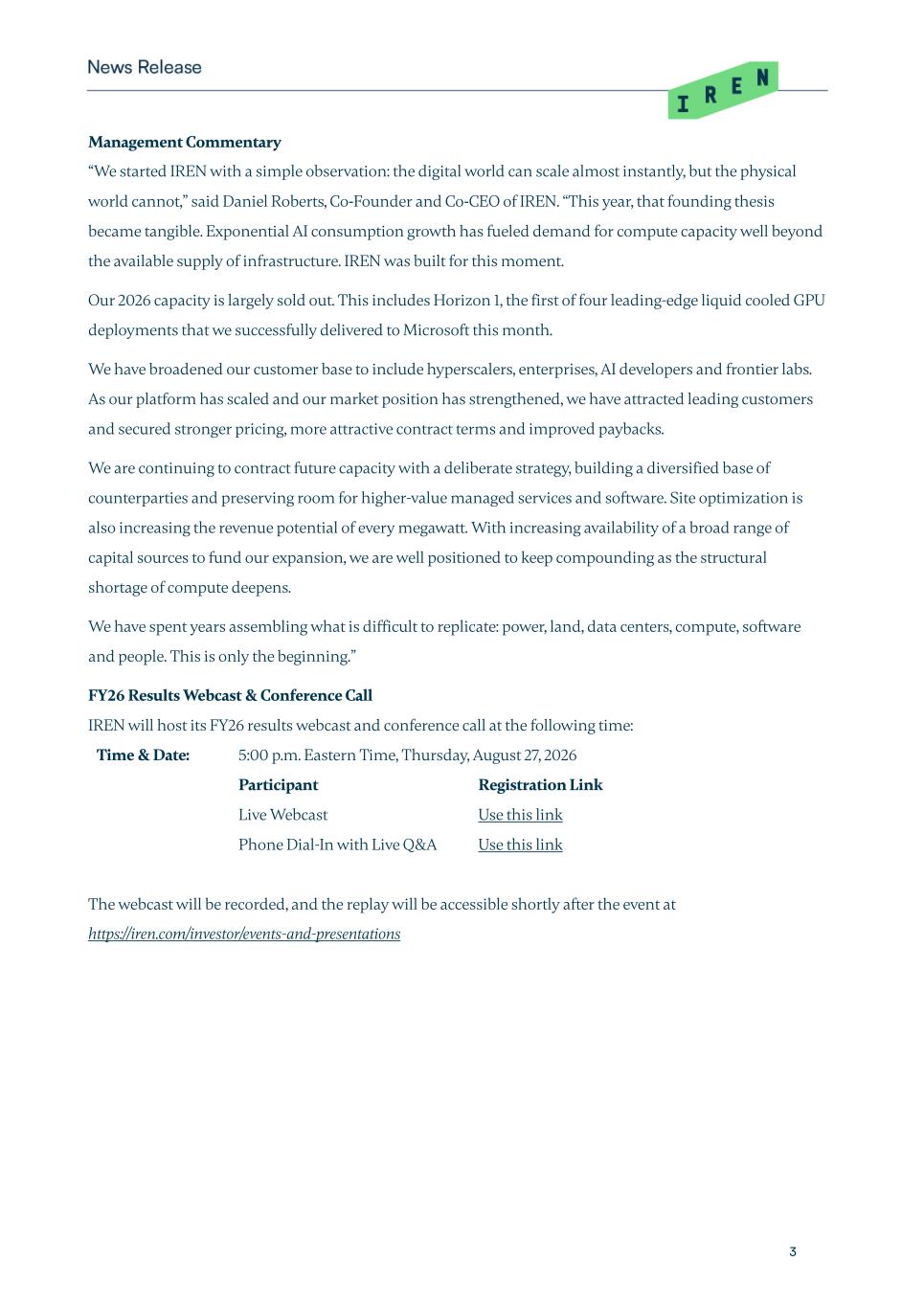
Please refer to slide two of the accompanying presentation and OSXE filings for more information in that regard. with that i will turn the call over to dan roberts thanks mike and thanks everyone for joining us so will and i started this business on a pretty simple observation the digital world scales almost instantly the physical world does not power land data centers these things take years to permit finance and build and this was the year that stopped being a thesis and became the defining constraint of the whole industry so if we look at the chart on screen across eight models tracked by open router weekly token usage across large language models increased nearly 17 times in eight months. Every one of those tokens runs on physical infrastructure. It is very difficult to serve demand shaped like that with infrastructure on three-year lead times. And this is the start of the cycle, not the end. Cheaper compute doesn't make existing things more efficient. It makes new things economic. Infrastructure enables applications. Applications create demand for more infrastructure. Every build out in history has worked this way, and that's the structural disconnect, and it's only getting wider. So let me walk through how we're set up against that backdrop. So we operate across three layers from the bottom up. So first of all, the data centers, the land, the power, the substations, the cooling. Arguably the hardest layer to build, and that's where the shortage begins. Then the compute, the GPUs, storage, networking that go inside the data centers. And then finally, software on top, the managed services and enterprise support. That's where Mirantis lives for us. And just today, Mirantis was named an inaugural NVIDIA certified hypervisor. So we've now got NVIDIA validation at the software layer as well as the hardware. Why own all three? Because each layer makes the one underneath it worth more. A grid connection is worth more with a data center on it. Worth more again with GPUs inside. More again with services wrapped around the customer. Most of this market rents at least one of those layers. We own the entire stack. So here's how the year went. Let's move on to highlights, please operator. Thank you. So four things to take away from this update, and I'll be quick because there's more detail coming a little bit later. So firstly, customers, new multi-year cloud contracts, including Cohere, Prometheus, Perplexity, Figure AI, Fowl AI, Higgsfield AI, and separately, a leading Frontier AI lab whose name we're not able to disclose just yet. Revenue, $4 billion of ARR is now contracted for our 2026 capacity, and $1 billion of that is operating today. This does not include revenue expected to ramp in 2027, such as the $700 million of ARR associated with our NVIDIA cloud contract. delivery horizon one was delivered to microsoft this month the first of four 50 megawatt deployments with horizon two through four targeted for the december quarter and finally funded six and a half billion dollars of gpu financing now in the past three months with prepayments that's more than 100% of the associated GPU capex funded. And $2.8 billion of it needed no investment grade offtake and still priced in the single digits. So let me start with customers because everything else follows from them. Our 2026 capacity is largely sold out. So the questions we get now are all about 2027 and 2028. We're continuing to contract future capacity deliberately. Every contract opportunity gets weighed on three things. Firstly, who and what does this counterparty add to the platform? The strategic merit, not just the revenue. Second, what are the economics, price, prepayment, term, etc. And thirdly, what might it open up longer term for managed services and software? We've been saying this for a while now. Signing deals is not the bottleneck in this market. Bringing GPUs online is. We also don't need an investment grade off take to fund GPUs anymore. So we're not chasing headline announcements. We're making long-term decisions about where we want this business to be and when we'll sign we'll tell you we're in late stage discussions with a range of new customers over a significant portion of 2027 capacity and 2028 conversations are well underway too both on customers and financing longer term we want to keep building a deep diversified base of customers across the ai ecosystem all who have master service agreements with iron every megawatt we build is scarce before every new cluster switches on we want it in demand from both existing customers and new ones so not dependent on any one customer any one negotiation or any one point in a pricing cycle and here's who's on the platform today so as i mentioned earlier the headline is the new multi-year contract with a lead-in Frontier AI Lab. And to be clear, this is a new contract. It's separate from Prometheus, who we can now name as the unnamed AI developer from our July announcement. The most sophisticated buyers of AI infrastructure in the world keep choosing us. It also shows the strategy is working. We started concentrated because big customers with immediate demand, with the fastest path to scale. As the platform's grown, we've deliberately broadened. Hyperscalers, enterprises, AI developers, now Frontier Labs, across both training and inference. But honestly, the part we care about most is the third bullet point. Existing customers keep coming back. Together AI and Fireworks AI have both renewed and expanded. New logos are proving demand, whereas renewals continue to prove ongoing delivery and ongoing execution. Once we've deployed with a customer, we grow with them across sites, GPU generations, and service levels. And in terms of who is signing and growing with us, Prometheus and FIGA are building products for the physical world, robotics, real-world automation, and they're contracting our compute to do it. AI is moving well beyond chat. This is the thing we keep telling people. You cannot size this market off today's usage, and that is exactly why the market keeps getting caught structurally short of compute. Now, let's move on to pricing. So, pricing has moved a lot. Three-year contract pricing is up about 125% since November. Five-year is up about 70. Recent three-year contracts are pricing in excess of $20 million per megawatt of IT load, paying back the compute investment in around two years, while active discussions are now at around $25 million per megawatt. Recent customer prepayments are funding 45% to 55% of the GPU CapEx. What's behind that? The market's tightened, no question, but it's also who we're signing, how the deals are structured, and what we attach on top in managed services, which Mirantis keeps expanding. Shorter duration and on-demand sit above that as further upside in due course. revenue per megawatt is shorthand by the way we look at the whole return price term prepayment utilization customer quality and expansion opportunity and to be clear about what we're not doing we're not sitting on capacity to time a spot price we allocate capacity to build the customer base and the platform as we see fit the pricing follows that okay so from customers to what we're building the targets roughly 300 megawatts of IT load delivered in 2026 and another half a gigawatt in 2027 that'll take the platform to around 1.25 1.2 gigawatts in 2027 of gross capacity and we're continuing to build across Texas British Columbia, Oklahoma, South Australia, and Spain. And right now, today, there are more than 4,000 people mobilized across our active sites. The best example of that today is Horizon One. So, as we announced earlier, Horizon One was delivered to Microsoft, first of four 50-megawatt liquid-cooled deployments at Childress, and it achieved NVIDIA Exemplar Cloud status on GV300 NVL72, which matters because it proves we can integrate and operate the full platform, hardware, networking, and software, not just build the shell. The delivery matters, but the template matters more. Every Horizon uses the same design, the same supply chain, the same site team, and each phase carries the lessons of the last. Horizon 2 is in the process of working towards commissioning. Three and four are in late construction. So all three are targeting delivery in the December quarter. And that approach is running at every site. So quickly on 2026, at Childress, Retrofit Work and GPU installs are running in parallel on the air-cooled calls. At McKenzie, GPUs are being wrapped across the first two buildings. At Prince George, the air-cooled fleet is now fully commissioned and liquid-cooled installation is underway. All of that remaining capacity is targeted for the December quarter. In 2027, Sweetwater One is in full swing now. First building is going up. The primary substation is progressing. at Childress, Horizons 5 and 6 Civils are now moving and underway, and another 250 megawatts of air cooled conversion progressing. And it's also worth mentioning in terms of Canal Flats, we've now decided to convert all of that to liquid cooling for GB300s, and that will deliver more value from power and a site we already own. But beyond that, the pipeline steps up again. 2028. Sweetwater 2 and Key are in the US, Bundy in South Australia, and Badajoz in Spain, roughly 300 megawatts, and the flagship of the Nostrum portfolio of sites we closed during the quarter. All up, more than five gigawatts announced, with a multi-gigawatt development pipeline behind it, including more Texas power, where a tighter interconnection process should favor real and well-capitalized projects. And then a quick word on design, because it answers a question we're starting to get a lot. So the bare case we hear on this industry is that AI data centers get rebuilt in 10 years. We've spent this year making sure that ours don't. Sweetwater 1 is becoming the reference design for Sweetwater 2. Kiowa, Bundy, and what follows after those. Common layouts, common equipment, more modularization, and prefab. Each project is inheriting the last one's lessons instead of starting from zero. And the design is built for successive GPU generations, evolving cooling, including 800 volt DC, all of which has been developed in collaboration with NVIDIA. So we know compute changes faster than buildings and ours have been designed to adapt to that. But we're also getting more out of what we already own. Our existing sites have spare power beyond current deployment plans. That headroom can support more GPUs and more revenue without the need for any new grid capacity. And new grid capacity is the scarcest input in this entire industry. So revenue that doesn't need it is about the highest quality growth there is. First up, new liquid-cooled installs at McKenzie, Canal Flats and Prince George in 2027. And over time, tools like NVIDIA Max LPS, which smooths GPU power draw, let us safely run more compute inside the same electrical envelope. But none of this happens without people. Our headcount nearly tripled in FY26, including hundreds of colleagues who joined through Mirantis and Nostrum, and we expect similar growth again in FY27. Five C-suite appointments across development, product, marketing, innovation, and information security. People from NVIDIA, AWS, Oracle, Google, and other leading data center operators. So building our organisation ahead of the revenue is obviously deliberate. It costs money before it makes money, but this is where we're going. One last piece before I pass off to Anthony is how we're funding this growth. So GPU financing first, because now the model is proven at both ends of the credit spectrum. For the Microsoft contract, we raised $3.6 billion of investment-grade GPU financing at a weighted average of about 6%. With customer prepayments, that funded about 96% of the associated GPU CapEx. Now, here's where it gets really interesting. For non-investment grade deployments, so the rest of the AI ecosystem, we just closed $2.8 billion of equipment financing. That includes $2.4 billion at a 9% fixed rate for McKinsey, led by Blue Owl and funds managed by PIMCO. A delayed draw term loan alongside senior secured notes, funding 90% of that GPU CapEx. add prepayments of 45% to 55% on recent deals, and total funding well exceeds the cost of the underlying GPUs. Which is good, because that excess is now helping to support data center CapEx on those same and future deployments. And today, talking about data center CapEx, we have deliberately kept 100% of our data centers unencumbered, which is a growing asset base we can finance when the timing is right. So on that note, Anthony will take you how that funds the plan and the results. Thank you, Anthony.
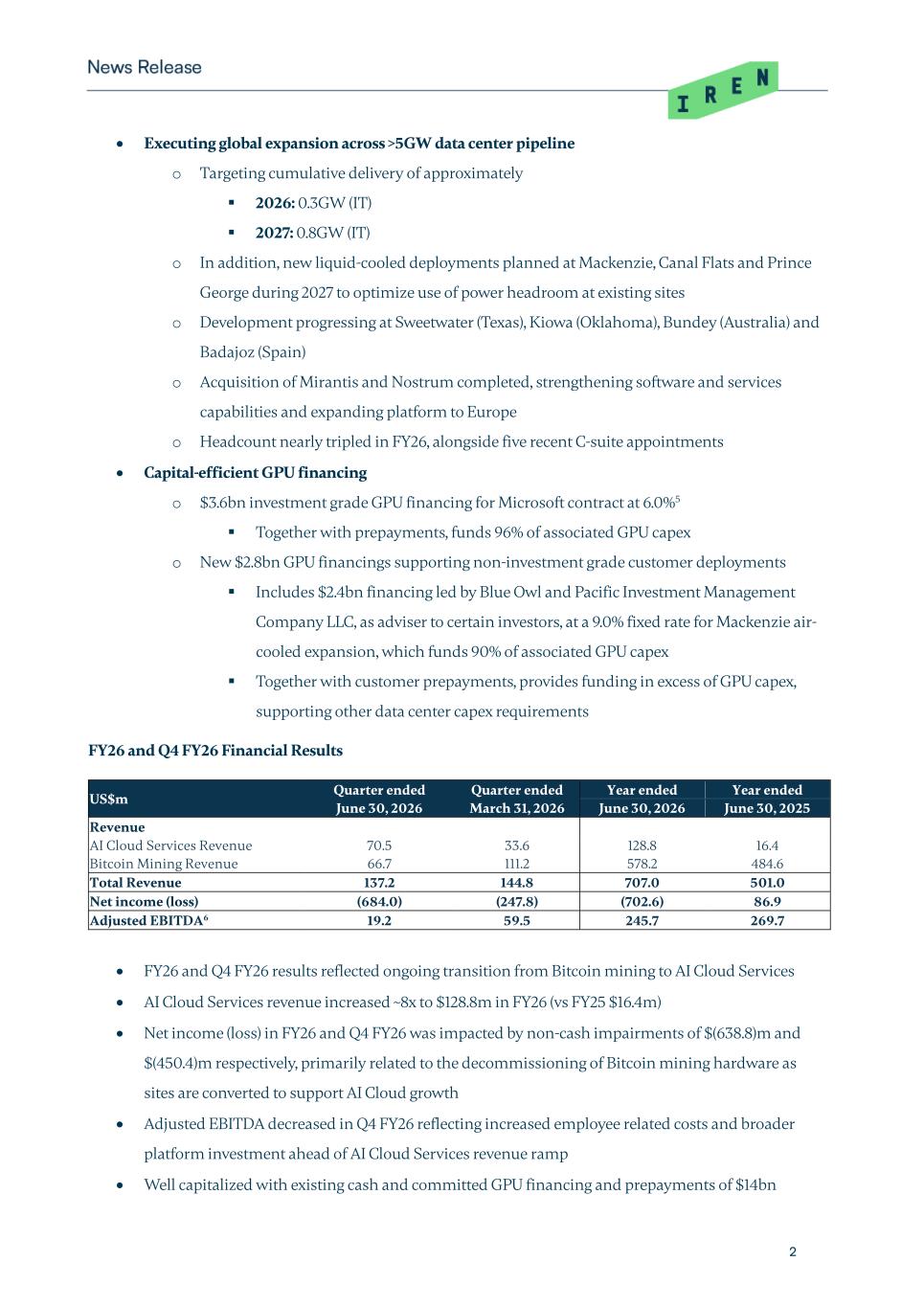
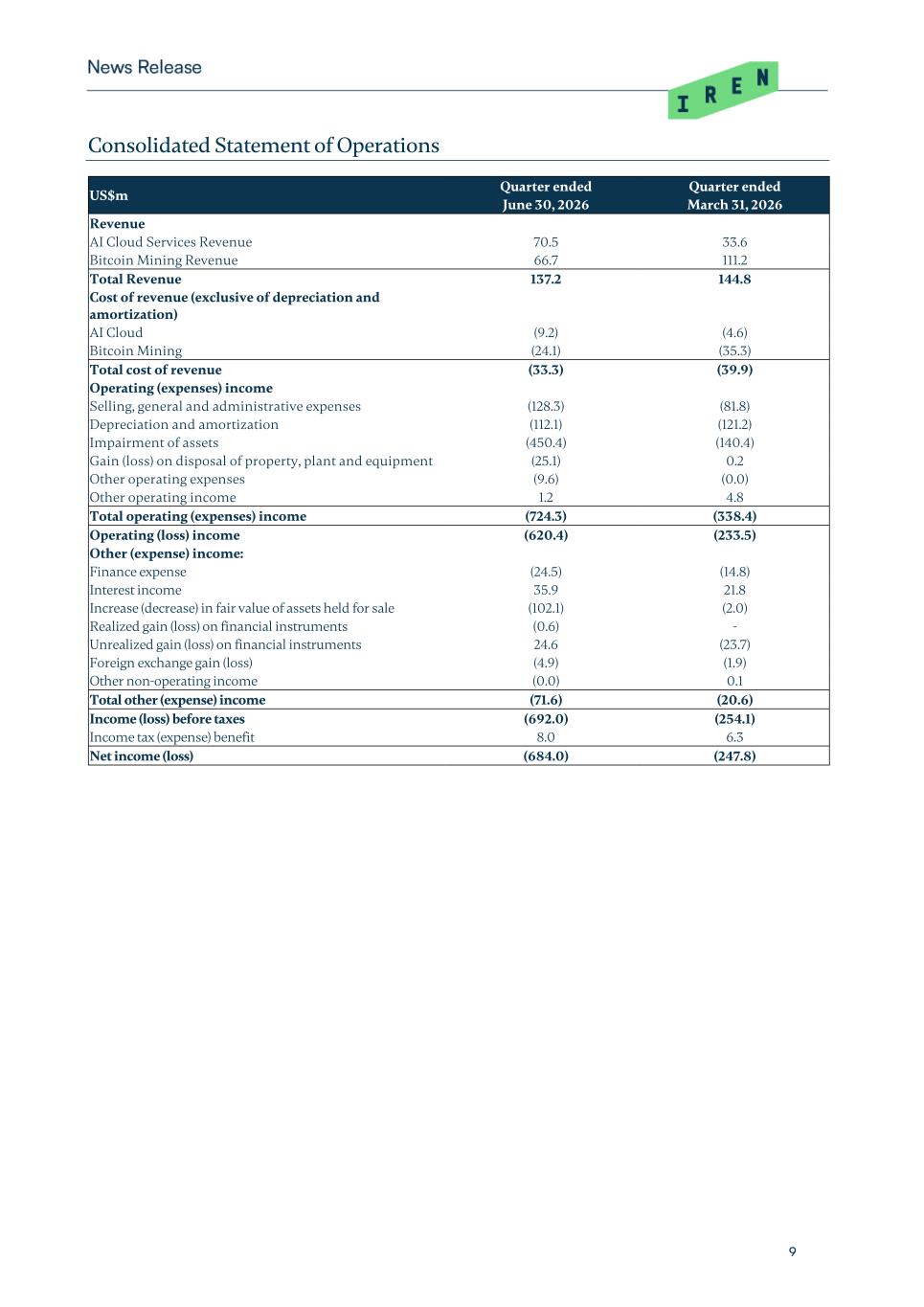
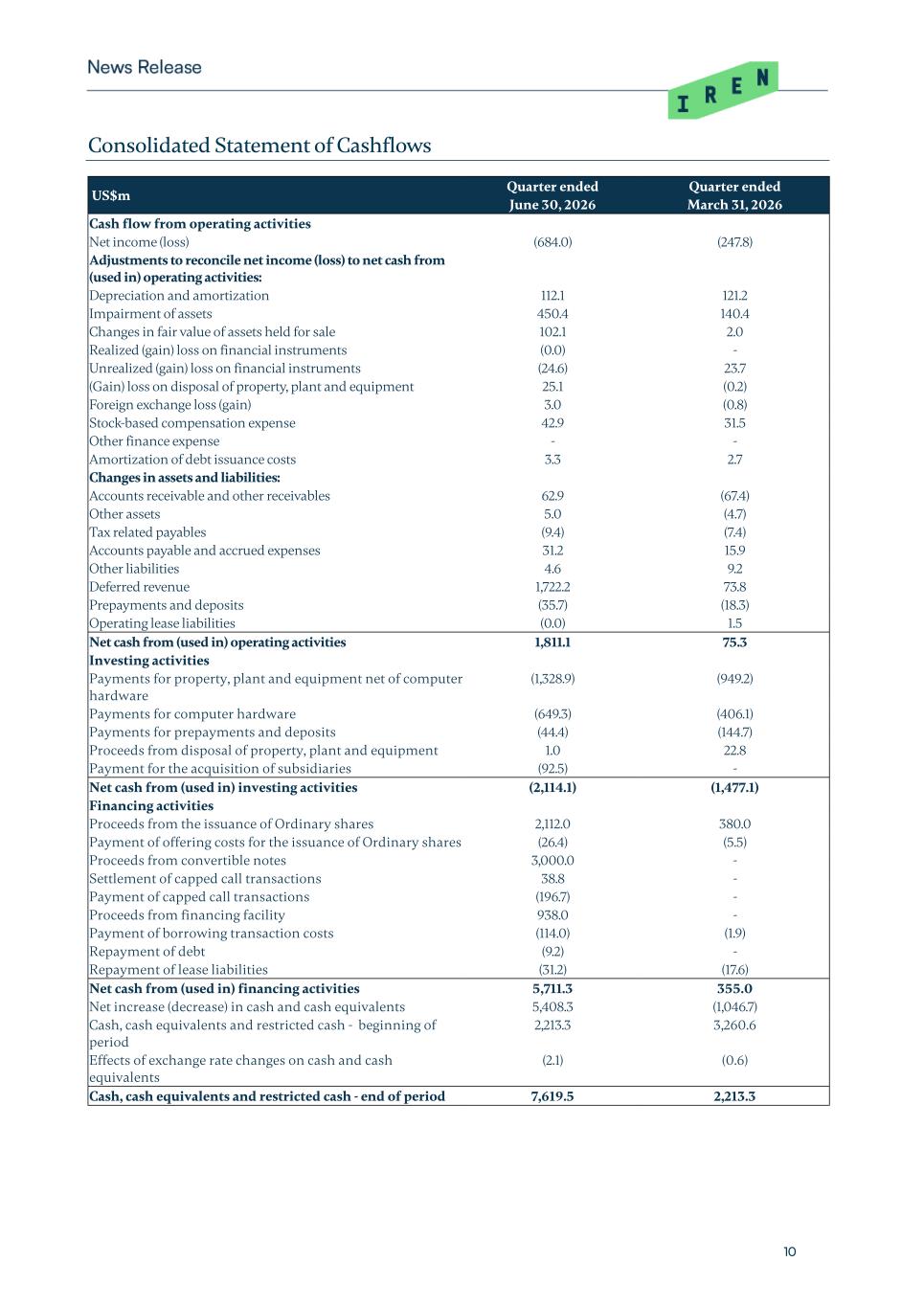
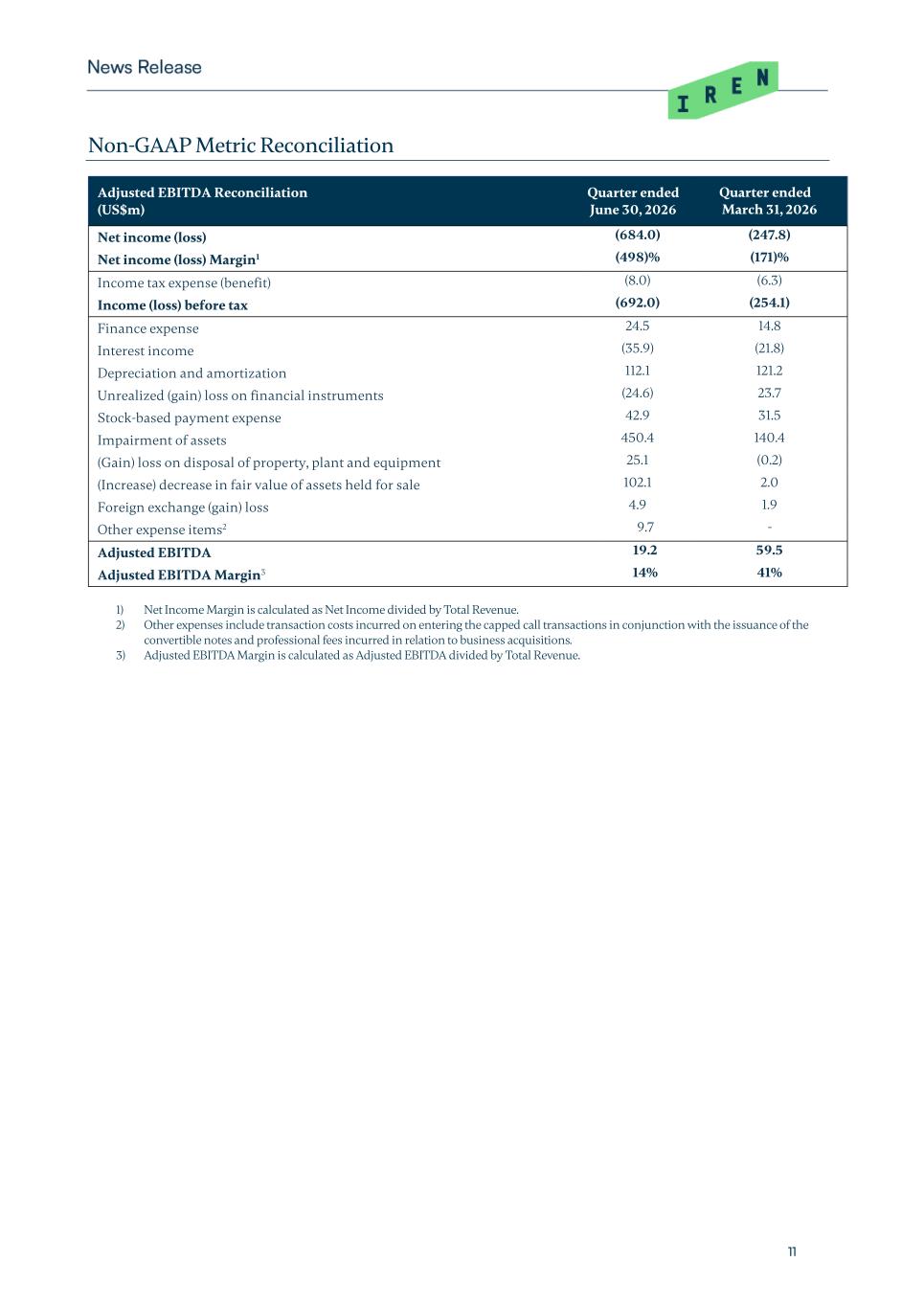
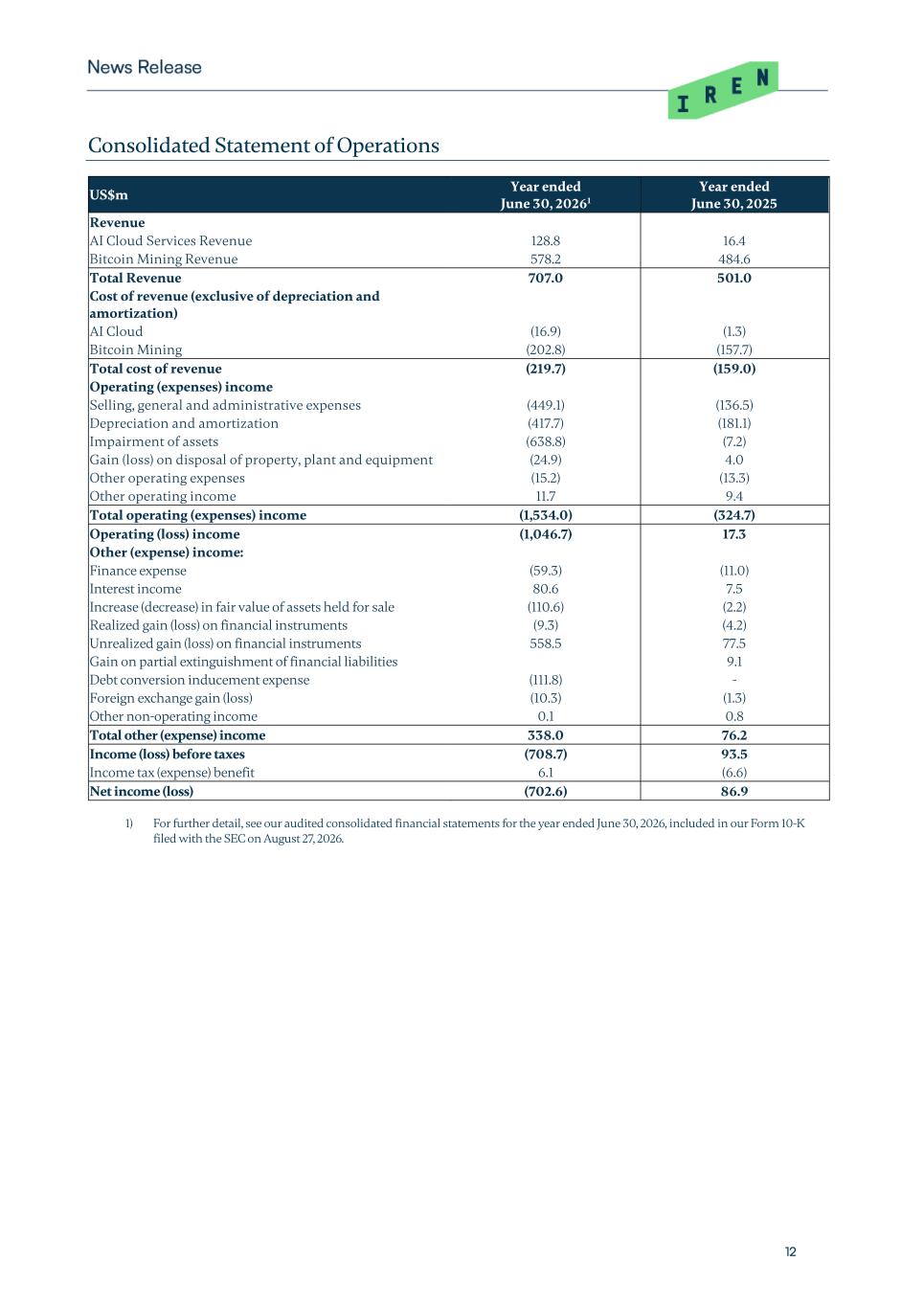
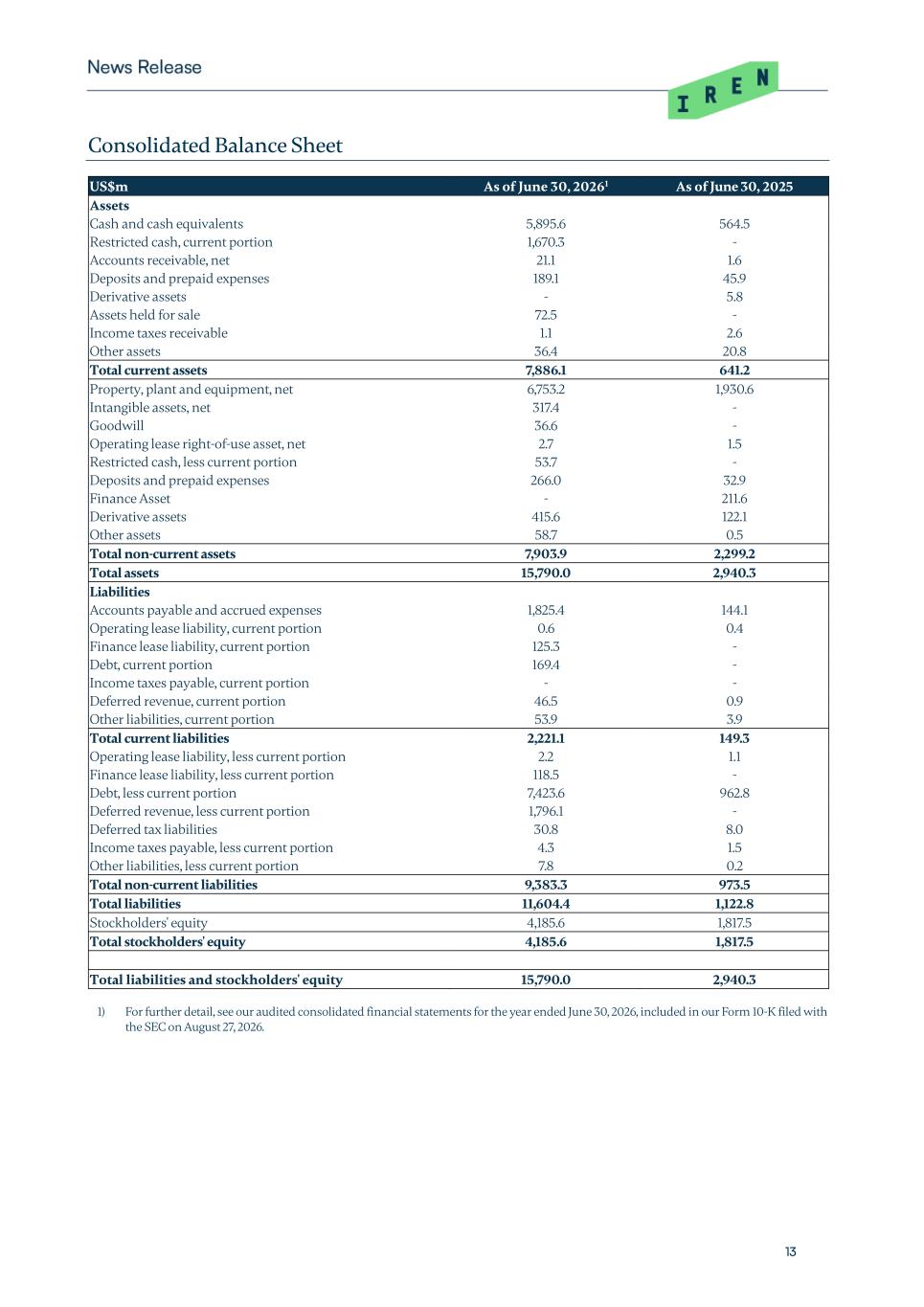
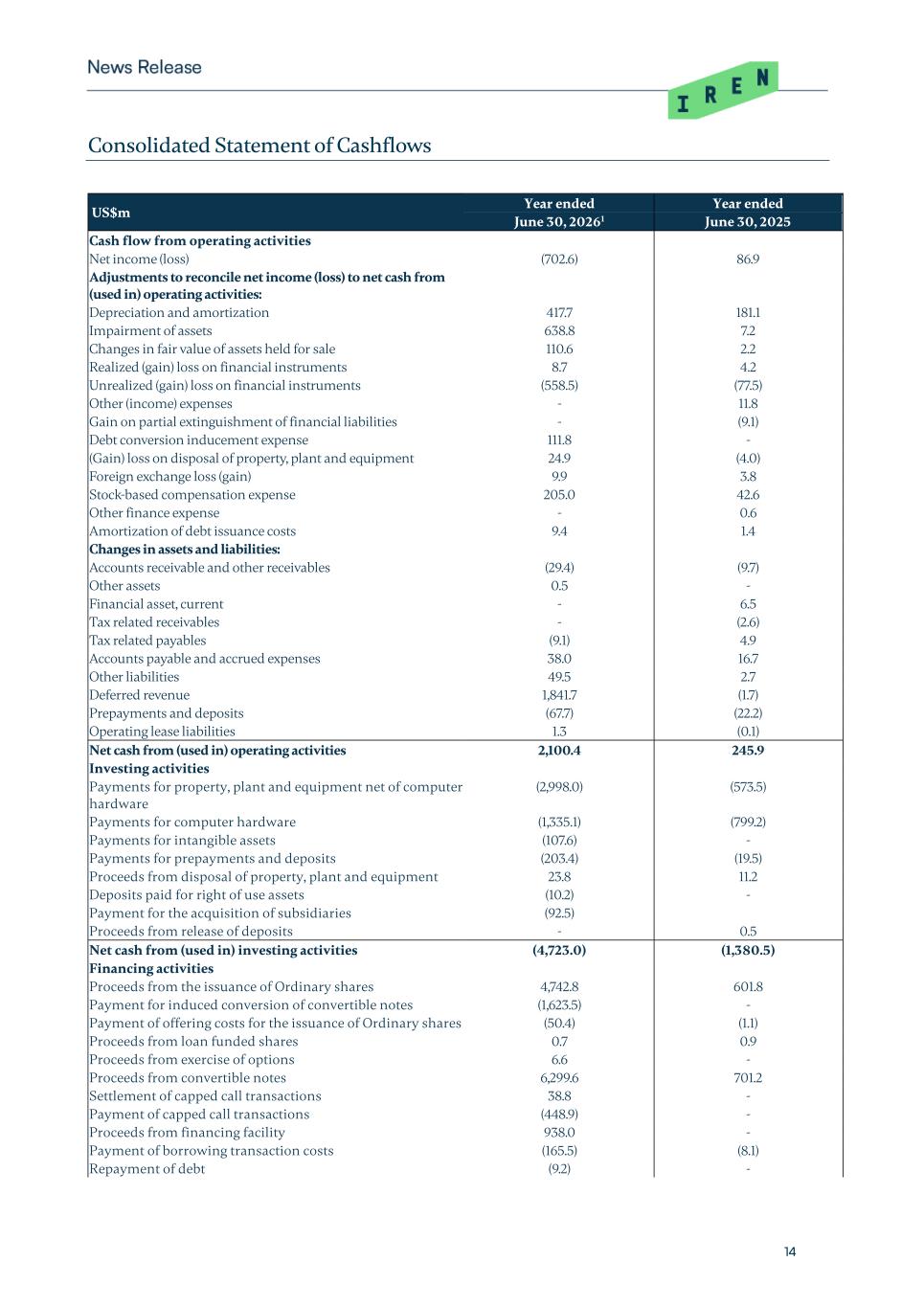
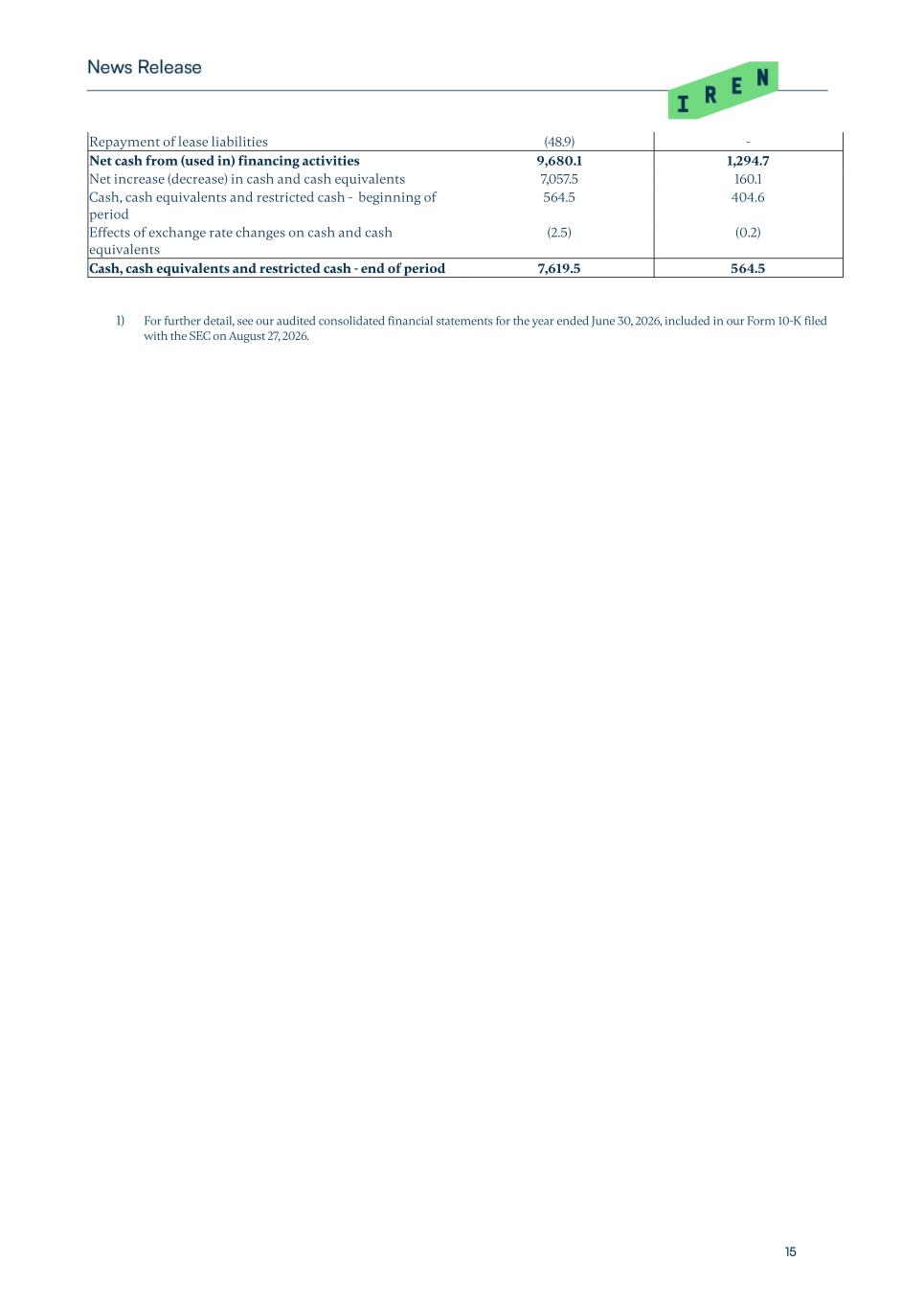
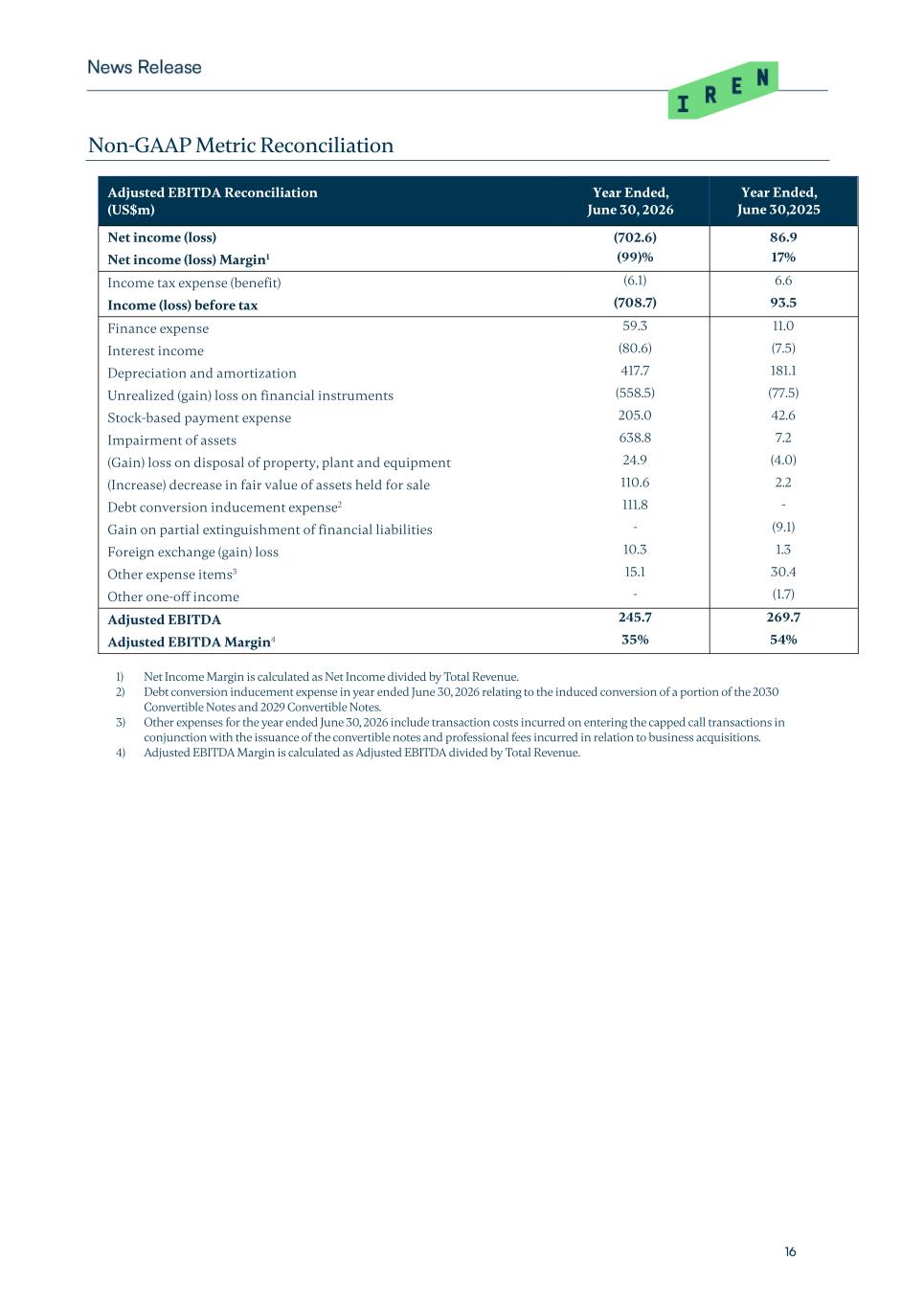
Thanks, Dan, and good evening, everyone. Over the past 12 months, we have secured circa $19 billion in funding, nearly $16 billion across customer prepayments, GPU financing and convertible notes, alongside equity of approximately $3 billion. The vast majority of this funding is either in cash or yet to be drawn down, giving us significant capacity. For FY27, we're guarding capex of approximately $25 to $30 billion. Included in that estimate is delivery of the contracted Microsoft capacity, the other deployments to deliver on 2026 ARR, and GPU and data center CapEx for air-cooled deployments scheduled across calendar year 2027. You will also support new liquid-cooled data center capacity at Childress and Sweetwater 1 for delivering the second half of calendar year 2027, as well as earlier stage investment for 2028 and beyond. Of course, the actual CAPEX for the year will depend on a range of factors, including final costings, construction schedules, delivery timelines for GPUs and long lead items, the overall contracting environment, and the overall fundraising environment. within that capex estimate we expect data center and capex gpu requirements to be up approximately 15 to 20 percent for ongoing and new deployments with revenue increases expected to ultimately outpace those increases in respect to the funding plan as noted earlier we have a strong starting position. Approximately $14 billion of existing cash and committed GPU financing and prepayments. That includes $7.6 billion of cash on the balance sheet at 30 June, of which $1.7 billion is restricted, with most of that $1.7 billion set aside to fund Microsoft GPU CapEx. We're targeting roughly an additional $8 billion of GPU financing and prepayments in support of GPU CapEx requirements, noting the healthy prepayments that we are seeing in recent contracting and the growing market for GPU financing that Dan has spoken to. The balance of the requirement we expect to meet through data center financing, operating cash flows and corporate sources. On datacenter financing, as Dan has spoken to, our entire datacenter portfolio is unencumbered today, including Horizons 1 through 4. So there is obviously a significant and growing asset base to raise asset finance against. Alongside the growing market for GPU financing, attractive customer prepayments, we feel well-placed to scale our fundraising efforts to support the rapid growth of the platform. now turning to the quarter four results and outlook the quarter's results continue to reflect the ongoing transition to ai cloud for the june quarter revenue was 137.2 million including ai cloud revenue of 70.5 million this was down 7.6 million compared to the prior quarter as we decommissioned mining hardware ahead of GPU installations, partially offset by AI cloud growth. Cost of revenue also fell $6.6 million, mainly as a result of lower electricity usage from reduced mining activities. Net loss was $684 million for the quarter, largely driven by non-cash impairments of $450.4 million, mostly on account of decommissioning mining hardware, Plus a 102.1 million decrease in fair value of mining hardware held for sale, both reflecting costs of transitioning our existing sites to AI cloud. We currently expect mining operations to be effectively decommissioned by the end of December 2026. We expect first quarter cash SG&A to increase approximately $40 million to $50 million sequentially as we continue to invest for growth across sales and marketing, R&D, development, sites and cloud operations, and other functions ahead of significant revenue growth over the coming periods. Which brings me to ARR. We exited Q4 at roughly half a billion of ARR. It's $1 billion today following acceptance of Horizon 1 by Microsoft, and that will carry through to the end of the September quarter. And we expect more than $4 billion of ARR by the end of the December quarter, which is already under contract and includes delivery of Horizons 2 through 4. A significant amount of the December capacity is expected to come on late in the quarter, so we will see the reported revenue effect come through predominantly in the March quarter. With that, I'll hand back to Dan.
Thanks, Anthony. So just one slide to close on. 2026 is largely sold out with the $4 billion of ARR now contracted. 2027 and beyond is deliberate runway for us. So this is capacity we're continuing to convert into a broader customer base and, of course, a richer service mix. Revenue per megawatt is rising, both on structural demand as well as site optimization. and that $4 billion comes from less than 10% of our 5 gigawatt plus portfolio of secured grid connections. So eight years ago, we set out to solve the gap between digital demand and physical supply. I think it's fair to say the gap is here. We own the power, we own the land, we own the data centres, we own the compute, we own the people, the software and we have the people to service it. So for Will and I this is only the beginning but operator let's open the line for questions please.
Operator
As a reminder to ask a question please press star one one on your telephone and wait for your name to be announced. To withdraw your question please press star one one again. A moment for our first question. And our first question comes from the line of Mike Ng from Goldman Sachs. Please go ahead, Mike. Your line is open.
Hey, good afternoon. I just have two questions. First, I was just wondering if you could talk a little bit more about Mirantis and how it helps facilitate the commercialization of your compute. Was Mirantis used or helped to enable any of the signed or in negotiation deals today? Do you think you'll eventually use Mirantis to help sell some capacity into market aggregators like Open Router? And then I have a quick follow-up. Thank you.
Yeah, happy to jump in there. Thanks for the question. In terms of the Mirantis service offering i think there's a few elements to that uh that that help um with our business today firstly as you identified it opens up effectively new customer classes to us as we've spoken about at length previously you had very large hyperscaler or frontier ai lab But customers generally like to take compute on a bare metal basis, but smaller AI developers, labs, enterprise customers value having an orchestration layer offered over the top of bare metal compute. And so the Mirantis service offering as it relates to that orchestration layer can help open up that part of the market to us. In addition to that, it does give us the ability to provide compute in a different manner. So not only can we provide reserved managed services clusters, but it also opens up the potential for us to provide on-demand compute, as an example. In addition to the orchestration layer itself, Morancis has a long track record of servicing enterprise customers in the cloud computing space, and they bring a number of other areas of expertise, including enterprise support, monitoring and deployment capabilities that can help us monetize our platform more quickly and continue to provide very high levels of customer service. So those are a few of the areas where Mirantis adds to our existing platform. Great.
Thank you, Ken. Sorry, maybe just to add to that, I think we're now the only NeoCloud certified hypervisor from NVIDIA as a result of today's announcement. So that kind of vertical integration, that full stack is playing out live time.
Thank you, Daniel. And I just wanted to follow up on the CapEx outlook for next year, $25 to $30 billion. Is that all to support the 800 megawatts that you expect to contract next year, or is it beyond next year? And then could you maybe just talk about the financing plan beyond the $14 billion of cash, GPU prepayment and other debt financing that I think you talked about?
Sure. Just in terms of the – and thanks for the question. Just in terms of the first question, so the $25 to $30 billion is obviously covering the financial year to June 27. So that covers all the CapEx requirements for the 2026 deployments that contribute towards the $4 billion ARR target. It covers expected data center CAPEX and GPU CAPEX for sort of air-cooled, the balance of the air-cooled deployments expected to come over the course of 2027 calendar year. And it also covers a significant portion of CAPEX required for the liquid-cooled deployments in the second half of 2027 calendar year. It doesn't include CAPEX requirements for the GPU compute for those new liquid-cooled facilities, which will be part of the following year's capital plan. In terms of financing, obviously, we spoke to the $14 billion, so that's secured. I also spoke to $8 billion estimated additional GPU-related CAPEX, so that will be supporting the GPU deployments included in that $25 to $30 billion. Obviously, we've seen a very strong fundraising prepayment environment, which obviously contributes to that $8 billion number. And we've seen strong conditions, obviously, in GPU financing. Obviously, Dan spoke to the results that we've seen in the recent transactions, but there's obviously also been other transactions in the market, both for investment-grade and sub-investment-grade clients. We've also had the recent announcement by NVIDIA alongside six of the biggest capital allocators in the world announcing, you know, JV's partnerships to support further financing of AI Compute as an asset class. In addition to that, we obviously have one to four, you know, substantially built and being delivered over the course of the year.
That's obviously unencovered, as well as other opportunities we're looking at, both asset-backed and other group level initiatives as well great thank you for the clarification thank you we will now take our next question and our next question comes from paul goading from macquarie please go ahead paul your line is open thanks so much for taking the question and congrats on all the tremendous progress i wanted to first ask about the british columbia liquid cooling pivot and and wondering if you could unpack that decisioning process a bit. Sounds like there's excess power available and there's obviously a revenue opportunity, but was wondering how you were thinking about the relative return there and if that was organic or from demand that you've seen or speculative. And then I have a follow-up. Thanks so much.
Primarily, Paul, it's driven by demand that we're seeing, and we do have a design that is very effective for the conditions that we see in British Columbia for liquid cooling. It is something that increasingly, as customers are looking towards future workloads, we do see the vast majority of customers over time looking towards liquid-cooled GPUs, And so we are certainly reflecting that in terms of the mix within our portfolio.
Right. Thanks so much, Ken. And then Anthony mentioned that the compute costs that are rising are being more than covered by revenue increases. I was wondering if given the continued march upwards of compute cost, what the calculus is and your thought process and strategy around taking some of the excess liquidity from prepayments and the financing that you've done and allocating that towards data center build out versus maybe longer dated compute purchasing given, and maybe on a speculative basis, given that price trajectory we've seen in compute. Thanks.
Yeah, I think in short, we're doing both. So as Dan mentioned, you need all the layers in the stack. In order to be able to sell compute, you have to have the data center capacity. And we continue to see extremely strong demand within the industry and a lack of capacity available to satisfy that demand. And so we will continue to build our data centre space. We will continue to make compute purchases over time and continue to add that software layer over the top to be able to expand our addressable market and secure better economics over time. So, you know, we expect to see a mix of purchases on spec as well as some purchases that may be tied to customer contracts. But as Dan said, you know, the contracts are not the driver in this industry. It's getting the compute online, and so that is what we are heavily focused on on the execution side of the business.
And, Kent, for Paul, I might also just add to your CapEx question around that revenue and it adds a little bit more to what Anthony said earlier. So if we step back and look at this revenue CapEx trade-off, the contracts that we're announcing now and the pricing per megawatt relates to GPUs that were ordered quite some time ago. So arguably they're reflective of natural price increases beyond CapEx inflation on those GPUs. Now future generations of GPUs and costs are going up, but we didn't have to pay the cost increases on the revenue per megawatt that we've announced today necessarily, because they're the older generations, if that makes sense. But there's also a bit more nuance to our CAPEX needs. So yes, we've guided total CAPEX of $25 to $30 billion for FY27, but that we deliberately don't split it in or attribute that to a specific number of megawatts of IT load coming online because the reality is that data centre CapEx is running a year or two ahead of delivery, but that's the nature of substations and steel. So the mix in any given year is really a function of what we're delivering that year versus what we're building for the next one. So I think we are working on how we stagger data centre CapEx and how we finance data centre CapEx as we mentioned during the presentation, 100% of our data center portfolio today is unencumbered, which creates a future opportunity. And when we're receiving prepayments equivalent to 50% of the GPUs, that's roughly equivalent to 100% of the data centers, because GPUs are roughly two-thirds of your fully loaded cost for the data centers plus the GPUs. And if you're financing in the GPUs at 90% gearing already, then you can see how you've got this funding flywheel that's emerging that requires arguably little equity over time to finance it. But we've then got to overlay our ambitions are growing. We're building at a higher cadence to what we've done in the past. So those funding needs continue to grow. But we've got flexibility around growth based on optimising the funding that's available to us at any point in time.
That's great color, Dan. Thanks so much. Maybe just a quick housekeeping question on the back of that, if I can sneak this one in. Just on the two-thirds, compute versus data center capex, is that shifting at all with the increased cost of compute? Or is the labor market being tight and other inputs on the data center construction side keeping that equation relatively stable?
No, it's staying pretty stable. Well, I mean, we're seeing inflation and costs across various components continue to tick up. So at a material level, I would assume that ratio stays relatively consistent. Great. Well, thank you both.
Operator
Thank you. We will now move to our next question. And our next question comes from Brett Kublock from Cantor Fix Jarrell. Please go ahead, Brett.
Your line is open. guys uh grasping the quarter great to see kind of demand trends around 26 and certainly 27 and 28. uh i'm curious kind of following into horizon one build out uh we've seen a lot of deals recently with maybe lower pues are you seeing any design changes that might allow for lower pues at you know other sites that you guys have coming online or you know other buildings coming online uh in 27 and 28 or should we kind of think of you know that pwe with the microsoft deal being somewhat static?
I mean, PUEs are never entirely static, but they are largely driven by the nature of the ambient conditions in which your data centres are operating. We've spoken before that we use a highly efficient closed-loop liquid cooling system, and that means we have very effective PUEs relative to the broader industry we do see some continued improvements over time and part of that is driven by items like Nvidia's DSX reference architecture where they have looked at how you can operate chips at higher temperatures without giving up any performance on the computing side, but allowing you to direct more of your overall megawatts towards the IT load and away from cooling. But those are around the edges rather than being really material drivers of decreases over time.
And I think just to add, we've been deliberately conservative on the headline PUEs that we've advertised. We even had a slide dedicated into the deck to this thematic, which is we have spare power beyond our current deployment plans, and some relates to optimising this PUE over time. The reality is the average PUE for a year is substantially below the maximum PUE that you require. So there's a few little tweaks that you can make that free up quite a lot of power capacity alone. We've then got the NVIDIA DSX Max LPS opportunity, and we're aware others are using power management tools to oversubscribe megawatts as well. There's a lot of flexibility within that envelope, and to date, we've kept it simple. 200 megawatts of IT load for 300 megawatts of gross capacity, but we are also making it clear today that there is a reasonably sized opportunity in the portfolio to free up some of that spare power.
So maybe I could just follow up on some of the price and commentary that came across quite strong. I think I prepared remarks in the release, kind of $20 million deals is what you're saying or what you've signed. Now it's kind of somewhere around $25 million. Is that over what duration could you clarify and is that more one off or do you think that is kind of like the ballpark of maybe the average you're seeing across all the conversations you're having with customers?
No, we're seeing that consistently across live conversations with customers at the moment. And there are a variety of things that go into it. As Dan mentioned, we look at term length, prepayments, nature of the customer, likely growth requirements over time. But the pricing that we're seeing is relatively consistent at the moment. It continues to show an upward trend. We're seeing very strong competitive tension for near-term megawatts. So we certainly think that those numbers that we put out are indicative of where the market is currently at with upward pressure over time.
And to be clear, they're three to five-year deals. not two years not spot capacity there is a substantial opportunity if you wanted to optimize near-term quarterly P&L to go and sell spot on demand and that is something that we might entertain as part of the portfolio approach over time but today we are loving just building the customer base diversifying across the AI ecosystem having longer term contracts getting really accretive financing back in those contracts and over time that'll buy us a license to dabble more into on-demand shorter term contracts introduce software leveraging mirantis and other capabilities for higher revenue profiles thank you guys appreciate it thank you we will now take our
Operator
next question from michael donovan from campus point please go ahead michael your line is open Hi.
Thanks for taking my question. Just going back to the $20, $25 million in revenue per IT megawatt, how do the economics you're seeing in the U.S. compare with what you're seeing with initial conversations in Spain and Australia?
I think very consistent. At the end of the day, this is largely a global market for compute. A number of the customers that are accessing compute out of North America are based overseas. And so it does drive a genuine global market for compute. And there may arguably even be additional scarcity factor in some of those other locations where it relates to things like sovereign AI, for example. So I think that pricing that we're seeing in North America is very indicative of global conditions.
Thank you. then one more follow-up if i may i wanted to get clarification on the nostrum acquisition so it's my understanding it brought roughly 490 megawatts uh in your prepared remarks you mentioned adahose accounting for roughly 300 megawatts for that difference um it's the 190 megawatts across a couple of different sites or how should we think about that yeah so there are a number of other development sites uh in the spanish portfolio where where we have capacity secured um but batahoth is the is the key uh site that we chose to focus on today as that is the
Operator
nearest term build out um and the the largest site within the portfolio thank you congrats on the progress thank you as a reminder before we move to our next question please press star one one if you will show us a question now. Next, we have Nick Gels from Be Reilly Securities. Please ask your question, Nick. Your line is open.
Yeah, thanks, Operator. Good afternoon, guys. Just wanted to ask one about Texas. I know it's not a fun topic, but was just curious if you could touch on what some of these dynamics have enabled from a commercial perspective, just given that you already have two large-scale energized sites there. Thank you.
Hi, and by the dynamics, you're referring to Governor Abbott's directive or something else specifically, Nick?
Yeah, Ken, exactly. Just the directive and just given the uncertainty around some of the kind of earlier stage sites there, if that might have pushed some potential deals more towards your corner.
Yeah, I think as it relates to Governor Abbott's directive, if you look at what that is targeting. It looks at things like transparency, grid reliability, water usage, issues in terms of impact on local communities. And these are all things that we've had a specific focus on from day one and have always been important to us. So if you take Childress as an example, we funded all the required grid upgrades for that project. As you know, we located a number of miles outside of the main town area there, where we don't have residential neighbours and we're not impacting neighbours or the local community from an operational perspective. We use a highly efficient closed-loop water cooling system, which has very minimal ongoing water usage over time. So I think everything that we've done in setting up our sites and our portfolio is in line with what Governor Abbott came out with in his directive. So I think in that sense, we actually welcome the additional transparency within the market. And then as you mentioned, we do have two very large sites already energised in Texas, which I think positions us extremely well outside of just those dynamics that I mentioned as we move forward here.
Thanks, Kent. That's helpful. And then maybe just as a follow-up, we've seen a lot of deals where there's kind of initial contracted capacity, but then there's an expansion option, maybe with exclusivity for some period.
And I can't recall IRON having, with any of those expansion options embedded is that something that you're considering in future deals or have you kind of intentionally strayed away from from those options yeah we we've intentionally strayed away from that uh historically um but you know it's it's obviously part of the bespoke conversation with each customer as you would guess from our thesis which dan outlined again in earlier in this call, we see very significant value in infrastructure and compute moving forward. And so if we're going to give up an option to somebody over that, we need to be compensated for it. So it really just comes down to that dynamic.
But yeah, we've generally shied away from it previously because we see more value typically than the counterparty. understood um well thanks guys and keep up the good work thank you we will now take our next question from mike colones from hc wainwright and co please go ahead mike your line is open hi dan team thank you for taking my question and uh congrats on all the strong momentum here across the ai cloud business um just one for me i was hoping to get more color around how you plan to allocate future on contracted capacity here. You know, really the specific customer segment you're most interested in pursuing heading into 2027 and how you guys are thinking about balancing pricing with financing costs when evaluating larger versus smaller customer contracts. It feels like you're trying to monetize a little bit higher on the stack with, you know, the acquisition here, just trying to get a sense of how you guys are evaluating these deals.
Yeah, I think Dan touched on a lot of the elements that we look at earlier in terms of the earnings overview, I mean, we look to the type of customer, the industry they're in, their plan growth rates over time. As you would have seen with our customer mix, it has been shifting towards direct end users of compute. We now have added additional names in the AI native space, a large leading frontier AI lab, as well as some of these physical infrastructure related AI developers. So we see a lot of very attractive profiles across the sector. And for us, as Dan mentioned, we've been aiming to diversify our customer base over time. We have a range of attractive long-term contracts within the portfolio that now set us up for very attractive economics as we move forward here. And that in turn buys us some additional flexibility to be able to look at different monetization methods, whether that is selling on a shorter term basis in terms of reserve contracts that drive additional economics, whether it's looking a true delivery of on-demand compute, whether it's managed services offerings versus bare metal. And one of the nice things with the position that we're in today is we have optionality over all of those different areas, and particularly with the development of the financing market for sub-investment-grade counterparties, which is something that we always expected to develop, and we're now really seeing the proof of that, it means that we can still continue to get very attractive financing for a range of different customer types. So, yeah, we're certainly very excited at the prospects as we move forward here, being able to monetize the platform in different ways and get additional economics over time.
Appreciate it. It'll be a great call, Kent.
We will now take our next question from Ben Summers from BTIG. please ask your question Ben your line is open hey thank you guys for taking my question so I wanted to ask a bit on the conversations we're having for 2027 and 2028 you know it makes sense that we're maybe not exploring some like the really short duration stuff now but as you think about what you're hearing from customers in terms of the window from three to five year contracts kind of where are you seeing most customers heading from within that time range and what's the ideal, if there's any time length in your guys' perspective?
I'll jump in, Kent. I think we're starting to see longer term conversations, or sorry, conversations around longer term than just the three to five years. But this is the balance, right? We're running it essentially as a portfolio. Anchor tenants like Microsoft give you the scale, the duration, and cheap capital with the 6% GPU financing, whereas AI developers in the broader market give you slightly higher pricing, good prepayments, and a lot of where the growth is. So we want to remain flexible. At the end of the day, the framework for assessing new customer contracts is, as we have outlined on this call, it's who and what does the counterparty add? What are the economics? And what does it open up longer term. And yes, there's a trade-off. The investment grade anchor gets a 6% money, non-investment grade gets 9%. So it sounds like the investment grade wins on that until you start looking at the pricing and still you start looking at the prepayments funding around 50% of the GPU CapEx. And I think those prepayments are probably the most exciting part for us when they're funding half the GPU CapEx up front on top of the 90% financing we're getting already, these guys are sending a pretty clear signal. It's not just about contracting capacity. They're starting to finance our build out for us. And I think that tells you a lot about demand more than any pricing chart in a presentation.
Super helpful. And then just one more, if I could, if you could just give any caller on preliminary conversations around potential data center financing. I know you guys talked about potentially pursuing that down the road. So just, you know, I wanted to ask around any preliminary conversations you've had there.
Yep. Lots of preliminary conversations and we'll let you know when we close one. But we've been busy. There's lots going on on customer side, lots been going on the GPU financing. That's been the lower hanging fruit. We've previously mentioned, we'll look at refinancing effectively horizons as they're commissioned, as it makes sense to make weight till they're stabilised to get a better financing package. We'll look to finance data centres as they're commissioned, but potentially also in advance of commissioning. And one of the challenges we have and the opportunity associated with being vertically integrated is you've got this staggered GPU CapEx, which starts a couple of years out from commissioning, sorry, not GPU, data center CapEx, which starts a couple of years out from commissioning, because you need to order the steel, you need to order the transformers, you need to order a whole heap of long items. And yes, a lot of those payment milestones are back ended, but CapEx is incurred in the lead up to commissioning and finding efficient ways of financing that to allow us to scale into that five gigawatts really quickly let alone the multiples of that sitting behind it in our pipeline like that's the big unlock for us like the customers they're there like i think i don't think anyone's disputing that anymore so for us it's all about that capital flywheel and managing it efficiently to get us in a position where we can meet that market demand because we are in a really really unique position because we started eight years ago we locked up all the land and how we've aggregated the team, the expertise, the partnership and collaboration with NVIDIA to build and operate these things. And capital efficiency is a really big part of the next unlock. And GPU CapEx efficiency is now here. Like objectively, the data we've published today, what we've closed, that is efficient and it will only get better. In terms of the data centers, that's the next frontier and we're pursuing it and we're excited about it.
Super helpful. Thank you for taking my questions.
Operator
Thank you. We will now take our next question from Joseph Vaffi from Canaccord Journey T. Please go ahead, Joseph. Your line is open.
Hey, guys. Good morning. Good afternoon. Congrats on all the progress. I know, Dan, you commented. Obviously, power remains the major constraint. We're on this call. We're having a lot of discussions on financing. Obviously, you've got a lot of resources available at your disposal, but it's a big industry, and a lot of people are doing a lot of financings out there right now as well. Just some high-level thoughts, maybe Anthony or Dan, on the financing environment, sustainability of the industry to continue to finance this broader build-out at this pace. If there's anything that you're worried about there, you know, how IRON may have some advantages, you know, given its different pieces to the business and then a quick follow up.
Well, thanks. Thanks for the question. I guess we've touched on a few of the sort of fundamentals at the moment. I guess we're seeing, you know, if the evolution of the market has been on the GPU financing, we've seen the, you know, it started as a, you know, private credit led product at sort of, you know, mid-teens returns and investment grade cost of capital now is sort of in that 6% area. We've obviously seen the market open up in terms of the pools of capital participating in GPU financing, so private, public markets, investment grade, sub-investment grade. That's all positive. We've obviously, as I touched on, also had the other considerations, such as the big announcement by NVIDIA with six of the biggest global allocators, which will provide more support to the market. We've also spoken about prepayments, which are obviously a big part of the overall funding position as well. We've obviously also seen the data centre financing market evolve as well to support the infrastructure to build out, both in the high yield and the investment grade space. And obviously there's obviously very strong conviction in capital circles in terms of the, you know, the sustainability and outlook for, I guess, this, you know, fundamental shift that we've had in technology and the investment that needs to be made and also conviction in the returns that will ultimately come. So I guess it's really that conviction which I think will attract capital and continue to attract capital. Obviously, we need to continue to evolve our plans subject to market conditions and obviously market conditions can go up and down And obviously, we need to be nimble and flexible in terms of how we adapt to that environment and adjust our plans accordingly.
We hear this question a bit, Joe, which is, can the financing keep pace with the asset class? But let's just look at what happened. 12 months ago, GP financing barely existed as an asset class. And then in the last three months, we've raised $6.5 billion of it at both ends of the credit spectrum. So that's not us getting lucky with financing. like that's a market forming and markets they form the same way every time think about real estate financing no one asks whether an office tower with a signed tenant can get a mortgage there's a whole capital stack that exists for construction finance term debt institutional money because the cash flows contracted the collateral's real and that stack took years probably a decade to build for property and it's building for ai infrastructure in months and quarters because the same ingredients are there the hard assets the contracted revenue the institutional counterparty you know blue owl and pimco like they're not bit part players they're the largest infrastructure lenders in the world and they've now underwritten us and we've got a dialogue at the highest levels there but i think the analogy actually undersells it a bit because a building leased for a few decades at a few percent yield like our contracts are paying back this compute investment in around two years with customers prepaying half the CapEx up front. So lenders can see their money back in really short timeframes. And probably finance never had economics like that. So I think whenever there's a new emerging market, like if the demand is real, the financing follows. It always has, whether it's for railway, for telecoms, for property for power and in terms of whether demand is real i think the customers are proving it they're proving it with prepayments they're proving it with their end markets and their results and their revenue and their customer market traction so the layer that hasn't really started and developed as much as the gpus are the data centers but in traditional speak the data centers are actually the easier ones because they're more closely aligned to property and real world infrastructure and there is cash there we know that and it's waiting for us to pull the trigger and we'll look more closely that over the uh the coming months great thanks for that caller
Operator
um dan and anthony much appreciate it thank you that was our last question for today i'll now like to turn the conference back to dan for his closing comments uh thanks albert uh thank you everyone for joining.
So the short version of FY26, $4 billion of ARR contracted, $1 billion is operating today. Horizon One has been delivered to Microsoft, and as we've just touched on extensively, a funding model that's working efficiently at both ends of the credit spectrum. So, all of this achieved on a fraction of the platform that we've got today, and I guess shout out to the IRON team around the world and everyone who has joined us in recent months with Mirantis, Nostrum, a variety of broader players in the market. Keep doing what you're doing. The plan doesn't change. We keep delivering capacity. We'll keep converting it into durable customer relationships and we'll keep funding it with discipline thanks everyone we'll see you at the next result