Operator
Good evening, ladies and gentlemen, and welcome to the Freesia Second Quarter Fiscal 2027 Earnings Conference Call. At this time, all participants are in a listen-only mode. We will provide instructions for the question and answer session to follow. First, I would like to introduce Balaji Gandhi, Freesia's Chief Financial Officer. Mr. Gandhi, you may begin.
Thank you, Operator. Good evening and welcome to Freesia's Earnings Conference Call for the second quarter of fiscal 2027, which ended on July 31st of 2026. Joining me on today's call is Haim Indig, our Chief Executive Officer. A more complete discussion of our results can be found in our earnings press release and in our related Form 8K submission to the SEC, including our quarterly stakeholder letter, both issued after the markets closed today. These documents are available on the investor relations section of our website at ir.freesia.com. As a reminder, today's call is being recorded and a replay will be available on our investor relations website at ir.freesia.com following the conclusion of the call. During today's call, we may make forward-looking statements, including statements regarding trends, our anticipated growth, our strategies, predictions about our industry, and the anticipated performance of our business, including our outlook and visibility regarding future financial results. Forward-looking statements are subject to various risks, uncertainties, and other factors that may cause our actual results, performance, or achievements to differ materially from those described in our forward-looking statements. Such risks are described more fully in our earnings press release, our stakeholder letter, and our risk factors included in our SEC filings, including in our quarterly report on Form 10-Q that will be filed with the SEC tomorrow. The forward-looking statements made on this call will be based on our current views and expectations and speak only as of the date on which the statements are made. We undertake no obligation to update and expressly disclaim the obligation to update these forward-looking statements to reflect events or circumstances after the date of this call or to reflect new information or the occurrence of unanticipated events. We may refer to certain financial measures not in accordance with generally accepted accounting principles, such as adjusted EBITDA and free cash flow, in order to provide additional information to investors. These non-GAAP measures should be considered in addition to and not as a substitute for or in isolation from our GAAP results. A reconciliation of GAAP to non-GAAP results may be found in our earnings release and stakeholder letter, which were furnished with our Form 8-K filed after the close today with the SEC and may also be found on our investor relations website at ir.freesia.com. I will now turn the call over to our CEO, Haim Indyk.
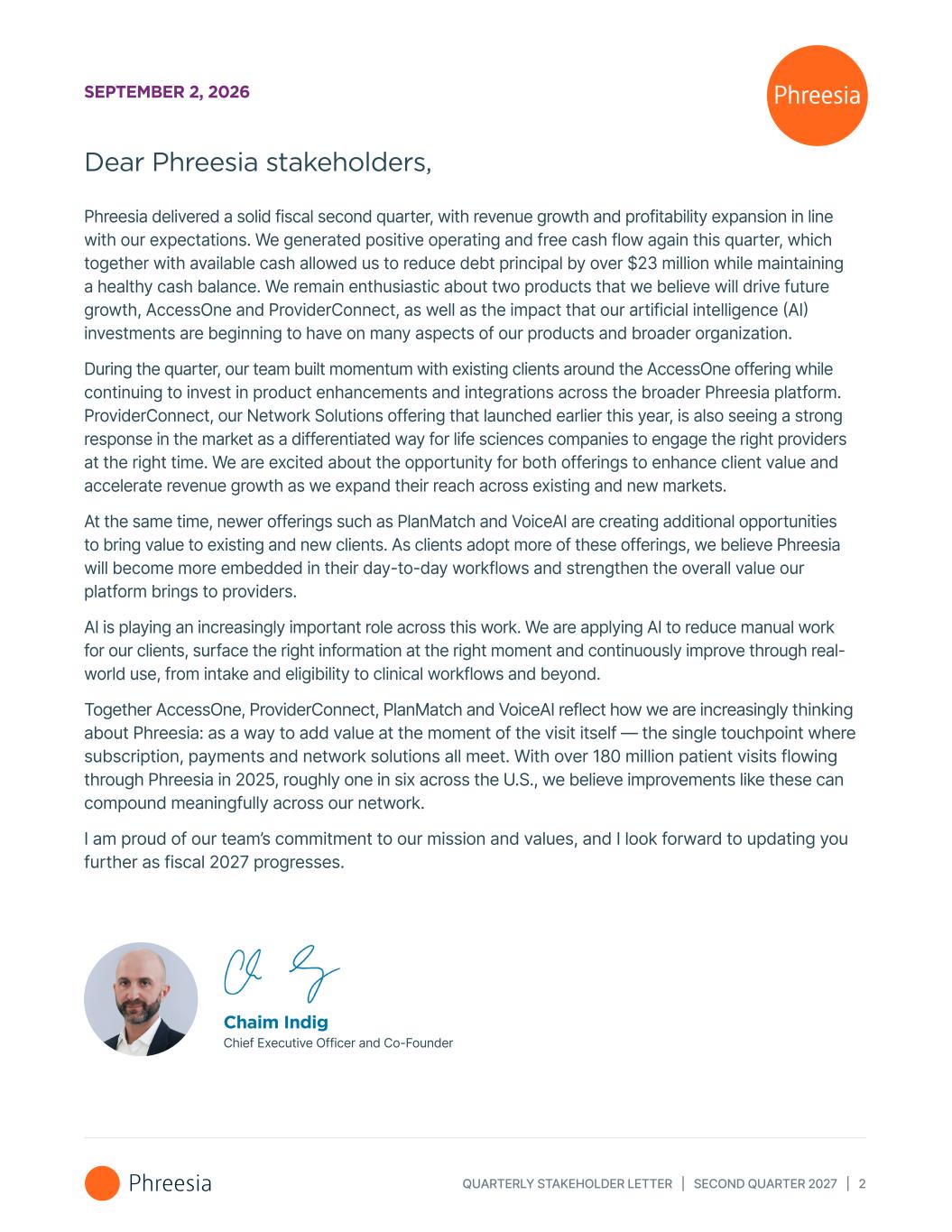
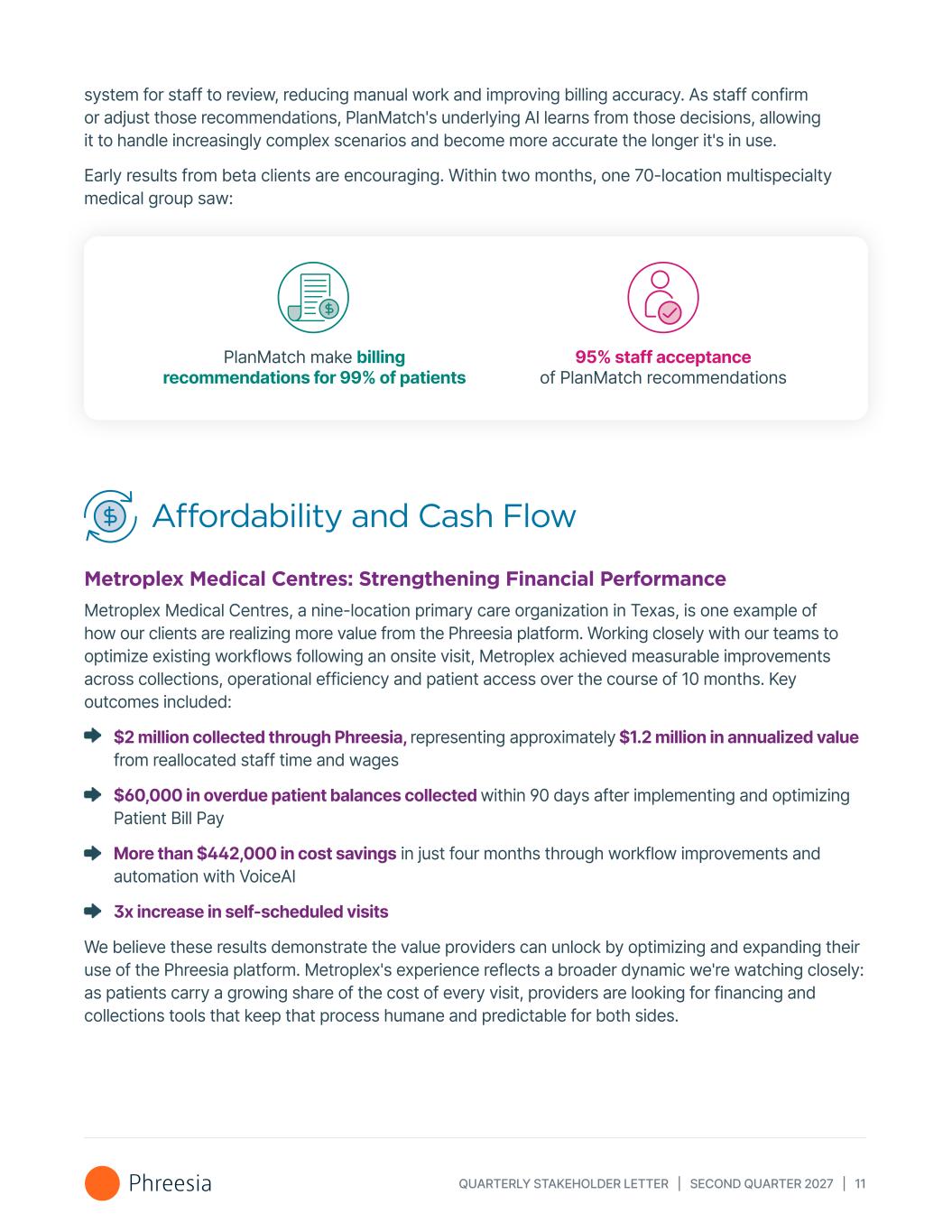
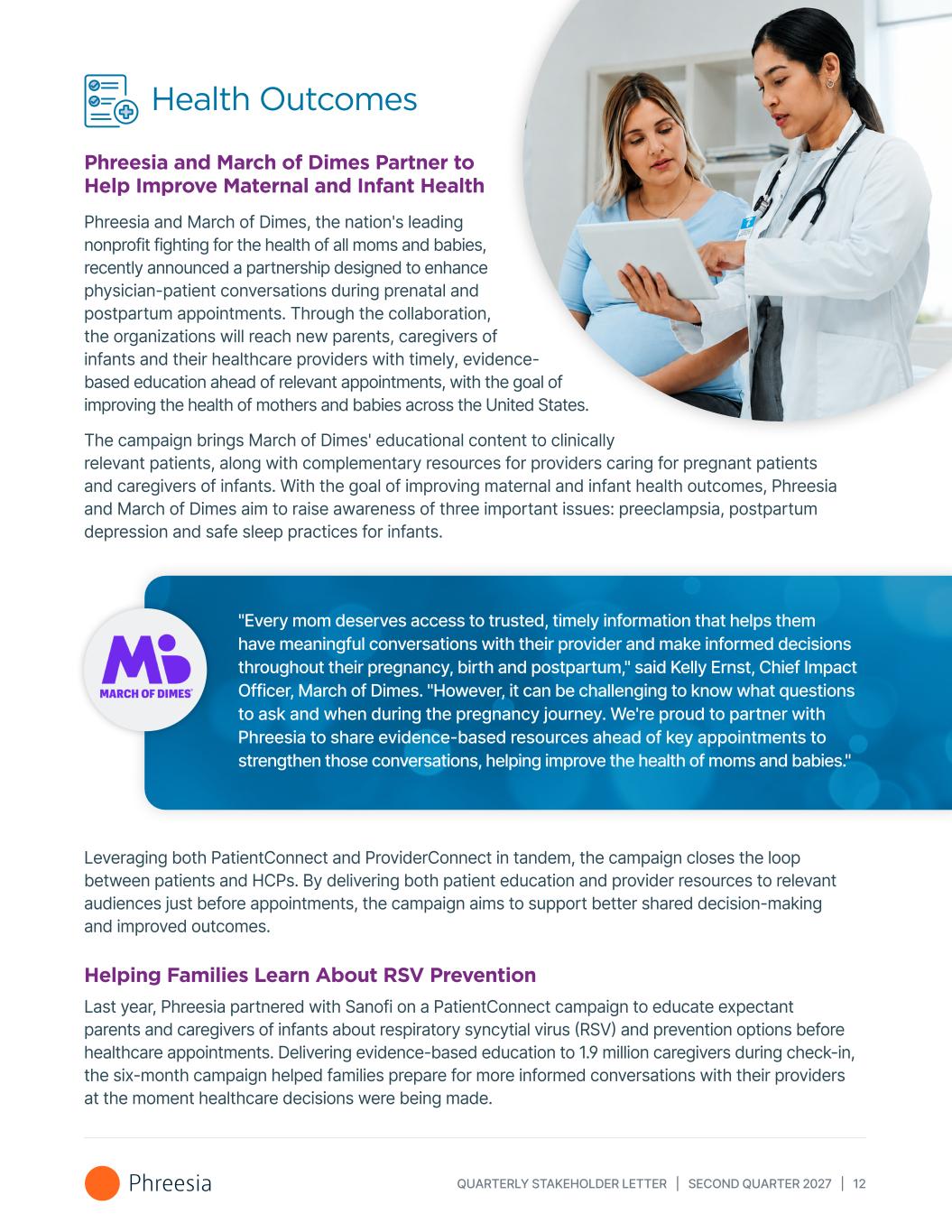
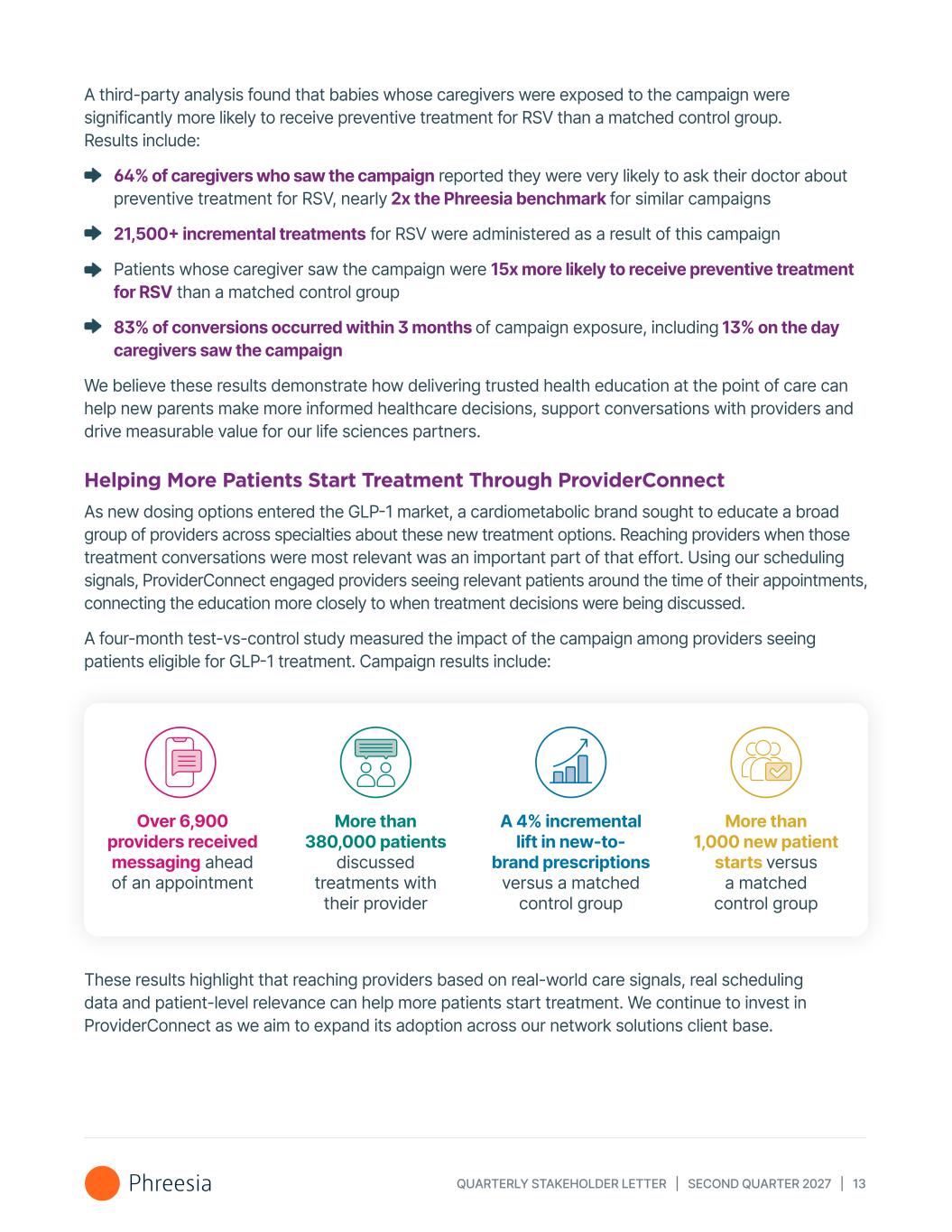
Thank you, Balaji, and good evening, everyone. Thank you for joining our second quarter fiscal year 2027 earnings call. We delivered a solid fiscal second quarter with revenue growth and profitability expansion in line with our expectations. We generated positive operating and free cash flow again this quarter, which together with available cash allowed us to reduce debt principal by over $23 million while maintaining a healthy cash balance. Bellagio will cover the results in our outlook. We believe we are uniquely positioned in the market through our diverse set of product offerings to drive meaningful value to every patient visit in the U.S. Access One is an important extension of our value proposition because healthcare consumers are bearing a greater share of the ever-growing cost of healthcare. We've heard from our clients and many other providers across the country that the need for a humane and predictable financing solution for healthcare consumers has never been greater. Provider Connect, our newest network solutions offering, also extends our value proposition and addressable market. Momentum for this new product continues to build. In the GLP-1 category, a four-month study showed a 4% incremental lift in new-to-brand prescriptions versus a matched control group and more than 1,000 new patient starts. I am proud of our team's commitment to our mission and values. Now I'll turn it over to Balaji to walk through Q2 results in our fiscal 2027 outlook.
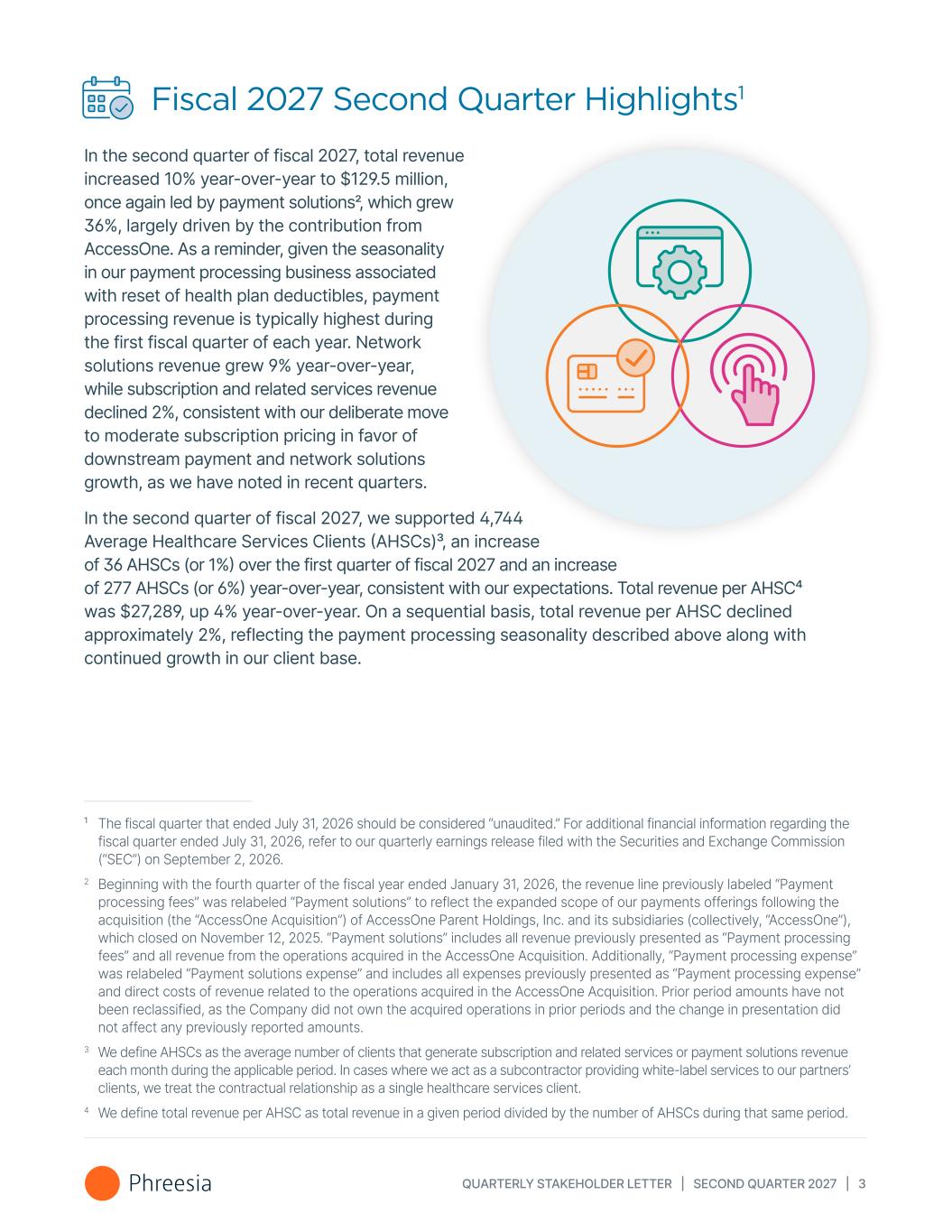
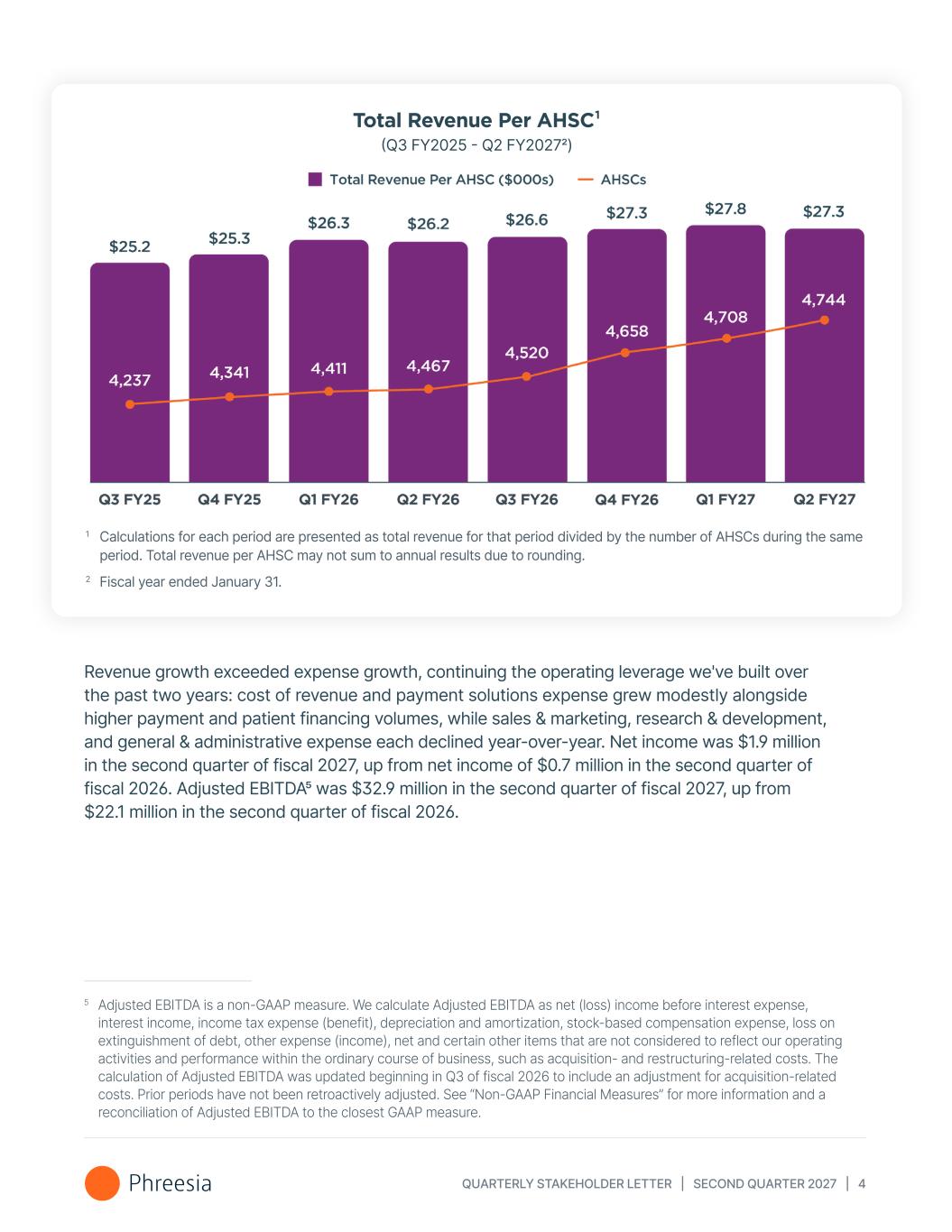
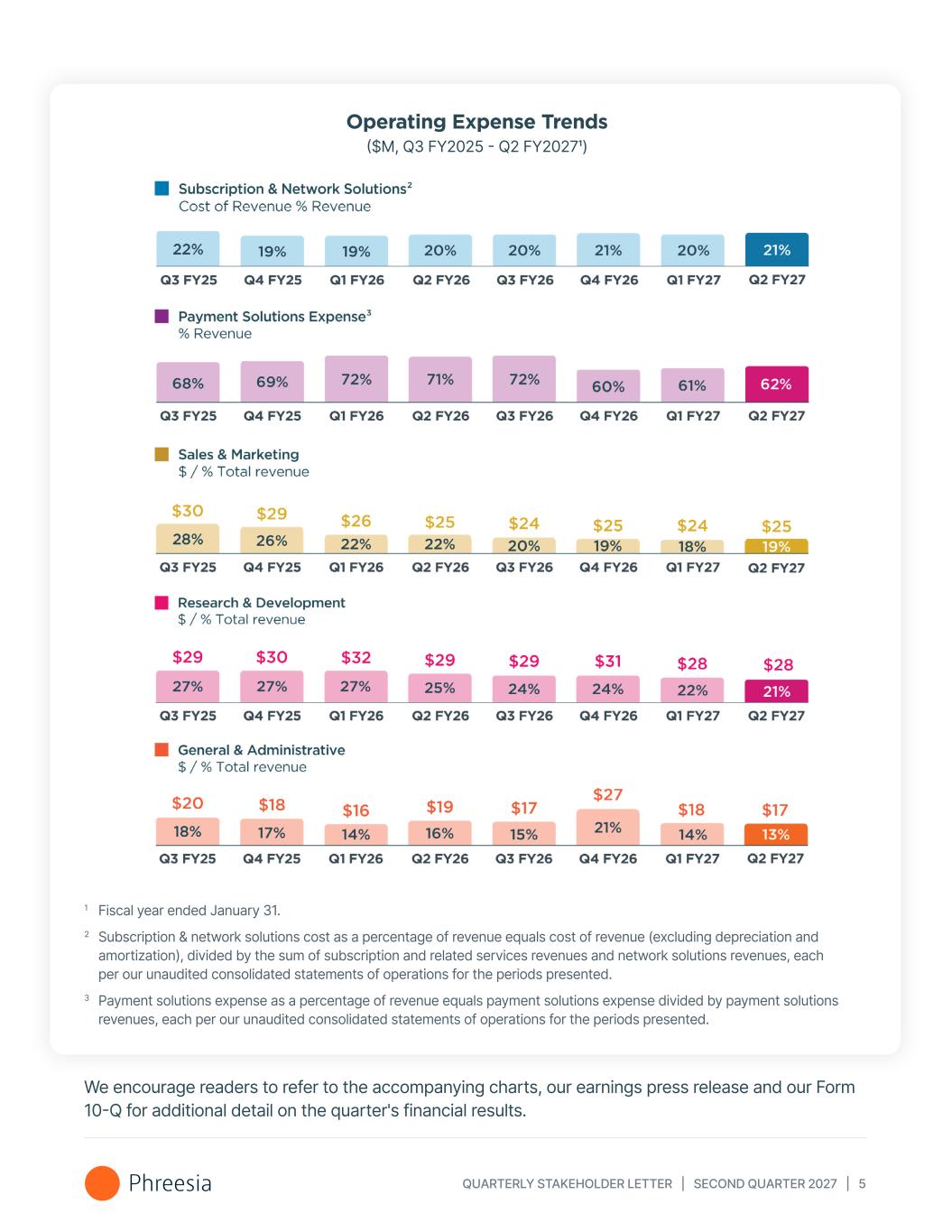
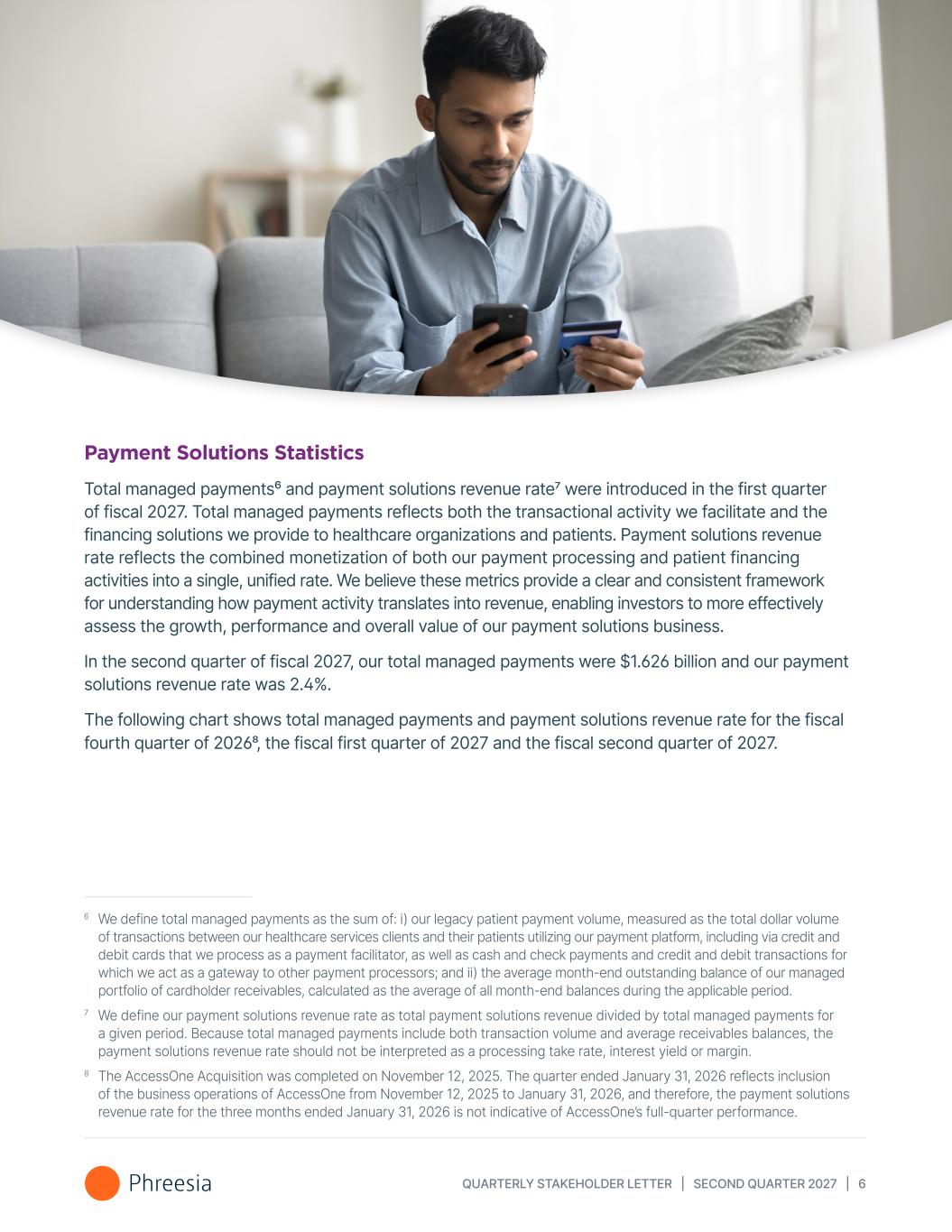
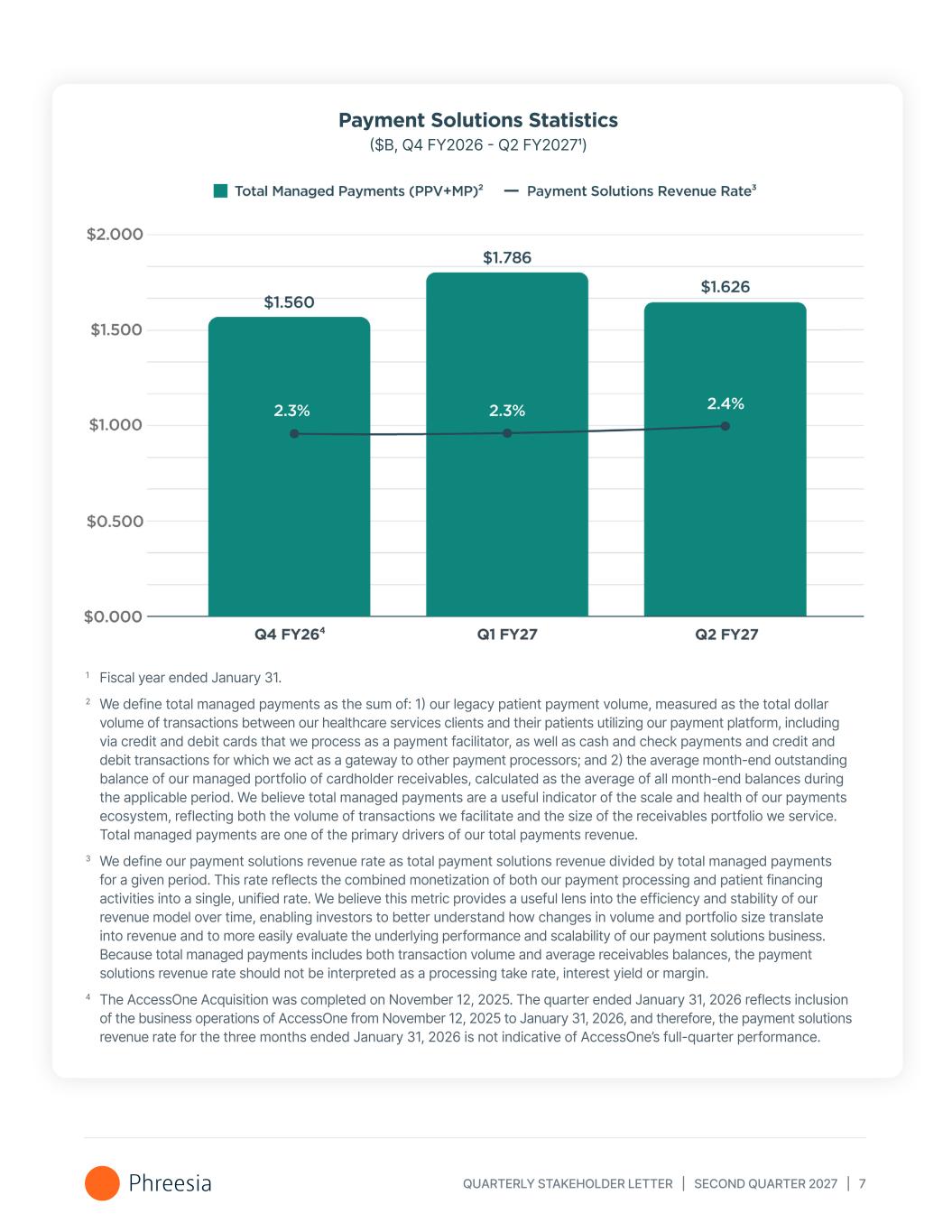
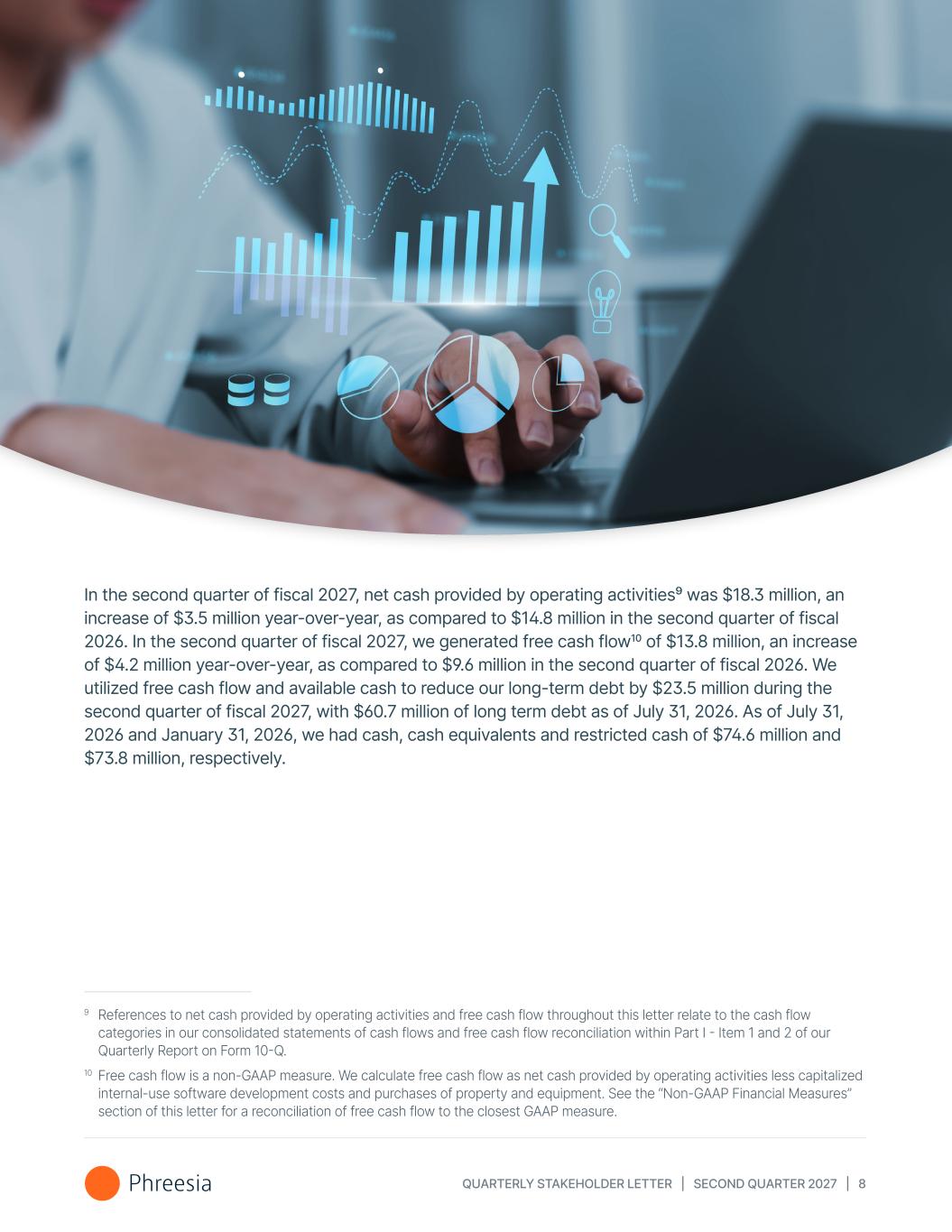
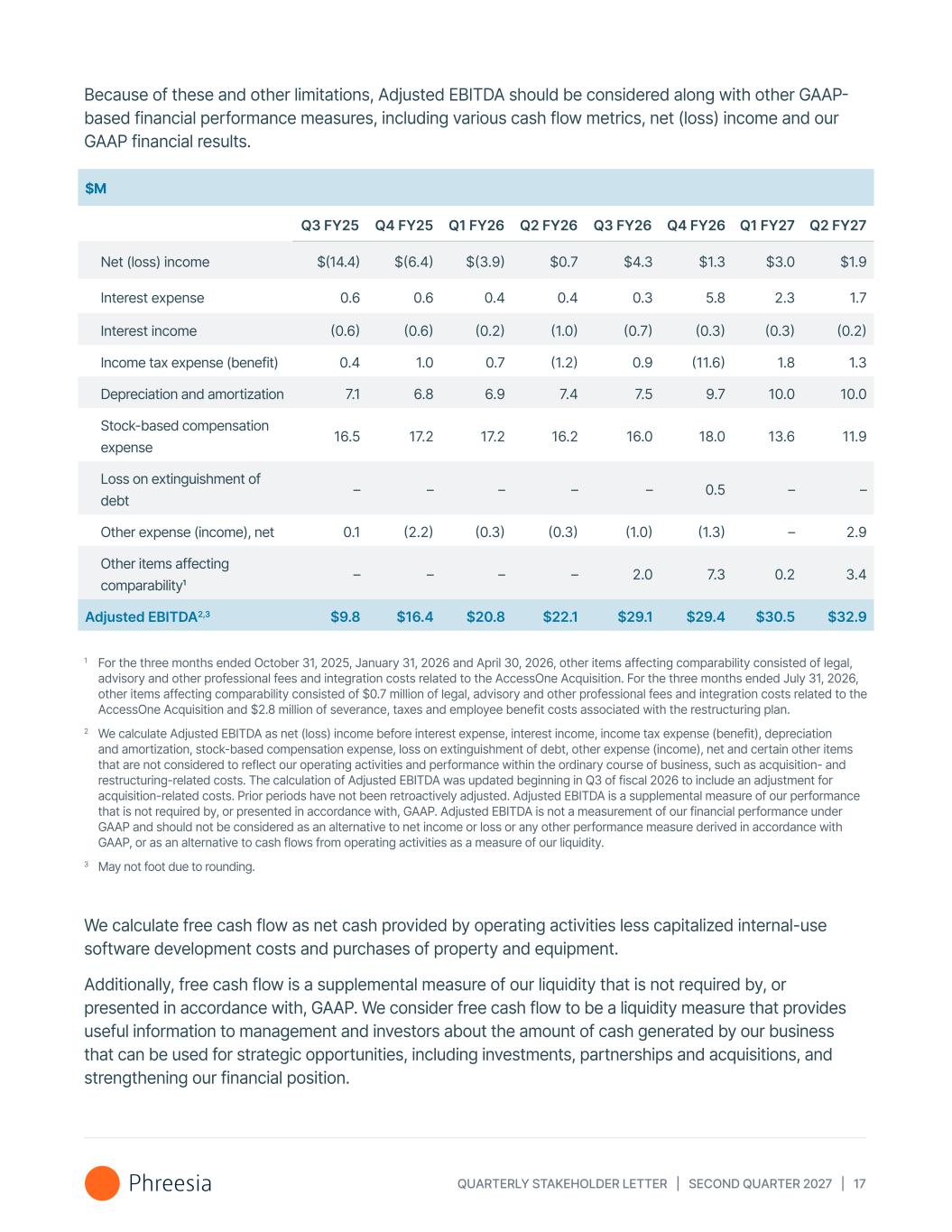
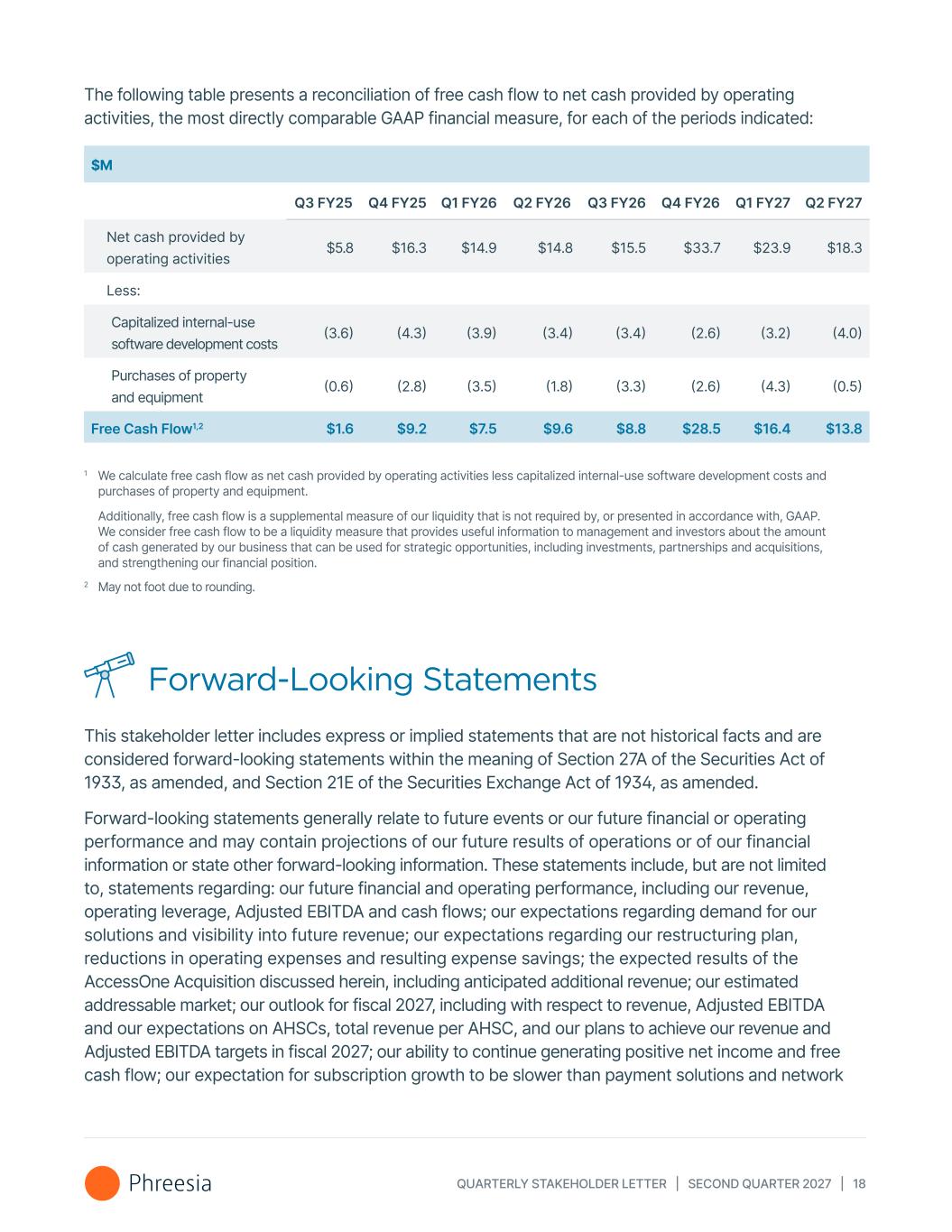
Thank you, Haim. Let me begin with a review of our second quarter financial performance, and we'll then dive into our outlook for fiscal year 2027. Revenue for the second quarter was $129.5 million, an increase of 10 percent year-over-year. On a sequential basis, total revenue declined approximately 1 percent from the first quarter, driven primarily by our legacy payment processing revenue. As a reminder, given the seasonality in our payment processing business associated with the reset of health plan deductibles. Payment processing revenue is typically highest during the first fiscal quarter of each year. We ended the quarter with average health care services clients of 4,744, an increase of 36 from the prior quarter and 277 from the prior year. Client additions in the quarter were in line with our expectations and consistent with our full-year outlook for AHSC growth in the mid-single-digit percentage range. Total revenue per AHSC was $27,289, up 4% year-over-year. On a sequential basis, total revenue per AHSC declined approximately 2%, reflecting the payment processing seasonality I just described, along with continued growth in our client base. Moving on to profitability, adjusted EBITDA was $32.9 million, an increase of $10.8 million year-over-year, with an adjusted EBITDA margin of 25%. Net income was $1.9 million, compared to net income of $700,000 in the prior year period, representing our fifth consecutive quarter of positive net income. Total managed payments were $1.626 billion in the quarter, and our payment solutions revenue rate was 2.4%. Now turning to the balance sheet and cash flow updates. We ended the quarter with $74.6 million in cash cash equivalents and restricted cash. This compares to $76.4 million in the prior quarter. We delivered our ninth consecutive quarter with positive operating cash flow and free cash flow. Operating cash flow was $18.3 million, up $3.5 million year-over-year. Free cash flow is $13.8 million, up $4.2 million year-over-year. This cash flow, together with available cash, allowed us to reduce debt principal by over $23 million while maintaining a healthy cash balance. We expect that the magnitude of improvement on a quarter-to-quarter basis to vary based on specific timing of invoicing and payments, which you can see in Working Capital along with CapEx. Our second quarter results demonstrate our team's focus on growing our network, expanding our offerings, driving operating leverage, and strengthening our balance sheet. I'd like to acknowledge the entire Fregea team for their contributions. Transitioning to our outlook for fiscal 2027. We are maintaining our revenue outlook for fiscal 2027 at a range of $510 million to $520 million. The revenue range provided for fiscal 2027 assumes approximately $37 million of contribution from Access 1 and no additional revenue from potential future acquisitions completed between now and January 31, 2027. We are maintaining our adjusted EBITDA outlook for fiscal 2027 at a range of $125 million to $135 million. The restructuring plan we implemented in May is expected to result in meaningful annualized run rate expense savings, which were reflected in the outlook we provided on March 30th and reaffirmed on May 27th. We are maintaining our expectation for AHSC growth in the mid-single-digit percentage range and for total revenue per AHSC growth in the low single-digit percentage range in fiscal 2027. Operator, I think we can now open up the lines for the Q&A session.
Operator
We will now begin the question and answer session. Please limit yourself to one question. If you would like to ask a question, please press star 1 to raise your hand. To withdraw your question, press star one again. We ask that you pick up your handset when asking a question to allow for optimum sound quality. If you are muted locally, please remember to unmute your device. Please stand by while we compile the Q&A roster. Your first question comes from the line of Sean Dodge with BMO Capital Markets. Your line is open. Please go ahead.
Yeah, thanks. Good afternoon. Maybe just starting on Access One, last quarter, you all talked about the changes you made to your securitization facility and how that enables you to offer the upfront funding to other non-investment grade clients. Just any updates you can share on how selling into this kind of new part of the base is going and then maybe just how the process of restarting the access one selling motion just in general is going.
Speaker 12
Thanks. Yeah, thanks, Sean. I'll start and kick it over to Hyam to add anything. We're feeling really good about this acquisition. I think better now than at the time when we closed the acquisition. We've got lots of conversations both internally and externally around the value proposition specifically to that segment of the market that you cited.
And so, you know, obviously these two things do take time, but I'd say the progress we've made over the past several months, you mentioned, you know, it starts with the securitization expansion and then it's just really go to market and, you know, product fit, everything like that I'm looking at Jaime's I agree you know we are seeing we are seeing some early wins in the market and hopefully in the next couple quarters we'll be you know talking about this a lot more but we are starting to see wins in the market and we're really excited the whole team is you know we're getting very very positive feedback from clients around the offering so existing clients so we are we're very excited we think this is it this is going to be a growth lever over the next couple of years.
Speaker 12
So stay tuned.
Operator
Your next question comes to the line of Brian Tankwilut with Jeffries. Your line is open. Please go ahead.
Hi, congrats on the quarter. This is Cameron on for Brian. Could you guys talk a little bit about what you're seeing in network solutions, particularly the areas you called out earlier in the year that you were having a lack of visibility in? Has anything changed there? And just any update you could give us there?
Speaker 12
Sure. So first of all, as you saw in a lot of our materials that we released tonight, we're speaking to total revenue. And so if you just sort of step back and think about where we are from a revenue perspective, it's pretty much the same place from a total revenue perspective. Underneath, we have seen a lot of progress on the second half in network solutions in terms of you know business activity the team has done an excellent job i think you know our new products like provider connect are resonating so um you know i think we're pretty pretty encouraged by where we are today relative 90 days ago or even 180 days thank you your next question comes from the line of stan berenstein with wells fargo your line is open please go ahead thanks for taking my questions i guess sticking with network um you know you pulled out in the
prepared remarks that you saw GLP one campaign that you tested and generated a positive ROI. Can you just comment on, you know, how that pilot went? Did it, you know, convert any, you know, follow on contract or any expanded opportunities as a result of the results that you saw in the pilot? Thanks.
Speaker 12
Yeah, thanks, Dan. And yes, we did mention that in our in our letter And it did. The answer is, yes, it did help convert some new business activity and relates to the prior question, too.
Operator
Your next question comes to the line of Jessica Tassan with Piper Sandler. Your line is open. Please go ahead.
Hi, guys. Thank you very much for taking the question. So our question is, is maybe can you help us understand your exposure to kind of EHRs that have a competitive check in management solution? And I think the AHSC growth continues to be really impressive to us. So, just interested to know, are these new sales occurring in providers whose EHR does not offer a check-in management solution, or just maybe can you update us on how you are selling into new AHSCs, just given the kind of changing competitive dynamics on the virtual intake management? Thank you.
Speaker 12
One of the greatest hits questions we've received for seven years, and I think the only kind of uh correction maybe we would make to your question jess um is i think you said changing dynamics and this is pretty much been you know sort of a normal dynamic uh for the entire history of the company um and you know we i think we're trying to be very clear about where we differentiate ourselves um from a product perspective from a go-to-market perspective um how we work with clients etc um so there's really nothing new to call out but they are all um competitive with us and that's just the nature of the space. And I think as we've talked about for the last several years now, we do lean into different markets really based on the economic profile. That is a big influence in how we make decisions. But again, nothing really new to report there.
I would probably add that the team is doing just a really great job and our clients seem to be very very happy as i spend a lot of time with them your next question comes to the line of scott schoenhaus with keybank your line is open please go ahead hey thanks guys for taking my question you guys had a nice quarter in network solutions anything specific to call out there if if it indeed is maybe a little bit from provider connect early traction and then between the two budgets between provider connect and your you know legacy ddc are there anything notable in
Speaker 12
terms of the macro or the backdrop um between those two that's evolving or changing thanks i mean just the earlier question around you know as the years progress um we've had some nice you know wins the team has done an excellent job and i think you know just point out the the aspect of our business model part of the reason the team's able to do an excellent job is because we're also adding uh more footprint on the provider side uh so those things go together so all that continues to have good uh momentum your next question comes from the line of daniel gross light with city
Speaker 13
your line is open please go ahead hello daniel from city your line is open please go ahead hi guys thanks for taking the question um i want to focus a little bit on the uh the subscription offering and really the pricing within subscription i know there's a deliberate effort uh on your end to kind of uh moderate price a little bit to encourage more downstream revenue from your from your HSCs. I'm curious if you can maybe provide a little bit more guidance on how we should be thinking about pricing within the subscription offering and then on a sequential basis for the remainder of the year, if we should think about that line item as flat sequentially in 3Q and 4Q. Thanks.
So I'll let Eladji answer the question with specifics on how to think about it but i think what we're seeing now is providers are under a significant amount of strain with a lot of the changes happening across the payer and as we've always said throughout our history our one of our growth stars is just making sure that we could be great partners to those to those providers that are serving american patients and so we're we're acutely aware of having to provide as much value to them right now while they're facing severe economic strain because of the changes in the payer dynamics.
Speaker 12
Yeah. And I think to Heim's point, you have lots of data on us now over the years. I remember Heim saying almost the same thing we're doing during the pandemic and obviously a different set of challenges then. And what we did in terms of how we work with clients then uh we're pretty happy with those results so uh i think this is a very similar situation and then daniel just to be helpful on the modeling side um i think if you just sort of listen to the commentary here we're maintaining our revenue if you took uh some of that revenue the second half out of subscription and uh we do have a little bit more clarity on the second half on network solutions you could bump that up but i think overall nothing's really changed with total revenue perspective and things are going in the direction we anticipated your Your next question comes in the line of Ryan McDonald with Neenam.
Operator
Your line is open. Ryan, please go ahead.
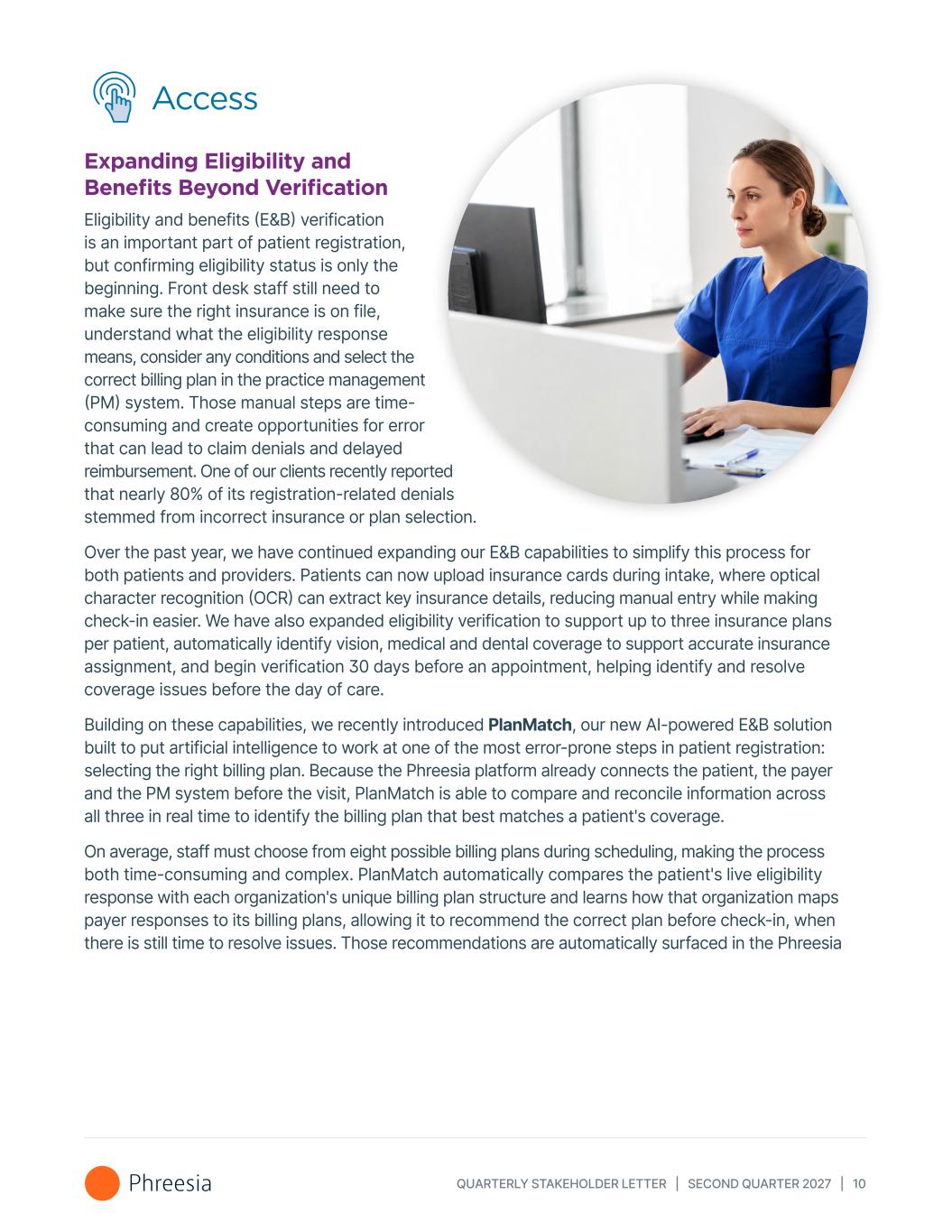
Thanks for taking my questions and congrats on a nice quarter. Maybe to discuss sort of the product strategy and R&D investment that you're making for the provider practices and new features and functionality. You know, it seems like with plan match and sort of, you know, expansion of capabilities around eligibility and verification that you're sort of continuing to round out, let's call it the front end of the revenue cycle there. I think you offer payment estimation and coordination of benefits now. How do you think about sort of additional expansion into areas like prior authorization, given it's a high value problem? You talked about providers being under a lot of financial strain. And if you look at that area, is there a way to monetize that it's more directly monetizable for freesia when the provider benefits and sort of shifting the pricing model over time?
Look, Carmela, I think what you highlighted, you did a great job of highlighting some of the things that have been just wildly well received by our client base as of late. And I think the front-end revenue cycle is an area that just has a lot of room for continuous improvement. And, you know, we expect to continue to help our clients out. We're not going to comment on some of the new products that we are coming out with, but we are very excited about our ability to help providers run their practices in the most thoughtful and efficient manner while helping with them with their revenue cycle and all their other operational needs. So we are doubling down and continuing our commitment in providing phenomenal tools to providers that help them help their patients.
Speaker 12
Yeah, the only thing I was going to add is, you know, Ryan, the Access One thesis was really exactly an extension of everything you articulated.
Operator
Your next question comes from the line of Richard Close with Canaccord Genuity. Your line is open. Please go ahead.
Yes, thanks for the question. Congratulations on the quarter. Just maybe on the AI front and maybe diving a little bit deeper into Ryan's last question, but like on the payment side, whether it's your patient payments, you know, your legacy offerings or like with Access One, How are you thinking the opportunity to, you know, inject AI functionality into that, drive, you know, greater engagement with patients? Just a little open-ended question, but curious on your thoughts.
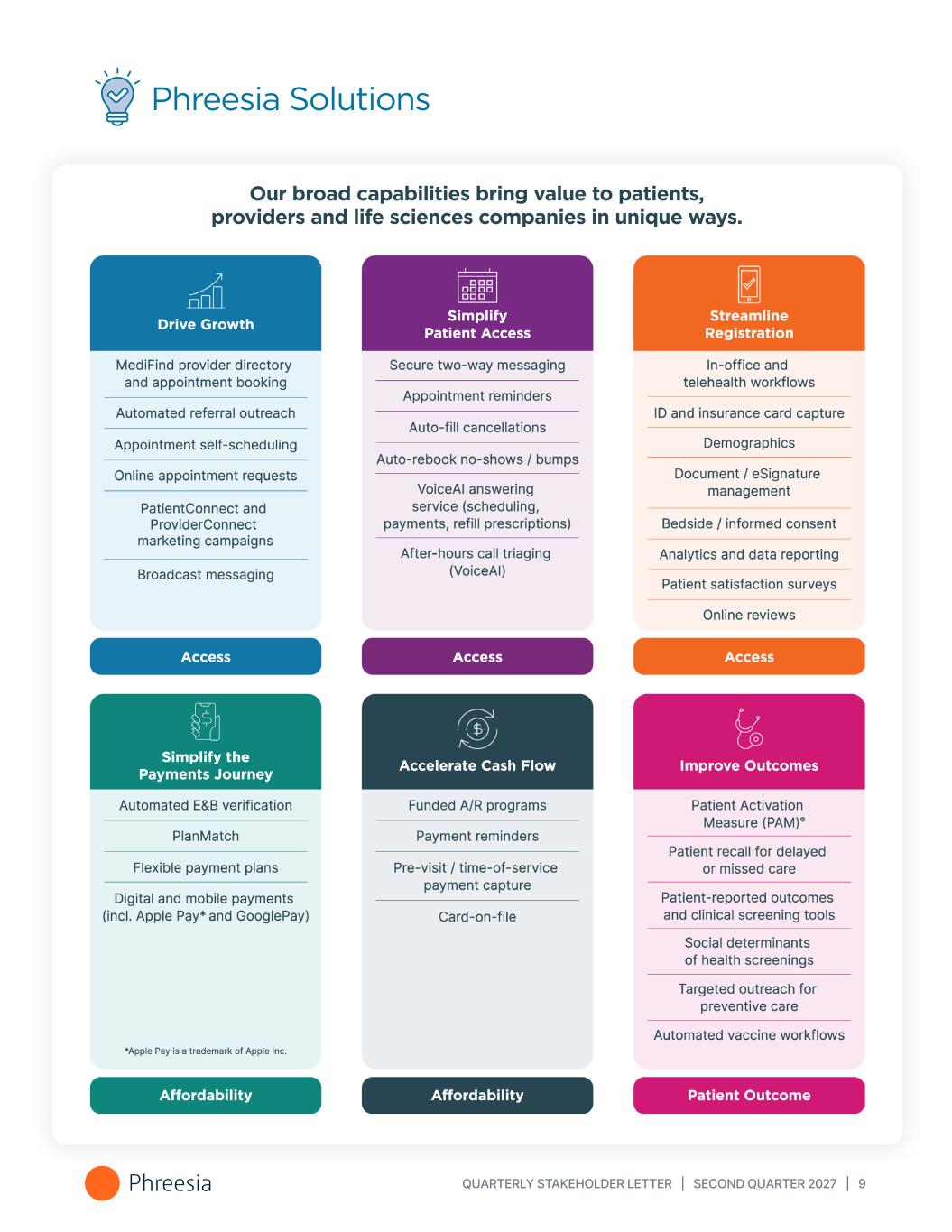
I think we are very thoughtful. So obviously, we're embracing AI across our organization, and it's had meaningful impact on all aspects of how we operate, run, and build product at Freesia, inclusive of selling product, supporting it for our clients. And as I think about new products that we're building, there are ones such as Voice AI that change how the providers are engaging with their patients. There's things like PlanMatch that allow them to do things that were just human in the loop before. And now we're automating how they understand and pick the right plan. And those are all things that, frankly, we're just hard to imagine doing in a non-AI world. And as we keep investing in new products in and around network solutions and in and around payments and around workflow, our realization is that AI is not just a way of thinking. it's allowing us to do things that frankly are we're beyond the scope of imagination even three to five years ago and empowering our team to be able to think that way has opened up massive opportunities and given us the ability to test out those opportunities and those ideas in a much faster more cost-effective manner and we've seen that throughout the operations of the business where we were able to produce things put it out there see its reaction and at the same time then very effectively then scale it if it does make sense so ai has frankly changed the playing field and from my own personal perspective it made me more excited about freesia and what lays in front of us and the opportunity set than i would say ever in our history and i think we're well-positioned as an organization to not only continue to grow, but frankly, in the future, I think, accelerate our growth.
Operator
Your next question comes from the line of Jalendra Singh with Truist Securities. Your line is open. Please go ahead.
Hi, this is Peyton Engdahl. I'm for Jalendra. Thanks for taking my question. I just wanted to hit on the EBITDA performance in the quarter. It was another solid quarter on the EBITDA line. So just want to get your thoughts on why you guys decided to maintain the EBITDA guidance there? Does that primarily reflect the continued prudence around network solutions revenue and the mix with that? Or is there anything you want to call out incremental that you were expecting in the second half? That's why you guys decided to maintain.
Speaker 12
Yeah, Peyton, I'd say it's a host of things. I think that we have been, our team has done an excellent job and been very disciplined about expense management and around return on investment. And I think we've shown that over time we wanna leave ourselves room to make investments for growth. And we've done that for many, many years. It's that, it's the revenue mix piece is sensitive. That's another component of this. AI is another one. I mean, as you probably know from following other companies, it is a very dynamic and fluid time. And we're in the early innings of our AI deployment. And so we also want to be kind of prudent about how we share that as well. So it's all of those things, but nothing inconsistent with how we thought about investments in the past.
Operator
Your next question comes from the line of Alexei Gogolov with J.P. Morgan. Your line is open. Please go ahead.
Hi, this is Destine Jackson on for Alexei. Thanks for taking my question. As you moderate your subscription pricing to drive downstream payments and network growth, how are retention and attach rates you all have in, and how should we think about the long-term mixed shift in revenue per client?
Speaker 12
You might have to repeat that. There are like a bunch of things in there, Destiny, if you repeat that question. As you moderate the subscription pricing to drive down the payments and network growth, just how are you thinking, or what are you seeing in terms of retention and attach rates um in terms of how the how are they robin and then the long-term makeshift and revenue per client yeah what what we'd say there is we holistically think about total revenue i think we've been clear about that and i think haim's point earlier about really working with our clients um through the operating environment they're in is what really rules the day and i think we're going to continue to communicate with all of you about total revenue uh thinking about total revenue per client, I think you'll see the mix fluctuate. I think, you know, that's just something that we think is okay and is a sign of our diversity and, you know, our business model. So I would just say fluctuation more than anything else. And we'll try to, you know, get in front of that as much as we can with all of you.
Operator
Your next question comes from the line of Ryan Halstead with RBC. Your line is open. Please go ahead.
Good afternoon. Thanks for taking the question. Maybe a question regarding your payment solutions business. You know, any color on macro trends into patient volumes, you know, from your perspective of facilitating 180 million visits? And then, you know, I know, obviously, you mentioned that the deductibles reset last quarter, just any visibility into, you know, pace of how patients are kind of, you know, getting through their deductibles into the back half of your year?
Speaker 12
Yeah, I mean, I think we look at all this data very carefully and do a lot of trending. I think we did talk about earlier this year, there being a little bit more weakness even beyond seasonality, but nothing really notable to call out in the second quarter as it relates to volume trends or as it relates to deductible sort of reset trends. So nothing to call out.
Operator
We have now reached the end of the Q&A. I will now pass the call off to Haim for closing remarks.
I'd like to thank everyone for joining us for another earnings call, and we'll talk to you all in 90 days. And if you have any questions, please feel free to reach out to Balaji, investors at freesia.com, or myself. Thank you, everyone, and have a great evening.