Operator
Good morning, ladies and gentlemen, and welcome to the East Group Properties 2nd Quarter 2026 Conference Call and Webcast Conference Call. At this time, all lines are in listen-only mode. Following the presentation, we will conduct a question and answer session. If at any time during this call you require for immediate assistance, please press the star zero for the operator. This call is being recorded on Thursday, July 23rd of 2026. I would now like to turn the conference over to Marshall Loeb, the CEO. Please, go ahead.
Good morning, and thanks for calling in for our second quarter of 2026 conference call. As always, we appreciate your interest. I'm happy to say that joining me on this morning's call are Reid Dunbar, our president, Stacey Tyler, our CFO, and Brent Wood, our COO. Since we'll make forward-looking statements, we ask that you listen to the following disclaimer.
Speaker 15
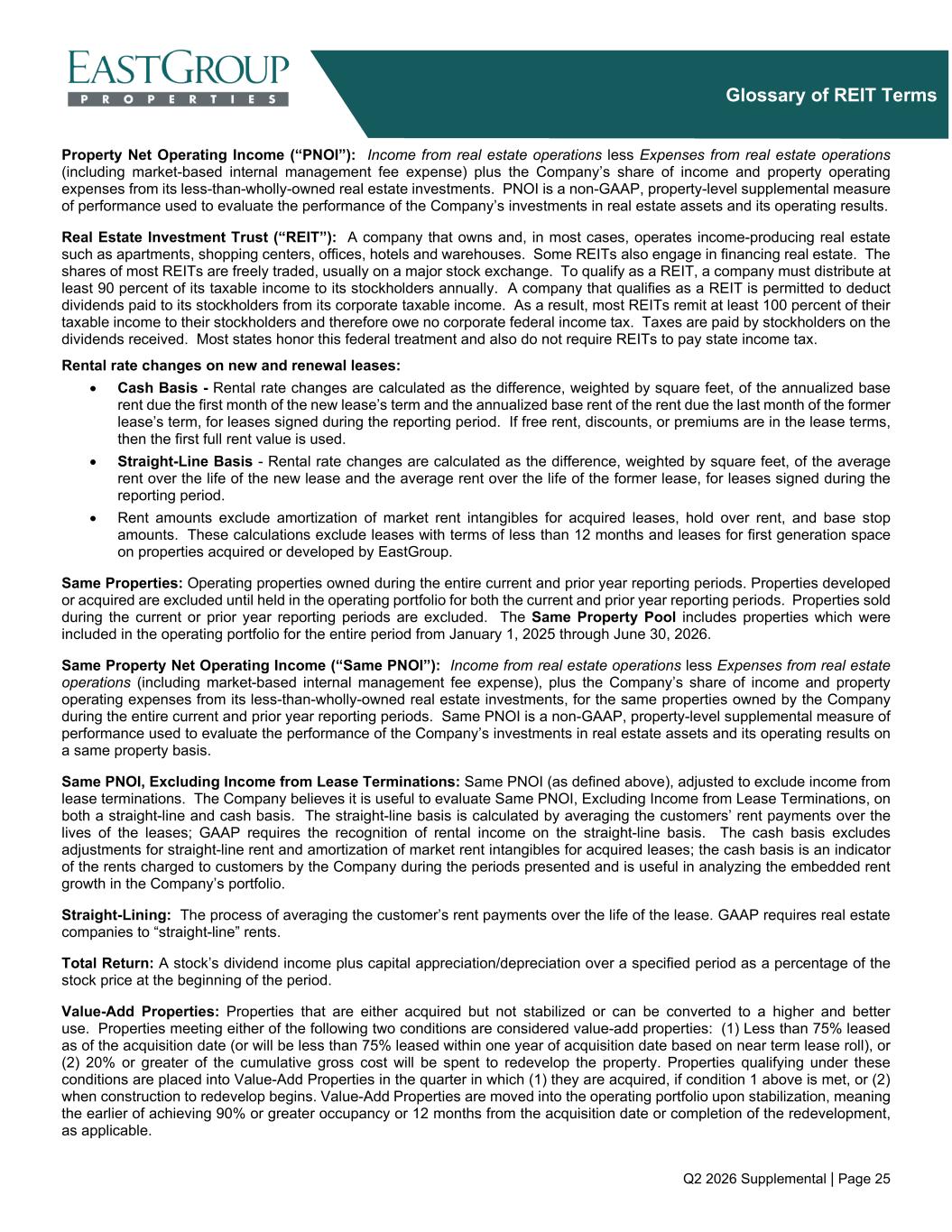
Please note that our conference call conference call today will contain financial measures such as PNOI and FFO that are non-GAAP measures as defined in Regulation G. Please refer to our most recent financial supplement and our earnings press release, both available on the investor page of our website, into our periodic reports, furnished or filed with the SEC, for definitions and further information regarding our use of these non-GAAP financial measures and a reconciliation of them to our gap results. Please also note that some statements during this call are forward-looking statements as defined in and within the safe harvors under the Securities Act of 1933, the Securities Act of 1934, and the Private Securities Litigation Reform Act of 1995. Forward-looking statements in the earnings press release, along with our remarks, are made as of today and reflect our current views of the company's plans, intentions, expectations, strategies, and prospects based on the information currently available to the company and on assumptions it has made. We undertake no duty to update such statements or remarks, whether as a result of new information, future or actual events, or otherwise. Such statements involve known and unknown risks, uncertainties, and other factors that may cause actual results to differ materially. Please see our SEC filings, including our most recent annual report on Form 10-K, for more details about these risks.
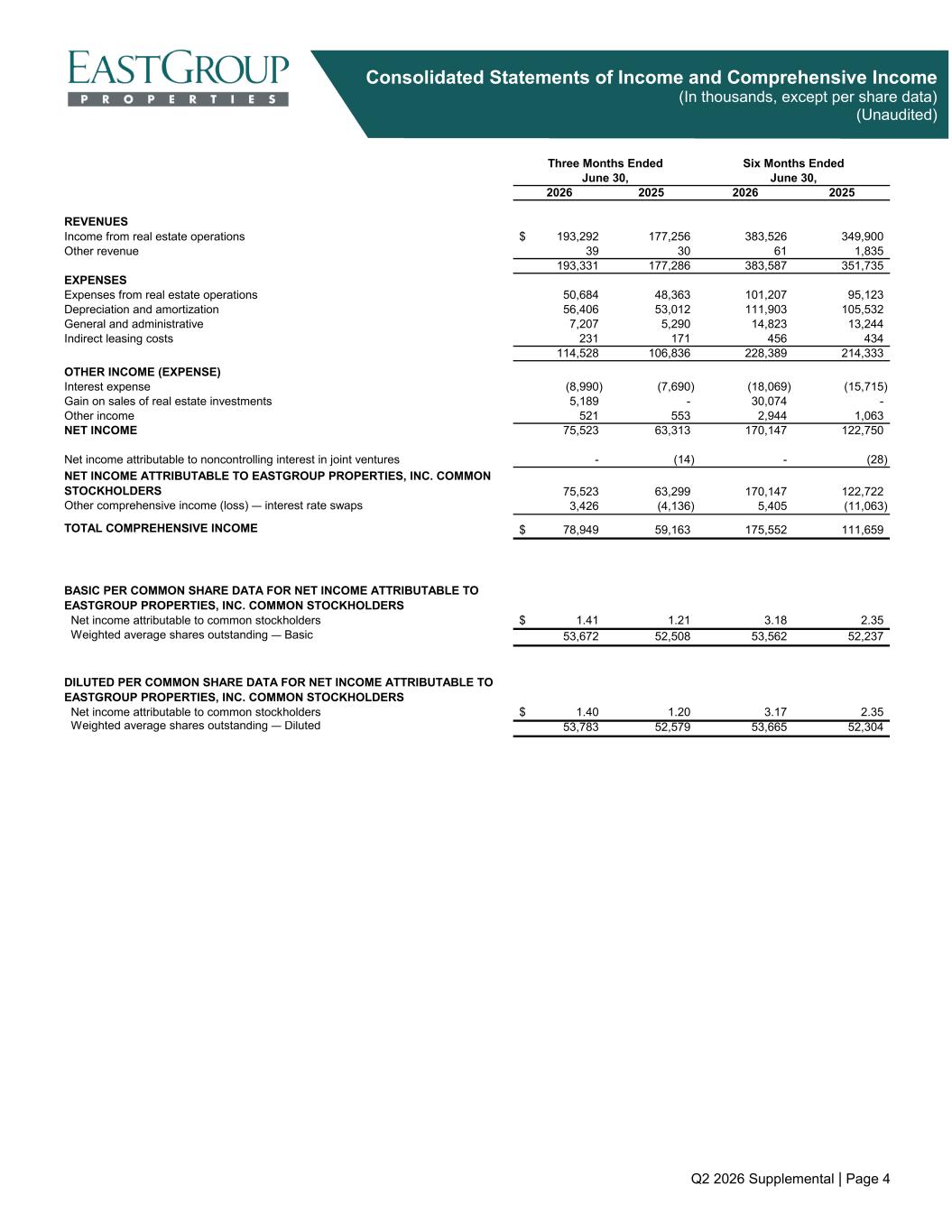
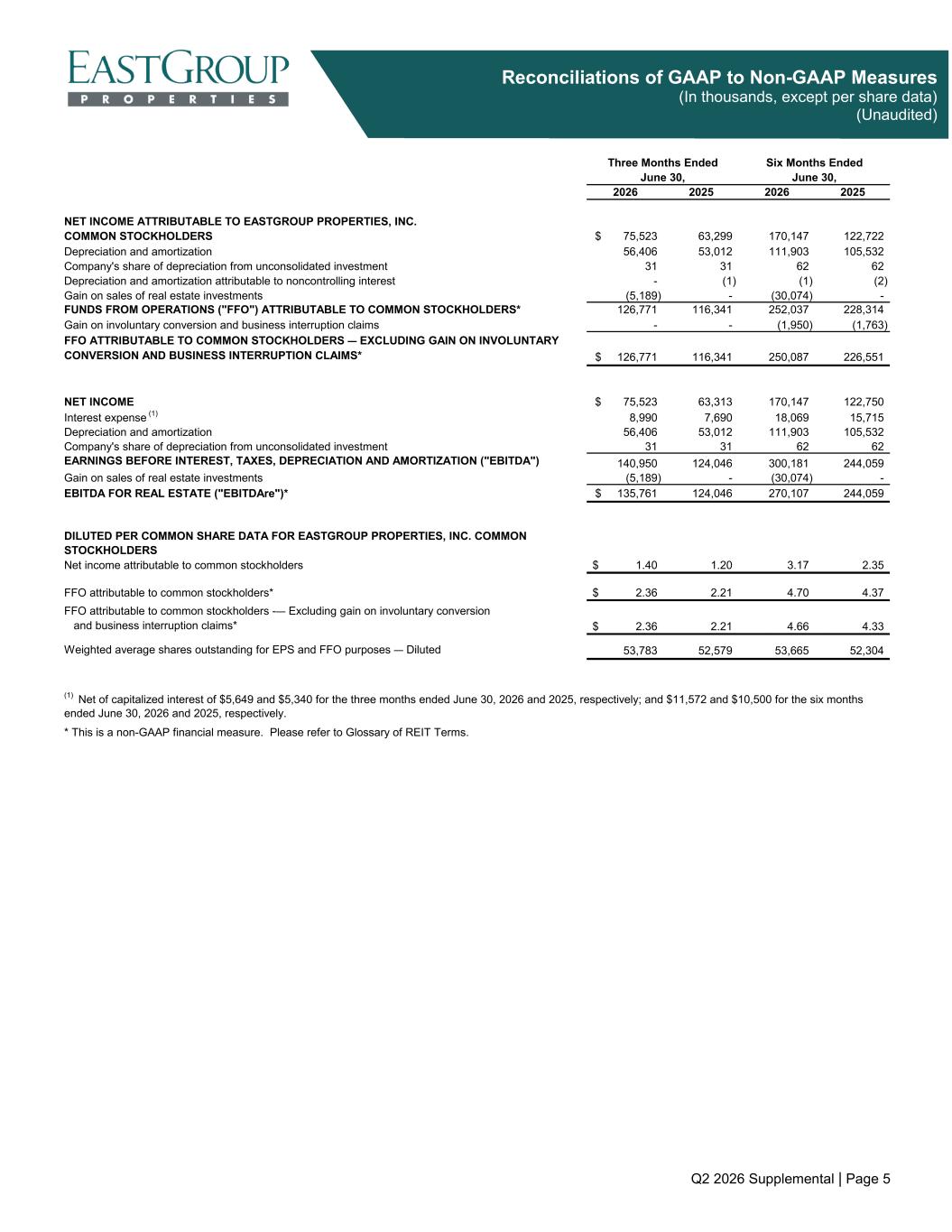
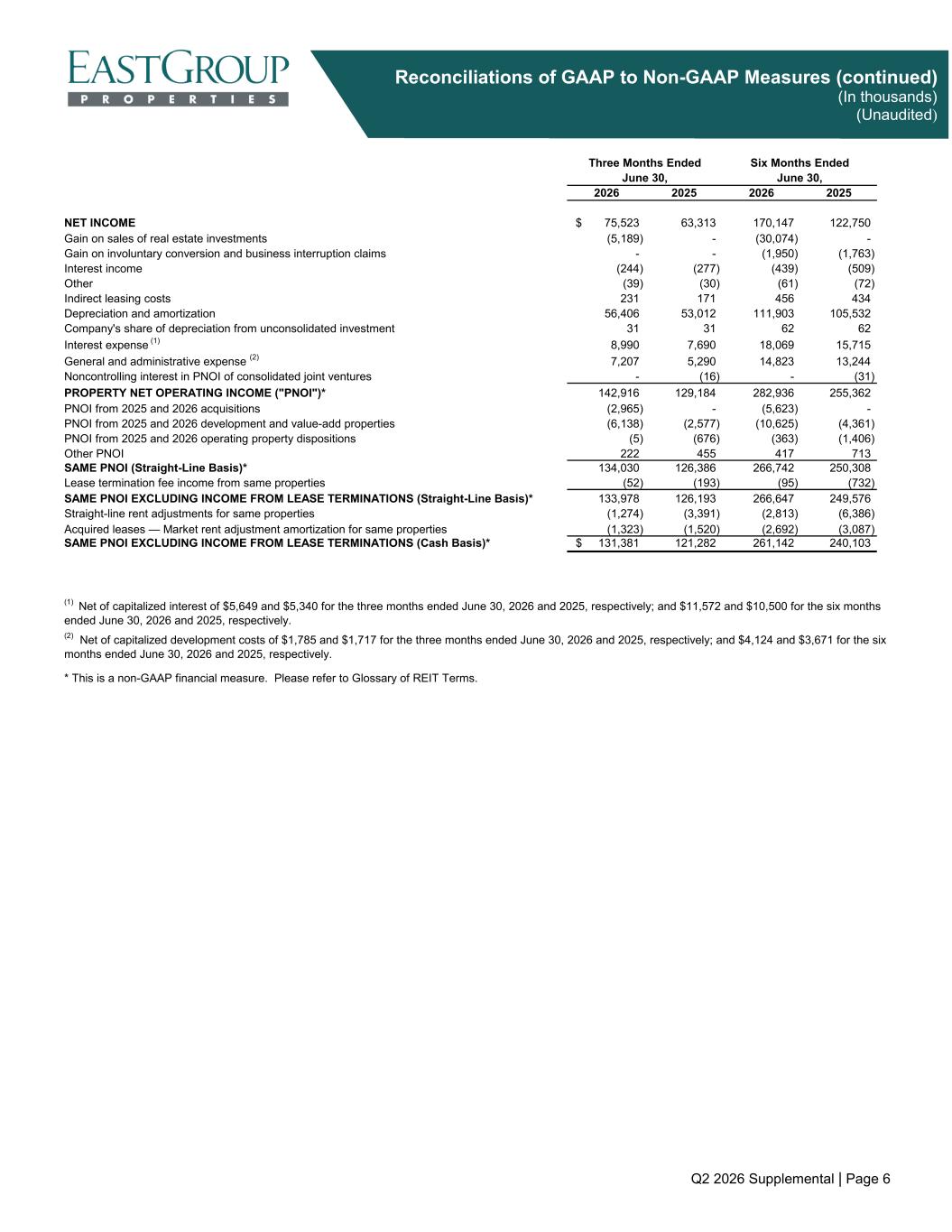
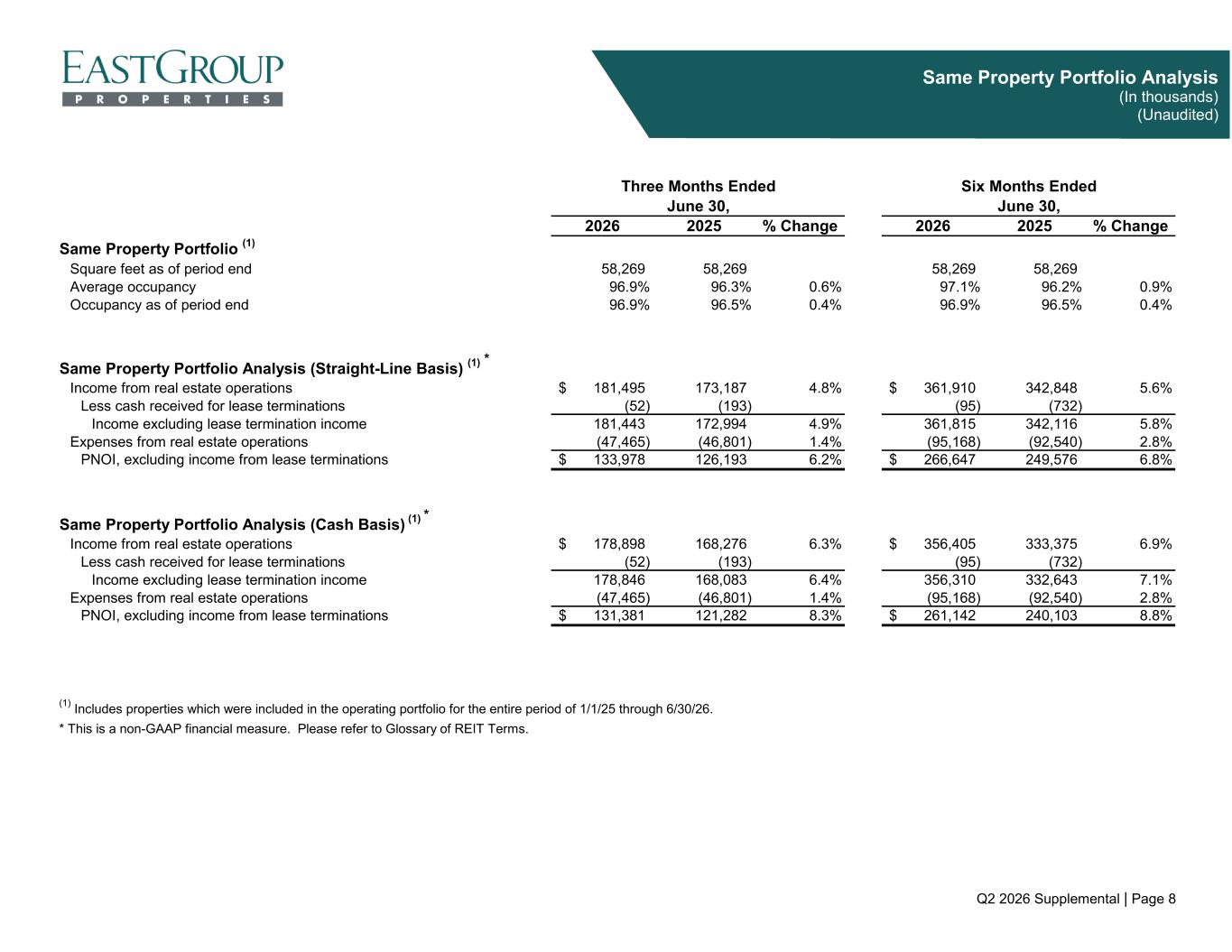
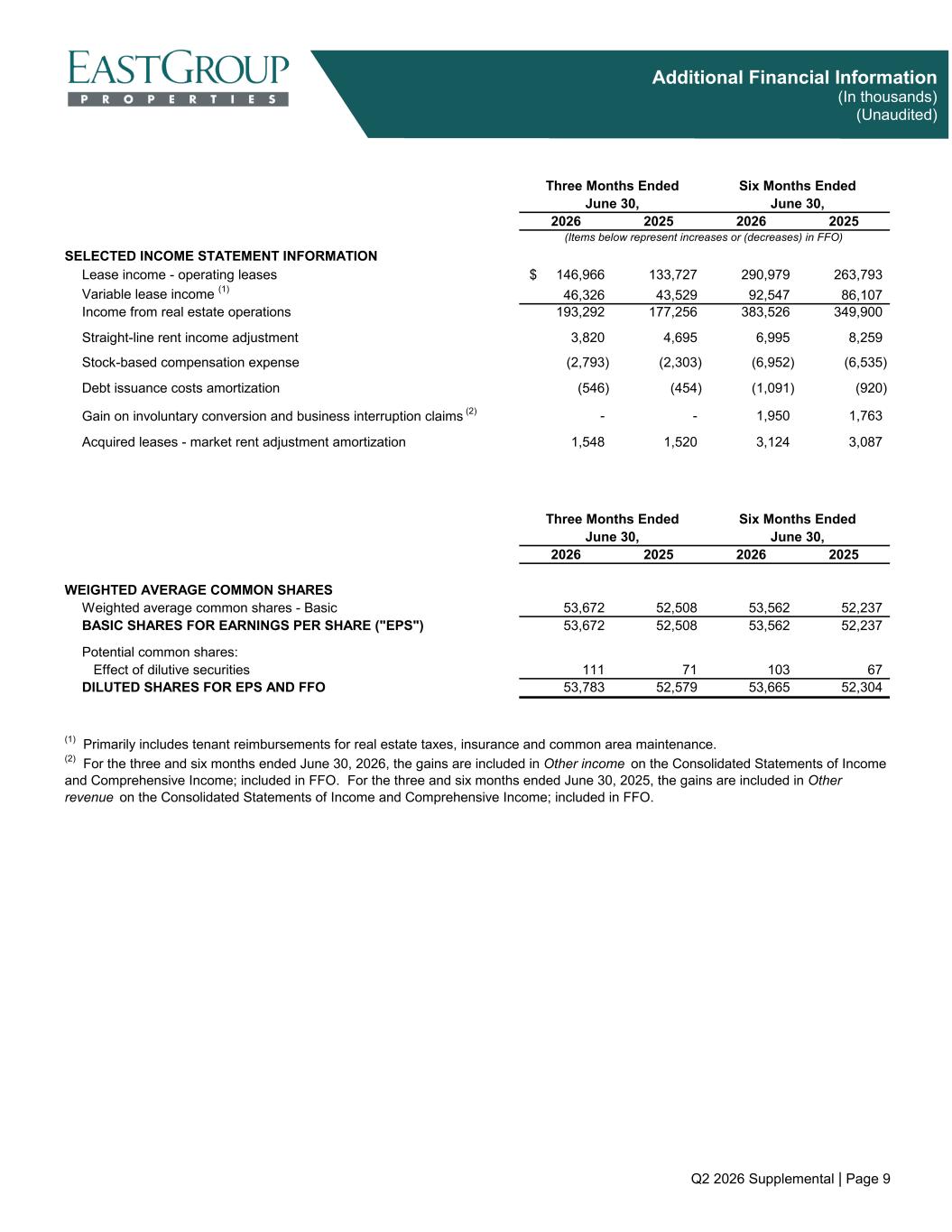
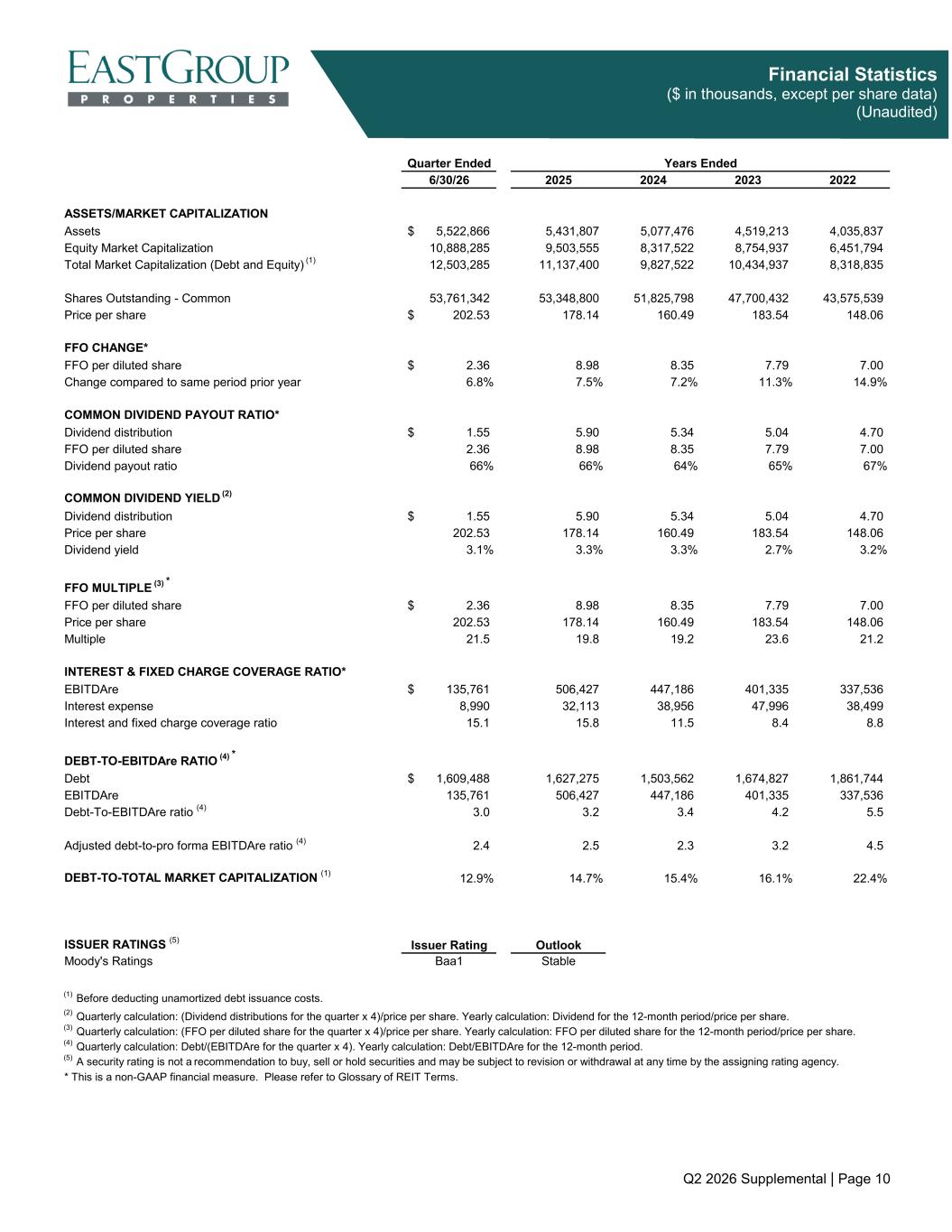
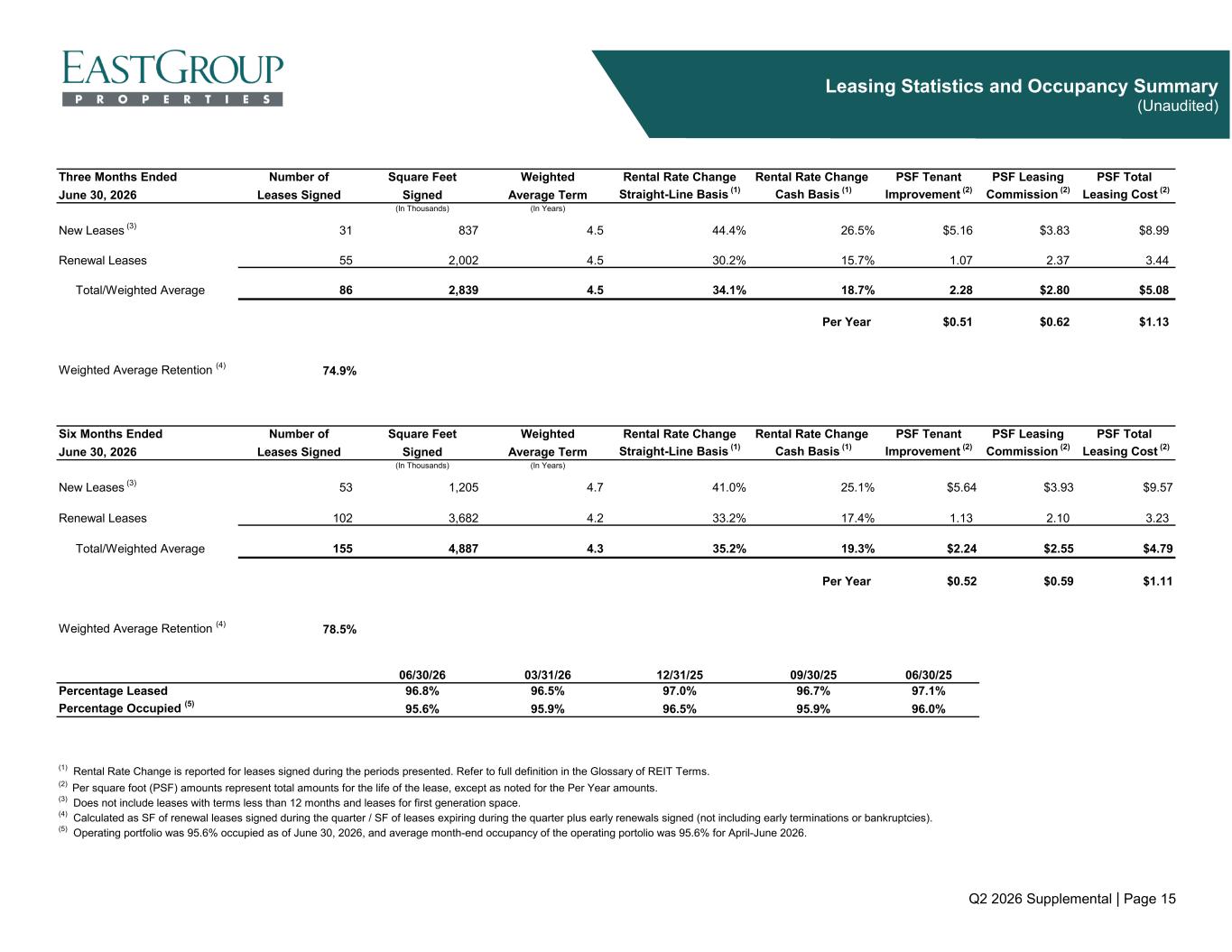
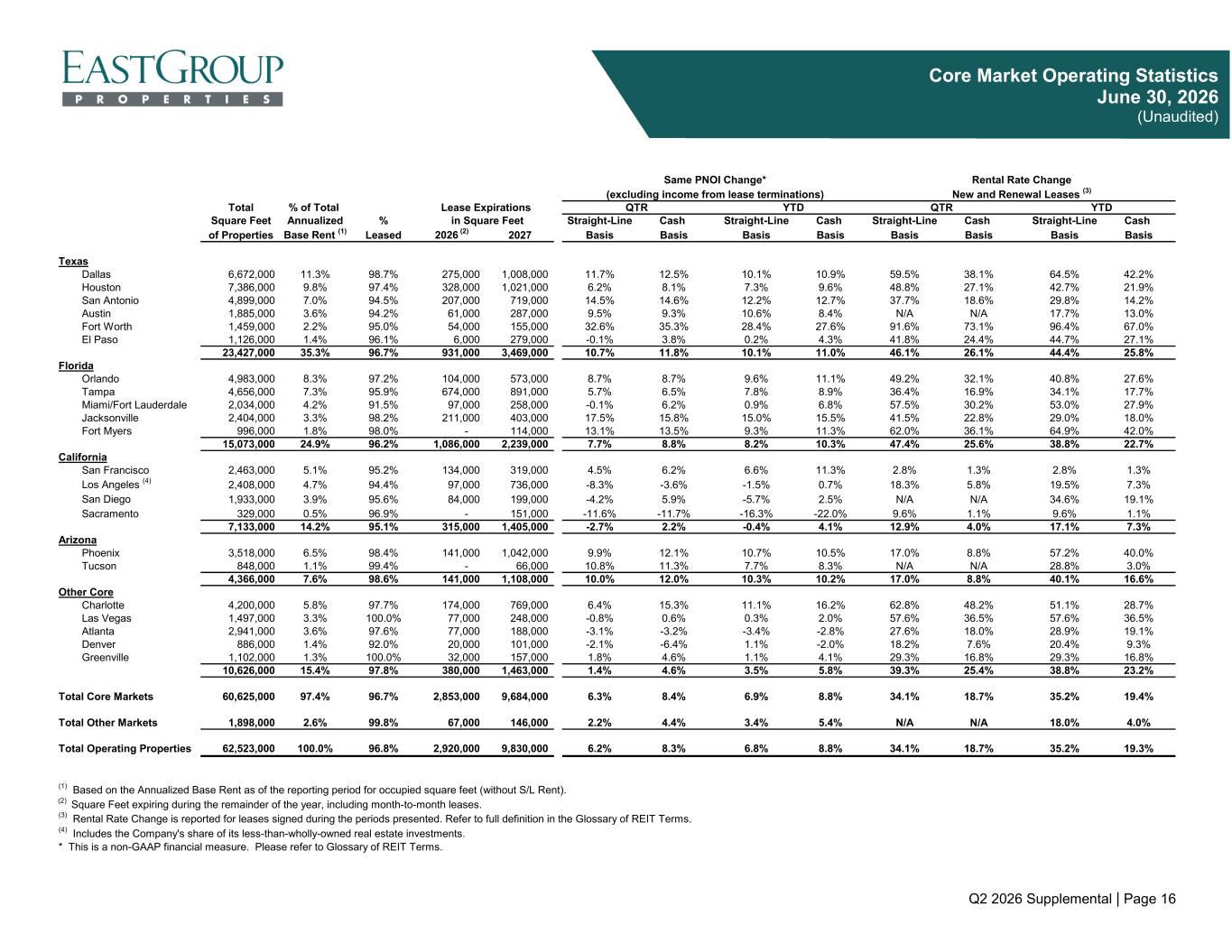
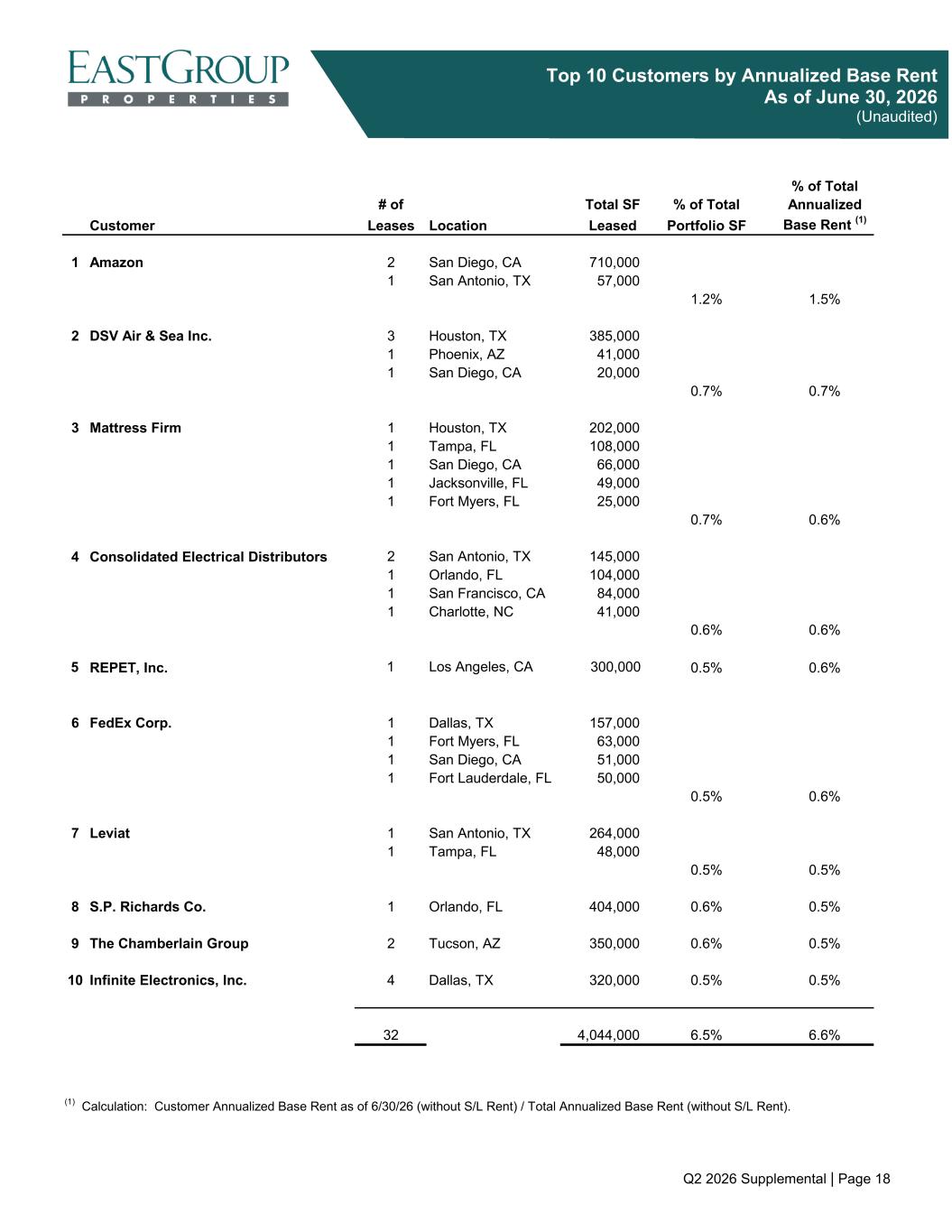
Good morning. I'll start by congratulating our team. We had a strong quarter as well as first half of the year. I'm proud of the results achieved. Our quarterly results demonstrate our portfolio quality and strength within the industrial markets. Some of the stats produced include funds from operation, where $2.36 per share, up $0.02 above our guidance midpoint, and up 6.8% quarter over quarter. Year-to-date, FFO per share is up 7.6%. For over a decade now, our quarterly FFO per share has exceeded the FFO per share reported in the same quarter prior year, truly a long-term growth trend. Quarter-end leasing was 96.8%, with occupancy at 95.6%. Average quarterly occupancy was 95.6%, which was down 30 basis points from second quarter 2025. Also notable was quarter-end same-store occupancy at 96.9%. Quarterly releasing spreads were 34% gap and 19% cash for leases signed during the quarter. Year-to-date results were similar at 35% and 19% gap in cash, respectively. Cash same-store in Hawaii rose a strong 8.3% for the quarter and 8.8% year-to-date. Finally, we have the most diversified rent role in our sector, with our top 10 tenants falling to 6.6% of rents, down 30 basis points from last year. We target geographic and tenant diversity as strategic paths to stabilize earnings, regardless of the economic environment. In summary, we're pleased with our results and excited about the quantity of development leasing signed during the quarter, along with our prospect activity. Reid will now walk you through more of our quarterly details.
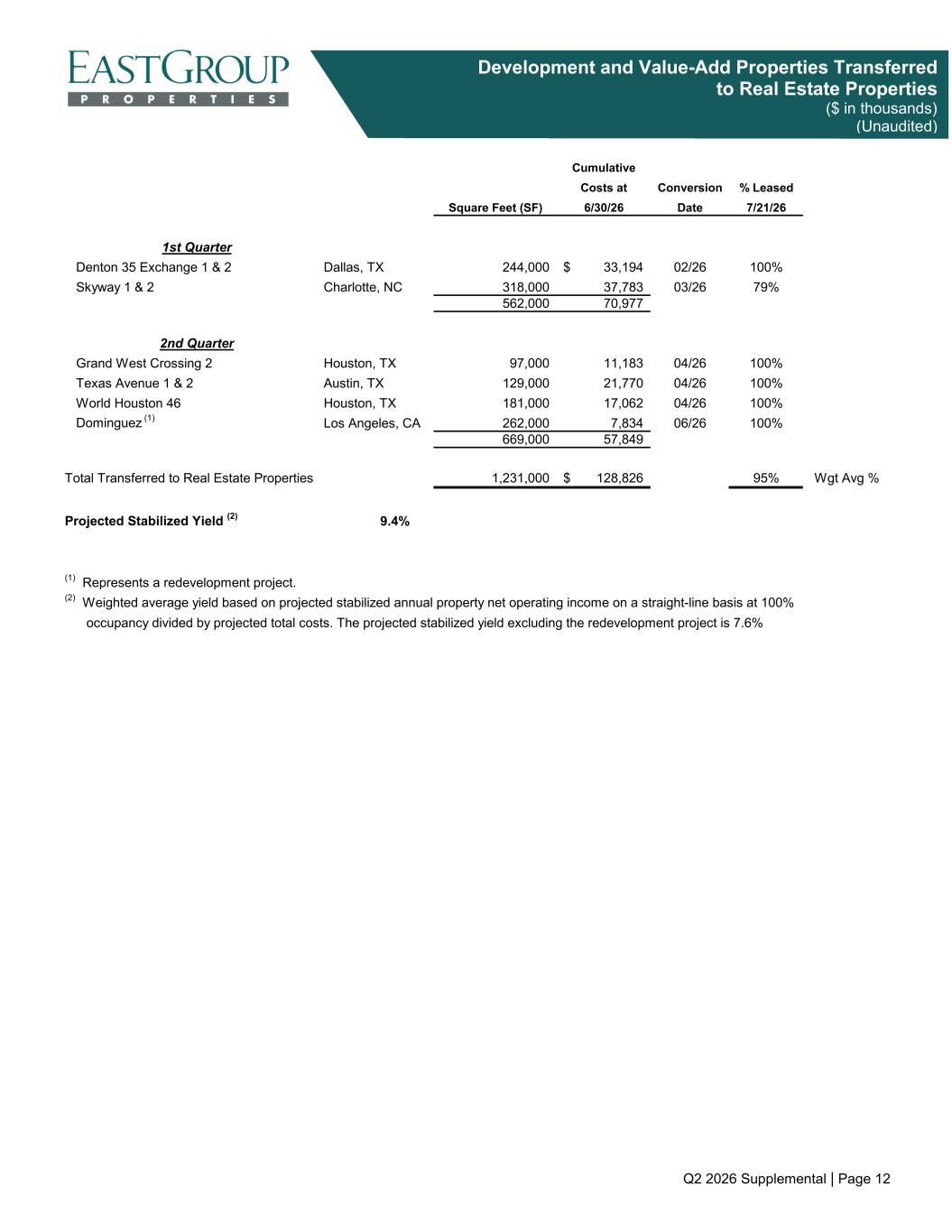
Thank you, Marshall, and good morning. Leasing momentum accelerated during the second quarter, with signed leases tolling 3.9 million square feet, a new quarterly record for each group. Activity remains positive across our markets as customers increasingly look beyond geopolitical and macro uncertainty and focus on their longer-term space requirements. As demand continues, we believe our high-quality infill portfolio remains well-positioned to outperform the broader market and generate organic growth. Development and first-generation leasing also reached a quarterly record with almost 1.1 million square feet signed. We transferred four development projects in Houston, Austin, and Los Angeles to the operating portfolio.
Speaker 20
The projects total 669,000 square feet and are 100% leased.
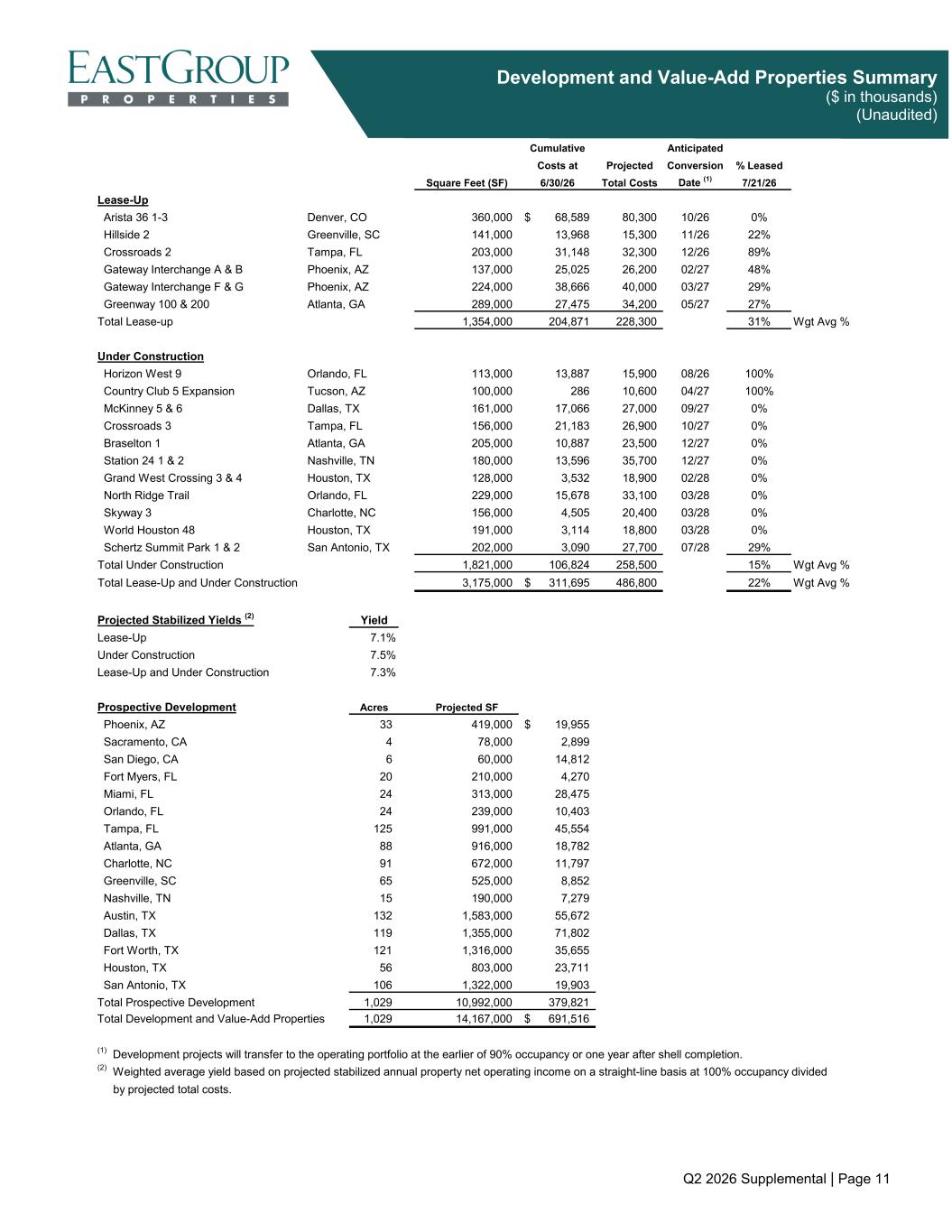
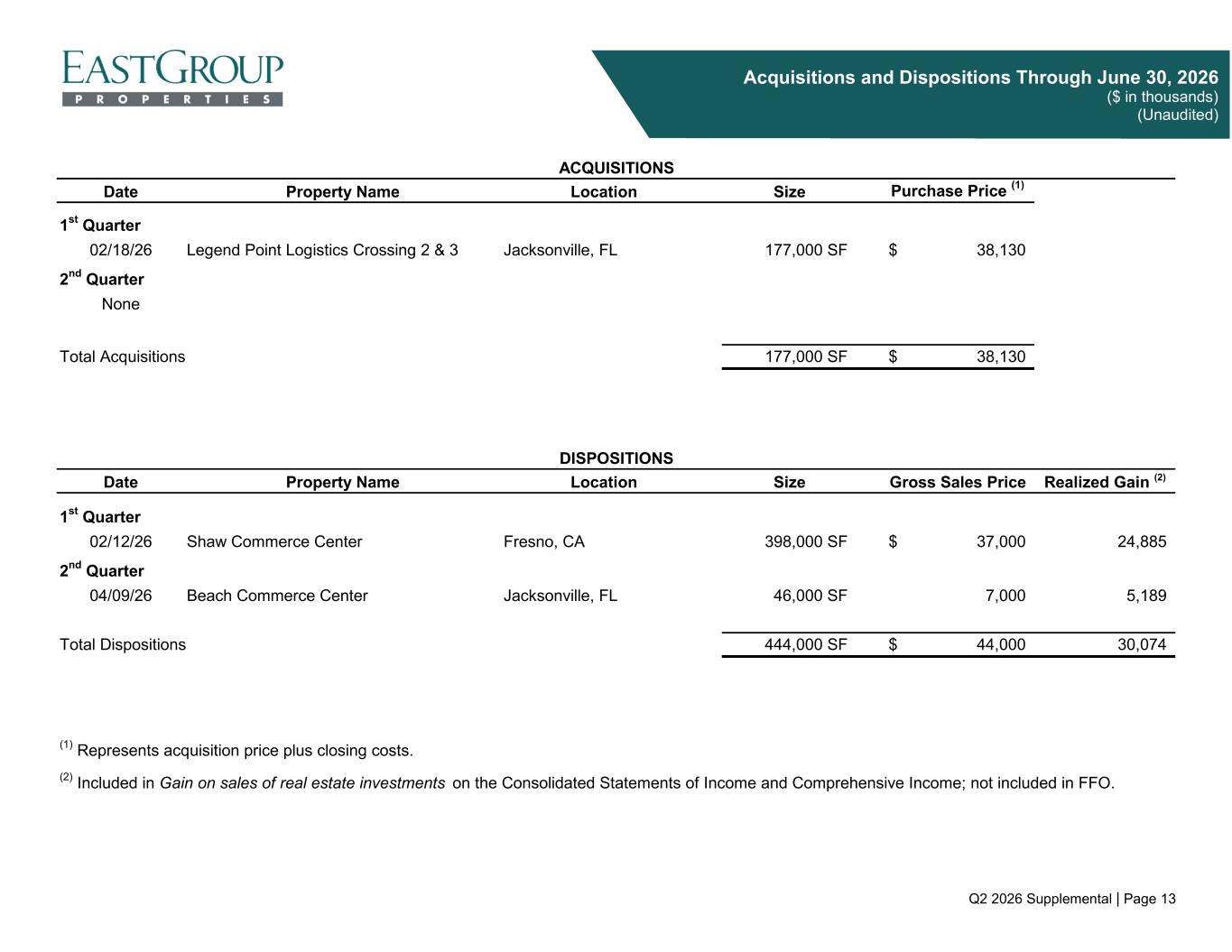
Given the continued strength in leasing, we are increasing our full-year guidance for development starts at $325 million. This increase reflects stronger and more consistent demand from our customers expanding within our portfolio. With our team's market knowledge and customer relationships, our strong balance sheet, and our infill land holdings, we remain well positioned to create value through development. Regarding new investments, and subsequent to quarter end, we expanded our Phoenix portfolio in the southeast submarket with the acquisition of a 143,000 square foot building. And in Austin, we were under contract to acquire a portfolio of five buildings in the Northeast sub-market tolling 388,000 square feet. Stacey will now speak to several topics, including assumptions within our updated 2026 guidance.
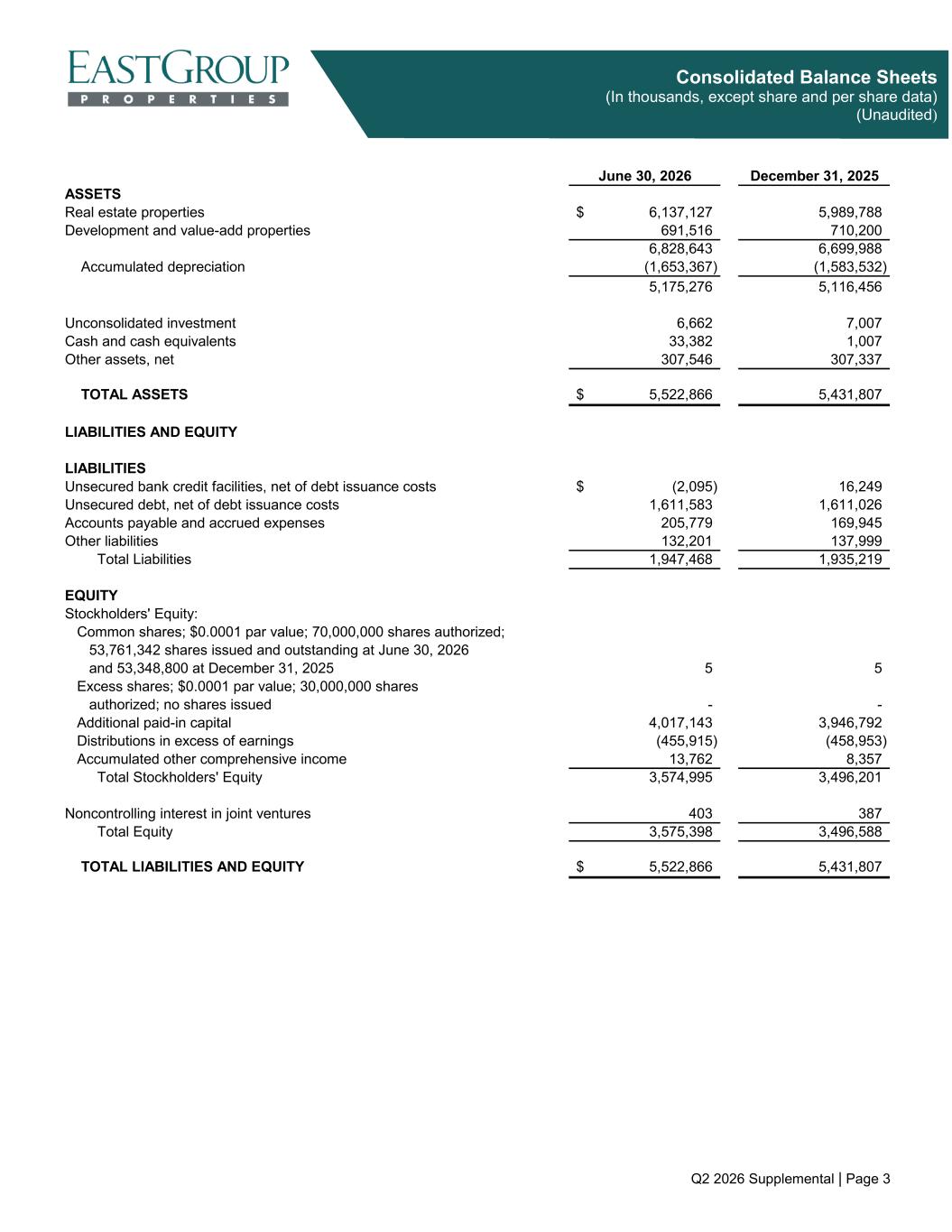
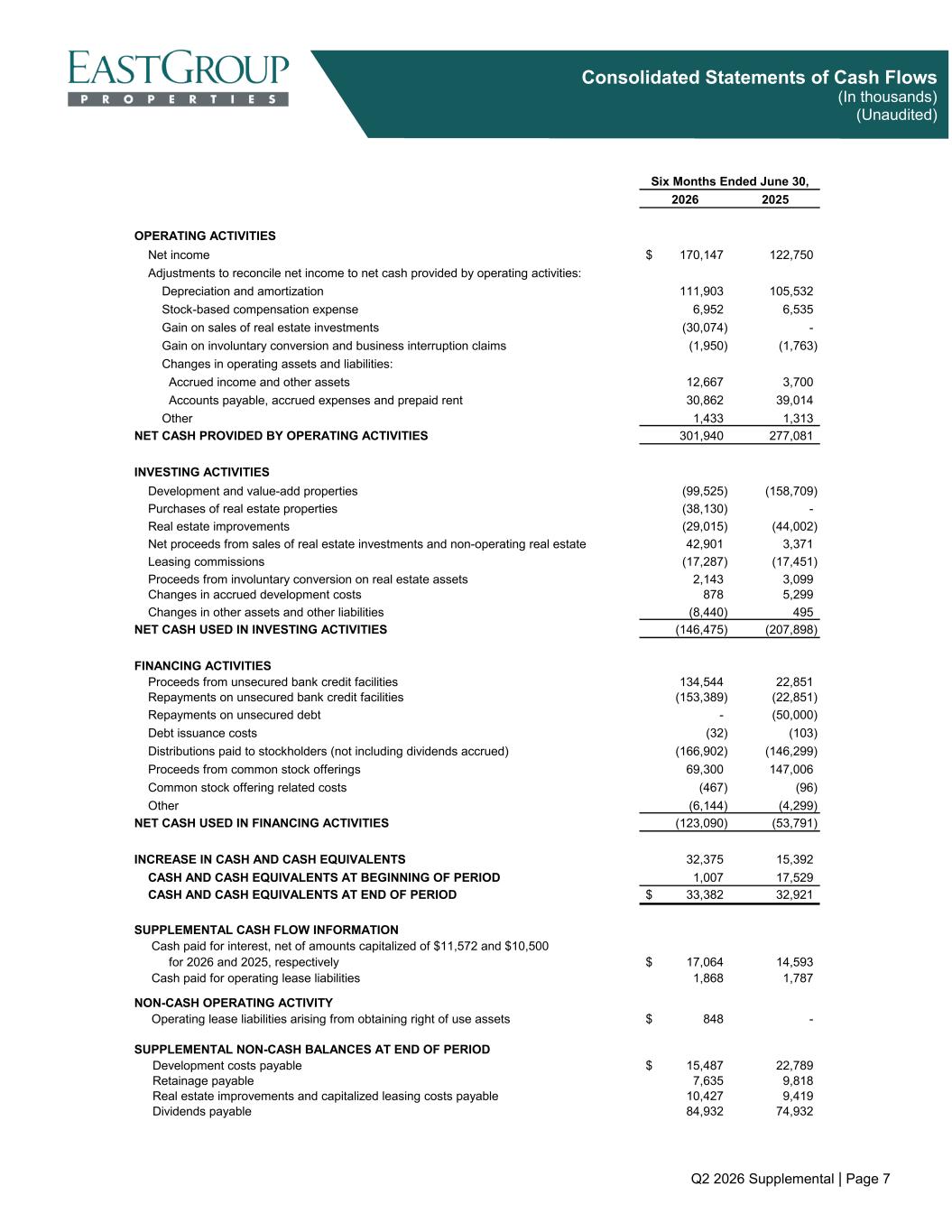
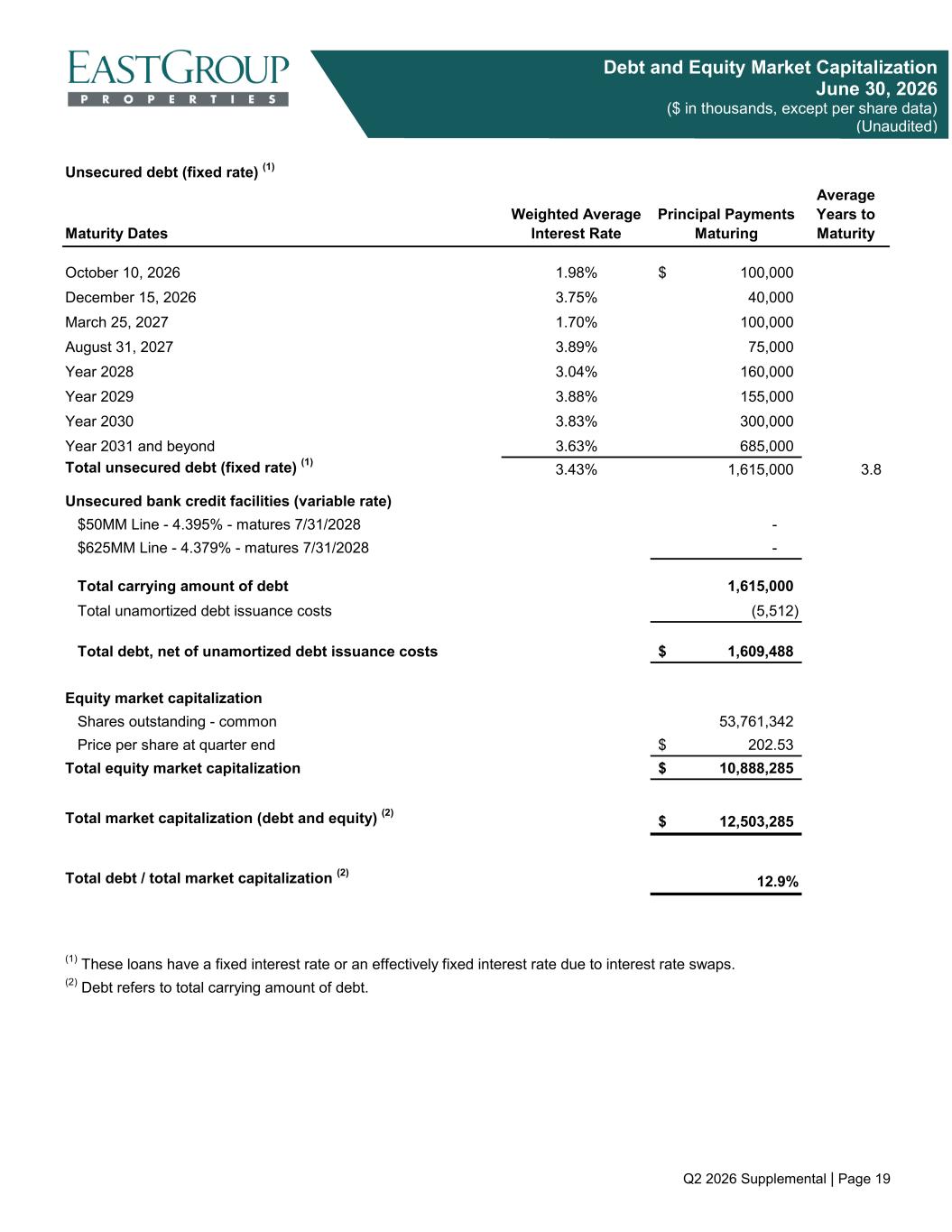
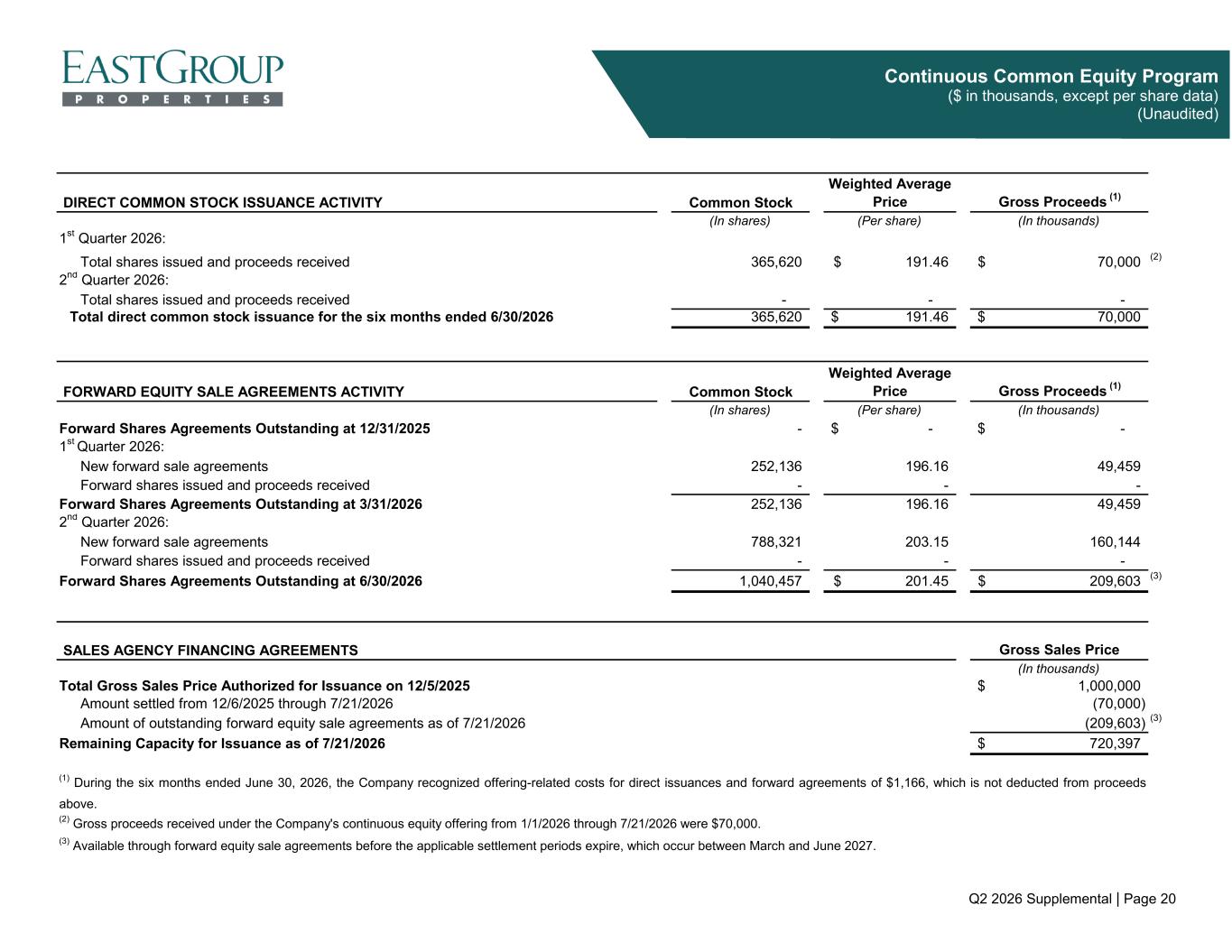
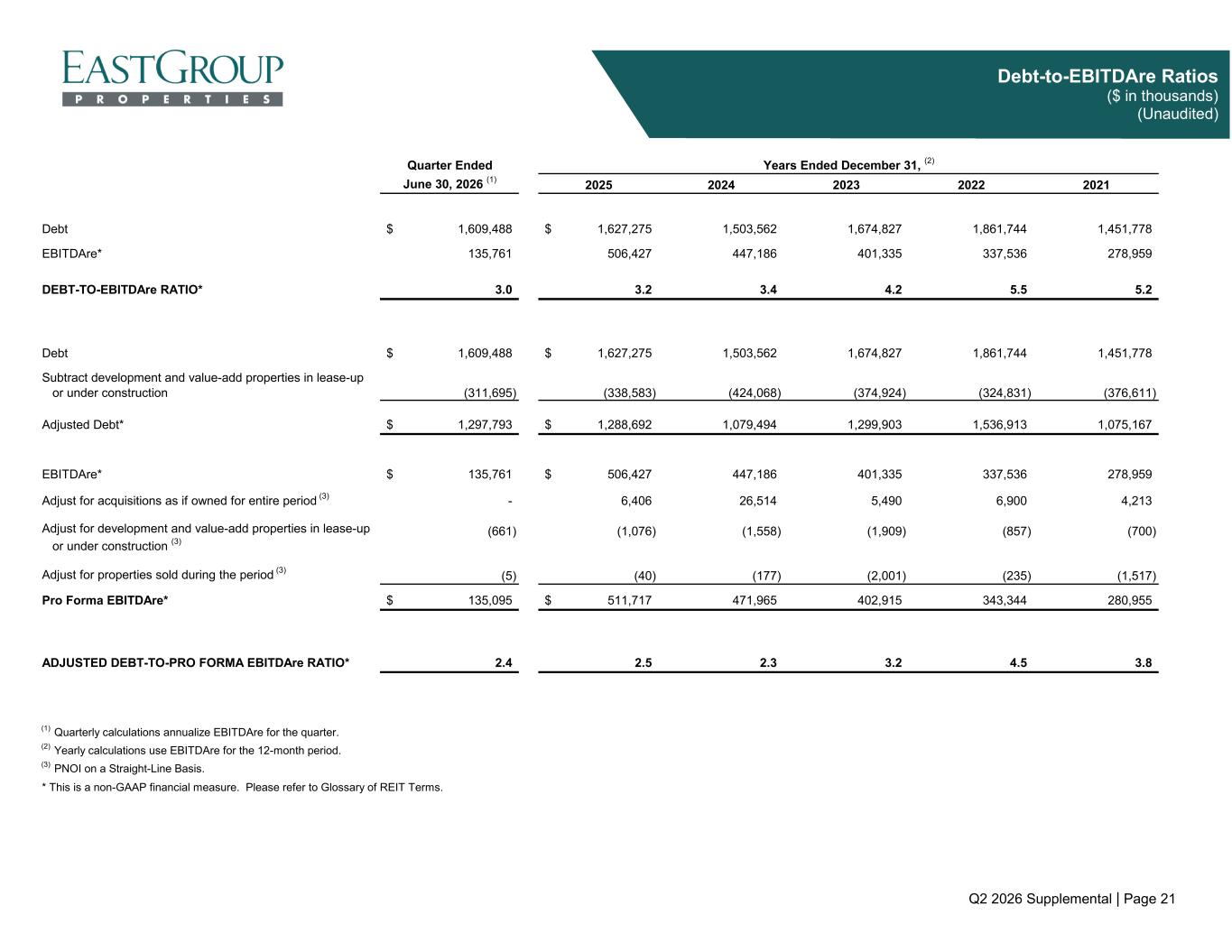
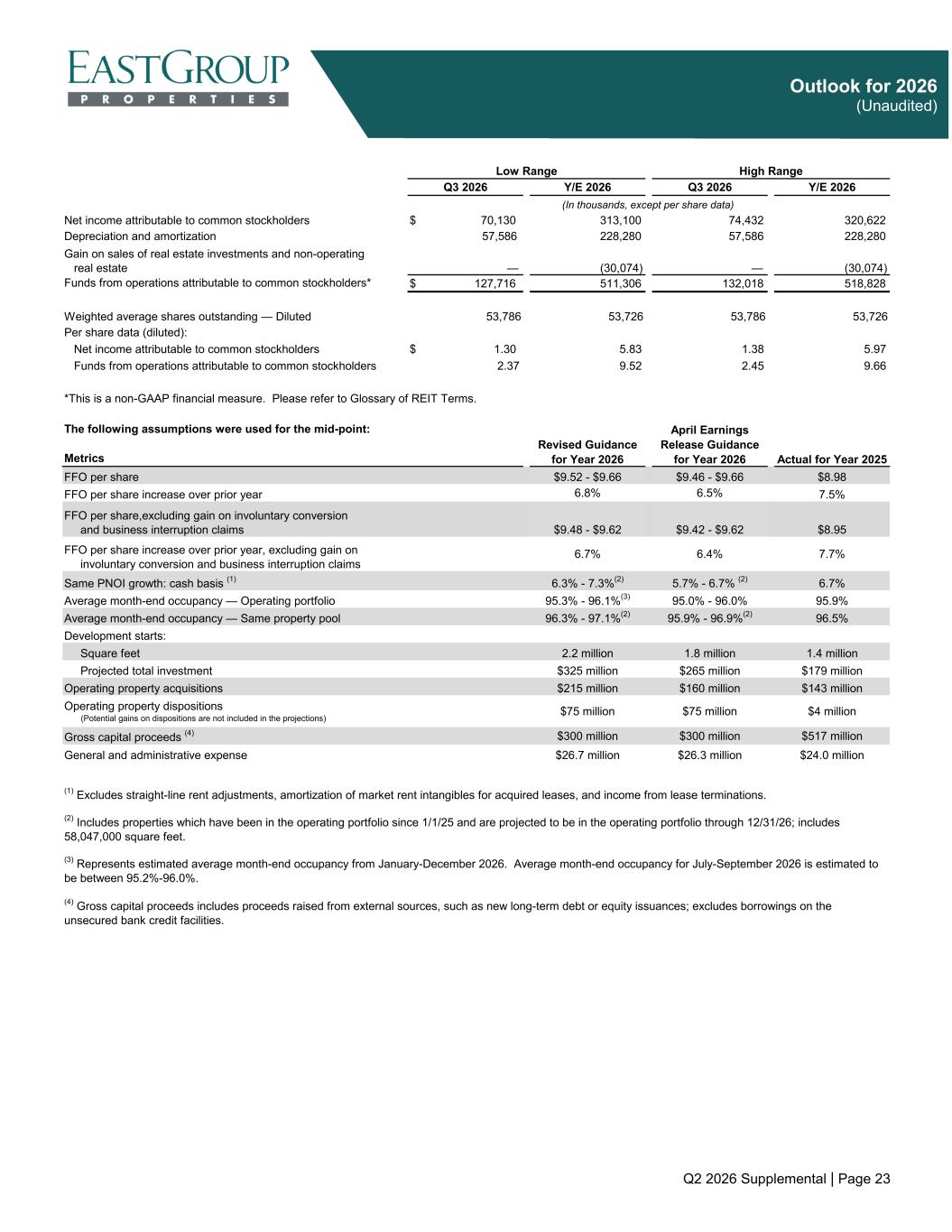
Thanks, Reed, and good morning, everyone. We are proud of our strong second quarter results, reflecting the outstanding performance of our team and the strength of our portfolio. We are pleased to report that the quarter's FFO exceeded the midpoint of our guidance range at $236 per share. This represents a 6.8% increase over second quarter last year. The outperformance in second quarter was primarily driven by higher-than-projected same-property net operating income, largely due to higher-than-forecasted occupancy, reflecting the continued strength of our portfolio. Our balance sheet remains strong and flexible. We ended the quarter with no balance drawn on our own secured bank credit facility, leaving available capacity of $675 million. Our debt-to-total market capitalization was 12.9% at quarter end. Second quarter annualized debt-to-EBITDA ratio was three times, and interest and fixed charge coverage was 15.1 times. We remain well-positioned to pursue growth opportunities with the flexibility to access the debt and equity capital markets, depending on market conditions. FFO for the third quarter is estimated to be in the range of $237 to $245, with a midpoint of $241 per share. Looking ahead to the remainder of the year, we increased the midpoint of our 2026 FFO guidance by $0.03 to $9.59 per share, which represents a 6.8% increase over 2025 actual results. We are projecting strong cash same property net operating income results to continue, and we raised the midpoint of our guidance assumption by 60 basis points to 6.8% for These strong projections are driven by rental rate increases on in-place and budgeted leases and expected same-property occupancy of 96.7%, which is 30 basis points ahead of our prior guidance. Average month-end portfolio occupancy is now 95.7%, a 20 basis point increase over prior guidance. We are pleased to increase our projected 2026 development starts by $60 million to $325 million. Year-to-date, we've started construction of $123 million of development projects, and we've now assumed another $202 million of starts in the second half of the year. This increase reflects the strength of development leasing we have accomplished year-to-date, as well as the current leasing pipeline. We also increased our acquisitions guidance by $55 million to $215 million. Year-to-date, we have closed or are under contract to purchase properties totaling $150 million. and we have assumed a $65 million acquisition late in the fourth quarter. Our guidance assumption for 2026 gross capital proceeds remains unchanged at $300 million. We issued $70 million in common stock through our common equity offering program during first quarter, and we currently have an additional $210 million in forward equity sale agreements available for issuance at over $201 per share. We will continue to monitor the capital markets and remain flexible as the year progresses. Our rent collections currently remain healthy, and our tenant watch list is steady. We are pleased with our strong performance in second quarter, and as we look ahead through the remainder of the year 2026, we are confident in our experienced team and well-located, high-quality portfolio to position us for long-term success. Now, Marshall will make some final comments.
Thanks, Stacey. In closing, we're pleased with our year to date. Market demand is gaining momentum, and it's been steady for several consecutive quarters now. Regardless of the environment, our goals are to drive FFO per share growth while raising portfolio quality. If we can do those, we'll continue creating NAV growth for our shareholders. And stepping back from the near term, I like our positioning as our portfolio is benefiting from several long-term positive secular trends such as population migration, near-shoring and on-shoring trends to now include data center suppliers, evolving logistics chains, and historically lower shallow bay market vacancies. We also have a proven management team with a long-term public track record. Our portfolio quality in terms of buildings and markets improves each quarter. Our balance sheet is stronger than it's ever been, and we're upgrading our diversity in both our tenant base as well as our geography. We'd now like to open up the call for questions.
Operator
Thank you, ladies and gentlemen. We will now begin the question and answer session. Should you have a question, please press the star button followed by the number 1 on your touchtone phone. You will hear a prompt that your hand has been raised. Should you wish to decline from the polling process, please press the star button followed by the number 2. If you are using a speakerphone, please lift the handset before pressing any keys. And just a quick reminder, during the Q&A session, we ask that everyone to limit themselves to ask one question. If you have additional questions, please rejoin the queue so that everyone has a chance to participate. One moment, please, for your first question. The first question comes from Craig Millman from Citigroup. Please go ahead.
Speaker 11
Thanks. It's Nick Joseph here with Craig. Marshall, you mentioned the data center adjacent demand. I was hoping you could try to quantify that, what you're seeing in terms of leasing, particularly around where you're seeing data center development today.
Sure. Good morning, Nick and Craig. A little bit, maybe just statistically, as we were looking at it, in terms of square footage, about 40% of our first quarter development leasing was data center-related tenants and 20% in second quarter. So what we're excited about as we think about it is just it's really a new demand driver or new SIC code to our portfolio. And then as we look ahead, kind of looking at what the data center capacity is today versus what's been planned, And as we look through our markets, some markets that have really big multiples of three to four times what's sitting there today, like Dallas, Phoenix, Atlanta, some of our major markets, it feels like we're early innings. I'm not very exact, but maybe early second inning that we're seeing a quarter of our leasing, which to me feels year to date pretty high. I don't know that we'll stay at that run rate, but there are people out there, and we're leasing to suppliers to the data centers. What we like about it is the trajectory for the demand growth that we see coming in addition to what we've already got. And then as we think about our own kind of downside to it, we've said the good news is we're not building next to data centers. We're not building out space that's tenant-specific use. So if we lose those tenants, we're really in no different shape than we were when we started these projects. So we're not building anything that may be an odd use later. But it feels early in the game, at least for the industrial side, or especially for us, maybe in the shallow bay, where we probably benefit more when the data center is completed than under construction. And it looks like the pipeline for data centers has historically been understated and that it's a whole lot more coming into markets where we have pretty good land presence and things like that. So we're excited about it, and we'll just try to be thoughtful as we capitalize on the opportunities.
Operator
Thank you for the question, Craig. And for our next question comes from Samir Kainal from Bank of America. Please go ahead.
Speaker 21
Thank you, and good morning, everybody. I guess, Marshall, it's good to see the development leasing side is strong, but there were some projects that got pushed out a little bit on when we think about the conversion date, so maybe just provide some color on that.
Yeah, good morning, Samir. I think there's always, you know, look, as we work through it, and we'll try to deliver projects with spec office and pending permitting and things like that. So I would say, look, it takes longer. Certainly one thing we've noticed, and I'm maybe taking two steps back, getting sites and projects planned and permitted is much longer and a much more arduous process than it was pre-COVID. I think people want the package or the service, but no one wants industrial in their neighborhood. So as we work through it, you know, it's usually, well, our goal is to deliver it once we break ground as quickly as we can to minimize that carry and get NOI coming in. And sometimes you just run into construction delays. I mean, I think we're hearing things probably early on with, I'll tie it back to the earlier question with data centers, getting steel and getting kind of the steel beams and getting electrical equipment. it. Our team does a great job of ordering those early, but the lead time on some of those is getting pretty long, as you'd imagine, the demand for us to get in line, getting the switch gear and the transformers and things. So you're right. Sometimes it can add a couple of months into our delivery schedule to get those finished up.
Operator
Thank you. And for your next question comes from Blaine Heck from Wells Fargo. Please go ahead.
Thanks. Good morning. Marshall and Reed, You know, it's encouraging to see the increase in development starts and acquisitions guidance, given your relatively conservative ground up driven methodology. I guess if you had to take one of those external growth options, where do you think the best, you know, best risk reward profile is going to be, you know, between buying and developing over the next couple of years? And if I can flip this in as well, are you concerned at all about supply ramping up quickly in your markets?
Yeah, Blaine, good morning. This is Reed. As we view external growth, for us, development is where we typically add the most value, especially on a risk-adjusted return. So we like where we sit. We like how the market dynamics are starting to play in our favor in that regard. So if you look at where our starts are projected at 325 million that takes us back to 21 22 23 level numbers which we're we're excited about to be assuming that we will be back at that that level of development the other thing I would add is that our development platform in the land holdings is very robust maybe more so than back in that prior period. And it's very diversified. So we've got land holdings in over 20 different sub markets. And that'll give us the ability to really lean into future development as we look into not just the next couple quarters, but the next six to eight quarters as this activity continues. And as we talked about previously, consistency has been the biggest piece that had been missing. And the fact that we stacked another really strong quarter on top of what had been good previous quarters really allows us to open up the development pipeline and allow the teams to take advantage of the strong platform that we do have in place today.
Blaine, I'll add, I agree with Reid on the, maybe a little color on the acquisition market. I'm trying to, maybe the last time I saw you, we were a little concerned about hitting our original acquisition goals this year. We were pleased to, in Phoenix, for example, that property is very close to our development site in Mesa, as well as two other buildings we own. And then in Austin, we've known the project there. It's centrally located, which we really like or excited about. I've been, I thought we'd have better acquisition opportunities this year, given how sticky interest rates have been. But it's been just the opposite. it and talking to some of our brokers, they're seeing really, and their comment, a couple of markets, two times the number of bidders for good industrial buildings than they had a year ago, and cap rates at five in the upper fours. So I think the spread between the 10-year and cap rates has probably never been, as I can remember, as close as it feels today, and maybe probably 10 takeaways, but one of the takeaways, and look, we believe we'll see it, but the private buyers are sure betting a lot. My takeaway is the rental rate growth. If you're buying that close to a risk-free rate in your IRR model, you must be really assuming a fair amount of rental rate growth, and I hope they're right. I think the theory's there, but the acquisition market, we've been strategic acquirers, but not opportunistic acquirers, because that's really all the market's given us this year.
Operator
Thank you. And for our next question comes from Alexander Goldfarm from Piper Center. Please go ahead.
Hey, morning down there. If I can ask the energy question in two respects. First, Marshall, it doesn't seem like diesel costs, et cetera, is playing a role at all. It doesn't seem like the cost of transportation is impacting leasing. And second, are you guys seeing any uptick in your Houston or Dallas or Texas portfolios from increased production? I got to believe that people are drilling a lot more in the Permian, which I would assume would cause more energy demand for your warehouses in Houston, et cetera.
Good morning, Alex. I guess the first point, good question. Look, we're really happy. We had a record quarter of leasing, as Reed said, almost 4 million square feet, and about half of that is new leasing, whether it's first generation or development or just vacancy, which is a really large percent for us. So I would say in the short term, we've been worried about the consumer, But in second quarter, there were no, in quarter to date, in third quarter, no impact on decision making or no slowdown. In fact, it felt like things sped up. So we're happy to get the deals across the finish line we did. And Dallas and Houston are really strong markets. Dallas really doesn't have much energy there. Reed, you live there. Houston is a strong market, but it's been more advanced manufacturing and just economic growth than, look, I hope oil and gas helps those markets. I think, you know, as we talk internally, the other, if diesel prices do stay higher for longer, which today it sure looks that way, that I think last mile only becomes more and more valuable, and especially last mile buildings in our markets, and as you would imagine, whether it's Orlando, Charlotte, Nashville, Phoenix, Austin, traffic's terrible in every one of our markets, so the speed of service, whether it's a service delivery or product delivery, over time, it will force people to get better and better with their last mile delivery because you can get cheaper rents on the edge of town, but you're going to lose it on diesel costs and really customer service too. So I think it makes our locations more valuable, although that will take a while as the logistics chains evolve, but we like the, that would be one benefit of we're not wishing for higher, for longer on gas prices, but that'll be one longer term impact of it.
Yeah. And morning, Alice, this is Reid. I'll just add to that, you know, the Texas markets are much more diverse than they have been in the past from an industry standpoint. And so energy may be another tailwind to Texas, but there's a lot more to that story today than just energy, which is beneficial. And Dallas and Houston, as Marshall mentioned, are probably some of our strongest markets as we have met this halfway point in the year. So data center activity is really strong in Texas right now. Houston has been a hub for that in a lot of different aspects. Dallas is, I saw one projection that Dallas would exceed the capacity of northern Virginia by 2030. So we like all those tailwinds, but there's even more to Texas than just the data center and energy. It's population growth and corporations relocating and whatnot. So we're bullish on Texas all the way around.
Operator
Thank you. And for our next question comes from Michael Griffin from Evercore ISI. Please go ahead.
In the release that you've started to see more normalized demand from your customers. And I was wondering if you could expand on that a bit. Are you starting to see maybe more newer prospects come into lease space? Is it just pent up demand from folks that have been on the sidelines? Give us a sense of what your conversations with customers are sitting like here. Thanks so much.
I would say when we say good question, normalizing and good morning, last year we had prospects and we would even have reached deal terms, economic terms, but getting the prospect to sign the lease and really for them to get the internal approval to move forward. it was a very long protracted and i think because of the headlines and liberation day that it wasn't that we didn't have prospects but if we had dropped the rental rate or offered more free rent i don't think we would have hurried a decision along they just weren't getting the approval and then starting in fourth quarter it felt like you know we said maybe people got comfortable being uncomfortable where decision-making became more timeframe normalized. I guess maybe a better way I could phrase it was just the time gestation period of getting deals wrapped up seemed to speed up and it's continued and actually improved during the year. So we're happy with that. The other thing that just kind of trends and you see it, like in our Tucson development, at one of our San Antonio developments, talking to our team, we've seen more expansions probably later this year, kind of more recently than we saw last year by measurable numbers. So to me, that's the best kind of new leasing is tenants before we're renewing and staying put and seeing companies grow and take on more space. And that's fed into a lot of our development start lift this year and things like that. So I'm happy to see people making decisions without being really analysis paralysis and then really pulling the trigger on expansions is great news for us as well.
Yeah, that organic growth is really important to our platform as we set things up in different phases on the development side. As those tenants and customers need growth opportunities, we can provide that for them. So that's a major benefit for us as we tap into those existing relationships.
Operator
Thank you. And for our next question comes from Brendan Lynch from Barclays.
Great. Thanks for taking the question. It sounds like things are really going quite well on a number of fronts, a tightening market, limits to new supplies, customers acting with more urgency. When you think about where weakness could emerge, Where would that be? What are the things that might derail what is otherwise a very strong dynamic at present?
We worry about the consumer market. You know, look, interest rates are staying higher. Good morning, Brendan. And I think, and as I mentioned earlier, higher gas prices. Look, it's not good for any business out there. But our goal is to be, when we think of locations, we want to be near an affluent and rapidly growing population base because that drives demand for the tenants in our building. And if the consumer weakness, we worry a lot more about demand than we do supply for the type buildings we build and where we build them. And so that would be, you know, and I think with consumer weakness in that, we're not seeing it, but that will bleed into tenant credit issues within our portfolio. But slow down demand, tenant credit, things like that, that, you know, you're taking me back to early 2020 when COVID hit. That was what our worry was. But that's probably the Achilles heel or the big one.
Yeah, I would just add to that, you know, we would typically have consumer strength for sure. that, and we would typically say that supply, you know, could be a concern, but, you know, what we really like as of right now is supply is really in check across our markets, especially in the multi-tenant smaller building construction, and we've been saying for several quarters now that when the tide would turn, we have, as Reed mentioned earlier, we have a deep bench of land and buildings and permits ready to go, which are very time-consuming to get to that point, but we're sitting on go. you saw how quickly we moved our development starts up and so you know supply for a bit now look at cyclical if it stays good for a while of course developers will come back and the cycle will take place but you know we're hopeful that we can get more than our disproportionate share if things were to continue to turn to the upside so where you would typically say you know concerns and what could weaken it over supply but you know the good news there is we're we're a bit away from that. And hopefully, like I say, we can keep ramping up and pushing to get more than our fair share on that side of things.
Operator
Thank you. And for our next question is from Michael Carroll from RBC Capital Markets. Please go ahead.
Thanks. On the development side, I know you guys let demand pull development starts through. So can you help me understand the difference between East Group signing about one plus million square feet of development leasing this quarter. And it looks like the development target was only increased by about 400,000 square feet. I mean, is this just a timing difference as it takes time to find new projects and break ground? And as the development leasing process continues, we should expect that these development start activity would continue to pick up going forward.
Hey, Michael, this is Reed. Good morning. From a development start standpoint, You know, with the activity we have, which is year-to-date 1.5 million square feet, which exceeds already our full-year numbers from last year. So we're very positive and bullish on how that development leasing has occurred, and it has allowed us to drive development growth. So we would anticipate that if that numbers continue, that there's potentially some additional upside. But the most important thing from our team and what our platform allows us to do, and as we discussed this some in the past, but our teams are always teeing up the next phase of development with permits and getting pricing and everything set. So when we do hit a certain threshold on the leasing side within current phases of development, that allows us to pull the trigger quickly. And so that's part of the reason we were able to bump our numbers this year. And, you know, hopefully that trend continues, you know, not just through this year, but into next year. And we can maintain these levels that, again, we haven't seen since kind of the go-go days of 21, 22, 23.
Operator
Thank you. And for our next question, it's from Mike Muller from JPMorgan Chase. Please go ahead.
Speaker 20
Yeah, hi. Yeah, hi, thanks. I guess looking at the quarter-to-date and year-to-date leasing spreads, San Francisco looks like it had the weakest pricing power by a lot. And there was a pretty notable drop-off from what you reported for all of last year. Can you give us a little color of what's driving those spreads this year and what the go-forward looks like?
Yeah, this is Brent. I'll jump in. And, you know, the Bay Area, and good observation, but, you know, we continue to see, you know, slowness in the market there relative to other parts of the country. I think you could even say at this point with the very strong quarter for L.A., especially in big box, it's showing some sea legs there and showing, again, a surprisingly strong quarter there. We've not seen that yet in the Bay Area. So I think you could even say the Bay Area is probably the slowest of the markets that we're in at the moment. But so obviously in lockstep with that, you know, pushing to get deals into some of our vacant spaces. And it's hard to put exactly a finger why that would be driving or lagging. Obviously, they're a tech-driven market, but it's just been slow. And so hopefully some of what we've seen to uptick a good quarter in L.A., hopefully that in other markets as well, that that could uptick there. But we continue to see, you know, across all of our markets, good rental rate strength. strength and we've been saying Marshall's really been harping on for a while now that you know it's just a little bit of uptick in activity and hopefully we're beginning to see it but with the tightest vacancies are the vacancy rate especially in the multi-tenant that there could be some pricing power on the landlord side owner side quickly and so hopefully we can continue to see the strength and play into that in most of our markets but the Bay Area will be one as we get spaces released, we'll probably continue to lag until it can show a little more strength there. But again, very pleased across the rest of the portfolio and where we stand from a, you know, we really, when we're talking to the team in the field and pretty much all of our markets, you know, it's just a matter of demand and we're seeing an increase in getting the right tenant there, but there are not a lot of options. So, you know, capitulation on rental rate has really not been a big part of the equation in terms of the leasing activity. It's been more just demand driven. And so we're very pleased to see that, you know, be a strong second quarter.
Operator
Thank you. And for our next question comes from Todd Thomas from KeyBank Capital Markets. Please go ahead.
Speaker 3
Yeah. Hi, thanks. Good morning. I'd said two questions related to the guidance. You know, first, I was just wondering the same store growth outlook was revised higher and leasing was strong. But, you know, you took up the low end of the range. I was just curious if there was an offset or anything you could point to specifically, you know, that acted as an offset to the FFO range. And then also with regards to the spec development leasing, I think you originally had assumed seven cents contribution at the midpoint. That was, you know, after the first quarter, you had achieved a few pennies. So I think there were around four cents left. And I realized from a timing standpoint, it might be tough to move the needle on 26. But where do you stand with the leasing completed now to date and the amount of development leasing that's still left to do with regard to the updated guidance?
Sure. Good morning, Todd. I'll start with your second question on the spec development leasing. You're absolutely right. At the beginning of the year, we had seven cents assumed for spec development leasing in our guidance. That was reduced to four cents when we updated guidance in first quarter. And at this point, during the second quarter, we were able to sign leases to basically shore up two cents of that four cents. And then we have one cent remaining in speculative development leasing that remains in the guidance. And we essentially removed one cent from that four. So starting with four cents, we took care of two cents by signing leases. We have one penny that we removed and then one penny that remains and guidance. And that's really to your point in your question about the timing. So with these newer spaces, it just takes a bit longer for the tenants to be able to occupy the space. In certain locations, it takes a little bit longer for permitting on spaces where we're doing more, you know, a little more major work to get a tenant into a space. So as the year progresses, we start running out of time for that, you know, for the tenants to really be able to occupy and contribute NOI to 26. And that's exactly what we saw with the record leasing that we experienced in second quarter, 3.9 million square feet total. Half of that was for new spaces, much of that for new development spaces. And it just takes a little while for those tenants to occupy the space. So that's why we haven't seen as much of an increase in FFO for projections for 26, we're really looking at that contribution to be more impactful in 27 as we go forward. But the great news is that the leasing demand is there. We're experiencing it. We've not cleared the deck.
Speaker 15
We've got very strong prospect activity, and we're feeling really good about the leasing environment.
In terms of same-store growth and the range for same-store growth and for FFO for the rest of the year. We really, on both of those, tightened the ranges. Now that we're six months into the year, there's just less likelihood, and this is what we typically do, is start narrowing the range. You're less likely to meet the low end or the high end of the range as the year progresses, because there are just fewer variables with half of the cake baked, so to speak. So, in terms of narrowing the ranges, that's just what we typically do as as the year progresses. But good news is that we raised the midpoint of our FFO guidance, same property guidance, occupancy, and same property occupancy, along with the other assumptions that we increased for acquisitions and development starts. So we're feeling great about the current environment and projections for the remainder of the year. We do have some tough comparables when we're looking at the back half of the year in terms of same property growth. So we've been able to achieve almost 9% year to date. And in terms of same P&OI growth, I look at the back half of the year, we are projecting lower, but that's because we were 97% occupied for the same store portfolio in the back half of last year. So it's a difficult comp, and we're closed. We're now projecting same-store occupancy for the year of 96.7%, which is a 30-basis-point increase over our last guidance revision. So we're feeling good about what we've been able to accomplish and about the environment for the rest of the year going forward. It's just hard to continue to project being at 97-plus percent occupied.
Speaker 2
Thank you for the question. our next question comes from rich anderson from contour fitzgerald please go ahead hey thanks good morning everyone um so i wanted to talk about the future of cash releasing spreads uh reed and stacy and i had this conversation at nary uh and you know you produced 19 percent uh this quarter i understanding that you know that that's a function of what gets signed in a given quarter. So I know it's not purely mathematical, but I would argue that, you know, the pull forward of demand that happened during the pandemic maybe conditioned people to expect 30, 40, 50 percent on that number, but it should trend down as time passes. I assume you agree with that. And I'm wondering where you think that sort of the normalized run rate of cash releasing spreads should be for your business specifically in the shallow bay market, which, you know, tended to have better, you know, market rent growth than the broader market for industrial. Thanks.
Hey, Rich. Good morning. How are you? It's Marshall. I'll take a first run at it and you all chime in. I view it, you know, look, it's like our business. It's a cyclical business. I never thought we would get, I'm quoting net effective. I know you're talking about cash. Well, we got for two years, we averaged 50% net effective. I just didn't think you'd see that and industrial. And we had that great ramp up that you mentioned post-COVID. It feels a little bit like air coming out of a balloon. And so if demand never picked up, you're right. Our mark to market, given our annual increases, increased in our leases post-COVID. So it's come down from 40%. And yeah, we were kind of in the 20s, high teens this quarter. It would continue to level out if we weren't a cyclical business. And it feels like it's early, but I do think given supply-demand dynamics and a pickup in demand that we've seen, that's where I get excited that by the time we kind of really work our way through our embedded rent growth, there'll be a next leg up, and then it'll cycle again. So it's maybe longer term. I'm not quite sure I can answer where it will average depending, but I think we're beyond the inflection point a little bit, and it seems like our peers are thinking that as well, and that there'll be a new leg up in rental rate growth. It's been kind of inflationary or inflationary plus, we've called it, and we're not seeing a major change to that, but we have seen a major change where us and one of our peers have a record quarter of leasing at the same time. It tells me there's a lot of industrial demand out there. And supply will catch up, but it's going to take longer. And we think this cycle, it will take longer given the municipal pushback. Our zoning's taking much harder and more challenging in finding those sites than it did pre-COVID. And I think that's what's going to slow down developers. We'll find a way to overbuild, but it'll take us longer this time than it did in earlier cycles.
And Rich, this is Reid. I would just add the amount of activity that all the markets saw in this quarter was very encouraging. Some markets had some record level absorption numbers in the quarter. So from a demand perspective, that's going to help us hold and push rents into the future. And then we did talk about the development math, how that's actually kind of a higher number that you have to solve to than it was back in the day where interest rates were lower and even construction pricing was lower. So I think those trends are all going in favor of higher rents longer term. You know, do we continue to kind of plateau like our bottom out where we have been or does it peak? You know, that'll be something that we keep a close eye on and see. But I think the trends are positive that we will see some abilities to continue to push rents in the future.
Operator
Thank you for the question. And for our next question comes from Dave Rogers from Raymond and Jane. Please go ahead.
Yeah, good morning, everybody. And maybe this is to Stacey, but I think also the rest of the team. Can we go back to the development and the spec component? And I guess I just wanted to kind of reconcile back to the square footage lease year to date. It seems like the development leasing has been particularly strong, but the guide still kind of includes some spec and then actually removed some. And I don't know if that's timing. So that's the first part of the question. And then And the second one really was around the conversions in the second quarter were at a nine four yield into the operating portfolio, which, again, seems strong and supports the same kind of argument that you guys are ahead on development leasing. So I guess I wanted to kind of reconcile those two and then also reconcile to the mid to low seven on what's in lease up or under construction today. And if there's something unique in these portfolios that kind of make that a 200 basis point delta.
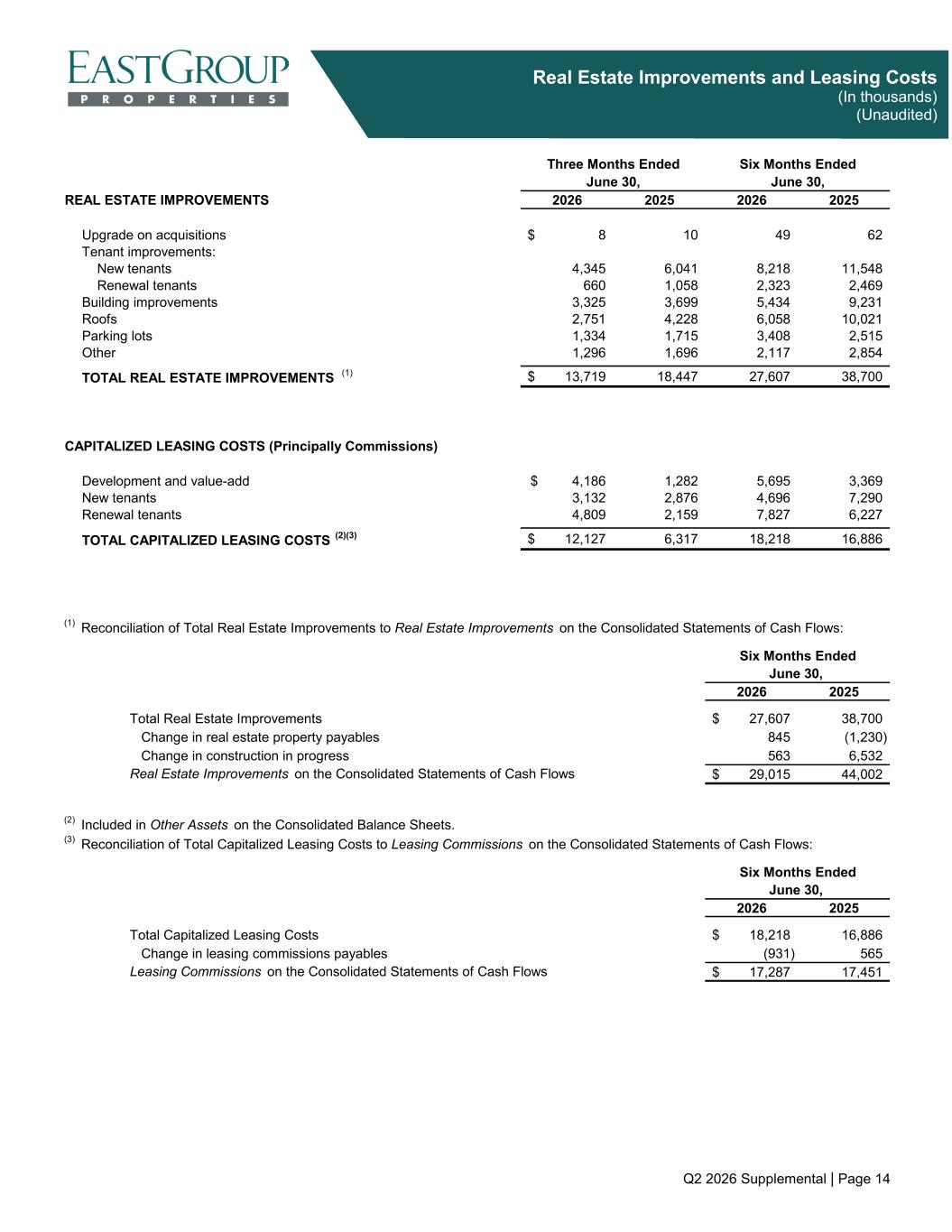
Sorry, that was a lot. yeah no problem this is brent jumping in yeah on the conversion yield i'll take that part first the the increase uh you mentioned the properties we transferred in and the year to date 9.4 percent the biggest driver in that was our redevelopment dominguez which was a redevelopment uh in the la market of california property we had owned a long time retrofitted very pleased to have gotten that leased up during the quarter but that was a i would say quote abnormally high yield just by virtue of redevelopment in our low basis. That was, I think, north of a 9%. You know, that, looking back at our existing pipeline, the 7.1 in lease-up and the 7.5% yield under construction, that low to mid-7 is a better overall average run rate for the development pipeline, just carving out any redevelopment component to it. So I would say, you know, that we continue to be very pleased with and we're continuing to be at that or even slightly exceeding that. In terms of your first part of the question about the leasing and how that kind of played into our guides, you know, excited about the leasing, 15 leases that were development or first generation, which basically space that had been development that had converted in, 10 different markets, so very good spread in that. But about half of our leasing for the quarter was new leases in the operating portfolio or development. As we've touched on earlier with five months to go, it's great to have that leasing, but in terms of moving the needle this year, you know, in any of these cases, you're looking at on average maybe two to four or five months, depending if it was a development space with no, you know, office space and you've got a permit and build it out. So it takes time to get these tenants into the seats, so to speak, and to immediately get to the needle. So a lot of that will really great building blocks and catapult for, you know, into next year. But at this point in the year, as you sign new development leasing, it has a more de minimis impact on the immediate year. But, yeah, I think Stacey had mentioned on the four cents, we accomplished two, still one dialed in, we removed one. We've got a lot of projects, they're very pleased with the leasing, but there are some that still we're having to push some leasing assumptions back. Our risk to project Denver has been slower than we'd like. A great project just in a higher growth but shallower sub-market. So you have ebb and flows in both directions, but net-net we're very pleased with where it settled out.
I agree with Brent. And just to add to help quantify the magnitude of the delay on some of those, because when you do, I definitely understand your question. When you see the 1.1 million square feet of development and first-generation leasing during second quarter, It seems like that could have or should have translated into, you know, more progress on that four cents, so to speak. But had all of those leases that we signed in second quarter occupied in July versus their actual occupancy dates later in the year, we would have three cents of additional FFO. So that just shows you, I mean, the magnitude of the leases that we've signed is pretty incredible, very strong. but that timing just to get those tenants to occupancy is what is causing the delay so we're not behind we're actually ahead of where we had projected in terms of signing the leases but the timing is a little you know more delayed compared to our regular portfolio leasing thank you for the question our next question comes from nick duman from byron please go ahead hey good morning guys uh i think i know the answer to this question based on reed's gun ho uh commentary around texas
but markets that you're seeing the most rental growth in today uh where would you place that and then if i recall on your development yields you guys underrate underrate current rents at the time so maybe just highlight some of the markets where you've come in ahead of expectations over the last 12 months where you've seen rents run relative to your initial expectations Nick, good morning.
It's Reed. I would, you are correct, I would stay on the Texas theme, kind of on both pieces. You know, Dallas continues to be very strong for our portfolio, as has Houston. So, between those two markets, you know, our two recent developments that we moved into the operating portfolio in Houston both exceeded our anticipated pro forma rents. So that was a very strong indicator of what Houston has and where it's headed. You know, Florida has continued to be a fairly strong market for us, as has Atlanta. Atlanta's picked up quite a bit and had a really strong Q2, especially on the development side, with some good rent momentum there.
Yeah, I would just add to that your other component about, you know, maybe where we've accomplished better rents, pushing the yields up. And I mentioned 15 leases signed in the development first generation this quarter, 10 different markets. The good news is that's been broad-based, and we've pretty consistently been a little bit ahead in most all of our development conversions. Again, the only one I would point to that maybe has been slower than the rest, again, the Denver location, that may be one where the yield maybe not quite we initially penciled out pro-forma will still be fine. But the rest of them, again, very pleased at the depth and the width of the activity and where it's occurring. And the good news is on the development side, there's not been like a project that pushed the numbers, but the rest are lagging. It's been very consistent, being slightly ahead. And to your point, we do when we put a pro forma together, we're putting rents at market that date. And so by the time you permit, build the building, and get into lease-up, so that can be a 12-, 18-, 20-month period, ideally those rents have moved up and you can accomplish a little higher, and we've been doing that, which is nice.
Operator
Thank you for the question. And for our next question comes from John Kim from BMO Capital Markets. Please go ahead.
Thank you. I wanted to ask on your leasing pipeline if you could provide any commentary of where that stands today to perhaps last quarter. And any color you could provide and how much of that is new versus renewal and development leasing.
And then also, if you could tie in that positive commentary you've had on leasing demand with your occupancy guidance, which I know you've raised for the full year, but it does indicate for occupancy to soften the second half of the year, just given the implications from guidance. yeah John interesting points and we agree with from the standpoint of you know the occupancy guide on the back half you know you run the numbers you can say okay what you've accomplished and what you're guiding to would point to that and it's really nothing specific that we're you know that we're trying to to dance around or really need to accomplish to push it you know having been in the field uh Marshall Reed and I all having been in the field at some point or another. It really is challenging when you're penciling out your budgets to continue to make yourself, show yourself, finish 99%, 100%, 98%. And you really have to have a bunch of those markets to accomplish the 97%. So I guess a roundabout way of saying I hope some of that proves to be conservative in terms of what we're projecting in the back half of the year in terms of occupancy. I would point out that our same story occupancy continues to run about 100 basis points higher than our operating portfolio, and that continues to be driven a little bit from the development projects that have converted in that weren't 100% leased, so obviously they contribute to that lower occupancy rate, but we really view that as opportunity within those spaces, and we were very pleased that we had removed about 45% of our first-gen space that was, you know, a quarter ago when we were reporting on this, we were over 700,000 feet. We've leased around 400,000 feet of that, only leaving about 365,000 feet of that to go. So we're very pleased to have knocked out 53% of that. So again, the back half of the year, we'll see how it plays out.
Speaker 16
Hopefully it proves to be conservative, but some of it is just human element when you're dialing in those spaces one at a time thank you for the question and for our next question comes from jessica zeng from east droop please go ahead uh hi good morning uh so you've acquired five buildings in austin post quarter end i was wondering if you could kind of discuss the market fundamentals in austin for a little bit um i know in more recently that's in the market that's in good demand, but it's also faced with a lot of supply. So any color there would be great.
Yes, good morning. This is Reed. Austin Market is one that has been an interesting one to follow. It is oversupplied in some areas. Our portfolio has continued to perform quite well, kind of achieving right around the mid-90s to upper 90s percent least over the last several quarters. And that's really because we're focused more on infill locations where supply is hard to add, where you're seeing the oversupply is further north, further south of the market. And it's become a very linear market, which has driven some of that new product and just trying to find available land. And so it's a market we've watched closely, but we're very bullish on Austin long term. There continues to be a good demand picture there, continues to be good drivers in the market from both a population growth perspective, but also from new manufacturing, advanced manufacturing, and all those elements to it. And then specific to the project that we announced, we're under contract, haven't closed yet, but these are very infill-located buildings, strategically fit very well with our portfolio. And it's a project that we've honestly eyed for several years and fits very well within the East Group platform that we have. So excited to get that closed and bring on to the platform where we continue to add value and grow our Austin presence.
Operator
Thank you for the question. And for our next question comes from Ronald Comden from Morgan Stanley.
Speaker 13
Please go ahead. hey great you know I think you talked about sort of the data center tailwind this cycle but you know historically I think near shoring on shoring as well as e-commerce were some of the big sort of demand drivers and was just wondering if you could provide sort of any numbers and what markets you know those themes are really playing out at whether it's some of the leasing activity just curious if there's any sort of way to quantify how those other themes are impacting demand thanks Hey, good morning, Ron.
It's Marshall. Yeah, you're right. I guess the kind of more topical is data centers, and we've talked about that. It hasn't gone away, but certainly that advanced manufacturing, on-shoring, near-shoring, we're seeing that, as I think, within our portfolio, we have a building in Dallas, northeast Dallas, supplying the TI plant up in Sherman, Texas. We have Tesla suppliers in Austin as well as even down to San Antonio supplying, I guess, the new-ish Tesla plant in Austin. And then we're near the Intel chip plant in Chandler, Mesa. So we've got suppliers to those plants, you know, maybe a little bit kind of under the radar. Houston is a market that's really picked up a fair amount. NVIDIA making chips and things. So there's been more development there in terms of on-shoring than maybe than I would have suspected Houston having for advanced manufacturing. And now it's been in sub-markets, but certainly in California, the aerospace and kind of the beach communities. I won't say South Bay, but maybe just east of that in L.A. has really helped that market, or at least the Class A space. and it will improve the overall market over time. And same thing with technology, where a lot of our products are Hayward, East Bay. It's been a little bit slower, but as you'd imagine, as you get down closer to Silicon Valley, those are stronger. So, again, I think, and we'll pick up as that, we just need economic activity in our markets. That's why we try to pick markets with higher than average GDP growth, and we do by and large. But the advanced manufacturing, on-shoring, near-shoring hasn't gone away. It's just not as new an impact on our portfolio as the data centers, as you pointed out.
Operator
Thank you for the question. And for our next question comes from Vikram Malhotra from Mizuho. Please go ahead.
Good morning. Thanks for the questions. I guess just two clarifications. So first on SoCal, there's been a lot of talk whether the market's bottoming. Is it more IE and big box or there's more breadth? So can you maybe just provide your latest thoughts on SoCal and also within that just clarify the occupancy dip that we saw? I believe it was a tenant that you may have backfilled, but just can clarify that. And then second, just the annualized, maybe just give us a little bit more color on the development income flowing into this year based on what you've done year to date and what's the annualized run rate we should think about into 27? Thank you.
Yeah, I'll cover the first part, Vikram. Good morning, with regards to SoCal. Yeah, as Reed mentioned, we've been talking to some of our brokers here recently, or just brokers in the markets. Very, a surprise, upbeat tenor and quick movement in Los Angeles. Definitely not going to point to a quarter and say it's a trend, but I know that it was welcome there, and there was a record absorption number, not necessarily net absorption, but a record amount of leasing in the month of June. In June alone, I know Inland Empire did 7.5 million square feet, which was an incredible number. You know, a 2.8 million net absorption for the overall market for the quarter, which gives them a string of two quarters after a long run the other way. So, you know, to that end, I think certainly a lot of that's obviously big box driven, Inland Empire driven. We don't play in that, but I think overall it's healthy for the market. But that San Gabriel and South Bay submarkets, mainly where our portfolio is, continues to be strong. And as much as we've talked about the slowness in L.A., it's still overall market vacancy rate of just 5%, which I think speaks to how tight that market had gotten, that with the slowdown, it's at just 5%. So it feels good there in terms of what's happening. We would want to continue to see it go in that direction. Again, I would point out, as we have in the past, only 5% or 6% exposure for us to L.A., 5% or 6% exposure to the Bay Area. So, again, we're very focused on good geographic diversity and watching our concentration levels so we feel good about where we are there. You had mentioned, Vikram, about the tenant backfill and maybe moving numbers. I'm not sure if I'm really following exactly the tenant you may be or property you're referring to, so maybe we had a redevelopment that we did relet there an existing tenant expanded and so we are excited about that the commencement of that lease will be a little bit as we talked about earlier was the way some of those work but so to that end we were pleased to backfill that space if that might have been what you're referring to yes and in terms of the run rate going forward for the development leasing that we've accomplished, you know, hard to quantify exactly since we have so many different occupancy dates.
But as you look forward with that square footage, using a seven or just above a 7% yield on those development projects has been our average and remains our average, particularly when you exclude the Dominguez project, which had a higher yield being a redevelopment. So as you build those into your models, I think using just above a 7% yield on development projects, and just applying that to the square footage would work.
Operator
Thank you for the question. And for our next question comes from Omutayo Okosanya from Doja Bank. Please go ahead.
Yes, good morning. Thank you for taking my call. I wanted to go back to Brendan's question. And in terms of just like, again, the earnings outlook, given that development itself is not likely to kind of contribute much more for the rest of the year. Can you just talk a little bit about kind of where there are opportunities to possibly maybe raise the high end of guidance? And I ask that in the context of just looking at your peer performance, all those guys, again, were not just narrowing their guidance range, but they were actually increasing their entire range. So just kind of curious, you know, why they can do that, and maybe, again, why maybe you didn't do that this quarter, and maybe opportunities to do that going forward?
Teo, good morning. It's Marshall. You know, I think it's, look, as Stacy mentioned, at least as we think about our guidance, we're happy with the quarter. Look, if we can set a record quarter for leasing, I'll sign that now and take the rest of the quarter off. So we're happy three strong quarters in a row and really what we felt like, And maybe if I step back, and this is more my perspective, look, I was generally probably more excited about our quarter. And this isn't, but as we read with 21 analysts, I think we were more excited than the knee-jerk reaction from the street was. And in terms of guidance, what we were really trying to do, and we talked about the high end of our range, that do we raise the high end of our range? but we felt like I would maybe pay attention, I can't speak for our peers, but where our midpoint goes and raising, we started the year at nine, our original guidance was $9.50 a share. We were able to move that after first quarter, and now after second quarter, we're up to $9.59. So I'm pleased that we've been able to raise kind of the midpoint of our guidance, you know, seven months into the year by $0.09. I hope there's, look, that's our budget, and we'll try to beat that as our goal. In terms of getting to the higher end of our guidance, I can't speak for our peers, but we purposely raised, as you saw, the floor of our guidance by $0.06, and we narrowed our range, so just the way the math worked, we're $0.07 away from the high end of our guidance with five months left, so it's hard for us to just mathematically think, look, I think the team will get a lot accomplished like they did in second quarter, but by the time we get those tenants in, it'll take a little bit of time, but I'm, you know, to me, and again, a lot of different vantage points, and I respect everyone's, I'm glad we, to me, the bigger takeaway is, hey, the team's moved us from $9.50 to $9.59, and I hope we can keep that trend, and I'm happy that we were able to raise starts, same-store occupancy, occupancy, same-store NOI, all of those, and just the way it ended up, we said, all right, seven cents above our midpoint is about, if everything goes our way, look, if we can get above that, I probably should go buy lottery tickets later today, too, so, but But I appreciate the perspective. We were just trying to keep our guidance within a narrower range because as a company, we should be able to guide our shareholders with more and more accuracy as the year plays out.
Operator
Thank you for the questions. And since there are no further questions at this time, I will now turn the call over to Marshall Loeb. Please continue.
Thank you for everyone for your interest and your investment, and many of you in East Group. If we didn't have a chance to get to your question or you have follow-up questions, we're certainly available and hope to see you in person soon. Take care.
Operator
Ladies and gentlemen, this concludes today's conference call. Thank you for your participation. You may now disconnect.