Operator
Good morning and welcome to F&G's second quarter earnings call. During today's presentation, all callers will be placed in listen-only mode. Following management's prepared remarks, the conference will be opened for questions with instructions to follow at that time. I would now like to turn the call over to Lisa Foxworthy-Parker, Senior Vice President, Investor and External Relations. Please go ahead.
Thanks, Operator, and welcome, everyone. I'm joined today by our new CEO and President, Connor Murphy, and Interim CFO, Mark Wiltsy. We're also glad to welcome F&G's incoming CFO, Mike Bailey, who joined the company earlier this week and will listen in on today's call. Today's earnings call may include forward-looking statements and projections under the Private Securities Litigation Reform Act, which do not guarantee future events or performance. We do not undertake any duty to revise or update such statements to reflect new information, subsequent events or changes in strategy. Please refer to our most recent quarterly and annual reports and other SEC filings for details on important factors that could cause actual results to differ materially from those expressed or implied. This morning's discussion also includes non-GAAP measures, which management believes are relevant in assessing the financial performance of the business. Non-GAAP measures have been reconciled to GAAP where required and in accordance with SEC rules within our earnings materials available on the company's investor website. Please note that today's call is being recorded and will be available for webcast replay. And with that, I'll hand the call over to Connor Murphy.
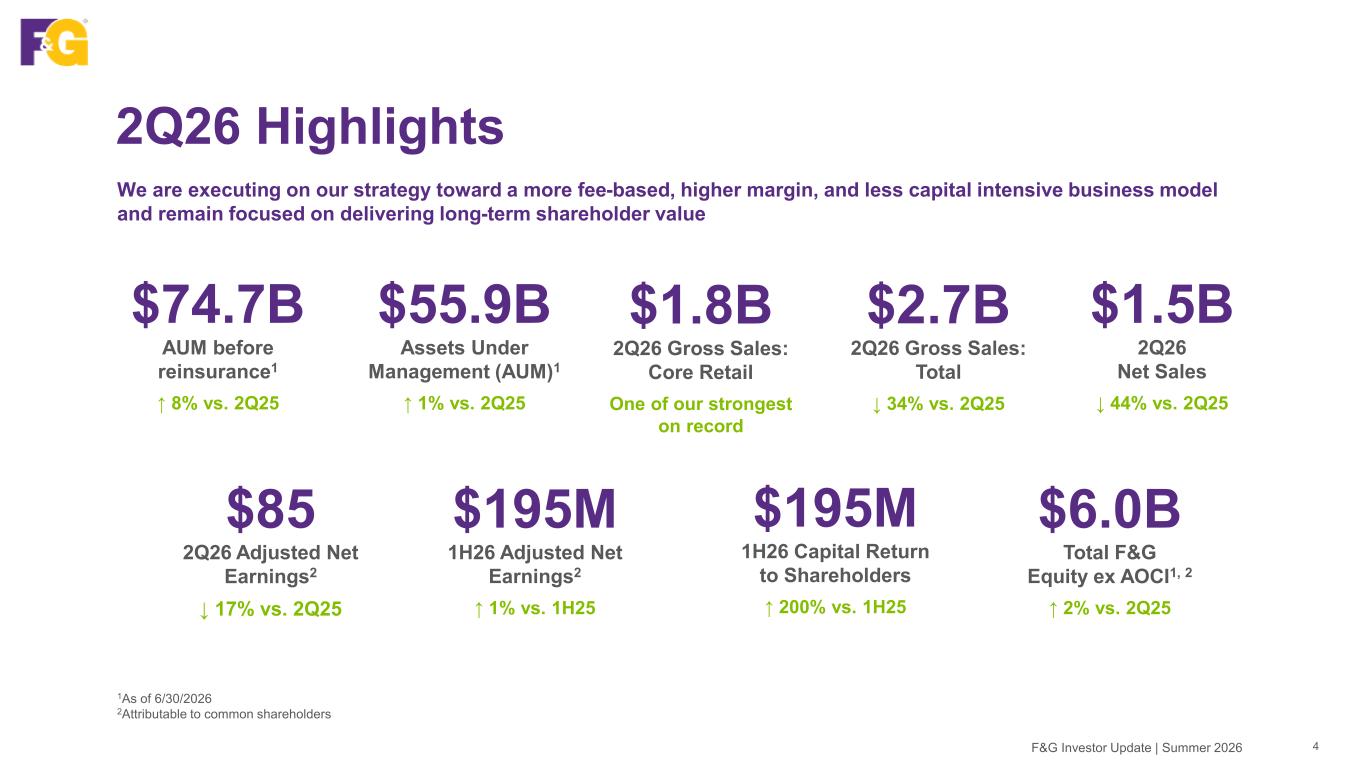
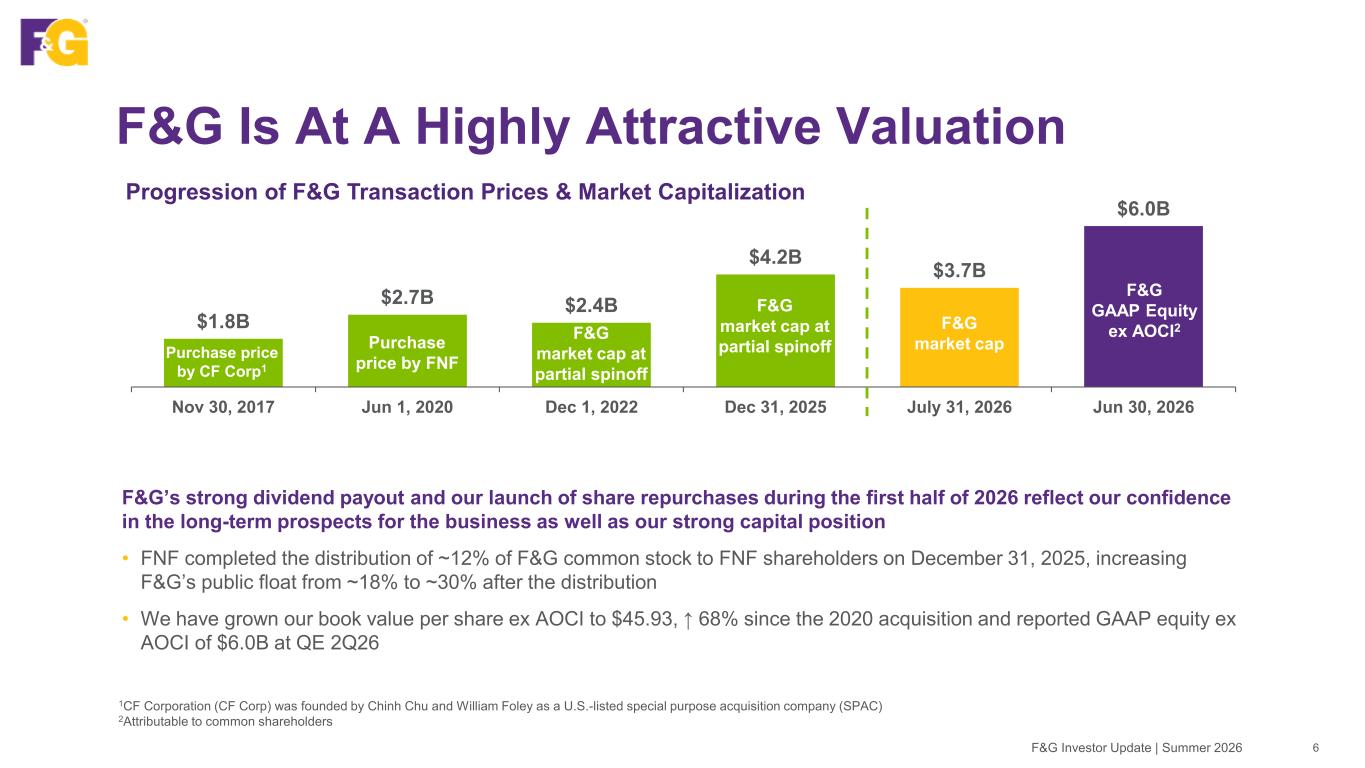
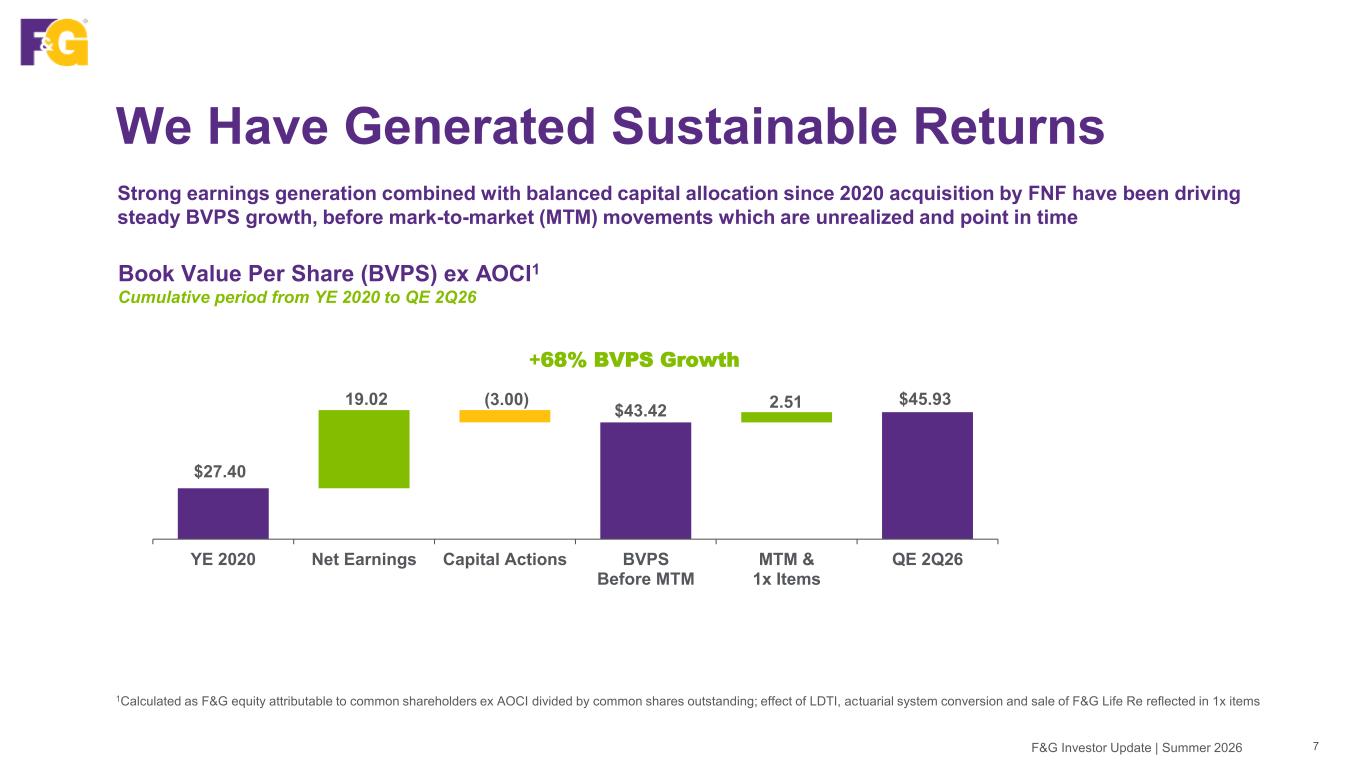
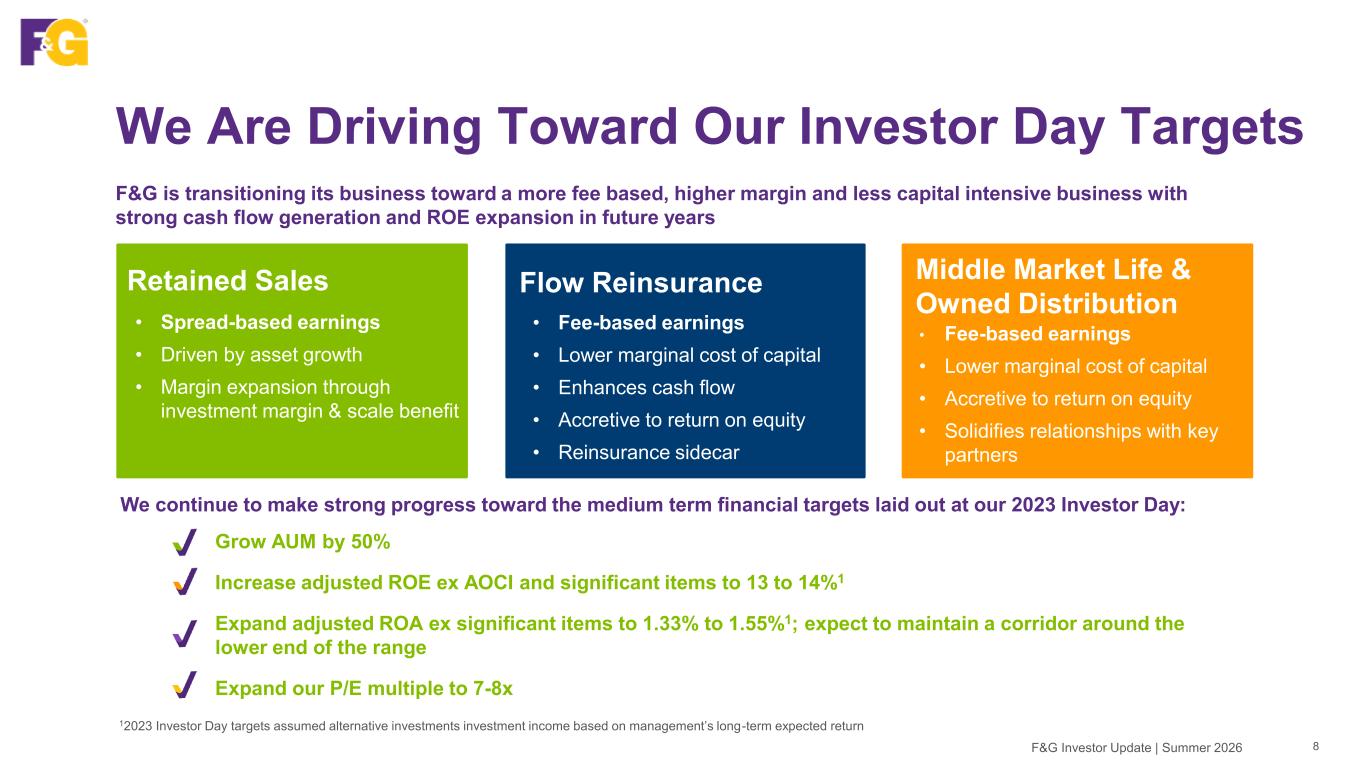
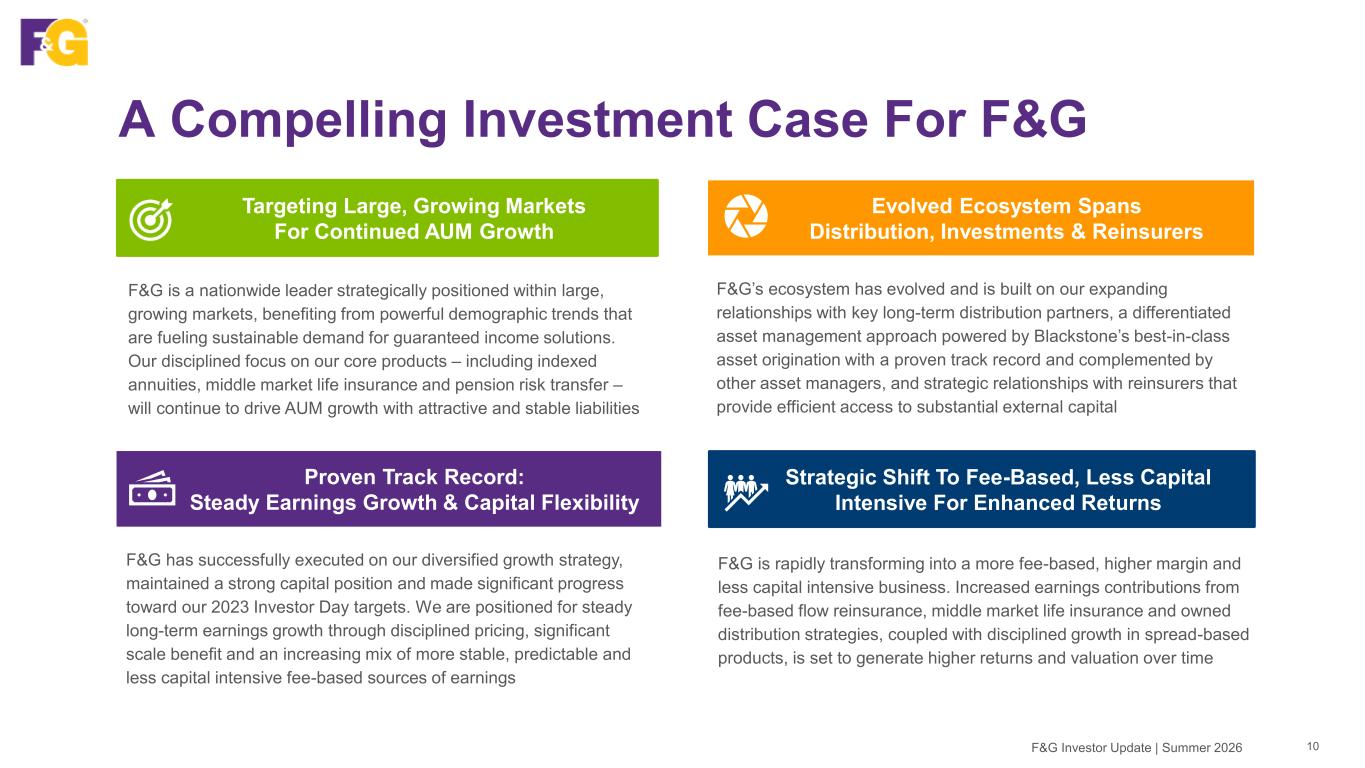
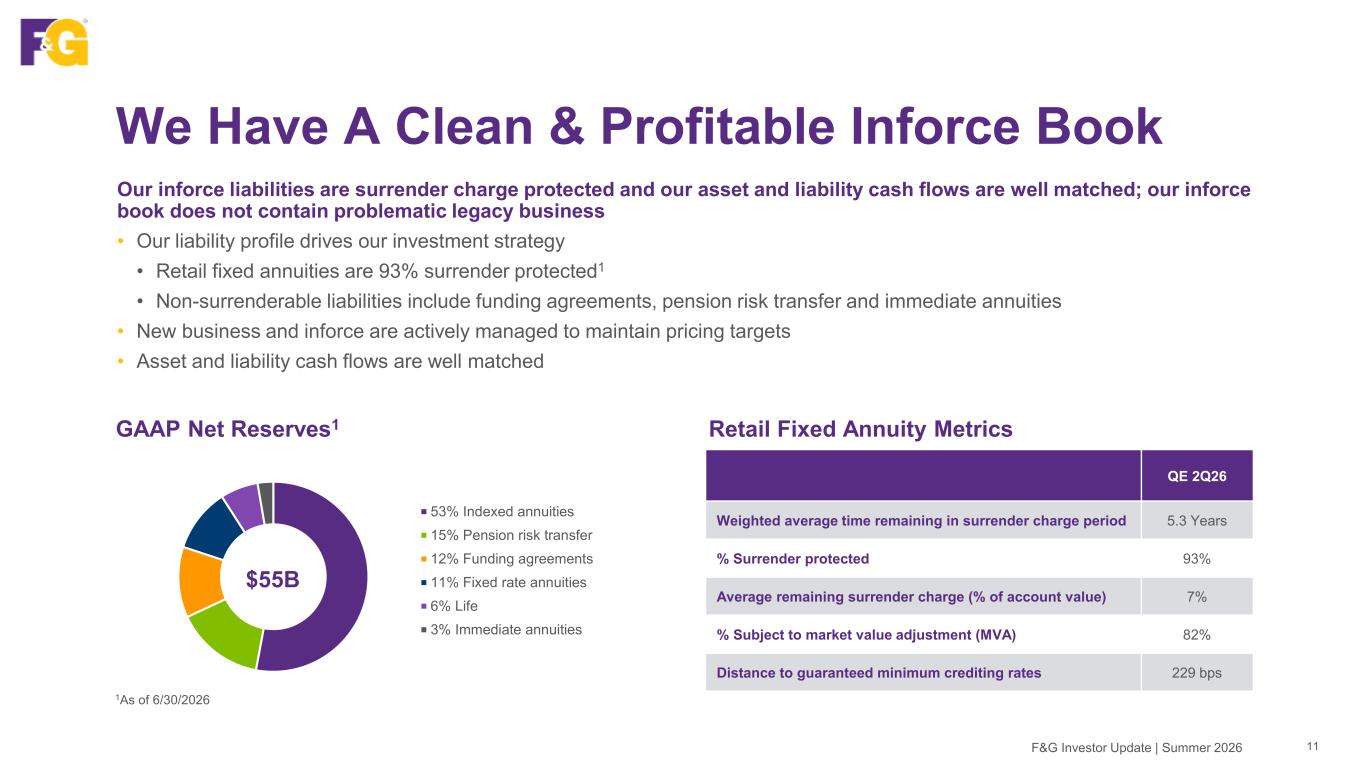
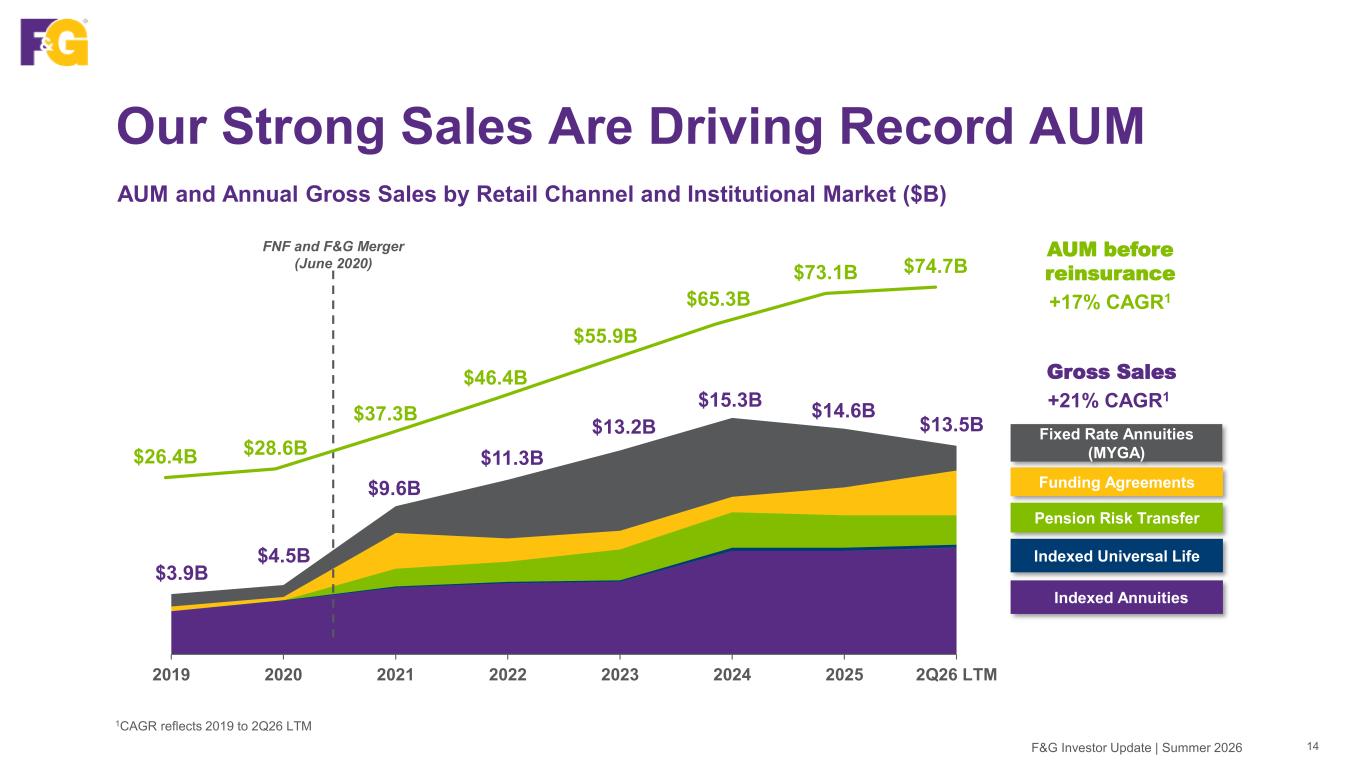
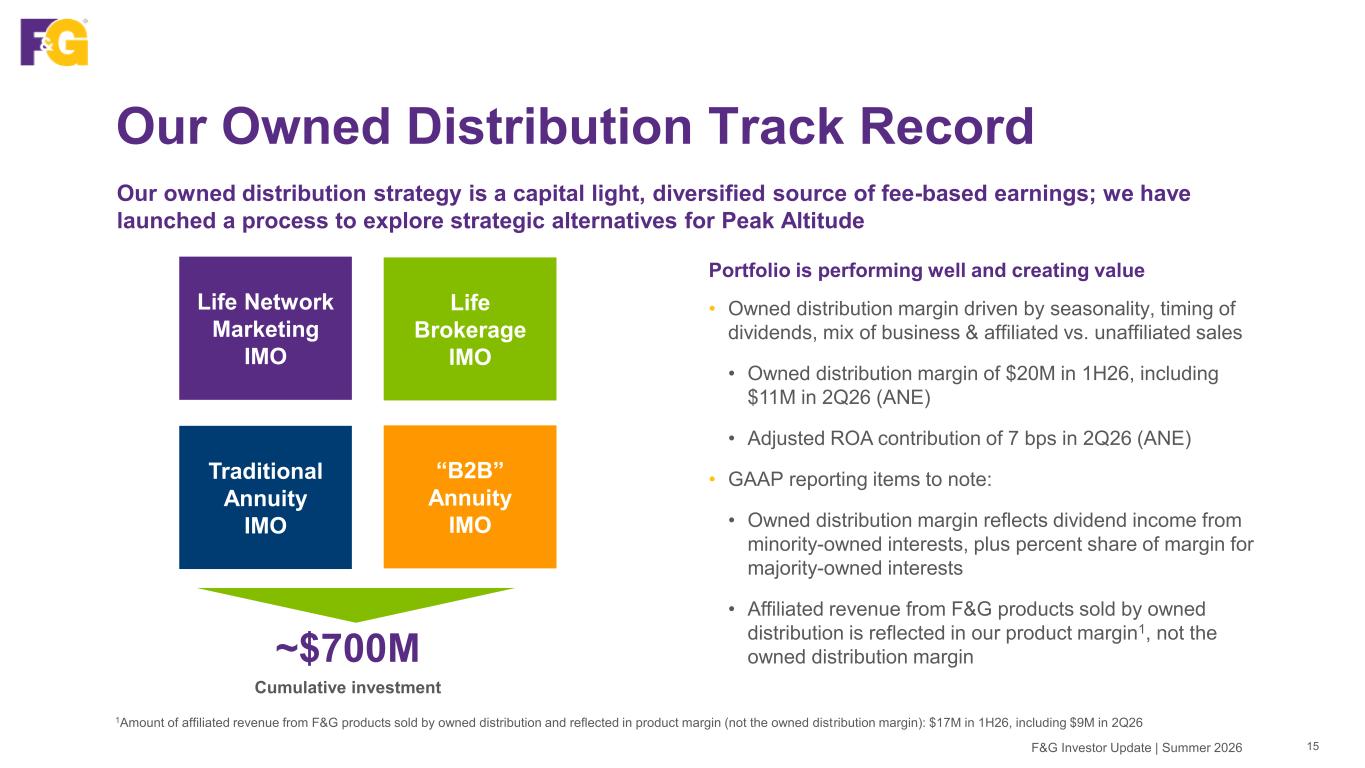
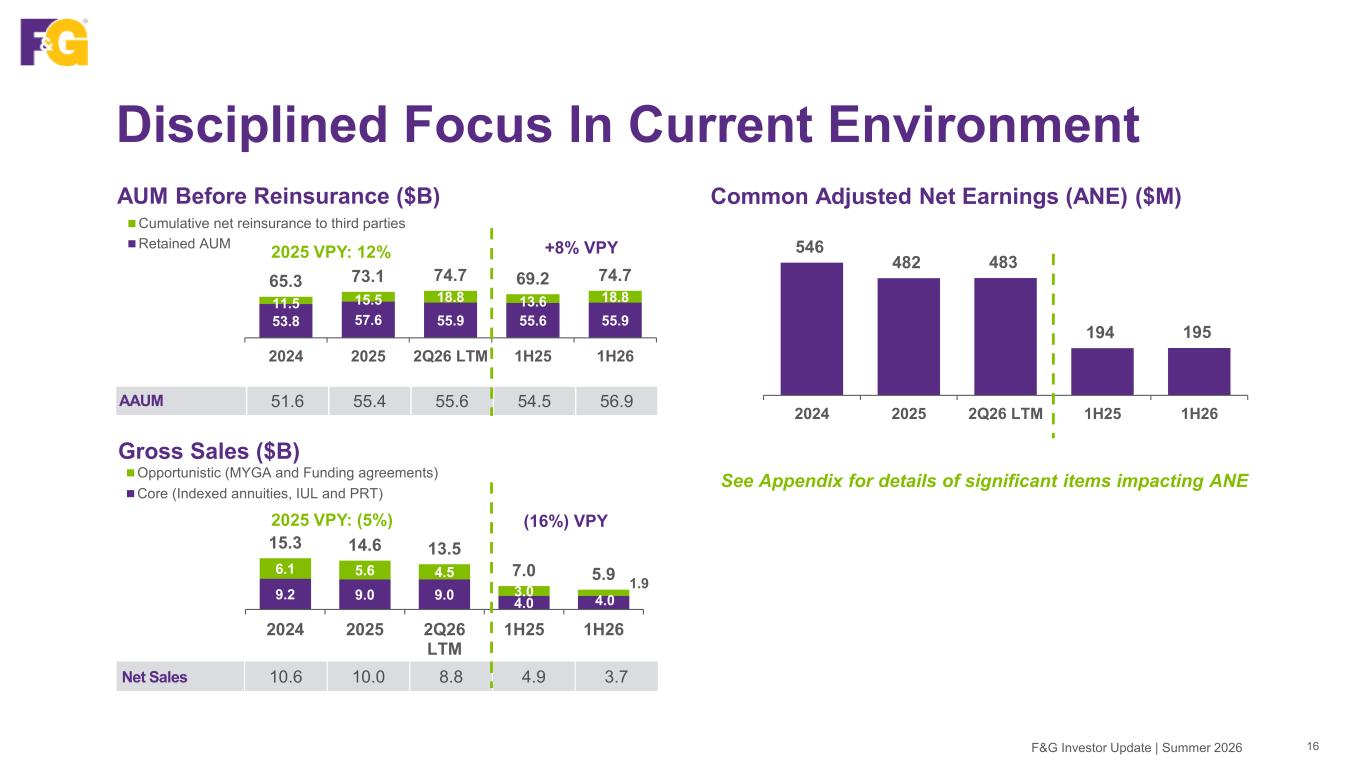
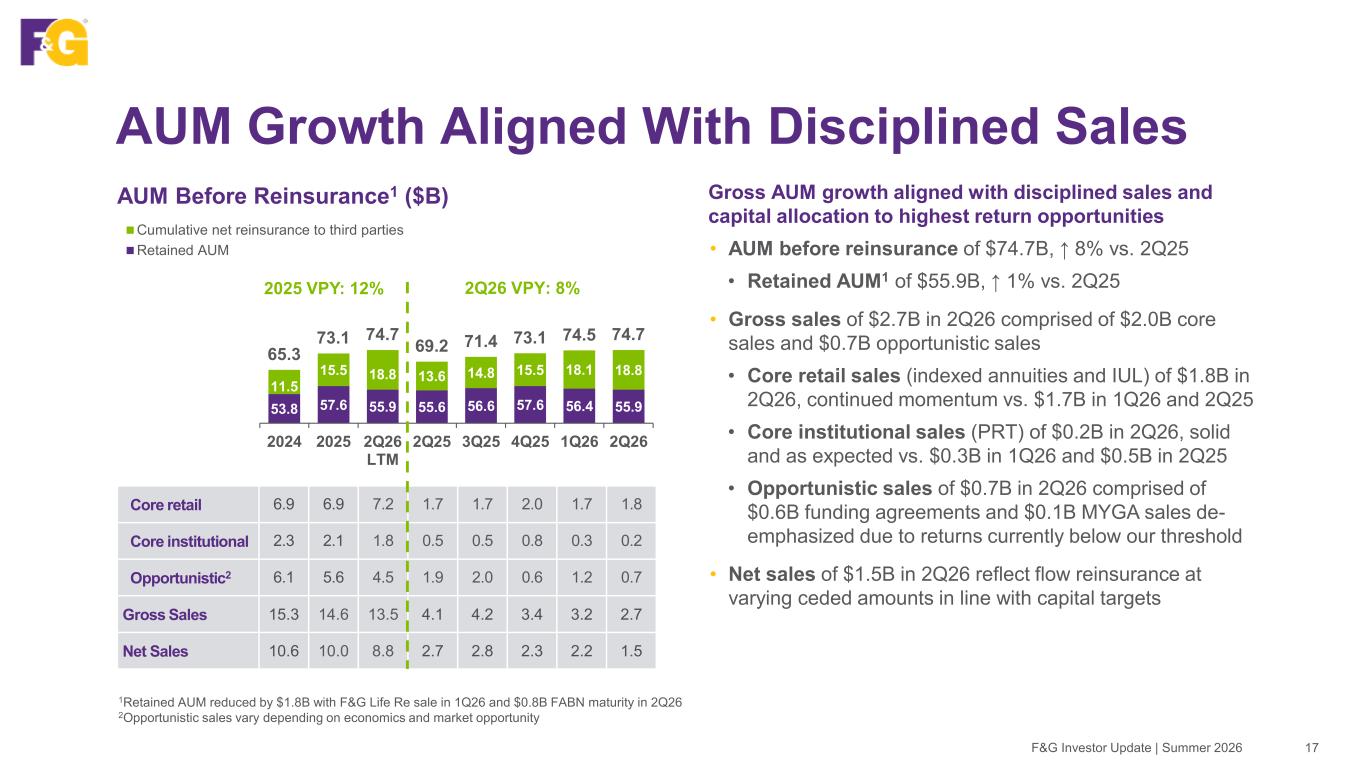
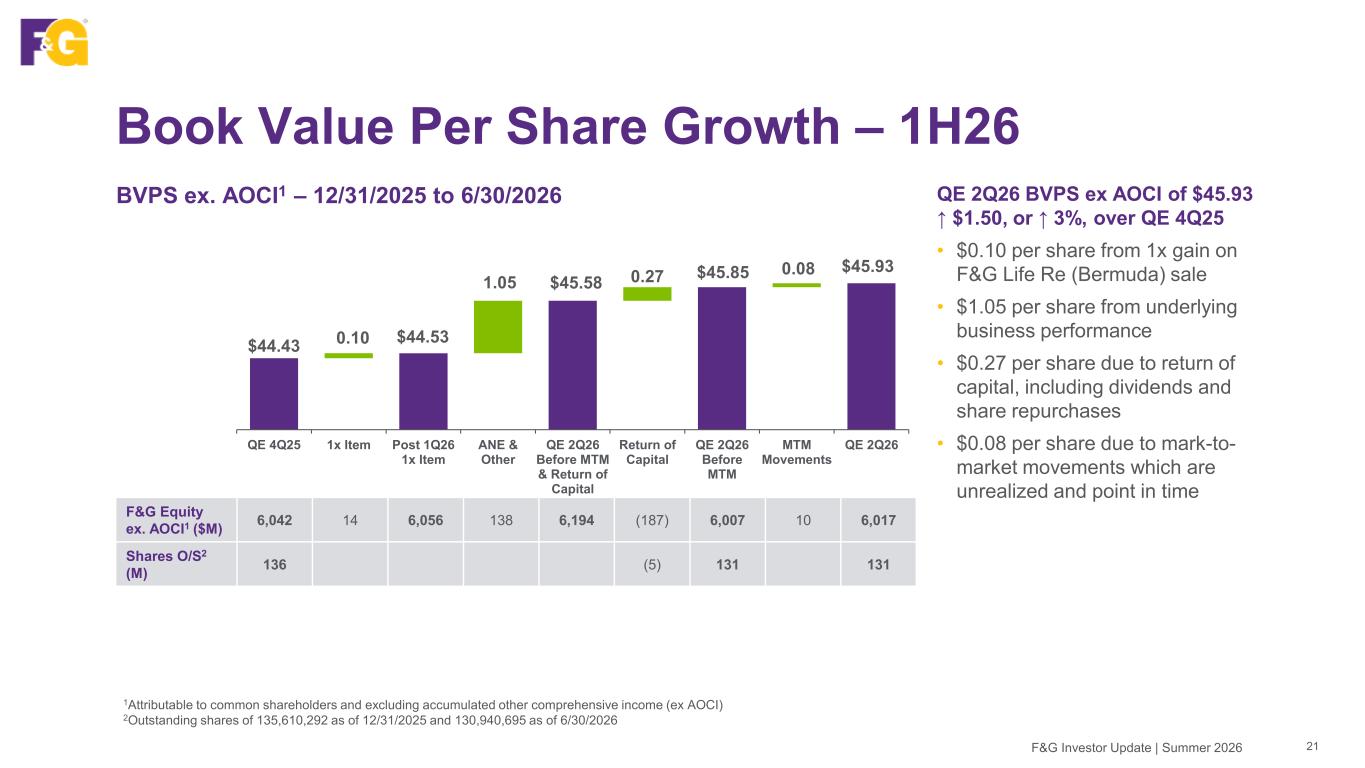
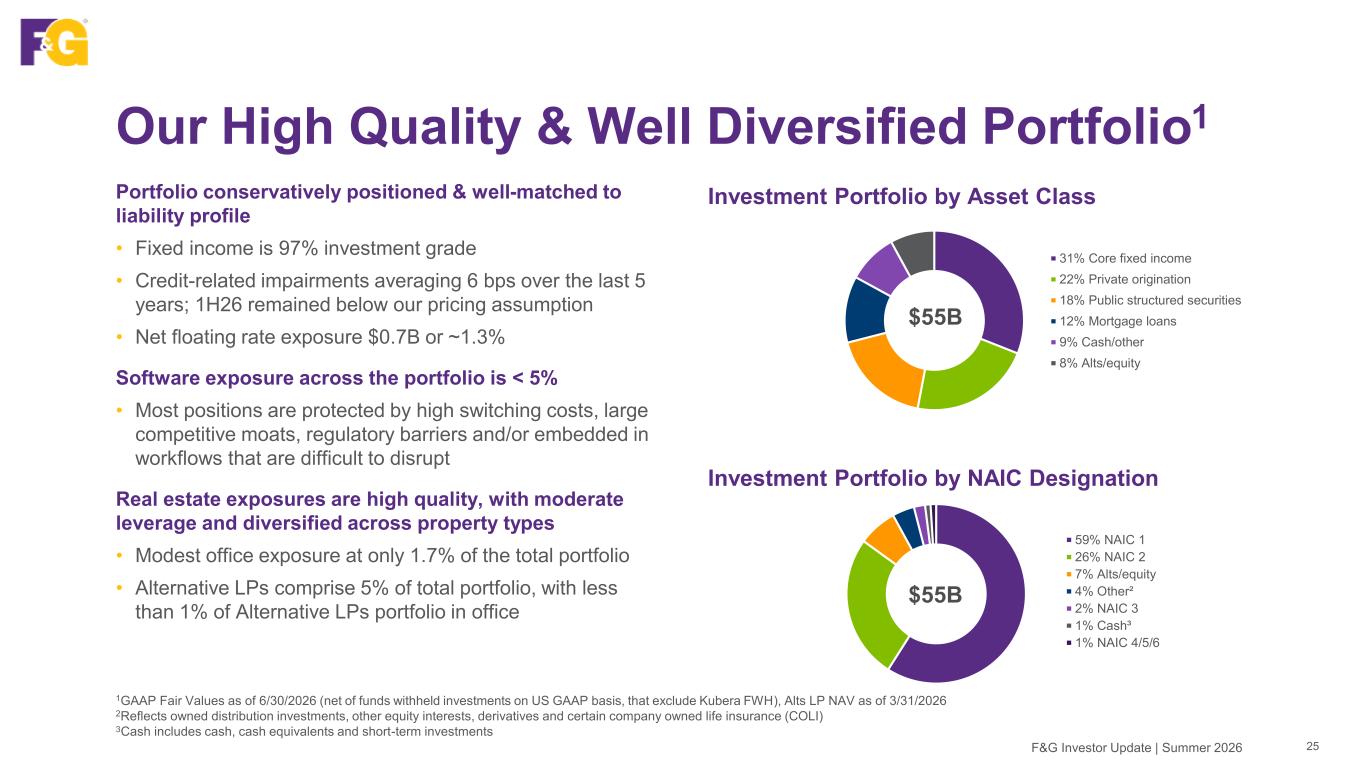
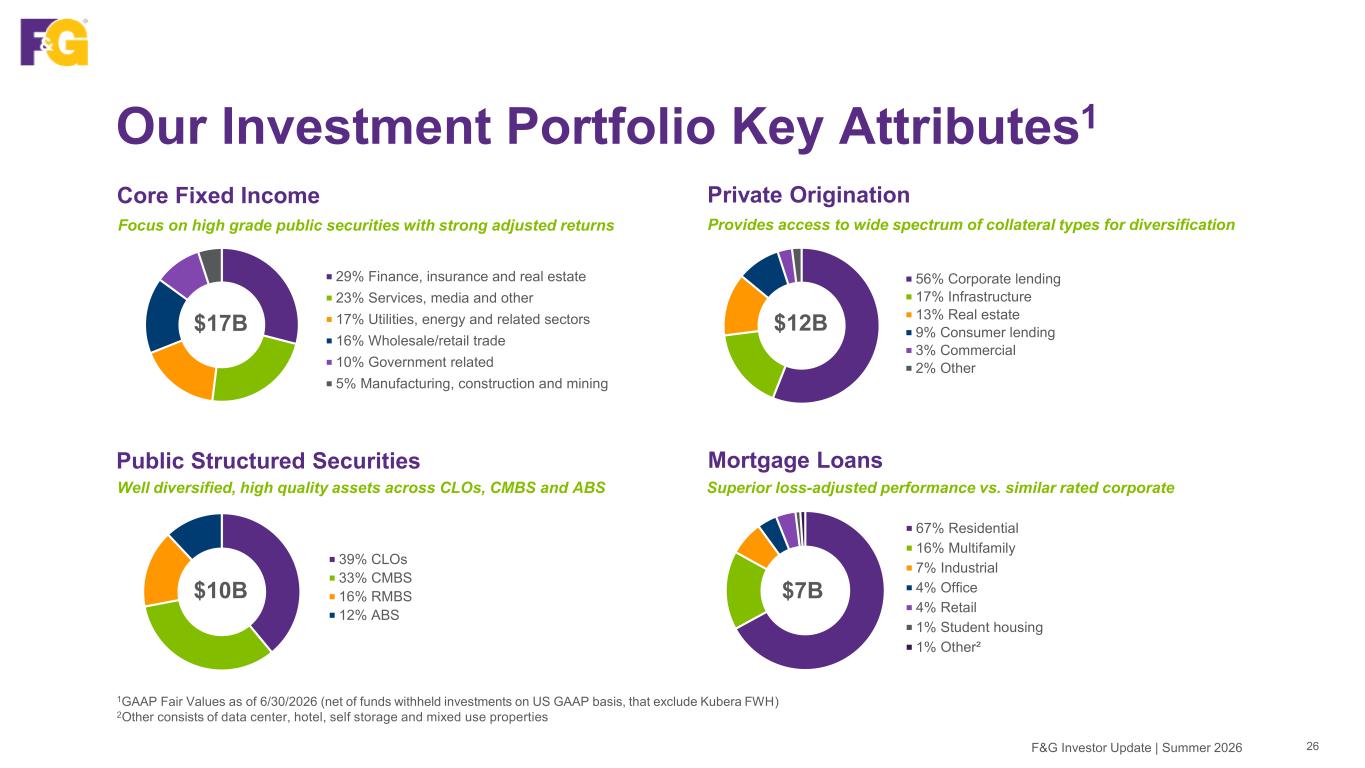
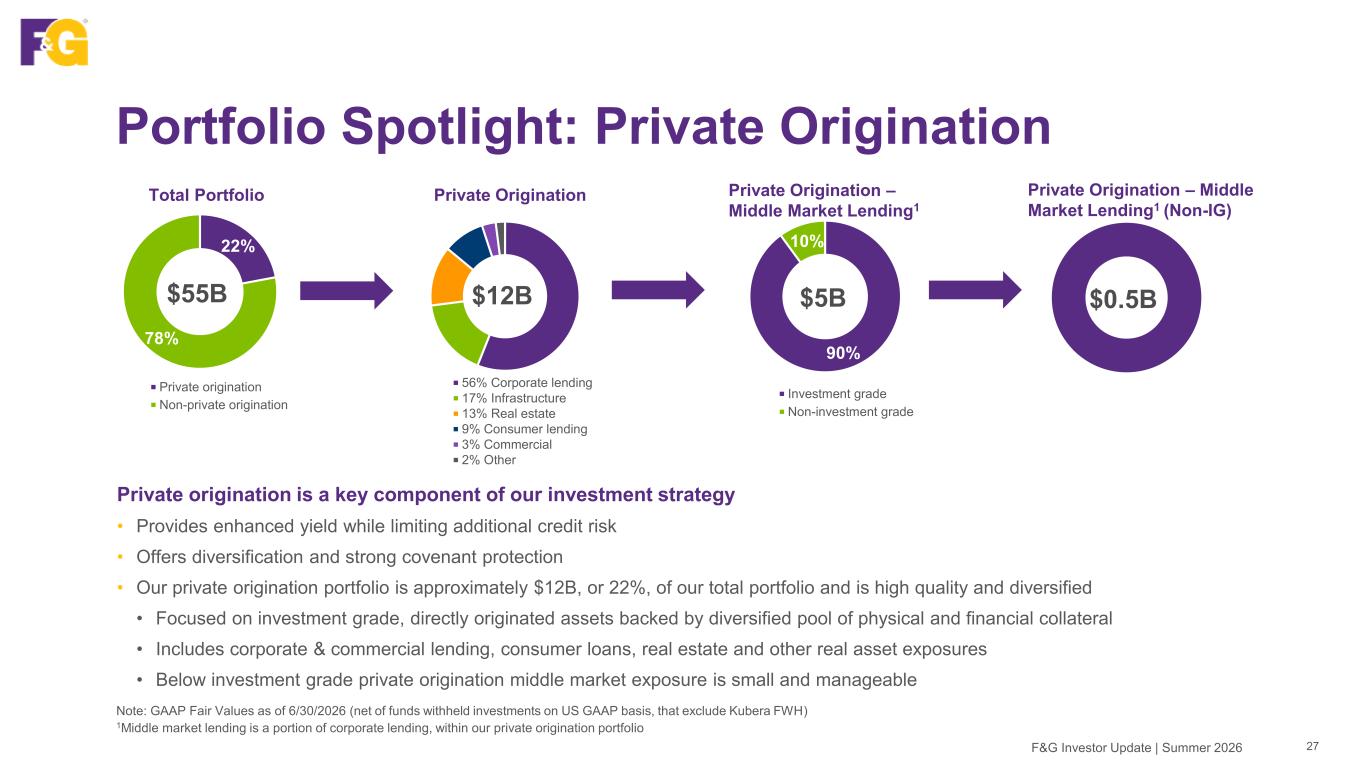
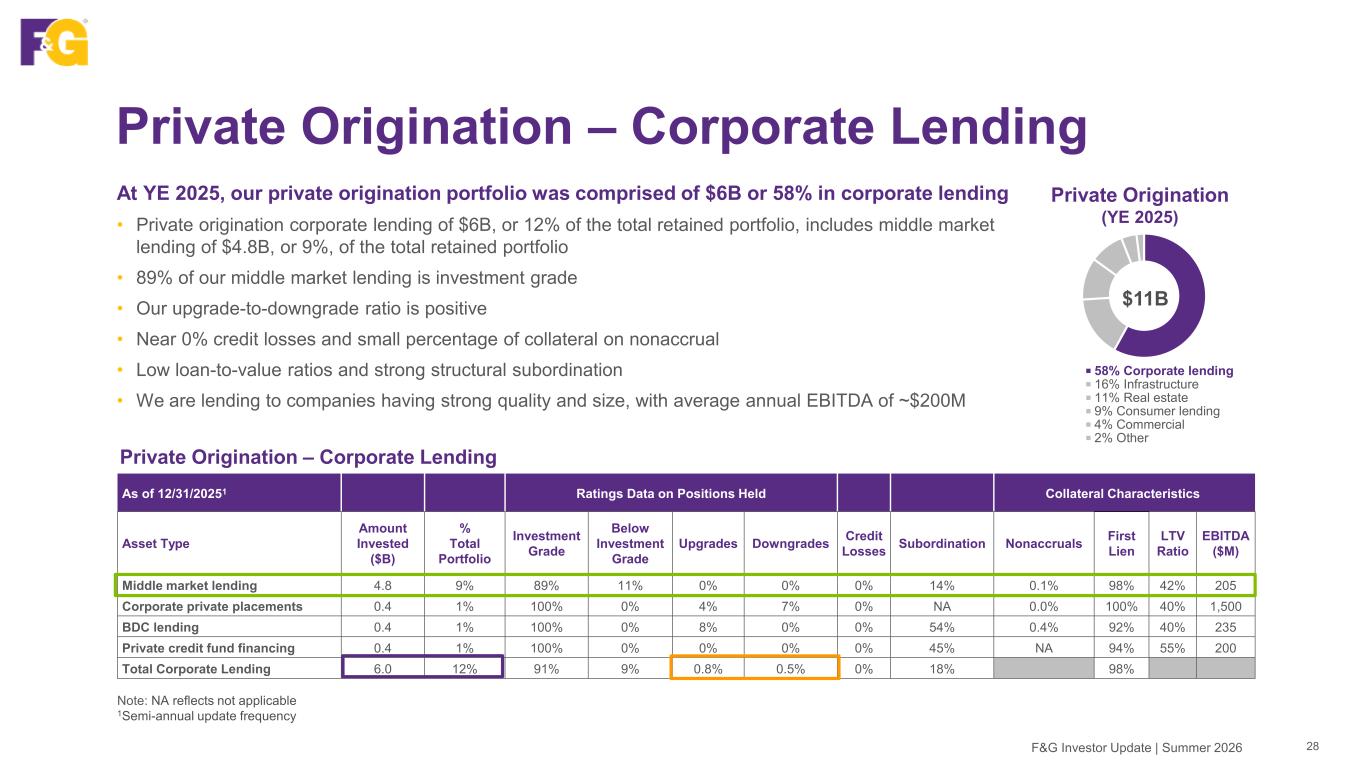
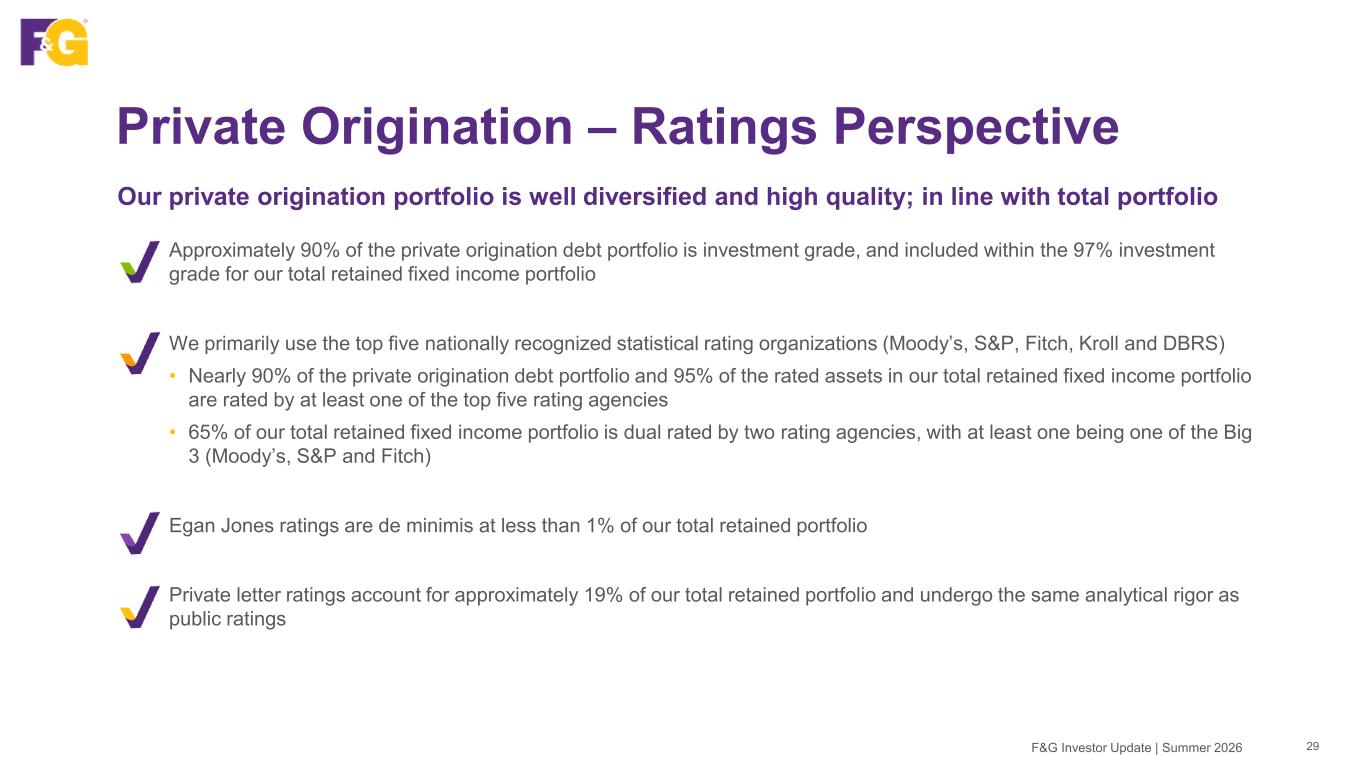
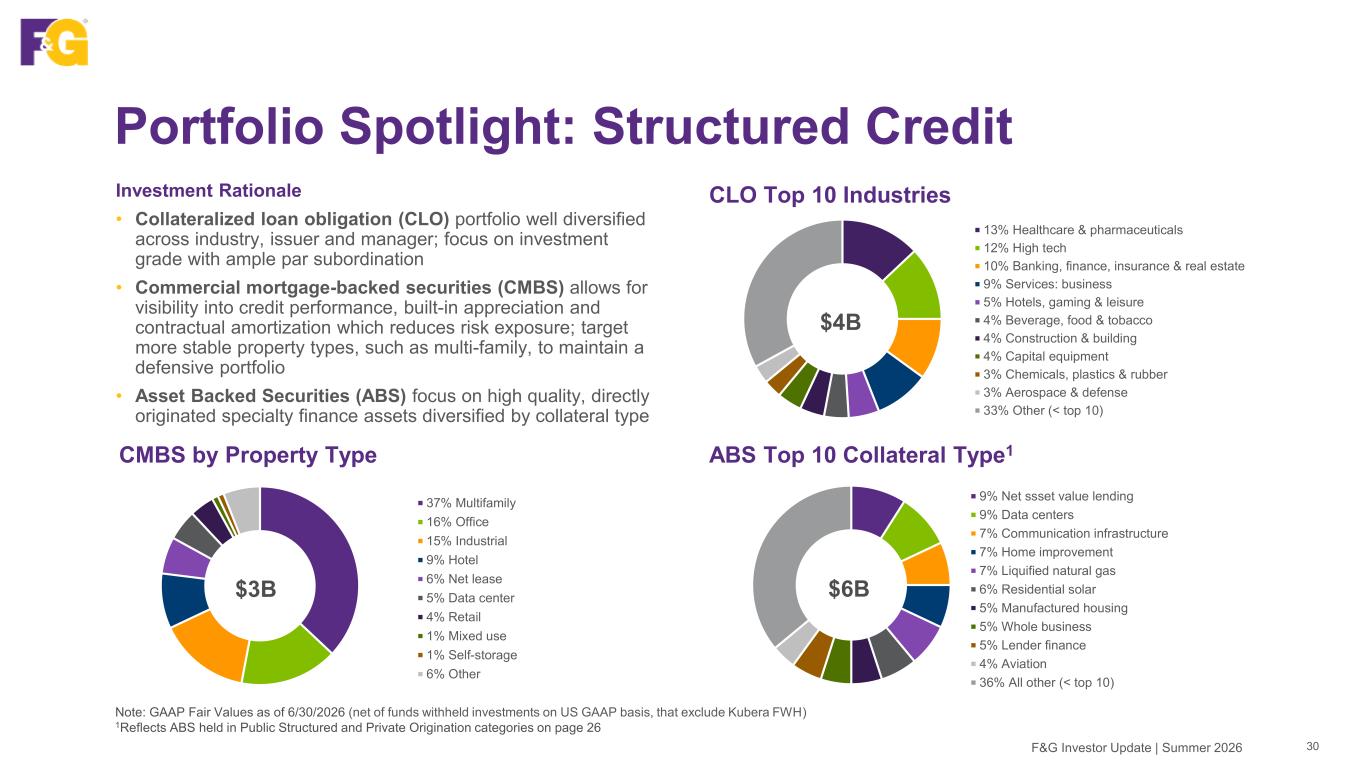
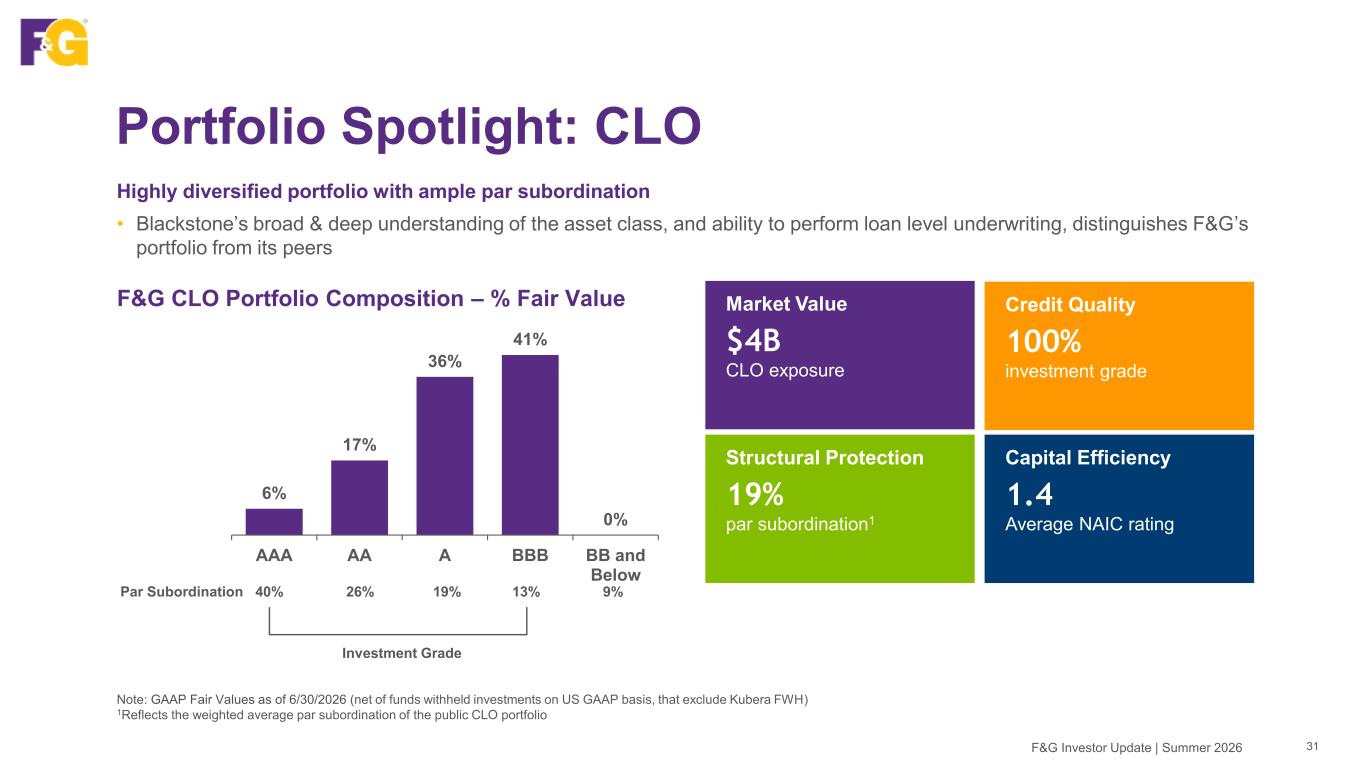
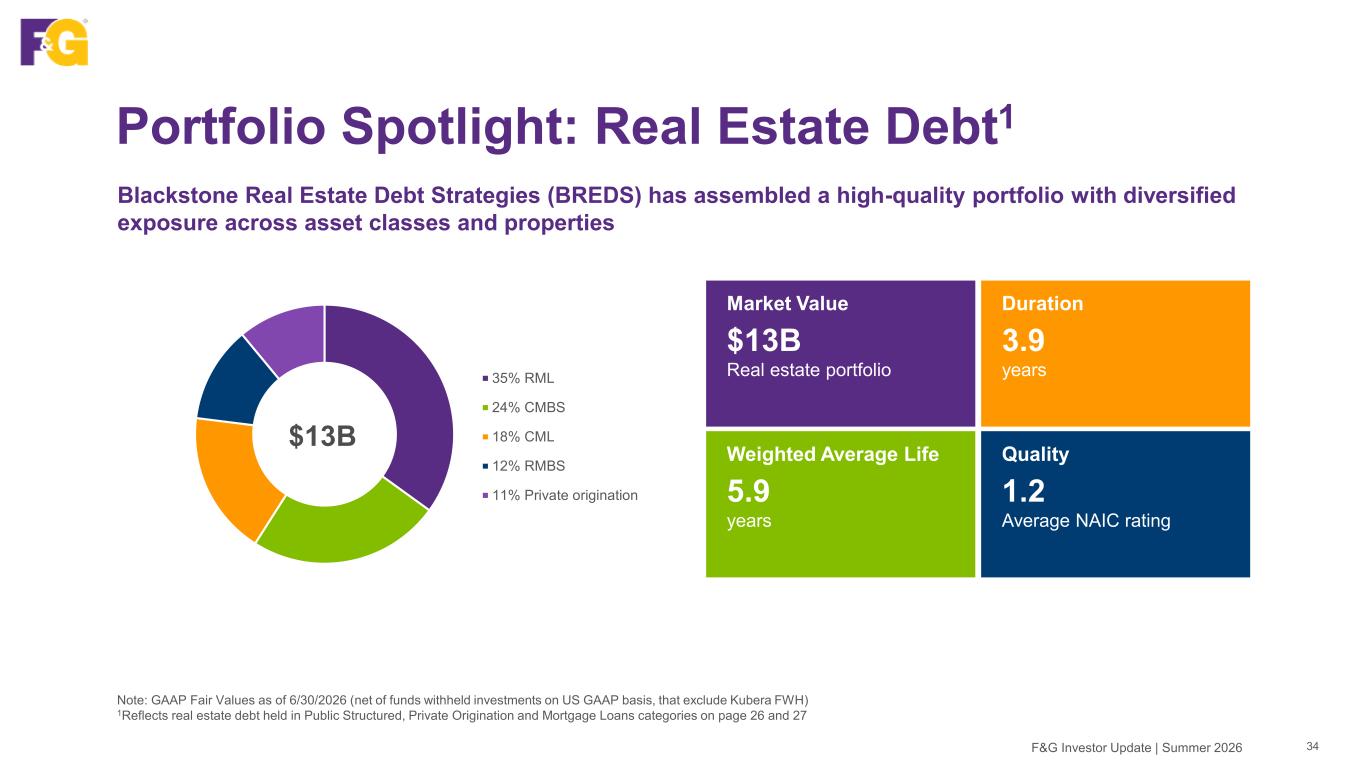
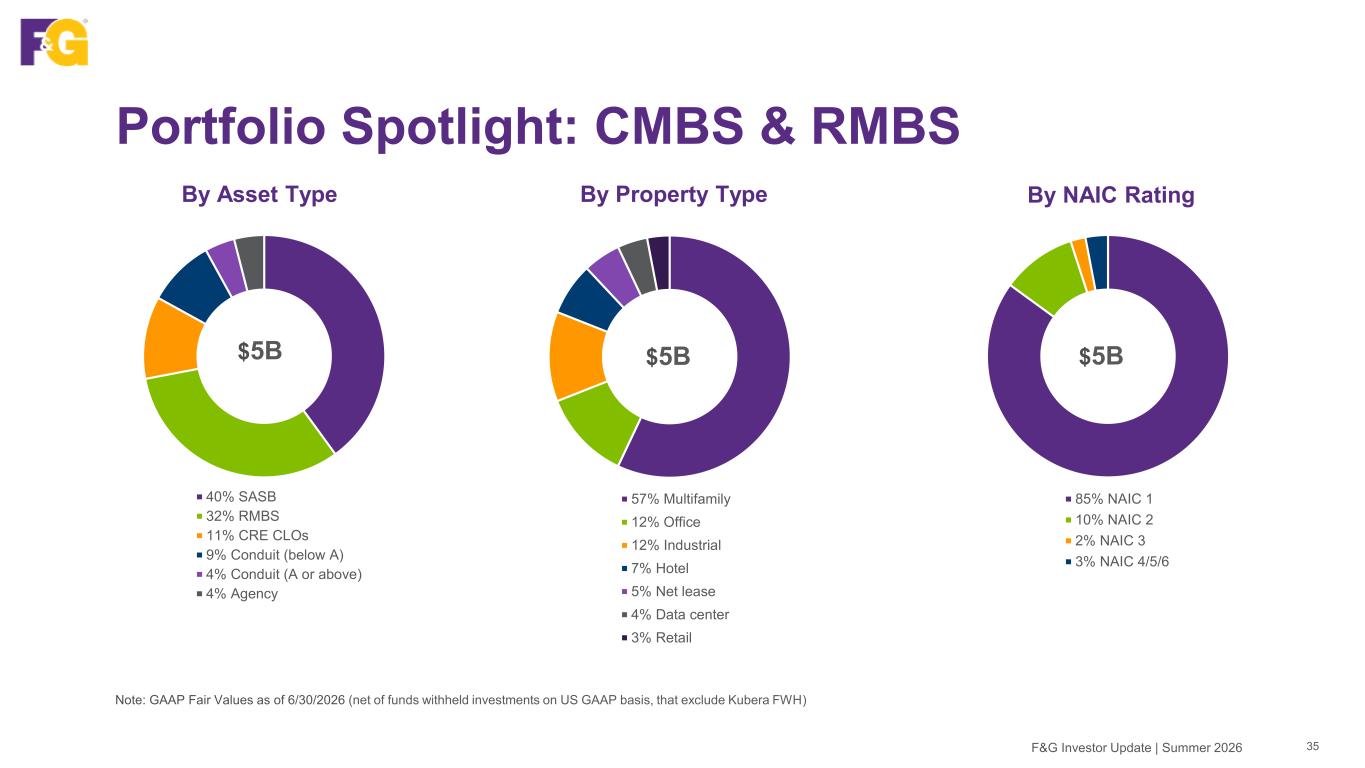
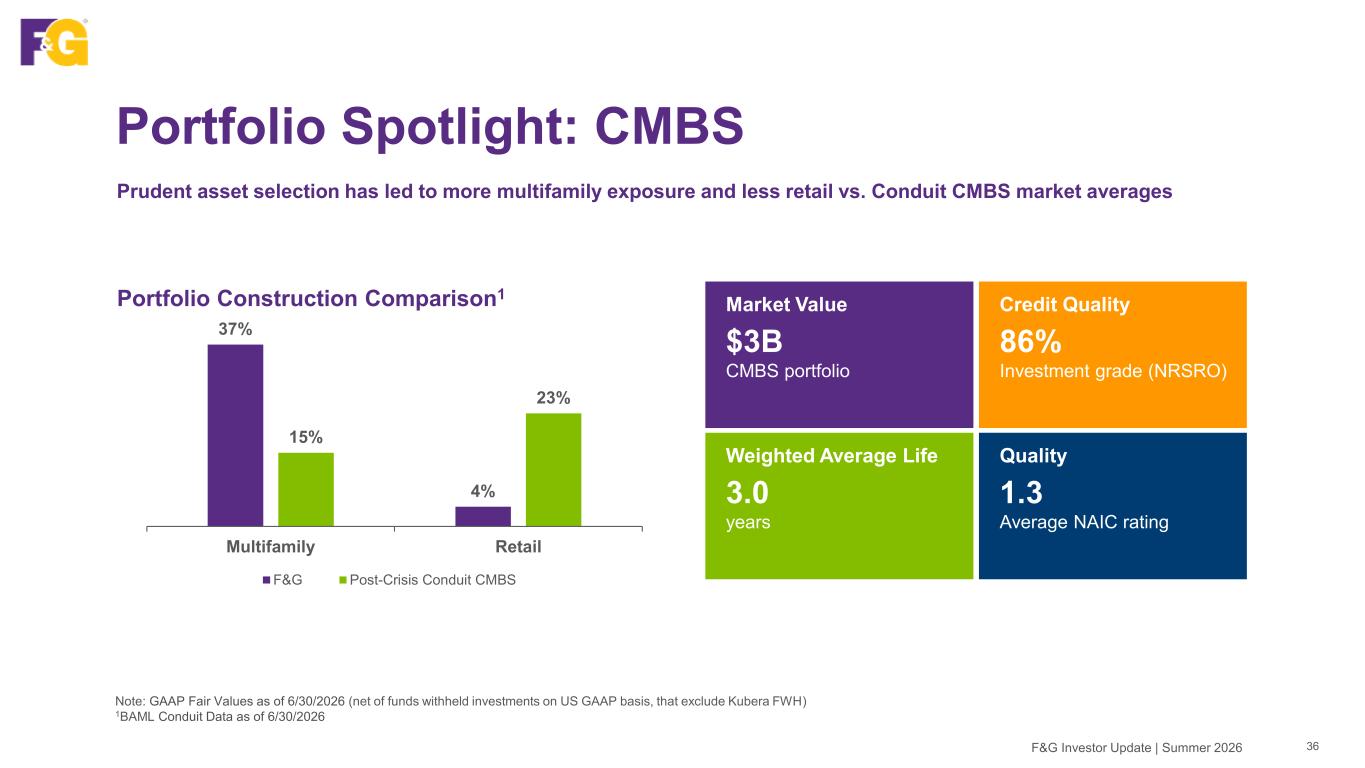
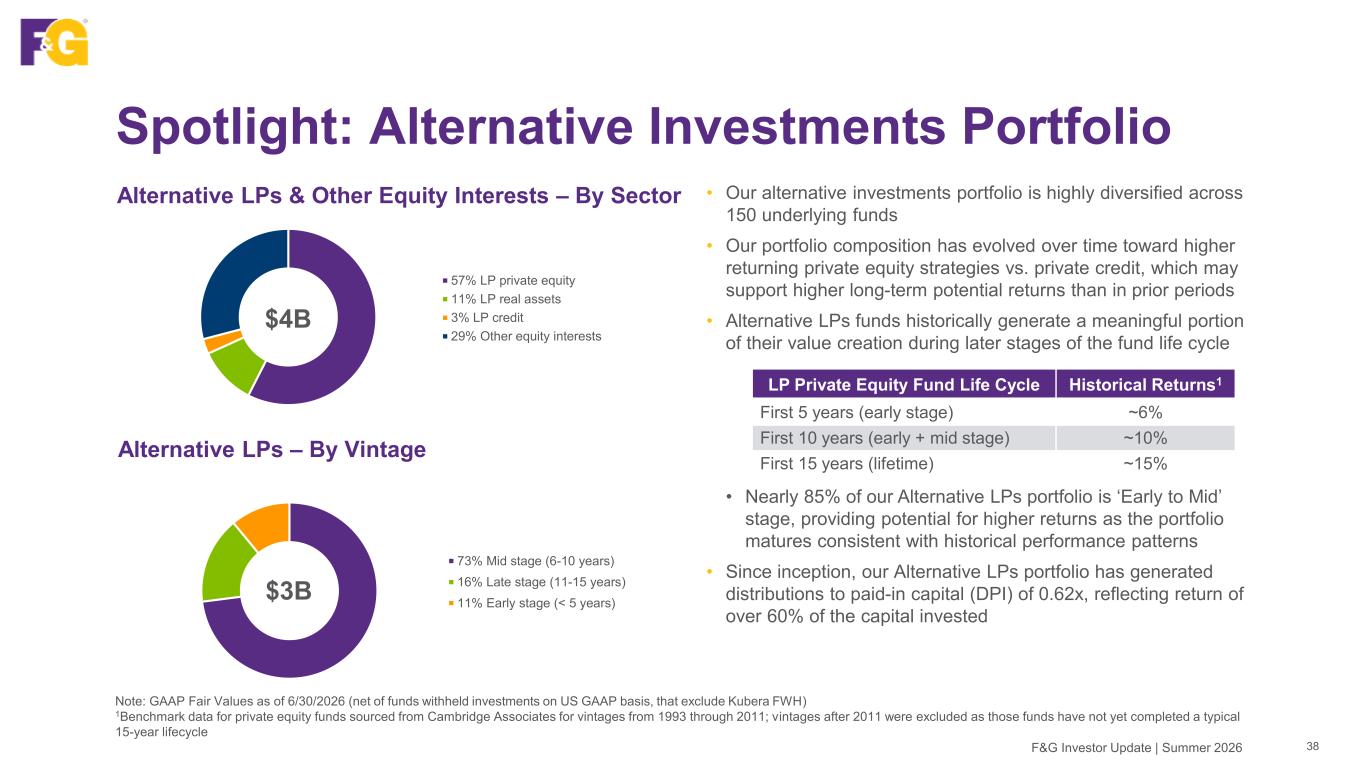
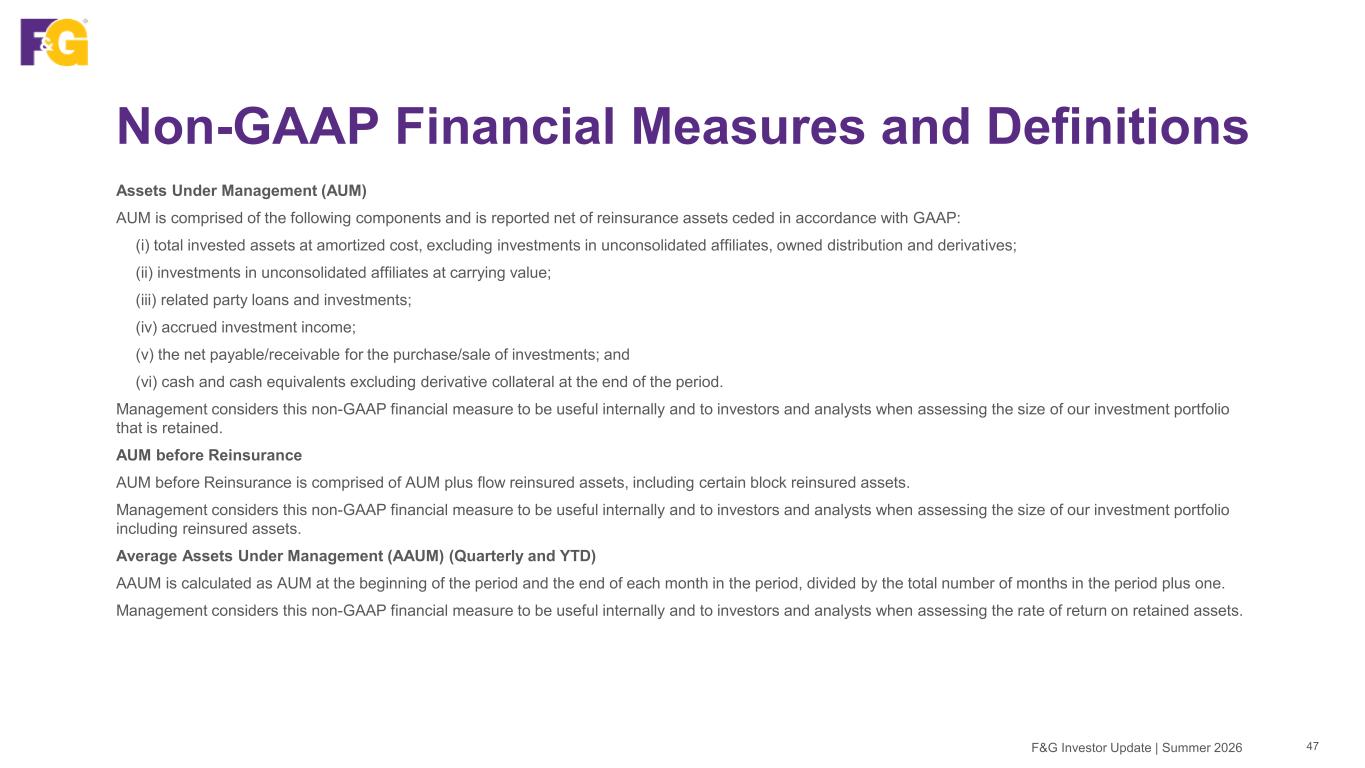
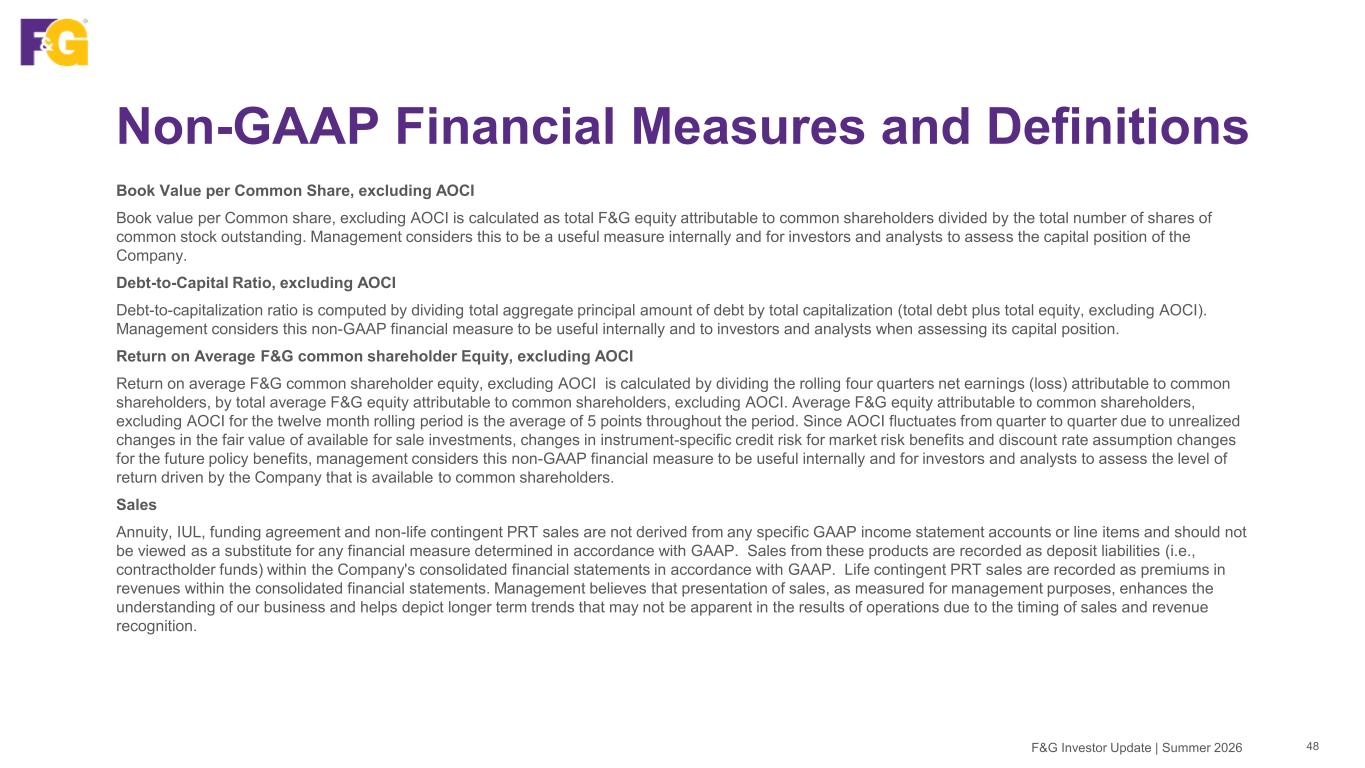
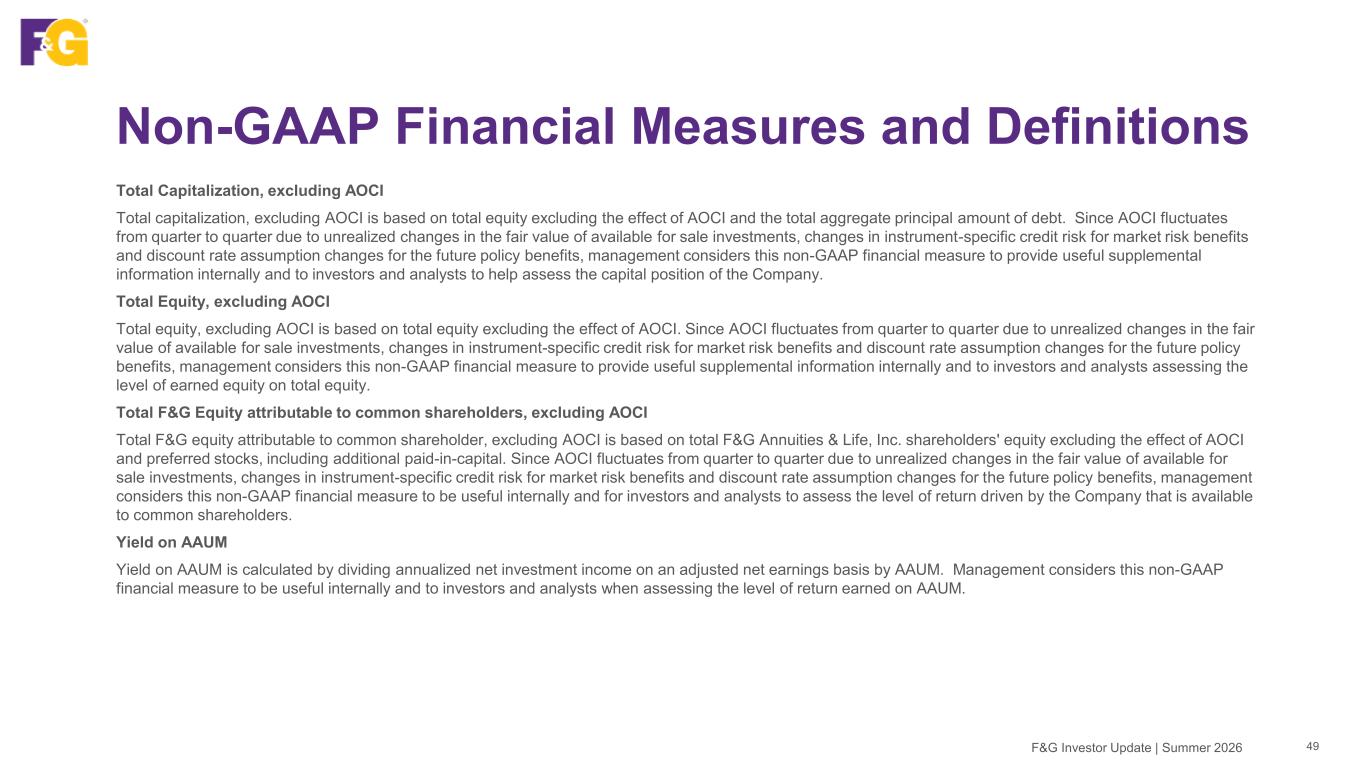
Good morning, and thanks for joining today's call. I'm very honored to speak with you today on my first earnings call as Chief Executive Officer and President. Since joining the company in April of last year, I have served as CFO, ingraining myself in the financial elements of F&G, and president, running the day-to-day insurance company and building relationships with our teams and distribution partners. What drew me to F&G was an appreciation for the business, both in terms of what has been written and the opportunity to expand our services to an increasingly larger customer base, as well as the exceptional culture of the team. I would also like to thank Chris Blunt for bringing me to the company and his partnership over the last year. I have a huge amount of respect for Chris and what he and the team have built here at F&G. Very excited to continue the momentum as we expand our retail and institutional franchises and accelerate our move toward a more fee-based, higher margin, and less capital-intensive business, a natural advantage of our position as one of the largest sellers of annuities and life insurance in the industry. Now I would like to share some highlights of our second quarter results, which were largely in line with our expectations, as well as details of our investment portfolio and provide an owned distribution update. Then I'll turn it over to Mark to cover our results in more detail. From a top-line perspective, AUM before reinsurance increased to $74.7 billion at June 30, up 8% over the prior year. This includes retained assets under management of $55.9 billion. Retained AUM reflects positive asset flows, offset by the $1.8 billion in-force blocks seeded with the F&G live resale in the first quarter, and a $750 million funding agreement-backed note maturity in the second quarter. Gross sales were $2.7 billion for the second quarter, comprised of $2 billion of core sales and $700 million of opportunistic sales. As F&G navigates the competitive landscape, we are focused on disciplined sales growth and capital allocation priorities between core and opportunistic sales to power our AUM growth. Core retail sales of indexed annuities and indexed life reflect strong momentum at $1.8 billion for the second quarter. This is one of our strongest quarters on record for core retail sales and reflects continued momentum for F&G despite another quarter of contraction in industry FIA sales as compared to the prior year quarter. Four institutional sales of pension risk transfer were $200 million for the second quarter, as expected, ahead of the seasonal increase in PRT sales typically seen in the second half of the year. Opportunistic sales were primarily comprised of $600 million of funding agreements, as well as $100 million of multi-year guaranteed annuities, which we have de-emphasized due to returns currently below our threshold. F&G's net sales were $1.5 billion in the second quarter. This reflects flow reinsurance in line with capital targets for fixed indexed annuities and multi-year guaranteed annuities. F&G's retained investment portfolio performed very well once again this quarter. Our portfolio is high quality, with 97% of fixed maturities being investment-grade. It is well-matched to the liability profile and diversified across asset types. Our fixed income yield was 4.91% in the second quarter, an increase of 14 basis points over the first quarter of 2026, and 8 basis points over the second quarter of 2025. Five. Credit-related impairments have remained low and stable, averaging six basis points over the past five years and a modest two basis points in the first half of the year. Our alternative investments portfolio was $4 billion, or approximately 8% of the total retained portfolio. This includes approximately $3 billion of limited partnerships and $1 billion of other equity interests. Many of these alternative investments are still in the earlier phases of their value creation cycle, so we are not yet fully realizing the long-term expected return. During the second quarter, we saw our annualized return on approximately 5.9 percent, down from 8.3 percent in the first quarter of 2026. Turning to our own distribution portfolio, As previously announced, Chris Blunt is continuing as a director of F&G and CEO of Peak Altitude, a business that Chris has been building over time. With approximately $700 million deployed into this business and approximately $80 million in annual EBITDA in 2025, we believe the market is ascribing little to no value in our share price today for the value of Peak. As a result, Chris has launched a formal process to explore strategic alternatives for peak altitude to capture its significant growth opportunities and unlock that intrinsic value for F&G shareholders. We believe that both F&G and subsidiary peak altitude have plenty of runway ahead to continue growing AUM, growing earnings, and growing shareholder value. F&G reported gap equity excluding AOCI of $6 billion a quarter-end and has grown its book value per share excluding AOCI to $45.93. up 68% since the 2020 F&F acquisition. We believe that the components of our business, our new business platform, our profitable enforced block, and our capital-like fee-based strategies represent a distinct and measurable source of value. Taken together, we believe a sum-of-the-parts framework reveals meaningful value that is not yet fully reflected in F&G's current market valuation, and we remain focused on closing that gap with strategic alternatives for PEAK being an important part of this process. Let me now turn the call over to Mark to provide further details on F&G's second quarter highlights.
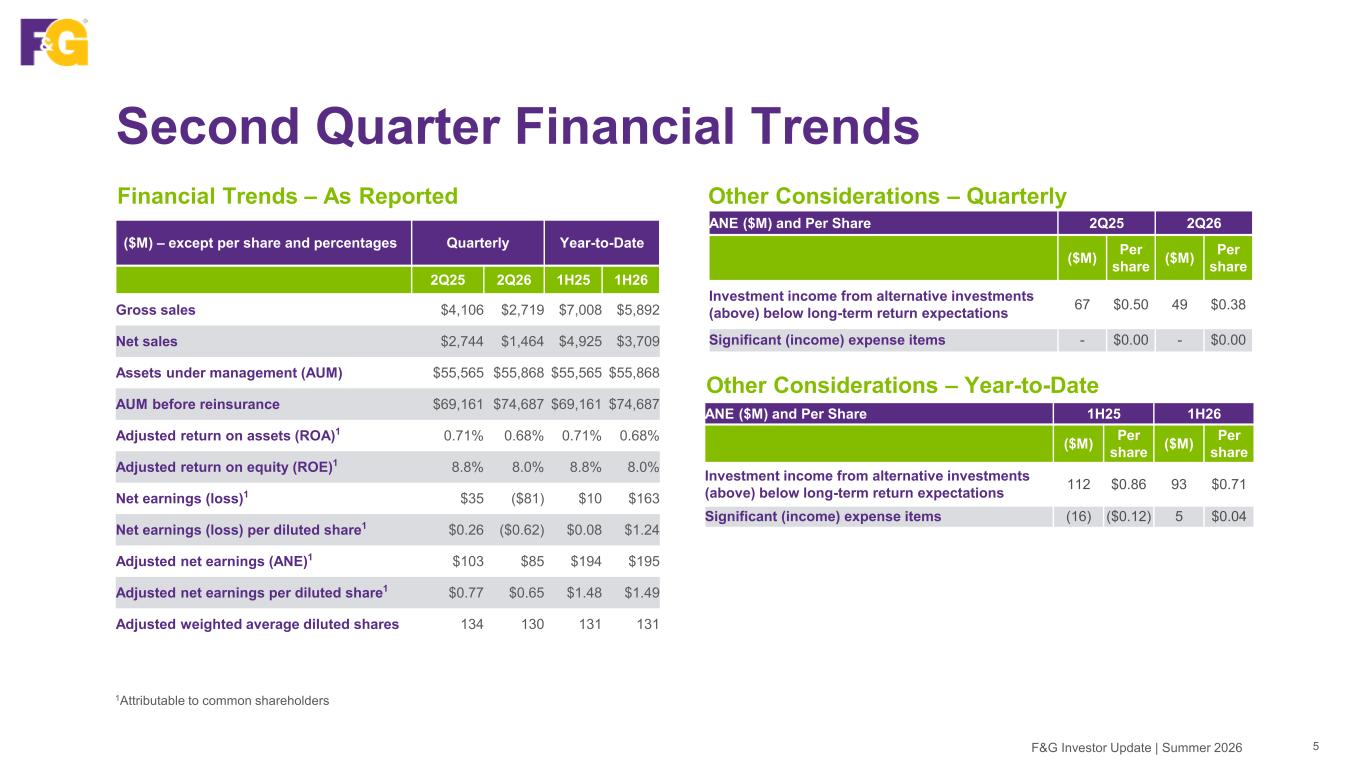
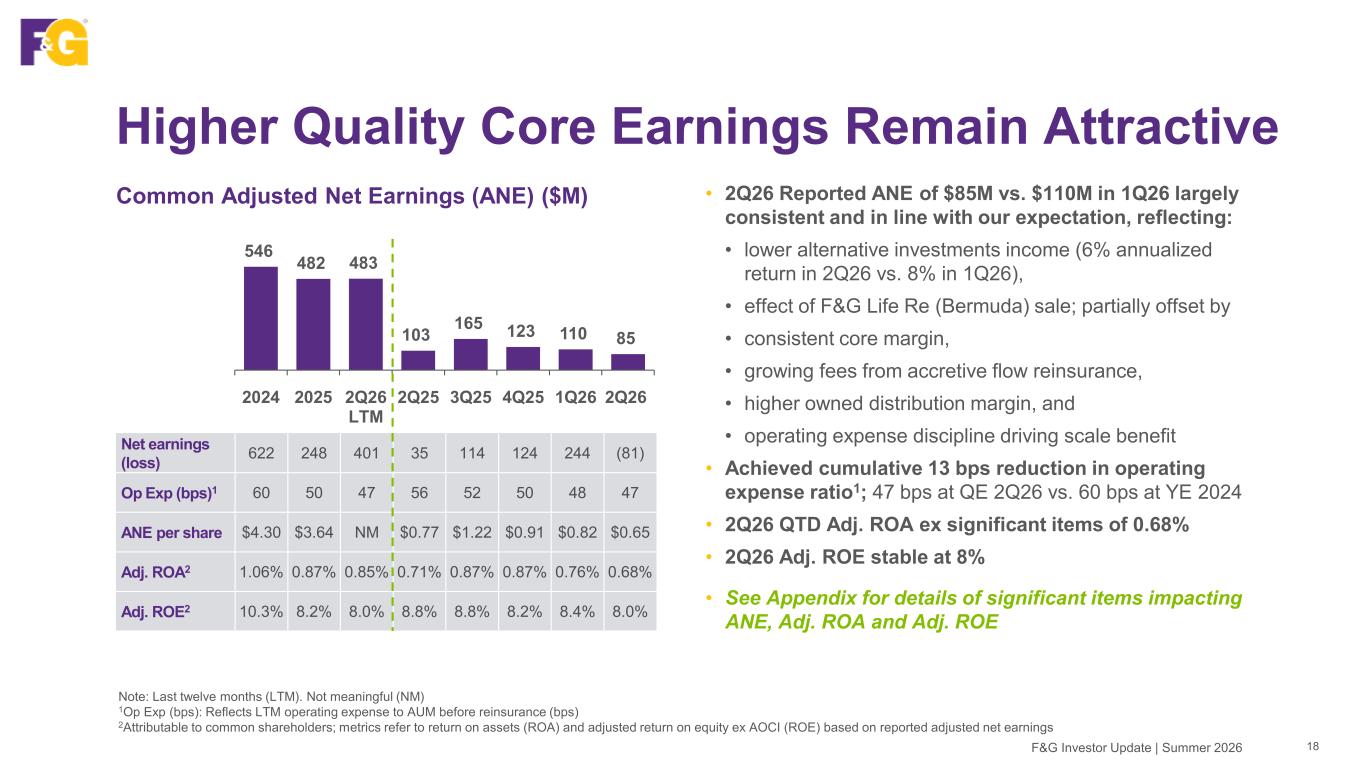
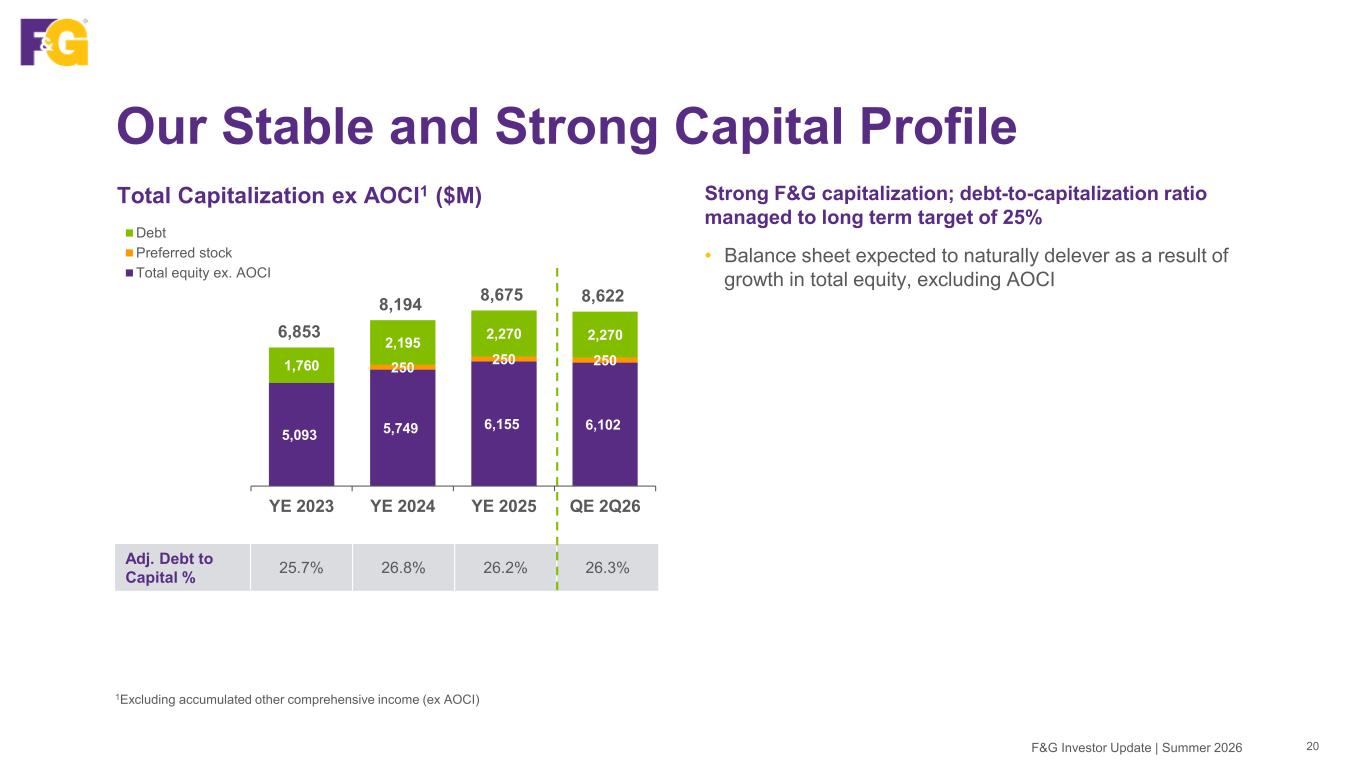
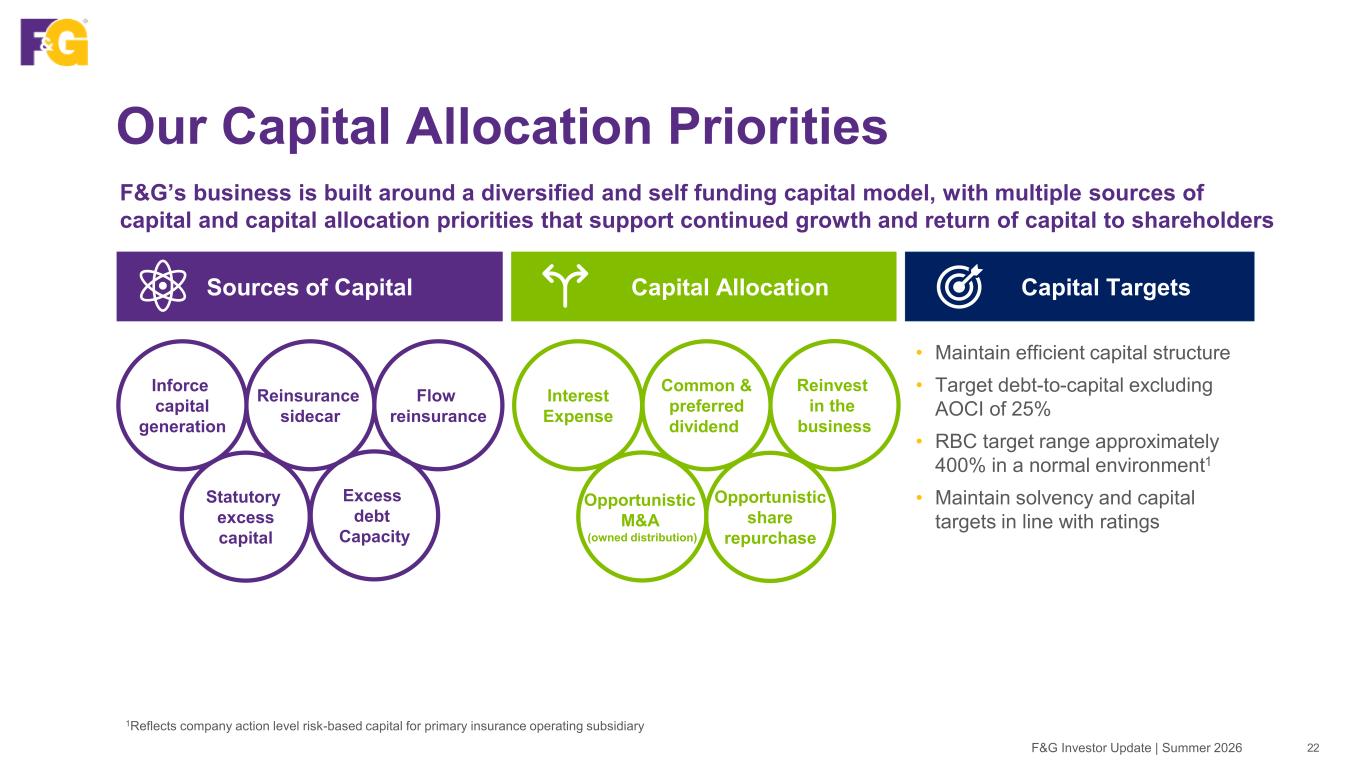
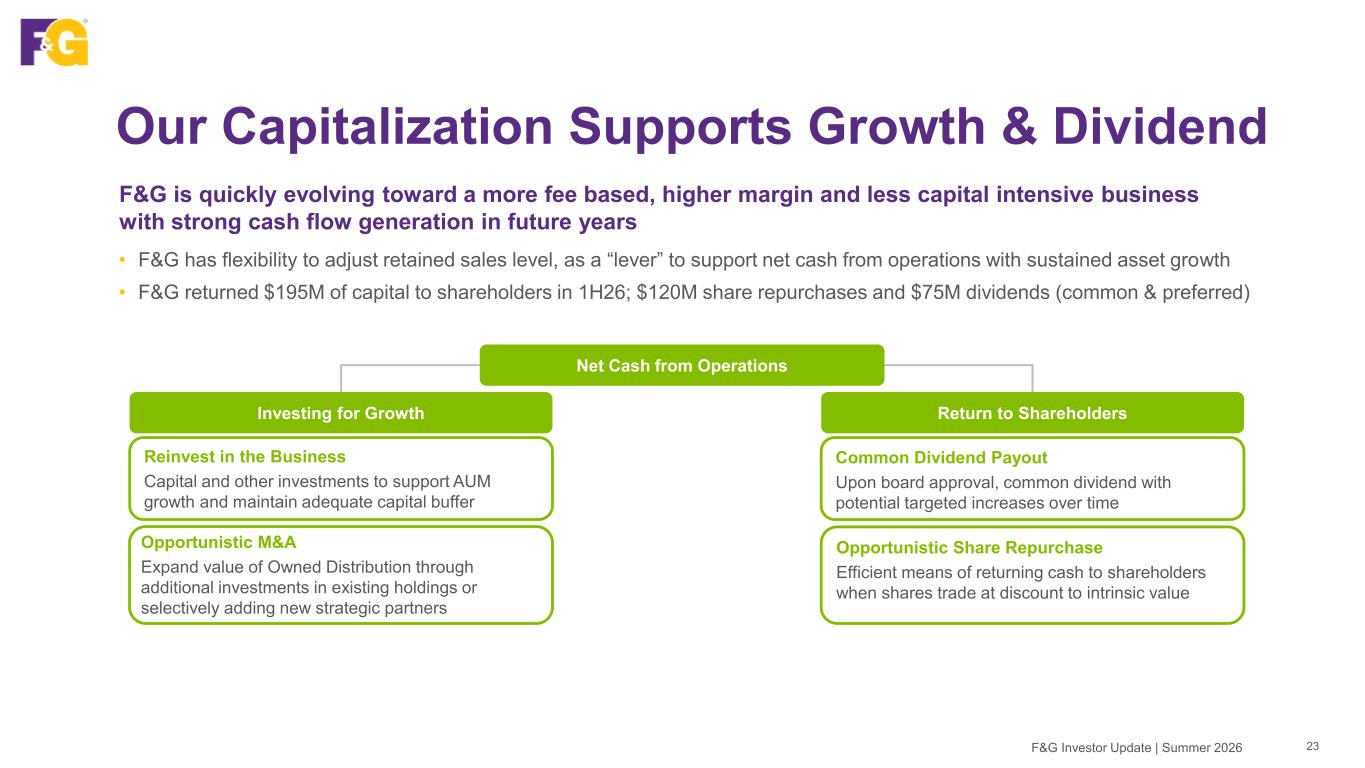
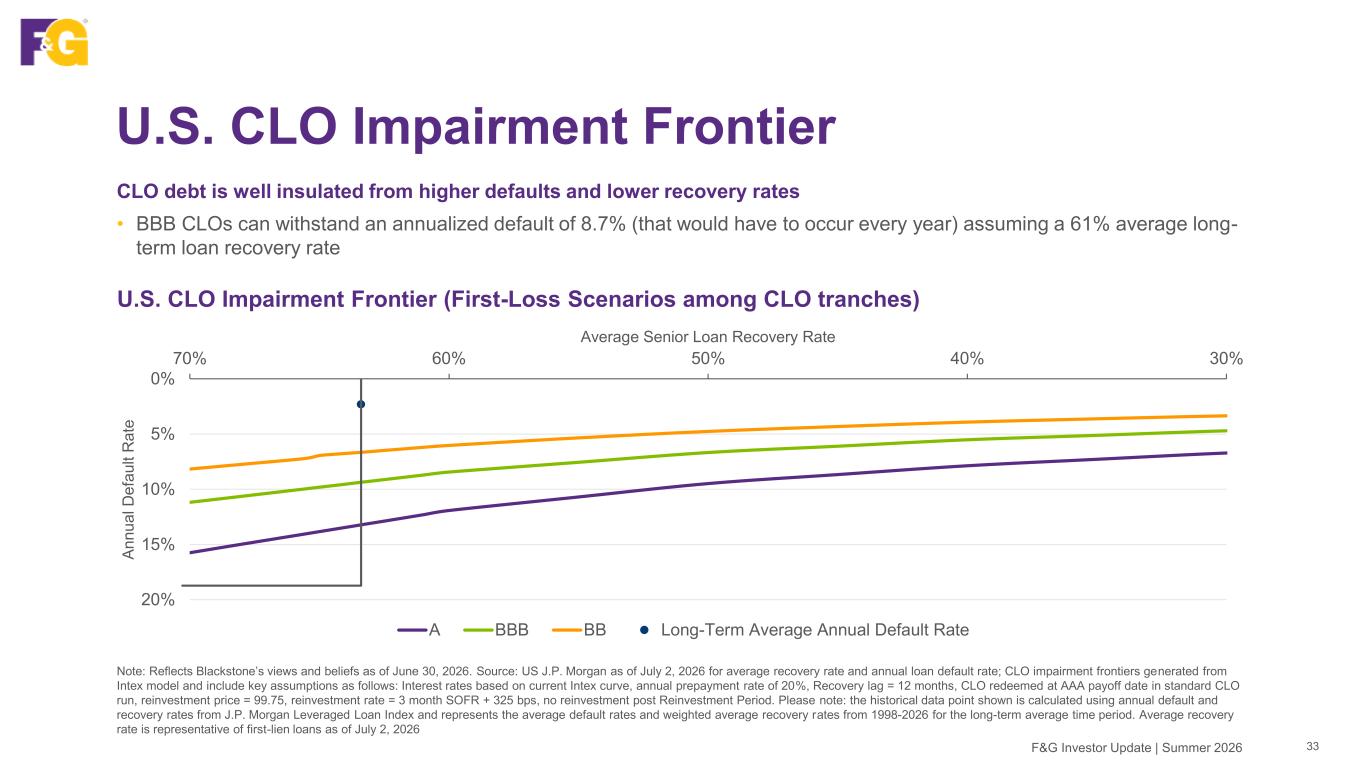
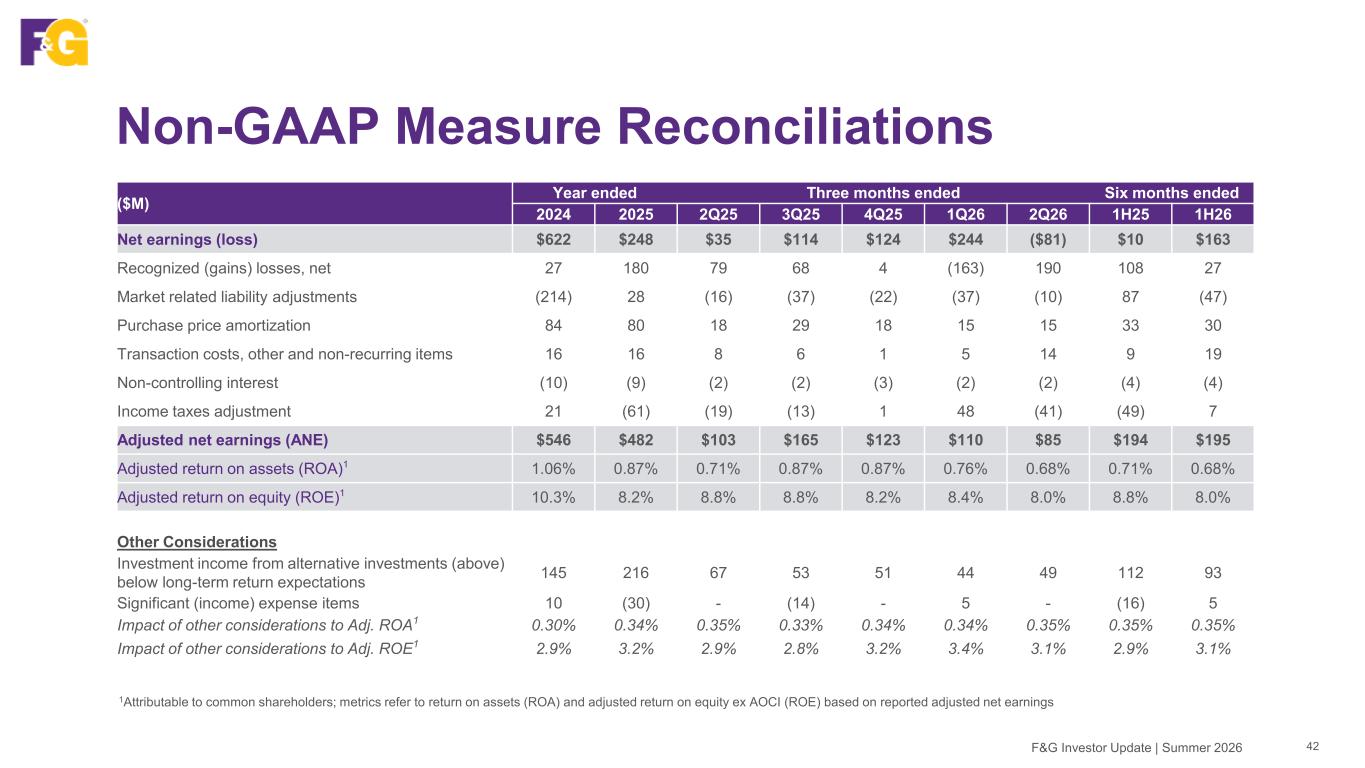
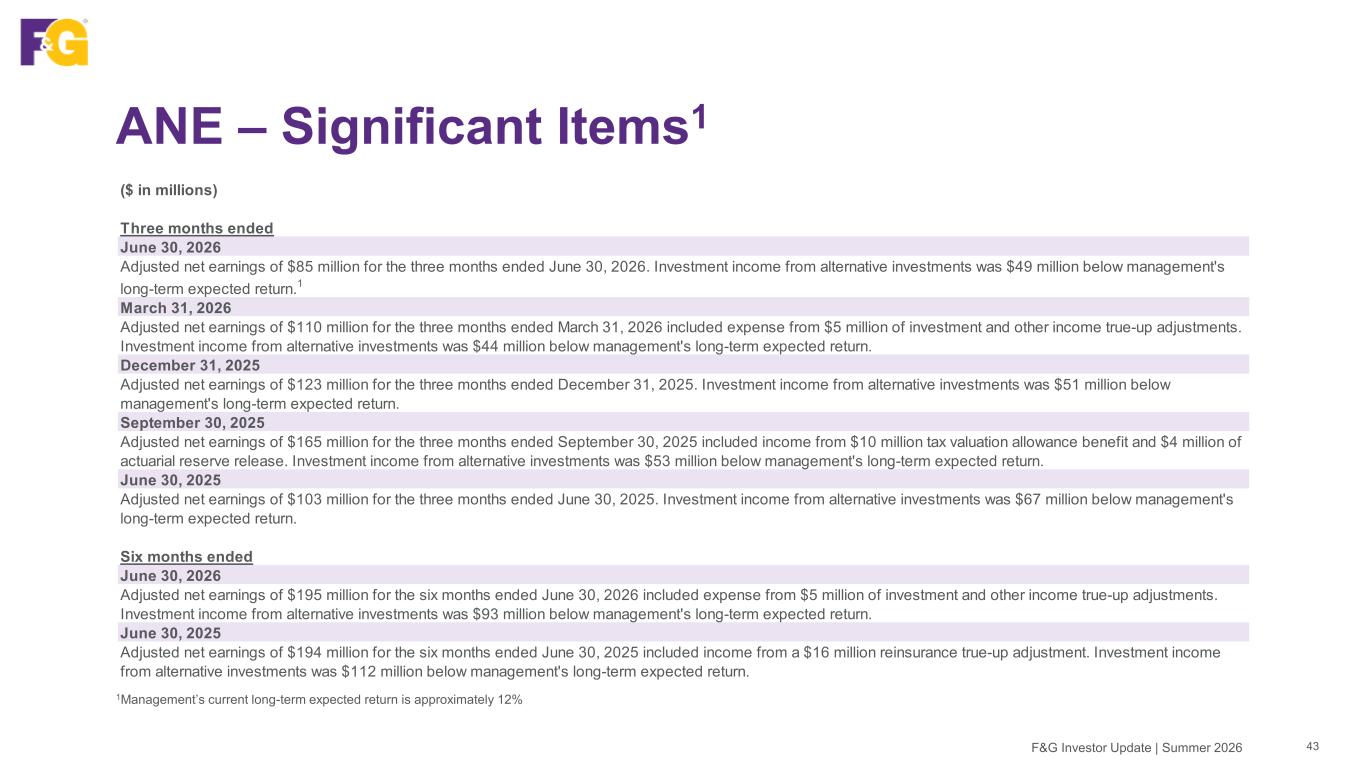
Thank you, Connor. Starting with earnings, overall second quarter results were largely in line with our expectations and core spread remained consistent as the business maintained discipline pricing. On a reported basis, adjusted net earnings were $85 million, or $0.65 per share in the second quarter. Alternative investments income was $49 million, or $0.38 per share, below management's current long-term expected return of 12%, but in line with our post-tax estimate of $51 million pre-announced in early July. Compared to the first quarter of 2026, adjusted net earnings decreased by $25 million. The after-tax impact of lower returns on alternative investments was $21 million. And the after-tax effect of the FG Life resale on March 1st, 2026 reduced incremental earnings by $8 million in the second quarter as compared to the first quarter. These items were partially offset by consistent core spread, growing fees from accretive flow reinsurance and own distribution margin, and operating expense discipline. Compared to the second quarter of 2025, adjusted net earnings decreased by $18 million. The after-tax effect of the FT Life resale reduced earnings by $12 million in the second quarter as compared to the prior year quarter. Product margin also reflects lower surrender charge fee income and higher other liability costs that include increased amortization expense as expected. These items were partially offset by higher returns on alternative investments, consistent core spread, steady fees from flow reinsurance and own distribution margin, and disciplined expense management. Next, turning to our scale benefit. As AUM grows and we continue to manage expenses, we are benefiting from increased scale. Our ratio of operating expense to AUM for reinsurance decreased to 47 basis points at the end of the second quarter, as compared to 48 basis points in the first quarter of 2026. We have reduced the operating expense ratio from 60 basis points at the end of 2024 to 50 basis points at year-end 2025, and expect further improvement to approximately 45 basis points by year-end 2027, or a cumulative 15 basis point, or 25% improvement over the three-year period. Now, regarding our returns, as reported, adjusted ROE excluding AOCI was 8% for the second quarter, and also, as reported, adjusted ROA with 68 basis points for the second quarter. Taking into consideration management's long-term expected return for alternative investments would have resulted in 3.1 percentage points of additional ROE and 35 basis points of additional ROA for the quarter. Turning to our strong capital position, we remain committed to our long-term target of approximately 25% debt capitalization, excluding AOCI, and expect that our balance sheet will naturally delever over time. We continue to target holding company cash and invested assets at two times interest coverage. Our annualized interest expense is approximately $165 million, or roughly a 7% blended yield on the $2.3 billion of outstanding. We expect to maintain our estimated company action level risk-based capital, or RBC ratio, above our 400% target. We view the NAIC's adoption of higher capital charges on CLOs invested in both broadly syndicated loans and middle market loans as very manageable. After properly adjusting for funds withheld reinsurance assets, the estimated effect of the new capital charges for our CLO portfolio at June 30th would translate to a decrease in RBC of approximately 10 points. Note, this is before any management action to minimize the capital impact ahead of year-end. Importantly, F&G maintains strong capitalization and financial flexibility. We conservatively manage to the most stringent capital requirements of our regulators and poor rating agencies. We also have multiple reliable sources of capital supporting our business. Our imports generate approximately $1 billion from the existing book of business. We expect even stronger capital generation in the future as we rapidly move toward a more fee-based, higher margin, and less capital-intensive business model. Our reinsurance sidecar provides on-demand, third-party capital that we can access without diluting shareholders. Our strategic flow reinsurance partnerships add another layer of flexibility, allowing us to adjust retained sales levels and support cash from operations as we grow. We have added yet another noteworthy flow reinsurance partner in July, as we continue to be a partner of choice for the industry. Our statutory excess capital provides additional capital strength in line with our ratings, and as the balance sheet continues to delever, our available debt capacity will only grow over time. For the first six months, our capital self-funded the following. $75 million of common and preferred dividends paid, $80 million of holding company interest expense, and $120 million in opportunistic share repurchases, as we have bought back 4.5 million shares at an average price of $26.44. We view repurchases as a tool at our disposal that we weigh up against other opportunities. We did all of this while maintaining momentum in our core retail and core institutional businesses and opportunistically taking advantage of attractive market windows for funding agreements, including a FABIN issuance earlier this year. As Connor mentioned, we remain disciplined in allocating capital to our highest return opportunities and have de-emphasized MAGA sales at this time due to returns currently below our threshold. Taken together, our capital allocation reflects the financial strength and flexibility we have built, and our confidence in the future. Let me now turn the call over to Connor to wrap up.
Thank you, Mark. I would personally like to thank Mark for stepping in as interim CFO. As expected, he has brought deep financial management and operational expertise to guide our strong finance organization during the leadership transition period. I'm also very excited to officially welcome Mike Bailey to F&G as our next CFO. Mike is an actuary with deep knowledge and extensive experience in the life and annuity sector, having held a variety of executive roles at industry-leading insurance companies. Most recently, Mike was the Retail Chief Financial Officer at CoreBridge Financial. Mike joined F&G just a couple of days ago, and while he is in the room with me, we can expect him to formally join the calls in Q3. I look forward to partnering with Mike to continue to build an industry-leading business. We believe S&G is well-positioned to grow assets under management, aligned with disciplined sales and capital allocation to the highest return opportunities, expand return on equity through strong, high-quality earnings generation, and create long-term shareholder value. This concludes our prepared remarks, and let me now turn the call back to our operator for questions. Operator?
Operator
Thank you. We will now be conducting a question and answer session. If you would like to ask a question, please press star one on your telephone keypad. A confirmation tone will indicate your line is in the question queue. You may press star two to remove yourself from the queue. For participants using speaker equipment, it may be necessary to pick up the handset before pressing the star keys. One moment while we poll for questions. Our first question, we'll hear from Wilma Bertis with Raymond James. Please go ahead with your question.
Hey, good morning. Some of the spread-based competitors have seen spreads stabilize a little bit this quarter. And maybe you can give us a little bit of color on what you're seeing based on FG's book and the prevailing interest rate environment. And along those lines, maybe just talk a little bit about what you saw with the spread in this 2Q.
Hey, Wilma. Thank you very much. Okay, there's quite a lot to that, so let me break it down into a few different components. If I start with the core fixed income, that was very much in line with our expectations. It was higher than Q1. In Q1, we had a few things that we mentioned that we believe were temporary and would resolve themselves in Q2, and indeed that is the fact. Then if we look at, maybe I could separate cost of crediting from surrender charges and the acquisition costs. I would say on the cost of crediting, that is also almost exactly where we expected it to be. Very consistent with both Q1 and Q4 of last year, but it's a little higher than a year ago, but I want to be careful to explain why. With FIA and IUL, those are annual We'll reset products and we price them and then we focus on maintaining the spread, maintaining the corridor. And we do that very well and very successfully. So those are exactly where we thought, very consistent. But also remember with PRT or funding agreements, we were putting them on this year at a rate higher than, for example, 12 months ago. So those will tick up. But again, very much exactly where we thought that they would be. Surrender charges, they're still, I would say, reasonably elevated in the industry. but that was very consistent, Q3 as well. We saw 58 compared with 56 last quarter, 57 the quarter before, lower than a year ago. I think we had 70-ish. And then within the acquisition costs, I would say there's probably two things that are maybe on the margin throwing some analyst models off a little bit. One is we do a third-quarter assumption review every year, and last year's third-quarter assumption review, so an increase in DAC amortization because of the increase in surrender. in the industry. It picked up, I think, probably about $10 million in each of the subsequent quarters. And then the last part I would point to is mortality is pretty consistent for us, but it can move a little bit. And in this quarter, we did have a little softness in mortality on the PRT book that I would refer to as timing. I expect that will resolve itself in the second half of the year.
So hopefully that helps tie it all together for you.
Yes, thank you very much. And you guys had pretty strong buybacks this quarter, but could you just talk about the appetite going forward, given the limited float? Just give us a little bit of color on where you stand with that. Thanks.
Yeah, thank you. It's a good question and an important one. For us, big capital return quarter, we viewed buybacks in Q2 as an opportunity to deploy capital in the optimum way. So I would start carefully by saying you should not assume that we'll necessarily continue to do that. That was we took advantage of the stock being done and I think that has worked out very well for us, but it's not a primary expenditure capital going forward. And I think it's a bouncing act because it was a lower amount of opportunistic sales in the quarter between MIGAs and FABNs. MIGAs, we've been to emphasize, we've talked about it. FABNs, I think a lot of the industry of the live company saw it gapping out in credit. So we saw it as a better opportunity in Q2, but again, not a tool to retain for when it makes sense, but not one that would be a primary source of deploying capital necessarily going forward.
Operator
Thank you very much.
All right. Thanks, Wilma.
Operator
And next, we'll hear from Alex Scott with Barclays.
Hi, good morning. This is Anne-Leon for Alex. Connor, congratulations first on the new role. First question for you. As you think about the business from a longer-term perspective, Are there any strategic areas that you're particularly focused on today? Thank you.
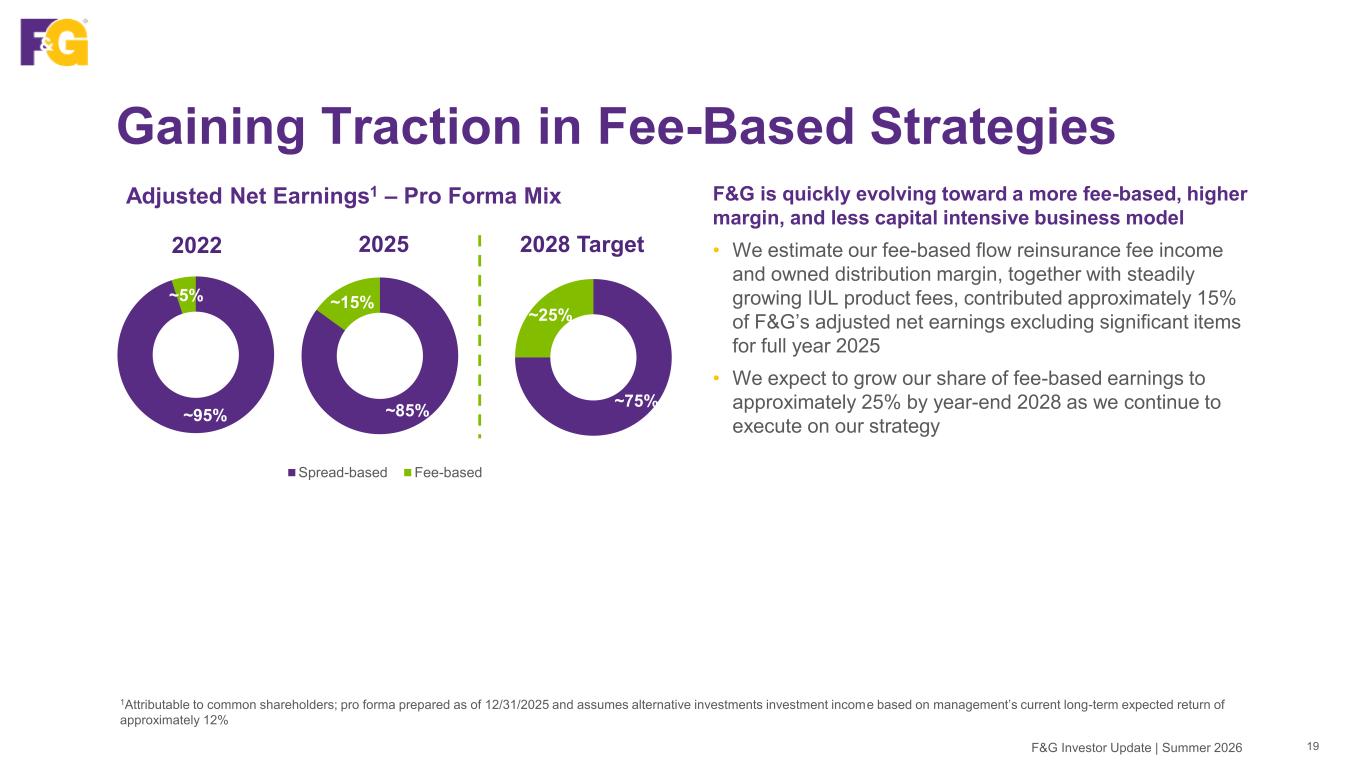
As I alluded to in the opening remarks, I'd say there's a lot of consistency with what we've been doing. We're going to focus on some of the key things. So one momentum, we're very pleased with the business that we've put on the books, the core business, particularly core retail. As I mentioned, it was one of our best core retail quarters, and it was a challenging enough quarter in the industry in the FIA space, as we mentioned. It was a 5% decline in the first half of the year, and we were up 4%. That momentum is carrying into the third quarter as well, so you should expect that we will continue the focus on the core retail side. I would also, we've been focused on expanding fee compared with spread. We've made a lot of progress in that over the last couple of years. You should expect a continuation of that. That's a combination of optimizing peak, the life business, which is also performing very well, and the reinsurance opportunities. I would – we disclosed our top reinsurers in the QFS, but I would acknowledge we added another noteworthy reinsurance partner on July 1st, so another tool in the toolbox there as well. So really continued momentum on those areas of focus that we think will help unlock some of the value that hasn't been ascribed to us. I think you might acknowledge that we have been viewed largely as a spread business. So I would argue that there's more value that has been appreciated, not just in PEAK, which I mentioned in the call, but in the life business, the PRT business, et cetera. So we'll do our best to unlock that by delivering consistent, growing core earnings here in the coming quarters.
Got it. That's helpful. Second, maybe an update on PEAK. Can you help us understand how it fits within your broader capital deployment framework and the factors that you're weighing as you evaluate those strategic alternatives for the business?
Yeah, great. Thank you. So we're getting going there. I have nothing declarative to say, but maybe I can frame what it is that we would like to optimally achieve. that the primary intention would be to bring in a strategic partner that would acquire slightly over half of PEAK, so call it a 51-49 or something along those lines, where we would retain our ability to grow our half as well because we believe there's great growth opportunities within PEAK in the four entities that are already there. They themselves can continue to expand and grow their business, and we think that the increase in value in even half of that business could be very meaningful for us. But it also, Peak itself does not have any debt, so I think in a future view, Peak could likely take on debt and fund much of its growth from that. Obviously, we can continue to reinvest even just the dividends. That would be optimal as well. And today, it's a bit challenging from an accounting perspective, if you will. You don't get to really reflect the value of all of the business in peak. We're writing probably about 30% of our life business and at least 10% of our annuity business in peak, and we end up consolidating some of that away. So from my perspective, certainly, I would prefer to have the cleaner accounting that would end up with something like a 49% shareholding. So there's been a lot of interest, but it's early days. we'll certainly update you um as soon as we have something meaningful or tangible with respect to a resolution there thank you very much all right operator did we have any other questions i'm sorry oh there perfect thank you i couldn't hear the operator i was worried for a second
no i couldn't either um yeah this is max on for uh from rqs from truest are you seeing any Any incremental competition in the RILA market or, you know, what are your general observations around competition there?
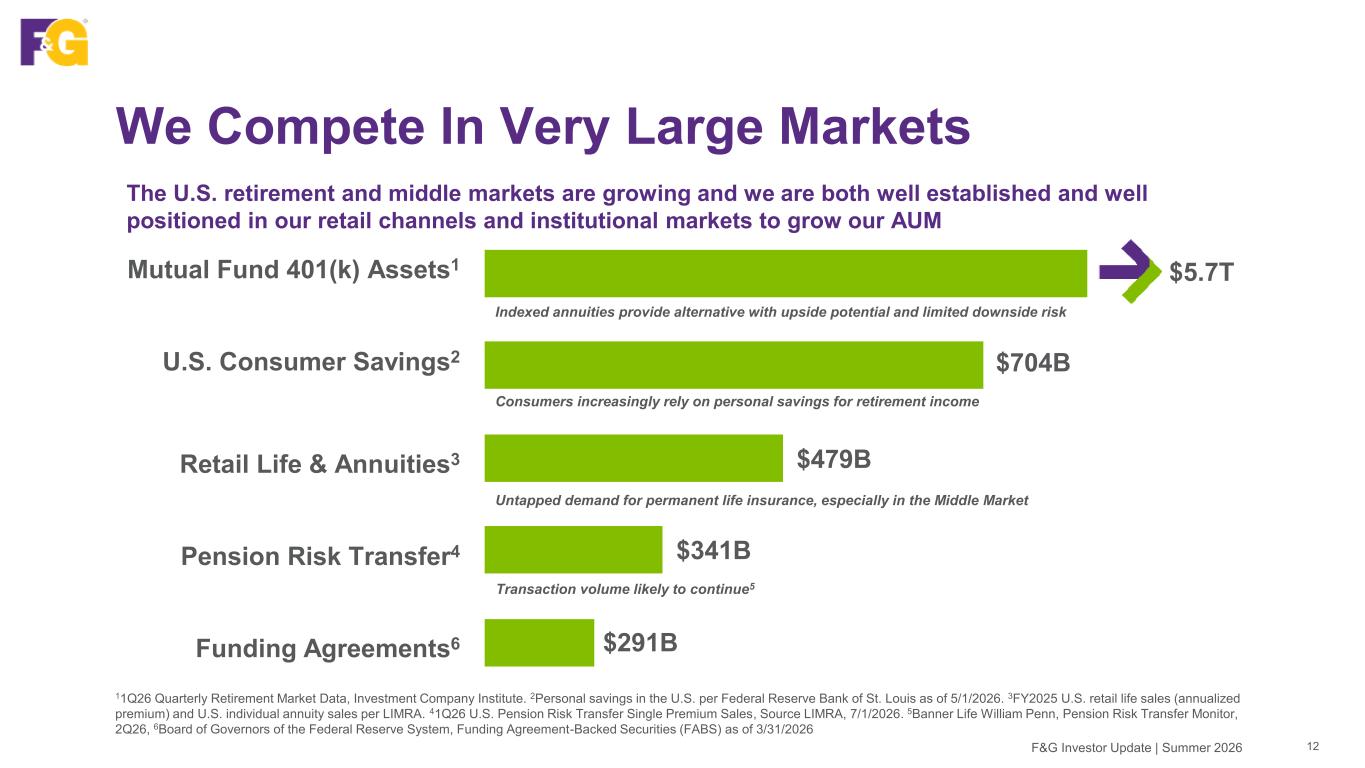
Yeah, so thank you. So for us, within our core retail, our three key areas are the RILA and FIA on the annuity side and the IUL on the live side. So there's certainly we are a comparatively smaller competitor. a competitor. We're probably a top 20 without necessarily being a top 10. We're probably about a top five or six on the FIA space. So there's definitely increased competition. I would argue we're one of them. For us, we continue to gain really positive traction on our side. So we're not, I would say we're not feeling a lot of competitive pressure there because the Rila space in general has been performing well. It's probably been just about the best performing subset in the space. So we're doing great in the areas that we compete in and expect to continue to expand there.
Thank you. And then I guess moving to MYGAs, can you give us an update on what you're seeing in that market? I assume with the volume in the quarter returns maybe are still more attractive elsewhere, but an update on the MYGAs would be great.
Yeah, yeah, that's true as well. And, you know, we sort of increased or decreased that faucet, if you will, or that flow periodically. A year ago, we saw a lot of opportunity and rode quite a lot of MIGA. We haven't, we've been, I would say, quite modest in the first couple of quarters in 2026. Again, it's a relative return. We are still riding MIGA business and we look for the opportunity to do that and we have reinsurance partners so to some extent it can be the yeah it can be a little bit their appetite as well because we're reinsuring 90% of the MIGA business but having said that I would we'll see I mean as I as I look very near term in the third quarter yes we will be in the MIGA space in the third quarter but I would expect that we'll probably stay reasonably consistent in our focus on the core retail over MIGA in the near term as well. But as those economics change, we're very comfortable and happy to pivot there as well.
Thank you. And then last one for me on the alt portfolio. What sort of returns are you expecting for the full year?
Or I guess said differently, how do you see returns shaping up in the back ass? okay so i'm going to be careful here the first thing though i would like to point out um there's a new disclosure in the uh summer investor presentation on page 38 um but i think people will find interesting because what we've done now is we've disclosed our well it's a four billion alt portfolio made up of three billion of limited partnerships and a billion of equity residuals. But for the three billion of limited partnerships, we've broken out the vintages for our book, how much has been in early stage, less than five years, mid stage, six to 10 and late stage, 11 to 15. And we've included an industry view, third party industry view, it's not ours, it's not Blackstone's, on what expectations would be for historical returns based on life cycle. And you can see from that, we are, I think we're 84% within the first 10 years. And that would suggest a blended return of about 10%. And that's probably roughly where we've been on a historical basis. But I think you're getting a little bit more to near term. So we have a long term expected return of 12. We had eights in the first quarter and sixes in the second. So I think we're on a one quarter lag. It was a bit of a difficult quarter across the industry. I think we actually had one of the better alts returns across the peer group. I think there was enough external geopolitical stuff, et cetera, that probably impacted a little. So to get to the answer to your question, near term, and I'm not even going to go to the second half of the year. If you said near term Q3, I would say I don't see a compelling argument for being very different from that sort of seven or eight percent that we've seen in the first half of the year. So I'd like to leave it at that if that would be okay.
Operator
That's perfect. thank you okay thank you as a reminder ladies and gentlemen if you would like to ask a question at this time please press star one on your telephone keypad the next question is coming from the line of oscar nieves with stevens please proceed with your question good morning i would like to double click on that last part on the alt investment shortfall uh if i looked at it in our both in dollar terms and pressure of this quarter versus last year.
Is that an early sign that the realization environment is turning or is it too soon to call that a trend? And you kind of mentioned this earlier, but just to make sure. Practically speaking, what would need to happen for you to revisit that 12% long-term return assumption?
Okay. So on your first question, I couldn't quite tell if you've been turning in a positive way, but again, I would say in a quarter like in the second quarter, if you look across how the banking industry is doing, if you look at larger companies from a revenue and earnings perspective, it seems to have been a pretty decent quarter. I want to be careful. So that's pretty good. I think the, sorry, the second part of your question, if I may, was on the What would need to happen for management to revisit the long-term assessment? Oh, I apologize. Thank you. Well, we actually do. We do a very detailed invest-by-investment, security-by-security review. Well, we do it as part of the annual planning process, But we also revisit it frequently, quarterly or at least semi-annually in detail, security by security, with our partners at Blackstone. So I would expect that our long-term assumption of 12% would be what we would keep for the remainder of this year. We'll revisit it at the end of the year. But I don't see a compelling reason to change that either at this stage. It will depend on what has happened in the broader market over the next six months. So we're not locked into the 12. We do constantly, consistently review it. The other thing I might mention, too, is one of the other things that we disclosed in the new page was that over 60% of our capital has already been paid back to us from these securities. The other thing that is probably worth mentioning is these securities tend to have a much higher return at the end. They aren't flat lined through. So as they mature, we would have an expectation of an increased return in those later cycle stages. So all in all, we feel, I think we're in line with many of our peers here as well, given the composition of our portfolio and not everybody's composition is the same. We're pretty light on real estate intentionally, for example, but given everything that we understand about the portfolio, everything that's been happening and how it's been performing, I think we remain consistent in what our long-term expectation is. And then, as I said, in answering the prior question, we just have a near-term view that probably feels more comparable to where we are right now. Maybe a modest, slight modest bias near-term, but it's modest.
Yeah, that's super helpful. And my second one is, if I strip out the Bermuda session and the funding on grooming maturity, what would you say the underlying organic growth rate in retained AUM looks like right now?
Okay, that's a good question. I would say, I mean, it can move around a little bit because of the items that you mentioned. On a normal basis, we talked about an 8% gross number, and we also re-insure 90% of our migas and about half of our FIAs. So I would say you should have an expectation that that growth number would continue to grow in that high single digits. It will go up meaningfully. I think you might have an expectation of it going up, I don't know, something in the region of $5 or $6 billion per year, but then you would be taking that percentage and cutting it in half or even slightly more depending on where the volume falls. So we don't re-insure the life business or the PRT business. But I think you would have an expectation that's probably closer to maybe 3% on an apples-to-apples basis, on the net basis. Again, something like an FABN, we wrote a large one in the first quarter. We matured one in the second quarter. So it can move around a little bit quarter to quarter. The other thing just to underscore is that we intentionally, the ability to flow business to our partners or avail of our sidecar is very attractive for us. It's a really good lever from an ROE perspective. I mentioned that we've added another noteworthy reinsurance partner. We are an attractive reinsurance partner. Remember, we're not owned by an asset manager. So there are a lot of noteworthy companies out there who want to reinsure MIGAs and fixed index annuities. And I think we're a great partner for those, and we're seeing that increasingly as well. So we will continue to avail of the reinsurance, and we may even expand the amount to which we continue to avail. So that won't necessarily drive the net AUM up as fast, but it'll drive the ROE up faster.
Super helpful. And just a really quick one. You mentioned, you talked earlier about the current thinking around the buybacks, but Can you remind us how much capacity is left under the current authorization?
Yeah, I think there's not a ton of capacity at the moment. I think it's about $12 to $15 million under the current authorization. I'm just double-checking it. Okay, just double-checking if that was correct.
All right, super helpful. That's all I have. Thank you very much.
Operator
Thank you. Our next question is coming from the line of Mark Hughes with Truist Securities. please proceed with your question.
Yeah, thank you. I jumped on late. I just had one quick one. The PRT business, I think you emphasized that's kind of a second half business. How is that pipeline shaping up?
Yeah, that's exactly right. We tend to see more business in the second half of the year. That's historically normally what we've seen. So what I would say so far, it's been a little muted in the first half of the year. I think we've written maybe four deals of modest size. We've been very happy with those deals, and some of that has been with people that we've written business with before. So I'd say we've gotten our fair share, but I'm not sure all of our peers or competitors feel that they've gotten enough so far. So the second half, yeah, you would expect it to be higher in Q3 than the first half of the year and probably higher again in Q4. You know, we're targeting, this is a bucket that for us, we're targeting something in the kind of one and a half to two billion range. We're not necessarily, actually, we're not trying to grow it each year bigger than the year before. I would say we're trying to write about the same amount of business. it fits very well from a profile perspective at that level and it suits the size of our balance sheet. So, you know, I think we'll see plenty of opportunities to do that. I'm not sure it'll be a bigger year than last year, but it's a little hard to predict. I mean, the underlying funds are pretty well, sorry, the underlying plans are pretty well funded right now. So there's I would say less pressure on the underlying companies to go ahead and seek an external solution than there might have been over the last couple of years. So that might lead to, I wouldn't say softness in the market, but maybe a little less volume in the market.
I appreciate that detail. Thank you.
Operator
Thank you. Our next question is coming from the line of Wilma Burtis with Raymond James. Please proceed with your question.
Hello, this is Vadip, just with a quick follow-up for Wilma. you talked about 12 or 15 million remaining on the current buyback authorization is there any chance fg will increase that authorization given a lot of it was used up this quarter well i won't that's up to the board um so i won't i won't comment on that fair question but i'm i'm going to leave it at that okay thank you thank you we have reached the end of our question and answer session, so I'd like to turn the floor back over to Connor Murphy for concluding remarks.
Okay, thank you. And thanks again to everyone for joining us this morning. We've delivered a solid first half of 2026 with record gross AUM, disciplined capital allocation, and an increased capital return to shareholders. And our high quality investment portfolio continues to perform very well. And we expect continued momentum heading into the second half of the year. and we really appreciate your continued interest in F&G and we're going to remain focused on delivering long-term shareholder value for you. So we look forward to updating you on our progress on the third quarter earnings call. Thank you.
Operator
Thank you. Ladies and gentlemen, this does conclude today's teleconference. Once again, we thank you for your participation and you may disconnect your lines at this time.