Executive readout · one minute
Webcast research workspace
Read the call alongside every captured source. Transcript, audio, slides, 8-K earnings release, 10-Q stay in one workspace.

Earnings call · FY2026 Q2
Executive readout · one minute
Read the call alongside every captured source. Transcript, audio, slides, 8-K earnings release, 10-Q stay in one workspace.
Management tone
Positive
Net tone +45 · low hedging
Forward guidance
2 guided metrics
Management's latest ranges and targets are included below.
Research coverage
5 live sources
Switch sources without leaving this page or losing your listening position.
Open the source you need; every reader stays inside this workspace.
Stated verbally and extracted from the transcript.
| Metric | Period | Guided | Basis |
|---|---|---|---|
|
Quarterly non-emptive expense levels
Q3
|
$64M – $65M | — | |
|
Quarterly non-emptive expense levels
Q4
|
$56M – $57M | — |
How the reported period landed and where the business moved.
Thank you for standing by. My name is Kate, and I will be your conference operator today. At this time, I would like to welcome everyone to the Heritage Financial 2026 Q2 earnings call. All lines have been placed on you to prevent any background noise. After the speaker's remarks, there will be a question and answer session. If you would like to ask a question during this time, simply press star followed by the number one on your telephone keypad. If you would like to withdraw your question, press star one again. Thank you. I would now like to turn the call over to Brian McDonald, President and CEO. Please go ahead.
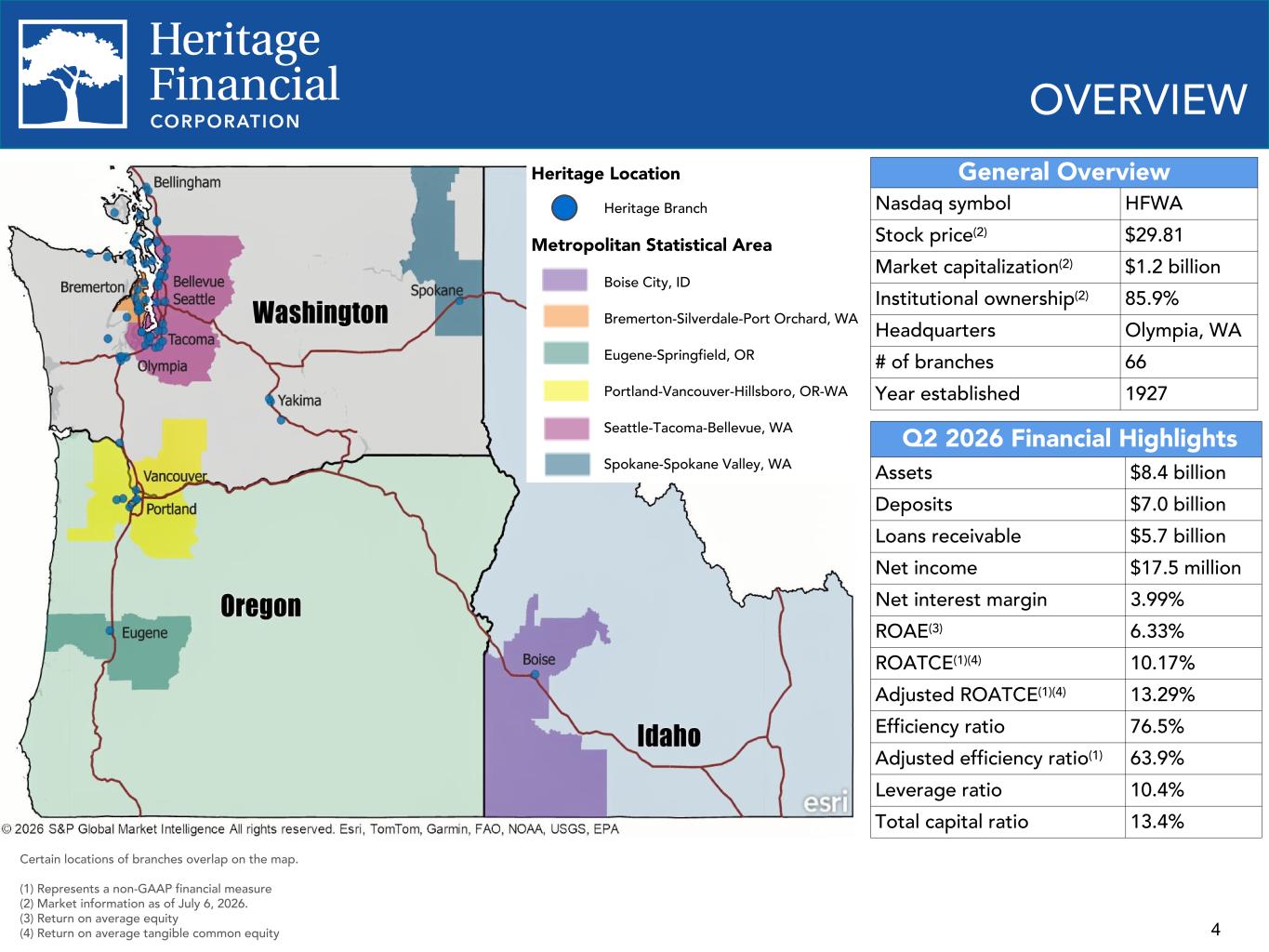
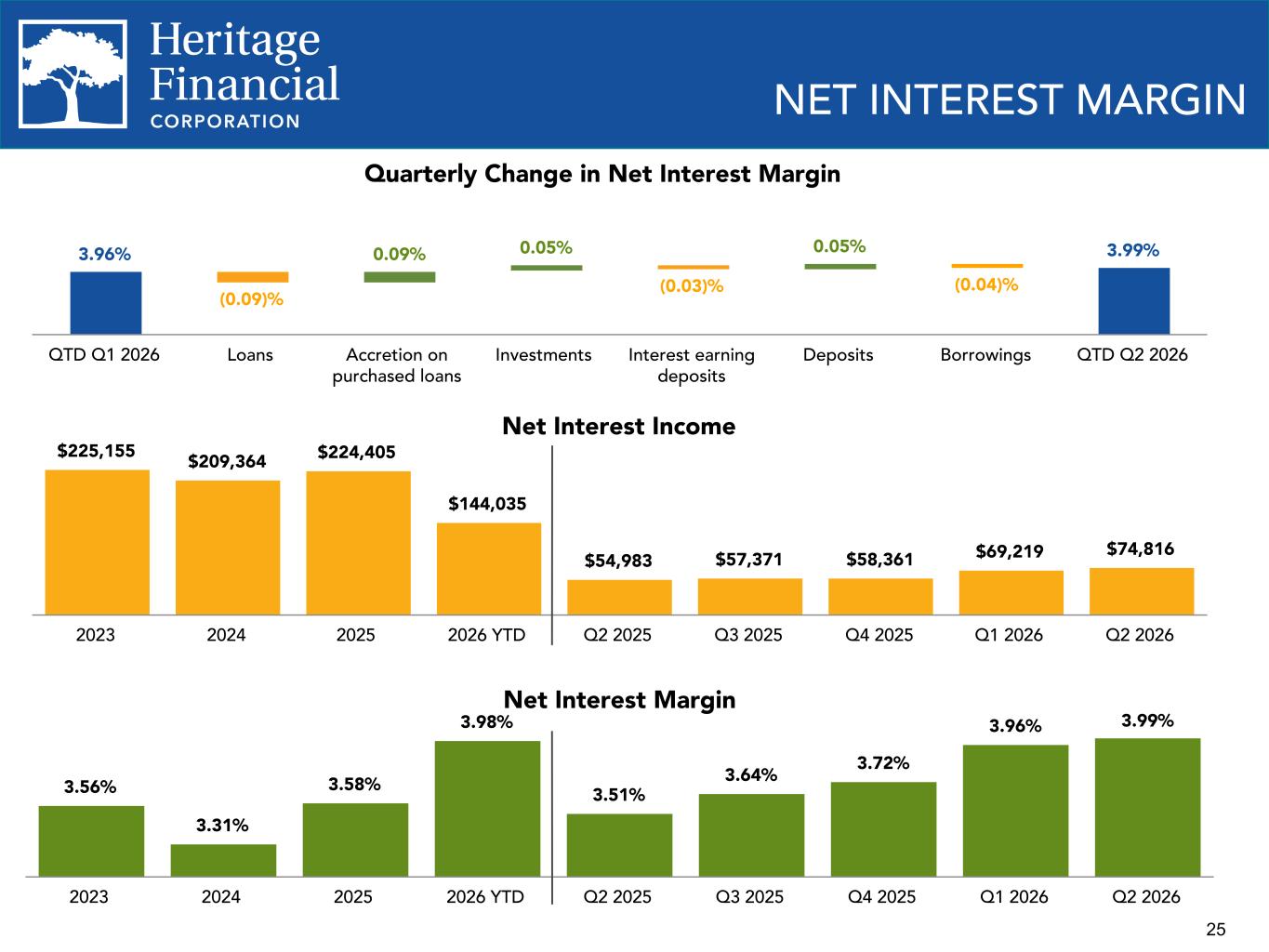
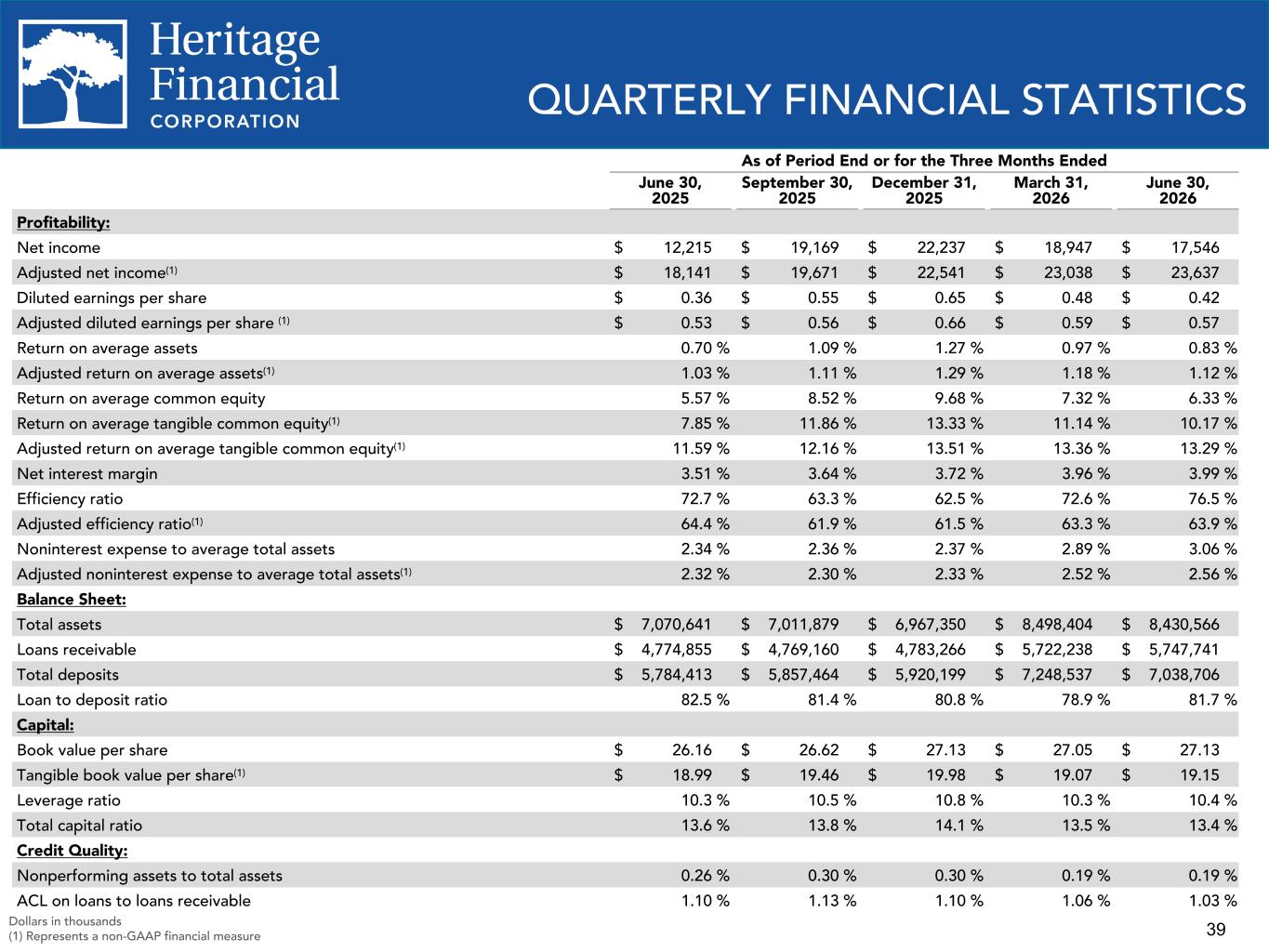
Thank you, Kate. Welcome and good morning to everyone who called in or those who may listen later. This is Brian McDonald, CEO of Heritage Financial. Attending with me are Don Hinson, Chief Financial Officer, and Tony Chalfant, Chief Credit Officer. Our second quarter earnings release went out this morning pre-market, and hopefully you have had the opportunity to review it prior to the call. In addition to the earnings release, we have also posted an updated second quarter investor presentation on the Investor Relations portion of our corporate website, which includes more detail on our deposits, loan portfolio, liquidity, and credit quality. We will reference this presentation during the call. As a reminder, during this call, we may make forward-looking statements which are subject to economic and other factors. Important factors that could cause our actual results to differ materially from those indicated in the forward-looking statements are disclosed within the earnings release and the investor presentation. A couple items to highlight as we look forward. The integration with Kitsap Bank is progressing as planned. We are converting systems late September and will be carrying higher expenses until after the conversion. John Hinson will provide additional color on our estimated expense levels post-conversion in a few minutes. The second quarter net interest margin increased three basis points to 3.99%, or eight basis points if you adjust out the interest recovery that contributed to a higher margin in the first quarter. We expect the upward trajectory to continue, but at a more moderate pace, primarily driven by new loans and repricing within the existing loan portfolio. We'll now move to Don, who will take a few minutes to cover our financial results.
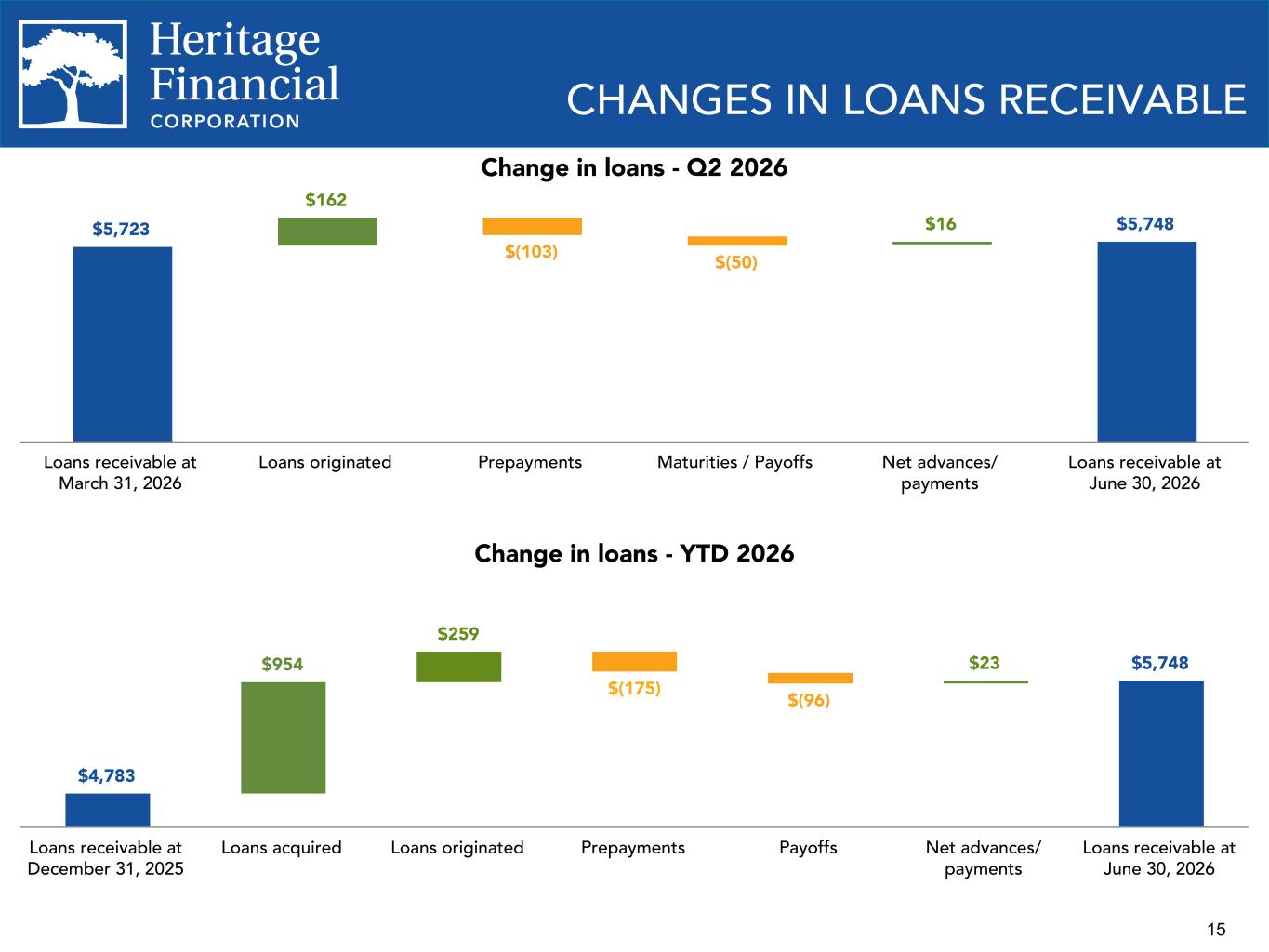
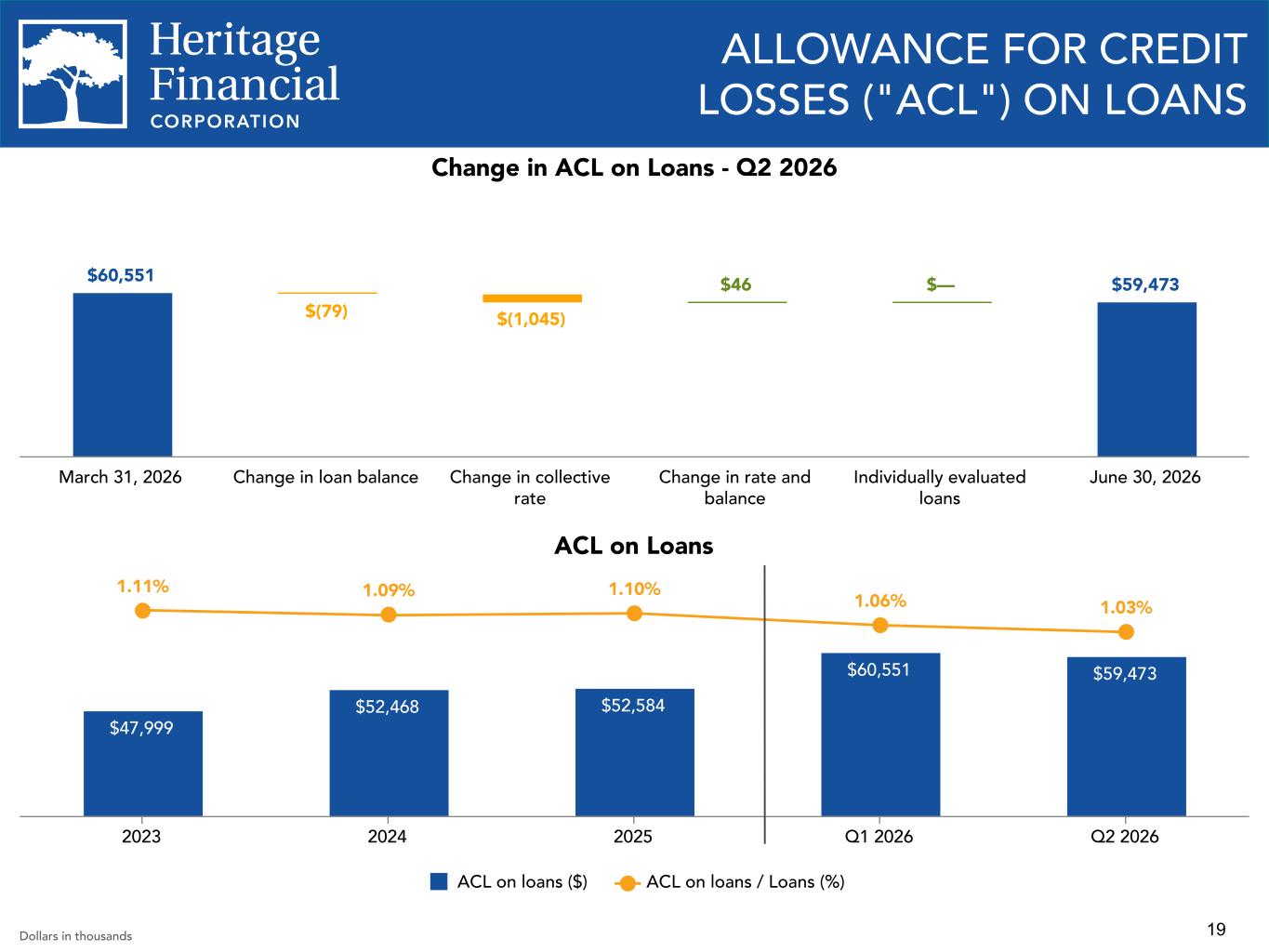
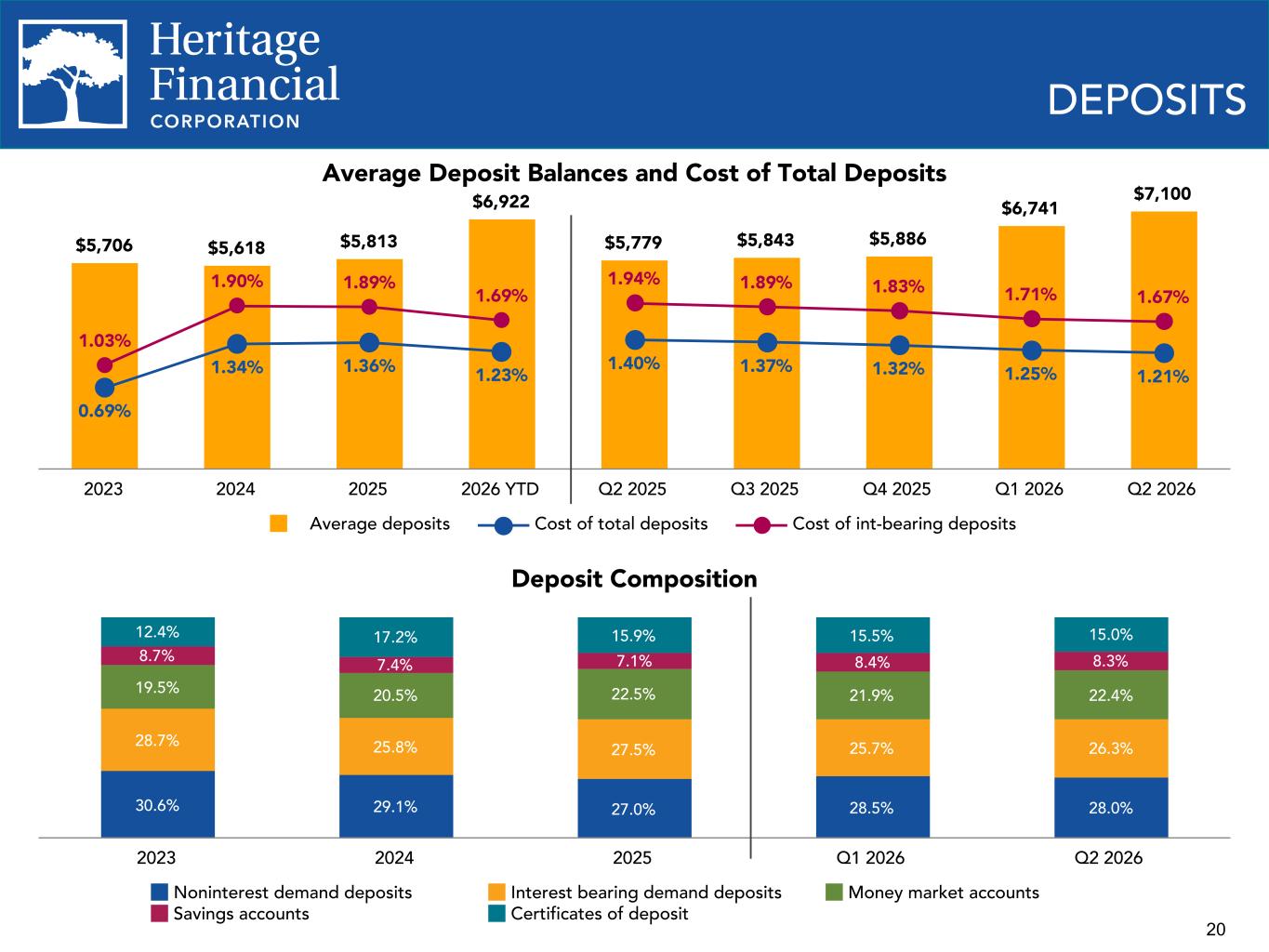
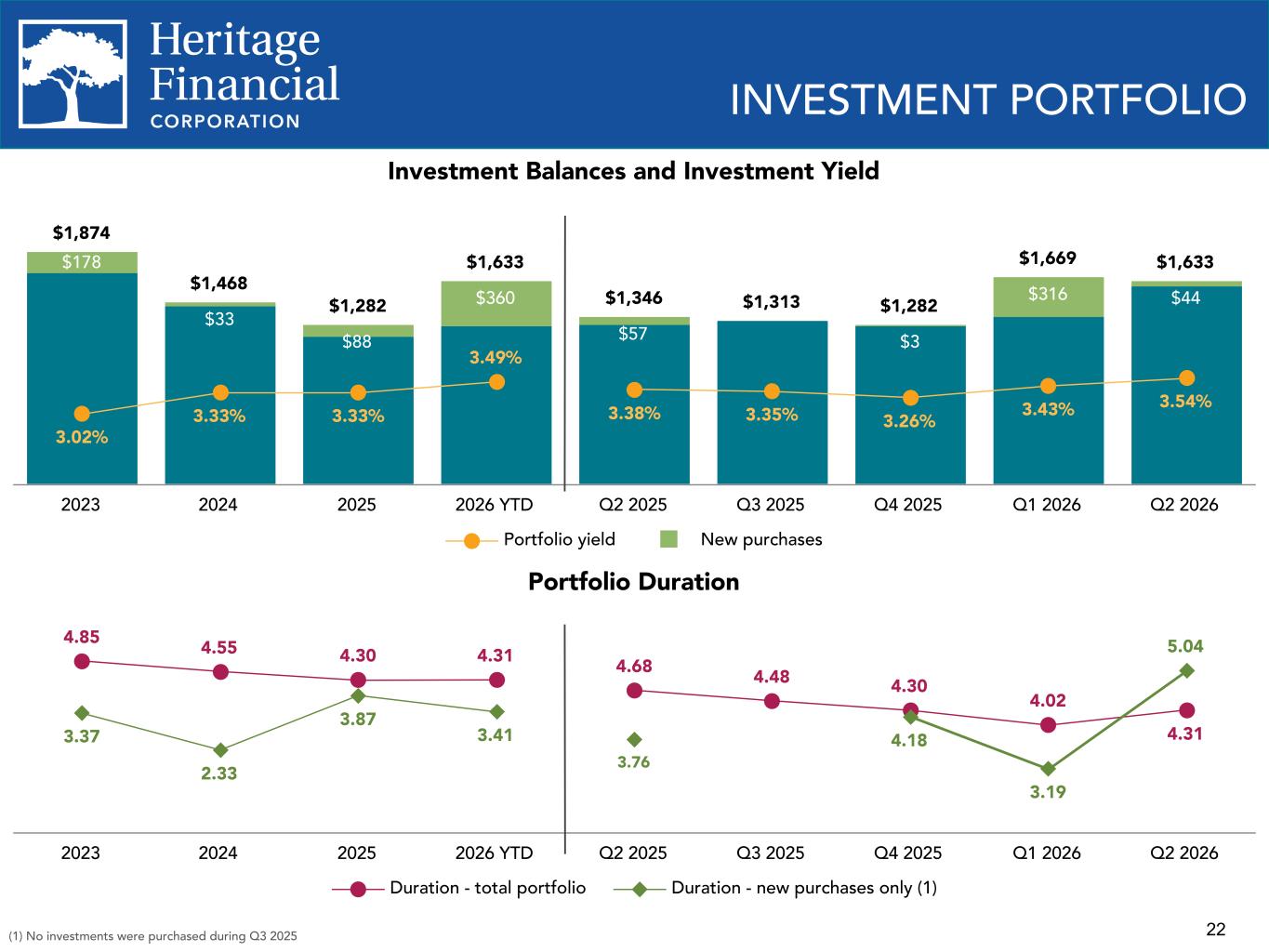
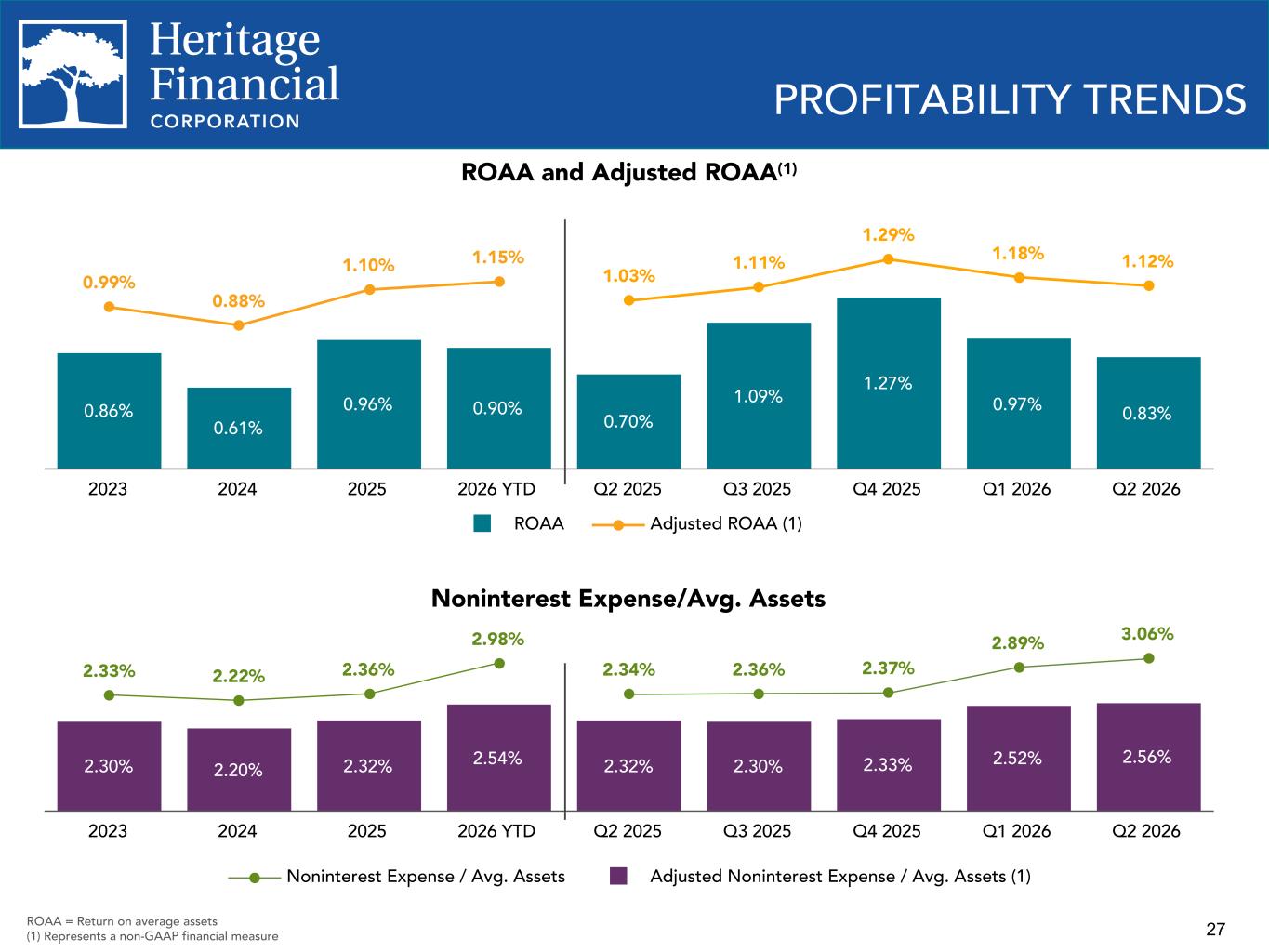
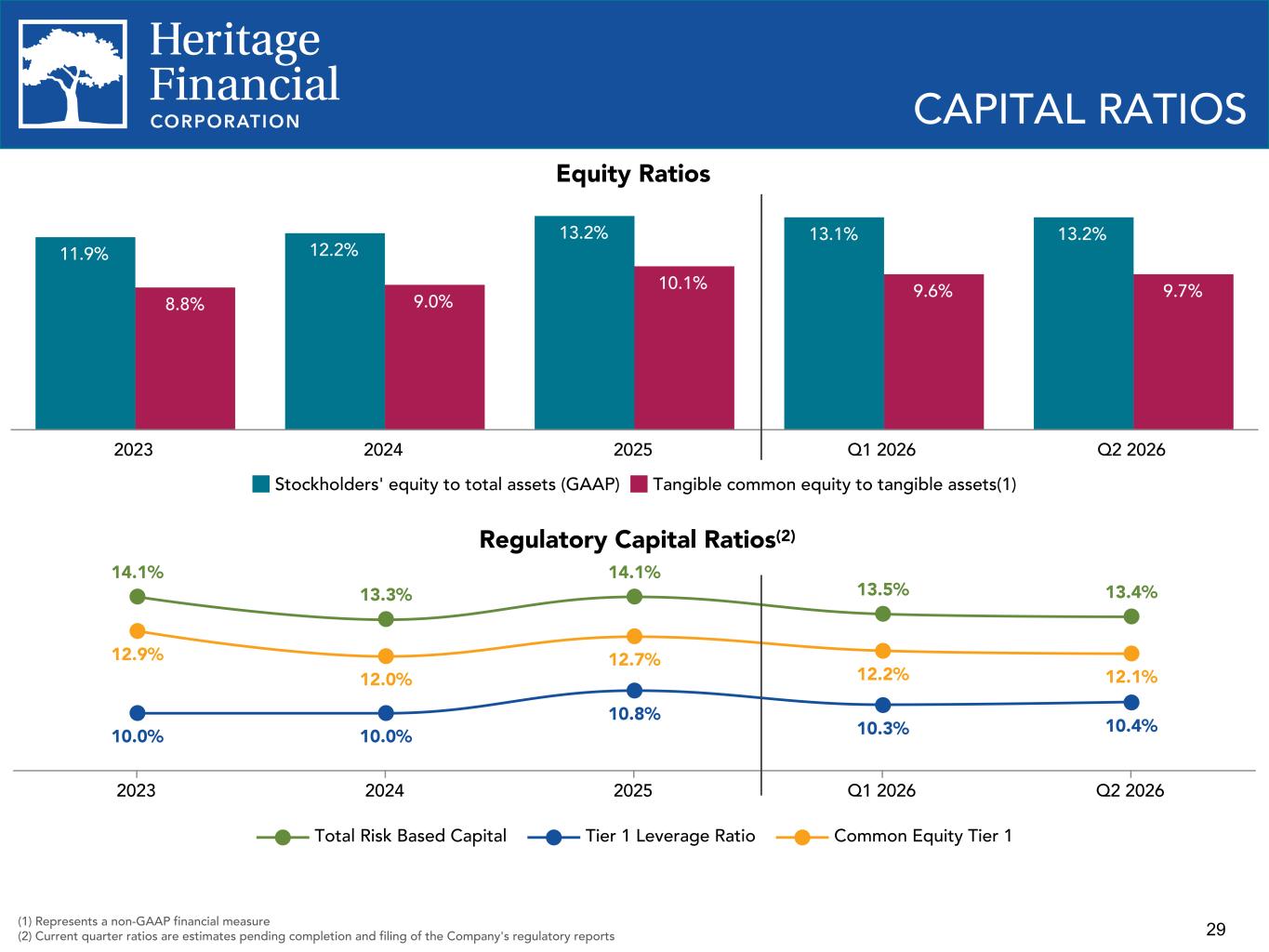
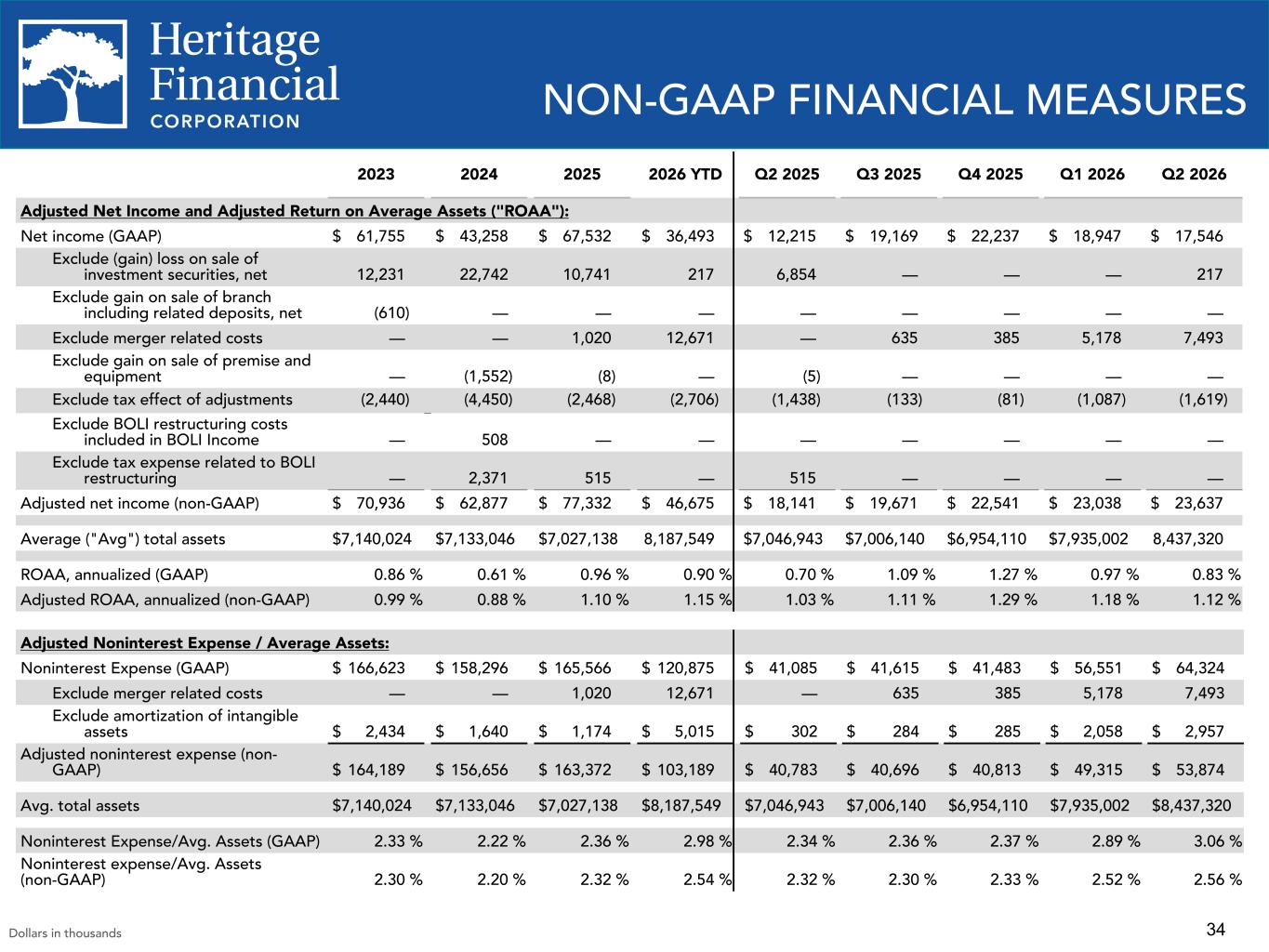
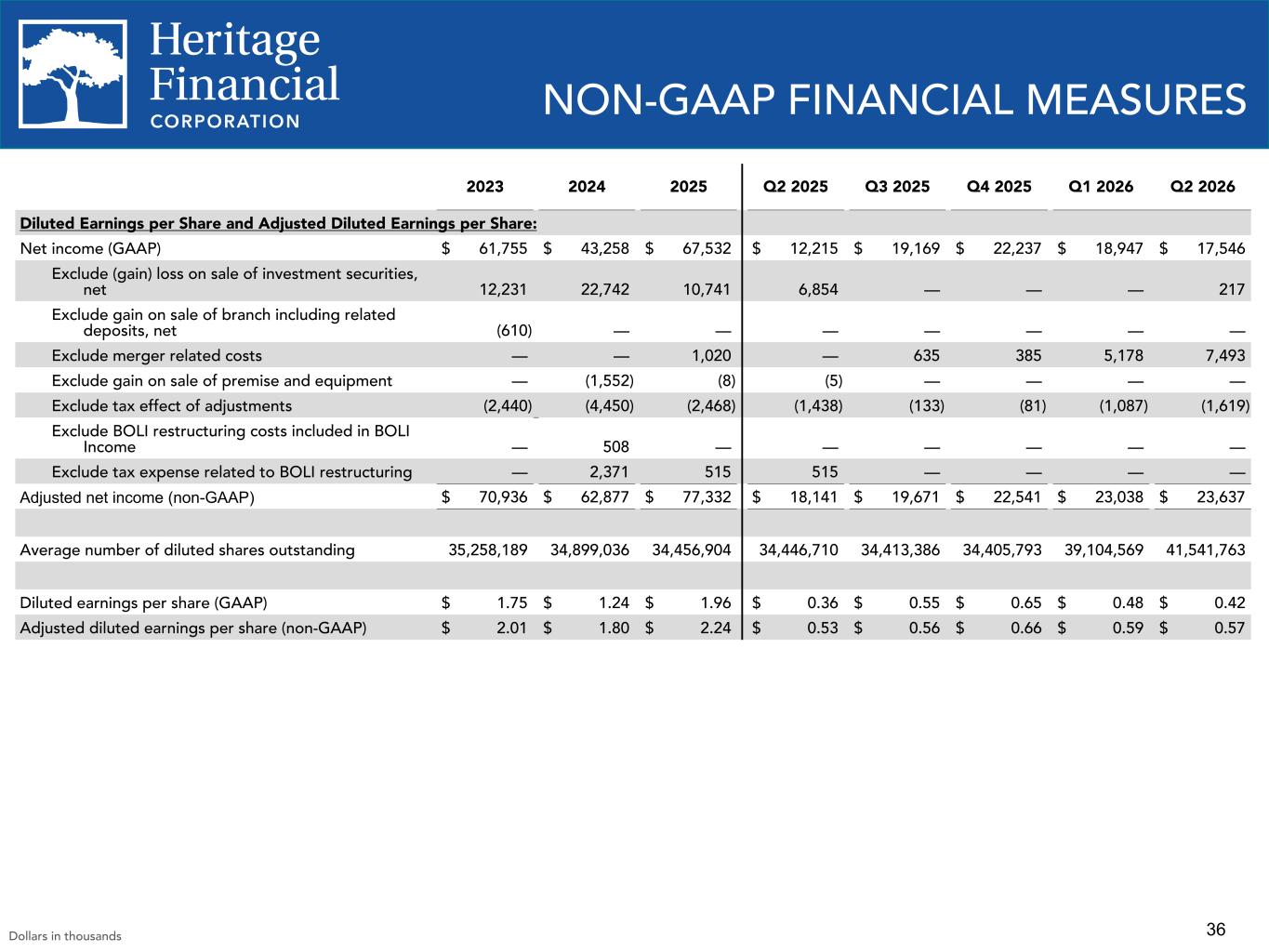
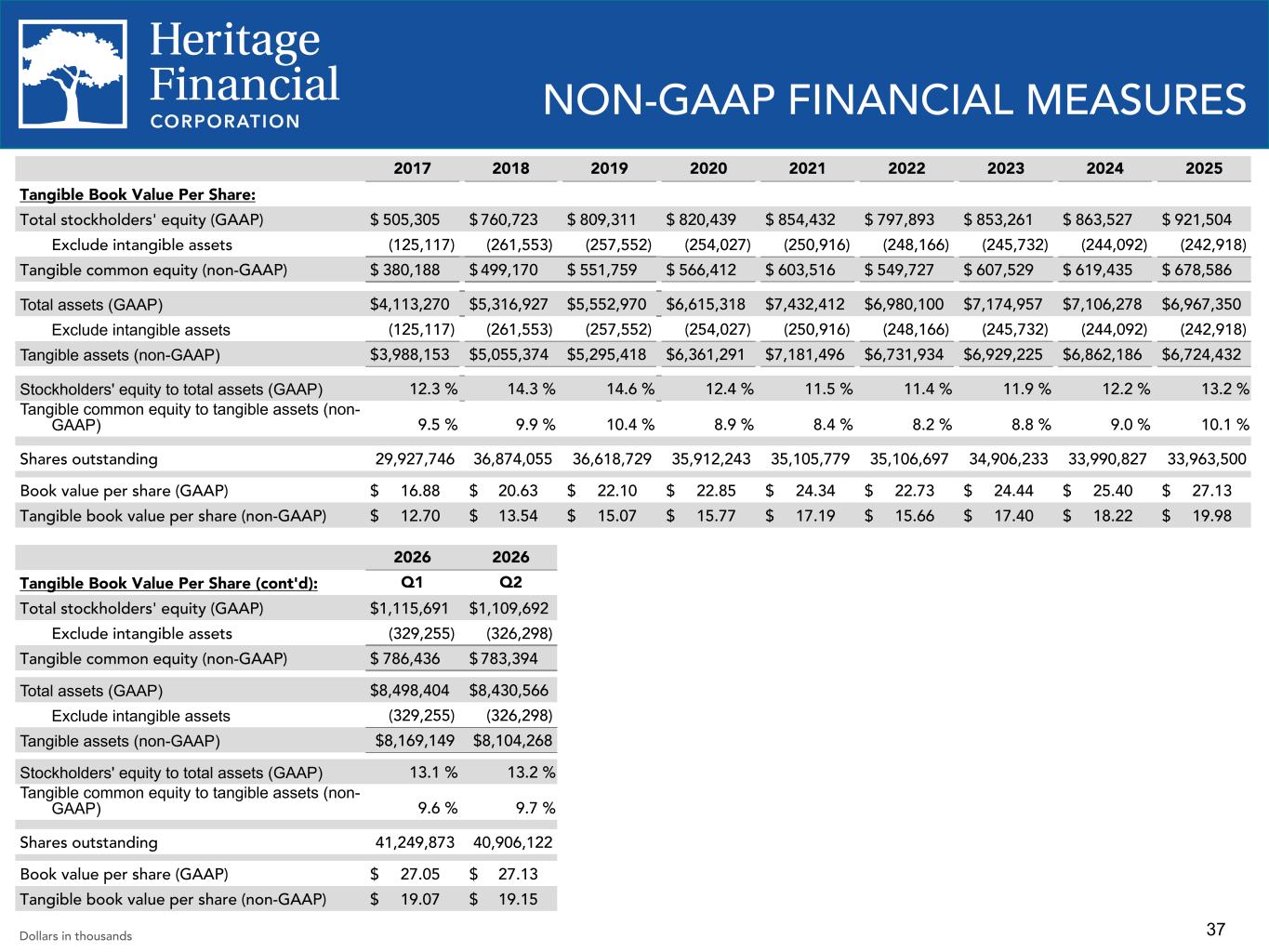
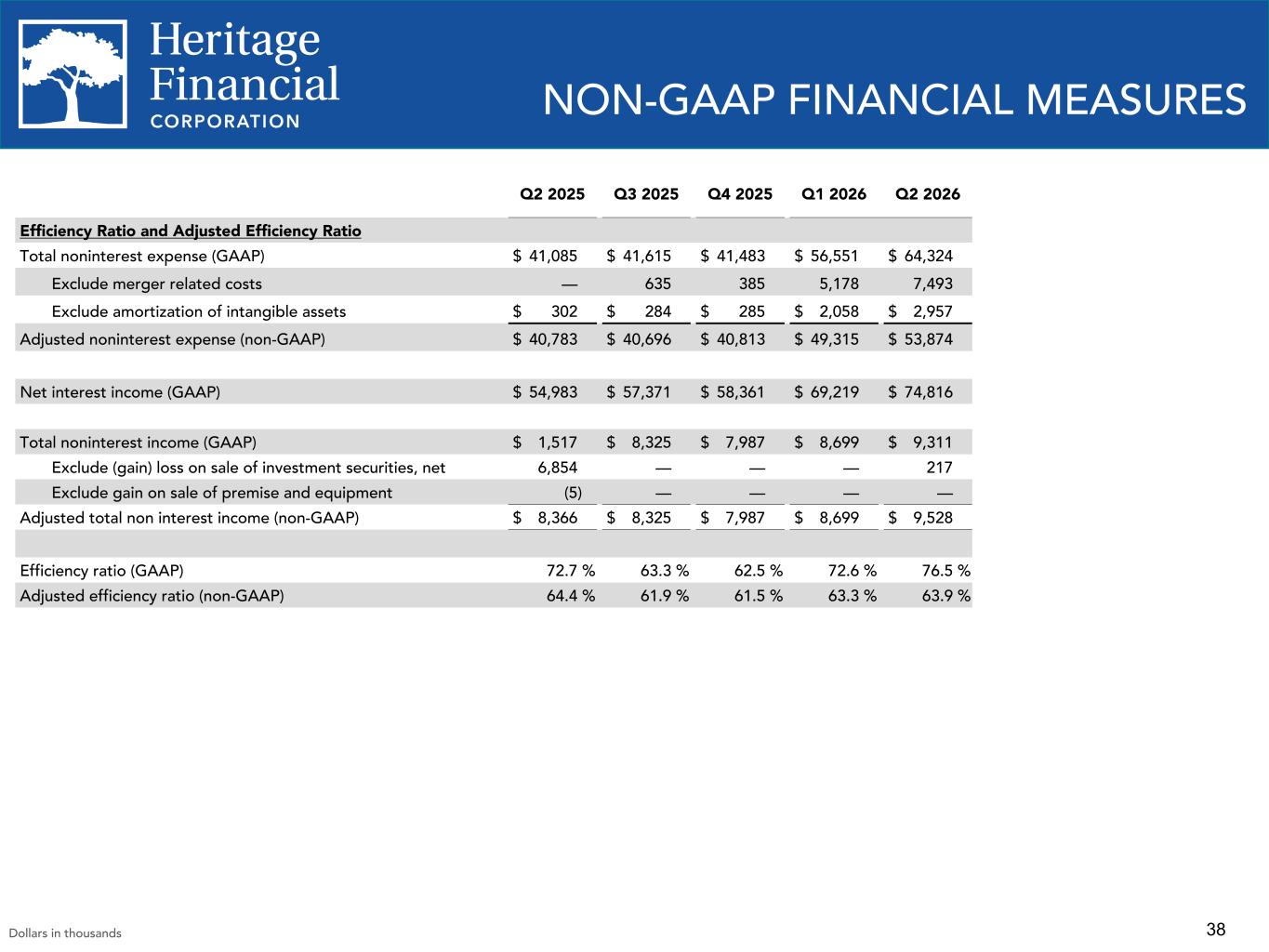
Thank you, Brian. I will be reviewing some of the main drivers of our performance for Q2 as I walk through our financial results. Unless otherwise noted, all the prior period comparisons will be with the first quarter of 2026. Starting with the balance sheet, total loan balances increased $26 million in the second quarter. Loan originations increased in Q2, but elevated prepayments offset much of this higher production. Q2 yields in the loan portfolio were 5.72%, which was one basis point lower than Q1. This slight decrease was due to the recovery of interest on nonaccrual loans in Q1, which positively impacted loan yield by six basis points for that quarter. Brian McDonald will have an update on loan production and loan rates in a few minutes. Total deposits decreased $210 million in Q2 due to the seasonal decline that occurred in April related tax payments, and a $67 million decrease from a single deposit relationship who had deposited the funds on a short-term basis in Q1 and withdrew the funds in Q2. In addition, brokered CD decreased by $48.5 million during the quarter, as borrowing rates were more attractive than brokered CD rates during the quarter. The cost of in-spring deposits decreased to 1.67% from 1.71% in the prior quarter. This decrease was due mostly to having a full quarter of the impact of the merger with Olympic Bancorp, compared to just two months in the prior quarter. Investment balances decreased $36 million from the prior quarter, due mostly to prepayments and maturities. During the quarter, we executed a small loss trade in which we sold $38 million of securities at a pre-tax loss of $217,000 and reinvested the proceeds into higher-yielding securities. The yield on the investment portfolio increased 11 basis points, due mostly to having a full quarter impact of acquiring the Olympic portfolio at current market yields. Moving on to the income statement, most categories increased from the prior quarter due to the merger, as Q2 was the first full quarter of combined operations. I will cover a few areas of note. In addition to the impact of increased average earning assets due to the merger, net interest income also benefited from an increase in the net interest margin. The net interest margin increased to 3.99% from 3.96% in the prior quarter and from 3.51% in the second quarter of 2025. The increase was due primarily to the increase in yields on the investment portfolio and a decrease in the cost of deposits. The previously mentioned recovery of interest on non-accrual loans in the first quarter had a five basis point impact on the margin performance for that quarter, which muted net interest margin growth quarter over quarter. We recognized a reversal of provision for credit losses in the amount of $921,000 in Q2. This reversal was due primarily to adjusting the allowance on loans from 1.06% at the end of Q1 to 1.03% at the end of Q2. This decrease in the allowance percentage was due to factors such as the decrease in weighted average lives on loans and a change in the portfolio mix. In addition, net charge-offs remain at very low levels. Tony will have additional information on credit quality metrics in a few moments. In addition to the first full quarter of combined operations, the increase in the net interest expense was also due to merger-related costs of $7.5 million in Q2 compared to $5.2 million in Q1. Due to the fact that the systems conversion for Olympic is scheduled for late Q3, we expect elevated expense levels until Q4. Based on a current forecast of staffing levels and merger-related costs, we are remaining consistent with our guidance from last quarter in that we're expecting quarterly non-emptive expense levels to be in the $64 million to $65 million range in Q3 before decreasing to a range of $56 million to $57 million in Q4. And finally, moving on to capital, all of our regulatory capital ratios remain comfortably above of well-capitalized thresholds, and our TCA ratio was 9.7% at the end of Q2, compared to 9.6 in the prior quarter. During Q2, we repurchased 372,000 shares of common stock totaling $10 million. We will continue to consider stock buybacks depending on market conditions and other capital priorities. We still have 424,000 shares available for repurchase under the current repurchase plan as of the end of Q2. I will now pass the call to Tony, who will have an update on our credit quality.
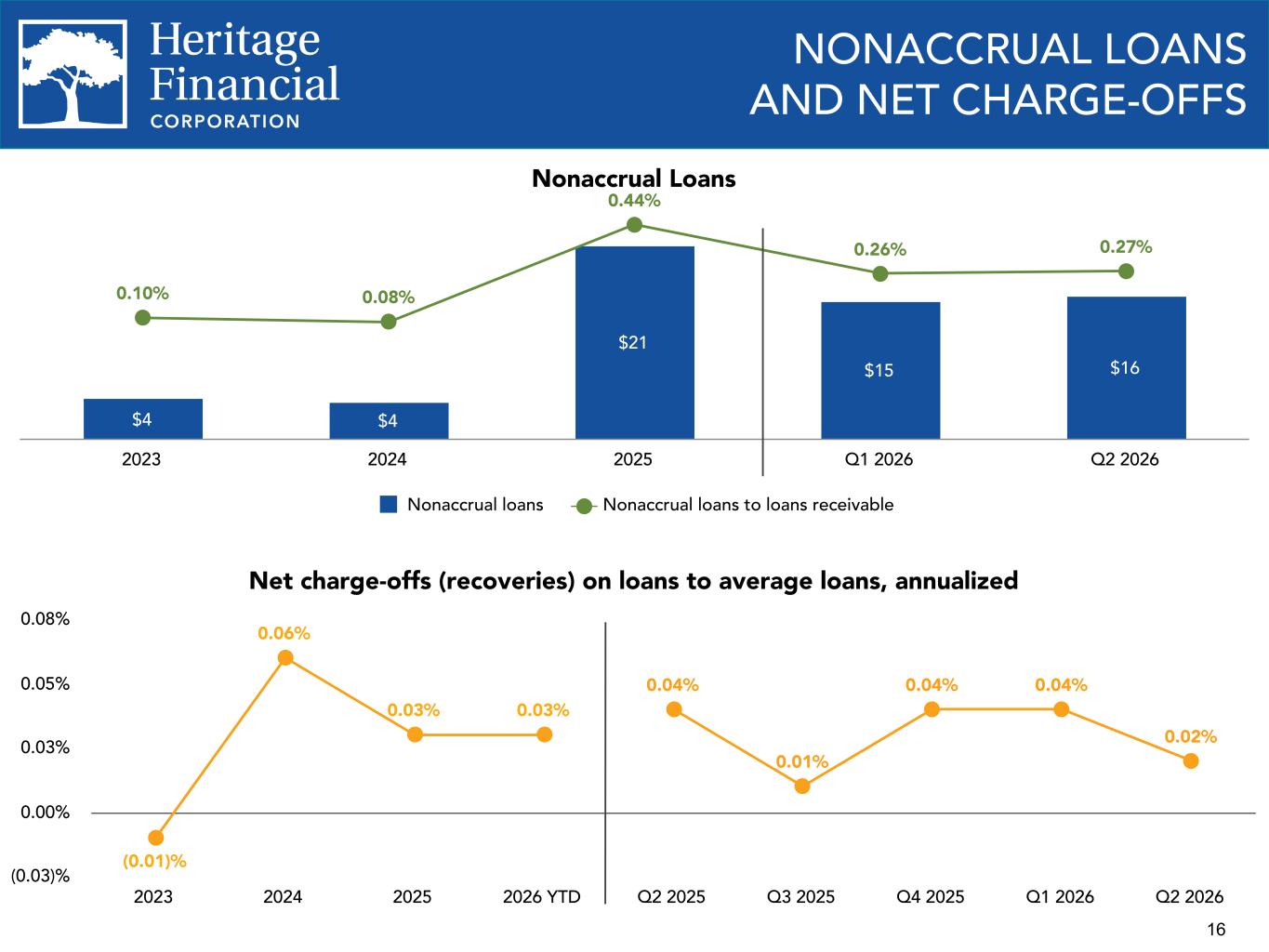
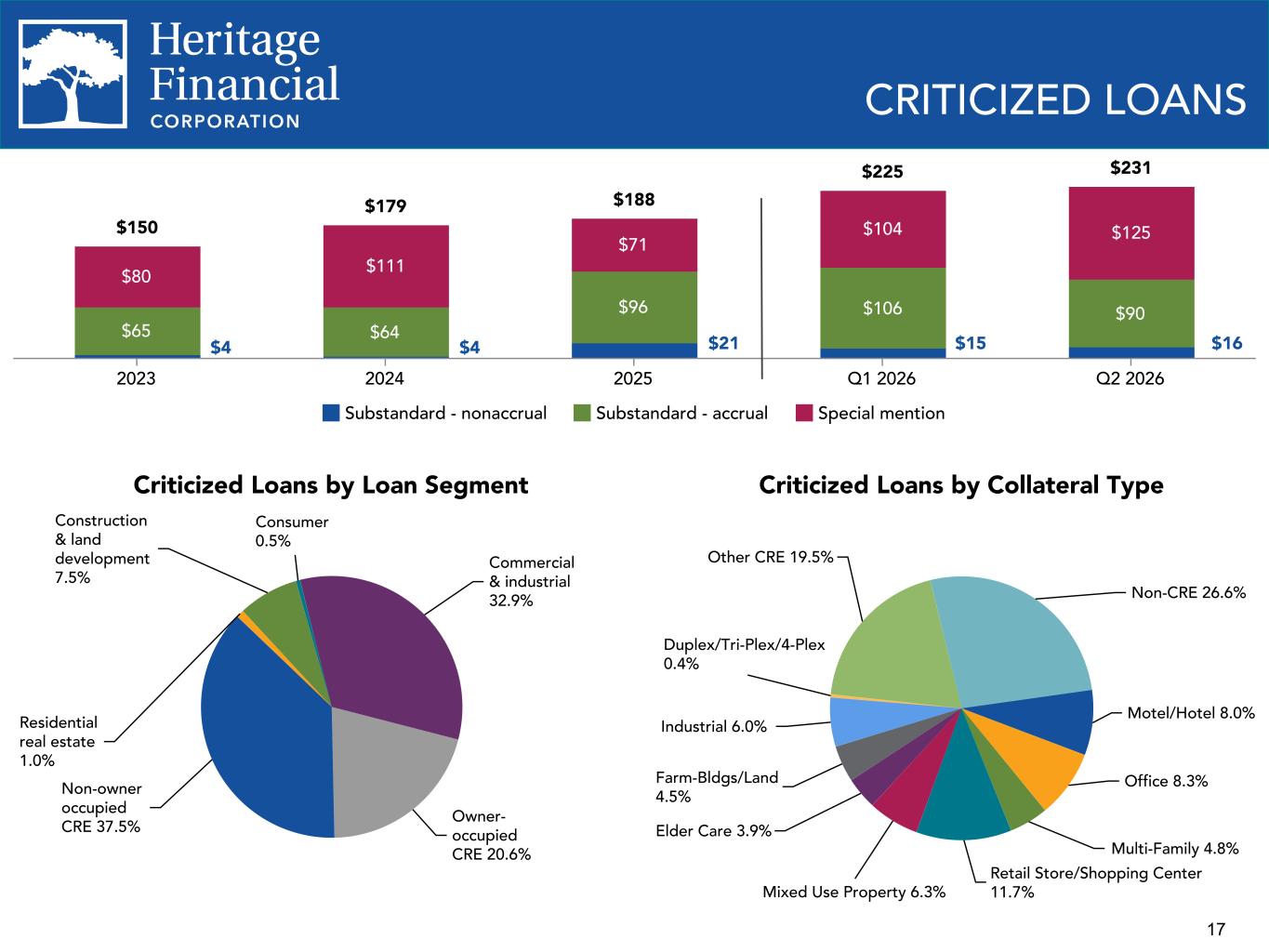
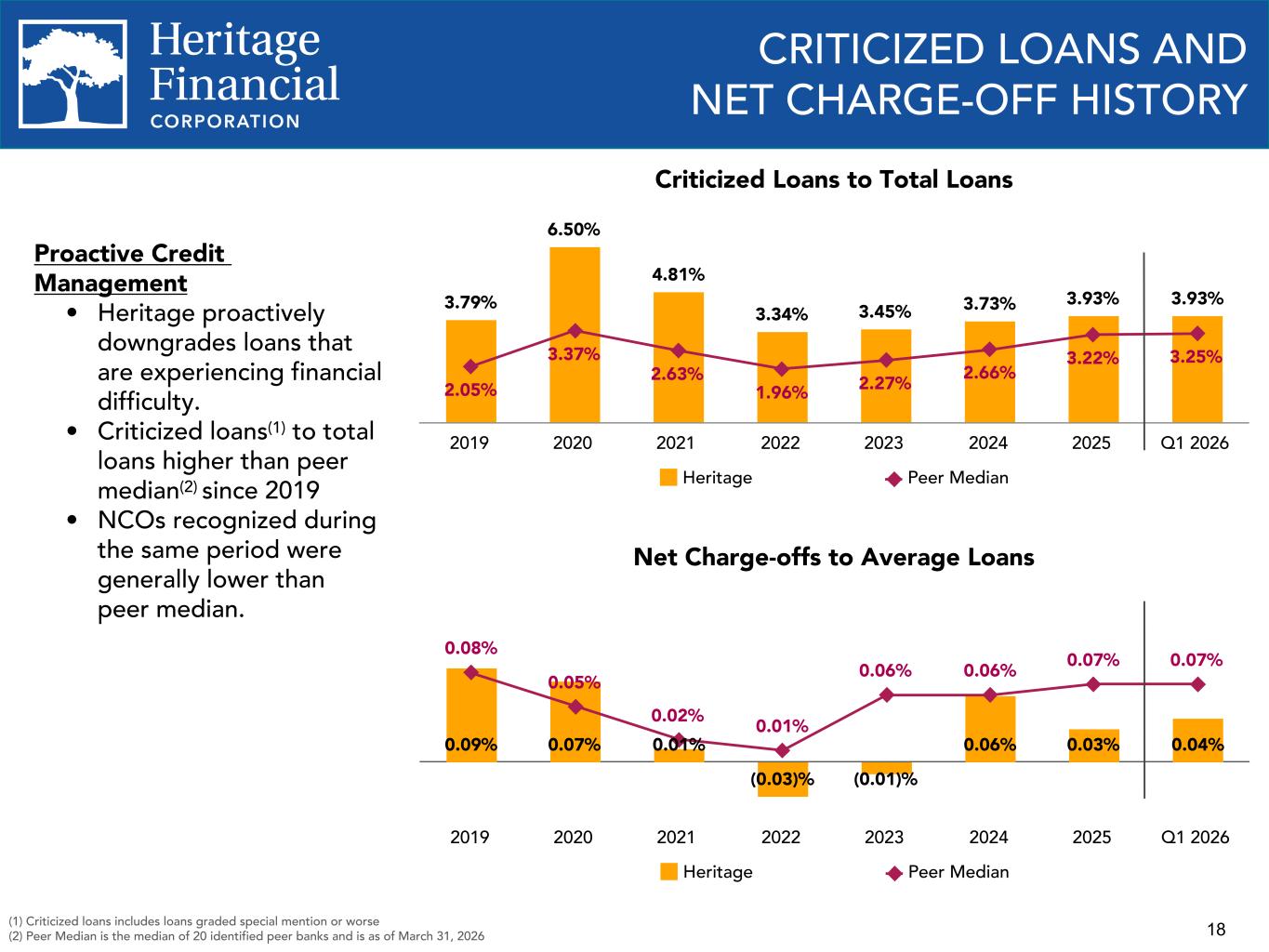
Thank you, Don. I'm pleased to report that credit quality remains strong and stable through the first half of the year. Non-accrual loans totaled $15.5 million at quarter end, increasing by a modest $500,000 during the quarter. This represents 0.27% of total loans and compares to 0.26% at the end of the first quarter and 0.44% at the end of 2025. Within the quarter, we downgraded two related C&I loans to non-accrual due to their delinquency status. Both loans were fully repaid prior to quarter end. Within our non-accrual loan portfolio, we have $4.2 million in government guarantees. Due to the stability of our non-accrual loan totals, the ratio of non-performing assets to total assets was consistent with the prior quarter at 0.19%. We continue to hold a single-family residence as OREO, with a book balance of $755,000. This house is currently listed for sale, and we've seen strong interest. We expect it to sell and close during the third quarter. This is the first OREO property we've held since 2020. Criticized loans, those rated special mention or worse, move modestly higher during the quarter by $5.5 million. As a percentage of total loans, criticized loans were stable at 4% versus the 3.9% that we experienced at both year-end 2025 and the end of the prior quarter. When looking at the more severe substandard category, we continue to see improvement during the quarter. Substandard loans to total loans declined to 1.8% at quarter end versus 2.4% at year-end 2025 and 2.1% at the end of the first quarter. Most of the $15.9 million decline during the second quarter came from payoffs or paydowns on three separate C&I relationships. Our ratio of total non-owner-occupied CRE loans to total loans remained stable during the quarter at just under 300% versus 301% at the end of the first quarter. As a reminder, the increase in the first quarter was due to the inclusion of the Olympic portfolio and the fair value accounting for the acquisition. Specifically, the lower combined capital level from the fair value marks resulted in a higher total CRE ratio. We expect the ratio to continue moving down to historical levels over time. During the quarter, total charge-offs remained low at $269,000. The losses were partially offset by $35,000 in recoveries, leading to net charge-offs of $234,000 for the quarter. Net charge-offs through the first six months of the year were $786,000. On an annualized basis, this represents 0.03% of total loans and is consistent with our performance for the full year 2025. Page 18 in the investor presentation illustrates how our proactive management of problem loans has led to low levels of loan losses over the past seven-plus years. We are pleased with the stability in our credit metrics through the first half of the year. While the challenges in the economy have led to some pressure on certain segments of our C&I portfolio, the risk has been manageable. This is reflected in our continued low levels of nonaccrual loans and net loan losses. I'll now turn the call over to Brian for an update on our production.
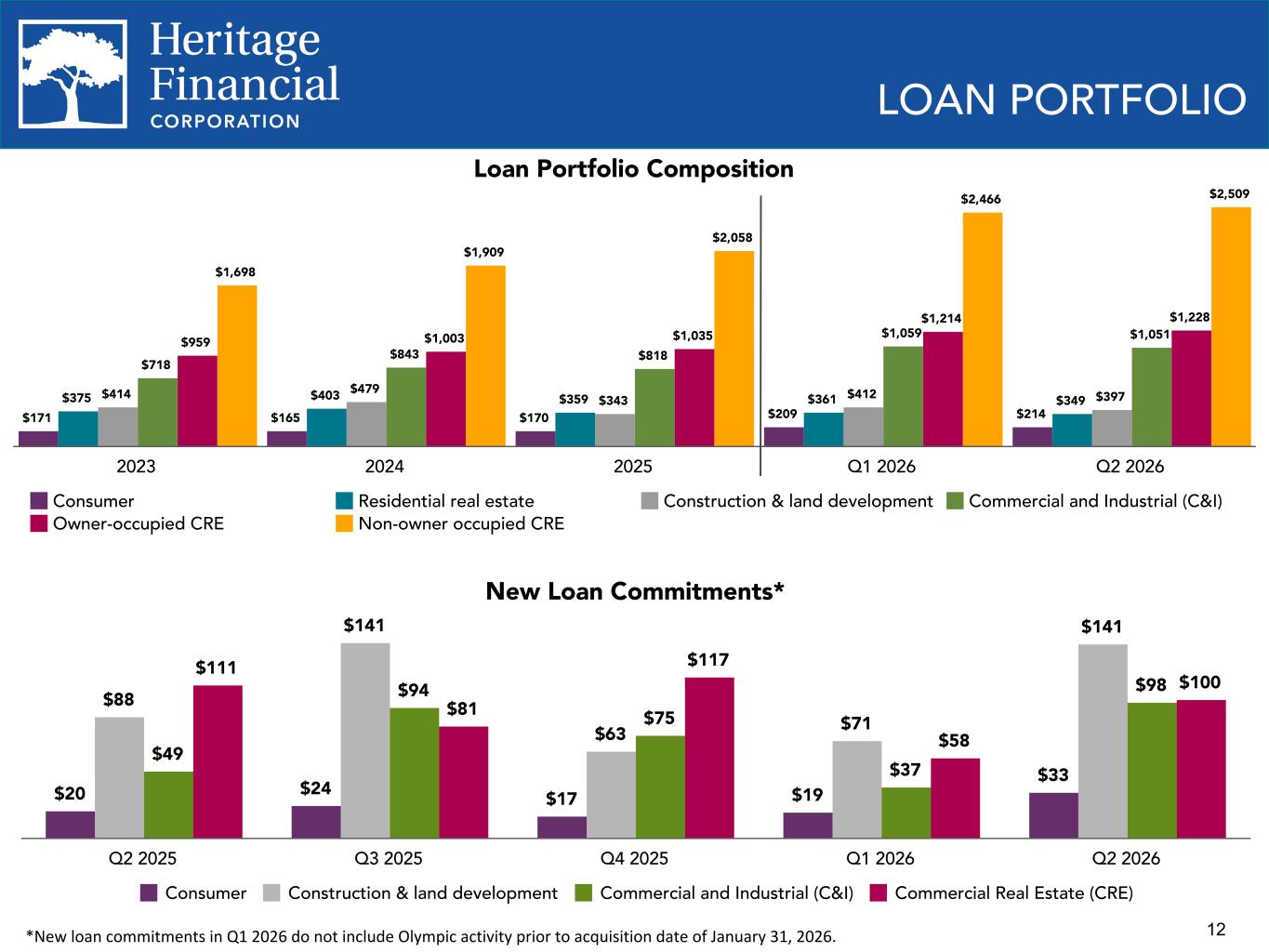
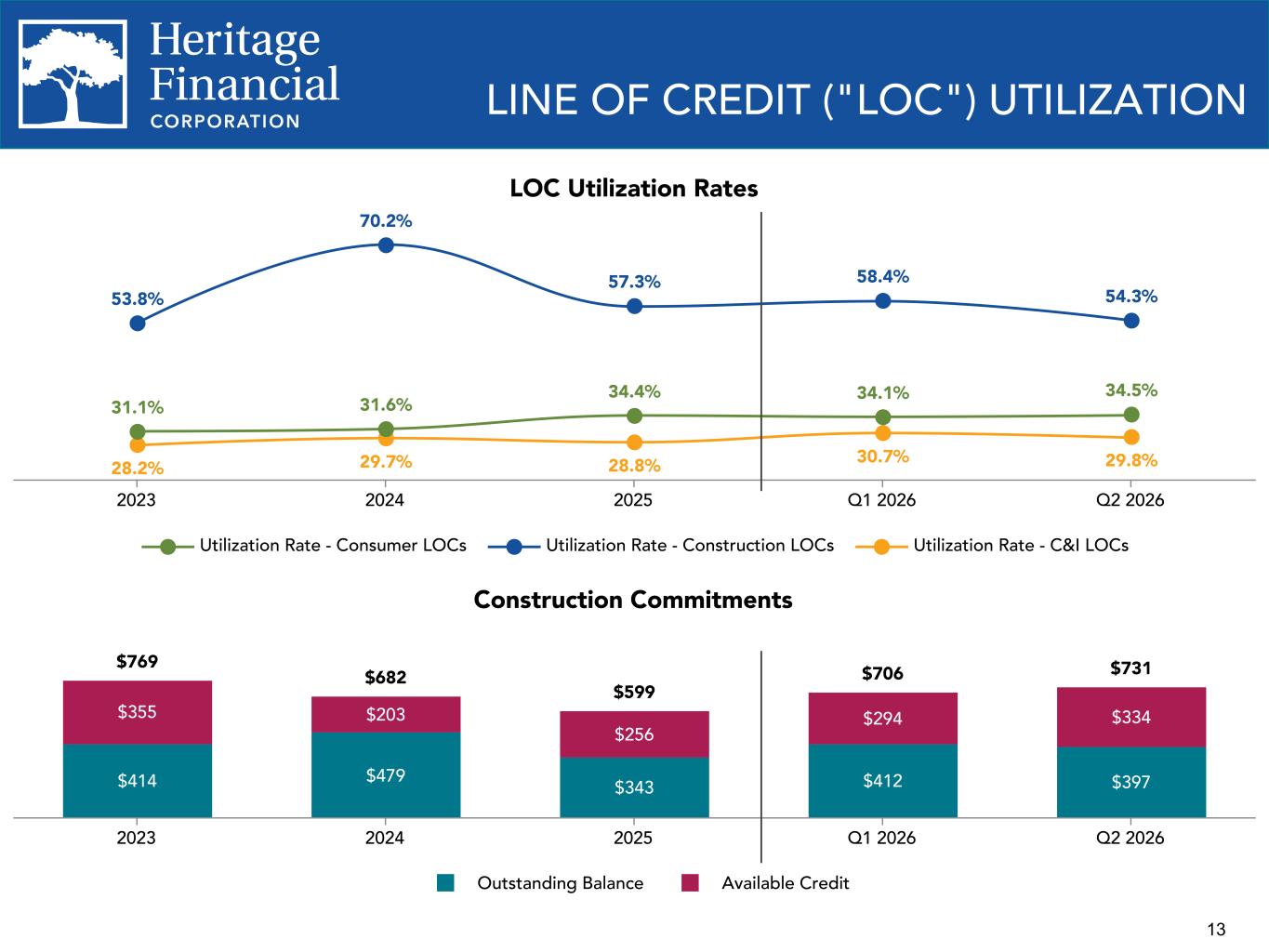
Thanks, Tony. I'm going to provide details on our second quarter production results, starting with our commercial lending group. For the quarter, our commercial teams closed $339 million in new loan commitments, up from $166 million last quarter, and up from $248 million closed in the second quarter of 2025. Please refer to page 12 in the investor presentation for additional detail on new originated loans over the past five quarters. The commercial loan pipeline ended the second quarter at $628 million, in line with the $631 million reported last quarter, and up from the $473 million at the end of the second quarter of 2025. Loan balances increased $26 million during the quarter, a relatively modest level considering loan closings were up 104% compared to last quarter. The growth was limited due to a couple of factors. Loan prepayments and payoffs increased to $152 million during the quarter versus $119 million in the first quarter. And the mix in the quarter included a higher level of construction loans where balances will increase over time. Please see slide 13 in the investor presentation, which shows construction utilization rates down 4.1% versus last quarter. Based on the current pipeline, we expect our annualized loan growth rate to be in the mid-single-digit range for the next couple of quarters. Deposits decrease $210 million during the quarter. A second quarter decline in deposits is typical of our seasonality due to tax payments, although the 2026 decline was higher than last year due to a $67 million decline related to non-operating funds in one commercial customer's account, which Don mentioned a few minutes ago, and a $48.5 million decline in brokered CDs. Adjusting for these two factors, deposits were down 1.3% in the quarter compared to 1% during the second quarter of 2025. Moving on to deposit production and pipeline, average deposit balances on new deposit accounts open during the quarter are estimated at $62 million versus $33 million last quarter, and the deposit pipeline end of the quarter at $78 million versus $102 million at the end of the first quarter. Moving to interest rates, our average second quarter interest rate for new commercial loans was 6.44%, which is up 36 basis points from the 6.08% average in the first quarter. In addition, the second quarter rate for all new loans was 6.40%, up 24 basis points from 6.16% last quarter. In closing, we continue to see a tailwind from asset repricing benefiting our margin and believe we are well positioned to navigate what is ahead and to take advantage of the various opportunities to continue to grow the bank. With that said, Kate, we can now open the line for questions from call attendees.
At this time, I would like to remind everyone, in order to ask a question, press start, then the number one on your telephone keypad. We will pause for just a moment to compile the Q&A roster. Your first question comes from the line of Matthew Clark with Pipel Stamper. The line is open.
Good morning, Matthew.
I wanted to clarify the expense guide. The $65 million sounds like it includes merger charges. Can you just quantify the merger charges you expect in 3Q and in 4Q to get to that? So we can have kind of a core run rate.
Yeah, I think when I mentioned that the Q4 being in the $56 to $57 million range, that would be your run rate there going forward. So most of our merger expenses will be done in Q3. You know, there may be just small, minor things left over for Q4, but nothing material.
And how much is in the 65 for 3Q?
Say it again.
How much in merger charges do you have in the 3Q guide of $65 million?
I would say it's by $64. I think it would be similar to what it was probably in Q2, right? So I'm guessing we've got another $6 million there. And then of course we have the systems that are, by merger costs we talk about things like contract cancellation fees, you know, severance payments, those type of things. It doesn't include things like ongoing contracts that will cease those expenses. So the combination why it goes down so much is the combination of, you know, the merger-related expenses going down as well as the contract costs or the FTE costs going down in Q4.
Got it. Okay. And then on the borrowing side of things, FHLB up to $166 million at the end of the quarter. Looks like they all mature in the third quarter. How should we think about FHLB borrowings when we forecast and give it a...
Yeah. It's pretty much all... They all mature within the first two weeks of July, right? So it's just basically overnight or maybe we might go out a few weeks at a time just if we see a rate that we like as needed, but it's just as needed for liquidity purposes. In this case, we obviously saw some outflows of deposits in Q2, and we let brokered CDs run off of $48 million. So those two things combined cause us to have some borrowings. If we get some nice deposit growth in Q3 as we normally do, I would expect those borrowing balances to decrease.
Yep, got it. And then just on deposit costs down nicely this quarter, wanted to get your outlook there, just with assuming the Fed's on hold for now and, you know, given the competitive environment.
Well, I think we've hit the bottom. Our spot rate for interest-bearing deposits was 164 at the end of the quarter. And so I think we've probably hit bottom on that. I think there's a lot more competition for deposits. People are, you know, the rates are going up even in the short term. Obviously the Fed hasn't raised rates yet, but, you know, CD rates are starting to increase the competition on those.
We're starting to see more pressure on even some of the other rates.
So I think that we will see some gradual increases in cost of the spring deposits from here on, so I think that's going to – you know, I think on the other side, I think we'll still get the increases on the yield on loans that will help us to continue to improve margin over time, but I think we're going to see some pressure on deposits.
Got it.
Your next question comes from the line of Jeff Rellis with Dave Davidson. Your line is open.
Thanks. Sorry to circle back on the expense side. I guess to get from 65 to 57, 3Q versus 4Q, Don, I think you said $6 million is on merger costs, and then maybe are we thinking $2 million in cost saves to get to the run rate? Is that right? And then I guess if we – would you expect Cossage to be complete as a 4Q, or is there any tail into 27?
Very little. Not enough to really give you guidance on.
Appreciate that. On the loan growth, mid-single digit for the remainder of the year, is that a similar level of prepayment?
It does, Jeff. This is Brian, a little higher last quarter, and nothing unusual there, although we are seeing, you know, more customers selling, you know, businesses, which often involves, you know, sale of, you know, the collateral for the loans, that sort of thing. So we saw an uptick in that type of activity and then in the portfolio coming across from Kitsap in just better visibility, you know, after close, you know, to the construction loans that were, you know, coming up and just meeting their maturity dates and paying off as usual. So those were the couple drivers of the higher payoffs in the quarter, and we are assuming those continue. And with the pipeline, you know, being basically flat with last quarter, which was really strong, we feel like, you know, mid-single digits is a better, you know, indicator looking out over the next couple quarters.
I guess one last one on the margin then. Sounds still positive, but maybe less in that magnitude of the link quarter, which I think we'd back it out. It's maybe eight basis points of core margin increase if you exclude the impact from the recovery interest. So I guess, you know, not to put a number on it, but just moderate that improvement. but positive nonetheless.
I think that's a good description of that. I think we're going to keep moving forward on the margin, but it won't be as strong as it was the prior quarter.
And, Don, sounds more earning asset benefit, like as you said, kind of the benefit from the funding side or improvement, that's largely done. It's just when you scratch out gains, it's going to be on the earning asset or loan yield side.
Right. If you look at what we put the new loans on last quarter, we've had that slide in our deck every time where it shows what they're repricing at. That's where we're going to get the lift.
Fair enough. I'll step back.
Your next question comes from the line of David Fister with Raymond James. Your line is open.
Hey. Good morning, everybody. Good morning. I wanted to touch on that increase in originations. That's extremely encouraging. Glad to hear the pipeline is still strong. Like that increase in originations, would you attribute that to more of an increase in demand or a function of increasing productivity and activity from your team? And then just, you know, we've talked a lot about competition, especially on the pricing front. Curious, your willingness to compete on pricing to drive growth, just as kind of you philosophically balance NII growth versus margin.
Yeah, and David, slide 12 has some good detail on the, you know, categories of the new production. And in my comments, I just commented a bigger portion, you know, came in construction. You see that on slide 12. And so that was a chunk of it. Nothing new, you know, kind of relative to the categories that were, you know, financing there. To your original question, it's an increase in loan demand. I do think our sales teams are very active, very, very active. But we've seen, you know, loan demand increasing since last summer after the big, beautiful bill. And then as we came into, you know, 2026, we've seen the pipeline, you know, continue to strengthen. And it's not every market and every banker across the board, but we had, you know, significant closing volumes and, you know, closed the quarter with, you know, a really strong pipeline. So, you know, that's the driver behind the volumes. In terms of pricing and our willingness to compete there, you know, we do look for, you know, the highest quality, you know, opportunities out there in the market. And so these customers have, you know, options to bank with a variety of different banks. And so we do regularly compete on price. That's not a new phenomenon, just kind of always present, you know, with that commercial client where you have the opportunity to take the full relationship. So I wouldn't say, you know, significantly different. It just continues to be a very, very competitive market, and we're looking to win our share. We did see rates move up, but that was really driven by the underlying indexes moving up. That five-year FHLB rate is what we price a lot of our term debt off of, and so that was really the driver behind the increase in rates on newly committed loans in the quarter, just with the indexes moving up. go.
And then you guys have been very active and consistent managing, you know, the balance sheet and optimizing things. And that's clearly helped the margin. How do you think about additional opportunities as you look to defend the margin and maybe accelerate, just, you know, optimize things?
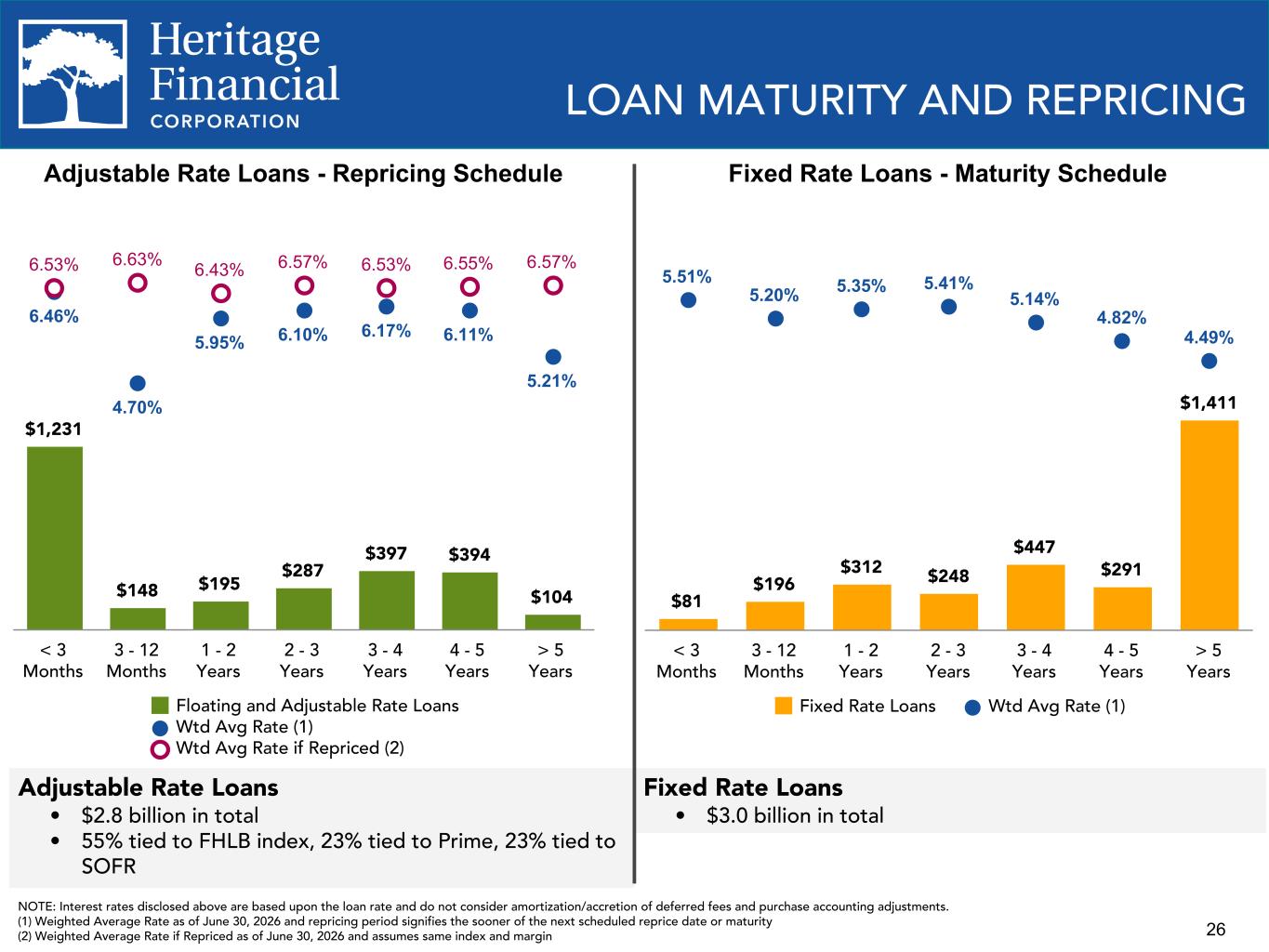
Yeah. And, you know, in Don's comments a minute ago, there's still, you know, significant upsides in the margin from asset repricing. Our average, you know, note rates 572, and we put on new loans in the quarter at 640. And then we also have significant, you know, upside in terms of rate resets on existing loans. And we have a slide in the deck. So there's quite a bit remaining there, David, where, you know, every new loan that goes on or loan that reprices is going to be at a higher rate than what we have, you know, the loans on the book set, at least, you know, looking at things today. So that's a big driver. And then the loan-to-deposit ratio, you know, is also a really good opportunity to, you know, to drive, you know, continued margin growth. You know, our loan-to-deposit ratio is still, you know, relatively low. So to the extent we can, you know, move that up a few percent, it's going to have a big impact on net interest income.
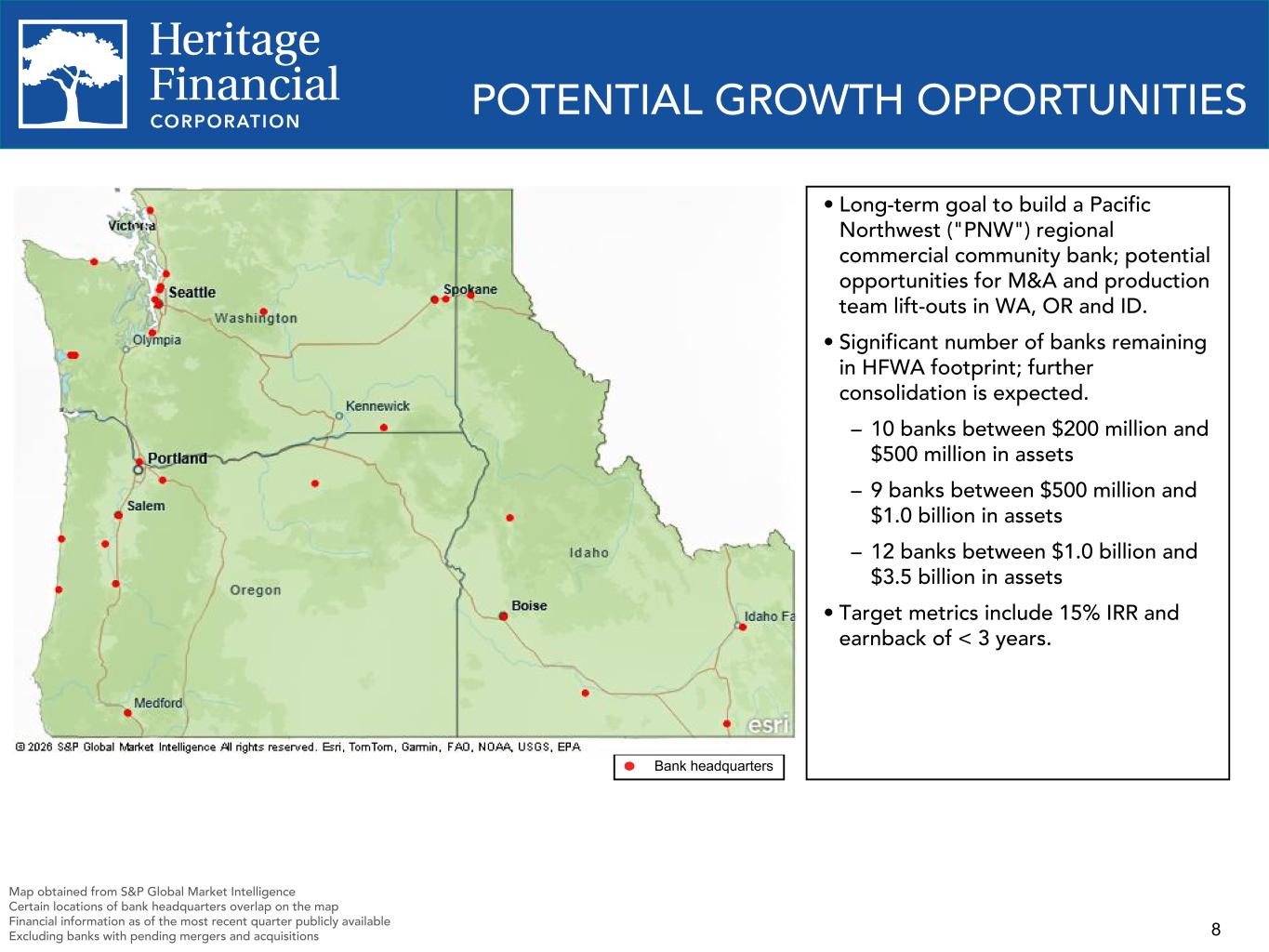
Okay. That's helpful. And look, there's been a decent amount of disruption across your footprint in both Washington and Oregon. You know, I'm curious, do you see a whole lot of opportunity and have you on the client acquisition front or on banker dislocation? And just what's your appetite for new hires or lift outs at this point?
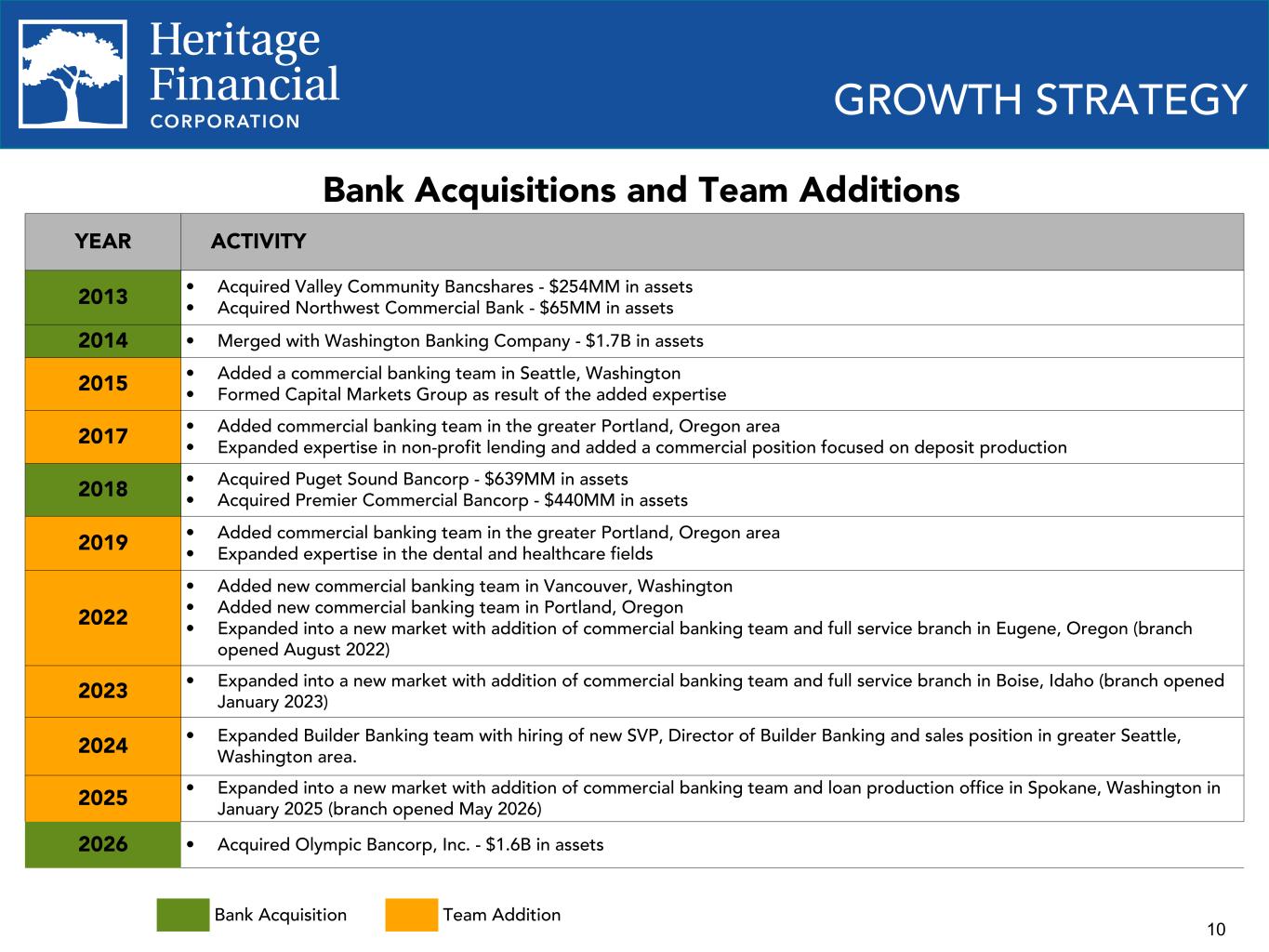
Yeah, you know, we obviously had the combination with KITSAF that we closed in the first quarter. But outside of that, our last, you know, M&A deals were back in 2018. But slide 10 of our investor presentation has detail on, you know, all the teams that we've added, and it's been a key to our growth strategy. So yes, is the answer. We're still out actively talking to talent. This year, since we did Spokane last year, we've continued to add to that team and then also done just banker additions across the market as talents become But we'd certainly be open to continuing that or doing additional teams, you know, if good talent becomes available, either through industry consolidation or just, you know, otherwise through changes at their, you know, their current institution. So I see that strategy continuing, David.
That's great. Thanks, everybody.
Your next question comes from the line of Andrew Terrell with Stevens Inc. Your line is open.
Hey, good morning. Good morning, Andrew.
Hey, not to have delayed the topic, but I did want to go back to expenses just for a moment. I appreciate the guidance. If I kind of compare where you're talking, you know, a clean 4K run rate, it doesn't seem like, you know, relative to the $18 million of annualized calls you were expecting with the acquisition announcement. So it feels like you're maybe coming up a little bit shy. So I wanted to ask, you know, there's a lot of moving pieces here, but kind of in your models, where are you getting at in terms of cost-safe realization or cost-safe achievement relative to that initial target?
And what are the moving pieces that we should appreciate that kind of maybe prevent us from fully seeing that coming out of the run rate?
Well, I think we're on the cost savings that we're going to be hitting that on from the merger. so if you're seeing us come up a little short in some of the realization I think there could be just on the legacy heritage side some other costs that we've added in as a result so I think that's where I'm getting the number the total number added and also factoring that in.
Okay sounds good and then I wanted to ask I appreciate all the color around some of the deposit flows this quarter I just wanted to get kind of your expectations around deposit growth in the back half of the year. Do you feel like you can kind of match that mid-singles type loan growth? I know, you know, I heard some of my comments around some of the competitive dynamics in the market. Just would love to hear kind of your commentary on your willingness or desire to kind of compete and match fund loan growth.
Don, you want to start? And then I'll add some comments.
I think, you know, Q3 and somewhat in Q4, the last half of the year is usually pretty good for us for deposit growth. Again, I would say, you know, good single-digit annualized growth type of thing. So I don't see that changing this year. You never know until you get into it. I'm not noticing anything so far this, you know, so far in early Q3 that would change my mind on that. So I think we're going to, you know, probably have a strong Q3 and a decent Q4, which we usually have in Q3 and Q4 is, again, Q3 our strongest, and then Q4 also having some growth. So I think that that's what I'm expecting. But, you know, until you get into it, it's really hard to say what will happen. We are going to be, you know, we'll be competitive on rates for deposits. So we'll, you know, that shouldn't be a hindrance there. But, you know, if rates, if the market rates go up such as people, you know, if they start, you know, looking for other funding, you know, outside of banks, you know, whether it's going into other investments, that's something that's a little hard to control, what they do with their excess funds. Brian, if you want to add to that.
Yeah, I, you know, we looked really close. at, you know, all of the deposit flows year to date, you know, in part because of the drop in Q2 and really it was all a lot of normal activity, perhaps with the exception of a bit elevated, you know, customer sale activity where, you know, a customer maybe sold a business in the first quarter and had, you know, significant excess funds in the account and or sold it in the second quarter and, you know, ended up, you know, distributing the majority of, you know, the business, what used to be the business deposits out, you know, as well. But that wasn't, you know, material driver of the, you know, the activity in the quarter. It was just more of an observation. So, I tend to agree with Dawn. You know, there is a lot of deposit the competition out there. And, you know, we see that as we're, you know, bringing on new relationships. But we're traditionally, you know, going after those operating relationships, winning those. And really for the last couple of years, we've had to pay up for the excess funds on those relationships because we've been competing with a, you know, variety of other players and the customers are very aware of what's available to them, you know, in the market. So kind of those new dollars have been you know more expensive than than what they've been in the past but it you know we have been competing uh for those relationships effectively uh for the last couple years so you know if if race go up um i think it'll it'll it'll get it'll get more competitive but i still see us winning you know the same level we have in the past great um i appreciate all the color and if i could just pack one on the are you able to quantify these i mean you guys have a Fantastic deposit franchise.
I think you said $164 on the IBD spot costs at the end of the period. Are you able to quantify just, you know, for that kind of competitive new money you're bringing on, you know, the delta of, you know, an incremental dollar of deposit growth versus, you know, where the portfolio stands on an average basis today?
John, I'm not sure if you have that. We've looked at it in past quarters, Andrew, but I'm not sure if we prepared it ahead of the call today.
Okay, no worries. Thank you for the questions.
Your next question comes from the line of Kelly Mata with KBW, your line of sultan.
Hi, good morning. Thanks for the question. I apologize if this has already been asked. I dropped off by accident briefly earlier, but I did hear a lot of talk about the flexibility of your balance sheet. You clearly have room on the loan-to-deposit ratio, a strong amount of capital as well, wondering as you think about the potential ways to drive upside to the margin, how you're thinking about securities, restructuring, buybacks, and all those things to kind of unlock the power of your balance sheet further. Thank you.
Don, you want to take that first, and then I can add to it?
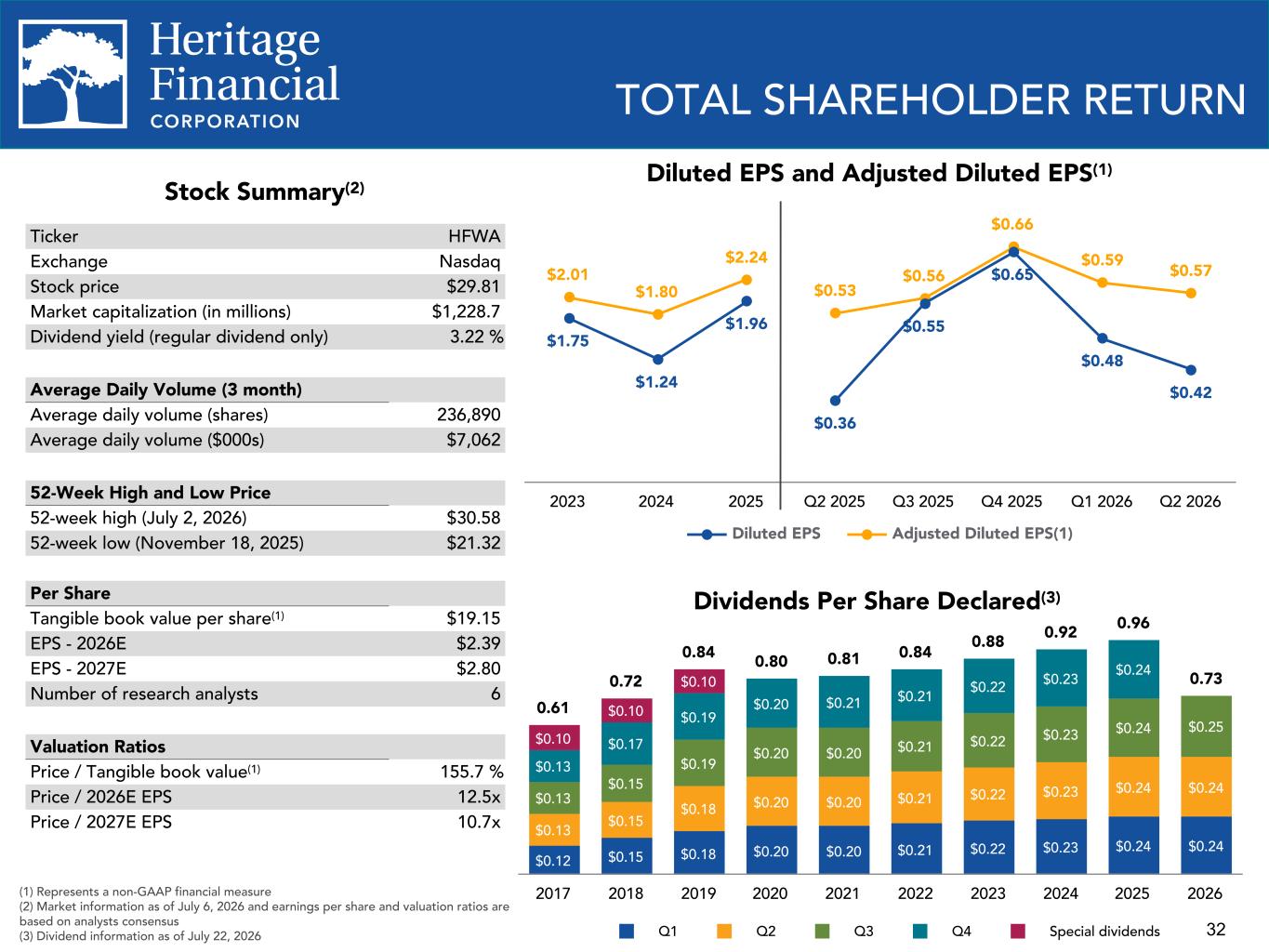
Sure. I think that, you know, let's start with the last one you talked about buybacks. Again, we're, as I mentioned in my comments, initial comments, that we're continuing to be open to buybacks, depending on, again, kind of market conditions and other capital needs. But it's certainly something that we're looking at and we'll continue to look at. So, you know, we could very well be just as active in Q3 or in Q2. But, you know, I'm not really trying to give you guidance there just that, you know, we're not necessarily slowing down. But at the same time, we'll be looking at, you know, just what the market's giving us on that. And, you know, as far as other things that we did, like I said, we did a little bit of an optimization trade on the investment portfolio. You know, we'll continue to look at, again, trying to leverage what's in the balance sheet that way. We don't have anything large planned at this time. And, of course, we would be looking to, you know, again, the repricing of the loan portfolio is just going to be a big one. I think we will see some, again, like I mentioned before, I think we will see some pressure on CD rates going into Q3 with the way the market is one year in on the rates. So I think that that is going to be a challenge.
Got it. I appreciate the time. Thanks so much.
Thanks, Kelly.
I'll now turn the call back over to Brian McDonald for closing remarks.
Thank you. If there's no more questions, we'll wrap up this quarter's earnings call. We thank you for your time, your support, and your interest in our ongoing performance, and we look forward to talking with many of you in the coming weeks. Goodbye.
Ladies and gentlemen, that concludes today's call. Thank you for joining Humano Disconnect.
14:31 to 37:23 · One card per analyst, follow-ups included. Each plays from its start, and the one being answered is marked.
I wanted to clarify the expense guide. The $65 million sounds like it includes merger charges. Can you just quantify the merger charges you expect in 3Q and in 4Q to get to that? So we can have kind of a core run rate.
Don Hinson: Yeah, I think when I mentioned that the Q4 being in the $56 to $57 million range, that would be your run rate there going forward. So most of our merger expenses will be done in Q3. You know, there may be just small, minor things left over for Q4, but nothing…
Also speaking: Tony Chalfant
Thanks. Sorry to circle back on the expense side. I guess to get from 65 to 57, 3Q versus 4Q, Don, I think you said $6 million is on merger costs, and then maybe are we thinking $2 million in cost saves to get to the run rate? Is that right? And then I guess if we – would you expect Cossage to be complete as a 4Q, or…
Don Hinson: Very little. Not enough to really give you guidance on.
Also speaking: Bryan D. McDonald
Hey. Good morning, everybody. Good morning. I wanted to touch on that increase in originations. That's extremely encouraging. Glad to hear the pipeline is still strong. Like that increase in originations, would you attribute that to more of an increase in demand or a function of increasing productivity and activity…
Bryan D. McDonald: Yeah, and David, slide 12 has some good detail on the, you know, categories of the new production. And in my comments, I just commented a bigger portion, you know, came in construction. You see that on slide 12. And so that was a chunk of it. Nothing new, you…
Hey, not to have delayed the topic, but I did want to go back to expenses just for a moment. I appreciate the guidance. If I kind of compare where you're talking, you know, a clean 4K run rate, it doesn't seem like, you know, relative to the $18 million of annualized calls you were expecting with the acquisition…
Don Hinson: Well, I think we're on the cost savings that we're going to be hitting that on from the merger. so if you're seeing us come up a little short in some of the realization I think there could be just on the legacy heritage side some other costs that we've added…
Also speaking: Bryan D. McDonald
Hi, good morning. Thanks for the question. I apologize if this has already been asked. I dropped off by accident briefly earlier, but I did hear a lot of talk about the flexibility of your balance sheet. You clearly have room on the loan-to-deposit ratio, a strong amount of capital as well, wondering as you think about…
Bryan D. McDonald: Don, you want to take that first, and then I can add to it?
Also speaking: Don Hinson
SEC filing · Item 2.02
Filed Jul 23, 2026 · complete as-filed document
SEC periodic report
Filed Aug 7, 2026 · complete as-filed document