Operator
Good afternoon. My name is Dilem, and I'll be your conference operator today. At this time, I would like to welcome everyone to the Inspire Medical Systems Second Quarter 2025 Conference Call. I'll now hand the call over to your first speaker, Ezgi Yagci, the Vice President of Investor Relations at Inspire. You may begin the conference.
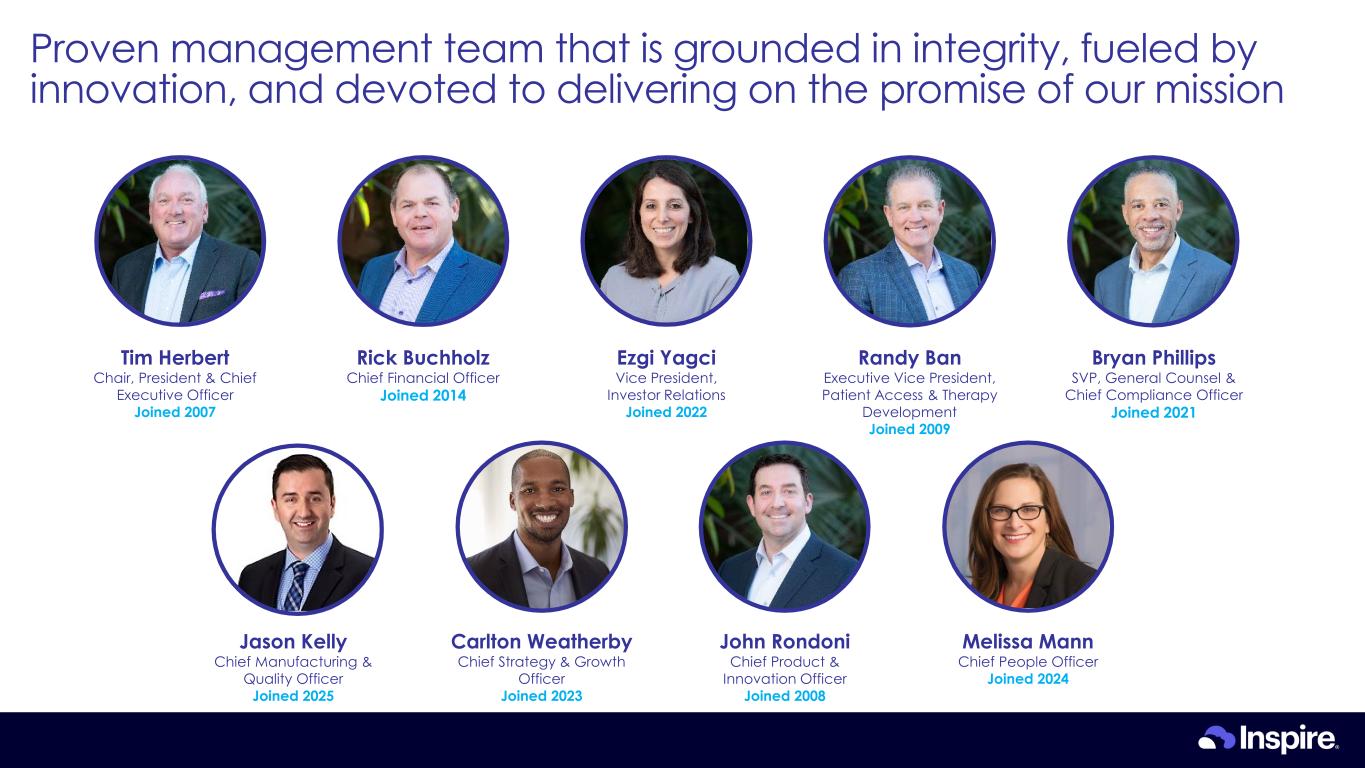
Thank you, Dilem, and thank you all for participating in today's call. Joining me are Tim Herbert, Chairman and Chief Executive Officer; and Rick Buchholz, Chief Financial Officer. Earlier today, we released financial results for the 3 months ended June 30, 2025. A copy of the press release is available on our website. On this call, management will make forward-looking statements within the meaning of the federal securities laws. All forward-looking statements including, without limitation, those relating to our operations, financial results and financial condition, investments in our business, full year 2025 financial and operational outlook and changes in market access are based upon our current estimates and various assumptions. These statements involve material risks and uncertainties that could cause actual results or events to materially differ. Accordingly, you should not place undue reliance on these statements. Please see our filings with the Securities and Exchange Commission, including our Form 10-Q, which we filed with the SEC earlier this afternoon, for a description of these risks and uncertainties. Inspire disclaims any intention or obligation, except as required by law, to update or revise any financial projections or forward-looking statements, whether because of new information, future events or otherwise. This conference call contains time-sensitive information and speaks only as of the live broadcast today, August 4, 2025. With that, it is my pleasure to turn the call over to Tim Herbert. Tim?
Speaker 2
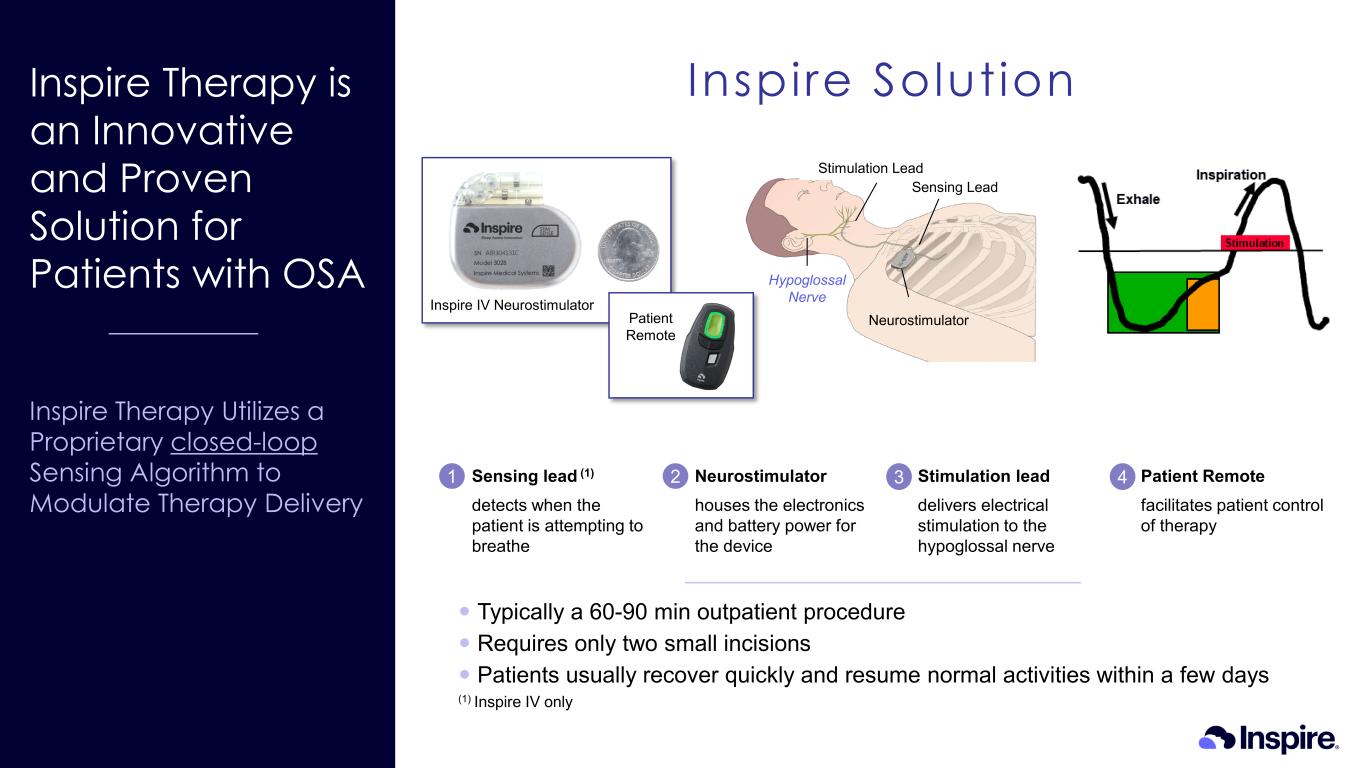
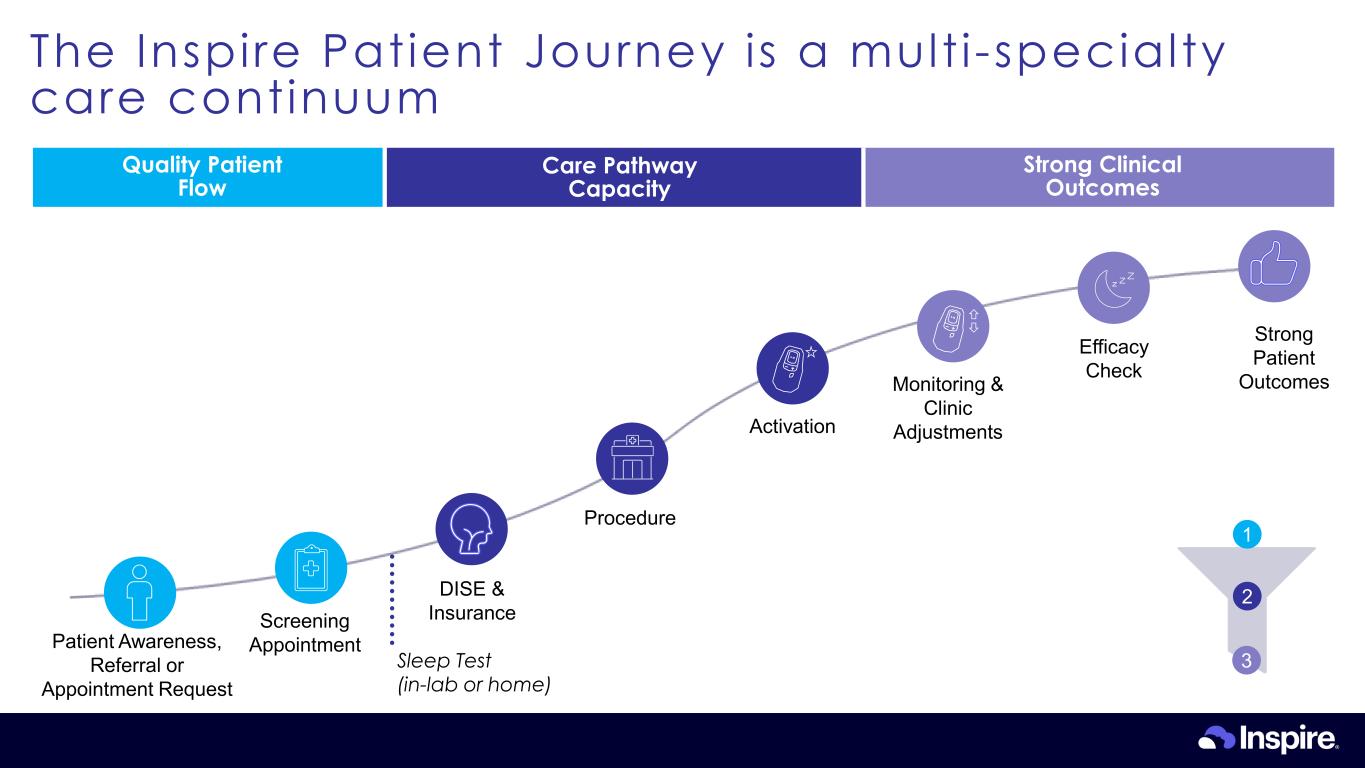
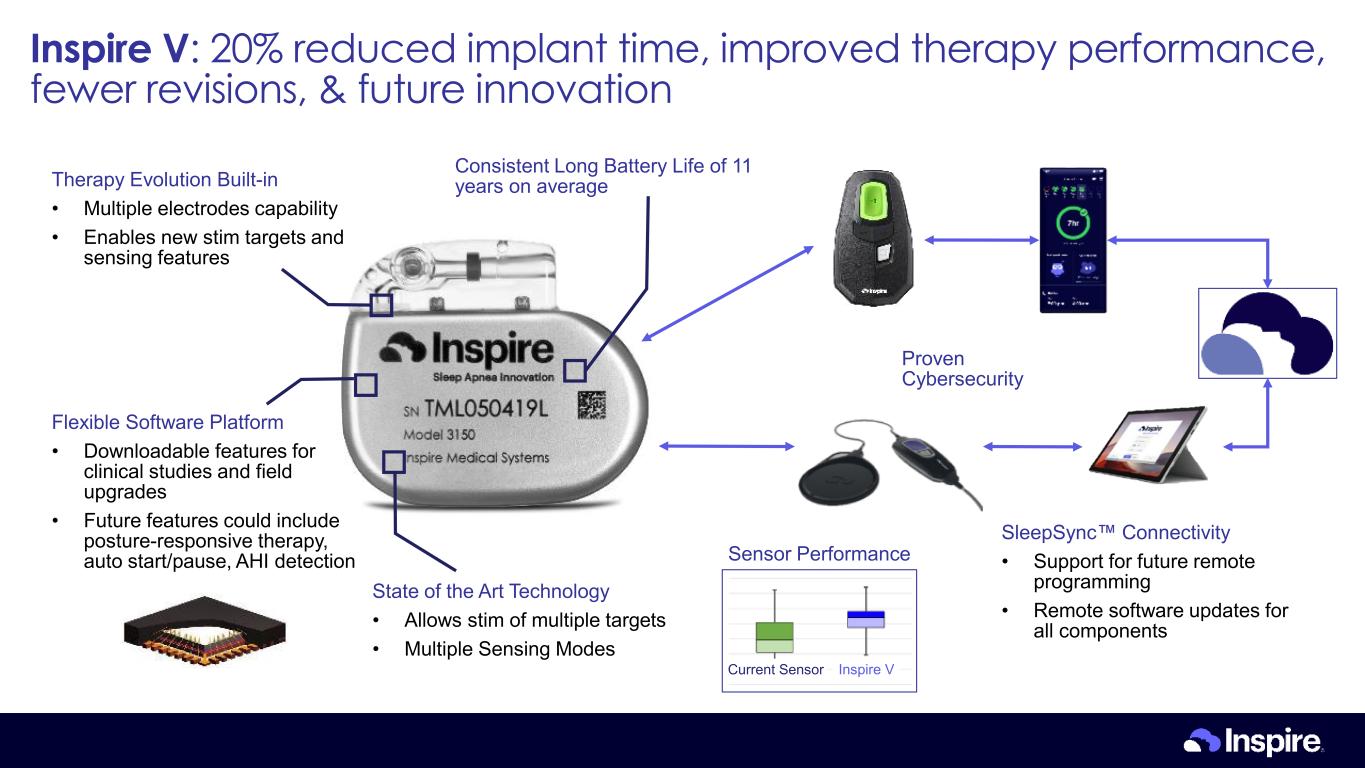
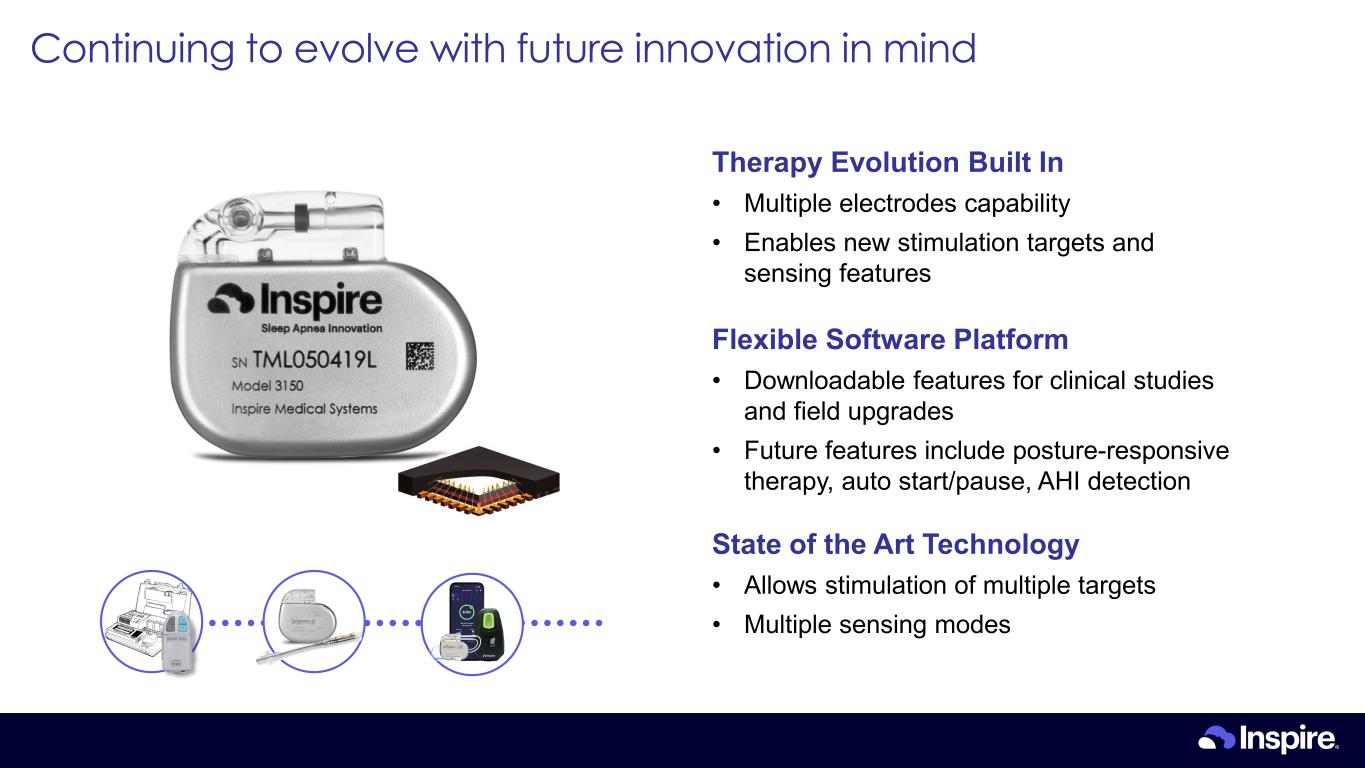
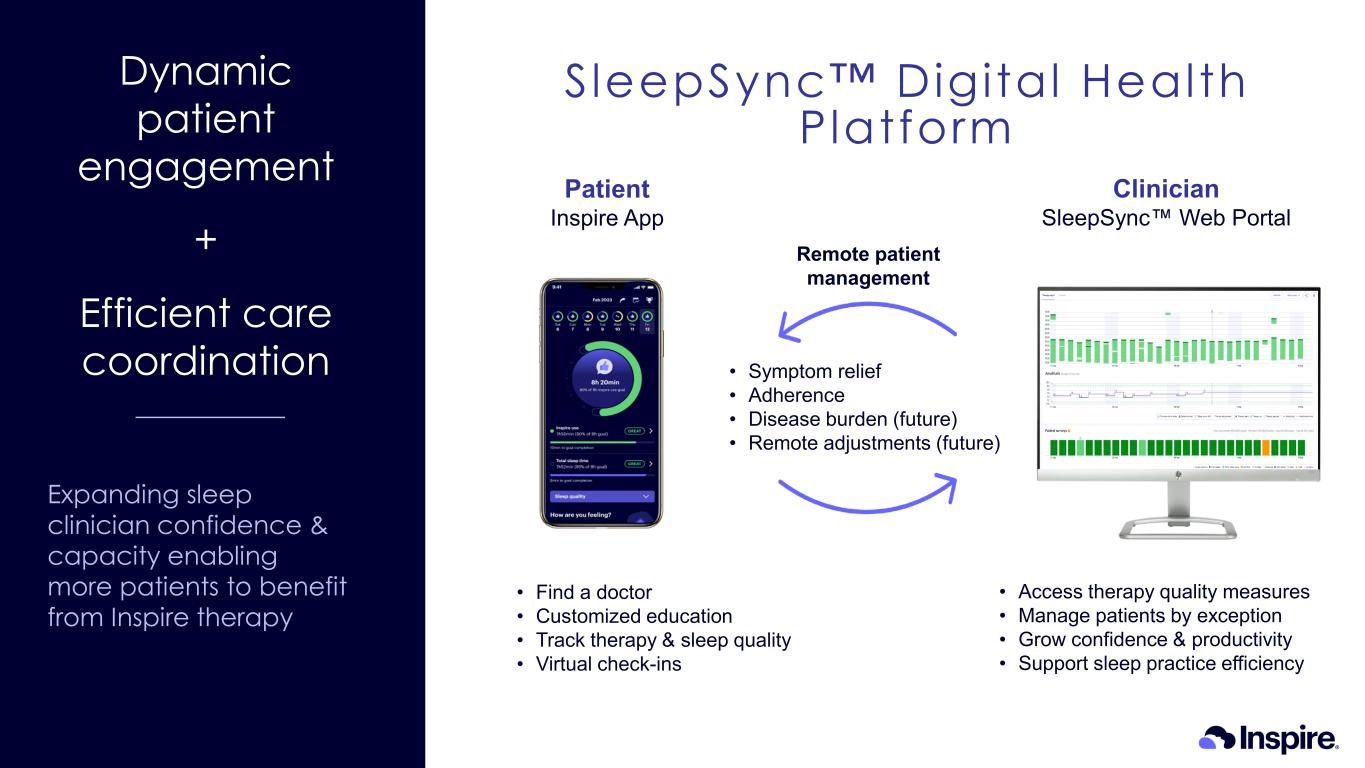
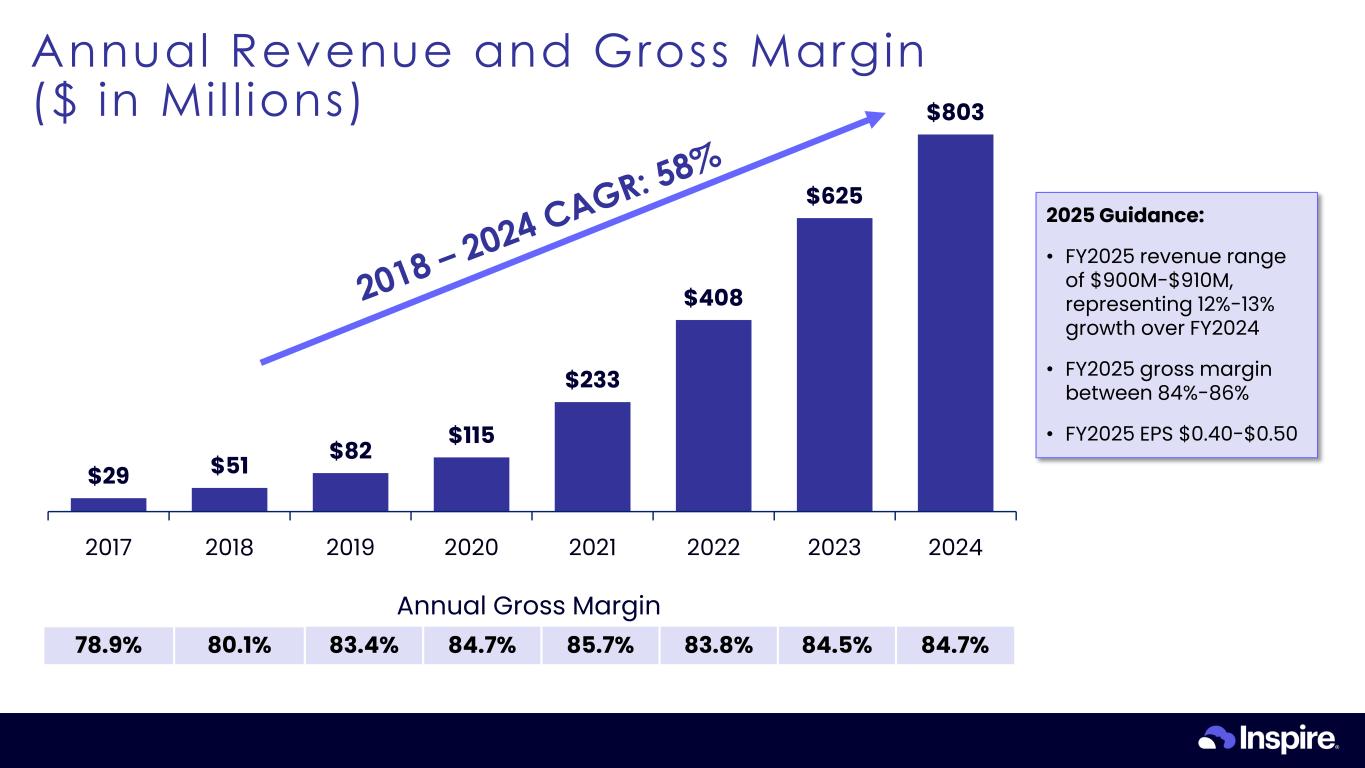
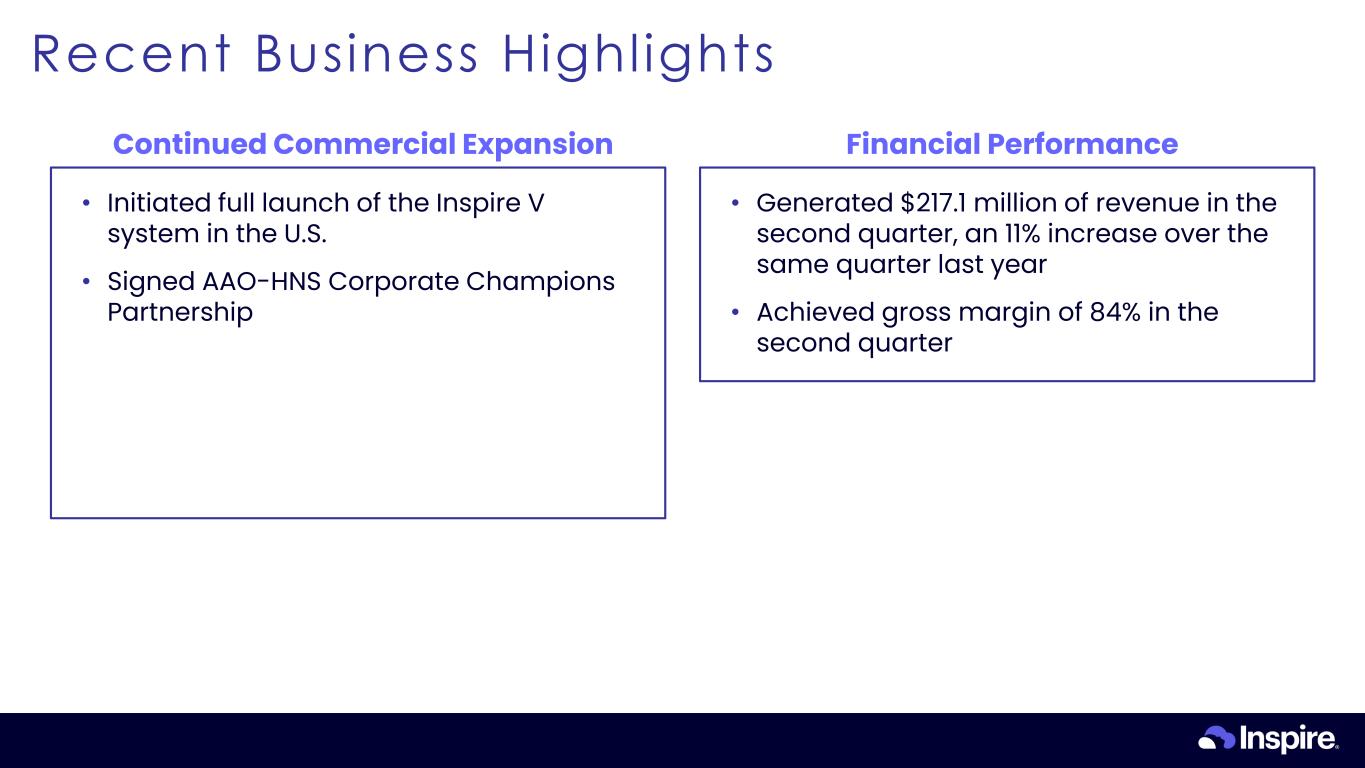
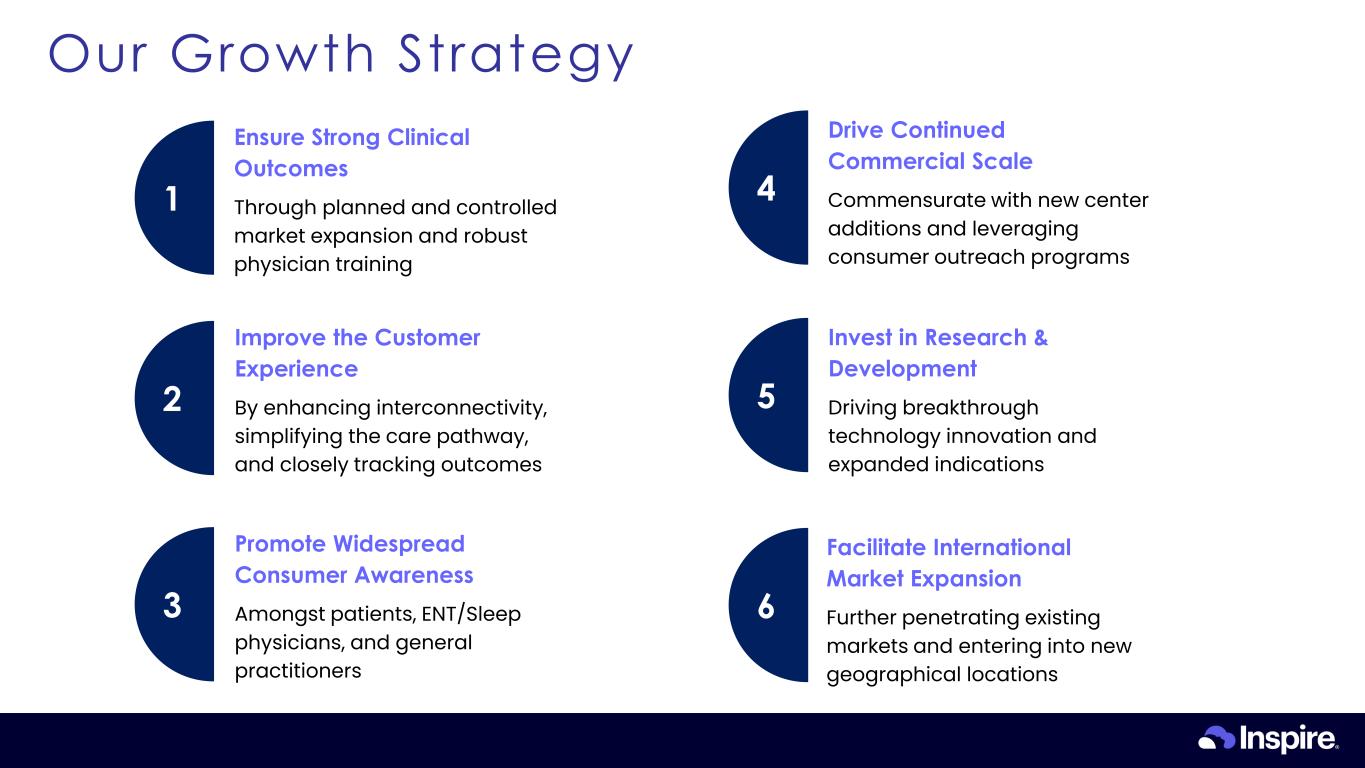
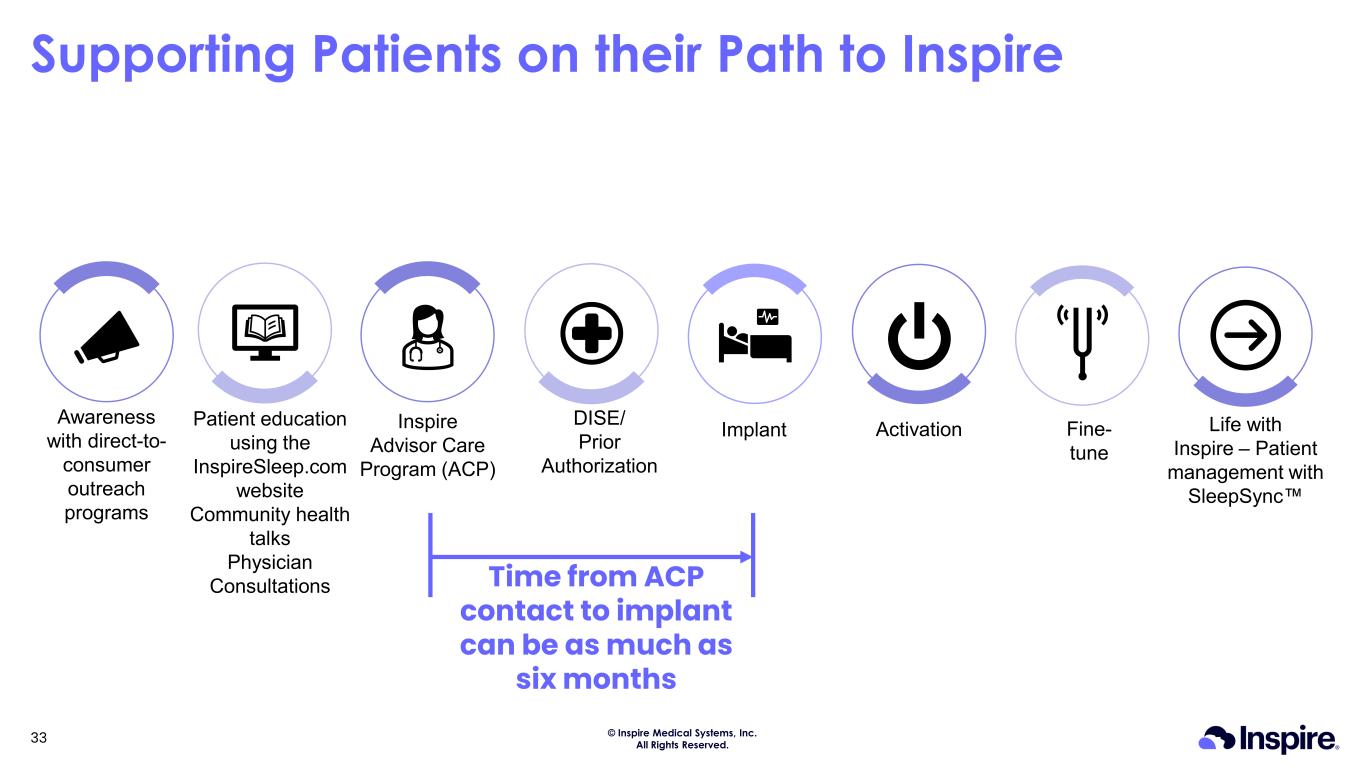
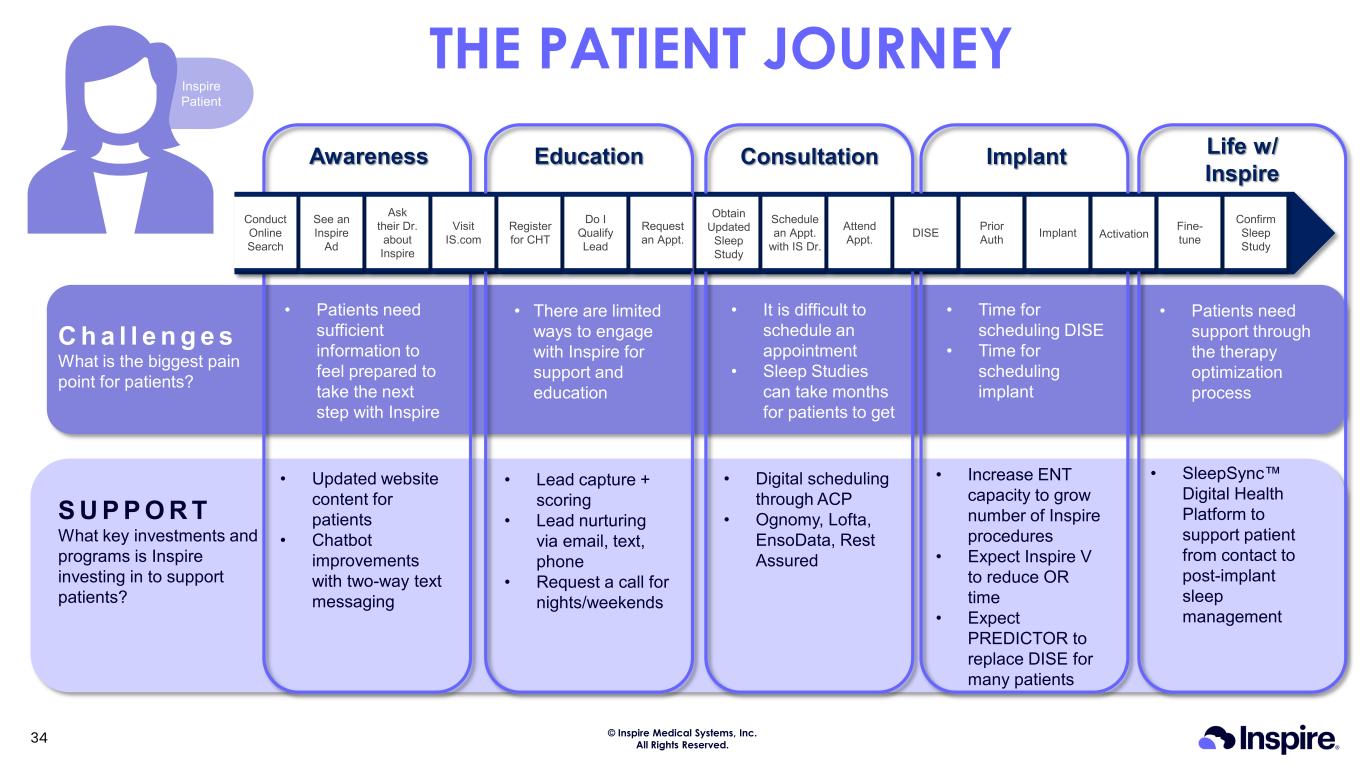
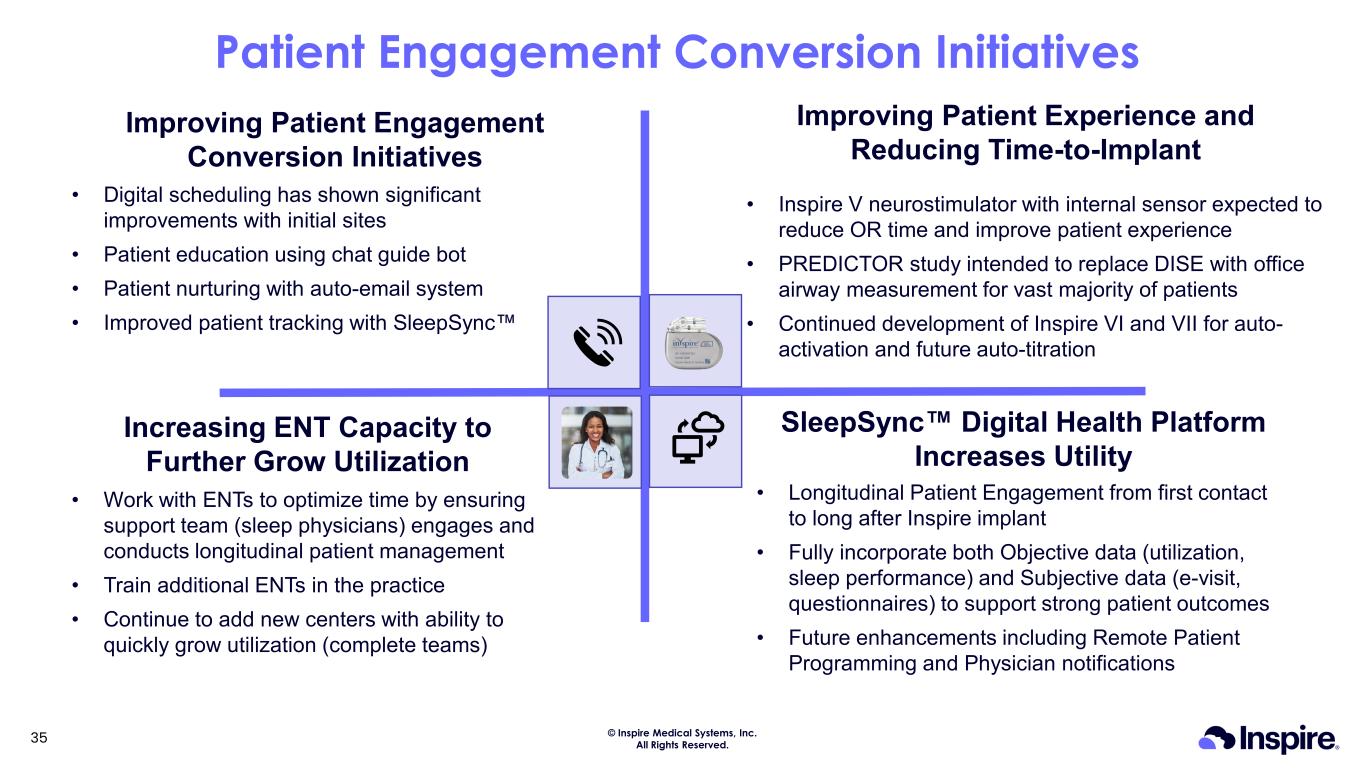
Thank you, Ezgi, and thanks, everyone, for joining our business update call for the second quarter of 2025. I'll start by highlighting some key takeaways of our second quarter results. I'll then discuss our updated 2025 guidance and provide additional context and rationale around the change. Then Rick will provide a financial review. We have achieved many key milestones in the year 2025. That said, I want to provide some important context on the challenges we are facing in the commercial rollout of our Inspire V next-generation system, which began in May. As the quarter progressed, we encountered certain headwinds that slowed our efforts to transition customers to Inspire V. While we are disappointed with the elongated time frame we now expect for the rollout, we remain focused on advancing the transition of our customers to Inspire V. To this end, we are taking concrete actions that we believe will allow us to complete this transition in the next few quarters. Strong market demand, positive patient and surgeon feedback and favorable clinical results give us conviction in our platform and ability to make a difference in the lives of our patients with obstructive sleep apnea. I'd now like to provide some detail regarding the challenges faced during the quarter and the steps we are taking to actively address the factors at play. First, in the second quarter, many centers did not complete the training, contracting and onboarding criteria required prior to the purchase and implant of Inspire V. Specifically, implementation of SleepSync has been the most challenging step to accomplish. Although not technically difficult, the approval process from our customers' IT departments has taken longer than expected. Additionally, some centers have been delaying implementing SleepSync until their first patients are scheduled to receive the Inspire V device. To increase the rate of implementation of SleepSync by our customers, we began and continue to leverage our technical teams. To date, we have completed the implementation at over 50% of the U.S. centers. With these technical resources fully engaged, we expect to complete the vast majority by the end of the third quarter. As an aside, most of the units sold in the second quarter were Inspire IVs. Therefore, we did not experience much inventory destocking in the second quarter. The burn down of Inspire IV inventory will remain a headwind in the second half of 2025 as we continue to transition to Inspire V. The second challenge related to the adoption of CPT code 64568 for Inspire V for Medicare patients. The approval of the code change was announced in April with a retroactive effective date of January 1, 2025. However, the software updates for claims submissions and processing did not take effect until July 1. Thus, although traditional Medicare and Medicare Advantage patients could receive Inspire therapy, implanting centers would not be able to bill for those procedures until July 1. Given this dynamic, many centers continued to treat Medicare patients with Inspire IV. With this software update now complete, we anticipate centers will ramp up their efforts to transition to Inspire V. Third, certain patients opted to wait for the Inspire V device, knowing its availability was imminent instead of being treated with Inspire IV. And as more centers transition to Inspire V in the third quarter, these patients should start receiving Inspire V therapy. Fourth, we intentionally held off on patient marketing and education spend and footprint expansion, namely new centers and territories in the first half of the year. This was a strategic decision given all the resources required for the Inspire V transition. As we move into the second half of the year, we have ramped up both marketing and footprint expansion efforts to increase patient awareness and build capacity across the U.S. These investments have already started to be implemented, and we have already experienced an increase in website activity, calls into our Advisor Care program and appointments to health care providers. We continue to leverage our ACP to connect patients interested in Inspire therapy with qualified physicians, including through the expansion of digital scheduling. In addition, we are ramping our medical education and local community health efforts to promote the launch of Inspire V. These efforts should provide a tailwind into the second half of 2025 and beyond. Lastly, we believe some patients may be delaying Inspire therapy to try GLP-1s. We are unable to quantify this and continue to believe GLP-1s present a tailwind long term as we do hear of patients losing weight to qualify and receive Inspire therapy. As a result of these headwinds, we are adjusting our full year revenue guidance to a range of $900 million to $910 million from our previous revenue guidance of $940 million to $955 million or a 4% reduction at the midpoint. The new revenue guidance reflects growth of 12% to 13% over 2024 revenue. We are also reducing our diluted net income per share to a range of $0.40 to $0.50 from our previous guidance of $2.20 to $2.30 per share to reflect this change in revenue guidance and to a lesser extent, the planned increase in patient marketing costs for the second half of the year. I will now take a few minutes to highlight the success we have already seen with the Inspire V system and what to expect moving forward. The early results of our Singapore clinical study have been presented at the recent sleep meeting and demonstrated a 20% reduction in surgical times. This reduction will provide for increased capacity at centers. In fact, we have already noted that the U.S. centers that have completed the transition to Inspire V have experienced a more than 20% increase in patient implants in the first half of 2025 compared to the same period in 2024. From an efficacy standpoint, the accelerometer study we highlighted at recent investor conferences suggested significantly improved sensing capability, including an 86% inspiratory overlap with the patient's breathing. Synchronization with respiration is essential as the airway collapses during the inspiratory phase of respiration. The early review of AHI reductions appears very promising as well, and we plan to present this data at the upcoming ENT meetings in October. Regarding reimbursement, CMS recently released the 2026 proposed OPPS rules, which, if approved, would provide positive increases for Medicare reimbursement for the Inspire system. As you know, for Inspire V, centers will be billing CPT code 64568, which has been accepted for plans covering over 90% of our 300 million covered lives, including Medicare. The national average Medicare hospital reimbursement for CPT code 64568 is proposed to increase to $32,000, up roughly $1,300 or 4% from 2024, and the ASC reimbursement is proposed to increase to $28,000, up $1,300 or 5% compared to 2024. Finally, the surgeon reimbursement for CPT code 64568 is projected to increase to $660, up 11% compared to 2024. Should the proposed rules be finalized as expected in early November, the new reimbursement would take effect January 1, 2026. With respect to clinical evidence, we are very excited to have submitted the PREDICTOR manuscript to a leading journal and expect it to be published later this year. As a reminder, the clinical evidence proposes an algorithm that uses BMI and neck circumference to determine a patient's eligibility, thereby eliminating the need for a DISE procedure for the vast majority of patients. We are also excited to announce that we became a corporate champion of the American Academy of Otolaryngology. The sponsorship positions Inspire as a leading voice in ENT innovation, aligning with top thought leaders and decision-makers. It also strengthens our brand and trust within the ENT community, which is vital for expanding Inspire's influence and adoption. It also provides a platform for collaboration and research and policy, thereby advancing Inspire's market leadership in hypoglossal nerve stimulation. Before I turn the call over to Rick, I'd like to take a moment and discuss the personnel announcement we made today. No one has lived up to our commitment to delivering strong patient outcomes more than Randy Ban, our Executive Vice President, Patient Access and Therapy Awareness. Randy recently announced his intention to retire at the end of January 2026. As one of our earliest team members and a long-time commercial leader at Inspire, Randy has played a significant role in advancing access to Inspire therapy and building a strong mission-driven organization. He will remain fully engaged in his current role into early next year to support a smooth and thoughtful transition. We are grateful to Randy for his many contributions and wish him the best in his well-earned retirement. At the beginning of this year, Carlton Weatherby assumed the lead of the U.S. sales and marketing teams and will continue to build upon the robust history of growth in the adoption of Inspire therapy initiated by Randy many years ago. In summary, we remain focused on the patient to continue the growth and adoption of Inspire therapy. We will execute our growth strategy of driving high-quality patient flow and increasing the capacity of our provider partners to effectively treat and manage more patients. Our key strategies include training advanced practice providers, certifying additional surgeons qualified to implant Inspire Therapy and driving the adoption of SleepSync and our digital tools, all of which are embedded strategies in our commercial team's objectives to increase provider capacity. Looking ahead, we are confident about our future and that we have the appropriate strategy in place to drive long-term stakeholder value. We have our arms around the headwinds that I described, and actions are already underway to accelerate the adoption of Inspire V in the latter half of the year. Looking beyond 2025, we continue to take actions to position the company for strong profitable growth.
Speaker 3
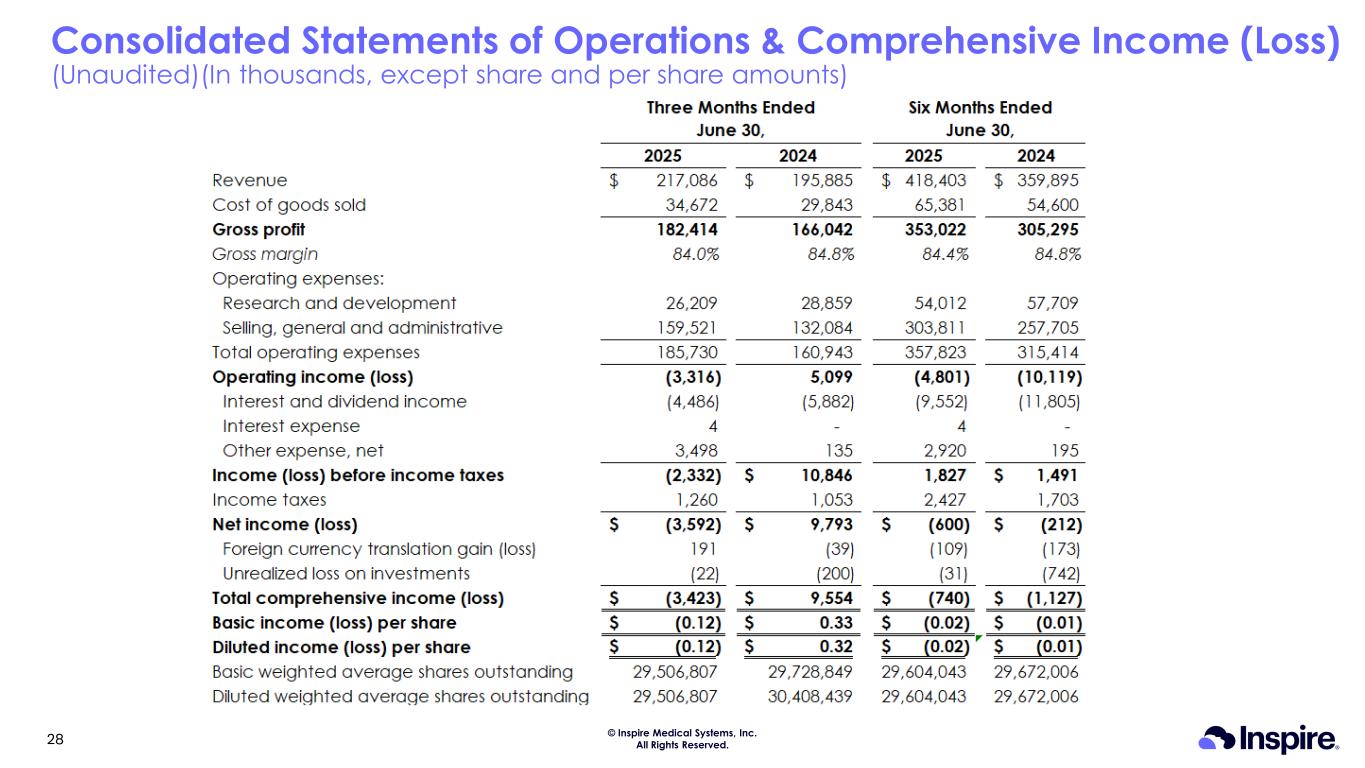
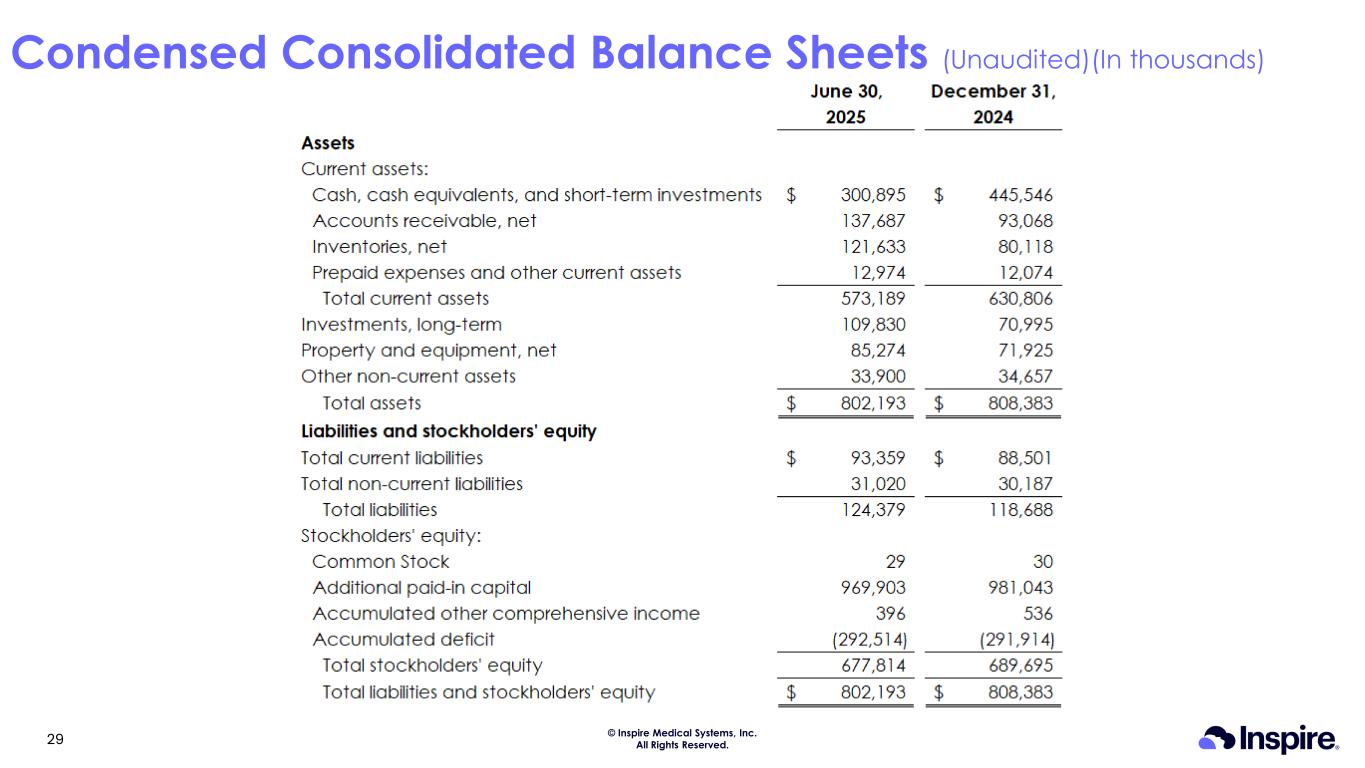
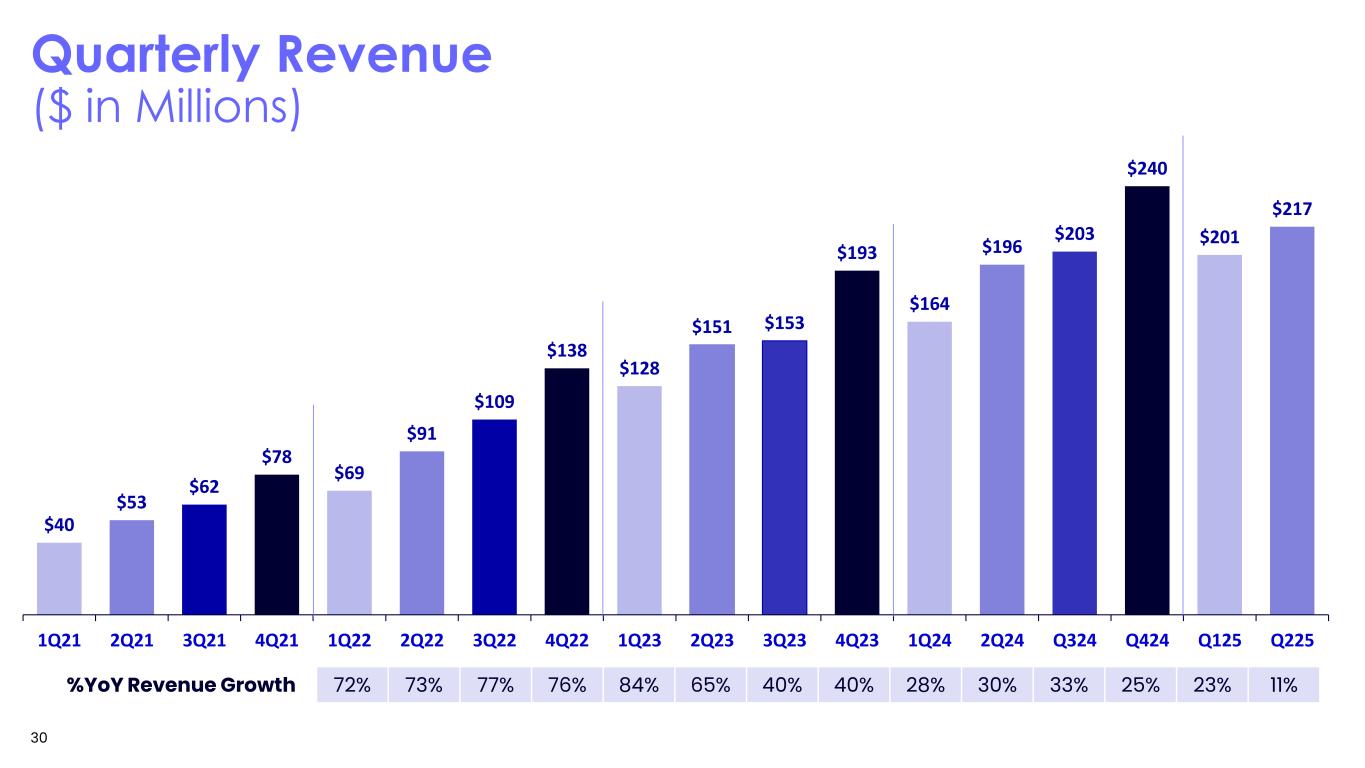
Thank you, Tim, and good afternoon, everyone. Total revenue for the quarter was $217.1 million, an 11% increase from the $195.9 million generated in the second quarter of 2024. U.S. revenue in the quarter was $207.2 million, an increase of 10% from the $187.8 million in the prior year period. Revenue outside the U.S. was $9.9 million, which was a 23% increase year-over-year. Gross margin in the quarter was 84% compared to 84.8% in the prior year period. The year-over-year decrease was primarily due to a $2.1 million charge for excess Inspire IV subcomponents, which reduced gross margin by 100 basis points in the quarter. Total operating expenses for the quarter were $185.7 million, an increase of 15% compared to $160.9 million in the second quarter of 2024. This increase was primarily due to the expansion of our sales organization and increased general corporate costs, partially offset by a reduction in R&D year-over-year. In addition, operating expenses included accelerated noncash stock-based compensation expense of $11.2 million for employees who are now retirement eligible in accordance with the implementation of changes to the treatment of equity awards upon an employee's death, disability or retirement. Operating expenses also included $1.7 million in legal fees related to a civil investigative demand from the Department of Justice and a patent infringement suit that we filed against a potential competitor. These items do not reflect costs associated with our ongoing operations. Please refer to our earnings press release for a reconciliation of these items. Interest and dividend income totaled $4.5 million in the quarter compared to $5.9 million in the prior year period. Operating loss for the quarter totaled $3.3 million compared to an operating income of $5.1 million in the prior year period. Net loss for the quarter was $3.6 million compared to a net income of $9.8 million in the prior year period. This represented a loss per share of $0.12 for the quarter compared to a net income of $0.32 per share in the second quarter of 2024. Adjusted EBITDA for the quarter totaled $44.1 million, which is a 14% increase compared to $38.7 million in the prior year period. The adjusted EBITDA margin in the second quarter was 20% and consistent with the second quarter of 2024. Adjusted net income per share totaled $0.45 compared to $0.32 in the prior year period or an increase of 40% year-over-year. The weighted average number of diluted shares outstanding for the quarter was 29.5 million. We ended the quarter with $411 million in cash and investments. Our strong cash position allows us to remain focused on executing our growth strategies. Moving on to 2025 guidance. As Tim mentioned, we now expect full year revenue to be in the range of $900 million to $910 million, down from $940 million to $955 million, representing an annual increase of 12% to 13% compared to full year 2024 revenue. We expect Q3 revenue to increase 1% to 3% sequentially from the second quarter as we continue the transition to Inspire V. We continue to expect full year gross margin to be in the range of 84% to 86%. We now expect diluted net income for the full year 2025 to be $0.40 to $0.50 per share, a decrease from our previous range of $2.20 to $2.30 per share. The reduction is primarily due to the revised revenue guidance and to a lesser extent, the planned increase in patient marketing costs for the second half of the year. We ended the quarter with 348 U.S. territories and 259 U.S. field clinical representatives. We continue to expect our reported tax rate in 2025 to be roughly 10%, primarily related to state and local taxes. We expect the full year diluted shares outstanding to be approximately 31 million.
Operator
And I show our first question comes from the line of Adam Maeder from Piper Sandler.
Speaker 4
A couple from me. I guess the first one is on the revised guidance. And you guys outlined a handful of different headwinds that are facing the business here. I was just hoping to get a little bit more color there, if you could kind of put some force rank order around those different items or quantification around those items so we can kind of understand those different components and kind of how you're thinking about the potential impact in the second half of the year? And then I had a follow-up.
Speaker 2
Sounds great, Adam. Good to hear from you. I think when we laid out the four key items that we highlighted, the first two are really the predominant factors that we had. The first one certainly being the number of centers that have completed their full training and adding SleepSync to their systems to be able to use the Inspire V programmer. The second is really the concern over billing Medicare, which everybody was aware of being approved, but not being able to bill it until July 1 has really put some centers in a tough spot. And so they chose to continue to implant Inspire IV. And those two factors really are the predominant drivers, and we really got our arms around both of those. Of course, the Medicare is now approved and centers are able to bill 64568 for Inspire V. And we have a full team working to get all the other centers trained and up and running. As we mentioned, over 50% of the centers have already have access to SleepSync.
Speaker 4
That's helpful color, Tim. And for the follow-up, I'm going to test my luck on 2026. And the rollout, obviously going slower than expected with Gen V here this year, but you gave some helpful color around kind of how you're thinking about the trajectory in the back half of the year. Maybe to ask it a little bit more directly, would you expect revenue in 2026 to accelerate over the 12% to 13% that you've guided to in FY '25?
Speaker 2
Absolutely. Well, we're going to provide our next year's guidance, of course, at our year-end call. But we're making several investments, as I've already mentioned, to get the sites up and running with Inspire V. We talked about the increased marketing with our direct-to-consumer spend, expanding our footprint, both with new centers with surgeons, bringing back some of the surgeons who weren't doing as many procedures because of the pressure sensing need before. And so yes, we would expect our revenue growth to exceed the 12% to 13% million we're talking about now.
Operator
And our next question comes from the line of Travis Steed from Bank of America Securities.
Speaker 5
I wanted to ask about the EPS guide change. I know the numbers in the press release, the $2.20 to $2.30 went to $0.40 to $0.50. There was, I guess, a $0.57 onetime charge this quarter, but trying to get the bridge kind of back to the underlying EPS guide kind of on an adjusted basis. If you could kind of help walk how the guide changed versus the $2.20 to $2.30 that you gave last quarter?
Speaker 3
Sure, Travis. The most significant factor here is the reduction in gross margin we would have experienced with higher revenue. The primary reason for this is the decreased revenue guidance, which has dropped from our previous midpoint of $948 million to $905 million. Additionally, we are also increasing our direct-to-consumer spending. While this has a smaller impact, it is worth noting due to ongoing investments. A major contributor to this is our plan to significantly ramp up our direct-to-consumer investments now that the launch is in progress. We aim to leverage the Inspire V launch to build patient awareness. For 2024, our direct-to-consumer spending is projected to be $95 million, and we anticipate over 20% growth, which would imply approximately $115 million in 2025.
Speaker 5
So the $0.40 to $0.50 EPS guide is excluding the $0.57 onetime charge this quarter, just to be clear.
Speaker 3
No, that's included. It's GAAP EPS. It's inclusive of that.
Speaker 5
Okay. So if I take the $2.20 versus $2.30, subtract the $0.57, and that should be the underlying EPS guide, right?
Speaker 3
Yes, the original midpoint guidance is $0.45, with approximately a $1.20 reduction in revenue and about $0.60 for the one-time items.
Speaker 5
Okay. I just want to make sure that was clear since it's confusing for a lot of people. And then the second question I had was just on the Q3 guide and any kind of view on June, July trends that kind of helped inform that Q3 guide up 1% to 3% sequentially.
Speaker 2
Travis, I believe that as we come out, it's typically a bit lower at the start of a quarter, particularly when considering the beginning of July. However, we are observing patient flow in the second quarter, which allows us to understand our position regarding patient flow and anticipated implants. This insight enables us to project a revenue increase of 1% to 3% over the second quarter. These are just our preliminary observations regarding patient flow.
Operator
And I show our next question comes from the line of Danielle Antalffy from UBS.
Speaker 6
I want to clarify my understanding of the underlying volume trends. I appreciate the insights you've shared, Tim. However, even considering a slower transition to Inspire V, the volumes appear to be lower than what you have tracked in recent years and lower than many had anticipated. It seems some patients are choosing to wait, but I'm curious about the reasons behind the sustained pressure on volumes. I realize it's challenging to quantify the impact of GLP-1 and similar factors, but any information you could provide to reassure us that this situation is temporary and not indicative of a structural shift in the market would be helpful. I apologize for the open-ended nature of my question and will leave it at that.
Speaker 2
Thanks, Danielle. I think, well, first off, in the second quarter, we did achieve expectations with our revenue and taking care of patients. And so we did have a good patient flow there to achieve what we set expectations or set guide to be in the second quarter. But as we look forward, knowing the delay in getting all the centers up and running, that pushes our cases forward. And it also limited our ability to increase the footprint. So we didn't add as many centers in the second quarter as we're working on the transition. We didn't add as many territory managers as we noted in the script, we did increase the number of field clinical reps because that builds the capability to move forward. And again, as Adam asked earlier on, the two key factors of getting the sites up and running to transition to 5 and really the ability to build Medicare. Centers really had a difficult time building Medicare knowing that they wouldn't get billing accepted until July 1. The other two factors do play as well, of course, with the patients who are expecting or waiting for Inspire V, but until their centers are up and running, they certainly can't get in the queue to be able to get scheduled for that. But we know those patients are there. And then finally, with the majority of the units being sold in the quarter being Inspire IV, we still have a burn down of inventory that will carry forward moving forward. So yes, we have strong confidence in our ability to move forward. And that's really highlighted by the great performance that we're seeing with the Inspire V device so far, both in the U.S. and again, as we mentioned, from the clinical study in Singapore, and we're going to be proud to present some more of those results at the upcoming ENT meeting. So yes, the team has got their head down. They're working hard. We think we've got our arms around the headwinds limiting the Inspire V transition and have good confidence that we have the corrective actions in place to be able to overcome those.
Operator
And I show our next question comes from the line of Robbie Marcus from JPMorgan.
Speaker 7
Two for me. First one, Tim, I appreciate you're not commenting on 2026. But would the expectation be, given this is a transient issue that you'd basically go back to your prior run rate in 2026, meaning you'd get back the $40 million to $45 million in revenue cut that you had here in '25 next year if it's not demand related?
Speaker 2
I think that that's what we're going to be targeting for. I think that we do think this is a short-term issue. And with the shift, it limits our ability to work through Q3 and Q4, but it does set us up for a very promising 2026 and beyond as we need to be focused to get all the sites transitioned over, but we already have the payers in place, as we mentioned, with the CPT coding. We have Medicare now in place, and we have seen positive experience from centers that have already implemented Inspire V. So again, we're going to give the formal guidance when we move forward, but our intent is to bring the growth back absolutely.
Operator
And I show our next question comes from the line of Richard Newitter from Truist Securities.
Speaker 8
Just a couple here, and I'll list them all upfront. I'm curious if you could just parse out a little bit more clearly for us, is this entirely Inspire V execution related and that's the transient item that gives you confidence here for moving into '26. You did call out GLP-1 impact a little bit more concretely than you have in the past. So I'm just trying to understand between that and maybe capacity utilization, what's potentially near-term transient and then what's related to those other items? And anything you can give us on kind of underlying demand trends since there is inventory in the channel? And then, sorry, two more. Your accounts receivable stepped up. I just wanted to know kind of how that factors into some of these considerations? And then lastly, you talked about a 20% increase for Inspire V users that have adopted in the first half. I'm just curious what's driving that? Is that patients that just aren't able to get Inspire V, but they found the few physicians who have them going there? Or is it actually throughput increases and physicians doing more procedures on their planned Inspire days?
Speaker 2
Absolutely, Rich. To start with, regarding the Inspire V transition, it appears to be a main factor influencing patient flow. We saw good patient flow in the second quarter, meeting our expectations, and we hope to maintain that into the third quarter. The Inspire V is significant, but there are other underlying aspects to consider. Key factors include four issues related to Inspire IV, such as ensuring sites are ready for V, Medicare processes, patients awaiting Inspire V, and inventory reductions. Additionally, we have been cautious with our direct-to-consumer efforts and the expansion of our footprint. We haven't aggressively added many representatives, preferring to keep our team focused on helping existing centers transition to V before we expand further. We began turning our focus to increasing our footprint in the U.S. in the third quarter, which should enhance our capacity. We are also closely monitoring the impact of GLP-1 medications. While we may see some demand at our centers for GLP-1 trials, we don’t believe this will have a significant impact, although we consider it a positive trend moving forward. It's about assisting patients with weight loss and addressing lateral wall collapse. Now, moving on to accounts receivable, I'll hand that over to Rick, and then I'll answer the third question regarding the 20% increase in patient flow with implants from our physicians. This data pertains to our limited release sites, specifically looking at patient implants and flow, which are concrete metrics. We are comparing implant activities from the first half of 2025 to the same period in 2024, involving centers that operated throughout all of 2024 for an accurate comparison. This increase is primarily due to a reduction in the surgical complexity associated with V, allowing these centers to enhance their capacity. A noteworthy point, Rich, is that physicians no longer need to insert the pressure-sensing lead, which has been a discomforting aspect of the surgery for ENTs, and this has received the most positive feedback. Now, I'll turn back to the second point and invite Rick to discuss accounts receivable.
Speaker 3
Yes, Rich, the accounts receivable increase is really a twofold item. The primary driver there is in May, we actually completed a transition to a new customer billing service that helps automate and streamline our billing process, which is an upgrade from our previous manual billing process. And with that implementation of the new system, we had a temporary delay in the delivery of customer invoices actually with the new portal and our new automated delivery process. That temporary delay has been resolved, and we expect to have this fully remediated in the third quarter. So it's really just the timing. We'll get those collections here as we get into the third quarter. And then to a much lesser extent, too, is the second quarter was a little back-end loaded in the fact that we had a really strong June. And so that also contributed to the increase in accounts receivable balance at the end of the quarter.
Operator
And I show our next question in the queue comes from the line of David Rescott from Baird.
Speaker 9
Rick, you answered the question earlier, but I wanted to just make it crystal clear, the updated EPS guide for the year, the $0.40 to $0.50 that's now in the guide relative to the prior $2-plus guide. Is that $0.40 to $0.50 relative to the negative $0.02 of net income per share or relative to the $0.55 of adjusted net income per share you've delivered year-to-date so far? And I guess, based on that answer, are you expecting incremental stock-based comp for this retirement component in the back half of the year as well?
Speaker 3
Yes. To your first question, it's relative to the $0.02 earnings per share to address your first question. And then the implementation of the retirement policy was really a one-time charge, and we expect our stock-based compensation to revert back to traditional levels as a percentage of our revenue going forward.
Speaker 9
Okay. That's helpful. And then, Tim, you called out maybe three or four components of this lowered outlook for the year. And I'm curious on if you can bucket it in so much as to the progress that those have recovered either in June in the back half of the quarter or already in July. And just based on kind of some of the trends that you're seeing in the back half, where we kind of stand from a, hey, are some of these headwinds bottoming out? Are they on the up at this point? Any color there would be helpful.
Speaker 2
Absolutely, David. So the first two, the primary contributors, as we mentioned, the first one being the centers being up and running. Remember, we had to do the training, contracting and implementation of SleepSync. We mentioned SleepSync is already adopted in 50% of the centers. Training is already complete because the training of surgeons is relatively straightforward, right? Don't implant the pressure sensing lead anymore, and it's a little bit more streamlined. And contracting is even above that of the implementation of SleepSync. So we've really got our arms around those three elements of getting centers up and running. So I think we're in a good position there with a strong focus from the team. Number two, of course, is Medicare, and that is complete, right? We do have the new code 64568 approved by Medicare. The documentation is complete. The software is updated, and Medicare is accepting billing for Inspire procedures to that new code today. So that one is complete. The rest of them will keep coming as we keep expanding. And then beyond that, we are working diligently to increase the footprint, again, add additional centers to train additional centers and maybe those physicians who weren't as excited about implanting the pressure sensing lead, that creates an opportunity for us, and the team is really leaning in on that. So again, we think we have our arms around that as well and look forward to continuing to report back on that.
Operator
And I show our next question comes from the line of Michael Sarcone from Jefferies.
Speaker 10
I guess just first, Tim, to follow up on the Medicare billing and software update. You said that's been available since July 1. Could you give us any sense of what kind of uptick maybe you've seen since July 1 now that these centers are able to bill Medicare?
Speaker 2
Pretty limited early in this quarter so far in that we had to get the sites up and running before they're in a position to bill it. So a lot of sites weren't even going through the full implementation process until they're able to really step in. And so now that Medicare is in place, we can say that's no longer a barrier. Now we get to lean in with a lot of those centers. Hence, that's really kind of the push into the third quarter here that's driving a lot of the guidance changes.
Speaker 10
Great. That's really helpful. And then a follow-up on the growth in the accounts that did transition to Inspire V. You said over 20% growth, 1H 25 versus 1H '24. Can you just talk about the phenotype of those accounts and the characteristics? Is there any reason why we shouldn't expect that analog to hold for kind of the average account for Inspire?
Speaker 2
Good question. I think the key is when we look at the accounts that were in our limited market release, obviously, these are accomplished centers. But when we can see that kind of growth in the accomplished centers, the high-volume centers already, yes, we want to use that to translate in across the board into other centers to be able to show that kind of growth going forward. And we can use that as an example with centers to show that capacity increases by the reduced OR time and ease in doing the programming with these patients. So yes, we want to reflect that across other centers as well, and we'll communicate that to the centers and to our team.
Operator
And I show our next question comes from the line of Shagun Singh from RBC.
Speaker 11
I wanted to get a better sense of the implied Q4 guide. It assumes a substantial step-up from Q3 to Q4, about 20% growth. And just what is your confidence in that number and that it won't be pushed into 2026? Any assumptions you can quantify for that would be helpful. And then just on Q3, I think somebody asked the question earlier, but can you give us a sense of volume growth that you've seen in July, specifically how many accounts have been converted? And lastly, just have you heard any pushback from customers around profitability?
Speaker 2
I’ll start with the last question. We haven't really experienced any pressure from centers regarding profitability. The new Medicare rates and the OPPS rules are quite beneficial, and the 64568 provides improved reimbursement for ASCs. This trend is expected to continue positively into 2026, so there isn't much pressure from that perspective. Now, regarding the second question, could you remind me what it was?
Speaker 11
So I was just wondering if you can comment on the Q4 guide. Any quantification you can provide? And then also on July, specifically, anything you can share on volume growth?
Speaker 2
I'm not in a position to comment extensively on early July since we are just beginning the quarter. We previously discussed with Michael about focusing on getting the other centers operational. As we look at the fourth quarter, it's important to remember that it's our busiest quarter due to the seasonality tied to high deductible insurance plans. Historically, we see a significant increase from Q3 to Q4. When we provided our guidance previously, we forecasted a 1% to 3% increase from Q2 to Q3 and then anticipated a similar trend from Q3 to Q4, influenced by that seasonality, which is how we established our overall guidance.
Operator
I show our next question comes from the line of Anthony Petrone from Mizuho Americas.
Speaker 12
I'm going to go into three quick ones, rattle them off on some of the headwinds here. And one is capacity and then you talked about SleepSync and then GLP-1. So on the capacity side, maybe just an idea of where general surgeons can be as a channel heading into '26. On SleepSync, can it be fully up and running to all accounts by the end of the year? And if so, what does that do in terms of unlocking channel? And then a failed DISE going to GLP-1, like how often does that happen? And in the experience so far, have you gotten any of those patients back at this point?
Speaker 2
Absolutely. Good question. Thank you. From a capacity standpoint, the first step that we're doing is with existing centers and making sure that they understand the improved capacities with Inspire V. We just talked about the demonstrated over 20% increase already in the sites in the limited market release. But we do think that the next step is going to be added ENTs, both those that were reluctant to do procedures based on the pressure sensing lead or those that were trained and really haven't really engaged and done a lot of procedures. And we believe the pressure sensing lead has a factor in that and that we can improve it. Then we can move forward and talk about both oral surgeons who do maxillomandibular advancements and even general surgeons. Now that we don't have that pressure sensing lead, it can lend to improved adoption by general surgeons. We do have a few that are already doing that and quite successful with that. Going to your second question on SleepSync. SleepSync is a long-term view. It's our cloud-based Patient Management System. And it is what it's going to provide improved patient outcomes because it's going to help sleep physicians with the monitoring and programming and care of their patients from a longitudinal standpoint. And having that as part of the Inspire V system is another conduit to be able to have data into the SleepSync overall. So it is a very important part of it. Yes, we plan to have the majority of the sites all up on SleepSync, every site who will be doing Inspire V will be up on SleepSync. There may be a few sites that will continue with 4, but I think the great majority of sites will have SleepSync implemented, and that really provides a long-term benefit both to the centers, especially to the patients because we can monitor their outcomes. And of course, for Inspire because it is a competitive edge as well. And then finally, GLP-1s, the failed DISE. As you know, with the PREDICTOR study, we're saying that we now have an algorithm for patients who have a BMI less than 32, that we can use the BMI of 32 and a neck circumference to predict their qualifications for Inspire and therefore, eliminate a sleep endoscopy for those patients with a higher BMI. And when you start to get a BMI up at about 35, it could be as high as 50% of patients would have a large enough neck circumference to have complete concentric collapse. And those patients need to lose weight so we can reduce the lateral wall collapse and be able to treat them with a tongue-based collapse or hypoglossal nerve stimulation.
Operator
And I show our next question comes from the line of Chris Pasquale from Nephron Research.
Speaker 13
I had a couple. But Tim, I want to start off just taking a different spin on Shagun's question. To your point, up low single digits in 3Q, then up 20% plus in 4Q. That's very similar to what we've seen in the past couple of years. I guess my question is, should this year follow the typical seasonality. It seems like many of the headwinds you called out are going to be peaking here in 3Q. It's going to take you some time to realize the benefit from ramping back up the DTC spend. So why shouldn't we expect 3Q to be weaker than usual and then maybe even have a steeper ramp in the year-end than we might typically see?
Speaker 2
Sure. I think what we said in Q3, it's going to be up about 1% to 3%. Historically, if you kind of look at it, it's usually a little bit higher than that, maybe coming out of Q2. And so it's a little softer in our guide, as we've mentioned. But then we put the consistent step-up going into Q4. So the key is going to be we just need to keep focus on the corrective actions that we have in place and all the actions to be able to get the patient flow going. And you're correct. The DTC does have more of a longer-term impact, both into Q4 and then, of course, setting up for 2026.
Operator
And I show our last question comes from the line of Larry Biegelsen from Wells Fargo.
Speaker 14
Tim, I think some of us might be having difficulty understanding how the delay in Inspire V affected Q2 since Inspire V doesn't really offer a clinical advantage over Inspire IV. I wanted to review the factors that impacted Q2, which I heard mentioned during this call, to see if I'm missing something. It sounds like Q2 was affected by patients waiting for Inspire V, some depletion of Inspire IV inventory, fewer new hires and center openings, as well as some effects from GLP-1 trials. Is that the correct way to understand why U.S. growth in Q2 was around 10%?
Speaker 2
Yes, we communicated our expectations for Q2 during the Q1 call, and we successfully met those expectations.
Speaker 14
Okay. And the GLP-1s, what makes you think the impact is temporary and short-lived? Why couldn't it get worse from here? And do you have any visibility on like DISE test growth like the top of the funnel?
Speaker 2
Thanks, Larry. We do monitor the DISE growth and when they get scheduled, but we do track from the top of the funnel all the way through. And when we just communicate with some of our sites, that's where we get the anecdotal feedback that some patients may be trialing it. We do think with the focused effort on the high BMI patients with DISE and the cognitive effort to get those patients to help them lose weight with BMI that we're being proactive around that to offset any challenge we may have with GLP-1s. But of course, we'll, to your point, monitor that very closely to see how patients are doing with the GLP-1s. But again, the data to date really shows that it has the best impact with the high BMI patients, and lower BMI patients don't really have the lateral wall collapse. They are the tongue-based collapse that is treated with Inspire therapy, and those are the patients that we are targeting.
Operator
And I show our next question comes from the line of John Block from Stifel.
Speaker 15
Maybe just to break it apart, are you going to sell Inspire IV in 2026 in the U.S. And when we think about the revised guidance, is the IV inventory arguably cleaned up or depleted, if you would, Tim, in your opinion, by the end of 2025? And then I'll just try to ask a follow-up.
Speaker 2
Yes. Well, we're going to continue to have Inspire IV available both in Europe and in Asia and in the United States for select sites that would like to remain using Inspire IV. So it is going to be available. The real challenge is managing the inventory in Europe because remember how long it takes to be able to get the EU MDR approval. And so that's really the #1 reserve we have with that inventory. And then we'll monitor in '26, how much inventory we even have to be able to use in the U.S., and we'll have better answers and more clarity around that as we work through the year.
Speaker 15
Okay. And then, Rick, I'll take a third shot at the EPS. So the way I look at it is the GAAP EPS is essentially flat year-to-date essentially. And then you've got a $0.40 to $0.50 guide in GAAP EPS for the year. So you have interest income. I'm backing into, like, call it, low single-digit EBIT margins in the back part of 2025. The gross margins are unchanged, the guide. So is it just OpEx as a percent of sales that moves much higher in 2H '25? I guess that's part one. Is that correct? And then is that also what's going to drive, Tim, in your view, the 2026 revenue acceleration because there's a good amount going into SG&A, DTC, et cetera, as we exit the back part of this year. And I hope that made sense.
Speaker 3
Yes, John, that driver is really increased operating expenses. With our previous guidance, operating expenses increased around 16% over 2024. Now with our revised earnings per share, if you work backwards, that overall OpEx growth, inclusive of the couple of adjusted items, is 18%.
Speaker 2
And yes, I think the increase in our marketing and increase of the footprint is exactly the way as you described to be able to continue to excite patient flow and move forward into 2026. And yes, John, we fully remain committed to profitability.
Operator
And I show our next question comes from the line of Brett Fishbin from KeyBanc Capital Markets.
Speaker 16
Just I'll ask a follow-up to this EPS topic. So you mentioned that part of the revision has to do with investments in both marketing and footprint expansion. I was just curious if you could provide a little bit more specific color on what spending in those buckets is incremental versus the prior range. So like what's being added to the budget versus what was previously assumed coming out of 1Q?
Speaker 3
Yes, Brett, the main focus is on increasing patient awareness. We plan to boost our direct-to-consumer spending to enhance awareness and leverage the launch, as we mentioned in our prepared remarks. We purposely delayed direct-to-consumer efforts in the first half of the year to concentrate on the launch. Now, we are increasing those efforts in the second half. We will also invest in other marketing areas and continue to expand our territories as we have previously. These are the investments we aim to make, and as Tim mentioned, we are committed to enhancing long-term profitability.
Operator
And I show our last question comes from the line of Michael Polark from Wolfe Research.
Speaker 17
Probably for Rick. For the full year, the updated full year guidance, $905 million at the midpoint, what is the net inventory destocking headwind in that number? So IV comes down, centers that start on V ramp those units back up a little bit, but it sounds like there's a net negative impact in this updated guidance. And I'm wondering what that number is for the full year.
Speaker 3
We have not factored that into our guidance at all. We have increased our inventory balances because we want to have Inspire V fully available. And so...
So destocking is factored into our updated back half guidance. We did not quantify it, and it would be very difficult to do so. Keep in mind, there's also a timing element here. So depending on when that center transitions to Inspire V and destocks the Inspire IV, so there could be some timing element. But that is factored into the outlook we gave for the back half of the year.
Speaker 17
Yes. And that's what I was driving to. I can understand for 2H why there would be a headwind on the timing, but at some point, it will work its way back to neutral. So if there's a number you wanted to call out for the full year, I'd be happy to receive it. And where I'm going is I'm trying to visualize the path back to higher than 12% to 13% growth in 2026. And one of the things that might not recur next year that is impairing growth this year is this item. And if there was a quantification of it, it would be helpful to envision the reacceleration?
Understood. We're not prepared to give that number at this time, but we'll take that under consideration as we provide guidance for next year.
Speaker 17
Okay. I appreciate that. If I can sneak one more in. I know this is a number you're not giving. But again, I think it could be helpful for kind of the new vision from here after the reset. So would you be willing to share at June 30, how many centers were active implanting in the U.S.? I know the last number we got was 1,435 at 12/31. Just be great to understand like how much center activation was really suppressed in the first part of the year due to all the launch activities.
It is slightly higher. Let's just say it's a little over 1,500 right now. So we did still continue to open new centers in the early part of this year, but not at the same rate that we did in 2024. Again, with the Inspire V transition underway, we did not want new center openings to distract the field, but we did continue to add centers, just not at the same rate. And Mike, congratulations on your first born.
Speaker 2
Very good, thanks, Mike. As always, I'm grateful to the growing team of dedicated Inspire employees for their enthusiasm, hard work and continued motivation to achieve successful and consistent patient outcomes. The team's commitment to patients remains unmatched and is the most important element to our success. I wish to thank all of our employees as well as the health care teams for their continued efforts as we remain focused on further expanding our business in the U.S., in Europe and in Asia. For all of you on the call, we appreciate your continued interest in and support of Inspire and look forward to providing you with further updates in the months ahead.
Operator
Thank you. This concludes today's conference call. You may now disconnect.