Operator
Good morning, ladies and gentlemen, and welcome to Serious Points First Quarter 2026 Earnings Conference Call. During today's presentation, all parties will be in a listen-only mode. Following the conclusion of prepared remarks, management will host a question-and-answer session, and instructions will be given at that time. As a reminder, this conference call is being recorded, and a replay is available through 11.59 p.m. Eastern Time on May 22, 2026. With that, I would like to turn the call over to Liam Blackledge, Investor Relations and Strategy Manager. Please go ahead.
Good morning, and thank you for joining us for Serious Points, first quarter 2026 earnings call. Last night, we released our earnings press release, Form 10Q, and financial supplement, all available on our website at investors.seriouspt.com, along with the slides that will accompany today's discussion. Joining on the call are Scott Deegan, our Chief Executive Officer and Jim McKinney, our Chief Financial Officer. Before we begin, I'd like to remind you that today's remarks contain forward-looking statements based on current expectations and actual results may differ materially. We will also reference certain non-GAAP financial measures which we believe are useful in evaluating the performance of the business. Reconciliations can be found in the presentation and our SEC filings. Please refer to our earnings release and accompanying materials for a more complete discussion of forward-looking statements and non-GAAP measures. With that I'll turn the call over to Scott.
Speaker 5
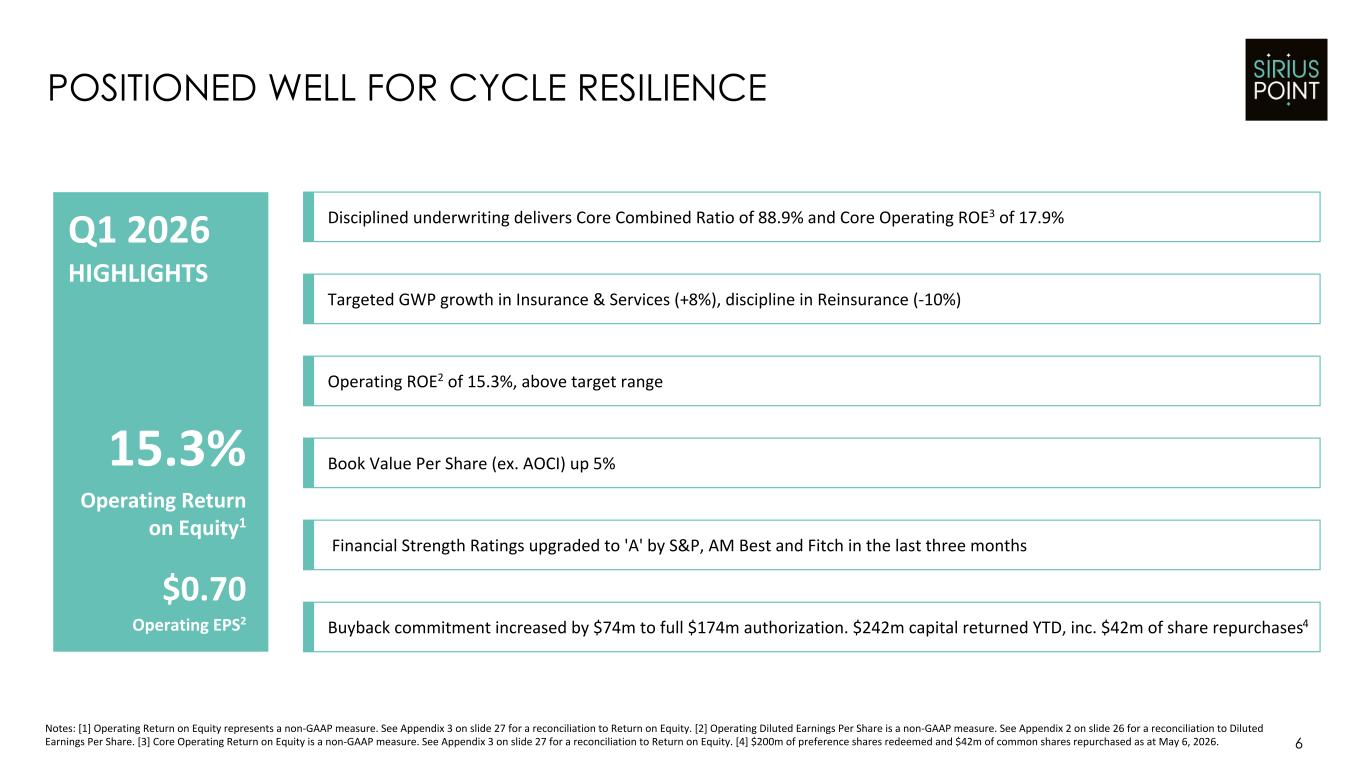
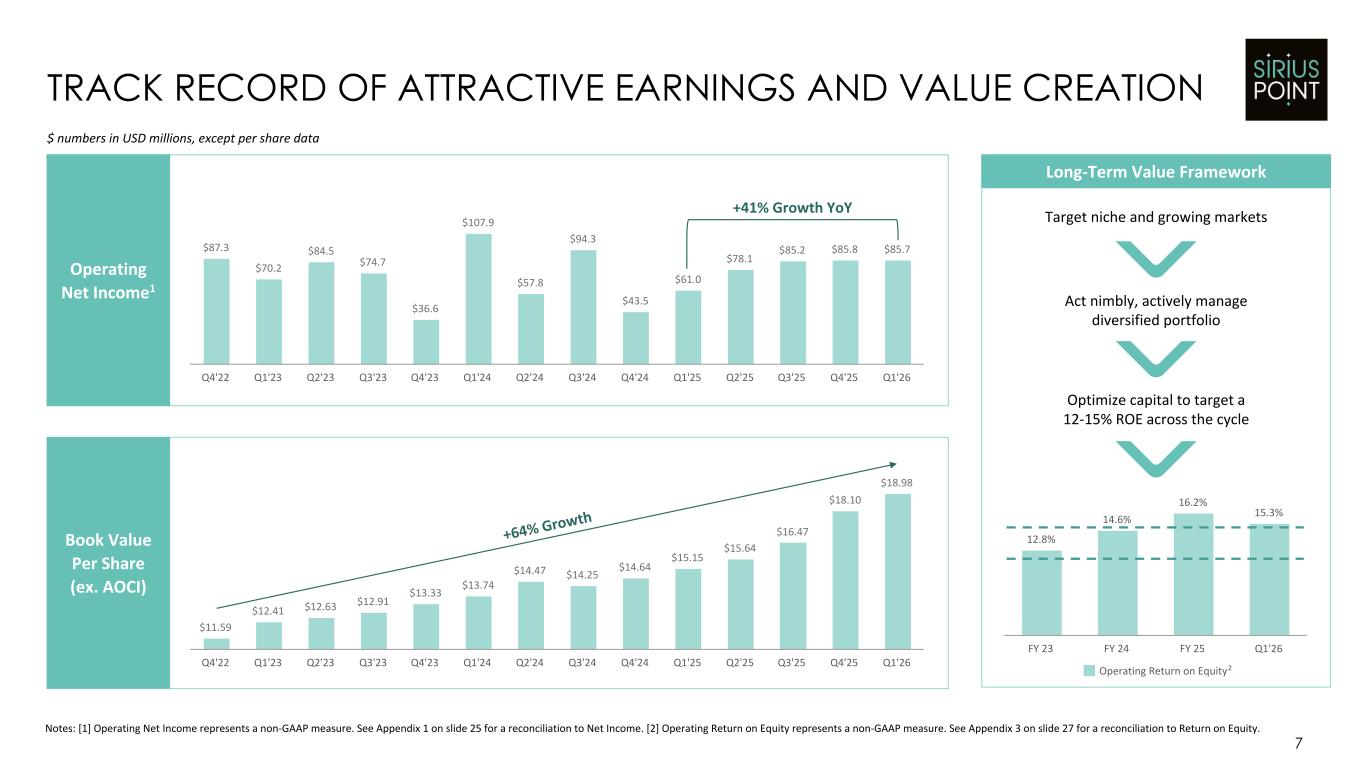
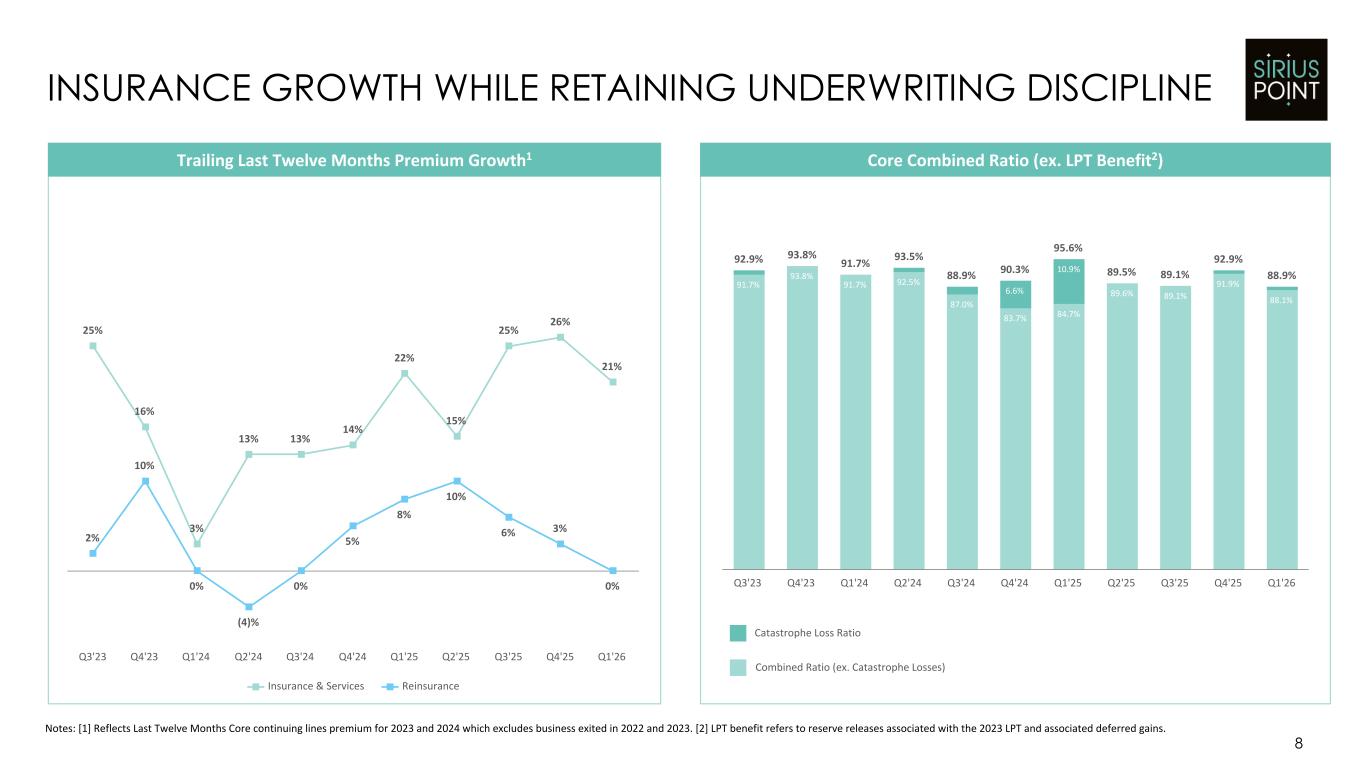
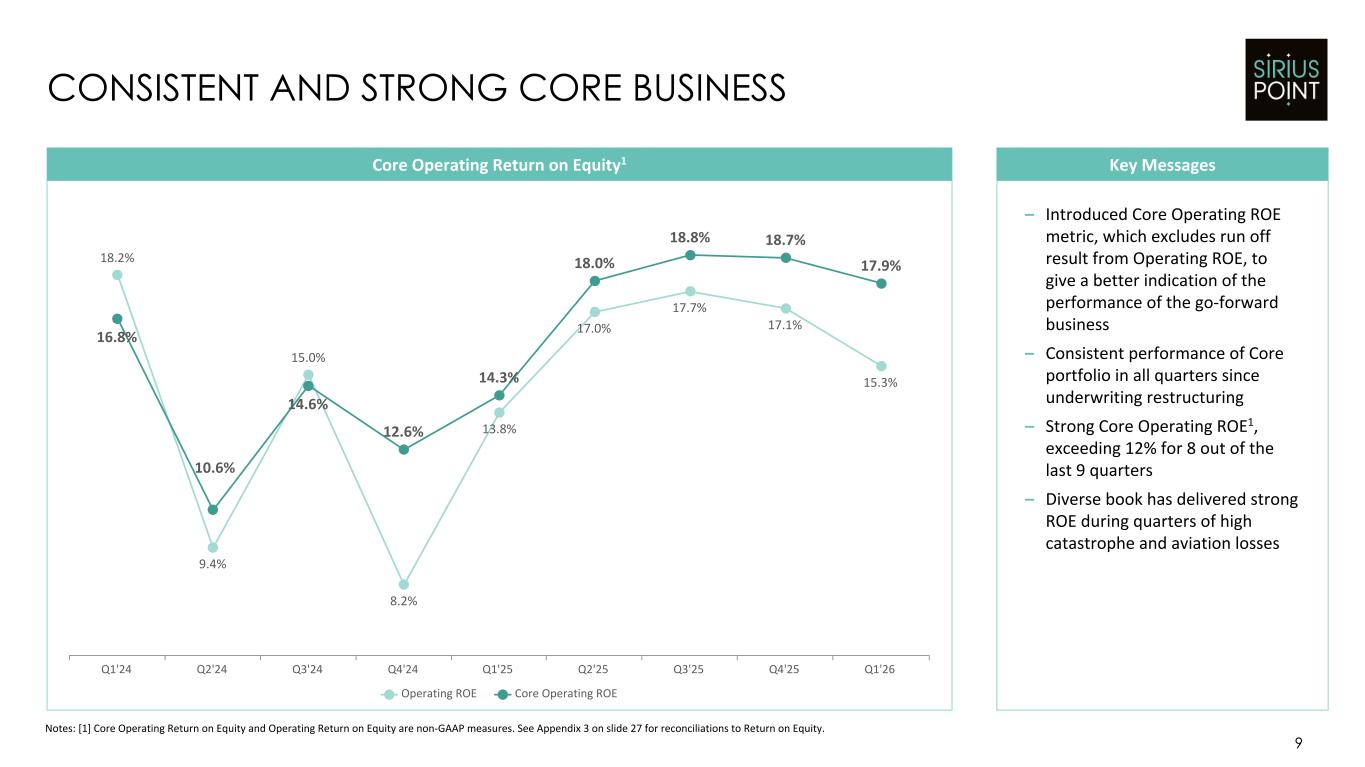
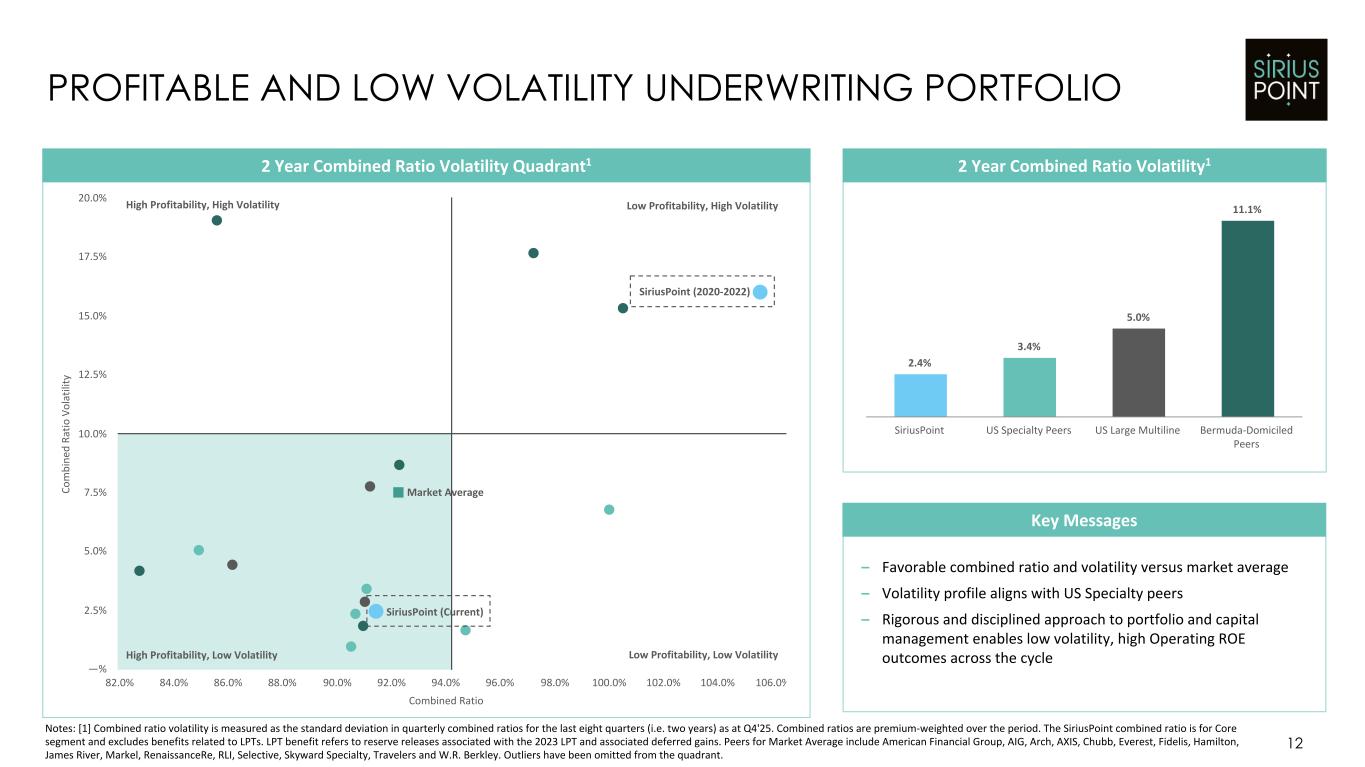
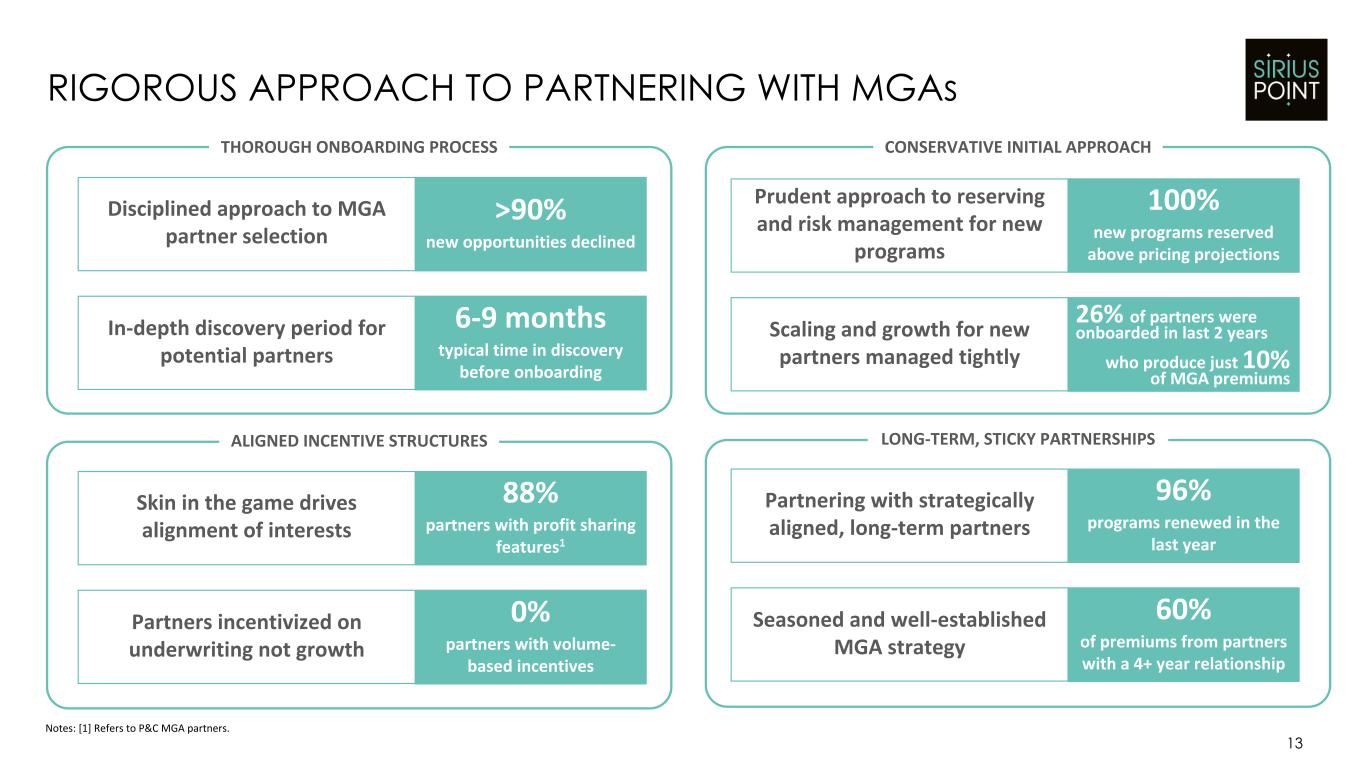
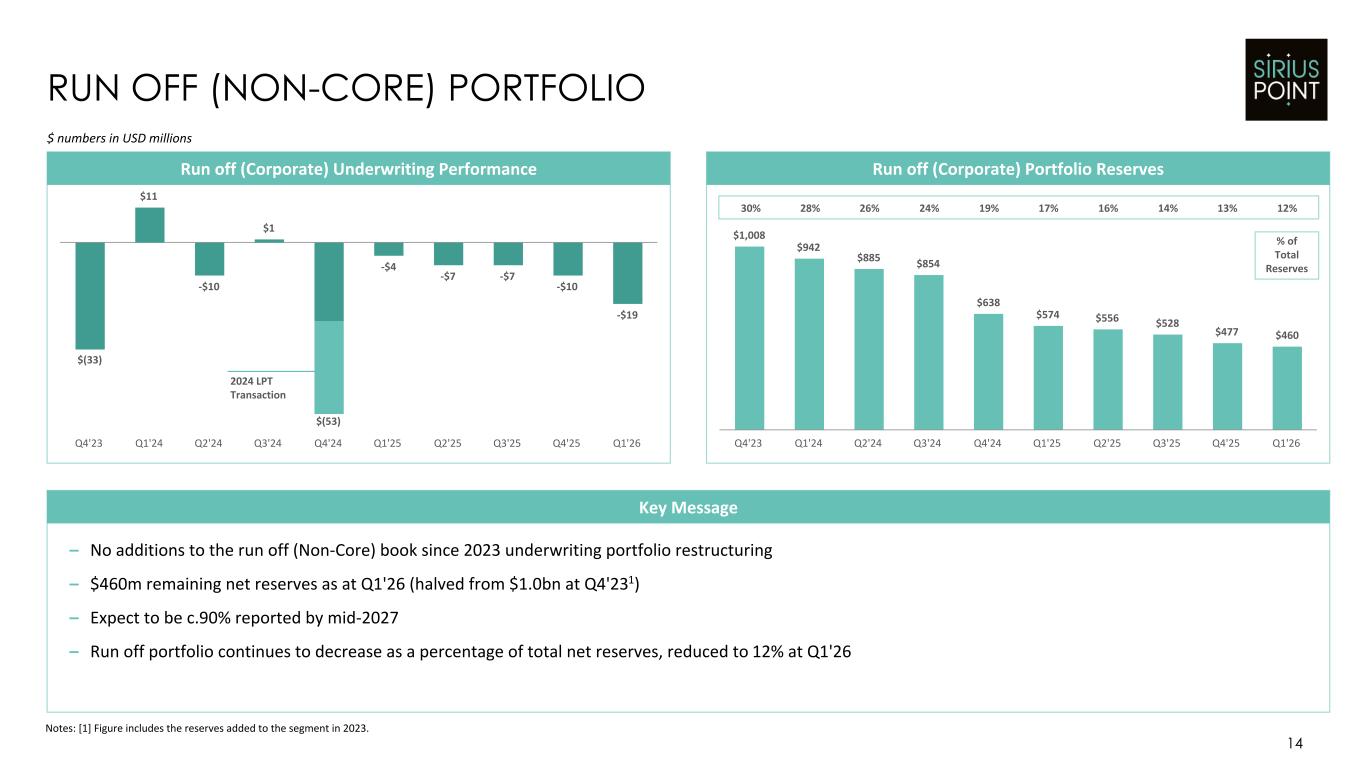
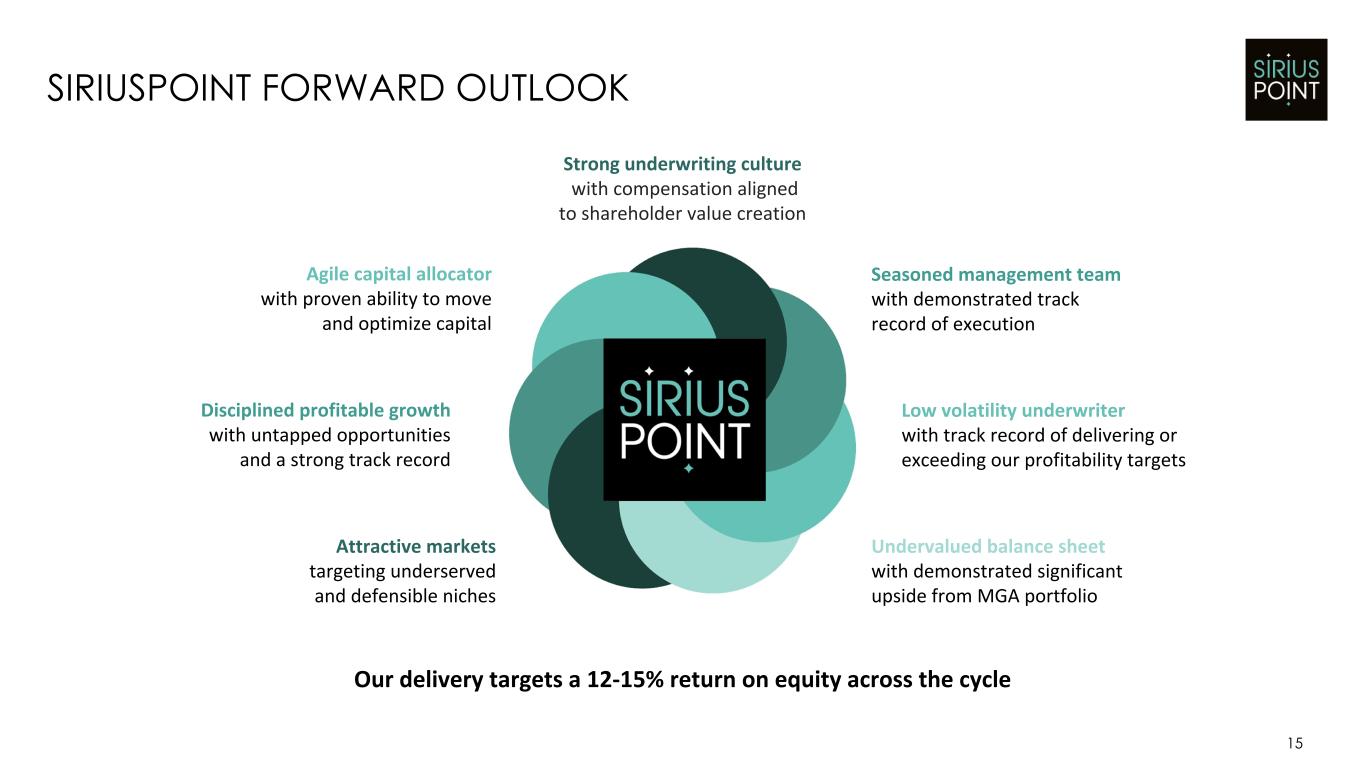
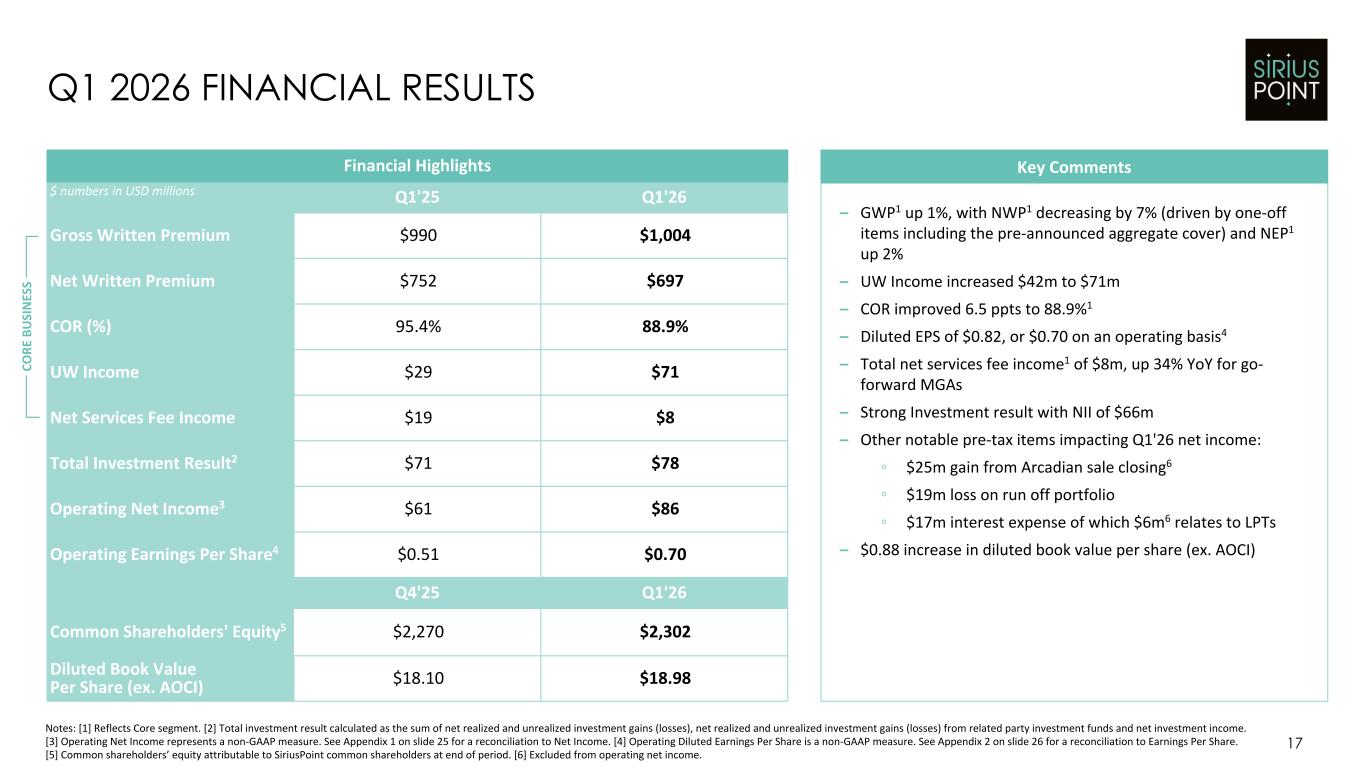
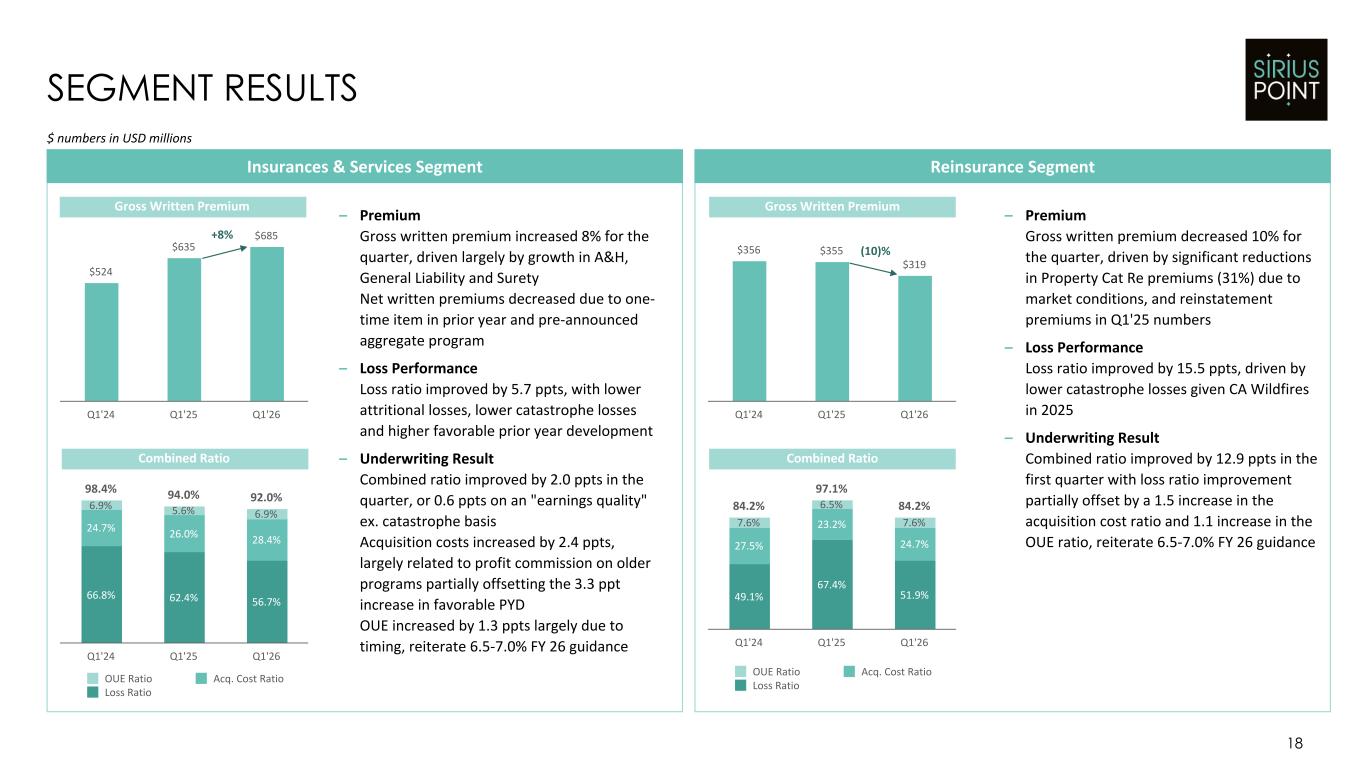
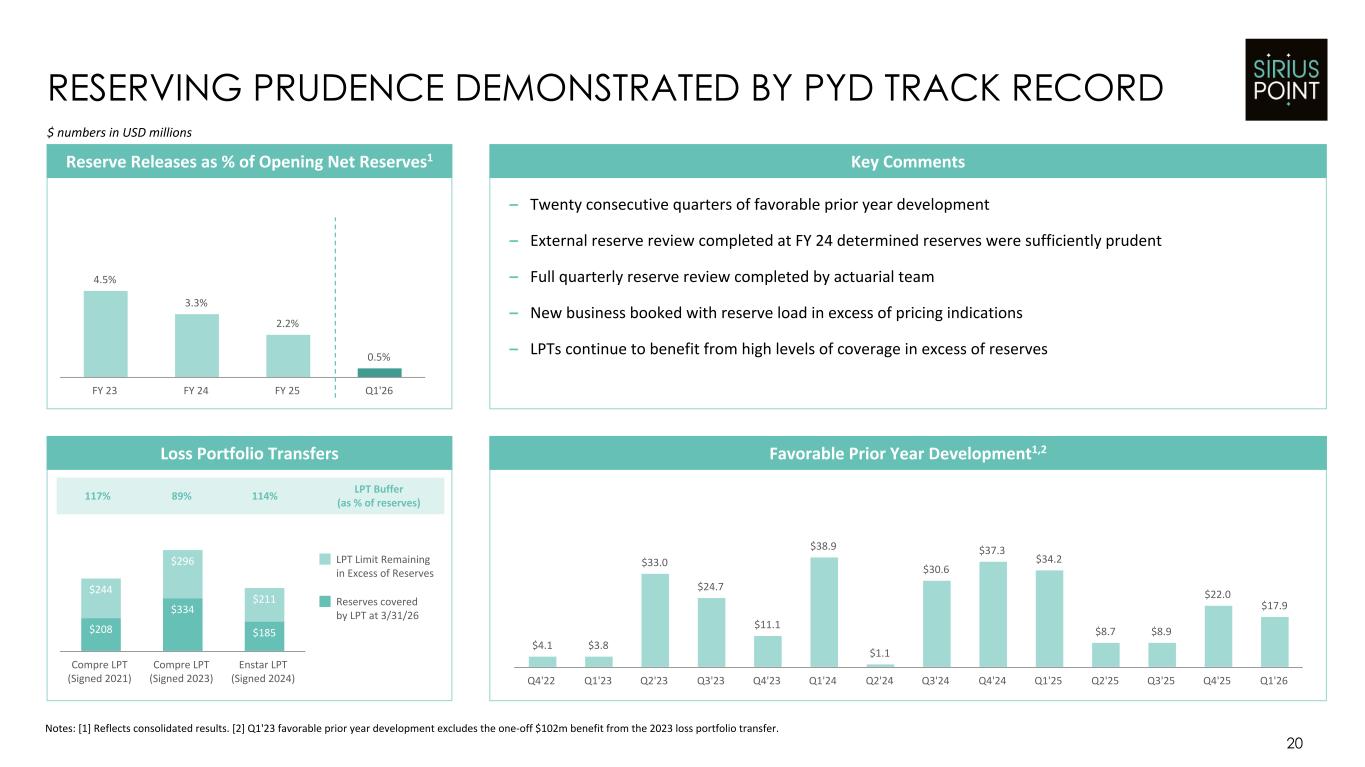
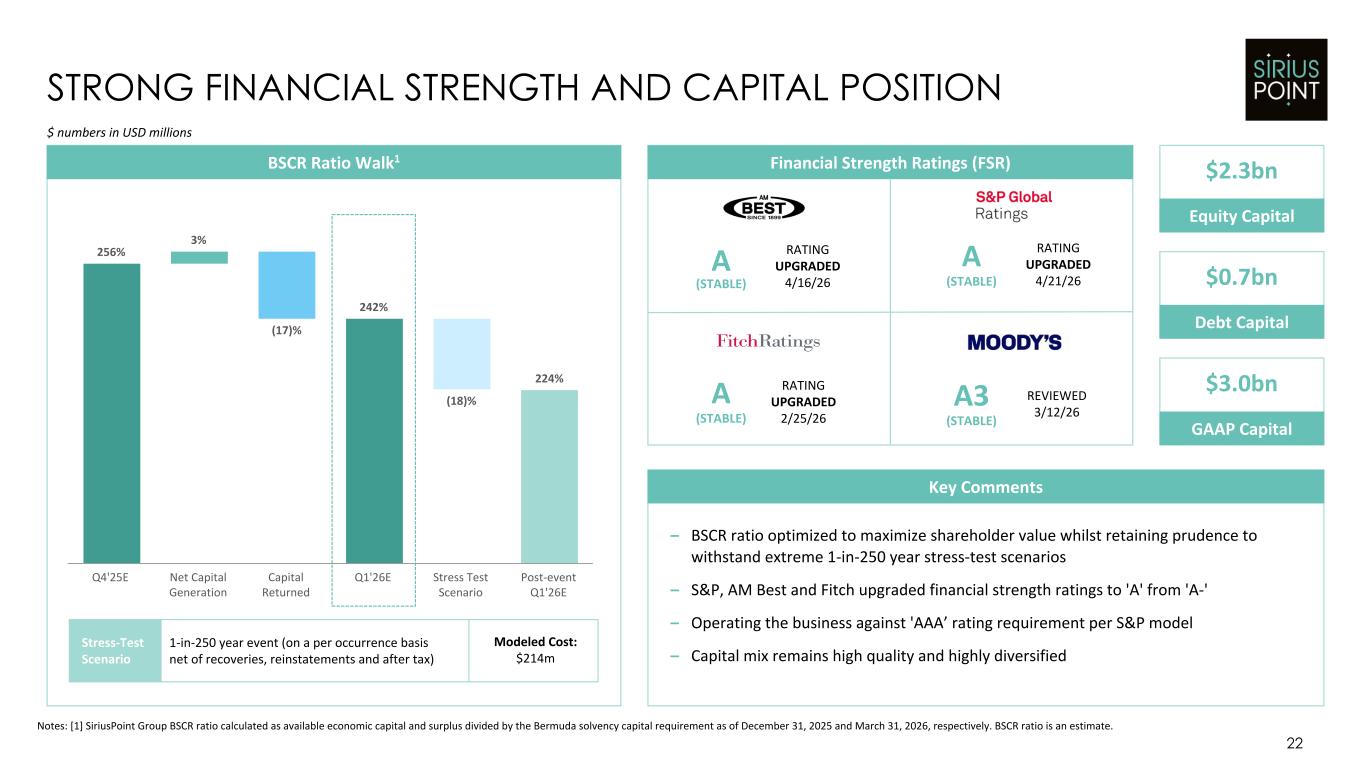
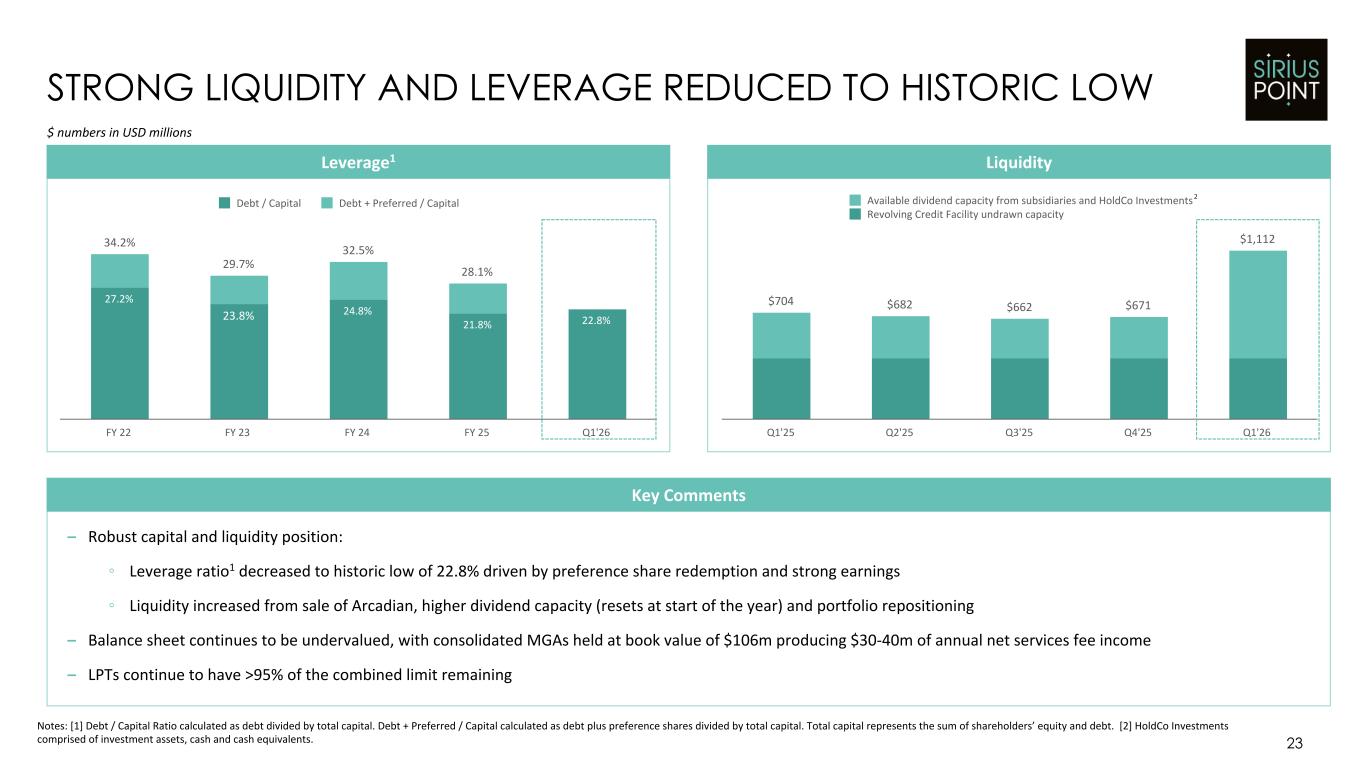
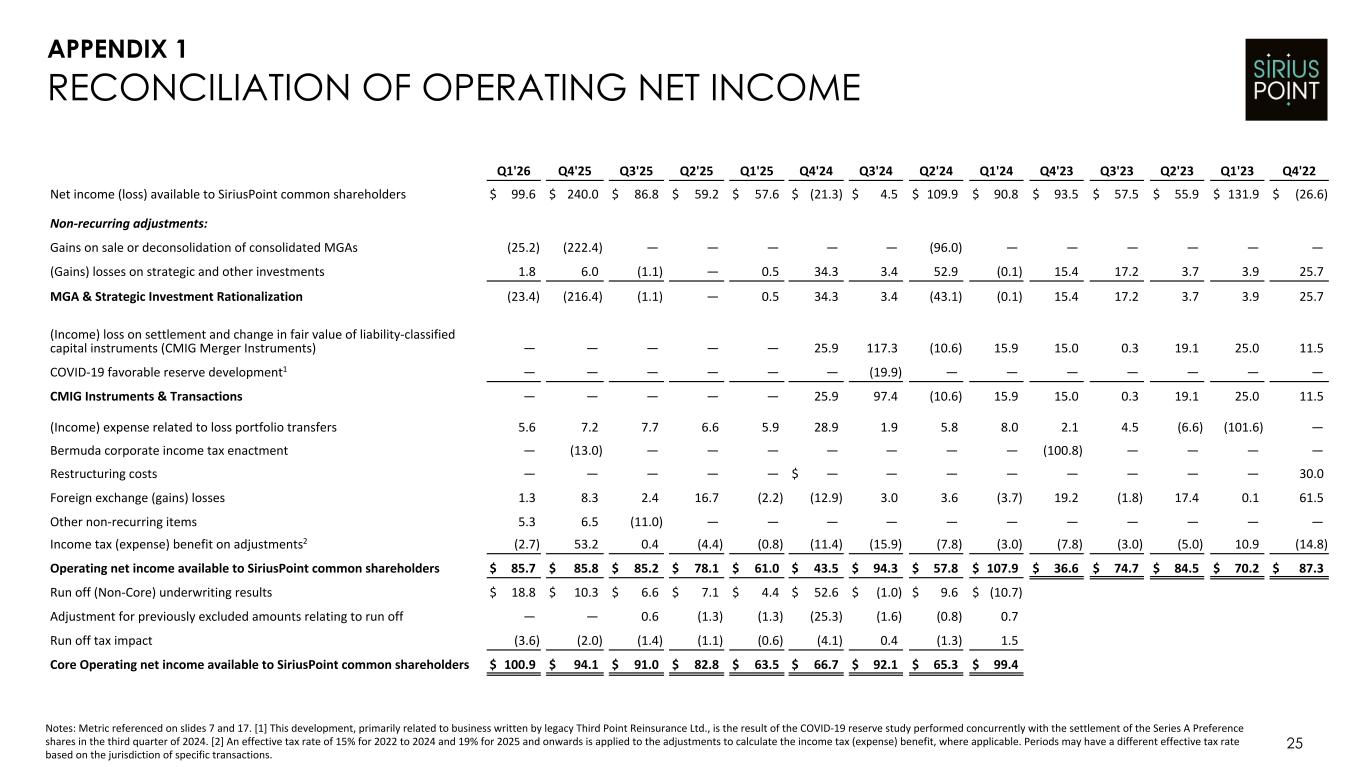
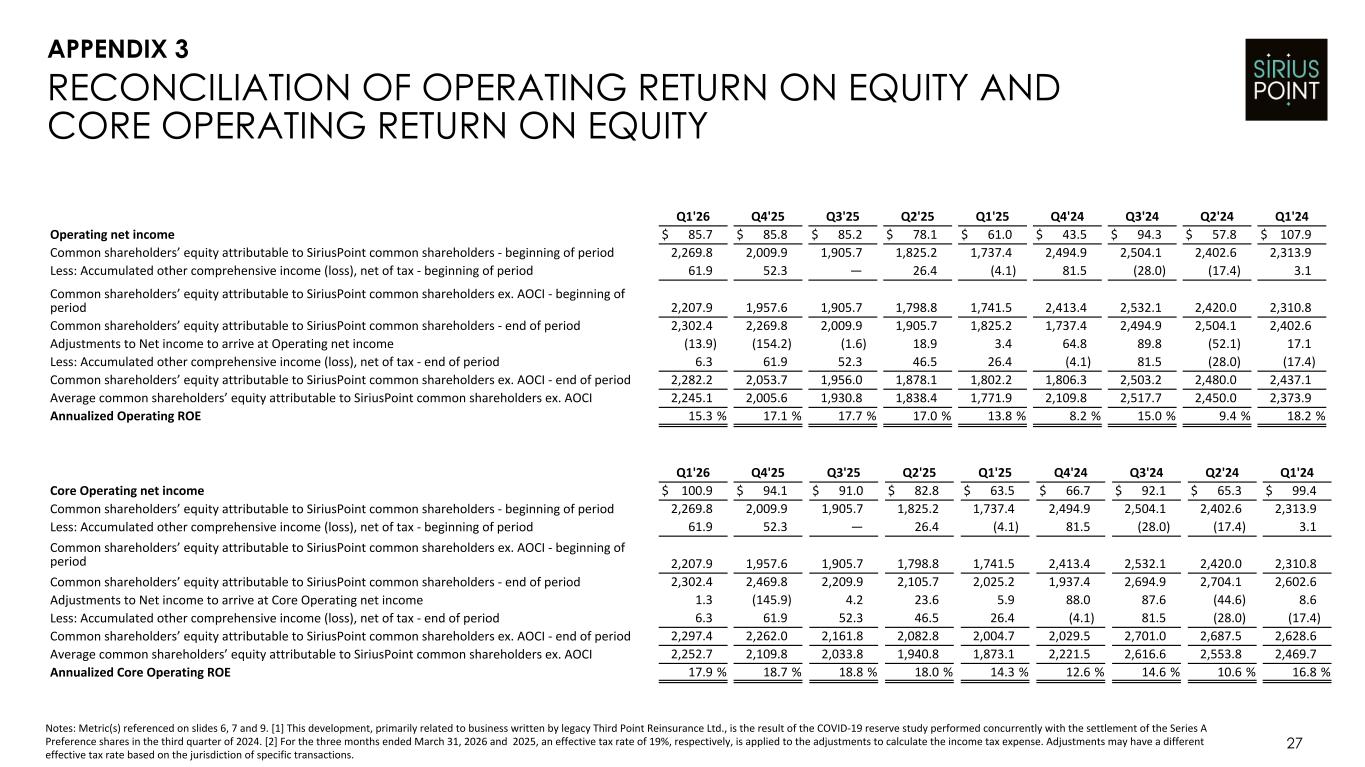
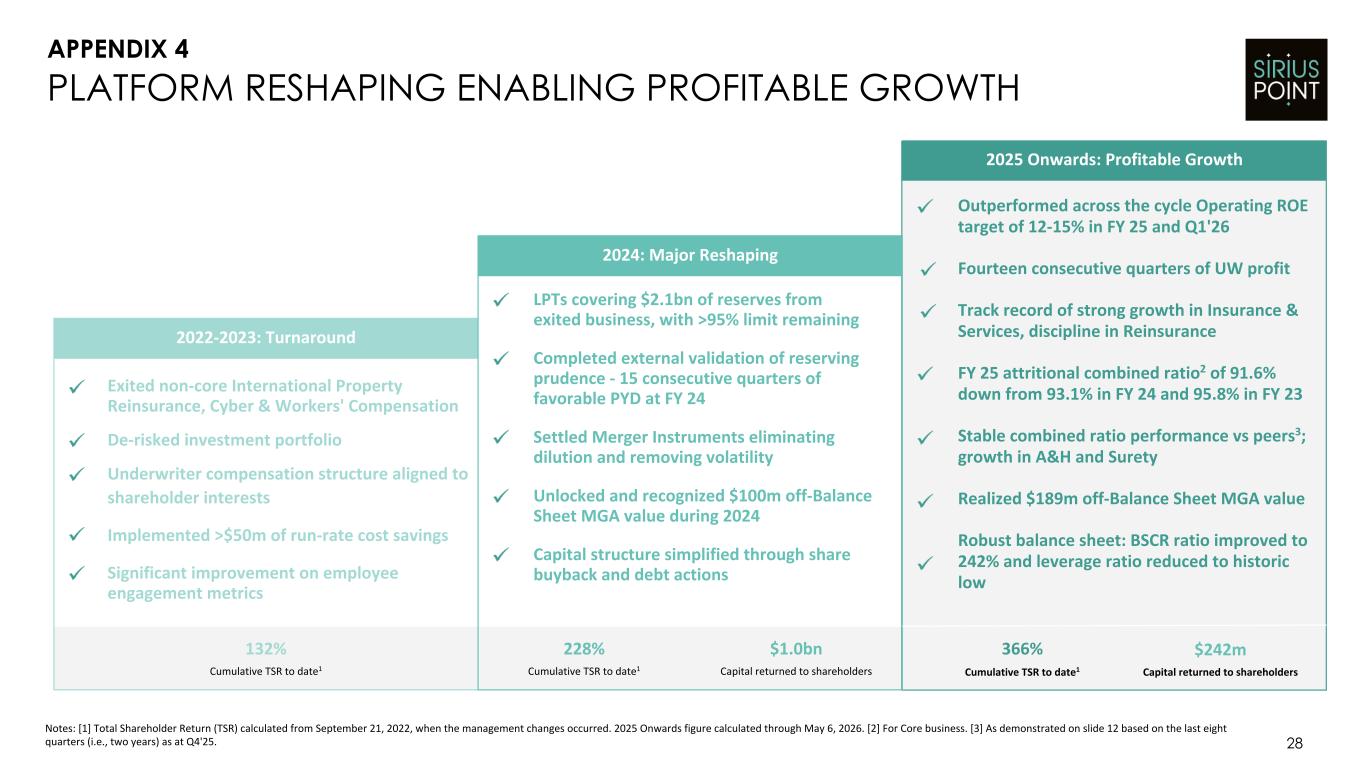
Thank you Liam and welcome everyone to our first quarter of 2026 results call. We've started the year with a strong first quarter continuing to build on our performance momentum. We have delivered strong underwriting profits, disciplined growth and attractive capital returns and I'm pleased with our delivery. Let me start with our headline results. We delivered a core combined ratio of 88.9%, the lowest we've reported in six quarters. We grew our insurance and services gross written premiums by 8%. Our operating return on equity of 15.3% puts us at the top end once again over 12 to 15 percent across the cycle target range. Our gap return on equity was higher at 17.4 percent, reflecting the closure of the Arcadian sale we announced last year. Our balance sheet is very strong, with a BSCR ratio of 242 percent for the first quarter. We have redeemed $200 million of preference shares, and as of earlier this week, have bought back over 40 million dollars of common shares we are announcing today that we're increasing our 100 million dollar buyback intention we announced at full year results by the remainder of our existing authorization which is another 74 million dollars our book probably per share is up five percent and finally our financial strength ratings have been upgraded to a over the past three months by S&P, Fitch and AMBEST. These results continue to reinforce the progress we're making in building a best-in-class specialty underwriter with a diversified, low-volatility portfolio. Turning to some of our headlines in more detail and starting with our top line, there's no question that certain parts of the P&C market are softening and in those areas, we will be disciplined. However, we believe that our product and distribution strategy and our nimble capital allocation model will allow us to grow top-line and make attractive underwriting returns. Our first quarter gross written premium showed both of these dynamics. Our insurance and services gross written premium grew again by 8%, driven by the continued momentum in specialty lines with accident and health growing by 9%. Our reinsurance gross written premium declined 10% as we remained disciplined particularly in areas such as property cap where some risks did not offer adequate returns. Overall our headline core gross written premiums grew 1% although in Q1 this was impacted by some one-off noise including reinstatement premiums in the prior year. The same was true for our net written premiums, which also includes the impact of the aggregate programmes we announced at the year end and a one-time surety item from the prior year. Adjusting for these items, both our gross and net written premiums grew around 4% year over year. As a reminder, the aggregate programmes we purchased are part of our lower volatility return strategy and support our 12 to 15% across the cycle ROE target. As I look ahead to the rest of the year, we remain positive about our growth prospects. We have a strong pipeline of MGA opportunities that we are rigorously evaluating and we have the agility to deploy capital in reinsurance should we see opportunities. We expect our overall gross written premium growth to be between 5% to 10% for the full year, with strong growth in insurance and services. Our growth will be more weighted to the second half of the year, primarily driven by the shift in mix to insurance from reinsurance. Turning to underwriting performance, the results this quarter continue to reflect the benefits of the diversified portfolio we've been reshaping over the past few years. We have improved the quality of the portfolio and materially reduced volatility. The consistency of our core combined ratio over the past few years is a clear demonstration of this. In the first quarter, we delivered a core combined ratio of 88.9% and underwriting profits of $71 million. This marks our 14th consecutive quarter of underwriting profitability, an important proof point on the execution of our underwriting strategy. In reinsurance, our combined ratio of 84.2% improved by around 13 points, driven by lower catastrophe losses. This was partially offset by lower PYD and modestly higher acquisition costs and expenses. We remain opportunistic for the right risks, priced appropriately, with a focus on lower volatility outcomes. In insurance and services, the combined ratio improved to 92%, with the ex-CAT combined ratio improving by just over half a point. Favourable prior year development reflects our conservative reserving approach in general, but particularly for newer MGA relationships, where we reserve at higher than price loss ratios in the early years. Improving attritional loss ratio and higher prior year releases resulted in higher profit commission accruals for our MGA partners lifting acquisition costs. We structurally design our MGA partnership in this way where we ensure an alignment of interest to underwriting performance. The higher acquisition cost simply reflects strong partner performance. We are happy to pay enhanced commissions for superior performance. Important to note these are mostly accruals and not cash payments many of our profit commission structures include a carry forward feature allowing profit and losses to be offset across accident years our other underwriting expenses were elevated in the quarter due mostly to timing items and we reaffirm a full year guidance range of 6.5 to 7 percent this quarter we've introduced some additional slides enhancing our disclosures as we try and give further insights into our business. First, we've introduced a new return on equity metric focused on our go-forward business. As a reminder, we label this our core business. Important to note that nothing has changed from a definition perspective. Our core business definition has been stable since the beginning of 2024 after the major underwriting reshaping that took place in late 2022 and during 2023. The reason for introducing the measure is to try and give people a better indication of the performance of our ongoing business without the impact of historically exited business. Eventually runoff will runoff and I will come back to that later. Over the last nine quarters the core portfolio has generated strong ROE as you can see from the graph on slide 9. For the first quarter, it was 17.9%, reflecting a strong trend and reinforcing the earnings power embedded in the go-forward portfolio today. Our second area of enhanced disclosure is around our approach to MGA partnering, an area we are often asked questions on. We strongly believe in the strength of the distribution channel, its growth, and most importantly, our approach to it. Slide 15 shows some metrics linked to how we think about NGAs. From our selection process, where we choose less than 10% of the partners we evaluate, to our onboarding, where we typically take six to nine months and get to know potential partners, to our deal structuring, where there are no volume incentives in any of our relationships, and where almost 90% of our partners have incentivisation linked to underwriting profits And finally, our prudent financial management, where we typically reserve above pricing level for new partners and prudently in general. It is this mix of measures and approach that we believe makes our strategy compelling and sustainable. But it's not just one way. We are also a partner of choice for many MGAs. And as a reminder, last year, we won the US Programme Carrier of the Year. We hope this slide's helpful. Finally, we've added a page on runoff, which I touched on earlier. Runoff performance sits outside of our core metrics, and again, just to reinforce, nothing has been added to the runoff portfolio since the end of 2023, an important discipline. We did see some losses here in the first quarter, like we have seen over the past few years. There's nothing noteworthy to draw any specific comment on. importantly our net runoff reserves are now under 500 million dollars down from just over a billion dollars at the end of 2023 and the portfolio should be 90 percent reported by mid-2027 ending with a balance sheet our disciplined approach to capital management is a key part of our strategy our prudent approach to reserving saw our 20th consecutive quarter of prior year releases. It's also worth noting that we have minimal claims from the conflict in the Middle East, and there has been no significant impact on our loss reserves from the change in market estimate relating to the Baltimore Bridge collapse. As I said earlier, so far in 2026, we've returned over $240 million of capital to shareholders, including the redemption of $200 million of preference shares and the buyback of over $40 million of common shares as part of our 100 million dollar commitment we announced at year-end 2025. Supported by a stronger-than-expected year-end capital position, continued performance momentum and a BSCR capital ratio of 242%, we are pleased to deploy additional capital by increasing our 100 million buyback commitment to the full pre-authorisation amount of 174 million dollars. Our leverage of 23% is at a historic low and since our full year results in February, S&P, AMBEST and Fitch have upgraded our financial strength ratings to 8, citing consistent earnings and balance sheet strength, a long way from where we started. So to close, before I pass across to Jim who'll take you through the financials in more detail, I will leave you with a few key takeaways. Our strong underwriting focus and capability continues to show itself meaningfully through our results. Our approach in building a low volatility diversified specialty platform focused on niche distribution means we can perform strongly during softer market conditions. We are positive about our growth opportunities for the remainder of the year and expect strong growth in our insurance and services business. Our prudent reserving and capital management coupled with our rating agency upgrades position us strongly in the market and finally our drive ambition and attention to detail across the company is a key differentiator in our journey to be a leading specialty player my final comment as always goes to our biggest asset people I am deeply grateful again to all of my colleagues for another strong quarter and for their continuing levels of energy and commitment. I'm immensely proud to lead them on this journey. And with that, I'll turn over to Jim to walk through the financials in more detail.
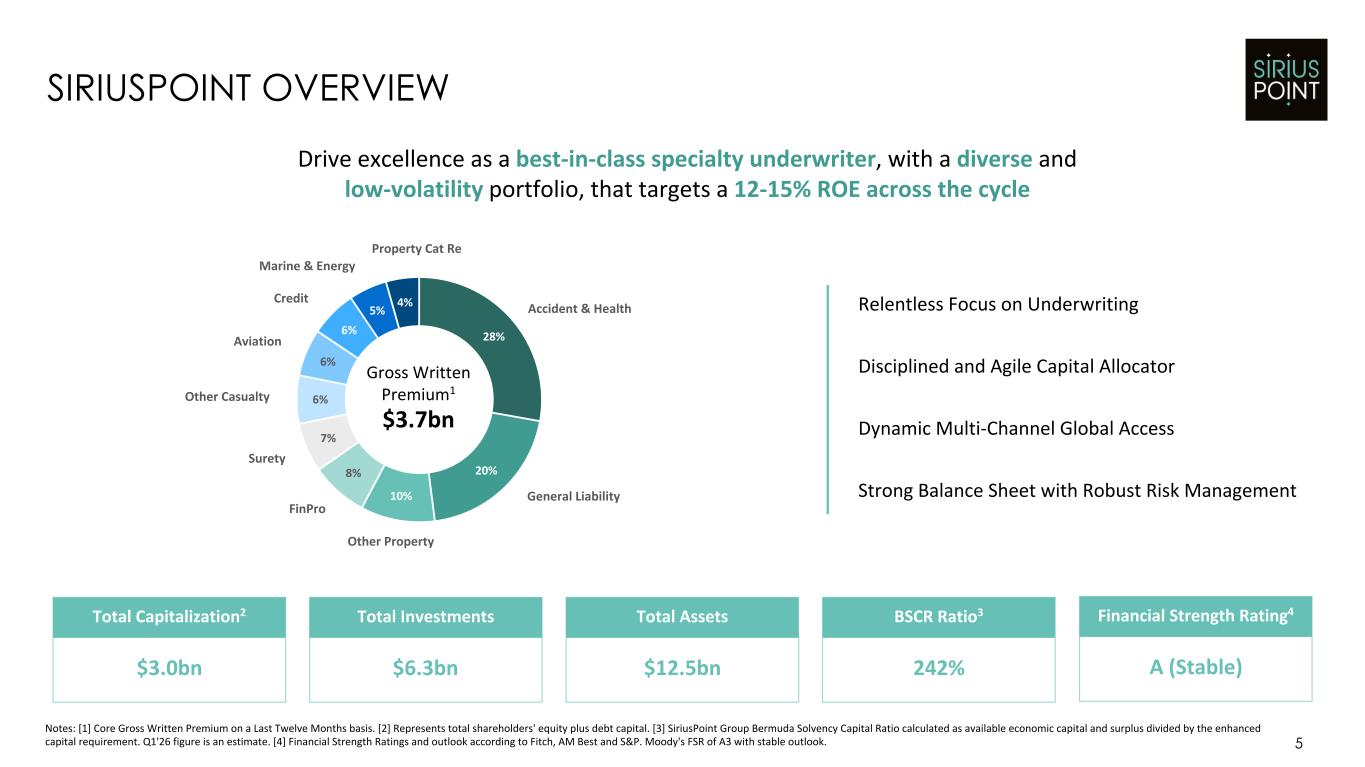
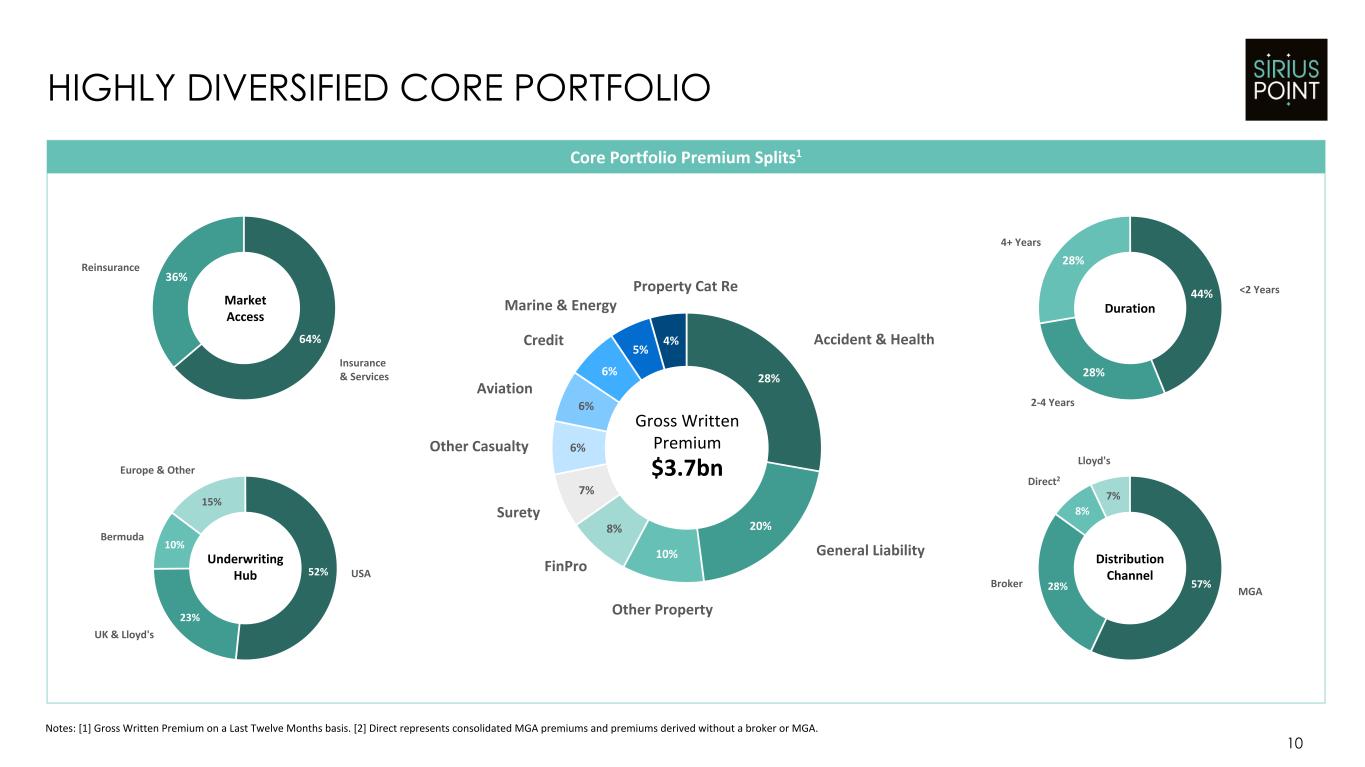
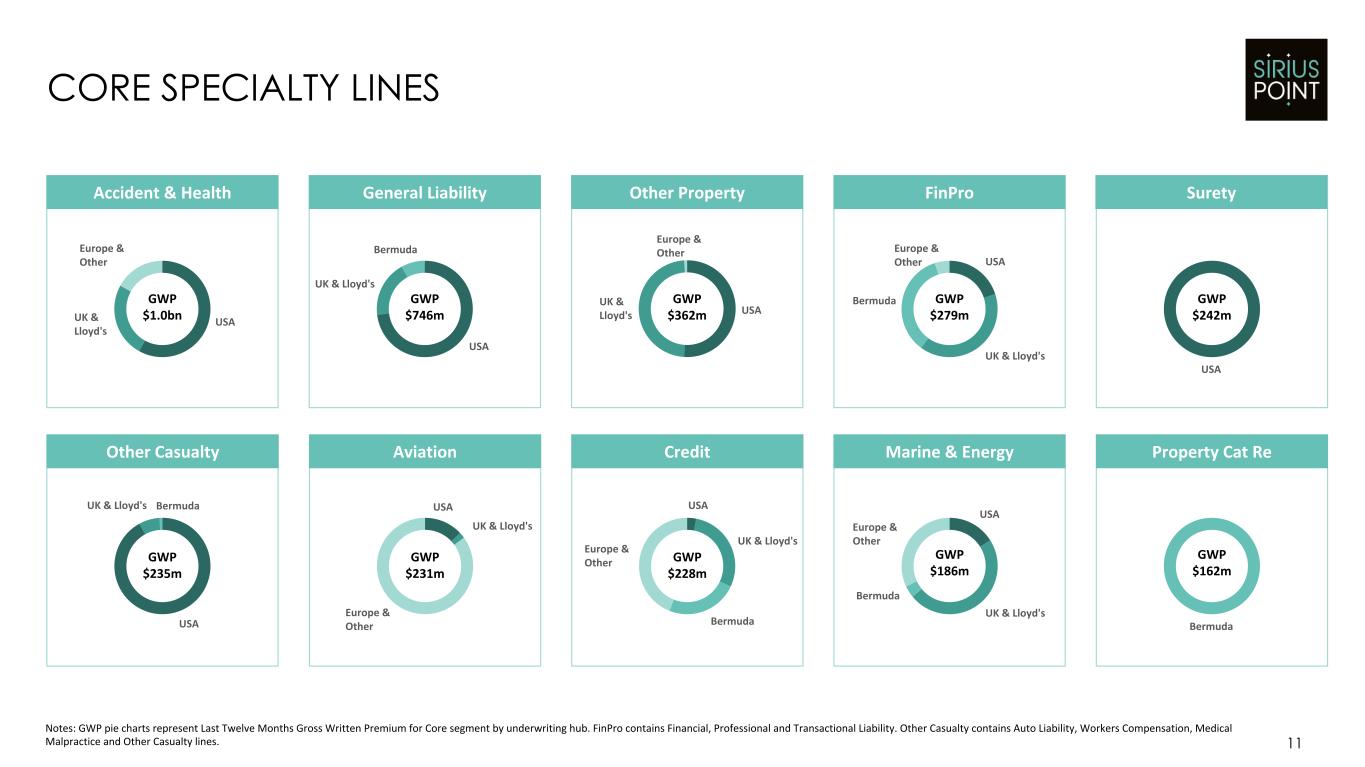
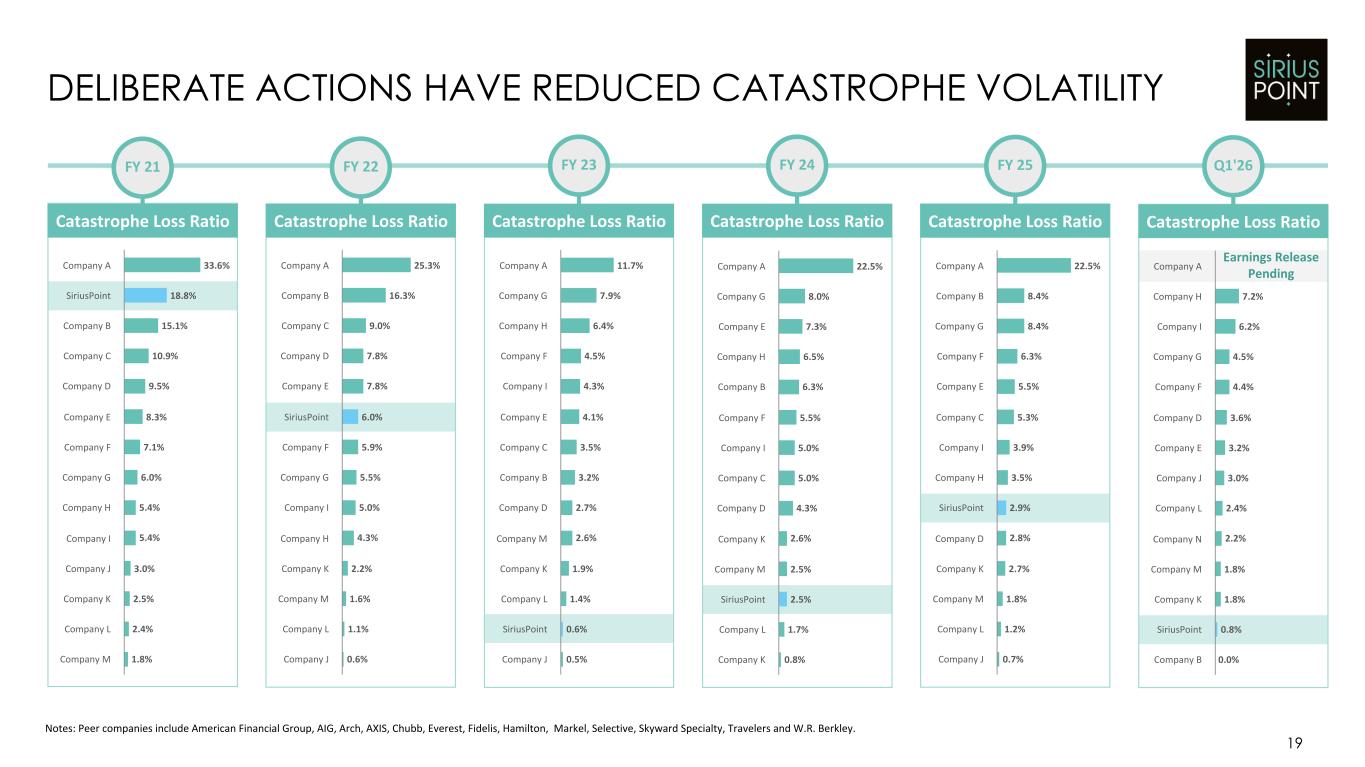
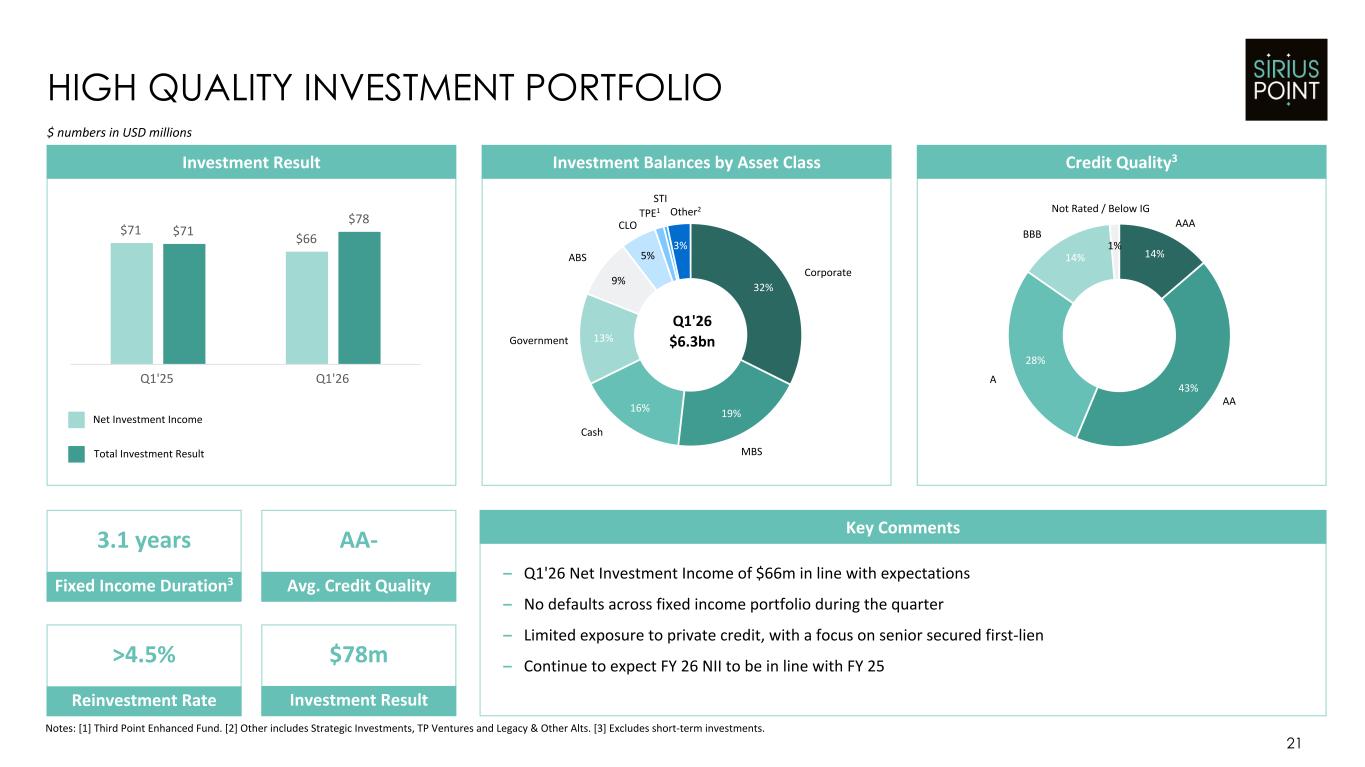
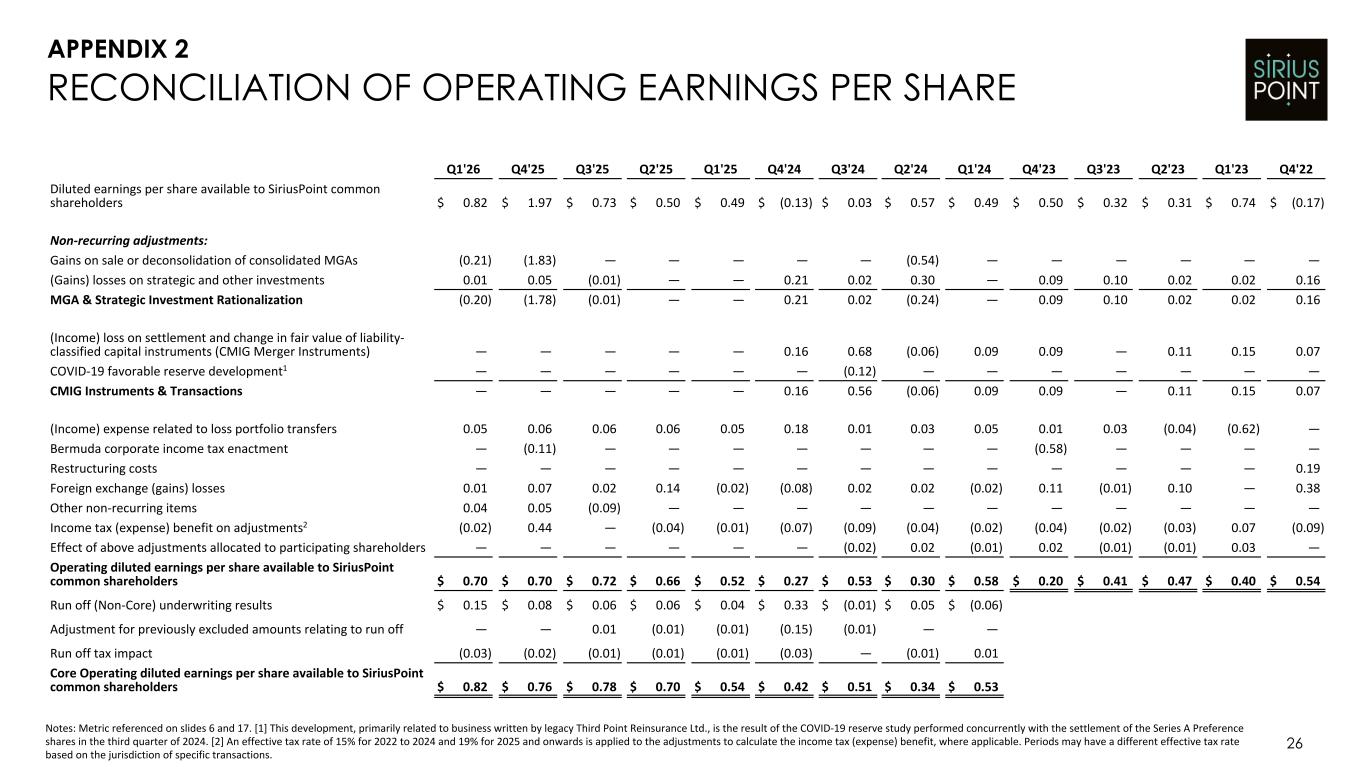
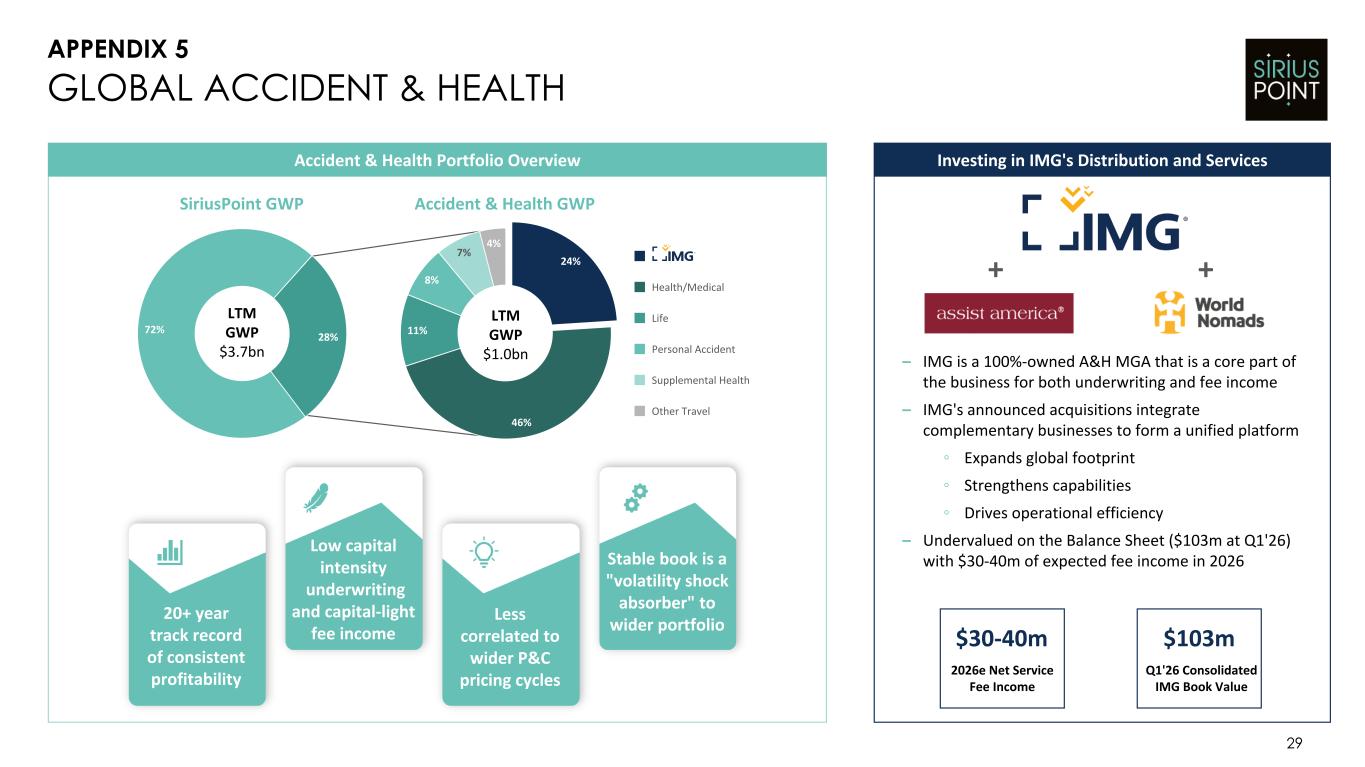
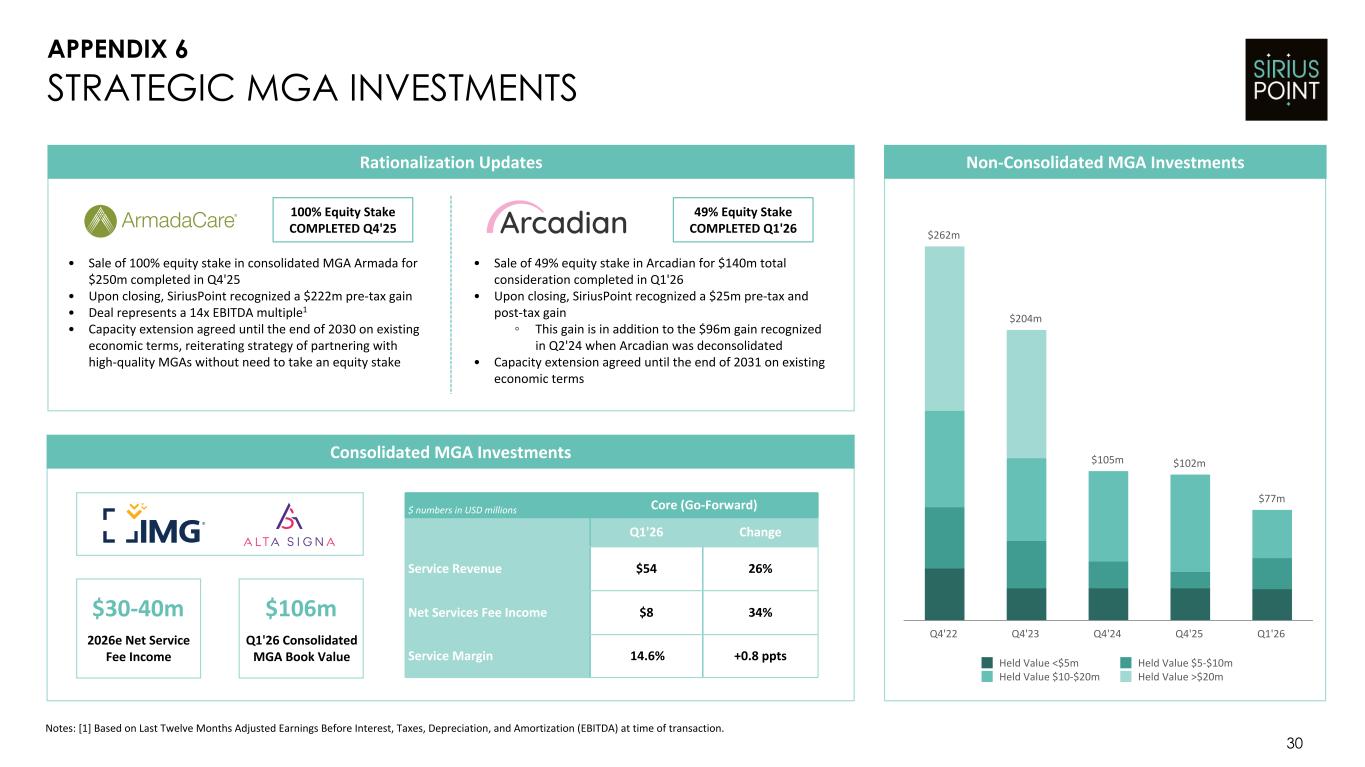
Thank you, Scott, and good morning or good afternoon, everyone. I'll start with our first quarter financial results and cover underwriting, investments, capital, and the balance sheet. We delivered a strong first quarter reflecting disciplined underwriting, lower catastrophe volatility, and continued progress in reshaping the portfolio towards higher return, lower volatility specialty insurance. Gross written premium was $1 billion, up 1% year-over-year. Net written premium declined 7%, driven by the pre-announced aggregate cover and a one-time surety item in the prior year. Net earned premium increased 2%, with growth in insurance and services more than offsetting deliberate pullback in reinsurance. Most importantly, underwriting performance significantly enhanced. Core combined ratio improved 6.5 points to 88.9%, driven primarily by lower catastrophe activity and continued improvement in attritional loss performance, despite 1.2 points of mixed headwind. We generated $71 million of underwriting income, a 149% increase year-over-year, which marks our 14th consecutive quarter of underwriting profitability. Operating performance followed directly from our underwriting discipline. Operating net income was $86 million, or $0.70 per diluted share, up 37% year-over-year. Operating ROE for the quarter was 15.3%, and core operating ROE was 17.9%, comfortably within and above our 12% to 15% across the cycle target. it. Net service fee income reached $8 million, with service revenues at $54 million, at a 14.6% margin. Excluding the Arcadian sale, net service revenues rose 26%. Net fee income increased 34%, and margins improved by 80 basis points. Net investment income totaled $66 million, leading to an overall investment result of $78 million. The fixed income portfolio's average Credit quality remains AA-. Finally, book value per diluted share, excluding AOCI, increased 5% sequentially to $18.98, reflecting both earnings and disciplined capital management. Turning to our core specialty lines with details available on page 11. Accident and health. Our largest line at approximately 28% of the premium mix continues to perform well. Premiums grew 9% year over year, driven by strong opportunities in travel and U.S. medical. Importantly, this remains a low capital intensity, low correlation line that enhances portfolio resilience. Employer stop loss has been challenged for several years, with premiums generally flat since 2021. We maintain a strong book, and based on available U.S. statutory data, our loss ratio has run more than 10 points favorable to the market average for multiple years. The market is showing early signs of hardening, And given our underwriting expertise, we may selectively lean back in as conditions improve. General liability conditions are mixed. Competition is intensifying as the ENF market continues to expand, with early and selective softening emerging in terms and conditions. Primary and umbrella pricing remain technically adequate, while excess continues to achieve double-digit, though moderating, rate increases that exceed lost cost trends. We are underwriting cautiously and maintaining strict return thresholds. In other property, pro rata reinsurance pricing has softened particularly in commercial lines, and we adjusted accordingly. Property insurance niches continue to offer attractive opportunities, and while premiums were flat this quarter, we expect selective growth through the remainder of the year driven primarily by insurance. Financial and professional lines remain competitive, particularly in D&O and professional. We believe the cycle is nearing a bottom, and we are underwriting selectively. In transactional liability, which is bucketed here, pricing remains competitive, and we continue to prioritize risk selection over volume. Within other casualty, auto remains challenged, with lost cost inflation running ahead of We have and continue to pull back exposure accordingly. Surety continues to be an attractive, diversifying line with disciplined growth. In aviation, we remain cautious. Major airline pricing has improved, and we continue to reduce exposure where returns do not meet our criteria. Credit remains well-priced with great adequacy and tax. Marine and energy market conditions are mixed. We see attractive opportunities in energy liability and select niche segments, while upstream remains competitive. Marine, particularly Cargill and Hall, continues to experience elevated competitive pressure. Finally, property catastrophe reinsurance, now approximately 4% of the portfolio, saw rate declines of about 15%. Gross written premium declined 31%, reflecting lower reinstatement premiums, as well as a deliberate pullback consistent with our continued focus on capital discipline over top-line Slide 19 highlights the impact of the deliberate actions we've taken since 2022 to reduce catastrophe exposure. In the first quarter, catastrophe losses were 63 million lower year over year and represented just 0.8 points on the combined ratio compared to 10.9 points in the first quarter of last year. The enhancements we've made materially improved the stability and predictability of earnings, a central objective of our portfolio reshaping. Turning to reserving on slide 20, we reported favorable prior year development of $32 million within core and $18 million consolidated, marking 20 consecutive quarters of favorable development. This track record exceeds the average duration of our liabilities and reflects a consistently prudent reserving approach, supported by quarterly bottom-up actuarial reviews, independent external validation, and the continued benefit of our lost portfolio transfers, all of which retain significant protection and excess of booked reserves. Investment performance found on slide 21 remains strong and stable. Net investment income was $66 million, contributing to a $78 million total investment result. We experienced no defaults in the quarter. 99% of the fixed income portfolio remains investment grade, with an average credit rating of AA minus. Portfolio duration remains steady at 3.1 years. and reinvestment yields continue to exceed 4.5 percent we continue to prioritize quality liquidity and downside protection in the investment portfolio slides 22 and 23 provide capital and balance sheet details our capital position remains a clear strength the estimated bsdr ratio was 242 even after the preference share redemption and includes net capital generation during the quarter. We continue to operate the business against the capital framework consistent with S&P's AAA model assumptions. Leverage declined further, debt to capital decreased to 22.8%, the lowest level in several years. Liquidity increased to over a billion, driven by upstream dividends and holding company investments. Importantly, we continue to believe the balance she undervalues our MGA platform, particularly IMG. In the quarter, book value increased by $25 million from the completion of the Arcadian sale. This is in addition to the $96 million uplift recorded upon Arcadian's deconsolidation in 2024. To summarize, this quarter reflects the results of a multi-year strategy focused on underwriting excellence, capital discipline, and volatility reduction. We delivered strong underwriting profitability, continued improvement in nutritional loss performance, returns within and above our through-the-cycle targets, continued capital strength, and balance sheet flexibility. While we're pleased with the progress, our focus remains on execution as we continue building a best-in-class specialty insurance franchise.
Operator
With that, I'll turn the call back to the operator and we'll open the lines for questions thank you we will now be conducting a question and answer session if you would like to ask a question please press star one on your telephone keypad a confirmation tone will indicate your line is in the question queue you may press star two to remove yourself from the queue for participants using speaker equipment it may be necessary to pick up the handset before pressing the star keys one moment please while we poll for questions our first question comes from the line of michael phillips with oppenheimer and company please proceed with your question thank you good
morning everybody um i want to start with um the comments in the press release about the areas of growth and then i heard some of jim's comments when he's doing with the lines of business um particularly you mentioned in the press release growth in general liability and you know that's an area where there is some concern um we even had a ceo just yesterday say anybody growing in general reliability is crazy. I'm paraphrasing. But maybe you can talk about that line, given the comments that Jim made about intensifying competition and where you're seeing growth in GL and why anyone shouldn't be concerned about that. Thanks.
Speaker 5
Hi, Mike. Thanks for your question. As always, thanks for joining the call. So let me make a couple of general comments on growth, Mike, if you don't mind, just before we dive into the details. So look, I think for us in Q1, We were pretty pleased with the sort of position, obviously, a tale of two different dynamics, as I said in my overview between insurance and reinsurance. If you look at our growth in Q1, you know, we're pretty pleased with where the insurance business has grown. And we're very happy with both the relationships and the pockets. And I'll come back specifically to GL in a second and look in reinsurance. I think for us, Q1 is probably the most extreme shrinkage that we'll see, probably due to the sort of property cap 1-1s. So we probably expect it to be stronger, you know, year over year in the remainder of the year. But ultimately, we're just going to remain very disciplined in that marketplace. But obviously, property cap being the dominant line. Look, in terms of how we're thinking about the growth, look, for us, the momentum that we have in insurance, I think, remains strong. We brought on two new relationships in Q1, and we remain with a strong pipeline. You know, we think double-digit growth in insurance is actually, you know, our aim for the year, and we think we're well-positioned for that. In terms of the areas, maybe just to dive in there now, Now, look, GL, I think I'm not a fan of big ticket statements, right, on stuff. I think for me, we're very alert in GL. And so we are absolutely seeing competition intensifying, particularly as ENS continues to expand. And we're seeing some sort of selective TNC softening. So we don't see it as a sort of banner headline panacea. But we're staying disciplined. We're very happy with the MGA's that we're working to access the market. Excess casualty, for example, our largest segment, continues to price ahead of loss cost trends, and it's the largest portion of the portfolio. So, look, I think, and I'll pass across to Jim because obviously you commented on it, Jim. But, look, I think for us in GL, we're very sort of disciplined. We're very alert and awake, I think. But there's no such thing as big banner general headlines. I think there are areas, pockets, and one of the advantages of the MGA distribution strategy is we believe we get access to sort of niche business, niche markets, and we do always think that's a complete strength of the group. But listen, be really clear, if we don't see price, you know, sort of match the risk that we're taking, then we're not frightened to move capital around the group, which we've said many times. But, Jim, you commented on it in your overview. Why don't you add anything to that that you want to?
Yeah, just a couple of things. In terms of the comment, I'd re-highlight what Scott had mentioned about us really being a specialty underwriter. And so there's going to be times where we're not going to follow some of the more broad general trends across the market because we are writing very specialized risk when we're going in through here. We are working with people who are experts in their particular area. And again, we're not trying to do kind of the broad commoditized particular products that are in the market. We're really focused in the specialty areas, have, you know, requisite knowledge to do that. And again, we remain very price disciplined on that point. The second thing that I would just call out in terms of the broad kind of growth component, Scott highlighted kind of the change in the property cat down 31% on, you know, kind of a year over year basis. What you're seeing is as we have shifted to more insurance and especially the components and reinsurance, because that would be the biggest component that would have a real seasonality trend to it within reinsurance. insurance, the book of business is now much less seasonally weighted. And so you're going to see much more stability in terms of what those gross written and those net written premiums are going to be throughout the year. And so what that means is some of that growth that you saw in the second half of last year, you're going to continue to see that that has stabilized the net total of the book.
Speaker 5
And so you're going to, you should be thinking about a much more even weight from a premium distribution perspective uh at least um relative to what we saw kind of based on q1 kind of playing out through the remainder of the year so mike look i hope that gives you i know we gave you a sort of pretty full some answer that covered more than gl but hopefully that gives you a flavor on how we're thinking about overall growth which is really strong and insurance disciplined and reinsurance and we expect it to sort of close year over year uh beyond the kind of key one one property cast date for us, but disciplined in every respect, and we'll move capital around. The great news is lots of opportunities and a strong pipeline. So, Mike, does that answer your question?
Yeah, sure does. Thanks both for the details. That's helpful. That's what I was getting at. The second question is maybe more on modeling specifically, but it has higher level implications, I guess.
Speaker 5
And insurance, because of the higher acquisition costs, because your profitability, your practical is is strong and likely going to continue i would think um so should we expect that higher acquisition cost to sort of continue over the foreseeable future yeah it's a great question and and we've tried to be explicit in it in the voiceover and stuff the answer you might you might not like isn't a perfect one right which is sometimes it depends on what relationships for example come out through the prior years so so it sort of depends uh and that and what i mean by that to give it some color is obviously if you've got sort of you know historical losses then a prior year release wouldn't necessarily mean an automatic uh profit share accrual but if you've got prior year profits and then you add to that with prior year releases then in effect your accrual can go up and and we see that actually as a strength of the the deal structures that we put in place which i think we've talked about before where you know it's not just sort of one year and done and be really clear these are accruals uh they're not cash payments so uh look we it's one thing we were agonizing over sort of how we help through our disclosures and i think we'll continue to be thoughtful of that but i don't think you can just purely take the pyd line and and and the acquisition line in quarter one and extrapolate it out because there is a sophistication, unfortunately, on a partner-by-partner basis that sits behind that. So not a great answer. Back to you, but I think you understand the strategic logic, which is the business is performing well and at a high level of ROE. And we're at a point now where in the round PYD will mean more profit-share accruals, but it's not exact science, if that makes sense.
And what I might add is I would generally, you know, we continue from a composite ratio to generally improve. Sometimes you got to add in that prior year development. So if you're thinking about the prior year development and the insurance and services and some of the breakouts that we give you from a supplement perspective, you're seeing 3.3 points of prior year development, right? And then you're seeing a little bit of an offset there on that A&O component. where we're preying out profit commissions in relation to that. But when you look in total and you add up those combined ratios to that, you continue to see about a year-over-year basis another point improvement from an underlying perspective. So we might have some geography elements that kind of come in up or down relative to those areas. But I would be thinking about it in terms of that net total and thinking about the equation being solved in total.
Because if we have little bit more favorability and prior your development or other in that segment we might pay out a little bit more in profit commissions as scott said but overall we're seeing a continued trend of strong underwriting profit uh coming in through there okay no thanks jim that's helpful and then maybe just lastly a little more higher level you've done some i guess the phrase restructuring a bit recently to in part to focus more on the lloyd's market um i guess maybe just want to hear from you kind of know what you expect to get out of that um the new focus of the london market specialty division that you created um when we might see some uh some impact to what we model in the next couple years or is that too soon i just kind of you know initial
Speaker 5
strategies there and expectations for longer term yeah very good question uh mike again so let me let me talk about this one i'd say this is much more a strategic journey and so just because we've kind of relabeled it and relaunched it London Market Specialty doesn't mean it didn't exist in the organisation Mike which I know you know but I just want to reinforce for clarity. When I joined here sort of three years ago I have to be frank and I think I was up front about it our Lloyds syndicate and managing agent we had to do some remediation work to improve our underwriting improve our processes and quite frankly improve our sort of standing and reputation with Lloyds. Actually, in the recent sort of syndicate announcements, we've moved over those three years from sort of fourth quartile performance to now second quartile performance. We want to try and be first for that. But that's, I would say, demonstrable improvement. And actually, good timing in asking the question, Mike, which is we had our group board across in London this week, where actually we had a market event which was sort of relaunching London Market Specialty with much more of a profile now that we've sorted out the sort of some of the behind the scenes stuff. We were very lucky that Patrick Tiernan, the CEO of Lloyd's, actually joined us at the event as well, which actually sort of reaffirmed, you know, their commitment to us, our commitment to them. And I would say it's something that we find attractive as a marketplace because it's a huge specialty market, you know, not quite as big as the US but not far off it and so we think you know a US specialty market and for me a London specialty market are very attractive strategically and we think that diversification gives us an edge so look that's how we view it Mike strategically hopefully a bit of honesty there in terms of the journey we've been on and part of the rebadging of it is us now pulling it out from slightly below the bed covers and giving it a profile that we think it now merits as opposed to when we were doing the remediation work so so does that does that help but hopefully if it starts to sort of snowball for us we will of course give uh we will be very open about it and give disclosure on these calls but hopefully that gives you a bit of flavor mike no it certainly does yes thanks guy um and and that's all i have for now so i appreciate you both and all the best okay thank you mike appreciate the questions thank you our next question comes from the line of Gregory Peters with Raymond James.
Operator
Please proceed with your question.
Well, good morning or good afternoon. I'm not sure where you guys are, but I think the first question would be, I know you're targeting this profitable, low profitability, low volatility type of result for the company, you know, listening to some of the other calls, it seems like war risk and political violence, it seems like those markets in the Middle East are on a tear, at least from a pricing perspective. And so when, and I'm not saying you're looking at that market, but when you hear anecdotally of certain markets where the rate is going up substantially. Maybe you can talk to us a little bit about how you view that because some of those opportunities may be an intersection and work against the low volatility target you have in mind.
Speaker 5
Greg, I think it's a great question. Thank you for your question. Just so you know where we are within Zurich. We've had a busy week. We dragged our group board from London to Zurich to visit our employees over here as well. So that's where we are. So it's good afternoon for us over here. Look, I think your point is a good one, and it's sometimes the banner headline low volatility is sometimes misunderstood. That does not mean we don't have higher volatility areas. Property Cat is probably the most obvious one pvt i think you're right is another one it's just another form of cat to some extent so so you know we are alive to where we see opportunity in the marketplace and we're not afraid to take volatility the lower volatility comment comes from how we manage the overall portfolio and effectively how we buy some of our sort of you know reinsurance retro protection or aggregate covers etc but we are not afraid to take volatility and so you know have i do i agree with what you've just said on pvt in terms of the rate and potentially there's good moments and and again these markets with higher volatility yes i do agree right and and i wouldn't rule that out for us but i think we'll manage it within an envelope overall of much uh lower volatility overall, which is how we manage the book. And obviously, things like ANH and the growth in ANH, which I've said many times before, when ANH grows, that effectively means we can take more volatility, yet somehow overall, make sure that the portfolio remains at the same level of volatility pre the growth, if that isn't too worthy. So look, I think, not afraid to do it. You know, if we do, we'll certainly tell you, not just in PVT, but in other areas. And I don't want lower volatility to be misconstrued to us not taking risk because that would be wrong, right? So hopefully that clarifies it, Greg.
Yeah, thanks. The other question I had is just coming at the MGA piece from a different angle and the angle is if you're an MGA in the marketplace in North America or elsewhere, it seems like you have a lot of different options at this moment in time on which carriers to partner up with. It seems like there's a number of companies out there that are willing to sponsor MGAs. Most of them say we only sponsor great MGAs, not the bad ones. So I don't know how to figure that one out. But from the perspective of as you're going through the process going forward of identifying other MGAs just wondering how you win that narrative because I'm sure if it's a good MGA they have other alternatives that they can consider.
Speaker 5
Yeah I completely agree to do and we're not arrogant enough to say oh you know they all come to us because we are the best that's not true there are certain lines of business certain areas that we're really good at. Greg and there's others where quite frankly they'll go and find other carriers. So some of it I think is product and expertise choice. I think though some of this is about behavioral choice as well. I think what people find when they come to us and they see our people, what they see is people who are sort of nimble, agile, quick responsive, are happy to kind of listen and work with our partners to try and work out what they're trying to do whether that be around product flexibility design etc and those things matter because some some people in the marketplace you sort of get what's in the box and if you don't like that then you have to you know you have to walk on and find someone else you know equally we don't win every single relationship that comes in but what I can say is this and I keep reinforcing it we've had double-digit growth in our insurance and MGA business now for, you know, the best part of two years. And for us, therefore, that talks to, we must be doing something right. The second thing is, which I mentioned actually in my overview, it's not, you know, we're very careful about who we work with. So to your point, you know, about bad MGAs or good MGAs or whatever phraseology people want to use, we don't think of it that way. We know the attributes that we're looking for and that's why we added the extra slide this quarter to try and give you a sense it's not exhaustive but hopefully tries to give you a sense as to how we think about the type of partners that we want to work with and then look the final comment which we're not in any way being egotistical I promise you but you don't win US program manager of the year if actually you're not sort of doing the right things for your customers and therefore that award for us given our strategic focus is really really really important but ultimately we have to make money as well and that's why jim's comment earlier on about the continuing performance improvement in our insurance business is is really important we're not a charity we're here to make money and and that's why we love in our design that when we make money when they make money we make money when we make money they make money we think that's a pretty smart design they seem to like it we like it a pipeline strong and and honestly for the rest of the year we're feeling pretty upbeat about uh sort of top line and bottom line performance got it the answers make sense thanks thank you our next question comes from the line of andrew anderson with jeffries please proceed with your question hi guys good afternoon this is charlie on for andrew um i was
just wondering if you guys could provide a little bit more color on the attritional loss trends that you're seeing in insurance lines and whether you're seeing kind of early signs of changes in the spread of rate versus loss cost trend.
Yeah, no, thank you. Big picture wise, what I would tell you is we continue to see enhancement in our attritional. You're seeing a 30 to 40 basis point kind of net improvement. When you double click underneath that, what you're seeing is about 1.2 to 1.3 points of mixed headwind that is being offset. And when I say mixed headwind, that's not a negative component per se, but when you bring down property cat, that tends to run at a much lower attritional loss ratio than some other things. It's being replaced by things that run at a higher potential attritional loss ratio, but at a very strong ROE perspective. So even with that, though, we improved on a year-over-year basis by about 40 basis points, and that's because of the continued underwriting enhancements in our selection that we continue to bring to bear, as well as the insight that we share with our partners and others that help them to continue to underwrite at a really strong basis.
And then just on the the guide for the six and a half to seven percent other underwriting expense um could you guys just talk a little bit about what the underlying levers to pull there are and what's kind of embedded in the outlook yeah so um when you think about like the quarter um there are a couple of things that i would point to that are um there's some positive things there's a little bit of variable compensation that is in there because of our continued outperformance from a company perspective and from an underwriting perspective. A secondary component that is inside there is really just a timing element in terms of hiring in just kind of the net basis for when premium and other elements come on. And so when we think about where we're at, we were thinking we would be Again, in that 6.5% to 7%, we're a little bit higher at that 7.2% range today, but just the natural kind of growth of the business, the natural hiring elements, and the seasonality that kind of comes with that, we have been, our internal view is we are expected to be lower in the second half of the year. and you know when you take those two things that kind of averages out to you know we're going to be in a range of six and a half to seven percent you know for the year or we at least we remain pretty confident in that there's nothing that's fundamentally changed from our underlying assumptions or levers that we have to pull to get there it's just us continuing to be disciplined
Speaker 5
on our expense lines which we will be and always are and for us to continue to you know underwrite with where we're expected to be and Charlie look at Scott here the other thing I'd add and it's not for now probably a later call is we're investing in the organization in data transfer between ourselves and the MGAs and with a view of industrializing that process we've already got about 10% of our MGAs on that and obviously we're at the gremlin stage and making sure that it works properly but but we do see both you know a huge advantage from a data and speed perspective but ultimately linked to that there will be you know cost advantages as well as well if you can sort of send you know claims premium underwriting data down pipes as opposed to having to sort of re-key it etc so those are those are topics for future calls but but just to be very clear we're making investments in the organization that we think can be a sort of tailwind with regards to our cost ratio. And of course, we'll benefit from economies of scale like other people as we grow the business and have done over the past few years. So those would just be a couple of additional points I would add to Jim's answer.
Our next question comes from the line of timothy the agus agostino with b riley securities please proceed with your question yeah hi thanks taking questions today um apologies if i touched on it again i'm doing a little bit late here but i guess in terms of you know returning capital shareholders obviously you guys have done a great job with prep buyback you know 42 million of common share repurchases and then increasing um the sharing purchase commitment uh by 74 million back to the fully authorized 174 million. So I guess as we think towards the end of 2026, you know, are share buybacks, you know, the main kind of source and avenue of returning capital shareholders? And then as we think to 27 and 28, if performance keeps up, I mean, as conversations of a potential dividend or special dividend come up, just understanding, you know, once you're kind of at the point where you feel your your shares are adequately priced and you've done a bunch of share repurchases does the dividend then become more in focus thank you yeah no thanks for your question uh tim i'll kick off and and jim can jump in as well so so i think i i would hope anyway that as we've gone through this journey uh you can say we've returned a lot of capital to shareholders and that includes obviously the very significant buying out of china and sharing etc over time as well as a couple of
Speaker 5
things that you mentioned. I think just to be clear on our back, we obviously went through sort of the truing up of our year-end capital and we thought, given the strength of our balance sheet, that it was a real signalling strength to further increase that to our pre-authorisation levels. I think, and I'm looking at Jim, we've got about, as we sit here today, about 135 of that, in inverted commas, 174 left to deploy, just to give the people in the call a data point. Obviously, you know, that changes every day, but it gives you an order of magnitude in that regard. With regards to capital sort of deployment in the future, number one, we always decide when we get there. Not in advance, but I would say, look, we're pretty agnostic as to what the different mechanisms may be to return capital to shareholders. And I think, obviously, we've focused on the buyback given, you know, our valuation and share price. We think it's good use of capital and for shareholders. I think ultimately, as we mature, you know, we will engage with shareholders and investors over time. And there's no sort of reason why if we wanted to do a dividend, we wouldn't do it or a special dividend. You know, so I think all options are on the table, Tim, would be what I would describe. And ultimately, we've still got quite a lot of firepower to do in the buyback that we've just announced. But, Jim, anything you want to add to that?
Yeah, similar. I'd just build on what you said, Scott. And, you know, we'll decide when we get there. But when you think through kind of the levers that we look at at that point in time, one, we're looking at kind of the attractiveness of the insurance markets, our specialties, where pricing is relative to that, and our expectations there. And we start first and foremost with kind of making sure that we've got the right amount of capital reserved and deployed to there where we see that profitability, you know, from an organic growth perspective. The second thing then becomes from an investment perspective, you know, how are valuations inside the market? What are other opportunities that we have to strengthen kind of the overall organization? And, you know, where do they sit from a return on capital perspective, from that perspective? And so if you see really strong opportunities, really strong returns, you know, we'll look to, you know, build and increase that value for our shareholders at that stage. If we don't see that, then we would look at the attractiveness from a market perspective, from buybacks to dividends.
And, you know, what we're committed to doing is the elements that are in the best interest of our shareholders and ensuring that we execute very thoughtfully against that. okay so i think hopefully that that gives you flexibility tim nothing nothing on or off the table but hopefully answers your question yes it does and i i appreciate the color and if i could ask a second one um just on the core specialty lines i guess as you talk about you know growth and i look at maybe some of your smaller specialty lines aviation credit marine energy currently looking at slide 11. I guess, could you maybe walk us through across maybe the smaller lines? Is there anything that's sticking out to you that's interesting in terms of pricing, whether that be by lines such as aviation or credit, or maybe by region being Europe, the US, just any more color, maybe those smaller specialty lines? Thank you.
Speaker 5
Yeah, look, I'll kick off and give a couple of higher level remarks and jump in on the pricing and stuff like that. So I think when we said on the full year results call aviation, we said, you know, we agreed that the market needed to price. I think, you know, Lloyd's had said that last year, we would agree with that. I don't think there's anyone who's in the aviation market that wouldn't say that it needed rates. And so we were really pleased in Q4, which is when we do our sort of major renewals on airlines, that we got sort of, you know, high double-digit teens rates. So that was really important for us. So I think for us in aviation, we've seen, for us anyway, we've seen rates start to come back in, and we would expect that to emerge more in our top line as the year goes on, for obvious reasons. And then, you know, but I think it still needs some more rate. And so we would expect to keep our foot down on aviation rates, the principles that I talked about earlier on of, you know, having reward for appropriate risk. I think in aviation, there's still more to do, but I think Q4 for us was a good start. I think marine and energy, sort of, you know, different for us. I think marine in particular, and particularly in the London market, has softened and softened quickly. That said, therefore, we're very selective. Doesn't mean to say we can't find good risks and good opportunities, but we're very careful in the marine and energy book, given its price softening over the past particular 12 months. But as I say, look, we are finding We are finding pockets, but, you know, we have to go looking for them. And look, I think credit for us, we've long established in credit, it's been a very profitable line for us. In fact, we had sort of prior year releases from our credit book in Q1. We're very, very cautious and careful and around sort of reserving for credit. But I think, you know, and for us, we just take a very prudent approach to reserving on it. And we'd rather, you know, reserve prudently and then have PYD on our credit book. I would say our credit book is sort of small-ish, but perfectly formed. We're not trying to sort of punch the lights out in terms of, you know, growth. If we see opportunities, we'll take it. You know, we're more in the sort of reinsurance space in credit as opposed to the primary space, although we've just taken on some MGAs in the credit space as well as we take those sort of first steps down that path. So smaller lines, each with their own dynamics, but hopefully that gives you, Tim, a little bit of colour. I promise you this, the size doesn't make any difference to the detail, orientation and focus that we have.
We've got deep specialists within the company who every single day wake up worrying and caring about those lines but Jim I'm sure I've missed something anything you want to add yeah just build on inside the credit market as we highlight we think it remains well priced a couple of areas I might call out underneath that might be trade credit political risk international mortgage again we continue to be really prudent and disciplined there but feel good about the shape of those markets and then I might also highlight energy liability we continue to see rate strength there especially coming in through us risk hopefully that gives you a bit of color tim yes it definitely does thank you for taking the
Speaker 5
questions today okay thank you appreciate your question thank you and just as a reminder if anyone has any questions you may press star one on your telephone keypad to join the queue our next question comes from the line of michael phillips with oppenheimer please proceed with your question yeah thanks just a quick numbers question uh scott and you mentioned the rein payment premium on core moved it up to about four percent for gross um what would be the impact if you could say on uh on insurance it moved it from eight and a double digit uh mike so so look what we didn't want to do is sort of have lots of underlying numbers and stuff like that i i probably should the underlying performance of insurance and services in q1 uh was was double digit and and we expect it to be double digit for the rest of the year so hopefully that gives you the the right message yeah that does okay cool just want to make sure thank you okay thank you thank you and we have reached the end of the question and answer session therefore i'll turn the call back over to management for closing remarks well as always uh thank you so much for for joining the call uh we do appreciate your questions as well look i would say in summary a good and strong first quarter. Again, the momentum that we have within the business is continuing and we're feeling in a very good position for the rest of the year. And with that, I wish you all a good weekend and we'll speak soon. Thank you very much.
Operator
Thank you. And this concludes today's conference and you may disconnect your line at this time. Thank you for your participation.