Operator
Good day, and welcome to the West Pharmaceutical Services Q2-2026 Earnings Conference Call. At this time, all participants are in a listen-only mode. After the speaker presentation, there will be a question and answer session. To ask a question during that session, you will need to press star 11 on your telephone. You will then hear an automated message advising your hand is raised. To withdraw your question, please press star 11 again. Please be advised that today's conference is being recorded. I would now like to hand the conference over to your speaker, Mr. John Sweeney, Vice President of Investor Relations. Please go ahead, sir.
Good morning, and welcome to WEST's second quarter 2026 Earnings Conference call, which is being webcast live today. With me on the call are Eric Green, our CEO, Chair of the Board, and Bob McMahon, CFO. Earlier today, we issued our second quarter financial results. A copy of the press release along with today's slide presentation containing supplemental information for your reference has been posted in the Investors section of the company's website at investor.westpharma.com. Later today, a replay of the webcast will also be available in the Investors section of our website. Before we begin, we'd like to remind you that statements made by management during this call and in the accompanying presentation contain forward-looking statements within the meaning of U.S. federal securities law. Please refer to the accompanying safe harbor statement currently being displayed on the screen and in today's press release. In addition to other disclosures made by the companies such as our 10K and 10Q regarding the risks to which the company is subject. During the call, management will also report certain non-grab financial measures including organic net sales, adjusted operating profit, adjusted operating profit margin, free cash flow, and adjusted diluted earnings per share. The accompanying disclosure statement as well as reconciliations of these non-GAAP financial measures to the most comparable financial results prepared in conformity with U.S. GAAP are provided in this morning's press release and today's presentation materials. I'll now turn the call over to our CEO, Eric Green. Eric?
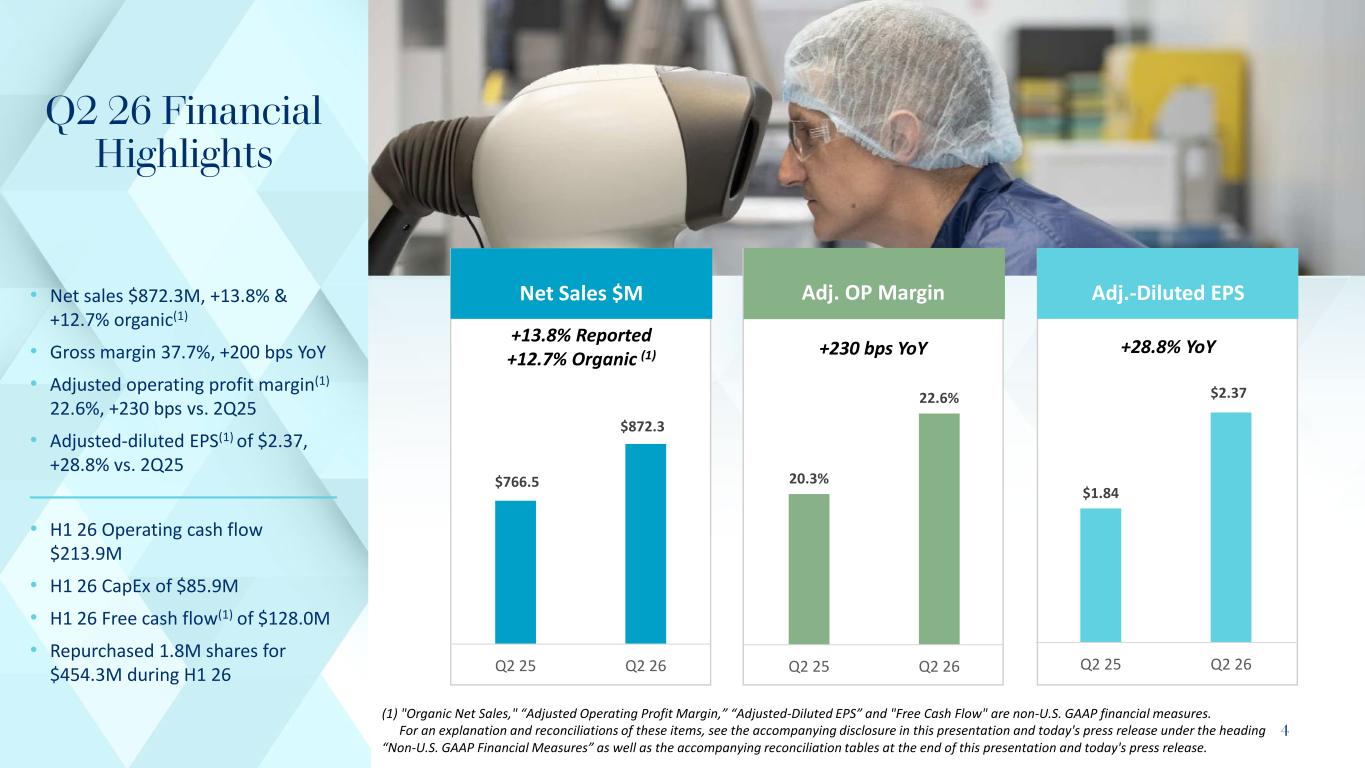
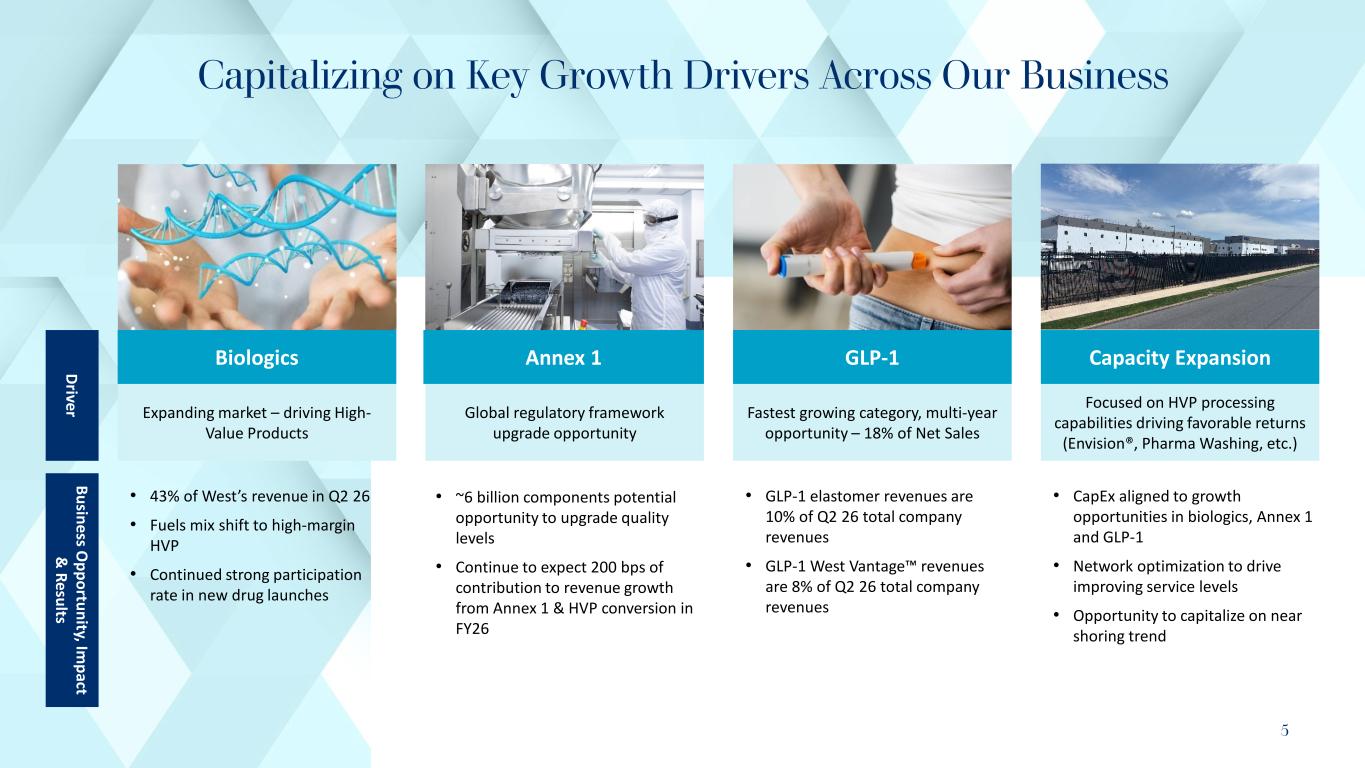
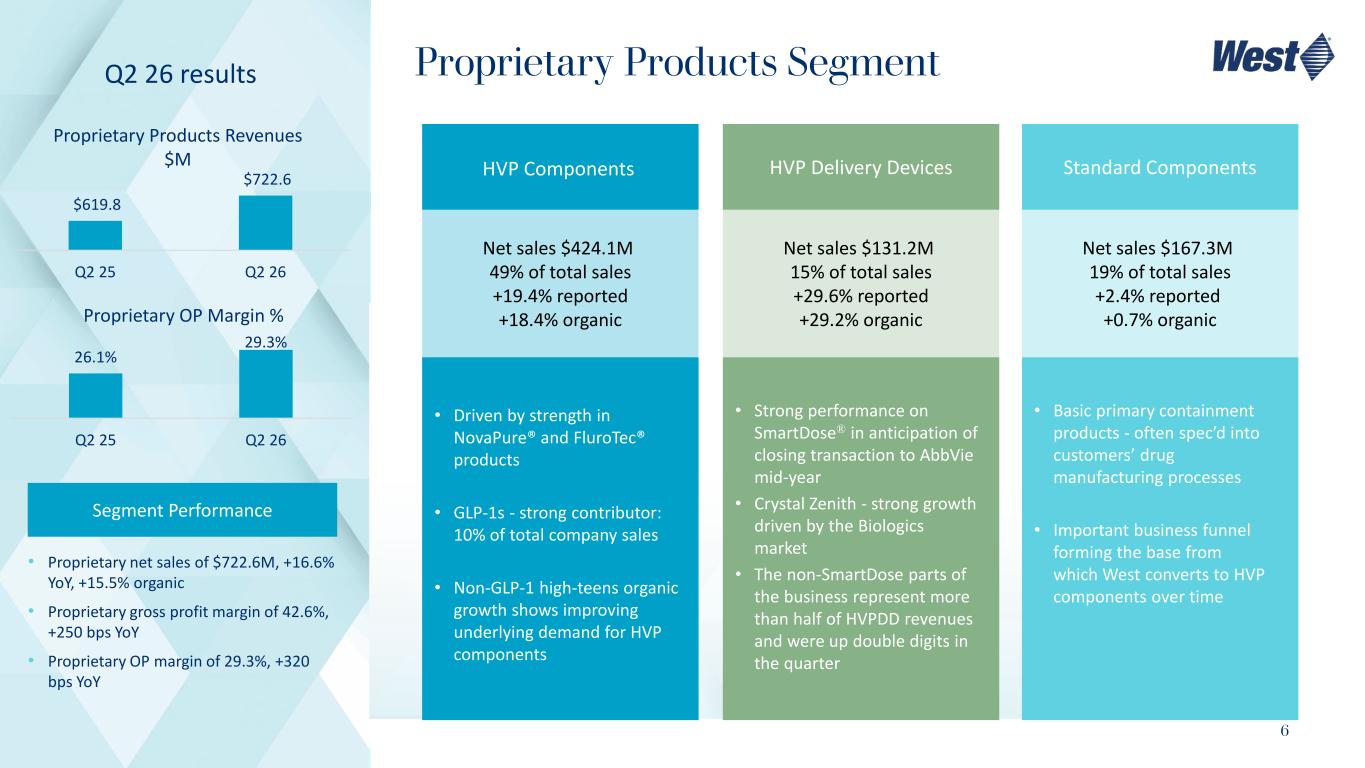
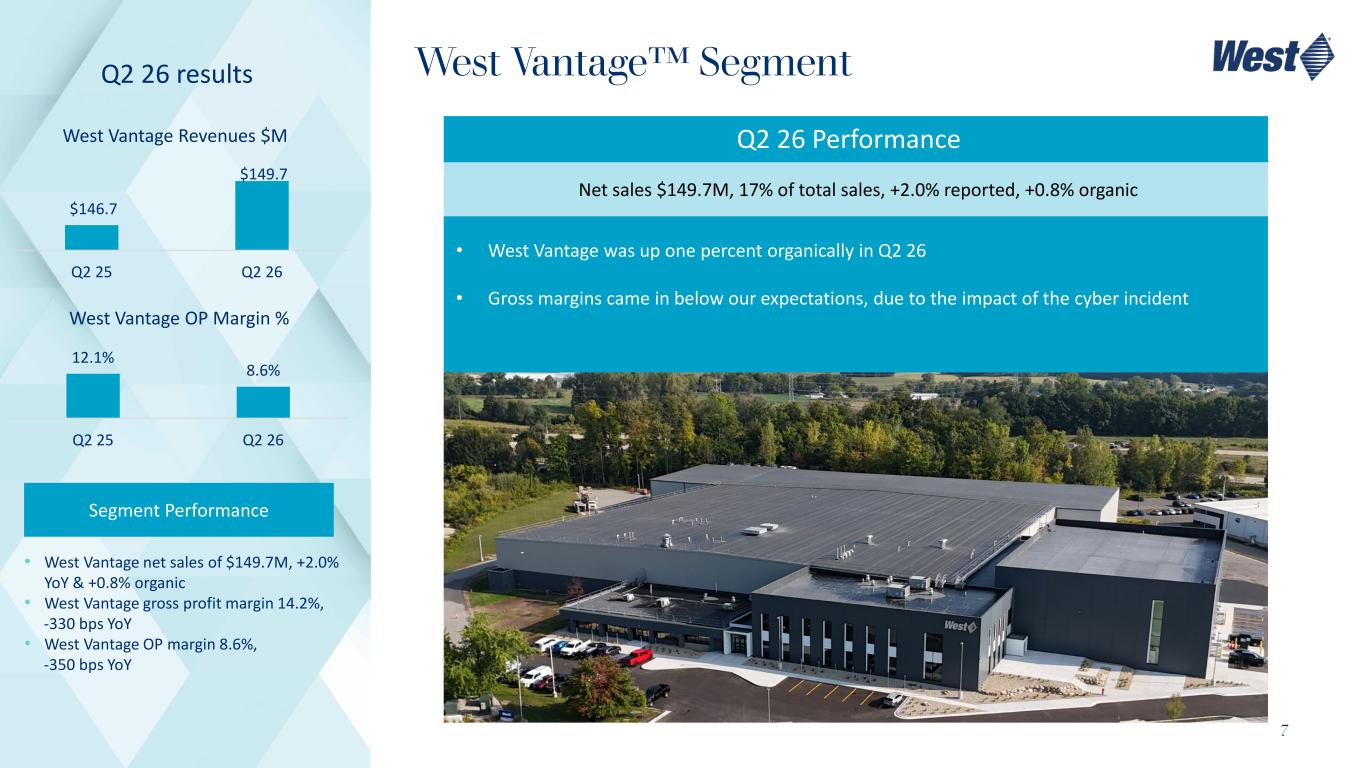
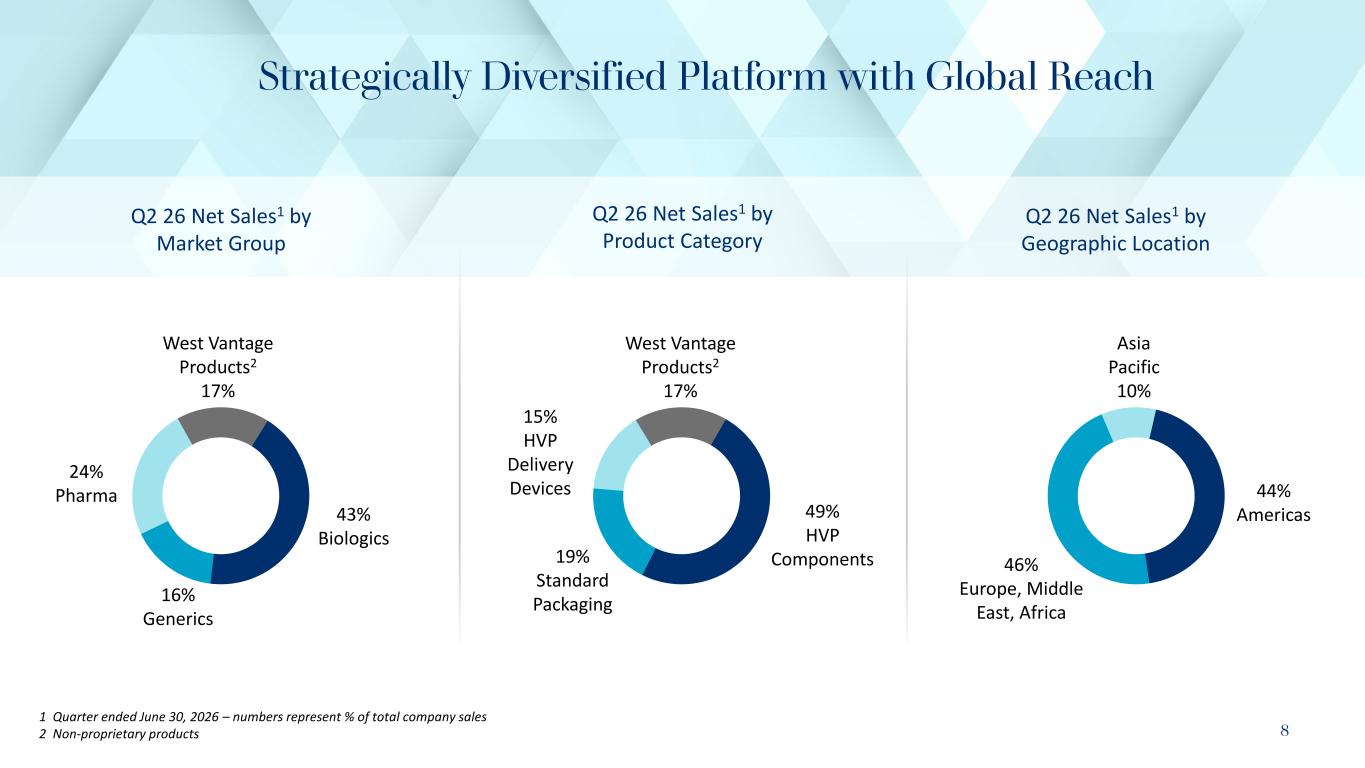
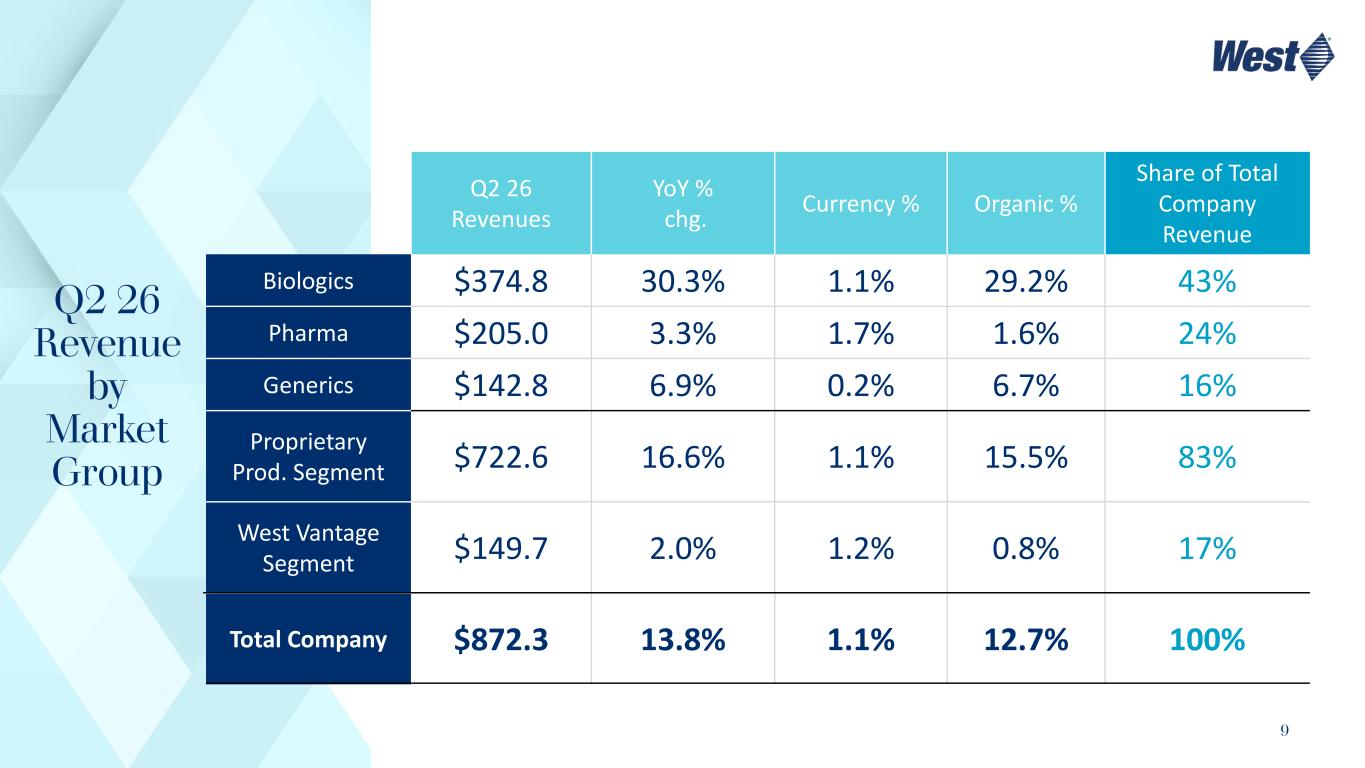
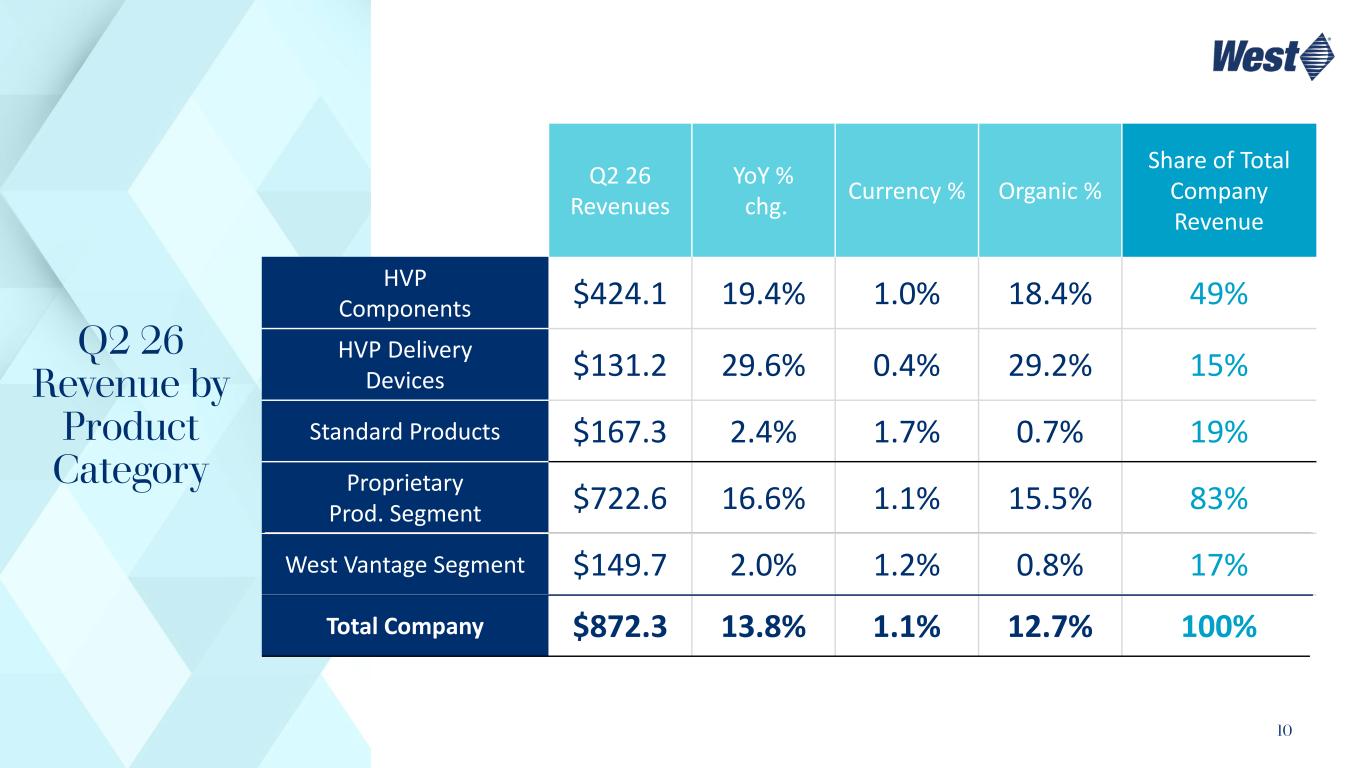
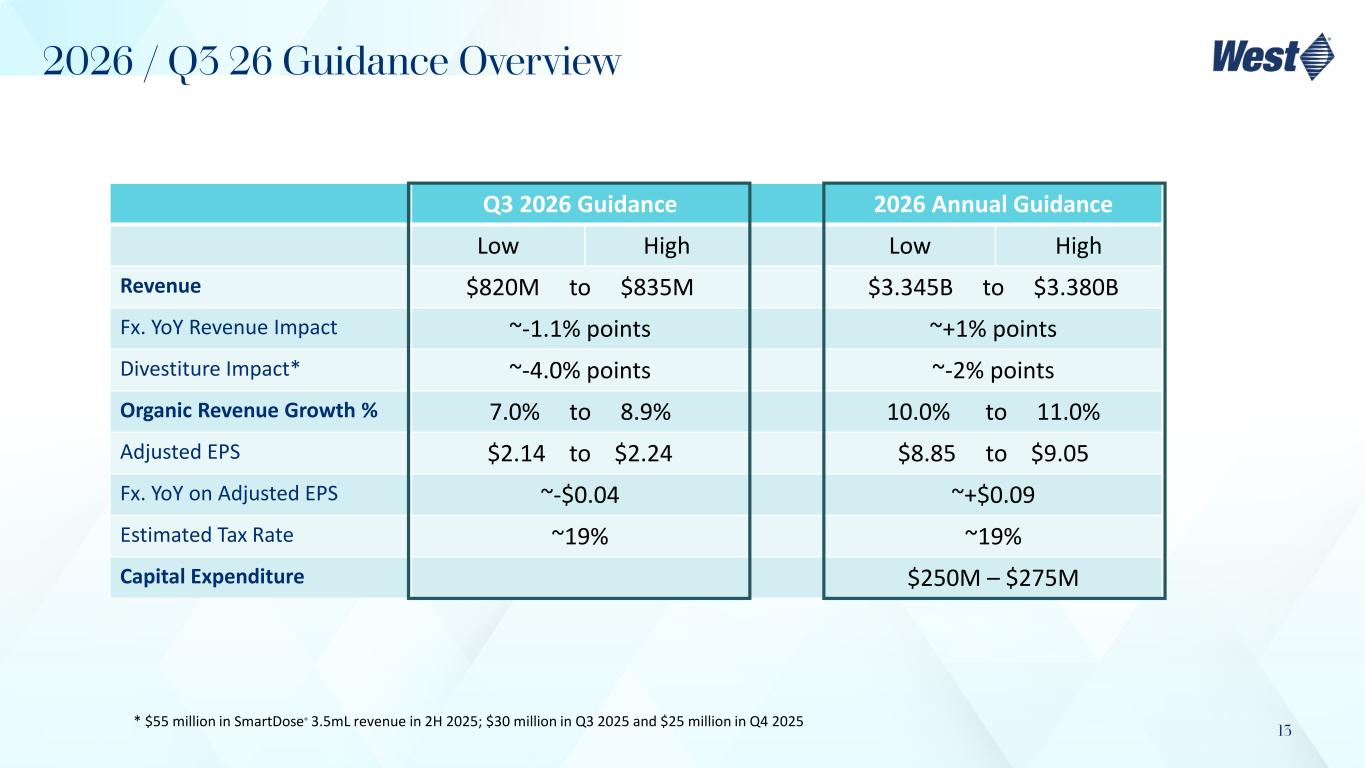
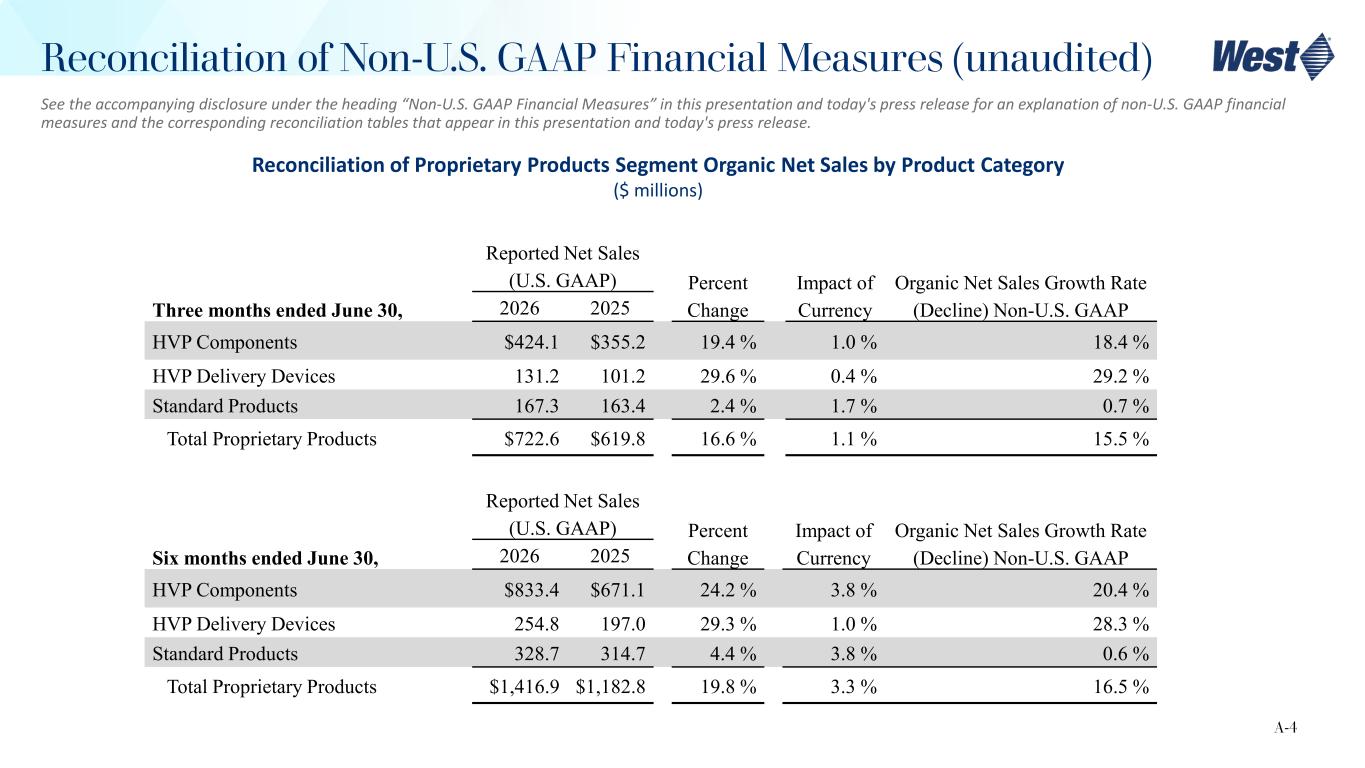
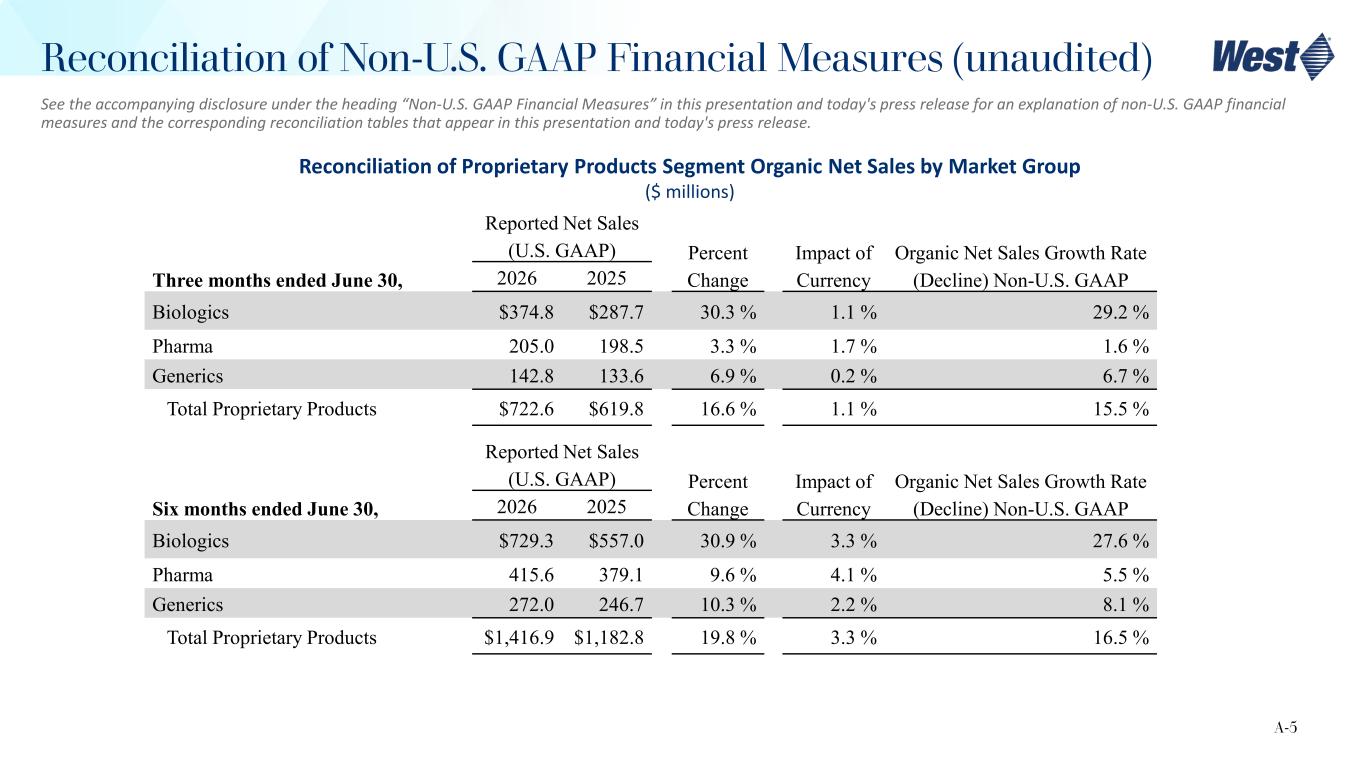
Thank you, John, and good morning, everyone. Thanks for joining us today. I am pleased to report strong second quarter results, which exceeded our expectations on the top and bottom line. Revenues of $872 million were up 13% organically, and adjusted EPS of $2.37 was up 29% as compared to prior year. Our performance was driven by the execution of our strategy and continued operational excellence initiatives. This is a testament to the exceptional efforts of our colleagues whose collective actions following the cyber incident drove the recovery and these strong financial results. Given the robust outcome in the second quarter and the ongoing momentum in the business, we are raising our guidance for full year 2026. We now anticipate organic revenue growth to be 10% to 11% for the full year and adjusted EPS to be in the range of $8.85 to $9.05. Bob will go into more detail shortly. Shifting to our results in the quarter, our proprietary product segment delivered 16% organic growth, led by the Biologics Market Group, which was up 29% organic. The largest contributor continues to be our HVP Components business, which increased by 18% on an organic basis. HVP Components now account for 49% of total company revenues, up from 46% in the prior year quarter. This was driven by our three growth drivers, which include biologics and biosimilars, HVP upgrades, including Annex I, and continued strength in GLP-1 elastomers. We continue to believe in the near- and long-term growth prospects of HVP components. Non-GLP-1 HVP components were up high teens on an organic basis, exceeding our expectations, and were the largest contributors to our outperformance in the quarter one of the fastest growing areas of injectable medicines is biologics approximately 75% of new drug approvals in 2025 are large drug molecules up significantly from prior years we continue to have strong wind rates of over 90% for these new molecules this is important for West as these customers tend to use the highest quality components biologics are generally more complex molecules often require a barrier film which delivers the requirements needed by our customers bringing new drugs to market we've benefited from strong growth in floratech and novapir as these products are well suited for the most advanced containment options ensuring safe and effective delivery for biotech customers the biosilmers market is seeing a lot of interest in potential future growth driven by easing regulations and a significant number of biologic drugs going off patent over the next decade. The continued increase of BLAs expands the potential market. When a biosimilar is introduced, it can result in expansion of therapy use. This generally allows us to maintain or even increase overall volume demand after these drugs are commercialized our second growth driver is the mixed shift of HPP upgrades including annex one and our customers desire to upgrade to more advanced primary containment solutions this positive mix shift drives both improving revenue and margin performance we are now seeing an increasing number of customers upgrading HPP components often adding additional finishing processes such as envision inspection. We believe we're still in the early stages of this multi-year opportunity. We saw continued growth in Annex 1 related projects in the quarter, and we expect this mixed shift to deliver our target of 200 basis points of revenue growth in 2026. A third growth driver is GLP-1s. HVP GLP-1 components revenues increased in the high teens, slightly better than expected. We believe that the global adoption of GLP-1 therapies is still in its early stages. Market access continues to expand with enablers such as Medicare expansion in the United States. When looking at clinical data, injectables continue to show meaningful efficacy advantages and a substantial reduction in adverse events when compared to oral alternatives. As a result, we anticipate continued growth in both oral and injectable GLP-1 formats as we move forward. Looking ahead, WEST continues to benefit from generic GLP-1 launches as customers often use the same high-value components, specifically stoppers, plungers, and line seals, for primary containment as the most efficient path to commercialization. This is important as we participate in the generic GLP-1 rollout in several countries around the world. Additionally, we're encouraged by the clinical pipeline of next generation of GLP-1 molecules in development for obesity, diabetes, and metabolic conditions. These novel therapeutics offer enhanced efficacy and improved tolerability and may require more complex primary containment solutions where WEST's technical expertise excels. We also expect to participate in a range of new GLP-1 product launches targeting indications outside of diabetes and obesity. Shifting to standard products, which account for 19% of total company revenues and we're up slightly compared to prior year. Standard products are important as they represent a funnel of upgrade opportunities. Customers convert to HVP components for a variety of reasons. While this conversion provides significant value for our customers, the positive mix shift generates incremental revenues and margins for West, all from the same volume of components. Moving to HVP delivery devices, which were up 29% organically compared to prior year, we had stronger than anticipated SmartDose 3.5 revenues as the customer ordered additional product in advance of the transaction. On July 1st, we completed the sale and transfer of the manufacturing and supply rights for Smart Dose 3.5 ml on-body delivery system and associated facilities as planned. The non-Smart Dose 3.5 portion of this business represents more than half of HVP delivery device revenues and was up double digits in the quarter, led by Self-Dose and Crystal Zenith. Turning to West's Advantage segment, which represents 17% of Q2 revenues, West's Advantage was up 1% organically in the second quarter, slightly below our expectations due to the impact of the cyber incident. Finally, I'm very pleased that we recently announced the renewal of our existing agreements with our strategic partner, Dykeo. This allows us to continue our important partnership that has been in place for more than 50 years. I will now turn the call over to Bob to discuss the financials in more detail and update our guidance.
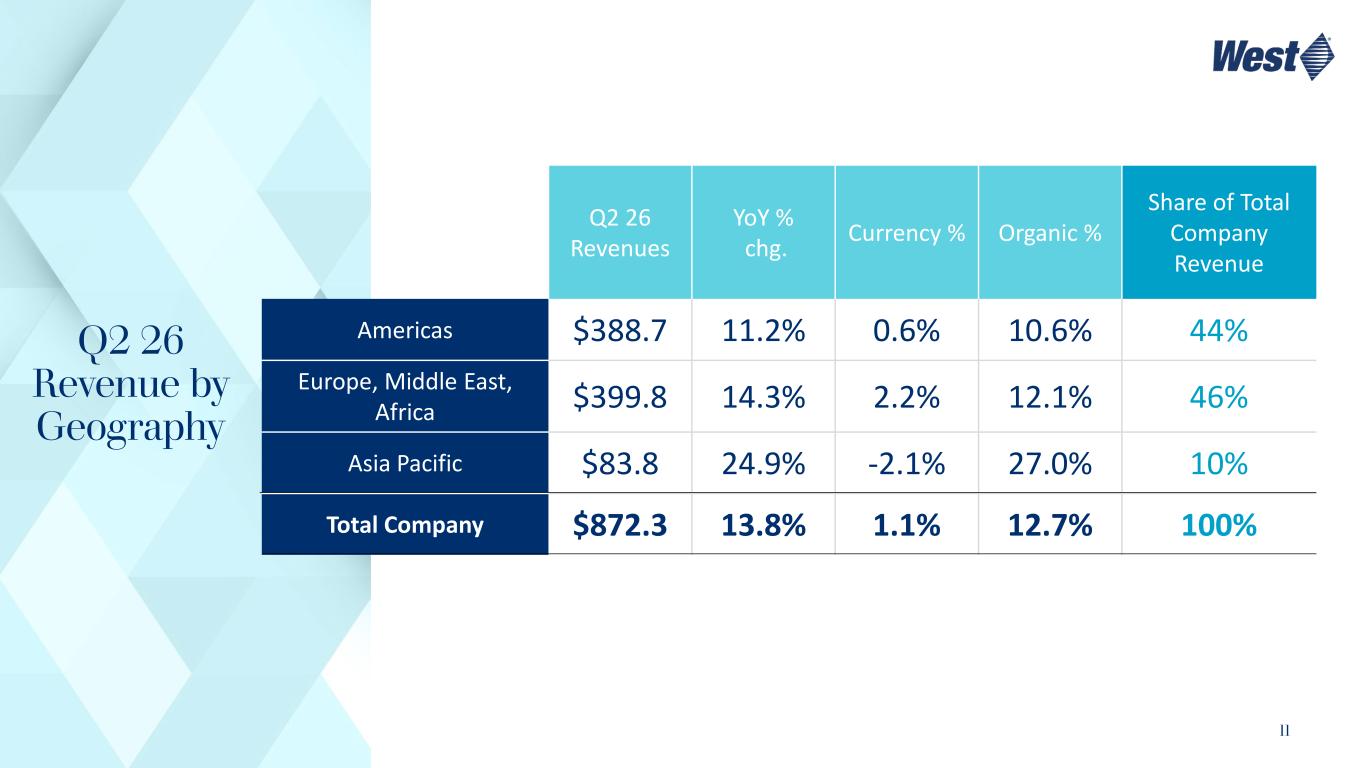
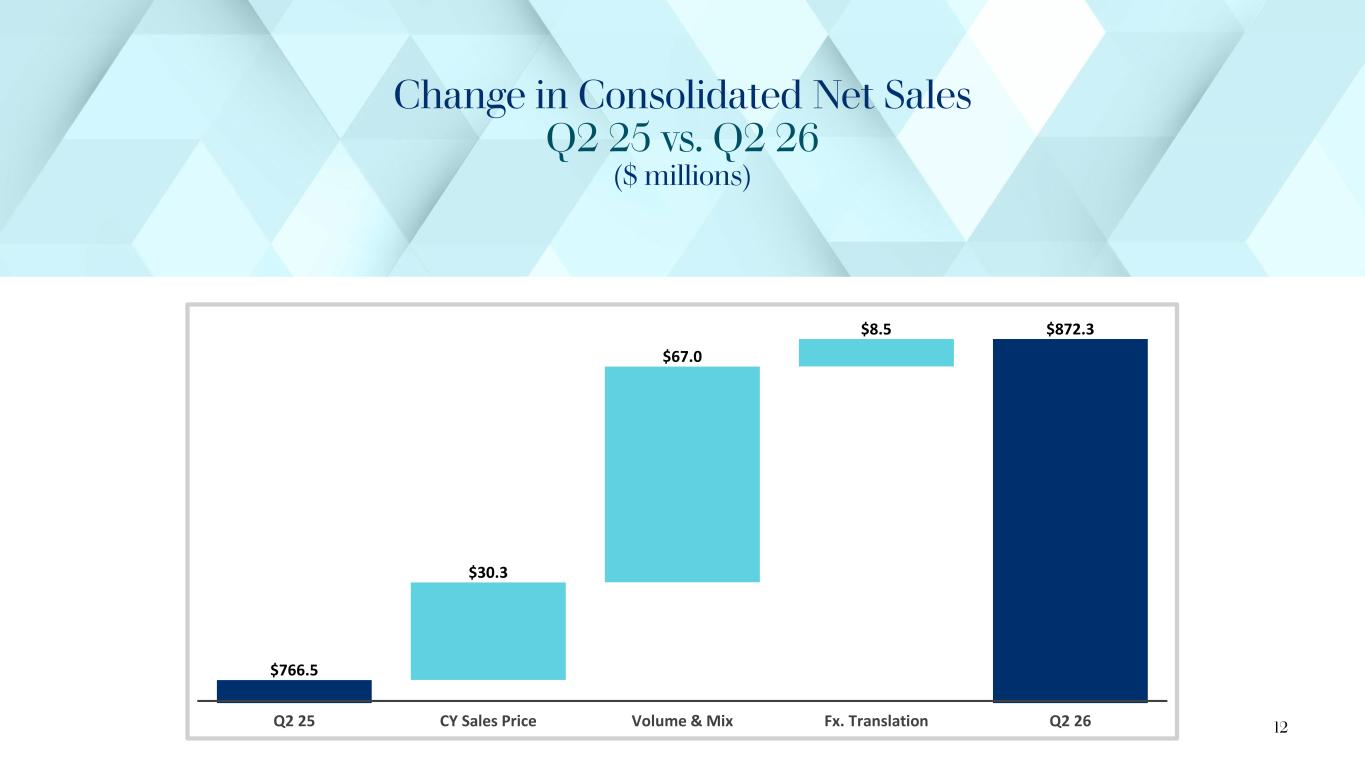
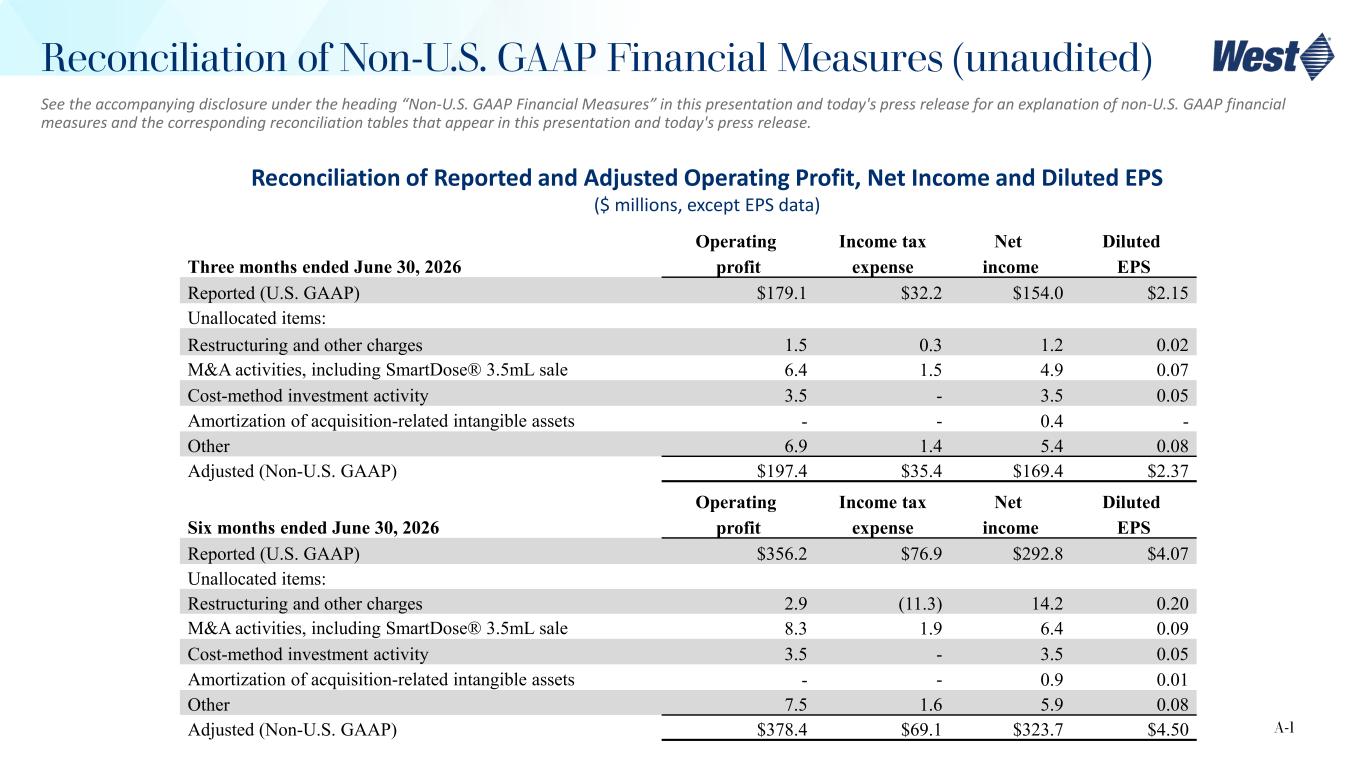
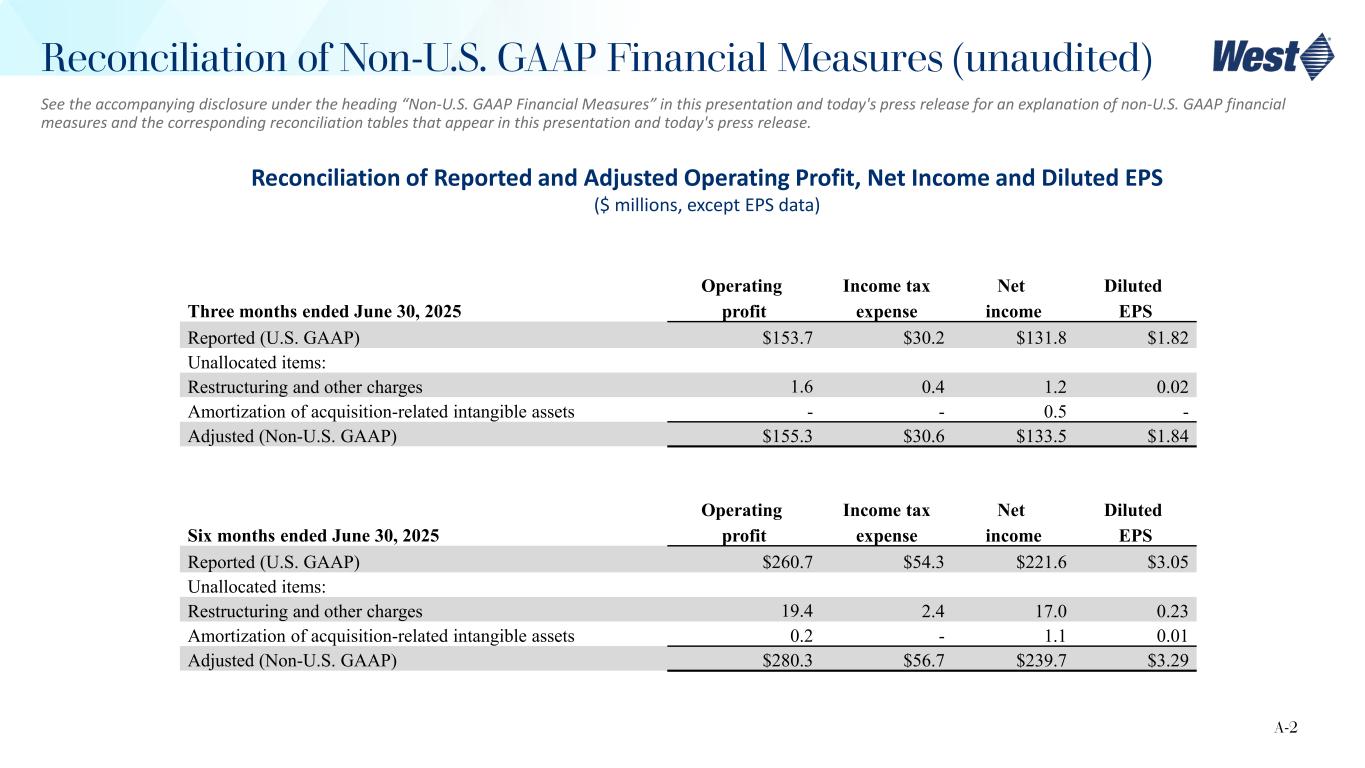
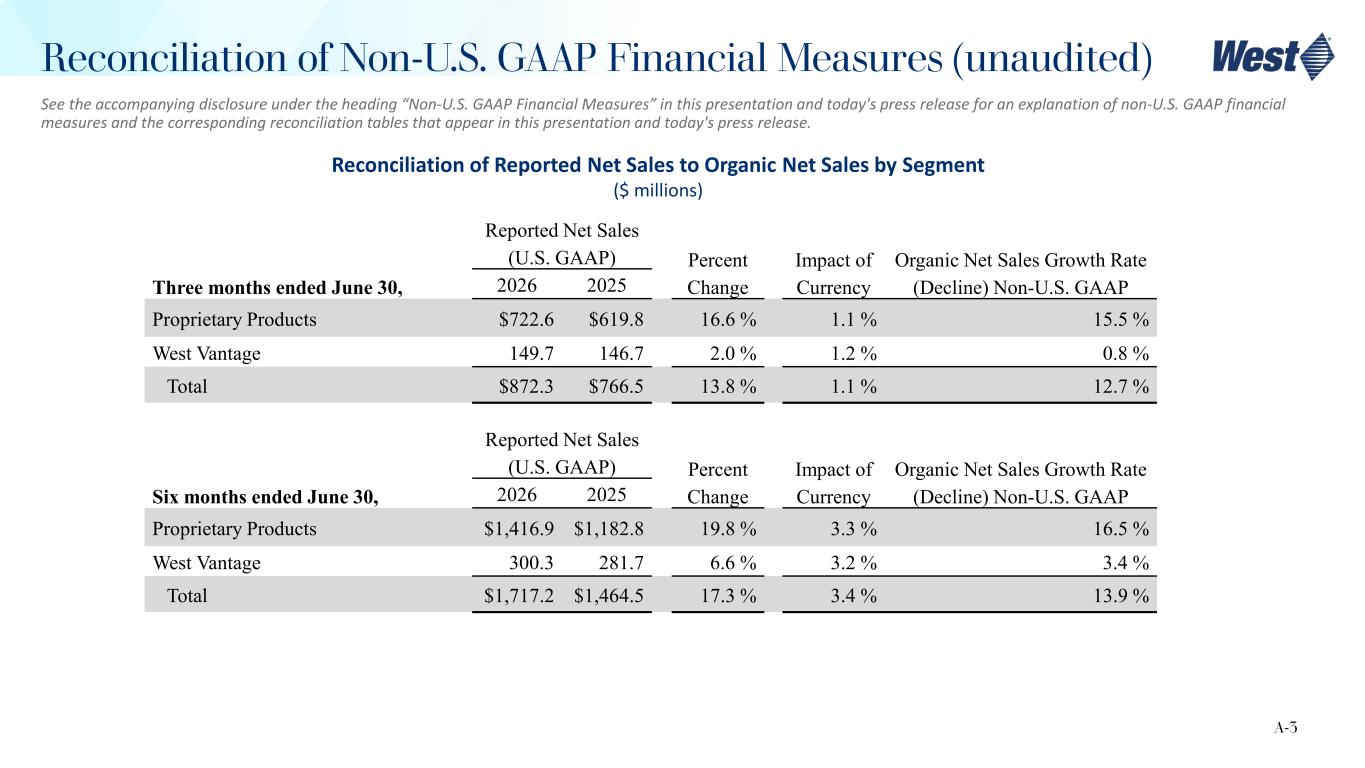
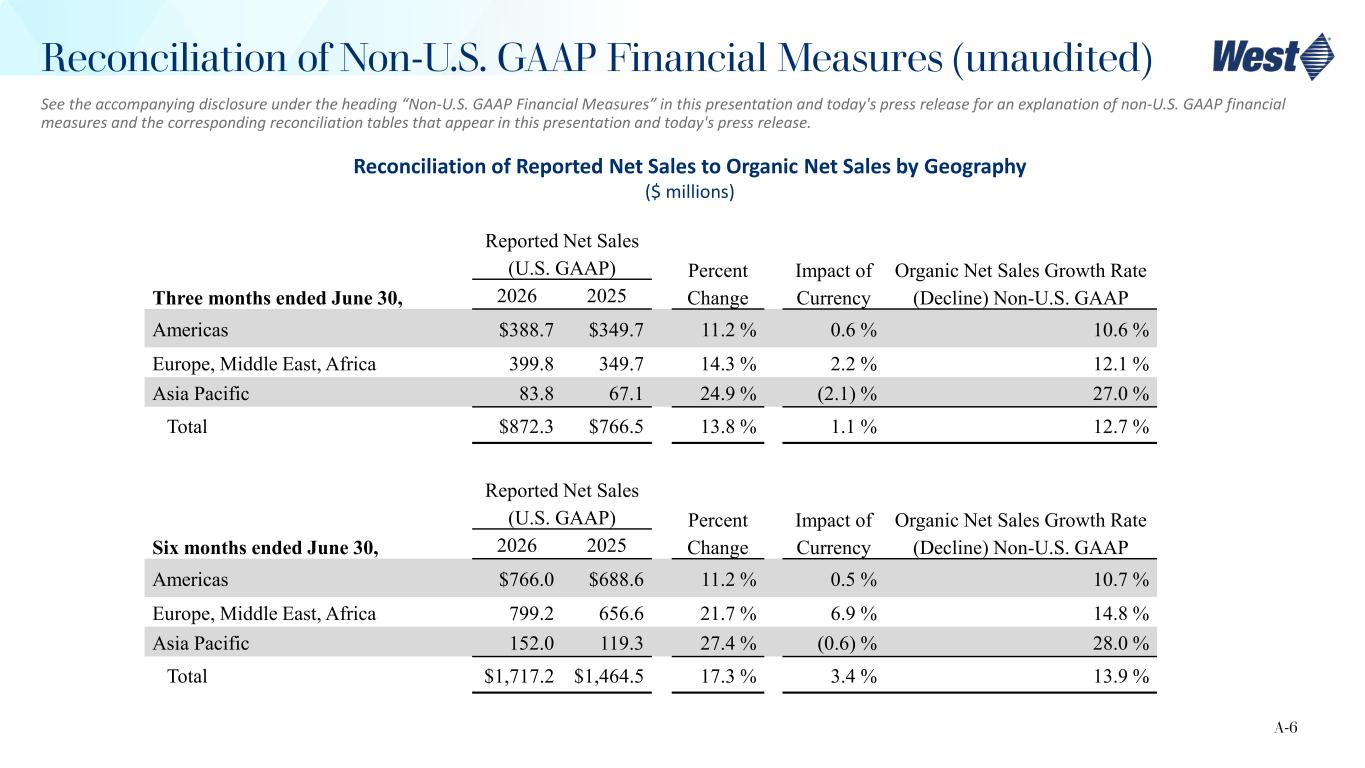
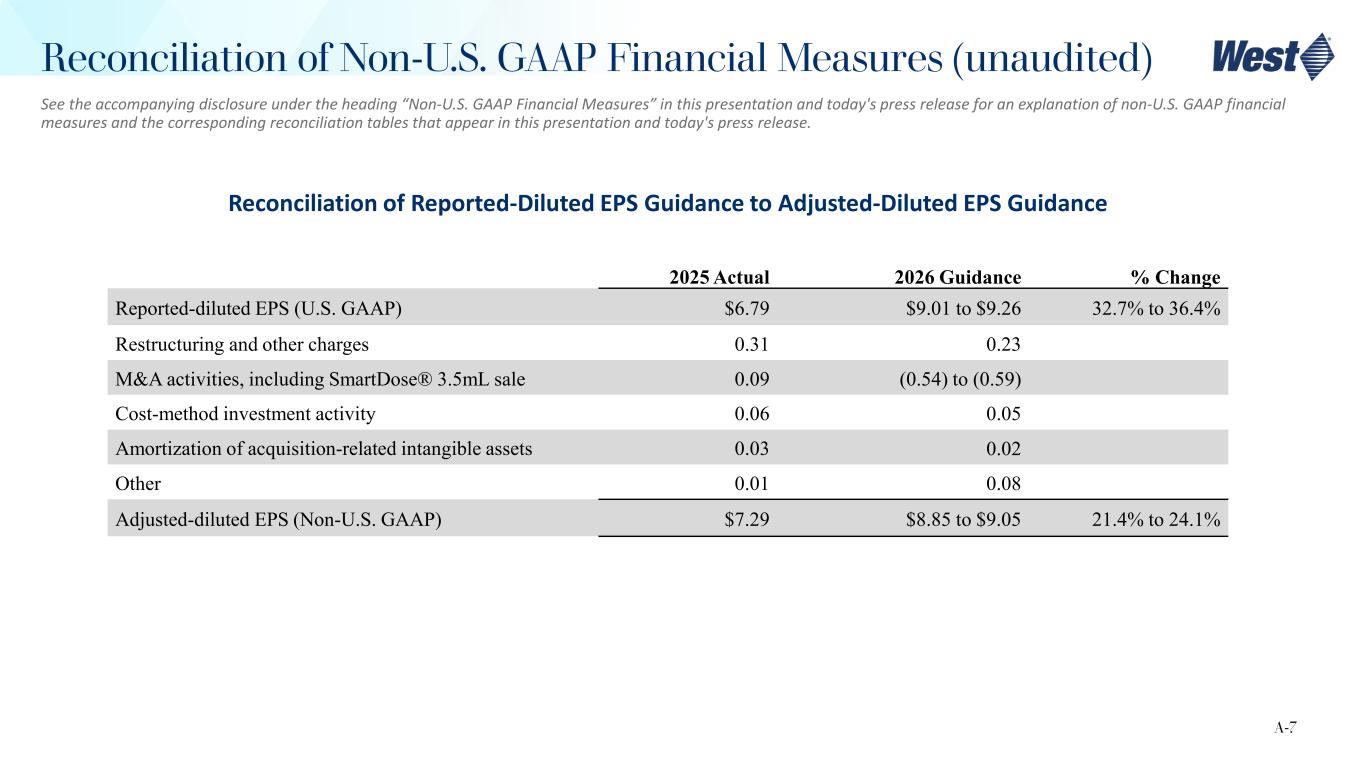
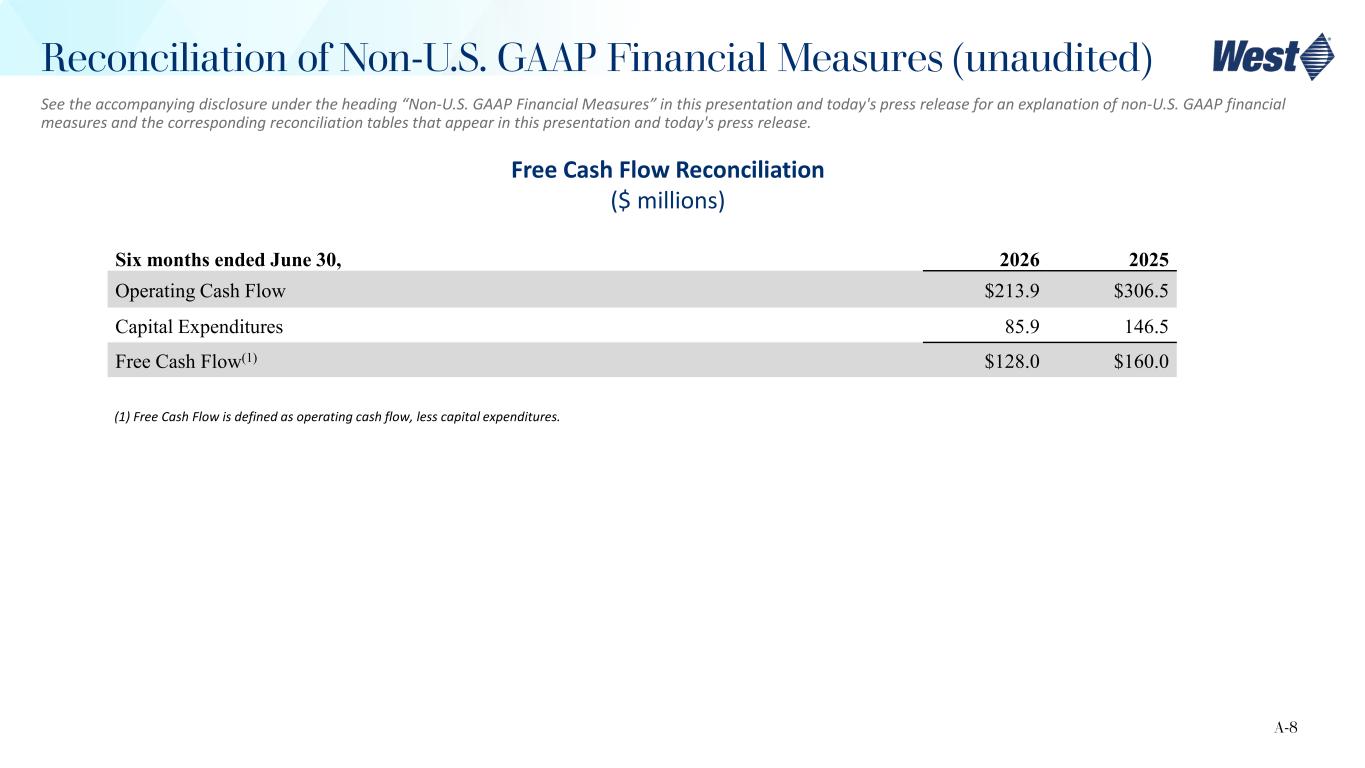
Thanks, Eric, and good morning, everyone. This morning, I'll provide some additional details on Q2 revenue and take you through the income statement and some other key financial metrics. I'll then cover our updated full year and third quarter guidance. As Eric mentioned, we had a strong second quarter, as revenues of $872 million increased 13.8% on a reported basis and grew 12.7% organically, exceeding our expectations overall. Price contributed four percentage points of that growth in the quarter. This strong performance was driven by our proprietary segment, which increased 15.5% on an organic basis, while the West Vantage segment grew 0.8%. Within proprietary, our HVP components business, which now represents almost half our revenues, was the standout, delivering $424 million in revenue and growing 18.4% organically. This was driven by robust growth in GLP-1s, HVP upgrades including Annex 1, and overall continued improving performance in biologic revenues. Our team performed exceptionally well, given that we also had to navigate the cyber incident during the quarter. The HVP components business outside GLP-1's accelerated nicely, growing in high teens and driving most of the HVP component's outperformance in the quarter. In addition, our GLP-1 HVP components business had another very good quarter with high teens organic growth, and we expect continued double-digit growth throughout the rest of the year. Rounding out the rest of the proprietary segment, HPP delivery devices revenues were $131 million in the quarter and up 29% year-on-year organically, with good performance across the portfolio. And in standard products, revenues of $167 million were up 0.7% on an organic basis. Now, moving on to our West Vantage segment. West Vantage delivered $150 million in revenue, growing 0.8% on an organic basis. Segment performance was impacted by the cyber incident as it was not able to fully recover in the quarter, pushing some revenues into the second half of the year. We estimate this was a mid-single-digit impact to growth in the quarter and is expected to be made up in the remainder of the year. Now, before turning to the rest of the P&L, I wanted to highlight that we delivered double-digit growth across each of our three geographies, demonstrating the breadth of our business. Asia-Pacific led the way with 27% organic growth as we looked to capitalize on the significant market expansion and innovation in that region. Now, let's take a closer look at the rest of the P&L. Total company gross margin was 37.7% in the quarter, up 200 basis points year over year. The year-on-year increase was primarily driven by better-than-expected sales and the associated positive mix shift to HVP components as well as price contribution. Of note, we did see a dip in gross margin for our West Vantage business, primarily due to the cyber incident, but this was more than made up for by the strong proprietary performance. Adjusted operating margins of 22.6% were up 230 basis points compared to the prior year, driven by the gross margin expansion and leveraging our SG&A and R&D across a higher revenue base. And we benefited from improved below-the-line performance in the quarter, as our tax rate was a better-than-expected 17.9%, and we had 71.3 million diluted shares outstanding. Adding it all up, Q2 adjusted earnings per share for $2.37, up 29% versus last year, and $0.28 above the midpoint of guidance we gave on the last earnings call. Now, before moving into our updated guidance, I did want to highlight a few additional financial metrics. In the quarter, we delivered operating cash flow of $124 million. While down year-on-year, the decrease is primarily due to higher accounts receivable due to the timing of our sales as we recovered from the cyber incident in the latter part of the quarter. We expect this to normalize in the remainder of the year. Capital expenditures were $43 million, down from $75 million in the prior year as we continue to improve capital spending efficiency, focusing on growth, and increased financial returns. Our expectations of $250 million to $275 million in the capital expenditures remains unchanged for the year. During the quarter, we continued to execute on our $1 billion share repurchase program. In Q2, we repurchased just over half a million shares for $157 million and paid out $16 million in dividends. So in the first half of the year, we repurchased 1.8 million shares for $454 million and paid out $32 million in dividends. Our cash flow and strong balance sheet continue to position us well as we deploy our capital for growth and deliver value to shareholders. In summary, we had a strong second quarter that exceeded our expectations and are pleased that our solid business momentum continues. Now, let me turn to our updated guidance. While we remain prudent with our forecasting given that we're only halfway through the year, we are increasing our full-year revenue and EPS guidance based on our good Q2 results and underlying momentum in the market. For the year, we now anticipate revenue to be in the range of 3.345 billion to 3.38 billion, growing 10 to 11 percent organically, which is up from 7 to 9 percent previously. Reported growth is now 8.8 percent to 10 percent. This is up 40 million dollars at the midpoint, even after absorbing incremental FX headwind, as the dollar has strengthened since our last quarterly earnings call. Our updated guidance now assumes a one percentage point tailwind from currency, down from our prior guidance assumption of roughly a two percentage point tailwind. Of note, we closed the SmartDose 3.5 ml transaction as expected on July 1st. SmartDose 3.5 generated $55 million in revenue in the second half of last year, and we have excluded those revenues when calculating organic growth for the year. Our increased guidance is driven by higher growth expectations for the non-GLP1 portion of our HVP components, as well as an increase in HVP delivery devices. We now anticipate our total HVP components business to grow high teens organically for the year. Both GLP1 and non-GLP1 HVP components are now expected to grow high teens for the year. We also expect better performance in our HVP delivery devices, while our expectations for standard products and West Vantage are relatively consistent with our previous guidance. From a margin perspective, while we are experiencing some inflationary pressure from higher oil and commodity prices, we are working hard to offset those costs through various means and do not see a change from our previous guidance. The positive revenue mix is helping us to further expand our margins, and our guidance now incorporates over 200 basis points of operating margin expansion as compared to 2025. To help with your models, we are projecting $8 million of net interest income, a tax rate for the full year slightly lower than 19%, and roughly 71.5 million diluted shares outstanding for the full year. This results in adjusted earnings per share to be between $8.85 to $9.05 for the year, up 21% to 24% year on year. Now switching gear to the third quarter, we expect revenue to be in the range of $820 million to $835 million. This is a reported increase of 1.9% to 3.8% in an organic increase of 7% to 8.9%. The third quarter guidance anticipates a 110 basis point headwind from currency, and our reported growth is impacted by the smart dose divestiture. Of the $55 million smart dose sales in the second half of last year, we generated $30 million in Q3 and have adjusted our third quarter organic sales guidance for those revenues. By segment, we expect proprietary to grow low double digits in the third quarter, while West Vantage is expected to decline as Q3 represents the first quarter of the CGM contract exiting. We expect Q3 to be the trough for West Vantage, and we expect improved performance in Q4 as we continue to ramp up our drug handling business. And we expect third-quarter adjusted diluted earnings per share in the range of $2.14 to $2.24, up 9% to 14% year-on-year. In summary, we are very pleased with how our business is performing, driven by our key growth drivers, and are optimistic about our future. Now I'd like to turn the call back over to Eric for some closing comments.
Eric? Thank you, Bob. To summarize the quarter, the strength of our financial results continues to reaffirm that our growth strategy is working. We have a durable business with a strong competitive moat which delivers unique value to our customers. We're well positioned to capitalize on long-term macro trends, and we remain focused on our three key growth drivers of Biologics, GLP-1s, and Annex One and other HVP conversions while leveraging a global scale. As I pass the torch of leadership and welcome Michelle Lagarde on August 31st, I want to express what an honor and privilege has been to lead this exceptional organization. I'm incredibly proud of what we have built together and remain inspired by the dedication and unwavering commitment of our team members across the globe. Finally, I want to extend my gratitude to the Board of Directors for their partnership. In closing, I want to sincerely thank the One West team, our customers, and our shareholders, and I look forward to watching West's continued progress in the years ahead. Operator, we're ready to take questions. Thank you.
Operator
Thank you. As a reminder, to ask a question, you will need to press star one one on your telephone. To withdraw your question, please press star one one again. Due to time restraints, we ask that you please limit yourself to one question. Please stand by while we compile the Q&A roster. And our first question will come from the line of Michael Riskin with Bank of America. Your line is open.
Thanks for taking the question, and congrats on a really strong print. Maybe let's drill in a little bit into the non-GLP1 HBP components. As you called out, that was a really pleasant surprise in the quarter. It continues to do really well, continues to exceed expectations. Any additional color you could provide on sort of what's driving that? You know, you talked about win rates, strong growth in specific products, but just want to get a better sense of how sustainable you think that is, sort of, you know, if we can really get into the underlying drivers of that strength.
Yeah, Michael, good morning, and thank you for the question. And you're absolutely correct. We're really pleased with the performance of the non-GLP-1 HPP components part of our business. And it really comes down to really three areas. The first one is specifically in our biologics and biosimilar space. We continue to see, as you indicated, we continue to see greater than 90% participation rate of all new molecules. You know that's where we win in that space is in the pipeline. And so we continue to see a very strong pipeline that gives us the confidence as we think about the growth going forward. If you look at the growth that we've commented on in biologics, it's really a couple areas. One is obviously new launches. Second area are uptake of existing molecules in market that are expanding, whether it's geographically or patient population. and elsewhere seeing expansion in biosimilars. So those are the key drivers. The second exciting area also is really around that Annex 1 and other HVP-related upgrades. And what we're seeing there, and as you know, that's run or the sterility and contamination control strategy really sparked, the catalyst was a couple years ago in Europe with the new Annex 1 regulations. And the exciting part is that we have a significant number of units that we sell existing customers that are commercialized drugs in market that require upgrades to our HVP portfolio. Just to give you context there, we have just shy of 800 total projects in hand, and that's up 50% from the same time period last year. And what you're seeing is the result of higher ASP and higher mix shift from the margin perspective with no incremental volume. And because they're staying with the incumbent formulation that's on the drug molecule, we are able to add pharma washing and Envision to enable our customers to quickly transition to meet the requirements of their contamination control strategy. One last point around that, we're seeing interests now outside of just out of Europe in the U.S. and other geographies where we're working on projects with the similar growth driver opportunities. So I would say those are the two largest. The third one is really around operational excellence, but that really came true when you saw our response and recovery of the cyber incident that happened early May. So that's how I would summarize it, Michael, and I think these are long. term, macro trends, and all these categories that were very well positioned geographically, technology, portfolio, and just our incumbent position with our current customers.
Hey, Mike, this is Bob. Let me just add a little additional color to what Eric was saying to give you kind of a sense for kind of how the runway is, particularly on the Annex one. As we talked about, he mentioned the number of programs continues to increase on a quarterly basis and significantly above where we were last year, both in terms of ongoing projects as well as projects that are now currently being in the commercial numbers. The other thing that I would say is if we look at the opportunity, we talked about 6 billion units, we're still in kind of the early innings of conversion there for the EU. And as Eric said, we're actually starting to see what I would call kind of spillover effect or opportunities within the U.S. to actually potentially expand that pool beyond that six billion. So we think that this is a multi-year opportunity, as he said in the prepared remarks. And given that it is, we're the incumbent, you know, we think we're differentiated to be able to win in particular in this way relative to a competition going forward.
That's super helpful. If I can squeeze in a quick follow-up, just, you know, given everything you just said about how sustainable the strength is and how durable you feel this is, just talking about the second half guide, you know, you've kept after you beat 1Q, you raised the guide, but you still kept the rest of the year out to look very conservative. You just put up another really strong 2Q. It feels like you raised the guide again, but it still feels like that's going to happen to be a little bit conservative. You talked about some of the revenues moving around from the West Vantage cyber attack. We've previously known about obviously the 3.5 ML smart dose. Any other moving pieces in the second half we should be wary of, just sort of a gauge degree of conservatism or if there's anything else to think about when we look at what optically looks like a little bit of a step down in the second half. Thanks.
Yeah, I think we feel very good about the ongoing momentum. As I mentioned in our prepared remarks, we're taking kind of one quarter at a time and kind of a prudent approach, but don't read too much into it. We feel very good about the underlying momentum, particularly in the HPP components business that really drives not only the top line but our profits so we feel like we're well placed to continue to drive a very strong not only second half of the year but the full year thank you thank you one moment for our next question and that will come from the line of Paul Knight with KeyBank your line is open hi Eric I met you at Sigma Aldrich I believe and you were a winner there and big winner at West, so congratulations on all you've done.
Hey, thank you, Paul. The question I have is around facilities, specifically Eschweiler, Grand Rapids, and Dublin. Dublin, the biggest, of course. Where are you at with capacity utilization at Dublin? And any color around where you are with, I think, some expansions of Grand Rapids and Eschweiler as well? Yeah, no, thanks, Paul. These are important sites for us for different reasons. I'll start with Eschweiler. Eschweiler is our largest HVP components plant across the globe, and we have been operating at a high level of capacity utilization. However, in later part of 2025, we mentioned that we put a very specific initiative in place on operational excellence, And I'm pleased to report that in the first half of this year, we've seen a significant improvement in productivity and throughput. And I'll just characterize it as a double-digit type category, which is quite impressive for that size of site. And frankly, that was the key catalyst to allow us to recover from the cyber event that happened in early May. Without that improvement that was in place, we would have had some probably more challenges versus the success that we've been able to see. More to come in that area. The team has now been expanded to drive the same methodology and capabilities across all our HVP sites to leverage existing assets. But be assured that we will continue to fuel that with capital investments when necessary within the 6% to 8% of sales framework that we have articulated. In the West Vantage business, specifically Grand Rapids, that has done a great job of ramping up. We're close to the levels that we expect in 2026 of throughput. So I would say, Paul, we're close to the level that we anticipated with the installed capacity we put into Grand Rapids. And then Dublin, we're still in the ramping phase at this point in time. Bob commented that in the drug handling, the revenues that we anticipated for 2026 are still on track, but it's more back-ended, really around the, call it the Q4 time period, and we'll be ramping nicely into 2027 with that business. So there's more capacity available in Dublin, and we'll continue to leverage that over the next, call it, six to 12 months. Thank you. Thanks, Paul.
Operator
One moment for our next question. That will come from the line of Patrick Donnelly with Citibank. Your line is open.
Hey, guys. Thank you for taking the questions. Bob, maybe one for you. You mentioned the profitability, I think, in one of the answers to the earlier questions. I wanted to dive in a little bit there. You know, similar question in the back half. You know, it seems like I think your word is prudence in terms of layering in some of that around the margin build in 2H. I think between the pricing side, the mixed shift, obviously, which is quite attractive to you guys. Can you just talk about that bridge in the second half? And then again, even that opportunity as we move forward into next year, it feels like a lot moving your way in terms of the mixed shift in particular. I know there's a footprint opportunity as well. So it would be great to talk through the margins.
Yeah, thanks, Patrick. Yeah, we feel good about the trajectory of where we've been here for the first six months and expect that to continue going into the second half of the year. As you mentioned, maybe I'll talk about it in a couple of different buckets. Certainly price, we have actually seen an acceleration of price Q1 to Q2. It was four points of the growth in Q2. And that's above our 2% to 3% corridor. And as we talked about, this is a multi-year kind of journey for us to be able to really to ensure that we're capturing some of the value that we're delivering and helping participate with our customers. And so we feel good about the ongoing momentum there in the second half of the year. And then as you said, when we have HVP components really driving the outperformance, the incremental margins there are just quite nice. And so if you look at where we are in Q2, we had very nice incrementals. And what I would say is, as we think about Q3, we do have some of the step downs, but we're actually seeing, if you look at Q3 versus Q2, actually roughly flat in terms of margin expansion or margin performance. And we're saying, you know, over 200 basis points for the full year and feel like there's some opportunities for upside beyond that. And then you referenced kind of footprint and other activities that we have. We think we have a multi-county year opportunity across not only gross margin, but really leveraging our spend and being more productive in OPEC spend as well. And as you noticed, or as we commented, we're also focused on kind of below the line performance as well. So we've got a number of, I would say arrows in the quiver to be able to continue to use going forward, feel good about where we are in the second half of the year. And I would say there's probably opportunities for upside.
That's helpful. Thank you. And then maybe a quick one just on the GLP business, you know, what you guys saw kind of sequentially. I know that's been a focus. It seems like it came in a little better than expected. But, yeah, I would love to talk through just the trends there and the expectations as we work our way through the year, what you're hearing from the larger customers. Thank you, guys.
Yeah, Patrick, we're seeing it's playing out as we anticipated earlier this year around the GLP ones with the largest players. And we continue to be able to support them with the multiple modalities of the different GLPs that are in the marketplace. We're also seeing an expansion with the generics, particularly coming out of Asia. And that's actually when Bob referenced the strong growth in the quarter of 27%. One of the key drivers of that growth out of China and India, a little bit of Korea, was really the biosimilars around GLP-1s. So in the generic space, we believe that that is an additional growth opportunity to expand geographically, but also patient population. And we're very well positioned, Bill, to benefit from that also. The third is on the GLP-1s, you know, the number of new indications that are being developed in late stage. And we're really proud about our position. as we are with other molecules and other therapeutic classes to be able to participate. And when those are finally approved and in market, we'll be able to support our customers. So we are pretty comfortable that how we articulated GLP-1s going forward, we're very well positioned. We do believe orals, we have been seeing this, orals are expanding the market versus cannibalizing the injectable space. So, we're feeling good about our position with GLP-1s for long-term. Thank you, guys. Thank you.
Operator
Thank you. Our next question will come from the line of Matt LaRue with William Blair. Your line is open.
Hi, good morning. And, Eric, congratulations on a great tenure. I wanted to ask about the delivery devices, you know, kind of turning the page from SmartDisc 3.5. Got a bit of a benefit in the quarter there. But that remains, I know, an area of interest and excitement for you. You called out a couple pieces of portfolio, including self-dose today. Just curious, as you're looking into the pipeline, there's been a lot of focus on the component side, on the GLP side. But what's most interesting to you on the delivery device side? Maybe not thinking about the next three months, but perhaps the next couple of years.
Yeah, I know, Matt. Thank you for that. And you're right. When we look at SmartDose 3.5 that we completed the transaction on July 1st, we're very pleased with the portfolio, realizing that we need to continue to develop new additional products to support what we call self-injection. One of the key growth drivers of that area is self-dose, and that's on with multiple customers and multiple drug molecules, and we're seeing pretty healthy expansion in that particular area. The second area within that portfolio is our crystal zenith technology that has been around for a while, but that is really heavily targeted towards the highest end of biologics. You think about C and cell and gene therapy in addition to that, so it's a clear opportunity that we'll continue to leverage. And the third area is our administration systems. And, you know, this area, you know, while the self-injection and crystal zenith is really a double-digit type growth portfolio, the administration system is mid-single to high-single-digit type growth. And, again, that leverages our competency around injection molding, design, and scale. And so this area probably will evolve in the future, but we're excited about the position that we're operating from at this point in time, especially when you take the SmartVel 3.5 out, the margin profile is attractive for us going forward. So I'm pleased on the work the team has done, and I'm excited about that operating it and where they're going to take that business.
Operator
Thank you. Then our next question will come from the line of David Wendley with Jeffries. Your line is open.
Hi. Good morning. Thanks for taking my question, Eric. I'd add my compliments on your career, enjoy your retirement, thanks for the help. My question is around the high value product component, portfolio, kind of trying to assimilate the different call outs. Your GLP-1, you had in prior calls talked about Nova Choice as the component of choice You're calling out Novapure and Flortech, sorry, in the deck, and then mentions of Annex 1 upgrades that sound like kind of Envision or Westar RS, Westar RU type upgrades. So it sounds like all the portfolio is being hit. I was hoping you could kind of give us a relative stack, you know, rank order of which parts are the strongest drivers of your mix shift, given that they all seem to be, you know, contributing? Thank you.
Yeah, David, thank you for the comments. The strongest growth driver within our HVP components will be, is biologics. That tends to use the highest end of our portfolio, and that would be the Novapir, the Floratech, where the ASPs and margins are obviously highest on that spectrum. And as you think about the portfolio and how the new approvals coming through, that is only going to get, I believe, more pronounced because there's more units, more volumes, more molecules in the marketplace going forward. So you're right. That's an area that we're focused on. It will continue to drive that forward. And as new biosimilars come to market, we're finding that a lot of our customers are leveraging the incumbents' primary packaging configuration with the biosimilars, which has equivalent economics, as you would expect, out of the biologics. The second area you comment on, you're right around the Annex 1. What's unique about that business proposition is that the formulations are what we call core or standard products. And as long as we can leverage the existing formulation that's been on that drug molecule, they don't have to open up and do stability tests on the drug master files. So that's to our benefit. And when we can add the capabilities of pharmaceutical washing and vision, so that tends to be on the lower end of the spectrum. But it's still very attractive ASPs, and it's a margin accretive. And more importantly, it's leveraging the existing assets that we have in place today. This is more of the HPP finishing processing that we have in our five manufacturing plants around the world. So more volume will be going through due to Annex I over time, but the economics and the growth, you're going to see really a high end of the biologics.
Hey, David, just to add on to what Eric is saying, and if we think about kind of the long-term opportunity for Annex I, you know, we're actually seeing some of the lower-end HPP products also being upgraded. And so while the big piece is actually moving from standard to HVP or core to HVP, we're also seeing additional steps being asked for by our customers to take an existing HVP product and even adding more value to it. And so there's a kind of a multiple-step process here that we're seeing across the globe. So we think, again, the staying power of Annex 1 is there and, you know, here to stay for multiple years.
That prompts a follow-up real quickly. So I think on Annex 1, maybe the earliest quantification that you guys had given was around 150 basis points. That might have been last year. This year, 200 basis points. You're talking about, you know, continuing growing projects. Sounds like it's expanding beyond Europe, potentially, stepping up from low value to high value within HVP. Is this an accelerating trajectory of Annex 1 over multiple years, or should we think about it as more steady at the 200 basis point level?
Yeah, there's a possibility and an opportunity to accelerate. I think right now 200 basis points is well-placed, and there's an opportunity potentially to be more. So stay tuned on the hook.
Operator
One moment for our next question. That will come from the line of Callum Titchmarsh with Morgan Stanley. Your line is open.
Hey, guys. Thanks for taking the question. And, Eric, wishing you all the best for the next adventure. Just a couple of quick ones from me. So firstly, just on APAC, again, pretty strong growth there. So maybe some specifics on the regions and the drug categories that have been driving that growth. You had a strong Q1 there, too. And then, Bob, maybe just on West Vantage, I know the drug handling mix is increasing there. So maybe just talk us through when we could expect that margin impact to start stepping up, given the shift over from the more traditional med device work.
Yeah, let me start, and then, Bob, if we take a look at the Asia-Pacific, I think that's a great call-out, Galen, when you think about the 27% growth in the quarter. And what we're seeing is that the largest growth from a geographic point of view is China and followed by India, and then after that, South Korea. And what we're finding is it's broad-based, but the largest growth engine right now, as we speak, is the GLP-1s, the generic versions or the biosimilars. And so we obviously have a very good participation. And we saw that come true, very true, when there was a number of new approvals coming out of India and our participation on those biosimilars and we were able to support our customers and those products going, and we'll ramp up with them as we go forward. What's also exciting is that we're seeing more CDMO work being done, particularly out of South Korea as an example, and we're very well positioned to support our customers, the multinationals, leveraging their partners in South Korea to be able to support them in their primary packaging configuration. So more to come specifically in South Korea, but we're very well positioned for future growth in Asia-Pac.
Yeah, I would just say to add to that, if you think about the amount of innovation that's coming through there, it's amazing how fast it has changed and it's really on innovative drugs and biologics. And so again, that's where our strength is. And so think about that opportunity going forward. And to your second point around drug handling, Callum, is we feel very good about the momentum there. We talked about first commercial batches coming off earlier this year. We're still on track for the $20 million of revenue. Mostly that was back half loaded. We're expecting some in Q3, but a real step up in Q4. And so you'll actually see if you think about kind of what q3 is probably the trough from a revenue perspective we do expect margins to improve quarter-on-quarter q2 to q3 because of some of that that we were just talking about and will continue and and then into in into 27 as well so that's the way to kind of think about that excellent one moment for our next question and that will come from the line of Daniel Neil Markowitz with Evercore ISI.
Operator
Your line is open.
Hey, guys. Congrats on another good print. I wanted to ask on the GOP-1s. Assumed in the guide, it seems to imply a steep drop-off in the second half versus the first half. I do think I know the answer here, but just to be super clear, does this reflect anything you're actually seeing, or is it just prudence? And then you also mentioned OUS markets going generic. Is that a really significant impact this year, or would you characterize it as more of a 27-28 driver?
Yeah, yeah. To your first question, Daniel, it's more prudence than anything else. We're not seeing anything in the marketplace. And as you think about kind of the news continues to be very constructive coming out of the GLP-1 market, not only with, as Eric mentioned in the prepared remarks, the expansion here in the U.S. in the second half of the year, there was just some positive news earlier this morning about some next generation products that are coming out. And so our expectation is that we'll continue to expand the market and the adoption will continue. And on the second piece of your question around the growth opportunities outside the U.S. certainly is helping us this year, but that's really a forward-looking opportunity. So we would expect 27 and the future years to be even bigger contributors of growth in GLP-1s outside the U.S. in Europe going forward.
Thank you. And the second thing I wanted to touch on was the margins, super impressive on the proprietary product side. And we don't see it by subsegment level, but I do believe high-value components are the main driver. If you do look at other pieces of the business, SmartDose, I believe, still is very dilutive to the margins. As we look into the back half, can you give some color on what the margins were in that business and help us understand the impact that divestiture should have? Thanks.
Yeah, we talked about this at the beginning. You're right. HVP components is our most accretive business from a margin perspective. Smart Dose 3.5 has been dilutive in the first half of the year. We talked about that going away in the second half of the year and contributing 50 basis points of incremental margin for the full year, so that's 100 basis points in the second half of the year, we're still on track for that. So, you know, if you look at our margin progression, I would expect it to continue to improve going forward and then moving into, you know, 27 and beyond.
Operator
Thank you. One moment for our next question. And as a reminder, please limit yourself to one question. Our next question will come from the line of Luke Sergat with Barclays. Your line is open.
This is Salomon for Luke. Thanks for taking our question. I just had one on the Medicare launch. I know it's pretty easy or early in the process there, but I don't know if you've had any conversations with your customers on how they think that will ramp and what the ordering patterns will be there and what's kind of contemplated in the guide from a GLP-1 perspective.
Yeah, I'll start on this. The regulations or the changes will actually potentially, you know, should expand the market for us and increase volume. And that's a net benefit for West. And our customers are addressing the opportunity for them, but we'll be able to support them. And that's all being factored into our ongoing forecasting efforts that we have with our customers so we are able to provide products in a timely manner. So we do believe this will expand volume for West. It'll ramp over time.
Got it. Thank you. And just quickly on delivery devices, you guys talked about the guide improving again. You started the year guiding mid-singles on that business and even excluding the smart dose ordering kind of ahead of what you thought. You know, half that growth still seems to be coming from the core business. So should we kind of expect that kind of cadence for the rest of the year or any direction on that would be great.
Yeah, you're spot on there. We've enjoyed some really nice growth in the rest of the portfolio there, which speaks to the underlying dynamics that Derek mentioned earlier in the call. And, you know, our expectation is that we'll continue into Q3 and Q4. Awesome. Thank you.
Operator
One moment for our next question. That will come from the line of Justin Bowers with Deutsche Bank. Your line is open.
Hi, good morning, everyone. Eric, one heck of a run, so congratulations on the retirement. And just a couple, one high-level question and one around the glyphs. Really, really strong performance projected this year coming out of de-stocking and post-pandemic. Like in terms of the LRP at the 7% to 9% organic growth, is that something on the go forward we should think of as a through cycle number or is that like an annual target? So that's number one. And then number two on the GLIPS, what are you assuming for HVP penetration this year and growth in that segment or growth in crop products x the GLIPS ones?
Yeah, Justin, I'm going to start because I want to thank you for the comment. It's been a pleasure to be able to be part of WES for these years, so thank you for that. And LRP, I'm going to let Bob answer that since I don't want to put him in an uncomfortable position.
Yeah, and Justin, to that point, we certainly are benefiting from some very nice momentum here, and there's nothing to suggest that that momentum won't change going forward. Obviously, we'll have an opportunity to work with Michel when he comes on board, but if you look at the underlying market, the market is very constructive going forward, and given our position in that marketplace, we think we'll be able to continue to participate disproportionately relative to the market growth. So feel good about where we are going forward. And then on the – can you ask the second part of your question? I just want to make sure we answer it correctly.
So I'm just thinking about proprietary products specifically this year. How are you thinking about CLIP penetration on the year and or growth for that business and then proprietary products organic growth ex-CLIP? what's embedded in the guide?
Yeah, yeah. So, you know, if we think about GLIPS, we're saying high teens for that business for the full year. And I would expect that to be consistent for the second half of the year. For proprietary overall, it's low double digit. Um, and, uh, but more, I would say most importantly, the non-HVP or non-GLP1 HVPs at, uh, high teens as well. Um, and so that kind of gives you kind of the, the core growth drivers of, uh, of that Obviously, standard business flattish, uh, consistent with what we talked about at the beginning of the year, um, it's actually performed slightly better than that. But, uh, and then, uh, as we were asking about delivery devices, that, that business continues to perform very well.
Excellent. Thank you so much.
Operator
One moment for our next question, and that will come from the line of Michael Pollark with Wolf Research. Your line is open.
Good morning. Thank you for taking the question. Just want to fully understand the GLP-1 elastomer growth in the quarter. I heard HVP GLP-1 growth rate high teens quoted, but if I just use the percent of revenue disclosures, 10% this quarter, 8% in the year-ago quarter, and do those dollars, that growth is more like 40% year-on-year, so I just want to make sure I bridge that. Why isn't it 40, and what am I missing in the math on the high teens? Thank you.
Yeah, it is high teens, and we can follow up with your modeling questions going forward, but it was roughly 10% in Q1 as well, and you may be referencing kind of the West Bandage piece of it as well.
I think there's rounding in there, too.
In there's rounding, yep. The bottom line, what I would say is we feel very good about the continued performance of our GLP-1 portfolio. Thank you.
Operator
Thank you. One moment for our next question, and that will come from the line of Mac E-Talk with Stevens, Inc. your line is open.
Hey, good morning, and thank you for taking my question. Eric, I'll add my congrats on a wonderful tenure and a great way to round that out. My one question kind of centers around, Bob, your comments around pricing. Obviously, you're making an effort to better capture the value provided by the platform, so I think that's shown up in the last couple of quarters with price kind of ticking up on average, but just kind of generally speaking about the shift in energy prices and surcharge that you're seeing elsewhere, how are you thinking about price today versus maybe at the start of the year and how that's reflected within guidance?
Yeah, yeah, Mac, I'll take that. And yeah, obviously, that's one of the areas that we've been evaluating as we started to see some increased costs associated with, uh, you know, not only oil, but just commodity prices in general is, um, having some of that, uh, be passed on to our customers per, um, uh, and we've been able to do that in the past, um, uh, to, to, um, to do that. And so, uh, I would expect in the second half of the year, um, that probably being a bigger piece of, of, um, uh, price going forward, um, just given kind of the dynamics in the marketplace.
Operator
Thank you. That is all the time we have today for Q&A. I would now like to turn the call back over to Mr. John Sweeney for any closing remarks.
Thank you very much for joining us today. We look forward to meeting some of you at our conferences and other events as we move through the quarter. Thank you very much. Have a good day.
Operator
This concludes today's program. Thank you all for participating. You may now disconnect.