Operator
Good afternoon and welcome to Abcelera's second quarter 2025 business update conference call. My name is Jason and I'll facilitate the audio portion of today's interactive broadcast. At this time I would like to turn the call over to Trin Steymart, Abcelera's Chief Legal and Compliance Officer. You may begin.
Hello everyone. Thank you for joining us for Bselera's 2025 second quarter earnings call. I'm Trent Steimart, Bselera's Chief Legal and Compliance Officer. Dr. Carl Hansen, Bselera's President and CEO, and Andrew Booth, Bselera's Chief Financial Officer, are also on the call. During today's call, we anticipate making projections and forward-looking statements based on our current expectations and following the safe harbor provisions of the Private Securities Litigation Reform Act of 1995. Our actual results may differ materially due to several factors outlined in our latest Form 10-K and subsequent Forms 10-Q and 8-K filed with the Securities Exchange Commission. Absella is not obligated to update any forward-looking statements, whether due to new information, future events, or otherwise. Our presentation today, including our earnings press release and SEC filings issued earlier today, are available on our investor relations website. The information we provide about our antibody therapy pipeline is for the benefit of the investment community is not intended to be promotional. As we transition to our prepared remarks, please note that all dollars referenced are U.S. dollars. After our prepared remarks, we will open the lines for questions and answers. Now, I'll turn the call over to Carl.
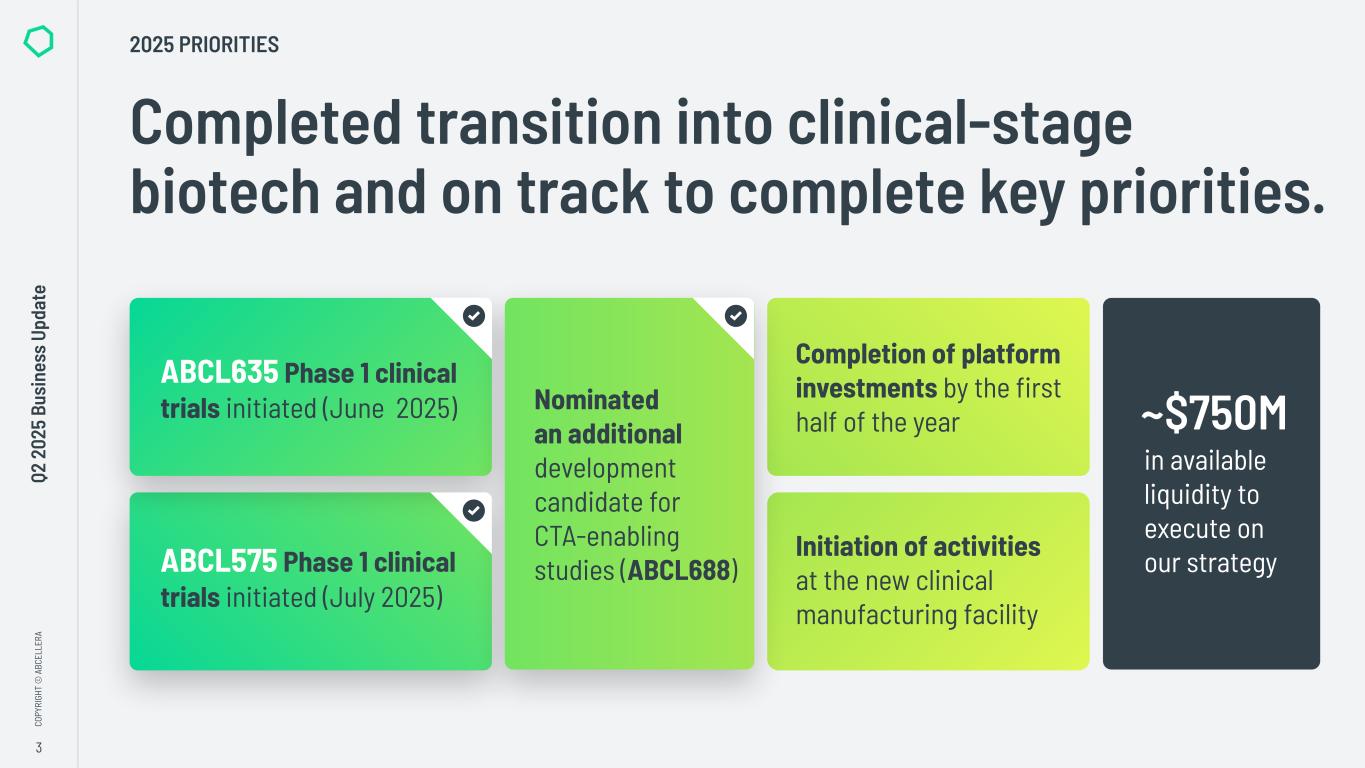
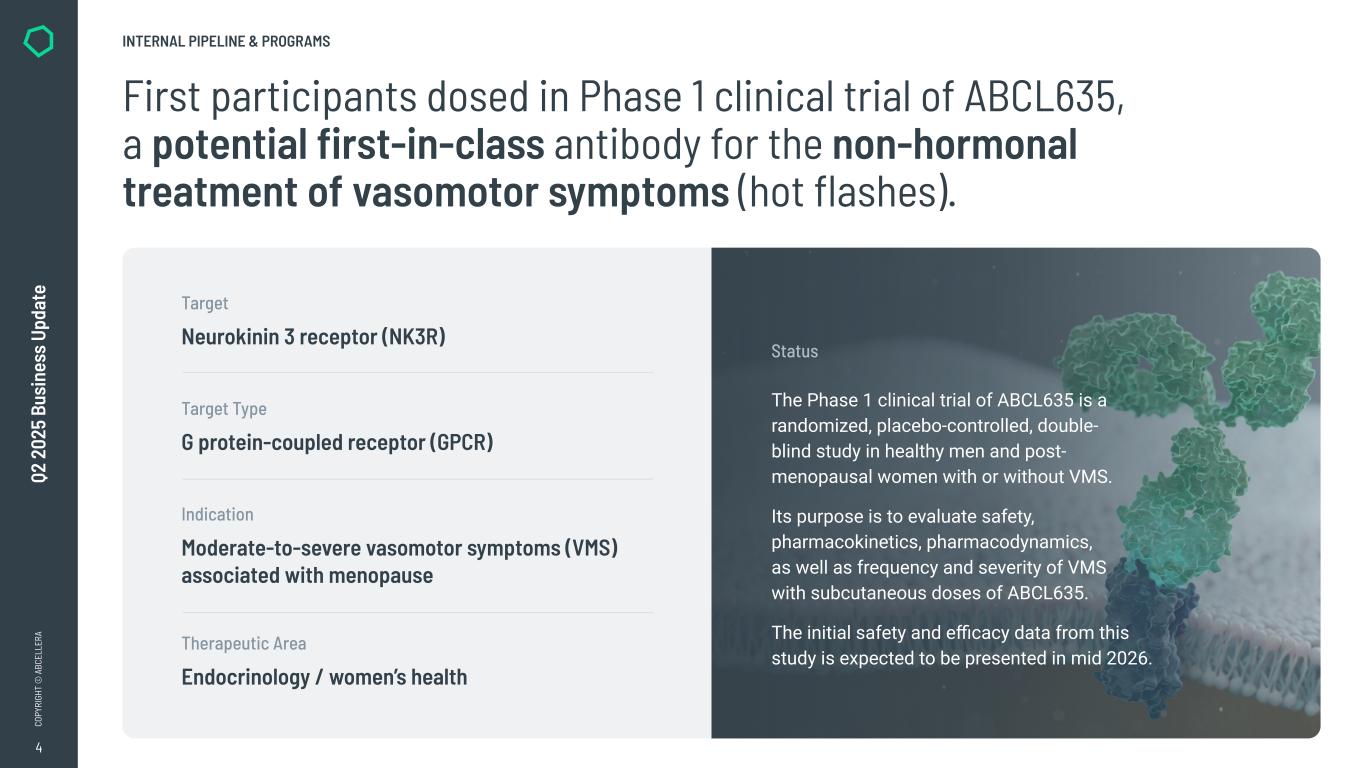
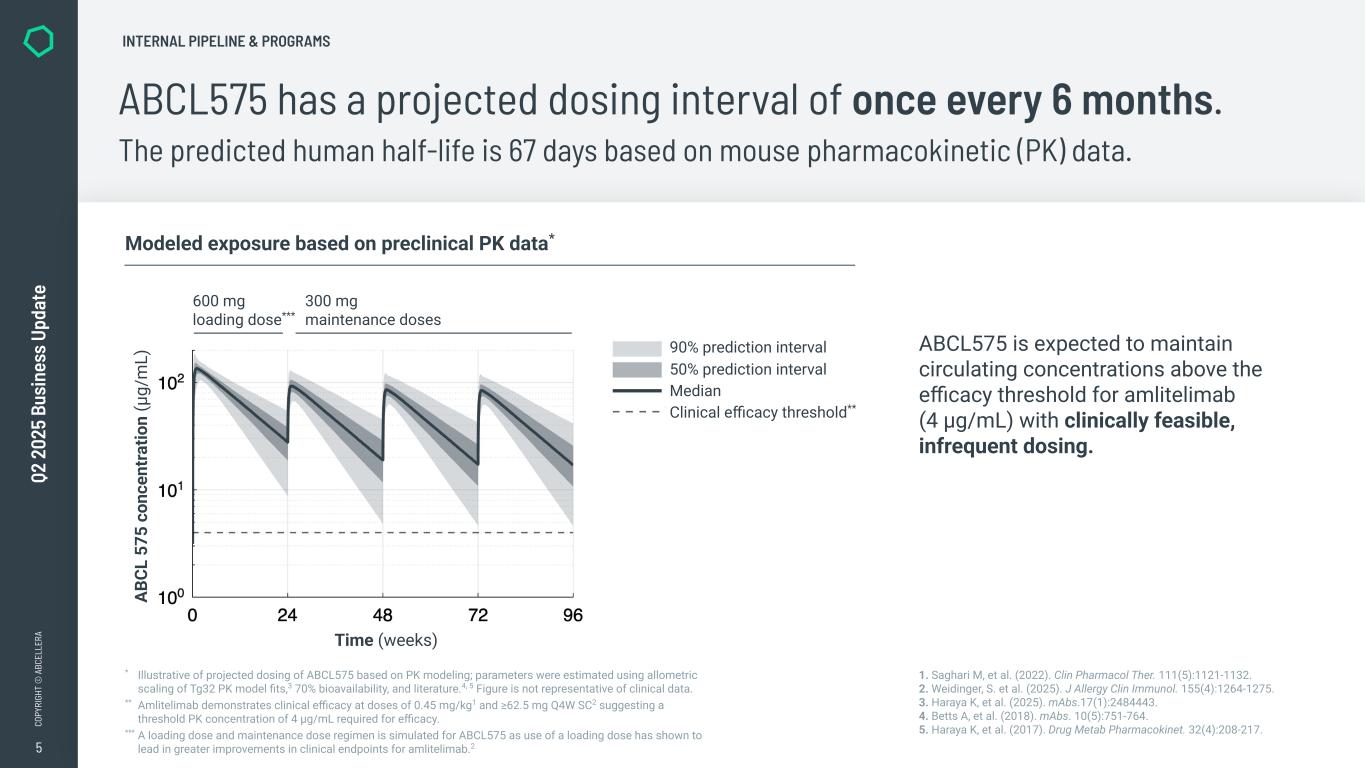
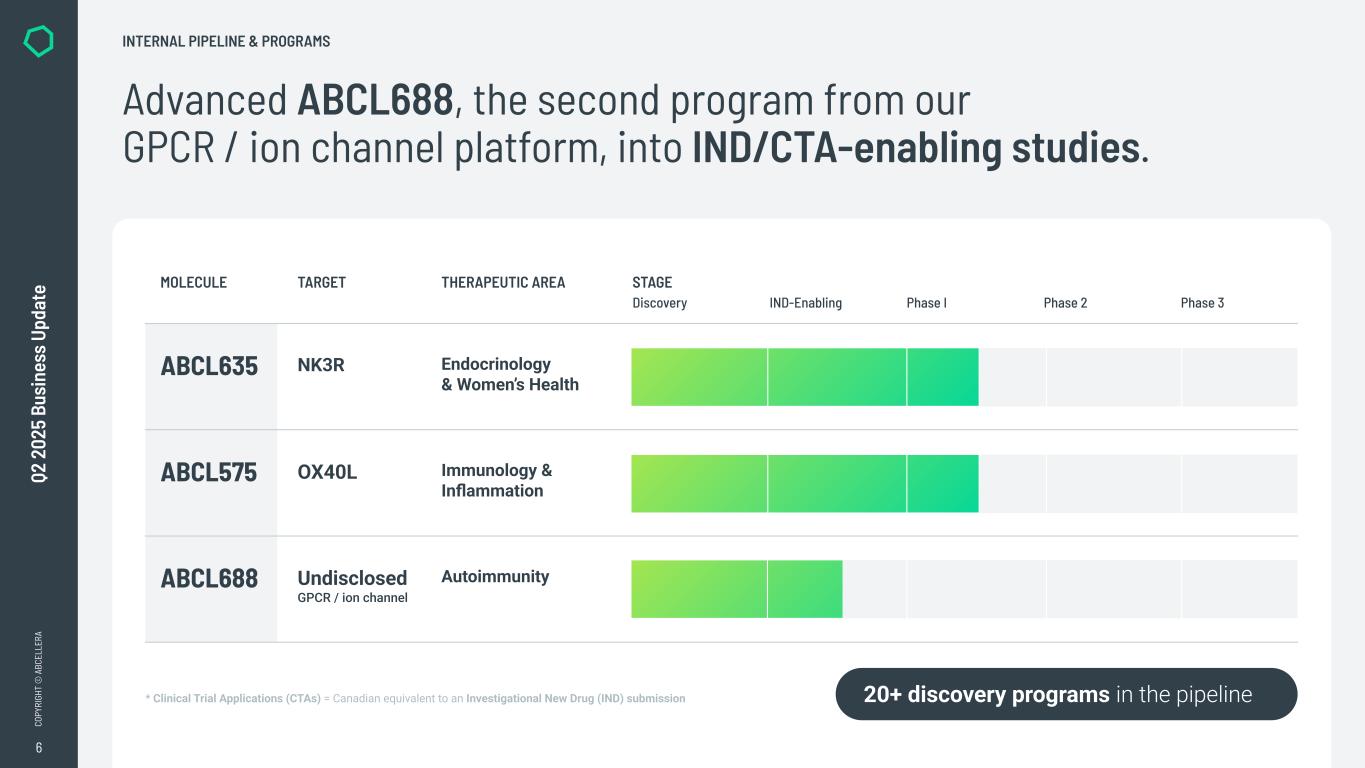
Thank you, Trinh, and thank you, everyone, for joining us today. This quarter, we achieved a major company milestone, receiving Health Canada authorization to initiate Epceller's first two clinical trials for ABCL 635 and ABCL 575. Today, I'm pleased to announce that dosing has begun in our Phase I clinical trial evaluating ABCL 635 for moderate to severe vasomotor symptoms. This marks completion of the transition from a platform company to a clinical stage biotech that we committed to back in 2023. After the end of the quarter, we also opened our Phase I clinical trial for ABCL-575, and we anticipate dosing will begin shortly. I'm also pleased to announce that we have added a third program to our pipeline by advancing ABCL-688 into IND-enabling studies. We ended the quarter with approximately $750 million in available liquidity, and we are well positioned to continue to execute on our strategy and are on track to complete our remaining goals for 2023. These include continuing to build our pipeline by advancing at least one more development candidate into IND enabling studies, completing platform and infrastructure investments, and starting to use these capabilities in clinical manufacturing. ABCL 635 is the potential first-in-class therapeutic antibody being developed for the non-hormonal treatment of moderate to severe vasomotor symptoms, more commonly known as hot flashes, that are associated with menopause. ABCL 635 is a potential next-generation NK3R antagonist designed to have both an improved safety profile and a more convenient dosing regimen. If ultimately successful, we believe it can be a highly differentiated product that would launch into a large and established market. We successfully completed the CTA process for ABCL 635 in Q2 of 2025, and today we are pleased to announce that we have begun dosing participants. The ABCL635 Phase I clinical trial is a randomized, placebo-controlled, double-blind study in men and postmenopausal women with or without VMS. Its purpose is to evaluate safety, pharmacokinetics, pharmacodynamics, and the frequency and severity of VMS with subcutaneous doses of ABCL635. The primary endpoint of the study is safety, and a key secondary endpoint is pharmacokinetics. As I mentioned on the last earnings call, we believe the main scientific risk for ABCL-635 is whether or not we can achieve sufficient target engagement. We expect this will be addressed through biomarker and proof-of-concept studies that are part of our Phase I design. As previously stated, we expect initial safety and efficacy data from this trial in mid-2026. Turning to our second program, ABCL-575, we received authorization from Health Canada in May to initiate a Phase I clinical trial. The trial was opened in July, and we anticipate dosing our first participants this quarter. This is a double-blind, placebo-controlled study designed to assess safety and tolerability in healthy participants following subcutaneous doses of ABCL575. ABCL575 is an investigational antibody therapy targeting ox40 ligand that is being developed for the treatment of moderate to severe atopic dermatitis, and which also has broad potential in several other I&I indications. We recently presented preclinical data which demonstrates it has potent functional activity in vitro that is in line with amotillumab as measured by cytokine responses across a variety of cytokines including IL-13, IL-5, and IL-9. As a reminder, ABCL575 is engineered with half-life extension to support less frequent dosing. Based Based on PK data we've obtained from studies in SCRN humanized mice, we predict a human half-life of approximately 67 days. Using this half-life, our modeling predicts that a 300 mg dosing of ABCL575 every 6 months should achieve circulating concentrations that remain above the efficacy threshold that was observed for amlitilumab. This prediction, once confirmed in clinical studies, would support a product profile with subcutaneous dosing once every 6 months. In addition to our clinical programs, we continue to allocate significant resources to internal discovery to build out our pipeline. This quarter, we advanced ABCL 688 into IND and CTA enabling studies. ABCL 688 is a potential antibody medicine for an undisclosed indication in autoimmunity. It is the third program in our pipeline and the second program derived from our GPCR and ion channel platform. form. Similar to ABCL 635, for strategic reasons, we will not be disclosing additional information on ABCL 688 until this program reaches the clinic. Our intent is to submit an IND in mid-2026. For the remainder of the year, our priorities are as follows. Executing on our clinical studies with ABCL 635 and ABCL 575. Moving ABCL 688 forward in IND enabling studies. advancing a fourth program from discovery into our pipeline, and finally bringing our clinical manufacturing capabilities online. And with that, I'll hand it over to Andrew to discuss our financials. Andrew?
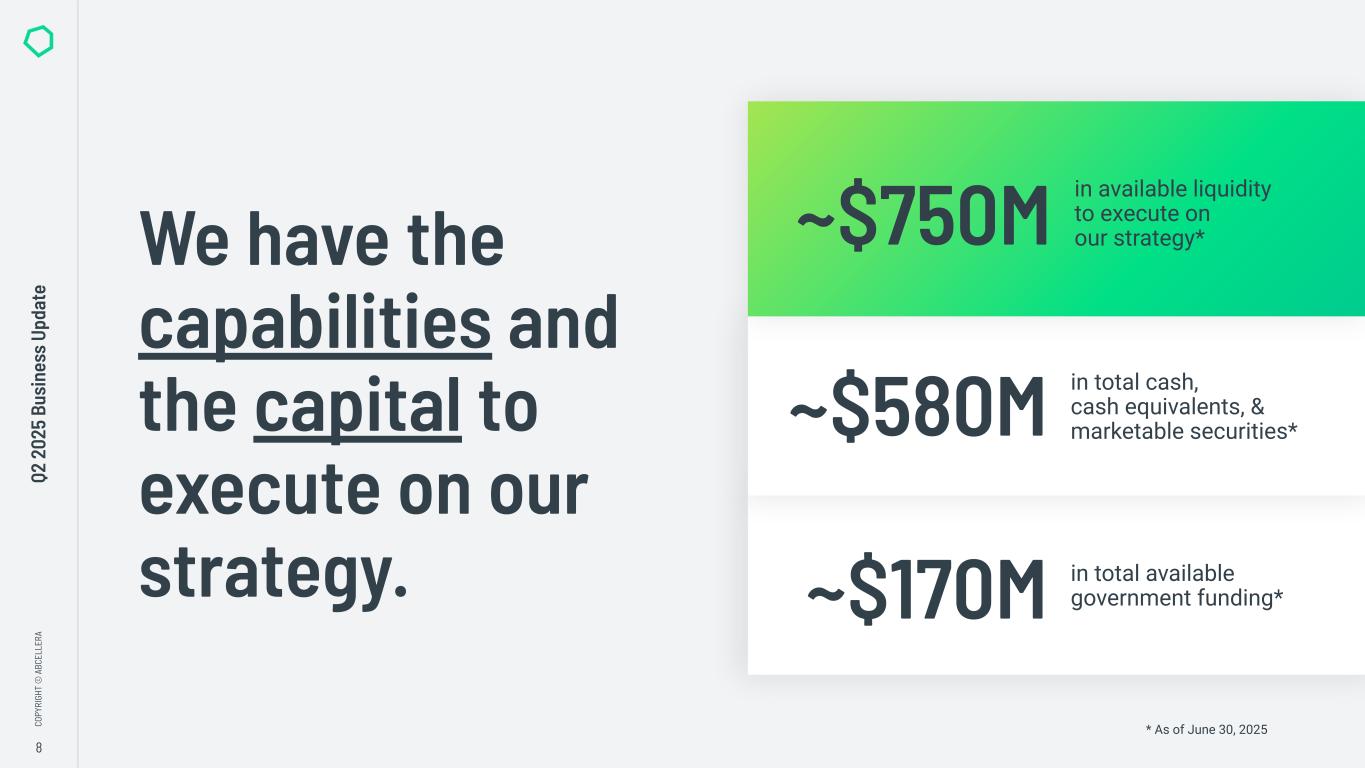
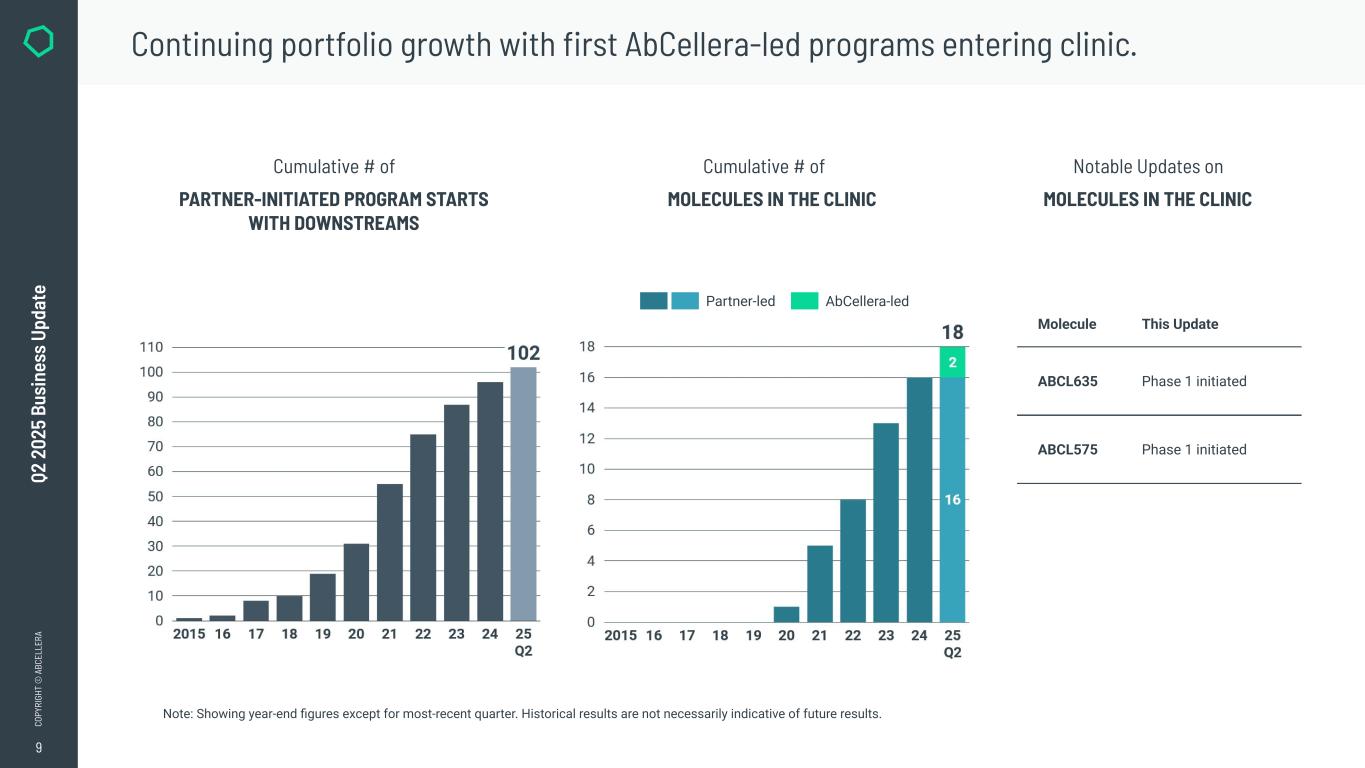
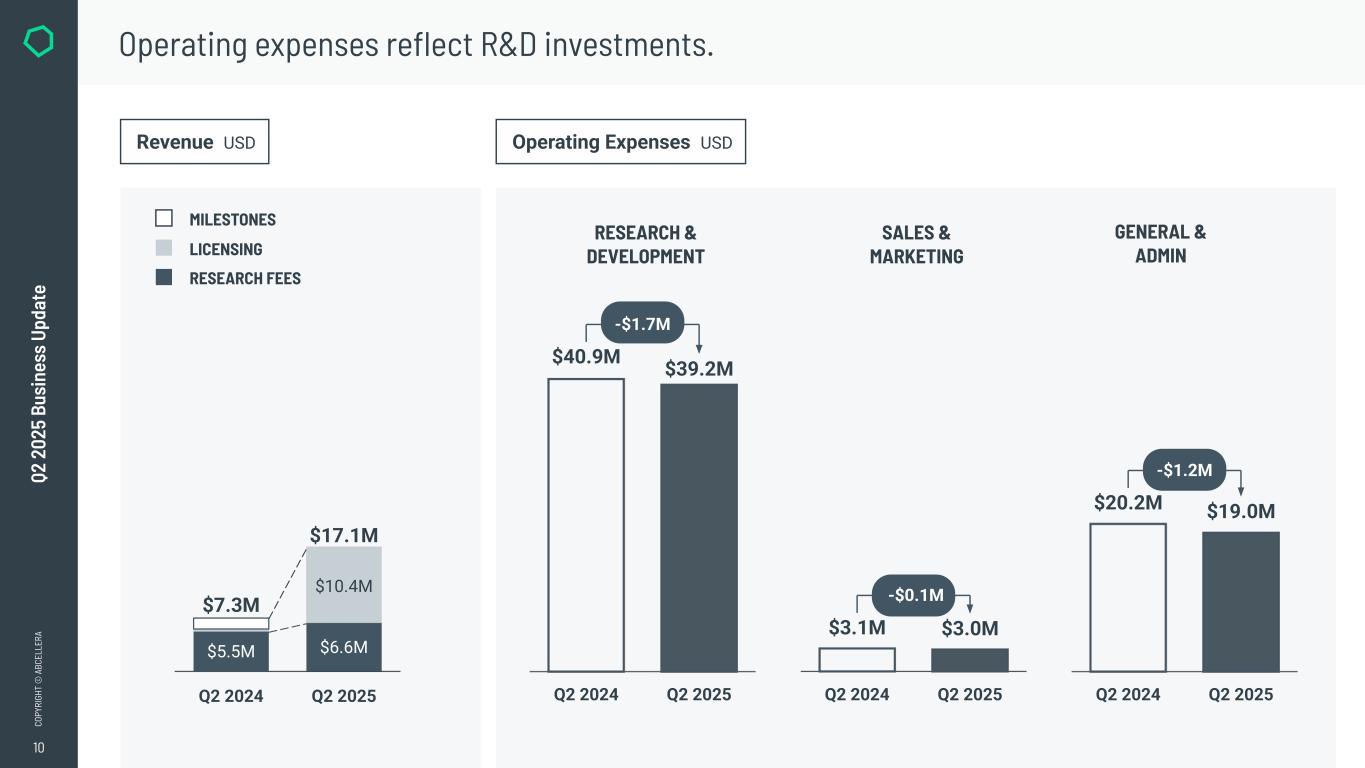
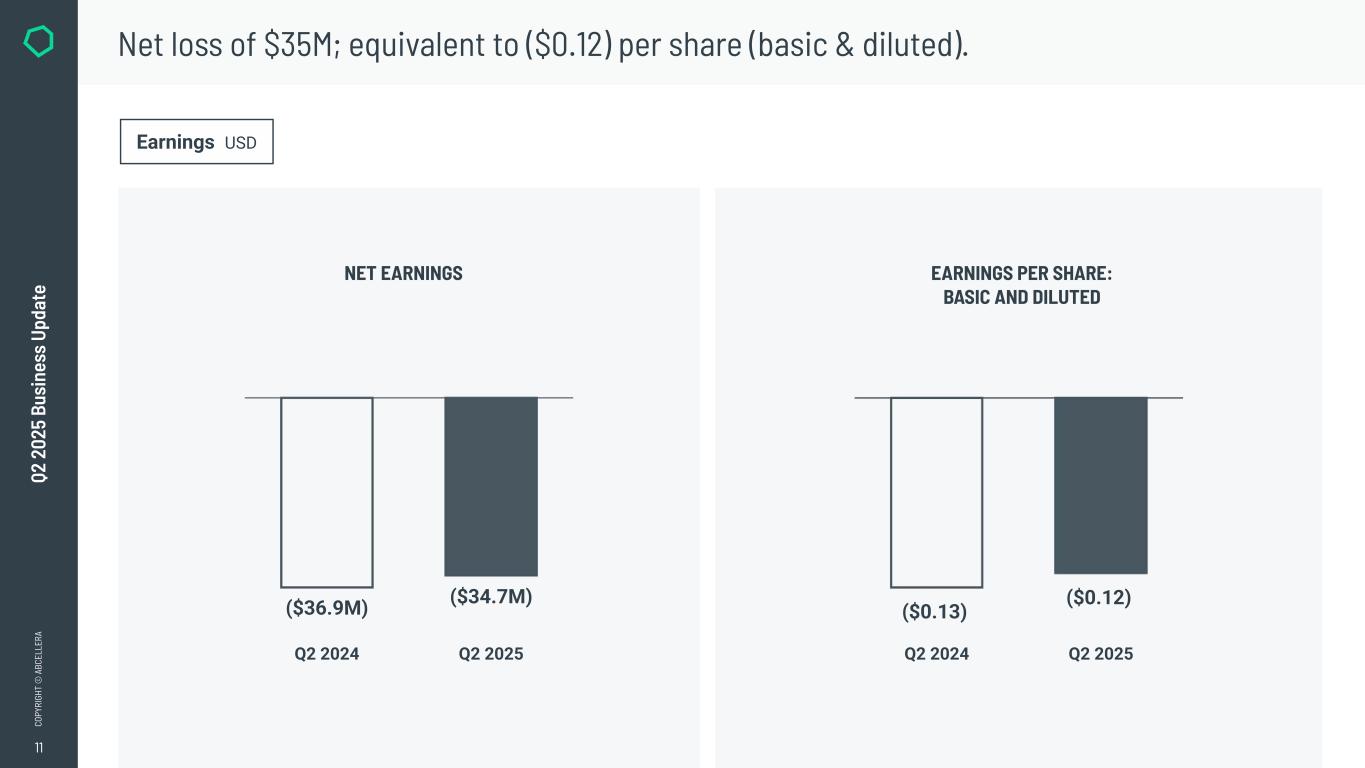
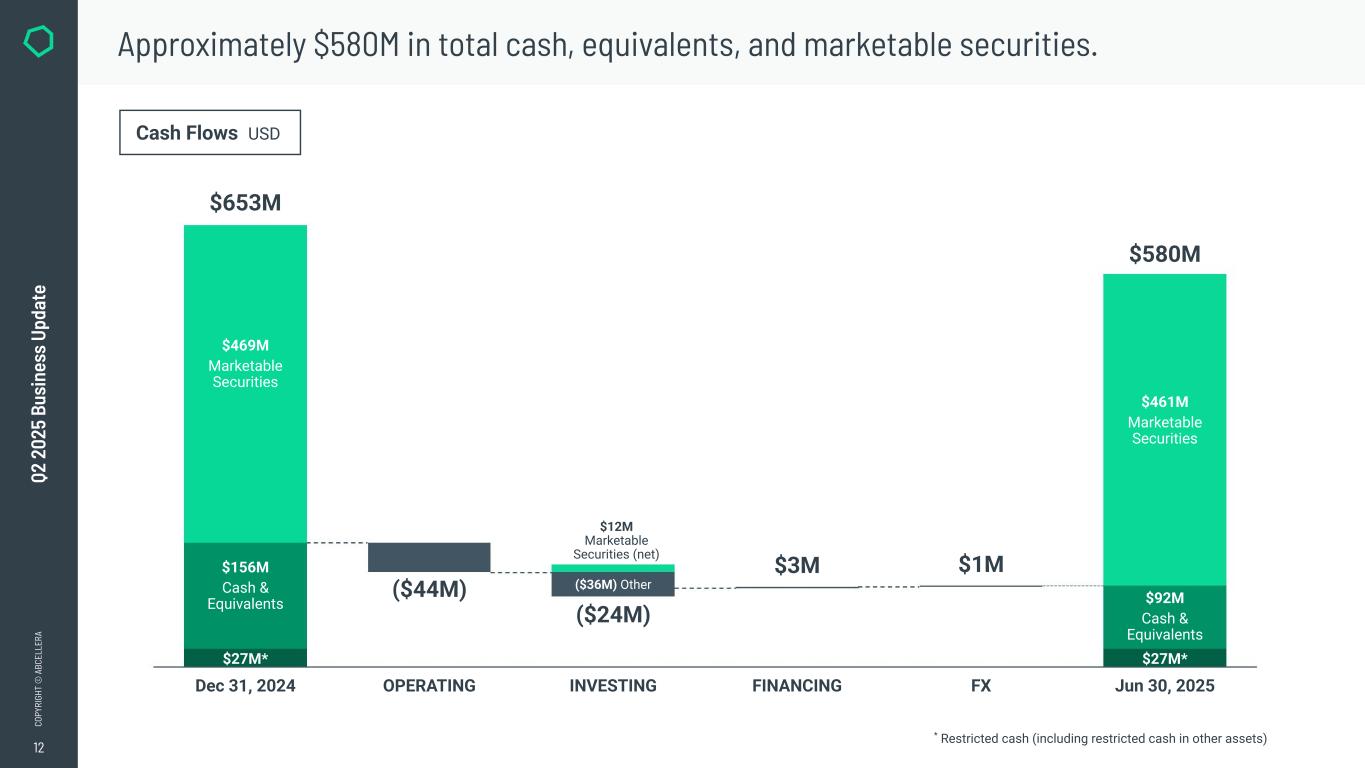
Thanks, Carl. As Carl pointed out, Abcelera continues to be in a strong liquidity position with approximately $580 million in cash and equivalents and with roughly $170 million in available committed government funding to execute on our strategy. We are continuing to execute on our plans with a focus on internal programs and on completing our CMC and GMP investments. Looking at our business metrics, in the second quarter, we started work on five partner-initiated programs, which takes us to a cumulative total of 102 programs with downstream participation. Both ABCL 635 and ABCL 575 received their clinical trial authorizations in the second quarter, thus advancing into the clinic. They are the first abcellular-led molecules to reach the clinic, taking the cumulative total number of molecules to have reached the clinic, including those led by partners, to 18. As we have previously stated, we view the overall progress of molecules in the clinic as a potential source of near- and midterm revenue from downstream milestone fees and royalty payments in the longer term. Turning to revenue and expenses, revenue for the quarter was approximately 17 million dollars comprising of research fees relating to work on partner programs and amounts related to licensing this compares to revenue of seven million dollars in the same quarter of 2024. the licensing fees of 10 million dollars stems from our tree any humanized rodent platform and mostly consists of a lump sum amount in this quarter with respect to research fee revenue as we have mentioned in the past we expect these to continue to trend lower as we we are increasingly focused on internal and co-development programs. Our research and development expenses for the quarter were approximately $39 million, $2 million less than last year. This expense reflects ongoing investment in our internal and co-development programs. The slight decrease is related to the timing of larger program-specific related expenses, which were larger in the second quarter of last year. In sales and marketing, expenses for Q2 were about $3 million, a small reduction relative to the same quarter last year. And in general and administration, expenses were approximately $19 million compared to roughly $20 million in Q2 of 2024. Included in these expenses are the ongoing expenses related to the defense of our intellectual property. Looking at earnings, we are reporting a net loss of roughly $35 million for the quarter compared to a loss of $37 million in the same quarter of last year. In terms of earnings per share, this result works out to a loss of $0.12 per share on a basic and diluted basis. Looking at cash flows, operating activities for the first half of 2025 used approximately $44 million in cash and equivalents. Excluding investments in marketable securities, investment activities amounted to a net $36 million, dollars, mostly in property plant and equipment, driven by the ongoing work to establish CMC and GMP manufacturing capabilities. The investments in PP&E were partially offset by government contributions. As a part of our Treasury strategy, we have about $460 million invested in short-term marketable securities. Our investment activities for the quarter included an approximately $12 million net increase in these holdings. Altogether, we finished the quarter with $580 million dollars of cash, cash equivalents, and marketable securities. As a reminder, we have received commitments for funding for our GMP facility and the advancement of our internal pipeline from the Government of Canada's Strategic Innovation Fund and the Government of British Columbia. This available capital does not show up on our balance sheet. With over $580 million in cash and equivalents and the unused portion of our secured government funding, we have around $750 million in total available liquidity to execute on our strategy. The cash usage for the remainder of 2025 will continue to prioritize advancing our two lead programs through their Phase I clinical studies, building the pre-clinical pipeline, and completing our investment in the integrated clinical manufacturing capabilities. Our new manufacturing facility is on track to come online at the end of 2025, as we had indicated in previous calls. with respect to our overall operating expenditures our capital needs continue to be very manageable we continue to believe that we have sufficient liquidity to fund well beyond the next three years of increasing pipeline investments and with that we'll be happy to take your questions if you'd like to ask a question please rest star followed by one on your telephone keep if for any reason you'd like to remove that question please rest star followed by two Again, to ask a question, it's star one on your telephone keys.
Operator
Our first question is from Andrea Newkirk with Goldman Sachs. Your line is now open.
Talani
Analyst — Goldman Sachs
This is Talani on for Andrea. Thanks for taking our questions. And congrats on the progress this quarter. One quick one from us. Just given the recent news of the delayed to do for Alan Zanatan, do you guys anticipate any risks to the development path for 635 from a regulatory perspective? And what do you expect regulars will be most focused on in evaluating the drug's profile as well as its advances in development. Thank you.
You were breaking up a little bit at the end of the question. I did get the first part of it. So yes, there was a delay with Ellen Zanatant. Our understanding is that the FDA requested additional information from Bayer and that information is forthcoming. I think the comment suggested that there was no concern raised about the approvability and our expectation is that that would move forward to approval later this year. So beyond that, I don't think we have anything, any special insight into that. I didn't get the last, the last part of the question. Could you please repeat?
Talani
Analyst — Goldman Sachs
Sure. Sorry about that. Yeah, I was just wondering, what do you think the FDA and other regulators would be focused on in evaluating 635's profile as it moves forward in clinical development?
I'm sure. So, you know, there's now, I think, a well-trod path for the NK3R class, both with Fezlinatant and Elenzanatant. Obviously, you know, we need to demonstrate efficacy. As I mentioned in my prepared remarks, we're excited about the upcoming data and the readout midpoint next year that should give us a lot of information about the efficacy and target engagement, which we do see as the primary scientific risk. On the safety side, as I mentioned on the last call, so far what has been seen in the class for NK3R antagonists is some liver toxicity, or these signals of liver toxicity, as well as somnolence or sleepiness. We believe the somnolence is because of targeting not just NK3R, but also NK1R, which our antibody does not do. We expected that would not be a concern. And similarly, because we are the first-in-class antibody for this indication, and antibodies are not metabolized in the liver as our small molecules and because there is little evidence of expression of mk3r in the liver we don't expect that there will be liver talks associated with our drug but of course you know we need to demonstrate that in the trial and i'm sure the regulators as as the investment community will be looking at the two main things which we always look at which is efficacy and safety that's a couple thank you our next question is from
Operator
Rikirpa Devara Konda with Druis. Your line is now open.
Hey guys, thank you so much for taking my question and congratulations on the progress of Quata. So for the ABCL 635 phase one trial, you know, congrats first of all on getting the trial initiated efficiently. But now that you've initiated the trial, can you talk a little bit more about the specifics? You know, is there a certain what the total number of patients and And if there is a certain ratio of healthy men to postmenopausal women, you expect to enroll. And Adam, maybe a bit more broader question. You previously said that 50% of menopausal women are hesitant to take HRT because of the concerns and the consequences. With Dr. McCary being, he seems to be a very strong proponent of HRT.
Do you think this might change the market overall? or do you think it's you you still have a substantial market sure so first off I'll maybe provide a little bit more information on the clinical trial so as you might expect you know the first parts of the trial are basically a single ascending dose then multiple ascending dose in a single ascending dose will include both menopausal men I'm sorry pardon me pardon me that'd be difficult to recruit we will include both menopausal women and healthy healthy men or healthy male volunteers and in that part of the trial we will be able to assess the biomarkers in the mad we will be recruiting only post menopausal women and the combination of the sad and the mad you know could be roughly you know 56 60 patients or so once we progress on to the proof of concept we expect to enroll up to 80 patients and in that in that case and that phase of the study, we will, of course, be recruiting postmenopausal women with moderate to severe BMS. So, to the second part of your question, you know, there has been, you know, some discussion lately about the use of menopausal hormone therapy and some revisiting of the Women's Health Study that was, you know, a study that I think cast a bit of a shade on the benefits of menopausal hormonal therapy for the treatment of VMS and other other symptoms related to menopause. You know, our view has always been that the NK3R class is not in competition with hormone therapies. So it turns out that, you know, there are roughly 20% of the eligible population that either have contraindications, so have risk factors that mean they're not eligible for hormone therapy or that try hormone therapy and are unable to continue. So 20% of the population for which hormone therapy is not meeting their needs. And then, of course, there's some other portion of the 80% that are going to have a preference not to use hormone therapy. So if you look at the number of eligible patients in the U.S. alone, that's a very large patient population and we would we would need to only you know capture a relatively small portion of that market uh to have this drug be a terrific success so we're still very confident about the market opportunity and we expect the conversation about mhd will continue uh as it should uh and that um you know that uh doesn't change our view of the market uh since we sort of had that in mind from very beginning okay great thank you so much for the color really helpful our next question is
from faisal kushid with lee rink partners fine is now open hey guys thank you for having the question really appreciate it i just wanted to ask on the partnership and licensing revenue for the quarter it seemed a little bit higher than kind of where you've been should that be an expectation kind of going forward or how should we think about sort of the cadence and sequencing of those funds coming in thank you yeah good question this is uh uh this is Andrew here speaking Faisal Faisal um the uh no you should not uh this was definitely a one-off payment it really related to uh activities post the acquisition of Triani uh that were that were
completed uh really as an earn out to the former shareholders of Triani so you'll see in addition to the 10 million licensing revenue a change in the contingent consideration on our balance sheet which is really the balancing entry related to that transaction. So it's not something that we would expect to have happen in the future.
Operator
Our next question is from Malcolm Hoffman with BMO. The line is now open.
Malcolm Hoffman, I'm for Evan Seegerman for BMO. Can you remind us what key efficacy data we should be looking out for in the 635 Phase I study? I understand we're largely looking for safety in a Phase I, but what biomarker efficacy measures would start to give us kind of confidence and further development here from a competitive perspective? Thanks.
Sure. So, Carl here. So, early in the study, we will be assessing some biomarkers. So, LH and FSH in men and women. In the SAD, where there will be only healthy volunteers participating, men and women, obviously in the men, we'll be able to assess testosterone, and the women, estradiol. So, all of those, I think, are a really positive indication, and we expect to see those biomarkers modulated by treatment at the higher doses so that's the first check but that is not equal to efficacy so the real measure of efficacy needs to wait until the POC study and as I mentioned we will be enrolling up to 80 postmenopausal women with moderate to severe BMS and there we're going to be assessing the frequency and severity of BMS which is self-reported and so we And we won't have that data until sometime in mid-2026, but we think that that study is sufficiently powered to give us, you know, coming out of that, if it lines up the way that we hope and expect, a lot of confidence that we've got something that looks like a drug and that we intend to move forward.
Operator
Our next question is from Jacqueline Kisso with TD Securities, the line is now open.
Hey, guys, I think it's supposed to be Brendan, I think you have Brendan from TD Securities Sorry about the confusion there. So, thanks for taking all the questions, guys, and all the good color expertise in the VMS after moving along. I actually just wanted to maybe ask another follow-up on that. Actually, just related to target dosing in any respect, I fully appreciate it's still early days. A lot to kind of understand with some of the biomarker data and what that realistically means for kind of uptake down the road. But are there any special considerations when you're thinking about formulation or frequency of dosing that could kind of help as you're thinking about a clinical plan down the road and then just any ability to kind of target these kinds of patients from a commercial standpoint?
Yeah. I'm happy to give a little bit of color on that. So, you know, a lot of this rests on our preclinical work from which we believe that we've got an antibody that has a half-life and a potency that would support once-monthly dosing on a single subcutaneous dose, and that subcutaneous dose would be a high concentration formulation at 150 mg per mil at 2 mils. So, remains to be seen, but based on what we've seen so far, we've got a molecule we believe hits that TPP, and of course, that's one of the things we're going to be testing both in the efficacy and in the bioavailability and PK data that'll come out of the Phase 1 study.
Okay, got it. Thanks, guys.
Operator
Our next question is from Stephan Wiley.
Thanks for taking the question. This is Josh under Steve, and congrats on the progress. So, I noticed the healthy volunteer trial for 575 is now posted a clinical trial stuck of. I noticed there was one Canadian site listed, and I guess just looking forward as, like, a longer-term strategy, do you plan on activating any U.S. sites beyond phase one? Is this kind of related to, like, a capital commitment contingency with the governments of Canada and British Columbia to run all your trials in Phase I in Canada first? And then I'd just have a follow-up.
Yeah, so we have activated a site in Canada that's an expert in dermatology. We are, you know, very pleased with that site, and we think they have full capabilities to execute the Phase I study. Right now, our focus is on that. You know, from our perspective, the big thesis around 575 is our belief that the OX40 ligand class is going to be an immense class, not just in atopic dermatitis, but in other autoimmune and inflammatory conditions. We think that the key readout we're going to get in the near term is going to be bioavailability and PK, confirming some of the preclinical work we've done and the modelling that I showed during my prepared remarks. and that the other big catalysts are going to come from outside of the company, in particular some of the clinical development with ametilumab and other molecules in the class that are moving forward. So we are currently focused on that. We are also beginning to engage with the FDA and lay the foundation for the Phase II studies, which you would likely expect to include U.S. sites, but we haven't triggered that yet, and we have some time before we need to.
Great, thanks. And then just to follow up, I know it's early. You said you won't really disclose any details around 688 for now, but could you maybe speak to some of the autoimmune indications of interest you might be considering for this asset?
Yeah, I'm afraid we're going to hold this one close to our chest for strategic reasons. What I will say is that this is a program that we're very bullish on. I'd put it in a similar category to ABCL 635. It's one where we have a high conviction in the biology and where we think we can get some meaningful data early on. It's got a bit of a different competitive dynamic, but it's also a program that we intend to move very quickly. And so our focus right now is getting that to the clinic as quickly as possible. And when we do, we'll be able to share more details with you. So sorry for being a little bit uh reticent on details but i think it's probably in the best interest of the program no worries thanks guys it looks like there are no more questions so i'll pass the call back over to the management team for closing remarks just to say thank you everyone for the support and for joining us today and we look forward to updating you as we progress from where we are today into the clinic thanks very much that concludes the conference call
Operator
Thank you for your participation. Enjoy the rest of your day.