Operator
Ladies and gentlemen, thank you for standing by. Welcome to the second quarter of Quista Therapeutics Learning Conference Call. At this time, all participants are in a listen-only mode. After the speaker's presentation, there will be a question and answer session. And to ask a question during this session, you will need to press star 11 on your telephone. You will then hear an automated message of advice and your hand is raised. To withdraw your question, please press star 11 again. Please be advised that today's conference is being recorded. I would like now to turn the conference over to Faith Comroy-Ward Invest Relations. Please go ahead.
Thank you, Operator. Good morning and welcome to today's call. On today's call, I'm joined by Dan Barber, President and Chief Executive Officer, and Ernie Toast, Chief Financial Officer, who are going to provide an overview of the company's reported financial results for the second quarter into June 30, 2026, and a progress update on the company's key 2026 objectives, followed by a Q&A session. During the Q&A session, the team will be joined by Dr. Matt Greenhawk, Chief Medical Officer, Melina Chaffee, Senior Vice President, Regulatory Affairs, Sherry Korchinski, Chief Commercial Officer, and Dr. Matthew Davis, Chief Development Officer. As a reminder, the company's remarks today correspond with the earnings release that was issued after market close yesterday. In addition, a recording of today's call and related supplemental materials will be made available on Equestive's website within the investors section shortly following the conclusion of this call. To remind you, the Equestive team will be discussing some non-GAAP financial measures this morning as part of its review of second quarter 2026 results. A description of these measures, along with a reconciliation to GAAP, can be found in the earnings release issued yesterday, which is posted on the Investors section of Equestive's website. During the call, the company will be making forward-looking statements. We remind you of the company's safe harbor language, as outlined in yesterday's earnings release, as well as the risks and uncertainties affecting the company, as described in the risk factors section and in other sections included in the company's annual report on Form 10-K, filed with the U.S. Securities and Exchange Commission on March 4, 2026. As with any pharmaceutical company with product candidates under development and products being commercialized, there are significant risks and uncertainties with respect to the company's business and the development, regulatory approval, and commercialization of its products and other matters related to operations. Given these uncertainties, you should not place undue reliance on these forward-looking statements, which speak only as of the date made. Actual results may differ materially from these statements. All forward-looking statements attributable to a questive or any person acting on its behalf are expressly qualified in their entirety by this cautionary statement and the cautionary statements contained in the earnings release issued yesterday. The company assumes no obligation to update its forward-looking statements after the date of this conference call, whether as a result of new information, future events, or otherwise, except as required under applicable law. Now I would like to turn the call over to Dan.
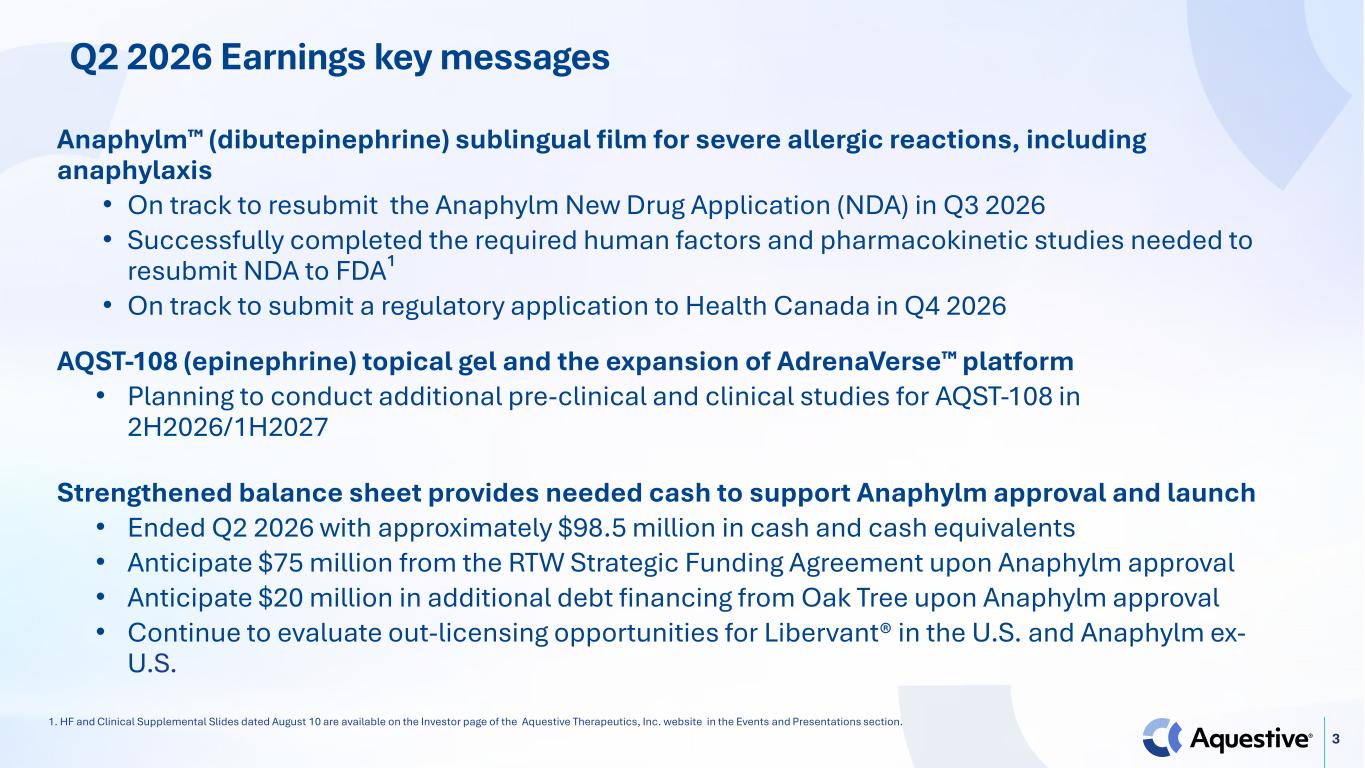
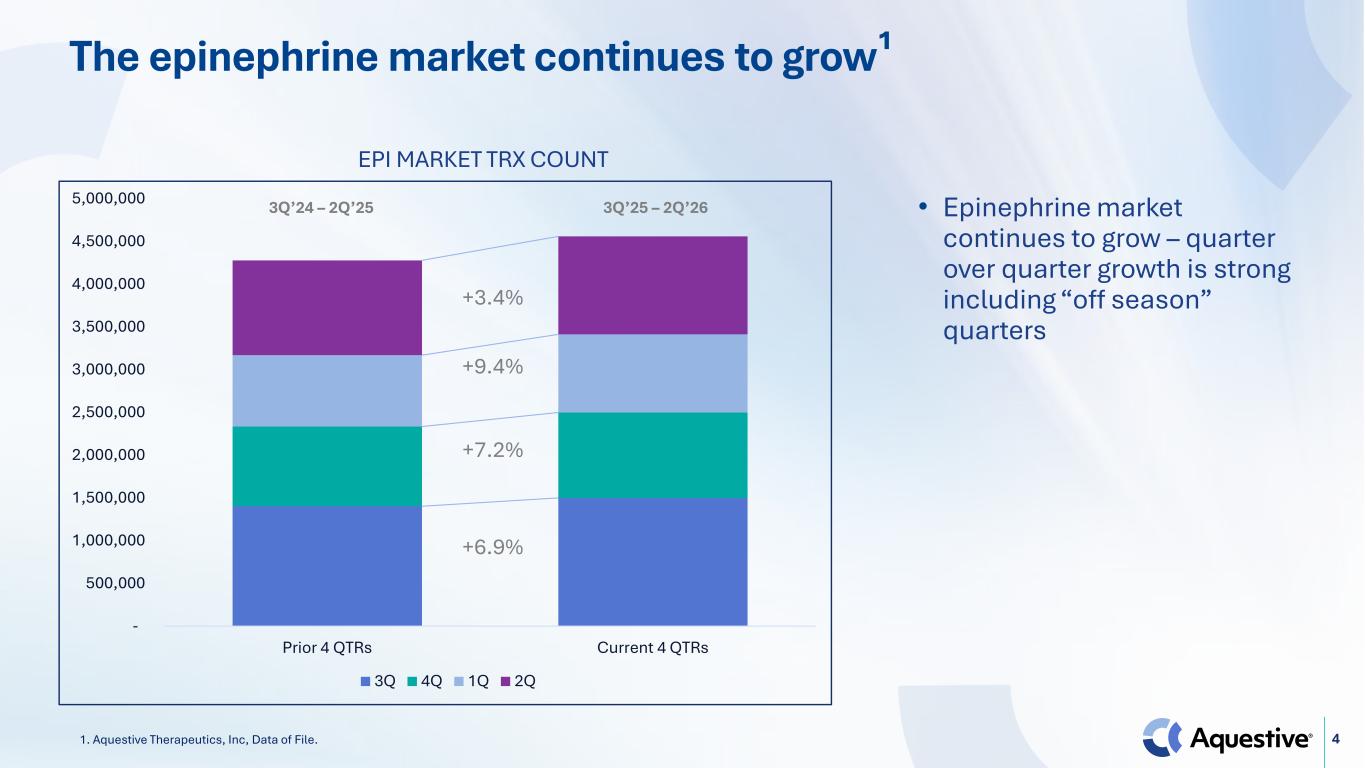
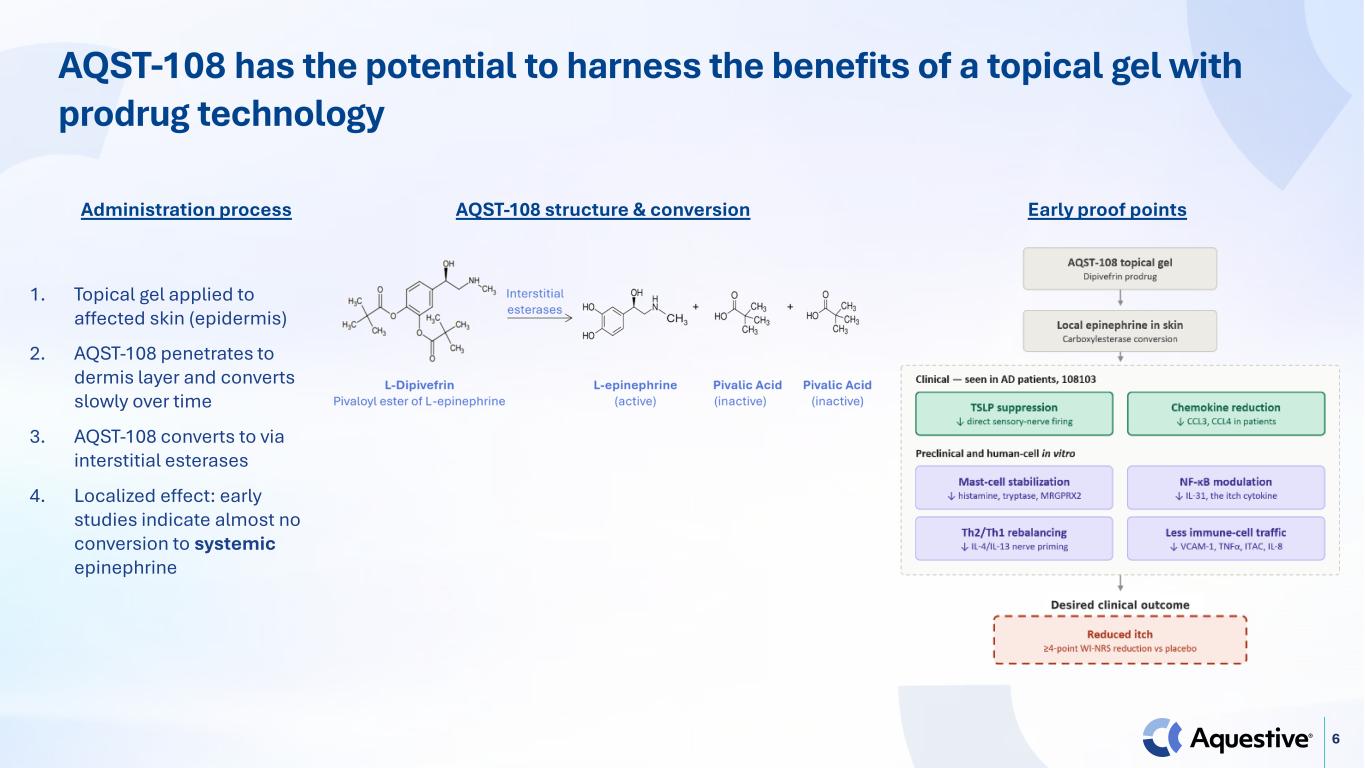
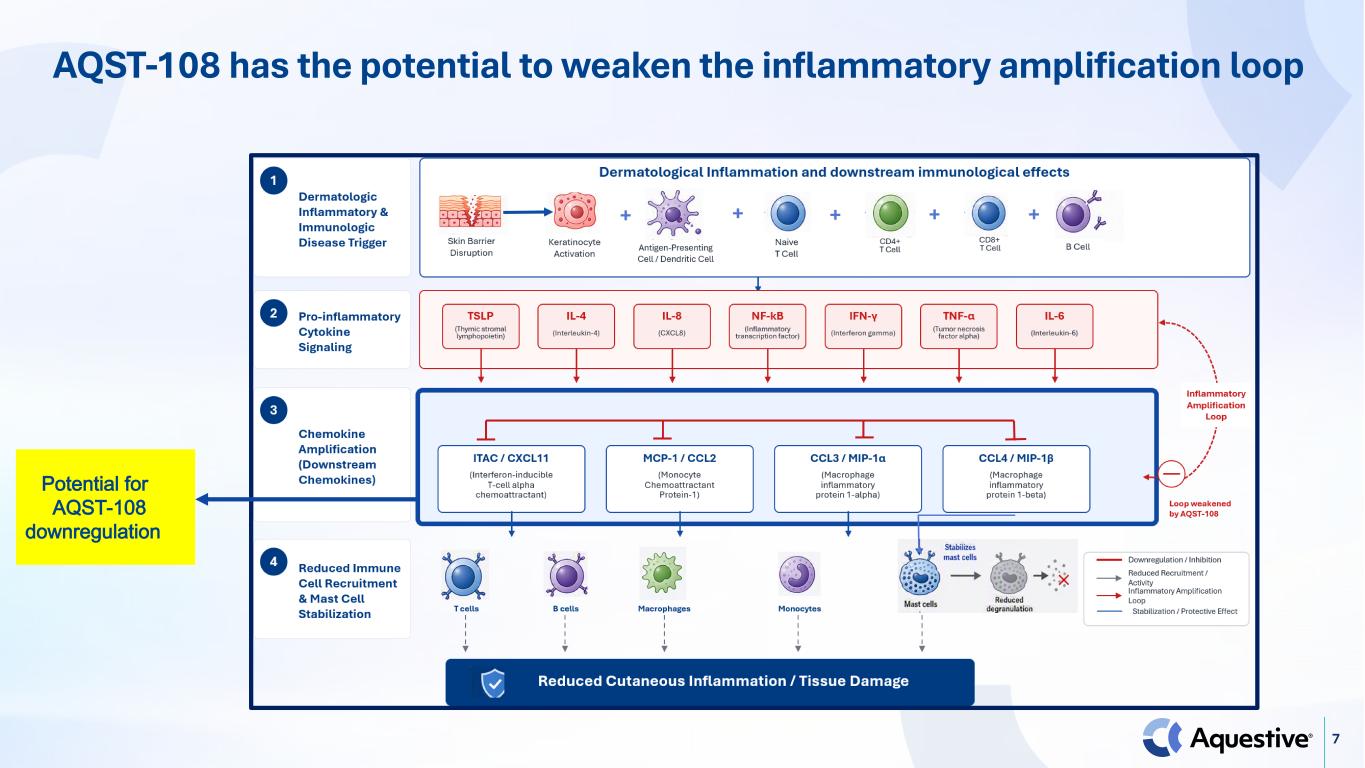
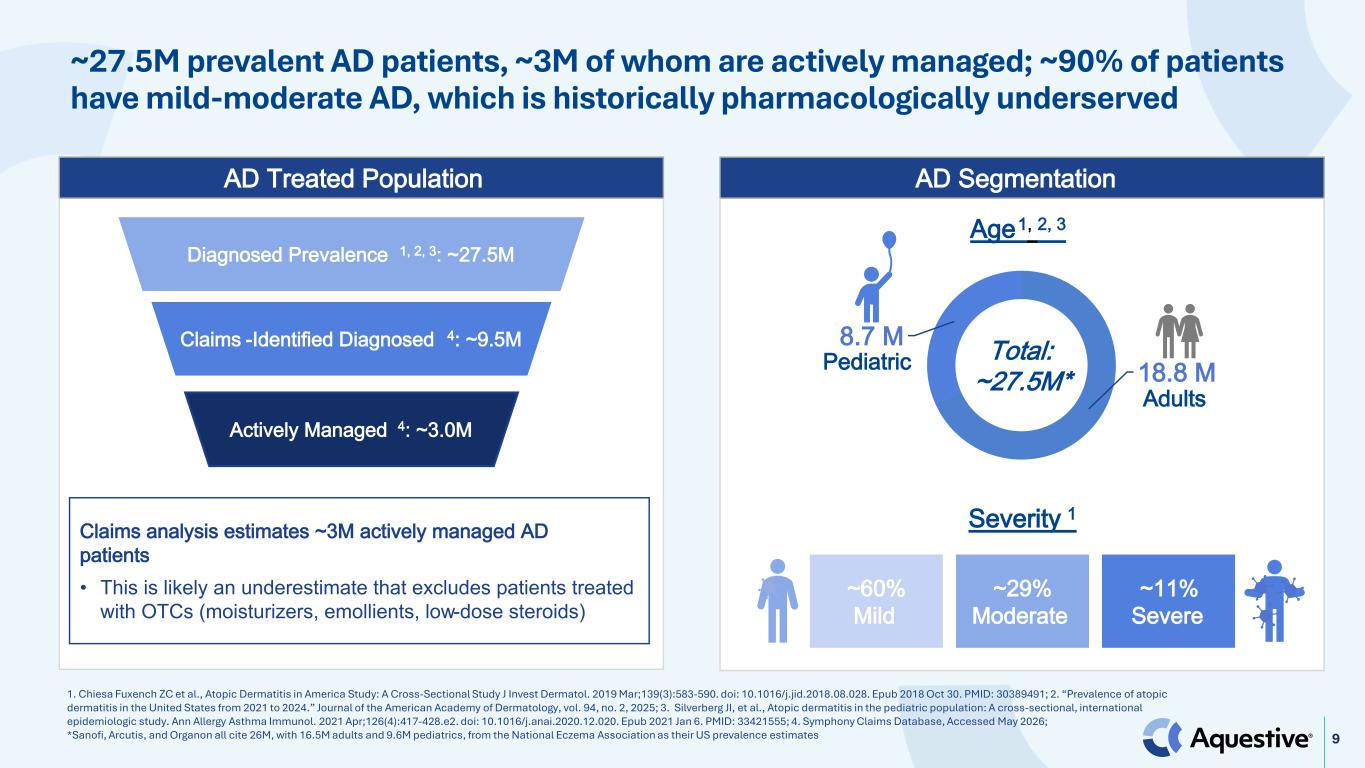
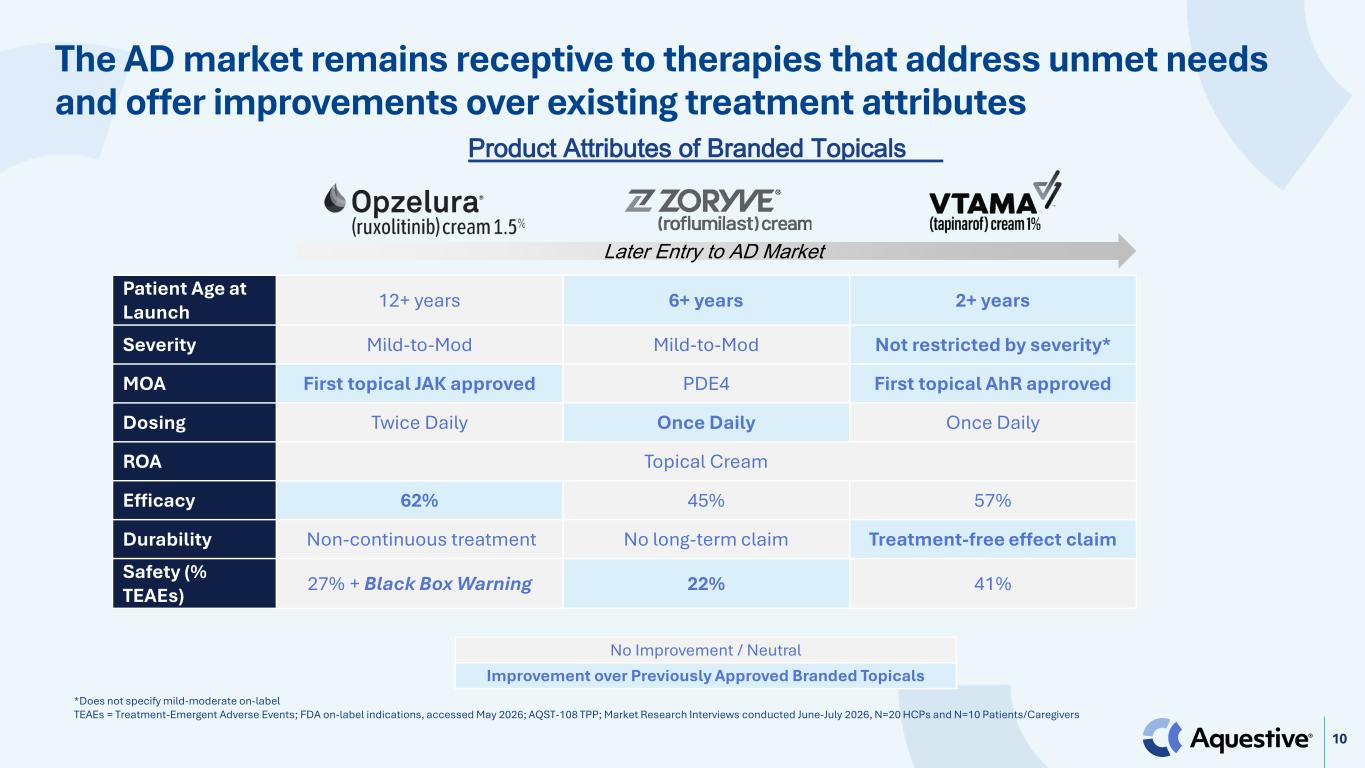
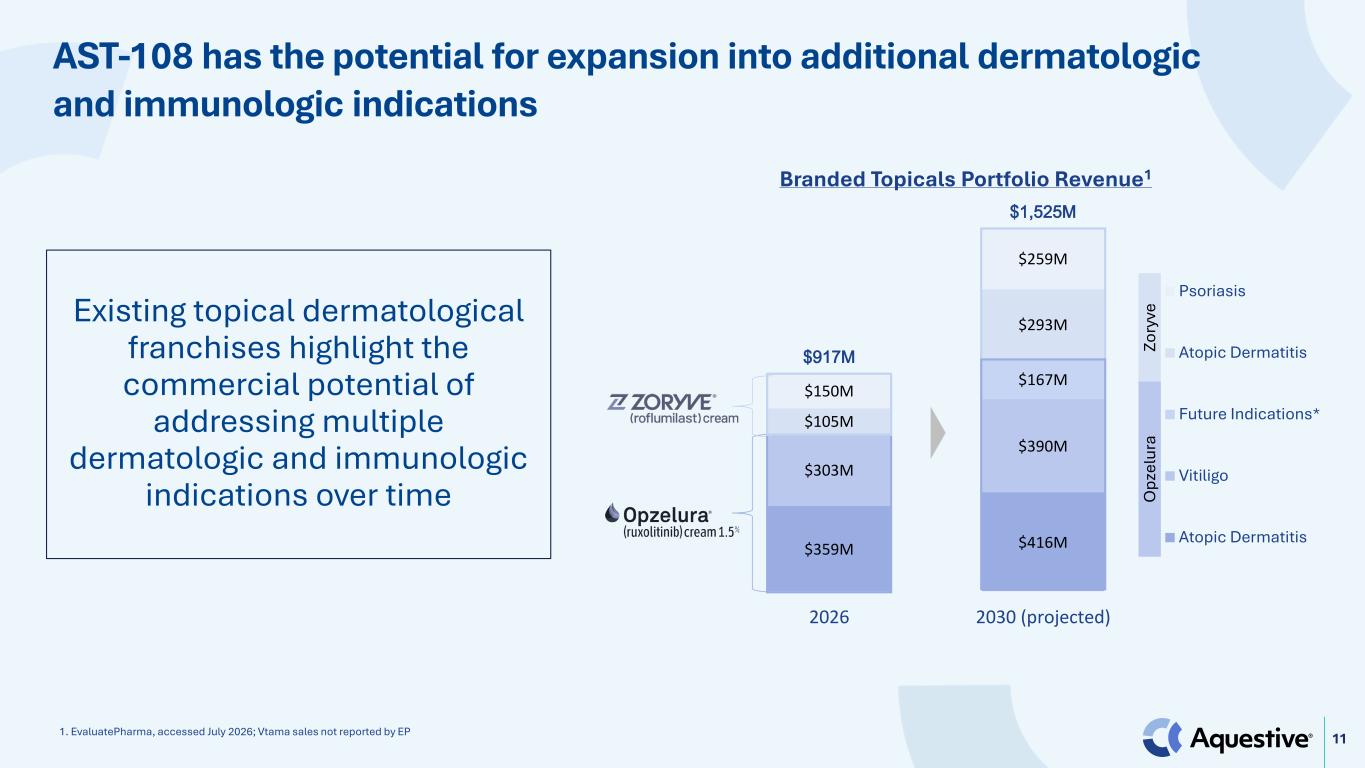
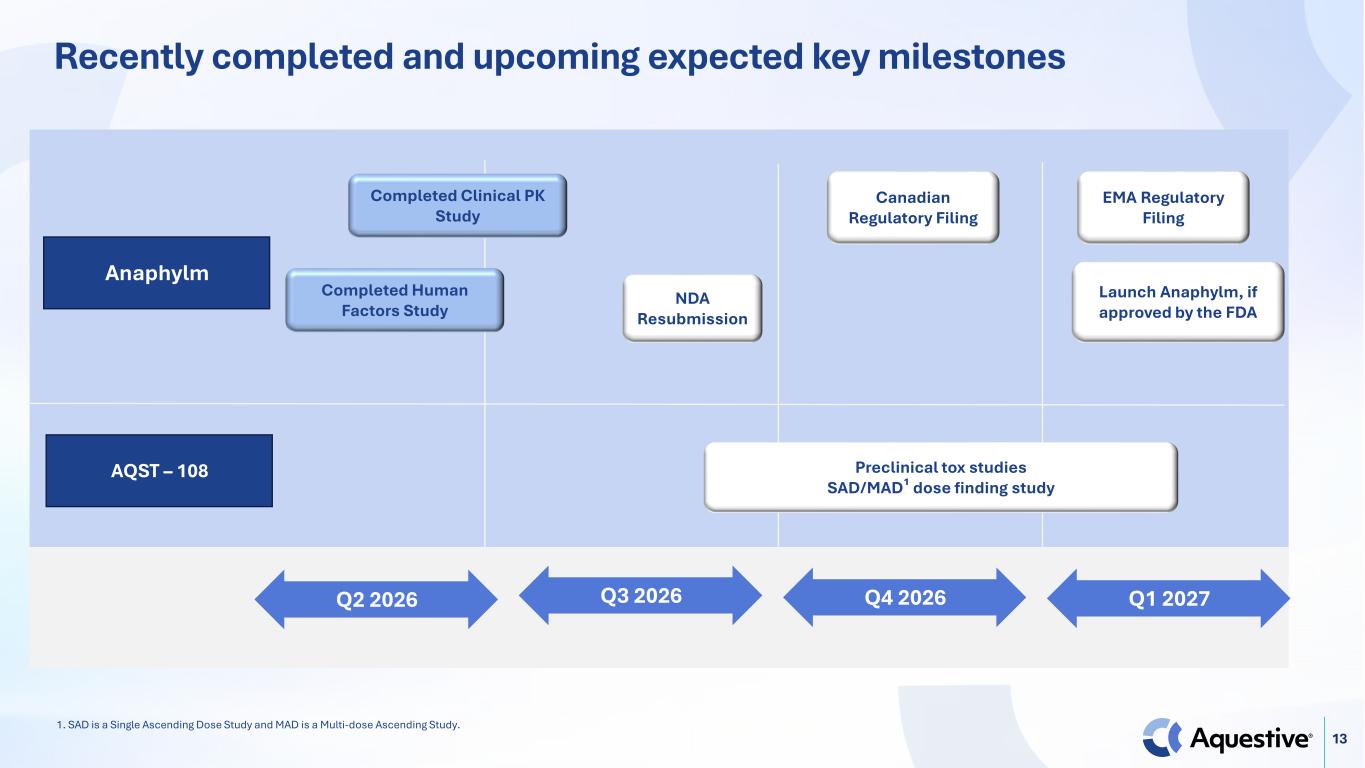
Thanks, Faith, and good morning, everyone. I am excited to share today that not only have we completed the necessary studies for Anifilm resubmission, but that we remain on track to resubmit before the end of this quarter. This is less than eight months from when we received a complete response letter from the FDA. Our resubmission will include the results from our most recent Human Factors Validation Study. As a reminder, this study provides information on how participants interacted with our improved packaging and instructions for use. In the complete response letter received earlier this year, the FDA indicated participants experienced difficulty opening our pouch and incorrectly administered the film too many times. I am pleased to say that after updating our packaging, labeling, and instructions for use, our most recent human factors validation study showed, statistically speaking, a major reduction in both categories. Under the previous packaging, we had 26 individuals indicate difficulty opening our packaging, and we had six individuals tear the film. This time, we had only one participant show difficulty, and no one tore the film. In the previous study, 20 participants placed the film incorrectly on top of their tongue or on the roof of their mouth. This time, we had only two participants misplaced the dose during administration. This data is further supported by our latest pharmacokinetic, or PK, study. In this study, we saw no statistical difference between clinician-administered and self-administered drug products. Keep in mind, subjects who self-administered were given our revised packaging and instructions for use and had no coaching by clinical staff during the administration. We also had an encouraging result when the film was purposely misplaced by clinicians on top of a subject's tongue. This data was requested by the FDA to further understand what might happen if the film is misadministered. We saw rapid and meaningful changes in blood pressure and heart rate. The changes from baseline were higher than manual IM during the critical first 15 minutes and in line with what we have seen from EpiPen in our other studies. This means that in the evaluated misadministration scenario, pharmacodynamic responses compared favorably to manual IM administration. Even on PK, while we saw lower levels as expected compared to on-rable sublingual administration, we still reached meaningful CMAX levels. This is a very encouraging outcome for the program. As we approach our planned resubmission for anafilm, it is a good time to review the compelling opportunity that exists for anafilm here in the U.S. While the epinephrine rescue market is largely generic, the need for improved clinical and caring offerings in this category is significant. And we believe these needs could support conversion to a branded product over time if approved. As a large PBM publicly wrote earlier in the year about Anifilm, this advancement stands out because emergency treatment is a category where ease of use and readiness really matter. That need starts with patients, caregivers, and health care providers. Our interactions with the allergy community indicate there is a widespread desire among patients and caregivers for an epinephrine that is oral, works quickly, is easy to use, easy to carry, and durable. Many years of research and data tell us patients still do not carry or use their epinephrine. The data also shows that medical devices, such as auto-injectors, are often not where you need it, when you need it, when anaphylaxis occurs. We believe the conversion from auto-injectors starts with the allergist, and we can accomplish this efficiently. Our focus at launch will be on the allergy community, which will allow us to keep our cash burned down as we prepare for a potential launch. if approved. We believe if allergists convert their prescriptions to the first and only non-invasive, orally delivered epinephrine products for the treatment of type 1 allergic reactions, including anaphylaxis, if approved by the FDA, the rest of the market could follow over time. Clearly, the desire for better products in this space is strong among patients, caregivers, and healthcare providers. This brings us to payer coverage. The first point I want to be clear on today is that we believe clinical differentiation matters to payers. Let me repeat that. Clinical differentiation matters. This goes beyond just offering a no-needle solution. In our case, the benefits from an oral medication are significant. Not only do we believe we are easier to carry than auto-injectors, our product has shown in our studies meaningful clinical differentiation from the auto-injector on time from maximum concentration, or TMAX, and on change from baseline blood pressure following administration. Our data demonstrates this, and we believe payers may find this meaningful. This, along with the ease of carry and use aspects of Anifilm, are important. We have a great clinical story to share, and we have already heard from multiple counterparts at various payer groups about the difficulties their individual family members face with autoinjectors. Payer coverage is also a function of product pricing. This is the single most important decision any brand will make at launch. We are actively building our pricing strategy, and for now, we'll keep this confidential. What I will say is that based on the ongoing volume in this market, we continue to believe the market opportunity for epinephrine-branded products exceeds $1 billion a year and could potentially reach $2 billion a year over time. This is driven not just by payer dynamics, but also by prescription volumes. The epinephrine rescue market has been growing for years, even without significant promotional activities. Over the last few years, the market has grown annually by around 6%, and this holds true for 2026 year-to-date. Given the large gap between prescriptions and prevalence, the continued expansion of allergy diagnoses, and new product offerings, we believe this growth rate could continue for the foreseeable future. So, from my perspective, the compelling opportunity in this category remains intact. We have an expanding and growing market dominated by outdated technology. We believe our product provides meaningful clinical differentiation that could support payer adoption, all while being efficient in our allergist-focused launch strategy, if approved. Now, let's talk about medical affairs and our commercial launch preparations. Our chief medical officer, Dr. Matt Greenhaw, and his team continue to interact with allergists on a daily basis and continue to attend all key allergy conferences. In fact, I believe awareness of Anselm within the allergy community is now quite high. Matt recently told me that during a major allergy conference, it was difficult to find physicians who were unfamiliar with Anifilm. That is a testament to the team's consistent engagement with allergists over the last several years. Interaction after interaction, the team continues to share the excitement for Anifilm to be potentially approved. Our commercial team has launch preparations fully underway. As previously shared, the team has made excellent progress preparing for launch. Sales leadership has put plans in motion to bring on our regional sales directors and training. Marketing is driving all promotional materials and programs to be launch-ready in a manner consistent with applicable pre-approval requirements. And we are building out our commercial analytics capabilities. Simply put, we have the right experience leadership in place and remain on track to hit the ground running as soon as possible if approved by the FDA. Now, let's turn to AQSC 108. I must admit, I was surprised after our May earnings call by how much interest we received in our atopic dermatitis program. One of the most common reactions was, I've never thought about epinephrine for atopic dermatitis, along with questions on how we believe the science works. We have included extra slides in our supplemental materials to further elucidate the science. Simply put, a localized topical epinephrine application may have the potential to provide a meaningful treatment approach in atopic dermatitis and could potentially support a dosing profile that does not require DALY administration. This could allow us to position A2SC-108 between low-cost, less effective generics, and significantly higher-priced biologics. We'll have more to say on this program after we have completed the resubmission of Anato. Now, let's turn to our partnering and base business activities. We continue to engage in active partnering processes for Liberbin in the U.S. and Anathome outside of the U.S., and we expect to have more to say as those processes progress. Our base business, as well, remains cash-flowing on a consistent basis. After interacting with Indiviar, we also believe that there is no near-term impact to our base business based on the proposed endivier supernance merger. We continue to manage our cash carefully. As a reminder, we continue to expect $75 million in launch funds from RCW following FDA approval, as well as $20 million from Oak Tree. This, along with the potential cash that could be generated from our out-licensing activities if completed on acceptable terms, means we believe we are positioned to support an effective launch of Antone, assuming FDA approval, satisfaction of applicable funding conditions, and execution of our planned commercial strategy. In conclusion, the epinephrine market remains a healthy and growing market that is well-positioned for potential conversion from auto-injectors. We are on track to resubmit our NDA in Q3. Our cash position is expected to support a potential launch, and we will have more to say on AQST 108 later in the year. With that, I will turn the call over to Ernie.
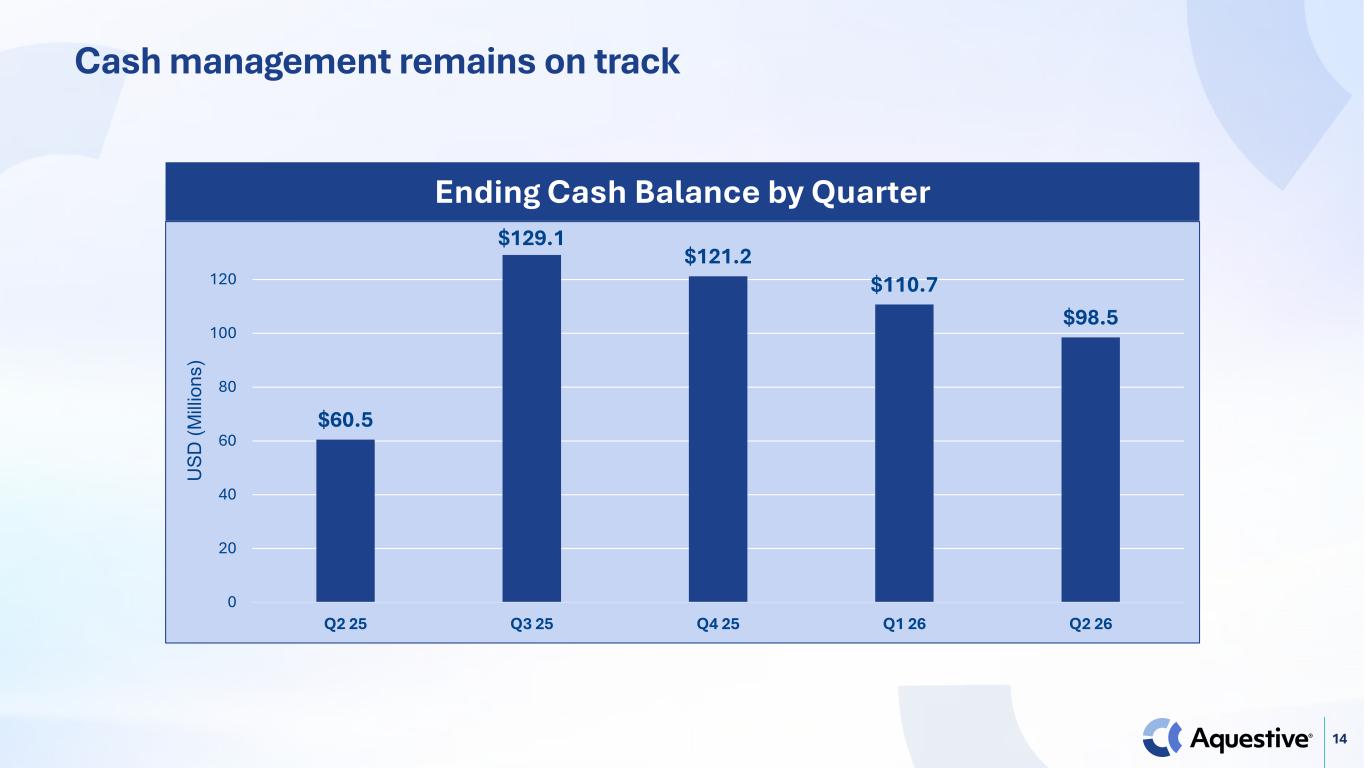
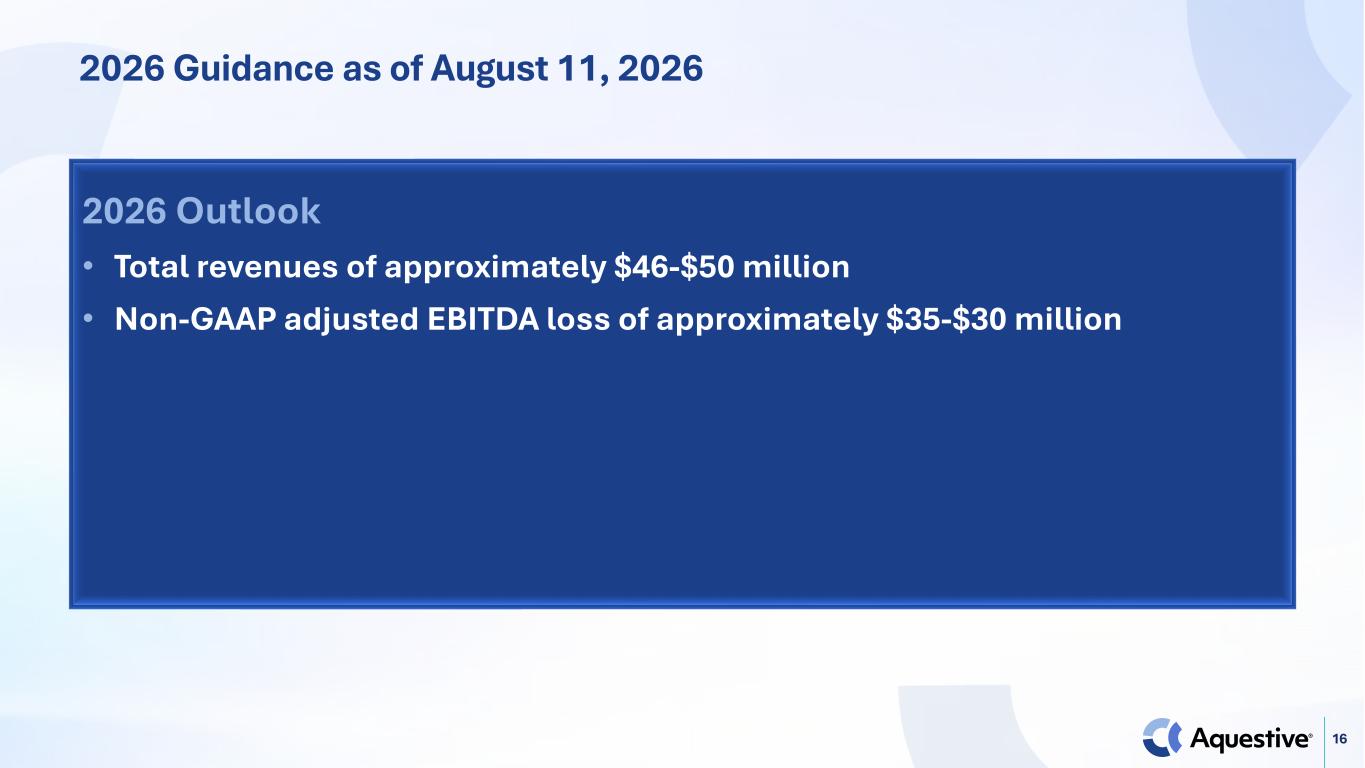
Thank you, Dan, and good morning, everyone. By now, you will have seen our second quarter of 2026 financial results in the earnings release issued last evening and detailed in our Form 10-2 filing. As we typically do, we will address most of the detailed discussion regarding the quarter during Q&A, and I will focus my remarks on the financial performance, operating spend, and liquidity. During the second quarter, our primary financial focus remains supporting the Anafilm resubmission process while maintaining a strong balance sheet and financial flexibility. During the quarter, we also completed our refinancing with Oaktree, establishing a new $150 million debt facility that lowers our cost of capital, extends our interest-only period, and enhances our financial flexibility as we prepare for a potential Anifilm launch if approved by the FDA. As Dan discussed, we successfully completed the Human Factors Validation Study and PK Study for Anifilm and results support resubmission of the NDA in the third quarter of 2026. We are also continuing to manage the business with a disciplined approach to capital allocation. Our commercial team is advancing launch preparations in a manner consistent with applicable pre-approval requirements, while our medical affairs team continues to engage with the allergy community. At the same time, we remain focused on carefully managing cash as we move towards resubmission and prepare for a potential launch if approved. Now, let me walk through the second quarter results. Total revenues increased to $13.8 million in the second quarter of 2026 from $10 million in the second quarter of 2025. The 38% increase was primarily driven by increases in manufacture and supply revenue and increases in license and royalty revenue. Manufacturer and supply revenue increased to $11.9 million in the second quarter of 2026 from $9.6 million in the second quarter of 2025, primarily due to increases in suboxone revenues partially offset by lower on-yeef revenues. License and royalty revenue increased to $1.3 million in the second quarter of 2026 from $0.8 million in the second quarter of 2025, primarily due to royalty revenue from DEVRA. Total revenues increased to $28.3 million for the six-month end of June 30, 2026, from $18.7 million for the six-month end of June 30, 2025. The 51% increase was primarily driven by increases in license and royalty revenues and increases in manufacturer and supply revenue. Manufacturer and supply revenue increased to $20.7 million for the six months ended June 30, 2026, from $16.8 million for the six months ended June 30, 2025, primarily due to increases in suboxone revenues partially offset by lower-on-deaf revenues. License and royalty revenue increased to $6.7 million for the six months ended June 30, 2026, from $1.6 million for the six months ended June 30, 2025, primarily due to royalty revenue from Zebra. Research and development expenses decreased to $4 million in the second quarter of 2026 from $4.1 million in the second quarter of 2025. The decrease in research and development expenses was primarily due to lower development and manufacturing costs associated with the Anafilm program, partially offset by increases in preclinical costs. Research and development expenses decreased to $8.2 million for the six months ended June 30, 2026, from $9.5 million for the six months ended June 30, 2025. The decrease in research and development expenses was primarily due to a decrease in the clinical trial costs and product research expenses associated with the Anafilm program and decreases in share-based compensation partially offset by increase in personnel costs. Selling general and administrative expenses increased to $14.1 million in the second quarter of 2026 from $12.7 million in the second quarter of 2025. The increase primarily represents higher legal fees of approximately $2.1 million, higher severance costs of approximately $1.4 million, which includes acceleration of share-based compensation, higher personnel costs of approximately $0.9 million, and higher share-based compensation expenses of approximately $0.3 million, as well as other expenses, partially offset by lower commercial spending of approximately $2.6 million and lower regulatory and licensing fees of approximately $1.2 million. Valery general and administrative expenses decreased to $25 million for the six months ended June 30, 2026 from $31.8 million for the six months ended June 30, 2025. The decrease primarily represents lower commercial spending of approximately $4.5 million, the one-time anafilm-pidufa fee of $4.3 million in the prior year period, lower legal fees of approximately $1.3 million, lower regulatory and licensing fees of approximately $1.9 million, partially offset by higher severance costs of approximately $2 million, which includes acceleration of share-based compensation, higher personnel costs of approximately $1.4 million, and higher share-based compensation expenses of approximately $1.8 million, as well as other expenses. In the second quarter of 2026, the company recognized a one-time loss on extinguishment of debt of $11.7 million, which represents the difference between the carrying value of the 13.5% notes as of May 12, 2026 and the total payoff amount of the 13.5% notes. A collective net loss for the second quarter of 2026 was $22.9 million or 18 cents for both basic and diluted loss per share compared to the net loss in the second quarter of 2025 of $13.5 million for $0.14 for both basic and diluted loss per share. Excluding the impact of the one-time recognition of the loss and extinguishment on the company's 13.5% notes, the net loss in the second quarter of 2026 was $11.2 million dollars. Equestive's net loss for the six-month end of June 30, 2026 was $30.9 million or $0.25 for both basic and diluted loss per share, compared to the net loss for the six-month end of June 30, 2025 of $36.5 million or $0.37 for both basic and diluted loss per share. Excluding the impact of the one-time recognition of the loss of extinguishment on the company's 13.5% note, the net loss for the six months ended June 30, 2026, was $19.2 million. Non-GAAP adjusted EBITDA loss was $5.2 million in the second quarter of 2026, compared to a non-GAAP-adjusted EBITDA loss of $9.3 million in the second quarter of 2025. Non-GAAP-adjusted EBITDA loss was $7 million for the six-month end of June 30, 2026 compared to a non-GAAP-adjusted EBITDA loss of $27 million for the six-month end of June 30, 2025. Turning to the balance sheet, we ended the second quarter of 2026 with $98.5 million in cash and cash equivalent. Combined with the flexibility provided by our Oak Tree facility and the expected availability of $75 million in launch funding from RTW and $20 million from Oak Tree following FDA approval of Antifilm, we believe we are well positioned to support our planned commercial strategy and launch preparation. As Dan noted, we also continue to engage in active partnering processes for LiberVent in the U.S. and Anafilm outside of the U.S., and we expect to have more to say as those processes progress. Our base business also remains cash flowing on a consistent basis. We are maintaining our full year 2026 financial guidance. For 2026, the company expects to have total revenue of $46 million to $50 million and non-GAAP adjusted EBITDA loss of $35 million to $30 million. In summary, the second quarter reflects continued financial discipline and execution across the business. We delivered year-over-year revenue growth, improved non-GAAP adjusted EBITDA performance, end of the quarter with a strong cash position, and remain focused on funding the key priorities that Dan outlined today. Those priorities including completing the Anafilm resubmission in Q3, preparing for a potential launch if approved by the FDA, advancing AQSP-108, and continuing to evaluate partnering opportunities. With that, I will now turn the line back to the operator to open the line for questions.
Operator
Thank you. As a reminder to ask a question, please press star 11 on your telephone and wait for your name to be announced. And to withdraw your question, please press star 11 again. The first question will come from Rowanna Ruiz with Leering Partners. Your line is open.
Hi. Good morning, everyone. So, a couple of questions for me. One, could you help frame how the recent PK and human factors study data potentially increases your conviction in the resubmission, being very comprehensive, and can you give us updated thoughts on whether you think the FDA may use a shorter or accelerated timeframe to review the resubmission?
Good morning, Rowana. So I'll give you my thought on it.
And a quick follow-up. Thinking ahead, how would physicians typically interpret the HF and PK data on top of the existing data you've already produced? And how are you thinking about leveraging this information with the field force, detailing docs, things like that, assuming antifilm is eventually approved?
Good morning, everybody, and congrats on these data you announced earlier in the week. A few questions from me, the first one, we've often talked about the product profile differences that will be important for payer discussions, but in your prepared remarks, you mentioned some of the clinical differentiation factors. Curious if there are certain endpoints over others that you think are going to carry the most weight and how that portrays with the data that you've seen from anafilm so far. And then I wanted to ask for the CMAX data for the top of the tongue, the inaccurate usage, whether the FDA in advance of this had set a bar for what they were looking for. And I know in literature, they talk about this 100 picograms per milliliter being important, but is there a timeframe associated with when they'd want to see that? Thank you.
Good morning, Kristin. So, let me go in reverse order on the CMAX.
Operator
from David Anselm with Piper Sandler. Your line is open.
Hi, this is Naoki Martin. On for David. Thank you for taking our question. First, regarding 108, any learnings from the recently completed study in androgenic alopecia that gives you confidence that the effects of 108 are relevant to atopic derm in a broader slate of dermatological conditions? Lesson number one, number two, also on 108, can you speak to the rationale behind pursuing atopic derm first and how this decision played into your broader strategy with respect to the universe platform?
Operator
Mohamed with Oppenheimer, your line is open.
Thanks, everyone. Thanks for taking our questions. Just really two for us. So one, kind of going back to the human factor study. So maybe on the root cause of the failure. So it seems like there was one open failure and two misplacements. So maybe any color you can add on what the root cause analysis concluded for each and what residual risk justification goes into the submission. And then a second one, kind of following up on 108, so an opportunity in a pelvic derm. One of the things that we were thinking, too, though, was maybe more about dosing and long-term use and maybe any color you could add about, like, rebound, erythema, or tachylaxis with chronic dosing with epinephrine products for this disease.
Sure, yeah, and thank you. Well, thank you both very much for the added color.
Good morning. Thank you for our questions. This is Becca on for Frank this morning. Congratulations on the progress. Two questions from us. So just one clarification. As you are on track for Q3 resubmission, can you comment, is this going to be a Class 1 or Class 2 resubmission? And how does this affect the planned launch timeline, if at all? And secondly, I want to ask about something that your competitor, ARS, has flagged previously, that, you know, epinephrine patients tend to refill rather than return to the prescriber. So, given this issue, how do you think about, realistically, the switchable pool by year one, say, and what's the mechanism that gets a patient to switch from existing auto-injector script? Thank you.
Sure. Now, two good questions. The first, we did talk a little bit about the time.
Thanks for taking our questions, and thank you all, and congrats also on the progress. I wanted to ask, first of all, about if you could maybe give us a sense of how you're prioritizing the different territories and where you think, from a regulatory standpoint, this product candidate might be most favorably received and what the underlying market dynamics are that would inform your prioritization of those territories. That would be very helpful. I also wanted to ask about, on a different front, how you are thinking about the potential long-term impact to Equestive of the recent Cosette Pharmaceuticals transaction And perhaps more importantly, the recently announced merger combination between Supernus and Indivior, given your longstanding historical relationship with Indivior, you know, what you see as potential opportunities going forward in the context of those two developments.
Sure. Some thoughts on the exodus. First, with the Indivior Supernus.
Operator
From Thomas, Blackbird line is now.
Hey, good morning, guys. Appreciate you taking the question. I guess to bring Sherry back on the phone, with respect to launch readiness and the potential for an expedited review, you know, how are you thinking through, I guess, being ready for either scenario and then, I guess, for the focus on managing contingency offers for sales reps with maybe a bit of a variable timeline around review time and potential approval?
Before, Sherry, give your thoughts. I do want to continue. continue.
More broadly, strategically with respect to the Adrenaverse platform, Dan, are you thinking about that as a kind of a rich internal development pipeline or do you view it more as an opportunity for partnerable assets that you can farm out? And I guess more specifically with respect to 108, assuming success in AD, is this something we could see you build a space or would you ultimately appreciate that? Thank you.
Operator
Questions at this time? I will now turn the call back over to Dan for closing remarks.
Thank you, Michelle. As you heard today from our prepared remarks in the Q&A, this is a really exciting time for questions. We do feel that we are on track to file a conference call.
Operator
Thank you for participating and you may now disconnect.