Operator
Greetings. Welcome to BOK Financial Corporation's second quarter 2026 earnings conference call. All lines have been placed on mute to prevent any background noise. After the speaker's remarks, there will be a question and answer session. If you would like to ask a question during this time, simply press star followed by the number 1 in your telephone keypad. If you would like to draw your question, press star 1 again. Thank you. As a reminder, this conference is being recorded. I would now like to turn the presentation over to Heather King, Director of Investor Relations for BOK Financial Corporations. Please proceed.
Good afternoon, and thank you for joining our discussion of BOK Financial's second quarter 2026 financial results. Our CEO, Stacey Kimes, will provide opening comments, cover the loan portfolio, and related credit metrics. Scott Brower, Executive Vice President of Wealth Management, will cover our fee-based results. And our CFO, Marty Grunt, will then discuss financial performance for the quarter, as well as our forward guidance. Slide presentation and press release are available on our website at BOKF.com. We refer you to the disclaimers on slide two regarding any forward-looking statements made during this call. I will now turn the call over to Stacey Kimes, who will begin on slide four.
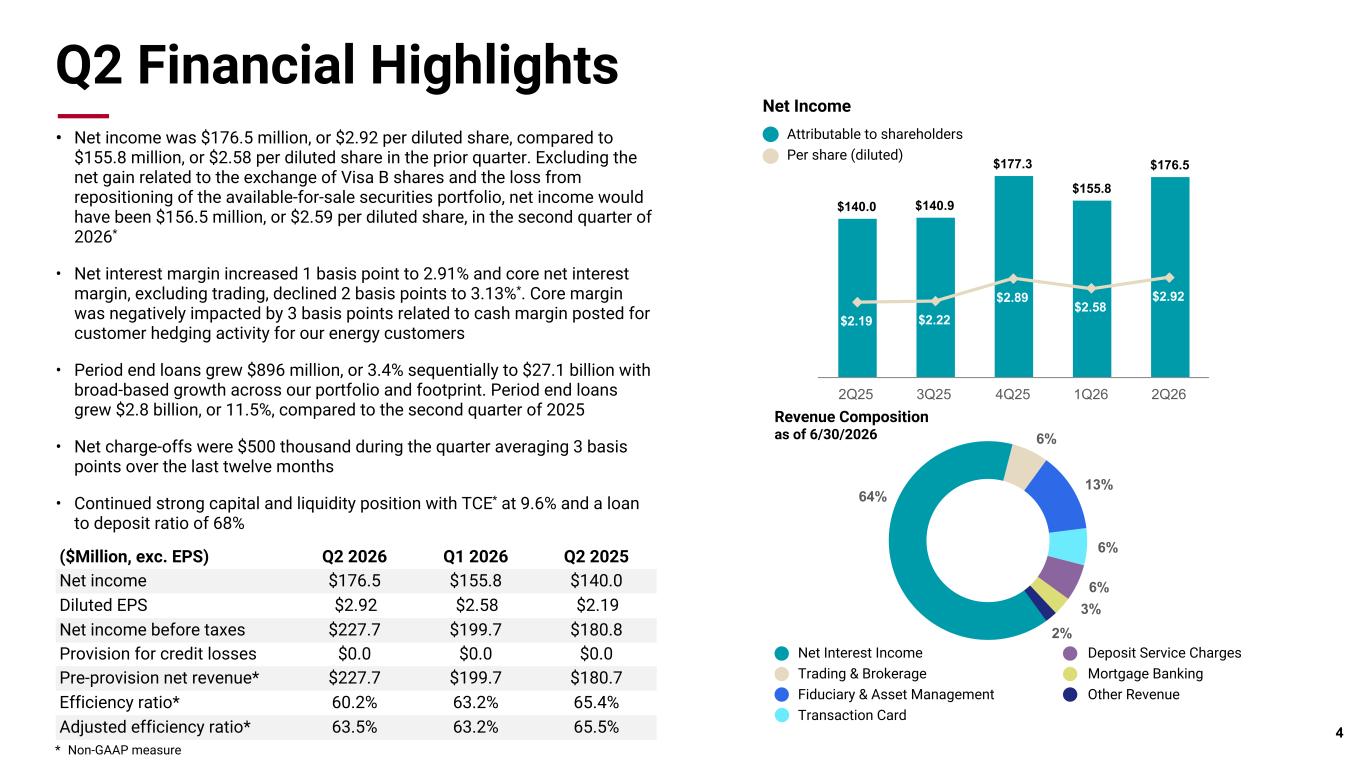
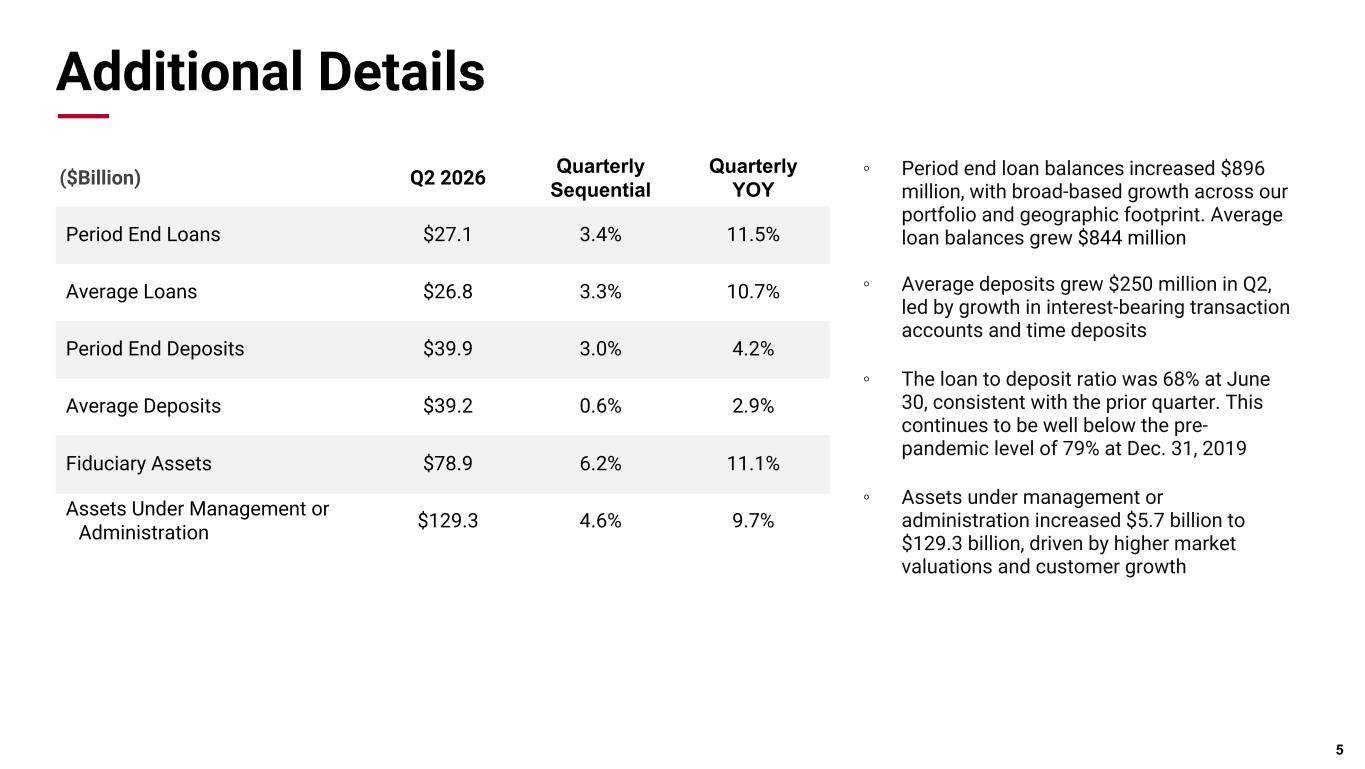
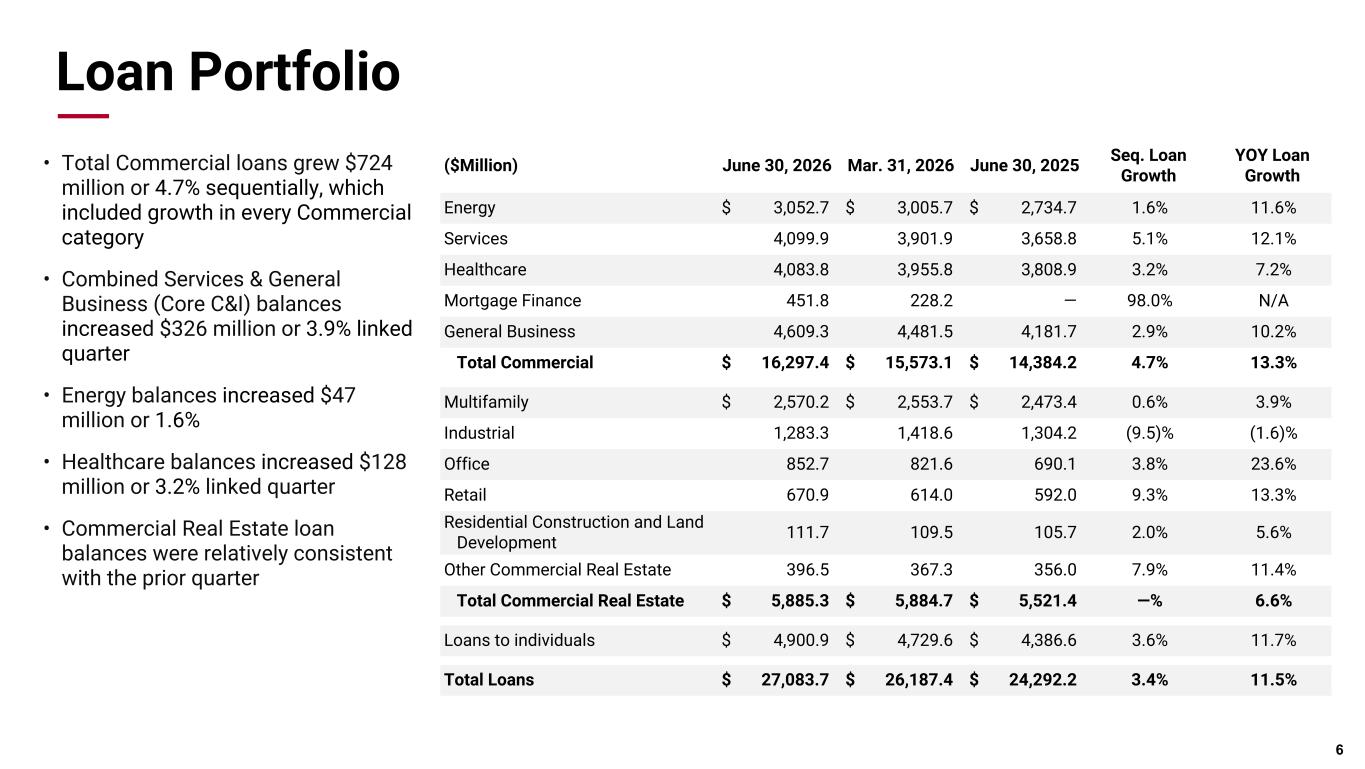
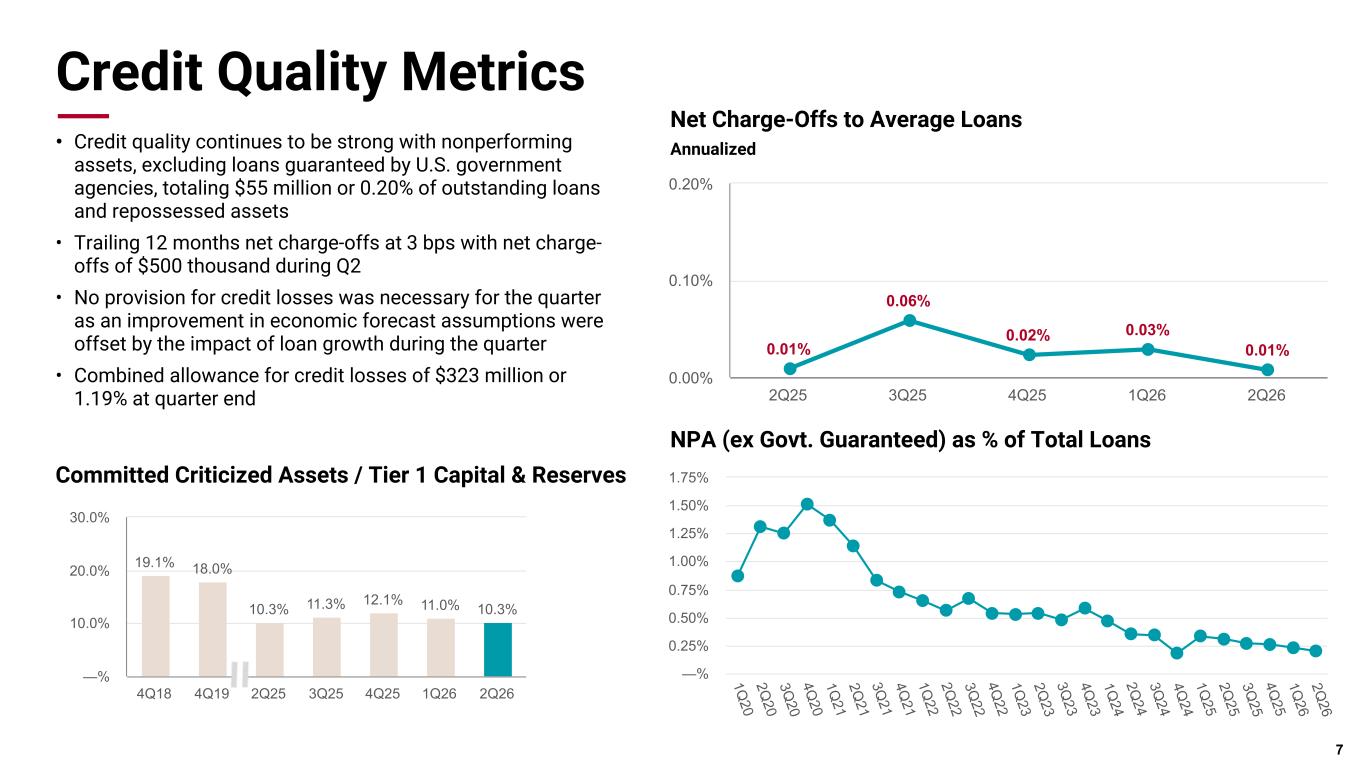
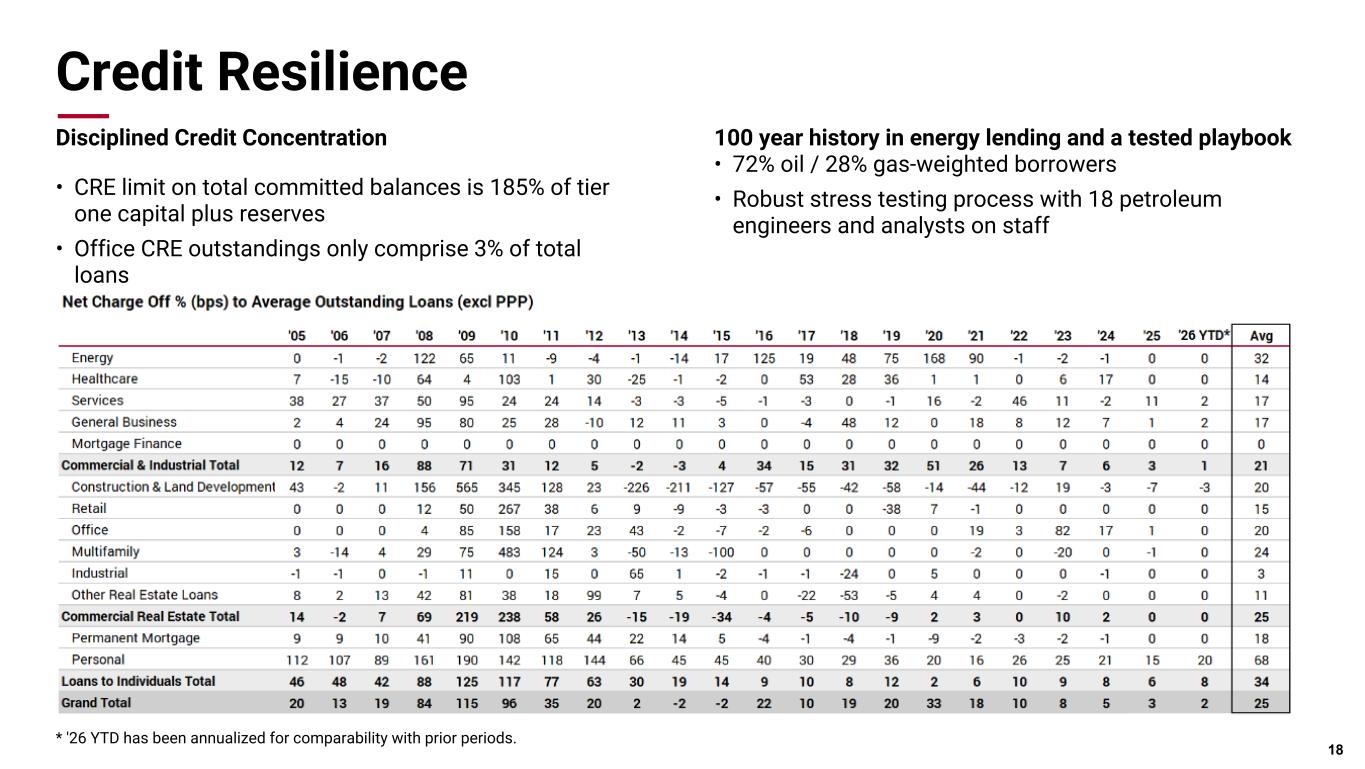
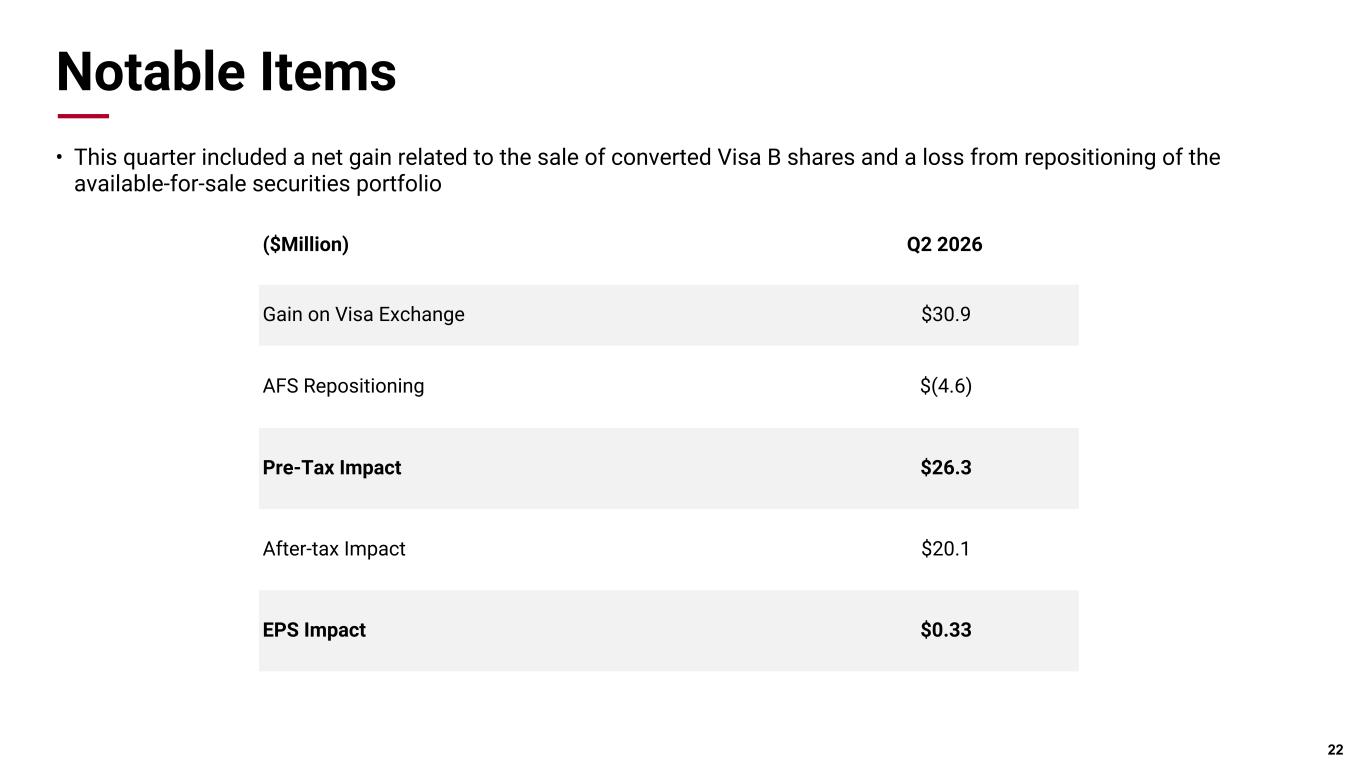
Thank you, Heather. we appreciate you joining the call this afternoon. We are pleased to report earnings of $176.5 million or EPS of $2.92 per diluted share for the second quarter. Adjusted for the net gain related to the exchange of the Visa B shares and a small amount of repositioning in the securities portfolio, earnings were $156.5 million or $2.59 per share. This was an excellent quarter and one that reflects how we are positioning the franchise for continued growth. We delivered strong results including record quarterly loan growth, record quarterly fiduciary and asset management revenue, continued expense discipline, with credit remaining outstanding. During the quarter, total loans grew 3.4 percent sequentially or 13.7 percent on an annualized basis. This resulted in a quarterly increase of 896 million representing record new loan production in a single quarter of the company's history year over year loans have grown an impressive 11 and a half percent importantly nearly 70 percent of year-over-year growth has been in our cni portfolio this reflects both the strength of our customer activity and the benefits of the investments we've made over time Our fee-based businesses contributed meaningfully with record quarterly revenue in our fiduciary and asset management business. During the last call, we discussed aligning expenses with market opportunities and customer needs. Expenses this quarter remained well controlled, with total operating expenses, excluding deferred compensation, being down slightly. Notably, this was achieved while making significant investments in talent during the quarter. Capital levels remain very strong, with tangible common equity at 9.6% and CET1 at 12.9%. Finally, we've talked over the past year about disruptions in the markets we serve. Periods like this tend to create opportunities for organizations like ours, those that are strong, stable, and focused on long-term growth. Historically, these environments have represented some of our best opportunities. The current period represents another such opportunity. We've added more than 25 new teammates as a result of the disruption across our markets. More than 20 of those additions were in Texas, a market where we've been deeply involved for decades. We also saw success hiring, and our Colorado acquisition strengthens our ability to serve customers across the spectrum, from large corporate relationships to small business. Importantly, the loan activity this quarter was independent of these additions. As we've discussed, CNI is a longer sales cycle, and we expect to see the benefits build over time. We're excited to welcome this talent, and we're confident in the role they will play in driving future results. And now I will cover our loan portfolio in more detail starting on slide 6. As I mentioned before, total outstanding loans grew nearly 900 million, or 3.4% this quarter, and we're up 11.5% year-over-year. This growth was based across our business lines and our footprint. Our core C&I loan portfolio, which represents our combined services and general business portfolios, grew 3.9% sequentially and is up 11.1% year-over-year. This level of growth in core C&I loans doesn't happen by accident. Our growth is a result of a disciplined, long-term strategy centered on investing in top talent and deepening customer relationships. As we've often said, growth follows relationships. The momentum we're seeing today is a direct reflection of the trust we've earned from our healthcare loans increased 3.2%. As we indicated last quarter, activity levels and pipeline strength in this segment were exceptionally strong entering the second quarter. The growth we're reporting today reflects a successful execution of opportunities that have been building for some time. Energy loans grew again this quarter, increasing 1.6%. Mortgage finance also contributed meaningfully to loan growth during the quarter, with current outstanding balances of $452 million, an increase of $224 million. As of quarter in, we had active warehouse facilities of $870 million in commitments. This business continues to build momentum and achieve an important milestone during the quarter by reporting its first month above breakeven. Operating at a net profit less than a year after funding our first loan is a notable accomplishment by the team. Our CRE portfolio grew marginally compared to the prior quarter, but is up 6.6% year over year. Moving to slide 7, once again, credit quality remains excellent. MPAs not guaranteed by the U.S. government increased $2.8 million to $55 million. The resulting non-performing assets, the period in loans and repossessed assets was consistent with the prior quarter at 20 basis points. Committed criticized assets decreased this quarter, remaining very low relative historical standards. We had net charge-offs of just 500,000 during the quarter, averaging three basis points over the last 12 months. Once again, the limited charge-offs we've seen show no patterns or concentrations that raise concerns around specific business lines or geographies. And we continue to have no exposure to private credit facilities. In the long term, we expect credit metrics to normalize. However, we expect net charge-offs to remain below historical averages in the near term. Consistent with the prior quarter, no provision was required. Improvement in economic forecast assumptions were offset by the impact of loan growth. Our combined allowance for credit losses is a healthy 323 million or 1.19% of outstanding loans. Overall, credit performance this quarter remains very strong and with that I'll turn the call over to Scott.
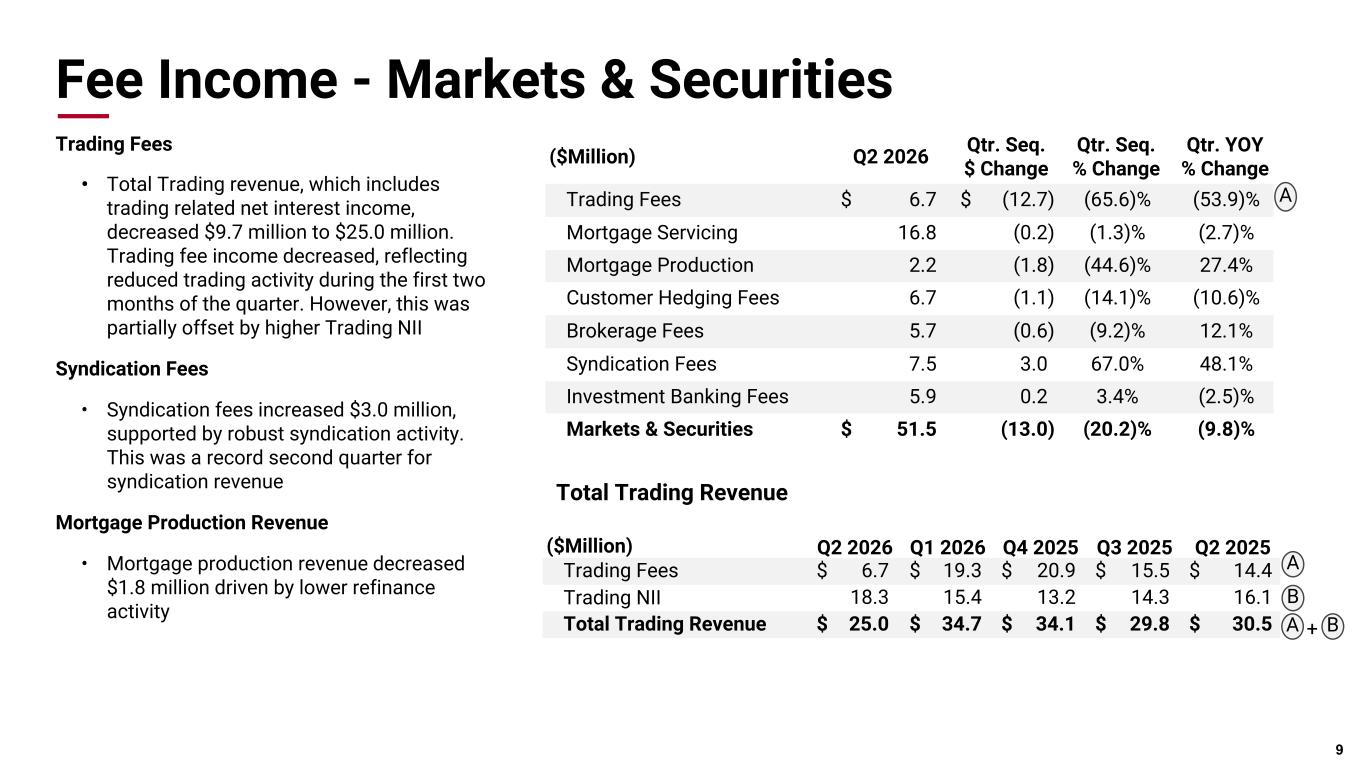
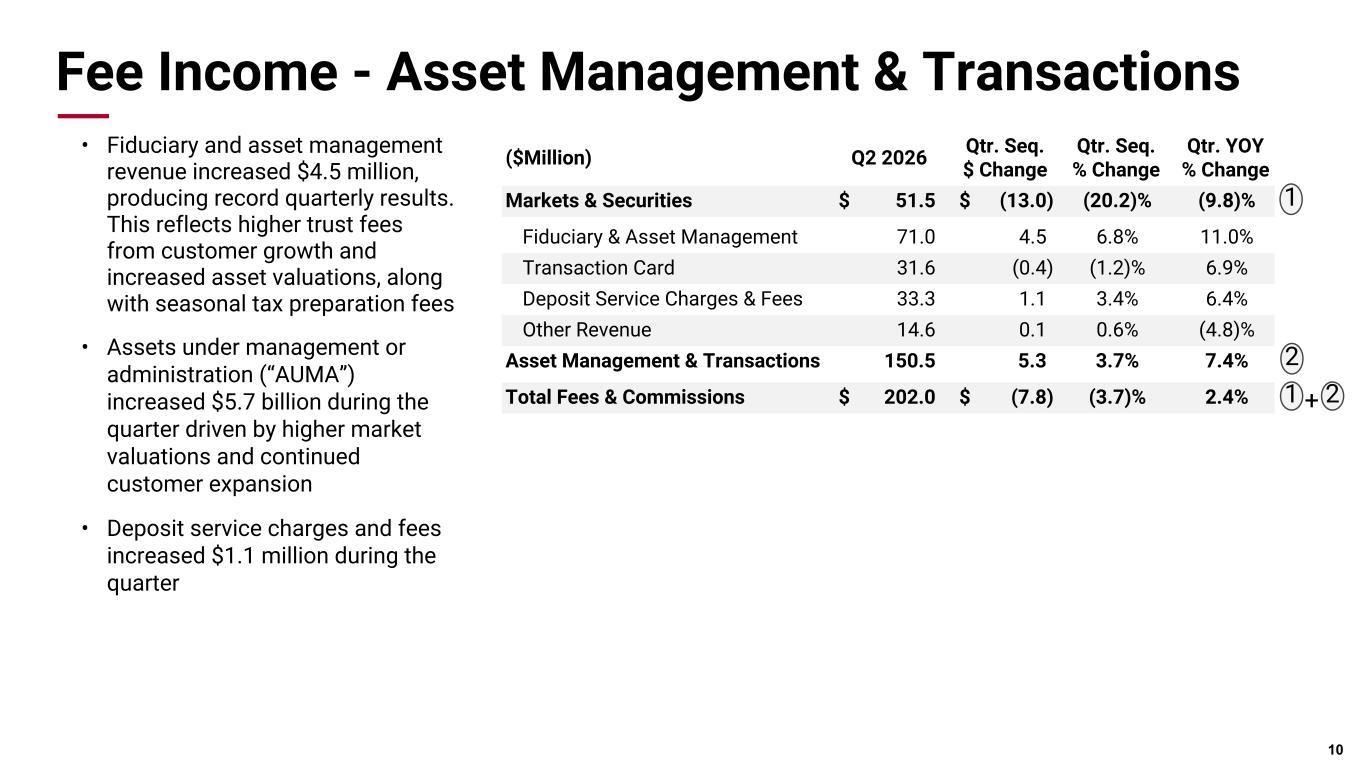
Thank you, Stacey. Turning to our operating results for the quarter on slides 9 and 10, fee income was a solid contributor to total revenue again this quarter. While total fee income was lower than the prior quarter, results remained healthy and reflected the strength and diversity of our fee-based businesses total fee income was 202 million declining 7.8 million sequentially total trading revenue which includes trading related net interest income decreased 9.7 million to 25 million as a reminder we saw some mid-shift from trading fee income into trading net interest income during the quarter as the yield curve steepened From an activity standpoint, results in our fixed-income business were impacted by lower customer activity, particularly as longer-term rates increased from March through May. As market conditions began to stabilize, activity improved, and we saw better trading performance in June. Overall, our activity levels were consistent with broader industry trends, which also saw a decline in MBS trading volumes during the quarter. Elevated long-term rates are also affecting our mortgage banking business with revenue down $2 million compared to the prior quarter. Syndication revenue grew $3 million sequentially, supported by robust activity and continued customer demand, resulting in a record second quarter for the business. We'll move to slide 10 to discuss our asset management and transactions businesses. As you can see, these businesses continue to serve as consistent fee generators, delivering steady, long-term growth and diversification to our revenue base. The biggest standout this quarter was fiduciary and asset management revenue, which delivered record-setting quarterly results, growing $4.5 million over the prior quarter. This reflects higher trust fees, along with seasonal tax preparation fees. AUMA grew $5.7 billion during the quarter to $129.3 billion, led by increased market valuations and continued customer expansion. Looking at annual growth, which is not affected by seasonality, AUMA increased $11.4 billion compared to the same period last year, representing an annual growth rate of nearly 10% and highlighting the strength of customer activity. fee-based businesses continue to demonstrate the value of diversity. While individual categories may fluctuate from quarter to quarter, the underlying franchise remains strong and capable of generating consistent long-term growth. With that, I'll hand the call over to Marty to cover the financials.
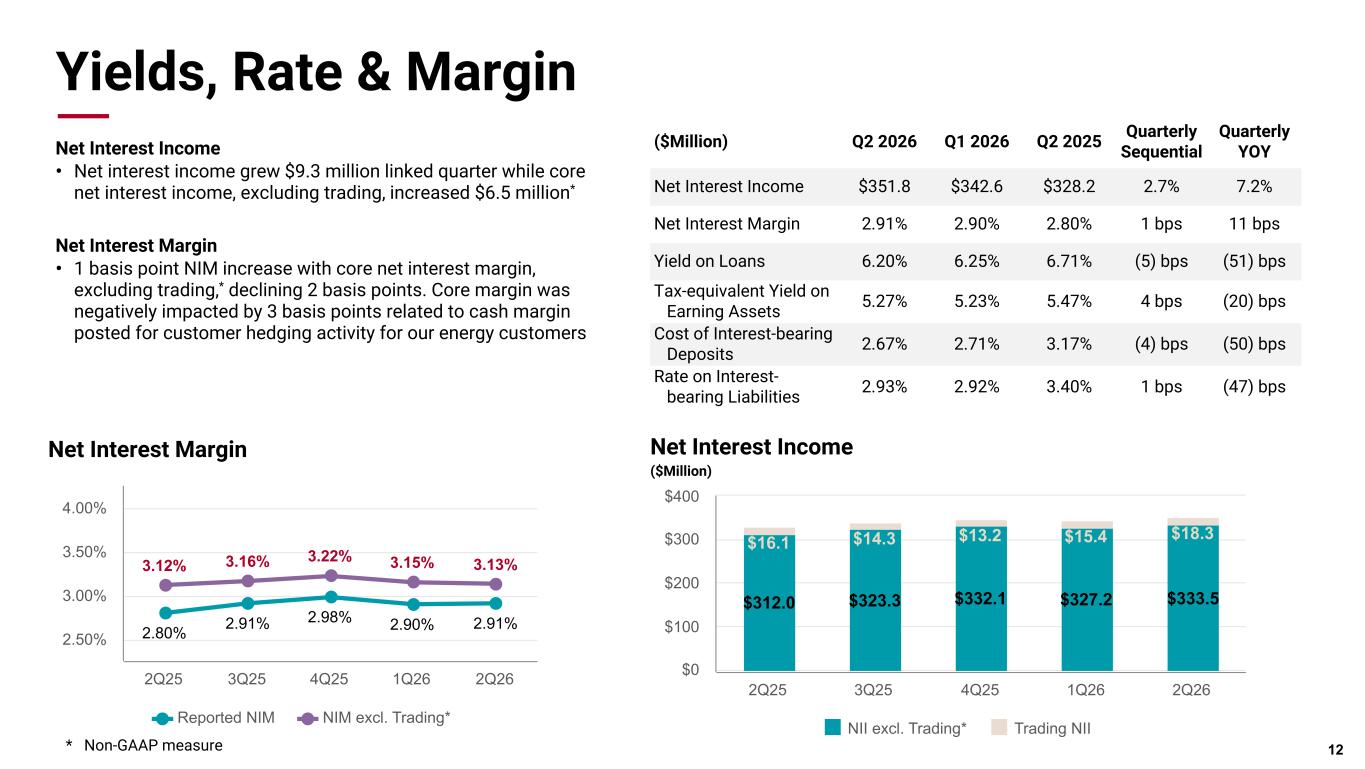
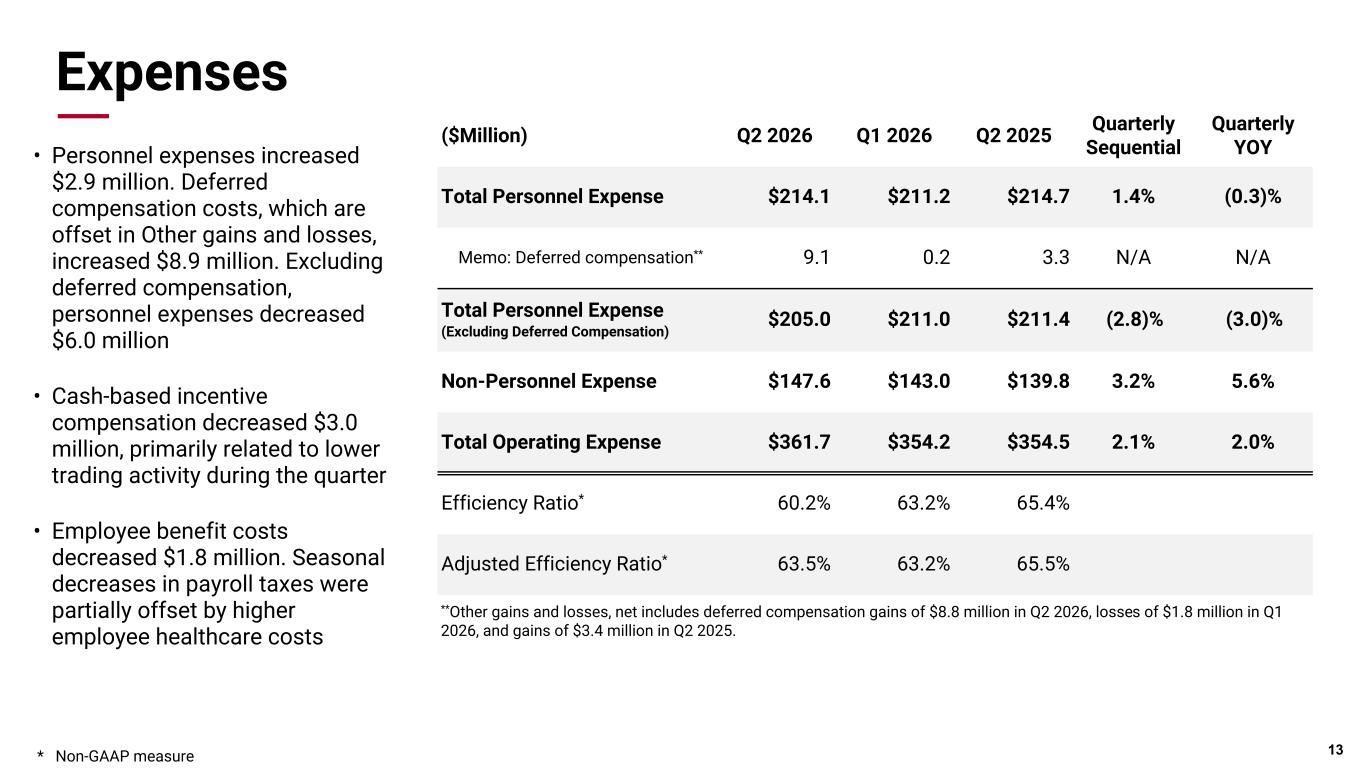
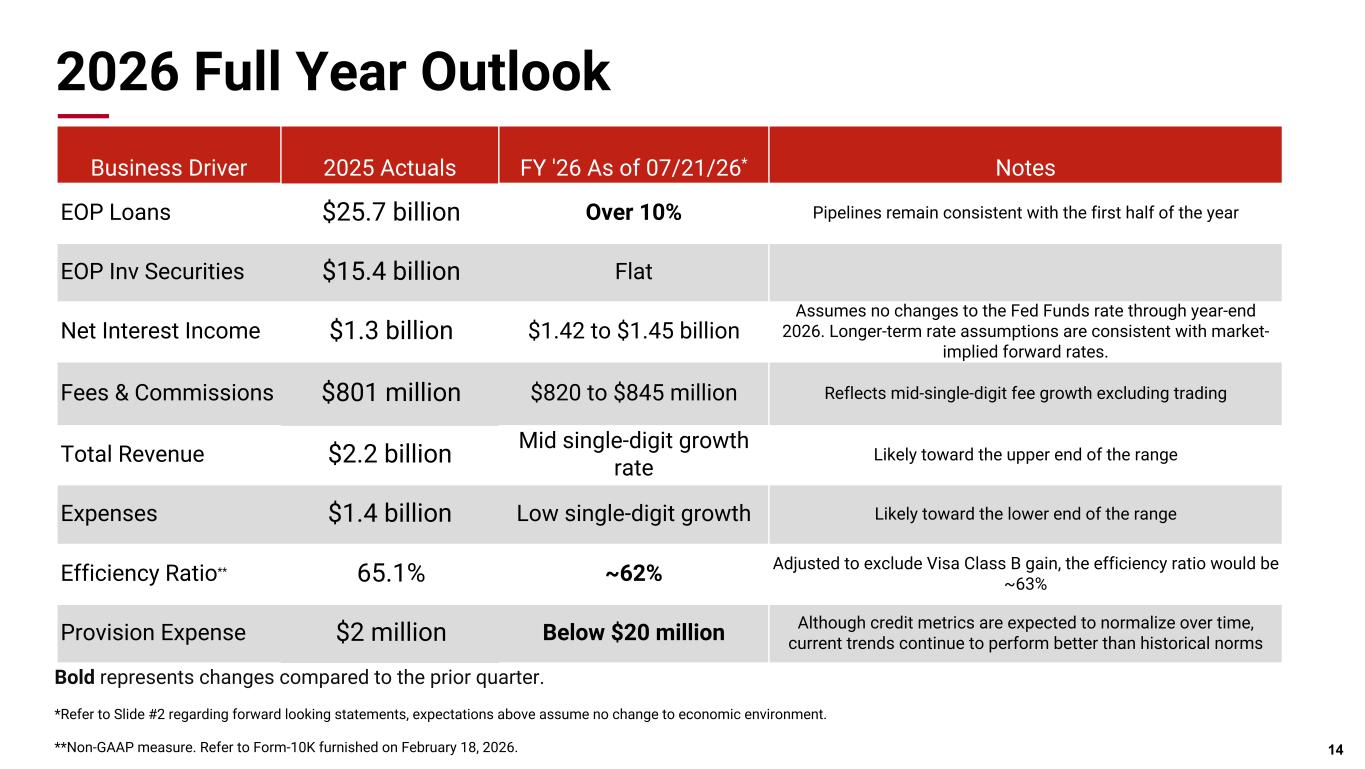
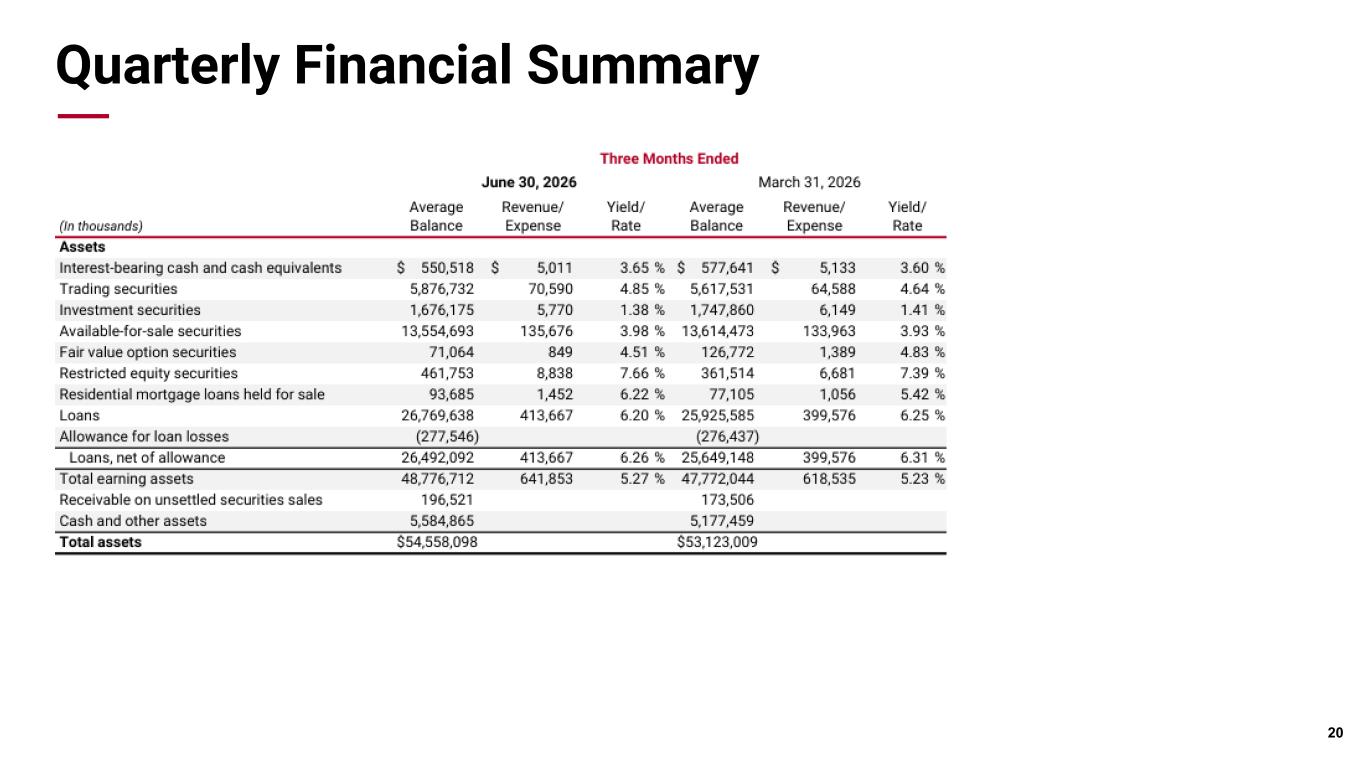
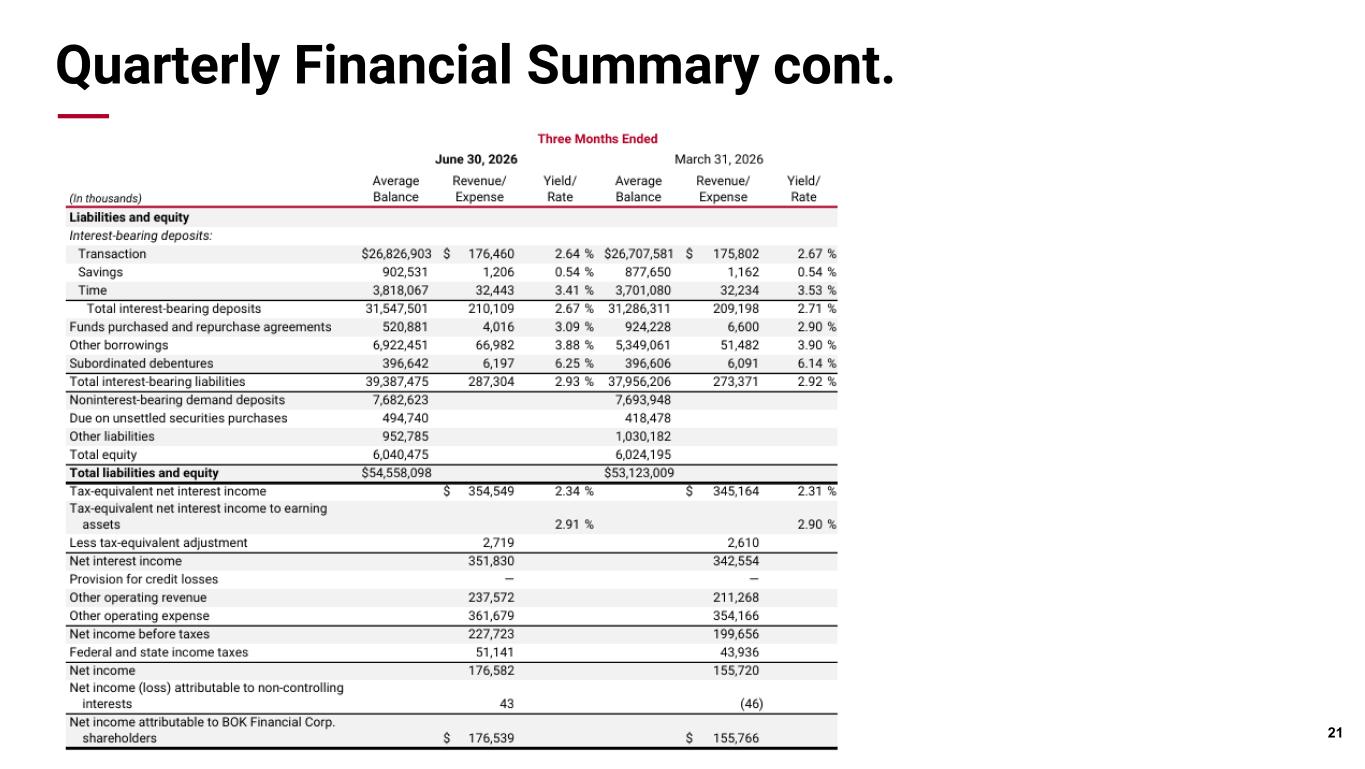
Thank you, Scott. Turning to slide 12, net interest income increased $9.3 million and reported net interest margin grew one basis point. Excluding trading, core net interest income increased $6.5 million and core margin decreased two basis points. Core margin and NII benefited from loan and deposit growth as well as fixed rate asset repricing. However, the offset was a three basis point negative impact related to cash margin we posted on behalf of our energy derivative customers as oil prices moved higher. This impact is temporary in nature. As energy prices have declined, the majority of that margin has already been returned. This item is, of course, market-sensitive. During the quarter, we recognized a pre-tax gain of $30.9 million on the exchange of our Visa B shares. We used a portion of this gain to reposition a small amount of the securities portfolio, realizing $4.6 million of pre-tax losses. This will improve yields on the $268 million of reinvested securities going forward. Turning to slide 13, total expenses increased $7.5 million during the quarter. The increase was driven by an $8.9 million rise in deferred compensation expense, which was offset by gains recorded in other gains and losses. Excluding deferred compensation, total expenses declined $1.4 million, reflecting a $6 million decrease in personnel expense, partially offset by a $4.6 million increase in non-personnel expense. The decline in personnel expense was primarily driven by lower cash-based incentive compensation, reflecting reduced trading activity, as well as seasonally lower employee benefits costs. The increase in non-personnel expense was largely attributable to higher business promotion costs. Slide 14 provides our outlook for full year 2026. Similar to last quarter, our guidance assumes no rate changes from the Federal Reserve and longer-term rates aligned with the current forward curve. Loan growth in the first half of 2026 has been strong and well diversified across the portfolio. We are increasing our guidance as we now expect full year 2026 loan growth to be over 10%. On total revenue, our guidance of mid-single-digit growth is unchanged. However, we now expect to be in the upper portion of that range. As a reminder, with this somewhat steeper rate curve versus a quarter ago, we will see the mix of trading-related revenue shift from fees to net interest income. Consequently, we expect net interest income to be in the upper half of our range of $1.42 to $1.45 billion, and we expect fee income to be in the lower half of our range of $820 to $845 million. On expenses, we continue to anticipate growth in the low single digits and likely toward the lower end of that range. The visa gain we recognized in the second quarter will impact the full year efficiency ratio, and we now expect that metric to be approximately 62%. If adjusted for the visa gain, our guidance for that ratio would be near 63% unchanged from the prior quarter. Turning to credit, portfolio quality remains very strong. We continue to see very low levels of non-performing assets and no tangible evidence of broad-based normalization at this point. We believe provision expense will be below $20 million for full year 2026. With that, I would like to hand the call back to the operator for a Q&A, which will be followed by closing remarks from Stacy.
Operator
Thank you. We will now begin the question and answer session. If you have dialed in and would like to ask a question, please press star 1 in your telephone keypad to raise your hand and enter the queue. If you would like to withdraw your question, simply press star 1 again. If you are called upon to ask your question and are listening the allowed speaker on your advice. Please pick up your hand tip and ensure that your phone is not on mute when asking your question. And your first question comes from the line of David Chiavereni with Jeffries. Your line is now open.
Hi, thanks for taking the question. So to start on the net interest margin up a basis point here in the second quarter, how should we think about the go forward on the NIM?
Yeah, thanks for the question, David. So, you know, we feel good about seeing some, we're happy with the basically stable margin in the quarter. We see drivers to see some margin expansion for the back half of the year, you know, kind of the typical drivers that have been longstanding positives, securities portfolio, fixed rate asset repricing for both securities and fixed rate loans. And then that derivative margin piece, you know, that was a negative three basis points going into Q2, and we're going to get that back over the next, you know, quarter or two. You know, a lot of that margin has been returned to customers already or returned to us already. So those are high confidence items. And then typically we have DEA grow in the back half of the year as well. So there's some pretty good support to see margin expansion back half of 20.
Great. And related to that, deposit pricing is a hot topic this quarter. Can you talk about the competitive environment and where deposit costs could trend going forward?
Yeah, so deposits are always competitive. There's really never a situation where deposits aren't highly competitive. They are today. They have been previously. I would note that, you know, the barometric pressure is probably rising there rather than falling. But, you know, within our market um we're we're really not seeing anything irrational i mean there are some some areas that have irrational but we're not seeing a rational in our markets and just as we think about uh deposit pricing and the guidance uh you know we're not relying on on any improvements in that rate you know we'll seek it to get improvements in that cost of funds but we're not relying on improvements there to drive our guidance.
Just a reminder, we still have a relative to others low loan-to-deposit ratio, so that gives us a lot of flexibility in managing rate-seeking deposits.
Operator
Next question comes from the line of Peter Winter with DA Davidson. Your line is now open.
Thanks. Good afternoon. Just on loan growth, if I think about loan growth for the industry, it's been coming in better than expected. But a lot of the banks that are giving updated guidance, it does assume growth to moderate in the second half of the year. But when I look at your updated guidance of period in loans over 10% and pipelines consistent with the first half of the year, it doesn't seem like you're expecting a slowdown in the second half of the year.
This is Stacey. I think, you know, look, we grew loans 11.5% year over year, very diverse, with not a big contribution from real estate and energy, two big drivers for us historically. You know, they're hard to forecast, you know, so it's hard to know exactly what those numbers are in the last half of the year. You know, we still have a lot of tailwind to come from mortgage finance. I think that's going to help us out. There's some seasonality there that could make, you know, some of that a little bit lumpy. But if you look kind of straight through to the end of the fourth quarter, I think you've got really positive tailwind there. But, you know, we're not we're not, you know, we feel comfortable with the guidance that we've provided based on, you know, some things that are intrinsic to us. If I look at sales pipelines, frankly, at this point, they're not as strong as they were heading into the second quarter, but they're stronger than they were heading into the first quarter. And so obviously, you know, we had a record second quarter loan production. The pipelines remain very strong, and we remain very confident in our ability to grow, even absent the talent acquisitions we've done, which should only add to that in some future period.
Got it. Very helpful. And then on credit, what can you say? It's been excellent. You've got peer-leading low net charge-offs consistently. and rightly so, you've taken a zero provision, six out of the seven quarters, but the ACL ratio at 119, it has reached the CECL day one level. If we assume a stable economy, stable credit trends, would you let the ACL ratio continue to fall?
Peter, this is Stacey. Look, our credit metrics are better than CECL day one. If you look at criticized levels and classified levels, non-performing levels, and things like that. And so, you know, given what we know about credit today, then the percentage could continue to fall.
Okay. And then just one quick housekeeping. Does the fee income outlook include the $31 million visa gain, and thus the total revenue comment likely coming in at the upper end of mid-single-digit range, does that include the 31 million?
Yeah, so Peter, and for the total revenue guide, that does include both that gain, and there was another gain last year, so both in the 25 number and the 26 number, we both have those in there. That's correct.
Operator
Your next question comes from the line of John Armstrong with RBC. Your line is now open.
Okay, thanks. Good afternoon. Hey, Scott, maybe a question for you. There's been maybe some hand-wringing over the trading fees this quarter. How unusual is that environment in your mind, and can you help us a little bit with what June and maybe July look like?
Does the business, you know, in aggregate total trading revenue kind of trend back to that mid-30s type level? yeah sure so good question so as we you know as i commented um really where you know we got off to a solid start quarter one um we saw in mark in march and mostly in april and may we saw a significant dislocation and as i mentioned we saw an improvement in june so really the the kind of of the key contributors there, when you think about our trading activity, it's nearly 100% fixed income. So it's mortgage-backed securities, munis, corporates, and treasuries in that order, with mortgage-backed securities being at the dominant chunk of that. So as the dislocation and uncertainty has occurred in the markets, that's what causes the challenges there with that segment. but we did see an improvement in June versus the previous two months.
Potentially back to normal or an improvement from what you saw earlier in the quarter, certainly.
John, I just wanna add, we've been in the fixed income trading business for decades and every once in a while you get one of these dips and they're inevitably followed by a bounce back. It's a solid customer base that we've got a long history with.
Yep, okay, good. On the expense outlook, I see the guide and it looks good. Marty, can you maybe talk a little bit about where you're finding opportunities to hold the line on expenses and then maybe touch a little bit on the hiring that you're doing, if there's more to come and kind of the profile of, you know, what you're looking for and who you're hiring?
Yeah, I'd just say on expenses, you know, if you – Let me give you a little bit of color on the expenses and talk a little bit about deferred comp and then kind of get back to that question. You know, as a reminder, you know, there's two components in deferred comp and they're inextricably linked because they come from the same source. They are, you know, there's actually assets specifically invested for deferred compensation. Those investments are marked to market every quarter and that gain or loss shows up in the other gains and losses item that we call out on slide 13 of the footnote 8.8 million and gain two that gain plus some trivial administrative impacts is how the 9.1 million of deferred comp expense number is determined so by definition those must net effectively to zero or something close to zero each quarter so to get an accurate understanding of the core run rate of the company you've got to adjust for both those impacts or neither of them, which I appreciate the fact that, John, you did this quarter. But to understand the core trends in NIE, sorry for that long preamble, but you need to understand that context as well. So personnel expense was down, excluding deferred comp by $6 million. Two drivers there, though, with trading revenue down, trading commissions were commensurately down. And then a seasonal decline in payroll taxes is the other piece that explains that six million decline quarter over quarter so basically kind of the base regular compensation was really steady quarter over quarter now as you start from kind of that starting place when you look over the next couple quarters you will see some some expense increase within the personal line items just due to the the ads and but importantly you know that's contemplated in the expense guidance that we provided.
And Stacey, this is middle market commercial lenders. That's who you're after.
Yeah, we've hired kind of a range from commercial to corporate to small business. Substantially all revenue producers, not exclusively, but substantially all are revenue producers. Obviously, you know, the disruption in our key markets has created an opportunity and it's a playbook we've used many times in the past and we've got a great brand and excited to welcome new teammates. Thank you.
Operator
Next question comes from the line of Math Olney with Stephen. So your line is now open.
Hey, good afternoon. Thanks for taking the questions. Given the Visa share sale, just looking for updated thoughts around capital in capital deployment? Thanks.
Yeah, no, thanks for the question. Yeah, so capital, you know, we've got a strong capital position, and that just makes it a little bit stronger. We are well aware that that's an opportunity for us to be very thoughtful about how we deploy capital, but as you know, we're always very opportunistic about how we do that. We're always thinking about what's the best long-term action to take and when to take it, and at the end of the day, we're willing to be patient to find that.
Okay. Appreciate that, Marty. And then, I guess, Marty, on your puts and takes around the margin outlook, I think you mentioned getting back that three bips back from that cash margin of the hedging activity from the energy customers. Any more color on that dynamic, what happened in 2Q, and then where would I see this more specifically in the financials? Thanks.
Yeah, let me just explain that dynamic there, and then Marty can explain maybe how that runs through but so so we hedge on behalf of our customers we don't take commodity risk but because we have mortgages on their collateral uh we hedge we offset the commodity risk with the third party or most the exchange requires cash margin when both initial margin and cash margin when the trades move so when commodity prices moved up significantly customers who had previously hedged. Those hedges were underwater, so we had to post cash margin to the exchange. We don't get a return for that, so that dilutes our net interest margin. As those positions season and mature and roll off, or as commodity prices roll back down, we get a return of that margin, which improves our net interest margin in that process. At one point during the quarter, I think we had over 900 million that was posted to the exchange, you know, much of that has been returned back to us, but understand that obviously the conflict remains and as oil prices move, that number could change over time. But both with time decay and the price is staying at this level, we expect that to return to a more normalized level. You know, it really has with some degree of uncertainty around, you know, where will commodity prices go from here.
Yeah. So the majority of that has come back, you know, as we sit here today already. And to your question about how do you see that in the financial statements, you'll see that it's essentially a non-earning asset or a low-earning asset that grows temporarily and then comes back. And you see that in the non-earning asset section. And we can walk you through the specific line items later if that's useful.
Okay, perfect. Thanks, guys.
Operator
Your next question comes from the line of Michael Rose with Raymond James. Your line is now open.
Hey, good afternoon, guys. Thanks for taking my questions.
Hey, just wanted to get an update on the mortgage business, where you guys stand at this point, and if there's any updated kind of thoughts around expectations versus where you're tracking. no i think i told i think in the last six months or so i indicated i think our goal is to be at a billion in commitments by the end of the year we're obviously tracking well ahead of that uh as we ended the second quarter uh i'm not going to give any any updated goalposts there other than to say you know we have lots of headroom and those guys are running awfully fast and we're seeing lots of opportunity there so uh we remain very excited about that business as i mentioned we broke even first month of breakeven was in june so that's going to be tailwind for us as we go into the latter half of the year uh but uh they're they're going to be a tailwind to us as we close the year for sure there's some seasonality in that business just like there is in the mortgage business but net net between now and the end of the year we we think that's going to continue to grow uh very helpful stacy and then maybe just one follow-up going back to deposits.
The NIB mixes remain, you know, pretty stable here, but I think we all know it's competitive in a lot of your markets. And, you know, with the updated loan growth guide, it's probably some incremental pressure. You guys do have a lower loan deposit ratio.
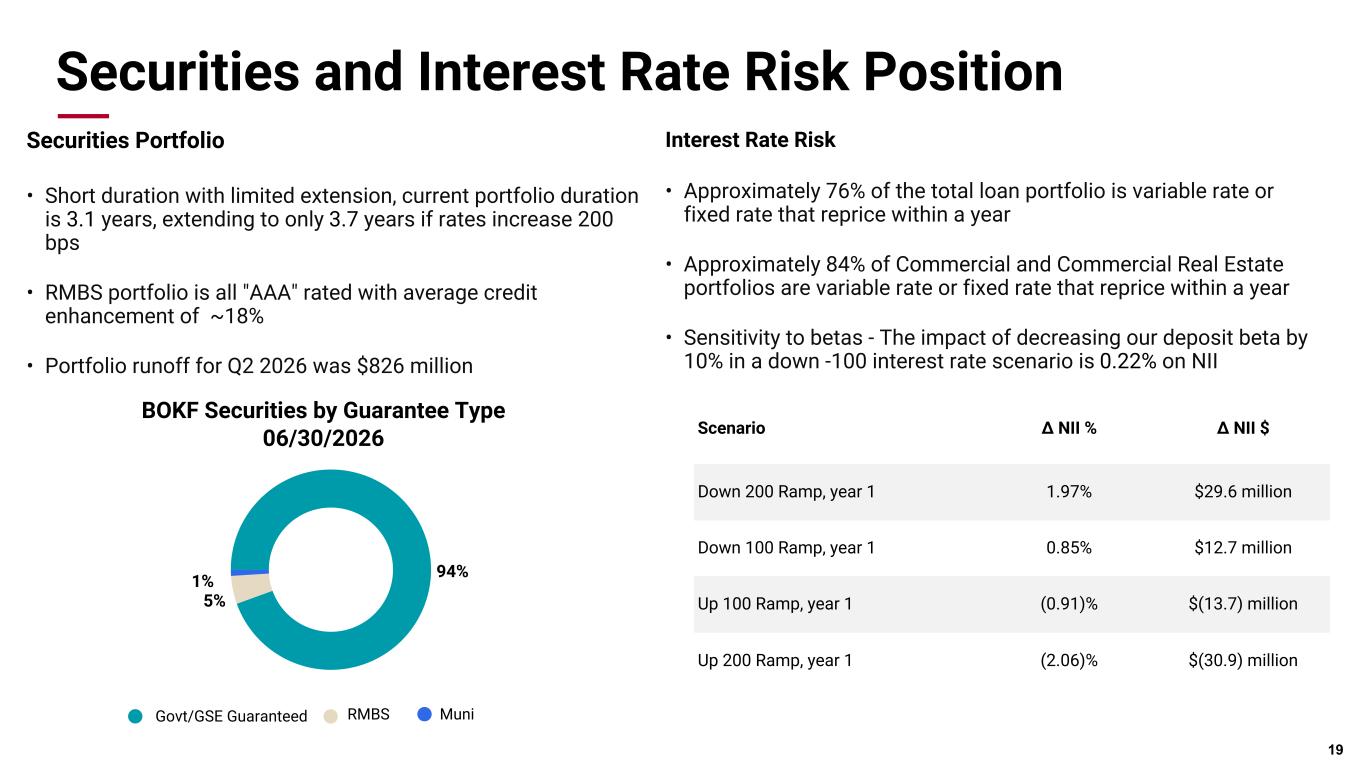
Just as we think about, you know, you know, IB deposit costs as we move forward, just given that competitive dynamic, you know, what do you see as kind of the puts and takes, either under a base case with with no rate hikes or if we do get one or two thanks yeah so non-interest or interest bearing deposit costs um you know it's probably going to be closer to stable than it has been in the last couple quarters uh in a scenario where you've got no rate hikes or rate cuts either way and then in a rate cut rate hike scenario probably doesn't happen until later in the year if it does but our deposit beta has been you know in the upper 60s for the down cycle it was right about the same place in the up cycle and so we would think about that as kind of a starting place for how you think about deposit costs however when you go from cutting to flat and then to increasing you're probably going to be able to beat that just based on you know anytime that direction changes that gives the industry the ability to do a little bit of lags here and there. So we'd probably beat that is how we think about it.
Okay, great. Thanks for taking my questions.
Operator
Your next question comes from the line of Woody Lee with KBW. Your line is now open.
Hey, thanks for taking my questions. Just I have one quick follow-up question related to the visa gain and how it relates to the guidance. so you said that's included in the revenue but is that also included in the fee guidance because when I look at last year's 801 that looks like a um operating number so I just want to make sure I'm looking at things apples to apples that's right it's not in the fee number yeah thanks for that follow-up I should have said that earlier yeah that's not in the fees of commissions guidance Got it. But it's included in the total revenue. That's correct. Okay. All right. Thank you for that. And then maybe just last for me, I wanted to touch on the fiduciary and asset management revenue. And as you noted, there was some impact of seasonal tax prep, but I was just curious how much of that bump up was from the seasonal impact just versus, you know, strong organic trends.
It was roughly a third of the quarter-over-quarter increase was due to the tax prep, the one time a year.
All right. That's all for me. Thanks for taking my questions. Thank you.
Operator
Your next question comes from the line of Jared Shaw with Barclays. Your line is now open.
Thanks. I guess just for me, where are you seeing the most lone competition, whether it's geographically focused or certain subsectors? Are you seeing anything unusual on the competition side?
No, I wouldn't say we're seeing anything unusual. I think the great part about our footprint is it's growing rapidly. if you think about Texas and Arizona and Colorado and, you know, even our home state of Oklahoma is growing at a great pace. And so when that's happening, you know, everybody gets a part of the pie. It's easier to be a part of a growing pie than it is to be part of a stable or shrinking pie. And so, you know, what I would say is from my perspective, we're seeing lots of opportunities for loan growth. I've never seen a more resilient kind of American business enterprise, guys in the face of so much economic volatility really moving forward with their businesses. And so that's obviously creating opportunity for us. I think structurally, I think I'm really impressed with this stage of the cycle, how strong competitively structures are hanging in there. I think pricing continues to grind competitively and as you would expect it to in this kind of environment. But lots of lending opportunities as we look forward.
Operator
Your next question comes from the line of Brett Rabatin with Stonex Group. Your line is now open.
Hey, good afternoon, everyone. Thanks for the questions. Wanted to ask, I noticed a lot of the loan growth was in Oklahoma. Was there anything unique about that? Was it the domicile just being at the headquarters or anything that drove Oklahoma to be a lot stronger? Obviously, you know, the company's based on Oklahoma, but I thought we'd see a little more broad-based growth from the other geographies this quarter, given the overall strength in loan growth.
Yeah, sometimes those tables can be a little bit misleading because it's not necessarily where the borrower is, but where the lending activity is headquartered. And so, you know, as we look at that internally, you know, our growth was very broad-based, and that was part of what we were most proud about is both by geography and by lending type, very, very diverse. Particularly if you look at CNI, what we've been defining for a long time now is core CNI. I think that was up 11% year over year. I mean, that's really outstanding and really, really proud of the team here at the bank that's delivering that kind of outcome because, as you know, that's the hardest lending to be successful at. But yet it's important to us because it feeds so many of our fee-based businesses. And so it's really been fun to watch these guys have success.
Okay. I appreciate that, Stacey. And then just the other question I had was you mentioned, you know, 25 new teammates, 20 in Texas. But, you know, do you kind of view this as just a, you know, kind of unique opportunity given some recent disruption? Or do you have a pipeline that says you can be continuing to add folks to the team? Or, you know, any thoughts on just if this was kind of more of a one-off situation relative to what you might do from here?
Yeah, so for us, I would say talent acquisition is almost a line of business for us, just like other vertical line of business. You know, our way we're going to grow is organic. And virtually all of our markets, particularly outside of Oklahoma, we need more boots on the ground. And so we have, you know, our Mark Waid, our market leader in Texas particularly, but David, who leads our markets outside of Texas, you know, we have pipelines of talent in all of our markets that we're consistently recruiting. In these periods of disruption, obviously, the receptiveness of our phone call and the opportunity we have to pull people across into our company is enhanced, and we're taking advantage of that. But in many cases, the people that are coming across are people that we've been talking to for a very long time. And so just like with the sales process, the recruiting process also is a very long sales cycle. But we're open for business for talented folks with or without, you know, kind of a budget for it. We like revenue producers. We're going to have to grow with more talent on the ground in all of our key locations, and we don't see that any different. Obviously, the disruption has created a disproportional opportunity in the near term, but talent acquisition is a line of business for us.
Okay. That's great, Keller. Appreciate it.
Operator
That concludes our question and answer. session. I will now turn the conference back over to Stacey for closing remarks.
To conclude, I'm incredibly proud of the results our team delivered this quarter. The record pace of loan growth, continued strength in our fee-based businesses, and outstanding credit performance reflects the quality of our franchise and dedication of our team. Our consistent performance is rooted in a strong risk management culture. That foundation, combined with a unique geographic footprint, continues to create opportunities to grow faster than peers while maintaining our disciplined approach. We are entering the second half of the year from a position of strength with strong business momentum and a solid foundation for continued growth. We appreciate your interest in BOK Financial and your willingness to spend time with us this afternoon. Please reach out to Heather King if you have any questions at h.king at bokf.com.
Operator
Ladies and gentlemen, that concludes today's call. Thank you all for joining. You may now disconnect.