Operator
Ladies and gentlemen, thank you for standing by. Welcome to KKR's fourth quarter 2025 earnings conference call. During today's presentation, all parties will be in a listen-only mode. Following management's prepared remarks, the conference will be open for questions. If anyone should require operator assistance during the conference, please press star zero on your telephone keypad. As a reminder, this conference is being recorded. I will now hand the call over to Craig Larson, Partner and Head of Investor Relations for KKR. Craig, please go ahead.
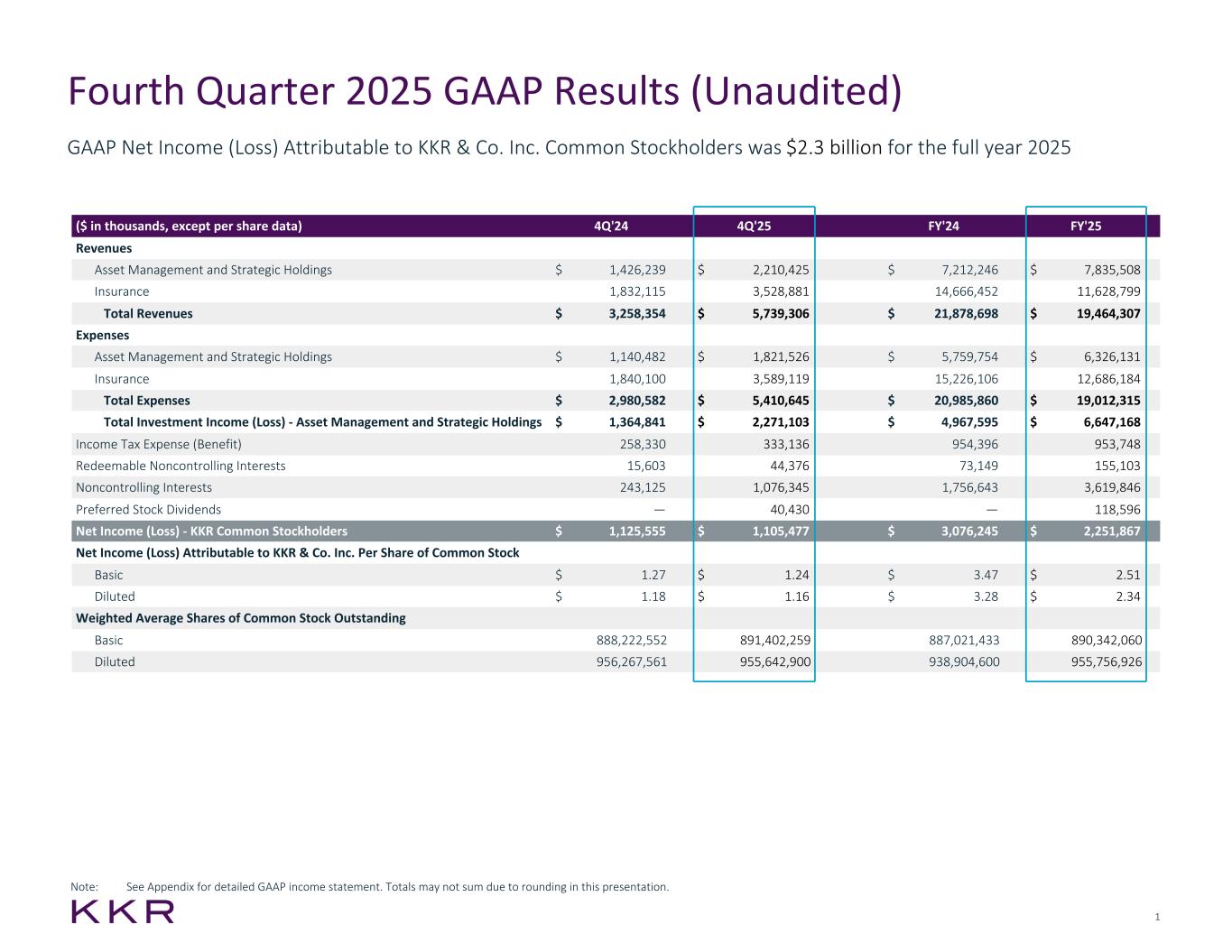
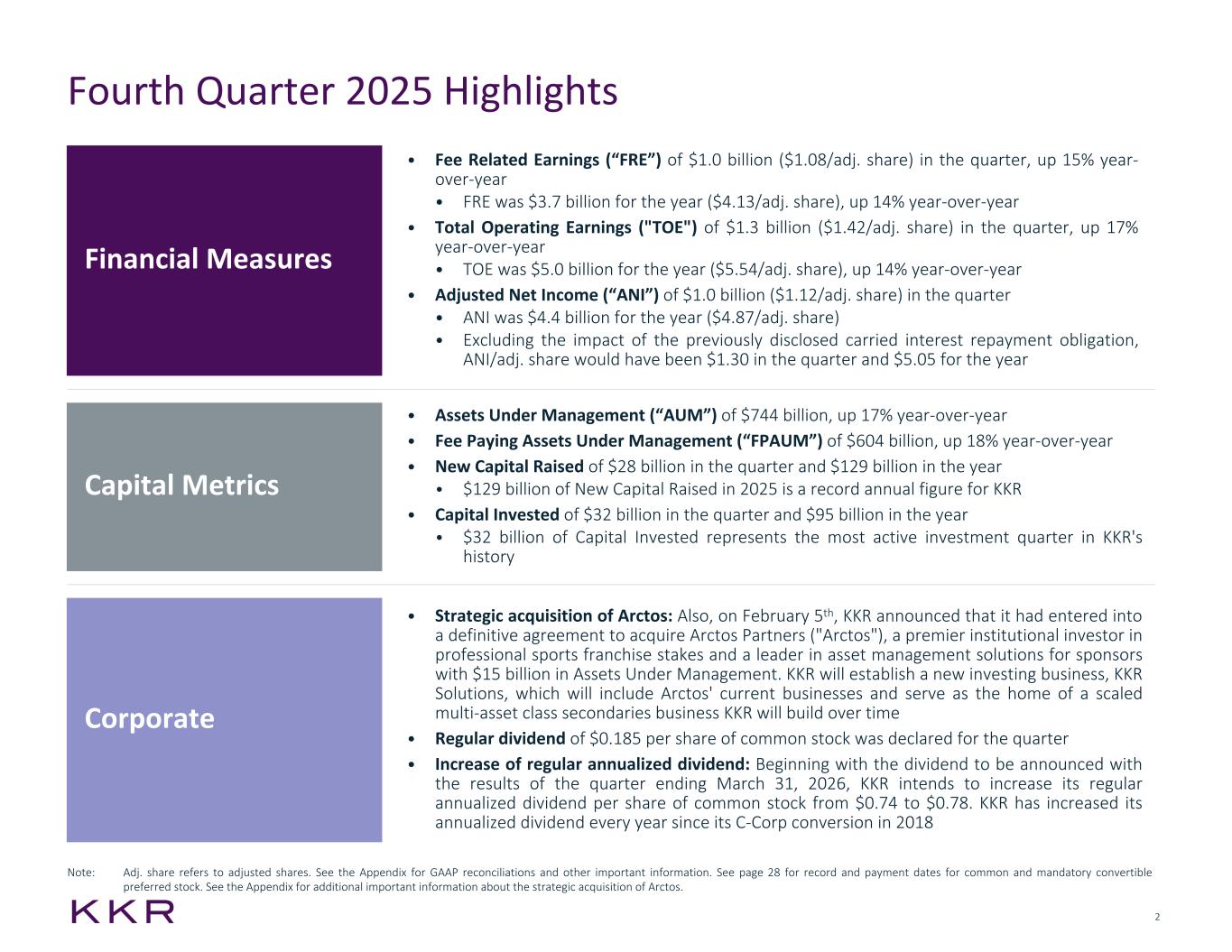
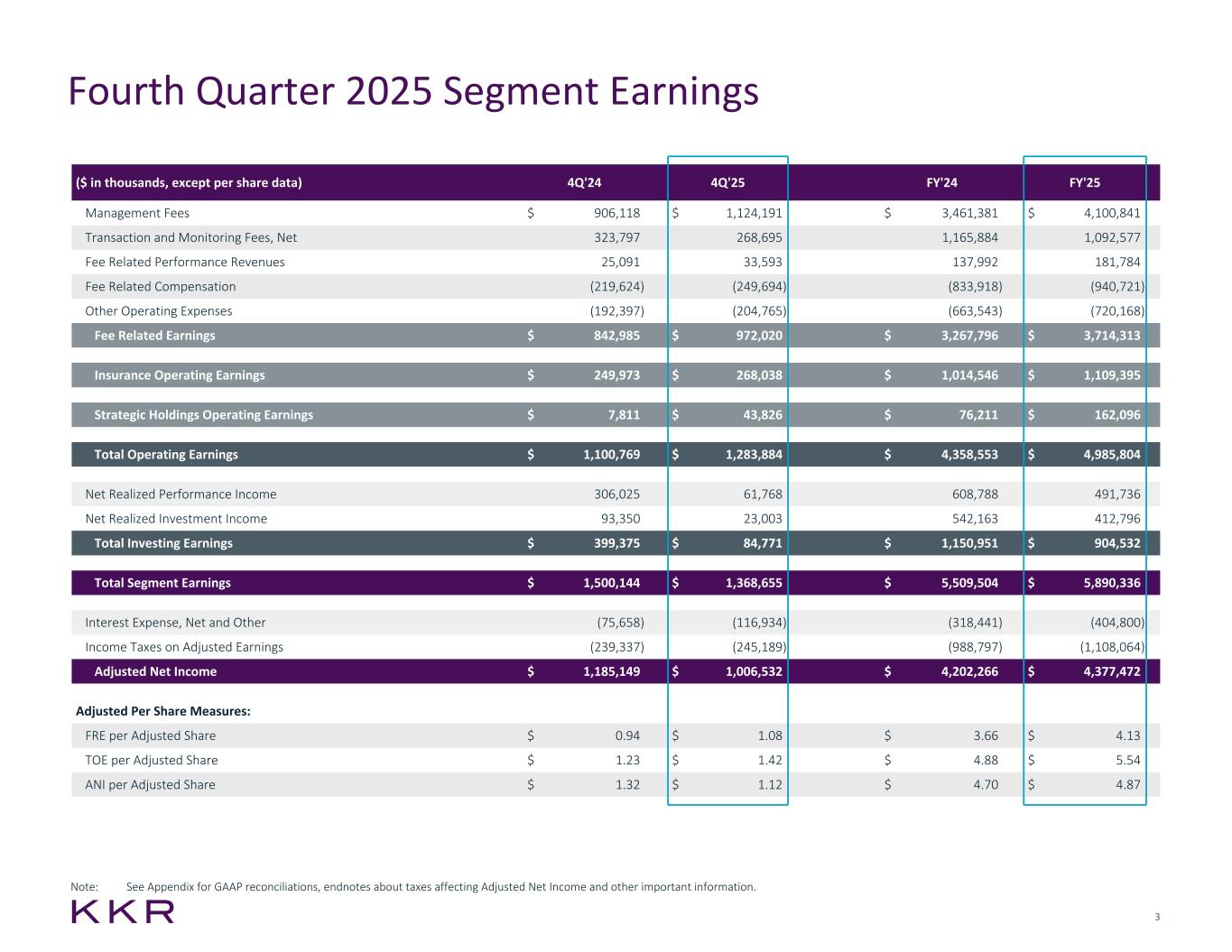
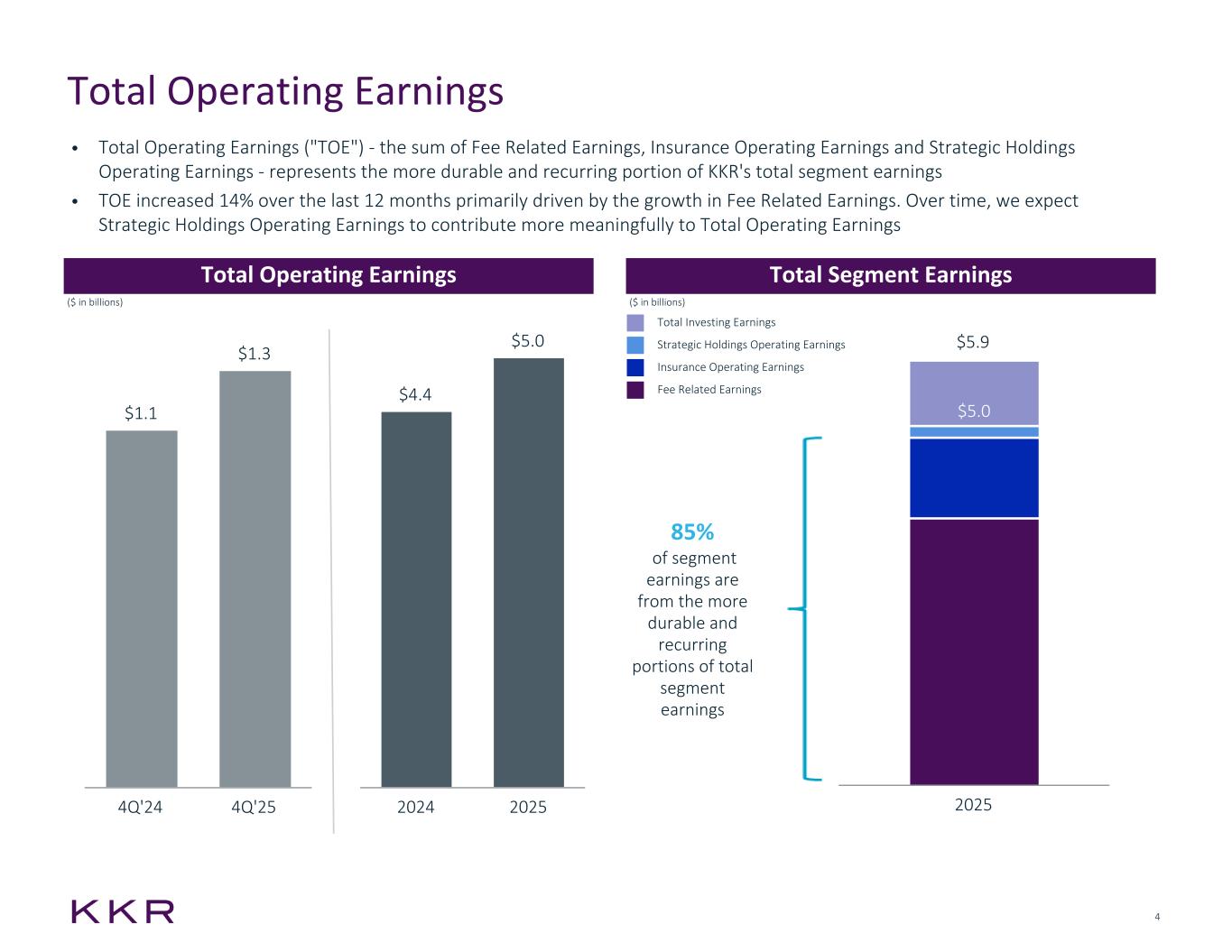
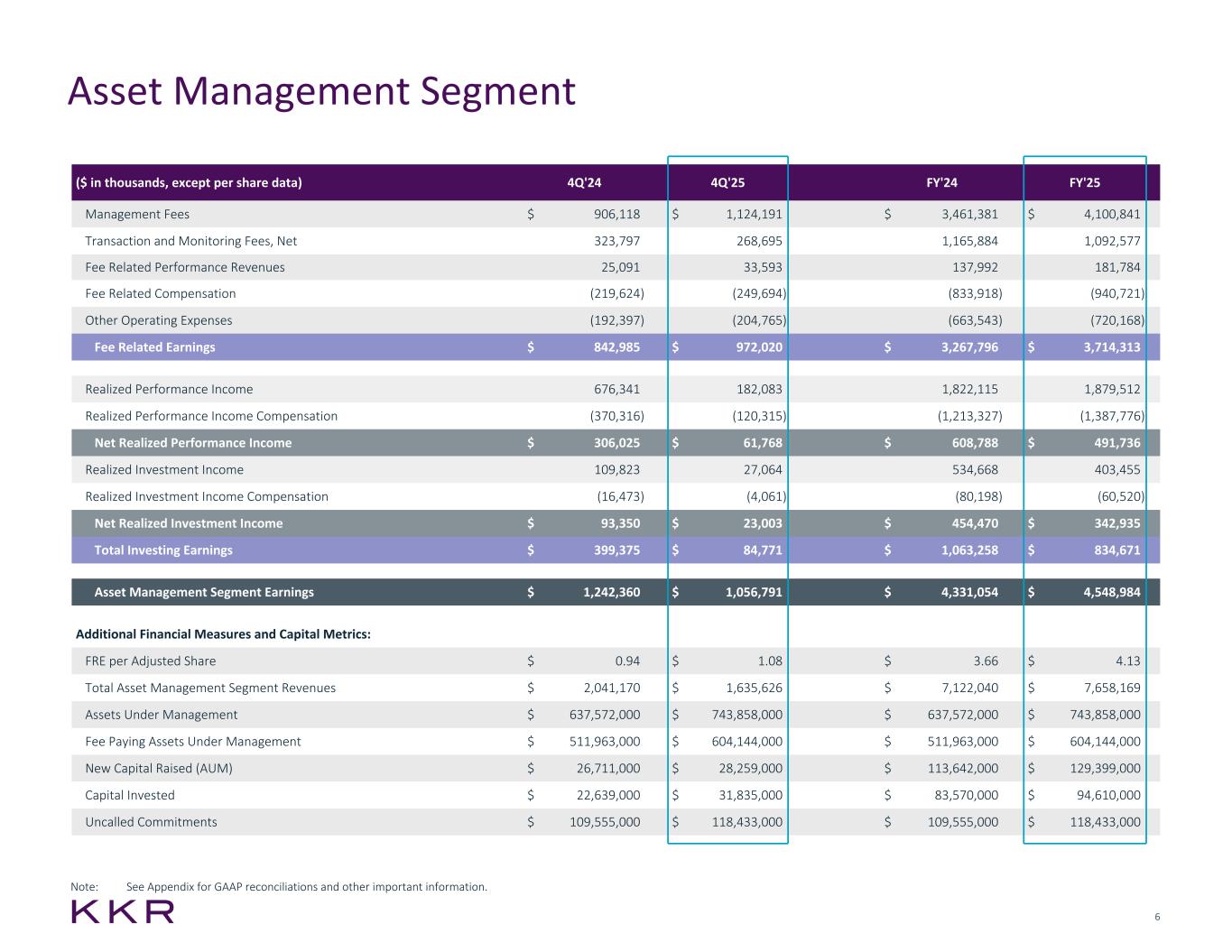
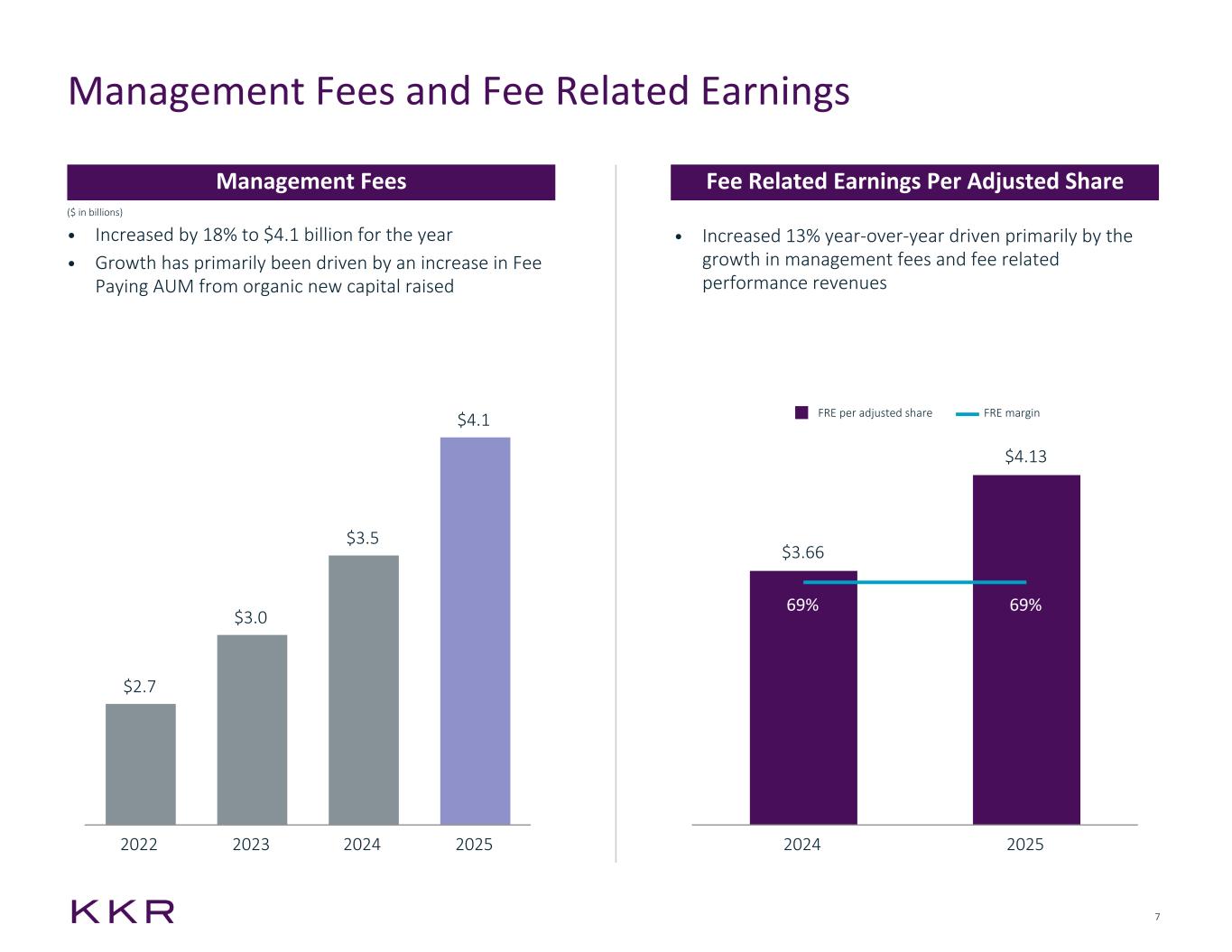
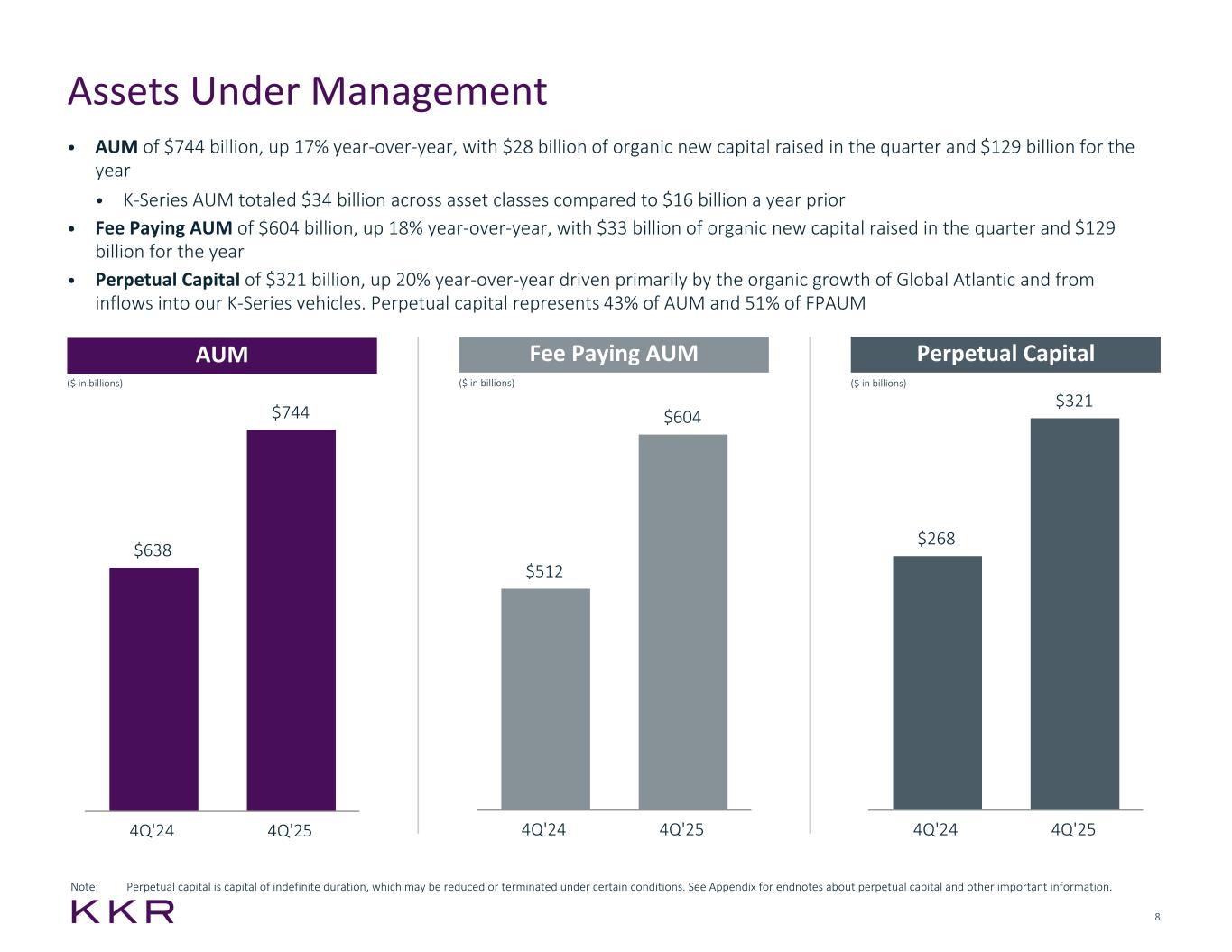
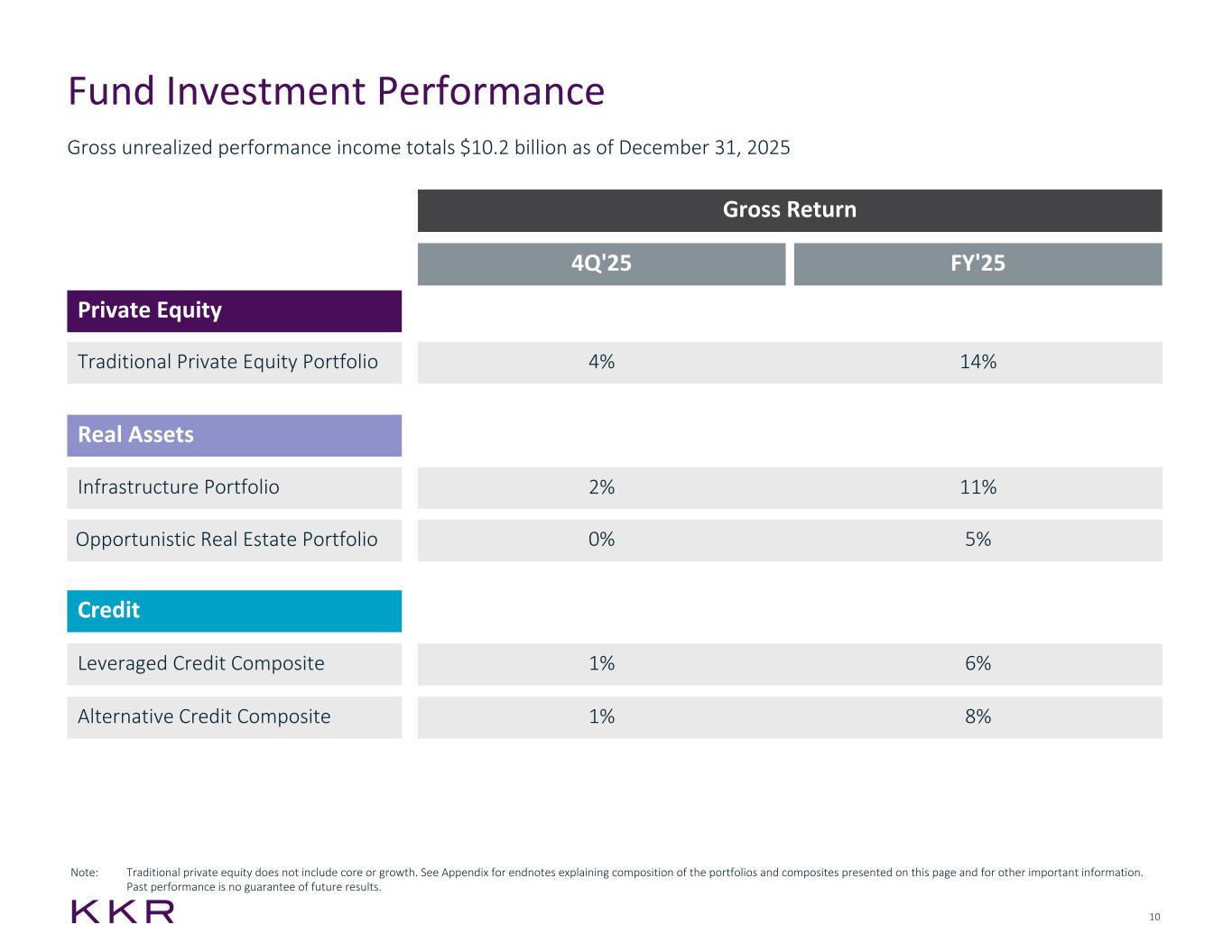
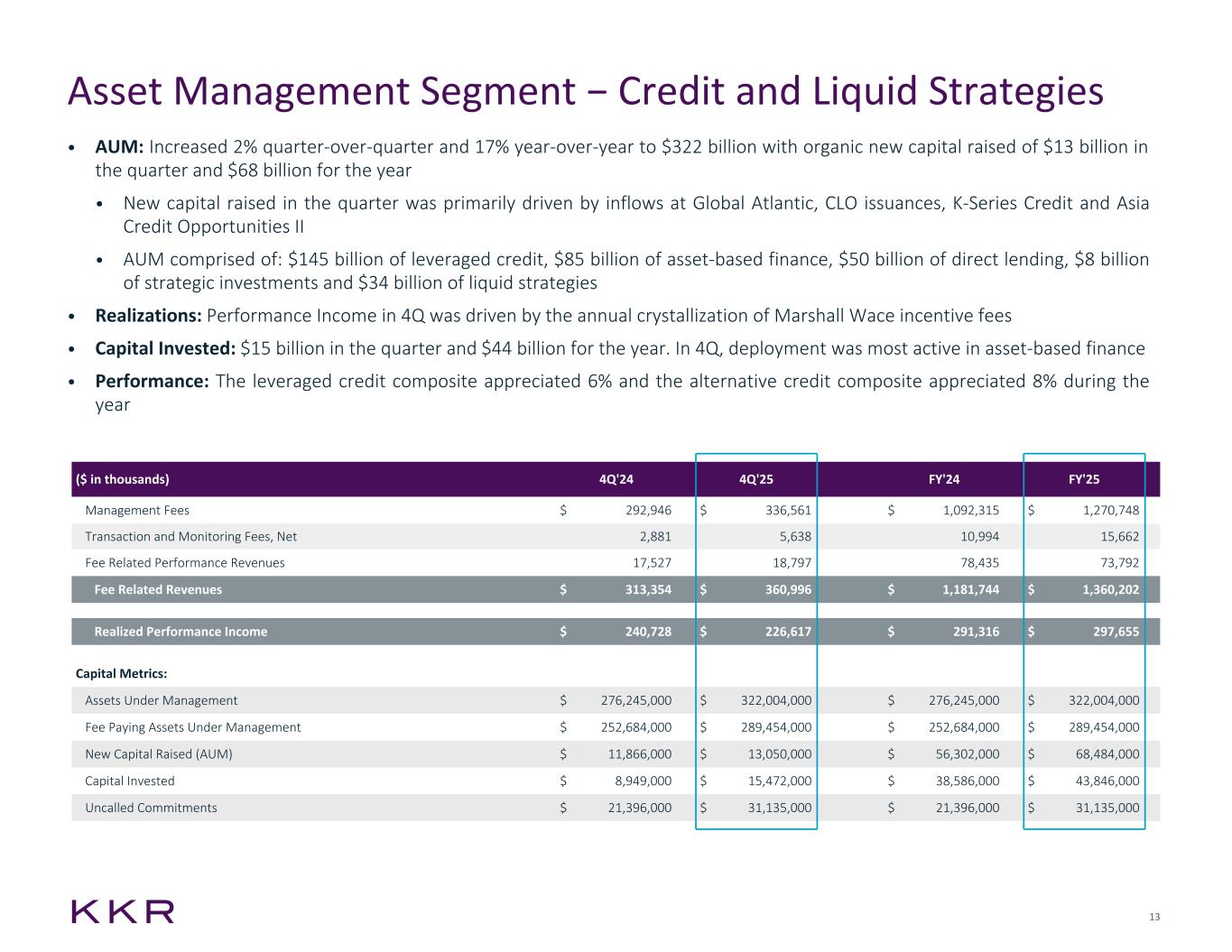
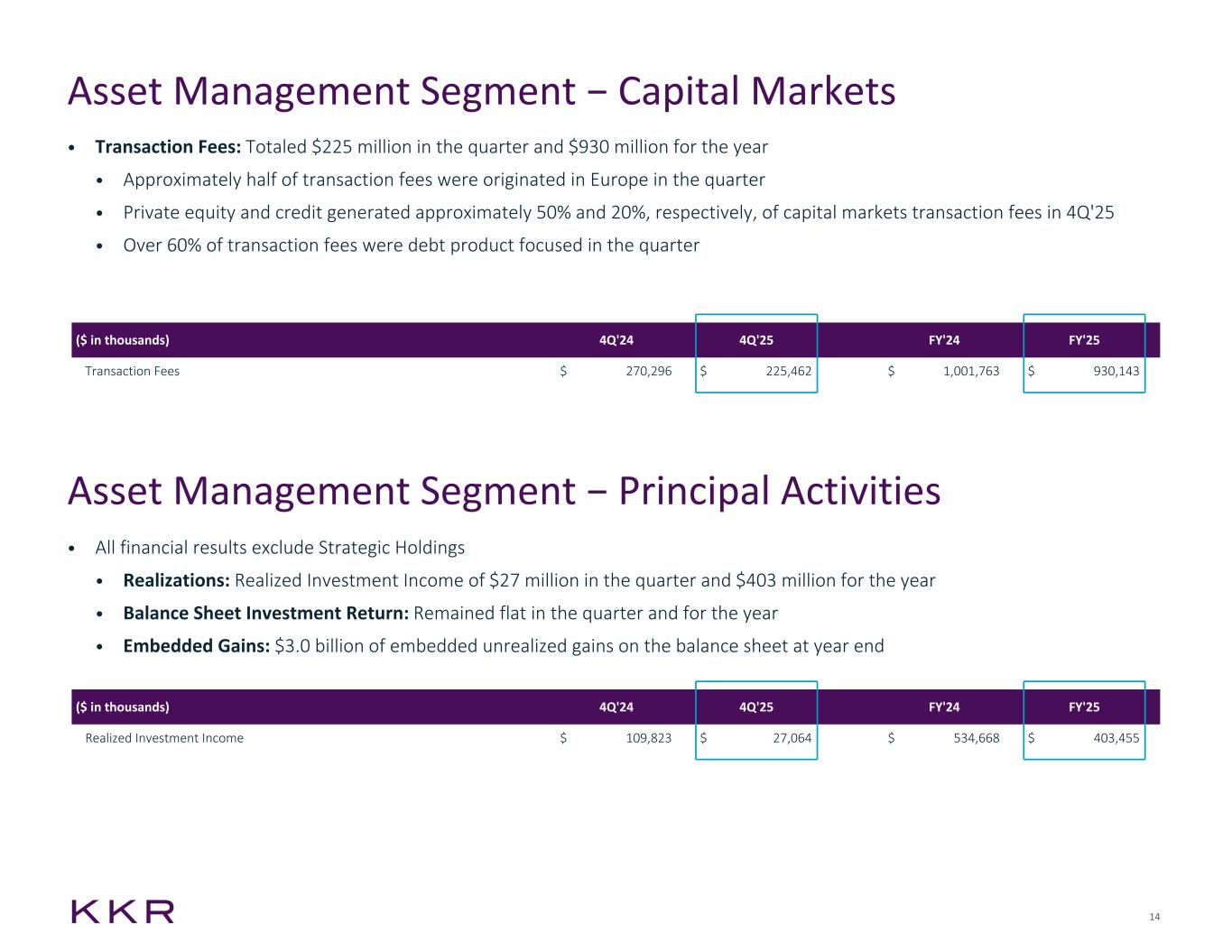
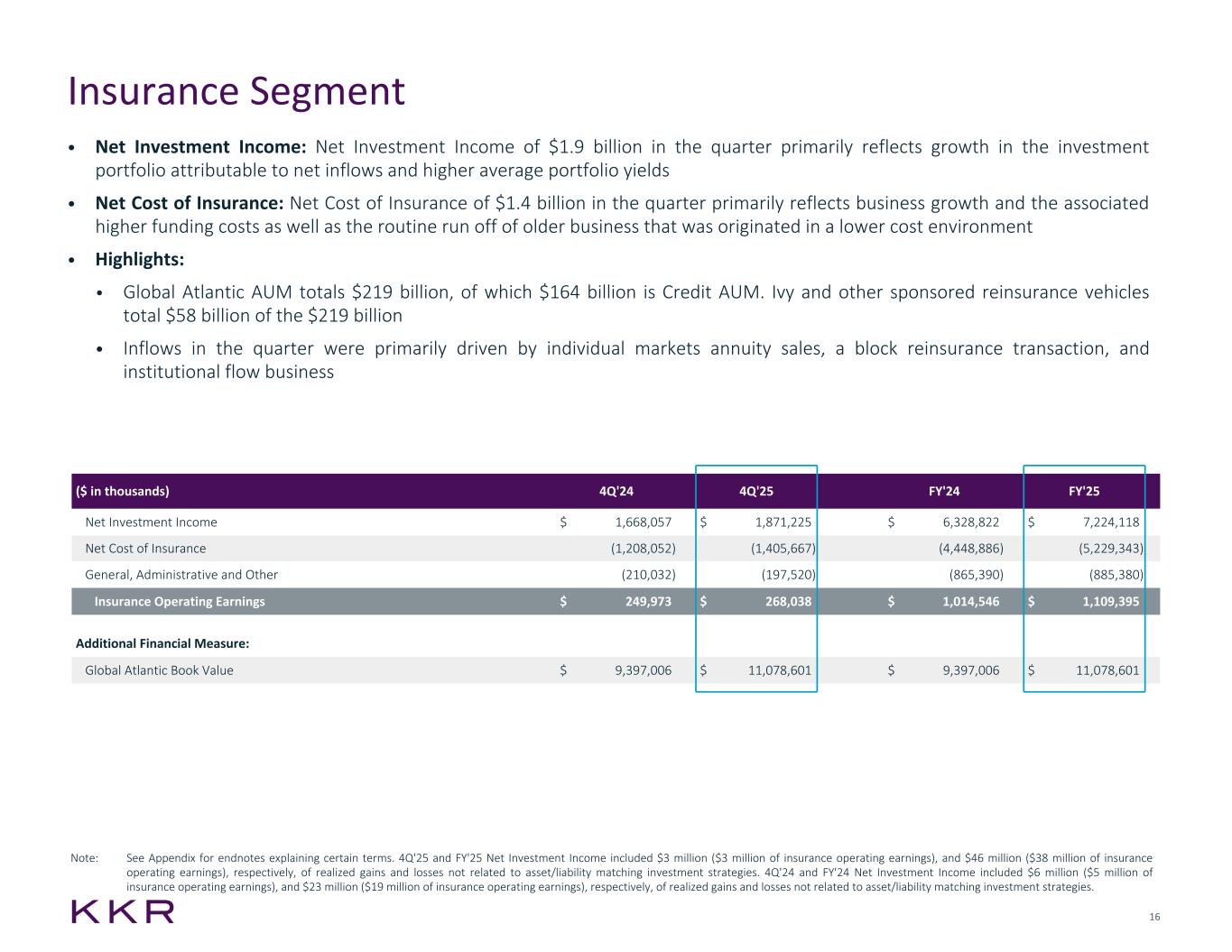
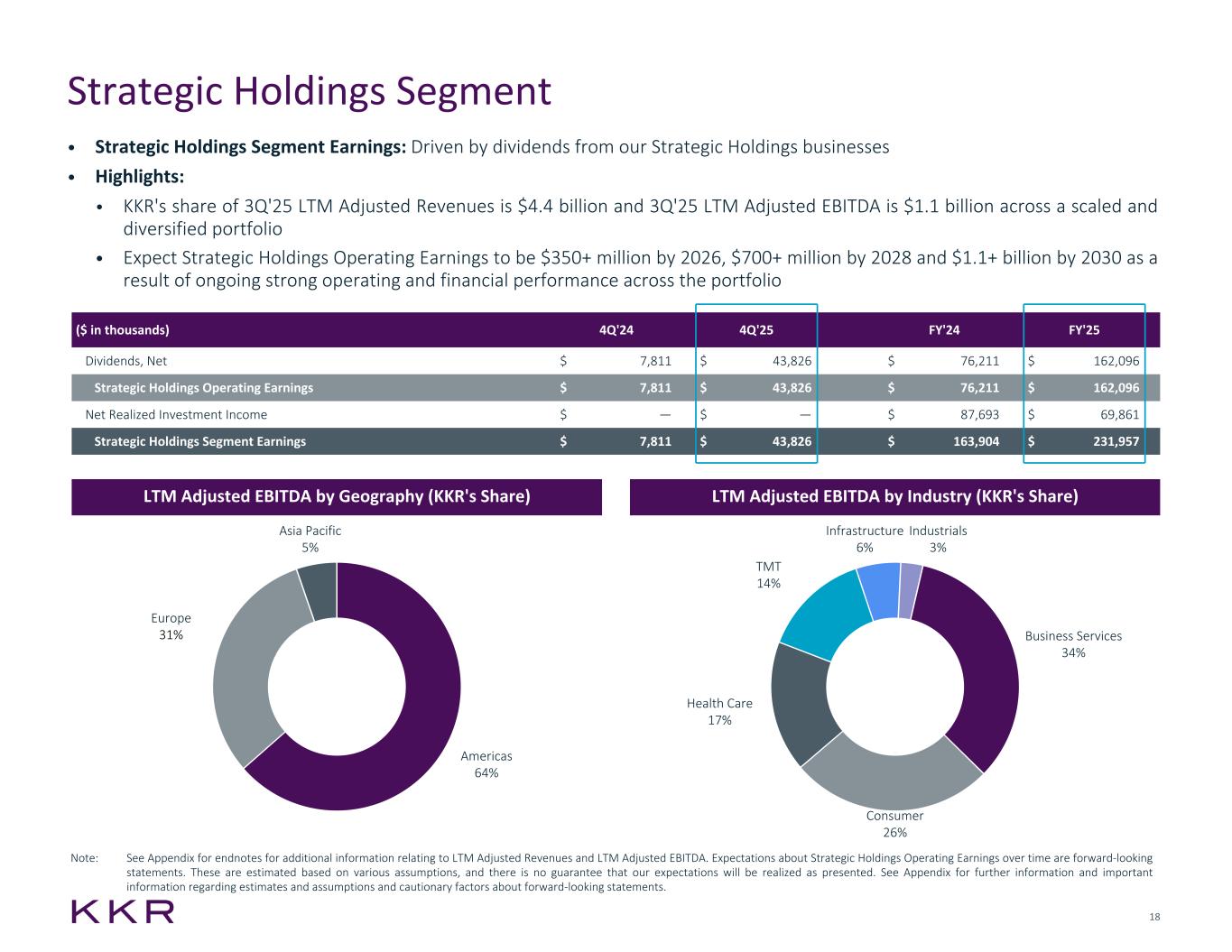
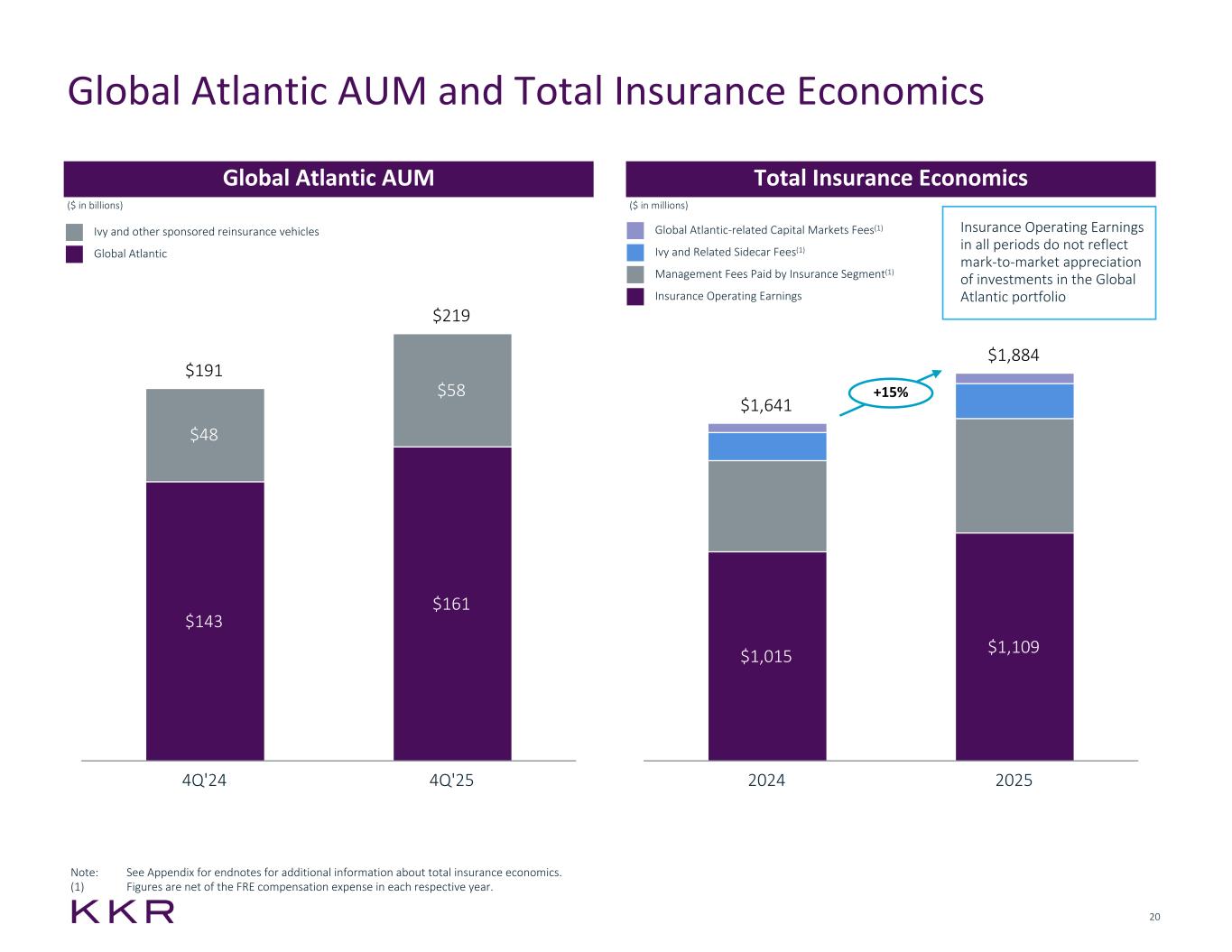
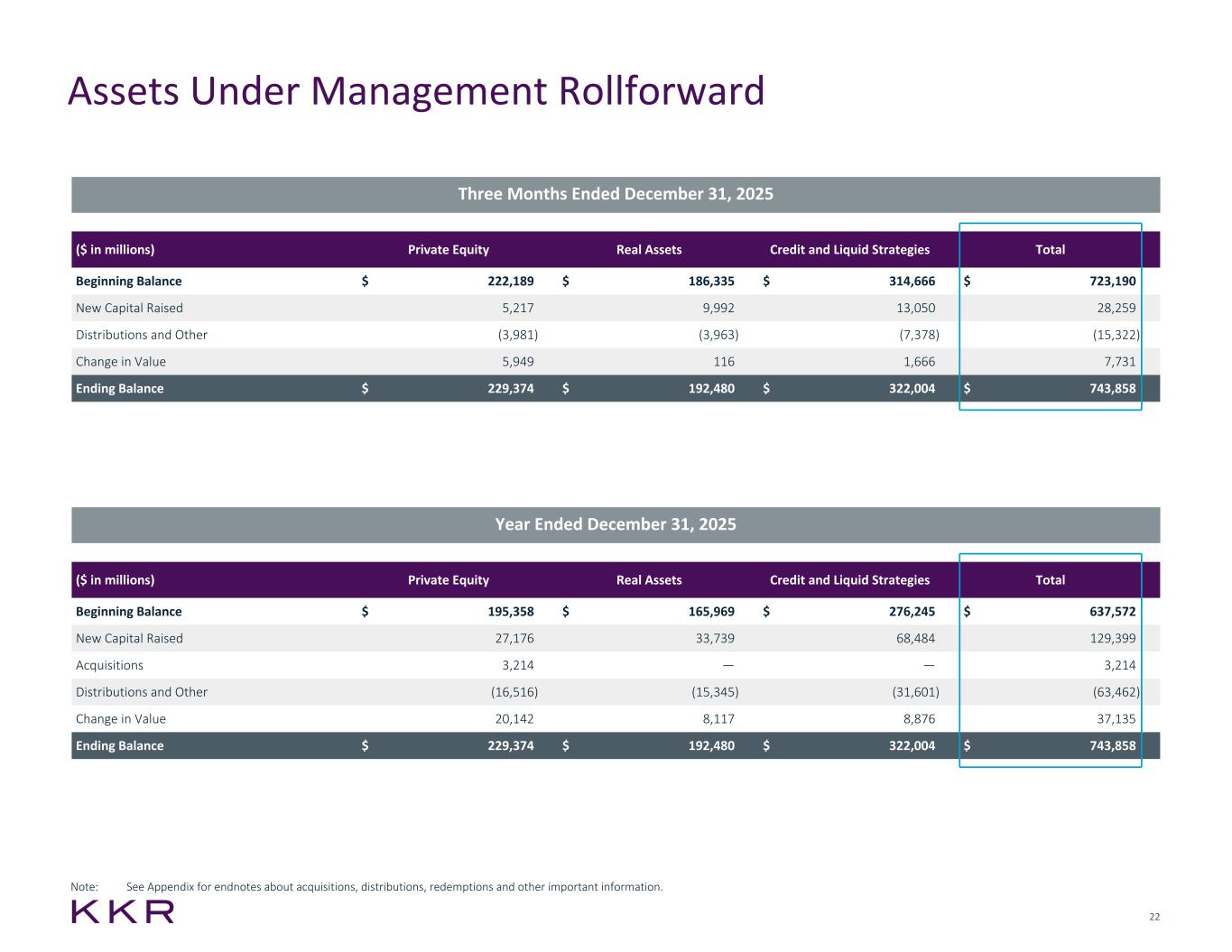
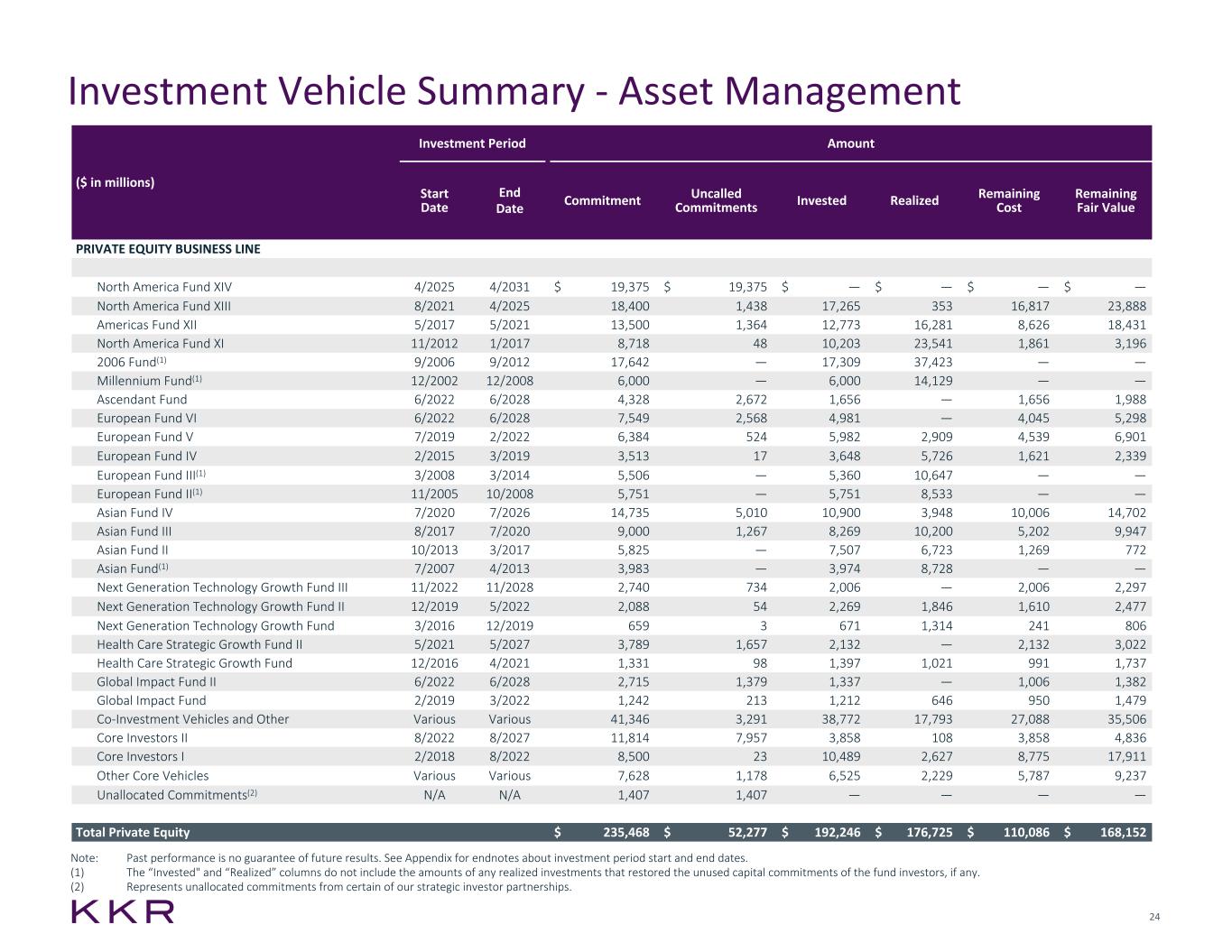
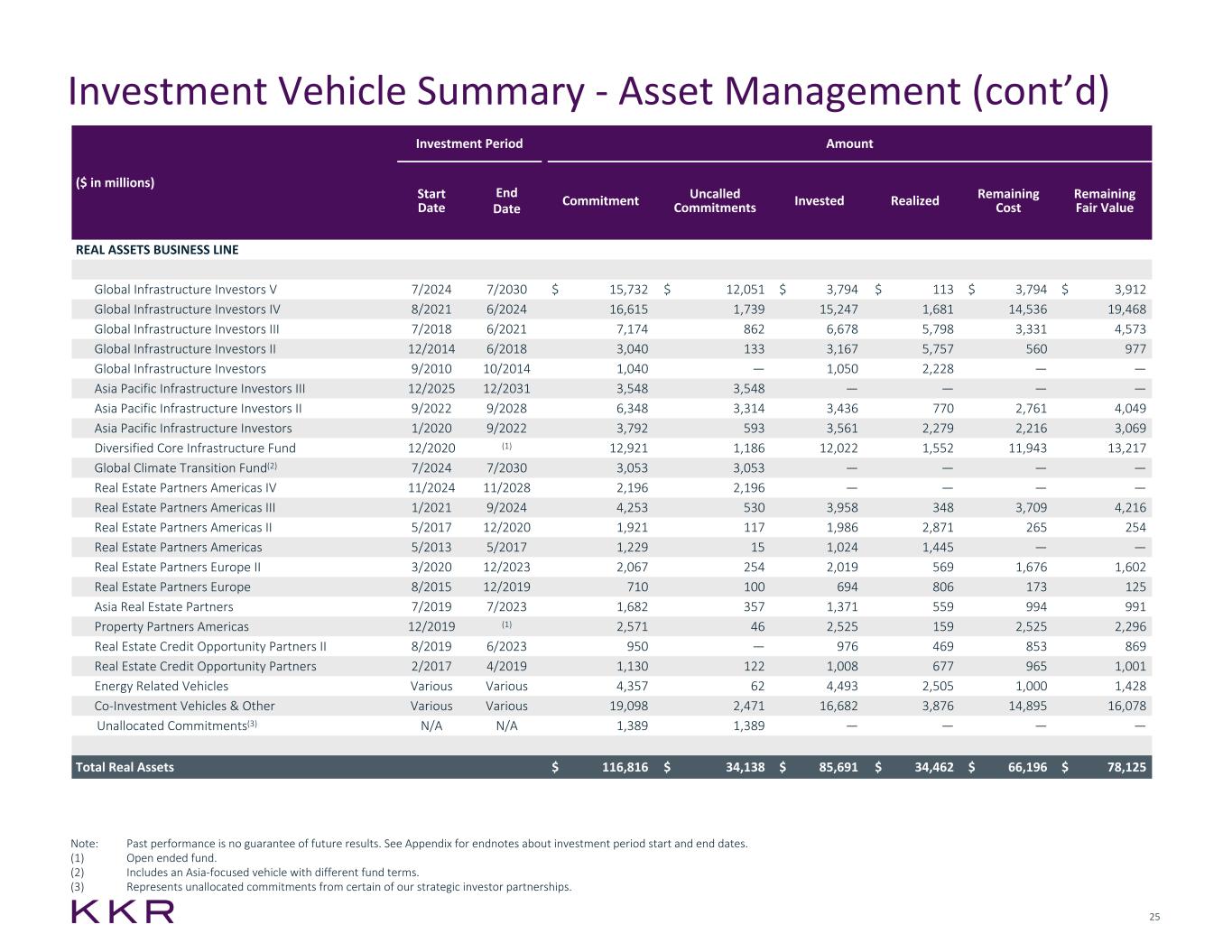
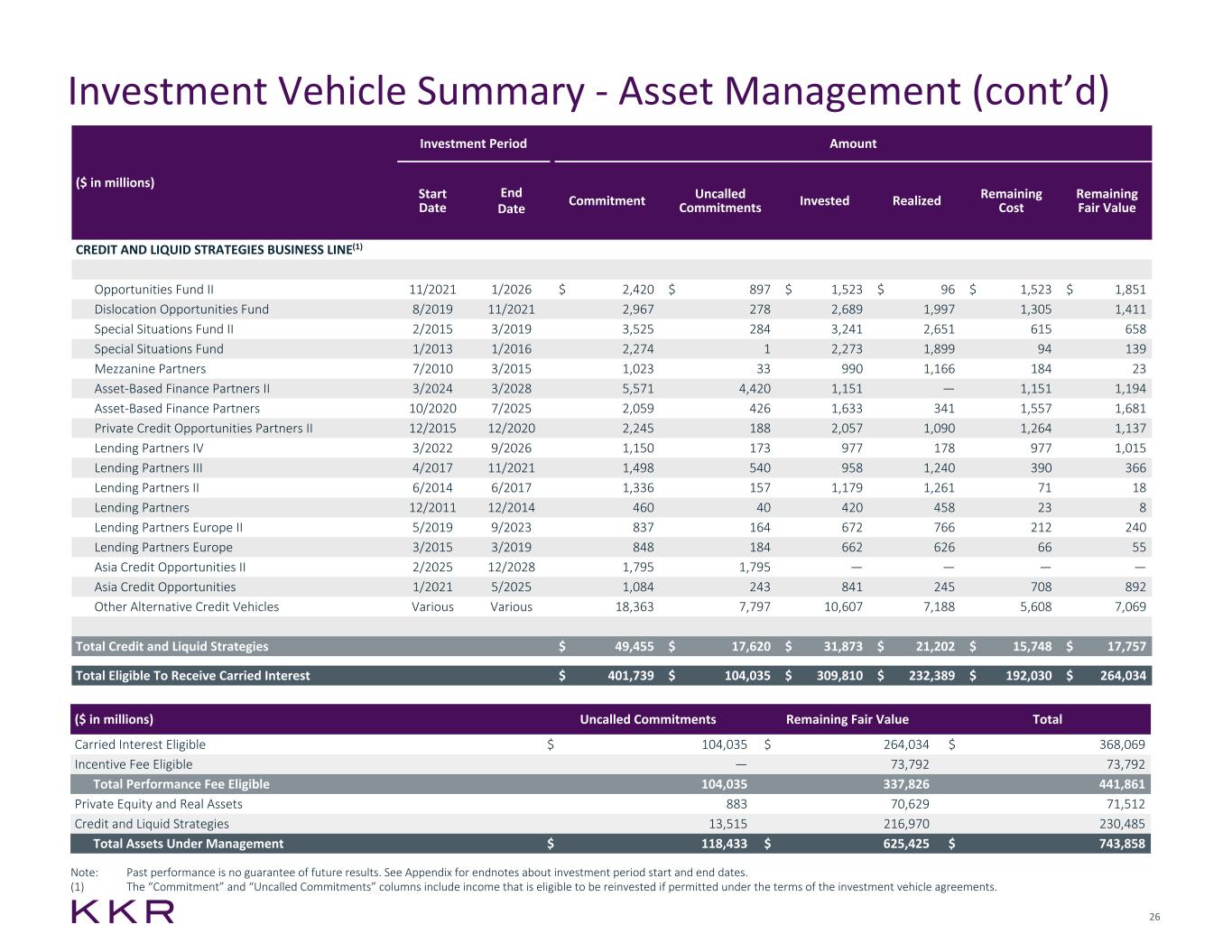
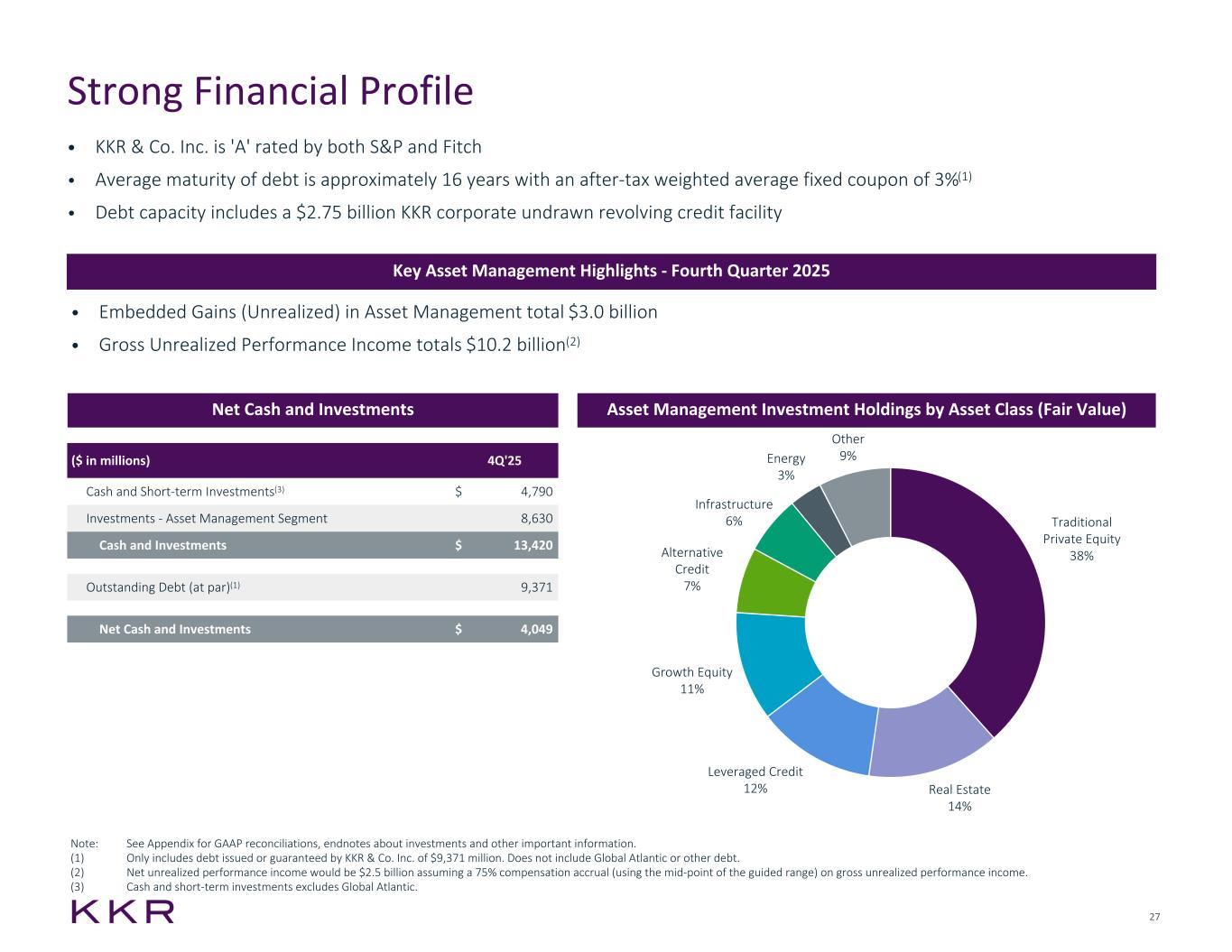
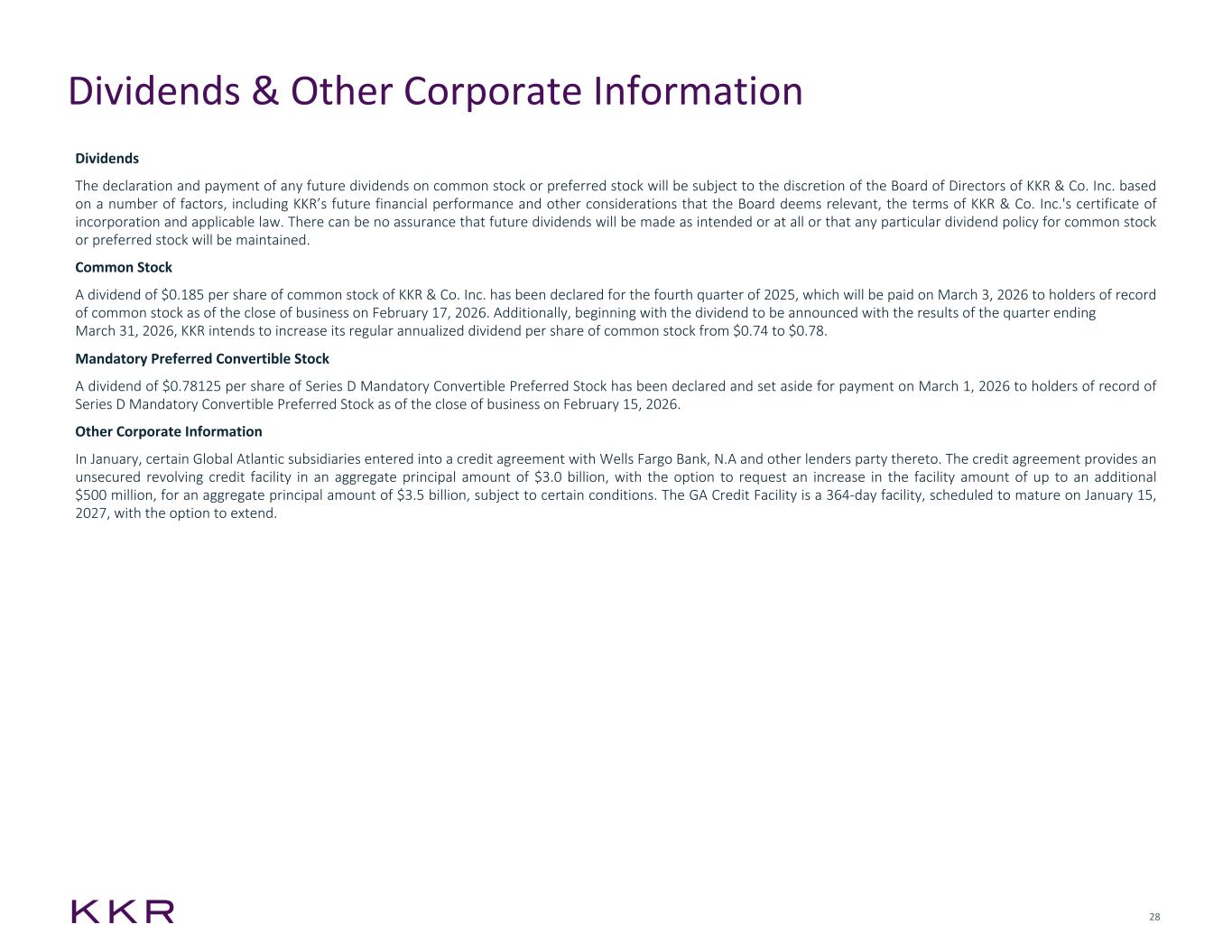
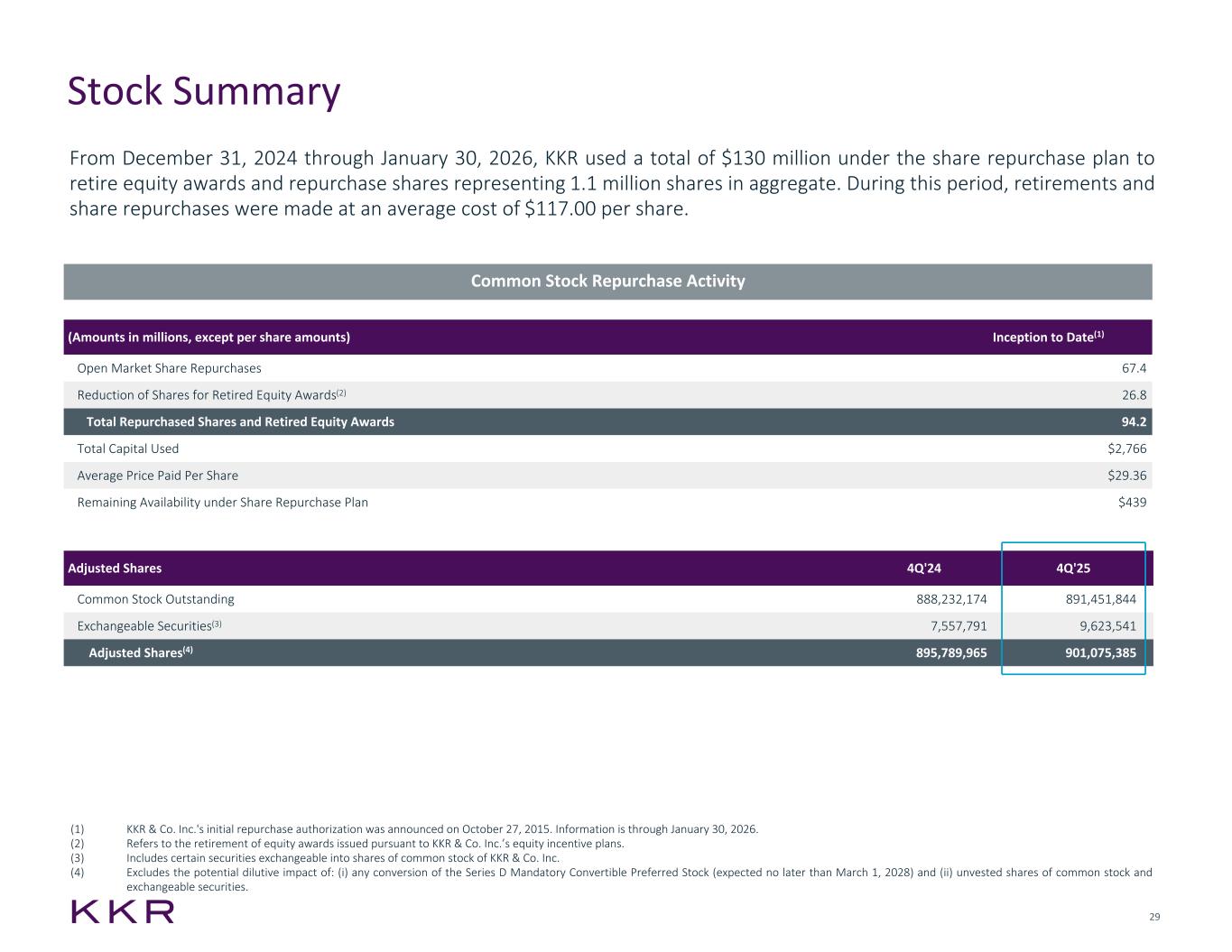
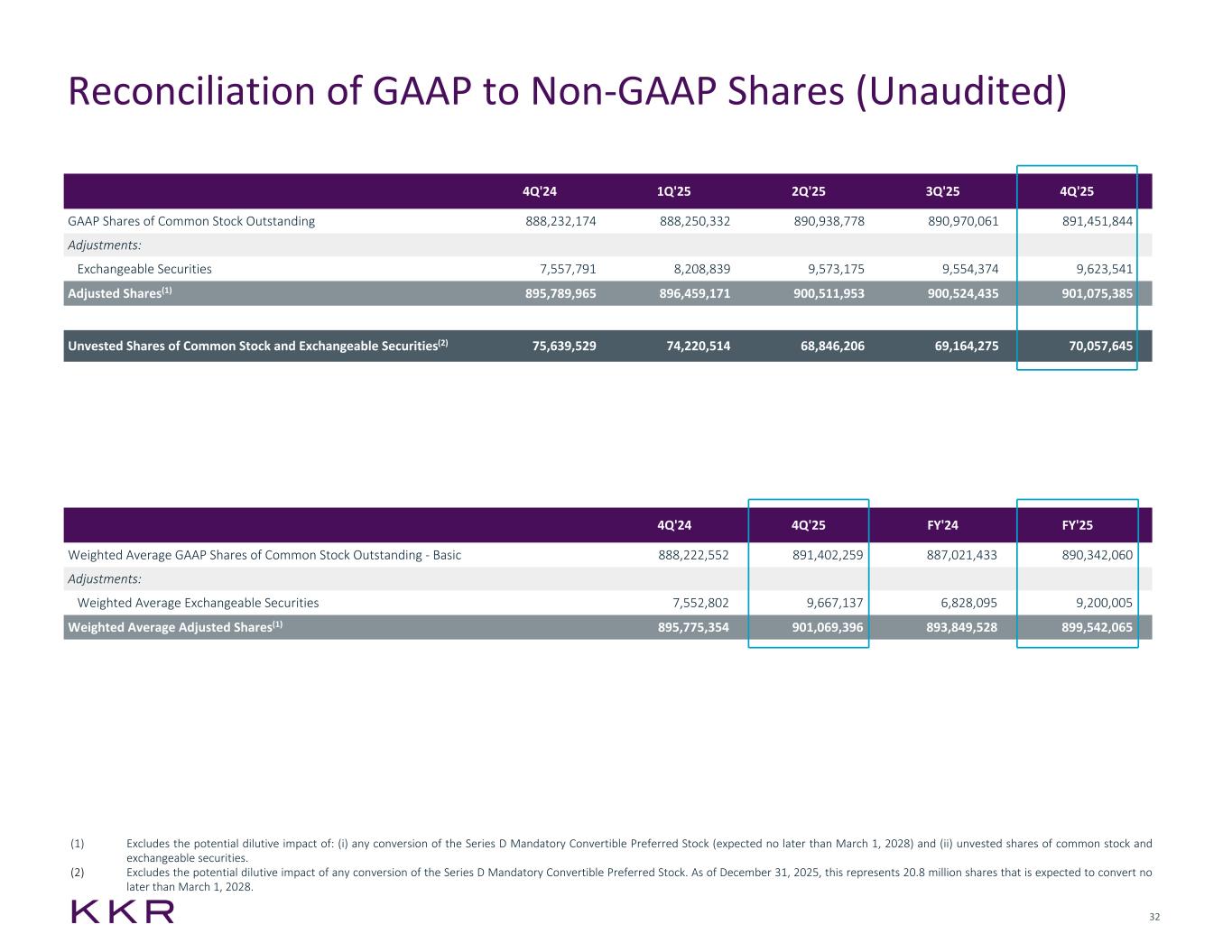
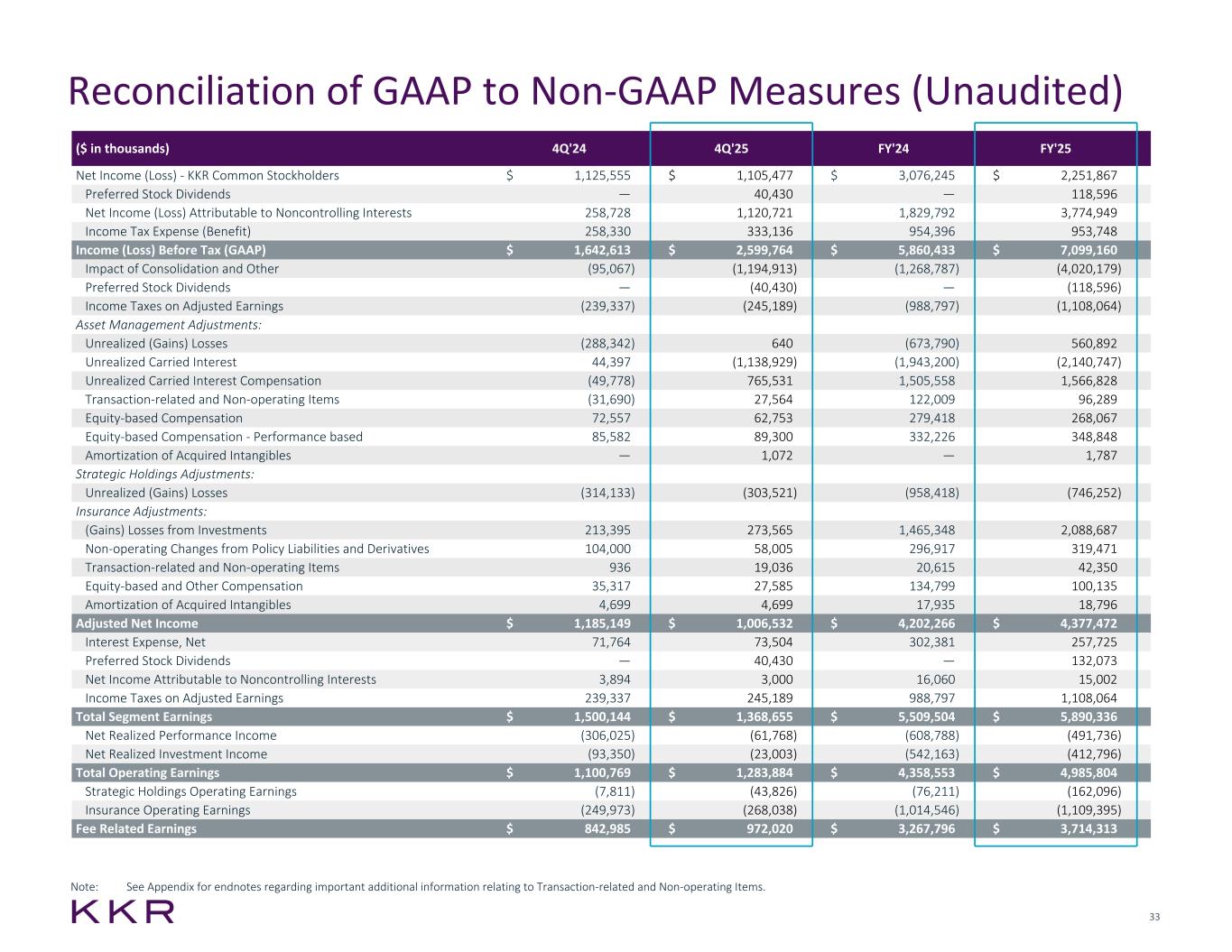
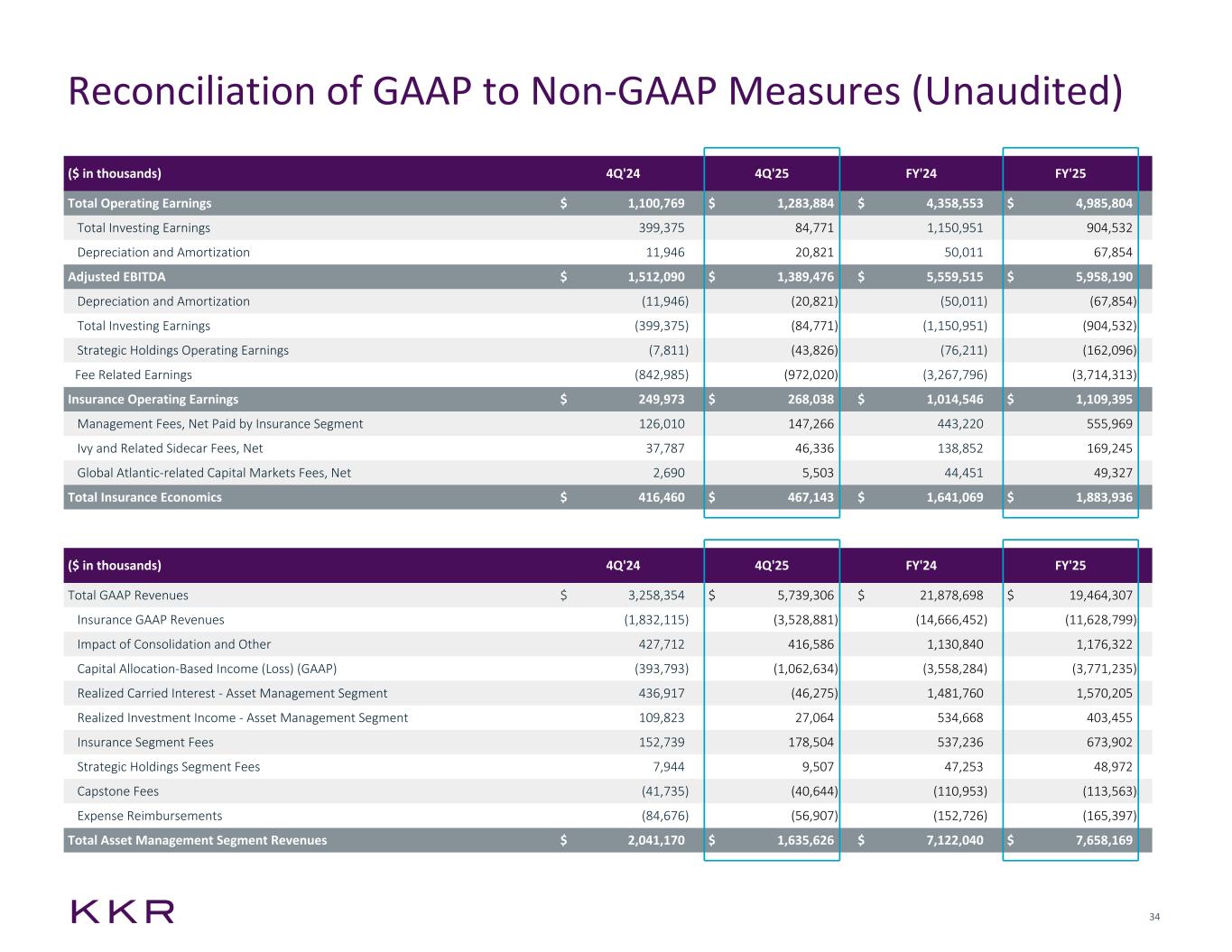
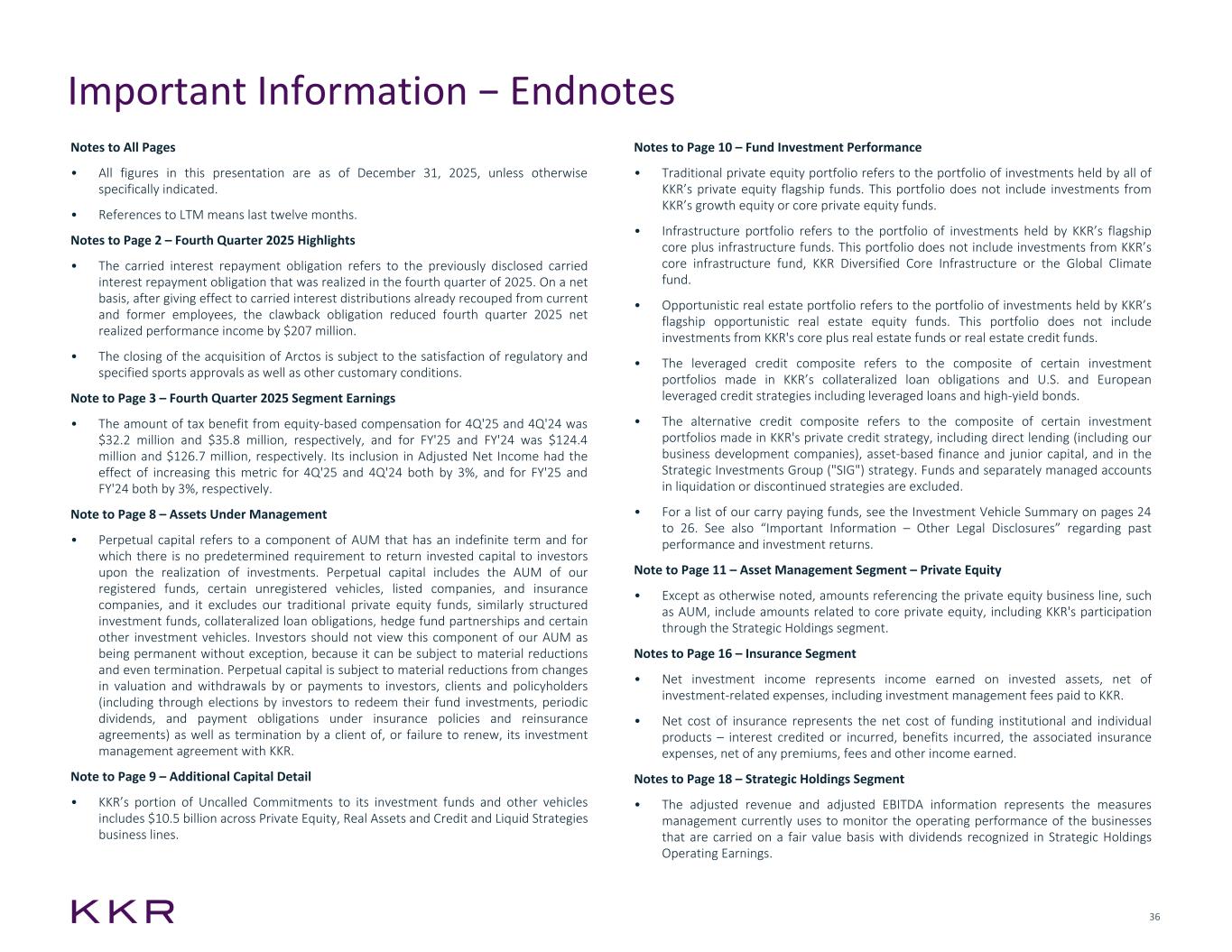
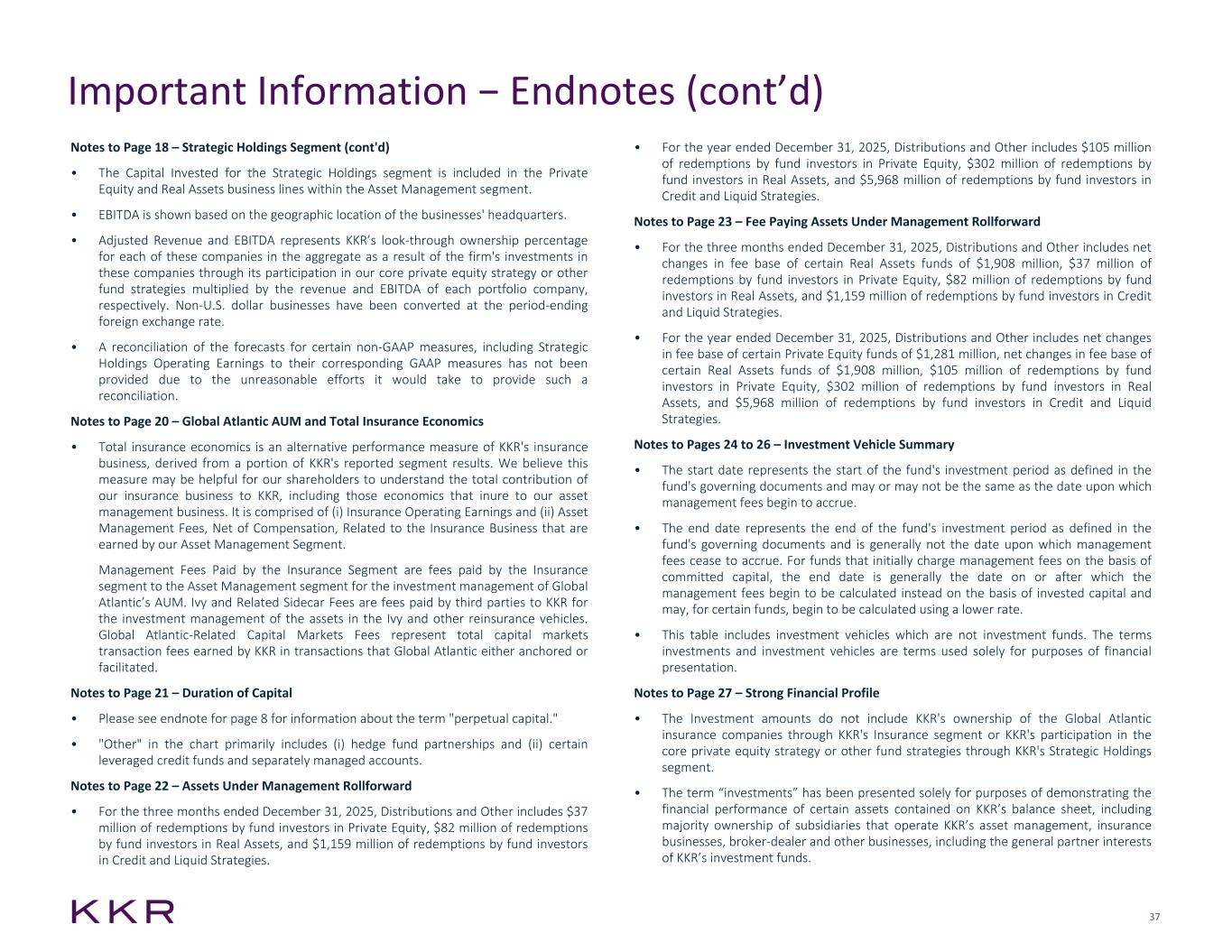
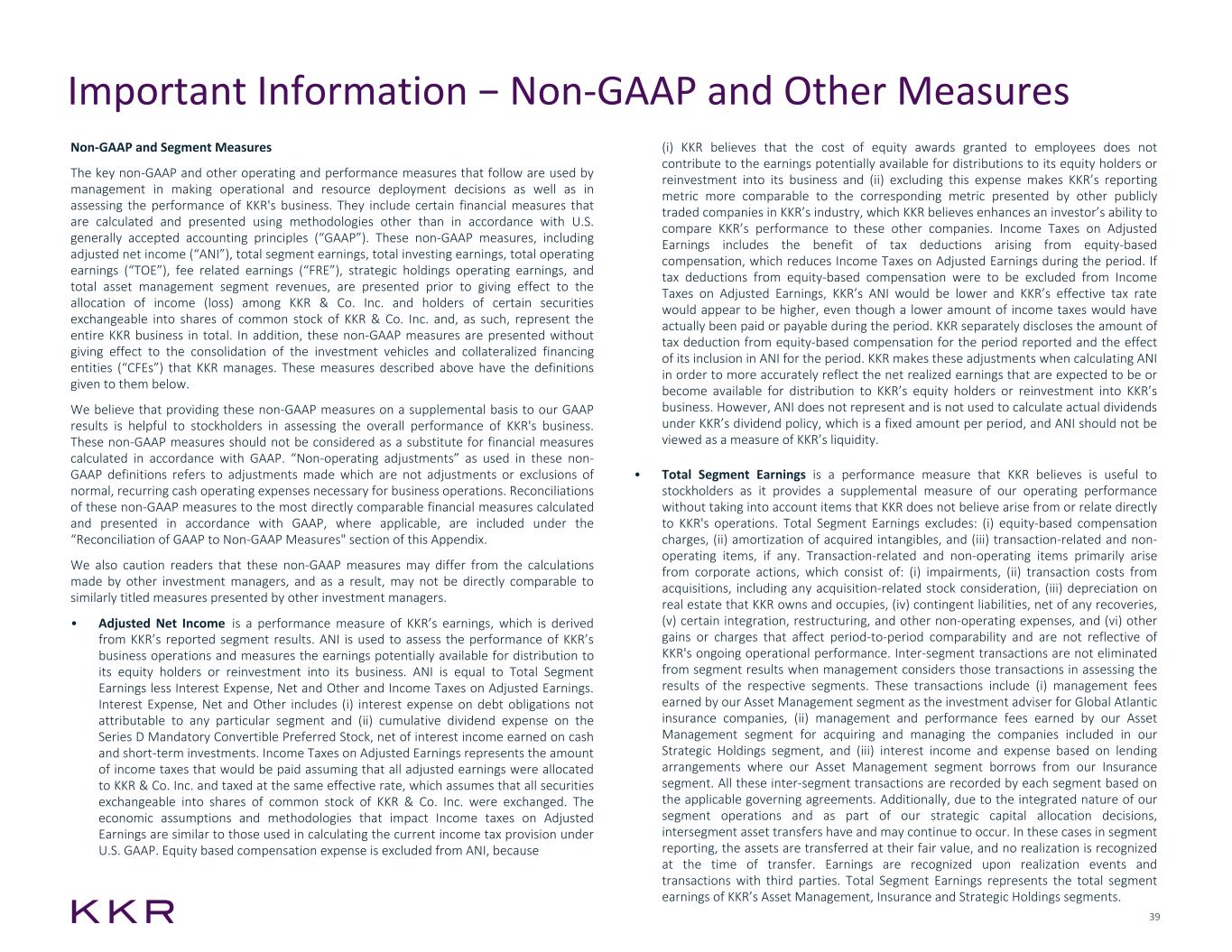
Thank you, Operator. Good morning, everyone. Welcome to our fourth quarter 2025 earnings call. This morning, as usual, I'm joined by Rob Lewin, our Chief Financial Officer, and Scott Nuttall, our Co-Chief Executive Officer. We would like to remind everyone that we'll refer to non-GAAP measures on the call, which are reconciled to gap figures in our press release which is available on the Investor Center section at KKR.com. And as a reminder, we report our segment numbers on an adjusted share basis. We will refer to forward-looking statements on the call which do not guarantee future events or performance, so please refer to our earnings release and our SEC filings for cautionary factors about these statements. So beginning first with our headline financial metrics. This quarter, we're pleased to be reporting $1.08 of fee-related earnings per share, $1.42 of total operating earnings per share, and $1.12 of adjusted net income per share. The $1.12 figure includes the carried interest repayment obligation we reviewed on our last earnings call, and excluding this, A&I per share for Q4 was $1.30. Management fees in the quarter were $1.1 billion. That's up 24% on a year-over-year basis, and that's driven really by all of our fundraising initiatives as well as the continued deployment across the firm. Excluding catch-up fees in both periods, management fees grew by 22%. And as KTR has grown, our management fee profile has become meaningfully more diversified. Looking at full year 2025, management fees were $4.1 billion, with private equity, real assets, and credit each contributing approximately one-third of total fees. Total transaction and monitoring fees were $269 million in the quarter. Capital market fees came in at $225 million, driven by activity across private equity, credit, and infrastructure, and fee-related performance revenues in the quarter were $34 million. Turning to expenses, fee-related compensation was again at the midpoint of our guided range, our 17.5%, and other operating expenses for the quarter came in at $205 million. So in total, fee-related earnings were $972 million, which is up 15% year-over-year, and our reparee margin was a healthy 68% for the quarter, and just over 69% for the full year 2025. Insurance thing and operating earnings in Q4 were 268 million. As a reminder, we report the insurance investment portfolio largely based on cash outcomes. So to give you a sense of the embedded profitability here, our insurance operating earnings would have been approximately 100 million dollars higher in Q4 if we'd included the impact of marks on our investments where a significant portion of the return relates to appreciation and not cash yields, with around 50 of that 100 million coming from a portfolio that was purchased in the quarter that was subsequently marked out. So said another way, if you included what we think of as the more recurring performance in the portfolio, insurance operating earnings would have been approximately 320 million in Q4. And one more point on Global Atlantic, I'd like to turn your attention to page 20 in our earnings release. We introduced and walked through this supplemental page on our last earnings call. As a reminder here, insurance segment operating earnings alone do not capture the impact of Global Atlantic recognizing the economics that show up in our asset management segment. So on this page on the right hand side, we detail the management fees we receive under our investment management agreement, fees from IV related vehicles where we have over 50 billion of AUM that wouldn't exist without GA, as well as GA-related capital markets fees. Taken together, as you see on the page, total insurance economics in 2025 were $1.9 billion net of compensation, and that figure is up 15% for the year. Strategic holdings, operating earnings were $44 million in Q4, and on a full-year basis, they've more than doubled compared to 2024. And perhaps more importantly, we continue to track nicely towards our expected $350-plus million of operating earnings looking forward to 2026. So putting that all together, total operating earnings came in at $1.42 per share. And these more durable and recurring earnings drove 85% of our total pre-tax segment earnings, again looking at the last 12 months. Now moving on to investing earnings within our asset management segment, realized performance income was $528 million, that excludes the impact of the carried interest repayment obligation, and realized investment income was $27, bringing total monetization activity to north of $550 million. This activity was driven by a combination of public secondary sales and strategic transactions, dividends and interest income as well as the annual performance fee for Marshall Waste. After interest expense and taxes adjusted net income was just over a billion for Q4 or the $1.12 per share figure I mentioned a few minutes ago. Turning to investment performance page 10 of the earnings release details the continued performance we're seeing across asset classes both in Q4 as well as over 2025. And given our investment performance really over a long period of time, in turn, you're seeing record embedded gains across the firm. Now, this is an important point for us. Total embedded gains, so that's gross carry together with the gains that sit on our balance sheet across asset management and strategic holdings. We're $19 billion at $1231. That's a record figure for us. And even with the gains that we've been realizing, total embedded gains have continued to scale at a healthy rate. That $19 billion number is up 19% compared to one year ago, and it's up over 50% compared to two years ago. Now let's turn to fundraising, which has continued to be a real bright spot for us. We raised $28 billion of new capital in a quarter, bringing full-year capital raised to $129 billion. That's the highest fundraising year in our 50-year history, and almost double where we were as a firm two years ago. And we're seeing continued demand really across the full breadth of asset classes and regions. Momentum continues to be strong in credit, with a record $68 billion raised across the platform in 2025, drive, driven by our asset-based finance business as well as our insurance business more broadly. And spending a minute on Global Atlantic's third-party capital fundraising, we held the final close of our IV-3 sidecar vehicle in the quarter, bringing total capital raised here to $4.5 billion. And when you combine this with the $2 billion commitment from Japan Post Insurance that we discussed last quarter, we now have approximately $6.5 billion of third-party capital capacity. And for some context, Ivy II raised a total of $2.7 billion of third-party capital in 2023. So you've seen a meaningful increase in scale, reinforcing our view that client's demand for insurance-related strategies just continues to deepen. And as a reminder here, the Ivy sidecar vehicles pay fee and carry similar to a drawdown credit or private equity fund and also allow us to grow GA in a capital-efficient way. And once this $6.5 billion of capital is fully deployed, we would expect it to translate into more than $65 billion of fee-paying AUM. Now turning to activity in private equity and real assets. Our North America Private Equity Fund now has over $19 billion of committed capital, and we're less than one year since its first close, already eclipsing the prior fund. And our Global Infrastructure Flagship Fund now has nearly $16 billion of commitments, also on track to be larger than its predecessor. In our view, the momentum and success we've seen despite a more challenging fundraising environment is a real testament to our differentiated investment performance, our focus on linear pacing, as well as the ability to return capital to our investors. And notably, flagships represented only 14% of our total 2025 fundraising, which speaks also to the breadth and diversity of our business across our fundraising activity. More broadly in infrastructure, we've already raised nearly $4 billion of capital for the latest vintage of our Asia Infrastructure Fund and we expect this to be larger than its $6 billion predecessor. And looking at another important piece of our capital raising efforts, private wealth. Our K-Series suite of products brought in $4.5 billion in Q4 and over $16 billion in full year 2025 which is nearly two times the amount raised in 24. AUM across our K-series vehicles is now over 35 billion that's including activity that closed January 1st and that compares to 18 billion a year ago and also in December we completed the conversion of an of an existing vehicle to Kiki our Asset Based Finance Fund or KABF. Today the ABF market is larger than the direct lending syndicated lending and high yield bond markets combined and the shift in our investment approach here now offers individual investors the opportunity to access this high growth and in our view really differentiated asset class we also continue to feel really excited about our strategic partnership with capital group the two credit products we launched last April are getting on more platforms we filed in equity products and we're making progress on a target state fund solution, as well as public-private model portfolios. So putting all of our capital raising together, we've already raised over $240 billion, or over 80% of the $300 plus billion fundraising target that we outlined for the 24-26 period at our investor day in April of 2024. And then finally, consistent with our historical practice, we intend to increase our annual dividend from 74 to 78 cents per share which will go into effect alongside a first quarter 26 earnings this will now be the seventh consecutive year that we increased our dividends and c-corp conversion and with that i'm pleased to turn things over to rob thanks a lot craig and thank you everyone for joining our call this morning we had a strong 2025 and our fourth quarter results especially our key forward indicators give us continued confidence as we head into the new year 2026 is a special year at KKR, as we will be celebrating our 50th anniversary on May 1st.
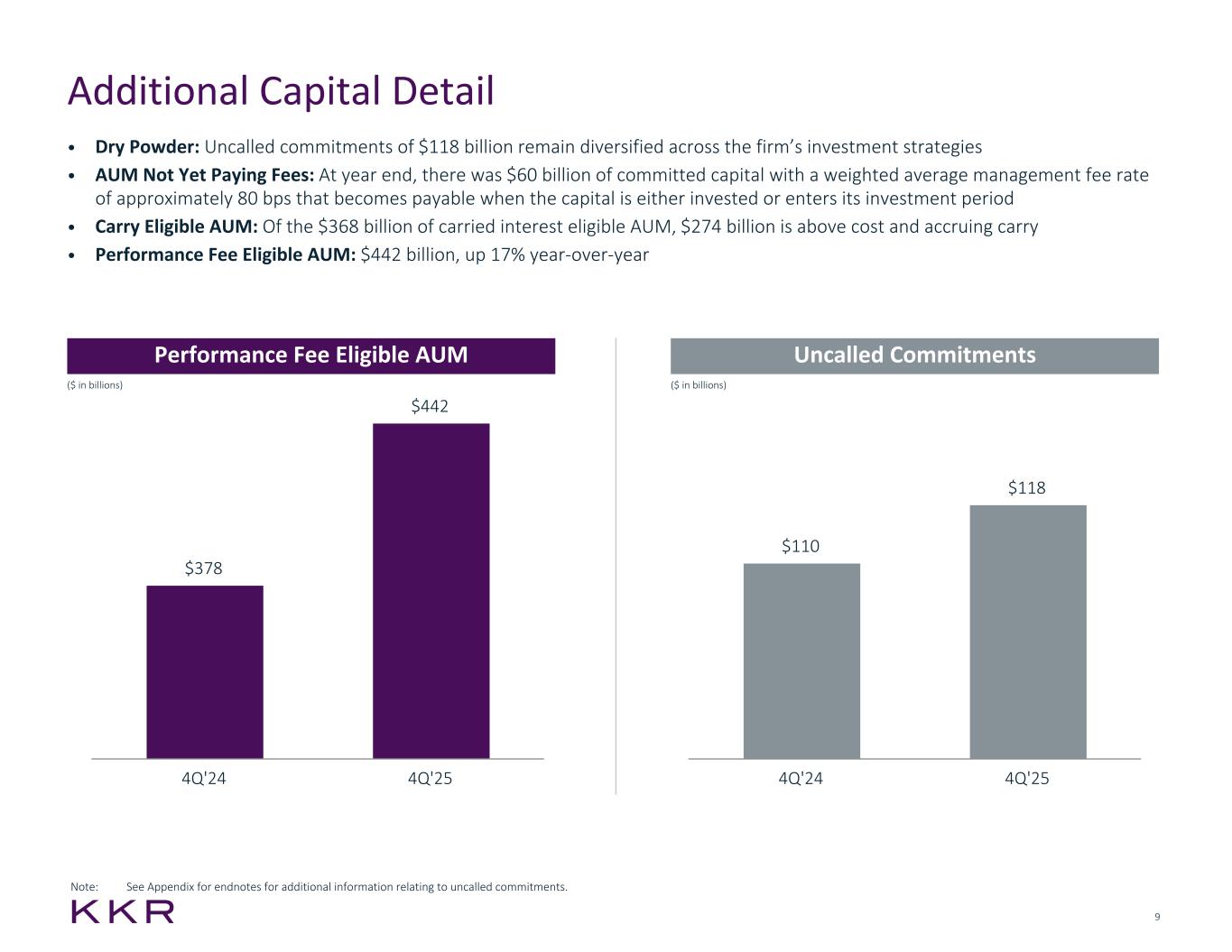
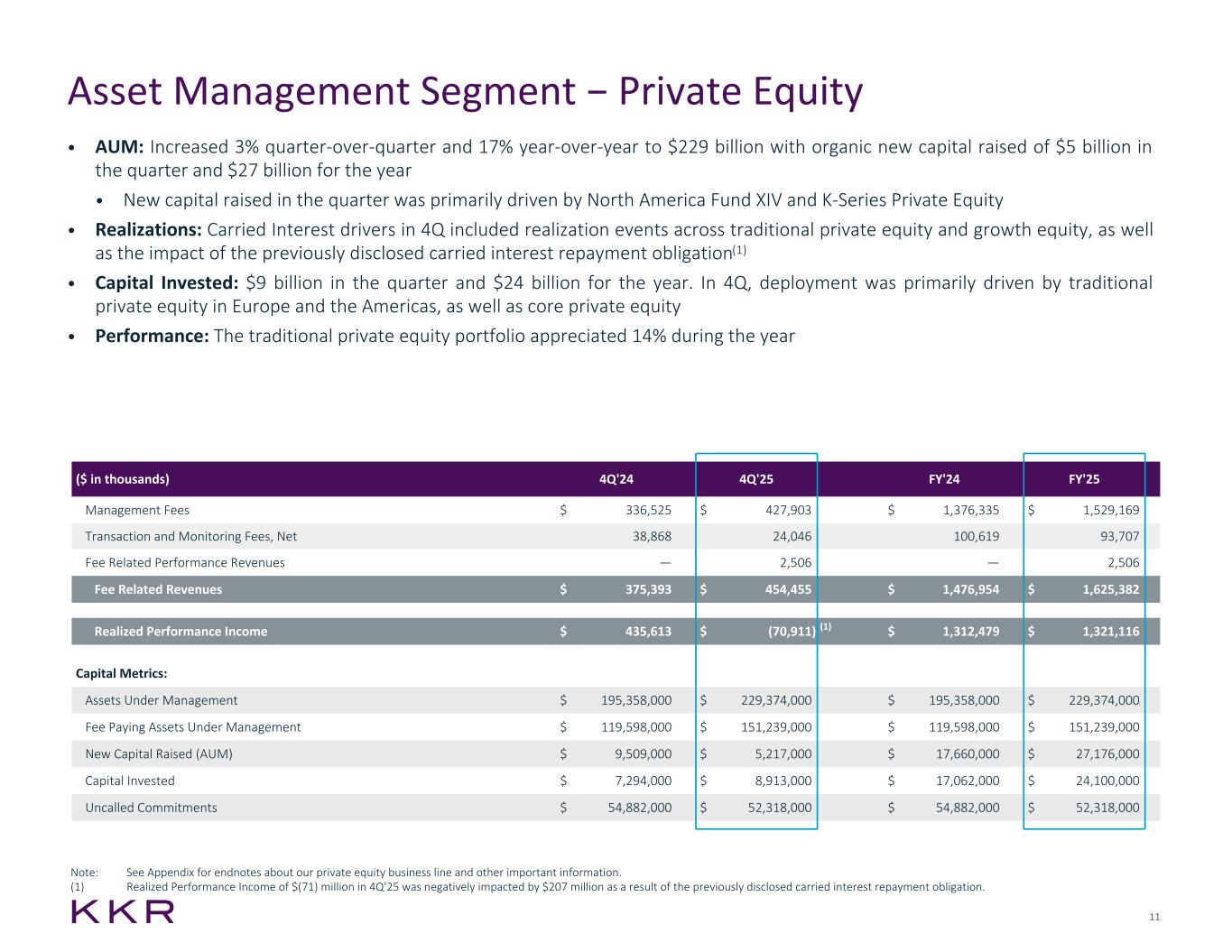
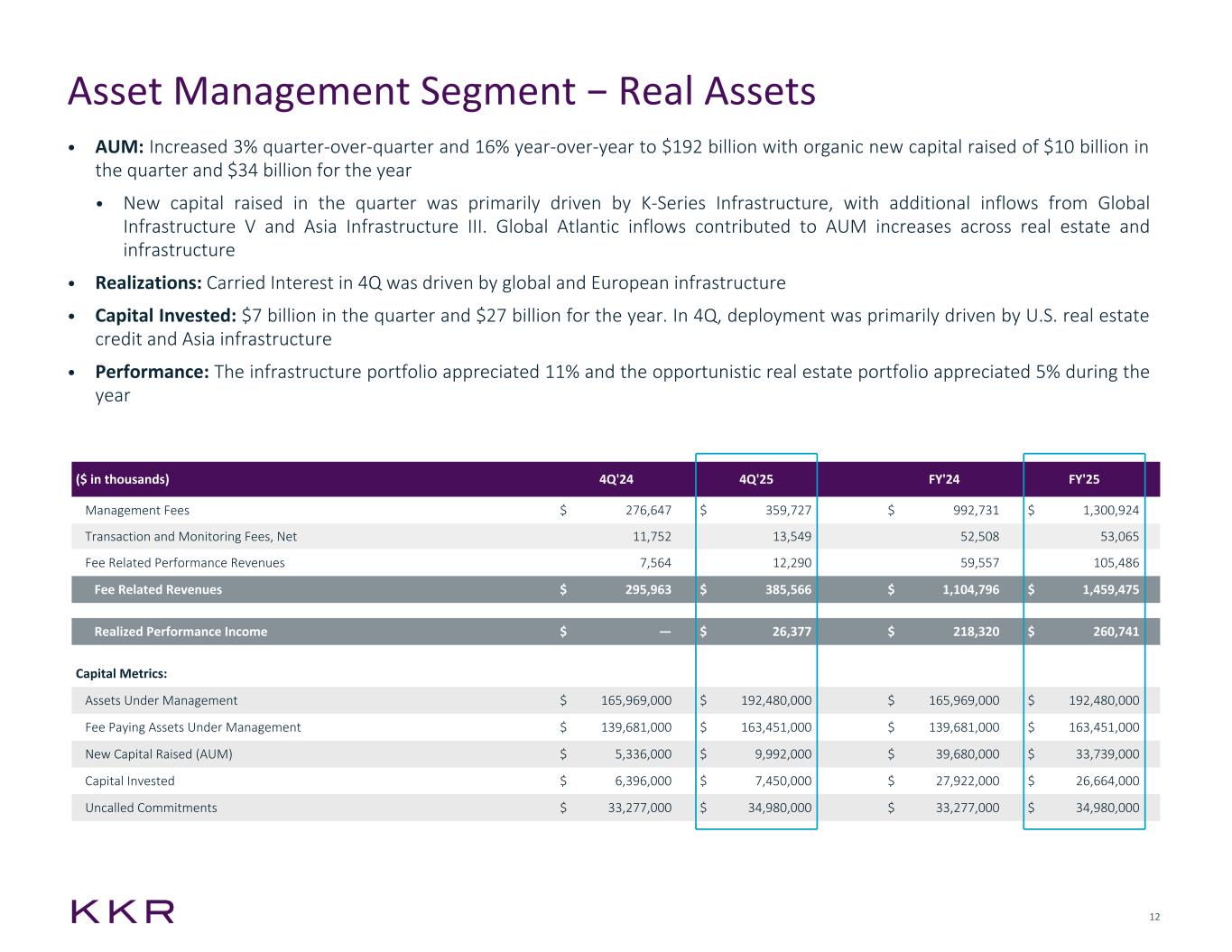
And while we have been in this business for five decades, we still feel like a very young firm, with our three growth engines, asset management, insurance, and strategic holdings, positioning us extremely well over the long term. A critical element of our success is our highly collaborative culture, which allows us to maximize the impact of our business model and to attract and retain best-in-class talent across everything that we do our business model and our culture which both reinforce and perpetuate each other are what gives us our confidence not only as we look to 2026 but over the next five to ten years and beyond I'm going to begin today by reviewing some key operating metrics from in the quarter and the very tangible signs of momentum that we are seeing across our businesses. We've already walked you through our strong capital raising, so I will start with monetizations. We remain very pleased with our overall performance and continue to see the benefits of our focus on linear deployment and disciplined portfolio construction. In 2025, we generated $2.7 billion of gross monetization activity, excluding the carried interest repayment obligation that we discussed in our list, realized carried interest increased approximately 30 percent year on year and that growth came on top of what was already a very solid level of monetization for us in 2024 even with our healthy momentum of monetizations our embedded gains currently stand at 18.6 billion as Craig noted just a moment ago that is up from 15.6 billion a year ago or 19 percent our portfolio is in very good shape and ultimately that is the most important indicator for future monetizations turning to deployment we invested 32 billion of capital in the quarter and 95 billion over the course of 2025 that is up 13% compared to 2024 our deployment was driven by a number of our key focus areas including Asia infrastructure with 118 billion of dry powder we are incredibly well positioned to build our portfolio for the future and if anything we feel capital constrained by the opportunities that we are seeing across the world today that continues to be one of the most dynamic regions globally for us our full-year investment activity in the region was up more than 70% versus 2024 and span traditional private equity growth equity this reflects both the scale of our local teams and the breadth of opportunity that we are seeing in that part of the world as a reminder we have nine offices and approximately a thousand people in Asia with over 200 employees in Japan which remains one of our most active investment markets globally invested nearly 15 billion into infrastructure in 2025 that's a record figure for us with over half of that activity occurring outside of the United States the need for infrastructure investment remains massive and this is one of the biggest growth vectors that we have as a firm we've recently invested in a high-quality logistics facility in Korea a European built-to-suit data center platform and our first structured alternative transaction for our insurance business out of Europe in the renewable space we've also continued to lean into the opportunity within credit deploying 44 billion in total over 2025 that's up 14% compared to 2024 Our ABF business, which today represents $85 billion of AUM, invested $19 billion of capital last year. I did want to touch on our strategic acquisition of Arcos, which we announced earlier this You would have seen a press release earlier today on Arcos, as well as a presentation on the transaction and all of the opportunities that we see together. I'm not going to page flip through that presentation, but would encourage everyone to review that deck as it does a great job highlighting the quality of the business we are acquiring and the opportunities that we see together. Arctos is the leading investor in professional sports franchise stakes and a leader in GP solutions with approximately 15 billion of assets under management. We're extremely excited to partner with the Arctos management team and believe that we can build on their leading franchises and create meaningful value together by combining the strengths of our respective organizations the transaction is valued at 1.4 billion in equity in cash with much of the equity subject to long-term vesting in addition there is the potential for up to 550 million of additional long-term vesting equity that is subject to taking our share price and Arcto's operating performance targets we do expect that this transaction will be accretive per share across our key financial metrics immediately post closing. We've known Arctis' co-founder Ian Charles for over a decade. He has been one of the leading and most creative minds in the secondary space and we have direct experience working together on one of the industry's first structured secondary transactions which helped launch our healthcare and technology growth franchises. Businesses that today manage over 17 billion of account closing, the acquisition immediately puts us in a leadership position in sports. Arctos is the largest institutional investor in professional sports franchise stakes and is the only firm that has approved for multi-team ownership across all five major U.S. leagues. Arctos is a top player in GP solutions, a rapidly growing asset class focused on providing liquidity to alternative asset managers, which we expect will continue to expand. We've been asked quite a bit, including a few times over the years on these calls, that we have evaluated most of the secondaries asset managers that have traded over the last A variety of reasons, we did not pursue any of those opportunities. We knew that when we found that right partner, the partner who could give us conviction that we could build a leading secondaries and solutions franchise, that we would be all in. And we are confident that we have found that in Arctos. Ian Charles and his partner, Doc O'Connor, have been leaders in the sports and solutions industries for over two decades. And the combination of the existing Arctos team and their reputation in the market make us incredibly excited about the business that we can build together over the course of the next decade plus. For the acquisition, we will be creating a new investing vertical called KKR Solutions, which will include sports GP solutions and future secondary strategies over time we do expect this business to reach a hundred plus billion of AUM and be a very meaningful contributor to our piano you think about this acquisition it is highly consistent with the strategic M&A framework that we have previously laid out for our investors and analysts that includes five things of note number one One, access to leadership positions in large addressable markets that would be difficult to build organically. Number two is long dated capital. The vast majority of Arctos' 15 billion of AUM is long duration in nature with no fixed end date. It is really as close to permanent capital as it gets in the asset manager space. Number three, highly complementary capabilities with a differentiated origination and sourcing engine that we believe can be valuable across the full KKR ecosystem in particular our insurance business number four would be the synergy that exists around distribution across both wealth and institutional channels most importantly strong cultural alignment between our two firms to be welcomed the Arctos team to KKR before handing things over to Scott I'd like to reiterate reiterate the strong momentum that we are seeing across the firm so far in 2026 all of 2024 we introduced 2026 guidance across our key metrics we are highly confident in our ability to meaningfully exceed our fundraising and FRE per share targets and as we explained last quarter presuming a constructive monetization environment we also continue to feel confident that we we can achieve seven plus dollars per share of adjusted net income. If the environment does deteriorate, we may delay some of our modernization activity. And if that were to happen, we'd be earning less in 2026, but again, that would be in service of more earnings in 2027 and beyond. Again, we continue to feel incredibly well positioned for the future. And the good news here is that we will be communicating frequently on modernization through these quarterly calls and also our intra-quarterly monetization press releases so that we can track our progress together and no one will be surprised as we work through the year. And with that, let me turn the call over to Scott.
Thanks, Rob, and thank you everybody for joining our call today. I want to begin with Arctos because it's a good illustration of how we think about building KKR. We have known this team for many years. We've done deals together. We've seen how they source, how they underwrite, and how they build durable franchises. What attracted us was not just the asset classes, sports, GP solutions, and secondaries, but it's the people, the culture, and the long-term opportunity to create something exceptional inside KKR working together. Ian Charles is one of the most experienced investors in the solutions and secondary space. His co-founder, Doc O'Connor, is a pioneer in sports management and investing. Together, they have built a team with strong origination capabilities and a clear understanding of how to scale a business without compromising performance. Just as importantly, there is strong cultural alignment. That matters enormously to us when we consider strategic M&A. We have been very intentional over the years about where and how we expand the firm. We only want to be in businesses where we believe we can be a top-tier player over time. With Arctos, we have conviction that we have a clear right to win and the opportunity to build a $100 billion AUM Solutions franchise that will be a meaningful contributor to KKR's long-term earnings profile. If you step back and look at our history of strategic acquisitions, Global Atlantic, Marshall Waste, FSK, KJRM, and Healthcare Royalty Partners, you'll see a consistent pattern. These businesses diversify our earnings, extend the duration of our capital, and increase the quality and visibility of our cash flows. Arctos fits squarely within that framework. Now, let me zoom out for a moment and talk about the broader environment, because there's been no shortage of generalizations about markets and private capital. The period from 2010 to 2020 was characterized by low rates, low inflation, and relatively little volatility. The last five years, however, have been very different. interest rates have risen inflation has reemerged geopolitical risk has increased and dispersion has returned in our business today's outcomes are the result of decisions made years ago around portfolio construction deployment pacing and just overall discipline we are seeing much greater bifurcation across our industry. It is becoming harder to generalize about asset classes and easier to distinguish between firms that are well positioned and those that are not. Let me give you a few concrete examples of what we're seeing. Let's start with fundraising. Despite the headlines, 2025 was a record fundraising year for us. We raised $129 billion, nearly double what we raised two years ago, and that strength was broad-based. In credit, we raised a record $68 billion. In infrastructure, our AUM has grown from approximately $17 billion five years ago to around $100 billion today. In In private equity, in clear contradiction to headlines, our AUM has doubled over the last five years. We're also seeing this across investor types. Sovereign wealth funds remain engaged. Insurance companies continue to increase allocations. Pension plans are working to close gaps in infrastructure and private credit. And private wealth remains in the early stages of adoption. Across all of these channels, investors are consolidating relationships around a smaller number of partners they trust to perform across cycles. That trend has been underway for some time, and we believe it is accelerating and continues to work in our favor. This is showing up in our management fees, which grew 18% last year, accelerating relative relative to the last three-year annual growth rate of 16%. Now let's talk about monetizations. There's also been a lot of more market focus on how difficult exits have been in our industry. That has not been the case for us. Our portfolio is mature, global, and well-constructed. We've been disciplined around pacing and diversification for a long time, and that is showing up in record-embedded gains and a healthy pipeline of realizations across strategies and regions. We are not forced sellers. If markets are constructive, we will monetize. If conditions are less favorable, we can afford to be patient. Either way, the value is there. And finally, stepping back, KKR has been through many cycles in our 50 years. years. We have learned, sometimes the hard way, that long-term performance is not about chasing favorable conditions. It's about building a firm and portfolios that can perform and compound through different environments. We feel very good about how Kcare is positioned today across asset management, insurance, and strategic holdings. and we feel even better about where the firm is headed over the next several years. And with that, we're happy to take your questions.
Operator
Thank you. We will now be conducting a question and answer session. We ask that all callers limit themselves to one question. If you have additional questions, you may re-queue, and those questions will be addressed, time permitting. If you would like to ask a question, please press star 1 on your telephone keypad. A confirmation tone will indicate your line is in the question queue. You may press star 2 if you would like to remove your question from the queue. For participants using speaker equipment, it may be necessary to pick up your handset before pressing the star keys. One moment, please, while we poll for questions. Thank you. Our first question comes from the line of Glenn Shore with Evercore. Please proceed with your question.
Hi, thanks so much. I definitely agree with a lot of your big picture outlook stuff. I want to get to the elephant in the room and talk about, so how does someone like you, this is a question for everybody, but how have you re-underwritten your private portfolios, your balance sheet, even your monetization pipeline for tariffs and AI? You know, what actions have you taken? What actions can you take to de-risk? Like, everyone's trying to get at the same thing of what don't we know, what's in there, that why can't the monetization pipeline get out in a strong banking environment. So sorry, I know there's a lot in there, but it's like the thing. Thanks so much.
No, I really appreciate the question, Glenn. And I'm going to give you a couple thoughts, and maybe Rob can add on. You asked about two things in there. One was tariffs and one was AI. I think on the tariff front, it's pretty straightforward. I think we shared some of this data. It hasn't changed. We got a little bit fortunate, candidly. during the first Trump administration, we got a little bit of a look-see as to what could be coming. And so that allowed us to really rethink supply chains and be thoughtful about making sure we had the right exposures. And then COVID obviously gave us a reinforcement of that focus. So we have single-digit percentage of our portfolio. And a lot of our business has low single-digit percentage of our portfolio that we've got any anxiety about tariffs. So we feel very comfortable and relaxed on that front. On the AI front and some of the recent volatility that we're seeing, maybe just a couple of thoughts for you. First, as you know, when we invest, especially in the private markets, we're thinking about what the world looks like five to 15 years out. And what we own today is a result of decisions we've made over the last several years. So I would say the recent volatility speaks to new anxiety for the market around potential disruption risks, but it is not new anxiety for us. So we've been focused on AI-driven competition and disruption risks for the last several years. We've also been focused, as we've talked about, on all the opportunities that come out of what's developing in that space. But, you know, having been through many cycles, a lot of the answer to your question is you can't pivot on a dime. So we have been focused on building portfolios that have the exposures that we want. And so, you know, that focus on portfolio construction, I think, is a very important thing for everybody to understand. So as you know, we talked about this quite a bit. We've been focused on linear pacing for the last many years. So, a lot of what happened in our space was over deployment in 2021, including in tech and software names. We do not have that issue at all. We've been investing behind opportunities across industries and globally with really strong risk-reward, and we took an inventory of our portfolio the last few years, and part of the answer to your question is we have been selling businesses when we did that inventory and said, okay, is AI an opportunity, a threat, or a question mark? Where it was a threat or a question mark, we started selling assets several years ago. And as a result of that, we have the exposures that we want today. Not to say there won't be surprises, but our level of anxiety is pretty low because we've been thinking through this for the last several years and build portfolios informed by those concerns. To give you a sense of the number, because I'm sure people are wondering, Software is about 7% of our AUM, and that is with, I would say, a highly inclusive definition of software. And so our concentration is well below our industry, well below broad equity and credit And the market right now, and as you know, this happens when there's this much emotion all at once, is painting everything with one brush. We would just caution that not all software investments are the same. For example, we have a great investment in a company called OneStream, has a lot of growth We announced the sale of that business a month ago at a 30% premium, four and a half times multiple of invested capital for our clients. So it's not all the same. And so the other thing I would just add before handing it over to Rob is just don't forget the business we're in, right? We have $118 billion of dry powder. Our dry powder is multiples of any exposure we have that we have AI-related anxiety about. Several multiples. So this type of dislocation creates really strong return opportunities for us. And so volatility always creates opportunity in our business. Our focus is making sure we don't waste it. We just had a firm call this morning where that's part of what we talked about. You know, we got a better part of $120 billion. How do we make sure we invest it well and take advantage of what's on offer? And that's really the focus around here. Because as we look back at moments like this where the market gets anxious, these tend to be amazing vintage years for investments, as long as they focus on what you can control.
Rob, anything to add? Glenn, just on your point as it relates to monetization activity, I think the biggest driver of the limited monetizations across the industry is what Scott talked about in the overconcentration in the 2021 vintage. As you know, we didn't have that, and that's as big a reason as any on why we have meaningfully outperformed on monetizations over the past couple of years. And that momentum has continued for us. If we look at where we sit today, we've got roughly a little over $900 million of visibility from signed deals or deals that have already happened to monetization-related revenue coming, and that's probably a first-half number for us. It's hard to distinguish in some of these deals whether they're going to close in March or April. And I would just contrast that to where we were at this time last year on this call, where that number was approximately $400 million. So, our momentum on the modernization front continues to really accelerate.
Operator
Our next question comes from the line of Craig Siegenthaler with Bank of America. Please receive your question.
Hey, good morning, everyone. Hope you're doing well. Our question is on the record investment result and your linear deployment model across the cycle. Was this strong 2025 result a level that you expect to build off of just, you know, really given your linear approach to deployments? And then also, what do you view as the key themes and factors for record deployment, just given that public equities were higher, and also credit spreads were generally tighter than the prior two years still?
Hey, Craig. Why don't I start? Thanks for the question. Look, in terms of activity in the quarter, you're right, I think that we had very broad-based deployment in the quarter really across strategies across geographies if you add real assets and private equity together invested around 16 billion just over eight and PE and just under eight in real assets and then 15 and credit so I think you're seeing diversification and breadth in terms of themes I think it's it's worth mentioning the take private activity you've seen broadly is as well over the last handful of years in 25 you see an activity here it's it's on a global basis we executed take privates in Japan and Germany in the UK in India as well as in Sweden and if you look back at this activity since 2022 we've invested almost behind 30 take privates globally and we think over this period of time we've been as active as anybody in our industry Rob mentioned Asia for us it's just an area where you're seeing a healthy amount of activity again a big driver of global growth I think you saw a transaction this week announced in the digital infrastructure space again is probably the most recent example and it does feel like our positioning in the market I'd say Asia broadly as well as Asia infrastructure more specifically is something that's being recognized do you think there are two specific transactions that are just kind of interesting one in in on December 24th actually so would have been an investment that probably would have been easy to miss. We announced in Japan the carve-out of the real estate assets from Sapporo, one of the largest announced real estate investments in Asia in 2025. Really a great example of how we can collaborate across businesses. It leveraged the relationship as well as the carve-out expertise of our real estate team, our private equity team, the activity with KGRM and their ability on financing, as well as our capital markets team from a syndication standpoint. And then a handful of weeks ago we announced an ALT transaction for Global Atlantic in Europe in the renewable space. I think we talked a lot about these calls on how we're looking to use all of our sourcing to originate differentiated opportunities for GA. I think it's a great example again of the connectivity. And in terms of the go forward and what this means and the level that we're at, just a couple of stats that are interesting in this more broadly so look up the firm has grown a great deal and if you look at deployment as an example in private equity and real assets and if you look at that as a percentage of our private markets AUM like those statistics are not going to be perfectly linear but I think it's kind of an interesting statistic if you look three four and five years ago deployment was 13 15 and 16 and a half percent of that AUM. In 25, it was 12. So again, I think the deployment numbers, you're right, in aggregate are up on an absolute basis, no question. But I think as you think about the opportunity set for us going forward, it's also important to think of the footprint that we have that's scaling in asset classes as well as across regions.
Craig, thanks for the question, Scott. I do think you're right. Last year was a record deployment year for us. In answer your question, we expect to deploy more this year. I would note last year was a record despite some of the market hiccups around the tariff dislocation in the spring. But as Craig said, you've got to remember just how global we are, so last year was a record year for European deployment for us, as just one example. As we look around the world, intra-Asia trade, power, digitalization, companies moving from capital heavy to capital light, which feeds our ABF and insurance businesses, Japan as the market, holistically across asset classes, life sciences, infra, ABF, you name it, that's all global. We see a lot of opportunity out there. And as I said, with the dry powder we have and a little bit more volatility, all we think this means, what's going on right now, is the investment opportunities will be more interesting and our earnings will be higher three to five years from now as a result.
Operator
Our next question comes from the line of Alex Blostein with Goldman Sachs. Please proceed with your question.
Hey, guys. Good morning. Just to follow up with Glenn's question and Scott, your answer. Obviously, lots of anxiety in the market. It obviously continues today. So when you think about the more durable part of the business, and Rob, I heard you talk about sort of confidence around exceeding the FRE target you set out for 2026. I think it was 450. Plus, can you talk maybe through the building blocks, your confidence levels in those building and blocks, and then be specifically with respect to management fees, what you expect that growth to look like in 26.
Thanks a lot for the question, Alex, let me walk you through, we've got a lot of momentum on it, have been for some time, been growing at above industry level growth rates, and the best forward indicator that we have for management fees is, of course, capital raising. We come off a year where we had record capital raising, almost 130 billion, and we're on on our way to meaningfully exceed our 300 plus billion dollar fundraising target that we set out from 2024 to 2026. So feel really good about the trajectory on management fees. Our capital markets business continues to generate really significant outcomes. And I think it's incredibly well positioned environment where deployment across our space continues to increase. I think, but all the things that we're doing across KKR now inclusive of the Arctos business, the opportunity to do more in insurance, Last year, we generated roughly 60 million of capital markets related fees on the insurance We think that business can be in the hundreds of million annually for us. And as deal flow returns to the mid-market sponsor community, I think we are very well positioned on the third-party capital market side of our business. The related performance revenue is starting to scale and I think can really inflect upward over the course of the next one, two, three years. And then at this point, I think it's a really important point as you talk about FRE, and that's really a margin point. And I think we have really demonstrated an ability to hold our operating costs below our revenue from a growth perspective, even as we've pursued substantial scaling across our business. And I'm going to give you a stat, and we were looking at this as part of our recent budgeting process, but I think it's a helpful one. If you look from the end of 2022, so really post-COVID, through to, and I'm gonna give you LTM 930 numbers from a comparable perspective, we've grown our management fees by 46% relative to our operating expenses by 21%. Now compare that to our three closest peers, and it is pretty much the inverse. They've all grown their operating expense at a pace that exceeds their management fees, and in two of the three by a pretty substantial margin. and so overall when you put that all together the different opportunities we have to scale are on the fee side plus the ability to get further operating leverage as we continue to invest back in the firm makes us feel good about that FRE target and then the last point because I think it's also helpful in context of thinking about our ability to achieve that 450 plus target or meaningfully exceeded is you know when we gave that target that was a little over two years ago and at the time our LTM FRE per share was $2.55 and so because of the momentum we have across all of those line items and our ability to get operating leverage is why you've seen the really substantial growth we've had in FRE over a short period of time.
Operator
Our next question comes from the line of Mike Brown with UBS please proceed with your question.
Great thanks for taking my question. So, Rob, thanks for the comments on the $7 ANI target. You commented on the performance fees in an earlier question, but I wanted to ask on the investment income specifically. 2021 was a record year at over $1.3 billion. 2022 came in strong at nearly $1 billion. There were certainly some unique drivers back then, but looking ahead here, what's the potential for this line? Should we expect some balance sheet exits that could move it higher?
Yeah, thanks for the question, it's a good one. So the punchline is, as we think about budgeting for the year, and of course we're bottoms up, we do expect an increase in our realized invest force of the year, and as we look at over the next couple of years, we do expect that line item to have an upward trajectory to it, and in some cases I think it can have a meaningful upward trajectory. However, I think it's important to understand our realized investment line item in context of the broader firm, right? What we've been doing with our balance sheet over the last several years on the asset management side of our balance sheet is taking every dollar of finite capital that we have available, our marginal free cash flow, and reinvesting it back into our firm for growth, either in strategic M&A like you saw this morning with ARCOS, insurance, strategic holdings, share buybacks, all with the goal of increasing our recurring earnings per share. And so over time, well, I do expect you're going to see some increases on a realized investment income. You know, that line item over the long term on a relative basis should be decreasing to our more recurring earnings. And that's, you know, very central to our strategy on how we're allocating capital today.
Operator
Our next question comes from the line of Benjamin Brutish with Barclays. Please proceed with your question.
Hi. Good morning. Thank you for taking the question. I wonder if you could talk a little bit about the recent trends at Global Atlantic. It looks like you are a little bit above the, you know, kind of $250 per quarter target you've talked about. But, you know, sifting through the pieces, it's a little bit hard to tell. I think we're waiting for some data from the queue when it comes out. But it looks like perhaps the net investment spread may have narrowed a little bit. The G&A came in, you know, quite a bit lower than the last couple of quarters, so a good earnings outcome. But just curious if you could parse through the moving pieces and, you know, maybe talk a little bit about what's embedded in your expectations for 26. Is it still sort of plus or minus 250, or should we see more upside?
Yeah, I'll take that one at drop, then. All good questions, so let me work through them in pieces. We continue to think that the right level to model the business is in that 250 plus range per quarter over the next four quarters. but keep in mind, and we talked a lot about this last quarter, is in our transition to move our book to more of an industry average on alternatives exposure, we are taking on assets that have no yield or limited yield, and we are choosing to not have that show up in our P&L by cash accounting for those outcomes that is different than many of our industry peers. In just Q4 alone, you know, that number was in the mid-90s of accrued income that's not showing up in our P&L. and as I think about our run rate today of accrued income is closer to 250 million and if you think about 2026 as we as we're modeling you know that business we think that accrued income number can be 300 to 350 million now over time if we do our jobs right you know that that accrued income that builds and compounds will show up in cash earnings and we expect in 2027 in 2028 you're going to start to see that the other thing of course i would point you to is that whenever we're talking about insurance operating earnings we should also you know think about the broader economic picture of our insurance business we've included again on page 20 of our earnings release how we think about total economics and insurance where you see we continue to have strong growth uh that's uh even without the mark to market income coming through the p l uh and across all these line items as we look over the next few years feel really great about our Our ability to continue to drive a differentiated insurance business that's got multiple different ways to be able to win in the market, inclusive of our ability to drive real outcomes with third-party capital, and we're just going to go in there.
Operator
Our next question comes from the line of Bill Katz with TD Callen. Please proceed with your question.
Thank you very much for taking the question this morning and all the disclosures. So a very big-picture question that's been coming up in our conversation with investors. I'd be curious your thoughts. I don't think the stock price moves are really just about software today I think it's more about the prospects for the industry on a go-forward basis given the uncertainty that AI seems to be putting into the broad economy So my question is twofold one is how do you sort of see the evolution of the flows in the wealth management? Which have been driven heavily by private credit over the last couple years and secondly as you think about Deployment across your private equity and your credit portfolios are historical returns still the right assumptions to be presuming Thank you.
Craig, why don't you start with wealth and give them some specifics, and then I'll And Bill, this is not directly related to your question, but one of the questions we've been getting a lot, actually, just on the wealth front, thought it'd be helpful for people, just relates to what we're seeing as we begin the year in 2026, because it's interesting for us. And look, just – I know you understand this, but as a reminder, look, our North Star here is investment performance. And I think we have a view that if we are able to continue to deliver attractive net returns on behalf of our clients that these vehicles are going to have an opportunity to continue to scale at a really attractive rate and so again you heard in our prepared remarks how care series is scaled etc now back to the January point like I think as a point of reference in Q4 we raised about four and a half billion so say billion and a half run rate and then if you think of Q4 again that's a quarter that had a lot of noise that number was up 8% compared to Q3 of 25 so again a market an environment with a lot of noise up Q3 and then in terms of January it looks as we stand here like that number is going to be about a billion three so again given all of the volatility that feels to us like a pretty good outcome on the wealth front and that number is up around 20 percent from January of last year so I think in all the volatility both in the second half and what we've seen in January it hasn't changed our point of view of what the long-term opportunity is for us in the framework at Wealth and what those opportunities are. I think you should continue to see us really focus on these big large asset classes and again brands incredibly important, resources are incredibly important, but I think the long-term opportunity, no change in our view.
Yeah and just to pick up and thanks for the question Bill, Scott. look no change in our expectations for from a deployment standpoint as I said we expect deployment to be up again this year no change in our return expectations across asset classes the only thing I would add just you know it's just a broader observation and you know you and others on the call have lived this with us for a long time, that we've been public 16, 17 years. Every time the market gets anxious about virtually anything, our space and our stock trade off. So we went back and looked. So we've been public 16, 17 years. This is the 10th time we've seen our stock down more than 20% in a month. So this happens. If you look back, it's European debt crisis, it's COVID, you name it, happy to share. But looking back and where we have two years of data post that event to look at, just a couple observations for you. One, it tends to be a great entry point for our stock. There's an overreaction to the down. So the one to two-year average returns, if you invest in that period of time, have been really strong. And a lot of our larger shareholders have bought our stock and done incredibly well when this kind of thing happens. So the market overreacts habitually to anxiety as it relates to our sector. It's just been happening as long as we've been public, and it's been a great buying opportunity. Second observation, and I shared a little bit of this before, if we look back at those vintage years for us as a firm where we've deployed capital into those environments, really strong returns. So, if anything, if this kind of volatility persists, I would say the return opportunity on the Ford is actually greater than our average. We haven't changed how we're pricing deals, but in our experience, the returns from vintage years, if this keeps going, this is going to be a really strong one. Hope that helps.
Operator
Our next question comes from the line of Brendan Hawken with BMO. Please proceed with your question.
Good morning. Thanks for taking my question. Appreciate that you reiterated the $350 million expectation for this year in strategic holdings and also recognizing that the earnings doubled here this year more than doubled. But could you help us understand what will drive that? So in talking with investors, there's a little bit of a view that it's a black box. There's not a ton of disclosure. So any enhanced color around what's going to drive that substantial ramp? And then there's a TMT bucket that's in there. Maybe could you provide a little color around what's in that bucket, given some of the anxiety and agita that's out there?
Yeah, great. Thanks a lot for the question, Brandon. So, you know, strategic holdings today is still, we're focused on exceeding 350 million of operating earnings in 2026, but much more importantly, we've talked about generating north of 1.1 billion of operating earnings by 2030, and that continues to be where, you know, our team's focus is, and we feel more confident today than we did a year ago in our ability to be able to exceed that number. So feel really good with the results. In terms of disclosure, I think as it becomes a larger part and percentage of our business, you're likely to see greater disclosure over time, a more specific disclosure. So that'll be on the come, and we talk about that, you know, quite a bit, and how do we make sure we're balancing that based on the size of the business today and where it's going. But the punchline is we feel really good. Now, what is driving it? What's driving it is we've got, you know, approximately 20 businesses now that sit in strategic holdings all generating different levels of growth and free cash flow many of those investments were originated you know five six seven eight years ago with bigger capital structures at the time and a big part of our thesis is as they deliver which they are deleveraging they're going to be generating more free cash flow for dividends and that is what's driving our confidence both in 2026 but especially as we look forward through 2030 and beyond our next question comes from line
of Michael Cypress with Morgan Stanley please proceed with your question great thanks so much for taking the question just coming back to some of these AI concerns and the marketplace one of the things I think maybe doesn't get as much attention is the opportunities that that you would kick your can harness from AI So to that end, can you just update us on how you're deploying AI across the firm today, as well as within your portfolio companies? And if you could talk about how that's evolving, what sort of opportunities and benefits have you harnessed from that, and how you've also optimized your portfolio construction around investing around the AI infrastructure layer and the benefits there.
Hey, Mike, it's Craig. Why don't I start? Scott, may have a couple of thoughts. I think when you look at what we've done as a firm, I think it's important to remember, We have over 400 engineers in the firm within our tech area. So I think these topics, back to Scott's opening, these topics aren't new. They've been front of mind for us, et cetera. I think as a firm, we've had two cross-functional teams, if you will. One team is focused on our portfolio companies. Again, we're a control investor in over 200 companies globally. And so that team is focused on sharing best practices, what works, what doesn't work, what's easy, what's hard. and I think our culture is one that really helps us in this as we're a very collaborative culture and so lessons travel they travel through to our investment teams they travel through to our investment committees at the same time because we want to make sure that we're leveraging all of these lessons good and bad on a global basis and I think the second team is one the second team is one that's that's focused on KKR so what are the things that that we as the firm can be doing a lot more efficiently at the same time and then just as it relates to opportunity again Scott mentioned the dry powder that we have at the firm and the opportunities that we have to continue to invest behind growth and where AI can be an important driver of growth you know Scott mentioned one stream like that's an example of a firm that was successfully able to use AI in a way to help accelerate that growth that ultimately resulted in a great outcome for our investors.
Hey, Michael, Scott. Just a couple of quick things to add. As you know, we've got over 200 meaningful equity investments in companies. So we're working across all of those. And you can think of it as like 200 different labs where we can think about how AI can help improve efficiencies, drive growth, and it's giving us a big opportunity to learn from across the world and across different industries. And we can apply that, I think, inherent in your question, to the firm. And so that is happening day in, day out. We've got teams, as Craig mentioned, focused and dedicated to that. And so we're pleased with the early results. And we're seeing an uplift in the EBITDA of the underlying companies. I think sometimes that gets lost a little bit. And so we're actually seeing incremental value creation and revenue and EBITDA growth as a result of some of these findings. And as Rob said, we're applying them here. And I think you're going to see more of that. So part of the reason you hear so much optimism in our voice around continued improving operating leverage at KKR is on the back of this. And then the other thing, and I know it's talked about a lot, but I don't want it to get lost, is your point about the investment opportunity that comes out of all this. I don't know what happened. The market flipped. This became a really interesting and exciting thing, and now everybody's scared. You know, from our standpoint, nothing's changed. So, you know, data centers, power, adjacencies, cooling of data centers, we've been investing around this theme for the last many many years those investments are performing very nicely we announced another large data center transaction in Asia just earlier this week so this continues to be a big and important theme for us our next question comes from a line of Patrick Davitt with autonomous research please receive with your question hi good morning everyone I have One question on Arctos, sounds like the path to 100 billion is probably mostly solutions
and secondaries. So sorry if I missed this in the deck. What is the mix currently between sports and solutions in that 15 billion? And if they already had such a strong secondaries team, why haven't they raised more AUM there?
And if it's just distribution, I assume plugging them into KTR could make it quite easy to quite quickly raised like more of a mega fund there like the other secondaries managers have had thank you 19 and really started initially in the sports space that is the majority of their AUM today they've raised two funds of raising a third including a big sidecar fund in addition to that and so that is the bulk of their AUM today that AUM as we met has no fixed end date and so in a in a lot of ways as close to permanent capitals as they come. They are the clear leader there, and as we think about the growth of sports, which is its own asset class in its own right, and that's growing at double-digit rates, where we're the clear global leader, we think there's a lot of room for growth in that asset class alone. A second part of their business that they started more recently is the GP solutions part of their business. And they're raising capital in the first strategy. They're having a very successful first-time fund that will be, that will make it already one of the largest players in GP solutions. That again is a big asset class with a lot of growth, a lot of levers on either side of the GP, broader GP solutions business that we think again can be a real growth sector. As you think about the third leg of it in secondaries, this is not a business they're Again, the firm's only been around for six years, seven years. However, when we think about the experience of the team and where they've come from, when we think about their credibility in the marketplace and with investors is really high. And you combine that with our industry expertise, our access to capital, as you noted, we think that gives us a real right to win. And importantly, we really like the idea of building a secondaries platform with a blank sheet of paper. we look at the second history and again we've looked at the space for much of the last decade we've talked about on these calls multiple times and we're really glad we've waited think that the ability to innovate here potentially disintermediate that space is really a compelling one and we're you know really excited to be partnered with the Arctos team to be able to go after that together and so it's not just one part of the business we really think there's scale to all three parts of this business and under Ian's leadership and
alongside his co-founder Doc O'Connor and the rest of the team we're partnered here with a with a best-in-class platform our next question comes from Brian Bedell with Deutsche Bank please proceed with your question great thanks for squeezing me in here most of my questions have been asked and answered but me just to follow up on a couple the operating earnings goal of seven So the combination of FRE, strategic holdings, and insurance, just wanted to get your confidence on that. If I, you know, back into that given the sort of the guide for insurance and strategic holdings, it would imply FRE, you know, maybe a little less than $5.50 a share, which of course meaningfully exceeds the $4.50. So I just want to get your confidence on that $7 between those components and then a couple of cleanups just on catch-up fees in the fourth quarter and timing for the Arctos close.
Yeah, so why don't I just, the last two questions are easy to answer. So timing and Arctos close we think is Q2. catch-up fees in the quarter were 26 million split roughly 50 50 between our private equity and our real assets business lines and if you look at our growth this quarter it was 24% on the management fee line item side X catch-up fees still would have been 22% growth on an apples to apples basis as it relates to building blocks on total operating earnings thanks for asking that question clearly a lot of momentum as it relates to our asset management business and FRE I think what we're doing in insurance and then also strategic holdings we talked about the 350 million guide number for 26 I think we're going to beat that number we talked about this on the last call you know given where where our strategy was in insurance when we initially talked about the seven dollars per share of operating earnings this was before we made the pivot to move in the direction of alternatives in the book number one and to you know made the final decision that we want to cash account as opposed to mark-to-market accounting and so when you think about you know where we're going in insurance we talked about a billion dollars of operating earnings plus or minus for 2026 and of course that number can move around you know based on how the year goes but very importantly that's missing you know what we think is going to be roughly 350 million of let's call it economic outcomes from accrued returns in the portfolio that if we were showing that consistent with most other insurance companies that we compete against in the market would be showing up in the P&L we've chosen for a variety of reasons that we talked about last quarter the cash account and not have that show up just think it makes that total operating earnings metric a little bit less relevant certainly than when we initially discussed it a couple years ago our next question comes from the line of john barnage with piper sandler please receive your question thank you for the opportunity i think you talked about this new kkr solutions have an opportunity to get to 100 billion in au over time can you maybe talk about how large the sports business within that framework would be and does that assume any changes in ownership limits by leaks domestically thank you yeah listen no specific targets as it relates to sports first GP solutions versus secondaries we think there's a lot of room to grow across each of those areas and importantly you know one of the key opportunities here for us in this transaction isn't just what Arcos can build in isolation it's really about being able to you know use the presence that they have in the market the areas they traffic to help originate across the broader KKR ecosystem everything from our insurance business where we see a lot of opportunity through to our investing platforms across the firm through to capital markets and in turn if we're able to do that we also make the Arctis business a lot more relevant in the marketplace to their partners because we provide them a differentiated toolkit let me give you an example of what that could look like you think about the sports business as an example and the Arctis platform today owns minority stakes in a number of sports teams around the world you know there is a big opportunity in areas like stadium financing sports adjacent real estate where Arctis just doesn't have that toolkit we do everything from the high-grade parts of the capital structure in real estate all the way through equity creates investing opportunity for our platform and then in turn makes Arctos much more relevant to their partners it's a key reason why this deal makes a lot of sense for them and for us just ahead on John and Scott to your second question our expectation for growth in the sports business is not predicated on any change in the league rules so it's as they exist today our next question comes from the line of Arnold Gibblat with BNP Paribas.
Operator
Please see with your question.
Hi, good morning. Just going on to Global Atlantic, if we look at the flow mix, it seems as though it's getting a bit more skewed towards real estate versus the past. So a bit of a change in mix there. Could you confirm if that's the case and what is driving that mix? And I'm just wondering if that has an impact on margins and on the ROE for the insurance business.
Yeah, Arno, thanks for the question. No change in mix. You know, one of the things in real estate is we noted, this goes back to really early 2024, we noted that there was a real opportunity in core real estate, given a real dearth of capital out there for core real estate transactions. And so, most of the competition was either core-plus capital, but more likely value-added capital, a much higher cost of capital. And so, we leaned in in early-mid 2024 when we thought valuations really troughed, number one. Number two, there was limited competition. And on an unlevered basis, inside of GA, we were creating some compelling risk return. Not overly sizable in the context of the broader GA balance sheet, but I think will turn out to be really good investments, again, on a levered basis across the insurance platform. And over time, I think we'll add to our insurance operating earnings if those play out in a meaningful way, in large part because, and we talked about this, remember, at the time, you know, these were some of our first investments that had lower yields than they did all in returns. And so we were originating those transactions that call it a 4% running yield, our liabilities were 5% to 6%, so definitionally in our P&L, we're actually losing money. However, you know, where we think those investments come out, there's going to be a lot of accreted income that if they perform is going to turn into cash income over time, and so we're quite glad we made that pivot, but nothing that would meaningfully change our concentration to the asset class.
Operator
Thank you. We have no further questions at this time. Mr. Larson, I'd like to turn the call back over to you for closing comments.
Christine thanks for help and thanks everybody for joining our call now it's been a longer call for us look forward to chatting with everybody on our next quarter call thanks again ladies and gentlemen this does conclude today's teleconference you may disconnect your lines at this time thank you for your participation and have a wonderful day