Operator
Good afternoon. Thank you for attending today's Sentinel-1 Q4 Fiscal Year 2025 Earnings Conference Call. My name is Jayla, and I'll be your moderator for today. All lines will be muted during the presentation portion of the call with an opportunity for questions and answers at the end. I would now like to turn the conference over to our host, Doug Clark, the Vice President of Investor Relations. Doug, you may proceed.
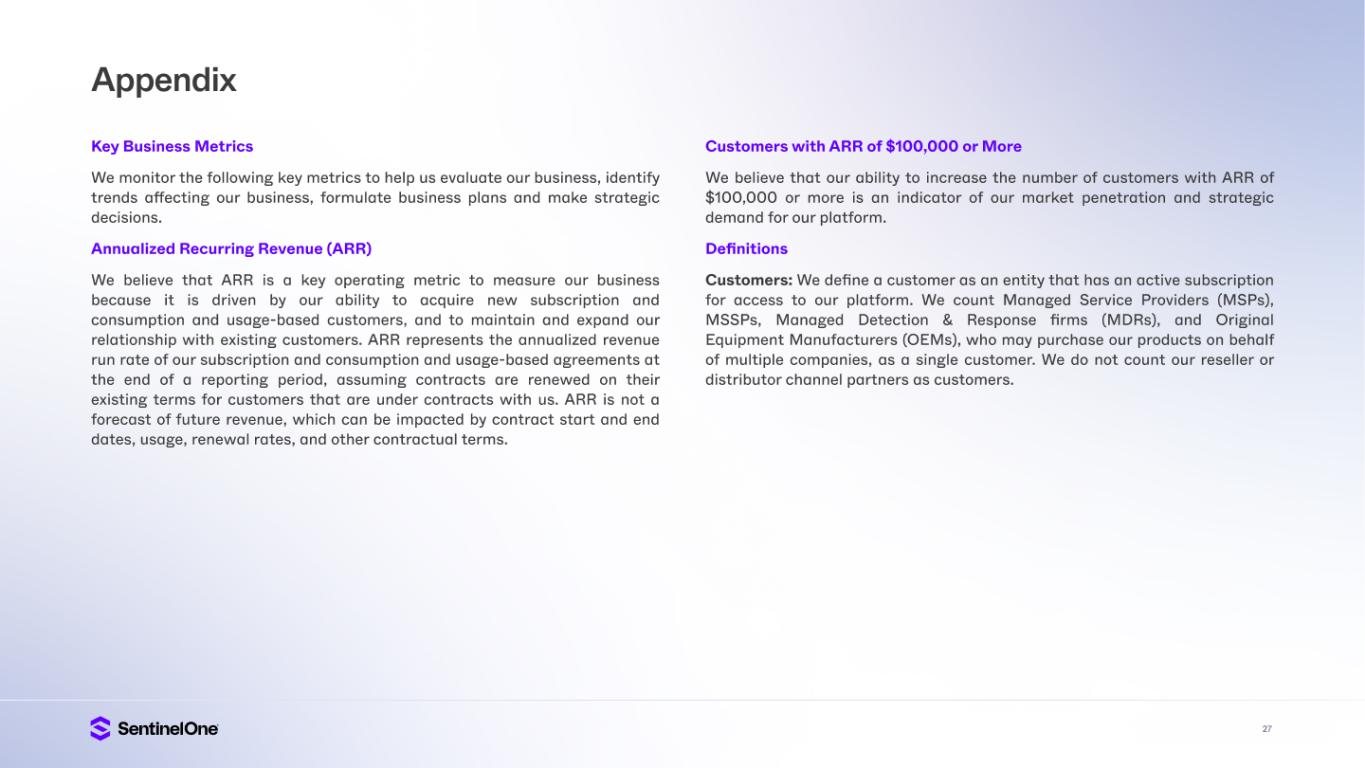
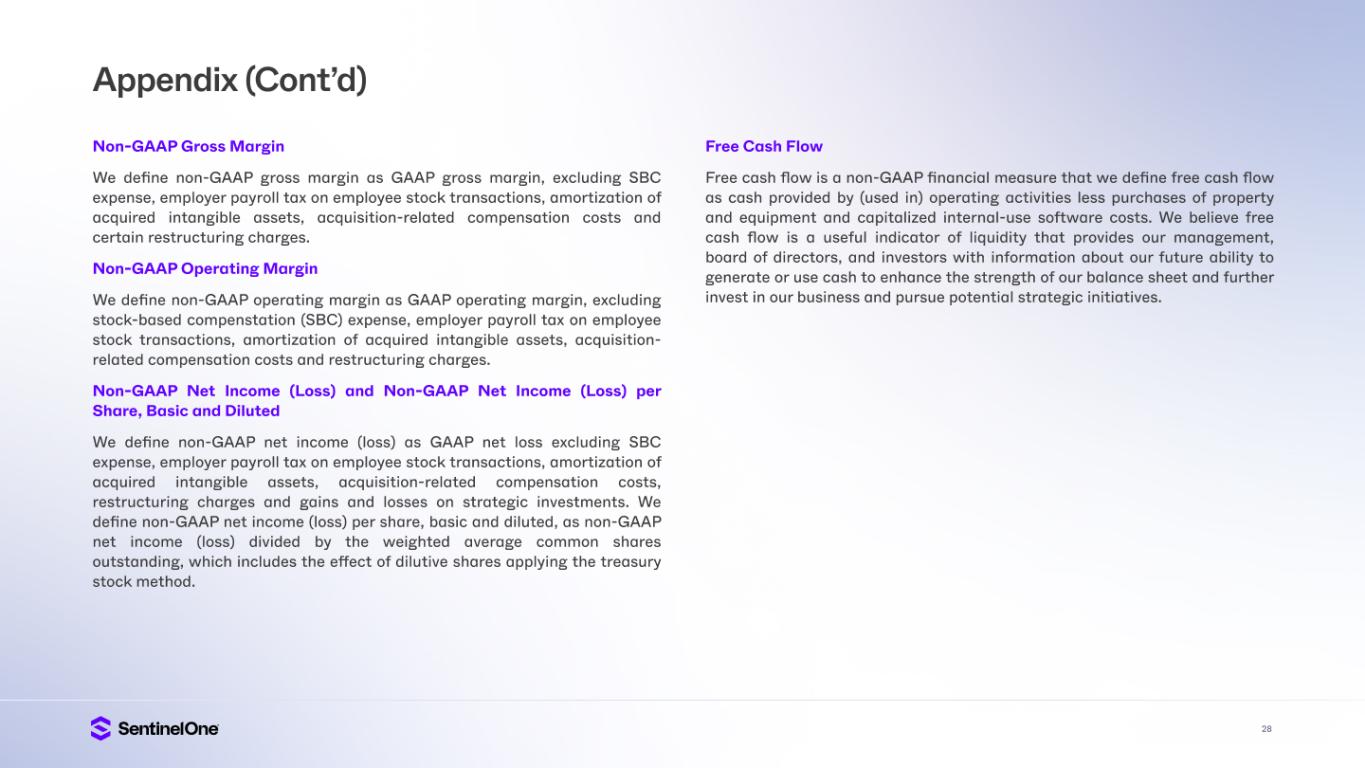
Good afternoon, everyone, and welcome to Sentinel-1's Earnings Call for the fourth quarter of fiscal year 2025. which ended January 31st, 2025. With us today are Tomer Weingarten, CEO, and Barbara Larson, CFO. Our press release and an earnings presentation were issued earlier today and are being posted on the investor relations section of our website. This call and accompanying slides are being broadcast live via webcast, and a replay will be available on our website after the call concludes. Before we begin, I would like to remind you that during today's call, we will be making forward-looking statements about future events and financial performance, including our guidance for the first fiscal quarter and full fiscal year 2026, as well as long-term financial targets. We caution you that such statements reflect our best judgment based on factors currently known to us, and that our actual events or results could differ materially. Please refer to the documents we file from time to time with the SEC, in particular our annual report on Form 10-K and our quarterly reports on Form 10-Q. These documents contain and identify important risk factors and other information that may cause our actual results to differ materially from those contained in our forward-looking statements. Any forward-looking statements made during this call are being made as of today. If this call is replayed or reviewed after today, the information presented during the call may not contain current or accurate information. Except as required by law, we assume no obligation to update these forward-looking statements publicly or to update the reasons actual results could differ materially from those anticipated in the forward-looking statements, even if new information becomes available in the future. During this call, we will discuss non-GAAP financial measures unless otherwise stated. These non-GAAP financial measures are not prepared in accordance with generally accepted accounting principles. A reconciliation of the GAAP and non-GAAP results, other than with respect to our non-GAAP financial outlook is provided in today's press release and in our earnings presentation. These non-GAAP measures are not intended to be a substitute for our GAAP results. Our financial outlook excludes stock-based compensation expense, employer payroll tax on employee stock transactions, amortization expense of acquired intangible assets, acquisition-related compensation costs, restructuring charges, and gains on strategic investments, which cannot be determined at this time and are therefore not reconciled in today's press release. And with that, let me turn the call over to Tomer Weingarten, CEO of SentinelOne. Good afternoon, everyone, and thank you for
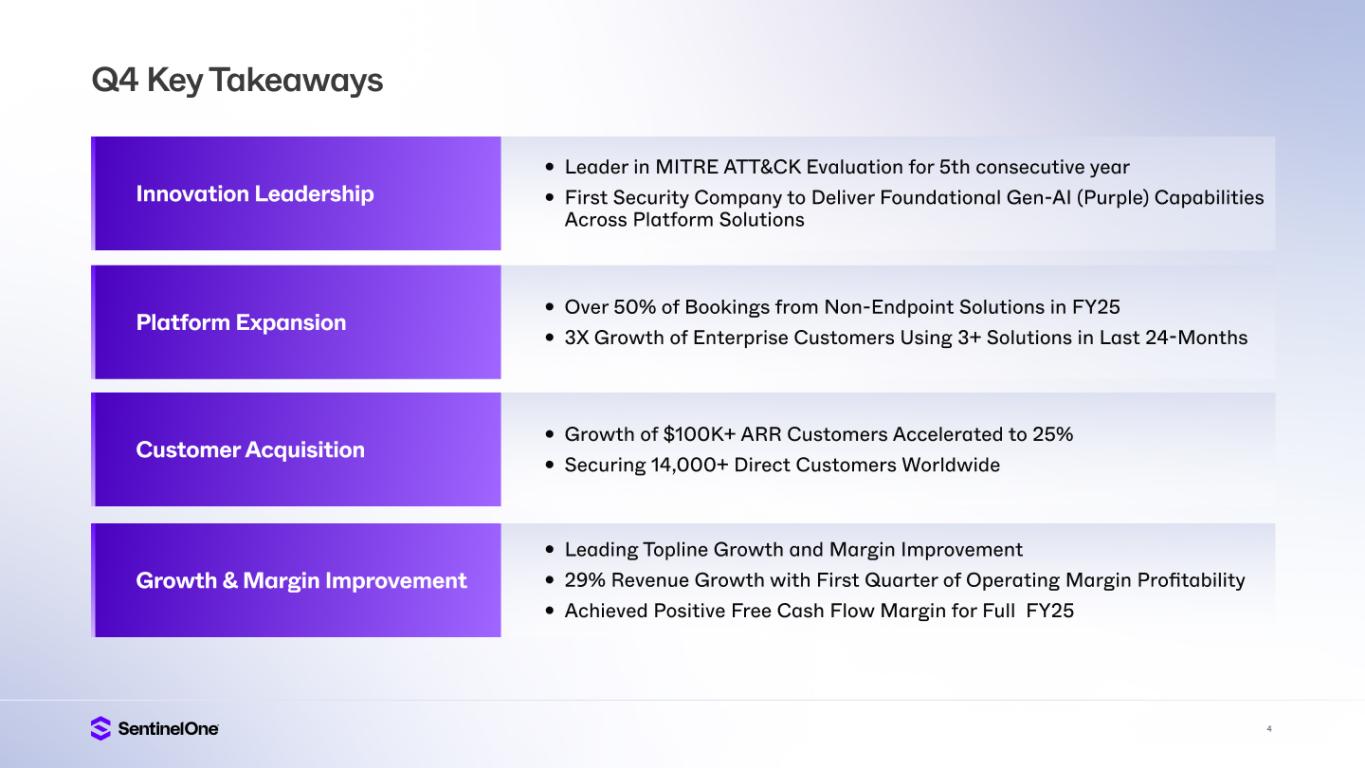
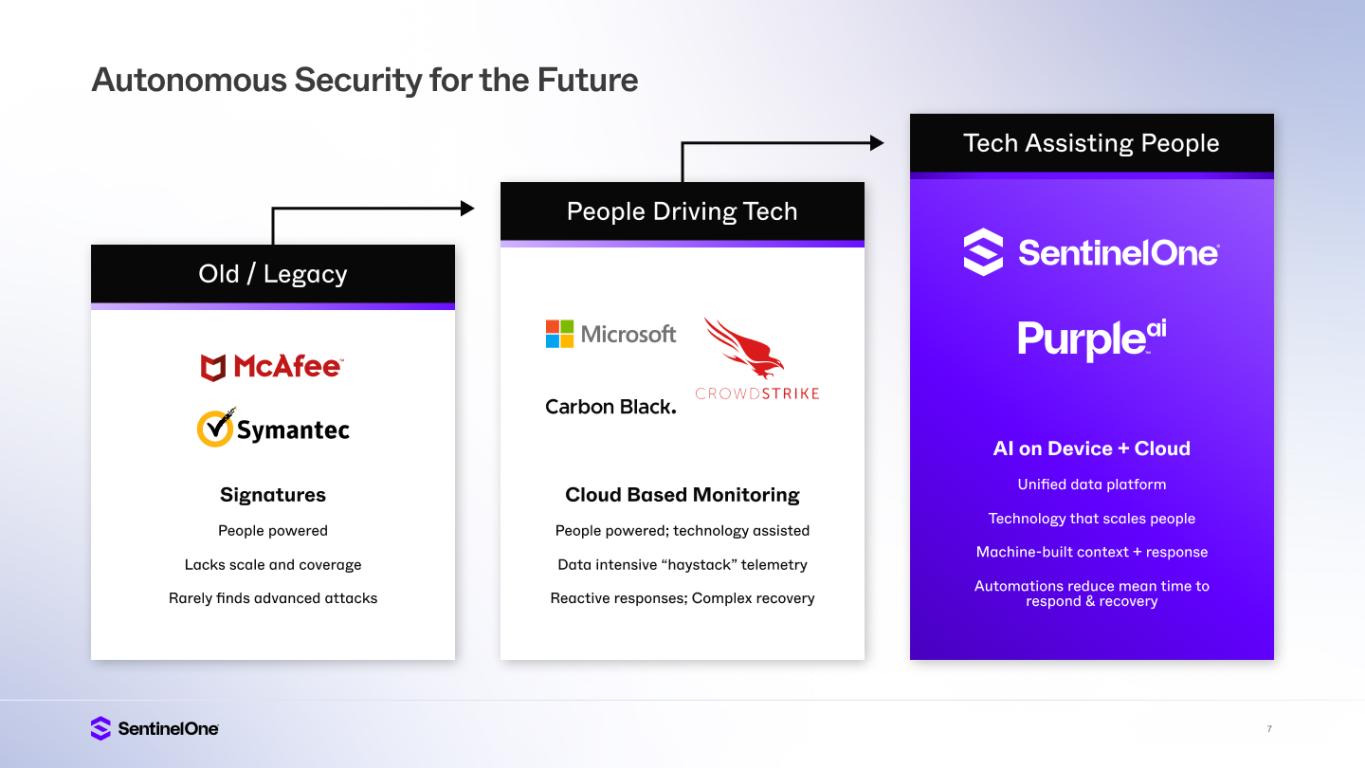
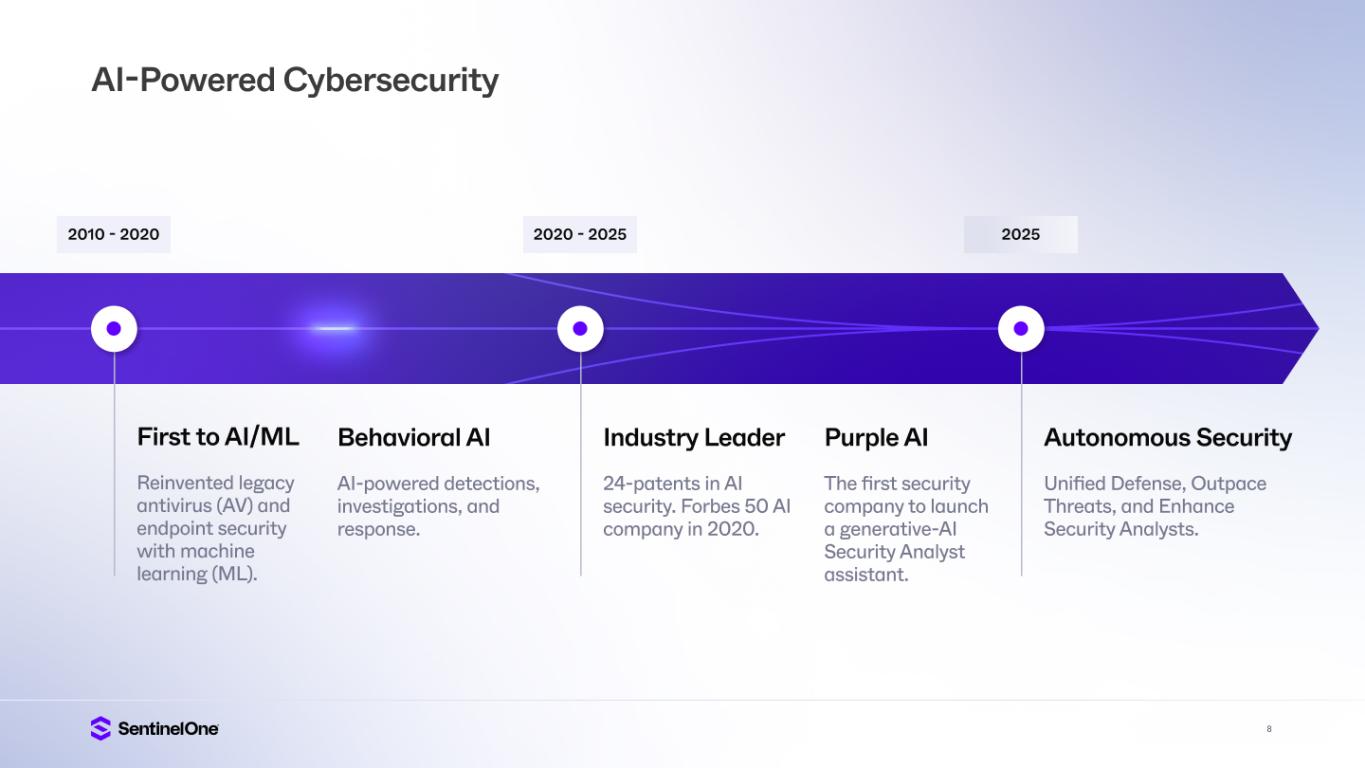
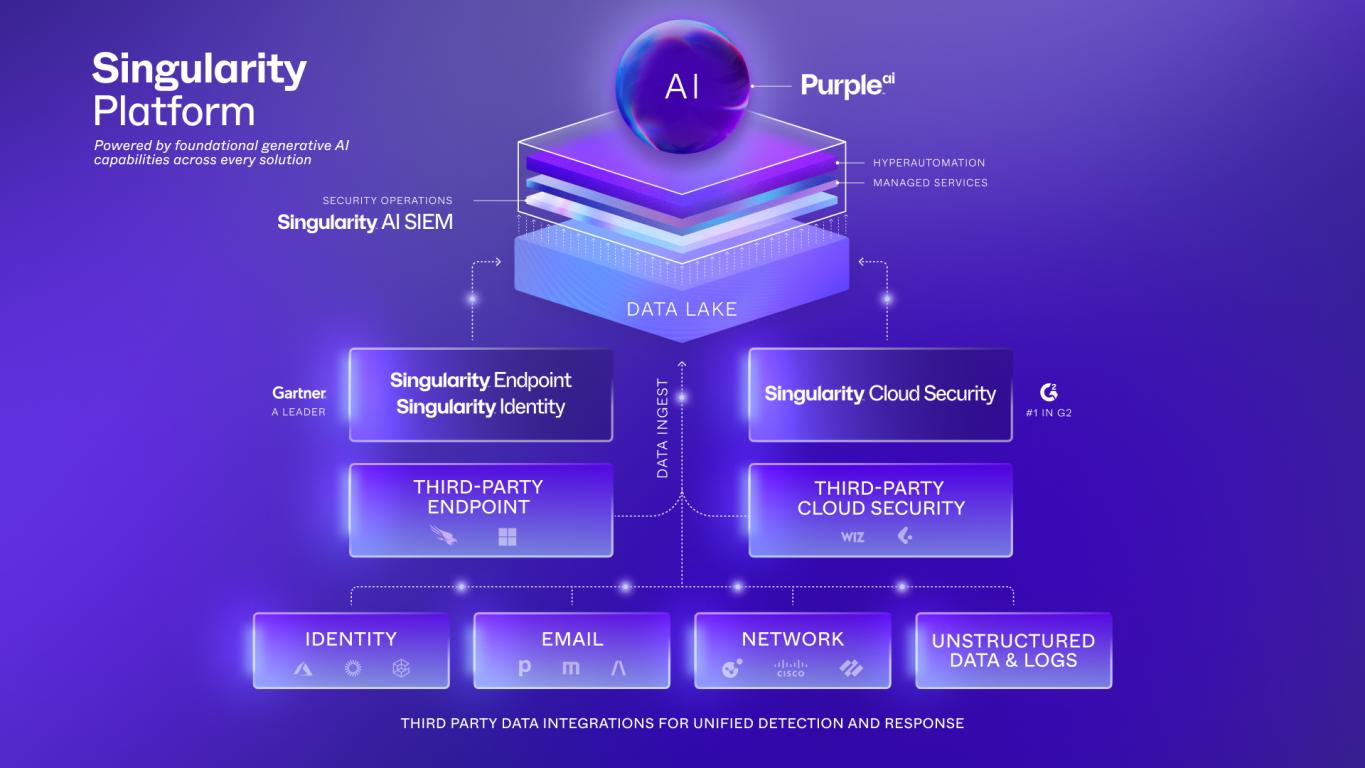
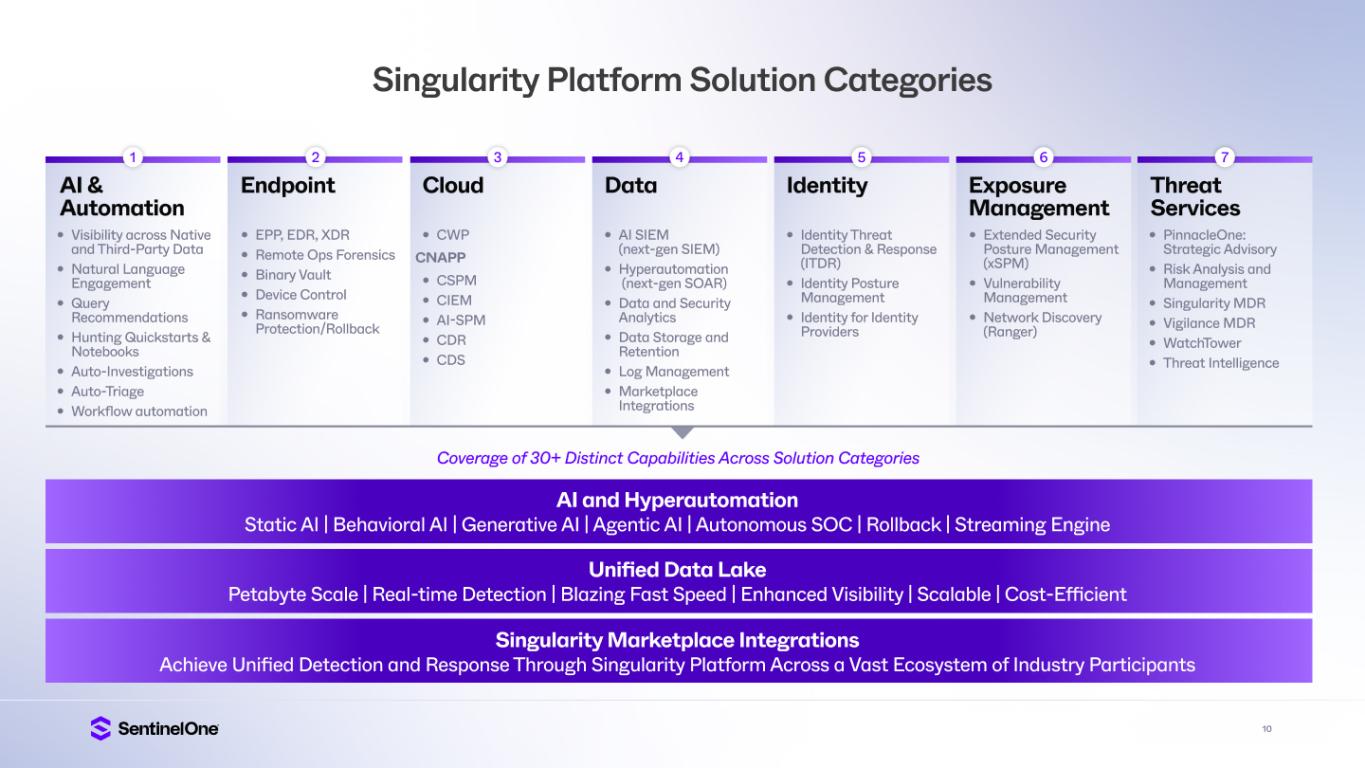
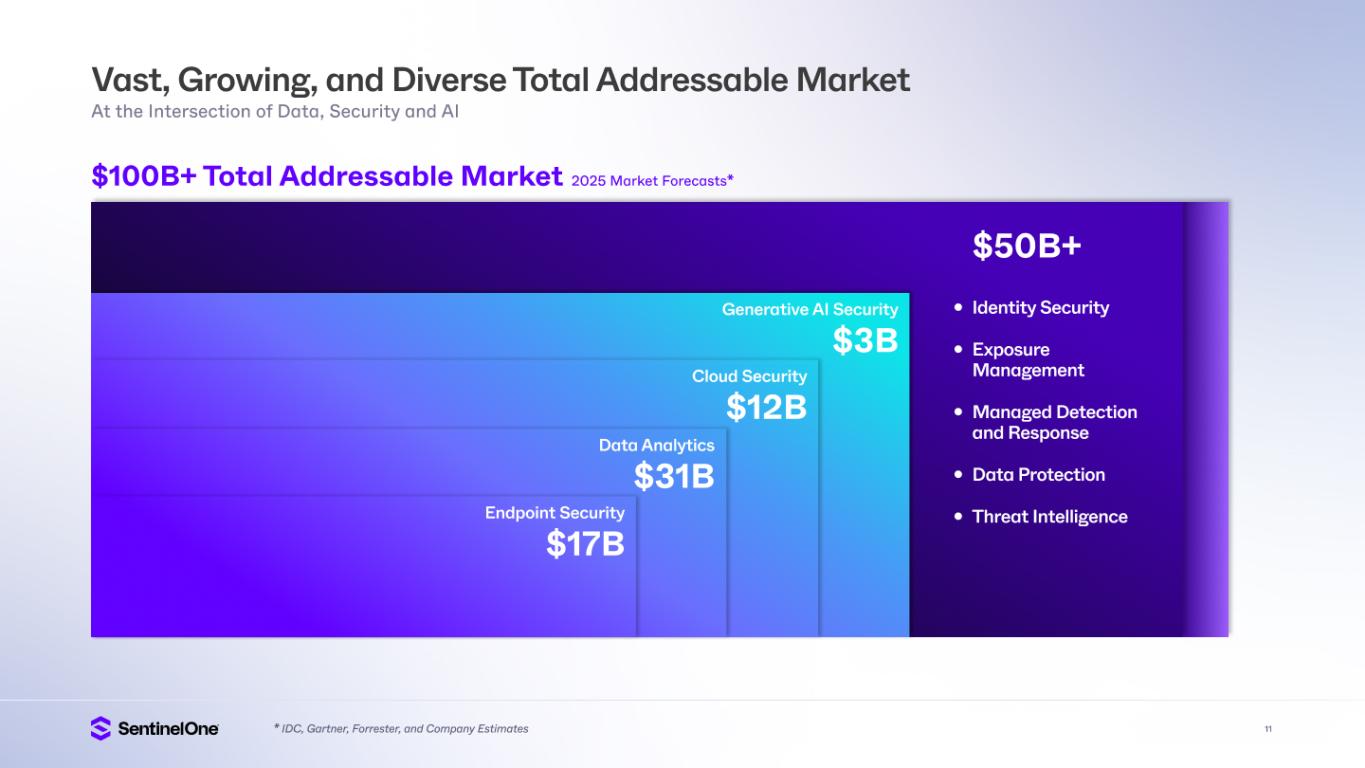
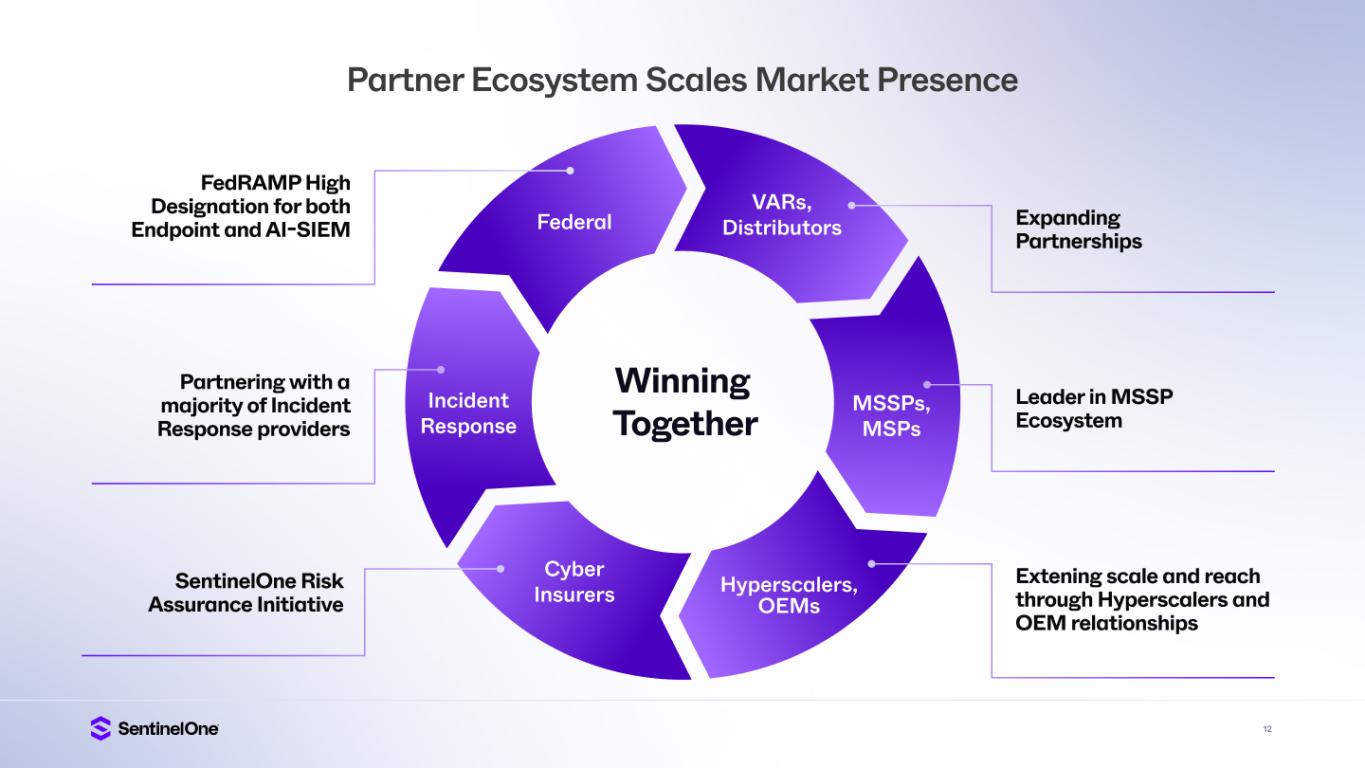
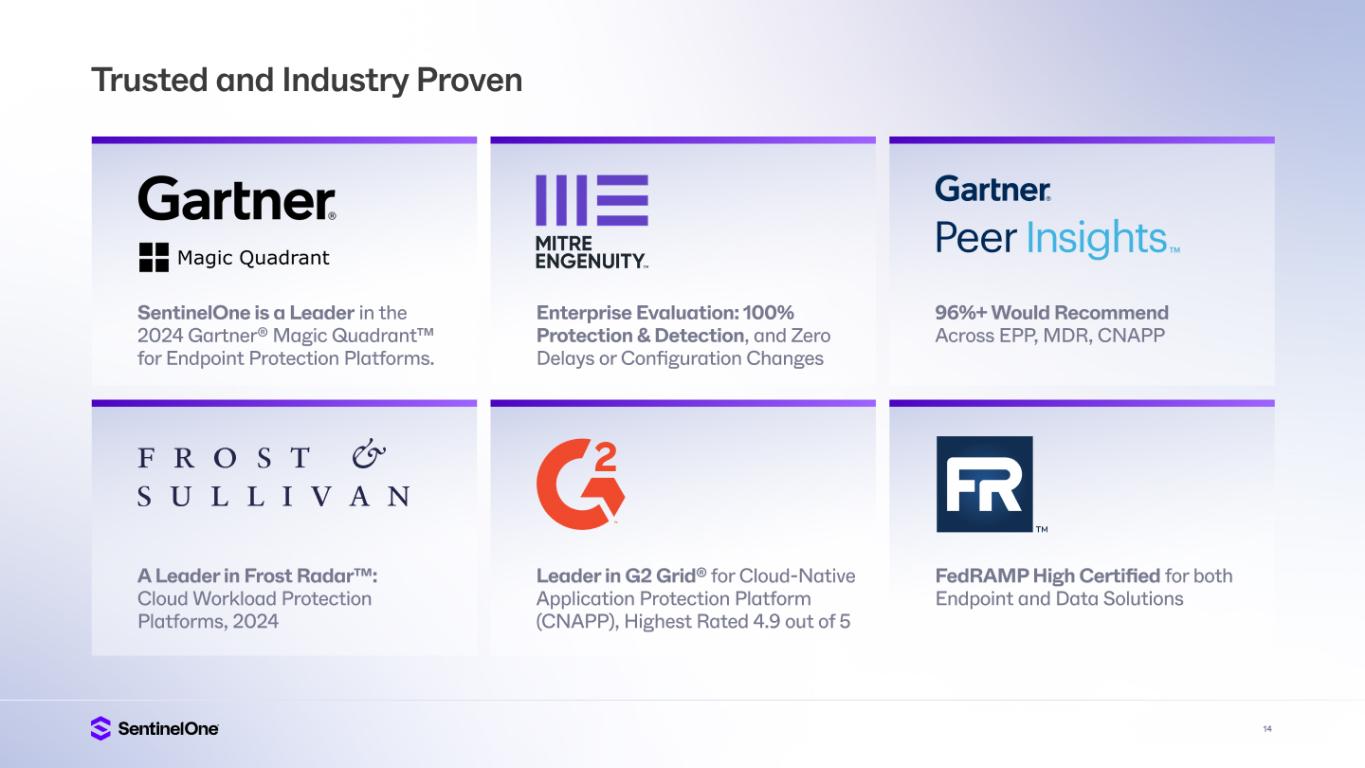
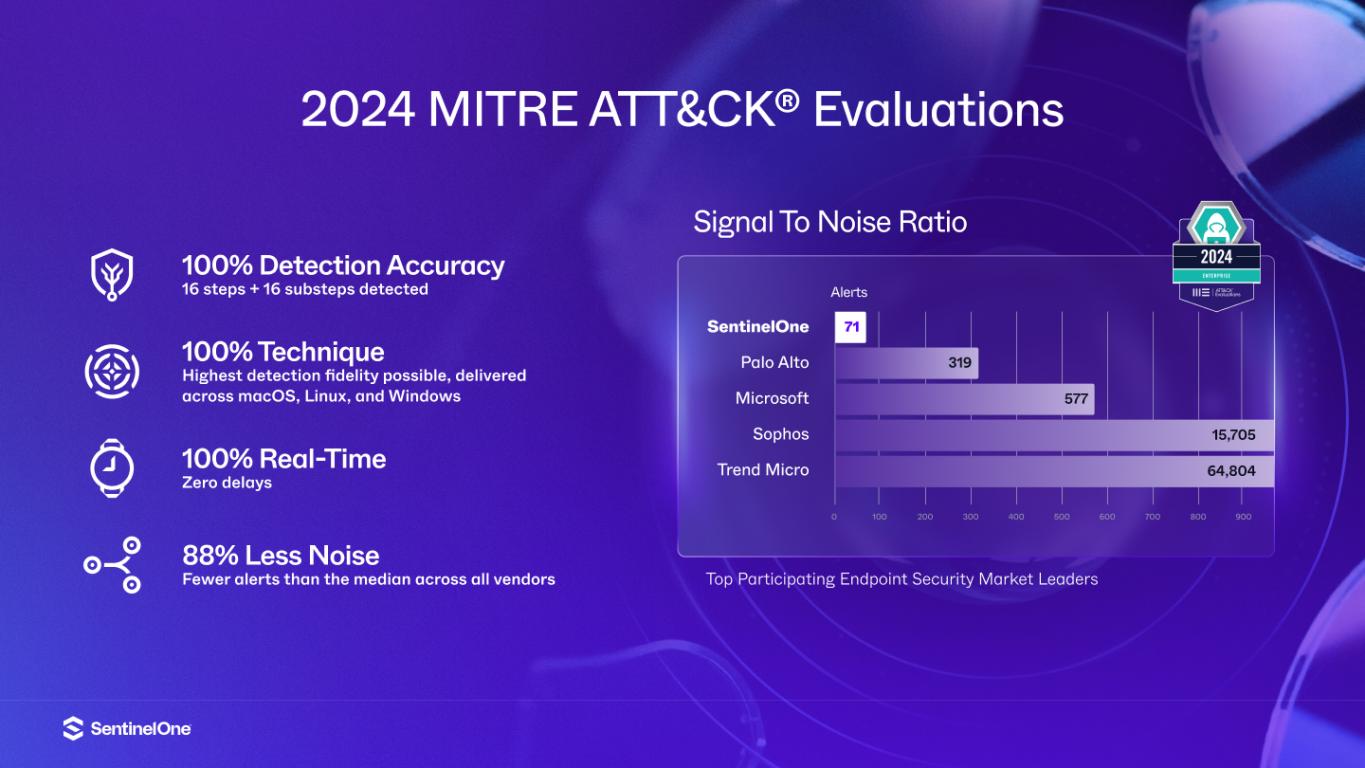
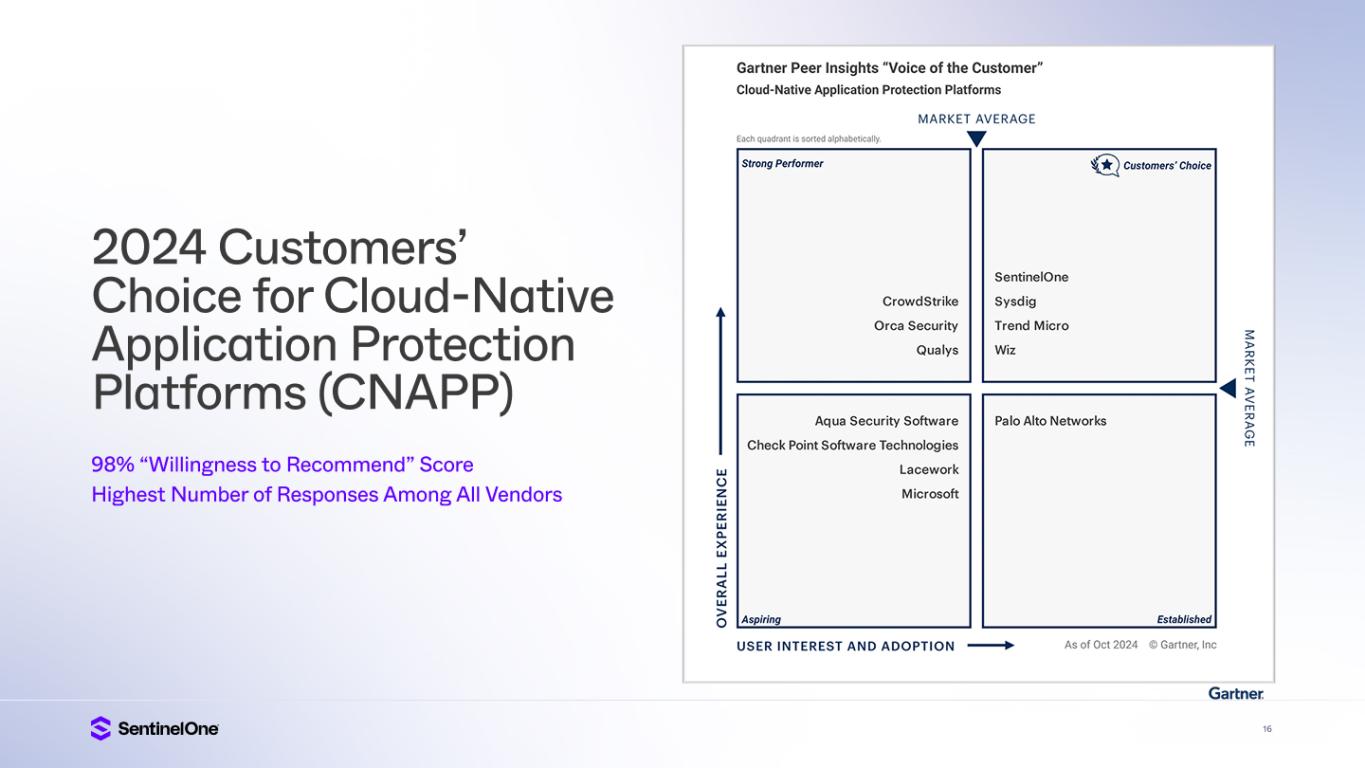
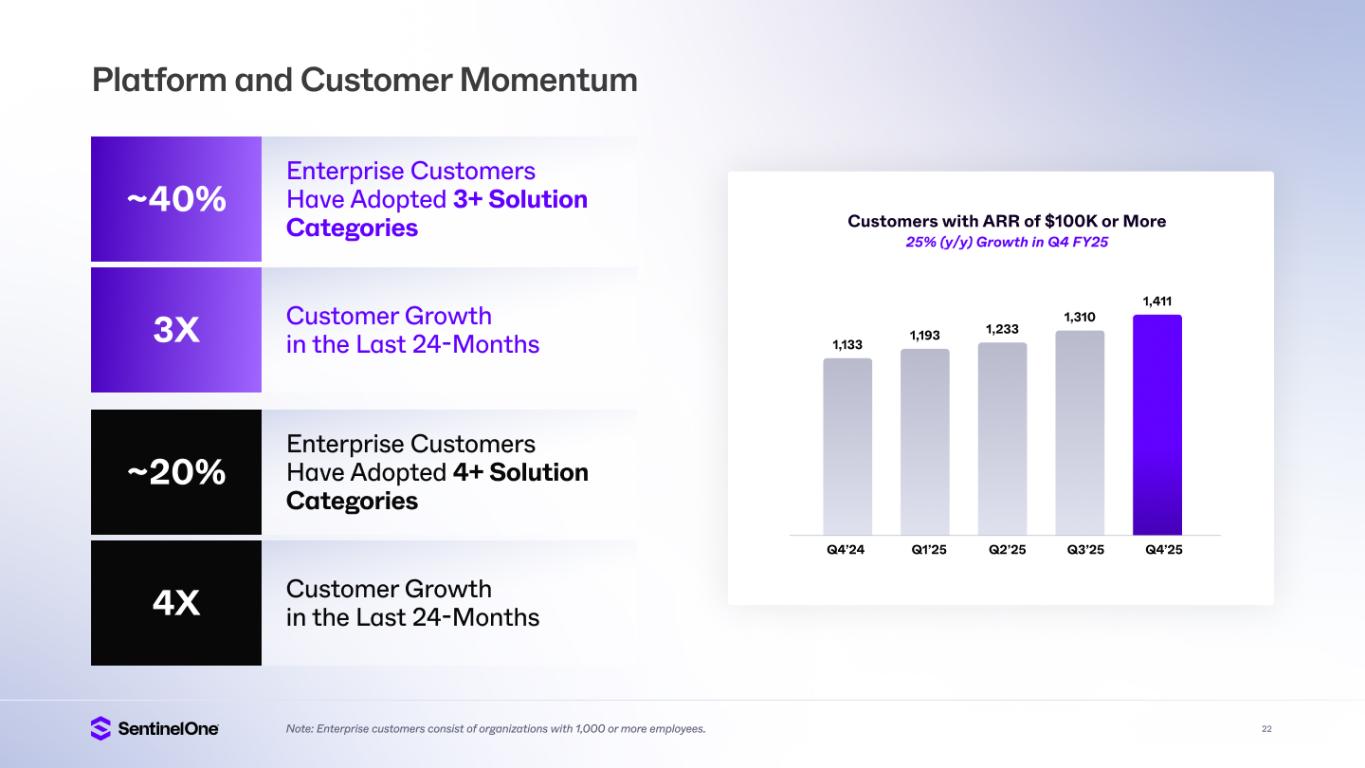
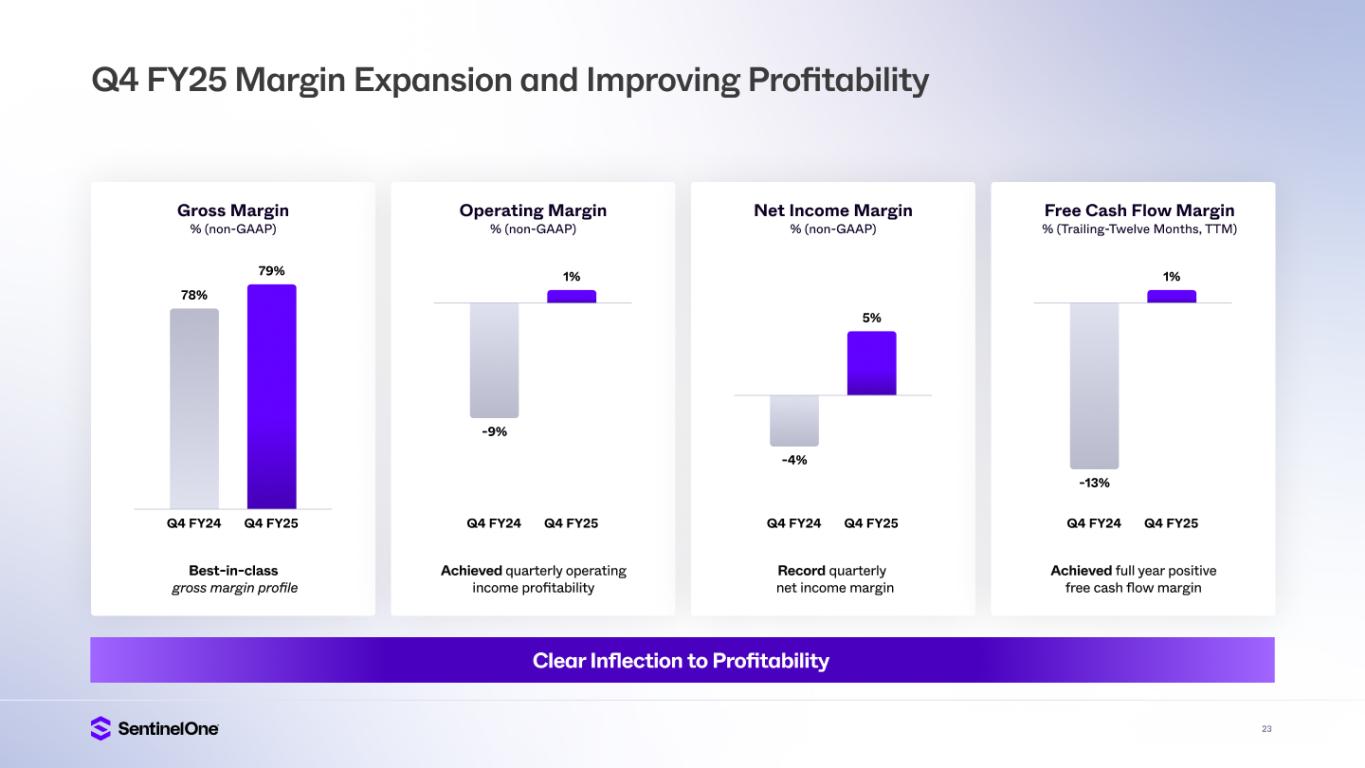
joining our fiscal fourth quarter earnings call. Fiscal year 25 was a transformative year for SentinelOne, ending with a strong Q4 that exceeded our expectations across all guided matrix. For the full year, we also successfully met or exceeded the guidance targets that we set at the start of last year. Notably, we re-accelerated second half net new ARR growth back into positive territory. This performance was fueled by strong win rates, disciplined execution, and the growing adoption of our platform solutions, particularly in data, AI, and cloud. Once again, we delivered industry-leading revenue growth and margin improvement. We were one of the only software companies at scale to achieve over 30% top-line growth while driving over 15 percentage points of operating margin expansion. Additionally, we set a new customer growth record and scaled our emerging platform solutions to new highs, with non-endpoint solutions crossing 50% of our full-year bookings. We successfully transformed our business from an endpoint-focused model to a comprehensive, leading AI-native cybersecurity platform. At the same time, we accelerated our time to profitability through focused investments and discipline. We achieved significant profitability milestones, including our first quarter of positive operating income in Q4, well ahead of our expectations, our first full year of positive net income and earnings per share, and our first full year of positive free cash flow. With these results, we've crossed a key inflection point, and we believe the company is well positioned for sustained growth and profitability at scale. We expect to surpass $1 billion in both ARR and revenue this year, an important milestone in our growth journey. We also expect to achieve full-year operating income profitability while continuing to invest in our platform and future opportunities. In fiscal year 26, we remain focused on execution and advancing Singularity as the preeminent AI-powered cybersecurity platform for the future. Which brings me to the state of the market. In many ways, the cybersecurity status quo was a disappointment in 2024. More breaches, more costs, and more data was stolen than ever before. Personal data, financial data, healthcare data, and the list goes on. Our entire world is now digital, and these breaches are challenging that very basic fabric. Furthermore, AI is no longer experimental, and in the hands of attackers, it's a real threat. The scale, automation, and speed of attacks are accelerating. Looking ahead, we must redefine the security landscape with a modern approach. Our industry cannot afford to rely on the same outdated approaches of the past two decades. They simply don't work. Our AI-native autonomous security is fundamentally redefining how cybersecurity challenges are addressed, setting us apart in the industry. Enterprise-wide security, unified data, and AI are the core pillars of every solution within the Singularity platform. Today, I'm excited to announce that we're the first company to embed foundational generative AI capabilities into every platform solution by default. endpoint, cloud, data solutions, and more. From the beginning, we introduced an AI-based approach to endpoint security. A decade later, we remain at the forefront of innovation, pioneering the use of generative and agentic AI to transform enterprise-wide security applications. We're harnessing AI to empower humans and automate defenses at scale. This is how we elevate cybersecurity for enterprises and help them become exponentially better. As a company, we are nimble and adaptive, a key competitive advantage compared to other incumbents. We can leap, not just take steps forward. And this year, we're leaping forward to where the future is going to be. We have an incredible opportunity ahead to collaborate with our customers, partners, and enterprises worldwide to usher in the new era of cybersecurity with singularity. Our success stems from our focused innovation strategy and technology leadership. Let me cover that in more detail. Three things set our Singularity platform apart. One, Unified Defenses, the only open, unified AI security platform integrating data, endpoint cloud identity, and third-party solutions for broad and complete coverage and protection. Two, Outpaced Threats, autonomous security and industry-leading signal-to-noise ratio delivers real-time protection and actionable insights to stay ahead of threats. And three, enhance security analysts. Our generative and agentic AI set the standard in defending against modern threats. Designed to evolve and constantly adapt, singularity helps move faster, more efficiently, and save costs. Take a look at the latest MITRE attack evaluations. The industry's gold standard for comparing and contrasting performance across security vendors. For the fifth consecutive year, Singularity achieved 100% detection. It's also important to take a more detailed look at MITRE results beyond the detection score. This is where the true differentiation emerges. The latest MITRE evaluation introduced new performance criteria for both detection delays and alerts. Singularity delivered zero detection delays and 88% fewer alerts compared to competing solutions. The relative outperformance of Singularity is impressive. Competing vendors required four times, eight times, or in one case, 9,000 times more alerts. With SentinelOne's industry-leading signal-to-noise ratio, enterprises don't have to compromise between protection, reliability, and noise. Detections are real-time with the Singularity Platform, eliminating gaps and ensuring enterprises stay ahead of evolving threats. Our emphasis on quality over quantity minimizes alert fatigue and enables security teams to remain focused and effective against adversaries. Put simply, our AI-driven security approach simplifies and streamlines operations. We're focused on delivering the best solutions that address the most critical enterprise needs. Our platform solutions fall into seven key categories, namely AI and automation, data, endpoint, cloud, and identity security, exposure management, and threat services. Each of these seven solution categories encompasses multiple individual product offerings, collectively addressing over 30 distinct use cases. As an example, our cloud security solutions represent one of the broadest portfolios in the industry, covering cloud workload protection, CSPM, CIM, AISPM, cloud data security, and This extensive coverage highlights the depth and versatility of the Singularity platform, delivering AI-native cybersecurity across diverse environments. Importantly, all of our platform offerings are powered by the unified Singularity Data and integrated with AI and hyper-automation capabilities. We've experienced robust adoption and expansion of our platform solutions over the past two years. As of this quarter, we've tripled the number of customers with three or more solution categories and quadrupled the number of customers with four or more solutions. I'm also excited to share that about 40% of our enterprise customers have adopted three or more platform solutions and about 20% have adopted four or more solutions. This incredible progress and customer receptivity illustrates the diversity and growth potential of our business. In fiscal year 25, over 50% of our bookings came from non-endpoint solutions. This milestone shows our ability and momentum to disrupt large markets with leading technology. We've just begun to scratch the surface of an immense $100 billion market opportunity. In Q4, we achieved record bookings contribution from our data cloud and AI security solutions, once again showing the accelerating adoption of our broader platform. Data and AI were our fastest-growing solutions fueled by adoption of our singularity AI SEM. Our AI SEM is redefining security data management with enhanced visibility, real-time detection, on-streaming data, accelerated investigations, and autonomous responses. Many of our largest and most strategic wins in the quarter included AI-SIM alongside broader platform solutions. Let's look at a few examples. A customer with an eight-figure total deal value in the APAC region, expanded endpoint and cloud coverage, added CNAP and fully replaced a legacy SEM with AI-SIM, a true platform win. Next, a leading financial institution switched from Splunk to AISM, reducing costs and improving performance. The multi-million dollar deal increased the customer size by 5x. Finally, in another multi-million dollar expansion, one of the largest retailers in its category selected AISM to replace an incumbent vendor, which resulted in savings of more than $1 million per year for this customer. By combining AI SEM with adjacent singularity solutions, this enterprise can now detect and respond to incidents up to 12 hours faster than before. Customers are starting to migrate away from legacy SEM products and modernize their infrastructures. We're partnering with them at their pace. The momentum is clear. As we engage in more strategic large enterprise conversations, we're building trust and long-term relationships. We're listening to customers' objectives and helping them solve their security and data challenges. In Q4, we welcomed one of the largest airlines in the world, a Fortune 100 company that chose SentinelOne to replace their incumbent endpoint vendor. After six months of engagement and support by the SentinelOne team, this enterprise adopted a singularity platform across their network to improve security and resilience. Q4 was one of our strongest quarters of competitive displacements. Still, large-scale Bill's security decisions, evaluations, and deal engagements take time and careful consideration. The market interest and customer engagements are strong, opening new opportunities for SentinelOne, all contributing to our expanding pipeline. Turning to our partners, we're also seeing increased interest from managed security, incident response, and insurance providers for our broader platform solutions. In Q4 alone, more than a dozen large partners started adopting AI SEM, Purple AI, Cynap, and more. In particular, MSSPs remain a strong driver of growth and opportunity. They are doubling down with SentinelOne, embracing more of the platform and establishing longer-term contracts. This benefits us and our partners with more visibility and predictability into future growth. Our long-standing partnerships with managed service providers are built on collaboration and innovation. Multi-tenancy, automated response tools, and rollback capabilities enhance their own service offerings. Now, with AI SEM, Purple AI, and Synap, we're taking this to the next level, helping them consolidate security coverage into a single console powered by our leading AI innovations and highly efficient data ingestion and analytics. Let's also discuss the latest innovations across our solutions, starting with Purple AI. We believe every customer should be able to leverage generative AI's foundational abilities for security applications. After a year of customers selecting and using Purple AI, it's clear how much it can scale and automate time consuming human tasks. We're now the first security company to include foundational gen AI security capabilities like natural language queries and auto-generated summaries across our platform by default. This is just the first step in redefining today's categories of EDR, cloud security and SEM to be AI powered, bringing advanced agentic capabilities to not just hundreds of enterprises, but thousands. The inclusion of Purple AI foundations across the Singularity platform sets the baseline for AI usage, driving immediate engagement and fueling adoption of more platform solutions. More advanced agentic AI workflows of Purple are available to further enhance speed and performance. Additionally, we're extending the power of Purple AI across a wider range of security data. We've added support for third-party solutions, including Zscaler, Okta, Palo Alto Networks, Fortinet, Microsoft, and others. By breaking data silos, customers can unleash the full power of Purple AI across their entire security infrastructure. We're committed to an open platform that can seamlessly co-exist and orchestrate a broader ecosystem of security solutions. Purple is already the first and only scaled agentic AI for cybersecurity. Purple plus hyperautomation are the bedrock for agentic AI in cybersecurity. We believe this will become table stakes for autonomous security in the coming years. This is the future and we're extending our lead. In cloud security, we continue to gain traction with new and existing capabilities. More enterprises are securing their cloud environments with our leading cloud workload security and CNAP capabilities. In Q4, we secured our largest CNAP deal since the acquisition of PingSafe. In a multi-million dollar opportunity, a leading software company adopted several platform solutions, including workload security and CNAP, after a rigorous competitive evaluation. Singularity was selected for best-in-class performance, unified capabilities, and lower cost of ownership compared to point solutions. The success of our cloud security platform is further validated by customer testimonials and third-party accolades. During the quarter, SentinelOne was named the 2024 Gartner Peer Insights Customer Choice for CNAP. We received the highest number of customer responses in the voice of the customer, with 98% of customers saying they would recommend us to their peers. We were also awarded the best overall cloud and application security offering in CRN's 2024 product of the year. As we turn to a new fiscal year, let's look at the broader market dynamics and our strategic focus for the path forward. Our technology, scale, and market presence are better than ever. We delivered consistent improvement throughout the year in customer growth, retention, and platform adoption. And we're seeing increased partner and customer interest in SentinelOne. Broadly, AI is impacting how companies make decisions and implement technology. It's appending what we know about software and software development. The world of technology and software is rapidly evolving, and so are we as a company to lead in the future of AI-powered cybersecurity. This involves focusing our resources and aligning teams toward key growth areas. We're sharpening our innovation focus toward AI-native data and security solutions. We must also remain mindful of the macro environment. For many organizations, economic and political uncertainty continues to impact budgets, timing, and business decisions. As we enter fiscal year 26, our product sales and marketing teams are fully aligned to expand on the reach and scale of our platform through new customer growth and expansions. We're focused on strong execution and deeper engagements across our partner ecosystem. We believe this positions us well to drive premium growth while continuously improving margins in the years to come. We've achieved a lot in the past year, from delivering industry-leading growth and margin improvements to bringing cutting-edge innovations to the market, and most importantly, keeping our customers secure. I'm proud of all Sentinels for their dedication and relentlessness over the past year and for their enthusiasm for what's to come. In closing, I want to extend my thanks and gratitude to our customers and partners for their trust in SentinelOne. Congratulations to all Sentinels. Their hard work and commitment drives our success and helps secure tens of thousands of businesses around the world, and thanks to our shareholders for their continued support. Our mission to be a force for good remains unwavering. With that, I would like to turn the call over to Barbara Larson, our Chief Financial Officer. Thank you, Tomer, and thanks
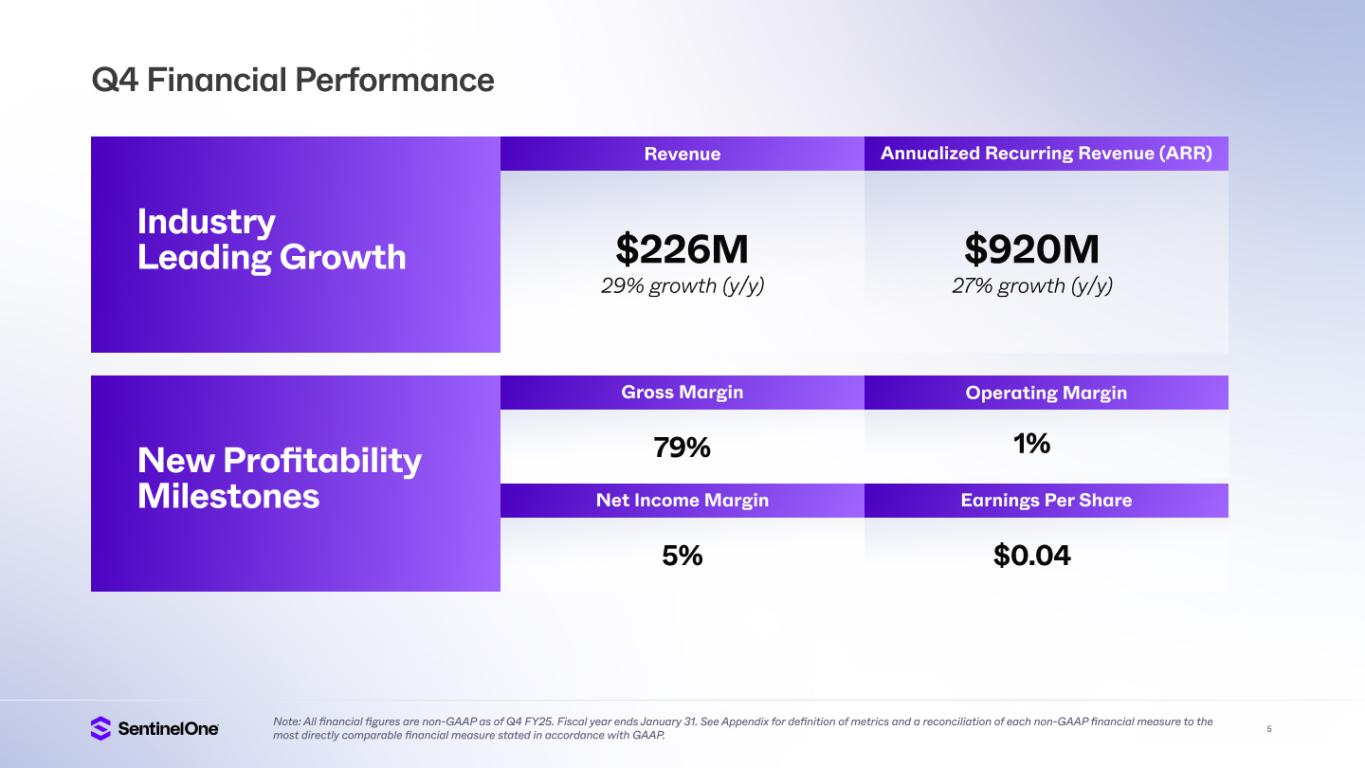
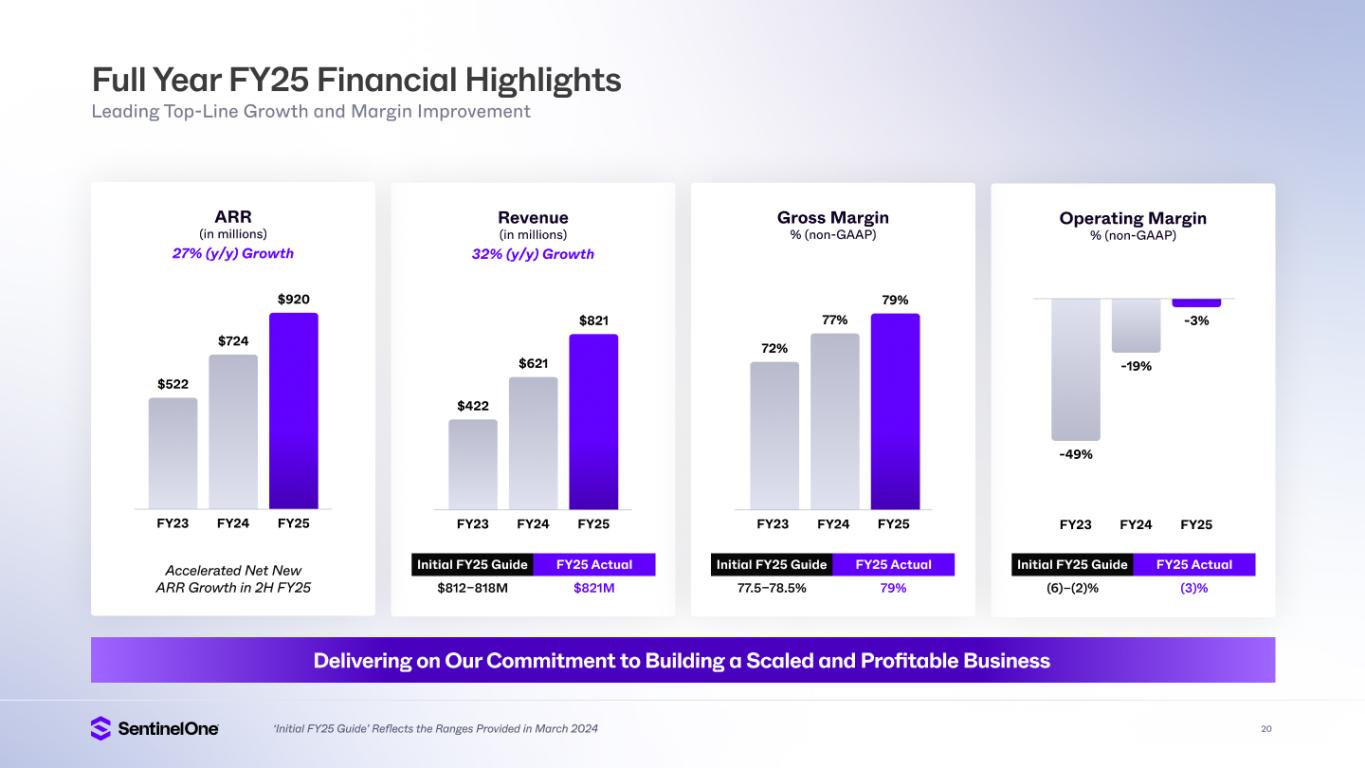
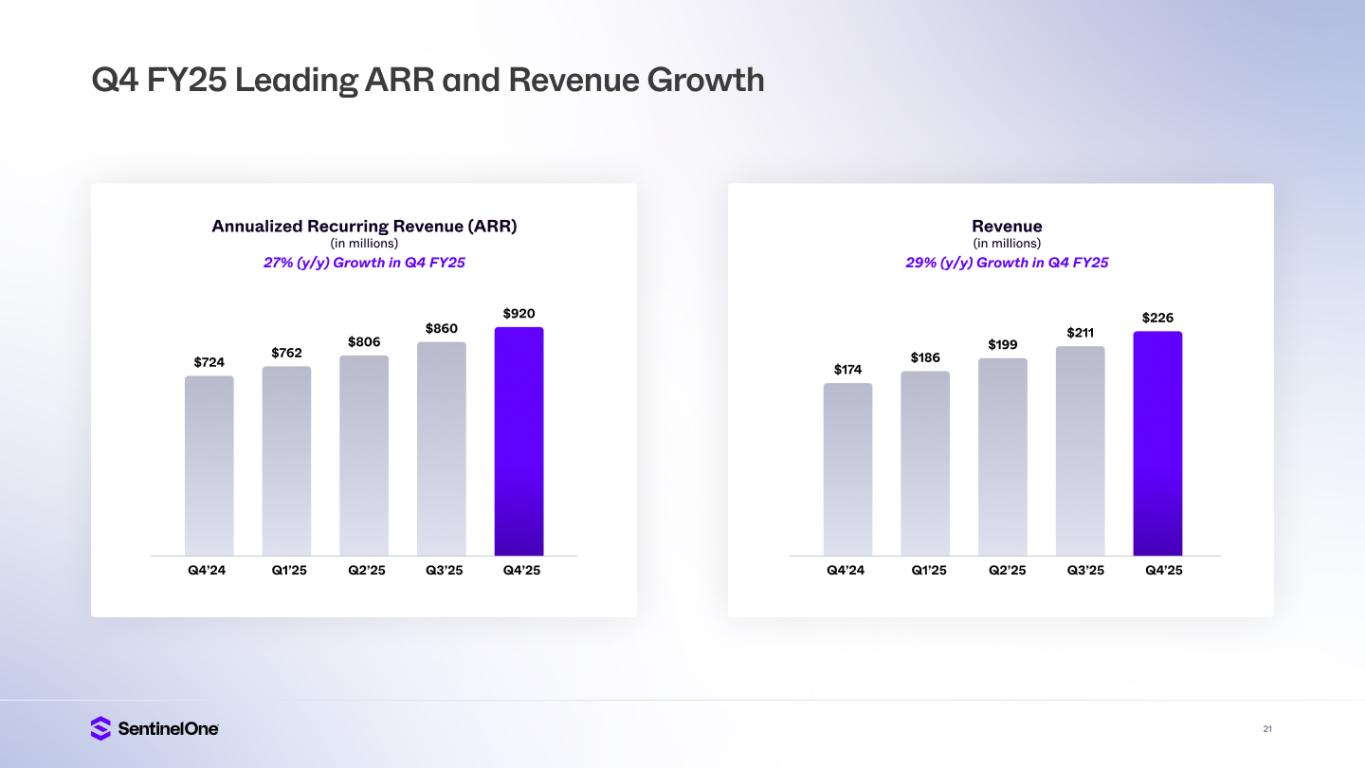
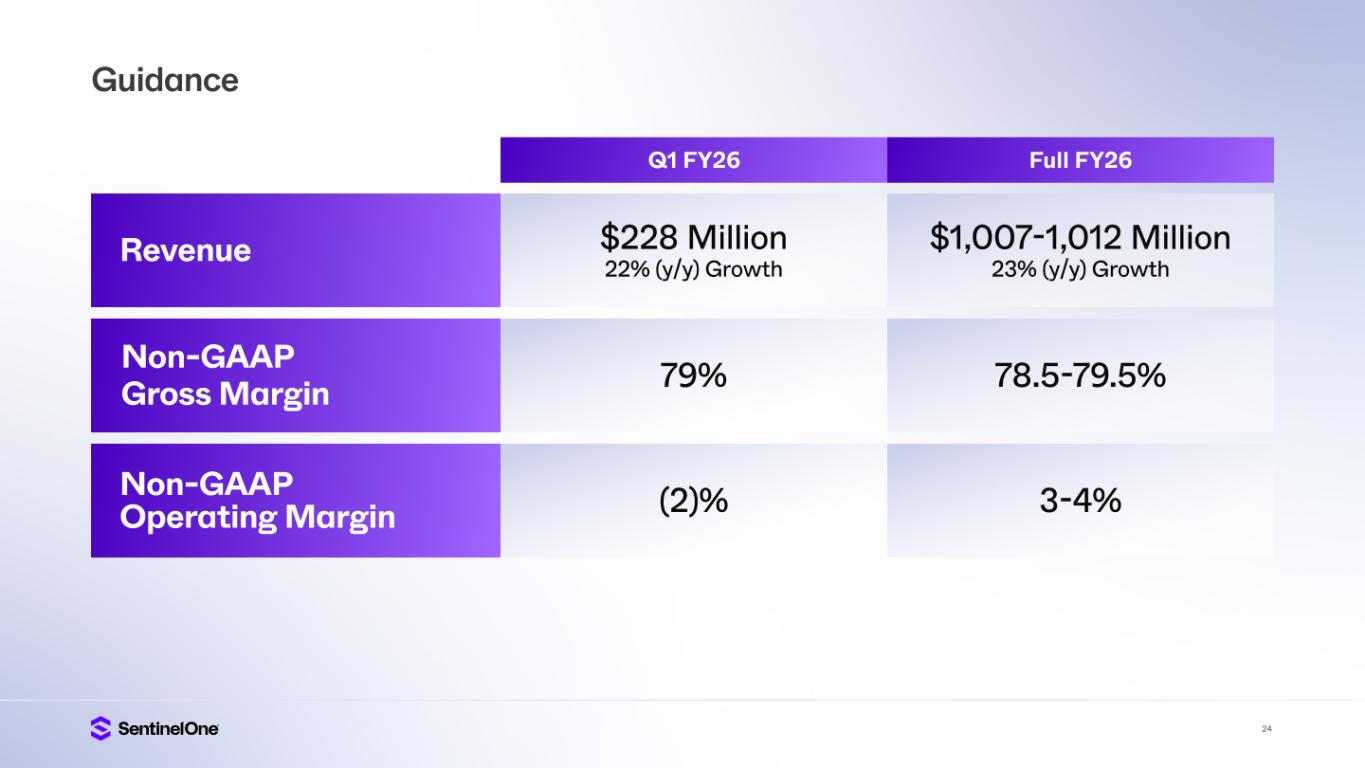
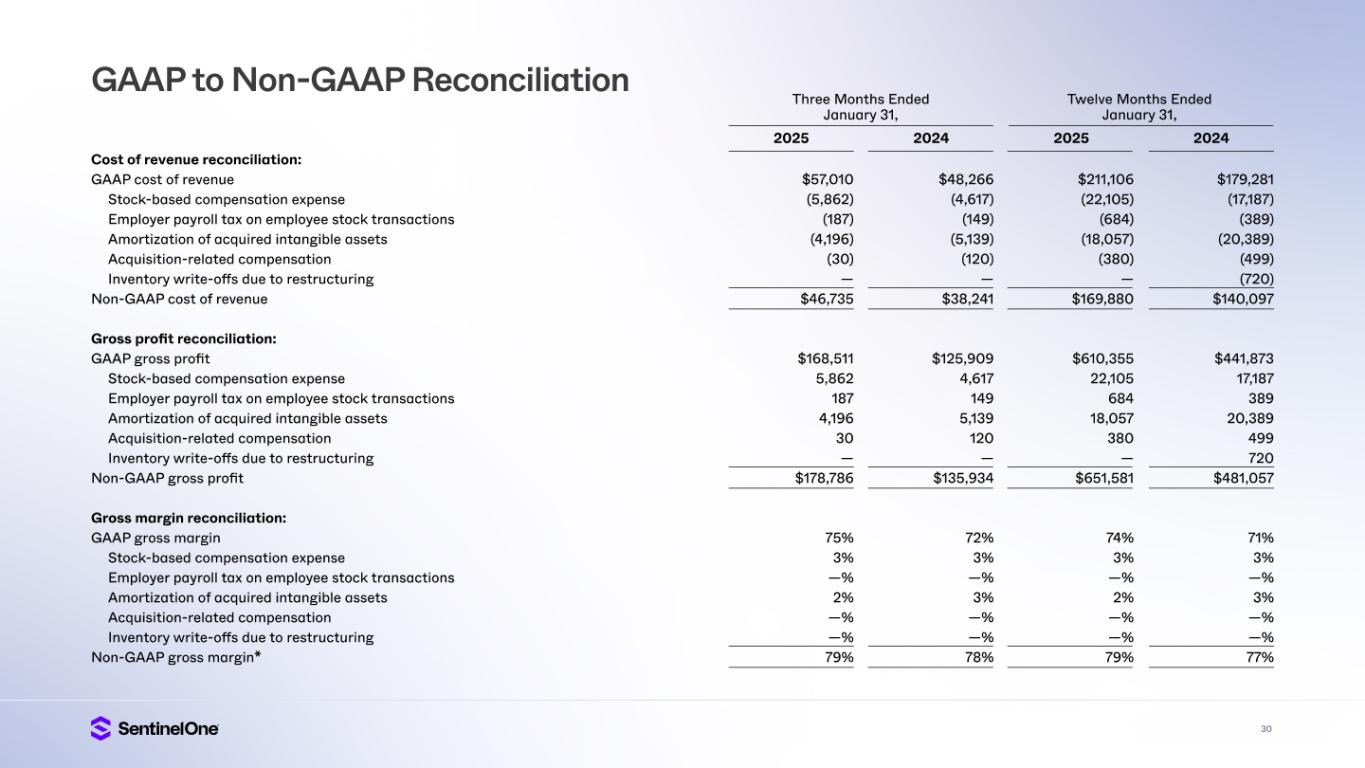
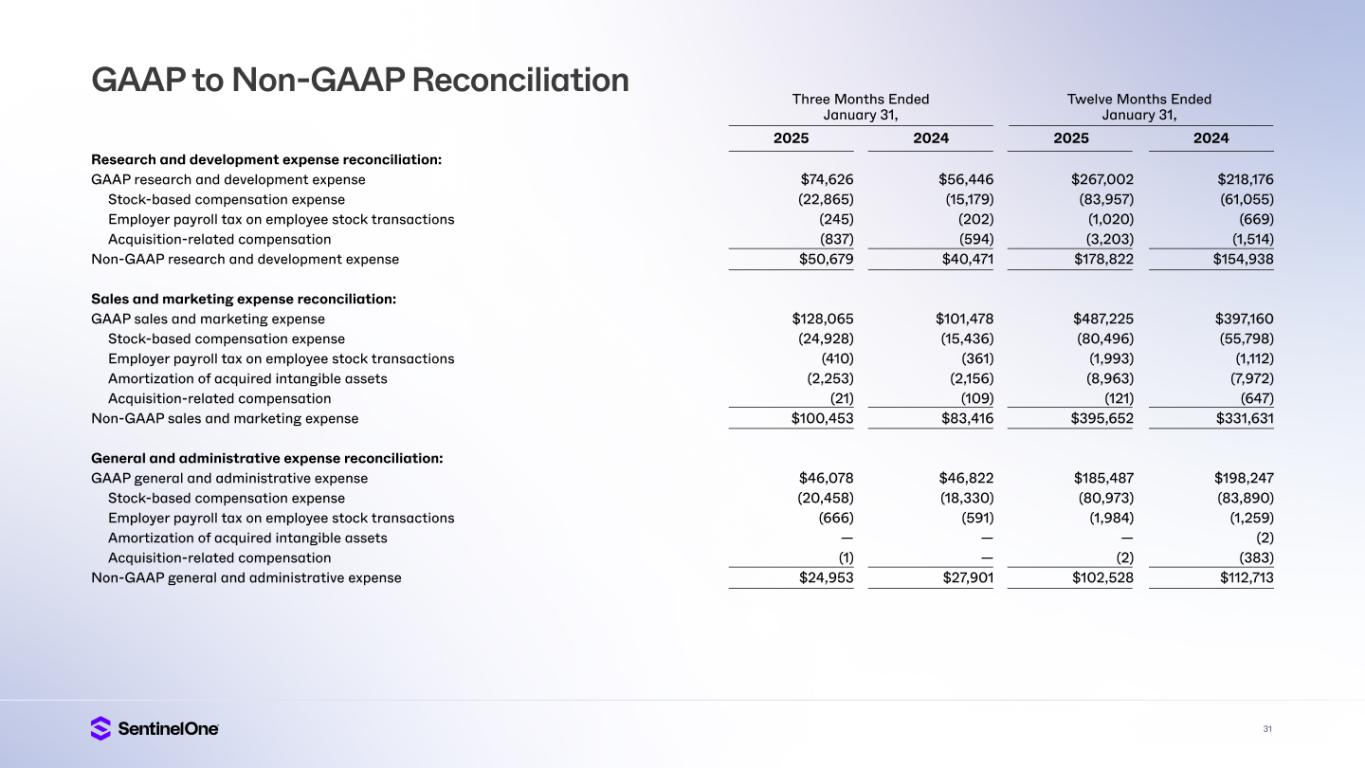
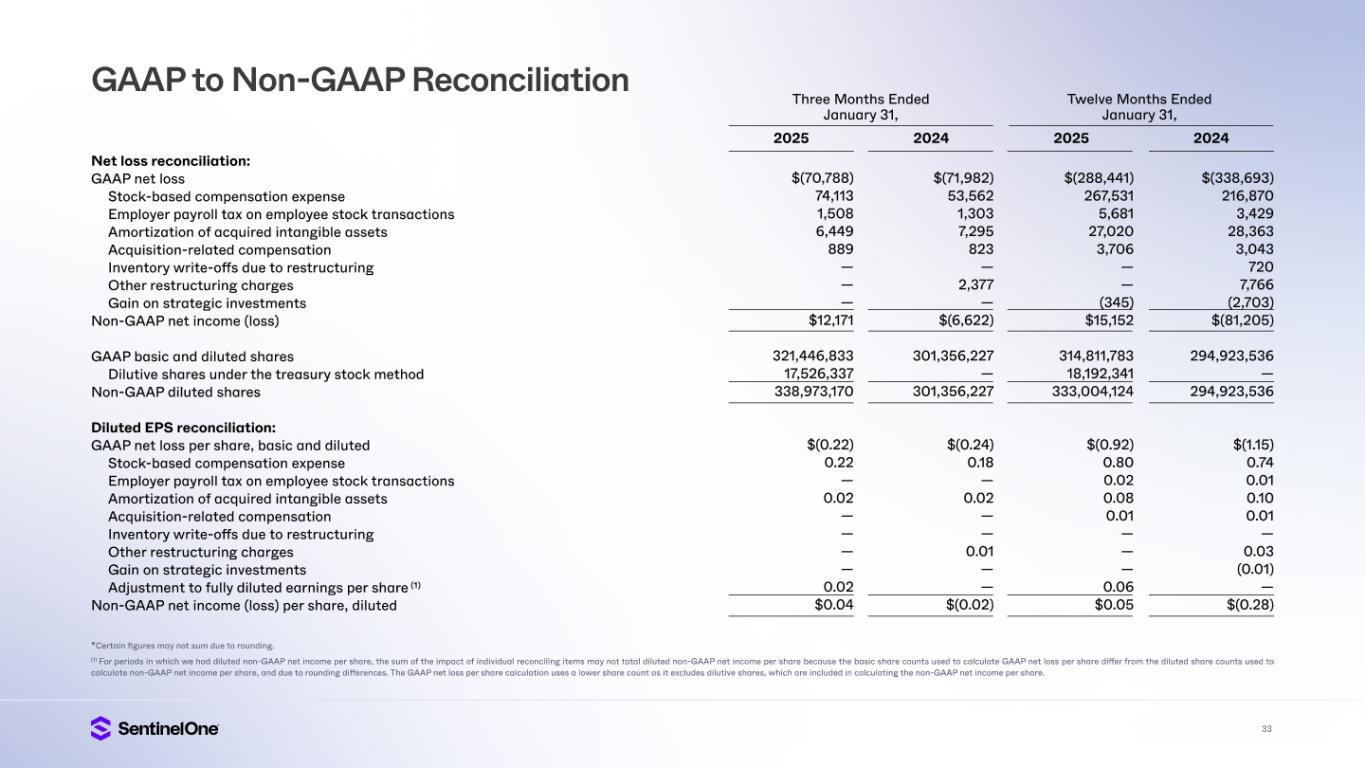
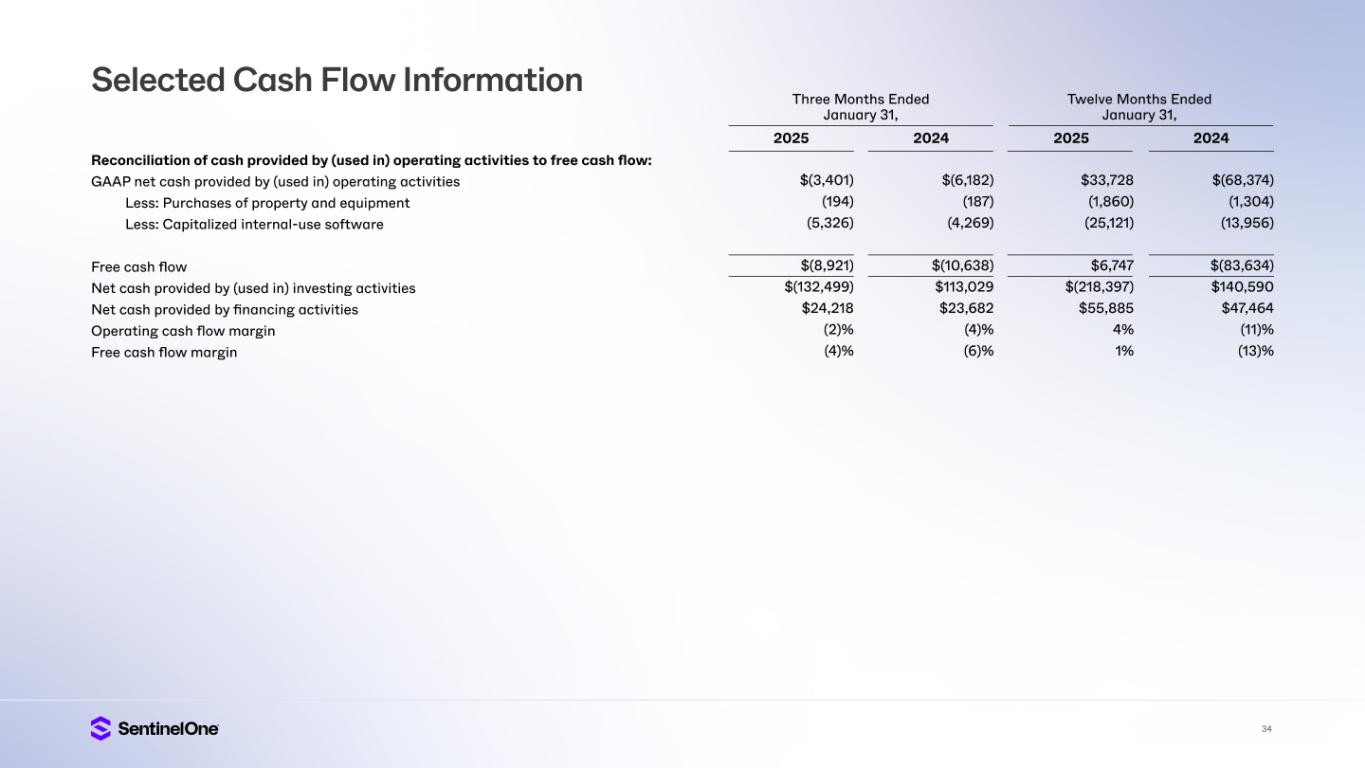
to everyone for joining us today. Let's review the details of our Q4 and Fiscal Year 25 financial performance, and our guidance for Q1 and fiscal year 26. As a reminder, all comparisons are year over year, and financial measures discussed here are non-GAAP, unless otherwise noted. We continued to deliver industry-leading growth and margin expansion in fiscal year 25. Our revenue grew 32% to $821 million, while gross margin reached a new full-year high, and operating margin improve by 16 percentage points year over year. In addition, we crossed two important profitability milestones this year, delivering a positive net income margin of 2% and a positive free cash flow margin of 1% for the full year. Our profitability improvements are driven by increasing scale, operational efficiencies, and a disciplined investment strategy. We will continue to build on this and improve our profit and free cash flow margins in fiscal year 26. Turning to our fourth quarter results. Our overall performance signifies a strong competitive position and demand for Sentinel One's best-in-class cybersecurity solutions. We are taking market share and mind share from incumbents and next-gen vendors alike. Q4 revenue of $226 million grew 29% year-over-year and exceeded our expectations. This outperformance was driven by strong new business growth and linearity in the quarter. Revenue from international markets grew 36% and represented 37% of our quarterly revenue. In Q4, we added net new ARR of $60 million, and our total ARR grew 27% to $920 million. We delivered on our goal to re-accelerate net new ARR growth in the second half of the year, achieving 2% growth, an improvement of 12 percentage points compared to the first half of the year. This performance improvement was driven by improved execution, a stronger competitive position, and success across our platform solutions, notably cloud, data, and AI. Our Q4 competitive win rates were strong and improved compared to prior quarters. Exiting fiscal year 25, we're now protecting over 14,000 direct customers. Keep in mind, this does not include the thousands of businesses served by our strategic partners like MSSPs. In Q4, we continue to solidify our leadership position with MSSPs. We have established deeper relationships and long-term growth commitments with leading MSSP partners. These strategic partnerships provide visibility into our mutual growth and success. This contributed to the strong RPO growth in the quarter, which re-accelerated to 30% growth and reached a new record of $1.2 billion. In addition, we're seeing success with both new and existing customers. Customers with ARR of $100,000 or more grew 25% year-over-year in Q4 to $1,411. This reflects more than 100 customer additions quarter over quarter, the largest net ads for the year. Our average deal size and ARR per customer continue to increase as well, highlighting our platform momentum and ongoing move upmarket. We continue to maintain healthy expansion rates, and for the full year, we achieved a dollar-based net retention rate of 110%. Even as enterprises navigate a challenging macro environment, they continue to embrace more of the Singularity platform. Beyond the top line growth and customer momentum, we delivered record profit margins in Q4. We achieved our first quarter of positive operating margin, outperforming our prior guidance by over 400 basis points. This outperformance was driven by cost of discipline in the quarter and our focused investment strategy. Turning to our guidance for Q1 and fiscal year 26, this year we expect to surpass $1 billion in both ARR and revenue. We also expect to deliver our first full year of positive operating margin. To be specific, we anticipate revenue of $1 billion and $7 to $1 billion and $12, representing 23% growth. While we typically do not comment on an ARR outlook, this quarter we believe it may provide helpful context around our growth expectations. For fiscal year 26, we expect to deliver approximately $200 million in net new ARR, growing about 2% year-over-year. This positive trajectory builds on our re-acceleration in recent quarters, continuing our growing market presence and platform adoption. At the same time, we're mindful of macroeconomic conditions, deal timing, and federal spending uncertainty. In addition, we're focused on delivering efficiencies, and that means prioritizing our investments in data, cloud, and especially AI. As a result, we made the strategic decision to retire our legacy deception solution. Our outlook includes up to $10 million of expected churn from the retirement of deception, with nearly half of that impacting Q1. Excluding this impact, we expect our full-year net new ARR would increase by a mid-to-high single-digit percentage year-over-year. For Q1, we expect revenue of approximately $228 million, growth of 22% or 24% when normalizing for the leap year benefit from last Q1. Additionally, we expect Q1 net new ARR in the low $30 million range. Our Q1 expectations include the impact of the retirement of our legacy deception solution. Excluding this impact, we would expect our net new ARR to be approximately flat year-over-year. Turning to our outlook for margins, we expect to maintain industry-leading gross margins as we grow our customer and platform base. We expect Q1 gross margin to be about 79%, and for the full year, we expect gross margin to be between 78.5% and 79.5%. For operating margin, we expect Q1 to be about negative 2%, implying a year-over-year improvement of approximately 400 basis points. For the full year, we expect operating margin to be between positive 3% and 4%, an improvement of over 650 basis points at the midpoint compared to fiscal year 25. In addition, we expect our full-year free cash flow margin to be several percentage points higher than operating margin, as we continue to improve our profitability and cash flow profile. As we shift towards generating more meaningful positive free cash flow, we still have over $1.1 billion in cash and cash equivalents, which provides ample flexibility as we invest in and scale the business. Taking a step back, our momentum, technology leadership, and competitive position remain strong, and we're committed to delivering ongoing leverage in the business as we execute our growth strategy. Our investment approach strikes a thoughtful balance between maximizing long-term growth opportunities and maintaining a strong, responsible, and profitable financial profile, a strategy that's key to scaling SentinelOne to a multi-billion dollar business. At the same time, we're instilling operational discipline by identifying ways to enhance efficiency and productivity. One example is the prioritization of investments towards AI-powered security and data. In addition, we are optimizing our facility's footprint and aligning resources to strategic growth areas. These enhancements make us more nimble while freeing up investments in our key growth priorities of data, cloud, and AI, all while delivering additional margin expansion this year. Our goal is to deliver growth at scale while continuously improving operating and free cash flow margins over time. Thank you all for joining us today. We will now take questions. Operator, please open up the line.
Operator
At this time, if you'd like to ask a question, it is star followed by one or your telephone keypad. If for any reason you would like to remove that question, it is star followed by two. Again, to ask a question, it is star one. As a reminder, if you're using a speakerphone, please remember to pick up your headset before asking a question. All questions are limited to one. Our first question comes from Adam with the company Raymond James. Adam, your line is now open.
Adam
Analyst — Raymond James
okay thanks i'm going to ask one but it's going to be multi-part and i'm going to try to beat up net new arr right out of the box here so bear with me uh appreciate the highlight that that net new arr uh flipped back to positive for the back half but if we're looking at just q4 it was you know flattish on an easier comparison so just rationale for that in q4 and then barbara as we look to fiscal 26 it was helpful to get that color on total arr growth um i guess the question would be on that, starting kind of flattish, I think, if I backed out the retirement of the product you mentioned, and needing to grow low single digits for the year as the comparisons get tougher throughout the year. What kind of gives you the confidence to come out here with that back half tougher comparisons and with this ramp throughout the year?
So let me do that first. So in fiscal year 25, we delivered revenue growth to over 30%. And that's industry leading with full-year profitability, with really strong win rates, pipeline growing, interest from new, you know, larger enterprises. That just means more awareness for central one. And we're seeing very strong adoption from all of our platform capabilities. If you kind of think about that with successfully reaccelerating our net new hour growth in the second half of the year, for FI26, we expect to grow that meaningfully. meaningfully if you adjust it for the deception end of sale that will be mid you know mid to high so we feel confident in the opportunity in the trajectory i think the underlying strength of the business um you know is somewhat masked by that end of life decision which we believe is the right decision longer term and all in all the guide gives i think you know a good achievable starting point um for us as we execute throughout the year and then i'll just follow up
with the question on Q4 25 we did have some impact from churn in this Q4 related to deception and if we adjust that out our Q4 net new ARR would have grown in mid single digits our next question
Operator
comes from Brian Essex with the company JP Morgan Brian your line is not open hi good afternoon
thank you for taking the question um i was wondering maybe sticking on the topic of ARR or net new ARR how you're thinking about contribution from Lenovo um are you starting to see some traction is it are they are they selling devices i think you previously talked about maybe in the back half of the year uh just wondering about visibility into that relationship and how that might impact how you're thinking about guide for the year we're working very closely with you know
with the lenovo team all of the go-to-market elements are now being put in place and as i've said before we expect that impact to be much more back-end loaded mostly i would say even in the next fiscal year as more on the box shipments are starting to get out the door so everything we know understand and want to take into this year is factored in the guidance we believe the lenovo which is a multi-year relationship with ramp baked into it is going to be much more meaningful in the out years versus in this immediate fiscal year. Okay, great. Thank you. I'll keep it to one and
Operator
follow up afterwards. Thank you. Our next question comes from Gray Powell with the company VTIG.
Gray, your line is now open. Oh, great. Thanks for taking the question. So maybe one for Barbara. You've been at Sitna 1 a little over six months now. It's your first time owning the guide for the full year uh are there any material changes that you're making are you are you looking at any different k different kpis or just any any difference with regards to your guidance philosophy
versus um your your your predecessor yeah greg thanks so much for the question uh in terms of the guide we really feel like this is the right starting point for the year um you know we're focused on setting reasonable expectations that reflect the potential that we see in the business. Of course, it's based on what we have line of sight to, pipeline activity, contributions from new products, anticipated conversions and win rates. We're mindful of the macro as well. It's not extremely different than what we've seen recently. It just continues to persist. It's still volatile. It's almost like it's the new normal. But we do believe this is the right
starting point for this. Understood. That's very helpful. Thanks. Our next question comes from
Operator
Joseph Gallo with the company Jefferies. Joseph, your line is not open. Hi, guys. This is Anik
Famanon for Joe Gallo. Tomer, you guys have put a ton of work into your go-to-market engine. And I'm just curious if there's any more tweaks as you begin to work through FY26. And how do you think about capacity and hiring in the context of looking to reach over a
billion in ARR this year? There's always evolution happening I mean we are working on better productivity we've improved productivity year over year we are gearing towards more platform sales we're adjusting our pricing structures I mean we're allowing for even more flexibility for our customers and we're aligning with some of the pricing structures that we're seeing out there So all in all, you know, we're in this evolution of go-to-market. Every indicator that we track is looking better, and that's reflected through win rates, that's reflected through, you know, channel contribution, and we're obviously working with more and more automation throughout pretty much every avenue we have. All of those should be, you know, somewhat of contributors in this fiscal year, but the vast majority of it is really a poor contribution for the out years and strategic decisions we're taking right now. to continue and sustain growth in the years to come.
I want to jump in here for a second. We're under the impression that folks on the webcast could not hear the first question or the response. So I just want to repose it and allow Tomer and Barbara to answer. It was a question about ARR growth expectations for fiscal 26, as well as Q4 fiscal 25. Tomer, if you want to address that again.
Yes, of course. So in fiscal 25, as I mentioned, we continue to deliver leading revenue growth in the industry, over 30%, growing even further. We see a lot of interest from new and larger enterprises, and this just means more awareness for Sentinel-1 than ever solutions. We've quadrupled the number of customers on the enterprise that are using four or more modules by Sentinel-1. that we successfully re-accelerated and improved net new ARR growth in the second half of full year 25. In FY26, we expect to grow net new ARR as well. And if you adjusted for the end of sale decision that we're taking here, you'd actually be up mid to high single digits. So we feel very confident in the opportunity and the trajectory. I just feel like the underlying strength of the business if you kind of think about it to think about it as new and up so it's just very strong and it's being mastered by that end-of-life decision which is a longer-term decision that we believe is necessary you know there's a lot of change happening in software today i feel like for us the focus on data and ai mandates capabilities i believe a lot of companies should be going down that path so for us that's the focus the underlying strength of the business you know, coupled with obviously strategic long-term decisions.
And then following up on Q4-25, we delivered flat year-over-year net new ARR in Q4 as planned. We did have some impact from churn related to the retirement of our legacy deception solution. To the extent we adjust that out, our Q4 net new ARR would have grown in mid-single digits in Q4-25.
Thank you, operator. or we can go to the next question, please.
Operator
Our next question comes from John DeFucci with the company Guggenheim Securities. John, your line is now open.
Thank you. So this quarter, forgetting even about the deception product and some attrition because of that, if I look at just new ARR and I take into account normal attrition, which I know is really small, it actually grew a little bit, Which is, I think about half our companies actually showed growth in new ARR, only about half. And Barbara, thanks for all that color on the guide, which makes me think I might be able to answer this, but let me ask it anyway. You talked about the assumptions on the demand environment or the macro, and you said about new normal. And so I'm thinking you're thinking, okay, the backdrop is consistent. But this implies your guidance that you expect Sentinel-1 to perform better against that backdrop, a little bit, not a ton. And I know you want to, you know, beat your number, you know, hit your goals or exceed them. So can you expand a little bit more, just a little more color as to why you think you're going to perform a little bit better this year than you did last year? And I'm thinking about new ARR. Thanks.
Thanks, John. appreciate appreciate the question and so if you if you kind of step back a little bit and you look first at fiscal year 25 we did improve our new business growth in uh the second half of fiscal 25. we expect this trend to continue into fy 26 where we expect full year net new arr to be up two percent year over year so at around 200 and that is including the impact of the 10 million dollars about 10 million dollars of churn related to deception so deception is a bit of a headwind more than half or about half of that will occur in q1 so i had one kind of front loaded and then we would expect our net new ARR growth sequentially to to improve from there let me add one thing
that's obviously is very different for us is just the adoption of the platform modules and if you couple that with ramped salesforce i think we're entering this year ai is going to be a tremendous driver as i think everybody understands already just to give you some you know some context there we've done more than 300 ai deals in q4 i mean that is most likely more than any other security vendor out there and we definitely see more traction for these solutions now obviously we're accounting for some of the things that we are pruning away but all in all we feel like there's you know quite a bit of momentum in the business our pipelines point to that again the maturity of the Salesforce. So all of those, I think, are the contributing factors. And then I think that's what allows Barbara, to put words in your mouth, to really put kind of an achievable
bar or a good starting point. Thank you. That all makes sense. Appreciate the color.
Operator
Our next question comes from Jonathan Hull with the company, William Blair. Jonathan,
your line is now open. Hi, good afternoon. Could you maybe give us a little bit of additional color in terms of your exposure on the federal government side and perhaps what you're seeing in terms of, you know, what your customers are saying or what your sales force is saying Thank you.
Yeah, there's definitely a level of unknown and uncertainty. There's no question that there's a lot of change that's happening. With that, we've actually seen our federal, so there's definite, it's a definite source of demand for us. I would also say, you know, for the type of offerings that we can cater to for federal agencies, and especially given that we're one of the only security vendors that can sell AI into a FedRAMP high type of an environment, in many cases, we actually create cost synergies. We allow these agencies to actually save on their data ingestion costs. We allow them to save on operational costs. and that positions us really well, even in a macro in that arena that calls for more cost-saving and prudence. So all in all, I think we're still treating federal clarity on deal timings and budgets, and we're just working at the pace of the customer, but demand remains strong.
Operator
Our next question comes from Shaul Eyal with the company TD Cowan. Shaul, your line is now open.
Thank you. Hi, good afternoon. I had a question on deception what's driving that decision and maybe it's some of deception capabilities from a product perspective are being displaced by some
of the singularity AI driven capabilities yes the biggest thing with deception is just it's a legacy code base you know that we acquired you know with with a actually has even harbored the long-term business we we want to be in is creeping up while the ROI you know is not really showing up so for us it's a very simple decision of realigning resources into the high yielding elements of our business and to the latter part of your question AI is most definitely going to be a consolidator of capabilities and I think this section is one of them to certain extent you know you can think about identity you can think about many elements of the broader security platforms you're seeing out there as capabilities that can be delivered as a genetic AI instead of a fully-fled product. And I think that's what we're seeing is the progression at least of our purple AI capability set. That's why we're already including it in most of our singularity offerings. We believe philosophically that AI, gen AI capabilities for software products are going to become table stakes if you're not going to have them you're going to be much less relevant and we're using that to seed growth to drive more usage why we build more and more tiers and more and more agentic capabilities so that's what we see for the coming fiscal year and that's how we kind of couch all of it with that you know that that base of other small components in there but that's just I think you'll start seeing a lot of other companies. Our next question comes from Srinik Kothari with the
company Beard. Srinik, your line is not open. Great. Hi, this is Zach Schneider on for Srinik. Thanks for taking the question. So obviously your emerging product portfolio is becoming an increasingly critical growth driver and you highlighted data and AI as your fastest growing solution, but maybe are there any specific solutions that stand out in terms of adoption velocity, cross-sell success? Have there been any surprises, either outperformers that are scaling faster than expected, or areas where traction's been slower than anticipated. We'd love to just get a sense of what's working best and where there's still white space to accelerate adoption.
You mentioned AI as capability, 300 deals in the quarter plus. I mean, that is remarkable. With that, you know, AI sim for these two also just makes us much more strategic for these types of customers. So I would definitely call out AI sim and Purple AI as cloud security for us. I mean, we started selling the complete unified cloud security suite for us. We've done, you know, a record deal with cloud security in Q4. So all of those are really progressing nicely, and we will continue, I think, continue to drive those as the most strategic touch point.
Operator
Our next question comes from Rudy Kessinger with the company DA Davidson. Rudy, your line is not open.
Hey, guys. Thanks for taking my questions. I'm curious if you look at the second half this year on net new ARR, obviously it improved quite a bit from the first half, but if you were to maybe strip out some of the benefit from the displacements from CrowdStrike that were specifically due to the outage that would have otherwise likely not have occurred, what would that second half net new ARR growth have looked like?
I'm not sure we can strip that out, and I'm not sure that you can think about it in such a distinct way. You know, to us, and I mentioned it in the opening question, what is changing the most is consideration. And, you know, even customers that maybe chose to stay with the incumbent, they're still entertaining and considering what they're going to do next. So a lot of folks aren't doing anything in an unplanned fashion, but once they go through that cycle, you know, and it could be one year, two years out sometimes, the consideration is very different. So, as I mentioned, to us, the way we look at it is something structurally head-shifted. I think that creates more consideration for Sentinel-1. And all in all, you know, I think that what we've seen is somewhat of incremental contribution. I think it's much more smoothened out than one would imagine. I think maybe folks were expecting some upticks. It's not an uptick-type contribution. And we believe it's also here to stay, which is the most important part.
Operator
Our next question goes on Tal Liani with the company Bank of America. Tal Yolan is not open.
Hi, guys. I wanted to just understand the guidance. So your guidance, part of it is on the guidance, on the reference. And then second, the bad things that drove.
A deception perspective, I'll first cover that for net new ARR. So for FY26, the impact is about $10 million of churn for the year. and Q1 is about half of that. From a new perspective for the full year, Deception has about a one-point headwind on FY26 revenue.
Guidance, like the slight weakness, is there anything you want to highlight why you're guiding below the street, the growth rate is decelerating from last year?
Trying to factor at the end of the day is just, you know, the unknowns, and we truly believe this is a good starting point for us. You know, there's a lot of factors in play. There's a lot of shifts happening in software. You know, we believe we're making the right responsible decisions here. So all in all, we're just factoring in everything that we believe and know. And, you know, obviously our goal is always to, you know, overachieve. And that's going to be my job. Barbara sets the guidance. I try to overachieve it. But all in all, we believe, again, that captures everything we know today.
Operator
Our next question comes from Eric Heath with the company KeyBank.
eric your line is not open hey thanks for taking the question maybe just one housekeeping one uh just wanted to clarify deception and then the decision to end of life that was factored in in the guidance as of last quarter and then uh tomur the question i wanted to ask is on on pricing you called out some adjustments to pricing so just curious if you could elaborate a little bit more about what that means and if it's some sort of credit model that we're seeing a lot of vendors do to enable more adoption of more modules across the platform.
So I'll cover the first one. We did factor that into the guidance. There was some churn in Q4.
And as for pricing, I mean, the first thing I'll open and say is that pricing, it's not about discounting. It's not about, you know, needing to tweak our pricing model. But obviously, you know, customers are looking for more to procure. And I think that's where we, you know, we don't see a lot of downside in going down the path of allowing, you know, some of these more flexible terms, given that the expansion, you know, the expansion you see in our capability set is significant. I mean, our platform today is seven capabilities with about 30-something modules. That's a lot in customers' capabilities that we have that allows them access to the entire platform is something that we believe is going to be beneficial, and that's the direction that... Our next question comes from
Operator
i'm trevor walsh with the company citizens trevor your line is not open great thank you for taking
the questions um tomur and team appreciate the um the new kind of disclosures around the module or solutionary adoptions that you uh overlaid across the seven um it's great to see just curious if that's just more reporting for for us here on this call or if you kind of aligned the more solution selling kind of orientation for the sales team and if kind of what you know what playbooks you're maybe kind of running around you know grouping those together and then kind of on related lines one of your peers um uh slash competitors kind of has talked a lot about within cloud security kind of things moving more towards detection response stim the sock taking over more of i guess like that whole kind of piece of the pie um and that benefiting them and others like you that have maybe a more runtime agent-based approach so kind of along the lines of just selling multiple pieces of the platform do you agree with kind of where the things are going there in security air cloud security specifically and how that kind of all kind of aligns to kind of again what you're doing from the larger selling multiple solutions across the platform thanks
i think the biggest thing is that you know we we want to provide these we can as it contains all the cnaf capabilities and best to breed running going into environment and work for protection and working in tandem it's really about flexibility and we're seeing customers adopt more and more of capabilities once they've experimented with at least one capability typically you know when you look at what we do it's almost always best to breathe I mean you're talking about Gartner customer choice for endpoint protection and Gartner customer choice for cloud security and Gartner customer choice for MDR and product of the year for AI so obviously what we do is at the forefront in each and every one of these fields and we have fully inclusive capabilities that are akin to every other platform and every other leading platform, I should say, in the market today. But the emphasis is sell what customers need, sell to the need, and sell to what they want to address today versus trying to deal with futures. We're definitely seeing the expansion coming, as evidenced in the numbers, and that's why we're also moving towards those more flexible pricing platform structures that can allow customers to then, over time, consume more from our capability set.
Operator
Our next question, our last question, comes from Andrew Nowinski with the company Wells Fargo. Andrew, your line is not open.
Thank you for squeezing me in. So just maybe two quick housekeeping questions. First, did the Deception product have an impact on the decline in your NRR when it went down to 110 this quarter? And then second, you gave the cloud and data analytics ARR a $170 back in Q2. And given that it's a high priority for your investments, I'm just wondering if you could break those two out again in Q4 here or perhaps tell us how much you expect them to contribute to that $200 million in that new ARR for FY26.
We're not going to be disclosing per product ARR at this point. We will give an update potentially later on in the year. On the NRR front, there was no, I would say, material impact on Q4 NRR. We do expect that that's going to be a headwind to NRR, specifically in Q1. And I think once we cleared that headwind, I think you'll see NRR maybe in a more healthy place.
Operator
I would now like to pass the conference back over to Homer Weingarten for closing remarks. Homer, you may proceed.
Thank you. We delivered a strong end to fiscal year 25 and see significant opportunity ahead in fiscal 26. We continue to lead the industry with best-in-class technology. I'm especially pleased with our AI innovations, which we believe will transform cybersecurity in the coming years. We're at the forefront of an AI revolution, driving the next wave of security innovation. Our product and go-to-market strategy are fully aligned to deliver premier AI cybersecurity. And this is driving broader platform adoption among new and existing customers. We're delivering strong revenue growth and margin expansion and achieve new profitability milestones. Thank you again to our customers and Sentinel.
Operator
That will conclude today's conference call. Thank you for your participation and enjoy the rest of your day.