Operator
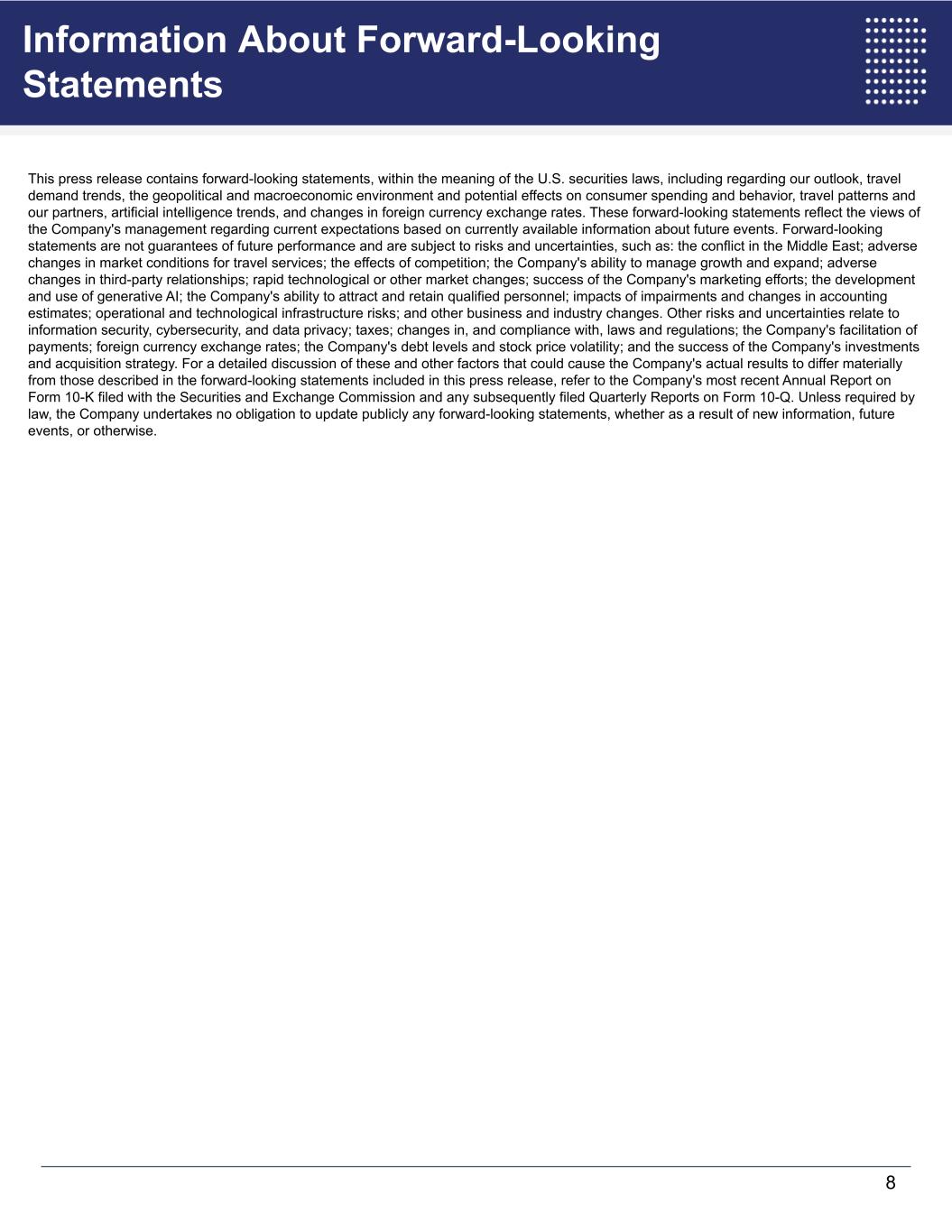
Welcome to Booking Holdings first quarter 2026 conference call. Booking Holdings would like to remind everyone that this call may contain forward-looking statements which are made pursuant to the safe harbor provisions of the Private Securities Litigation Reform Act of 1995. These forward-looking statements are not guaranteed of future performance and are subject to certain risks, uncertainties, and assumptions that are difficult to predict. therefore actual results may differ materially from those expressed implied or forecasted any such forward-looking statements expressions of future goals or expectations and similar expressions reflecting something other than the historical fact are intended to identify forward-looking statements for a list of factors that could cause booking holdings actual results to differ materially from those described in the forward-looking statements please refer to the safe harbor statement in booking holdings earning press release as well as booking holdings most recent filings with the securities and exchange commission unless required by law booking holdings undertakes no obligation to update publicly any forward-looking statements whether as a result of new information future events or otherwise a copy of booking holdings earnings press release is available in the for investor section of booking holdings website www.bookingholdings.com booking holdings intends to use the investor relation page of its website ir.bookingholdings.com to disclose material information for purposes of the sec's regulation fair disclosure booking holdings encourages investors to monitor this website in addition to other public announcement and sec filings our information as information posted on that page could be deemed to be material information and now i'd like to introduce booking holding speakers for this afternoon Glenn Fogel, and Avot Steenbergen. Please go ahead, gentlemen.
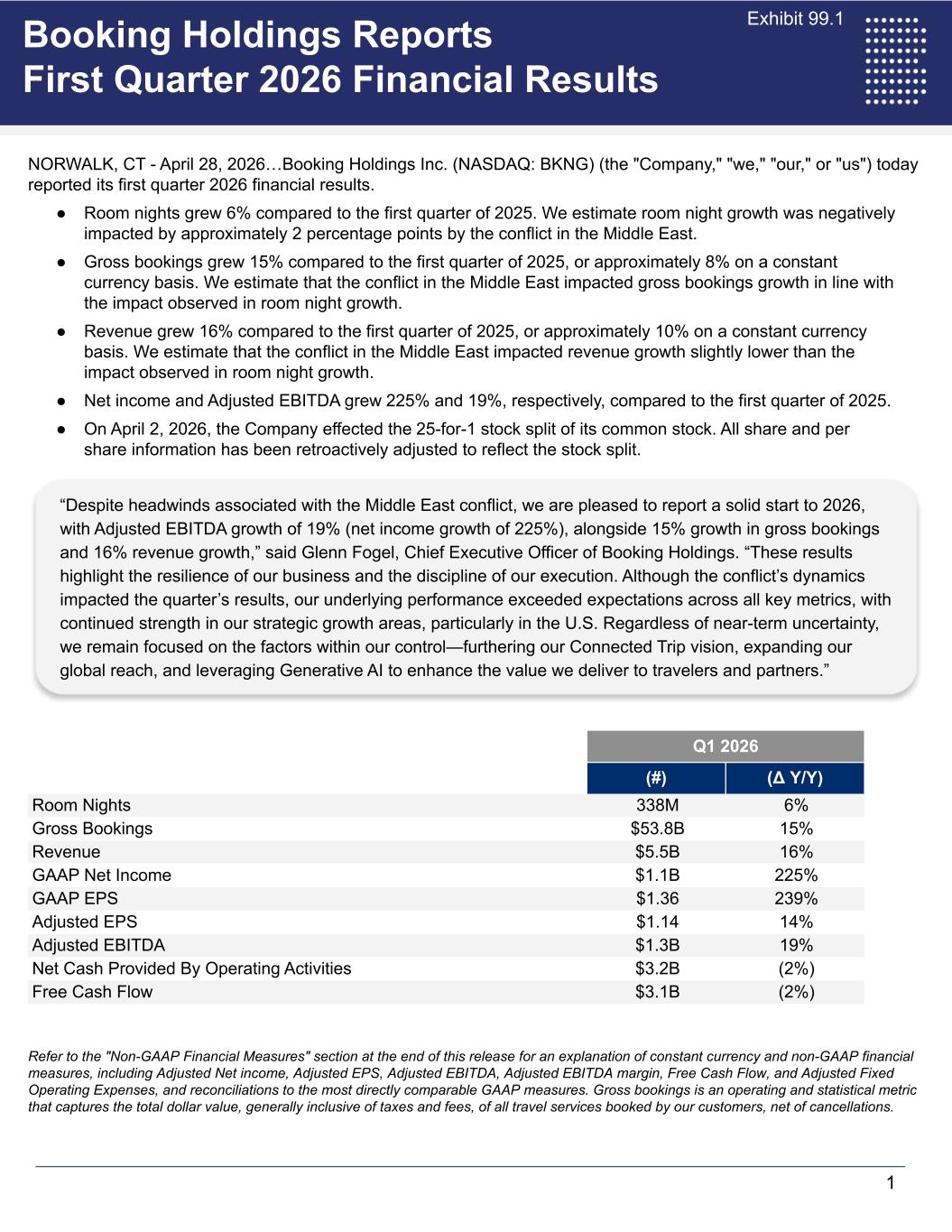
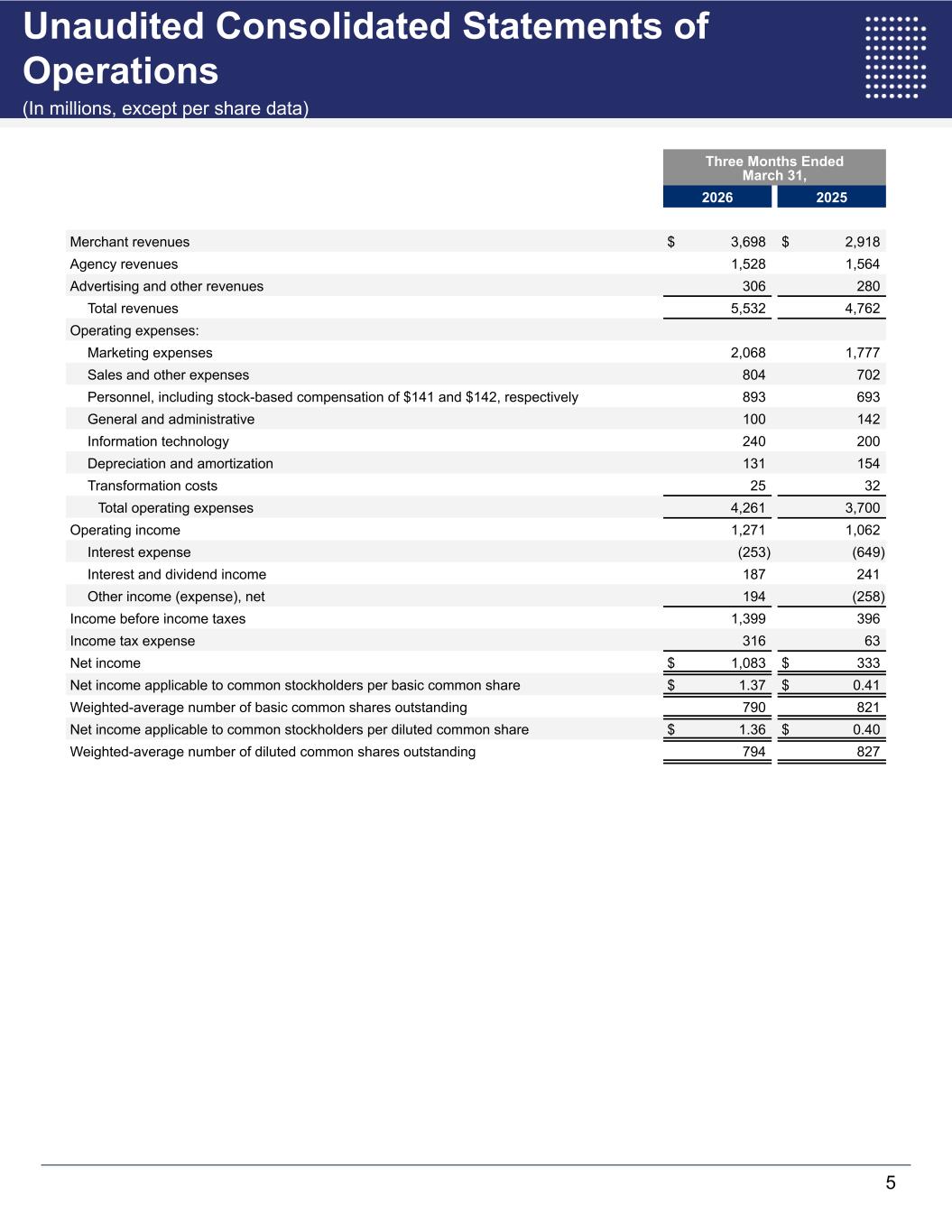
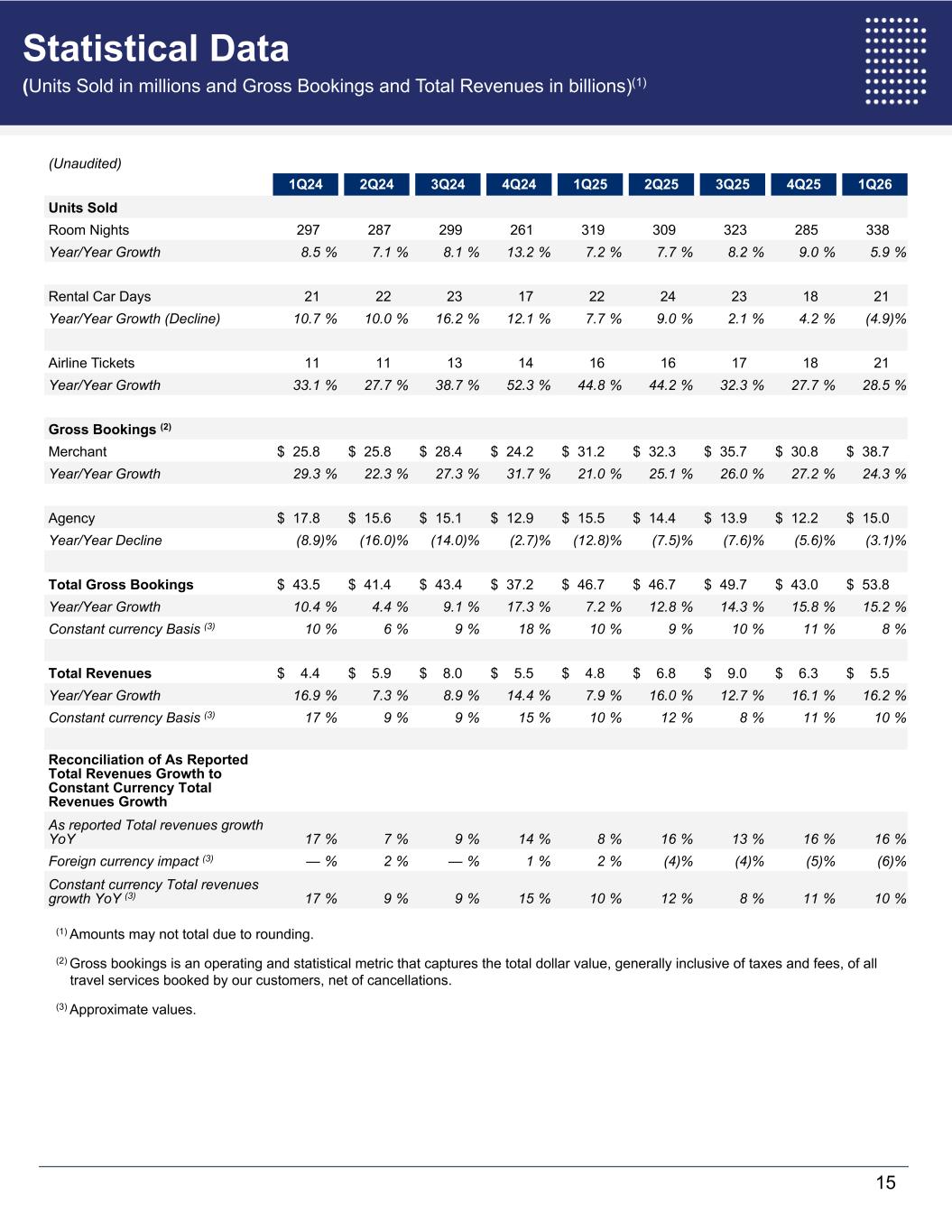
Good afternoon, and thank you for joining us today. We began 2026 with solid execution across our global business. Our results this quarter reflect the continued momentum of our long-term strategy and progress in advancing our mission to make it easier for everyone to experience the world. Before turning to our results, I want to acknowledge the current macro environment, including the impact the Middle East conflict is having on travel, and recognize the resilience of our employees and partners in the region. Periods of uncertainty, whether driven by geopolitical developments or economic conditions, are not new to our industry. We have navigated similar moments many times before, including the global shutdown of travel during the COVID period, and more recently, the Russia-Ukraine war, which began in 2022, and the Israel-Hamas conflict, which began in 2023. Three, each time, while the near-term environment can be difficult to predict and there are immediate consequences to travel volumes, the fundamental drivers of travel demand, the desire to experience the world, do not change. People have a deep and enduring desire to explore and connect, and that demand has proven resilient over time, generally growing faster than the broader global economy. So we remain focused on what we can control, delivering strong value, reliability, and service for both travelers and partners through differentiated innovative solutions. That focus earns trust. It's why customers choose us today and why we believe they will continue to choose us tomorrow, next quarter, next year, and over the long term. this disciplined approach was one of the drivers of our performance in the first quarter and it remains the foundation of our long-term strategy despite the start of the middle east conflict at the end of february our teams delivered a quarter with strong execution and solid results we booked 338 million room nights which was in line with our prior expectations and represented six percent year-over-year growth we estimate that the middle east conflict impacted our room night and gross booking's growth by approximately two percentage points accounting for directly impacted countries in the region as well as bookers whose travel was affected by the conflict Excluding this impact, we believe our room nights would have been up by approximately 8%. On a year-over-year basis, first quarter gross bookings of $53.8 billion grew 15%. Revenue of $5.5 billion grew 16%. 18%. An adjusted EBITDA of approximately $1.3 billion increased 19%. Finally, adjusted EPS of $1.14 grew 14% year-over-year. AVET will provide more details on the impact of the conflict on our financial results, as well as specific assumptions and implications for our second quarter and full year outlook while near-term dynamics create some volatility we view our overall position in the middle east as a long-term strength and believe we are well positioned for when normal travel demand results regardless of the current uncertainty we remain focused on the long term and the factors within our control to drive value this includes expanding our reach in key markets such as the U.S. and Asia, advancing our connected trip vision, and continuing to innovate across our Gen AI capabilities, each of which I will speak to shortly. Our confidence in these initiatives and our future growth profile is reflected in a capital allocation strategy that we've employed for well over a decade, including the record $3.6 billion in share repurchases we completed in the first quarter. Since 2014, we have reduced our share count by over 40% even after accounting for the dilutive impact of stock-based compensation by opportunistically investing in this long-term vision through our share buyback program. No one is better positioned than we are to understand what our long-term value can and should be relative to market fluctuations on any given day or quarter. As I just mentioned, we have reduced our share count by over 40% in 12 years. Importantly, we have done so at the average price per share of $93, thereby generating significant incremental investment returns for our shareholders by betting on ourselves at the right times. and while always preserving and exercising the flexibility to invest in both the organic and inorganic growth of our business. It is a strategy that we are very committed to. BUS is an area where we are increasingly seeing our intentional and targeted investments help drive growth. While we are a global leader, as we have mentioned in the past, we believe we have room to grow in this market as a result of our continued disciplined execution i am pleased to report that our u.s room night growth accelerated for the fourth consecutive quarter to the low teens driven primarily by strong domestic demand we're also encouraged by the continued momentum of our direct channel in the us which saw double digit growth at booking.com building a robust direct mix is not something that happens overnight growing our direct mix in the us has been a multi-year effort built on disciplined investments in our product brand and supply which we believe is positioning us to drive continued progress over time. Furthermore, we saw strength in the U.S. not only in our accommodations, but across flights, cars, and packages. This indicates that travelers are increasingly recognizing the full spectrum of our offerings as we continue to build out our connected trip vision. In Asia, we continue to see one of the most compelling structural growth opportunities in the global travel industry. During the first quarter, the region performed well with room night growth in the high single digits, including low double digit growth for travel within the region. What differentiates our position in Asia is our ability to operate effectively across a highly diverse and complex set of markets asia is not one unified region but a collection of distinct countries and cultures each with its own consumer behaviors supply dynamics and distribution channels our approach starts with a global playbook informed by the reach and capabilities of booking.com combined with agoda's deeply localized expertise across the region. Building on that foundation, we have been investing in localization at the granular level, adapting our product, payment, and go-to-market strategies to meet the specific needs of each market. This includes building strong relationships with local supply partners from traditional accommodations like reacons in Japan to a wide variety of independent and properties across markets such as Indonesia, India, and Vietnam, many of which sit outside major urban centers. At the same time, our distribution strategy is designed to meet travelers where they are increasingly spending their time. In many of these markets, that means engaging through social and messaging platforms where we are seeing encouraging traction across channels such as KakaoTalk in Korea, LINE in Thailand and Taiwan, and through WhatsApp in India. By combining a global playbook with strong local execution, we believe we will continue to be well positioned for the growth opportunity in Asia over time. Now, on to the connected trip, which is about making travel easier by bringing more of the journey together in a way that provides more value lowers complexity and ensures better customer service we're seeing encouraging progress with more travelers choosing to book multiple parts of their trip with us in the first quarter connected transactions meaning trips that included bookings across more than one vertical grew in the high teens range and represented a low double digit percentage of booking.com's total transactions. This growth reinforces our belief that when we reduce friction and provide more value, travelers choose to do more of their business with us. Additionally, we are able to drive more incremental value for our partners as travelers increasingly engage with multiple verticals across our platform. And working with our partners, our vision is to provide personalized benefits within a connected trip that provides more value to both the traveler and the partner. Our Genius loyalty program is a key component of this strategy. Unlike traditional programs, Genius is built around immediate relevant benefits, such as tiered discounts, free breakfast, room upgrades that apply at the point of booking. We continue to see strong engagement from our higher tier genius members who book and return more frequently than non-genius travelers over the last four quarters level two and level three genius members represented over 30 percent of our active base and accounted for a high 50 share of room nights up from the prior year Given the importance of loyalty and the success of the program to date, we see an opportunity to further strengthen genius this year. Let me now turn to Gen.AI, which we continue to believe represents a significant opportunity to enhance both the traveler and partner experience. our approach remains disciplined and focused on where ai can drive meaningful impact across our products and services improving effectiveness for travelers and partners driving internal efficiencies and working closely with leading external partners to ensure we are well positioned in the event that current usage of frontier llms for travel discovery and planning becomes more closely tied to direct immediate booking execution. Even more so, I am pleased to highlight some of the current progress we've made on AI initiatives across our brands today. At Priceline, Penny continues to evolve into a more interactive, end-to-end AI-driven journey with increasingly advanced shopping and discovery capabilities. It enables conversational search and brings a multi-product trip together in a single integrated view, including a dynamic travel map. Penny is also becoming more personalized with the ability for travelers to build trips with an understanding of their preferences, with recommendations that improve over time. In very early testing from a small sample set, we are seeing a noticeable uplift from users who engage with penny compared to non-penny users. At Booking.com, we're introducing additional AI-driven capabilities to support travelers earlier in their journey, including enhanced natural language search and more dynamic inspiration led discovery features smart filters have now been rolled out globally in accommodations and we are beginning to extend and test these capabilities within the cars vertical a key factor in the booking.com approach is optimizing the user experience through experimentation and data analysis a process that we are known for we are doing this now bringing together these new AI capabilities in the upper funnel and doing so across verticals. We believe we are making meaningful progress in integrating these elements, and we expect to continue building on this foundation over the coming year. As we advance these capabilities, AI is also enabling us to deliver greater value to our partners. By improving personalization and conversion, we can help drive incremental demand while also making partner-to-guests communication more efficient and intuitive, streamlining operations. For example, at Booking.com, agendic service flows for complaints and cancellation capabilities are improving the post-booking experience, reducing customer service contacts, and increasing self-service adoption, helping partners operate more efficiently. In OpenTable, we are building on the launch of AI Concierge by expanding it beyond answering diner questions into a broader discovery tool, starting with natural language search. We're also developing capabilities to better support restaurant partners through more streamlined operations and actionable revenue-focused insights, including voice-enabled reservation tools and table turnover data that help bring more offline tables online and support higher utilization and revenue we continue to embed ai across our operations to drive efficiency from automating customer service interactions and improving self-service rates to enhancing internal workflows that accelerate product development and decision making for example In this quarter at Agoda, we saw a double-digit year-over-year reduction in customer service costs per booking, driven by AI-assisted automation, helping us reduce costs and operate more effectively at scale. We continue to believe AI-enabled productivity and efficiencies are an area of notable opportunity. Beyond our internal efforts, we're also partnering with leading AI organizations to remain at the forefront of this rapidly evolving landscape and to expand our sources of demand. As Gen AI reshapes how travelers discover and plan trips, we are focused on meeting them wherever that journey begins. our relationships with companies such as open ai google anthropic and amazon combined with our disciplined approach positions us well to capture these emerging opportunities and drive long-term value for both travelers and partners last we believe the strength of our brands and the number of travelers who choose to come directly to our platforms will remain an important differentiator as brand increasingly guides where travelers choose to engage. Our consistent ability to deliver value underpins this dynamic and will continue to differentiate us over time while also helping ensure our supply partners, especially our small and medium enterprise partners, are discoverable no matter how people begin their traveler exploration and planning process. In closing, and taking a broader view, we are reminded that over the long term, we benefit greatly from our large global travel platform, which has notable positions in Europe, the world's largest travel market, and Asia, the world's fastest growing travel market. Given this geographic footprint, our results naturally reflect the impact of the middle east conflict however we believe our diversified global portfolio of leading brands and financial strength positions us well for the medium and long term looking ahead our focus remains clear we're advancing the connected trip accelerating innovation through ai and continuing to invest in the areas we believe will drive long-term growth while we recognize that geopolitical and macroeconomic uncertainty can create near-term volatility, we have seen time and again that the underlying demand for travel does not go away. With our global business, deep supplier relationships, and decades of experiencing leveraging data and technology, we believe that we are set up well to navigate these dynamics while continuing to execute our strategy and deliver attractive returns over time. With that, I'll turn the call over to Avout to walk through our financial
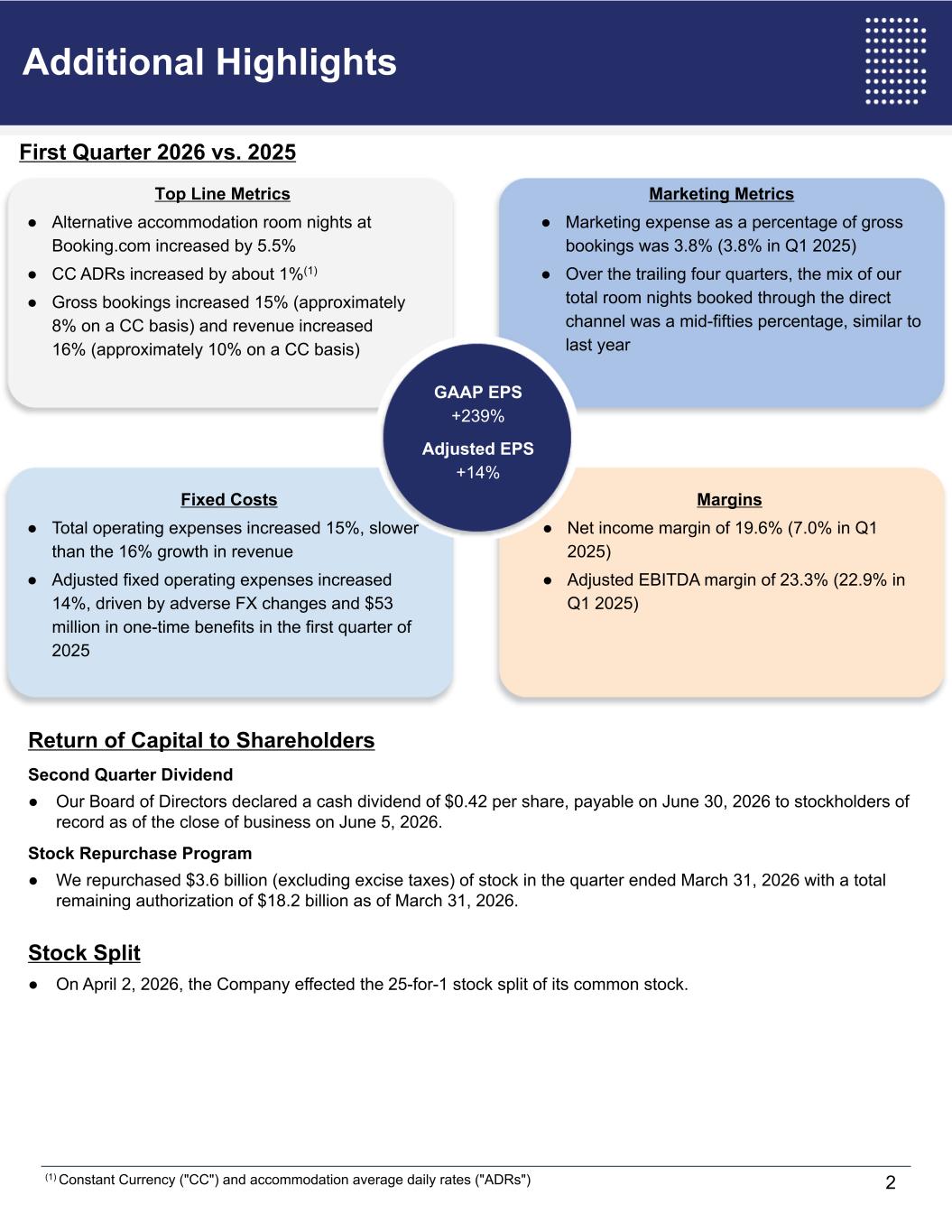
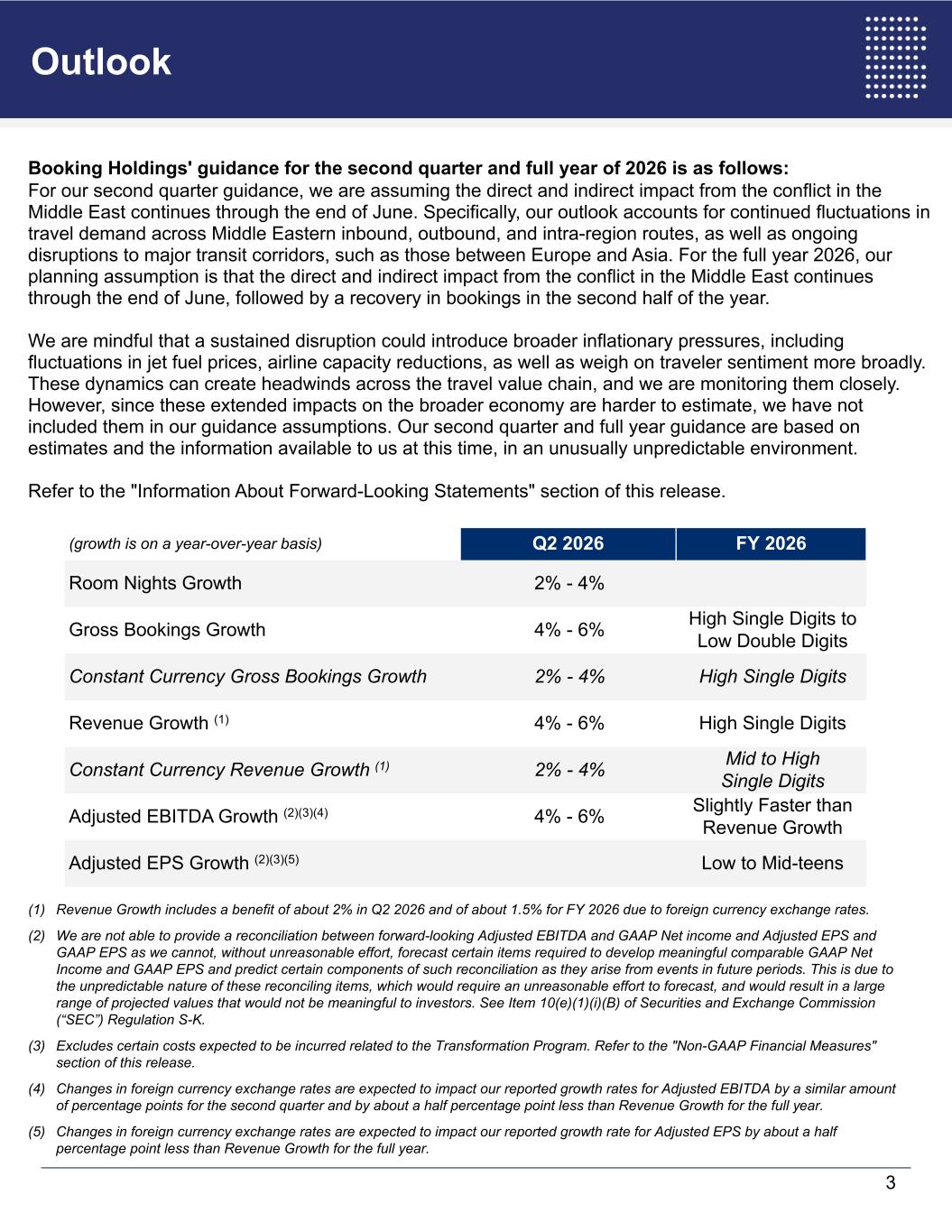
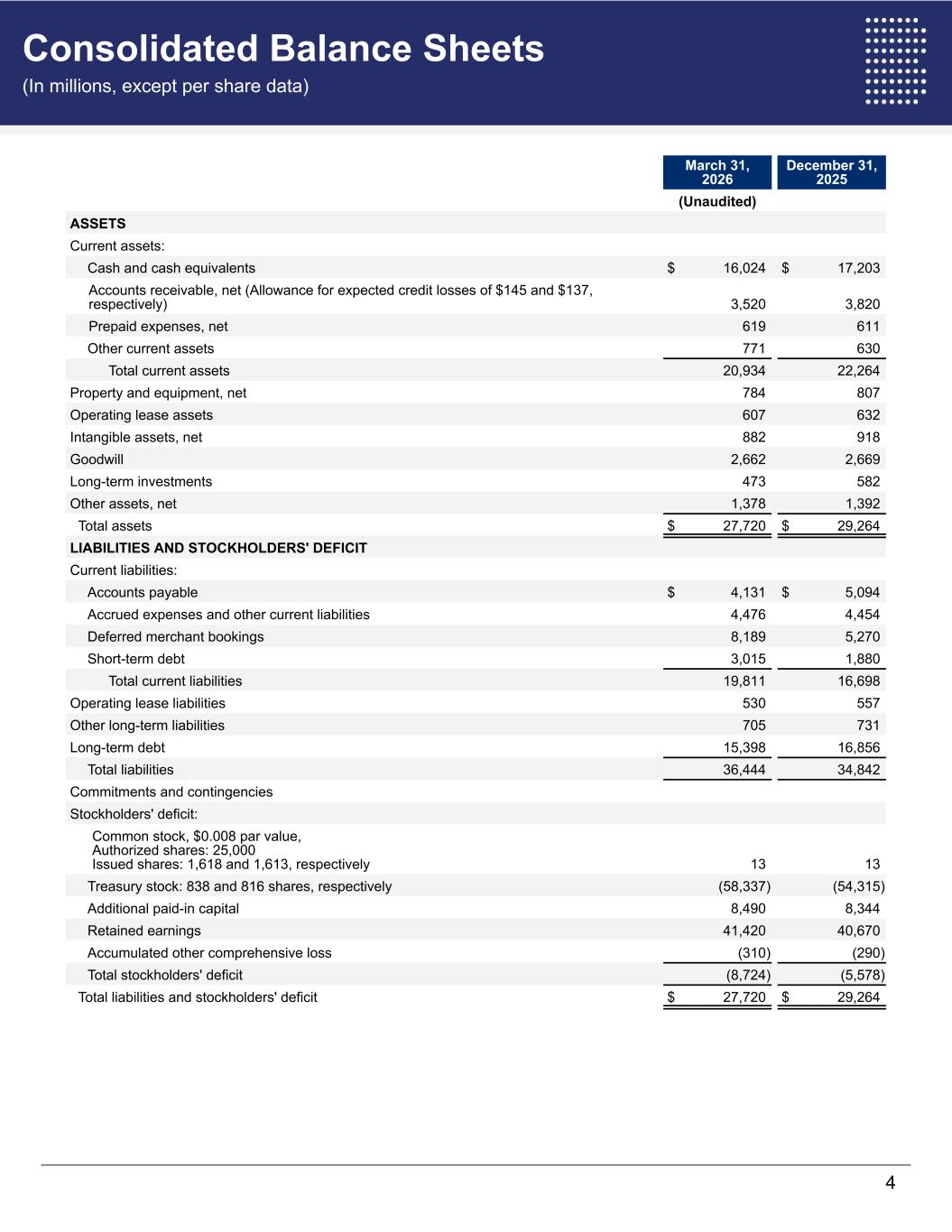
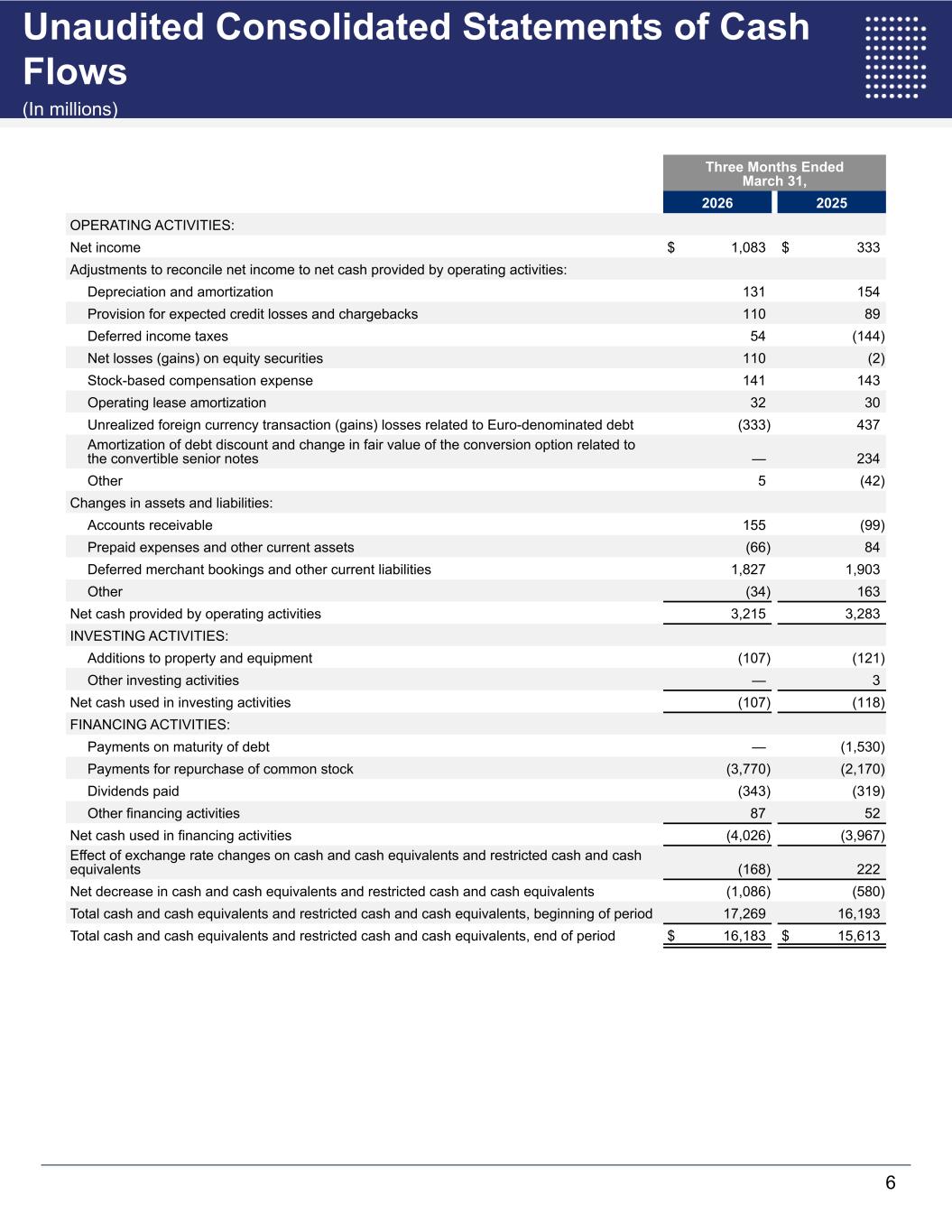
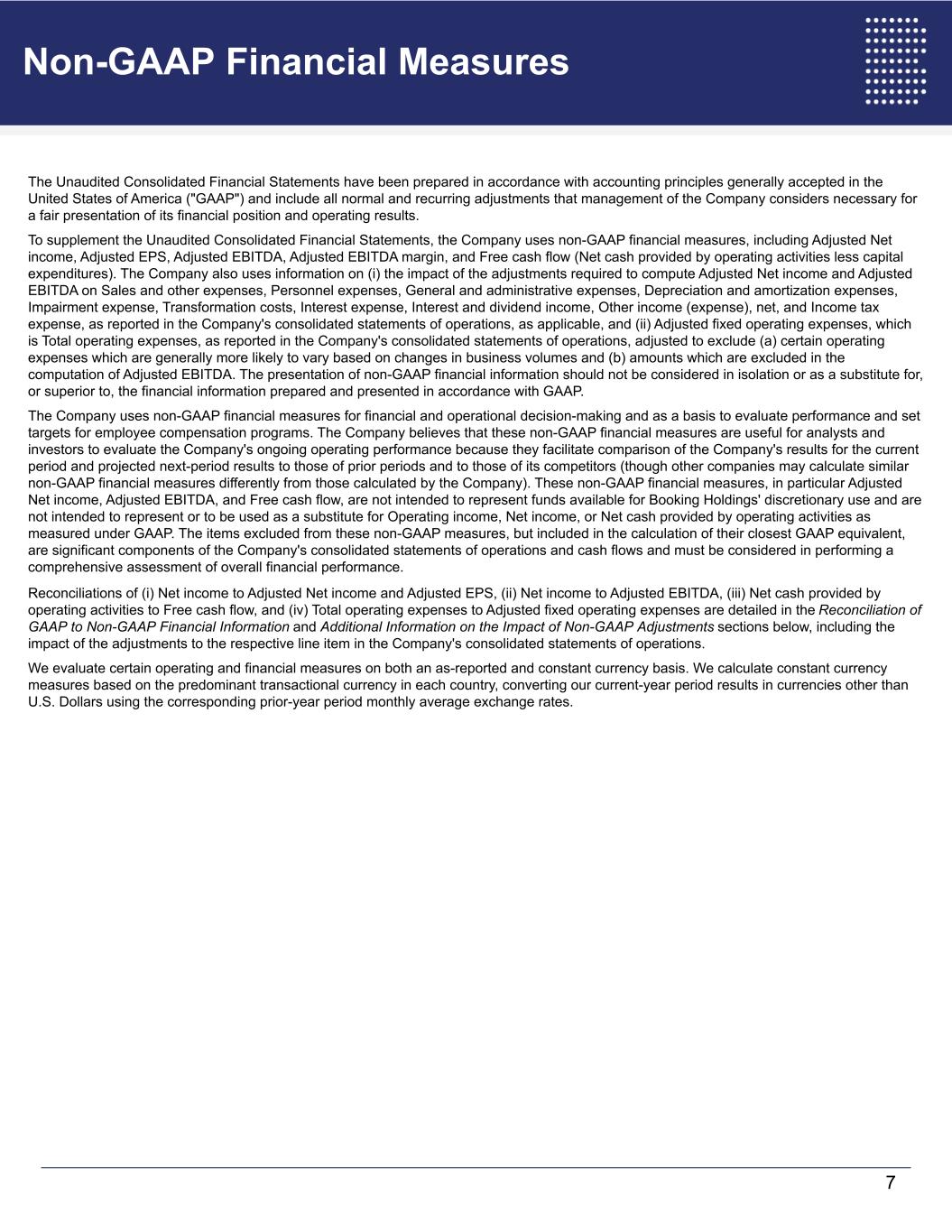
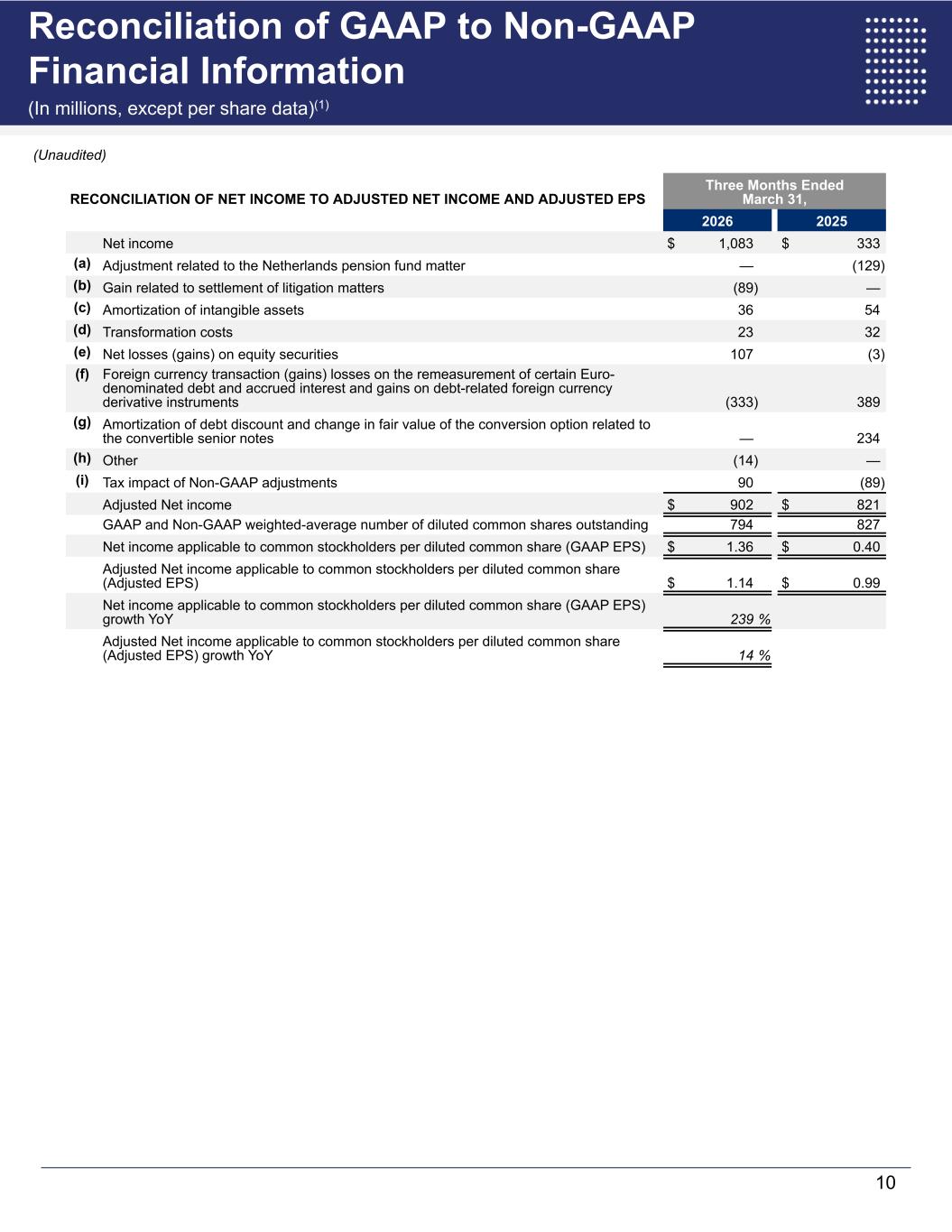
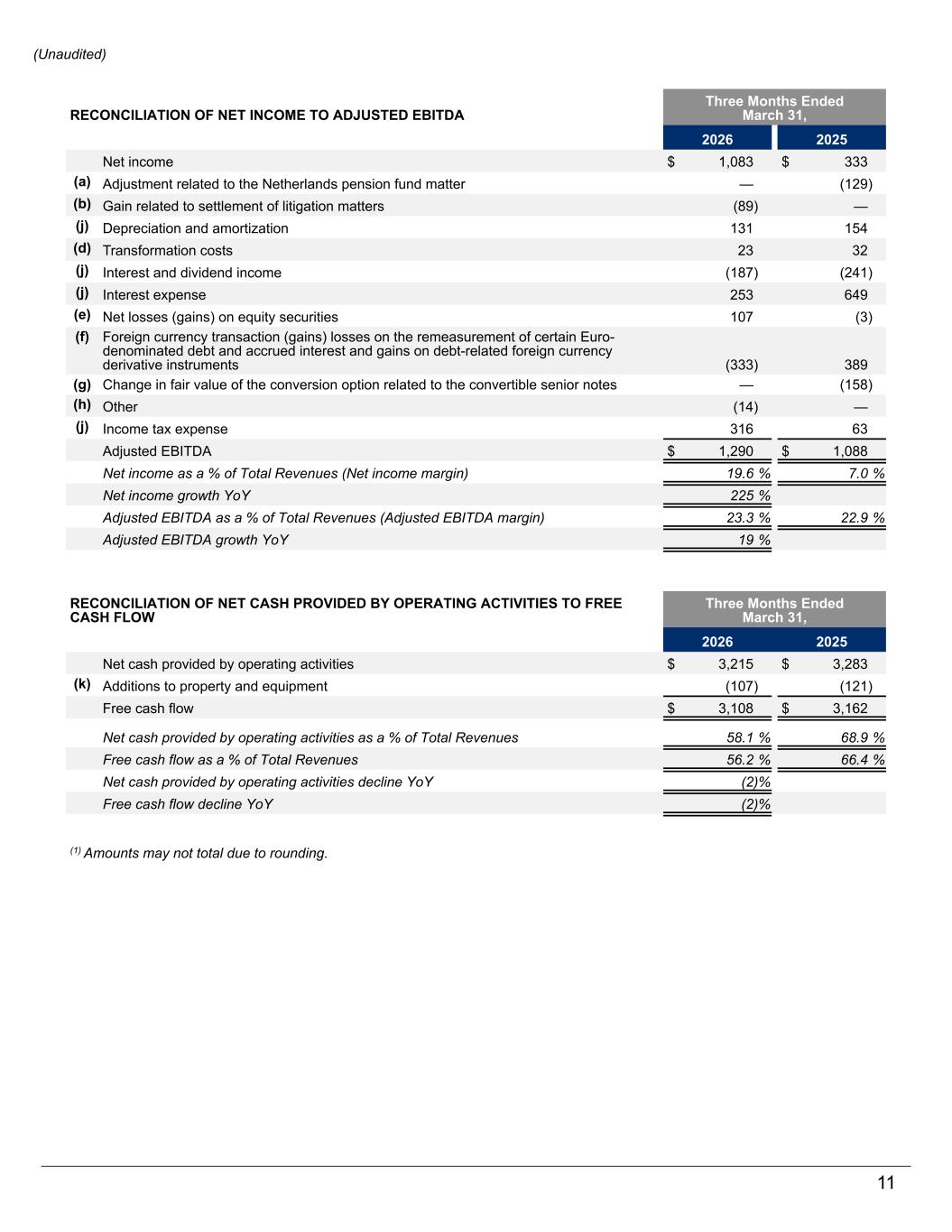
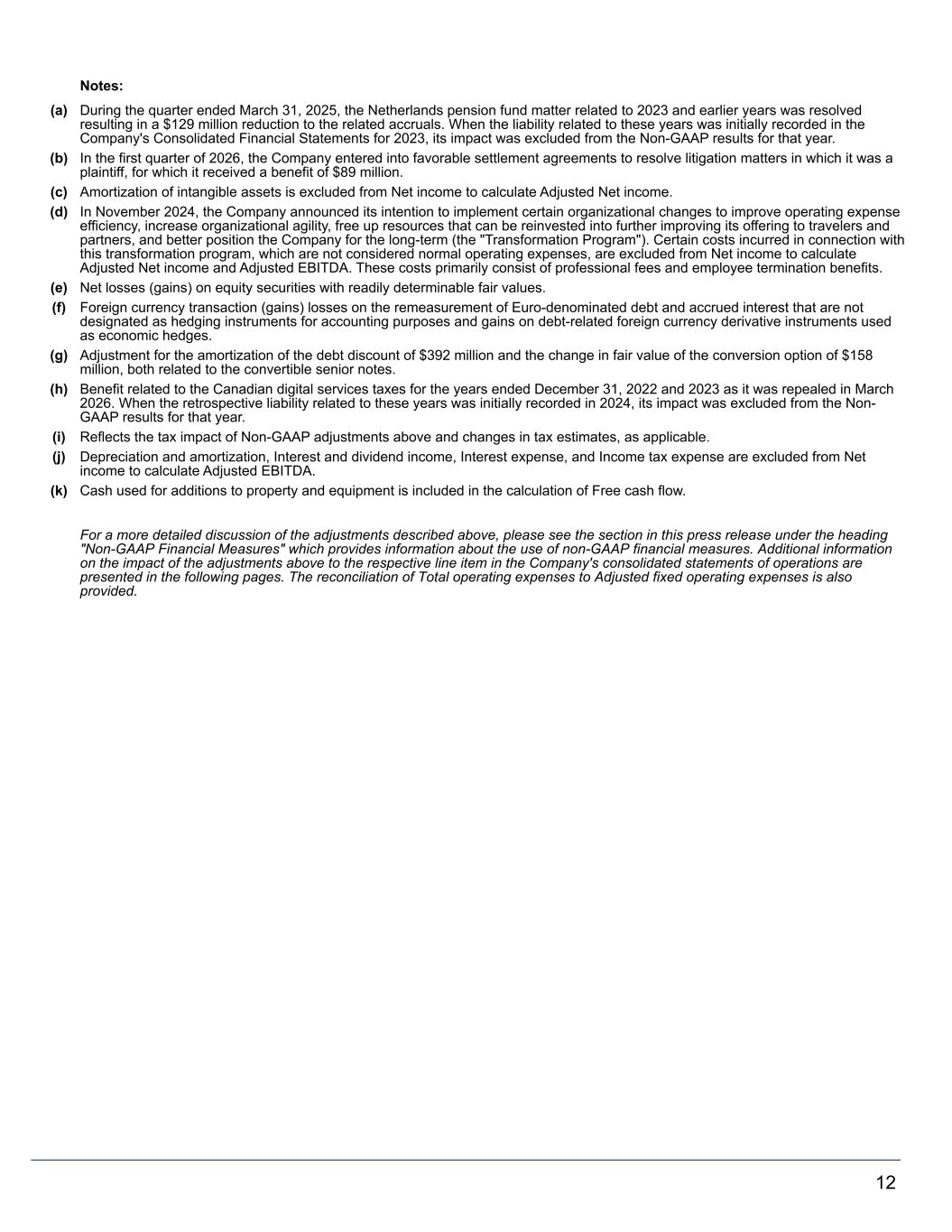
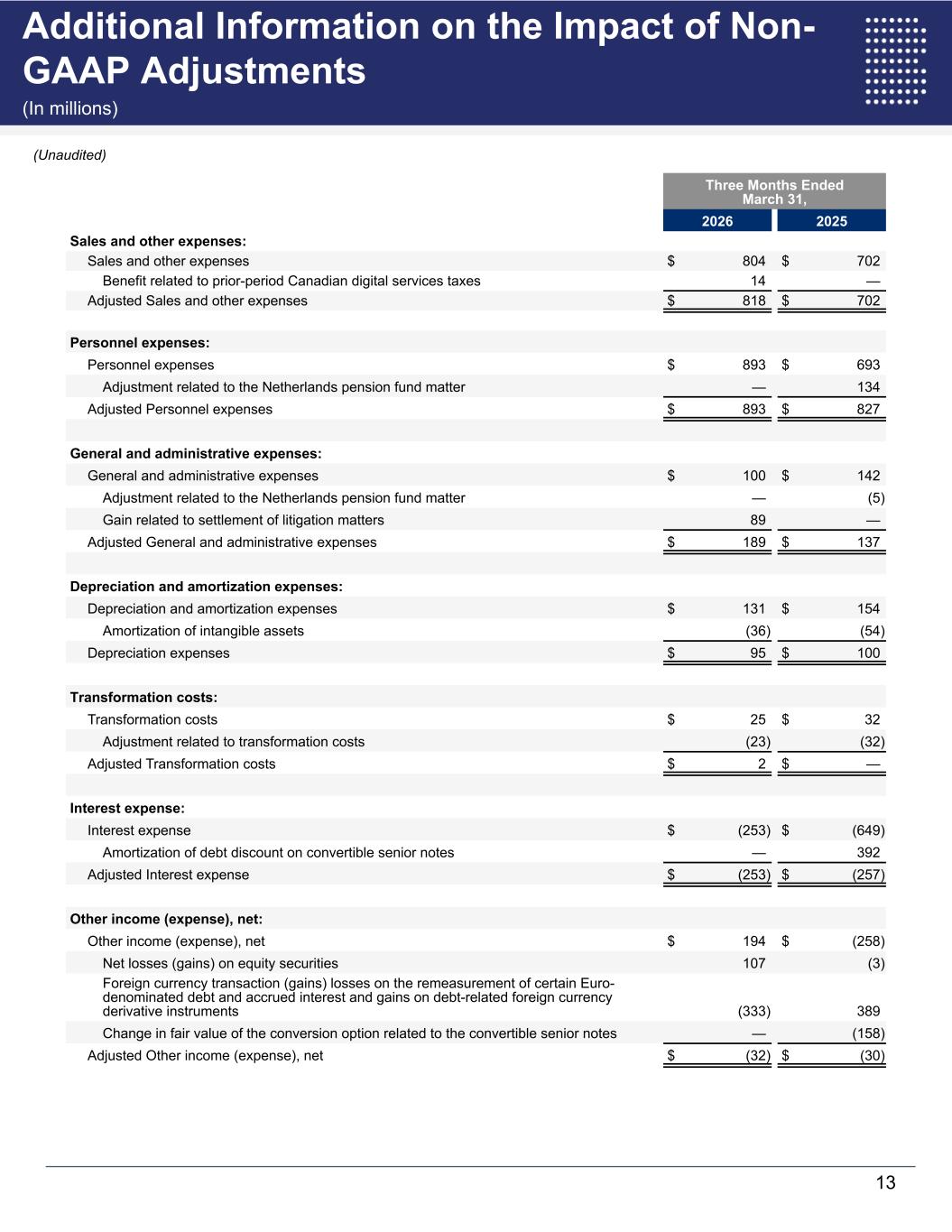
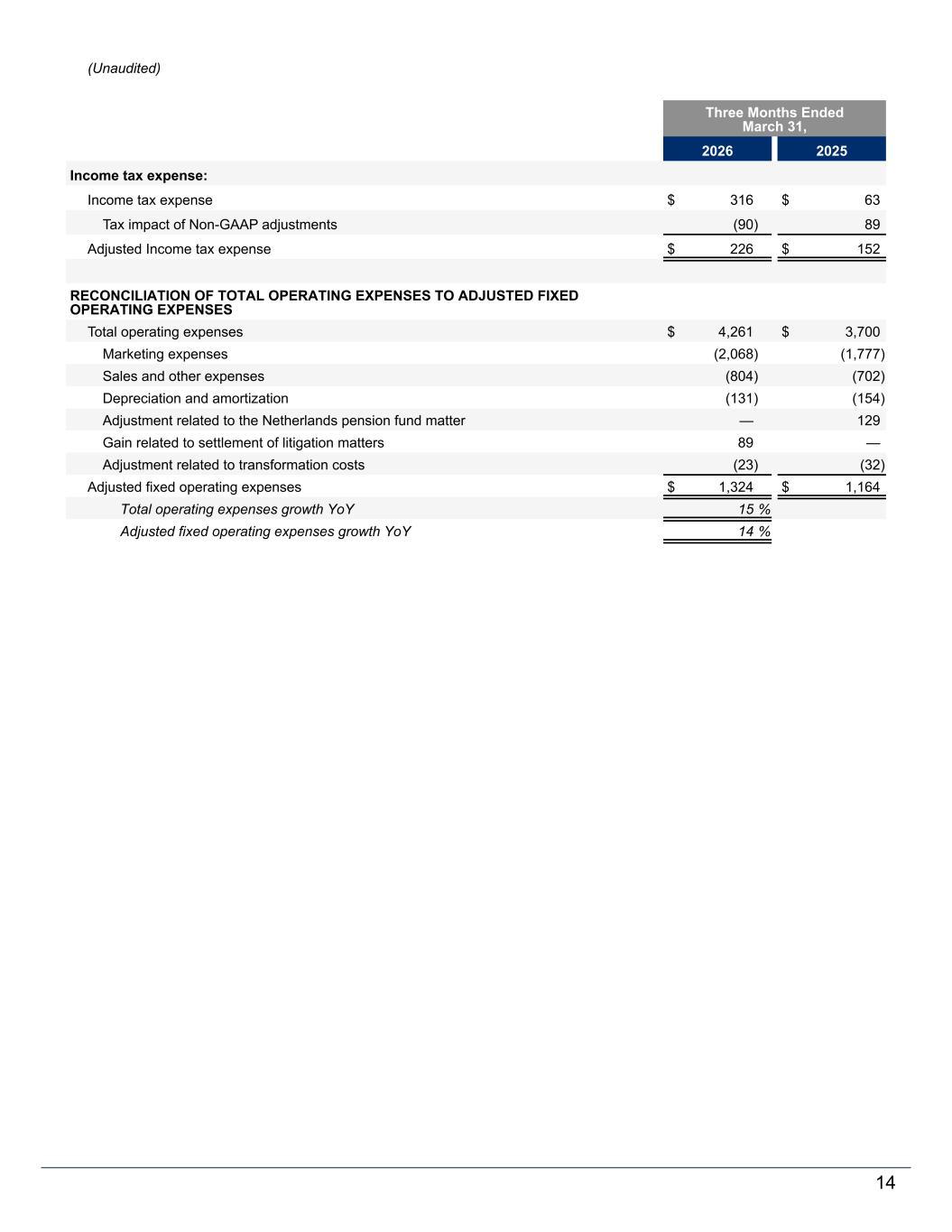
results in more detail. Thank you, Glenn, and good afternoon, everyone. Before discussing our financial results, I want to acknowledge the ongoing conflict in the Middle East. Our thoughts Results are with our colleagues, partners, travelers, and all who are affected, and we are hopeful for a swift and peaceful resolution. I will now review our results for the first quarter and provide our current thinking for the second quarter and full year. All growth rates are on a year-over-year basis, and the reconciliation of non-GAAP to GAAP financials can be found in our earnings release. now let's move to our first quarter results in the first quarter our business was impacted by the ongoing situation in the middle east which led to elevated cancellations and a moderation in new bookings in march the impact of the conflict was also felt outside the middle east region as we saw changes in broader travel patterns particularly in transit corridors such as the one between Europe and Asia. We estimate the situation in the Middle East impacted our room night growth by about two percentage points, and that the impact on gross bookings was similar to room night growth, with a slightly lower impact on revenue growth and a higher impact on adjusted EBITDA growth. Excluding these impacts, our first quarter growth rates would have exceeded the high of our guidance ranges across all key metrics. Our room nights in the first quarter grew 6%, or about 8%, excluding the impact of the situation in the Middle East. This compares to our room night growth guidance of 5 to 7%. Immediately following the onset of the conflict, we saw an increase in cancellation rates and lower travel demand, resulting in March room night growth of 1%. We estimate that the impact of the conflict on March room night growth was about 6 percentage points, with about half the impact coming from reduced bookings, and the other half coming from increased cancellations, which have historically been the highest in the first month after the start of a conflict. While room night growth was most impacted in the Middle East, we also saw an impact in other regions following the start of the conflict. looking at our room night growth by booker region in the first quarter europe was up mid single digits including the impact from the conflict on bookers traveling to the middle east and asia within europe intra-regional demand from european bookers was up high single digits consistent with the fourth quarter of 2025. asia was up high single digits included the impact from the conflict on bookers traveling to the middle east and europe within asia intra-regional demand from asian bookers was up low double digits similar to the fourth quarter of 2025 rest of world which includes the middle east was down low single digits bookers in the middle east including turkey and egypt represented approximately four percent of our global room nights booked in 2025 if we include inbound travel to the middle east in addition to the bookers in the region the middle east represents approximately seven percent of our 2025 global room nights the us accelerated for the fourth consecutive quarter to low teens growth driven primarily by domestic travel we're encouraged by the acceleration we saw in our us direct channel Our B2C direct mix remained resilient over the past four quarters, holding steady in the mid-60% range and consistent with prior year levels. We maintained this performance due to continued growth in direct bookers, offset by the impact of the conflict as the Middle East has traditionally had above-average direct mix, and by continued declines in SEO traffic, which is a small contributor to our overall direct channel. We continue to see a higher direct booking rate in room nights received through our mobile apps as well as from travelers in our higher genius tiers. The mobile app mix of our total room nights was in the high 50% range And the mix of Booking.com room nights booked by travelers in the genius tiers of Levels 2 and 3 was in the high 50% range. Both of these were up from the mid-50% range a year ago. Our alternative accommodation room nights at Booking.com were also impacted by the situation in the Middle East, and growth was about in line with our total room night growth. The global mix of alternative accommodation room nights was about 38% of Booking.com's room nights in the first quarter, which was up about one percentage point from last year. We believe that we offer a compelling experience for travelers by seamlessly integrating alternative accommodations, independent properties, global change, and our other travel verticals. Our total merchant gross bookings increased 24% year over year in the first quarter. Mergent gross bookings represented about 72% of total gross bookings, and this mix increased 5 percentage points versus last year. Our emergent payments platform is a core enabler of the connected trip vision, providing flexibility for both travelers and partners, while adding incremental revenue and contribution margin dollars to our business. In our other travel verticals, we delivered strong growth despite the impact of the Middle East conflict. During the first quarter, airline tickets increased 28% year over year and attractions tickets increased about 25%, both driven by continued growth at Booking.com and Agoda. Connected trip transactions increased a high teens percentage or about three times faster than Booking.com's total transaction growth. Our data shows that travelers who book more than one travel vertical with us come back to us more frequently first quarter total gross bookings increased 15 year over year on a constant currency basis gross bookings increased about eight percent benefiting from about one percent higher constant currency ADRs as well as higher bookings growth from flights and other travel verticals the increase in constant currency accommodation ADRs was driven by higher ADRs in europe and was higher than our expectations to be about in line with the prior year first quarter revenue grew 16 year over year or about 10 on a constant currency basis benefiting from higher payment revenues revenue as a percentage of gross bookings was 10.3 which was up about 10 basis points versus last year driven by differences in the estimated impact of the situation in the Middle East on revenue versus gross bookings. Because we recognize revenues at the time of travel, we expect the associated impact on revenue from the conflict will not be fully realized until future quarters. Marketing expense, which is a highly variable expense line, increased 16% year over year. Marketing expense as a percentage of gross bookings was 3.8 percent which was four basis points higher year over year driven primarily by the situation in the middle east as certain bookings sourced through paid channels were subsequently cancelled we estimate that excluding the impact of the conflict we would have had marketing leverage year over year helped by improved marketing efficiencies first quarter adjusted sales and other expenses as a percentage of gross bookings was one and a half percent similar to last year despite an increase in merchant mix as higher payment expenses were offset by increased efficiencies in customer service and a 17 million dollar one-time benefit due to the repeal of canadian digital service taxes in march adjusted fixed operating expenses increased 14% year over year and were a source of leverage as a percentage of revenue. When normalizing for both FX and the $53 million in one-time benefits in the first quarter of 2025, constant currency adjusted fixed expenses grew in the low single digits. We remain firmly on track to deliver our previously stated goal of $500 to $550 million of in-year savings from our transformation program for 2026. During the first quarter, we incurred $25 million in transformation costs, which were almost entirely excluded from our adjusted results. Adjusted EBITDA of approximately $1.3 billion grew 19% year over year, which exceeded the high end of our guidance. Adjusted EPS of $1.14 per share was up 14% year over year, lower than the growth in adjusted EBITDA, as a higher tax rate due to discrete items was partially offset by a 4% lower average share count. This adjusted EPS figure reflects the 25-for-1 stock split that took effect on April 2nd. Now on to our cash and liquidity position. Our first quarter ending cash and investments balance of $16.5 billion was down versus our fourth quarter ending balance of $17.8 billion. This was primarily due to about $4 billion of total capital return, including $3.6 billion of share repurchases, which was the highest amount of quarterly share repurchases in our company's history, and a quarterly cash dividend of $343 million dollars we also repurchased an additional 355 million dollars in shares to satisfy employee withholding tax obligations these uses of cash were offset by about 3.1 billion dollars in free cash flow generated in the quarter which benefited by about 1.9 billion dollars from changes in working capital, driven primarily by the seasonal increase in our deferred merchant bookings balance. We have ample liquidity and a strong free cash flow profile, and we plan to continue to return capital to our shareholders, as well as maintain our disciplined focus on optimizing our capital structure. Moving to our thoughts for the second quarter. For our second quarter guidance, we are assuming the direct and indirect impact from the conflict in the Middle East continues through the end of June. Specifically, our outlook accounts for continued fluctuations in travel demand across Middle Eastern inbound, outbound, and intra-region routes, as well as ongoing disruptions to major transit corridors, such as those between Europe and Asia. Given the uncertain macro backdrop, we have begun executing targeted cost management actions, including strictly managing discretionary spend and recalibrating business-as-usual hiring. As we pull these levers, we remain focused on protecting our strategic investment spend. This disciplined approach ensures we protect our near-term profitability while continuing to fund the long-term innovations that drive our competitive positioning and the long-term value creation of the business. Our guidance for the second quarter assumes recent effect rates for the remainder of the quarter, including the euro-US dollar exchange rate at 1.16. We estimate changes in FX will positively impact our second quarter reported us dollar growth rates by about two percentage points we expect the impact of the situation in the middle east will be higher in the second quarter than it was in the first quarter as the conflict spans the full quarter though this is partially offset by our expectation that march had the highest concentration of cancellations which drove the first quarter marketing the leverage we currently expect second quarter room night growth to be between two and four percent and for gross bookings revenue and adjusted ebitda to each grow between four and six percent turning to the full year 2026 our planning assumption is that the direct and indirect impact from the conflict in the middle east continues through the end of june followed by a recovery in bookings in the second half of the year reflecting the assumption that the direct and indirect impacts from the situation in the middle east continues for four months or one third of the year and this is followed by a recovery period we're lowering our guidance ranges at the midpoint the high end of the ranges for gross bookings and adjusted eps remains in line with our prior expectations. Despite the variability of the current environment, our full-year guidance reflects the resilience of our business model. On a reported basis, our expectation for the full year is as follows. Gross bookings to be up high single digits to low double digits. Revenue to be up high single digits. Adjusted EBITDA to grow slightly faster than revenue and adjusted ebitda margins to expand between zero and 25 basis points year over year adjusted eps to be up low to mid teens to support these targets we aim to grow revenue faster than both marketing and adjusted fixed operating expenses while maintaining sales and other expenses as a flat percentage of gross bookings year over year assuming recent effect rates remain steady for the remainder of the year we estimate changes in effects will positively impact these full year reported growth rates by about two percentage points for gross bookings about one and a half percentage points for revenue and by about one percentage point for adjusted EBITDA and adjusted EPS. We are mindful that a sustained disruption could introduce broader inflationary pressures, including fluctuations in jet fuel prices, airline capacity reductions, as well as a way on traveler sentiment more broadly. These dynamics can create headwinds across the travel value chain, and we are monitoring them closely. However, since these These extended impacts on the broader economy are harder to estimate. We have not included them in our guidance assumptions. Our second quarter and full year guidance are based on estimates and the information available to us at this time in an unusually unpredictable environment. In conclusion, we continue to demonstrate solid performance despite a dynamic geopolitical environment. We remain focused on what we can control and are managing the current situation with rigorous financial discipline. And we continue to make strategic investments and technological progress to build a more frictionless and integrated offering for our travelers and partners, particularly by leveraging the potential of generative AI-enabled capabilities. While our 2026 outlook is impacted by the situation in the Middle East, we remain firmly committed to our long-term constant currency growth ambition of at least 8% gross bookings growth, 8% revenue growth, and 15% adjusted EPS growth for future years. Thank you to my colleagues across the world for their dedication and hard work. With that, we'll now take your questions. Operator, will you please open the lines?
Operator
At this time, if you would like to ask a question, please press star, then the number one on your telephone keypad. If you would like to withdraw your question, press star one again. Thank you. And your first question comes from the line of Kevin Koppelman with TD Callen. Please go ahead.
Thanks so much. So I wanted to ask about the Middle East situation. First, could you just clarify for the second quarter how large you expect the impact to be there kind of on a like for like versus that 200 basis points you saw in the first quarter? And then could you give more color into what you're seeing with those impacts? Are you seeing any cautiousness from your consumers outside of the region or is it more the actual disruptive effects like you talked about with the with the flight corridors and cancellations thanks yes sure kevin this is about let me give
you a little bit more color on those aspects what we are seeing in the middle east and what we have assumed for the second quarter so in terms of the headwind from a numbers perspective approximately three points of headwind in the second quarter. So if you look at our, for example, our room nights from 2% to 4%, on a normalized basis, you have to put three points on top of that to look at what you would expect without the impact of the Middle East. Specifically, what we have assumed in that number is the following. Impact of Middle East inbound, outbound, intra-regional travel, the corridors between Europe and Asia and vice versa, and also that ADRs will be slightly down as a consequence of the situation in the Middle East. And we have assumed that this situation will continue from a direct and indirect impact perspective for three months, so for the full second quarter. Of course, no one can exactly say how long it will last. Someone may have a different assumption shorter or longer anyone can put whatever you want in your model but this is what we have assumed in terms of this guidance that we see the impact for the full second quarter and then assume some kind of a recovery in the second half of this year i would like also to point out to the full year guidance because despite i think this impact in the second quarter it's important to highlight that actually, I would say our full year guidance remains still solid. And if you look at gross bookings and EPS, we're still actually, from a range perspective, at the high end, still at the level of the original guidance for 2026. Thanks for that.
I'll talk a little bit. Go ahead, thanks.
I was just going to follow up on that cautiousness question.
You go ahead, Kevin, first.
Oh, thanks, Glenn. I was just going to follow up on the cautiousness. If you were seeing any broader kind of cautiousness behavior among your consumers outside of the
Well, that actually fits very nicely, Kevin, into what I was going to say. Here's the thing. The team has done an incredible, great job of trying to come up with our best estimates of the future. And I just said it, though. You can have a different view. Many people do, I'm sure. The thing we absolutely are very certain of is this will end. We don't know when, but it will. We do know travel will normalize. Now, how quickly? That also an unknown thing. But we've seen a lot of these crises before. And I've been here since all the way back, since 9-11, when U.S. travel shut down. I was here for the financial crisis, when travel was greatly impacted, as all economies were. I was here when we had short-term things like the volcano Iceland shut down European travel for two weeks. And I was here for the pandemic, worst travel event since World War II. And, of course, we were deeply impacted when Russia invaded Ukraine. We had a big, big business in Russia and it impacted the rest of Eastern Europe. And, of course, when the Israel-Hamas event happened, that also impacted tremendously. So we have been around this type of crisis before, and I just want to thank our team for how incredibly well they work with our partners and our customers. Anybody who's been in Dubai at 2 in the morning at that airport knows the huge numbers that are flowing through there. That's a big transit point, or many of the actual Middle Eastern airports are big transit points. those people out of place and what we did to get that help people be put in the right place a place to stay getting them where they needed to do it was incredible so a big thank you to them now your question is what's the sentiment now well of course depends on where you are sentiment for a saudi person who's thinking about traveling or person thinking about going to saudi is quite different than the person in new york who's thinking about taking the kid down to disneyland Very, very different. We don't know how it's going to end. We don't know when it's going to end, but we do know it will end, and I think we all can pick our own guesses at what we think it will be. I wouldn't give anything more detailed than that.
Operator
Your next question comes from the line of Justin Post with Bank of America. Please go ahead.
Great. I'll ask on a Gentec. It seems like some of the big AI companies are kind of moving away from transactions and even moving traffic to apps or more focused on advertising. So just how do you think you're positioned competitively in these AI engines? And are you encouraged or concerned about the changes they're making?
Right. Well, we are incredibly excited about the same. Amy recalls our last call where I mentioned the possibility or believe that some of these players would go towards a performance marketing platform that we thought would be very advantageous to us, given the experiences we've been able to deal with at Google and how well that has helped create our company to where we are now. Now, we believe a good thing. But it's not just the ones who are going to that kind of a platform. It's all the elements of AI that we believe are really helping us and really setting ourselves right for the future. And we've talked about this before, about how the first thing, of course, is how do we improve our own offerings to our customers using AI, using proprietary data, how are we increasing conversion using that? And our scale really helps us in this area. And it helps us do that personalization as we build out the connected trip. And using AI is going to make that even better. Making it the place for people who they should go to us for the travel thing. Now, absolutely, some people are going to go to a large language model first. Fine. And we love the relations we were building and have built with all the Frontier players where we are involved with them, talking how we can work together to create the best experience for both of us. And we've talked, you've seen the announcement, maybe you saw the Claude Live advertisement recently where we were right up front there. Really pleased on that. And the other thing, and this is just really good, it's going to increase, I believe, the TM for overall travel. You know, nobody knows what the right number is. Maybe it's 35%, maybe it's 45%, maybe it's even higher, of people who don't buy their travel digitally. But that number is going to go up, and I believe using AI is going to make it easier for people to do that. that's another positive for us and of course you know setting ourselves up includes making our internal operations more efficient and we're using ai throughout the organization up down all over making things more efficient and by doing so then we have more resources to put into making a better experience for the travelers and our partners which is also another area where we're seeing great advantages for both of us so all in all AI I believe is an absolute positive for us not a negative I know some people may have misunderstood and bought it as a as a big threat I see it much more as an opportunity great thank
Operator
you your next question comes from the line of Mark Mahaney with Evercore please
go ahead okay I'll ask two questions in both about the US please that blow protein's growth you had in room nights in in q1 was the strongest maybe we've ever seen or it's been it's been a while and glenn you talked about like um some cross uh uh success in in cross selling just maybe spend a little bit more time on that is that something that um you know what there and and i know there's a lot of little things that go into it but there are one or two major unlocks that they really kind of help move that that growth rate to you know somewhat unprecedented levels and then just getting back on this um cautiousness commentary the question i have i think the question out there is are you seeing softness in travel that's sort of more economically driven i.e you know with rising airfares in the u.s uh rising gas prices are you seeing softness that's you know not directly at all related to the middle east but just related to the fact that it's more expensive to fly from new york down to disney thanks hi mark um so i'll
take the first two, and I'll let Ava talk a little bit about potential softness in the U.S. He's got some data. He can talk a little bit about that. You know, I got to say, it is just so exciting to see incredible hard work done by so many people here for so long to start seeing it result in really nice growth in the U.S. And, you know, Mark, you've heard me talk about the U.S. is an area we're going to invest in. We're spending time, money, people, and I've been saying it for some time. And for now, four quarters in a row, we've been accelerating our growth right now. Low teens, that's just wonderful. It's really nice to be able to say, this is what we're going to do. This is what we're doing. And then see the results come out. So I am really pleased. You know, when you look at share, I mean, obviously, you can look at any third party in terms of what was the total growth in the U.S. in terms of the accommodations area, far far far below you know low teens so we are taking share which is great we're doing it because we're building a better product we're making people aware of it doing all the things I said we were going to do we're doing it and it's helping achieve these kind of results now part of it is you know part of it is this idea of this cross selling you're saying I say connected trip it's really providing a better way for travelers to do their travel and we're building that out and being able to offer flights in the States. We didn't used to do that with Booking.com at all. Having that ground transportation, having attractions, you know, look, those numbers are pretty good. Now, these are not U.S. numbers. These are global numbers, but they're still great. 25% for those attractions, 28% for those flight growth numbers, these are really, really solid. And then you throw on the idea, as we continue to build out even more things, we're able to do more of the personalization. That's the thing where I really, my vision has always been treat the customer like they used to be traded when they used to go to the human travel agent back in the day who knew so much about you and offered you up what you really wanted and would be able to get you the value that really matched up with what you could afford. That's the thing that we're really working on. And again, it goes back to Gen.AI, having that kind of technological capability to really bring back to the customer what they want to need at the same time enabling those partners of ours to get them what they need what their incremental demand needs are and be able to put together things orchestrate in a way that makes it so much better for them too this is just win win win that third win being us of course so i'm just so excited about that and i see a lot more coming about you want to talk a little bit though of the you know what we've seen in the states right now
Yeah. Mark, so what we are seeing in the U.S. travel market in general, a couple of points there. First of all, the high end is remaining strong, but that's what we already have seen over the last few quarters. Really encouraging to see that the lower end segment is improving. And that has been quite weak, as you know, for the recent past. So what we're seeing there is the booking window is now stable. ADRs are flat. And that is really a change because they were down at the lower end segment for many quarters in a row, but they are now flat. Although trips are still slightly shorter. So I don't think we're completely out of the woods yet, but really much more positive and optimistic than we have seen for a long period of time. In terms of the more recent signals, it's too early to draw any conclusions around it. Yes, we see some prices going up, for example, of airline ticket prices with some of the airlines reducing capacity. How much that ultimately will impact the demand is still uncertain, so I can't give you a specific answer on it. But lifting this up a little bit and just from a bigger picture outside of those areas that we highlighted in terms of middle east impact outside of those actually travel markets globally have remained very healthy intra-european travel was up high single digits intra-asia travel was up low double digits and as we mentioned our growth in the u.s was up low teens so there is very specific areas where we We see this impact of the Middle East, but generally, we don't see customers globally being cautious. We actually see outside of those areas that are impacted, actually travel demand continuing to do very well. Okay.
Operator
Your next question comes from the line of Ron Josie with Citi. Please go ahead.
Thanks for taking the question. Glenn, maybe a bigger picture question just on AI strategy and the products. we hear a lot about clearly the benefits from penny and um i guess the launch of ai search on booking for natural language search on hotels would love to take a step back and talk to us do you see these uh these experiences merging uh do you take the benefits from penny put them into booking talk to us just about how you see ai tactically sort of improve the user experience
across kings um set of brands thank you hi ron and um you did point out two two of numerous things we're doing to help the consumer using ai technology and you mentioned penny which i'm very excited about what it's what they're doing there at priceline and you mentioned booking and you mentioned a little bit about some things that are natural language search and what we're doing there but we have so many more things happening every single one of the brands agoda kayak everybody is coming up with new things maybe you use the open table concierge great thing uh really helping diners and such. Now, the key thing is, though, we have people who are working on what is good for them right now, but they're always sharing what's working, what's not, what's getting a better conversion or not. And we also had mentioned last quarter, we mentioned some other things, some startup-type things going, too, that we'll come more to in the future when we're actually ready to do a real launch and give it the publicity that it should have. All these people working together in terms of learning but also taking different things and the reason is because we're all so early in this and the technology is changing so fast too this is the best way to ensure that we have lots of our smartest people working on this as hard as they can and be able to come up boil up one of the best ones and then we'll make sure to put a lot more resources effort efforts into those that are winning that's the way we've always done it you know we've had multiple brands for a long time why did we come up with that strategy because we saw there are different ways to do travel so we had price line to start and then we had active hotels then we had booking then a goda then we brought in meta with kayak these are all similar type results in terms of helping travel but there are different ways to do it and that's the same thing right now at the stage right now is using different teams different ways and then consolidate it when we
see the best ones. That's the strategy. Thanks, Glenn. And any insights on maybe early results on conversion rates? I know we've said cancellation rates have improved somewhat, so
any insights there would be great, and thank you for that. Yeah, I mean, I mentioned in the script a very small sample, but we're very pleased about it, that we're seeing the actual lift in what Penny's doing in conversion. And look, the great thing, again, this is no different than way back in the day when we first were one of the first few came out with ev testing and it's so wonderful that the scale we have that enables us to test right away what's working what's not what's giving us better convert what's a loser and don't do any more of that that's again it's an advantage you have when you're big and you can afford the resources to put to it and you have enough people coming to visit that you can very quickly get a result and roll if i may add to that we're also
looking at other metrics so it's not only conversion although we see there as glenn was just saying some very early positive signs but again the sample size is still very limited we're also looking at faster search shorter path between search and ultimately booking lower cancellation rates positive customer satisfaction more engagement so many of those data points are all pointing in a positive direction and more and more of those data points we're collecting so for example we're very happy that for penny you now can really book through penny directly that accommodation or or flight so we are getting now more of those data points as well by the way many of the ai travel planning tools that are out in the market are not possible to make that step so in penny now that's possible so we're collecting more and more data we're reusing that data we're learning from the data we're making it possible we're sharing it across the whole firm but all of these are very early stage but definitely positive and you don't have
to wait for the next call to see some of the progress just keep testing out all the different brands do it yourself see the changes as they are rolled out you'll have a real good sense of the progress we're making by just looking at the actual products your final question
Operator
comes from the line of Brian Novak with Morgan Stanley please go ahead great
excuse me my questions it may be to Glenn on the on the public call on the main remarks you talked about strengthening genius this year he's maybe taught us a little bit how you think about ways in which you want to strengthen the the genius program this year and maybe into 27 then the second one just to go back to your very last comment about rolling out more agenda capabilities you know making penny more widely available expanding the booking agent what what sort of is the main constraint to scaling that for you guys at this point is it compute capacity is it you need to sort of R&D testing time like what is sort of the the biggest lift you have to clear internally to scale this out to make it a material driver of the business thanks yeah so on the first one on
genius absolutely something we are working on now i believe you know connected trip by itself is fantastic connected trip with genius superpower and we need to bring it together and we're working on this the best ways we're going to bring together genius in a much better way down the road that will create even more loyalty make people enjoy and feel they got a better value they're doing a better way to travel using us by putting it all together in a much more cohesive really holistic way now you'd probably like me to give you the details right now and you're probably not surprised i'm not going to do that but i assure you when we are ready to roll that out you will see it you will hear it you will know it that's on on strengthening genius regarding rolling out any of these things whether it be panning or any of the things this is always a function of what do we think it is in terms of uh best best in class ready to roll ray rock out to as many people or do we want to still keep it somewhat limited testing it to improve it further make sure it's all working the exact way it should be see what sort of problems there could be or not um it's definitely not a compute problem it's not a sense of cost it is purely one of the way we always do things we like to test things we like to make sure it's working we don't want to have customers are unhappy we want to make sure we're meeting any regulatory issues that we have to deal with you know that's one thing i think a lot of people really just don't don't have a sense of you know there are a lot of rules about ai now particularly in europe all over and we have to meet not only the ai rules but also the privacy rules and then if you're doing payments kind of make sure that's sitting under there too lots of things so we just want to make
sure we do something right and Brian if I may add to that but of course we are very focused on going as fast as we can because strategically think about it in the following way for us it's very important to protect customers that are coming direct to us we want to make sure that they have an experience in our environment that is at least as good as they can get and it at a generic horizontal agent because in that case they want to do that with us because they are with a brand they know they trust they have the loyalty program with they know that you can flip it to a booking if something happens they can make the update the changes you can make the cancellation you know who you can call who you can contact so we have that brand trust loyalty with the customer so going as fast as we can so that they can have that experience that full experience in our environment is going to be the most important thing to actually not protect the direct channel but further expand the direct channel in the in the future
Operator
well thanks guys that concludes our question-and-answer session I would now turn the call back over to Glenn Fogle for closing remarks thank you in
In closing, I want to thank our dedicated employees, stockholders, and most importantly, our travelers and partners whose commitment and support were foundational in our strong execution and solid performance this quarter. While we remain mindful of the current macroeconomic and geopolitical environment, we have navigated similar periods before and remain confident in the enduring, resilient demand for travel. We stay focused on what we can control and continue to execute against our long-term vision. Thank you and good night.
Operator
This concludes today's call. Thank you all for joining. You may now disconnect.