← Back to all earnings calls

Q2 2026 BankUnited, Inc. Earnings Conference Call

BankUnited, Inc. (BKU)

Earnings Call FY2026 Q2 Call date: 2026-07-22 Concluded

Call highlights

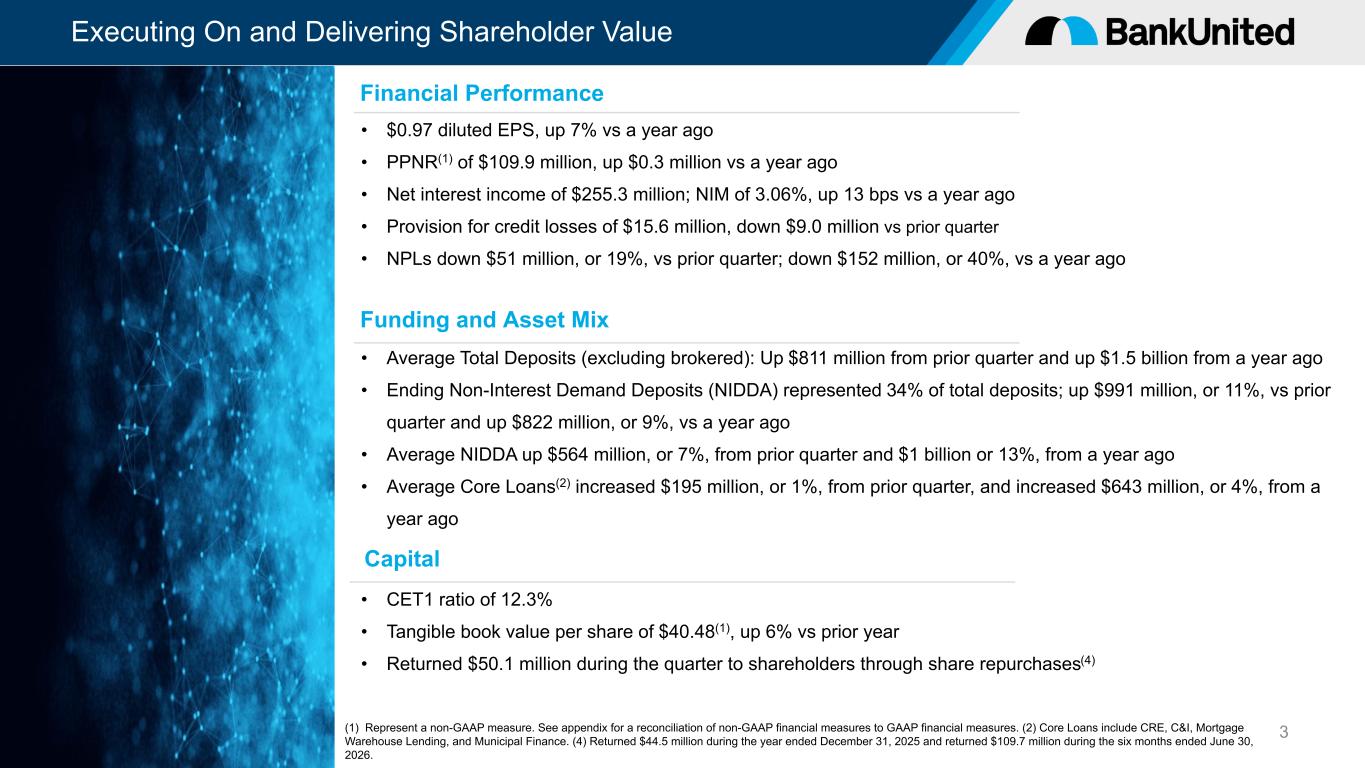
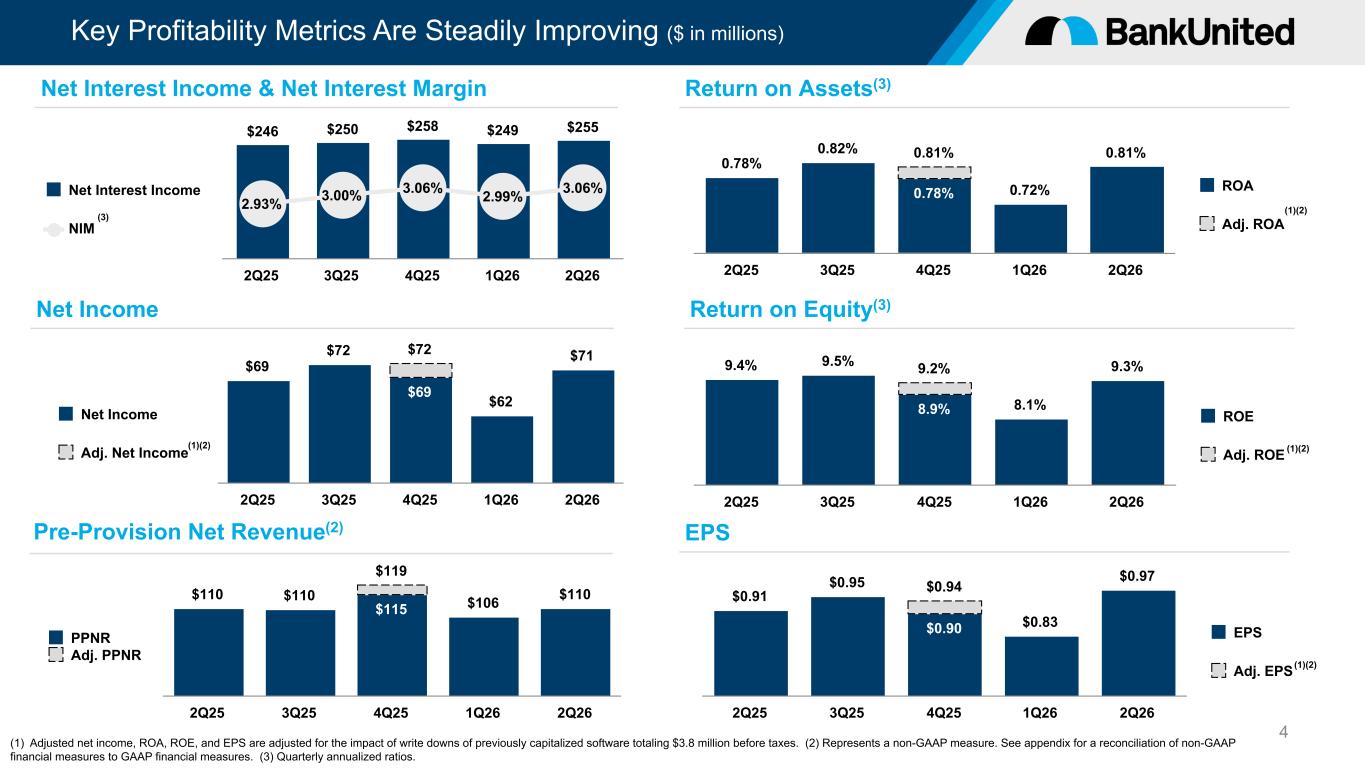
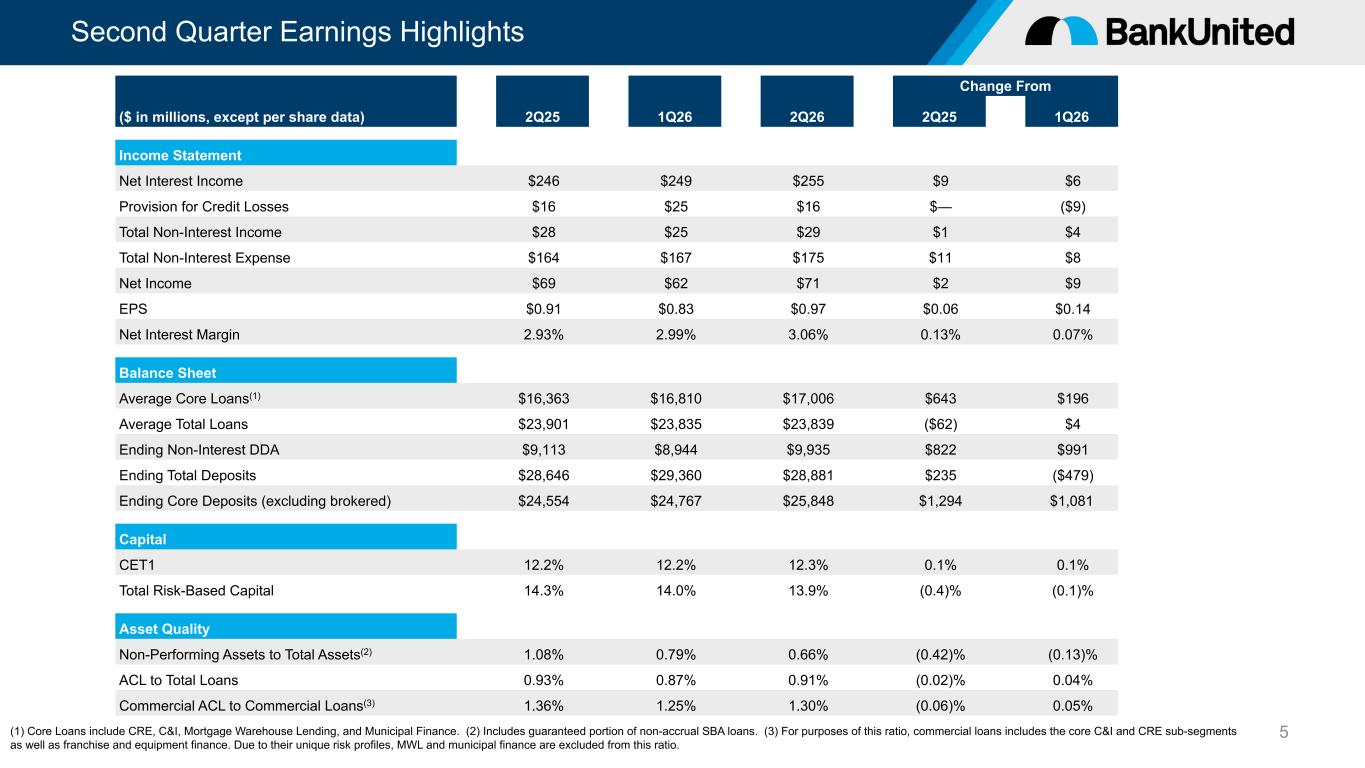
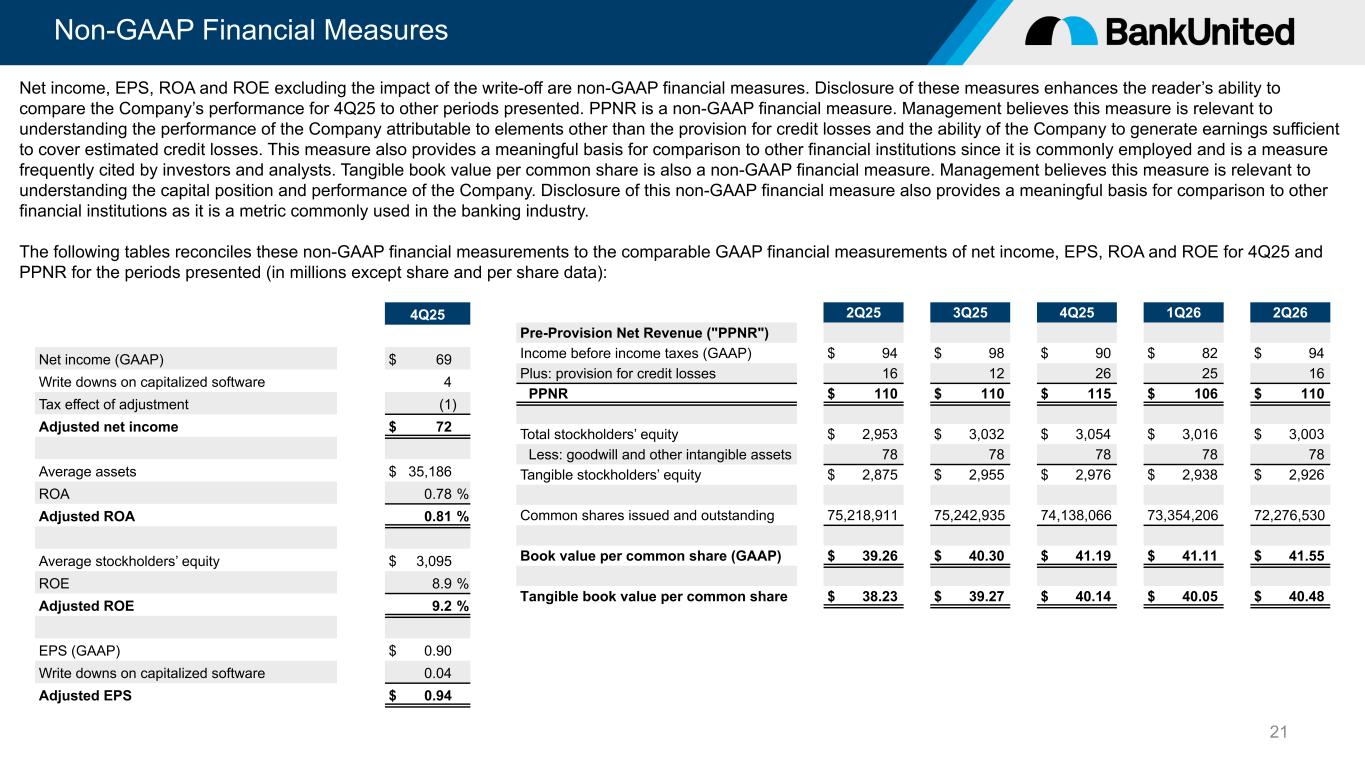
BankUnited reported 2Q26 net income of $70.7 million and diluted EPS of $0.97, with NIDDA reaching a record 34.4% of total deposits and NIM expanding 7 bps to 3.06%. Results were supported by a sharp drop in NPLs and charge-offs, offset by softer loan growth and strategic exits due to mispriced credit.

“we have across the high watermark of NIDDA to total deposits which now stands at 34.4 percent we set the high watermark during the height of COVID when money was free rates were zero and everyone was flush with DDA.”

— Raj Singh, Chairman · jump to moment
Bullish
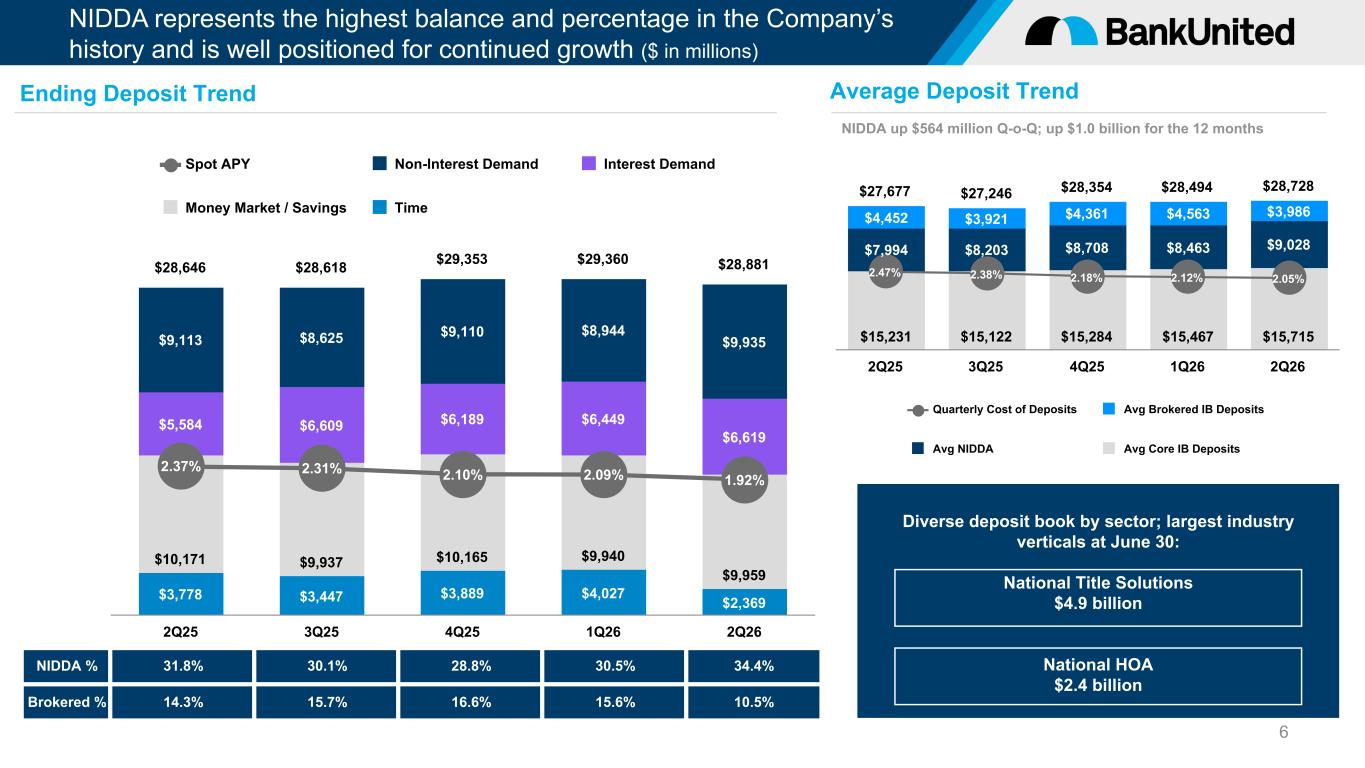
  • NIDDA reached a record 34.4% of total deposits, the highest in Company history, and grew 13% year-over-year on an average basis
  • Net interest margin expanded 7 bps quarter-over-quarter to 3.06% and 13 bps year-over-year
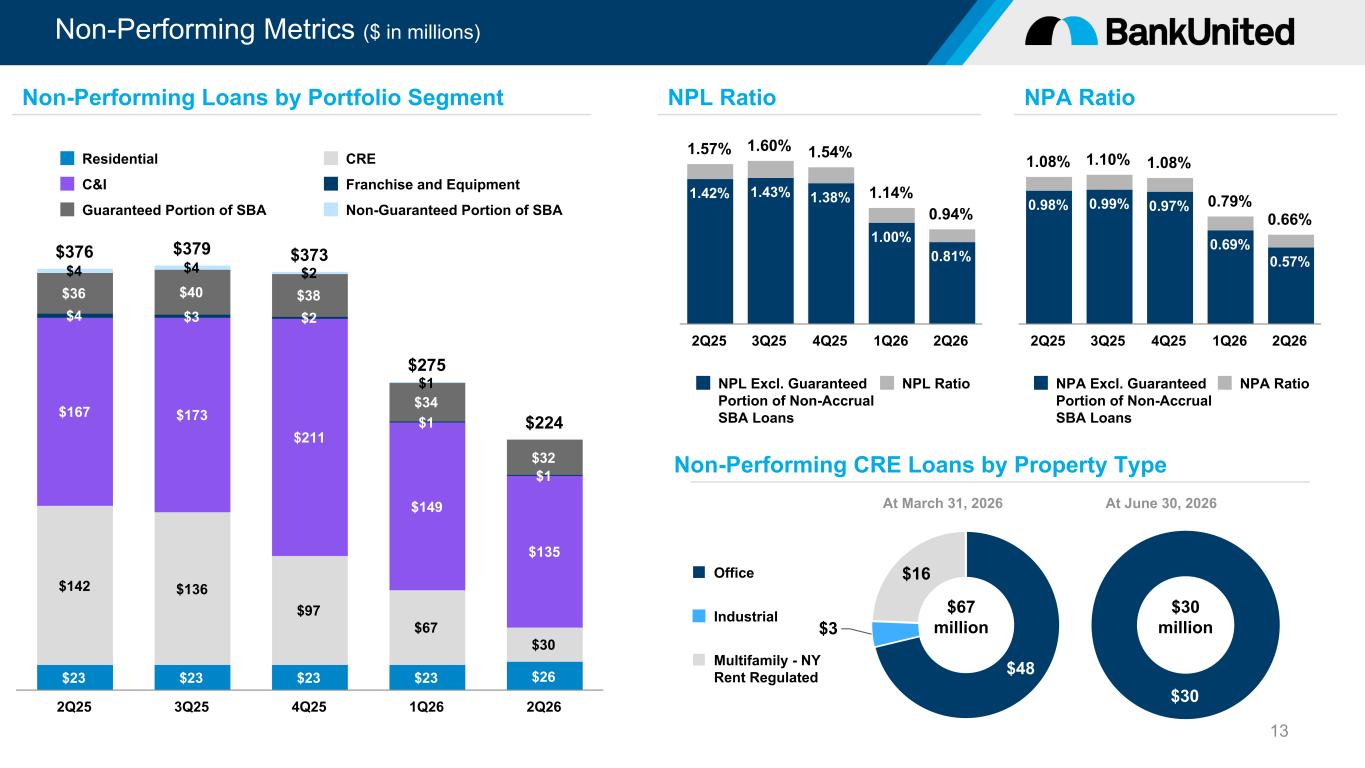
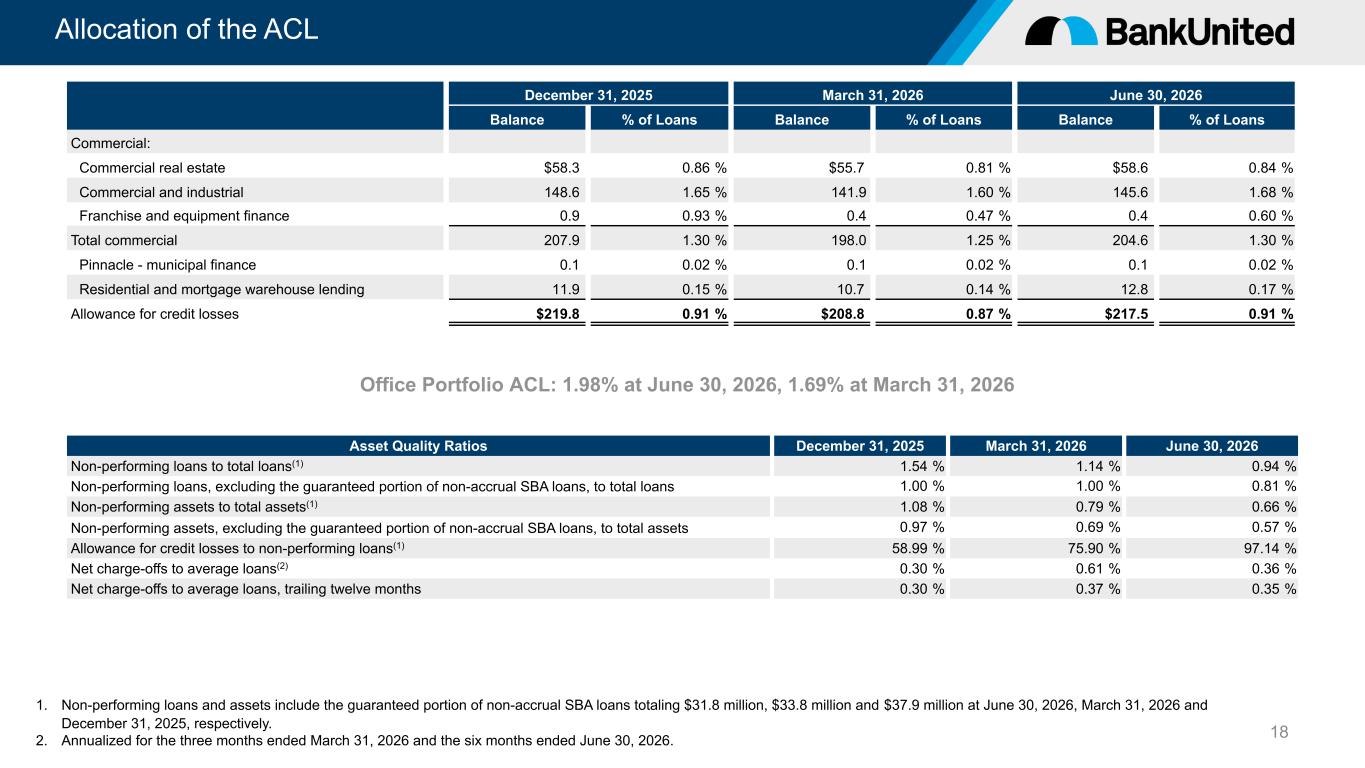
  • NPLs declined 19% quarter-over-quarter and 40% year-over-year; ACL/NPL coverage rose to 97.14% from 75.90%
  • Charge-offs fell to $6.4 million from $36 million in the prior quarter
  • Average cost of deposits declined to 2.05% from 2.12%, even as rates are expected to rise
  • Brokered deposits reduced to 10.5% of total deposits, a level last seen during the COVID-era low-rate environment
Bearish
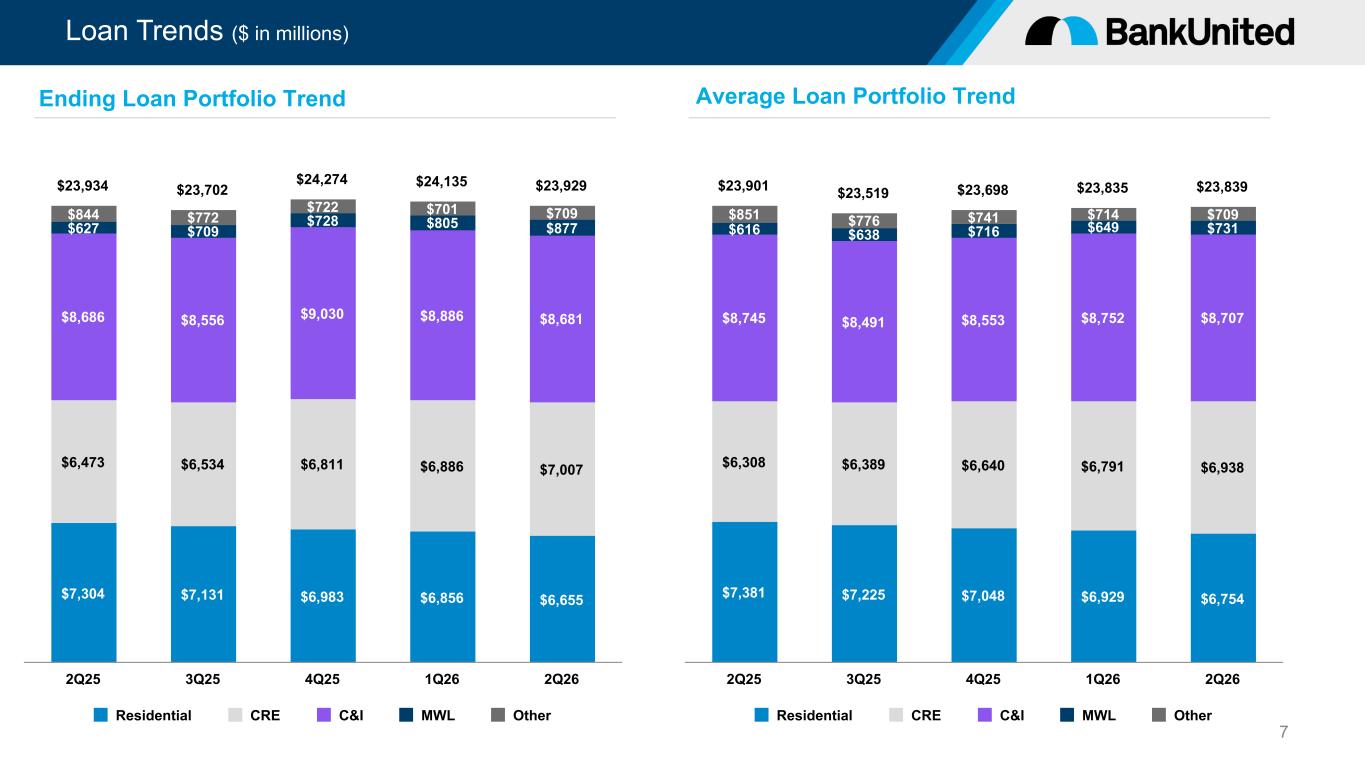
  • Core loan growth tracking at ~4% year-over-year, behind original guidance, prompting a downward revision
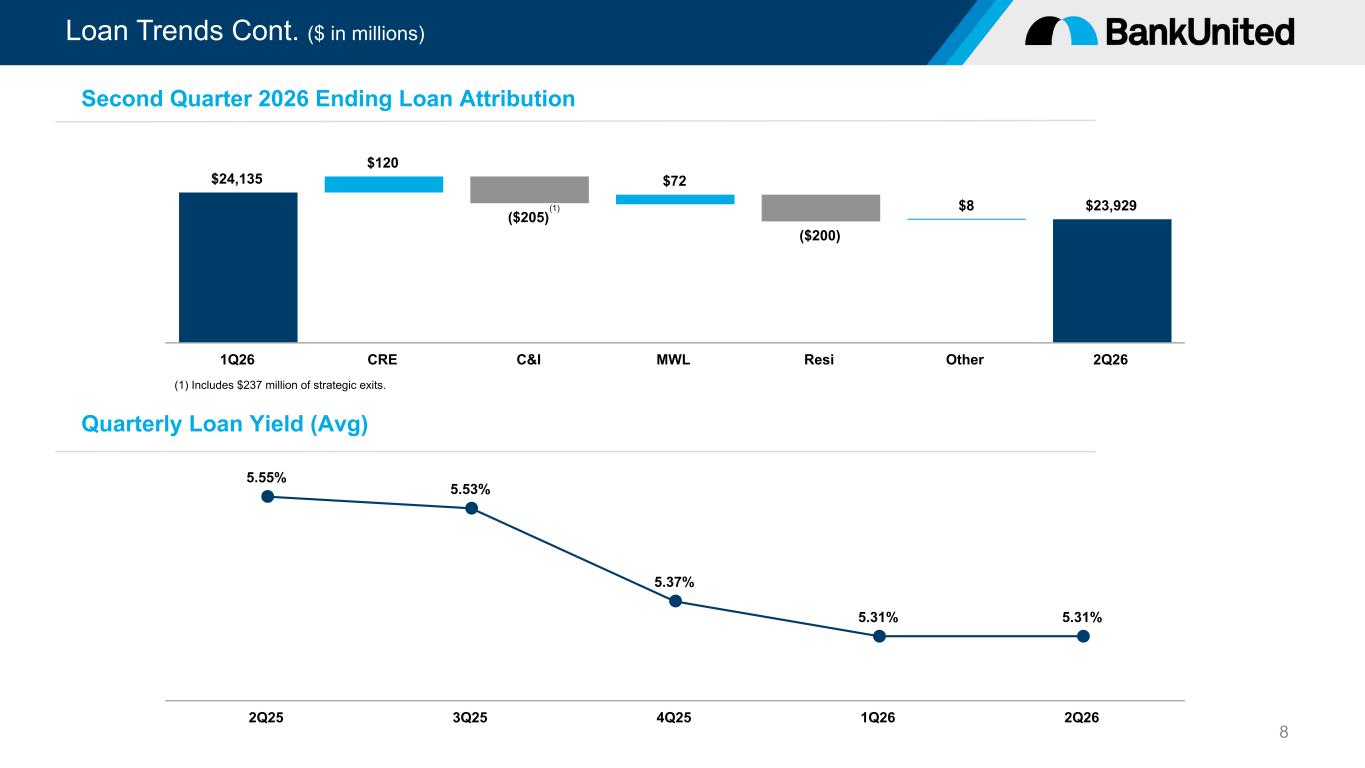
  • Approximately $230–$250 million of strategic loan exits this quarter due to mispriced credit and competitive pressure
  • Management expects rates to move higher (one hike projected in 4Q with more to follow), pressuring funding costs
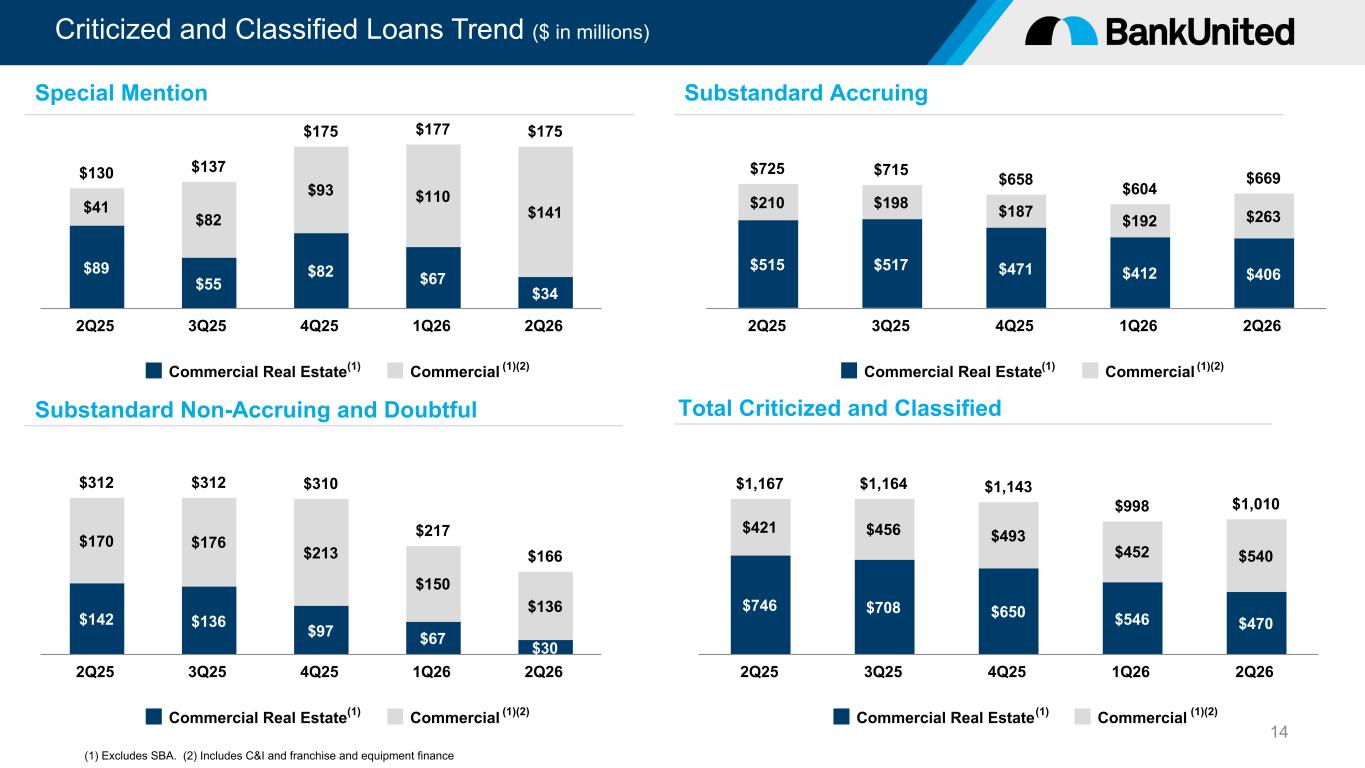
  • Criticized and classified loans edged up $7 million quarter-over-quarter
  • Total average loans were essentially flat versus both the prior quarter and prior year due to non-core runoff

Transcript

Verified speakers · tap a word to jump the audio 1:06:21 Audio
Speaker 5

Additional information regarding these risks can be found in the Company's Annual Report on Form 10-K for the year-ended December 31st, 2025, and any subsequent quarterly report on Form 10-Q or Current Report on Form 8-K, which are available at the SEC's website. With that, I'd like to turn the call over to Mr. Raj Singh.

Raj Singh Chairman

Thank you, Jackie. Thanks everyone. I know it's a busy day. We'll be quick with our comments and get you to Q&A. Before I start the earnings and get into the numbers, I was looking at actually the transcript from our last call, and I read the very last comment that I made. It was a question that was asked. I forget who asked that question, which was if there's one thing that you're looking at that matters more than anything else, what is it? I'm paraphrasing. And my answer was NIDDA. NIDDA growth is the most important thing for us, and if we take care of that, everything else will take care of itself. so I'm happy to announce NIDDA growth this quarter came in exactly where we expected but more importantly we reached a pretty big milestone that internally we've been focused on for quite some time we have across the high watermark of NIDDA to total deposits which now stands at 34.4 percent we set the high watermark during the height of COVID when money was free rates were zero and everyone was flush with DDA. We've been working hard to bring that level back up. So we're very happy to report we're now at a record high in the company's history of that ratio, which is a very important number for us in terms of building long-term franchise value. We're also almost at a milestone of $10 billion. It ticks me off that we've missed it by just an inch or two or two. It's 9.935 or something like that, but I hope you'll indulge me and let me call it $10 billion. So that was also a pretty big sort of battle cry inside the company for the last several months, and I'm very happy. I want to take a moment to thank everyone in the company. It takes a village. It's not just a few people in the company. Everyone from the front line to the back office and everyone in between has been working very hard over many years to achieve this. So I actually even went back and looked at that over the last 10 years, we have grown our deposit portfolio by about $10 billion, and seven of that $10 billion has been NIDDA. That's a remarkable – and by the way, of course, it goes without saying, all of it done one client at a time, not through acquisitions. We didn't pay for this through Goodwill or anything. just good old-fashioned bringing in one client at a time. So I just wanted to start off with that. It's a pretty big thing for us, and we've been focused on it. Of course, the new targets will be sent out to everyone's inbox before the end of the day. We're not stopping at 34.4. We want to move this further. With that, having said that, let me get back into the earnings. These are period-end numbers, obviously. This is our biggest quarter, so I've always said focus on averages so I'll talk more about averages because that's what drives the P&L but I just wanted to get that out of the way earnings came in at 97 cents a share net income of about 71 million are we improved last quarter was I think 8.1 now we're at 9.3 deposits like I said you know a pretty big quarter for us no matter how you look at it whether it's core deposits which is excluding pro they were up very strongly, NIDDA was up very strongly. Actually, if I look at quarter over quarter and year over year, NIDDA year over year is up 13%. I think we guided that this year will be about 12%, so we're running a little bit ahead of the guidance we gave you. Core deposits are up year over year, these are all averages, up about 7%, and that also, I think the guidance we gave you was about 7%, so we're doing a little bit better, but all within the rounding, you know, I would call that right on top.

Ben Gerlinger Analyst — Citi

Quarter over a quarter, NIDBA was up averages again 7%. Quarter deposits were up 3%.

Raj Singh Chairman

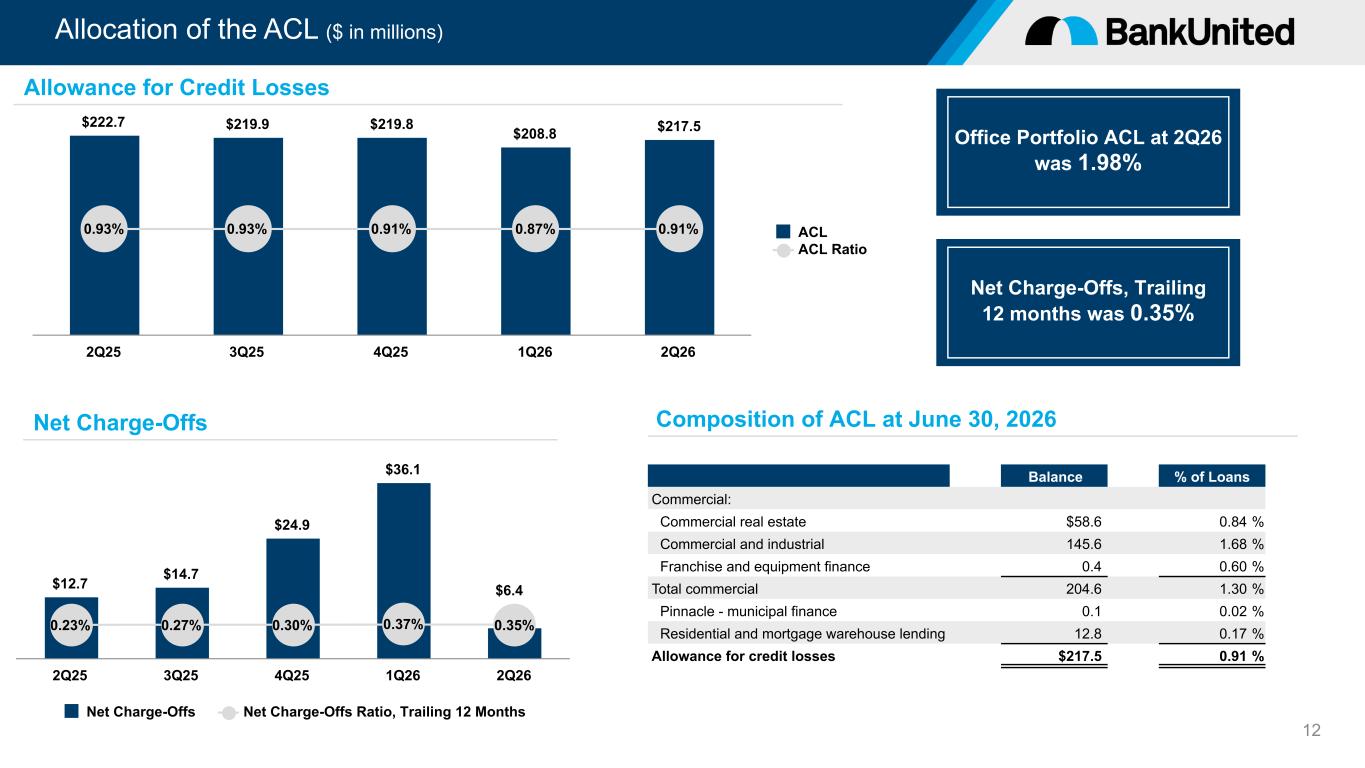
We did take this opportunity to pay down brokered. Another big milestone, actually, is that we've now brought our brokered deposits down to just over 10%. And to go back in time to see when we were at this level, you really have to, again, go back to the highs of the peak of COVID crisis when money was free. So achieving that in a time when money is actually cost 3.5%, 4%, that's also remarkable. Moving on to lending, while our deposit business follows a pattern of Q1 being the slowest, Q2 being the best, and then Q3 and Q4 falling somewhere in between, our lending business follows a different pattern. Generally, it's more straight line. Q1 is the slowest, Q2 gets better, Q3 gets better, and Q4 is our strongest, biggest quarter of the year, and then everything resets again. So it's the pattern we've seen over the last couple of years. It's a pattern that we're following this year as well. So if you look at how we're tracking in terms of core loan growth year over year, we're tracking at about 4% average loans last year to this year. If you look at quarter over quarter, it was about 1%. And I'll talk a little bit about what we're seeing in the lending market, but that's a little bit behind the guidance we gave you. So we'll be adjusting all the guidance that we've given you, and Jim will walk you through those numbers. Margin came in, you know, expanded, as you would expect, with all the deposit growth that we've had. Then came in at about 3.06, which was seven basis points better than first quarter and also, you know, meaningfully better than same time last year. Fee income, actually before fee income lending, what we're seeing is we're seeing a lot of competition in lending and we're seeing mispricing of credit. The second thing that we're seeing is the discipline that the industry had found a couple of years ago in sticking with the relationship business and insisting on getting the full relationship relationship rather than just a transactional view, that seems to have really gone. We're still holding the line, but it is harder and harder to hold the line. So we have let some business go. There were some strategic exits that we did this quarter, about $230, $240 million that fall into this category. This was not something we had planned, but looking at the price of credit, we cannot justify pricing at the level that that's at I mean the good part is the economy is in a good place generally there's a lot of optimism it's reflected in asset prices reflected in cost of credit as well and just our view is that it has gotten a little ahead of itself and that's why we're being a little more cautious and trading low production for that's really what it comes down to the income again very strong quarter that better than would be expected marginally you know it is a strength our capital markets especially the interest rate business commercial car was strong service charges I mean I'm really very happy you know we put a lot of effort into it over the last two years and how much we've been able to achieve here lastly I'll talk a little bit about credit we've been saying to you will continue saying that credit is a lumpy business you can have a couple of loans can swing your numbers by a lot and last quarter our charge-ups were pretty elevated at 36 million but proof is right in front of you this year this quarter our charges were just six million six point four million to be exact so I'm very happy with that but I'm really happy is the fact that NPLs were down again this quarter by 19% so So year-to-date, NPLs are down 40%. That's a pretty big swing in non-performers, and they're backed out, too, very reasonable. Criticized classifieds were essentially flat, and we were up $7 million, but I call that being basically flat. Capital, you know, very well capitalized. That one is at 12.3%. We did buy back a little over $15 million of stock this quarter, and we are continuing to do that this quarter as well. will probably do a little more of the score macro outlook you know I don't want to you know I've been reading what other banks have been reporting so I largely agree with what the sentiment which is economy is doing well the war has not really impacted Main Street as you know some might have predicted it but we have to keep an eye on geopolitical developments because it is still not over and the price, you know, inflation is still an issue. Rates are likely to go up and not down. We think our house view is there will be one great cut in the fourth quarter and likely more to follow. It's not a great cut, sorry, a great hike and likely more to follow next year. So one thing I did forget to mention is we talked a lot about NIDVA but there was a lot of effort put in this quarter on interest-bearing deposits as well and in a time when rates are actually headed up we were able to bring down our interest-bearing cost which which which I know was not a small task so for everyone who worked on that so coming to guidance we have put a slide in here I think towards the end of the deck where we've taken our best get a guess at revising the guidance we gave you at the beginning of the year i would still call the revisions all you know fine-tuning rather than any big changes uh a little bit better on deposits a little bit less on loans a little bit better on fee income a little less on margin so all within uh the margin of error uh nothing that dramatic that you know would change numbers too much. Again, there's as much art as it is science. I do do a pipeline review before this earnings call, and I'll tell you, those meetings over the last two or three days have been fantastic. Pipelines on deposits and even loans have been doing fine. Pricing and stay disciplined, and not just put capital to work, just to show volumes. So that's the discipline I think you pay us for, and we're executing on that. Now, that's it. I'll turn it over to Tom.

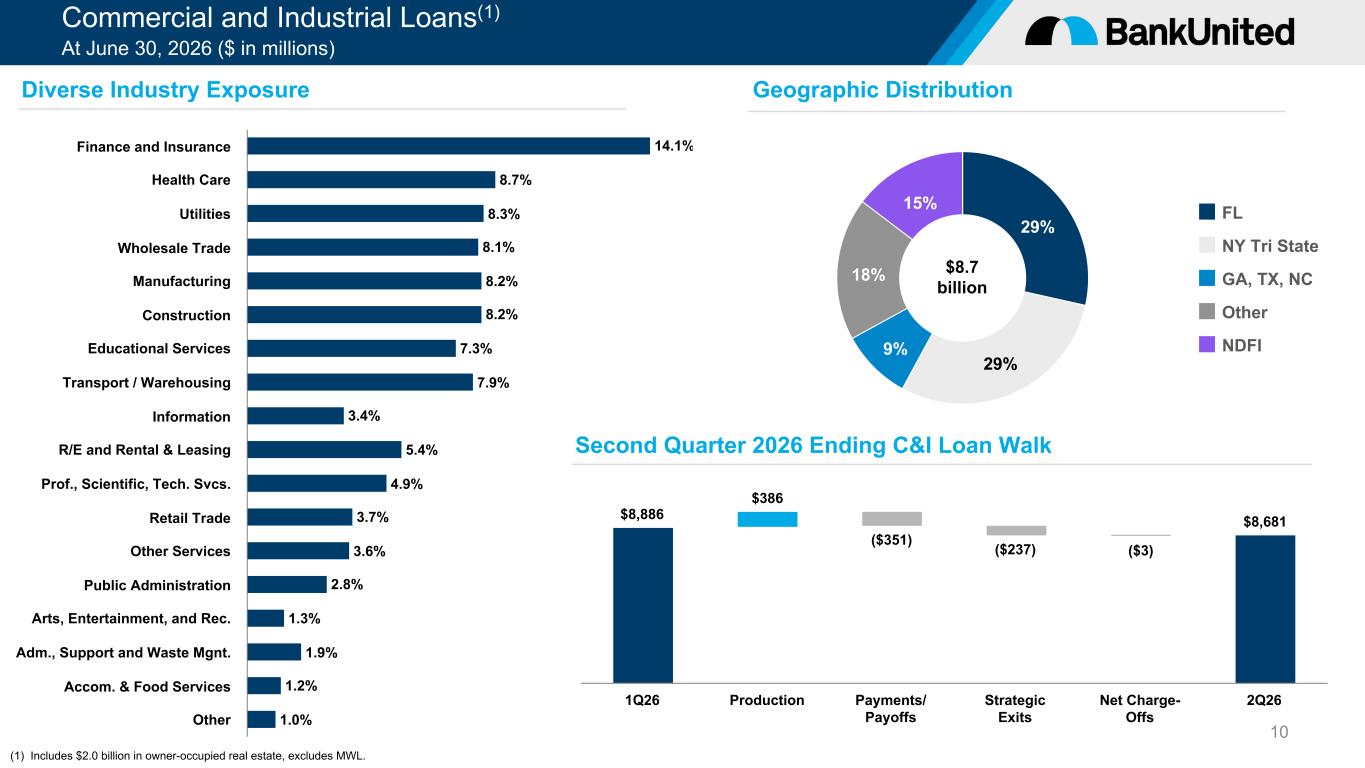
Great, Raj. Thank you. A little bit more detail on some of the items that Raj covered. Overall, deposit performance was really the operational highlight of the quarter. It was a really excellent quarter, as we anticipated. NIDDA increased $991 million during the quarter. An average NIDDA increased $564 million. Total deposits, excluding broker deposits, increased by $1.1 billion. and commercial operating balances remain really strong. Raj mentioned the 34.4% percentage of NIDDA to total deposits as being an all-time high. We continue to add new client relationships, core operating balances across the business units. Raj briefly touched on the service charges. I talked about this at the last call. Kind of year-to-date to year-to-date, service charge income was up 18.6%. which is a number we're really very proud of. It takes a lot of work to do that. We're actually touching the high points of product penetration per relationship on the treasury sale side and on the commercial side. So it takes a lot of effort to get that done, and I think that's reflective of the strategy of really focusing on core deposit growth, core operating accounts, and fee income producing business. On the loan side, production remained good, I think, solid through the quarter. As Raj mentioned, Q3 and Q4 pipelines, which are typically our best quarters, are looking pretty good at this point. I think we're pretty optimistic that we'll see the normal uptick in Q3 and Q4 that we see. Growth this quarter came predominantly from the Cree and mortgage lending businesses. Raj mentioned the C&I balance decline due to selected exits for either pricing or structure-related terms. We are seeing substantial pricing pressure really in all businesses, probably a bit more in the Cree business than any business. Banks have returned to Cree lending in a significant way. I would say last year when we didn't win a deal, it was largely a LifeCo or other permanent market provider these days. Banks are back in the market, you know, very aggressively at spread levels that we have not seen in quite some time. But we did increase overall Cree point-to-point balances by $120 million and mortgage warehouse by $72 million. Average core loans increased $643 million from a year ago. And as Raj mentioned, we continue to focus our efforts on primary client related business, business that brings in deposit accounts, transaction business, fee income business, swaps and everything else that we're trying to drive in the direct relationship business. and we have de-emphasized a lot of what I would call kind of market-driven lending business. The opportunities are out there, but, you know, we have chosen to put our time on the things that we think drive fee income, drive deposits, and drive NIM force. We remain optimistic on the second half of the year. The markets we're in, predominantly from a geographic perspective, continue to do very well. We, I'm happy to report that we expanded our operation in Dallas this quarter. We've essentially doubled our space and are investing more people there. We opened up our office in Charlotte a few weeks ago. We continue to invest in other market segments. We continue to invest in the Tampa market, and we're blessed to be in really good markets, so we're optimistic as we head into the second half of the year. With that, I'll turn it over to Jim.

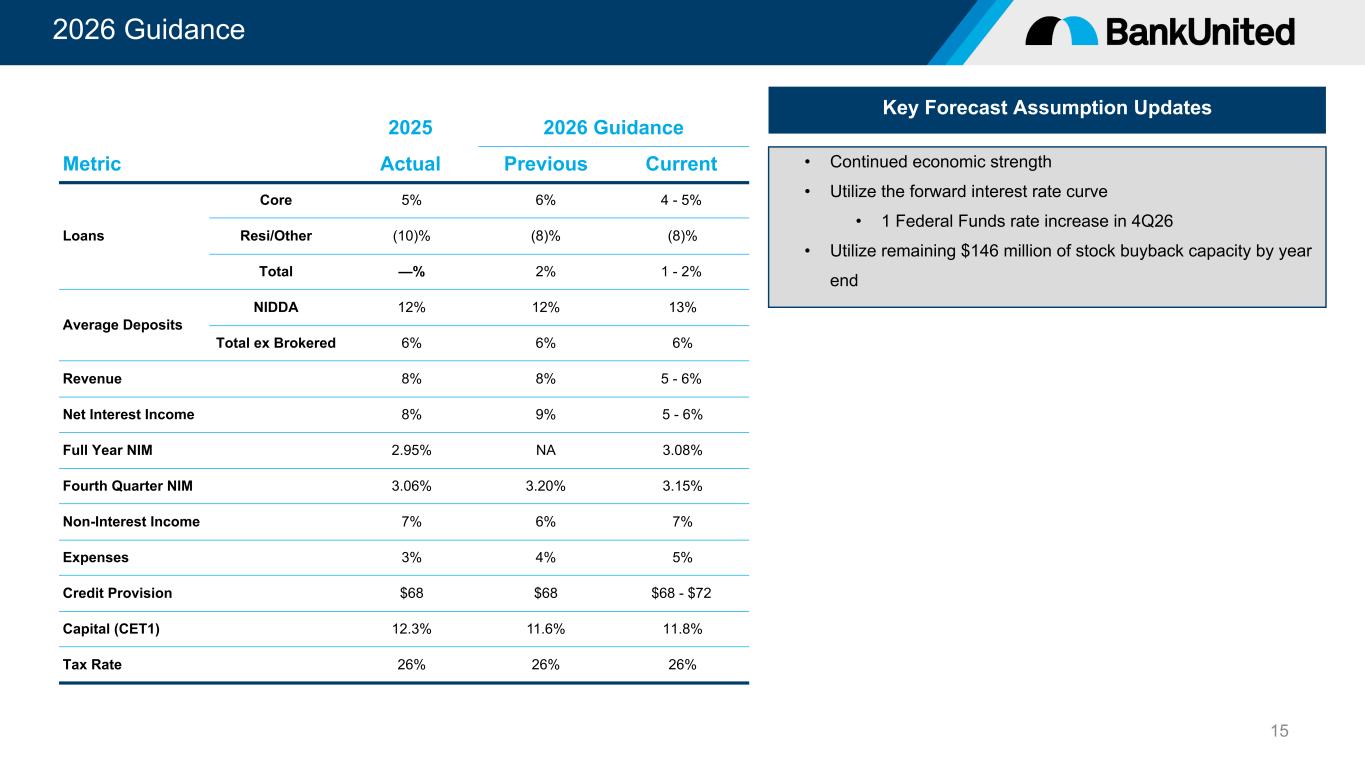
Great. Thanks, Tom. Raj covered the earnings highlights, so I'll try not to repeat all the information that both he and Tom gave you. But I just want to remind everybody that if I start with NII and margin, that we typically follow our seasonal patterns. We're a broken record on that, but it's a really important fact as we think of the ebb and flows during the year. We did see a significant pickup from the first quarter, as we expected, with NII up $6 million and up $9 million from a year ago, NIM up 7 basis points from last quarter, and importantly, up 13 BIPs from a year ago. The funding improvement is largely due to a funding mix improvement. That's a story we've been telling for a while now. We saw our average deposit cost decrease 7 BIPs from last quarter and 42 basis points from a year ago. And, of course, that's outpacing our decline in earning asset yields. So we had almost $600 million higher average NIDDA from last quarter and over a billion dollars increase over a year ago. So this enabled us to reduce our higher-cost wholesale funding. Average balances came down $636 million from last quarter and $1.2 billion from a year ago. So not only bringing down the wholesale funding, we also shifted the mix within the wholesale funding. We talked about that last quarter that we'd probably rely more on FHLB advances and Fed fund purchase over brokered, and that's what you saw this quarter. We also talked last quarter about some of the actions we were taking in the securities portfolio, that did bear fruit this quarter. It improved the yields on that, improved nine basis points. So even with lower outstandings, it did modestly help margin. And as Raj mentioned, I think it's an important point. Our core interest-bearing deposits, that balance was up almost $250 million, and we were able to reduce that rate by 3 BIP. So that growth at that lower cost helped us also reduce our wholesale funding. So it's important to note, I mean, we are tracking a bit behind where we expected to be at this point in the year. The shortfall really is on the asset side. You know, we talked about some of the risk management things that we did related to pricing and structure, et cetera. And so, you know, we're not seeing exactly the loan growth we expected. But we'll talk a little bit more about the impacts of that when we get to guidance. Credit quality, again, I'll just mention, obviously, charge-off ratio at 11 BIFs. That's down meaningfully from last quarter. Raj talked about the metrics related to improving non-performing loans, criticized and classified, but non-performing loans down 40% from a year ago and criticized and classified down 14% from a year ago. Provision expense, I thought, was good this quarter at under $6 million, down $9 million from the last quarter. and we were able to take our coverage ratio and allowance up to 91 basis points. Just real quickly on non-interest income, Raj covered it, but I'll just remind everybody that there are ebbs and flows from quarter to quarter. We did see a pickup over last quarter as we expected because some of our activities such as swaps tracks our lending activity. So lending picked up, that derivative activity picked up. So generally, we're on track for the full year. And on expenses, I just want to mention a few things. Expenses were up from last quarter, obviously up from a year ago. Everything's generally tracking with how we projected. Deposit costs are seasonal, just like the NIDDA growth patterns. They are up a few million quarter over quarter. It's a mix of both volume and a bit of competition. It will talk about that related to the full year guidance. We did have some elevated operational losses this quarter. It was just an elevated by a million, but I just call it out just because it's sort of a non-recurring thing. These do ebb and flow each quarter, but generally for the full year, ops losses are tracking where we'd expect them to be. we'll call out a REO disposition expenses quarter which again we haven't had some of some of those in a while but we're only we only have 1.5 million left on the balance sheet of REO and that's down from over 7 million a year ago capital again set one was 12.3 of 10 bips you know it was up even though we continue to buy back stock. That's largely due to the lower ending loan balances that we discussed. We repurchased just over $50 million of stock during the quarter. That leaves us about $146 million left on our current board-approved capacity. As we've discussed before, we are expecting to utilize that somewhere around year end. It's obviously subject to market conditions, But we're committed to using what we have. And obviously, once that's used up, we'll look at the balance sheet and earnings and talk to the board about where to go next. But we are committed to getting to our targeted capital levels of SEP1 in the mid-11s. So with that, I'll turn to guidance. It's just important to note, as Raj said, the overall story has not changed. Deposit trends remain stronger than we originally anticipated, specifically NIDDA continues to grow. Fee income is tracking out of plan. And the main changes are really a function of the competitive conditions. We saw credit spreads tighten faster this year than we had expected, and both Raj and Tom talked about how we're going to remain disciplined on risk and pricing. So on page 15 of the presentation, you can see the guidance. We gave you the original guidance as well as the updated guidance. I'll focus on a few things that changed the most. The loan balances, we're bringing the growth for core loans down to up 4% to 5% from our original projection of 6%. Total loan growth, therefore, would be potentially slightly lower. We're showing a range there as well. We always have the second half of the year is our strong part of the year. So, you know, there's always a chance that we'll hit the original guidance, but just given where we are at this point in the year, we thought it prudent to bring it down a bit. On the deposit side, you know, we are bringing up NIDDA average balances slightly from 12% to 13%. And on the net interest income side, you know, because of, you know, halfway through the year. Given where we are, we're bringing the full year down to 5% to 6% growth. It's largely due to the year-to-date tracking a bit behind where we projected. As Raj said, pipelines look really good for the rest of the year. So if the winds align properly, we can make up some of that ground. But we're being prudent in bringing it down slightly. Because NII is coming down, we're bringing revenue forecast down to 5% to 6%, and that's largely related to NIM and NII. Non-interest income, on the other hand, we're taking up slightly. Those numbers are smaller, so even though it's coming up, it only mitigates some of the lower NII. On expenses, we took the guidance up just slightly. It's really driven by two items, deposit costs I mentioned earlier our volumes on NIDDA are expected to be a bit higher so there is volume related cost there and also the competition you know it's a highly competitive market and so that's driving a little bit increased cost and then on the compensation side we had you know really strong year last year so there were incentive payouts earlier this year and importantly we've been opportunistic in our hiring and we've been hiring revenue producers, some good hires, and so the combination of those two things is going to drive our compensation expense a little higher than we had expected. All the other categories are largely in line, and I guess I'd conclude it and say we're always looking for efficiency, so where we can, we'll try to offset those two items, but we did take up the guidance slightly. Provision, the last thing I'll say on that is, you know, it'll be a range. We did have higher charge-offs earlier in the year, you know, so that could mean a little bit higher provision expense for the full year if you just look at the full year impact of it. A lot of it will depend on where loan balances play out in the second half, but, you know, it'll be somewhere around our original guidance to a little bit higher, but it does reflect. All these projections reflect a strong economic environment, but as Raj talked about it, good economic environment brings a lot of competition, so we're trying to be balanced in our expectations for the remainder of the year, and we do assume one rate increase late in the year, so it doesn't have a lot of impact on this year's numbers, but I'll just remind everybody were modestly asset sensitive so you know if as rates rise it would impact us but it'd be more of a 27 thing with that Raj I'll turn it back to you no let's go to Q&A we will now begin the question and answer session to ask a

Speaker 6

question you may press star then one on your touchstone phone if you're using a speakerphone please pick up your handset before pressing the keys if any time your question has been addressed and you would like to withdraw your question, please press star then 2. At this time, we will pause momentarily to assemble our roster. The first question today comes from Woody Lay with KBW. Please go ahead.

Woody Lay Analyst — KBW

Hey, good morning, guys. Morning. Wanted to touch on the NII guide, and as you mentioned, it feels like it's more of a function of the assets and maybe some of the loan competition on pricing and some runoff. And, you know, looking at the loan growth guide, it would imply, you know, we see a nice little ramp up here in growth over the back half of the year, which is your, you know, historically seasonally stronger part. But are you seeing any dissipation in some of these competitive factors that would help on the loan growth front, or is it more just building in the pipeline to account for, you know, know, maybe additional runoff if it occurs?

Yeah, Woody, we would love to see a dissipation of the competition, but I don't think that's likely to happen. I think it's really going to be the continued efforts in building of, you know, prospect opportunities and loan transaction opportunities and, you know, funding acquisitions and expansions and things of that nature that we typically see building in the second half of the year as it generally has. But I don't think the The competitive market will change over the course of the next couple of quarters.

Got it. The guidance really reflects, you know, we believe we'll hold our own in the second half. We think, you know, credits, you know, we'll be able to hold our own on credit spreads and whatnot. And so a lot of the guide is really just reflecting, you know, the actions we saw in the marketplace and the actions we took year to date.

Speaker 4

And by the way, our credit box has not changed.

Raj Singh Chairman

It is the same. It was six months ago or a year ago. We have not revised our credit box. The market has moved meaningfully in terms of pricing credit. So we're winning less because we really haven't moved our credit box. And this is our view of price of credit. We could be wrong, by the way. We could be maybe a little too pessimistic. But we have to kind of hold our own in terms of what we think the right price of credit is And that's the whole sort of essence of the lending business is to say yes and no when you think, you know, you need to call yeses and noes. So, you know, the other part of this is also we are very, very, still very much disciplined on doing relationship business. And we might be the last bank left in that space insisting on getting deposits. But if you're going to deliver an IDVA growth in, you know, 12, 13, 14 percent range, you have to do that. this doesn't happen by itself people don't leave an IDDA because it is like you it's because you insist is how you get that and and we see a lot of our competitors not insisting anymore so that you know so that's not quite a credit issue or a credit pricing issue but a relationship pricing you can call it that so we're seeing less and less discipline on on you know insisting on relationship more willingness on our competitors to do this transactional stuff and uh we're we haven't forgotten the lessons from three or four years ago yeah that's

Woody Lay Analyst — KBW

good color um and then maybe just one follow-up on bnii guide um you know y'all have mentioned it's it's better to look at average uh versus into period given some of the given some of the seasonality movements but if i just look at the spot rate of deposits it's um you know pretty meaningfully below where the average cost came in and I was just interested to know kind of what your deposit cost assumption is through year-end to hit that you know 315 year event margin yeah spot deposit rates can be very misleading because especially at the end of June when we just have a huge amount

Raj Singh Chairman

of you know deposits that that are not going to be there for there for a long time so I would not pay too much attention to that I would look at what we did on average your actual deposit cost over the quarter it came down which we're very happy with I don't think many banks have taken the doubt and in the future it'll be hard to take down interest bearing costs because you know the two years at what for 2430 and you know 10 years now 465 this morning I'm is it's going to be hard to have deposit costs come down. We will still keep mining our deposit portfolio for it, but the real breakthrough for us is always going to be on NIDVA. I expect NIDVA, average NIDVA, to continue to grow. You know, period end may not grow, but averages to keep growing, and that's going to help margin. That's where the deposit costs lowering will happen. That's where the margin growth will happen from.

And you typically see from second quarter, third quarter, margin expansion, if you follow our normal seasonal trends, and then the fourth quarter, first and second, and then second and third.

Now, Raj mentioned the word work several times when we talked about the reduction in deposit cost. You know, the market clients and people tend to think about things like this and sort of quarter of a point moves timed with, you know, market interest rate moves. the process of trying to fight for four or five basis points across the portfolio is a lot of work. You have to go relationship by relationship, account by account, and really fight for each of those inches. We're going to continue to do that work.

Speaker 4

I appreciate all the color. Thanks for my questions. Thanks, buddy. Thank you.

Speaker 6

The next question comes from Jared Shaw with Barclays. Please go ahead.

Jared Shaw Analyst — Barclays

Hey, good morning, everybody. Really good trends on the DDA. Could you share with us what portion of the portfolio is subject to ECR and what your implied payout on ECR is on that?

Raj Singh Chairman

I think you're referring to deposit costs, not ECR. ECR is like all commercial deposits have some kind of ECR, but ECR is just, you know, the fees that we don't charge you expressed in basis points. So that's generally the entire commercial portfolio. But I think you're referring to the deposit costs, which are sort of a cash expense. And that is largely driven by the HOA business. So which is like, I have brown numbers, I don't have it in front of me, like $2.5 billion, right? So most of it is coming from that. Just how that industry has evolved over the last 20 years is that this whole notion of these arrangements are kind of the norm. So that's where it's really coming.

Jared Shaw Analyst — Barclays

Okay, and was any of the, or how much of the quarterly growth was from the HOA business? us well well we had i think we disclosed in our queue last quarter we had 13 million or so i think of deposit costs down and and opx and uh you know a couple minutes you know due to volumes so that's an aggregate um and then i guess shifting you know going back to follow up on the on the margin discussion um you know and hear hear what you're saying about the the spot deposit cost versus the average. How should we think about, I guess, maybe the total cost of funding for the second half of the year? Is there likely to be a continued reduction in brokered and shift to FHLB? I guess, how are we thinking about that 310 spend rate?

Raj Singh Chairman

Yeah. So, brokered versus FHLB, we basically look at whatever is cheaper and we tap that market. I would throw Fed funds in that as well. So between those three buckets, we just try to be opportunistic, whatever is cheaper. Brokered got more expensive starting, I think, March 1st. And while that gap has narrowed somewhat in the last few weeks, it's still more expensive, which is why you see we really brought down brokered very aggressively. Now, if I think of these three buckets together, I call that sort of wholesale funding. and that came down quite a bit this quarter. I don't expect that to come down because this is seasonally high deposits from the title business are creating that excess cash that we have, which they do every June this happens. But going forward, I don't expect that number to continue to come down. In fact, it will probably grow. Will it be Brokwood that will grow or FHLB or FedFunds? It's hard for us to say because we'll tap whatever is the cheapest. By the way, if you go back and look at our numbers last year, it's exactly what you saw last year happen. Very similar trends will happen again this year. I just don't know which bucket it will be. It will be one of those three buckets.

Our guidance is based on following the same seasonal pattern we've seen.

Jared Shaw Analyst — Barclays

And I guess just a follow-up on the margin side, on the yields, Hearing what you're saying about the competition, if we're assuming sort of flat rates here, I know you have one cut at the end of the year, but if we look at third quarter, most of fourth quarter, should we assume that loan yields stay flat? I mean, is that possible? Or do you think that they – how should we think about the trend in loan yields with what you're looking at as that pipeline?

Raj Singh Chairman

Sorry, Jared. I don't know if you misspoke or I misspoke. We're not expecting a cut. We're expecting a hike.

Jared Shaw Analyst — Barclays

I mean, I'm sorry. I'm sorry. I meant a hike.

Raj Singh Chairman

I think I don't want to misspoke on that. So you're saying cut. We're saying a hike.

But I think generally, and I'll let Tom add to this, generally, yes, we're looking at loan yields, the credit spread staying stable from here for the rest of the year. You know, again, Tom talked about this. one of the things that hurt us. While we generally had flat core loans, we had a mix shift. Some of the higher yielding portions, C&I, were a little bit lower. Our mortgage warehouse was a little bit higher. Some of the yield will depend on what the mix is at the end of the year, but asset class by asset class, I think we're expecting roughly similar credit spreads.

I would say we've held, when we look at production across all of the business lines for this past quarter and really for the whole year we have held margins and spreads within a very you know small kind of variance uh there is some mixed difference that the cni market has better yields than the creed market right now and part of what we'll try to do is balance that a bit better in the second half of the year but i don't think we would have um materially different yields than we're seeing right now and we're trying to stay too but a lot of that is also influenced by you know if we have very strong core deposit opportunities with these clients you know we we become um a little bit um more flexible on loan yields when we don't we don't um you know and that's part of the trade-off you make great thank you next question comes from David Chiaverini with Jeffries.

Speaker 6

Please go ahead.

David Chiaverini Analyst — Jefferies

Hi, thanks for taking the questions. So a follow-up on NII, you mentioned about how weaker loan growth is the main driver for it. When I look at, you know, the updates on the guide, it looks like you went from 2% to 1% to 2%, but yet you took the guide down to 5% to 6% on NII versus 9%.

Raj Singh Chairman

So it seems like a modest tweak lower on loans but yet a pretty decent you know cut on NII can you walk through is it a timing issue can you walk through some of the factors there it's timing it's timing and it's also a little bit of loan mix so you know Jim just mentioned we did more growth and mortgage warehouse lending than we were expecting to also in CRE we had growth but CNI we actually did some strategic exits. Well, if you look at CNI spreads, they are much higher than CRE spreads, and that mortgage warehouse is kind of by the same, but CRE spreads would be even slightly, a few basis points lower. So the mix is also not, you know, is also contributing to that. Well, timing and mix, but the pipelines right now, the CNI pipeline is pretty decent. If we can actually close on all that, we can probably make up some of it.

The issue is you're closing it radically during the second half of the year, so you don't have a full-year impact of those higher spreads. So, you know, you could still land the plane on loan volumes, but because we were sort of tracking behind in NII through midpoint of the year, you could only make up so much of that gap. So that's timing.

David Chiaverini Analyst — Jefferies

Got it. Very helpful. Yep, it sure does. And then shifting over to the NIDDA, I think you mentioned about expecting continued growth despite the seasonal bump in the second quarter. Can you talk about the cadence and trajectory for 3Q and 4Q expectations there?

Raj Singh Chairman

Yeah, generally what we see is that while end of periods of June to September, you may not see much growth, but the average balances still continue to grow because, you know, our average NIDDA is like 9 billion and our period end is 10 billion. So, that momentum carries into the third quarter. So, average NIDDA is generally higher in the third quarter than the second, even though end of period may not be as high or maybe even flat, but averages matter and that's what drives NIMH the P&L fourth quarter again you know it starts to decline in December sort of mid-December balances start to decline and and and that can make here and end numbers look bad but averages don't just for the most for most of the quarter we're still doing a lot of business it only starts to really slow down you know in the holidays very helpful and of course it really once it slows in December, it doesn't come back up, you know, in any meaningful way.

Speaker 4

Thank you.

Speaker 6

The next question comes from Michael Rose with Raymond James. Please go ahead.

Michael Rose Analyst — Raymond James

Hey, good morning, everyone. Thanks for taking my questions. Raj, I think you described the loan pipelines as fantastic. I think that's the word that you use. Can you just give some color on kind of what is comprising that pipeline and then maybe the interplay as we think about, you know, kind of the continued rundown as we move through the next couple of quarters of the, the residency mortgage piece. Cause it does sound like the, yeah.

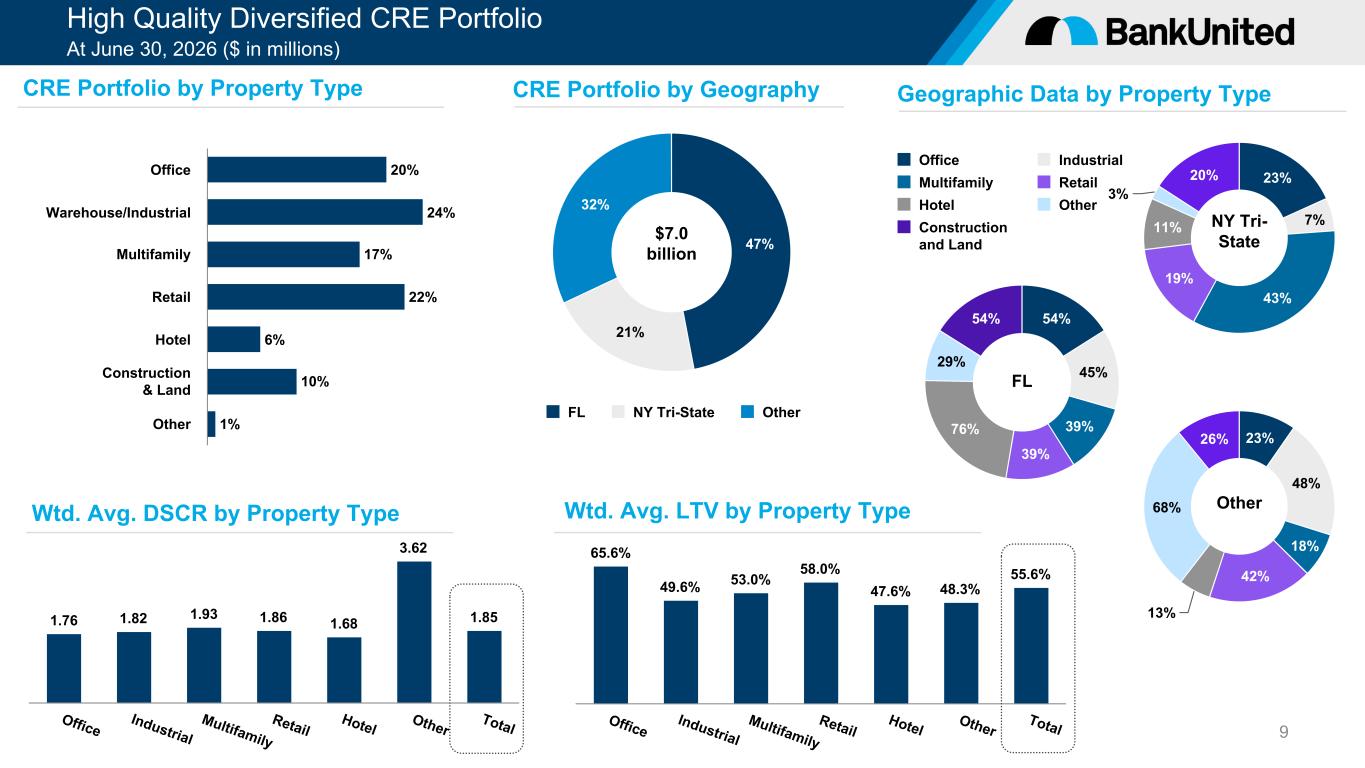
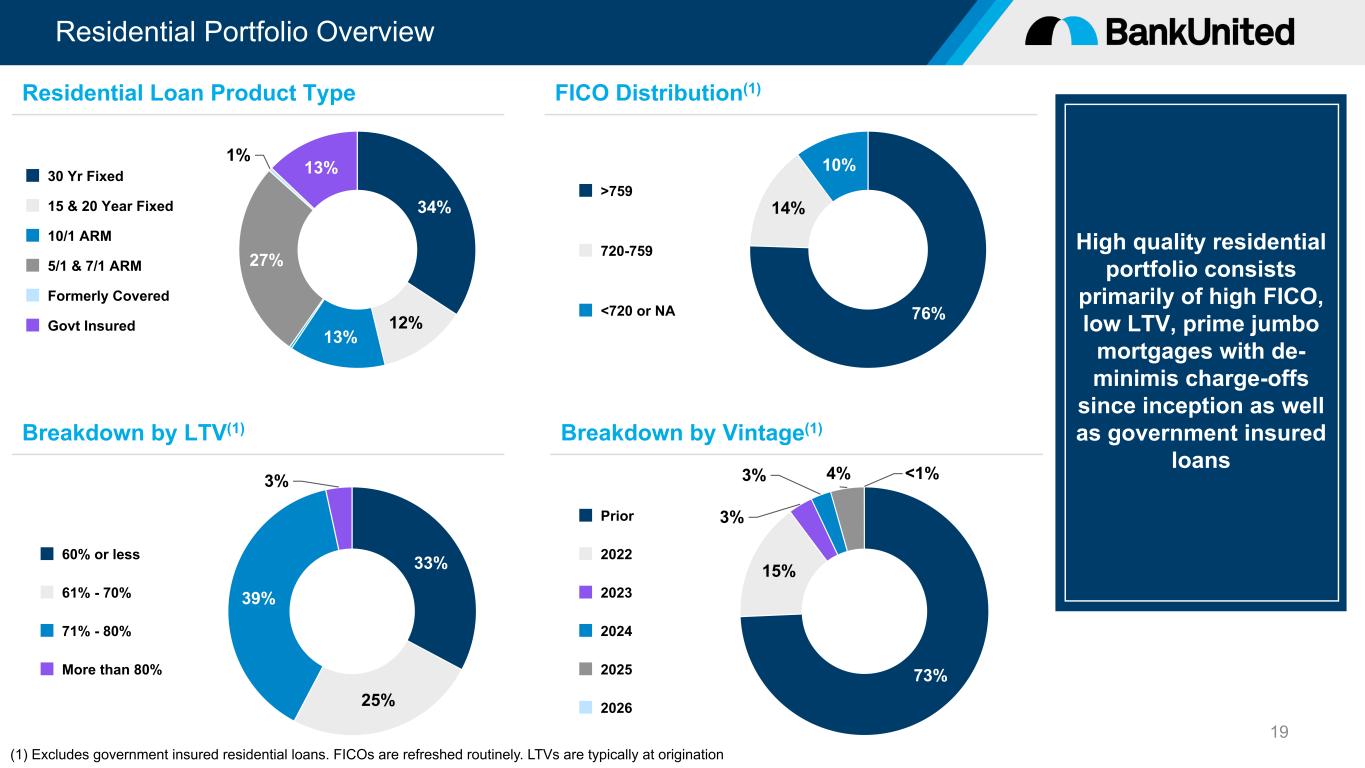
Yeah, Michael. So I would say when you look, it's obviously different for each business line. I would say when you look at the C&I line of business, it's going to be, which is comprised of different sort of segments, within that market, but it's going to be pretty broadly diversified across a number of industry groups. There's not any significant concentration. We're seeing more growth in new office markets because we're starting from lesser numbers. We've had good growth in the Dallas office. We've had good growth in Atlanta. We're starting to see nice opportunities in the Charlotte, North Carolina, South Carolina kind of market. But it's kind of broad across 100 different industries, and that business is very granular based upon that. There is some M&A activity that we're seeing flow through that that we're working on now that I think looks pretty good overall. The Cree pipeline, we're definitely seeing, you know, strong interest in the Cree market. The foreign investment is coming back to the Cree market. Our portfolio, as you can see in the data supplied, is pretty well diversified across all major asset classes. I would say what we're going to likely see the most of is industrial, in retail, some in the multifamily sector will be large, Although we are seeing more competition in the construction market, particularly for non-recourse construction loans, which generally we have straight away from. But I would say the major asset classes in Cree, if you look at our portfolio, each one is sort of in the 20 to 24 percent range. So it's a pretty well-diversified and well-balanced portfolio. We expect to see good growth in that area. And I think in the smaller business lending teams, you know, spread out over 1,000 industries, we expect to see good growth.

Raj Singh Chairman

I just want to put a little footnote to this. Tom mentioned industrial, but that does not include data centers.

Speaker 4

Correct.

Raj Singh Chairman

We have not done any data center business. I was actually surprised when I was talking to a few of my peers over the course of the last two or three months how many people are actually actively participating in that asset space. We've not been able to wrap our head around the risk, especially the risk of obsolescence, on long-dated assets, and we've stayed away from the data set. We've studied it. We continue to study it, but we have not participated in that rush to finance data centers, whether through their bond portfolio or through our loan portfolio. So just a footnote to Tom's comments.

Yeah, and I would add to that, and it's kind of more broadly even the data centers, but that is a type of lending that, you know, if you want to turn on the faucet, you can turn it on. I mean, it's there. There's there's a lot of stuff that's out there in the marketplace, you know, private credit things that you can do, data center business that you can do that are typically, you know, credit only products in large amounts. no relationship no deposit relationship i mean it's out there to do if somebody wants to do it but it tends to um divert the organizational attention away from what we've really set out to be our mission and that's that's part of the even setting aside credit issues and yield and all that kind of stuff you know there's only so many things you can focus on and do excellently And, you know, stuff like that diverts everybody's attention, which is why we try to deemphasize that.

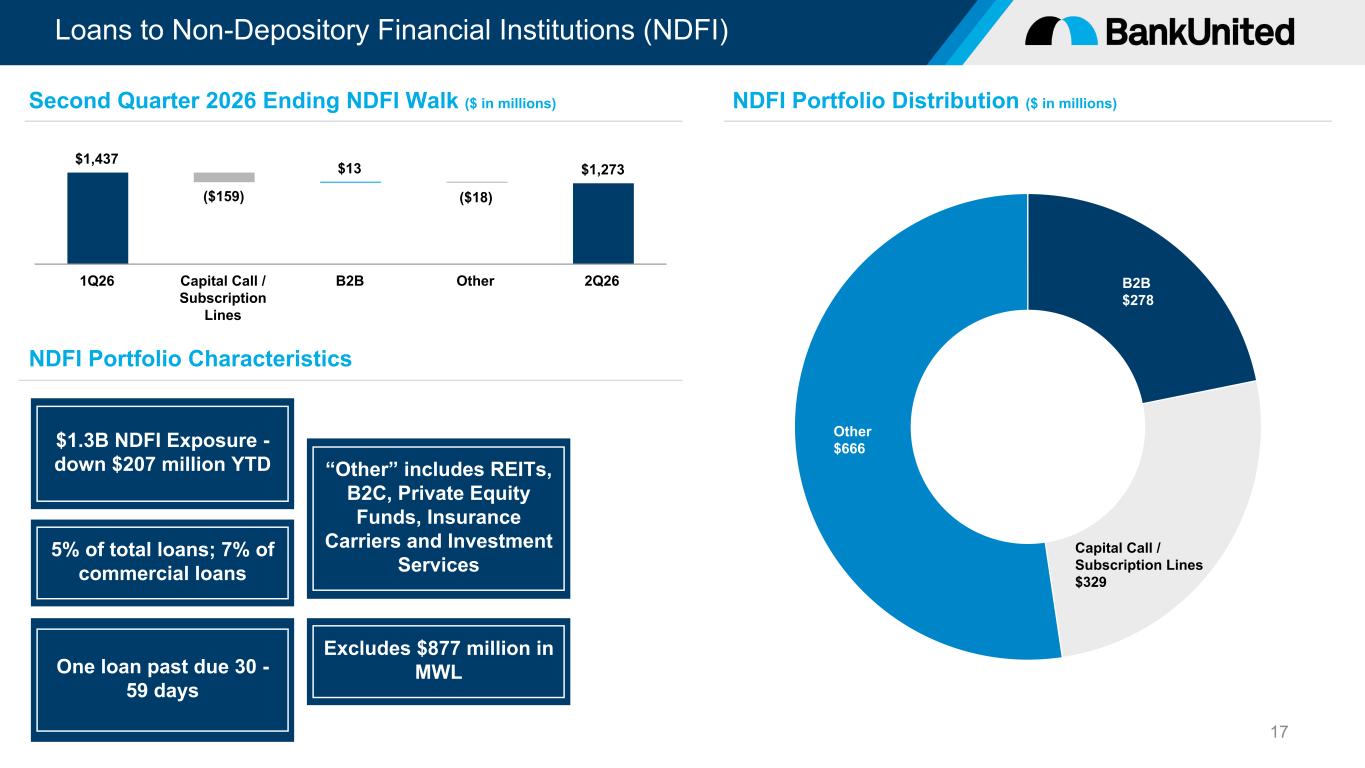
Yeah, I will call out on page 17 of the materials. You know, we show our NDFI or private exposure, and we did bring that down in the quarter.

Michael Rose Analyst — Raymond James

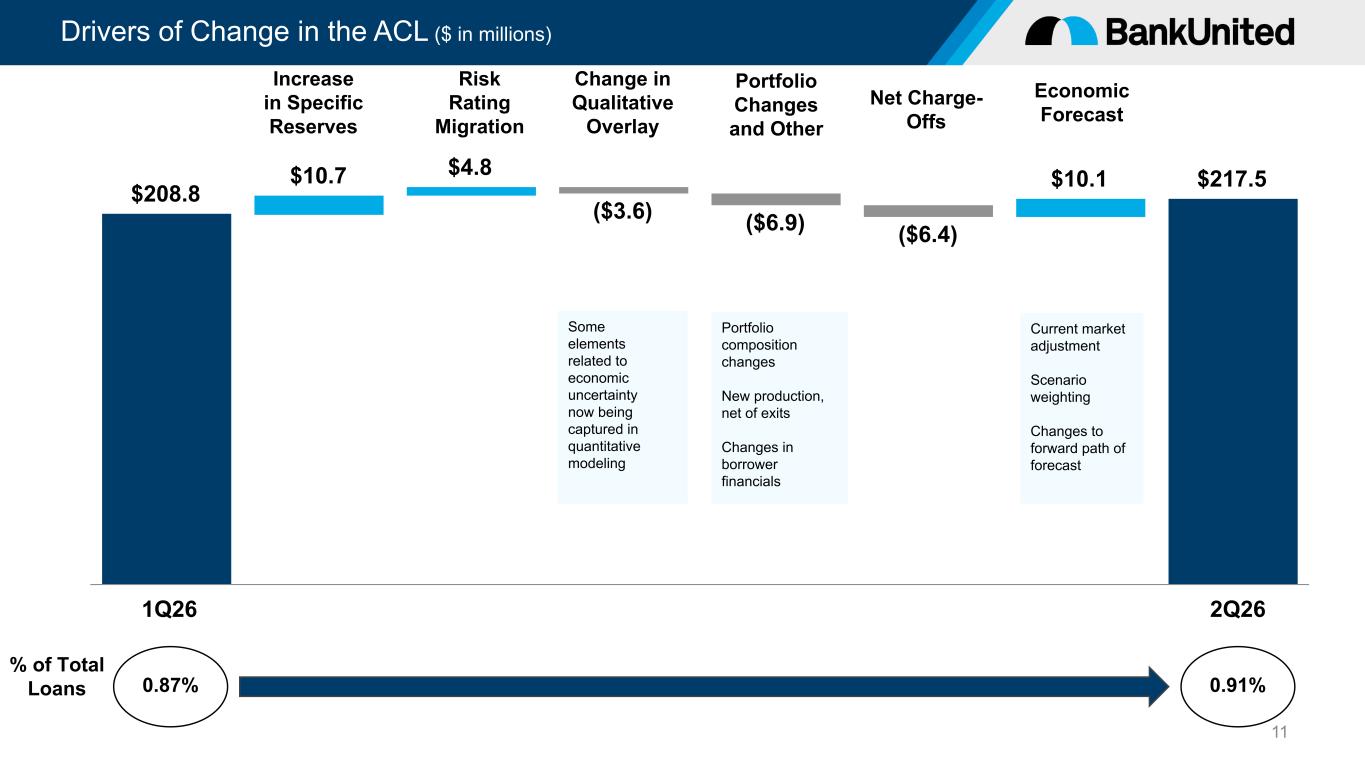
No, I appreciate all the color there, especially on the data center stuff. Maybe just two quick follow-up ones. Anything to read into the build and the office reserve this quarter? I think it was up about 30 BIPs queue on queue. And then just secondarily, was there anything in the other expense category that is maybe one-time-ish, or how should we think about that?

Nothing to note. I mean, it's just general economic scenario updates. Nothing material to call out.

Raj Singh Chairman

Other expenses, we kind of talked to you about the deposit costs, big item in there, but it's not non-recurring. It does move up and down with deposits, so second quarter being our biggest deposit quarter, It can elevate a little bit, but nothing that I would call sort of uniquely or one-timed.

And expenses? I mean, just the two items we call it. I mean, you know, again, ebb and flows of ops losses that can go up or down. And then the REO was a one-timer. You know, we have a very small REO expense. This was a little bit larger one due to one unique problem. But, you know, REO is largely cleaned out of our balance.

Michael, on the office side as well, if you look at the data, the metrics around the office portfolio continue to be very good. 1.76 weighted average debt service coverage, 65% loan-to-value. While we're not actively doing much new in that portfolio, the markets that we're in are recovering and doing very well. Miami is an unusual market because it's so hot right now. We don't actually do a lot of office in Miami, but even markets like New York is the leasing activity in the growth in the New York office market has been pretty good.

Speaker 4

Totally get it. Thanks for all the color, guys. I'll step back.

Speaker 6

The next question comes from Ben Gerlinger with Citi. Please go ahead.

Ben Gerlinger Analyst — Citi

Good morning. I hear you on the loan side, definitely core. it seems like you guys are implying it's a little bit kind of more fourth quarter than third quarter. Maybe I'm mishearing that, but I'm trying to think like through the funding aspect of it, I get brokered versus FHLB or just call it wholesale funding. like the fourth quarter does have the better loan growth. You do need to fund it. I just kind of struggling to get to 315 NIM on top of all that, just given the spread where we are today. So it's kind of curious if you just kind of unpack that. I mean, there's three moving parts to that, so where might I be rolling kind of thing?

Raj Singh Chairman

I think it's starting with NIDDA growth, average balances will increase. Also, continue to change the balance sheet on the left side. Hopefully, C&I will grow any exits. You know, I think if we're spending a deposit, if any at all, but I do expect that by the end of the year. In terms of whether loan growth is more fourth quarter, third quarter, you can have loan closing scheduled for the end of the month that can spill over into the next month. It's really hard to say when they materialize, but when we look at the pipeline, generally it's a sixth, not always in our hand, but when we're reporting, it's very hard to really say this is third and this is fourth quarter. Overall, the pipeline for the rest of the year looks good.

We expect both quarters to be good. But where it falls depends a lot upon, you know, whether we close a deal on 929 or 10-2.

Ben Gerlinger Analyst — Citi

Right. Yeah, no, I understand that. Okay, that's helpful. And then utilize the buyback, maybe on page 15, $146 million. Should we assume it's a glimpse, or just kind of how do you think about timing on that? Potentially, would you do another one this year if you utilize the whole thing?

Raj Singh Chairman

What the board has told us is to use up this and then come back to that.

Ben Gerlinger Analyst — Citi

That's helpful. Thank you, guys.

Speaker 6

The next question comes from John Arbstrom with RBC Capital Markets. Please go ahead.

John Arbstrom Analyst — RBC Capital Markets

Hey, most of my questions I'm going to ask, but can you guys give us an example of some of the more intense competition and mispricing, you know, what you're walking away from and kind of where and what and why you think that's happening?

Well, how many hours do you have? I would say there is, particularly in the corporate market, middle market type credit, there is broad competition. Part of it is rate. Part of it is also structure and terms. And, you know, you look at things like we exited a private equity, private credit deal this quarter, where, you know, it got redialed. I mean, here's a very specific example. It got redialed. The credit is probably not as good. The market conditions around private credit are certainly not as strong, to put it mildly, than it was a year ago. but yet the pricing is going down and the conditions around the covenants and structure around the credit is weakening. So you go like, well, why would you do that? That doesn't make any sense. So when that deal gets redialed, we choose to exit that deal. That's a very specific. Each one's a little bit different, but I would say by and large, when we look at the competitive nature, people are obviously trying to build volume. They're trying to build balances. There are times when you just look at it and it's maybe less scientific, but there are times you look at it that you just say, you know what? I think we'll wait for another opportunity with this funding base, and we'll look for something that's more within our wheelhouse and has got better relationship aspects to it than this does, and we're not going to chase like that.

John Arbstrom Analyst — RBC Capital Markets

Good. Thank you on that. And then, Jim, maybe for you, you alluded to it in your prepared comments, but on capital markets, you talked about how it attracts lending activity. is the message there that capital markets revenues can grow from here in the second half of the year?

Sure. I mean, that's why we took guidance up a little bit. And, you know, both swaps activity related to lending has been strong for us year to date. We expect it to continue to be that way. You know, it's a smaller business for us, but FX is an area we've been focusing on. And, you know, there's loan syndication fees. There's lots of things that sort of, you know, it's market dependent, but we have strong pipelines. So, if we do our job right, we should be able to deliver that growth.

Speaker 4

All right. Thank you.

Speaker 6

The next question comes from Steven Scowton with Piper Sandler. Please go ahead.

Speaker 4

Yeah, thanks.

Steven Scowton Analyst — Piper Sandler

I'm not sure if I missed it, but you guys have new coming on loan yields for this quarter?

Speaker 4

Did you talk about just new production loan yields? Yeah, exactly. Is that what you're asking? Correct. I don't. I don't believe we disclosed that.

Steven Scowton Analyst — Piper Sandler

Gotcha. And on the average 531, I think, would you expect that to kind of continue to move lower from here on the kind of strategic runoff? And maybe along with that, does all the competition that you're talking about and the tightening of credit spreads maybe quicker than you would have expected, does that make you rethink any of the pace or direction of the strategic runoff moving forward?

Well, when we set the original guidance, I'll try to parse this out. When we set the original guidance at the beginning of the year, we had always counted on credit spreads in CRI and CNI to tighten. They tightened a little bit faster, or not a little bit, a lot faster than we had originally expected. So that's one thing. where spreads are today and certainly where we are, you know, our buy box, we are in our guidance for the remainder of the year, we're expecting that to mean relatively stable from those tightened levels. And so then largely yields will somewhat depend on the mix of the portfolio as we go through the year. And we talked about our mix, you know, a little bit less CNI, a little bit more mortgage warehouse and other things that certainly hurt loan yields earlier in the year. and so we should have a little bit higher C&I mix, for example, later in the year, things like that.

Raj Singh Chairman

I think you also asked about strategic runoff. So that's a resi portfolio. So we expect it to keep running off. It's hard to really pinpoint every quarter how much it will be, but overall, the directionally, it'll still be the same. I think we had a little more runoff this quarter than typical. I think it might have been because there was like a one-week period of a refi boom in late first quarter, which those loans probably closed in the second quarter. I'm guessing that's the reason. I don't see any refi boom going forward where the 10-year is, so I think that runoff may slow down a little bit, but it'll continue to be in runoff mode.

And then in core loans, we talked about some of the holding firm on pricing and structure.

I think I forget the exact number 250 ish million lower loan balances because of you know some of those actions and we certainly expect to replace that volume it's just you know it doesn't happen immediately so yeah I would also add you know when you think about strategic exits I when I think about that phrase I think more about you know we've probably had three of those in the course of the last you know 10 years the rundown of the resi portfolio the the exit that we did from the new york rent stabilized and rent controlled market and and the significant rundown that we had in the office market those are those are things where we look at an entire sector or asset class and say we want to have whatever percentage less of it than we currently have now what we're seeing today is more of an individual you know credit by credit decision which are less predictable because we don't know necessarily what the competition is going to do on the other side and and we do try to put a common sense bar you know against what we're doing and we're strongly focused on continuing to expand the NIM, you know, and you don't get there by lowering rates dramatically on your yields. And so we try to think about each one of those. So an exit can be a deal that gets redialed, like this private credit deal I mentioned, that you just look at and say, we're not exiting the entire sector from a strategy perspective, but this individual alone does not make sense. Those are episodic things that are a bit harder to predict when you look at a quarter or two quarters out.

Steven Scowton Analyst — Piper Sandler

And then one last clarifier. I know we just have the March 31 balances, I guess, from the queue, but I think HOA deposits were 2.3 and the title were around 4.1. Are the majority of those deposits contained within the NIDDA, and is the way to think about that expense line, the 13.2 million that you noted, would that correspond kind of proportionally with the growth in HOA? Is that fairly linear?

Raj Singh Chairman

It's largely HOA. It's a little bit in title and a very small amount outside of those as well. But the biggest bucket is HOA. And if your question is, are HOA and title all checking no that is not true there is an element of interest bearing in both them I would say a majority of title business is is an IDDA but not a hundred percent not even close there's a fairly good about I don't know if you disclose it or not but you know it's it's it's largely checking but there's a pretty big element of interest bearing same thing with HOA it's a good amount of checking but there's a pretty large amount of interest bearing as well Fantastic.

Speaker 4

Really appreciate the color. Thanks for the time.

Speaker 6

This concludes our question and answer session. I would like to turn the conference back over to Raj Singh for any closing remarks.

Raj Singh Chairman

Yeah. I will close where I started this call, which is, you know, a long time ago, 20 years ago, it was leading to me that the value of a bank's franchise comes from the right side of the balance sheet, not from the left. I believe that. I've preached it. I've never had a shareholder or an analyst or anyone disagree with me on that. It is also the hardest thing to build. It's also the most lasting thing to build. We're very proud of what we have been able to achieve, almost $10 billion of NIDDA, record high NIDDA total deposits. It didn't happen overnight. It didn't happen even in over one or two years. It took a while to do. And the momentum has not diminished at all. I expect this number to grow. We'll give you guidance, obviously, at the end of the year for what it can be at this time next year. But I would expect a similar kind of trajectory going into the next 12, 24 months. So very happy about that. We have a company-wide call right after this to celebrate this. And in the meantime, we'll keep plugging away. Markets go up and down. I mean, listen, we're just a little country bank. We're no Berkshire Hathaway. But we have to be sitting on $350 billion of cash and not deploying it, an article I just read a couple of days ago. Like I said, we're not Warren Buffett or Berkshire, but the sentiment is the same. You have to be prudent when you want to deploy capital and when you don't want to deploy capital. So we're doing that deal by deal, client by client, and staying laser-focused on building the right side of the balance sheet. So thank you for joining us, and if you have any other detailed questions, you know how to reach us. Otherwise, we will talk to you again in 90 days. Thanks. Bye.

Speaker 6

The conference has now concluded. Thank you for attending today's presentation. You may now disconnect.

Documents & deck