Operator
Thank you for standing by, and welcome to Bell Ring Brand's third quarter, fiscal year, 2026 earnings conference call. Currently, all participants are in a listen-only mode. After the speaker's presentation, there will be a question and answer session. To ask a question during the session, you will need to press star 11 on your telephone. To remove yourself from the queue, you may press star 11 again. I would now like to hand the call over to Jennifer Meyer, Investor Relations for Bellring Brands. Please go ahead.
Good morning, and thank you for joining us today for Bellring Brands' third quarter fiscal 2026 earnings call. With me today are Mike Axelrod, our president and CEO, and Paul Rode, our CFO. Mike and Paul will begin with a pair of remarks, and afterwards we'll have a brief question and answer session. The press release and supplemental slide presentation that supports these remarks are posted on our website and both the Investor Relations and the SEC Filing sections at bellring.com. In addition, the relations slides are available on the SEC's website. Before we continue, I would like to remind you that this call will contain forward-looking statements which are subject to risks and uncertainties that should be carefully considered by investors as actual results could differ materially from these statements. These forward-looking statements are current as of the date of this call and management undertakes no obligation to update these statements. As a reminder, this call is being recorded and an audio replay will be available on our website. And finally, this call will discuss certain non-GAT measures. For reconciliation of these non-GAT measures to the nearest GAT measure, see our press release issued this morning and posted on our website. With that, I will turn the call over to Mike.
Thank you, Jennifer, and good morning everyone. Thank you for joining our third quarter earnings call i'm excited and honored to lead bell ring and i'm grateful to the board executive leadership team and colleagues across the company for the very warm welcome as it's my seventh day at the company i'll start the call with introductory remarks and then pass it on to paul to cover our third quarter performance and outlook for the remainder of fiscal 2026. i joined bell ring after 30 years in the consumer packaged goods industry across both entrepreneurial and large-scale businesses. Throughout my career, I've had the opportunity to grow businesses profitably by strengthening execution, improving operations, and speed to market, and investing behind strong brands. What attracted me to Bellroom was the combination of an attractive category with a long runway for groom, the market-leading premier protein brand, and a meaningful opportunity to improve execution. I've built my career by putting the consumer first, building strong customer partnerships, and creating value through disciplined execution, and I see many of these same opportunities here. Encouragingly, consumer demand for ready-to-drink protein shakes remains strong in the category among the fastest-growing in CPG. We continue to believe there is a substantial runway for growth supported by long-term health and wellness trends. While competition is increased, that is exactly what you would expect in an attractive growing category. premium remains the category leader consumer trends improved every quarter this year and we continue to see considerable opportunities to better realize the full potential of the business these category and brand strengths give me confidence that our current financial performance which has been affected by some transitory factors does not reflect the long-term potential of the business as the categories become more dynamic and competitive winning requires greater operational discipline, faster decision-making, and new capabilities. While we've done many things well, we have not executed consistently at the level we expect ourselves, and we are not satisfied with our financial performance. As Paul will discuss, actions are already underway to put the business on a healthier footing, but I believe there's considerable more opportunity ahead. I believe in building winning teams that are highly accountable, customer-focused, and data-driven. Over the coming months, I'll spend time listening to our employees, customers, and partners, identifying opportunities to improve, and empowering our teams to make thoughtful decisions and drive accountability across the organization. There are certainly near-term challenges to work through, but I believe they are manageable, and I assume meaningful opportunities to improve performance and better translate our category leadership into more consistent, profitable growth over time. In closing, I believe Bellring's top and bottom line growth opportunity remains compelling. My commitment is straightforward. Move with urgency, execute with discipline, and create long-term value for our shareholders. I look forward to speaking with you again on our fourth quarter earnings call to share more about my strategic priorities, operating plans to create long-term shareholder value, and our 2027 guidance. I'll now turn it over to Paul to talk through the quarter and our updated envelope.
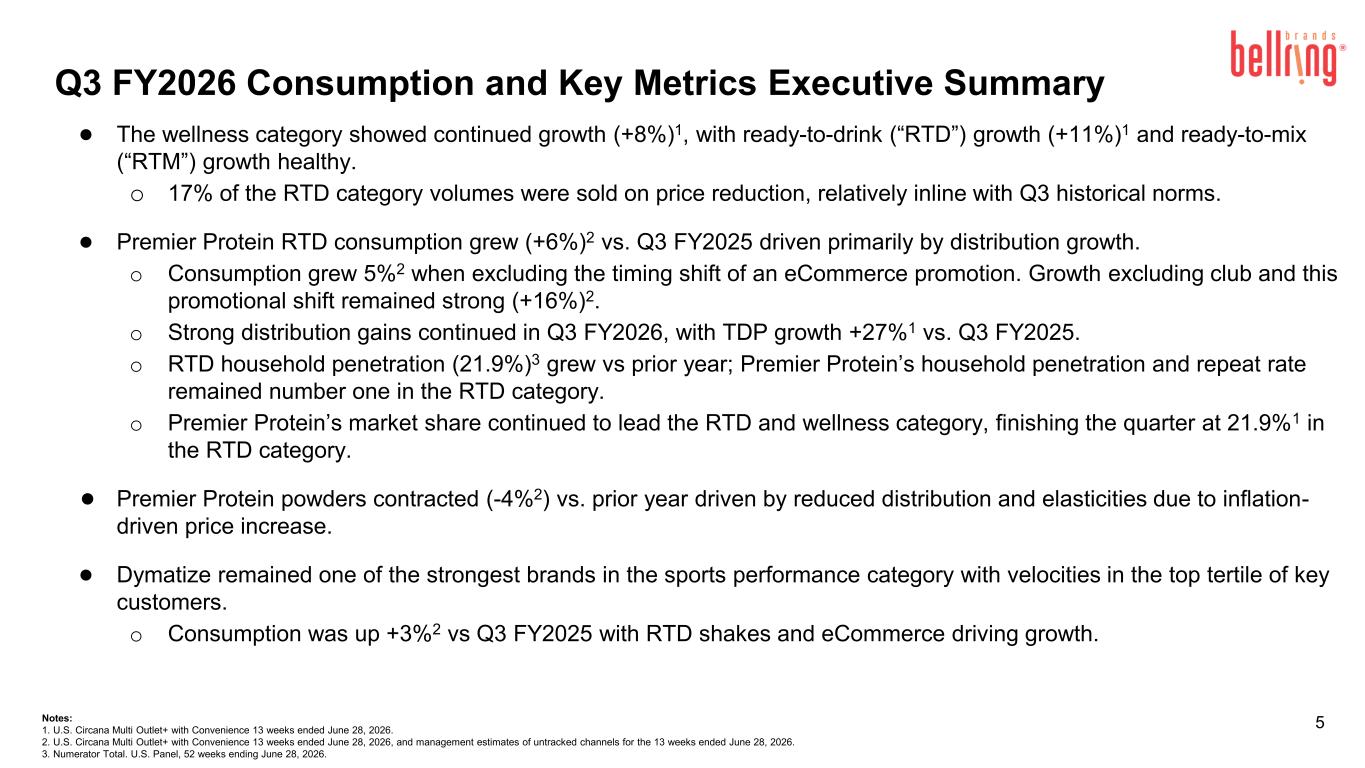
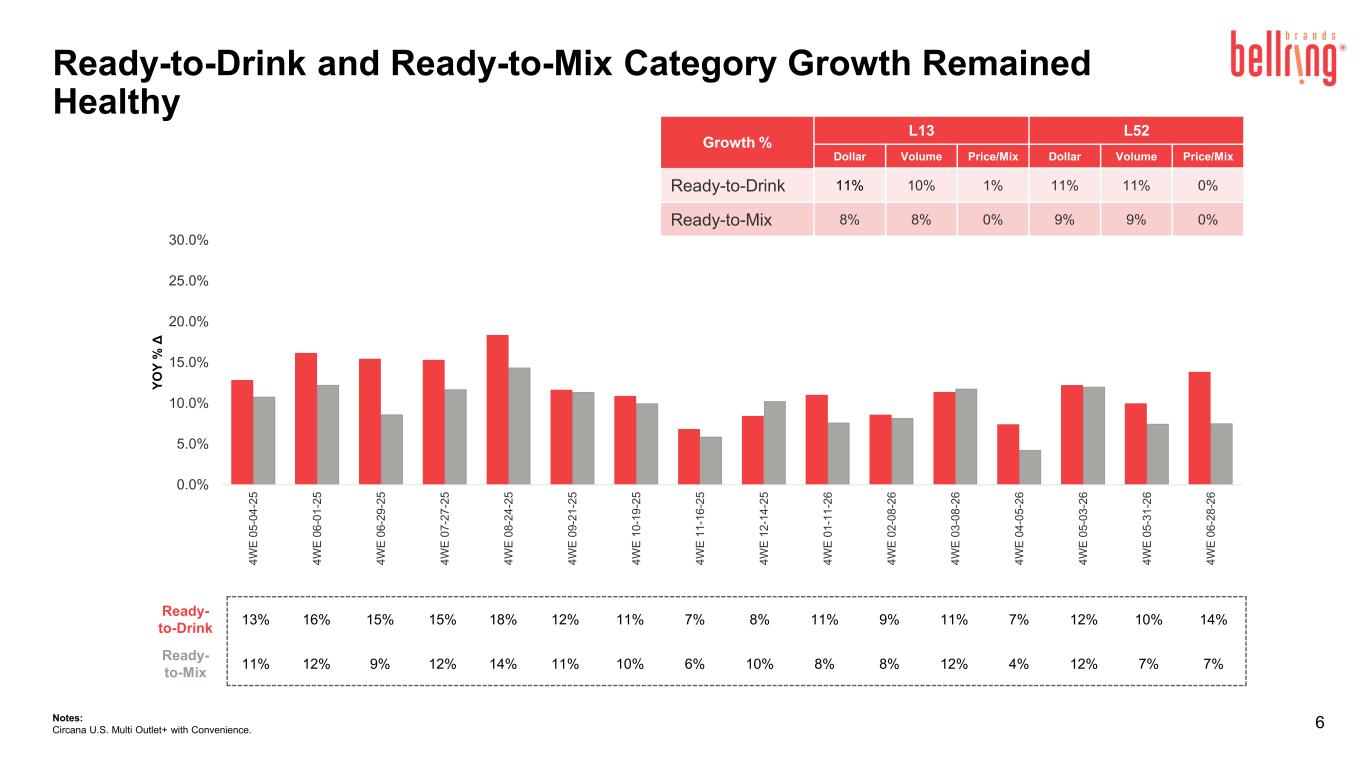
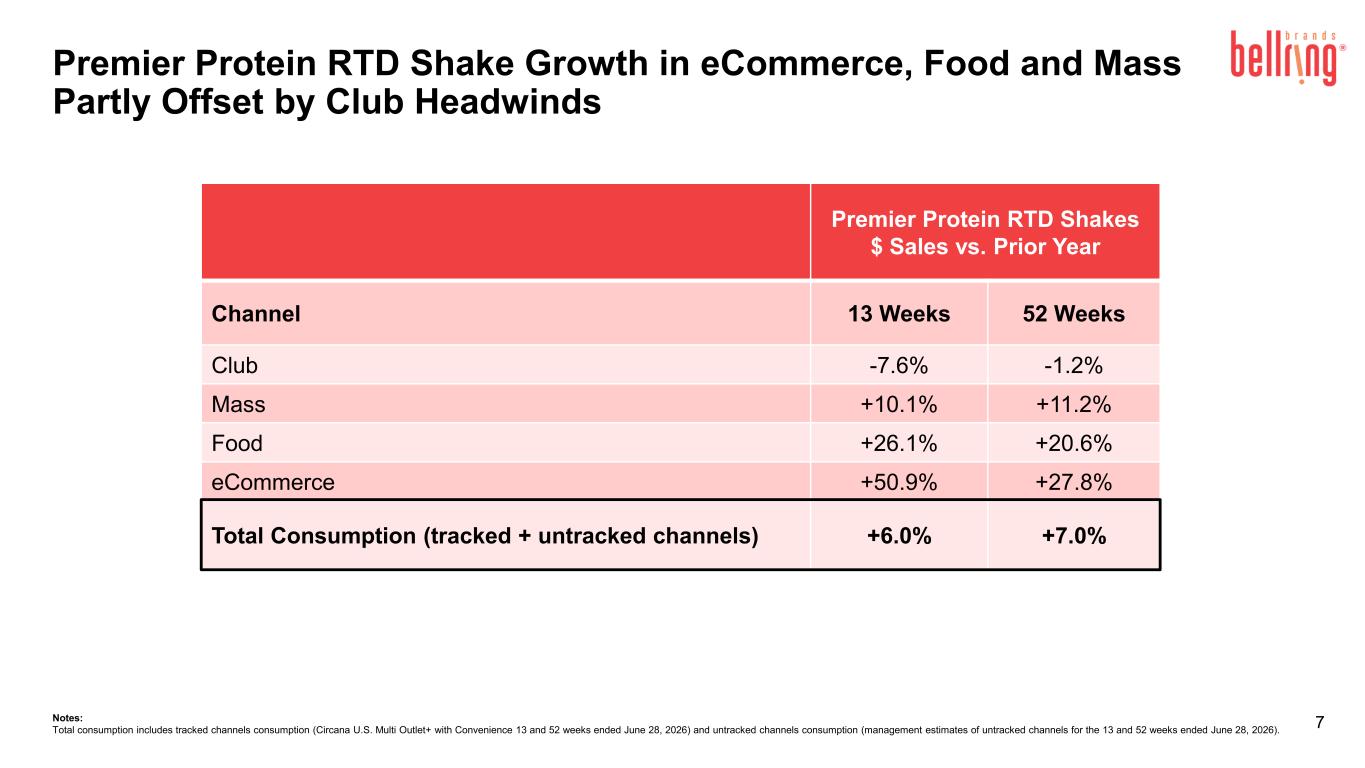
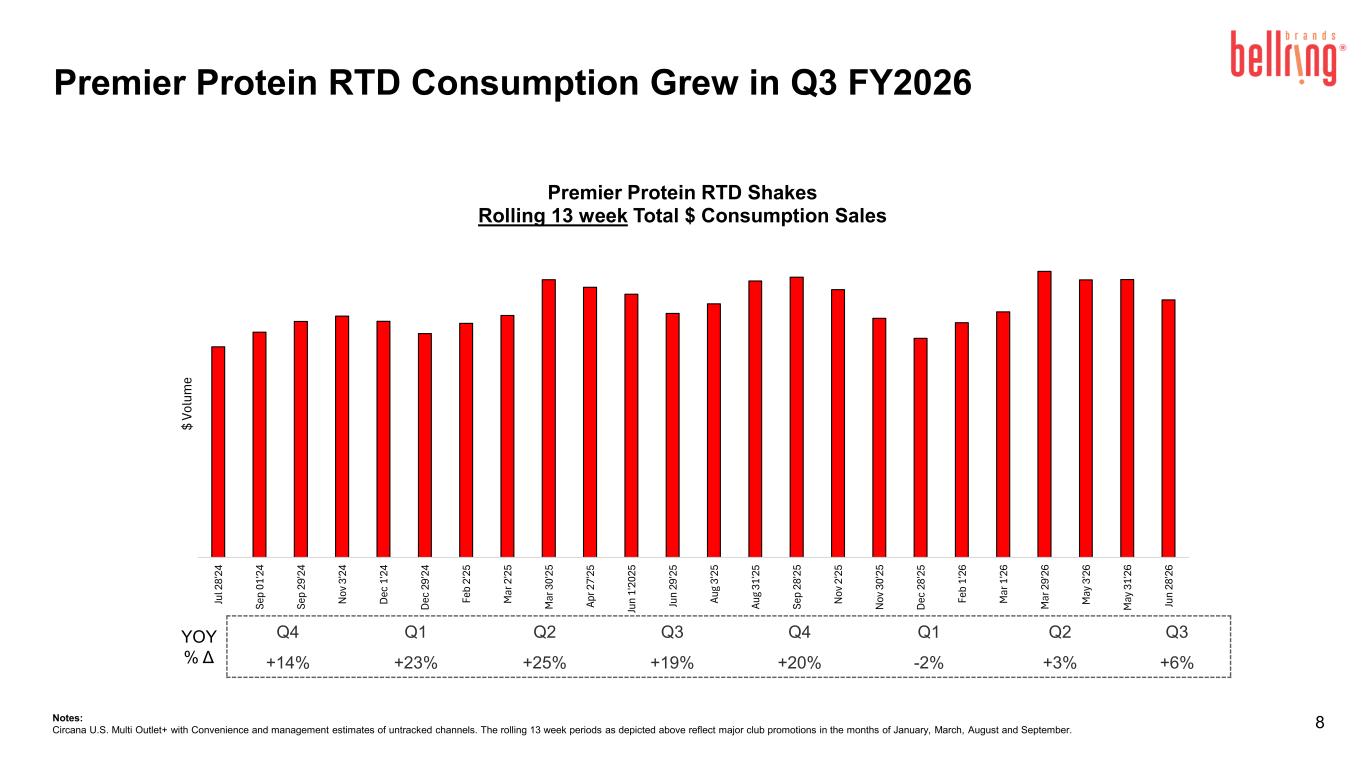
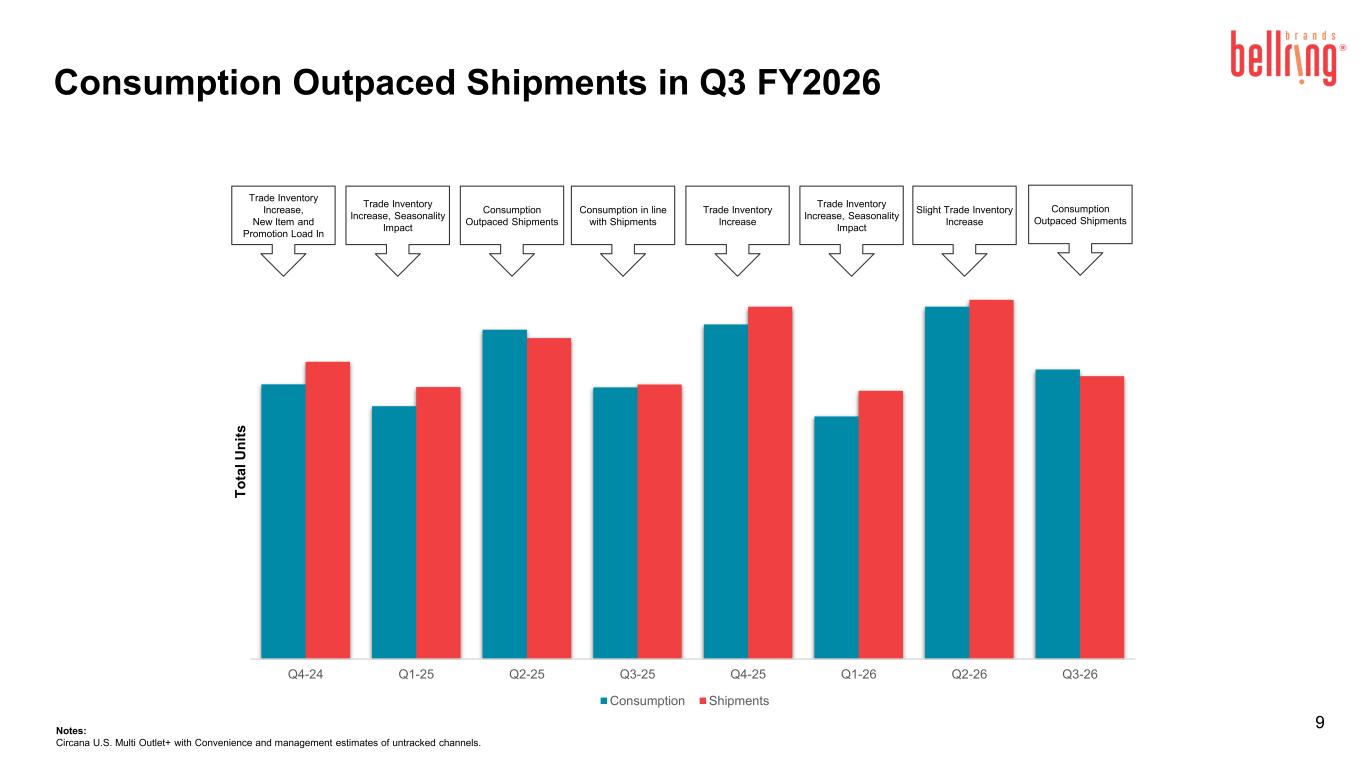
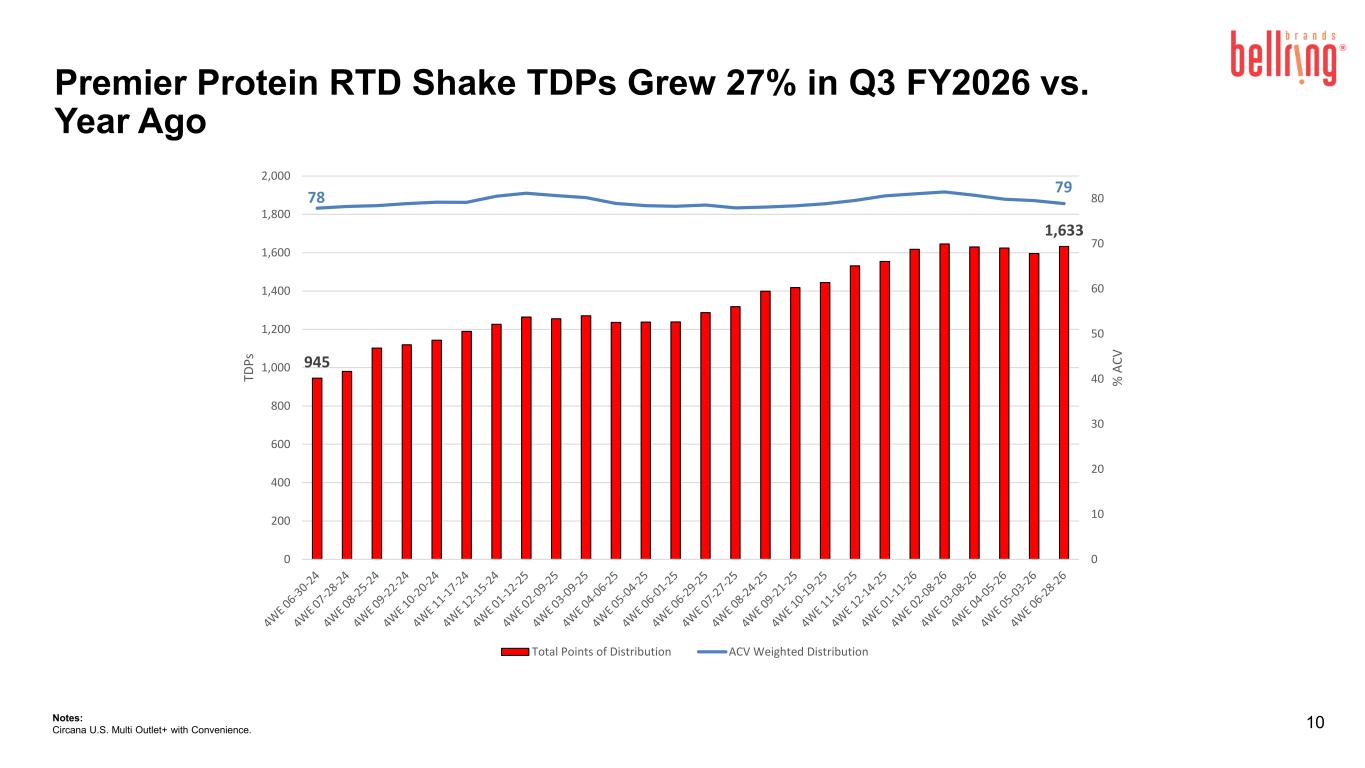
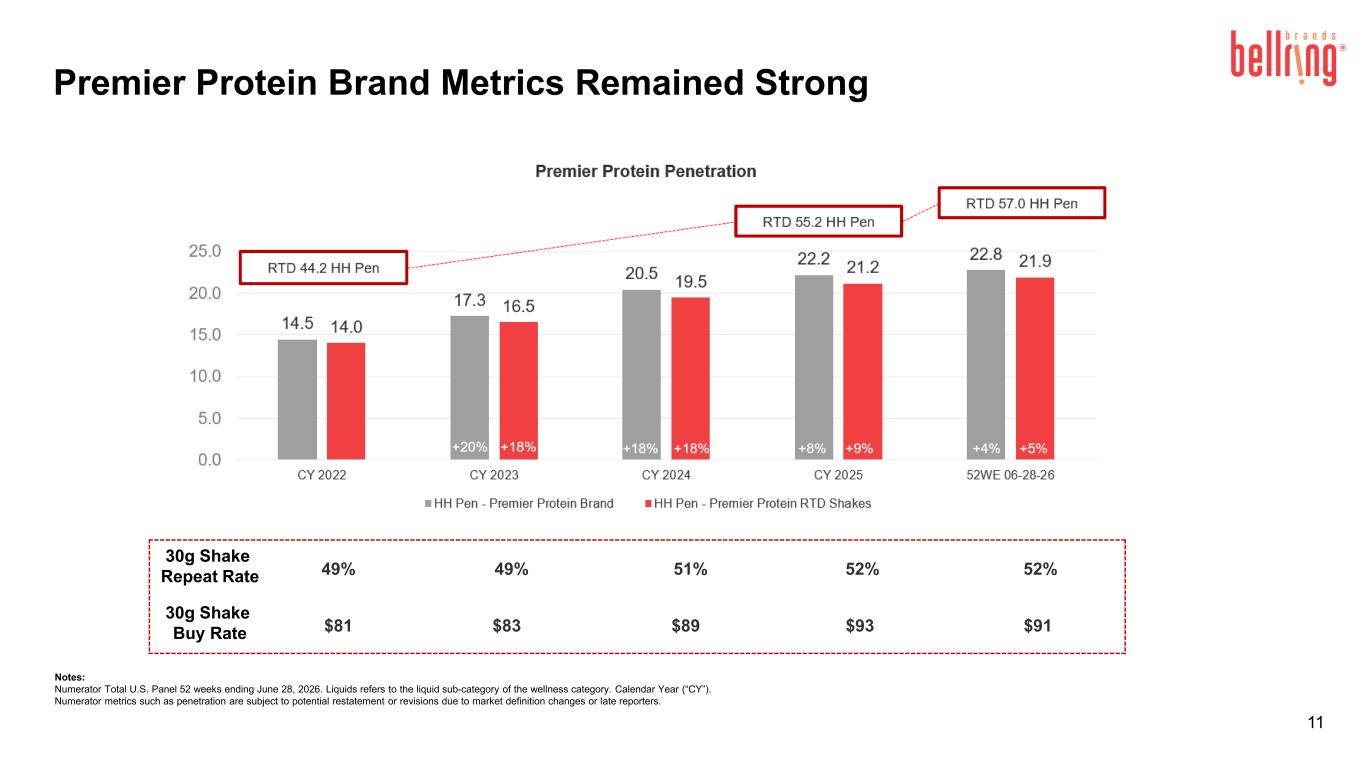
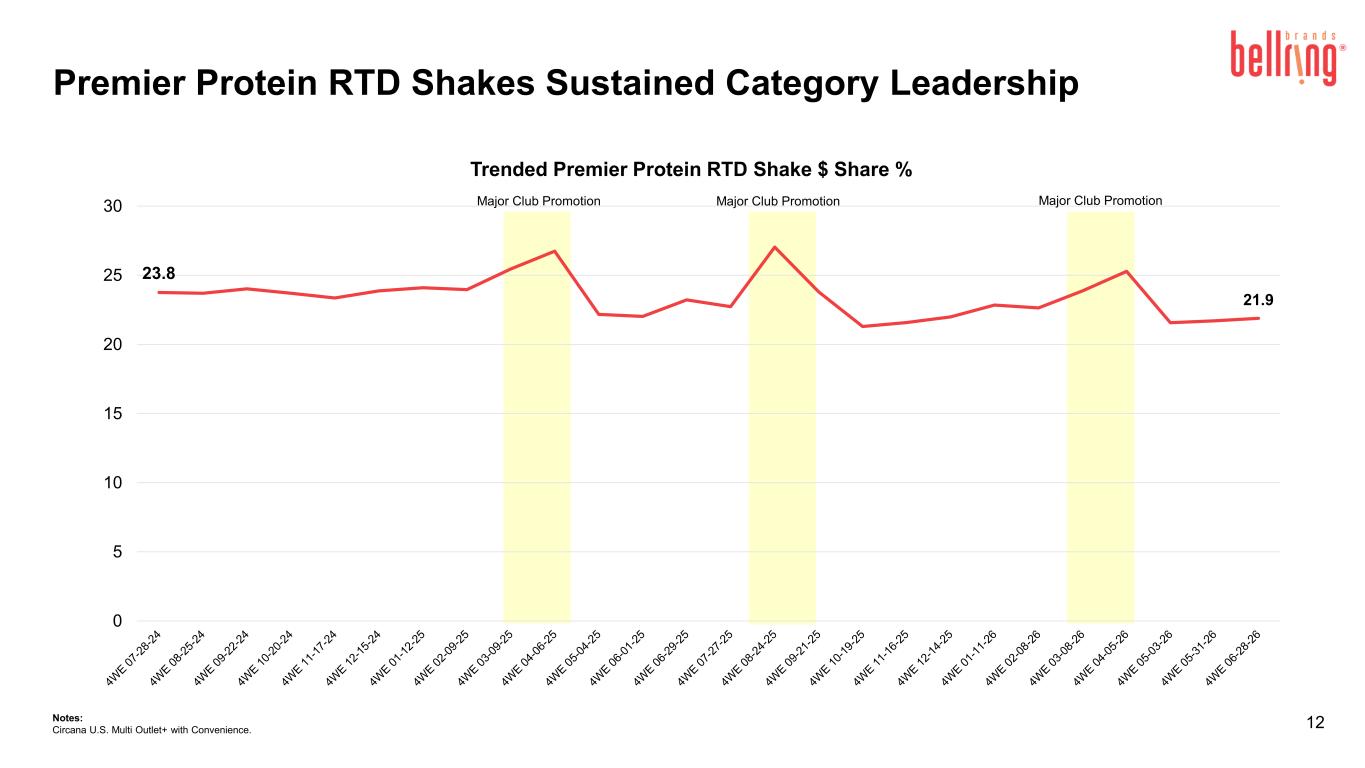
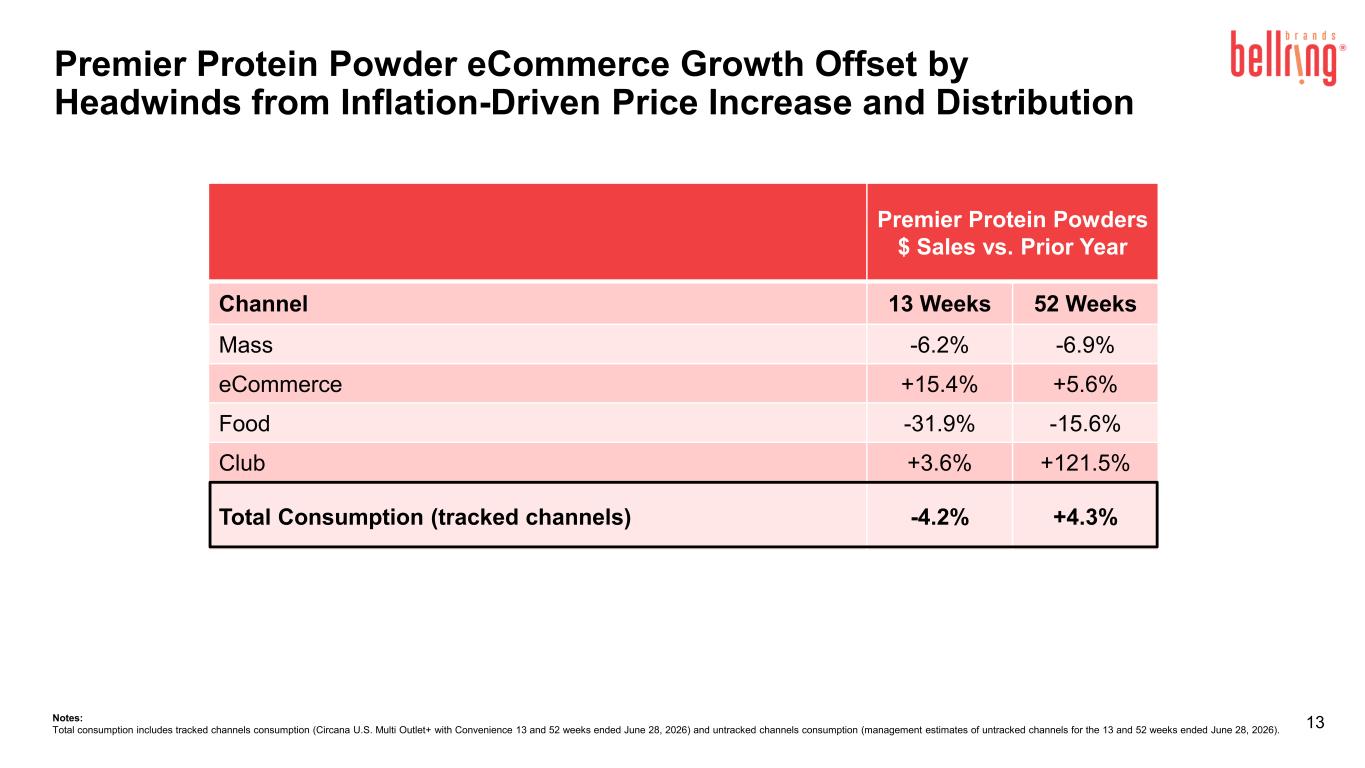
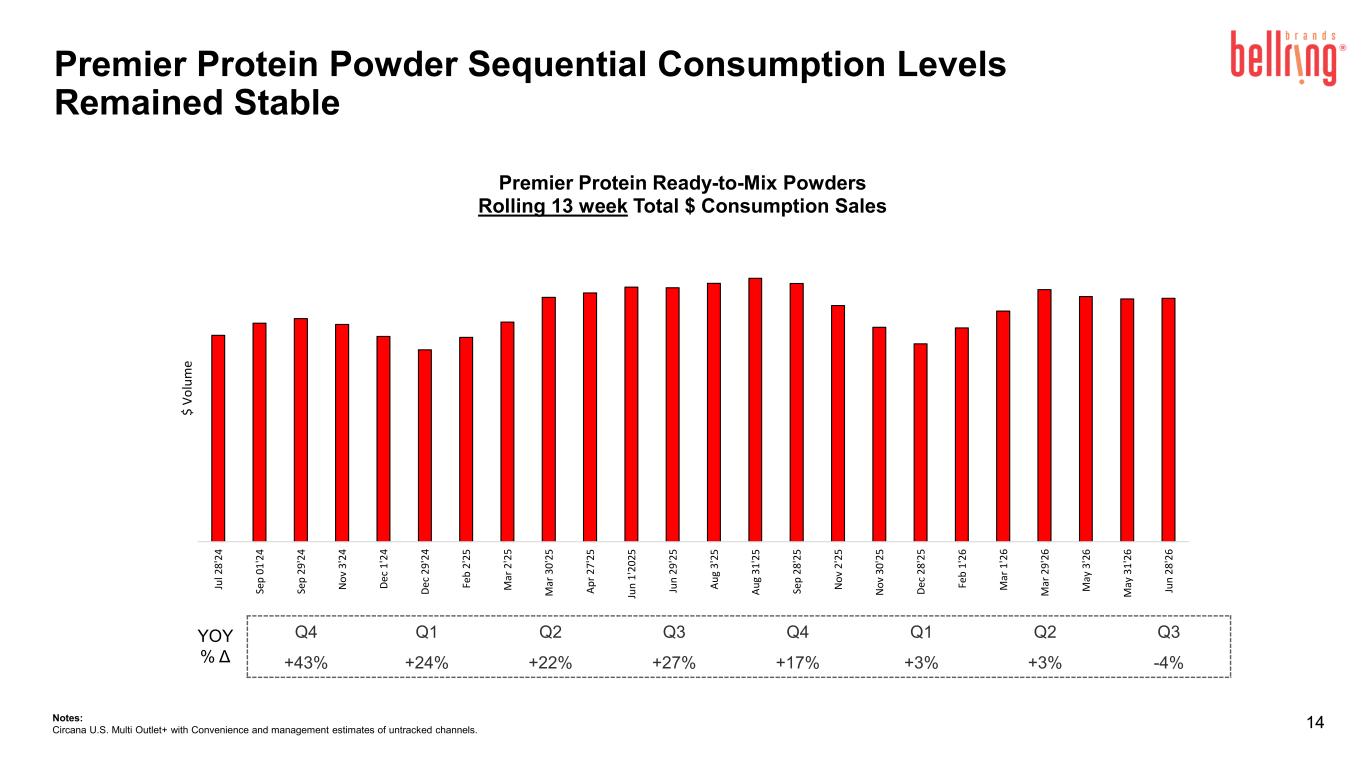
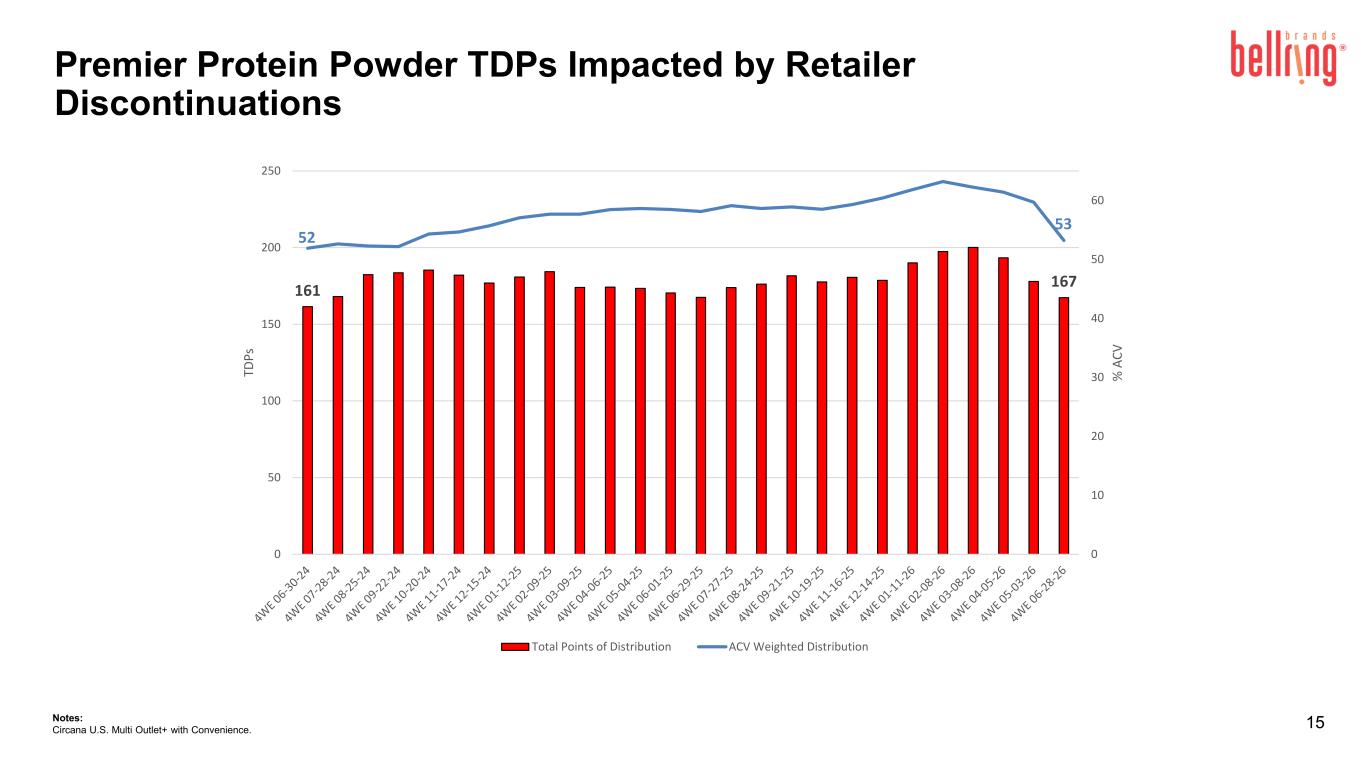
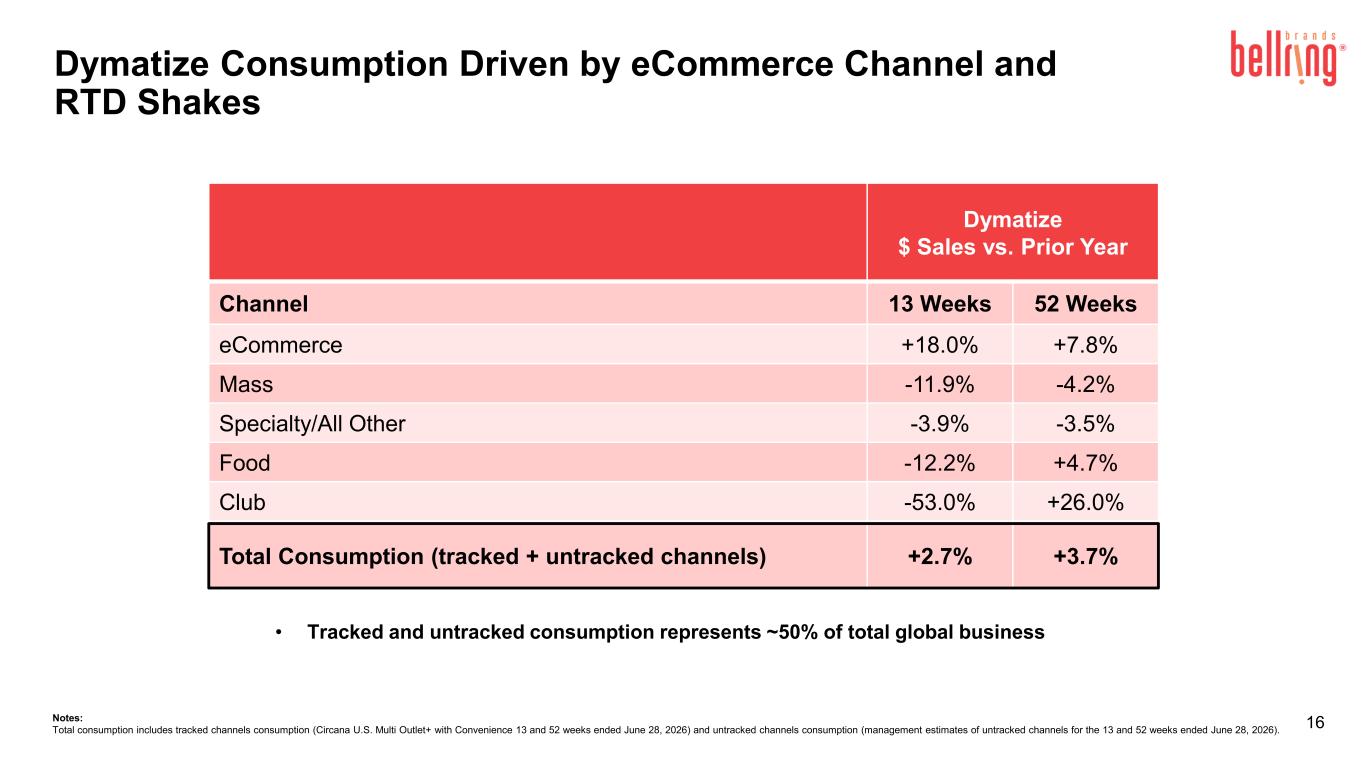
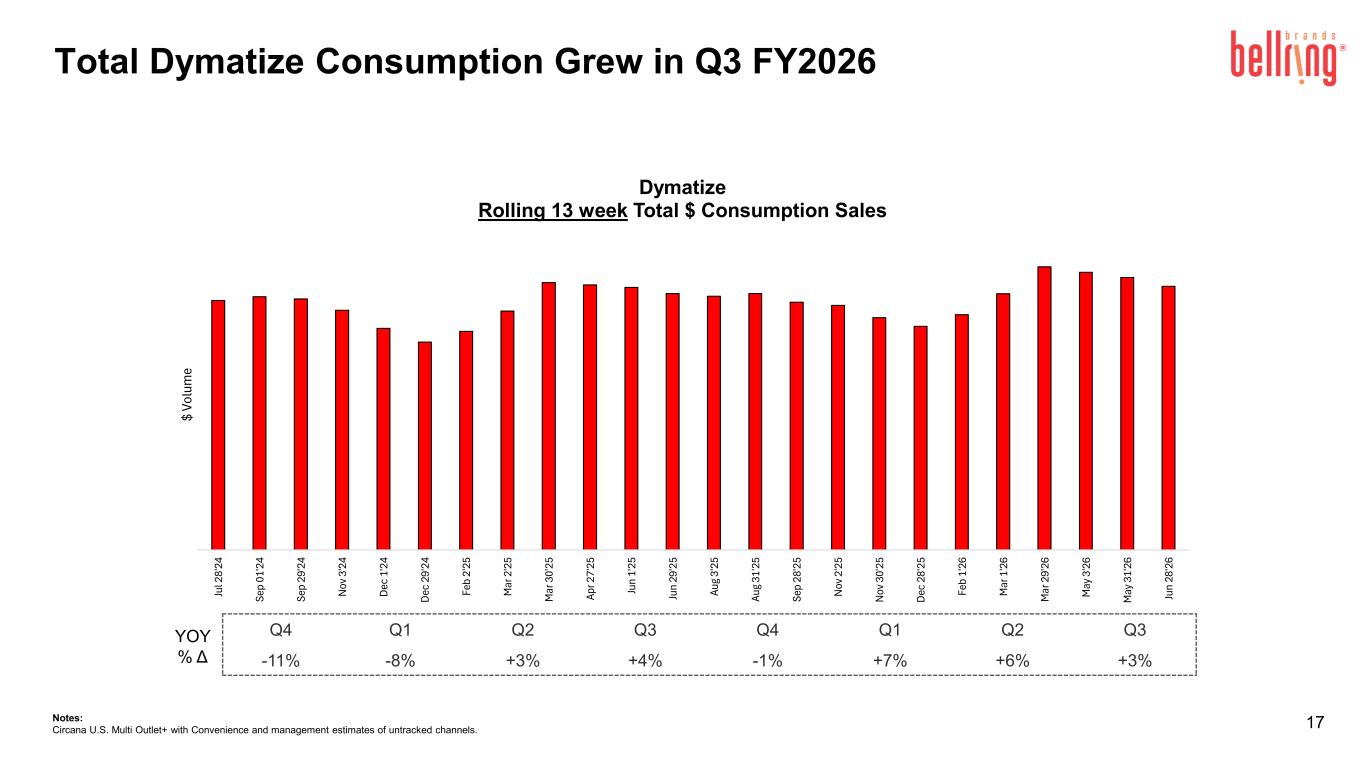
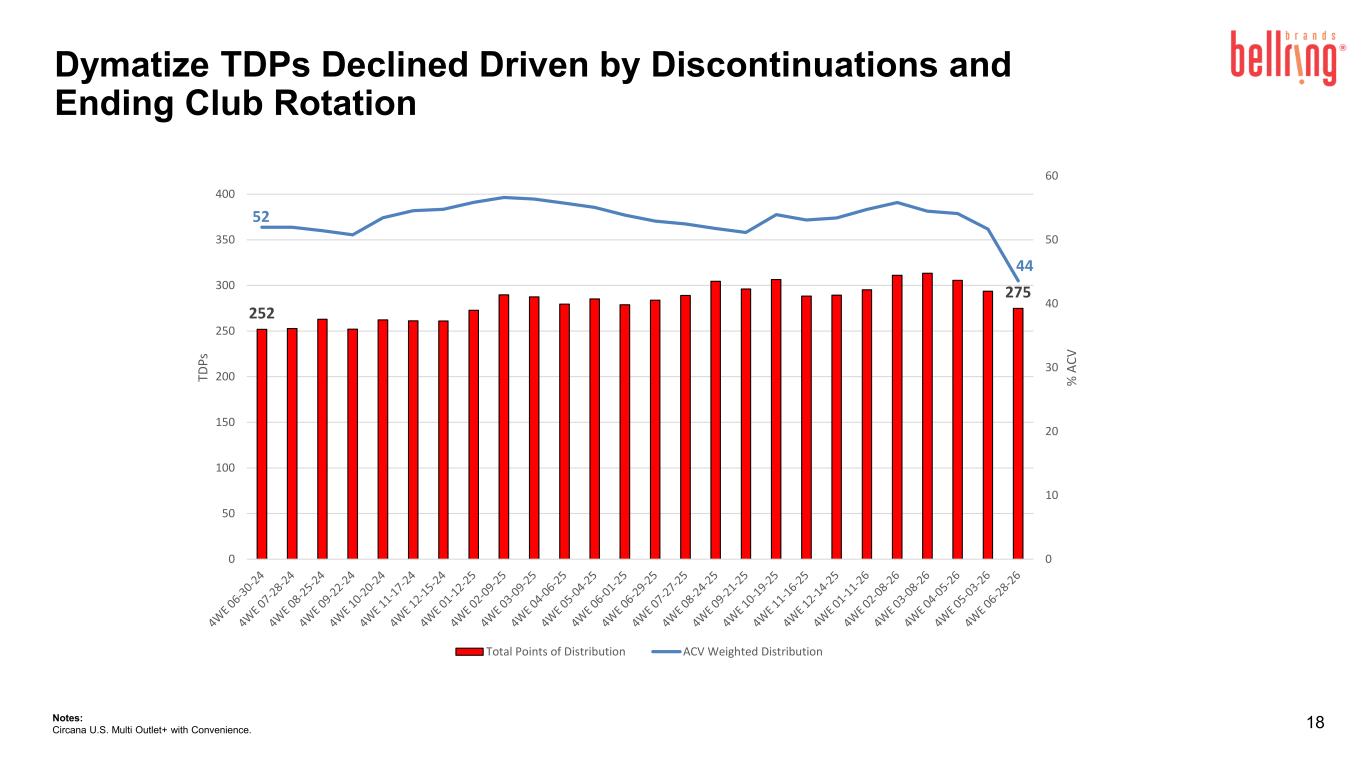
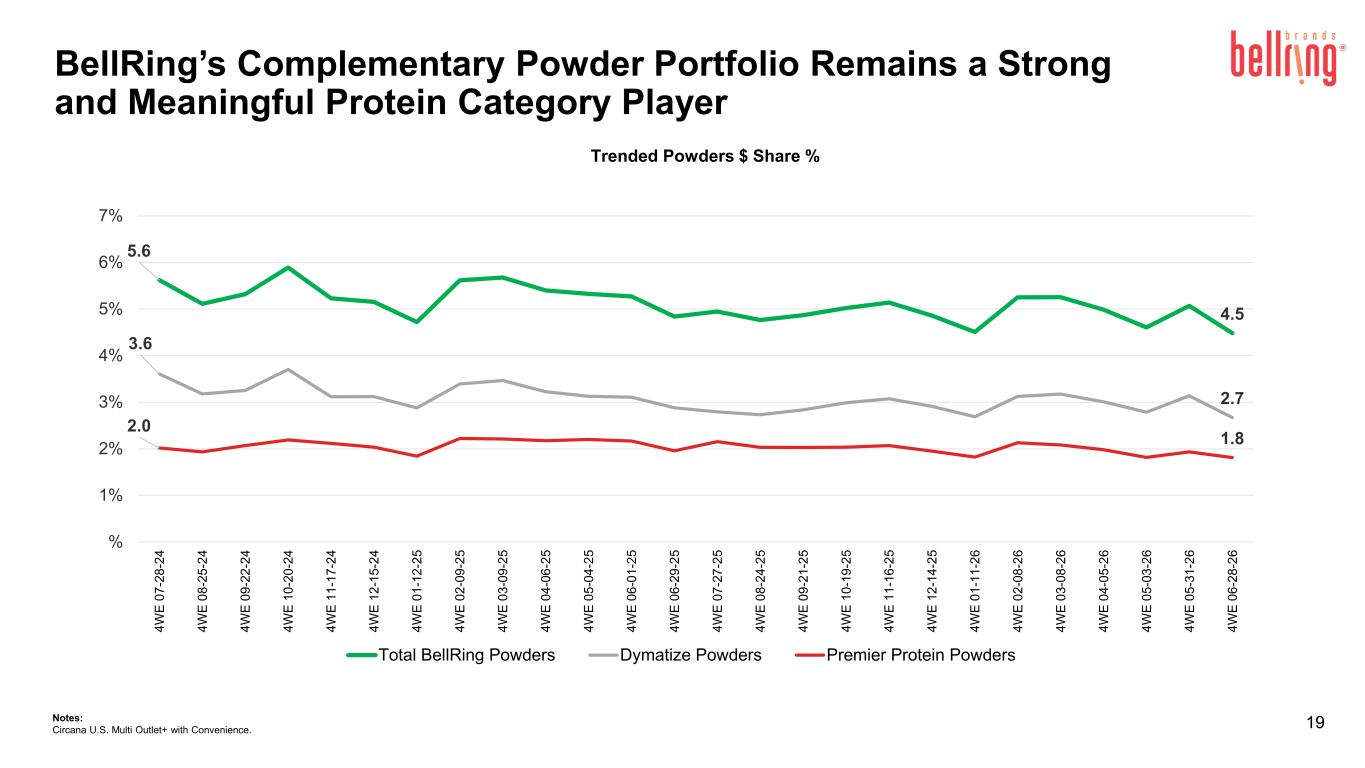
Thanks, Mike, and welcome to the Bellring team. Our third quarter net sales consumption exceeded expectations, with both Premier Protein and Diametize contributing to the upside. However, adjusted EBITDA margins were below our guidance, reflecting inventory-related headwinds and higher freight costs. We expect these pressures to continue in the fourth quarter and have incorporated them into our revised guidance, which I will discuss shortly. We remain focused on our growth priorities, including innovation launching this quarter, and are encouraged by the resilience of Premier Protein's brand metrics despite a highly competitive environment. That said, we are not satisfied with our financial performance and are focused on restoring a stronger profit trajectory and delivering more consistent results as we look ahead to fiscal 27. To support that objective and the long-term growth of the business, we are taking decisive actions across pricing, channel mix, productivity, and supply chain capabilities to bolster our operating model and address cost pressures. First, we've announced a double-digit price increase on Premier Shakes and additional pricing on powders, both effective in our first quarter of fiscal 2027. We believe these actions are necessary to offset sustained inflationary pressure in key input costs and support a healthier margin profile over time. With this price increase, we expect volume-related elasticities to be slightly greater than one. Second, we continue to take steps to diversify our business across channels, categories, and adjacent product segments. In FDM and e-commerce channels, we expect meaningful distribution gains in 27, supported by strong retail demand for both core and innovation offerings. In convenience, we are advancing a disciplined expansion through targeted regional DSD expansion. We believe our core 30-gram protein shakes and our new premier protein ultimate product with 42 grams of protein are well suited to the convenience channel and can drive incremental growth we are also excited about the launch of premier protein sparkling soda which expands us into the refreshment category and creates incremental distribution opportunities together these initiatives are expected to broaden our consumer reach and further diversify our channel mix over time in club we currently expect our shake assortment next year to be generally consistent with this year, with one item representing a low single-digit sales percentage of this year's net sales expected to rotate out. We expect to retain a portion of that demand with our remaining flavors and continue to see opportunities to expand our club presence through innovation and new offerings that align with retailers' evolving assortment strategies. Third, we've completed several productivity initiatives, including this year's cost savings programs and our organizational realignment, which we announced in late June. These actions are designed to simplify the business, reduce structural cost, and improve execution discipline as we enter fiscal 2027, where we will continue to focus on cost savings. And finally, we are working to strengthen our planning capabilities and end-to-end supply chain processes to improve inventory management. These efforts are in the early stages and include investments across people, systems, and processes to support more consistent supply chain performance going forward. We'll provide further updates on our 2027 initiatives on our fourth quarter earnings call. Overall, we expect to deliver improved margins over time with progress beginning in fiscal 2027. I'll now turn to an update on the category, our 2026 operating plans, followed by our Q3 results and guidance. Starting with the category, as Mike mentioned, category fundamentals remain healthy with strong consumer demand for protein. We continue to expect fiscal year category growth in the high single digits, primarily driven by volume. Household penetration continues to grow for both the Protein Shake category and Premier Shakes. Premier Household penetration has reached almost 23%, with Shake repeat rate consistently the highest in the category. In the third quarter, 70% of RTD Shake category volumes were sold on price promotion. This is relatively in line with historical norms for this period after adjusting for the shift of a major e-commerce promotion while down sequentially from the heavier promoted second quarter. While category fundamentals remain strong, Our outlook assumes fourth-quarter promotional levels will be more similar to the second-quarter trends, reflecting continued value-seeking behavior and elevated promotional activity during the key Q2 and Q4 seasons. Over time, we continue to expect category-based price increases as a result of meaningful input cost inflation. Our demand drivers for Fiscal 26 remain centered on, one, growing our distribution both in and out of aisle, two, increasing advertising investment while elevating its impact, and three, launching innovation that provides consumer excitement, ad occasion, and drives trial. We remain on track to grow TDP double digits in fiscal 2026. Store activation improvements with our new broker and internal retail sales teams continue to drive meaningful FDM growth. Recall, Q2 and Q4 reflect our typical seasonal increase in promotional activity. Our fourth quarter will include a promotional event with a major mass retailer featuring displays and end caps, which is similar to our second quarter event. In addition, we are repeating our Q4 club promotions with similar timing to last year. Our Q2 promotions delivered significant household gains, including many new to category consumers, and we look for further gains in Q4. With respect to advertising, we increased our investment this year and launched Premier's Go Get Them campaign, which is driving solid lifts in brand equity, awareness, and traffic to our website and e-commerce product pages. Campaign ROI is stronger than last year, and our full-year outlook continues to reflect advertising investment at approximately 4% of sales. Turning to innovation, as we've discussed previously, our demand study identified performance and refreshing protein as two of the most attractive and underserved areas in the category. Our Premier Protein 42-gram Ultimate Shake and Premier Protein Sparkling Soda expand our product portfolio into performance with high protein and refreshment while creating new opportunities to reach consumers across additional occasions. Both products are rolling out to mass food and e-commerce channels this quarter and will be supported by targeted retail and social media campaigns to drive awareness. Moving on to third quarter results. Net sales increased 4% in the third quarter with both brands ahead of our expectations. Premier Protein brand and RTD Shake net sales increased 1%. Shake volume grew 3%, partially offset by a 2% decline in price, mixed with dollar consumption up 6%. Sales growth trailed consumption primarily due to e-commerce promotional timing, a greater promotional impact on net sales and retail consumption, and modestly lower trade inventory. Regarding e-commerce, total consumption growth benefited by approximately one percentage point from a promotional timing shift to June compared to July in 2025. Excluding that benefit, consumption outside club grew approximately 16%. Compared to our expectations, Shake Sales and Consumption both benefited from the early start of a small portion of a promotion at a major mass retailer and stronger baseline velocity. velocities. Diamantize net sales were up 27 percent with volumes up 6 percent and strong price mix of 21 percent reflecting the inflation-driven price increases we implemented earlier this year. Compared to our expectations, Diamantize saw higher consumer demand primarily in e-commerce international channels and benefited from distribution gains in overseas markets. Adjusted gross profit was $158 million with adjusted gross margin of 27.7 percent compared to 35.1% a year ago. The year-over-year decline was driven by significant protein and freight cost inflation, including tariffs. Additionally, we recorded a charge in Q3 on excess bottle shake inventory. This inventory-related charge, which was a 180 basis point headwind, was the primary variance from our forecast, with the remainder from higher-than-expected freight costs, which were offset by the benefit from higher sales. SG&A expenses were $94 million, or 16.4% of sales, including a $7 million advertising increase or approximately 100 basis point increase as a percentage of sales. SG&A expenses also included a $5 million charge related to our organizational realignment, which was treated as an adjustment to EBITDA. Once complete, we expect this to generate an annualized run rate operating expense savings of $10 to $12 million. The fourth quarter will benefit from modest savings with the majority expected in fiscal 2027 turning to our 2026 outlook we now expect full year net sales of 2.335 to 2.375 billion which represents growth of one to three percent versus our prior guidance of flat to two percent growth adjusted EBITDA is expected to be 275 to 295 million with a margin of approximately 12 percent our full year adjusted EBITDA outlook includes 28 million of unfavorable inventory related impacts 21 million of which have already been recorded in q2 and q3 the remainder primarily relates to targeted trade spin anticipated in our fourth quarter to support excess bottle inventory sell through reflecting a prudent decision to optimize those levels ahead of year-end we continue to expect tariffs to be an 80 basis point headwind margin headwind for the year the change our outlook versus our prior adjusted EBITDA guidance is primarily attributable to two items, inventory-related actions and higher freight costs. Freight rates have risen sharply since our May earnings call and are expected to remain elevated, incrementally weighing on second half margins by approximately 140 basis points. Turning to the fourth quarter, we expect net sales to be flat at the midpoint with Premier up low single digits inclusive of an approximate 100 basis point headwind from powers similar to q2 we expect double digit volume growth for rtd shakes to be mostly offset by unfavorable price mix from strong promotional activity in club mass and e-commerce we expect premier shake consumption to be up mid single digits modestly outpacing sales due to the larger impact of promotions on our net sales diametize and all other are expected to be down mid single digits as diametize faces a tough fourth quarter comparison. Fourth quarter adjusted EBITDA margins is expected to be approximately 10%, reflecting our seasonal promotional activity during Q4 as well as significant commodity and freight inflation ahead of pricing. Additionally, bottle inventory-related actions are expected to be a headwind of approximately 100 basis points to the adjusted EBITDA margin rate in the quarter.
Now I'll make a few comments on cash flow and liquidity.
In the third quarter, we generated $79 million in operating cash flow in line with our expectations, and end of the quarter at net leverage of 3.2 times. Recall that we anticipate payment of a sizable legal settlement in our Q4. As a result, we expect to end the fiscal year at net leverage of approximately four times. In closing, our conviction and the long-term potential of our category and the Premier brand remains strong. Fiscal 2026 has been an unusually dynamic year, with meaningful inflationary pressures and evolving category dynamics. Yet, Premier remains the category leader, and we continue to see healthy consumer demand and strong brand fundamentals. We are taking actions to improve profitability while continuing to invest in the long-term growth of the business through advertising, distribution expansion, and innovation. We believe the strength of the brand provides a solid foundation for stronger long-term financial performance and value creation. We look forward to sharing more about our plans on our fourth quarter earnings call. Before we open the line for questions, I'd like to thank Darcy Davenport for her many contributions to Bellring. Darcy has led this organization for over 10 years and was instrumental in taking the company public in 2019. Under her leadership, revenue has grown tenfold, with Premier Protein now a $2 billion brand and a category leader. As much as she loves the company and brands, it's the people and company culture that she loves the most. It's been a privilege to work alongside Darcy for the past decade, and we all wish her the very, very best in the future. I will now turn it over to the operator for questions.
Operator
Thank you. As a reminder, to ask a question, you will need to press star 11 on your telephone. To remove yourself from the queue, you may press star 11 again. Please limit yourself to one question and one follow-up to allow everyone the opportunity to participate. Please stand by while we compile the Q&A roster. Our first question comes from the line of Andrew Lazar of Barclays. Your line is open, Andrew.
Great. Thanks so much and welcome, Michael. I realize you've obviously only just officially started, but companies obviously in the midst of trying to address a number of challenges, you know, all while facing tremendous cost pressure at the same time. So this makes it a bit more difficult to assess, I think, where sort of a trough in performance and profitability might be. You know, as we think ahead to fiscal 27 and beyond, once the company has passed these near-term inventory and trade costs, I guess, does the business also require more in terms of ongoing marketing support, given where we are in the category of competitive dynamic? And, you know, how do you view the company's ability to take pricing to deal with elevated costs, while at the same time discounting to move inventory? So, basically, I'm trying to get a sense of whether you see fiscal 26 as a trough and where you think margins could ultimately settle and sort of how long the journey is to get there.
Andrew, I'll start and then Mike can chime in as he likes. So, we do not see 26, obviously, as our new normal for our margins. In fact, as we said on our prepared marks, we expect 27 or EBITDA margins will improve. And so, I just want to go through a couple of the puts and takes. So, first, we do have a number of inventory-related impacts that we called out on the call that we would not expect to recur. So, that's about 120 basis point, you know, headwind to our 26 results that we would not expect to recur in 27. We also have a number of initiatives that we are taking to improve financial performance, pricing, productivity, and improved execution. So, we talked about on the call, you know, we're taking pricing on our shake business, a double-digit price increase that goes into effect in the first quarter. We're also taking a third round of pricing on our diametized powder business that also goes into effect in the first quarter. I think, you know, we've been chasing pricing on powders really throughout the year, and then obviously we've seen a lot more inflation in 26 than we anticipate on our shake business, and so this price increases addressing those things. and then we thought we announced obviously the cost things initiative or the reorganization so that obviously will be you know 10 to 12 million dollar benefits with some offset related to bonus but it really comes back to pricing and some of the initials that we that we're taking to to improve our margins as we move into 27 so we do think that 27 margins will improve from where we are on 26.
Yeah Andrew I'm not given my seven days and I'm ready to put a stake in the ground where it ultimately settles, but my focus over the next several months is really to understand the structural earning power of the business, the execution issues, and really build a path to sustainable, profitable growth. And as we gain confidence there, we'll communicate that transparently to you.
All right. Thanks so much, Dinder.
Operator
Thank you. Our next question comes from the line of Tom Palmer of J.P. Morgan. Your line is open, Tom.
Good morning, and thanks for the question. I wanted to maybe clarify some of the pricing plans as we think about moving into fiscal 27 when it comes to shakes. To what extent does this fully offset input cost inflation? How have kind of discussions with retail partners gone? And do you expect others in the industry to take similar actions? Thank you.
I'll start with the last. So, we have seen earlier this year, the other kind of major player in the RTD space did take a double-digit price increase. And so, our increases, you know, in line are similar to what they took. So, we do expect that there will be more. We've heard rumors there'll be more, but we know we need to act. As far as Is it covering our inflation? You know, the last time we took a price increase on shakes was it'll be coming up on two years ago. So we really have absorbed, you know, inflation really over the last couple of years. And so, yes, we do expect that this increase will allow us to, you know, give back to healthier margins as well as continue to invest in the business. And then there was a third – what was the third point?
Yeah, just communications with retailers and kind of visibility. I'm trying to understand the elasticity piece. How much of that is factoring in any distribution effects?
Yeah, so as always with a price increase, you know, retailers don't generally like it, but we're having good conversations with them, and we're here finalizing our price increase. So, yes, and as you mentioned, we are assuming elasticity is greater than one from this price increase as we think about our next year. We also expect, you know, strong distribution gains, especially in FDM and e-commerce. We have a lot of innovation, obviously, that's launching this fourth quarter, so that will obviously full year benefit next year as well. Thank you.
Operator
Thank you. Our next question comes from the line of Alexia Howard of Bernstein. Please go ahead, Alexia.
Good morning and welcome, Michael. You mentioned in the press release that strengthening execution, it was listed as the first meaningful opportunity on your agenda as you come into the company. Can you talk about where you see the biggest opportunities for improved execution and how long it will take to achieve those? Thank you.
Were you referencing the quote from the earnings release?
Is that what you're referencing?
That's right, yes. I think you mentioned it in the opening remarks as well, the opportunity to improve execution.
Yeah, I mean, I think it's on several fronts. But, you know, so part of this, I think there's opportunities for us to improve execution around just as we've seen some inventory write-offs in this year. And so I think continuing to ensure that, you know, we're executing our supply plan, demand planning processes. There's opportunities for, I think, some system improvements, process improvements. And so those are some of the primary things that we're referencing. Obviously, Mike has just started, so he will have his own viewpoints, I think, on operations and potential opportunities as we move forward.
I view it in the context of really supply chain excellence, and so really working with our supply chain partners to really drive to the lowest cost production and distribution, really optimizing that. i think there's a lot we can do on the procurement side and strengthening our procurement um and and really working with our commands to drive to you know to the lowest cost possible and also to be integrated within our supply chain so you know we get in front of any inventory issues much sooner and are able to uh anticipate that and drive actions before it actually impacts us and the one thing i would add too is you know we did the reorganize we did the reorganization
in late June, and some of that was to reduce layers, which should speed up decision-making, get people closer to the decisions as well. So, some of that is decisions we made around the reorganization as well to enhance our – to be more nimble and flexible as we move forward.
Thank you very much. I'll pass it on.
Operator
Thank you. Our next question comes from the line of Steve Powers of Deutsche Bank. please go ahead, Steve.
Yes, thank you very much. Good morning and welcome, Mike. I guess my question is on the targeted regional DSD expansion that you spoke to. I guess maybe just a little bit more detail on what the plans are, how much has already been ironed out in terms of distribution partners, et cetera.
And really, I guess, what does success look like for you in that initiative over the next 12 to 24 months you know how material could it be as a percentage of sales incrementality that kind of thing just how you're thinking about that that initiative because it's been you know something we've been talking about for a long time um but just interesting that now's the time to to kind of press go on on it so just how you're thinking about it would be great thank you yeah you're correct we have been talking about dsd and and we have been you know focused on it and active on it. So let me just give some background and then dig into further your question. So, you know, first, convenience represents about, you know, it's meaningful white space. It's a big opportunity for our business. We have very little sales in convenience today. Overall, the convenience channel for RTDs is about 10% of the category. So that's a part of the category that we just aren't playing in today. With the launch of our 42-gram Ultimate, that gives us another product, you know, in addition to our 30-gram so that we can push through the convenience channel. So that just, as our portfolio has evolved, it's giving us greater flexibility to pursue the channel. We've been working through kind of a parallel path for a bit of looking at potential regional and national partners. And we remain focused on, you know, the opportunity. We're building internal capabilities. We've been hiring some folks with DSD expertise. So we're building our internal capabilities and our muscle and have made progress. So as we move into 27, we do see an opportunity to have some partnerships with some regional players and some key markets. It's a start of the journey. So it's launching into those channels. We can learn quickly, apply learnings to the future expansion. But the thinking is, yeah, there's kind of several phases of the rollout that would start sometime this year.
So we would expect to see some sales start flowing in our fiscal 27 and then grow it from there.
This doesn't preclude us from continuing to pursue, you know, a national opportunity. But we feel like this is a good place for us to start and it's something we've been working on very hard. And we can provide further updates as we get into our November guide on where we are in that journey. We're still, it's still, you know, it's still being worked through. It's not, you know, still working through with our partners to set the course forward.
Operator
Thank you. Thank you. Our next question comes from the line of Jim Solera of Stevens. Please go ahead, Jim.
Hi, Paul. Good morning. Thanks for taking our question. Paul, I wanted to ask on the dynamics around volume sold on promo. You guys called out that 3Q is kind of more seasonally normal and a step down from a heavier promo in 2Q. I wonder if you can give us some details around it. Is that due to presumably other people in the industry also experiencing the same freight headwinds and commodity costs increase? And so that's just kind of a de facto way to help take a little bit of price back relative to the promo level before, and we would expect to see promos step back up? Or do we think that maybe in 2Q that was just a little irrational and we should expect, I'll say, a more normalized promotional cadence from the industry going forward?
That's a great question and one we probably don't fully know the answer to. So I would say that, to your point, we saw a more rational or lower promotional quarter, which is typical for the third quarter. So I think what's hard to read is that – and it's really in the second quarter we saw kind of the heavier spending really from our insurgent brands. I mean, it was across the category, but it was the insurgent brands that really were spending more heavy in the second quarter, and really they pulled back significantly in the third quarter. So I think it's hard to read if that's them kind of following the category lead, so to speak, where you have kind of two big push periods in the year, the second quarter and the fourth quarter around, you know, new year, new year, and back to school. or if it's the inflationary pressures that are starting to, you know, create some angst with them spending on demos and promotion spend as they had been. So I think time will tell which direction that goes. I think either those are possible or it could be both. But for sure, that's what we saw in the third quarter was, you know, promotional spend or the promotional, yeah, the percent on spend on promotion was certainly lower. and back to more normal levels.
Operator
Thank you. Our next question comes from the line of Camille Gajirala of Jefferies. Your line is open, Camille.
Everybody, good morning. Welcome, Michael. Looking forward to working with you. I guess as you were thinking about this job, as you were presenting to the board to get this job, you're sort of looking at an industry that's no longer new, has no longer been discovered. It certainly has tons of runway, but, you know, lots of folks are facing it. When you think about market cap creation as it relates to this industry going forward, what were some of the areas where you felt like Bell Ring has the right to win or maybe some of the specific things you feel like you can do or do differently to maybe get, you know, the shares of the equity value closer to where it was not that long ago? Thanks.
Yeah, thanks for the question. So a little bit about my thought process and why joining Val Raymond. So, you know, Premier Protein is the number one RDD protein brand and one of the most attractive and fastest growing categories in CPG. There aren't many growing categories like this one. And I think that, you know, when you look and take a step back at the brand, it has exceptional consumer fundamentals. You know, household penetration also continues to go up, and it's only at 23%, so there's a lot of runway there. And most encouraging is it's got one of the highest repeat rates in the category. And so once you try a drink, you love it, and you repeat it, which is very attractive. So for me, it was about the combination of a category that has that long, you know, to your point, the long runway for growth and a brand that has already earned tremendous consumer loyalty. And I don't think Bell Ring is trying to create the demand. The demand is there. I think the opportunities continue to win through what I would call consumer-focused innovation, outstanding execution, in fact, world-class execution, and disciplined investment, so making sure we are investing in the highest ROI opportunities. And across my career, I found that businesses with strong consumer fundamentals typically have many opportunities to drive profitable growth, And I see the same thing here at Premier and Bellerin.
Operator
Thank you. Our next question comes from the line of Matt Smith of Stiefel. Please go ahead, Matt.
Hi, good morning. Thanks for taking the question. Paul, I wanted to ask around the input cost outlook. Proteins remain elevated, but our projection suggests that they're stable but at higher levels. are you able to take on a normal level of coverage into fiscal 27? And then on the freight side, have you started to see rates move lower or are they just kind of sustained at higher levels? How do you see freight playing out in the fourth quarter? And as you look ahead, thank you.
Yeah, on freight, we saw freight rates really step up on us in the third quarter and our expectation is that they remain at that high level in Q4. And it's a combination of, obviously, the higher fuel costs, but there's also a supply-demand dynamic of drivers that got worse in kind of the third quarter and the fourth quarter. And so some of that I think will sustain. I think there's a part of freight that's transitory, and I think there's a part of freight that could sustain for a bit. And so as we think about Q4 and really, you know, as we think about our guidance versus last time, freight is a big headwind to our prior guidance. And I would expect freight to carry a bit into next year. And then after that, I mean, obviously, there's geopolitical and other factors at play there and macroeconomic factors with supply and demand on drivers that we'll see how freight plays out. On your comment on protein, you know, protein costs, and I'm going to break them into two pieces. So on whey protein, which is our powder input cost, you know, our expectation is that those rates remain elevated, you know, throughout next year. Perhaps we might start to see them come our way a little bit as you go through the second half. But supply and demand is still very tight on whey proteins, and so therefore we expect those trends to largely continue. And then on milk proteins, you know, milk protein costs, which we saw pretty high levels on the non-fat dry milk component of the CME earlier this year. So that seems to have settled down to kind of more of a – it's settled down a bit since then, but it's still at a level that's above what we saw in fiscal 26. So we're still expecting inflation from our milk proteins and our shake business going into 27, so incremental inflation beyond where we are in 26. Right now, we'd say maybe inflation is in the mid-single-digit range at the moment, but obviously that could change. As far as coverage, you know, we're typically covered out six months or so, so we do have some coverage on our proteins in fiscal 27. And obviously, as we get to our guide in November, we'll provide further clarity on where we are with protein costs and our coverage.
Thanks, Paul. I'll pass it on. Thanks, Matt.
Operator
Thank you. Our next question comes from the line of Yasmeen Dezwandi of Bank of America. Your line is open, Yasmeen.
Thanks, guys. Thanks, Paul, and welcome, Mike. I just wanted to ask a question about the incremental price increases just across the category. So you announced double-digit price increase on Premier, and then I think there's a peer of yours that announced a high single-digit price increase effective around the same time. Are you expecting an uptick from the 70% RTD shake category volume sold on price promotion following these price increases? And I guess just historically, when you've taken price at this level, does it normalize back down to the 70% average over time, or does it stay sticky at that elevated level?
It stays pretty sticky at the elevated level. I mean, certainly, you know, certainly you would look at – it gives you optionality to invest back either through promotion or advertising. You know, I mentioned earlier that from a pricing perspective, obviously, you know, the other largest brand in our category took pricing earlier this year. Obviously, we're announcing pricing now. Again, as you mentioned, there's some others that are pricing. So I do think that, you know, it's certainly possible that others could continue or could take further pricing. So as we look forward, you know, I think jury time will tell if it increases the promotional activity, I guess, within the category. I mean, we've seen pretty healthy levels of promotional spend in the last, you know, especially during the peak periods. And so will it elevate it from there? I don't know, but it may provide some optionality. But I do think there's, you know, true inflation that these increases are needing to offset.
Operator
Thank you. Our next question comes from the line of Robert Dickerson of BTIG. Your line is open, Robert.
Great. Thanks so much. Welcome, Michael.
I guess just kind of a simple question, and maybe I just don't, I didn't get it yet.
But clearly, you know, category is doing great. You know, your positioning still seems pretty strong. And consumption trends, you know, as you're showing, we can see, you know, seem pretty healthy too. So maybe if you could just kind of right-size it pretty simplistically for me, you know, kind of like why the excess inventory is already in place, right, because it kind of seemed like, you know, if consumption's coming through and you're kind of making the right amount of product, then maybe you wouldn't have as much excess inventory and wouldn't be taking the right downs. Again, I know very simple, but just provide some color.
So the inventory-related actions are specific to our bottles business. So it's not Tetra's, it's bottles. And as with most things, there's a combination of things that occurred. um we one of which is we did introduce tetras in in the e-commerce channel which we expected some cannibalization of our bottles business but it ended up being a bit more than we expected and some of that's i think with the combination that you have the value conscious consumer so obviously if they can get tetras cheaper they that that was you know something that we saw. So it ended up cannibalizing more than we thought. The demand team didn't lower demand fast enough. The supply team didn't pull down supply fast enough. And while we've been trying to work through it as best we could, you know, the third quarter became apparent that some of that was not going to get sold through in a timely fashion that we had planned for. So we ended up taking a reserve in the third quarter, $10 million. For perspective, that's 2% of inventory. It's still $10 million or so, but it's 2% of our total inventory. And then our fourth quarter has an impact as well from the inventory actions because we're more heavily promoting some of our bottles to sell through as much of it as we can. So, yeah, so it's good. Primarily bottles. We believe it should be at this point behind us, but it is certainly a headwind versus what we had previously gotten. Thank you so much.
Operator
Thank you. Our next question comes from the line of David Palmer of Evercore ISI. Please go ahead, David.
Thank you. I'm just wondering if you could maybe give a sense of where you see the evolution of this space in ready-to-drink protein. You know, we've seen some SKUs come and go at Costco and others, and yet we've seen new forms, you know, canned product, higher protein, PET, milk derived. Some people will say that some of those players have a great tasting product that might have made them a tough competitor. You know, so maybe you could step back and just give a sense of where you see the competition today, how you're responding, where you might see disadvantages or advantages right now? Because I think people will wonder how you're thinking that your market share will shift going forward. And thank you.
Yeah, I think if you just step back and look at the category, the dynamics are pretty similar at the moment as they have been. So you have, you know, kind of the two big players that, you know, have about 50% of market share. They continue to lead. Um, you have these insurgent brands that, um, there's kind of two primary that appear to be sticking. Um, they've gained some market share, uh, and they're still lapping year over year market share gains. But over the last, you know, few months and quarters, they've started to kind of have pretty, you know, consistent market share versus seeing, you know, sharp growth. And then you have the legacy brands that are continuing to decline. And so, you know, a lot of the dynamics kind of at a 50,000-foot level aren't dramatically different as they have been. Now, there's still a lot of churn. Trust me, there's, you know, you have, even within the club, you see brands coming in with different products or different flavors or, you know, so there's still a consistent churn in brands trying to, you know, to make headway. But kind of as you pull back and look, you know, the category dynamics, I would say, are largely still the same. You know, we talked in the past about ultra-filter milk versus MPC, and I don't think, again, the dynamics has changed all that much there. There's some brands that use ultra-filter milk that have done well, both Insurgent and exist, you know, kind of the big players. And there's big players that are also strong with using MPC or milk proteins, and that's true for Insurgent brands as well. So, you know, where the category goes from here, obviously, you're seeing innovation. We've got some innovation, obviously, some significant innovation in the fourth quarter. I think it will continue to evolve as we move from there. But I think, again, at the 50,000-foot level, it's continuing to evolve. It's dynamic, but it's also the dynamics haven't changed that dramatically in the quarter.
Yeah, just to build a little bit on Paul's remarks, I agree. I also think that given the increase in competition, that the importance of innovation is critical and the right innovation that steers the consumer to premiere, but also execution and operational excellence. And that's – those are, you know, capabilities and muscles that we're building. But as we – as the category evolves and, you know, again, also penetration continues to go up. Repeat rates are exceptional. Consumers are, you know, loving protein. And so, for me, it's, you know, making sure we've got the right innovation, outstanding execution, and we operate with operational excellence with our partners, both internally and externally.
Operator
Thank you. Our next question comes from the line of John Anderson of William Blair. Please go ahead, John.
Oh, thanks so much. Good morning, everyone, and welcome, Michael. Just a quick one on innovation. You mentioned the importance of innovation, and you have a couple of new products launching, I guess, this quarter in Ultimate and Sparkling Soda. What are the kind of the milestones that you'll be watching or the metrics that you'll be watching carefully on these two introductions? And how should we be kind of measuring success in your mind? And then, you know, more broadly, is there any kind of bigger innovation areas, formulas, form factors that you might be exploring down the road?
Yeah, so you're correct. We're very excited about the innovation that we're launching in the fourth quarter with the sparkling protein soda and the 42-gram Ultimate. You know, as far as what are we watching for, obviously distribution is the first. And so, you know, we gained some nice distribution in the fourth quarter, and we expect to gain some additional distribution. um, in the, in, in the fiscal 27, you know, we'll be watching, obviously, repeat rates. Um, we'll be monitoring the media interactions, both on social media and some of the events that we have planned for that. So seeing how, um, you know, um, consumers respond and then obviously consumption. I mean, consumption, we'll be watching very carefully to see, um, how those do. I mean, these are intended, you know, so does intended for a different occasion. Um, you know, ultimate It obviously goes after kind of the athlete and a different consumer than the 30-gram. And so we'll continue to watch for those. As far as different innovation, you know, those are big ones. Obviously, we expect that to drive some significant growth in our fiscal 27. The team's working hard on additional innovation. There's nothing really we plan to talk about today on significant innovation. Obviously, we'll continue to have things like flavor extensions and those kinds of things. But we'll be in a better position as we get to November to talk further about innovation.
Operator
Thank you. Our next question comes from the line of Robert Moskow of TD Cohen. Please go ahead, Robert.
Hey, thanks. A couple of questions. In your prepared remarks, you talked about in club how one of your products will be rotating out, and you're hoping to retain a portion of that demand. Is that a palette that's coming out? And also you talk about retailers evolving assortment strategies. Can you give us more specifics as to how club retailers are evolving their assortment strategies? I think you've talked pretty specifically about what's changing in the past. And I want to know, are they expanding to more and more brands, or are they doing something different now?
Yeah, so to the first part of your question, yes, we did talk about that we – while we expect our club shake assortment to be very similar, that we did expect to have one rotate out. And it's a specific – it's one in-store palette, so it's our lowest-performing flavor at one retailer. And so we expect that to happen in the fiscal first quarter. You know, regarding your second question, I would say that club retailers are constantly refining their assortments. You know, they're constantly bringing – they kind of have a base of the, you know, the highest performers that tend to stick, and then they are constantly churning through other types of products, other offerings. It could be similar offerings to what's already out there. It could be something completely different. um and so that that is not that's not really new it's not a change um as far as space i don't we aren't seeing that the category space for club is necessarily changing from you know recent trends obviously it's up from a year ago but not from recent trends and so i think from club it's just it's just consistently looking for um you know what drives incrementality in their in their business what what can they do to maximize the productivity of each of their pallet positions So I would not say that it's necessarily changed all that much. And back to the one pallet that we are rotating out, we are continuing to work closely with that club retailer to find additional distribution opportunities, be it innovation, regional rotations, flavor rotations. We've seen in the past that pallet positions can come.
You can add them and subtract them, but you usually will have other opportunities down the road to to deal with that and so i think uh that's what we were calling out in our repair remarks okay and paul a follow-up question on the elasticity assumption um it it it's a little unclear to me you know what what you're you're forecasting for elasticity the math works out to be over negative 1.0 and um want to know if if i'm overstating that um with regard to the price increase your taking?
Well, we said that we would expect the last 60s to be, you know, greater than one, fairly consistent with some of our past price increases. And, you know, obviously we'll have a little bit of information when we get to our November guide, as we may see some of that hit the shelf, so we could have some early reads. But those are our preliminary estimates at the moment. Okay.
Operator
Thank you. That's all the time we have for questions today. This concludes today's conference call. Thank you for participating. You may now disconnect.