Operator
Good afternoon, ladies and gentlemen. Thank you for standing by and welcome to the Central Pacific Financial Corp. First Quarter 2026 Earnings Conference Call. During today's presentation, all parties will be in a listen-only mode. Following the presentation, the conference will be open for questions. This call is being recorded and will be available for replay shortly after its completion on the company's website at www.cpb.bank. I'd now like to turn the call over to Mr. Gerald Rubago, Senior Strategic Financial Officer. Please go ahead.
Thank you, Rob, and thank you all for joining us today as we review Central Pacific Financial Corps' financial results of the first quarter of 2026. Joining me this morning are Arnold Martinez, Chairman, President and Chief Executive Officer. David Morimoto, Vice Chairman and Chief Operating Officer, Ralph Misik, Senior Executive Vice President and Chief Risk Officer, and Dana Matsumoto, Executive Vice President and Chief Financial Officer. We have prepared a supplemental slide presentation with additional details on our earnings release. The presentation is available in our Investor Relations section of our website at ir.cpb.bank. During today's call, management may make forward-looking statements. These statements are based on current expectations and assumptions and are subject to risk and uncertainties that could cause actual results to differ materially. For a complete discussion of these risks related to our forward-looking statements, please refer to slide two of our presentation. With that, I will now turn the call over to our Chairman, President, and CEO, Arnold Martinez.
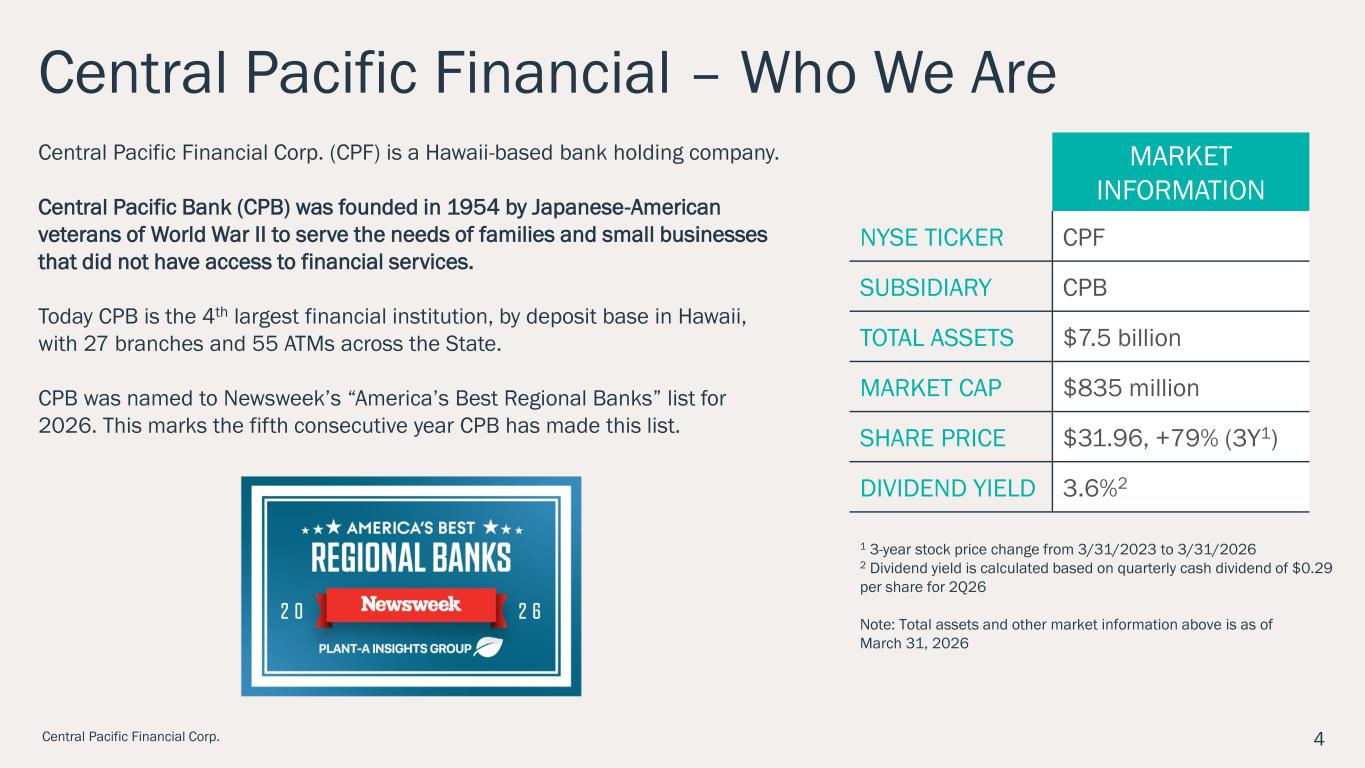
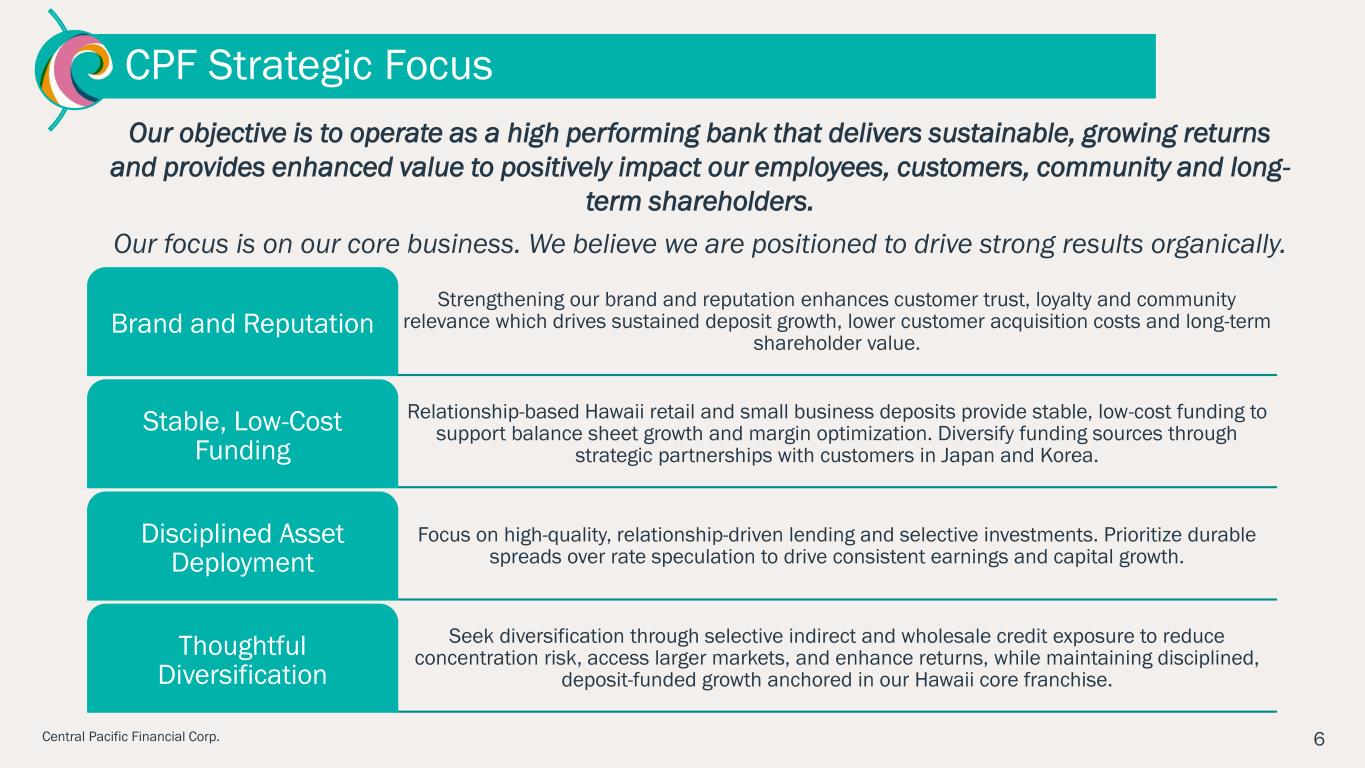
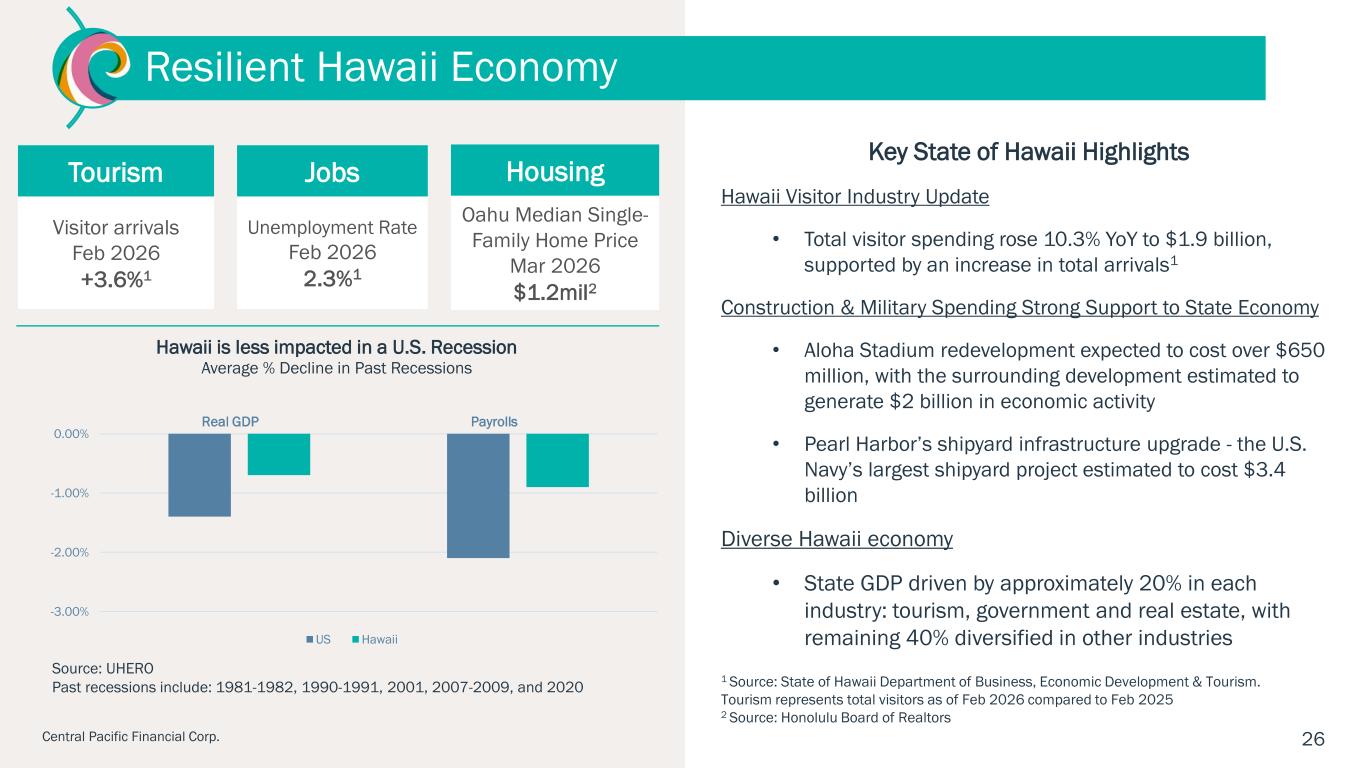
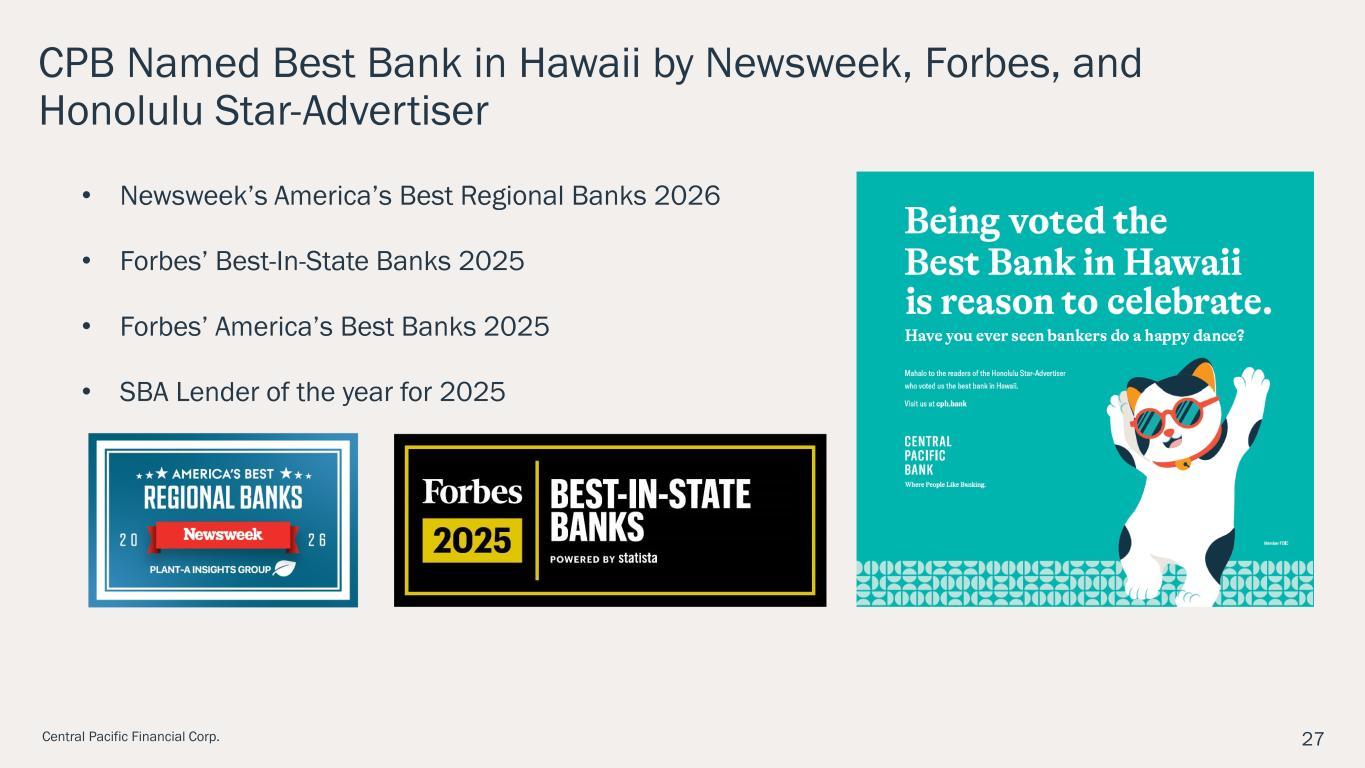
Thank you, Gerald, and aloha to everyone joining us today. The first quarter represented a strong start to 2026, with solid earnings performance and continued execution across our franchise. We delivered growth in both loans and core deposits, maintained strong credit quality, and continued to operate from a position of capital strength. This momentum reflects the strength of a relationship-focused banking model and our continued commitment to serving the people, businesses, and communities of Hawaii. Our results also demonstrate the durability and organic earnings power of the franchise. With return on equity above 13% and robust capital levels, we remain focused on discipline, sustainable growth, and thoughtful capital allocation. From a shareholder perspective, we remain committed to deploying capital in ways that enhanced long-term value. This includes supporting organic growth, maintaining a strong balance sheet, returning capital through dividends and share repurchases, and preserving flexibility to respond to market opportunities. We were also pleased that CPB was named the Hawaii U.S. Small Business Administration Lender of the Year for 2025. This marks the 17th time CPP has received this recognition and reflects our long-standing commitment to Hawaii's small business community. Turning to the broader environment, Hawaii's economy remained resilient during the first quarter. Visitor arrivals and spending increased, and the state's unemployment rate remained exceptionally low at 2.3%. While oil prices have increased due to the conflict in the Middle East, the direct impact on Hawaii's economy has been limited to date and we continue to monitor conditions closely. At the same time, Hawaii continues to benefit from ongoing construction activity, military spending, and a resilient local economy. Recent storm activity and flooding, including impacts from the Kona Low, caused isolated but significant damage in parts of the state. We remain committed to supporting affected customers and communities as they recover and rebuild. Against this backdrop, our strategy remains consistent. Support local businesses through prudent lending, grow and deepen core deposit relationships, invest thoughtfully in our franchise, and manage risk with discipline through the cycle. With that, I will turn the call over to Dana.
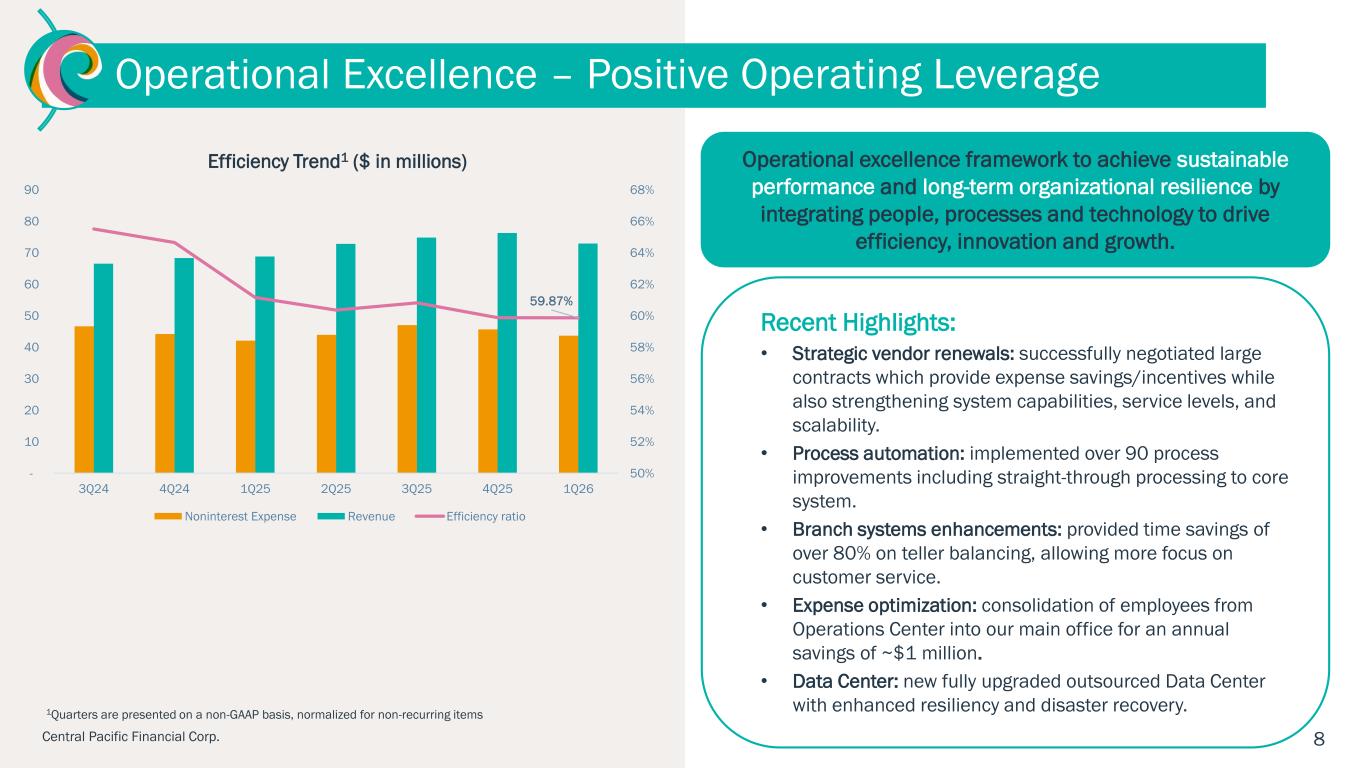
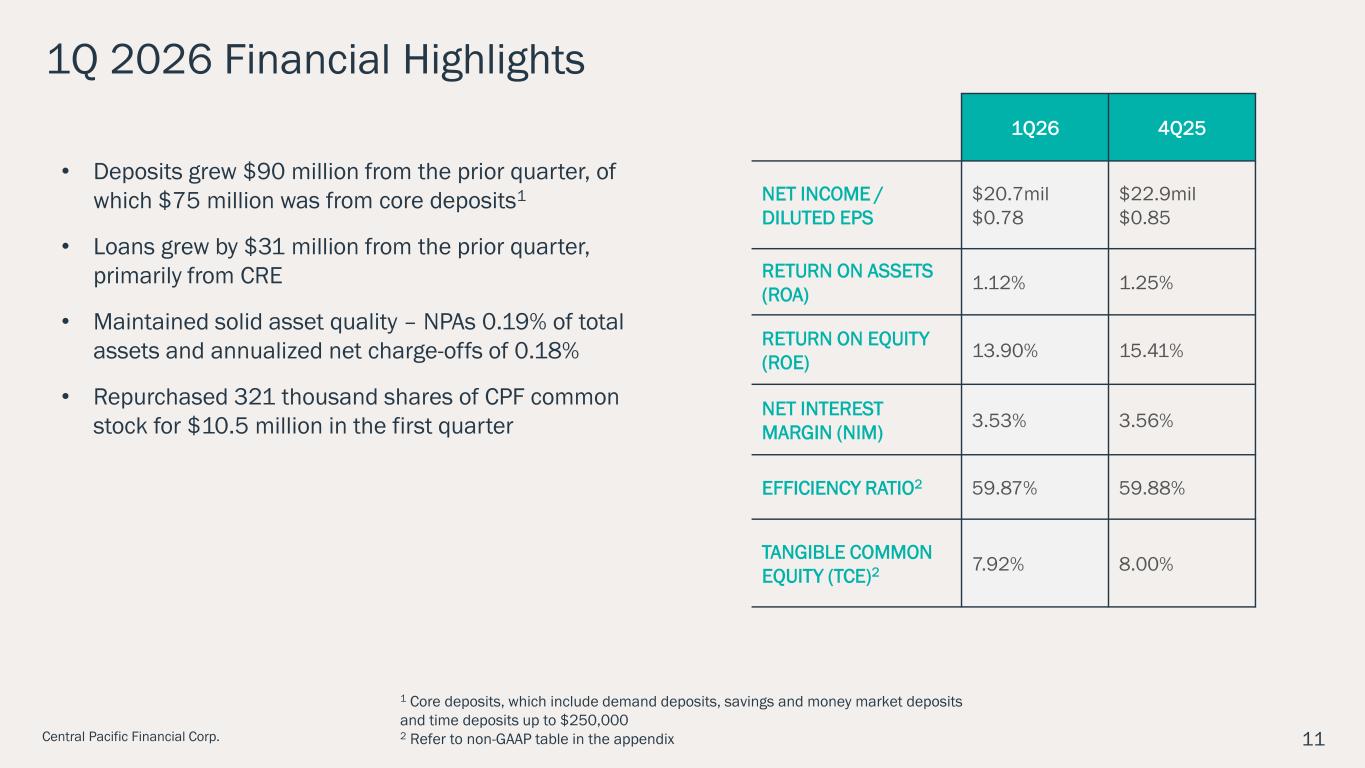
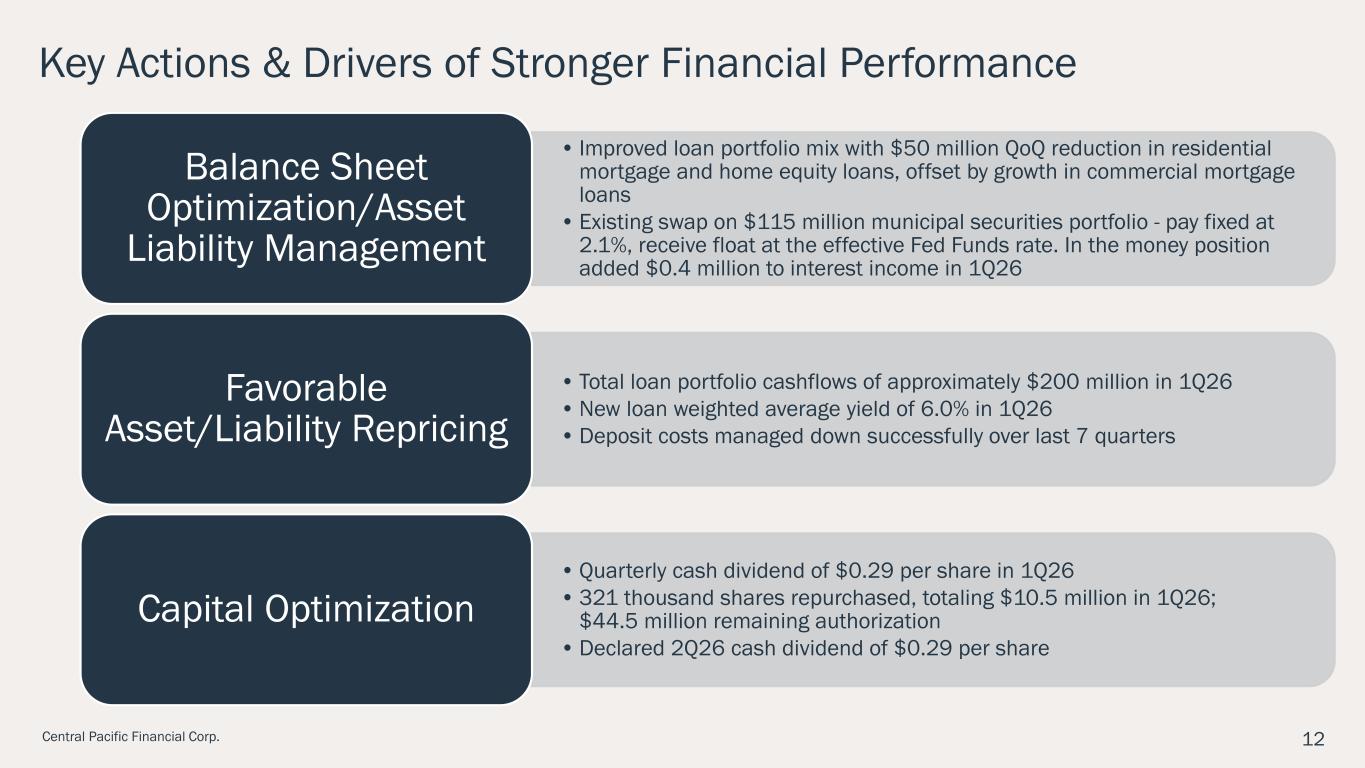
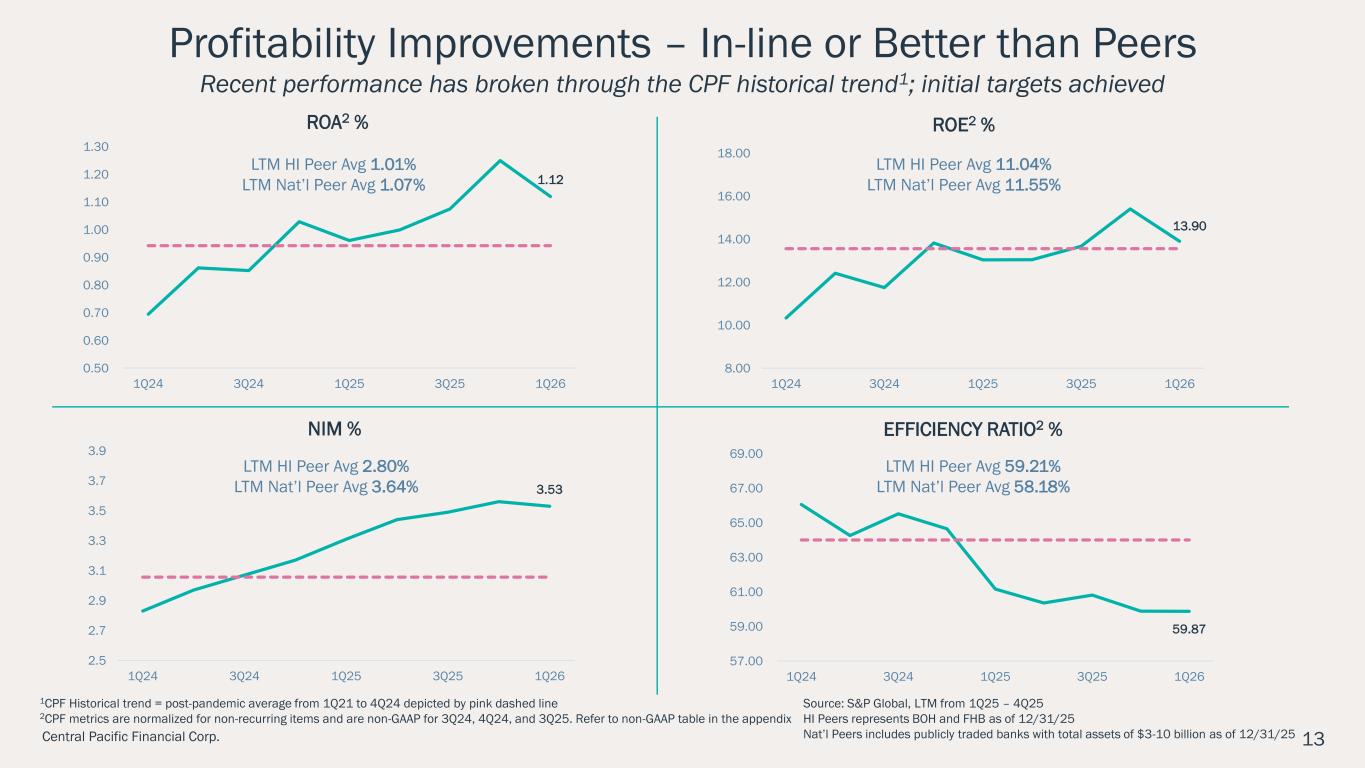
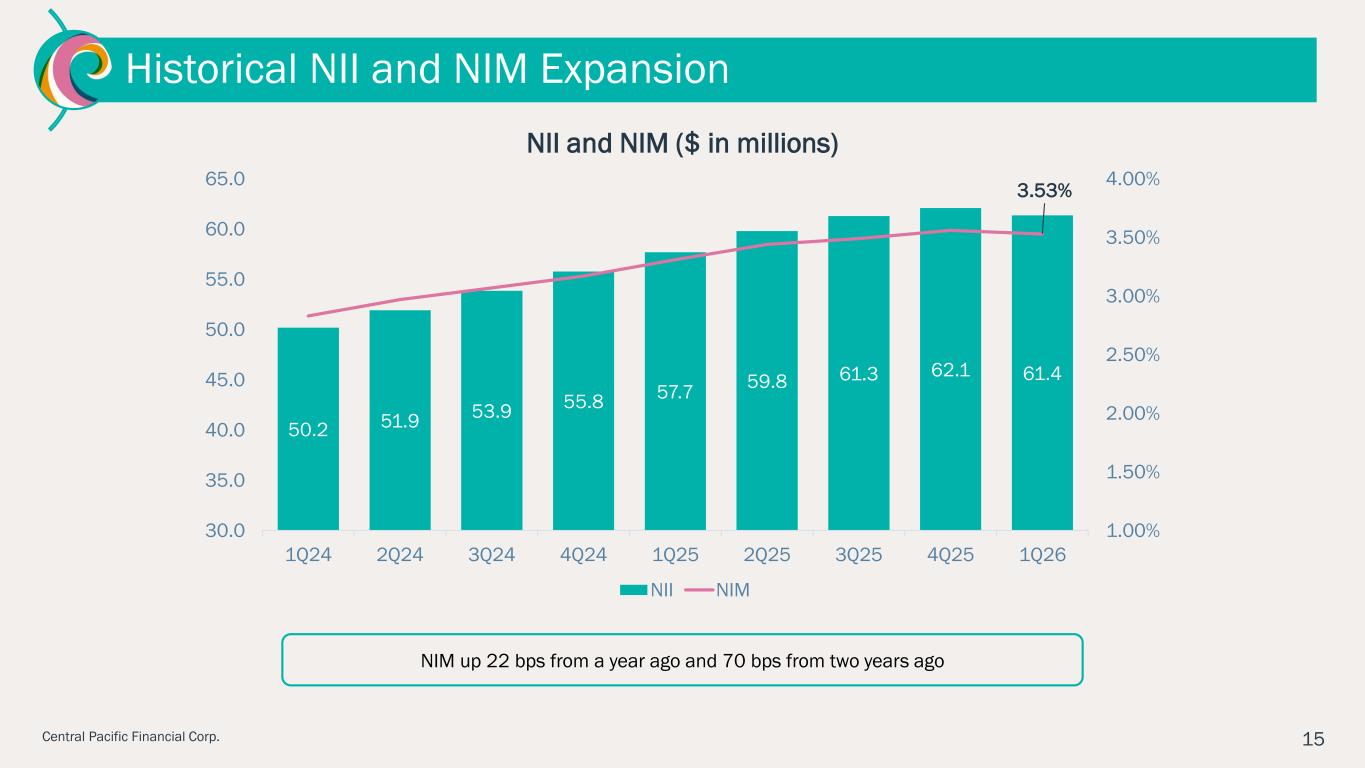
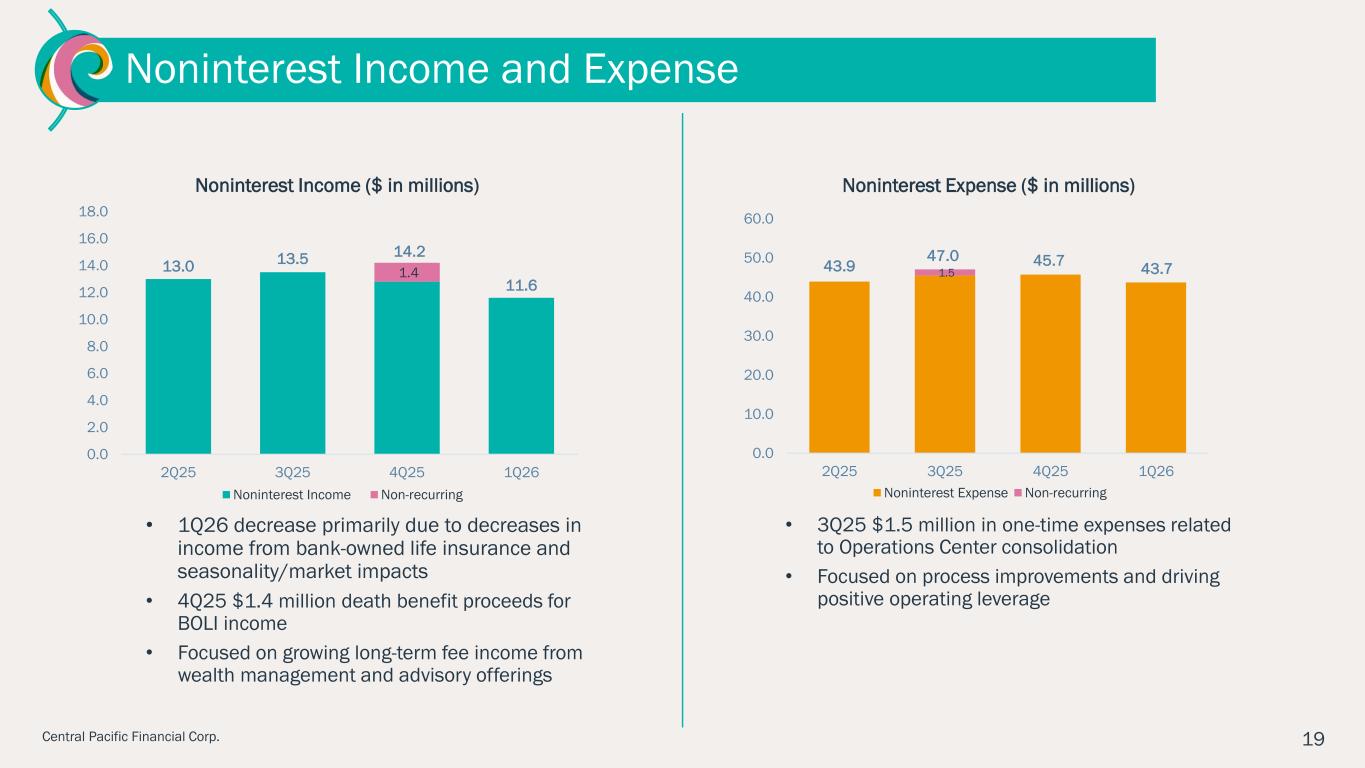
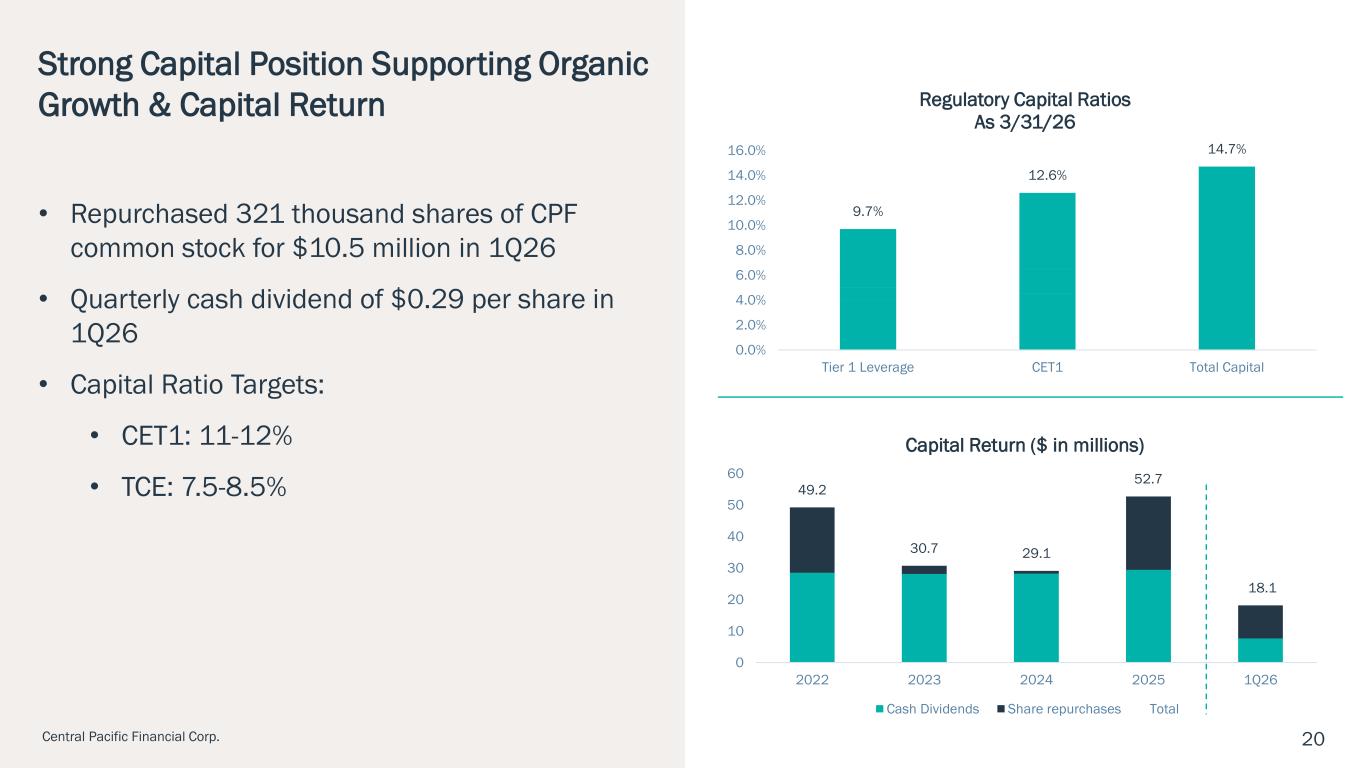
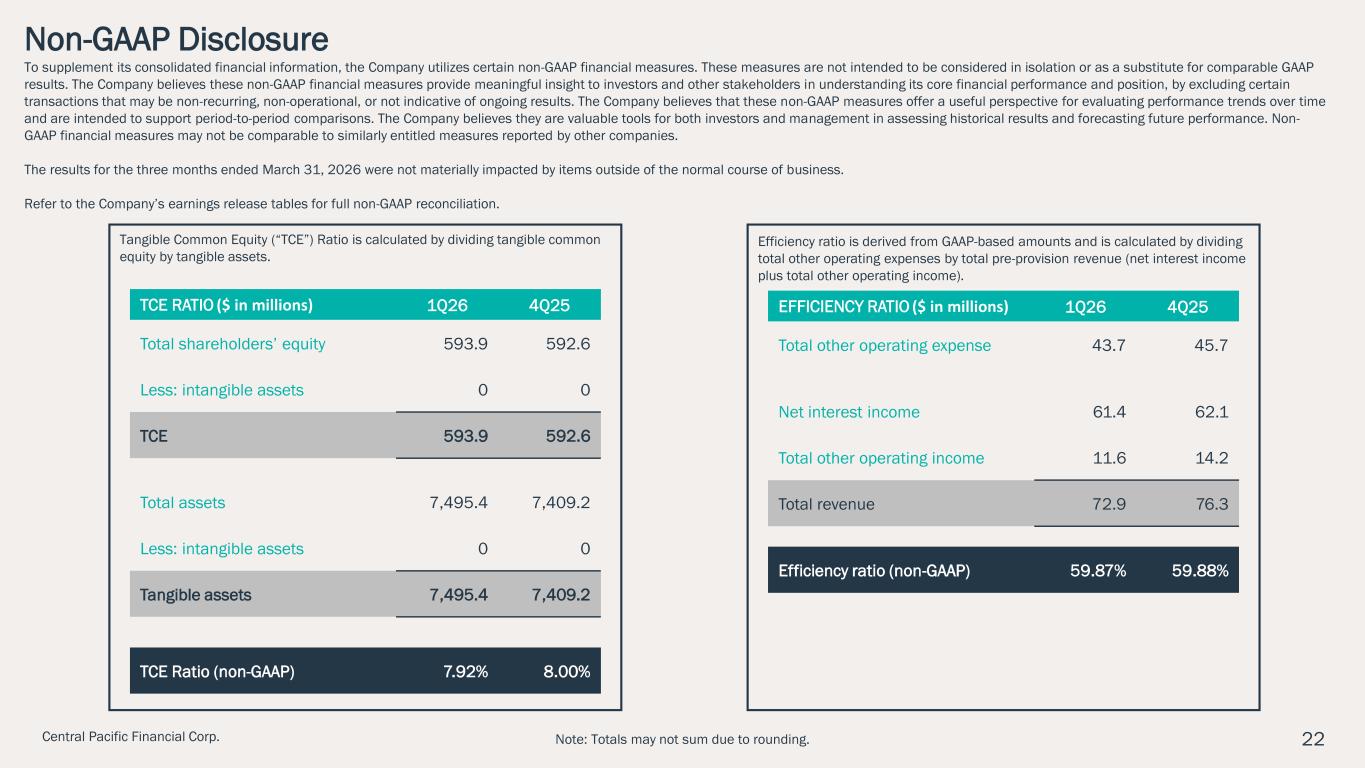
Thanks, Arnold. For the first quarter, net income was $20.7 million, and earnings per diluted share was 78 cents. Return on average assets was 1.12 percent, and return on average equity was 13.90 percent. Compared to the year-ago quarter, our EPS increased by 20 percent, reflecting revenue growth and expense discipline as we continue to successfully execute on our strategy. Net interest income totaled $61.4 million and net interest margin remained healthy at 3.53%. Compared to the prior quarter, results reflected typical seasonal factors and balance sheet timing, including lower day count and lower average loan balances. The decline in our loan yields were partially offset by the improvement in our deposit costs. For the second quarter, we are projecting NIM of 3.50 to 3.55 percent. Our guidance for full-year net interest income remains at a 4 to 6 percent increase over the prior year. Across a range of potential rate environments, our balance sheet positioning and funding mix continue to provide meaningful resilience. Total other operating income was $11.6 million and declined from the prior quarter by $2.6 million. In the prior quarter, we had one-time BOLI death benefit income of $1.4 million. Current quarter BOLI income was further impacted by equity market volatility. Additionally, Q1 seasonality typically results in lower levels of fee income in the mortgage banking and wealth areas. We continue to expect our full year Other Operating Income to increase modestly over normalized prior year. Total Other Operating Expense was $43.7 million and declined by $2.0 million from the prior quarter. The decline was primarily driven by higher incentive accruals in the prior quarter and lower deferred compensation expense this quarter. We expect our expenses to increase over the year, but our full year expense growth is still expected to be modest at 2.5 to 3.5 percent from 2025 normalized. In the first quarter, we paid a cash dividend of 29 cents per share and repurchased approximately 321,000 shares for a total of 10.5 million dollars. With our strong earnings and capital positions, our board declared a second quarter cash dividend of $0.29 per share. We had $44.5 million remaining available under our share repurchase program as of March 31st, and we plan to continue to utilize it as part of our capital allocation strategy. I will now turn the call over to David.
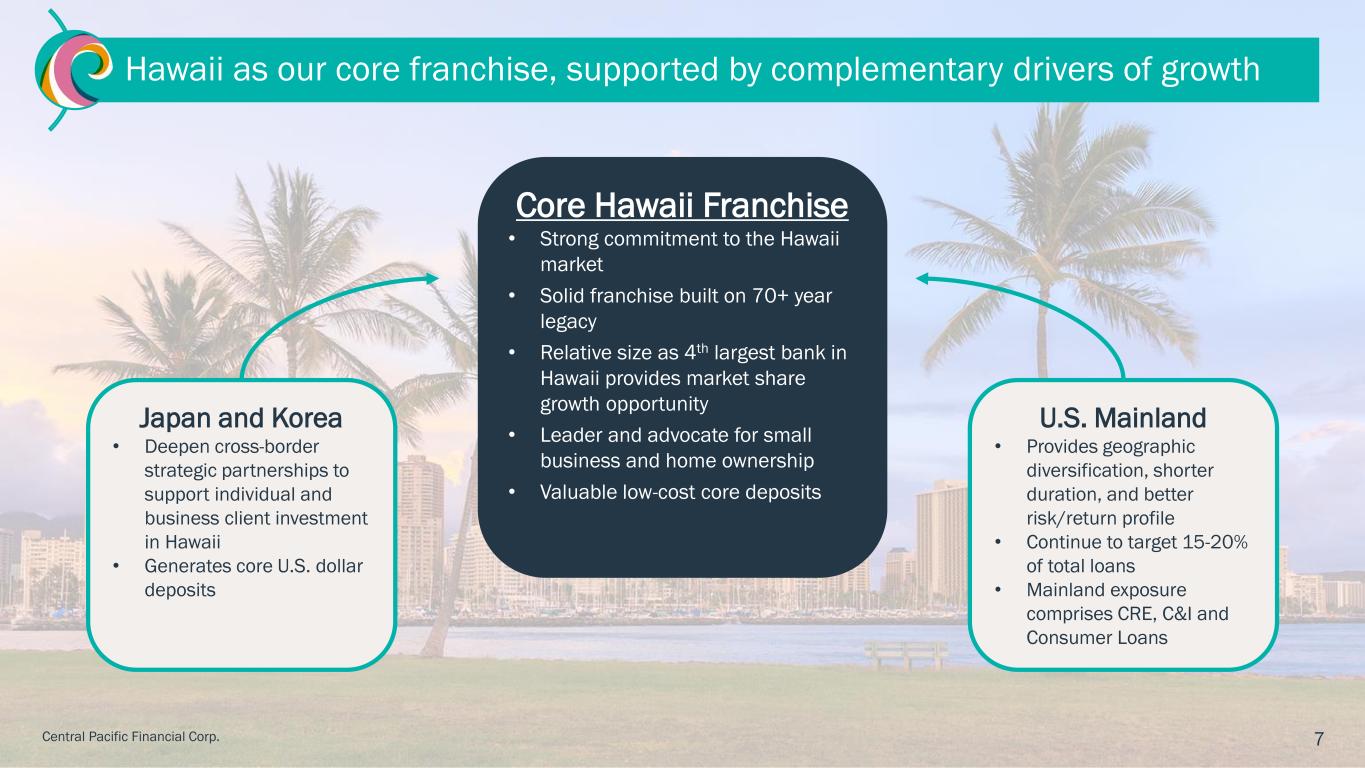
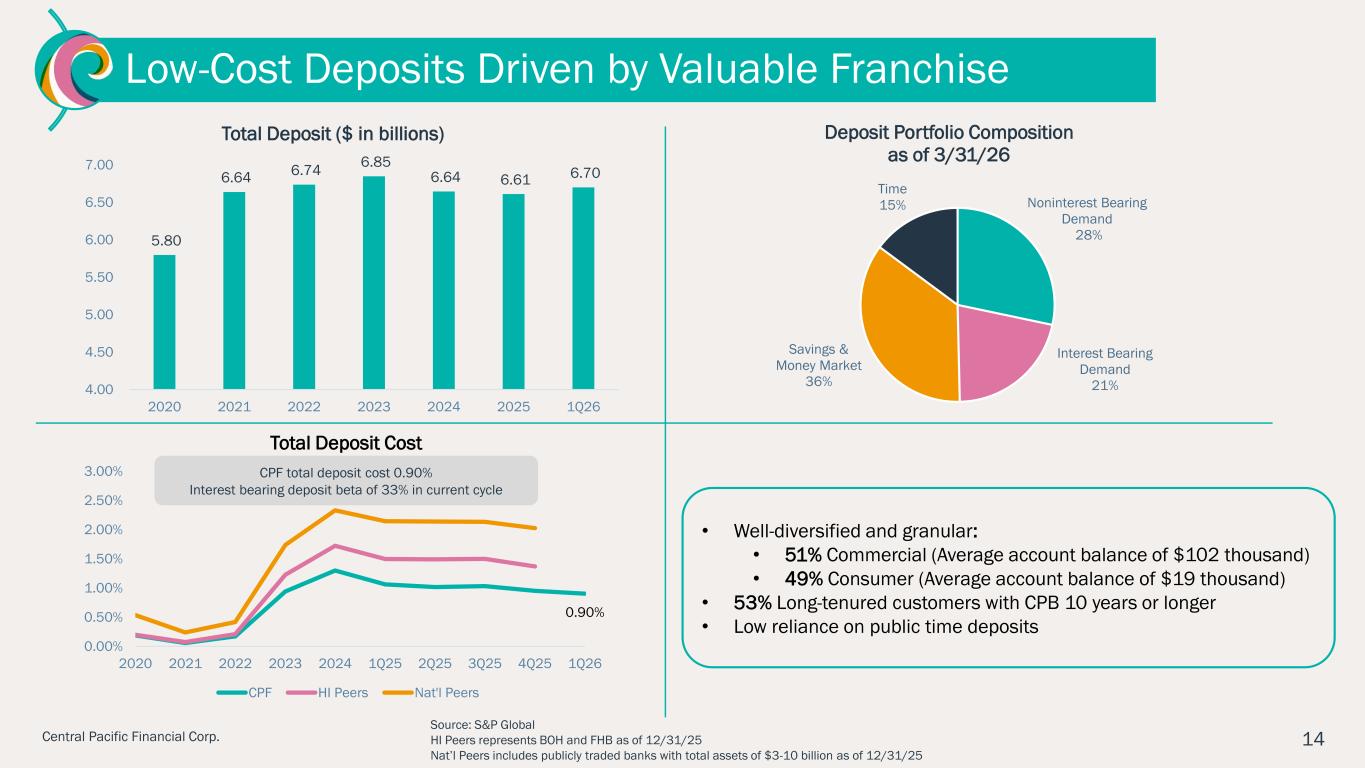
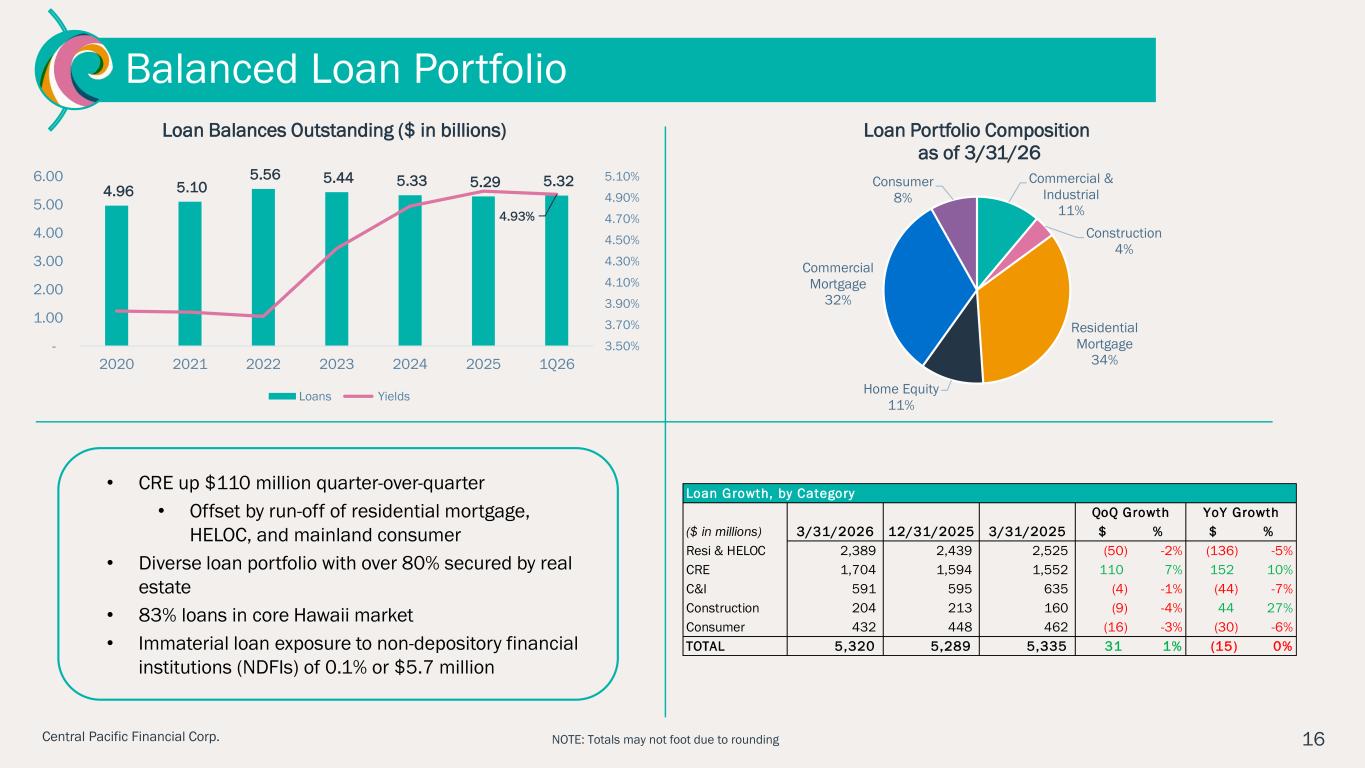
Thank you, Dana. During the first quarter, our total loan portfolio grew by $31 million, bringing total loans to $5.3 billion at quarter end. The majority of the loan growth came near the end of the first quarter. Therefore, we will see the benefit in our net interest income in subsequent quarters. Loan growth this quarter was driven by commercial real estate where we continue to see good risk-reward opportunities both in Hawaii and the mainland. We had a roughly equal amount of loan production volume in Hawaii and the mainland this quarter, while loan runoff was greater in the Hawaii portfolio as it represents over 80% of overall balances. Average loan portfolio yield in the first quarter was 4.93% compared to 4.99% in the prior quarter. The yield decline was primarily due to the impact of the fourth quarter bed rate cuts on repricing and new loan yields. Total deposits increased $90 million during the quarter ending at 6.7 billion dollars. Core deposits represent over 90 percent of total deposits with continued growth in non-interest bearing and relationship-based accounts. At the same time, total deposit costs decreased by four basis points quarter over quarter to 0.90 0%. Looking ahead, our loan pipeline remains solid across Hawaii and select Mainland CRE markets, and currently we see stronger opportunities in commercial loans relative to retail lending. We will continue to execute our deposit strategy, focusing on new customer acquisition and deepening existing relationships. As a result, we are maintaining our full year 2026 guidance of loan and deposit growth in the low single digit percentage range. With that, I'll turn the call over to Ralph.
Thank you, David. We continue to operate within risk appetite and the credit profile of the bank is unchanged at quarter end. We maintain an approach of seeking to achieve optimal returns, balance and diversification, emphasizing underwriting discipline, relationship lending, and risk-based pricing. Our credit metrics stayed near cycle lows during the first quarter. Non-performing assets were totaled $14.5 million, or 19 basis points of total assets. Net charge-offs were 18 basis points. Past due trends were stable. Criticized loans were less than 200 basis points of total loans and within an expected range. Changes in criticized loans reflect relationship-specific dynamics rather than any broad-based credit trend. Provision expense for the quarter was $2.4 million. We added $2.7 million to the allowance, while the reserve for unfunded commitments declined by $300,000. We identified no material matters impacting our customers from the recent Kona low flooding. At quarter end, our total risk-based capital ratio was 14.7%. At this level, we retain ample flexibility to manage through adverse conditions. With that, let me turn the call back over to Arnold.
Thank you, Ralph. To summarize, the first quarter was a strong start to the year. We delivered solid earnings, maintained strong credit quality, grew both loans and core deposits, and continued to operate from a position of capital strength. I want to thank our employees for their continued commitment, care and dedication to our customers and communities. We are now happy to answer your questions.
Operator
Thank you. We will now begin the question and answer session. If you would like to ask a question, please press star 1 in your telephone keypad. If you would like to withdraw your question, simply press star 1 again. Your first question comes from a line of Evan Kwiatkowski from Raymond James.
Your line is open. hey good morning guys i'm on for david feaster good morning so i just wanted to start on loans i'm just curious you know what you've been hearing from borrowers of your market and maybe how demand has been holding up given a lot of of the uncertainty we're seeing in the market today and then going forward i think you mentioned seeing more opportunities or maybe focusing more on the commercial side um so i'm just kind of curious you know what kind of credits you're targeting there as well thanks yeah man it's uh david morimoto um yeah i think on on what
we're what we're seeing and hearing from our customers um hasn't changed much from prior quarters you know they're continue continue we continue to see opportunities but um as as we mentioned, they currently are focused more in the commercial area than in the retail area. And that's industry-wide, right? A lot of the retail loan categories are subdued right now as a result of the interest rate environment. But hopefully that will change going forward. Right now we're seeing good risk-reward loan opportunities. They tend to be primarily focused in commercial mortgage and to a lesser extent in commercial and industrial.
And then maybe on that, are you seeing more opportunities on the mainland or in Hawaii, or is it kind of balanced or just wherever you see the opportunity?
Yeah, Evan, currently it's relatively balanced. I will say that quarter to quarter, there's always a lot of variability, right, in deals, right? When things ultimately end up closing, you might think it's going to close in the second quarter and it slips to the subsequent quarter. But currently, what we're seeing in the pipeline is it's relatively balanced and we're always targeting rough to grow both Hawaii and the mainland every quarter. But as we saw, like in this quarter, it varies based on a lot of different factors.
That's really helpful. And then maybe pivoting to the margin, you were able to achieve further funding cost leverage during the quarter, which is no easy feat seeing as, you know, your deposit costs are at 90 bps. Do you think you've kind of hit a floor on the funding cost side from here? And if so, what do you think the main drivers for the margin are going forward with the Fed seemingly on hold?
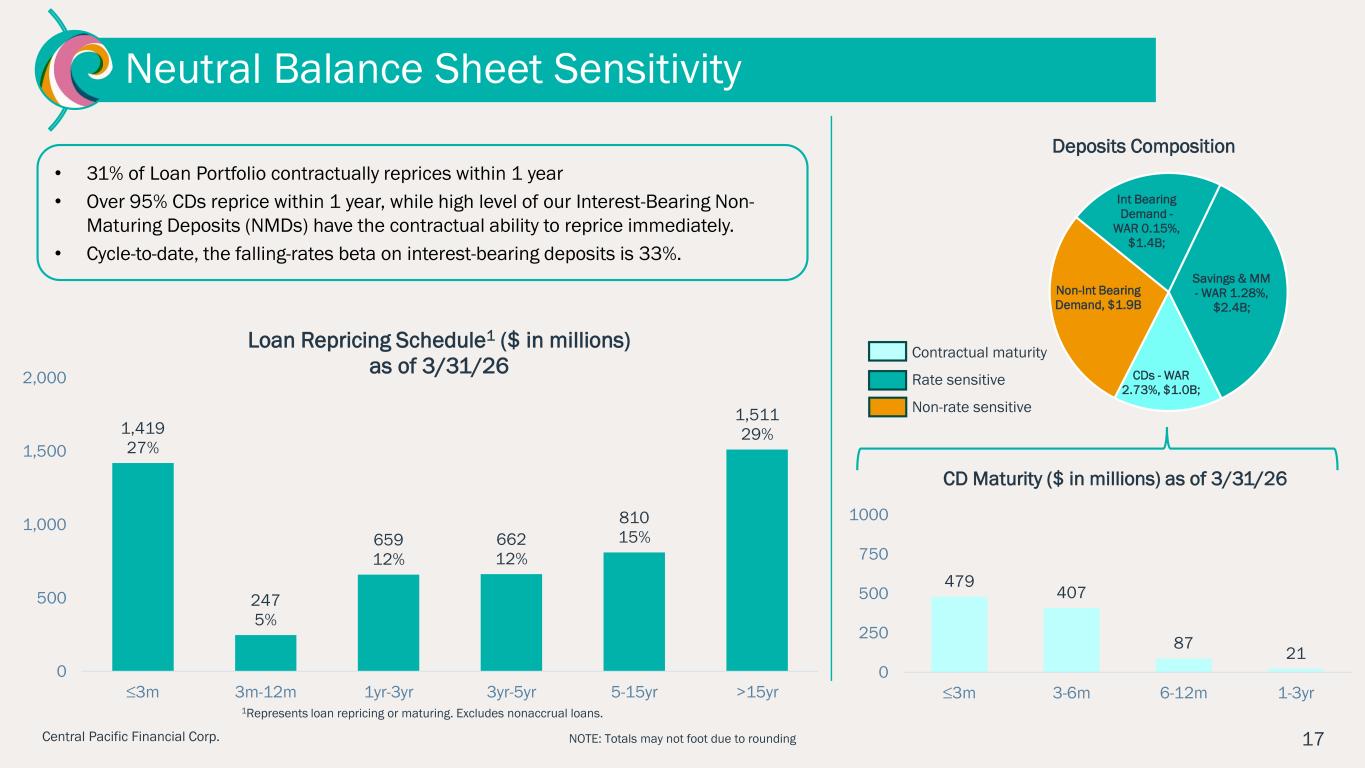
Hi, Evan. It's Dana. Thank you for the question. Yeah, with the Fed on hold, we expect our deposit costs will level out somewhat. We do have some downward repricing opportunity on our CD portfolio. We have about 480 million dollars or that's slightly less than 50 percent of our CD portfolio maturing in the second quarter. And that has a weighted average rate of 2.8 percent coming off, while our new CD rates on a blended basis are approximately two and a half percent. And then just thinking about the NIM going forward, you know, some of the dynamics there are we will improve our earning asset mix, as we do plan to optimize our excess liquidity by growing loans and some securities. We also expect to continue to get a positive lift from back book repricing, although that lift has moderated somewhat. And as I mentioned on the funding side, we do expect some modest continued decline in our CD costs. But all in all, our NIM is expected to remain relatively close to where it is today. With the Fed on hold and our position being fairly neutral to slightly asset sensitive, we think it could be modestly positive to us, but not a big overall impact. But bottom line is we feel really good about our strong NIM being in the mid 3% range, and that gives us some flexibility to be more competitive in the market to drive growth and revenue.
That's really helpful. And then maybe if I can ask one more. I saw that you were active on the buyback this quarter. and you still maintain a good amount of excess capital. I just wanted to get a sense of how you're thinking about capital priorities today. If you see any opportunities for balance sheet optimization with that excess capital.
Sure. Our capital priorities, Evan, they remain the same. We continue to deploy our capital in a very thoughtful and deliberate manner. And as we've said before, our top priority is going to be to use capital for loan growth and to support our clients. We do plan to continue our quarterly cash dividend. And then any excess capital beyond what we can use to organically roll a business, we will consider that for share repurchases. So what you'll likely see is that we'll return a similar amount of capital as we did this past quarter through both dividends and share repurchases.
Awesome. Thank you for taking my question. Guys, I'll step back.
Operator
Your next question comes from a line of Matthew Clark from Piper Sandler. Your line is open.
Hey, good morning, everyone. Just a couple more questions around the margin. Dana, if you had the spot rate on deposits, deposit costs at the end of March?
Sure, Matthew. For the March month to date deposit costs, it was 90 basis points. And then the spot rate at the end of March was about in the same area. okay and then on the asset side can you remind us um on average how much you have in fixed loan repricing you know per quarter or and and same on the security side in terms of cash flows yes we typically have around 200 to 250 million dollars of loan runoff each quarter and our weighted average new loan yield in the first quarter was 6.0 percent and you can compare that to our average loan portfolio yield in the quarter of 4.9 percent. So we continue to see positive repricing there.
On the securities portfolio the cash flows it's about 30 million dollars per quarter at a weighted average rate of about 2.8 percent and our new security purchase fields have been around five percent so we continue to get a very nice lift there okay great so i guess i'm wondering why the margin guide is 350 to 355 when you put these dynamics together you know a couple of base points on cd repricing you know a few basis points you know um three to four on loans and securities i haven't done the math yet but i assume it's
modestly helpful I mean it puts you close to the 360 I guess what's what's keeping you at you know I'm just curious what why the why the 350 or the lower end of the range there what's what's driving that yeah Matthew I mean there's a lot of factors and variables that go into the NIM as you know I think one other thing in addition to the moderation of the back book repricing that I mentioned. On the competitive front, we do see some pressure on spreads and new loan yields just due to the competitive nature of the market. So, that's some of the factors we're considering. But our NIM path will just largely depend on loan growth, the market dynamics, and the shape of the yield curve going forward.
Yeah. And maybe Matthew, I'll add, this is Arnold, you know, I think we do have a pretty healthy level of, you know, healthy name level. And I think, you know, we want to be thoughtful about, you know, balancing, you know, improvement in property, which we have done the last few years with, you know, being selective on competitiveness, you know, in the local market. So that's kind of what, you know, is happening there. But, you know, we continue to be very committed to maintaining a a very healthy NIMH overall.
Got it. And then do you still anticipate a few construction projects funding this quarter? Where does that stand as we think about the related reserves you put against it?
Yeah. Hey, Matthew. It's David. David, there is one large residential condominium project that is expected to close in the second quarter. So, that will be a pay down on the construction side, but it will largely be offset by takeout mortgages on the residential mortgage side for the homeowners. Okay, great.
And then last one, just on the uptick in criticized in the slide deck, what drove that, and what's the plan there for resolution?
Yeah, Matthew, this is Ralph. You know, the increase in criticized loans really was related to one, primarily one commercial relationship, so there's no systemic deterioration there. This is a long-time customer. It's a viable business. I think got a fairly strong balance sheet. They had experienced some operating losses that resulted in some drawdown in liquidity. So, I think the plan there really is to retain and support this customer. We don't see any lost content in that credit.
Okay, perfect. Thank you.
Operator
Your next question comes from a line of Kelly Mana from KBW. Your line is open.
Hi, good morning. Thanks for the question. Maybe if I could circle back to the margin, I apologize if I missed it. I did catch your commentary around some greater competition on the loan pricing side. Can you remind us where a blended rate of newer generations is now relative to maybe a quarter ago?
Sure. Hi, Kelly. It's Dana. In the first quarter, our weighted average new loan yield was 6.0%. And then if you compare that in the fourth quarter, I believe it was 6.8%. So, we do see a little bit of moderation there.
Got it. Got it. That's helpful. And then I appreciate the commentary around capital return. It seems very consistent with the commentary you've had so far. I know it's really early, but just, you know, given residential mortgage is a decent part of the portfolio, I wonder if fair to say the proposed capital rules would be beneficial to you guys, and have you guys done any preliminary sensitivity around the impact to your regulatory capital ratios?
That's correct, Kelly. It will definitely be beneficial to us. I'd say on the proposal, we're still evaluating it, but it's positive. It will have a favorable impact for our capital ratios, particularly from the residential mortgage risk weighting changes. An early estimate is we're expecting around 50 to 100 basis point improvement in our CET1 ratio.
But we'll continue to monitor the developments on the proposal, and we don't really expect it to change our capital strategy in any way. got it um maybe um two last just um nitpicky modeling questions if i may um just on the tax rate it jumped up a bit from q4 but you did have uh the bully death benefit um dana is this kind of 23 tax rate a good go forward rate or um any any considerations as we think through the full year because it did come in a bit higher. Thank you.
The increase in our effective tax rate this quarter was due to less tax-exempt BOLI income, as you noted. Also, in the prior quarter, in Q4, we had some tax credit benefits. Going forward, kind of on a normalized rate, we expect the ETR to be in the range of about 22 to 23 percent. It could trend lower to the extent that we bring on additional tax credits or have more tax-exempt income. But we feel pretty good about that range Got it.
Got it. That's helpful. And then last question from me. You noted part of the maybe greater pressure than we may have expected on Q1 margin was liquidity was higher. Dana, can you remind us how you guys manage your liquidity levels? As I'm assuming some of that gets redeployed back into the growth you're seeing.
Yeah, that's right, Kelly. At 331, our cash and liquidity position was very healthy. We did have some inflows of deposits. We do have some excess cash, maybe in the range of about $100 to $150 million that could be deployed to opportunities as those present itself. So I think our average earning asset growth may not be too significant as we shift some of that excess cash to loans or securities but going forward it's always going to be a function of good loan risk reward opportunities and also our continued focus on growing poor deposits understood thank you so much thanks for your questions kelly again if you would like to ask a question or have additional follow-up questions press star then the number one in your telephone keypad now.
Operator
We will pause for just a few seconds. As there are no further questions, I will now turn the call back over to J-Roll Rebago for closing remarks.
Thank you everyone for joining us today and for your continued interest in Central Pacific Financial Corp. We look forward to updating you again next quarter.
Operator
This concludes today's conference call. Thank you for your participation. You may now disconnect.