Operator
hello and welcome everyone joining today's shift 4 q2 2026 earnings call at this time all participants are in a listen-only mode later you will have the opportunity to ask questions during the question and answer session to register to ask a question at any time please press star 1 on your telephone keypad we are standing by should you need any assistance it is now my pleasure to turn the meeting over to tom mcronin head of investor relations please go ahead.
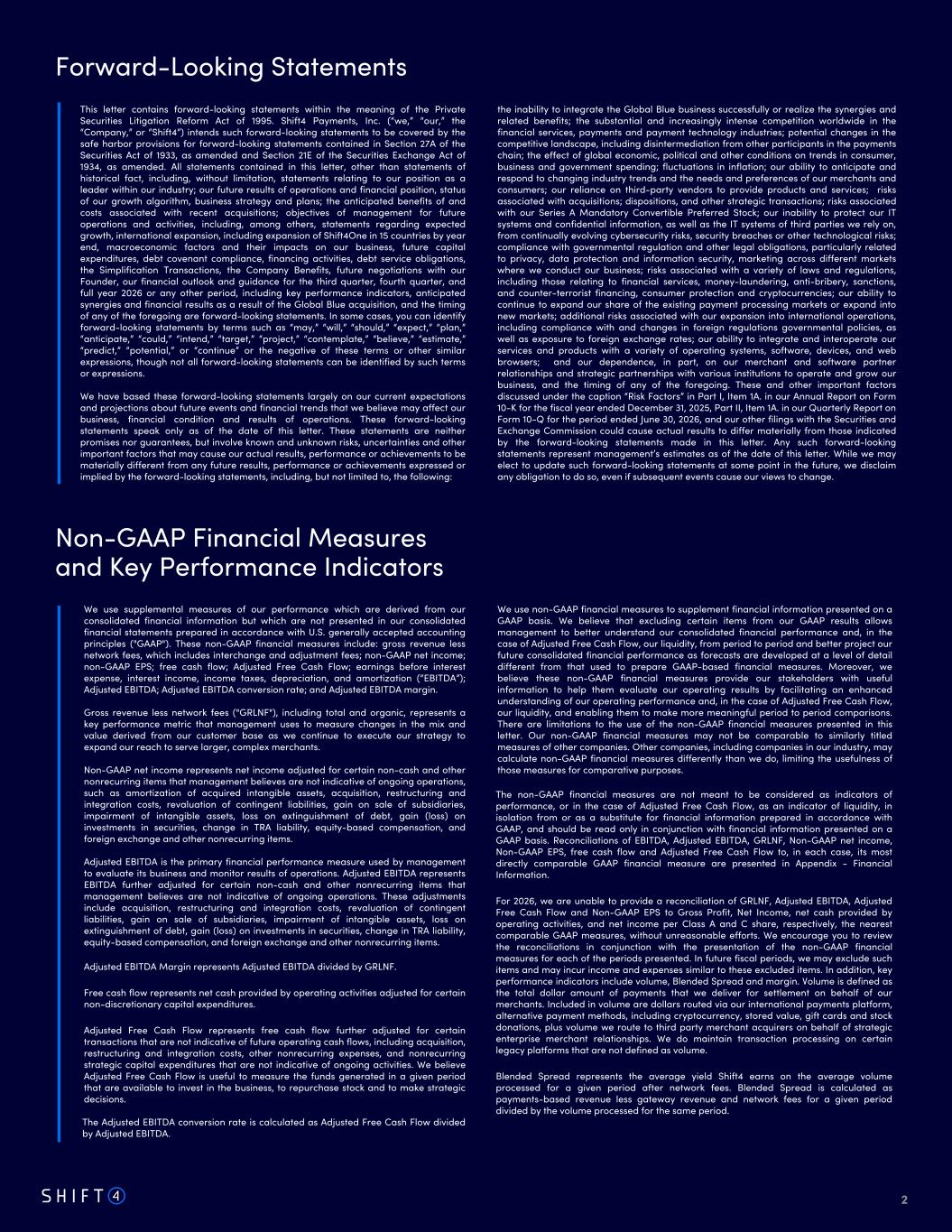
Thank you, Operator, and good morning, everyone, and welcome to Shift4's second quarter 2026 earnings conference call. With me on the call today are Taylor Lauber, our CEO, and Christopher Cruz, our Chief Financial Officer. This call is being webcast on the Investor Relations section of our website, which can be found at investors.shift4.com. Today's call is also being simulcast on X Spaces, which can be accessed through a corporate X account at Shift4. Our quarterly shareholder letter, quarterly financial results, and other materials related to our quarterly results have all been posted to our IR website. Our call and earnings materials today include forward-looking statements. These statements are not guarantees of future performance and our actual results could differ materially as a result of certain risks, uncertainties, and many important factors. Additional information concerning those factors is available in our most recent reports on forms 10-K and 10-Q, which you can find on the SEC's website and the investor relations section of our corporate website. For any non-GAAP financial information discussed on this call today, the related GAAP measures and reconciliations are available in today's quarterly shareholder letter. With that, let me turn the call over to Taylor. Taylor?
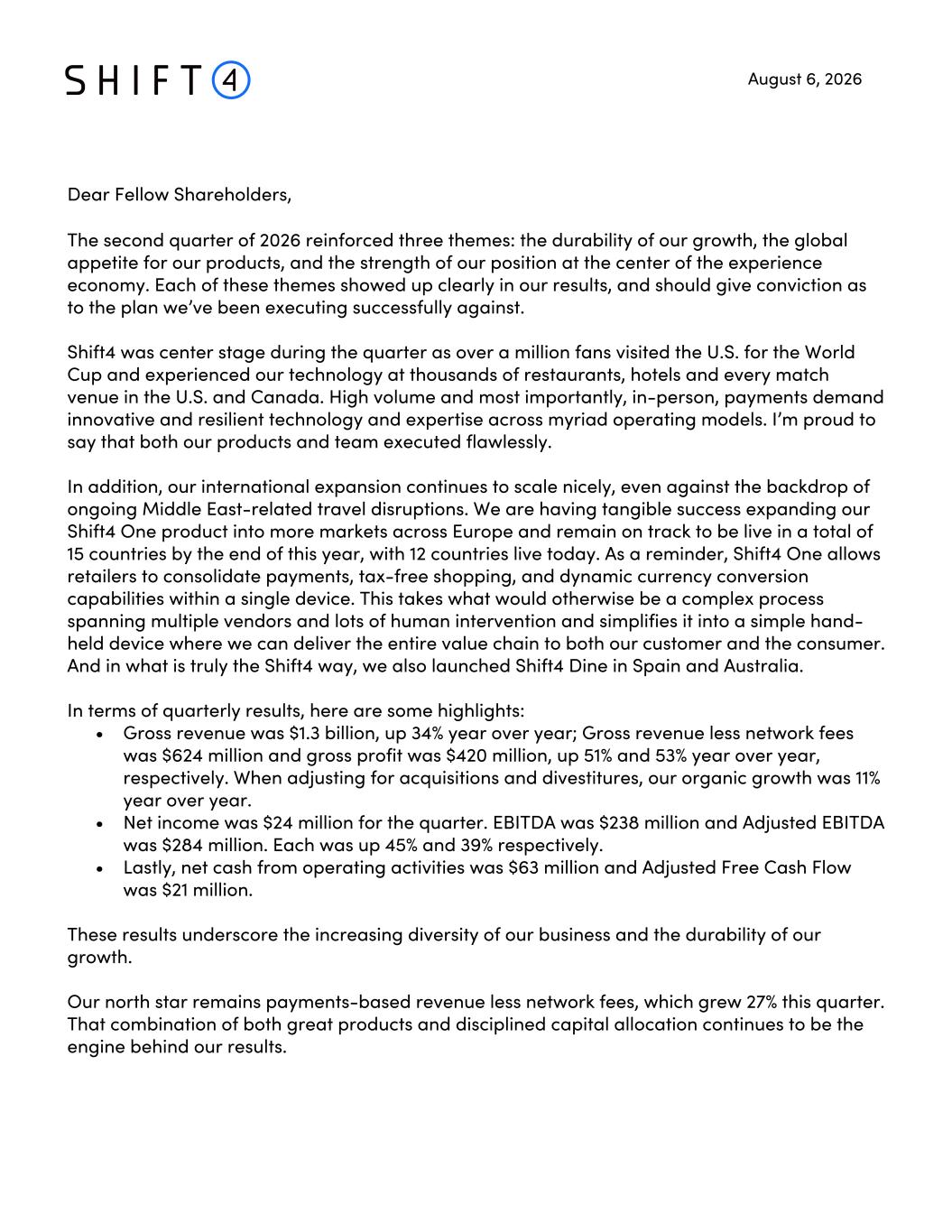
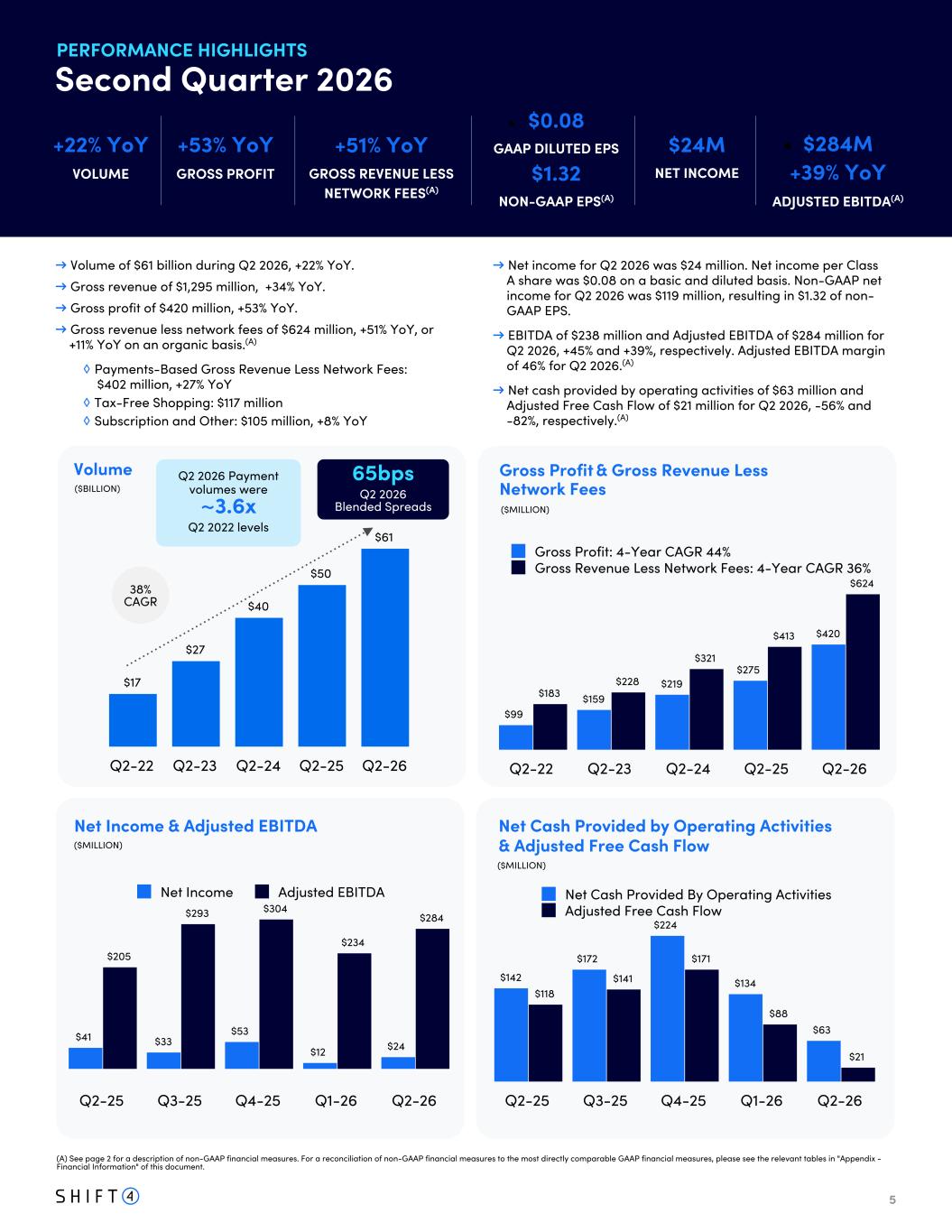
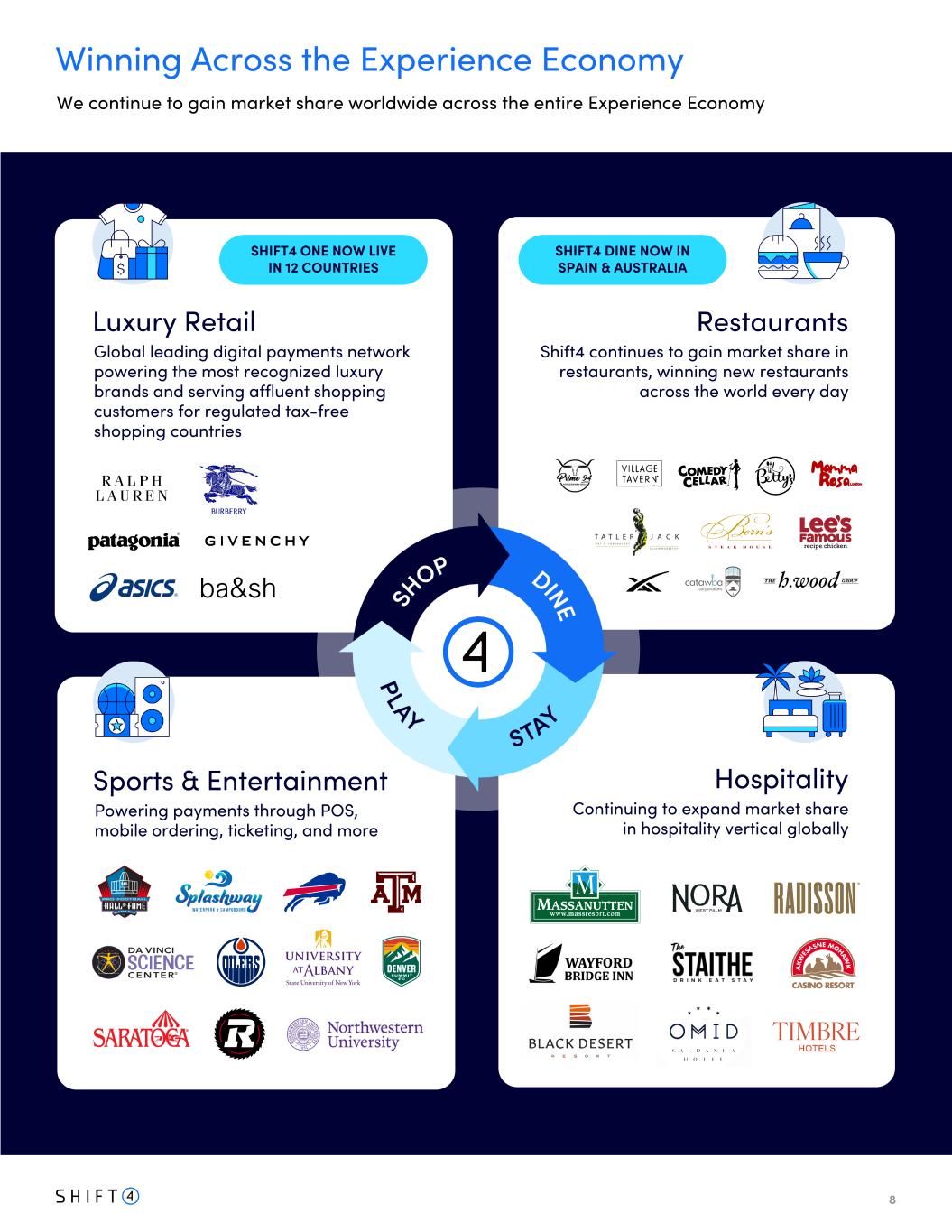
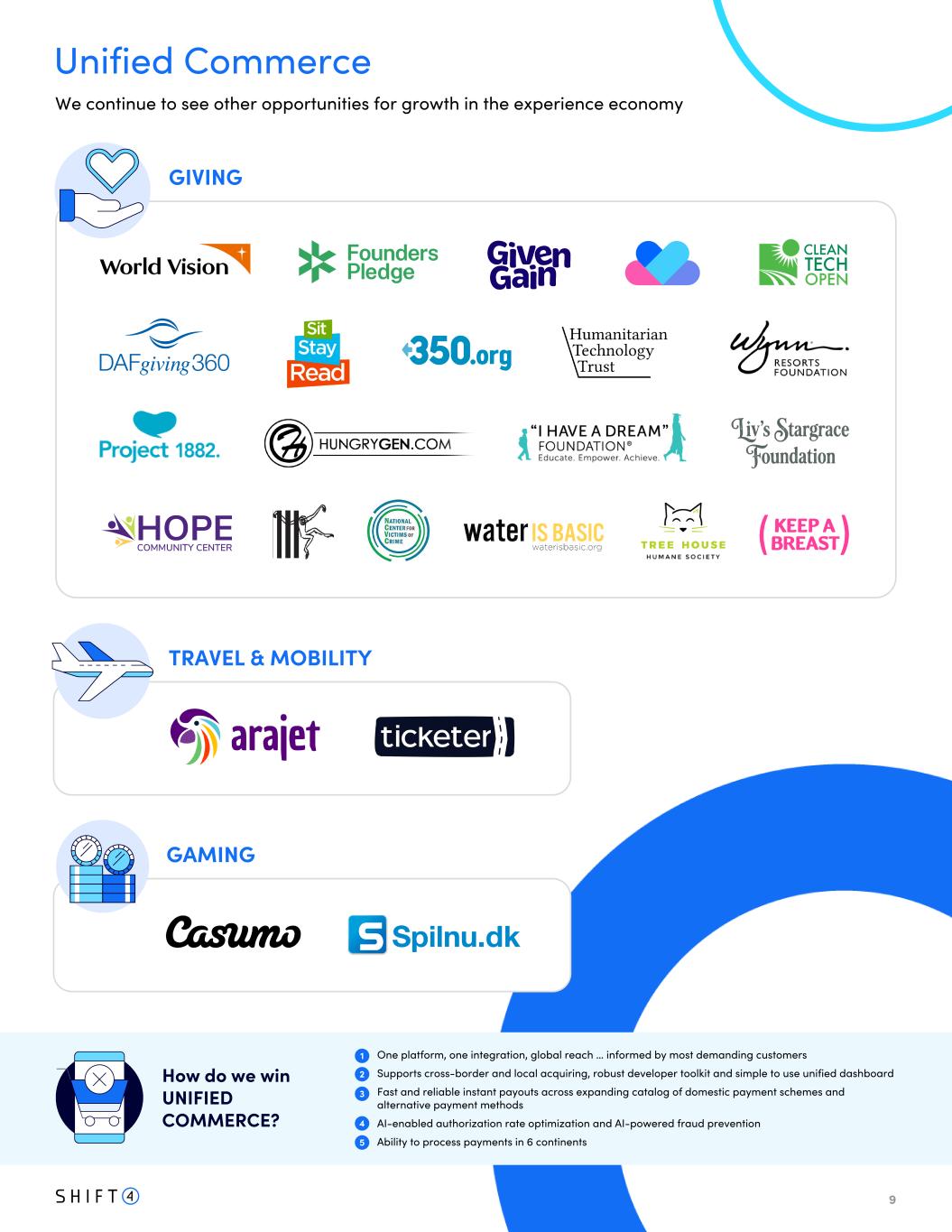
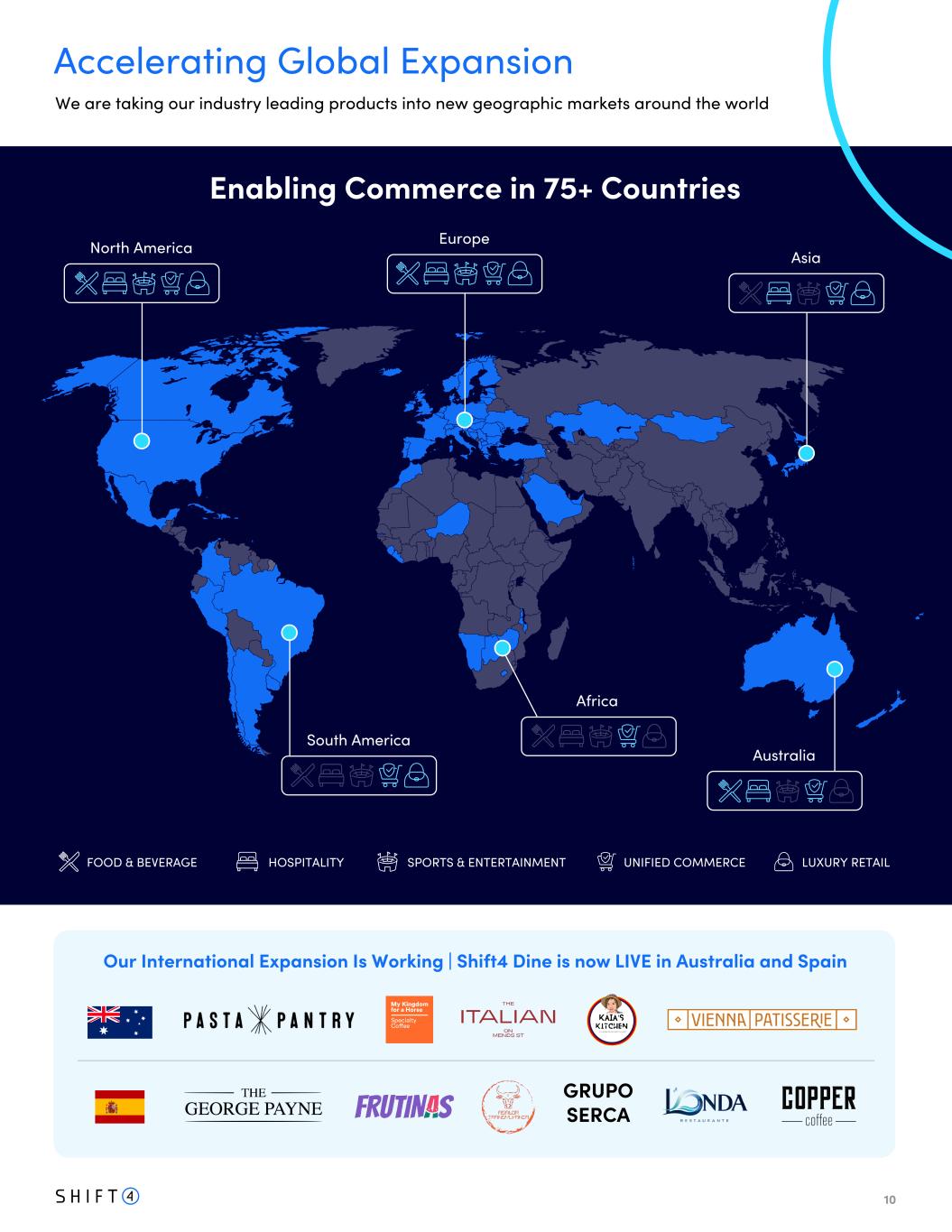
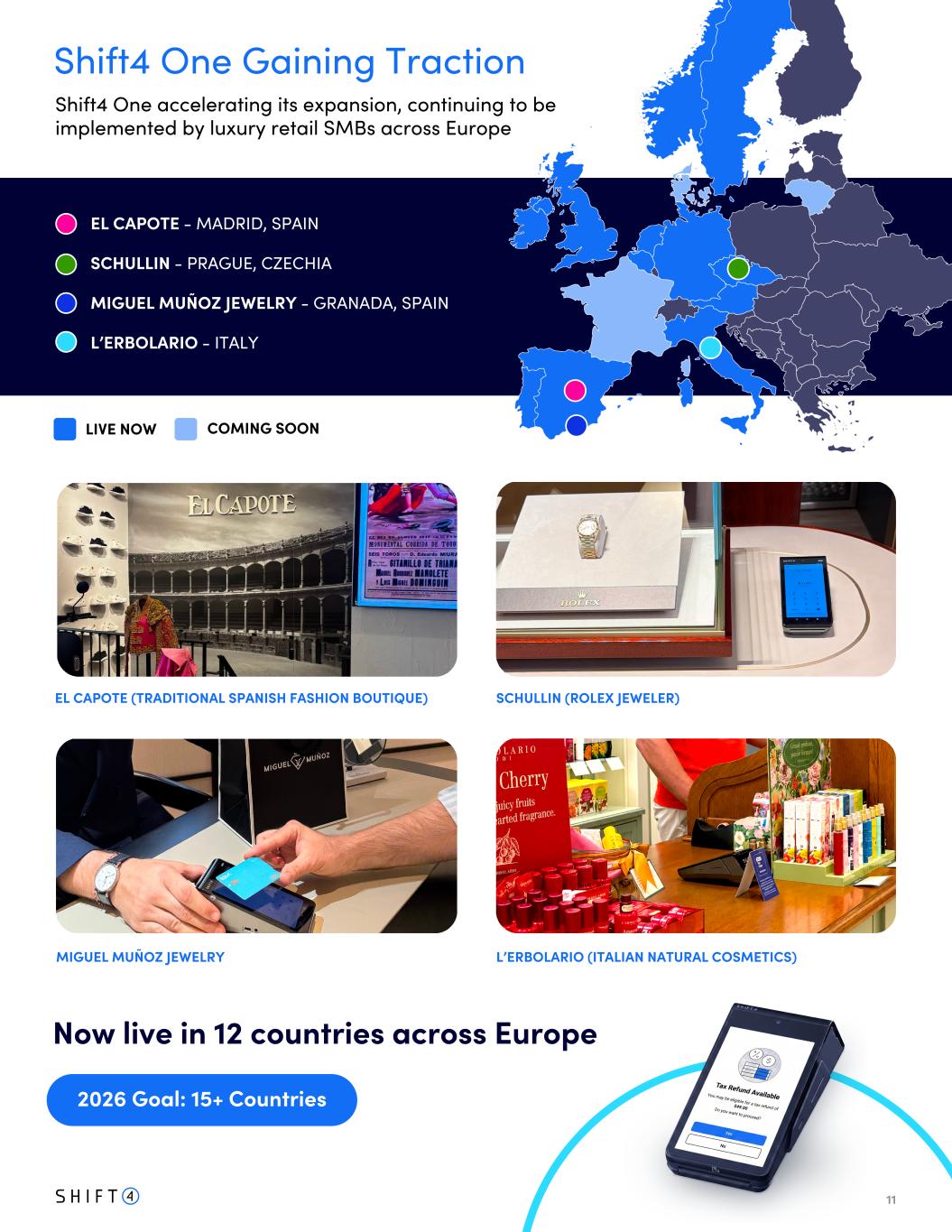
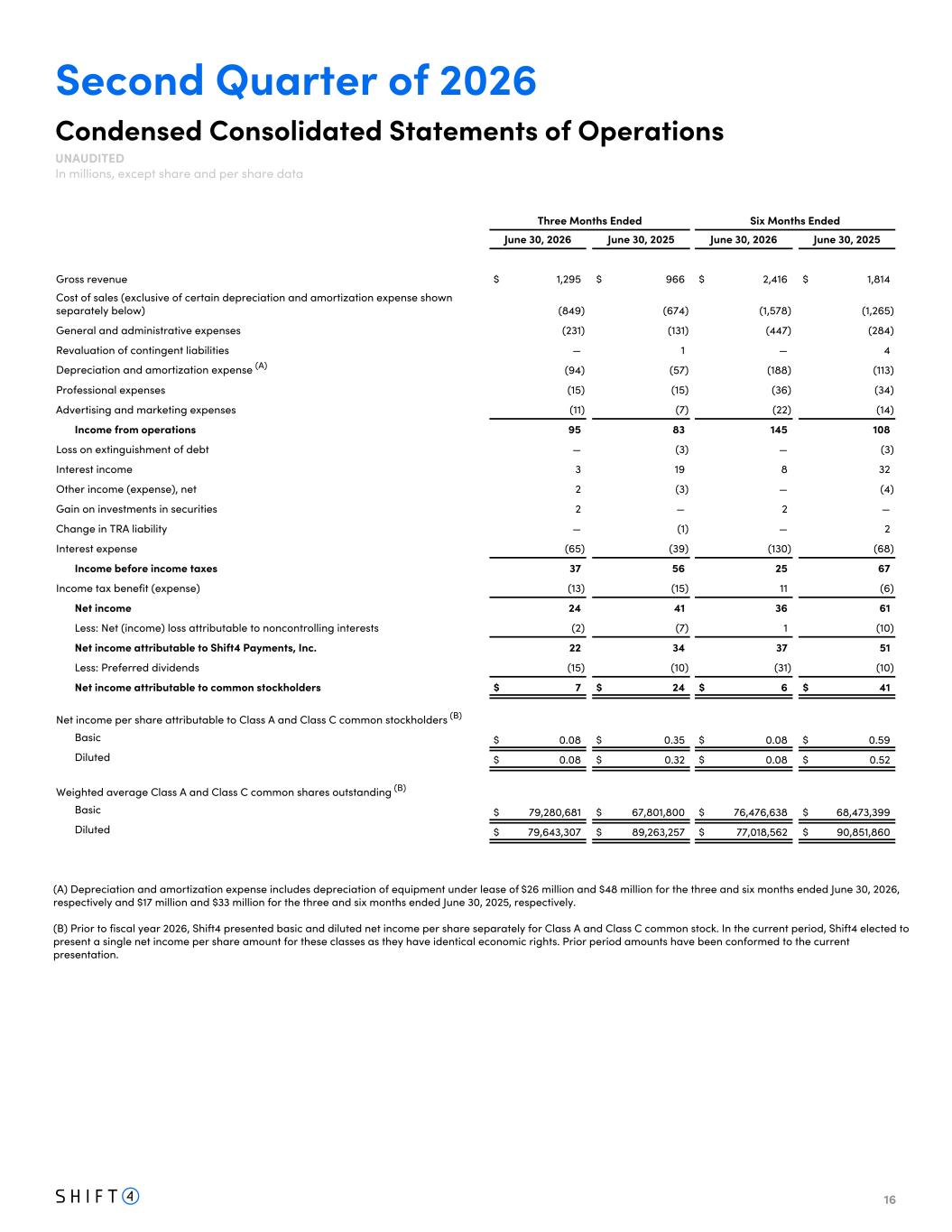
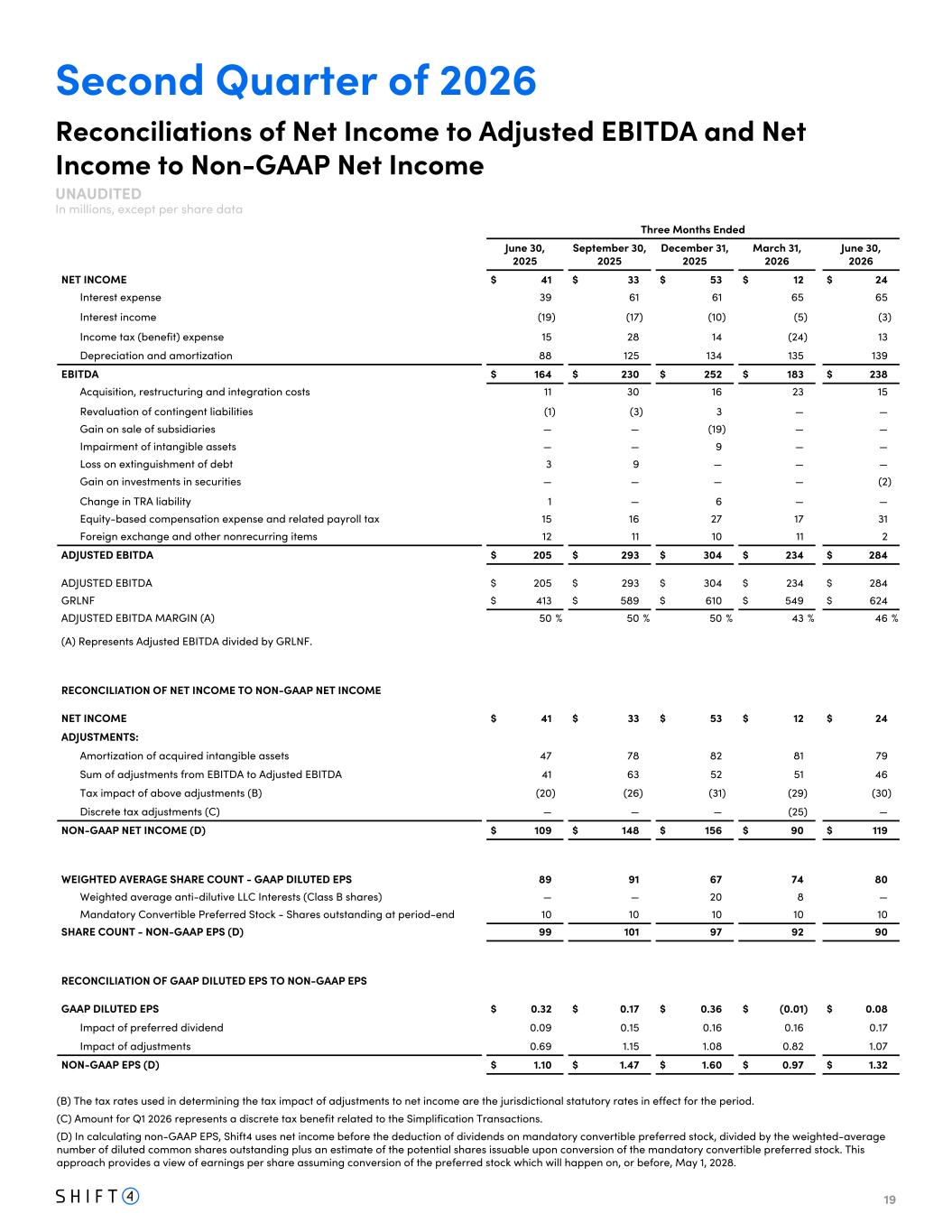
Thanks, Tom. Good morning, everyone, and thank you for joining us today. I'd like to acknowledge the entire Shift4 team for delivering strong quarterly results, including powering payments flawlessly at many of the World Cup matches. This tournament was a great unifying event and an unparalleled showcase for Shift4's ability to help merchants deliver the moments that matter on one of the sports world's greatest stages. Shift4 technology can be found at every match in both the U.S. and Canada, and of course across the broader experience economy of restaurants and hotels. It was especially rewarding to have the finals in our backyard and hosted by a great shipboard customer, MetLife Stadium. Kudos to our team for demonstrating once again our ability to operate in demanding high-stakes environments such as the World Cup final. Believe it or not, this was not even our busiest quarter for sports and entertainment despite the well-attended matches across so many of our customer locations. While there were clear signs of increased spending across restaurants, hotels, and other locations in host cities, our stadium customers are quite accustomed to hosting large crowds, whether it be NFL, MLB, concerts, or even events like Formula One. We are with them for all these events, and I think the World Cup was another healthy demonstration of that. I'm proud of our results this quarter. They demonstrated resiliency despite ongoing travel disruptions and validated our deliberate diversification across the experience economy. With that said, three themes will guide how we talk through our second quarter results. First, the durability of our diversified business continued to show through, delivering resilient growth even as the operating environment stayed changing. Our international expansion continues to scale and compound, and I'll share why we're increasingly confident in its trajectory shortly. And third, I want to spend some time on what I call the heart of our story. Our position across the experience economy isn't by accident or competitive positioning in one vertical or another, but miss the big picture. We are exceptionally well positioned to handle in-person payment experiences from SMB to the largest enterprises. What we've learned from decades in restaurants is brought to hotels and then to sports and entertainment and most recently luxury retail. We choose these growth paths not because they're different, but to the contrary, the ultimate person experience that we are uniquely positioned to provide. And of course, we challenge ourselves to build new capabilities in areas like unified commerce, but with a capital discipline that demands results before diving into Q2 results. We delivered Q2 results above our previously provided guidance, including plus 34% year-over-year growth in gross revenue, plus 51% year-over-year growth in gross revenue less network fees plus 39% growth in adjusted EBITDA and $21 million of adjusted free cash flow versus our $10 million guide. Adjusted for acquisitions, our organic gross revenue less network fees grew 11%, which is consistent with last quarter. We believe there's further room for expansion as we continue delivering our market leading products to new geographies around the world. The performance we delivered this quarter in our payments-based revenue streams is a testimony to our durable growth. Total payments-based revenue less network fees grew 27% in Q2, with the Americas-based revenue less network fees growing 19% and worldwide payments-based revenue less network fees growing at 53%. I'll repeat that. Our most mature Americas market grew in the high teens, and our growth markets grew over 50 percent. As can be the case, this quarter was not without some challenges. The Middle East conflict remained a headwind and weighed on inbound travel to Europe and across several Gulf Coast countries. However, the overall impact on our Q2 results was slightly better than we had forecast. Said differently, we were able to absorb some of the travel disruption impact from strong U.S. to Europe travel, strong performance in Asia, and overall better than expected trends in same store sales for both restaurants and lodges. Chris will provide more details when he reviews our guidance, but we do anticipate continued travel disruption in the upcoming quarter, and our guidance now reflects that. Regardless, our Q2 results coming in above our guided KPIs speaks to the resilience of our diversified portfolio and our ability to operate through factors beyond our control. I also want to address same store sales directly, since that's been a recurring topic on these calls. As a reminder, we experienced softer trends in recent quarters among restaurants and SMBs in the Americas. This quarter, as Chris will highlight, same-store sales trends in restaurants and lodging were slightly better than our expectations, consistent with what we saw in Q1, and a further sign that the trend is encouraging. That said, our full-year outlook continues to assume a neutral impact on same-store sales, and we are not forecasting any material recovery in the back half of the year. We think that that's the right posture given what we deem to be arguably stable trends in consumer spending despite higher gas. The bottom line regarding Q2, we delivered better than expected results relative to our guidance in a quarter that provided some modest benefits from the halo effect of the World Cup, offset by ongoing travel disruptions in the Middle East. Chris will provide more details on our full year 2026 guidance in a bit. But the bottom line is that we are tracking to deliver 24% to 27% FX-neutral year-over-year growth in gross revenue-less network fees. Moving on to international, we delivered another quarter of over 50% growth in worldwide payments-based revenue-less network fees as we continue to scale our business internationally. Some highlights in the quarter included, we introduced our restaurant POS products, which is Shipboard Dine, in Spain and Australia. and we are rapidly attracting restaurants to our platform. We continue to globalize all of our products for international markets and expect to introduce Shift4Dine in many more international markets in the months and years ahead. Shift4One continues to resonate with retailers in Europe, and we are now live in 12 countries, well on track to surpassing our annual goal of being live in 15 countries by the end of 2026. As a reminder, our Ship 4.1 product combines payments, dynamic currency conversion, and tax-free shopping into a single device. This quarter, we added numerous retail, cosmetic, and jewelry merchants across Spain, Italy, and the Czech Republic. You can find them in our materials we provided this morning. Merchants understand the value immediately, and I expect that we'll be adding thousands of merchants per month in the near future. In hotels, we continue to win excellent resorts and hospitality customers. This quarter, we added Massa Newton Resort, the Nora Hotel, West Palm Beach, Waiford Bridge Inn Hotel, Radisson Hotel, Winnipeg, just to name a few. Again, there's more in our materials. And our sports and entertainment capabilities remain unmatched. This quarter, we signed the Buffalo Bills and Texas A&M, along with new venues, including Tom Benson Hall of Fame Stadium and Splashway Waterpark. You'll continue to see us processing ticket sales for LA 2028 as well. Finally, in luxury retail, we've signed several brands to our tax-free shopping solution, including Ralph Lauren, Burberry, Patagonia, and Givenchy in Japan. In an increasingly digital world, consumers are demanding more meaningful in-person experiences. As I mentioned earlier, we are uniquely positioned to address all aspects of this experience economy. We are beginning to see a meaningful amount of capital being invested in this concept of sporting events, driving commerce in the surrounding neighborhood, with some interesting new concepts beginning to break ground, such as Miami Freedom Park and its surrounding retail and restaurant shops. We expect the same halo effect we benefited from this quarter at the World Cup to repeat itself with several other upcoming sporting events, such as the 2028 LA Olympics. The second way we benefit from our position in the experience economy is the daily chain of relationships that leads to net new business. For example, our existing relationship with major casino resorts contributed to us winning many restaurants across the country. The ownership groups of these hotels often own restaurants and other entertainment venues and as such, want to deliver the same experience to their guests. We are increasingly aligning ourselves with the operators who share our vision of connecting consumers with experiences, and having a shared vision goes a long way towards creating differentiated products and capabilities supporting the growth and vision of our customers. Our competitive differentiation across hospitality and sports and entertainment is unique, and it continues to widen the gap between us and peers who either narrowly focus on a single vertical or only offer a point solution. We are the connective tissue behind the entire consumer experience. The same fan might grab dinner, catch a game, buy a jersey, and check into a hotel in one night, and we're the point-of-sale they're interacting with. In the U.S., we still have meaningful market share to capture and incremental services to offer, and our DCC offering is live and has been well-received by our first few customers. Before closing, I want to talk a little bit about the technical investments we've made recently. Our story as a public company has often been about the proof points. The customers won, the verticals conquered, the geographies opened, but none of this would have happened without meaningful investment and innovation. To that end, this was a record quarter for technology investment and product development. We released the next generation payment terminal application and terminal management software, which includes dynamic currency conversion, as well as multi-location enhancements and a totally new quick service feature set within shipboard time i mentioned shipboard one being live in 12 countries which as you can imagine requires meaningful language and local feature customization and we have integrated ai-powered propensity models across our which will continue to enhance the customer journey allow for more refunds process like this the disciplined approach we have towards managing expenses hasn't changed we continue to maintain a relentless focus on and driving incremental operational improvements and preserving our advantages in regards to minimizing customer acquisition costs relative to others in our industry. I'm of the view that there's always room for improvement, and while we already deliver margins that are commendable relative to peers, I do see a path to 50% margins as we scale our international operations and continue to better leverage the resources that we have across the global organization. Let me close on a theme I keep coming back to with this group because the data keeps backing it up we can grow meaningfully without adding a single new customer and we can drive real margin and free cash flow expansion just by continuing to do what we do well integrating our business and deleting the parts we no longer keep this quarter was another proof point volume of 61 billion up 22 percent year over year gross revenue less network fees of 624 million, which was up 51%. 11% of that was organic. Adjusted EBITDA of 284 million, which is up 39%, and at a 46% margin. And our updated full year 26 guidance calls for plus 25 to plus 28 gross revenue less network fee growth, or plus 24 to 27% growth on an FX neutral basis. The macro environment remains dynamic, and I'm not going to pretend otherwise, but the diversification of our business, durability of our growth, and caliber of the team we've built continue to give me genuine confidence on the road ahead. Our long-term numbers are the clearest evidence of why this model works. To remind you, gross revenue less network fees have compounded over 35% annually and adjusted EBITDA of over 40% annually since 2019, all achieved with cumulative equity dilution of roughly 15% during that timeframe. Said much more simply, we've 8x the business with only 15% dilution in seven years. I'd encourage everyone to dig into the prepared materials for the additional detail. And with that, let me turn it over to Chris.
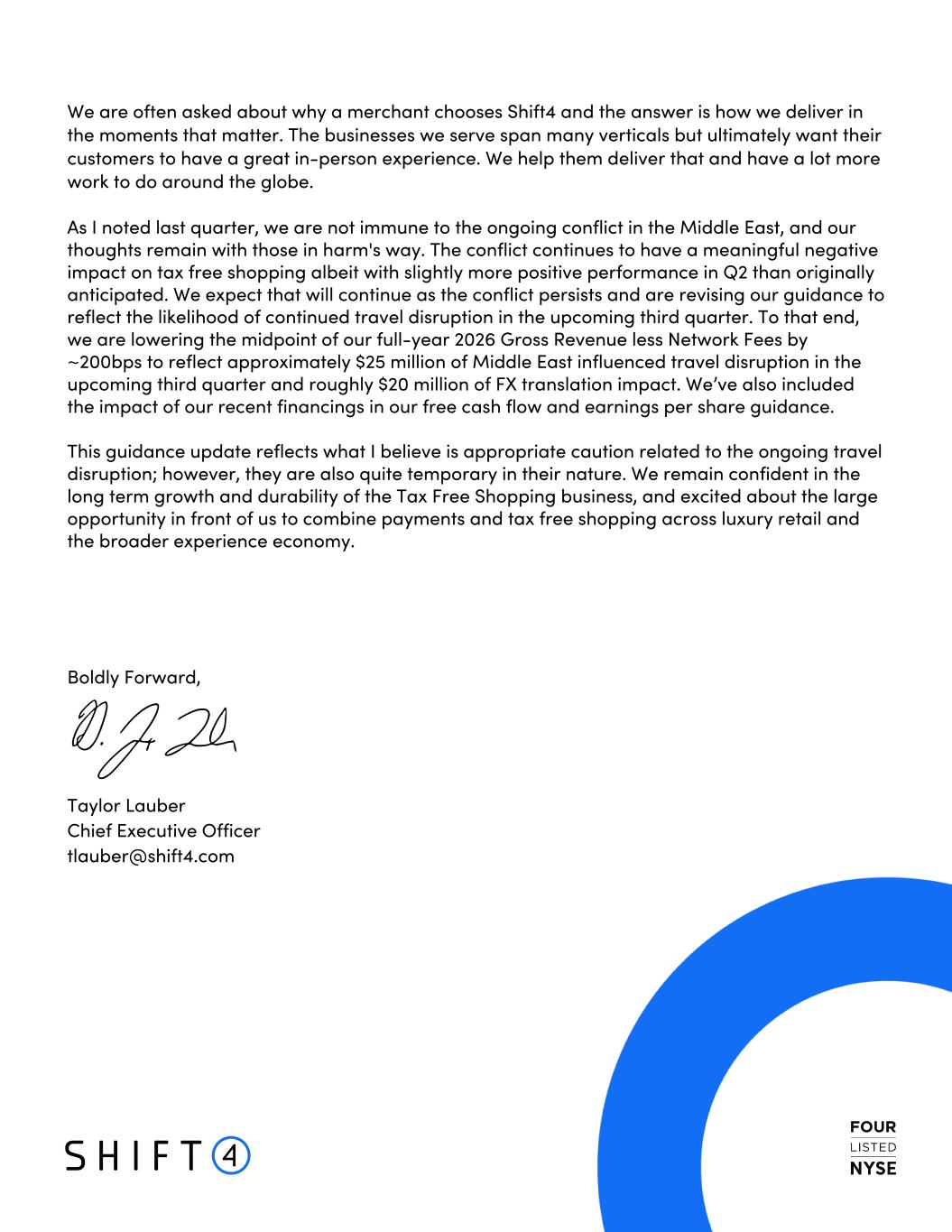
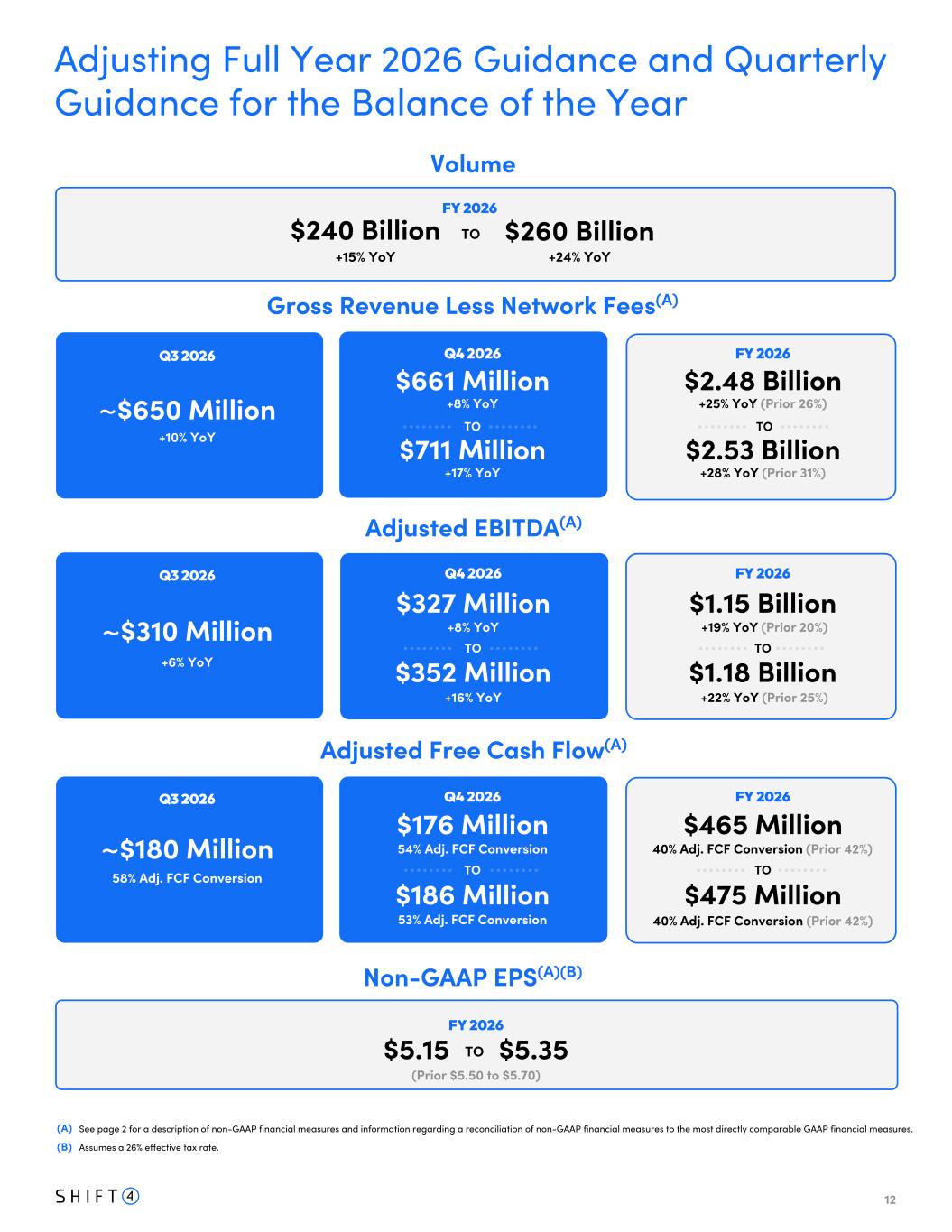
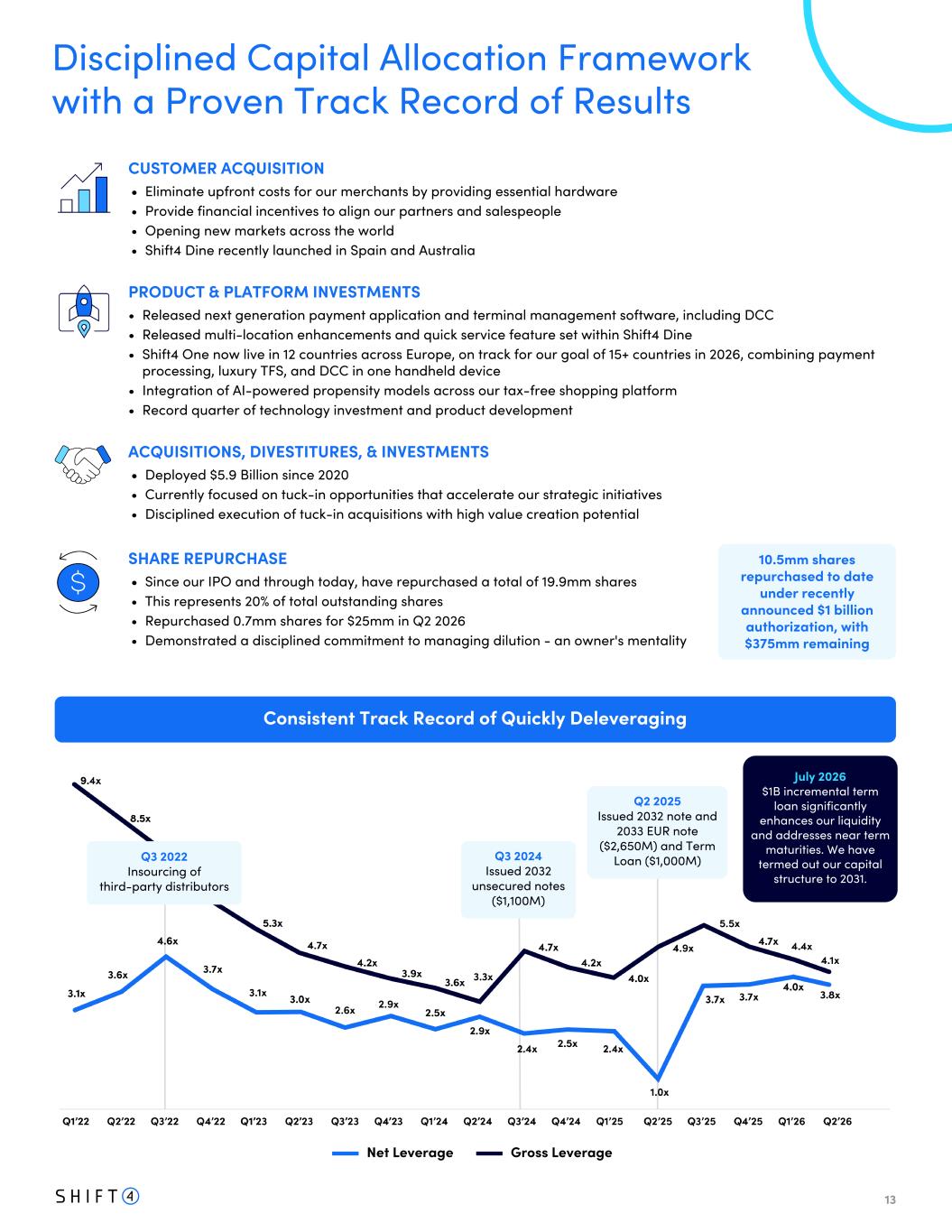
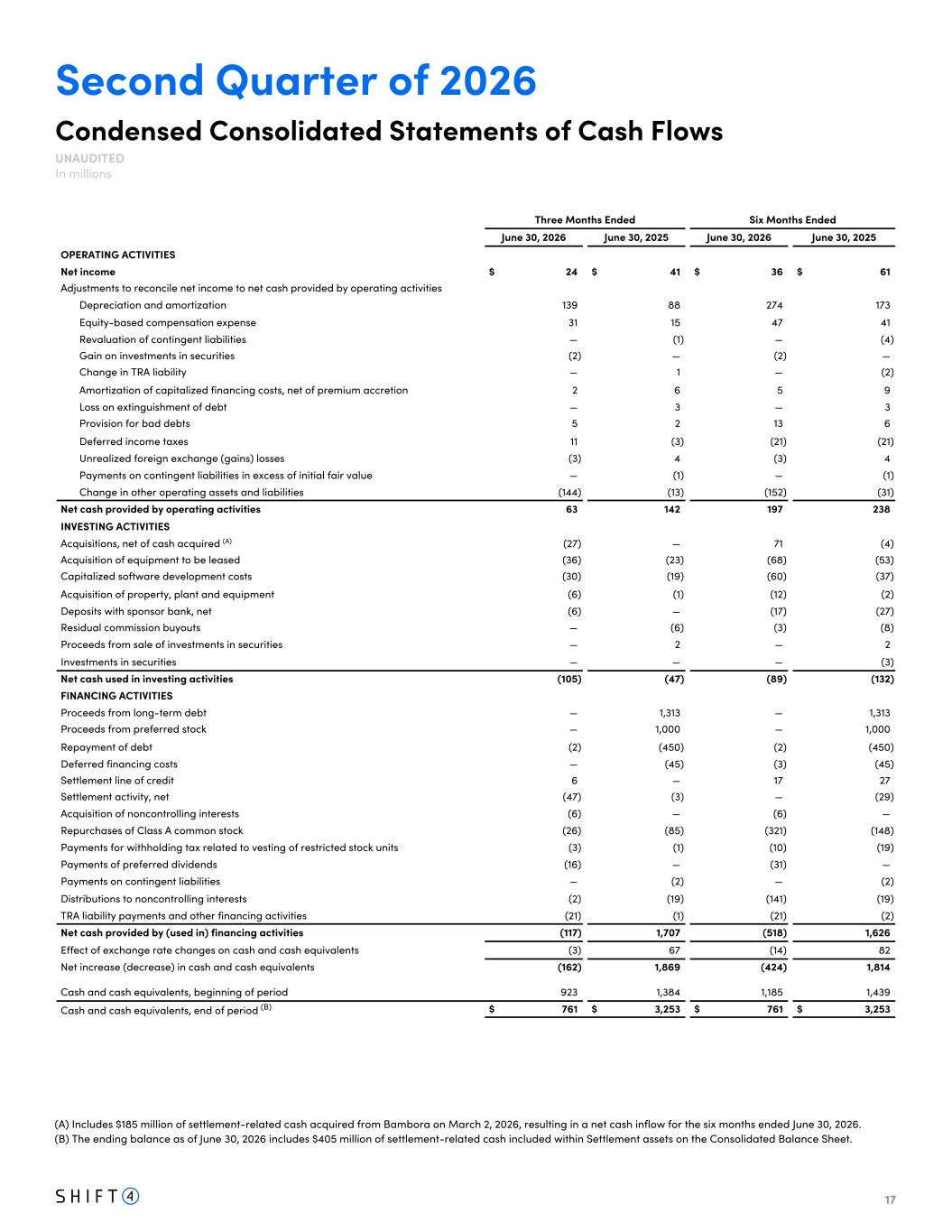
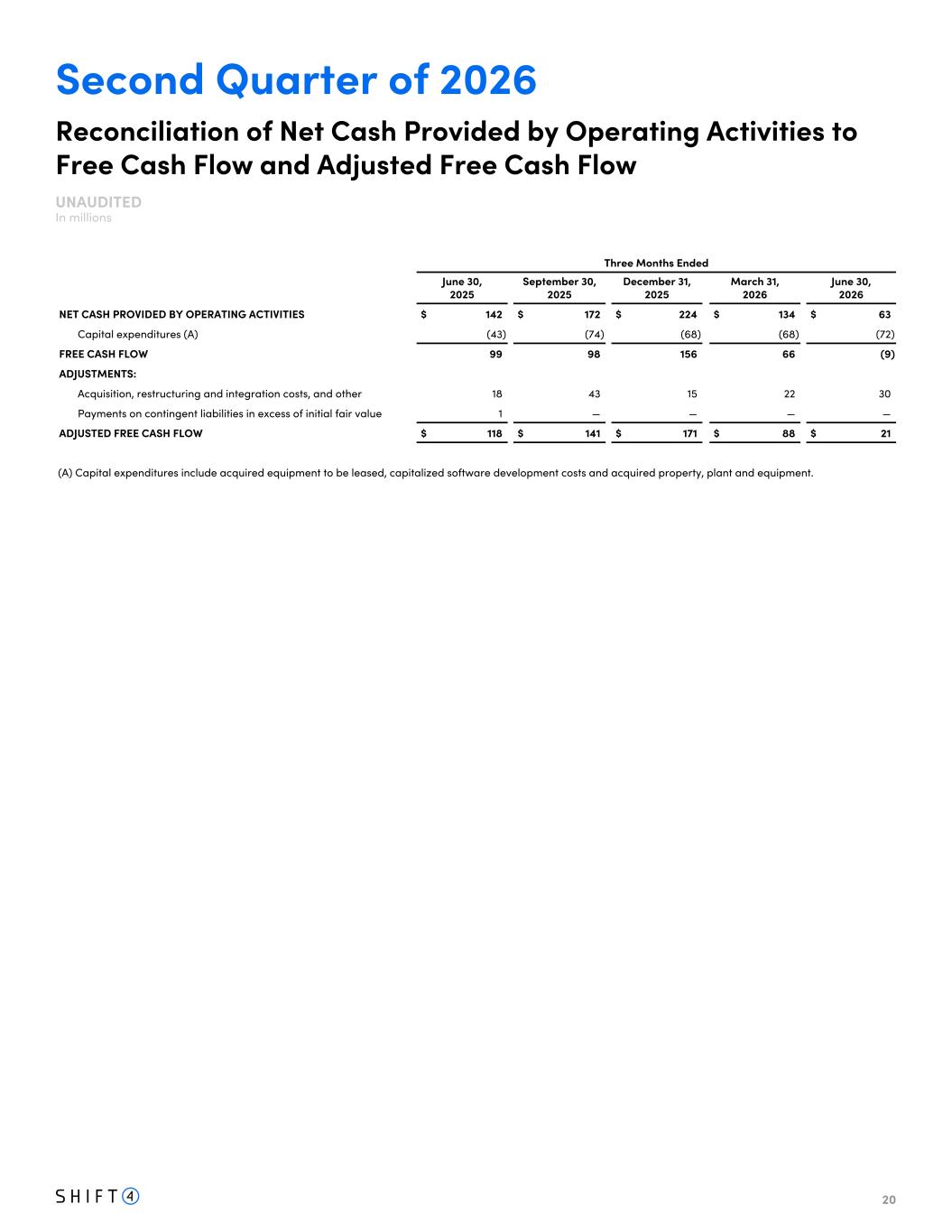
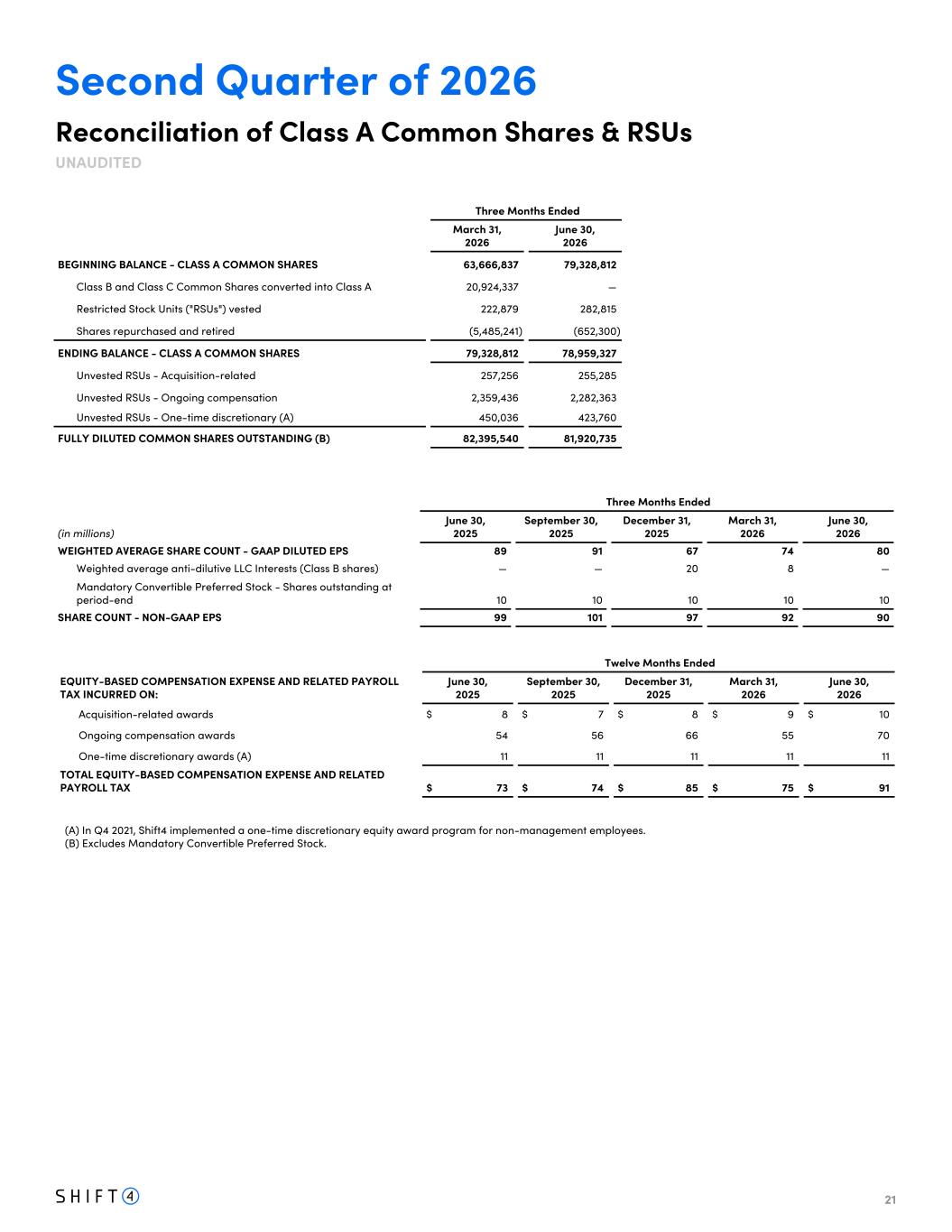
Thanks, Taylor. Q2 2026 delivered record Q2 financial results that exceeded all our guided metrics while our growth algorithm remains intact or ahead. All of this performance is underpinned by the continued execution of our durable model, rapid integration, and disciplined capital allocation, while continuing our strategic priority of diversifying both geographically and serving more of the experienced economy. This diversification has afforded us the resilience to offset some of the travel disruption we continue to experience due to conflict in the Middle East. Gross revenue of 1.29 billion came in well above our 1.17 billion guidance and was up 34% year-over-year. Gross revenue-less network fees, or GRLNS, of $624 million grew 51% year-over-year or 11% organically, excluding contribution from acquisitions. Adjusted EBITDA of $284 million grew 39% year-over-year, delivering a 46% margin, and adjusted free cash flow of $21 million exceeded guidance as well. Now, let's unpack this further. Volumes grew 22% year-over-year to $61 billion while delivering blended spreads at 65 basis points. The Q2 volume mix was largely in line with our expectations, while same-store sales in the Americas trended slightly better than our expectations. Turning next to the disaggregated categories of revenue that make up the Q2 GRLNF. Beginning with our North Star on growth, payments-based revenue less network fees, that was $402 million, growing 27% year-over-year. This category consists of an America's region that grew 19% year-over-year and a worldwide excluding America's region that exceeded our expectations, growing 53% year-over-year. The next category of subscription and other grew 8% year-over-year, and although on a year-to-date basis we are exceeding the original growth algorithm outlook, we expect this category to moderate in the back half, resulting in a low single-digit growth for the year. Finally, the category of tax-free shopping, or TFS, grew 8% on a pro forma year-over-year basis, an improvement from last quarter's 4% growth. TFS results continue to be impacted by travel disruptions in the Middle East, but the overall revenue impact came in modestly better than our prior expectation of a $20 million headwind. Overall, we are encouraged by the resilience of the business that this growth performance expresses. Our growth algorithm remains intact or is ahead across all areas, and we delivered a consecutive quarter of low-double-digit organic GRLNF growth. As a reminder, TFS was not part of our organic growth calc this quarter, but given we just celebrated the one-year anniversary of the acquisition closing in July last year, TFS will roll into our organic growth calculation beginning next quarter. Adjusted EBITDA margins were 46%, and while an improvement from the first quarter, it is worth noting that we continue to scale our international operations and are continuously making investments in both product and internal initiatives. The encouraging outperformance we continue to see in the worldwide region validates all of these investments. Non-GAAP EPS came in at $1.32 per share. Adjusted free cash flow in the quarter was $21 million, which exceeded our guidance of $10 million. And on a non-GAAP per share basis, this results in $0.23 of adjusted free cash flow per share or 17% conversion from non-GAAP EPS. and when combined with Q1, this translates on a combined basis to a 52% free cash flow per share conversion for the first half. And now on to quarterly guidance. For the third quarter of 2026, we are introducing guidance as follows. GRLNF of approximately $650 million, which embeds an approximate $25 million impact for travel disruption due to the continued Middle East coupling, adjusted EBITDA of $310 million, and $180 million of adjusted free cash flow. As a reminder, we raised an incremental $1 billion of term loan B on July 8th to pre-fund the August 2027 maturity of our convertible notes. As such, adjusted free cash flow revisions are largely the result of the net interest expense impact with the balance resulting from the flow through of the aforementioned earnings revisions. Additionally, gross revenue for the quarter is expected to be $1.3 billion. We are also introducing Q4 guidance ranges as follows. GRL and F range of $661 million to $711 million, adjusted EBITDA of $327 million to $352 million, and adjusted free cash flow of $176 million to $186 million, reflecting approximately 53% to 54% conversion. Similar to last quarter, we are only forecasting potential travel disruption from the Middle East conflict for the next 60 days, and thus our fourth quarter guidance does not assume any impact from this. This all translates into full year guidance ranges as follows. GRL&S of $2.48 billion to $2.53 billion, up 25% to 28% year-over-year. Adjusted EBITDA of $1.15 billion to $1.18 billion, up 19% to 22% year-over-year. Adjusted free cash flow of $465 million to $475 million, representing approximately 40% conversion of adjusted EBITDA. and non-GAAP EPS range of $5.15 to $5.35 per share. Again, both the EPS and the adjusted free cash flow revisions are majority the result of the incremental net interest expense resulting from the increased term loan fee to pre-fund the August 2027 convertible notes and the flow-through of earnings revisions. Just some color on guidance. Although we now have an outlook that will favor the low end of our original guidance range, We are proud of the durability and resilience that the business has exhibited by absorbing the travel disruptions associated with the Middle East conflict in the first half of However, given the duration of the conflict, incorporating an estimated $25 million impact to Q3 and updating the outlook for approximately $20 million of FX translation impact seems prudent to acknowledge and comprises the majority of the $40 million midpoint guidance revision. On an FX-neutral basis, our GRLNF guidance now reflects 24% to 27% year-over-year growth compared to an FX-neutral growth of 24% to 29% in our prior guidance range. Said differently, the midpoint of our GRLNF growth range has only been reduced by 100 basis points on an FX-neutral basis. And now last on capital allocation. Every allocable dollar must compete for the best use and is subjected to rigorous process, while the output that guides us is return on invested capital and adjusted free cash flow per share. In Q2, we repurchased approximately 650,000 shares at an average price of approximately $38. We were intentionally conservative this quarter, given current leverage levels and the cash-consumptive quarter we were in. Cumulatively, we have deployed $625 million against the $1 billion share repurchase authorization announced three quarters ago, and this has resulted in an approximate 11% reduction in non-GAAP share count for the authorized period. On debt capital structure, our Q2 2026 pro-forma net leverage was 3.7 times, and we maintain our view that we do not intend to exceed three and three quarters times pro forma net leverage on a sustained basis. Based on performance trajectory and guidance, the business is expected to delever by year end to our long-term average net leverage level in the low threes. As mentioned on July 8th, we extended the maturity of our $550 million revolving credit facility, which remains undrawn, and raised an additional $1 billion of term loan B at the same terms as our existing term loan B, with proceeds principally to address the august 2027 convertible note maturity the net result is that we have successfully termed out our capital structure to 2031. before turning the call back to taylor i want to thank our colleagues for their flawless execution at one of the world's grandest events of the world cup at every venue you tirelessly executed to ensure that our customers could deliver the moments that matter in the most demanding environments with that let me now turn the call back to taylor
Operator
Chris and operator we're ready for questions thank you at this time we will open the floor for questions if you'd like to ask a question please press star one now to remove yourself from the queue you may press star two again that is star one to ask a question and we'll take our first question from Dan Dolo with Mizuho please go ahead your line is open guys thanks so much lots of good things uh here um hope people pay attention to that as well uh chris question for you has anything changed regarding your capital allocation priorities for example how are you thinking
about buybacks acquisitions and leverage here thank you so much yeah thanks for the question dan um yeah so i would start with the overarching phrase that our capital allocation framework remains unchanged i think we have the benefit of having a few different value creation drivers within that framework. And we have to be prudent about how to balance it at all times, given how focused we are on driving return on invested capital. And so when you think about where we are, though, in this past quarter, I think it's fair to acknowledge that we had to approach things with a little more conservatism, and that was very deliberate. So the execution against the share repurchase in the quarter was certainly impacted by the fact that we acknowledge where we are on our pro forma net leverage level at 3.7 times. And we acknowledge where we were in a second quarter that is a seasonally cash consumptive quarter. You take those two things together and the strategic decision was to be intentionally conservative at the time. Obviously, the cash flow generation seasonality changes in the back half of the year. And then in general, from a liquidity standpoint, we're in a much more improved position in light of the recent financing. Maybe one other thing I would say about it, though, is that as we think through the cash flow generation in these coming quarters and the growth that we anticipate, I think it's fair to reiterate that within that capital allocation framework, it's not just about repurchases. It's also about making sure we continue to invest. I think something that we'd to highlight is the fact that this was a record quarter for us in terms of investment in terms into product technology platform as well we continue to believe that there are a number of interesting opportunities to strategically enhance or accelerate some of our strategic initiatives by by looking at tuck in m&a as well so i would say overall no change in the way we think about the framework but very much intentional in how we look at it given some of the seasonality dynamics um i don't know if there's anything else you wanted to add taylor no i think you said it well we've invested meaningfully in technology we continue to see lots of interesting uh m a
opportunities i would sort of categorize them on the tuck-in category but uh keep in mind we're in many dozens of countries that we weren't in just a few years ago and in most cases with a single product so the ability to deliver the rest of our product whether that's through buying a local sales team um is something that we're incredibly focused on so nothing's changed um with i think chris's caveat that q2 warranted a little bit of caution but q3 less so thank you so much for the cutter appreciate it thank you we'll take our next question from reyna kumar with oppenheimer please go ahead your line is open uh good morning chris um so you raised a new term loan b during
the quarter can you just talk about the uses of funds and how you're thinking about your balance here?
Yeah, sure. Thanks for the question, Reina. So we, on July 8th, we successfully executed a combination of extending our revolving, our revolver maturity into a new five-year and take that out to 2031 and also raised a billion dollars of term loan B on essentially fungible terms or the same terms as our existing term loan. The primary use of proceeds there was to pre-fund the August 2027 convertible note maturity so that we could successfully term out the entirety of the capital structure into the 2031 territory. And actually 2032, if you think about where there actually is funded debt because the revolver is undrawn. And that's the primary purpose of that capital. I think the other dynamic within it is to acknowledge that within that we also have some general corporate proceeds that went to the balance sheet, improves liquidity, and all the while I think it was fair to say that it was a well-received offering in general. Ratings remained affirmed and unchanged as well. The debt markets really do view us as a seasoned issuer and we're very supportive of the transaction given the fact that you could see the terms that came through are probably really amongst the market best for our for our double b rating our double b corporate rating so overall really satisfied with the transaction outcome and and like where our balance sheet is right now thank you that's really helpful and just one quick follow-up um taylor you announced some pretty big wins in retail and i think your initial expectations were like signing smaller retailers so just um like are you surprised by the bigger wins and you know should we you know continue to expect that type of traction with large retailers
so there's a lot of receptivity um across kind of the large retailer base this is a group that global blue has had um you know a marquee product offering in for quite some time um increasingly is the tax-free shopping sort of product adds new geographies those retailers you know we're the default for those retailers and those geographies I would say I wouldn't want to challenge the sales motion that we have now which is you know a lot of the SMBs that we would reference in the materials these are same-day decision makers this is a walk-in get a meaningful enhancement from a product perspective and adopt the product quite quickly any of the enterprise retailers we work with require deep and sophisticated customizations and take longer to board, et cetera. I think, as has kind of always been the case with shipboard and is kind of interesting to use in the context of the World Cup, like you win the MetLife so that it helps substantiate why all the local businesses around the MetLife should be doing business with you. And that continues to be the case in Europe.
Operator
We'll take our next question from Timothy Chiodo with UBS. Please go ahead. Your line is open.
So I think a lot of investors appreciate the shift for approach, which, as you mentioned earlier, results often in lower cuts or acquisition costs. One of the hallmarks of that over the years has been the gateway strategy. Of course, there's many other means of doing this in conversion. But specific to gateway, there was originally the shift for gateway. There was the merchant link gateway. More recently, that opportunity has been somewhat replenished with Eigen and even more recently, Bambora. I was hoping you could give a little bit of an update on what remains in the specific to the gateway conversion opportunity and maybe a little bit more specifically on the two more recent ones in terms of Eigen and Bora. Yeah, sure. Well, I'm glad you categorized it in the way that you did, which is to say that, you know, the hallmark of the M&A approach that we've taken over the years is that in every case, it gives us an embedded base of customers to go cross-sell to. So, institutionally, we don't think about, you know, the ability to migrate a GiveX gift card customer over to our payments radically different than we think about an Eigen Gateway customer. I would say Gateways have been, you know, it's a no place like home M&A move for us. That's literally what we call them in our M&A tracker because the playbook's seasoned. It's understood across the entire company, practically speaking. Eigen's been an awesome proof point for us. We've got, you know, one of the largest airport operators, concessionaires in the world has switched over. That was largely a result of a gateway conversion. Many hundreds of merchant locations as a result of just that merchant moving. Eichen's been great. And they all kind of follow the same pattern, which is to say, you know, the newer the gateway, the less progress we've made through it. But, again, a really seasoned motion through it. I will say, though, we don't challenge our sales teams to prioritize one opportunity or the other. We basically bucket all these merchants into pain points we believe we can solve. So our restaurant team goes after all the restaurants. In our acquired book, our hotel team does the same. Just now, you know, our luxury retail team does the same with that. So we try not to sort of put a prescription on moving one versus the other. I would say highlights for us recently have been, you know, a beginning of conversion of Rebel Merchants over to ship or dine, which is quite exciting. GiveX, the kind of upper bound of that product is non-existent, meaning we're attracting lots of awesome institutional customers to that product. And that product is compelling payments conversations. And again, again, no place like home, I would put Bambora in the same category. Thank you.
Operator
Thank you. We'll take our next question from Nate Spinson with Deutsche Bank. Please go ahead. Your line is open.
Hey, guys. Thanks for the question. Appreciate all the details on the Middle East, but do want to follow up on that, just given how dynamic the situation is. For 2Q, I know you said the headwind came in lower than expected, but maybe just wondering if you could give more specifics on where that number was relative to $20 million and kind of the strength you saw offsetting that.
And then just as we think about the $25 million headwind that you're banking in for 3Q, so i get that there's seasonality that's a higher travel quarter relative to 2q but given the results you saw in 2q and some flight data that does look like it's improving just wanted to hear the assumptions underlying at 25 million sure i'll take that and thanks for the question yeah so um look well said the right word is dynamic right it's been a it's definitely been um a dynamic conflict the travel disruption that has um resulted from it has made um forecasting um a challenge specific to the corridors that are impacted. And when I say the corridors, I mean the dynamic of the consumer's origin point is an origin point largely in the GCC or Southeast Asia coming into Europe, right? That's the corridor that we're focused on. And I'll answer the question around the commentary that relative to the 20 million Q2 sort of number that we had that we had baked in as far as kind of like a headwind. The 20 million, it did perform modestly ahead, not a meaningful amount, but modestly ahead of what we'd expected within our forecasting at the time. More than anything though, the overall TFS category, I think outperformed across other areas that demonstrates its kind of balance and resilience as a whole. So, for example, one of the themes that we had mentioned outside of that affected corridor of sort of GCC, Southeast Asia consumer coming into Europe, outside of that corridor, there was like nice pockets of strength. The U.S. consumer into the European corridor continued to perform well. We continued to see nice strength there. And we saw nice strength coming from the inter-Asia area, so travel into Japan for tax-free shopping. So when you balance out TFS as a whole, it actually was pretty resilient and demonstrates it's kind of the benefit that it has by being as kind of geographically diverse as it is. But in short, to come back to your question around specific to the $20 million, it was modestly ahead.
That's very helpful, and I hear you on the challenges, especially Asia to Europe. Data is confusing to us, so appreciate the color there. Just for the follow-up on free cash flow, so get the points on the guidance this year. It sounds like mostly from the term loan being made a little bit from these Middle East headwinds. But just as we think about free cash flow conversion into next year and beyond, beyond the higher interest expense that will be flowing through, is there anything going on across the business that changes your confidence or kind of visibility into what free cash flow conversion should look like in future years? Just trying to get our models in the right place as we think about next year and beyond.
Yeah, no, it's the right question, and it's definitely something that I think the street's done a good job of getting acclimated to through the balance of this year is sort of free cash flow modeling. So we appreciate that. I would say that as I think into next year, it's obviously two large caveats, right? The story of this year, combination of capital structure, given that we had maturities in 26 and a convertible maturity in 27. That's now out of the way. I think there was some question even in last quarter as to how we might address the 27 convertible and how to think about that within models. Hopefully now that's fully off the table in terms of how to model it. And then obviously the travel disruptions that we experienced this year have been the other big factor on on free cash flow um and and corresponding or maybe connected or maybe disconnected like there has been fx volatility as well so when you take into those three if those are not part of what we have to contend with in 27 um the answer is no we don't see anything fundamental if anything something that we would reiterate from um earlier in the year is that the incremental free cash flow conversion that should come through into the business it should expand over time given overall operating leverage that exists. Even when we think about record levels of product investment, that is all still well within the normal and ordinary course of what the business can deliver. So I think the short answer is there shouldn't be anything incremental to the aforementioned things that we were facing this year and the capital structure point that you brought up.
Yeah, one thing I want to layer into it because fully acknowledge global blue is a little bit of a different opportunity than we've had in the past um you know typically whether it's any of the cross sales i described in tim's question it's almost an immediate incremental revenue opportunity on an existing customer and that revenue is like nearly 100 flow through to the bottom line on a net to evita basis one thing that's different about global blue is we are deliberately investing in meaningful sales build outs across all the countries that they operate in that we see opportunity That's because they're not just going to go after Global Blue retail customers, Global Blue SMB customers. They're going to offer all of our other products in those countries. So while this early cross-sell motion is great, we're seeing great momentum, some of the costs associated with that mask what a typical cross-sell might look like. It's all for the right reasons, and that's kind of why when we even first signed and announced the Global Blue transaction, we talked about meeting people's synergy benefit in 27. It's because this is, you know, I think it's very balanced, but it's an investment here to make sure we have all of the infrastructure we want in these countries and as much of our full product suite available as possible.
Thanks, guys. I appreciate the color.
Operator
Thank you. We'll take our next question from Craig Maher with FT Partners. Please go ahead. Your line is open.
Thanks for taking the questions. two clarifiers for me first on the three cube guide or the effectively the guide for the rest of the year you basically said similar last quarter we're only forecasting potential travel disruption from the middle east conflict for the next 60 days now what does that mean exactly does that mean beyond 60 days it's just an immediate return to normal when we should be considering your model or how should we think about that and second you called out the fx drag this quarter but could you give us um the last call three four quarters of fx impact so we can model properly
thanks yeah thanks for the question um on the second coin i think it's probably most conducive to do that in a follow-up. So we'll tackle that one as a follow-up. On the first point around what does it really mean to continue to, similar to last quarter, use a 60-day outlook forecast? So as a reminder, when we look at the affected corridors in the TFS business, what we're really focused on is looking at how those corridors are tied to a forward forecast of flights. The flights, the seat capacity, and a variety of the factors through data sets that we get are input into an outlook model that allow us to get a pretty good 60-day forecast view. I think indicative of the, we'll say, the predictability of that view is that relative to the 20 million sort of figure that we had forecasted as an impact figure in Q2, we were pretty close. So I think that we wanted to continue that same methodology, use the forward forecast, and importantly, not try to predict the duration of a conflict, a geopolitical conflict. So you take those two things together, and we're consistently applying the exact same methodology that we applied the last quarter, and that methodology would lend itself towards the $25 million number that we've put out there. It's important to understand that the Q3 period in terms of seasonality is the strongest of the quarters in terms of total sales and store or volumes. And so the increase is only a reflection of the seasonally strong Q3 relative to Q2. And I know you didn't ask this as explicitly, but if you sort of think about Q4, the idea of what we're trying to say is that we don't want to break the consistent approach we've used in the last two quarters and now try to forecast a fourth quarter on something like a geopolitical conflict. But for context, it's fair to say it's probably a good data point to appreciate that Q4 and Q2 are about the same size in terms of their TFS contribution from a seasonality standpoint in terms of volumes. And so I'll put that out there as hopefully something helpful for your own modeling.
Yeah, I just want to hit this again because I sense a little bit of confusion on it. I would say the impacted travel corridor that we anticipated when we forecast in Q2 behaved largely as expected. There were other corridors that outperformed, and therefore you got a slightly better than forecast result. We are approaching Q3 with the exact same mindset, which is that we know what the impact of the travel corridor would be in the highest seasonal quarter. And so we're giving investors insights into that. the one thing i would just sort of say with regard to um chris's remarks that we haven't had um a conflict that's kind of on and off and on and off and on and on um we haven't seen that change travel behaviors radically inside of that corridor um so this is why we're so reticent to want to try to predict beyond what we can see in flight planning capacity but this is a shopper base that is largely quite resilient when travel is safe uh in the eyes of the traveler they they get out and spend quite immediately so um i don't think it's unreasonable to say that when this conflict is decisively over that you know this impact would be muted thank you thank you we'll
take our next question from darren peller with research please go ahead your line is open hey guys thanks um look when we look beyond the mid east impact uh and to really follow up a bit on tim's question earlier in terms of the cross sell it looks like you do have the underlying trends obviously in the in the payment side and the america side trending well so just looking beyond the short-term minis conflict impacts and thinking about next year for a little longer i i i can't help but wonder where you are on shift 4-1 and global blue in terms of where you expect to be contributing to numbers so we know by the end of the year you're hoping 15 plus countries it seems like you're progressing well i think you're at 12 now you said um but help us understand a little bit more in terms of the progress and the timelines you'd expect to see that really start moving the needle, where not only do you have, you know, entry into the countries, but real ability to process volumes and convert more and more merchants, the sales team setups, probably a little more structural timelines. Thanks.
Yeah, it's an awesome question. And it is literally the heart of our strategy here. So to give you a little bit of insight into how Global Blue historically operated, it was a very enterprise oriented, go to market motion with, you know, strong market share across the enterprises. And the SMBs were largely a self-service operation, meaning an SMB merchant would find its way to Global Blue without a lot of service, without a lot of dedicated customer management. Our approach is kind of the inverse of that, which is that the SMBs are the first to target. They're the fastest to move. They're quite frankly some of the highest benefit of consolidating all of these technologies into a single payment device for ease of use. and increasing tax-free shopping at that hypothetical, you know, watch retailer or perfume boutique, et cetera. So we deliberately approached this with the idea that we're going to build a sales team that can focus on that motion explicitly. The way this works in practice, dedicated shipboard strategy personnel that have done this across multiple acquisitions in their past, going into these countries, sitting in global blue offices, hiring local salespeople, training, building all the materials, et cetera. I can't kind of understate the amount of work that our awesome team has done in this. And then there's a threshold we have, which is after, you know, X hundred merchants are signed up, the motion is handed over to the local teams because it is kind of a regular sales quota based system in a handful of countries now. So we're very excited about that. That's proving that the motion is working. But again, and I don't think we've been inconsistent on this. Our goal is to be able to produce a few thousand merchants a month exiting the year. And admittedly, with an economic contribution in 26 that is more expense than gain because of the cost of building out these teams, it's the ability to annualize that merchant base through 27 that we've had our eye on, you know, and countries to kind of evaluate than we expected. the teams are just starting to get it, which is, and again, this is less of an economic basis. We're admitting to the drag that this investment causes. But Q4 production against these is really the proof point to know that we're set up in the way we want to be for 2020.
Can I ask one follow up, Chris, for you on just the blended spread at 65 bits on the quarter?
Can you just talk about the overall sustainability at this level and what extent this is impacted by either World Cup related mix or global blue or dcc or perhaps in the quarter yeah sure so um like the 65 basis points spread um you know relative to at the beginning of the year sort of gave people visibility that we expect spreads on a on a full year basis to be greater than 60. um there isn't really much to the to the story on of unpacking that i think we view that spread mix as something that within this quarter, it's kind of well inside of what our expectations would have been. So it's within, right? It was within the range of expectations that we had for spread. So I don't think there are any specific call-outs to make around the spread differentials. I think what we have said in the past going into this year was that it is possible that we were going to see a bit of a change in terms of the dynamic relative to the last three years, where enterprise had been an accelerating portion of the book, and the enterprise spreads were having a mixed shift downward on blended spreads, and that this year, as that enterprise merchant base is finally kind of sized and scaled, and we're now growing off of that size and scale base, as we see more SMB business come through, we may actually start to see some expansion and spread. So that trend is something that we have called out as a possibility for the year, and it is playing out. We are seeing that, but it's nothing outside of what we were already expecting over and above the fact that this is well within the expectations that we had for the year. Got it. Thanks, Chris.
Operator
Thank you. We'll take our next question from Sanjay Sakrani with KBW. Please go ahead. Your line is open.
Thank you. Good morning. Taylor, you mentioned the World Cup was a strong contributor to the second quarter results, and then obviously we saw that in the payments revenues. I'm just curious, when you look underneath that, do you feel like the business was performing commensurately ahead of sort of expectations as well?
Yeah, it's a good question. I actually want to be very balanced on the impact of the World Cup, we definitely saw trends of exuberance specifically in the merchant categories we focus on in host cities around games. It was very obvious in media commenting on this, like the Scots drinking Boston dry. We saw that. We saw that in our restaurant data. We saw it in Boston. However, the total payment volume across our S&E franchise, meaning specifically in the stadiums was not our highest quarter by any measure. Keep in mind the football organization takes these stadiums offline for a couple months to prepare for this event. The events themselves aren't as conducive to concessions. We saw a healthy amount of being sold, a lot of souvenirs being sold, less concessions in general. So I think quite balanced on our impact and quite frankly for the net beneficiary of this kind of payments activity, absolutely we are. Going to an event, traveling to it, even watching an event with friends, you know, nearby the venue. That's something we're absolutely a beneficiary of, but it was not a meaningful contributor to the quarter. I think it was more or less what we were expecting. And in fact, a lot of investors were sort of challenging us to talk up the impact. These are great customers that do great events all the time.
And again, they would have probably been as full, if not more full, with a regular event calendar in many of these stadiums as they were with the world yeah i would just underscore the same point when you actually go um and pick apart the data at a venue by venue a city by city you put sort of like a radius of commerce around the venue we've analyzed and cut and slice the data a few different ways and and it's interesting to see that um and probably actually shouldn't be that surprising if you actually just went and mapped the calendar of events year over year you would see that the calendar of events at some of the stadiums was much more full last summer. And intuitively, to ask the question, well, why is that? And Taylor alluded to it, the idea that these are venues tackling kind of almost a once-in-a-lifetime kind of event. And in order to accommodate it, you have to go offline. You know, I heard an anecdote that you couldn't be on, the grass has to grow a specific regulated height so no one can be on the field, let alone sticking a country music concert on the field a couple of days before the event. So I think it was an interesting one to unpack. But more than anything, what I would want people to take away is it was a phenomenal showcase for us, our team, our talent, our technology to be flawless in an environment as demanding as that, in a stage as large as that, and we're really proud of it. But by no means was it anywhere close to, you know, a Super Bowl.
Yeah, so to get to the root of your question, yes, the underplaying business performed quite well through the quarter. We're probably equally as proud of that as well. And I would say as we've become a more international business, it probably didn't occur to us prior to the event, but it certainly occurred to us during these events that the Shikfor brand being recognized throughout the world is becoming increasingly important, and the World Cup gave us, like, a phenomenal platform to do that.
Okay, that's perfect and encouraging. Thank you. Just a follow-up question to all the balance sheet questions. I know you guys are trying to do a lot. De-lever, buy back stock. Obviously, consider bolt-on M&A opportunities. I guess as we look ahead over the next, you know, year, year and a half, How should we think about you balancing all of that? I mean, are there opportunities, given the way the stock is trading, to actually divest some non-core assets and maybe utilize that for the three options? I'm just trying to think about strategically and tactically how you might figure out other ways to create capital and achieve some of the initiatives that you have in place.
Thanks, Roger. It's the right overall question, and it's something that is the top of our minds at all times, is balancing the capital allocation framework. You know, I think I and we look at it as actually, it's a high class problem to have when you look at the number of ways with which we could generate return on invested capital through our capital allocation framework, and also look back on our demonstrated track record and then acknowledge that this is a business that has done this very well over periods of time, managing both capital deployment and capital harvest to generate return at various periods. And then similarly, to always be able to be, you know, shareholder-minded and manage dilution. When you look at kind of the non-GAAP EPS share count, if you look at it year-to-date or not actually when you look at it relative to when we launched the share repurchase authorization in the third quarter of last year our share counts down 11% so we think about all of this within the balance and and I think that it's something that I would hope people can appreciate and look at the long-term track record around and acknowledge that we that we're good at it at the same time what you're describing this idea around divestitures is that within the framework is it within our lexicon i mean it is absolutely and we have done some divestitures they're going to be smaller in nature they are the non-core components of let's say acquired companies along the way i wouldn't expect them to be meaningful or material but in the philosophy that we have of deleting the parts driving efficiencies um you know unlocking margin drags that might exist from them those are definitely things that we're focused on um And we actually have completed within the last 12 months.
Operator
Thank you. We'll take our final question from Dan Perlin with RBC Capital Markets. Please go ahead. Your line is open.
Thanks. Good morning, everyone. I just wanted to touch back on kind of the incremental investments that you've talked about. It sounds like they were, you know, a little heavy in the first half around technology investments and obviously products. I'm wondering around the context since you've laid those out now. How do you think about investments and go to market to accelerate some of those implementations and maybe where we stand at that point?
Yeah, it's a great question. I would say, first of all, we're doing it. So we've added a meaningful number of salespeople. We try to be, as Chris just mentioned, we try to be incredibly pragmatic about looking at headcount allocation across the organization as frequently as we can. And where there are areas that we're de-emphasizing, can those people be applied to others? are there areas that deliberately need investment despite what's going on in other parts of the world? And we've been building sales organizations quite meaningfully through the entire first half of this. And I expect that to continue all within sort of the guidance ranges that we've provided. We do like when M&A can accelerate that. I can't sort of understate the value of like we announced the German POS acquisition a couple of years ago named Vectron that instantly gave us 300 resellers that know how to sell restaurant product to customers, already have a book of customers, et cetera. So we do like to use M&A as a framework for acceleration. I think these types of organizations really understand how we operate and vice versa. And narrowing their scope to a single product or in the case of Vectron, giving them a heck of a lot more value that they can deliver in that product is something that we view as really attractive. So we're looking at that across the entirety of the 15 plus countries that we mentioned as potential accelerants. They're not particularly large, they're tucking in nature, but it's something that we do well. And I think most interestingly, reputationally, we're known as enhancing the value proposition of these teams and the distribution partners themselves. So it's usually a good conversation to have that we're uniquely positioned at.
Chris, if I could, on organic growth, came again very consistent at 11%. For just sake of running kind of interference, I think you said TFS is going to roll into that organic calculus and the 3Q. Is there any way to kind of get a preview of what that would have been in this quarter, just so we're all level set, given the growth rate of TFS relative to best of your business. Thank you.
Yeah, so I think the, trying to think about it on the fly, I would say that if you were to look at TFS in this quarter, it delivered within that, the upper end of sort of the mid-single digits in terms of its quarterly growth contribution. And so if you were to blend that in on a weighted basis, TFS is about one-fifth of the revenues. So you can kind of do that math. The important thing that I think you have to take away from it, though, is that that TFS segment today is burdened by the Middle East travel conflict. So even when you think about looking forward to something like a Q3 and you think about what the implied growth rates are there in that low double digits, you still have to keep in mind that that very same effect of being weighed down by the Middle East travel disruption, you know, the 25 million number that we gave, that that's in that figure. And absent that figure being embedded within it, you know, that low double digit just mathematically would be into the mid-teens. So hopefully that answers your question. There's a bit of a brain teaser on the fly to kind of average the math. But nonetheless, hopefully that does give you the building blocks.
Yeah, no, that was perfect. That was super helpful.
Thank you so much. I appreciate it.
Operator
Thank you. This concludes the a lot of time we have for our question and answer session and brings us to the end of today's meeting. We appreciate your time and participation. You may now disconnect.