Operator
Hello, and welcome to Fulton Financial's second quarter, 2026 conference call. At this time, all participants are in a listen-only mode. After the speaker's presentation, there will be a question and answer session. To ask a question during the session, you will need to press star 1-1 on your telephone. You will then hear an automated message advising your hand is raised. To withdraw your question, please press star 1-1 again. I would now like to hand the conference over to Pat Lafferty. Sir, you may begin.
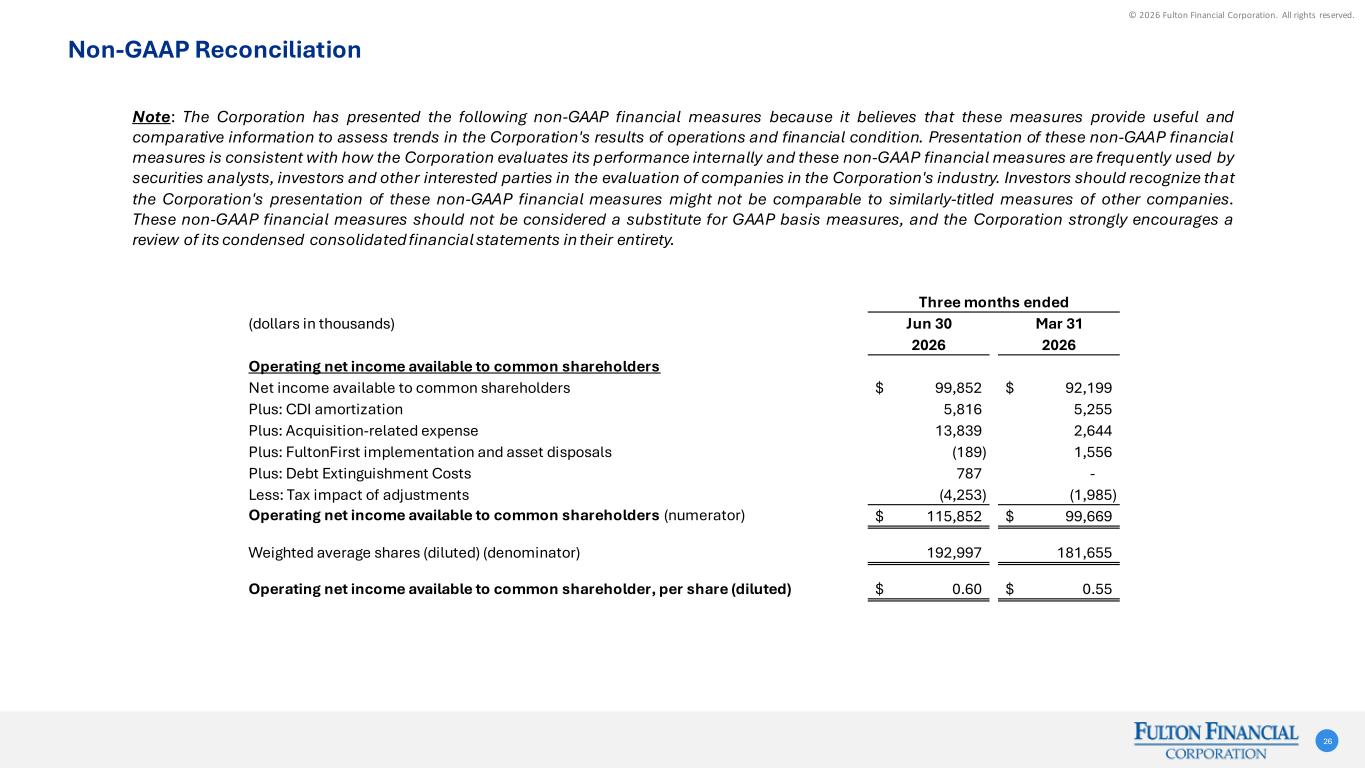
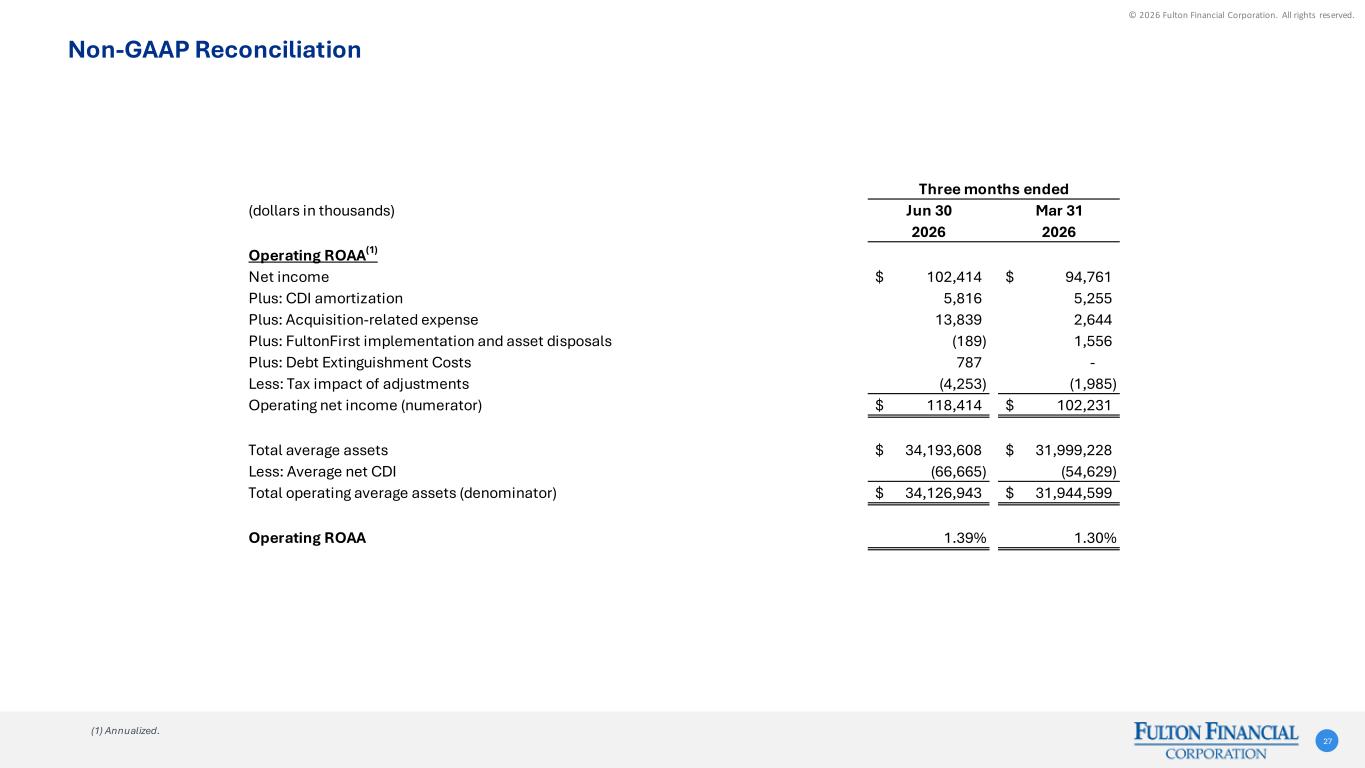
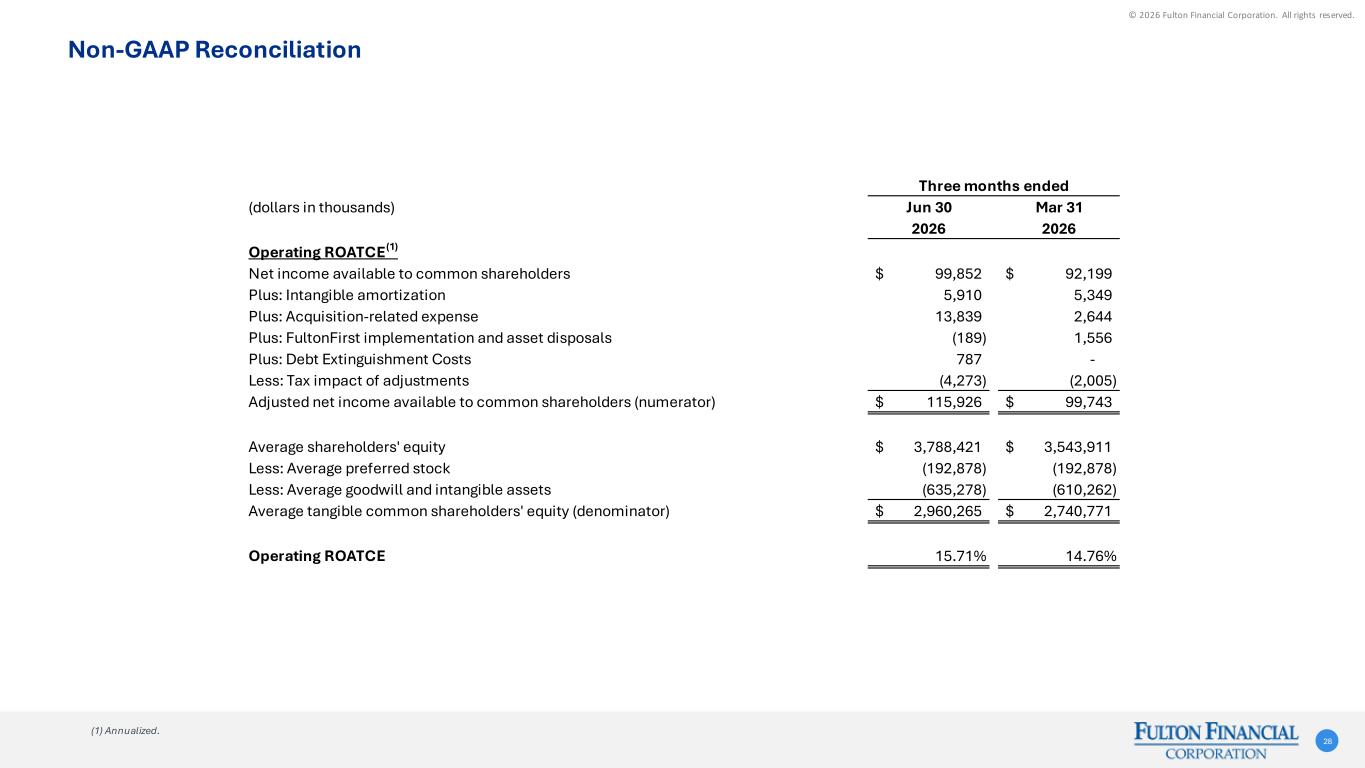
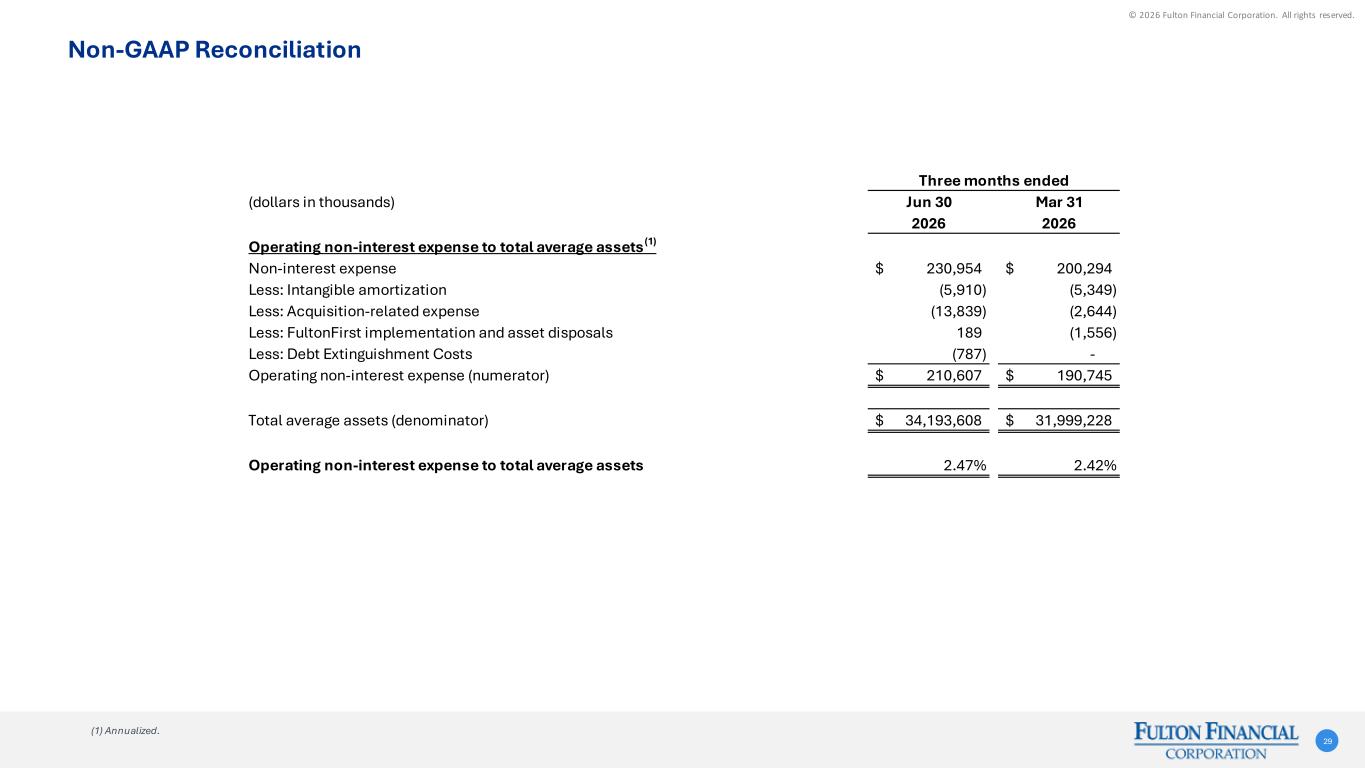
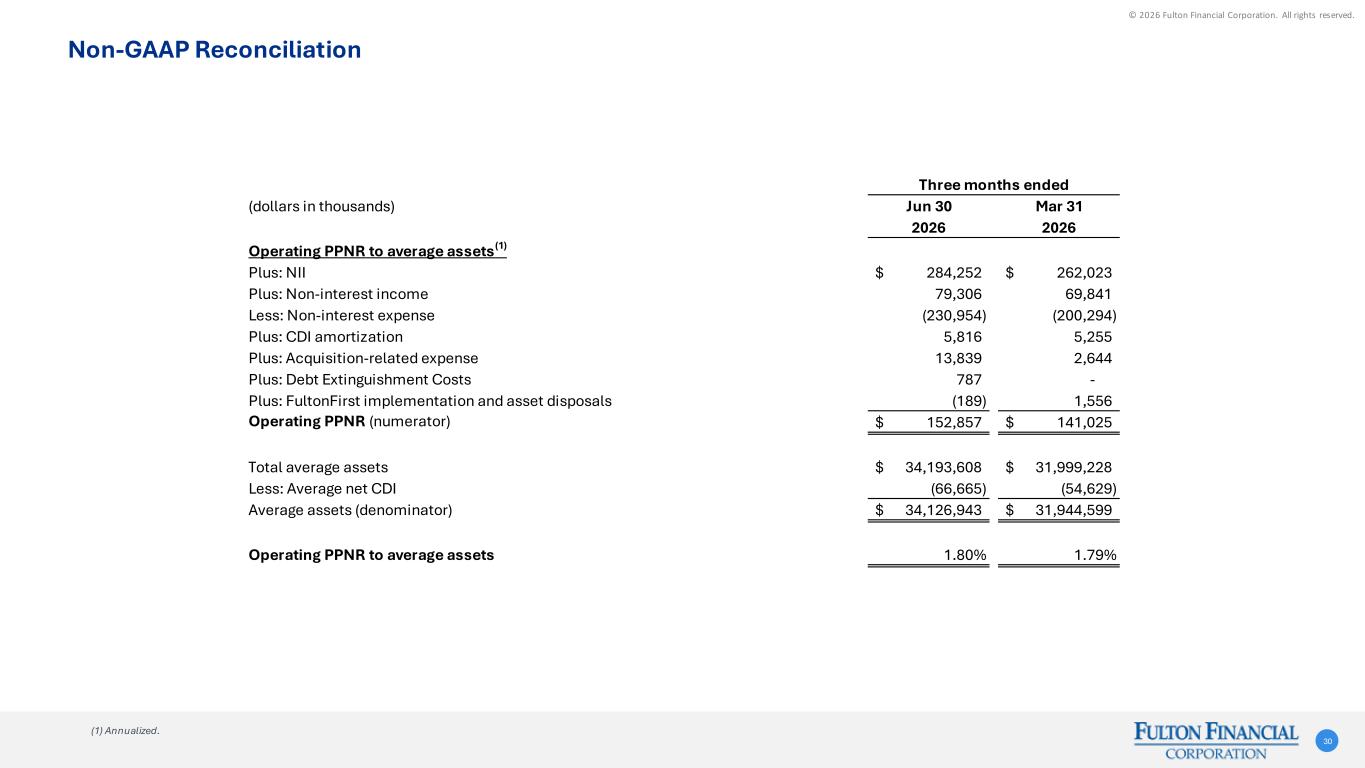
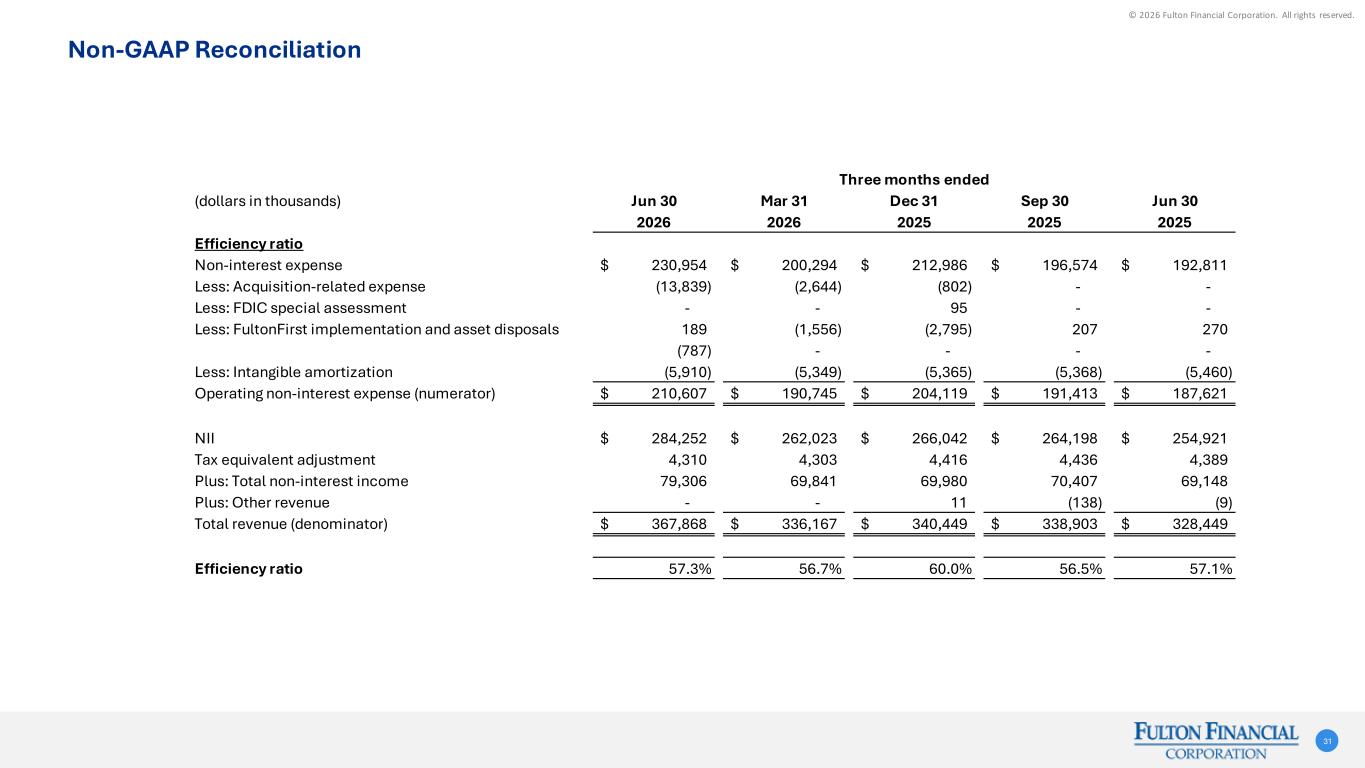
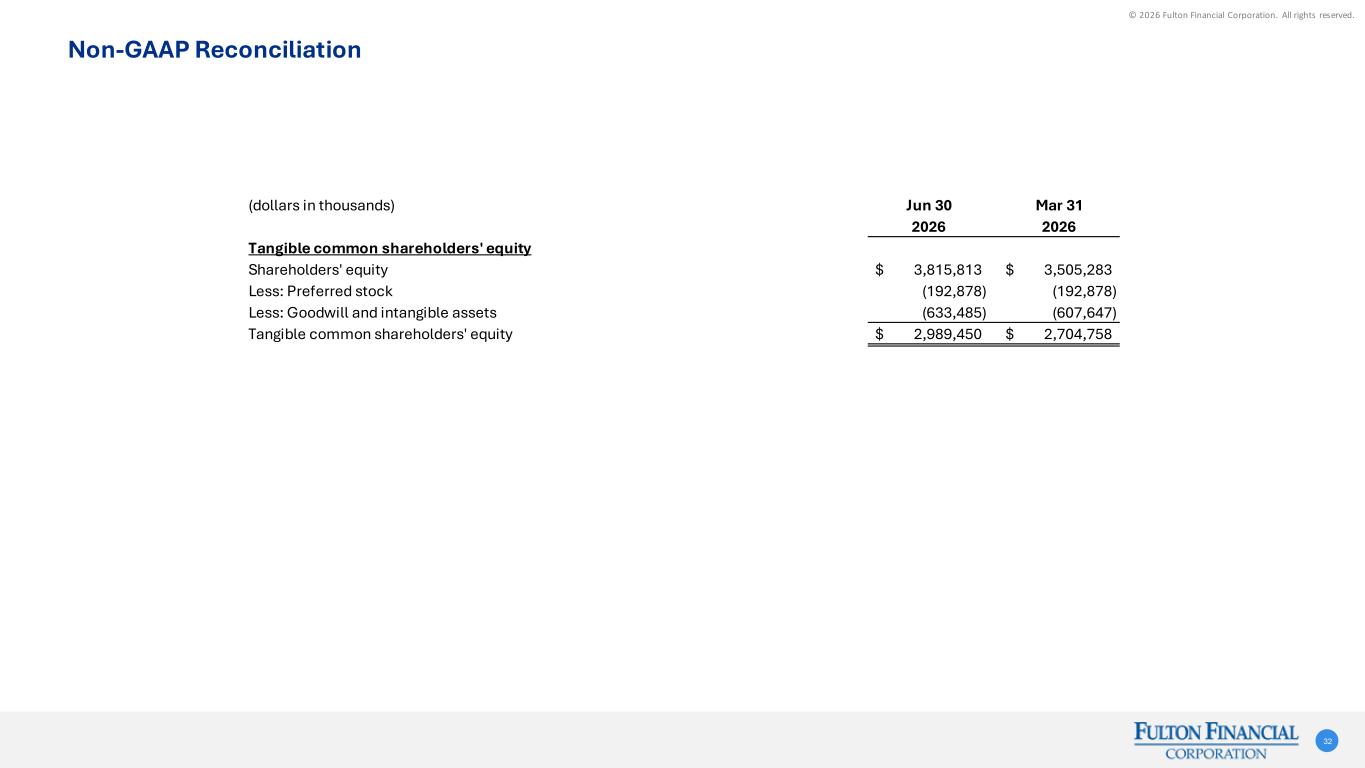
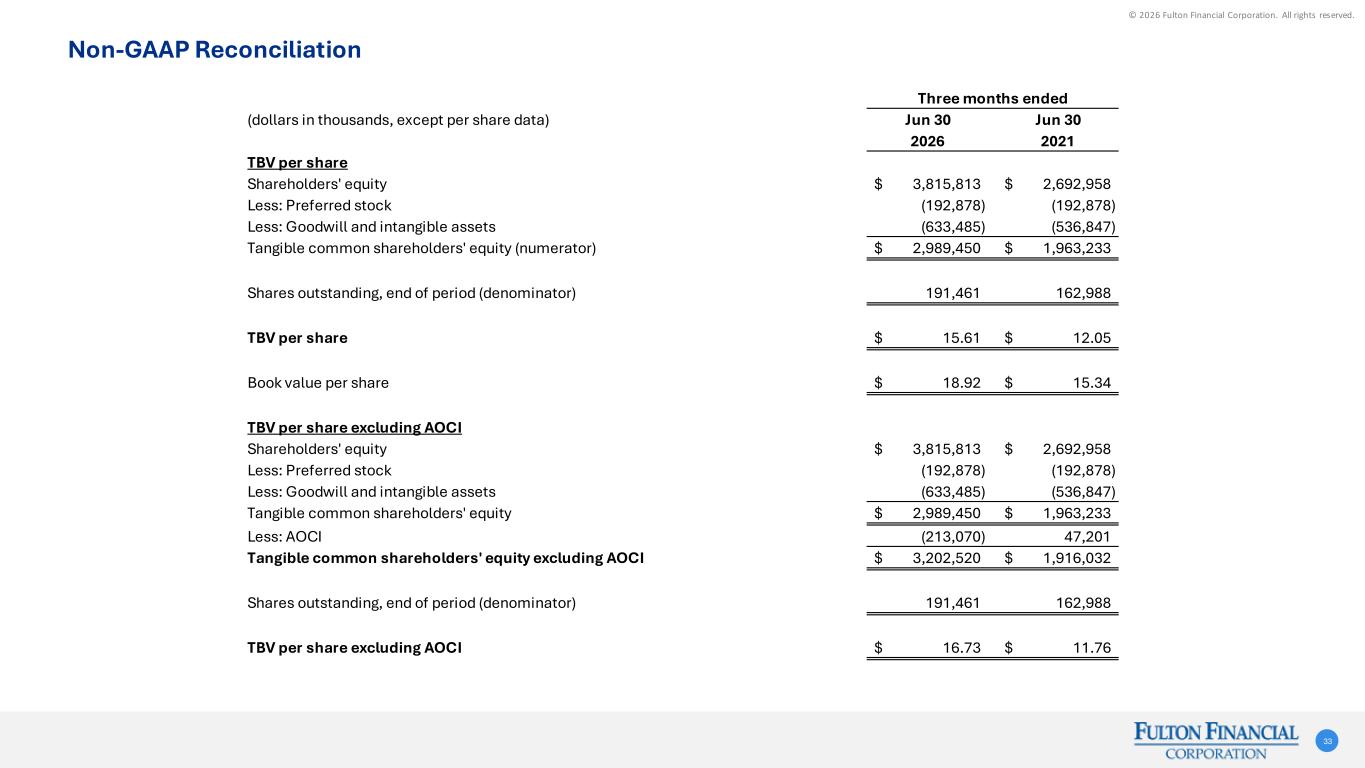
Thanks for joining us for Fulton Financial's conference call and webcast to discuss our earnings for the second quarter ending June 30, 2026. Chief Executive Officer and President. Joining Kurt is Rick Kramer, Chief Financial Officer. Our comments today will refer to the financial information and related slide presentation included with our earnings announcement, which we released yesterday afternoon. These documents can be found on our website at FULT.com by clicking on Investor Relations and then on News. These slides can also be found on the Events and Presentations page under Investor Relations. Today's conference call will contain forward-looking statements. These statements represent our expectations about the future and are subject to risk and uncertainty. Our actual results may differ materially from these statements. Please refer to our earnings release and related slide presentation under the heading Forward Looking Statements for a discussion of the factors that could cause actual results to In discussing Fulton's performance, representatives of Fulton may refer to certain non-GAAP financial Please refer to the supplemental financial information included with Fulton's earnings announcement released yesterday in slides 26 through 33 of today's presentation for a reconciliation of those non-GAAP financial measures to the most comparable GAAP measures. Turn the call over to your host.
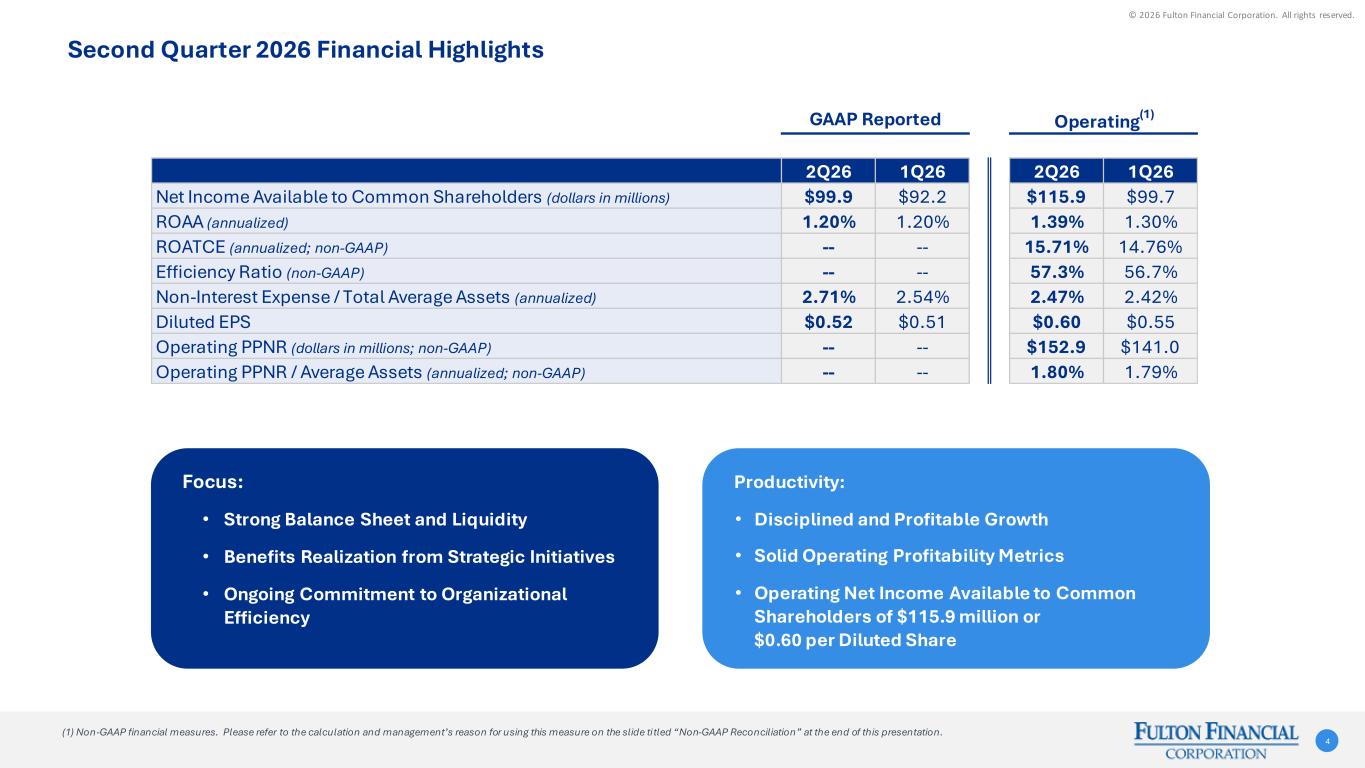
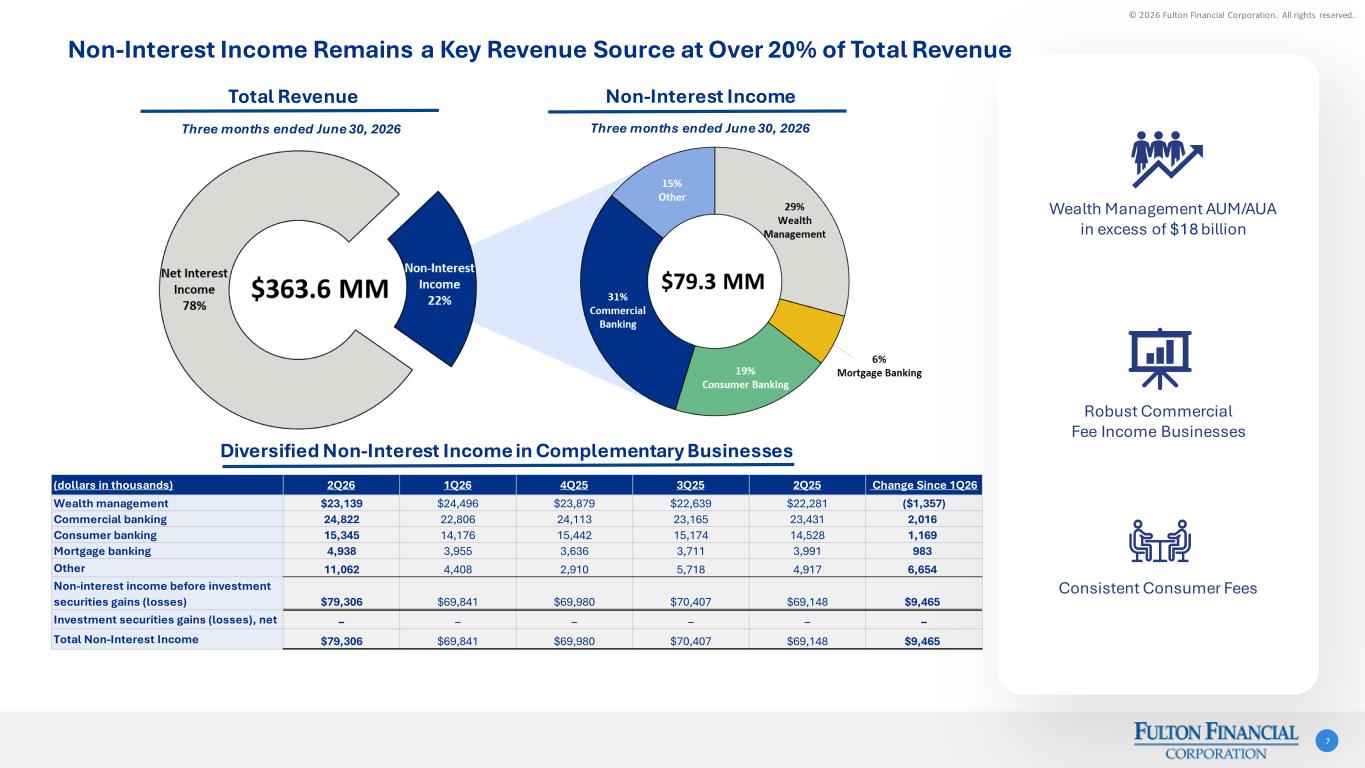
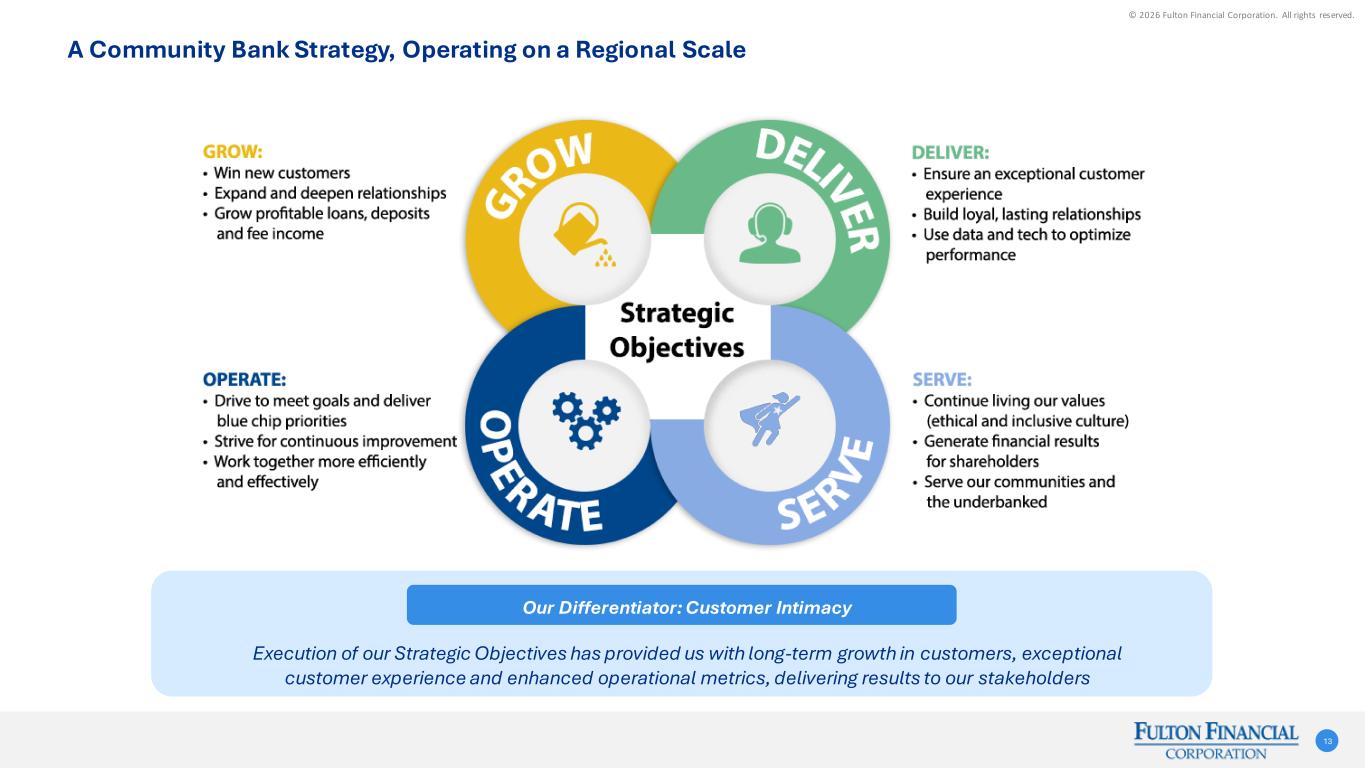
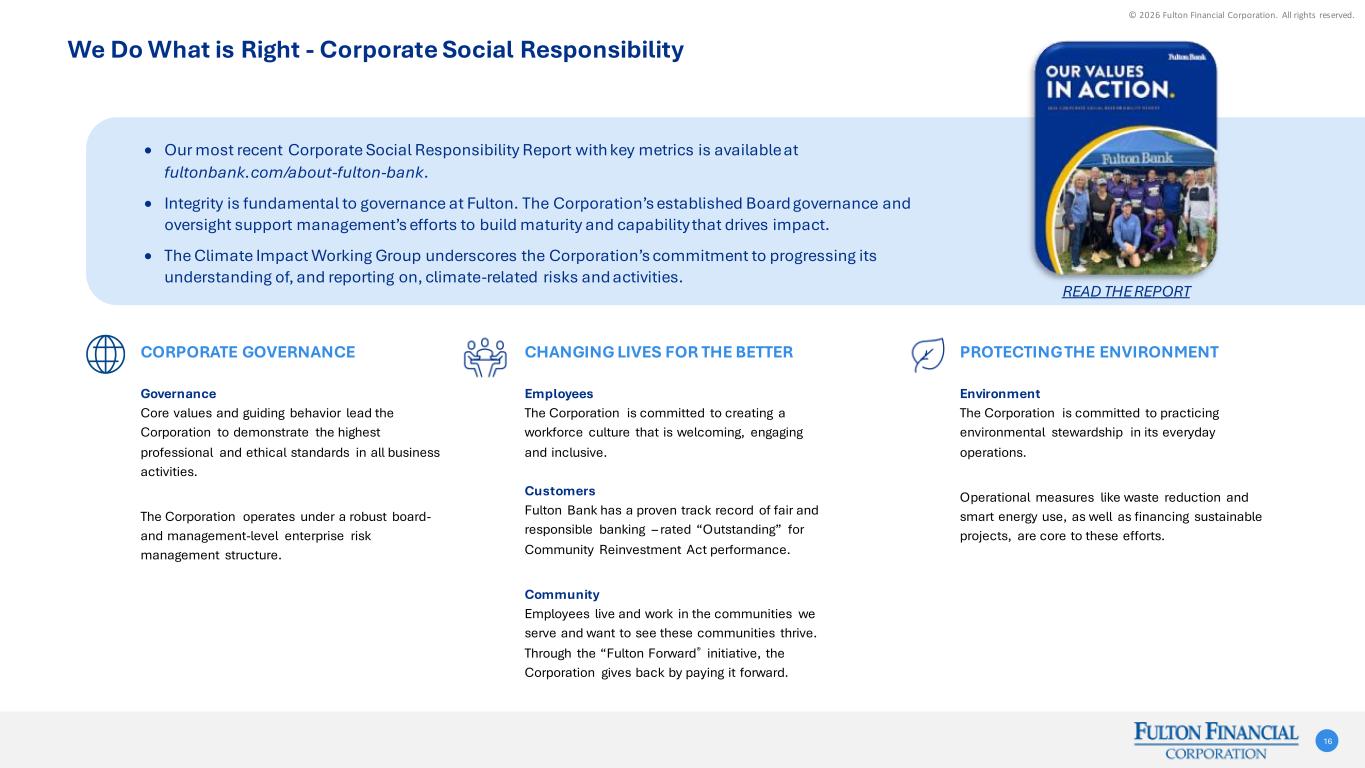
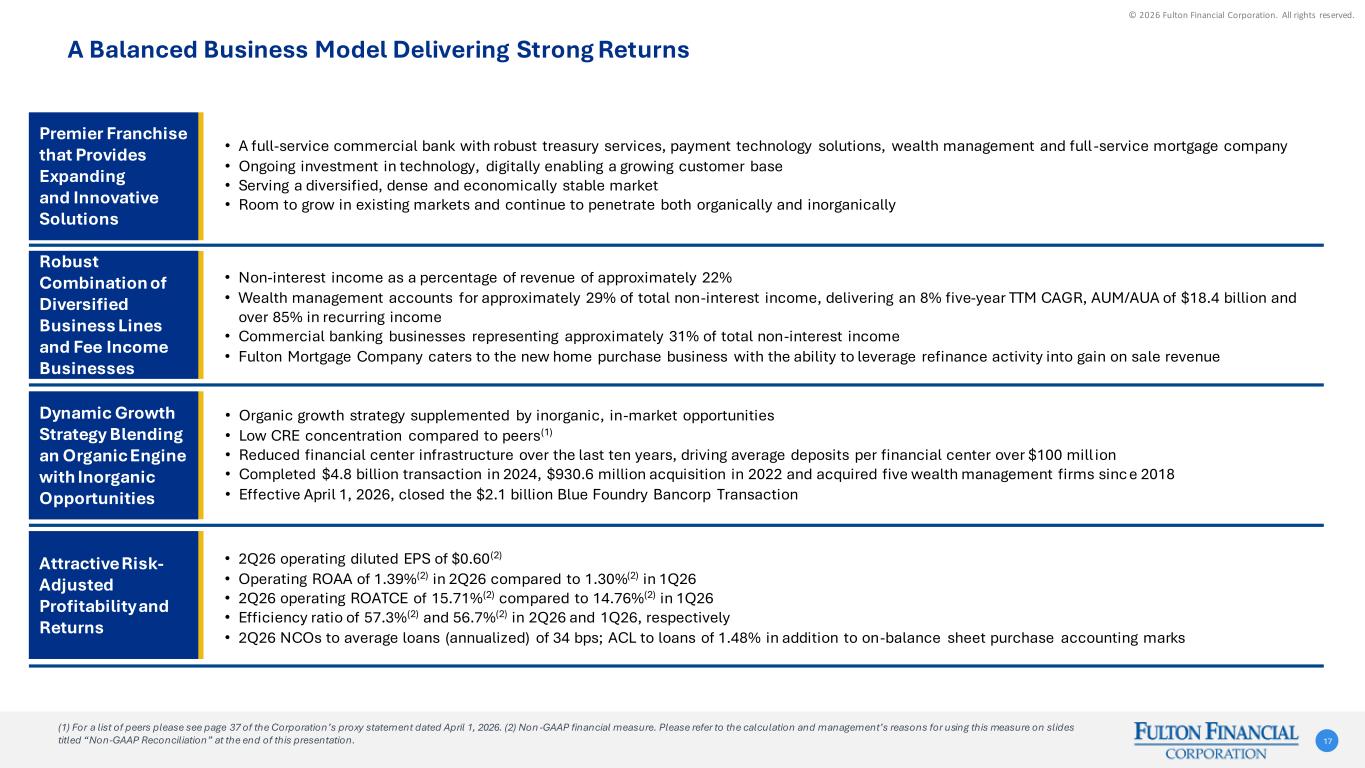
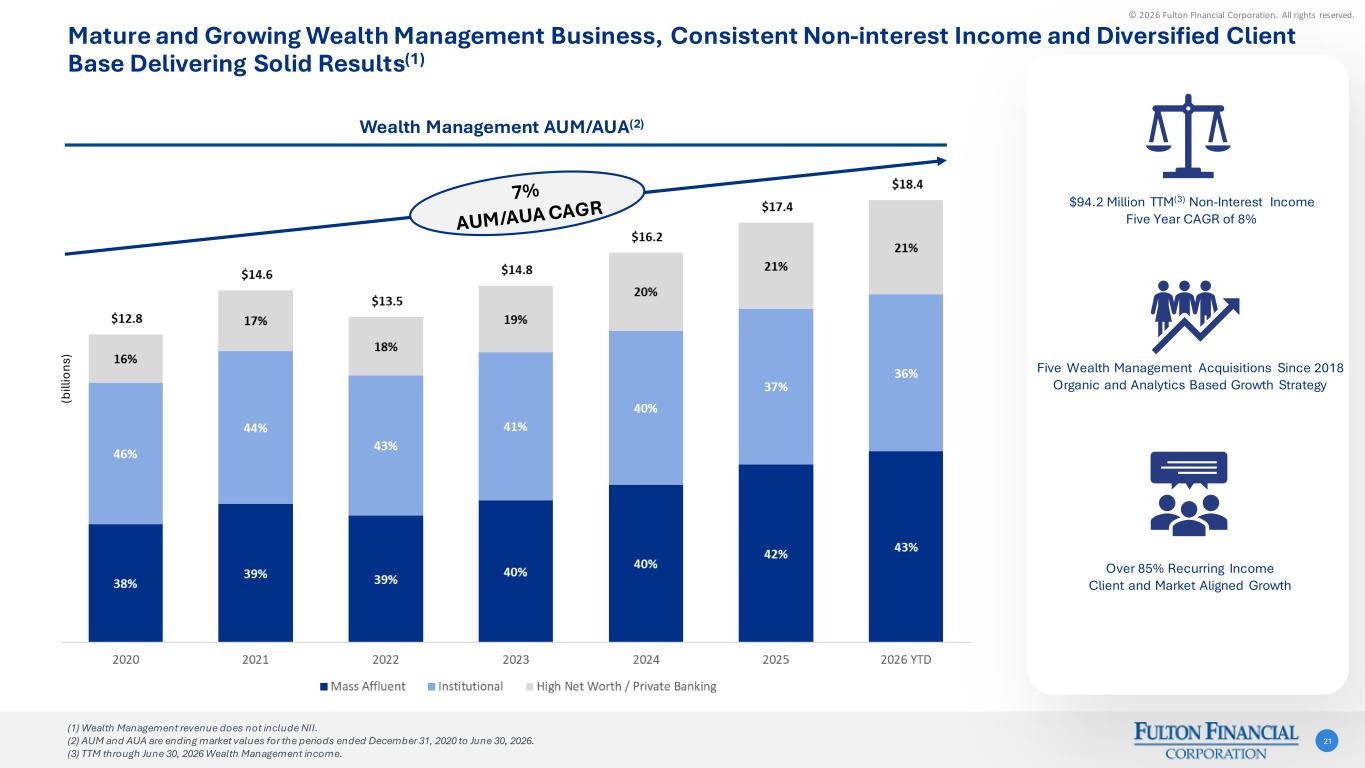
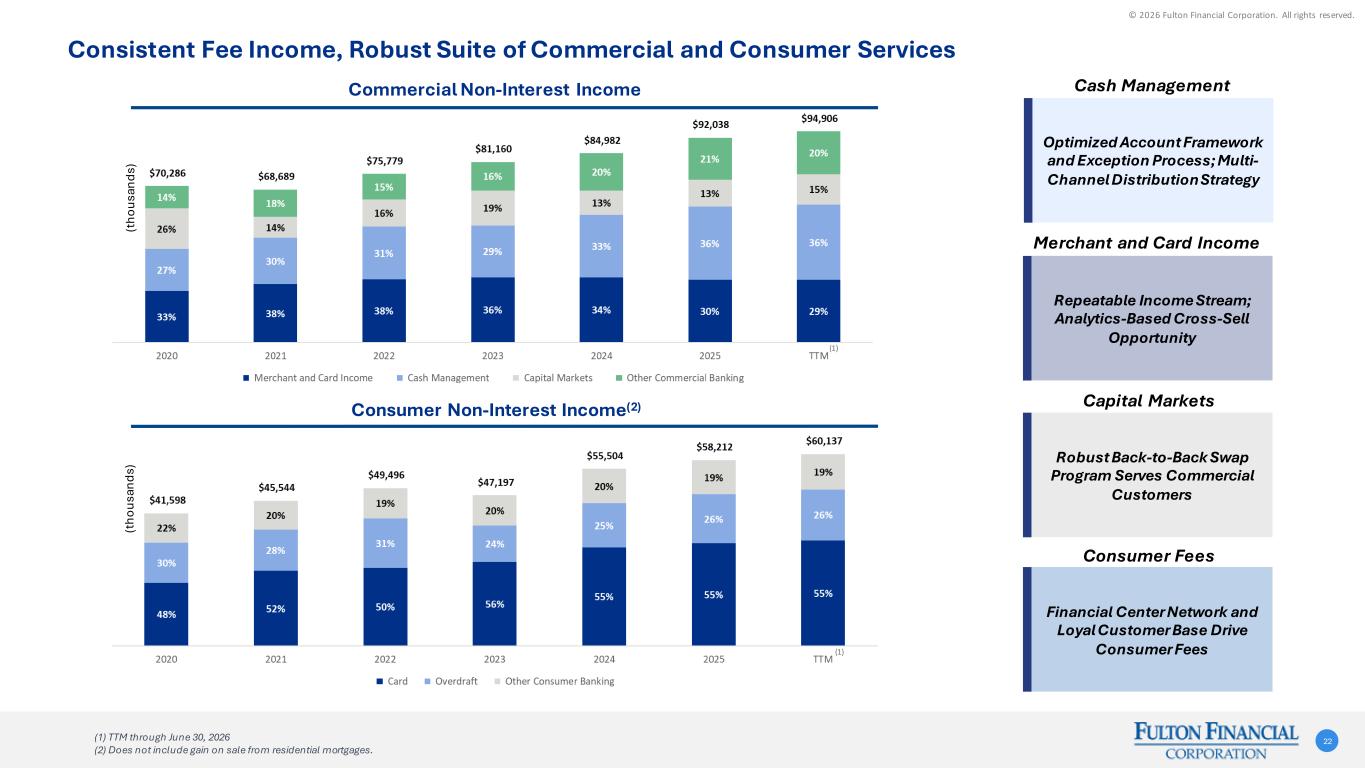
Well, thanks, Pat, and good morning, everyone. For today's call, I'll share a few details on our second quarter performance and provide some observations on current business trends. Then Rick will review our financial results in more detail and discuss our outlook for the remainder of 2026. After our prepared remarks, we'll be happy to take any questions you may have. The second quarter represented continued strong performance for Fulton. We delivered strong financial results. We maintained focus on supporting our customers, team members, and communities. We are proud of the positive impact we're making within our company and throughout our markets. We encourage you to view our recently published Corporate Social Responsibility Report, which is available on our Investor Relations website. This report highlights the many ways our company makes a positive impact. Our strong performance reflects the dedication of our team members and the disciplined execution of our strategy, which continues to guide our decisions and position the company for long-term success. We continue to focus on growing the company, delivering effectively for customers, operating with excellence so that we can continue to serve all of our stakeholders. We made meaningful progress in each of these areas during the quarter. Operating earnings improved as growth was solid. Capital levels continued to grow and overall credit performance. Our teams continued to deepen customer relationships and delivered exceptional service, while identifying new opportunities for growth. We also achieved an important milestone during the quarter with the successful completion of the Blue Foundry acquisition on April 1st and the subsequent merger and integration of Blue Foundry Bank on July 11th. This transaction advances our strategy by expanding our presence in northern New Jersey, enhancing our community banking model, and increasing our ability to serve customers in an attractive and growing market. We believe the combination creates meaningful opportunities for growth and long-term value creation. I want to thank our team for their effort throughout this process. Completing this transaction in such a timely manner requires a tremendous amount of work and teamwork and collaboration and positions us for continued growth. Our results this quarter reflect strong performance across a number of key areas. Profitability was a record high for the quarter. Operating net income available to common shareholders grew to $115.9 million, or $0.60 per diluted share. Operating earnings on average tangible common equity improved to 15.71%. Operating return on average assets increased to 1.39%. and tangible book value per share grew 13% linked quarter annualized. Loan growth was solid during the quarter, including the positive effect from Blue Foundry. Organic growth was driven primarily by our consumer business. Overall loan activity remains broad-based and across all of our markets. Our team members continue to have productive discussions with customers regarding growth, investment, and capital needs. We believe Fulton is well-positioned to support those opportunities and to continue to generate disciplined growth moving forward. Deposit balances increased from the prior quarter, including the benefit from the Blue Foundry transaction. Organic deposit trends were as expected on a seasonal basis. Deposit competition within our market has been consistent with recent quarters, and we continue to benefit from strong customer relationships and a diversified funding base of consumer, wealth management, and commercial businesses. Additionally, our non-interest income business continued to generate steady fee income, further diversifying revenue sources, and strengthening overall financial performance. Compared to the prior quarter, commercial fee income increased 9%, consumer fee income increased 8%, and wealth management assets under management administration reached a record $18.4 billion at quarter end. Our capital position further strengthened during the quarter. We repurchased $11.1 million of common stock while increasing tangible book value and improving our common equity Tier 1 ratio to approximately 12.1%. Our solid capital position provides meaningful flexibility to support customer growth, execute strategic initiatives, and drive long-term shareholder value. Finally, I'd like to touch on the credit environment. Our credit performance remains solid and overall asset quality metrics. As we move through the second half of the year, we remain focused on executing on our strategy and building on the strong performance delivered this quarter. With that, I'll turn the call over to Rick to review our second quarter financial results in more detail.
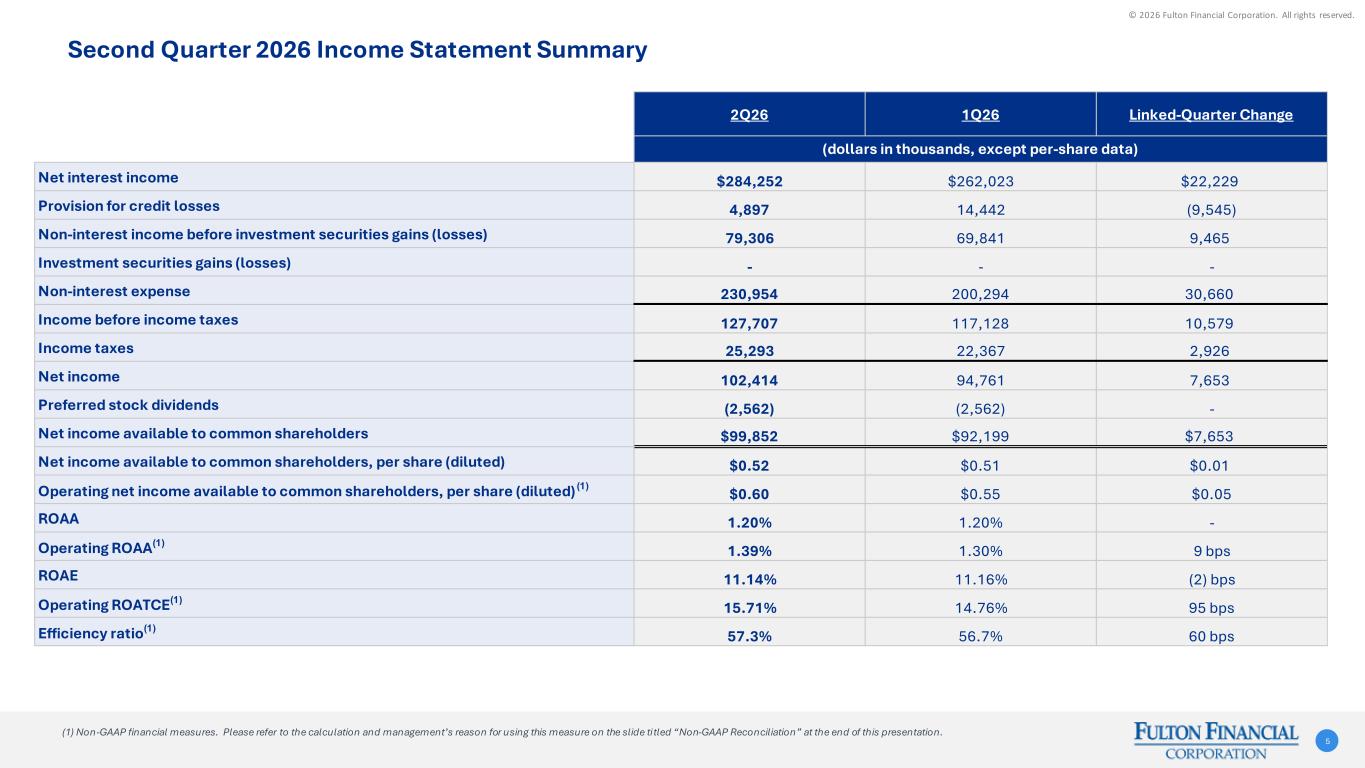
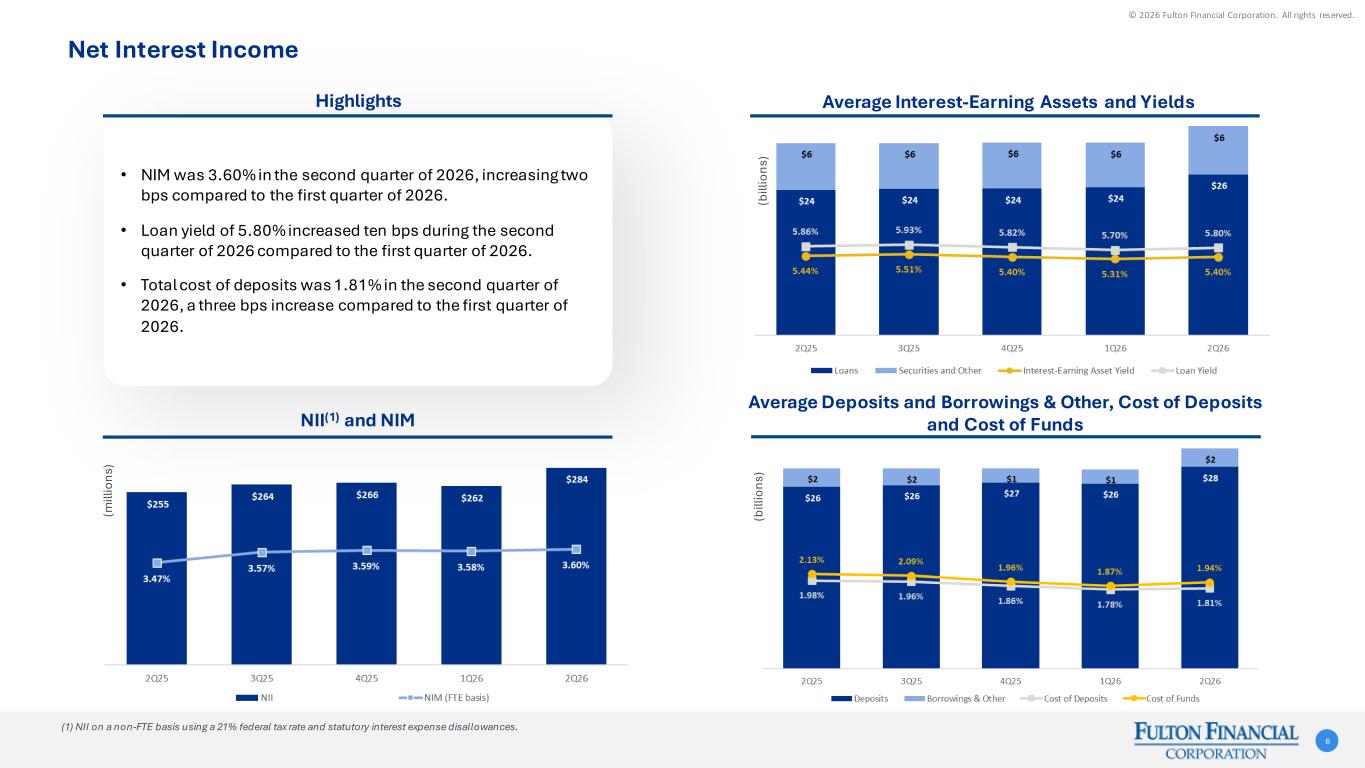
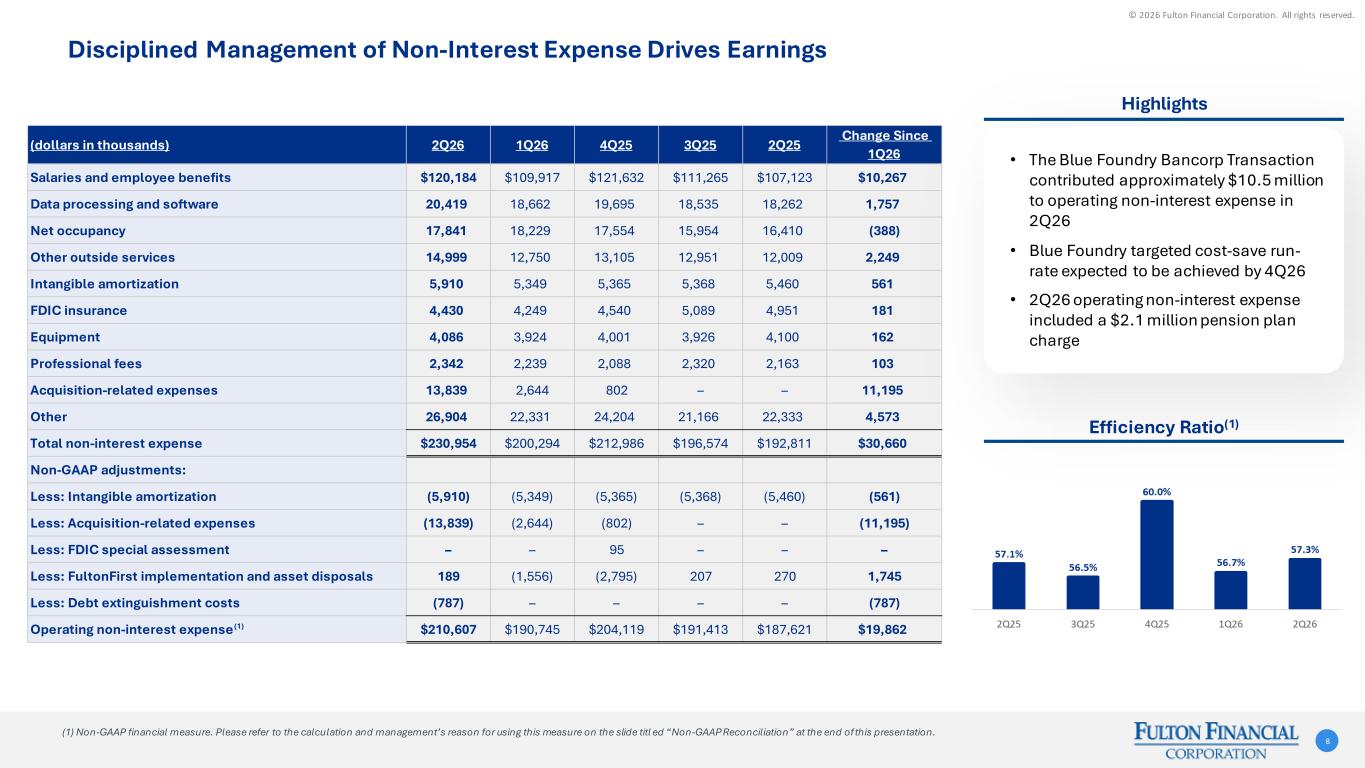
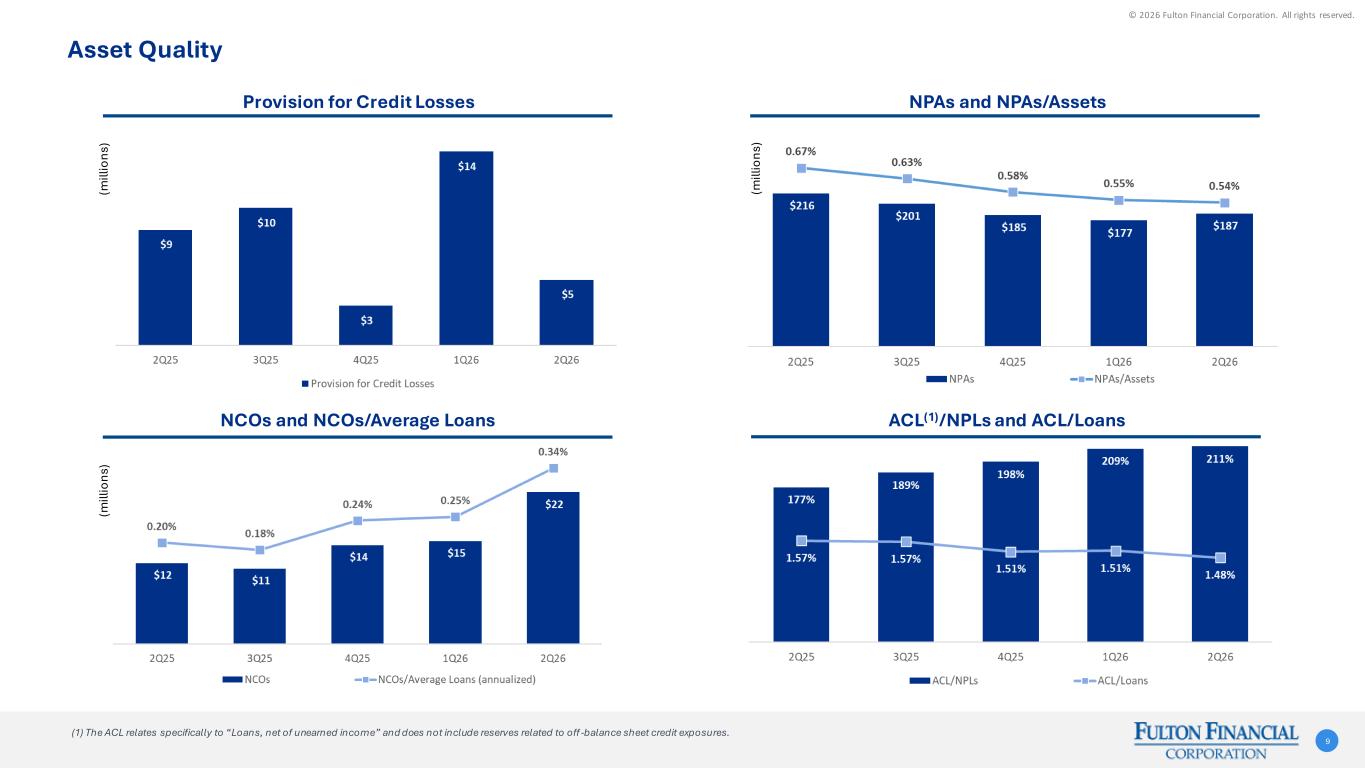
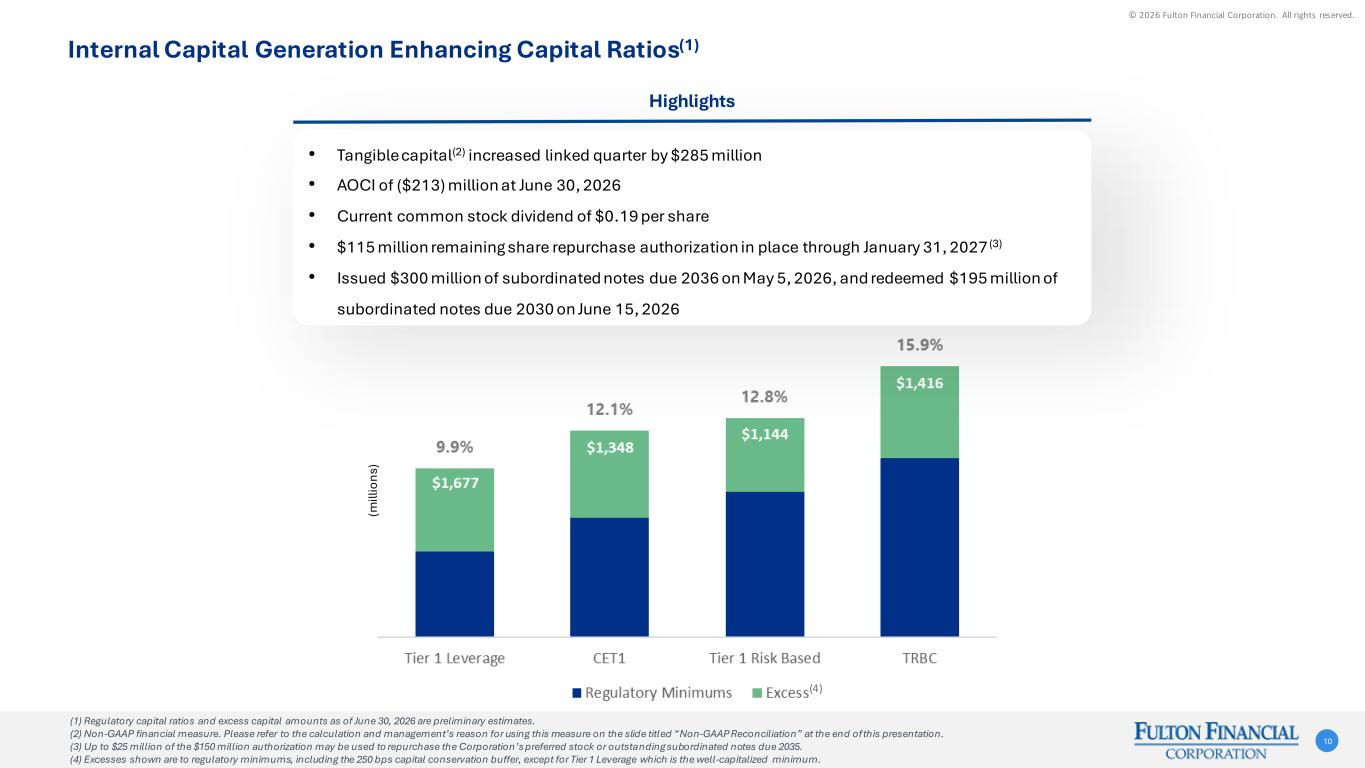
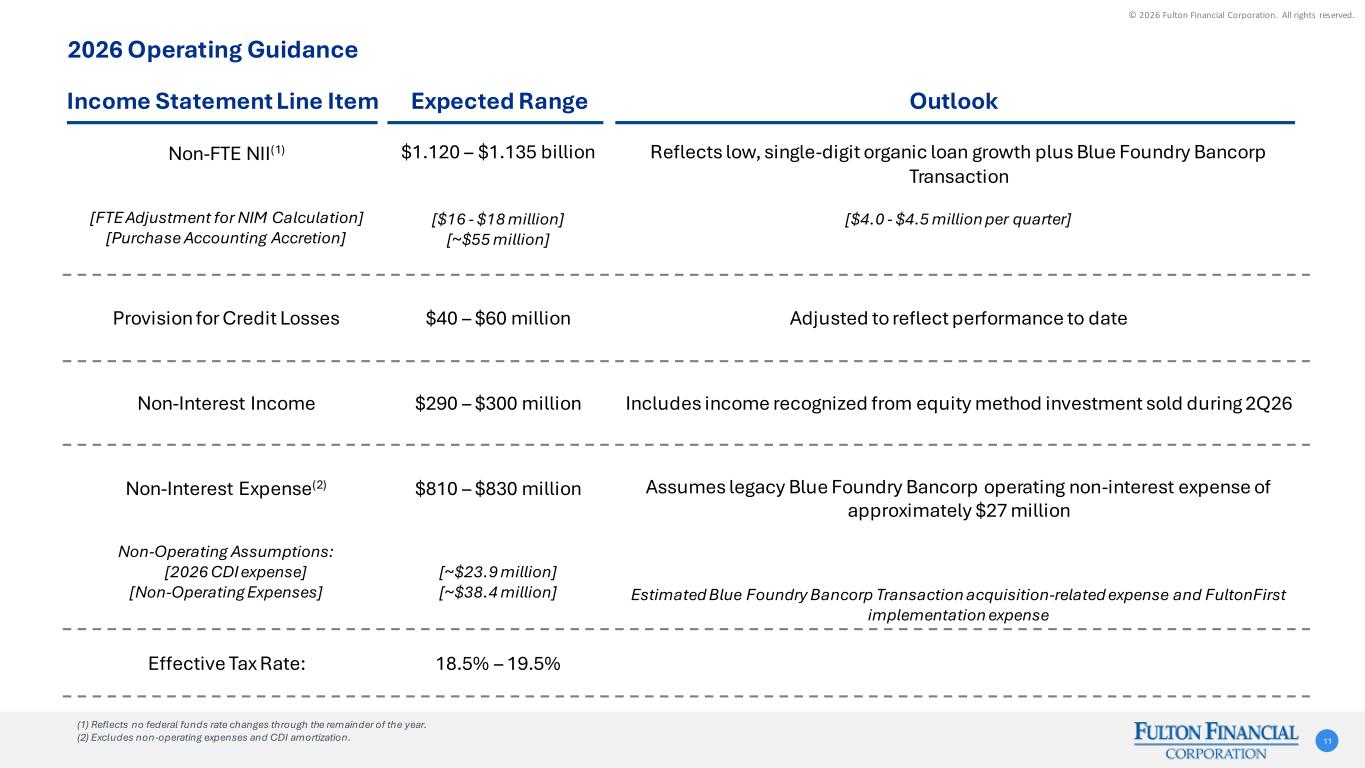
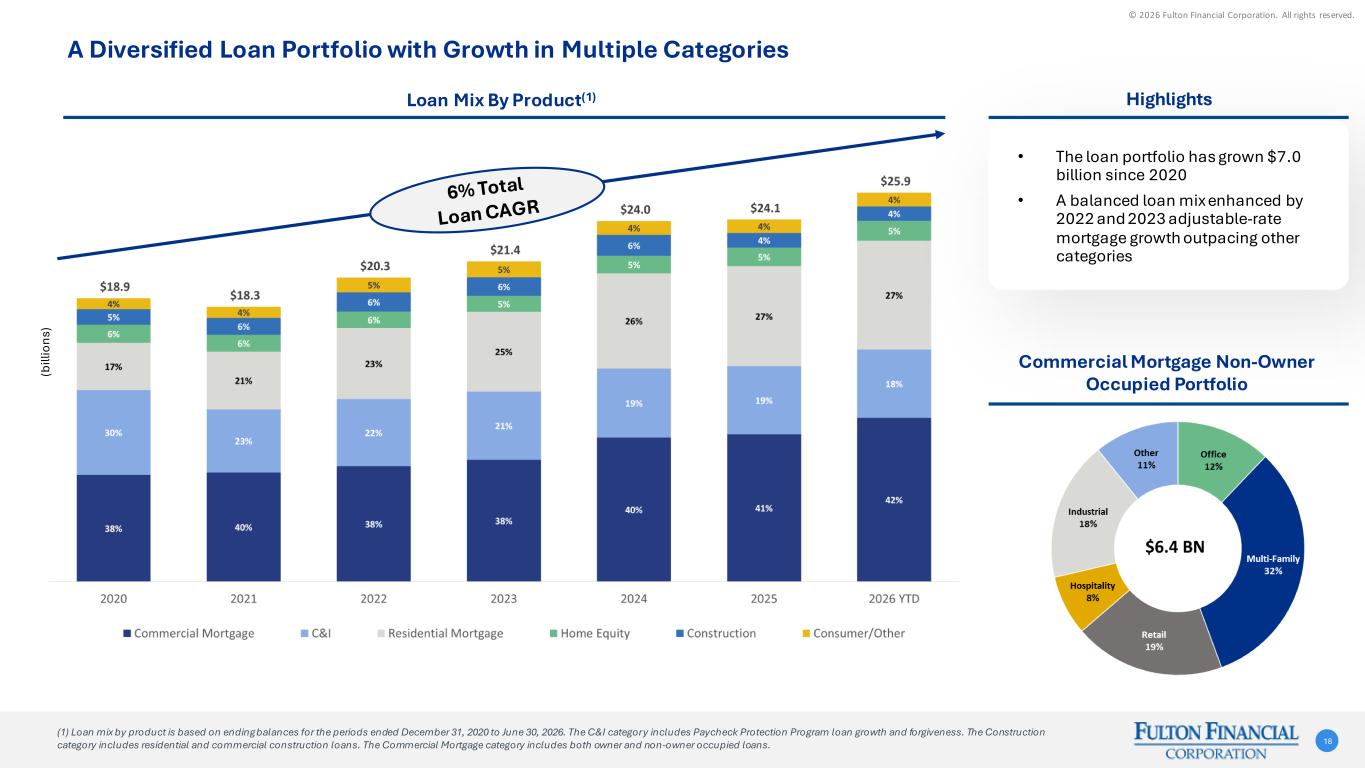
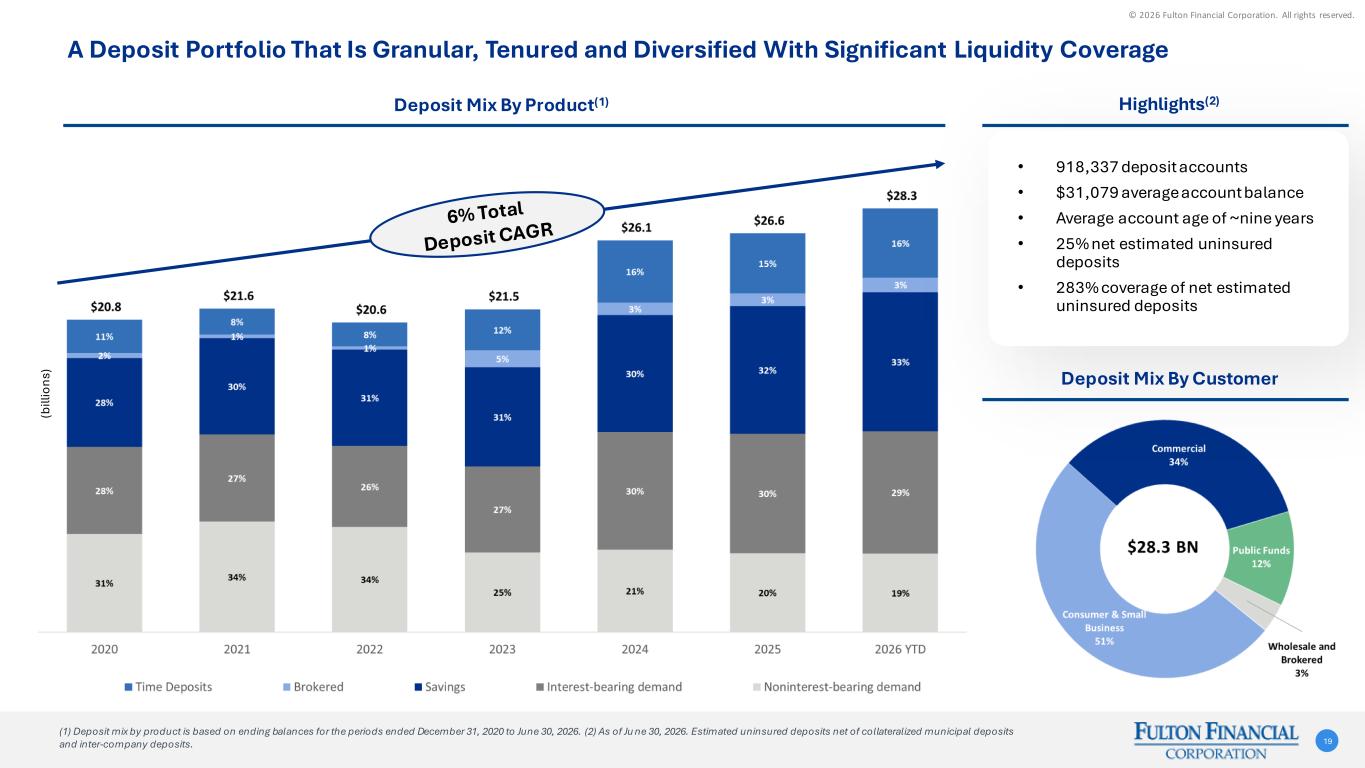
Thank you, Kurt, and good morning, everyone. Hulton delivered another quarter of strong financial performance, highlighted by record operating earnings and continued balance sheet growth. For the second quarter, net income available to common shareholders was $99.9 million, or $0.52 per diluted share. Operating earnings were $115.9 million, or $0.60 per diluted share, up from $0.55 per diluted share in the first quarter. The improvement in operating performance was driven primarily by higher net interest income, expanded fee revenue, and continued disciplined balance sheet management. Net interest income increased $22.2 million, or approximately 8% linked quarter, to $284.3 million. The majority of this growth was attributable to the Blue Foundry acquisition, which contributed approximately $17.5 million during the quarter. Total loan interest income increased by $32.6 million, reflecting both acquisition-related growth and higher average balances. We also benefited from $5.2 million of purchase accounting accretion from the acquired Blue Foundry Loans, in addition to $9.9 million of accretion associated with the Republic acquisition. Our net interest margin expanded to 3.6 percent, up two basis points from the first quarter and up 13 basis points from the year prior period. The second quarter NIM was impacted by one basis point due to carrying overlapping sub-debt expense for a portion of the period. Overall, this performance demonstrates our ability to maintain strong earning asset yields while effectively managing funding costs. Deposit costs increased modestly during the quarter, and overall funding costs remained well-controlled. Ending loans totaled $25.9 billion, an increase of $1.7 billion from March 31. Approximately $1.6 billion of the increase came from the acquired Blue Foundry balances. Excluding the acquisition, organic loan growth was approximately $103 million. Within the portfolio, we continue to see strength in consumer-related lending, including residential mortgage and home equity production, while commercial loan balances decline modestly during the quarter. Deposits increase $1.5 billion during the quarter to $28.3 billion, mostly attributable to the Blue Foundry acquisition. Our deposit franchise remains a key competitive advantage and continues to support profitable balance sheet growth. Non-interest income increased to $79.3 million, up $9.5 million from the first quarter. The largest driver was a $7.3 million increase in income from equity method investments, including approximately $6.9 million of gain related to an investment sold during the quarter. Mortgage banking revenue also improved by approximately $1 million, reflecting stronger production activity. Across our fee businesses, Treasury management, card services, and commercial banking revenues increased and continued to provide meaningful diversification to our revenue streams. Total non-interest expense was $231 million compared with $200.3 million in the prior quarter. Operating non-interest expense was $210.6 million. Items excluded from operating results included $13.8 million of acquisition-related expenses, $5.9 million of intangible amortization, and approximately $0.8 million of debt extinguishment costs associated with the redemption of subordinated debt. Notably, a $2.1 million pension plan charge was recorded during the quarter and is included in operating non-interest expenses. As Kurt mentioned, the Blue Foundry system conversion was completed successfully on July 11, and we remain focused on realizing anticipated cost savings and operational efficiencies going forward. Credit quality remains sound and generally consistent with our expectations. Provision expense totaled $4.9 million compared with $14.4 million in the first quarter. The allowance for credit losses on loans ended the quarter at $382.6 million, representing 1.48% of total loans. The quarter included the establishment of approximately $31 million of initial allowance for credit losses on acquired Blue Foundry loans. Annualized net charge wealth were 0.34% of average loan, up from 0.25% in the previous quarter. Non-performing assets totaled $187.1 million, or 0.54% of total assets, remaining relatively stable as a percentage of assets. Overall, portfolio performance remains healthy, reserve coverage is strong, and our credit outlook remains stable. Our capital position remains a significant source of strength. Common equity Tier 1 ratio of approximately 12.1% increased from 11.9% in the prior quarter. Tangible common equity improved to 8.8% up 26 basis points quarter over quarter. During the quarter, we issued $300 million of fixed to floating rate subordinated notes due 2036 and redeemed $195 million of subordinated notes due 2030, enhancing our capital structure while maintaining balance sheet flexibility. We also continue returning capital shareholders through share repurchases, buying back 525,000 shares during the quarter at an average price of $21.19 per share, representing approximately $11.1 million of capital. Total repurchases under the 2026 authorization reached $35.6 million through June 30. We have approximately $115 million remaining under the current program. Looking ahead to the remainder of 2026, our outlook remains positive. Given our performance during the first half of the year, we are making some minor adjustments to guidance to reflect performance through the midpoint of the year. We are narrowing our range for net interest income to $1.12 billion to $1.135 billion, and adjusting our full-year loan growth to low single digits. We are lowering our range for loan loss provision to $40 million to $60 million. We are raising the low end of the non-interest income range to $290 million from $285 million. And we are tightening our range for operating non-interest expense to $810 million to $830 million. There is no change to our full-year tax range. With that, I'll turn the call back to Kirk.
In summary, the second quarter results reflect strong execution across the organization. We generated record operating earnings, expanded our balance sheet through the Blue Foundry acquisition, maintained solid asset quality, increased capital levels, and successfully completed a major integration effort. As we move forward into the second half of 2026, our focus will be on capturing the strategic and financial benefits of Blue Foundry, continuing disciplined organic growth, maintaining credit quality, and delivering sustainable shareholder value. Thank you for your continued interest in Fulton. And, operator, I'll turn the call over to you for questions.
Operator
Thank you. Ladies and gentlemen, as a reminder to ask the question, please press star 1-1 on your telephone, then wait for your name to be announced. To withdraw your question, please press star 1-1 again. Please stand by while we compile the Q&A roster. Our first question comes from the line of Daniel Tomeo with Raymond James. Your line is open.
Thank you. Good morning, everyone. Good morning, Dan. Yeah, maybe starting just on the balance sheet growth side, specifically on the loans. So I guess reducing the guidance for the back half, the low single-digit range. You know, as we think about, well, I guess first, what's the driver of that? And then second, as you think about kind of a more normalized growth rate for you guys in 2027 and just kind of overall, what would it take to be able to accelerate back into the mid-single-digit type range for you guys?
Yeah, Danny, we're really modifying the annual guidance. So it's really just reflective of the performance in the first six months. So we had modest growth, more modest growth in the first six months, and we expect the back half growth to kind of go back to previous expectations. So it's really the annual guide. You know, we remain disciplined on credit terms and defending the margin on pricing. You know, this can impact individual loan originations. I think the key thing is we have good customer retention, we're adding people, we're adding customers, and it's really the moderation in that target is just reflective of the first quarter. You know, we just did the successful integration in the second quarter. So you think about it, you have a first quarter is typically seasonally slower. We have an integration in the second quarter.
We just expect the first half to go back to what our expectations were.
So on an annual basis, that moderates it to low single digits. That's really all that's there.
Okay. Well, thank you for that clarification then. So it sounds like expectations still in kind of that mid-single digit range going forward, which is great. And I guess my second question was a little bit framed around potentially a slower revenue growth, but maybe that's not the case given the loan growth. But just your thoughts on being able to generate positive operating leverage going forward, you know, assuming, and I'm sure we'll get into the margin with someone else, but assuming maybe, you know, a tighter margin path from the increase in competition that we've been seeing.
Yeah, so as we look forward, we think we can generate positive operating leverage. We have some things in the back half of the year as we do the full integration, get the full cost saves from Blue Foundry. We get organic growth, you know, trending up from the first half of the year. We really think we're positioned well. I mean, the change in guidance is really we have six months of actual and trying to give you a feel for kind of what the full year looks like.
Great. And sorry, if I can just go back to the loan growth guide quickly, and then I'll step back. But just on the – I don't know if I saw a number of paydowns or payoffs in the second quarter. If you have what those were and what you're assuming in the back half, that would be helpful as well.
Yeah, Danny. So actual payoffs in the second quarter were around – they're running around $250 million a month. So that's amortization and paydown. And then you have another call at $100 a month of prepayment. We would expect that to remain fairly constant, potentially accelerating a little bit in third quarter, just because of some – it's been pretty steady.
Okay, that's helpful. All right, I'll step back. Appreciate the color rest.
Operator
Thank you. Please stand back for our next question. Our next question comes from the line of David Bishop with Hub Group. Your line is open.
Good morning, gentlemen. Hey, I was wondering if you could speak to maybe what you're seeing in terms of the funding side of the balance sheet, you know, deposit pricing competition. Just curious where you see the, you know, the direction in terms of overall funding costs moving into the second half of the year.
Yeah, just a little bit on market overall. I mean, we had a pretty good quarter on deposit growth because we tend to trend down within the quarter on our municipal business. So, you look on an overall basis. We were pretty pleased with funding and deposit flows in the second quarter. You know, we're effectively competing in the marketplace and, you know, of our relational strategy and the diversification of our deposit base is serving us really well. We feel it's a real strength, and it was a good quarter. As we look forward on pricing, it's a competitive market. We picked up a little bit of basis points. That trend probably continues. I'll give it to Rick to give you a little more details on pricing and impact.
Yeah. Yeah. Excuse me. I would say, so ending the quarter, you know, deposit costs were about two basic points higher than the average. Would expect a kind of similar trend in terms of deposit costs from what you saw in second quarter into third quarter. There are some benefits we see, obviously. There was, you know, second quarter tends to be a low in municipal, and often the offset to that is funding with some shorter-term, higher wholesale. So that will reverse in third quarter. It does help a little bit on the incremental funding, but generally speaking, you know, a similar trend to a reasonable expectation.
Okay, got it. Then a follow-up maybe, Kurt, in terms of M&A focus, you know, with Blue Foundry and the rearview mirror. Just curious, maybe less size or maybe inclusive of size in regions that maybe wet your appetite more than others think.
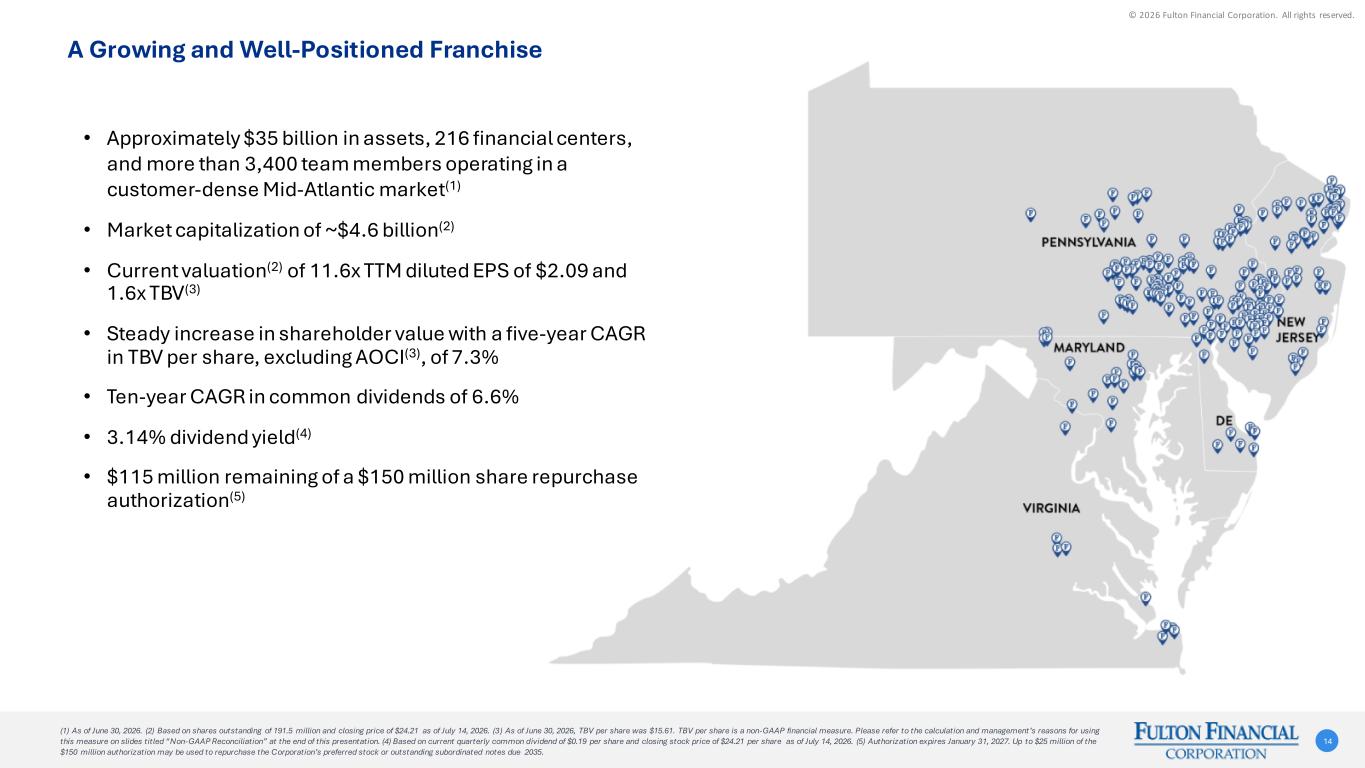
Yeah, I mean, our strategy remains the same. We've talked about it. I think our strategy will probably always be the same. You know, one to $5 billion community banks, you know, the Blue Foundry is a great example of that. Really gives us great opportunities to expand in certain markets. And then it sets us up for accelerated growth in those markets as we add people and product and capability in those markets. You know, we saw that happen in Philadelphia post the Republic acquisition, and we got really good momentum in, you know, all of our business lines. Because of that, we see the same thing with North Jersey and Blue Foundry over time. So we really like those. We've also talked about the $5 to $15 billion companies. We'd be interested there. You know, there's less of them, but there's some, you know, really good banks in that space. You know, we always just want to be ready and capable of looking at those things if they're available. And I think that strategy has worked really well for us, and will continue to be our strategy. Appreciate it, Keller.
Operator
Thank you. Our next question comes from the line of David Conrad with KBW. Your line is open.
Just a quick one for me on the – just a follow-up on the backstop and the loan growth. I'm just curious if that includes or are there any headwinds from Blue Foundry? I know they have that structure consumer book. I don't know if you guys are growing that or maybe letting that roll off.
I'm just curious on the Blue Foundry side if there's any headwinds, you know, in your loan growth.
Yeah, so in the quarter, you know, the first quarter operating there, I think the deposit and loan flows have been as expected as we've modeled out. There's always some headwind on any integration just with that change, but it's really been positive to date, and we would expect it to be pretty immaterial from an overall standpoint as we look at the back half of the year.
Operator
Thank you. Please stand by for our next question. Our next question comes from a line of Manuel Navas with Piper Sandler. Your line is open.
Hi, good morning. I just want to have a little bit more color on the rides and the charge-offs. They picked up to 34 basis points. Is that some from Blue Foundry? What kind of drove that?
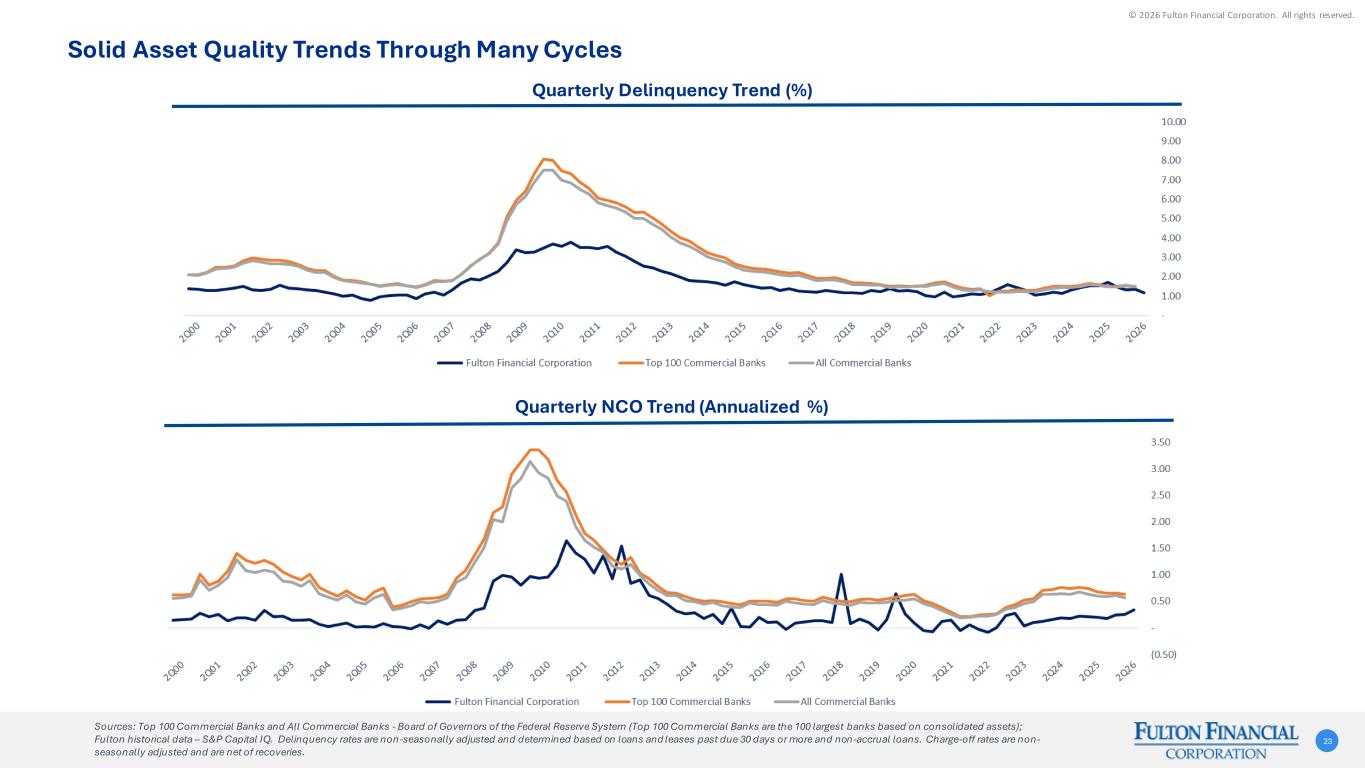
Yeah, so overall on credit, we feel really good about the numbers. Credit metrics continue to trend in the right direction, and they're all at historically strong levels. Charge-offs is really just time and resolutions and updated information on identified accounts. The key thing for us, there's no newly identified issues driving that, and it really is just timing. And we would expect charge-offs to be in our normal operating range as we look at the whole year overall and even quarter by quarter.
I appreciate that. But with growth potentially accelerating in the back half being better than the first half, does that change the pace of buybacks at all? And what should be the right pace?
Yeah, I mean, I would really just kind of point to the capital position that we have right now. We have strong capital levels. We're generating strong capital on a quarterly basis. It really gives us the opportunity, we think, to support any level of organic growth that we get and continue executing on our $115 million buyback. At our current stock price, you know, buybacks remain a real good use of capital.
I appreciate that. You talked a little bit about the funding side of the NIM. What are you seeing on new loan yields? What are kind of some expectations on the asset side? going forward in terms of back book repricing, ways that the direction of asset yields can go from here?
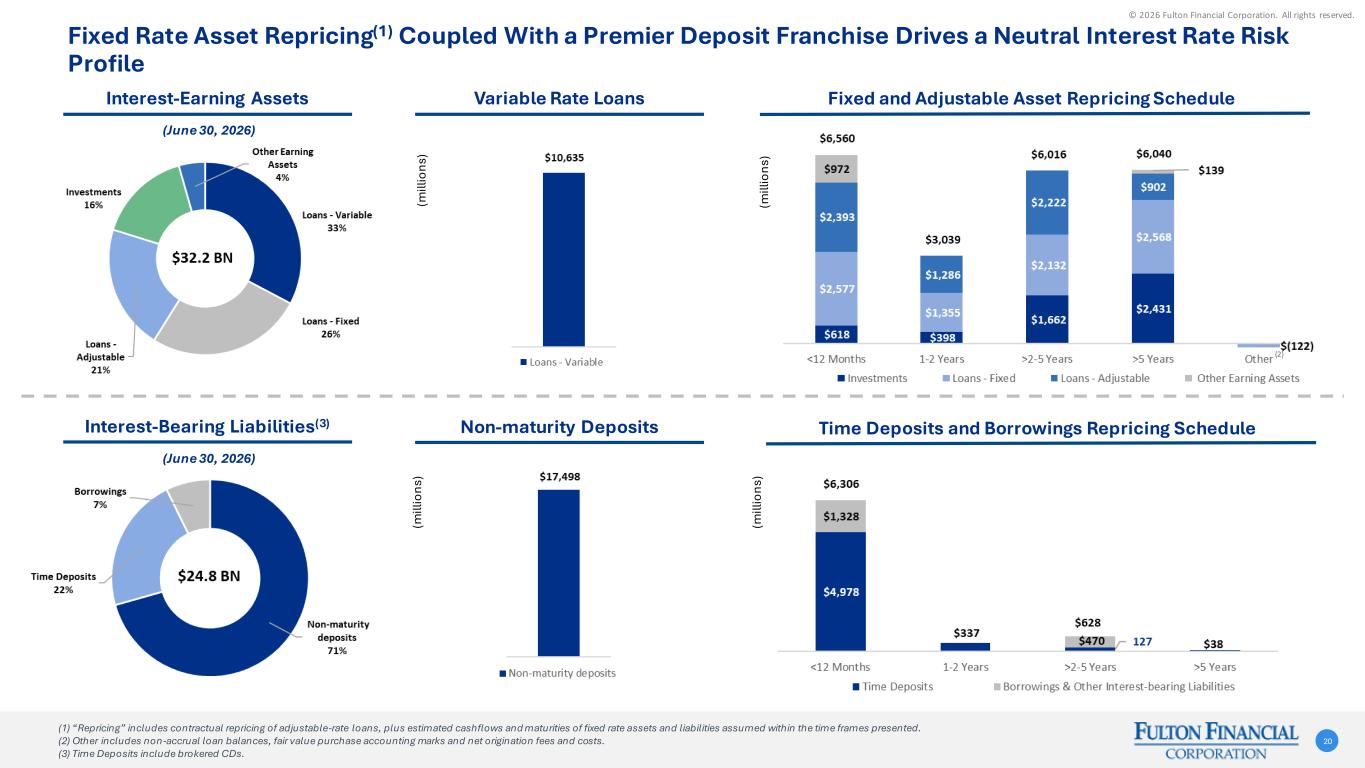
Yeah, I mean, well, it's correct. Yeah, so a positive trend there. You know, we've got all over the next 12 months, just on the loan side, you know, $5 billion. And, right, those are – if current origination levels hold, those would have approximately 70, 70 basis points of improvement, right? So new loan originations in the low sixes overall, and those are kind of in that, you know, sub right now. So there's some positive tailwind there. And then I would say on the, you know, on the other assets component, there's still another, you know, Between security, cash, and opportunity to put some things to work, our security portfolio maturing over the next year has a yield of sub-4, so call it like 385 level, and that's got upwards of 100, more than 100 basis points of repricing opportunity as well. So there's good tailwind there. Overall, when we look at it, you know, I think that that would imply a stable to slightly higher margin over the next couple quarters. So feel good about that.
I appreciate the commentary. I'll step back to your cue.
Operator
Thank you. Our next question comes from the line of Matthew Beef with Stevens. Your line is open.
Hey, good morning. Sorry, Matt. A few from me. Rick, maybe just on deposit costs and mix, you know, Blue Foundry was obviously a little heavier on brokered money and CDEs, not as strong as you on the deposit front. Could you just talk a little bit about what you expect to work off on their end versus retain? And then I noticed some more aggressive promotional deposit offerings from Fulton this quarter.
I think there was a couple of four-handle promo rates. um is that kind of working towards remixing some of blue foundry stuff and maybe talk a little bit about that yeah uh i think over you know just to the initial uh question yeah obviously they were a little bit more reliant on wholesale um i i would kind of target that the overall map you know we we we actually were able to on a combined basis bring brokers down a little bit uh quarter over quarter continues since have worked and paid off pretty much a majority of their wholesale. And mind you, on a quarter-over-quarter basis, like our municipal deposits in the second quarter were down $240 million, so customer deposits. You are correct. Yeah, we have had some promos in more targeted markets in New Jersey. There's an opportunity to pick up customers there. When you think about an all-in cost of acquisition, it's far more attractive to do it that way. But ultimately, as we focus on, you know, direct originations on the commercial side in that market, which Dandelier Blue Foundry did not have a lot of, there's an opportunity to improve mix as well as we pick up customers. So, you know, kind of tackling it from a lot of different directions, but feel really good about the underlying customer.
Got it. Okay. And then, Kurt, you've mentioned the Blue Foundry of North Jersey markets allow for, you know, stronger growth through team hires and client acquisition and, you know, maybe a well-positioned balance sheet for those markets. Maybe talk about that and how it sets you up for 2027 and beyond from a long-growth perspective. Historically, Fulton has been kind of low to mid-single-digit growth all in organically. Do these new markets kind of make you firmly mid-single digits, or might we see something better given the footprint there?
Yeah, we really look at it across the board, so loans, deposits, and fees. And just using that market as an example, we had four financial centers and a couple bankers, business bankers or commercial bankers, no investment advisors really in that market. Now we have 20-plus financial centers. Because of that, we can hire more commercial bankers. We can hire more investment bankers because we had that base of customer of certain products that they did not have available. So, we see – when we do this, we see broad-based growth, wealth, fees, overall, loans and deposits. And, you know, we have good proof points around that in Philadelphia with Republic. It's really driving, you know, wealth, transactional fees, deposits, and loans. We expect the same in a little different scale in northern New Jersey. You know, we think we can really be a strong player in that market.
You had mentioned wealth. You know, investment management fees for the quarter were down a little bit, which I was surprised at considering, you know, equity markets were pretty strong. Is that just a function of timing? Did you, you know, waive some stuff for Blue Foundry folks, not that they had a big investment management presence? I'm just trying to make heads or tails of that.
Yeah, and I'm glad you pointed that out because it doesn't kind of hang together. It's really – it's timing. Certain fees hit in the first quarter. And then the market, the brokerage business, which is a big, big part of our business, is quarterly fees at quarter end. And if you remember back at quarter end last year, balances were down. So we saw AUM from fourth quarter to first quarter went down, and then first quarter to now second quarter increased $1.3 billion up to $18.4. So it's really just timing and market dynamics in how a certain part of that business gets built. But we feel really good about where we're at, our momentum there, and you would see consistent performance in that business. Got it.
And then, Rick, one for you, just longer term on that NIM, it sounds like stable to up near term. As we think about, you know, longer term, 27, maybe even 28, you know, thinking about those repricing dynamics for the industry, we saw low yields kind of peak out in 23. As that stuff kind of rolls off, do we start to see the NIM, you know, more in the stable to down? Or do you think you can, you know, maintain kind of an up and to the right, 27 to 28?
Yeah, I think, Matt, you're challenging my crystal ball going out to 28, but I do think – look, I think steady to up in the near term is very reasonable. A lot's going to depend, honestly, on what happens in just broader market dynamics, whether it's with the Fed and or deposit pricing. But I do think through 27 at least, in current environment, a stable-ish, you know, margin is very reasonable. So, you know, you could have some very minor repricing lower over the, call it, 18 months. But it would be, I would say it would be within the range we've been in over the last.
I appreciate that. I know it's far out. I'm just making a big picture. Thank you, everybody. Thanks.
Operator
Our next question comes from the line of Casey Hare with Autonomous Research. Your line is open.
Good morning, guys. I want to touch on expenses. So if we use the midpoint of the guide, basically it assumes the run rate kind of holds this level, maybe a little bit of pressure on the back half. But the high point and the bookends, if you will, imply some decent leverage if you're at the low end and a little bit of pressure if you're at the high end. I'm just wondering what are the swing factors that deliver those extremes?
Yeah, Casey, Rick, I think you – I mean, I think your initial thought is more spot on, like the go-forward third quarter, fourth quarter would apply something pretty constant. And I think that's where we're at. If you look at that 210.6 operating number, there's 2.1 million of the pension merger charge in there. That's a non-recurring item. So call it 2.8. We'll have a little bit of, you know, just kind of on a standalone basis, this call that we'd have a little bit of upwards pressure, but then you have an offsetting – the offsetting feature of Blue Foundry cost saves as we kind of roll throughout the year. We're at $10.5 million for Blue Foundry on a standalone basis this quarter. I would say by fourth quarter, that'll get below $7 million. And so, you know, we're at roughly 24% cost saves today and we'll be above the 50%. I think that's a good run rate. The extremes would be, you know, the top end is that we are in the process of hiring more teams and bringing on more talent, and on the low end would be that we can get greater. I think the midpoint is really where we're trying.
Okay, great. And then just last one for me on the ACL came down a little bit. It's still pretty strong relative to your risk profile and peer group. Just, I guess, some updated thoughts on, you know, can we get some more leverage, you know, can that ratio drive lower?
Yeah, I think some of that's going to depend on growth going forward. But, you know, in current trends, I need to call it predicted a little bit higher loan growth. So, directionally, I think, I mean, there's a limit and a level, but with what we see right now in terms of delinquency trends and on a multi-quarter basis and what some of the economic data would suggest, there's probably a little room there.
Operator
Thank you. Ladies and gentlemen, I am showing no further questions than the queue. I would now like to turn the call back over to Curt Morris for closing remarks.
Well, thank you again for joining us today. We hope you'll be able to be with us to discuss third quarter results in October. Thank you all.
Operator
That concludes today's conference call. Thank you for your participation. You may now...