Operator
Good afternoon and welcome to Penimac Mortgage Investment Trust's fourth quarter and full year 2024 earnings call. Additional earnings materials, including the presentation slides that will be referred to in this call, are available on Penimac Mortgage Investment Trust's website at pmt.penimac.com. Before we begin, let me remind you that this call may contain forward-looking statements that are subject to certain risks identified on slide 2 of the earnings presentation that could cause the company's actual results to differ materially, as well as non-GAAP measures that have been reconciled to their GAAP equivalent to the earnings materials. Now, I'd like to introduce David Spector, Panemak Mortgage Investment Trust Chairman and Chief Executive Officer, and Don Perotti, Panemak Mortgage Investment Trust Chief Financial Officer. You may begin.
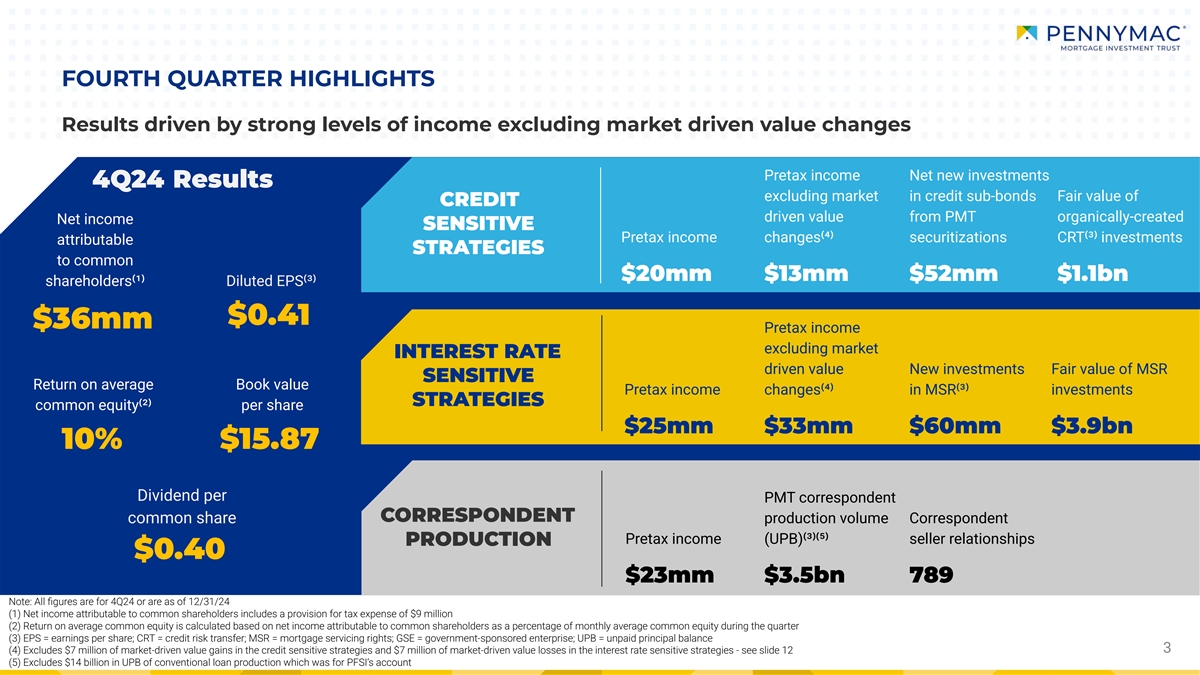
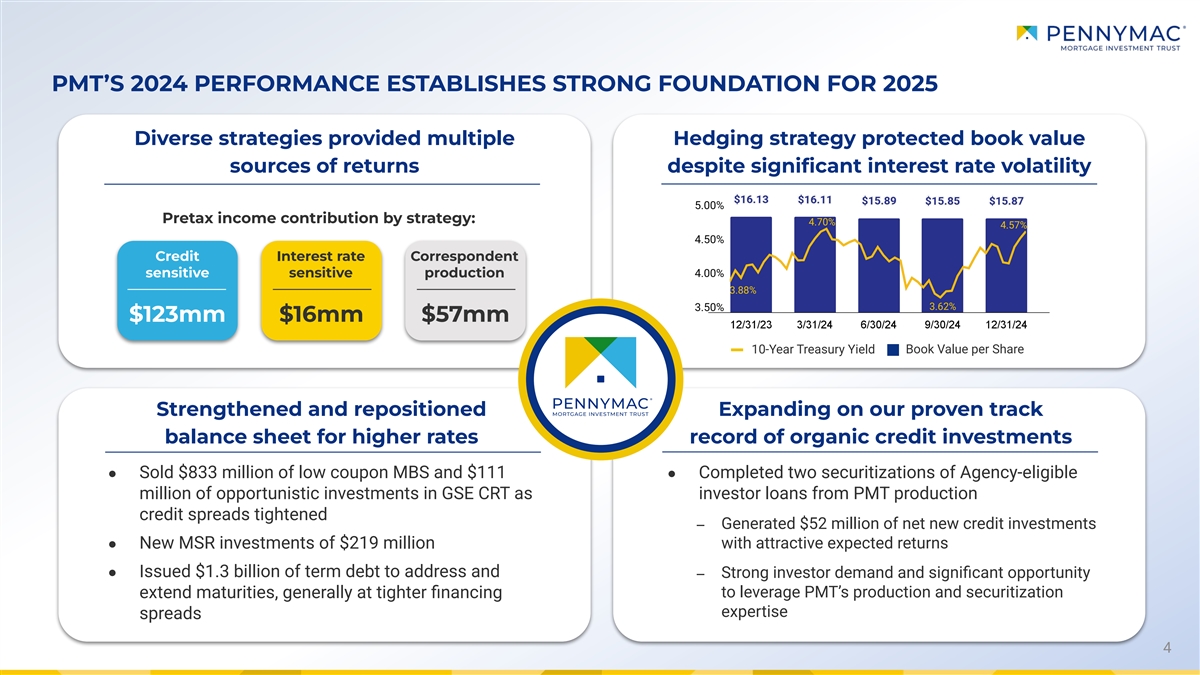
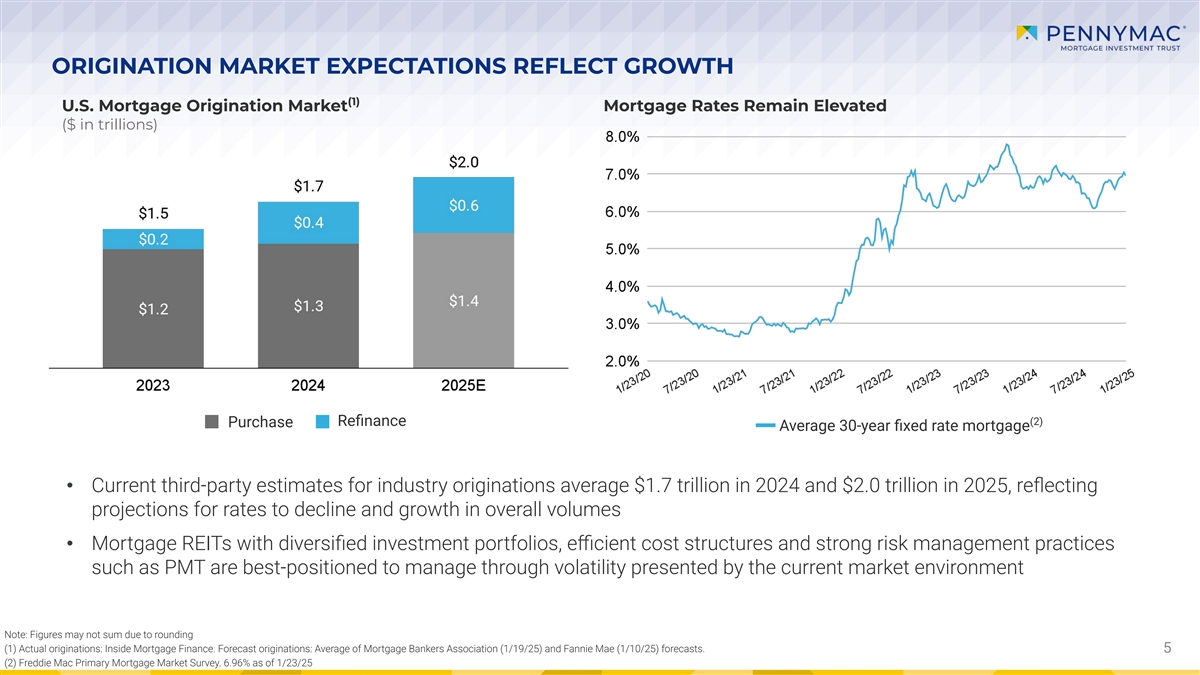
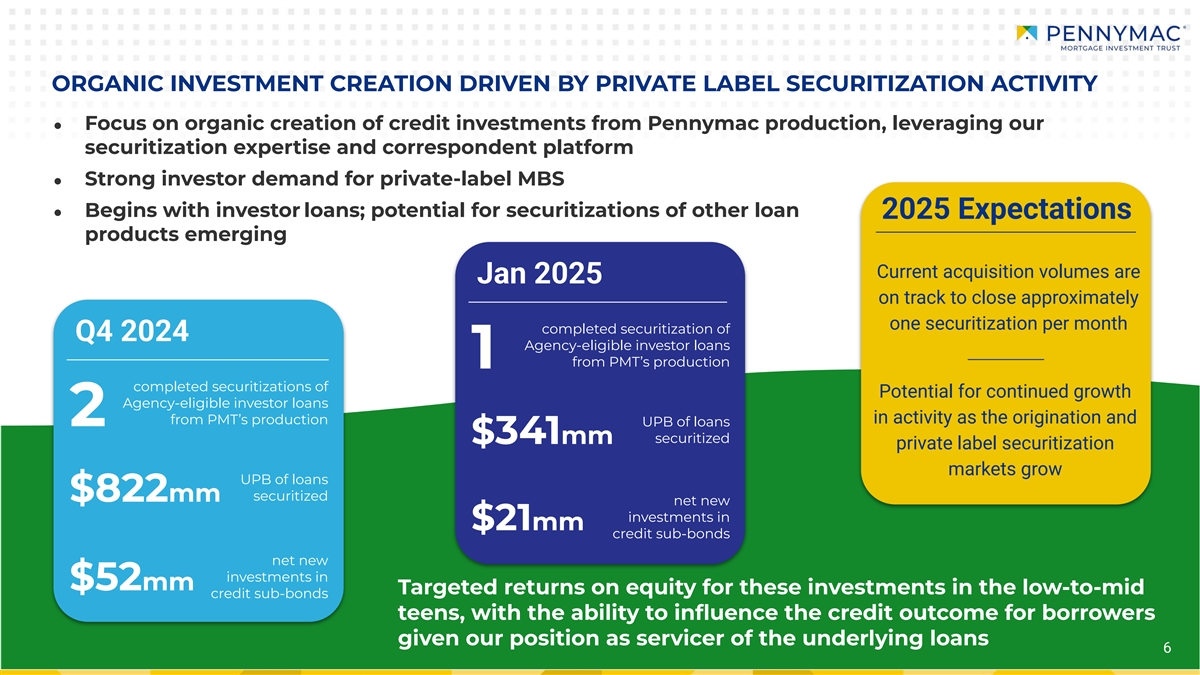
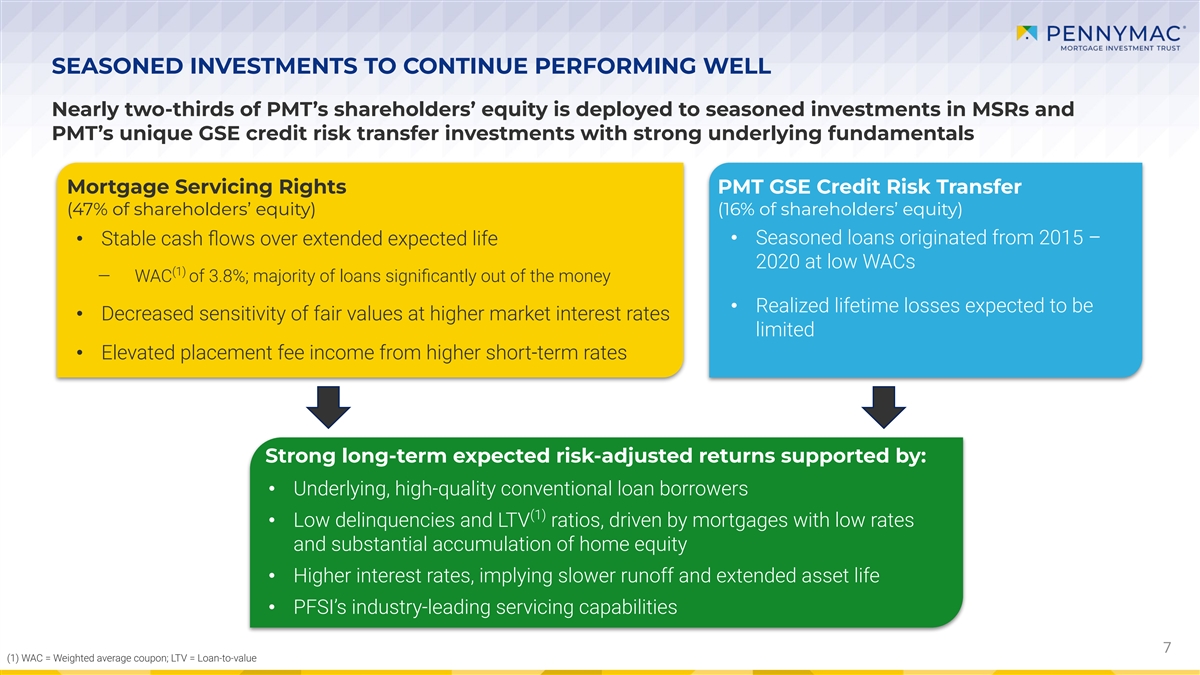
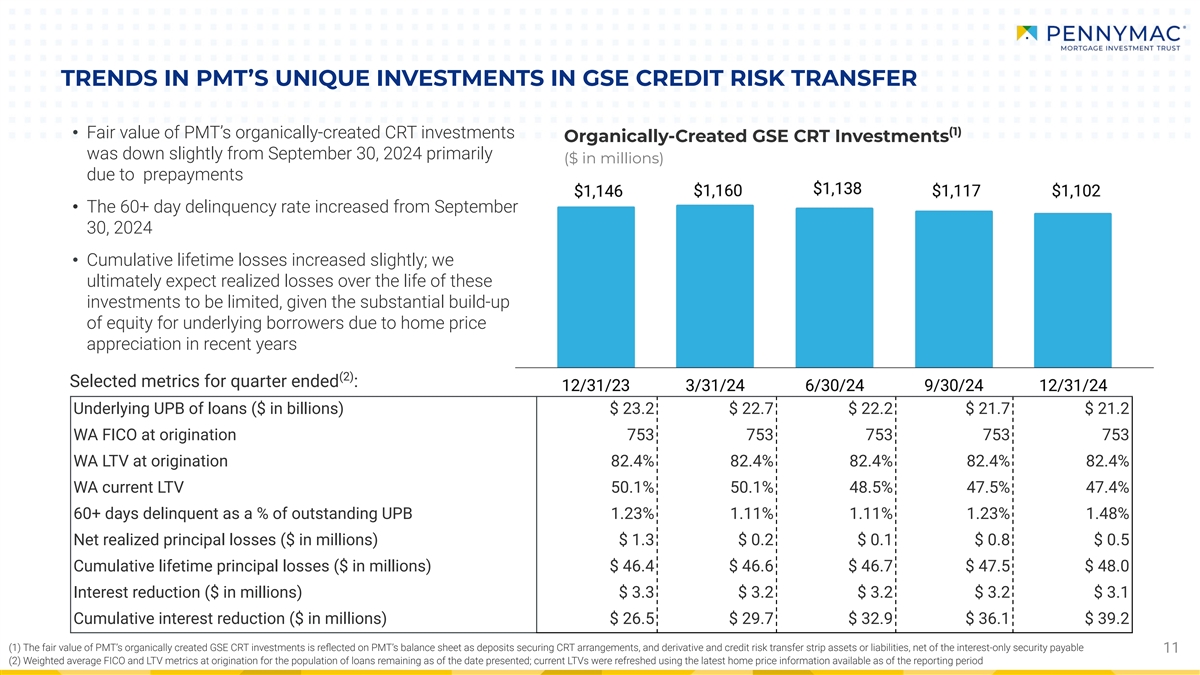
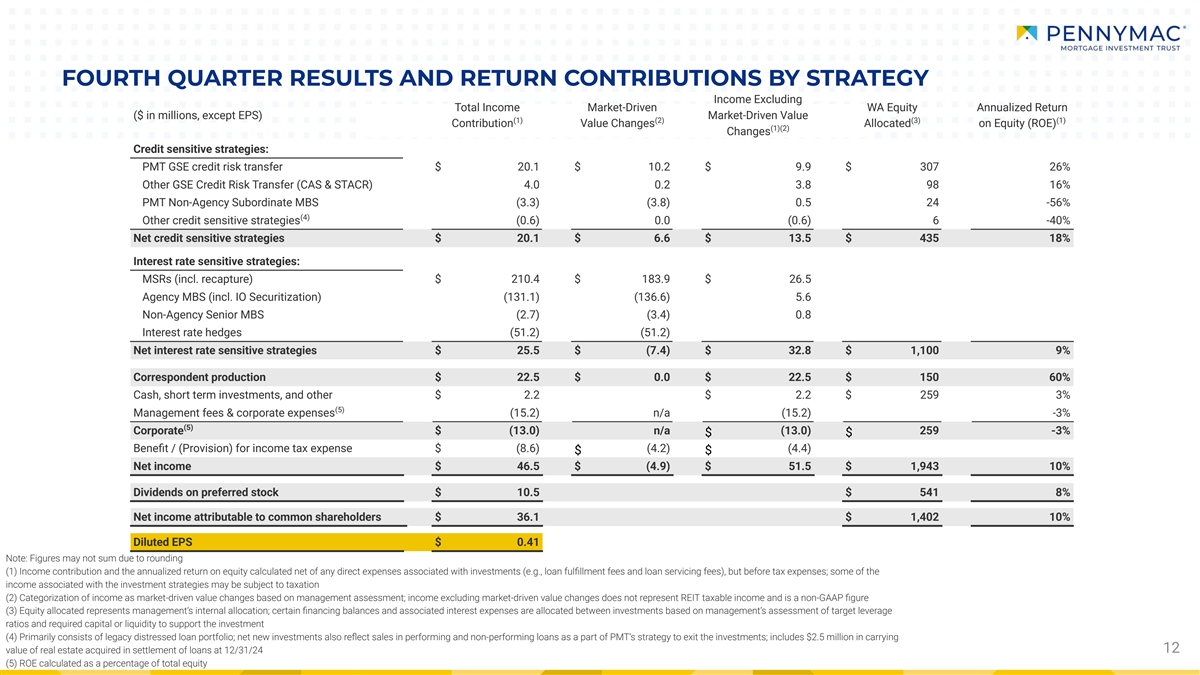
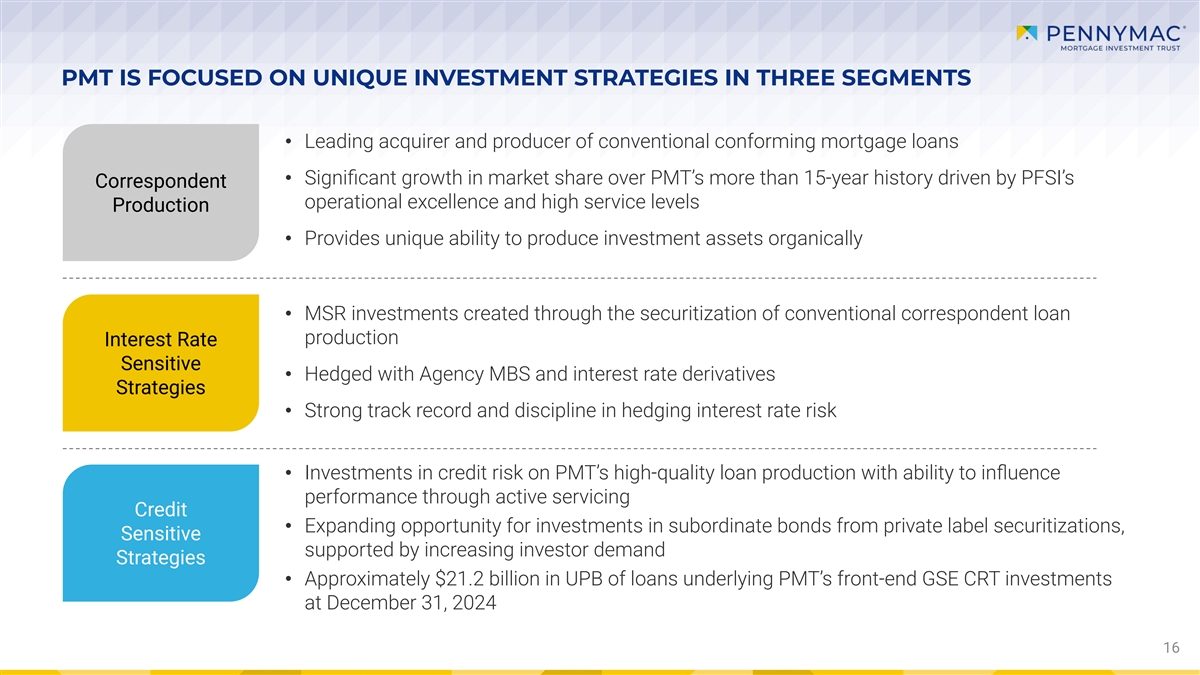
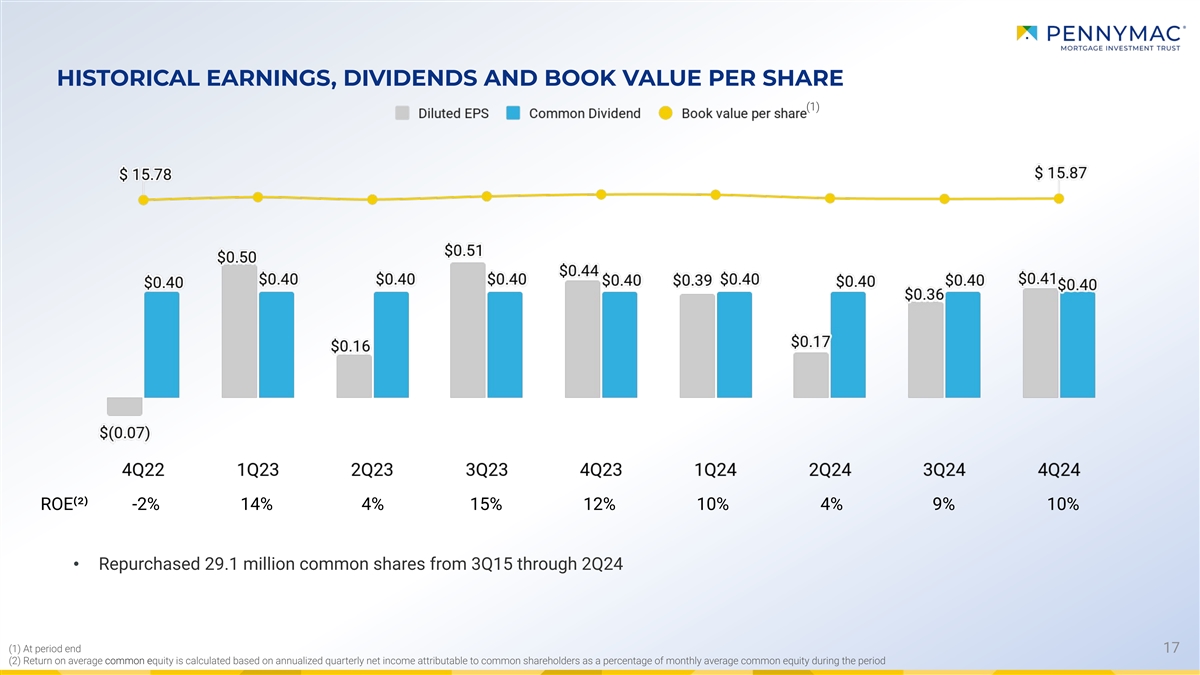
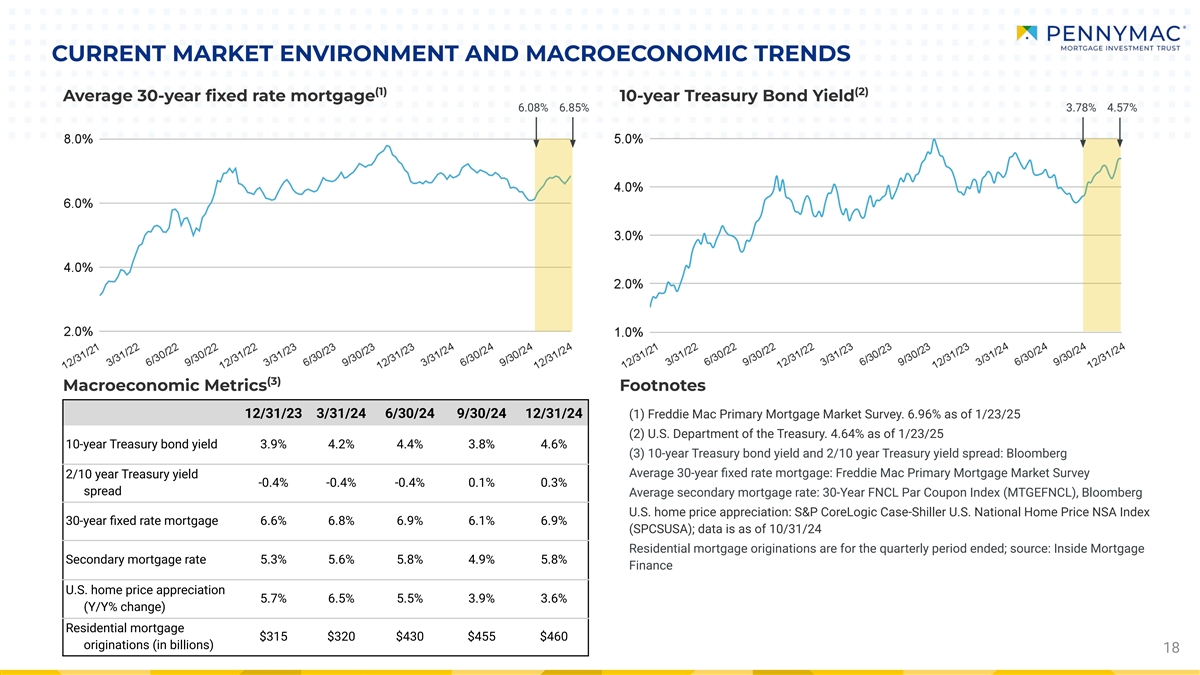
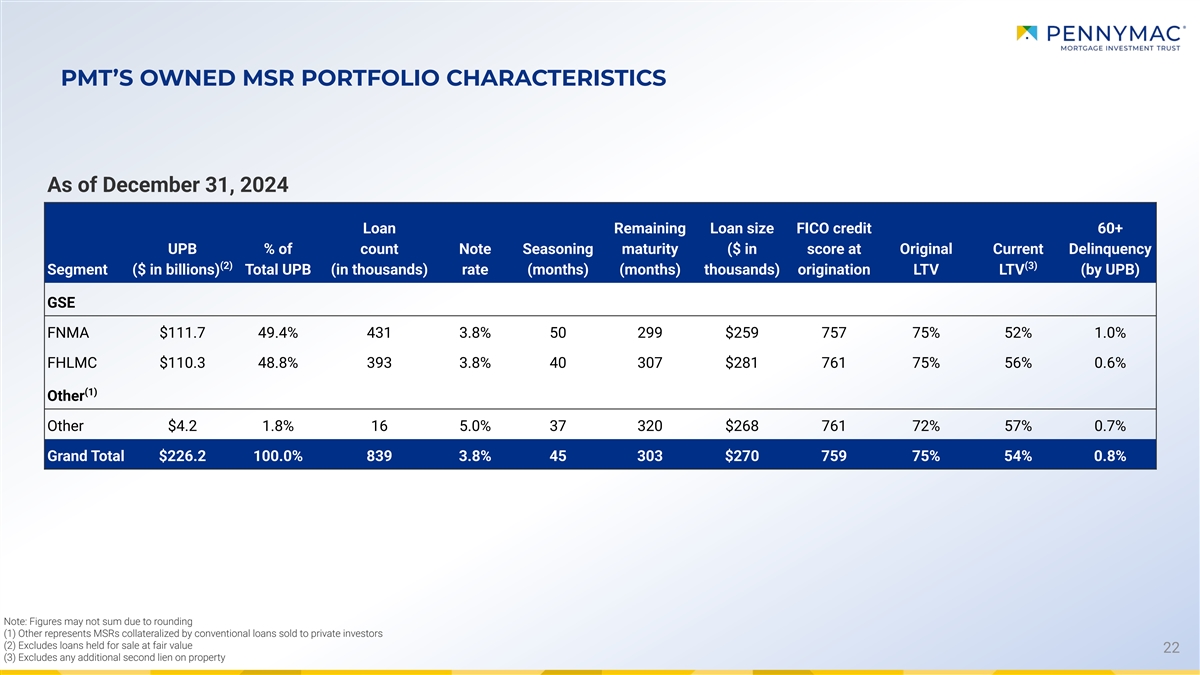
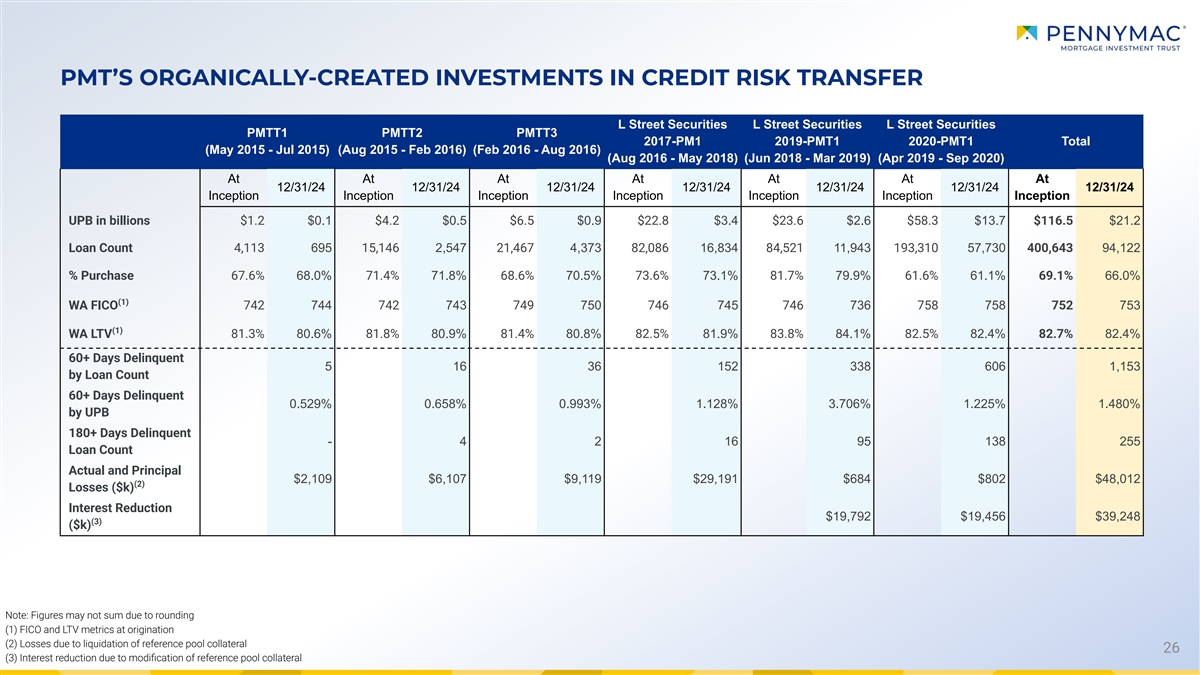
Thank you, Operator. P&T produced very strong results in the fourth quarter, generating a 10% return on equity driven by strong levels of income, excluding market-driven value changes and excellent performance across all three investment strategies. Net income to common shareholders was $36 million for diluted earnings per share of $0.41, and P&T declared a fourth quarter common dividend of $0.40 per share. Book value per share year-end was $15.87 up from the end of the prior quarter. Importantly, the fourth quarter marked a return to the organic creation of credit investments for PMT, which I will expand on later. Turning to slide four, for the full year, PMT produced a return on common equity of 8%, with $119 million of net income attributable to common shareholders and income contributions from all three investment strategies. 2024 was a year characterized by significant interest rate volatility, as evidenced by the yield on the 10-year treasury, which ranged from 3.6% to 4.7%. Even with this volatility, our dividend remained consistent, and book value per share was stable throughout the year, as the active hedging of mortgage servicing rights offset the majority of fair value changes in the interest rate-sensitive strategies. Also during 2024, we worked on multiple facets of the business to reposition PMT's balance sheet for success in a higher interest rate environment. This included the opportunistic sale of certain investments as credit spreads tightened, a major rebalance of our agency MBS portfolio, and the issuance of $1.3 billion in term debt to address and extend upcoming maturities, generally a tighter financing spread. We also renewed PMT's mortgage banking agreement with our manager and industry leader, PFSI, solidifying this unique synergistic partnership between the two companies for another half a decade. All of these activities position PMT with a very strong foundation as we enter 2025. Turning to the origination market, current third-party estimates for total originations in 2025 averaged $2 trillion, reflecting growth in overall volumes. Though mortgage rates are back up into the 7% range, we believe ongoing volatility in rates will present opportunities in the origination market from time to time. PMT's stable performance in recent periods of heightened volatility highlights the strength of the fundamentals underlying its long-term mortgage assets and our expertise managing mortgage-related investments in its changing environment. Turning to slide six, a key competitive advantage throughout PMT's history has been the ability to organically create MSR and credit investments from its own production volumes. We believe that our position as the producer of the underlying loans is a competitive advantage, providing us with an ability to review and diligence the loans selected for securitization and subsequent investment. Additionally, as the servicer of the underlying loans, we are uniquely positioned with the ability to work directly with borrowers in times of stress to minimize losses, as evidenced by the strong historical performance of our unique investments in lender credit risk transfer. In recent periods, volume or pricing limits for the GSEs on certain types of loans, such as non-owner-occupied and second homes coupled with strong investor demand has driven increased private label securitizations of such loans. This development has created a renewed opportunity for P&T to organically create credit and investments from its own production. We leverage the strength of our correspondent production franchise and securitization expertise to complete two securitizations of agency-eligible investor loans, where we retained $52 million of new investments in credit subordinate bonds. After quarter end, we completed a third securitization of investor loans and thus retained an additional $21 million of new investments in credit subordinate bonds. Return on equity for these investments is expected to be in the low to mid teens. With a growing pipeline of loans available for private label securitization and a receptive market for these securities, we expect similar levels of activity well into 2025, with the potential for increased investment opportunities through securitization of other loan products, such as jumbo loans, as the origination market grows. Turning to slide seven, approximately two-thirds of PMT shareholders' equities currently invested in a seasoned portfolio of MSRs and the unique GSE lender risk share transactions we invested in from 2015 to 2020. As the majority of mortgages underlying these assets were originated during periods of very low interest rates, we continue to believe these investments will perform well over the foreseeable future as low expected prepayments have extended the expected lives of these assets. Additionally, delinquencies remain low due to the overall strength of the consumer, as well as the substantial accumulation of home equity in recent years due to continued home price appreciation. MSR investments account for approximately half of PMT's deployed equity. The majority of the underlying mortgages of these MSRs remain far out of the money, and we expect the MSR asset to continue to produce stable cash flows over an extended period of time. MSR values also continue to benefit from the higher interest rate environment, as the placement of the income PMT receives on custodial balances is closely tied to short-term interest rates. Similarly, mortgages underlying PMT's large investment in lender-originated risk share have low delinquencies and a low-weighted average current loan to valuation of below 50%. These characteristics are expected to support the performance of these assets over the long term, and we continue to expect that realized losses will be limited. Given our expectations for PMT to be a consistent issuer and investor in private label securitizations alongside its seasoned portfolio of MSRs and CRT with strong underlying fundamentals, I am confident the company will continue to deliver attractive risk-adjusted returns in 2025 and beyond. Now I'll turn it over to Dan who will review the drivers of PMT's fourth quarter financial performance and PMT's run rate return potential.
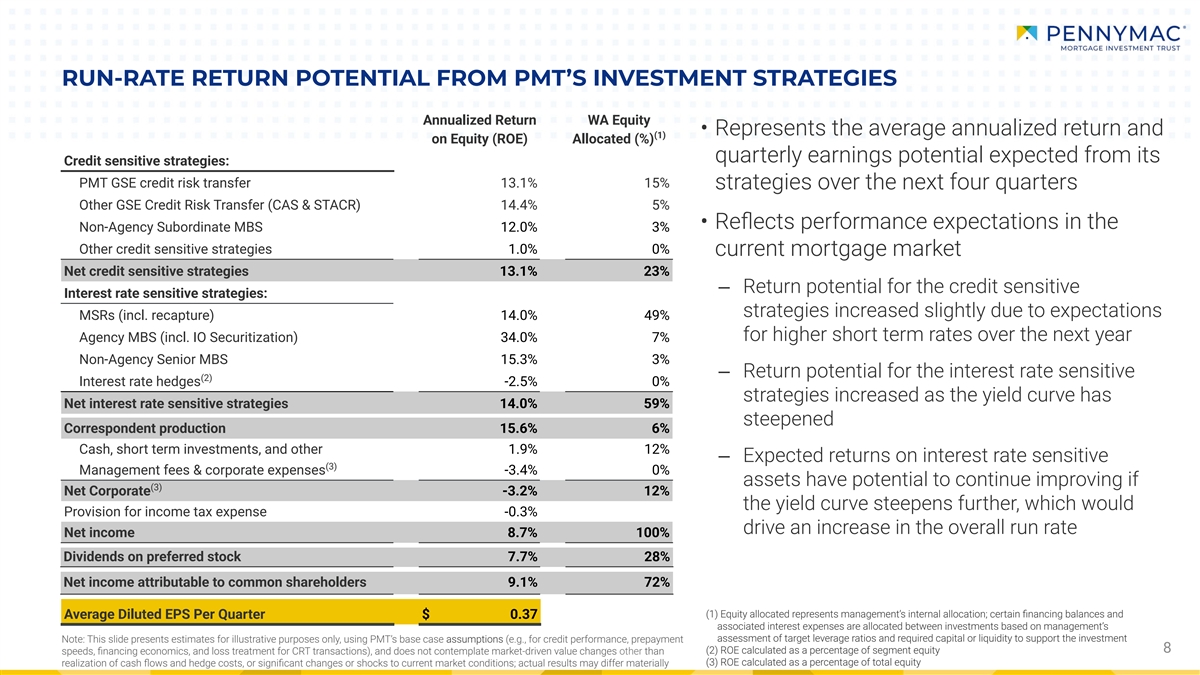
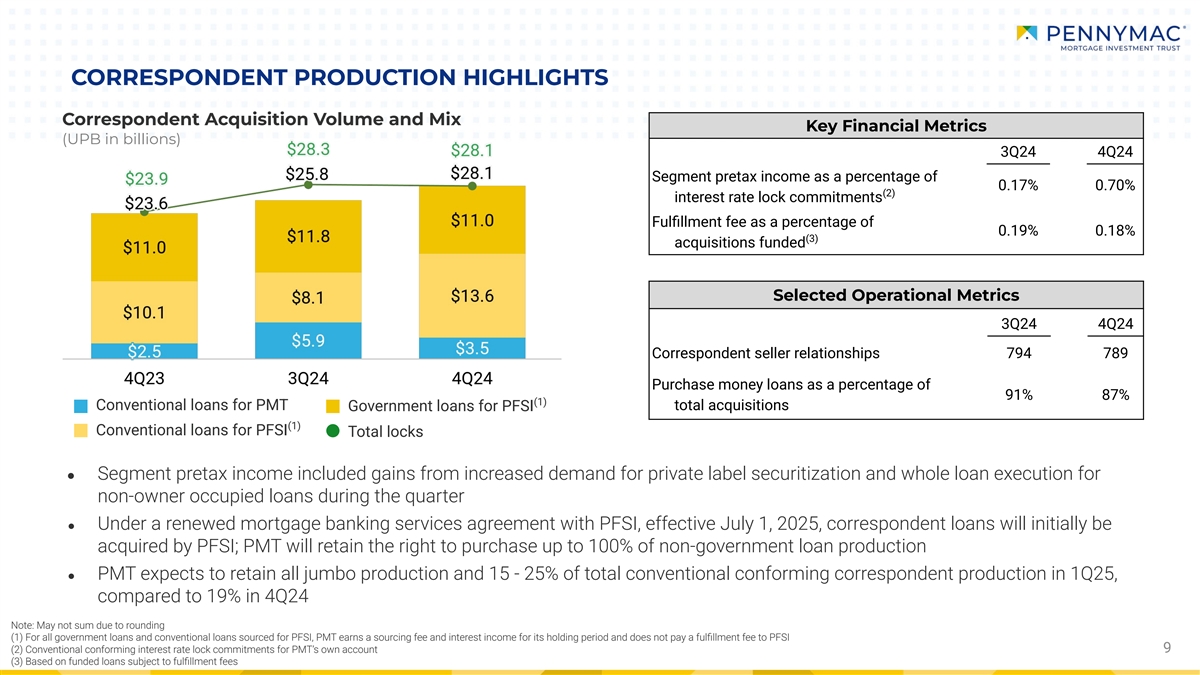
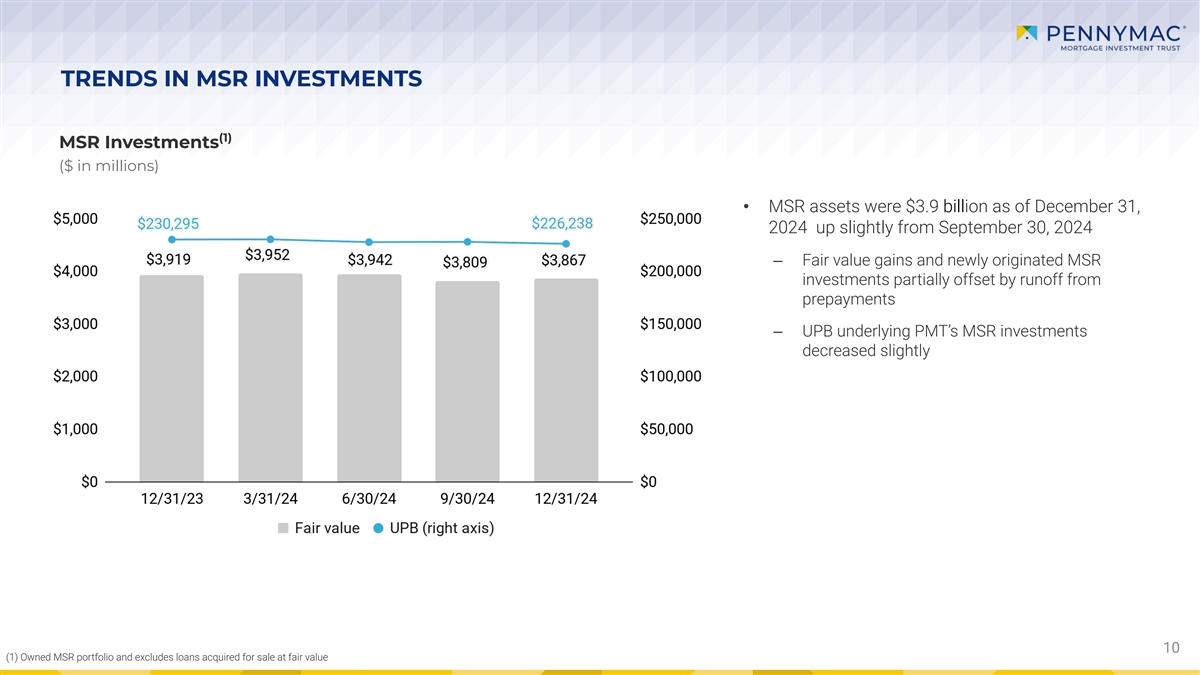
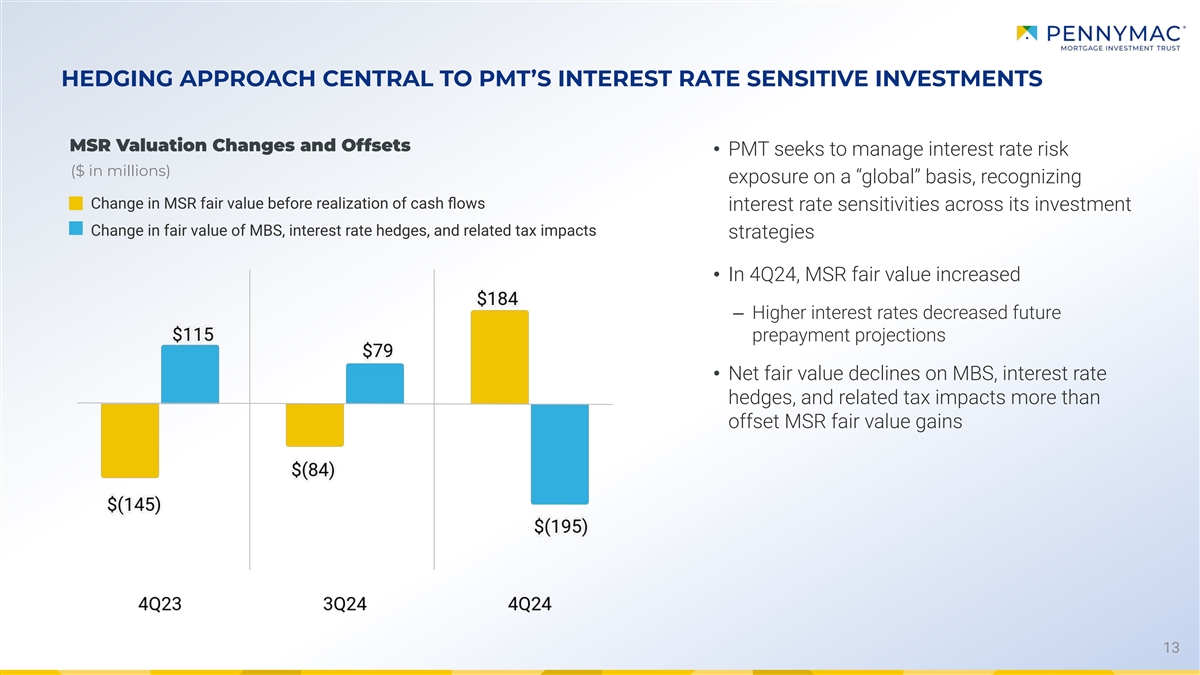
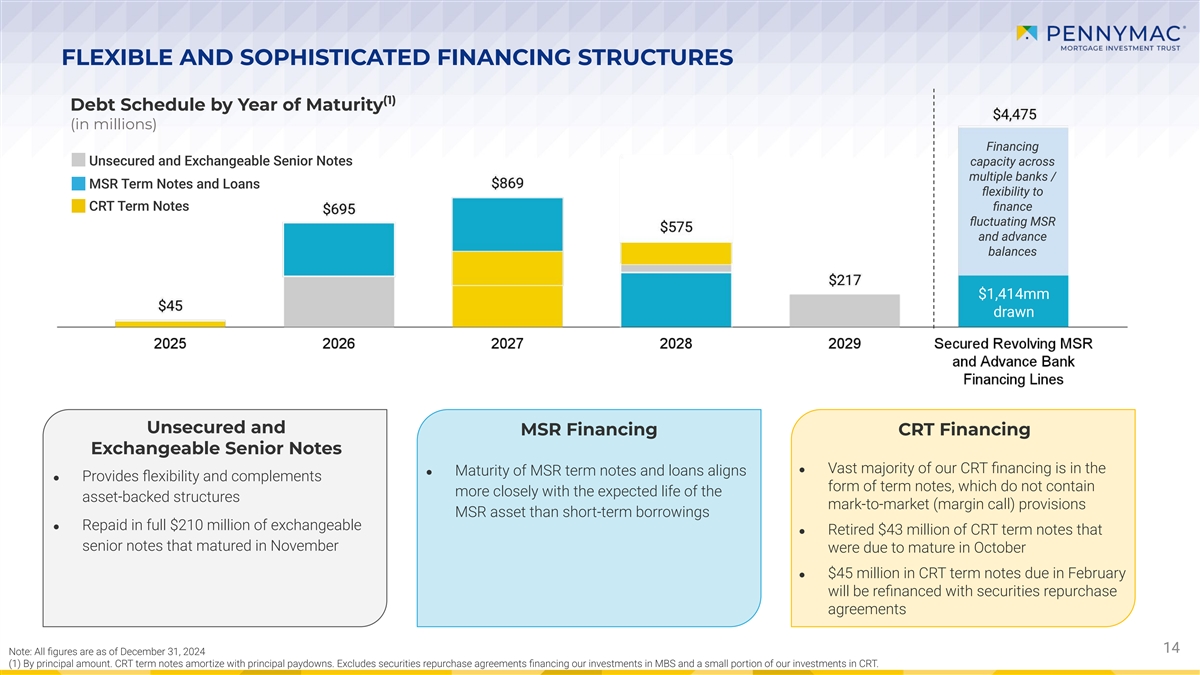
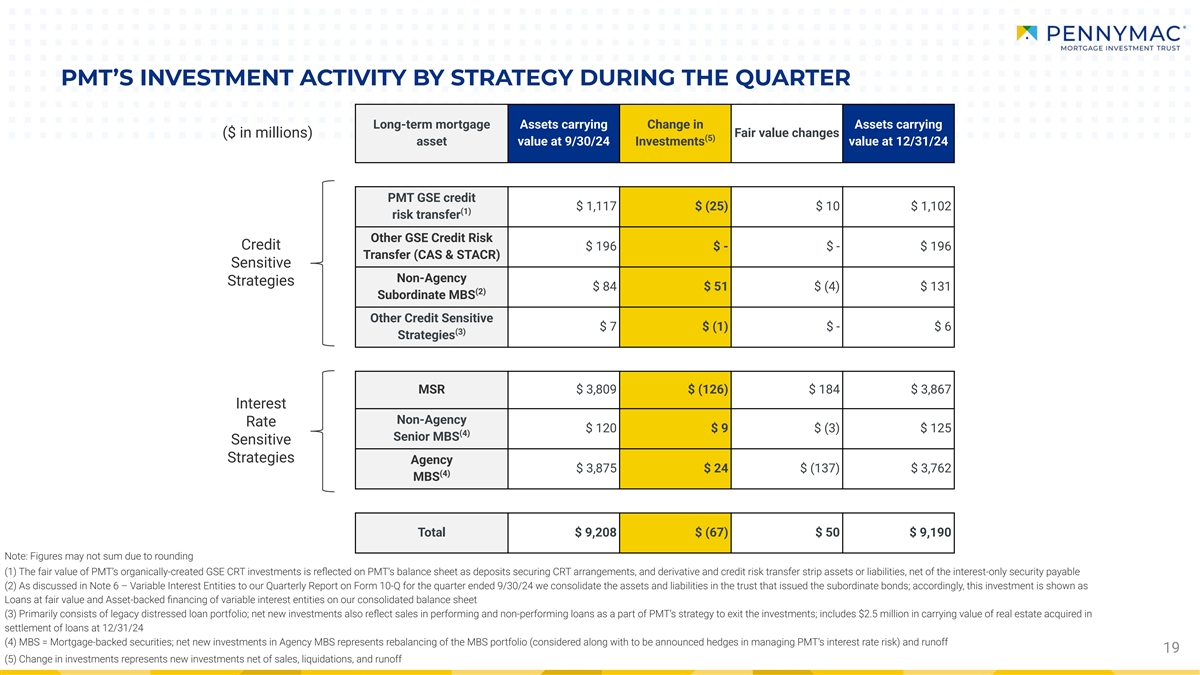
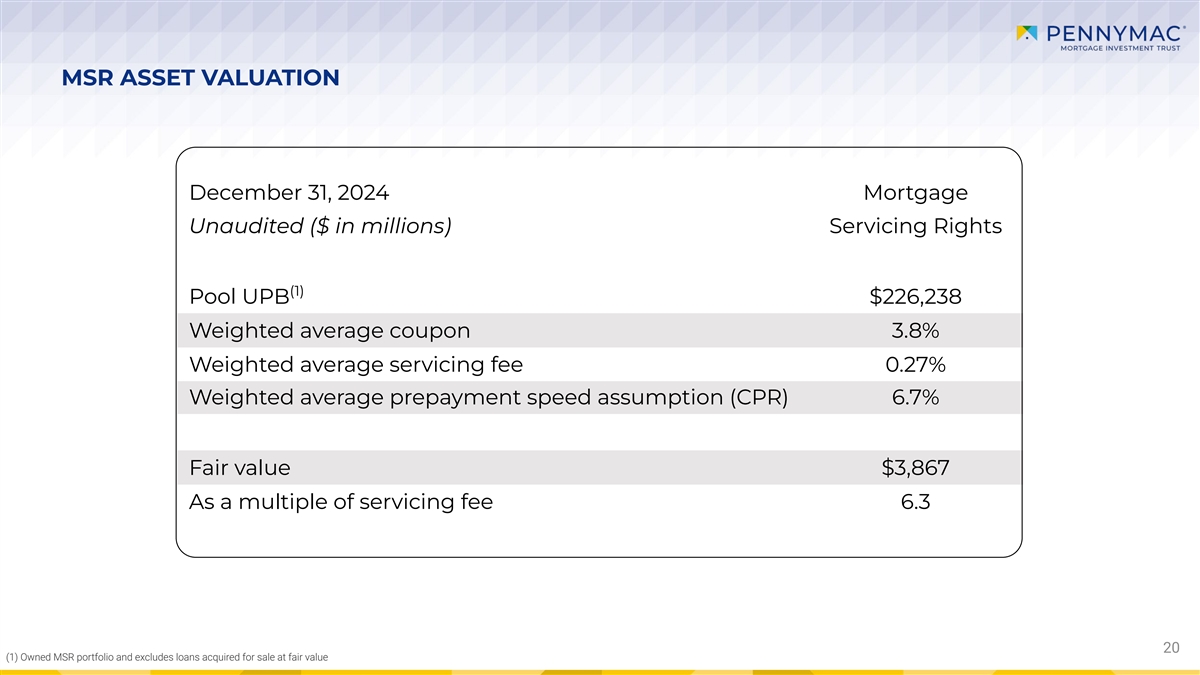
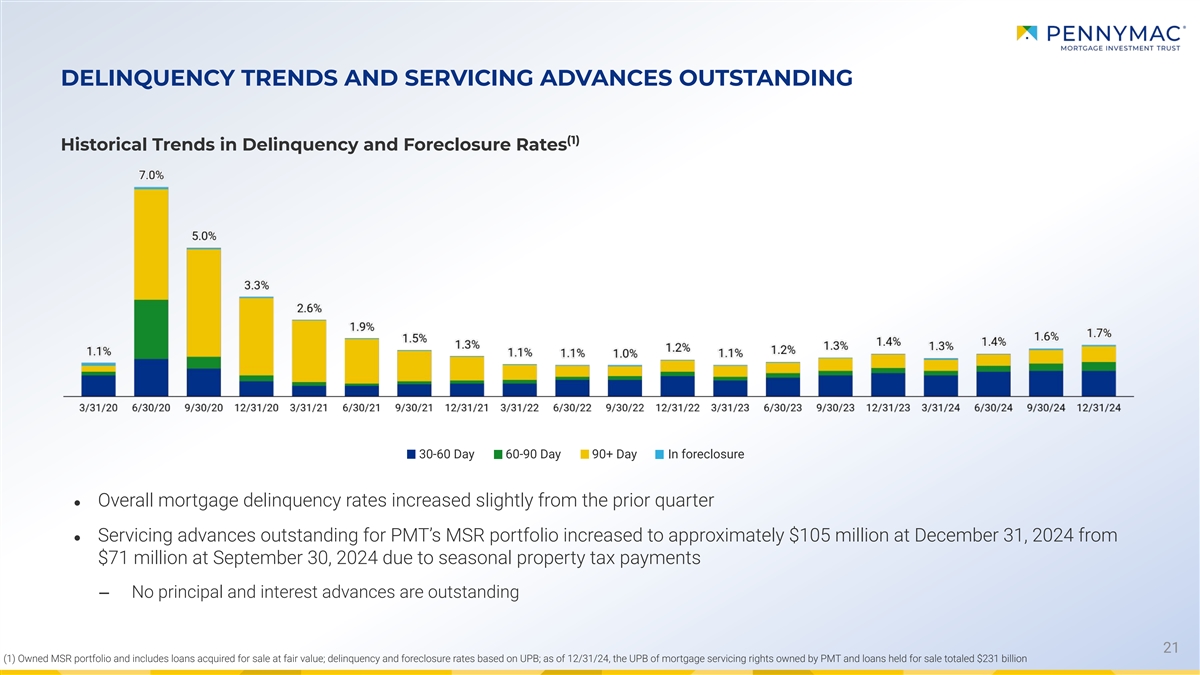
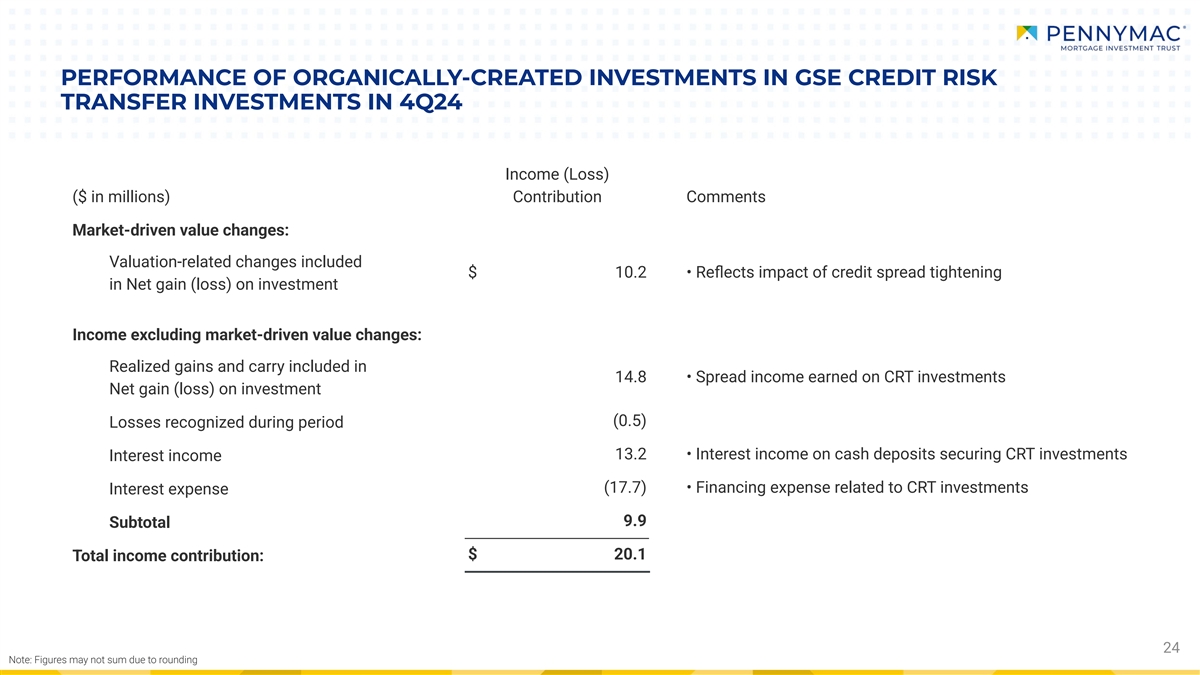
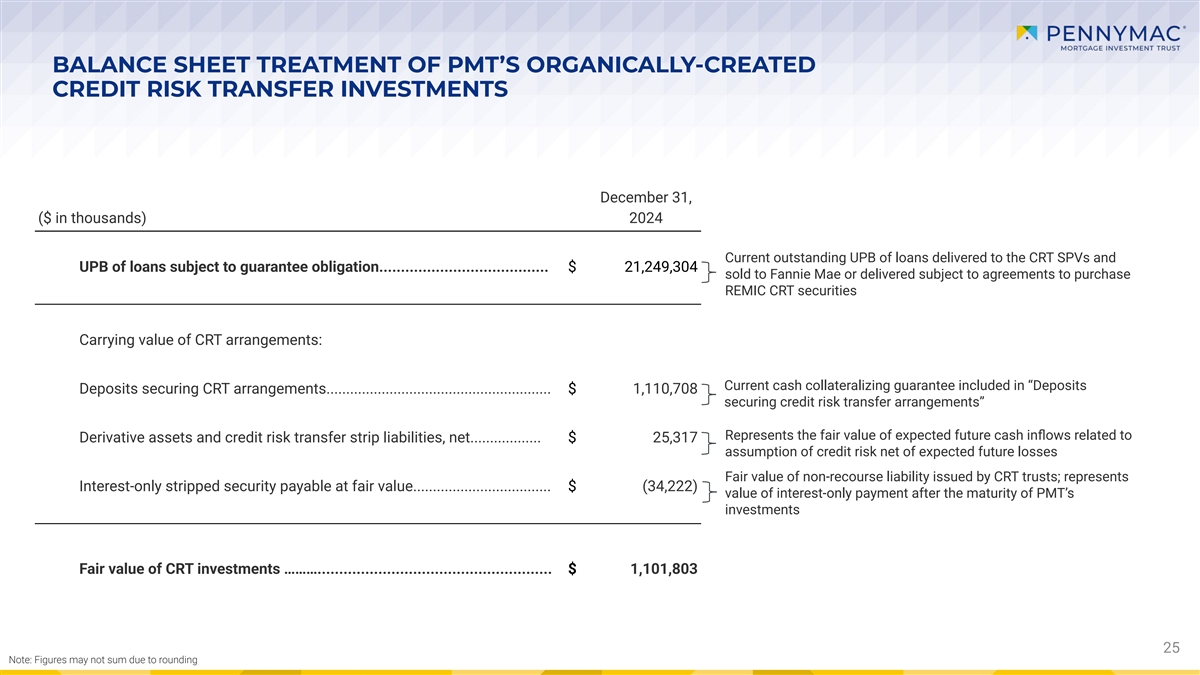
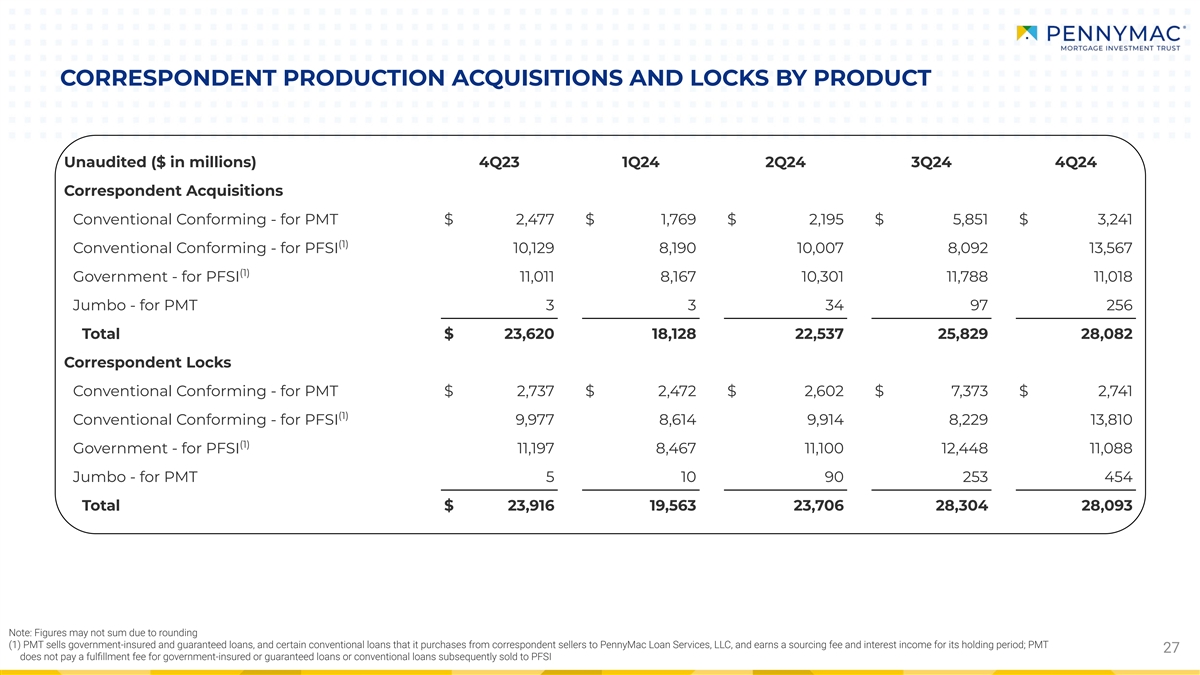
Thank you, David. PMT earned 36 million dollars in net income to common shareholders in the fourth quarter, or 41 cents per diluted common share. The credit sensitive strategies contributed 20 million dollars in pre-tax income. The contribution from organically created CRT investments was $20 million, while the contribution from opportunistic investments in CAS and stacker bonds was offset by losses on non-agency subordinate MBS due to increasing interest rates and losses on other credit-sensitive strategies. As David mentioned, the outlook for our current investments in organically created CRT remains favorable, with a low underlying current weighted average loan-to-value ratio below 50% and a 60-day delinquency rate of 1.5%, both as of December 31st. The interest rate-sensitive strategies contributed pre-tax income of $25 million. Fair value increases on MSR investments were $184 million as the increase in mortgage rates drove a decrease in future prepayment projections. These fair value increases were offset by the combined impact of changes in the fair value of MBS, interest rate hedges, and the related income tax effects. MBS fair value decreased by $140 million due to the increase in mortgage rates. Interest rate hedges decreased by $51 million. Income from correspondent production and gains on MSRs held in PMT's taxable REIT subsidiary were the primary driver of the $9 million tax expense. The fair value of PMT's MSR asset at the end of the quarter was $3.9 billion, dollars up slightly from 3.8 billion dollars at september 30th as fair value gains and newly originated msr investments were slightly offset by runoff from prepayments delinquency rates for borrowers underlying pmt's msr portfolio remain low while servicing advances outstanding increased to 105 million dollars from 71 million dollars at september 30th due to seasonal property tax payments no principal and interest advances are currently outstanding total correspondent loan acquisition volume was 28 billion dollars in the fourth quarter up nine percent from the prior quarter driven by the larger overall market correspondent loans acquired for pmt's account totaled 3.5 billion dollars down 41 from the prior quarter due to pmt retaining a smaller percentage of the conventional of the conventional conforming correspondent loan production pmt retained 19 percent of total conventional correspondent production in the fourth quarter, down from 42 percent in the third quarter. We expect this percentage to remain between 15 to 25 percent in the first quarter of 2025 as we continue pursuing investment opportunities in the private label securitization market. Income from PMT's correspondent production segment was up from last quarter, driven by increased demand for private label securitization and whole loan execution for investor loans during the quarter. The contribution to pre-tax income related to the strong execution of our private label securitizations in the quarter was approximately $9 million. Profitability in this segment in recent periods has also benefited from the release of liabilities related to representations and warranties provided at the time of securitization, as the high volumes of loans produced from 2020 to 2022 passed the three-year window for violations with minimal repurchase-related losses. The weighted average fulfillment fee rate was 18 basis points, down from 19 basis points in the prior quarter. Under the Renewed Mortgage Banking Services Agreement with PFSI, effective July 1, 2025, correspondent loans will initially be acquired by PFSI. However, PMT will retain the right to purchase up to 100% of non-government correspondent production from PFSI. In total, PMT reported $51 million of net income across its strategies, excluding market-driven value changes and the related tax impacts, up from $35 million in the prior quarter, driven primarily by decreased realization of MSR cash flows and correspondent production income. Looking ahead, slide 8 outlines the run rate return potential expected from PMT's investment strategies over the next four quarters. PMT's current run rate reflects a quarterly average of 37 cents per share unchanged from the prior quarter we see slightly increased return potential for the credit sensitive strategies as short-term interest rates are expected to remain higher for longer we also see improvement in the interest sensitive strategy segment as the yield curve is steepened the improvements in these segments was somewhat offset by a slightly decreased return potential in the correspondent production in correspondent production given the current expected margin environment. If the yield curve steepens further, we expect TMT's overall run rate would increase, closer to the $0.40 range, driven by higher overall yields in the interest rate-sensitive strategies. Turning to our capital position, we retired $43 million of CRT term notes that were due to mature in October, where the remaining assets were financed via repurchase agreement due to the size of the position. Also, we repaid in full $210 million of exchangeable senior notes that matured in November. Through 2025, we will continue to look for opportunities to raise additional debt capital to address the maturity of our exchangeable note in 2026, as well as to provide additional funding for potential expansion of our securitization efforts. We'll now open it up for questions. Operator?
Operator
Thank you. I would like to remind everyone, we will only take questions related to Pennimac Mortgage Investment Trust, or PMT. We also ask that you please keep your questions limited to one preliminary question and one follow-up question, as we'd like to ensure we can answer as many questions as possible. If you would like to ask a question during this time, please press the star, followed by the number one on your telephone keypad. And if you would like to reply your question, please press the star one again. Your first question comes from the line of Boos George with KBW. Please go ahead.
Hi, guys. Good afternoon. So you mentioned, you know, the yield curve steepens, that helps the run rate outlook. Again, does that matter if we see a sell-off on the long end? Does that kind of get you there as well, or do we need the Fed to, you know, cut a little bit?
No, that's correct, Bose. If we see the long end go up, basically if we see differentiation, you know, the greater the spread between really short- to truly short-term rates and longer-dated rates really improves the outlook for the interest rate-sensitive strategies, just the overall steepness of the curve there. And from that perspective, we're somewhat ambivalent around whether the longer end goes up or the shorter end goes down.
Okay, great. Thanks. And then in terms of your MSR hedge, is your strategy kind of similar at PMT versus PFSI, or is it sort of a tighter hedge here, or just how would you characterize it?
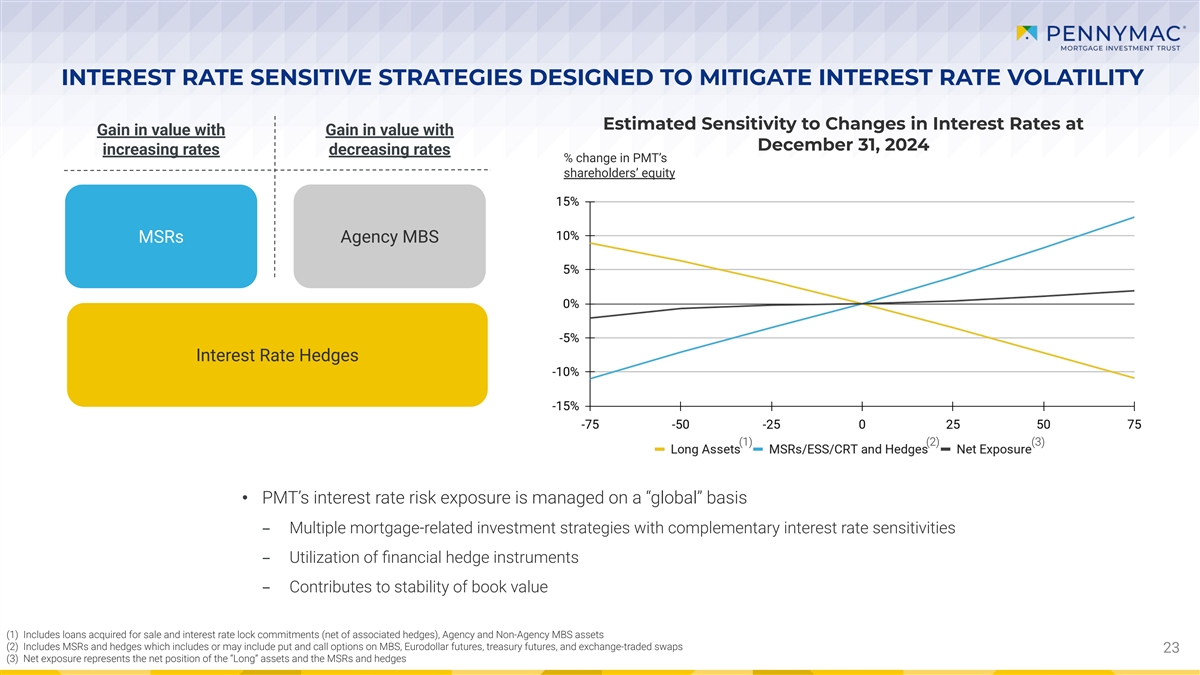
Generally speaking, we run a tighter hedge at PMT over time, or we have run a tighter hedge from a hedge ratio perspective. You know, the composition of the MSR portfolio in PMT versus PFSI is somewhat different at this point, since PMT's MSR portfolio, given that it has acquired Fewer loans, more loans have been going to PFSI through the correspondent channel over the last few years than PMT has retained. It still has a greater concentration of lower note rate loans, which have less sensitivity to interest rates changing and refinance. And also, PMT has less benefit on the other side from origination upticking, because although it gets some of the recapture benefit due to its agreement with PFSI, if those loans are refinanced through PFSI, it only retains really a portion of the benefit, not the same amount of benefit that PFSI retains if it refinances its own loans. And so for those reasons, because for those two reasons, we run generally a tighter hedge at PMT, but I think also important to note that the sensitivity at PMT of the MSR portfolio is also lower.
Okay. Great. Makes sense. Thank you.
Operator
And your next question comes from the line of Matthew Erdner with Jones Trading. Please go ahead.
Hey, guys. Thanks for taking the question. I'd like to touch on GSE reform and kind of how you guys seeing it play out. And then kind of as a follow-up to it with the new FHFA director director coming in, you know, what are you guys expecting and, you know, do you expect their footprint to just kind of shrink as a whole?
Well, thank you, Matthew. I think, you know, look, I think that it's still really early to really have a point of view on what the new FHA, what the new FHA director is going to do, the prior one. I can tell you, we've always had a good relationship with FHA and the GSEs and I'm excited to work with the new director. But I think, you know, my general sense is it's going to be a little bit of a return to the way things were, you know, the last time we had this administration in place. I think as it pertains to GSU reform, I have a similar point of view that it's still really early to say, you know, one way or another how it's going to play out. But I can tell you, we have, since we started the company, number one, always managed to arrange of outcomes. So, you know, we're very much prepared to operate in an environment where 90 percent of the production goes to the GSEs, like we saw, you know, during the Obama administration, or we see G fees increase or continue to increase, thus removing loans from the GSEs into the private label markets. And that's what's really exciting about what's taking place in PMT, because As we've seen guarantee fees go up and we've seen credit spreads tighten, the ability to take investor loans and second home loans that we've historically delivered to the GSEs and securitized those has given us the ability to organically create investments for PMT at appropriate returns. And that's how this company was set up to operate. It just took a long time for private label securitization to come back. You know, we're on pace to do a deal a quarter, and, you know, I expect that to continue into the future. But, you know, obviously that's subject to things that we can't control. But I think that, you know, the investor loan securitization market is one that we're very excited about. Similarly, the organization is looking at other investments as well. You know, the jumbo, you know, our jumbo loan originations between PFFSI and PMT are on pace to be over a billion dollars in the first quarter of this year. And a lot of those loans are being sold whole long, but my plan is to do a securitization sometime in the first half of this year. And that will create an investment that has, you know, low to mid-teens as well. And so, as we continue to create investments in the low to mid-teens range, that's going to be very, very important for PMT in its ability to grow. And I'm really – I haven't been so excited about PMT in a very long time. I just think that we're in a very good position with the work that's been done over the last year and kind of repositioning the assets and the ability to do securitizations to play a meaningful role in a market that we would see if the GSE footprint were to continue to shrink. Having said that, we can have status quo and PMT will be fine. And I don't see guarantee fees declining. So I feel really good about where we're at, and I'm generally, not generally, I'm very bullish about what the opportunity set is for P&T.
Yeah, that's great color. Thank you very much.
Operator
And your next question comes from the line of Trevor Cranston with Citizens JMP. Please go ahead.
Hey, thanks. A bit of a follow-up to the previous comments on the credit opportunities. When you say on slide six you're on track for a securitization per month, can you clarify is that specifically just related to investor loans or would that incorporate other products such as Prime Jumbo? And can you guys also maybe talk a little bit about kind of the product set and if there are other things you guys are thinking about for securitization beyond the investor loans and Prime Jumbo?
Yeah, look, we did two investor loans, second home securitization in Q4. We closed our first one of the year today, as a matter of fact. And so I feel really good about maintaining that pace of activity. Having said that, you know, we're also looking, as I said, at jumbo loans, which is another asset class under the residential umbrella that I'm really encouraged about. As I mentioned, my plan is to do at least one securitization in the first half of this year. I think we also, just full disclosure, PFSI is originating over $300 million a month of closed-end seconds. We've looked at securitizing those loans and retaining investment there. It doesn't quite achieve our return targets, and so there, it's not on the radar yet. I mean, it's on the radar, obviously, but it's not something that I see as an opportunity in the first half of this year. And really the asset class that, you know, we're starting to look at a little bit is non-QM, particularly the prime non-QM where, you know, we kind of are intrigued about the returns there, but there's a lot of work to be done there, you know, before we get, you know, before we do anything in that market. But it's really, it's a testament to the organization that in PMT that they've built out this enterprise that can value and price and understand all of the different assets that they can invest in. And it's something that as we see, you know, more and more opportunities we're going to seize upon. As it pertains to agency loans in particular, I mean, look, obviously, if we see guarantee fees go up or loan-level price adjustments go up or, you know, I don't, you know, if they don't like high-balanced loans and they want to put an LLPA on that, you know, obviously, we're going to use our capabilities and our robust, you know, best execution engines to optimize for the best execution for PMT.
Okay, that makes sense. Thanks a lot.
Operator
Your next question comes from the line of Eric Hagen with BTIG. Please go ahead.
Hi, guys. You have Jake Katsikas on here for Eric. Can you guys share how much liquidity you currently have, including the room you have to borrow more against the MSRs? And what is your most readily available source of liquidity to draw upon as you get closer to the maturity of the unsecured? Thanks.
Sure. So if you look at the balance sheet in terms of the liquidity that we had-the direct liquidity that we had outstanding at the end of the quarter was about $430 million. In terms of our financing facilities, we have a few hundred million dollars also available to be able to draw against the current collateral that we have outstanding at the end of the quarter. As we're going – as we're moving toward the maturity upcoming of – or the maturity early next year in 2026 of the convertible, we are looking at opportunities, as I mentioned in the prepared remarks, to access the capital markets to potentially replace that debt or replace a portion of that debt. So we, a couple of years back, had done a baby bond issuance. That's an area that we would look at, again, potentially accessing the convertible debt markets as we did last year is also something that's available to us. But as we move through 2025, we will actively be looking at opportunities to access the market to offset some of that or to replace some of that maturity that's upcoming next Great. Great. Thank you, guys.
Operator
And your next question comes from the line of Doug Harther with UBS. Please go ahead.
Thanks. Dan, appreciate you giving us the details around the gain from the non-agency securitization. How should we think about the profitability of that business compared to the traditional conventional correspondent business?
So the gains overall in the correspondence section in terms of the aggregation gains are generally a bit better or help influence the margin of the correspondent business upwards. However, we have been engaged in that business and although not necessarily securitizing selling those loans whole through whole loan channels for the past few or several quarters and although that business has been building over time it's not not necessarily going to significantly impact upward versus our historical performance prior to this quarter you know the overall margin in the in the in the correspondent channel and I think if you look at our run rate sort of reflects that. What we did see in this quarter was actually an improvement in the spreads at which those loans could execute over typical GSE execution. That was true both in terms of whole loan as well as securitization. And so given that we have been aggregating over a period of time to be able to execute these deals, these deals that we've been doing one a month for the past three months, that did have a benefit on our overall aggregation pipeline. That's what led to that improvement that we saw, that contribution that we saw to the correspondent channel in this quarter.
But as you can see from our run rate, we don't necessarily expect that same level of contribution in each of the future quarters was a bit more specific to uh the tightening in that market that we saw in this quarter as we were aggregating you know that the the the really nice part of the investor loans and second homes is that you know right now the the securitization execution is really strong but having said that the the the bid for whole loans is very deep and and and many of those investors are holding the loans and not securitizing them so there's a pretty you know there's a pretty robust market away from securitization if you were to see an event in the private label markets that caused spreads to wind rather dramatically. And then finally, those loans are deliverable to the GSE. And so there is that third avenue. And so it's not like other private label products that we've seen in the past where it's solely reliant on securitization. There's multiple avenues and paths for that product to be delivered.
Operator
Thank you. And we have no further questions at this time. I would like to turn it back to David Spector for closing remarks.
Well, I want to thank everyone for joining us this afternoon. I want to encourage any of you with any additional questions to contact our investor relations team by email or phone. And they're available all, you know, every day. And likewise, if you want to follow up with me or Dan, please don't hesitate to reach out. Thank you all for joining.
Operator
Thank you, presenters. And this concludes today's conference call. Thank you all for participating. You may now, this can-