Operator
Good day, everyone, and welcome to the Pinnacle West Capital Corporation 2025 Second Quarter Earnings Conference Call. At this time, all participants are on a listen-only mode. If you have any questions or comments during the presentation, you may press star 1 on your phone to enter the question queue at any time, and we will open the floor for your questions and comments after the presentation. It is now my pleasure to turn the floor over to your host, Amanda Ho. Ma'am, the floor is yours.
Thank you, Matthew. I would like to thank everyone for participating in this conference call and webcast to review our second quarter earnings, recent developments, and operating performance. Our speakers today will be our Chairman, President, and CEO, Ted Geisler, and our CFO, Andrew Jacob Tetlow, COO, is also here with us. First, I need to cover a few details with you. The slides that we will be using are available on our Investor Relations website, along with our earnings release and related information. Today's comments and our slides contain forward-looking statements based on current expectations and actual results may differ materially from expectations our second quarter 2025 form 10q was filed this morning please refer to that document for forward-looking statements cautionary language as well as risk factors and mdna sections which identify risks and uncertainties that could cause actual results to differ materially from those contained in our disclosures a replay of this call will be available shortly on our website for the next 30 days It will also be available by telephone through August 13, 2025. I will now turn the call over to Ted.
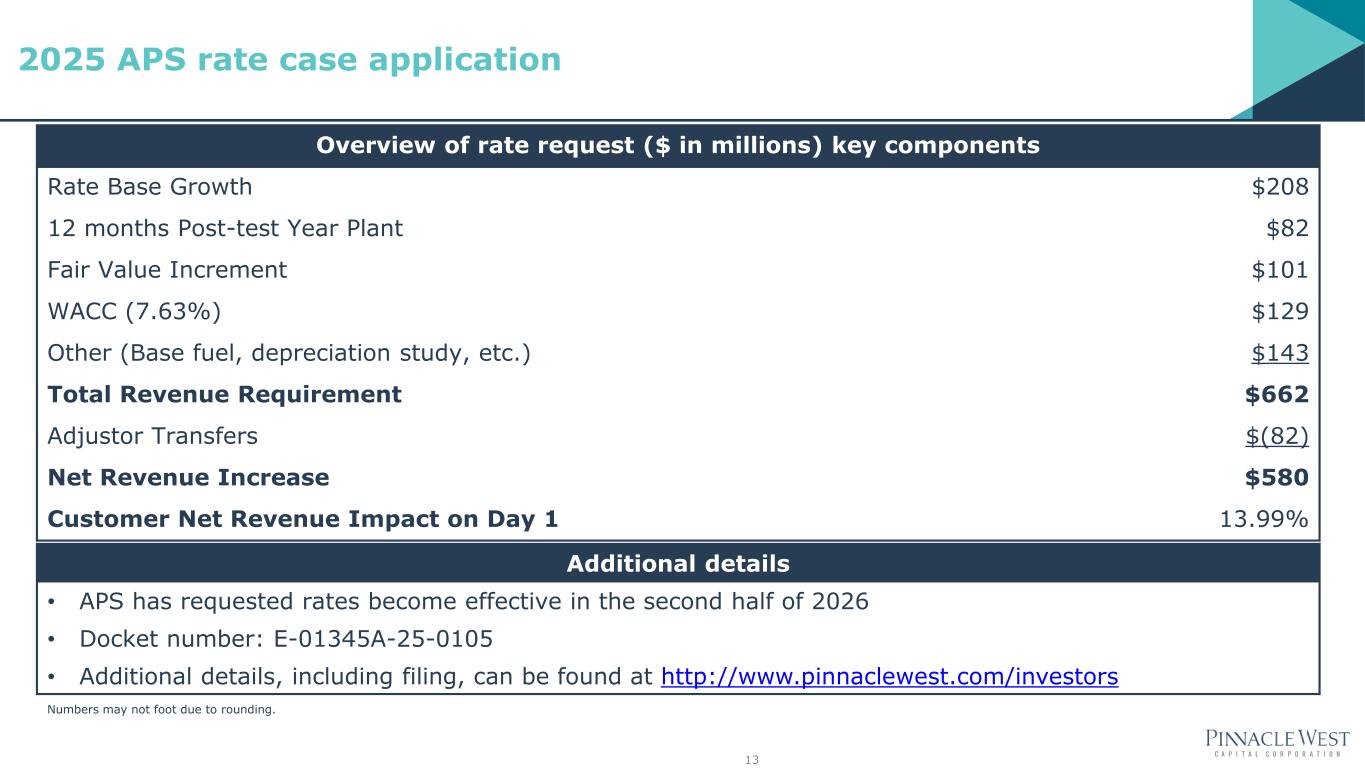
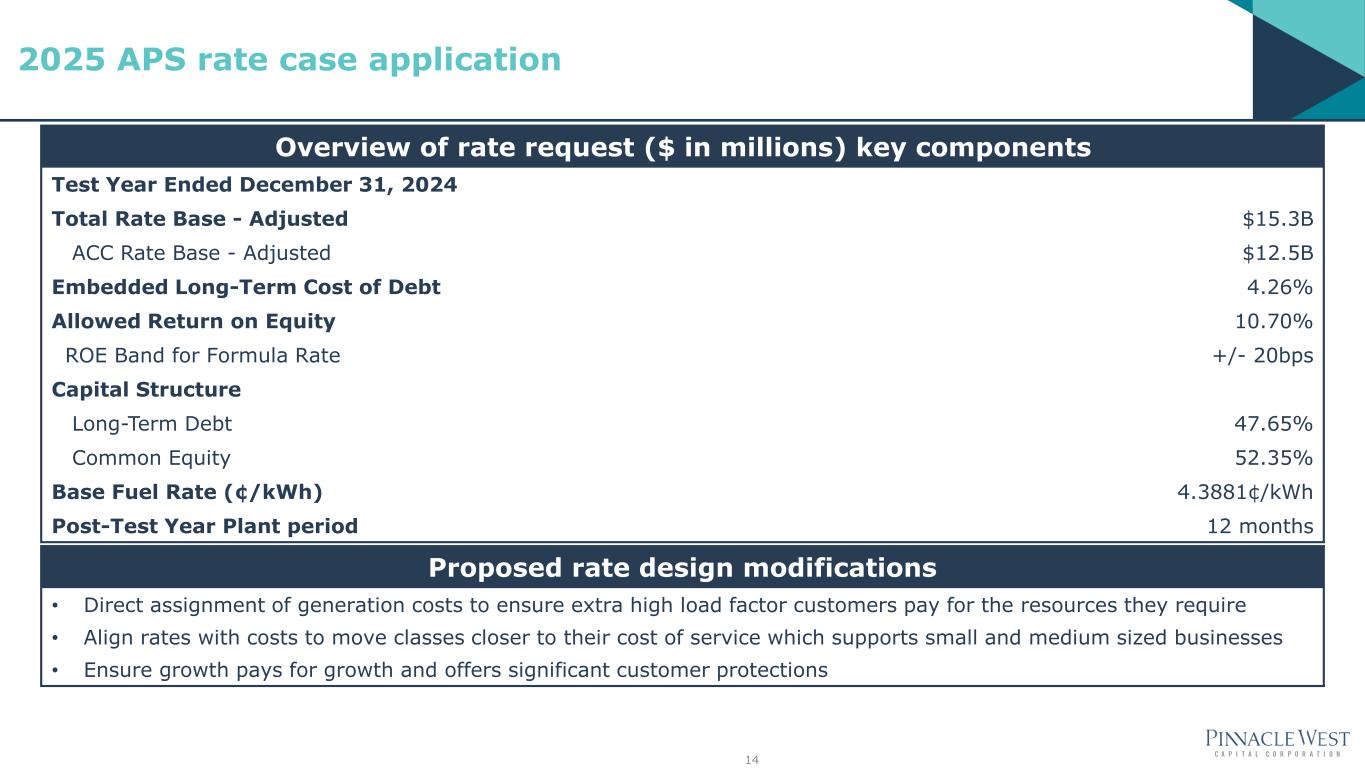
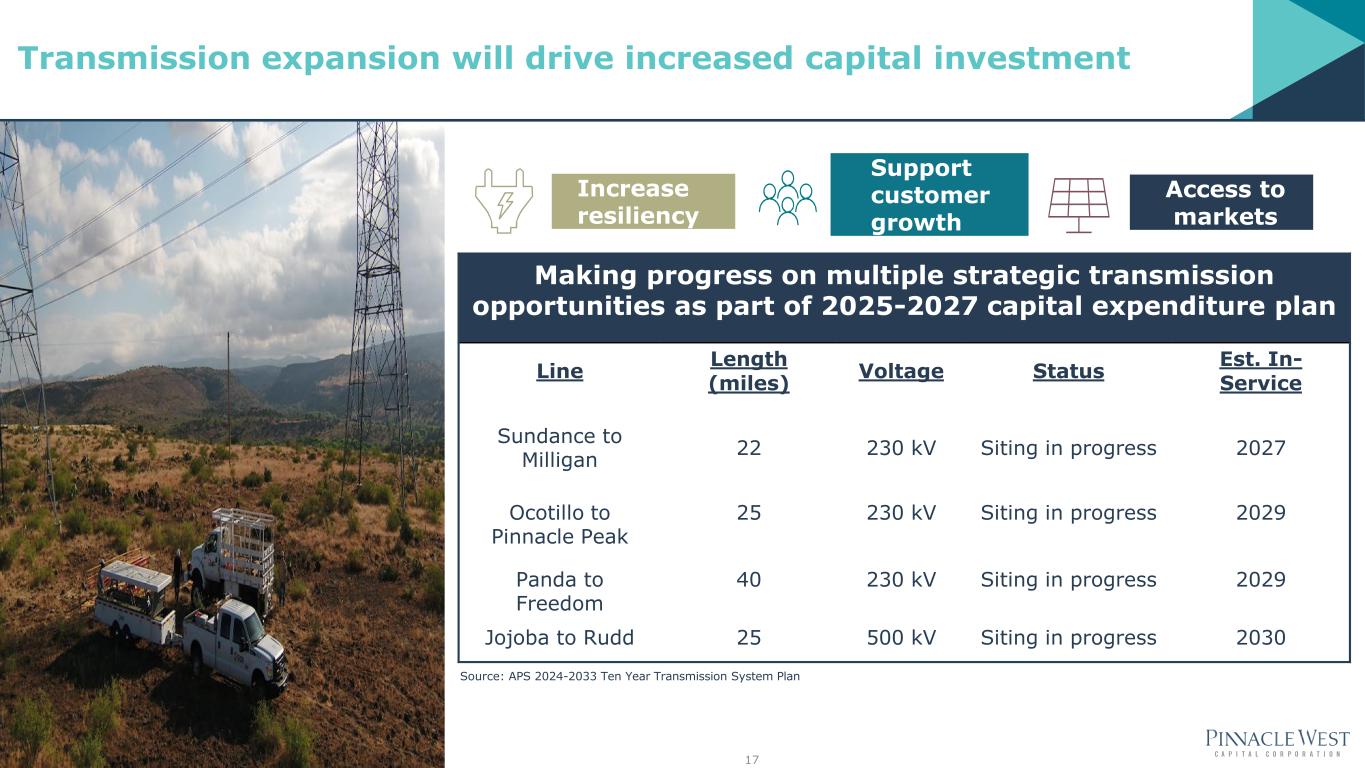
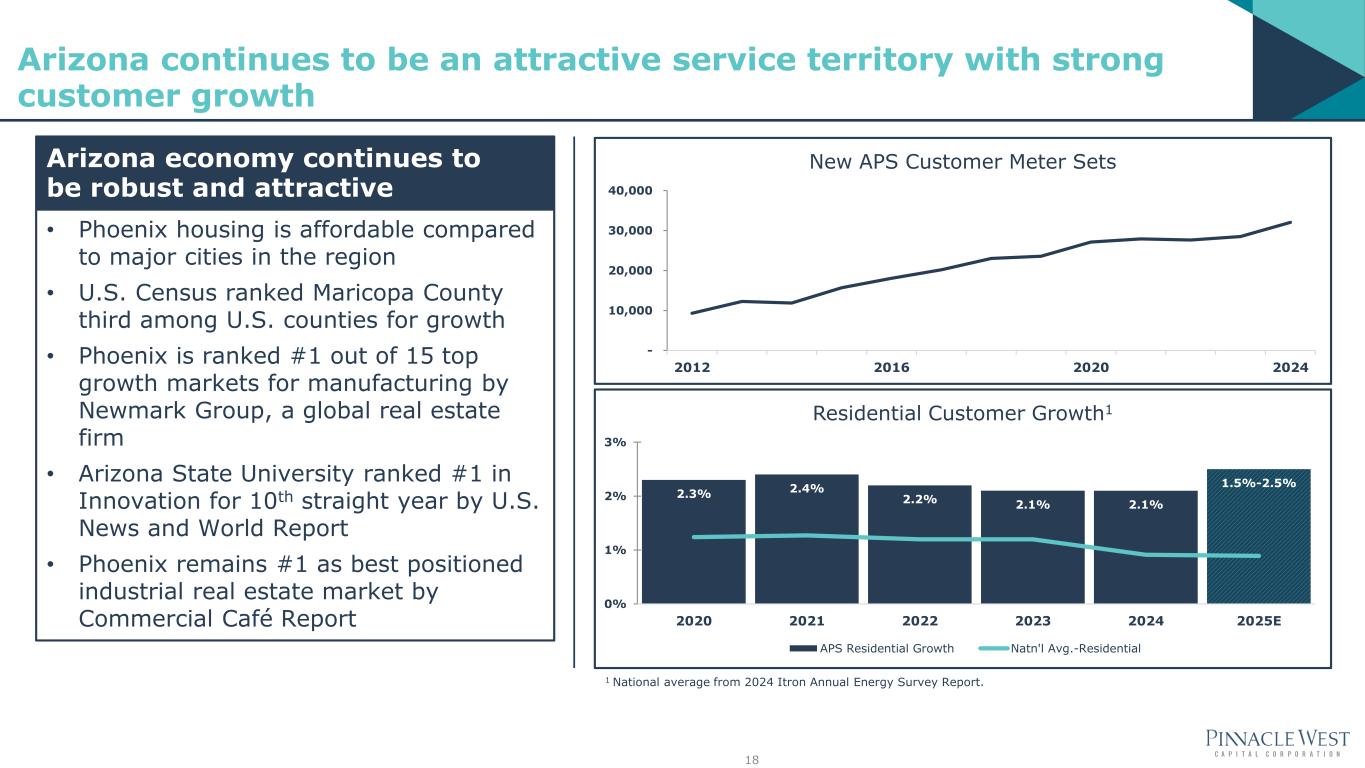
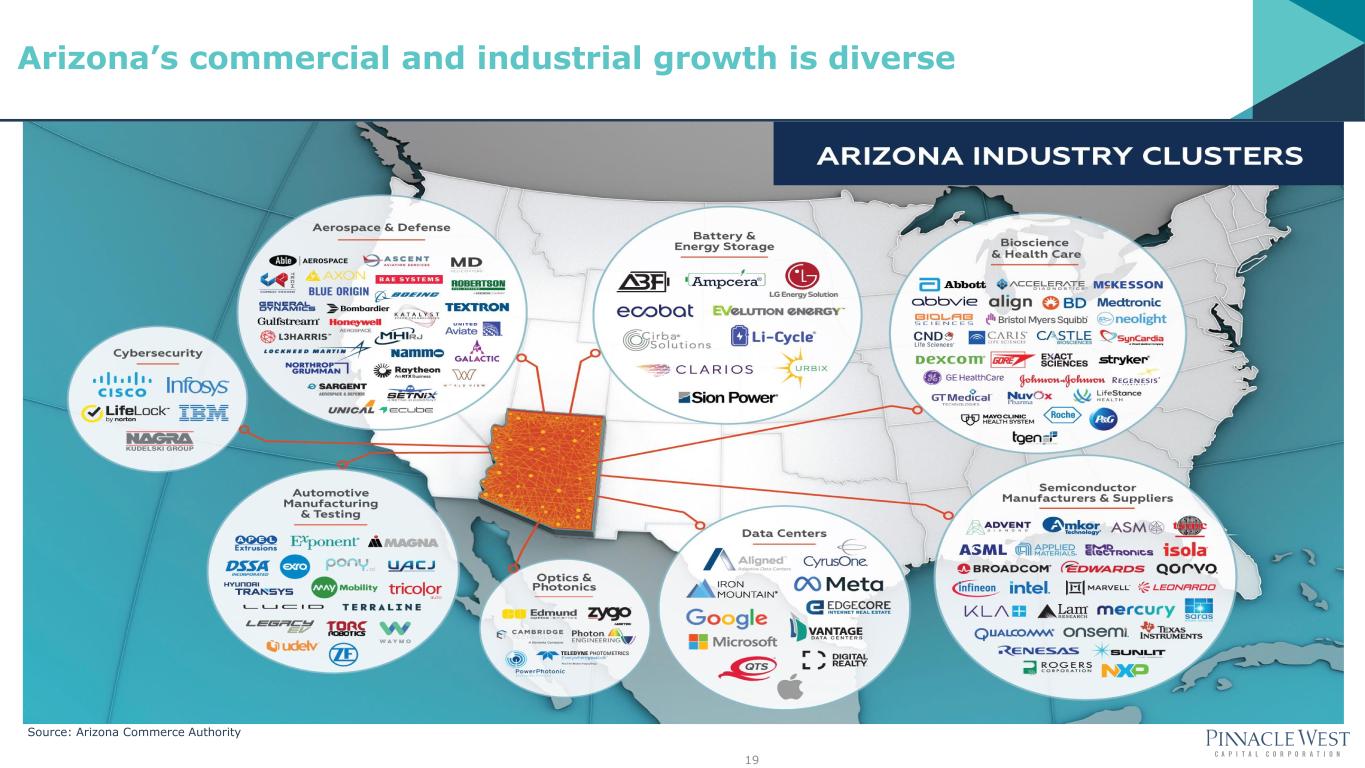
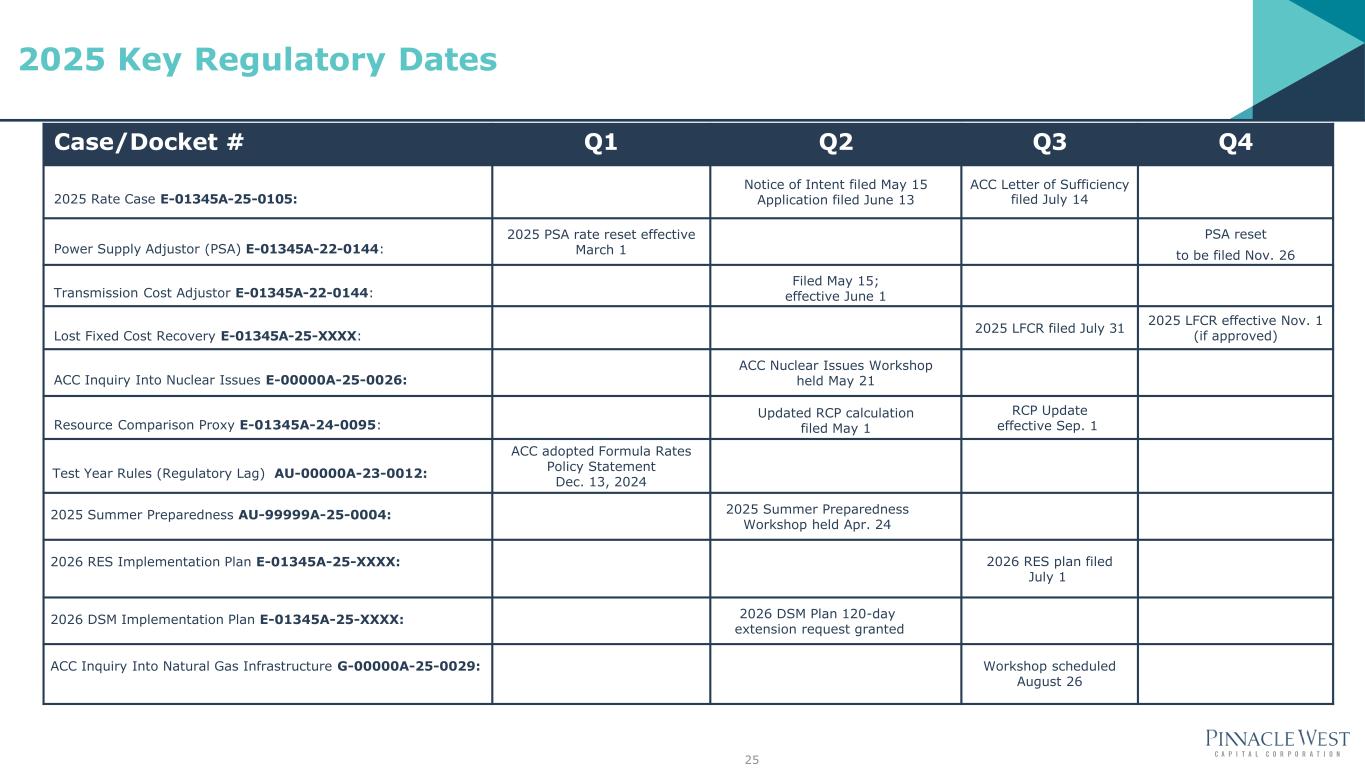
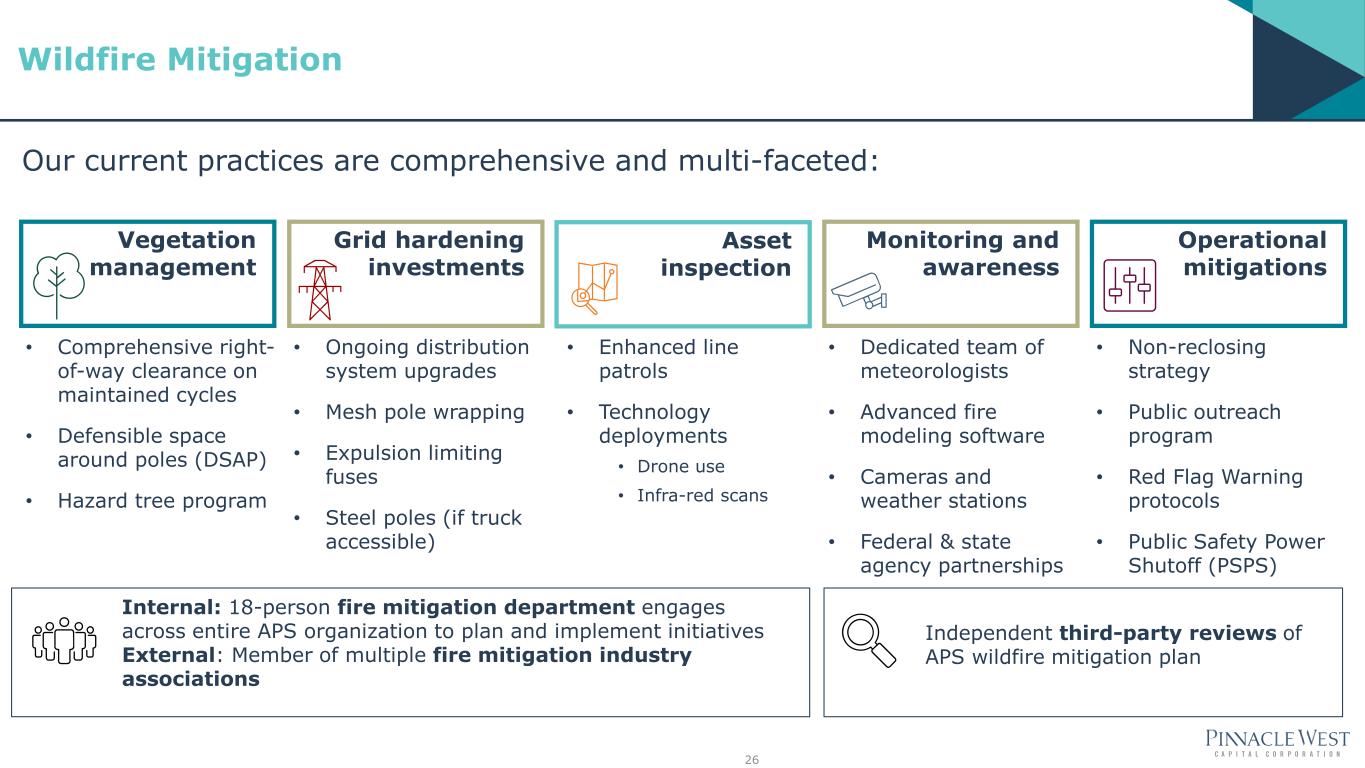
Thank you, Amanda, and thank you all for joining us today. Our second quarter financial results are in line with our annual guidance. Before Andrew discusses the details of these results, I'll provide a few updates on recent operational and regulatory developments. As we progress through the summer season, I'm very proud to share our team continues to excel in delivering reliable service to our customers. For the third consecutive year, we set a new peak energy demand record. Our customers reached a new peak on July 9th at more than 8,500 megawatts when Phoenix reached 118 degrees, more than a 300 megawatt increase from last year's peak. And we may surpass this again tomorrow as temperatures are expected to reach at least 118 again. We take our responsibility to reliably and affordably serve our customers seriously through robust planning, resource procurement efforts, and a dedicated team. I want to recognize our planners, engineers, operators, field teams, everyone that makes up the APS workforce for doing an exceptional job making sure our customers continue to experience reliable service through our summer season. Setting a new peak does not come as a surprise since our state continues experiencing growing customer demand, steady population growth, and economic diversity. the arizona commerce authority just reported a record-breaking year in fiscal 2025 with a projected 24 000 jobs created in the state and businesses committed to investing over 31 billion dollars in arizona communities for the second year in a row arizona earned the top spot by site selection magazine for attracting business investment in the mountain region additionally cnbc recently ranked arizona in the top three states for infrastructure which takes into account how states are delivering on customer power and data demands. We're working diligently with our customers and community leaders to develop the new infrastructure needed to power our state's growth. In fact, TSMC announced earlier this month that it plans to accelerate production timelines for some planned facilities by several quarters, and we're developing accelerated construction schedules now to meet their needs. Our all-of-the-above approach to resource planning is ensuring that we deliver reliable service to our customers every day and in the moments when it matters most like this week the cornerstone of our balanced energy portfolio is the palo verde generating station which celebrated its 40th anniversary this year we continue to invest in palo verde for the long term although we have already secured 20-year license extensions to continue operating into the 2040s we're taking steps now to prepare for subsequent license renewals into the 2060s In addition, we recently contracted to exercise a buyout option of 94 megawatts, previously contracted under sale leaseback. This will allow us to continue providing reliable and low-cost baseload energy to our customers for decades to come. In addition to nuclear, natural gas continues to be an important part of our diverse resource portfolio. We are already developing 675 megawatts of additional natural gas generation to support reliability. Earlier today, we announced a project with TransWestern Pipeline Company to support the Desert Southwest Pipeline expansion. The new pipeline will help maintain year-round regional energy reliability by expanding transport capacity of natural gas from the Permian Basin to Arizona, enabling new gas generation infrastructure to be built in support of our customers into the next decade and beyond. this new pipeline was a critical milestone for our team to secure before proceeding further with procuring new gas generation needed to support arizona's reliability and growth we expect the pipeline project to be in service by 2030 and we will be coordinating the development of new gas fire generation to be in service coincident with this timing in addition to generation we continue to make progress on our transmission investments and are on track to complete multiple transmission and substation projects for our growing customer base with the tremendous growth and critical need to build out the grid we have increased our investment transmission infrastructure and expect this to continue being a strong component of our capital plan well into the future we are evaluating additional opportunities to build for jurisdictional transmission for the benefit of our customers and look forward to providing additional information on this in the future As Arizona continues to grow at unprecedented levels, reliable service for our customers is our top priority, which has led us to update our clean energy goal from zero carbon to carbon neutral by 2050. We're also transitioning away from interim targets to better reflect our near-term focus of reliability and affordability for our customers, and instead we'll report interim progress in our resource plans going forward. We will rely on the integrated resource planning process to forecast the right energy mix and our all-source RFP process to support reliability through best-fit, least-cost resources, including dispatchable resources such as natural gas plus solar and storage. Turning to our regulatory updates, we filed a rate case on June 13th. Key components of the filing include a 10.7% return on equity, 1% return on the fair value increment, 52.4% equity layer, and 12 months of post-test year plan. we requested an increase of annual revenue of 580 million with rates to be in effect in the back half of 2026. since our filing a procedural schedule has been issued which shows a hearing in may and a final open meeting vote in october of 2026. the rate case supports investments in our energy infrastructure to ensure that all customers continue to receive the reliability they count on and increased resiliency under all weather conditions we're focused on investments to protect the grid from extreme weather and have invested in programs such as vegetation management, predictive maintenance, and wildfire early detection and mitigation tools. On a related note, HB 2201, the state's wildfire mitigation bill, received bipartisan support from the Arizona legislature and was recently signed into law by Governor Hobbs. The bill requires Arizona utilities to submit comprehensive wildfire mitigation plans to the Arizona Department of forestry and fire management for approval and mitigates wildfire liability risk by defining standards for the wildfire mitigation in Arizona with reference to those plans. Lastly, we're laser focused on reducing regulatory lag, controlling costs, and keeping rates as low as possible for our customers. We've proposed a formula rate adjustment mechanism to improve timely recovery of prudent and necessary costs while smoothing out customer bill impacts. In addition, we're proposing adjustments to our existing rate design to ensure new, large customers will pay their full cost of service without shifting costs to other customers. We're focused on building out the grid to serve growth, ensuring reliability for our customers at the lowest cost possible, and executing on our regulatory priorities. We look forward to delivering on our commitment to customers for safe, reliable, and affordable service, especially through the summer season, while also delivering on our commitments to shareholders as well. With that, I'll turn the call over to Andrew.
Speaker 2
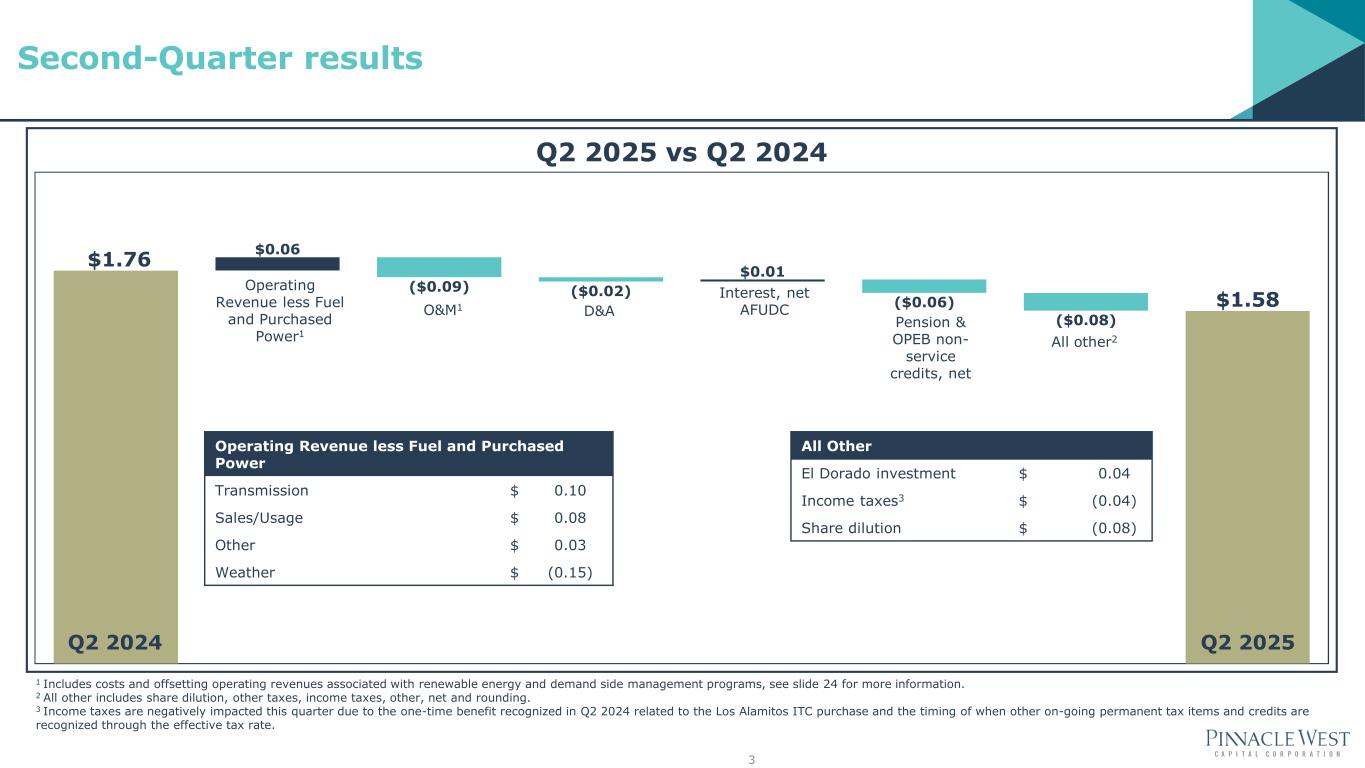
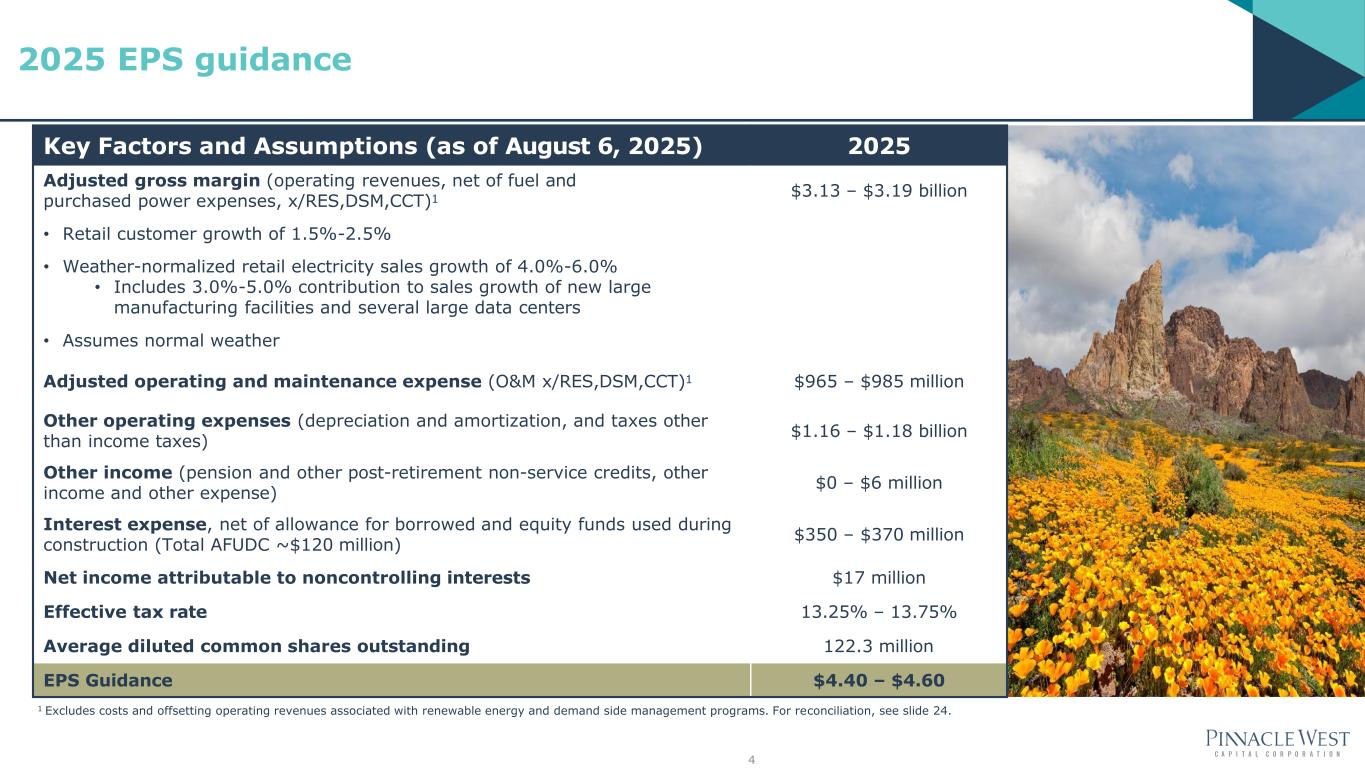
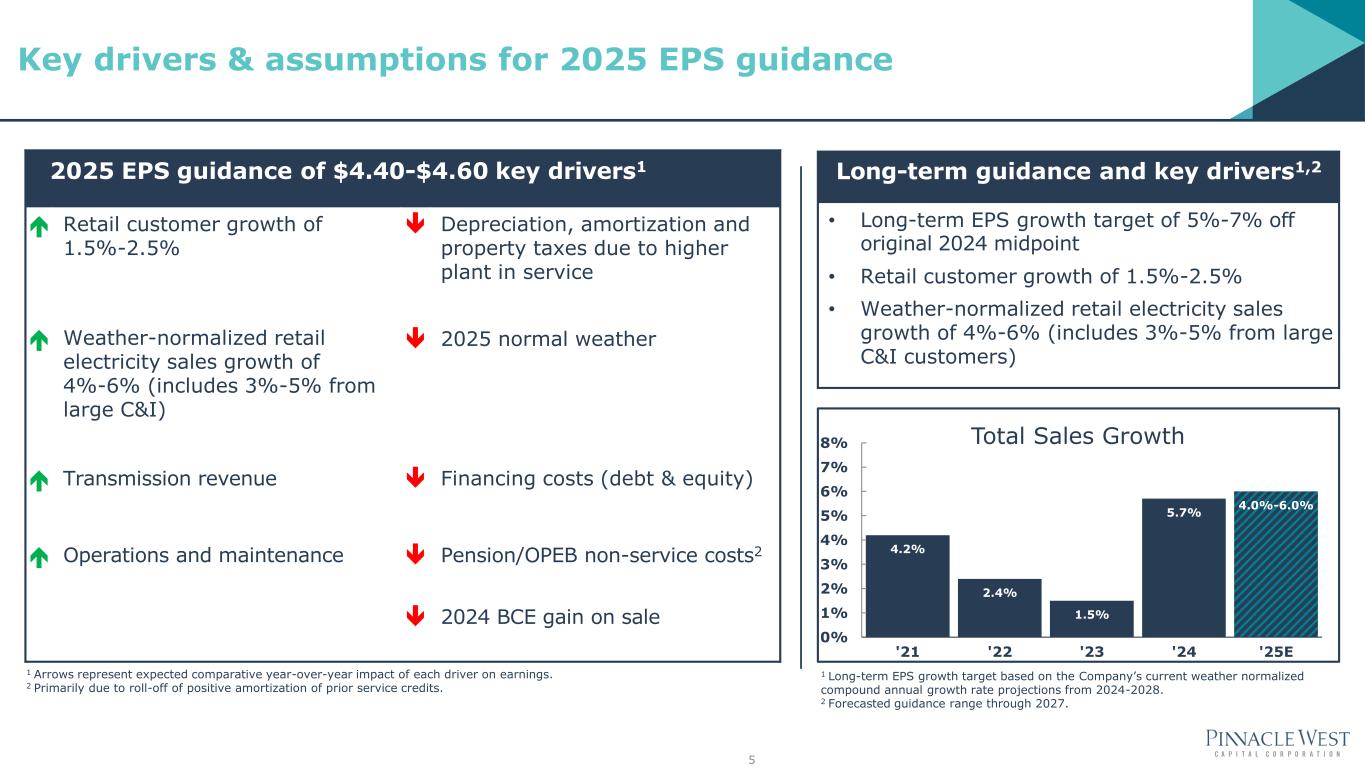
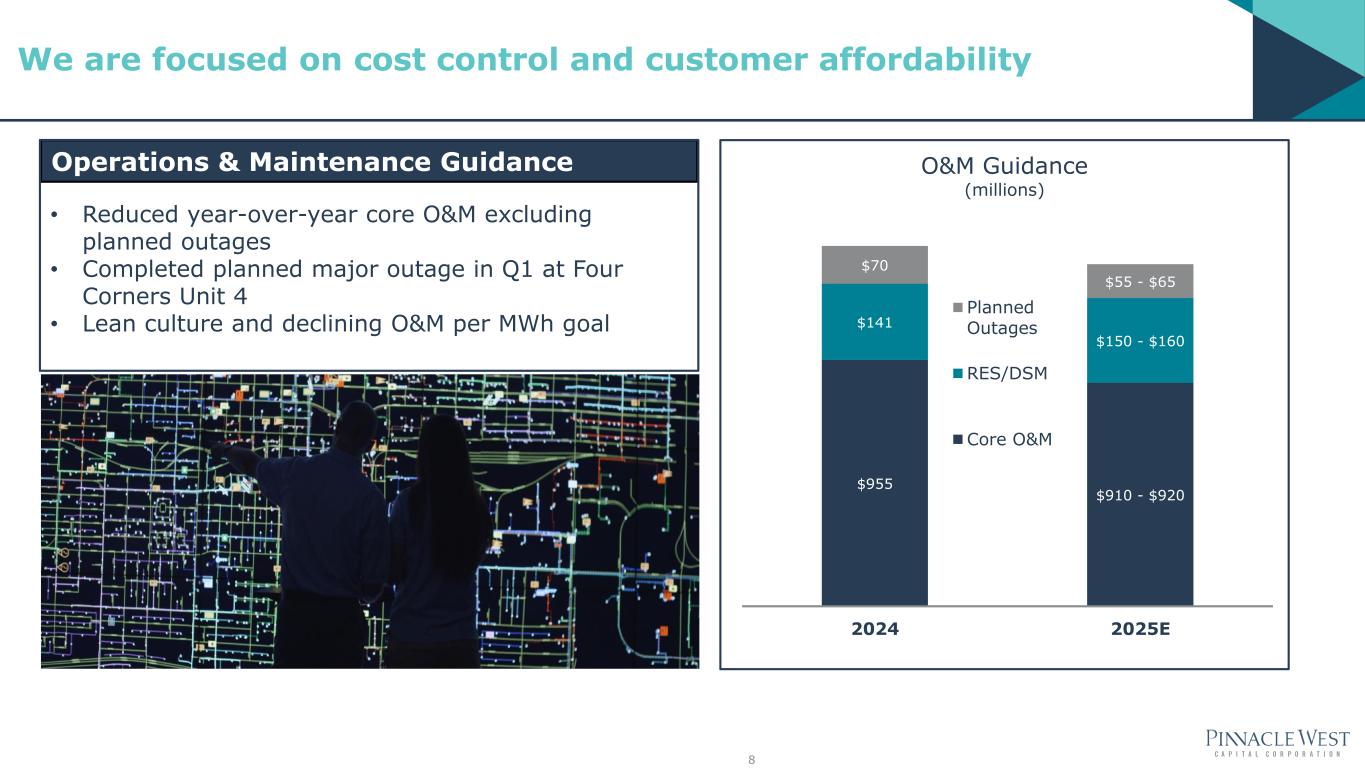
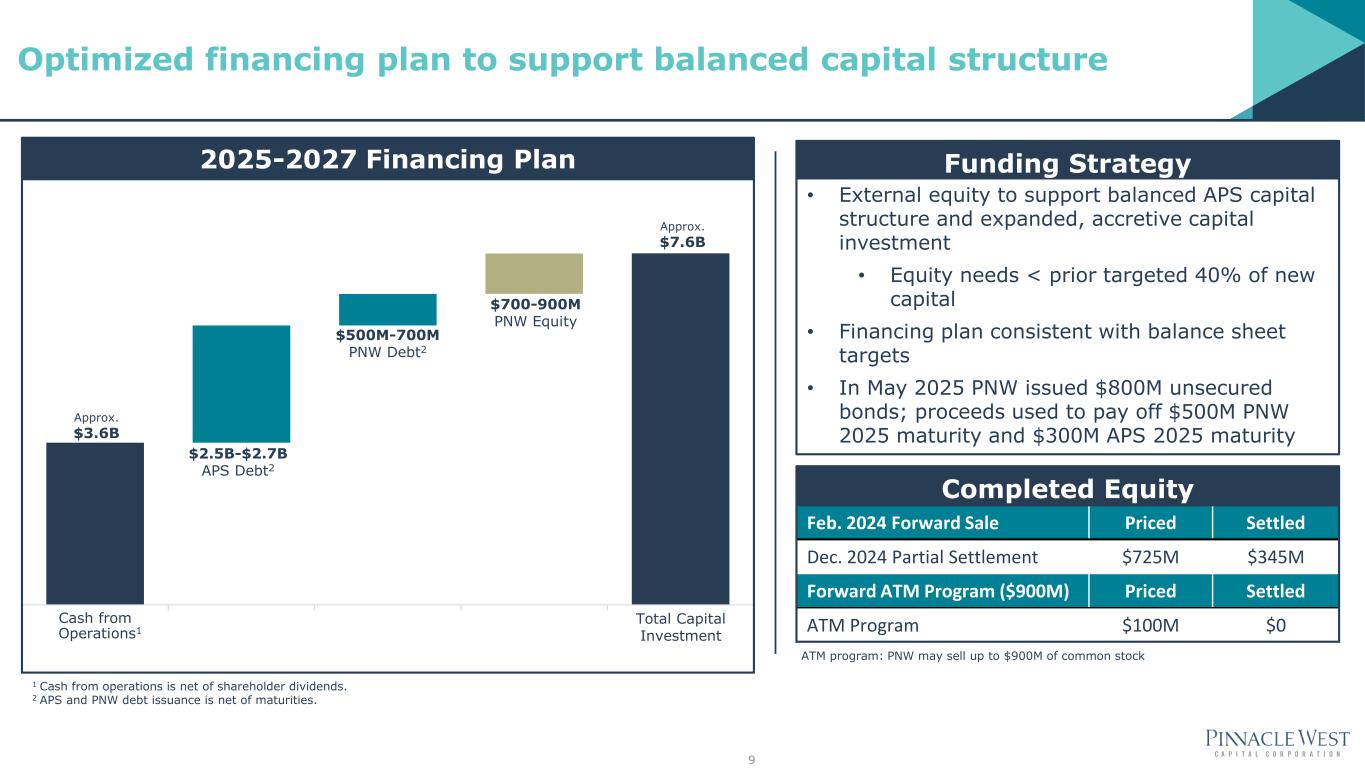
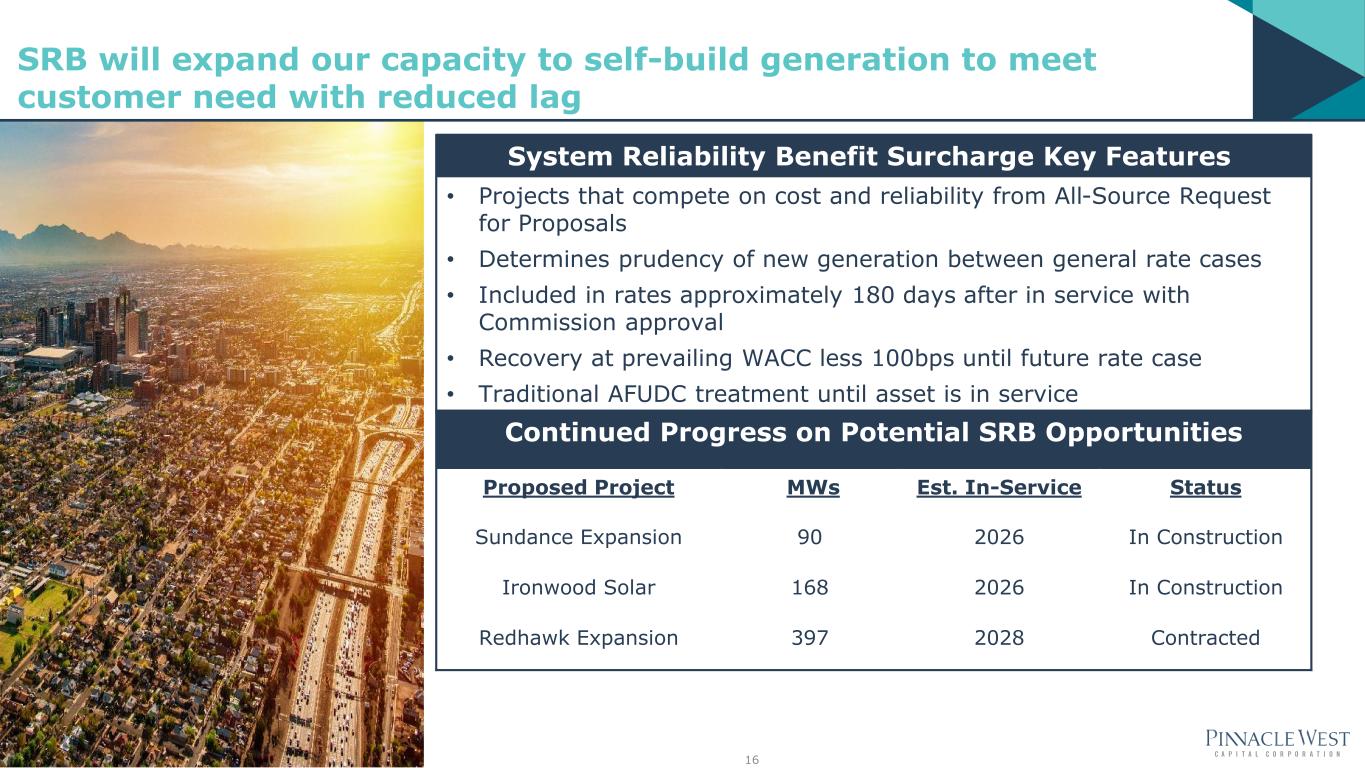
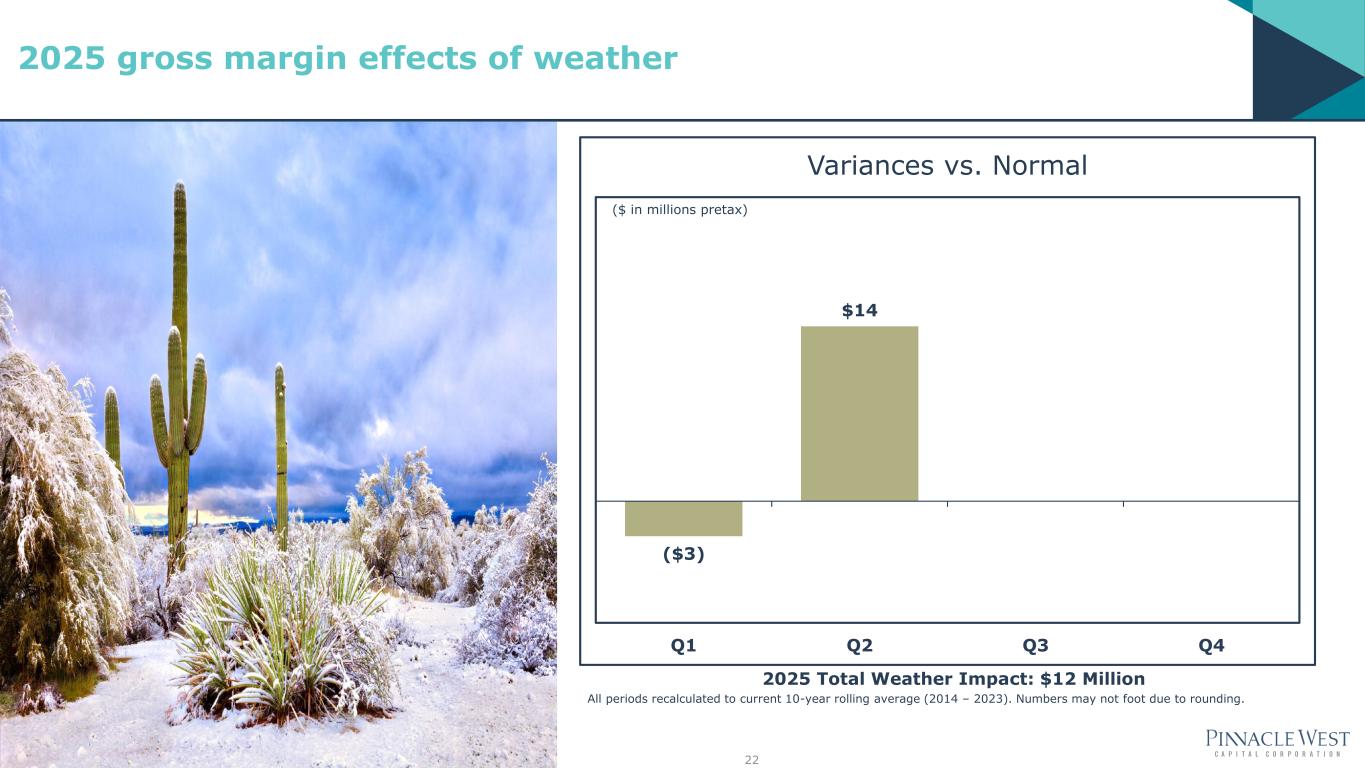
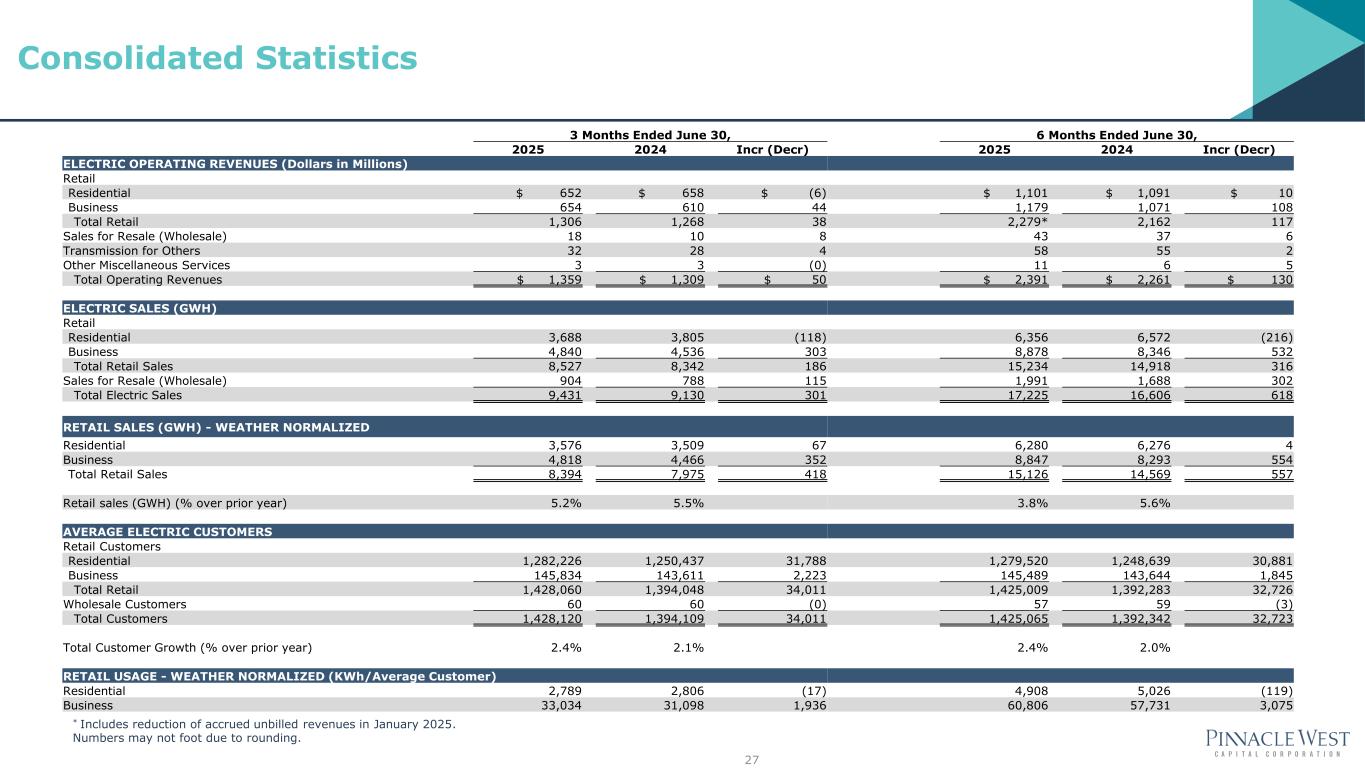
Thank you, Ted. This morning, we released our second quarter 2025 financial results. I will review those results and provide some additional details on key drivers. $1.58 per increase of $0.18 compared to the second quarter of 2020, and pension and OPEP non-service credits were the primary negative drivers, along with income taxes and DNA. These were partially, and again, from another, was beneficial for the experience. June 2024 was the hottest June on record, contributing much of the quarter over quarter. Our weather normalized sales compared to the second quarter last year, solidly within our guidance range of 4% to 6%, and with significant contributions from both residential and CNI customer clients. I once again has shown robust sales growth at 8% for the quarter, with a continued ramping of diverse data center and large manufacturing customers. In Arizona's economic back, we continue to see strong in migration and population growth, with Phoenix ranking in the top three among the 50 hottest new home markets for 2025 market data firm. In addition, according to recent U.S. Census population estimates, multiple cities within our service territory have seen tremendous growth over the past five years, with Buckeye, Goodyear, Suprise, a surge in new home bills and new meter sets. In fact, meters are our four corners plan. Our cost-saving measures and lean culture remain a central tenant of our operations, and we continue to anticipate balanced spends aligned with our O&M guidance in the second half of the year. We are also maintaining our goal of declining O&M per megawatt hour, while our long-term plans remain intact with the passage of the One Big Beautiful Bill Act. We have already begun construction on our Agave and Ironwood projects, where we anticipate tax credit benefits, and these key reliability resources are on track to be in service by 2026. Turning to our financing plan, we issued $800 million in bonds in the second quarter to pay off our 2025 maturities and support our funding. We continue to be deliberate in our financing plan to support a balanced capital structure and balance sheet strength and find advantageous financing. We are reiterating all other aspects of this year. We expect that we will end the year in the top half of our full-year EPS range of $4.40. We look forward to continuing to execute our series. This concludes our prepared remarks. I will now turn the call back over to the operator.
Operator
Everyone at this time will be conducting a question-and-answer session. If you have any questions or comments, please press star 1 on your phone at this time. We do ask that while posing your question, please pick up your handset if you're listening on speakerphone to provide optimum sound quality. Once again, if you have any questions or comments, please press star one on your phone. Your first question is coming from Julian DeMoulin-Smith from Jefferies. Your line is live.
Hey, good morning. Good afternoon, team. Thanks for the time. I appreciate it. Nicely done this quarter.
Yeah, hey, nice to chat that. Hey, so just if you can elaborate a little bit about today's announcements with ET here in the pipe. I mean, can you talk about the opportunity to scale beyond just this RFP here for 28 through 30? I mean, obviously, you've got two gigawatts and change there, but the ability to potentially tap into some of the 16 gigawatts of uncommitted Q, I mean, it's a big commitment with ET here. I mean, is that really aligning with your participation in just the two gigawatts, or is it more than that in terms of your own generation opportunity that you see?
Yeah, Julian, I appreciate the question. You know, a couple pieces there. This pipe was a critical strategic commitment for us to create a long-term reliable supply of natural gas that was sort of foundational for us to be able to then build the generation and transmission needed to be able to power the state's growth well into the future. And so this is a really important milestone, and we've been working on it hard and waiting to secure it before being able to officially sort of roll forward and bring clarity on additional transmission and generation projects. Look, it's a big pipeline project, 42-inch, you know, design capacity, 1.5 BCF per day, and APS is the anchor shipper. So we've contracted a volume that we believe supports substantial reliability and growth for many years to come, and we've contracted for the ability to procure even more from the pipe as needed as we both serve committed queue and begin to eat away at that uncommitted queue. I think with respect to the RFP, what you've seen from us is we've got just about annual RFPs, and so the one that was put out here for 2,000 megawatts, that was targeting a very narrow window of time and really wanting to accomplish two things. One, be able to secure a renewal of existing gas resources that are tolls or PPAs so that we can ensure that capacity for the long term, and then marry it up with long-term commitments of new data center growth. but then, too, to be able to start to solicit the market for new gas generation. And the pipeline will be a key element to that. We believe APS is well-positioned to have strong ownership opportunities with new gas generation. And the total results from this RFP and procurement efforts alongside it could easily exceed 2 gigawatts. But we'll look to be able to provide more clarity on that as we get later into the year.
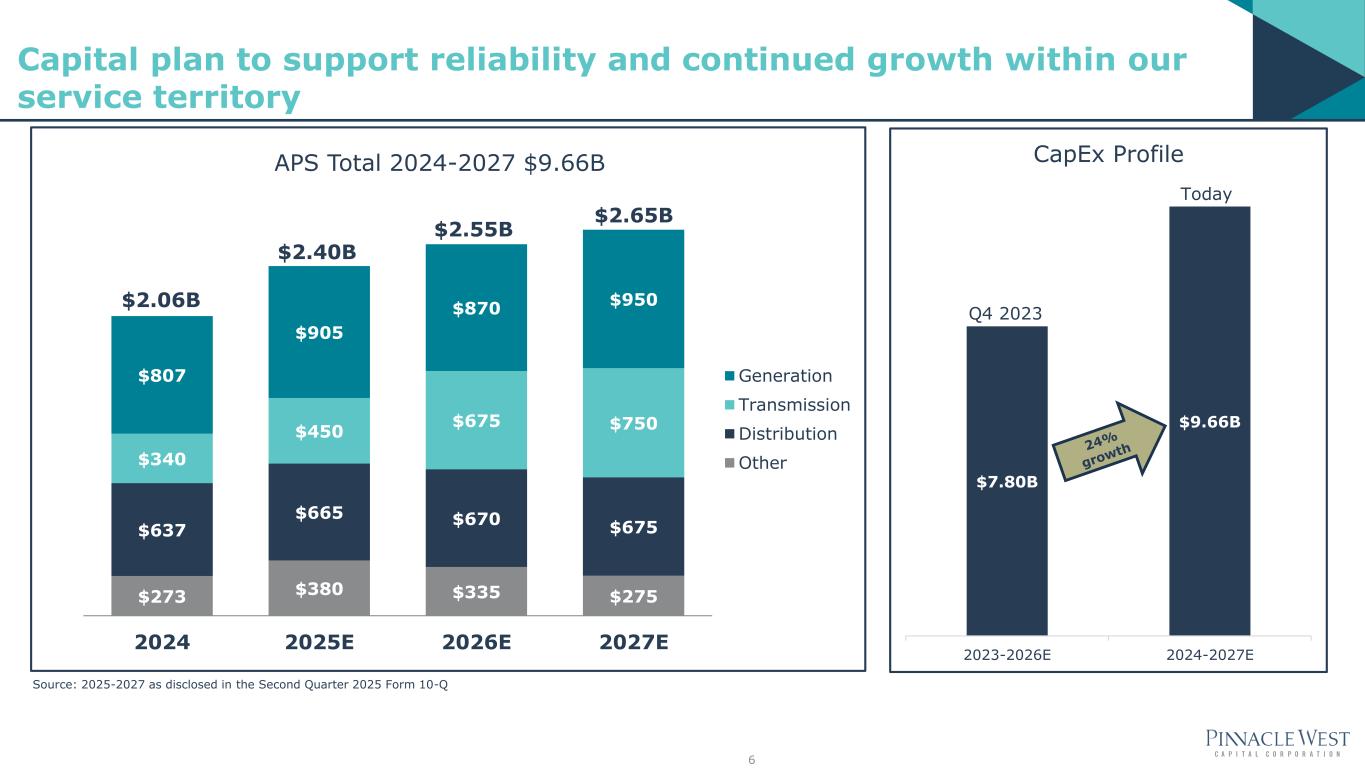
Got it. Understood. And then maybe can you speak a little bit to the transmission opportunity here? I mean, look, clearly accelerating here from, call it the $350 level to double that to $700 million by 27. But to your point, you're kind of insinuating that 29, you know, procurement here, you have procurement needs in 2030.
Speaker 2
You know, what's the scale of the opportunity on transmission and then to marry that up with what you just talked a second ago on generation? And ultimately, would you guys provide a reveal of longer-term capital?
Because almost everything we're talking about here is beyond the scope of what you guys technically or officially disclosed today in the medium term.
Yeah, Julian, that's correct in the sense commensurate with a continued growing generation portfolio, we also expect a continued growing transmission portfolio. And transmission is key for really three reasons. One, as we build new generation, we're going to need to invest a new transmission and connect that with customer demand. And two, we've got a substantial need within the service territory to continue to expand the capacity and resiliency of the existing system, which is part of what's driven the capital program for transmission to more than double here in the recent period. But then three, you know, on top of that higher run rate going forward, we expect that there'll be an opportunity for large regional transmission investments to give us access to the marketplace, even outside of the Phoenix metropolitan area, both access to the market for low-cost energy, but also access to additional generation that may continue to provide a balanced energy supply into Phoenix. And those will be lumpy over time, as most large new transmission projects are, but we view that as above and beyond the current run rate necessary just to support reliability and resiliency. And as we roll forward capital, the next iteration of that likely on our Q3 call, then we'll see opportunities to continue to lean into transmission over time.
Speaker 2
Just as I was wondering, Andrew, to put a little bit around the numbers where we are today, the run rate of transmission, just the local area projects, the core blocking and tackling, is in that $300 million to $400 million range. And that is a major step up from the $150 million to $200 million we were doing in that space less than five years ago. And then as you think forward, the numbers we've disclosed, 2025 to 2027, Those are the beginnings of some of the strategic transmission projects that we outlined in our strategic transmission plan last year, you know, which was a pretty substantial plan over a decade. And if you think about even the run rate of that plan, to Ted's point, it is lumpy. But as we, you know, 25 to 27 is only the beginnings of those projects, to your point, that, you know, become operational in the latter part of the decade. As we roll, you know, things forward, you'll see more detail in those projects, and then And you'll start to see some of the projects that are in the strategic transmission plan that we're still evaluating and how those may play out. And those are the longer lead time lumpier.
Right. So it seems like even the transmission investment potential is accelerating into the end of the decade as you kind of reach more of the COD on the long-distance projects.
Excellent. Thank you, guys. All right, I'll leave it there. A lot more to ask, but thank you for the time.
Operator
Thank you. Your next question is coming from Nick Campanella from Barclays. Your line is live.
Or good afternoon if you're in the East Coast, but nice to hear from you. So, hey, I think everyone understands that you're in the middle of a rate case. You know, now we have to go through 26. There's going to be additional lag while we wait for those new rates. Can you just kind of talk about how you expect that lag to evolve 26, 27, and then 28 as we get through the GRC as well as the formula rate plan? Thank you.
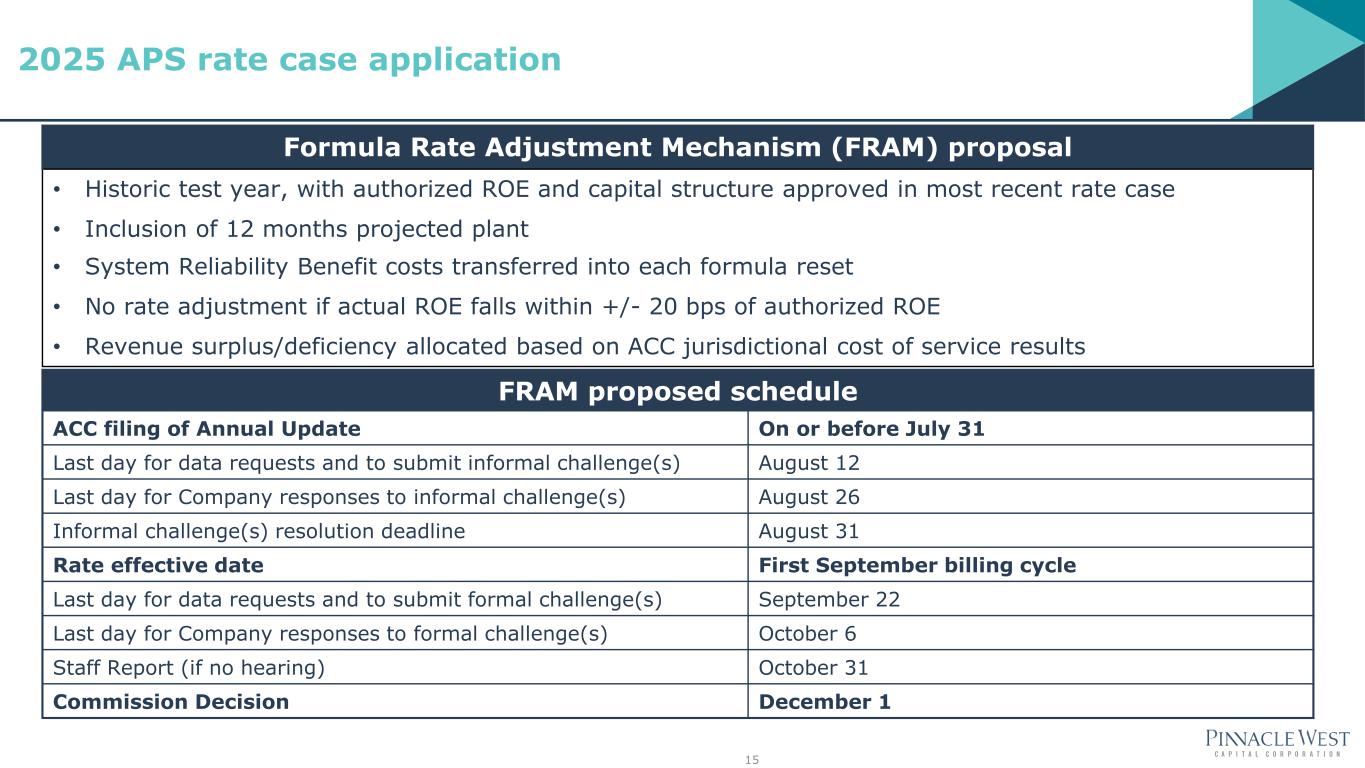
Yeah, Nick, I think that the easiest way to think about that is obviously 2026 is key to being able to conclude this rate case. And with better visibility now with the procedural schedule, we expect that to be in the latter part of the year. And importantly, you know, while we look forward to resolving that case, it's still based on the 2024 test years so day one of new rates in effect still means meaningful regulatory lag which is why we believe the commission is so focused on wanting to address that for all utilities through formula rate mechanisms and formula rate policy and so once the case concludes the end of 26 then based on the proposed plan of administration the first ability to file a formula rate adjustment based on updated costs would be then in 2027. And so we would expect for that filing to occur by July 31st, 2027, based on the proposed plan of administration with a new formula rate adjustment in effect by September 1st. That'll certainly give some relief and update on regulatory lag. And then 2028 has the potential to be the first full year of those updated costs with then, of course, an annual adjustment going thereafter.
So that's how we think about it.
But obviously, we've got to agree on that with the commission and go through the stakeholder process through this upcoming case first.
Okay, that's helpful. And then I guess just to follow up on the last question, just to be very clear, the Southwest pipeline, you have two gigs of committed in the queue right now.
And just this pipeline unlocks how much capacity that you could actually serve into the early 2030s if you could just simplistically frame it yeah so to be clear we've got close to four and a half gigawatts of committed extra high load factor customer demand and that's a blend of largely data centers as well as large manufacturing like tsmc that's the committed amount that we are actively working on committed projects under contract putting steel on the ground to serve. In addition to that, we're now approaching just under 20 gigawatts of uncommitted queue that has expressed serious interest in new projects within our system, and we're working with that queue on being able to identify new resources to be able to serve them. The pipeline was a critical first step in us then gaining clarity on the ability to reliably commit and serve to that uncommitted queue now that we've got that in place we're going to continue working and finalize new generation projects that'll be able to be allocated to that uncommitted queue and then the transmission associated with that so i i think this pipeline was the first key step it'll certainly be used to help ensure long-term reliability for our committed customers but a big part of that pipeline given the magnitude is going to really be used to allow us to start to commit to projects in the uncommitted queue, and I think we'll get more visibility on that later in the year and in the next as we announce generation projects and transmission projects to support those uncommitted customers.
Okay, that's great. And just one last one, if I could, just the Eldorado gain, was that expected in guidance when you set guidance, or is that kind of incremental through this year and, you know, otherwise would you still be at the midpoint?
Speaker 2
Sure, Nick. You know, just that way of background, you know, El Dorado is our non-utility, non-regulated business. It is some legacy investments, community projects over the years. And, you know, SAI became profitable over the last year. It's an electric switchgear company. And so, you know, we've had to recognize some gains related to the increased profitability in that investment. It's something that we monitor quarter to quarter because it's, you know, minority investment under an equity uh investment method of accounting it's not something that is um you know uh part of the core business it's not something that we you know plan for when we budget and so you know while it's been nice to see some tailwinds from it this year which have contributed to uh you know among many other factors have contributed in to our ability to have confidence in the upper end of our range uh it's not something that you know is really you know part of that core that we're that we're focused on and you know you've seen us you know last year We exit our Bright Canyon business as a way to really emphasize the core. And while SAI has been, you know, profitable and…
Operator
Thank you. Your next question is coming from Paul Patterson from Glenrock Associates. Your line is live.
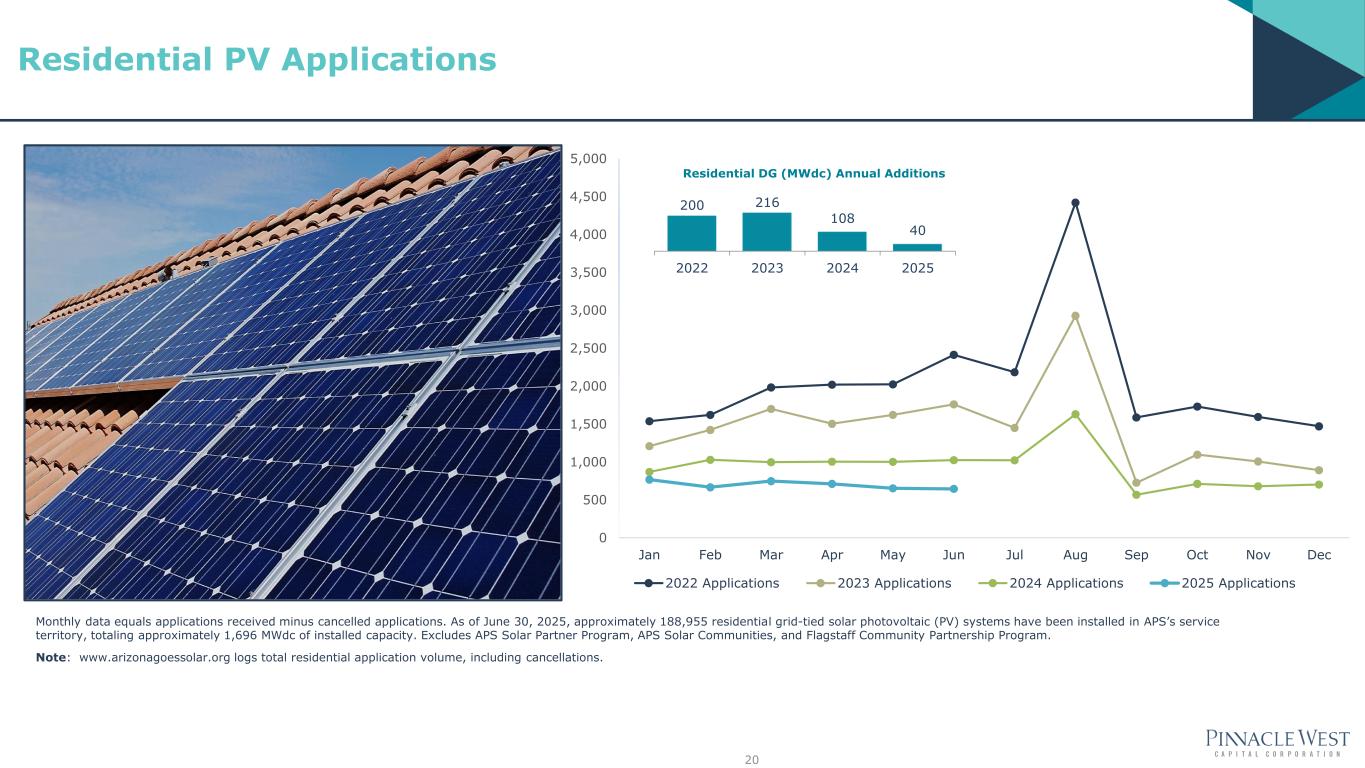
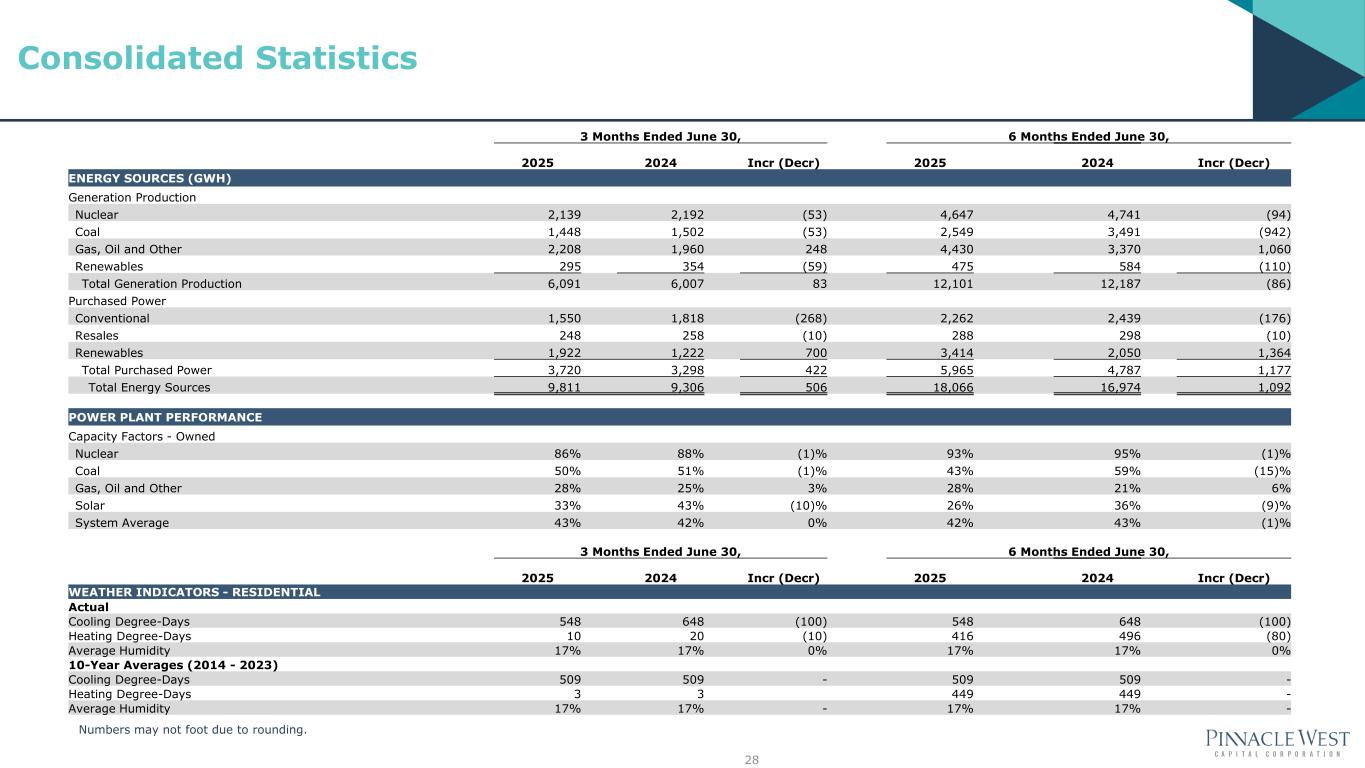
Really, sort of technical question. On the solar on your slide, performance, it looks like for the six months and three months, it's from 36 to 26 percent. Can you?
Yeah, Paul, I think that's really referring to peak value or peak demand. And really, that's just reflecting that the more solar you install, the less capacity is there to be able to serve peak demand. So that's well within our resource planning assumptions and consistent with what we would expect.
So it's like a curtailment thing?
No, it's not curtailment. It's just a factor of total capacity installed and the amount of that that's actually serving peak energy demand. But the solar facilities that we have and our utility-scale facilities, they're performing well and performing as expected.
Okay, I got you. I laid out here. Okay, that's it. The other guy's answer. Thanks, Paul.
Operator
Thank you. Your next question is coming from Travis Miller from Morningstar. Your line is live. Hi, everyone.
Hey, Travis. A lot of questions and thoughts here on the generation and transmission side. I was wondering, on the distribution side, as you hit some of these peak demand and continue to see some of this growth, is there upside opportunity in terms of capital investment or other O&M savings, et cetera, at the distribution level?
Yeah, Travis, I appreciate the question. Absolutely. Distribution is directly tied to growth. And as we continue to experience strong growth, that puts pressure on continued investments in the distribution system. So I think what you see today is a growing level of distribution investments commensurate with the customer growth we have. And, you know, if you look at the quarterly values of customer growth, we've got the highest level of customer additions this past quarter that we've had in the last two years. And the growing distribution category is reflective of keeping up with that growth. In addition, within distribution, we have resiliency investments because we continuously invest back into the existing distribution system to ensure we're achieving our target of top quartile reliability for all our customers. And that includes new technology to create greater visibility and automation on the distribution grid, in addition to replacing old circuits, adding redundancy, and then building new circuits and transformers to keep up with growth. So that's an important part of our capital program, and we believe we'll continue to see growth into the future as we continue to support a growing customer region. The last thing I'd say is from a peak demand standpoint or customer count standpoint, while we may be a midsize utility, we actually have the fifth largest service territory from a square mile standpoint of our peers, and that means it's a big distribution system. And so there's a lot of investment opportunity just to ensure we're maintaining reliable service to our customers over the long term.
Okay, that's great. And then real quick on the rate case, anything in your initial conversations or putting together the request that you think will be more contentious or less contentious with all the stuff that you've got in there?
You know, I think that the case was filed as expected, but importantly, this case includes two elements that are, I'll call it, unique and above and beyond what you would expect from a standard rate case filing. So the three key components for the case is the standard component, which is simply seeking recovery to make up for the revenue deficiency. The second component, though, is to provide a proposal consistent with the Commission's policy statement for transitioning to a formula rate plan going forward. And we filed our case consistent with the outcome of the workshops that were held last year and with a design that incorporated a lot of feedback from stakeholders along the So it'd be unfair to say everyone agrees with the details of that plan, but it does incorporate a lot of the feedback that was considered last year, and we look forward to working with stakeholders in the commission on finalizing the details of that. The third component, importantly, is on the minds of many, and that is a proposal for adjusting rate design to ensure that our new large customer additions are paying their fair share of the infrastructure required and preventing a cost shift to other customer classes. And that's an important element of this case that's particularly important now given the sizable additions of customers and infrastructure to support that new growth. And I know that's top of mind for many utilities across the country, and we believe it's paramount affordability for our existing customer base going forward. So those are the three elements. I wouldn't say there's any aspect of that that stands out as overly contentious, but there are two key components that are above and beyond what you would normally expect in just a standard rate case filing.
Sure, yeah. Okay. And then And could the commission break those out such that they might approve parts of any of those three?
Well, I suppose anything's possible. I don't know if that would be the most efficient way, though, to process this case. And we fully expect to have a standard hearing process. And it probably makes sense, then, while you have an administrative law judge and all the stakeholders weighing in through a formal hearing to ensure that everyone has the opportunity to produce evidence and testimony to debate and support all three of those elements. So we believe that's likely how the Commission is thinking about it, and that's certainly the way we believe is the most efficient way to process this file.
Yeah, great. Okay. Well, I appreciate the talks.
Operator
Thank you. Your next question is coming from Sophie Karp from KeyBank. Your line is live.
Good morning, guys. Thank you for taking my questions.
Operator
Morning, Sophie.
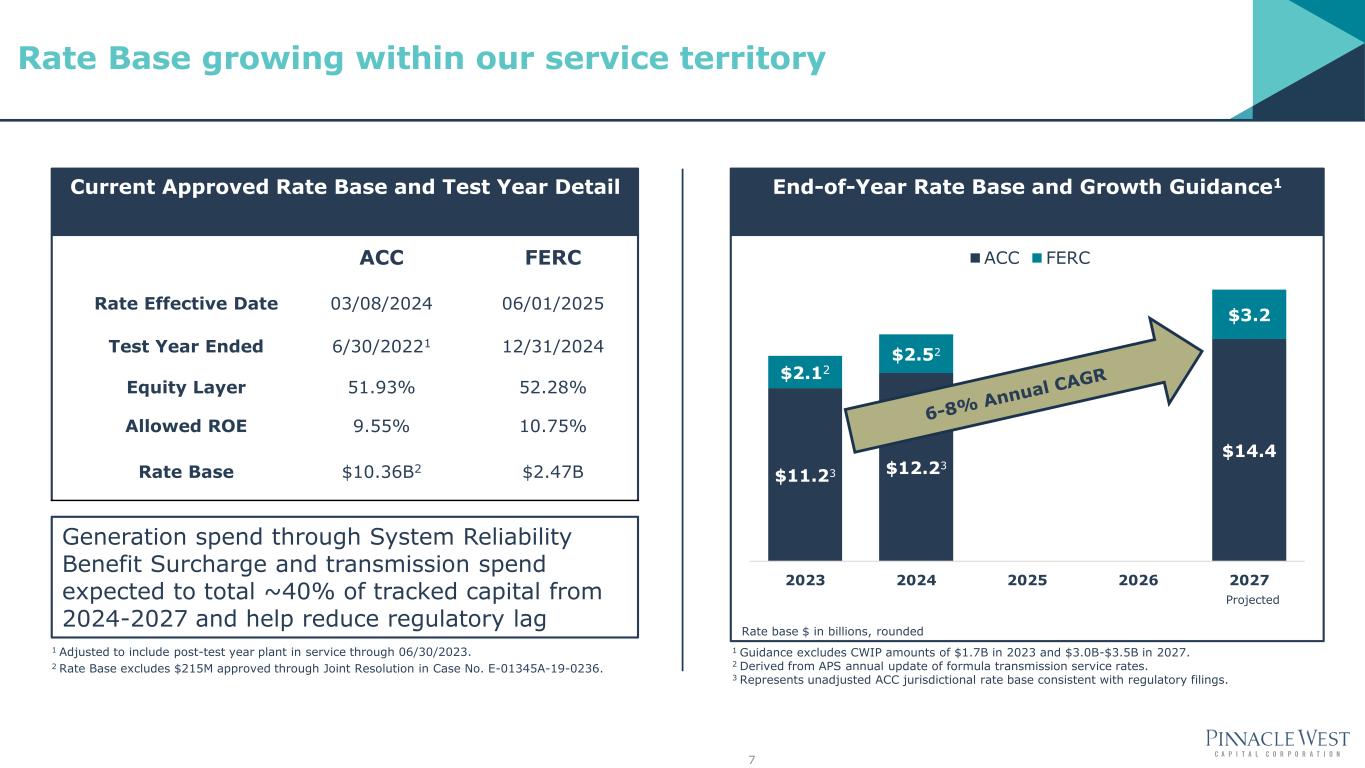
A lot of growth happening in your territory, some of which you're highlighting through volume growth as well as customer growth, et cetera. At what point do you think your kind of rate-based CAGR begins to inflect to the upside? And how do you think about the timing of maybe quantifying it for investors, given the rate case and all the other moving parts that you have?
Speaker 2
Hi, Sophie. It's Andrew. Yeah, you know, I think a lot of the key things that Ted highlighted earlier on are critical to think about the long runway that we have from both a customer growth perspective and a CapEx perspective. And that is the sort of new area where we're looking at some of these larger generation investments that we could make. And that's, you know, we talked about the pipeline kind of unlocking the opportunity to begin to look at those. And then as we think about accessing new resources from afar, some of these transmission projects that are above and beyond the run rate that we've been talking about. And because they're larger projects, we've started to give more information in our disclosure around the QIP aspect of some of these longer late-time projects that may not show up in rate-based in such a narrow window that we show, which right now is 25 to 27. I think you pointed to the rate case as an important milestone, given the formula rate that Ted just talked about, gives us the opportunity to look at all capital on an even playing field, because you'll have very consistent cost recovery across different asset types. And I think we'll have, you know, better visibility into that, you know, the cadence of the long-term CapEx spend, you know, really across the different parts of our business. And so, you know, we haven't made any determinations around elongating that CapEx disclosure, but certainly expect to roll it forward in the ordinary course the way we would, you know, typically in the third quarter. And as we've developed these strategic transmission projects, continue to work, as Ted said, on the generation opportunities unlocked by the pipeline, we'll be able to provide more information.
Got it. Thank you. And I don't know if I missed it maybe in the prepared remarks part, but are you quantifying your chronological customer's pipeline in terms of maybe a load study request or however else you may quantify it?
Yeah, Sophie, I think if I understood you right, have we quantified the potential customer commitments that are available through the uncommitted queue? Forgive me if I misunderstood your question, but we've got about four and a half gigawatts of committed customers that fall into the category of we consider extra high load factor customers or significant large commercial customers, and that's made up of largely data centers and large manufacturing but in addition to that we've got nearly 20 gigawatts of customer requests and in an uncommitted queue and the pipeline was a critical infrastructure commitment that we wanted to secure and get visibility to before we start to then get further on new generation or transmission build necessary to be able to then start the contract in that uncommitted queue now that we've got the pipeline secure i think we'll be able to begin in earnest working with some of those customers and associating their needs with new generation or transmission projects.
Perfect. Thank you so much. That's all for me.
Operator
Thank you. Your next question is coming from Ryan Levine from Citi. Your line is live.
Hi, everybody. Hi, Ryan. One clarifying question. In relation to the anchor-shipper relationship, what's the risk for shareholders and repairs if the uncommitted growth projects don't materialize or is there any color around how to phrase the risk profile you know recognizing that there's a lot of growth potential i'm just trying to understand the potential risk if some of that doesn't materialize yeah ryan i think the easiest way to think about that is even if you had no uncommitted queue this pipeline was still necessary to secure long-term reliability with the most affordable resources possible for our existing customers and the customers that we've already committed to serve.
So while there's upside for us to be able to procure even additional capacity on this pipeline, the pipeline was essential even just to serve our existing customer base and those that we're currently building out to serve in the committed queue. And as a result, we believe that this pipeline is easily demonstrated as prudent and necessary to support reliability now and for the long term.
Thank you. And just to follow up, are there contractual rights to be able to expand your capacity if needed and the growth materializes at pre-negotiated tariff rates, or is that subject to future negotiations?
We've commercially secured the ability to flex up capacity procurement.
Great. Thanks for taking my questions.
Operator
Thank you. Your next question is coming from Paul Fremont from Leidenberg. Your line is live.
Thank you very much, and congratulations on the quarter. Thanks, Paul. Given the fact that you guys are currently in a rate case, when should we expect that you would give 2026 guidance?
Speaker 2
Paul, it's Andrew. Typically, as you alluded to in a rate case, just given a turn to over the timing of its conclusion, we wouldn't normally provide earnings guidance, but, you know, as Ted mentioned in the prepared remarks, you know, we now have the procedural schedule and we expect rates, we expect a hearing, you know, in the fourth quarter, and as a result, you know, you're talking about next year being, for the most part, a pretty much regular way. So, we would expect to be in a position to provide earnings guidance for 2026 based on that procedural schedule, and we would typically provide earnings guidance on the third quarter.
Great. That's it for me. Thank you.
Operator
Thank you. That completes our Q&A session. Everyone, this concludes today's event. You may disconnect at this time.