Executive readout · one minute
Webcast research workspace
Read the call alongside every captured source. Transcript, audio, slides, 8-K earnings release, 10-Q stay in one workspace.

Earnings call · FY2026 Q1
You came from your AI assistant. Add Equibles to it and ask about this data directly, free.
Executive readout · one minute
Read the call alongside every captured source. Transcript, audio, slides, 8-K earnings release, 10-Q stay in one workspace.
Research coverage
5 live sources
Switch sources without leaving this page or losing your listening position.
Open the source you need; every reader stays inside this workspace.
How the reported period landed and where the business moved.
Greetings, and welcome to the Chimera Investment Corporation first quarter 2026 earnings call. At this time, all participants are in a listen-only mode. A question-and-answer session will follow the formal presentation. If anyone should require operator assistance during the conference, please press star zero on your telephone keypad. As a reminder, this conference is being recorded. I would now like to turn the call over to your host, Tyra Welton, Head of Investor Relations. Thank you. You may begin.
Thank you, Operator, and thank you, everyone, for joining us today. I'm Tyra Welton, Head of Investor Relations. This morning, Chimera released its results for the first quarter of 2026. The earnings release and presentation for the quarter are both available on our website at chimerareed.com. Before we begin, I'd like to review the Safe Harbor Statement. Today's remarks may contain forward-looking statements, which are predictions, projections, or other statements about future events. These events are based on current expectations and assumptions that are subject to risks and uncertainties, which are outlined in the risk factors section in our most recent annual and quarterly SEC filings. Actual events and results may differ materially from this forward-looking We encourage you to read the forward-looking statements disclaimers in our earnings release in our quarterly and annual filings. During the call, we may also discuss non-GAAP financial measures. Please refer to our SEC filings and earnings supplements or reconciliations to the most comparable GAAP measures. Additionally, the contents of this conference call may contain time-sensitive information that is accurate only as of the date of this earnings call. We do not undertake and specifically disclaim any obligation to update or revise this information. I will now turn the call over to our President and Chief Executive Officer, Phil Cardis.
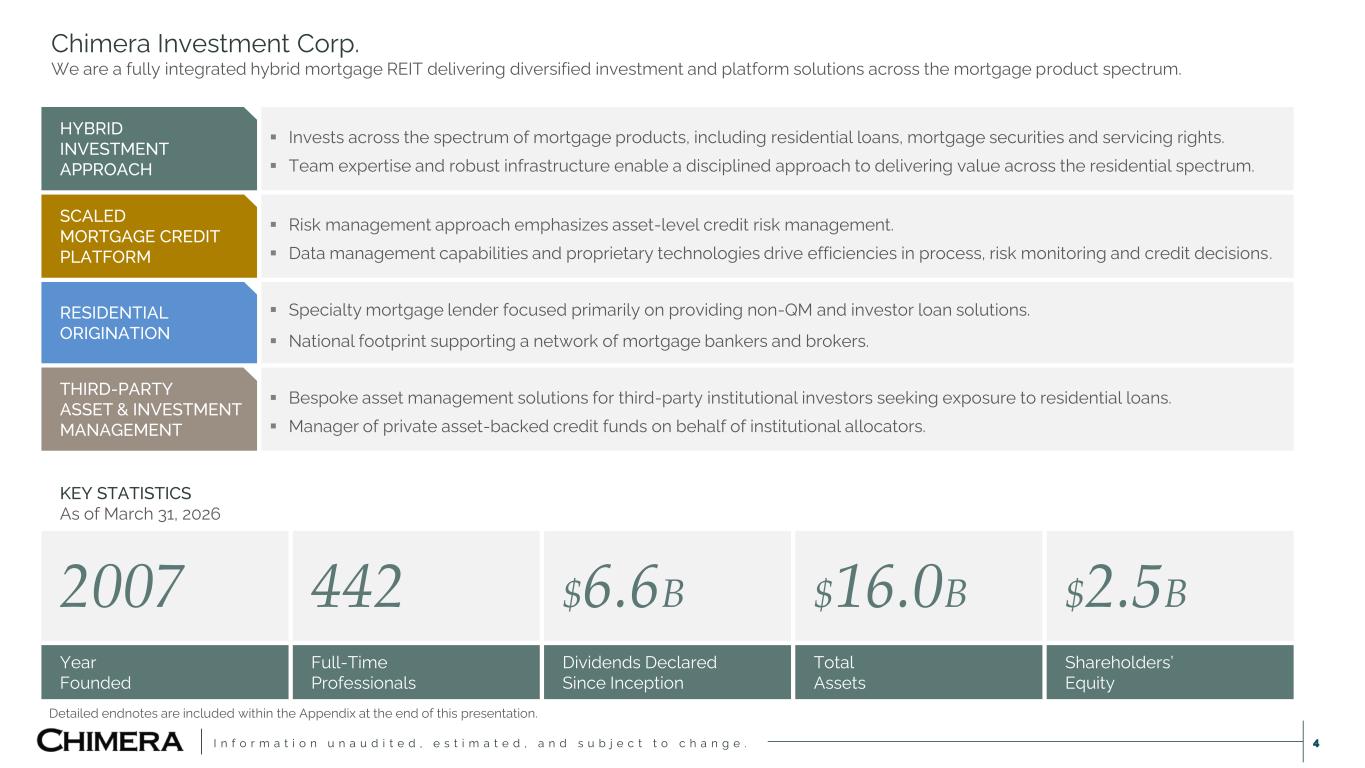
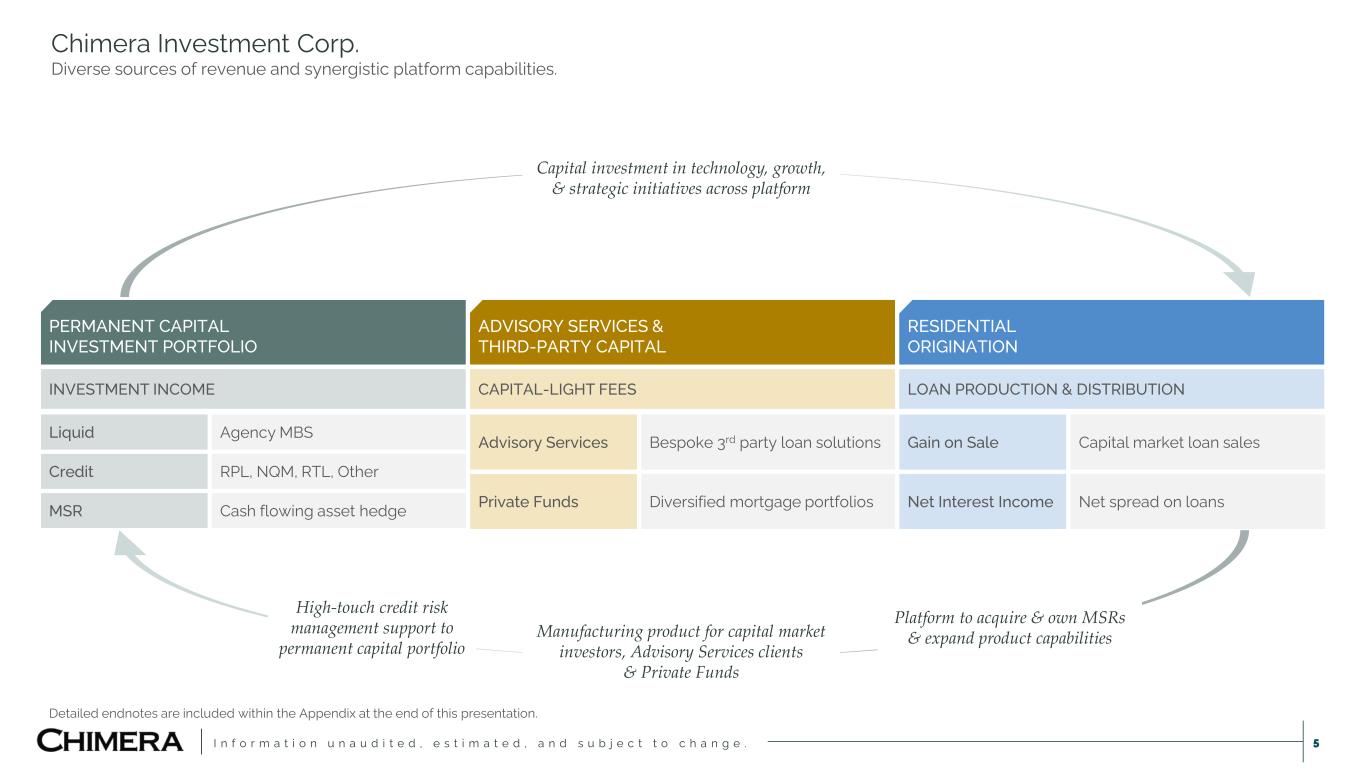
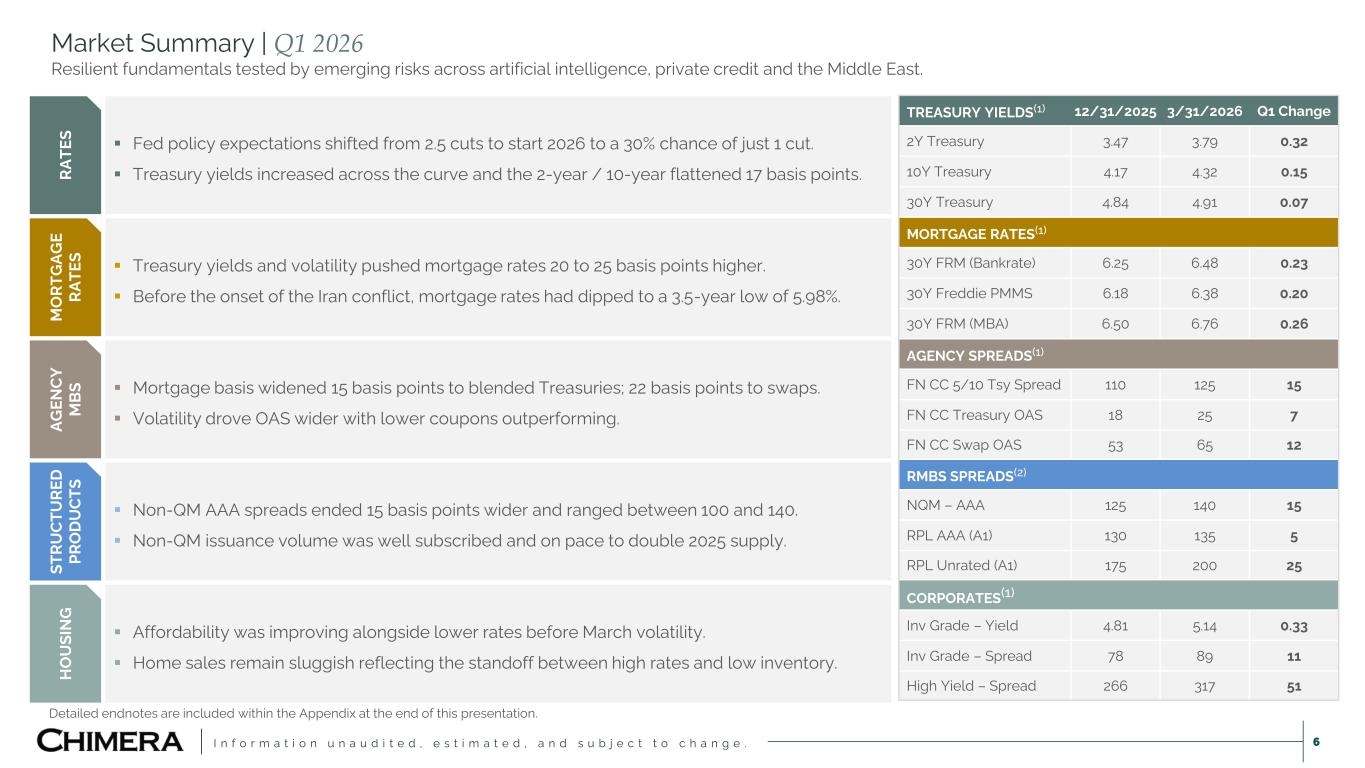
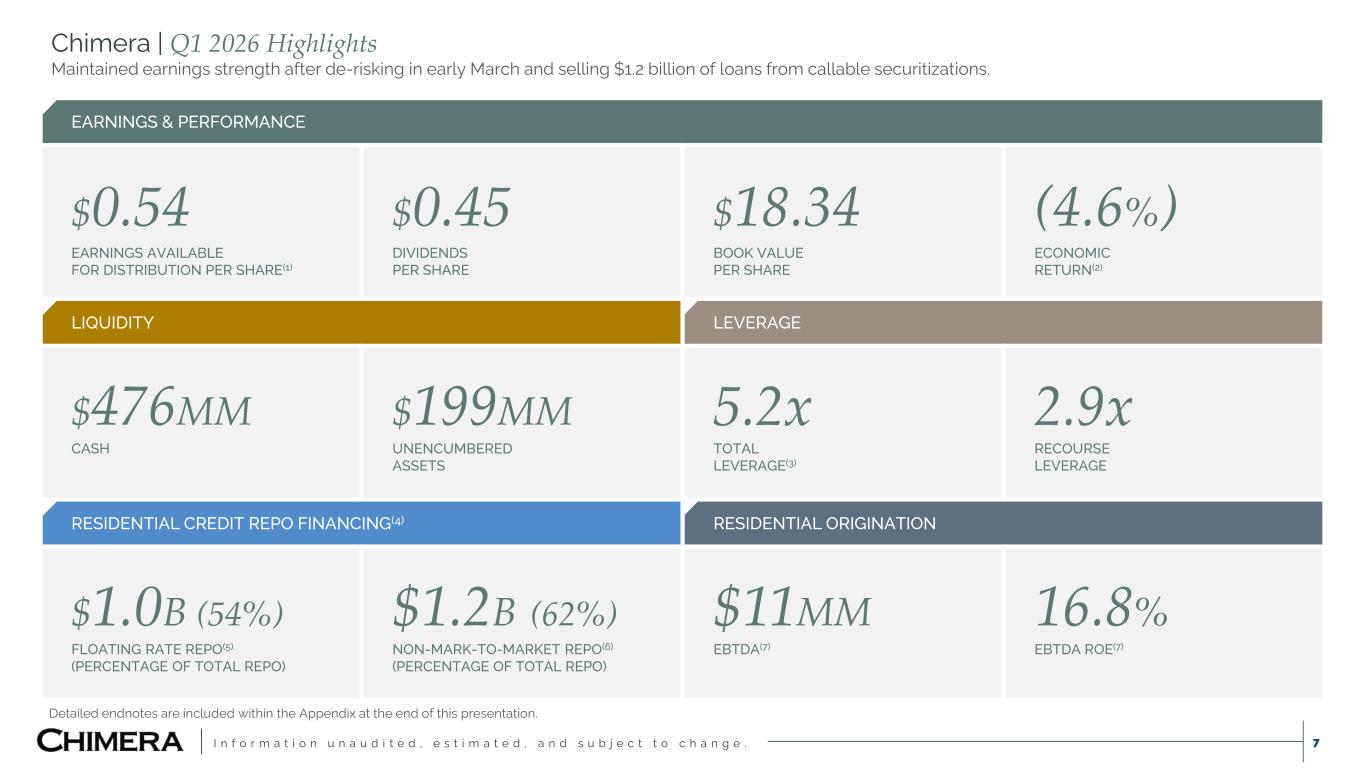
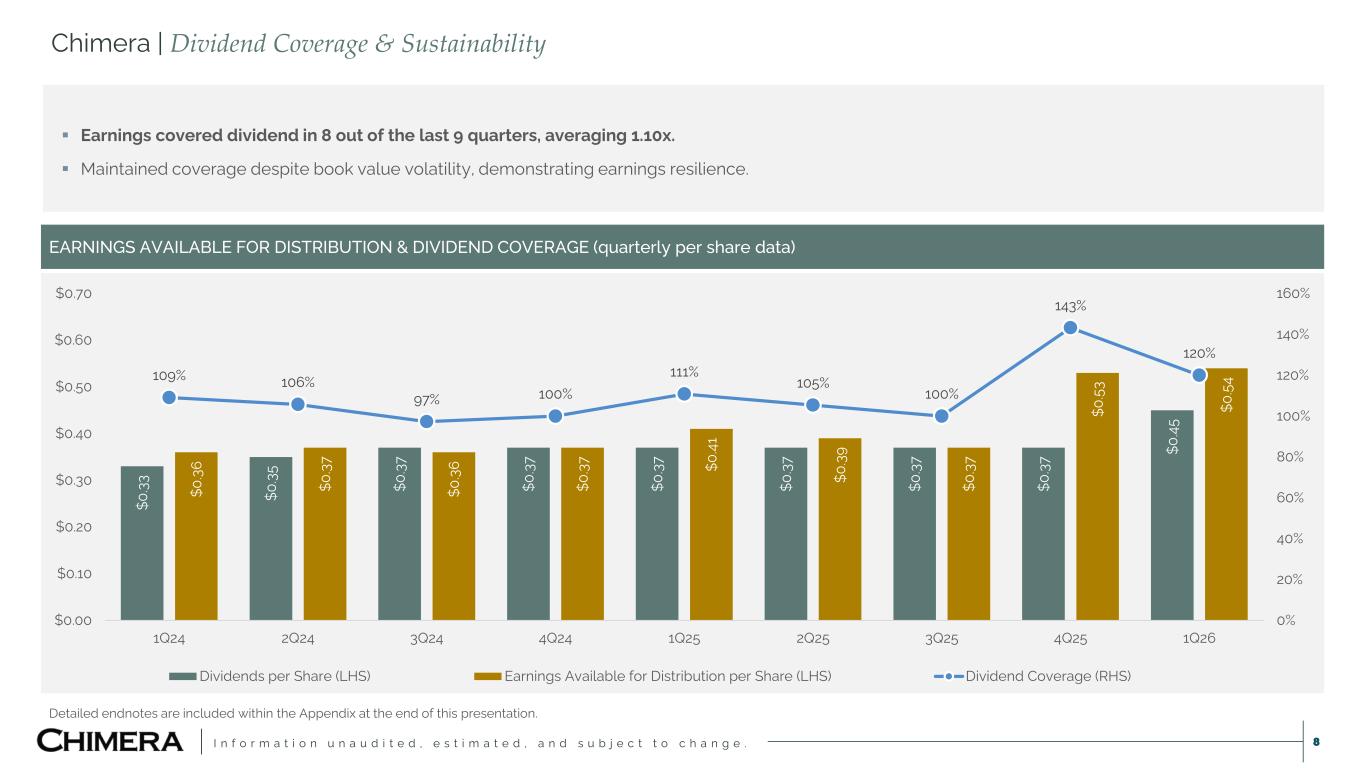
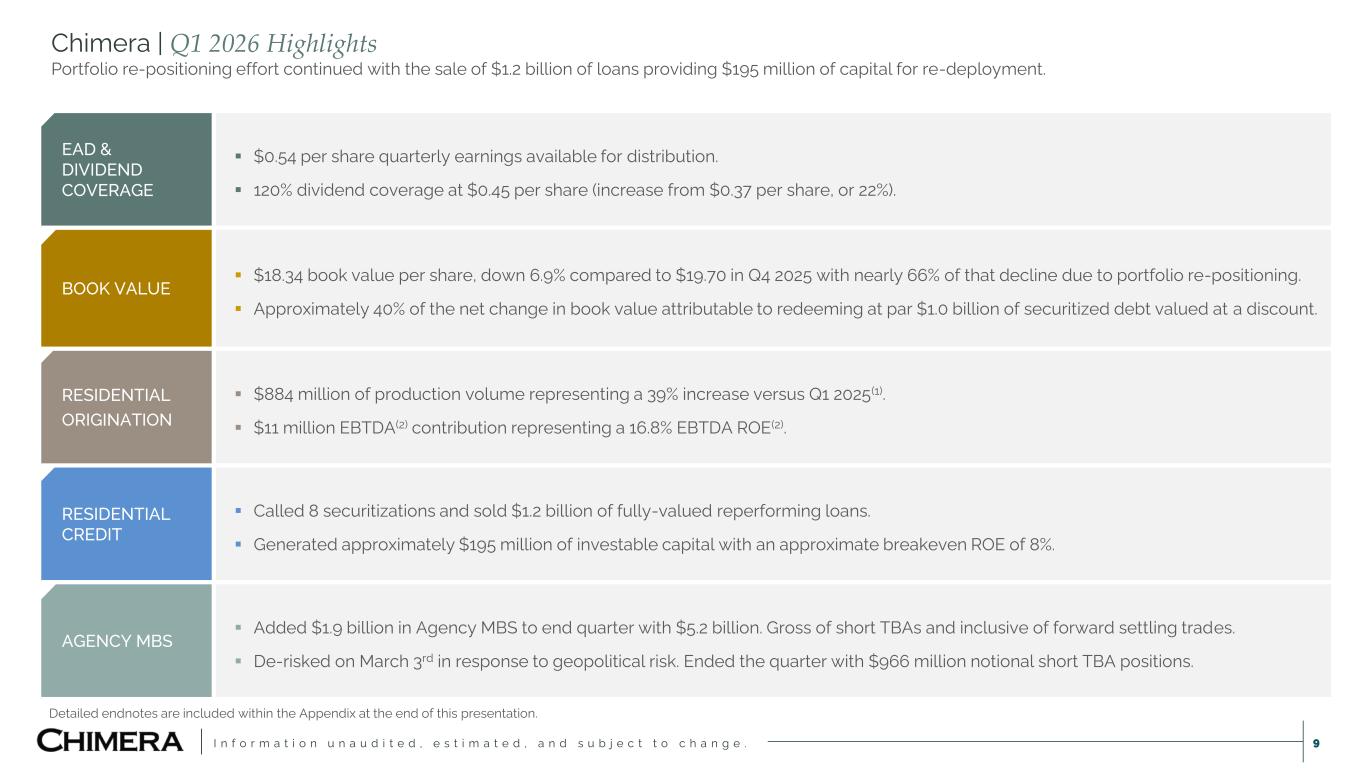
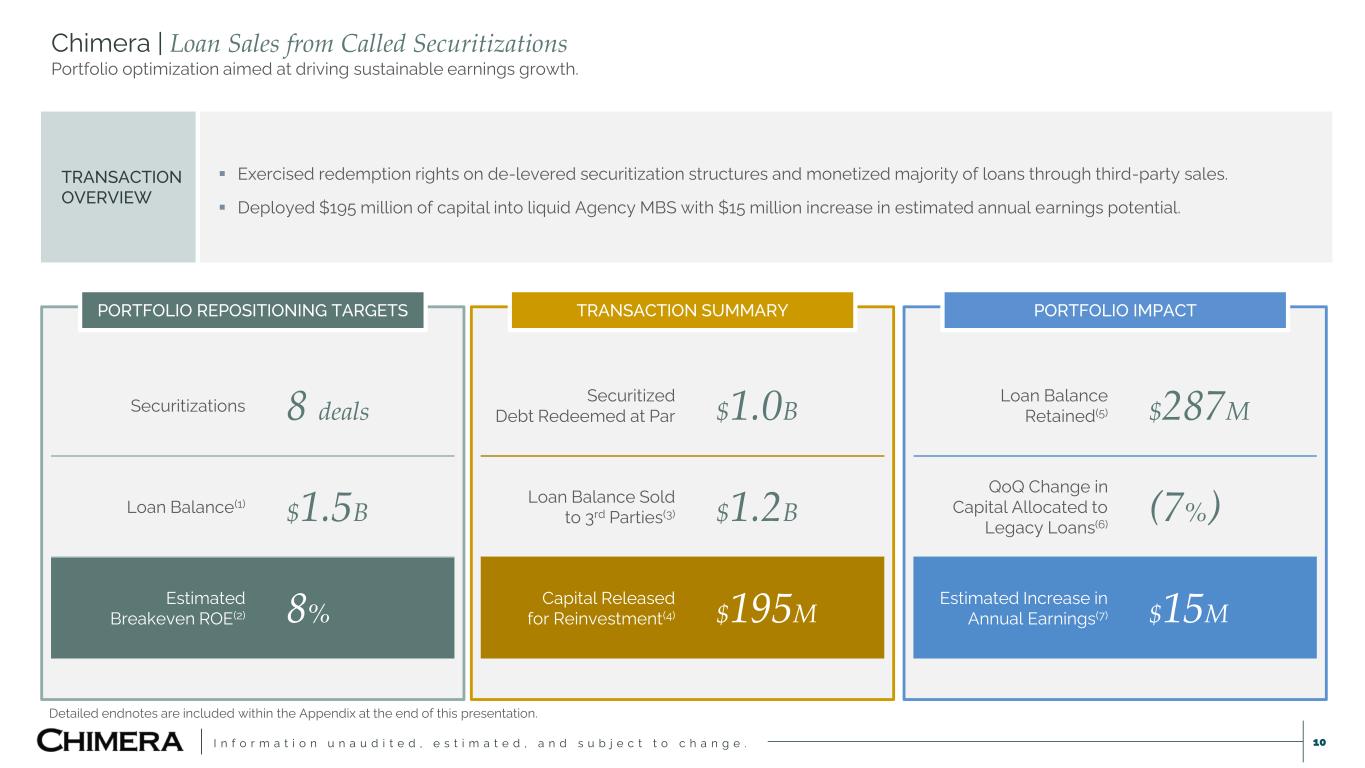
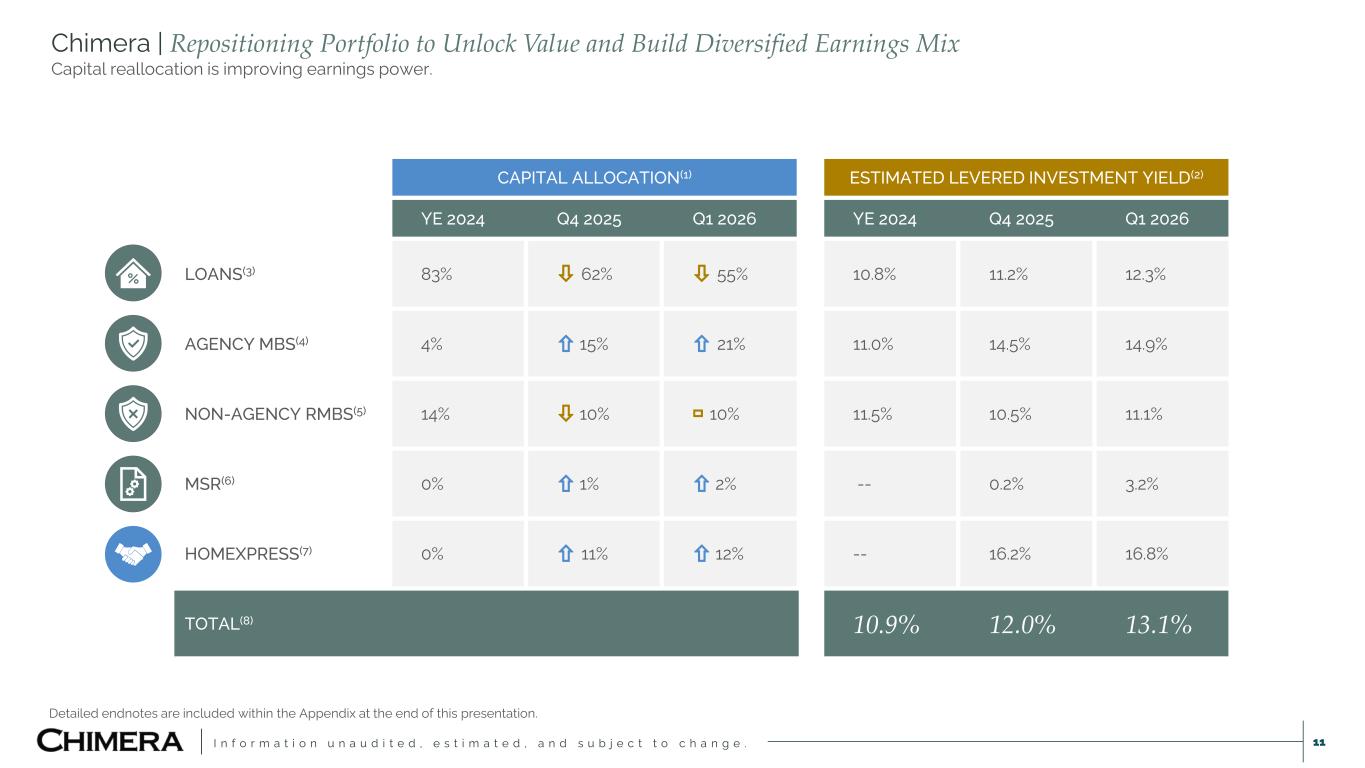
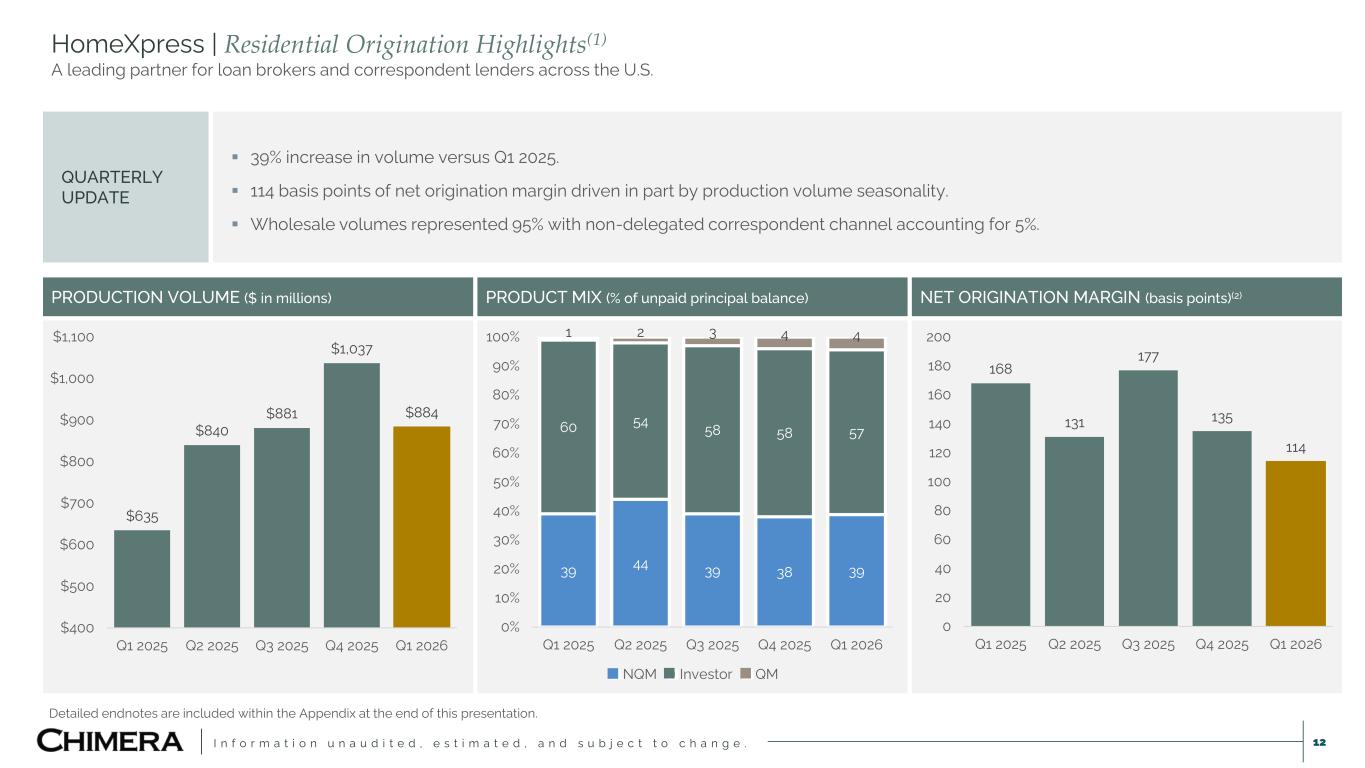
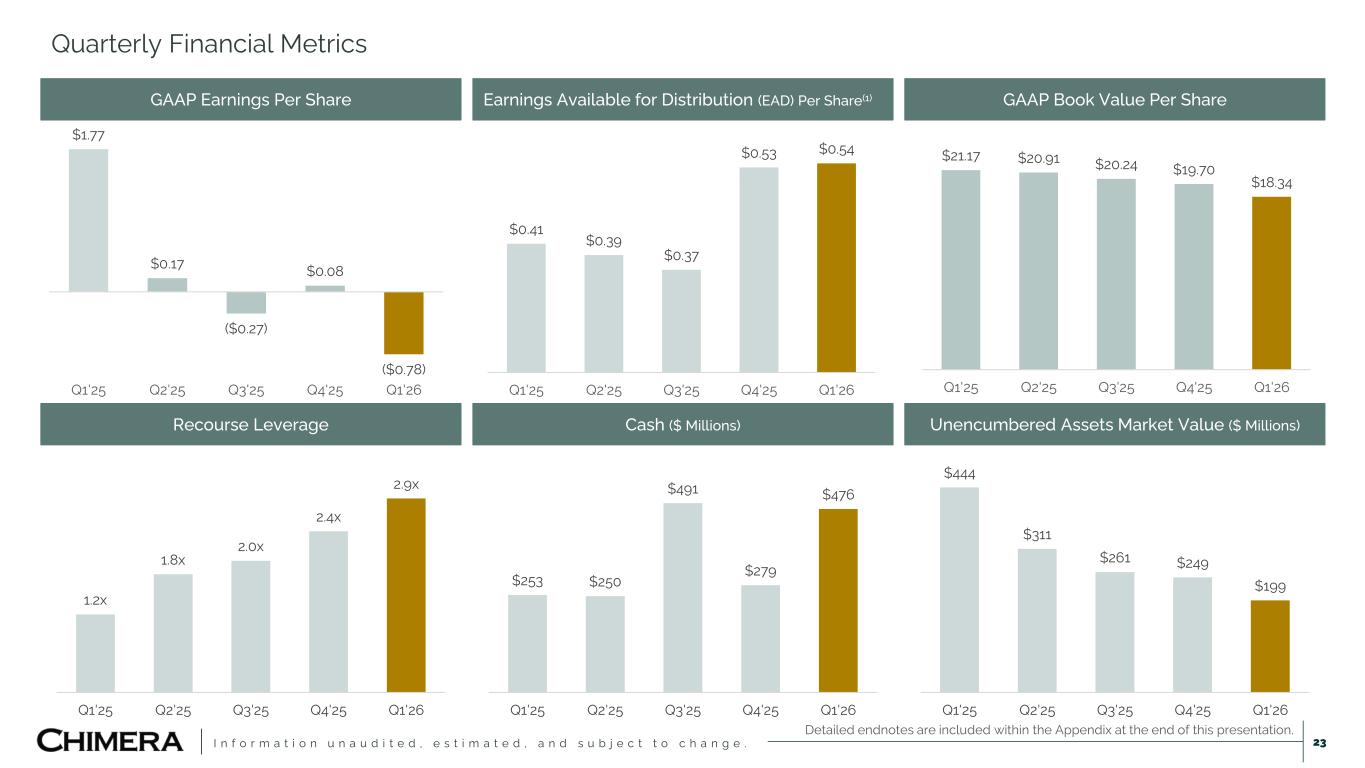
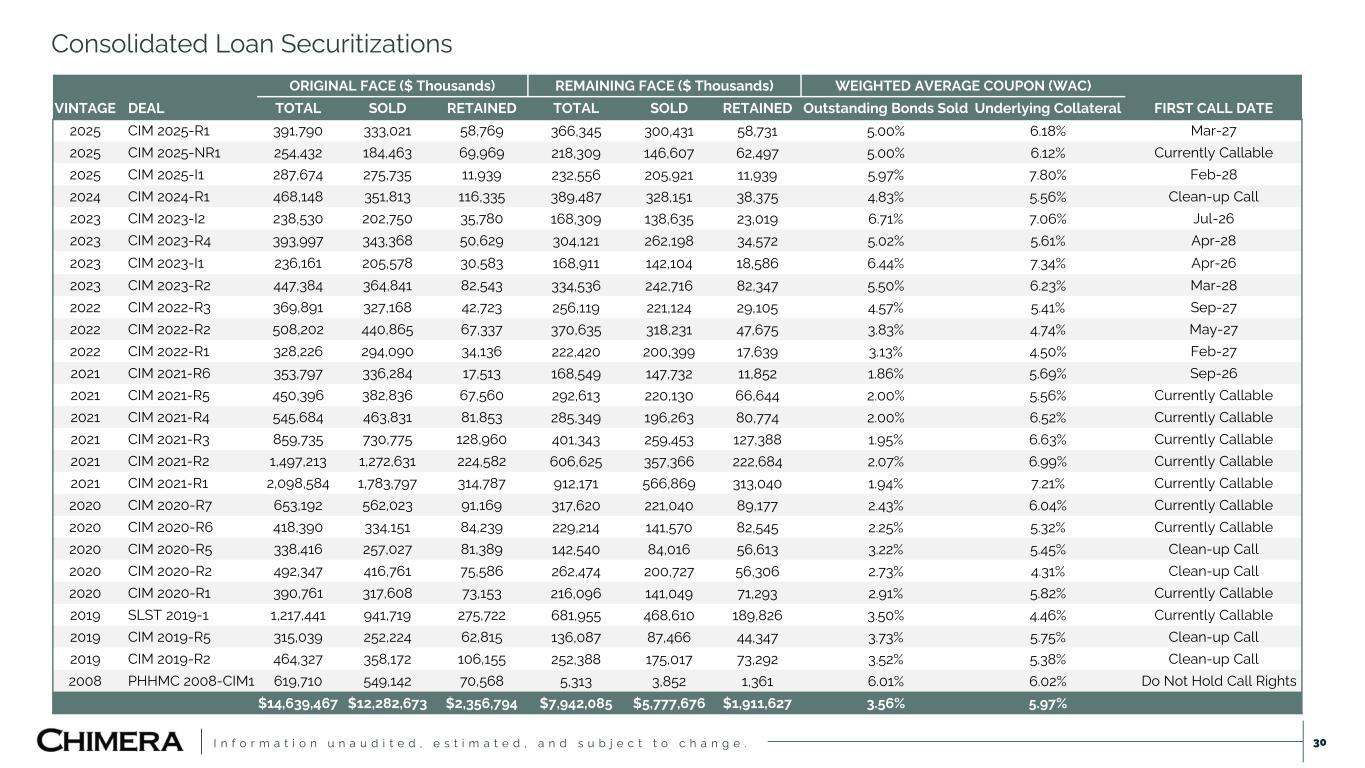
Thanks, Tyra. Good morning, and welcome to Chimera Investment Corporation's first quarter 2026 earnings call. Joining me on the call are Subra Viswanathan, our Chief Financial Officer, Jack McDowell, our Chief Investment Officer, and Kyle Walker, the President and CEO of HomeExpress Mortgage. After my remarks, Subra will review the financial results, Jack will review the investment portfolio, and then Kyle will review HomeExpress' results. We operate in a market where conditions can change quickly. Rates move, spreads widen, liquidity tightens, and then rarely in a straight line. This year has been a clear reminder of that reality. During the quarter, Treasury yields moved higher across the curve while the $2.10 spread flattened. Prior to the round conflict, mortgage rates briefly touched a three-and-a-half-year Low, only to reverse higher by 40 basis points as volatility returned. Mortgage basis widened relative to treasuries and swaps. Equity volatility spiked at one point doubling before stabilizing. Oil prices moved sharply higher, and at the same time, rate markets alternated between periods of calm and episodes of rapid repricing. Overlaying this, the market expectations for monetary policy shifted meaningfully. At the start of the year, the market anticipated two to three rate cuts in 2026. By quarter, and those expectations had largely dissipated. And in fact, there's now some discussion of the possibility of rate hikes. I highlight these dynamics to underscore a central point. We are operating in a market where uncertainty is not episodic. It's structural. We don't try to predict where the market will be. We focus on being prepared for wherever it goes. Our objective is clear, to build a company that's not dependent on any single market environment. The question, then, is straightforward. How did we perform in this environment, and how are we positioned going forward? I'll give you a sneak peek. We think we did very well and believe we're well-positioned to take advantage of opportunities throughout the rest of the year. So let's start with Home Express. Home Express had another strong quarter. Despite volatility, origination volume increased 39% compared to the first quarter of 2025, reaching $884 million. Moreover, they were able to generate $11 million of earnings before taxes, depreciation, and amortization, representing an annualized return on equity of 16.8%. This is what we aim for, growth with discipline and returns that justify the capital employed. Turning next to our investment portfolio, we continue to reposition the portfolio to unlock value and build more durable earnings. During the quarter, our allocation to loans decreased from 62% to 55%, and our allocation to agency RMBS increased from 15% to 21%. The primary driver for this shift was the redemption of eight securitizations backed by $1.5 billion of season-reperforming loans. We sold $1.2 billion of those loans, generating $195 million in net proceeds, and retained $287 million for current income and future securitization. With an estimated break-even ROE of just under 8%, the reinvestment of these proceeds has the potential to generate an additional $15 million in annual earnings. The takeaway? We increased earnings power while improving portfolio flexibility. As we look at our portfolio repositioning over the past 15 months, our estimated investment levered returns, including the addition of HomeExpress, have increased by approximately 20%. Also, since the beginning of the year, we have been purchasing newly originated loans from HomeExpress. We plan to launch the new SIM HomeX securitization program later this quarter or early next. Overall, our portfolio had a very strong quarter, but as a REIT, the real test is our dividend. So how are we doing? First quarter earnings available for distribution, EAD, was $0.54 per share, which covered the $0.45 dividend by 120%. Over the past 10 quarters, our EAD has exceeded our dividend in nine, missing once by a single penny. Over that same period, we increased the dividend from $0.33 to $0.45 per share, a 36% increase, while maintaining EAD coverage of more than 1.1 times. I want to let that sink in for a minute. We've grown and covered our dividend for the past two and a half years. That consistency is not accidental. It reflects a focus on generating durable earnings. So what's our outlook for the remainder of the year, and how are we positioned? Looking ahead, we expect continued uncertainty, geopolitical and market-driven. But despite that uncertainty, we remain optimistic about the future. We have structured the platform to preserve optionality across origination, investment, and asset management, so that we can adapt as conditions evolve. And more than that, we have the capital and the liquidity to take advantage of that optionality. We ended the quarter with $476 million of cash, approximately $200 million of unencumbered assets, and nearly $500 million of equity allocated to agency RMBS. So as we look over the rest of the year, we believe we have both the liquidity and the flexibility to continue to play offense and act when opportunities arise. Specifically, we will continue to grow and diversify the portfolio, expand originations, build fee-based income, and pursue acquisitions. With that, I'll turn it over to Subra to walk you through the financials.
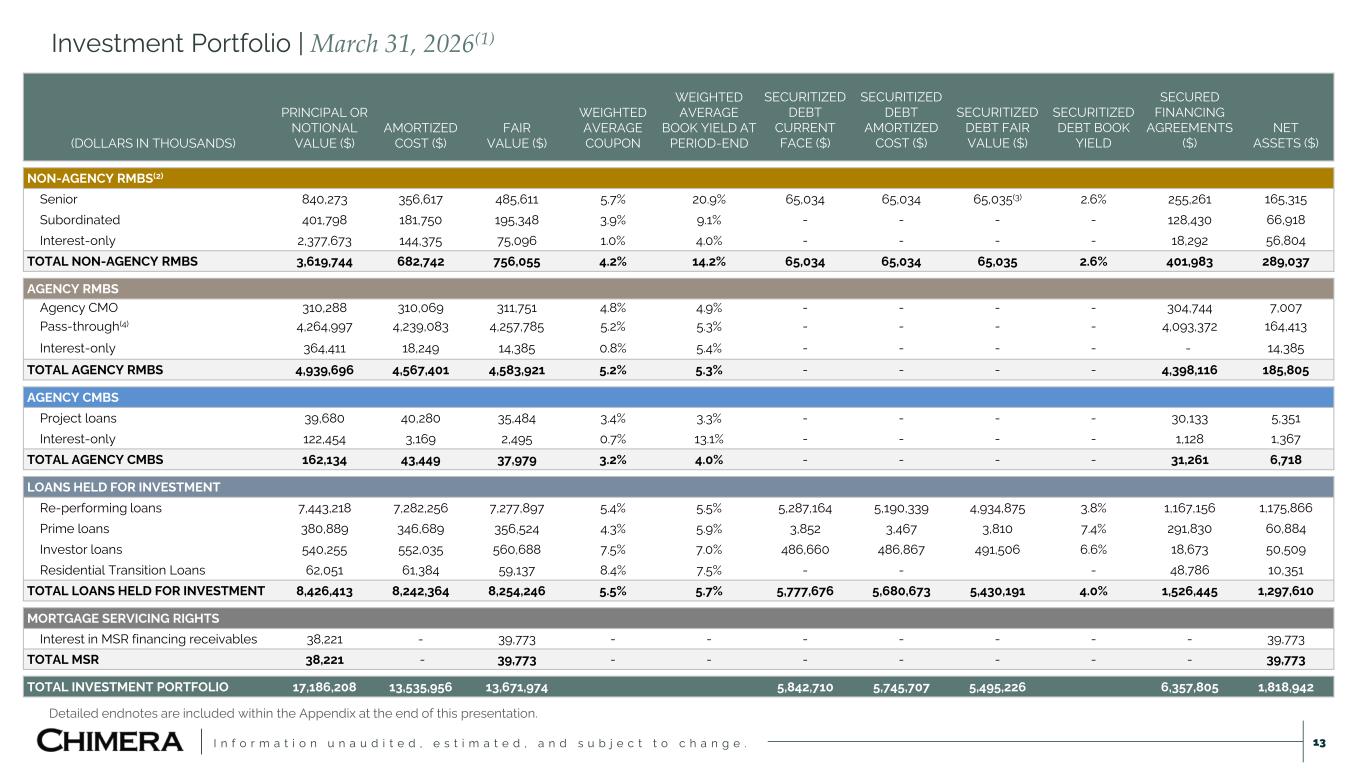
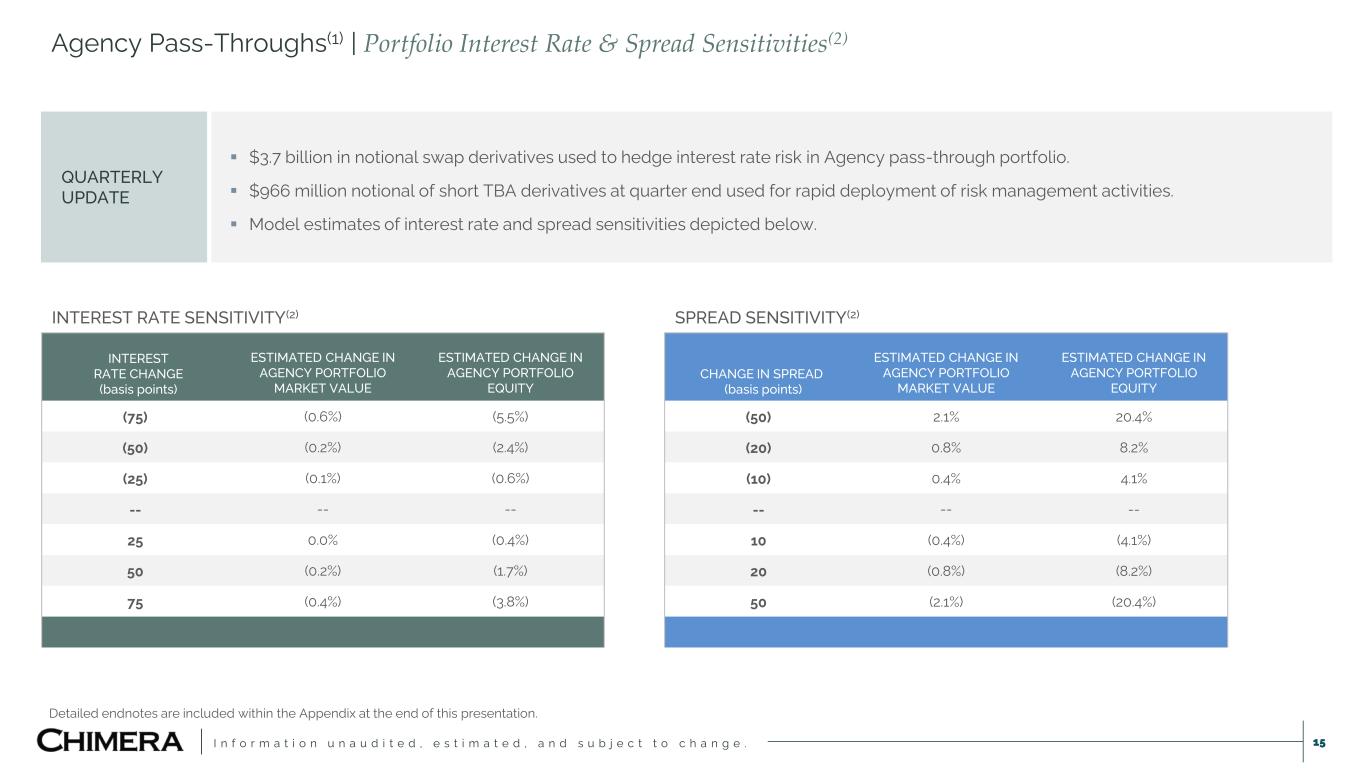
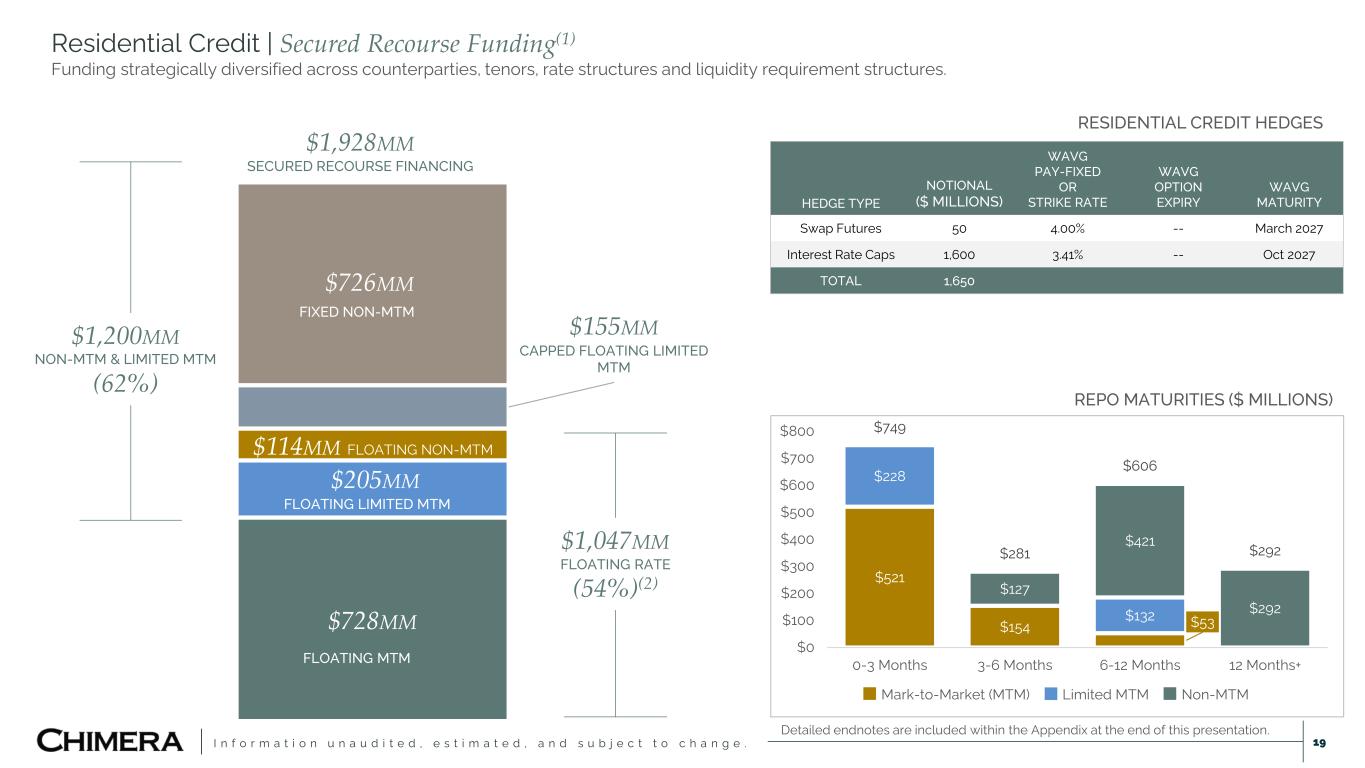
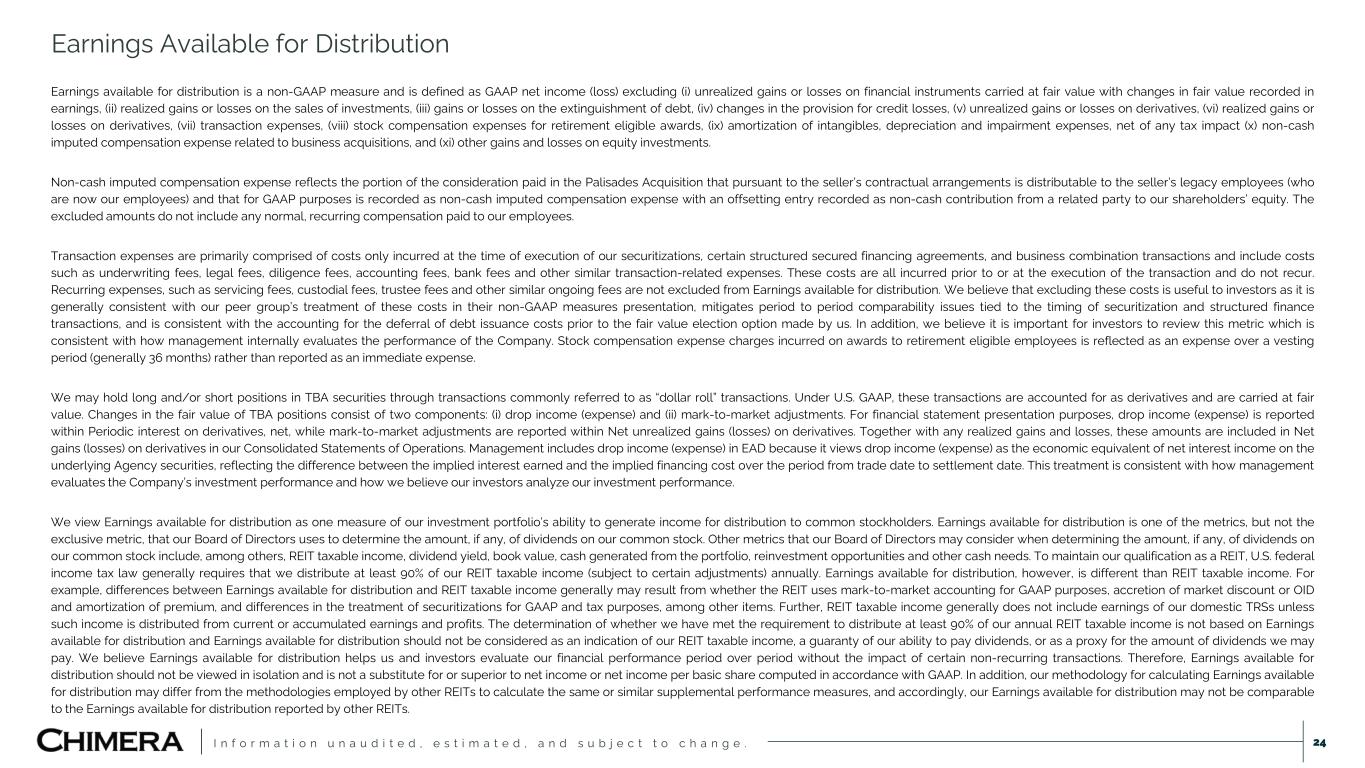
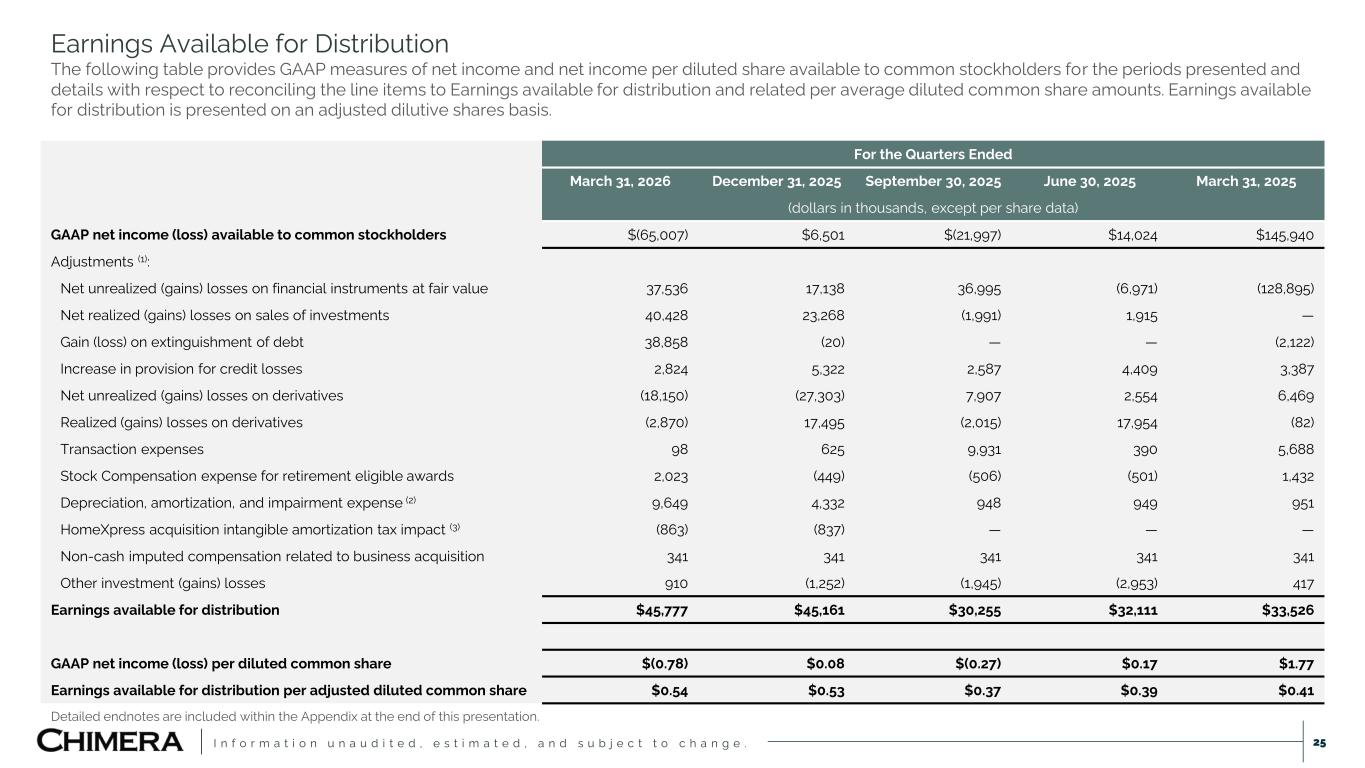
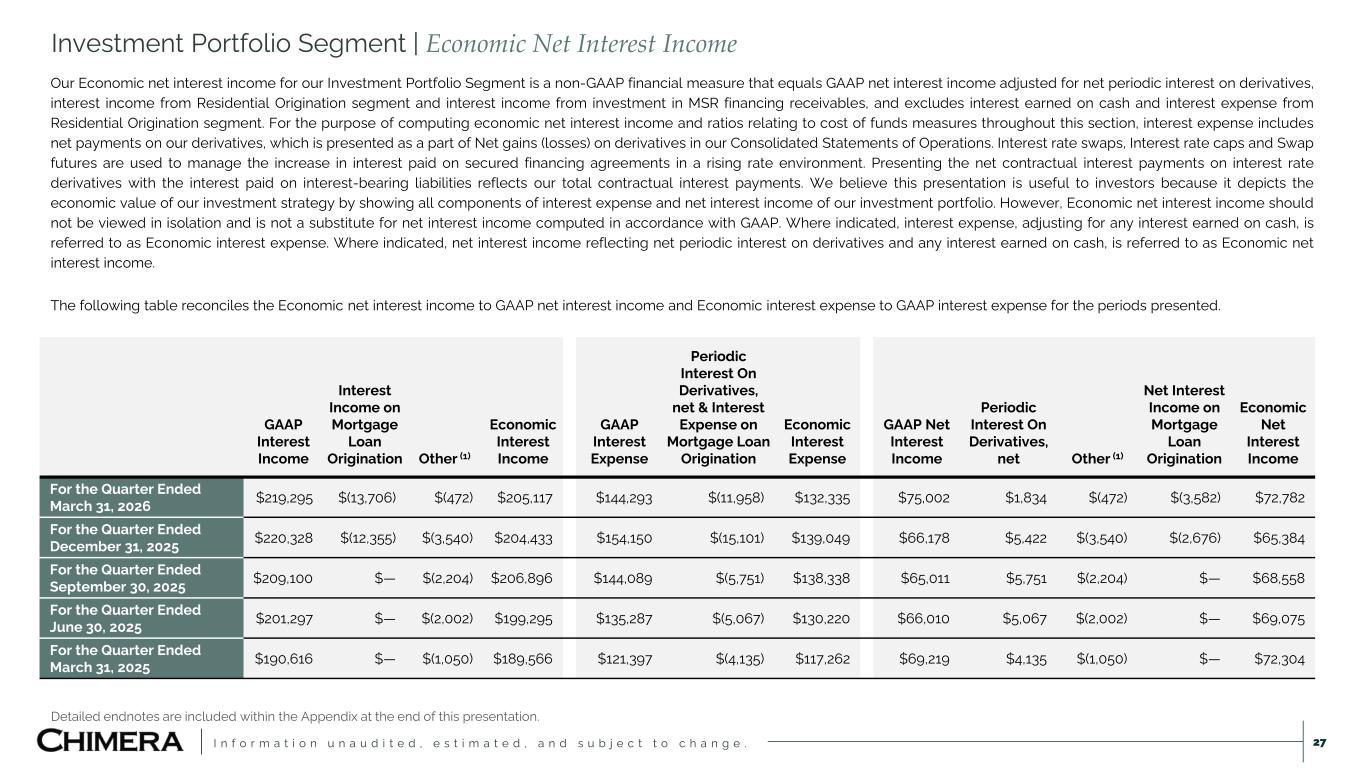
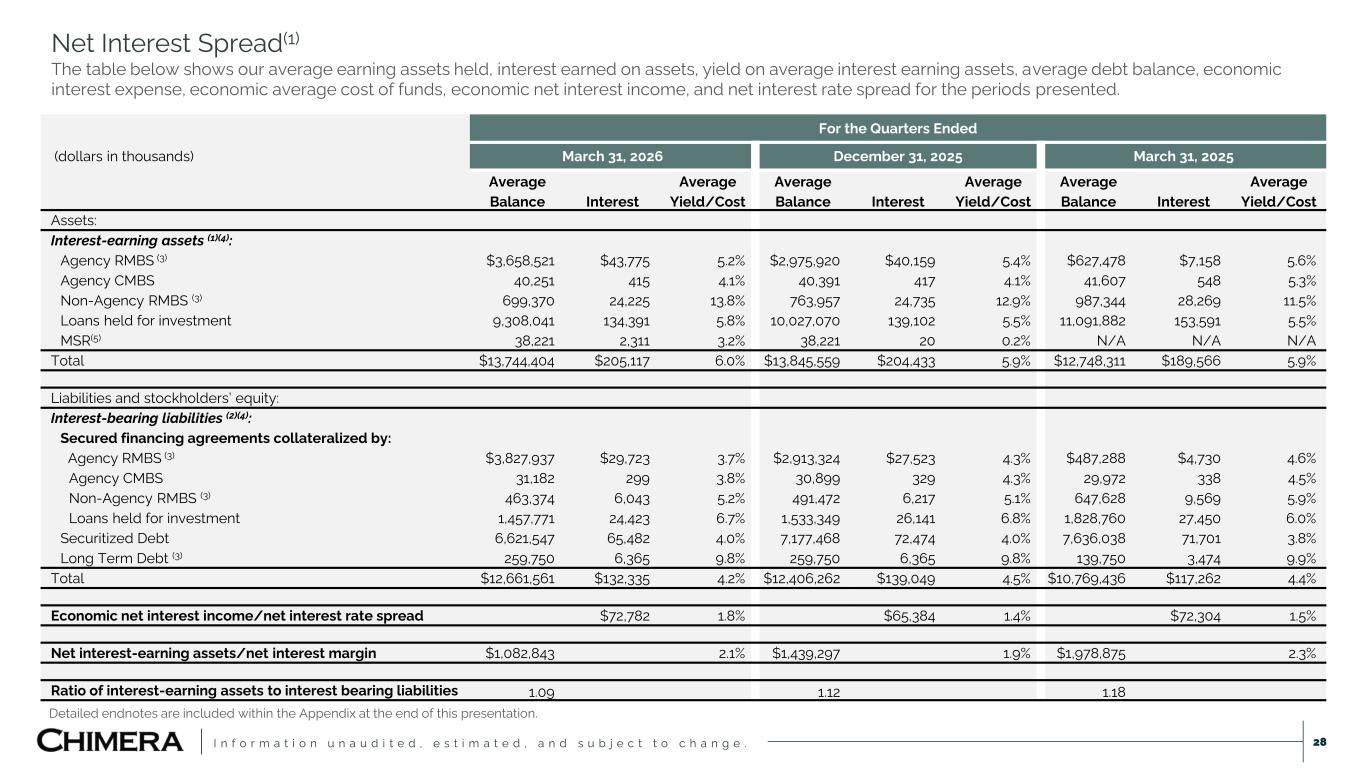
Thanks, Phil. Gap net loss for the quarter was approximately $65 million. We generated approximately $46 million of earnings available for distribution, or $0.54 per share, compared with $34 million and $0.41 per share in Q1 of 2025. This improvement reflects higher net interest income from the portfolio and the addition of Home Express. Our quarterly dividend of $0.45 per share was covered by earnings at approximately 1.2 times. Gap book value per share declined by 6.9% to $18.34. Excluding the impact of redemption of aid securitization deals and related loan sales, book value was down by 2.5%. Jack will provide additional details on the transaction and its impact on book value and earnings. In addition, the transaction released $195 million in equity, which was immediately redeployed into agency securities, increasing liquidity and supporting earnings accretion. Redeeming the securitized debt reduced net interest expense by $4 million, reflecting the exclusion of accrued carry interest on the payoff. In addition, income from our MSR-related investments benefited from early payout protection payments of $2 million. Together, these items contributed approximately $0.07 to earnings available for distribution per share and are not expected to recur. With that, at the firm level for the quarter, economic return on GAAP book value was negative 4.6% based on the quarterly change in book value and the $0.45 first quarter dividend per common share. Annualized GAAP return on average equity was negative 6.97%, while annualized EAD return on average common equity was 11.53%. Segment performance for the first quarter was as follows. For the investment portfolio, economic net interest income was $72.8 million, while annualized economic net interest income return on average equity was 13.03%. The yield on average interest-earning assets was 6%. Our average cost of funds was 4.2%, and the resulting net interest spread was 1.8%. For the residential origination segment, HomeExpress funded $884 million of loans. EBITDA, defined as earnings before taxes, depreciation, and amortization, was $11.4 million, and annualized EBITDA ROE was 16.8%. With respect to leverage and liquidity, our total leverage was 5.2 to 1, while RICO's leverage was 2.9 to 1. RICO's leverage rose this quarter as we continue to increase our capital allocation to agency RMBS securities. We ended the quarter with $675 million in total cash and unencumbered assets, compared to $528 million at the end of the year. Total consolidated secured financing outstanding was $7 billion. It was comprised of $629 million related to our residential origination warehouse loans, and the remaining approximately $6.4 billion was for our investment portfolio. Within the investment portfolio, $4.1 billion of Secure Financing supported agency RMBS positions against which we maintained $3.7 billion in swaps and swaps futures across varying maturities and $966 million in TBAs. $1.9 billion was secured by residential credit assets, of which $1.2 billion, or 62%, carried non- or limited mark-to-market features, and $1 billion, or 54%, of this were floating-rate facilities. We also utilized $224 million of warehouse capacity during the quarter to finance retained loans, post-redemption of the eight deals I discussed earlier. Finally, on expenses. Compensation expense increased by $8.5 million quarter-over-quarter, mainly driven by a return to a more normalized run rate and higher stock-based compensation. In the investment portfolio segment, the prior quarter reflected a lower accrual, while the first quarter returned to a more normalized run rate. We also recognized higher stock-based compensation in the first quarter related to grants awarded to retirement-eligible employees. In the residential origination segment, expenses increased by approximately $1.4 million, driven primarily by a higher headcount. In summary, the first quarter reflects the impact of a deliberate portfolio repositioning with capital released and deployed into higher return opportunities, while the underlying business continues to perform. We believe the steps take in this quarter position as well for improved earnings and returns for the future. With that, I'll turn the call over to Jack.
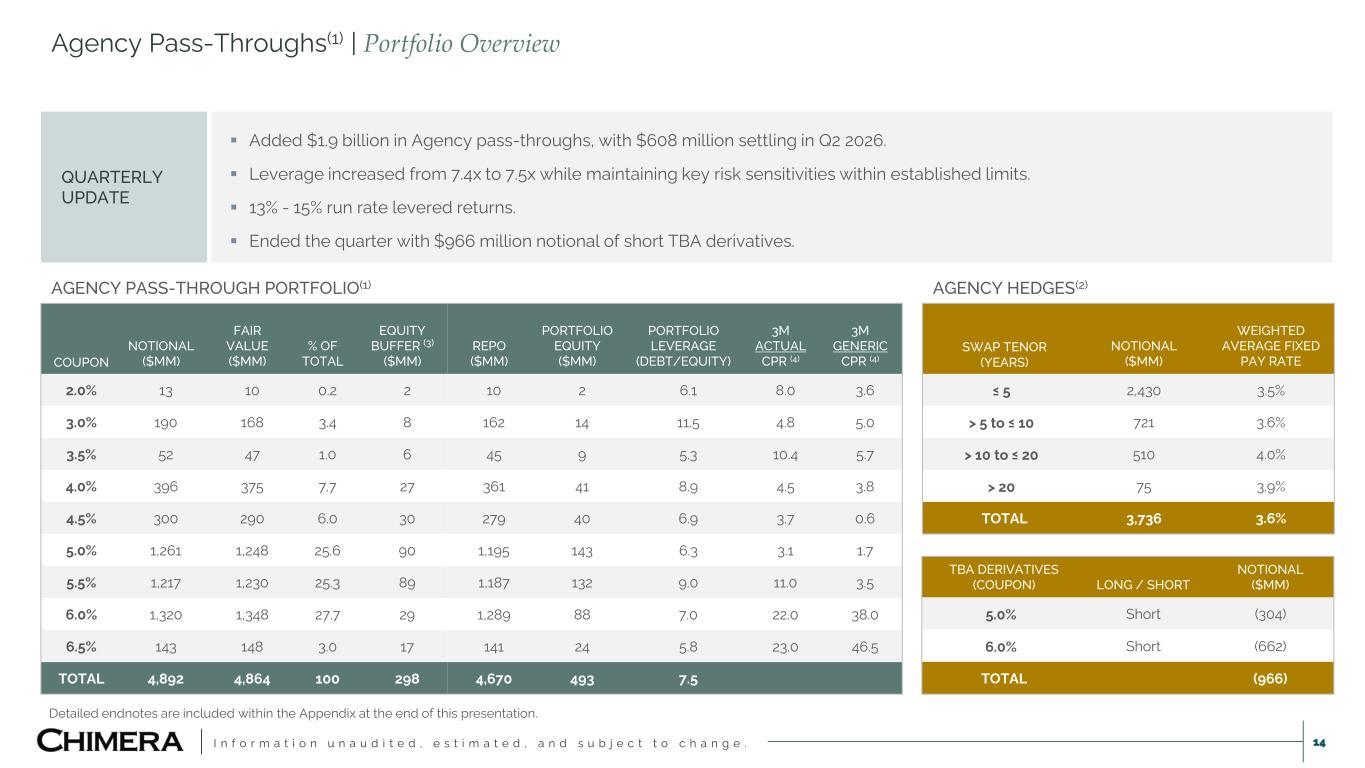
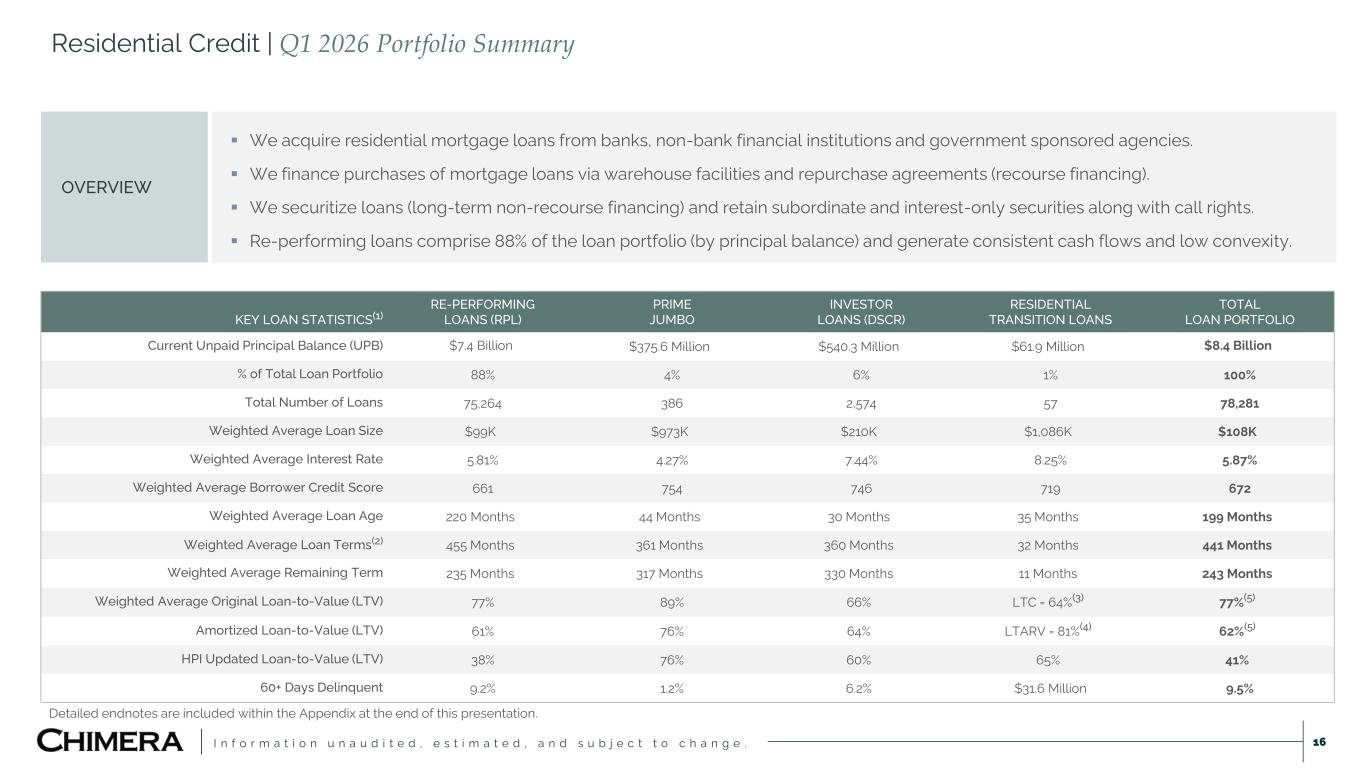
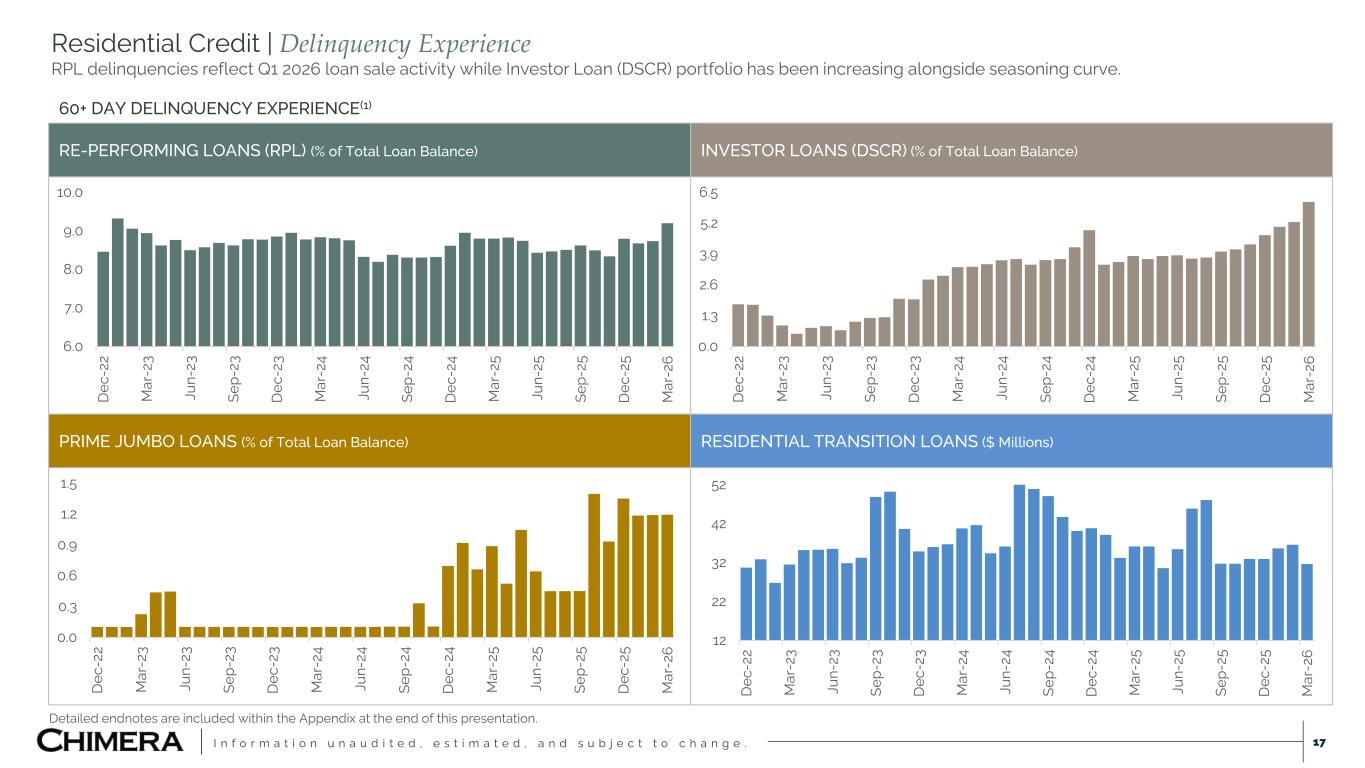
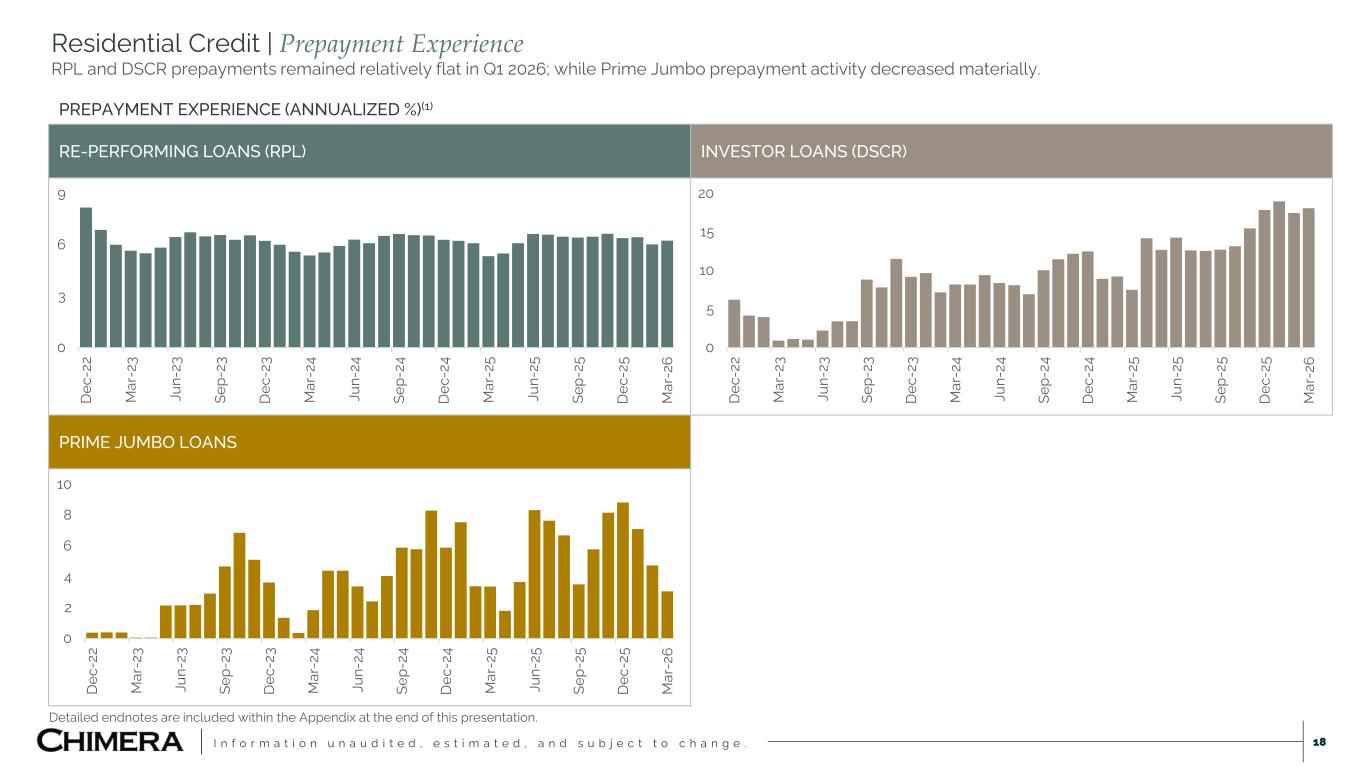
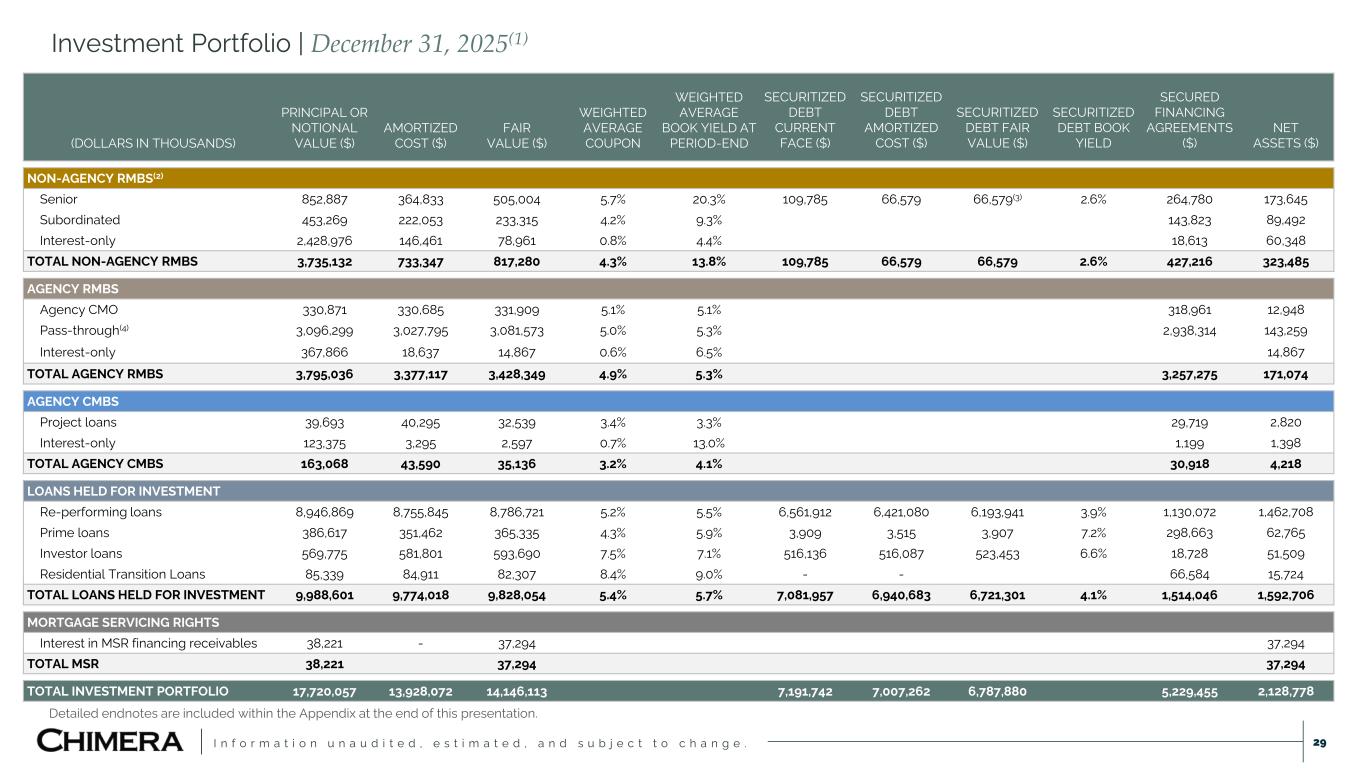
Hey, thanks, Subra, and good morning, everyone. As Phil mentioned, the quarter began on constructive footing, supported by GSE demand for agency MBS and expectations for Fed easing. That tone shifted in early February as liquidity and credit concerns reemerged, particularly in private credit. Conditions deteriorated further with the escalation of the conflict in the Middle East that continued throughout the balance of March. Since quarter end, mortgage spreads have tightened from their wides, and credit has firmed across products, though rates remain higher and markets continue to digest an evolving geopolitical environment. Against this backdrop, our focus has remained consistent. Over the past year, we have been executing a deliberate strategy to optimize our portfolio, in particular, raising capital organically by economically relevering securitization structures, divesting fully valued assets, and increasing our allocation to more liquid investments. That strategy positioned us well heading into the March volatility, enabling us to de-risk quickly when conditions deteriorated and deploy promptly upon raising capital. During the quarter, we completed a series of strategic transactions involving the redemption of eight securitizations collateralized by $1.5 billion of legacy re-performing loans. We sold $1.2 billion of the loans and retained approximately $287 million that we planned to re-securitize in the near term. These transactions released approximately $195 million of capital at a break-even ROE I want to take a moment to walk through how these transactions impacted our reported book value, as the mechanics of calling legacy securitizations can create movements that do not fully reflect the economic outcomes. When we call these securitizations at par, we redeemed securities that were carried on our balance sheet at a discount. That discount, approximately $43 million, flowed through as a reduction in book value. In total, these strategic transactions accounted for nearly two-thirds of our change in book value during the quarter, and absent these actions, book value would have been down approximately 2.5%, reflecting the impact of spread movements and rate volatility during the quarter. As of last Friday, our estimated book value is up about 1%. So, for context, the majority of our book value decline this quarter was a direct result of strategic actions that are designed to improve the quality of our portfolio and enhance our go-forward earnings potential. We are committed to preserving capital and managing risk, and we assess value at risk based on the earnings-generating capacity of our capital, not short-term market movements and securitized liabilities. We continued our capital reallocation efforts, repositioning the portfolio toward a more balanced mix, enhancing our liquidity profile, and the potential for more durable, risk-adjusted earnings. Our allocation of residential credit decreased to 65 percent from 72 percent at year-end, with loan exposure coming down to 55 percent from 62 percent, driven mainly by asset sales during the quarter. In turn, we added $1.9 billion of agency MBS, bringing that allocation to 21 percent, up six percentage points quarter-over-quarter, with our specified pool portfolio ending at $4.9 billion. In March, amidst the onset of the conflict in the Middle East, we added selectively to our agency portfolio in five and six coupons where spreads had widened most and we were under-allocated, reducing overall portfolio duration at a time when we wanted to maintain a more defensive posture. We also actively managed risk through TBA positions, initially shorting $500 million as a conflict intensified before unwinding those positions after raising liquidity through loan sales. We subsequently reestablished shorts on a portion of our portfolio to maintain flexibility across the stack. We continue to hedge our agency portfolio with interest rate swaps, consistent with our SOFR-based funding and the carry advantage provided by current swap spread levels. On the credit side, our hedge composition shifted during the quarter from pay-fix swaps and swaptions to interest rate caps, providing an asymmetric payoff in the event of a material decline in short-term rates. As Phil mentioned, we began retaining Home Express loans in the first quarter and anticipate launching our first securitization in late Q2 or early Q3. These loans are representative of Home Express's normal production, with investor loans making up approximately 55% of the population, reporting the 70% average loan-to-value ratio, 735 average credit score, and 7% average coupon. We see securitization execution outpacing whole loan pricing in the current market, and given our flexibility to hold, securitize, or sell, we are well positioned to capture that differential. Turning now to credit, performance across our loan portfolio remains strong. Delinquencies in the legacy re-performing book ticked up, though this was largely due to the composition of loans we sold versus retained. On the RTL side, the dollar balance of delinquencies remains stable and loss is nominal. And in our investor loan cohort, delinquencies, driven by a natural seasoning of the 2023 vintage, are in line with expectations and reverted back into the mid-5% range as of the April remittance reports. Stepping back, the first quarter demonstrated both the value and the necessity of the transformation we have been executing over the past year. The loan sale activities released capital and materially improved our earnings capacity. Our growing agency portfolio gave us flexibility to redeploy and de-risk dynamically as conditions shifted. And Home Express continues to contribute to earnings while building a pipeline for our securitization program. We entered this year with a clear plan. Diversify the portfolio, strengthen liquidity, and grow durable sources of income. The actions we took this quarter advanced each of those objectives. We covered our dividend, we improved the composition of the portfolio, and we redeployed the capital, freed up from the legacy transactions into higher returning opportunities. The strategy is delivering results, and we see continued growth in the earnings power of this platform. With that, I will turn it over to Kyle to discuss residential origination.
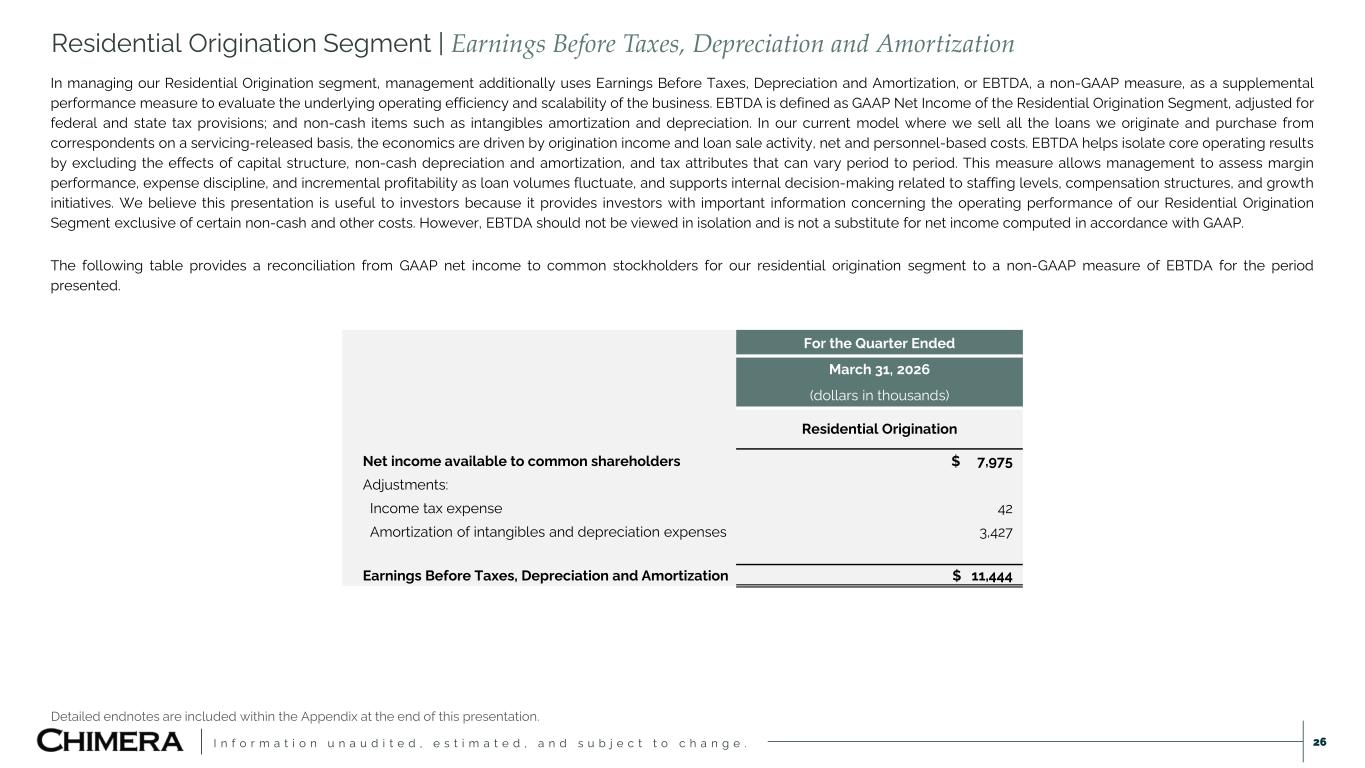
Thank you, Jack, and good morning, everyone. HomeExpress delivered strong results in the first quarter, building on the momentum from the prior quarter. We originated $884 million in total loan volume, representing a 39% increase as compared to the first quarter of last year. Despite market volatility emerging late in the quarter, our origination volume, all of which is first lien residential mortgages, was not meaningfully impacted due to two key reasons. First, the loan submission to close process has a natural lag of about 35 days. As a result, much of our first quarter's volume was already in the pipeline before market conditions shifted. Our first quarter results, therefore, largely reflect the origination pipeline activity built earlier in the quarter. Second, consumer non-QM and business purpose loan demand is less dependent on rate-driven refinancing activity, which also supported our pipeline stability through the late-quarter disruption. Looking ahead, our pull-through rates and broker engagement have remained relatively consistent entering the second quarter. Submissions did moderate briefly during the disruption, but activity has begun to normalize. The demand continues to be driven less by rate-sensitive refinancing activity and more by borrowers with specific financing needs, including consumer home purchases, cash-out refinancings, and investment property purchases. As a result, despite elevated and ongoing industry volatility, the underlying demand for HomeExpress's loan origination remains firm. Our experienced leadership team has successfully navigated many past market disruptions and cycles. That experience enables us to make strategic decisions and pivot effectively with changes in the market. One area we have been focusing on is increasing our percentage of consumer non-QM loans, which generally carry higher average loan balances. Our average loan size increased from $424,000 in March to $451,000 in April. This compares with a $410,000 average for the entire first quarter. By increasing the average loan size, we can generate more volume with the same number of loans, further improving our efficiency. Home Express delivered strong profitability in the quarter, generating an EBITDA of $11.4 million. Our net origination margin, which reflects both gain on sale as well as operating costs to produce our loans, was 114 basis points. In this environment, we remain focused on driving efficiency while maintaining disciplined pricing and sound underwriting standards. On the front end, we've integrated with Arrive so brokers can access our products and pricing directly in the workflow and submit loans without jumping between systems. That has helped reduce some of the back and forth and improve submission quality. We're also using AI to reduce manual work and underwriting, automating parts of income verification. Our efforts have helped us handle more volume and bring down cost per loan as we scale. We continue to assess other opportunities to incorporate AI into our systems. Credit quality on new originations remain consistent, and key metrics, including weighted average FICO and LTV ratios, were maintained in line with our historical loan production levels. To support production, we increased our total warehouse funding capacity to $1.5 billion during the quarter. That, combined with our strong cash position, provides ample liquidity to support our expected production levels. Our seven warehouse facilities are maintained with large and leading financial institutions. We also continue to deliver Home Express's high-touch service model that distinguishes our platform, maintaining relationships with our more than 6,000 approved broker sources, which are serviced by our 142 account executives and related sales staff. As our first quarter results demonstrate, Home Express is contributing meaningfully to Chimera's earnings base. Going forward, we will continue to scale the platform responsibly, maintain credit discipline, and originate loans with attractive economics. With that, I'll turn the call back over to Phil. Thanks, Kyle.
To sum up, we're not optimizing for quarterly outcomes. We're We're allocating capital for long-term compounding. Our objective is straightforward. Build a residential platform engineered to perform across interest rate cycles, credit cycles, and capital market cycles. If we execute, intrinsic value per share will grow, and the dividend will follow. That's how we run the business, and that's how we believe it should be evaluated. We'll now open the call to questions.
Thank you. If you'd like to ask a question, please press star 1 on your telephone keypad. A confirmation tone will indicate your line is in the question queue. You may press star 2 if you'd like to remove your question from the queue. For participants using speaker equipment, it may be necessary to pick up your handset before pressing the star keys. Our first question comes from the line of Marissa Lobo with UBS. Please proceed with your question.
Thank you, and good morning. On the securitization call strategy, that unlocked capital, but it pressured book value a little bit. How much additional embedded optionality remains in the existing securitization stack, and how should we think about the tradeoff between book value volatility and future earnings power?
Yeah, hey, Marissa, appreciate the question. Just for context, I mean, as we're looking at these deals, and as I think we've talked about on this call and prior calls, you know, the securitization, securitized debt impact, we're evaluating this very holistically, and we look at the opportunity cost of doing these deals versus the opportunity cost of just continuing to do nothing and letting the capital generate, you know, the existing returns. I mean, we have a pretty large portfolio of callable deals, and so we view our job as to constantly be evaluating the economics of calling those and re-securitizing them. But like we said in the prepared remarks, I mean, there's a difference between, you know, earnings generating capital and then the capital that is somewhat derived from, you know, valuation marks on our securitized debt.
I appreciate that. And looking at the allocation, loans still represent the majority of capital, but agencies growing. So, what risk-adjusted return threshold determines whether incremental capital goes to agency or credit assets from here?
Yeah, I mean, so we are thinking about portfolio construction. And so, you know, the agency sleeve has been an important component of growth over the last year, one for the liquidity and the optionality that we've been talking about and making sure that we maintain that. The loans, I mean, the credit element is a core competency of ours, so it's not that we necessarily are looking to decrease that allocation, so to speak, but we are looking to identify areas where we can, you know, extract underperforming capital and redeploy that into higher earning assets. So maybe back to your original question, you know, are there continuing to be opportunities in the portfolio to call deals, extract capital, redeploy it accretively? I think the answer to that is certainly yes. This was a very important quarter for us. It culminated in the sale of $1.2 billion of loans. So that was obviously a milestone effort on the team's part. But, you know, I probably wouldn't expect at the near term something of that size. But I certainly think there's still opportunities to prune the portfolio and continue to thrive earnings power.
Thank you very much. Thank you. Our next question comes from the line of Trevor Cranston with Citizens J&P. Please proceed with your question.
Hey, thanks. Good morning. Question on the agency portfolio. You know, you mentioned establishing a short TVA position in March. It looks like it was about a billion dollars at the end of the quarter. Can you say if you guys are, you know, continuing to hold that short TBA position or if there's been any other significant changes to the agency book since the end of the quarter?
No, I guess what I would say, we are using the TBA shorts for two different purposes. One, the one that we put on early in March was at the onset of the Middle East conflict. So that was purely a de-risking effort on the team's part that we were doing in preparation for the loan sales that were occurring and would raise liquidity later in the quarter. We did take that short off before quarter end. We had reestablished some other shorts, the 966 that you see in the prepared materials, and we have, you know, continued to maintain that for all intents and purposes post-quarter end. And, you know, we use that in part when we see, you know, interesting spec pools that where we think the payouts are attractive or the stories or the call protection is interesting. Whenever we know that we're going to be raising capital at some point in the future, we don't necessarily want to be forced buyers of whatever is in the market at that time. So when we know capital is coming in, we may go ahead and purchase bonds, but we'll offset that risk by shorting TVAs. And that's what you see with that 966, for the most part, at quarter end. Okay. Got it.
Makes sense. Then on the Home Express business, can you maybe give us a little bit of color on sort of the early indications on the second quarter, how volumes are holding up, you know, with higher mortgage rates? I guess I'd be curious if you've seen any sort of indication of changes in margin levels as well. Thanks.
Volume in the second quarter should be very consistent with what we forecasted. So, you know, our volume has been increasing month over month. The margins appear to be holding, you know, we did a couple of trades to an insurance investor throughout the kind of market dislocation, and that helped us keep the margins tight. Now it seems like things are back to normal regarding margin activity.
Okay, great. Thank you.
Thank you. Ladies and gentlemen, as a reminder, if you'd like to join the question queue, please press star 1 on your telephone keypad. Our next question comes from the line of Bose George with KPW. Please proceed with your question.
Hi, good morning, guys. This is Frank and we'll be on for Bose. Thank you for taking my question. To start, just kind of more of a macro question. Given the rate volatility, given some headline risks on unemployment, maybe can you talk about what you're seeing in the market there, non-credit, how have credit conditions held up? Thank you.
Yeah, sure. I mean, if you look across our portfolio, and we put, like, our delinquency history and some charts in the prepared materials, but, look, I think what you – in some of the, you know, call it 2023 more seasoned vintage pools of, let's say, non-QM, we are starting to see delinquencies, you know, rise in what I would say is a normal course. There's certainly, you know, labor market conditions are starting to soften, so we would expect to see delinquencies reflect those conditions. With that being said, this is a much different underwriting than what we've seen, like, pre-financial crisis. These loans have significant, you know, equity in them, which opens up opportunities for much more constructive workout solutions for borrowers, And I think that's reflected in the very, very low levels of losses that we've seen in all these loans across non-QM and non-agencies. So I think you'll continue to see delinquencies, you know, rise in the normal course, but also, you know, losses continue to remain very muted just given.
Great. Thank you. And then on the HomeExpress platform, like, how does Kamara think about, you know, retaining servicing or MSR exposure going forward?
Yeah, I mean, that's a good question. And, you know, right now, everything has been sold on a servicing release basis. You know from, you know, prior calls and our remarks that building an MSR sleeve is a very important component of our longer-term strategy, so there's certainly discussions about, you know, retaining servicing longer-term. I think we've still got, you know, some work to do on that front, but it's definitely on the drawing board and something that we would hope to do going forward at some point.
Thank you.
Thank you. Ladies and gentlemen, this concludes our question and answer session. I'll turn the floor back to Mr. Curtis for any final comments.
Thank you. Thank you, everyone, for joining our first quarter 2026 earnings call, and we look forward to speaking to you next quarter. Have a great day.
Thank you. This concludes today's conference. You may disconnect your lines at this time. Thank you for your participation.
24:41 to 33:57 · One card per analyst, follow-ups included. Each plays from its start, and the one being answered is marked.
Thank you, and good morning. On the securitization call strategy, that unlocked capital, but it pressured book value a little bit. How much additional embedded optionality remains in the existing securitization stack, and how should we think about the tradeoff between book value volatility and future earnings power?
Jack L. Macdowell, Jr.: Yeah, hey, Marissa, appreciate the question. Just for context, I mean, as we're looking at these deals, and as I think we've talked about on this call and prior calls, you know, the securitization, securitized debt impact, we're evaluating this very…
Hey, thanks. Good morning. Question on the agency portfolio. You know, you mentioned establishing a short TVA position in March. It looks like it was about a billion dollars at the end of the quarter. Can you say if you guys are, you know, continuing to hold that short TBA position or if there's been any other…
Jack L. Macdowell, Jr.: No, I guess what I would say, we are using the TBA shorts for two different purposes. One, the one that we put on early in March was at the onset of the Middle East conflict. So that was purely a de-risking effort on the team's part that we were doing in…
Also speaking: Kyle Walker
Hi, good morning, guys. This is Frank and we'll be on for Bose. Thank you for taking my question. To start, just kind of more of a macro question. Given the rate volatility, given some headline risks on unemployment, maybe can you talk about what you're seeing in the market there, non-credit, how have credit conditions…
Jack L. Macdowell, Jr.: Yeah, sure. I mean, if you look across our portfolio, and we put, like, our delinquency history and some charts in the prepared materials, but, look, I think what you – in some of the, you know, call it 2023 more seasoned vintage pools of, let's say, non-QM…
Also speaking: Phil Cardis
SEC filing · Item 2.02
Filed May 7, 2026 · complete as-filed document
SEC periodic report
Filed May 7, 2026 · complete as-filed document