Executive readout · one minute
Webcast research workspace
Read the call alongside every captured source. Transcript, audio, slides, 8-K earnings release, 10-Q stay in one workspace.

Earnings call · FY2027 Q1
You came from your AI assistant. Add Equibles to it and ask about this data directly, free.
Executive readout · one minute
Read the call alongside every captured source. Transcript, audio, slides, 8-K earnings release, 10-Q stay in one workspace.
Forward guidance
4 guided metrics
Management's latest ranges and targets are included below.
Research coverage
5 live sources
Switch sources without leaving this page or losing your listening position.
Open the source you need; every reader stays inside this workspace.
From the 8-K filed Aug 6, 2026.
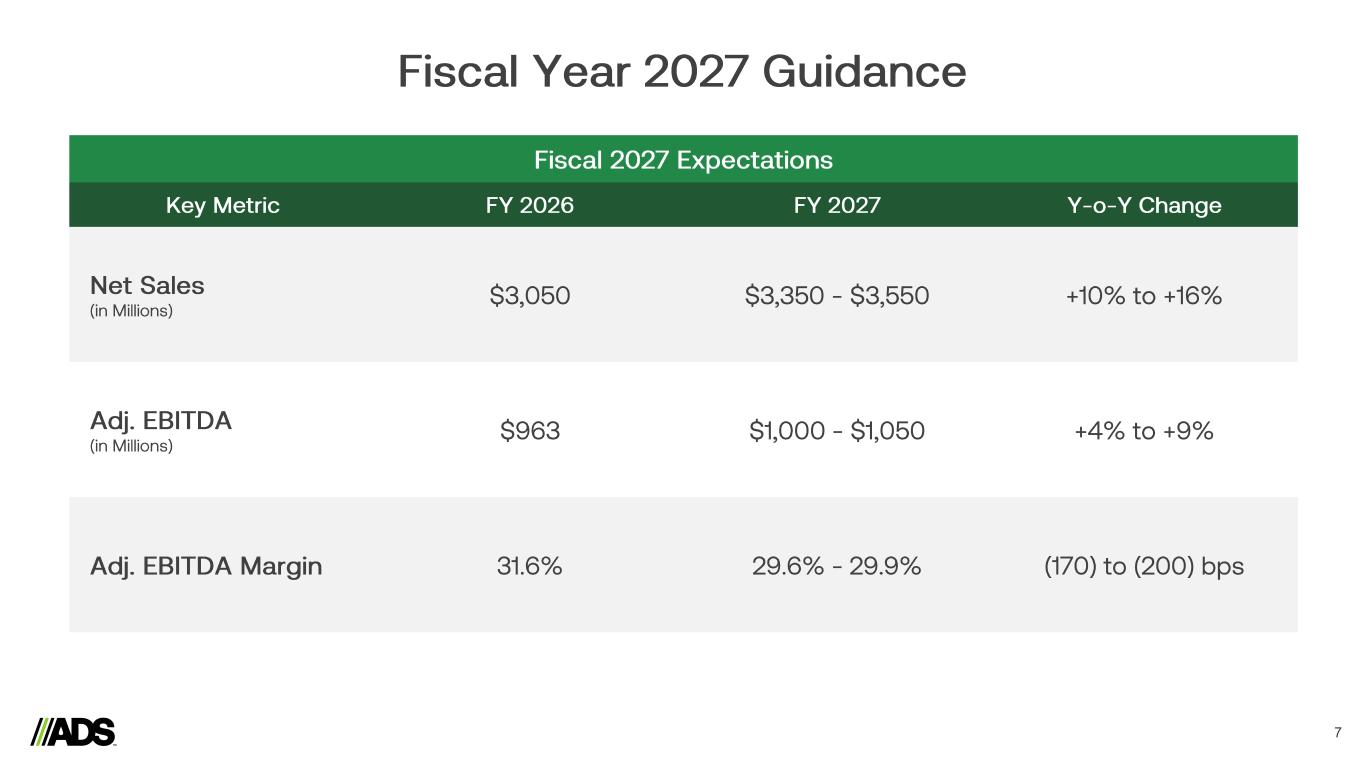
| Metric | Period | Guided | Basis |
|---|---|---|---|
|
Net sales
Maintained
fiscal 2027
|
$3.35B – $3.55B | — | |
|
Adjusted EBITDA
Maintained
fiscal 2027
|
$1B – $1.05B | Non-GAAP | |
|
Capital expenditures
Maintained
fiscal 2027
|
$200M | — | |
|
Adj. EBITDA Margin
FY 2027
|
29.6% – 29.9% | Non-GAAP |
How the reported period landed and where the business moved.
Good morning, ladies and gentlemen, and welcome to Advanced Drainage Systems' first quarter of Fiscal Year 2027 Results Conference Call. My name is Caleb, and I am your operator for today's call. At this time, all participants are in listen-only mode. After today's prepared remarks, we will host a question-and-answer session. If you would like to ask a question, please press star 1 to raise your hand. To withdraw your question, press star 1 again. I would now like to turn the presentation over to your host for today's call, Mr. Mike Higgins, Vice President of Corporate Strategy and Investor Relations. Sir, you may begin. All right.
Good morning, everyone. Thanks for joining us today. Here with me, I have Scott Barber, our president and CEO, Scott Cottrell, our chief financial officer, and Craig Taylor, president of Infiltrator. I would also like to remind you that we will discuss forward-looking statements. Actual results may differ materially from those forward-looking statements because of various factors, including those discussed in our press release and the risk factors identified in our Form 10-K filed with the act. While we may update forward-looking statements in the future, we disclaim any obligation to do so. You should not place undue reliance on these forward-looking statements, all of which speak. Lastly, the press release we issued earlier this morning is posted on the Investor Relations section of our website. A copy of the release has also been included in an 8K submitted to the SEC. We will make a replay of this conference call available via webcast on the company website. With all of that said, I'll turn the call over to Scott Barber.
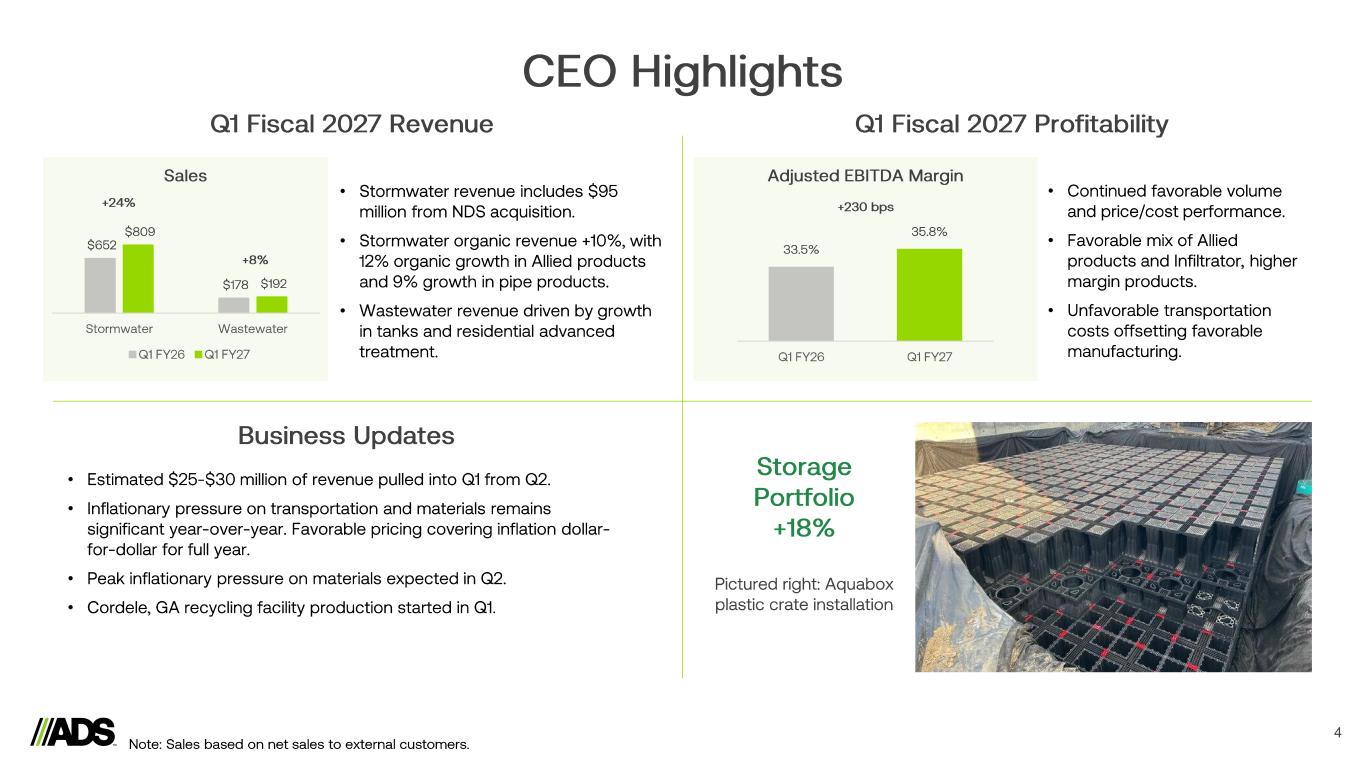
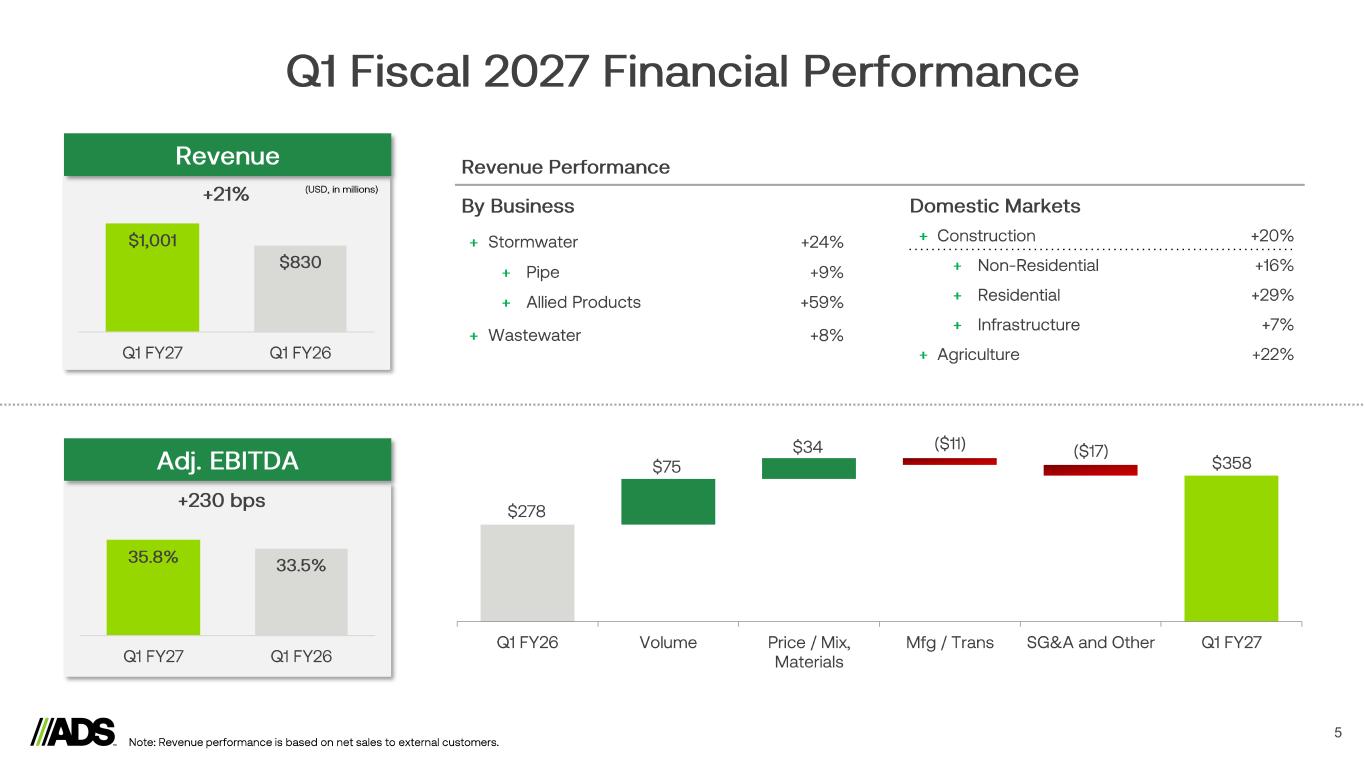
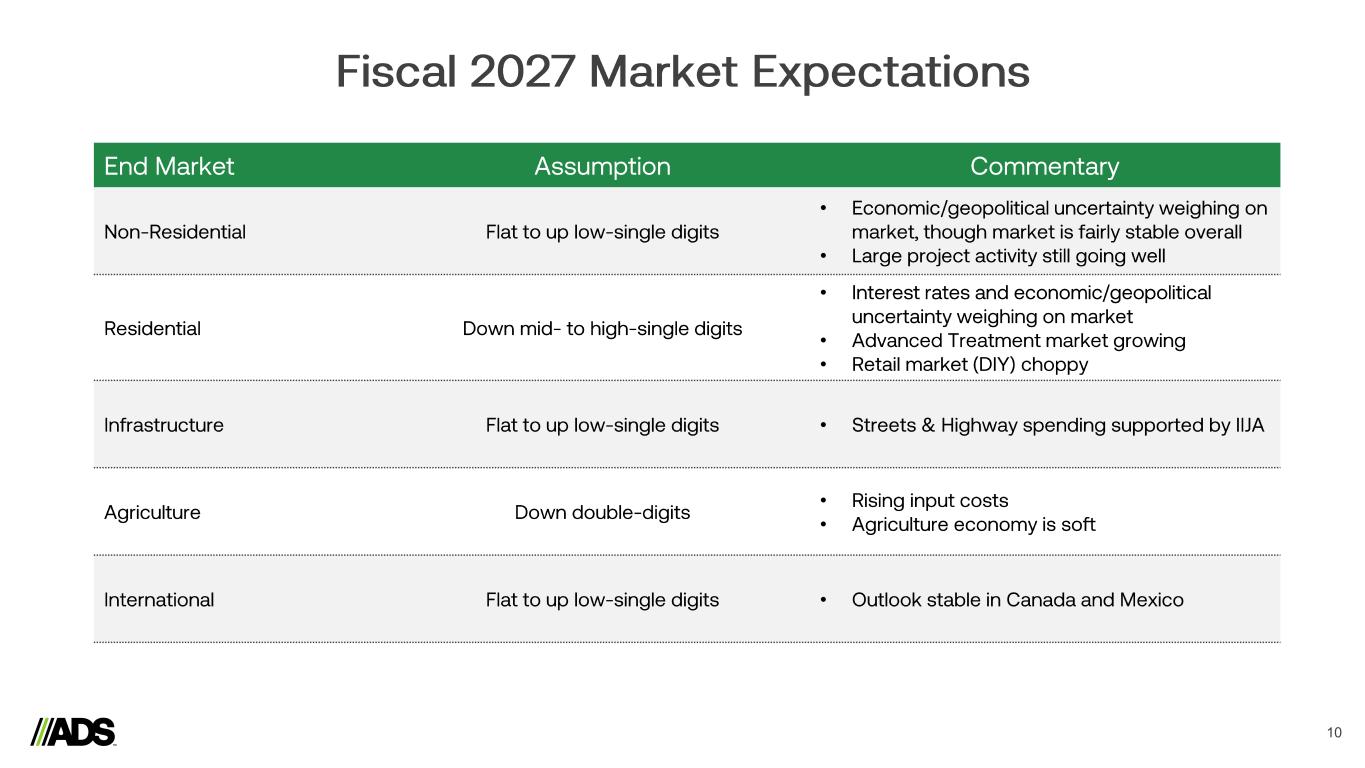
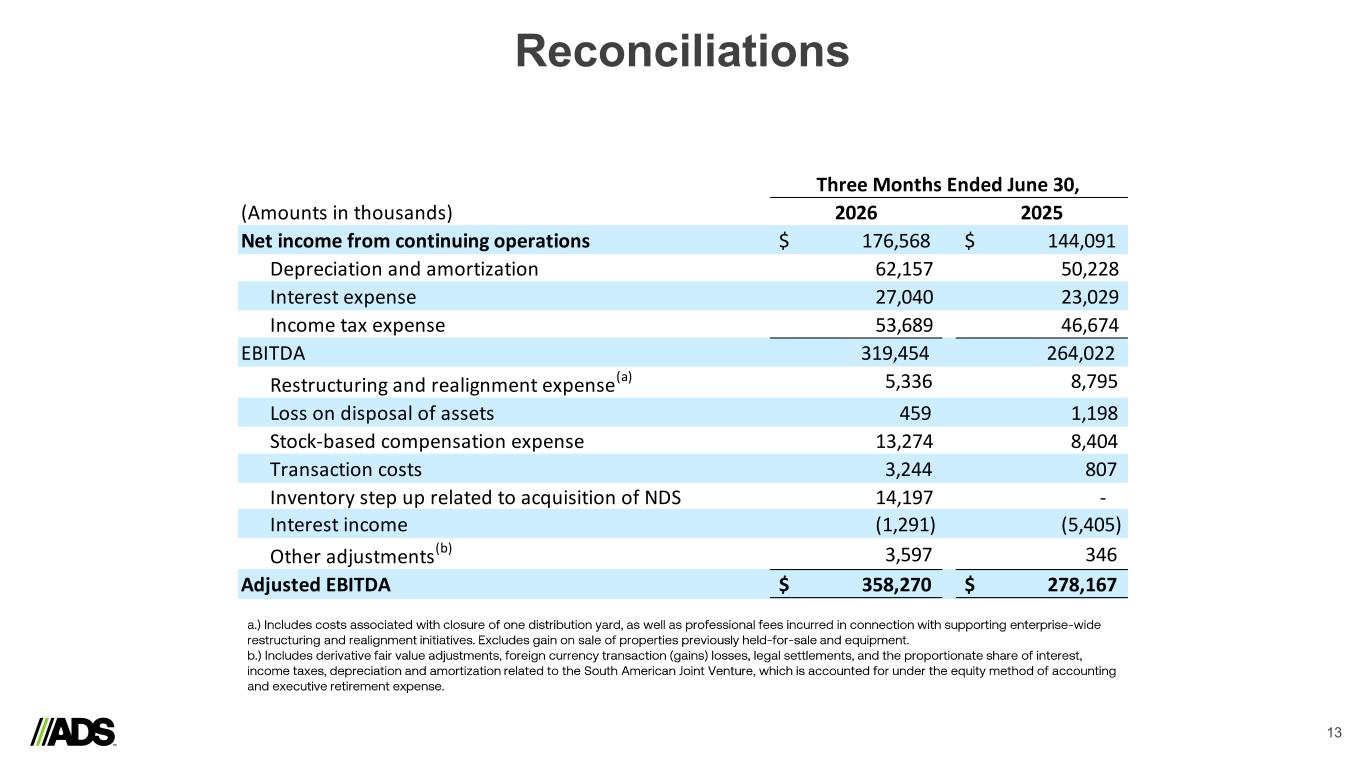
Thank you, Mike. Good morning, everyone. Before I begin, I want to thank everyone who made the trip to Ohio for our Investor Day in June. It was a great opportunity to showcase our Engineering and Technology Center and highlight what makes ADS a unique and compelling investment opportunity. At Investor Day, we focused on four key themes that continue to guide our strategy. First, ADS is a pure-play water company, serving attractive end markets, supported by powerful, secular tailwinds, including aging and under-built infrastructure, more frequent and intense storm events, and the growing need to protect and manage water, the world's most precious resource. Second, we highlighted our differentiated growth strategy. Material conversion remains an important driver and key component of our growth, and we continue to focus on innovation, new product introductions, strategic partnerships, distributor programs, and disciplined acquisitions to further differentiate the company. Third, we built a resilient platform that delivers industry-leading profitability and strong cash generation across a variety of market conditions. And finally, we remain committed to disciplined capital allocation, reinvesting opportunities that strengthen our competitive advantages and create long-term shareholder value. Simply put, if we continue to grow faster As we know that we are more than our markets, generate strong profitability and cash flow, and reinvest that capital wisely, we believe that's a winning formula for ADS and our shareholders. Now shifting to the quarter, the first quarter results reflect strong performance as the team continued to execute well despite the tepid demand environment. For the first time ever, we recorded over a billion dollars in revenue this quarter, an increase of 21% versus the prior year. Organic revenue increased 9%, driven by growth across both the stormwater and wastewater segments. Adjusted EBITDA increased 29% to $358 million, resulting in an adjusted EBITDA margin of 35.8%, which is among the most profitable quarters in our history. The impressive results reflect our diversified portfolio, Discipline management of price costs, material conversion initiatives, and operational execution that once again enabled us to deliver strong financial performance. The quarter developed largely as we anticipated when we entered the fiscal year, and the first half of the year is developing as expected. We estimate there was approximately $25 to $30 million of revenue pulled into the first First quarter from the second as customers try to get ahead of price increases. Ultimately, we expect the first half of the year to have normal seasonality representing 55 to 60% of revenue. However, the normal first and second quarter revenue patterns will be affected by this pull ahead. So, if you take the 95 million, so if you take the $95 million of revenue As we know from NDS, and assume approximately $25 to $30 million was pulled forward, we still reported strong mid-single-digit organic growth. Sales in the nonresidential market were strong, increasing 14 percent on an organic basis. Activity in commercial construction and large projects, including data centers and warehouses, remains resilient. Residential market sales increased The challenges in residential construction are well-documented as affordability pressures I'd like to highlight the stormwater storage category, Within our allied products, which grew 18% in the quarter, and is an excellent example of when we do our strategies well. We continue to introduce new products in our core StormTech Chambers product line, acquired Coltac, a complimentary Chamber line, and we established a partnership to bring Aquabox plastic crates to market in the U.S. for applications with a tighter footprint. And we wrap that with industry-leading digital design tools that easily enable engineers to design and specify these storage products. Another great example of this is the wastewater segment, where revenue increased 8%, significantly outperforming the underlying residential market. Growth was driven by new tank products and expanded distribution, as well as growth in our market-leading advanced treatment products. We're very pleased with the performance of NDS. Their performance and the integration activities continue to progress well. We are increasingly excited about the long-term opportunities to cross-sell products, broaden customer relationships, and expand participation in both irrigation and retail channels. NDS delivered another strong quarter and continues to validate the strategic rationale behind the acquisition. We continue to operate under the strategy of recovering inflationary costs on a dollar-for-dollar basis. Transportation costs remain significantly elevated, driven by higher diesel and common carrier costs. The cost of materials procured in the quarter was significantly higher on a year-over-year basis, though the first quarter profitability reflects material procured in the prior year at a favorable cost. Another lever we use to offset higher material costs is increasing the use of recycled materials, a strategy we accelerated in late February as raw material costs began to rise and the spread between recycled and virgin material widened. Of note, the expansion of our Cordial Georgia recycling facility is nearing completion. This expansion significantly enhances both processing capacity and operational capability in a high-growth region, transforming the facility into a fully integrated recycling plant capable of producing finished materials. The design of this facility reduces material movement, streamlines production flow, and enhances process control throughout the manufacturing Upon full ramp up, we expect Cordill to be the benchmark for recycling performance within the ADS network. The facility will deliver industry-leading cost efficiency, improved quality and consistency, and superior operational performance, strengthening our recycled material supply chain, supporting our long-term growth and margin improvement. Our operational initiatives continue to produce tangible results. Over the last several years, we have invested heavily in production efficiency, automation, logistics capabilities, and service levels at both ADS and Infiltrator. Those investments continue to improve productivity, support customer service, and strengthen our competitive position. The benefits of those actions remain evident in our profitability, cash generation, and ability to serve customers across a broad range of in-markets. Overall, we are pleased with the start to the fiscal year and believe our results reinforce the strength of the ADS business models. The long-term fundamentals supporting our business are stronger than ever. As we discussed at Investor Day, we are a pure play water company operating in attractive markets supported by powerful secondary tailwinds and the growing need for advanced water management solutions. These trends continue to play directly to the The strength of our portfolio and position us for the long-term growth. Our differentiated growth strategy continues to set ADS apart. While material conversion is a core business driver, we are increasingly creating growth through innovation, new product introductions, strategic partnerships, expanded distribution programs and acquisitions. As we look ahead, our priorities are clear, execute against the initiatives within our We continue to leverage our resilient platform to generate strong profitability and cash flow across a range of market conditions. We remain committed to disciplined capital allocation, reinvesting in opportunities to strengthen our competitive advantages, strategic acquisitions, and return capital to shareholders through dividends and opportunistic share repurchases. While we expect the demand environment to remain tepid, the inflationary cost pressure is dynamic. We are confident in our team's strategy and ability to continue delivering profitable growth and sustained value on our shareholders. With that, I'll turn the call over to Scott Cottrell.
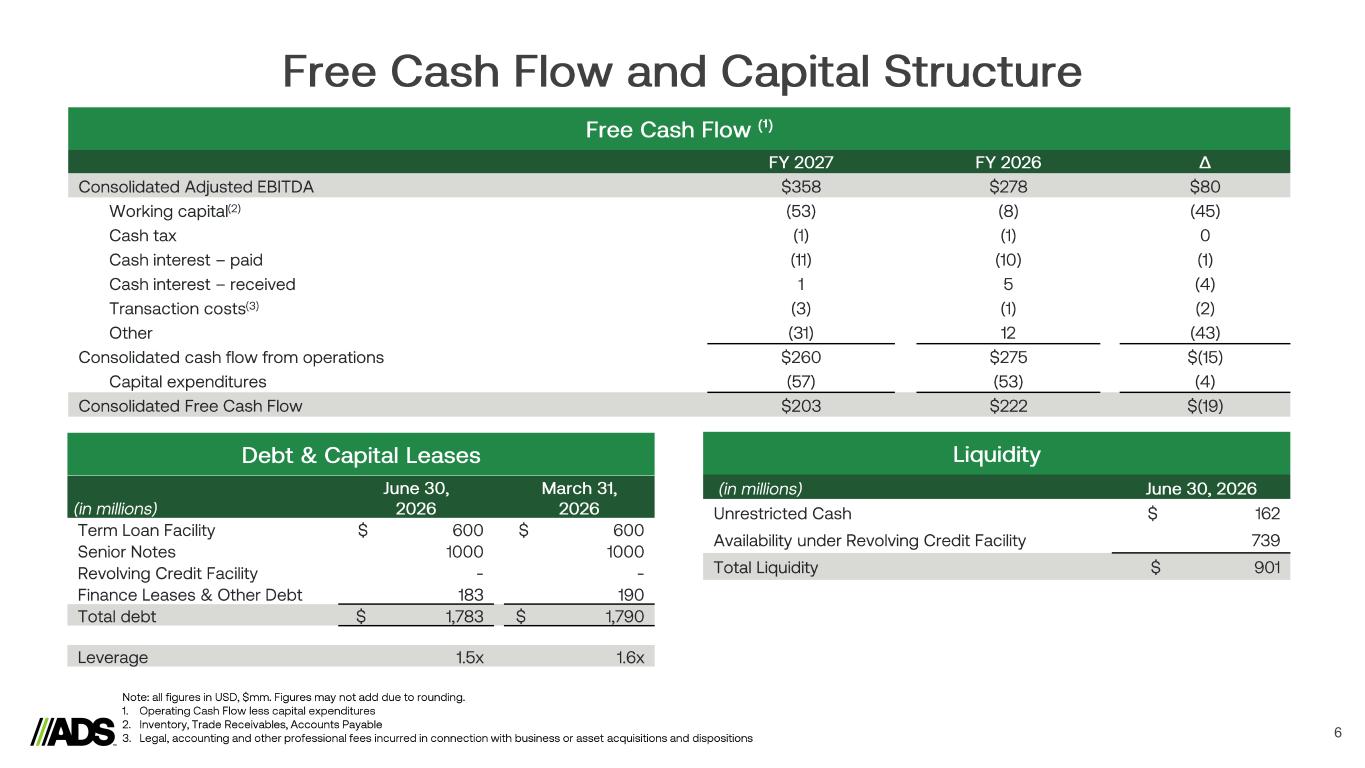
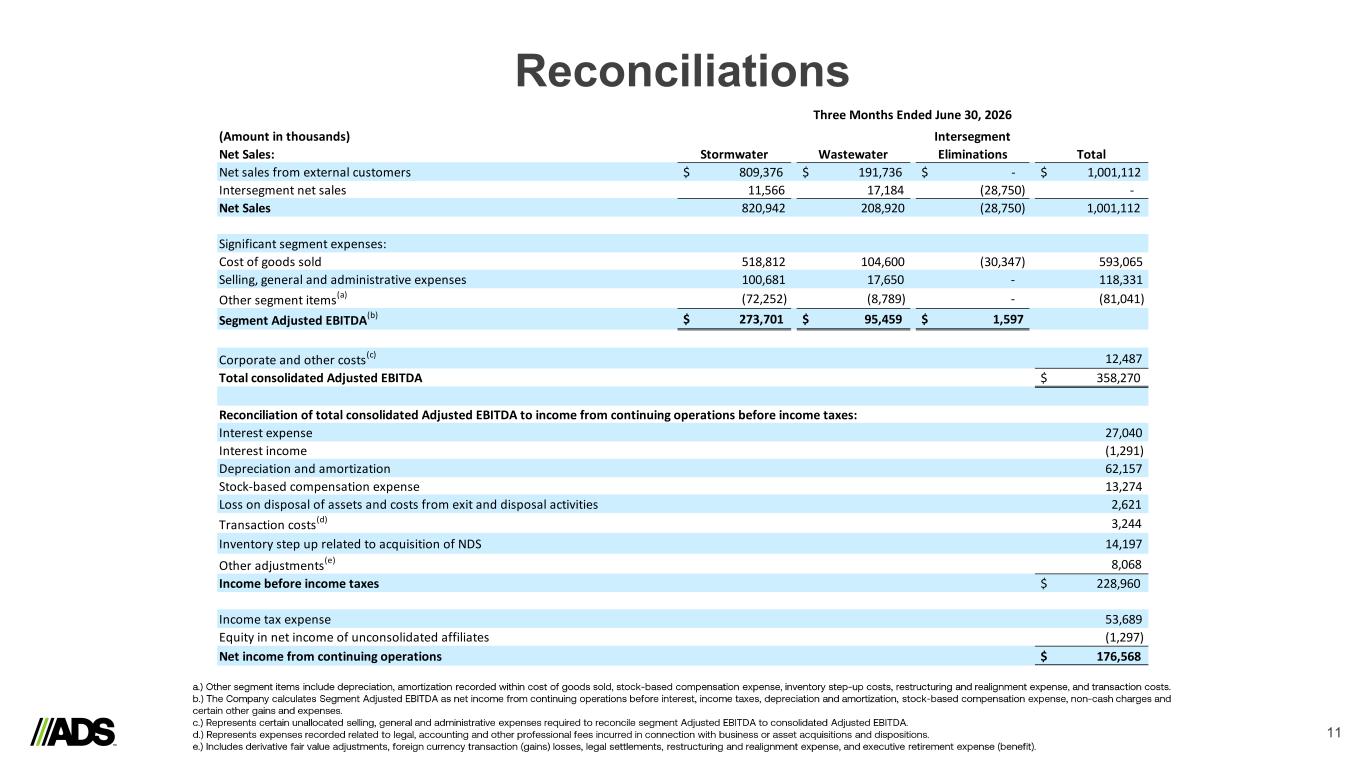
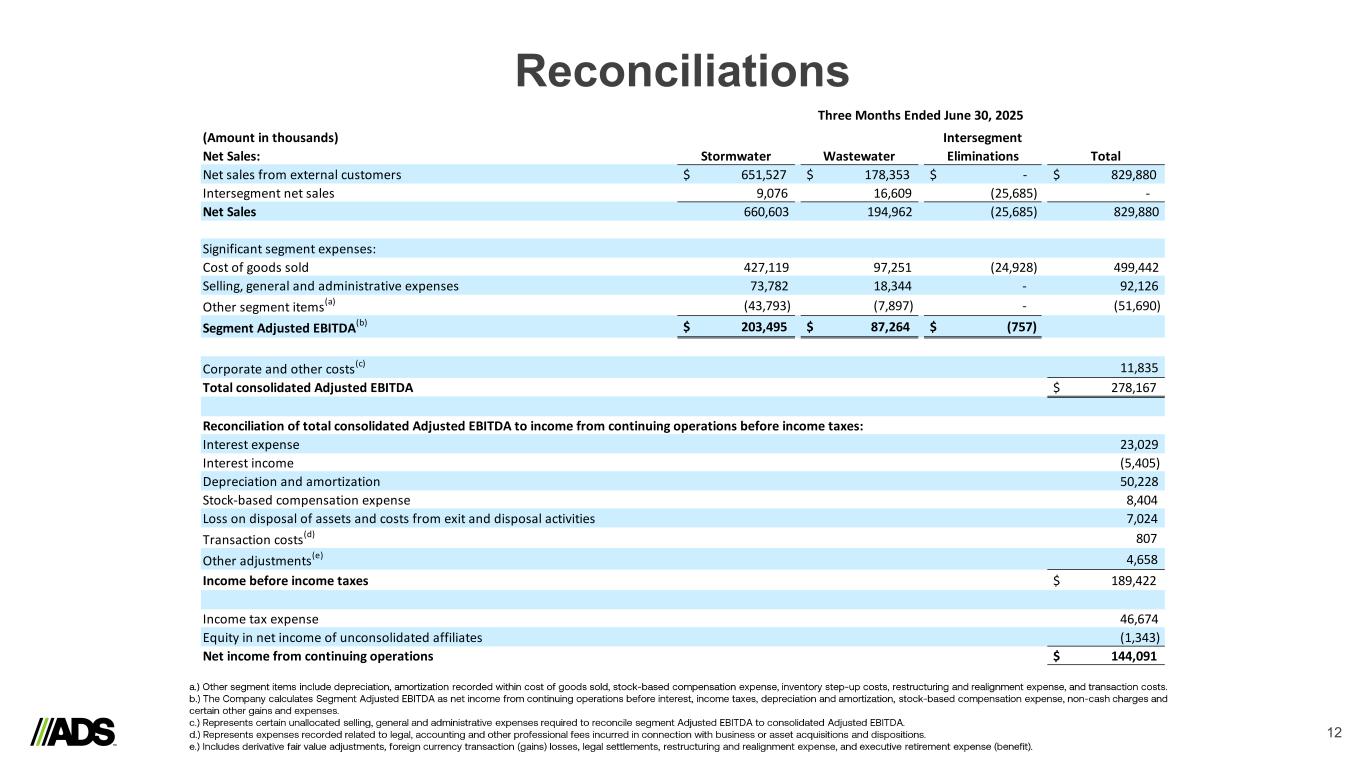
Thanks, Scott. Turning to the first quarter financial performance, net sales increased 21% to $1 billion. Excluding the impact of NDS, organic sales increased 9%, and adjusting for the pull ahead, revenue grew mid-single digits. That mix of growth is the ADS model at work. First, we grow faster than our end markets organically, and second, we leverage strategic acquisitions, such as NDS, to compound such growth. Stormwater revenue increased 24% to $809 million, as compared to $652 million in the prior year. On an organic basis, stormwater sales increased 10%, driven by growth in both pipe and allied products. Wastewater revenue increased 8%, driven by double-digit growth in both tanks and residential advanced treatment. Importantly, we continue to outperform our underlying ANN markets during the quarter, reflecting the benefits of our diversified product portfolio and our material conversion strategy. Adjusted EBITDA increased to $358 million, resulting in an adjusted EBITDA margin of 35.8% as compared to 33.5% in the prior year, an increase of 230 basis points and the second highest in the company's history. Several factors helped drive the strong performance during the quarter. Strong organic volume growth, especially relative to our underlying markets. The contribution from the NDS business, which also grew year over year in a challenging market. The $25 to $30 million pull ahead from customers trying to buy ahead of price increases, as well as good execution on our commercial strategies, including the timing benefit realized from implementing pricing actions ahead of higher material costs. Moving to cash flow. Free cash flow for the quarter totaled $203 million. Cash generation remains a core strength of the business and reflects both earnings performance and disciplined working capital management. We ended the quarter with net leverage of approximately one and a half turn, below our target of two times, and had available liquidity of approximately $901 million. We expect to spend approximately $200 million in capital expenditures this fiscal year as we close out the Cordillo expansion and invest in automation and additional capacity at our infiltrator business. Our capital allocation priorities remain unchanged. Invest organically in areas such as growth and new products, material science and blending capabilities, as well as automation and productivity. Pursue strategic acquisitions, and finally, returning excess capital to shareholders through our quarterly dividend and share repurchase authorization. We remain extremely well positioned financially and continue to maintain significant flexibility. Moving to guidance, we continue to expect net sales of $3,350,000,000 to $3,550,000,000 and adjusted EBITDA of $1,000,000,000 to $1,050,000,000. While our first quarter performance was strong, we continue to operate in a challenging environment characterized by inflationary cost pressures and fluctuating raw material costs. From a market demand perspective, the non-residential market is performing modestly better than we had anticipated, while our residential and market demand is performing modestly worse. As we look to the remainder of the year, we still expect normal first-half to second-half revenue patterns with 55% to 60% of revenue in the first half of the fiscal year. In addition, while material costs were a benefit in Q1, they will be a significant year-over-year headwind for the remainder of the year. We also expect the higher transportation costs we experienced in Q1 to remain significantly elevated throughout the remainder of the year. And finally, we continue to expect our pricing initiatives to offset inflationary cost pressure on a dollar-for-dollar basis for the full fiscal year. In summary, we delivered a strong start to fiscal 2027 through disciplined execution and effective price cost management. We remain confident in our strategy, focusing on the four core themes that Scott initiated or mentioned a minute ago. Our unique position as a pure play water company serving markets supported by long-term secular demand drivers. Our differentiated Our resilient platform, which enables us to deliver industry-leading profitability and strong cash generation across a variety of market conditions, as evidenced by our 35.8% EBITDA margin and $203 million of free cash flow we delivered this quarter. And finally, our disciplined approach to capital allocation, as we invest in the highest risk-adjusted return opportunities available to us, while maintaining a strong balance sheet and creating long-term value for our shareholders. Taken together, these four pillars give us confidence in our ability to continue delivering profitable growth, strong cash flow generation, and compelling shareholder returns over the long term. With that, operator, please open the line for questions.
We will now begin the question and answer session. Please limit yourself to one question and one follow-up. If you would like to ask a question, please press star one to raise your hand. To withdraw your question, press star one again. We ask that you pick up your handset when Asking a question to allow for optimum sound quality. If you are muted locally, please remember to unmute your device. Please stand by while we compile the Q&A roster. Your first question comes from the line of Matt Boulay with Barclays. Your line is open. Please go ahead.
Morning, everyone. Thank you for taking the questions. I'll start off with a question on On the guide, picking off there where Scott C. finished. So you mentioned the cadence of revenues. My question is on the cadence of EBITDA. I think I heard you say that raws were a tailwind and they're going to become a headwind moving forward. So could price costs actually become sort of temporarily negative as a result and kind of thinking about, you know, how that occurs and the timing of when price and costs would match? And so is there any kind of resulting cadence to the EBITDA margin specifically that you can speak to? Thanks.
Hey, Matt. Scott C. Yeah, absolutely. You should think about it that way. So normally, based on seasonality, product mix, our Q2 is normally 300 basis points EBITDA margin-wise below Q1 on a sequential basis. I would expect this year to be worse than that. So that is exactly the right way to think about it. If you look at the EBITDA bridge that we had in the first quarter on a year-to-year basis, again, as we mentioned, you had favorability in that price-cost bar from both pricing and that FIFO role of our inventory costs. So we still had favorable resin costs that we experienced on a year-to-year basis in the first quarter. That will flip on us as we go into Q2. We're still getting the pricing, and we'll still see that sequential. It's just going to be the cost side of the house. And it's like we said, that's the resin coming at us in Q2 that we didn't have in Q1, but we also have those transportation costs that were very much a headwind for us here in the first quarter, and they'll remain that way as we go through the rest of the year.
Okay, perfect. No, that color is exactly what I was looking for, so thank you for that. And then, secondly, NDS, you said 95 million in sales. I think I heard you say that maybe organically they were up year over year. Question is, I mean, what does June quarter seasonality typically look like for them? You know, because 95 would seem like it annualizes to a large number, but maybe this is typical of them. And obviously, what I'm getting at is, you know, you mentioned the organic growth. Are you seeing kind of early wins on cross-selling or revenue synergies? And just more broadly, how is that initial integration going? Thank you.
So, Matt, this is Scott B. Their highest quarter is the quarter we just completed, and we are still learning their seasonality, but we're obviously working with that team to kind of see what the patterns are. So, you can't just annualize that quarter, although it was good quarter for them. Their performance has been quite good. We are seeing some, I'd say a lot of opportunities that we're working on the cross-selling. I don't think we're kind of generating, you know, tremendous amounts of revenue, you know, day in and day out on that. But we've definitely got them in sight and have people on the ground working those. And we have also had very good work with them on cost, cash flow, you know, just kind of all the different things that you know well about our team here that we're working. And they're right in there with us in a very, very solid two days. They were here over the board meeting the last couple of days, a very solid two days with them on all these topics. So I would say not yet, but their performance is giving us every indication that those future activities like cross-selling are going to be winners for us.
Your next question comes from the line of Mike Halloran with Baird. Your line is open. Please go ahead.
Hey, morning, everyone. Why don't we start off where you left off there on the NDS piece? Maybe just kind of cadence how you're thinking about what the steps look like in the short term on any kind of facility work or restructuring work or internal improvement work that you're doing, both kind of this year and then into next year, and how those are going to start cadencing out for you.
So, this is Scott Bede, Mike. There are, I would say, a couple of small facility types of things that are pretty much complete, you know, that are certainly additive to our synergy and integration activities right now. And some of that will be showing up in their profit statement going forward. The bigger one doesn't occur. You know, it's more of a next year program that we will see the effects of that. That's a much bigger one that we're working on. And then I think right behind that, from a facilities, you know, kind of capex spending, we kind of get facility type stuff out of the way between now and the end of this calendar year. Once we get those behind us, we start to work on some automation things, which would be kind of conversion costs related. And then we have a very good program to find with them on working capital and cash. I mean, those are really some big priorities with us right now, Mike, as well as setting up the cross-selling. I mean, you know, to get that cross-selling going, you got to establish some back office practices. You got to get people trained up. You got to get in front of customers. And that has all kind of occurred. And now we're doing some trial geographies at the beginning of this month. So, I'd say our first six months with them, starting in February, have been pretty busy, and it's good to, you know, like I told them, I mean, you're off to a great start, and let's keep going.
Yeah, Mike, I think, you know, they've benefited from kind of coming under the ADS umbrella and having more resource, you know, maybe help them operate. We clearly look at things differently in the prior order.
Yeah. Yeah, no, that makes sense. And then the second question, I think, Scott, you referenced non-res, maybe tracking a little better than you thought. Maybe just talk about some of the reasons why what you're seeing that support that regional subcategory, anything that you would highlight.
I would start with the allied products. You know, our allied products, the storage products, which I kind of went a lot into there and the range of solutions that we have in our storage products today are really kind of just market leading by far. And I think we're winning new business in that category. Our capture products, still, again, that Nyloplast product line, that Duracell product line. We can sell well. We haven't even gotten to the, you know, the really good cross-selling yet with the NDS products there. Our fittings had a good month, made a good quarter. You know, that was pulled along with some of the buy head and the pipe strength. Our water quality products, we continue to get new approvals and new jurisdictions. So, I think we've said many times in the past that the allied products vary vectored to the non-res segment, and the strength of our portfolio there, the programs that we're running in that, I think are just really winning. Data centers, warehouses, institution work, you know, that all continues to go kind of well. It is not broad-based geographically. You know, it is certain geographies that are doing well. And our quoting activity is good in this area, the non-residential area. And so, I think, Mike, you add any color to that?
No, I think you hit it. I mean, I think, you know, when we look through kind of the sub-projects under non-residential, we saw pretty steady growth across just general-purpose commercial. You know, warehouses have continued to, you know, kind of improve on a year-over-year basis. The data centers, institutional construction is usually pretty steady, and that's been good. But, and again, you know, programs, we have a very high focus selling the package, you know, better performance there. And, you know, like Scott said, you know, geographically, it's a little kind of all over the place. But, you know, there's, when you think about kind of the West has some strength in certain states, you know, Texas was good this quarter. The Northeast was pretty solid in some states. The Midwest had some positive ones. You know, it's just a couple of places, you know, like California, Florida have been a You're a little soft, right, and you're over your basis, but I think we definitely think we're outperforming the markets and doing well, and that's…
Your next question comes from the line of John Lovallo with UBS. Your line is open. Please go ahead.
Morning, guys. Thanks for taking my questions as well. I think in the past, you've talked about having 30 days of raw mats inventory, about 60 days of finished goods. You know, with that in mind, I mean, resident costs certainly spiked earlier in the year, but they have come back in quite a bit over the past few months. And I think, you know, you've talked about input costs remaining elevated through the remainder of the year. But I guess, you know, I'm curious as to when you think the lower or the reduced input costs will start flowing through. I mean, is that more of a next year phenomenon or could that hit later in this fiscal year?
Yeah. Hey, John, Scott C here. You're correct. I think the peak on the resin side is definitely going to be Q2, Q3, based on what we know today and the procured and what we see on the balance sheet. So really good visibility there. It's still going to be elevated in Q4, but not at the level that we expect in Q2 and Q3. So that's number one. Transportation will be the next part of that conversation. But again, those rates and everything else we're seeing are going to be there. Now, our internal fleet helps us hedge that, and 70%, 75% plus is done internally on our fleet, which is a great mitigation factor against that external CC and what we see going on there, but that's still going to remain elevated. It was elevated in the first quarter. As you can see in our EBITDA bridge, it's going to be that way through the rest of the year.
I want to add, this is Scott Barber, John. One thing to that is, and you're correct, you know, it spiked high, kind of came off a bit, but it is still significantly over where it was a year ago to procure that material. So I just don't want to lose sight of that, that it's been very dynamic, but it's still above the prior year materials costs. It's still above the prior year on the transportation costs.
Gotcha. Okay. And then, you know, in terms of the $25 million to $30 million of sales that were pulled forward from the second quarter into the first quarter, how should we sort of think about the split between stormwater and wastewater? And then, you know, were there any end markets in particular where this is most pronounced?
I would say primarily stormwater. Absolutely, there was a little bit in wastewater as well. But I mean, we saw it across the board. I mean, the price increases, there were multiple in certain cases. We took it across the board, every business unit, both segments. So again, you'd see a little bit of that in each one of those. But on a dollar basis, primarily, you'd see the largest piece of that being in stormwater.
I mean, it's proportional.
And from an end market, it's probably more non-residential.
Your next question comes from the line of Brian Blair with Oppenheimer. Your line is open. Please go ahead.
Thank you. Good morning, everyone. We know that your team has had to be pretty aggressive with price actions. I think you framed last quarter that most of it would hit in Q2. Yeah. To level set, I was wondering if you'd be willing to disclose Q1 price and what you're contemplating for Q2 and back-ass price realization.
So it's kind of the sequential pattern of pricing.
Yeah. So what I'd say is absolutely we got the pricing into the market fast. We always talk about getting that into the market 30 to 45 days before the resin hits us. So success there. As we look at Q2 and we progress through the year, obviously, we're going to match those inflationary cost pressures on a dollar-for-dollar basis. So, what you'll see in Q2 is largely kind of that pricing kind of remain at that level. And then as we go through the second half of the year, then we'll adjust accordingly based on what the inflationary cost pressures we have forecasted and what we're seeing. So, again, Q2, we'll see the pricing that we got into the market in the Okay, understood.
I believe you mentioned that advanced treatment continued to grow double digits in the quarter, but one, am I correct? Did I hear that correctly? And what kind of growth does your team anticipate from advanced treatment going forward? Obviously, you have pretty healthy comps that you face there. And I suppose the same question on engineered systems. That's smaller now, but it seems like a pretty compelling opportunity. for your team, at least through more of like a medium-term lens. Just curious how impactful that may be to fiscal 27.
Warren, Brian, this is Craig. Yeah, advanced treatment continues to be strong on the residential side for us. With the synergies between Aranko and Infiltrator, that's been an opportunity for us on the advanced treatment side. And then when it comes to Infiltrator, we launched a new product, which was our edge product in the residential market. Which was very healthy throughout the first quarter with that launch, so that continues to be strong for us in addressing the needs out in the market. And as we look forward, the engineered systems is an opportunity for us. As we look at that and serving the market as it moves forward, especially under the Renko business, we combine that with the infiltrator business to grow that segment. It's a small segment, but a segment that we're looking to grow as we move forward.
And investing in. And investing in from both an organization and capacity, both Louisiana and in Oregon. So, we like that market. You're right, Brian. We like that market a lot.
Your next question comes from the line of Jeff Hammond with KeyBank Capital Markets, Inc. Your line is open. Please go ahead.
Hey, good morning, guys. Good morning. Just on the price, you know, I think you said price is going to be similar 2Q versus 1Q, so I'm just trying to understand better, you know, why you had to pull ahead if pricing was kind of already in, because I was under the impression price would step up, but maybe just clarify.
So, Jeff, why don't you ask it again? What's the question?
Well, you're saying the pricing isn't going to step up in 2Q, so I'm just wondering, you know, why the early buy or pre-buy?
It's because, you know, we had good visibility to what's coming at us. Again, we see the resin on our balance sheet. We also know what we're procuring at in April, May, and June. So we had, in some cases, multiple price increases that went out. And again, we tried to get in front of it. And again, we succeeded and got that in front of us. So we've got the pricing in place, and anticipating of the costs that are coming at us, those costs, again, based on our FIPA rule and how they come out of the balance sheet, are going to hit us. It's going to be Q2, Q3, as well as Q4, but the peak of it, like we just talked about, will be Q2 and Q3. And again, the pricing's in place. And so we've got it in place in advance. Are we going to go up with new price increases? No, but in certain geographies, products, if we need to, absolutely we will, and we're also managing the transportation cost. So the takeaway is we got in front of it, right, and that's what we try to do, and then basically now we're going to continue it as we go through the first half of the year, but in Q2, what's going to be different is we've got a lot more resin cost coming at us than we did in the first quarter, and that's hence the margin conversation, right? We typically have, based on product mix and seasonality, kind of a 300 kind of basis point degradation in sequential margins between Q1 and Q2. It'll be a little bit worse than that this year based on the magnitude of those resin costs coming at us. And again, transportation costs will stay elevated at the rate they are. But again, we have a good forecasting SNOP process. We've got the pricing in place to offset those costs on a dollar-for-dollar basis. We just happened to get them into the market and start getting them earlier than the cost hit us.
Okay, that's helpful. I'm trying to better understand maybe the outgrowth. You gave the growth rates like non-res, res, infrastructure, ag. I think that includes NDS and includes the pull forward. Is there a way to think about how those markets grew for you, X, maybe the pull forward and X NDS?
I think that's the wrong.
Yeah, so what we talked about, Jeff, was 21% at the total consolidated level, revenue up year-over-year. We talked about organically, excluding NDS, being up 9%. And then we talked about if you take the $25 to $30 million to pull ahead out, that 9% organic would have been more like mid-single digits. Now, to give it to you by end market, I think Scott and Mike answered the question earlier, where a lot of that pull ahead we saw was in the non-res side of the house. So that's the way I would look at it. I think it's proportional with a little bit in the resi side.
The wastewater, I think it's proportional.
Your next question comes from the line of Trey Grooms with Stevens. Your line is open. Please go ahead.
Hey, good morning, everybody, and thanks for taking my question. Kind of just as a follow-on to the last one there, as you guys were commenting, you know, the kind of the outperformance or market outperformance, it sounds like it's, you know, a lot of that's kind of non-res related. As we look in the back half and you kind of look at, You know, kind of the, I don't know if you want to call it backlog of activity out there on non-res. Is it still your thought that you should kind of, you know, continue to outpace at a similar kind of rate as what we saw in the first quarter or anything to call out there?
Yeah, Trey, hey, Mike Higgins, I think we'll still continue to outperform the market. But to say, like, you know, we're going to continue to be kind of up 18%, 19% is a little bit of a stretch. But, you know, I think, you know, we'll continue to see growth. You know, maybe it's kind of closer to, like, kind of what we said, like, kind of mid-single-digit. More like last year. Yeah, more like last year. That's kind of what we expect for the year to unfold. Yeah, we don't really see any kind of, you know, significant weakening in demand from where we are today, you know, but we did see kind of mid-single-digit volume kind of hold in there, right?
Yep. Yep. That was the number I was referring to is the mid-single digit kind of stripping out all the other. That makes sense. And then, so, you know, understanding, you know, we're in an inflationary environment, but, you know, free cash flow, you know, should still be good this year. CapEx still looks like it's going to be down year over year, despite, you know, some of these internal kind of growth projects that you have. But you've got NDS integration underway. You know, you bought back a pretty good slug of stock in the quarter. So how are you balancing, you know, buyback with any potential M&A in this environment, you know, and, you know, as you're integrating the large NDS acquisition that we keep that in mind? Just curious, you know, update on your appetite for M&A versus buyback here, given the cash flow backdrop.
Well, it was a big slug of stock we bought back. But there was severe dislocation during the quarter and volatility during the quarter. So as you guys all know, we buy against the grid. We'll continue to work that same strategy. We continue to look at opportunities. We're one and a half time levered. Even though we bought back all that stock, we spent a fair amount of capital. I think it was $57 million worth of capital. We'll spend all that capital this year on Craig's business, completing the Building 7 expansion, doing a couple of NDS things. We've got Cordill to complete, which is largely complete. But we feel like we have the capacity to continue to look at things, and we'll do that. So I wouldn't say we're standing on the sidelines, Trey. How's that?
Yeah, I mean, what I'd add to Scott's point, like we talked about in Investor Day, highest risk-adjusted return opportunities. So, again, we continue to look organically to all the items that Scott mentioned as kind of our highest return, lowest risk use of capital, acquisitions followed close therein. It's great. We've got a very robust process and always looking at the funnel. It also comes down to some actionability as well within there. But we'll always look at strategic first, and then financial has to obviously be there for us to move forward. But we're one and a half times levered. Our target is two times leverage, right? So we've got plenty of firepower, capability, capacity, and flexibility. And again, when it makes sense and we have dislocation and we're sub-two times levered, that excess cash, if there's nothing actionable within the strategic acquisition funnel, then absolutely we'll buy back shares like we did in the first quarter.
I mean, it's a big number, almost $250 million, including the dividend return to shareholders in the first quarter.
Yeah, a million and a half shares were repurchased.
Your next question comes from the line of Jeff Reeve, RBC Capital Markets. Your line is open. Please go ahead.
Good morning, everyone. With the $25 million to $30 million pre-buy headwind baked into the second quarter and peak material inflation in the quarter two, is there a scenario where the second quarter margins compress below 30% or do you think you have enough offsets in place to hold that line?
Yeah, like we said earlier, definitely the way I like talking about it is our sequential margin performance. Again, based on product mix, seasonality, typically we see around a 300 BIP degradation in our margins between Q2 and Q1 sequentially. Based on the resin that we expect to come at us, it'll be more exasperated or a greater spread sequentially than 300 BIPs. So that is the way to look at it.
Okay, got it. And then now that your new recycling facility in Georgia is operational, can you give us a sense of maybe throughput, how it's tracking relative to capacity, how quickly it's contributing to your recycled resin mix, and is the facility ramping fast enough to provide that meaningful offset to inflation next quarter, or is that more of a second-half story?
The answer to your last kind of state question is yes. It is contributing to mitigation of material costs already. It is ramping up now, so we're not at full production. That'll take several months to do. I was down there a couple of weeks ago. We have nice supply coming in there. All the equipment is up and running. The blending is up and running. We're filling silos. We're waiting for our rail car spur to be approved and activated. It's all kind of installed. Team is fired up, as always, down there. But the bottom line is that it's meaningfully will contribute to our material cost mitigation strategies this year. It will not be at full capacity yet this fiscal year, but will reach full capacity next year. But I can tell you, no one's going to work harder to get there faster than Bobby and his team down there. We're really proud of what they're doing.
Just a reminder, if you would like to ask a question, please press star 1 to raise your hand. Your next question comes from the line of Colin Burnin with Deutsche Bank. Your line is open. Please go ahead.
Good morning. Thanks for taking my question. I just want to follow up on the recycling. I know you called out that you were already increasing your recycled content in February. I guess, can you get back to sort of 50% recycled content in fiscal year 27? I know it was pretty low last year. Or are there any limitations within the year that might keep you below that? And then longer term, I guess, is there upside to sort of the 50% recycled content range?
So, Scott Barber here. Yes, on high-density polyethylene, we are pivoting to get to 50% recycled again, or as kind of as fast as we can go. There's an upper limit on what we can do because some of our products require virgin, particularly for public jobs. So, yes, we've pivoted fast. That team has done a great job of procuring material, putting it through our other two, Clarion and Pandora. Facilities are up and running. Our production was up in that in the quarter. Our usage was up in the quarter. Cordill contributed a little bit. We'll continue to contribute more and more. What is the top number? I really don't want to kind of go down that path, but there are some limitations by regulatory limitations for certain markets and applications in some states, not all states, but we continue to work that, and that is driven by, you know, your ability to come up with the right lens from an engineering standpoint. We showed you the capabilities we have to do that on Investor Day through our Engineering and Technology Center, really those first two labs that you toured, the analytics lab and then the blending lab there, and it is, you know, how much source of supply can you find on that? And we actually have capabilities and nicely demonstrated in both of those. And then how can you ramp those facilities like a Cordeal? You know, Cordeal will have, you know, a lot more capacity than Pandora and Clarion. And then, you know, how does that kind of roll out the demonstrated technologies and capabilities we see at Cordeal? How do you back flush that into these other facilities? That's kind of a long-range thing, but material science and finding sources of supply that have in the right capacity, that's the formula.
Yeah, Colin, Mike Higgins, I mean, just for context on timing, right? It took us 10 years to get to 50%, right? So, you know, again, we've talked about this a lot. You know, when you incorporate recycled materials, you need to maintain the same quality and performance you get with virgin materials. These are in critical applications. They're going under pavement. You know, they need to perform. And maybe to add to what Scott's saying is, you know, we will work things on the high-density polyethylene side, but also, too, our two fastest-growing products are the HP pipe and StormTech chambers, which are virgin polypropylene. So, very hard at work at finding ways to incorporate recycled materials, first and foremost, maintaining them.
That's a really helpful caller. And I guess just on the transportation inflation, any callers for, like, how much of the inflation you're expecting is from diesel prices versus inflation and maybe third-party freight rates? And can you benefit from, like, a pivot back towards WMS-owned freight and any sense of how much of the help that could be would be helpful? Sure.
I think on the logistics side of the house, again, we have an economic radius that it makes total economic sense to use our fleet. Anything that's going out past that economic radius, common carrier, can be more efficient and effective to use. Diesel, absolutely, that we need to manage, but the internal fleet cost is well below what we see on the common carrier side, especially when we're dealing within that economic radius, which is the predominant percentage of what we do. Again, we manage the diesel. We do have a diesel hedging program, so we do hedge our diesel exposure. We also hedge it via using our internal fleet because of the lower cost structure that we have there versus the CC side of the house. Like I said, we try to target something greater than 70%, 75% of our shipments going out on the internal fleet. Those are all the mitigations that we'll continue to do. And that route planning and the technology that the guys have there and how we're getting better and how we do our route planning, how we do our loading, as well, a lot of investment we've had in there to improve our customer service, but as well as to lower our cost to serve in those markets when it deals, again, with loads and route planning, a lot of opportunity there. And they're already starting to get it.
It's, you know, the inflationary effects that we've had this year are kind of masking a lot of really good work we've done there to become more efficient in both our fleet and kind of our mode selections.
Your next question comes from the line of James Coe with Jeffries. Your line is open. Please go ahead.
Good morning. Thanks for taking questions here. I wanted to touch on the price cost dynamic here a little bit again. What specific rising price assumption are you kind of using in your full year guidance? And has that assumptions like changed like relative to what you kind of embedded when you initially set the like 2027 guidance back in May? And what could kind of present upside versus downside here?
Yeah, we're constantly monitoring that. And, you know, there's other mitigation as well as to the procured cost of it. It's got hit on it earlier. It's using recycled and everything else that we're doing there. So, yeah, I mean, what we're seeing coming at us is kind of what we thought was going to be the hire for longer for the entire year on a procured basis. Pretty much what we've talked to is the fact that, yes, we're going to have the peak of that resin that we procured pretty much in April, May, and June coming through at us here in the next couple quarters. And then, again, we expected that higher rate that we were procuring at to stay there through the remainder of the year, but it has come off. So, again, that is reflected in how we look at our guidance, the performance in the first quarter, and also how we look at our pricing and our return model. So, again, very dynamic, very fluid, but we have a very robust and mature model that we use to project that and stay in front of it.
Got it. Thanks for that. And I guess touching on the pricing here a little bit, How much of your current pricing is locked in, like, through, like, formal contracts or purchase order versus, like, negotiated kind of on spot? I'm just trying to understand the risk of, like, price give back if cost normalized. Yeah, any caller here would be helpful.
Our pricing is largely project-based pricing. So you could have between quote to order something like, you know, 60 to 90 days kind of lead time, and our quotes are good for 30 days. So that's the way I would think about it. But it's project-based pricing, so we have a lot of flexibility, a lot of ability to adjust or toggle.
Go ahead, Craig.
And for this, Craig, and for our business, I mean, that's something that's locked in. It's what we sell to our distributors, not pricing folds on that.
So, list price.
There are no further questions at this time. I will now turn the call back to Mr. Scott Barber for closing remarks.
All right. Thank you very much, everyone. Lots of good questions today. We anticipated a lot of price-cost questions today, so thanks for those. I'm pleased with the quarter. It's going to be dynamic as we kind of go through this first half and then the second half. And I think you guys hit on all of the different moving pieces that we're working on between the resins and the cost mitigations to recycle, the transportation costs, which are a significant rise. I recognize how we're reacting to that across the board with all of our product lines in the market, but like I said at the beginning, I mean, the fundamentals are strong. We like where we're at so far in the year, and we'll continue to kind of work towards work towards that guidance. Thank you.
This concludes today's call. Thank you for attending. You may now disconnect.
17:42 to 55:49 · One card per analyst, follow-ups included. Each plays from its start, and the one being answered is marked.
Morning, everyone. Thank you for taking the questions. I'll start off with a question on On the guide, picking off there where Scott C. finished. So you mentioned the cadence of revenues. My question is on the cadence of EBITDA. I think I heard you say that raws were a tailwind and they're going to become a headwind…
Scott Cottrill: Hey, Matt. Scott C. Yeah, absolutely. You should think about it that way. So normally, based on seasonality, product mix, our Q2 is normally 300 basis points EBITDA margin-wise below Q1 on a sequential basis. I would expect this year to be worse than that. So…
Also speaking: Speaker 5
Hey, morning, everyone. Why don't we start off where you left off there on the NDS piece? Maybe just kind of cadence how you're thinking about what the steps look like in the short term on any kind of facility work or restructuring work or internal improvement work that you're doing, both kind of this year and then…
Speaker 5: So, this is Scott Bede, Mike. There are, I would say, a couple of small facility types of things that are pretty much complete, you know, that are certainly additive to our synergy and integration activities right now. And some of that will be showing up in…
Also speaking: Mike Higgins
Morning, guys. Thanks for taking my questions as well. I think in the past, you've talked about having 30 days of raw mats inventory, about 60 days of finished goods. You know, with that in mind, I mean, resident costs certainly spiked earlier in the year, but they have come back in quite a bit over the past few…
Scott Cottrill: Yeah. Hey, John, Scott C here. You're correct. I think the peak on the resin side is definitely going to be Q2, Q3, based on what we know today and the procured and what we see on the balance sheet. So really good visibility there. It's still going to be…
Also speaking: Speaker 5, Mike Higgins
Thank you. Good morning, everyone. We know that your team has had to be pretty aggressive with price actions. I think you framed last quarter that most of it would hit in Q2. Yeah. To level set, I was wondering if you'd be willing to disclose Q1 price and what you're contemplating for Q2 and back-ass price realization.
Speaker 5: So it's kind of the sequential pattern of pricing.
Also speaking: Scott Cottrill, Craig Taylor
Hey, good morning, guys. Good morning. Just on the price, you know, I think you said price is going to be similar 2Q versus 1Q, so I'm just trying to understand better, you know, why you had to pull ahead if pricing was kind of already in, because I was under the impression price would step up, but maybe just clarify.
Scott Cottrill: So, Jeff, why don't you ask it again? What's the question?
Also speaking: Speaker 5
Hey, good morning, everybody, and thanks for taking my question. Kind of just as a follow-on to the last one there, as you guys were commenting, you know, the kind of the outperformance or market outperformance, it sounds like it's, you know, a lot of that's kind of non-res related. As we look in the back half and you…
Mike Higgins: Yeah, Trey, hey, Mike Higgins, I think we'll still continue to outperform the market. But to say, like, you know, we're going to continue to be kind of up 18%, 19% is a little bit of a stretch. But, you know, I think, you know, we'll continue to see growth.…
Also speaking: Speaker 5, Scott Cottrill
Good morning, everyone. With the $25 million to $30 million pre-buy headwind baked into the second quarter and peak material inflation in the quarter two, is there a scenario where the second quarter margins compress below 30% or do you think you have enough offsets in place to hold that line?
Scott Cottrill: Yeah, like we said earlier, definitely the way I like talking about it is our sequential margin performance. Again, based on product mix, seasonality, typically we see around a 300 BIP degradation in our margins between Q2 and Q1 sequentially. Based on the…
Also speaking: Speaker 5
Good morning. Thanks for taking my question. I just want to follow up on the recycling. I know you called out that you were already increasing your recycled content in February. I guess, can you get back to sort of 50% recycled content in fiscal year 27? I know it was pretty low last year. Or are there any limitations…
Speaker 5: So, Scott Barber here. Yes, on high-density polyethylene, we are pivoting to get to 50% recycled again, or as kind of as fast as we can go. There's an upper limit on what we can do because some of our products require virgin, particularly for public jobs. So…
Also speaking: Mike Higgins, Scott Cottrill
Good morning. Thanks for taking questions here. I wanted to touch on the price cost dynamic here a little bit again. What specific rising price assumption are you kind of using in your full year guidance? And has that assumptions like changed like relative to what you kind of embedded when you initially set the like…
Scott Cottrill: Yeah, we're constantly monitoring that. And, you know, there's other mitigation as well as to the procured cost of it. It's got hit on it earlier. It's using recycled and everything else that we're doing there. So, yeah, I mean, what we're seeing coming at us…
Also speaking: Speaker 5, Craig Taylor
SEC filing · Item 2.02
Filed Aug 6, 2026 · complete as-filed document
SEC periodic report
Filed Aug 6, 2026 · complete as-filed document