Operator
Good morning and welcome to Dana Incorporated's second quarter 2026 financial webcast and conference call. My name is Regina and I will be your conference facilitator. Please be advised that our meeting today, both the speaker's remarks and Q&A session will be recorded for replay purposes. For those participants who would like to access the call from the webcast, please reference the URL on our website and sign in as a guest. There will be a question and answer period after the speaker's remarks and we'll take questions from the telephone only. To ensure that everyone has an opportunity to participate in today's Q&A, we ask that callers limit themselves to one question at a time. If you'd like to ask an additional question, please return to the queue. At this time, I would like to begin the presentation by turning the call over to Dana's Senior Director of Investor Relations and Corporate Communications, Craig Barber. Please go ahead, Mr. Barber.
Thank you, Regina. Good morning and welcome, everyone, to our second quarter earnings call for 2026. Today's presentation includes forward-looking statements about our expectation for Dana's future performance. Actual results could differ from what we discussed today. For more details about the factors that may affect future results, please refer to our disclaimer and safe harbor statements found in our public filings and our reports with the SEC. You will find this morning's press release and presentation posted on our investor website. As stated, today's call is being recorded and the supporting materials are the property of Dana Incorporated. They may not be recorded, copied, or rebroadcast without our writ consent. With us this morning is Dana Chief Executive Officer Byron Foster and Timothy Kraus, Executive Vice President and Chief Financial Officer. Byron, I'll turn the call over to you.
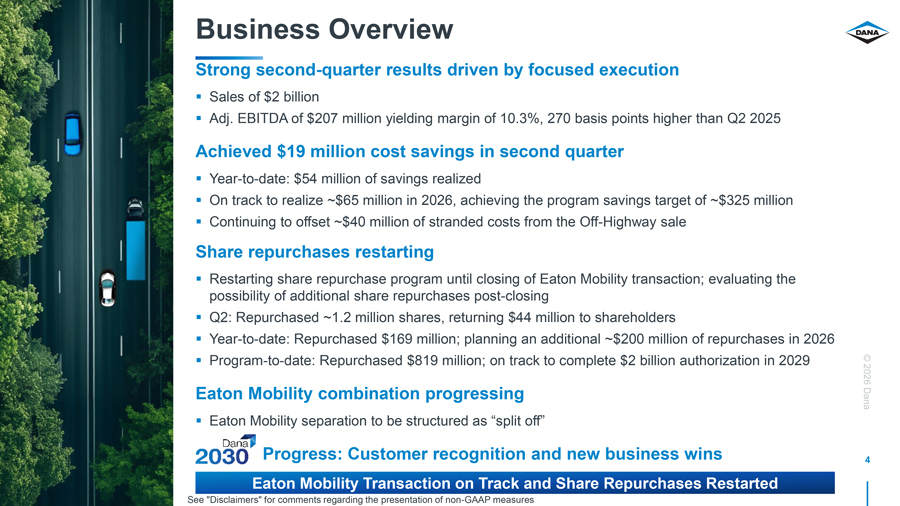
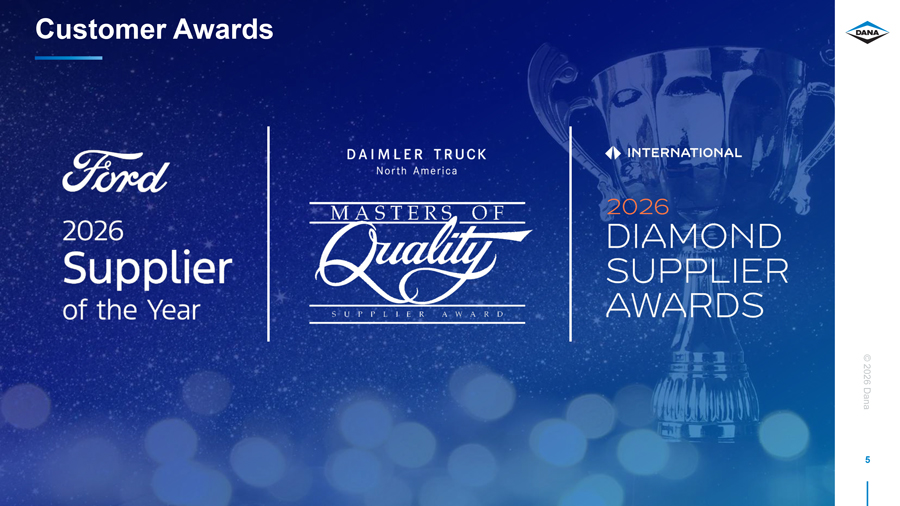
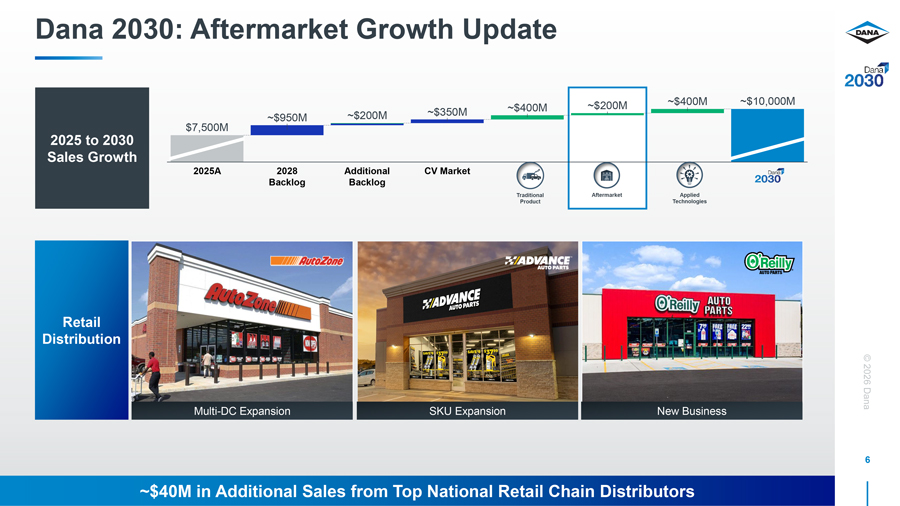
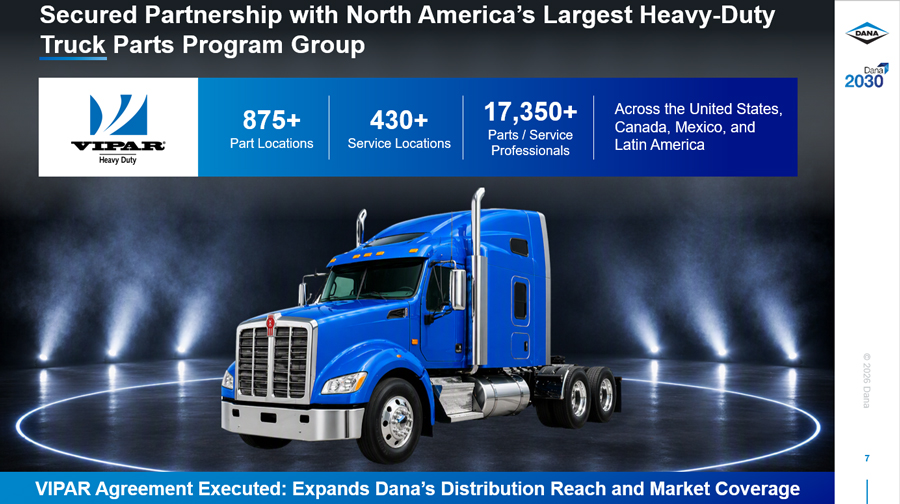
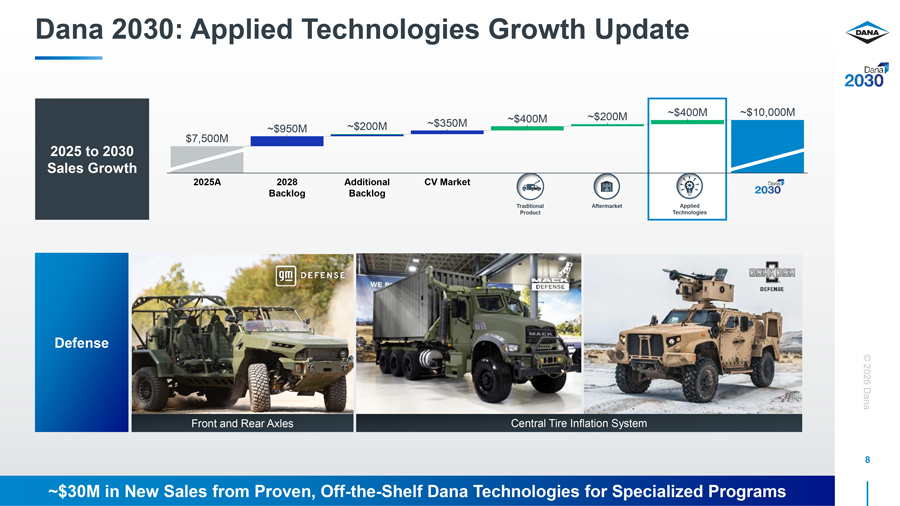
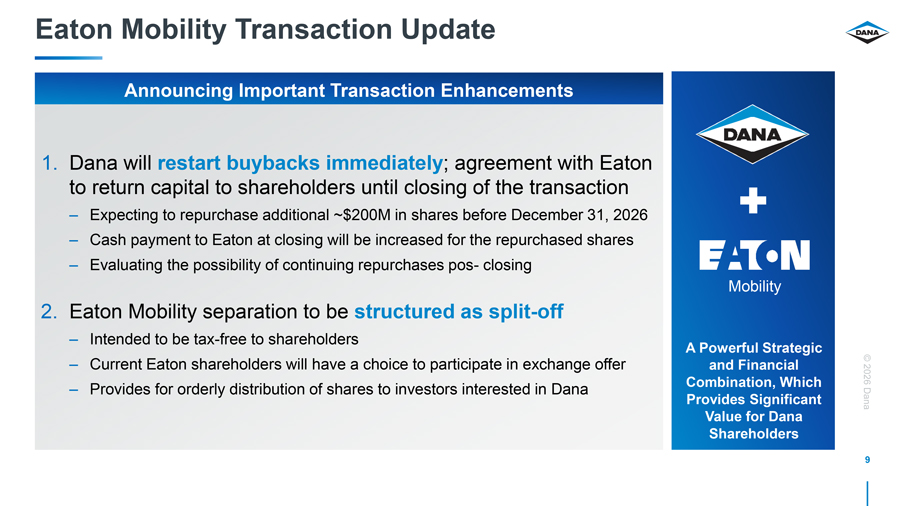
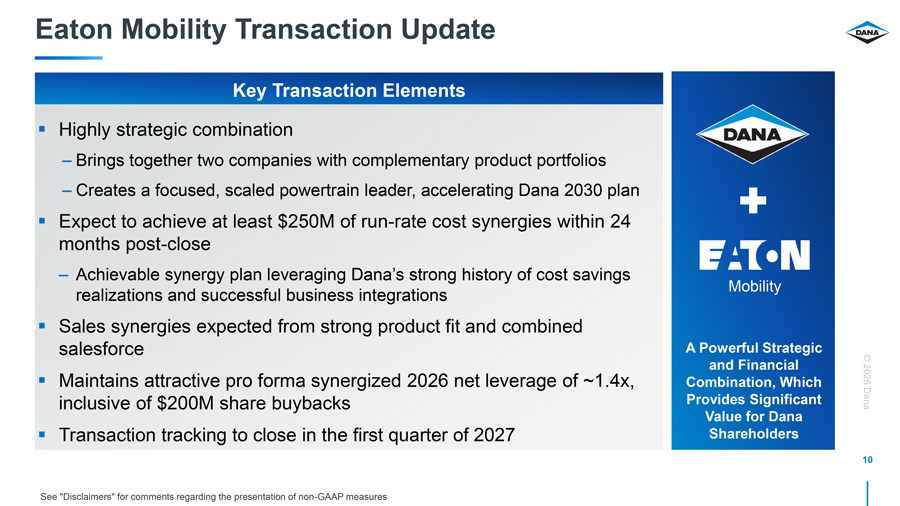
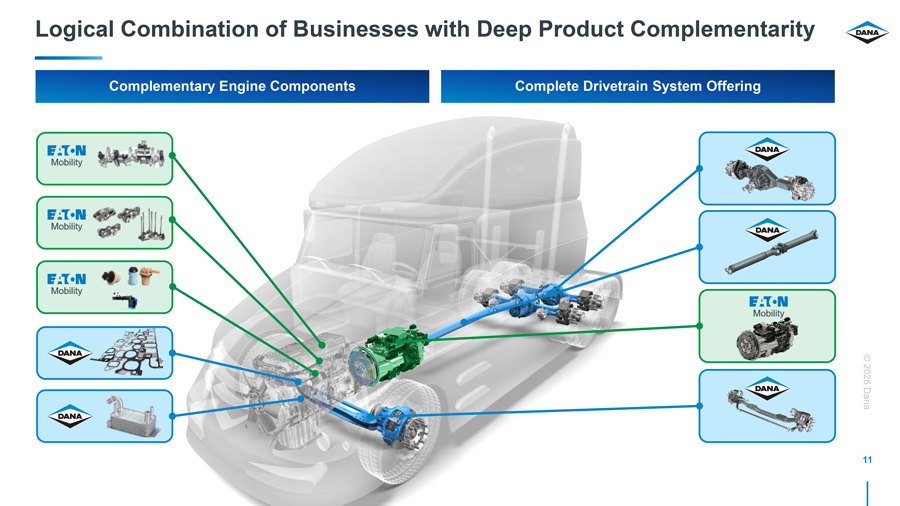
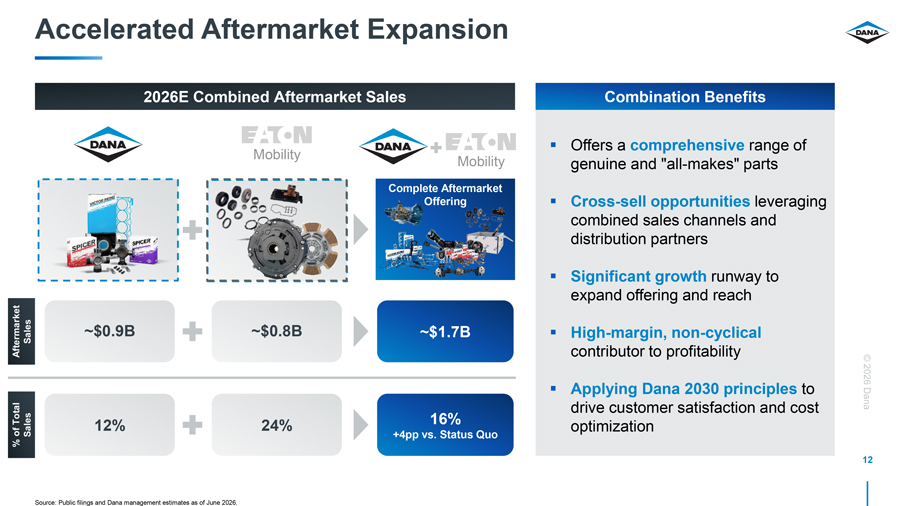
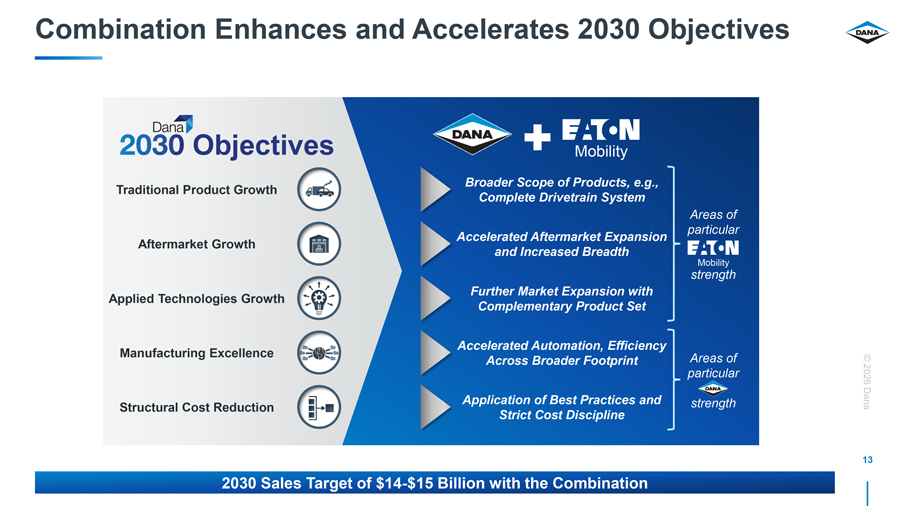
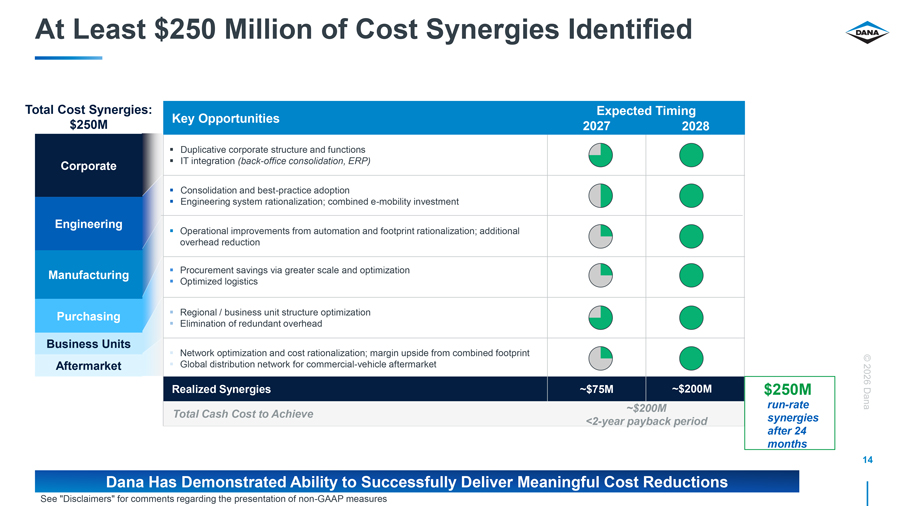
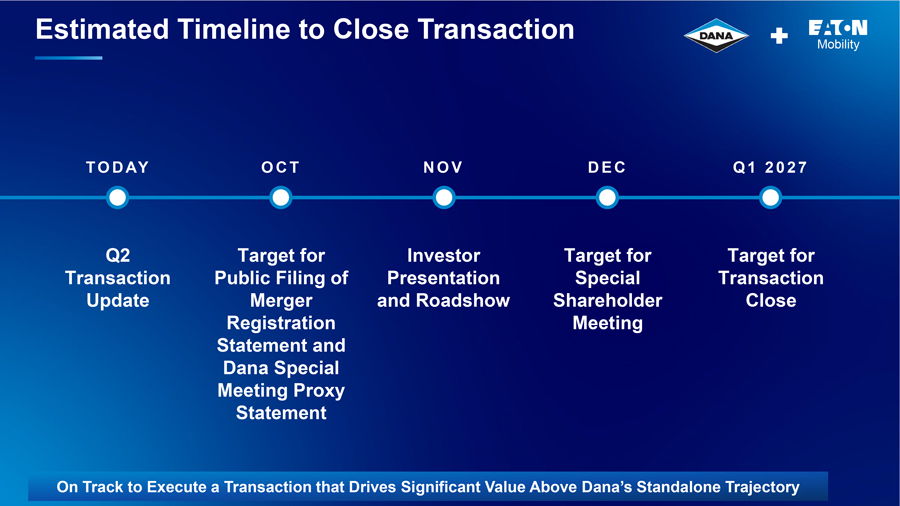
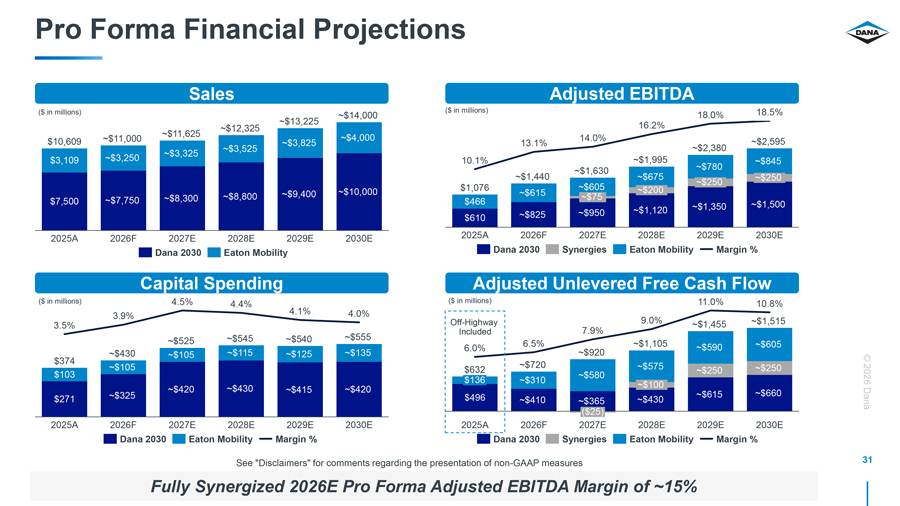
Thanks, Craig. Good morning, everyone, and thanks for joining the call. I'd like to start by hitting a few key highlights from the quarter. Pleased to report strong second quarter financial results, driven by a continued focus on executing our plan and strategic initiatives. Sales in the quarter came in at $2 billion, with adjusted EBITDA of $207 million, which yields a margin of 10.3 percent, 270 basis points higher than the same period in 2025. Additionally, the team delivered 19 million of cost savings in the quarter. This brings our year-to-date cost savings number to 54 million and keeps us on track to realize the 65 million we've committed to in 2026 achieving our program target of 325 million we continue to work on efficiency opportunities to chip away at the 40 million dollars of stranded costs from the off highway sale next i'm excited to share that we will be restarting our share repurchase program until the closing of the eton mobility transaction and we additionally continue to evaluate the possibility of additional share repurchases post closing so if you step back in terms of our share repurchase program in q2 we repurchased 1.2 million shares returning 44 million dollars to our shareholders and year to date that brings our share repurchases to 169 million we're planning from this point forward an additional 200 million of repurchases in the balance of the calendar year So programmed to date, we've repurchased $819 million through Q2, and that'll bring us to just over a billion with the $200 million incremental for the balance of the year, and keeps us on track to complete $2 billion of the authorization by 2029. The Eaton mobility combination is progressing well. One key update in regards to the transaction is that the separation will be structured as a split off. I'll add a bit more color to that structure here in the coming slides. And then finally, our Dana 2030 program continues to make significant progress. I'll talk a little bit about some of the customer recognition as well as the new business awards tied to the key growth pillars of the Dana 2030 plan. We'll go to page five. As mentioned in my opening slide, our team's continued focus on executing and delivering real value for our customers is resulting in great recognition from our customers. We're honored to be recognized by three of our largest customers for our performance in quality delivery competitiveness and commercial collaboration and data transparency regarding tariff recoveries these are a small sample of the positive feedback we continue to receive from our customers and we're proud to continue to work to build their trust and continue to grow in our key markets speaking of growth if we go to page six i want to provide a brief dana 2030 update you'll recall during our capital markets today we showed a road map of how we will grow dana's top line to 10 billion dollars by 2030. there are key three key pillars that we highlighted as part of that growth strategy around our traditional products, aftermarket, and applied technologies. To highlight the aftermarket piece, our team continues to make great strides in expanding our Victor Rhines branded sealing products with a number of the nation's top retail chains. With AutoZone, we're working on expanded DC participation. With Advance, we're working on SKU expansion, as well as launching new products with O'Reilly's. The combination of this effort is delivering $40 million of additional sales from these top national retail chains. And the team is continuing to work on new opportunities across other key customers in this critical channel. If you go to page seven, another proof point of our aftermarket growth strategy is our new partnership with Viper, North America's largest heavy-duty truck parts Program Group. With Vipers 875-plus locations and 430-plus service locations, this partnership expands Dana's distribution reach and will deliver an incremental $10 to $15 million of aftermarket sales beginning later this year. Moving on to page 8, the next pillar I want to highlight is Applied Technologies, where our strategy is to leverage Dana's off-the-shelf product and process capabilities for profitable growth. And the defense market is an area where we are getting great traction. Based on demand for the current ISV with GM defense, we're seeing volume increases in the back half of the year and into next year. Additionally, we're in a rapid prototype phase on major project with one of our large OEMs where we're working to secure the production order by year end. But just based on the programs that we participate in today and the increased demand, we're seeing 30 million dollars of new sales in this pillar of our strategy alone. We're looking forward to continuing to see defense, we continue to see defense as a real opportunity for profitable growth and we're working with all the key players in the space on new program opportunities. Again, the Dana 2030 program continues to deliver great results and we're excited about the top line opportunities in aftermarket and defense and we'll continue to provide updates in future calls. Okay, if we turn to page nine, turning to the Eaton Mobility transaction, a couple of important updates that we believe strengthen the transaction and directly address shareholder feedback. First, Dana will restart share repurchases immediately with an agreement in place with Eaton that allows us to continue returning capital to shareholders through the closing of the transaction. The transaction economics remain unchanged. The amount of the distribution to Eaton will be adjusted for lower share count. We expect to repurchase an additional $200 million of shares years before the end of 2026, and as I mentioned, additionally, we're continuing to evaluate the potential to continue repurchases after closing, which, if successful, will avoid the previously announced 24-month pause. Second, Eaton has elected to separate mobility through a split-off structure. From Dana's perspective, this is a positive development as the structure remains tax-free to shareholders and current Eaton shareholders will have the choice to participate in the exchange offer. We believe that choice will support a more orderly distribution of shares to investors who are interested in owning Dana and participating in the value creation opportunity of the combined company. Importantly, we remain highly confident in the strategic and financial merits of the combination. If we move to page 10, I want to take a minute to reiterate the highlights and strategic rationale of the deal. Eaton Mobility brings a set of complementary products, meaningful commercial vehicle exposure, a strong aftermarket franchise, and capabilities that fit naturally with Dana's existing powertrain, thermal, sealing, and driveline technologies. Together, the two companies create a focused, scaled powertrain leader that accelerates our Dana 2030 plan. The combination gives us a broader, complete system offering, increases our exposure to higher-value commercial vehicle and aftermarket markets, and creates a stronger platform for margin expansion and free cash flow growth. Additionally, we have a clear plan to achieve at least $250 million of run rate cost synergies within 24 months after close. These savings are supported by specific work streams across corporate functions, engineering, manufacturing, purchasing, business unit optimization, and aftermarket network efficiencies. I'll come back to the synergies point in a couple of slides. Revenue synergies are not included in that cost synergy target, so we view commercial upside from cross-selling and the combined sales force as incremental opportunity. Even with the planned buybacks, the combined company is expected to maintain attractive pro forma synergized 2026 net leverage of approximately 1.4 times with a strong free cash flow profile and a clear path to de-leveraging over time. Slide 11 is a good visual to illustrate why the industrial logic of the combination is so compelling. Dana and Eaton Mobility bring together highly complementary product portfolios across the powertrain system that literally fit together and connect to each other. Dana's existing strengths in axles, driveshafts, thermal management, and sealing are complemented by Eaton Mobility's commercial vehicle transmissions, engine components, emissions-related products, and advanced electrification capabilities. The result is a more complete, high-value powertrain offering. These are product categories we know well, and in many cases, they are areas where Dana has historical familiarity and technical depth. By combining the portfolios, we can offer customers a broader system-level solution and create more opportunities for engineering collaboration, product integration, and commercial pull-through. This is also why we view the transaction as a continuation of our strategy, not a reversal of the simplification we achieved through the off-highway divestiture. We simplified Dana to focus on the core areas where we have scale, capability, and margin opportunity. Eat and mobility deepens that core. Turning to page 12, we highlight one of the most attractive elements of the deal, creating a scale global aftermarket leader. On a combined 2026 basis, aftermarket sales are expected to be approximately $1.7 billion. representing approximately 16 percent of our total sales, which is roughly four percentage points higher than Dana on a standalone basis. This larger aftermarket platform matters because aftermarket revenue is typically higher margin, less cyclical, and more resilient through the cycle. The combination gives us a broader range of genuine and all makes parts, a larger global distribution network, stronger customer reach, and meaningful cross-sale opportunities across the combined channel base. We believe the combined platform gives us additional runway to expand the offering, optimize the network, and improve customer satisfaction while capturing margin upside. This also ties directly to the Dana 2030 strategy. Growing aftermarket has been a core pillar of that plan as I highlighted earlier in the deck and Eaton Mobility accelerates the opportunity by adding scale, breadth, and customer access. Moving to page 13, as I mentioned this transaction directly enhances and accelerates the Dana 2030 objectives. It strengthens each of the key growth pillars we discussed at capital markets day traditional product growth aftermarket growth apply technologies growth and it accelerates our efforts in manufacturing excellence and structural cost reduction in traditional products the combination broadens the system offering and creates a more complete drivetrain platform in aftermarket it meaningfully expands scale, product breadth, and distribution reach. In applied technologies, it adds complementary capabilities that support continued growth in specialized and emerging applications. Financially, the combination expands the Dana 2030 framework. Our standalone target was approximately $10 billion of revenue by 2030. With Eden Mobility, we are targeting $14 to $15 billion of sales by 2030 along with meaningfully higher margins and stronger free cash flow generation the key point is that this is not simply about getting bigger it is about creating a stronger more focused and more cash generative company with better in-market balance greater aftermarket exposure broader technology capability and a clearer path to sustain shareholder value creation If we turn to page 14 a little bit more on cost synergies, we've identified at least $250 million of cost synergies, and we have a clear plan to achieve that run rate target within 24 months after closing. We expect approximately $75 million of synergies in year one, approximately $200 million by year two, and exiting year two with a $250 million run rate. The Synergy Plan is built on specific, actionable opportunities. The largest areas include elimination of duplicative corporate structure and functions, IT and back office integration, engineering consolidation, procurement savings from greater scale, manufacturing efficiency, automation, footprint rationalization, business unit structure optimization, and aftermarket network efficiencies. This is not an overreaching assumption. As we close out our $325 million cost reduction initiative, we've demonstrated that Dana has the ability to execute meaningful cost reductions and we will manage the synergy delivery of this deal much in the same way as a core priority with clear plans and accountability. We expect the total cash cost to achieve these synergies to be less than 250 million dollars with a payback period of less than two years that gives us confidence that the synergy program will not only improve margins but also support stronger free cash flow conversion and shareholder returns over time turning page 15 just to give you a look at the timeline we remain on track to close the transaction in q1 of 2027 and we look forward to day one of the merger between dana and eden mobility's business with that i'll turn it over to to tim to take us through deeper through the
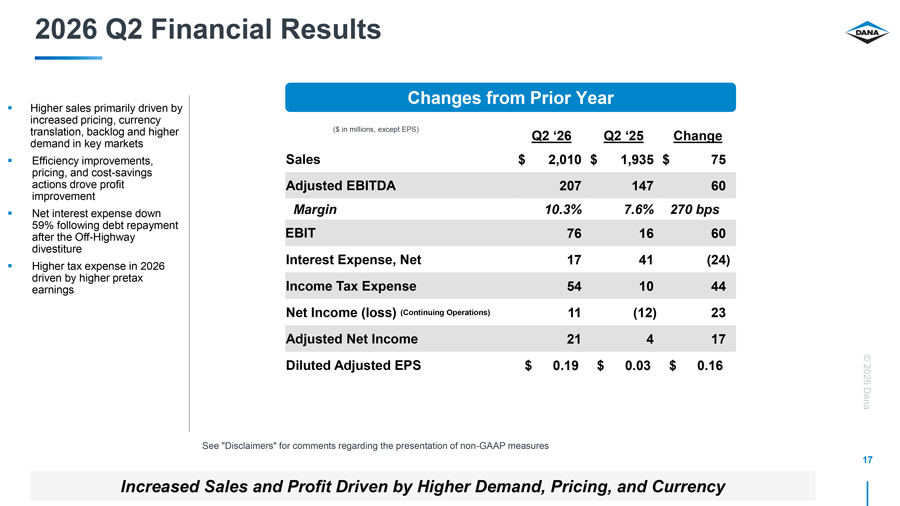
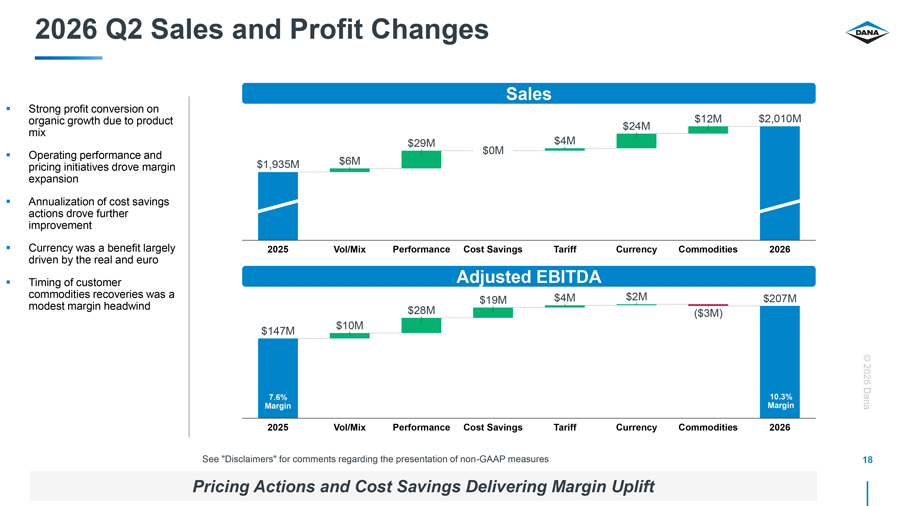
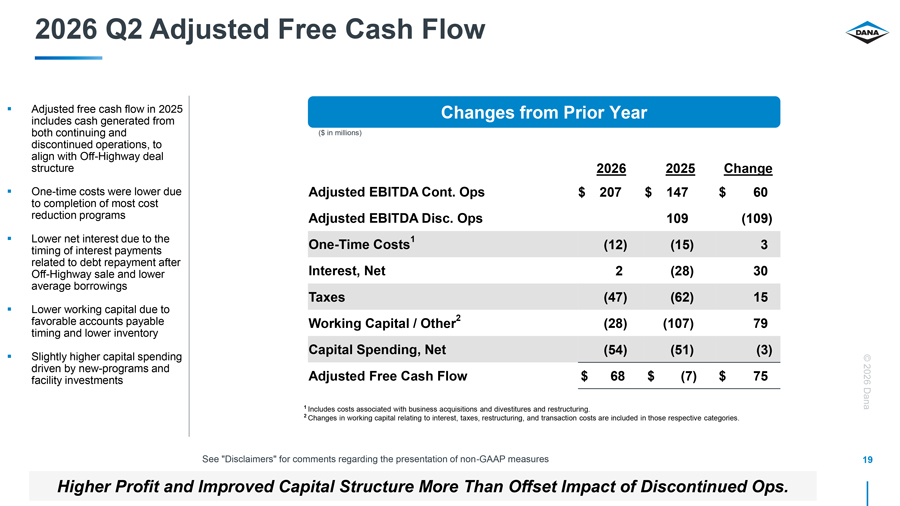
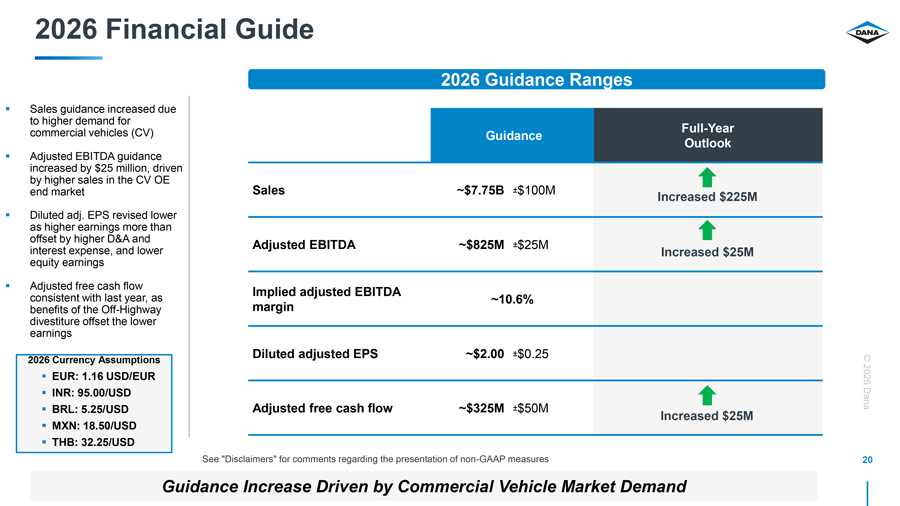
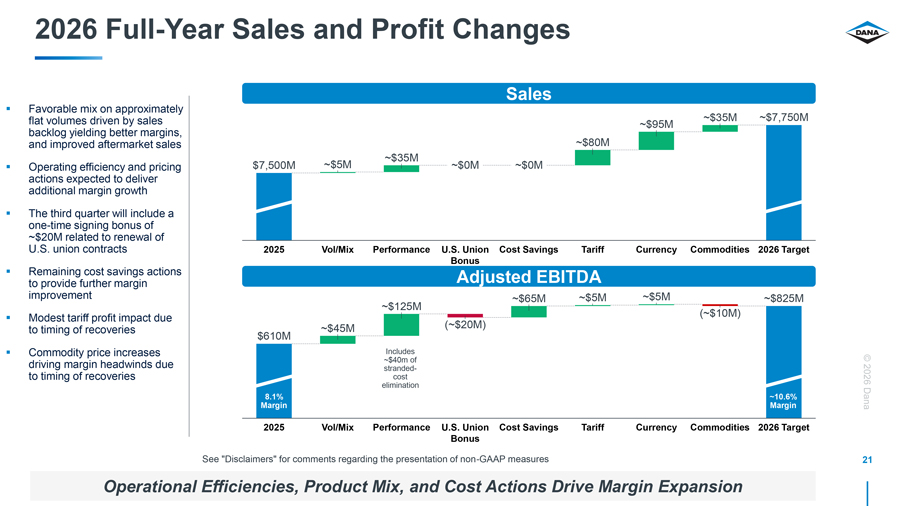
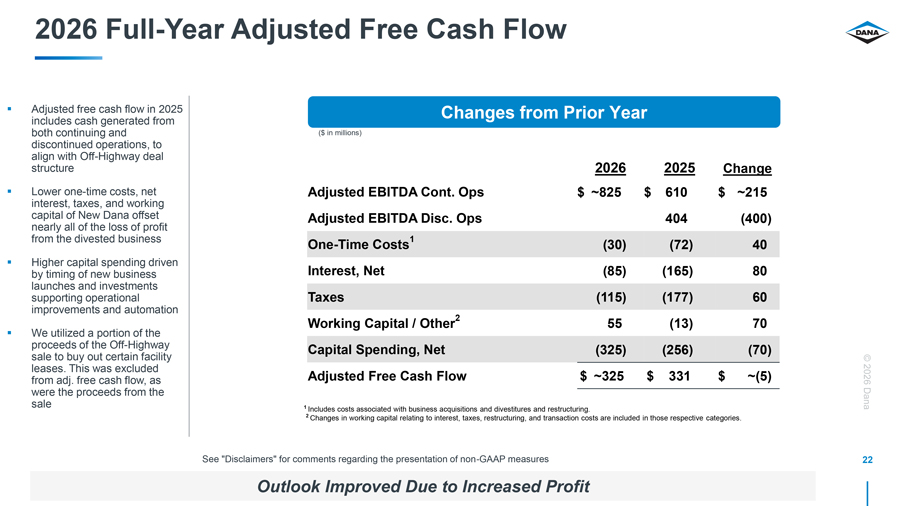
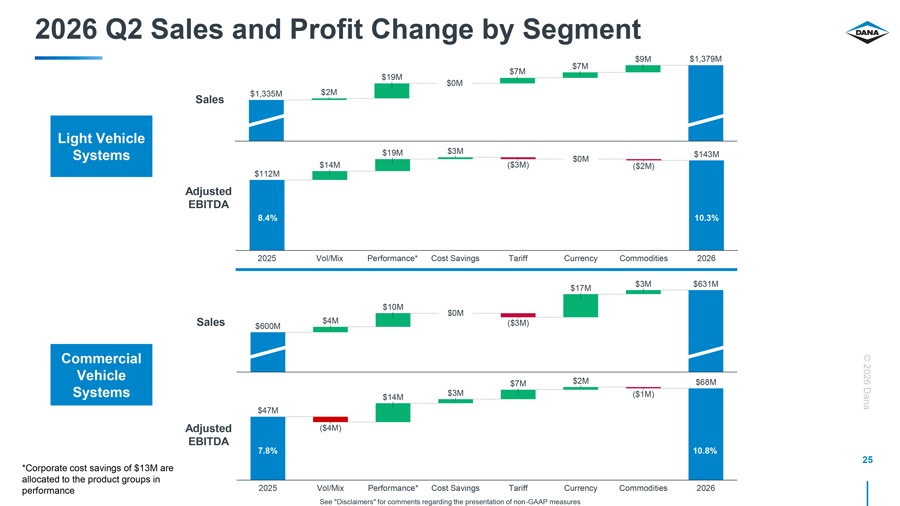
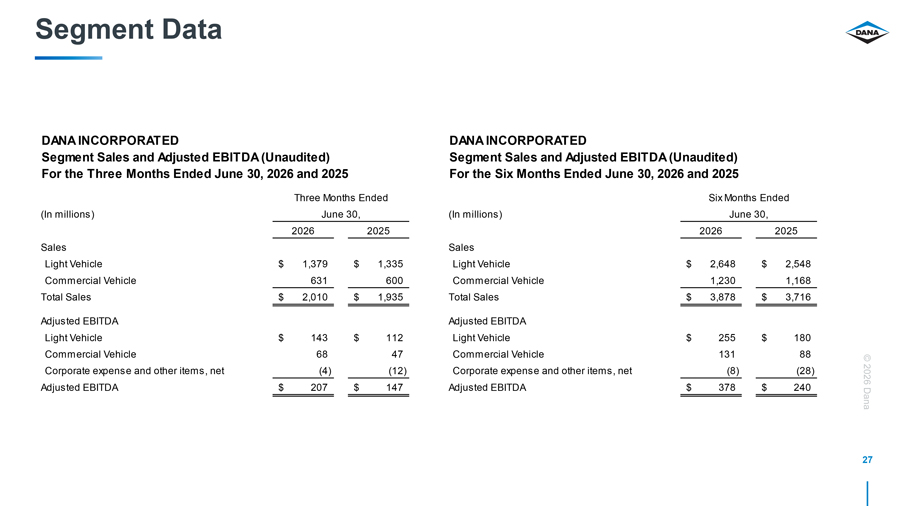
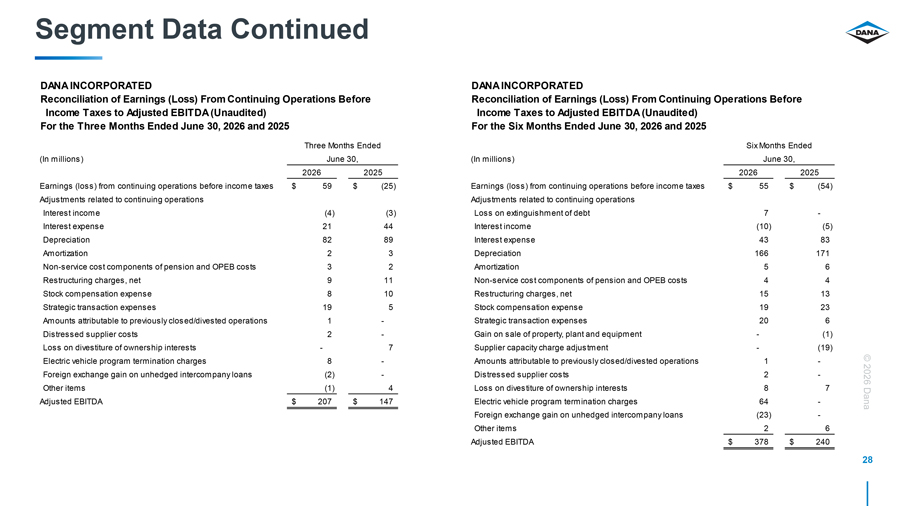
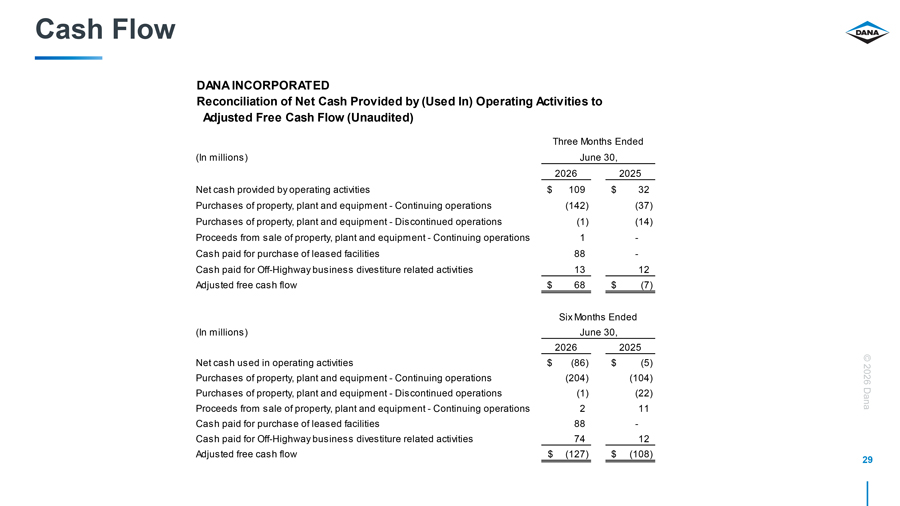
financial results thanks byron and good morning turning to slide 17 uh if you would please we delivered another strong quarter with sales increasing to two billion dollars and adjusted EBITDA increasing to $207 million, reflecting continued operational execution and favorable market dynamics. Adjusted EBITDA margin expanded 270 basis points to 10.3%. Net interest expense declined 59% on a year-over-year basis to $17 million following debt repayment actions completed after the off-highway divestiture, while tax expense was higher on jurisdictional mix and improved earnings. As a result, adjusted net income increased to $21 million from $4 million, while diluted adjusted EPS increased to $0.19 from $0.03. Overall, the quarter reflects continued progress on our strategy with higher sales, stronger margins, improved earnings, and a more efficient capital structure. Please turn with me to slide 18 for the second quarter change in sales and adjusted EBITDA. Starting with sales, second quarter 2026 sales were $2.01 billion, up from $1.94 billion in the prior period. Volume and mix contributed $6 million, reflecting higher demand in key light vehicle programs and continued conversion of our backlog. Performance added $29 million, primarily from pricing and recovery actions across the business. Cost savings were neutral to sales, while tariff recoveries contributed about $4 million. Foreign currency translation added an additional $24 million, largely driven by the euro and Brazilian real. And recovery of commodities contributed an additional $12 million to the top line of the company. Altogether, these items resulted in a $75 million increase in sales year over year. Turning now to adjusted EBITDA, volume and mix contributed $10 million of incremental profit, reflecting favorable business mix and strong conversion of higher backlog. Performance added $29 million, driven by pricing initiative, operational improvements, and continued manufacturing efficiencies across the organization. Cost savings remained a significant contributor to our profit improvement, adding $19 million as our restructuring and productivity initiatives continue to deliver benefits. To date, our cost-saving initiative has delivered over $310 million towards our improved profit. Tariffs contributed $4 million, while foreign currency added an additional $2 million. Commodity represents a modest $3 million headwind, primarily due to the timing of our recovery mechanism with our customers. Bringing all those factors together, adjusted EBICDA increased to $207 million, representing a 10.3% margin and an improvement of 270 basis points compared with the second quarter of 2025. Overall, the quarter reflects continued execution of our strategy with pricing actions, operational performance, and cost savings driving strong profit conversion and meaningful margin expansion. Next, turn with me to slide 19 for a look at adjusted free cash flow for the second quarter. We generated $68 million of adjusted free cash flow in the second quarter, an improvement of $75 million compared with the prior period, demonstrating the strong conversion of our earnings improvements into cash. The largest driver was the continued improvement in operating performance. Adjusted EBITDA from continuing operations increased to $207 million from $147 million a year ago, reflecting the benefits of our cost reduction initiatives, material cost savings, operational improvements, and favorable pricing and recovery actions. As a reminder, the prior year, 2025, comparison included $109 million of EBITDA from the off-highway business, which is not reflected in our 2026 results following the divestiture. Despite that headwind, the strength of our continuing operation more than offsets the absence of those earnings. Net interest improved by $30 million year over year, reflecting the debt reduction actions we completed following the off-highway sale earlier this year and resulted in a lower interest burden. Working capital and other items provided a $79 million year-over-year benefit driven primarily by favorable accounts, payable timing, and lower inventory levels. These improvements were partially offset by a modest increase in capital spending, which reflects investments in new programs and facility-related projects intended to support future growth and efficiency actions. Overall, the quarter highlights our continued progress in strengthening Dana's earnings quality, improving our balance sheet, and converting higher profitability into meaningful cash flow generation. Please turn with me now to slide 20 for an update of our full year guidance. Based on our strong first-half performance and improving demand in the commercial vehicle market, we are raising our full-year outlook for sales, adjusted EBITDA, and adjusted free cash flow. We now expect approximately $7.75 billion in sales at the midpoint of our range, an increase of $225 million from our prior outlook. This increase is primarily driven by stronger commercial vehicle production and demand, along with continued execution across all of our end markets. We are also raising our adjusted EBITDA guidance by $25 million and now expect approximately $825 million at the midpoint of the range. reflecting the incremental contribution primarily from higher commercial vehicle volumes. Despite the higher sales outlook, our expected adjusted EBITDA margin remains approximately 10.6, driven by a mix of higher sales in our lower margin commercial vehicle business. Our diluted adjusted EBS has been revised lower to approximately $2 per share at the midpoint of the range. The lower adjusted net income is driven by higher depreciation expense due to timing of capital investments, and higher net interest as we prepare for upcoming mobility transactions. We are also expecting lower equity earnings from our JVs, primarily in China, which are not consolidated. We are also increasing our outlook for adjusted free cash flow to approximately $325 million at the midpoint of the range, an increase of $25 million from our prior guidance, driven again by higher earnings. Overall, we remain highly confident in the trajectory of the business. we've taken to improve profitability, strengthen the balance sheet, and position Dana for sustainable growth continue to deliver results. Our updated guidance reflects that continued momentum and confidence as we move through the remainder of 2026. And we work towards closing the Eaton Mobility transaction early next year. Please turn with me now to slide 21 for a driver of the sales and profit change for our full-year guidance. As discussed on the prior side, we've increased our 2026 outlook and now expect approximately $7.7 billion of sales and $825 million of adjusted EBITDA at the midpoint of our guidance ranges. Beginning with sales, we now expect approximately $250 million of year-over-year growth compared with an outlook of roughly flat sales in our prior outlook. The largest change versus our prior outlook is stronger demand in the commercial vehicle market, which is reflected in the improved volume and changing mix expectations. We also continue to see a benefit from pricing and recovery actions, favorable foreign currency translation, and commodity pass-through recoveries, as well as some tariff recoveries. Together, those factors are expected to drive sales to approximately $7.75 billion, an increase of $225 million versus the outlook we provided in the first quarter. Turning to adjusted EBITDA, we continue to expect significant profit improvement in 2026. Starting from the $610 million in 2025, favorable volume and mix are now expected to contribute approximately $45 million, reflecting the stronger commercial vehicle outlook and continued backlog conversion. Performance is expected to contribute approximately $125 million, including the benefits of pricing actions operational efficiencies and approximately 40 million dollars of stranded cost elimination cost savings remain a significant contributor at 65 million dollars offsetting a portion of these benefits is a one-time approximately 20 million dollar u.s union contract signing bonus expected in the third quarter along with approximately 10 million dollars of commodity related headwinds, due primarily to recovery timing. We continue to expect modest benefits from tariff and foreign currency, each contributing approximately $5 million of EBITDA. Bringing all these items together, we now expect adjusted EBITDA of approximately $825 million, which is $25 million higher than our outlook at the end of the first quarter, and represents an adjusted EBITDA margin of approximately 10.6%. Overall, the update reflects continued execution against our operational initiatives, incremental strength in the commercial vehicle market, and the ongoing benefits of our cost reduction and pricing actions, giving us confidence to increase our outlook for 2026. I will now turn to slide 22 for details of our adjusted free cash flow outlook for 2026. As a reminder, 2025 adjusted free cash flow included the contributions from both continuing and discontinuing operations. Following the sale of our off-highway business, our 2026 outlook reflects only continuing operations. With the stronger earnings outlook we just discussed, we are increasing our adjusted free cash flow guidance to approximately $325 million, up $25 million from our prior outlook of $300 million. Starting at the top, we now expect approximately $825 million of adjusted EBITDA from continuing operations, reflecting the increase in our profit outlook since the first quarter. One-time costs remain substantially below prior year levels at approximately $30 million, while net interest expense is expected to improve by approximately $80 million year-over-year, reflecting the debt reduction actions completed following the off-highway divestiture. We also continue to expect meaningful benefits from lower cash taxes and working capital. Working capital is now expected to be a source of cash supported by continued operational improvements and disciplined balance sheet management. We continue to expect about $325 million in net capital spending, which is higher than last year as we support new program launches, automation initiatives, and other operational improvement projects across the business. We now expect to generate approximately $325 million of adjusted free cash flow in 2026, representing a $25 million increase versus the outlook we provided at the end of the first quarter. I'll turn it back over to Byron for the last slide.
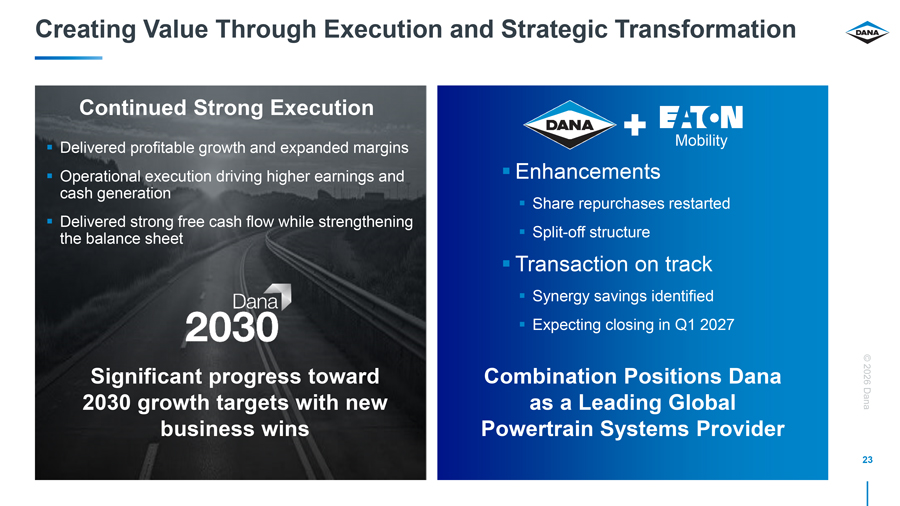
Byron? Okay, thanks Tim. So to recap, it's really all about creating value through execution and preparing for our strategic transformation. I want to thank the team for staying focused on executing our base plan. This has allowed us to deliver profitable growth and expanded margins our operational execution remains very high driving higher earnings and cash generation and as tim just mentioned delivered strong free cash flow while strengthening the balance sheet we gave you a little bit of a look at dana 2030 and we're remain excited about the strategic growth opportunities as part of that program today highlighting Aftermarket and Defense, where we continue to make great progress. In terms of the combination with Eaton Mobility, several enhancements that we were excited to announce today. First, the share repurchases being restarted and the split-off structure of the transaction. We remain on track to close the deal in Q1 of 2027 and look forward to positioning Dana as a leading global powertrain systems provider. In closing, I wanna take the opportunity to thank our customers for the trust they place in Dana and thank our Dana team around the world for their dedication and hard work and strong results in the second quarter. So with that, Regina, we'll turn it back over to you and happy to take questions.
Operator
We will now begin the question and answer session. To ask a question, simply press star followed by the number 1 on your telephone keypad. We kindly ask that you please limit your questions to 1 and return to the queue for any follow-ups. Our first question will come from the line of Tom Narayan with RBC Capital Markets. Please go ahead.
Yeah, thanks for taking the questions. My first one has to do with the share buyback plan. My understanding with the reverse Morse Trust was the restriction on what you could buy back into the deal close, And it sounds like you've remedied that by doing the $200 million and then increasing the cash to Eaton. But the question has to do with post-close. It sounds like you're exploring the possibility to continue it after the close. I guess what could that mean? Are you still expecting the bulk of the incremental $1 billion to happen later in the planning period? Or maybe do you need some of that cash for the cost to achieve synergies? You know, a lot of that might be headcount. Anyway, that's the first question and a really quick follow-up.
Yeah, Tom, this is Tim. Thanks for the question. So, yeah, we continue to work or explore with Eaton the possibility of how we could restart the buybacks in that 24-month post-closing period. You know, we're hopeful, but obviously, we've got some work to do and to put it back in. But to your point, we actually see the Eaton transaction allowing us to really accelerate that last billion dollars worth of buyback. So even if we're not able to restart the buyback in the post-24-month period, we do now believe we will be able to complete the $2 billion buyback before the end of 2029 versus 2030, which is where we were, you know, prior to announcing the Eaton transaction. Largely because, you know, once we integrate Eaton, we'll have a lot more earnings in free cash flow that we'll be able to put towards the stock buyback.
Got it. Thanks. That's very helpful. And then just real quick, Tim, I don't know if you mentioned this in the free cash flow guidance, but the reason why there's a big uplift in H2 versus H1. Just wondering if you could run that real quick. Thanks.
Yeah, I mean, I think one is obviously the earnings that we had coming in. The other is interest, right? So we've got $30 million lower interest and we also have lower taxes coming in terms of from a cash perspective. Those are the big drivers as well as working capital. So thank you. Yep.
Operator
Our next question will come from the line of Colin Langan with Wells Fargo. Please go Oh, great.
Thanks for taking my questions. I just wanted to follow up on the comments on the adjusted EPS cut. It's kind of unusual that you cut sort of midyear on DNA and interest. Are there other factors? Because I'm surprised those would be a surprise in the quarter, at least in the middle of And then any color on tax, I kind of assumed, given I think it was something like a 75 percent rate in Q2. Was that a factor in the EPS revision, and how should we think about tax through the rest of the year?
Yeah, so, Colin, thanks for the question. So, yeah, I mean, we've got higher DNA. When we built the plan and came out, we were expecting, you know, we had assumed a level of in-service assets that were actually accelerating, so we've got higher DNA than we were expecting. So that's a headwind. Higher interest expense largely due to the fact that we're refinancing the 21s a little bit differently, as well as we will be having a little less cash on the books because we'll be spending money up front related to the Eaton transaction. And then probably the other big one, other than just also taxes given the jurisdictional mix we're seeing is the lower equity earnings that we're seeing, that we had assumed from our China GVs, which is the single largest one of the change.
Okay. And the tax was not an impact in the- No, tax is an additional impact as well.
It's a little bit smaller than the equity earnings, but still a headwind for us.
Got it. Okay. And then if I just look half over half, adjusted EBITDA is up $70 million, sales are actually flat, and then you actually indicated $20 million of a signing bonus in Q3. That actually implies a pretty substantial underlying improvement on flat sales. What is driving that? Because, I mean, if I look at cost, you've gotten most of that. It looks like it's all performance.
Yeah, it's largely performance and mixed, Colin. So, yeah, we continue to see benefits on the performance side of the business. You know, we talked at our capital markets day regarding the automation and the plant level floor improvement that we're going after. And we're starting to see that come through. And we expect to see that in the, some more of that come through in the back half of the year. We're also seeing, you know, we'll also see the bulk of the $40 million of improvement coming through in the back half of the year. So that's what you're seeing in improvement when you think about the half of the half.
Got it. all right thanks for taking my questions yep our next question will come from the line of joe's back with ubs please go ahead um thank you um just going back to um you know working on more buybacks in the future i just is that something that's straight negotiated with eaten because i i thought that was sort of more of a tax authority consideration um and then like if for some reason you can't come to an agreement is there are there other mechanisms to to get cash back to shareholders such as you know either higher dividends or special dividend or something like that yeah so i'll take your your your second part first
you know if we're not able to uh to you know solve the the buyback um issue the yes the answer is we're not in any way restricted from either raising the dividend or, you know, paying a special dividend. So that would be, those two options are absolutely available to us in order to return additional amounts to shareholders within that 24-month period. On your first question, I don't want to get into too many details, but, you know, obviously the tax code is pretty complicated and we're working through, you know, how to think through that with Eaton, But we're working on that together, and obviously it's in all of our best interest to try to find the best way to solve it that allows us to restart it. So we'll continue to work on that, and as soon as we have an update, we'll certainly share that with the market.
I appreciate that, Tim. Second question, just the $20 million union bonus, just a couple points on that. because one, I want to make sure that wasn't in the prior guide. So really, this is more like a $45 million raise at the midpoint. And then I want to confirm that. And then also, that's just a one-time cash bonus. I'm assuming there's also some ongoing wage increase, but was that already considered in the outlook? And then finally, also just want to make sure that that $20 million is also included in the free cash flow guidance?
So, yes, it's one time. We do have wage increases, but we had those considered in both the back half of 26 and in our long-term view that we shared at the Capital Market State. So that is largely in line. No, we did not expect to pay a ratification bonus. So, you know, your view on, hey, is this, you know, incremental 20, 45? Yes, that's kind of how to think about it. Okay. And I'm sorry, yes, the cash is in the adjusted free cash flow as well. Thank you so much.
Operator
Our next question will come from the line of Winnie Dong with Deutsche Bank. Please go ahead.
Hi, thanks for taking my questions. On the guide race, it looks like most of the guide is driven by improved CV volume, which has been particularly low in the past few years. We're seeing ACT data, and it looks like this is sort of like the start of some improvements. So, I wanted to hear what you're seeing there and if there could be room for further upside in a guide as we get through 3Q.
Hi, Winnie. Thanks for the question. For sure, we're definitely seeing an increase in demand from our CV customers, particularly in the Class 8 segment. And so we've been working to react to that and support that volume increase, and we expect that to continue on into next year. In terms of further upside to that, it's a bit early to say, but I would just tell you that as we look at kind of our midterm outlook in terms of releases, that, we continue to see good, robust volume in the CV market.
Thanks for that. And then I wanted to focus on the defense component of the applied technology. You can touch on that a little bit. We know that you're on GM defense, but Ford also recently announced that it will be developing a few heavy-duty tactical shot prototypes. Could you share any insights into this process and if any of this is sort of included in that, you know, $400 million target by 2030? Thanks.
Yeah, I would say much like with the GM Defense opportunity, we were able to leverage our position on their light vehicle program and take that product line, if you will, and upfit it for the ISV vehicle with GM Defense. It's early days, but we're obviously working the Ford opportunity as well, and we see the same type of opportunity to leverage our position on the Ford light vehicle truck, if you will, and also provide an upfitted proposal for that product. So it's still early days, more to come, but I would say more broadly in the applied technologies bucket, you might recall that there's several in markets that we're pursuing as part of that strategy, defense being one of them, power sports is another example. So don't think about us needing to fill that entire bucket with defense, but we do see that market as maybe even more robust and opportunistic than maybe we first contemplate it when we put the Dana 2030 plan together.
Operator
Our next question comes from the line of Dan Levy with Barclays. Please go ahead.
Josh Young on for Dan Levy. Thank you for taking the question. So, just wanted to ask how much of a look have you had so far at the assets for EE and how much work do you expect of modifying the system footprint, things like that in order to be in line with what you need?
Yeah, so we obviously have done a fair amount of due diligence as as part of the process and we've visited many of the sites and and I would say we're familiar with their manufacturing footprint and their process technology you know when we look at the combined footprint there there will obviously as part of our synergies be opportunities to combine facilities where we have duplicative capacity in place, et cetera. So, we're working that part of the plan. But I would say from an asset-based process technology, very much in line with what we would expect and very comparable to the Dana asset-based and technologies.
Great. Thank you. And then as a follow-up, could you walk us through why MIX is so strong, particularly with 2Q, we have the volume and mix, $10 million of EBITDA, $6 million of revenue?
Yeah, I mean, obviously there's a lot of moving parts, but, you know, we continue to see a lot of the backlog that's coming on that runs through that line coming on at better margins versus the prior program. So there's that mixed element that that's flowing through there and then you of course you have the the the better volume coming through on on uh on cd so there's a a pretty sizable mixed element if you if you just think about you know sort of what we're we're showing you know overall in the back half of the year you know we really are we will see a more normalized uh volume and mix conversion we think and at least that's what we're planning for in the back half but uh but it's mostly mixed driven.
Operator
Our final question will come from the line of James Picoriello with BNP Paribas. Please go ahead.
Hey, good morning everybody. Just curious on any progress update regarding the Ford's new super duty capacity in Oakville and how Dana is preparing for that and just the magnitude of of that capacity that can come online through next year because you know whatever that number is right that's embedded in your new business backlog uh for next year if i'm not mistaken so yeah curious first on yeah on the promise update thanks yeah hey james byron um yeah we're excited about that opportunity we we actually our start will start um kind of low volume ramp up production
here within the month and expect the volumes to be more meaningful kind of towards the end of the calendar year. The good news there is that we'll be able to leverage, largely leverage the footprint and capacity we have in place for the U.S. super duty volume. So looking forward to taking advantage of kind of the added contribution from the volume. But as we look at the releases, let's say from here to the end of the year, they are very much in line with the added volumes that Ford has committed to in Oakville. So from a launch readiness standpoint, you know, all the prep work is done and we're ready to roll.
Yeah. And then just on the North America truck market. We've got the dynamic of new emission standards coming in next year. I think we've got an aggressive pre-buy and pre-ordering taking place now. Yeah, we'd be interested to get your thoughts on what you're assuming for the North America truck market this year and how, in a preliminary fashion, how you're thinking about next year.
Is there a fade of the of the pre-buying or is there well we're actually yeah yeah yeah thanks for the question so you know we're actually seeing the pre-buy get pushed out given that the regulation um changes are are not anticipated kind of in the near term so we're seeing that that pre-buy uh pent-up demand kind of getting pushed out as we look at at this year we're seeing for the class eights we're seeing the volume roughly to be 275 000 and as we look ahead into 27 and beyond we see it uh increasing from that point kind of marginally in 27 and with a nice uptick in 28. that's great
to hear thanks yeah we are we are seeing a little bit of down volume in our in the uh in the north american class five to seven in the bus production so that's offsetting some of the the the good news on the the class eight yeah and we're also less you know our class eight uh business is a little less uh uh of our of our total than than medium duty so you keep that in mind yeah but a different story obviously for the easy piece yeah that comes online in 27 where class eight is a bigger mix correct okay um thank you uh thanks everyone for joining the call and thanks for your questions and
continued interest in Dana. Hopefully you pick up from the call that we're excited about the performance that the team continues to deliver, expecting that strong performance to be maintained throughout the balance of the year, as well as getting ready for the combination with Eaton and doing so in such a way that allows us to re-engage on the share repurchase for the balance of the year and more to come for repurchase opportunities post close okay thanks everybody for joining have a good rest of the day thanks guys this concludes today's call thank you again for joining you may now disconnect