Operator
Ladies and gentlemen, thank you for joining us and welcome to the third quarter 2025 Hamilton Insurance Group Limited Conference Call. After today's prepared remarks, we will host a question and answer session. If you would like to ask a question, please raise your hand. If you have dialed in to today's call, please press star 9 to raise your hand and star 6 to unmute. I will now hand the conference over to Darian Niferatos, Vice President, Investor Relations and Finance. Darian, please go ahead.
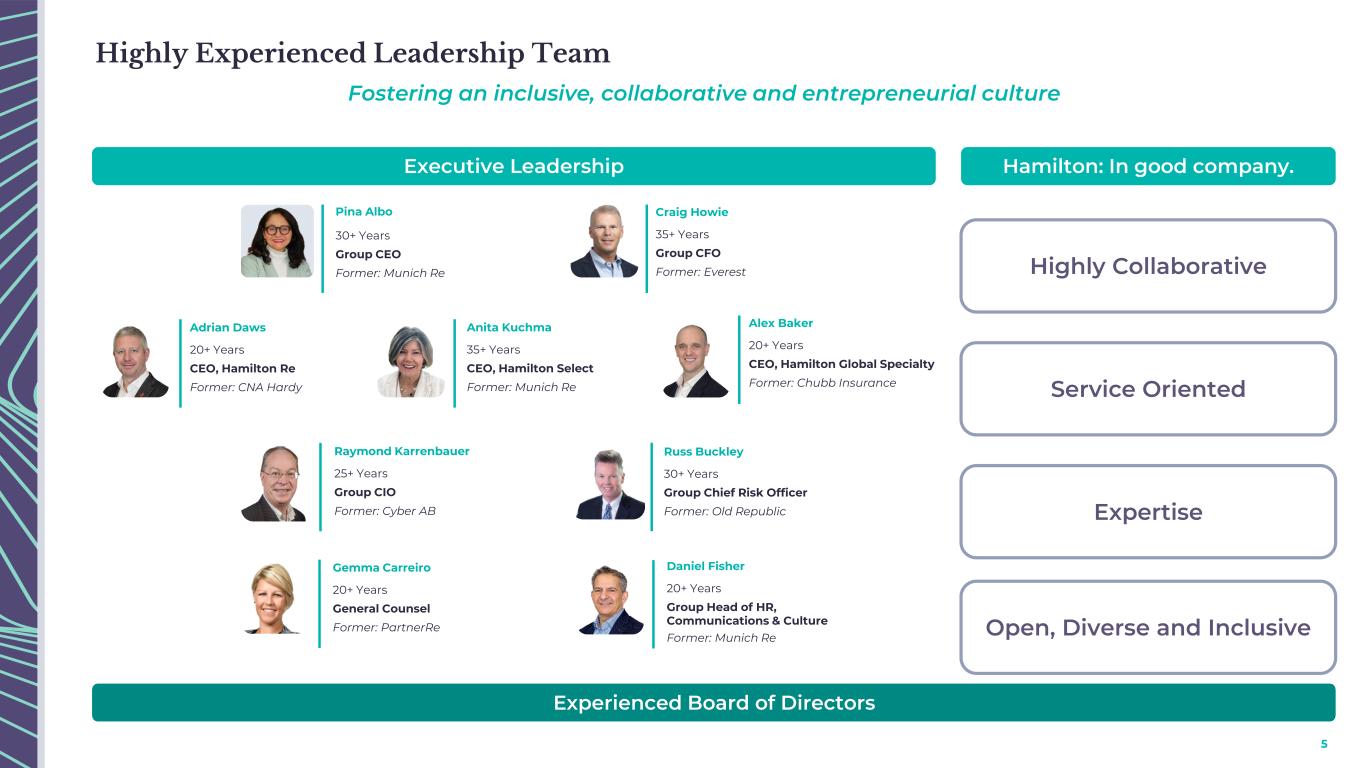
Thanks, Operator. Hi, everyone, and welcome to the Hamilton Insurance Group Third Quarter 2025 Earnings Conference Call. The Hamilton executives leading today's call are Pina Albo, Group Chief Executive Officer, and Craig Howey, Group Chief Financial Officer. We are also joined by other members of the Hamilton management team. Before we begin, note that Hamilton financial disclosures, including our earnings release, contain important information regarding forward-looking statements. Management comments regarding potential future developments are subject to the risks and uncertainties as detailed. Management may also refer to certain non-GAAP financial measures. These items are reconciled in our earnings release and financial supplement. With that, I'll hand it over to Pina.
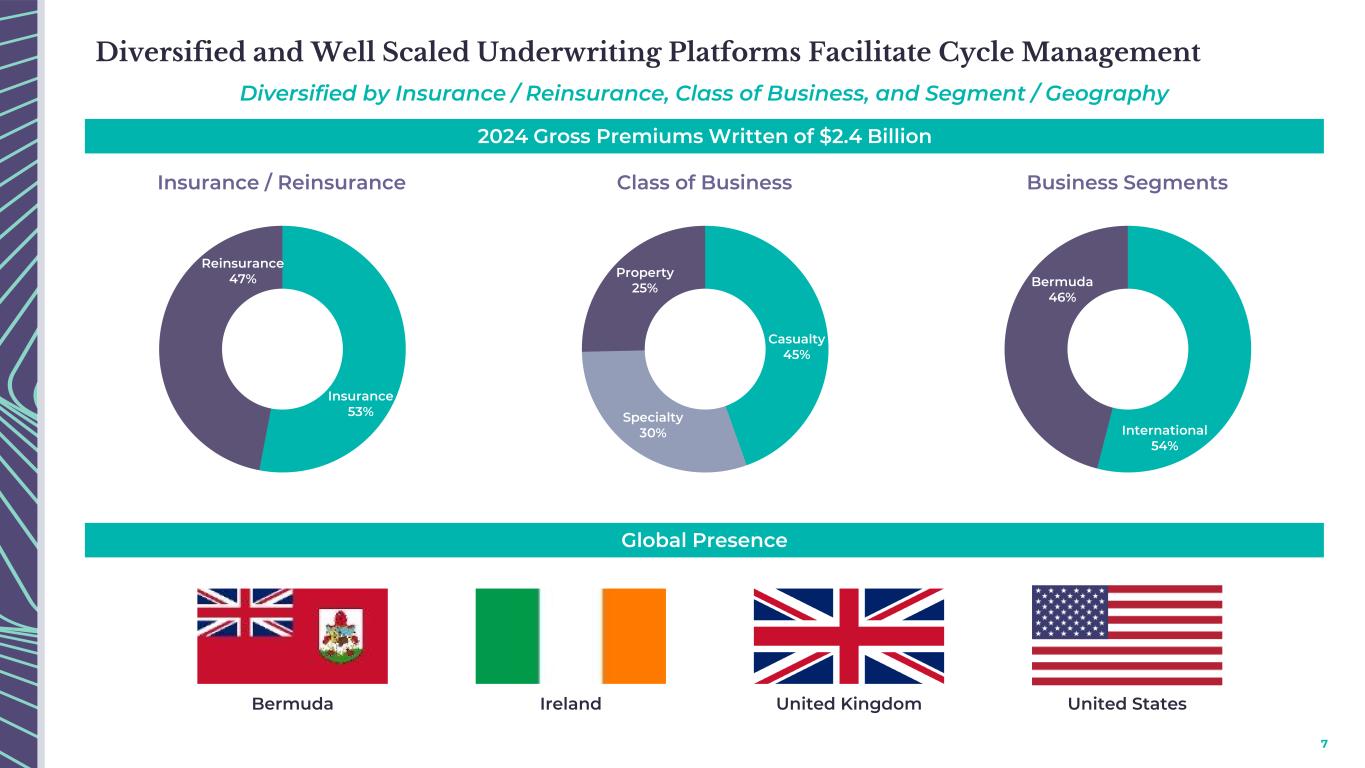
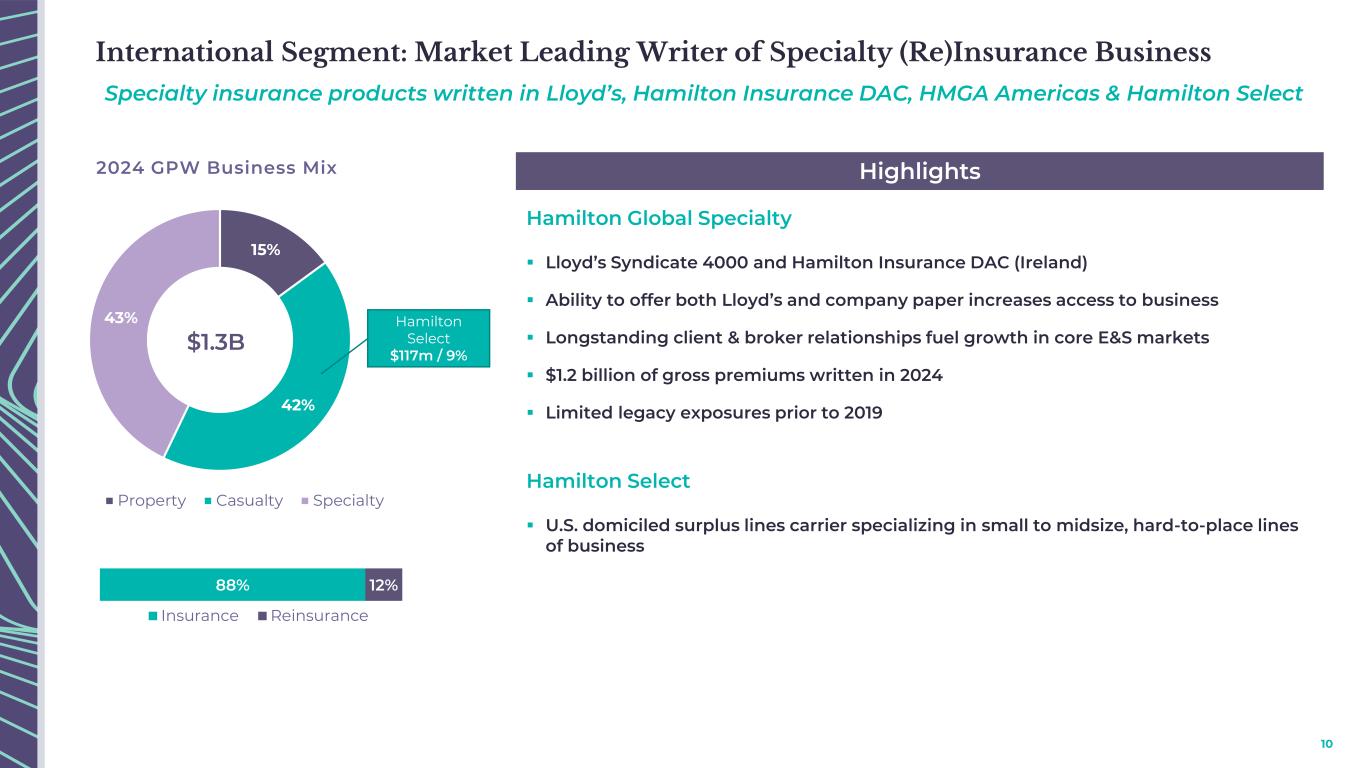
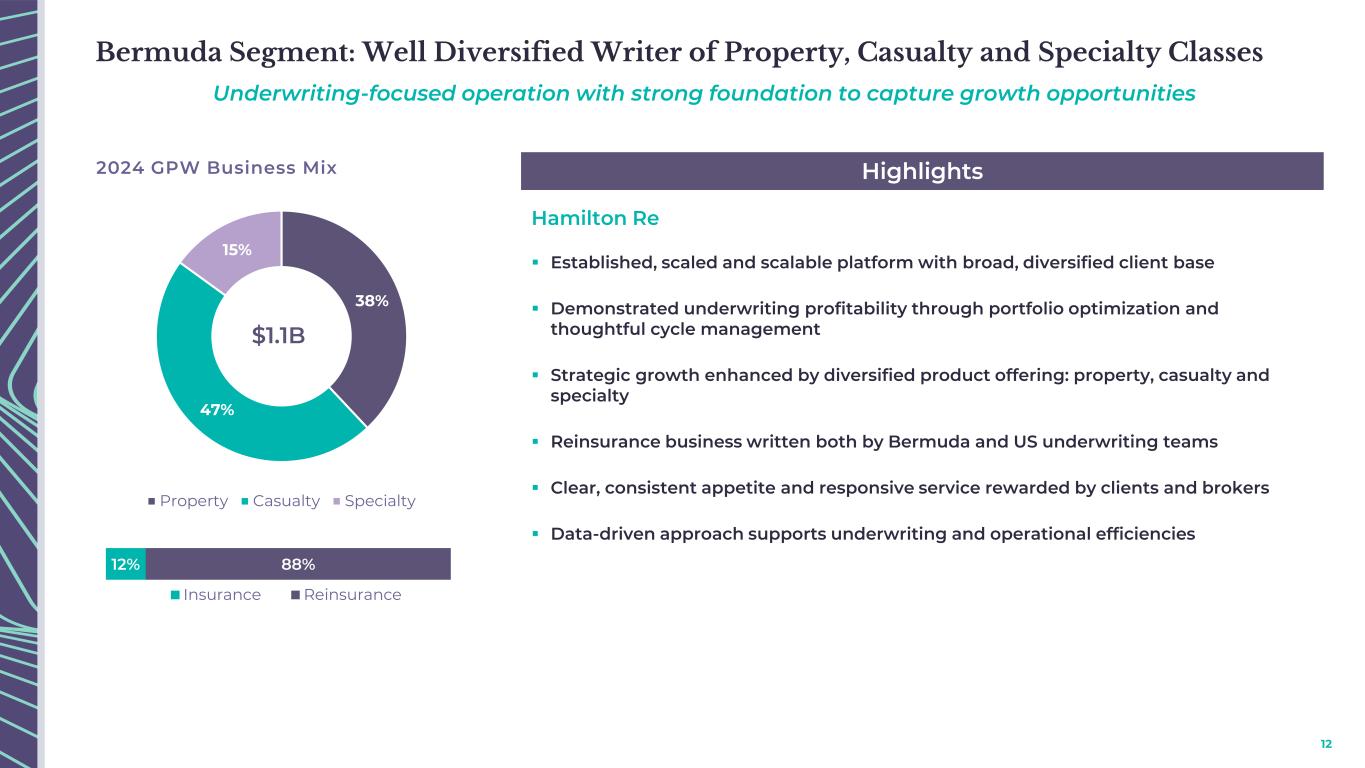
Thank you, Darian, and welcome to everyone joining us today. I'm pleased to report that Hamilton had another very strong quarter with $136 million of net income, representing an annualized return on average equity of 21%. This impressive result started with strong performance from our core activity, namely underwriting, where we reported a combined ratio of 87.8% and underwriting income of $64 million in the quarter. These results are a direct consequence of the balanced and diversified portfolio that we have curated over the years, as well as our disciplined underwriting approach. Investment income of $98 million was also significant this quarter, with contributions from both our Two Sigma Hamilton Fund and our fixed income portfolios. So in short, both our underwriting and investment played a part in our excellent results this Before providing more commentary on our performance and reflections on the market in general, I want to speak to some of our recent management appointments. Hamilton continues to shine as a true magnet for top-tier talent. In addition to developing and promoting from within our ranks, we continue to attract exceptional leaders from outside the organization. On the latter note, we were thrilled to welcome Mike Mulray as Chief Underwriting Officer at Hamilton Select. Mike brings over 25 years of underwriting expertise and strong market relationships, which will prove opportune as we continue to grow our U.S. E&S platform. With respect to drawing from our bench strength, we are also delighted to announce the well-deserved promotion of Susan Steinhoff to Chief Underwriting Officer of Hamilton Re, effective January 1st, 2026. Susan has more than 20 years of industry experience and is one of the longest serving underwriters at Hamilton, having joined the company in 2014. Turning now to some of our highlights for the third quarter. Hamilton continues to deliver strong top-line growth with gross premiums written increasing by 26 percent in the quarter. While the market is experiencing some pressure in pockets, it is still an attractive place to do business for disciplined and discerning underwriters who know how to navigate it and pick the most attractive spots. Our diversified portfolio has allowed us to flex across insurance and reinsurance and multiple lines of business in response to market realities. This means we were able to grow where rates, terms, and conditions were still attractive and backed away from business where this was not the case. Let me walk you through this dynamic in each of our three underwriting platforms to illustrate the point. Starting with Bermuda. Our Bermuda segment grew 40% this quarter, driven by casualty and, to a lesser extent, specialty reinsurance classes. The increase in casualty reinsurance this quarter was a combination of access to new market opportunities, a larger renewal moving from Q2 to Q3, as well as the benefit of expanded participations on select renewals written earlier in the year. The majority of our growth was attributed to general liability and multi-line classes, which we write predominantly on a proportional basis, and which has been getting the benefit of strong underlying rate improvements. Regarding specialty reinsurance, we continue to see momentum in our new credit, bond, and political risk lines, where risk-adjusted returns are attractive. Turning now to the property insurance book we write in Bermuda, on the other hand, we did see increased competition on larger property accounts after several years of compounding increases. Consistent with our disciplined underwriting culture, we were very selective and consequently wrote less of this business. That said, we do still see risks in this space that provide attractive underwriting margins, so we continue to support those accounts. Moving to our international segment, which houses Hamilton Global Specialty and Hamilton Select, gross premiums written grew 17% in the quarter. starting with hamilton global specialty which includes our lloyd's operation gross premiums written were up 16 with a select part of our property insurance book leading the charge more specifically consistent with the approach taken in bermuda we have been more selective on larger property accounts, but were able to grow on the back of new distribution channels that focus on smaller property risks, which are subject to less competition and where risk-adjusted returns remain attractive. We also grew in select specialty and casualty classes, such as mergers and acquisitions, marine cargo, political risks, and fine art and specie, where our specialized teams were able to achieve attractive margins. On the flip side, and consistent with our disciplined underwriting culture, we reduced our writing in lines experiencing increased pricing pressure, such as political violence and some areas of professional lines. Turning next to our U.S. E&S platform, Hamilton Select, It grew 26% this quarter, led by 50% growth in our casualty lines. We continue to see healthy submission flows at Hamilton Select and a favorable momentum in our casualty segments, especially excess casualty, general casualty, and small business classes where rates and terms remain attractive. On the other hand, and consistent with our adherence to cycle management, we reduced our writings in some areas of professional lines where rates were less attractive. Looking out to the foreseeable future, I'd like to share a few high-level thoughts on the market environment in general, starting with U.S. E&S insurance, which accounts for a significant portion of our insurance portfolio. As you have heard from others, the growth and attractiveness of the U.S. E&S market has given rise to increased interest and competition, which we also expect going forward. Starting with property E&S insurance, we expect small to mid-market accounts to see increased competition but hold up better than large accounts. Large accounts are expected to continue to experience pricing pressure, but, as we demonstrated, we are not afraid to be responsible and back away in order to safeguard the profitability of our book. Casualty ENS business is expected to continue to show momentum, with attractive rate increases persisting, albeit at a slower clip. The majority of our E&S book consists of casualty and specialty classes, which is good news for us. Also worthy of note is the fact that our domestic E&S carrier, Hamilton Select, is focused predominantly on small to mid-sized, hard-to-place niche business where we differentiate ourselves with our expertise, tailored solutions, and responsiveness. In summary, while the U.S. E&S market is expected to experience more competition, it is a nuanced market. Given our established and recognized expertise, our strong underwriting culture, and market relationships, it remains a market where we see opportunity for attractive growth, albeit at a more moderate pace than in previous quarters. I'll now turn briefly to the reinsurance market, particularly the upcoming January 1 renewals. We expect the upcoming January 1 reinsurance renewals to be more of the same. Regarding property cat reinsurance, we expect supply to outpace demand and some sedents to retain more business. Consequently, we're expecting rate pressure similar to what we have seen in the course of 2025, especially on upper layers of property cap programs. However, given the significant rate increases, which started with the 2023 market reset, we believe that absolute pricing levels will remain attractive and terms, conditions, and attachment points to remain intact. act. Consequently, we expect to continue supporting, and in some cases, even increasing our participations for our key clients. As for casualty reinsurance, our expectations are more differentiated. In general, we expect casualty books with poorer performance to see commission decreases, while commissions on better performing books are expected to remain flat. Having increased our portfolio in recent years with targeted clients, predominantly on the back of our AM Best upgrade, we expect our growth in casualty going forward to be more moderate. We have now had the benefit of the upgrade for over a year, and our assumptions in both pricing and reserving provide prudent guardrails for this class. The specialty reinsurance market involves a mixed bag of products, but since historical performance has been good overall, we expect many peers and some new entrants to target growth in their specialty portfolios. We have an established offering with clients we have been supporting for years and expect to continue to support them going forward, given that we have relationships with many of them that span multiple classes. In addition to having a well-balanced portfolio with a broad product offering, Hamilton is viewed as a reliable and creative partner by our clients and brokers. Our ability to provide solutions, especially when others retrench, has helped us grow at the right time and in the right lines and remains a key differentiator to our success. Our upgraded rating puts us on par with many of our larger peers, and our responsiveness and underwriting culture allows us to compete responsibly and write the business we want. In closing, I'm proud of our team's performance, their ability to navigate this transitioning market, and the resilience we have demonstrated as a group. We have a talented team of professionals with years of experience and are building a business for the long run. In times like these, our underwriters know when to lean in and when to back away so that we can continue delivering market-leading bottom-line results and a consistently healthy growth in book value per share. I am extraordinarily proud to be part of Hamilton, an organization that is nimble, acts responsibly, and knows how to capitalize on opportunities throughout market cycles. With that, I'll turn the call over to Craig for a detailed review of our financial results.
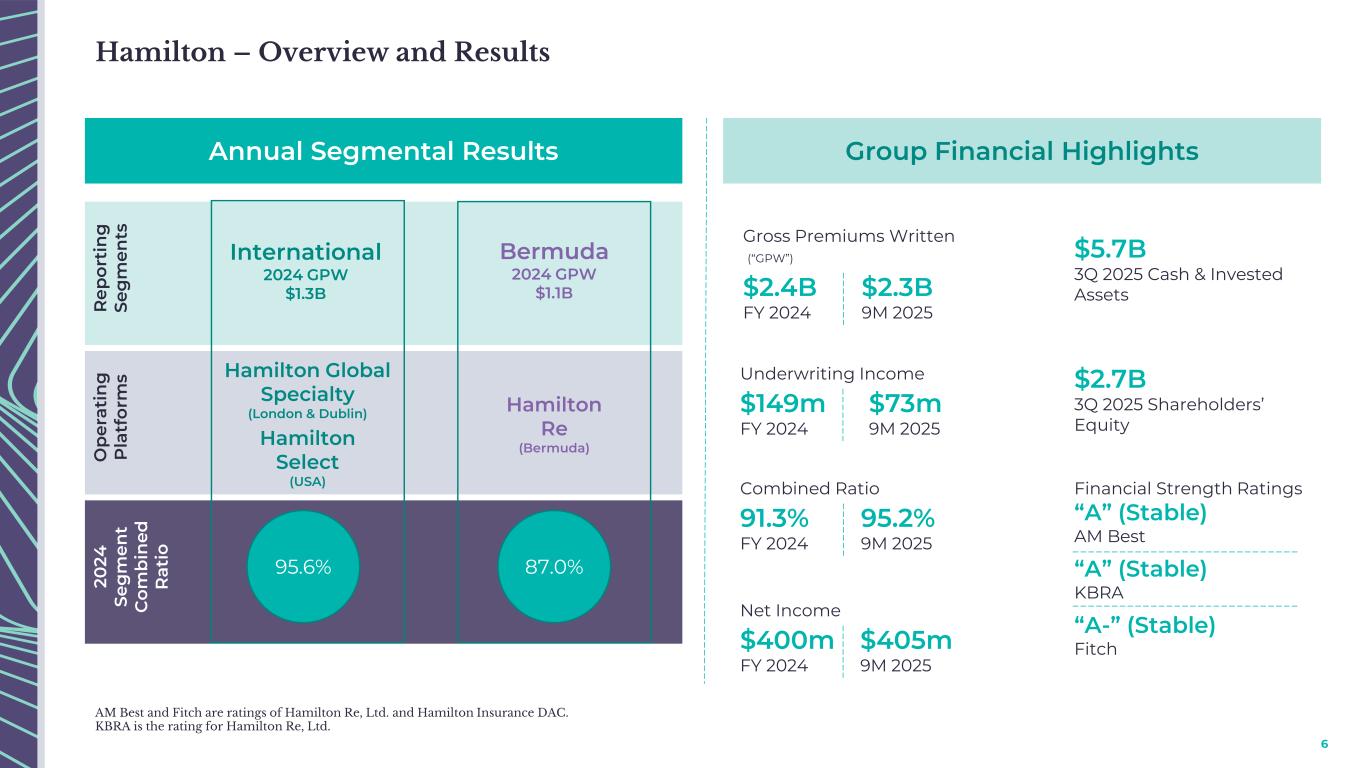
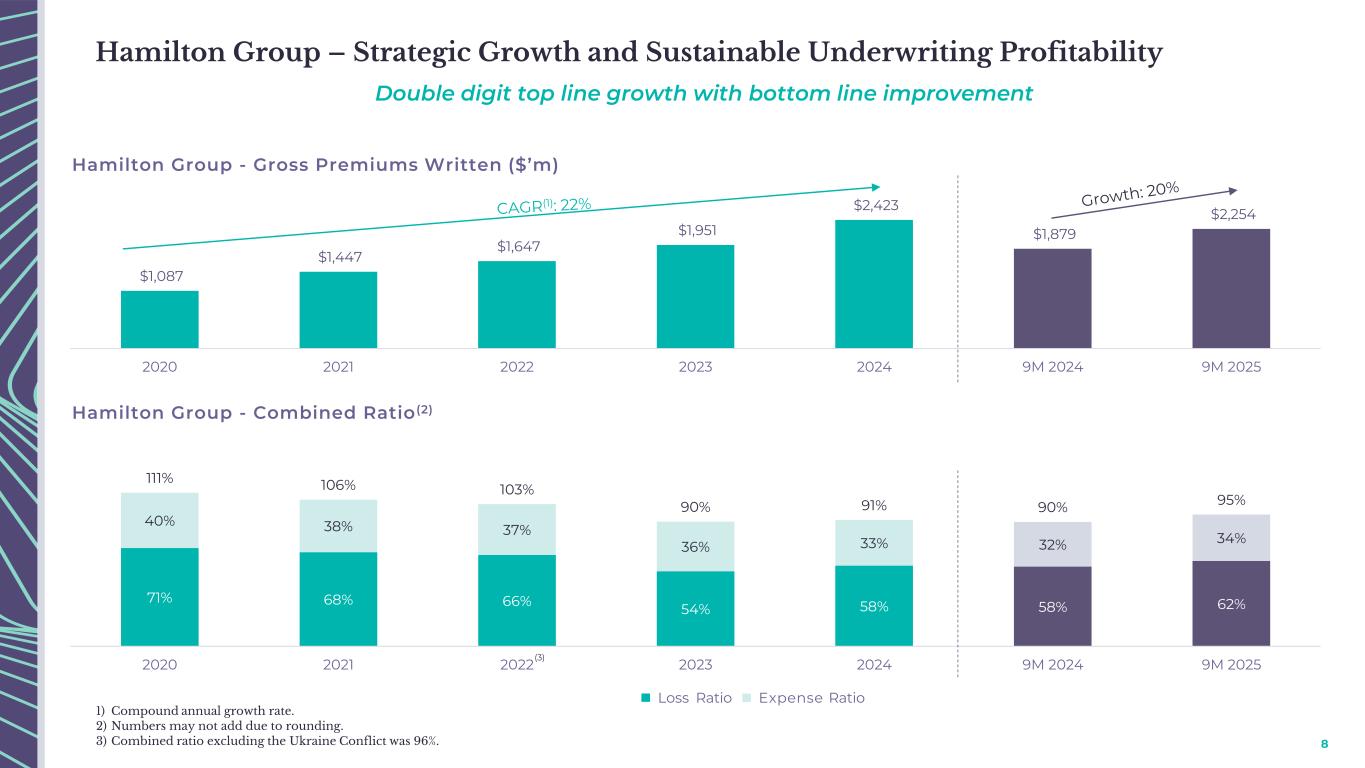
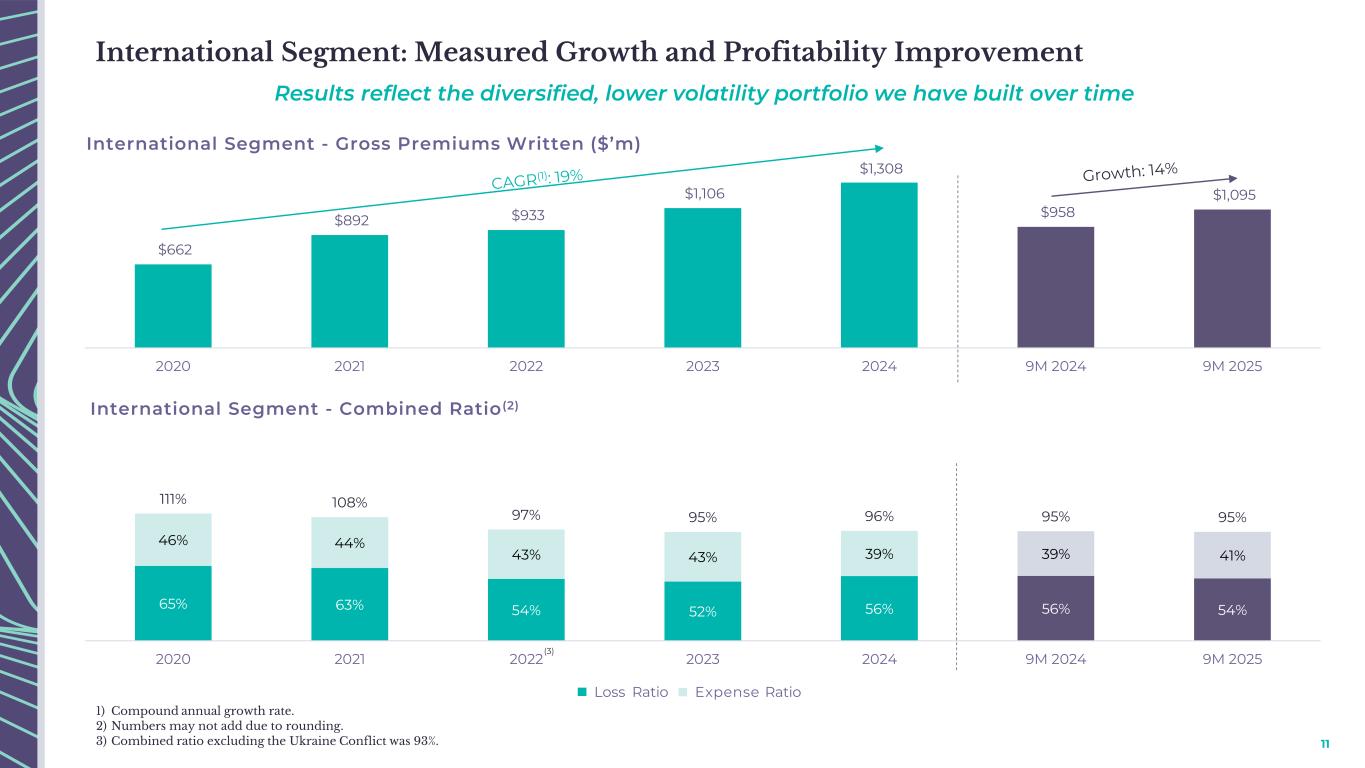
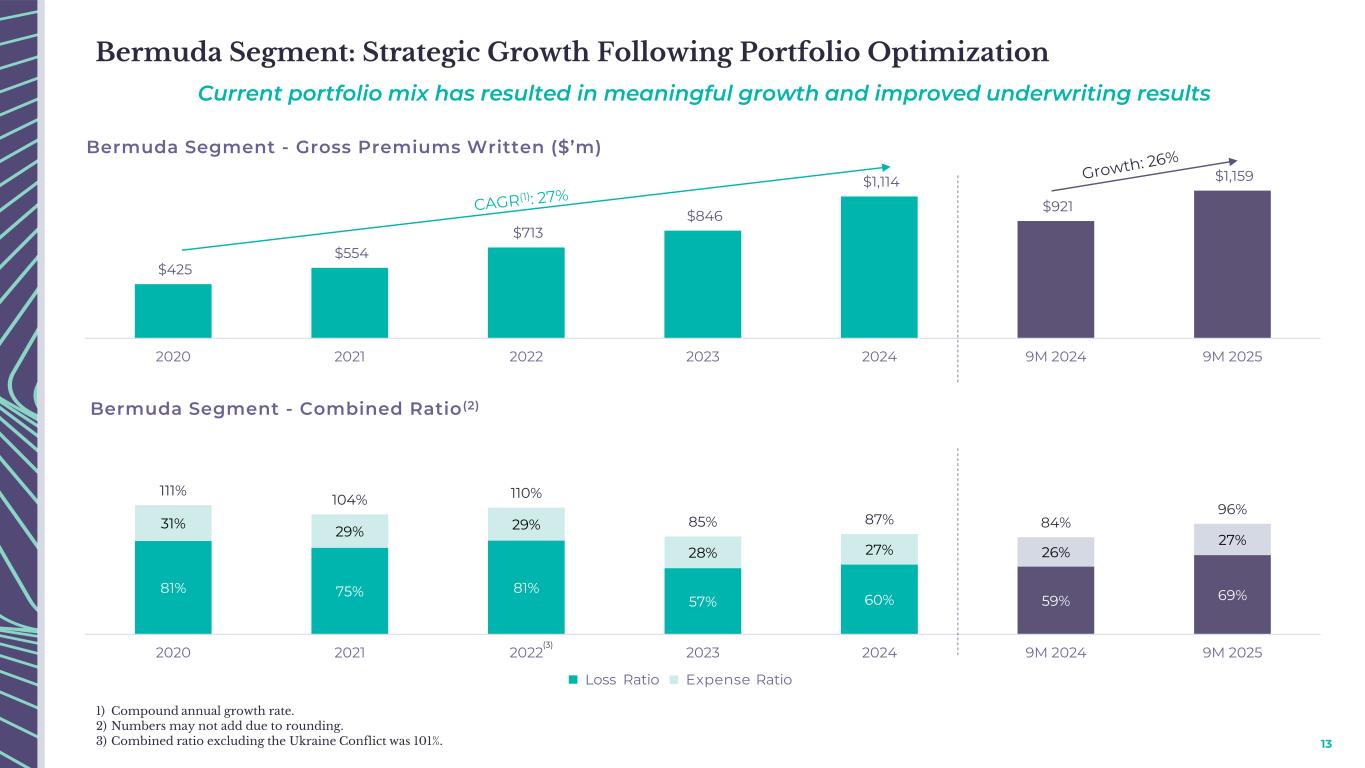
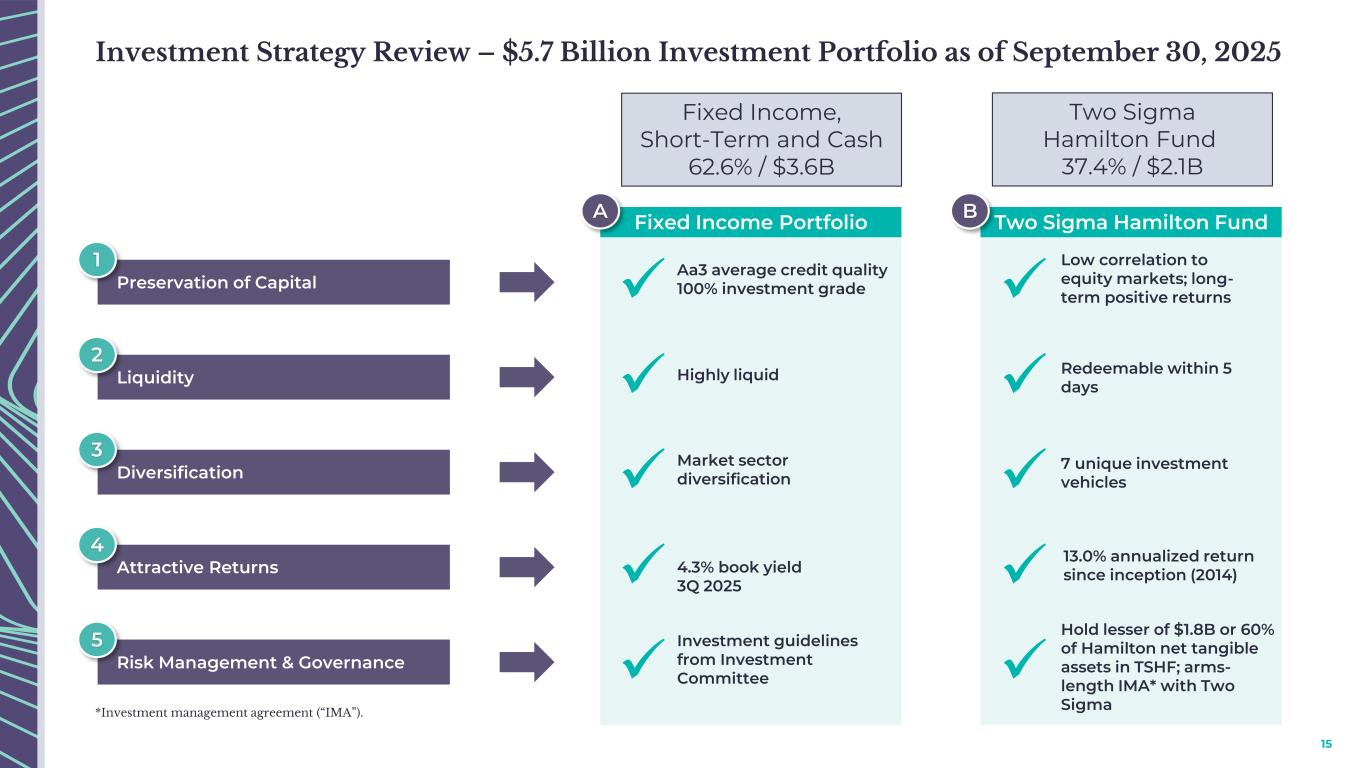
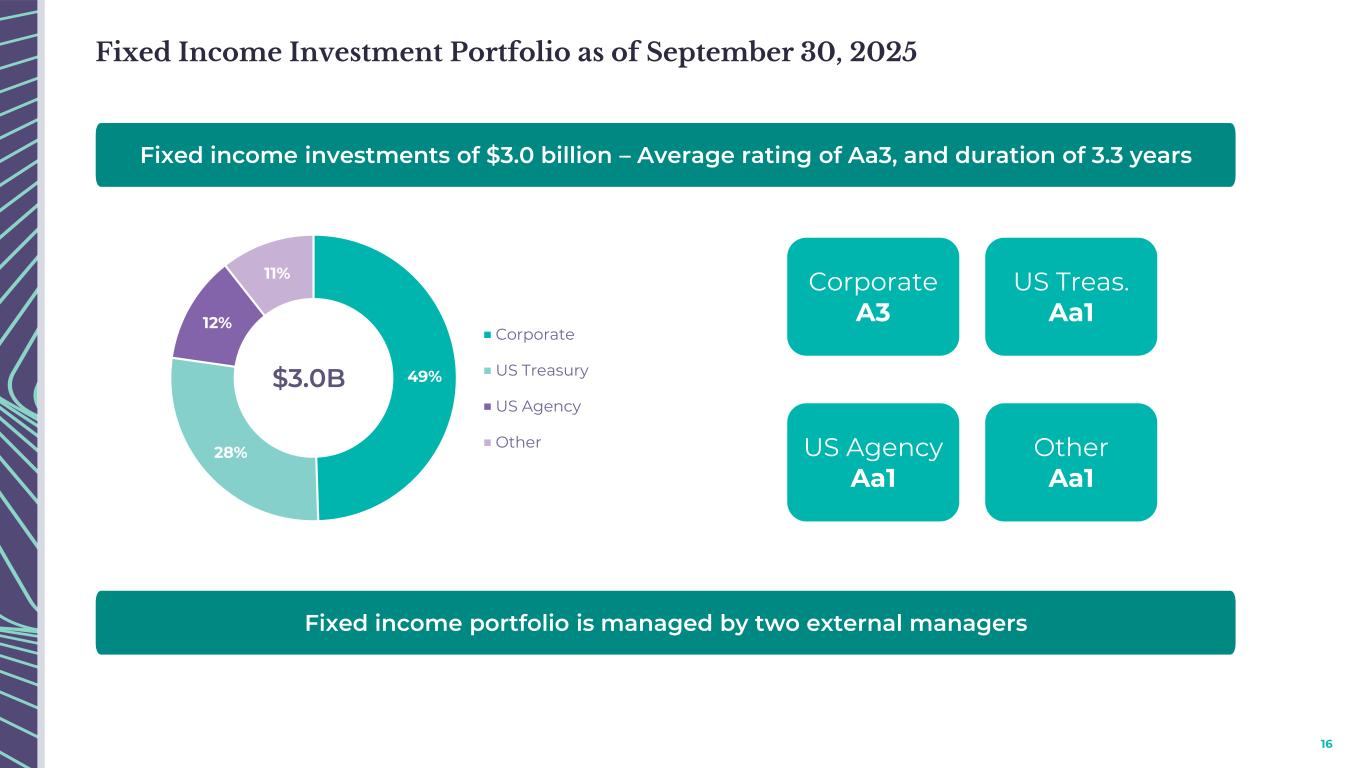
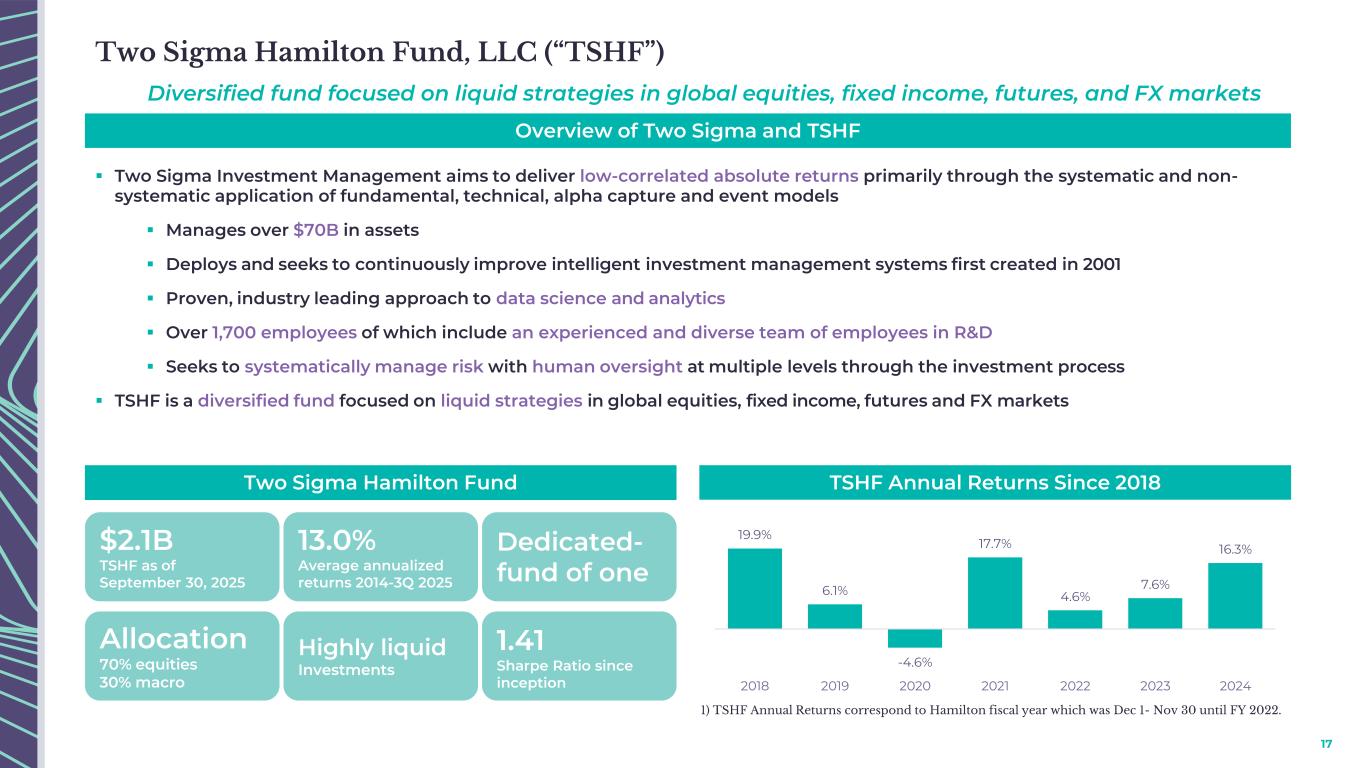
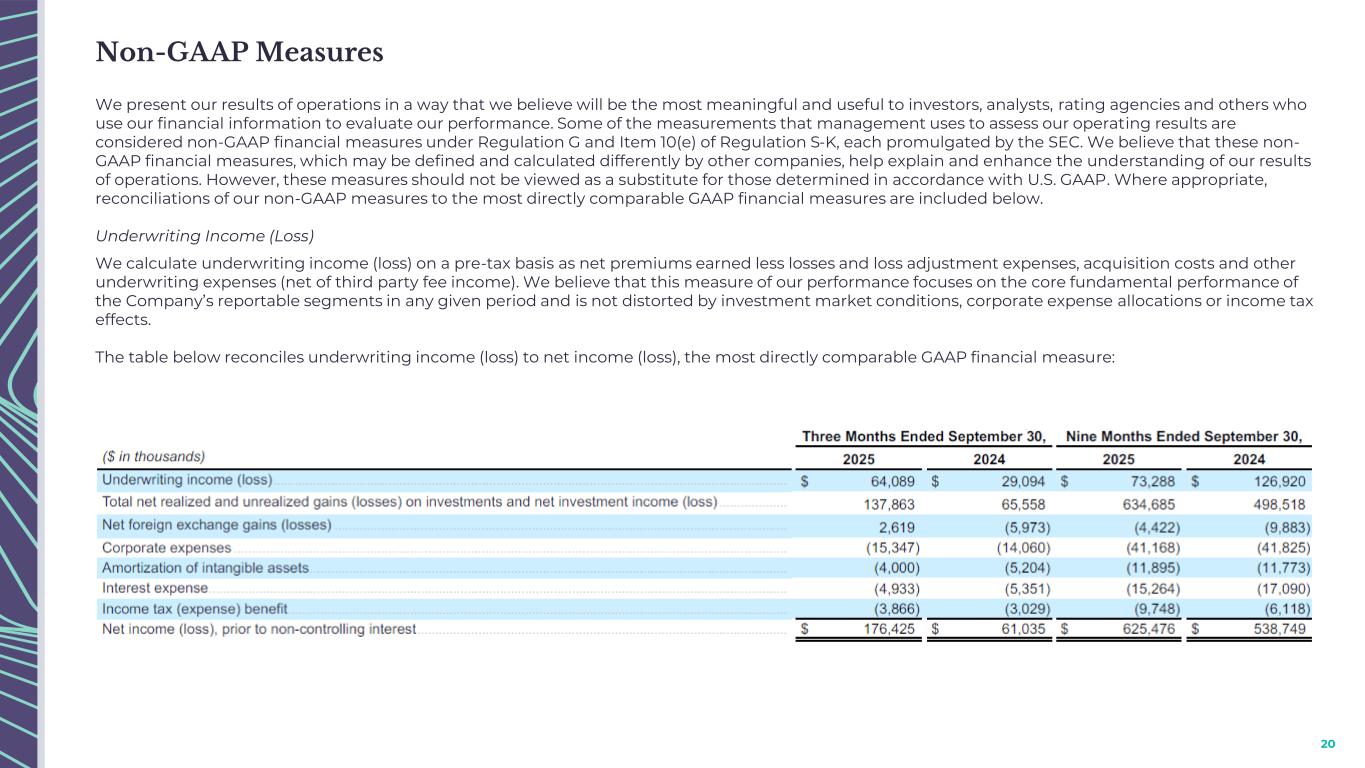
Thank you, Pina, and hello, everyone. Hamilton had another strong quarter of financial results with net income of $136 million, equal to $1.32 per diluted share, producing an annualized return on average equity of 21%. We had operating income of $123 million, equal to $1.20 per diluted share, producing an annualized operating return on average equity of 19%. We also increased book value per share by 6% in the quarter and 18% year-to-date to a record $27.06. These results compare favorably to net income of $78 million, or $0.74 per diluted share, an annualized return on average equity of 14%, and operating income of $17 million, or $0.16 per diluted share, and an annualized operating return on average equity of 3% in the third quarter of 2024. For our underwriting results, Hamilton continues to grow its top line at an impressive double-digit rate. Our 2025 year-to-date gross premiums written increased to $2.3 billion compared to $1.9 billion this time last year, an increase of 20%. All three of our operating platforms, Hamilton Global Specialty, Hamilton Select, and Hamilton Re were able to strategically grow in the lines of business that were most attractive while shrinking those lines that did not meet our underwriting targets. In terms of our underwriting performance, our year-to-date combined ratio was 95.2%. Now for some more detail on our quarterly underwriting figures. Hamilton had underwriting income of $64 million for the third quarter, compared to underwriting income of $29 million in the third quarter last year. The group combined ratio was 87.8%, compared to 93.6% in the third quarter of 2024. In the third quarter, the loss ratio decreased 7.7 points to 53.3%, compared to 61.0% in the prior period. The decrease was primarily driven by no catastrophe losses in the quarter, compared to 8.5 points of catastrophe losses during the same period last year. This was partially offset by an increase in the current year attritional loss ratio, which was 55.4% compared to 53.2% in the prior period. The increase was driven by a change in business mix toward casualty reinsurance and a specific large loss in our Bermuda segment, which I'll cover shortly in my segment comments. We had favorable prior year attritional development of 2.1 points in the quarter, driven by the property and specialty classes. This compares to 0.7 points of favorable development in the third quarter last year. The expense ratio increased 1.9 points to 34.5 percent compared to 32.6 percent in the third quarter last year. The increase was mainly driven by higher acquisition expenses related to business mix changes and higher other underwriting expenses primarily related to an accrual for variable performance-based compensation costs. As always, I'd encourage you to use the full year 2024 attritional loss and expense ratios as an indication for where we expect the current book to perform. Next, I'll go through our third quarter results by reporting segment. Let's start with the international segment, which includes our specialty insurance businesses, Hamilton Global Specialty, and Hamilton Select. Year-to-date gross premiums written in 2025 grew to $1.1 billion, up from $1.0 billion, an increase of 14%. This was primarily driven by growth in all classes, meaning our property, specialty, and casualty classes. Moving to some quarterly figures, in the third quarter, international had underwriting income of $12 million and a combined ratio of 95.4%, compared to underwriting income of $5 million and a combined ratio of 97.6% in the third quarter last year. The improvement in the combined ratio was primarily related to the loss ratio decreasing by 4.7 points due to no catastrophe losses in the quarter partially offset by the expense ratio. The prior year attritional loss ratio was favorable by 2.2 points. This was driven by favorable development in the property class. The expense ratio increased 2.5 points to 42.3 percent compared to 39.8 percent in the third quarter last year. The increase was primarily driven by the other underwriting expense ratio due to an accrual for variable performance-based compensation costs, foreign exchange, and a decrease in third-party management fee income. As a reminder, effective July 1st, 2025, we ceased managing third-party syndicates for fee income. I'll now turn to the Bermuda segment, which houses Hamilton Re and Hamilton Re U.S., the entities that predominantly write our reinsurance business. Year-to-date gross premiums written in 2025 grew to $1.2 billion, up from $0.9 billion, an increase of 26%. The increase was primarily driven by new and existing business and casualty and property reinsurance classes, including non-recurring reinstatement premiums related to the California wildfires. In the third quarter of 2025, Bermuda had underwriting income of $52 million and a combined ratio of 80.7 percent, compared to underwriting income of $24 million and a combined ratio of 89.4 percent in the third quarter last year. The improvement in the combined ratio was primarily related to no catastrophe losses in the quarter, partially offset by an increase in the current year attritional loss ratio and the acquisition expense ratio. The Bermuda current year attritional loss ratio increased 4.6 points to 55.6 percent in the third quarter compared to 51.0 percent in the third quarter last year due to a change in business mix including more casualty reinsurance business and due to one large loss related to the Martinez refinery fire. In the third quarter, the industry loss estimate for this event nearly doubled from the original March estimate, adding 2.8 points to the attritional loss ratio in the third quarter. The Bermuda prior year attritional loss ratio was favorable by 2.1 points. This was primarily driven by favorable development in the specialty and property reinsurance classes. The Bermuda expense ratio increased by 2.0 points to 27.2 percent compared to 25.2 percent in the third quarter of 2024. This was driven by an increase in the acquisition cost ratio due to a change in business mix, partially offset by a decrease in the other underwriting expense ratio. Similar to my comment about group ratios, I'd encourage you to use the full year of 2024 attritional loss and expense ratios for the segments as a guide for how we expect the current segment books to perform. Now turning to investment income. Total net investment income for the third quarter was $98 million, compared to investment income of $83 million in the third quarter of 2024. The fixed income portfolio, short-term investments, and cash produced a gain of $43 million for the quarter compared to a gain of $94 million in the third quarter of 2024. As a reminder, this includes the realized and unrealized gains and losses that Hamilton reports through net income as part of our trading investment portfolio. The fixed income portfolio had a return of 1.4 percent in the quarter worth $39 million and a new money yield of 4.2 percent on investments purchased this quarter. The duration of the portfolio was 3.3 years. The average yield to maturity on this portfolio was 4.1%. The average credit quality of the portfolio remained strong at AA3. The Two Sigma Hamilton Fund produced a $54 million gain, or 2.6%, for the third quarter of 2025. The fund had a net return of 13.0% through the first nine months of 2025. The latest estimate we have for the Two Sigma Hamilton Fund year-to-date performance was 14% through October 31st, 2025, or an increase of 1% in October. At this stage, the fund is ahead of achieving our planned target of 10% for the full year. The Two Sigma Hamilton Fund made up about 37% of our total investments, including cash investments, at September 30th, compared to 39% at December 31st, 2024. Now turning to capital management. In 2024, we announced a $150 million share repurchase authorization by the Hamilton Board of Directors. During the third quarter of 2025, we were able to repurchase $40 million of shares. All shares purchased were accretive to shareholders, book value per share, earnings per share, and return on equity. The board has recently authorized an additional $150 million in share repurchases, so that in total we now have $186 million remaining. With that, we're able to continue repurchasing shares and growing the business, all while maintaining our strong capital position, even during times of uncertainty. Next, I have some comments on our strong balance sheet. Total assets were $9.2 billion at September 30th, 2025, up 18% from $7.8 billion at year-end 2024. Total investments in cash were $5.7 billion at September 30th, an increase of 19% from $4.8 billion at year-end 2024. Shareholders' equity for the group was $2.7 billion at the end of the third quarter, which was a 14% increase from year-end 2024. Our book value per share was $27.06 at September 30, 2025, up 18% from year-end 2024. Thank you. And with that, we'll open the call for your questions.
Operator
Thank you. We will now begin the question and answer session. Please limit yourself to one question and one follow-up. If you would like to ask a question, please raise your hand now. If you have dialed in to today's call, please press star 9 to raise your hand, and star 6 to unmute. Please stand by while we compile the Q&A roster. Your first question comes from the line of Christian Gutsav with Wells Fargo. Your line is open. Please go ahead.
Speaker 0
Hi, good morning. Can you guys hear me? Yes. Okay. My first question is on the Bermuda underlying loss ratio. So if I exclude the refinery fire, so it ticked up about 1.8 points year over year. And I understand in part that's a little bit driven by mixed towards casualty, but I guess as we go into 26 and casualty, just given what they're seeing in terms of rate versus kind of the rest of the book, particularly property, like how should we think about that underlying margin trending as we kind of see that makeshift continue.
This is Craig. We certainly see that same exact thing that you're saying is that is a mix of business. That's what's driving that loss pick. So again, because of mix of business, you're going to see that change in loss ratio. You'll also see the change in the acquisition expense ratio. What I would say to you is it really depends on the continuous change in the mix of business, but we still continue to write a diversified book of business and we continue to grow property as well as specialty in the same book. So what I would say is, you know, continue to look at it in the same realm that you're looking at it on a year-to-date basis for this year, not necessarily on a quarterly basis.
Speaker 0
Got it. And then in terms of, can you guys maybe provide a little bit color on changes you're seeing in loss trends, particularly within your casualty insurance and reinsurance portfolio versus prior quarters and maybe if you could provide some further color on how you're managing those exposures and we understand that line is getting good rate but it's obviously for good reason just given what we're you're seeing with social inflation but like what's kind of your process in managing that those uh you know exposures away from just you know generally keeping limits a little bit lower yeah why don't I take that?
We have seen some growth both in our reinsurance portfolio and also, you know, to a lesser extent in our insurance portfolio on the casualty classes. From the reinsurance portfolio, let's remember, we started from a very, very low base of casualty. And although we've had growth, that growth has been in recent years when the rates have improved. We have a very strong feedback loop across underwriting, pricing, and reserving, and those are the guardrails that we operate in when we are looking to onboard this kind of business. We still feel comfortable that the rate increases that we are seeing in casualty are keeping place with a trend. And that actually same view transcends to our casualty insurance book. If you look just at Hamilton Select, we have a significant growth in casualty insurance in our select operations. Remember, however, that is a very specific book of hard to place niche business. And there we get to tailor the coverages and, you know, set pricing terms. And there we also see attractive increases in casualty pricing. And that's what makes us comfortable to write this business. Just one note, just to back up from just a moment to remember, we're an underwriting shop. So we have this ability to lean in when the leaning is good and back away when it's less the case. So if I look just across property, when property increased back in the reset, we leaned into property and grew our book on a group basis by 60%. On the casualty side, again, starting from a low base, when casualty pricing started getting better, we leaned into casualty and grew our casualty business from about 2022 onwards by around 80%. However, that was always done in the context of a well-balanced portfolio, so if you look at our total casualty rating today versus 2022, it's more or less the same as the percentage of our portfolio. That's how we manage this business.
Speaker 0
Got it. Thank you.
Operator
Your next question comes from the line of Daniel Cohen with BMO. Your line is open. Please go ahead.
Hey, good morning. Thanks for taking my question. I think it'll start in the Bermuda casualty growth, just unpacking this number. Can you maybe quantify the larger renewal moving from 2Q to 3Q so we can get a normalized sense of that impact? And also if there was a meaningful and best contribution that you'd like to call out as we think of growth getting more moderate in this line. Thanks.
Sure. Why don't I start with that one? Maybe just by way of background again, the AMVEST upgrade was a game changer for this organization, and it came at a very opportune time and increased opportunities for us across several lines of business, including casualty. It was also very important validation of how far Hamilton has evolved as a company. So that's by way of background on AMVEST. I'm going to let Craig dive in more details on the numbers here. So Craig, over to you.
Thanks, Tina. We continue to see new and renewable business since the upgrade, and we continue to see top-line premium based on our written patterns coming through our financials, some of which is attributable to the rating upgrade from AMVEST. As you're aware, a large portion of this business is pro-rabbit casualty reinsurance business. So when you look at that, the way it's booked on a gap basis, capital accounting basis throughout the year, you can take an example. If we wrote $40 million of business at January 1st, you would expect to see $10 million come through each quarter on a pro rata basis. Having said that, we saw about $50 million recorded in the third quarter. We expect to see a similar amount come through again in the fourth quarter. And after that, it would be difficult probably to attribute either, you know, any renewal business strictly to the rating upgrade compared to our ongoing client relationships. And then the other thing that you asked about was specifically the renewal that changed from period to period. We had a renewal that changed from the second quarter renewal to a third quarter renewal, and that was about $20 million of the growth in Bermuda this quarter, again, in the casualty line.
Great. Thanks. That's helpful. And then switching gears to Hamilton Select, I think you said 26% growth there and still healthy submission flows, but that is quite the decel from the first half of 25. Is that just you pulling back from professional lines or are rates impacting that step down Sorry, I'll take that one.
That growth of 26% this quarter for Select involved a 50% growth in casualty where we're seeing the most opportunity. It involved writing less of some business that we thought was not attractively priced, but that growth, that 26 percent growth is completely in line with our plans.
Okay, and if I could see one more in on just the fee income so we get a sense of that after the Lloyds MGA moving out, is this quarter the right run rate for that number, or should we be thinking about that going to zero over time, just an international?
Okay, I'll kick off here, dan um maybe just by way of background uh and then i'm gonna have craig talk about the modeling part um we derive fee income from um our the consortia business that we write out of london now this is business these are business arrangements uh where others have recognized our expertise in certain classes and allow us to write on their behalf in other words they're leveraging our core competency, which is underwriting, and we're deriving fee income from that. The same is the case for our third-party capital operation, where we also derive fee income. The third-party syndicate management was part of our 2019 acquisition, and the decision to cease managing the third-party syndicates was made because, unlike underwriting, it's not seen as core to our operations. And that is why we cease that. But Craig, why don't I pass to you for general how to model fee income?
I think, as Pina said, on the international side, Dan, that was your specific question. I think what you should expect going forward is about $2 million per quarter. On the Bermuda side, as you may recall, for our IOS platform, a degree, we book We're planning for about a half a million dollars per quarter. So for the full group, about two and a half million dollars per quarter. That's a baseline. That's before any performance-based fees, which are a little bit harder to plan for. So about two and a half million per quarter for the group.
Operator
Your next question comes from the line of Bob Wong with Morgan Stanley. Your line is open. Please go ahead.
Sid
Analyst — Morgan Stanley
Hey, good morning. This is Sid on for Bob. thanks for taking my question going back to hamilton select you guys mentioned a new chief underwriting officer you guys hired um can you just give some color on like what are the objectives for the business going forward and how we should think about um growth and underwriting profitability there uh sure bob i'll take that one um we're actually thrilled to have uh onboarded mike uh to our hamilton select operation many of us have interacted with Mike for years in different capacities and Craig worked directly with him when he was at Everest.
So he's a known quantity to this group. And just as a reminder, you know, Hamilton Select, the operation he's joining, the book there is purely US ENS. We do not write admitted business. And Select's objectives in that class are no different than the objectives of our other underwriting platforms, and they start with producing sustainable underwriting profitability. So in the context of our underwriting strategy, our disciplined underwriting culture, and our reserve philosophy, we're confident that Hamilton Select is going to continue to thrive and are, again, thrilled to have Mike on board.
Sid
Analyst — Morgan Stanley
Okay, awesome. Appreciate it. And then kind of just looking a little bit more broadly, I was wondering what you guys are seeing in the like MGA market space and any competition there. Any color you can give would be helpful.
Yeah, certainly as you've seen or heard from others in the market, some of those MGAs are providing increased competition in the U.S. insurance market, just as a reminder, we only have a limited amount of MGA relationships and they're predominantly out of our London operations. And these are relationships that we've had for several years, so tried and tested. We do not give away the pen, for example, at Hamilton Select. That is all our own underwriting, but we do see some irresponsible behavior in the market with those players out there, we don't let them hold our pants.
Sid
Analyst — Morgan Stanley
Thank you so much. Appreciate it.
Operator
Your next question comes from the line of Patrick Marshall with Citi. Mr. Marshall, please press star six to unmute.
Good morning. Just a quick question on your disclosure around the decreased duration in your in your portfolio and how it relates to your casual your increasing casualty and how should we think about kind of where the property where your portfolio will move if your casualty mix goes forward increases going forward go ahead Craig Patrick this is Craig so first of all the duration of the overall fixed income portfolio only uh just it basically just ticked down from
3.4 years to 3.3 years it's really more of a rounding um but i agree with you as we go longer uh in the portfolio where business mix change you know more toward casualty but what you just heard pina say is our mix really hasn't changed overall our book is still fully diversified and the amount and casualty business we're writing now compared to just three years ago is about the same mix in our book. So I really don't see a major change in the overall duration of the entire fixed income portfolio.
Thank you. And then one follow on. Can you offer any color on the nature of the large losses noted in the press release?
Sure, Patrick. The large loss that we had mentioned in the press release was part of my prepared comments in the call as well. It was related to the Martinez refinery fire. That was a first quarter event. The initial loss estimates of that event were in the three to eight hundred million dollar range for an industry loss. What we saw in September is that industry loss nearly doubled and as a result we revised our estimate in the third quarter for that up in. We didn't see any really other, any significant large losses in the quarter and any other exposure that we had was manageable and included within our attritional loss picks. That was the largest loss. And again, it was about 2.8 points in the Bermuda segment and about 2.2 points on the group.
Thank you. I appreciate that.
Operator
As a reminder, if you would like to ask a question, please raise your hand.
If you have dialed in to today's call, please press star nine to raise your hand and star six to unmute your next question comes from the line of tommy mcjoin from kbw your line is open please go ahead hey good morning guys um with the the rate softening and really heightened competition and property lines um and in light of the strong opportunity set that it sounds like you still see in casualty and specialty would you be surprised if property written premium declined in 2026?
Hi, Tommy. Pina here, I'll take that. So let's start with Property Cat. We do expect to see, as I mentioned in the call, some more competition on Property Cat in upper layers, but let's not forget where we started from, right? Rates went up dramatically since the 2023 reset. Terms, conditions, and attachment points also improved. And while we're seeing some downward pressure on the cap rates in recent renewal, certainly they're nowhere near the increases we achieved since 2023. So the way we look at it is, is that business still producing an attractive risk-adjusted return? And if it is, we will continue to write it. And if we have some opportunity, we might even increase our writing of property cap on select clients. In the insurance space, I think what you're going to see is what I said earlier on the larger accounts, those larger shared and layer accounts on the insurance side, we're expecting to see increased competition because they also enjoyed, you know, back to back increases. So that drew attention. You can probably see us reducing there, but on the property insurance side, we have a couple, as I mentioned, of new initiatives in the U.S. E&S space where we're targeting the smaller to mid-sized property risks, which are still getting attractively priced, and you could see some growth continuing there. Does that answer your question?
Yeah, that does. Thank you. And then switching over, looking at the expense ratio and perhaps more specifically the acquisition cost ratio, you attributed the increase year over year to the business mix shift as casualty reinsurance has seen outsized growth. Because there is the lag between written and earned, how much more and how many more quarters should we expect the acquisition cost ratio to continue increasing year-over-year, or is there a terminal acquisition cost ratio that you should get to with the current business mix?
Tommy, this is Craig. What I would say to you is, again, if you look at where we are on a year-to-date basis compared to where we were for a whole year last year, you're seeing a slight uptick, again, because of more casualty business, because of more pro rata business that we've been writing this year. But it's not a huge change. So instead of looking at quarter-to-quarter where you might see some lumpiness. Again, if you look at year-to-date numbers compared to a full year last year, you're just going to see a slight uptick on those acquisition expenses, again, because of the mix of business. So it will continue to come in as we write more business, but as Pina just said about property on that previous question, if we continue to write property, that will keep that ratio down as well.
Operator
Your next question is a follow-up From Daniel Cohen with BMO, your line is open. Please go ahead.
Hey, thanks. Just one quick one on, do you have an early estimate of your exposure to the Cats quarter to date just on Jamaica and maybe yesterday's Louisville plane tragedy? Thank you.
Hi, Daniel. This is Craig. A little too early to talk about the plane tragedy from yesterday. I know it was a plane crash that crashed into a couple of commercial buildings, but a little too early to know about that loss. As far as Hurricane Melissa goes through the Caribbean, we don't have much exposure on that type of a loss that would go through that environment, although it was a very devastating loss and a lot of loss of lives. The industry loss estimate for property and other things for insurance losses is not that great, and we don't expect to have much exposure there at all.
Operator
There are no further questions at this time. I will now turn the call back to Pina Albo for closing remarks.
Well, I just want to thank everybody who took the time to join us today to discuss our excellent results for the quarter. And we look forward to speaking to you again with our year-end results in due course. Thank you.
Operator
This concludes today's call. Thank you for attending. You may now disconnect.