Operator
Hello, and welcome to the Hamilton Insurance Group Earnings Conference Call. As a reminder, this call is being webcast and will also be available for replay with links on the Hamilton Investor Relations website. I'd now like to turn the call over to Darian Niferatos, Head of Investor Relations. Please go ahead.
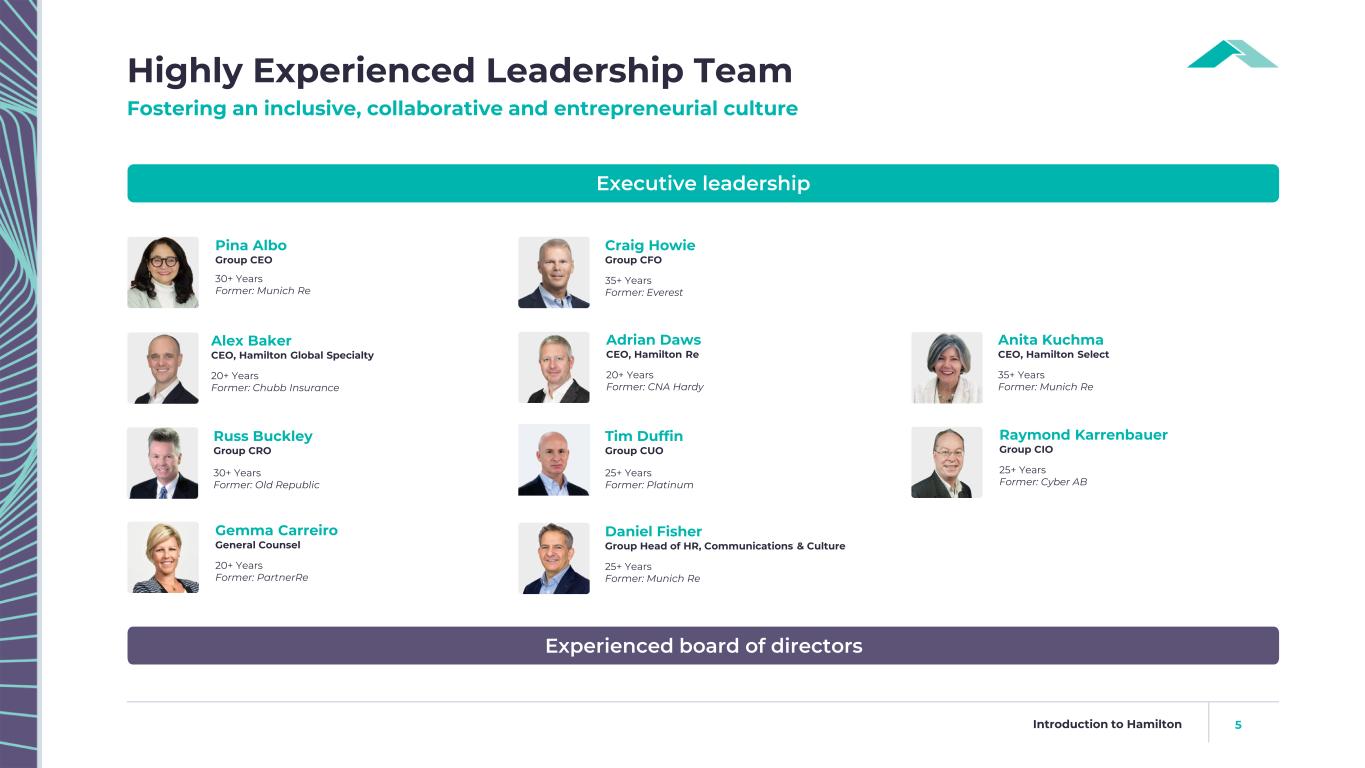
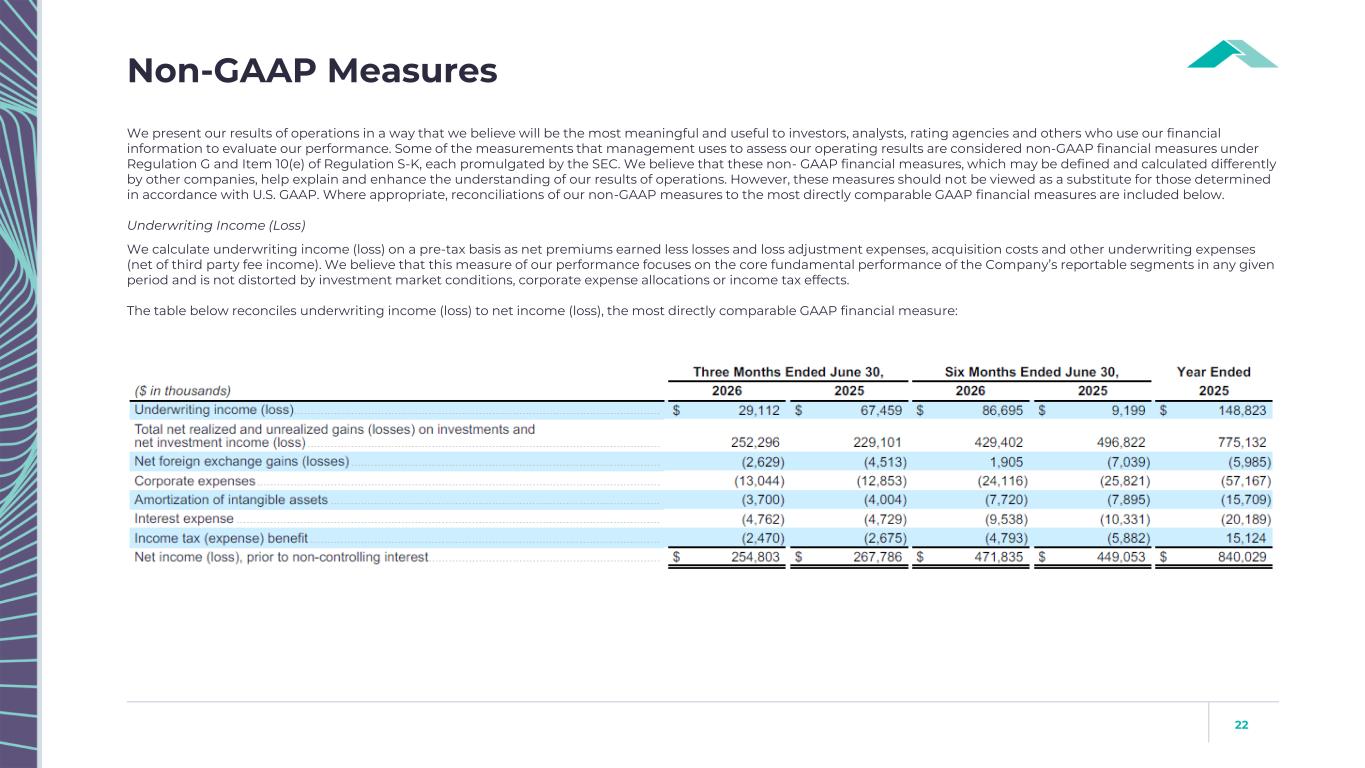
Thanks, Operator. Hi, everyone, and thank you for joining our earnings call. Before we begin, please note that certain statements made during this call are forward-looking statements within the meaning of the Private Securities Litigation Reform Act of 1995. These statements are subject to risks and uncertainties that could cause actual results to differ materially from those discussed. These risks are provided in our earnings release and SEC filings. We will also refer to certain non-GAAP financial measures, which are reconciled to the most directly comparable GAAP measures in our earnings Release and Financial Supplement, available on our website at investors.hamiltongroup.com. Now I'll introduce the Hamilton executives leading today's call, Pina Albo, Group Chief Executive Officer, and Craig Howey, Group Chief Financial Officer. We are also joined by other members of the Hamilton Management Team. With that, I'll hand it over to Pina.
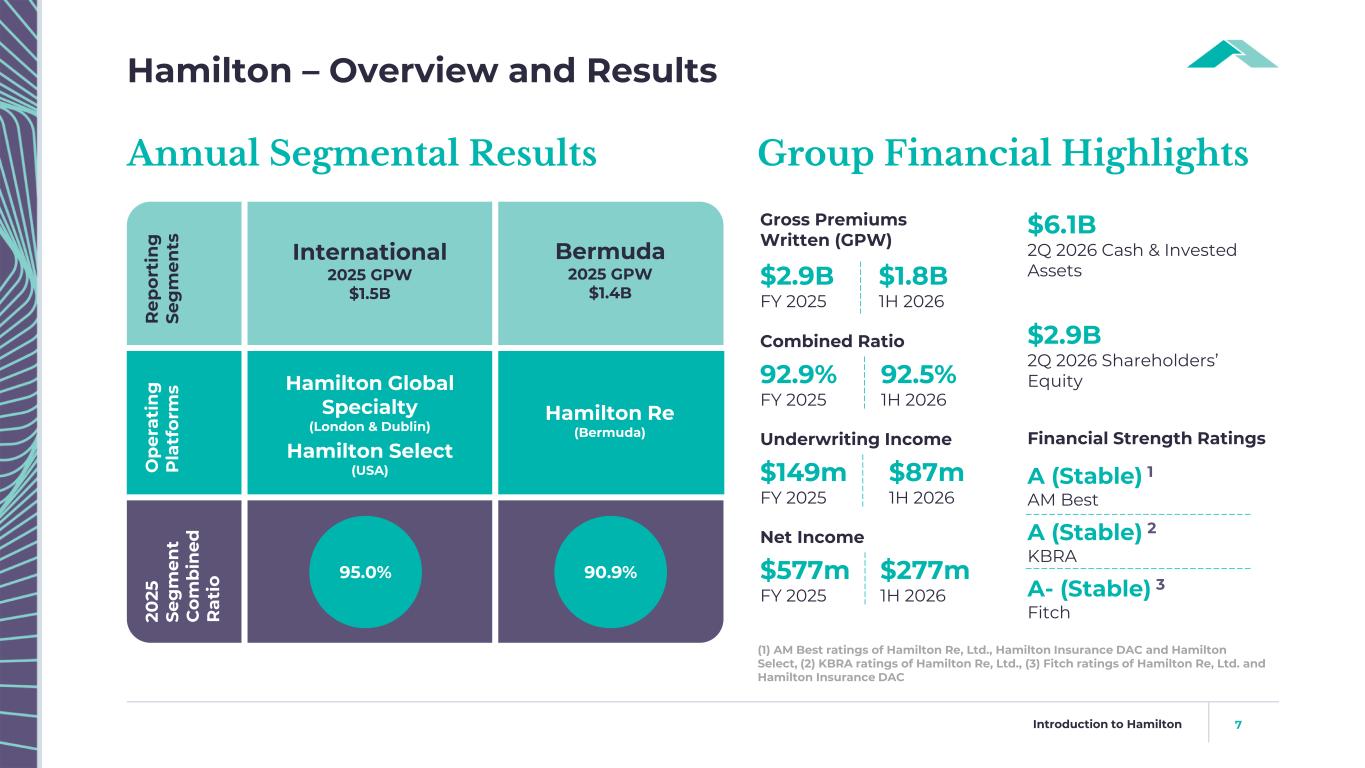
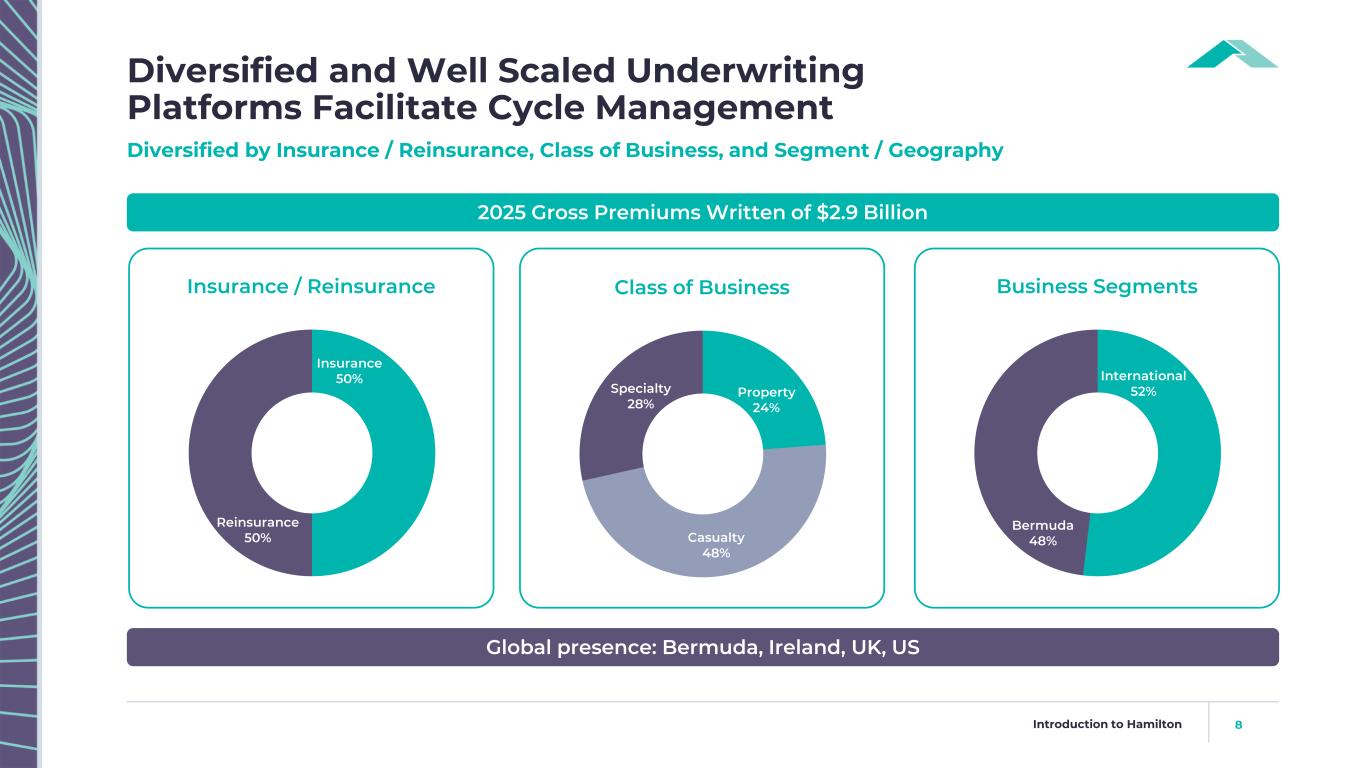
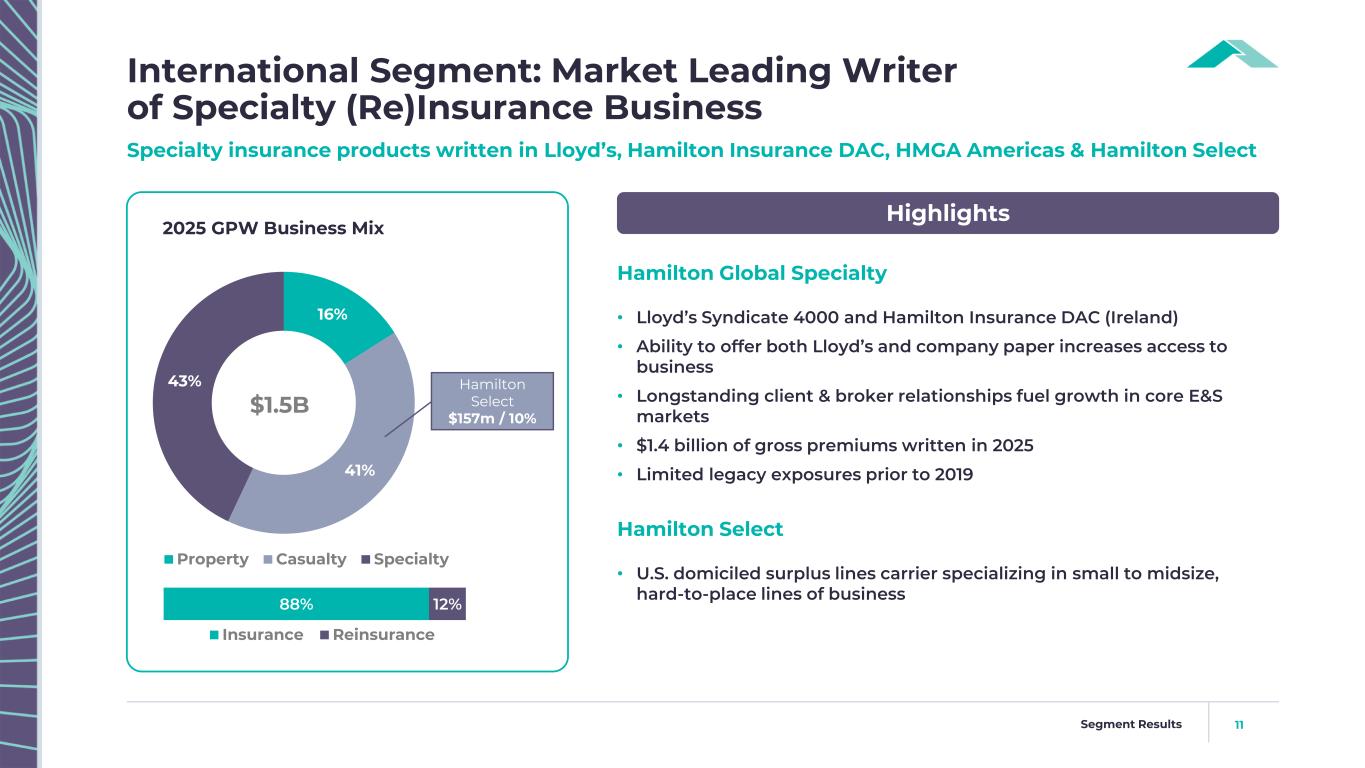
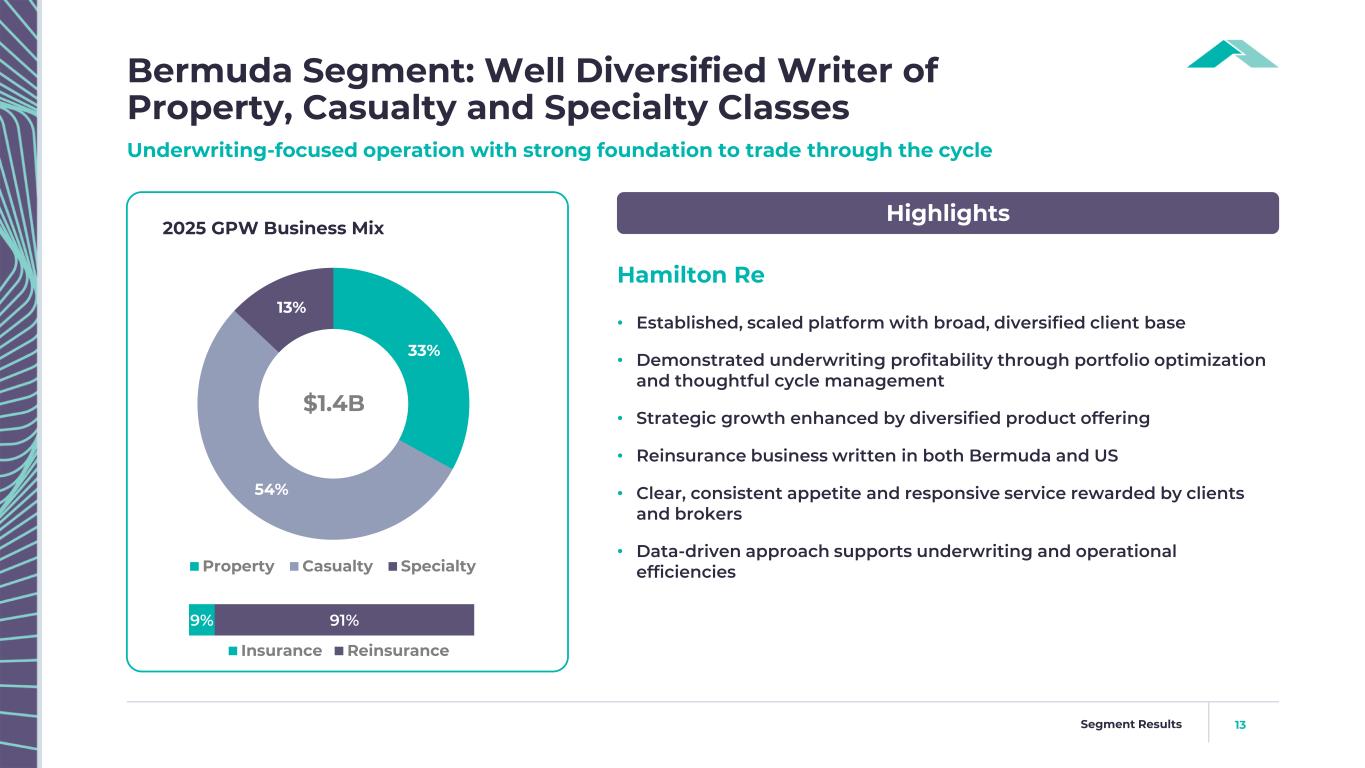
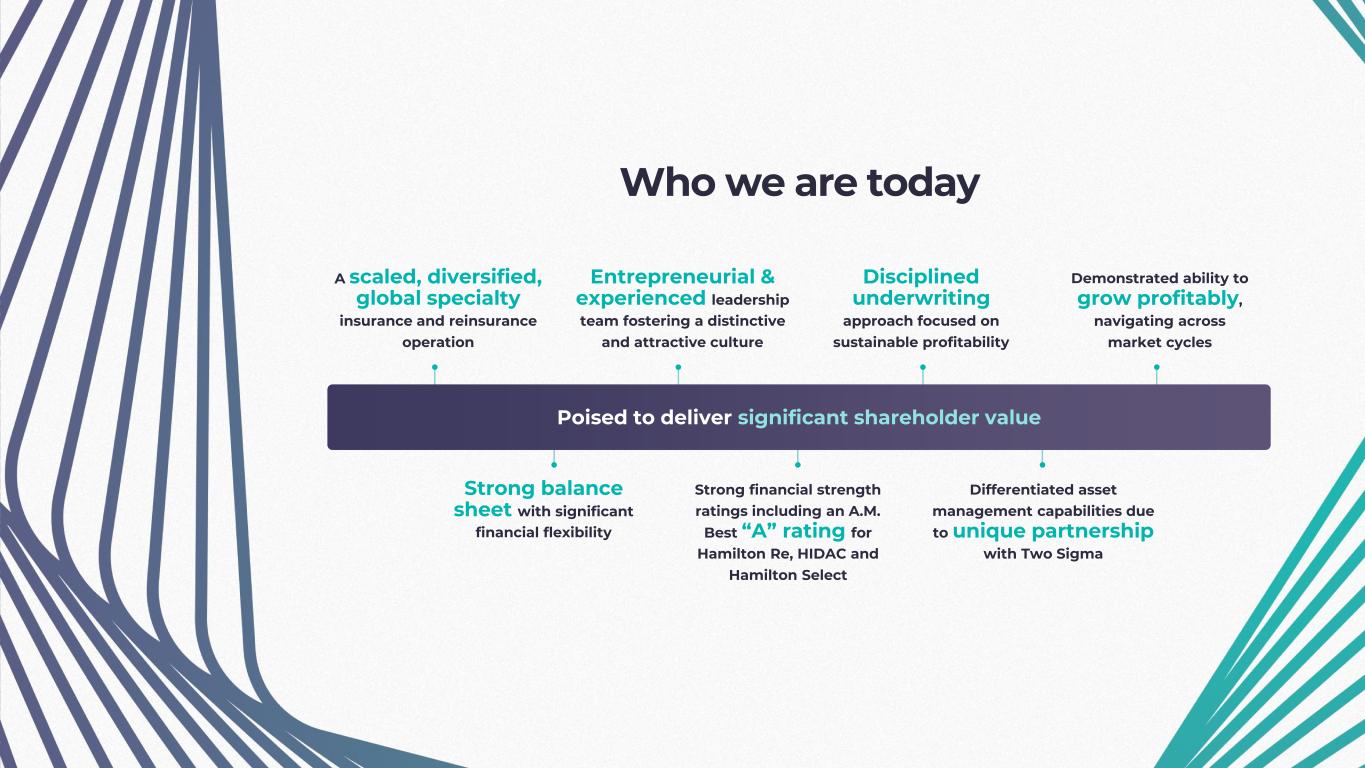
Thank you, Darian, and hello, everyone. Let me start by welcoming you to Hamilton's second quarter 2026 earnings conference call. I'm pleased to report another strong quarter for Hamilton achieved against a backdrop of ongoing geopolitical tensions, social and economic inflation, and an insurance and reinsurance market that remains competitive. Hamilton delivered very solid results in the second quarter with net income of $144 million equal to an annualized return on average equity of 21%. This result was underpinned by a combined ratio of 95%, which includes about $50 million of catastrophe losses primarily stemming from the Middle East conflict. Strong investment income of $141 million and thoughtful growth in select classes with gross premiums written increasing by 17% for the quarter. The results this quarter and indeed over past quarters underscore the strength of Hamilton's strategy, its diversified portfolio, and our team's ability to execute and adapt to all market conditions. Switching gears now to the mid-year renewals, I won't speak too long about this. As you likely already heard from my peers over the past few days, the market is in transition. The clearest area of pressure continues to be property business, where competition remains principally focused on price, while casualty remains more stable with rate increase still being achieved in many lines. Specialty business was also competitive in many areas at mid-year. That said, given the recent loss activity in the Middle East, we are now seeing opportunities in select insurance classes like marine hull and cargo where rates are increasing. We will consider such opportunities thoughtfully and with the benefit of our strong underwriting expertise in specialty classes. For Hamilton, the key takeaways from the mid-year renewals are that while competition is robust, pricing still remains attractive across many lines. Contractual improvements in the property cat area introduced in the 2023 market reset remain largely intact, act, and our key client strategy and strong broker relations continue to result in achieving desired signings and access to business we want to see. In this environment, we are focused on preserving margin quality, astute risk selection, and supporting clients where we have strong underwriting conviction and broad trading relationships. We are also making strategic use of outwards protection across our portfolio, including the use of our recently launched casualty sidecar. Against this backdrop, the good news is that our team has experienced trading in this type of market environment, knows how to exercise discipline, while at the same time look for opportunities. Also, having the benefit of both an insurance and a reinsurance business and diversification across a broad array of products allows us to be nimble and focus on classes where we continue to get the best risk-adjusted returns. We believe that the benefits of our platform, together with our discerning underwriting approach, will be the key to our continued profitability. Before moving on to our segment review for the quarter, I want to take a moment to discuss the recent developments in Hamilton Select. Before I do that, I want to make sure you understand how Select fits into the Hamilton strategy. We have two reporting segments, International and Bermuda, and three underwriting platforms. The International segment houses our Hamilton Global Specialty and Hamilton Select underwriting platforms, which are predominantly specialty insurance, while Hamilton Re sits under our Bermuda segment, which is predominantly reinsurance. Hamilton Global Specialty and Hamilton Re each wrote about $1.4 billion in premium in 2025. Our long-term ambition is for Hamilton Select to become the third leg of our stool, so to speak, alongside our other two established underwriting platforms. In May, AMBEST upgraded Hamilton Select to A from A-. This rating supports this vision and the continued development of our E&S platform. It also aligns with Hamilton's strategy of building a diversified global specialty insurance and reinsurance company. We believe that the rating upgrade puts us in an even better position vis-a-vis our broker partners and will therefore result in our seeing additional opportunities in the U.S. specialty insurance market. Now this takes me to something I specifically want to discuss. When we launched Hamilton Select, the company was focused on hard-to-place accounts in the U.S. E&S market, a strategy that leveraged the strength of our team and their strong wholesale distribution relationships. We are now flexing these strengths, as well as our proprietary technology, to expand our appetite beyond distressed or pure hard-to-place risks. The expanded appetite includes new and additional classes of business, which we will continue you to add to over time, as well as risks in the lower middle market segment of the U.S. E&S market. We already received submissions that fit this expanded risk profile, so this is a natural evolution of our strategy that will provide our wholesale distribution partners with additional support for their clients. As you can imagine, we are very excited about this development. Moving now on to the segments, let's look at top line growth this quarter for international and Bermuda. Starting with the international segment. International gross premiums written grew to $420 million or 22% over the prior period. By platform, Hamilton Global Specialty gross premiums written were up 22% driven by specialty and casualty classes specifically in core classes such as accident and health which benefited from some seasonality. At the same time and similar to my comments last quarter we pulled back in our larger commercial DNF property insurance offering where we increasingly declined business which did not meet our return thresholds. Overall our pricing assessment and underwriting framework continue to ensure attractive margins on the business we are writing even as our teams become more selective across many lines moving on to Hamilton Select that platform grew 18% this quarter driven by excess casualty excess property one of the classes of our expansion strategy and products and contractors where we still see attractive pricing terms and conditions however we were more selective on medical and professional lines given the competitive pricing environment lastly in bermuda we grew to 411 million dollars or 12 percent over the prior period similar to last quarter our most significant driver of growth came from casualty reinsurance. A meaningful proportion of this is attributable to business bound in prior quarters, with much of the remainder coming from increases in our relatively modest shares on select accounts with key trading partners. Moving on to property reinsurance in Bermuda, premiums fell compared to the same period last year, primarily due to decreased rates this was partially offset by better signings on deals with select key clients florida only business is the primary focus of the 6-1 renewal season and as a reminder this business represents only a modest portion of the hamilton re portfolio we do however write the Florida market on our third-party capital platform, AdaRe. For the 7-1 business, which is more national accounts and within our wheelhouse, while pricing was competitive, it still provided attractive margins and, as mentioned, the improved attachment points and terms and conditions from the 2023 market reset remained strong. Our specialty reinsurance line grew primarily due to some business wins in the aviation class where pricing and conditions were attractive. On the insurance side of our Bermuda business, similar to what we did in Hamilton Global Specialty, we also reduced writings in our large account property DNF book since pricing in this area continues to come under pressure and the metrics did not meet our return thresholds. In closing, we continue to focus on the bottom line and deliver strong results, grow selectively in lines where margins are attractive, invest strategically in platforms like Hamilton Select and enabling technology, add strong talent to our team, and respond thoughtfully to this complex market environment. Again, as we saw through the mid-year renewals and across both international and Bermuda, this is not a market where every opportunity should be written, rather one where a focus on underwriting margin, risk selection, and strong client and broker relationships will support continued success. With that in mind, we believe our portfolio remains well positioned to continue to produce solid results. Our teams are exercising the requisite discipline and allocating capital to risks and clients where we have the greatest underwriting conviction. With that broader context in mind, I'll turn the call over to Craig to walk through the financial results in more detail.
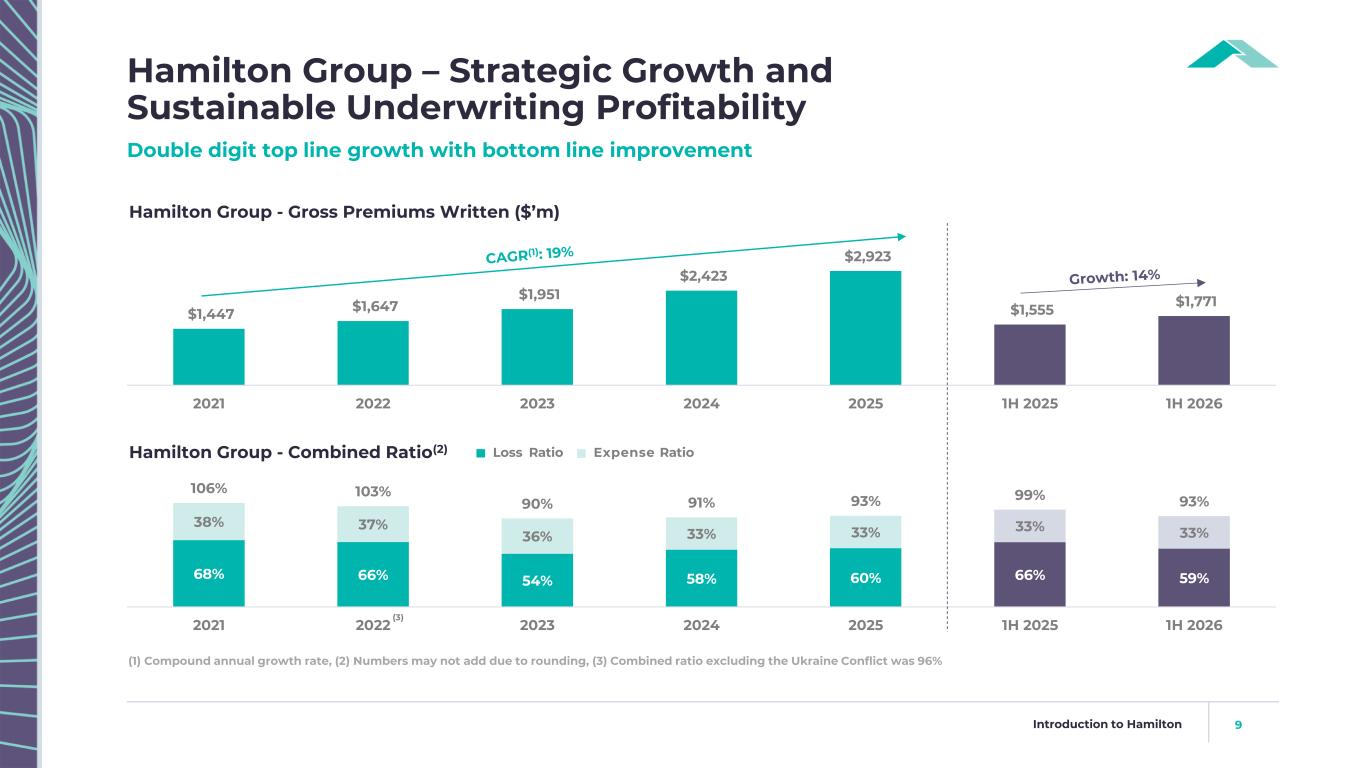
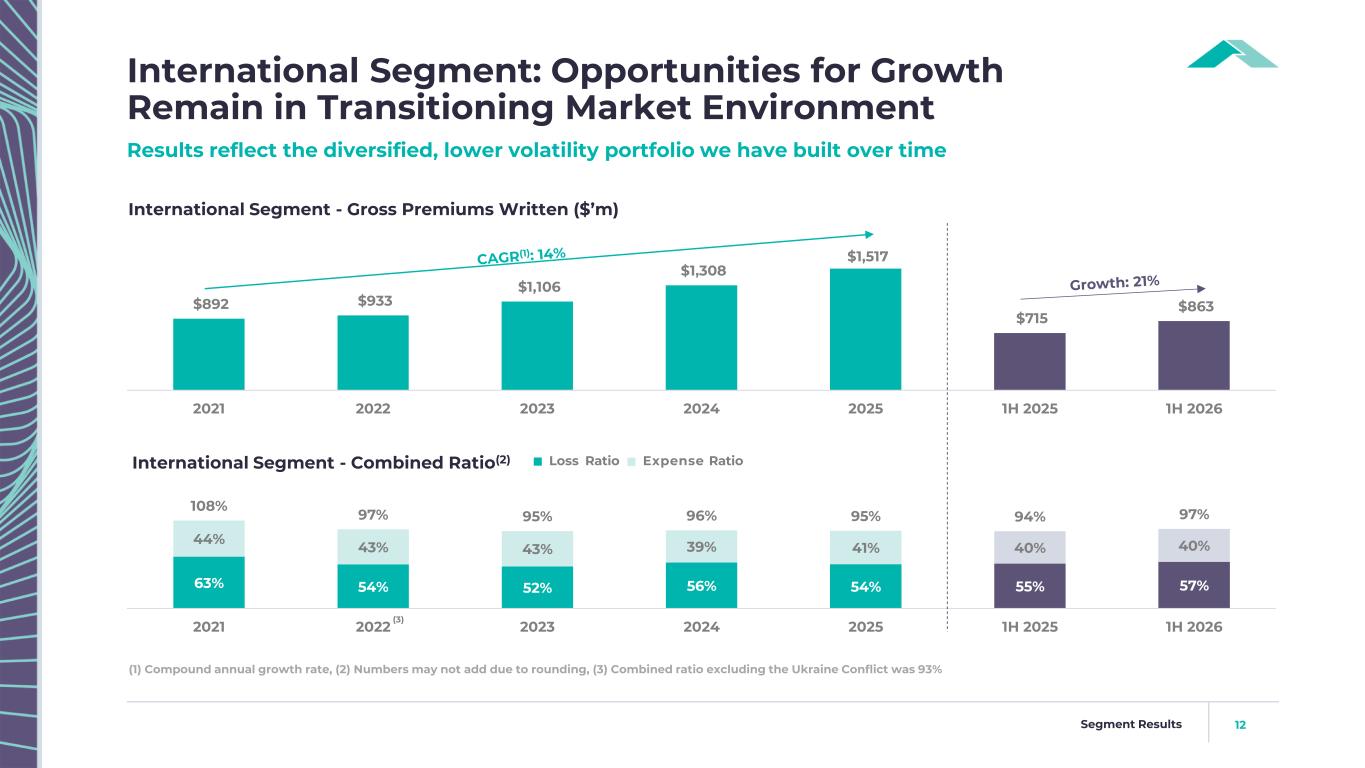
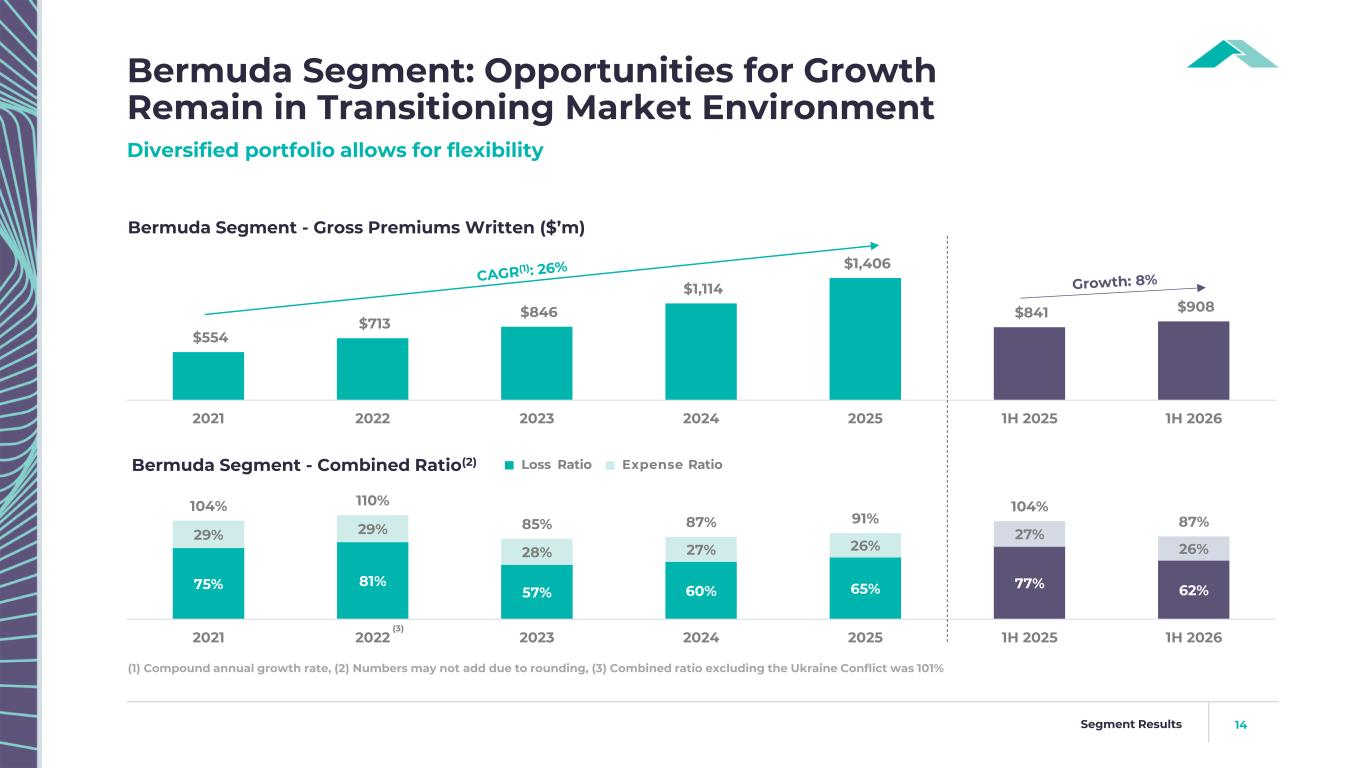
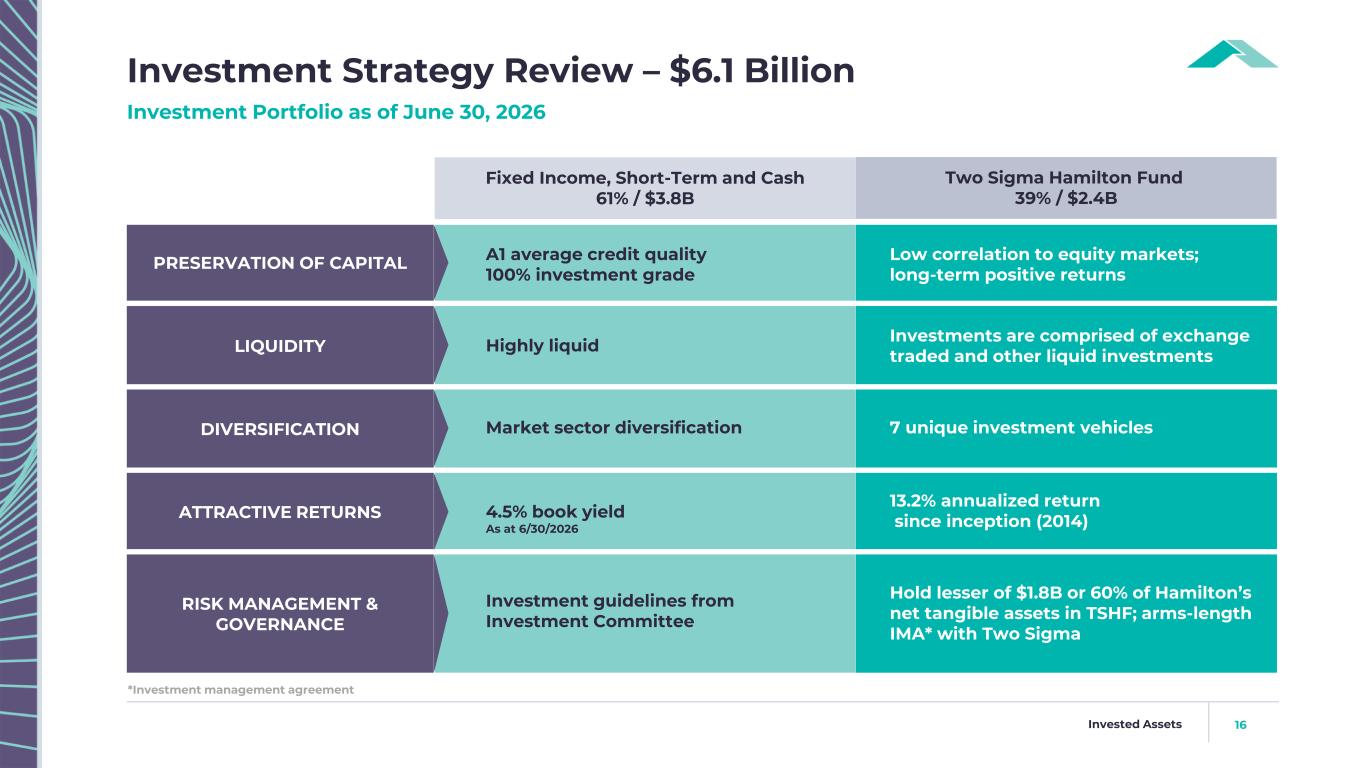
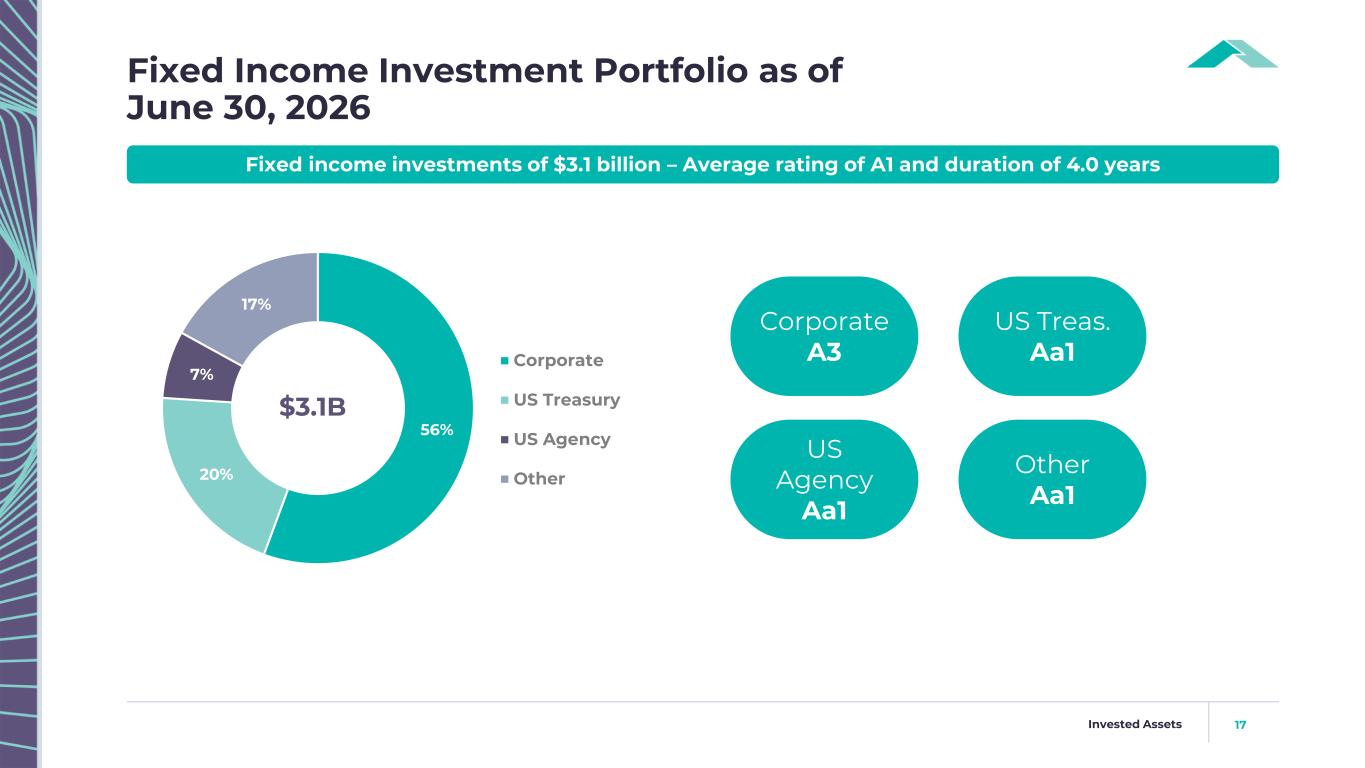
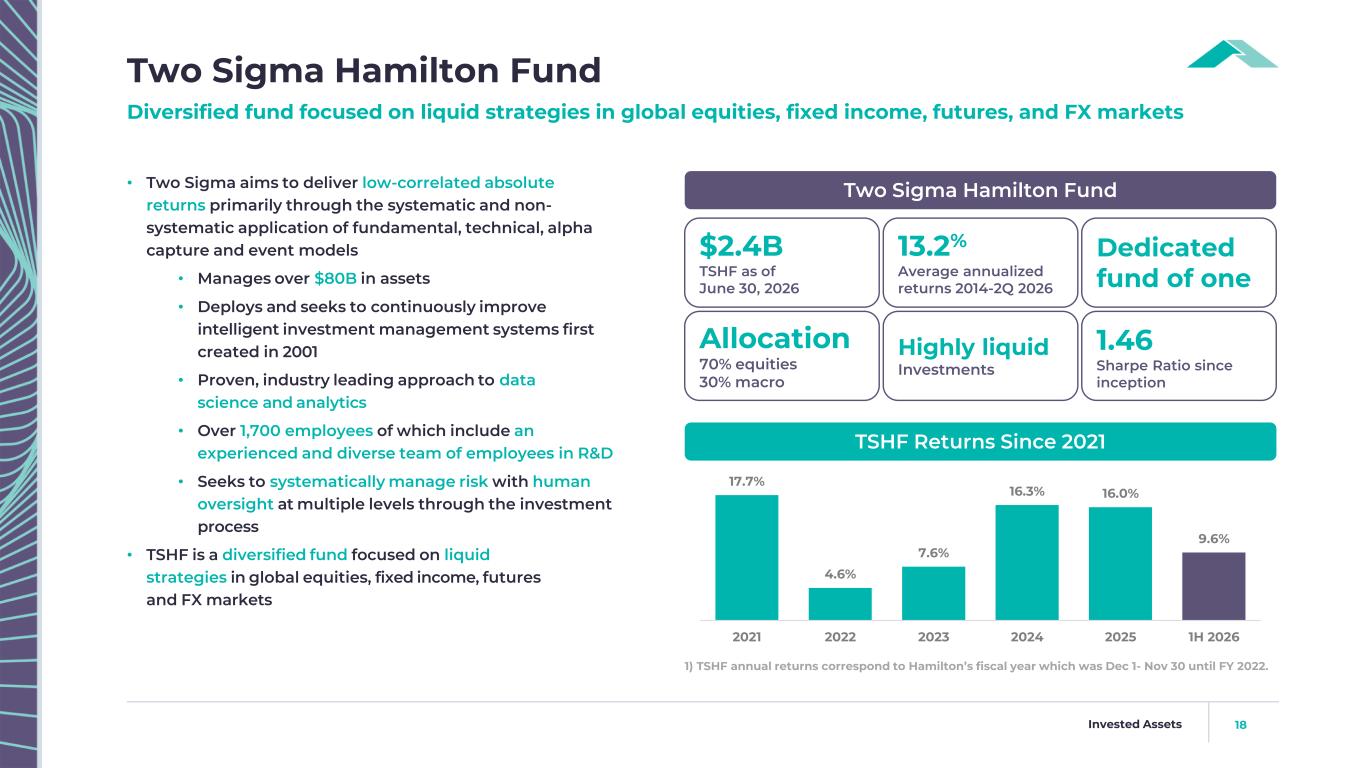
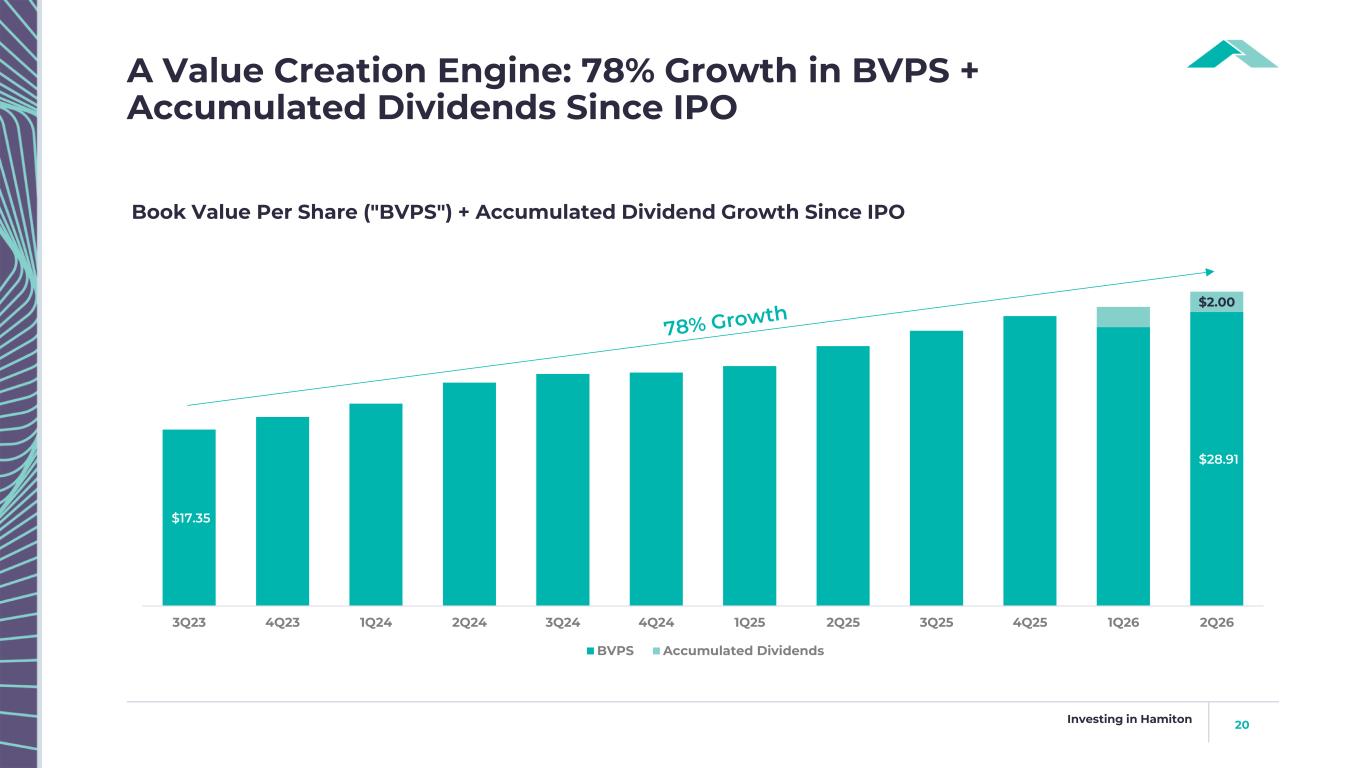
Thank you, Pina, and hello, everyone. Hamilton had another great quarter of financial results with net income of $144 million or $1.42 per diluted share and an annualized return on average equity of 21% in the second quarter of 2026. We had operating income of $158 million equal to $1.56 per diluted share, producing an annualized operating return on average equity of 23%. These figures compared a net income of $187 million, or $1.79 per diluted share, an annualized return on average equity of 30%, operating income of $162 million, or $1.55 per diluted share and an annualized operating return on average equity of 26 percent in the second quarter of 2025. Moving on to our underwriting results. Each of our platforms pursued thoughtful strategic growth in areas presenting the strongest risk-adjusted returns while pulling back from lines where margins were not attractive. Our growth remains selective, disciplined, and in line with our expectations of more measured growth, meaning an expectation of low double-digit growth for the full year of 2026. Through the first half of 2026, the group grew top-line premium by 14% to $1.8 billion, up from $1.6 billion in the first half last year. Hamilton had an underwriting income of $29 million for the second quarter compared to underwriting income of $67 million in the second quarter last year. The group combined ratio was 95.0% compared to 86.8% in the second quarter of 2025. In the second quarter, our loss ratio increased to 61.7% up 8.9 points from 52.8% in the prior period. The increase was primarily driven by $50 million or 8.5 points of catastrophe losses compared to $2 million or 0.3 points of catastrophe losses last year. The majority of the 2026 catastrophe losses came from the Middle East conflict in the amount of $46 million or 7.8 points. We had favorable prior year attritional development of $1 million, or 0.1 points in the quarter, driven by specialty and property classes, offset by certain casualty classes, which I'll discuss when I cover the segments. This compares to $3 million, or 0.5 points of favorable development in the second quarter last year. The expense ratio decreased 0.7 points to 33.3%, compared to 34.0 percent in the second quarter last year the decrease was driven by lower other underwriting expenses which included benefits from the bermuda substance-based tax credit and third-party performance fee income partially offset by acquisition costs now i'll go through the second quarter results and some year-to-date results by segment let's start with the international segment, which includes our specialty insurance businesses, Hamilton Global Specialty and Hamilton Select. For the first half of 2026, International grew top-line premium to $863 million, up from $715 million, an increase of 21%. As Pina mentioned, this was primarily driven by growth in our casualty and specialty classes. In the second quarter, International had underwriting income of $9 million and a combined ratio of 97.0%, compared to underwriting income of $27 million and a combined ratio of 89.3% in the second quarter last year. The increase in the combined ratio was primarily related to catastrophe losses of $34 million, or 11.1 points in the quarter, driven by the Middle East conflict, partially offset by the lower current year and prior year attritional loss ratios and the lower expense ratio. The current year attritional loss ratio was 51.1%, down 0.8 points from the prior period. We still expect this ratio to be about 54.5% for the full year 2026. The prior year attritional loss ratio was a favorable 4.6 points due to favorable development in the specialty, property, and casualty classes. The expense ratio decreased 0.6 points to 39.4% compared to 40.0% in the second quarter last year. The decrease was primarily driven by premium growth, partially offset by lower third-party fee income. I will now turn to the Bermuda segment, which houses Hamilton Re and Hamilton Re U.S., the entities that predominantly write reinsurance business. For the first half of 2026, Bermuda grew top-line premium to $908 million, up from $841 million, an increase of 8%. The increase was primarily driven by growth in casualty and specialty reinsurance classes, partially offset by a decrease in property reinsurance and property insurance classes as a result of pressure on rates. In the second quarter, Bermuda had underwriting income of $20 million and a combined ratio of 93.0%, compared to underwriting income of $40 million and a combined ratio of 84.3% in the second quarter last year. The increase in the combined ratio was driven by $16 million, or 5.8 points of catastrophe losses in the quarter, mainly due to the Middle East conflict and unfavorable prior year attritional losses, partially offset by the lower expense ratio. The Bermuda current year attritional loss ratio increased 1.5 points to 55.7% in the second quarter, compared to 54.2% in the second quarter last year. This increase was within our expectations, given the changing business mix toward casualty reinsurance classes. The prior year attritional loss ratio was an unfavorable 4.6 points due to unfavorable development on certain casualty classes. In the second quarter, we completed our regularly scheduled casualty deep dive, which resulted in a modest reserve charge of $16 million on certain casualty lines. This represents only about 0.8% of our net casualty reserves and about 0.5% of our total net reserve position. To be clear, we completed our casualty reserve reviews and strengthened our reserves based on our own review and not because of any third-party review. Our actions are consistent with our reserving philosophy of being quick to react to adverse development indications or trends and slow to release reserves until we have more certainty. As a reminder, we'll complete our specialty class reserve reviews in the third quarter and our property class reserve reviews in the fourth quarter. Historically, we've shown overall favorable reserve development each and every year since the inception of the company. The Bermuda expense ratio decreased by 1.1 points to 26.9 percent compared to 28.0 percent in the second quarter of 2025, driven by a decrease in other underwriting expenses, which included benefits from the Bermuda Substance-Based Tax Credit and increased third-party performance fee income, partially offset by the acquisition cost ratio due to a change in business mix. Now turning to investment income. Total investment income for the second quarter was $141 million compared to investment income of $149 million in the second quarter of 2025. The fixed-income portfolio, short-term investments, and cash produced a gain of $26 million for the quarter, compared to a gain of $62 million in the second quarter of 2025. As a reminder, this includes the realized and unrealized gains and losses that Hamilton reports through net income as part of our trading investment portfolio. The key metrics of the fixed income portfolio were as follows, an average yield to maturity of 4.7% compared to 4.1% at year-end 2025, a duration of 4.0 years, and a new money yield of 4.6% on investments purchased in the second quarter. The Two Sigma Hamilton Fund produced a net return of $115 million, or 5.1% for the second quarter, compared to $87 million, or 4.4% in the second quarter last year. The Two Sigma Hamilton Fund made up about 39% of our total investments, including cash investments, at June 30, 2026. Now turning to capital management, during the second quarter of 2026, we repurchased $22 million worth of shares, which brings our total repurchases for the year to $42 million. We still have $137 million remaining under our share repurchase authorization. Both the share repurchases and the special dividend, which we paid in March, reflect our ongoing commitment for active and effective capital management. it. Next, I'd like to comment on our strong balance sheet. Total assets were $10.3 billion at June 30, 2026, up 7% from $9.6 billion at year-end 2025. Total investments in cash were $6.1 billion at June 30. Shareholders' equity for the group was $2.9 billion at the end of the second quarter. Our book value per share ended the quarter at $28.91. Our book value per share after adjusting for accumulated dividends was $30.91 at June 30th, up 8.5% from year-end 2025. In conclusion, we're very pleased with Hamilton's results through the first half of 2026. Our balance sheet remains strong, our investment returns have been exceptional, all, and our attritional loss ratios are tracking as expected. Overall, we believe we are well positioned to continue delivering attractive returns with a combined ratio in the low to mid-90s and with a return on equity percentage in the teens. Both of these numbers estimated on average throughout the cycle. Thank you. And with that, we'll open up the call for your questions.
Operator
We will now begin the question and answer session. Please limit yourself to one question and one follow-up. If you would like to ask a question, please press star one to raise your hand. To withdraw your question, press star one again. We ask that you pick up your handset when asking a question to allow for optimum sound quality. If you are muted locally, please remember to unmute your device. Please stand by while we compile the Q&A roster. Your first question comes from the line of Tommy McJoint with KBW. Your line is open. Please go ahead.
Hey, good morning. Thanks for taking our questions. The first one here in the past couple of quarters, you've given us some nice helpful metrics on guidance for the full year across various metrics on a segment level attritional loss ratios and then consolidated. Have any of those changed, you know, this quarter with what you've seen year-to-date?
Hi, Tommy. It's Craig. Thanks for the question. The guidance that we had given for those attritional loss ratios has remained the same. As you heard me say in my prepared remarks, the international ratio remains at 54.5. The group ratio is at 55%, and the Bermuda ratio is at 56%. Those ratios stay the same. as far as what I said in my prepared remarks as well. We expect to be able to run this book in the low to mid 90s on a combined ratio on average throughout the cycle. And that's where we are as well. The other piece that you asked about was growth. You know, we still expect to be able to grow this book in the low double digit range. As you know, we've grown this book in the past, a compound annual growth rate over the past five years of over 22%. Right now, where we stand on a year-to-date basis is at about 14%, so we do expect to be in the low double-digit range.
Thanks. And then zooming in on the casualty book within the Bermuda segment, in the first half of the year, still seeing very strong growth there on gross premiums growing 29% in the first half. As you look out to the back half of the year, do you think there's some opportunity for deceleration simply from tough comps in the second half of last year? And then just broadly speaking, you did take a modest reserve charge, but it still sounds like you still see plenty of opportunity for attractive returns to deploy into casualty re. Is that the case? Thanks.
Why don't I kick off here and then you can talk about the reserves, Craig. So let me start with the growth this quarter. As I said in my prepared remarks, part of that growth was business bound in prior quarters, with another part of it being, you know, the increases on those small shares that we've talked about the last little while on select key clients. Now, these are clients that are where we're getting robust information, where we have faith in their underwriting and their claims abilities, and also clients that are keeping, you know, significant net participations on their deals. Those are the clients that we are supporting with small increases on those small shares. The casualty rate environment in general, you know, is buoyed by concerns about economic and social inflation. Those drivers continue, you know, in the current market environment. So we believe that the conditions on casualty insurance will continue with rate increases because of those drivers remaining intact. Craig?
Yeah, Tommy, I know you asked about the reserve review outcome during the quarter. And you know, it was pretty modest. It was only about $16 million. And I have to say, one third of that, about $5 million came from additional information on one loss from the year 2018. And about two thirds of that review came from the years 2022 and 2023. And I have to say, I'm pretty pleased with the outcome of the deep dive into our casualty reserves, given the current market environment, including inflation, including economic inflation and social inflation. This charge was pretty modest, $16 million on a $5 billion gross book of loss reserves is a pretty modest charge. It tells me that we feel pretty good about where we are today with our loss picks. It also shows me that our older runoff and discontinued lines of business from the past continue to hold pretty steady and it shows me that the latest years where we took action and we increased our loss picks in 2024 2025 and 2026 continue to hold and this is pretty consistent with our reserve philosophy as well thank you your next question comes from the line of elise greenspan with wells fargo your line is open please go ahead hi thanks um good morning um My first question is on, you know, Hamilton Select.
It's been, you know, growing fast and becoming the third stool of the company. You could just give us, I guess, you know, longer term, you know, kind of views of just growth and premiums there. And would there be any thoughts, you know, on spinning that off at some point?
Let me kick off on a high level on just the expansion strategy and I'll pass the baton to Craig from there. So, again, as I said in the prepared remarks, this is really just a natural evolution of the strategy, which is now buoyed by the recent AMVEST upgrade. We've got such an incredibly strong team that have such strong distribution relationships in the market that we already started seeing this type of business. And it just aligned perfectly. All the stars came together with the upgrade, with our expansion strategy and the business coming to us for us to announce this at this time. You know, it's a launch, a soft launch in April with the property product. This product is focused on small to midsize risks where we're not seeing the kind of pressure, pricing pressure we're seeing in other areas. And we're going to continue to add to those over time. We do expect this to be a thoughtful growth the same way we've grown the rest of our business. We will you won't see too much growth on the expansion in 2026. You'll see some, but we're currently hiring, you know, team leads in place and then the remaining underwriters. So you'll probably see more growth on the expansion strategy into 2027. Craig, do you want to take it from here?
Yeah, the only thing I would say, at least on top of that, was Select this quarter grew 18 over 18 percent.
And then, Elise, to your specific question on whether we intend to spin it off. we see Select as an incredibly strategic part of our platform, and it adds to the diversification of our business and I think makes Hamilton Group a very attractive proposition.
Thanks. And then my second question is just on the ongoing events in the Middle East. Can you just give us a sense of whether you expect losses in future quarters? And then How much of a contribution was just, I guess, the, you know, was the Middle East opportunities to just your premium growth in the second quarter?
All right. So why don't I kick off on this one? You know, stating the obvious here, I know, but this is an ongoing and very dynamic situation. The good news is that we have very strong underwriting expertise in the areas or in the lines of business that are affected by this conflict. like be that political violence, marine energy. As a matter of fact, our underwriting expertise in certain of these classes is so recognized that we actually hold the pen on behalf of other balance sheets in the market. So we are very confident about our ability to continue to thoughtfully and judiciously underwrite risks at this time. We are seeing significantly improved pricing terms and conditions in, you know, the marine lines and the political violence lines. Again, we're not betting the bank here, but we are going to very thoughtfully and carefully underwrite risks and take advantage of this market opportunity. I think it's important for you to know that we do manage, you know, exposures to these kinds of events across our group very carefully. And we also ensure that we have, you know, outwards protection in place for across all lines of business including those that are affected by this event.
Operator
Your next question comes from the line of Michael Zaremsky with BMO Capital Markets. Your line is open. Please go ahead.
Thanks. Good morning. Maybe just back to the Hamilton Select commentary, the exciting commentary about the upgrade from AMBEST. Is there a way for you to maybe just at a high level frame kind of like how much bigger your TAM is or I don't know if the TAM is the right you know way to think about it but just you know obviously you talked about a lot of competition in property which is the one of your new uh just went online so we we understand that but just curious kind of uh it does this kind of you know meaningfully expand the TAM that when we think about kind of the outer year growth once were through this property cycle that it really would kind of bend the growth trend line upwards?
Yeah, great. I'll take that. So again, we're incredibly excited about the Hamilton Select expansion, you know, the upgrade, just basically putting us on par with a lot of the other very recognized peers in this space and the fact that we're already seeing this business. We will continue our hard-to-place strategy And, you know, they're the average premium for the business. We're writing there about twenty thousand dollars is average premium with this select expansion, moving into the middle market space and looking at risks that are not hard to place. You could probably look at average premium about doubling. So that's maybe to that point. Again, we will be rolling out classes over time. We have the property class that rolled out already. The next class to roll out is life sciences. If you want to know about future classes, you should take a look at LinkedIn and look at the jobs that we're posting.
So, yeah, maybe that ramps up, but we can kind of talk about whether the different profit margin kind of goals for that larger mid-market type of business. Got it. Maybe just switching gears to technology, you know, broad question, but just given the amount of change Gen AI related, we've seen over the last three, six months, any kind of new kind of thought processes you guys are having about kind of efficiency, productivity gains, et cetera, that could move the needle in terms of either top line growth or expense ratio, et cetera, over the next year or two?
Sure. Happy to take that question as well. And Craig, if you want to add on, please be my guest here. We view AI as a productivity and intelligence multiplier, and it augments our underwriters, our claims professionals, and our operations team. It allows our professionals to focus more on the higher value activities, like just risk selection, portfolio management, and takes away some of the more grungy kind of work. In underwriting, we're already leveraging AI technology, for example, for submission ingestion and data extraction. This accelerates the intake process and improves our data quality, and it also allows us to get to the risks more quickly. In this context, I've also spoken about our smart queuing technology, and that's an added bonus actually specifically to the SELECT platform, but we'll roll it out over time. And that technology essentially floats the risks that we've analyzed that we have a better chance of winning at to the top of the underwriter's queue, not, you know, just as they come in, it floats to the top. So we know that we have more hits at bat on risks that we are more likely to bind. So we're incredibly excited about that.
I think, you know, at the end of the day, I think it's going to have very measurable productivity gains um and operational benefits across our business yeah i think the only thing to add there is that there needs to be a cost benefit here right the operational benefits and those productivity gains have to exceed what the technology expenses are as well exciting thank you as a reminder please press star one to ask a question your next question comes from the line of Matthew Heimerman with Citi.
Operator
Your line is open. Please go ahead.
Hi, good morning, everybody. Just on select, I'd be curious, can you maybe provide, right now it seems like you're going to roll some new products and underwriting capabilities through your existing distribution partners. I'm curious if once you've hired all the human capital and kind of got the support for them, whether or not a second leg to growth will be just expanding the distribution relationships on top of that. So just maybe a little bit more longer term kind of perspective on how you think about kind of stage one, two, three growth of that platform.
Sure, happy to take that on that. So we just recently announced on LinkedIn that we hired a responsible party for distribution at Hamilton Select. And that will do exactly that. Expand our distribution relationships, again, over time with the products that we're going to roll out thoughtfully over the course of this expansion strategy.
And is that something that happens coincident with the underwriting talent coming through?
Or is it kind of establish everything through existing before you start to expand new i recognize there's a sales cycle to that yeah so you know a lot of our distribution partners offer us multiple lines of business so we already have some distribution partners that have the lines that we're rolling out into but as we expand our strategy we'll be adding new distribution partners uh to the mix that will specifically support the lines that we are expanding into okay so we should think about that blending together over the coming years as opposed to, like, maybe more, you know, discrete beginning and endings to those growth patterns.
Operator
Your next question comes from the line of Alex Scott with Barclays. Your line is open. Please go ahead.
Hey, good morning. I wanted to ask about just some of the activity we've seen in the market. I'd say a couple of the larger reinsurance peers are writing combined ratios up near 100% in casualty. We're seeing some pretty heavy pruning of some of their casualty reinsurance books as well. I'd just be interested in, you know, what your take is on that. How are you avoiding the pitfalls of the market that they're experiencing?
And then maybe the flip side of it is, you know, are you seeing any opportunities for growth coming out of that? thanks for that question so just as a reminder um you know hamilton had a very small footprint in the casualty uh reinsurance space predominantly um after we re-underwrote the portfolio and we only started growing in casualty when rates started improving and that uh we did get some opportunities when other participants in the market who were perhaps overexposed to casualty reinsurance in the worst years were getting off the business to get a handle over the portfolio. And it's at that exact time that we were able to move in. And by the way, as a reminder, we also got our A rating around the same time. So that allowed us to see access to more business that we wanted to see. So again, that's explained the growth of Hamilton in the casualty space when others backed away. But again, our growth came in a very thoughtful manner with clients that we targeted in advance, these key clients that we support across other lines of business, and it came at a time where rates were improving.
That's all really helpful. Second question, maybe just on the broader market, and where are you seeing the less disciplined behavior? How are you avoiding some of those things? Where do you see the pricing environment going from here if we keep seeing reasonably benign weather trends?
All right. let me start with the latter question first. You're right. It's a very dynamic and differentiated market that we're in right now. If I just go segment by segment and I look at 1-1 renewals, you know, on the property side, we still have abundant supply. So if there's no significant losses, we do expect some pressure on pricing. However, tempering that is that we still see some new demand for property in the market, property limits, even though they're at a lesser level. On the specialty side of the business, again, we just talked about a very meaningful event in the Middle East, but we've also had aviation losses. And don't forget the Baltimore bridge loss was not that long ago. And because of this lot of activity, we expect rates across many specialty classes to remain firm and then moving to casualty as i said earlier the you know the the drivers for rate increasing casualty are the inflationary pressures social and economic and those inflationary pressures remain and continue to buoy uh underlying pricing if we see the market get more competitive or exhibit more pressure, we will make very strategic use of retro on our book, both on the property and cashly side. And, you know, we have the sidecar in place. So I think that answers the part of your question around where we see the market going.
Operator
There are no further questions at this time. I will now turn the call back to Pina Albo for closing remarks.
All right, then. Thank you all for joining us today. I also want to thank our employees, our clients, our partners and our shareholders for the continued support for Hamilton. And we look very forward to updating you again in the next quarter.
Operator
This concludes today's call. Thank you for attending. You may now disconnect.