Operator
Hello everyone and thank you for joining the LCI Industries second quarter 2025 conference call. My name is Lucy and I'll be coordinating your call today. During the presentation you can register a question by pressing star followed by one on your telephone keypad. If you change your mind please press star followed by two. It is now my pleasure to hand over to your host Lillian Edscon of LCI Industries to begin. Please go ahead.
Good morning everyone and welcome to the LCI Industries Second Quarter 2025 conference call. I am joined on the call today with Jason Lippert, President and CEO, along with Kip Emenheiser, VP of Finance and Treasurer. We will discuss the results for the quarter in just a moment. But first, I would like to inform you that certain statements made in today's conference call regarding LCI Industries and its operations may be considered forward-looking statements under the security laws and involve a number of risks and uncertainties. As a result, the company cautions you that there are a number of factors, many of which are beyond the company's control, which could cause actual results and events to differ materially from those described in the forward-looking statement. These factors are discussed in our earnings release and in our Form 10-K and in other filings with the SEC. The company disclaims any obligation or undertaking to update forward-looking statements to reflect circumstances or events that occur after the date the forward-looking statements are made, except as required by law. With that, I would like to turn the call over to Jason.
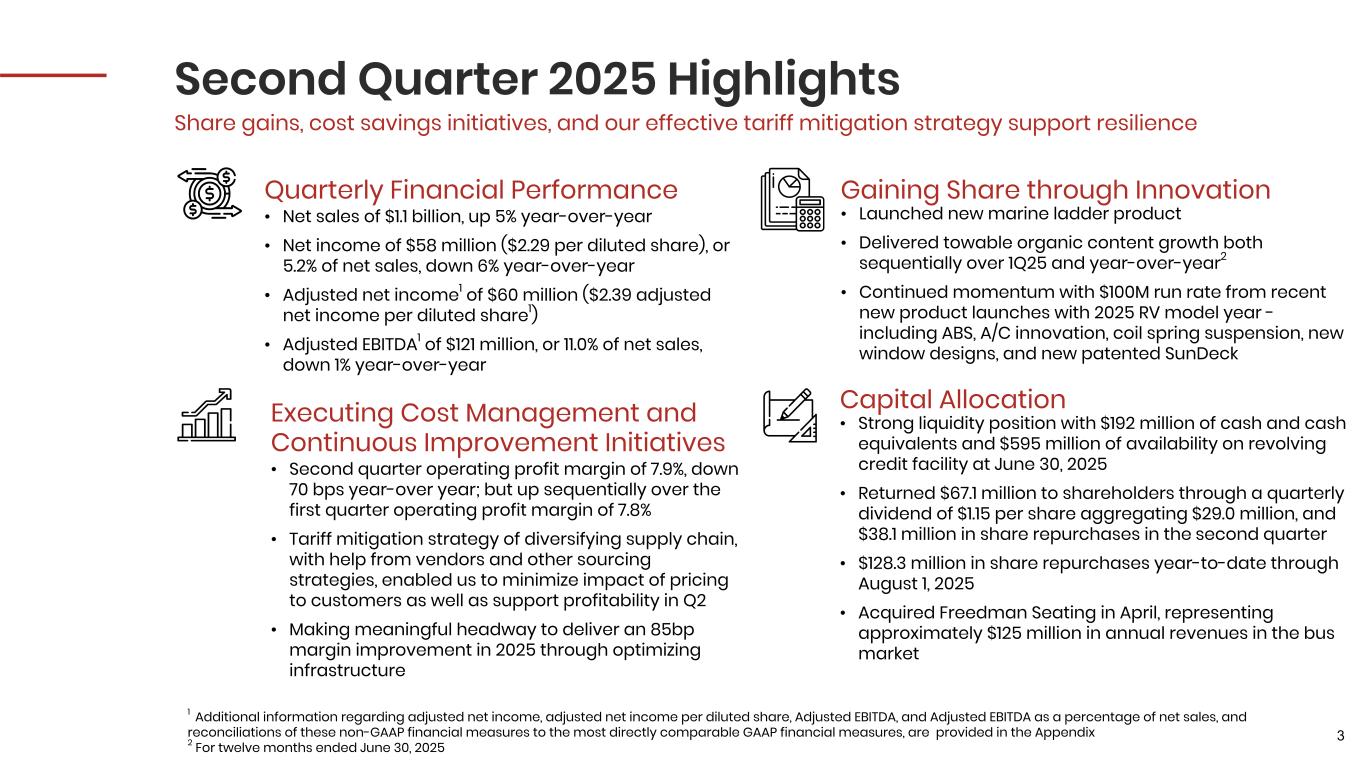
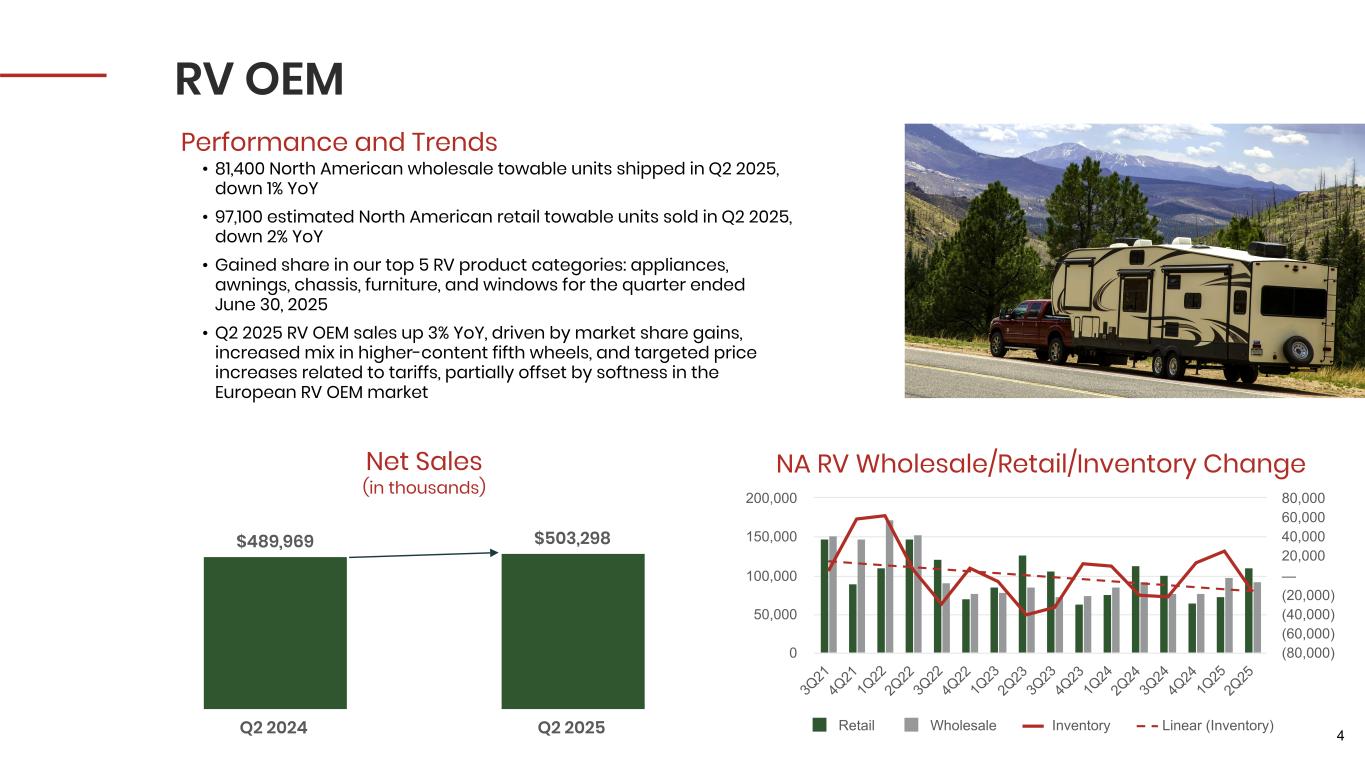
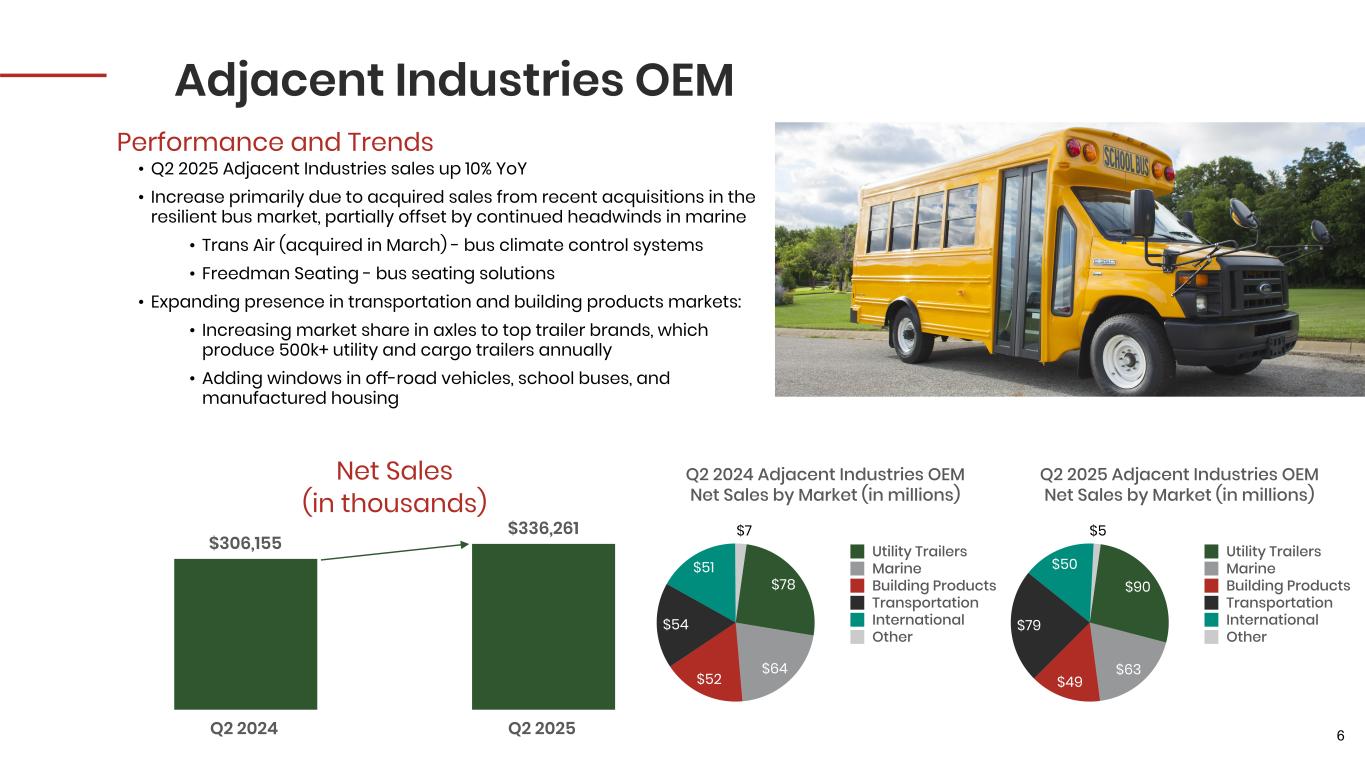
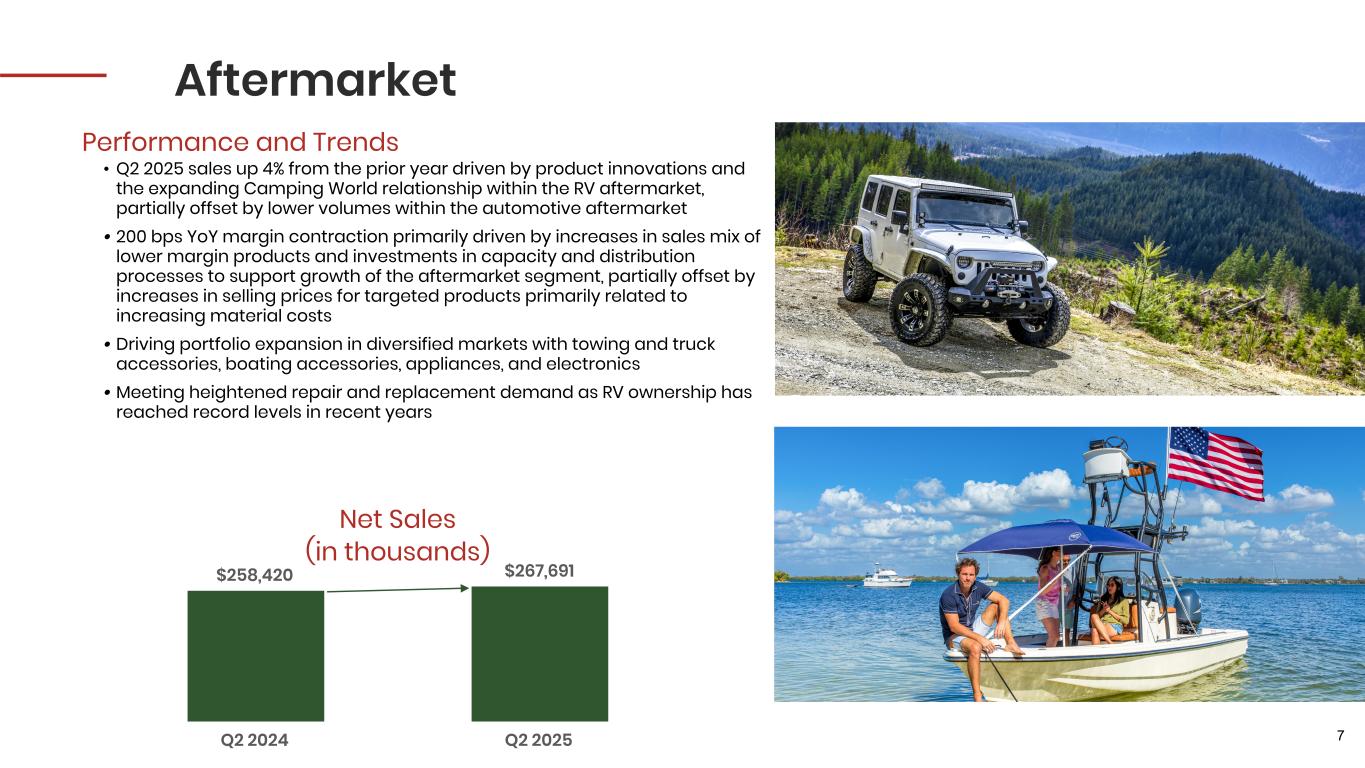
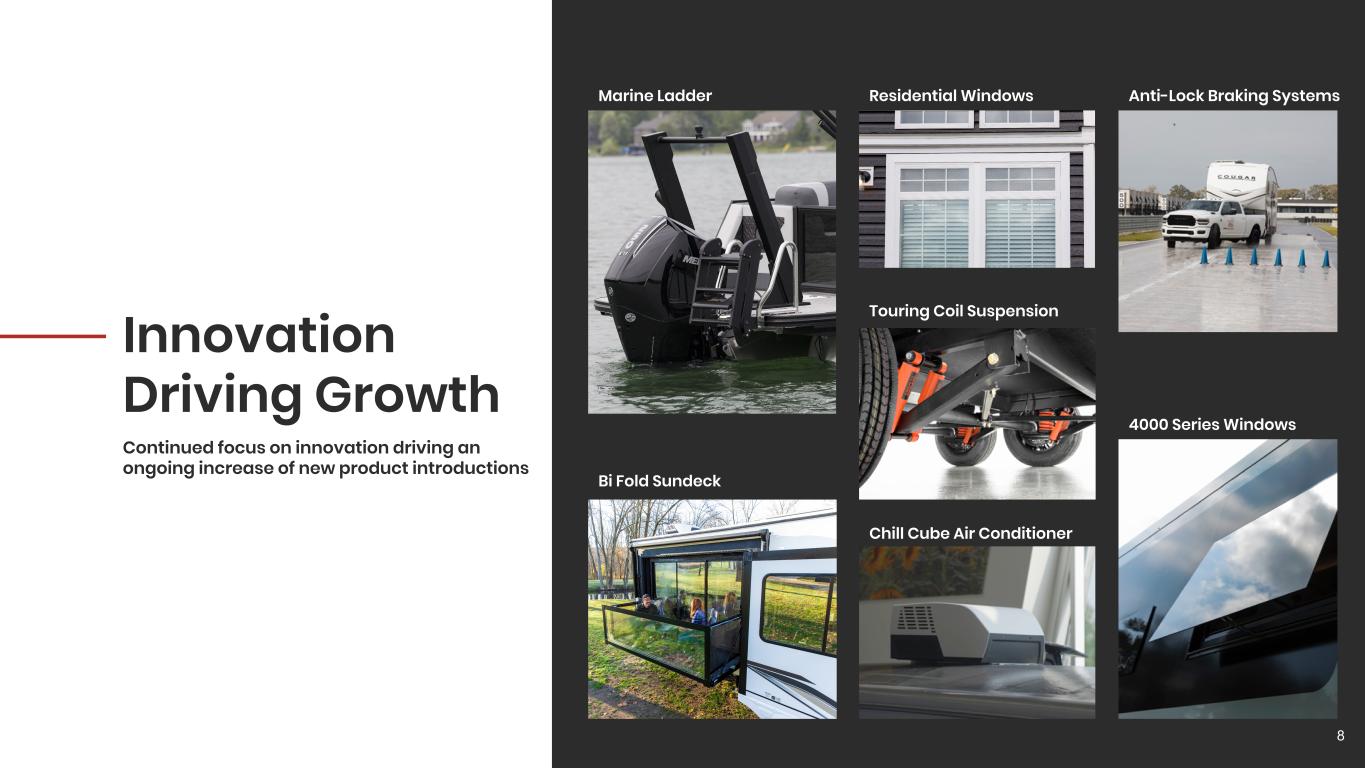
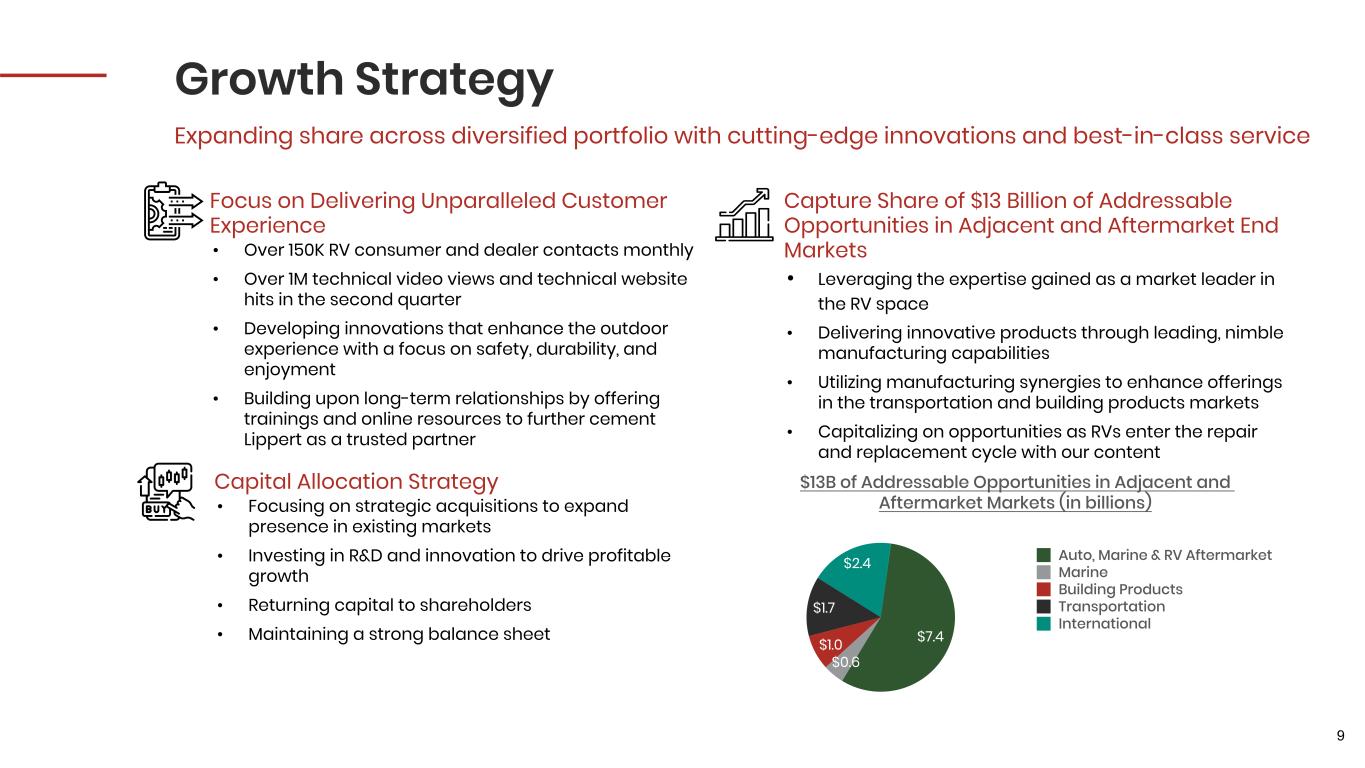
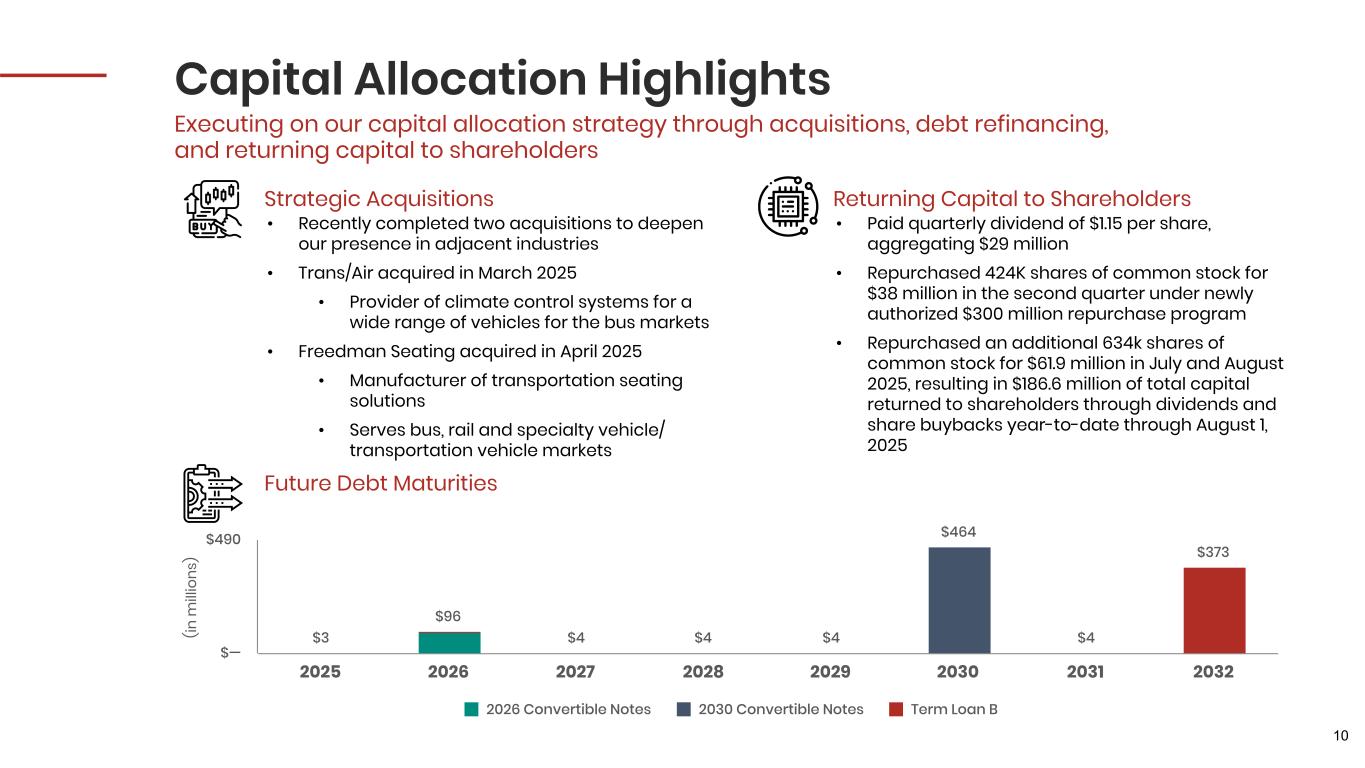
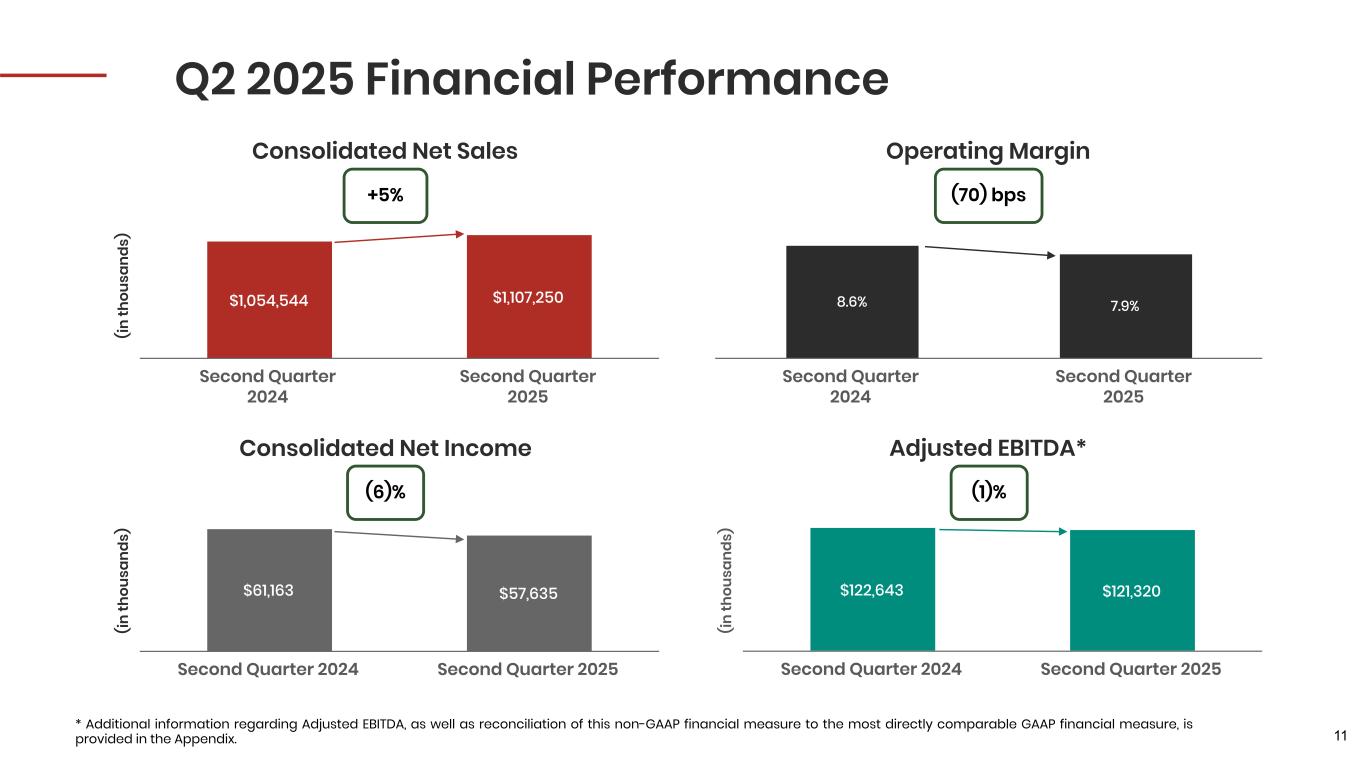
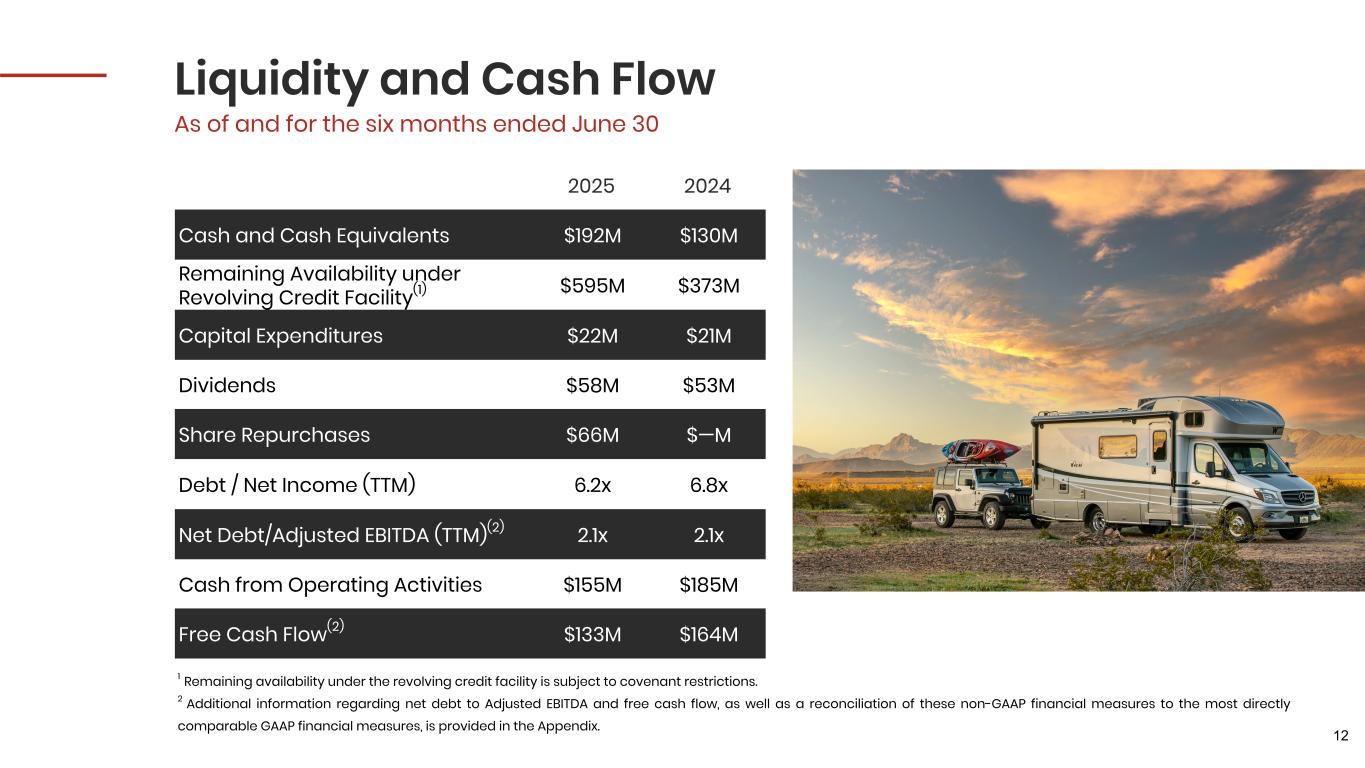
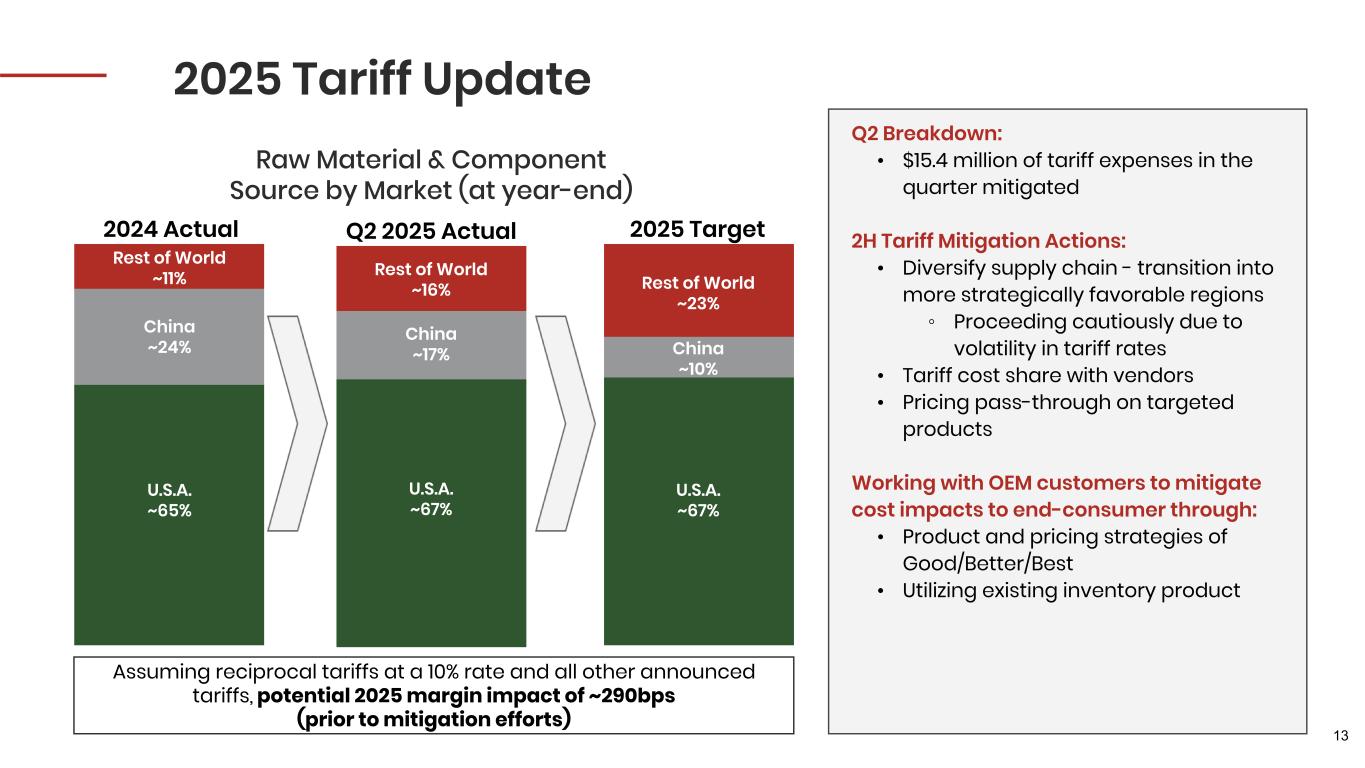
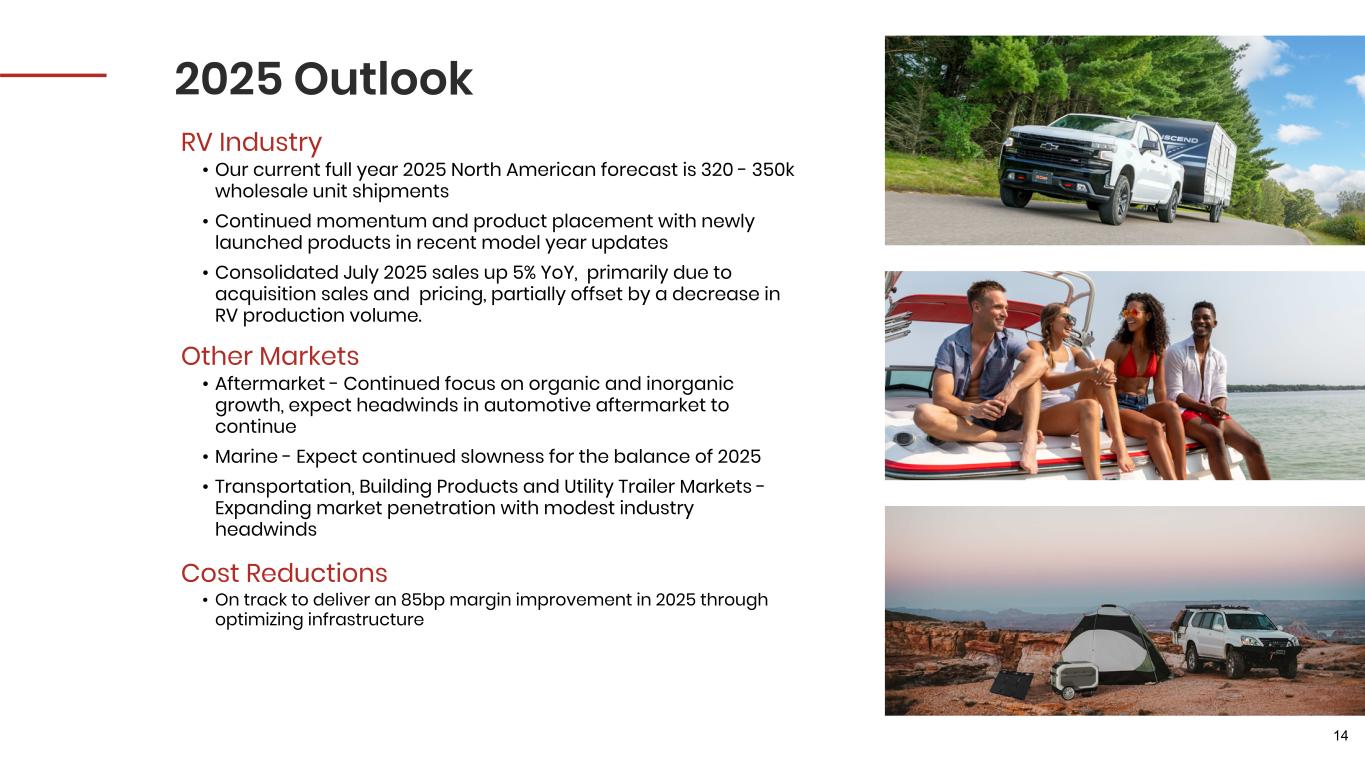
Thank you, Lillian, and good morning, everyone. I'd like to welcome you all to LCI Industry's second quarter 2025 earnings call. We delivered strong second quarter results with $1.1 billion in sales, up 5% year-over-year, along with 2% organic toable content growth despite RV mix headwinds. Our strong performance reflects dedication of our teams, the strength of our diversified markets and products, and the durability and expansiveness of our competitive mode. While elevated interest rates and other macro factors continue to challenge RV retail demand, our strategic foundation effectively drives growth and resilience, keeping us firmly on track to achieve our $5 billion organic revenue target in 2027. Our 5% growth was driven by continued market share gains in our top five product categories appliances axles and suspension chassis furniture and windows as well as the continued traction of our five recent key innovations that have reached a hundred million dollar run rate our recently completed acquisitions of freedom seating company and trans air contributed 32 million of sales in the quarter while strengthening our position in the bus market this market further expands our durability as it benefits from continuous and essential municipal fleet upgrades, providing $200 million in expected annualized revenues to LIPR, unrelated to consumer demand. Early integration efforts have been very successful operationally and culturally, engaging all 875 new team members, collectively between the two new businesses, within weeks of closing the acquisition. In addition, we are making good headway on synergies through consolidations of our transportation business units and teams. In In addition, Friedman has just announced new product launches for heavy-duty commercial buses, an entirely new market for them. We remain focused on what we can control, reducing raw material exposure, mitigating new costs around tariffs, and allocating capital with discipline across M&A, capex, and shareholder returns. We are happy to announce that our tariff mitigation strategy of diversifying our supply chain, with help from our vendors and other sourcing strategies, enabled us to minimize the impact of pricing to our customers, as well as the port or bottom line in the quarter, in line with what we stated last quarter when tariffs were first announced. We're also making strong progress toward our goal of reducing China exposure to 10 percent by the end of 2025, down from 24 percent in 2024. We are achieving this by further diversifying our supply chain into more strategically favorable regions, including bringing some products back to the U.S. for manufacturing, renegotiating supplier agreements, and leveraging existing inventory to further mitigate cost pressures. We also continue to drive facility consolidation, taking decisive action across multiple facilities to optimize our footprint. These actions, along with a lower indirect spend and reduced salaried labor, go sequential adjusted EBITDA margin expansion of 40 basis points to now 11% in the quarter. To support ongoing cost reduction, we intend to continue to optimize our facility footprint in calendar year 2026 by targeting underutilized space for reduction. All our additional actions are helping continue our momentum toward the targeted 85 basis point overhead and GNA reduction for 2025. I'll now move on to the results by business. RVOEM net sales totaled 503 million in the second quarter with North American RV sales up five percent and overall RV sales up three percent year over year driven by market share gains across our top five product categories. This growth was partially offset by a decline in North American RV wholesale shipments as dealers remain cautious with inventory levels after the previous quarter's restocking. Nonetheless, long-term trends supporting the outdoor lifestyle remain strong. According to KOA's 2025 Camping and Outdoor Hospitality Report, over 11 million new households have entered the camping market since 2019, and 72 million Americans are expected to take an RV trip this year, reinforcing a solid foundation for future demand and favorable demographics. The successful adoption by OEMs of our recent innovations, like our Chill Cube 18K air conditioner, anti-lock braking systems, 4K window series, sun deck, and TCS suspension system continue to drive share gains during the quarter. Recently, we engaged in a collaboration with Keystone Cougar, the best-selling fifth-wheel RV, where we highlighted the capabilities of our new Chill Cube. In this collaborative effort, Gisone and Lippert sent our marketing teams to Death Valley, California, where we showcased the Chill Cube's cooling power, energy efficiency, and quiet operation in one of the most extreme environments in the U.S. The marketing and social media campaigns were released early last month. The Chill Cube and other market-leading innovations that are so critical to customers continue to drive adoption among OEMs, reinforcing our value proposition across all price points. Well-received innovations and continued market share gains increased organic content for travel trailer and fifth wheel by 2% year-over-year, continuing our trend of organic content expansion despite stiff mixed headwinds. Our ability to continuously grow content even amid this ongoing shift towards smaller single-axle trailers underscores the strength and relevance of our portfolio. Many of our components, such as axles, chassis, suspension systems, and appliances, are critical to the units, not to mention critical to safety, reliability, and convenience for the consumer, making our products difficult to remove in any decontenting environment. Combined with our large-scale procurement of raw materials required for these products, low-cost manufacturing, and strong OEM relationships, our offerings remain a solid choice for partners seeking reliable, high-value solutions and continued innovation in the space. Looking ahead, we're confident we can capture additional content opportunities and anticipate that organic content growth should return to 3% to 5% annually in a normalized wholesale environment. Turning to the aftermarket, net sales were $268 million for the second quarter, up 4% year-over-year, primarily driven by product innovations and the expanding camping world relationship in the RV aftermarket. We continue to see strong demand for Furion appliances, particularly in air conditioning, where the Chill Cube and the rest of our AC lineup continues to gain share in the aftermarket. We've already sold three times more ACs in the aftermarket through six months of 2025 than we did of all of 2024. This is a testament to our incredible aftermarket sales teams and technical teams that assist dealerships with a service and winning sales programs. As our aftermarket products continue to see increased adoption in part through more and more OEM placement over the years, it helps fuel our long-term growth strategy in this segment. As OEM content grows and more RVs exit their warranty periods, demand rises in parallel. Further supporting this is the growing U.S. RV ownership base, ultimately creating a larger and sell base, which generates recurring product and service opportunities for our business. Our partnership with Camping World also remains a key aftermarket growth driver, with sales in their stores up over 7 million year-to-date, indicating strong retail momentum and customer demand as a result of our in-store collaboration with the Camping World team. This continued strength highlights the impact of strategic alignment and collaborative execution as we increasingly strengthen our retail presence with the largest RV dealer in the world, both in stores and online. In addition, we are also working on similar projects with many other dealerships across the country to apply our Lippert parts in-store concept. We also continue to invest heavily in the long-term growth of our aftermarket by building on our service and training functions. Our dealer tech training programs are an important piece of our aftermarket growth strategy as they help to ensure that our products are supported correctly after the sale to retail, strengthening our pull-through with dealer service centers. Last year, we completed service on over 1,500 mobile service repairs, which adds to aftermarket revenues. We are set to exceed that this year, and later on this year, we are adding new standalone loan service bays in Alabama, California, and to our existing Indiana facility, which will help us attract even more customers for service and up of our new innovative products. We demonstrate the robustness of our technical service team that assists dealers and our other customers in the aftermarket. Through the first half of 2025, our service ecosystem had 600,000 views of Lippert branded tech support seminars, 28,000 individual completions of technical training classes, and over 1 million visits to our Lippert-branded technical service pages, demonstrating our reputation as a trusted dealer partner. We plan to continue to foster these efforts to bolster service support as dealers consistently express their appreciation and tell us we provide the most comprehensive technical support in the entire industry. Turning to adjacent industry, second quarter sales increased 10% year-over-year to $336 million, largely due to our recent acquisitions, Freedman Seating and Transair. that expand our presence in the bus market as well as some nice organic growth in utility and cargo trailer markets with our axles and suspension products. This growth was partially offset by ongoing softness in the marine market as dealers continue to prioritize inventory rebalancing. We expect softness in the marine market to continue for the balance of the year. We remain committed to product innovation and recently launched a new line of modular replacement pontoon furniture for marine aftermarket consumers, giving boaters a cost effective way to refresh their boat without purchasing a new unit. We also launched a brand new pontoon ladder system this quarter, which has had great success already making its way into several key pontoon brands as the marine manufacturers enter all their key dealer shows this month. Utility trailers continue to represent meaningful long-term content potential. With approximately 600,000 utility and cargo trailers produced annually, we were well positioned through the strong relationships with leading OEMs to leverage our axle manufacturing and suspension products expertise, as well as getting them to start considering advanced technologies and content such as anti-lock braking systems, touring coil spring suspension, and tire pressure management systems. Axle and suspension components represent the largest single content category in these trailers, and our leadership in this area remains a key competitive advantage. With the transportation industry, our window systems and glass products are contributing to content growth across on-highway, off-highway, school bus, and transit bus platforms. The bus market, in particular, continues to demonstrate durability with approximately 70,000 units produced annually and a growing need for fleet replacement across states and municipalities. As mass transit continues to expand, we believe this will remain an attractive market and look forward to further expanding this portfolio in the quarters to come. Lastly, as I mentioned in my opening comments, Friedman is now entering the heavy-duty commercial bus product market with brand new seeding solutions that could have meaningful impact on the business. Turning to capital allocation, we remain focused on sustaining a strong financial foundation while driving growth and returning capital to shareholders. In the first half of 2025, we generated $155 million in operating cash flow supported by improved working capital discipline. Additionally, as of June 30th, we had $192 million in cash, $595 million of availability on our revolver, and net debt of approximately two times EBITDA, positioning us well to pursue strategic acquisitions, invest in innovation, and navigate a dynamic environment with flexibility. We also return capital through $1.15 a share of dividend. We also are excited to announce that we have executed $128 million in share repurchase this year to date through August 1st. with $200 million of remaining capacity under our newly authorized $300 million program. This continues our consistent and disciplined capital deployment strategy we've executed and balances long-term investment with near-term returns, driving shareholder value across market cycles. Moving to culture, one of our key competitive advantages has played a significant role in reducing employee turnover and fostering a more engaged, committed workforce. retention is important but retention combined with high engagement is where the true value lies we believe helping our team members finding meaning and purpose at work by supporting both their personal and professional goals creates an x-factor type advantage that contributes to long-term stability and operational excellence to be specific over the last four years we have been working toward a bold goal and that goal is by 2025 for every team member to have written personal goals and be actively pursuing them because we believe that when our people grow personally, that the business will grow as a result of more engagement. We also believe that business can and should be a force for good, demonstrated by the hundreds of community service events organized by our culture and leadership team. Through these service events, thousands of our team members collectively have served over 125,000 hours of volunteer service each year. This effort reinforces a core belief at Lippert. When people unite around a shared mission, their impact extends far beyond the bottom line. Not surprisingly, we found that retention rates in team members who serve is twice as high as those who haven't been involved with these serving events. So service is not only good for the community, it's good for business. As we look ahead to the second half of the year, we remain cautiously confident. While inflation and tariff uncertainty continue to pressure consumer behavior, we're encouraged by our ability to respond quickly and thoughtfully. That said, we remain confident in our ability to align our cost structure capital deployment and production cadence with real-time market conditions just as we have done successfully in past cycles while continuing to grow our market shares in all our end markets july 2025 sales were up five percent year over year and we anticipate that to be the trend for the rest of q3 we also continue to maintain our full year 2025 forecast for north american rb wholesale shipments at 320 000 to 350 000 units we plan to remain steadfast to our approach to achieve growth in this environment grounded in what we can control. In addition, we believe the toughest part is behind us as the team has done an incredible job right-sizing the business and continuing to right-size after the fall-off in RV volume in 2023. We believe we are putting ourselves in a great position for success as we come out of the cycle and off the bottom as volume begins to get back to a more normalized level. In closing, we operate a diversified and durable business supported by a rich history and culture rooted in servant leadership, operational discipline, and strong execution from an experienced leadership team. While the external environment may remain somewhat volatile in areas, our strategy hasn't changed. We've successfully navigated cycles like this before and have recently demonstrated that we have done it again. Our competitive mode is even more valuable in uncertain times, positioning us to continue driving market share gains and long-term growth. As always, and probably the most important thing I can say on these calls is that none of these results and accomplishments would be possible without the phenomenal consistency of our leadership teams across the business. The dedication, ingenuity, and passion of our people continue to move LIPPORT forward and provide outstanding results. I'm as proud as ever as what we're building together and even more excited for what's to come. I'll now turn the call over to Lillian who will provide more detail on our financial results.
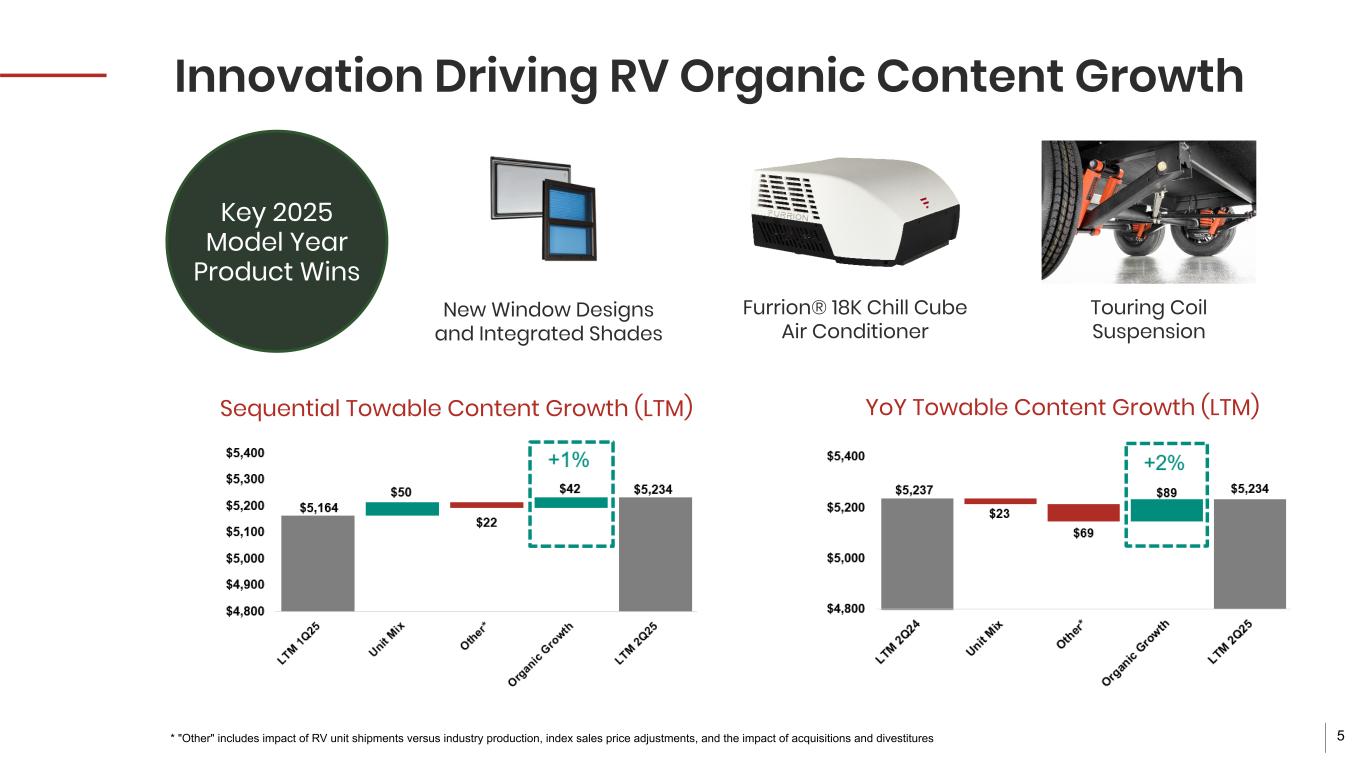
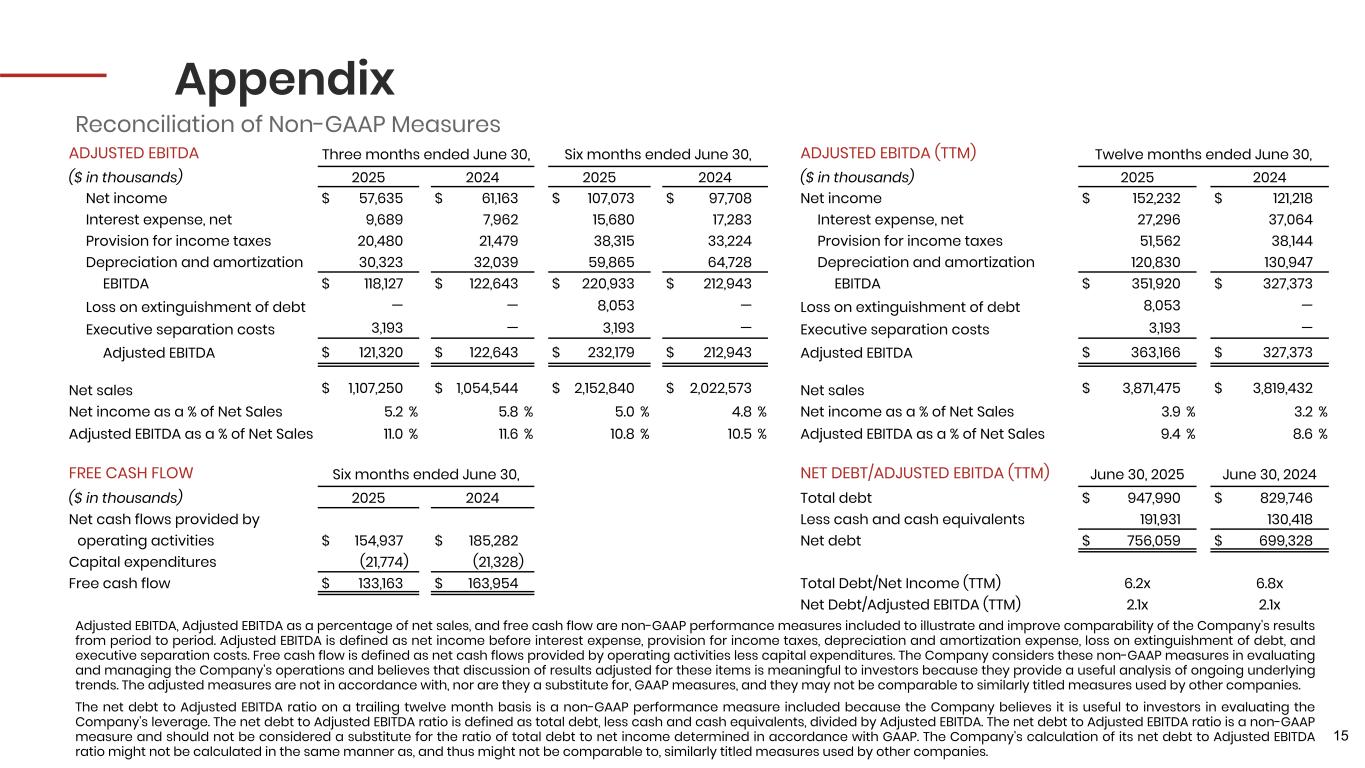
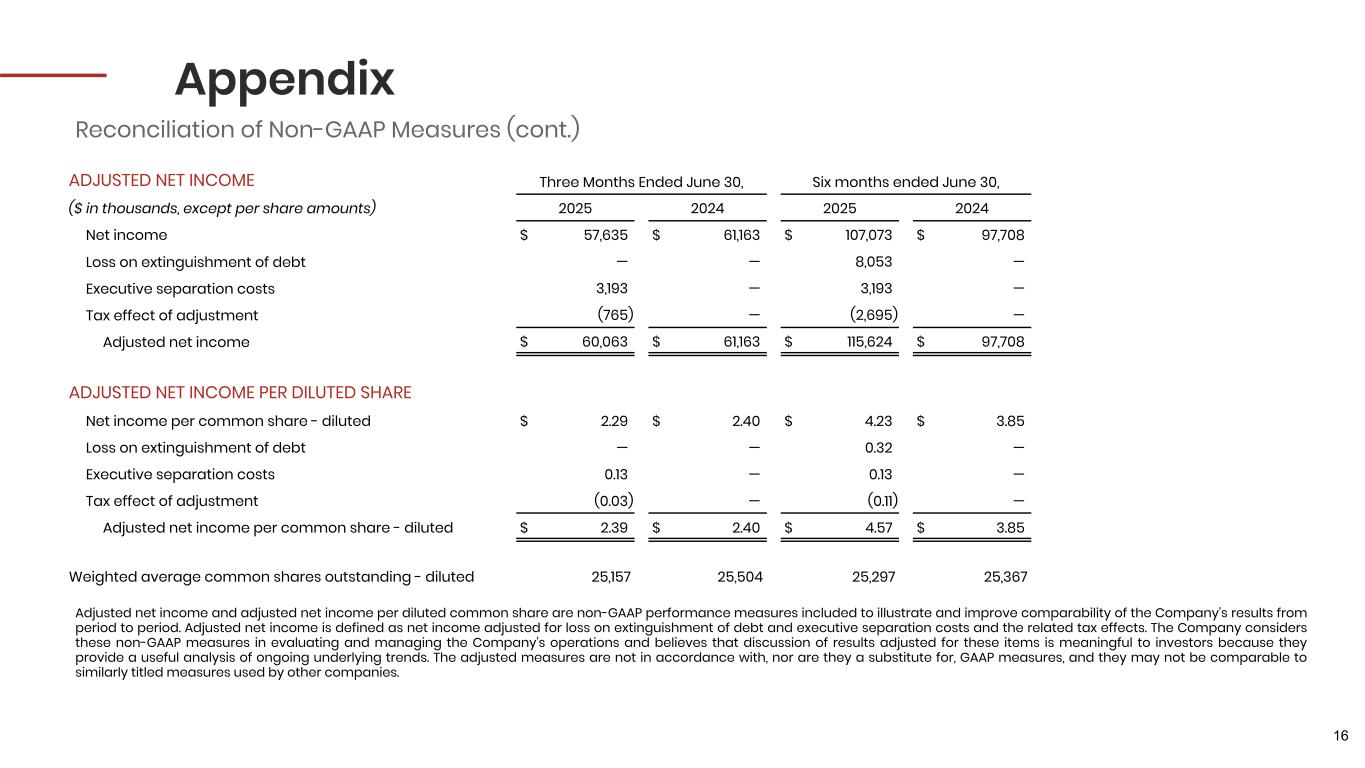
Thank you, Jason. During the quarter, Lippert's industry-leading innovation, strong competitive advantages, and successful M&A drove net sales growth, while our ability to mitigate tariffs and advance cost savings initiatives delivered resilient margin performance despite mixed headwinds. Our consolidated net sales for the second quarter were $1.1 billion, an increase of 5% from the second quarter of 2024. OEM net sales for the second quarter of 2025 were $840 million, up 5% from the same period of 2024. RV OEM net sales for the second quarter of 2025 were $503 million, up 3% compared to the prior year period, driven by market share gains and an increased mix of higher content fifth wheel units. These results were partially offset by the overall continued shift in unit mix towards lower content single axle travel trailers. Single axle trailers do remain in an atypical portion of production, but we expect this trend to normalize once consumer demand recovers. Content per towable RV unit was roughly flat year over year at $5,234, and content per motorized unit was up 1% to $3,793. Toable RV organic content grew 1% sequentially and 2% year-over-year, supported by the share gains we delivered in the top product categories we supply to RV OEMs, appliances, axles and suspension, chassis, furniture, and windows, as well as the continued adoption of recent innovations like our ABS, CCS, and best-in-class appliances. This growth offset the impact from the continued shift to smaller single-axle trailers. Adjacent Industries OEM net sales for the second quarter of 2025 were $336 million, up 10% year-over-year, primarily due to sales from acquired businesses within transportation, which represents $32 million in the quarter. This was partially offset by lower sales in North American Marines as sales were down 15% due to the impact of inflation and still high interest rates on retail demand. And based on current visibility, we expect the softness to continue. Aftermarket net sales for the second quarter of 2025 were $268 million, an increase of 4% compared to the same period in 2024, primarily driven by product innovation and the expanding camping world relationship within the RV aftermarket, partially offset by lower volumes within the automotive aftermarket. Gross margins for the second quarter of 2025 were 24.4 percent, compared to 25.3 percent for the prior year period. The decrease was primarily due to executive separation costs related to the departure of our chief legal and human resources officer, and changes in product mix for both OEM and aftermarket segments. Consolidating operating profit during the second quarter was $88 million, or 7.9%, a 70 basis point contraction over the prior year period. Excluding executive separation costs, operating margin was nearly flat compared to the prior year. This reflects our successful tariff mitigation strategy, where we offset $15 million in tariff and freight impacts through diversifying our supply chain, assistance from our vendors, and pricing pass-throughs. Our operating margin was further supported by ongoing cost improvement actions, including facility consolidations and overhead reductions, demonstrating steady progress toward our 85 basis point target. These initiatives largely offset headwinds from lower margin product mix and contractual price decreases tied to commodity indices. The operating profit margin of the OEM segment decreased to 6.2% in the second quarter of 2025, compared to 6.4% for the same period of 2024. Excluding separation expenses, OEM margin improved 10 basis points to 6.5% year-over-year. The aftermarket segment delivered a 13.5% operating profit margin, down from 15.5% in the prior year period, driven by mix and investments in capacity and distribution processes to support growth for the aftermarket segment. However, on a sequential basis, aftermarket margins expanded nearly 500 basis points, which was stronger than the prior year's sequential improvement. Gap net income in the second quarter was $58 million, or $2.29 earnings per diluted share, compared to net earnings of $61 million, or $2.40 per diluted share in the prior year period. Net income in the second quarter of 2025 adjusted for executive separation costs was $60 million, or $2.39 earnings per diluted share. Adjusted EBITDA in the second quarter was $121 million or 11% of net sales. Non-cash depreciation and amortization was $60 million for the six months ended June 30, 2025, while non-cash stock-based compensation expense was $11 million for the same period. We continued to anticipate depreciation and amortization in the range of $115 to $125 million during the full year 2025. At June 30, 2025, our company's cash and cash equivalents balance was $192 million, compared to $166 million at December 31, 2024. For the six months ended June 30th, 2025, cash provided by operating activities was $155 million, down $30 million from the second quarter of 2024. Investing cash inflows included $22 million used for capital expenditures and $98 million used for the acquisition. We also announced a $300 million share repurchase program during the quarter, underscoring our commitment to balance capital allocation and shareholder returns. This authorization provides substantial flexibility to repurchase shares opportunistically while maintaining our financial strength for strategic investments and acquisitions. During the quarter, we returned to shareholders $38 million through share repurchases and $29 million through our quarterly dividend of $1.15 per share. Year-to-date through August 1, 2025, we returned $187 million to shareholders in the form of dividends and share repurchases. As of June 30, 2025, our net inventory balance was $710 million, down from $737 million at December 31, 2024. At the end of the second quarter, we had outstanding net debt of $756 million, 2.1 times pro forma EBITDA, adjusted to include LTM EBITDA of acquired businesses, and the impact of non-cash and other items as defined in our credit agreement. For the month of July, sales were up 5% versus July 2024 due to acquisition sales and pricing offset by lower North America RV production. As we think about the balance of the year, I want to remind you that historically the second half tends to be lower than the first half, and we expect that to be the case this year as well, even with the addition of our recent acquisition. For Q3, we expect overall revenue to be up 5% year over year, and this reflects total revenue, including our recent acquisition. We also continue to maintain our full year 2025 forecast for North American RV wholesale shipments at $320,000 to $350,000. For Q3 2025, we expect RV OEM sales to be up about 4% to 5% over prior year. We also expect Q3 EBIT margins to be similar to 2024 levels. Looking to capital allocation for the full year of 2025, capital expenditures are anticipated to be in the range of $50 to $70 million as we continue to focus on investing into the business and innovation. We continue our aim to utilize our balance sheet to pursue strategic opportunities that help us capture profitable growth and deliver shareholder value while maintaining a long-term leverage target of 1.5 to 2 times net debt to EBITDA and maintain our commitment to returning cash to shareholders. In closing, we remain on track to organic achieve our 5 billion revenue target in 2027 and return to double digit operating margin as our operational flexibility, strategic diversification, and effective cost management, along with a strong balance sheet, enables us to deliver sustainable and measurable shareholder value. That is the end of our prepared remarks. Operator, we are ready to take questions. Thank you.
Operator
Thank you, Lillian. To ask a question, please press star followed by one on your telephone keypad now. If you change your mind, please press star followed by two. When preparing to ask your question, please ensure your device is unmuted locally. The first question comes from Daniel Moore of CJS Securities. Your line is now open. Please go ahead.
Thank you. Good morning, Jason. Good morning, Lillian. Thanks for taking the questions. Good morning, Dan.
So, I guess, let's see, a couple things. I wanted to start with, you know, just first inventory levels, you know, dealer inventories, both RV and marine, you know, from your perspective, clearly dealers remain cautious, you know, had some significant destock in Q2, just trying to get a sense for, you know, where you see inventories today and what the potential impact of a restock could look like once demand starts to improve in those two end markets? And then a quick follow-up. Thanks.
Yeah. Thanks, Dan. Excuse me. I think that the inventories, like you mentioned, the dealers have been pretty cautious. I think on top of that, the OEMs have been extra cautious as well. So I think those two things are going to lead. And that momentum has been building for the last year and a half. So when you look at going forward, I think that you know that cautiousness is going to continue and the discipline is going to continue um and when it does lift I don't think excuse me sorry I don't think we're going to come out of this quickly so I think it's going to be a slow and gradual steady rise once we once we start seeing the business lift um like you know on the marine side you know probably a little bit more cautiousness there uh and and discipline on the OEM side as well I think you know they're they're more in the middle middle innings than this this uh destocking and just inventory rebalance versus the rv uh the rv dealers so but you know we've heard some really good you know i've talked to some of the big dealers recently and there's been some you know blue compass went on every business recently and talked about a really you know strong may and june or uh may and june uh in the last two years it was they said it was the best may and june that they've had so that's really positive and they said july was really strong so you know camping world reported you know you know their numbers were fairly strong on units so i think you know i think we're just in a position where they're going to continue to be cautious and disciplined and and that's good good and healthy for the industry and then when it does lift it's going to be kind of a slow and steady rise that's really helpful um just trying to triangulate the commentary from a margin perspective so evit margins i think lillian
you said flattish for q3 year over year um and then you know you also sort of gave the updated tariff impact of 290 basis points you know before mitigating you know before any mitigation efforts um so just trying to understand is is the tariff impact maybe greater than what we thought previously um and you know if you have any thoughts in terms of what kind of a overall net, you know, margin target might look like for fiscal 25 given kind of one quarter, you know, left to go would be super helpful.
Yeah. So maybe some color, you know, around both the tariffs impact and also just margins in general. When we're thinking about the tariffs, there's going to be margin compression from the perspective is that we're not mitigating margin, we're mitigating the cost of the tariff with the actions that we're taking. So that does put pressure just mathematically on the margins as we go forward. The other thing I would call just in terms of some things driving some of the margin activity, as we look to Q3 and it'll be improving as we get to Q4, we did just acquire some pretty meaty acquisitions with Freedman and Transair. So there is some cost associated with integrating and onboarding these organizations and streamlining to get the synergy. So that's also going to be a little bit of an overhead on the margin as we look to Q3 and a little bit, obviously, to Q4 as well. But we're continuing to work on the cost mitigation actions that Jason spoke of in his remarks, so targeting that 85 basis point overall improvement for 2025. But we do have some of those other factors overhanging on the margins.
Yeah, if you had the – you can have the mixed headwinds as well along with, you know, the tariffs have created, you know, rising steel prices and aluminum prices domestically. So as you know, how we're indexed with a lot of our component pricing to our customers, you know, we chase that price going up until it stabilizes. And then, you know, we get a hole once it stabilizes and starts either retreating or once it stays, you know, at the peak. So, you know, we got a bunch of things that we're working against there, but, you know, all those things will right size and time.
Very helpful. I guess, did I hear correct that Q3 should be flattish on a year-over-year basis from an operating margin perspective? So, I just want to clarify that. Correct. Excellent. I'll circle back. Let me follow up.
Operator
Thank you. The next question comes from Joseph Altabello of Raymond James. Your line is now open. Please go ahead.
Thanks. Good morning, everybody. Since we're talking about tariffs, I guess I'll start there. It looked like the impact went from about 180 basis points last quarter to now 290. So I guess first, what was the biggest driver of that increase? And what's a good annualized number to use from a tariff standpoint?
Yeah, so, Joe, the biggest change, if you recall, our last earnings call was second week in April. So it was right after the initial Liberation Day. We had assumed at that time that China tariffs would be at 20%. We've since settled, or I should say the government has since settled at 30%. So that's going to be the biggest driver of change from the last time that we talked. And I think just kind of taking these and annualizing it is a fair representation for the tariffs on a go-forward basis. But again, we believe that through the mitigation efforts that we have, both from the resourcing, onshoring some of the product, resourcing to other nations, and then pricing pass-throughs as appropriate we do feel confident that we have mitigation plans in place so that we will not have an overall impact to the business um on a go forward basis okay thank you and just to shift over to sales it looks like you know up five percent in the quarter a little bit better than i think you had guided um is there any impact either to q2 or q3 or both from the earlier rv
model year change over this year i don't i don't i don't think so can you be a little more specific there yeah it sounds like the changeover happened in june this year versus let's say july last year yeah i mean the model change startup is usually slow uh you know slow to start but i would say no there's no there's there was no impact we'll stop we'll see that you know we'll see that happen over the course of uh the next 12 months that'll be where the impact is got it thank you yep the next question comes from craig kennison of baird your line is now open please go ahead
hey good morning thanks for taking my questions uh lillian you mentioned the trend towards uh single axle towable rvs you know maybe close to a bottom i'm just wondering if you can give us a sense for what mix normally is of single axle and where it is today, and then confirm whether it's maybe based on your orders, whether that trend is back in a good direction.
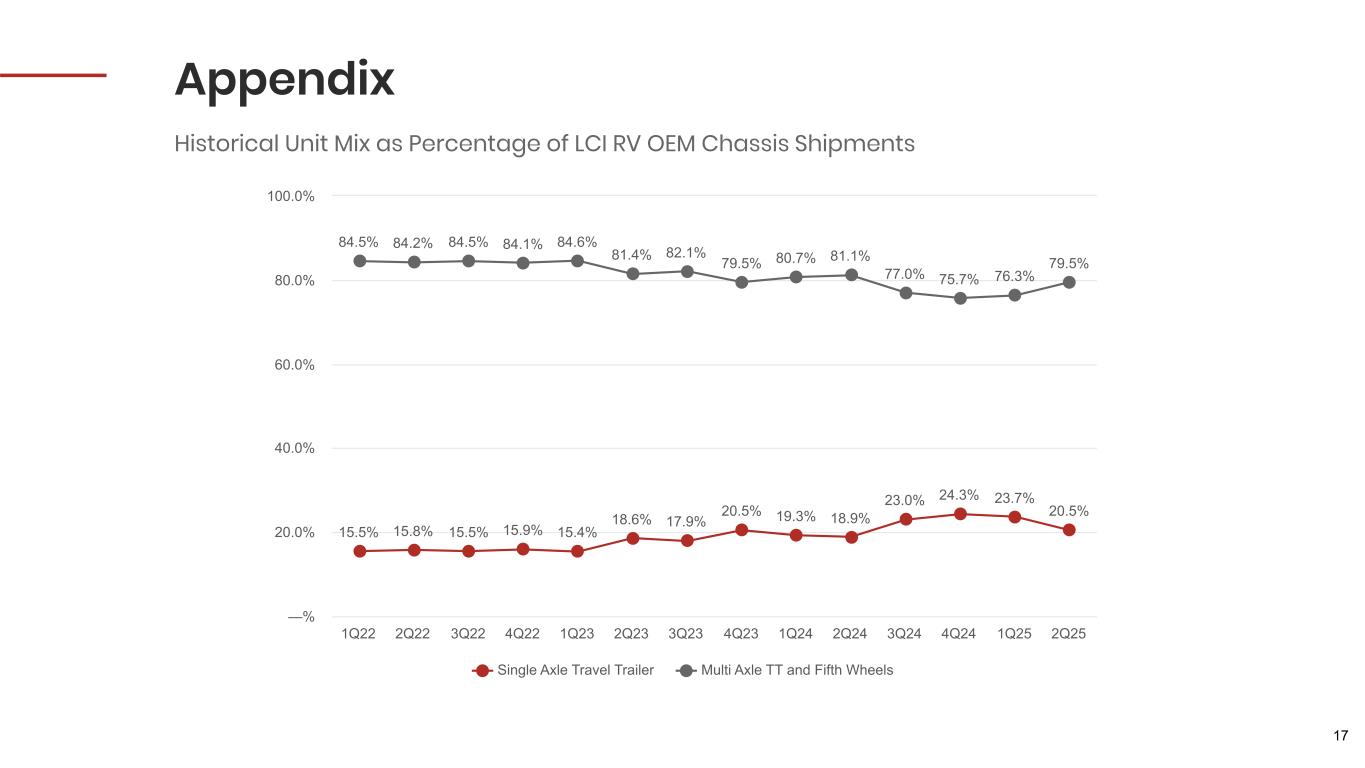
Yeah. Good morning, Craig. So historically, the single axles were probably in the mid to upper teens in terms of overall mix. We've been seeing over the last, call it 18 months, a gradual increase into the mid 20%. I think we were 24% last quarter. In the second quarter, we've seen a little bit of an improvement there where we're down to about 20%, 20.5% in second quarter. So it was nice to see that slight improvement. Hopefully that trend does continue. I think as we've talked before, I think overall expectations from the industry is that we will revert back to the larger multi-axle units just because they're so much more practical for the end consumer to be able to utilize CRB in the best way possible. When we look at a trailing 12-month basis from a content perspective, having that elevated overall mix for the past 12 months does still pressure the content, but it was nice to see in the second quarter that there was a little bit of an improvement to get back to the multi-axle.
And Craig, we track that every week, so So, you know, just last week it was under 20, it averaged under 20% for the week, which is a good sign to see. But, you know, we've been tracking this for a long time. If you go back 10 years, it was just under 10%. So, you know, it's been gradually growing over time. And like Lillian said, the last 18 to 24 months, it's been, you know, it's been creeping over 20% up to 25% as a high. And we're starting to see some retreating there. So that's what we want to see. we'd rather see, honestly, less wholesale units and obviously bigger units and less single axles from a margin perspective.
And then that makes a lot of sense, but trying to reconcile that with the Camping World Report where they're clearly doing really well at the most affordable or with the most affordable units. I presume those are also single axle. Is it just a change in what manufacturers are building in anticipation of a change? Or can you give us the sense that this is a consumer-driven trend change and improvement?
I think there's some of that, certainly. But I don't know how well you can do an $89.99 price point or a $12,999 price point in terms of margin. So I think that's the real thing. But a lot of these, I would say, the majority of these single axle trailers are getting purchased by first-time buyers and you know the real hope here is that the longer term trend is that they trade up and buy something bigger that they stay in the lifestyle and buy a bigger trailer with more content so you know we put a I think camping world especially has put a lot of energy and resources into that strategy and now it's time to you know over the next couple of years we see some of those those first-time buyers that have bought over the last few years these small units to trade up thanks i guess jason to that end just looking at your aftermarket business i know you've got this view that you know
the pandemic era orders ultimately will lead to some reorders how much data do you have that you can track um you know aftermarket purchase activity among people who you know bought during that era because it does feel like you could get an echo effect benefit from all the activity at that time.
Yeah, I think there's probably less, you know, I think, you know, when you look at single axle trailers specifically, I think that there's less aftermarket opportunity there because there's nothing really to fix up on those trailers. They're so bare when it comes to retail parts and accessorizing and upgrading and things like that. So, you know, like, for example, they don't have recliners in those, and we put recliners in every single unit out there so and you can't even fit a recliner in there um you know there's no furniture to speak of it's just a dinette which is a you know a wood-based seat with some cushions on it so um you might get a mattress here there but you know the real content you know adders and aftermarket come with some of the some of the bigger units and And, you know, we don't have data that tracks specifically all those buyers. But, you know, our aftermarket continues to grow. And, you know, we're continuing to do more store sets with Camping World. And, you know, we've got a pretty significant total addressable market in the aftermarket, especially with RV and automotive. So, you know, we're going to focus on continuing to sell dealers more products.
And I guess just to follow up, are you seeing any aftermarket activity from people who purchased, let's say, 2020 or 2021?
Is that consumer showing up to upgrade RVs through your aftermarket products? it's really hard to tell I would say that they you know they have to be they have to be repairing and replacing I mean that is a big part of our aftermarket business and when you know parts and components don't work they're going to need to come and get it fixed to a dealership likely and some do-it-yourself in some cases but you know I'd say most of the time when our components break and we've certainly put I think we keep saying we put 50 percent more content into OEM vehicles since 2021 you know the more of those components that need repair and replacement in the aftermarket
the more are going to be likely be ours that's our aftermarket to get because they'll replace replace like for like got it well thank you thanks greg the next question comes from patrick buckley of jeffrey's your line is now open please go ahead hey good morning guys thanks for taking our questions within the five percent growth quarter to date in in July how much of that was from acquisitions and how much of that was was driven by price I'd say the good portion of it was from the acquisition probably three to four percent of that was acquisitions related got it that's helpful thank you and then
you touched a bit on this already but as we try to think about tariff impact moving forward are there any specific product categories where you see opportunity to move more of the sourcing domestic or I guess in the flip side any categories that are structurally more weighted towards import yeah i think you know that's always one of the first things we're we're trying to figure out with you know resourcing um if we're going to move a product if we can move it back to the us it's you know we're we have the plants capacity to do that it's just a matter of does the do the dollars and cents make work and can we stay competitive but you know i i can't tell you how many resources we've put toward you know the resourcing initiatives you know with with people and you know on the quality side specifically incoming inspection because we've got a lot of new suppliers in the mix going to you know find new suppliers and once we find them we've got to validate them and you know and then there's a whole process when it comes to you know getting those first articles in and and proving them at our place so you know there's just a lot of a lot of activity there it's a lot easier when we can do that internally in the U.S., but unfortunately, there's still cost incentives outside of the U.S. to reshore and resource to other countries outside of China.
Got it. And then one last quick one from us. Looking ahead to the $5 billion in revenues in 2027, is there a wholesale shipment volume number assumed for that or maybe a range there?
Yeah. Our assessment there is that we just returned to a normalized wholesale range. And if you look over the last 10 years, it's averaged between 400 and 415,000. So I think that's the assumption there.
Operator
And we do feel we'll get back there over the course of the next two to three years so great very helpful that's all for us thanks guys thanks as a reminder to ask a question please press star followed by one on your telephone keypad now the next question comes from tristan thomas martin of bmo capital markets your line is now open please go ahead hey good morning hey um i just i want to circle back to kind of the full year operating margin.
I think last quarter you kind of implied you see 85 base points over 2024 is 5.8. How are you thinking about that currently?
I think, you know, we're still very confident in that from the perspective that we're tracking nicely for those cost saves, you know, that 85 base points. A lot of that's driven from footprint consolidation. We've already executed a good portion of that consolidation. There's still a little bit more to come as we continue to progress through the year. We're also continuing to focus, I think we talked on the last call, some pretty targeted efforts in terms of indirect spend and RFPs that we've been executing throughout the year. So I feel really confident that we are on track to deliver that for the year.
We've just, Tristan, we've, I don't know how specifically we've talked about it, but we've executed closing California, Chesney, Michigan, and Westville, Indiana. And so those are three that we've undergone. And obviously there's costs and things to close those. And we've got, you know, a few more on track this year. And then a few more lined up for next year for second quarter. So we've got a plan there.
Okay, but, you know, I mean, to kind of ask it slightly differently, is it the 85 basis points of kind of improvement slightly offset by a higher expected tariff impact? so it implies maybe it's slightly lower than the whatever the six point whatever no yeah so um as i mentioned earlier in the call so the tariffs because we're focusing on the dollar mitigation there is some margin compression from that just naturally right we're not going to put margin on top of the tariff costs and try to hold that so there is some margin deterioration because a percentage on the percentage because we're focused on mitigating the dollars.
Got it. And then just a two-part industry question. First, how are you thinking about retail demand this year? And then also, we kind of take your 320 to 350 wholesale range that I put up. I kind of factor in your RVOEM sales plus 4% to 5% comment, which I'm assuming does assume some kind of price and content share.
Does that just imply a very weak or acute production volume so on the retail you know it's obviously you know we had some some negative comps year over year last year and then coming into this year so you know it looks like it's stabilizing and our plan is your our thoughts are that wholesale and and retail will be pretty similar um this year so again that's where we're at on that's where we're at on our retail thoughts Yeah, and then kind of like 4Q kind of implied wholesale production. Say that again?
4Q implied wholesale production, right? The 320 to 350 range of gains kind of adjusting for the RVOEM up, I think, 4 to 5 and 3Q. I mean, at least by my mouth implies a fairly soft 4Q for the industry. Is that right?
Typically, that's pretty normal from a seasonality perspective. So we're not expecting anything unusual in that regard.
A lot of it's going to depend on these macro factors we keep talking about. If the environment starts to improve toward the end of the year, we could see some heavier restock by the dealers coming into the next selling season. We're hopeful for that. We're not banking on it. But we've been in this rut for two years since the fall off in late 2022. So, you know, we keep getting closer to the end of this, and, you know, the lift is coming in the next two to three quarters, likely.
Thanks for taking all my questions.
Operator
We currently have no further questions, so I'd like to hand back to Jason for any final remarks.
Yeah, I just want to say I'm really proud of the teams. I just had mentioned that we spent the last couple years really right-sizing the business and working hard to recover from the dip that we had in the industry. So I'm thankful to our teams, and it's good to see our ROIC and EBITDA in the double digits now. We're going to keep working to improve that. So thanks all for coming to the call.
Operator
This concludes today's call. Thank you for joining. You may now disconnect your...