Operator
Hello, everyone. Thank you for joining us and welcome to the Customers Bancor, Inc. Second Quarter 2026 Earnings Webcast. After today's prepared remarks, we will host a question and answer session. If you would like to ask a question, please press star one to raise your hand. To withdraw your question, press star one again. I will now hand the conference over to Phil Watkins, Executive Vice President, Head of Corporate Development and Investor Relations. Phil, please go ahead.
Thank you, Ellen, and good morning, everyone. Thank you for joining us for the Customers Bank Corp's earnings webcast for the second quarter of 2026. We'd like to remind you that today's presentation may contain forward-looking statements which are subject to uncertainty and changes in circumstances. Actual results may differ materially from management's expectations due to a variety of factors which are described in our earnings materials and our SEC files. We also reference non-GAAP financial measures, so it's important to review our GAAP results in the presentation and the reconciliations in the appendix. The presentation you will see during today's webcast has been posted on the investor's webpage of the bank's website at www.customersbank.com. You can also download a PDF of the full press release. Please refer to our SEC filings, including our most recent Form 10-K and 10-Q, and our current reports on Form 8-K for a more detailed description of the assumptions and risk factors related to our business. Copies of these filings may be obtained from the SEC or by visiting the Investor Relations section of our website. At this time, it is my pleasure to introduce Customers Bancorp CEO, Sam Sidhu.
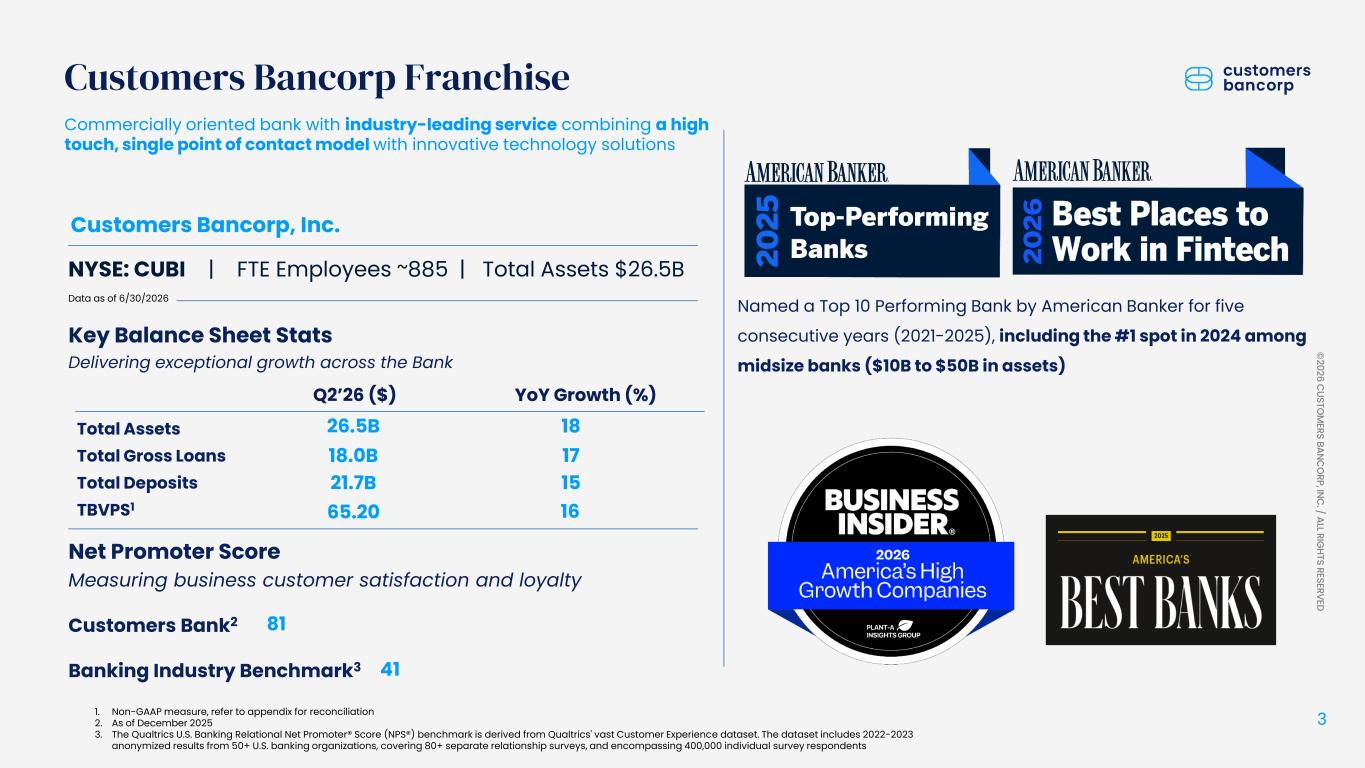
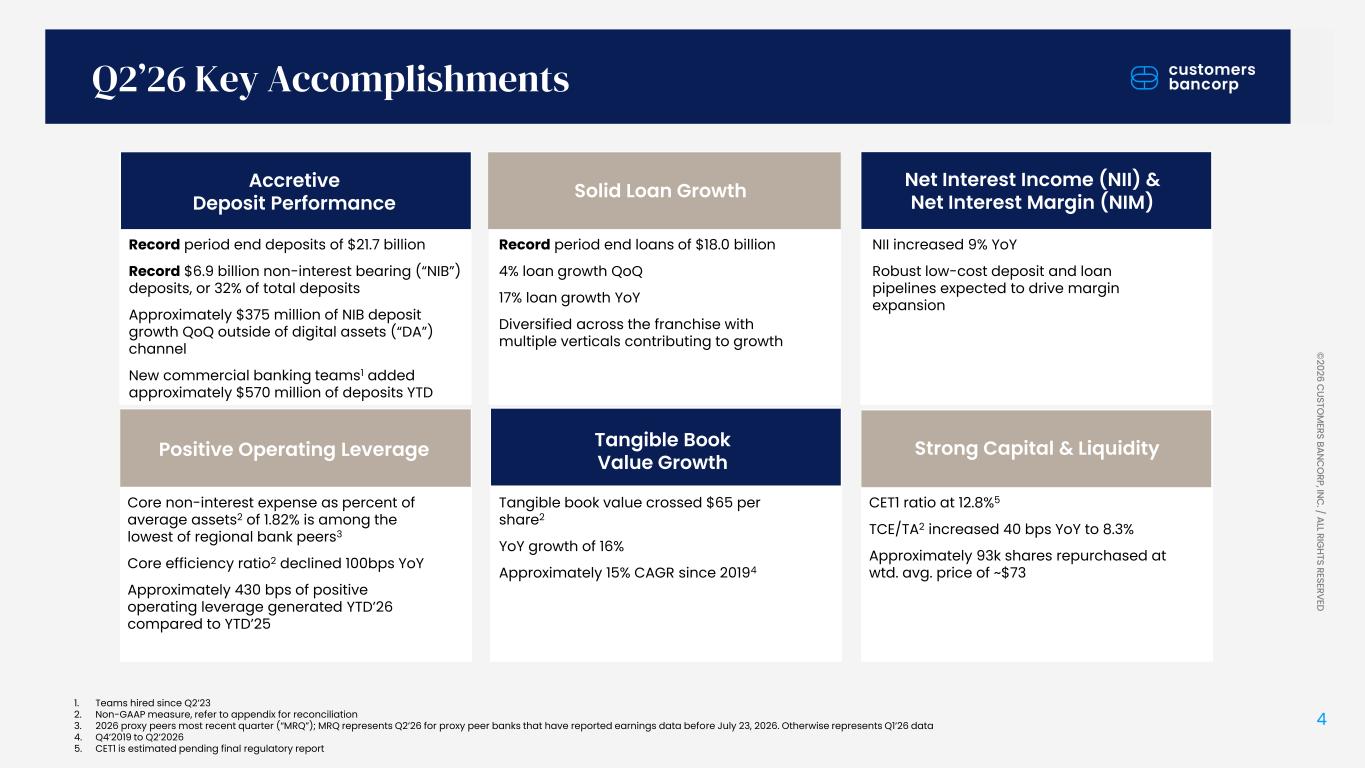
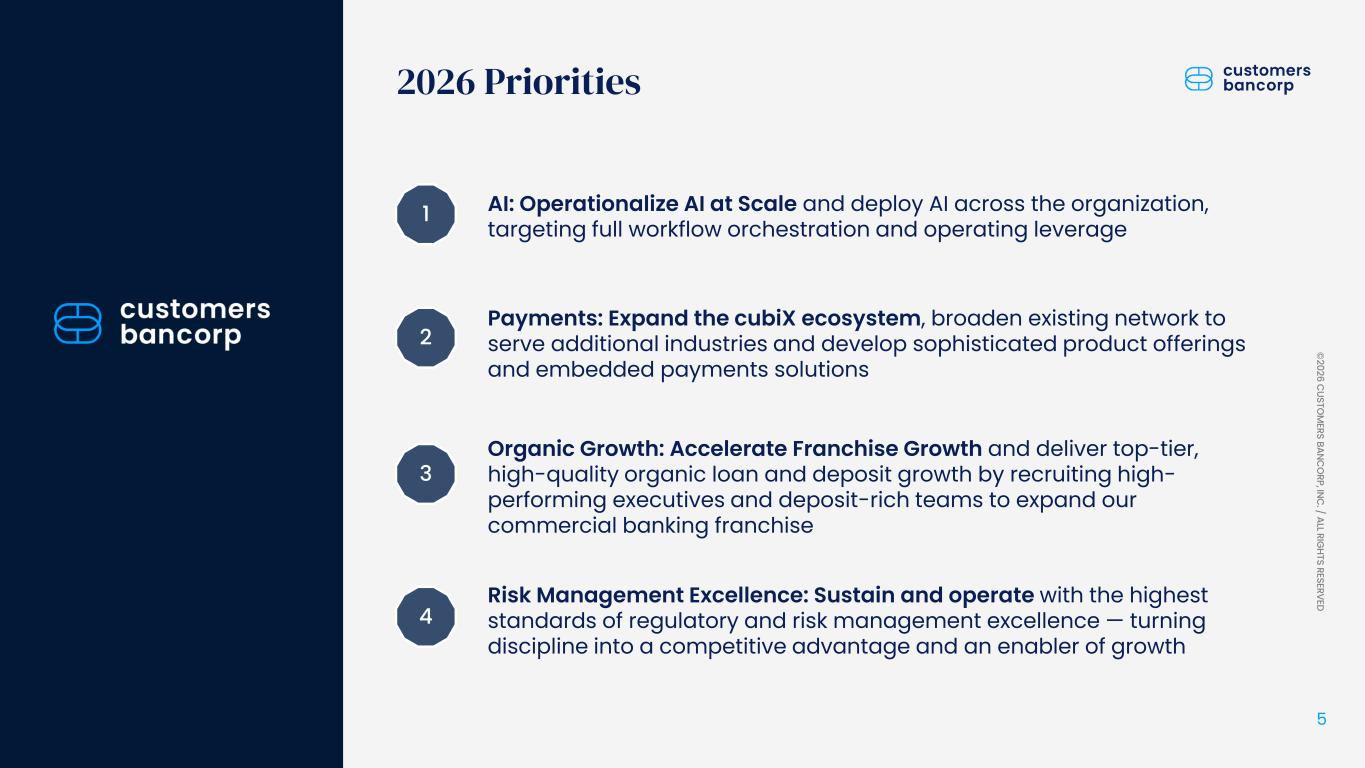
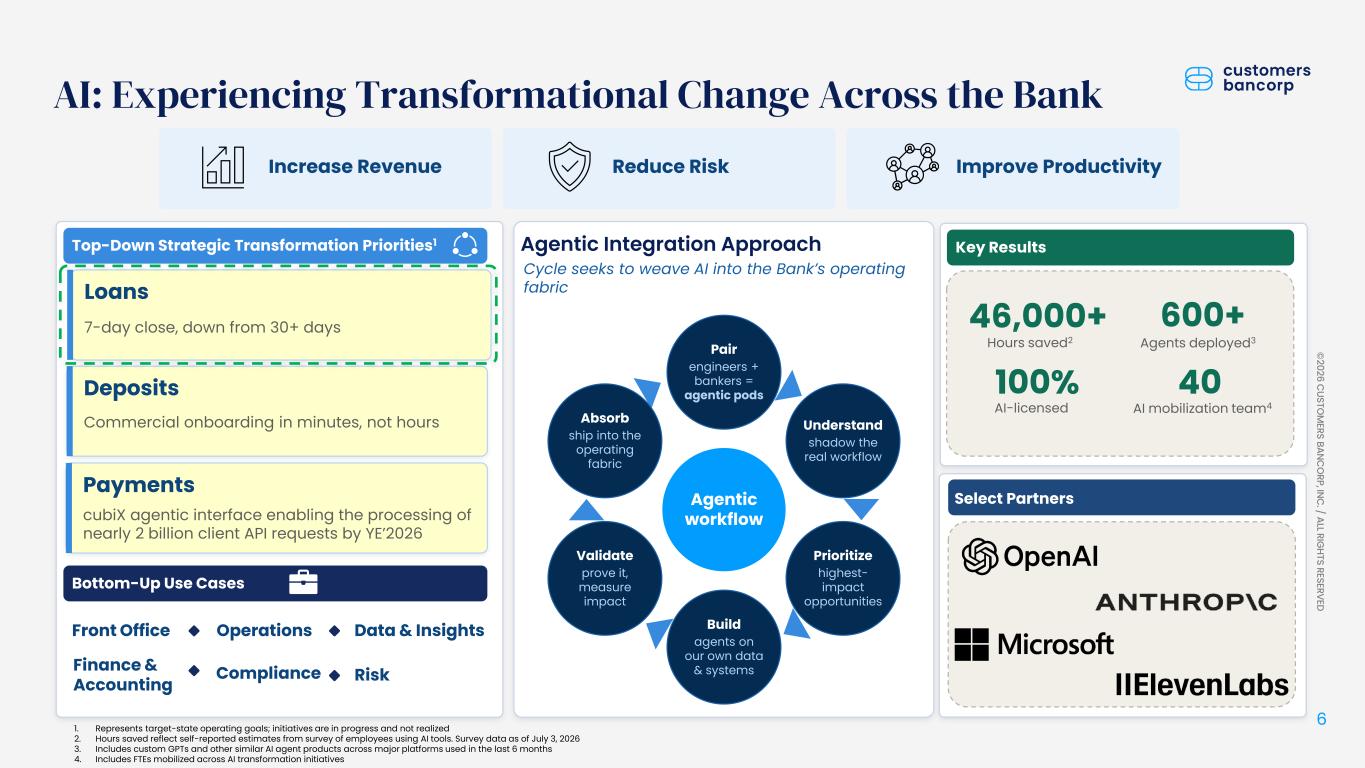
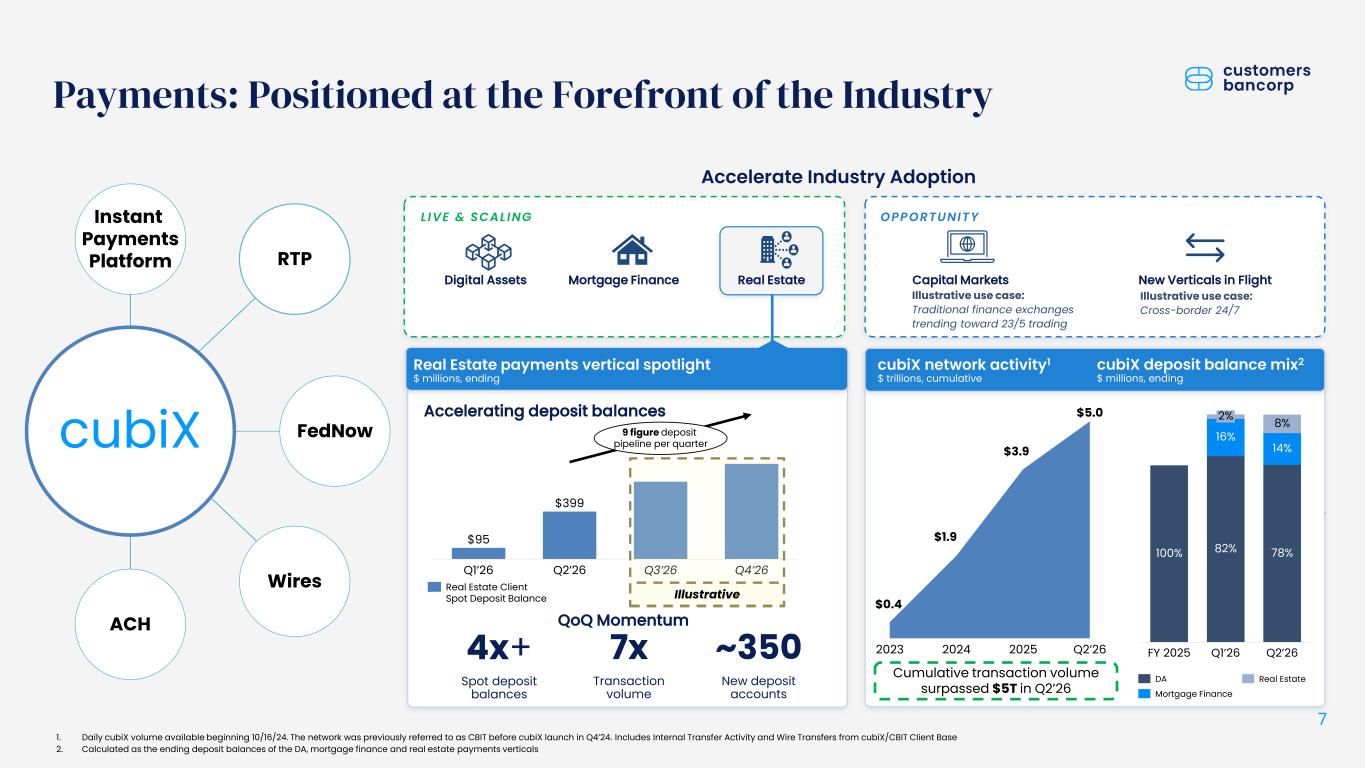
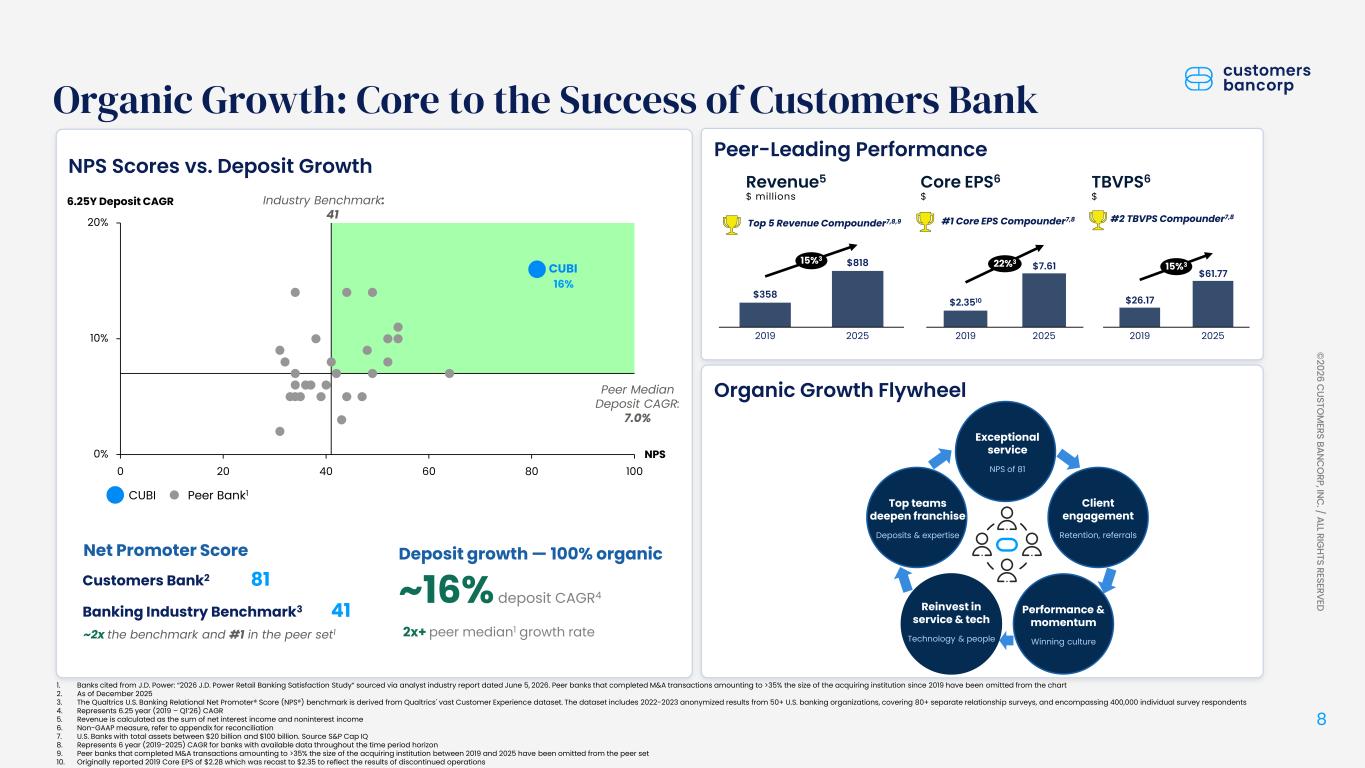
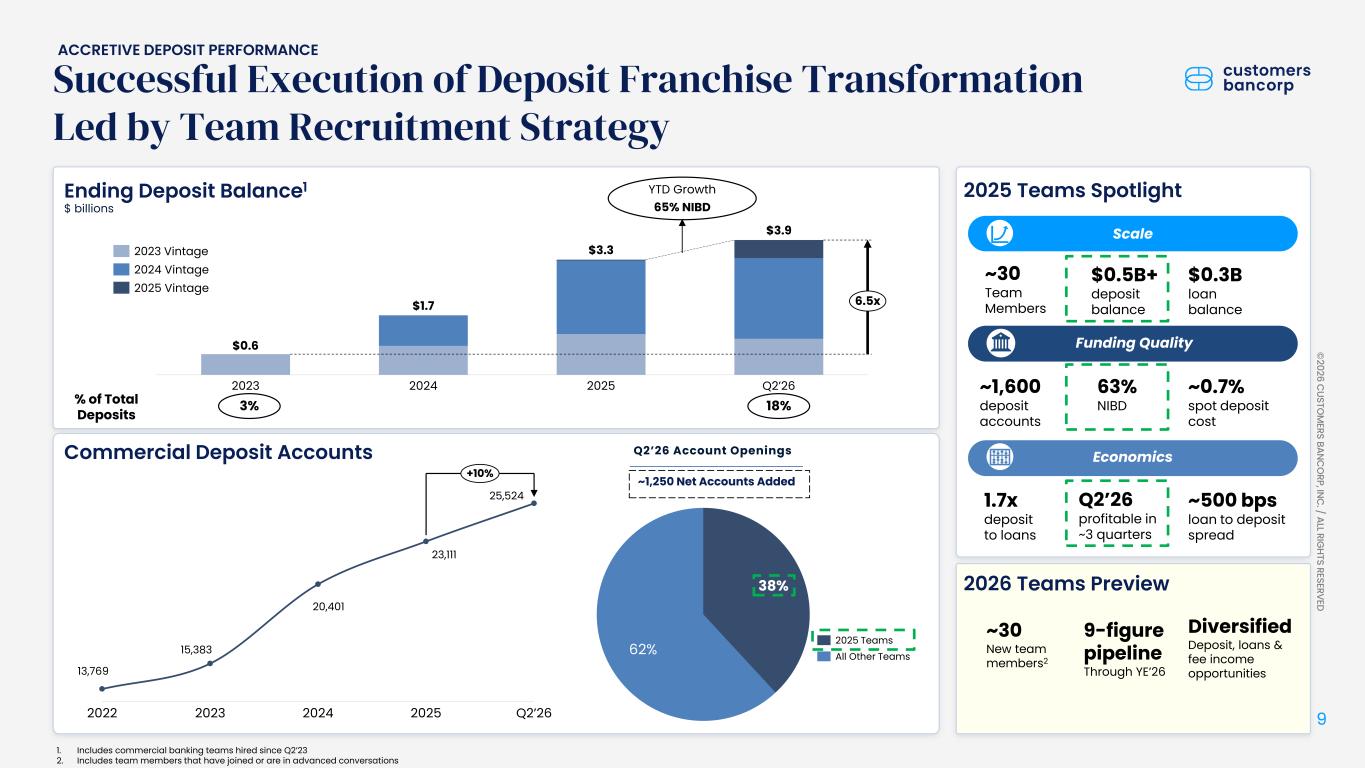
Thanks, Phil. Good morning, everyone, and welcome to Customers Bancorp's second quarter 2026 earnings call. I'm joined this morning by our Chief Financial Officer, Mark McCollum. I'll take you through a few key highlights from the second quarter, give you an update on our strategic priorities, and then Mark will provide additional detail on our financials. customers bank continues to deliver for our customers and shareholders with this quarter's results once again reflecting strong consistent financial results that come from disciplined execution of our differentiated strategy by best in class team turning to slide four in the second quarter we the second quarter was further evidence of our core strategy firing on all cylinders with consistent and reliable financial performance and growth a few highlights total loans grew four percent in the quarter and 17 percent year over year to a record 18 billion total deposits grew over 140 million to a record 21.7 billion non-interest bearing deposits hit a second consecutive record at 6.9 billion or 32 percent of total deposits nii increased nine percent year over year tangible book value per share across 65 dollars a period and record up 16 year over year extending our industry-leading pace. That's 16 consecutive records for book value, four for loans, and seven for total deposits. And we did all of this while maintaining pristine credit quality and robust capital levels, even while growing the balance sheet and modestly buying back shares. On slide five, you can see our priorities for 2026, the same four we've been executing against all year. I'll provide an update on each again this quarter, starting with AI on slide six. last quarter we told you we were operationalizing ai and automation across customers bank we're seeking transformational change with a goal of becoming the nation's leading ai native regional bank to give you some color on what that means let me start by saying that none of this happens by chance every use case we build moves through the same repeatable cycle we create ai agentic pods by pairing our engineers with subject matter experts that own the work shadow the real workflow and build agents in our own data and systems starting with the highest impact opportunities and we then validate measure the real impact first and only then does it get absorbed into the operations of the bank we're driving this through two complementary tracks top-down strategic initiatives and extensive bottoms-up use cases being built organically by our teams our top-down roadmap spans three domains lending deposits and payments that top-down work took a huge step forward in april when we announced a strategic collaboration with open ai an expansion of a relationship that began back in 2023 this isn't a typical enterprise licensing relationship with a frontier model provider it's embedding open ai engineers side by side with our team building custom capabilities bespoke for our processes let me start by giving you an update on the first top-down initiative loans our engineers have architected a multi-agentic credit underwriting process that can allow us to be ready to close commercial loans in seven days or less versus industry norms of 30 to 60 days i'm thrilled to say that we piloted this tool this quarter and successfully closed cni and cre loans that utilize this underwriting engine within a week that's an 85 reduction in readiness to close which should result in huge productivity and revenue gains through more business but more importantly it will deliver an enhanced client experience and confidence in our bank. Moving to deposits. We kicked off an effort to rebuild our commercial onboarding process from scratch with an ambitious target of opening complex commercial accounts in minutes, not hours. We expect to have real progress and an update for you on this next quarter. On payments, we're way ahead of the curve here. We believe we were the first bank to publish an MCP or model context protocol last year for our commercial payments customers one revenue generating use case we're advancing on is a modernized fully routable network for 24 7 cross border payment settlement on our cubix network that will share more detail as it develops now for a few examples from the bottom up side which is reaching every corner of our institution we're equipping bankers to drive increased conversion which has led to 110 improvement in select front office areas prospecting success rates to help make that tangible just one commercial deposit group has averaged 2 million dollars per month in non-interest bearing deposit growth since the launch of the tool in the back office we're using agentic orchestration to enable products for new deposit customers reducing setup times from an hour down to a couple of minutes in risk and compliance we're leveraging ai powered kyc screening which allows our team to boost their productivity by 50 percent and in corporate functions we're reviewing legal documents in minutes, not hours, tracking accuracy across regulatory filings, and have shortened our month-end closing cycle by 60%. Everything I've walked you through here is proprietary and purpose-built in-house by customers' bank employees. To give you some context on the impact we're experiencing, our team has now saved at least 46,000 hours through AI-enabled workflow automation, up about 65% from last quarter and equivalent to 24 FTEs. They've built more than 600 agents and custom GPTs, up 20% in the last 60 days alone. 100% of our team members are now AI licensed, up from 75% last quarter, and we're providing extensive training and support to our entire organization. And I'm personally leading a 40-person and growing team today, representing about 5% of our workforce, focused on AI workflow transformation. How will this translate financially for us? Well, we've set a goal of getting to a low 40s run rate efficiency ratio in 2027, versus the 50% or so we're at today through a combination of revenue growth and increased productivity. I've said it before and I'll say it again, we believe AI is the most significant opportunity in a generation for a bank of our size and we intend to be the one that proves what serious adoption looks like. Now moving to slide seven and Cubix. We've said for some time that excelling in payments is critical to future success in our industry. Let me first frame where our cubix industry expansion stands da 24 7 settlement was our foundation then we moved to mortgage finance clients and now real estate has become a fast growing vertical to put it in perspective from what was essentially a startup vertical based on adoption and pipeline we now project this vertical could represent 20 of all payment units capital markets is an opportunity ahead think traditional finance exchanges as the whole industry moves toward continuous around the clock trading we are also looking at incubating new verticals facilitating 24 7 cross border and other 24 7 settlement transactions as customers and in some cases their agents continue to expect faster payments the combination of a cutting-edge product with a best-in-class team is already producing strong results quarter over quarter in the real estate payments vertical transaction volume is up roughly seven times spot deposit balances are up more than four times reaching 400 million dollars in just a few quarters and we've added approximately 350 new deposit accounts a major milestone in the quarter is that we surpassed five trillion dollars in cumulative transaction activity that is a truly staggering figure and shows just how mission critical this payments network is to our clients and importantly the unit count of transactions is continuing to accelerate to put that in perspective year to date we've processed over 200 000 cubics internal transfers which is double from the same time last year and we remain in the early innings of unlocking the full value of this platform at the end of last year i told you we did not expect this to be a growth vertical however based on tangible progress we are seeing through the end of this year we now expect cubics to be a growth area in 2027 as these new verticals continue to scale with granular diversified low-cost deposits turning to slide eight i want to discuss what we believe is a driving engine behind our success our organic growth flywheel it starts with service our net promoter score is 81 nearly double the industry benchmark of 41 and puts us at the top of the industry that level of service drives deeper client engagement stronger retention more referrals that engagement builds momentum momentum, and financial performance. That performance allows us to reinvest into people and technology. That investment helps us attract and retain top teams who bring clients and service expertise starting the cycle over again. And you can see the output on the right of the slide. We're the number one core EPS compounder and number two intangible book value per share compounder among our peers. And our organic growth deposit rate is roughly at two times the peer median. None of this works, though, without the right people. And And that brings me to our team recruitment strategy update, which I'll cover on the next The teams we've recruited since 2023 now represent 18% of our deposit base, about one-fifth of the entire franchise. Let that sink in. In just 36 months, entirely organically, we've built roughly one-fifth of this bank through recruiting. And these new teams are extremely accretive to the bank's efficiency ratio, with mature vintages operating at efficiency ratios in the 20 to 30 range we want to spot we want to spotlight the 2025 vintage hired in the last 12 months these teams already hold more than half a billion dollars in deposits across 1600 accounts or over six percent of our total commercial accounts they're incredibly granular today averaging about 340 000 per account due to the smaller balances in operational nature 63 percent are non-interest bearing and a spot cost of about 70 basis points and similar to last quarter the non-interest bearing deposit pipeline for new teams is incredibly around 250 million in the next 90 days or so and the economics are compelling similar to our 2024 teams our 2025 teams have already reached profitability in approximately three quarters they run at roughly 1.7 times deposits to loans generating a spread of around 500 basis points on top of the excess low cost deposits they bring. And I'm happy to share a quick preview of what we've accomplished with our 26 vintage. Year to date, about 30 team members have joined or are in advanced discussions to join with four teams expected to join this quarter. These teams already have a nine-figure loan and deposit pipeline to capture by year end. And we're optimistic that these teams could similarly turn profitable within 12 months. With that, I'll turn it over to Mark to talk you through the financials in more detail.
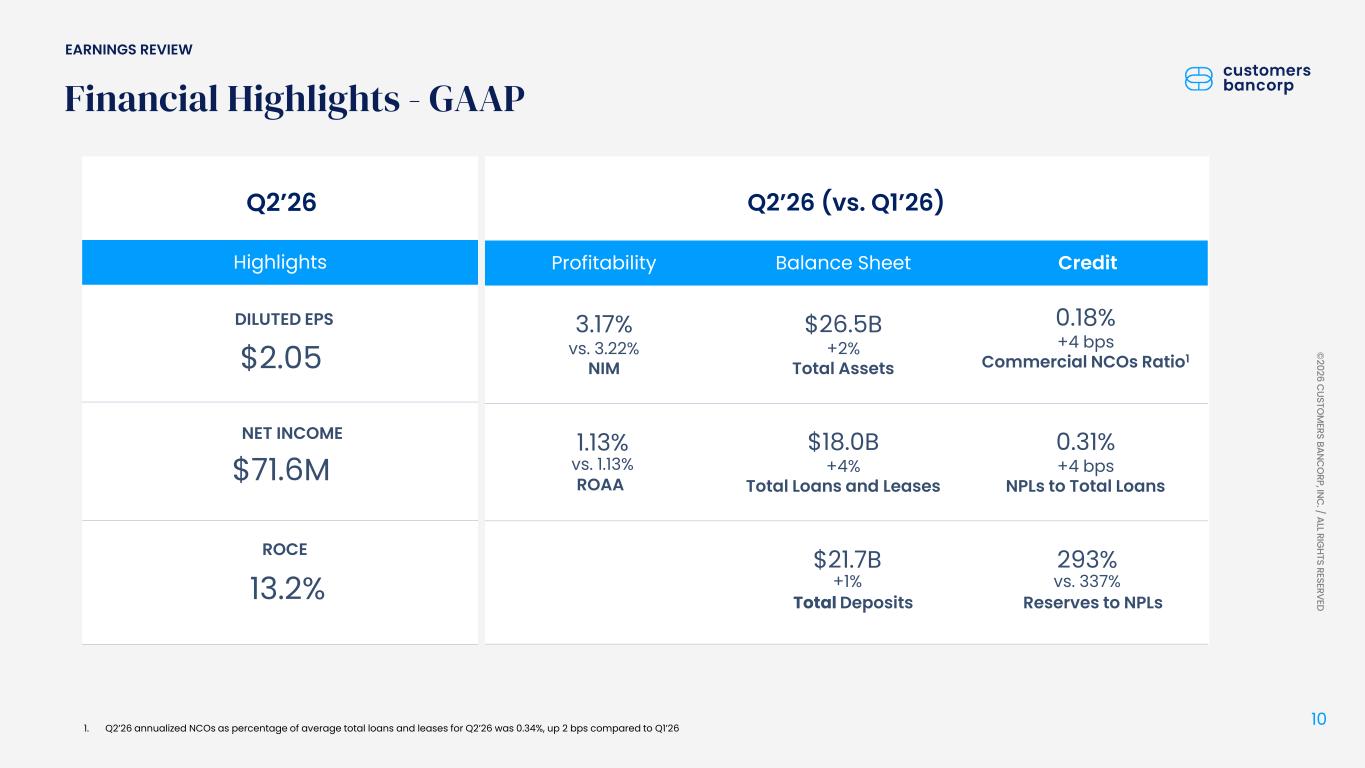
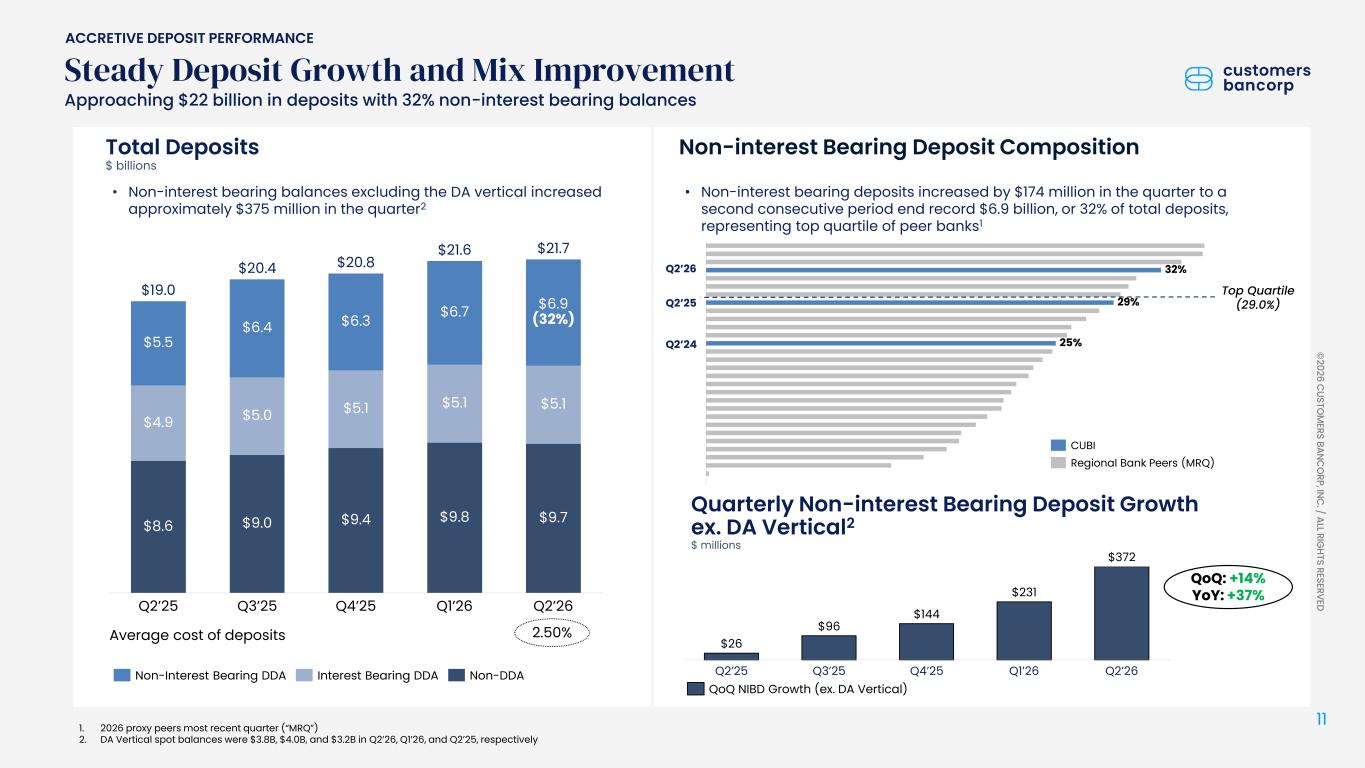
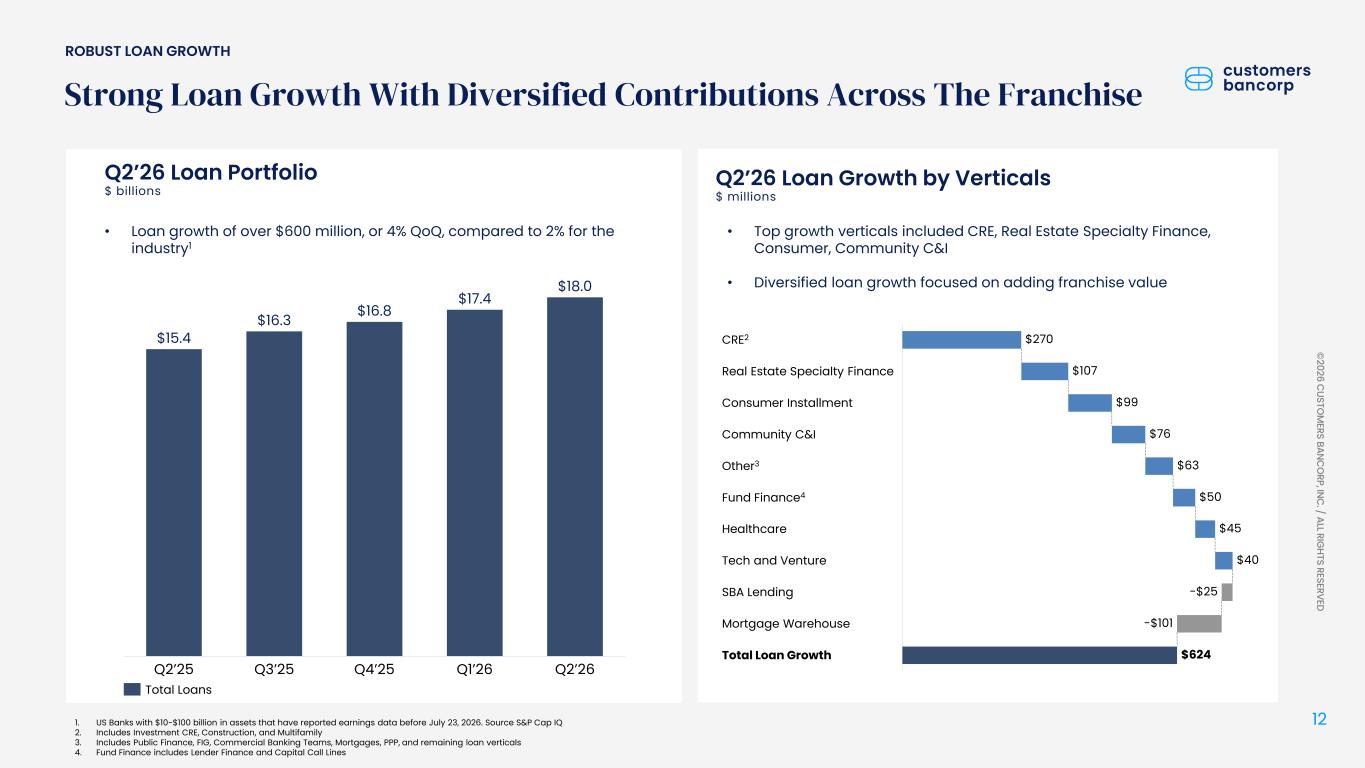
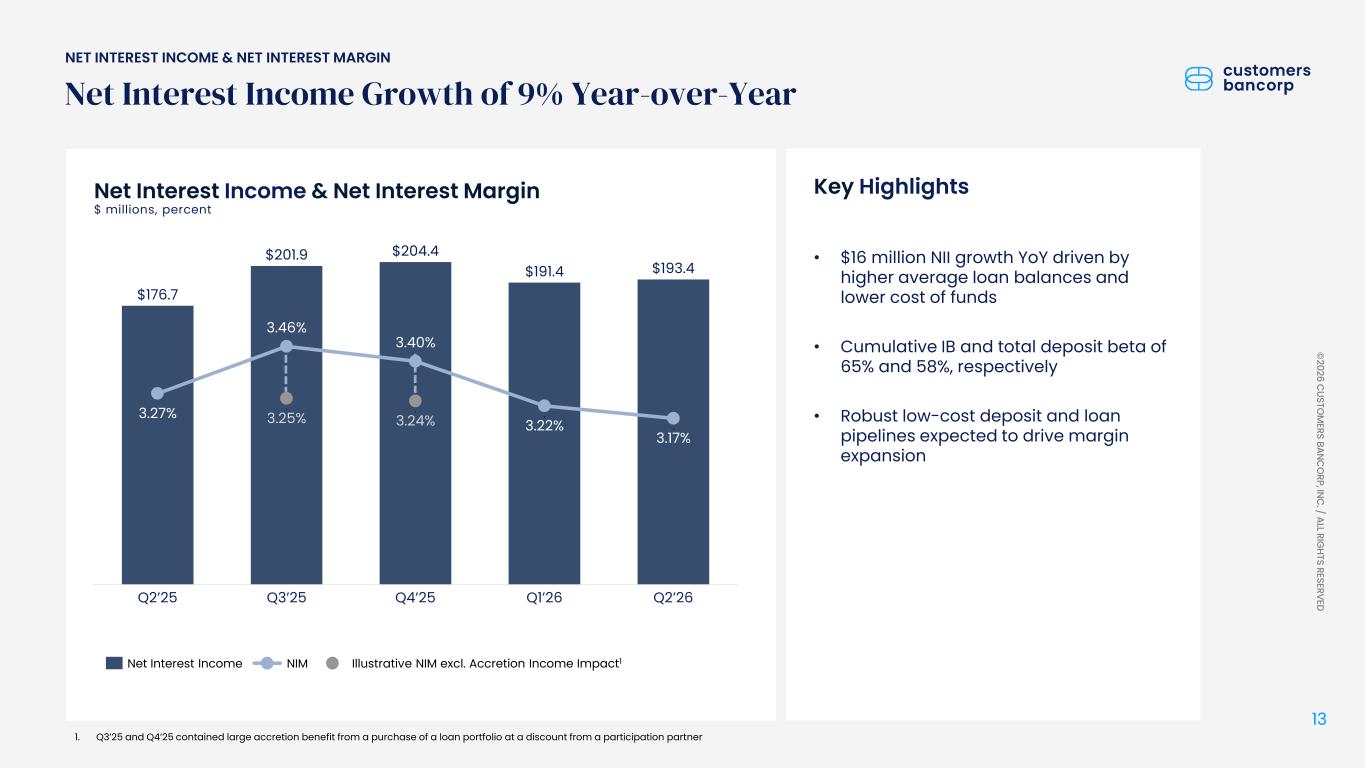
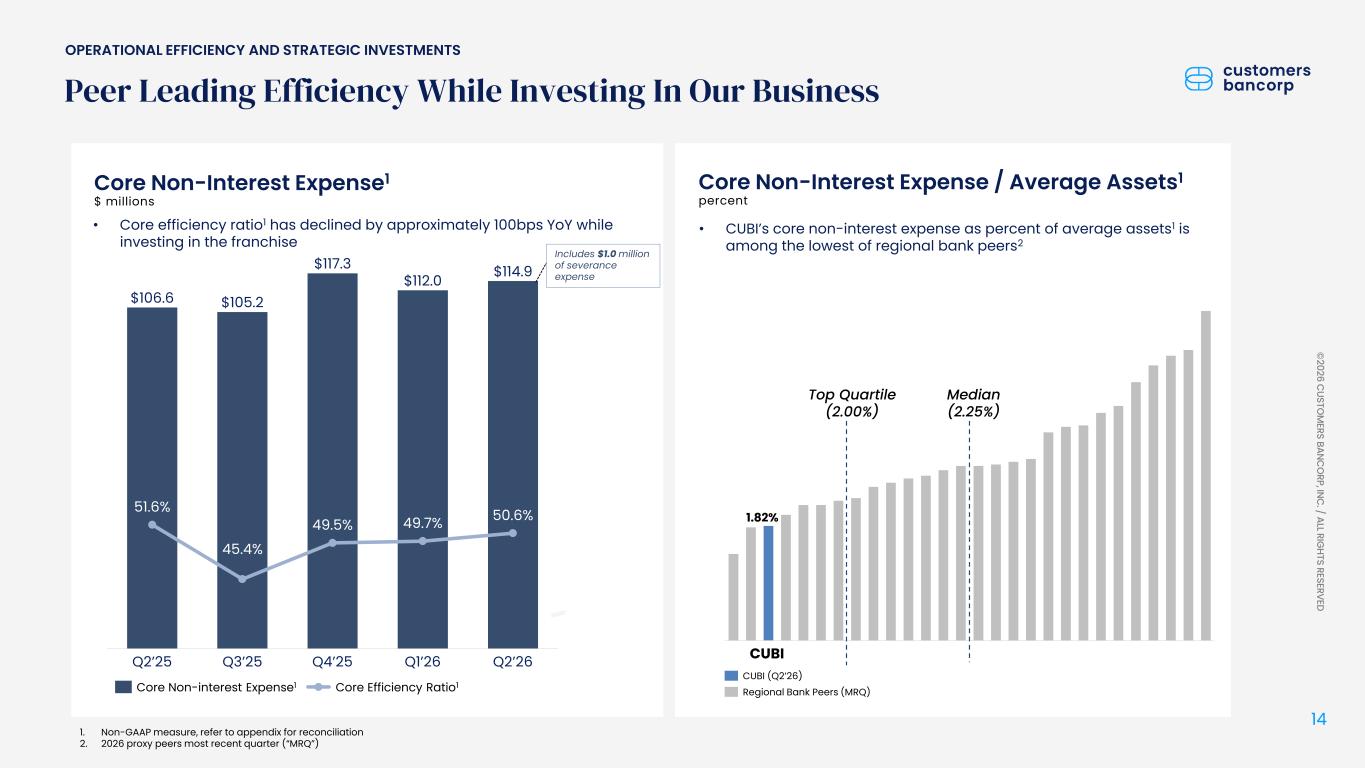
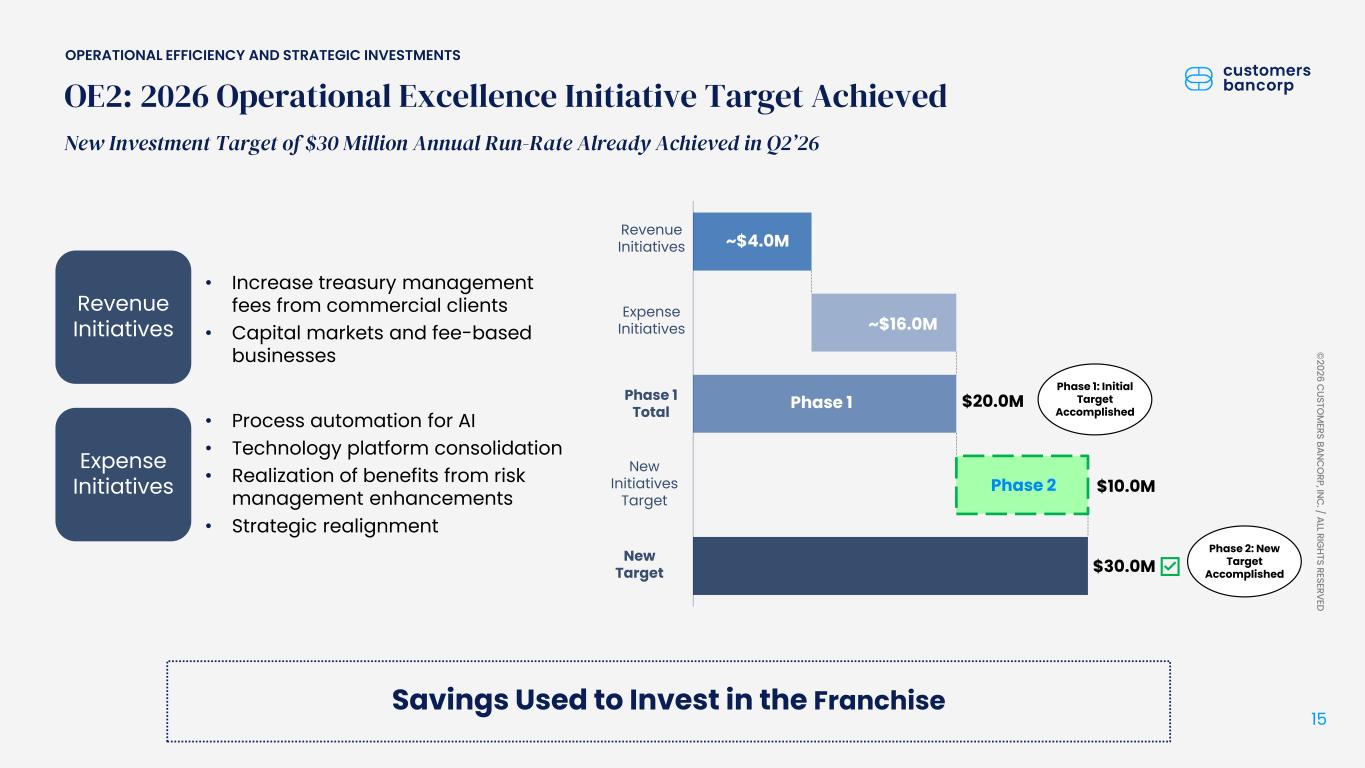
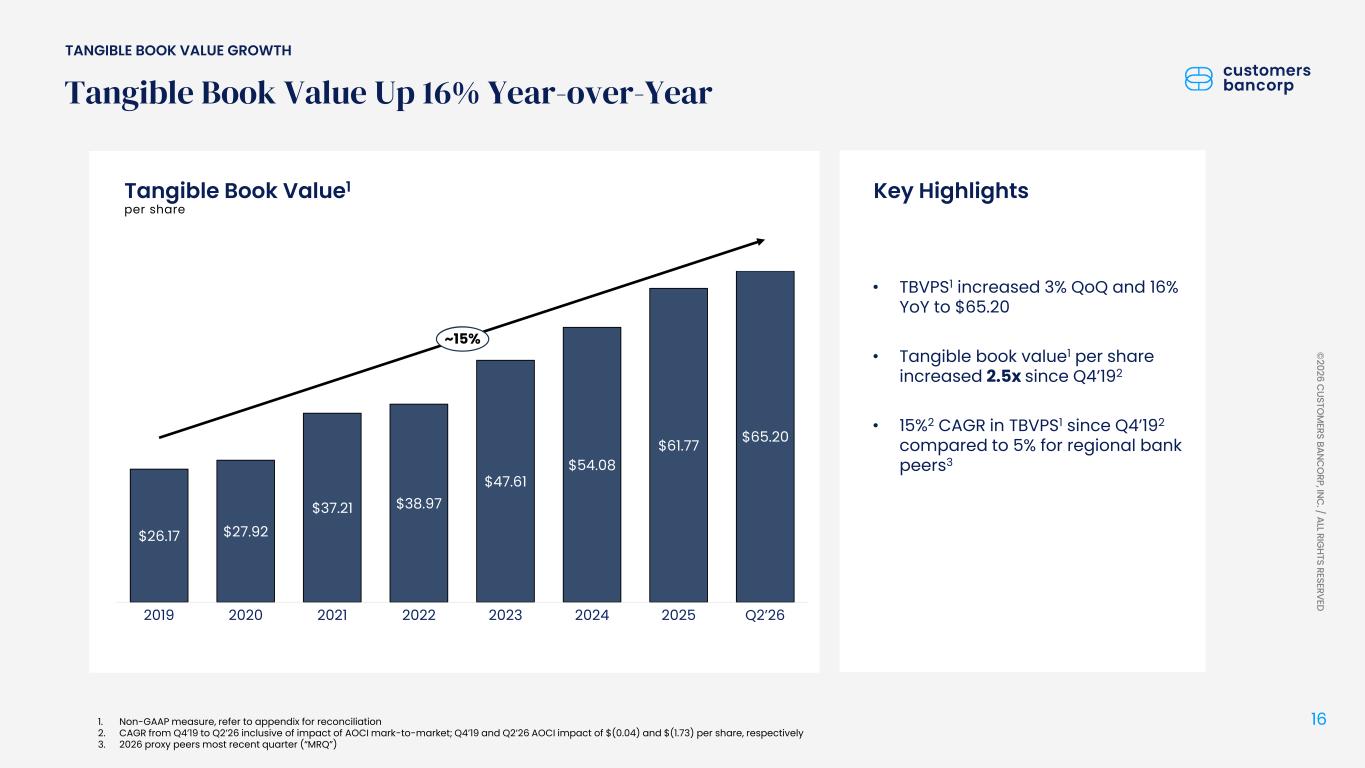
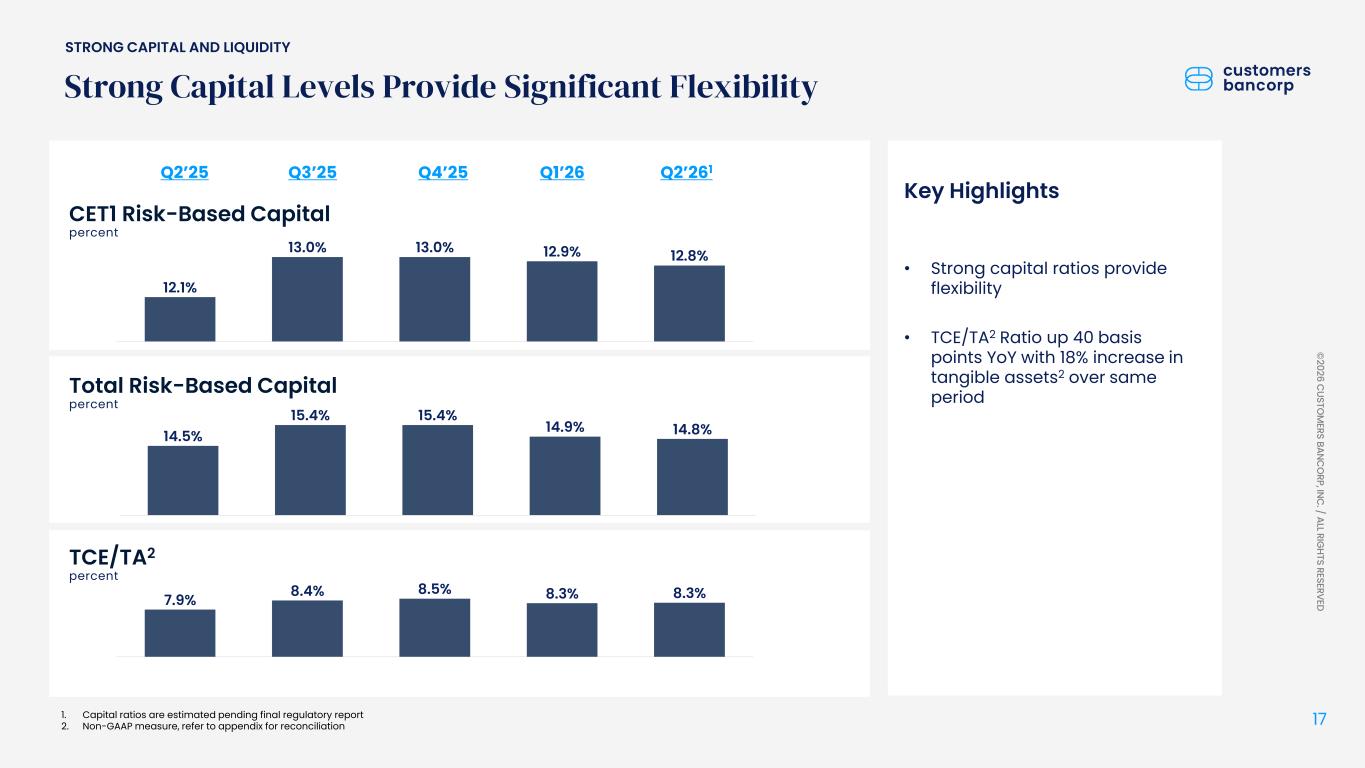
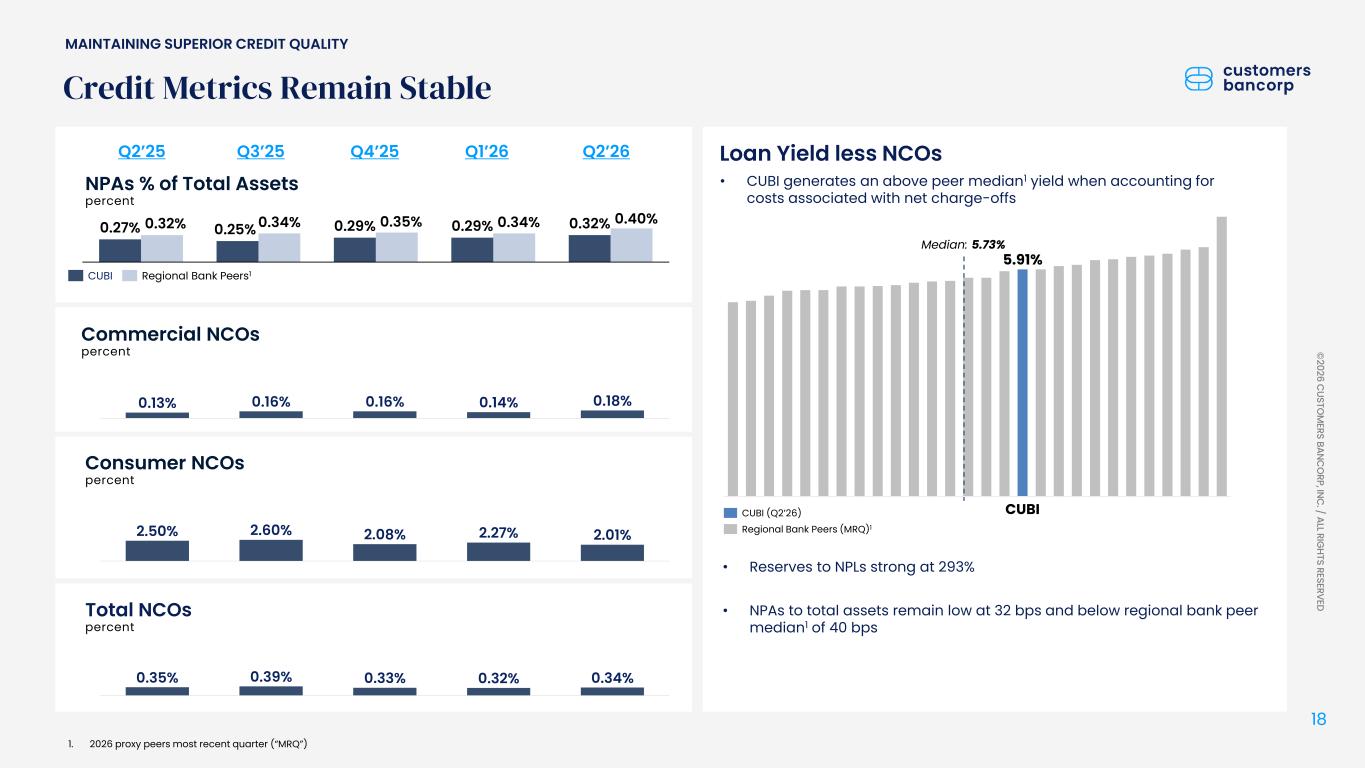
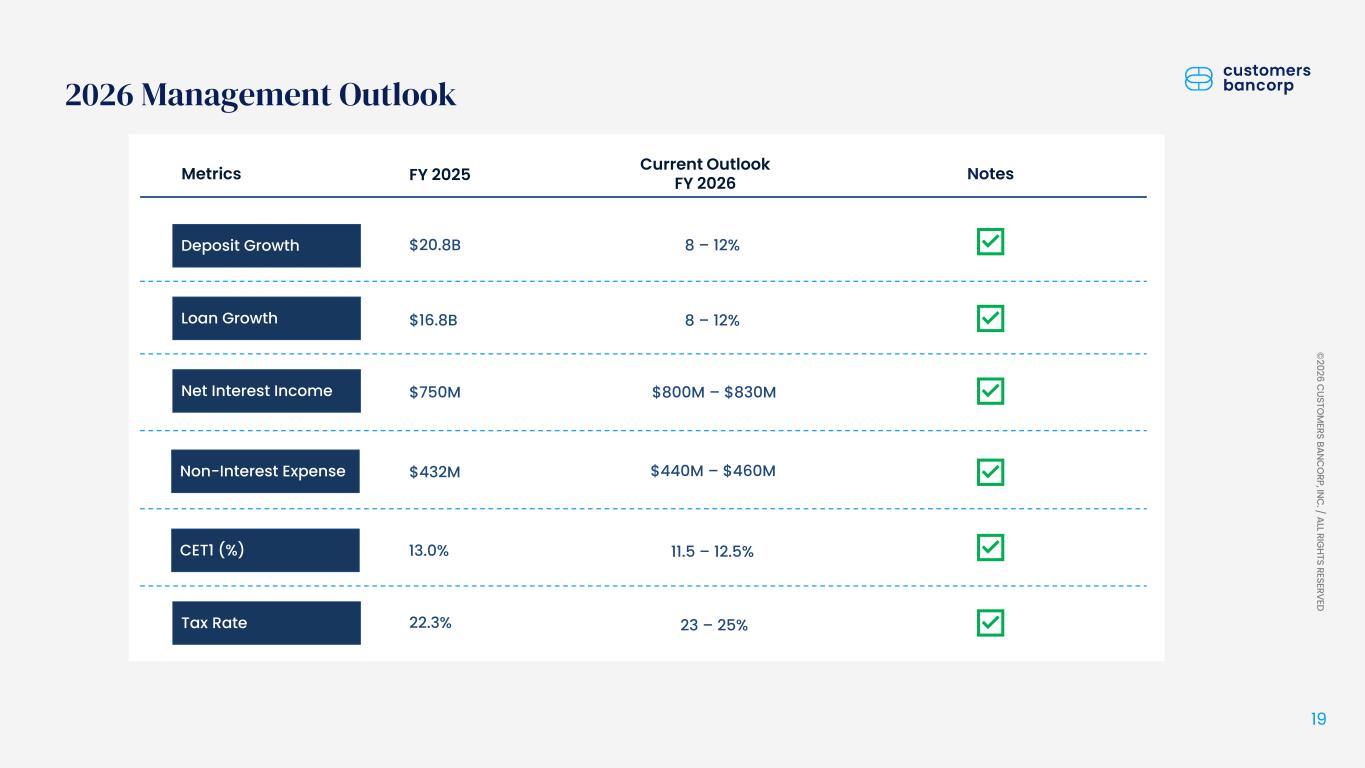
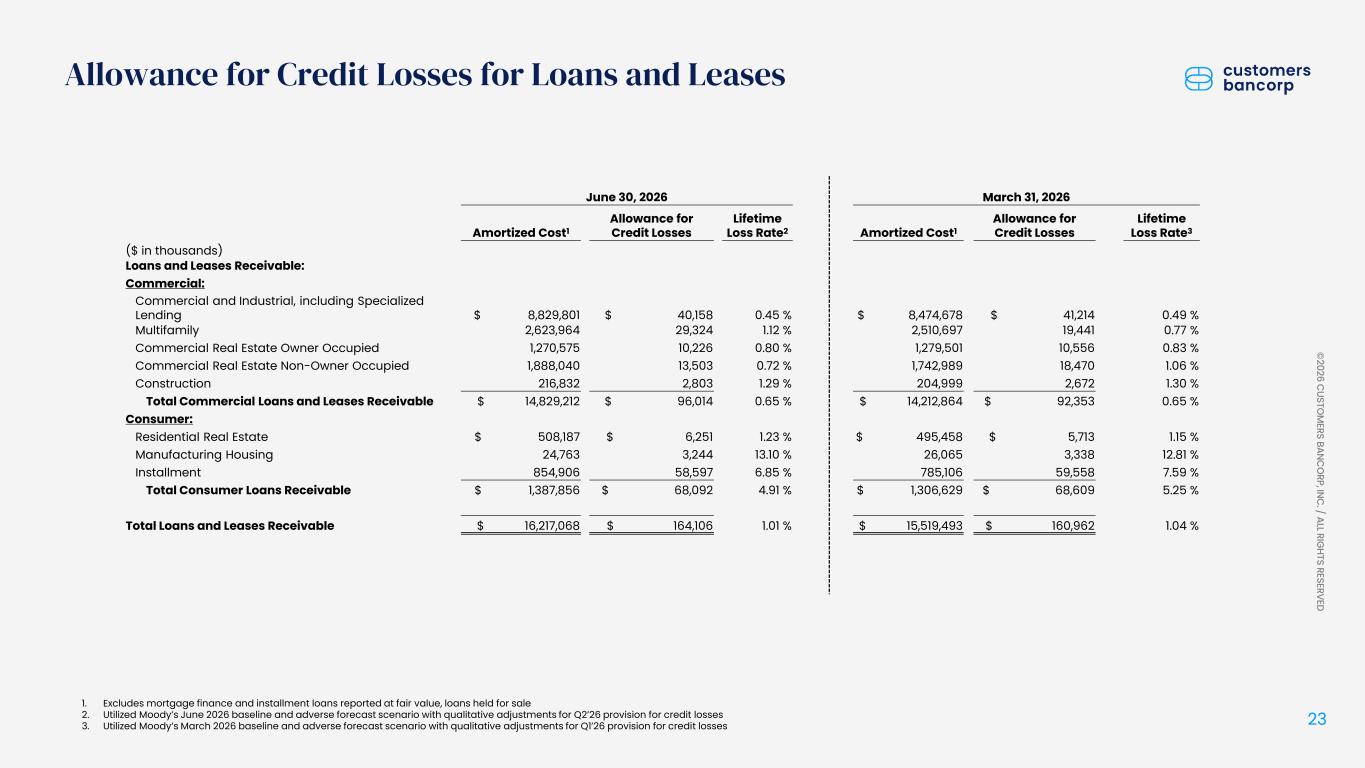
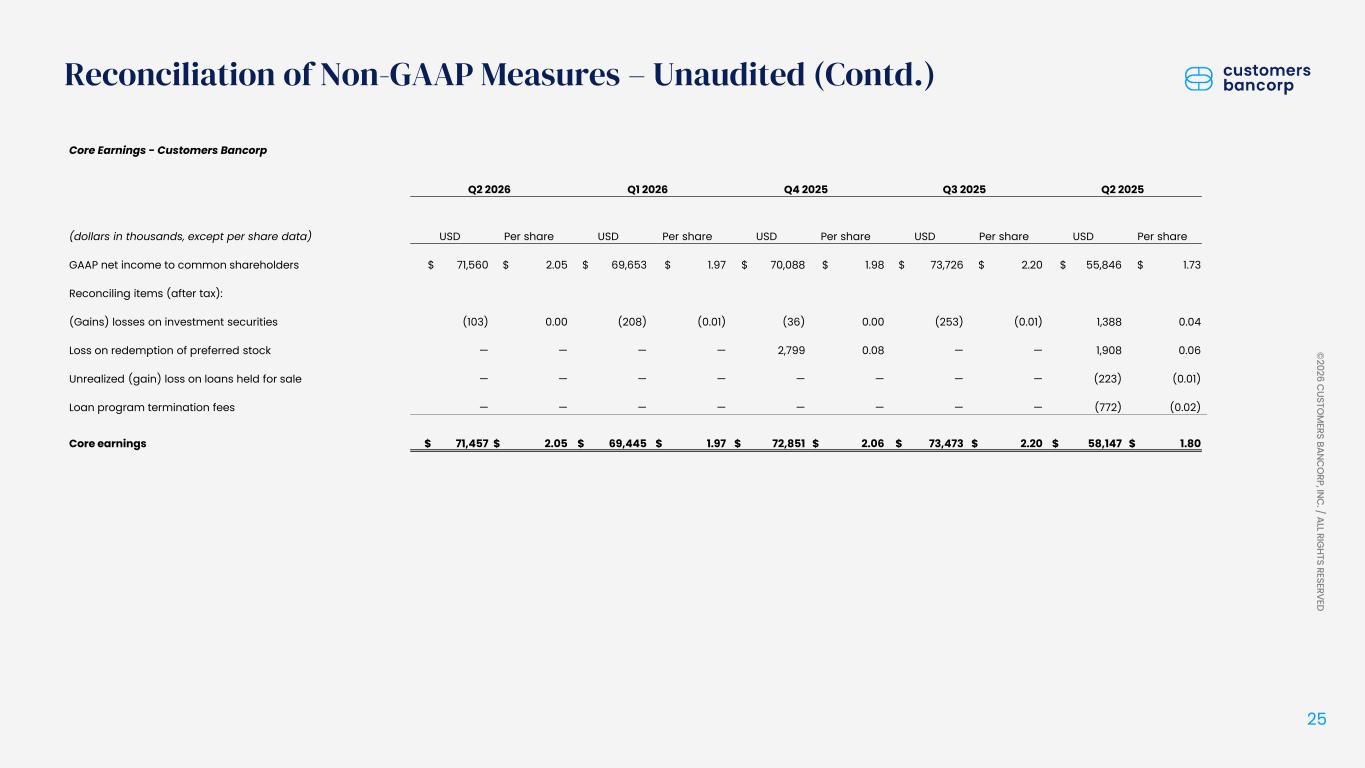
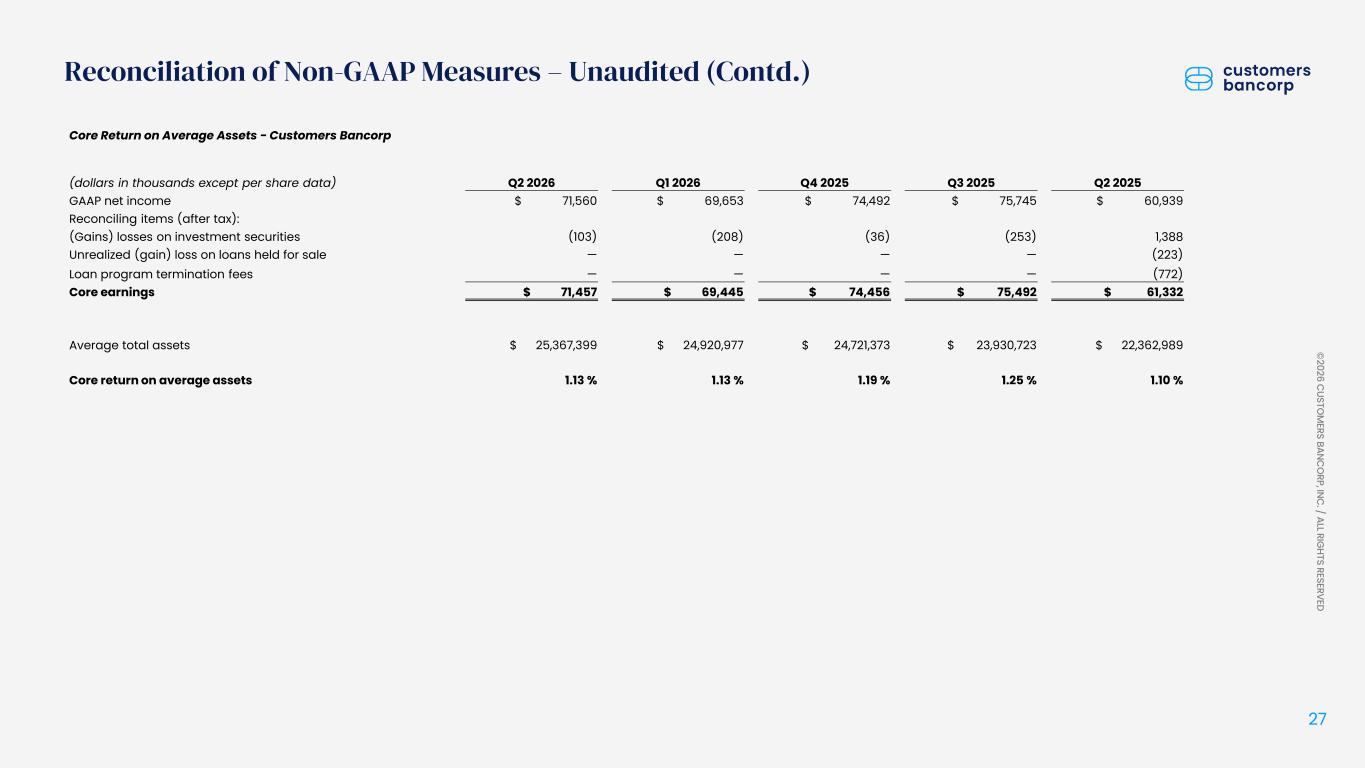
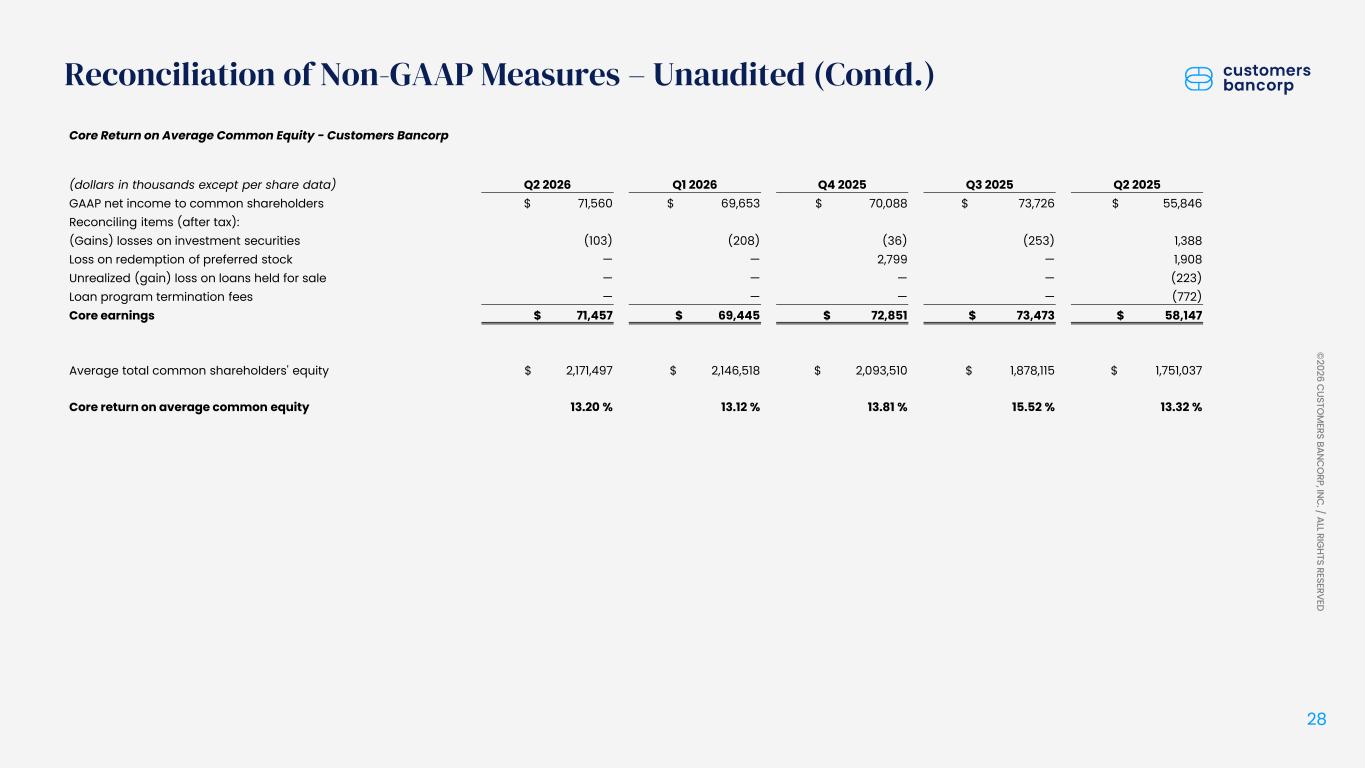
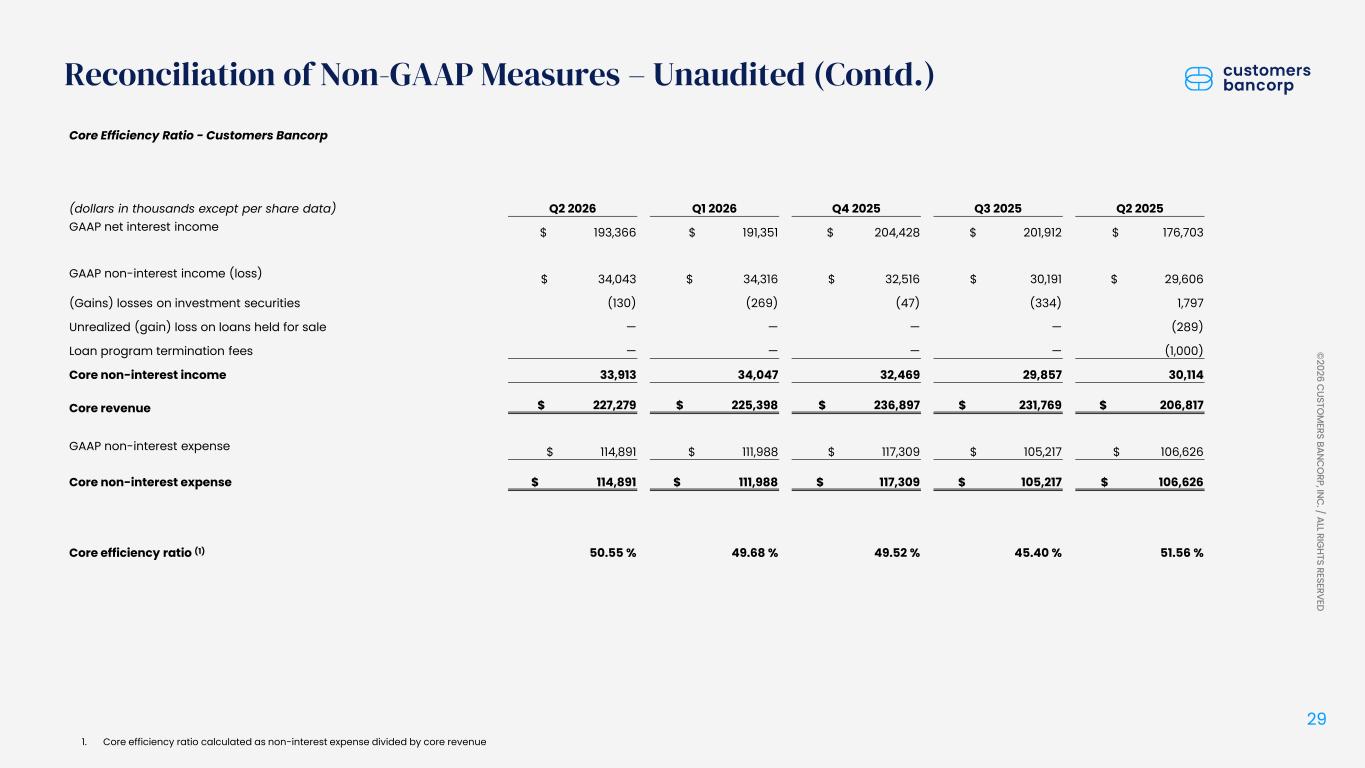
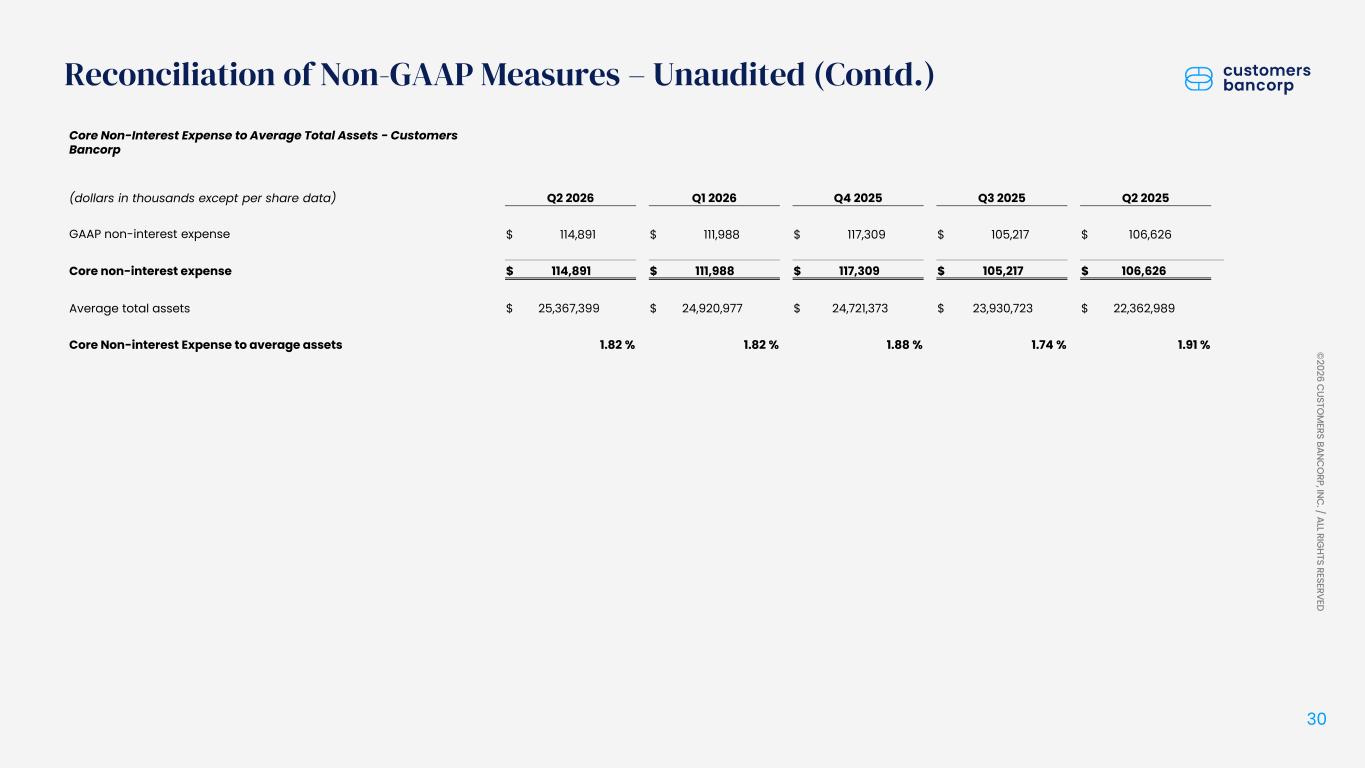
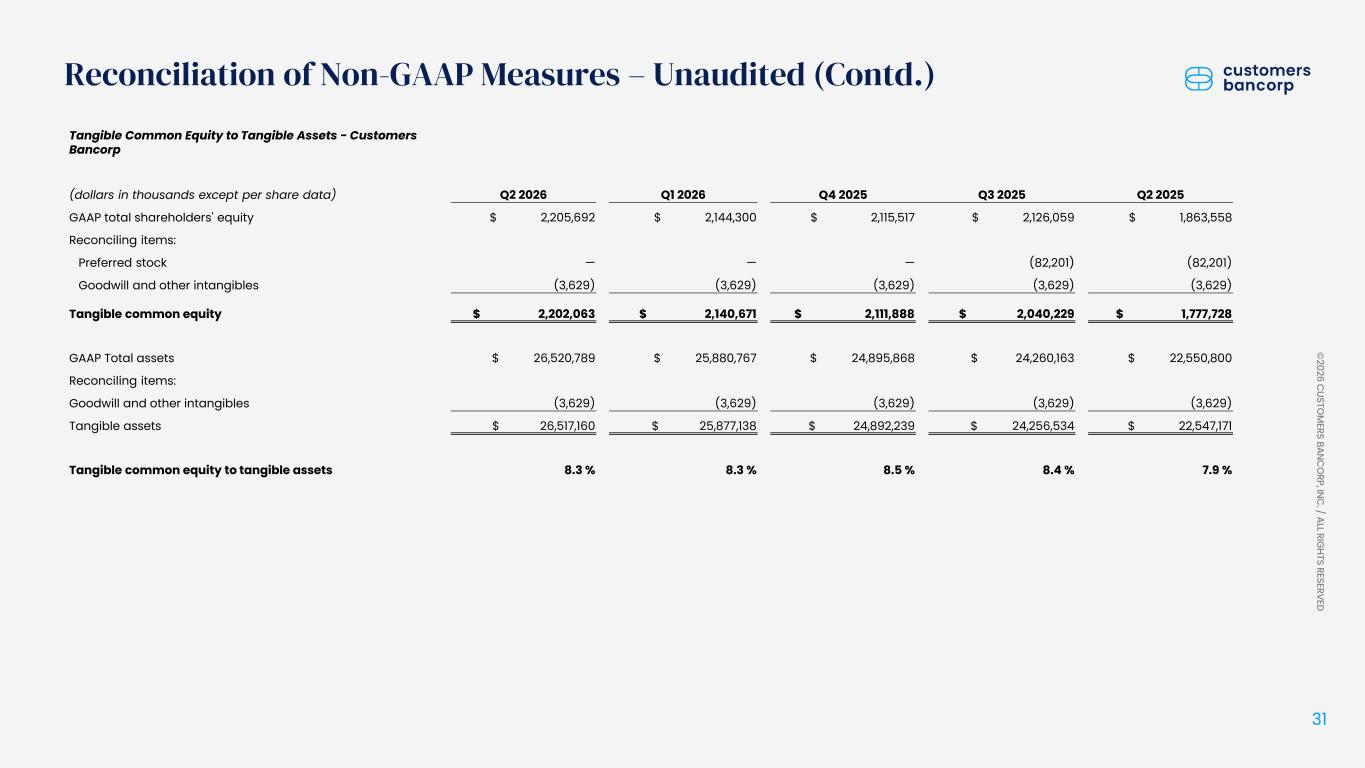
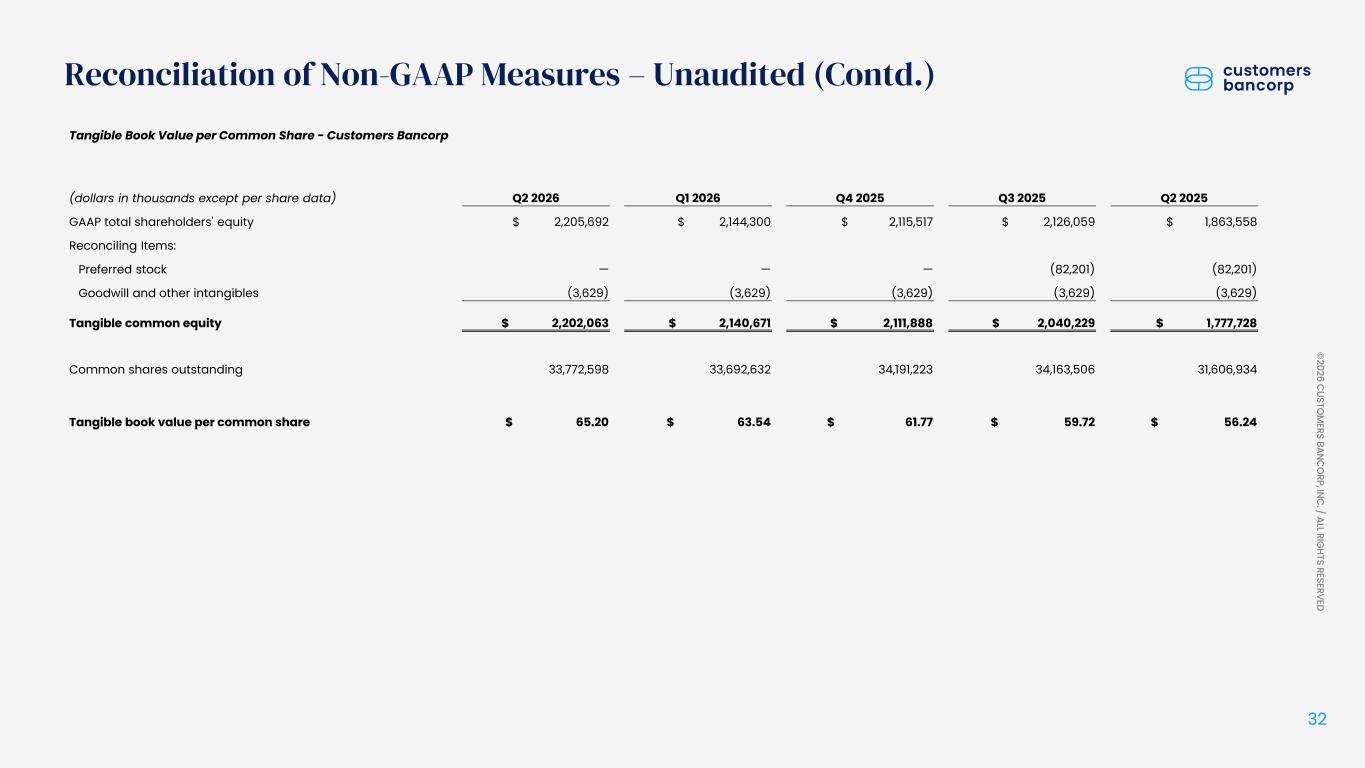
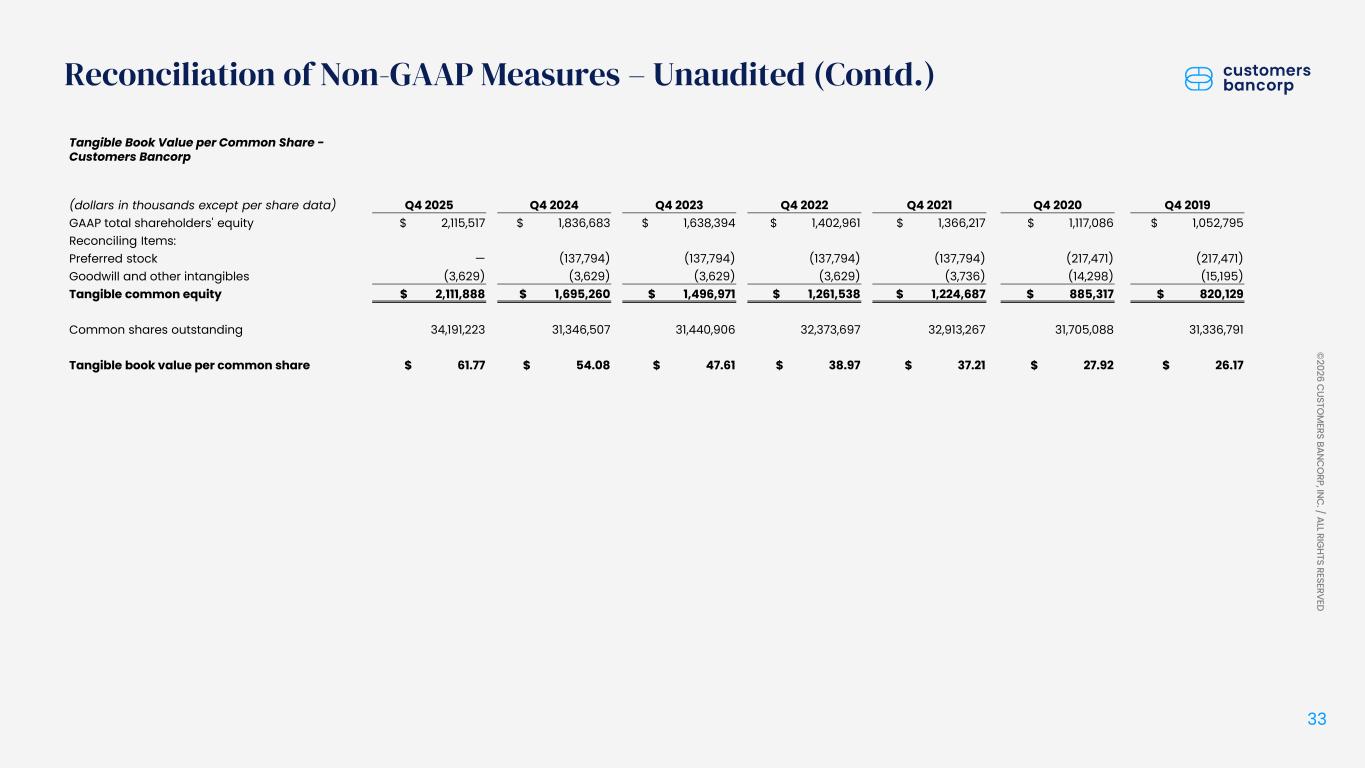
Thanks, Sam, and good morning, everyone. My comments will begin on slide 10. We're only showing you gap earnings this quarter, as we did not have any material adjustments to these gap results. We delivered EPS of $2.05, up roughly 4% from last quarter and 18% year over year, continuing the consistent high quality earnings growth this franchise has delivered. ROE and ROA came in at 13.2% and 1.13% respectively. Turning to slide 11 and the broader deposit franchise. Total deposits ended the quarter at $21.7 billion, an increase of $2.7 billion year over year. While total deposit growth for the quarter was more measured, this masked a lot of activity under the surface. First, we continue to remix less strategic deposits of over $600 million in the quarter, picking up 150 basis points in bucking industry trends. Second, the quality continued to improve, and I'll highlight a few stats. Non-interest-bearing deposits grew by about $175 million in the quarter to a second consecutive period end record of $6.9 billion. As you can see on the top right chart, over the last two years, we've increased our non-interest-bearing deposit percentage from 25% to 29% to 32% of total deposits, top quartile among regional bank peers. Excluding our DA channel, non-interest-bearing balances grew approximately $375 million during the quarter. This is up 14% quarter over quarter and 37% year over year. In the last 12 months, we've added over 840 million of non-interest-bearing deposits outside of the DA channel, a direct result of the commercial team recruitment strategy Sam just walked through. I want to be clear about our ambition here because it helps you understand the potential we see in the franchise. Our goal is to have the highest percentage of non-interest-bearing deposits within our peer group, and we're almost there. Turning to slide 12 and loans. Total loans grew $624 million, or 4% in the quarter, to $18 billion, double the 2% linked quarter growth for the industry. On a year-over-year basis, loans are up 17%. Just as important as the pace of growth is the breadth. Commercial growth was diversified across the franchise, led by verticals like commercial real estate, real estate specialty finance, and community CNI, with smaller contributions from multiple other verticals. As we always say, the mix of top contributors may shift from quarter to quarter, but the diversified nature of our origination platform increases the confidence in our guidance as it lets us grow while remaining disciplined on structure and pricing. slide 13 covers our net interest income and margin we view the second quarter as the inflection point for the year net interest income was over 193 million up 16 million or nine percent year over year driven by higher average loan balances and a lower cost of funds on a link quarter annualized basis net interest income grew about four percent we remain focused on that NII growth which continues to be strong, as I just outlined. As we signaled last quarter, our second quarter net interest margin of 317 is expected to be the low point for 2026. We expect our net interest margin to move back toward first quarter levels in the third quarter and to build from there. We also expect net interest income to be stronger in the back half of the year. This NIM and NII trajectory is grounded in a few factors. Our deposit pipelines are robust and are expected to convert into continued low-cost deposit gathering. We have continued deposit remixing opportunities in the second half of the year. The 2025 teams have hit their stride and are helping to drive that momentum. And a surge in loan growth in the second half of the second quarter creates momentum for the third quarter, as well as a strong pipeline for the third quarter. Despite the headwinds the industry is facing, we continue to have levers on both sides of the balance sheet, and we remain optimistic about strong NII growth and steady margin tailwinds during the second half of 2026. Moving to slide 15 and expenses. Non-interest expense was $114.9 million in the quarter, which included about $1 million of severance. The story here continues to be positive operating leverage. Through the first six months of 2026, our core efficiency ratio improved by approximately 200 basis points and revenue growth outpaced expense growth, generating roughly 430 basis points of positive operating leverage over the same period last year. Our non-interest expense as a percent of average assets was 1.82%, among the lowest of any regional bank peer. I'd underscore that we're delivering this efficiency while investing heavily in people and technology. The ability to grow the franchise and improve efficiency at the same time is supported by our second Operational Excellence Initiative, or OE2, which I'll cover on slide 16. coming into the year oe2 targeted 20 million dollars in annual run rate benefits last quarter we raised that to 30 million by adding 10 million to phase two i'm pleased to report that we have now achieved the full 30 million run rate target roughly 4 million of this comes from revenue initiatives and about 26 million came from expense initiatives Stepping back, that makes two consecutive years of over $30 million in operational excellence accomplishments. These savings are being reinvested directly into the franchise. It's how we've been able to both hire 18 new teams delivering $3.9 billion of deposit growth since 2023, while maintaining a top decile OPEX ratio compared to our peers. This has become a repeatable muscle for us and a key component of sustaining positive operating leverage. On slide 17, tangible book value per share grew to $65.20, up 3% quarter over quarter and 16% year over year. That's approximately two and a half times where we stood at the end of 2019, a CAGR of roughly 15% compared to about a 5% CAGR for regional bank peers over this same period. We view tangible book value compounding as the clearest long-term measure of shareholder value creation. Turning to slide 18, our capital position remains strong and continues to provide meaningful strategic flexibility. Our CET1 ratio was 12.8%, and our TCE to TA ratio grew 40 basis points year over year to 8.3%, even as tangible assets grew 18% over the same period. Strong organic earnings position us to support continued balance sheet growth and, when appropriate, to return capital to our shareholders. On slide 19, credit quality remains stable across the board. Non-performing assets as a percent of total assets remain below the regional bank peer median. Net charge-offs continued to perform well, with commercial charge-offs remaining low at just 18 basis points, and our smaller consumer portfolio performing well. Reserve coverage was solid at 293%. I'll close with our management guidance on slide 20, in which we are reaffirming all key metrics. For loans, as I mentioned earlier, we continue to see good growth opportunities from many different verticals. For deposits, the account and balance momentum from our new teams and real estate payments vertical are looking strong going into the second half of the year. The combination of loan and deposit growth opportunities should result in solid growth in net interest income. On non-interest expense, we're maintaining our target even as we continue to invest significantly in people and technology. And lastly, on capital and taxes, we have no changes to our targets. Taken as a whole, we believe this guidance sets up for a strong second half to 2026.
And with that, I'll pass the call back to Sam for closing remarks before we open up the line for your questions thanks mark to wrap up in the second quarter we delivered strong consistent growth across every major dimension of the franchise ai continues to integrate into the operating fabric of transform our core lending deposit onboarding and payments infrastructure our commercial payments platform surpassed five trillion dollars in cumulative activity and we're continuing to expand into new verticals and use cases deposits grew 15 percent year over year and non-interest bearing deposits hit another record our new teams added about 600 million dollars so far this year and our second wave of 2026 teams should be starting in the third quarter loans grew 17 percent year over year nii increased nine percent year over year and our eps grew 18 year over year and lastly we continue to deliver strong positive operating leverage while investing meaningfully as you heard from mark and people in technology With that, we'll now open up the line for questions.
Operator
We will now begin the question and answer session. Please limit yourself to one question and one follow-up. If you would like to ask a question, please press star 1 to raise your hand, and to withdraw your question, press star 1 again. We ask that you pick up your handset when asking a question for optimum sound quality, and if muted locally, please remember to unmute your device. Please stand by while we compile the Q&A roster. Your first question comes from the line of Steve Moss with Raymond James. Your line is open. Please go ahead.
Good morning. A nice quarter here. Sam, maybe just starting off with your comments here. You mentioned you're looking to get the real estate payments, real estate vertical to be about 20% of payments here. Just kind of curious as to how you're thinking about the timing of that 20% goal.
Hey, Steve. Good morning. I mean, that is a 2027 goal. We sort of forecasted a little bit about, you know, operationally, how we think about sort of units and, you know, payments volume. So we do think that's sort of a medium-term goal. Okay. Got it.
And then just kind of thinking about, you know, you have a lot of drivers here with regard to deposit growth. And, you know, clearly a lot of nitrous bearing added this quarter. just kind of curious, you know, what are the, what's the marginal cost of deposits these days that you're bringing on? It seems like it's probably lower than we were thinking about in the past. And, you know, how much of a cadence maybe could we see in terms of funding cost declines if, you know, the short of, if the Fed holds break steady at current levels?
Yep. So I'm happy to take that, Steve. So really, I think you hit the nail on the head. You know, we are basically, I think, seeing a convergence of two of our top priorities. One is organic loaner deposit growth. So the teams that we're recruiting are bringing in 25 to 30, as high as sometimes 35% non-interest-sparing deposits in operating accounts. And then our payments-related commercial teams are bringing in almost exclusively non-interest-sparing deposits, and hence you're getting that over 50%. And that's really what's driving this. And so we do continue to see this level of very high index non-interest-sparing deposit growth coming from our commercial teams, which I think is a testament to our heads-down focus and dedication to our priorities. You know, as you think about that, what does that mean? Let's say the marginal cost of deposits, just for ease of simplicity, is at Fed funds, and you're bringing in 60% at non-interest bearing. Majority of our loan growth is coming in at about a 6% NIM. So we'll see, you know, our interest bearing cost of deposits did go down this quarter. We remixed, you know, about $600 million or so of higher cost funding, you know, which is happening on the level of the deposits. and we'll continue to hopefully see tailwinds, you know, in our margin, in addition to NII growth, which we've always sort of said is paramount for us.
Okay. Great. Appreciate that. And I'll just sneak one last one in, you know, on the loan pipeline, good to see, you know, another quarter of loan growth. Just curious, like, I mean, obviously Sierra's strongest quarter. How is that loan pipeline these days? And, you know, I know it bounces from quarter to quarter, but But any call if you give in terms of strength of verticals here?
Yeah, Steve, good morning. This is Mark. Yeah, as you know, we always say the quarter to quarter, you know, different verticals are going to step to the forefront, you know, and be the leader in that loan growth. You know, our loan pipelines feel good. You know, we have not, you know, changed our guidance here mid-year, you know, but we feel very optimistic about continuing strong loan growth in the back half of the year.
Okay, great. I'll step back up to you here. Thank you very much, guys.
Operator
Your next question comes from Kelly Mata with KBW. Your line is open. Please go ahead.
Good morning. Thanks for the question. I guess kicking it off on the balance sheet, it looks like the average cash balances were down a bit, which weighed on your NII. Can you provide color? Or was that related, as much as it was related to declines in average QBICs? I apologize. I didn't see that in the deck.
Good morning, Kelly. You were coming in and out a little bit, and I think I heard the full question. Let me know if I missed anything. I think that, you know, what I would sort of say as it relates to your question about non-interest-bearing deposits and linking it back to QBICs, you know, as you are aware and maybe sort of also reference in some of your notes you know da trading was down in the second quarter uh especially in may and june and so low lower trading activity leads to lower payments float um in the presentation we did we did reference the da balances were 3.8 billion but total cubics balances were roughly flat in the quarter and that's really a testament to sort of the growth and in the in the real estate payments vertical um so and you know i think i'd also just highlight that what's interesting about about cubics is you know steve touched on in a little bit of percent of units as we look out in the next sort of 12 to 18 months, but also just on our existing platform, the number of transactions actually doubled, you know, year over year. So we continue to deepen and integrate, you know, with our customer base, you know, today.
Okay. And I see those spot balances in the deck for the footnote were about $3.8 billion, which didn't fall as much as I had expected. Do you have what happened with the average balances there?
Yes. On a spot basis, it was about $200 million. I don't know the exact average. I think it's about $300 million on specific to that DA, but we made that up in granular real estate cubics deposits by June 30th.
Got it. That's helpful. And then with the NAI guide reiterated it implies a ramp in um the second half of the year um you know given given kind of this i think q2 is what you've described as the low point kind of jumping off um what gives you confidence in being able to really ramp that nii to get into that that range um thank you yeah and that's right kelly hey good morning it's mark um yeah that's exactly right it's really the the exit point, you know, at June 30, you know, both in the pipelines on the deposit side, plus actual loan balances, you know, that we saw much of our loan growth in the second quarter came in
the month of June, you know, so the exit points of both loans and deposits, you know, plus just the momentum from our different verticals give us confidence for the back half of the year, both on a NII basis and on a margin basis.
Got it. I'll step back. Thank you so much.
Operator
Your next question comes from the line of Anthony Elian with JP Morgan. Your line is open. Please go ahead.
Mike
Analyst — JP Morgan (on for Anthony Elian)
Morning, guys. This is Mike on for Tony. On Cubix, you saw some good traction with the real estate vertical this quarter, added about $300 million. I know you mentioned reaching the 20% goal is sort of a 2027 event, but you guys also mentioned that that vertical has a nine-figure pipeline per quarter through year-end. So I guess how much of that pipeline do you sort of expect to convert in 2026, more specifically, into actual deposit growth?
Hey, good morning, Mike. Specifically, you know, as we talked about earlier in the year, we'd sort of migrated some of our mortgage finance customers onto Cubix who are looking for sort of that operational, you know, payments lift. Then we added new to the bank, you know, real estate customers. Those two in aggregate are about a billion dollars, you know, today. and we expect that we are hopeful our internal target is getting that to about a billion and a half by the end of the year.
Mike
Analyst — JP Morgan (on for Anthony Elian)
Okay, great. And then on slide six, there's a lot of great metrics here on the AI efforts. On an expense basis, you guys already gave some good context on how it's benefiting the company today, but are you able to quantify at all how much an expense savings you've sort of recognized already from these AI efforts?
So, you know, I think that, you know, we're really, these aren't software plugins or we're, you know, we're actually building proprietary software and some of the larger lifts actually take quarters, not, you know, weeks. The tech that we're sort of dealing with that has really helped us work on transformational workflow automation is really only about six months old or so. So we're seeing productivity lifts today. that'll help us sort of think about, you know, reducing expense investment in the future. But really our focus is decoupling our expense base from our revenue growth as we get into 2027. So I think we've put a very ambitious 27, you know, run rate goal out there and that kind of combines the two of those together. Thank you.
Operator
Your next question comes from the line of Tyler Cacciatore with Stevens. Your line is open. Please go ahead.
Hey, good morning. I guess just headed back to digital assets, I just wanted to clarify, that $3.8 billion, that's exclusive of the mortgage finance and real estate balances, right?
And then those are all not interest-bearing?
Great. Thank you. And then just moving to broker deposits, if you could update us on the balances at quarter end. Just looking at the call report last quarter, there seemed to be a large decline and was just wondering if there was a makeshift or reclassification of some items there?
Yeah, that's correct. Hi, this is Mark. Yeah, our balances for the end of the second quarter track pretty closely to where we ended the first quarter.
Helpful. And then just one more quick one for me. I was wondering if you had the spot total cost of deposits at quarter end. Thank you for taking my questions.
Yeah, this is Mark again. And the spot cost would be pretty close to where we ended the quarter on an average balance basis as well, within a couple of basis points.
Operator
Your next question comes from the line of Brian Wilczynski with Morgan Stanley. Your line is open. Please go ahead.
Hi, good morning. Thanks for taking my questions. Maybe just going back to the loan growth guidance for the year, you mentioned that you're reiterating the guidance range. If we look on a year-to-date basis, loans are already up about 7% versus the fourth quarter of 2025. I was wondering, when you think about the outlook for the full year, does it seem like the higher end of the loan growth guidance is becoming more likely? Is there anything that you're seeing that could indicate a slowdown, or does it feel like things are skewed towards the higher end of the range? that is correct it does seem at this point that the higher end of the range would be more likely okay and then maybe just on loan pricing can you get give any color on what new loans are coming onto the balance sheet at today and how we should think about the trajectory of loan yields in the second half of the year yeah i would i would say it's been consistent with what we've uh saw in the last quarter where depending on the vertical you could be anywhere from you know 200 225 over SOFR to 300 over SOFR depending on the vertical. Okay, great. I appreciate the detail and thank you for taking my questions.
Operator
You bet. Your next question comes from the line of Janet Lee with TD Securities. Your line is open. Please go ahead.
Good morning. Just following up on the loan yield question earlier. So, the second quarter seems to have been impacted by, I guess the new loan yields, new commercial loan yields coming on at a little lower yields versus what was on the book. So should we assume that loan yields are starting off better than 625 that was reported in the second quarter for the third quarter?
Yeah, that's right. I think when you look at now being down at 625 for the total loan book in the second quarter, going into the third quarter than, then you only need SOFR plus, you know, 250, 260 to kind of equal that, you know, or, and then to go up from there.
Okay. Got it. Maybe, could you talk about what your view is on the Clarity Act and how that could impact customers, Bancorp, either on Cubic's side or just any side of your bank, whether are you going to be a beneficiary of it or what's the prospect around the Clarity Act? for you.
Hey, Janet, good morning. You know, I think that I've said this, you know, publicly a number of times, I think we're very, very supportive of market structure and clarity from a regulation, pun intended, you know, perspective. You know, while the Clarity Act, you know, sort of would require legislative approval in Washington, D.C., I think the signaling that you've heard from other agencies, including the SEC and the CFTC, is that independent of, you know, whether the Clarity Act, you know, passes through Congress, that those agencies would be ready with proposed rulemaking and guidance that should hopefully provide structure. So I think that either of those paths would be a net benefit to customers bank existing customer base, but also open up new channels of potential, you know, verticals that are adjacent to our core DA 24-7 trading.
Got it. Do you appreciate you reiterated all the guidance across different line items, including NII. Do you have any sense around whether it's coming in at, do you have any bias around like lower end, higher end, based on the trajectory so far in the first half of the year?
Yeah, I think, you know, there's obviously still a lot of a lot of levers on both sides of the balance sheet that can impact that i would say right now where the street is at um you know feels like a good place to start okay thank you your next question comes from the line of manuel navas with piper sandler your line is open please go ahead good morning uh just to find fine tune uh the minimum expectation do you have a June NIM or like end of period NIM to kind of get a sense for the jumping off point for the back half of the year rebound?
Well, yeah, I mean, just, I mean, we don't usually talk about monthly results, but even with that, because a lot of the growth and the pipeline that we saw really came in the second half of the month, you know, even if we would quote those kinds of numbers, I think that's not really indicative of the optimism we see for the third quarter. You know, again, we just feel, you know, and I'll reiterate that we feel confident in saying that our third quarter NIM is going to be closer to our first quarter net interest margin and in the pipelines that we see plus the actual loan growth that we put on in the month of June gives us confidence for the commensurate NII growth as well.
I appreciate that. Remind me how you continue to handle CUBICS funds. When do you become more comfortable with DA assets being deployable beyond cash? Are the CRE funds, real estate funds, deployable from day one? Just kind of your thoughts on how you, to this point, have been very conservative with your handling of those funds, how that moves and develops going forward.
Yeah, sure, Manuel. Thanks for the question. I think that, you know, continue have continued to be you know conservative there and have said that we'll you know evaluate over time how we think about a conservative approach on um you know some maybe even minority deployment of cash um you know on and also uh rightfully so on the real estate side um you know we uh those are incredibly granular i think there are just a couple hundred thousand you know dollars per account today um and uh and traditional business lines that that many uh commercial banks uh you know have uh with the extra sort of payments edge that we have so we uh we you know we will plan to be deploying those that sort of gets back to the the you know six percent nim on those deposits that i sort of mentioned um you know as we continue to grow and i think what's interesting is is we're taking a portion of while we saw a little bit of um of quarter uh decline on one side of that business the other side of the business saw an incredibly granular um you know quarter over quarter increase i appreciate that color i mean the the balances and even in the da da side have kind of held in maybe better than folks have expected and maybe at some point that could become uh your conservatism could shift how much closer are we to having that shift yep so i think that uh we're basically been flattish you know on the overall balances uh you know including uh the new verticals um and i think that uh you know the next quarter or two i'll be able to sort of give some some you know some more confidence i think what you're saying what you're hearing from us right now is we feel very confident that by the end of the year and the turn uh you know we should be able to get there maybe we get there a little bit sooner but 2027 should be a growth year for cubics uh you know related deposits i appreciate the call.
Operator
We have reached the end of the Q&A session. I will now turn the call back to Sam Sudu, CEO, for closing remarks.
Well, thank you, everyone, for your continued investment and support of Customers Bancorp. Have a great day and a great weekend.
Operator
This concludes today's call. Thank you for attending. You may now disconnect.