Operator
Hello, and welcome to Columbia Banking System's second quarter 2026 Earnings Conference Call. At this time, all participants are in a listen-only mode. After the speaker's presentation, there will be a question and answer session. To ask a question during the session, you will need to press star 11 on your telephone. You will then hear an automated message advising your hand is raised. To withdraw your question, please press star 11 again. Please be advised that today's conference is being recorded. I would now like to turn the conference over to Jackie Bolin, Investor Relations Director, to begin the call. You may begin.
Thank you. Good afternoon, everyone. Thank you for joining us as we review our second quarter results. The earnings release and corresponding presentation are available on our website at columbiabankingsystem.com. During today's call, we will make forward-looking statements, which are subject to risks and uncertainties and are intended to be covered by the safe harbor provisions of federal securities law. For a list of factors that may cause actual results to differ materially from expectations, please refer to the disclosures contained within our SEC filings. We will also reference non-GAAP financial measures, and I encourage you to review the non-GAAP reconciliations provided in our earnings materials. I will now hand the call over to Columbia's Chairman, Chief Executive Officer, and President Clint Stein.
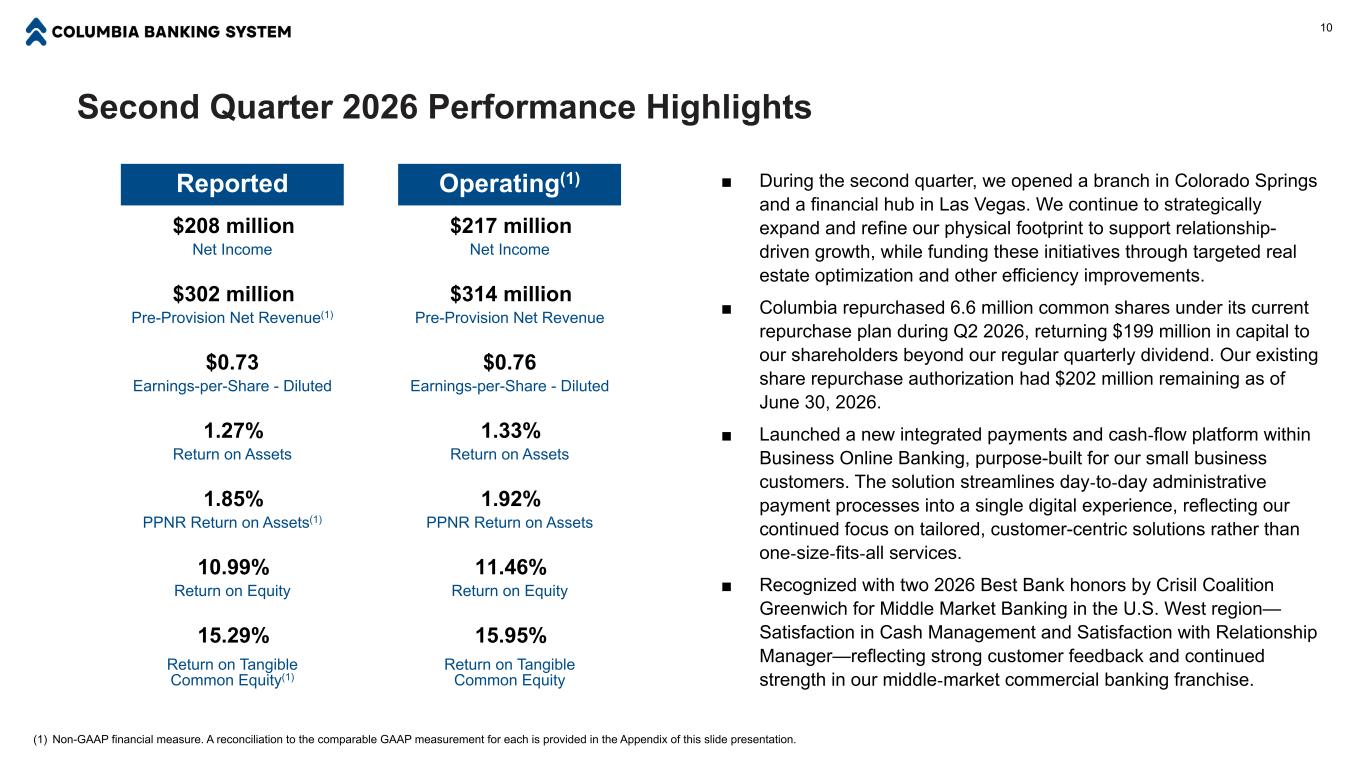
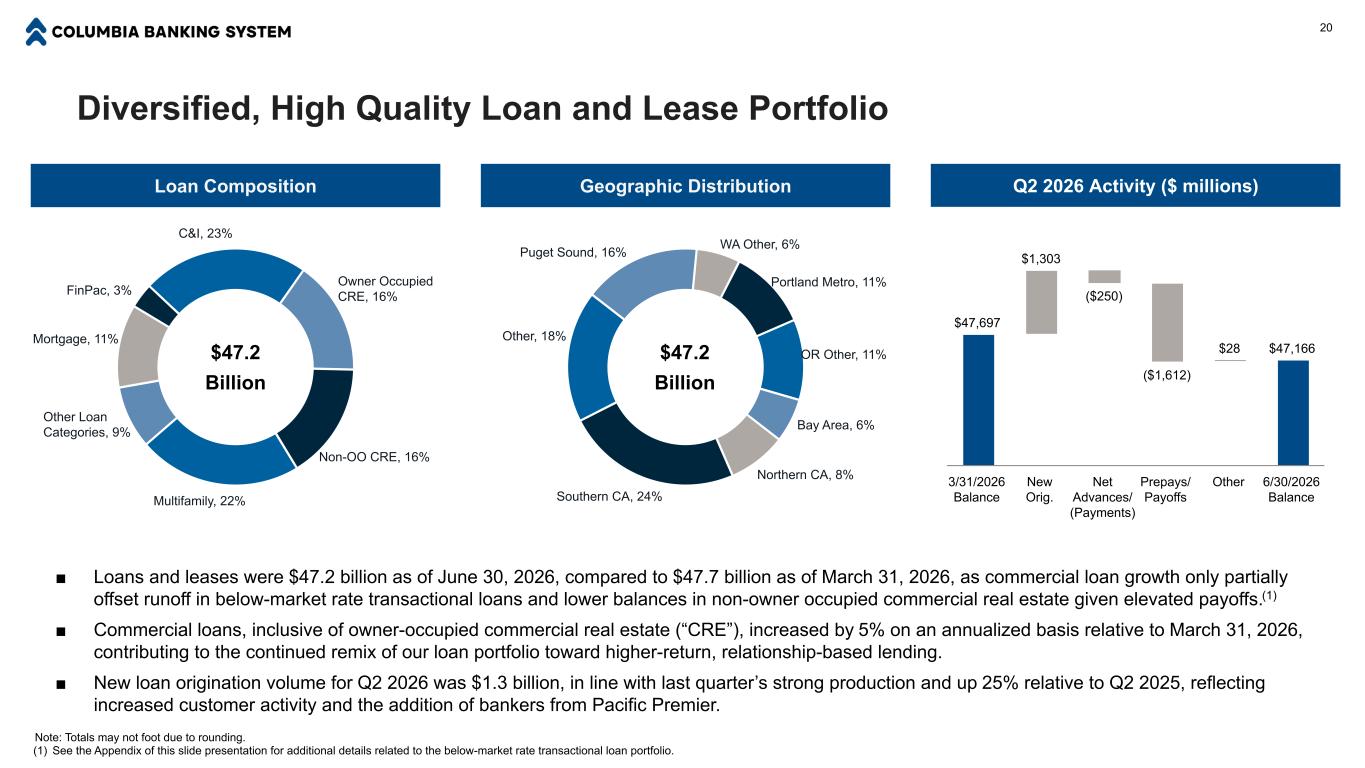
Thank you, Jackie. Good afternoon, everyone. Our second quarter results once again underscore the same core priorities we have previously outlined, delivering consistent, repeatable results, reshaping the balance sheet to improve long-term profitability, and returning excess capital to shareholders. Quarter reflect disciplined execution across the company despite a dynamic operating environment. Our bankers generated solid commercial loan production and net growth supported by healthy business activity and the continued addition of experienced talent. While commercial loan growth offset intentional runoff in the transactional book, total loans declined during the second quarter due to elevated CRE payoff activity, driven in part by competitive pricing pressure. I've stated many times that Columbia does not chase growth for the sake of growth. We are seeing pricing and structures in the market that we believe are irrational and we will not meet them. We will compete aggressively for high-quality relationships that meet our return objectives, but we will not destroy shareholder value by sacrificing long-term returns to simply add loan tolls. The same discipline applies to deposits. Our team continues to protect the quality of our industry-leading core deposit franchise by demonstrating the value Columbia brings to customer relationships beyond price. Our deposit campaign, which Chris we'll review in greater detail, helped offset seasonal outflows in April related to tax payments. Importantly, across the organization, we maintained our pricing discipline in an increasingly competitive environment, resulting in a decline in deposit costs from the prior quarter. Our discipline also extends to expense management. I'm pleased to report that we exceeded the cost-saving target we laid out last year when we announced the PAC Premier acquisition. In addition, we were materially under the merger-related deal cost estimate we disclosed at announcement of the transaction. I want to thank our integration team one last time for their flawless execution on this acquisition. With the PAC Premier integration now complete, we are continuing to identify targeted efficiency opportunities across the company. These small adjustments help fund continued franchise investment, including the addition of new locations and talent the operating environment is not without its challenges though but i'm as optimistic as ever for our future we operate with a fortress balance sheet today it takes a discipline but we believe the repositioning actions we are taking will continue to make our balance sheet structurally stronger and improve the quality and consistency of our earnings profile over time this long-term improvement is enhanced by our growing stream of quality fee income. Our balance sheet optimization work also contributes to our capital return objectives. Given our current capital position and bullish forward outlook, we returned over $300 million to shareholders during the quarter through our regular dividend and repurchase of our outstanding common shares. We continue to believe the best investment we can make at this time is in the stock of our own company. I'll now turn the call over to Ivan.
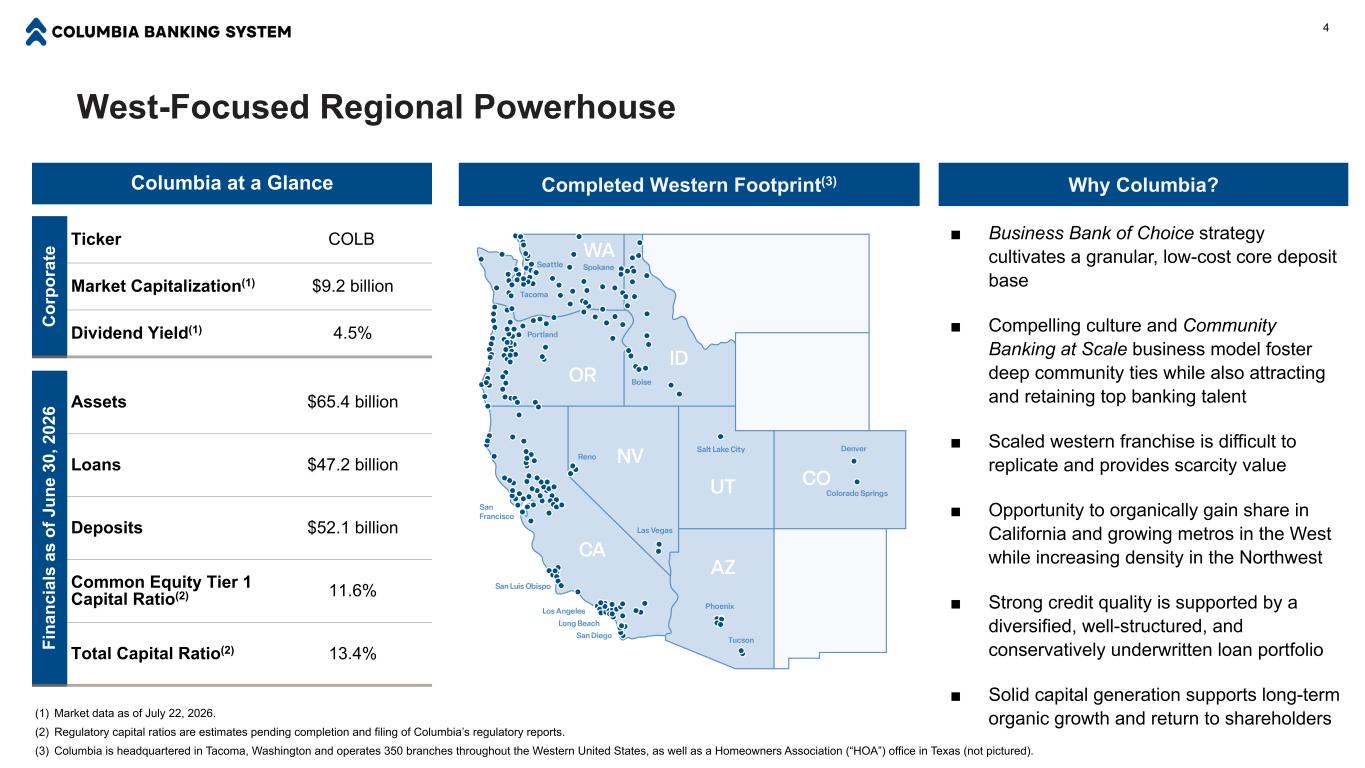
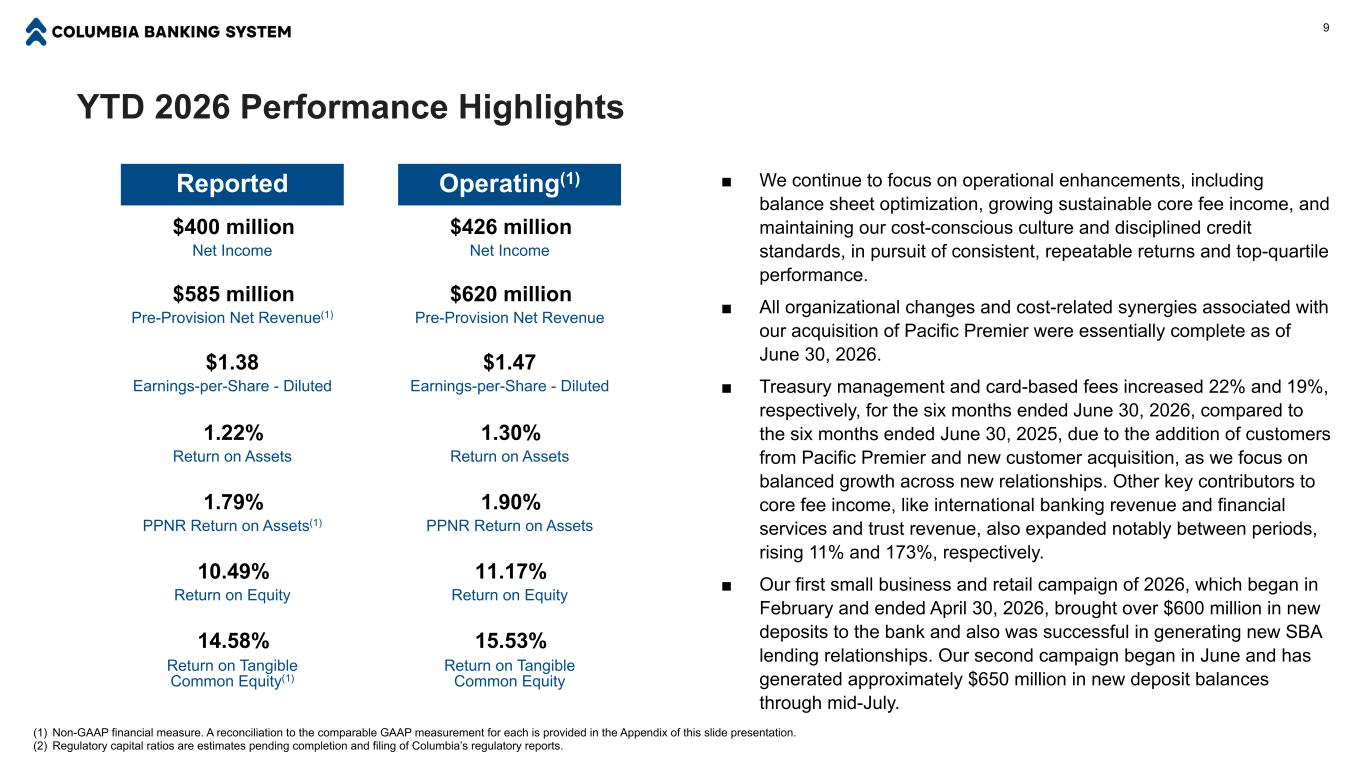
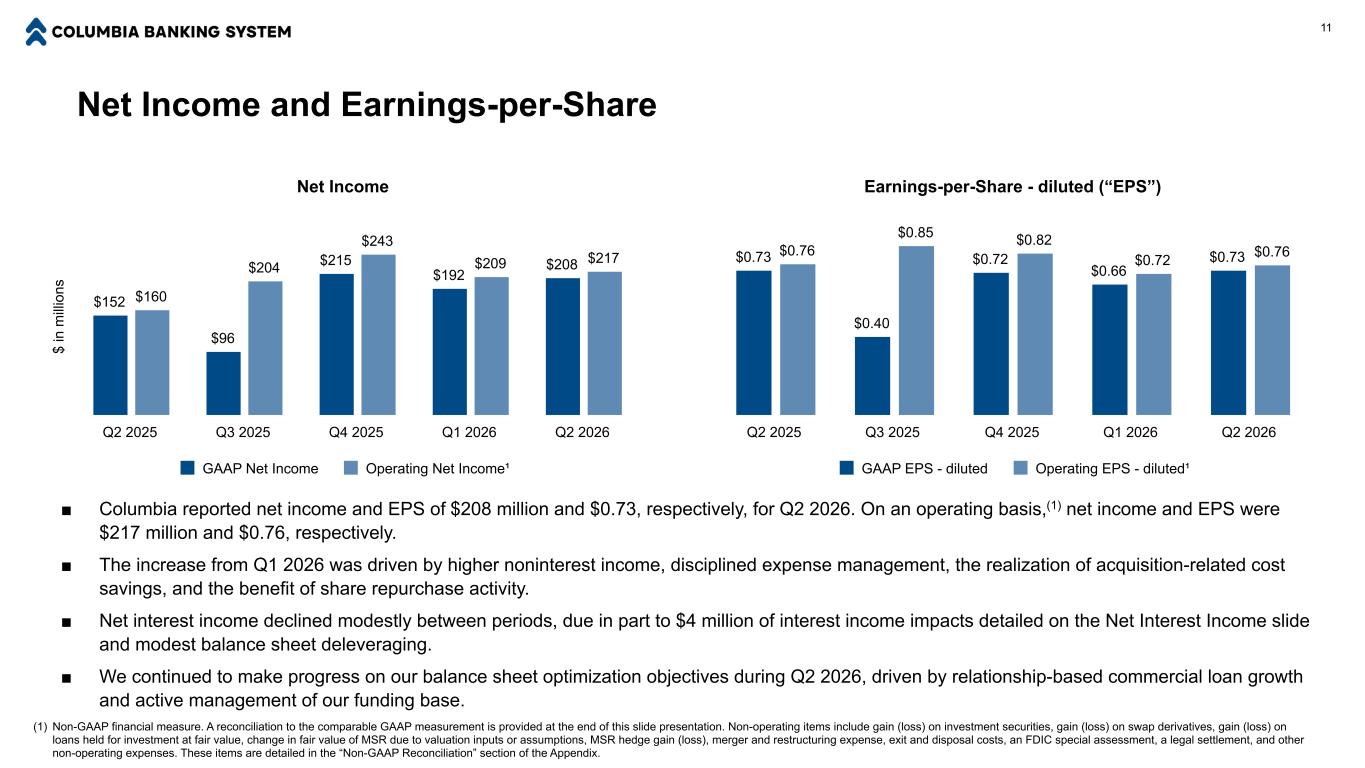
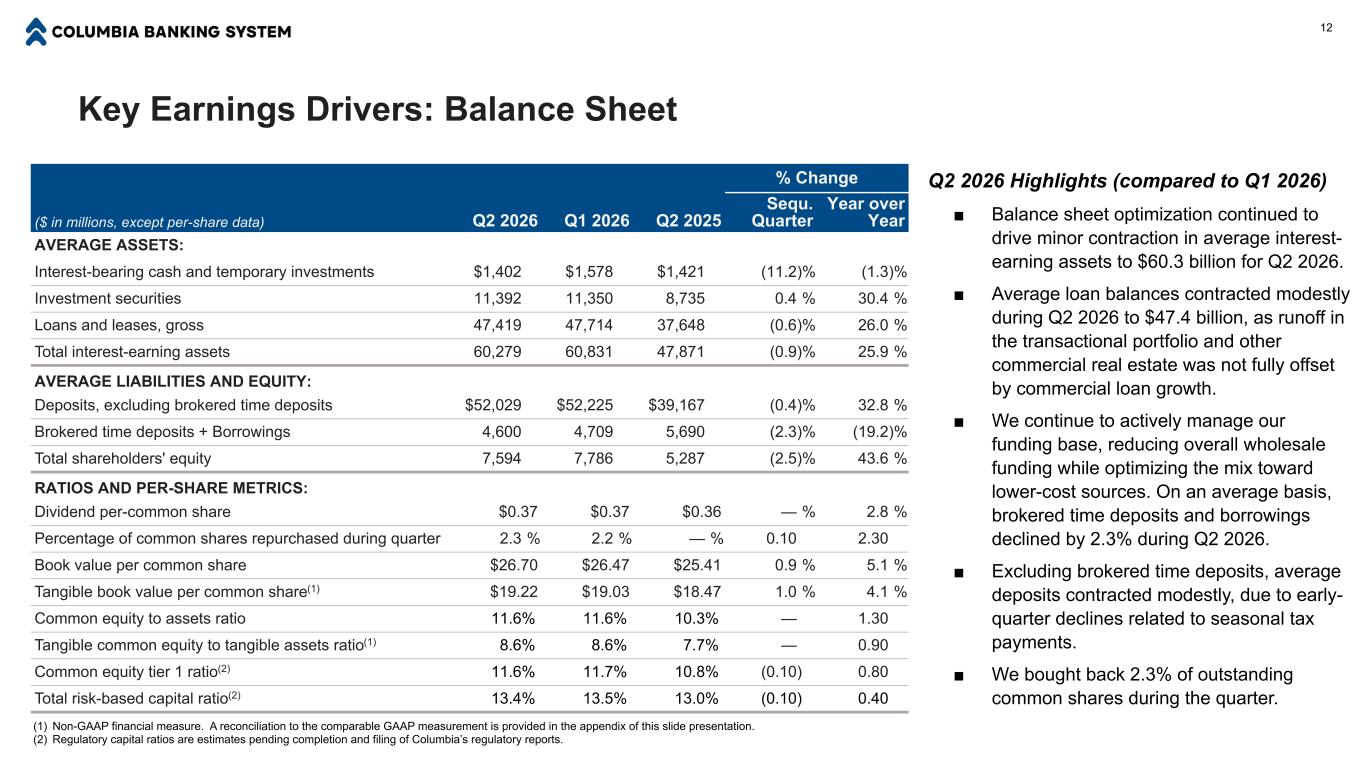
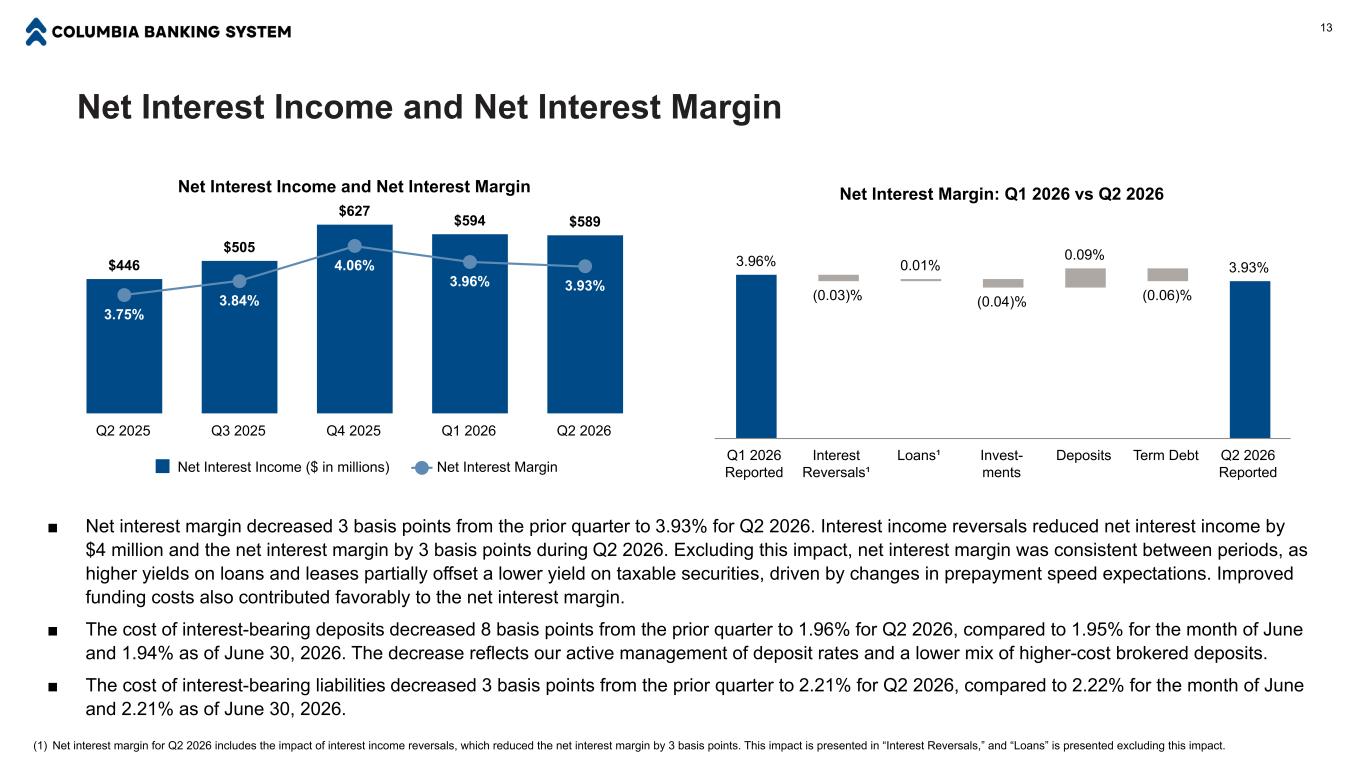
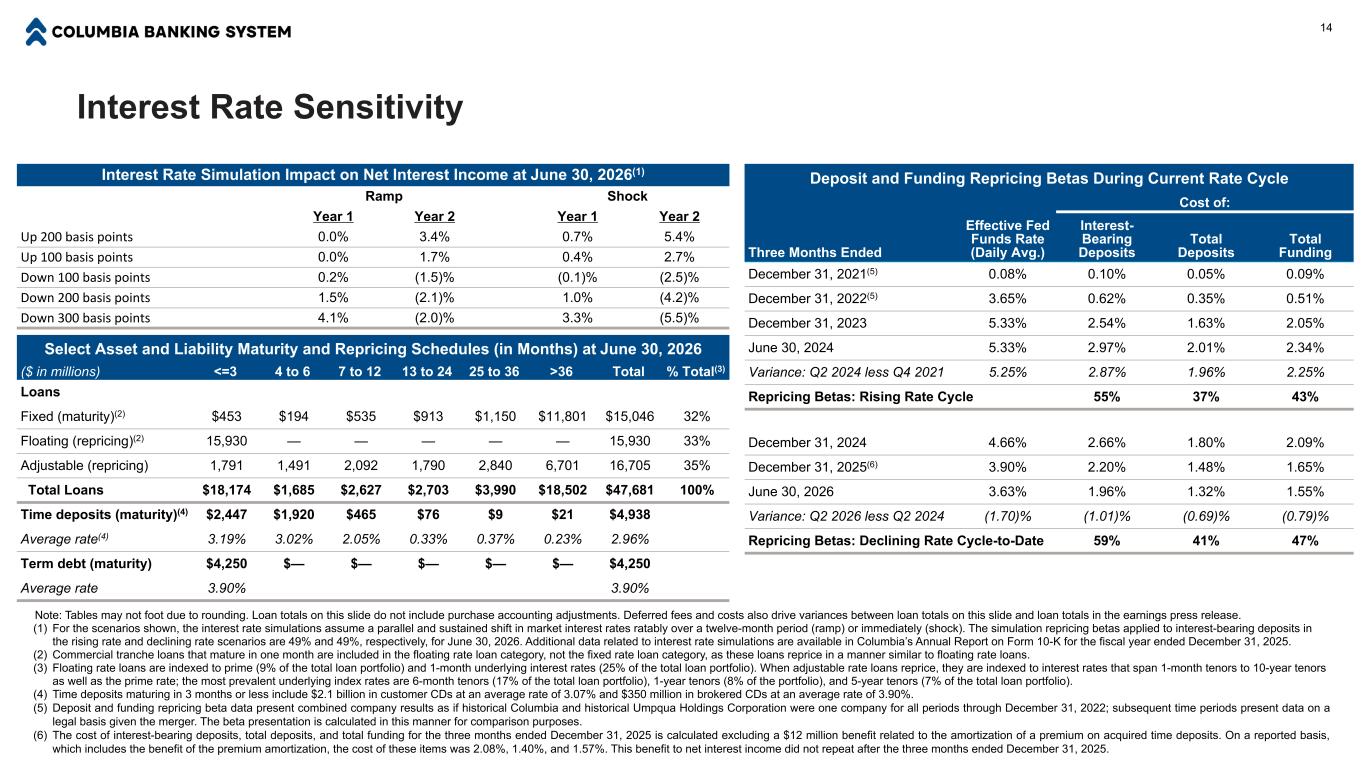
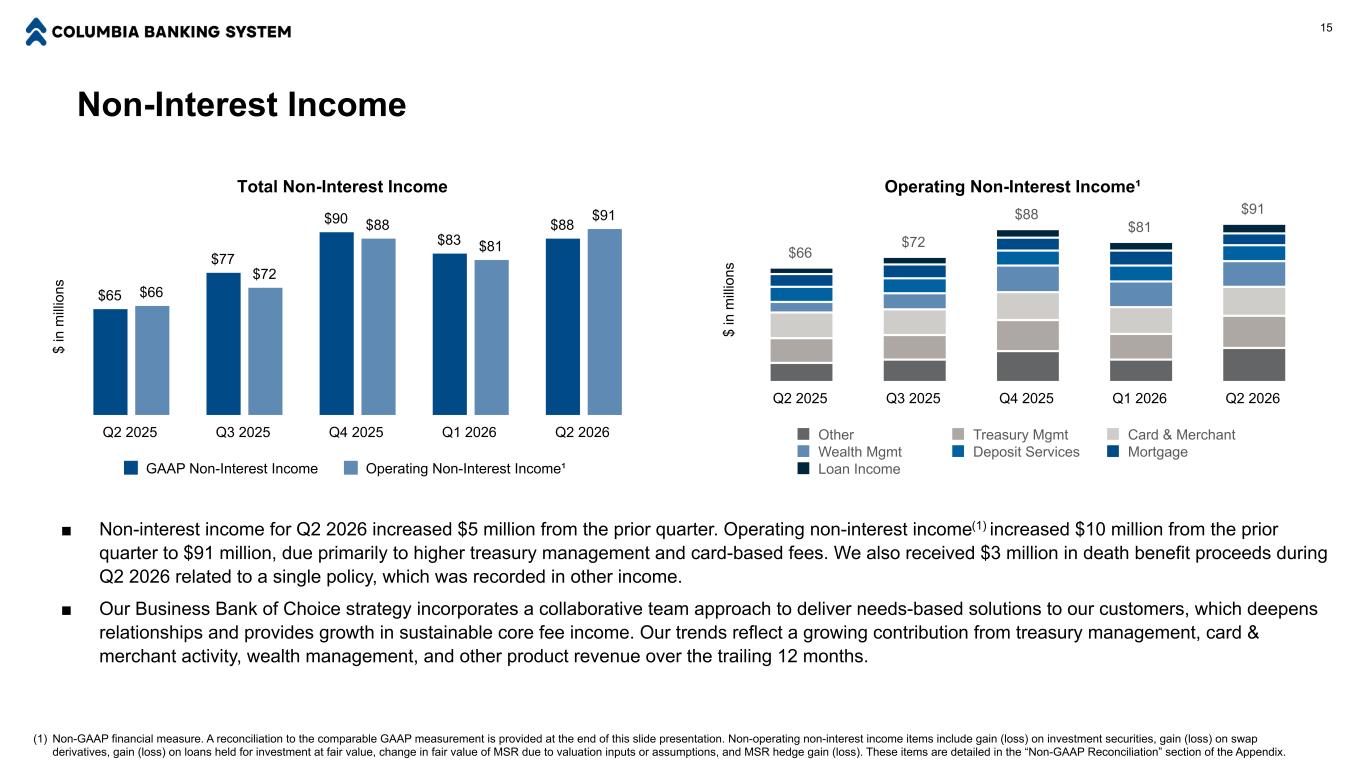
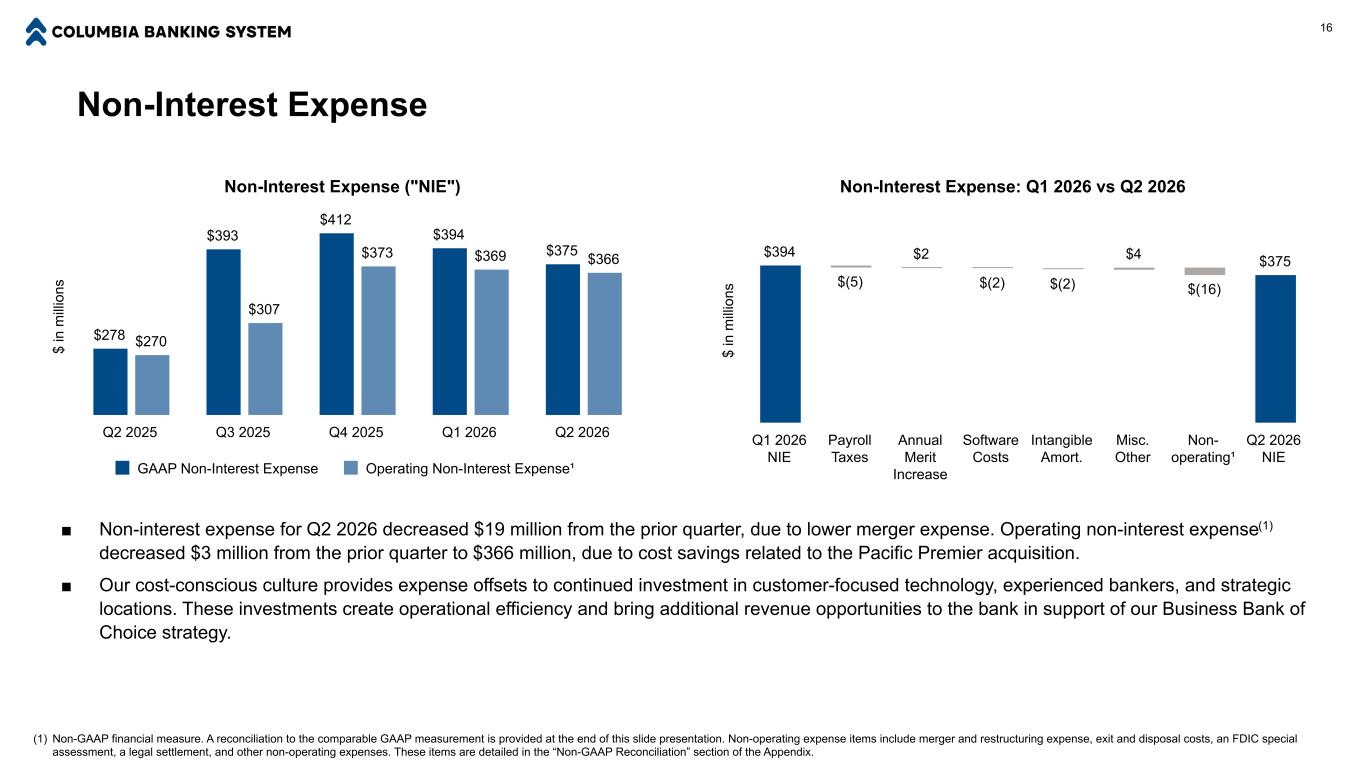
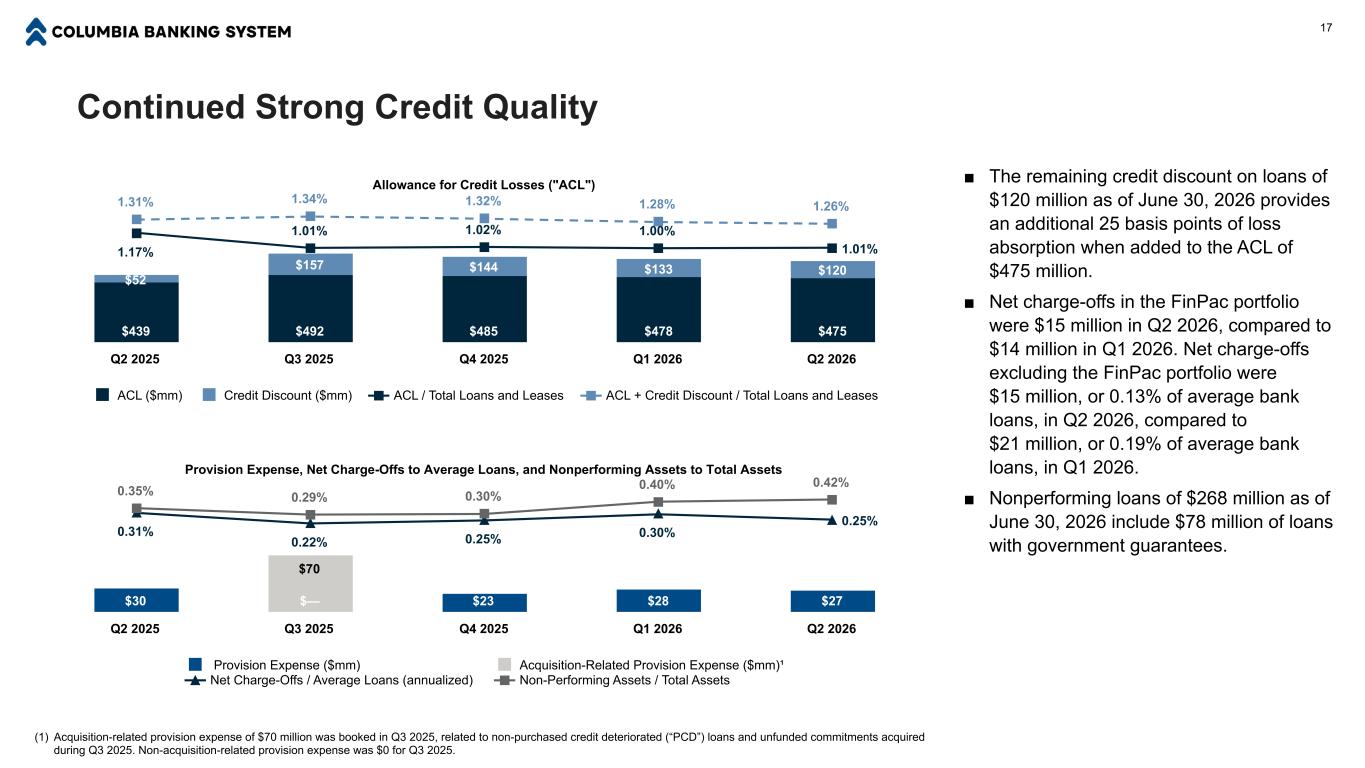
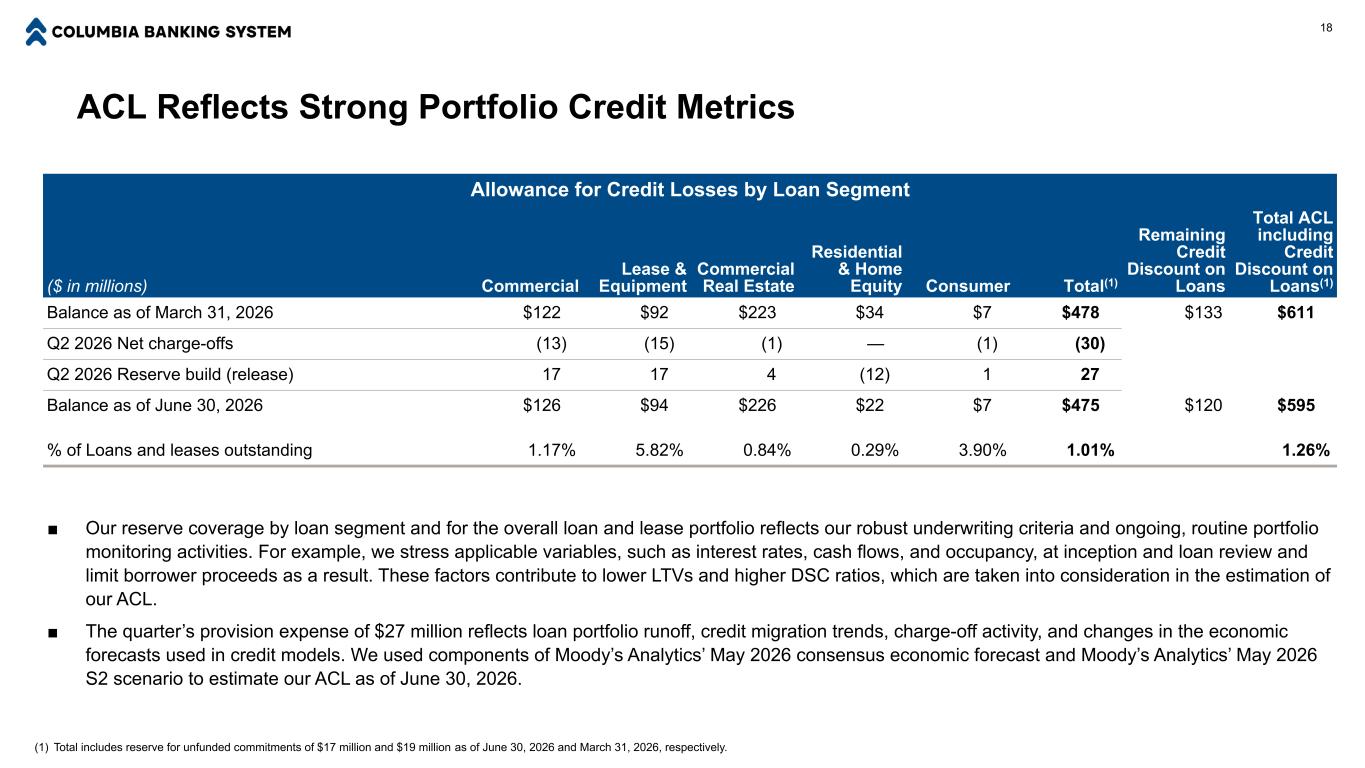
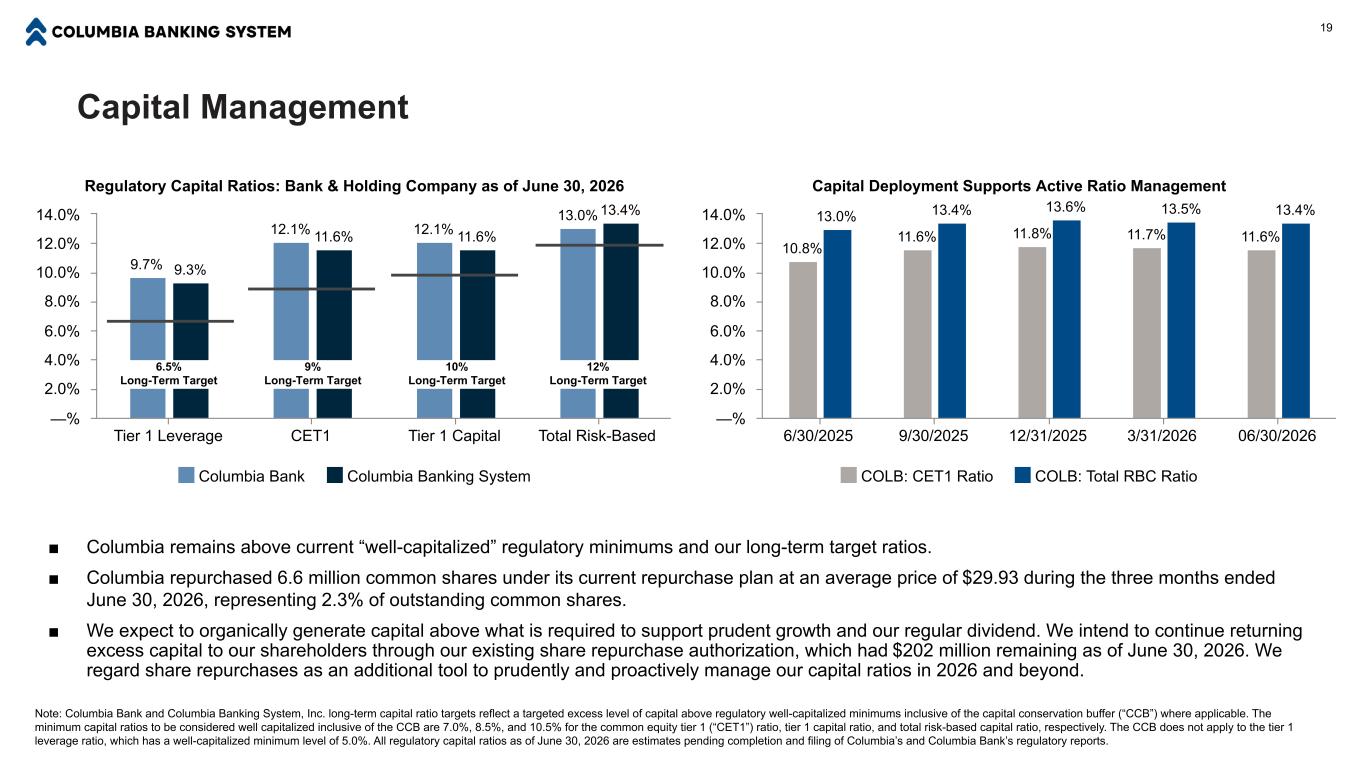
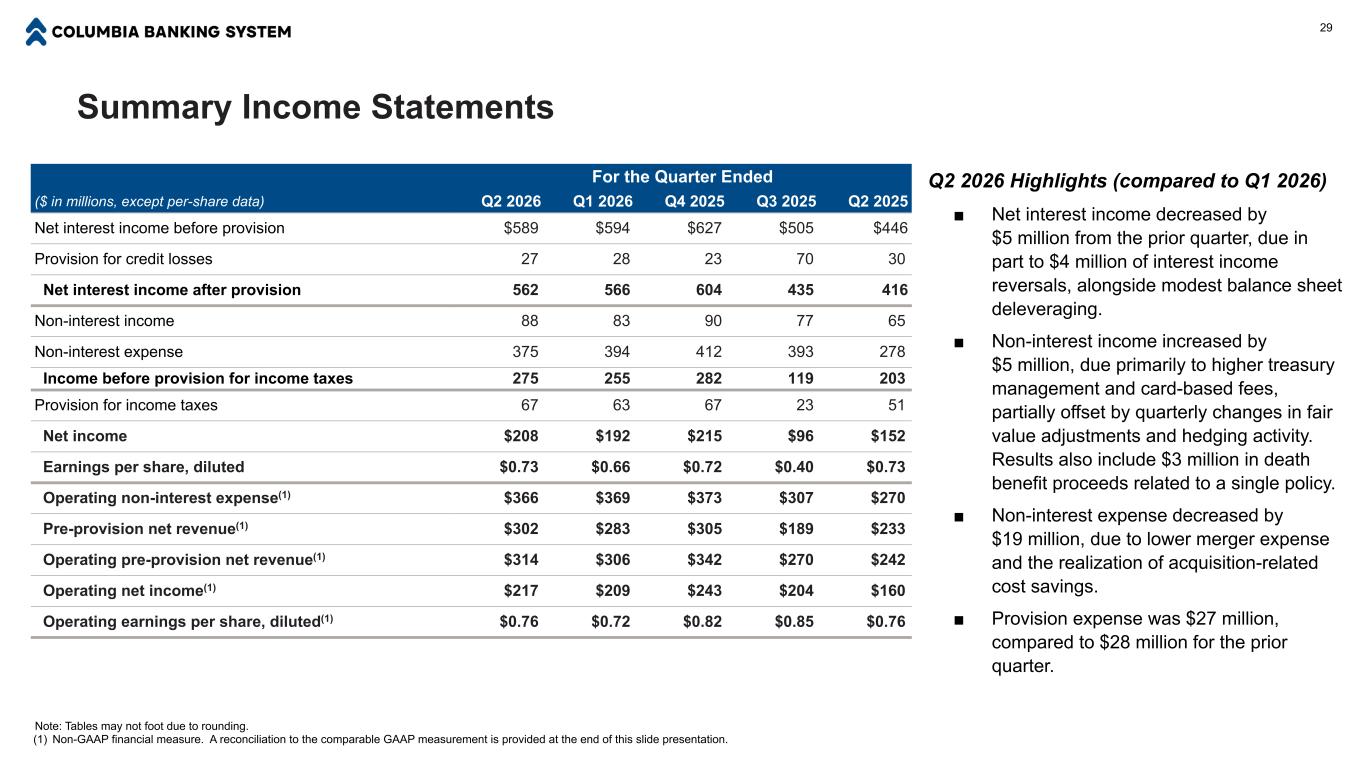
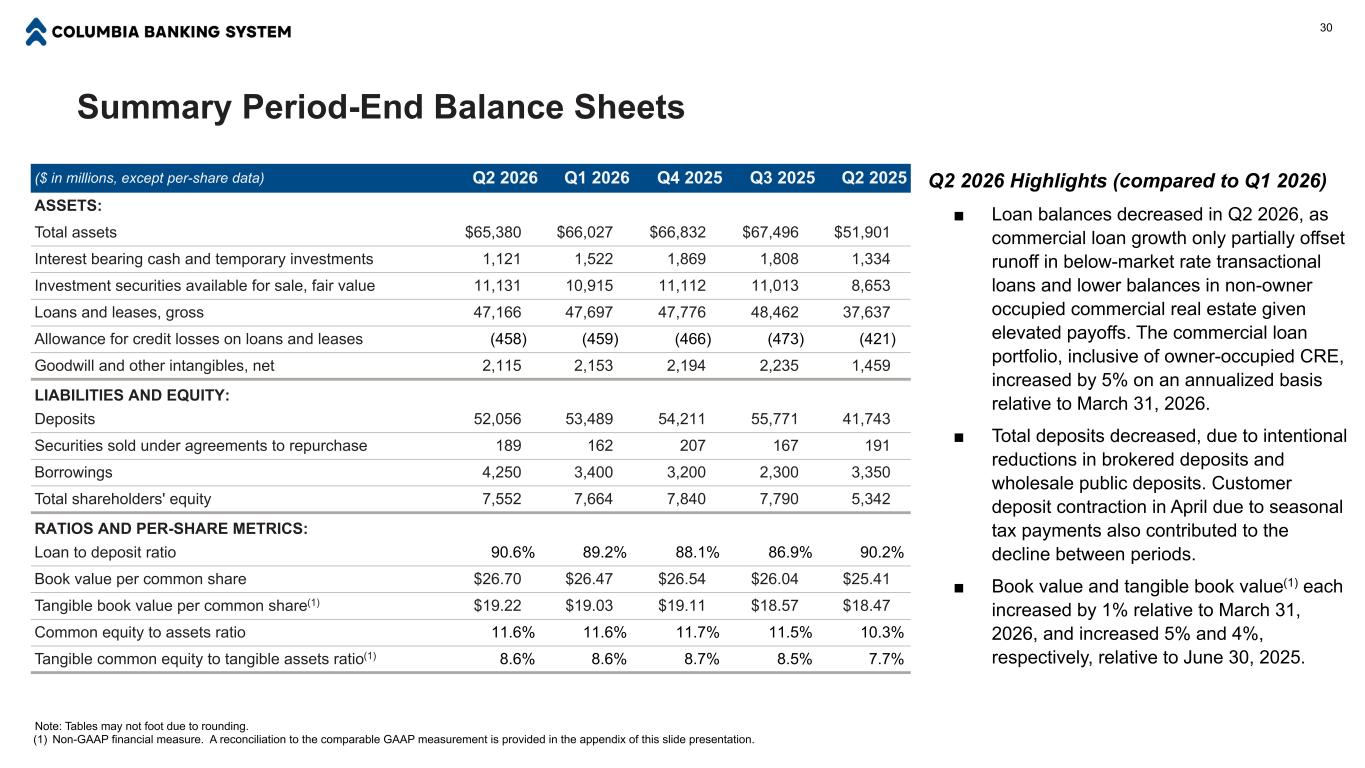
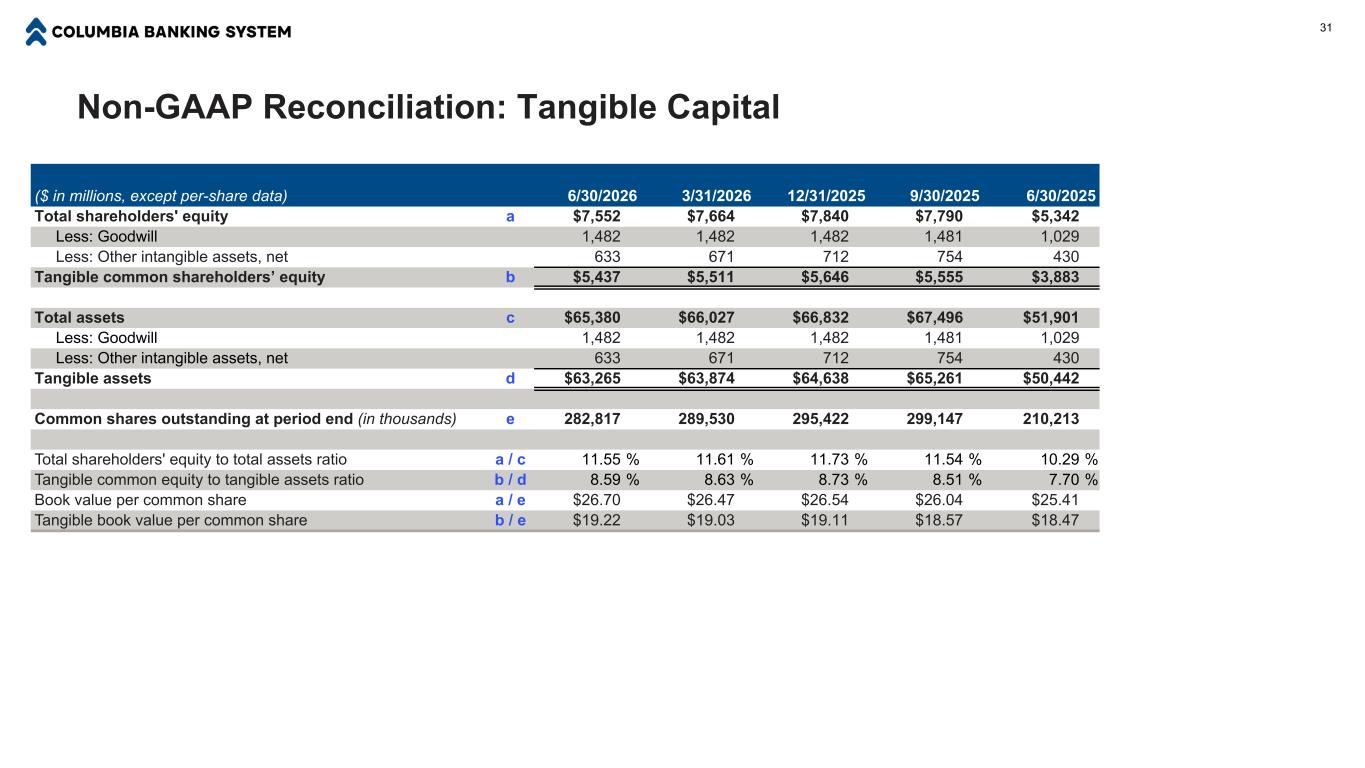
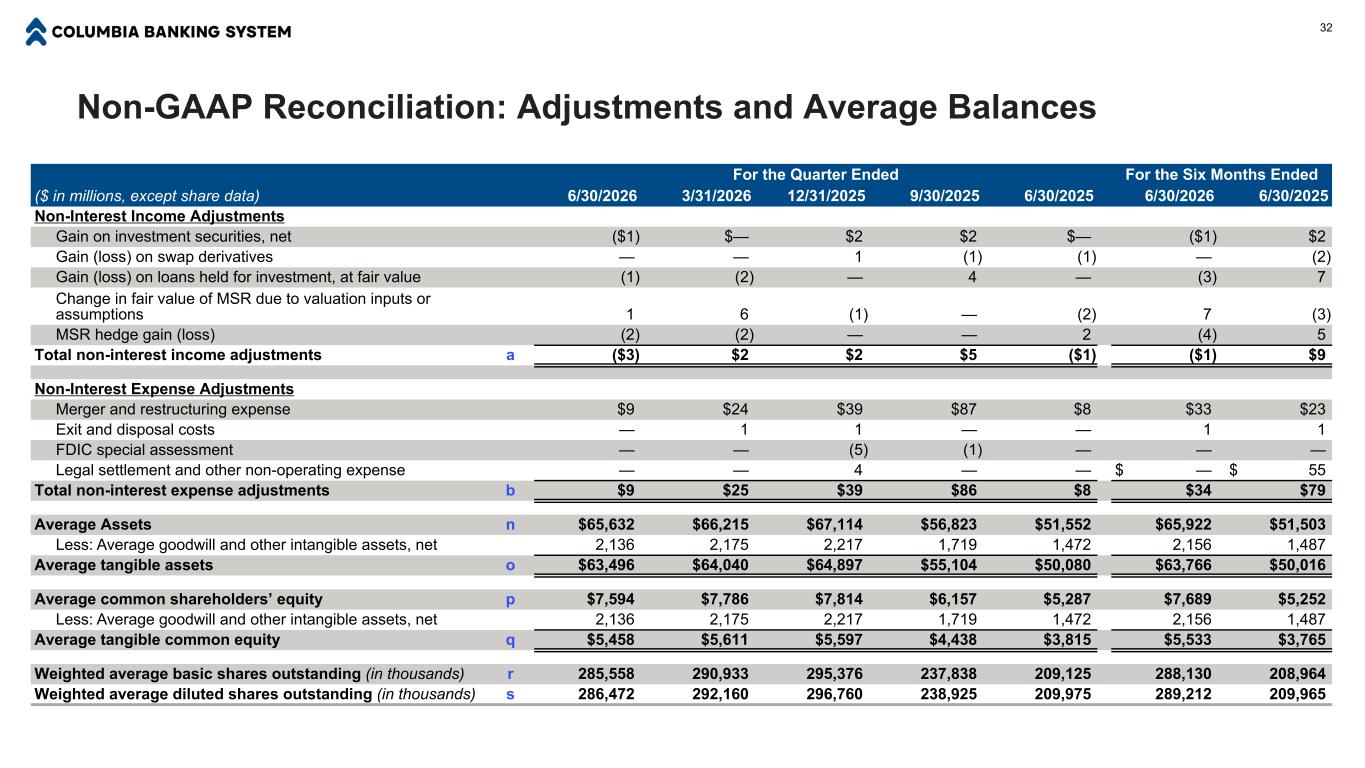
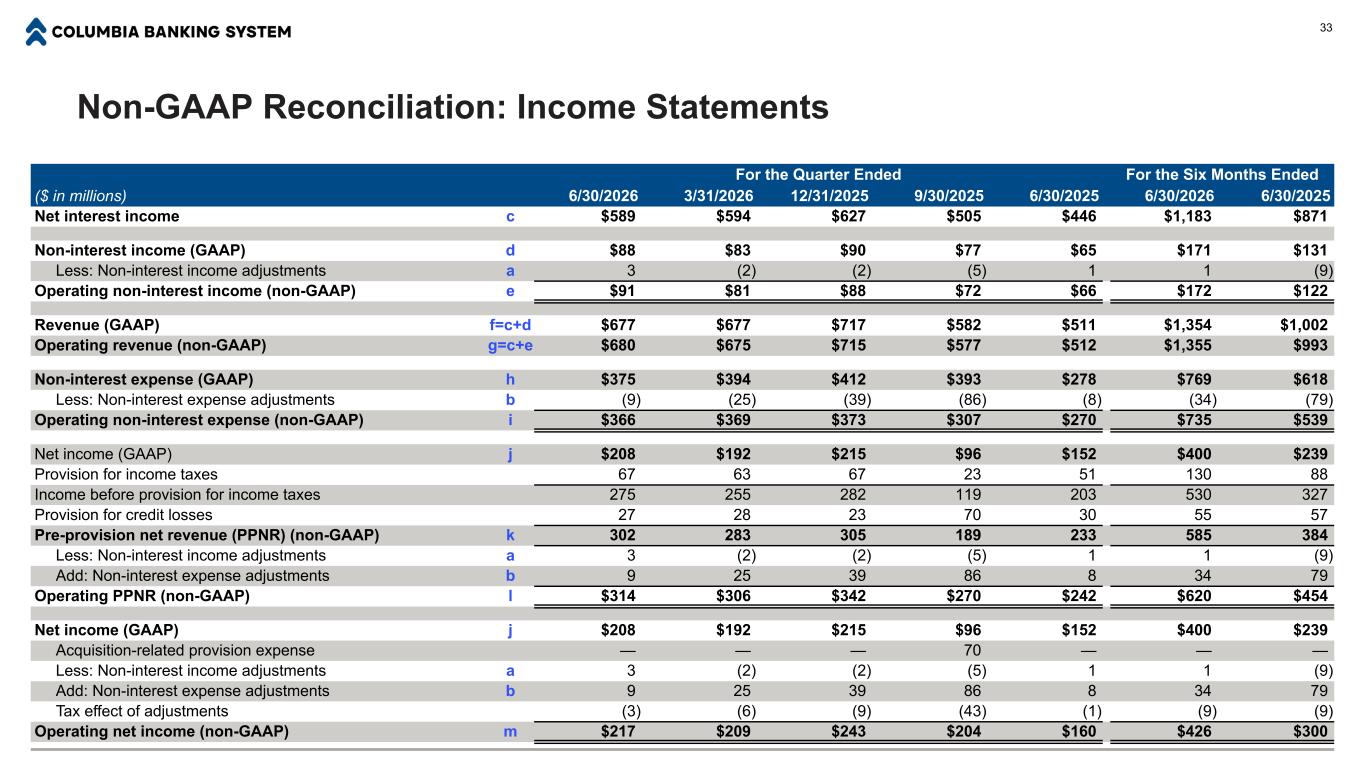
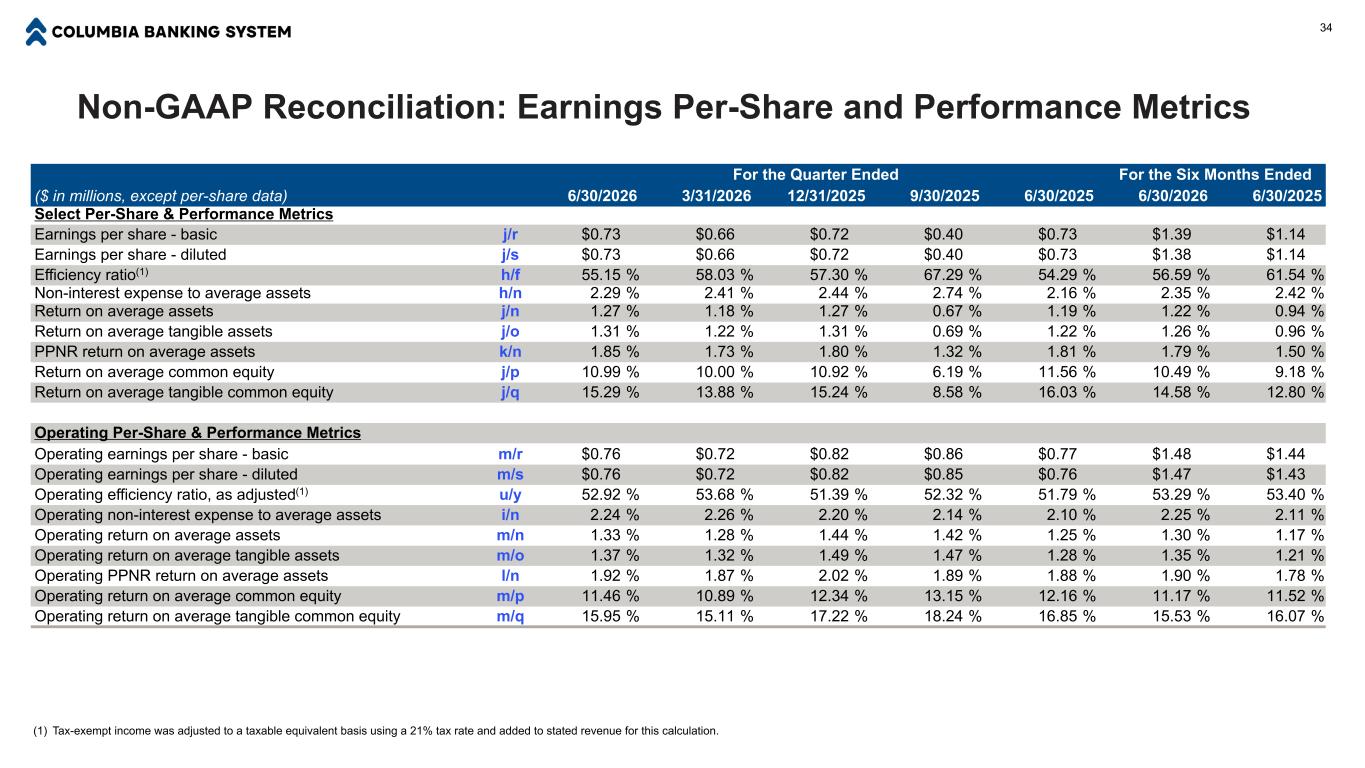
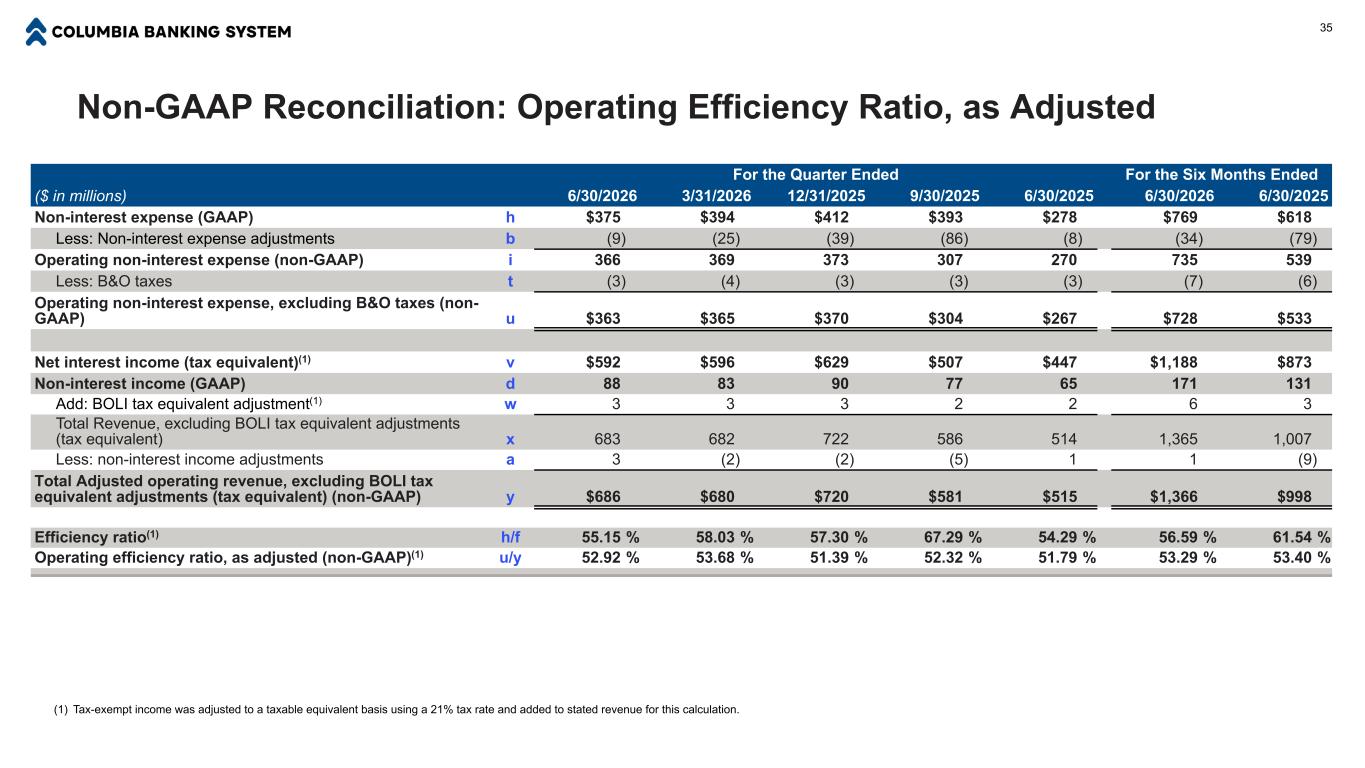
Thank you, Clint. And good afternoon, everyone. As Clint highlighted, our second quarter results reflect continued execution of our strategic priorities. Turning to slide 11, we reported EPS of $0.73 and operating EPS of $0.76 for the second quarter. On an operating basis, which excludes merger expenses and other items detailed in our non-GAAP disclosure, second quarter pre-provision net revenue and operating net income increased 30% and 36%, respectively, compared to the second quarter of 2025 due to the addition of Pacific Premier, continued progress on our balance sheet optimization targets, and disciplined expense management. Turning to slide 12, average earning assets were $60.3 billion during the second quarter, coming in at the midpoint of the range I outlined in April, as continued balance sheet optimization and elevated CRE payoffs contributed the modest contraction relative to the prior quarter. We continue to actively manage our funding base, reducing overall wholesale funding, inclusive of public wholesale balances, while optimizing the mix towards lower cost sources. Results were largely as anticipated and CRE payoffs contributed to the remix of a loan portfolio into commercial loans, which, inclusive of owner-occupied commercial real estate, now represent 42 percent of the portfolio. Slide 13 outlines contributors to the sequential quarter change in net interest margin. Net interest margin was 3.93% for the second quarter, and when we adjust for three basis point impact of one-time credit-related interest reversals, as detailed on our slide, our NIM was in line with Q1. Our balance sheet optimization strategy has driven meaningful net interest margin expansion over the past year. This quarter, however, the yield on investment securities was lower than expected due to the impact of higher interest rates on security portfolio accounting adjustments. Despite that headwind, we continue to expect the NIM to move beyond 4% this year, as we have previously articulated. Our latest interest rate modeling continues to show that our balance sheet remains neutrally positioned to rates, as slide 14 details, providing earnings insulation whether interest rates rise or fall. Non-interest income in the second quarter was $88 million on a gap basis and $91 million on an operating basis as detailed on slide 15 above our guided 80 to 85 million range even when adjusting for a unique three million dollar bully gain the teams had an exceptional quarter across businesses and we expect non-interest revenue in the mid 80 million dollar range for q3 slide 16 outlines non-interest expense which was 366 million on an operating basis excluding intangible amortization of $38 million, the second quarter's $328 million run rate was below our guided range due to Pacific Premier Synergy outperformance, continued expense management discipline on our core franchise, and the timing of strategic reinvestment into the franchise. We are now essentially complete with the PPBI-related cost synergies, with our final results exceeding the target by $5 million due to additional savings we were able to execute upon during the quarter. Excluding CDI amortization, which will trend down slightly each quarter we expect non-interest expense in the 330 to 335 million dollar range in the third quarter moving on to slide 17 provision expense was 27 million for the second quarter reflecting loan portfolio runoff credit migration trends and modest changes in the economic forecast used in our credit models credit metrics remain stable and healthy. Slide 18 details our allowance for credit losses by portfolio with coverage of total loans at 1.01 percent at quarter end and 1.26 percent when the credit discount on acquired loans is incorporated. Turning to capital, slide 19 highlights our regulatory capital ratios at quarter end. Our CET1 and total risk-based ratios declined very slightly to 11.6 and 13.4 percent respectively, as our regular dividend and robust buyback activity was largely offset by strong capital generation and balance sheet optimization impacts during the quarter. During the second quarter, as Clint indicated, we repurchased 6.6 million common shares, returning approximately 200 million to our shareholders through our share repurchase program. We continue to have approximately 530 million of excess capital above our long-term target ratios as of June 30th, and $200 million remains in our current repurchase authorization program. Tangible book value increased 1% during the quarter to $19.22, despite this significant return. We expect share repurchases to remain in the $150 to $200 million range for the third quarter and plan to discuss our future repurchase authorization plans during our next earnings call this fall, as the current program nears its completion. In addition to our share repurchase program, we continue to evaluate potential actions we can take to further optimize the entire capital stack. Overall, we are very pleased with the financial results for the quarter, driving over 1.3% in ROAA and 16% in ROTCE. As Clint noted, we remain focused on preserving the quality of our earnings while improving returns over time.
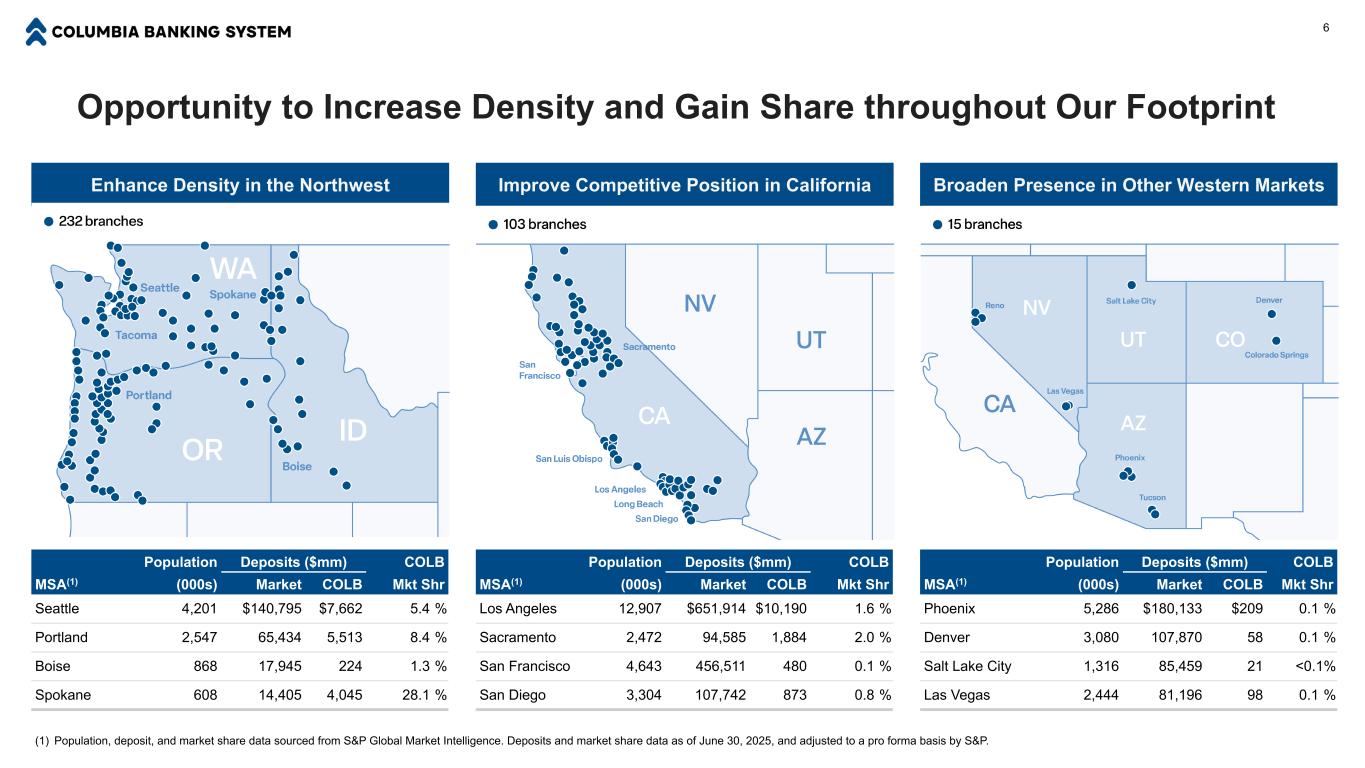
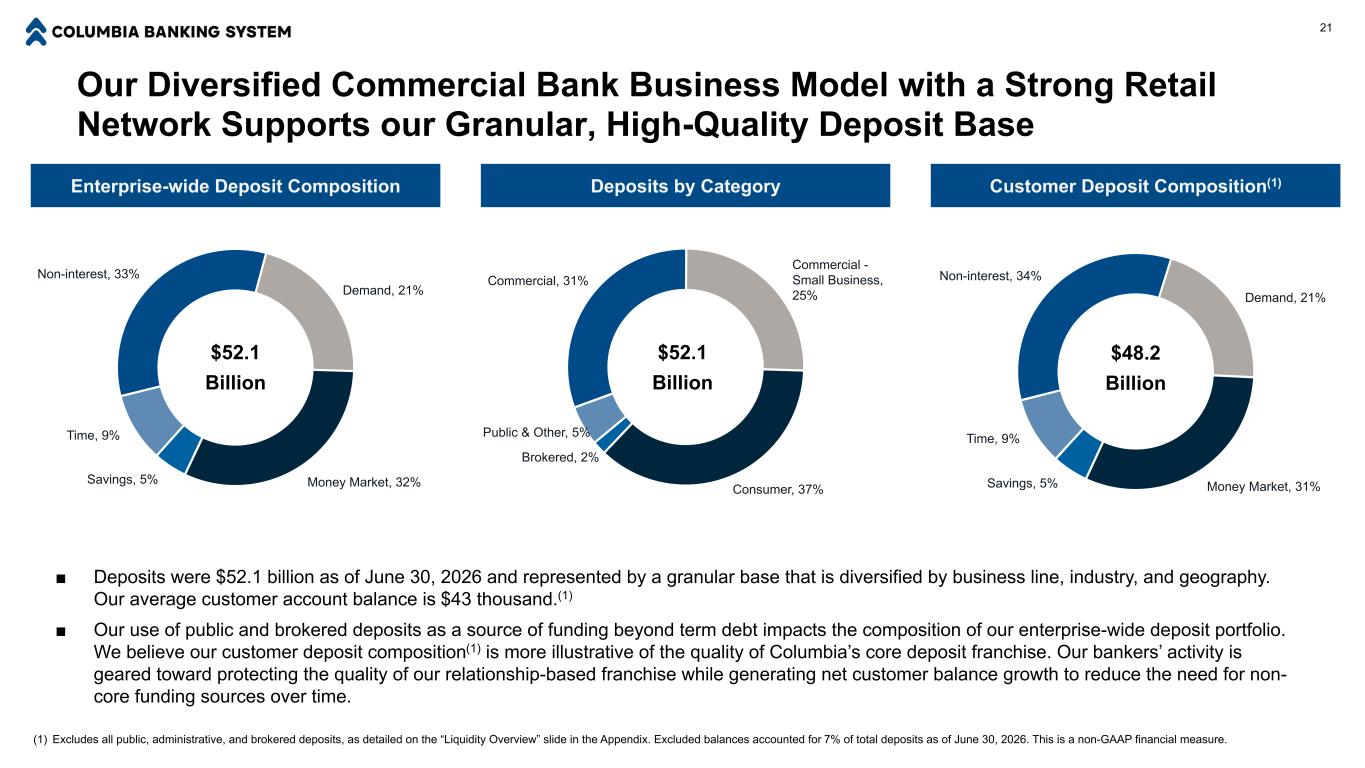
I will now hand the call over to Chris. Thank you, Ivan. our bankers had another strong quarter of business generation, as new loan origination volume of $1.3 billion was in line with last quarter's strong production. Looking specifically at Columbia's commercial loan portfolio, inclusive of owner-occupied commercial real estate, origination volume was up 9% from the prior quarter, driving a 5% increase in commercial loans on an annualized basis. Commercial origination volume was up 49% from the year-ago quarter, contributing to a continued remix of our loan portfolio towards higher return, relationship-based lending as transactional loan balances continued to decline. As Clinton and Ivan have noted, elevated payoffs in our non-owner-occupied DRE portfolio drove net loan contraction during the quarter to $47.2 billion from $47.7 billion as of March 31st. We remain focused on relationship-based production that supports the quality of our balance sheet and consistency of earnings. Turning to deposits, intentional reductions in wholesale, public, and broker deposits drove roughly two-thirds of the balance decline between March 31st and June 30th. Customer deposit contraction occurred early in the quarter due to seasonal tax payments as balances stabilized in may and june and have begun to expand seasonally to date in july our small business and retail deposit campaigns continue to bring new customers and deposits to columbia these campaigns have generated new accounts with nearly 1.5 billion dollars a year to date in deposits through july The foundational strength of these campaigns is built on banker engagement and customer outreach, not promotional pricing. Despite continued and renewed competition for deposits, the spot cost of our interest-bearing deposits declined four basis points from March 31st to 1.94 as of June 30th. We continue to invest in our franchise during the second quarter, opening our second branch in Colorado and establishing a financial hub in Las Vegas. We have two more branch openings planned in the coming months and we also made strategic hires across the footprint enhancing our capabilities in these newer markets with in-market veteran bankers and needed support for business development activities. Our collaborative cross-functional team model is winning business and our balanced approach to growth is contributing to our expanding stream of customer fee income, which noticeably increased during the first quarter, from the first quarter, as new customer acquisition and a seasonal of ticketing activity contribute to strong growth across all product lines, including treasury management, commercial and merchant cards, and our broad wealth management platform.
Our teams are doing a fantastic job as they remain focused on generating new relationship-based business i'll now hand the call back to clint thanks chris i want to thank our entire team for their dedication and disciplined execution which helped deliver our 10th consecutive quarter of stable and predictable financial performance by staying focused on relationship-based growth maintaining pricing discipline and continuing to reshape the balance sheet we are strengthening the quality and consistency of columbia's earnings profile We believe these actions position us to perform better through economic and interest rate cycles, resulting in long-term value creation for our shareholders. This concludes our prepared remarks. Chris, Tori, Ivan, and Frank are with me and we're happy to take your questions now. DeeDee, please open the call for Q&A.
Operator
Thank you. As a reminder to ask a question, please press star one one on your telephone and wait for your name to be announced. To withdraw your question, please press star 11 again. Please stand by while we compile the Q&A roster. And our first question comes from Jeff Rulis of DA Davidson. Your line is open.
Thanks. Good afternoon. I wanted to maybe just try to unpack the loan. So, you know, net loans down a little over $500 million. Is there a way to kind of talk about the dollar figure of what was intentional, what you grew. Clint, I think you opened with intentional growth was exceeded intentional runoff, and then CRE sort of unwanted payoffs. Do you have the dollar figures of that roughly just to kind of see the numbers?
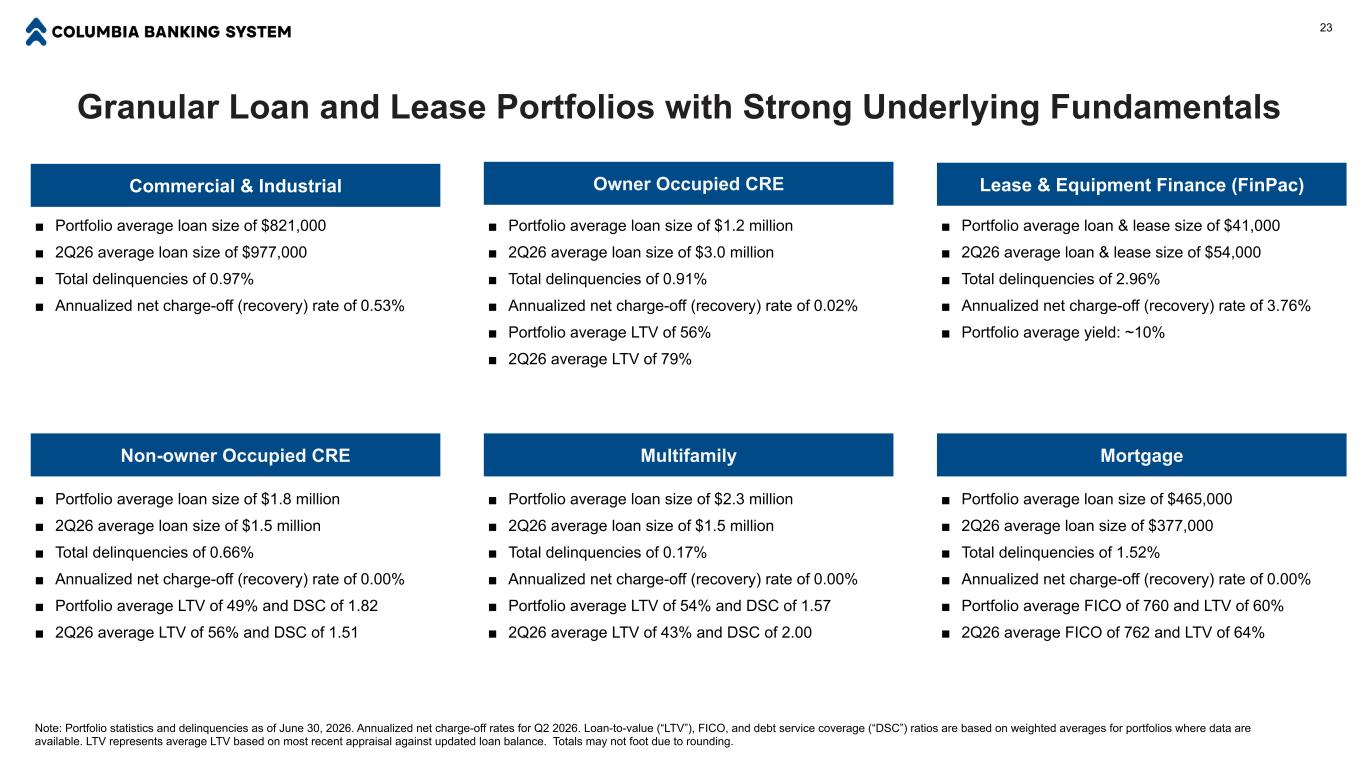
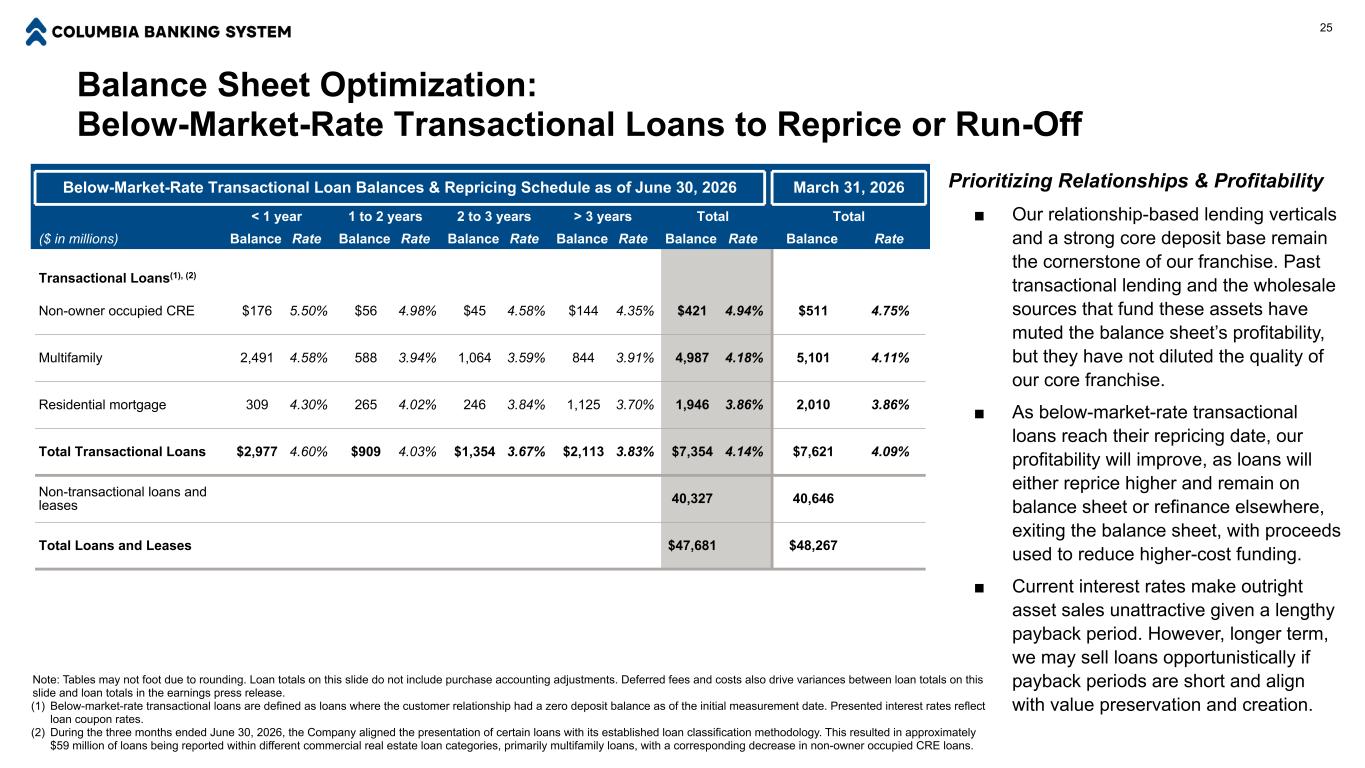
Yeah, hey, I'll start and then kind of uh look to others to add some color commentary this is ivan um so really the way i would break it down really is into three component parts as we've thought about it internally uh in terms of the intentional component of that uh you know we've got our disclosure slide in the back of the deck around our transactional portfolio um that book uh declined by roughly 270 million on the quarter. So we're still continuing to see pay downs out of the transactional portfolio kind of in the high single digit to low double digit range month on month. And really, you know, we were anticipating to see a little bit of a pickup in the payoff pace of that portfolio. And we did see a little bit, I think in Q1, that was in the ballpark of $230 million. So that's the transactional side of the equation. Where most of the growth was focused was in the CNI book. And when we talk about that, we're really talking about $20 billion of combined CNI and owner-occupied commercial real estate, which is what our plan has been focused on growing. We grew that just around 250 or slightly more than 250 million over the course of the quarter, which adds on top of another positive quarter that we had in Q1 in that particular area. And then the piece that is the third factor there would be the commercial real estate, the core commercial real estate portfolio. And that's where we're seeing significant competition emerge. Feels like it's been a bit of a shift in the tides there. We've seen some elevated payoffs in the commercial real estate portfolio. That'd be the third piece of it. Maybe I'll hand it to Tori to add some color commentary on the CRE book.
Yeah, sure. This is Tori. So I'm just a little bit on the CRE part of it. You know, these are some of the payoffs that have been, I mean, it's getting pretty floppy out there. And I think as Clint said early on, we're not going to change the way we underwrite or take substantial additional risk on the real estate book. And we're not going to, change price or drive price down to the floor. It just doesn't make sense for us as we kind of run the bank. So there's some business that just got refinanced out of the company, out of the real estate group to other banks. It's getting highly, highly competitive. But we continue to have relationships, even with the folks that paid off a property or two and went someplace else. They still bank with us. And I've seen some growth in our real estate pipeline today at loan structures that we're used to having and doing and at prices that are fit kind of what we're looking for. So it's kind of, I think, a little bit of a blip in the quarter. I don't really anticipate it to be the same in quarter three. We're working hard to shore it up as best we can.
That's great. Thanks. And maybe just one follow-on, Ivan, to that slide on the next 12 months of intentional – you've got $3 billion to go, I suppose, or maturing. I guess if you could hazard the rest of the second half of 26, could we just assume maybe half of that, a billion five, is what you'd target for what would be coming off out of the transactional book? Is that fair?
Yeah, you know, looking back over the past three quarters, when we originally put this together after the PPBI close, we've seen that portfolio decline from around $8.1 billion to the 7.3 that you see there. So roughly three quarters of a billion dollars over three quarters. That's 9%. You know, so it's kind of that, you know, 12, 13% run rate. you know, our presumption is that we'll kind of be in that similar range for the next few quarters, kind of call it a quarter of a billion or slightly higher than that in terms of the reductions out of that portfolio. Obviously, that depends a lot, right? I think we've seen a lot of volatility in interest rates over the course of the last few months. And so, you know, it depends on what happens macroeconomically, but that's our current go-forward assumption regarding the pace of pay downs there. The other thing that we pointed out in the past is, you know, we've got about $3 billion of this that will reprice and or mature over the next 12 months, and then the pace of that begins to slow down. So, when you get out to kind of call it summer of 2027, that level of repricing and from a growth perspective headwind begins to diminish modestly in, you know, summer of next year. Yep.
Okay. Thanks for the detail. I'll step back.
Operator
Thank you. And our next question comes from David Ciaverini of Jeffries. Your line is open.
Hi. Thanks for taking the questions. On the net interest margin, you previously were expecting to get over 4% at some point during the second quarter and then potentially for the full third quarter. You mentioned in your prepared comments that you would get to beyond 4% sometime this year. Can you talk through how we should think about 3Q and 4Q around that 4%?
Happy to provide a little bit of extra color commentary on that.
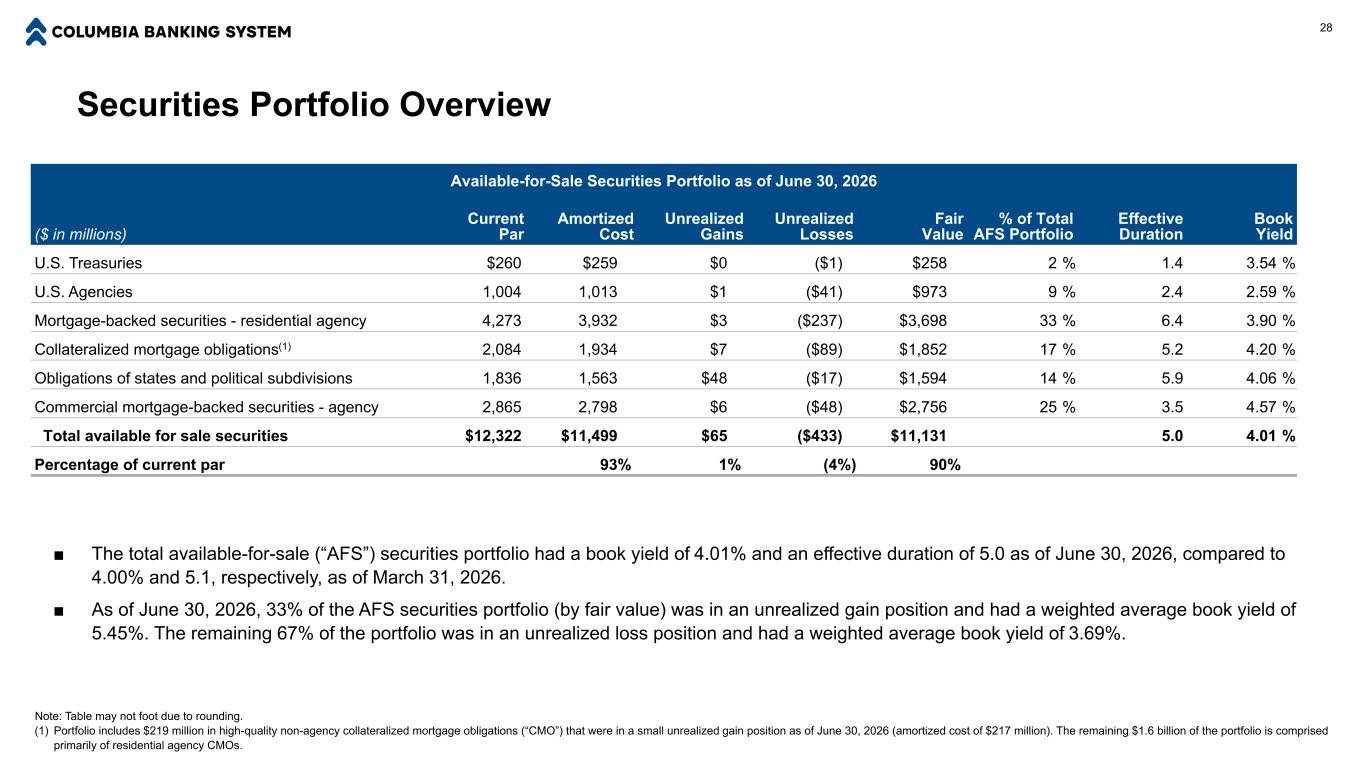
And I'll go back to last quarter just to start. So you may recall 90 days ago we reported our Q1 NIM was 3.96. So slightly elevated from what we'd anticipated in the quarter, but generally in the range. A little noisier this quarter than we had hoped from a net interest margin perspective. The printed number is 3.93. But there are a few factors that I'd point to. First, as I noted earlier was that $4 million or three basis point headwind associated with one-time credit-related interest income reversals. And pro forma for that, we are essentially flat to the prior quarter. The other one that I didn't explicitly talk about in the prepared remarks, but you can see in our walk, is that we also saw a reduction in the recognized accounting yield on our investment portfolio. And that's really a function of higher macro interest rates resulting in slower anticipated prepayment speeds on our mortgage-backed NCMO securities portfolios. And because we have those at significant discounts to par, we're accreting slightly less discount into the end-quarter results. And you can see in the walk there that that's basically a four basis point headwind in Q2 that we had not, you know, fully anticipated. What I would say around that securities portfolio is there's the accounting recognition element and then the economic realities of it. And from an economic perspective, we're very pleased with where that portfolio stands. The coupon in that book, what we're purchasing from a front book basis is about 75 or 80 basis points higher than the back book. And so while we will, you know, always be subject to some of the implicit volatility in the accounting recognition there. We're overall pretty satisfied with where that's going over the course of several quarters. As we turn the page towards Q3, we do expect that we're going to be getting up to and beyond that 4% net interest margin. So that's a pretty good barometer for Q3. The factors that we're looking for are the same factors that we've been talking about before. The continued remix of our loan portfolio overall, the repricing opportunity that we do have. As you heard from us earlier, it's a slightly smaller balance sheet, but we think that over time that does unlock opportunities and we will continue to see optimization occur there. So those would be my comments regarding how we think about the margin going forward.
Great, very helpful. And then on deposit costs, good to see the spot deposit costs coming down in the second quarter. Is there much opportunity left? How should we think about deposit costs going forward?
I'll give, this is Ivan again, I'll give my perspective and then I'll let Chris weigh in. And so you're right, I was very pleased with where we landed quarter on quarter. We saw another eight basis point reduction in the cost of our of our deposits overall you can see on our slide that the down beta now reports nearly 60 percent although I would temper expectations there we continue to believe that 50 percent is a pretty fair beta as you're modeling us out going forward we have seen I think step function shift here in the last 60 days in our industry regarding the cost of liquidity we've seen competitors begin to be more aggressive regarding offers in many of our different markets, both in the form of liquid money market as well as CDs. And so I think that there's a bit of an industry-wide expectation that with rates more likely to go up than down here over the course of the next handful of months, that will translate into increased pricing pressure. So my view is we probably have gotten to the point where it begins to bottom out in terms of the overall cost. But we've got a lot going on to continue to maintain, as we talked about earlier, kind of our industry-leading deposit franchise in that regard. And I'll hand it over to Chris for more color commentary.
Thanks, Ivan. Yeah, I just added to there, the competition aspect of it is dramatically increased rack rates that are out in the market. it. We're looking at monitoring it basically on a daily basis. And as we start looking down the road of where CDs are maturing, what money markets are paying, you've got competitors who are up and over 4% again. And you back that with that loan rates really haven't gone up and that's almost a no-win battle there. I look at the CDs and the maturing and you You'll see there's probably some upward pressure on the overall rate on those. Money markets is the same, but again, we're competing where we can. We're looking at relationships and trying to hold the line steady. I'd agree with Ivan that we could be in a trough right now until the market itself retreats back. If it doesn't, then you could potentially start seeing some deposit costs that could start to trickle up a little bit.
Operator
Thank you. And our next question comes from David Feaster of Raymond James. Your line is open.
Hey, good afternoon, everybody. Hey, David. You guys, we've talked a lot about intensifying competition, especially you talked about pricing on CRE loans. I guess, conversely, does that give you some optionality as well to play into this? just given irrational pricing expectations, does that create opportunity for you to optimize the balance sheet faster, maybe sell some of these lower-yielding loans at less of a discount than you guys talked about previously? I know for a while it didn't make sense, but curious, does that make sense today, or are there any other balance sheet optimization strategies that you would consider today?
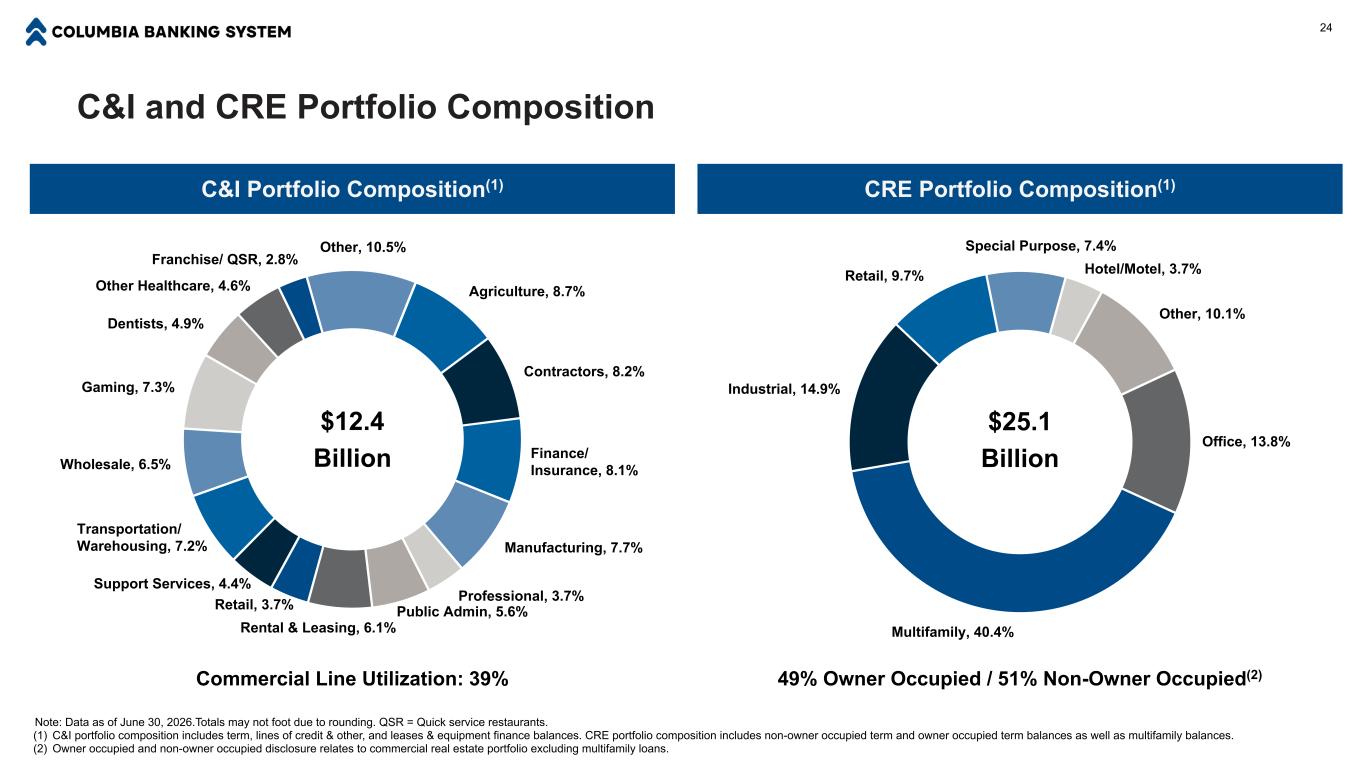
Yeah, this is Ivan. Hey, David. It's a great question. We do continue to look at that every single quarter. And the dynamics do shift a little bit. It is a competitive market in commercial real estate, so there has been increasing demand. And I know you're likely seeing that in other peer bank discussions as well and in H8 data and other sources like that. You know, we looked at it again this quarter. We continue to believe and feel that, you know, which has, you know, quarter on quarter on quarter continue to allow us to remix. I quoted a number that is one that we talk about. We're excited that we've gone to and beyond the 40% of our loan portfolio that's in C&I and are occupied. And so we continue to see, you know, that trickle through there. But, you know, in terms of, you know, selling any of this portfolio, we're going to continue to hold off on that at this point because it just doesn't make economic sense. and wouldn't be accretive from a shareholder perspective. Okay, that makes sense.
And then maybe touching quickly on the hiring side, obviously there's been a decent amount of disruption across your footprint over the past couple months. Seemingly, you've had a lot of success attracting talent. I'm curious, your appetite for hires today, are there any markets or business lines that you're mostly focused on adding to at this point?
Hey, David, this is Tori. I'll start and then I'm sure Chris can jump in. I think I'd answer the last part of that question is we are always looking for really good talent that is accretive to the company in each and every market. So, you know, we built this franchise, and it's been fun to watch the amount of talent that we've been able to secure, whether we're pursuing the talent or the talent is pursuing us. And we've seen a lot of the latter here recently. Of note, I think we've hired some really good bankers, a couple additional really good bankers in the Pacific Northwest, in the Seattle area, in Portland. We've hired some good bankers in Utah. We started a food franchise business that hired a couple leaders, and they've had some infill with a couple outstanding bankers there. And as these bankers are coming in, they're doing an exceptional job producing results almost immediately, just because they're so connected, whether it's an industry vertical and there's a specialization there or it's a geography-based play, they're very connected in their communities and they're bringing business in right away. So it's been great to see, and we'll continue to look for them.
Yeah, and David, on the wealth side, previously we've talked about we want to be full service in every market that we're in, and we're still looking for talent in those space. We've got a few people that have joined us just recently, a few more in the hopper, and always focused on the newer markets as well, as far as deepening that into the markets of California and such.
Okay. And it's not just on the customer-facing side where we're adding talent. We had the opportunity to bring in a senior kind of regional Western – I guess he oversaw kind of most of the Western U.S. in credit from one of the big box banks, and we talk about getting better every day and continuing to get more efficient in everything that we do. And so we have people that are joining us that are helping us in things that you never hear about or never see, but remove friction for our bankers, remove friction for our customers. So it's throughout the entire organization that we're adding that kind of talent.
That's great. If I could squeeze one quick one more in, maybe for you, Clint. I mean, it's interesting. I talked to a lot of investors and the narrative has shifted. It was, you know, You guys have proved that obviously wrong. Today, one of the bigger pushbacks I get is now that the Pacific Premier deal is done, you're going to go out and buy another bank. I just wanted to get your thoughts on M&A here and what's your appetite for another deal at this point with that deal done?
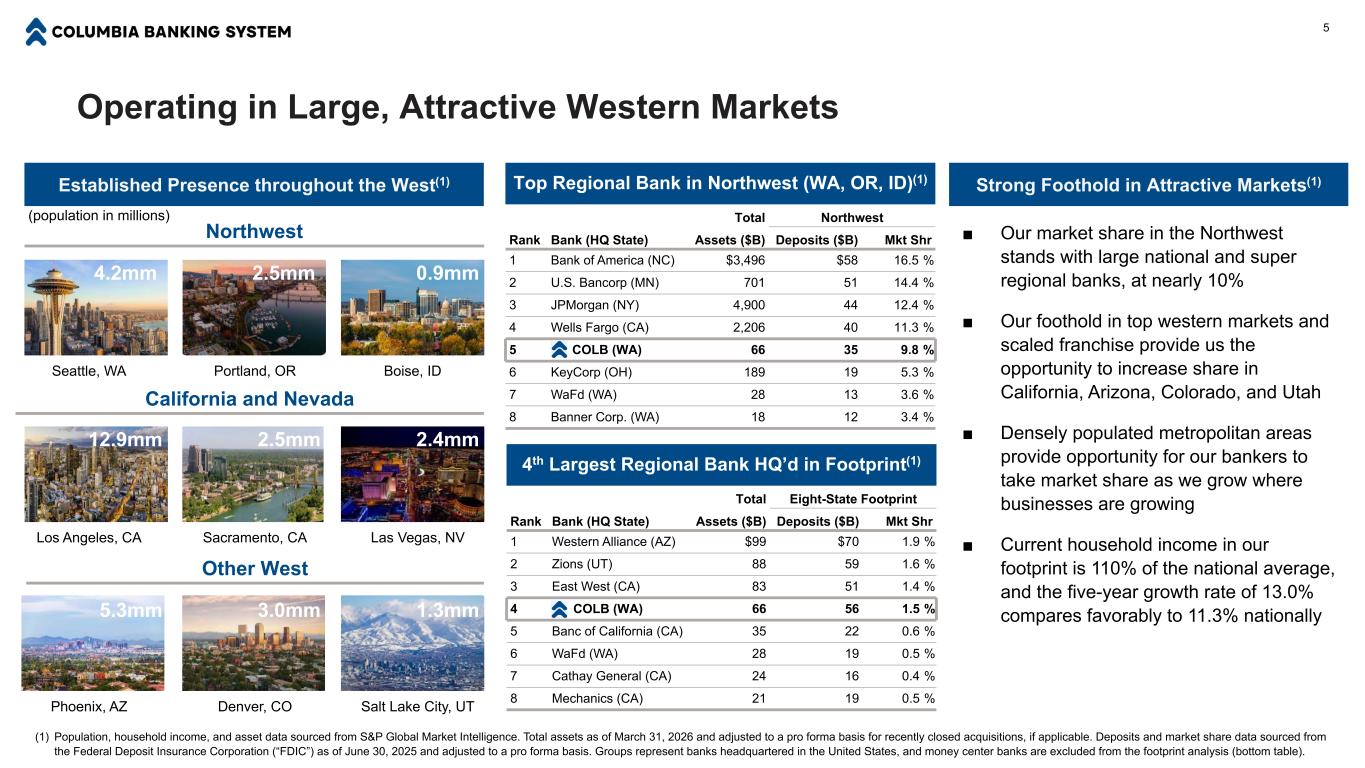
Well, it's a fair question, and I could be brief and say nothing has changed, but, you know, we have time. I'll go on a little bit they'll have zero interest in whole bank in it you know as I've said for the past five quarters PAC premier was the missing piece to the franchise that we envisioned and as we look now at the markets we serve the momentum that you heard the team talk about that we have our de novo markets or de novo because you know there's really no way yeah the west has been pretty much consolidated i'd say with the exception of of washington and california and we have as much as we want or need you know we have top five market share in the in the northwest i think top 10 in california um so um and we have a formula that works on the uh the noble markets and you know as we see uh they they hit their full stride and the momentum that they have Last week, we held the grand opening for our Colorado Springs branch that just opened a few weeks ago. We're already at $80 million in deposits. Our investments in Utah continue to generate meaningful new customers. And the three locations that PAC Premier brought us in Arizona has pretty much built out the infrastructure that we need in that market to continue to grow and execute on our main street commercial first uh business model and you know i put in in my prepared remarks that continuing to buy back our own stock you know i wholeheartedly believe that remains the single best investment that we can make and we intend to keep doing that for the foreseeable future uh you know i haven't talked about our current capital levels and uh you know you all have projected what our profitability is going to be and so you can see that uh um you know bar barring some major reset in the macro environment that we can't control, that we're going to have the capacity to keep that going. I would like to see our level of fee income increase. You know, we screen low on that from a peer perspective. We talked about how competitive the deposit environment is and remains and some of the, you know, irrationality that we're seeing in the pricing there. So, I guess if I have to give you something, I'd say it's possible that at some point we might invest in a small bolt-on business if it helped us with our fee income or deposit generation capabilities but certainly not interested in whole bank m&a or anything that would increase our share count you know we've worked hard for the past five years we've been in a state of planning integrating and transforming our company and now we're having fun again and our people are having fun and we see the momentum that's out there we don't want to disrupt that That's great.
Thanks, everybody. Thanks, David.
Operator
Thank you. And our next question comes from Matthew Clark of Piper Sandler. Your line is open.
Hey, good afternoon, everyone. Just want to check in on the borrowings. At the end of the quarter, they were up.
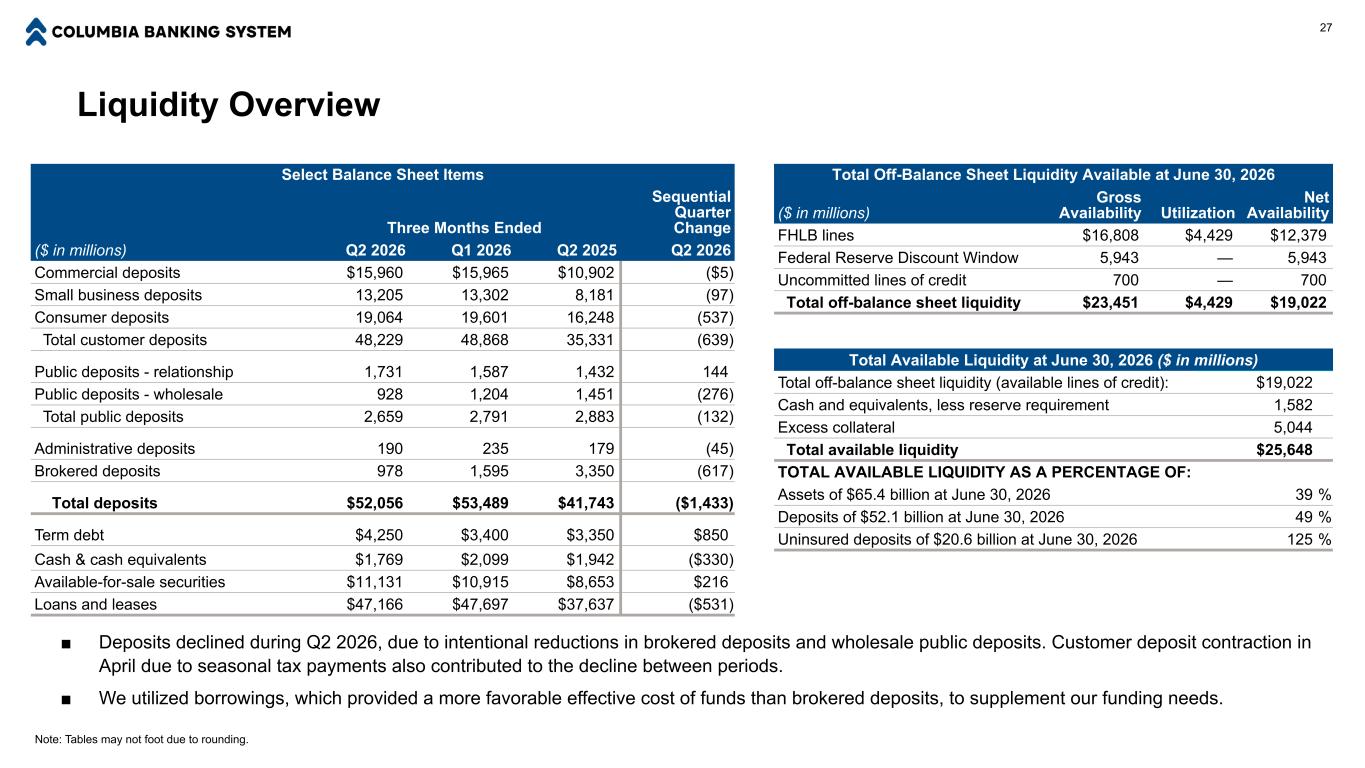
Looks like deposit growth has resumed from this second campaign, at least through mid-July. um fair to assume that you will you'll be unwinding those borrowings here in short order assume that would help the margin yep absolutely we we do that um you know daily weekly uh we have continued to optimize our funding stack and when i think about our our wholesale funding you know fhlb the broker cd portfolio as well as you know a component of that kind of more uh wholesale public channel and so uh you know we've continued to optimize that and that's been it's been a helper overall um in terms of the total cost of funding you write that on a on an ending basis you add it all up and it's it's you know a little bit higher but less than 200 million dollar swing on an on an ending basis but we keep in particular the FHLB advances very short duration and so you know we've got I think a billion seven plus of that that you know advances mature you know any given month so the answer is yes we'll continue to optimize that as the core deposit you know business builds back up got it and then Just on average earning assets, should we assume the bottom is here in 3Q
or do you think we already saw the bottom?
It's a great question. I would say I would guide you to flat to down from where we're at on an ending basis. We talked earlier about the commercial real estate portfolio. I think we've got a lot of focus on the continued growth in CNI and owner-occupied commercial real estate. We are very active in terms of, you know, in that commercial real estate market, building pipeline and lending. But there has been an increase in terms of the prepayment volumes that we're seeing in that space. So I would signal you kind of flat to down from an overall earning asset perspective as we look out to Q3.
Operator
Thank you. And our next question comes from Chris McGrady of KBW. Your line is open.
Oh, great. Thanks. I don't think it touched on credit, but I feel like I have to ask a credit question.
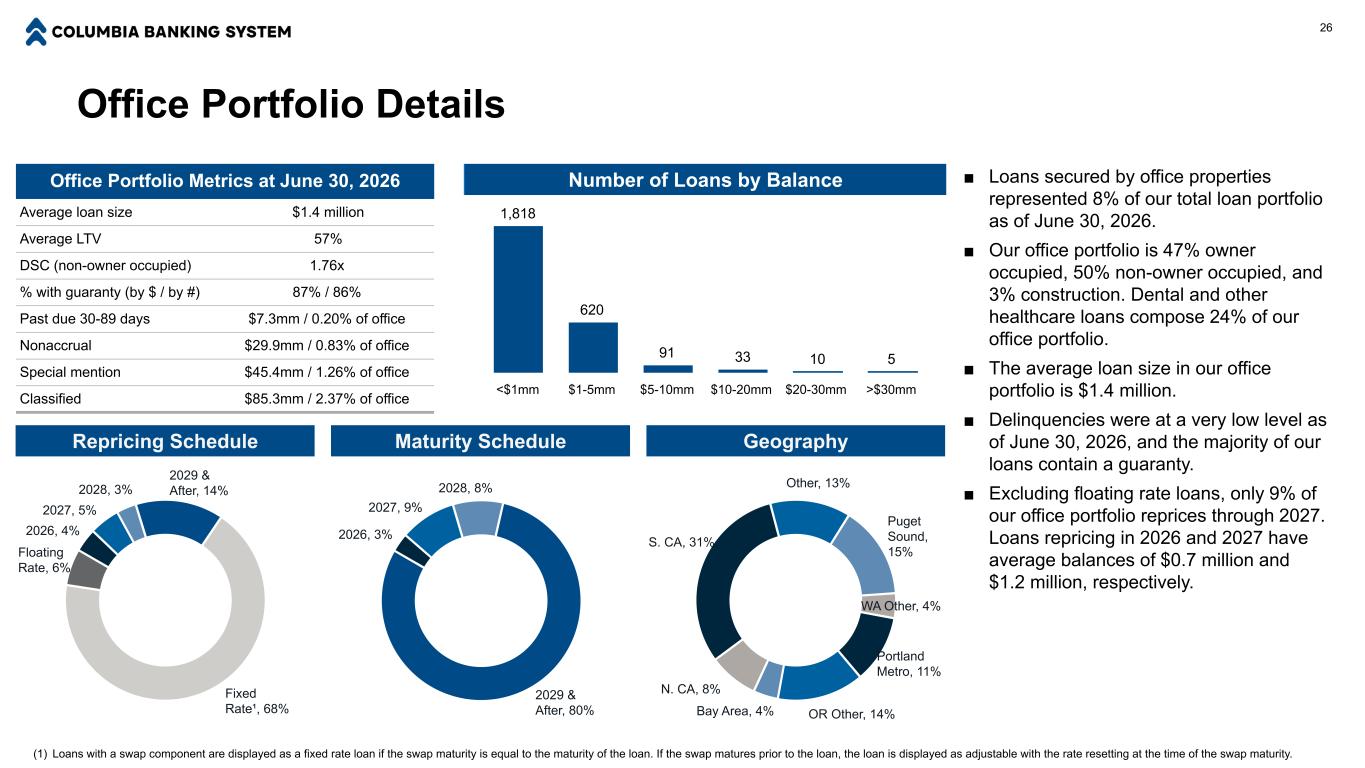
It feels pretty good. Anything incremental that you're watching in the book, and EFI got a lot of attention for the industry a couple quarters back, but just anything you know that you're re-underwriting given higher rates like yeah I mean Chris there's a really the only thing that really continues for for us and it's here over the past couple quarters it's kind of like Groundhog's Day right I mean so it's ag and but we are seeing some improvement actually in ag from us you look at the weighted average probability default at the ag portfolio if you strip out plots that probably probability of default is really pretty much in line with the past four quarters so you know that tells me that things are starting to stabilize a little bit we see grades there and that's that's really the one area that I continue to keep a close eye on I mean I mean, we've got a real close eye on the smaller borrowers, SBA, small business, but those are still holding in pretty nicely. I feel really good about the port. We've been pretty well on that. I think the rest of my questions are asked.
Operator
Thank you. And our next question comes from Jared Shaw of Barclays. Your line is open.
Yes, first, thanks for the PAA update from the security side on slide 13. But was there any impact to margin from accelerated payoffs that we should consider as well on the loan side?
No, nothing. That part of it has been very, very stable. I do want to point out one thing. So the yield piece that I talked about, there is some small amount of that which is, you know, from the PPBI securities portfolio that was acquired. But the vast majority of that is just pure discount accretion. It's been securities that we've purchased on the open market at discounts to par. So, the majority of kind of what I would call the implicit inherent volatility of accounting yield on the securities portfolio is actually not associated with any M&A that we've done. It's more just kind of open market transactions. Probably an accounting guy's nuance there, but couldn't help myself. And so, yeah, we do think that'll like kind of a rubber band kind of snap back in future quarters to where it's been. And there's really not been any real volatility this quarter or last quarter on the loan PAA. The last time we called one out would have been Q4, where we had an outsized payoff of a marked loan. But really, it's been, you know, kind of like clockwork since then. So there really hasn't been a whole lot of volatility in regard to that.
Okay. All right. And then are you generally still buying? are your new purchases still at a discount?
Yes. Yeah. For the most part, we bought, I want to say, $475 million worth of securities in the second quarter. The, you know, coupon on that stuff is roughly 80 basis points higher than what we've been purchasing. You probably won't see it as it blends in. It barely moves the needle in terms of the overall securities portfolio overall, but we did shorten the duration in terms of the purchases that we did during Q2. So that was, I think, purchased at a 2.6 year duration, which is obviously south of the back book in regard to that. And so on an amortized cost basis, the portfolio grew a little bit quarter on quarter. And that really was just kind of refill in the bucket. We'd seen it kind of just move down a little bit in Q4 and Q1. So not really any, you know, big intentional strategic shift or reallocation of capital into the securities book or anything like that, more just kind of refilling the bucket and doing so at rates that we were really pleased about from a securities portfolio purchase perspective.
Okay. All right. Thanks. And then just on the CRE side, just trying to, I guess, reconcile the answers to sort of Jeff and Matt's questions and then your discussion around just sort of a frothy market. So we should assume that you are able or want to retain more of that CRE that's coming due going forward? And is that the right way to think about that in that you're willing, I guess, to take that lower pricing on that? Or how should we think about sort of the frothy market, your lack of interest in those pricings, but also the loans that are coming due?
Yeah, this is Torrey. A couple of things to that. I think, first of all, the transactional multifamily business or the transactional loans that are coming due, they'll either reprice with us at the rate that's contractual or they won't, and they'll go elsewhere. And I think either way is fine as far as we're concerned on that, but that's a transactional piece. On the other more relationship piece, you know, if we won't jeopardize credit quality and we won't chase price to the floor, but that doesn't mean that we can't be competitive and that we can't keep some of the business or bring some additional business in the door, which we are today. And so, it's a little bit of blocking and tackling of just maintaining credit culture and negotiating wisely and getting the highest rate that we can that makes sense for our customers and for the bank. So, as I said, we've got some growth in the CRE pipeline already. But I would want to jump in here and add that in the pipeline, the loan pipeline itself for the bank is pretty phenomenal. I think our total pipeline today is about just under $4 billion, and that compares to about $2 billion a year ago, specifically in the commercial banking business. So on the C&I side, which is where there's obviously heard this tremendous emphasis for us, of the $4 billion, about $2.6 of it comes out of the commercial banking business, and that compares to a billion two a year ago so some really nice pipeline growth mostly on the CNI side which is what we're trying to do and then as of late a little bit on the rest of it and I just wanted to clarify one thing maybe I was not clear on the response to one of David's questions this was really around the transactional component of our balance sheet and you know that of the transactional loans we have, roughly, you know, $5.4 billion of that is commercial real
estate, either multifamily or non-owner-occupied. We are not, you know, originating more transactional loans where we don't have a relationship with the end borrower. We have in the past quarters talked about, in particular coming out of PPBI, hey, would we take a hit to tangible capital and sell some of this at a discounted rate? And we look at that every quarter. We continue to feel that in terms of driving value to shareholders, that's not the way to do it. I think that you would diminish tangible book value in executing that trade, and that the better plan is to let that either mature or reprice back to levels that are no longer a net interest margin headwind. So that's what I was alluding to earlier when we talked about the response to David's question, just to hopefully eliminate any confusion I might have caused there. Great. Thanks a lot.
Operator
Thank you. And our next question comes from Janet Lee of TD Cowan. Your line is open.
Good afternoon. On fees, you screen as, I mean, in terms of the revenue composition, you drive more of your revenue from NII and less so from fee income versus peers. Now that the PPBI integration is behind you, and to Clint's point earlier, you're having fun again, how should we think about the upside to your fee income from current level?
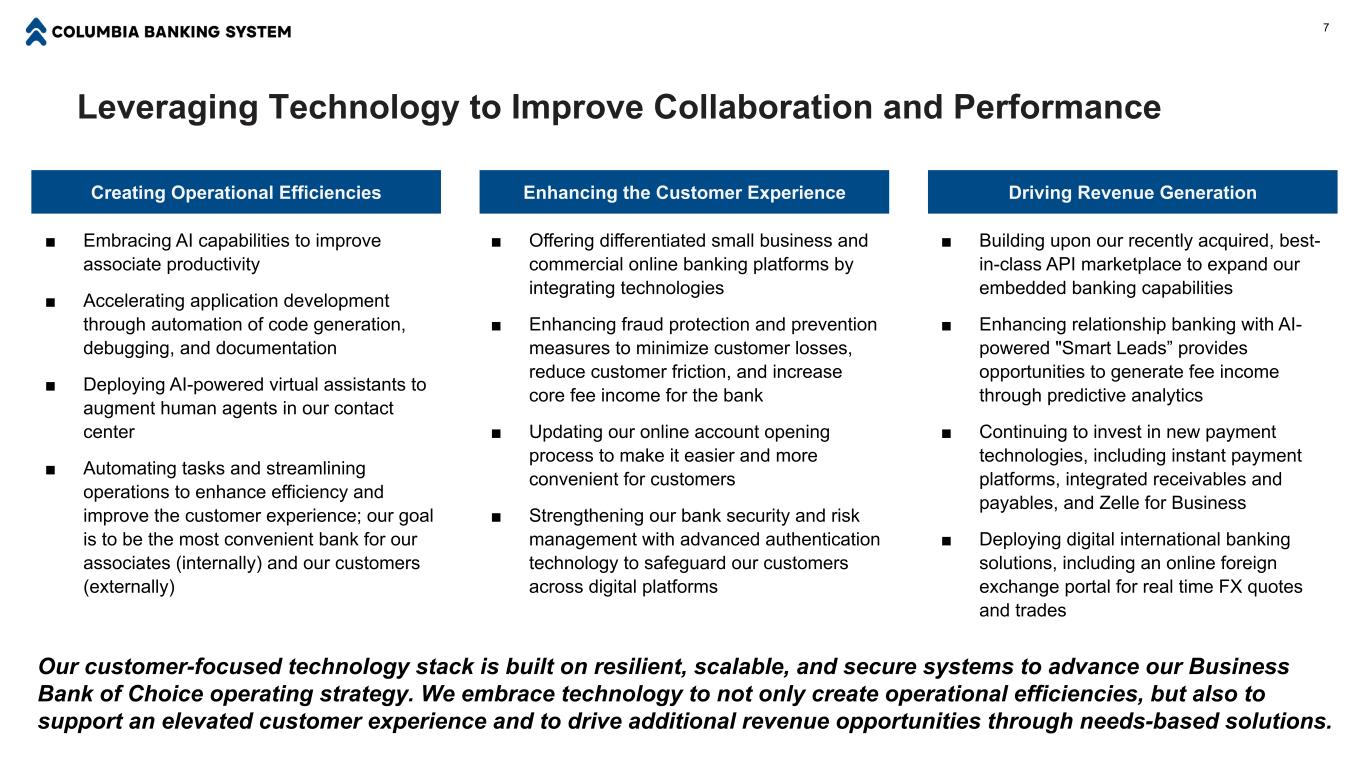
I appreciate the mid-80 million near-term guide, but how should we think about the growth trajectory there beyond the third quarter? so uh janet this is tory i'll give you some of the details and i'll let ivan if he wants to kind of add in uh on top of that um you're 100 right i mean there's there's a lot of fun in this business and we're actually seeing it again which is great there's been a tremendous growth trajectory on the fee income side of the house for the bank um and it's coming from from all parts of the company We, you know, year over year, our treasury management business is up just under 9%. Our international banking business is up 9.5% year over year. Commercial card is up 9.5% year over year. Our merchant business is up 9.5% year over year. So, you know, those things that are really solidly connected to customers, there's a tremendous growth trajectory. For the first time ever, our commercial card spend for our customers is over $100 million in June, and that's up 14% year over year. Our wealth business, our combined wealth business, had a record-setting quarter in Q2, and their momentum has carried forward into July, and we think that it'll just kind of continue. So, on the fee side, just individually at the unit level, you know, we've got solid pipeline, healthy activity, and a lot of good growth. So, I think it's a great story for us on the fee income side.
Is the mid-single-digit kind of growth the right rate for you?
That's probably right. I think if you were to look back the last handful of quarters, this is Ivan. We've probably been outperforming that a little bit. But, you know, one of my favorite way to look at it, and I think everyone's got their preferred, you know, analytical lens is looking at the non-interest revenue as a function of the size of the bank. Right. So on an average assets basis. And so as I look back to a year ago, prior to PPBI, prior to some of the optimization and then just the core growth and relationships, we were, you know, somewhere in the high 40 basis point type range. You know, this quarter we reached 55 basis points. And so, you know, it's incremental. It takes, you know, brick by brick. But it continues to translate into a higher percentage of our revenue base in the form of fee income. And I like that lens a bit more than just the percentage of the overall revenue pie because we also think that we've got opportunities to grow net interest margin, right, which will grow NII over time as well. So I think you're in the right ballpark in terms of how you're thinking about modeling that out going forward.
Got it. And if I can just squeeze in one more on expenses, the $330 to $335 million range in the third quarter, is that the ballpark range that we should be expecting for the fourth quarter? And then how should we think about the normalized expense growth runway now that, again, the PPBI is behind you and maybe things are going back up again?
Yeah, to the first question of the two, I would say absolutely. And Clint said it earlier, but I'll reiterate it, you know, a great call out to Drew and Tom and the PMO and our tech teams for just an incredible job with the technical integration during the first quarter of the year. And that really allowed us to turn our focus into the, you know, ensuring that we were very focused on the opportunities around the cost synergies, like we talked about earlier. We outperformed that by $5 million in terms of that element of it. We don't think we're done there, right? Clint has, I think, talked very directly about our, you know, excitement around being focused internally. And after doing the PPBI deal and the MOE from several years ago, an opportunity to take a breath and focus on internal processes and drive optimization and efficiency throughout the course of the bank. And honestly, that's what you're seeing in the first half of this year as we've performed very well from my perspective on that front. We do expect that Q4 will be in the same range as Q3. You know, I would ballpark 2% as kind of a level of normalized growth as you go beyond that, but, you know, maybe write that one in pencil because we'll come back with probably more firm guidance, you know, in the fall as we start to really sharpen our, you know, views into 2027 and where things are going and the pace of reinvestment and some of the things that Chris was able to highlight earlier as well. So, that's how I would frame that one up.
Operator
Thank you. Thank you. And our next question comes from Timur Braziliar of UBS. Your line is open.
Hi, good afternoon. Do you need to see payoff activities start to abate before you start seeing net loan growth again? And then I'm wondering, given some of the competitive dynamics that you called out, do you really need to start seeing net loan growth again to justify ramping up deposit growth? And is that what's ultimately needed to restart the NII growth engine?
Yeah, it's a great question. I think there's more to it than just whether or not, you know, we continue to see elevated levels of prepayment volumes in commercial real estate assets. We've talked about the transactional portfolio. And so as you're looking at things on kind of a net growth basis, obviously, I alluded to nearly a billion dollars worth of reduction in that portfolio over the last three quarters that's a factor in terms of the the growth or lack thereof but obviously we're very focused on optimizing our loan portfolio and we do believe that that will drive a more efficient both balance sheet and bank you know once we get through the end of that we've got 3 billion more that's maturing over the next 12 months and we view that as an opportunity to recycle that capital which has been locked into you know, low to mid 4% yielding assets into more productive lending opportunities. We were talking about our pipeline earlier today. You know, a billion three is a great number when you compare where we landed in Q2 of this year versus the prior year. I don't have the exact percentage, but it's a significant lift in terms of the volumes. And that volume really is coming in the form of CNI and owner occupied commercial real estate. So it's been in the arena of, where we want it to be. And then just on the deposit side, we still have opportunity to continue to optimize our funding stack. I think we were talking earlier about from Matthew's question around the level of borrowings that we have.
So as there's ebbs and flows in terms of the demand for liquidity for our loan portfolio, we can continue to week by week optimize against that wholesale funding and maybe chris will kind of speak more to the deposit side yeah thanks um yeah we don't look at it as growing deposits to always just fund loans i mean a deposit only customers really valuable to the bank and they have great relationships if you end up with the operating accounts then that turns around and drives into the fee income areas of us the fact that we're holding loans you know steady or slightly down it does allow us to hold the line on some of that pricing and be able to maintain our discipline there, but we're always interested in growing the deposit base.
Thanks for that. And then, Clint, maybe one for you. You had called out on 19.5% illustrative ROTC for 26 when you announced the PPDI deal. I guess in doing a post-mortem over the past year, what's been the biggest headwind to achieving that target and maybe talk us through the right way to think about profitability goals going forward?
Hey, it's Ivan. I'll take a first crack at that. Look, I think we're on a trajectory for very positive Roth C levels. And I think you see, you know, an increase this quarter relative to last quarter of, you know, roughly 1%. We're at 16% ROTCE. we're operating at a level from a capital-based perspective that is you know above and beyond what we think we need to efficiently operate the bank and that's prior to some of the NPRs that are out there that as we've talked about earlier provide some very interesting optionality you you know think about continued optimization of our capital stack you know we're working through that process in terms of that excess capital and and I think have been very active in terms of the redeployment of that capital back into our share repurchase program and in dividends which which in aggregate you know is going to return over over a billion one of capital to shareholders over the course of 12 months so that's how I would view it you know these processes take time in terms of the balance sheet optimization and the shift in mix and as we continue to move through that, you know, we believe you'll continue to see upward momentum in the return profile on a return on capital basis for the franchise.
Yeah, and the one thing that I'll add specific to, you know, the 19% ROTC target, you know, I've been mentioning 16% here in the second quarter, you know, just, what, I guess, a little over three quarters in three, full quarters into the close of the acquisition but you also have to remember back or think back to our starting capital when we closed the pack premier deal was higher you know the amount of capital that they brought in and the marks you know we started with more capital than what we
had in the model when we put that 19% ROTC out there.
And that actually is what enabled us to start the share repurchase program as soon as we did, as well as the size of it. We sized it at the $700 million. And even then, we're still running today after returning $500 million roughly of share repurchases uh uh and then our our quarterly dividend um was at about 800 you know 800 million of capital return uh over that time period um and we're still north of 13 percent total risk-based capital um eight six or something like that on tce uh so that's what we've always said is that we're going to generate capital, and we're going to be a capital return story. We said that five years ago with the UMPWA deal, and we said that PAC Premier would enhance that. And so, it's a first-class problem to have, generating too much capital and trying to get that down to your level. That's why in my prepared remarks, I said that we anticipate that we're going to continue to be in the market, repurchasing our shares investing uh into our company for the foreseeable future so hopefully that helps you great thanks for that caller thank you our next question comes from anthony ellion of jp morgan your line is open hi everyone on deposits you noted you start to see balances expand so far in july could you size up the magnitude of the rebound in 3q and 4q you expect just given the second half of last year was muddied from the deal?
I'd say we're on a full year basis still targeting that low to single digit total core deposit growth that we've talked about. And I think Chris kind of unpacked it earlier in his comments. The vast majority of the movement we've had in the deposit base broadly was in the form of brokered CDs and higher cost wholesale sources. You know, when we think about the reduction that we saw in Q2 out of our core deposit portfolio, we saw reductions in some of the legacy PAC Premier accounts, specifically in higher cost CD portfolios alongside, you know, the normal seasonal flows that we get every April.
So, you know, we're extremely pleased with what we've seen so far in July, starting to see that rebound back up uh in that regard but i don't know if i want to ballpark a specific number other than you know kind of full year outlook in that low single digit range yeah anthony this is chris um i i just repeat kind of what ivan said there on the low single digit part of that you know the it all works hand in hand if we want to increase the cost of the deposits you could drive that number a little bit higher. And the fact of keeping loans flat to down slightly, we're able to keep the discipline and keep our cost of deposits down. And so I think what I've stated in that low single digits is the right place to think about it.
Okay. And then on Nim, following up on a previous question, do you expect 3Q to get up to and beyond 4% for the quarterly average of what you'll print for 3Q or on a spot basis on a particular day during this quarter? Thank you.
Operator
Thank you. And our next question comes from Andrew Terrell of Stevens. Your line is open.
Hey, good afternoon. I just had a follow-up on the security field. Can you help us understand? I guess I know the prepay assumption can move this around a bit quarter to quarter, But if we just assume rates are flat throughout the third quarter, does the securities yield rebound to that kind of 420-ish type level, or do you need to see rates go back down to get securities yields back up?
No, and obviously, there's a lot that goes – a lot of technical CPR analytics and prepayment expectations that go into it. The duration portfolio of our MBS CMOs and CMBS are all slightly different. So it kind of depends on, you know, how the curve shifts over the course of the quarter, at what pace and at what tenors. But generally, like the simplified version of that would be assuming it stays steady over the course of the quarter, we should not see that as a continued headwind. It really was a function of, you know, the, you know, whatever it was, 40 or 50 basis point shift in rates that we saw over the course of Q2. So that's the simplified way I would frame that up.
Okay, great. No, that's helpful. I appreciate it. And then actually just last one, Ivan, I think you mentioned something in the prepared remarks just to the tune of outside of buybacks, continuing to look at ways to optimize the capital stack.
Was that in reference to just, you know, the mixed change on loan growth expected or could you maybe unpack that a little bit more? um no i i think that for the last three quarters so following the the close of uh pacific premiere um you know we were excited to announce our share repurchase program and that's really been our flagship focus for the last several quarters and as we indicated uh in our prepared remarks we will continue that uh in q3 that'll be the final quarter our fourth quarter of kind of the authorization that we announced last year. We're excited to come back with more dialogue on future expectations around what a share repurchase program could look like for Q4 and into 2027. And as Clint indicated, that will be a continuing focus. In addition to that, we are looking at our full capital stack. And by that, I mean our tier two sources of capital, which are really at this point limited to the ACL as well as some of our legacy trust preferred securities and optionalities that we have to more efficiently kind of lock in some of our tier two capital at efficient rates and prices. So that's something that we'll be evaluating here as we go into Q3.
Okay. Makes sense. Thanks for taking the questions. Great.
Operator
Thank you. I show no further questions at this time I'd like to turn it back to Jackie Baldwin for closing remarks.
Thank you thank you for joining this afternoon's call. Please contact me if you have any questions or would like to schedule a follow-up discussion with members management. Have a good rest of your day.
Operator
This concludes today's conference call. Thank you for participating and you may now disconnect.