Operator
Welcome to the S&T Bancorp second quarter 2025 conference call. After the management's remarks, there will be a question and answer session. Now, I would like to turn the call over to Chief Financial Officer Mark Kochfar. Please go ahead.
All right, thank you. Good afternoon, everyone, and thank you for participating in today's earnings call. Before we begin the presentation, I want to take time to refer you to our statement about forward-looking statements and risk factors. This statement provides cautionary language required by the Securities and Exchange Commission forward-looking statements that may be included in this presentation. A copy of the second quarter 2025 earnings release as well as this earnings supplement slide deck can be obtained by clicking on the materials button in the lower right section of your screen. I'll open up a panel on the right where you can download these items. You can also obtain a copy of these materials by visiting our Investor Relations website at stbancorp.com. With me today are Chris McComish, S&T's CEO, and Dave Antelic, S&T's president. And I'd like to turn the program over to Chris.
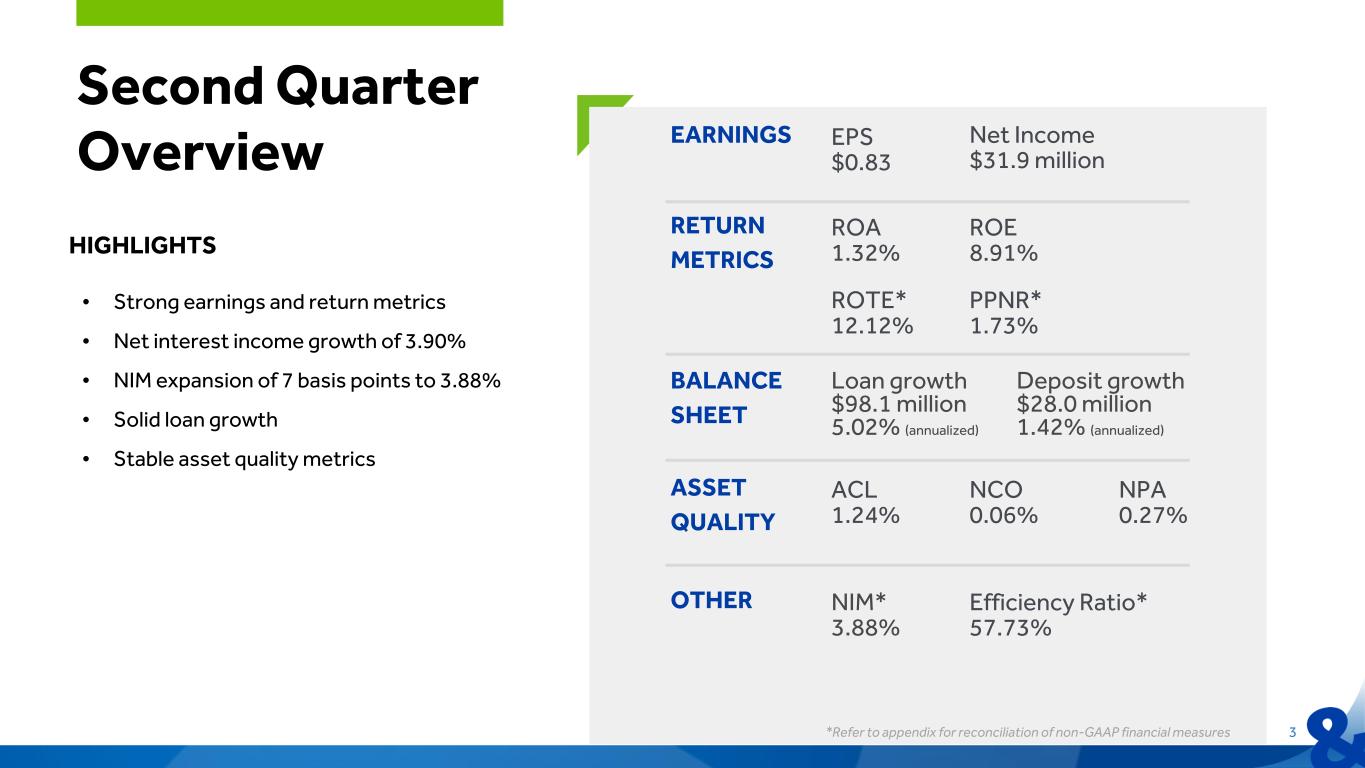
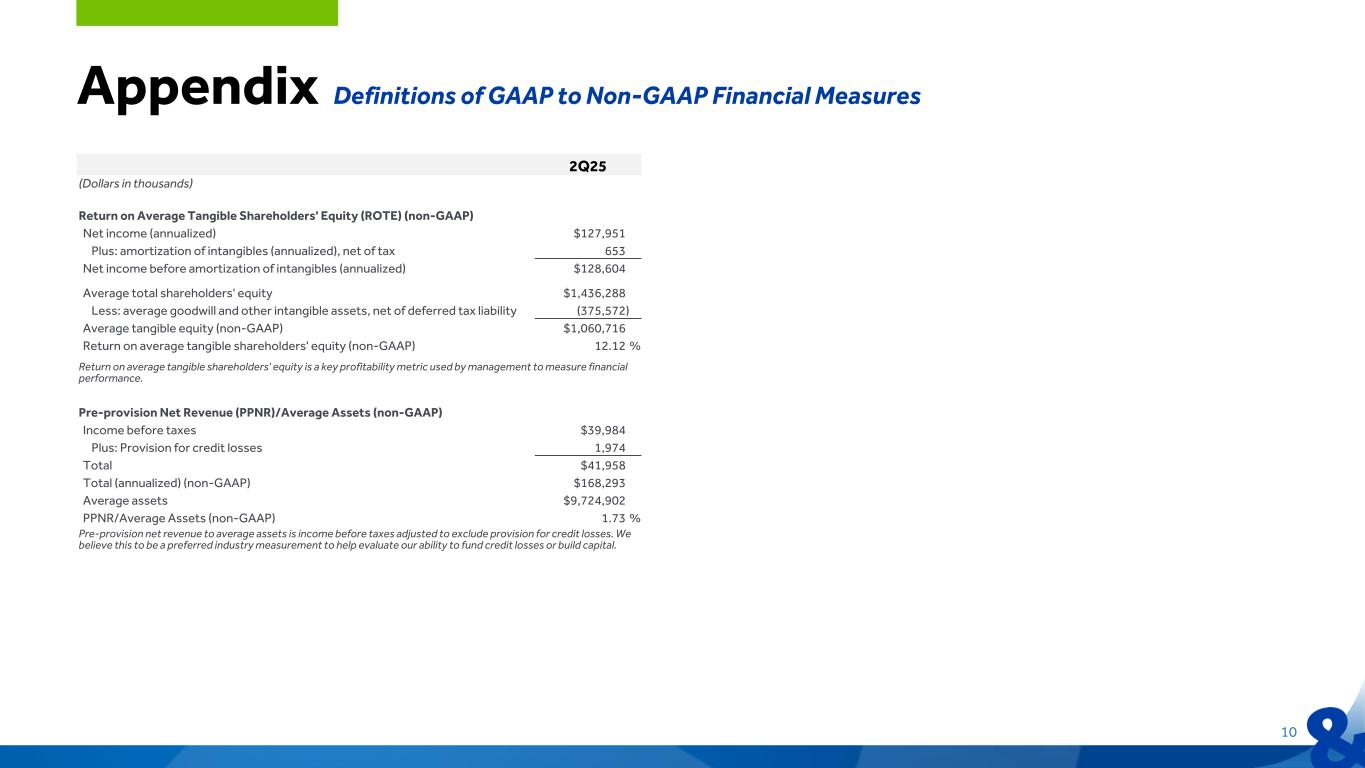
Mark, thank you. And good afternoon, everybody, and thank you for being on the call. I'm going to begin my comments on page three, and we look forward to your questions as we get to the wrapping up our comments. Before I get started, I do want to thank our employees and shareholders and others listening under the call. And to our leadership team, as always, thank you for your great work. these results are yours and you should certainly be very proud you know over the past several years we've made significant strides in positioning our company for long-term success you will see that focus in the numbers we discussed today including first by strategically repositioning our balance sheet to reduce asset sensitivity we've enhanced our ability to drive consistent net interest income growth through the throughout the interest rate cycle second our focus on improving asset quality has laid a strong foundation for growth enabling our shift and our intentions to that growth and finally our continued investment in our deposit franchise has resulted in a solid deposit mix with non-interest bearing deposits representing 28 of our total deposits and eight straight quarters of deposit growth while maintaining a very healthy net interest margin together these strategic initiatives have created a solid platform for current strong performance and our confidence in our future additionally this quarter's loan growth has driven total assets to over 9.8 billion dollars as we've shared on previous calls we remain very optimistic about our ability to pursue future inorganic growth opportunities certainly gives us a lot of flexibility at the same time we are committed to a disciplined approach that aligns with our long-term strategic objectives and we have a clear path to ten billion dollars through organic growth in the coming quarters in summary I'm very excited in building our company for the future turning to page three looking at the corridor q2 with it was another EPS of 83 cents a net income of 32 million while ROA came in at 1.32%, and our PPNR remained very solid at 1.73%. Our PPNR was aided by both NIM expansion, increasing to a robust 3.88%, up seven basis points linked quarter, while net interest income rose almost 4%. Asset quality and asset growth were both solid as loans increased five percent while the acl dropped two basis points linked quarter well customer deposit gross was somewhat muted as i said earlier dda balances remain very impressive at 28 while contributing almost two-thirds of our overall deposit growth in the quarter expenses were a little bit higher this quarter due primarily to some incentive accrual catch-up because of our performance and mark's going to get into that detail i'm going to stop right now turn it over to both Dave and Mark. Don't want to steal their thunder. Dave's going to talk a little bit more about the balance sheet as well as asset quality.
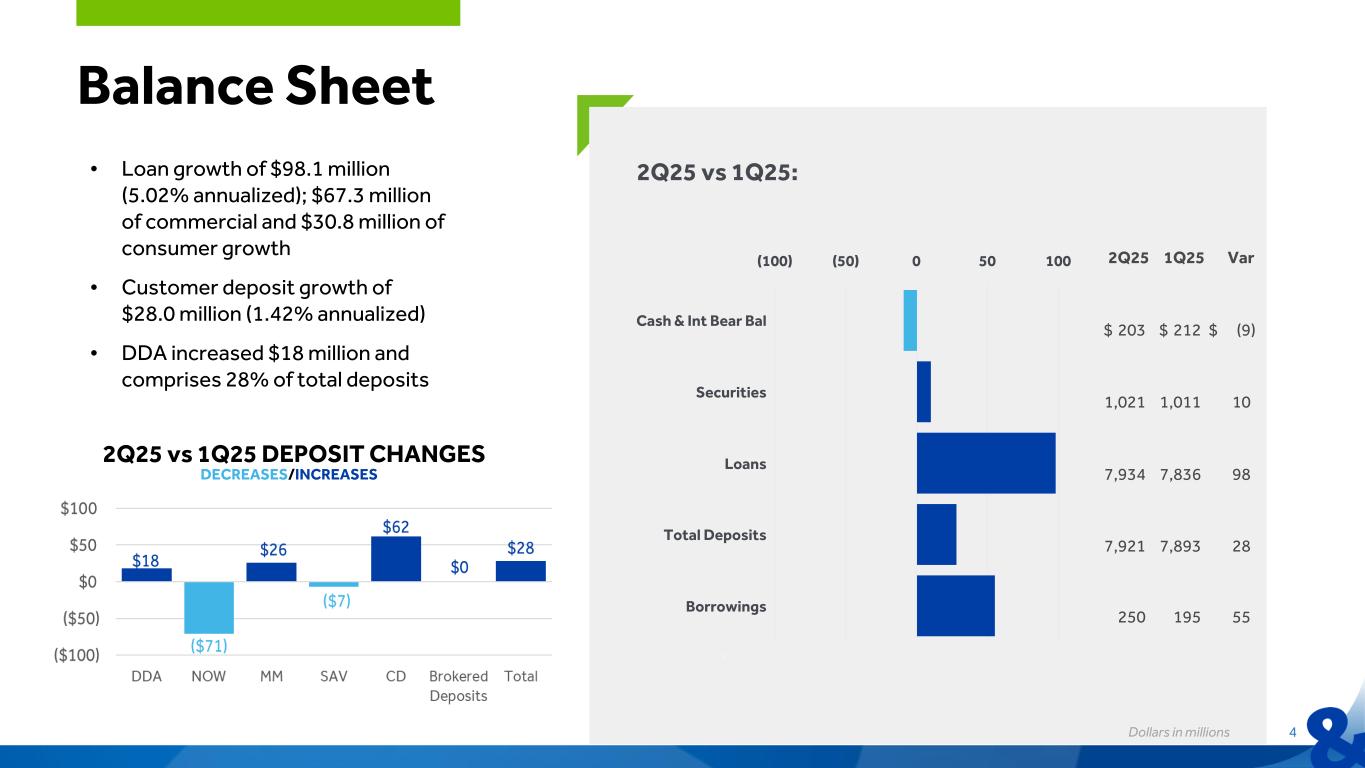
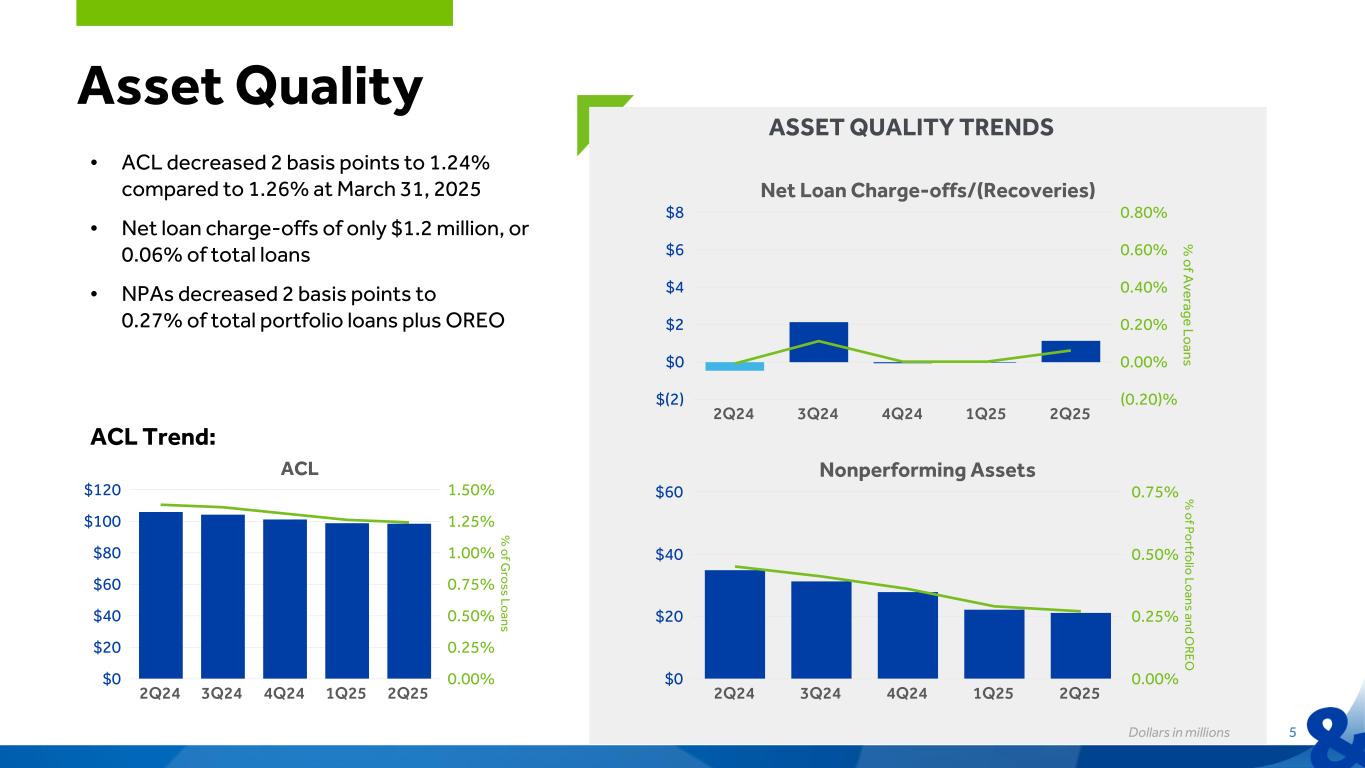
Dave? Great. Thank you, Chris, and good afternoon, everyone. Referring to page four of the earnings supplement, you'll see the continuation of our organic growth trends, evidenced by annualized loan growth of just over 5 percent, or $98 million in Q2. This growth was driven in large part by our commercial real estate balances which experienced another solid quarter increasing by 58 million dollars categories of commercial real estate growth include multi-family and our retail segments we also saw solid performance from our mortgage and home equity businesses which combined for 26 million dollars in net growth although cni balances were flat for the quarter we've seen an increase in calling efforts and pipelines in this category the total commercial pipeline is now approximately 60 cre and 40 cni and overall remains robust we believe that we can consistently deliver loan growth in the high mid single digit range for the second half of 2025 by maintaining cre mortgage and home equity activities and by executing on a strong pipeline of cni opportunities In support of these activities, we've added four new commercial bankers since the beginning of Q2, including a new C&I team leader in Central Ohio. Turning to deposits, as Chris mentioned, Q2 yielded our eighth consecutive quarter of customer deposit growth as we continue to leverage our banker-driven customer relationship sales process, which is supported by a maturing and robust deposit exception pricing platform that focuses on delivering first-class customer experience while maintaining our pricing discipline. In total, deposit balances grew by $28 million, or 1.42% annualized in Q2. As Chris mentioned, from a mixed perspective, our growth in Q2 was largely driven by CD and money market activities but we're very proud of our ability to track and maintain non-interest bearing dd balances and those balances represent 28 percent of total deposits and grew by 18 million dollars in the quarter turning to page five which provides an update on our asset quality our allowance for credit losses declined by two basis points from 1.26 to 1.24% of total loans. This reduction is an outcome of our team's focus on maintaining reduced levels of MPAs, as depicted on the slide, as well as maintaining a lower level of CNCs. In total, CNCs remain stable for the quarter. Charges were modest and in line with our expectations at $1.2 million for the quarter. As mentioned last quarter, we We continue to monitor the potential impact of tariffs and a changing economic landscape. To date, these issues have had no impact on our growth, including pull-through rates from our pipelines, and we've heard little concern from our customer base. Customer conversations relative to this issue have quieted recently, and businesses continue to focus on managing the variables that they can directly control. Finally, our credit risk management practices rely heavily upon the collection of data and analysis of pertinent industry and customer-specific information. That data informs these banker-led conversations that I spoke of, and we use that data and those conversations to aggregate a segment-specific and overall credit risk. I'll now turn it over to Mark.
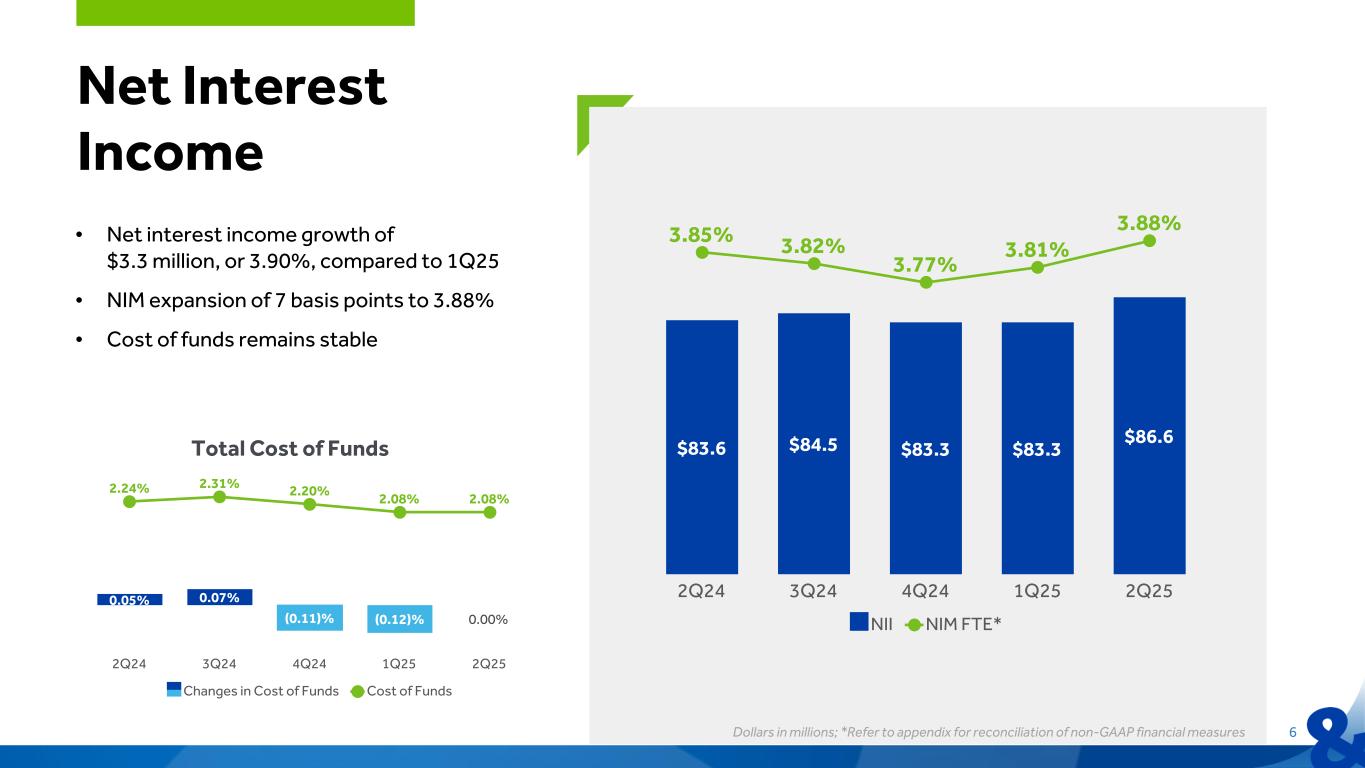
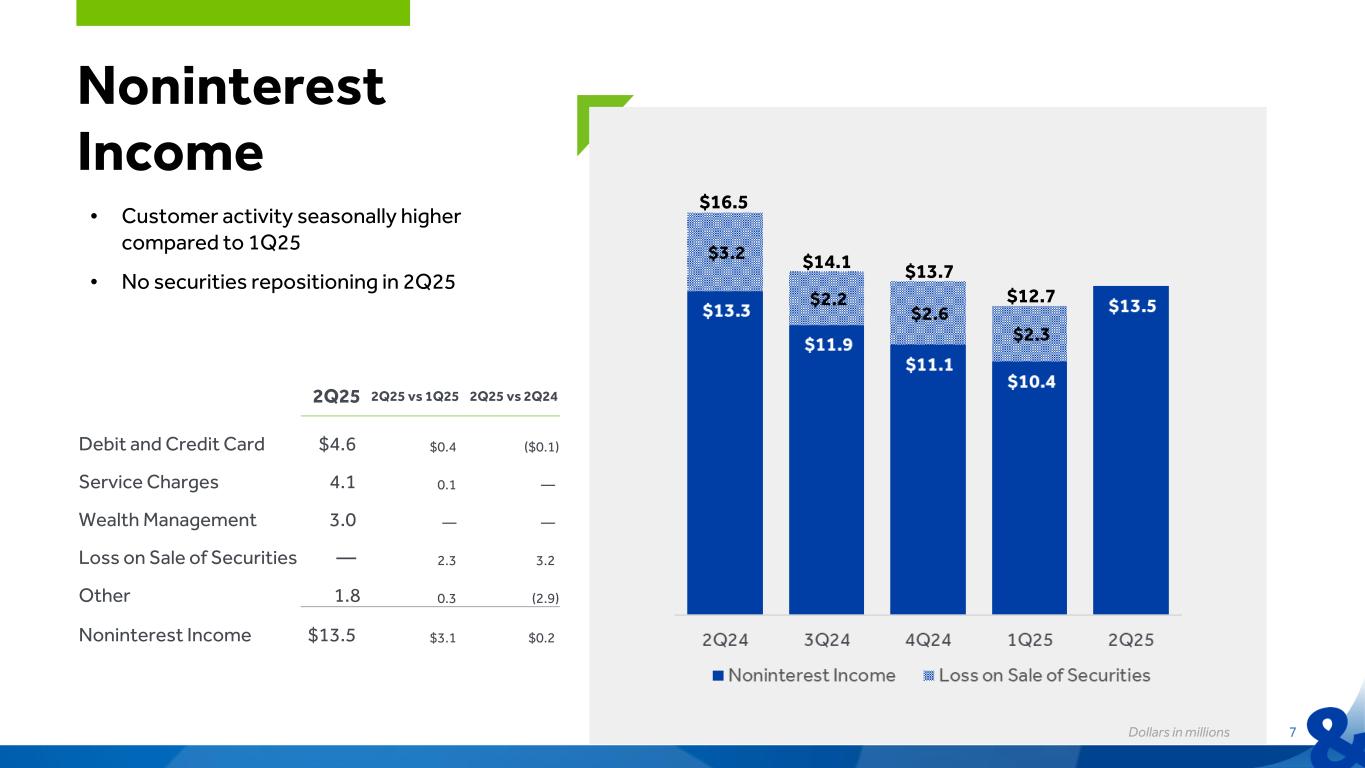
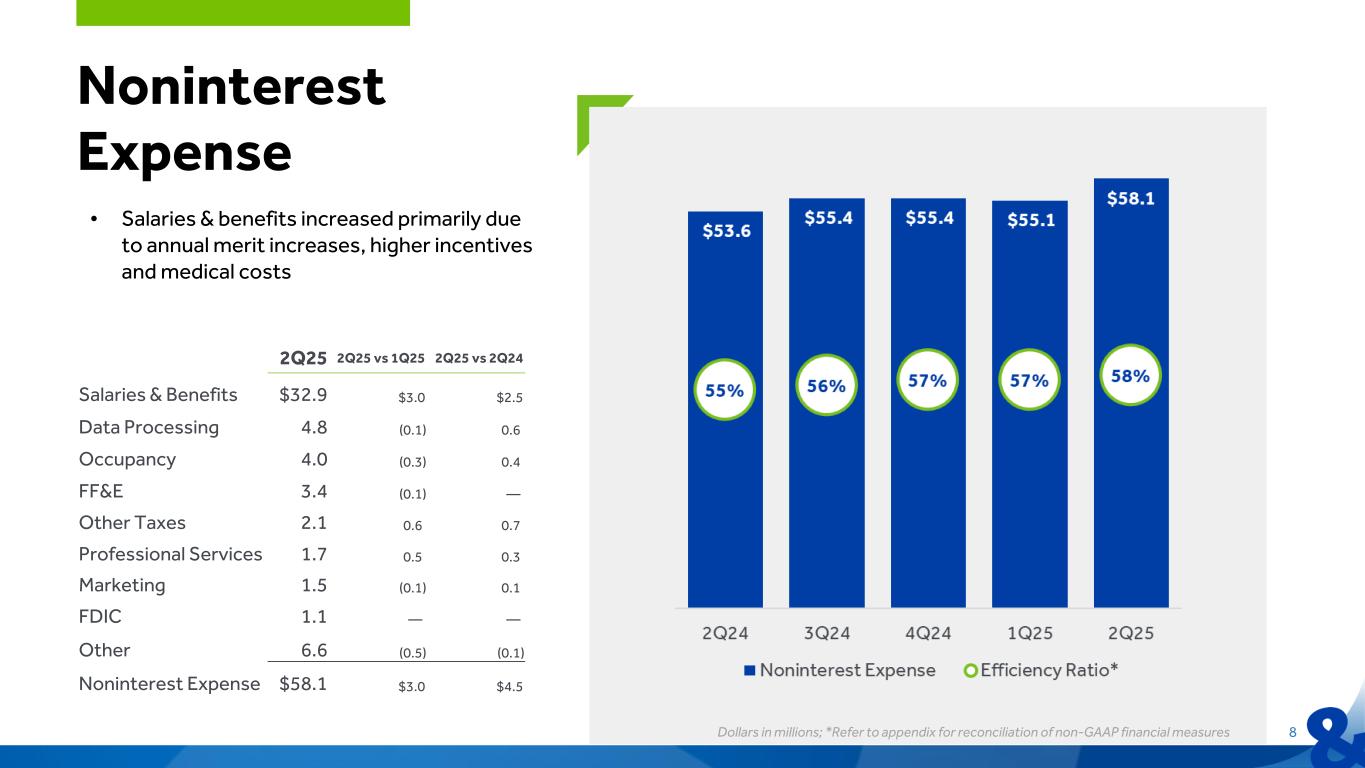
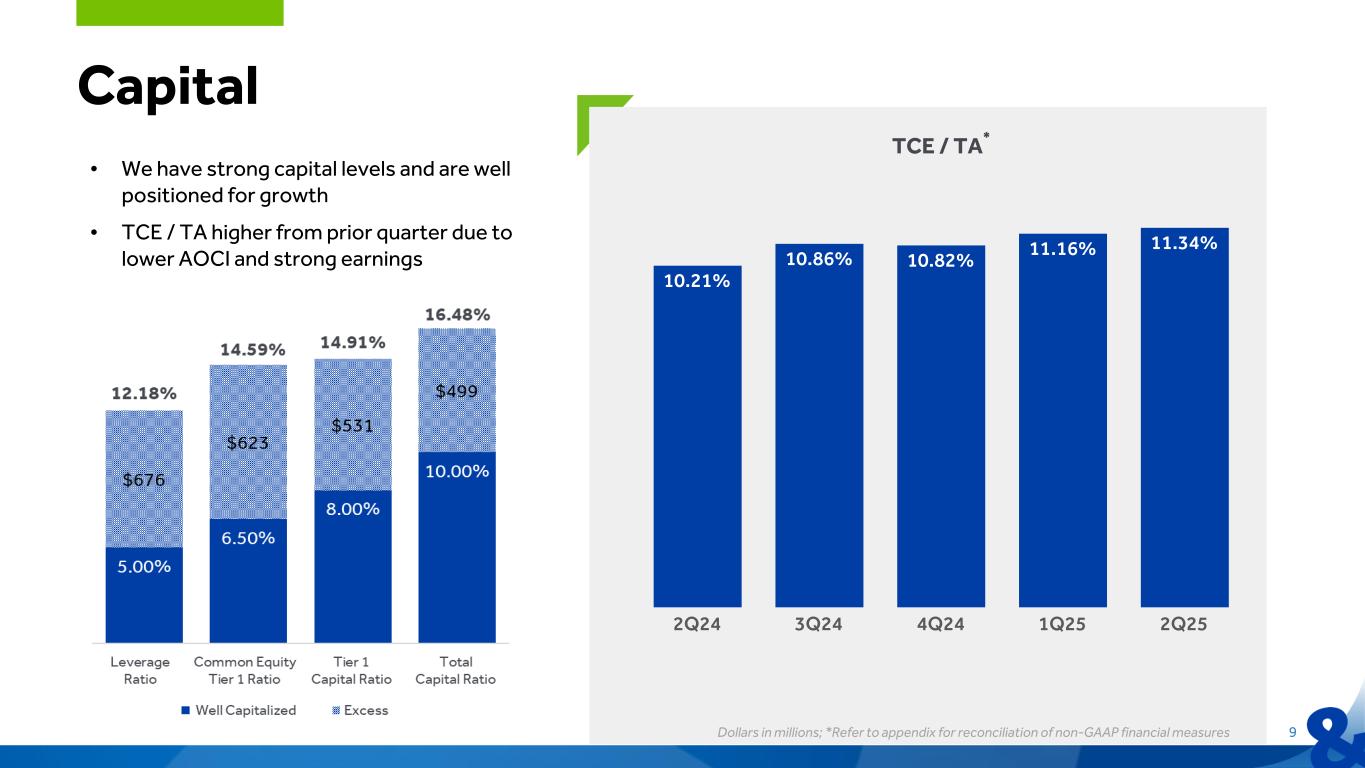
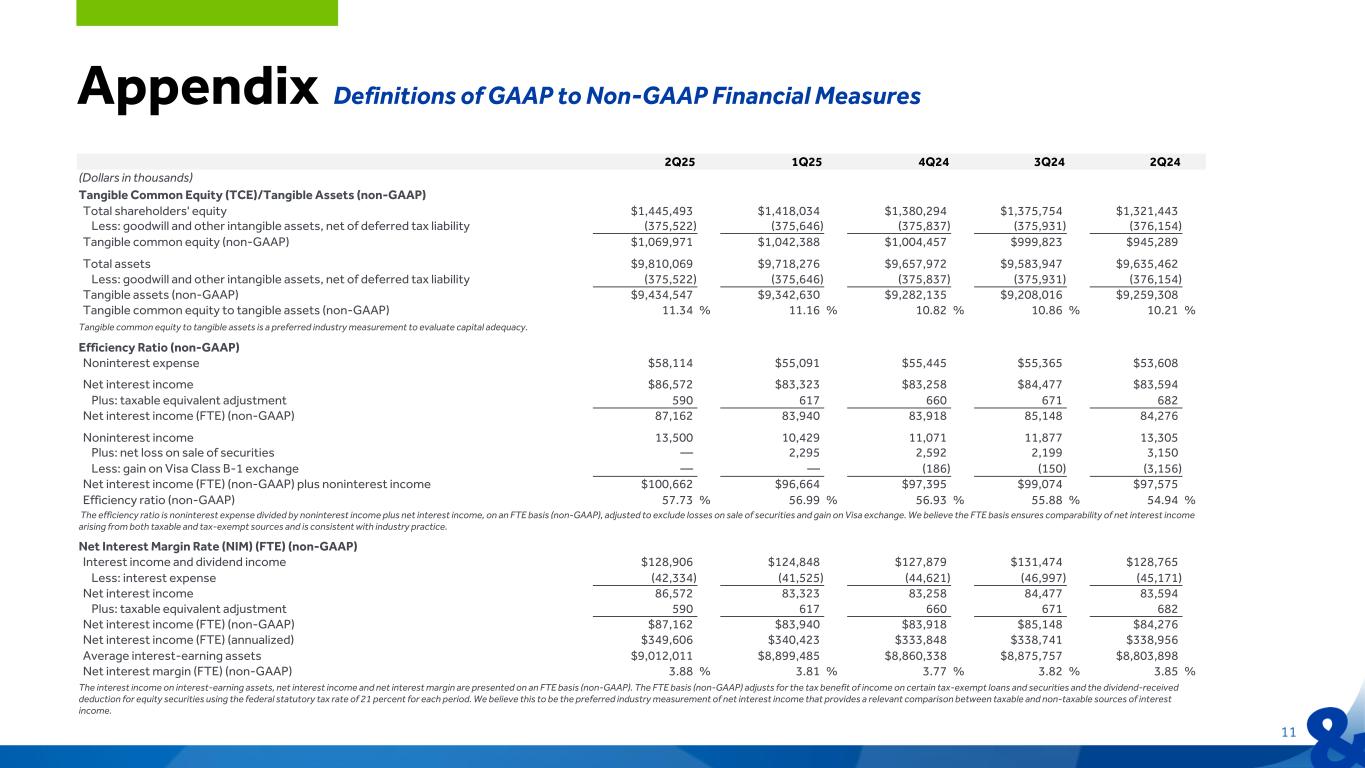
Thanks, Dave. Second quarter net interest income improved by 3.3 million, 3.9% compared to the first The net interest margin expanded by 7 basis points and combined with loan growth of 5% to produce the best quarterly growth we have seen in this revenue item since 2022. The net interest margin improvement came from earning asset repricing in both loans and securities combined with a stable cost of funds. On the asset side, we saw additional benefits in the securities book with the restructuring we executed at the very end of the first quarter and with loans we saw overall positive repricing of about 16 basis points. On the funding side favorable cd pricing was offset by deposit and funding exchanges along with some but more limited deposit exception pricing. We expect the non-interest margin to stay fairly stable if the fed cuts raised twice this year as expected. There's some limited upside for us in a higher for longer scenario. Next slide on non-interest income increased by $3.1 million in the second quarter, primarily due to the securities repositioning related loss of $2.3 million in the first quarter that I referenced. Second quarter also saw a rebound in consumer activity from the first quarter, which is typically seasonally low for us. Our expectations for fees going forward remains at approximately $13 to $14 million per quarter. Expenses on the next slide increased by $3 million in the second quarter compared to the first. variances were concentrated in salaries and benefits. Base salaries were up about $900,000, about two-thirds of that was related to the annual merit increases which became effective in the second quarter, and the rest with the new hires primarily on their production areas that Dave referenced. Incentives were up about $1.2 million, with most of that being performance-related in both our long-term and annual plans. and finally our self-funded medical expense increased by about 1.2 million while we typically see an increase in medical expense in the second quarter compared to the first the first quarter is typically lower due to resetting of annual deductibles the increase this year in the second quarter was about double what we typically see moving to on to other expense categories the quarterly variances in other taxes and other offset and are related to pennsylvania shares tax credit programs. And finally, professional services increased by about $500,000, mostly due to the timing of various projects. While some of the expense increase we had in the second quarter is temporary, the base salary increase and some of the medical we do expect to recur. Our quarterly expense run rate we now expect to be approximately $57 to $58 million for the second half of the year. Next in capital, the TCE ratio increased by 18 basis points this quarter with AOCI improvement contributing eight basis points of that. Strong retained earnings was offset by asset growth for the remainder. Most regulatory ratios declined slightly due to risk-weighted asset growth, which also included an increase of over 80 million dollars in loan commitments.
Operator
Our TCE and regulatory capital levels position us well for the environment and will enable us to take advantage of organic or inorganic growth opportunities. thanks very much at this time i'd like to turn the call back over to the operator to provide instructions for asking questions thank you and the floor is now open for questions if you have any questions please press star 1 on your phone and we ask that while asking your question you please pick up your phone and turn off the speaker phone for enhanced audio quality and please just hold a moment while we pull for questions okay it looks like our first question comes from the line of Justin Crowley with Piper Sandler. Justin, please go ahead.
Hey, good afternoon, everyone.
I just want to start on some of the margin inputs here, and in particular, looking at funding costs where you saw things stabilized in the quarter. You know, how do you see the progression there or from here with the idea being to ramp up the pace of loan growth? You know, maybe just thinking about a flat rate environment for a second, you know, could we see some upward pressure on deposit costs just given the need to fund the forward loan growth?
Well, to the extent that we're successful in our deposit raising efforts over and above, we should be able to offset some of that with a decrease in borrowing, which are similarly priced. But the incremental margin that we're getting might be a little bit lower than the 3.88 percent. So there could be a little bit of pressure on growth on the margins.
And then just to clarify, you'd mentioned perhaps in a hire for longer environment, there being potential upside. Could you just quantify that a little further and just talk about the drivers in the event that unfolds?
The benefits that we've been seeing just in the repricing on both the security side and the loans, along with the swap book that is maturing for its received fixed swap book. We have about $50 million maturing each time. So we'll get a little bit more of those benefits in a flat environment versus having to be more aggressive on the deposit repricing side should rates drop down. But it'll probably be in a couple basis point range. It's not that significant. It's probably a couple, maybe a basis point or two, or as time goes on, if they don't cut it.
Okay, got it. That's helpful. And then, you know, it sounds like there's still a lot of confidence in hitting, you know, that mid to high single digit loan growth, you know, pace of growth in the back half of the year, you know, which would seem to put you over $10 billion by December 31. want. Is that kind of what you're planning on? Is that the most likely scenario or are you given much thought to managing below that level? How do you think about that?
It'll be, I mean, if we hit the numbers that we expect, it will be close. So we'll just play it by here, see how that goes at the end. If it's close, there's a few things we can do to stay under, to maintain the under 10 billion for another year, but we're not going to do that for very long. It'd just be a one-time thing.
Okay, got it. And then if I could just maybe sneak one last one. I'm just on M&A, you know, it seems like we're seeing more deals get announced. So just curious, the pace of conversations from your standpoint, you know, I know you mentioned in the prepared remarks, Chris, that, you know, that remains a critical part of the strategy, but just curious how things might be developing on that side, just as we've seen, you know, bank share prices do better here.
You know, I'm not sure how that's informed discussions and just the likelihood of getting something depend yeah these are um justin thanks for that that question and yeah these are all long-term relationship building exercises and we're very diligent about that with those those companies that we uh we have potential interest in so um you know the the relations relationships continue to be built i the lots of you know a lot less uncertainty today in the market than there was back three or four months ago. So people are looking to move forward. Okay, got it.
And then maybe just geographically speaking, and I know you've discussed it before, but is there any reason to think the focus has shifted at all? Are there certain areas of your footprint or contiguous markets that look more favorable today? What's the thinking there?
We're still very focused on how we define our core markets of today, Pennsylvania and Ohio, and then stretching a little further south and east into the Virginia, Maryland, D.C. markets, all of those are attractive to us.
Okay, great. I will leave it there. Thanks so much for taking the question.
Thank you. Appreciate it. Thanks, Justin.
Operator
Thanks, Justin. And our next question comes from the line of Daniel Tomeo with Raymond James. Daniel, please go ahead.
Thanks. Good afternoon, guys.
Maybe first on credit, you know, that that's been a very good story for you guys for the last several quarters is a, uh, you know, kind of the early stage stuff has come down. And then that really the net charge ups have been almost nothing. Um, curious kind of where you guys see it going from here. Um, you know, with, you know, reserves down to one 24 of loans and, um, net charge offs bouncing around kind of at the near zero levels. If you, if you've got thoughts on, on, um, kind of a more normalized rate now that you're down at these levels?
Yeah, I think at this point, Dan, we've focused on stabilizing. So if we can keep NPLs at these levels, they're exceptionally low, as you know. And if we can continue to keep CNC and new formation of NPL, if we can ward that off. We saw a little bit of rotation in and out of CNC during the quarter. And, of course, as we grow, we're going to need to provision for that growth. So I think those are the variables that are going to drive provisioning. I don't anticipate significant charge-offs. There may still be some room for improvement in C&Cs, but really we're looking at trying to stabilize and maintain our asset quality at this point.
And, Dan, you were right on. I mean, this is a good three years' worth of work. on our team's behalf, and it was rotation of assets that just didn't fit our long-term strategy. And the team has done really, really good work there. And as I said in my earlier remarks, since about midpoint last year, our focus has been very much on growth versus replacement of that which was running off.
Great, so I guess at the end of the day, the the reserves um feel like we've we've hit kind of a stabilization point at this point or you think that that that there may be still a little bit left there may be a little bit of room for improvement but not a lot yeah i mean we were in the mid 140s now we're at 124 so you know we're getting closer to the to the stabilization point got it okay uh and then maybe just a cleanup question um you know related to the 10 billion crossing that was asked earlier the just if you could remind us what the uh what the durban hit is i think i have you know just over
six million as an annualized number in my notes but um if that's changed at all and if there's any other kind of impact from crossing 10 billion that you would expect um it's around between six and seven million uh the the durban um we feel like we've done a lot of the infrastructure building. So we don't anticipate a lot of expense, you know, tied directly to the 10 billion. There's always expenses we grow, but nothing else meaningful that's specific to the growth.
Great. All right. That's all I had. Appreciate the color.
Operator
Thank you. Thanks, Dan. And our next question comes from the line of Kelly Mata with KBW. Kelly, please go ahead.
Hey, good afternoon. Thanks for the question. Maybe kicking back to loan growth, Chris, if I caught in the prepared remarks, it sounded like you're more optimistic for growth to potentially bump up here in the back half of the year. You've had a really strong start to the first half. Just wondering if you could go into a bit more detail as to where you're seeing the most opportunities, whether by market or specific categories, which of those would be the primary drivers of growth?
I'll have Dave take that one.
Yeah, thanks, Kelly, for the question. So we saw CRE growth kind of year to date in the 7% range. If we can continue to maintain that growth, our pipelines would tell us that we can, as well as the home equity and mortgage growth, which has been kind of 5%-ish, maintain that growth. We've seen essentially no growth in C&I, so that cni growth that would come from the pipeline that i spoke of would augment total growth and get us it to a number that is above what we saw in the first two quarters we've seen commercial construction commitments increase during the past two quarters so there'll be some definite funding that comes in from that book we've seen overall commitments rise as well including CNI. So if we can maintain an existing utilization rate from those two books, we'll see supplemental loan growth there as well. So if you kind of blend all those things together, it's not one specific concentrated area of outsized growth. It's good consistent growth throughout all of our business lines and each of the categories.
And I believe you've added some commercial producers or teams here wondering how if that's you know something you're looking to do here or you feel like at this stage near term you have the team in place just any color around that as a driver would be helpful yeah so we had we added four bankers since the beginning of q2 primarily focused on c and i we will continue to recruit and add bankers to the commercial banking and business banking teams that's where we see the most opportunity they're largely focused on you know balancing their efforts between uh improving deposits raising deposits and uh booking loans as well so we think of them as bankers and in a well-rounded way we know we need to balance that deposit growth along with with the loan growth um so So we believe that those additions are benefiting us by improving our pipeline. That's really what we saw on Q2, particularly in the CNI pipeline. It takes a little bit of time. You know, those calling processes and calling timeframes take a little while. So we expect those to bear fruit in Q3 and Q4.
Got it. Last question to me, not to beat a dead horse on M&A, But obviously, it's becoming more of the discussion that could be picking up.
Hopefully, we'll beat a live horse.
But can you just refresh us on kind of the size you feel you need to be to absorb the 10 billion cross? Yeah. How would that be for potential partners and how large you would go?
Yeah, so Mark touched on it a little while ago from the standpoint of the real hit to the $10 billion cross is the revenue hit with Durbin. We have built the team out from an infrastructure standpoint to, you know, and we worked closely with our regulators in preparation for all of this. So there's nothing from an infrastructure standpoint, nothing meaningful from a staff standpoint that would cause any increase in expenses in how we run the company because we're over $10 billion. So the revenue hit of $6 or $7 billion, you could say, you know, replacing that would be a driver from an M&A standpoint. But, you know, hopefully an M&A transaction contributes a lot more than just the $6 or $7 million. dollars um we're looking you know at our geography we're looking at um you know from a size standpoint we've talked about you know in that you know billion to five billion dollar range you know seems to make a lot of sense for us and that that's that's how we're looking at it and considering it got it and that's that that's that size yep um got it thanks thanks for all all the color there a nice quarter.
Operator
Thank you. All right. Thank you, Kelly. And our next question comes from the line of Manuel Navas with DA Davidson. Manuel, please go ahead.
Hello, everyone. This is Sharon Jeet on from Manuel. Thank you for taking my questions. For my first question, I want to say seasonally weaker on deposits this quarter. Could you talk a little bit about what the pipeline for deposit growth looks like going into the second half of this year?
The pipeline at this point is similar to what we saw in Q2. We're focusing activities on particularly in the business space. So the bankers that I spoke about and some of the treasury management officers that we've added recently are really focused on that space. And historically, Q3 has always been boosted by public funds deposits, particularly in the municipal space as fall taxes hit. So we'll have some tailwind in Q3 relative to the seasonal activities, but our focus is really on building that pipeline and driving more growth. The deposit growth in Q2 was mainly driven by consumer activities, so I'm really proud of the job that we did there. The overwhelming majority of that balance growth came out of those activities. So more focus on business and treasury management and a continuation with what we saw in the consumer bank.
And then could you speak a little bit about what the competitive landscape looks like right now and essentially also what new loan yields are coming on at right now versus what's coming off yeah I'll just speak to the competitive landscape you know it continues to be an interesting conversation and geographically different right so we've got an eastern Pennsylvania presence we've got the presence here in western Pennsylvania where we've got our core markets where we have significant market share, and in Ohio we're more of a disruptor. So for us, it's about our ability to balance the customer conversation with the exception pricing process that we've put in place that allows us to be competitive.
All that being said, we're really happy that we were able to drive some deposit growth this quarter where many others haven't, but we know we can do better, and we've got some big bars set for ourselves in terms of goals for the for the balance of the year and mark i don't know if you want to take the yield question yeah so uh for overall weighted average the new loans coming on we're about 652 versus a a payment or payoff rate of 636 so we picked up about 16 basis points on the kind of best uh replacement spreads they're still coming out of the mortgage area where we're picking up over a basis or over 100 basis points uh the commercial since a lot of that's uh floating
that's that's pretty flat so the replacement's pretty close because a lot of that activity happens on the floating side and then business side we're still picking up about 60 but overall it's about 16. that's great thank you so much for taking my questions i'll flip back thank you thank you sharon and our next question comes from the line of matthew breese with stevens matt please go ahead hey good afternoon everybody hey matt i'm sorry if i missed this uh i think you touched on it at least once or twice in a different way what was the back half of the year NIM guide assuming you know we follow the curve and there's a couple of cuts yeah Phil if it if we with a couple of cuts we expect that NIM to stay pretty pretty stable to where it's at right now so in that kind of mid 380s should hold got it okay and then on the securities front you'd mentioned the increase in yields this quarter was tied to the restructuring at the end of the first quarter uh could you help me out what are incremental securities being purchased at yield wise today what types of securities are interesting to you and then if you take away the restructuring what is kind of the normal pace of yield increase to be expected there yeah so uh the new stuff we're putting on probably between four and a half and five percent
we run a pretty conservative securities portfolio, so we stick with primarily agency backed CMOs. We prefer to get pretty good structure with those, try and get some lockouts to help us on the, we still think there's, we're a little bit tilted toward rate down risk, so we'll still buy some structure and a little bit of term on the security side. So we're right now in that kind of 4.5% to 5% we're putting things on. Without the restructurings, I think we're getting around probably 50 million of maturities and cash flow back per quarter. So that's our replacement opportunity going forward. Most of that is coming off with a three-handle or lower. So there's still some pickup opportunity, but it's getting thinner.
And then, you know, I wanted to talk about excess capital. Your tangible common ratio, I think, is over 11%. Curious what you think is, you know, kind of the normal place you should be or our ideal target. And how do you lever up? Because it doesn't feel like, you know, mid-single-digit growth or mid-to-high-single-digit growth levers you up very quickly.
That's one of the reasons we talk a lot about opportunities on the inorganic side. We think that that capital that we have at over 11% is well more than we need to run the bank. So we are actively looking for voice to deploy that. We at this juncture don't have the internal growth opportunities to be able to use that effectively. So that is, you know, part of the focus on the M&A. I'd be more comfortable with, you know, something in the nine area or even lower in terms of tangible.
Okay. Last one for me, you know, the good Senator Dave McCormick was out last week, held an energy and innovation summit right in your backyard in Pittsburgh. I was there, Matt. Yeah. I mean, very cool, $90 billion of infrastructure investments, data centers, energy, power, a lot of which is across your footprint. Tell me about what you learned and how good it could be for Pennsylvania.
Well, you know, it's generating a lot of enthusiasm and optimism here, particularly here in western Pennsylvania, and also very close to our headquarters here in Indiana. at one of the biggest projects in the state is the power plant, the power generation facility that's being built in Homer City, Pennsylvania, which is just down the street. It's a home market to S&T Bank where we've been a long time. We have meetings with lots of officials talking about everything that's going on and, you know, number of customers that are involved in various aspects of things. So it's generated a heck of a lot of enthusiasm here throughout all of Western Pennsylvania. Obviously, Pittsburgh's important, you know, but right here in the more community markets in Western Pennsylvania, critically important. So we're very involved and working hard to be engaged. I was there the entire time last week at the event and it was neat to see it, and Dave did a great job putting it on.
Great. I'll leave it there. Thank you for taking my questions.
Operator
Thanks, Matt. And our final question today comes from the line of David Bishop with Hovde Group. Dave, please go ahead.
Yeah, thanks. Good afternoon, gentlemen.
Most of my questions have been asked and answered, but I'm curious just in terms of overall loan originations production this quarter versus payoff this quarter versus last i'm not sure if you have that uh number handy it would be curious to hear how that uh how that changes thanks yeah i i know the payoffs were down slightly um but very similar to to last quarter just down very slightly got it you have the production originations just curious how that compared as well yeah production production was up quarter over quarter uh similar to q uh four of last year um but q4 of last year we saw higher payoff levels so it's slightly lower payoffs better production um resulting in the uh nearly 100 million dollars in growth that we saw and the good news is the the the pipeline was effectively replaced as well.
Got it. Appreciate the color. Sure thing. Thanks for joining the call.
Operator
Thanks, Dave. And that does conclude today's Q&A session. I would now like to turn the call over to Chief Executive Officer Chris McComish for closing remarks.
Chris. Okay. Well, thank you all for your engagement and the great dialogue. We really appreciate your interest in our company, and we look forward to, if we don't talk or see you before next quarter's call, we'll talk to you then thanks so much bye-bye